
Dirty Sock Smell From Vents When AC Starts: Causes, Fixes
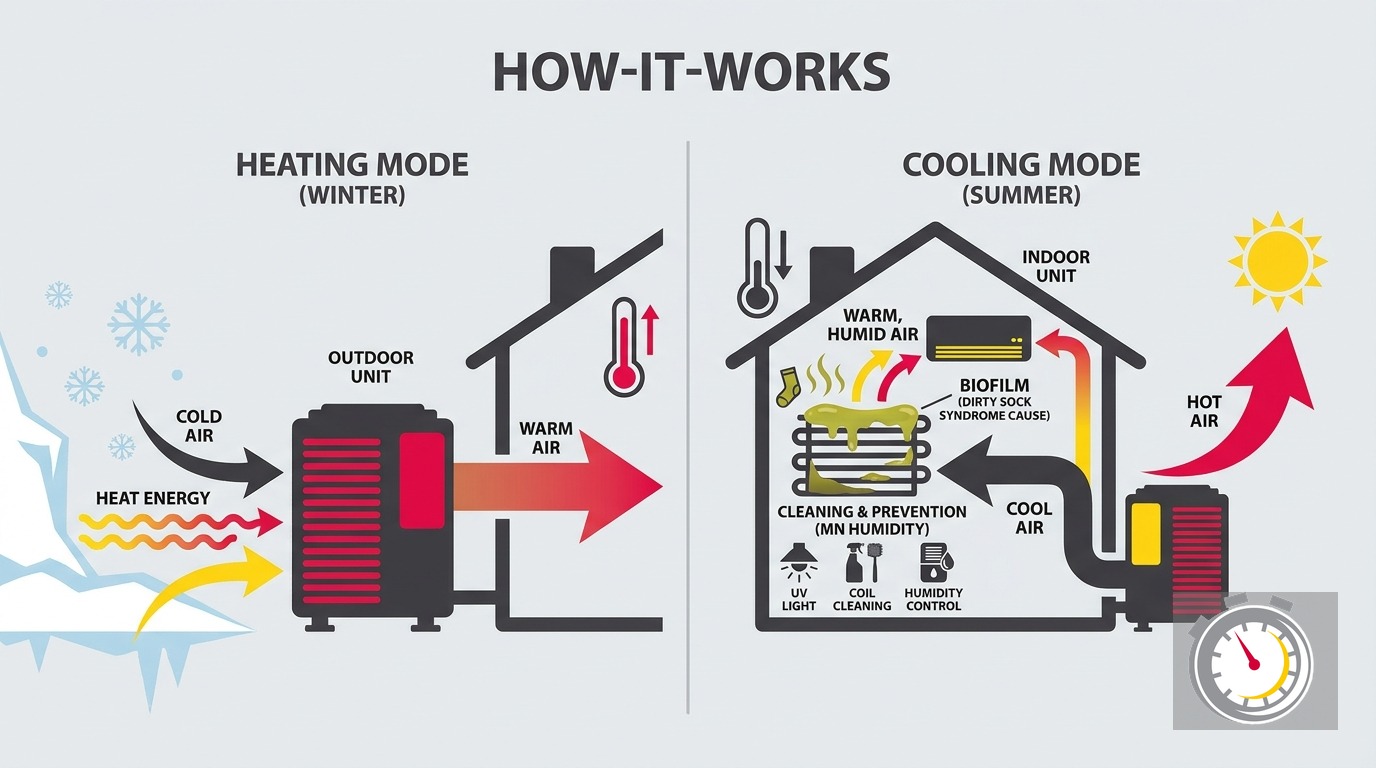
Key Takeaways
- Dirty sock smell is usually a microbial film on the evaporator coil and drain pan.
- The smell hits at startup because the coil stays damp between cycles and the blower pushes the odor out.
- Heat pumps are more prone to it because they switch between heating and cooling.
- A smell that stays on all the time may come from somewhere else, like a drain, a duct, or a dead animal.
- Burning, electrical, or gas smells are not dirty sock syndrome. Treat them as safety problems.
- Light cleaning often fails because the film grows back. A professional coil cleaning goes deeper.
- Keep summer humidity under 60 percent, and keep your filter and condensate drain clean.
- Call (763) 260-6662 or book online. Our on-time promise applies to the window you pick.
Why does my AC smell like dirty socks when it starts?
A dirty sock smell from your vents when the AC starts usually means microbes are growing on the evaporator coil. That is the cold, damp part of your system inside the air handler. When the blower kicks on, it pushes the sour odor into your rooms. A coil cleaning, a clear drain, and better humidity control fix most cases.
HVAC pros call this dirty sock syndrome. The name isn’t scientific, but it fits. The smell is sharp, stale, and a little sweaty.
HVAC.com explains that the cause is mold, mildew, and bacteria on the evaporator coil and drain pan. Several things make it worse:
- High indoor humidity
- Poor filtration
- Infrequent maintenance
- Undersized or badly installed systems
We are a locally owned and operated Twin Cities company, and we get this call every spring and fall. Below, you’ll find what is happening inside your system, what you can safely do yourself, and how to keep the smell away in our humid summers.
What is coil biofilm, and why does it come back?
Biofilm is a slimy layer of microbes that sticks to a wet surface. Bacteria, mold, and yeast live in it together. They feed on dust, skin cells, and pollen that slip past your filter. Your evaporator coil is cold, wet, and dark, so it suits them well.
Think of the slime on a shower curtain or the film inside a water bottle. You can wipe it off, but a thin layer stays behind. Within days, it grows back.
That is why a quick spray or a new filter often fails. A light cleaning knocks back the surface layer. The film re-grows from what is left, as long as the coil stays damp and dirty.
Here is how the cycle works:
- Warm, humid air crosses the cold coil during cooling.
- Water condenses on the fins and drips into the drain pan.
- Dust and spores stick to the wet fins.
- Microbes feed on that dust and form a film.
- The next startup pushes their odor into your home.
To break the cycle, remove the film, keep the coil clean, and dry out the system.
Dirty coils also cost you comfort. ENERGY STAR notes that dirty coils reduce the system’s ability to cool your home. The smell is often a sign your system is working harder than it should. Our guide to dirty evaporator coil symptoms lists other clues.
Why does the smell show up right when the AC starts?
The smell peaks at startup because the coil sits damp between cycles. Microbes release odor compounds while the system is off. When the blower starts, the first rush of air carries those compounds through the ducts. After a few minutes, the smell often fades as the airflow clears it out.
Here is the timeline in a typical home:
- The AC shuts off, and the coil stays wet.
- The film keeps growing in the warm, still air around it.
- Odor builds up inside the air handler and nearby ducts.
- The blower starts, and the stale air reaches your vents first.
That is why the smell can seem to come and go. A short burst at startup points to the coil. A smell that lasts the whole cycle suggests a heavier buildup or a different source.
Mode changes matter too. One industry guide notes that running the heat briefly and then switching back to cooling is a common trigger. Bacteria collect on the coil during heating. They release when the coil cools and gets damp.
That fits what we see in the Twin Cities. A cool morning and a warm afternoon can have you switching modes in one day. Spring and fall are the worst weeks.
Why are heat pumps more prone to dirty sock syndrome?
Heat pumps are more prone because they switch between heating and cooling all year. Each switch changes which coil is cold and wet. Moisture builds up more often than in a cooling-only system. HVAC.com says heat pumps are especially prone to the moisture buildup behind the odor.
A standard AC only runs in summer. It sits dry and idle for months. A heat pump works in every season, so the coil has more chances to stay damp.
Defrost cycles add to the problem. In winter, your outdoor unit melts frost by briefly running in reverse. The same guide says defrost can trigger the smell, which usually happens when the outdoor temperature drops under 40 degrees. In Minnesota, that describes much of the year.
Heat pumps are also getting more common here. Cold-climate models now handle our winters well, and rebates are growing. If you own one, expect to notice this smell at some point. It does not mean the unit is failing.
If you are new to heat pumps, our first winter heat pump guide explains what normal operation looks like. You can also read about the defrost cycle and ice on your outdoor unit.
Why does my house smell like dirty socks all the time?
If the smell never leaves, the coil may not be the only cause. A constant smell, especially with the heat on, points to another source. Common candidates include drip pans with standing water, untrapped drain lines, duct leaks, and dead animals or debris.
Use this simple test to sort out the cause.
Startup-only smell
- Strongest in the first minutes after the blower starts
- Fades as air keeps moving
- Often worse after a mode change or a humid day
- Points to the coil and drain pan
Constant smell
- Present in the whole house, whether or not the system runs
- Stays strong during long cycles
- May be stronger in one room or near one vent
- Points to a drain, a duct, or something living or dead in the system
Other sources to rule out:
- Standing water in the drain pan. A pan that doesn’t drain turns stagnant fast. Our post on a clogged condensate drain line shows how to spot it.
- Mold in the ductwork. Moisture in ducts can grow mold far from the coil. See our guide to mold in HVAC ducts.
- A dead mouse or nest. Animals get into ducts and equipment. The smell is stronger in one area.
- Basement or plumbing odors. A dry floor drain can let sewer gas into the house. The HVAC system may only spread it.
Our broader guide on identifying an unusual HVAC smell helps you match the odor to its likely source. Another post covers musty, burning, and other bad AC smells.
Why do my AC vents smell like skunks?
A skunk-like smell is a different problem from dirty socks. It can have several causes, and some are urgent. Treat it as a safety question first. Don’t assume it’s the coil.
Natural gas. Utilities add a strong sulfur odor to natural gas so you can detect leaks. Many people describe it as skunk-like or like rotten eggs. If you smell this, leave the home and call your gas utility from outside. Don’t flip switches or use your phone inside. Our post on what to do if you smell gas near your furnace walks through the steps.
Burning or electrical odor. A hot, sharp, or plastic smell can mean an overheating part. Shut the system off at the thermostat. If the smell is strong, shut off the breaker and call us.
An actual skunk. Skunks spray near homes, and the smell can be pulled in through return vents or a leaky duct. If it fades in a day or two, the source was likely outdoors.
Something in the system. A dead animal or debris in a duct can produce a sharp, rotten smell.
A skunk smell with a headache, dizziness, or nausea needs fast action. Get fresh air first. Then call for help.
When is a smell a safety problem, not dirty sock syndrome?
Some smells need action right away. Dirty sock syndrome smells sour, stale, and sweaty. It doesn’t smell hot, burnt, or like fuel. If your nose says something different, stop and check.
Treat these as safety issues:
- Gas or sulfur smell. Leave the home and call your gas utility.
- Burning smell. Turn off the system and call a technician.
- Electrical or hot plastic smell. Shut off the breaker if it is safe to do so.
- Any smell with alarms. If a carbon monoxide alarm sounds, get everyone outside.
Our guides on carbon monoxide safety in furnace season and what to do when a CO alarm goes off explain the next steps.
Many people ask what a freon leak smells like. Most people never smell it, so odor is a poor way to find a leak. We cover that in the FAQ below, and in our post on signs of an AC refrigerant leak.
Can I clean it myself, or do I need a pro?
You can handle the easy steps. The coil itself is usually a job for a pro. HVAC.com calls professional coil cleaning “not a good DIY job”. The coil is delicate, tucked inside the air handler, and easy to damage.
What you can do safely:
- Replace the air filter. HVAC.com says to replace filters every 1-3 months. ENERGY STAR says to inspect, clean, or change them once a month in a central AC, furnace, or heat pump.
- Check that the outdoor unit has clear space around it.
- Look at your thermostat fan setting. Our guide on auto versus on fan settings explains how it affects moisture.
- Watch whether water drains outside or into your floor drain as expected.
What to leave to a technician:
- Cleaning the evaporator coil
- Clearing and flushing the condensate drain
- Cleaning the drain pan
- Inspecting nearby ductwork
- Checking airflow and system sizing
ENERGY STAR lists coil cleaning as part of routine care. It advises you to clean evaporator and condenser air conditioning coils. It also tells you to check the condensate drain, since a plugged drain can cause water damage and affect indoor humidity.
Be careful with store-bought sprays and “foaming” cleaners. Coils bend easily. Leftover cleaner can also drain into the pan and clog the line. Without the right tools, you may push dirt deeper into the fins.
The EPA adds one more caution. It says not to run the HVAC system if you know or suspect it is contaminated with mold. If you see visible mold on equipment or ducts, turn the system off and call a pro.
To see what a service involves, read our guide to evaporator coil cleaning service costs in Minnesota. Our air conditioning maintenance visits include a look at the coil and drain.
How does Minnesota humidity affect the smell?
Humidity feeds the problem. Microbes need moisture, and our summers deliver it. When the air is sticky, your AC pulls more water out of it. That keeps the coil and pan wetter, longer.
Minnesota health officials give clear targets. The Minnesota Department of Health says to try to maintain relative humidity between 20-40 percent in the winter. The rest of the year, it says to keep it less than 60 percent.
The EPA’s advice is a bit broader. It says to keep indoor humidity below 60 percent, ideally between 30 and 50 percent.
Why is the winter target lower? Cold winter air makes warm, moist indoor air condense on windows and other cold spots. Lower winter humidity helps avoid that. Our post on window condensation in winter explains the link.
For dirty sock smell, summer matters most. On a muggy July day, your coil works hard and stays wet. Aim for under 60 percent indoors. A cheap humidity monitor tells you where you stand.
MDH also offers tips that help year-round. It says to reduce the use of humidifiers and to use bathroom and kitchen exhaust fans ducted to the exterior. It calls dehumidification “very important in controlling high humidity.” Our guide on bathroom exhaust fan sizing can help.
Don’t assume your AC will fix a humid house on its own. Sizing matters too. An oversized unit cools the air fast and shuts off before it removes much moisture. That leaves the coil wet and the room clammy. Read more in our post on oversized AC problems.
The opposite problem exists as well. If your home feels too dry in summer, see why your AC may be making the house too dry. Balance is the goal.
What cleaning options actually work?
The best fix removes the film and then keeps the coil dry and clean. Here are the main options, from simple to thorough.
1. New filter and a basic system check. Start here. It helps if your filter is clogged or the wrong size. It rarely ends a strong smell by itself.
2. Professional coil cleaning. A technician cleans the coil with the right tools and cleaner. They rinse it and flush the pan and drain. This removes more of the biofilm than a surface spray. Sometimes the coil must be accessed from the side or removed, which takes more time.
3. Condensate drain and pan service. If water sits in the pan, the smell will return. We clear the line, clean the pan, and check the slope. A plugged drain can also overflow into your home. See our post on a full or overflowing drain pan.
4. Duct inspection. If the smell lingers, we look at ducts near the coil. Moisture can collect there. Our duct cleaning service is an option when dust or growth is found.
5. Coil replacement. A coil that is heavily corroded or leaking may need replacement. This is a last resort. Our guide to evaporator coil replacement costs covers what to expect.
HVAC.com mentions UV lights and dehumidifiers as options. Neither source we reviewed says how well they work, so we won’t promise results. A UV light is not a substitute for cleaning. If you are curious, our post asks whether a UV light is worth it in the Twin Cities.
Ask any contractor what exactly they will clean. Ask whether they will treat the drain and pan too. A good answer covers the coil, the pan, and the drain.
How do I prevent the smell from coming back?
Prevention comes down to four habits: change filters, keep the drain clear, control humidity, and schedule tune-ups. None are complicated. Together they starve the film of what it needs.
Change your filter on schedule
Dust is food for microbes. A clean filter keeps more of it off the coil. Pick a schedule and stick to it. If you have pets or run the system often, check monthly. Our guide on how often to change an HVAC filter helps you choose.
Use the right size and rating, too. A filter that is too restrictive can choke airflow. A loose one lets dust bypass it. See our post on air bypassing around the filter.
Keep the condensate drain clear
Standing water is a breeding ground. At the start of cooling season, check that the drain runs freely. ENERGY STAR says a plugged drain can affect indoor humidity levels. The EPA gives a simple rule: keep AC drip pans clean and drain lines unobstructed and flowing properly.
Control indoor humidity
Aim for under 60 percent in summer. Use exhaust fans when you shower or cook. Fix leaks and wet basements. Avoid drying laundry indoors on humid days.
If your home stays sticky despite a working AC, consider a whole-home dehumidifier. It removes moisture on its own schedule, so your AC doesn’t carry the whole load. We can’t promise it will end the smell. But less moisture gives microbes less to work with. Learn more about whole-home dehumidifiers or our dehumidifier services. For a smaller space, compare portable and whole-home models.
Schedule spring and fall tune-ups
ENERGY STAR recommends annual pre-season check-ups by a contractor, with cooling in spring and heating in fall. It notes that contractors get busy in summer and winter. That matches what we see. Book early and you get the pick of time slots.
A spring visit lets us clean the coil and flush the drain before the first hot week. A fall visit prepares the heating side. For heat pumps, the fall check matters because defrost cycles start soon after.
Two guides can help you plan: the AC first start-up checklist after winter and the fall shutdown and startup checklist. A maintenance plan can also keep these visits on the calendar.
What should Twin Cities homeowners do this time of year?
The right move depends on the season. Complaints about this smell peak in fall, when homes switch from cooling to heating. Here is a seasonal plan for our area.
Fall (now). You may be flipping between AC and heat on mild days. That is a prime trigger. If you smell socks at startup, replace your filter first. Then book a tune-up before the deep cold and our busy winter season. If you have a heat pump, ask us to check the coil and drain before defrost season starts.
Winter. Keep indoor humidity in the 20-40 percent range, as the state suggests. Watch your windows for condensation. If you run a humidifier, set it carefully. Our humidistat settings guide shows how.
Spring. Book your cooling tune-up in April or May. Ask for a coil, pan, and drain check. Do this before the first humid stretch.
Summer. Watch indoor humidity and check the filter monthly. If the smell appears on a muggy day, don’t wait. A small film is easier to remove than a thick one.
Not sure whether the problem is the coil, the drain, or something else? Describe the smell, when it happens, and what mode your system was in. That detail speeds up the diagnosis.
What to expect when you call Northern One Hour
We are a locally owned and operated HVAC company based in Ramsey, serving homeowners across the Twin Cities. We know what our humid summers and swing seasons do to coils and drains. We also know you don’t want to wait around for help.
Here is how a visit goes:
- You call (763) 260-6662 or book online and choose a time window.
- Your technician arrives within that window. Our promise is “Always On Time… Or You Don’t Pay a Dime!(R)” If the technician doesn’t show up on time, you don’t pay for the service.
- We ask about the smell, when it starts, and what changed recently.
- We inspect the filter, coil, pan, drain, and nearby ductwork.
- We explain what we found in plain language and give you honest, transparent pricing before work begins.
- We back our work with a 100% satisfaction guarantee.
If the problem is in the coil, we’ll tell you. If it’s a drain, a duct, or a humidity issue, we’ll tell you that too. We stick to heating, cooling, indoor air quality, heat pumps, and thermostats. If you need help with another trade, we point you to the right sister company.
If a new coil, a dehumidifier, or a larger system change makes sense, ask about financing. We can walk you through options so the work fits your budget. Our overview of HVAC financing options is a good place to start.
You can also explore our air conditioning services and indoor air quality solutions to see how we can help.
You shouldn’t have to live with a sour smell every time the AC kicks on. Call (763) 260-6662 or book online to schedule fast. We’ll find the source and help you breathe easier.
Frequently Asked Questions
What does a freon leak smell like? +
Why do my AC vents smell like skunks? +
Is dirty sock syndrome dangerous? +
Will a new air filter fix the smell? +
Need a technician now?