
Weird Smell Coming From Vents? What Is It and What to Do
Key Takeaways
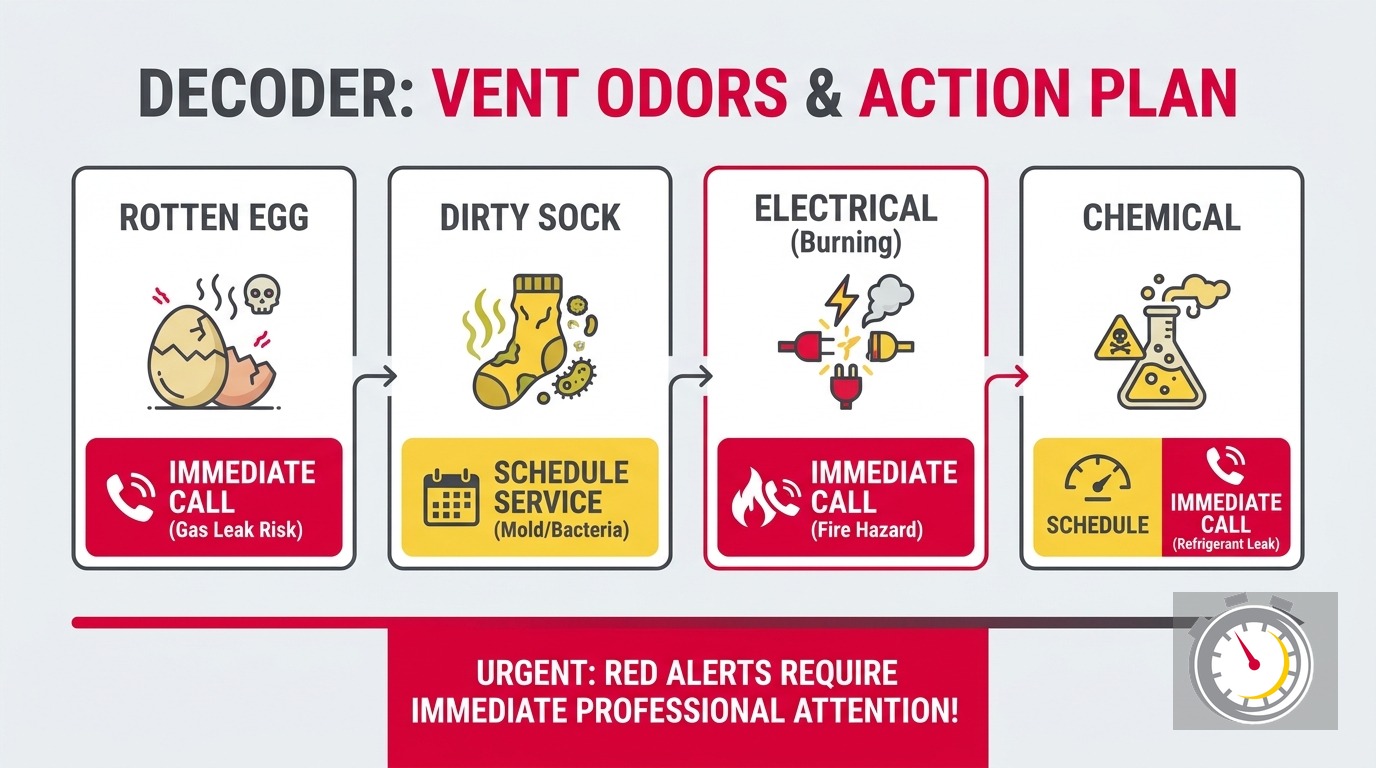
- Rotten egg or sulfur smell: treat it as a gas leak. Leave on foot and call 911 and your utility from outside.
- Burning plastic or hot electrical smell: turn the system off at the thermostat and the breaker, then call us.
- Dirty sock smell: usually moisture and bacteria on the coil. Call within the week.
- Chemical smell: ventilate, shut the system off, and call the same day.
- Musty smell: often a wet coil, a clogged drain, or damp ducts. Schedule a visit.
- Carbon monoxide has no odor. Working alarms near every sleeping area are the only warning.
- A faint dusty or burning-dust smell at the first heating start of fall often fades in a few hours.
What Is That Smell Coming From Your Vents?
Most vent odors come from dust, moisture, or a stressed part, and they are fixable. Two smells are different. A rotten egg smell means possible gas, so leave first. A burning plastic smell means shut the system off. Most other odors can wait for a scheduled visit.
We rank each odor below by urgency, because a worried homeowner needs a clear next step. We are Northern One Hour Heating & Air Conditioning, a locally owned and operated Twin Cities company. We have walked into many homes where someone asked, “Is this dangerous?”
The most dangerous household gas has no smell at all. Your carbon monoxide alarm is the only “nose” that works for that one.
What Should You Do First When a Vent Smells Strange?
Stop and name the smell. If it is rotten eggs or sulfur, leave the home at once. If anyone feels dizzy, get everyone outside. For other smells, turn the system off at the thermostat, open a window, and keep reading.
Picture a three-step ladder. Match your smell to a rung, then act.
Rung 1: Leave and call now.
- Rotten egg or sulfur smell
- Any carbon monoxide alarm sounding
- Headache, dizziness, or nausea that eases when you step outside
Rung 2: Shut it off and call today.
- Burning plastic or hot wiring
- Strong chemical smell
- Smoke you can see
- A burning smell that does not fade after a few hours
Rung 3: Schedule a visit this week.
- Dirty sock smell
- Musty smell
- Faint sewer smell
- Dead animal smell
- Metallic smell on first startup that fades
Does a Rotten Egg Smell Mean a Gas Leak?
Yes, treat it that way until your gas utility says otherwise. Natural gas has no odor on its own. Utilities add a sulfur scent so you can notice a leak, and people often describe it as rotten eggs or sulfur.
Some web pages blame a rotten egg smell on refrigerant. Don’t bet on that. Refrigerant is not the standard explanation, and gas is the risk you cannot afford to guess about.
CenterPoint’s safety guidance lays out the steps. Use it for the steps only, and call the utility that sends your bill.
- Leave the home immediately, on foot.
- Do not use a cell phone inside the home.
- Do not start a car in an attached garage.
- Call the utility and 911 from a safe distance.
- Never try to find or fix the leak yourself.
Don’t flip light switches or run the furnace to “see if it helps.” Don’t go back in for belongings. Wait outside until the utility crew clears the home.
Xcel Energy serves much of the metro, and CenterPoint serves parts of it. Check your bill today and write the emergency number on the fridge. Do it before you need it.
We cover this scenario in more detail in our guide on what to do when you smell gas near your furnace.
When the smell is not gas
Sometimes the utility arrives and finds no leak. Then we look at other sources. Sewer gas can smell like rotten eggs. It rises from dry floor drains and dry plumbing traps. Minnesota basements dry out in winter, and a drain that has not seen water for months can leak odor into the air.
Rule out gas first. Only then check the drains. Pour water into any floor drain you rarely use. If the smell fades, you likely found the source. If it returns, call a plumber. Northern One Hour handles heating, cooling, and air quality only, so we will point you to our sister Northern brands for plumbing work.
Why Do My Vents Smell Like Dirty Socks?
A dirty sock smell usually means moisture and bacteria on a coil or in a drain pan. The smell often shows up when the system starts, then fades. It is unpleasant but rarely an emergency. Schedule a visit within the week to clean and dry the source.
Your AC pulls moisture out of the air. That water drips off the indoor coil into a pan and out a drain line. If the coil stays damp, microbes grow on it. When the fan starts, the smell rides your air to every room.
Heat pumps can do the same thing. They switch between heating and cooling, and the coil can stay damp between modes. Many homeowners notice the smell right when the system changes modes.
Common causes include:
- A dirty evaporator coil that holds moisture
- A clogged condensate drain with standing water
- A dirty filter that restricts airflow
- A dirty blower wheel that collects dust and damp
Start with the easy check. Replace the filter if it is dirty. Our guide on how often to change your HVAC filter explains the timing for Minnesota homes.
If the smell stays, the coil or drain likely needs service. Don’t pour bleach into the system. It can damage parts and release fumes into your home. Let a technician clean the coil and clear the line.
A yearly tune-up cleans the parts that grow odors. For the full picture of cooling-season smells, read our Twin Cities AC odor guide.
What Does a Burning or Electrical Smell From Vents Mean?
It depends on the kind of burning smell. Burning dust at the first heating start is common and fades. A hot plastic, fishy, or sharp electrical smell is different. It can mean an overheating motor or wiring. Turn the system off and call the same day.
Burning smells fall into two groups.
Group 1: Burning dust.
Your furnace sits idle all summer. Dust settles on the heat exchanger and burners. On the first cold snap, that dust burns off. You smell something hot and dry, sometimes with a metallic note.
It should fade within a few hours of run time. Open a window and let it clear. Our post on smoke smell from furnace vents explains the difference between harmless dust and a real problem.
Group 2: Electrical or plastic burning.
This smell does not fade. It may smell like melting plastic, hot wiring, or an overheated appliance cord. Possible causes include:
- A failing blower motor running hot
- A worn belt or seized bearing
- Loose or damaged wiring
- A failing capacitor or control board
- A wire touching a hot surface
These parts can start a fire if ignored. Here is what to do:
- Turn the thermostat to off.
- Switch off the furnace or air handler breaker.
- Open a window if the smell is strong.
- If you see smoke or sparks, leave and call 911.
- Call us for a repair visit.
Don’t keep running the system to “test” it. Each minute of run time can add to the damage. Replacing a small part early costs far less than replacing a motor and a board together.
A metallic or hot smell at first startup needs one more note. If it does not fade, or if you see soot, call us. A cracked heat exchanger is one possible cause, and it is more likely in older furnaces. If your furnace is 15 years old or more, read our guide on signs of a cracked heat exchanger.
What Does a Chemical Smell From Vents Mean?
A chemical smell can come from new products in your home, cleaners, or a system problem. Shut the system off, open windows, and think about what changed recently. If you cannot trace it, call us the same day. Do not breathe it for hours.
Start with timing. Did you paint, refinish a floor, or install new carpet? Did you spray a cleaner near a return vent? The ductwork pulls those fumes in and spreads them through the house.
If nothing changed, consider these system causes:
- Leaking refrigerant or oil near the indoor coil
- Overheated insulation or a burned part
- Residue from a recent duct or coil cleaning product
- Fumes pulled in from an attached garage
The garage is a real Minnesota concern. Many homes have ducts that run near the garage wall. Gasoline, paint, and car exhaust can leak into return air through gaps. A garage smell in your vents is a sign to seal leaks and check airflow.
Our advice is plain: don’t hunt for the source with the system running. Turn it off, ventilate, and call. If the smell comes with headache, burning eyes, or nausea, leave and get fresh air first.
Why Does My AC Smell Musty?
A musty AC smell points to moisture. Water sits on the coil, in the drain pan, or in the ducts, and mildew starts to grow. The smell is strongest when the AC starts after a humid stretch. Something is staying wet.
Twin Cities summers make this common. We get humid weeks and big temperature swings. Your AC runs hard, makes lots of condensation, and then rests. Any slow drain or dirty coil becomes a damp spot.
The usual suspects:
- A clogged condensate drain line
- A dirty or wet evaporator coil
- A pan that is not draining
- Leaky or poorly insulated ducts that sweat
- A filter that has not been changed in months
Basement and attic ductwork can sweat when cool air runs through warm, humid spaces. Our post on AC drain line clogs shows how a simple blockage causes big smells.
Musty smells also show up in the furnace in fall and spring. Our guide on musty furnace smells covers that side.
Does a Musty Smell Automatically Mean Mold?
No. A musty smell means moisture and some kind of microbial growth, but not always mold you can see. It can come from a damp filter, a dirty coil, or a slow drain. A persistent musty smell still deserves a look.
The EPA’s duct guidance sets a useful standard. A clean system should show no musty odor or visible mold growth. So an odor alone is a reason to investigate, not proof of mold.
The same page makes two more points. Wet or moldy insulated duct material cannot be effectively cleaned and should be removed and replaced. And if the moisture cause is not fixed, mold growth will recur.
The second point matters most. Cleaning without fixing the water source only buys time. We find the leak, the clog, or the sweating duct first.
The EPA also does not recommend routine duct cleaning, only cleaning as needed. That matches our experience. Don’t buy a whole-house duct cleaning because a salesperson knocked on your door. Have someone find the cause first.
Signs that point to a bigger problem:
- Visible mold or dark spots on registers or duct openings
- A musty smell that returns days after a cleaning
- Water stains near the air handler or ducts
- Allergy or asthma symptoms that flare when the system runs
If you see those signs, read our post on mold in HVAC ducts. It explains what real remediation involves and when to bring in a specialist.
What Other Smells Can Come From Vents?
A few other odors show up often in Twin Cities homes. Most are less urgent than gas or burning, but each tells you something.
Metallic or hot dust smell. This appears at the first heating start after months idle. It often fades in hours. If it lingers, ask for a furnace inspection.
Sewer smell. Dry floor drains and traps are common culprits. Rule out gas first, then run water in unused drains. If it persists, call a plumber.
Dead animal smell. A mouse or squirrel may have died in a duct, a vent line, or near the furnace. The smell is sharp and gets worse. Find and remove the source.
Smoke from fireplaces. A backdrafting chimney can pull smoke odor into your air. That points to a combustion air issue, not just an odor.
Cooking or pet smells. Ducts hold onto odors. A filter change and a fresh start often help.
Fall is when many of these show up. Rodents move indoors when temperatures drop, and furnaces fire up after sitting idle. To catch problems early, use our fall HVAC startup checklist.
Why Carbon Monoxide Is the Smell You Cannot Smell
Carbon monoxide has no smell, taste, or color. No odor in your vents will warn you. MPR News describes it as a colorless, tasteless, and odorless gas. It comes from anything that burns fuel with a flame, such as stoves, furnaces, and water heaters.
So a furnace that runs while the house smells normal tells you nothing about CO. Most smell guides skip this. They help you decode odors but leave out the one that kills quietly.
Symptoms include headache, fatigue, dizziness, and shortness of breath. The same MPR report notes these can be mistaken for COVID or a cold. In winter, with windows shut and furnaces running all day, that confusion is dangerous.
If you feel sick at home and better when you leave, take it seriously. Get everyone outside and call 911.
Minnesota’s CO alarm rule
Minnesota takes this seriously. Under Minnesota Statutes 299F.51, an approved, operational CO alarm must be within ten feet of each room lawfully used for sleeping. The law also bars anyone from removing batteries or disabling a required alarm. A second violation is a petty misdemeanor.
Treat the alarm like a smoke detector. Test it monthly. If it chirps, fix the cause instead of pulling the battery.
Alarms wear out. MPR notes most need replacing every five to seven years. Check the date on the back of yours.
The Consumer Product Safety Commission urges a professional inspection of all fuel-burning appliances, including furnaces. It also recommends at least one CO alarm that meets UL 2034 or IAS 6-96. Look for one of those marks on the box.
According to MPR, the State Fire Marshal and the Minnesota Department of Health recommend an annual technician check of fuel-burning appliances. A furnace tune-up covers exactly that.
When Should You Call a Technician for a Vent Smell?
Call based on the ladder. For gas or a CO alarm, leave first and call 911 and your utility. For burning, electrical, or chemical smells, shut the system off and call us the same day. For musty or dirty sock smells, schedule within the week.
Use this quick guide:
| Smell | What it may mean | What to do |
|---|---|---|
| Rotten egg or sulfur | Gas leak | Leave, call 911 and utility |
| CO alarm sounding | Carbon monoxide | Get outside, call 911 |
| Burning plastic or electrical | Hot motor or wiring | System off, call today |
| Strong chemical | Fumes or refrigerant issue | System off, ventilate, call today |
| Dirty sock | Wet, dirty coil | Schedule this week |
| Musty | Moisture or mildew | Schedule this week |
| Sewer | Dry drain trap | Rule out gas, check drains |
| Dead animal | Pest in duct or vent | Locate and remove |
| Dusty burning at first start | Dust burning off | Ventilate, watch for fade |
If your furnace is the source, our furnace repair team can diagnose it fast. Tell us the smell, when it started, and when it happens. Those clues save time.
What to do while you wait
Many guides skip this part. While a technician is on the way:
- Keep the system off if the smell is burning, chemical, or electrical.
- Open windows on opposite sides of the home to move air.
- Keep kids and pets away from the vents.
- Do not light candles, matches, or a fireplace if you suspect gas.
- Write down the smell, the time, and any other signs.
- Take a photo of any error code or blinking light on the furnace.
If a repair turns into a replacement, we explain every option. A very old furnace with a cracked part may not be worth fixing. We will walk you through the choice and talk about financing options if you need them.
Why Local, On-Time Service Matters for Smell Problems
Waiting is stressful when a smell scares you. That is why we built our service around showing up. We are locally owned and operated, and we live through the same winters you do.
Our promise is simple: “Always On Time… Or You Don’t Pay a Dime!(R)” We arrive within the time window you select. If the technician does not show up on time, you do not pay for the service.
That matters most on a cold night with a strange smell in the house. You deserve a clear window and a technician who respects it. For more, read our post on why on-time service matters.
We also give honest pricing before work starts, and we back our work with a 100% satisfaction guarantee. We serve Minneapolis, St. Paul, Ramsey, Blaine, Maple Grove, Plymouth, Brooklyn Park, Woodbury, and Bloomington.
How to Prevent Vent Smells in the First Place
Most odors are preventable. A little routine care keeps your air clean and your system safe. Here is a simple plan for Minnesota homes.
- Change filters on schedule. A clogged filter traps moisture and dust.
- Clear the condensate drain. Check it at the start of each cooling season.
- Book a tune-up each year. A technician cleans the coil, checks the burners, and tests safety controls.
- Check CO alarms monthly. Replace them on schedule.
- Run water in unused drains. This keeps traps full and blocks sewer gas.
- Seal ductwork leaks. This keeps garage and basement air out of your living space.
- Manage humidity. Basements can need a dehumidifier in summer and a humidifier in winter.
Start the cooling season right too. Our AC startup checklist for Minnesota walks through the steps that stop musty smells before they start.
Smell Something Off? Call Us
If your vents smell strange, you don’t have to guess. If it is rotten eggs, leave and call 911 and your utility. If it is anything else on this list, we can help.
Call Northern One Hour at (763) 260-6662 or book online to schedule fast. We will pick a time window with you, show up inside it, and find the source of the smell. Our promise is “Always On Time… Or You Don’t Pay a Dime!(R)” for you and your neighbors across the Twin Cities.
Frequently Asked Questions
What should I do about a musty smell from my AC? +
Can I keep running my system if the smell is mild? +
Who do I call first for a gas smell, the utility or an HVAC company? +
Need a technician now?