
Furnace Flame Yellow Instead of Blue? What to Do in MN
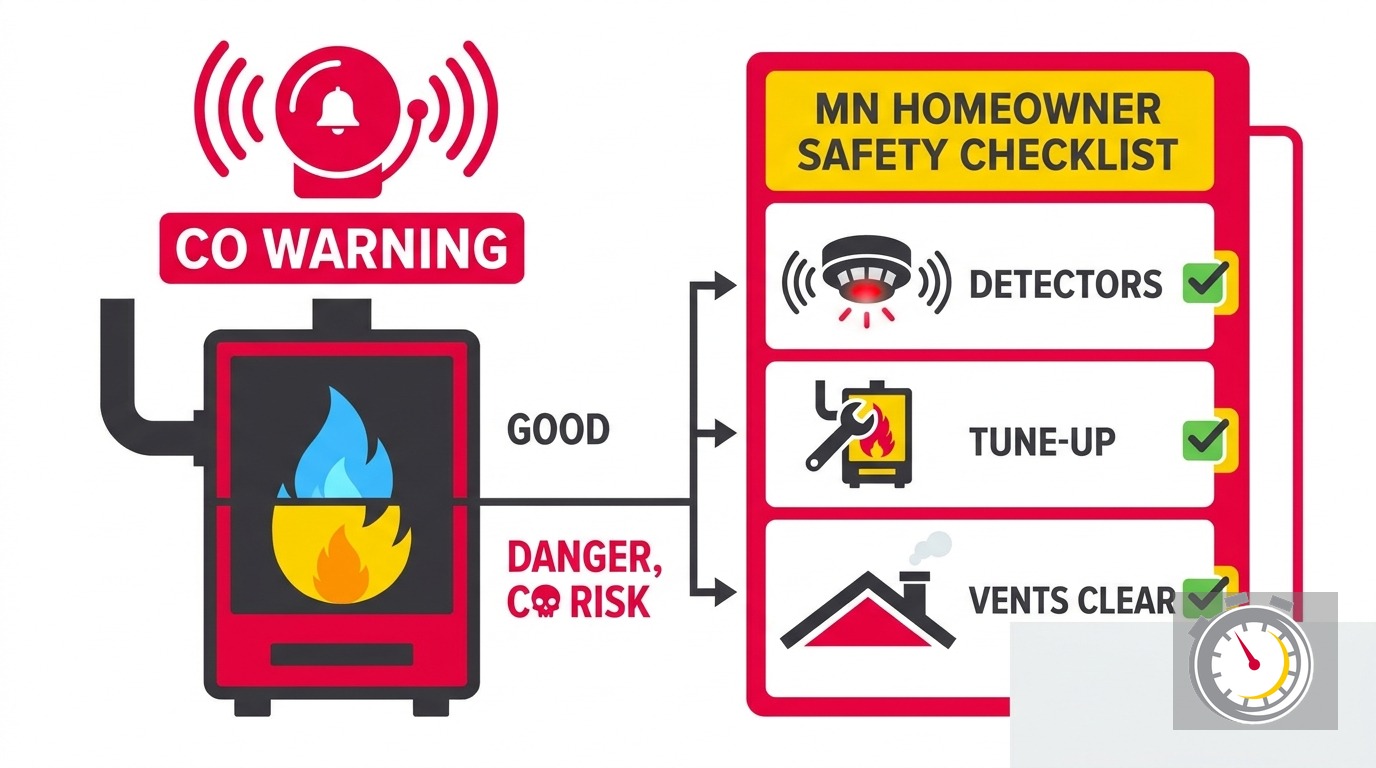
Key Takeaways
- A healthy gas furnace flame is mostly blue, sometimes with a small yellow tip.
- A steady yellow or orange flame points to incomplete combustion and a possible CO risk.
- Flame color is not a reliable CO test. CO can be present with a normal-looking flame.
- A working CO alarm within ten feet of each sleeping area is the real safeguard, and Minnesota law requires it.
- A continuous CO alarm means: get outside, call 911, and stay out until the source is found.
- You can safely check the flame by eye, replace the filter, and clear snow from outdoor vent openings.
- Burner cleaning, heat exchanger work, and gas pressure adjustments are pro-only jobs.
- Yearly professional inspection is the best way to keep combustion clean.
Yellow Flame: The Short Answer
A furnace flame that burns yellow instead of blue is a warning sign. The gas often isn’t burning cleanly. Unburned fuel can then produce carbon monoxide (CO), a gas you cannot see or smell.
Don’t panic, and don’t ignore it. A brief flicker of orange at startup can be dust. A steady yellow or orange flame is different. Shut the furnace off at the thermostat and call a licensed technician. If a CO alarm is sounding, leave the house and call 911 first.
Flame color is a clue, not a CO test. Your CO alarm is the real safeguard.
Is a yellow furnace flame dangerous?
A steady yellow flame can be dangerous. It signals incomplete combustion, which can release carbon monoxide into your home. A short yellow flicker at startup is usually dust. If the yellow or orange flame stays on, shut the furnace down and have a licensed technician inspect it before you use it again.
Color matters because of how gas burns. Natural gas burns blue when it gets the right mix of fuel and air. When the mix is off, the flame turns yellow or orange. Some of the fuel isn’t burning completely.
Incomplete burning is how CO forms. CenterPoint Energy lists “a yellow or orange flame from gas appliances instead of a clear blue flame” as a sign CO may be present.
Note the word “may.” A yellow flame doesn’t prove CO is in your air. It does tell you something is wrong with the burn, so get it checked.
We are a locally owned and operated Twin Cities company. We see this most often in early fall, when homeowners fire up the furnace for the first time in months. Dust, a dirty burner, or a blocked vent is often the cause. Sometimes it’s something bigger.
What color should your furnace flame be?
A natural gas furnace flame should be steady and mostly blue. A small yellow tip at the top of each flame can be normal. The flames should be evenly shaped and quiet. They should not flicker wildly, lift off the burner, or wave around.
Each burner has a row of small flames, and they should all look about the same. A healthy burn looks like this:
- Blue flames with a crisp, defined shape
- Even flame height across all burners
- A steady glow with no dancing or lifting
- Little or no yellow, and no orange streaks
Dust can add short flickers of orange. This is common in the first few minutes of the first heating cycle of the season. The orange should burn off quickly.
A propane furnace flame can look slightly different. Our guide to propane versus natural gas furnaces in Minnesota covers how the two fuels differ. With either fuel, a steady yellow flame is not normal.
Can you even see the flame?
On many furnaces, yes. Look for a small sight glass or inspection port near the burner compartment. Some high-efficiency furnaces seal the burner area completely.
Don’t pry off panels to get a better look. They protect you from hot surfaces and moving parts. They also keep combustion air flowing the way the furnace was designed. If you can’t see the flame safely, let a technician check it.
What do the different furnace flame colors mean?
Blue means clean combustion. Yellow means the fuel and air mix is off. Orange suggests dust, debris, or heavy contamination. A flame that lifts away from the burner or rolls out toward the front of the furnace points to airflow or venting trouble and needs prompt professional attention.
Here is a plain-language guide you can use at the furnace.
Steady blue
This is what you want. The burners are mixing gas and air well. It doesn’t guarantee zero CO, but it is the healthy baseline.
Blue with a small yellow tip
Often normal. Dust and tiny debris in the air can add a bit of yellow. If the tips are short and the rest is blue, mention it at your next tune-up.
Mostly yellow
This is the red flag. The flame may not be getting enough air, or the burner is dirty or misaligned. Shut the furnace off and call a technician.
Orange or flickering orange
Short orange flickers at startup can be dust. Persistent orange suggests heavy dirt, rust flakes, or something burning that shouldn’t be there.
Lifting or floating flames
Flames that pull away from the burner suggest the gas pressure or airflow may be wrong. This also needs a pro.
Flames rolling out of the burner compartment
Stop using the furnace right away. Roll-out can come from a blocked vent or a heat exchanger problem. Our guide to cracked heat exchanger signs explains what technicians look for.
Many furnaces have a roll-out switch that shuts the unit down when flames escape. If yours keeps tripping, don’t keep resetting it. Call for service.
Flame Color Is a Clue, Not a Carbon Monoxide Test
Many homeowners treat flame color as a CO detector. It isn’t one. This is the most important point in this post.
CO can be present even when the flame looks normal. A blocked flue, a cracked part, or backdrafting can push exhaust into your living space while the burners look fine. The U.S. Environmental Protection Agency lists several sources of CO in the home. They include “leaking chimneys and furnaces” and “backdrafting from furnaces, gas water heaters, wood stoves, and fireplaces.”
The EPA also lists “poorly adjusted or maintained boilers and furnaces, and flues that are improperly sized, blocked, disconnected, or leaking.” None of those problems announces itself with a yellow flame.
So a yellow flame is a reason to act. A blue flame is not a reason to relax. Only a working CO alarm and a yearly professional inspection give you real protection.
Our post on CO detector placement near furnaces and boilers shows where alarms work best in a Minnesota home.
What should you do right now if your flame is yellow?
Check whether a CO alarm is sounding. If it is, get outside and call 911. If not, turn the furnace off at the thermostat, open a window briefly, and call a licensed technician. Do not relight or restart the furnace until it has been inspected.
Start at the top of this list and stop at the first path that fits.
Path 1: A CO alarm is sounding
CenterPoint says to treat every CO alarm as real. It also says never to try to find the CO source yourself. Their steps for a CO event include:
- Get into the fresh air and call 911.
- Open windows to ventilate the area, if you can do so on your way out.
- Turn off your furnace and other fuel-burning appliances.
- Evacuate, including pets, if anyone has symptoms.
- With an attached garage, open the largest garage door.
- Contact a qualified technician or your utility to inspect the home.
- Do not re-enter until the source of CO has been identified and the issue resolved.
Intermittent beeping usually points to a maintenance issue, such as a low battery. A continuous alarm means evacuate and call 911. Our post on a CO alarm going off with no emergency can help you tell the two apart after the fact.
Path 2: Anyone has symptoms
CO symptoms can feel like the flu. CenterPoint lists a slight headache, nausea, fatigue, and blurred vision. It also notes flu-like symptoms that disappear when the person breathes fresh air.
The EPA says the same: symptoms can resemble flu and may clear up after leaving the home. If several people feel sick at home and better away from it, leave and call 911.
Path 3: No alarm, no symptoms, but the flame is yellow
Follow these steps:
- Turn the thermostat to “off” so the furnace stops firing.
- Confirm your CO alarms have power and work. Press the test button.
- Check that the filter is clean and in place.
- Look outside. Clear any snow or ice from the intake and exhaust pipes.
- Leave the furnace off.
- Call a licensed technician for an inspection.
If you lose heat in a cold snap, our emergency steps for when the furnace is out tonight will help you stay safe while you wait.
Path 4: The flame is blue with a tiny tip
You’re probably fine. Mention it at your next tune-up, and confirm your CO alarms work.
How do you fix a yellow furnace flame?
Fixing a yellow flame depends on the cause. You can replace a dirty filter and clear snow from outdoor vents. Burner cleaning, flame sensor service, gas pressure adjustments, and heat exchanger repairs need a licensed technician with the right tools and combustion testing equipment.
The work splits into what you can do and what only a pro should touch.
What you can safely do
- Look at the flame. Use only a sight glass or inspection port. Never remove sealed panels.
- Replace a dirty filter. A clogged filter chokes airflow. Our guide to how often to change your HVAC filter gives a simple schedule.
- Clear outdoor vents. Snow, ice, and leaves can block intake and exhaust pipes. Clear the area by hand. Don’t chip at the pipe.
- Test your CO alarms. Replace batteries and any alarm past its expiration date.
- Keep the area around the furnace clear. Don’t store boxes, paint, or chemicals near it.
What is pro-only
- Burner cleaning and adjustment. Burners sit close to gas lines and need correct alignment.
- Gas pressure and air mix adjustments. These need a manometer and training.
- Heat exchanger inspection or repair. A cracked exchanger can leak exhaust into your air.
- Flue and vent repair. Disconnected or leaking flues are a CO hazard.
- Flame sensor and igniter service. These parts affect safe ignition. See our guide to dirty flame sensor cleaning and cost.
- Combustion analysis. This is a measured test of what your furnace puts out.
You may see online advice to clean the heat exchanger yourself. We don’t recommend it. You’d have to open the furnace and handle parts that protect you from exhaust gas.
Is your flame a symptom of a bigger problem? Our furnace repair team can find the cause, explain it plainly, and give you an honest price before work begins.
How do you ensure proper furnace combustion?
Proper combustion needs three things: clean burners, enough fresh air, and a clear path for exhaust. Replace filters on schedule, keep vents open, never block combustion air openings, and schedule a yearly professional inspection with a combustion test before the heating season starts.
Clean combustion mostly comes down to habits.
Keep airflow healthy
A furnace needs air to burn fuel and to move heat. A dirty filter, closed registers, or blocked returns all stress the system. Our guide on return air problems shows how airflow trouble builds.
Protect the vent path
The Consumer Product Safety Commission advises homeowners to check vents for blockage or disconnection. It also says never to block ventilation air openings. That includes stacking items in front of a combustion air grille.
A high-efficiency furnace vents through plastic pipe out the side of the house. Snow drifts and frost can cover those openings. Read our post on blocked exhaust vents from snow and ice for what to look for.
Watch for warning signs
The same CPSC release lists black stains on a chimney or flue as a warning sign. Soot around the furnace, rust streaks, or a water leak near the vent also deserve a call.
Get a yearly inspection
CPSC recommends a yearly professional inspection of all fuel-burning appliances. We agree. At a tune-up, a technician can clean burners, check the flame, inspect the vent, and test your CO alarm setup.
A single tune-up visit typically runs $95 to $250 in the Twin Cities. A maintenance plan typically runs $195 to $390 per year. That is small next to an emergency repair in January.
Ask for combustion analysis
Combustion analysis measures what comes out of your furnace, which your eyes can’t do. Our post on what a furnace combustion analysis tests explains the readings in plain English.
Use at least one UL 2034 alarm
CPSC recommends at least one CO alarm that meets UL 2034. Minnesota requires more than one in many homes, as the next section explains.
What does Minnesota law say about CO alarms?
Minnesota requires a working CO alarm within ten feet of each room used for sleeping. The rule covers single-family homes and multifamily units. Alarms must be approved and operational. You may not remove batteries from or disable a required alarm.
The rule comes from Minnesota Statutes section 299F.51. It requires alarms “within ten feet of each room used for sleeping.” The text says alarms must be “approved and operational.” It doesn’t define the standard beyond that.
The law also bars anyone from removing batteries from or disabling a required alarm. A first violation gets a safety warning. A second or later violation is a petty misdemeanor.
In practice:
- Put an alarm outside each bedroom area, within ten feet of the doors.
- Test alarms monthly.
- Replace batteries on a schedule, and replace expired units.
- Never pull a battery to stop a nuisance beep. Find the cause instead.
Many Minnesota homeowners also add an alarm near the furnace and on each level. That goes beyond the minimum, and it’s a smart habit. If you have an attached garage, read about CO risk from attached garages.
Why do Minnesota winters raise the risk?
Long, hard winters mean your furnace runs more hours, and homes stay sealed tight. More run time puts more stress on burners and vents. Tight homes and blocked vents can also make exhaust harder to clear. These are general reasons for care, not Minnesota-specific statistics.
A caution first. We did not find a source that ties vent blockage from snow or frost to Minnesota specifically. The CPSC and EPA pages support the general point that blocked vents and backdrafting raise CO risk. What follows is general reasoning, not a cited Minnesota fact.
Here is how our winters can add stress:
- Long run times. Furnaces here fire for months. Dirty burners and filters show up fast.
- Sealed homes. Weatherstripping and insulation help your heating bill. They can also limit fresh air for combustion if the system isn’t set up well.
- Snow and frost. Drifts can cover side-wall vent pipes. Frost can narrow an opening.
- Competing appliances. Exhaust fans, range hoods, and fireplaces can pull air in ways that disrupt a furnace. Our post on exhaust fans and furnace backdraft explains how.
- Shared air in tight spaces. Basements and utility closets can lack makeup air.
None of this means your furnace is unsafe. Check vents after every big snow, test your alarms in fall, and book a tune-up early.
If your furnace also blows cold air or struggles to keep up, see our guide to a furnace that runs but gives no heat. Those problems can overlap with combustion trouble.
What else can cause a yellow or orange flame?
Several things can change a flame’s color. A technician checks them in order.
- Dust and debris. The most common and mildest cause. It often clears in minutes.
- Dirty or corroded burners. Rust flakes and soot disrupt the gas and air mix.
- Wrong gas pressure. Too much or too little gas changes how the flame burns.
- Restricted air supply. Dirty filters, blocked returns, or a closed combustion air path starve the burn.
- Blocked or damaged vent. Exhaust that can’t leave slows the burn and can push fumes back.
- Fuel type mismatch. A furnace set up for natural gas and run on propane, or the reverse, burns poorly without the right conversion.
- Aging equipment. A worn furnace may no longer hold a clean burn. See our post on how long furnaces last in Minnesota.
A technician can tell which one you have. We test rather than guess.
When should you call Northern One Hour?
Call us for any steady yellow or orange flame, soot around the furnace, a furnace that shuts down on its own, or an annual combustion check. If a CO alarm is sounding or anyone feels ill, leave the house and call 911 first.
Safety comes first, then speed. If you’re sure there is no active alarm and no symptoms, call us at (763) 260-6662 or book online. We’ll send a technician to inspect the burners, the vent, the filter, and your CO alarm setup.
We are locally owned and operated in the Twin Cities, and we stand behind our time commitments. We arrive within the time window you select. If the technician doesn’t show up on time, you don’t pay for the service. That is our promise: “Always On Time… Or You Don’t Pay a Dime!(R)”
If the inspection shows an aging furnace that can’t hold a clean burn, we’ll tell you plainly. We’ll go over repair and replacement options, and we offer financing for larger jobs. You decide, with honest, transparent pricing.
Your Quick Checklist
Print this and tape it near the furnace.
Every month
- Press the test button on every CO alarm.
- Check the filter.
- Look at the flame through the sight glass, if your furnace has one.
After every big snow
- Clear intake and exhaust pipes outside.
- Check that no drift covers a vent.
Every fall
- Schedule a professional tune-up and combustion check.
- Replace CO alarm batteries, and replace expired alarms.
If the flame turns yellow
- Turn the furnace off at the thermostat.
- Check that your CO alarms work.
- Call a technician. Do not restart the furnace.
If a CO alarm sounds continuously
- Get outside, with pets and everyone in the home.
- Call 911.
- Stay out until the source is found and fixed.
The Bottom Line
A yellow flame means your furnace needs attention. Take it seriously, but keep the facts straight. Flame color is a clue, not a CO test.
This week, check your alarms, look at the flame, and clear your vents. Then book your tune-up before the cold sets in. Call Northern One Hour at (763) 260-6662 or schedule online. We’ll be there on time, and we’ll explain what we find in plain English.
Frequently Asked Questions
Should I turn off my furnace if the flame is yellow? +
Is an orange flicker at startup normal? +
Can I see the flame on a high-efficiency furnace? +
How often should a gas furnace be inspected? +
Need a technician now?