
How Long Do Furnaces Last in Minnesota? Age and Replace Math
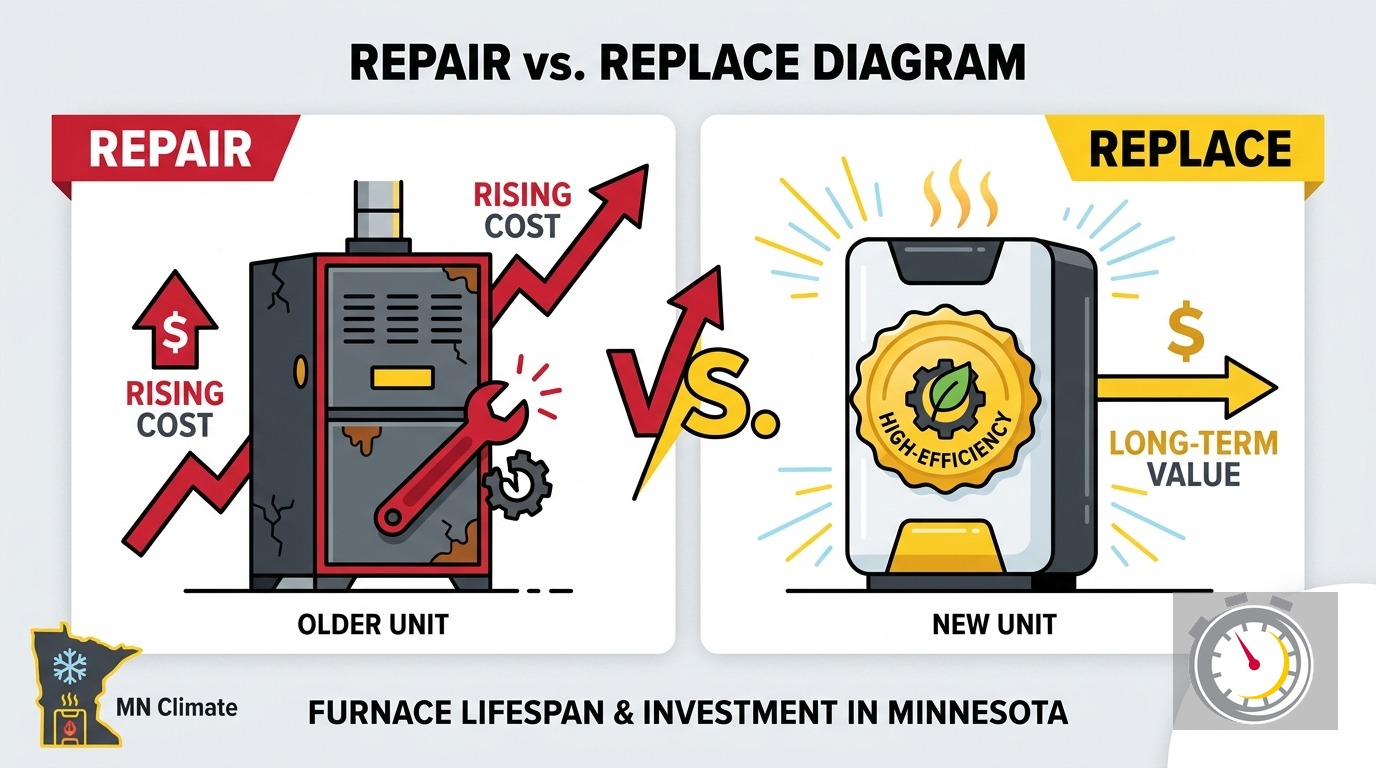
Key Takeaways
- Gas furnaces last 15-20 years nationally. In the Twin Cities, expect closer to 12-17 years because of our heavy heating load.
- Minneapolis averages 7,399-8,300 heating degree days per year - nearly double the US average. Your furnace runs hard from October through April.
- Minnesota already requires a 90-92% AFUE minimum for all replacement furnaces. A federal rule raises that to 95% AFUE in January 2029.
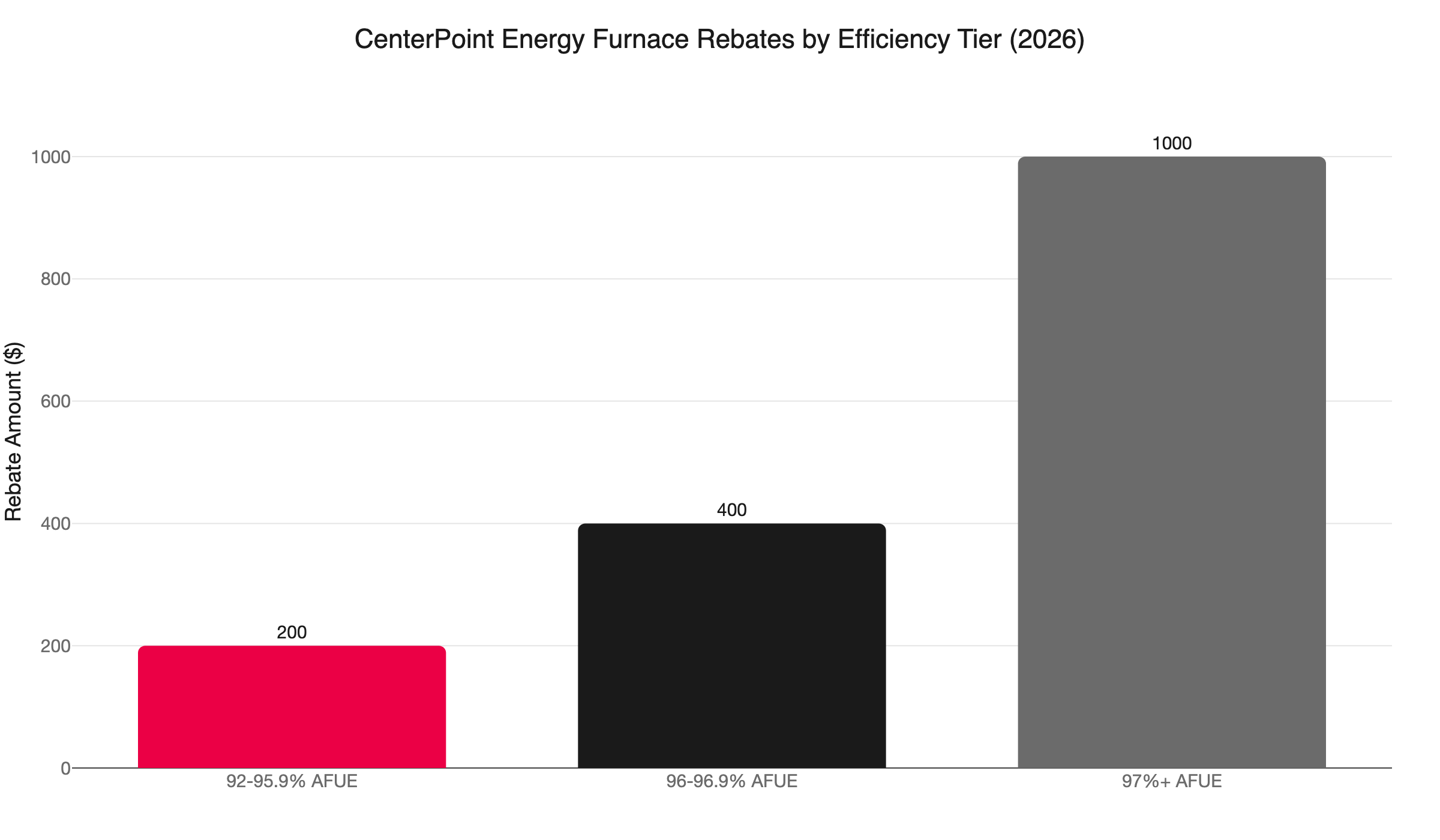
- CenterPoint Energy’s 2026 rebate reaches $1,000 for a 97%+ AFUE unit. The IRS Section 25C credit adds up to $600 on top.
- A cracked heat exchanger is a carbon monoxide risk. That is not a repair conversation. Replace the furnace.
- Annual maintenance is the single best investment you can make to extend your furnace’s life and avoid emergency replacements.
If you’re wondering how long do furnaces last in Minnesota, the national 15-20 year figure is only part of the story. Our heating seasons are longer and colder than the national average. A furnace in Eden Prairie works nearly twice as hard as one in a mild-climate city. That gap matters when you’re weighing a repair bill against a replacement quote.
How Long Do Furnaces Last in Minnesota?
Gas furnaces typically last 15-20 years nationally. In Minnesota, plan on the lower end of that range: roughly 12-17 years. Electric furnaces run 20-30 years. Poor installation or skipped maintenance can cut a gas furnace’s life to 10 years or less.
The 15-20 year benchmark was built on average US heating conditions. Minneapolis is not average. Our 99% heating design temperature is -16°F - one of the coldest in the contiguous United States. Most Twin Cities furnaces run from early October through late April. Some run longer than that.
That run-time accumulates stress on every component: the heat exchanger, blower motor, igniter, and control board. More run-hours means faster wear. It is not a defect in your furnace. It is just our climate asking more of it than a national average accounts for.
Knowing your furnace’s real age is the first step in any repair-or-replace decision. Do that before you call for a repair.
Why Does Minnesota Shorten a Furnace’s Life?
Minneapolis averages 7,399-8,300 heating degree days per year. The US populated-area average is roughly 4,500. Each heating degree day represents run-time and thermal cycling on your heat exchanger. Nearly double the HDD means nearly double the wear compared to a national average climate.
A heating degree day measures how hard your system works on a given day. When the average outdoor temperature is 55°F, that day logs 10 heating degree days (65°F base minus 55°F). A Minnesota winter stacks thousands of those.
NOAA climate data for Minneapolis-St. Paul puts our annual HDD total between 7,399 and 8,300 in recent years. Atlanta sits around 2,900 HDD. Even Chicago logs only about 6,100. Minneapolis is in the top tier of heating-load cities in the lower 48.
That is the number that explains why a furnace reaching 20 years in Georgia might only make it 14-15 years in Ramsey before it starts stacking up major repairs. The national lifespan figure was not built with Minneapolis winters in mind. When you use it as your planning benchmark, you are likely to be caught off guard.
How Do You Find Your Furnace’s Age?
Check the manufacturer’s data plate on the front of the furnace cabinet. The model and serial number are printed there. Most brands encode the manufacture year in the first few characters of the serial number. Search “[brand name] serial number age decode” to find the exact format for your unit.
Service stickers from past tune-ups are another reliable source. Technicians often note the date and model after each visit. If you bought the home in the last decade, your inspection report may include an age estimate as well.
If the data plate is gone or unreadable, your HVAC technician can usually identify the unit’s age from the model number and physical condition. Ask during your next service visit.
Knowing the exact age is the first input in every repair-vs-replace calculation. Get this number before you schedule a repair call or accept a repair quote.
Warning Signs Your Furnace Is Running Out of Time
Age alone does not condemn a furnace. Age combined with any of the following symptoms usually tips the math toward replacement:
- Frequent repairs. One repair a season can be normal. Two or more repairs in the same heating season signals a system in decline.
- Rising energy bills. An aging furnace loses efficiency gradually. If your gas bill is climbing without a rate increase or an unusually cold winter, degraded combustion is the likely cause.
- Uneven heating. Rooms that were always comfortable now run cold. The furnace may be losing capacity or delivering air poorly.
- Unusual noises. Banging at startup, persistent rattling, or squealing during operation are mechanical stress signals. These are not sounds to live with.
- Yellow or flickering burner flame. A healthy gas flame is steady and blue. Yellow or orange means incomplete combustion and a possible carbon monoxide risk.
- Short cycling. The furnace starts, runs briefly, and shuts off before the home reaches setpoint. This strains the heat exchanger and wastes fuel every cycle.
- Condensation or soot around the unit. Either one warrants an immediate inspection, not a wait-and-see approach.
If your furnace is 14 years or older and showing two or more of these signs, the financial math almost always favors replacement over continued repair.
Should You Repair or Replace? The Math That Actually Matters
Multiply the furnace’s age by the repair estimate. If that number exceeds the cost of a new installed unit, replace. A 16-year-old furnace facing a $600 blower repair scores $9,600. New installed furnaces in the Twin Cities start around $3,900-$7,800. The old unit has used up its financial justification.
This formula is a quick filter. Here is a more practical breakdown by age:
- Under 10 years old, repair under $1,000: Repair almost always makes sense. The furnace has most of its useful life ahead.
- 10-15 years old: Compare the repair cost against the first-year fuel savings from a new high-efficiency unit, factored against available rebates. If the stack brings the payback period under seven years, replacement is worth a serious look.
- Over 15 years old, repair over $500: Replacement is usually the better call. You are spending real money to extend a system that has already returned its value.
One factor that changes the math in Minnesota is the rebate stack. A CenterPoint-eligible 97%+ AFUE furnace with $1,000 back from the utility and $600 from the IRS looks very different from a sticker-price comparison. For the full numbers, read more about budgeting for furnace replacement in the Twin Cities.
A Cracked Heat Exchanger Is Not a Repair Decision
A cracked heat exchanger changes the entire conversation. Safety takes over.
The heat exchanger separates combustion gases from the air that circulates through your home. When it cracks, combustion byproducts including carbon monoxide can enter your living space. Carbon monoxide is colorless and odorless. It does not announce itself before it causes harm.
Signs of a cracked heat exchanger include a yellow burner flame, soot deposits near the furnace cabinet, a faint chemical smell when the heat runs, and headaches or dizziness that improve when you leave the house and go away entirely when the furnace is off. A carbon monoxide detector near each sleeping area is your early warning system. If you do not have one, install it today. Do not wait for a service call to make that happen.
If a technician identifies a cracked heat exchanger during an inspection, do not ask whether it can wait until spring. Shut the furnace down. Replace it. This is the one scenario where every financial calculation becomes secondary. A 15-year-old furnace with a cracked heat exchanger is a safety incident, not a repair estimate.
What Does Replacing a Furnace Cost in Minnesota After Incentives?
Installed furnace replacement in the Twin Cities starts at roughly $3,900-$7,800 for a standard unit. A 97%+ AFUE condensing furnace starts around $9,100 installed. After CenterPoint’s $1,000 rebate and the IRS 25C credit of up to $600, the net cost of the high-efficiency option drops considerably from the sticker price.
Here is how the 2026 incentive stack works:
CenterPoint Energy rebates (gas customers, 2026 installations):
- 92-95.9% AFUE: $200
- 96-96.9% AFUE: $400
- 97%+ AFUE: $1,000
Equipment must be installed by a Trade Ally contractor before December 31, 2026. The rebate is processed through the contractor.
IRS Section 25C Energy Efficient Home Improvement Credit:
- 30% of qualified costs, capped at $600 for a gas furnace.
- No income limit. You must owe federal taxes to use it.
- File Form 5695 with your return. The credit resets each tax year with no lifetime cap under current IRA rules.
Xcel Energy: Gas furnace rebates from Xcel ended January 1, 2026. Any contractor site still listing Xcel furnace rebates is working from outdated information.
On a 97%+ AFUE installation, the CenterPoint rebate and the IRS credit together reduce your effective cost by $1,600 before fuel savings begin compounding. For the complete stacking strategy across all available programs, how to combine HVAC rebates and tax credits in Minnesota covers every current incentive layer.
Northern One Hour is a CenterPoint Trade Ally. We handle the rebate paperwork after the install. You do not have to track down forms or chase the utility on your own.
If the upfront cost is a concern, ask about financing. Spreading a $9,100 furnace over 60 months is a different decision than writing a check the day of the install.
What Are Minnesota’s Minimum Efficiency Rules for a New Furnace?
Minnesota requires a minimum of 90-92% AFUE for all replacement gas furnaces under Minnesota Rules Chapter 1322. An 80% AFUE non-condensing furnace cannot legally be installed as a replacement in this state. That standard is already in effect today.
The federal minimum rises further in January 2029. A DOE rule effective that date requires 95% AFUE across the northern region, which covers all of Minnesota. Every furnace installed after that date must hit the new standard.
What this means in practical terms:
If your current furnace is an 80% AFUE unit from 1999, it cannot be replaced with the same technology. The replacement will be a condensing furnace. Condensing furnaces vent through PVC pipe instead of a metal flue. They require a condensate drain line. Your existing venting may need modification.
Knowing this now lets you budget the full scope of the job. Finding out during an emergency replacement in February does not.
The 2029 deadline is also a market signal worth noting. Contractors across the northern region will be handling a surge of involuntary replacements in 2028 and 2029 as homeowners discover that their 80% units cannot be swapped in kind. Lead times and pricing typically tighten ahead of a major regulatory transition. If you are 14-18 years into your current furnace’s life, replacing on your own schedule now avoids that pressure entirely.
How Much Can You Save by Upgrading Your Furnace’s Efficiency?
Upgrading from an 80% AFUE furnace to a 96% AFUE model cuts fuel use by roughly 16.7%. On a $1,500 annual Minnesota gas heating bill, that is about $250 per year. Over a 20-year lifespan, that totals more than $5,000 in fuel savings - not counting rising gas prices over time.
That figure comes from DOE Building America research on high-efficiency gas furnaces. Your actual savings depend on your home’s size, insulation level, and usage pattern.
Minnesota gas heating bills run higher than the national average because our winters are long and cold. A 96-97% AFUE furnace makes every therm of gas work harder. Paired with the CenterPoint rebate and the IRS credit, the premium-efficiency option often reaches payback within the first eight to ten years of ownership - well within the furnace’s expected service life.
How Does Annual Maintenance Extend How Long a Furnace Lasts?
Skipping annual maintenance accelerates wear and masks small failures before they become large ones. A dirty flame sensor causes nuisance shutdowns. A clogged blower wheel cuts airflow and strains the motor. A developing crack in the heat exchanger, caught during inspection, is a scheduled repair. Missed, it becomes a CO emergency.
Think of it the way you think about oil changes. A well-maintained furnace is the most efficient furnace. It lasts longer. It breaks down less often. And when it does need a repair, your technician has a service history to compare against rather than diagnosing from scratch.
A heating maintenance visit covers a full inspection, cleaning, and combustion efficiency check. It takes about an hour and costs $95-$250. Schedule it in September or early October, before the first cold snap brings every HVAC company in the Twin Cities to full capacity.
A maintenance plan locks in annual service and typically includes priority scheduling. On a 5-below night in January when the heat stops, that priority changes everything.
What Should You Do Next?
If your furnace is under 10 years old and running well, schedule a tune-up this fall. That is the right move.
If your furnace is 12-17 years old, find out its exact age today. Decode the serial number. Pull your repair history from the last two seasons. If you have had two or more service calls, start getting replacement quotes before the next failure forces your hand.
If your furnace is over 17 years old, plan the replacement on your own schedule. Waiting for a failure means making a $7,000-$10,000 decision under pressure, in the coldest month of the year, with limited appointment availability and zero leverage. That is not the position you want to be in.
Our team is locally owned and operated in Ramsey, MN. We serve Minneapolis, St. Paul, Blaine, Maple Grove, Plymouth, Brooklyn Park, Woodbury, Bloomington, and the surrounding Twin Cities area. We show up when we say we will. That is the promise behind “Always On Time… Or You Don’t Pay a Dime!(R)”
Call (763) 260-6662 or schedule a furnace inspection or replacement consultation online. We will tell you exactly where your furnace stands and what makes sense next.
Frequently Asked Questions
How long does a furnace last in Minnesota? +
What is the minimum furnace efficiency required in Minnesota? +
Is it worth repairing a 15-year-old furnace? +
What rebates are available for furnace replacement in Minnesota in 2026? +
Need a technician now?