
Furnace Stopped Working: What to Do Tonight in Minnesota
Key Takeaways
- On a typical Minneapolis January night, outdoor temperatures average 9-10°F. Uninsulated pipes can begin freezing in under 2 hours at those temperatures.
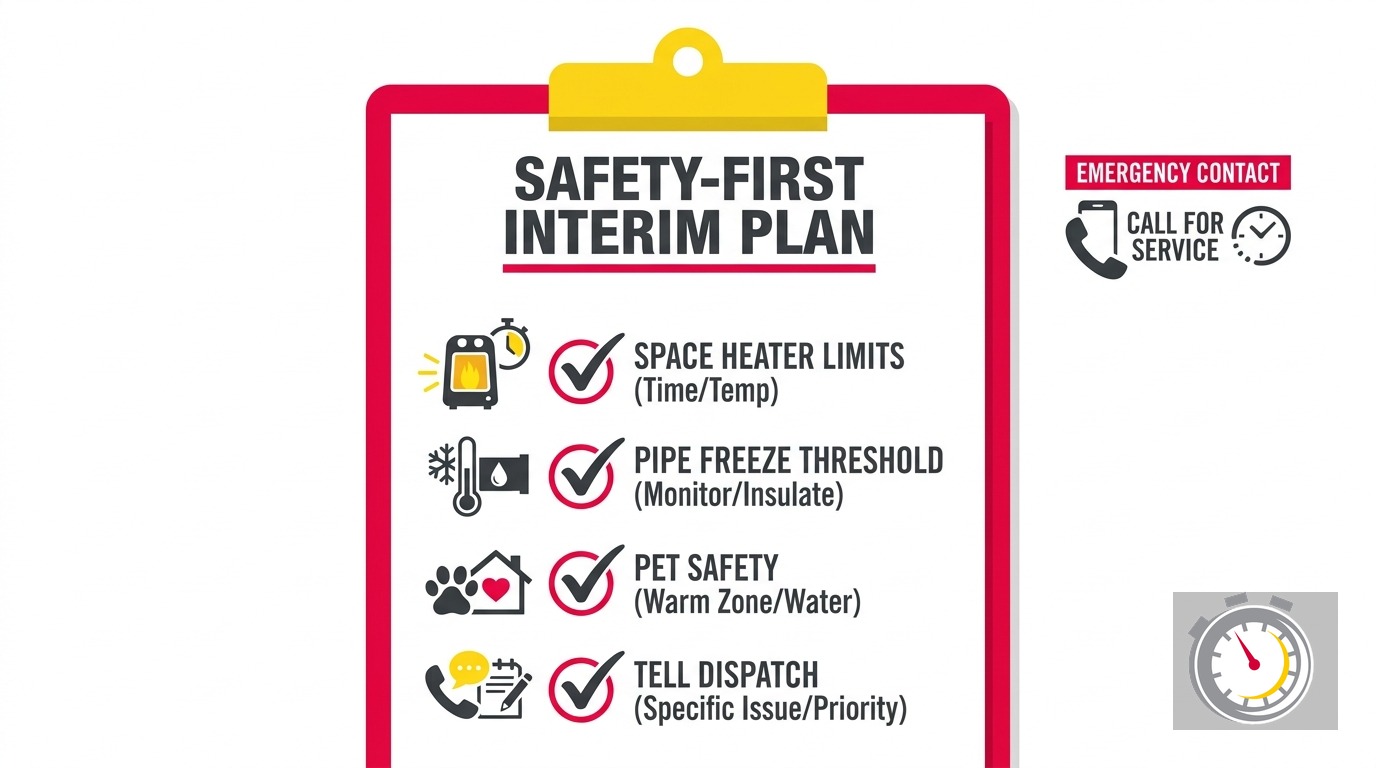
- Keep your home at or above 55°F to protect pipes during a heating outage.
- Space heaters can bridge the gap, but never run one overnight. Turn it off before sleeping, plug it directly into a wall outlet, and keep 3 feet of clearance from anything that can burn.
- Pets feel the cold faster than most adults. Cats begin showing discomfort below 50-60°F indoors. Small or thin-coated dogs feel cold above 45°F.
- When you call for emergency service, lead with any safety symptoms: gas smell, CO alarm, or burning odor from the vents. Then give system type, approximate age, and any error codes showing on the display.
- If you smell gas, leave the house without touching any switches. Walk 350 feet from the building, then call CenterPoint Energy at 800-296-9815.
Is a Furnace Not Working an Emergency?
It depends on outdoor temperature and who is in your home. On a Minnesota winter night, a failed furnace is frequently an emergency. Minneapolis averages a 9°F low in late January. At that temperature, uninsulated pipes can freeze in under 2 hours. Waiting until morning is not always an option.
A stopped furnace rises to same-night emergency status when any of these apply:
- Outdoor temperatures are at or below 20°F
- Infants, elderly residents, or anyone with a cold-sensitive health condition lives in the home
- Pets are present, especially small breeds, kittens, or senior animals
- You smell gas or a CO detector has sounded
If none of those apply and outdoor temps are above freezing, you have more time to assess. But between November and March in the Twin Cities, calling for emergency service is usually the right call. The cost of a service call is far lower than the cost of a burst pipe.
Why Would a Furnace Suddenly Stop Working?
A furnace can stop for many reasons: a tripped circuit breaker, a failed igniter, a dirty flame sensor, a clogged filter that triggered the high-limit safety shutoff, or a control board fault. Some are quick resets. Others need a technician tonight.
Run through these four checks before you call:
- The thermostat. Make sure it is set to Heat, the target temperature is above the current room reading, and the batteries are not dead.
- The circuit breaker. Find the dedicated furnace breaker in your panel. If it tripped, reset it once. If it trips again immediately, stop and call. Do not reset it a second time.
- The furnace power switch. There is usually a wall switch near the furnace that looks like a light switch. Confirm it is in the on position.
- The air filter. A clogged filter can cause the furnace to overheat and trip a safety shutoff. Pull it out and hold it up to a light. If you cannot see light through it, replace it before you try anything else.
If all four check out and the furnace still does not run, stop troubleshooting for the night. Call for service.
One specific scenario worth noting: if your stove and water heater are also not working, the problem may be the gas supply, not the furnace itself. Tell the dispatcher that when you call. It changes how the call is routed and what the technician brings.
If You Smell Gas: Stop and Leave
Gas smell means stop troubleshooting immediately. Do not flip a light switch, turn on a fan, or operate any appliance. Leave the house right now, pushing the door open but not latching it behind you.
Walk at least 350 feet from the building before calling. CenterPoint Energy’s emergency line runs 24 hours a day at 612-372-5050 in the metro or 800-296-9815 statewide. The call is free at any hour. Our full guide on what to do when your furnace smells like gas covers every step in detail. It is worth reading before heating season, not during an emergency.
Is It Safe to Use a Space Heater When Your Furnace Is Out?
Yes, with strict limits. A space heater can keep one room livable while you wait for a repair. But space heaters account for 29% of home heating fires and 77% of home heating fire deaths. The risk is real, and the rules are not optional.
The National Fire Protection Association reports that the majority of home heating fire deaths involve heaters placed too close to something flammable. Heating fires between midnight and 6 AM account for just 13% of all heating fires, but 43% of heating fire deaths. The overnight, unsupervised space heater is the deadliest pattern by a wide margin.
Follow these rules, sourced from the Illinois State Fire Marshal:
Stay at 1,500 watts or under. Federal standards cap portable electric space heaters at 1,500 watts. Do not use a heater rated above that level.
Three feet of clearance in every direction. Nothing flammable within 3 feet of the heater: no curtains, no laundry, no furniture, no blankets, no pet beds.
Wall outlet only. Plug the heater directly into a wall outlet. Never use an extension cord or a power strip. Extension cords are not rated for the sustained draw a space heater pulls.
Turn it off before you sleep. This is the rule that saves lives. If you cannot sleep without heat running, call for emergency service instead.
Electric only indoors. Propane and kerosene heaters release carbon monoxide and nitrogen oxides inside a home. Several states ban them for indoor use. Use only electric space heaters when the furnace is out.
How Fast Can Pipes Freeze When Your Furnace Goes Out?
Faster than most homeowners expect. Uninsulated pipes in unconditioned spaces begin freezing when outdoor temperatures reach 20°F. In the Twin Cities, January lows average 9-10°F. That is well below the danger threshold every night at the heart of winter.
University of Illinois Building Research Council field tests established the 20°F threshold for uninsulated pipes in unconditioned spaces. From there, the timeline accelerates quickly:
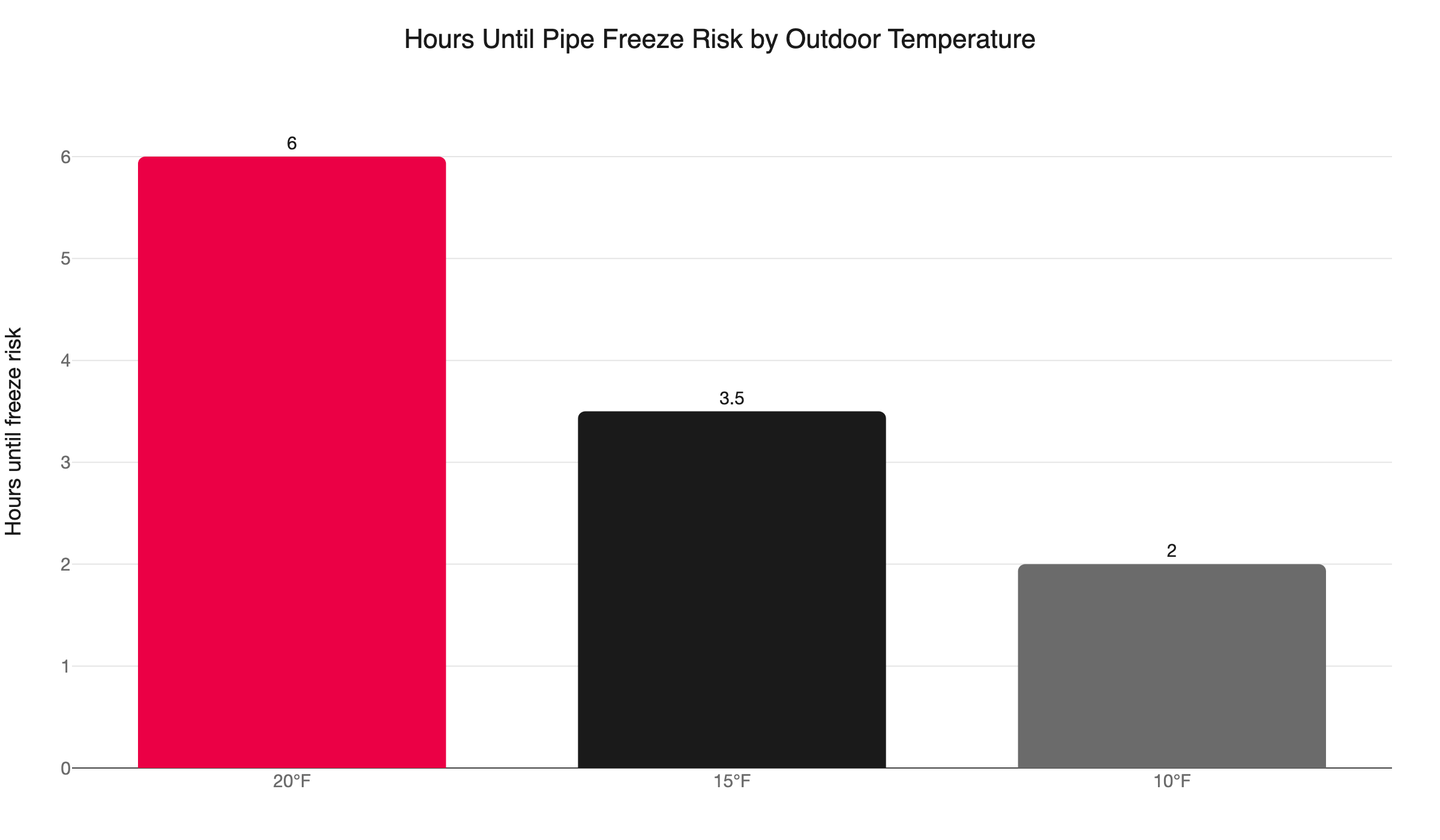
- At 20°F: pipes can freeze in 6 hours or less
- At 15°F: 3 to 4 hours
- At 10°F: under 2 hours
Minneapolis averages a 9°F low in late January, with the coldest stretch of winter centered around January 22. This is not an edge case for the Twin Cities. A furnace that fails on a January night is a pipe risk within hours.
The protective floor is keeping your home at or above 55°F. That is the minimum, not a comfort target. It means the water in your supply lines, which runs behind finished walls and through exterior cavities and crawl spaces, retains enough heat to stay liquid. Once your indoor temperature drops toward that number and the outdoor forecast is at or below 20°F, you are in same-night emergency territory.
While you wait for a technician:
- Open cabinet doors under sinks on exterior walls, especially in the kitchen and bathrooms
- Let cold-water taps on exterior walls drip slowly
- Close doors to unused rooms to concentrate any remaining warmth
- Gather the household into the warmest interior room, usually a centrally located bedroom or a room above the first floor
These steps buy time. They do not prevent a freeze. Treat them as delay tactics until a technician arrives.
What About Pets When the Furnace Goes Out?
Pets cannot tell you they are cold. A home cooling toward 55°F is already a problem for cats and well below comfort for small or thin-coated dogs. If repairs are not imminent, move pets to the warmest room and watch them closely.
For dogs, keeping indoor temperatures in a comfortable range matters. Small breeds, puppies, senior dogs, and thin-coated dogs are more sensitive to cold and may feel it at indoor temperatures that seem fine for other dogs. The American Veterinary Medical Association recommends keeping dogs inside when outdoor temperatures fall below 32°F.
Cats are similarly sensitive. PetMD reports that cats begin showing discomfort below 50-60°F indoors. Below 45°F is too cold for most cats, with kittens, seniors, and thin-coated breeds reaching their limit at the upper end of that range.
Practical steps for pets during a heating emergency:
- Move them to the warmest interior room and close the door
- Add a blanket or extra bedding for insulation
- If using a space heater in the room, choose a model with tip-over auto-shutoff and do not leave pets unsupervised with it running
- If indoor temperatures are falling below 50°F and no repair is imminent, consider whether a neighbor or family member can shelter your pets temporarily
What Should You Tell the Dispatcher When Your Furnace Stops?
How you open that call affects how fast a technician reaches you. Give safety symptoms first. Then system type, approximate age, any error codes, and what you already checked. That order gets you dispatched faster and saves time on arrival.
Here is the sequence that works:
Safety symptoms first. Gas smell, CO alarm, or burning odor from the vents changes the dispatch priority immediately. If any of those apply, say so before anything else.
System type. Gas furnace, electric furnace, heat pump, or boiler. If you are not certain, say “I believe it is a gas forced-air furnace.”
Approximate age. Check the data plate on the unit, usually on the inside of the front door panel. Even “it was here when we bought the house 12 years ago” gives the technician useful context.
Brand and model number. Not required, but it allows the technician to check parts availability before leaving the shop.
Error codes. Look for a blinking LED or small display on the furnace control board. Most modern furnaces flash a fault code when something goes wrong. Report exactly what you see: “3 flashes, pause, 1 flash” is useful and specific. Do not interpret the code. Just read it aloud.
What you already checked. Tell dispatch you checked the thermostat, the breaker, the power switch, and the filter. This lets the technician start further down the diagnostic path on arrival.
Gas supply status. If other gas appliances are also out, say so before the technician is dispatched. The issue may need the gas utility involved, and that changes the response plan.
Keep something to write with nearby when you call. The dispatcher may give you a reference number or instructions. Writing them down helps when you are stressed and cold.
Our team is available around the clock. Schedule emergency furnace service online or call (763) 260-6662 right now.
What If the Blower Runs But No Heat Comes Out?
If you hear the blower and feel air moving but it is not warm, the furnace is calling for heat but failing to ignite. This is a diagnostic situation, not a reason to wait. A blower with no heat output is not a “check again tomorrow” scenario in a Minnesota winter.
Common causes include a cracked or worn igniter, a dirty flame sensor that cannot confirm the burner lit, a faulty gas valve, or a pressure switch blocking the ignition sequence. The blower runs because the control board is still responding to the heat call. Combustion just is not happening.
If the blower also refuses to shut off after the heat call should have been satisfied, the problem shifts to a faulty thermostat, a stuck relay on the control board, or a limit switch issue. We have a full walkthrough of why a furnace blower keeps running and will not shut off if that matches what you are seeing.
Either scenario calls for same-day service in winter.
Carbon Monoxide: The Risk You Cannot See
A stopped furnace produces no carbon monoxide because nothing is burning. The CO risk follows the restart, especially on older furnaces where a cracked heat exchanger can let combustion gases mix with the circulating air supply.
Verify that your carbon monoxide detectors are working and properly placed before heating season begins each year. CO detectors belong on every level of the home and within 15 feet of each sleeping area. If your CO detector sounds after the furnace restarts following a repair, treat it the same as a gas alarm. Leave immediately and call from outside.
Is It Time to Replace Rather Than Repair?
One hard stop on a younger furnace usually points to a repair. On a furnace that is 18 years or older, or one that has failed multiple times this season, a repair quote and a replacement estimate deserve to sit next to each other before you decide.
Consider asking for a replacement estimate alongside the repair quote when:
- The furnace is 18 years or older
- A technician identifies a cracked heat exchanger
- The repair quote exceeds 50% of the replacement cost
- This is the second or third repair call in a single heating season
A 80% AFUE furnace replacement in the Twin Cities starts around $4,950 installed. A high-efficiency 95-96% AFUE model starts around $6,500. These reflect real Twin Cities pricing, not national averages. We also offer financing for furnace replacements. If the numbers point toward replacement but the upfront cost is a barrier, ask about financing options when you call.
We will always give you a straight comparison before recommending replacement over repair. And we back every appointment with our on-time promise: “Always On Time… Or You Don’t Pay a Dime!(R)” If our technician does not arrive within your selected window, you do not pay for the service.
Heat Pump or Boiler Instead of a Furnace?
If your heating system is a heat pump or a boiler rather than a gas furnace, the triage is different. Each has its own failure modes, and the diagnostic steps change accordingly.
If your heating system is a heat pump and it has stopped producing warmth, the cause may be a defrost cycle issue, a reversing valve failure, or a performance limit specific to sub-zero refrigeration. We have a guide for what to do when a heat pump stops heating during a Minnesota cold snap.
If your gas furnace stopped and your stove and water heater also went out at the same time, check whether a frozen gas meter regulator cut the supply to your entire house. In hard cold snaps, the regulator on the outdoor gas meter can ice over and shut down every gas appliance at once. This is a utility issue, not a furnace issue, and the response path is different.
Get Heat Back Tonight
Northern One Hour is locally owned and operated in Ramsey, MN. We serve the full Twin Cities metro: Minneapolis, St. Paul, Blaine, Maple Grove, Plymouth, Brooklyn Park, Woodbury, Bloomington, and surrounding areas.
Call (763) 260-6662 or book a heating repair online. Emergency service is available 24 hours a day, 7 days a week.
Frequently Asked Questions
What fails first on a furnace? +
How long can a furnace run without shutting off? +
Need a technician now?