
Hot Water Baseboard Not Heating One Room? Try This First
Key Takeaways
- One cold room on an otherwise warm loop points to air, a closed valve, or bad fins.
- Feel the pipe along its length. Find the spot where it goes from hot to cold.
- A cold pipe on both sides of the room usually means a valve or flow problem, not the baseboard.
- Furniture, curtains, and dust can choke the baseboard cover and block airflow.
- Bleed air only from a cool system, and open valves slowly.
- A boiler that keeps losing pressure, or air that keeps coming back, needs a technician.
- Call (763) 260-6662 or book online if a quick check does not fix it.
Quick Answer: Why One Room Goes Cold
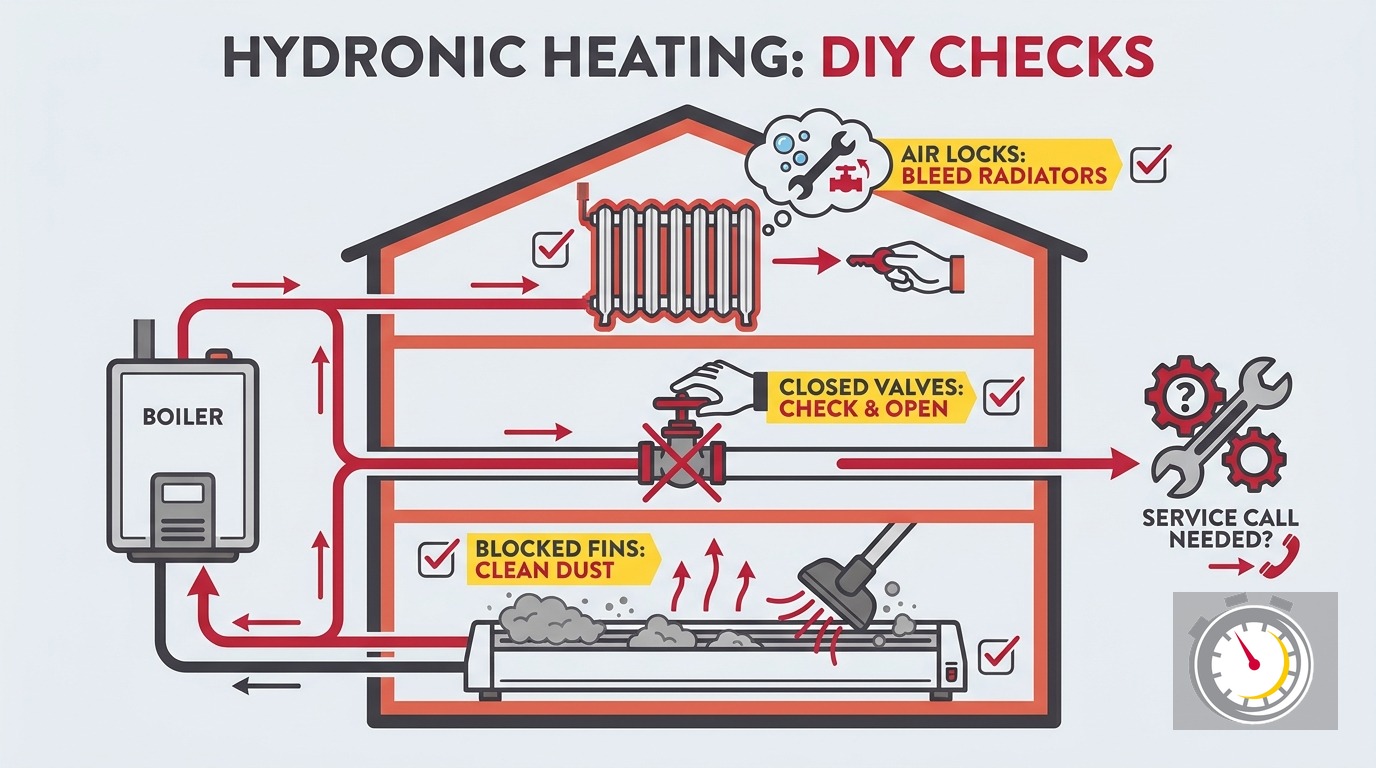
One cold room usually comes down to one of three causes. Trapped air blocks the flow. A closed valve cuts the water off. Or damaged, crushed, or clogged fins keep heat from reaching the room.
You can check all three in about 30 minutes with a flashlight, a towel, and your hands. Touch pipes and baseboard carefully, because hot water pipes can burn.
In older Twin Cities homes, one loop often feeds several rooms, so a single problem can shut down one of them. We are a locally owned and operated Twin Cities heating and cooling company. We see this every year, usually after the first real cold snap.
Why Is One Room’s Baseboard Cold While the Rest Heat?
A single cold room means hot water is not reaching that baseboard, or the baseboard cannot give off its heat. Air pockets, a shut valve, a failed zone valve, or damaged fins are the usual causes. Other rooms staying warm tells you the boiler itself is probably fine.
Hot water baseboard works as a loop. The boiler heats water. A circulator pump pushes it through pipes. The water passes through finned tubing in each room, gives up heat, and returns to the boiler.
Anything that breaks the loop at one room leaves that room cold. The rest of your home can feel fine. Your job is to find where the loop breaks.
Start With the Easy Checks
Rule out the simple stuff before you touch a valve. These checks take five minutes.
- Check the thermostat. Make sure the room’s thermostat or zone is calling for heat. Raise the setting a few degrees.
- Look at the boiler. Confirm it is running and the other rooms are warm.
- Clear the baseboard. Move couches, beds, and bookcases away from the unit. Pull curtains back so they do not hang over the cover.
- Vacuum the cover. Dust and pet hair can pack the space under the front panel.
- Listen. Gurgling, trickling, or knocking in the pipes often means air in the line.
Give the room an hour after any change. Hot water heat is slow, and a baseboard needs time to warm up.
If your whole zone is cold, not just one room, the problem is bigger. Read our guide on boiler zone valve failure symptoms before you go further.
How Do You Tell an Air Lock From a Closed Valve?
Use a touch test along the pipe. Air usually leaves the pipe hot up to one point and cold past it. A closed valve leaves the pipe cold on the far side of the valve. Blocked fins leave the pipe hot but the room cool.
Run the boiler for at least 20 minutes first. Then follow the supply pipe with your hand. Touch it lightly and quickly. Do not grip a hot pipe.
Here is how to read what you feel:
- Hot, then cold at the room. Hot pipe up to the baseboard, cold at the unit. This often means trapped air at the high point of the loop.
- Hot pipe, hot baseboard, cold room. Water is flowing, so airflow is the problem. Look at the fins and the cover.
- Cold pipe before the room. Something upstream is blocking flow. Check valves.
- Cold on both sides of the room. The branch is not getting water at all. Suspect a closed isolation valve or a failed zone valve.
- Warm but not hot. Water may be moving slowly. This can mean a weak circulator or partial blockage.
Write down where the temperature changes. Your notes help a technician work faster if you need a visit.
A 2004 forum thread on a one-room no-heat problem drew a single reply: you might have an air lock. That guess is common, but it is only one possibility. The touch test replaces the guess.
Where Do You Find a Closed Valve?
Look in the basement or utility room first. Isolation valves sit on the supply and return pipes near the boiler and at branch points. Check that each valve handle lines up with the pipe. A handle across the pipe usually means closed.
Valves get bumped. Someone closes one during a summer repair and forgets to reopen it. The first cold snap in October or November then exposes it.
Most general troubleshooting guides tell you to confirm the supply and return valves are open. They rarely say how to find them. Use this routine:
- Trace the pipe. Follow the pipe from the cold baseboard into the basement ceiling or wall.
- Find the valves. Look for ball valves with lever handles, or gate valves with round wheels.
- Read the handle. A lever in line with the pipe is open. A lever across the pipe is closed.
- Open slowly. Turn a closed lever a quarter turn. Turn a wheel valve counterclockwise.
- Listen and feel. Within a few minutes, the cold pipe should warm up.
Do not force a stuck valve. Old valves can leak at the stem once they move. If a handle will not turn easily, stop and call a pro.
Some homes also have a zone valve on each loop. It is an electric valve that opens when the thermostat calls for heat. If it fails, the whole zone goes cold, not one room. That is a repair job for us.
Can Blocked or Damaged Fins Cause a Cold Room?
Yes. Baseboard heat depends on thin metal fins wrapped around the pipe, which spread heat into the air. If fins are crushed, missing, or packed with dust, the room gets less heat even when hot water flows through.
This cause is easy to miss because the pipe feels hot. The system looks like it is working, yet the room stays cool.
Take off the front cover. Most covers lift or unclip. Shine a flashlight along the element and look for:
- Dented or crushed fins. A vacuum hose, a moving dolly, or a kid’s toys can flatten them.
- Missing fins. Gaps along the tube mean less surface area for heat.
- Dust and lint. A thick gray mat blocks airflow.
- Rust or corrosion. Flaking metal can signal an old or wet unit.
- Blocked top and bottom. Carpet edges, drapes, and furniture can cover the air openings.
You can clean dust yourself with a vacuum brush attachment or a soft brush. Work gently so you do not bend fins.
You can also straighten lightly bent fins with a fin comb or a flat tool. Go slowly. Metal this thin can crack or cut your hand.
Real damage is another matter. One home-inspection reference notes that a damaged or missing fin reduces output. It also says missing fins cannot easily be added back. The affected section must be replaced with factory-finned tubing.
If you find real fin damage, plan on a repair. A technician can tell you whether to replace a section or the whole run.
How Do You Bleed Air From a Hot Water System Safely?
Let the system cool first. Then find the bleeder valve, open it slowly with a key or flathead screwdriver, and let air hiss out. Close it when a steady stream of water appears. Keep a towel and a small container nearby.
Air is a common cause of one cold room. Pockets collect at high points, such as an upstairs run or a loop that rises over a doorway. Water cannot push past the pocket.
Some baseboard units have no bleeder valve. In many homes, bleeding happens at the boiler or on the main loop. Others use a valve at the end of a branch. Know your setup before you start.
Follow these steps:
- Turn down the thermostat. Let the boiler and pipes cool for at least an hour.
- Check the pressure gauge. Note the reading before you start.
- Start low, then go high. Begin at the lowest bleeder and work up. Air rises.
- Open slowly. Turn the valve a quarter turn. Listen for hissing.
- Close at water. Shut the valve as soon as water spits out in a steady stream.
- Recheck pressure. Compare the gauge to your starting number.
- Restart heat. Turn the thermostat back up and test the touch pattern again.
Our guide to bleeding air from radiators covers the same process for older radiator systems. Many of the steps carry over.
If your basement has isolation valves on each branch, a technician may use a different approach. They close the other branches and force flow through the cold one. That pushes air out through a drain or bleeder. It works well, but it takes the right valves in the right order.
Do not run your boiler while you bleed it. Hot water can scald fast. Never open a bleeder on a system that is hot or under high pressure.
Add water only if your boiler has a fill valve and you know the target pressure. Overfilling can damage the expansion tank and relief valve. If you are not sure, skip this step.
Does Baseboard Heat Need Water?
Yes, hot water baseboard needs water. It is a sealed loop filled with water that carries heat from the boiler. If the loop loses water or pressure, rooms go cold. Electric baseboard is different. It has no water and runs on electricity.
Check which type you have before you troubleshoot. Hydronic baseboard has copper pipes running to the unit, usually with a boiler in the basement. Electric baseboard has a wire and a thermostat on the wall. Our post on electric baseboard upgrade options covers the electric side.
In a hydronic system, the water stays inside the pipes, so you should not see leaks. Look for these signs of low water:
- A pressure gauge near zero. Most boilers need steady pressure to push water to upper floors.
- Gurgling or hissing. Air takes the place of lost water.
- Cold upstairs rooms. Low pressure often hits the highest rooms first.
- A boiler that keeps adding water. That can mean a leak or a failed expansion tank.
If your pressure keeps dropping, you have a leak or a component fault. Read about boilers that lose pressure for causes and fixes.
Why Am I Not Getting Heat Upstairs?
Upstairs rooms go cold first when air or low pressure blocks the loop. Air rises to the highest point, so it collects in upper runs. A weak circulator pump, a failing zone valve, or an addition on a long loop can also starve those rooms.
Think of the loop as a long hallway. Water has to travel the whole way, and the farther the room, the harder it has to push.
Check these upstairs-specific causes:
- Trapped air at the top. Bleed from the highest point first, after the system cools.
- Low boiler pressure. The gauge should sit in the range your boiler’s label or manual lists.
- Weak circulator. A pump that hums but barely moves water cannot reach upper runs.
- Long additions. A room added to the end of an old loop may get the last of the heat.
- Closed upstairs branch valve. Some homes have a valve at each floor.
A failing pump is a common culprit. Learn the signs in our post on circulator pump failure.
If forced-air heat serves your upstairs instead, the causes differ. Our guide on why upstairs rooms run cold in winter covers ductwork and airflow.
Why Do Older Twin Cities Homes See This More?
Older homes have older loops, more valves, and more changes over time. A house 60 years old or more may have had additions tied into a single loop. Each change adds length, high points, and places for air to collect.
Here is what we often find in Twin Cities homes:
- Additions on one loop. A sunroom or back bedroom ends up at the far end of an old run.
- Forgotten valves. Past owners or contractors closed branches and never reopened them.
- Years of wear. Old fins, old pumps, and old zone valves all lose performance.
- Seasonal surprises. The system sits idle all summer, and the first cold snap in fall exposes any problem.
- Basement changes. Finished basements can hide valves behind drywall or storage.
Our winters are hard on heating systems. A boiler may run for months with few breaks. Small flow problems that go unnoticed in October become big comfort problems in January.
Our post on why older Twin Cities homes struggle with winter comfort goes deeper on the building side of this issue.
A yearly boiler tune-up catches many of these issues early. We check pressure, test valves, and look at the pump and expansion tank. See our boiler repair and maintenance service for details.
When Should You Stop and Call a Pro?
Stop if the problem returns after a fix, if pressure keeps dropping, or if you see leaks or hear loud noises. Also stop if both sides of the room’s pipe are cold. These signs point to a system fault that needs proper tools and testing.
Do not push past your comfort level. Hot water and pressurized pipes cause burns. Call us if you see any of these:
- A boiler that keeps losing pressure. That points to a leak, a bad relief valve, or a waterlogged expansion tank.
- Air that keeps coming back. Repeated air can mean a failing air vent or a leak pulling air in.
- A cold pipe on both sides of the room. The branch is cut off. A hidden valve or failed zone valve may be the cause.
- A stuck or leaking valve. Do not force it.
- Water on the floor or wet baseboard. Shut off the boiler and call right away.
- Banging, hammering, or loud pump noise. These sounds can signal trapped air or a failing pump.
- Rust or sludge in the water. Dirty water can block flow. See our guide on boiler power flush and sludge removal.
- No heat anywhere. That is an emergency. Read our steps for emergency boiler repair.
We handle heating and cooling only. If you find a plumbing leak or an electrical fault along the way, we can point you to our sister Northern brands for that work.
Our promise: “Always On Time… Or You Don’t Pay a Dime!(R)” We arrive within the time window you select. If our technician does not show up on time, you do not pay for the service. We also back our work with a 100% satisfaction guarantee and honest, up-front pricing.
What if the Fix Points to a New Boiler?
Sometimes a cold room means the boiler is near the end of its life. Frequent pressure loss, repeated pump failures, and heavy sludge add up. At that point, repair after repair costs more than replacement.
A condensing boiler replacement is a major project in the Twin Cities. The price depends on size, piping changes, and venting. We give you a firm quote before work starts.
Utility rebates can help. CenterPoint Energy lists these natural gas rebates for equipment installed between January 1 and December 31, 2026, with the application filed in the same calendar year, per its heating systems rebate page:
- Standard boiler at 85% AFUE or higher: a replacement rebate.
- Condensing boiler at 91% AFUE or higher: a larger rebate, for replacement or new construction.
- Combination boiler at 91% AFUE or higher: the largest of the three, for replacement or new construction.
AFUE is a rating of how much fuel turns into heat. Higher numbers mean less wasted fuel.
The 2026 rebate year ends soon. Confirm current amounts with CenterPoint before you buy. Rebate programs change, and your eligibility depends on your gas utility.
A combination boiler can also supply hot water. If that interests you, read our combi boiler guide. We also offer financing on larger jobs like boiler replacement, so a big bill does not have to land all at once.
See our boiler installation and replacement page for what to expect.
A Simple Plan for This Weekend
Work through this list in order:
- Rule out the basics. Check the thermostat and clear furniture and curtains from the baseboard.
- Run the touch test. Follow the pipe and note where hot turns to cold.
- Check valves. Look for lever handles across the pipe near the boiler and branch points.
- Inspect fins. Remove the cover and look for dents, gaps, and dust.
- Bleed if needed. Cool the system and open bleeders slowly, low to high.
- Watch pressure. Make sure the gauge stays steady after any fix.
- Call if it fails. Use the stop list above and call us.
Many homeowners wonder if closing off a cold room will help. For hot water baseboard, nothing in the room needs closing. If you have a mix of systems, our post on closing vents in unused rooms explains why shutting vents rarely saves energy on forced-air setups.
Let Us Take a Look
Some cold-room problems yield to a valve and a vacuum. Others need a trained technician with the right tools.
Northern One Hour is locally owned and operated in the Twin Cities. We know the older homes, the long loops, and the way our winters stress a boiler. Our technicians test flow, valves, pumps, and pressure so the fix lasts.
Call (763) 260-6662 or book online to schedule fast. Pick a time window that works for you. We will arrive within it, or you do not pay for the service.
Learn more about our heating services or request a boiler visit today.
Frequently Asked Questions
Does closing vents in unused rooms save energy? +
Is it safe to bleed a hot water heating system myself? +
Need a technician now?