
Should I Close Vents in Unused Rooms to Save Energy?
Key Takeaways
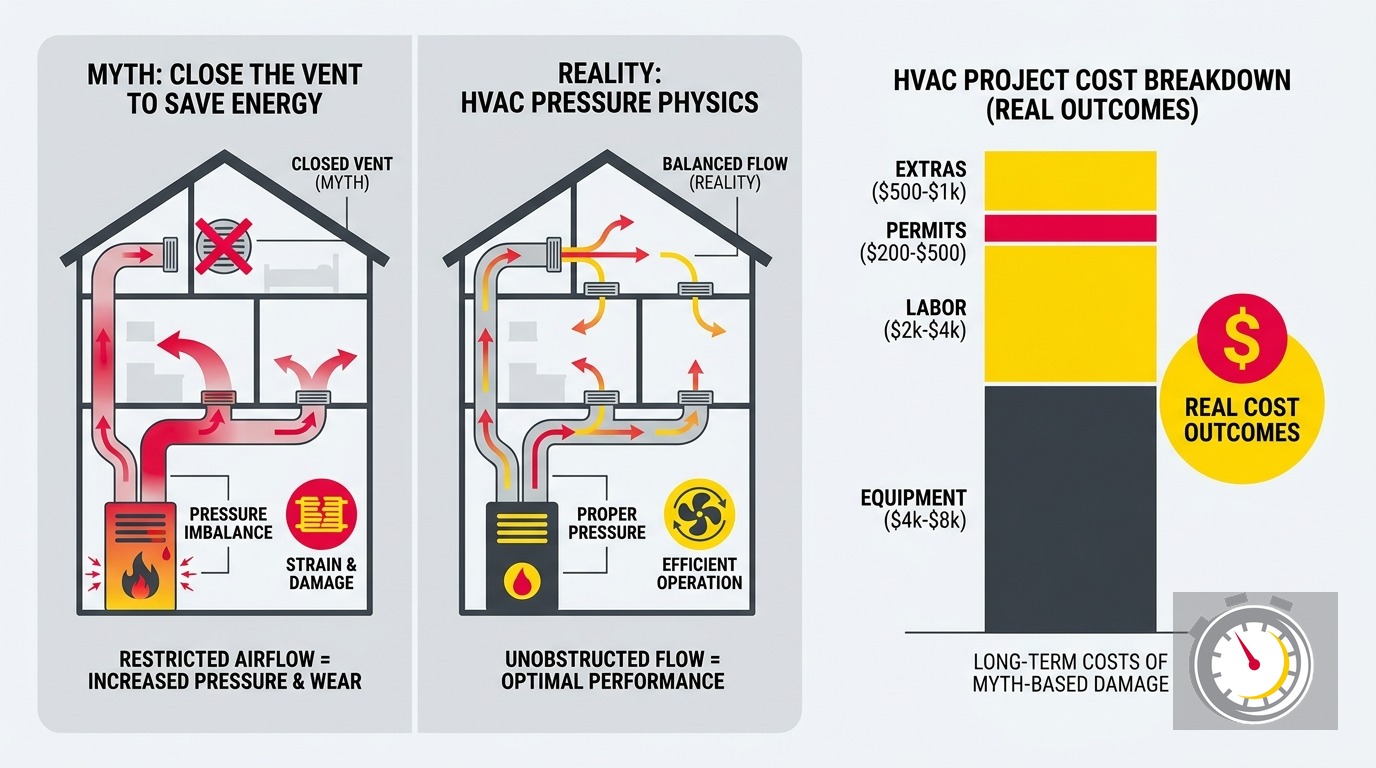
- Closing vents in unused rooms does not reduce how much energy your system uses. It changes where the air exits, not how much energy was spent making it.
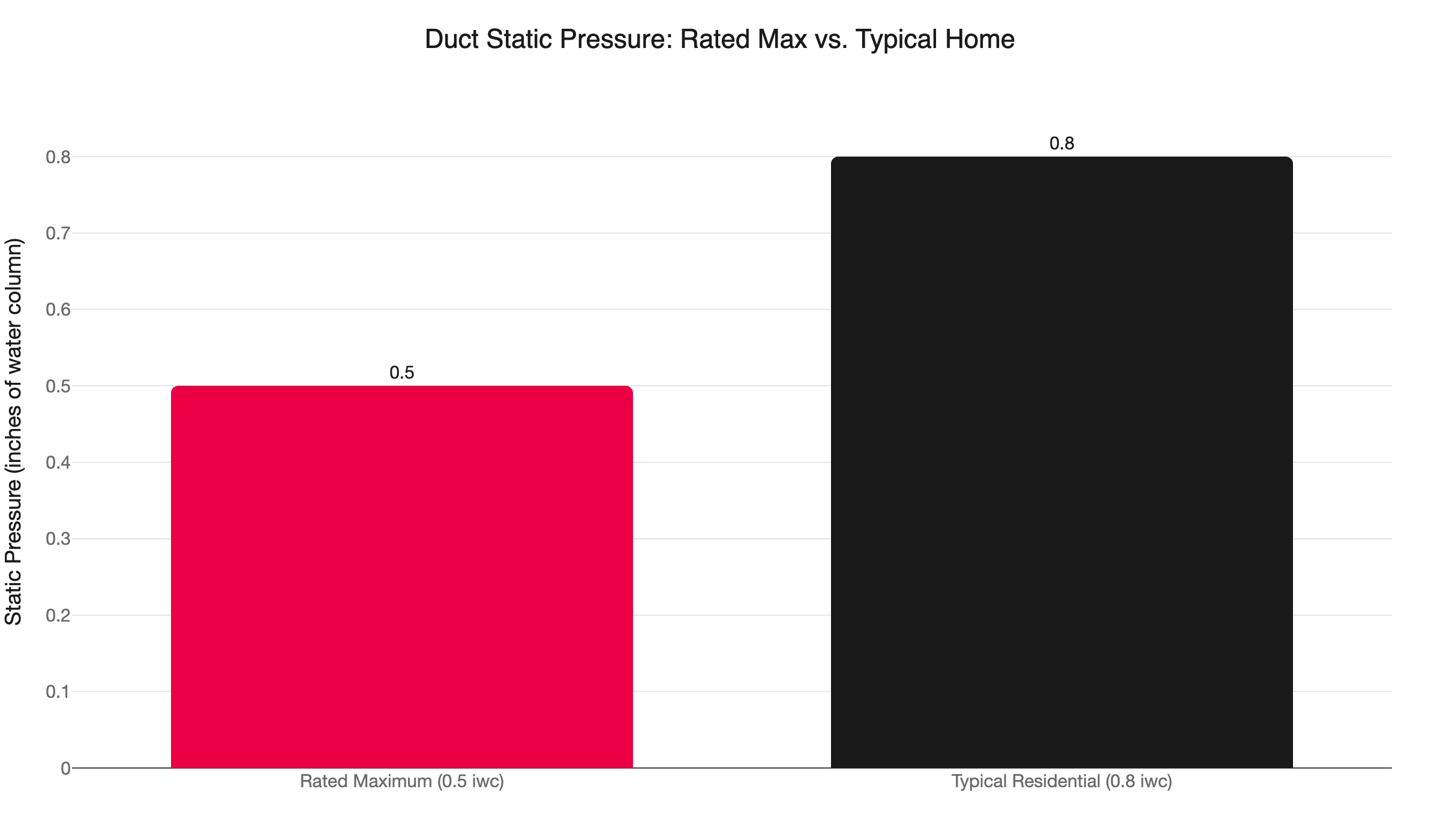
- Most residential duct systems already run at roughly 0.8 inches of water column - 60% above the rated maximum of 0.5 iwc - before a single vent closes.
- Modern ECM blower motors respond to rising pressure by spinning faster and drawing more electricity. Closing vents makes them work harder, not easier.
- Older PSC blower motors lose airflow under pressure, which can ice over the evaporator coil and shorten compressor life.
- In a Minnesota winter at -15F to -25F, a sealed room can drop below 32F inside wall cavities and freeze supply lines. No national guide mentions this because it is not a warm-climate problem.
- Elevated duct pressure forces air into duct seams, creating leaks that send conditioned air into your attic or wall cavities instead of your living space.
- Two alternatives actually work without harming your system: HVAC zoning and smart thermostats. Both are rebate-eligible in Minnesota.
Should I Close Vents in Unused Rooms to Save Energy?
The direct answer: No. The Department of Energy calls this practice not recommended for homes with forced-air systems. Closing a register raises static pressure inside your ductwork. Your blower keeps pushing the same volume of conditioned air, now against a system with fewer exits for that air. The energy required to condition and move it does not decrease. In many cases, it increases.
The intuition is understandable. Not heating that room should cost less. But your furnace has already burned the gas. Your blower is already running. Closing the vent only reroutes where the air goes. It does not reduce how much work was done to make it.
A 2003 study from Lawrence Berkeley National Laboratory measured register-closing effects on forced-air heating systems across a range of climate conditions, duct leakage levels, and numbers of closed registers. The finding was consistent in every scenario tested: closing registers increased energy use. Any thermal savings from not conditioning certain rooms were offset - and often exceeded - by the energy penalties that elevated pressure creates downstream.
How Does Closing a Vent Change the Pressure in Your Duct System?
Short answer: Closing a register works like putting your thumb over part of a hose nozzle. The water keeps coming. The pressure behind your thumb rises. Inside your ducts, the same physics apply - and most Twin Cities systems have zero margin to absorb the change before a vent is ever touched.
A forced-air system is designed to operate within a specific static pressure range. The rated maximum for a residential duct system is 0.5 inches of water column (iwc). Field measurements across many homes show that most systems already run at roughly 0.8 iwc under normal conditions. That is 60% above the rated limit before a single vent closes.
When you shut two or three registers in rooms you rarely use, you push an already over-pressured system higher still. Your blower, your duct joints, and your heat exchanger all absorb the consequence. Some absorb it for years. Some give out ahead of schedule.
Twin Cities homes carry extra exposure here. Much of the metro’s housing stock was built before 1980, with original sheet metal or unsealed flex duct. These systems are the most vulnerable to pressure-induced duct leakage and the most likely to be at or above the 0.8 iwc threshold already. They have the least margin and the most to lose.
What Happens to a Modern ECM Blower Motor When Vents Are Closed?
Short answer: It speeds up and draws more electricity. An ECM (electronically commutated motor) is programmed to maintain target airflow. When duct pressure rises, the motor compensates by spinning faster. Closing vents makes it work harder - the opposite of what most homeowners expect.
If your furnace was installed or replaced in the last decade, it almost certainly has an ECM blower. Rebate programs through Xcel Energy and CenterPoint Energy have pushed 95%+ AFUE furnaces with ECM motors into most replaced systems across the Twin Cities. Under normal operating conditions, this is exactly what you want: a motor that adapts continuously to maintain consistent airflow and comfort.
But when vents close and duct pressure rises, the ECM ramps up speed and electricity draw to compensate. Your gas bill may stay flat. Your electricity bill climbs every time the blower runs.
Minnesota furnaces run 200 or more days each year. The added electricity draw from a motor running at elevated speed compounds over a long heating season. Most homeowners with modern, high-efficiency equipment assume the furnace will simply work less hard when rooms are closed off. The physics push in the opposite direction.
What About an Older PSC Blower Motor?
Short answer: A PSC (permanent split capacitor) motor cannot adapt to rising pressure the way an ECM can. It slows down instead. Lower airflow creates two distinct failure paths: a frozen evaporator coil in summer and an overheated heat exchanger in winter. Both are expensive.
A PSC motor is a simpler, less adaptive design. When static pressure rises, it loses speed and moves less air. In cooling mode, reduced airflow across the evaporator coil drops refrigerant temperatures too low. Ice forms on the coil. Airflow drops further. The compressor strains to maintain pressure against a partial blockage. A frozen evaporator coil is often the first visible symptom, but the compressor absorbs the long-term punishment.
If your home still has its original blower from a furnace installed before 2010, there is a reasonable chance it uses a PSC motor. The fix is not closing fewer vents. It is having a technician measure airflow and static pressure so you know where your system actually stands.
In heating mode, the reduced airflow problem shifts to the heat exchanger. Which brings us to the most serious consequence of closing vents.
Can Closing Vents in Unused Rooms Crack My Heat Exchanger?
Short answer: Yes, over time. Restricted airflow causes the heat exchanger to overheat on every heating cycle. Repeated overheating causes metal fatigue. Eventually the exchanger cracks, allowing carbon monoxide to enter your living space through the supply air stream.
The heat exchanger is the most expensive component in a gas furnace. Its job is to separate combustion gases from the air you breathe. When airflow is restricted, the exchanger runs hotter than it was designed to on every call for heat. The metal expands and contracts unevenly under that elevated temperature. Over enough heating cycles, it cracks.
A cracked heat exchanger lets combustion byproducts - including carbon monoxide - leak into the supply air stream. Carbon monoxide is colorless and odorless. You will not detect it without a working CO alarm. A cracked heat exchanger is not a problem to defer: the furnace cannot safely run until the issue is addressed.
For more on the warning signs before a crack develops, our cracked heat exchanger guide covers what to look for and when to call for an inspection.
Does Closing Vents Cause Duct Leaks?
Short answer: Yes. Elevated pressure pushes conditioned air into every imperfection in your duct system. Small gaps at joints and seams widen over time. Air escapes into attics and wall cavities - spaces you paid to condition that receive none of the benefit.
Closing registers forces conditioned air through duct seams and out through leaks into unconditioned spaces, raising heating and cooling costs rather than reducing them. The Lawrence Berkeley study confirmed this effect across different levels of baseline duct leakage. Even homes that started with reasonably tight ductwork lost more energy through pressure-induced leaks when registers were closed.
Duct leaks compound. A seam that weeps a small amount of air this winter leaks more next winter. On an older home with sheet metal duct that has never been sealed, this process is likely already underway. For a clear picture of what duct leakage costs and what professional sealing addresses, our duct sealing guide walks through the details.
What Is the Pipe-Freeze Risk Specific to Minnesota Winters?
Short answer: In a Minnesota winter, a sealed room can drop below 32F inside exterior wall cavities when outdoor temperatures hit -15F to -25F. Supply lines running through those walls can freeze and burst. This is a real, expensive consequence that no national HVAC guide mentions - because in most of the country, it is not a realistic outcome.
Most national guides stop their analysis at duct leaks and heat exchanger stress. Those are real problems, but they develop gradually. Frozen pipes can happen in a single overnight cold snap.
Twin Cities temperatures regularly reach -15F to -25F in January and February. A spare bedroom with the vent closed and the door shut loses heat through exterior walls faster than it can gain heat from adjacent rooms. The air temperature inside the room may remain above 32F. The interior cavity of the exterior wall - where plumbing supply lines commonly run - may not.
When a supply line inside a wall freezes and bursts, the repair is not straightforward. You need to locate the break, cut drywall to access it, repair or replace the section of pipe, then patch and repaint. Locating a hidden break alone can take hours. Total repair costs commonly run into the thousands of dollars. That outcome is not offset by a season of utility savings from closing a vent.
This risk is specific to Climate Zone 6, where Minnesota sits. It does not appear in national guides because in Texas, Georgia, or California it is not a realistic winter outcome. In the Twin Cities metro, it is.
What Should I Do Instead of Closing Vents?
Two approaches deliver real energy savings in underutilized rooms without creating duct pressure problems: HVAC zoning and smart thermostats. Both give you meaningful control over which areas of your home are conditioned. Neither fights against your duct system’s design.
HVAC zoning uses motorized dampers installed inside the ductwork, not at the register face. A zone panel opens and closes those dampers based on individual thermostat calls from each zone. When a zone does not need conditioning, the damper adjusts inside the duct, where the system accounts for pressure. The rest of the duct system is not penalized.
A zoning system can divide your home into two, three, or more independently controlled areas. If the guest room sits empty for three weeks, that zone runs at a setback temperature. Your living areas and master bedroom get full conditioning. This is the right tool for homes with consistent hot and cold spots. Our HVAC zoning guide for two-story homes covers how zoning works, what installation involves, and when it makes the most financial sense.
Smart thermostats address the scheduling side of the problem. Programming setbacks during hours when rooms are consistently empty reduces energy use without touching the duct system. Xcel Energy offers rebates for qualifying smart thermostats for Minnesota homeowners. That rebate takes a meaningful portion off the upfront cost and shortens the payback period considerably.
The right choice depends on how your home is laid out, where the comfort problems are most persistent, and what your budget for a fix looks like. As a locally owned and operated team, we will give you a straight answer on which option fits - not the one with the higher margin.
What Are the Signs My Duct System Is Already Under Stress?
Short answer: Watch for rooms that stay too hot or cold, a blower that runs louder than usual, and energy bills that climb without a weather explanation. Any single symptom warrants a look. More than one means the system needs a professional evaluation now, not at the next tune-up.
You may not need to close any vents to trigger duct pressure problems. Many Twin Cities systems already run over their rated limit. These are the signals to watch:
- Rooms that take noticeably longer to reach the thermostat setpoint than the rest of the house
- Heating or cooling bills that increase without a clear weather explanation
- A blower that runs louder or at a noticeably higher pitch than it used to
- Dusty or musty air coming from specific registers
- Ice forming on the indoor coil during a summer cooling call
- A furnace or AC that short-cycles - turns on and off more frequently than normal
More than one of these together points toward a static pressure or airflow problem. A pressure measurement during a furnace tune-up will tell you exactly where your system stands. The same visit catches heat exchanger issues before they become a safety problem, not after.
When Should You Call Northern One Hour?
Call when the system shows symptoms - not only when something fails. A technician who finds elevated static pressure, duct leaks, or a stressed blower during a maintenance visit addresses those at a fraction of the cost of a downstream failure.
If you have been closing vents as a regular habit for years, schedule an inspection. The cost of that evaluation is far lower than a heat exchanger replacement, a compressor failure, or burst pipe repairs inside your walls. Catching problems early is always the better trade.
Northern One Hour is locally owned and operated in Ramsey, MN, serving the full Twin Cities metro: Minneapolis, St. Paul, Blaine, Maple Grove, Plymouth, Brooklyn Park, Woodbury, Bloomington, and the surrounding communities. We back every service call with our on-time promise: “Always On Time… Or You Don’t Pay a Dime!(R)” Call us at (763) 260-6662 or book online to schedule an inspection or seasonal tune-up at a time that works for you.
Frequently Asked Questions
Does closing vents in unused rooms actually save energy? +
Can closing vents damage my furnace? +
What should I do instead of closing vents? +
Is closing vents more dangerous in Minnesota than other states? +
Need a technician now?