
Boiler Power Flush Minnesota: When to Flush, What It Costs
Key Takeaways
- Sludge (magnetite) and scale (mineral deposits) are two different problems. Minnesota boilers often face both at once.
- Up to 95% of debris in a hydronic system is magnetite. It is an iron oxide that forms as metal components corrode.
- Suburban and well-water Twin Cities homes often see 15-35 grains per gallon (GPG) of water hardness. That is scale-forming territory far above the national average.
- A residential power flush takes 6-8 hours and typically costs $600-$1,200 in the Twin Cities.
- A magnetic filter installed after a flush traps future sludge before it reaches the heat exchanger.
- If your boiler also needs multiple component replacements, flushing first may not be the best call. A replacement conversation makes more sense at that point.
- CenterPoint Energy offers up to $500 in rebates for a qualifying condensing boiler replacement. Factor that in if your boiler is aging and losing efficiency.
Cold spots on your radiators, constant restarts, or black water when you bleed a valve. All three are signs a boiler power flush in Minnesota may be overdue. Twin Cities boilers face a problem most national guides skip: magnetite sludge and hard-water scale often build up together. This guide covers both. You will learn what they are, how to spot them, and what a flush realistically costs here.
What Is a Boiler Power Flush?
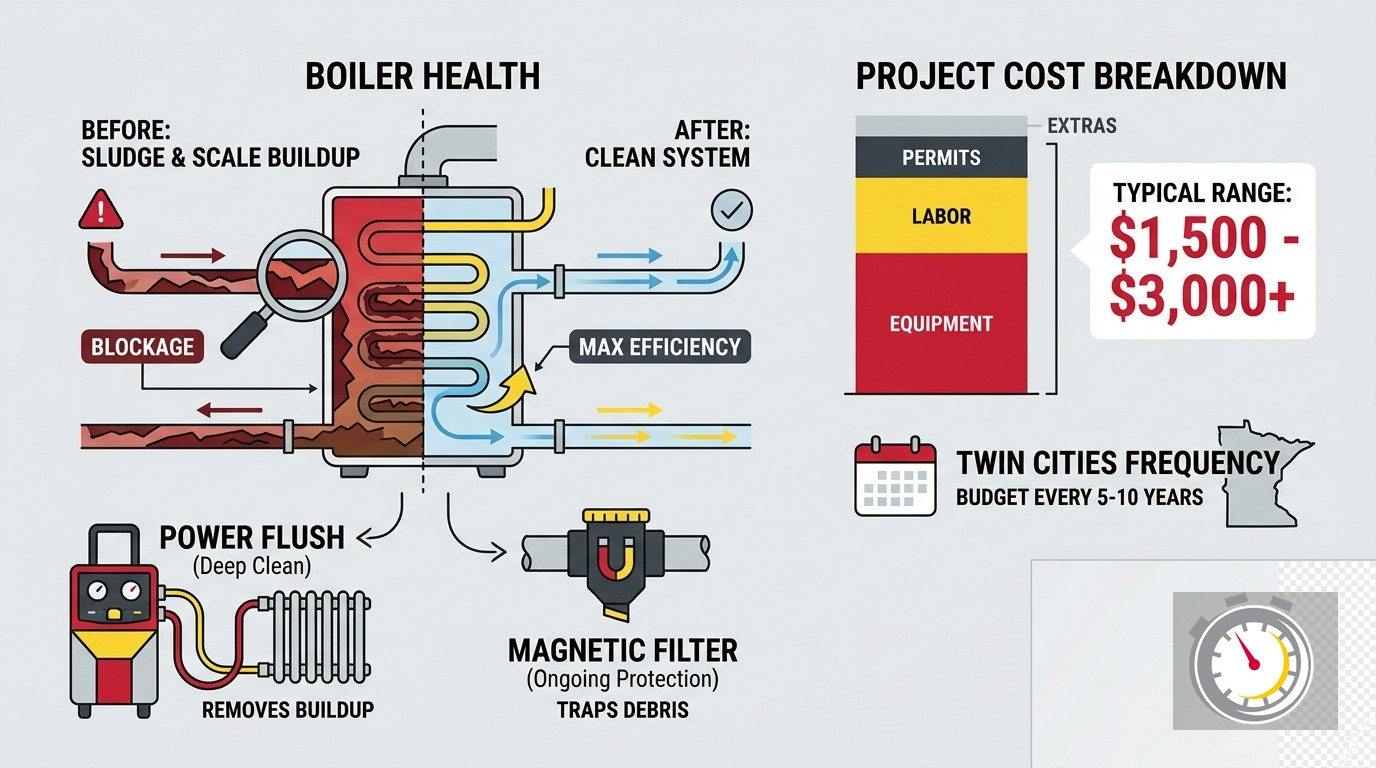
A boiler power flush forces a pressurized mix of water and cleaning chemicals through every pipe, radiator, and component in your hydronic system. It breaks up and expels accumulated sludge and deposits. The process takes 6-8 hours for a typical home, though heavy buildup can stretch the job into a second day.
A hydronic heating system is a closed loop. Water circulates from the boiler through pipes to your radiators, transferring heat, then returns to be reheated. Over years, two things accumulate inside that loop. The first is iron oxide sludge, called magnetite. The second is mineral scale from dissolved calcium and magnesium in your water.
Both reduce heat transfer. Both make your boiler work harder. Left long enough, both cause damage beyond what a flush can fix.
A power flush addresses both at once. The machine connected to your system generates enough flow and pressure to scour deposits from pipe walls. It expels them from the system through a waste outlet. After the flush, your technician adds a corrosion inhibitor to prevent new buildup from the first day forward.
Why Do Minnesota Boilers Face a Harder Sludge and Scale Problem?
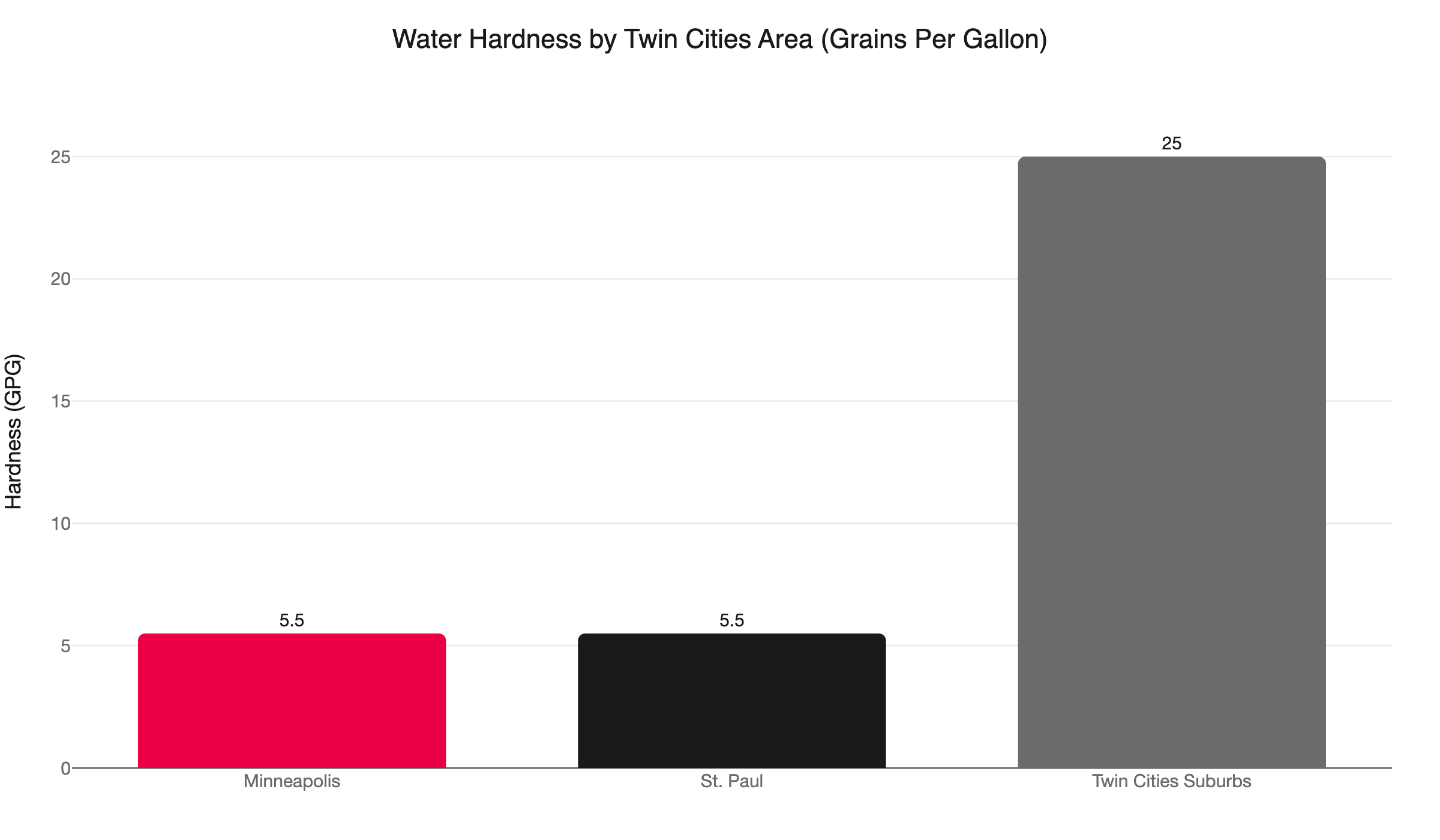
Minnesota city water is relatively soft, but suburban and well-water homes regularly see 15-35 GPG of hardness - well above the national average. Combined with a 6-7 month heating season, that makes sludge and scale accumulate faster here than in milder climates.
Minneapolis city water averages about 5.5 GPG of hardness, with a pH near 9.0. That elevated pH increases scaling potential in any heated system. St. Paul runs similarly at 5-6 GPG after lime softening.
Suburbs and well-water homes are a different story. Water hardness in those areas commonly runs 15-35 GPG, with some communities exceeding 25 GPG. That is two to five times the national average. Every 5 GPG of hardness deposits about 0.4 lbs of scale per year in heating equipment. That translates to roughly an 8% efficiency loss and 8% higher energy costs.
Twin Cities homeowners already replace water heaters 35% more frequently than the national average. The same scale chemistry works on your boiler, your circulator pump, and every narrow waterway in a modern heat exchanger.
Minnesota’s heating season runs roughly October through April. That six-to-seven month stretch means your boiler runs heavily without a break. A system that might safely go seven years in a milder climate may need attention after five years here.
What Are the Signs Your Boiler Needs a Power Flush in Minnesota?
Watch for these nine symptoms. Any one of them warrants a professional diagnostic visit. Three or more together strongly suggest sludge or scale buildup has reached the point where a flush is the right next step - not just another bleed or restart.
Based on documented hydronic system behavior, these are the primary indicators your boiler needs attention:
- Radiators are cold at the bottom but warm at the top. Sludge settles and blocks the lower section where water flows in.
- You have to bleed radiators constantly. Air-like symptoms often trace to magnetite gas forming in the loop.
- No water comes out when you bleed a radiator. Heavy sludge can block the bleed valve port entirely.
- The water that comes out when bleeding is black or brown. Discolored bleed water is a direct indicator of magnetite concentration.
- You hear banging, gurgling, or kettling from the boiler. Partial blockages create turbulence and noise.
- The boiler shuts down and needs frequent restarts. Scale on the heat exchanger causes localized overheating and safety shutoffs.
- Your circulator pump has failed or is running loudly. Magnetite is attracted to ECM pump magnets, causing premature wear. For more on pump-specific symptoms, see boiler circulator pump failure signs and costs.
- Some radiators stay cold while others heat normally. Sludge can block one zone while other zones stay clear.
- Your energy bills have been climbing without explanation. Magnetite buildup can cut boiler efficiency by up to 6% in just three weeks of accumulation.
What Is the Difference Between a Power Flush, Chemical Flush, and Magnetic Filter?
A power flush uses pressurized flow and chemicals to physically scrub and expel deposits. A chemical flush soaks the system without the high-pressure step. A magnetic filter traps iron oxide continuously between service visits. They are not interchangeable - each addresses a different piece of the problem.
Here is how each one works and when to use it:
Power flush: The most thorough option. A machine connects to your system and generates high-velocity flow in alternating directions. It dislodges both magnetite and scale. A chemical cleaner runs through the loop during the process. Best for systems with moderate to heavy existing buildup. Required before fitting a new magnetic filter in a contaminated system.
Chemical flush (system clean): A cleaning agent circulates through the system water for a week or more, then gets drained and flushed out. Lower cost than a full power flush, and less effective against heavy deposits. Appropriate for lightly contaminated systems or as a maintenance step between full power flushes.
Magnetic filter: A permanent device installed on the return pipe to the boiler, where it intercepts sludge before it reaches the heat exchanger, pump, or diverter valve. It captures iron oxide particles on a powerful magnet. It does not address mineral scale.
The right sequence for most Minnesota systems:
- Start with a power flush if buildup is present.
- Add a magnetic filter immediately after the flush.
- Schedule a chemical clean every few years as maintenance.
- Plan the next full flush based on how fast the magnetic filter accumulates sludge - your technician checks that at each annual visit.
City water homes in Minneapolis or St. Paul may need only periodic chemical cleans between power flushes. Suburban and well-water homes need both sludge management (magnetic filter) and active scale management. A water softener is the most effective long-term fix for scale in those areas.
How Much Does a Boiler Power Flush in Minnesota Cost?
In the Twin Cities, expect to pay $600-$1,200 for a residential boiler power flush. The exact number depends on system size, how heavily the system is contaminated, and whether the job runs one day or two.
Competing articles describe the cost as simply “hundreds of dollars” - which understates what Twin Cities homeowners should actually budget. At local labor rates plus chemical costs, a 6-8 hour service call puts the range at $600-$1,200 for most homes. A large multi-zone system or a severely contaminated one can run higher.
What drives the cost up:
- More radiators and longer pipe runs
- Heavy magnetite or scale requiring extended flush time
- A second service day for severe buildup
- Adding a magnetic filter at the time of the flush (recommended - budget an additional $200-$400 for parts and install)
Adding a magnetic filter at flush time is almost always worth it. Without one, the cleaned system begins accumulating sludge again from day one. The filter extends the interval between flushes significantly and pays for itself over the next service cycle.
For comparison, your annual boiler maintenance visit typically runs $95-$250. That covers inspection and tune-up, not a power flush. A flush is a deeper intervention done every 5-6 years, not every season.
How Often Should Twin Cities Homeowners Schedule a Boiler Power Flush?
Every 5-6 years is a reasonable baseline for most residential boilers. Homes with hard water, common in Twin Cities suburbs and on private wells, may need it more often. A magnetic filter fitted after the last flush extends that window significantly.
A few factors affect where your system falls in that range:
Water source and hardness: Minneapolis or St. Paul city water puts you closer to the 5-6 year end. Suburban or well water above 15 GPG without a softener pushes the interval toward 3-4 years.
Boiler type: Older cast-iron boilers tolerate sludge better than modern high-efficiency units. Modern high-efficiency boilers and ECM pumps have narrower waterways that are more vulnerable to blockage at lower contamination levels.
System size: Larger multi-zone systems have more pipe surface area and more places for sludge to settle. Size and age together push toward more frequent attention.
Previous maintenance history: A system that has never been flushed has been accumulating sludge since it was installed. The first flush on a neglected system matters the most.
The most practical guide is the magnetic filter itself. Your annual maintenance technician can pull and inspect the filter cartridge. The rate at which it fills with sludge is a direct read on how quickly contamination is building up. That gives you real data for adjusting the flush interval.
When a Power Flush Is Not Worth It
Not every boiler with sludge should get a power flush. Two situations where the math does not favor one:
The boiler also needs multiple component replacements. If diagnostics reveal a failing heat exchanger, a pump near end of life, and a bad zone valve, flushing first does not make sense. You would be spending $600-$1,200 to clean a system you are about to overhaul. The better call is a replacement conversation first. Flushing is most effective when the equipment itself is sound and the system just needs cleaning. After a new boiler is installed, flush the system after the first season to clear any install debris and fit a magnetic filter immediately.
The boiler is past its useful life. Boilers in the Twin Cities typically last 15-25 years with good maintenance. A boiler past that range with multiple failing symptoms is not going to perform reliably after a flush. A flush extends the life of a system that still has life in it. It cannot restore a boiler already in decline.
If replacement is on the table, our condensing boiler upgrade cost guide for Minnesota covers what to expect to budget and what separates a condensing unit from a standard one.
What Happens After a Boiler Power Flush?
After every power flush, a corrosion inhibitor must be added to the system water before it is sealed and returned to service. Without it, magnetite begins reforming immediately.
Draining and refilling a system during a flush introduces fresh oxygen. Iron oxide forms when metals corrode in oxygenated water. The inhibitor coats pipe walls and components, slowing corrosion and suppressing future sludge formation. Skipping the corrosion inhibitor after a flush shortens the next interval significantly. The freshly cleaned system is primed to accumulate faster than before.
The second step after a flush is fitting a magnetic filter. The filter mounts on the return pipe. All system water passes through it on the way back to the boiler. That position intercepts the highest concentration of sludge before it can reach the heat exchanger, the circulator pump, or the diverter valves.
ADEY, a leading magnetic filter manufacturer, calls sludge “the number one cause of central heating breakdown.” Fitting a filter is the most cost-effective long-term protection for a freshly flushed system.
Your annual boiler service visit should include pulling and cleaning the magnetic filter and checking inhibitor concentration. For a full picture of what that visit covers, annual boiler maintenance in Minnesota walks through everything your technician should check each season.
Is a CenterPoint Rebate Available If You Replace Instead of Flush?
Yes. CenterPoint Energy offers $300 for a standard boiler replacement at 85% AFUE or better, $500 for a condensing boiler at 91% AFUE or better, and $1,000 for a qualifying combination boiler. These rebates apply to new equipment, not to flushing - but they change the math when replacement is on the table.
A boiler losing 6-15% efficiency to scale and sludge is costing you money every month. A condensing boiler running at 91% AFUE or better uses significantly less gas than one hobbled by buildup. CenterPoint’s current rebate levels are worth reviewing before making the flush-vs.-replace decision.
These rebates do not apply to flushing services. They apply to new equipment meeting the AFUE thresholds. But when your current boiler is old, contaminated, and underperforming, the combined effect of a rebate plus lower operating costs can make replacement the smarter call - even if the upfront number is higher.
The right answer starts with a diagnostic. Our team can assess what is in your system, whether flushing makes sense, and whether the numbers point toward replacement instead.
Schedule Your Boiler Power Flush in Minnesota
Northern One Hour Heating & Air Conditioning is locally owned and operated in Ramsey, MN. Our team serves the Twin Cities and surrounding communities, handling boiler diagnostics, power flushes, magnetic filter installation, and full maintenance.
If your radiators have cold spots, your system is noisy, or your boiler has never been flushed and it has been more than five years, the right first step is a diagnostic visit. We will tell you what is in the system, what it needs, and what it costs before any work begins.
We back every appointment with the “Always On Time… Or You Don’t Pay a Dime!(R)” promise. If we are late, you do not pay.
Call (763) 260-6662 or book online to schedule your boiler diagnostic or power flush today.
Frequently Asked Questions
How much does a boiler power flush cost in Minnesota? +
Does a magnetic filter replace a power flush? +
How often should I schedule a boiler power flush? +
My boiler keeps shutting off. Does it need a power flush? +
Need a technician now?