
Boiler Circulator Pump Not Working? Here's the Fix
Key Takeaways
- The circulator pump is the only part that moves hot water from your boiler to your radiators or baseboards. When it fails, heat stops.
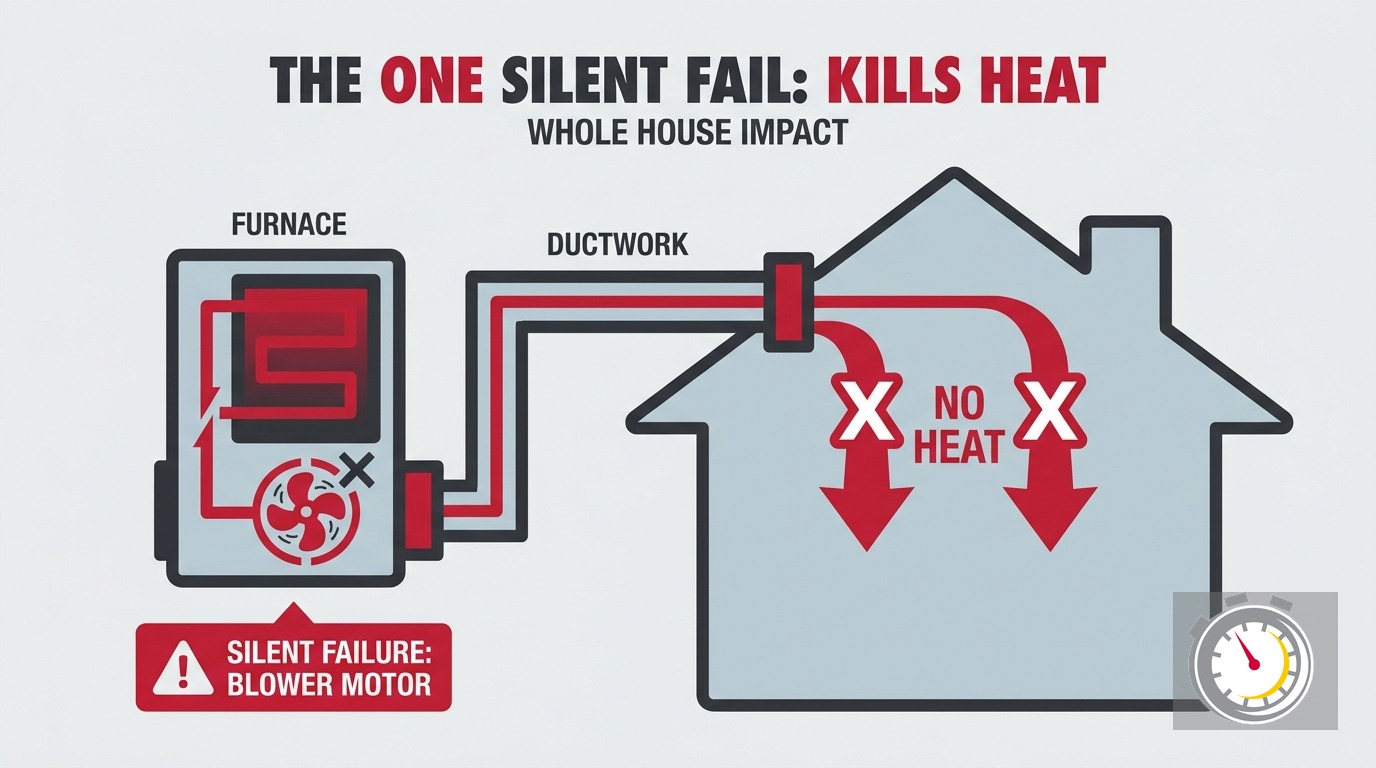
- Because the boiler still fires, a failed pump can go unnoticed for hours or overnight. That silence is dangerous in Minnesota winters.
- A 3-minute check (listen for a hum, feel the supply pipe, read the pressure gauge, look at the bleed screw) can confirm pump failure without any tools.
- Most residential pumps last 10 years or more. Sediment, hard water scale, and deferred maintenance are the main causes of early failure.
- When replacing, upgrade to an ECM variable-speed pump. It cuts pump energy use 25-75%, and Minnesota Power offers a $200 rebate for eligible hydronic systems.
- If your boiler circulator pump is not working, call Northern One Hour at (763) 260-6662. We serve the Twin Cities metro and surrounding communities.
Why a Boiler Circulator Pump Not Working Is a Silent Emergency
A boiler circulator pump not working is different from most heating failures. The boiler fires. The burner lights. The thermostat calls for heat. From the basement, it sounds like everything is working.
But if the pump has failed, no hot water is moving through your pipes. Your radiators stay cold. Your house slowly loses heat while you assume the system is doing its job.
In Minnesota in January, that delay is dangerous. Interior temperatures can drop toward freezing before you realize what is happening. Once pipes freeze, you are no longer dealing with a pump replacement. You are dealing with burst pipes, water damage, and remediation costs that can run into the thousands.
That is the risk no one explains plainly: the boiler runs normally, but the pump is the one part that can stop without making any noise that sounds like a problem.
What Does a Boiler Circulator Pump Actually Do?
Short answer: The pump pushes heated water from the boiler through your pipes to radiators, baseboards, or radiant floor loops. It then pulls cooled water back to be reheated. Without it, hot water sits still. Heat does not move.
A hot-water boiler does not rely on gravity or pressure alone to distribute heat. The circulator pump is the only mechanism driving that flow. When the pump stops, so does your heat, even if the boiler is firing perfectly.
Multi-zone homes may have one pump per zone. In those systems, a single pump failure can leave one zone cold while others stay warm. That masking effect makes the problem harder to spot. If one room or section of your home is cold while others are fine, a zone pump failure is worth checking before assuming a bigger problem.
What Are the Signs Your Boiler Circulator Pump Is Not Working?
Short answer: Cold radiators while the boiler runs is the clearest sign. Other signals include a pump body that is silent and still when the boiler fires, a pressure gauge that does not respond when the system starts, and grinding or banging sounds near the pump.
Here is what to look for:
Cold radiators with a running boiler. This is the primary signal. The boiler burner fires and the thermostat is calling, but touch a baseboard or radiator 20 minutes after the boiler started. If it is room temperature, the pump is not moving water.
Silence and no vibration at the pump body. A working circulator pump hums and vibrates slightly. You can feel it with your hand on the pump housing. According to Boiler Central, a pump that is cold, silent, and completely still while the boiler runs likely has an electrical or wiring fault, not a mechanical one.
A pump that runs but moves no water. The opposite problem: the pump motor hums and the body is warm, but water is not circulating. This usually means a seized impeller, a clogged inlet, or an air-locked loop. The motor runs; the impeller cannot turn.
Pressure gauge that does not respond. A healthy hydronic system runs at 12-25 PSI. When the pump fires, pressure should shift slightly as water starts moving. A gauge stuck at the same number after the boiler starts is a warning sign.
Unusual noises. Grinding, banging, or whining from the pump area usually means bearing failure is coming. Cavitation, a rattling sound caused by air bubbles in the loop, suggests low pressure or air in the system. Both are worth addressing before the pump seizes completely.
How Do You Check a Boiler Circulator Pump Without Any Tools?
Short answer: Set the thermostat to call for heat, then listen at the pump body for a hum, feel the supply pipe for warmth, and check that the pressure gauge shifts slightly. A silent pump, cold supply pipe, and unmoving gauge together point to a failed circulator.
This check takes three minutes.
Step 1: Listen at the pump. Set your thermostat a few degrees above room temperature to call for heat. Wait 60 seconds. Put your ear near the pump body. A working pump hums. A failed pump is silent, or it may click and try to start without running.
Step 2: Feel the supply pipe. The pipe leaving the boiler toward your radiators should get hot within a few minutes of the boiler firing. If that pipe is hot but the pipes further along the loop stay cold, the pump is not moving water.
Step 3: Read the pressure gauge. Find the round dial on the boiler’s front panel. A healthy system sits between 12 and 25 PSI. Below 12 PSI, the system may be low on water. Above 30 PSI, the expansion tank may be waterlogged, which is a separate issue covered in our boiler expansion tank guide. A gauge reading that does not shift at all when the system fires suggests circulation is not happening.
Step 4: Check the bleed screw. Some pump bodies have a small bleed screw. If the system is air-locked, opening this screw carefully (with a cloth ready) releases trapped air. Air locks can stop circulation without any mechanical failure in the pump itself.
If the pump is silent, the pipes stay cold, and the gauge does not respond, the pump is almost certainly the problem. Do not run the boiler continuously hoping it will clear on its own. Running a boiler with no circulation builds excessive heat at the heat exchanger.
What Causes a Boiler Circulator Pump to Stop Working?
Short answer: The most common causes are sediment buildup on the impeller, worn bearings, air locking in the loop, electrical faults at the aquastat relay, and a seized impeller from corrosion or scale. Knowing which failure mode you have changes whether you repair or replace.
Sediment and scale. Older systems accumulate rust particles and mineral deposits. Scale coats the impeller and increases resistance until the motor cannot turn it. This is the most common long-term cause, especially in homes with hard water or old steel piping.
Bearing failure. The pump shaft runs on bearings that wear over years of operation. Worn bearings produce grinding or squealing sounds before they fail. If you have been hearing those sounds for weeks, the pump is telling you it is close to the end.
Air locking. Air trapped in the loop blocks flow. The pump motor runs but cannot push water past the air pocket. This is common after a repair or whenever the system loses water and is refilled without being properly bled.
Electrical or wiring fault. The pump gets its run signal from the aquastat relay. A failed relay, a blown fuse, or a wiring break stops the pump without any mechanical failure. A silent pump does not always mean the pump body needs replacing.
Seized impeller. In older or rarely serviced systems, the impeller can seize in the housing from corrosion. The motor tries to turn but cannot. You may hear clicking before the motor trips its thermal overload.
How Long Does a Boiler Circulator Pump Last?
Short answer: Most residential circulator pumps last 10 years or more. Hard water, sediment, and skipped maintenance shorten that lifespan. If your pump is past 10 years and showing symptoms, replacement is worth evaluating.
Grundfos, the world’s largest circulator pump manufacturer, cites 10-plus years as the standard residential pump lifespan. That estimate assumes normal water quality and regular boiler service. In practice, Twin Cities homes with older piping and harder water sometimes see pump issues at 8-10 years. Well-maintained systems can push 15 years or more.
If your pump is past 10 years and any of the symptoms above have appeared, a repair may buy one more season. But replacement is often the more economical long-term choice, especially when you factor in the ECM upgrade option below.
Annual boiler service catches pump wear before it becomes a cold-weather emergency. Our boiler annual maintenance guide walks through what a professional tune-up covers and why it matters before a Minnesota winter.
Can You Run Your Boiler Without the Circulator Pump?
Short answer: Briefly and only as a stopgap. Some systems allow gravity circulation by opening a flow-control valve. Heat flow is limited and slow. Do not rely on this in severe cold, and call a technician as soon as possible.
On some boiler systems, a flow-control valve sits on or near the pump. If the pump seizes, opening that valve allows thermosiphon (gravity) circulation. Hot water rises; cooled water sinks back to the boiler. The flow is much slower than pumped circulation, so your radiators will be lukewarm at best. This buys a few hours, not days.
If you are facing this situation overnight in a Minnesota cold snap, call Northern One Hour at (763) 260-6662. We offer 24/7 emergency service.
Should You Repair or Replace a Failing Circulator Pump?
Short answer: Repair makes sense for a younger pump with an isolated electrical fault. Replacement is the better call for a pump past 10 years, one with mechanical wear, or one you want to upgrade to ECM at the same time.
Here is the general framework:
Repair makes sense when: The pump is 5-8 years old. The failure is traced to a wiring issue, a relay, or a fuse rather than the pump body. The rest of the boiler system is in good shape.
Replacement makes sense when: The pump is past 10 years. There is visible corrosion or scale on the pump body or impeller. The motor has seized or the bearings are grinding. You want to take the efficiency upgrade at the same time.
Labor costs for pump repair and full replacement are similar, so the marginal cost of going new is often smaller than homeowners expect. If your issue is limited to one zone rather than the whole house, our boiler zone valve guide covers the overlap between pump and valve failures in multi-zone systems.
Is an ECM Variable-Speed Pump Worth It When You Replace?
Short answer: Yes, for most homeowners replacing an older fixed-speed pump. ECM pumps cut pump energy use 25-75%, run quieter, and Minnesota Power customers can collect a $200 rebate. The payback period is typically shorter than homeowners expect.
A standard fixed-speed pump pushes water at the same rate no matter what the system demands. An ECM pump adjusts speed based on load. It runs faster during a long heat call and slower during a short recovery cycle. That variable operation is more efficient and noticeably quieter.
ECM circulators for hydronic and radiant systems save 25-75% per year on pump energy compared to fixed-speed alternatives. During operation, an ECM pump can draw as little as 80 watts. That is less than a standard incandescent bulb. A 2024 Department of Energy final rule on circulator pump efficiency projects $207.5 million per year in reduced residential operating costs as the market shifts to higher-efficiency pumps.
If your boiler has good years left, an ECM pump replacement is worth the modest price difference over a standard replacement.
Minnesota Rebates for ECM Circulator Pumps
Minnesota Power offers a $200 rebate for installing an ECM circulator pump in a qualifying hydronic or radiant heating system. If you are a Minnesota Power customer replacing your pump, that rebate directly reduces your cost.
Xcel Energy customers should note that Xcel removed gas furnace and boiler equipment rebates effective January 1, 2026. Their current rebate focus is electrification, including up to $2,000 for cold-climate heat pumps. There is no Xcel rebate for circulator pumps at this time.
CenterPoint Energy offers up to $400 on high-efficiency gas furnaces. It does not have a specific circulator pump rebate program currently.
Minnesota Energy Resources has bonus rebates on high-efficiency heating equipment installed July 15 through November 15, 2026, with applications accepted through December 4, 2026. Ask your technician whether your replacement qualifies under any current program.
If you are considering a larger project like a full boiler replacement alongside the pump, our team can walk you through HVAC financing options so the upfront cost does not stop you from making the right long-term call.
What About Older Twin Cities Homes?
Short answer: Boiler-heated homes are especially common in older Twin Cities neighborhoods. Older piping carries more sediment, which accelerates pump wear. A system flush before the new pump installation can significantly extend its life.
Neighborhoods including Robbinsdale, Crystal, Fridley, northeast Minneapolis, and parts of St. Paul have a high concentration of boiler-heated homes. If your home was built before 1980, it likely has a hydronic baseboard or radiator system.
These systems are durable when maintained. But older piping carries more rust and mineral deposits, which wear on pump components faster. A system flush clears that particulate before the new pump goes in. Skipping the flush puts a fresh pump into dirty water immediately.
Over 66% of occupied Minnesota housing units use natural gas as their primary heat source. Many of those are boiler systems. Knowing how the circulator pump works and what to check when something goes wrong is practical homeowner knowledge for any Minnesota winter.
When to Call Northern One Hour
If your boiler is running but your house is not warming up, do not wait. A boiler circulator pump not working can drop interior temperatures fast. The longer you wait, the closer you get to frozen pipe territory.
We are locally owned and operated in Ramsey, MN. We serve the Twin Cities metro and surrounding communities, from Maple Grove and Plymouth to Woodbury and Bloomington. We arrive when we say we will. That is what “Always On Time… Or You Don’t Pay a Dime!(R)” means in practice.
Call (763) 260-6662 or book online. If you want to catch pump wear before it becomes a cold-night emergency, ask about scheduling a boiler tune-up. A pre-season inspection finds the problems before the coldest weeks of the year arrive.
Frequently Asked Questions
How do I know if my boiler circulator pump is working? +
Can I run my boiler without the circulator pump? +
How long does a boiler circulator pump last? +
Is there a rebate for replacing a boiler circulator pump in Minnesota? +
Need a technician now?