
How to Bleed Radiators in Minnesota: A Twin Cities Guide
Key Takeaways
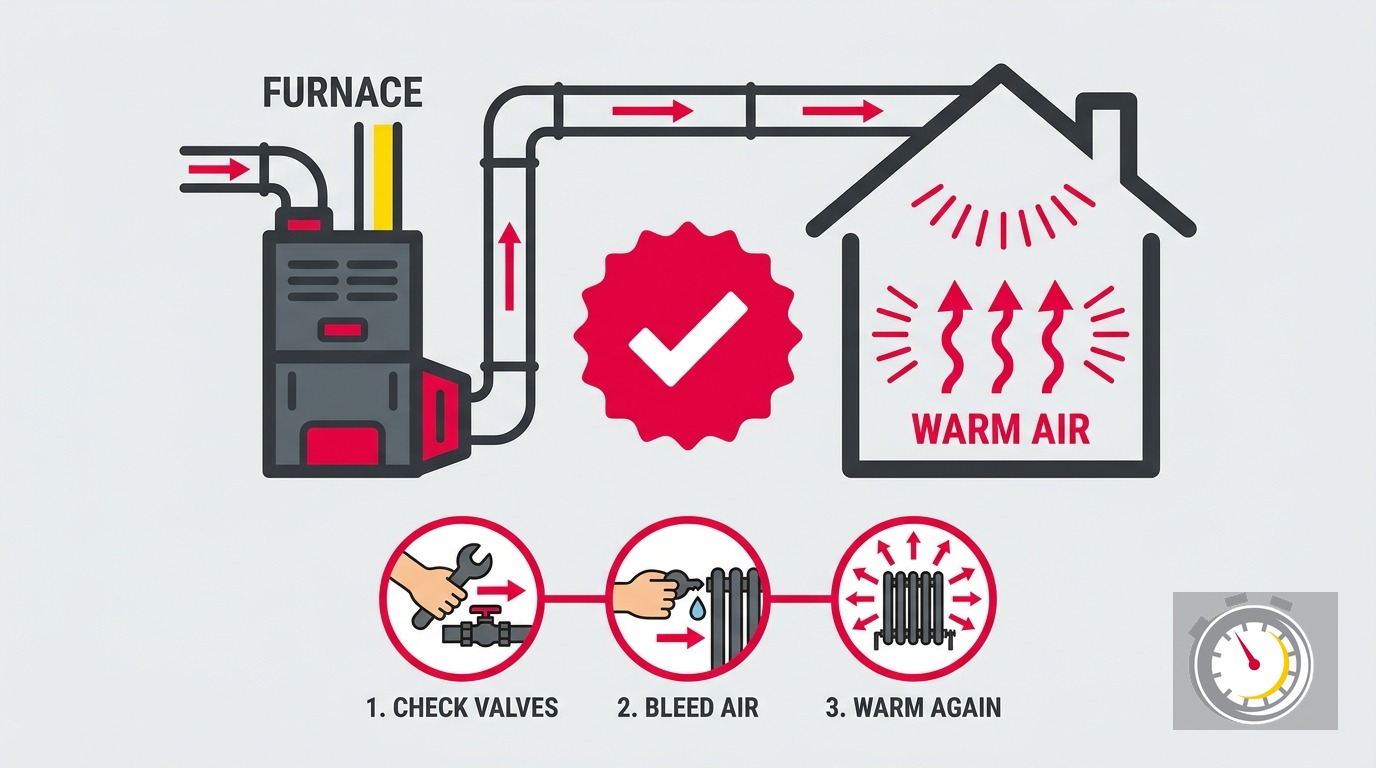
- Run a four-step diagnostic before bleeding: thermostat, zone valve, circulator pump, and boiler. All four should check out before you open any bleed valve.
- Steam radiators do not have bleed valves. Many older Minneapolis and St. Paul homes use one-pipe steam heat. If you see an air vent on the side of the radiator rather than a valve on top, it is a steam system. Do not bleed it.
- Target pressure for most Twin Cities homes: 12 to 15 psi cold.
- Bleed once a year in September or early October, before the first hard freeze.
- If radiators go cold again within a few weeks of bleeding, the expansion tank is likely waterlogged. That is a professional repair.
- Minnesota residential boilers are exempt from mandatory state inspection. Annual service is the only proactive check on your system’s condition.
Why Radiators Go Cold - And Why Bleeding Is Not Always the Answer
If you are looking up how to bleed radiators in Minnesota, you are probably standing in a cold room watching your boiler run and wondering why the heat is not reaching the far end of the house. The good news: bleeding is a 10-minute job when trapped air is the problem. The tricky part is making sure air is actually the problem.
A cold radiator in a Twin Cities home has at least five possible causes. Trapped air is one. Zone valve failure, circulator pump seizure, and low system pressure each look identical from the outside. Bleeding a system that has a mechanical failure wastes time and leaves the real problem untouched. Diagnose first.
Is Your Cold Radiator Actually an Air Problem?
Short answer: Not always. A cold radiator in a Twin Cities home can have five different causes. Bleeding fixes only one of them. Running through the others first takes five minutes and can prevent hours of chasing the wrong fix.
InspectAPedia’s cold radiator diagnostic guide outlines the sequence HVAC technicians use before touching any bleed valve. Work through these in order:
1. Is the thermostat calling for heat?
Check that the set temperature is above the current room temperature. Confirm the system mode is set to “heat,” not “cool” or “off.” A thermostat left in the wrong mode looks identical to a hydronic failure. It is also the most common cold-radiator call we see in the Twin Cities.
2. Is the zone valve opening?
Multi-zone homes use motorized valves to direct hot water to different parts of the house. A zone valve stuck in the closed position blocks flow to an entire section, even when the boiler is firing normally. Zone valves fail without warning. They are relatively inexpensive to replace once diagnosed.
Our post on boiler zone valve failure: symptoms and cost in Minnesota covers how to identify a stuck valve before calling for service.
3. Is the circulator pump running?
Put your hand on the pump housing while the boiler is active. It should be warm and vibrating slightly. A pump that has seized or lost its bearings produces no flow even when the boiler fires on schedule. No flow means no heat, regardless of how much air is in the system.
4. Is the boiler reaching operating temperature?
Check the boiler’s display or indicator lights for error codes or fault conditions. If the boiler is locked out or failing to fire, the problem is upstream of the radiators entirely.
Only after all four check out does trapped air move to the top of the suspect list. Then bleeding is the right move.
Steam System or Hot-Water System? What Minnesota Homeowners Need to Know
Short answer: Many older Twin Cities homes have one-pipe steam heat, not hot-water hydronic. You cannot bleed a steam radiator. Attempting it can break the air vent or release hot water under pressure. Identify your system type before touching anything.
Minneapolis neighborhoods like Longfellow, Kingfield, and Linden Hills were built largely before 1945. Cathedral Hill and Macalester-Groveland in St. Paul are similar. A significant number of those homes still use cast-iron one-pipe steam radiators. Steam systems operate on an entirely different principle than hot-water hydronic, and the maintenance approach differs too.
Here is how to tell them apart:
Hot-water (hydronic) radiator:
- Has a small bleed valve at the top of one end. The valve looks like a square or hexagonal nipple, roughly the size of a thumbnail.
- Two pipes connect at the radiator - one for supply water in, one for return water out.
- This is the system this guide covers.
Steam radiator:
- Has an air vent on the side of the radiator body, usually near the bottom. The vent is a small cylindrical device, often brass or silver-colored.
- May have only one pipe connecting at the base.
- Has no bleed valve.
If you see an air vent, stop. The fix for a cold steam radiator is vent adjustment or vent replacement, not bleeding. Forcing a bleed key onto a steam vent can break the vent and release steam or near-boiling water under pressure.
If you cannot identify which system you have, call before proceeding. Misidentifying the system type is not a minor error.
What Tools Do You Need to Bleed a Radiator?
Short answer: Three things: a radiator bleed key (about $5 at any hardware store), an old rag, and a small container to catch water drips. Some modern valves accept a flat-head screwdriver instead of a key. Gather everything before you start.
Once the valve is open, you will not have a free hand.
- Radiator bleed key or flat-head screwdriver
- Old rag or folded paper towels (system water in older hydronic systems is often dark and stains)
- Small plastic container
- Notepad to record boiler pressure before and after
What Pressure Should Your Boiler Be at Before You Start?
Short answer: Find the pressure gauge on the boiler and check it before opening any valve. Most Twin Cities homes target 12 to 15 psi cold. NeighborWorks Home Partners uses the rule of thumb: roughly 1 psi for every 2 feet of vertical rise in the system. Write down what you see.
If the gauge reads below 10 psi before you start, the system is already low on water. Bleeding will drop pressure further. Add water slowly through the fill valve - 1 psi at a time - until pressure returns to the target range, then bleed.
If the gauge reads above 25 psi, do not bleed. High pressure signals a failed pressure reducing valve or a problem with the expansion tank. Call a technician.
How to Bleed Radiators in Minnesota: Step by Step
This process applies to hot-water hydronic systems only. Confirm your system type before starting.
Step 1: Run the system and identify the cold radiators.
Turn on the heat and let the boiler reach operating temperature. Walk through the house and note which radiators are cold or lukewarm while others are warm. Those are your targets.
Step 2: Turn the system off and wait five minutes.
Turn the thermostat to “off” or drop the setpoint well below room temperature. Wait for the circulator pump to stop before opening any valve.
This step matters. Bleeding with the pump running can pull air into the system rather than expelling it. Still circulation is the right condition for bleeding.
Step 3: Start with the radiator farthest from the boiler or highest in the house.
Air rises and migrates to the ends of the loop. This Old House recommends starting at the top and far end of the system and working back toward the boiler. In a two-story Twin Cities home, begin on the second floor in the room farthest from the mechanical room.
Step 4: Position the rag and container under the bleed valve.
The valve sits at the top of one end of the radiator. The first drip of water comes quickly and without warning. Have the container directly below before you open anything.
Step 5: Insert the key and turn counterclockwise - slowly.
A quarter to half-turn is enough. You will hear a steady hiss as air escapes. Hold the key in position and keep the container underneath. Do not open the valve further than needed.
Step 6: Wait for steady water flow, then close.
When water replaces the hissing air and flows without interruption, the air pocket is clear. Turn the key clockwise to close the valve. Snug is enough. These valve seats are small and strip easily if overtightened.
Wipe the valve and the surrounding surface immediately. Check that no water is seeping around the valve stem after closing.
Step 7: Move to the next radiator and repeat.
Work from farthest and highest toward the boiler. Bleed every radiator in the house, not just the ones that seemed cold.
Step 8: Check boiler pressure when finished.
Bleeding releases water along with air. Pressure will have dropped. Check the gauge after bleeding the last radiator. If it reads below 12 psi, add water slowly through the fill valve - 1 psi at a time - until pressure returns to the target range. If pressure drops significantly more than expected, have a technician check for a slow leak at a fitting or valve body.
Step 9: Restart the system and verify.
Bring the thermostat back up and let the system run for 30 to 45 minutes. Touch each radiator from bottom to top. A properly bled radiator should be uniformly warm. Any that remain cold point to a different problem - see the next section.
What If Bleeding Does Not Fix the Cold Radiator?
Short answer: The expansion tank or pressure reducing valve is likely the root cause. Both cause air to re-enter the system. Both are professional repairs, not DIY fixes.
Master plumber Richard Trethewey, speaking with This Old House, identified the expansion tank as the recurring culprit in hydronic systems: “Some of that air that’s in that tank can get into the same water that’s going out through the baseboard, and it can cause a bubble. If there’s a bubble in that piping, no heated water is going to pass.”
A waterlogged expansion tank has lost its air charge and filled with water. It can no longer absorb the pressure swings that occur as the system heats and cools. The system overpressurizes on every heating cycle. The pressure relief valve weeps. Air gets driven back into the loop. You bleed the radiators, and they go cold again within two to four weeks.
Trethewey adds a useful field clue: “If you don’t get water out of this vent after the air has come out a little ways, that clue takes us to the basement” - meaning the problem is systemic pressure, not a localized air pocket. The fix is in the boiler room, not at the radiator.
Signs the expansion tank is the root cause:
- Radiators go cold again within two to four weeks of bleeding
- The pressure relief valve weeps or discharges water periodically
- Boiler pressure spikes higher than normal at the end of each heating cycle
Other reasons a radiator stays cold after bleeding:
- A zone valve stuck in the closed position
- A circulator pump with worn bearings that cannot push water through a long loop
- Iron oxide sludge built up inside the radiator body, blocking flow internally
Our guide on waterlogged expansion tank symptoms in Minnesota covers the full diagnostic and what a tank replacement involves.
If bleeding once did not fix it, more bleeding will not fix it. The next step is a professional boiler inspection.
When Is the Right Time to Bleed Radiators in Minnesota?
Short answer: September or early October, before the first hard freeze. The Twin Cities typically sees the first significant freeze between late October and mid-November. Bleeding before the season starts means your system is ready when temperatures drop.
Systems that sit idle from May through September slowly accumulate air as water in the loop off-gasses. That air stays in the system until the boiler first fires. A fall bleed clears it before the system has to carry load through a -10°F night.
There is a regulatory angle worth knowing here. Minnesota residential boilers in single-family homes are exempt from mandatory state inspection under MN Statutes 326B.988. There is no routine external check on your boiler’s condition. A waterlogged expansion tank, a failing circulator, or a worn pressure reducing valve typically surfaces during a January cold snap - when the system is under maximum load and a repair call means waiting in a cold house.
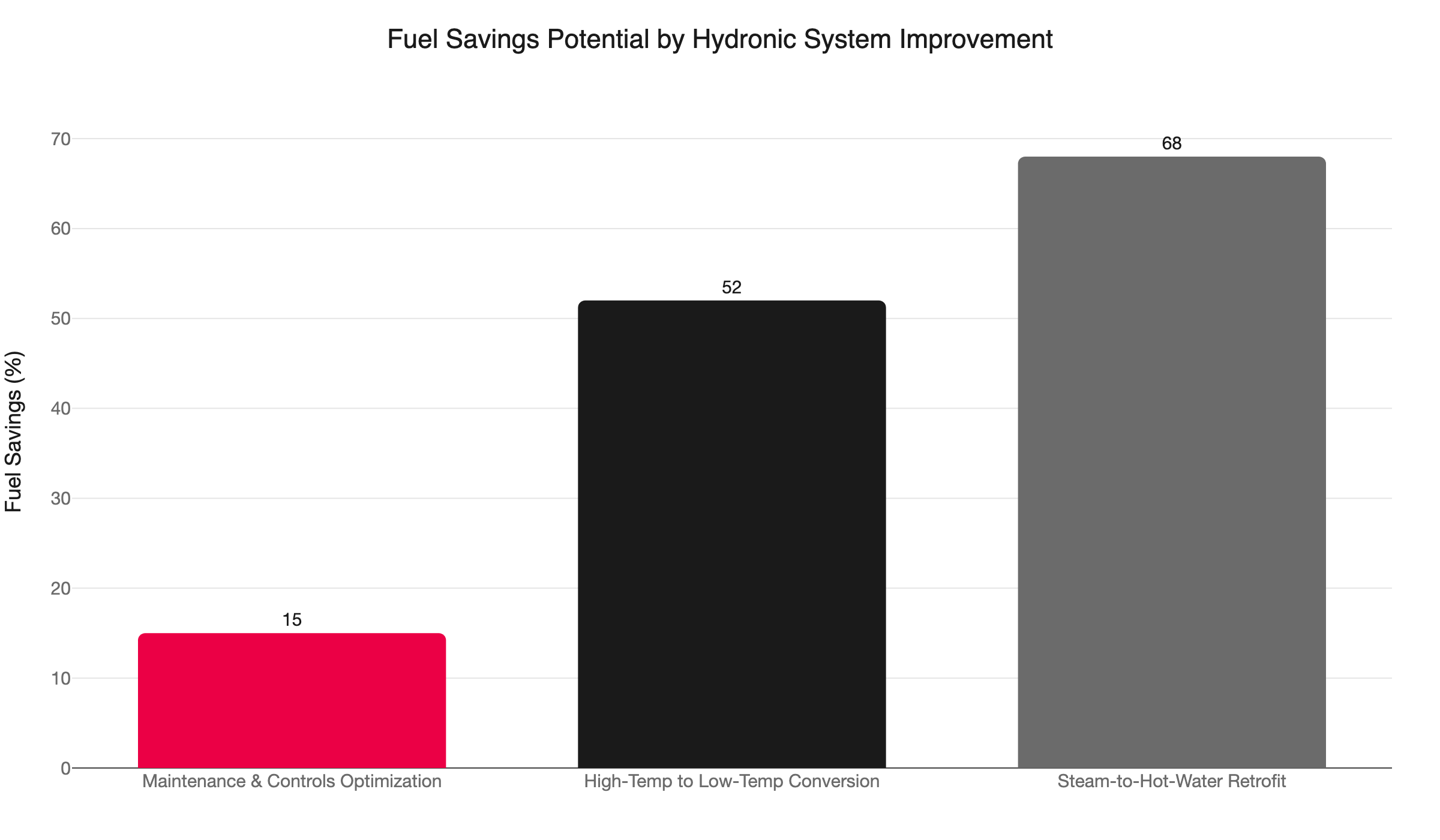
Annual bleeding paired with a professional tune-up closes that gap. The U.S. Department of Energy found that properly optimizing hydronic heating controls and maintenance yields 15% or more in average space heating energy savings in systems that were previously running unoptimized. On a household spending $1,500 a year on heating, that is $225 back without touching the equipment.
Our guide on what to expect from a boiler annual maintenance visit in Minnesota explains what a professional service covers and how long it typically takes.
Is It Time to Consider a Boiler Upgrade?
Short answer: If your system is more than 15 to 20 years old and bleeding problems keep recurring, the underlying hardware may be approaching end-of-life. Modern natural gas hydronic boilers reach up to 94% AFUE. Utility rebates can help offset the cost.
CenterPoint Energy’s Conservation Improvement Program offers rebates for high-efficiency boiler upgrades to qualifying Minnesota residential customers. Xcel Energy has parallel programs. If your current boiler requires a repair that approaches half the replacement cost, run the numbers on a new system.
Ask about financing when you schedule the estimate. We offer financing options on larger jobs - boiler replacements, furnace installs, heat pumps - so a failed system does not become a financial emergency on a cold night.
When Should You Call a Pro Instead of Bleeding It Yourself?
Short answer: Call when bleeding does not fix the problem, when pressure is out of range before you start, when you cannot identify your system type, or when your boiler is more than two years past its last professional inspection.
Call Northern One Hour at (763) 260-6662 or schedule service online when:
- Pressure reads below 10 psi or above 25 psi before you start
- The pressure relief valve is weeping or discharging water
- Radiators go cold again within a few weeks of bleeding
- You see corrosion, mineral deposits, or water staining near any radiator valve or fitting
- The circulator pump is noisy, vibrating abnormally, or not running
- You have a steam system and are unsure whether the air vents are functioning correctly
- The boiler has not had a professional inspection in more than two years
We are locally owned and operated in Ramsey, MN, and serve homeowners across the Twin Cities - Minneapolis, St. Paul, Blaine, Maple Grove, Plymouth, Woodbury, Bloomington, and the surrounding metro. We know these older homes and these systems. Every service call is backed by our on-time promise: “Always On Time… Or You Don’t Pay a Dime!(R)”
Frequently Asked Questions
How do I know if my radiator needs bleeding? +
Can I bleed a steam radiator the same way? +
How often should I bleed radiators in Minnesota? +
What pressure should my hydronic boiler be at? +
Need a technician now?