
How to Clean a Whole-Home Humidifier Before Heating Season
Key Takeaways
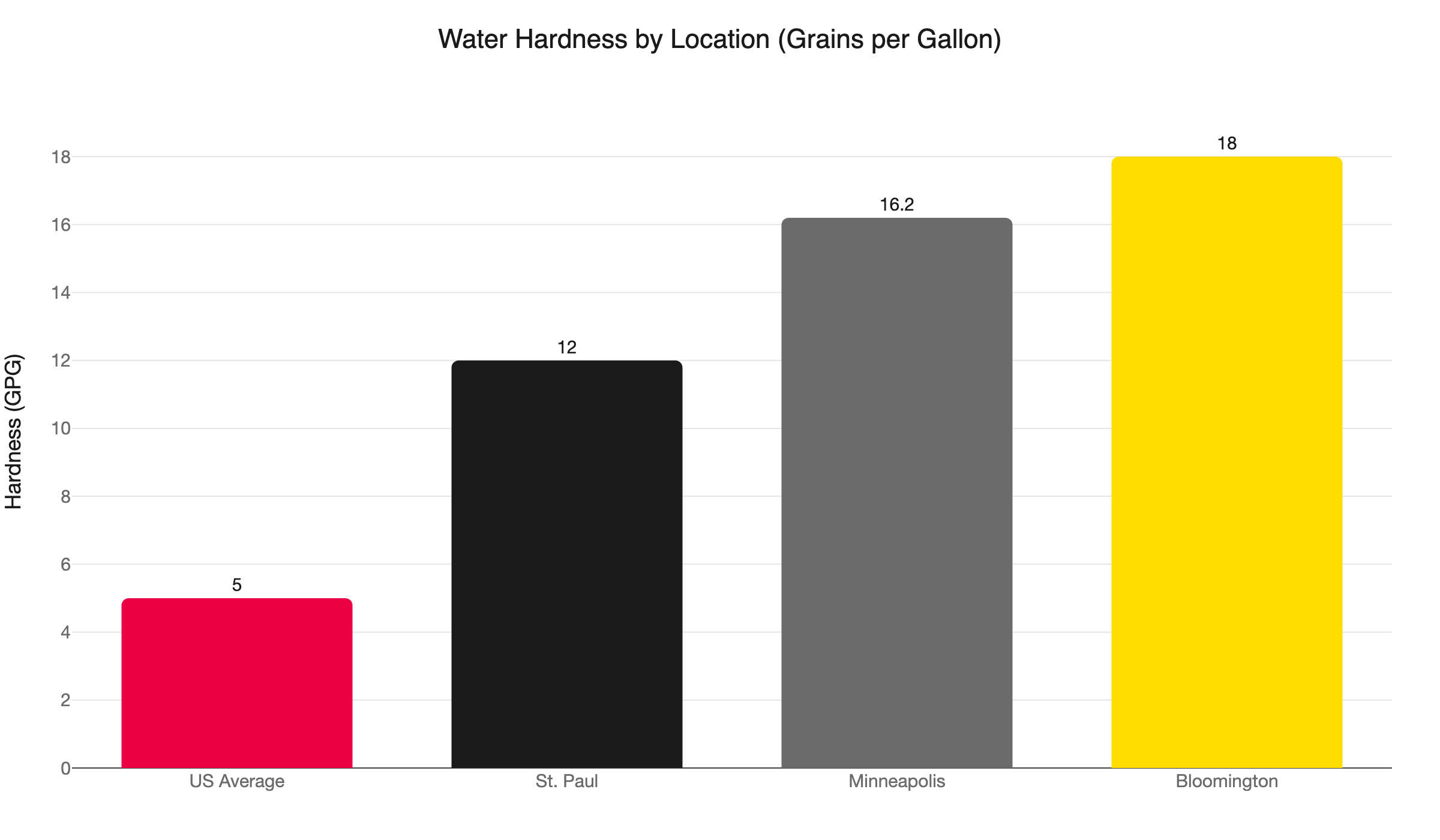
- Twin Cities water hardness averages 16.2 GPG in Minneapolis and up to 18 GPG in Bloomington. That is roughly three times the US average of 5 GPG, and it means your humidifier accumulates scale far faster than national maintenance guides assume.
- Bypass and fan-powered units have different startup steps. Know which type is on your furnace before you start.
- A water panel costs $15-35. The full fall startup takes under an hour. Skip it and you risk a clogged drain line, a flooded furnace cabinet, or a full season of dry air despite a running unit.
- Most Twin Cities homes without a water softener need two panel replacements per heating season, not one.
- Drop your humidistat to 25-30% on the coldest nights. Running humidity too high in Minnesota winters causes condensation damage inside walls and on windows.
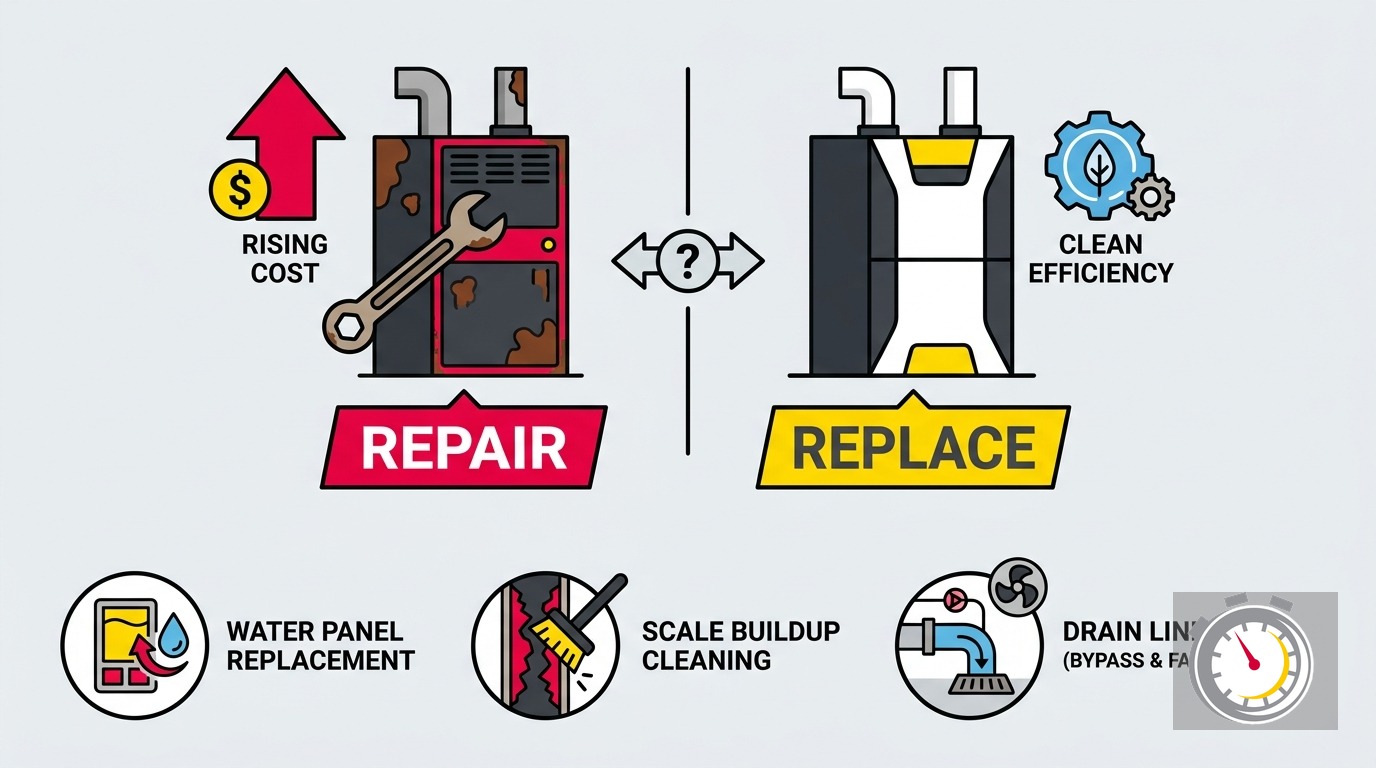
- Three signals mean stop and call a pro: water pooling at the furnace base, no click from the solenoid valve, or a panel caked in scale after only six weeks.
Why Twin Cities Humidifiers Need Extra Attention
Most cleaning guides tell you to change the water panel once before heating season. That is reasonable advice for the average US city. It undersells the job for anyone on Minneapolis or Bloomington city water.
The reason is geology. The Twin Cities sit above a limestone aquifer system called the Prairie du Chien-Jordan formation. Water percolating through limestone dissolves calcium and magnesium before it ever reaches your tap. The result is some of the hardest municipal water in the country.
Research from the Battelle Memorial Institute found that every 5 GPG of water hardness deposits approximately 0.4 pounds of mineral scale per year in water-using equipment. At 16 GPG, a Twin Cities humidifier accumulates about 1.3 pounds of calcium and magnesium scale in a single heating season. That crust coats the water panel and blocks the drain line. It also cuts equipment efficiency by up to 8%.
A whole-home evaporative humidifier loses most of its effectiveness long before it shows any visible sign of failure. The panel looks wet. Water still drips through the drain. But output drops steadily as scale builds, and the homeowner assumes it is working because it is running. Fall startup is the right moment to reset the baseline, before the first cold snap of the season forces the issue.
The practical result: if you do not have a whole-home water softener, plan on replacing the water panel twice per heating season. Once at fall startup, and once in mid-January.
What Type of Whole-Home Humidifier Do You Have?
Quick answer: Look at what is mounted on your furnace ductwork. A bypass humidifier (like the Aprilaire 600) connects to both the supply and return ducts via a bypass duct and has no motor of its own. A fan-powered humidifier (like the Aprilaire 700) mounts on the supply duct only, houses a small internal blower, and can run independently of the furnace. The cleaning steps diverge from here.
This distinction matters for two reasons. First, fan-powered humidifiers run their internal blower independently of the furnace, so the startup check for a fan-powered unit includes inspecting a motor that has no equivalent on a bypass model. Second, bypass humidifiers flush excess water continuously through the drain to keep the panel from clogging. That higher water volume leaves more mineral residue in the drain line, which makes the drain flush a non-optional step for bypass owners.
There is one feature found only on bypass units: the bypass damper. This is a lever or rotating dial, often orange or red, mounted on the bypass duct connecting the supply and return sides of your furnace. It has two positions: summer (closed) and winter (open). If you moved it to the summer position before last spring and never changed it back, your humidifier ran with zero airflow all heating season. It is the most common reason a humidifier produces no humidity after what looked like a complete cleaning.
How Do You Clean a Bypass Humidifier: Step-by-Step
Quick answer: Start by cutting power and closing the saddle valve. Then open the bypass damper to the winter position, remove and replace the water panel, scrub the distribution tray in vinegar, wipe the housing interior, flush the drain line, and test at 40% humidity. Budget 45-60 minutes and under $40 in parts.
Before you touch anything: Set the humidistat to OFF. Close the saddle valve on the supply line fully. Cut power at the furnace disconnect or the breaker panel. Never work on a live unit.
Step 1: Open the bypass damper. Find the lever on the bypass duct and move it to the open/winter position. Confirm it is fully open before you proceed.
Step 2: Remove the water panel. Open the humidifier cabinet cover, usually held by two clips or screws. Pull the water panel frame straight out. After a full heating season in the Twin Cities, expect the frame to be coated in white or gray scale. A panel fused solid with calcium should have been replaced months ago.
Step 3: Replace the panel. Do not try to clean it. The expanded aluminum media cannot be rehabilitated once it has calcified. Soaking it in vinegar softens surface deposits, but the internal structure has already compressed and will not distribute water evenly. A new panel costs $15-35. Aprilaire recommends replacing the panel at least once per heating season, and high-output models may need two replacements in a single season. For most Twin Cities homes without a softener, plan on two. Slide the new panel into the frame in the correct orientation (most frames are labeled) and set it aside while you clean the rest of the cabinet.
Step 4: Scrub the distribution tray. The distribution tray is the horizontal plastic tray sitting above the water panel. Its small holes or slots spread water evenly across the panel surface. Scale clogs those holes just as fast as it clogs the panel itself. Remove the tray, submerge it in undiluted white vinegar for 30-60 minutes, scrub with a stiff nylon brush, and rinse clean. This step is absent from most cleaning guides and is one of the primary reasons humidifiers underperform even after a panel swap.
Step 5: Wipe the interior housing. While the tray soaks, dampen a cloth with white vinegar and wipe every interior surface: walls, drain opening, brackets, and fittings. Follow with a clean damp cloth. Full-strength white vinegar dissolves calcium carbonate well for this application.
Step 6: Inspect the saddle valve and supply tubing. Slowly reopen the saddle valve. Watch for drips at the connection point and at the compression fitting where the tubing meets the humidifier inlet. Check the 1/4-inch supply tubing for kinks and mineral buildup at the inlet screen. A clogged inlet screen restricts flow and causes the panel to dry unevenly, which accelerates scale formation.
Step 7: Flush the drain line. See the drain section below. This is required, not optional.
Step 8: Reassemble and test. Reinstall the distribution tray and the new panel. Close the cabinet. Restore power and set the humidistat to 40%. Run the furnace through a full heat cycle. Watch for a solenoid click within a minute of the heat call and water dripping through the panel shortly after. Check the base of the furnace cabinet and the floor below for any pooling.
What’s Different About Cleaning a Fan-Powered Humidifier?
Quick answer: Skip the bypass damper step, since fan-powered units do not have one. Add one step not on the bypass list: with power off, spin the auxiliary blower fan by hand. It should rotate smoothly with no grinding or wobble. If it catches, the motor is likely failing and that is a service call. All other steps are the same.
Since fan-powered units have their own blower, they can humidify during any call for fan operation, not only during a heat call. The auxiliary motor therefore runs more hours than the furnace blower and wears independently. A quick hand-spin check at startup takes 10 seconds and can catch a bearing failure before it stops the unit mid-season.
A rough spin can also indicate debris stuck in the fan wheel rather than a failing bearing. While the cabinet is open, shine a flashlight into the fan wheel and remove any lint, dust, or debris before testing rotation. A clean wheel that spins smoothly means the motor is ready for another season.
Fan-powered units send less total water through the drain than bypass models. The 1/2-inch drain line can still build up a partial restriction over a full season, though. Flush the drain at startup and again at the mid-season panel swap.
How Do You Flush the Drain Line?
Quick answer: Pour one cup of clean water slowly into the drain pan opening at the base of the humidifier cabinet. Watch the far end of the drain hose where it exits to the floor drain or condensate drain. Water flowing through within 10-15 seconds means the line is clear. Slow drainage or backflow means the line is partially blocked and needs to be cleared before the season starts.
The drain hose on most Aprilaire evaporative humidifiers has a 1/2-inch inside diameter. That is small enough that a modest accumulation of mineral flake or debris can restrict flow. A fully blocked drain is one of the most common causes of water pooling inside the furnace cabinet. Water inside that cabinet can reach the heat exchanger, the control board, and the blower motor. Any of those repairs costs far more than the 10 minutes it takes to flush the drain at startup.
To clear a partial clog, disconnect the hose at the cabinet end and blow through it by mouth. If that does not work, soak the hose in white vinegar for 30-60 minutes and flush again. A small bottle brush handles clogs at the cabinet drain fitting. Replace the hose if it has hard kinks, cracks, or a thick interior scale layer. A replacement hose is inexpensive at any HVAC or plumbing supply house.
Once the line is clear, run the flush test one more time before you close the cabinet. A clear line passes one cup of water in under 15 seconds.
How Often Should You Replace the Water Panel in Minnesota?
Quick answer: Twice per heating season is the right cadence for most Twin Cities homes with untreated city water. Replace the panel at fall startup in September or October and again mid-winter in January. Homes with a whole-home water softener can return to once per season. Check the panel at mid-season either way.
The two-replacement cadence comes from scale math. Battelle research puts accumulation at roughly 0.4 pounds per year per 5 GPG of water hardness. Minneapolis at 16 GPG deposits about 1.3 pounds of mineral scale per heating season. A panel fully coated in calcium and magnesium cannot absorb and evaporate water effectively. The unit runs, the furnace blower moves air across the panel, but the air picks up little or no moisture.
The cost math is straightforward. Two panels at $15-35 each totals $30-70 per season. A service call to diagnose why a house still feels dry after a running humidifier costs considerably more. If the root cause turns out to be a calcified panel that should have been swapped in January, that expense was preventable.
If you do have a water softener, once per season is usually enough. Softened water removes the calcium and magnesium that drive scale formation. Check the panel at mid-season regardless. If it looks clean and evenly wetted, skip the second replacement.
How Should You Set the Humidistat This Winter?
Quick answer: Start at 35-45% relative humidity when outdoor temperatures are above 20°F. Drop to 30-35% when temps fall between 0°F and 20°F. Go down to 25-30% when it goes below zero. Check your coldest windows: condensation pooling at the bottom of the glass means the setting is too high for that outdoor temperature.
The EPA recommends keeping indoor humidity at 30-50% to reduce airborne virus survival and minimize allergen levels. The challenge in Minnesota is that running humidity above 35-40% during the coldest weeks can deposit moisture on the interior face of exterior walls, especially in older homes without modern vapor barriers. Triple-pane windows can still show condensation when outdoor temps drop well below zero and indoor humidity is above 30%.
Use this table as a starting point:
| Outdoor temperature | Recommended indoor humidity |
|---|---|
| Above 20°F | 35-45% |
| 0°F to 20°F | 30-35% |
| Below 0°F | 25-30% |
Check your windows on the coldest nights of the season. If condensation pools at the bottom of the glass, lower the humidistat by 5% and check again after 24 hours. For more on dialing in the right setting across a full Minnesota winter, see our guide to humidistat settings for Minnesota winters.
Getting humidity right also protects the structure of your home. Dry air shrinks hardwood flooring joints and splits wood trim and casings. Our post on protecting hardwood floors from low humidity in winter covers the damage thresholds and what the fix looks like. If you have been seeing winter window condensation and are not sure whether humidity or window performance is the culprit, that post walks through both sides.
When Should You Call a Pro Instead of DIY?
Quick answer: Call when water is pooling at the furnace base, when the solenoid valve makes no sound during a heat cycle, or when the panel is heavily crusted after only six weeks. These are repair calls, not cleaning sessions.
Water at the base of the furnace. A small amount of water at the humidifier drain outlet during a heat cycle is normal. Water pooling at the bottom of the furnace cabinet or on the floor below it is not. A fitting has failed, the drain pan is cracked, or the drain line is completely blocked. Water near the furnace control board or heat exchanger is an emergency. Shut off the unit at the humidistat and the saddle valve, then call.
No click from the solenoid valve. The solenoid valve is the water inlet valve that opens on each heat call. You should hear a soft click when the furnace begins heating. If the unit is clean, the panel is new, the saddle valve is open, the humidistat is set above current room humidity, and there is still no click and no water flowing, the solenoid has likely failed. Solenoid replacement requires the correct part number for your specific unit plus electrical work. It is a professional repair, not a homeowner fix.
Panel caked after six weeks. If a freshly installed panel is already heavily scaled after only six weeks of operation, your water may be running above 20 GPG or the saddle valve is restricting flow and concentrating minerals in the small volume that gets through. Have your water tested. If the hardness is extreme, a point-of-use filter on the humidifier supply line or a whole-home water softener can extend panel life considerably and pay for itself in reduced service calls.
Northern One Hour is locally owned and operated in Ramsey, and we serve the full Twin Cities metro, from Minneapolis and St. Paul to Blaine, Maple Grove, Plymouth, and Woodbury. When your fall humidifier startup uncovers something beyond a cleaning job, call us at (763) 260-6662 or book your service online. We back every visit with our promise: “Always On Time… Or You Don’t Pay a Dime!(R)”
Frequently Asked Questions
How often should I replace my humidifier water panel in Minnesota? +
Can I clean a whole-home humidifier myself? +
What humidity level should I set in a Minnesota winter? +
What does the bypass damper do on a whole-home humidifier? +
Need a technician now?