
How Often Replace Humidifier Water Panel? Twin Cities Guide
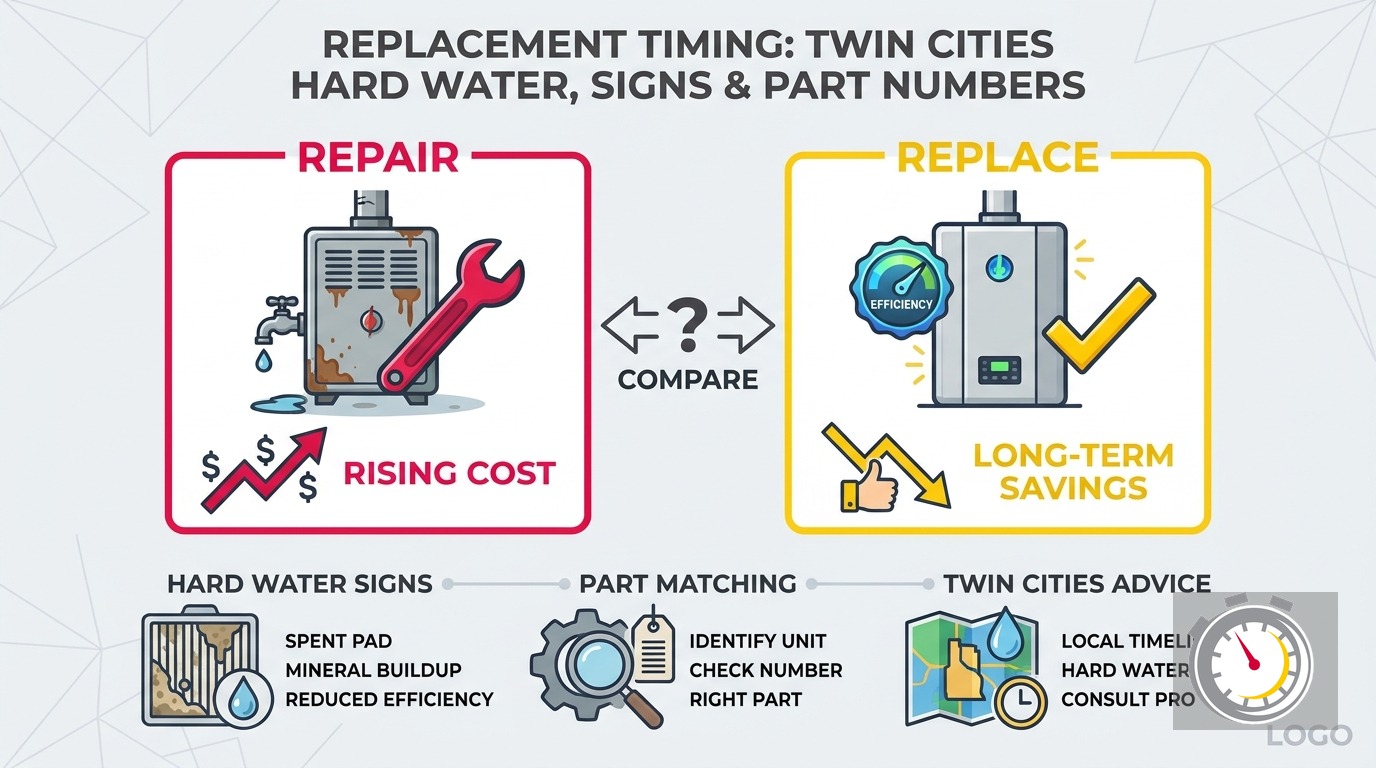
Key Takeaways
- Replace the water panel every year, before you turn the humidifier on for the season.
- Hard water shortens the pad’s life. Plan on a mid-winter check, and a second change if the pad is clogged.
- A spent pad looks white, crusty, stiff, or discolored. Weak humidity and a long-running humidifier are also clues.
- Paper and mesh panels cannot be cleaned. When they clog, you replace them.
- Match the panel to your model using the data tag and owner’s manual. Do not buy by looks.
- Intervals differ by model. One maker’s 45 model needs a change twice per heating season.
- Northern One Hour can identify and install the right panel during a tune-up.
How Often Should You Replace a Humidifier Water Panel?
Replace your humidifier water panel at least once a year, at the start of the heating season. In Twin Cities homes with hard water, plan on more often. Check the pad during winter and swap it when it turns crusty, stiff, or clogged.
The longer answer depends on your water, your run time, and your model.
Every major source we reviewed agrees on the baseline. One furnace maker recommends replacing evaporator pads annually, typically before the heating season. Another maker says to replace the water panel or evaporator pad at the beginning of each heating season.
Annual is the minimum, not the rule. Our winters are long, and your humidifier works hard from October through April. A pad that is fine in November may be choked with mineral scale by February.
We are a locally owned and operated Twin Cities heating and cooling company. We see spent panels in basements and utility rooms all winter. Most were past due, and the homeowners had no idea.
Why Is Annual Replacement Only the Minimum?
Annual replacement is a floor because the pad does the dirty work. It holds water so warm air can pick up moisture. When that water evaporates, whatever was in it stays behind on the pad.
Over a season, that buildup adds up. One source notes the panel clogs over time “with minerals and debris from your water source”. The more minerals in your water, the faster it happens.
Every source we opened says the same thing about hard water. One says “if your home has hard water, you will need to replace the water panel more frequently.” Another says homes with hard water may require more frequent replacement. A third says it is often necessary to change the panel more frequently in those homes.
None of them gives you a number. No page says “every three months” or “every 10 weeks.” They say “more often” and leave you to guess.
We will not invent a number either. The right interval depends on three things:
- Your water. Harder water leaves more scale per gallon.
- Your run time. A humidifier that runs for hours each day loads the pad faster.
- Your model. Some panels are sized and built to last longer than others.
One maker’s blog shows how much models vary. It says the 10, 12, and 35 water panels should be replaced annually. Its 45 model needs replacing twice per heating season. That page does not discuss hard water, so a hard-water home may need to go even sooner.
The practical rule is simple. Change the panel in the fall. Check it in midwinter. Change it again if it looks spent.
A simple Twin Cities schedule
Use this as a starting point, not a promise:
- Early fall: Install a fresh panel before you switch the humidifier on.
- December or January: Shut off the water and look at the pad.
- February: Check again if your home has hard water or the humidifier runs most of the day.
- Spring: Turn the humidifier off and shut the water supply, as your owner’s manual directs.
Other sources suggest the same approach. One says to change the panel in the fall before you begin using the system, then check it throughout the winter to see whether another change is needed. It is a good habit for any home.
How Do You Check Your Water Hardness in the Twin Cities?
Look up your city’s water quality report, which many utilities post online each year. Or use an inexpensive hardness test strip from a hardware store. Homes on private wells should test the well water, because hardness can differ sharply from city supply.
Get your hardness number from a reliable source, not from us. We could not verify local hardness figures for this post, so we are not quoting any.
Hardness is not the same across the metro. It depends on where your water comes from. Some homes also run a water softener, which changes what reaches the humidifier.
You have three ways to find out where you stand.
- Read your utility report. Your city or water service publishes water quality data. Search for your city’s name plus “water quality report.” Look for hardness, often listed in grains per gallon or milligrams per liter.
- Use a test strip. These are cheap and quick. Dip one in a cup of tap water and compare the color to the chart.
- Look at your fixtures. White crust on faucets, a cloudy film on glass, or scale in the kettle all point to hard water.
If you run a softener, check where the humidifier gets its water. Many humidifiers tap the cold line before or after the softener, and that changes the answer. Ask your installer if you are not sure.
Our team can look at your setup during a visit. We see how the unit is plumbed, check the pad, and tell you what we find. For more on how scale forms, read our guide on hard water scale buildup in humidifiers.
What Are the Signs a Water Panel Is Spent?
A spent water panel looks white or crusty, feels stiff, or has turned brown or gray. You may also notice weak humidity, a humidifier that runs nearly nonstop, or a warning light on the unit. If water no longer soaks through the pad, replace it.
The research behind this post found that most manufacturer pages say very little about what a bad pad looks like. One says to inspect the panel for heavy mineral buildup or clogging that could restrict moisture output. That is about all they offer.
So the signs below are practical guidance from general HVAC experience, not quotes from a manufacturer. Treat them as a checklist, and follow your owner’s manual first.
What you can see
Shut off the humidifier and the water supply first. Then pull the panel and look at it in good light.
- White or tan crust. Mineral scale builds up in layers. Heavy crust means the pad has stopped doing its job.
- Stiff, hard texture. A good pad is porous and soft to the touch. A spent one feels like cardboard or a dried sponge.
- Discoloration. Brown, gray, or dark streaks point to trapped minerals and debris.
- Blocked openings. If the mesh or paper channels look sealed shut, air cannot flow through.
- Warping or crumbling. The pad may sag, flake, or fall apart in your hands.
What you can feel in the house
A pad can look acceptable and still be spent. Sometimes the house tells you first.
- Dry air despite a running humidifier. Static shocks, dry skin, and scratchy throats return even though the unit runs.
- Low reading on the humidity gauge. The humidistat calls for moisture, but the room never reaches your setting.
- Long run times. The humidifier works harder to deliver less.
- Dry spots in wood floors and trim. Our low humidity and hardwood floors guide explains why that matters.
What the unit itself tells you
Some humidifiers have a service light. One maker says to replace the panel “as soon as possible” once the unit’s warning light appears. Do not ignore it. It is the simplest cue you will get.
If you see crust and the house still feels dry, do not wait for next season. Replace the pad now.
Can You Clean a Water Panel Instead of Replacing It?
For most whole-home humidifiers, no. Paper and mesh water panels are not made to be cleaned. Soaking or scrubbing breaks down the material and rarely removes the minerals. When the pad is clogged, replace it.
One manufacturer is direct about this. It says paper or mesh water panels in whole-home systems “cannot be cleaned and must be replaced when clogged.” Most other pages skip the question, which leaves homeowners guessing.
Cleaning rarely works for a few reasons:
- Scale bonds to the pad’s surface and deep inside its pores.
- Rinsing can push minerals deeper instead of removing them.
- Harsh cleaners can leave residue that ends up in your air.
- A weakened pad can fall apart inside the unit.
You can clean everything around the pad. The housing, the water distribution tray, and the drain can all collect scale and slime. Our guide to whole-home humidifier cleaning and maintenance covers those steps in detail.
Follow the cleaning directions in your owner’s manual. Do not use bleach or harsh chemicals unless the manual says you can.
How Do You Match the Right Panel to Your Unit?
Read the data tag on your humidifier for the model number, then check your owner’s manual for the matching panel part number. Buy the panel specified for your exact model. Do not match by size or appearance, because similar-looking pads can fit poorly.
This is where most homeowners get stuck. The research for this post found that none of the top pages lists part numbers or explains how to find your model. One only says to “always use the replacement water panel specified for your humidifier model” to help ensure proper fit and operation. Another says to follow your owner’s manual or contact your dealer for model-specific instructions.
That advice leaves out the how. The steps below fill it in.
Step 1: Find the data tag
Look for a metal or paper label on the humidifier housing. It usually sits on the side or inside the cover. Turn off power to the unit before you open anything.
The tag lists the model number and often a serial number. Take a clear photo with your phone. You will want it at the store or when you call for help.
Step 2: Write down the full model number
Do not shorten it. Letters and digits can matter, and a single character can mean a different pad.
Also note the brand name on the front of the unit. Many humidifiers look alike but come from different makers.
Step 3: Check the owner’s manual
The manual lists the replacement panel for your model. Look for a “replacement parts” or “maintenance” section. If you lost the paper copy, search the manufacturer’s website using your model number.
Step 4: Look at the old pad
Pull the old panel and compare. Check the dimensions and the shape. Look for any number printed or stamped on the frame or edge.
This helps confirm your match, but it does not replace the model number. A pad can look right and still be wrong.
Step 5: Confirm before you buy
Before you pay, check the model number against the part listing. Read the “fits these models” line. If anything is unclear, call a pro.
Common mistakes in matching
- Buying by size alone. Two pads can share dimensions and differ in material or design.
- Assuming a universal fit. Generic pads may not seat or seal properly.
- Mixing up similar models. One brand’s 35 and 45 are not the same part, and their intervals differ.
- Using an old part number. Models change over time, so confirm against your current manual.
- Ignoring hard-water versions. Some lines offer a pad made for harder water. Ask whether yours does.
If you cannot find the tag or the manual, we can identify the panel for you as part of a tune-up. Our team checks the unit, confirms the part, and tells you what to stock for next season.
How to Change the Panel Safely
Most homeowners can swap a panel in about 15 minutes. Read your manual first, since every unit is a little different.
- Turn off power. Switch off the humidifier and, if your manual says so, the furnace.
- Shut off the water. Close the supply valve to the humidifier.
- Open the cover. Most covers snap off or slide out.
- Remove the old panel. Let it drain. Handle it gently, as scale can flake.
- Clean the housing. Wipe the tray and frame as your manual directs.
- Install the new panel. Match the orientation of the old one. Seat it fully.
- Close the cover. Make sure it clicks into place.
- Restore water and power. Check for leaks as the unit runs.
- Reset the service light. If your model has one, follow the manual to clear it.
- Write the date. Note it on the unit or on your calendar.
Check the setup again after a day. Look for drips, odd noises, or a cover that sits loose.
If you see a leak, a cracked housing, or a drain that will not clear, stop. Call a professional. Do not force parts into place.
You can also hand the job off. Our furnace tune-up service is a good time to have the humidifier checked too.
How Often Do You Need a New Humidifier?
A whole-home humidifier often outlasts several water panels, but it does not last forever. Expect to replace parts along the way, and plan on the whole unit aging with your furnace. A well-maintained unit can serve you for many winters.
We will not give you a hard number, because the research behind this post found none worth quoting. Lifespan depends on water quality, run time, and how well you keep up with maintenance.
These things shorten a humidifier’s life:
- Skipped panel changes. Scale builds up and strains the unit.
- Hard water. Minerals attack valves, trays, and drains.
- A stuck solenoid valve. If water will not flow, see our guide on a whole-home humidifier with no water.
- Poor installation. Bad plumbing or a poorly sealed duct connection causes leaks.
- Age. Parts wear out over time.
Signs it is time to replace the humidifier itself include:
- Repeated leaks or rust inside the housing
- A motor or valve that fails more than once
- Humidity that stays low even with a fresh panel
- A unit that no longer fits your furnace after an upgrade
Your humidifier is tied to your furnace. When you replace the furnace, the humidifier often goes with it. Our guide on how long furnaces last in Minnesota can help you plan both.
If your unit is near the end, we will tell you plainly. Repair is not always the answer, and neither is replacement. We look at the age, the condition, and your goals, then give you an honest recommendation.
What Mistakes Shorten a Water Panel’s Life?
A few simple habits keep a panel working longer. A few common errors kill it early.
Mistakes to avoid
- Setting the humidistat too high. Over-humidifying can cause condensation. It also makes the pad work harder.
- Leaving it on in summer. The humidifier should be off and the water shut when the heating season ends.
- Ignoring leaks. A dripping valve keeps the pad wet and breeds scale and slime.
- Using the wrong panel. A poor fit lets water bypass the pad.
- Skipping the midwinter check. One look in January can save you a February surprise.
- Waiting for the light. Do not let a warning light be your only plan.
Habits that help
- Set the humidistat for outdoor conditions. Our humidistat settings guide for Minnesota winters shows how.
- Keep spare panels on hand once you know your model number.
- Mark the change date on the unit.
- Have the humidifier checked at your annual tune-up.
These steps cost little, and they protect the pad, the unit, and your comfort.
When Should You Call a Pro for Your Humidifier?
You can handle a routine panel swap yourself. Call a pro when something does not add up.
Call us if:
- You cannot find the data tag or the manual.
- You are not sure which panel fits your unit.
- The new panel clogs again within weeks.
- The unit leaks, buzzes, or will not run.
- The house stays dry even with a fresh pad.
- You want a hard-water solution that fits your home.
We are Northern One Hour Heating & Air Conditioning. We are locally owned and operated, and we serve homeowners across the Twin Cities, including Ramsey, Blaine, Maple Grove, Plymouth, Brooklyn Park, Woodbury, Bloomington, Minneapolis, and St. Paul. Our team knows how Minnesota winters push these systems.
When you book a visit, we arrive within the time window you select. If our technician does not show up on time, you do not pay for the service. That is our promise: “Always On Time… Or You Don’t Pay a Dime!(R)”
A humidifier visit can include:
- Checking the panel and the housing for scale and wear
- Identifying the right replacement panel for your model
- Testing the water supply and the drain
- Checking the humidistat and its settings
- Giving you a clear schedule for the next change
If you want to add or upgrade a humidifier, see our humidifier services page. We can walk you through the options and talk about financing for larger jobs.
The Bottom Line on Humidifier Water Panels
A water panel is a small part with a big job. Replace it every year, check it in midwinter, and change it sooner if you have hard water or see wear.
Do not guess at the part. Read the data tag, check the manual, and buy the panel made for your model.
Ready for help? Call us at (763) 260-6662 or book online. We will identify the right panel, check your humidifier, and get your home comfortable again.
Frequently Asked Questions
How long does 1 gallon of water last in a humidifier? +
Should you sleep with a humidifier on all night? +
Need a technician now?