
Air Duct Cleaning Worth It? A Twin Cities Homeowner's Guide
Key Takeaways
- EPA guidance is clear: routine duct cleaning has never been shown to prevent health problems or reduce indoor dust exposure.
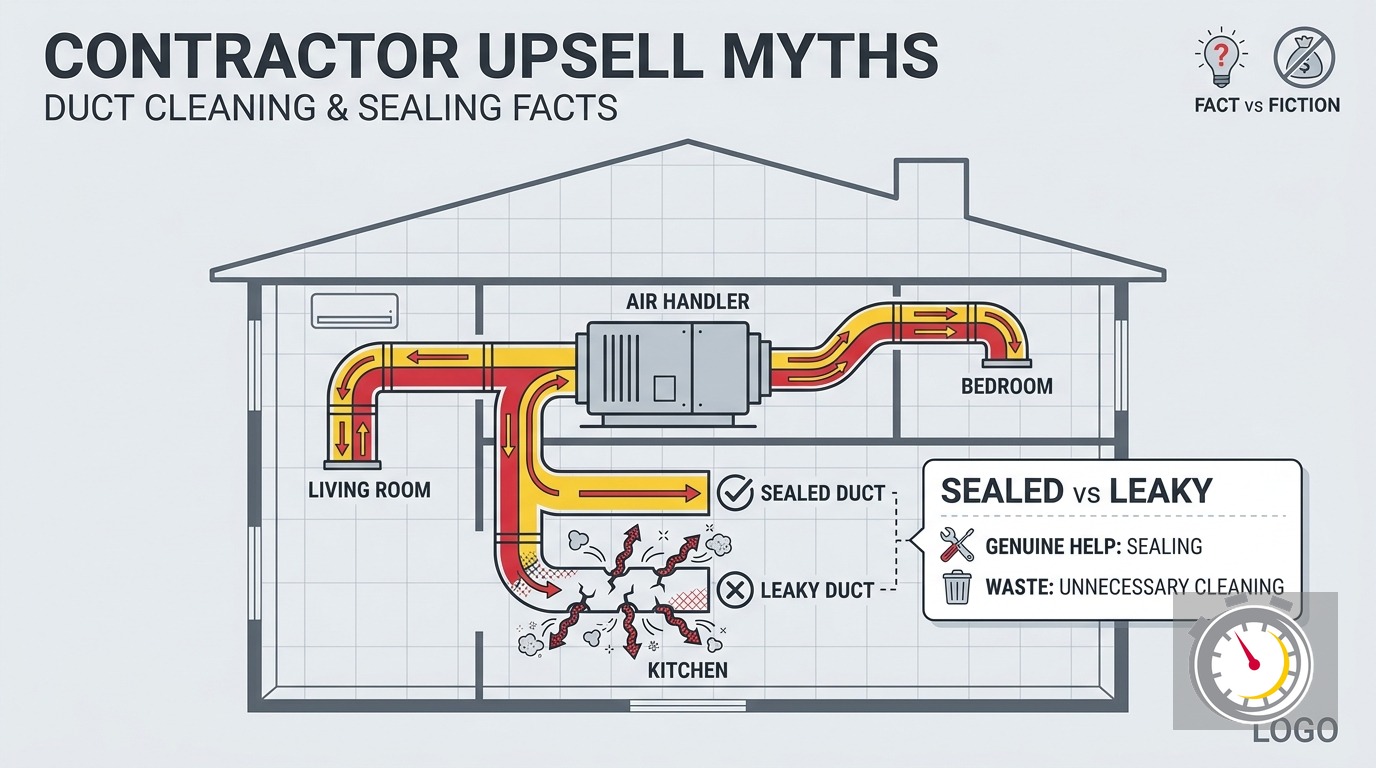
- Duct cleaning is warranted in three specific situations: confirmed mold in hard-surface (sheet metal) ducts, active vermin infestation with physical evidence inside the ductwork, and debris visibly discharging from registers into living spaces.
- Cleaning HVAC components - coils, drain pan, fan housing - is a different service from duct cleaning, and the EPA supports it for efficiency gains.
- No EPA-registered biocides exist for use inside insulated duct systems. A contractor spraying a “mold treatment” inside flex ducts is using an unregistered product in an unapproved application.
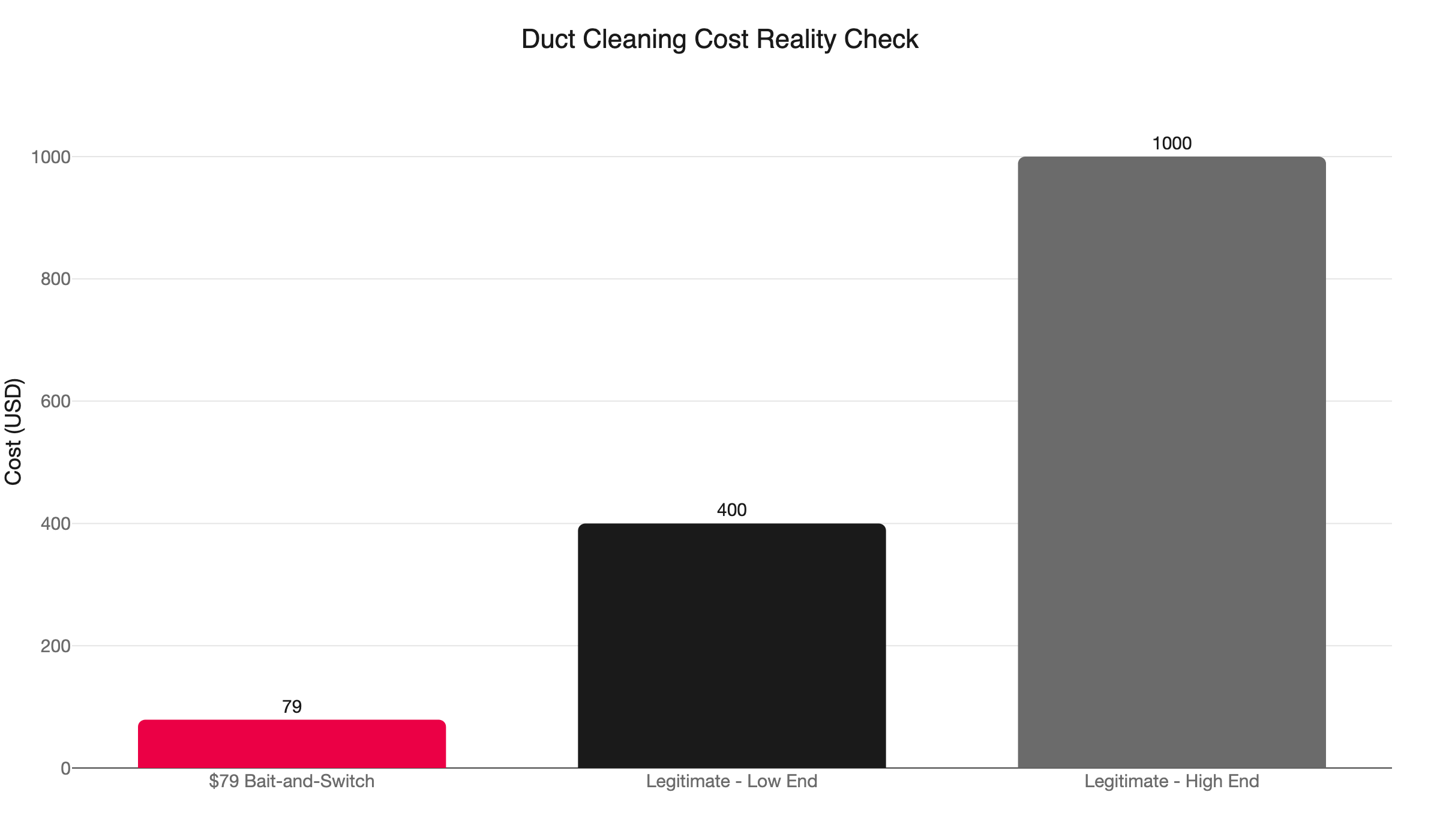
- A legitimate full-service cleaning costs $400 to $1,000 and takes several hours. A “$79 special” is a bait-and-switch.
- Minnesota’s sealed homes recirculate indoor-generated pollutants at high concentrations. Better filtration and ventilation address those. Duct cleaning does not.
- Minnesota does not require a state license to perform duct cleaning. NADCA certification is the only meaningful third-party credential to ask for.
What Does the EPA Actually Say About Air Duct Cleaning?
The short answer: The EPA says routine duct cleaning has never been shown to prevent health problems. It also says there is no evidence that normal household dust in air ducts poses any health risk.
That position is not buried in technical footnotes. The EPA’s official guidance on duct cleaning states directly: “Duct cleaning has never been shown to actually prevent health problems.” It adds: “There is no evidence that a light amount of household dust or other particulate matter in air ducts poses any risk to health.”
The EPA is not hostile to duct cleaning across the board. It identifies specific situations where cleaning is warranted, and we cover those in the next section. But its position on routine duct cleaning as a health measure is clear and consistent.
Why does settled dust in ducts not circulate the way the marketing implies? Dust tends to adhere to duct surfaces rather than floating freely through the system on each cycle. Your air filter intercepts what does move through before it returns to your living space. Cleaning removes material that was, in most cases, staying where it was.
There is one area where the EPA does see cleaning paying off: the HVAC components themselves. Dirty cooling coils, fan housing, and drain pans affect system efficiency. Cleaning those components has documented value. That is a different service from cleaning the duct runs, and it matters - we return to that distinction later.
When Is Air Duct Cleaning Worth It?
The short answer: Three situations clearly warrant it - confirmed mold in sheet metal ducts, physical evidence of vermin inside the ductwork, and debris so severe it is actively discharging from registers into your home.
The EPA identifies three legitimate triggers for duct cleaning:
Substantial visible mold in hard-surface (sheet metal) ducts. Not a contractor’s suspicion or something “dark” on a camera feed. Visible mold growth on the hard interior surfaces of the ductwork. If a contractor tells you they found mold, ask to see it yourself. Get a lab test if you have any doubt. Mold in ducts is a real problem when it is confirmed - not when it is inferred.
Active rodent or insect infestation with physical evidence inside the ductwork. Droppings, nesting material, or the animals confirmed inside the duct system. This is a genuine contamination scenario. Cleaning is necessary, and pest remediation needs to happen alongside it.
Ducts clogged with debris visibly discharging into living spaces. Dusty grilles are normal. Material you can see releasing from registers when the system runs is not. That is actual debris inside the duct, not surface dust on a grille cover.
Two additional situations make a one-time cleaning reasonable even without a hard EPA mandate:
Post-major-renovation. Significant demolition, drywall removal, or insulation work done while the HVAC was running can push fine particulate into the system. A cleaning after major construction is a defensible precaution.
New-to-you home with unknown HVAC history. Visible buildup at registers and no maintenance records is a reasonable trigger for a baseline cleaning. Not an EPA requirement, but not an unreasonable choice.
Outside those scenarios, cleaning ordinary household dust from ductwork has no documented health or air quality benefit.
When Is Air Duct Cleaning a Waste of Money?
The short answer: When the driver is time elapsed, pets, allergies, or a general desire for “cleaner air” - without one of the specific contamination triggers above - there is no documented benefit.
Duct cleaning is commonly sold on premises that sound compelling but do not hold up. It has been five years. You have pets. Someone in the house has asthma. The air feels stuffy. These concerns are real. They are just not duct problems.
Minnesota homeowners face particular pressure on this because our climate means longer heating and cooling seasons and more total system run time. That creates a plausible-sounding sales story. More runtime, more dust, therefore more reason to clean. But accumulated runtime does not change whether cleaning produces a measurable result in the absence of a specific contamination trigger.
The indoor air quality issue in Minnesota homes is real, but it is not a duct-storage problem. Our homes are sealed tightly against winters that can hit -20°F. That seal keeps the heat in. It also keeps indoor-generated pollutants concentrated. Cooking gases, cleaning product fumes, combustion byproducts from gas appliances - these recirculate at higher concentrations in our homes than in climates where windows stay open year-round. Duct cleaning does not touch any of those pollutants. They are generated inside the living space and circulate continuously. The solution is better filtration and whole-home ventilation, not a duct cleaning.
Our guide to air purifiers, filters, and MERV ratings covers the options that actually address airborne contaminants in a Minnesota home.
How Does the $79 Bait-and-Switch Work?
The short answer: A low entry price gets a technician inside your home. They then report contamination - often misidentified or documented elsewhere - and pressure you into expensive chemical treatments that have no EPA support.
Research on duct cleaning pricing is consistent: a legitimate full-service cleaning costs $400 to $1,000 and takes several hours with truck-mounted or commercial-grade HEPA equipment. A “$79 whole-house special” cannot cover that labor and equipment cost. The low price is not a deal. It is how the contractor gets access to your home.
The pattern runs predictably. The technician does a brief inspection and finds something concerning. Mold, maybe, or heavy contamination. The photos may be from another job site or from a part of the system that looks bad out of context. The next step is a chemical add-on: a biocide spray, a sanitizing fog, a duct sealant application. These sound thorough. The science does not support them, and in the case of biocides in insulated ducts, the EPA has not registered any product for that use.
Red flags to watch for:
- Any whole-house offer under $200
- Pressure to approve chemical treatments without time to verify the contractor’s findings
- Mold claims they will not let you confirm yourself or with an independent test
- No large HEPA vacuum equipment visible on the truck or in the home
- No mention of NADCA certification or NADCA standards when you ask
If you feel pressured in your own home, pause. Ask for all findings in writing. Call us at (763) 260-6662 before committing to anything. A legitimate company is not bothered by that question.
Does Duct Cleaning Actually Remove Mold?
The short answer: In sheet metal ducts, yes - if the job is done correctly. In flex duct with internal fiberglass insulation, no. The EPA says the insulation must be removed and replaced. No cleaning method is adequate for that substrate.
This is not a minor distinction. Most homes built in recent decades use internally insulated flex duct in at least part of the system. If mold grows inside that fiberglass lining, the EPA is unambiguous: the section must come out and be replaced. Cleaning is not adequate. The insulation cannot be remediated.
The biocide question adds another layer. No biocides are currently registered by the EPA for use inside insulated duct systems. A contractor spraying a mold treatment inside flex duct is using an unregistered product in an unapproved application. That is a regulatory issue, not just a preference. It is also a sign that the contractor is selling a solution that does not exist.
Duct sealants used to encapsulate contamination fall into the same category. The EPA, NADCA, NAIMA, and SMACNA all state that sealants are not recommended for covering contamination inside ducts. The EPA’s language is specific: “Sealants should never be used on wet duct liner, to cover actively growing mold, or to cover debris in the ducts.”
If a contractor’s proposed fix for mold in insulated flex duct is a spray treatment, the correct answer is replacement. A spray does not solve the problem. It covers it.
On humidity and mold risk in Minnesota specifically: Twin Cities summers average around 70% relative humidity in July. That creates real condensation risk at the coil and drain pan - the HVAC components where moisture actually collects. Keeping indoor humidity between 30% and 50% is one of the most practical ways to prevent microbial growth in the system. For more on what accumulates in a Minnesota HVAC system across a full year of heating and cooling, our post on what is really in your air after a Minnesota winter goes into detail.
What Should a Legitimate Duct Cleaning Include?
The short answer: Everything. Supply ducts, return ducts, all registers, grilles, diffusers, heat exchangers, coils, drain pans, fan motor and housing, and the air handling unit housing - visibly clean when the job is done.
NADCA’s ACR 2025 standard is the current industry benchmark for HVAC cleaning work. It requires cleaning all system components, not just vacuuming the duct runs. The full ACR standard is publicly available at acrstandard.nadca.com and is free to download. A legitimate contractor knows it by name and can tell you how their process aligns with it.
What legitimate equipment looks like: truck-mounted or commercial-grade portable HEPA vacuums. Agitation tools - rotating brushes, compressed air whips - to dislodge settled material before the vacuum captures it. Containment practices that prevent anything dislodged from redistributing through the home.
What a legitimate result looks like: every component on the list above is visibly clean when the technician leaves. You have every right to inspect them. A contractor who is doing the job correctly expects that question.
Two things that do not belong in a legitimate job:
- Biocide spray inside any insulated duct section. No EPA registration exists for that application.
- Sealant coatings applied over contamination rather than removing it.
If either shows up as a default line item in a proposal, ask for the EPA documentation that supports the use. If the contractor cannot produce it, that is your answer.
One credential worth asking for upfront: NADCA certification. Minnesota does not require a state license to perform duct cleaning. That means any company can offer the service here without any formal qualification. NADCA certification is the only third-party credential that shows a contractor has trained against a published industry standard. Without it, you are taking their word on their qualifications.
What Actually Improves Indoor Air Quality in a Minnesota Home?
The short answer: Filter upgrades, humidity control, and whole-home ventilation address the pollutants that actually cycle through your air. For most Minnesota homes, these investments do more than duct cleaning.
Minnesota’s tight building envelopes are a necessity. The challenge is managing what builds up inside them over a long heating and cooling season. Three things genuinely move the needle:
Filter upgrades. A standard MERV 8 filter catches larger particles but lets finer ones through. Moving to MERV 11 or MERV 13 in a compatible system captures more of what matters - fine dust, pollen, pet dander, some combustion particles. A filter upgrade runs continuously, costs a fraction of a duct cleaning, and has documented effectiveness. Our guide to air purifiers and MERV filter ratings walks through which filters work with which systems.
Humidity control. Keeping indoor relative humidity between 30% and 50% inhibits mold growth throughout the system and the home. Your AC handles moisture removal in summer but may not keep up on humid days when it is not running hard. A whole-home dehumidifier extends that control. Our indoor air quality service page covers the equipment options in detail.
ERV and HRV ventilation. Energy recovery ventilators and heat recovery ventilators bring fresh outdoor air into a sealed home without losing the energy you put into heating or cooling it. In a Minnesota home, these are among the most effective investments available for air quality. They directly address the pollutant-concentration problem that tight building envelopes create.
Coil and component cleaning. The EPA supports cleaning dirty cooling coils, fans, and heat exchangers for efficiency gains. The coil, drain pan, and fan housing are where moisture collects in a Minnesota system. That is where microbial growth actually starts. If your energy bills are climbing or your system is working harder than it should be, an inspection of these components - especially before cooling season - earns its cost. This is where HVAC cleaning genuinely pays off, and it is a different service from cleaning the duct runs.
The Bottom Line on Air Duct Cleaning
Air duct cleaning is worth it when specific, verifiable conditions are present. It is not worth it as routine maintenance, and it is not the right tool for most indoor air quality concerns.
Before we recommend a cleaning, we look for the triggers. Confirmed mold in sheet metal ducts. Physical evidence of vermin in the ductwork. Debris actively discharging from registers. Post-major-renovation contamination. Without those, our team is more likely to recommend a filter upgrade, a coil inspection, or a ventilation assessment.
When the job is warranted, it needs to be done right. That means a NADCA-certified contractor, commercial-grade HEPA equipment, all system components cleaned, and no chemical treatments applied to insulated ductwork.
We are locally owned and operated in Ramsey, MN. Our team serves Minneapolis, St. Paul, Blaine, Maple Grove, Plymouth, Brooklyn Park, Woodbury, Bloomington, and the surrounding Twin Cities area. We show up when we say we will - and we believe you should not pay if we do not. That is our commitment: “Always On Time… Or You Don’t Pay a Dime!(R)”
If you have concerns about your ductwork, indoor air quality, or what might be growing inside your system, start with an honest evaluation.
Call us at (763) 260-6662 or book an assessment through our duct cleaning and indoor air quality page. We will tell you what we actually find. And if cleaning is not what your home needs, we will tell you that, too.
Frequently Asked Questions
How often should air ducts be cleaned? +
Does air duct cleaning help with allergies? +
What does a legitimate duct cleaning cost in Minnesota? +
How do I know if my air ducts actually need cleaning? +
Is duct cleaning different from HVAC system cleaning? +
Need a technician now?