
Dirty Blower Wheel HVAC Symptoms: What to Watch For
Key Takeaways
- The blower wheel is the fan that moves all the air in your HVAC system - heat, AC, everything.
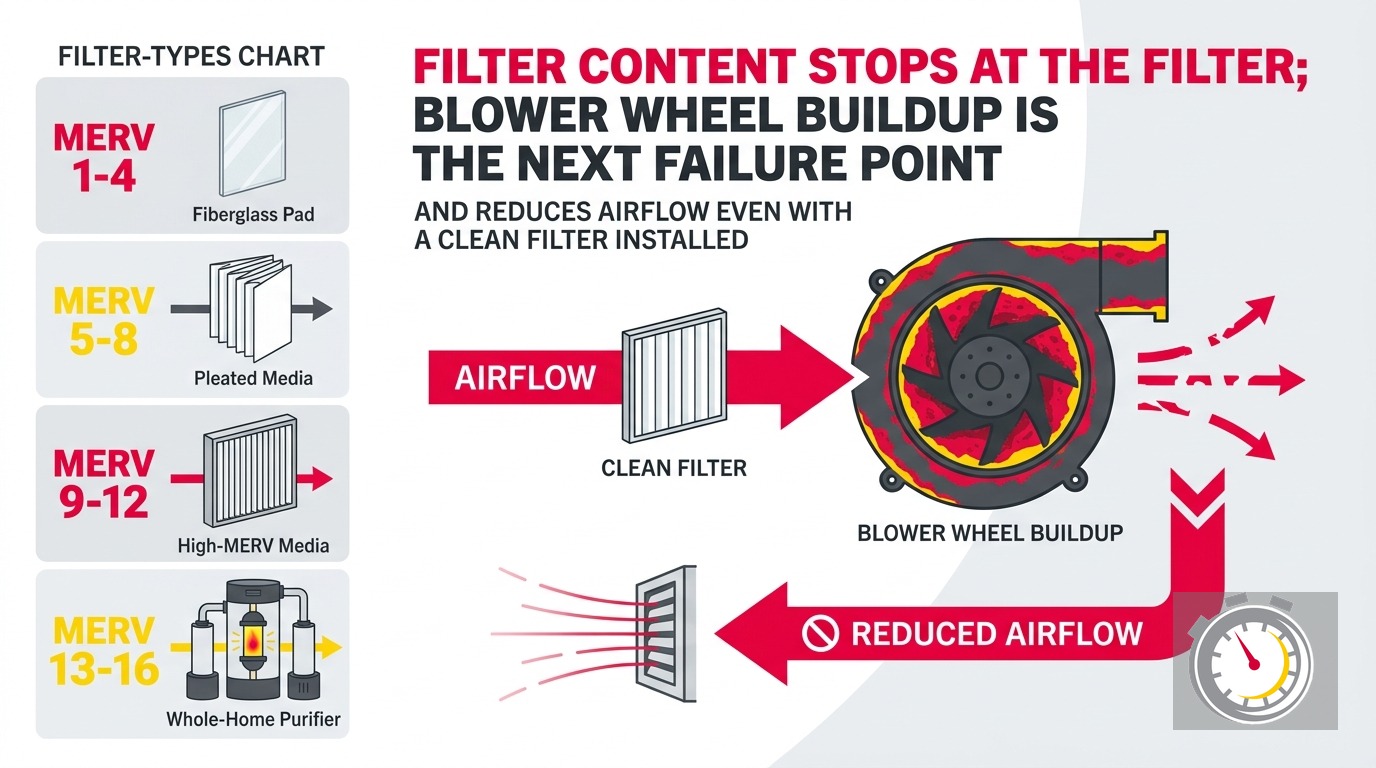
- A clean filter does not protect the blower wheel. Fine particles pass through even good filters. Others bypass the filter frame through gaps in the housing.
- Dirty blower wheel HVAC symptoms include weak airflow, rising energy bills, uneven room temperatures, unusual noises, a frozen AC coil, and musty odors.
- Twin Cities furnaces run more than 214 days per year. That extra runtime means buildup accumulates faster than the national average suggests.
- Most Twin Cities HVAC technicians recommend inspecting the blower wheel every 2-3 years for high-use households - not the national 3-5 year standard.
- Blower wheel cleaning is maintenance, not an installation. No permit is required in Minnesota.
- If you notice any of these symptoms, call (763) 260-6662 or book online with Northern One Hour.
You change the filter every month. Maybe every two months. You’ve been doing it for years. So why does the house still have cold spots? Why is the system running longer cycles than it used to? Why is the energy bill still creeping up?
The answer may be sitting inside your furnace right now: the blower wheel. This is the spinning fan that pushes every cubic foot of conditioned air through your home. Filters catch particles in the return-air stream before they reach the blower. But not all particles get caught, and not every time. Fine debris slips through. More slips around the filter frame through gaps in the housing. Year after year, those particles coat the wheel’s vanes, rob airflow, and grind down the motor.
Dirty blower wheel HVAC symptoms are easy to misread as other problems. Weak airflow gets blamed on ductwork. Rising bills get blamed on the weather. A frozen coil gets blamed on refrigerant. When several of these show up together, the blower wheel is often the common thread. This post names the symptoms clearly. It explains why they happen even in well-maintained homes and walks through what to do when you spot them.
What Does a Blower Wheel Actually Do?
Short answer: The blower wheel (also called a squirrel cage fan) is the rotating component inside your furnace or air handler. It pulls return air from your living spaces and pushes it through the heat exchanger or evaporator coil, then out through your supply ducts into every room. Everything your system conditions passes through this one component.
The blower wheel runs every time your furnace heats, every time your AC cools, and every time you run the fan for air circulation. In a Twin Cities home, that adds up to thousands of run hours annually. Few climates in the continental US accumulate more.
When the vanes are clean, the wheel moves air efficiently and the motor runs at its designed load. When the vanes are coated in grime, the wheel works harder to move the same volume of air. Eventually, it can’t move enough to meet demand - and every room in your house feels the difference.
Unlike filters, which are visible and easy to check, the blower wheel sits inside the equipment housing. Most homeowners never see it. That’s part of why dirty blower wheel HVAC symptoms often go undiagnosed for years.
Why Does a Blower Wheel Get Dirty Even With a Clean Filter?
Short answer: Filters capture particles in the return-air stream, but some are too fine to be caught and some air bypasses the filter frame through gaps in the housing. Both routes deposit debris on blower vanes over years of operation - even in homes where the filter is changed on schedule.
This is the gap most articles about blower wheels skip entirely. A monthly filter swap is a good habit. It does not guarantee a clean blower wheel. Here’s the mechanism.
Fine particles slip through. A standard MERV-8 filter captures particles down to about 3 microns. Smaller particles - fine dust, combustion byproducts, and ultrafine debris - pass right through. On the slightly oily surface of a blower vane, those particles stick and layer up over years of operation.
Filter bypass is a documented contamination route. The EPA’s guidance on duct cleaning warns specifically: “Be sure you do not have any missing filters and that air cannot bypass filters through gaps around the filter holder.” A filter you change every month won’t protect the blower wheel if the frame doesn’t seat tightly against the housing.
Moisture bonds particles to vanes. Minnesota’s humidity swings are significant: very dry in winter, then humid in summer. Moisture in the air stream bonds fine particles to the vane surface in a way dry air alone wouldn’t. The result is a sticky, layered buildup that worsens each season.
The takeaway: a clean filter is step one. It is not the whole story.
What Are the Dirty Blower Wheel HVAC Symptoms?
Short answer: The most common dirty blower wheel HVAC symptoms are reduced airflow from supply vents, rising energy bills with no other cause, uneven room temperatures, vibration or humming from the unit, a frozen AC evaporator coil, and musty or dusty odors when the system runs.
Here’s what each symptom looks like - and why the blower wheel causes it.
1. Weak airflow from supply vents Hold your hand near a supply register while the system runs. If the air feels sluggish or noticeably weaker than it used to be, restricted airflow is worth investigating. A dirty blower wheel can reduce airflow efficiency by up to 20%. That’s enough to make a real difference in how quickly rooms reach temperature.
2. Rising energy bills with no other explanation When the blower can’t move air freely, the motor runs longer and draws more current to hit the thermostat setpoint. Energy Star notes that dirty components can increase energy costs and damage equipment over time. A strained blower motor may not fail visibly at first. You’ll just see a quiet, steady increase on your monthly utility bill.
3. Hot spots and cold spots throughout the house Reduced air volume hits the rooms farthest from the air handler first. That means rooms at the end of long duct runs, or upstairs in a two-story home. If one bedroom is always too cold in winter or too warm in summer, reduced blower output is a top suspect.
4. Vibration, humming, or rattling sounds Buildup on blower vanes is rarely uniform. An unbalanced wheel wobbles as it spins, and that wobble creates vibration you may feel through the floor or hear as a low hum, rattle, or grinding noise. If the sound is new and the system ran quietly before, have it checked before the motor takes further strain.
5. Ice forming on the AC evaporator coil Low airflow and a frozen coil go together. When the blower wheel can’t push enough air across the evaporator coil, refrigerant drops below freezing and ice forms. Frozen evaporator coils are often blamed on low refrigerant, but restricted airflow from a dirty blower is a common underlying cause. If your AC has frozen more than once, ask your technician to inspect the blower wheel.
6. Musty, dusty, or stale odors when the system runs A blower wheel coated with years of accumulated debris can shed particles into the air stream every time it spins. If the house smells stale or dusty right when the heat or AC starts, the wheel itself may be the source.
7. Longer run cycles If your furnace or AC runs for noticeably longer stretches without reaching the target temperature, it’s often fighting restricted airflow. Longer run cycles mean more wear on every component - not just the blower.
Does a Dirty Blower Wheel Raise Your Energy Bills?
Short answer: Yes. The motor draws more current to overcome the resistance of a caked, unbalanced wheel. Wasted electricity becomes heat, which the AC then has to remove in summer. The impact on annual energy costs adds up steadily.
Even a clean, well-maintained blower operates at low efficiency. Research from the DOE’s Lawrence Berkeley National Laboratory found that field-measured blower efficiencies are only 10-15%. A dirty wheel reduces that further. All the extra energy the motor consumes becomes heat. In summer, your AC has to remove that heat, compounding the loss.
There’s a hardware risk too. Dirt on the vanes acts as insulation, trapping heat that should dissipate from the motor housing. A motor running above its design temperature wears faster. What could have been a cleaning on the next tune-up becomes a blower motor replacement. That repair typically runs $750 or more, and higher if the unit is older or parts are hard to source.
How Does a Dirty Blower Wheel Affect Indoor Air Quality?
Short answer: A dirty wheel can shed accumulated particles into the air your household breathes. In Minnesota, where homes are sealed from November through March, whatever the blower circulates stays in circulation. For anyone with allergies, asthma, or respiratory sensitivities, that matters.
The EPA’s indoor air quality guidance includes the blower wheel on its post-cleaning inspection checklist. Technicians should verify that “blower blades are clean and free of oil and debris” and that the “blower compartment is free of visible dust or debris.” The EPA’s inclusion of the blower wheel in IAQ protocols reflects its real potential as a contamination source - not just an efficiency component.
Better filtration and the right air purification approach can reduce particulate load in your home. But neither works as well if the blower moving the air is coated in accumulated grime.
The Minnesota Factor: Why Twin Cities Homes Feel This Faster
Most national HVAC maintenance advice is calibrated for moderate climates. The Twin Cities is not a moderate climate.
Twin Cities furnaces run more than 214 days per year, with January lows near 8°F and roughly 54 days below zero annually. That’s significantly more operating hours than a furnace in most of the country logs. The 3-5 year blower wheel cleaning interval cited by many national sources was developed for that average. In a high-use Minnesota home, it may compress to 2-3 years.
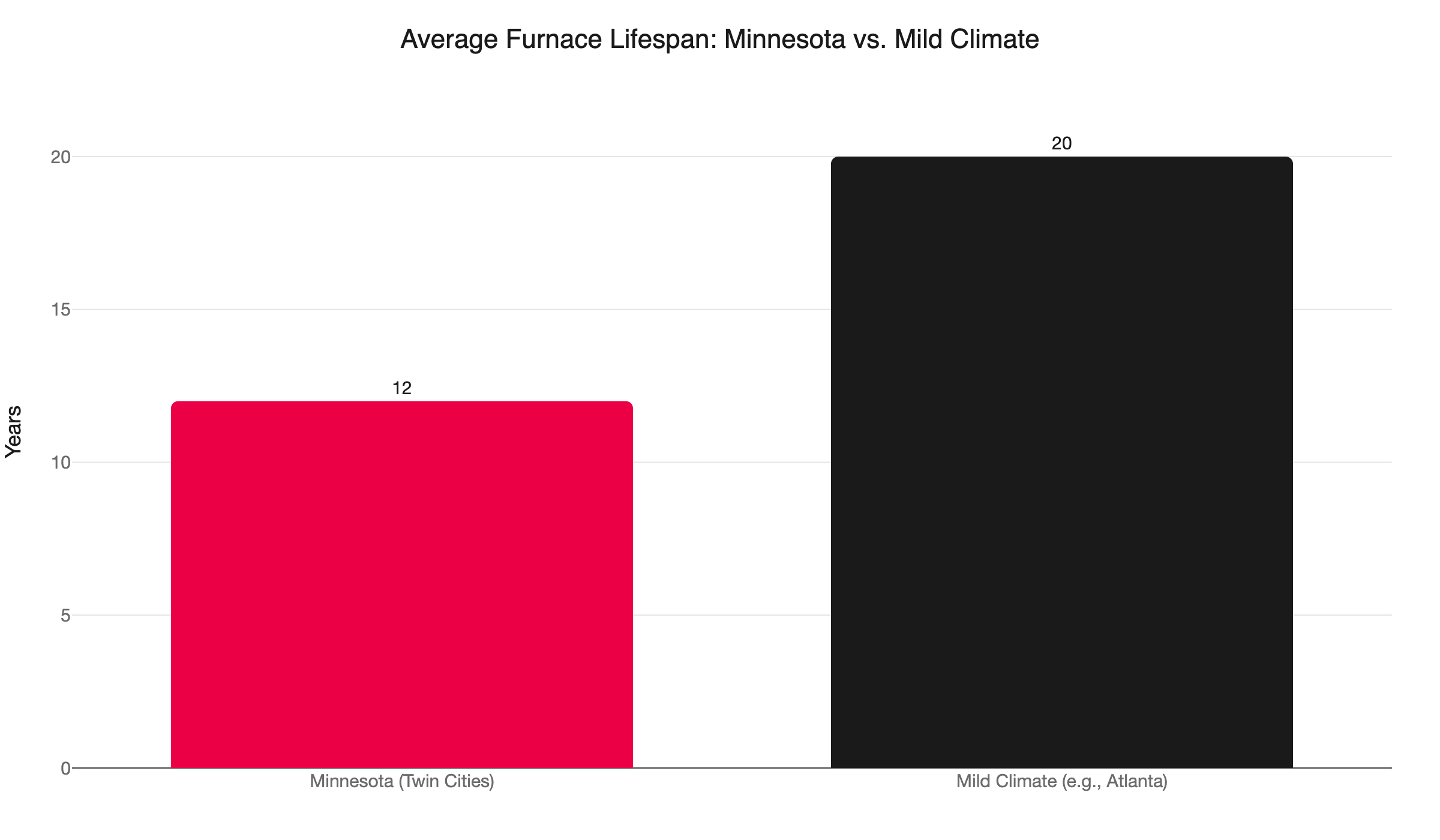
The equipment lifespan data tells the same story. Minnesota furnaces average about 12 years compared to roughly 20 years in milder climates. The extra runtime is part of that gap - and so are the maintenance shortcuts that feel harmless in a shorter heating season but compound over a longer one.
The air sealing factor matters too. A Twin Cities home is closed up tight from November through March. The blower circulates the same interior air continuously throughout the heating season. Whatever collects on the wheel - dust, debris, mold spores - gets recirculated. A dirty blower wheel carries a bigger IAQ liability in a sealed Minnesota home. In a climate with open windows half the year, the risk is lower.
For most Twin Cities households, a blower wheel inspection every 2-3 years is a more realistic target than the national recommendation. That’s especially true for homes with pets, older ductwork, or residents with respiratory conditions.
What Happens If You Ignore These Symptoms?
Short answer: Ignored dirty blower wheel symptoms follow a predictable path: worsening airflow, motor overheating, repeated frozen coils, and eventually premature equipment failure. None of it is dramatic at first. It’s a slow, increasingly expensive slide.
Here’s the cascade:
Buildup accelerates. A rough, particle-coated vane traps new debris more readily than a smooth surface. Once buildup starts, it compounds each season and airflow drops further.
The motor overheats. Extra resistance plus the insulating effect of grime on the housing pushes the motor above its rated operating temperature. Many systems have a high-limit safety switch that shuts the unit off when this happens. If your furnace shuts off mid-cycle for no apparent reason, a stressed blower motor may be why. Furnace blower motor failure - the repair that often follows - is a significant unplanned expense.
The AC coil freezes repeatedly. Each freeze-thaw cycle stresses the coil and refrigerant lines. A maintenance symptom can become a refrigerant leak or a full coil replacement.
The nameplate efficiency becomes fiction. Your furnace carries an AFUE rating - 80%, 95%, whatever it is. That rating assumes clean, unobstructed airflow through a clean blower. A wheel caked with buildup means the system never reaches its rated efficiency, regardless of what the label says. CenterPoint and Xcel rebates on high-efficiency equipment assume the equipment is actually running at high efficiency. Maintenance keeps that true.
How Does a Professional Clean a Blower Wheel?
Short answer: A technician removes the blower assembly, cleans each vane individually with brushes and cleaning solution, inspects the motor and bearings, and reinstalls the assembly before testing airflow and amp draw. Done correctly, it takes time - and it’s not a safe DIY task for most homeowners.
Here’s the typical sequence:
- Power down and access. The technician cuts power to the unit, removes the access panels, and disconnects the blower assembly from the housing.
- Visual inspection. The tech notes the degree of buildup, checks for cracked or bent vanes, and looks for early signs of motor wear.
- Cleaning. Each vane is cleaned individually. Buildup can be stubborn and uneven. Compressed air, soft brushes, and HVAC-rated cleaning solution are the standard tools.
- Motor check. With the assembly out, the tech inspects the motor for signs of overheating, worn bearings, or electrical wear. This is the right moment to catch motor issues before they become failures.
- Reassembly and testing. The tech reinstalls the assembly, restores power, and measures airflow and motor amperage draw to confirm normal operation.
No permit is required for blower wheel cleaning in Minnesota - it’s maintenance, not an installation. It’s typically performed during a furnace tune-up but can also be scheduled as a standalone service when symptoms point specifically to the blower.
When to Call Northern One Hour
If you’ve noticed any of the dirty blower wheel HVAC symptoms described here - weak airflow, rising bills, uneven temperatures, odd sounds, a frozen coil, or stale air - a professional inspection is the right next step. These symptoms don’t resolve on their own. The longer a compromised blower runs, the more wear accumulates on the motor and surrounding components.
We’re locally owned and operated in Ramsey, MN, serving Minneapolis, St. Paul, Blaine, Maple Grove, Plymouth, Brooklyn Park, Woodbury, Bloomington, and the broader Twin Cities metro. We show up when we say we will - that’s the “Always On Time… Or You Don’t Pay a Dime!(R)” promise we back on every call.
Blower wheel inspection is part of a standard heating tune-up with our team. If you want to get on the schedule - or if something has already gone wrong - call (763) 260-6662 or book online. We’ll tell you exactly what we find and what it will take to fix it.
Frequently Asked Questions
How often should a blower wheel be cleaned in Minnesota? +
Can I clean my blower wheel myself? +
Can a dirty blower wheel cause my air conditioner to freeze up? +
Need a technician now?