
Ductwork Making Popping Noise: What's Normal and What's Not
Key Takeaways
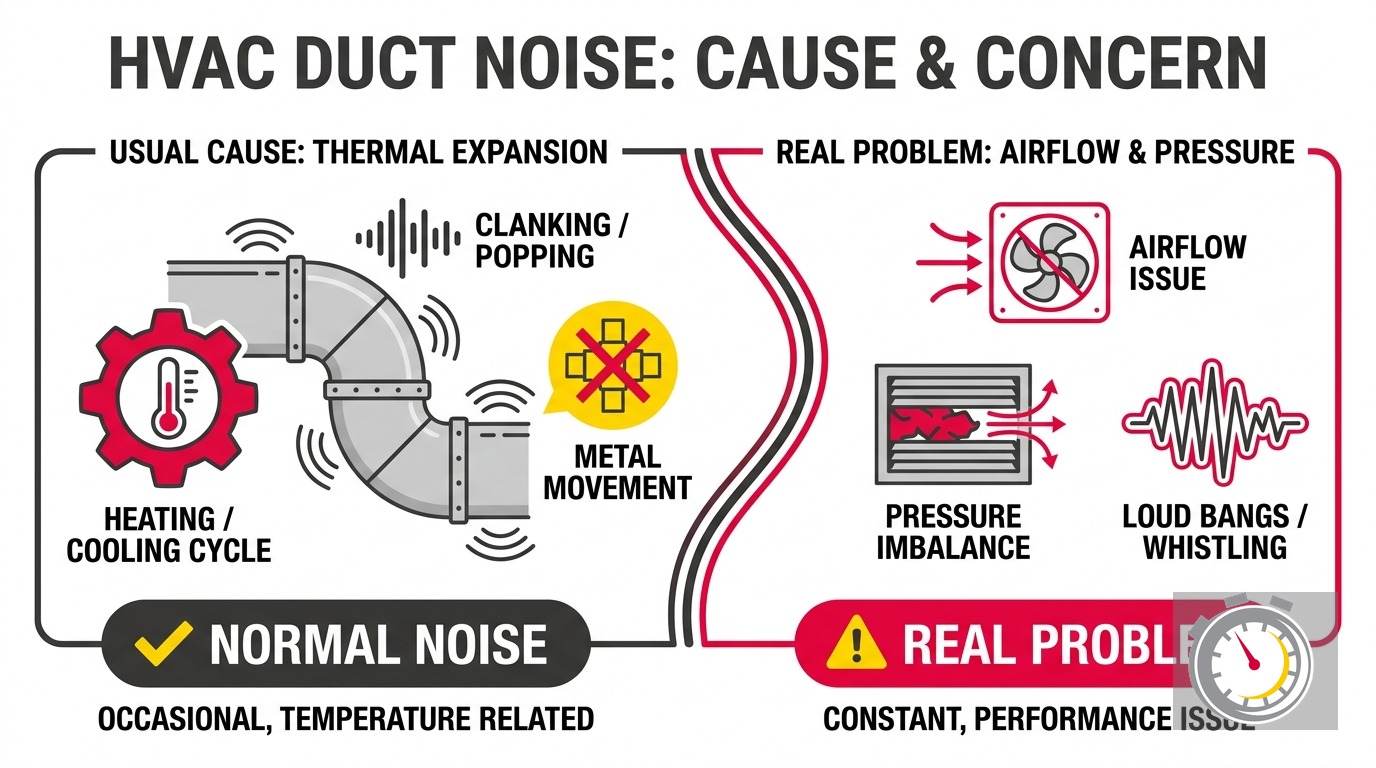
- If your ductwork is making a popping noise when the furnace or AC cycles on, the most likely cause is thermal expansion. Duct metal swells when hot air hits it and contracts when the system shuts off.
- Rectangular sheet-metal ducts pop more than round ones. Large flat panels flex and snap under temperature changes, while round geometry distributes the same pressure evenly around the circumference.
- Normal: one or two pops at cycle start or end, fading once the system warms up. Not normal: continuous noise during the blower cycle, weak airflow in a room, or a home that is not reaching its set temperature.
- Minnesota’s extreme winters make duct popping more intense here than in most of the US. On a design-temperature day, a 140°F-plus temperature delta hits your duct metal the moment the furnace fires.
- Two quick self-checks before calling anyone: replace a dirty filter and reopen any closed vents. Elevated static pressure from either one worsens duct noise.
- A technician with a manometer can measure actual static pressure and tell you definitively whether the popping signals a real problem.
Why Is Your Ductwork Making a Popping Noise?
Short answer: Your duct metal is expanding and contracting with temperature changes. When your furnace fires, it pushes air at 125-135°F through metal that may be sitting at near-basement temperatures. That sudden heat causes the metal to swell rapidly. The snap you hear is a flat panel flexing outward under the stress.
Metal expands when it gets hot. That is true of the pipes under your sink and the rails on your deck. It is also true of the sheet steel that forms your duct system. The difference with HVAC ductwork is speed.
Your furnace does not warm the ducts gradually over hours. It sends a burst of hot supply air through the system in seconds. Large flat panels on the main trunk line can’t absorb that stress silently. They pop.
The same thing happens in reverse when the system shuts off. The metal cools, contracts, and pops again. Most homeowners hear the startup pop more often because the temperature change is fastest then. Both directions produce noise, but startup is the louder event.
This is, in most cases, a physics problem rather than a mechanical failure. The popping can also be a normal part of a system that has performed reliably for years. But there are specific conditions that turn a harmless thermal pop into a sign of something worth fixing. Knowing the difference saves you from unnecessary anxiety on one end and an avoidable repair bill on the other.
What Makes Rectangular Ducts Pop More Than Round Ones?
Short answer: Flat panels bow outward under pressure and temperature changes, then snap back. Round ducts distribute those same forces evenly around the circumference. Geometry is the deciding factor, and the rectangular sections of your system are almost always the noisy ones.
Most residential duct systems mix shapes. The main trunk line running the length of your basement is usually a large rectangular box. Branch runs to individual rooms are often round flex duct or round rigid metal. The rectangular sections are the ones you hear.
Think of a large flat cardboard box. Press one side and you can feel it want to buckle. That tendency is built into flat geometry. Sheet-metal ducts do the same thing, only the force comes from temperature changes or blower pressure rather than your hands.
This effect has a name in metal fabrication: oil-canning. A flat panel under compression pops from one buckled shape to another with a distinct snap. Most residential duct is fabricated from 24 to 26 gauge galvanized steel or aluminum. At those gauges, the metal is thin enough to flex noticeably under normal operating conditions.
Manufacturers add shallow diagonal bends called crossbreaks to flat rectangular duct panels. Crossbreaks stiffen the panel the same way a crease stiffens a piece of paper. They reduce oil-canning significantly when the ductwork is new. After years of pressure cycling and temperature swings, those crossbreaks fatigue and lose their rigidity, and the popping returns louder than before.
The takeaway: round duct pops less because round is an inherently stiff shape. If you are noticing noise exclusively from one section of the system, it is almost certainly the largest rectangular panel in that area.
Five Common Causes of Ductwork Popping Noise
Not every duct pop has the same cause. Running through this list helps you narrow down the source before a technician arrives.
1. Thermal expansion and contraction
This is the most common cause and the one most homeowners are dealing with. Supply air from the furnace reaches 125-135°F. In a cold Minnesota basement, duct metal may be sitting at 50-60°F before the system starts. That temperature swing happens in seconds, and the metal responds with a pop. The same physics applies in summer: your AC sends 55°F air through duct metal that has been baking in an uninsulated attic all afternoon. Both directions create noise. Both are normal if they fade quickly and airflow remains strong.
2. Fatigued crossbreaks on the trunk line
After years of pressure cycling, the crossbreaks formed into trunk-line panels can fatigue and lose their shape. When the blower starts, the panel flexes under pressure and snaps back with a loud pop. This is distinct from thermal expansion. It happens the instant the blower starts, not gradually as the system heats up. The noise typically comes from near the furnace, where the main trunk is largest and takes the most pressure. A reinforcement bracket or stiffener resolves it.
3. Closed vents or a dirty filter raising system pressure
Closing vents or running a clogged filter raises static pressure inside the duct system. That elevated pressure forces duct walls to flex with every blower cycle. HVAC equipment is designed to operate within a specific static pressure range. Push it above that range and the duct walls protest. At least 80 percent of your supply vents should remain open at all times. A filter past its change date does exactly the same thing. Our post on closing HVAC vents in unused rooms explains why closed vents cause more harm than most homeowners expect.
4. Undersized ductwork
A duct system built for a smaller furnace will produce elevated static pressure every time the blower runs. Unlike thermal expansion noise, this pops constantly through the whole cycle rather than just at startup. If the noise started after a furnace replacement and was never an issue before, undersizing is the first thing to ask about on the service call. A technician can verify whether the duct cross-sections match the equipment’s airflow requirements.
5. Duct leakage
In homes with unsealed ductwork, studies estimate that 20 to 30 percent of conditioned air escapes through duct leaks before it reaches living spaces. A leaky duct drops below its designed pressure range. That imbalance causes duct walls to draw inward, then flex back outward, producing noise at the leak points. Leakage also concentrates mechanical stress at seams and joints, which pop repeatedly and gradually work loose further. If the noise is accompanied by rooms that never quite reach temperature, leakage is high on the suspect list.
Is the Popping Normal or a Real Problem?
Short answer: Normal popping happens only at cycle start or end, fades as the system reaches operating temperature, and coincides with strong, consistent airflow at every register. Continuous noise during the blower cycle or weak airflow in any room is worth investigating.
Here is the clearest line you can draw before calling anyone:
Likely normal:
- One or two pops when the furnace or AC kicks on
- Noise fades within a few minutes once the system reaches operating temperature
- Airflow at every register feels strong and consistent
- Every room reaches the set temperature in a reasonable timeframe
- The noise has been consistent for years without getting louder or more frequent
Worth investigating:
- Popping continues throughout the entire blower cycle, not just at startup
- One or more rooms feel noticeably weaker than the rest
- The home is not reaching the set temperature despite the system running
- A new loud bang or clunk started after a furnace or AC replacement
- The noise has gotten significantly louder or more frequent over the past year
The definitive test is static pressure measurement. HVAC equipment is engineered to operate within a specific pressure range, and a technician measures this with a manometer. If the reading falls above or below that range, the root cause is usually findable: a leak, a restriction, undersized ductwork, or a failing blower component. Static pressure testing is the one diagnostic that removes all guesswork.
Why Minnesota Ducts Pop Louder Than Most
Phoenix in January averages around 60°F. Minneapolis in January hits -13°F on a design-temperature basis. That gap matters more than most homeowners realize when thinking about duct noise.
On a genuine cold snap in the Twin Cities, your furnace sends 130°F supply air through duct metal. That metal has been sitting near basement temperatures, which can drop into the low-to-mid 40s during a hard cold snap. The temperature delta between the duct metal and the supply air can exceed 140°F. It arrives in seconds. That is more violent thermal stress than anything a contractor writing for a Phoenix or Dallas market is dealing with.
Minnesota also delivers the stress from both directions. Our summers are real: July highs routinely push into the low-to-mid 90s, and uninsulated attic spaces can exceed 130°F by mid-afternoon. When your AC kicks on at the hottest point of a July day, 55°F conditioned air hits superheated duct metal. Same oil-canning physics, opposite direction, same annual fatigue accumulation.
The practical result: Minnesota ducts cycle hard in both the expansion and contraction directions every year. A duct system in a warmer climate builds up mostly one-directional thermal stress. Ours absorbs it from both extremes with every season. That accelerates the timeline for crossbreak fatigue, seam separation, and panel flex.
Ductwork lifespan is generally 20 to 25 years, and homeowners often begin noticing fatigue-related noise and leakage within 10 to 15 years. In Minnesota, plan for the earlier end of that range, not the later. A system installed with your 2008 furnace is already in the window where an inspection makes sense.
When you are weighing repair against replacement, our guides on ductwork replacement cost in the Twin Cities and duct sealing and energy loss lay out the numbers specific to this market.
How to Run a Two-Minute Self-Diagnostic
You do not need any tools to gather useful information before calling. Here is a quick sequence any homeowner can run.
Step 1: Identify the timing. Stand near your furnace or air handler when the system cycles on. Does the pop happen the instant the blower starts? That points to pressure-related causes: closed vents, a dirty filter, or fatigued crossbreaks. Does the noise start a minute or two after startup and then fade as the system warms up? That is thermal expansion.
Step 2: Check your filter. Pull the filter and hold it up to a light. If you cannot see light through it, replace it before anything else. A clogged filter is the single most common reason static pressure climbs above normal. A replacement filter costs a few dollars and takes two minutes to swap.
Step 3: Walk your vents. Count your supply registers. If more than 20 percent are closed or blocked by furniture, reopen them. Closed vents do not redirect heat to other rooms. They redirect pressure into the duct walls, and that pressure has to go somewhere.
Step 4: Put your hand at each register. Walk every supply register while the system is running. Note any room where airflow feels noticeably weaker than the others. Write down which rooms. Weak airflow concentrated in a specific part of the house points to a duct leak or restriction along that branch run.
Step 5: Monitor the temperature. If the home reaches the set temperature at a normal pace and every room feels even, the noise is very likely benign. If one zone consistently underperforms, the ductwork serving that run is worth a closer look.
For sounds that seem to come from the furnace itself rather than the ductwork, our post on furnace popping, banging, and squealing noises covers the furnace-side causes that often get mistaken for duct noise.
What Should You Do If the Popping Continues?
Short answer: Start with the filter and vents, then schedule a service call if the noise persists or any room shows weak airflow. Continued popping after basic checks points to elevated static pressure, fatigued duct panels, or leakage. None of those fix themselves.
If the self-diagnostic reveals a dirty filter or closed vents, correct those first and give the system a few cycles to settle. Many homeowners find that a fresh filter and reopened vents quiets the ductwork noticeably within a day.
If the noise continues after that, it is time for a technician. A service visit can include static pressure measurement, trunk-line panel inspection for fatigue, a check for leakage at seams and joints, and verification that the duct system is correctly sized for the equipment it serves.
Repair options range from simple to substantial:
- Reinforcing a fatigued trunk panel with a bracket or stiffener is a common, straightforward repair that addresses the specific crossbreak failure pattern.
- Duct sealing with mastic or metallic tape addresses leakage that contributes to pressure swings and energy loss. Professional duct sealing on a complete system typically runs around $1,300.
- Partial duct replacement makes sense for sections that are undersized, corroded, or too damaged to seal effectively.
- Full duct replacement is the right call when the system is past 20 years, showing widespread fatigue, and losing more conditioned air than targeted repairs can recover. Full duct replacement in the Twin Cities typically runs $6,500 to $13,000 installed, depending on home size and system complexity.
If your ductwork is 15 or more years old and you are starting to hear new problems, ask for a full assessment rather than patching one section at a time.
When Should You Call a Professional About Noisy Ductwork?
Short answer: Call if the popping is continuous during the blower cycle, if any room has weak airflow, if the home is not reaching temperature, or if the noise started suddenly after an equipment replacement. Those signs go beyond what a filter change or open vents can fix.
You do not need to call a pro every time a duct makes a sound. Normal thermal pops are a fact of life in a Minnesota home with a sheet-metal duct system. The triggers that warrant a call are:
- Continuous noise during the entire blower cycle, not just the first minute
- A loud bang or clunk that started after a furnace or AC replacement
- Weak airflow in one or more rooms that is not explained by a closed vent
- Higher-than-normal energy bills without a clear weather explanation
- Ductwork that is 15 or more years old and has never been inspected or sealed
At Northern One Hour, we are locally owned and operated in Ramsey, MN. We serve the Twin Cities and surrounding communities, from Blaine to Woodbury to Plymouth. When we say we will be there, we back it: “Always On Time… Or You Don’t Pay a Dime!(R).” That is not a line we print and forget. It is a real accountability standard.
Our technicians carry manometers and can measure static pressure on the same visit as a general inspection or tune-up. If a pressure problem is driving your duct noise, we will find it and give you a straight answer on what fixing it involves, including honest pricing upfront.
Schedule Your Ductwork Inspection with Northern One Hour
A pop when your furnace fires up on a January morning? That is Minnesota physics. Noise that runs through every blower cycle, rooms that will not heat evenly, or energy bills that keep climbing? Those are worth a call.
Reach our team at (763) 260-6662 or book an appointment online. We serve the Twin Cities metro including Minneapolis, St. Paul, Ramsey, Blaine, Maple Grove, Plymouth, Brooklyn Park, Woodbury, and Bloomington. Honest pricing, on-time arrival, and a 100% satisfaction guarantee on every visit.
Frequently Asked Questions
Why does ductwork make a popping noise when the furnace turns on? +
Is ductwork popping dangerous? +
Why does ductwork pop more in Minnesota winters than other places? +
How do I stop my ductwork from making popping noises? +
Need a technician now?