
Ice on AC Outdoor Unit Copper Lines: Twin Cities Causes
Key Takeaways
- Ice on the copper lines of an AC outdoor unit is not normal in cooling mode. It points to an airflow or refrigerant problem.
- Early-season Twin Cities nights already sit near freezing. A system with weak airflow can ice up fast.
- Check the air filter first. It is the cheapest and most common cause.
- Turn the AC off at the thermostat when you see ice. Running a frozen system risks the compressor.
- Frost on the smaller line of a heat pump in heating mode can be normal. Frost in cooling mode is not.
- Leave refrigerant work to a licensed pro. Do not chip ice or poke at the lines.
- Northern One Hour is locally owned and operated, and we back every arrival window with our on-time promise.
Why Is There Ice on My AC Outdoor Unit Copper Lines?
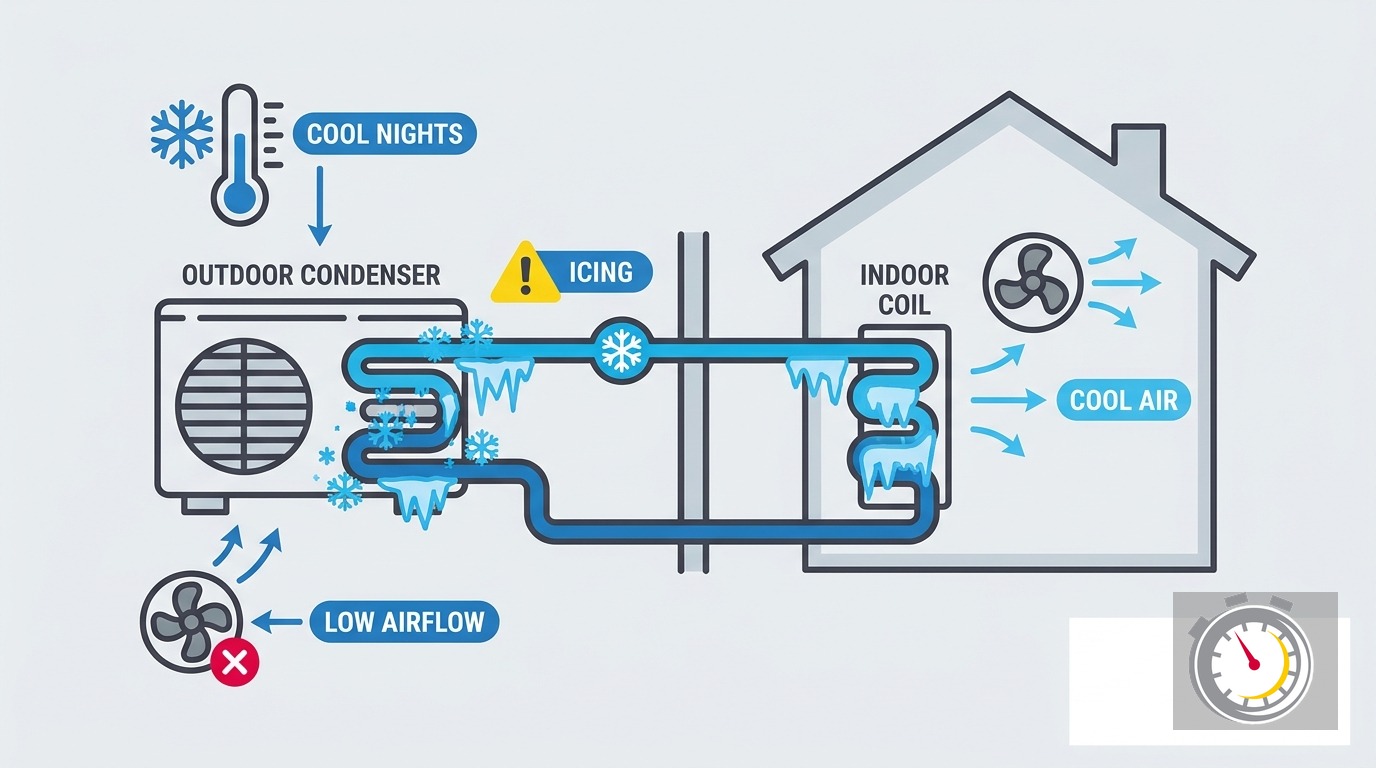
Ice on the outdoor copper lines usually comes from one of two problems: weak airflow across the indoor coil, or a refrigerant issue such as low charge. Both make the lines run colder than they should. Moisture in the air then freezes onto the metal. Cool fall nights speed that up.
You may notice it on a quiet morning. You walk past the outdoor unit and see a white coating on the thick insulated line. Sometimes the ice covers the smaller bare line, too. Sometimes it creeps up to the unit itself.
Either way, the system is telling you something. Your AC is built to move heat out of your home. Ice means heat is not moving the way it should.
Most homeowners assume a refrigerant leak right away. That is not always the case. In many homes we visit, the cause is much simpler. A dirty filter, a blocked return, or a crimped duct can start the whole chain.
We are a locally owned and operated Twin Cities company, and we see this every October.
Why Do Cool Twin Cities Nights Make Icing More Likely?
Cool nights lower the outdoor air temperature your AC works against. A system that already runs cold from weak airflow has less room before surfaces drop below freezing. In the shoulder season, that margin disappears quickly, and frost starts to form on the lines.
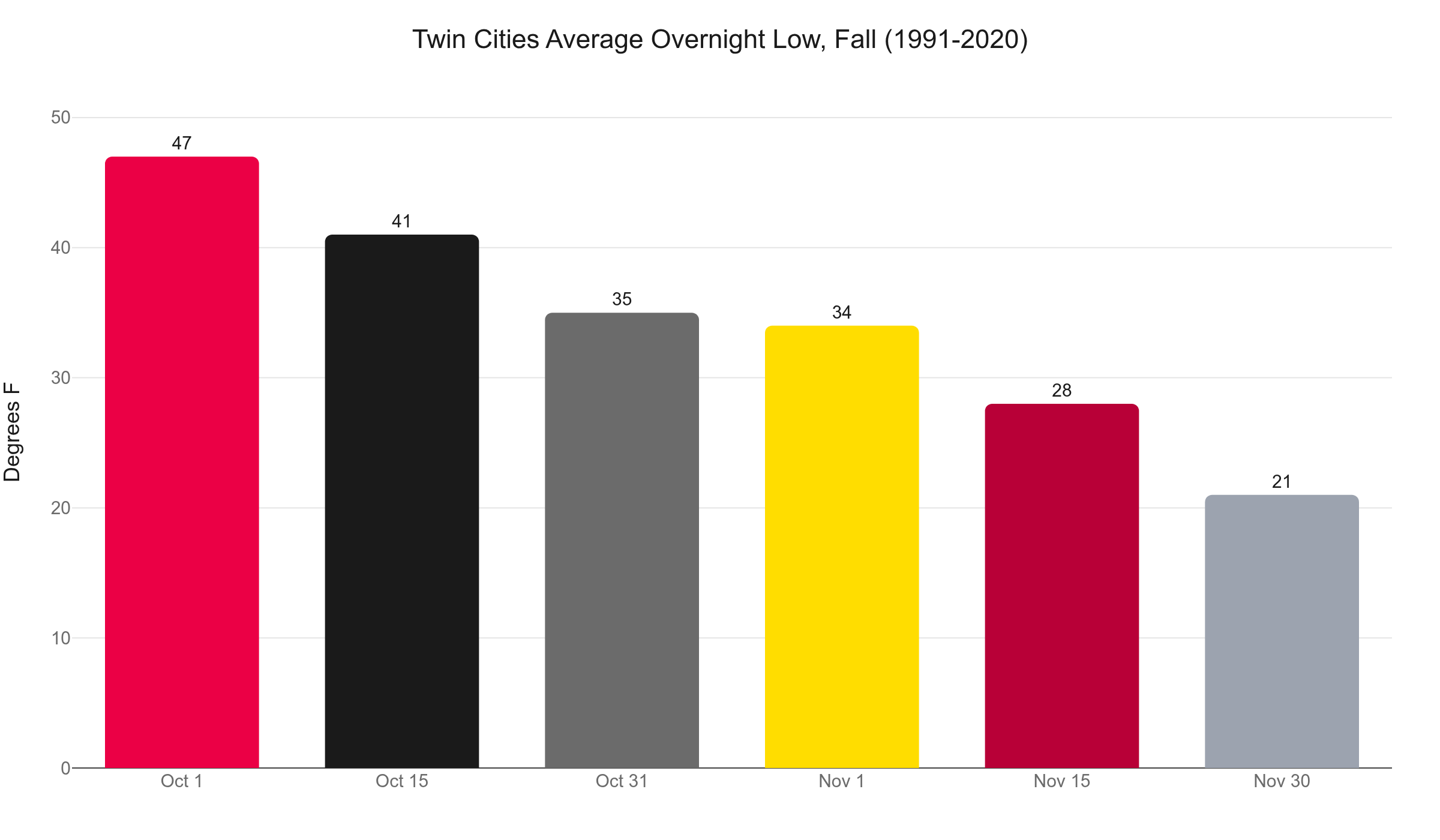
Here is what the climate looks like. The Twin Cities average minimum temperature is 47°F on October 1, 41°F on October 15, and 35°F on October 31. Those are 1991-2020 averages from the state climate office.
Then it drops further. The average minimum is 34°F on November 1, 28°F on November 15, and 21°F on November 30.
Those are averages. Some nights run colder. Some run warmer.
Water freezes at 32°F. Your AC does not need outdoor air that cold to ice up. The coil and lines run far colder than the air around them. A healthy system keeps that cold surface just above freezing. A struggling system pushes it below.
Cool outdoor air makes it worse. The cooler it gets, the less heat the system can pick up. That pushes the cold side even colder.
Most guides explain icing as a mechanical fault. In Minnesota, the calendar matters too. The same weak airflow that causes no trouble in July can cause icing in October.
Our guide on the lowest outdoor temperature you should run your AC goes deeper on that question.
How Does Low Airflow Turn Into Ice Outside?
Your AC moves heat by pushing warm indoor air across a cold coil. If too little air crosses that coil, it cannot pick up enough heat. The coil gets colder and colder, and moisture freezes on it. That cold can travel down the refrigerant lines.
Think of the coil as a sponge for heat. Air carries the heat to it. Without enough air, the coil stays cold and its surface keeps dropping in temperature.
InspectApedia notes that blocked or weak airflow across the cooling coil can frost the coil. Its list of causes includes dirty filters, collapsed duct insulation, and crimped flex duct.
Once the coil frosts, the ice acts like a blanket. It blocks even more airflow, which makes the coil colder still.
The cold refrigerant then heads back outside through the larger line. If it returns too cold, you may see frost on the outdoor copper.
Common airflow culprits include:
- A dirty or clogged air filter
- A filter that is the wrong size or too restrictive
- Closed or blocked supply registers
- Blocked return grilles
- A dirty blower wheel
- Crimped or collapsed flex duct
- A dirty evaporator coil
ENERGY STAR says airflow problems “can reduce your system’s efficiency by up to 15 percent.” That is before any ice forms.
A blocked filter can be worse. This Old House says a blocked filter can cut cooling power by “half your cooling power.”
If your home already has weak airflow, read our guide to why your AC freezes up in the Twin Cities. It covers the indoor side in more detail.
What Else Can Frost the Outdoor Lines?
Besides airflow, frost on the outdoor suction line can come from low refrigerant charge, a faulty metering device, a faulty defrost control, or a broken economizer bond. These are refrigerant-side problems. They need a licensed technician with the right gauges and training.
InspectApedia lists those four causes for frost on the outdoor suction line. It frames the problem as a charge or metering issue.
Here is what each one means in plain language.
Low charge. The system has less refrigerant than it should. Pressure drops, and the coil gets too cold. A leak is the usual reason, because refrigerant does not get used up.
A faulty metering device. This part controls how much refrigerant enters the coil. If it fails, the flow can go wrong, and the coil can run too cold.
A faulty defrost control. This applies to heat pumps. The control tells the unit when to melt frost. If it fails, frost can build up.
A broken economizer bond. This one is rarer, and it is a job for a pro.
You cannot tell these causes apart by looking at the ice. Two homes can show the same white lines for different reasons. That is why we start with the simple checks and work toward the harder ones.
ENERGY STAR also notes that “too much or too little refrigerant will make your system less efficient.” A technician checks the level and adjusts it if necessary.
If you suspect a leak, our guide to refrigerant leak signs in Minnesota can help you spot the clues.
Why Does the Shoulder Season Trap So Many Homeowners?
A frosty night is followed by a warm afternoon. You switch the AC on to take the edge off. The system starts up against cold outdoor air and a cold coil. If airflow is weak, ice forms quickly.
We see this pattern every fall and spring. It goes like this:
- The night drops into the 30s.
- The sun warms the house the next day.
- You set the thermostat to cool.
- The AC runs for hours with a dirty filter.
- Ice builds on the coil and the lines.
- The house warms up even though the unit is running.
That last point confuses people. The outdoor unit hums. The fan spins. But the air from the vents feels warm or weak.
Ice is the reason. A frozen coil cannot move heat. The system runs and runs, but it gets nowhere.
Spring carries the same risk. You wake up to frost in April, then run the AC by afternoon. If you never changed the filter after winter, the system faces the same trap.
Furnace season adds a twist. Many homes run the furnace blower all winter. By the first warm day, the filter may be loaded with dust. The AC then starts up with the worst airflow of the year.
Articles online list causes. They rarely say that our weather is what makes the weak spots show up. A system that survived August can still ice up in October.
Is Frost on a Heat Pump Line Normal?
Sometimes. In heating mode, a heat pump can show frost on its smaller line, and that can be normal. The unit also runs defrost cycles to melt buildup. Frost or ice in cooling mode is a different story. That points to a real problem.
InspectApedia notes that in heat pump heating mode you may see frost on the smaller line. So the mode matters.
Ask yourself two questions:
- Is the system heating or cooling right now?
- Is the frost thin and clearing on its own, or thick and growing?
Thin frost that melts during a defrost cycle is usually fine. Thick ice that stays, covers the whole coil, or keeps building is not.
If you have a heat pump, read our guide on a heat pump covered in ice and whether the defrost cycle is normal. It shows what normal looks like in a Minnesota winter.
A standard air conditioner has no heating mode. Frost on its lines always deserves a closer look.
What Should You Do Right Now If You See Ice?
Turn the AC off at the thermostat. Switch the fan to “on” so indoor air can help melt the ice. Check the filter. Do not chip ice off the coil or the lines. Wait until everything thaws before you restart the system.
Follow these steps in order:
- Set the thermostat to “off.” This stops the compressor from running against ice.
- Set the fan to “on.” Moving air over the indoor coil speeds up the thaw.
- Pull out the air filter. Look at it in good light. If you cannot see through it, replace it.
- Check supply registers and return grilles. Make sure furniture, rugs, and closed vents are not blocking air.
- Wait for the ice to melt. This can take several hours. Do not rush it.
- Watch for water. A large melt can overwhelm the drain line. Keep a towel handy near the indoor unit.
- Restart the system only after the ice is gone. If it freezes again, stop and call us.
A few things to avoid:
- Do not use a screwdriver or ice pick. Copper lines and coil fins are easy to damage.
- Do not pour hot water on the unit.
- Do not run the AC to “clear” the ice. That can make things worse.
- Do not open any refrigerant fittings.
ENERGY STAR recommends you inspect, clean, or change air filters once a month. It adds that a dirty filter can increase energy costs and damage equipment. A monthly check during cooling season catches most problems early.
For how often you should change a filter in your home, see our guide on how often to change your HVAC filter. If your filter was clean, move on to the next section.
Diagnostic Order: What We Check First
We work from the cheapest, simplest cause to the most complex. First we check airflow, then the coils, then the refrigerant side. That order saves you money. It also keeps us from blaming a leak when a filter is the real problem.
Here is the order our technicians follow.
Step 1: Filter and airflow. We look at the filter, the return, and the registers. We measure airflow when needed. Many calls end right here.
Step 2: The blower. A dirty blower wheel or a weak motor can cut airflow, even with a clean filter.
Step 3: Ductwork. We look for crimped flex duct, collapsed insulation, and disconnected runs. InspectApedia lists collapsed duct insulation and crimped flex duct among the causes of weak airflow.
Step 4: Evaporator and condenser coils. ENERGY STAR says to clean both coils. Dirty coils reduce the system’s ability to cool the home and make it run longer.
Step 5: Refrigerant charge and metering. Only after the airflow checks do we look at pressures and charge. This Old House assigns refrigerant leaks to a licensed HVAC professional. We agree.
Step 6: Controls and defrost. On heat pumps, we also test the defrost control and sensors.
The first steps cost little. A new filter costs far less than a refrigerant repair. If the filter fixes it, you should never pay for a leak search.
If we do find a leak, we explain the options in plain terms. You approve any work before we start. Our AC repair service covers the full range of cooling diagnostics.
When Should You Call a Pro?
Call a pro if ice returns after you thaw the system and replace the filter. Call if you see ice on the outdoor lines in cooling mode, hear hissing, or notice oily residue near fittings. Also call if the house will not cool, even though the unit runs.
Here are clear signs to book a visit:
- Ice comes back within a day or two of thawing
- The filter is clean, but airflow still feels weak
- You see frost on the outdoor lines in cooling mode
- The outdoor unit runs, but the air from the vents is warm
- You hear hissing or bubbling near the unit
- Your cooling bills have crept up
- Water pools near the indoor unit after a thaw
Refrigerant work is not a DIY job. It requires a licensed pro. Do not add refrigerant yourself, and do not buy a recharge kit online.
Timing matters too. ENERGY STAR suggests checking the cooling system in spring and the heating system in fall, because contractors get busy once summer and winter arrive. The same logic applies here. Fix a freezing problem in the shoulder season, before the next rush.
When you call us, you pick the arrival window. We arrive within that window. If our technician does not show up on time, you do not pay for the service. That is our promise: “Always On Time… Or You Don’t Pay a Dime!(R)”
You can reach us at (763) 260-6662 or book online.
How Can You Prevent Icing Next Season?
A few simple habits prevent most icing. Change your filter every month during cooling season. Keep the outdoor unit clear and clean. Book a spring tune-up. Think twice before running the AC on frosty mornings. These steps cost little and protect a big investment.
Here is a practical checklist.
Change the filter on a schedule. Put a reminder on your phone. Monthly checks in cooling season are the rule. Homes with pets or dust may need more.
Check the registers. Leave supply vents open. Closing vents can cut airflow across the coil. Our post on closing vents in unused rooms explains why it backfires.
Clean around the outdoor unit. Clear leaves, grass clippings, and cottonwood fluff. Give the unit room to breathe.
Schedule a tune-up. A tune-up is when we clean the coils, check airflow, and test the charge. ENERGY STAR lists these checks in its maintenance list. A single tune-up visit typically runs $95-$250 in the Twin Cities. An annual maintenance plan runs $195-$390.
Be smart on cold mornings. If the overnight low was near freezing, give the house a few hours to warm. Use fresh air or a window before you switch on the AC. Our guide on when to open windows versus run the AC can help you decide.
Think about the whole season. In October, you may not need cooling at all. Many homeowners find the furnace is the better tool by late fall. Switch over when the nights turn cold.
These habits also lower your risk of breakdowns during the first heat wave.
What Does It Cost to Fix an Iced-Up AC?
Cost depends on the cause. A clean filter costs almost nothing. A tune-up visit runs $95-$250. A capacitor repair runs $195-$500. Compressor replacement, the worst case after running a frozen system, runs $1,950-$4,500. Catching ice early keeps you on the low end.
Here is how the range plays out.
- Dirty filter or blocked register: You can often fix it yourself.
- Tune-up and coil cleaning: $95-$250 for a single visit.
- Capacitor repair (part and labor): $195-$500, if a weak part is behind the problem.
- Compressor replacement: $1,950-$4,500, if damage has already occurred.
These are Twin Cities installed prices with parts and labor. Your final price depends on your system and the work needed. We give you a clear price before we start, and honest pricing is part of how we work.
The compressor is why you should stop the system right away. Running an iced unit is how small problems become big ones. A few hours of patience can save you thousands.
If the damage is major, the answer may be replacement. We will tell you honestly whether a repair makes sense. If you need a new system, we offer financing so you can spread the cost. For a look at replacement pricing, read our AC replacement cost guide for Minnesota.
Why Choose Northern One Hour for Your AC Problems?
We are a locally owned and operated Twin Cities company. We know our weather, our homes, and how a cold October night can catch an AC off guard. We back our work with a 100% satisfaction guarantee and honest, transparent pricing.
We also respect your time. You choose the arrival window. We show up in it. If our technician does not arrive on time, you do not pay for the service: “Always On Time… Or You Don’t Pay a Dime!(R)”
Here is what you get when you call:
- A technician who checks airflow before blaming refrigerant
- Plain-language answers, with no jargon
- A clear price before work begins
- Work done by people who live in the same weather you do
We serve Minneapolis, St. Paul, Ramsey, Blaine, Maple Grove, Plymouth, Brooklyn Park, Woodbury, Bloomington, and nearby communities.
Do you see ice on the copper lines of your outdoor unit? Turn the system off and check the filter. If the ice comes back, call us at (763) 260-6662 or book online. We will help you sort out the cause, and we will do it on time.
Frequently Asked Questions
Why is there ice on my AC outdoor unit copper lines? +
Is it safe to keep running my AC with ice on the lines? +
Is frost on a heat pump line normal? +
How do I prevent icing on my AC next season? +
Need a technician now?