
Furnace Pressure Switch Failure Symptoms: Twin Cities Guide
Key Takeaways
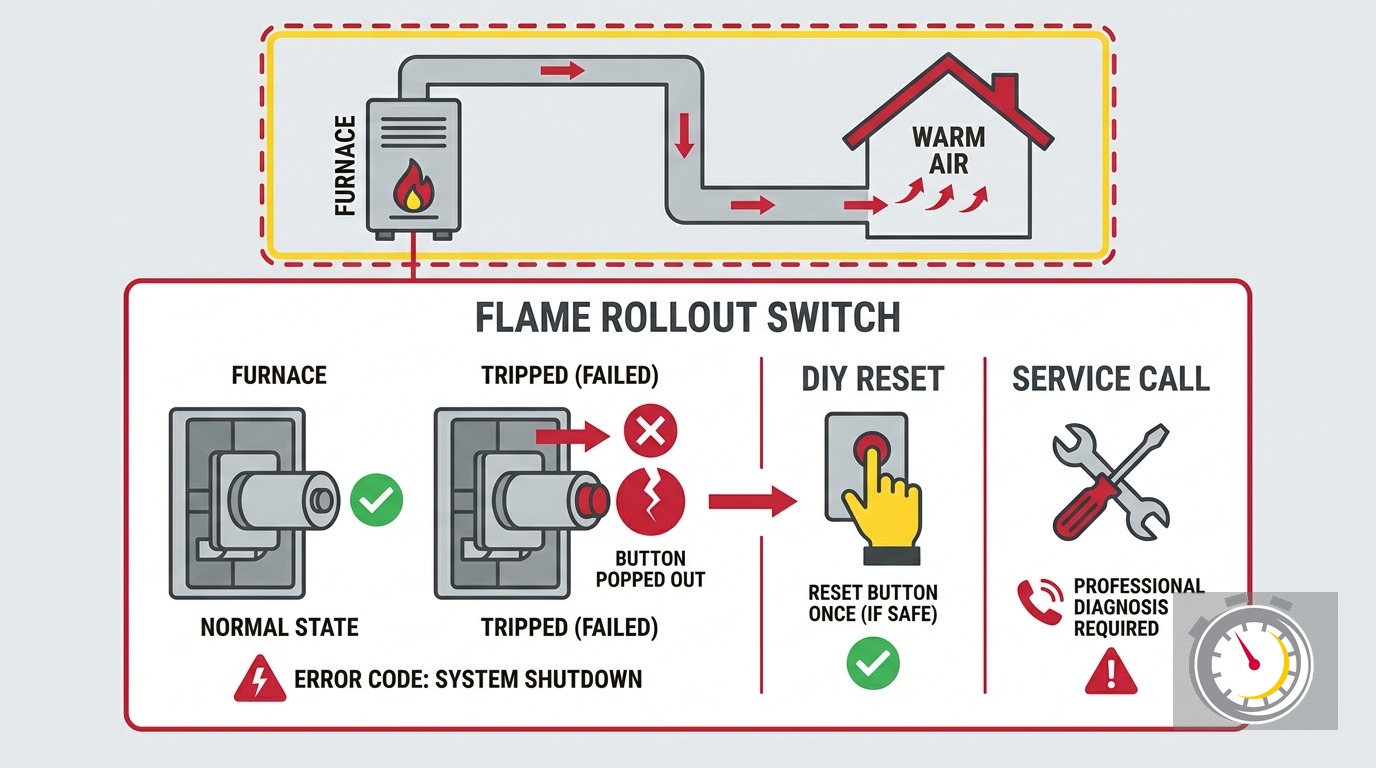
- The pressure switch is a safety device. It must confirm safe airflow before the burner ignites. Never bypass it.
- In Minnesota, the most common winter trigger is a frozen PVC exhaust pipe on the side of your house.
- Stuck-open switch: the furnace runs the inducer and shuts down before igniting. Most brands show a 3-blink error code.
- Stuck-closed switch: the furnace will not start at all. Most brands show a 2-blink error code.
- After 3 to 5 failed attempts, the control board locks out and requires a manual reset.
- DIY check: walk outside, inspect both PVC pipes for ice, clear any blockage with warm water, then reset the furnace.
- If the vent is clear and the furnace still will not run, call a pro. Never jumper the switch.
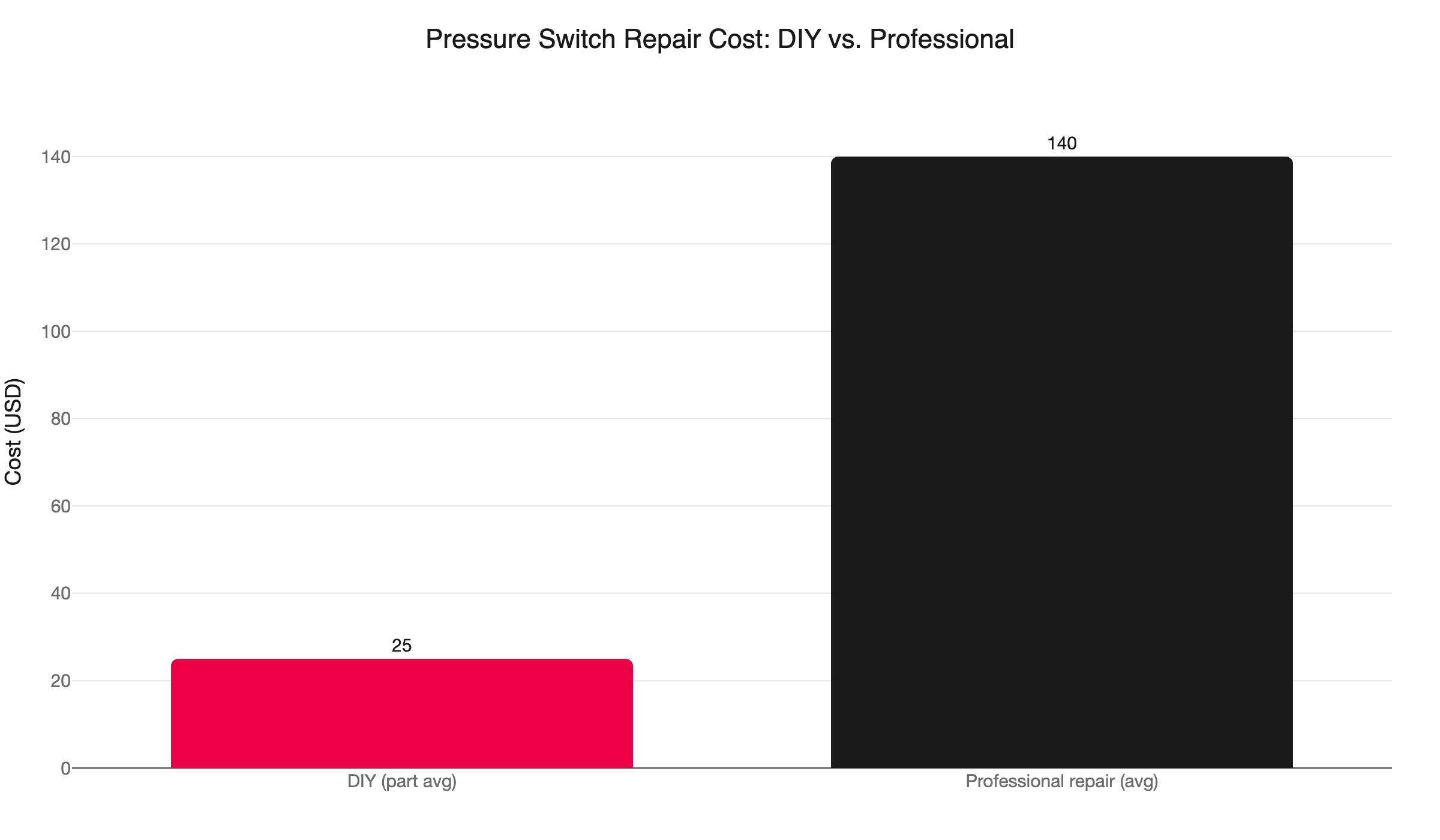
- Part replacement costs $14 to $44. Professional repair runs $80 to $200.
- A CO alarm during a furnace fault is an emergency. Leave the house and call 911.
The most common furnace pressure switch failure symptoms hit at the worst possible time. It is 6 a.m. in January. The temperature outside is -18°F. You walk downstairs to a cold house and find your furnace blinking three times, pausing, and blinking again.
You hear the inducer motor start. It hums for a few seconds, then stops. No ignition. No blower. Just a blinking error code repeating on the control board.
That sequence is a pressure switch fault. In a Minnesota winter, the most likely cause is something you can check in two minutes with no tools. This guide explains what the switch does, what furnace pressure switch failure symptoms look and sound like, and exactly when to put on your coat versus when to call us.
What Does a Furnace Pressure Switch Do?
Short answer: It is a small safety device that verifies your furnace has established airflow to vent combustion gases before the burner ignites. No confirmed draft means no ignition.
The pressure switch connects to the inducer motor via a rubber or silicone hose. When the inducer runs and pulls air through the heat exchanger, it creates negative pressure. That pressure flexes a small diaphragm inside the switch, closing an electrical circuit. The control board reads the closed circuit as confirmation that safe draft exists. Only then does it proceed to ignition.
If that circuit never closes, the furnace shuts down. That is the design working correctly.
This matters in Minnesota because state code requires 92% AFUE minimum on gas furnace replacements. Every high-efficiency condensing furnace vents through a PVC pipe that exits through the side of the house, typically 12 to 18 inches above grade. That pipe is outdoors and exposed to -20°F nights and windchill. When it ices over, the inducer cannot build draft, the switch refuses to close, and the furnace shuts down.
The pressure switch is also your primary protection against carbon monoxide entering your home. If combustion gases cannot vent, the switch keeps the burner off. In a Minnesota home sealed tight against a polar vortex, that protection is not a formality.
For a guide to reading your furnace’s blinking LED fault codes, see our furnace error codes blinking light guide.
What Are the Furnace Pressure Switch Failure Symptoms?
Quick answer: Watch for a furnace that runs the inducer and shuts down before igniting, a repeating error code blink pattern, a soft clicking or flapping near the inducer, and lockout after 3 to 5 failed attempts. The whole sequence plays out in under two minutes per cycle.
Stuck-Open Symptoms (Most Common)
A stuck-open switch fails to close even when the inducer is running. The control board never gets a confirmation signal and holds ignition.
Look and listen for:
- Short cycling. The inducer motor hums for a few seconds. Then the furnace shuts down with no ignition. It restarts and does the same thing two or three more times.
- 3-blink error code. A repeating group of three LED flashes on the control board signals a pressure switch that will not close. Count the blinks in one complete repeating group. Three is the most common pattern for this fault across many brands, though some vary.
- Clicking or flapping near the inducer. A sticking or torn diaphragm can make a soft audible click as the inducer cycles on and off. This sound is easy to miss in a mechanical room. Listen closely with the cover off.
- Lockout after a few attempts. After 3 to 5 failed starts, the control board locks the furnace out entirely. To reset, turn the thermostat to “off,” wait 30 seconds, then turn it back to “heat.” If it locks out again immediately, the cause is still present.
The clearest pattern in real time: inducer starts, furnace goes silent with no ignition and no blower, tries again, same result. Two or three repetitions of that sequence point directly to the pressure switch.
Stuck-Closed Symptoms
A stuck-closed switch reads as already engaged before the inducer runs. The control board sees something out of sequence at startup.
Look for:
- 2-blink error code on most brands.
- No blower start at all.
- A light tap on the switch body can briefly free a sticky diaphragm. If tapping it makes the furnace start temporarily, the switch has diagnosed itself as bad.
Stuck-closed failures are less common than stuck-open and harder to self-diagnose because the furnace does not even complete a start attempt. A technician with a meter can confirm it quickly.
Common Causes of Furnace Pressure Switch Failure in Minnesota
Not all pressure switch problems start with the switch itself. In Minnesota, the cause often lives somewhere else in the system. Here are the most common triggers, in order of frequency on winter service calls.
1. Ice-blocked PVC exhaust or intake pipe
This is the top cause during January and February. Your condensing furnace’s exhaust pipe terminates on the outside of the house. At extreme temperatures, condensate vapor in the exhaust freezes at the pipe opening and builds an ice cap. The inducer cannot build draft against a capped pipe. The switch trips.
Minnesota Rule Chapter 1346, the state’s mechanical and fuel gas code, requires 92% AFUE minimum on new gas furnace installations in Climate Zones 6 and 7, which covers the Twin Cities metro. That requirement means every replacement furnace in the area has a side-wall PVC exhaust. Ice blockage is not a fringe case here. It is the most predictable January failure mode we see.
2. Blocked condensate drain
High-efficiency furnaces produce water as a combustion byproduct. That water drains through a condensate line. When the line clogs from algae, debris, or cold, water backs up into the pressure switch hose. A waterlogged hose cannot transmit pressure correctly. The diaphragm cannot flex. The switch stays open. This is a year-round failure mode, not only a winter one.
3. Cracked, kinked, or disconnected pressure switch hose
The rubber or silicone hose connecting the inducer to the switch ages with use and can crack, stiffen, or get pinched during service work. A disconnected or cracked hose cannot carry the pressure signal to the diaphragm.
4. Failed inducer motor
If the inducer is not spinning at full speed, it cannot build enough draft to close the switch. You may hear the motor struggle, run slowly, or grind before the furnace shuts down. A failing inducer is a more complex repair than replacing a switch.
5. Cracked or ruptured diaphragm
The diaphragm inside the switch wears out over years of cycling and can crack or tear. When it does, it cannot flex under pressure. This is what most people mean when they say “the pressure switch is bad.”
6. Debris at the vent termination
Bird nests, wasp nests, and leaves can block the pipe terminus in warmer months. Less common in January, but worth checking any time you schedule maintenance.
The 2-Minute Check You Can Do Right Now
Before you call for a service appointment, put on your coat and walk outside. This check is free and takes two minutes. If ice is the cause, you can have heat back on before a truck rolls.
Step 1: Find the PVC pipes.
Look for two plastic pipes exiting the side of your house. They are typically 2 to 3 inches in diameter, white or gray, located close to the wall nearest your furnace. One is the exhaust. One is the fresh air intake. Both can become blocked.
Step 2: Inspect the openings.
Look directly at the open end of each pipe. Is there an ice cap? Is either pipe partially covered by a snow drift? Even partial coverage reduces airflow enough to trip the switch.
Step 3: Clear the blockage.
Pour warm water (not boiling - thermal shock can crack PVC) over the ice until it melts and drops free. Move any snow drift away from both pipe openings. Make sure each termination has clear open air in front of it.
Step 4: Reset the furnace.
Go back inside. Turn the thermostat to “off.” Wait 30 seconds. Turn it back to “heat.” Watch for a complete start: inducer on, ignition click, blower running. If the furnace runs normally, you solved it. Note where those pipes are. On the next extreme cold night, a quick outdoor check before bed costs less than one minute.
Optional hose check (if you are comfortable):
With the furnace access panel removed, find the small rubber hose running from the inducer housing to the pressure switch. Confirm both ends are connected. Confirm the hose is not kinked or pinched. Do not disconnect anything - just look.
For a deeper explanation of why PVC exhausts ice over so predictably during polar vortex events and what you can do before next winter, see our post on high-efficiency furnace exhaust vents blocked by snow and ice.
When Should You Call a Pro Instead?
Quick answer: Call a pro if the vent is clear and the furnace still will not run, if your CO alarm has triggered, if the inducer sounds wrong, or if the system is over 10 years old and this is not its first pressure switch fault.
Here is the specific call list:
Vent is clear and the furnace still will not run. The ice was not the cause. Something else is failing: a torn diaphragm, a failing inducer, or a waterlogged condensate line. A technician can confirm which one with a meter and visual inspection.
CO alarm has triggered. Leave the house. Call 911. Do not reset the furnace and stay inside to wait. A pressure switch fault that blocks proper venting can allow combustion exhaust to spill back into the home. In a Minnesota home sealed tight for winter, CO accumulates quickly. Every CO alarm is an emergency, not a reset situation.
The inducer motor sounds wrong. Grinding, squealing, or a labored hum before shutdown suggests the motor is nearing failure. A failing inducer cannot build adequate draft even with a clear vent. That is a more involved repair than a switch swap.
The system is over 10 years old and has done this before. Repeated pressure switch faults on an aging furnace often point to something systemic: a heat exchanger under stress, a condensate system losing capacity, or inducer bearings wearing out. A technician can read those signals together and tell you whether a targeted repair or full replacement is the better call.
You are considering replacing the switch yourself. The part runs $14 to $44, but it must be OEM-matched to your exact furnace model. An undersized switch will not close under normal draft. An oversized one will close too easily and mask other problems. If you are not certain of the spec, let a technician source and install the right part.
One rule stands regardless of situation: never bypass or jumper the pressure switch. It is a safety device. Bypassing it allows ignition without confirmed draft, which puts carbon monoxide at risk of entering your home.
Our furnace repair page covers what a service call includes and what to expect when our technician arrives.
How Much Does It Cost to Fix a Pressure Switch?
Quick answer: If you cleared a frozen exhaust pipe yourself, the repair costs nothing. Part-only switch replacement runs $14 to $44. Professional repair with a service call runs $80 to $200.
Here is the full breakdown:
- Frozen exhaust pipe (self-cleared): $0. Warm water and two minutes of your time.
- DIY switch replacement: $14 to $44 for an OEM-matched switch, averaging around $25. You must match the part number to your specific furnace model.
- Professional repair (service call plus part): $80 to $200 depending on your situation and how much diagnostic time the technician needs to isolate the root cause.
- Inducer motor replacement: Significantly more than a switch swap. The motor is the costly component in the draft assembly, and labor to access and replace it adds to the total.
We give you a clear, honest quote before any work starts. No surprises after the job.
If cost is a concern on a larger repair, ask about financing when you call. We offer it on qualifying repairs and replacements.
What If Your Tech Recommends a New Furnace?
Quick answer: A pressure switch fault sometimes reveals a furnace at the end of its useful life. If replacement makes sense, Minnesota’s 92% AFUE code requirement, Xcel Energy rebates, and a federal tax credit can meaningfully reduce your out-of-pocket cost.
Sometimes the pressure switch is the symptom and not the root problem. A technician who finds a cracking heat exchanger, an inducer on its last bearing, or a condensate system failing at multiple points may recommend replacement. Further repairs on a 15-year-old furnace can cost more over five years than a new high-efficiency unit.
If that conversation happens, here is what works in your favor in Minnesota:
Minnesota’s AFUE requirement. MN Rule Chapter 1346 requires 92% AFUE minimum on gas furnace replacements in Climate Zones 6 and 7. Any new furnace installed in the Twin Cities will be a high-efficiency model. Lower operating costs offset some of the purchase price over time.
Xcel Energy rebates. Xcel Energy customers replacing with a 90%+ AFUE furnace may qualify for a rebate. Applications for 2025 installations are accepted through September 30, 2026.
Federal 25C tax credit. A 90%+ AFUE furnace qualifies for the federal energy efficiency home improvement tax credit worth up to $600. A standard 80% AFUE unit does not qualify.
Financing. We offer financing on furnace replacements. If the economics make sense over the long run but the upfront number is a barrier, ask about your options when you call.
For a clear framework on when repair makes financial sense versus when replacement wins, see our guide on when to repair or replace your heating and cooling system.
If your furnace is blinking and not heating, we are here. Northern One Hour is locally owned and operated in Ramsey, MN. We serve Minneapolis, St. Paul, Blaine, Maple Grove, Plymouth, Brooklyn Park, Woodbury, Bloomington, and the surrounding Twin Cities area. Call us at (763) 260-6662 or book online. We show up when we say we will: “Always On Time… Or You Don’t Pay a Dime!(R)”
Frequently Asked Questions
What are the most common furnace pressure switch failure symptoms? +
Can I fix a furnace pressure switch problem myself? +
How much does a furnace pressure switch repair cost? +
Why does my furnace keep shutting off after a few seconds? +
Need a technician now?