
Furnace Draft Inducer Motor Failure Symptoms in Minnesota
Key Takeaways
- The draft inducer motor is the first component to run on every heat call. When it fails, ignition is blocked entirely.
- Unusual noise near the flue at startup is almost always the first warning sign, often appearing months before full failure.
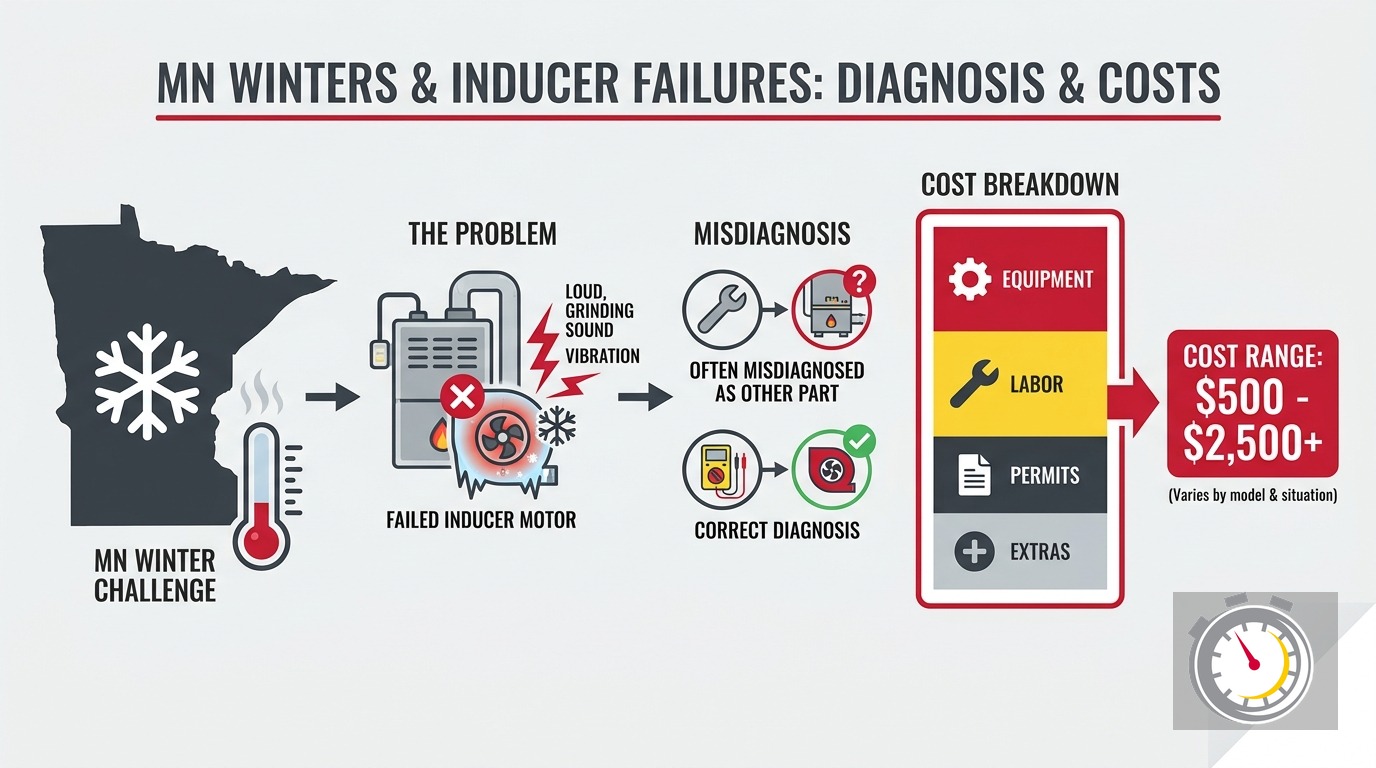
- A failing inducer motor commonly triggers a pressure switch fault code, not an inducer fault. Many homeowners replace the pressure switch first, then learn the motor was the real problem.
- Minneapolis averages roughly 8,000 heating degree days per year. That cycling load accelerates inducer bearing wear faster than the national average.
- Any furnace installed around 2011 or earlier is at or near the end of its inducer motor’s 12-15 year lifespan.
- Replacement costs run $375-$900 for most standard jobs. After-hours emergency service adds $180-$270 per hour.
- If your furnace is past 15 years old, replacing the inducer motor alone often makes less financial sense than replacing the system.
Furnace draft inducer motor failure symptoms often look like something else. Your furnace clicks. The vent fan spins up for a few seconds. Nothing happens. The control board blinks “pressure switch fault.” A technician replaces the $40 switch. The furnace still does not heat. The real problem was the inducer motor the whole time.
That scenario repeats across the Twin Cities every winter. It is one of the most common misdiagnoses in residential HVAC. Understanding what the real symptoms look like - and why the error codes so often point in the wrong direction - can save you a second service call and a cold night you did not need.
What Does a Furnace Draft Inducer Motor Do?
The inducer motor is the exhaust fan inside your furnace. It pulls combustion gases out of the heat exchanger and vents them safely outside before the burners ever light. Without adequate draft, ignition cannot happen.
Every heat call follows the same startup sequence. The thermostat signals the control board. The board sends 120 volts to the inducer motor. The motor spins up and creates negative pressure inside the heat exchanger. That pressure flexes a small diaphragm called the pressure switch, closing an electrical circuit. Only after the switch closes does the board allow the gas valve to open and the igniter to fire.
According to HVAC field diagnosticians, the inducer motor is the first component to receive power on every heat call. That makes it the gatekeeper to every component downstream.
This sequence explains why a failing inducer creates such a cascade of problems. It is not just one broken part. It blocks every component that follows it in the startup chain.
What Are the Furnace Draft Inducer Motor Failure Symptoms?
A failing inducer motor typically produces unusual noise near the vent connection at startup, repeated failed ignition attempts, or a pressure switch fault code on the control board. A burning smell during a startup attempt is another early warning. Noise is almost always the first sign.
Here are the specific furnace draft inducer motor failure symptoms to watch for:
Noise near the flue at startup. A new hum, rumble, scraping, or tapping sound near where the furnace connects to the exhaust vent is the most common early indicator. Per diagnostic guides from HVAC technicians, the sound appears at the very beginning of a heat call, before the burners light. Homeowners often describe it as “a tapping noise shortly after the thermostat calls for heat.”
Repeated failed ignition attempts. The furnace clicks. The vent fan sounds weak or strained. The system shuts down without producing heat. After two or three failed attempts, the furnace goes into lockout and the error LED begins blinking.
Only room-temperature air from the vents. If the blower runs on schedule but delivers no heat, the inducer may have succeeded on one heat call and failed on the next. The blower runs on its own timer regardless of whether combustion actually happened.
A burning or hot-metal smell. As bearings seize, friction generates heat inside the motor housing. A metallic burning smell from the furnace cabinet during startup is a warning sign the motor is working past its limits.
A pressure switch or draft sensor fault code. This is the symptom that causes the most misdiagnosis. The next section explains why.
What Does a Failing Inducer Motor Sound Like?
Bearing failure follows a predictable arc. First comes a hum or low rumble at startup. Then intermittent scraping or chattering during heat calls. Then a loud squeal or screech as metal contacts dry metal. Full seizure is often silent, with the motor no longer spinning.
Local HVAC technicians note that a failing motor can continue running noisily for months or even years before it seizes. There is no reliable way to predict when “noisy but functional” becomes a full lockout. That unpredictability is what makes early diagnosis so valuable.
Here is the sound arc in plain terms:
Stage 1 - Early warning. A slight hum or rumble when the heat first kicks on. Easy to dismiss as the furnace warming up. This stage can last one full season or several.
Stage 2 - Advancing failure. Intermittent scraping, chattering, or tapping during heat calls. The noise often appears only on the first call of the day - when the motor is cold - and fades once it warms up. Occasional pressure switch faults may begin appearing at this stage.
Stage 3 - Near seizure. A loud squealing or screeching sound. The motor is still spinning, but bearing failure is accelerating rapidly. Furnace lockouts become frequent.
Stage 4 - Full failure. The motor is silent, or makes one brief grinding sound and stops. Ignition is impossible. The furnace enters permanent lockout until the motor is replaced.
Homeowners who catch this at Stage 1 or Stage 2 can schedule service on their own timeline. Stage 4 at 2 a.m. in January is a much more expensive and stressful situation.
Why Does an Inducer Problem Trigger a Pressure Switch Error Code?
The pressure switch closes when the inducer creates enough negative pressure inside the heat exchanger. A motor that still spins but cannot reach full draft leaves the switch open. The control board logs a pressure switch fault, not an inducer fault.
This is the central diagnostic trap in furnace draft inducer motor failure, and it catches homeowners and technicians alike.
The pressure switch is a simple component. A rubber diaphragm flexes when draft pressure is sufficient, closing an electrical circuit. The board sees a closed circuit and proceeds to ignition. An open circuit halts the sequence and logs a fault.
When a technician - or a homeowner researching their own blinking code - sees a pressure switch fault, the natural first move is to test and replace the switch. It costs $19.50-$100, the repair is fast, and the code points directly to it. But as HVAC troubleshooting references note, replacing the switch without first verifying inducer performance is a shortcut that frequently fails.
A partially failing inducer still runs. It just cannot reach full speed or sustain consistent draft. Replace the switch and the same fault appears on the next heat call. The switch was never the problem.
The correct diagnostic sequence checks the inducer first: confirm voltage reaches the motor terminals, verify the motor reaches full speed, listen for bearing noise, and inspect the fan wheel for debris before touching the pressure switch.
For a full breakdown of what else causes pressure switch faults - and when the switch itself is actually the problem - see our guide on furnace pressure switch failure symptoms in Minnesota.
Why Minnesota Furnaces Are Hit Harder
A furnace installed in Minneapolis works significantly harder than one in a mild-climate city. That difference directly affects how quickly inducer bearings wear.
Minneapolis averages roughly 8,000 heating degree days per year - among the highest figures of any major U.S. metro. A Twin Cities furnace may run 8-12 heat cycles per day in January. In one Minnesota heating season, inducer bearings accumulate more wear than a Southern furnace sees in two full years.
The inducer motor’s sealed bearings are not serviceable. They are engineered for a specific number of operating hours. High-cycle Minnesota winters move through those hours faster than the calendar suggests.
The standard 12-15 year lifespan for inducer motors is a national average. It assumes typical national cycling loads, not 8,000-plus heating degree days per year. A furnace installed around 2011 may be at or past the practical end of its inducer motor’s bearing life. The rest of the system may appear fine.
January low temperatures in Minneapolis average around -2 degrees Fahrenheit. When a furnace fails overnight in that environment, the gap between a cold house and frozen pipes is measured in hours. That is a very different emergency than a no-heat call in a warmer city.
Early symptoms are worth acting on here. The window between “noisy but running” and “emergency call” closes quickly when overnight lows drop below zero.
What Causes an Inducer Motor to Fail?
Bearing wear from age and repeated high-cycle use is the leading cause. Dust buildup on the fan wheel, moisture corrosion, capacitor failure, and loose wiring all contribute. Most inducer motor failures develop over months or years, not overnight.
HVAC technicians and parts specialists rank the root causes as follows:
Bearing wear. The motor housing contains sealed bearings that degrade from heat and friction over time. They cannot be relubricated or replaced separately. When the bearings go, the motor assembly must be replaced. High-cycle climates like Minneapolis accelerate this process considerably.
Dust and debris in the fan wheel. The squirrel-cage fan inside the inducer accumulates soot, dust, and pet hair over years of use. A dirty fan wheel forces the motor to work harder to move the same volume of air. The extra load generates heat and compounds bearing wear. Annual furnace maintenance catches and clears this buildup before it causes damage.
Moisture and corrosion. High-efficiency furnaces produce condensation in the exhaust system. Moisture that reaches motor terminals and internal components causes corrosion over time. Electrical failures from corrosion can look identical to mechanical bearing failure on an initial inspection.
Capacitor degradation. Some inducer motors use a run capacitor to reach operating speed. A failing capacitor causes the motor to hum without starting, or to run slower than rated speed. The result is insufficient draft and the same pressure-switch fault pattern described earlier - without the grinding noise.
Loose or corroded wiring. Years of vibration loosen terminal connections. An intermittent electrical connection mimics bearing failure on a diagnostic call and is worth ruling out before authorizing a motor replacement.
How Much Does Inducer Motor Replacement Cost in Minnesota?
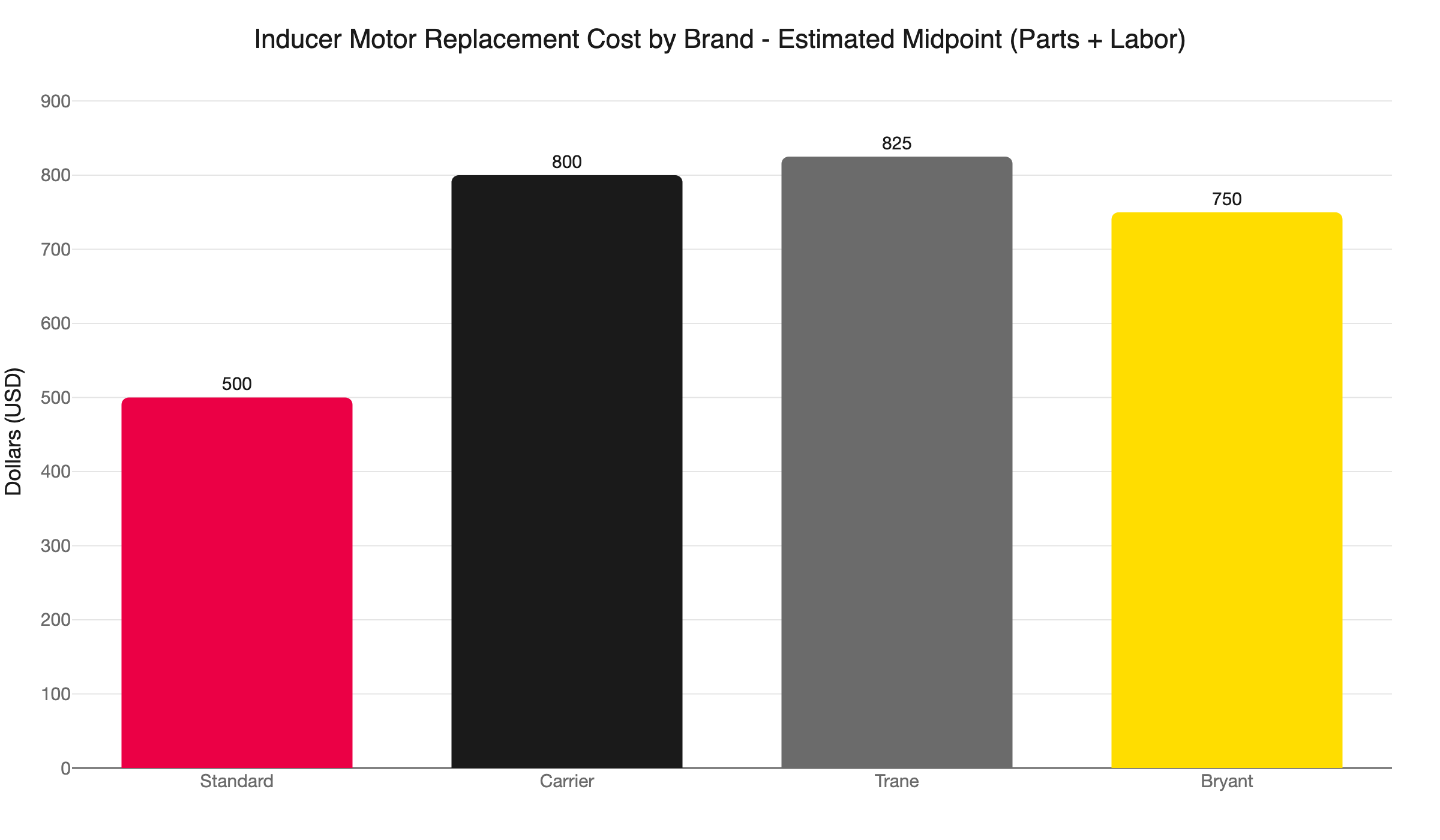
Most homeowners pay $375-$900 for a standard inducer motor replacement covering parts and labor. Brand-specific jobs cost more. Emergency after-hours service in winter adds $180-$270 per hour on top of standard rates.
Industry cost data for inducer motor replacements shows the following typical ranges:
Standard replacement - parts and labor:
- Motor assembly: $150-$350
- Labor: $195-$500
- Typical total: $375-$900
All-in ranges by furnace brand (parts + labor):
- Carrier: $500-$1,550
- Trane: $500-$1,600
- Bryant: $575-$1,350
OEM motors cost more than aftermarket parts but guarantee fit and protect the furnace warranty. Aftermarket motors require compatibility verification and may affect manufacturer warranty coverage on newer systems.
Emergency after-hours service adds $180-$270 per hour to standard labor rates. A midnight call in January costs significantly more than a scheduled Tuesday appointment. That cost gap alone is a strong argument for acting on Stage 1 or Stage 2 symptoms rather than waiting for a lockout.
If the cost of a repair tips your decision toward a full furnace replacement, explore HVAC financing options for Twin Cities homeowners. Northern One Hour offers financing on new furnace installations and larger system replacements.
Should You Repair or Replace? Making the Call on an Aging Furnace
If your furnace is under 12 years old, repair almost always makes sense on cost alone. If it is 15 years or older and the inducer has failed, the numbers often favor replacement. Age, efficiency rating, and cumulative repair costs all factor into the decision.
A $375-$900 inducer motor replacement is straightforward when the furnace is otherwise healthy and under 12 years old. The math changes as the system ages.
At 15-plus years, an inducer motor is rarely the final repair. Heat exchangers crack. Control boards fail. Igniter assemblies wear out. Each repair on an aging system is money spent extending the life of a furnace that is already near the end of its designed lifespan.
A useful industry rule of thumb: if the repair cost exceeds 50 percent of a new furnace price, replacement makes more sense. A new furnace in the Twin Cities typically runs $3,900-$7,800 installed, depending on efficiency rating and equipment size. An inducer motor alone is well below that threshold. But if you spent $650 on a flame sensor this heating season and now face a $750 inducer job, the combined total shifts the calculation.
Efficiency is the other variable. An 80 AFUE furnace from 20 years ago costs significantly more to run each Minnesota winter than a 96 or 97 AFUE replacement. Energy savings over 10-15 years frequently offset a meaningful share of the replacement cost.
For a full framework on this decision, read our guide on when to replace your furnace rather than repair it.
Responding to Furnace Draft Inducer Motor Failure Symptoms
If your furnace is producing new sounds near the vent or cycling through repeated failed starts, here is what to do before calling for service.
Do not keep manually resetting the furnace. Repeated resets with a struggling inducer can accelerate bearing failure and overheat the motor housing.
Replace the air filter first. A completely clogged filter restricts airflow and stresses every component, including the inducer. If the filter is gray and collapsed, replace it before scheduling service. It will not fix a failed motor, but it rules out a $15 fix before you commit to a service call.
Write down the error code. Count the LED blinks on the control board and note the sequence. That code gives your technician a starting point before they arrive and speeds up the diagnosis.
Schedule early, not after lockout. A furnace at Stage 1 or Stage 2 is a scheduled repair on your terms. A furnace in full lockout at minus-five degrees is an emergency call on someone else’s timeline. The cost difference is real, and the scheduling options disappear when temperatures drop.
Our team at Northern One Hour Heating & Air Conditioning is locally owned and operated in Ramsey, MN. We serve homeowners across Minneapolis, St. Paul, Bloomington, Maple Grove, Brooklyn Park, Plymouth, Woodbury, and the surrounding Twin Cities communities. We show up when we say we will. “Always On Time… Or You Don’t Pay a Dime!(R)”
If your furnace is showing any of the furnace draft inducer motor failure symptoms described above, call us at (763) 260-6662 or book a furnace repair appointment online. We diagnose the problem correctly the first time, so you are not replacing the wrong part in the middle of January.
Frequently Asked Questions
What does a failing furnace draft inducer motor sound like? +
Why does a bad inducer motor trigger a pressure switch error code? +
How much does it cost to replace a furnace draft inducer motor in the Twin Cities? +
How long does a furnace draft inducer motor last in Minnesota? +
Need a technician now?