
Heat Pump Thermostat Settings Winter Minnesota: Get It Right
Key Takeaways
- Keep your heat pump thermostat at a steady 68-70°F. Small setbacks (3-5°F) work with the right thermostat; deep setbacks (8-10°F) do not.
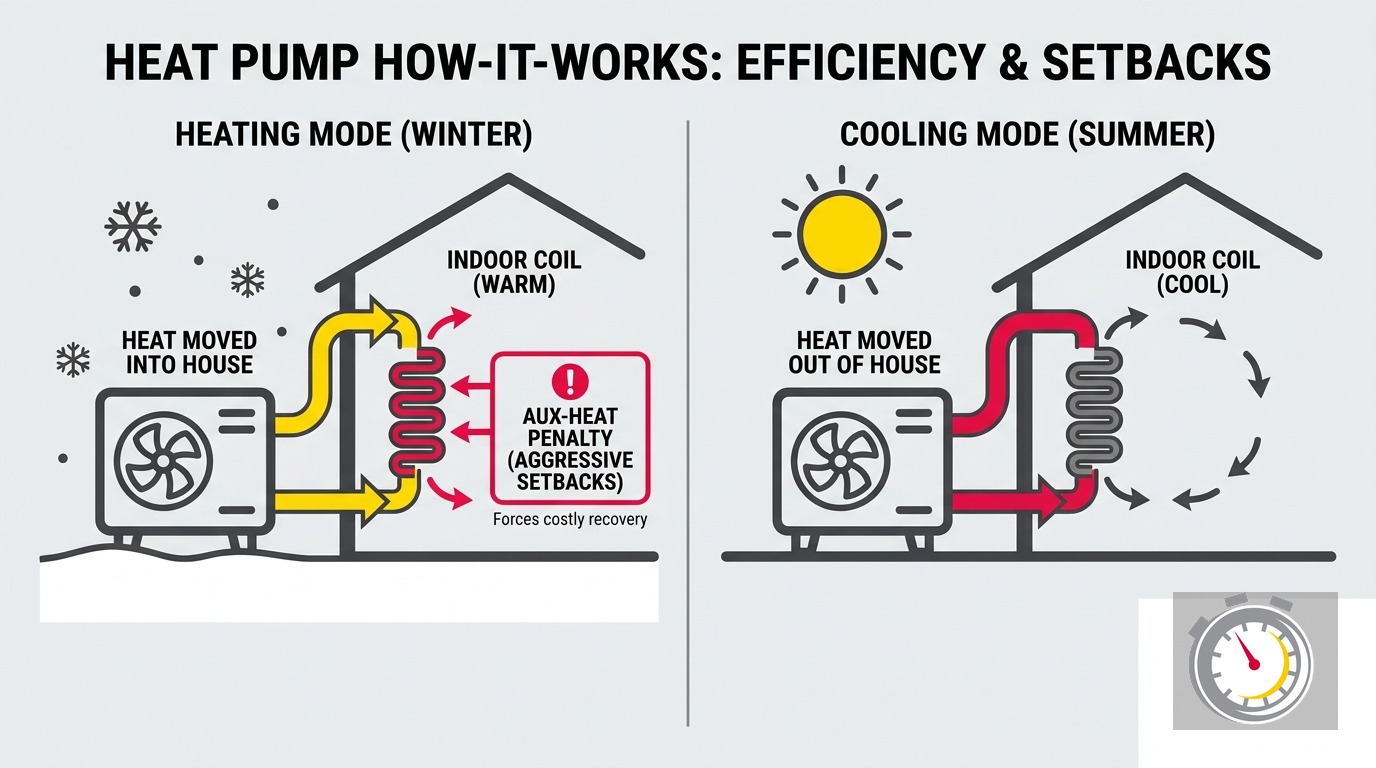
- The gas-furnace savings rule does not translate to heat pumps. Deep setback recovery triggers backup resistance strips that run at COP 1.0, the most expensive way to heat your home.
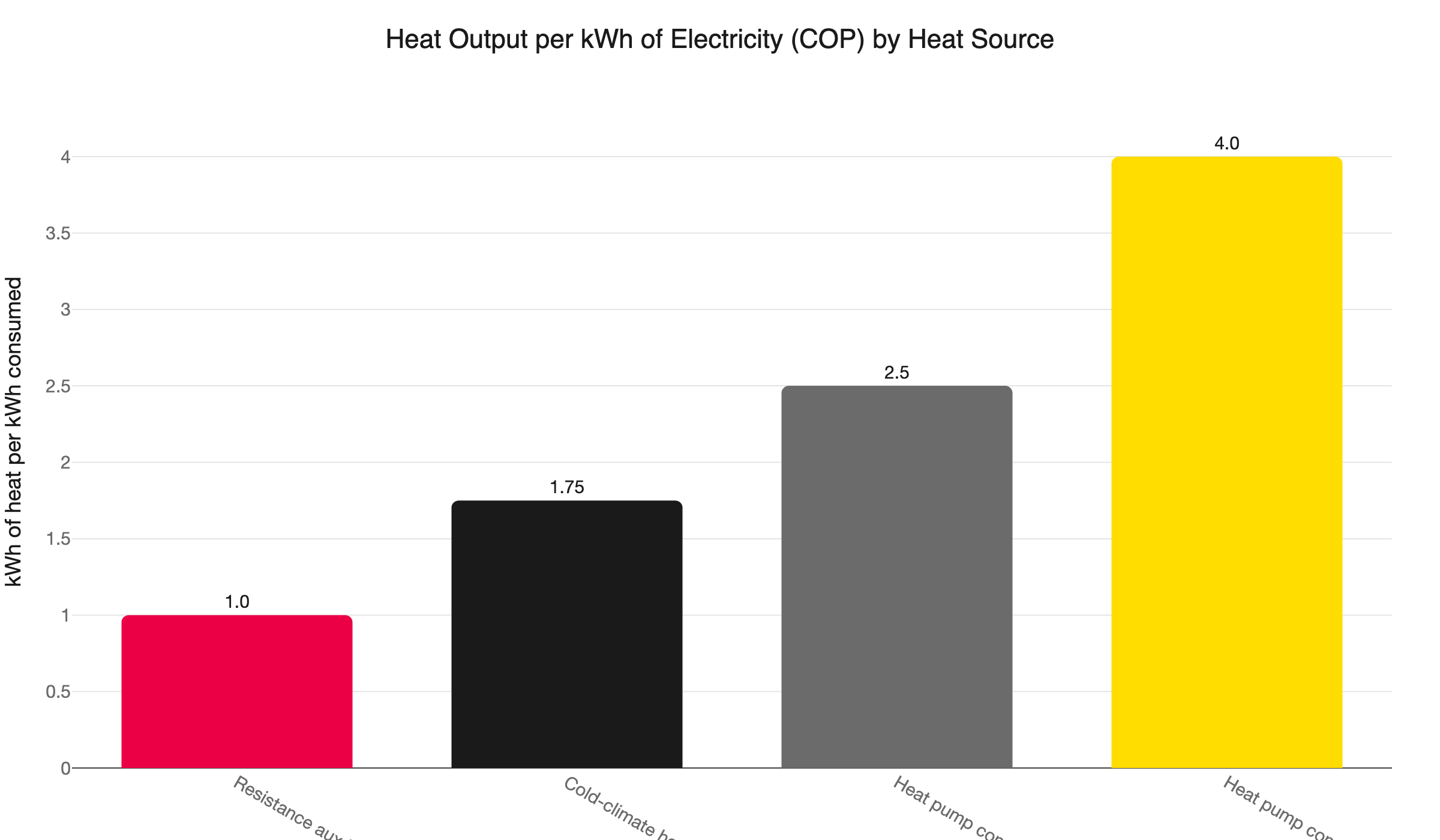
- Heat pump compressors deliver 2.5 to 4 times more heat per kilowatt-hour than resistance strips, depending on outdoor temperature.
- Morning setback recovery starts at the coldest part of the day. In a Minnesota winter, that timing compounds the efficiency penalty significantly.
- The fix is a thermostat with smart or adaptive recovery, which climbs back on the compressor instead of the strips.
- NREL research shows simple setback algorithms produce 0-3% savings for heat pump homes. Smart algorithms with occupancy sensing reach 5-8%.
- Xcel Energy offers a $50 rebate on ENERGY STAR-qualified smart thermostats.
- Call (763) 260-6662 or book online to have your thermostat setup verified before the deep cold arrives.
If you have a heat pump and want to know the right thermostat setting for a Minnesota winter, here is the short answer: keep it at a steady 68-70°F. A small overnight setback of 3-5°F is fine if your thermostat is built for a heat pump. The aggressive 8-10°F setback that saves money on a gas furnace will cost you more on a heat pump, not less. Here is why, and what to do instead.
What Is the Best Temperature Setting for a Heat Pump Thermostat in Winter?
Set it to 68-70°F and leave it there. A shallow setback of 3-5°F overnight is fine with a heat-pump-aware thermostat. The 8-10°F setbacks that work on a gas furnace trigger expensive backup heat recovery on a heat pump, erasing the overnight savings and then some.
The consistent-setpoint advice is not just a comfort preference. It reflects how heat pumps operate. A heat pump is most efficient when it runs at low output for long stretches, nudging your home’s temperature up one degree at a time. The moment it has to chase a large temperature swing, it calls in the resistance backup strips. Those strips are the most expensive way to heat your home.
Think of the difference this way: a gas furnace sprints. It blasts at full output, finishes in a short cycle, and shuts off. A heat pump jogs. You can make it jog a little faster overnight without much cost. But if you ask it to sprint from 62°F to 70°F at 6 a.m. in a Minnesota January, you will see that decision on your electricity bill.
Why the Gas-Furnace Setback Rule Backfires on a Heat Pump
The DOE estimates savings per degree Fahrenheit for each 8-hour setback period on a gas furnace. Set back 8°F overnight and save roughly 8% on that night’s heating. That math holds for gas.
The same DOE documentation notes that programmable thermostats have “generally not been recommended for heat pump systems” without specialized controls. That caveat rarely makes it into the simplified version homeowners hear.
Here is why the rule breaks down. A gas furnace converts fuel to heat at a fixed, high rate. It does not care whether it needs to recover 2°F or 10°F - it fires at the same output either way. A heat pump moves heat from outdoor air into your home, and the efficiency of that process, measured as the coefficient of performance (COP), changes with outdoor temperature.
In mild weather, a heat pump compressor produces significantly more heat energy than the electricity it consumes. On a cold Minnesota morning at 5°F, that same unit delivers roughly 1.75 kWh per kWh consumed. That is the minimum COP Xcel Energy requires for their cold-climate rebate qualification.
Resistance backup strips always run at COP 1.0. One kilowatt in, one kilowatt of heat out. That is a thermodynamic fact, not a brand specification.
So when you set back 8°F overnight and demand a fast recovery at 6:30 a.m., the compressor cannot climb back quickly enough to hit the schedule. The backup strips engage. If your home takes 90 minutes to recover and the strips run the whole time, you spend roughly three times the electricity you saved overnight.
Why Does Pre-Dawn Recovery Compound the Efficiency Penalty?
The coldest outdoor temperatures in Minnesota hit between 4 and 6 a.m., precisely when morning recovery starts. At those temperatures, compressor efficiency is lowest, the risk of a long aux heat run is highest, and you are spending the most to undo the overnight setback.
This is the timing problem most thermostat guides skip entirely. Recovery from a setback does not happen in moderate weather. It happens at the exact low point of the day. Green Building Advisor identifies this timing as a key reason setback savings in cold climates are often lower than expected or negative.
A practical workaround is to start recovery earlier. A 4:30 a.m. start instead of 6:30 a.m. means the compressor is working when outdoor temps are 2-3°F warmer than the overnight bottom. That keeps it in a more efficient operating range and reduces the length of any aux heat run. The better solution is a thermostat with smart recovery, which handles this automatically.
How Long Should a Heat Pump Run Constantly in Winter?
In a Minnesota winter, long runs are normal and efficient. A variable-speed heat pump on a 20°F day may run four to six hours continuously. Near 0°F, it may run most of the day with backup strips cycling in periodically. That is correct behavior, not a malfunction.
Heat pumps are designed to modulate at low output and run for extended periods. This keeps COP higher than short, high-intensity cycles do. Short cycling is the concern, not long runs. A system that turns on and off frequently in cold weather is more likely to have a sizing or balance point configuration problem.
What you want to avoid is backup strips running on a 35°F afternoon when the compressor should handle the full load alone. If that is happening, the aux heat lockout temperature is probably set too high. The correct lockout range for Minnesota cold-climate installs is typically 25°F to 35°F, not a higher threshold. Setting it too high means the expensive strips run during shoulder-season weather when the compressor is still more cost-effective.
If your heat pump runs continuously and still cannot reach the setpoint in extreme cold, see our post on why heat pump electric bills spike in a Minnesota winter for a detailed breakdown of what might be driving it.
What Thermostat Actually Fixes This?
A thermostat with two features: adaptive or smart recovery, and a visible aux heat indicator. Adaptive recovery starts the warm-up early enough that the compressor handles the climb alone. The aux heat indicator shows you when expensive backup strips are running so you can monitor costs and catch problems before they compound.
Two features to specifically look for:
Adaptive recovery. The thermostat calculates how long your home takes to reach the target temperature and starts the process early enough to get there on the compressor alone. ENERGY STAR defines heat pump recovery as a feature that allows the system to recover “gradually from setback to minimize the use of auxiliary heat.” It is a required feature on ENERGY STAR-certified heat pump thermostats.
Aux heat indicator. ENERGY STAR also requires a visible indicator showing when backup heat is active on heat pump programmable thermostats. Without it, you have no way to know whether your strips are running ten minutes a day or four hours.
Smart thermostats with occupancy sensing and outdoor temperature data do better still. NREL’s thermostat benchmarking research found that simple setback algorithms achieve 0-3% savings for heat pump homes, while smart algorithms with occupancy sensing reach 5-8%.
Xcel Energy offers a $50 rebate on ENERGY STAR-qualified smart thermostats enrolled in their AC Rewards program. That rebate makes upgrading from a standard programmable thermostat inexpensive for most models.
How Much Does Turning Down the Heat Actually Save in a Minnesota Winter?
On a gas furnace, roughly 1% per degree per 8-hour setback. On a heat pump with a standard thermostat, close to zero once aux heat recovery is counted. On a heat pump with adaptive recovery, 5-8% based on NREL research.
Xcel Energy notes that reducing temperature by 1°F can lower energy bills by up to 3%. That tip was developed in a gas heating context. For heat pump owners using a standard thermostat, the savings only materialize if recovery runs on the compressor, not the strips.
Researchers tracking a real heat pump through mild overnight temperatures around 50°F found that a 3.6°F setback reduced daily electrical use by 1-2 kWh but dropped recovery COP from roughly 4.5 steady-state down to 3-4. The researchers flagged that these modest gains would likely shrink further in colder weather when the compressor runs at full output. In a Minnesota January at -5°F, the math is considerably worse.
The takeaway: shallow setbacks of 3-5°F with a smart recovery thermostat produce measurable savings. Deep setbacks of 8-10°F with a standard thermostat often save nothing and may add cost.
The One Exception: Dual-Fuel Hybrid Systems
If you have a dual-fuel hybrid - a heat pump paired with a gas furnace - aggressive nighttime setbacks can work once the gas furnace takes over. When outdoor temperatures fall below the switchover point (typically 20-30°F in Minnesota), the gas furnace handles the load. Below that threshold, the standard gas-furnace setback math applies.
The configuration needs to be correct for this to work. The switchover temperature should be set at the point where gas is more cost-effective than the heat pump compressor at current utility rates, not simply the lowest temperature the heat pump can handle. For more on how the heat pump and gas furnace balance point works in the Twin Cities, see our post on dual-fuel hybrid heat pump systems in Minnesota.
Vacation setbacks follow similar logic. If you are leaving for a week and dropping the house to 60°F, a smart recovery thermostat helps, but be aware that a cold soak can mean several hours of aux heat running at COP 1.0 when you return. For guidance on longer absences, see our post on what temperature to leave your Minnesota home during winter.
What Minnesota’s Cold Climate Adds to This Equation
Minneapolis sits in IECC Climate Zone 6A. The 99% heating design temperature is -15°F, with annual heating degree days well above the national average. That context shapes every thermostat decision you make.
Cold-climate heat pumps are rated to deliver full heating capacity down to -13°F or lower. Minneapolis at -15°F means aux heat will run on the coldest nights regardless of your thermostat settings. That is expected and correct. You are not trying to eliminate aux heat entirely.
What you are optimizing is the other 340-odd days of the heating season, when the compressor should handle the load without the strips. Getting the thermostat settings and aux heat lockout temperature right protects those days and keeps your winter operating costs in line.
Minnesota winters also mean low indoor humidity, and your heat pump’s run time directly affects how much moisture your air holds. If you have a whole-home humidifier and have not adjusted the humidistat for winter conditions, see our guide on what to set your humidistat during a Minnesota winter alongside this one.
Does Your Thermostat Reading Actually Protect Every Pipe in the House?
No. Your thermostat reads one spot, usually a main-floor hallway. Unheated zones like garages, crawl spaces, and exterior wall cavities can be 20-30°F colder than the thermostat shows. If your heat pump is struggling or aux heat is not functioning correctly, those zones are the first to freeze.
This matters when you are evaluating setback depth. A home that reads 68°F on the main thermostat may have a garage wall cavity sitting close to freezing on a -10°F night. Lower the setback further or allow the system to underperform on recovery, and the risk concentrates in spots the thermostat cannot see.
Keep your setback shallow during the coldest forecast stretches. A 3°F overnight dip on a night projected to hit -10°F is not worth the risk compared to holding a steady setpoint.
Is Your Heat Pump Thermostat Configured for a Heat Pump?
Maybe not. A heat pump thermostat requires an O or B wire for the reversing valve, plus separate configuration for aux heat staging, lockout temperature, and recovery settings. If the installer was unfamiliar with heat pumps, one or more of those settings may be wrong or missing.
Common signs of a misconfigured setup:
- Backup strips run on mild days (35-40°F) when the compressor should handle the full load alone
- There is no aux heat indicator on the display and you cannot tell when strips are active
- Your electric bill spikes in weather that should not be challenging for the compressor
- Recovery from a 3-4°F overnight setback takes 90 minutes or longer
Getting a thermostat configuration check done before the deep cold sets in is one of the most cost-effective HVAC investments you can make this fall. Our team is locally owned and operated in Ramsey and serves the Twin Cities every day. We back every visit with “Always On Time… Or You Don’t Pay a Dime!(R)”: we arrive in the window you select, or you do not pay for the service.
Call (763) 260-6662 or book online to schedule a thermostat and heat pump staging review. Our technicians will check your reversing valve wiring, aux heat lockout, and recovery settings before temperatures drop.
Frequently Asked Questions
What setting should my heat pump be on in winter? +
Should I use the emergency heat setting on my heat pump in winter? +
Need a technician now?