
Air Handler vs. Furnace: What Is the Difference?
Key Takeaways
- A furnace burns natural gas to generate heat and includes a built-in blower for distribution. An air handler generates neither heat nor cooling. It only moves air conditioned by an outdoor unit.
- Most Twin Cities homes run on gas heat. Replacing a furnace typically means staying with a furnace unless you are changing system types.
- Air handlers pair with heat pumps in all-electric configurations. Furnaces pair with heat pumps in dual-fuel (hybrid) configurations.
- In Minnesota, CenterPoint Energy’s heat pump rebate of up to $1,500 requires a dual-fuel setup with a high-efficiency gas furnace. It does not apply to air handlers.
- When two quotes show different indoor units, ask each contractor what outdoor unit the indoor unit is designed to work with. That single question cuts through most of the confusion.
Why Do Two Quotes Show Different Indoor Units?
When one contractor quotes a furnace and another quotes an air handler, they are not offering different brands of the same product. The difference between an air handler vs. a furnace is fundamental: one generates heat, the other only distributes conditioned air from an outdoor unit. These are different system paths with different costs, different failure modes, and different rebate eligibility.
The confusion is understandable. Both units sit inside your home. Both connect to your existing ductwork. Both push air through your registers. The similarity ends there.
A contractor quoting a gas furnace with central AC is keeping your home on combustion-based heating with a separate cooling system. A contractor quoting an air handler is almost certainly proposing a heat pump system, which moves heat energy rather than generating it. The indoor unit follows the outdoor unit. Different outdoor equipment means a different indoor unit, not a different brand of the same thing.
If you are a Twin Cities homeowner sorting through competing estimates, this guide covers what each unit does, what fails on each one, and how adding a heat pump changes the entire question.
What Is a Furnace?
A furnace is a self-contained heating unit. It burns natural gas or propane in a combustion chamber, passes heat through a heat exchanger, and pushes warm air through your ductwork using a built-in blower motor. It generates heat independently, without relying on any outdoor unit.
As Carrier describes, a furnace includes its own combustion chamber, heat exchanger, burner assembly, and blower motor in a single cabinet. When you add central air conditioning to a gas furnace home, the AC evaporator coil sits on top of or downstream from the furnace. The furnace blower handles air distribution year-round: warm air in winter, cooled air in summer. No separate indoor unit is needed.
This is why most Twin Cities homes with gas heat and central AC have only one indoor unit. The furnace is already doing both jobs.
Modern high-efficiency furnaces can reach up to 98% AFUE (Annual Fuel Utilization Efficiency). That means 98 cents of every gas dollar becomes usable heat in your home. Over a Minnesota heating season that runs from October through April, the efficiency gap between an 80% and a 95% AFUE unit adds up on your monthly bill. An older furnace running at lower efficiency costs you more every single day it runs.
A furnace is the right indoor unit if you want to keep gas heat, if your home already has gas service, or if you are adding a heat pump in a dual-fuel configuration. For most existing Twin Cities homes, the gas furnace is already installed and simply needs to be maintained or replaced at end of life.
What Breaks on a Furnace (and What Does It Cost)?
Furnaces fail in ways that air handlers physically cannot, because furnaces involve combustion. The most common failure points are a cracked heat exchanger, a failed igniter, a faulty gas valve, and a worn-out draft inducer motor. Some are affordable repairs. A cracked heat exchanger often means full system replacement.
Cracked heat exchanger. This is the most serious furnace failure. The heat exchanger separates combustion gases from the air you breathe. A crack allows carbon monoxide to pass into your home’s air supply. Carbon monoxide is odorless and colorless. In older furnaces, a cracked heat exchanger is often a reason to replace the entire unit rather than repair it. Learn the warning signs in our guide on cracked heat exchangers in Minnesota homes.
Failed hot surface igniter. The igniter lights the burner every time your furnace calls for heat. It cycles thousands of times across a long Minnesota heating season. When it fails, the furnace will not light and your home goes cold quickly. An igniter replacement is typically one of the more affordable furnace repairs.
Gas valve failure. The gas valve controls fuel flow to the burner. A failed valve means no heat even if every other component is working correctly. Replacement falls in the mid-range for furnace repairs.
Draft inducer motor failure. This motor evacuates combustion byproducts before the burner fires. When it fails, the furnace locks out on a safety error and will not run. Replacement is more expensive than an igniter but still well below the cost of a full system replacement.
The key distinction from an air handler: furnace failures involve combustion components. A cracked heat exchanger is a safety event that requires fast action. An air handler carries none of these risks.
What Is an Air Handler?
An air handler is not a heat source or a cooling source. It is a cabinet housing a blower motor and an evaporator coil. It distributes air already conditioned by an outdoor unit through your ductwork. It cannot produce heat or cooling on its own.
Bryant describes air handlers as electricity-only units. For heating in cold climates, electric resistance heat strips can be added to the cabinet as supplemental or backup heat. These strips function like a large electric space heater built into the duct system. They are expensive to run and are not designed to carry the full heating load of a Minnesota winter on their own. Relying on them as a primary heat source through a polar vortex will produce a significant electric bill.
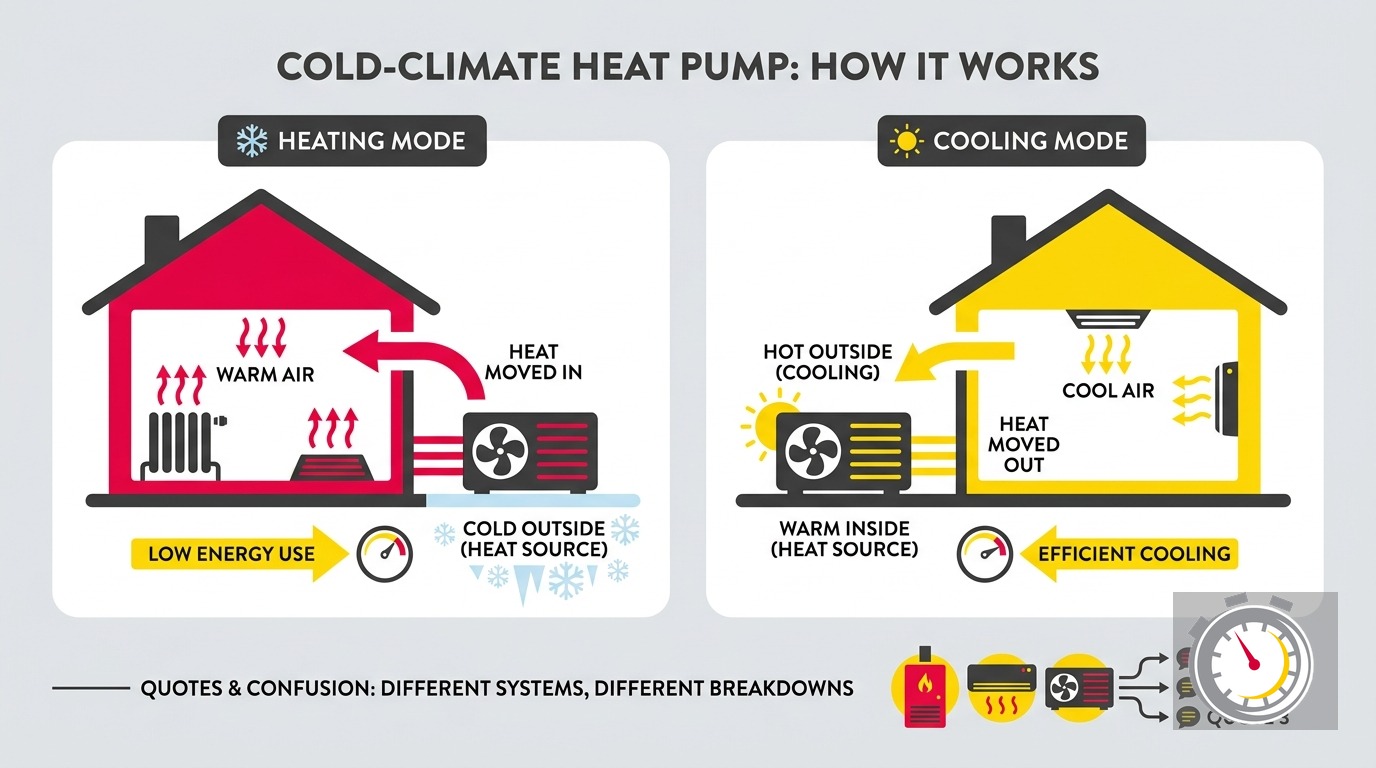
An air handler pairs with a heat pump outdoor unit. The heat pump does the actual work: extracting heat energy from outdoor air and moving it inside in winter, or moving heat from inside to outside in summer. The air handler distributes that result through your duct system.
HVAC.com clarifies an important point: when a gas furnace is already installed in a home, there is no need for a separate air handler. The furnace blower already handles air distribution for both heating and cooling. An air handler is only necessary when there is no furnace doing that job.
An air handler is the right fit for homes with no gas service, homes converting fully to all-electric systems, or new construction where no combustion equipment is being installed.
What Breaks on an Air Handler?
Air handler failures differ from furnace failures because there is no combustion involved. The most common problems are a frozen evaporator coil, a clogged condensate drain, a failed blower motor, and burned-out electric heat strips. None of these carry a carbon monoxide risk.
Frozen evaporator coil. This is the most frequent air handler complaint in cooling season. When airflow is restricted by a dirty filter, or refrigerant levels are low, the coil drops below freezing and ice builds up. The system loses cooling ability, and airflow can stop entirely. See our post on why evaporator coils freeze in Twin Cities AC systems for what causes it and what to do when it happens.
Clogged condensate drain. As the coil removes humidity from your home’s air in summer, moisture drips into a drain pan below the unit. If the drain line clogs with algae or debris, the pan overflows. Water damage to the surrounding area can follow quickly. An annual flush of the drain line during routine maintenance prevents this problem entirely.
Blower motor failure. The blower runs every time the system calls for heating or cooling. Motor bearings wear over years of use. When the motor fails, no air moves through your home even if the outdoor heat pump is operating. Replacement is a mid-range repair.
Electric resistance strip burnout. If your air handler has backup heat strips, those strips can burn out under heavy use or with age. A failed strip during a Minnesota cold snap is urgent but repairable. The event is also a reminder that strips are not designed to serve as your primary heat source in this climate.
Does Adding a Heat Pump Change Which Indoor Unit You Need?
Yes. When you add an air-source heat pump, the indoor unit question reopens entirely. You have two paths: dual-fuel pairs a heat pump outdoor unit with your existing gas furnace, and all-electric pairs a heat pump outdoor unit with a new air handler. These are genuinely different systems with different cost profiles, different energy characteristics, and different rebate eligibility.
This is where most of the competing-quote confusion actually originates.
The Minnesota Air Source Heat Pump Collaborative explains that ducted heat pump installations in Minnesota take one of two forms. In dual-fuel, you keep the gas furnace and add a heat pump outdoor unit. The system uses the heat pump for heating and cooling during moderate weather and automatically switches to the gas furnace at a contractor-programmed outdoor temperature, typically set at 40°F or lower. The gas furnace covers the coldest days. In all-electric, you replace the furnace entirely with an air handler. The heat pump handles primary heat, and electric resistance strips serve as emergency backup.
Energy Star frames the dual-fuel path as a modest extra cost over a standard AC replacement for homes with a relatively new furnace. If your furnace has years of life remaining, dual-fuel adds heat pump efficiency without requiring a full indoor unit swap.
Minnesota winters make the dual-fuel case stronger. Heat pump capacity decreases as outdoor temperatures fall. Even a cold-climate model operates at reduced output well below zero. A gas furnace backup handles the extreme days reliably without oversized electric strips. Dual-fuel also typically avoids an electrical panel upgrade, which all-electric systems can require in older Twin Cities homes with smaller service panels.
For more on how this decision plays out for Twin Cities homeowners, see our guide on whether a heat pump is a good fit for your home.
Minnesota Rebates and Incentives in 2026
Rebates in 2026 are significant, and your indoor unit choice directly affects what you can claim. Here is the current picture for Twin Cities homeowners.
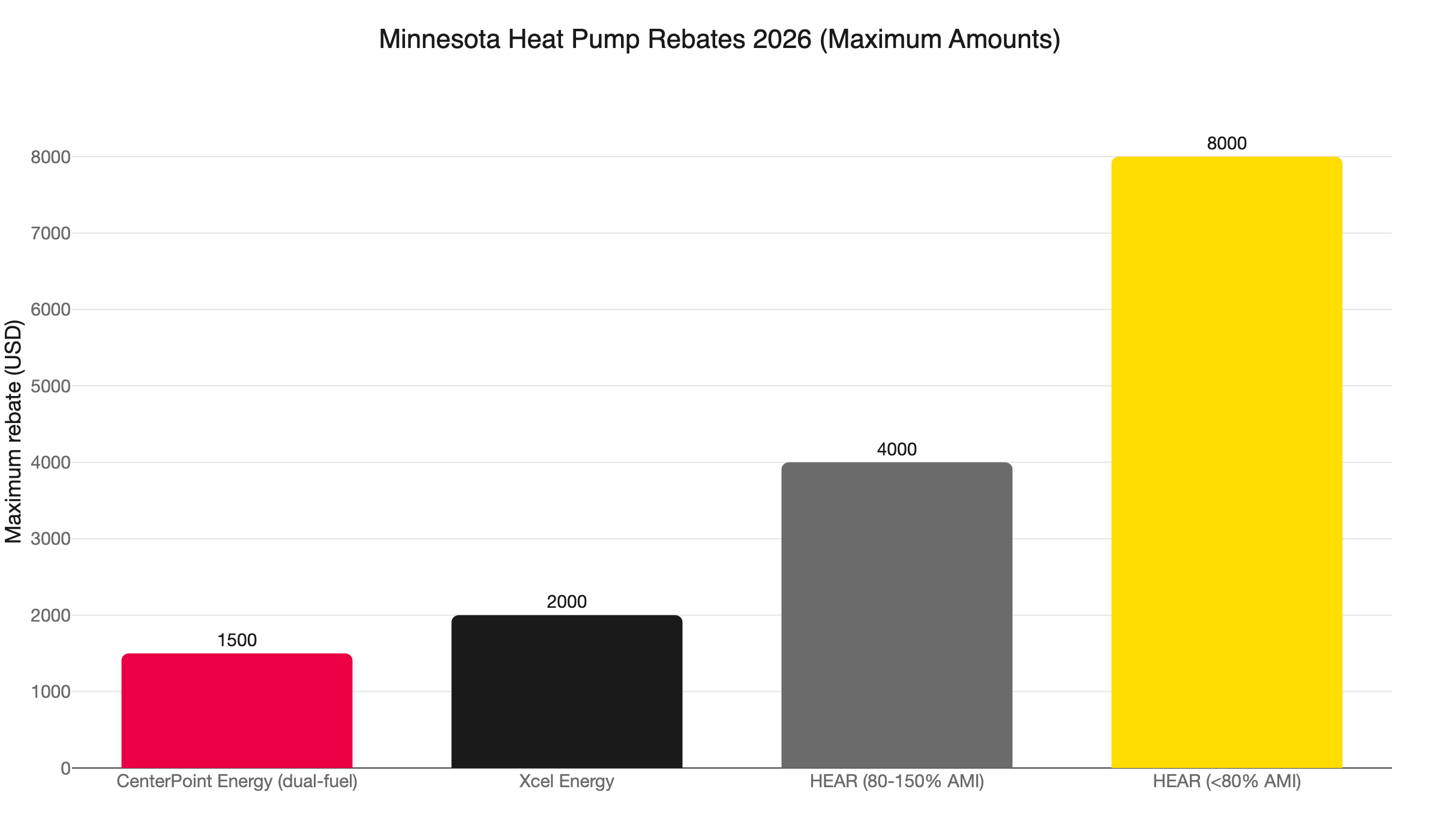
CenterPoint Energy. CenterPoint offers up to $1,500 for a ducted air-source heat pump in a dual-fuel setup with a high-efficiency gas furnace (92% AFUE or higher). The switchover temperature must be programmed at 40°F or below, and applications must be submitted by December 31, 2026. This rebate does not apply to standalone air handlers used for space heating. If you choose the all-electric path and you are a CenterPoint customer, this rebate is off the table.
Xcel Energy. Xcel’s rebate goes up to $2,000 for qualifying ducted systems. The heat pump must have a coefficient of performance (COP) of at least 1.75 measured at 5°F and appear on the NEEP cold-climate product registry. Rated heating capacity at 5°F must also be at least 70% of the unit’s 47°F capacity. Applications are open through September 30, 2026.
Federal HEAR rebate. New for 2026, the Home Energy Assistance Rebate program is income-qualified. Households below 80% of area median income (AMI) can receive up to $8,000. Households between 80% and 150% AMI can receive up to $4,000. Equipment must be ENERGY STAR certified and cold-climate rated, administered through mn.gov/commerce.
The 25C federal tax credit. The 30% federal tax credit for heat pumps (up to $2,000) expired December 31, 2025. Installations from 2023 through 2025 may still be claimed on the relevant tax year; 2026 installations do not qualify. If a contractor mentions the 25C for a 2026 installation, that information is outdated.
Rebate eligibility is one more reason to resolve the indoor unit question before signing a contract. Your utility provider, your income level, and your system configuration all determine what you can claim. Ask your contractor to walk through eligibility line by line before you commit.
For a full breakdown of available programs, see our guide to Minnesota heat pump rebates and tax credits.
Questions to Ask Before You Sign a Quote
If you have competing quotes showing different indoor units, these questions help you evaluate them on equal footing.
- What outdoor unit pairs with this indoor unit? An air handler quote without a heat pump in the same proposal is not a complete system.
- Is this a dual-fuel or all-electric setup? Know which path you are committing to before comparing prices.
- Does my furnace have enough life left to serve as backup in a dual-fuel system? If it is under 15 years old and well-maintained, keeping it often makes financial sense rather than replacing it with an air handler.
- What is the heat pump’s COP at 5°F? Cold-climate performance is what matters in a Minnesota winter. The Xcel rebate requires a floor of 1.75 COP at 5°F for a reason.
- Which rebates does this system qualify for? Ask for specifics. CenterPoint’s dual-fuel requirement and Xcel’s cold-climate spec are not general rules that apply to every heat pump. Get written confirmation.
- Will this require an electrical panel upgrade? All-electric systems in older Twin Cities homes sometimes need one. A dual-fuel setup that retains the existing furnace typically does not.
Northern One Hour is locally owned and operated in Ramsey, MN. Our team serves homeowners across the Twin Cities: Minneapolis, St. Paul, Blaine, Maple Grove, Plymouth, Brooklyn Park, Woodbury, Bloomington, and surrounding communities. We install and service both dual-fuel and all-electric configurations, and we will give you a straight answer on which system fits your home, your utility provider, and your budget. No pressure, no surprises.
Every appointment is backed by our on-time promise: “Always On Time… Or You Don’t Pay a Dime!(R)”. Call us at (763) 260-6662 or book online to schedule a free estimate.
Frequently Asked Questions
What is the difference between an air handler and a furnace? +
Can I use an air handler instead of a furnace in Minnesota? +
Does CenterPoint Energy's heat pump rebate apply to air handlers? +
Need a technician now?