
Generator for Furnace or Heat Pump Minnesota: Size It Right
Key Takeaways
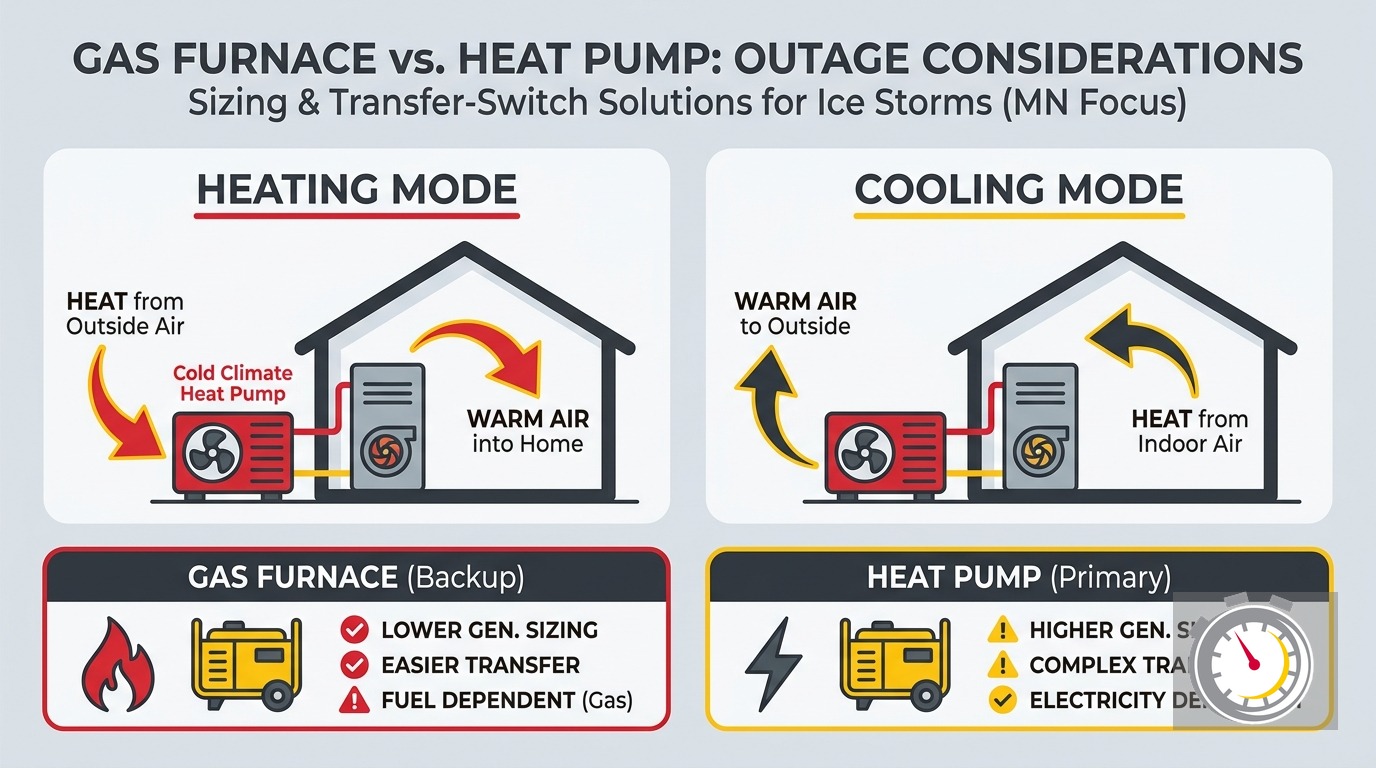
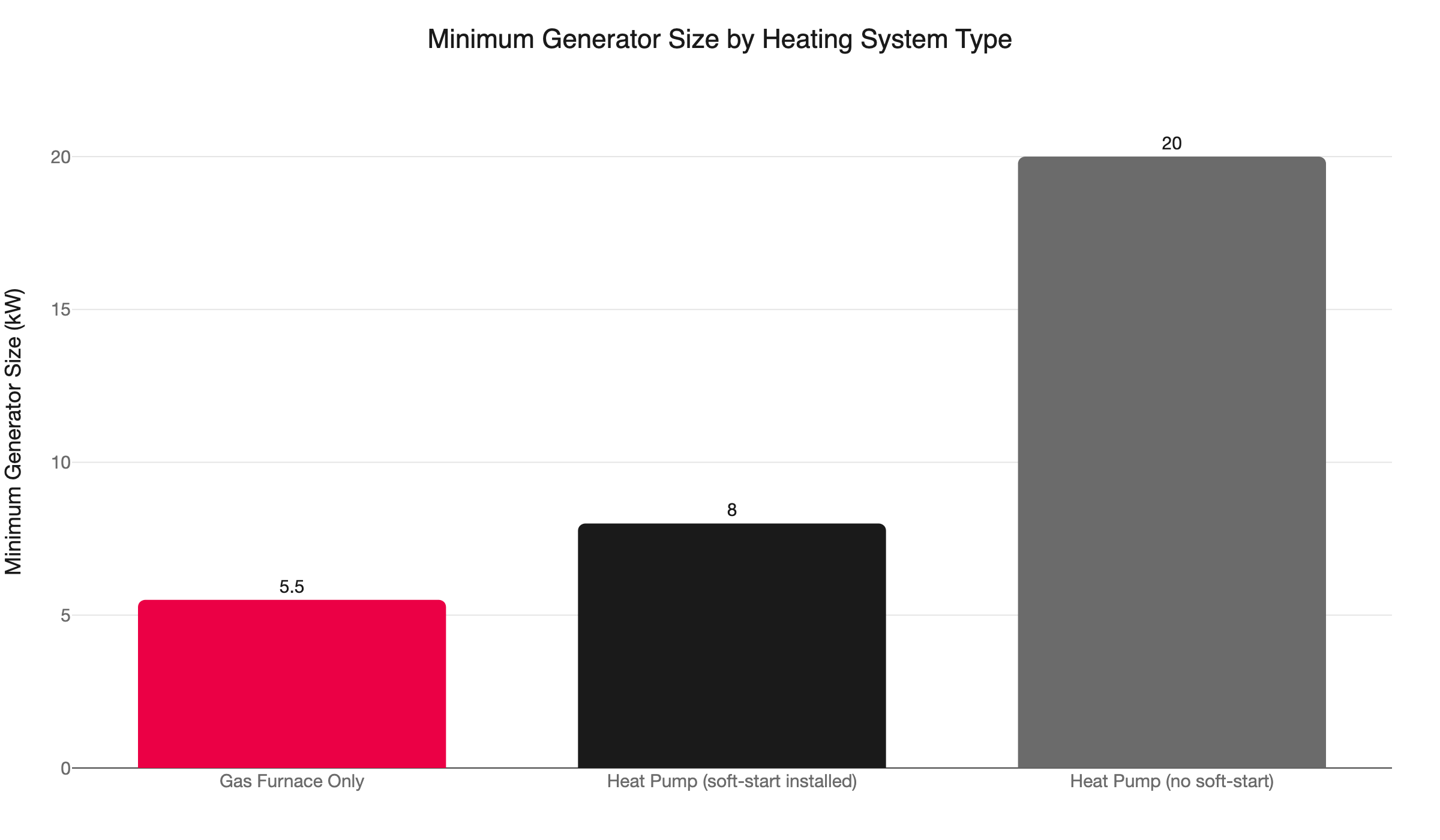
- A gas furnace draws 300-1,200 watts at 120V while running. A 5,500W portable inverter generator with a 120V interlock kit is often sufficient.
- A heat pump compressor can demand 15,000-19,200 watts of startup surge. Most portable generators stall at that load.
- A soft-start kit can significantly reduce compressor inrush, potentially lowering the generator capacity needed.
- A dual-fuel (hybrid) system does NOT protect you during a power outage. The furnace blower still needs electricity to run.
- All transfer switch work in Minnesota requires a licensed electrician and a permit. Minnesota adopted the 2026 NEC on August 17, 2026.
- Transfer switch type depends on your system: a 120V interlock for a gas furnace, a 240V LRA-rated switch for a heat pump.
Why Do Minnesota Ice Storms Hit HVAC Systems So Hard?
Short answer: Ice storms knock out the electric grid but leave underground natural gas lines intact. Gas furnace owners need a modest portable generator for the blower and controls. Heat pump owners need a solution sized for the compressor’s startup surge, which is a fundamentally different problem.
An ice storm is not the same as a cold snap. Cold air does not bring transmission lines down. Ice loads on overhead lines do.
When a multi-day ice event hits the Twin Cities, here is the situation. CenterPoint’s natural gas distribution system runs underground and stays pressurized. Gas keeps flowing. Xcel Energy’s electric grid goes down, and it can stay down for days.
If you heat with a gas furnace, your fuel source is intact. You need electricity only for the blower motor, draft inducer, igniter, and control board. That is a manageable load for a portable generator.
If your home heats with a heat pump, electricity is the fuel. The generator sizing problem is a completely different order of magnitude.
If you have a dual-fuel hybrid system, you might assume the gas leg protects you during an outage. It does not.
Which of those three situations applies to your home determines everything else in this article.
Why Equipment Type Is the Whole Ballgame
Most “what size generator do I need?” guides work from a load list. Square footage times a rough watt-per-square-foot estimate. That approach works for figuring out which appliances to run. It fails for HVAC backup sizing.
The reason: a gas furnace and a heat pump have completely different electrical profiles. A gas furnace is a 120V appliance with a modest running draw. A heat pump compressor is a 240V motor with a startup surge that can reach 19,000 watts. Same house, same square footage. Completely different generator requirements.
Get this wrong and you overspend by tens of thousands on standby equipment you do not need. Or you buy a generator that stalls the instant the heat pump compressor tries to start.
Knowing your system type determines which generator size is right and which transfer switch is required. It also determines what the full project will cost.
What Is a Gas Furnace’s Actual Electrical Load?
Short answer: A gas furnace draws 300-1,200 watts while running, with a startup surge two to three times that. The gas does the heating work. Electricity only runs the blower motor, draft inducer, igniter, and control board. A 5,500W portable inverter generator with a 120V interlock kit covers most gas furnaces.
That 300-1,200W range reflects the difference between a basic single-stage furnace and a variable-speed system with an ECM blower motor. Variable-speed blowers run much of the time at partial capacity, but they still draw from the same 120V circuit. A 5,500W generator handles either case with headroom to spare.
The gas valve and flame produce no electrical load. They draw no amps. All electricity goes to mechanical and control functions.
A licensed electrician installs the interlock kit, which ties into a single circuit breaker on your panel. The kit lets you safely connect a portable generator without backfeeding the grid. Hardware cost: $50-200. Electrician labor varies by panel complexity.
CenterPoint’s underground distribution system means the gas supply in a typical Twin Cities ice storm stays intact. You already have fuel. You just need a small amount of electricity to run the mechanical side of the furnace.
One practical point: a well-maintained furnace is less likely to fail during an extended outage run on a generator. A tune-up before ice storm season reduces that risk.
Why Is a Heat Pump Harder to Back Up?
Short answer: A heat pump compressor is a 240V motor with a massive startup current called locked rotor amps (LRA). That surge can demand 15,000-19,200 watts from a generator for a fraction of a second. Most portable generators in the 5,000-8,000W class cannot supply it and stall the moment the compressor tries to start.
During steady operation, a 3-ton residential heat pump might draw 3,000-4,000 watts. That sounds like something a portable generator can handle.
The problem happens in the first fraction of a second.
A compressor motor requires full voltage across all windings to overcome static friction and begin spinning. The current drawn during that locked rotor moment can be four to six times the running current.
A generator sized for running watts stalls the instant the compressor tries to start. The compressor sees insufficient voltage, fails to turn over, and trips its thermal protection. You have a running generator and no heat.
Heat pump homes in the Twin Cities face temperatures near our design temperature of approximately -16°F. At that point, losing heat is not a minor inconvenience. It is a safety event.
What Are Locked Rotor Amps, and Where Do You Find the Number?
Short answer: LRA is the peak current a motor draws in the fraction of a second before it starts turning. It is printed on the outdoor unit nameplate. Multiply LRA by 240 to get the startup volt-amp requirement. An 80-amp LRA unit demands 19,200 watts of surge capacity from the generator.
Find the nameplate on your outdoor condenser unit. It is usually on a metal label inside the unit’s electrical panel cover. Look for a line labeled “LRA” along with the operating voltage.
LRA x 240V = starting volt-amps. That is the surge figure your generator must supply for the compressor alone.
The condenser fan motor adds its own LRA. The compressor and fan together can draw significant amperage, requiring substantial surge capacity for the outdoor unit. Add the air handler, blower motor, and controls, and a heat-pump-only home typically needs a standby generator in the 15-22 kW range.
That is why heat pump backup almost always means a whole-home standby generator. A portable unit is not rated for that surge.
Can a Soft-Start Kit Change the Generator Math?
Short answer: Yes, significantly. A soft-start kit reduces compressor inrush by up to 75% by ramping the motor over five to eight seconds instead of hitting it with full voltage. This can drop the generator requirement from 20 kW to 5-8 kW for many residential systems.
A soft-start kit is a solid-state device that mounts on the compressor terminals inside your outdoor unit. It manages the voltage ramp at startup. The current draw spreads over several seconds instead of hitting all at once.
The generator sees a much lower surge. Many systems that stall a 10 kW generator will run reliably on a 7,500W standby unit with a soft-start installed.
Two caveats apply. First, the right generator size still depends on your specific unit’s LRA and the condenser fan motor load. Second, a soft-start kit does not eliminate the 240V requirement. It reduces the surge, but the heat pump still needs a 240V transfer switch and a generator that can sustain the running load.
An HVAC technician installs the soft-start kit. A licensed electrician handles the transfer switch and generator connection. These are two separate scopes of work with separate permit categories.
Does a Dual-Fuel System Protect You During an Outage?
Short answer: No. A dual-fuel (hybrid) heat pump pairs with a gas furnace for backup below the balance point, but the furnace blower still needs electricity. If the grid goes out, neither the heat pump nor the gas furnace runs without a generator supplying power to the blower and controls.
Dual-fuel homeowners often assume the gas leg is their safety net. During a power outage, it is not.
CenterPoint’s underground gas supply stays pressurized through a typical ice storm. That part of the equation holds. But the furnace blower motor, draft inducer, igniter, and control board all need electricity. Without it, the gas furnace cannot start, even with a full gas supply.
Dual-fuel homeowners have two practical backup approaches.
The first option: a portable generator and a 120V interlock for the furnace circuit. This covers the gas furnace leg only. The heat pump compressor stays offline. You have heat.
The second option: a 240V standby system rated for the heat pump compressor’s LRA. This covers the full system. It costs significantly more but keeps both legs available.
One useful detail: ice storms typically occur when outdoor temperatures hover near 32°F. At that temperature, a heat pump operates efficiently and would normally be the preferred heat source. Backing up only the gas furnace leg means losing that efficiency advantage during the outage. That tradeoff is worth considering before you choose your backup strategy.
For more on how dual-fuel systems operate day to day, see our post on dual-fuel heat pump and gas furnace hybrid systems in Minnesota.
Gas Furnace vs. Heat Pump: Which Transfer Switch Do You Need?
Short answer: A gas furnace needs a 120V single-circuit interlock or transfer switch, typically $50-200 in parts plus electrician labor. A heat pump requires a 240V transfer switch rated for the unit’s LRA, which almost always means a whole-panel standby installation. The electrical requirements are not interchangeable.
A transfer switch disconnects your home from the utility grid before connecting to the generator. This step is not optional. Backfeeding a portable generator through an open main without a transfer switch is dangerous and illegal.
For a gas furnace:
- A single-circuit manual interlock on the furnace breaker is code-compliant.
- The generator connects via a 120V inlet box or a heavy-duty cord rated for the load.
- Hardware cost: $50-200. Electrician labor is additional.
For a heat pump:
- Heat pumps operate on 240V. A 120V interlock does not apply.
- The transfer switch must be rated for the compressor’s LRA, not just the running watts.
- A manual or automatic whole-panel transfer switch is the standard approach.
- Most heat pump backup installations use a whole-home standby generator to avoid manually managing surge loads during an outage.
For a dual-fuel system:
- Gas furnace leg only: use the gas furnace approach above.
- Full system coverage: use the heat pump approach above.
What Permits Does Minnesota Require for a Transfer Switch?
Short answer: Every transfer switch installation in Minnesota requires a permit and a licensed electrician. Homeowners cannot self-permit under MN Stat. 326B. Minnesota adopted the 2026 NEC on August 17, 2026. Permit fees vary by generator source and circuit count; check the Minnesota Department of Labor and Industry for current rates.
Permits filed on or after August 17, 2026 fall under 2026 NEC Article 702 (optional standby systems). Permits filed before that date use the 2023 NEC. If you are planning this project now, your electrician files under the current code.
Not every city files permits through state DLI. St. Paul, Plymouth, and Maple Grove each have their own electrical inspection offices. Filing in the wrong jurisdiction delays the inspection. If your electrician pulls the permit, confirm they know which office serves your city before work begins.
A permit also protects you at resale. A transfer switch without a final inspection is a flag on a home inspection report. The permit fee is modest. The cleanup cost if you skip it is not.
What Does a Generator Backup Project Cost?
Short answer: A gas furnace backup with a portable generator and interlock kit typically runs under $2,000. A heat pump backup with a whole-home standby generator and panel-level transfer switch is a significantly larger project. Get a site-specific quote from an electrician based on your unit’s LRA nameplate data.
Gas furnace only:
- Interlock kit hardware: $50-200
- Portable inverter generator (5,500-7,000W): $500-1,500
- Electrician labor for interlock installation: varies by panel and jurisdiction
- Total project: typically under $2,000
Heat pump or full dual-fuel coverage:
- Whole-home standby generator and panel-level transfer switch: priced per equipment spec and LRA data
- A soft-start kit (HVAC technician scope) may reduce the generator size needed, which changes total cost meaningfully
- An electrician needs your unit’s nameplate LRA to quote accurately
If a new heat pump installation is part of the conversation, ask our team about financing when you call. New heat pump equipment may qualify for the federal ENERGY STAR tax credit of up to $2,000 and for the Xcel Energy cold climate heat pump rebate if the equipment meets qualifying efficiency thresholds. For a full breakdown of current programs, see our Minnesota heat pump rebates and tax credits guide.
Ready to Prepare Your Home Before Ice Storm Season?
A generator for a furnace or heat pump in Minnesota is not a size-lookup decision. It is a system-type decision. The wrong generator stalls your compressor. Or it costs five times more than a portable unit and a 120V interlock kit would have.
We are locally owned and operated in the Twin Cities, and we back every visit with our on-time promise: “Always On Time… Or You Don’t Pay a Dime!(R)”. Whether you need a system assessment to read your heat pump’s LRA nameplate, a tune-up before winter, or guidance on whether a soft-start kit is the right move for your unit, our team is ready.
Call us at (763) 260-6662 or schedule your appointment online. If your project involves a new furnace or heat pump installation, ask about financing when you call.
And if the power goes out before backup is in place, our post on what to do when your furnace or heat pump stops working during a power outage covers the immediate steps to keep your household safe.
Frequently Asked Questions
Can I run a heat pump on a portable generator? +
Do I need a permit for a generator transfer switch in Minnesota? +
Does a dual-fuel heat pump system protect me during a power outage? +
Need a technician now?