
Generator Carbon Monoxide Furnace Intake: Minnesota Guide
Key Takeaways
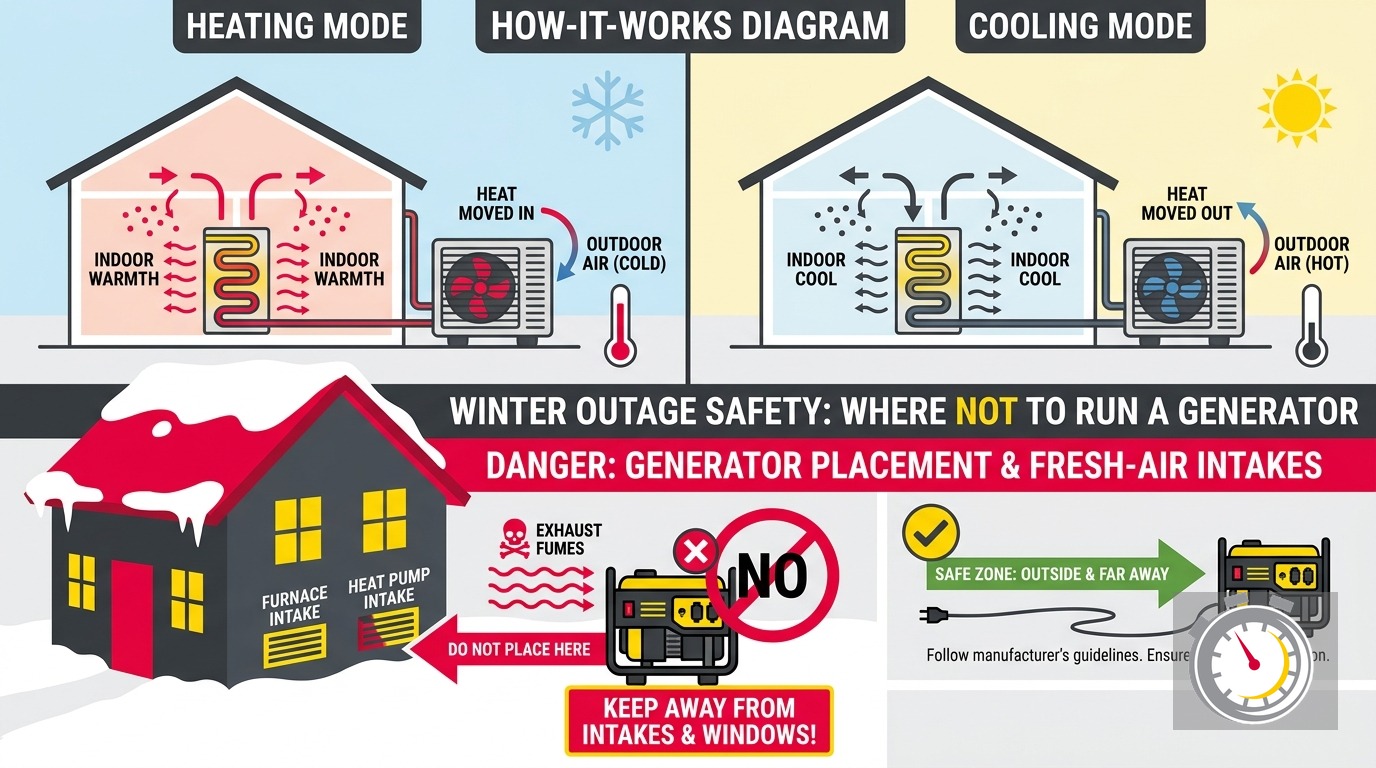
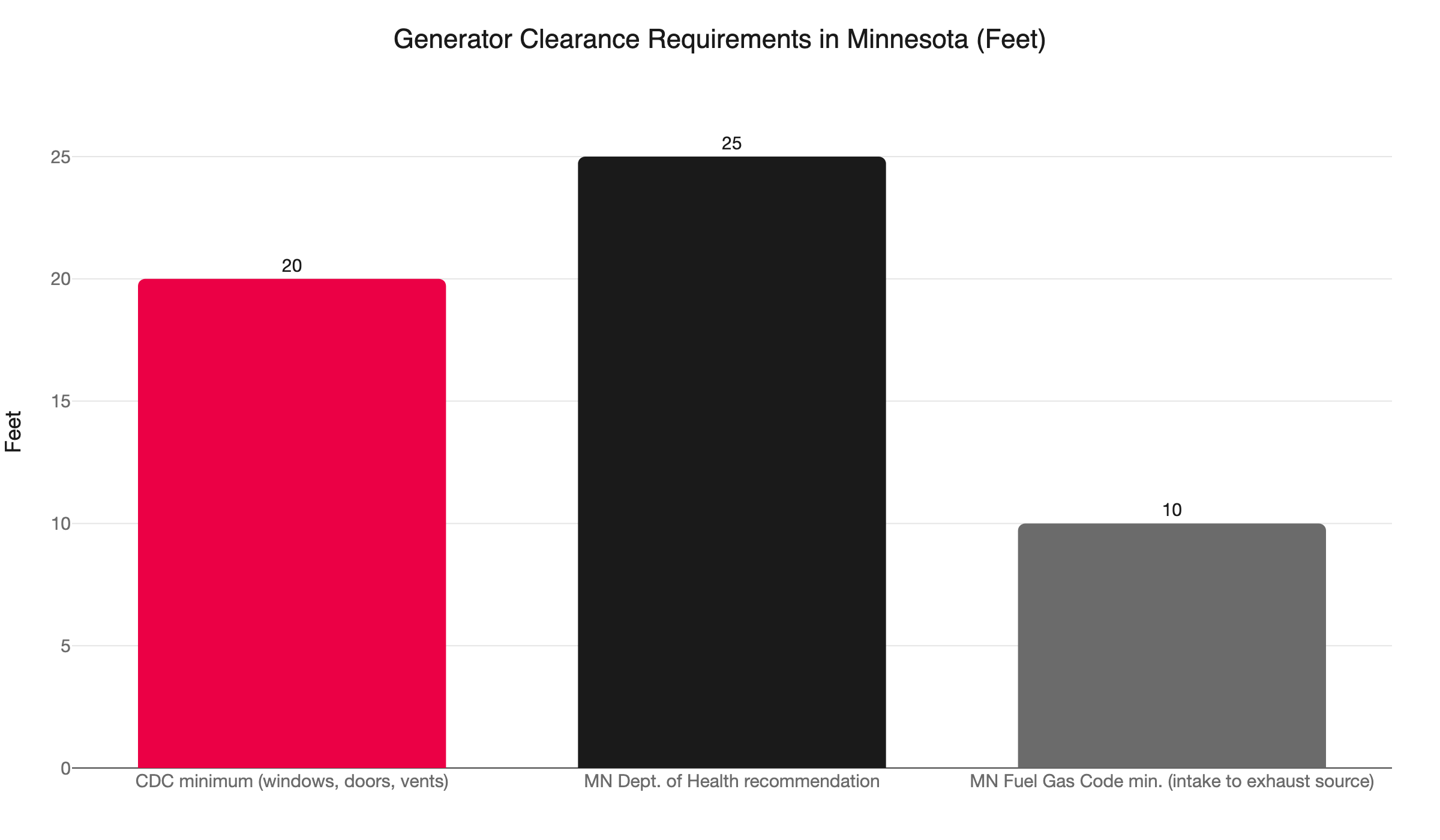
- Minnesota recommends placing generators at least 25 feet from your home, 5 feet farther than the CDC’s 20-foot minimum.
- High-efficiency condensing furnaces (90%+ AFUE) have a white PVC combustion air intake pipe at foundation level. Minnesota Fuel Gas Code Section 618.3 requires at least 10 feet between that intake and any exhaust source, including your generator.
- A generator that clears your back door by 25 feet can still sit only 8 feet from an intake pipe on the opposite side of the house. The furnace then actively pumps CO into every room.
- About 100 Americans die from generator CO poisoning each year. Half of those deaths happen between November and February.
- Snowpack can bury PVC intake pipes during the exact storms that knock out power. Mark them before the season.
- Minnesota law requires at least one operational CO alarm within 10 feet of every sleeping room. Test yours before outage season.
- 80% AFUE furnaces draw combustion air from inside the mechanical room, creating an indirect but still real risk.
Why is generator carbon monoxide especially dangerous near a furnace intake?
A high-efficiency condensing furnace does not passively wait for CO to drift in. Its inducer fan actively pulls outdoor air through a PVC intake pipe at grade level and pushes it through every room via the duct system. That is faster and more complete than smoke drifting through a cracked window.
Most people picture CO as something that seeps under a door. That image understates what happens in a modern Twin Cities home.
A high-efficiency condensing furnace has a dedicated PVC combustion air intake pipe exiting your foundation at ground level. The inducer fan runs at full capacity whenever the heat is on. It actively pulls outside air through that pipe, through the heat exchanger, and out through every supply register in the house.
That is not passive infiltration. It is a system engineered to move large volumes of outdoor air through your home on demand. An 80,000 BTU furnace running during a January ice storm can pull whatever is outside that pipe through every room in the house within minutes.
Smoke drifts. Your furnace intake pumps. That distinction is why generator placement relative to a furnace intake is more critical than placement relative to a window or door.
What type of furnace do you have? Your answer changes your risk.
Most Twin Cities homes have a high-efficiency condensing furnace with a direct outdoor combustion air intake. That is the most serious scenario. Older 80% AFUE units draw combustion air from inside the mechanical room, creating an indirect risk. The condensing furnace situation is the one most homes here need to plan for.
High-efficiency condensing furnace (90%+ AFUE)
This is the most common type in the Twin Cities. Minnesota’s long, cold winters drove homeowners toward high-efficiency equipment long before national standards pushed in that direction.
These furnaces have two white PVC pipes, usually 2 to 3 inches in diameter, exiting the foundation or rim joist on one side of the house. One draws combustion air from outside; the other exhausts combustion gases. Both typically terminate at or near grade level.
The combustion air intake is the direct danger. The furnace pulls whatever is in the air outside that pipe. A generator running anywhere near it can feed CO directly into your heating system.
80% AFUE furnaces
Older single-stage furnaces draw combustion air from inside the mechanical room through a metal flue that connects to a chimney or sidewall. They are not actively pulling dedicated outdoor air through a ground-level pipe. But the mechanical room is not sealed. CO that enters the basement through gaps, windows, or an attached garage can still reach the furnace and enter the air stream.
The risk is real but one step removed from the condensing furnace scenario.
Not sure which type you have? Look for a metal flue pipe going into the chimney or a B-vent exiting the sidewall (80% AFUE), versus two white PVC pipes at ground level (90%+). Our post on high-efficiency furnace PVC vent pipe problems in Minnesota walks through the anatomy of those pipes in detail.
Where are your furnace’s combustion air intake pipes? How do you find them before an outage?
Walk the exterior in daylight before outage season begins. Look for two white PVC pipes, 2 to 3 inches in diameter, exiting the foundation at or near grade level. Mark each one with a stake or paint stripe before the first snow. That five-minute task becomes critical at 11 PM during a January ice storm.
Start with a slow walk around all four sides of the foundation. High-efficiency furnace PVC pipes are typically white or gray, 2 to 3 inches in diameter, and terminate within 1 to 2 feet of the ground. One end may have a 90-degree elbow pointing down; both should have insect screens.
Once you find them, mark them:
- Drive a bright orange driveway stake 12 inches above each pipe end.
- Spray a stripe of high-visibility paint on the foundation directly above the pipe.
- Photograph them and note the distance from a fixed landmark, like a foundation corner.
Any of these options takes under five minutes. The payoff comes during an ice storm at midnight when those pipes are under a foot of snow.
While you are walking the exterior, also note dryer vents, bathroom exhaust vents, range hood vents, and any windows close to the ground. All of these factor into where you can safely place a generator.
How far does a generator need to be from a furnace intake in Minnesota?
At minimum, 25 feet from any window, door, or vent per the Minnesota Department of Health, and at least 10 feet from the combustion air intake pipe specifically per state code. These are two separate requirements you must satisfy at the same time.
The CDC recommends operating a generator outdoors more than 20 feet from windows, doors, and vents. The Minnesota Department of Health recommends at least 25 feet, downwind of the house. When the state recommendation exceeds the federal floor, follow the state.
The Minnesota Fuel Gas Code adds a separate and specific requirement. Section 618.3 states that outdoor combustion air intakes shall not draw from within 10 feet of any exhaust source, including a generator’s exhaust port. One exception applies: if the intake is at least 3 feet above the exhaust source, the 10-foot rule does not apply.
Here is where most people misread the rules. Imagine your condensing furnace’s intake pipe is on the north side of the house. You park the generator on the south side, 22 feet from the back door. The intake pipe is only 8 feet from the generator exhaust on the opposite side. That setup violates the Fuel Gas Code even before it falls short of the MDH recommendation.
Measure from the generator exhaust to the intake pipe. Measure separately from the generator exhaust to the nearest door, window, or vent. You need to clear both measurements simultaneously.
Does snow create a hidden danger for furnace intakes in Minnesota?
Yes, and this risk is almost entirely absent from national safety guides. PVC intake pipes at grade level can be fully buried by the same blizzard that knocked out your power. Without markers in place, finding them at night in a foot of snow is nearly impossible. Mark them before the first snowfall.
The PVC intake pipes on a high-efficiency furnace exit at grade level. A typical Twin Cities blizzard deposits 8 to 12 inches of snow against the foundation in a matter of hours. An ice storm can add a dense, heavy layer that does not blow clear. Those pipes can be completely buried within the same storm that knocked out the power.
At midnight, dragging a generator out to run the furnace, most homeowners are focused on the extension cord and the circuit panel. They remember the back door. They may not remember the two white pipes on the north side that have been below the deck since October.
A partially blocked intake does not simply fail safely. It increases the pressure differential the furnace works against, and in some configurations draws air through secondary gaps when the primary pipe is restricted. If you have placed the generator closer to those pipes than you intended, you have no visual confirmation of your actual clearance under the snow.
Mark them before the first snow. Check them before starting the generator after any heavy accumulation.
What about heat pump outdoor units?
Heat pumps do not have combustion air intakes and do not burn fuel, so they carry a different risk profile than a condensing furnace. But the Minnesota DOH’s 25-foot downwind clearance still applies to the outdoor unit. Keep the generator 25 feet from the outdoor unit and confirm the furnace intake pipe clearance separately.
A heat pump outdoor unit draws outdoor air across the refrigerant coil for the heating or cooling cycle. It does not burn anything. There is no inducer fan pulling combustion air through a heat exchanger. From a CO-intake standpoint, a heat pump carries lower direct risk than a condensing furnace.
That said, the Minnesota Department of Health’s 25-foot downwind recommendation covers all openings in the home envelope. CO entering through any path, including a nearby return air inlet or the air handler’s connection to the living space, is still dangerous.
Most Twin Cities homes with heat pumps also have a gas furnace for backup heat. If that is your setup, the furnace intake pipe remains the governing constraint. Keep the generator 25 feet from the outdoor unit and check the furnace intake clearance as a separate measurement.
Our post on standby generators for furnaces and heat pumps in Minnesota covers the electrical side of connecting generator power to HVAC equipment.
What does the Minnesota Fuel Gas Code actually require?
Minnesota Fuel Gas Code 2020 Section 618.3 states that outdoor or return air for forced-air heating and cooling systems shall not be taken from within 10 feet of an appliance vent outlet, plumbing vent opening, or exhaust fan discharge. The exception: if the intake is at least 3 feet above the outlet, the rule does not apply. Source: Minnesota IFGC Chapter 6.
A portable generator’s exhaust qualifies as an exhaust discharge. Placing a generator within 10 feet of your condensing furnace’s PVC intake pipe violates this code requirement, regardless of where the generator sits relative to your doors.
This is not a technicality. The 10-foot rule exists because an active intake pipe close to any exhaust source creates conditions where contamination is near-certain under most wind conditions. The inducer fan does not wait for the wind to cooperate. It pulls.
The 10-foot Fuel Gas Code rule and the 25-foot MDH recommendation measure two different things. The Fuel Gas Code governs the intake pipe specifically. The MDH recommendation covers the general home envelope. Both must be satisfied at the same time.
Can your CO alarms protect you if the furnace intake pulls in contaminated air?
Partially, but not reliably enough to substitute for proper generator placement. CO alarms have response thresholds and placement constraints. By the time an alarm trips, occupants may already have elevated blood CO levels. Treat alarms as a last line of protection, not a replacement for keeping the generator far enough from the intake pipe.
Minnesota Statute 299F.50 requires at least one operational CO alarm within 10 feet of every room used for sleeping. That is the legal minimum. Test your alarms before outage season and replace units older than seven years.
What CO alarms cannot do is stop the furnace from distributing contaminated air before the alarm trips. If CO enters through the combustion intake, it can reach every room via the supply registers before a bedroom alarm sounds. The alarm is critical and saves lives when placement fails. It should not be your only safeguard.
Our post on carbon monoxide detector placement near furnaces and boilers in Minnesota covers where to position alarms relative to your heating equipment.
How serious is this risk? The numbers behind generator CO deaths in winter
Very serious, with deaths concentrated in the same months Minnesota homeowners are most likely to use a generator. About 100 Americans die from generator CO each year. Half of those deaths happen between November and February, exactly the window when a Twin Cities ice storm is most likely to cut power.
An average of about 100 Americans die each year from CO poisoning caused by portable generators, according to the CPSC. The cumulative numbers tell a harder story. Since 2009, portable generators were linked to an estimated 765 non-fire CO poisoning deaths, representing 40 percent of all consumer product CO deaths under CPSC’s jurisdiction.
Half of all generator CO deaths happened from November through February.
In Minnesota, an average of 14 people die from unintentional CO poisoning each year, and roughly 300 visit an emergency department for CO-related symptoms. The state numbers are smaller, but the seasonality is the same.
One note if you are buying or upgrading a generator: generators certified to the UL 2201 standard are estimated to reduce deaths from CO poisoning by 100 percent. That is a real engineering standard with testing behind it.
What to do before you pull the starter cord
A five-minute walk before the season converts generator safety from general advice to specific action. Do it once in dry weather, then check again after the first heavy snowfall.
Walk the exterior and locate your intake pipes:
- Find both PVC pipes on your condensing furnace (or the metal flue on an 80% unit).
- Mark each one with a stake, a paint stripe, or both before the ground freezes.
Choose your generator location with two tape measures:
- Measure from the generator exhaust to the nearest furnace intake pipe. You need at least 10 feet.
- Measure from the generator exhaust to the nearest window, door, or vent. You need at least 25 feet per the Minnesota Department of Health recommendation.
- Point the exhaust port away from the house and downwind.
Before starting the engine:
- Test every CO alarm in the house. Replace batteries, or the whole unit if it is more than seven years old.
- Confirm every person in the household knows both steps: get outside immediately, call 911.
If you are already in a storm with snow on the ground and the power just went out, use a flashlight and do this walk before you start the generator. The delay is worth it every time.
What if a CO alarm sounds?
Get everyone outside immediately. Do not stop for belongings. Call 911 from outside. Stay out until emergency responders clear the space. CO is colorless and odorless. By the time you notice symptoms, exposure may already be serious. The alarm is telling you something is wrong.
If the alarm sounds while you are running a generator with your furnace operating, tell the 911 dispatcher both facts. How contaminated air entered the home matters for how responders assess the situation.
Once the space is cleared, call us before you run your heating system again. Our team can inspect whether the combustion air side of your furnace was exposed to contaminants and confirm the system is safe to operate.
Northern One Hour is locally owned and operated, serving Ramsey, Blaine, Maple Grove, Plymouth, Brooklyn Park, Woodbury, and the broader Twin Cities metro. When you schedule a safety inspection, we arrive within the time window you select. If our technician does not show up on time, you do not pay for the service. That is what “Always On Time… Or You Don’t Pay a Dime!(R)” means for every customer we serve.
Call (763) 260-6662 or schedule your furnace safety inspection online.
Frequently Asked Questions
How far should a generator be from a high-efficiency furnace intake pipe in Minnesota? +
How do I find my furnace's combustion air intake pipe? +
Can a portable generator spread carbon monoxide through my furnace duct system? +
Does Minnesota have a stricter generator placement rule than the CDC? +
Need a technician now?