
HVAC Inspection Checklist When Buying a House in Minnesota
Key Takeaways
- A standard home inspector cannot perform combustion analysis, refrigerant charge testing, or ductwork pressure measurement. Budget for a separate inspection with a licensed HVAC technician if the system is aging or the inspector flags a concern.
- Check the data plate on the outdoor AC unit at the showing. R-22 or HCFC-22 means the system should be treated as end-of-life. Factor replacement cost into your offer before you sign.
- Gas furnaces typically last 15-30 years; central AC systems last 12-17 years; flexible ductwork lasts 15-25 years. Age alone is a negotiating factor.
- A clogged filter signals deferred care across the whole system. It can also cause heat exchanger overheating in a furnace.
- Several Twin Cities cities require point-of-sale HVAC certification beyond the standard inspection. Richfield, St. Louis Park, and Bloomington all have active requirements.
- A failing system is a negotiating lever. Get a replacement quote, subtract available utility rebates, and request the net cost as a seller credit at closing.
The HVAC Inspection Checklist Every Minnesota Buyer Needs
Buying a home in the Twin Cities means buying its heating and cooling system too. That system is one of the most expensive components in any house, and Minnesota’s climate makes it non-negotiable.
A complete HVAC inspection checklist when buying a house in Minnesota protects you from two risks. The first: walking into a replacement you did not budget for. The second: missing a safety issue the standard home inspection cannot catch, like a cracked heat exchanger.
This guide covers what to look for before the inspection appointment, what the inspector’s report actually tells you, and how to use what you find at the negotiating table.
What Does the Home Inspector Actually Check?
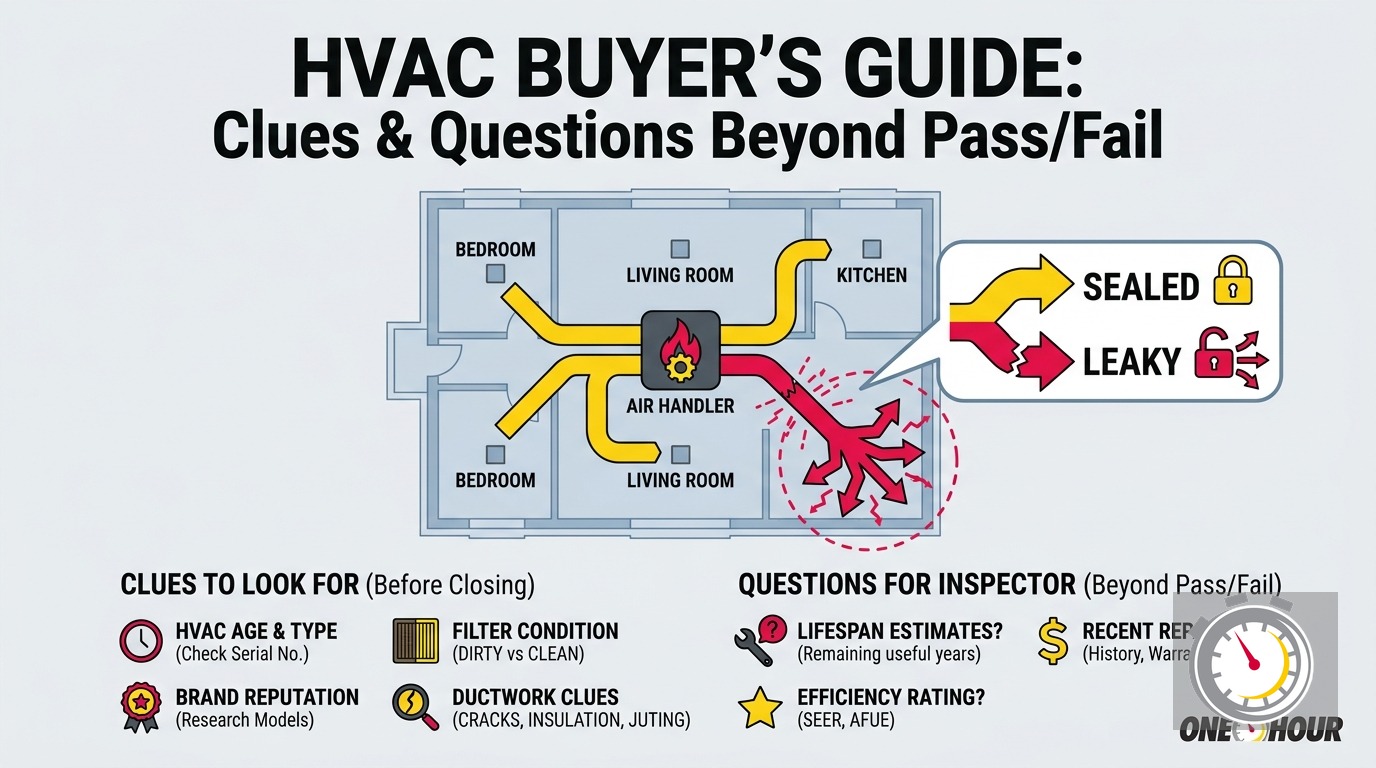
A standard home inspector operates the system, observes function, checks visible ductwork, verifies thermostat response, and notes filter condition. They cannot perform combustion analysis, refrigerant charge testing, or static pressure measurement. Those require a licensed HVAC technician - a separate service.
This is the gap most Minnesota buyers miss. The standard inspection tells you whether the system runs. It does not tell you whether the heat exchanger is cracked, the refrigerant charge is correct, or the ductwork moves air into the rooms you will actually live in.
The HVAC Inspection Guide from InspectorWatch notes that a home inspector’s scope is visual and operational - a pass/fail starting point, not a final answer on system condition.
If the system is aging or the inspector flags a concern, schedule a dedicated HVAC pre-purchase inspection with a licensed technician before you close. It costs a few hundred dollars. Finding a cracked heat exchanger or refrigerant leak after closing costs much more.
What Should You Look for Before the Inspection Even Starts?
You can gather critical HVAC clues during the showing itself, before spending a dollar on inspections. Walk the utility room and step outside to the condenser unit. Both give you information that shapes your offer before anyone schedules an appointment.
At the furnace:
- Find the data plate and note the manufacture date. Gas furnaces typically last 15-30 years. A 22-year-old furnace warrants a dedicated inspection even if it currently runs.
- Look through the observation window while the burner fires. A healthy flame is blue. Yellow or orange signals incomplete combustion and a potential CO production issue.
- Check the heat exchanger for rust. Rust means combustion gases can mix with conditioned air. That is a CO hazard requiring replacement, not repair.
- Pull the filter out if you can reach it. A severely clogged filter signals deferred maintenance and can cause heat exchanger overheating.
- Check visible flexible ductwork in the utility room. Collapsed or disconnected sections mean the system conditions unconditioned space instead of the living areas you will use.
- Look at the flue pipe. Missing sections or obvious deterioration allow combustion gases, including CO, to enter the living space.
At the outdoor condensing unit:
- Find the data plate. Write down the manufacture date and the refrigerant type. These two fields change the value math on the entire system.
- Look for bent fins, corrosion, or refrigerant line damage.
- Note clearance around the unit. Overgrown shrubs or a fence too close restrict airflow and shorten equipment life.
If you see a yellow flame, heat exchanger rust, or a disconnected flue at the showing, you have a serious concern before the inspector arrives. Factor that into your offer price.
How to Read the Data Plate on the AC Unit
The data plate on the outdoor condensing unit takes ten seconds to read and can shift your entire negotiating position on a home.
Manufacture date: Central AC systems typically last 12-17 years, and shorter in high-demand climates like Minnesota. A unit manufactured in 2008 is now 18 years old. Budget for replacement regardless of whether it ran during the inspection.
Refrigerant type: Look for the field labeled “Refrigerant” or “Refrigerant Type.” If it says R-22 or HCFC-22, the math on the home changes significantly.
R-22 (Freon) domestic production and import ended January 1, 2020. Supply has been depleting since, and costs have risen sharply. A full R-22 recharge including labor can run $660-$1,900, with some supply-house pricing moving higher as stocks thin out. Any R-22 unit that needs refrigerant work should be treated as end-of-life. It cannot be retrofitted to modern refrigerants without replacing the compressor and major components.
If the data plate says R-22, request a seller credit that covers full system replacement. Or factor that cost directly into your offer price.
New systems manufactured since January 1, 2025 use R-454B, the EPA-approved successor to R-410A. A unit from 2020 or later running on R-410A is in solid shape from a refrigerant standpoint.
What Are the Red Flags on a Walk-Through?
High-severity items are CO hazards or imminent failures that need immediate follow-up. Moderate items indicate deferred maintenance or shortened system life. Both categories warrant documentation and follow-up questions before you close.
High severity:
- Yellow or orange burner flame (incomplete combustion; possible CO production)
- Rust on the heat exchanger (CO hazard; replacement required)
- Missing or deteriorated flue pipe sections (combustion gases can enter the living space)
- R-22 on the data plate of a visibly aging AC unit
Moderate to high severity:
- Disconnected or collapsed flex duct (system conditions unconditioned space)
- Evidence of refrigerant leaks (oil staining at line sets or coil)
- No maintenance records available from the seller
- Audible grinding, banging, or squealing from the air handler during operation
Moderate severity:
- Severely dirty or clogged filter
- Visibly overgrown condenser unit
- Mismatched equipment ages (new furnace, 18-year-old AC coil)
- Ductwork field-repaired with duct tape instead of mastic sealant
Do not underestimate the filter. As one industry guide notes, a well-maintained 15-year-old system may have years of useful life remaining, while a neglected 8-year-old system can be near failure. The filter tells you about owner care across the entire system.
Which Minnesota Cities Require Point-of-Sale HVAC Certification?
Several Twin Cities municipalities require a heating system inspection or certification before a home can change hands - separate from and in addition to the standard home inspection. Failing to satisfy these requirements can delay or block your closing.
Richfield requires HVAC certification by a licensed journeyman or master heating installer at the point of sale.
St. Louis Park requires a furnace and heating equipment inspection whenever an owner intends to sell or transfer ownership.
Bloomington requires a time-of-sale housing inspection report for all single- and two-family dwellings.
Most Twin Cities metro cities also require the heating system to maintain 68 degrees Fahrenheit. That is measured five feet above the floor in any habitable room. A system that cannot meet that threshold fails the requirement.
These requirements can work in your favor. If certification is required and the system fails, the seller must remediate before closing or credit you for the work. Verify current requirements directly with each city’s housing or licensing office. Requirements change, and the cities are the authoritative source.
Did the Previous Owner Pull a Permit for HVAC Work?
Ask the seller in writing: “Was the HVAC system ever replaced or significantly repaired? Was a permit pulled? Can I see the permit closeout?” All three questions matter, and asking in writing creates a record.
Any significant HVAC installation, repair, or alteration in Minnesota requires a mechanical permit. A contractor who skips the permit creates exposure that follows the home to the next owner. Unpermitted work can void manufacturer warranties, create liability at your own future sale, and disqualify the new owner from utility rebates.
The permit question also reveals installer quality. A company that pulled permits, passed inspections, and closed them out operated by the book. A company that skipped the permit is a red flag on installation quality - regardless of how the system runs today.
If the seller cannot produce a permit closeout and the system was replaced or modified, search the city’s building permit records online before you close. Most municipalities have searchable databases.
How Does a Failing HVAC System Affect Your Offer Price?
A system that needs replacement is a negotiating opportunity when you bring specific dollar figures to the table. Vague concerns about system age are easy to dismiss. A documented net cost is not.
Here is the framework:
-
Get a replacement quote from a licensed contractor before your contingency expires. In the Twin Cities, a mid-tier central AC installation runs approximately $5,800-$8,000. A full HVAC replacement - central AC and furnace together - typically runs $10,500-$14,000 installed. Our AC replacement cost guide for Minnesota covers current pricing.
-
Identify the utility rebates you qualify for as the buyer making the purchase. See the rebate section below.
-
Subtract available rebates from the replacement quote. That net figure is your seller credit request.
The efficiency math reinforces the case. An old 60% AFUE furnace wastes 40 cents of every gas dollar. A new 96% AFUE unit can cut that loss by roughly two-thirds. An older central AC may run at 8-10 SEER - roughly half the efficiency of a new unit at the current federal minimum of 15 SEER2. That gap hits your utility bill every month you own the home.
For a broader look at repair versus replacement decisions on aging equipment, see our guide on when to repair versus replace your heating and cooling system.
When to Schedule an HVAC Pre-Purchase Inspection in Minnesota
Book a licensed HVAC technician - separate from your home inspector - when any of these apply:
- The furnace is 15 years old or older
- The AC system is 12 years old or older
- The home inspector flagged any HVAC concern in the report
- You spotted a red flag at the showing: yellow flame, heat exchanger rust, R-22 on the data plate, or a severely clogged filter
- The seller cannot produce maintenance records
- The home is in Richfield, St. Louis Park, or Bloomington, where point-of-sale certification may apply
- HVAC equipment was replaced or significantly repaired, and no permit record exists
A dedicated HVAC inspection includes combustion analysis, refrigerant charge measurement, static pressure testing, and a full ductwork evaluation. This is the layer the standard home inspection legally cannot provide. It surfaces the problems that turn a running system into a replacement in year two.
Schedule the inspection during your contingency period. You need findings in hand before the contingency expires so you have time to negotiate.
Northern One Hour is locally owned and operated in Ramsey, Minnesota. We provide pre-purchase HVAC inspections throughout the Twin Cities metro and back every visit with our guarantee: “Always On Time… Or You Don’t Pay a Dime!(R)” Call (763) 260-6662 or book online to schedule.
What Rebates Are Available If You Replace HVAC After Buying?
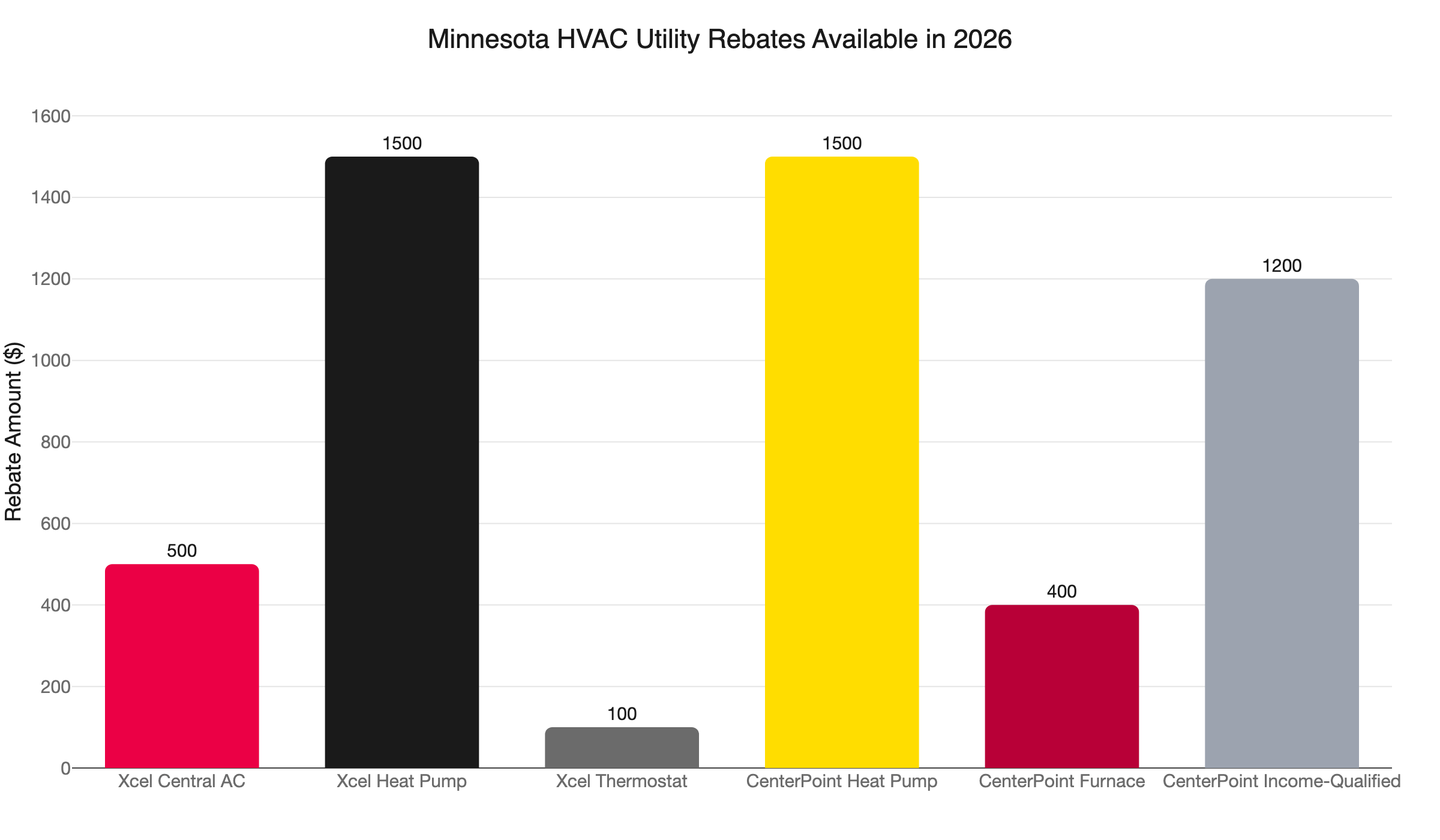
The rebate stack in 2026 makes a post-purchase replacement more manageable than the sticker price suggests. Most Twin Cities homeowners can claim $400-$1,500 from their utility depending on equipment type, with higher amounts for cold-climate heat pumps and income-qualified households.
Xcel Energy customers (most Minneapolis, St. Paul, and suburban metro service areas):
- Up to $500 for qualifying central AC replacement
- Up to $1,500 for a cold-climate heat pump
- Up to $100 for a qualifying smart thermostat
CenterPoint Energy customers:
- Up to $1,500 for a ducted air-source heat pump in an existing home
- Up to $400 for a 95%+ AFUE gas furnace
- Up to $1,200 for income-qualified households
Ductless mini-split systems can qualify for up to $2,000 through some Xcel programs, per current Minnesota heat pump rebate tracking. CenterPoint program details are covered in the Step-by-Step Guide to Minnesota Energy Rebates for HVAC Upgrades.
One critical note: the IRA Section 25C federal tax credits - which had covered up to $2,000 for heat pumps and $600 for furnaces - expired December 31, 2025. They do not apply to 2026 installations. Verify current federal law before factoring any federal credit into your budget.
For the full current picture of active programs, our Minnesota heat pump rebates and incentives guide covers what is available and how to stack them.
Questions to Ask the Seller Before Closing
Put these questions to the seller in writing before your contingency expires. A specific, document-backed answer is useful. A vague or deflected answer tells you something too.
- How old is the furnace? How old is the AC unit?
- Has the system received annual service? Can you provide service records?
- Has any HVAC equipment been replaced or significantly repaired? When?
- Was a mechanical permit pulled for that work? Can you provide the permit closeout?
- Has the system had a refrigerant recharge? How many times?
- Are there rooms that do not heat or cool well?
- What company installed the current system, and did they pull all required permits?
Maintenance records are the most revealing thing a seller can share. An annual service receipt from a licensed contractor - showing filter changes, combustion analysis, and refrigerant checks - tells you the system was cared for. A stack of emergency repair invoices tells a different story. No records at all says the most.
When you are ready for a pre-purchase HVAC inspection in the Twin Cities, call Northern One Hour at (763) 260-6662 or book online. Our team is locally owned and operated, and we show up when we say we will.
Frequently Asked Questions
Do I need a separate HVAC inspection when buying a home in Minnesota? +
How do I know if an AC unit uses R-22 refrigerant? +
Which Minnesota cities require point-of-sale HVAC certification? +
Can I use a failing HVAC system to negotiate a lower price? +
Need a technician now?