
Whole Home Electronic Air Cleaner Maintenance Guide
Key Takeaways
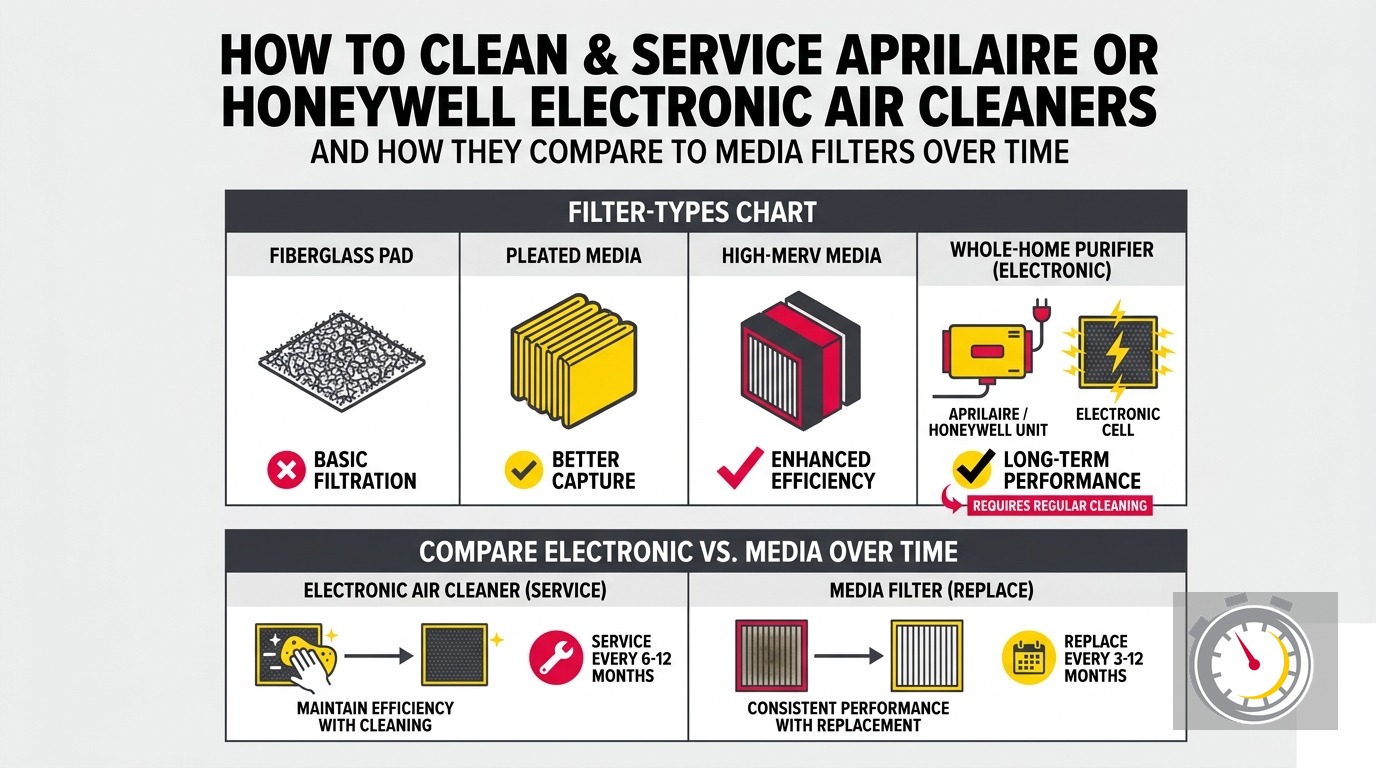
- Two EAC technologies, two completely different schedules. Plate-type units (Honeywell F300 series and similar) need collector cells washed every three months. The AprilAire 5000 hybrid needs no washing - just an annual media replacement.
- A dirty plate-type EAC does not filter better. Unlike a media filter that improves with loading, a dirty plate-type unit loses electrical charge and gradually stops capturing particles.
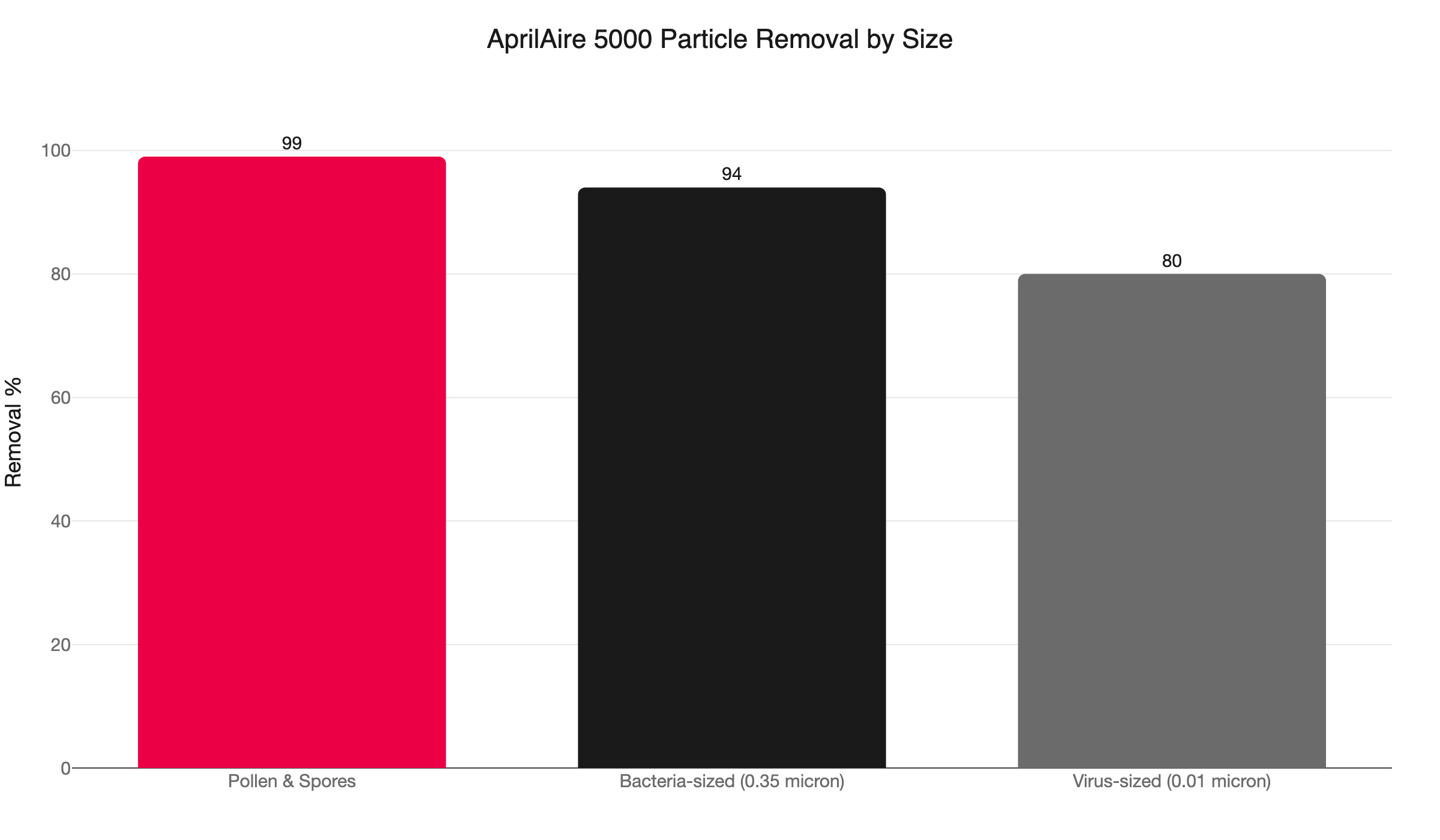
- The AprilAire 5000 reaches MERV 15-equivalent performance when the electrostatic field is active, up from MERV 10 for the media alone. Particle removal runs 99% on pollen and spores, 94% on bacteria-sized particles, and 80% on virus-sized particles.
- All ionizing EACs produce small amounts of ozone. Properly installed in-duct units operate within EPA safety thresholds, but sealed Minnesota homes make this worth discussing with a technician.
- Professional acid-bath service every three years restores plate conductivity beyond what home washing can achieve.
- No Minnesota utility rebates currently cover standalone EAC upgrades. Xcel Energy discontinued gas furnace rebates in January 2026, and no specific rebate program exists for whole home air cleaner upgrades.
Two Types, One Critical Difference
Most homeowners know there is an electronic air cleaner somewhere in their ductwork. What most do not know is that whole home electronic air cleaner maintenance looks completely different depending on which type of unit is installed. The cleaning schedule, the tools, and what happens when you skip a service interval are not the same for each type.
There are two fundamentally different technologies sold under the same “electronic air cleaner” label. One uses high-voltage metal collector plates that need to be pulled out and washed every three months. The other uses ionizing wires to charge particles and trap them permanently in a micro-fiber media pad - no quarterly washing, just an annual filter swap.
Wash the wrong one and you waste an afternoon. Skip maintenance on the plate-type unit and it quietly stops filtering. This guide covers both.
Plate-Type or Hybrid: Which Electronic Air Cleaner Do You Have?
Open the access panel on your air handler or furnace cabinet. Flat aluminum fins on rails: you have a plate-type EAC. A thick fiber media pad where the filter normally sits: you have a hybrid electrostatic-media unit. The maintenance for each is completely different, so getting this right is step one.
Before any maintenance, identify what is inside that panel.
Plate-type EACs use a set of removable metal collector cells. The cells look like a stack of flat aluminum fins and slide out on rails. The unit also has one or two flat fiber panels called postfilters. When those collector cells are running, they carry up to 15,000 volts to create the electrical field that pulls particles out of the airstream. The Honeywell F300 and F50F series are the most common plate-type units you will find in Twin Cities homes.
Hybrid electrostatic-media units have no removable metal plates. Instead, you see a thick media pad inside the cabinet. Thin ionizing wires on the upstream face of the unit charge incoming particles. Those charged particles then embed permanently in the media. The AprilAire 5000 is the best-known residential example.
If you are not certain which you have, our team can identify the unit and confirm the right maintenance schedule. That takes about two minutes during any IAQ visit.
How Do You Maintain a Plate-Type Electronic Air Cleaner?
Clean the collector cells every three months. Soak them in warm water with dishwasher detergent for 30 minutes, rinse thoroughly, and let them dry completely before reinstalling. Replace the postfilters twice a year. Schedule a professional acid-bath service every three years to restore plate conductivity.
Here is the step-by-step process:
Step 1 - Turn off the power. Flip the switch on the EAC itself, then shut off the air handler at the breaker. The cells carry up to 15,000 volts when the unit is running.
Step 2 - Remove the collector cells. They slide out on rails. Carry them to the sink. The black residue on the plates is carbonized particulate matter.
Step 3 - Soak in warm water with dishwasher detergent. Use a dishwasher-specific detergent, not standard dish soap. Regular dish soap leaves a residue that reduces plate conductivity. Thirty minutes of soak time is the minimum.
Step 4 - Rinse thoroughly. Run clean water over both sides until it runs completely clear.
Step 5 - Dry completely before reinstalling. Wet plates in a high-voltage circuit will arc abnormally. Air dry for several hours or use a low-heat hair dryer.
Step 6 - Inspect and replace the postfilters. Honeywell recommends replacing postfilters twice per year. Postfilters are not washable. Replace them; do not rinse them.
Step 7 - Wipe down the cell frame and housing. A damp cloth on the interior walls catches loose buildup before you slide the clean cells back in.
Step 8 - Restore power and listen. A functioning plate-type EAC produces a faint crackle or pop when particles hit the field. Complete silence after a correct reinstallation signals something worth checking with a technician.
Pair this cleaning with your regular filter check. If you already have a calendar reminder for how often to change your HVAC filter, add the EAC cell cleaning to that same reminder.
Common mistakes to avoid:
- Using dish soap instead of dishwasher detergent. Dish soap leaves a surfactant film that impairs how well the plates hold a charge.
- Reinstalling before the cells are fully dry. Even a slightly damp cell in a high-voltage circuit creates a short-circuit risk. Take the extra time.
- Skipping the postfilter replacement. Postfilters catch particles that pass through without being captured by the charged plates. A loaded postfilter restricts airflow and raises static pressure on the air handler.
- Cleaning the cells but ignoring the frame. Residue on the interior walls settles back onto clean cells within a few weeks.
How Do You Maintain an AprilAire 5000 Hybrid EAC?
No quarterly washing required. Inspect the ionizing wires and control electrode every six months and wipe clean with a damp cloth. Replace the Model 501 media filter once per year. Replace it sooner if it appears noticeably gray or brown before the year mark.
The AprilAire 5000 runs a different system. Ionizing wires charge airborne particles. Those particles then embed permanently in the micro-fiber media. As the media loads, its mechanical filtration efficiency actually improves over time. The more loaded the media, the more surface area particles contact.
Per the AprilAire 5000 owner’s manual, semi-annual maintenance consists of inspecting the ionizing wires and control electrode for dust buildup and wiping them down with a damp cloth. Annual maintenance means replacing the Model 501 media.
Semi-annual checklist:
- Inspect ionizing wires for visible dust or debris
- Wipe the control electrode with a damp cloth
- Check the media pad for gray or brown coloration before the annual swap date
- Confirm the power indicator light is active
Annual:
- Replace the Model 501 media filter
- Verify the ionizing field indicator after reinstallation
The media swap is a straightforward homeowner task. If you want a technician to check static pressure across the unit, inspect the ionizing assembly, and verify the electrostatic field is performing correctly, we include that during a standard air purification service visit.
Why Does a Dirty Plate-Type EAC Get Less Effective Over Time?
Carbonized particles build up on the collector plates and act as an insulator. That insulation weakens the electrical charge. A weaker charge captures fewer particles. The dirtier the plates, the worse the unit works. This is the opposite of how a media filter behaves, and it is the most important thing to understand about plate-type EAC maintenance.
A standard media filter densifies as it loads. A well-loaded MERV 8 filter starts catching particles it would have missed when clean. Many homeowners assume electronic air cleaners work the same way.
They do not. Organic material carbonizes on the plate surface and acts as an electrical insulator. The high-voltage field weakens. Particles are no longer drawn to the plates with the same force. At the extreme end, the unit becomes little more than a mesh screen with very poor filtration efficiency.
If your plate-type EAC has not been cleaned in more than six months, assume it is underperforming. More than a year without service and you should have a technician inspect it before relying on any real air quality benefit.
The professional acid-bath service at the three-year mark addresses a separate layer of the same problem. Over time, carbonized residue polymerizes and bonds to the plate surface in a way that warm water and detergent cannot fully remove. The acid bath restores plate conductivity to close to original specification.
How Does a Whole Home Electronic Air Cleaner Compare to a MERV 13 Filter?
A well-maintained plate-type EAC outperforms a standard MERV 8 filter on fine particles but requires more maintenance discipline. An AprilAire 5000 hybrid reaches MERV 15-equivalent performance with lower ongoing maintenance. A MERV 13 media filter is effective without voltage, but not all HVAC systems can handle the added airflow restriction.
The comparison shifts depending on the unit and the maintenance reality behind it.
A MERV 13 filter that gets replaced every 90 days does its job well. A plate-type EAC that gets quarterly service outperforms it on fine particle capture. A plate-type EAC that gets skipped service performs worse than both.
The AprilAire 5000’s performance specs make the comparison clearer. The media alone rates MERV 10. With the electrostatic field active, it reaches MERV 15-equivalent performance. Particle removal comes in at 99% for pollen and spores, 94% for bacteria-sized particles at 0.35 microns, and 80% for virus-sized particles at 0.01 microns.
A standard MERV 13 filter performs well on particles above 1 micron. It loses efficiency significantly below 0.3 microns. The electrostatic charge on the AprilAire 5000 closes that gap.
There is a practical caveat on the MERV 13 route. The EPA’s guide to air cleaners in the home warns that MERV 13 or higher filters need frequent replacement to prevent airflow restriction that can damage HVAC equipment. Not all systems are built for that added static pressure. Consult a technician before upgrading filter ratings. Our post on air purifiers, media filters, and MERV ratings goes into that trade-off in detail.
Does an Electronic Air Cleaner Produce Ozone?
Yes, in small amounts. All ionizing EACs produce ozone as a byproduct of the electrical ionizing field. Properly installed in-duct residential units operate well within EPA safety thresholds at normal airflow rates. Standalone portable ionizers are a separate concern and can exceed safe levels in small enclosed spaces.
The EPA documents this directly. In-duct electrostatic precipitators produce ozone indirectly as a byproduct of the ionizing process. Lab measurements for residential in-duct units show approximately 3 micrograms per second. At normal HVAC airflow rates, that concentration dilutes significantly before reaching the living space.
That said, this is a real consideration for Minnesota homeowners specifically. We seal our homes for six or more months per year. Fresh air exchange in January is minimal. If anyone in the household has asthma or is particularly sensitive to ozone, discuss the full IAQ picture with a technician before adding or keeping an ionizing EAC.
For households managing respiratory sensitivities, a properly sized MERV 13 filter in a system confirmed to handle the static pressure may be a better fit than an ionizing unit. Understanding HVAC factors that affect asthma triggers is a useful companion read if this applies to your home.
When Should You Replace Rather Than Service Your Electronic Air Cleaner?
Replace it when a thorough cleaning no longer restores performance, when collector plates show visible corrosion pitting, when ionizing wires have broken and replacement parts are unavailable, or when the unit has been in service for 15-20 years and is failing service after service.
Signs that home service has reached its limit:
- No audible crackle or spark after a clean reinstallation with confirmed power - suggests a failed cell or power supply issue
- Visible corrosion pitting on collector plates that have already been through multiple acid-bath services
- Broken ionizing wires on a hybrid unit, combined with discontinued or unavailable replacement parts
- Persistent burning smell after thorough cleaning, suggesting carbonized buildup in inaccessible areas of the cell assembly
- A unit from the 1980s or 1990s that has not been professionally serviced in years
If the unit is a plate-type and more than 15 years old, compare the cost of a professional acid-bath service against upgrading to a hybrid system. The AprilAire 5000’s annual media replacement model requires far less maintenance discipline and performs at a higher efficiency rating than most aging plate-type units can deliver after extended service.
When EAC replacement comes up, it is usually evaluated as part of a broader HVAC assessment. We can look at the current unit and give you a direct answer on whether service or replacement is the better path for your situation.
Why Whole Home Electronic Air Cleaner Maintenance Matters More in Minnesota
Minnesota state indoor air quality guidelines reflect what our climate does to indoor air. When we heat the house all winter with windows sealed, indoor relative humidity can drop to 15-20%. Dry air keeps particles suspended rather than letting them settle. That sustained particulate load runs through your EAC continuously for months.
What that means in practice: the cleaning interval that works in a temperate climate is a floor here, not a comfortable margin. If your plate-type EAC is in a home with children, pets, or a lot of dust-generating activity, check the cells at eight weeks during peak heating season. You may find quarterly is not quite enough.
It also raises the cost of neglect. Six months of winter, running the blower fan most of the day, through a unit that stopped filtering effectively after month two. That is a lot of particulates recirculating through your home. It is also a lot of carbonized buildup waiting for you on the plates in April.
The practical implication for buying decisions: choosing between a plate-type EAC and a hybrid system looks different in Minnesota than in a moderate climate. In Phoenix, a plate-type unit that slips to a five-month cleaning interval is not catastrophic. In Ramsey or Blaine in January, that same slip means months of degraded air quality in a sealed house. If you are deciding whether to service or replace an aging unit, the maintenance discipline question is worth taking seriously here.
The flip side: a well-maintained EAC genuinely improves winter indoor air quality. For households managing seasonal allergies, asthma, or sensitivity to dust and pet dander, keeping the unit clean and functional is one of the most cost-effective things you can do during those long sealed months.
Schedule Whole Home Electronic Air Cleaner Maintenance with Northern One Hour
Northern One Hour Heating & Air Conditioning is locally owned and operated in Ramsey, Minnesota. We serve homeowners across Minneapolis, St. Paul, Blaine, Maple Grove, Plymouth, Brooklyn Park, Woodbury, and Bloomington.
If you are not sure which type of EAC you have, when it was last serviced, or whether it is still performing at spec, we can answer those questions during an IAQ visit. We identify the unit, assess its current condition, walk through the right maintenance schedule, and tell you directly if replacement is the better path.
Our team shows up when we say we will. That is the commitment behind “Always On Time… Or You Don’t Pay a Dime!(R)” - and it applies to IAQ service calls the same as emergency furnace calls.
A single IAQ maintenance visit starts at $95-$250. A whole-home maintenance plan that covers your air cleaner, filter checks, and HVAC system inspection runs $195-$390 per year. Learn more about what whole home air quality service includes on our air purification page.
Call (763) 260-6662 or book online to schedule.
Frequently Asked Questions
How often should I clean my whole home electronic air cleaner? +
Can I clean electronic air cleaner collector plates in my dishwasher? +
Does an electronic air cleaner produce ozone? +
How do I know if my electronic air cleaner has stopped working? +
Need a technician now?