
Best Time to Buy an HVAC System in the Twin Cities (2026)
Key Takeaways
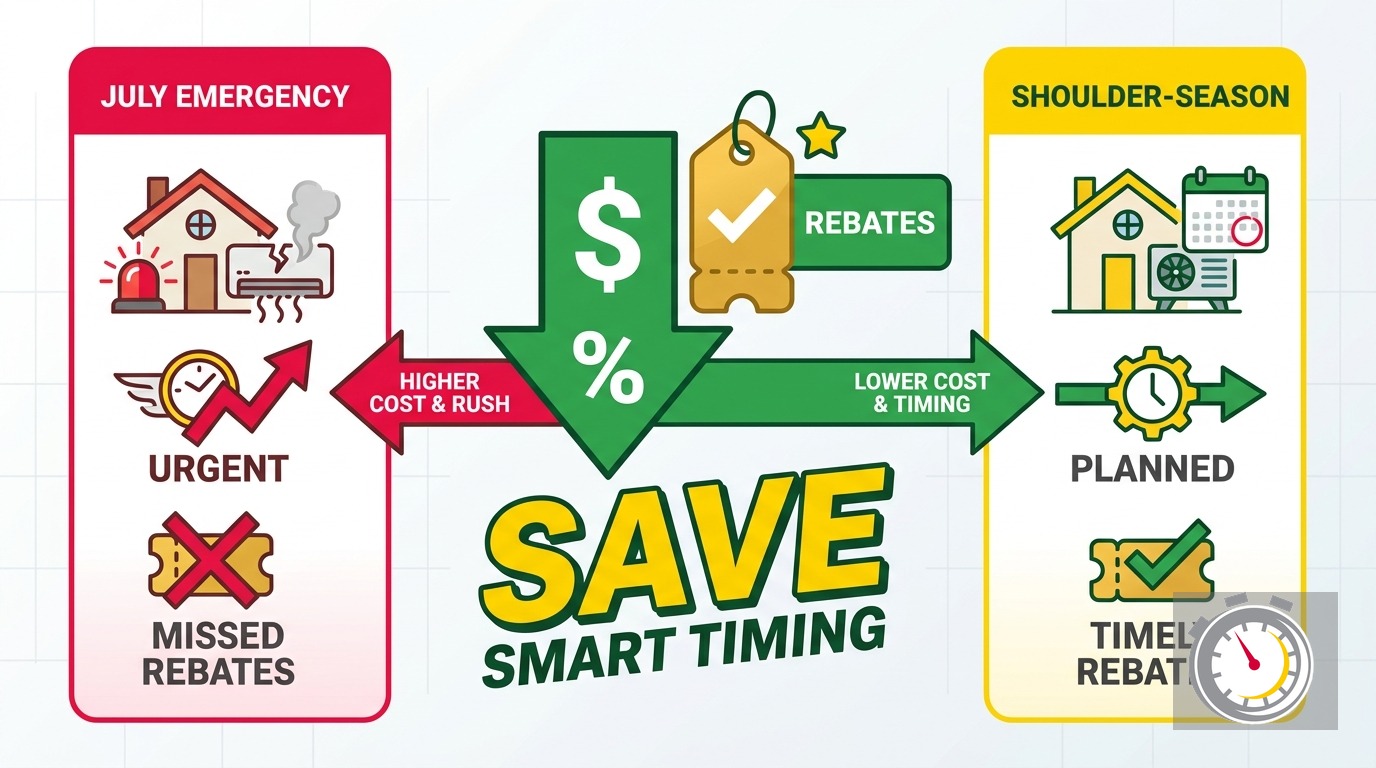
- Shoulder season (August-October for furnaces, March-May for AC) typically saves 10-15% over peak pricing on equipment and labor.
- Peak-season emergency installs in the Twin Cities can run $650-$2,600 above standard pricing.
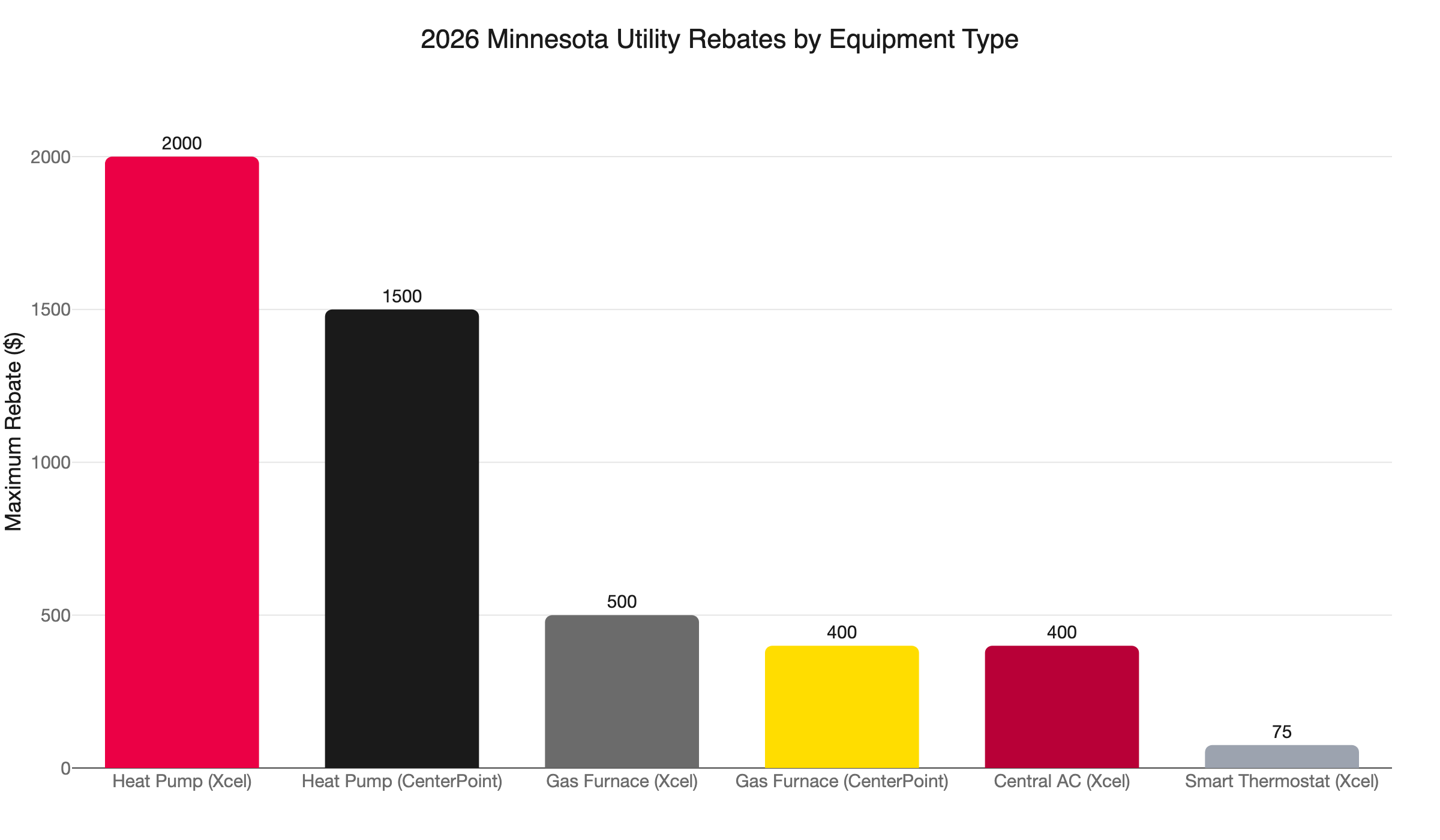
- 2026 Xcel Energy and CenterPoint rebates are open now: up to $2,000 for cold-climate heat pumps, $500 for high-efficiency furnaces, and $400 for central AC.
- Minneapolis homeowners can stack city, Xcel, and CenterPoint rebates - but CenterPoint requires a dated invoice by December 31, 2026.
- The Minnesota HEAR electrification rebate program has not launched. Retroactive rebates are not permitted once it opens.
- Federal 25C energy efficiency tax credits expired December 31, 2025. They are no longer available to stack.
What Is the Best Time to Buy an HVAC System?
The short answer: late summer through early fall for a furnace (August-October), and early spring for central AC (March-May). Both windows offer lower pricing, faster scheduling, and enough time to file rebates before year-end deadlines close.
The logic holds in any market, but it cuts deeper in Minnesota. Our heating season runs roughly six months. Furnace failure in January is not an inconvenience - it is an emergency. When that happens, you pay what it costs and wait as long as it takes.
The same is true for AC in July. Twin Cities summers can push into the 90s. A failing system during a heat wave turns a measured decision into a crisis purchase. Crisis purchases are expensive in ways that planned ones are not.
Shoulder season flips the equation. Contractors have open schedules. Equipment is available. You negotiate from a position of choice, not desperation. That is where the savings come from.
When Is the Best Time to Replace a Furnace in the Twin Cities?
August through October is the best furnace replacement window. Demand is low after the summer AC rush. Contractors have open slots. Equipment lead times drop from weeks to days.
Late summer and early fall are the cheapest periods for furnace replacement - a pattern contractors see every year. Before heating demand climbs and schedules fill, both labor and equipment sit at their lowest point in the annual cycle.
In practical terms: an October appointment can often be booked within 3-5 business days. A January emergency call may mean a 1-2 week wait, without heat while you wait.
A few things to confirm before you sign a quote:
- Permits are required. Minnesota law requires a mechanical permit for all furnace replacements. The cost runs $75-$200 and should appear as a line item in any legitimate quote. If it is missing, ask why.
- Minimum efficiency standards apply. Minnesota code requires at least 80% AFUE for gas furnaces. A 95%+ AFUE unit qualifies for better utility rebates and costs less to operate through a Minnesota winter.
- Shoulder season gives you rebate runway. CenterPoint’s 2026 furnace rebate requires a dated invoice by December 31, 2026. An October install gives you time to complete the paperwork. A December emergency often does not.
For a full breakdown of what replacement costs look like in our market, see our guide to furnace replacement costs in the Twin Cities.
When Is the Best Time to Buy a New Air Conditioner?
March through May is the optimal window for AC replacement. Contractors are coming out of a slow winter season with open schedules. The full rebate year is ahead of you. You will not be replacing a broken system in 90-degree heat.
According to hvac.com, buying off-peak can save 10-15% compared to peak-season pricing on identical equipment. On a $5,500 central AC install, that’s $550-$825 in savings before a single rebate application is filed.
Heat pumps require additional planning. Supply chain pressures and rising demand have pushed peak-season lead times to 12 weeks or more for some equipment. If you’re considering a cold-climate heat pump, begin conversations in late winter. That way, equipment is on hand before you need it running.
If your AC struggled through last summer, or if it is more than 12-15 years old, spring is the moment to get an honest assessment. Do not wait for the first 90-degree week to find out where you stand.
How Much Can Shoulder-Season Timing Actually Save You?
For most Twin Cities HVAC installs, shoulder-season timing saves $550-$2,800 before any rebates. Add available utility programs and the gap between a planned purchase and an emergency replacement can exceed $4,000.
Here is what that looks like with real numbers.
A mid-range central AC install in the Twin Cities might run around $5,500 at peak season. The same install scheduled in April could land closer to $6,100. That 15% difference on labor and equipment combined comes purely from timing.
For emergency installs, the premium runs higher still. Peak-season emergency calls can add $650-$2,600 above standard pricing on top of any seasonal markup.
Furnace economics are similar. A new high-efficiency unit at a fair shoulder-season price, plus a CenterPoint rebate of up to $400 and an Xcel rebate of up to $500, reduces the effective out-of-pocket significantly from what an unplanned winter replacement would cost. Combining timing with rebate applications is the highest-leverage move a Twin Cities homeowner can make on a major HVAC purchase.
What Minnesota HVAC Rebates Are Available in 2026?
Significant utility rebates are open right now through Xcel Energy and CenterPoint Energy. Minneapolis homeowners have a third layer on top of both. Together, these programs can reduce the net cost of a new system by thousands of dollars.
Here is what is available for 2026:
Xcel Energy (current program details):
- Cold-climate air-source heat pump: up to $2,000
- High-efficiency gas furnace: up to $500
- Central AC (high-efficiency): up to $400
- ENERGY STAR smart thermostat: $50-$75
CenterPoint Energy (2026 rebate form):
- Ducted air-source heat pump: up to $1,500
- Dual-fuel system: $1,100
- Gas furnace 95%+ AFUE: up to $400 standard; up to $1,200 for income-qualified households
CenterPoint requires a dated sales invoice - not a proposal or estimate - by December 31, 2026. Do not let a project slip past year-end if this rebate is part of your plan.
Xcel offers a pre-approval option that locks in the rebate amount before installation. Processing takes 6-8 weeks after a complete application. Build that lead time into your schedule.
The long-term value of high-efficiency equipment extends well beyond the upfront rebate. DOE data shows that a high-efficiency central AC (15.2 SEER2) saves approximately $927 over its lifetime compared to baseline equipment in Northern states like Minnesota. A best-available unit (23.5 SEER2) pushes that figure to approximately $3,363 in lifetime savings. The rebate reduces what you pay upfront. The efficiency rating reduces what you pay every month after that.
How Does Rebate Stacking Work for Minneapolis Homeowners?
If you live inside Minneapolis city limits, a third rebate layer may be available on top of both Xcel and CenterPoint programs. The Minneapolis Green Cost Share program offers $5,000-$14,000 for eligible projects - and it stacks.
On a cold-climate heat pump install, a Minneapolis homeowner using all three programs could access:
- Xcel: up to $2,000
- CenterPoint: up to $1,500
- Minneapolis Green Cost Share: $5,000-$14,000
That is a meaningful reduction on a project that can run $15,000-$25,000 installed. A Twin Cities rebate coordination guide details the mechanics of using all three programs together.
Stacking requires coordination. Xcel pre-approval, CenterPoint invoice submission, and Minneapolis program applications each have their own paperwork and timelines. Starting in shoulder season - not mid-summer - is what gives you the runway to complete all three before any window closes.
For more on heat pump eligibility and Minnesota rebate specifics, our Minnesota heat pump rebates guide covers the details.
What About the Minnesota HEAR Program?
Do not count on the Minnesota HEAR program for any current or near-term install. As of mid-2026, the program has not launched and no launch date has been set.
This matters because federal rules prohibit retroactive HEAR rebates. Work completed before the program opens will not qualify - regardless of how soon after launch you apply.
When HEAR does launch, the amounts are substantial for qualifying households. Up to $8,000 for heat pump installations for households below 80% of area median income. Up to $4,000 for households at 80-150% AMI. Maximum household totals would be $14,000 and $7,000 respectively.
If you’re income-qualified and your situation allows some flexibility on timing, monitor the MN Commerce HEAR program page for a launch announcement. If your system is failing now and cannot wait, proceed with the Xcel and CenterPoint rebates that are actually open today. A program with no launch date cannot be the foundation of a replacement plan.
One more note: federal 25C energy efficiency tax credits for heat pumps and high-efficiency HVAC equipment expired December 31, 2025. They are no longer available to stack with state and utility programs.
How Long Does HVAC Installation Actually Take in the Twin Cities?
Off-peak: 3-5 business days from first call to a completed install. Peak season: 1-4 weeks, sometimes longer for heat pumps. That gap matters when you are sitting without heat or air conditioning.
Here is a typical shoulder-season timeline:
- Days 1-2: Initial appointment and written quote
- Days 2-4: Equipment ordered and arrives at the warehouse
- Days 4-6: Installation - typically one day for a furnace; one to two days for a full AC or heat pump system
Peak season adds delays at every step. First available appointment slots push out by 1-2 weeks. Equipment goes on backorder. Permit processing takes the same amount of time, but it now happens alongside active urgency.
Heat pumps face the longest potential delays. Regulatory demand and allocation limits at distributors mean lead times of 12 weeks or more at peak season. If you want a cold-climate heat pump installed before next winter, September is the latest month to start the conversation.
Minnesota requires a licensed contractor to pull a mechanical permit for every furnace or HVAC replacement. State licensing rules include a competency certification requirement for HVAC workers in Minneapolis and St. Paul. A contractor who skips the permit becomes a liability for you as the homeowner.
What to Ask Before You Sign a Quote
Timing your purchase is step one. Getting an accurate, complete quote is step two. Here is what to confirm before you commit:
- Is the permit cost included? A legitimate installer lists it as a line item. If it is missing, ask why.
- What efficiency rating does this unit carry? Know the SEER2 rating for AC or the AFUE rating for furnaces. Rebates require specific thresholds. Verify before equipment is ordered.
- Does this contractor handle Xcel and CenterPoint rebate applications? A good local contractor does this regularly and can confirm which units qualify before you buy.
- What warranty is included on labor and on the unit? Ask for both in writing.
- Was the equipment sized using a Manual J calculation? An oversized or undersized system causes real comfort and efficiency problems. If the contractor cannot answer that question clearly, the sizing may be guesswork. Our HVAC sizing guide explains what to look for.
A Month-by-Month Buying Calendar for Twin Cities Homeowners
Not every homeowner gets to choose their timing. But if you have any lead time at all, here is how to use it.
August-October (furnace window): The best stretch for furnace replacement. Your old system ran all winter and spring. If it is 12 or more years old, struggling, or showing early warning signs, schedule an assessment in August or September. Contractors have open schedules. Equipment is available. Year-end rebate deadlines are within reach. Waiting until November means waiting through the worst of the season.
March-May (AC and heat pump window): If your AC stumbled through last summer or is more than 12-15 years old, spring is the window. April is the sweet spot: contractors emerging from slow winter season, full rebate year ahead, no equipment backlog. Get a quote in March and schedule installation in April.
November-February (emergency territory): If your furnace fails in winter, timing is no longer a choice. You need heat and you need it now. This is exactly where our on-time service commitment matters directly. “Always On Time… Or You Don’t Pay a Dime!(R)” - that is the standard we hold ourselves to, not just a tagline. You should not wait three days for emergency heat in a Minnesota winter.
June-July (late-entry AC territory): If an aging AC has made it to June without replacement, you are now in peak season. You can still get the work done. Expect longer lead times and less pricing flexibility. If the system is limping, get a quote in June while some schedule room still exists.
Is It Worth Replacing Both Systems at the Same Time?
Often yes, especially when furnace and AC are close in age. Replacing both during shoulder season means one mobilization, one permit pull, and matched equipment designed to work together.
The upfront cost is higher. But you gain coordinated warranties, better efficiency from components selected as a set, and you eliminate two separate emergency replacement timelines from your future.
If only one system is near end-of-life, replace that one now and plan the other for the next shoulder season. Trying to push a functional but aging system one more year can make sense - but not always. Our repair vs. replace guide walks through that decision with clear criteria.
Plan Your HVAC Purchase Before You Have To
The best time to buy an HVAC system in Minnesota is before you have to. Shoulder season gives you pricing leverage, scheduling flexibility, and the rebate runway that a crisis purchase takes away completely.
As a locally owned and operated Twin Cities company, we will give you an honest assessment of what your system has left, what a replacement would cost, and which 2026 rebates your project qualifies for. No pressure. No emergency markup.
Call (763) 260-6662 or book online to schedule a free in-home assessment.
Frequently Asked Questions
When is the best time to buy an HVAC system in Minnesota? +
What HVAC rebates are available in Minnesota in 2026? +
How much more does an emergency HVAC installation cost? +
Is the Minnesota HEAR electrification rebate program available yet? +
Need a technician now?