
Single Zone vs. Multi Zone Mini Split Cost: Twin Cities
Key Takeaways
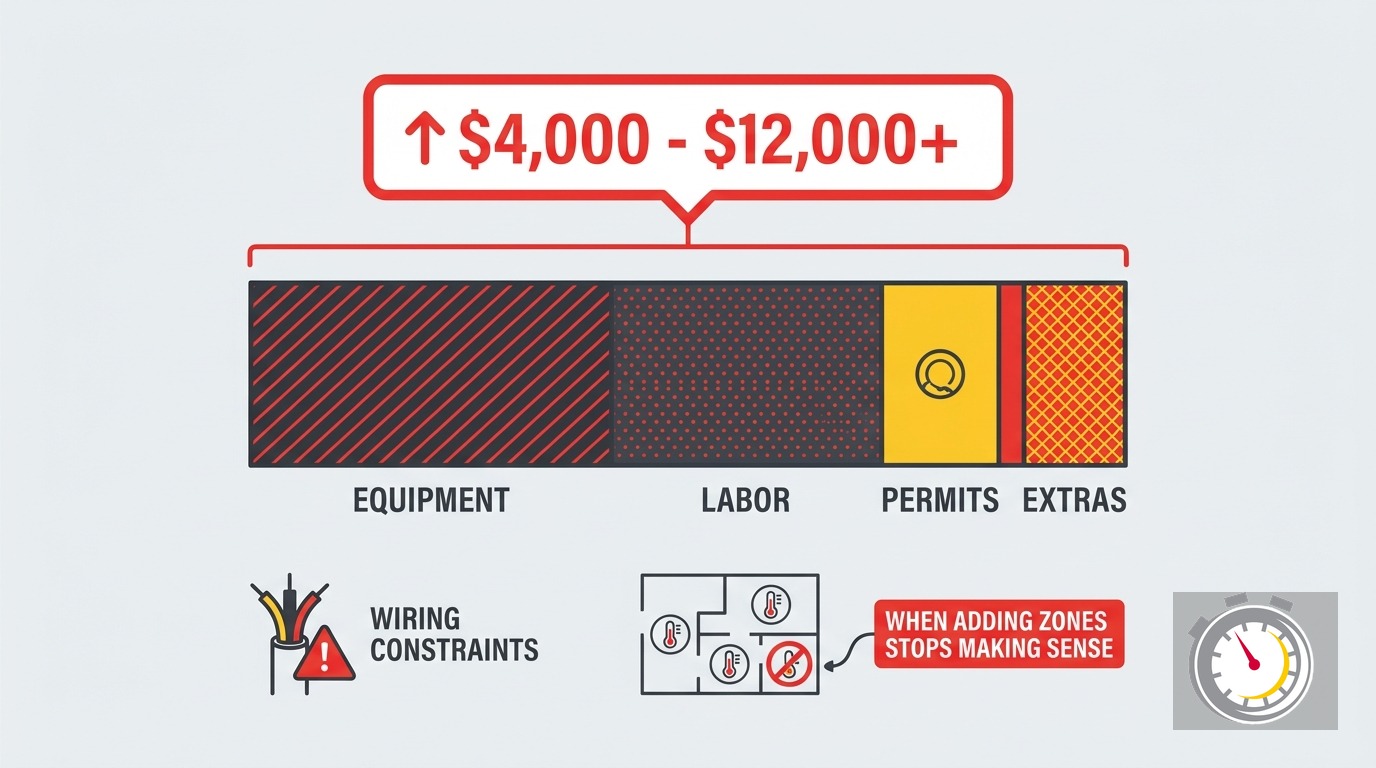
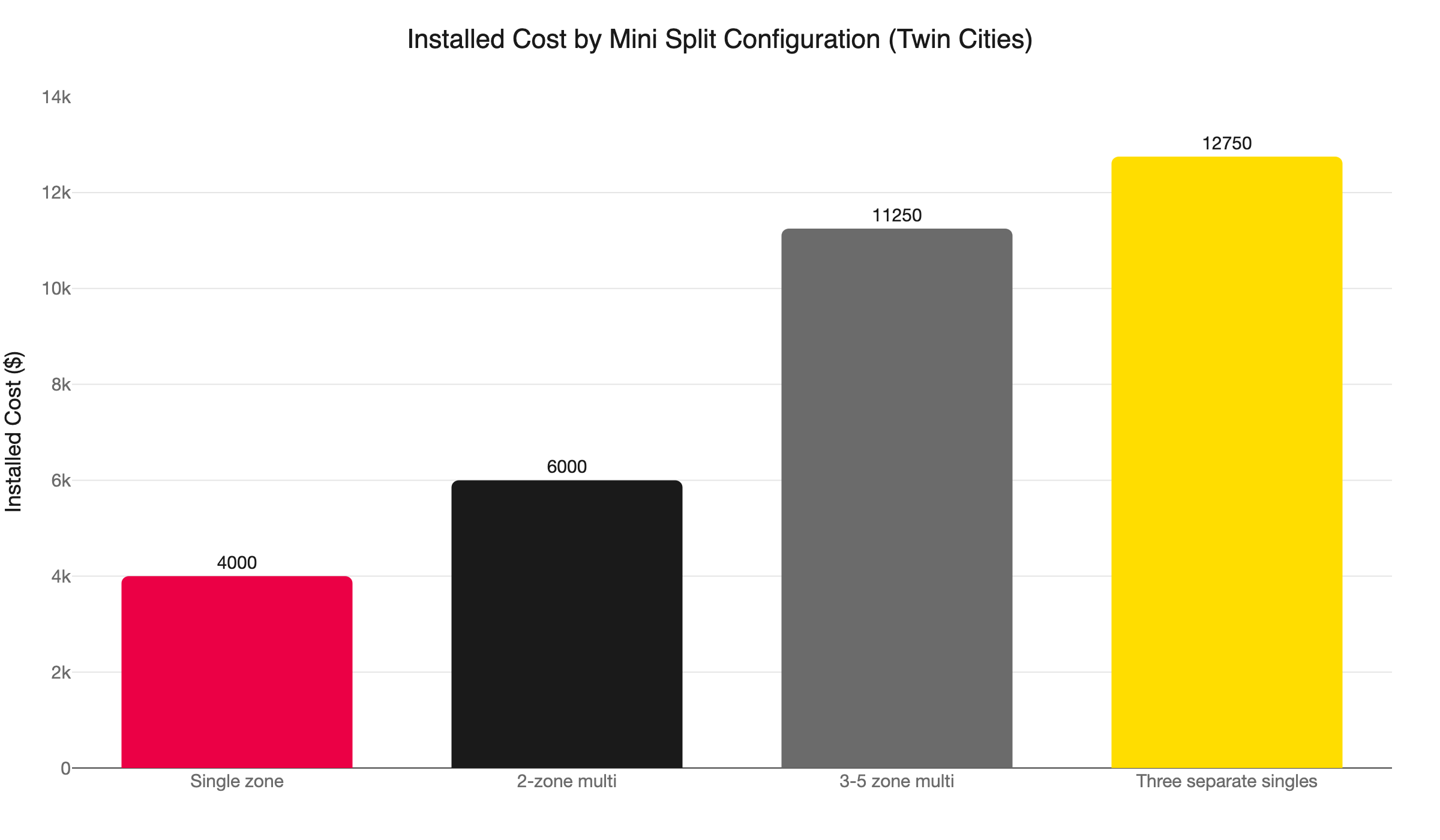
- A single-zone mini split costs $2,500 to $5,500 installed in the Minneapolis area.
- A 2-zone multi system runs $4,500 to $7,500; a 3-to-5-zone system runs $7,500 to $15,000+.
- Three separate single-zone units covering the same three rooms run $9,000 to $16,500 installed, plus $1,500 to $4,000+ in additional electrical work for older panels.
- Multi-zone outdoor units need one dedicated circuit. Three separate units need three.
- Most multi-zone systems run in heating mode or cooling mode - not both at the same time.
- Multi-zone is typically the better value at two to three zones. Past three or four zones, separate single-zone units often match or beat it.
- Federal Section 25C tax credits expired December 31, 2025. No federal rebate applies to 2026 installs.
- Xcel Energy offers up to $2,000; CenterPoint Energy offers up to $1,500 for qualifying cold-climate systems.
Why Single Zone vs. Multi Zone Mini Split Cost Isn’t Just About Zone Count
Comparing single zone vs multi zone mini split cost seems simple. Pick a zone count, find a price, and go. But equipment price is only part of the number.
Electrical work, panel age, and how your household actually uses conditioning can each flip the decision. In older Twin Cities homes, wiring three separate single-zone units can cost $1,500 to $4,000 more than wiring one three-zone multi system. That delta changes the comparison entirely.
This guide runs the real numbers for Minnesota homeowners. It covers the breakeven zone count, the efficiency trade-offs, the one operational constraint most contractors skip, and which rebates are still available in 2026.
What Is the Difference Between Single Zone and Multi Zone Mini Splits?
A single-zone mini split pairs one outdoor compressor with one indoor air handler. A multi-zone system pairs one compressor with two to five or more indoor handlers, each serving a separate room. That configuration difference drives every cost, efficiency, and operational trade-off in this guide.
Single-zone systems are self-contained. Each unit operates independently. Multi-zone systems share an outdoor compressor. That shared compressor reduces cost and infrastructure at two to three zones. It also introduces constraints when zone count grows or household demands diverge.
What Does Single Zone Mini Split Cost Installed in the Twin Cities?
A single-zone mini split runs $2,500 to $5,500 installed in Minneapolis, according to Angi’s Minneapolis mini split cost data. Cold-climate models - required for Minnesota utility rebates and reliable winter performance - land in the upper half of that range. Electrical is a separate line item, from $300 for a simple new circuit to $2,500 or more for a panel upgrade.
That range covers equipment and typical labor. Your actual number depends on BTU capacity, SEER2 rating, line-set length, and any routing complexity (attic runs, second-story penetrations, long exterior walls).
Cascadia Comfort’s electrical requirements guide documents the wiring cost range:
- New 240V circuit, adequate panel with open slots: $300 to $700
- Subpanel, panel has ampacity but no breaker room: $500 to $1,200
- Full panel upgrade: $1,500 to $2,500
- Full service upgrade, undersized panel: $5,350+
Each single-zone outdoor unit also needs two free breaker slots. In a pre-1990 home with a 100-amp panel, those slots may not exist without an upgrade.
What Does a Multi Zone System Cost Installed?
A 2-zone system runs $4,500 to $7,500 installed; a 3-to-5-zone system runs $7,500 to $15,000 or more, per FilterBuy’s mini split sizing data. The electrical footprint is simpler than three separate units. One outdoor unit needs one dedicated circuit and two breaker slots - regardless of how many indoor handlers you connect.
Indoor units draw power through the outdoor unit. No separate circuits per handler. That one-circuit structure is a genuine advantage in older homes where panel capacity is already stretched.
What pushes multi-zone cost up:
- More indoor units (each adds equipment and labor)
- Longer line-set runs to farther rooms
- Second-story or attic routing
- Cold-climate-rated equipment (required in Minnesota; more expensive than standard units)
The Electrical Math Competitors Skip
This is where most cost comparisons fall apart. The equipment price comparison looks one way. The full installed price, including electrical, can look entirely different.
Picture conditioning three rooms in your home. You have two paths:
Option A - Three separate single-zone units. Each outdoor unit is its own system. Each needs a dedicated 240V circuit and two free breaker slots. Three units equal three circuits and six slots. A 100-amp panel running a kitchen, laundry, and workshop doesn’t have that headroom without work.
Option B - One three-zone multi system. One outdoor unit. One circuit. Two breaker slots. Three indoor handlers share that one connection.
The electrical delta for a pre-1990 home can run $1,500 to $2,500 for a panel upgrade - or $5,350 and up for a full service upgrade, per Cascadia Comfort. In a post-2000 home with a 200-amp panel and open slots, the delta is modest. In a 1960s Ramsey rambler or a 1970s Brooklyn Park split-level with a 100-amp panel, the electrical gap is large enough to flip the comparison.
Run the full installed cost before you decide: equipment, labor, and electrical together. Our team includes a panel assessment on every site visit. We won’t quote a system your panel can’t support. For more on the installation process, see our ductless mini split installation service page.
When Does Multi Zone Save Money Per Zone?
At two to three zones, a multi-zone system almost always beats separate single-zone units on total installed cost. Past three or four zones - or when rooms are far from the outdoor unit - separate units often match or beat the multi-zone price.
The per-zone math at two or three zones is clear. One outdoor unit costs less than two or three. One electrical run costs less than two or three. Even with similar equipment cost per zone, shared infrastructure gives multi-zone the value lead at lower zone counts.
The math shifts at four or more zones for several reasons:
- Line-set length. Long runs add material cost and can reduce efficiency. A handler 60 feet from the outdoor unit costs more to serve than one 20 feet away.
- Compressor mismatch. A four-zone compressor sized for peak combined load runs oversized when only one zone calls. It still works, but a matched single-zone unit operates more efficiently for that specific load.
- System risk. A multi-zone compressor failure affects all zones at once. A single-zone failure affects one room.
- Operational flexibility. Separate units each run independently - heat in one room, cooling in another, no coordination required.
The practical breakeven is roughly three to four zones in a typical Twin Cities home. A Manual J load calculation confirms the right configuration for your specific floor plan. For more on how load calculations affect pricing, see our mini split installation cost guide for the Twin Cities.
The Same-Mode Constraint: Why It Matters in Minnesota
Most multi-zone mini split systems run in one mode at a time. The outdoor compressor sets the direction: heating or cooling. Every indoor handler in the system follows that directive.
In Minnesota’s shoulder seasons, that constraint becomes a real household friction point. October days in the Twin Cities can open at 38°F and reach 65°F by afternoon. One person wants morning heat. Another wants afternoon cooling. A standard multi-zone system picks one for everyone.
This isn’t a rare edge case. April and October in Minnesota regularly span 30°F in a single day. Families in two-story homes know this conflict well. Upstairs runs warm in the afternoon. Downstairs stays cold in the morning. A system that can only choose one mode creates constant compromise.
Your options if simultaneous mixed modes matter:
- Heat-recovery multi-zone systems support mixed heating and cooling across zones. They cost more and are less common in residential installs. Ask specifically for this capability before you assume it’s included.
- Separate single-zone units each operate independently. One room can heat while another cools - no coordination, no compromise.
- Dual-fuel hybrid systems handle heating separately through a gas furnace. The mini splits cover cooling. That’s a different system design, not a multi-zone feature, but it resolves the mixed-demand problem for many Minnesota homes.
Does Partial Load Efficiency Actually Matter?
Single-zone mini splits achieve slightly higher SEER2 ratings because the compressor is matched exactly to one indoor load. There’s no oversizing penalty at any operating point. FilterBuy’s mini split sizing guide notes this advantage for single-zone configurations.
Multi-zone compressors modulate down when fewer zones call. Modern variable-speed units do this well. But a four-zone compressor running one zone is still larger than that one zone needs. The efficiency gap widens with zone count and with how often handlers sit idle.
For two- or three-zone systems, the difference is small and unlikely to drive your decision. For four-plus zone installations where most handlers sit idle most of the day, it’s worth factoring into your operating cost estimate. Ask your installer for SEER2 ratings at your home’s typical load conditions - not the peak-rated number on the spec sheet.
What Minnesota Rebates Are Available in 2026?
Minnesota has no statewide mini split rebate program. All incentives run through utilities only, and you can claim just one. Heat Pump Network’s Minnesota incentive data, verified July 2026, documents the current programs:
Xcel Energy: Up to $2,000 for a qualifying cold-climate air-source heat pump, plus a $600 insulation bonus available separately. Applies to Xcel electric customers only.
CenterPoint Energy: Up to $1,500 for a ducted heat pump in a hybrid dual-fuel configuration - paired with a 92%+ AFUE gas furnace, with a system switchover set at or below 40°F. This rebate is built around ducted systems. Verify ductless eligibility directly with CenterPoint before counting on it.
Minnesota Power: Up to $1,200 for qualifying cold-climate systems. This primarily serves rural and northern Minnesota customers.
Cold-climate specification is not optional here. The Minneapolis-St. Paul 99% design temperature is -12°F. To qualify for Xcel’s top rebate, the system must achieve a COP of at least 1.75 at 5°F. That’s a cold-climate performance baseline, not a premium upgrade, for a Minnesota winter.
Homeowners claim one utility program only. No stacking across utilities is allowed.
For the full breakdown, see our Minnesota heat pump rebates and tax credits guide.
Are There Federal Tax Credits for Mini Splits in 2026?
No. The Section 25C federal tax credit - up to $2,000 for qualifying heat pumps under the Inflation Reduction Act - expired December 31, 2025. The One Big Beautiful Bill Act, signed July 4, 2025, ended the program nine years early.
Equipment purchased in 2025 but not installed until 2026 does not qualify. If a contractor or online article still references the $2,000 IRA credit, that information is outdated.
Plan your 2026 budget around utility rebates only. Federal credits are gone.
How Do You Decide Between Single Zone and Multi Zone?
Zone count and panel age are the two clearest deciding factors. Multi-zone wins at two to three zones in homes with adequate panel capacity. Single-zone wins at one zone or when you’re covering four or more rooms spread across a large home.
Here is a practical starting guide:
Choose single-zone if:
- You’re conditioning one defined room or addition
- Your panel is older and adding circuits is expensive
- The space is far from where you’d locate an outdoor unit
- You want maximum per-zone efficiency with no shared-system trade-offs
Choose multi-zone if:
- You’re conditioning two or three rooms from one outdoor location
- Your panel can handle one new circuit without an upgrade
- Everyone in the home can agree on running one mode at a time
- Rooms are reasonably close to the planned outdoor unit location
Consider separate single-zone units instead of multi-zone if:
- You need four or more zones
- Rooms are on opposite ends of the house
- Some occupants need heat while others need cooling simultaneously
- Long line-set runs from one outdoor unit would push costs above the multi-zone savings
When in doubt, a Manual J load calculation tells you what size and configuration your home actually needs. Skipping it leads to oversized equipment, higher bills, and shorter equipment life.
What Does a Three-Zone Cost Comparison Actually Look Like?
Three separate single-zone units covering three rooms run $9,000 to $16,500 installed, plus electrical work. One three-zone multi system runs $7,500 to $15,000 installed, plus one circuit.
Here is the full picture for a pre-1990 Twin Cities home:
Option A - Three separate single-zone units:
- Equipment and installation: $9,000 to $16,500
- Electrical (three circuits, older panel requiring upgrade): $1,500 to $5,350+
- Total: $10,500 to $21,850+
Option B - One three-zone multi system:
- Equipment and installation: $7,500 to $15,000
- Electrical (one circuit): $300 to $700
- Total: $7,800 to $15,700
In a post-2000 home with a 200-amp panel and open breaker capacity, Option A’s electrical cost is modest and the total ranges overlap. In a 1960s or 1970s home with a 100-amp panel - common across Ramsey, Brooklyn Park, and inner-ring Minneapolis - the electrical delta makes Option B the clear value before a single utility rebate is applied.
That variable is exactly why a phone quote isn’t enough. An in-home assessment tells you what your specific panel can handle and what the full installed cost actually is.
Locally Owned. On Time. Every Time.
Northern One Hour is locally owned and operated in Ramsey, MN. We serve Minneapolis, St. Paul, Blaine, Maple Grove, Plymouth, Brooklyn Park, Woodbury, Bloomington, and the surrounding Twin Cities.
We run a panel assessment and Manual J load calculation on every mini split project. That means you get the right configuration for your home - not a configuration that happens to be easiest to install.
Our commitment is straightforward: “Always On Time… Or You Don’t Pay a Dime!(R)” We back every installation with a 100% satisfaction guarantee and honest, transparent pricing.
Ready to find out which system fits your home and budget? Call us at (763) 260-6662 or book online. If upfront cost is a factor, ask about HVAC financing options for Twin Cities homeowners - larger mini split installations often qualify.
Frequently Asked Questions
Is a multi zone mini split more expensive than a single zone system? +
Do I need a panel upgrade to install a mini split in my Twin Cities home? +
What mini split rebates are available in Minnesota in 2026? +
Can a multi zone mini split heat and cool different rooms at the same time? +
Need a technician now?