
Does Homeowners Insurance Cover Furnace Replacement in MN?
Key Takeaways
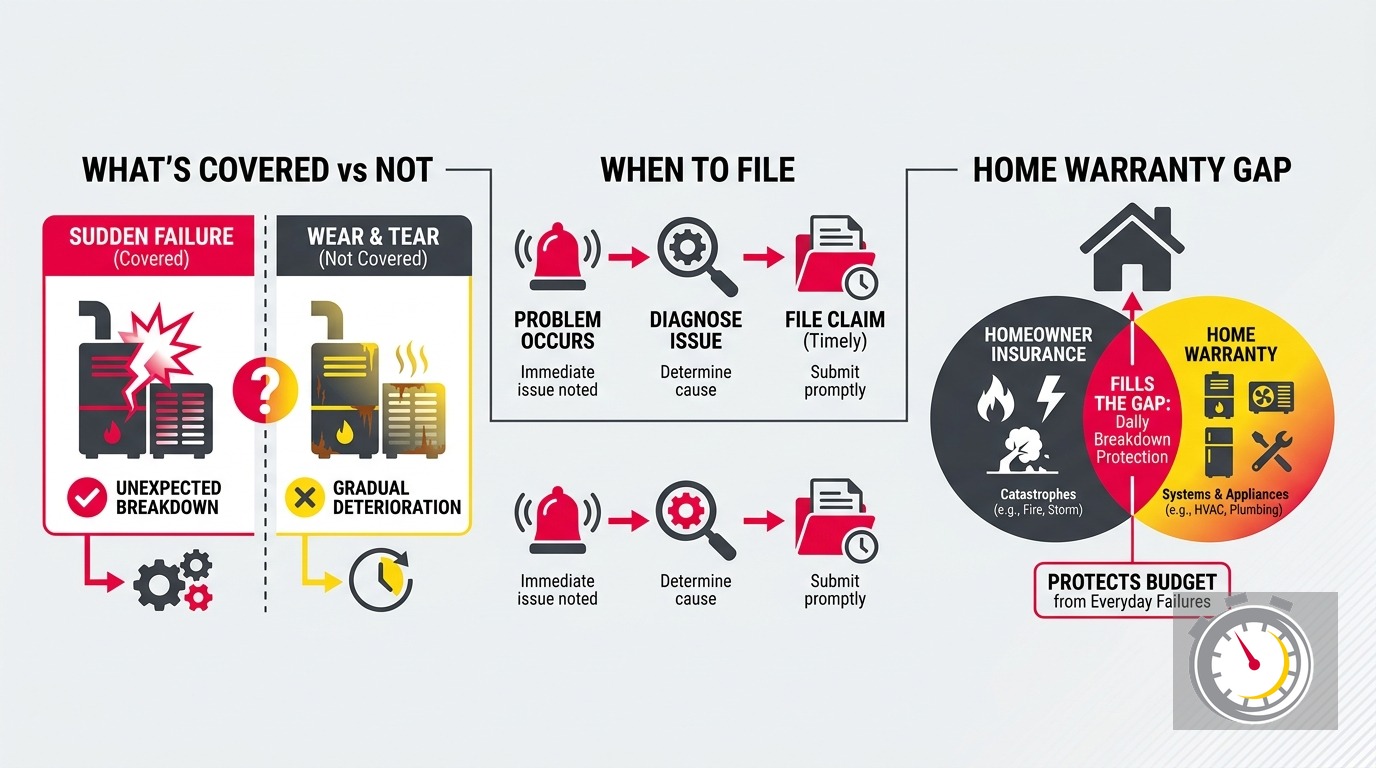
- Homeowners insurance covers your furnace only when a listed peril damages it: fire, lightning, windstorm, falling objects, sudden water damage, theft, or vandalism.
- Wear and tear, age, mechanical breakdown, improper installation, and neglect are all excluded.
- Most standard policies pay Actual Cash Value, not Replacement Cost Value. Depreciation on a 15-year-old furnace can significantly reduce your payout.
- Equipment breakdown coverage is an optional endorsement that fills the mechanical-failure gap insurance leaves.
- An unpermitted install can void a future claim. Minnesota requires a mechanical permit for every furnace replacement.
- The federal 25C tax credit expired December 31, 2025. Furnaces installed in 2026 do not qualify.
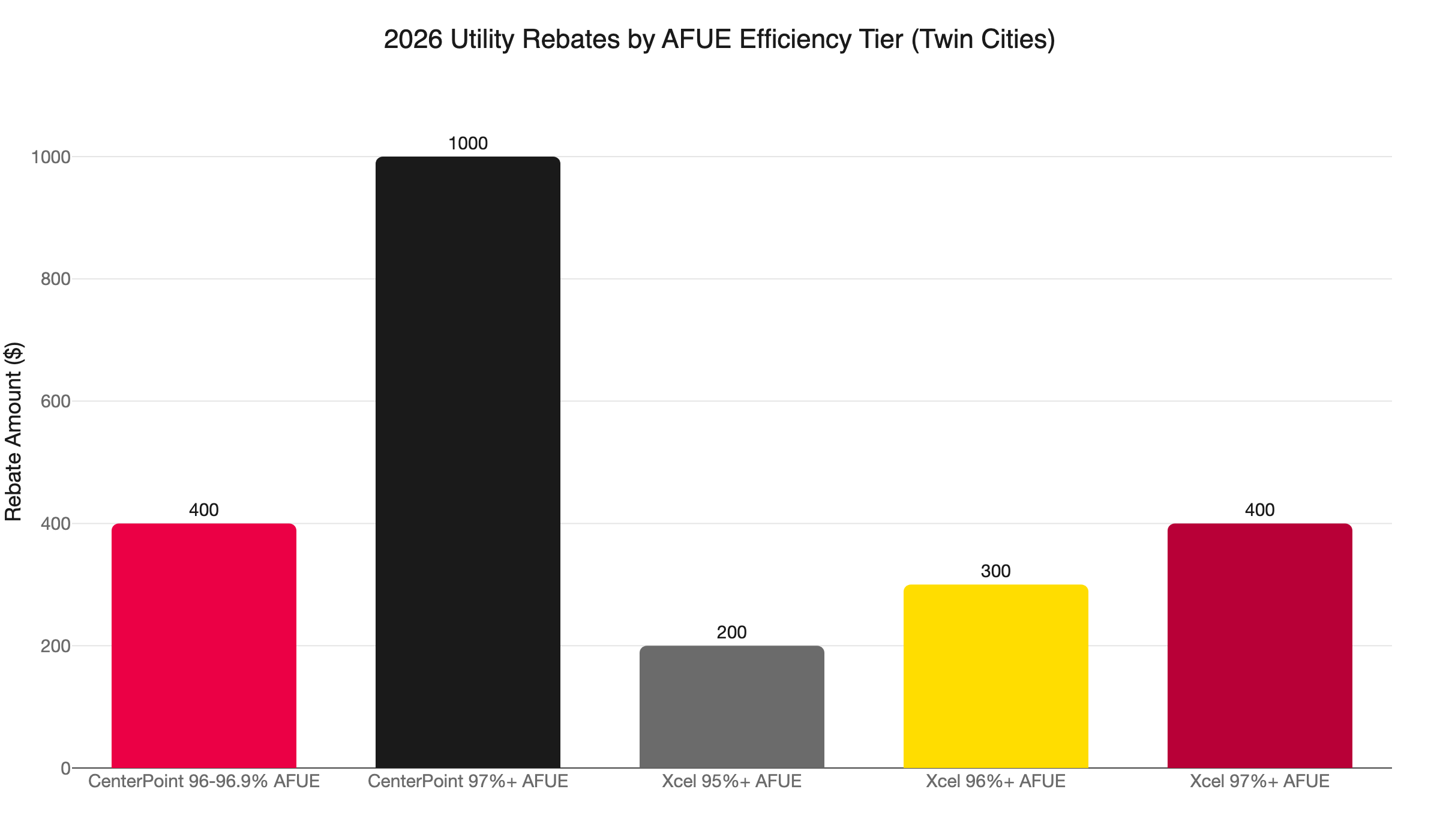
- CenterPoint Energy offers up to $1,000 in 2026 rebates for 97%+ AFUE furnaces. Xcel Energy offers up to $400.
- Minnesota’s HOMES and HEAR rebate programs have not launched. No launch date has been announced as of October 2026.
Does Homeowners Insurance Cover HVAC Furnace Replacement in Minnesota?
Short answer: Usually no. Standard homeowners policies cover your furnace only when a listed peril damages it - fire, lightning, or sudden water damage. Wear and tear, mechanical breakdown, and age-related failure are excluded from standard coverage. Those exclusions describe most furnace failures.
If your furnace died on a cold January night in Plymouth or Maple Grove, the answer to this question comes down to one thing: why did it fail?
The Question That Determines Everything: Why Did Your Furnace Fail?
If your furnace failed due to fire, lightning, or sudden water damage, insurance may apply. If it failed from age, wear, or mechanical breakdown, insurance will not cover it. The cause of the failure, not the size of the repair bill, is what triggers a valid claim.
Your insurance adjuster will ask this question first. The answer determines everything that follows.
Homeowners insurance is built around covered perils - external, sudden, accidental events. If a house fire destroyed your furnace, lightning struck your home, or a burst pipe flooded your mechanical room, you have a covered peril. Policygenius lists the typical covered perils: fire, lightning, windstorm, falling objects, sudden water damage, theft, and vandalism.
If your furnace wore out after 20 Minnesota winters, stopped igniting, or cracked a heat exchanger, that is a normal end-of-life failure. Insurance was not designed to cover it. Most furnaces fail the second way. That is not a coverage gap worth disputing - it is how the product was always intended to work.
What Does Homeowners Insurance Cover?
Dwelling Coverage (Coverage A) covers your furnace when a listed peril damages it. Whether the insurer pays Replacement Cost Value or Actual Cash Value determines how much you receive. Most standard policies default to Actual Cash Value.
Dwelling Coverage protects your home’s structure and its permanently installed components, including the furnace. When a covered peril damages it, Coverage A may pay to repair or replace it, subject to your deductible and policy limits.
Two payout structures exist:
- Replacement Cost Value (RCV): The insurer pays what a comparable new furnace costs to install today. No deduction for the old unit’s age.
- Actual Cash Value (ACV): The insurer pays replacement cost minus depreciation.
MoneyGeek notes that most standard policies default to Actual Cash Value. That detail matters. Gas furnaces have a finite service life, and knowing where yours stands helps you plan for eventual replacement. A furnace that is 14 or 15 years old is heavily depreciated. A covered claim on that unit may not produce a payout anywhere near what a replacement actually costs.
Review your declarations page now, before you need to file. If your policy shows Actual Cash Value, ask your agent whether upgrading to Replacement Cost Value is available and what the premium difference is.
What Does Homeowners Insurance NOT Cover?
Wear and tear, age, mechanical breakdown, corrosion, neglect, and improper installation are all excluded from standard policies. These exclusions cover most real-world furnace failures. If your furnace wore out, a standard policy will not pay to replace it.
The exclusion list is long and covers the vast majority of actual furnace failures in Minnesota:
- Age and normal wear and tear
- Mechanical or electrical breakdown
- Rust, corrosion, and deterioration
- Lack of maintenance or neglect
- Faulty workmanship or improper installation
- Manufacturer defects (covered separately under the manufacturer’s warranty, not homeowners insurance)
- Power surges (requires a separate endorsement in most policies)
LegalClarity specifically identifies improper installation as an explicit claim denial basis. Insurers classify it as faulty workmanship, not an external covered cause. That distinction matters in ways we cover in the permit section below.
Does Replacement Cost Value vs. Actual Cash Value Matter for HVAC Claims?
Yes, significantly. Actual Cash Value deducts depreciation from the payout. On a furnace near the end of its expected lifespan, the difference between Actual Cash Value and Replacement Cost Value can run several thousand dollars. Most standard policies default to Actual Cash Value.
Here is a straightforward illustration. Say a covered event damages your furnace and a comparable replacement costs $6,500 installed. Under Replacement Cost Value, the insurer pays $6,500 minus your deductible. Under Actual Cash Value, a furnace that has used most of its 18-year expected lifespan carries substantial depreciation. The payout could be $1,000 or less before the deductible is applied. The cost to replace the furnace does not change.
The premium cost to upgrade from Actual Cash Value to Replacement Cost Value is typically modest. If you have older HVAC equipment, review your policy before heating season. The conversation with your agent takes less than 10 minutes.
What Is Equipment Breakdown Coverage?
Equipment breakdown coverage is an optional endorsement that covers mechanical and electrical failure not covered by a standard homeowners policy. It fills the gap that wear and tear exclusions leave. Policygenius identifies American Family, Auto-Owners, Foremost, Nationwide, and Liberty Mutual as carriers that offer it.
When your furnace stops working due to a mechanical or electrical defect, equipment breakdown coverage pays for repair or replacement, subject to your deductible. The annual premium for this endorsement is usually modest relative to the cost of a Twin Cities furnace replacement.
This endorsement is the most direct way to fill the wear-and-tear gap a base policy leaves. If your furnace is more than 10 years old and your policy does not include equipment breakdown coverage, ask your agent whether it is available before heating season begins.
The Permit Issue: How an Unpermitted Install Can Void a Future Claim
This is the detail almost no article about homeowners insurance and furnaces covers. It has real financial consequences.
Under MN Rules 1300.0120, a mechanical permit is required before any furnace replacement in Minnesota. The licensed mechanical contractor must pull that permit before the job begins. There are no exceptions.
If a furnace was installed without the required permit, an insurer can deny any future claim involving that furnace. LegalClarity classifies this as faulty workmanship - an installation that did not comply with the required legal process. That classification takes the event out of covered-peril territory and into the explicit exclusion list.
The consequences extend beyond insurance. Minnesota requires disclosure of unpermitted work at the time of home sale. Buyers’ lenders frequently flag unpermitted installations, and corrections may be required before the transaction can close. What looks like a money-saving shortcut at installation time becomes an expensive problem years later.
This is one reason the contractor you choose matters beyond the quality of the hardware. Northern One Hour is locally owned and operated in Ramsey. Our technicians pull permits on every installation, follow Minnesota Energy Code requirements, and document the work in a way that protects your claim eligibility. Our HVAC permit guide covers what the permit process looks like and what to expect from the required inspection.
How Do You File a Furnace Insurance Claim?
Document first. Call your insurer before removing the damaged furnace. Do not authorize replacement work until the adjuster has inspected. Skipping any step can reduce your payout or result in a denial.
Here is the full sequence:
- Photograph everything before anything is moved or removed from the scene.
- Call your insurer to report the damage. Ask whether an adjuster inspection is required before you authorize any work.
- Do not remove the furnace until the adjuster has inspected it. An insurer cannot assess what has already been disposed of.
- Get the adjuster’s findings in writing before you authorize repair or replacement.
- Compare the payout estimate to your deductible. If the estimate is $1,200 and your deductible is $1,500, filing the claim costs you money and raises your future premium.
- Authorize the replacement once you have a written commitment from the insurer.
If the furnace failed from wear, age, or another excluded cause, skip this process. The claim will be denied. Focus on utility rebates and financing options instead.
What Does Furnace Replacement Cost in the Twin Cities?
Installing a new gas furnace in the Twin Cities carries a real cost that varies based on equipment and job complexity. The full range runs from roughly $3,800 to $12,000, depending on efficiency tier, home size, and any work required on ductwork, gas lines, or venting.
Efficiency tier drives much of the cost difference:
- 80% AFUE: Starting around $4,950 installed. Meets the statewide minimum, but many Twin Cities municipalities require 90% or higher.
- 95-96% AFUE: Starting around $6,500 installed. The common mid-efficiency choice for most Metro homes.
- 97-98% AFUE: Starting around $9,100 installed. The highest efficiency tier, and the one that earns the largest utility rebates from CenterPoint and Xcel.
Minnesota’s position in ASHRAE Climate Zone 6A/6B typically requires a 100,000-120,000 BTU furnace, compared to the 80,000 BTU units common in milder-climate states. That sizing difference pushes installed costs above what national average estimates suggest. The permit and inspection are part of every compliant install and must be factored into the total cost.
Our furnace replacement cost guide breaks down the full range by efficiency tier, what drives the final number, and what to expect on installation day.
2026 Utility Rebates: Where the Real Money Is
The federal 25C tax credit is gone. The utility rebates are not. If you are replacing a furnace in 2026, rebates from CenterPoint Energy and Xcel Energy are the primary financial incentives available to Twin Cities homeowners.
CenterPoint Energy (2026 program):
- $400 for a 96.0-96.9% AFUE furnace
- $1,000 for a 97%+ AFUE furnace
Equipment must be installed between January 1 and December 31, 2026, and the rebate submitted by December 31, 2026. See the CenterPoint Energy Minnesota Heating Rebates page for current terms and submission instructions.
Xcel Energy (2024-2026 program):
- $200 for 95%+ AFUE
- $300 for 96%+ AFUE
- $400 for 97%+ AFUE
See the Xcel Energy MN Residential Rebate Summary for eligibility requirements and program details.
Both programs require installation by a licensed contractor. Northern One Hour handles rebate paperwork as part of every qualifying install. Our Xcel and CenterPoint rebates guide walks through both programs in full, including how to confirm your utility’s eligibility requirements before installation day.
What About the Federal 25C Tax Credit in 2026?
The IRS Section 25C Energy Efficient Home Improvement Credit expired December 31, 2025. The One Big Beautiful Bill Act, signed July 4, 2025, repealed the credit approximately seven years before its scheduled 2032 end. Furnaces installed in 2026 do not qualify, regardless of efficiency tier or AFUE rating.
See the IRS Home Energy Tax Credits page for current information. Any contractor or article still citing the 25C credit for a 2026 installation is working from outdated information. The CenterPoint and Xcel rebates above are the real financial incentives available this year.
What About Minnesota HOMES and HEAR Rebates?
As of October 2026, neither program has a launch date. The Minnesota Department of Commerce’s June 2026 update confirmed no date has been announced. Do not delay a needed furnace replacement waiting for these programs. HEAR rebates cannot be claimed retroactively, and no launch timeline is in place.
For context, here is what each program is designed to offer once it launches:
- HEAR (High-Efficiency Electric Home Rebate Act): Up to $8,000 for income-qualified households switching to a qualifying heat pump. Rebates cannot be claimed retroactively once the program opens.
- HOMES: Up to $8,000 based on whole-home energy savings, not income.
See the mn.gov Home Energy Rebates FAQ for the current status. The CenterPoint and Xcel rebates listed above are available now and have clear December 31, 2026 submission deadlines. Those are the programs worth acting on this year.
Home Warranties: The Third Layer of Protection
Insurance, a home warranty, and an HVAC maintenance plan serve three different purposes. Understanding the distinction helps you build the right combination.
- Homeowners insurance covers sudden, accidental damage from external perils. It was never designed for mechanical failure or normal aging.
- Home warranty covers mechanical and electrical breakdown of major systems, including your furnace. This is the wear-and-tear category insurance explicitly excludes.
- HVAC maintenance plan prevents failures before they happen through annual tune-ups, priority service, and early-warning diagnostics. It extends equipment life and reduces the odds of an emergency call in February.
A home warranty fills the gap insurance leaves. Annual premiums typically run a few hundred dollars. The most important number to check before you buy is the HVAC payout cap. Some warranties cap heating and cooling claims at $1,500-$2,000. That may cover most repair calls but falls well short of a full furnace replacement in the Twin Cities.
A maintenance plan works differently. It is proactive, not reactive. Regular tune-ups catch developing problems before they become failures, keep efficiency up, and extend the useful life of the equipment. Our HVAC maintenance plan guide covers what to look for in a plan, what it typically costs, and how to think about the value compared to repair-when-it-breaks.
The three layers are not redundant. They cover three distinct scenarios. The strongest position is to have all three in place.
Working With a Contractor Who Protects Your Claim Eligibility
The contractor you choose determines more than the quality of the install. Permits, documentation, and code compliance affect whether your home stays insurable, whether utility rebates process without issues, and whether a future claim holds up under adjuster review.
Northern One Hour Heating & Air Conditioning is locally owned and operated in Ramsey. We serve Minneapolis, St. Paul, Blaine, Maple Grove, Plymouth, Brooklyn Park, Woodbury, Bloomington, and the full Twin Cities metro. Every install gets a permit, every qualifying job includes rebate paperwork handled on your behalf, and every service call is backed by our on-time promise: “Always On Time… Or You Don’t Pay a Dime!(R)” - you select your service window, and if our technician does not arrive on time, you do not pay for the service.
Call (763) 260-6662 or book your furnace replacement consultation online. Ask about financing options, available on qualifying installations.
Frequently Asked Questions
Does homeowners insurance cover furnace replacement in Minnesota? +
What is equipment breakdown coverage? +
Does the federal 25C tax credit apply to furnaces installed in 2026? +
Can an unpermitted furnace installation void my insurance claim? +
What utility rebates are available for high-efficiency furnaces in the Twin Cities in 2026? +
Need a technician now?