
The R-454B Refrigerant Change: Repair Costs and Replacement
Key Takeaways
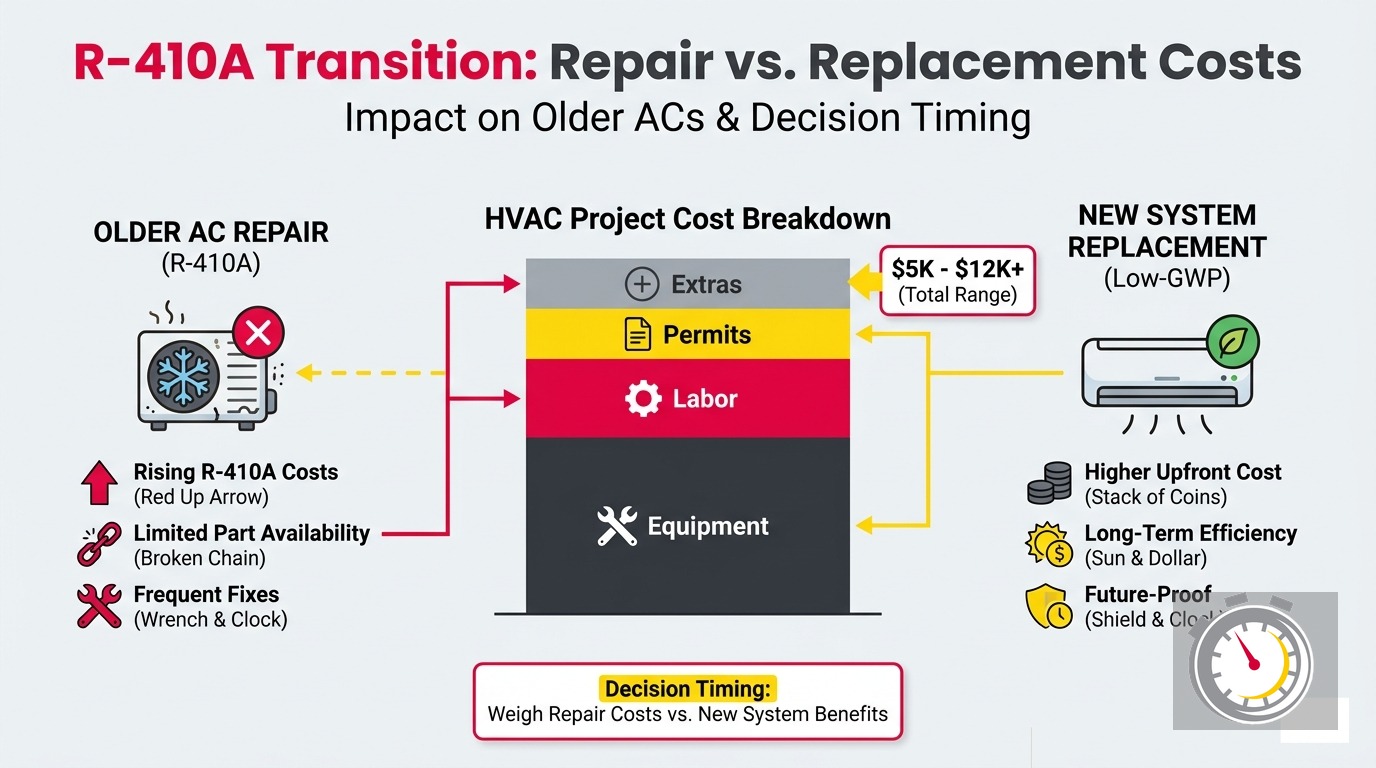
- R-410A is not banned for repairs. You can still service an older AC, but the refrigerant supply is shrinking and prices are climbing.
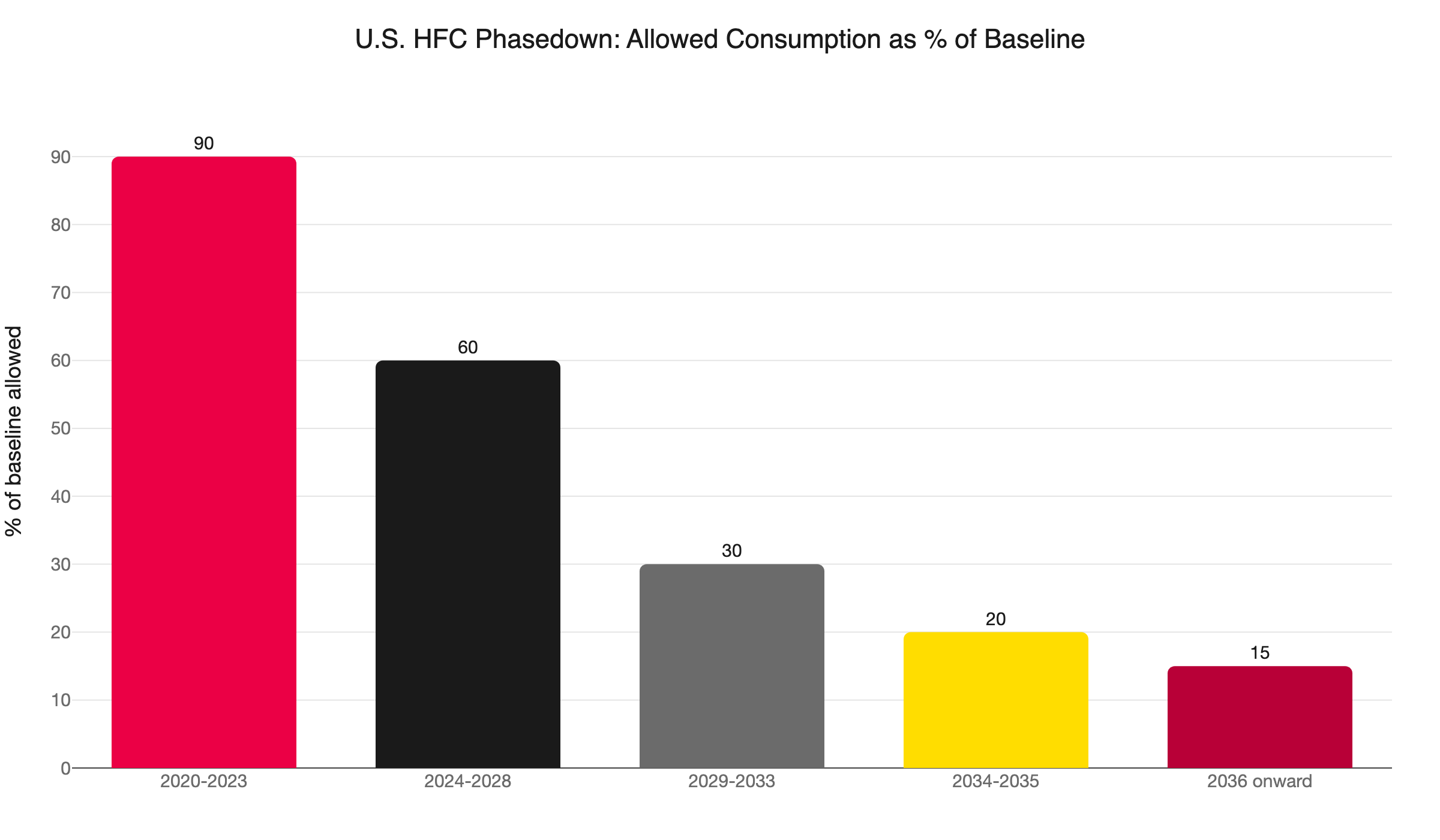
- The federal phase-down caps HFC production at 60% of baseline through 2028, then 30% in 2029, on the way to 15% by 2036.
- New ACs installed after January 1, 2025 must use a lower-emission refrigerant such as R-454B.
- Every recharge, coil, and compressor repair on an older unit gets pricier as R-410A grows scarce.
- Minnesota sits in the DOE “North” region, so the new minimum efficiency is 13.4 SEER2.
- The federal 25C tax credit covered installs through 2025 only. Confirm your 2026 options with a CPA.
- Local rebates from Xcel Energy and the Save Energy Minnesota program can still offset a replacement.
What the R-454B Refrigerant Change Means for Minnesota Homeowners
If you have heard about the R-454B refrigerant change, you may be wondering whether it affects your current air conditioner. It does. The refrigerant that cooled most Twin Cities homes for the past 15 years is R-410A. Federal law is now phasing it down. That shift changes what it costs to repair older units. It also changes when replacement starts to make sense.
We are Northern One Hour Heating & Air Conditioning, a locally owned and operated HVAC company based in Ramsey, Minnesota. Homeowners across Minneapolis, St. Paul, Blaine, Maple Grove, and Plymouth ask us about this transition every week. This guide explains what is changing, what it costs you, and what to do next. No hype, just the facts you need to make a clear decision.
What Is R-454B, and Why Is It Replacing R-410A?
R-454B is a new, lower-emission refrigerant replacing R-410A in newly built air conditioners and heat pumps. Federal law now requires the switch because R-410A has a high global warming potential. R-454B cuts that impact by roughly 78% while delivering similar or slightly better cooling performance.
For nearly two decades, R-410A was the industry standard. It cooled well, but it carries a global warming potential (GWP) of 2,088. Under the American Innovation and Manufacturing Act, the U.S. is phasing down hydrofluorocarbons by 85% by 2036. R-410A is one of the gases on that list.
R-454B is the leading replacement. It blends two refrigerants, R-32 and R-1234yf, and carries a GWP of about 466. That is roughly 78% lower than R-410A, per Carrier. New systems built around R-454B run about 5% more efficient and use a smaller refrigerant charge, according to Bosch’s A2L refrigerant guide.
One point matters more than the rest. R-454B is not a drop-in refrigerant. You cannot simply add it to an older R-410A system. The two fluids run at different pressures. A real switch means a new indoor coil, a new outdoor unit, and usually a new line set.
R-454B is also classified as an A2L refrigerant, which means it is mildly flammable. That sounds alarming, but it is a managed standard. Manufacturers design around it. Minnesota’s mechanical code already aligns with the EPA rules for safe installation.
Can You Still Repair an Older AC That Runs on R-410A?
Yes. R-410A remains legal for servicing existing equipment, and the EPA labels it for “servicing existing equipment only.” Your older AC can still be recharged, and replacement parts remain available. Repairs are not banned. What is changing is supply, and shrinking supply pushes the price of every recharge higher.
This is the fear we hear most often, and it deserves a direct answer. The phase-down targets the production of new HFC refrigerant. It does not target the equipment already in your home. If your AC springs a leak, a technician can still add R-410A.
The catch is cost. As production gets capped, the supply of reclaimed and stockpiled R-410A shrinks. Demand stays about the same. Flat demand plus shrinking supply means higher prices. A routine recharge a few years ago now carries a bigger refrigerant bill.
A good technician will also hunt for the leak before recharging. Topping off a leaking system wastes expensive refrigerant. Finding and sealing the leak protects your investment. Our AC repair team handles this kind of diagnostic work across the Twin Cities every cooling season.
For older units, the math slowly shifts. When a repair quote approaches half the cost of a new system, replacement usually wins. We walk through that framework below.
How Does the R-454B Refrigerant Change Affect Your Repair Bills?
The phase-down makes R-410A scarcer, which raises the cost of every recharge, coil, and compressor repair on an older unit. Production stays capped at 60% of baseline through 2028 and drops to 30% in 2029. Older ACs are not illegal, but fixing them gets steadily more expensive.
Here is the part most homeowners miss. The phase-down is not an on-off switch. It is a stepped schedule that tightens supply year by year. Per the EPA’s phasedown guidance, allowed HFC consumption steps down on a clear timeline. It holds at 60% of baseline through 2028, falls to 30% from 2029 through 2033, drops to 20% for 2034 and 2035, and lands at 15% from 2036 onward.
That stepped decline is easiest to see on a chart. Each step leaves less new refrigerant for the millions of older units still running on R-410A.
What does this mean for your wallet? Three repair scenarios get pricier over time.
- Recharges and top-offs. A leak repair that needs a few pounds of R-410A costs more today than it did in 2023. It will cost more again by 2029.
- Coil replacements. The evaporator or condenser coil holds the refrigerant. Replacing one on an older unit means refilling it with scarcer R-410A.
- Compressor failures. A failed compressor on an aging R-410A system often tips the choice toward replacement. You pay for a major repair plus rising refrigerant costs.
The takeaway is not panic. It is timing. If your unit is aging and a big repair looms, the repair-versus-replace math leans more and more toward a new R-454B system.
Should You Repair or Replace Your Aging AC?
Age is the best guide. Repair a unit under 10 years old. Weigh repair against replacement from 10 to 15 years, especially if a single fix tops half the cost of a new system. Past 15 years, replacement usually wins because older units run on pricier R-410A and fail more often.
A central AC in Minnesota usually lasts 15 to 20 years. Our cooling season is short, but the warm stretches still rack up cycles. Use this framework to weigh your options.
- Under 10 years old. Repair it. The unit likely has years of life left, and one repair rarely justifies a full replacement. Fix leaks early so you do not waste R-410A.
- 10 to 15 years old. Weigh the repair cost against replacement. If a repair tops half the cost of a new system, or if the unit breaks down often, a new R-454B AC starts to pay off. See our breakdown of AC replacement costs in Minnesota.
- Over 15 years old. Lean toward replacement. Older units lose efficiency, fail more often, and run on a refrigerant that gets pricier every year. A new system brings a warranty, lower energy bills, and a stable refrigerant supply.
For a deeper look at the decision, read our repair-versus-replace guide. Whatever you choose, we honor our on-time promise: Always On Time… Or You Don’t Pay a Dime!(R)
What Are Minnesota’s New AC Efficiency Standards?
Minnesota sits in the U.S. Department of Energy’s “North” region. There, the minimum efficiency for a new central AC is 13.4 SEER2, not the 14.3 required in the South. Heat pumps must hit 14.3 SEER2 and 7.5 HSPF2 nationwide. These standards took effect in 2023.
When you replace an old AC, the new unit must meet current federal minimums. A common online mistake is listing 14.3 SEER2 as the national AC floor. That number applies to the South and Southwest. The North region, which includes Minnesota, sets the central AC minimum at 13.4 SEER2, according to AHRI.
SEER2 is the updated testing standard that replaced the older SEER rating in 2023. Higher numbers mean better efficiency. Most Twin Cities homeowners benefit from a unit above the minimum. Our humidity swings and warm July stretches reward better dehumidification and steadier cooling.
There is also a code detail. R-454B is an A2L refrigerant, which means it is mildly flammable. Minnesota’s mechanical code, based on the 2018 International Mechanical Code Chapter 11, governs how A2L systems are installed. The Minnesota Department of Labor and Industry aligns its residential rules with the EPA. A licensed contractor pulls the permit and follows the code.
Which Rebates and Tax Credits Still Apply in 2026?
The federal 25C tax credit only covered equipment placed in service through December 31, 2025. So 2026 installs generally do not qualify. Confirm with a CPA. Local options still help. Xcel Energy offers cooling rebates, and the state’s Save Energy Minnesota program may launch rebates worth $2,000 or more.
This section shifts often, so treat it as a starting point. Verify the details before you buy.
Federal 25C credit. The IRS energy-efficient home improvement credit offered 30% of project cost, up to $600 for a central AC and up to $2,000 for a heat pump. But the IRS guidance states the credit covers property placed in service before December 31, 2025. For 2026 installs, the credit appears unavailable. Tax law is in flux, so confirm with a CPA before you count on it.
Xcel Energy cooling rebates. If you cool with Xcel, you may qualify for a rebate on a high-efficiency AC. Tiers run from about $150 at the entry 13.4 SEER2 level with quality installation up to roughly $450 at higher tiers. There is also a small annual AC Rewards credit. Check the current Xcel residential cooling rebate page for live numbers.
Save Energy Minnesota. The state has flagged home efficiency rebates in the range of $2,000 to $8,000 or more. As of mid-2026, the program was not yet fully live. Watch the Save Energy Minnesota page for the launch date.
Permits. AC and furnace replacements in Minneapolis and St. Paul require a mechanical permit. Your contractor should pull it. See the Minneapolis mechanical permit overview for details.
Do Heat Pumps Use the New Refrigerant Too?
Yes. New heat pumps also use R-454B under the same rules. They must meet 14.3 SEER2 and 7.5 HSPF2 nationwide. Because a heat pump both heats and cools, it is a strong replacement option for Twin Cities homes weighing an aging AC plus an aging furnace.
A heat pump is an air conditioner that can reverse direction to heat your home in cooler weather. Modern cold-climate heat pumps handle Minnesota winters better than older models did. They run on the same R-454B refrigerant the new ACs use.
If your AC and furnace are both aging, a heat pump can replace the AC and take on part of your heating load. Many homeowners pair it with a furnace in a dual-fuel setup. That can simplify your refrigerant story and lower your long-term repair costs. It also gives you one efficient system instead of two aging ones.
Frequently Asked Questions
Will my old AC be illegal after the R-454B change? No. The phase-down limits new R-410A production, not your existing equipment. You can still repair and recharge an older unit. It just costs more as supply tightens.
Can I put R-454B in my current AC? No. R-454B is not a drop-in refrigerant. It runs at different pressures and needs equipment built for it. Switching means replacing the AC.
How long will R-410A be available for repairs? For the life of your older equipment. The EPA allows reclaimed and stockpiled R-410A for servicing legacy systems. Production shrinks on a set schedule, but repairs stay legal.
Does Minnesota require a permit to replace an AC? Yes. Minneapolis, St. Paul, and most Twin Cities cities require a mechanical permit for an AC or furnace replacement. Your contractor should pull it.
Planning Around the R-454B Refrigerant Change
The transition is real, but it is not an emergency for most homes. Your older AC is still serviceable. What has changed is the long-term math. R-410A repairs will keep getting pricier, and every new system now runs on R-454B.
A few practical steps help you stay ahead.
- Know your unit’s age. If it is over 10 years old, start a replacement conversation before a July breakdown forces one.
- Service it now. A tune-up catches small leaks before they waste expensive refrigerant.
- Get a written quote. Honest, transparent pricing is part of how we work. You should never guess at the cost.
- Ask about financing. For a larger replacement, financing options can spread out the cost. Ask us what is available.
- Time it right. Spring is the best window for replacement in the Twin Cities. Demand is lower, and scheduling is easier.
Northern One Hour Heating & Air Conditioning is locally owned and operated in Ramsey. We serve homeowners across the Twin Cities, and we show up when we say we will. That is our promise: Always On Time… Or You Don’t Pay a Dime!(R)
Call us at (763) 260-6662 or book online to schedule a repair, a tune-up, or a replacement estimate.
Frequently Asked Questions
Will my old AC be illegal after the R-454B refrigerant change? +
Can I put R-454B in my current air conditioner? +
How long will R-410A stay available for repairs? +
Does Minnesota require a permit to replace an AC? +
Need a technician now?