# Northern One Hour - Full Content Index
> Locally owned Twin Cities residential HVAC company. Full text of every blog post below.
---
# Air Handler in Attic Problems Minnesota Homeowners Face
URL: https://northernonehour.com/blog/attic-air-handler-installation-problems-minnesota/
Published: 2026-10-05 | Category: HVAC
Minnesota's 150\u00b0F annual attic temperature swing creates unique HVAC risks. Learn about condensate freeze, duct heat loss, and the conditioned attic solution.
Key Takeaways
- Minnesota attics range from roughly -20°F in winter to 130°F in summer, a 150-degree annual swing no other residential equipment location matches.
- Condensate lines and internal traps in high-efficiency air handlers freeze during the heating season. When they crack, water damage follows before you see it at the register.
- [DOE research](https://www.energy.gov/eere/buildings/articles/unvented-conditioned-attics-building-america-top-innovation) shows duct systems in unconditioned attics lose at least 10% of heating and cooling energy. Minnesota homes with long duct runs and aging insulation are near the high end.
- Minnesota Rule 1322.0403 requires R-8 minimum on attic ducts plus a vapor retarder. Most old flex duct carries R-4 or R-4.2, well below that standard.
- The permanent solution is a conditioned attic, with insulation moved to the roofline so the air handler sits inside the home's thermal envelope.
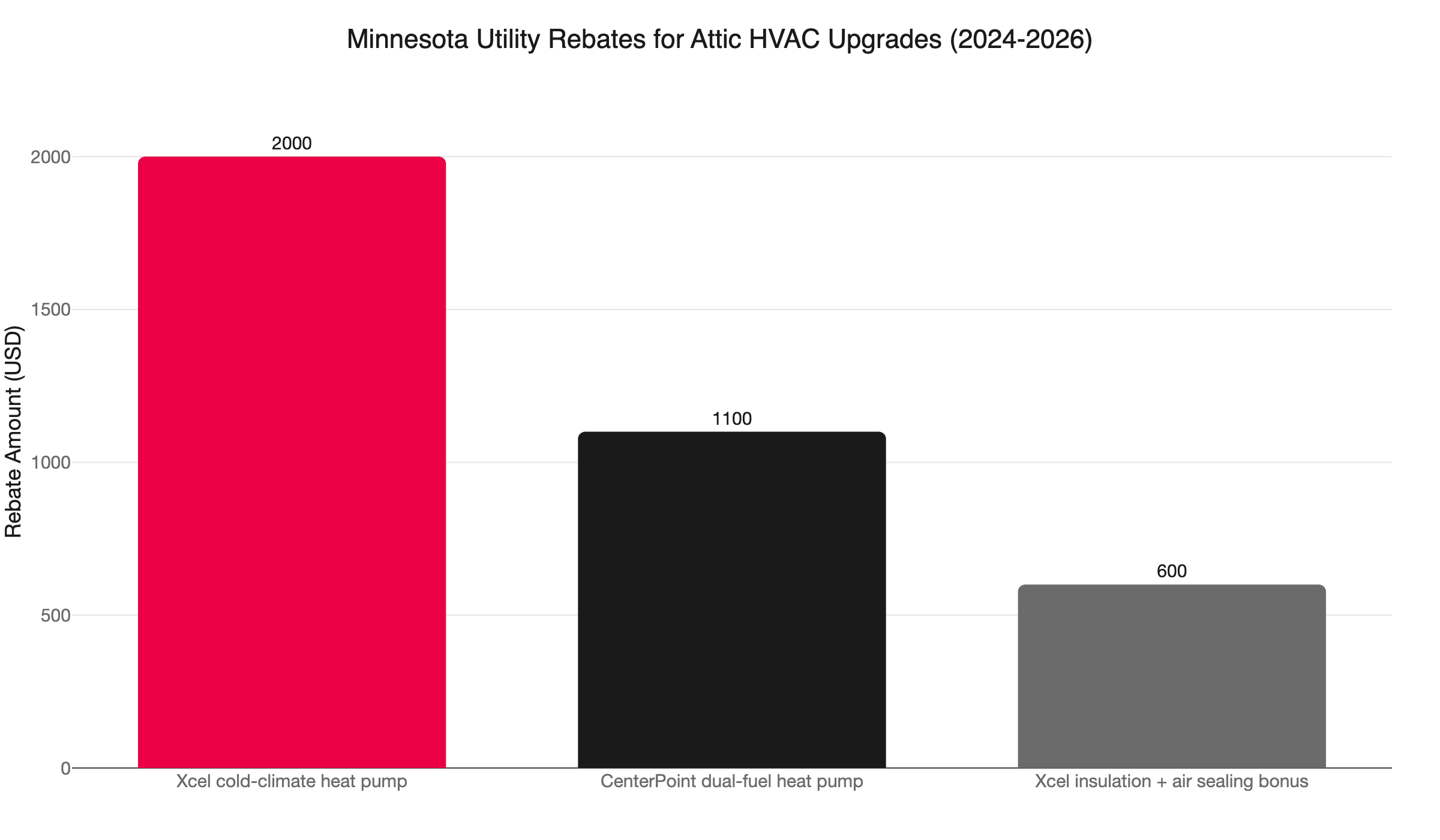
- Xcel Energy and CenterPoint together offer rebates up to $3,100 for qualifying heat pump upgrades through December 2026.
Minnesota Utility Rebates for Attic HVAC Upgrades (2024-2026)
## Air Handler in Attic Problems: Why Minnesota Is Different
Most guides treat air handler in attic problems as a warm-weather issue. Hot attic air surrounds the cabinet, the unit works harder, and cooling efficiency drops. That is real and it happens here too.
But in Minnesota, winter is where attic-mounted equipment takes its worst damage.
[Twin Cities metro sits in ASHRAE Climate Zone 6A](https://minnesotahvacauthority.com/minnesota-hvac-energy-codes), with a design temperature near -16°F for Minneapolis. Northern Minnesota is Zone 7, where -30°F is a realistic design condition. These are among the most demanding heating climates in the contiguous United States.
Our attics drop to -20°F or colder during deep cold snaps. The same attic hits [130°F in summer](https://www.energyvanguard.com/blog/the-attic-air-handler-that-makes-its-own-rain/) when the roof deck radiates heat directly onto the cabinet. That is a 150-degree annual temperature swing. No other common residential equipment location sees anything close to that range.
[Building scientist Joseph Lstiburek put it directly](https://buildingscience.com/documents/building-science-insights-newsletters/bsi-006-no-good-deed-shall-go-unpunished): "The worst thing you could do is install furnaces and air conditioning systems in vented attics. They don't last very long. They need to be in a better place."
Understanding what "better" looks like starts with the specific failures an attic creates here.
## Does Cold Weather Freeze an Attic Air Handler's Condensate Line?
**Yes, and the crack often happens well before anything shows at the thermostat.** High-efficiency air handlers produce condensate during normal operation. That water drains through an internal trap and a line, typically PVC. In an unheated Minnesota attic, both are exposed to outdoor temperatures. Water in the trap expands as it freezes, cracks the drain line, and often lets the equipment keep running until a backup stains the ceiling below.
The internal trap is the harder failure to catch. It sits inside the cabinet, outside the actively heated section of the unit. Standard heat tape cannot reach it easily. Many January service calls trace back to a trap that split in an earlier cold snap and only became visible when water worked its way down to the ceiling finish.
The immediate standard fix is thermostat-activated heat tape on the external drain line and as much of the trap as is accessible, combined with insulation wrap. Heat tape keeps the line above 32°F. Insulation slows heat transfer to give a buffer. Neither is permanent. Cold reaches standing water eventually when temperatures stay low long enough.
The more durable repairs are relocating the condensate trap to conditioned space and replacing the PVC drain line with PEX. PEX expands under freeze pressure rather than cracking. It will not prevent a freeze, but it typically survives one without splitting. Both are good upgrades when a technician is already accessing the unit.
If your attic air handler has been running for more than a decade and the condensate system has never been addressed, ask about it on the next service visit. For a closer look at how condensate freeze plays out in high-efficiency systems through our winters, see our post on [frozen condensate drains in Minnesota high-efficiency furnaces](/blog/high-efficiency-furnace-condensate-drain-frozen-minnesota/).
## How Much Heat Do Attic Ducts Lose in a Minnesota Winter?
**Between 10% and 45% of your heating energy, with Minnesota homes closer to the high end.** The loss comes from two sources: heat conducting through thin duct walls into cold attic air, and conditioned air leaking through gaps before it reaches a register. On a -15°F morning, warm supply air sheds heat fast through any duct jacket thinner than R-8. That lost heat warms your attic, not your living space.
[DOE research shows that between 10% and 45% of heating and cooling energy disappears through under-insulated attic duct walls](https://bsesc.energy.gov/energy-basics/hvac-high-r-duct-insulation). On top of that, [duct air leakage in unconditioned spaces commonly exceeds 20% of conditioned airflow](https://www.energy.gov/eere/buildings/articles/unvented-conditioned-attics-building-america-top-innovation). That is one in five cubic feet of conditioned air your system paid to heat, escaping into an unoccupied space.
Minnesota Rule 1322.0403 sets the floor at R-8 plus a vapor retarder for attic ducts. Standard flex duct from the 1980s and 1990s was installed at R-4 or R-4.2. It was borderline at installation and has degraded further since. High-performance retrofits target R-12.
Sealing comes before insulating. Adding insulation jacket over leaky ductwork reduces conductive wall losses but does nothing for conditioned air escaping through gaps. Our post on [duct insulation and attic energy loss](/blog/duct-insulation-attic-energy-loss-minnesota/) walks through the sequencing in detail.
Duct sealing typically runs around $1,300. Full ductwork replacement, when existing ducts are too far gone to seal and re-insulate, ranges from $6,500 to $13,000 depending on the home's size and run layout. Those numbers look different when weighed against what a leaking attic duct system costs every heating season.
## What Does Summer Heat Do to an Attic Air Handler?
**It accelerates wear on every component sensitive to temperature.** A standard vented attic hits 130°F on hot summer days, with direct radiant load from the roof deck onto the cabinet. Your air handler runs hardest during these conditions. Maximum load at maximum ambient temperature is the worst combination for equipment longevity.
Capacitors are the most common early casualty. They store the energy needed to start the compressor and blower. Elevated operating temperatures shorten their rated life. A capacitor rated for 10 years in conditioned space may fail in five or six years in a 130°F attic. Blower motor bearings, control boards, and refrigerant circuit components face the same accelerated wear pattern.
Summer also creates a condensation risk, though it differs from what warm-climate articles describe. An attic cabinet baking at 120°F can sweat when the AC cycles on and quickly drops the surface temperature. That moisture falls onto insulation and framing below the unit. In Minnesota it rarely reaches Southern severity, but it adds to the cumulative wear picture over time.
The 150-degree annual swing matters because the stress is cumulative. Equipment cycling through -20°F and 130°F every year ages faster than equipment in a mechanical room. This is part of why attic air handlers in Minnesota often need replacement before their rated service life.
## Does the Stack Effect Cause Moisture Damage in Attic Air Handler Installations?
**Yes, and the damage builds over multiple winters before it becomes visible.** Cold-weather pressure differences drive warm, moist indoor air upward through duct penetrations, gaps at duct boots, and connections at the air handler itself. When that air hits a cold attic surface, it deposits frost. The frost melts in spring. The cycle repeats.
Over several seasons, this freeze-thaw pattern rots framing lumber, stains ceiling finishes from above, and creates conditions for mold growth. When a homeowner spots a ceiling stain, the structural damage above it has typically been building for months.
Duct air sealing addresses the energy loss and the moisture pathway at the same time. Sealing duct penetrations at interior wall tops, duct boots, and the air handler cuts the primary moisture entry points into the attic. This is why the DOE's Building America program treats conditioned attics as a top solution for homes with attic mechanical systems: better energy performance and better structural protection come from the same work.
For a walkthrough of what the sealing process involves and where the major leak points typically are, see our post on [duct sealing and leaky ductwork](/blog/duct-sealing-leaky-ductwork-energy-loss/).
## What Are the Warning Signs of Air Handler in Attic Problems?
**Any of these in a home with an attic-mounted air handler deserves a professional look before winter.** The symptoms do not all point to the same failure. A water stain means something different from a short-cycling fault code. But both signal that the system is losing its fight with the attic environment.
- Water stains on the ceiling directly below the air handler or along attic duct runs
- Reduced airflow from registers closest to the attic unit
- Higher heating bills in January or February without a change in how you use the heat
- Frost or ice visible on the condensate drain line when you access the attic
- The unit shutting itself down during heating season, often a condensate backup safety cutoff
- Rooms that used to heat or cool evenly that now feel noticeably off
- A musty or damp smell from ceiling registers
A water stain is the most urgent. By the time moisture has reached the ceiling finish, it has been sitting in the attic above for some time. The visible damage is the trailing edge of a problem that started earlier.
A heating-season safety shutdown frequently traces to the condensate drain. Most high-efficiency units shut down when the drain pan fills or the pressure switch reads abnormal. Heat is off until someone clears the blockage or replaces a cracked component. That is a winter service call that was predictable with an earlier inspection.
## Can You Fix an Attic Air Handler In Place?
**Yes, and done properly, mitigation can keep an attic system running reliably for years.** Not every homeowner can relocate equipment or convert the attic in a single season. Mitigation done correctly makes a real difference. The limitation is that you are managing the attic environment, not changing it.
The standard mitigation package for a Minnesota attic air handler:
- **Heat tape on the condensate system:** Thermostat-activated tape on the external drain line and trap is the minimum standard for any system staying in the attic through our winters.
- **Condensate trap relocation:** Moving the trap to conditioned space removes the highest freeze-risk component. Not always practical without significant access work, but the right call when the unit is already open for service.
- **PEX drain line replacement:** PEX handles freeze expansion without cracking. It does not prevent freezing but survives it, buying a margin of error when temperatures spike beyond what heat tape can handle.
- **Duct sealing and insulation upgrade:** Seal first, then insulate to R-12. Cuts energy loss, reduces moisture infiltration, and addresses the stack effect pathway simultaneously.
- **Improved attic ventilation:** Better ridge and soffit ventilation lowers peak summer temperatures. A useful step, but one that does not address the winter failure modes.
Annual inspection matters more for attic-mounted equipment than for systems in conditioned space. The environment degrades components faster and the failure modes are harder to see from the ground. A single tune-up visit runs $95 to $250. A maintenance plan covering both the heating and cooling inspection runs $195 to $390 per year. For a system working in one of the hardest residential equipment environments in the country, that inspection cadence is worth it.
## The Conditioned Attic: The Right Long-Term Solution
A conditioned attic moves insulation from the attic floor to the roofline. The attic space shifts from outside the thermal envelope to inside it. Temperatures stay within a few degrees of the living space year-round. The air handler is no longer fighting -20°F winters or baking in 130°F summers.
[Building America research at DOE confirms that unvented, conditioned attics substantially improve energy performance and are the correct long-term solution when HVAC equipment is in the attic](https://www.energy.gov/eere/buildings/articles/unvented-conditioned-attics-building-america-top-innovation). Duct losses drop to near zero. Any heat that escapes the duct stays in conditioned space instead of disappearing into the outdoor cold. The condensate system is in a heated environment and cannot freeze.
This is a larger project than duct sealing alone. It involves spray foam or rigid insulation applied along the roofline, blocking ridge and soffit vents in the converted space, and permit work depending on the municipality. It pairs naturally with equipment replacement: if you are already opening the attic and pulling permits, upgrading the air handler at the same time avoids a second labor mobilization later.
When the conditioned attic conversion combines with a cold-climate heat pump installation, the rebate picture adds real money to the equation.
## What Rebates Apply When You Upgrade Attic HVAC in Minnesota?
**Minnesota homeowners have meaningful utility incentives available right now, through December 2026.** Both major Twin Cities utilities run rebate programs funded through Minnesota's Conservation Improvement Program, and they stack for homeowners served by both.
[Xcel Energy offers a $2,000 rebate for a qualifying cold-climate air-source heat pump](https://www.xcelenergy.com/staticfiles/xe-responsive/Working%20With%20Us/24-1-201%20MN%20Res%20Rebate%20Summary%20Information%20Sheet.pdf), with a $600 bonus when insulation and air sealing are included in the same project. Equipment must be installed and invoiced by December 31, 2026.
[CenterPoint Energy offers a $1,100 rebate for a ducted air-source heat pump installed as a dual-fuel system alongside a gas furnace rated 92%+ AFUE](https://www.centerpointenergy.com/en-us/SaveEnergyandMoney/Pages/Ducted-Air-Source-Heat-Pump-Rebate.aspx). The heat pump must be programmed to switch to gas backup at 40°F or below.
Twin Cities homeowners on both utilities can stack these for up to $3,100 in direct utility incentives. The federal 25C tax credit adds another 30% of qualified costs, up to $2,000 for heat pump equipment. Our post on [Minnesota heat pump rebates and tax credits](/blog/minnesota-heat-pump-rebates-tax-credits/) covers the full stacking picture, including how to combine utility rebates with the federal credit.
Both programs draw from Minnesota Statutes §216B.241, which requires utilities to run Conservation Improvement Programs. That funding is already built into your utility rates. Capturing it is a matter of timing the project within the program window.
## Talk to a Locally Owned Team That Knows Minnesota Winters
Attic air handler problems in Minnesota get worse over time. A condensate trap that cracked quietly last winter will fail more visibly the next. An attic duct system running at R-4 is not going to insulate better on its own.
Our locally owned and operated team serves Ramsey, Blaine, Maple Grove, Plymouth, Brooklyn Park, and the Twin Cities metro. We diagnose attic air handler problems, handle condensate line repairs, and help homeowners compare the mitigation path against the conditioned attic path based on equipment age and budget.
We show up when we say we will. "Always On Time… Or You Don't Pay a Dime!(R)"
Call (763) 260-6662 or book online. If your attic air handler has not been inspected recently, schedule a visit now. Winter does not wait.
---
# C-Wire Smart Thermostat Installation Minnesota: Fix It First
URL: https://northernonehour.com/blog/c-wire-smart-thermostat-compatibility-minnesota/
Published: 2026-10-05 | Category: HVAC
Most Twin Cities smart thermostats fail without a C-wire. Learn why older Minnesota homes lack one, the four fix options, and the Xcel $100 rebate.
Key Takeaways
- C-wire smart thermostat installation in Minnesota requires five thermostat conductors. Most Twin Cities homes built before 1990 have only four.
- The first diagnostic step is free: pull the thermostat faceplate and check whether a fifth wire already exists at the furnace control board.
- There are four fix options. The right one depends on your cable type, your system, and your risk tolerance.
- A new 18/5 cable is the correct permanent fix when no fifth conductor exists in the run.
- Xcel Energy offers up to $100 back on a qualifying ENERGY STAR smart thermostat. The federal Section 25C credit expired December 31, 2025.
- In Minnesota, a thermostat failure in January is a pipe-freeze risk. Get the wiring right before the heating season peaks.
## What Is a C-Wire and Why Does Your Smart Thermostat Need One?
A C-wire ("common" wire) completes the 24V circuit between your furnace transformer and your smart thermostat. Without it, the thermostat cannot draw continuous low-voltage power and will steal it from another terminal instead.
Old mercury-bulb and bimetallic thermostats needed zero continuous power. They switched a circuit open or closed based on temperature. They drew no current in between. Smart thermostats are different. They run Wi-Fi radios, color displays, occupancy sensors, and scheduling software around the clock. They need a steady 24V supply at all times. The C-wire is the conductor that completes that circuit.
Without a C-wire, a smart thermostat uses power-stealing. It draws a small current across the Y terminal (which controls cooling) or the G terminal (which controls the fan). That current keeps the display alive. But it also sends a faint signal to the furnace. On an older single-stage furnace, this can trigger phantom fan calls, brief cooling cycles during a heat call, or short-cycling. The behavior looks random from inside the house. The cause is the thermostat borrowing power from the wrong wire.
## Why Don't Older Twin Cities Homes Have a C-Wire?
The thermostat cables in most pre-1990 Twin Cities homes carry only four conductors because that was all a thermostat of that era required. No installer pulled a fifth wire.
The HVAC industry wired homes to the standard of the time. A four-wire run covered R (24V power), G (fan), Y (cooling), and W (heating). That is a complete set for a mercury-bulb thermostat. Those devices sensed temperature with a physical coil and switched a circuit mechanically. They needed no continuous supply voltage. So nobody ran one.
The Twin Cities housing stock skews heavily toward the post-war construction era. A large share of homes in Minneapolis, St. Paul, Ramsey, Blaine, Maple Grove, and surrounding suburbs were built between 1950 and 1985. Many still have the original four-wire thermostat cable. The person who rough-wired that house had no reason to pull a fifth conductor.
When you open the wall and find only four wires, that is not an oversight. That is working-to-spec construction from 40 years ago. The spec changed when smart thermostats came to market. The cable did not.
Two distinct situations exist when you go to check:
- **A fifth wire exists but was never connected.** The installer pulled 18/5 cable (five conductors) but only landed four. A blue or black wire sits coiled loose in the bundle behind the thermostat plate. This is the best-case scenario. Connecting it is a free 15-minute job.
- **The cable has only four conductors, period.** No fifth wire exists anywhere in the run. You need an adapter or a new cable pull.
The diagnostic is to count conductors at both ends of the cable before buying anything.
## How Do You Know Whether Your Home Has a C-Wire?
The check is two steps: look at the thermostat end, then look at the furnace board. Both take under five minutes combined. If a wire lands on the C terminal at both ends, you already have what you need. If a wire exists in the cable but was never landed, connect it.
Here is the full process:
1. Turn the furnace off at the switch or breaker.
2. Remove the thermostat faceplate. Write down the label of every terminal and the color of the wire on it.
3. Count the conductors entering the wall. If more conductors exist in the cable than are connected at the thermostat, you have a spare.
4. Go to the furnace and find the control board. Look for the terminal labeled C or COM. Check whether a wire is landed there. Also check whether a spare wire sits loose in the cable sheath at the board end.
5. If a spare exists at both ends, strip a quarter inch of insulation at each end and connect it to the C terminal at the board and at the thermostat base.
One note for heat pump and multi-stage furnace owners: those systems use more terminals, so the cable may already be fully subscribed with no spare wire left. Our post on [heat pump thermostat wiring and auxiliary heat staging](/blog/heat-pump-thermostat-wiring-aux-heat-staging-minnesota/) covers that situation in detail.
## Four Fix Options, Ranked by Invasiveness
### Option 1: Land the existing spare wire
**Cost: $0. Time: 10-15 minutes.**
This only works when a fifth conductor already exists in the cable. If the diagnostic above finds a spare wire, connect it to the C terminal at the furnace board and at the thermostat base. Restore power and test. This is always the first check on every job.
### Option 2: Add-A-Wire adapter
**Cost: roughly $20-30 for the part. DIY-eligible for single-stage systems.**
An Add-A-Wire adapter piggybacks the C signal onto the G terminal via a small relay module at the furnace. The Venstar ACC0410 is a common option, widely stocked at HVAC supply houses across the Twin Cities. The thermostat reads the result as a real C-wire.
This works well on simple single-stage heating and cooling systems. The limits are real. Add-A-Wire adapters can interfere with variable-speed fan operation. They are not compatible with all multi-stage furnaces or heat pumps that use auxiliary heat staging. Confirm compatibility before buying.
### Option 3: Plug-in USB or 24V power adapter
**Cost: roughly $30-40 for the kit.**
Some smart thermostat manufacturers sell a plug-in power adapter that connects to a standard 120V outlet within reach of the thermostat. A small transformer converts it to the 24V the thermostat needs. This is reliable but adds visible wiring near the thermostat plate. It requires an accessible outlet nearby.
### Option 4: Run a new thermostat cable
**Cost: professional labor, typically a few hours for a single-story home.**
This is the correct permanent fix when no fifth conductor exists and adapters do not fit your system. An 18/5 cable gives you five conductors and covers all standard single-stage setups. An 18/8 cable is worth the modest extra cost if you plan to add a multi-stage system or heat pump later. Future-proofing the wire count costs little now compared to pulling a new cable a second time.
In a two-story home with finished walls, routing a new cable is more involved. A licensed technician will assess the path before starting. In most Twin Cities jurisdictions, adding low-voltage thermostat wiring does not require a permit. However, if the furnace control board also needs repair in the same visit, that work requires a licensed contractor. Most jurisdictions require a permit for control board work under [Minnesota Mechanical Code Rule 1346](https://www.revisor.mn.gov/rules/1346/).
## What Happens If You Skip the C-Wire Fix in Minnesota?
Skipping the fix means your smart thermostat will power-steal through the G or Y terminal. On an older single-stage furnace, this causes phantom fan calls, brief cooling cycles during a heat call, and short-cycling. In Minnesota, a thermostat failure in January is a pipe-freeze risk, not just a discomfort issue.
The phantom signals play out differently depending on the furnace and the thermostat model. The most common symptom is the fan running for a few seconds after the thermostat satisfies. The more serious symptom is short-cycling: the furnace fires, heats briefly, then shuts off before the house reaches setpoint. Short-cycling accelerates wear on the heat exchanger and the inducer motor.
The winter risk is what generic thermostat guides consistently miss. Minnesota temperatures reach -25°F. A thermostat that locks up, loses its Wi-Fi connection, or loops on a bad power-stealing signal can stop calling for heat without the homeowner noticing. A furnace that silently stops running at those temperatures can freeze a pipe inside a wall cavity within hours.
Getting the C-wire right before cold weather arrives is not a refinement. It is a basic safety step for any Minnesota homeowner installing a smart thermostat.
## Does Minnesota Offer Rebates for Smart Thermostat Installation?
Xcel Energy offers up to $100 back when you purchase a new ENERGY STAR-certified smart thermostat. Submit the rebate form and invoice within 90 days of purchase. Verify current program terms and eligible models at [xcelenergy.com/programs_and_rebates](https://www.xcelenergy.com/programs_and_rebates) before buying, since rebate amounts and qualifying models can change by program year.
CenterPoint Energy does not currently list a standalone smart thermostat rebate. CenterPoint's residential rebate focus is on heat pumps and high-efficiency heating and cooling equipment. If you are a CenterPoint customer, confirm directly with them before counting on a rebate.
**The federal Section 25C credit is gone.** The [IRS Section 25C energy-efficient home improvement credit](https://www.irs.gov/credits-deductions/energy-efficient-home-improvement-credit) expired December 31, 2025. Equipment installed in 2026 carries no federal credit regardless of ENERGY STAR rating. Many homeowners are still searching for this credit, so it is worth being clear: even when Section 25C was active, smart thermostats were not independently eligible for it. The credit applied to HVAC equipment itself, including heat pumps, furnaces, and central AC, not to the thermostat controlling it.
The [ENERGY STAR federal incentives page](https://www.energystar.gov/about/federal_tax_credits/non_business_energy_property_tax_credits) provides current context on what federal credits remain in force for HVAC equipment. For the full picture on Minnesota utility rebates available on heating and cooling upgrades, see our breakdown of [Xcel and CenterPoint HVAC rebates for Minnesota homeowners](/blog/xcel-centerpoint-hvac-rebates-minnesota/).
## When Is C-Wire Work a DIY Job vs. a Professional Call?
Landing a spare wire that already exists in the cable is a safe DIY task for most homeowners. Confirm the circuit is off, connect the wire at both ends, restore power, and test. Installing an Add-A-Wire adapter is also DIY-eligible for standard single-stage systems with basic heating and cooling.
Call a licensed technician when:
- You need to route a new cable through finished walls in a multi-story home.
- Your system is multi-stage, uses auxiliary heat, or is a heat pump with a variable-speed blower.
- The furnace control board shows error codes or blinking light sequences before or during the job.
- You are not comfortable identifying live 24V circuits at the furnace board.
Northern One Hour is locally owned and operated in Ramsey, MN. Our technicians handle thermostat wiring on smart thermostat installs across the Twin Cities. We serve Minneapolis, St. Paul, Maple Grove, Blaine, Plymouth, Brooklyn Park, and Woodbury. We show up when we say we will. That is the promise behind "Always On Time… Or You Don't Pay a Dime!(R)".
## What If Your Home Has a Multi-Stage Furnace or Heat Pump?
Multi-stage and heat pump systems need more thermostat conductors than a basic single-stage setup. A two-stage furnace uses W1 and W2. A heat pump adds an O/B reversing valve terminal and often Y1/Y2 staging wires. An Add-A-Wire adapter will not work when the cable is already fully subscribed.
For a basic single-stage gas furnace with central AC, five conductors cover every terminal. For a two-stage furnace or heat pump, the terminal count grows quickly. On an older four-conductor cable, no spare wire exists to begin with. On a five-conductor cable, C takes the last available slot. Either way, the Add-A-Wire workaround cannot free up a conductor that is not there. For these systems, the correct fix is a new cable pull. The new cable needs enough conductors for all stages: heating, cooling, C, G, and the reversing valve. An 18/8 cable handles most heat pump and two-stage configurations with conductors to spare.
Our post on [heat pump thermostat wiring and auxiliary heat staging](/blog/heat-pump-thermostat-wiring-aux-heat-staging-minnesota/) covers the full staging terminal map for heat pump systems. If you are not sure which category your system falls into, a technician can assess it on the same visit.
## The Bottom Line for Minnesota Homeowners
Smart thermostats save real money in a climate that swings from -25°F to 95°F. Setback scheduling and occupancy sensing cut heating and cooling costs meaningfully over a full season. But the C-wire is the prerequisite. Skipping it puts the thermostat in conflict with your furnace.
The diagnostic is free. Pull the faceplate and count the conductors. If a fifth wire already exists in the cable, the fix takes 15 minutes and costs nothing. If it does not, three other options cover most single-stage systems before reaching for a full cable replacement.
Claim the Xcel Energy rebate before you buy the thermostat. Skip the Section 25C credit search; that program closed December 31, 2025. For a side-by-side look at today's top smart thermostat options for Twin Cities conditions, see our [Nest vs. ecobee comparison for Minnesota homeowners](/blog/nest-vs-ecobee-smart-thermostat-minnesota/).
When the job is more complex than landing a free spare wire, our team is ready. [Schedule your thermostat service online](/thermostats/) or call us at (763) 260-6662. We are locally owned, we stand behind our on-time guarantee on every call, and we serve the Twin Cities from our base in Ramsey.
---
# How Does Heat Pump Staging Work? A Minnesota Guide
URL: https://northernonehour.com/blog/how-heat-pump-staging-works-minnesota/
Published: 2026-10-05 | Category: HVAC
Single-stage, two-stage, or variable-speed: learn how heat pump staging works and why Minnesota winters make the staging choice more important than in mild climates.
Key Takeaways
- Single-stage compressors run at 100% capacity or stop entirely. Two-stage adds a lower gear at roughly 65%. Variable-speed modulates continuously from about 25% to 100%.
- In mild climates, staging is a comfort and efficiency trade-off. In Minnesota, it is a cold-weather capacity question. When a two-stage unit maxes out, it hands off to electric resistance heat, costing two to four times more per BTU.
- [MNASHP confirms](https://www.mnashp.org/faqs) that only variable-speed compressors can meet NEEP's cold-climate specification. Two-stage units are classified as standard equipment.
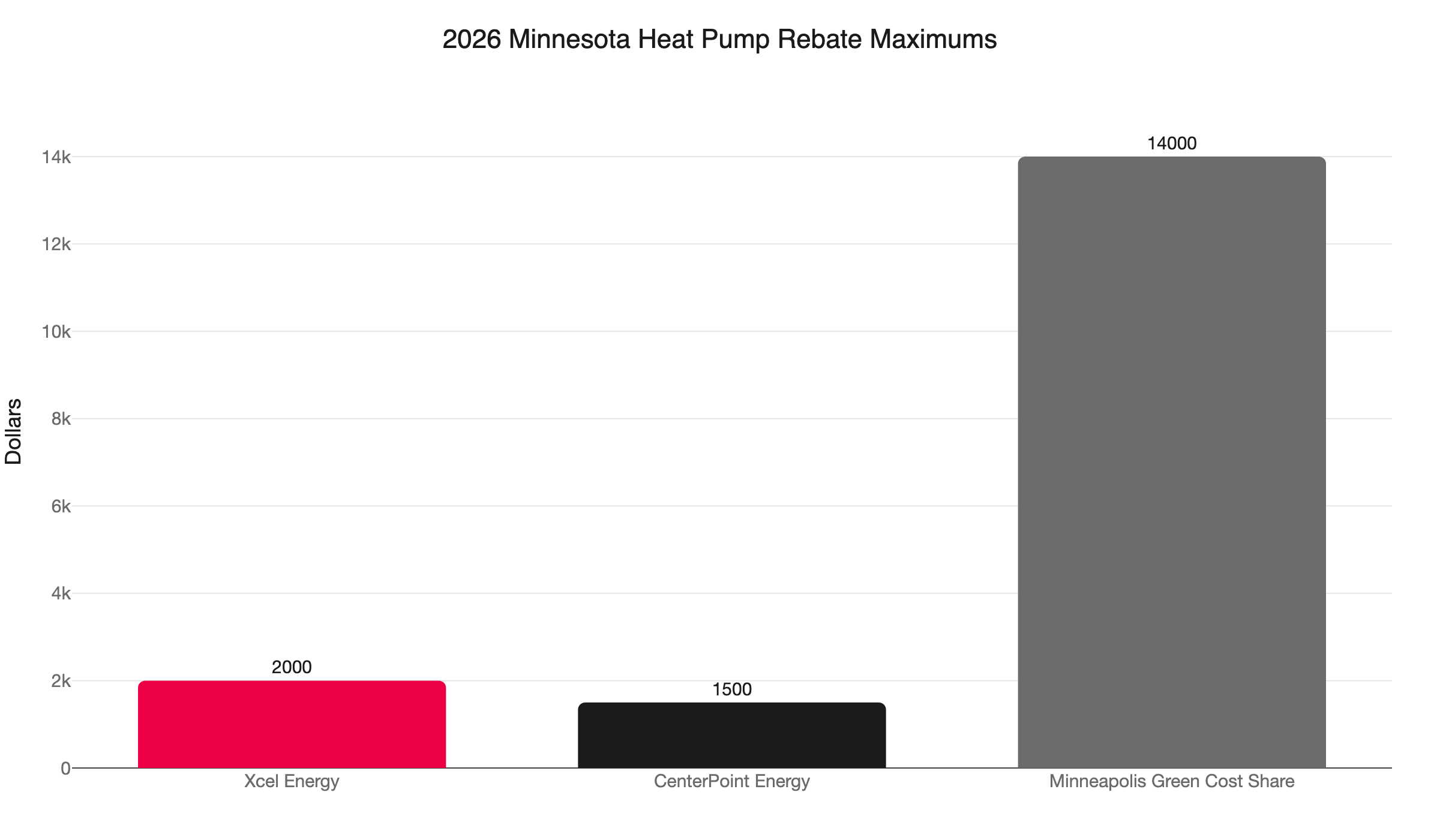
- Xcel Energy's rebate of up to $2,000 requires NEEP cold-climate listed equipment. NEEP listing requires variable-speed, by definition.
- The federal 25C Energy Efficient Home Improvement Credit expired December 31, 2025. No federal credit applies to 2026 heat pump installs, regardless of equipment type.
- Your thermostat tries Stage 1 first. If Stage 1 cannot close the gap in 10-15 minutes, it escalates to Stage 2. On most heat pumps in heating mode, Stage 2 triggers electric resistance strips, not a higher compressor speed.
2026 Minnesota Heat Pump Rebate Maximums
## How Does Heat Pump Staging Work?
**Short answer:** A heat pump's "stage" describes how many output levels the compressor has. Single-stage runs fully on or fully off. Two-stage adds a lower gear at about 65% capacity. Variable-speed modulates continuously, the same way cruise control adjusts engine output instead of alternating between flooring it and coasting.
Understanding how does heat pump staging work starts with the compressor. The compressor is the heart of every heat pump. It pressurizes refrigerant to pull heat from outdoor air and move it inside your home. A single-speed compressor does one thing: runs at 100%. A two-stage compressor adds a lower gear. A variable-speed compressor, driven by an inverter motor, operates at nearly any point between 25% and 100% of its rated capacity.
Think of your furnace first. Most Twin Cities homeowners already understand this comparison. A single-stage furnace fires at full blast or sits cold. A modulating furnace simmers at low flame for hours and rarely needs full output. Heat pumps work the same way. The compressor is the "flame."
[MNASHP describes variable-speed operation as cruise control](https://www.mnashp.org/do-heat-pumps-work-heating-minnesota): better fuel economy at steady speed than constant stop-and-go cycling. Your car burns more fuel toggling between zero and 60 mph than holding a steady 45 mph on the highway. A heat pump compressor works on exactly that principle.
## The Three Compressor Types: How Heat Pump Staging Works at Each Level
**Single-stage** runs at 100% capacity or shuts off entirely. The system turns on, runs at full power, and stops when the thermostat is satisfied. It cycles more frequently in mild weather. That cycling adds wear to the compressor and creates indoor temperature and humidity swings. In summer, short run times mean the coil has less contact time to pull moisture from indoor air, so humidity control suffers.
**Two-stage** adds a low gear at roughly 65-70% of full capacity. [The thermostat calls Stage 1 first. If Stage 1 cannot close the temperature gap within 10-15 minutes, or the gap between setpoint and room temperature exceeds about 2°F, the thermostat escalates to Stage 2](https://engineerfix.com/what-do-stage-1-and-2-mean-on-my-thermostat/). In mild weather, Stage 1 handles most of the load. In a cold snap, Stage 2 engages and the compressor runs at full output.
**Variable-speed** modulates in small steps from roughly 25% to 100%. Some cold-climate units can exceed 100% of rated capacity in heating mode. It can run for hours at low speed, keeping indoor temperature nearly flat. Longer run times improve summer dehumidification for the same reason: extended coil contact time with indoor air. The compressor adjusts continuously to match your home's exact heating or cooling load.
The trade-off is real. Variable-speed units cost more upfront. For Minnesota homeowners using a heat pump as the primary heat source, the cold-weather performance difference usually justifies that cost over the system's life. For a supplemental system backed by a gas furnace and used mainly for cooling, a two-stage unit is a reasonable and lower-cost fit.
## Why Does Staging Matter More in Minnesota Than in Milder States?
**Short answer:** In mild climates, the two-stage vs. variable-speed choice is a comfort and efficiency comparison. In Minnesota, it determines how often your backup electric strips run in January. When a two-stage unit hits its heating ceiling, it surrenders to electric resistance heat, costing two to four times more per BTU than the heat pump mode it just left.
[Standard heat pumps - single-stage and two-stage - deliver efficient heat down to about 20°F](https://www.mnashp.org/do-heat-pumps-work-heating-minnesota). Minneapolis logs many hours below that threshold in a normal winter. When a two-stage unit runs at full output and still cannot match your home's heat loss, the thermostat calls for backup heat.
For most ducted heat pump systems, backup heat means electric resistance strips in the air handler. Those strips carry a coefficient of performance (COP) of 1.0. One unit of electricity in, one unit of heat out. The heat pump it just replaced was running at a COP of 2.0 to 2.5 or better. Switching to electric strips roughly doubles or triples your heating cost per BTU for every hour those strips run.
A variable-speed cold-climate unit responds differently. Instead of topping out and calling for backup, it raises compressor speed to match the increasing load. Field measurements from a Minneapolis installation recorded a COP of 1.98 at -17°F and 1.37 at -27°F. Both numbers beat electric resistance heat at COP 1.0 by a significant margin.
[MNASHP is direct about the comparison](https://www.mnashp.org/faqs): "Modern, variable-speed heat pumps are better suited to our heating needs in Minnesota. Standard heat pumps (single-stage or two-stage) have more limited heating capabilities in comparison."
Staging choice is not just a budget decision in Minnesota. It is a climate-dependent decision. The same two-stage unit that performs perfectly well in Kansas City falls short during a January cold snap in Bloomington.
## What Happens When a Two-Stage Heat Pump Tops Out in January?
**Short answer:** It calls for auxiliary heat. On most systems, that means electric resistance strips running at COP 1.0. The heat pump was running at COP 2.0 or better moments before. In Minnesota, this handoff can last for hours during a cold snap and adds meaningfully to your monthly electric bill.
The outdoor temperature at which the heat pump's maximum output equals your home's heat loss is called the balance point. Below the balance point, you need backup heat to maintain comfort. The lower you push the balance point, the less your electric strips run.
A two-stage unit's balance point typically falls between 15°F and 25°F, depending on home size, insulation level, duct condition, and system capacity. Below that range, every degree of temperature drop means more backup strip runtime. On a -5°F night in Maple Grove, a two-stage unit in a modestly insulated home may run electric strips for several hours continuously.
A variable-speed cold-climate unit extends the balance point toward 0°F or below. It keeps doing useful heat pump work in conditions that force a two-stage unit to rely heavily on strips. Over a full Minnesota heating season, the difference accumulates in your utility bill in a way that is often significant enough to affect payback calculations.
For a detailed breakdown of how balance points are calculated and what to expect from each equipment type in extreme cold, see our post on [heat pump balance points and backup heat in Minnesota](/blog/heat-pump-balance-point-backup-heat-minnesota/).
## How Does Your Thermostat Read Staging Demand?
**Short answer:** Your thermostat makes a polite request first (Stage 1 / Y1). If the room does not respond in 10-15 minutes, or the gap between setpoint and room temperature exceeds about 2°F, it makes a louder request (Stage 2 / Y2). On a heat pump in heating mode, Stage 2 usually triggers electric resistance strips, not a higher compressor speed.
[The terminal wiring works like this on most systems](https://engineerfix.com/what-do-stage-1-and-2-mean-on-my-thermostat/):
- **Y1:** Stage 1 call. The thermostat energizes this terminal first, calling the compressor at lower capacity in both heating and cooling.
- **Y2:** Stage 2 call. Energized when Stage 1 cannot close the temperature gap. In cooling mode on variable-speed systems, this often requests higher compressor speed. In heating mode on two-stage heat pumps, it typically triggers the electric resistance strips, not a second compressor gear.
- **AUX / W2:** Auxiliary heat terminal. On a standard two-stage heat pump, this activates the electric resistance strips in the air handler.
This logic matters for how you program your thermostat. Large overnight setbacks create a problem. If you drop the house from 70°F to 62°F at 10 p.m. and call for 70°F again at 6 a.m., the thermostat faces an 8°F gap. That exceeds the Stage 1 threshold immediately. The system calls Stage 2 and AUX heat, and expensive electric strips carry the entire morning warmup.
For a heat pump home, gradual setbacks of 2-3°F are more efficient than deep ones. The system can hold temperature on Stage 1 for extended periods without triggering aux heat. A smart thermostat can manage this automatically, enforcing shallow setbacks overnight and recovering temperature slowly so Stage 1 does the work.
For a deeper look at [heat pump thermostat wiring and aux heat staging](/blog/heat-pump-thermostat-wiring-aux-heat-staging-minnesota/) - including terminal label variations by brand, common wiring mistakes, and what to do if your AUX light runs continuously - we have a dedicated post.
## The NEEP Cold-Climate Specification
To qualify as cold-climate under the NEEP standard, a heat pump must meet all three of the following criteria:
- Variable-speed (inverter-driven) compressor
- COP of at least 1.75 at 5°F at maximum capacity
- HSPF of 9 or higher
[Two-stage units cannot meet this specification by definition](https://www.mnashp.org/faqs). They do not have a variable-speed compressor. MNASHP categorizes single-stage and two-stage units as "standard equipment," appropriate when gas heat handles the coldest days and the heat pump role is supplemental.
There is also a limitation in how HSPF is calculated. [HSPF test protocols include no data points below 17°F](https://www.mnashp.org/faqs). The protocol assumes electric resistance heat fills all demand below that threshold. For Minneapolis, where the heating system logs many hours below 17°F in a normal winter, the HSPF on the label overstates real seasonal efficiency relative to what you will see on your actual utility bill.
A variable-speed unit with a high HSPF delivers better real-world efficiency in Minnesota than a two-stage unit with a similar rating. The reason: it continues doing heat pump work well below 17°F instead of handing off to electric strips early. Be cautious comparing HSPF numbers across staging types without accounting for your actual heating hours below 17°F.
The NEEP listing database is the practical shortcut for both homeowners and rebate submissions. A NEEP cold-climate listing means the unit has been independently verified to meet the COP and HSPF thresholds at temperatures Minnesota winters actually produce. The list is publicly searchable and updated regularly.
## Do Minnesota Utility Rebates Depend on Which Stage You Choose?
**Short answer:** Yes. Xcel Energy's rebate of up to $2,000 requires NEEP cold-climate listed equipment. NEEP listing requires variable-speed. A two-stage or single-stage unit disqualifies you from Xcel's rebate entirely. CenterPoint's rebate applies to dual-fuel setups and does not require NEEP listing.
Here is the 2026 rebate picture for Minnesota homeowners, [per Heat Pump Network's verified guide](https://heatpumpnetwork.com/heat-pump-rebates-minnesota/):
- **Xcel Energy:** Up to $2,000 for a NEEP-listed cold-climate heat pump. An additional $600 insulation bonus is available when the install is paired with qualifying air sealing or insulation work. NEEP listing requires variable-speed.
- **CenterPoint Energy:** Up to $1,500 for a ducted air-source heat pump in a dual-fuel or hybrid configuration. $1,100 for a dual-fuel pairing with a 92%+ AFUE gas furnace. Does not require NEEP listing.
- **Minneapolis Green Cost Share:** Stacks on top of utility rebates and can reach up to $14,000 for Green Zone homes. Utility rebates and the Green Cost Share can be combined in the same project.
One correction that matters: the federal 25C Energy Efficient Home Improvement Credit expired December 31, 2025. Any article or contractor still quoting the 30% federal tax credit is citing outdated information. No federal offset applies to 2026 heat pump installs, regardless of equipment type or efficiency rating. Build your budget without it.
When you subtract Xcel's $2,000 rebate from the installed cost of a variable-speed unit, the price gap between variable-speed and two-stage narrows significantly. For many homeowners, the rebate alone closes most of the difference. That conversation is worth having before you commit to a staging tier.
Our [Minnesota heat pump rebates and tax credits page](/blog/minnesota-heat-pump-rebates-tax-credits/) covers current stacking strategies and how to document equipment for utility submissions. Financing is available for larger installs. Ask our team about current terms when you call.
## Variable-Speed or Two-Stage: Which Is Right for Your Home?
**Short answer:** If the heat pump is your primary heat source in a Minnesota home, variable-speed cold-climate is the right choice. It reduces backup heat runtime, qualifies for Xcel's rebate, and handles extreme cold better than any two-stage unit. If you have a gas furnace and want the heat pump for cooling with supplemental heating, a two-stage unit can be a practical, lower-cost fit.
Three questions help narrow the decision for most homeowners:
**1. Is the heat pump the primary heat source, or a supplement to gas?** A primary heat pump must carry the full heating load through a Minnesota January. Cold-climate variable-speed capability is necessary to do that without running electric strips constantly. A [dual-fuel hybrid system](/blog/dual-fuel-heat-pump-gas-furnace-hybrid-minnesota/) pairs a heat pump with a gas furnace and lets the furnace carry the coldest nights. In that configuration, the heat pump's low-temperature ceiling matters less, and a two-stage unit is a reasonable fit.
**2. Are you on Xcel Energy?** The $2,000 rebate applies only to NEEP-listed variable-speed equipment. When you subtract the rebate from the total installed cost, the price gap between staging tiers often shrinks to a manageable amount. The rebate alone can close most of the difference between a two-stage and a variable-speed install.
**3. How is your ductwork?** Variable-speed operation is quieter and more efficient, but those gains require adequate duct sizing and minimal leakage. Leaky or undersized ducts blunt the efficiency advantage before it shows up on your utility bill. Duct condition is worth assessing before you select a compressor tier. An efficient compressor working against poorly sealed ductwork delivers neither the comfort nor the operating cost savings its spec sheet promises.
Staging choice and system sizing are connected decisions. A properly sized variable-speed unit in tight ductwork is the best-performing option for Minnesota primary heating. The wrong size, or a right size in leaky ducts, underperforms regardless of staging.
## Ready to Match the Right System to Your Home?
If you still have questions about how heat pump staging works for your specific home - primary heat source vs. supplement, Xcel territory vs. CenterPoint, older ductwork vs. newer construction - the next step is a proper in-home assessment.
Our team is locally owned and operated in Ramsey, MN. We serve Minneapolis, St. Paul, Blaine, Maple Grove, Plymouth, Brooklyn Park, Woodbury, Bloomington, and the wider Twin Cities area. Before recommending any system, we run a Manual J load calculation. You get a system sized to how your home actually loses heat on a -10°F January morning, not a size based on square footage and a general rule of thumb.
Our promise: "Always On Time… Or You Don't Pay a Dime!(R)" - and a 100% satisfaction guarantee backs every installation we complete.
Call **(763) 260-6662** or book online to schedule a heat pump assessment. If you are on Xcel Energy, mention NEEP-listed equipment when you call. That rebate conversation is worth having before you commit to a staging tier.
---
# HVAC Permit Cost Minnesota: What Minneapolis and the Suburbs Charge
URL: https://northernonehour.com/blog/hvac-permit-cost-minnesota-what-to-expect/
Published: 2026-10-05 | Category: HVAC
Actual permit fees from Minneapolis, St. Paul, and Twin Cities suburbs, plus what triggers a permit and why skipping one is not the deal it sounds like.
Key Takeaways
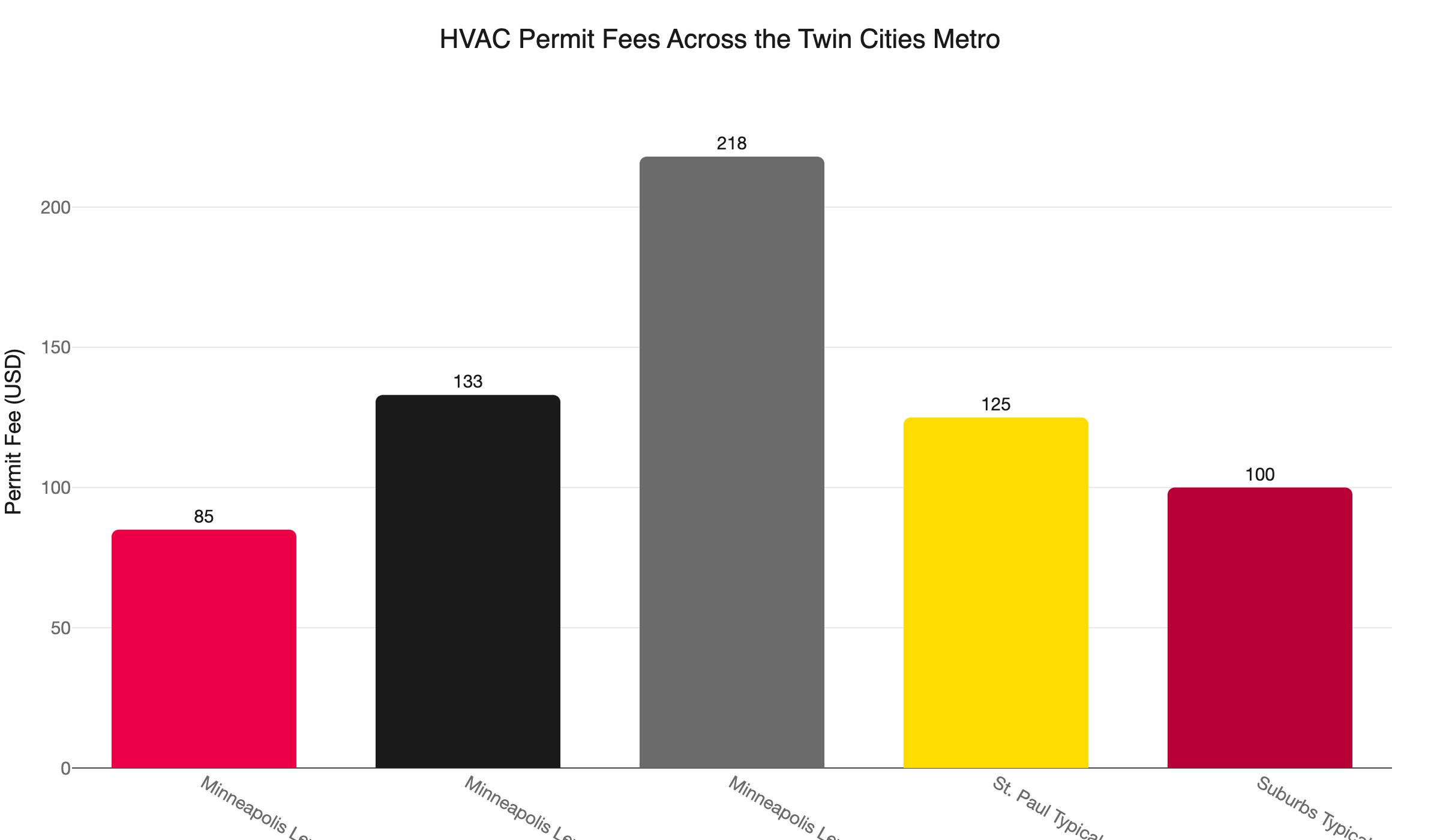
- Minneapolis charges $85.20 for minor HVAC work, $133.40 for a furnace or boiler replacement, and $217.60 for a complete system swap. These come from the city's published flat-rate Director's Fee Schedule.
- St. Paul calculates fees based on the declared value of the work. A standard furnace replacement typically falls between $75 and $175.
- Most Twin Cities suburbs run $50-$150 for a residential HVAC permit, using a valuation-based formula updated annually.
- Under the Minnesota Mechanical Code, furnaces, boilers, central AC systems, ductwork modifications, HRVs, and ERVs all require a permit. Thermostat swaps and filter changes do not.
- Minnesota requires 92% AFUE minimum for gas furnaces statewide. A permitted job enforces that minimum. An unpermitted job may not.
- A $217 permit on a $12,000 job is roughly 1.75% of the total cost. A contractor framing that fee as savings is shifting risk onto you, not reducing your bill.
- Northern One Hour is locally owned and operated in Ramsey, MN. We pull every permit a job requires. That is part of what you are hiring us to do.
HVAC Permit Fees Across the Twin Cities Metro
If you are planning a furnace or AC replacement in the Twin Cities, the HVAC permit cost Minnesota requires is one line item worth understanding before you sign a quote. Fees range from about $50 to $220 depending on your city and the scope of work. This post breaks down the actual numbers from published city fee schedules - and explains why skipping that line item costs far more than it saves.
## What Is the HVAC Permit Cost in Minnesota?
**HVAC permit costs in Minnesota range from about $50 to $220 for most residential jobs. Minneapolis uses a flat-rate schedule capped at $217.60 for a full system replacement. St. Paul and most suburbs calculate fees on the job's declared value and land in a similar range.**
The permit fee is rarely the part of an HVAC quote homeowners ask about. A licensed contractor bundles it in, pulls the permit, and schedules the inspection. That is fine when everything is handled correctly. The problem arrives when a contractor suggests leaving the permit out - offering to "save you" a $150-$220 line item on a $10,000-plus job.
This post shows the actual numbers city by city, based on published fee schedules. It also covers what the inspector checks, how the permit connects to Minnesota's efficiency requirements, and why the "skip the permit" offer costs far more than it saves.
Our companion post on [when an HVAC permit is required in Minnesota](/blog/hvac-permit-when-required-minnesota/) covers the trigger question in detail. This post answers the cost question that one leaves open.
## Minneapolis HVAC Permit Cost: What the City Fee Schedule Shows
Minneapolis publishes a flat-rate permit schedule by work category, which makes it the most transparent permit structure in the Twin Cities metro. The fees come directly from the [Minneapolis Director's Fee Schedule PDF](https://www2.minneapolismn.gov/media/content-assets/www2-documents/business/Directors-Fee-Schedule.pdf):
| Work Category | Base Fee | State Surcharge | Total |
|---|---|---|---|
| Level 1: minor HVAC, no burner | $84.20 | $1.00 | $85.20 |
| Level 2: Level 1 plus furnace or boiler swap | $132.40 | $1.00 | $133.40 |
| Level 3: complete system replacement | $216.60 | $1.00 | $217.60 |
| Gas burner under 400,000 BTU/hr | $73.30 | $1.00 | $74.30* |
*Minimum $85.20 (surcharge included) applies to all gas burner permits.
For most homeowners replacing both a furnace and central AC at the same time, the applicable tier is Level 3 at $217.60. A furnace-only or AC-only replacement falls under Level 2 at $133.40. Minor service work with no burner involved is Level 1 at $85.20.
One detail worth flagging before we move on: Minneapolis charges **double the standard permit fee** when unpermitted work is discovered after the fact. If an inspector finds an HVAC system that was replaced without a permit, the homeowner owes twice the normal fee, plus the cost of the inspection and any required corrections. That penalty typically does not surface until a home sale brings in a buyer's inspector.
The flat-rate structure is genuinely useful for homeowners doing their homework. You can know exactly what the Minneapolis permit will cost before your contractor submits, and you can verify it appears on the invoice.
## What Does the St. Paul HVAC Permit Cost?
**St. Paul does not use a flat-rate list. The Department of Safety and Inspections calculates fees against the declared material and labor value of the job. For a standard furnace replacement, that typically produces a permit fee between $75 and $175.**
The process is described in the [St. Paul DSI Mechanical Permit documentation](https://www.stpaul.gov/sites/default/files/Media%20Root/Safety%20%26%20Inspections/DSI.MechanicalPermit.pdf). Because fees scale with the declared job cost, a high-efficiency furnace installation carries a slightly higher permit fee than a mid-efficiency swap of the same scope. The difference is not dramatic, but it is worth knowing.
St. Paul also issues separate permits by category of work. A job that includes both a mechanical replacement and a gas line modification requires two permits, each calculated independently. That is not a large added cost, but it does affect how the permit line appears on your invoice. Ask your contractor before the job starts whether more than one permit is needed for the scope of work.
For most St. Paul furnace replacements, budgeting $100-$175 for the permit is a reasonable estimate. Your contractor will have the current fee at submission time.
## What Do Twin Cities Suburbs Charge for HVAC Permits?
**Most Twin Cities suburbs use the International Code Council fee schedule, updated annually, and calculate fees on the declared value of the work. The typical permit range for a residential furnace or AC replacement in suburbs like Brooklyn Park, Blaine, Maple Grove, and Plymouth is $50-$150.**
[Brooklyn Park's permit and plan review fee schedule](https://www.brooklynpark.org/building-permits-and-inspections/permit-and-plan-review-fees/) confirms the ICC-based method and notes that fees are updated every February. The contractor filing the permit declares the total value of labor and materials, and the fee follows from that figure.
For a standard furnace swap, the declared job value typically produces a permit fee in the $75-$100 range for most suburbs. A full system replacement, with a higher declared value, moves toward the upper end. Either way, the fee is a small fraction of the total installed cost.
[Permit data for the Minneapolis metro](https://permitcalculator.com/cities/minneapolis-mn/) puts the average total HVAC replacement cost in the area at roughly $12,420 in 2026. A $100 suburban permit is about 0.8% of that job. A $150 permit is about 1.2%. These figures should not be driving decisions about which contractor to hire or whether to permit the work at all.
## What Work Requires an HVAC Permit in Minnesota?
**Any replacement or new installation of major HVAC equipment requires a permit under the Minnesota Mechanical Code. That includes furnaces, boilers, central AC systems, ductwork modifications, whole-home humidifiers, HRV and ERV units, gas fireplaces, and chimney liners.**
The line between permit-required and no-permit-needed is drawn at equipment replacement and new installation versus routine maintenance:
**Permit required:**
- Furnace or boiler replacement or new installation
- Central AC or heat pump replacement or new installation
- Ductwork modification, extension, or full replacement
- Whole-home humidifier installation
- HRV or ERV installation
- Gas fireplace, wood stove, or insert installation
- Chimney liner replacement or installation
- Exhaust fan installation involving a new wall or roof penetration
**No permit needed:**
- Filter replacement
- Thermostat swap (no new wiring)
- Evaporator or condenser coil cleaning
- Motor lubrication and minor component servicing
[Brooklyn Park's mechanical permit page](https://www.brooklynpark.org/building-permits-and-inspections/mechanical-permits/) lists these categories explicitly, drawing from Chapter 1346 of the Minnesota Mechanical Code. The rules are statewide minimums. Individual cities can require permits for additional categories, but they cannot set a lower threshold than the state minimum.
If a contractor tells you a furnace replacement in Minnesota does not require a permit, that is incorrect. It always does. That kind of misrepresentation is one of the clearer [HVAC contractor warning signs to watch for in the Twin Cities](/blog/hvac-contractor-red-flags-twin-cities/).
## What Does the Inspector Actually Verify?
**The inspector confirms the installation meets current safety and efficiency codes. Key checkpoints include the venting category matched to the equipment's efficiency rating, gas line sizing and clearances, combustion air supply, refrigerant line integrity on AC work, and full operational function.**
For high-efficiency condensing furnaces, the venting check is the most consequential. A unit rated at 90% AFUE or above produces acidic condensate and must vent through Category IV PVC pipe with proper drain provisions. A mid-efficiency furnace uses B-vent metal flue. These are entirely different installation requirements. A contractor who installs a 96% AFUE furnace and routes it through the original metal flue has created a code violation and a potential carbon monoxide pathway into the home.
The permit inspection catches that. Unpermitted work removes that check entirely.
A full summary of what inspectors verify in Minnesota is outlined by the [Minnesota HVAC Authority](https://minnesotahvacauthority.com/minnesota-hvac-permits-and-inspections/), including:
- Venting type (Category I, III, or IV) matched to the equipment's rated efficiency
- Gas line sizing relative to the equipment's BTU demand
- Combustion air supply - adequate fresh air for safe operation
- Refrigerant line integrity and proper line set sizing on AC and heat pump work
- Controls, thermostat wiring, and final operational function test
The inspection is not a paperwork formality. It is a qualified, independent review of a system that will run in your home every day for the next 15-20 years. The permit fee buys you that second set of eyes. Skipping it saves you the fee while removing the safety net.
## Why Does Pulling a Permit Trigger an Efficiency Requirement?
**Minnesota requires a 92% AFUE minimum for gas furnaces in Climate Zones 6 and 7, which covers essentially all of the state. When a permit is pulled, the inspector confirms the new unit meets that minimum. There is no grandfathering from the original installation date.**
This matters most when you are replacing an older furnace. If your current system is an 80% AFUE unit from 2007, a permitted replacement in Minnesota requires a 92%+ unit. That means a higher equipment price. It also means real efficiency gains that compound across every heating season.
A 92% AFUE furnace retains 12 more cents of every gas dollar burned compared to an 80% unit. In a Minnesota winter, with heating running for five or more months, that difference shows up on your CenterPoint or Xcel bill every year. Our post on [furnace AFUE ratings and what they mean for Twin Cities homeowners](/blog/furnace-afue-rating-80-vs-96-efficiency-explained-minnesota/) works through the payback math in detail.
An unpermitted installation may bypass the efficiency verification. A contractor installs whatever equipment they have on the truck, and no inspector checks it against the code minimum. You could end up with a non-compliant unit, no documentation, and complications at resale. The efficiency requirement is not a burden. It is the state enforcing the fuel savings you will see for the next two decades.
## Is a Contractor Who Offers to Skip the Permit Saving You Money?
**No. A contractor offering to skip the permit on a $12,000 HVAC job is offering to save you $150-$220 while exposing you to far larger costs at resale, with your insurer, and with the equipment manufacturer. The math does not work in your favor.**
Here is a breakdown of what that "savings" actually buys:
**At home sale.** A buyer's inspector will find the unpermitted installation. The buyer can ask you to pull a retroactive permit, demand removal and a properly permitted reinstall, or reduce their offer to reflect the liability. Retroactive permits are not always available. When they are, they often require opening walls to verify what was installed. The cost to resolve this routinely exceeds the original permit fee by thousands of dollars.
**With your home insurer.** Homeowner's policies routinely exclude losses caused by code violations. If a fire or carbon monoxide incident is traced to an improperly installed furnace, the insurer can deny the claim on the grounds that the installation was never inspected. That denial can arrive years after the job and years after the contractor who "saved" you the money has moved on.
**With the manufacturer.** Some HVAC equipment manufacturers require a permitted, inspected installation as a condition of the warranty. An unpermitted install can void coverage before the equipment has run through a single Minnesota winter. Warranty terms vary by brand, so ask your contractor directly - but the risk is real and worth understanding before you decide.
**In Minneapolis specifically.** If the city discovers unpermitted work, the homeowner owes double the standard permit fee, still needs the inspection, and still needs corrections if anything fails. The contractor has been paid and is gone. You are holding the liability.
As [Furnace Direct's analysis of Minnesota permit requirements](https://furnace.direct/blogs/news/hvac-permit-requirements-minnesota-furnace-ac) makes clear, unpermitted work creates complications that consistently cost more to resolve than the original permit would have. The math is not close.
Any contractor who frames the permit as optional is not working in your interest. Our post on [HVAC contractor red flags in the Twin Cities](/blog/hvac-contractor-red-flags-twin-cities/) covers more of what a reputable contractor looks like before you sign anything.
## How to Verify Your HVAC Contractor Is Properly Licensed
Minnesota Statute 326B.197 requires any contractor performing gas, heating, ventilation, cooling, or refrigeration work to carry a $25,000 bond with the Minnesota Department of Labor and Industry. Technicians handling refrigerant must hold EPA Section 608 certification.
Verifying a contractor's license takes about 90 seconds at dli.mn.gov. Ask for the license number before any permit is filed or any work begins. A legitimate contractor will provide it without hesitation.
A licensed contractor pulls permits because not doing so puts their license at risk. When a contractor suggests skipping the permit, one of two things is true: they are not properly licensed, or they are cutting corners in ways that extend well past the permit fee. Neither scenario is worth the savings they are pitching.
Northern One Hour is locally owned and operated out of Ramsey, MN. Every technician on our team holds the required licensing, and every job we do that requires a permit gets one. You hire us to do the whole job correctly, not to save you $200 on a $12,000 installation.
## What to Ask Your HVAC Contractor Before Work Starts
Before any HVAC contractor begins work at your home, ask these questions directly:
1. **Will you pull the permit?** The answer should be yes, with no hedging.
2. **Which city's process applies to my address?** A contractor who works the Twin Cities regularly knows this without looking it up.
3. **Does the replacement equipment meet the Minnesota 92% AFUE minimum?** For any gas furnace job in this state, the answer must be yes.
4. **Can I have your Minnesota contractor license number?** Any licensed contractor will give it to you immediately.
5. **What does the inspector check for this type of job?** A contractor who routinely pulls permits answers this question easily.
For a [furnace replacement](/heating/heating-equipment/furnaces/furnace-replacements/) or full system installation in the Twin Cities, the permit process is one of the first things we confirm. We handle the filing, coordinate the inspection schedule, and make sure the job passes before we consider it finished. That is not an extra service. It is how a licensed contractor is supposed to work.
Call **(763) 260-6662** or book online to schedule service or request a quote. We show up when we say we will. "Always On Time… Or You Don't Pay a Dime!(R)"
---
# Boiler Power Flush Minnesota: When to Flush, What It Costs
URL: https://northernonehour.com/blog/boiler-power-flush-sludge-removal-minnesota/
Published: 2026-10-04 | Category: Heating
Learn when Twin Cities boilers need a power flush, how sludge and scale differ, what to expect from the process, and what it costs in Minnesota.
Key Takeaways
- Sludge (magnetite) and scale (mineral deposits) are two different problems. Minnesota boilers often face both at once.
- [Up to 95% of debris](https://www.magstrainer.com/the-problem) in a hydronic system is magnetite. It is an iron oxide that forms as metal components corrode.
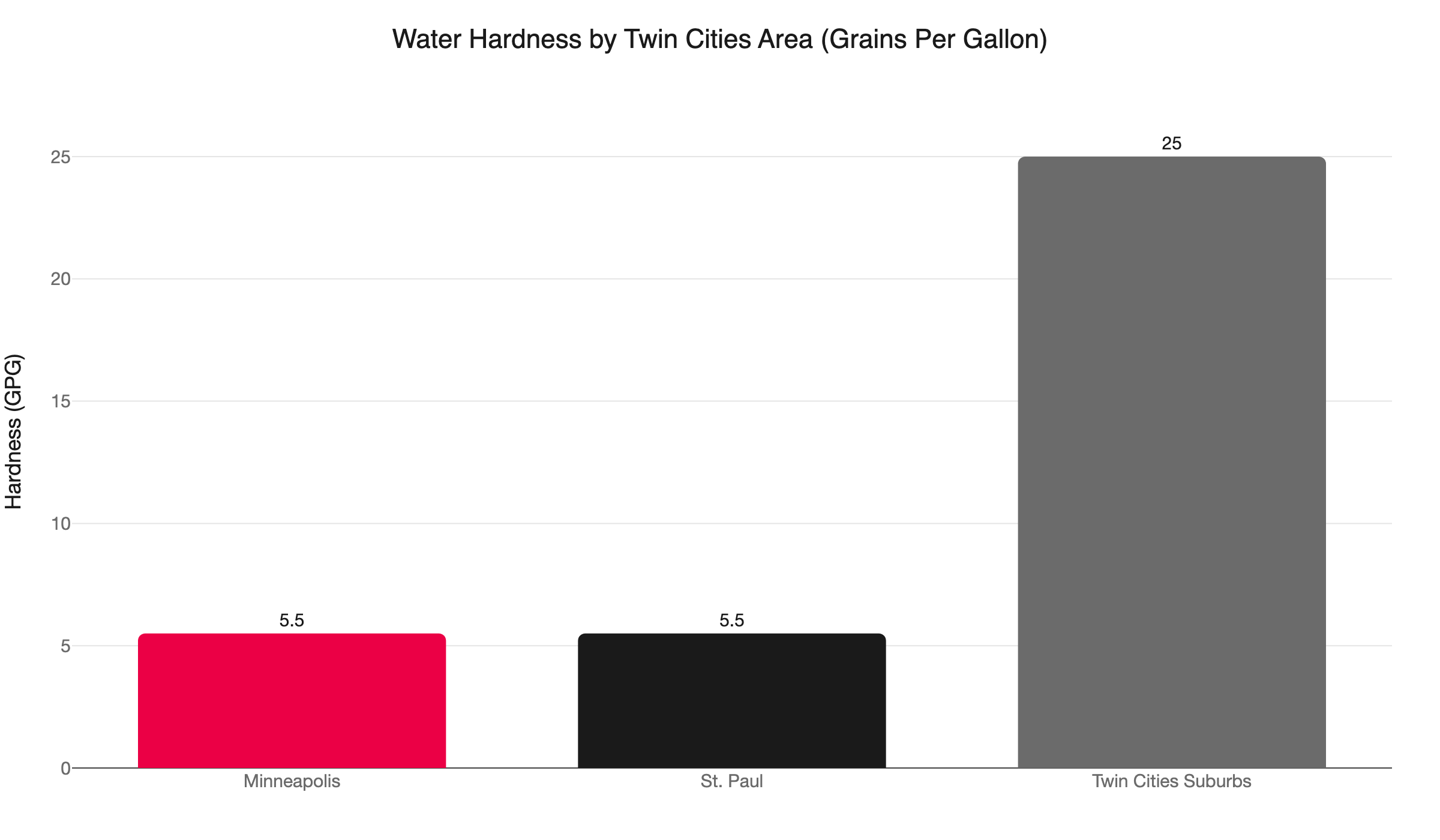
- Suburban and well-water Twin Cities homes often see [15-35 grains per gallon (GPG) of water hardness](https://hillwater.com/blog/minneapolis-water-quality-and-water-hardness-data/). That is scale-forming territory far above the national average.
- A residential power flush takes 6-8 hours and typically costs $600-$1,200 in the Twin Cities.
- A magnetic filter installed after a flush traps future sludge before it reaches the heat exchanger.
- If your boiler also needs multiple component replacements, flushing first may not be the best call. A replacement conversation makes more sense at that point.
- [CenterPoint Energy](https://www.centerpointenergy.com/en-us/savings-solutions/energy-efficiency/heating-systems) offers up to $500 in rebates for a qualifying condensing boiler replacement. Factor that in if your boiler is aging and losing efficiency.
Water Hardness by Twin Cities Area (Grains Per Gallon)
Cold spots on your radiators, constant restarts, or black water when you bleed a valve. All three are signs a boiler power flush in Minnesota may be overdue. Twin Cities boilers face a problem most national guides skip: magnetite sludge and hard-water scale often build up together. This guide covers both. You will learn what they are, how to spot them, and what a flush realistically costs here.
## What Is a Boiler Power Flush?
**A boiler power flush forces a pressurized mix of water and cleaning chemicals through every pipe, radiator, and component in your hydronic system. It breaks up and expels accumulated sludge and deposits. The process takes 6-8 hours for a typical home, though heavy buildup can [stretch the job into a second day](https://howellmechanical.com/blog/power-flushing-for-boilers/).**
A hydronic heating system is a closed loop. Water circulates from the boiler through pipes to your radiators, transferring heat, then returns to be reheated. Over years, two things accumulate inside that loop. The first is iron oxide sludge, called magnetite. The second is mineral scale from dissolved calcium and magnesium in your water.
Both reduce heat transfer. Both make your boiler work harder. Left long enough, both cause damage beyond what a flush can fix.
A power flush addresses both at once. The machine connected to your system generates enough flow and pressure to scour deposits from pipe walls. It expels them from the system through a waste outlet. After the flush, your technician adds a corrosion inhibitor to prevent new buildup from the first day forward.
## Why Do Minnesota Boilers Face a Harder Sludge and Scale Problem?
**Minnesota city water is relatively soft, but suburban and well-water homes regularly see 15-35 GPG of hardness - well above the national average. Combined with a 6-7 month heating season, that makes sludge and scale accumulate faster here than in milder climates.**
Minneapolis city water averages about 5.5 GPG of hardness, with a pH near 9.0. That elevated pH increases scaling potential in any heated system. St. Paul runs similarly at 5-6 GPG after lime softening.
Suburbs and well-water homes are a different story. [Water hardness in those areas commonly runs 15-35 GPG](https://hillwater.com/blog/minneapolis-water-quality-and-water-hardness-data/), with some communities exceeding 25 GPG. That is two to five times the national average. Every 5 GPG of hardness deposits about 0.4 lbs of scale per year in heating equipment. That translates to roughly an 8% efficiency loss and 8% higher energy costs.
Twin Cities homeowners already replace water heaters 35% more frequently than the national average. The same scale chemistry works on your boiler, your circulator pump, and every narrow waterway in a modern heat exchanger.
Minnesota's heating season runs roughly October through April. That six-to-seven month stretch means your boiler runs heavily without a break. A system that might safely go seven years in a milder climate may need attention after five years here.
## What Are the Signs Your Boiler Needs a Power Flush in Minnesota?
**Watch for these nine symptoms. Any one of them warrants a professional diagnostic visit. Three or more together strongly suggest sludge or scale buildup has reached the point where a flush is the right next step - not just another bleed or restart.**
Based on documented hydronic system behavior, [these are the primary indicators](https://howellmechanical.com/blog/power-flushing-for-boilers/) your boiler needs attention:
1. **Radiators are cold at the bottom but warm at the top.** Sludge settles and blocks the lower section where water flows in.
2. **You have to bleed radiators constantly.** Air-like symptoms often trace to magnetite gas forming in the loop.
3. **No water comes out when you bleed a radiator.** Heavy sludge can block the bleed valve port entirely.
4. **The water that comes out when bleeding is black or brown.** Discolored bleed water is a direct indicator of magnetite concentration.
5. **You hear banging, gurgling, or kettling from the boiler.** Partial blockages create turbulence and noise.
6. **The boiler shuts down and needs frequent restarts.** Scale on the heat exchanger causes localized overheating and safety shutoffs.
7. **Your circulator pump has failed or is running loudly.** Magnetite is attracted to ECM pump magnets, causing premature wear. For more on pump-specific symptoms, see [boiler circulator pump failure signs and costs](/blog/boiler-circulator-pump-failure-signs-cost-minnesota/).
8. **Some radiators stay cold while others heat normally.** Sludge can block one zone while other zones stay clear.
9. **Your energy bills have been climbing without explanation.** [Magnetite buildup can cut boiler efficiency by up to 6% in just three weeks](https://www.magstrainer.com/the-problem) of accumulation.
## What Is the Difference Between a Power Flush, Chemical Flush, and Magnetic Filter?
**A power flush uses pressurized flow and chemicals to physically scrub and expel deposits. A chemical flush soaks the system without the high-pressure step. A magnetic filter traps iron oxide continuously between service visits. They are not interchangeable - each addresses a different piece of the problem.**
Here is how each one works and when to use it:
**Power flush:** The most thorough option. A machine connects to your system and generates high-velocity flow in alternating directions. It dislodges both magnetite and scale. A chemical cleaner runs through the loop during the process. Best for systems with moderate to heavy existing buildup. Required before fitting a new magnetic filter in a contaminated system.
**Chemical flush (system clean):** A cleaning agent circulates through the system water for a week or more, then gets drained and flushed out. Lower cost than a full power flush, and less effective against heavy deposits. Appropriate for lightly contaminated systems or as a maintenance step between full power flushes.
**Magnetic filter:** A permanent device [installed on the return pipe to the boiler](https://www.usboiler.net/the-importance-of-a-magnetic-filter-in-your-hydronic-system.html), where it intercepts sludge before it reaches the heat exchanger, pump, or diverter valve. It captures iron oxide particles on a powerful magnet. It does not address mineral scale.
**The right sequence for most Minnesota systems:**
- Start with a power flush if buildup is present.
- Add a magnetic filter immediately after the flush.
- Schedule a chemical clean every few years as maintenance.
- Plan the next full flush based on how fast the magnetic filter accumulates sludge - your technician checks that at each annual visit.
City water homes in Minneapolis or St. Paul may need only periodic chemical cleans between power flushes. Suburban and well-water homes need both sludge management (magnetic filter) and active scale management. A water softener is the most effective long-term fix for scale in those areas.
## How Much Does a Boiler Power Flush in Minnesota Cost?
**In the Twin Cities, expect to pay $600-$1,200 for a residential boiler power flush. The exact number depends on system size, how heavily the system is contaminated, and whether the job runs one day or two.**
Competing articles describe the cost as [simply "hundreds of dollars"](https://howellmechanical.com/blog/power-flushing-for-boilers/) - which understates what Twin Cities homeowners should actually budget. At local labor rates plus chemical costs, a 6-8 hour service call puts the range at $600-$1,200 for most homes. A large multi-zone system or a severely contaminated one can run higher.
What drives the cost up:
- More radiators and longer pipe runs
- Heavy magnetite or scale requiring extended flush time
- A second service day for severe buildup
- Adding a magnetic filter at the time of the flush (recommended - budget an additional $200-$400 for parts and install)
Adding a magnetic filter at flush time is almost always worth it. Without one, the cleaned system begins accumulating sludge again from day one. The filter extends the interval between flushes significantly and pays for itself over the next service cycle.
For comparison, your [annual boiler maintenance visit](/blog/boiler-annual-maintenance-what-to-expect-minnesota/) typically runs $95-$250. That covers inspection and tune-up, not a power flush. A flush is a deeper intervention done every 5-6 years, not every season.
## How Often Should Twin Cities Homeowners Schedule a Boiler Power Flush?
**Every 5-6 years is a reasonable baseline for most residential boilers. Homes with hard water, common in Twin Cities suburbs and on private wells, may need it more often. A magnetic filter fitted after the last flush extends that window significantly.**
A few factors affect where your system falls in that range:
**Water source and hardness:** Minneapolis or St. Paul city water puts you closer to the 5-6 year end. Suburban or well water above 15 GPG without a softener pushes the interval toward 3-4 years.
**Boiler type:** Older cast-iron boilers tolerate sludge better than modern high-efficiency units. [Modern high-efficiency boilers and ECM pumps have narrower waterways](https://www.magstrainer.com/the-problem) that are more vulnerable to blockage at lower contamination levels.
**System size:** Larger multi-zone systems have more pipe surface area and more places for sludge to settle. Size and age together push toward more frequent attention.
**Previous maintenance history:** A system that has never been flushed has been accumulating sludge since it was installed. The first flush on a neglected system matters the most.
The most practical guide is the magnetic filter itself. Your annual maintenance technician can pull and inspect the filter cartridge. The rate at which it fills with sludge is a direct read on how quickly contamination is building up. That gives you real data for adjusting the flush interval.
## When a Power Flush Is Not Worth It
Not every boiler with sludge should get a power flush. Two situations where the math does not favor one:
**The boiler also needs multiple component replacements.** If diagnostics reveal a failing heat exchanger, a pump near end of life, and a bad zone valve, flushing first does not make sense. You would be spending $600-$1,200 to clean a system you are about to overhaul. The better call is a replacement conversation first. [Flushing is most effective when the equipment itself is sound](https://howellmechanical.com/blog/power-flushing-for-boilers/) and the system just needs cleaning. After a new boiler is installed, flush the system after the first season to clear any install debris and fit a magnetic filter immediately.
**The boiler is past its useful life.** Boilers in the Twin Cities typically last 15-25 years with good maintenance. A boiler past that range with multiple failing symptoms is not going to perform reliably after a flush. A flush extends the life of a system that still has life in it. It cannot restore a boiler already in decline.
If replacement is on the table, our [condensing boiler upgrade cost guide for Minnesota](/blog/condensing-boiler-upgrade-cost-minnesota/) covers what to expect to budget and what separates a condensing unit from a standard one.
## What Happens After a Boiler Power Flush?
**After every power flush, a corrosion inhibitor must be added to the system water before it is sealed and returned to service. Without it, magnetite begins reforming immediately.**
Draining and refilling a system during a flush introduces fresh oxygen. Iron oxide forms when metals corrode in oxygenated water. The inhibitor coats pipe walls and components, slowing corrosion and suppressing future sludge formation. [Skipping the corrosion inhibitor after a flush](https://genzryan.com/blog/boiler-maintenance/) shortens the next interval significantly. The freshly cleaned system is primed to accumulate faster than before.
The second step after a flush is fitting a magnetic filter. The filter mounts on the return pipe. All system water passes through it on the way back to the boiler. [That position intercepts the highest concentration of sludge](https://www.usboiler.net/the-importance-of-a-magnetic-filter-in-your-hydronic-system.html) before it can reach the heat exchanger, the circulator pump, or the diverter valves.
[ADEY, a leading magnetic filter manufacturer, calls sludge "the number one cause of central heating breakdown."](https://adey.com/us/homeowner/magnaclean-hp) Fitting a filter is the most cost-effective long-term protection for a freshly flushed system.
Your annual boiler service visit should include pulling and cleaning the magnetic filter and checking inhibitor concentration. For a full picture of what that visit covers, [annual boiler maintenance in Minnesota](/blog/boiler-annual-maintenance-what-to-expect-minnesota/) walks through everything your technician should check each season.
## Is a CenterPoint Rebate Available If You Replace Instead of Flush?
**Yes. CenterPoint Energy offers $300 for a standard boiler replacement at 85% AFUE or better, $500 for a condensing boiler at 91% AFUE or better, and $1,000 for a qualifying combination boiler. These rebates apply to new equipment, not to flushing - but they change the math when replacement is on the table.**
A boiler losing 6-15% efficiency to scale and sludge is costing you money every month. A condensing boiler running at 91% AFUE or better uses significantly less gas than one hobbled by buildup. [CenterPoint's current rebate levels](https://www.centerpointenergy.com/en-us/savings-solutions/energy-efficiency/heating-systems) are worth reviewing before making the flush-vs.-replace decision.
These rebates do not apply to flushing services. They apply to new equipment meeting the AFUE thresholds. But when your current boiler is old, contaminated, and underperforming, the combined effect of a rebate plus lower operating costs can make replacement the smarter call - even if the upfront number is higher.
The right answer starts with a diagnostic. Our team can assess what is in your system, whether flushing makes sense, and whether the numbers point toward replacement instead.
## Schedule Your Boiler Power Flush in Minnesota
Northern One Hour Heating & Air Conditioning is locally owned and operated in Ramsey, MN. Our team serves the Twin Cities and surrounding communities, handling [boiler diagnostics, power flushes, magnetic filter installation, and full maintenance](/heating/boiler-repair-maintenance/).
If your radiators have cold spots, your system is noisy, or your boiler has never been flushed and it has been more than five years, the right first step is a diagnostic visit. We will tell you what is in the system, what it needs, and what it costs before any work begins.
We back every appointment with the "Always On Time… Or You Don't Pay a Dime!(R)" promise. If we are late, you do not pay.
Call (763) 260-6662 or book online to schedule your boiler diagnostic or power flush today.
---
# AC Drain Pan Full of Water: Primary vs. Secondary Pan?
URL: https://northernonehour.com/blog/ac-drain-pan-full-overflow-causes-fix-twin-cities/
Published: 2026-10-03 | Category: Cooling
Find out what a full AC drain pan means for your Twin Cities home - and why which pan has water changes everything about your next steps.
Key Takeaways
- An AC drain pan full of water is not one problem with one answer. Which pan is full is the first question to answer.
- The primary pan sits directly under the evaporator coil. It handles condensation every cooling cycle. Water there usually means a clog, a failed condensate pump, or a leveling issue.
- The secondary pan sits under the entire air handler and should always be bone dry. Water there means the primary system already failed, or something is happening with the coil itself.
- A frozen evaporator coil can overwhelm both drain pans when it thaws. That is a coil problem, not a drain problem. Clearing the line will not fix it.
- If the large overflow pan has water in it, turn the system off before you do anything else.
- Attic AC installations are a structural risk when the secondary pan activates. Treat them as emergencies.
## Which Pan Do You Have?
**Two pans, two different jobs. The primary pan sits under the evaporator coil and collects condensation during every cooling cycle. The secondary pan sits under the air handler and should always be dry. Which pan has water determines whether this is a maintenance call or a shut-it-down-now situation.**
Most residential forced-air AC systems have both pans. The primary pan is the smaller one. It lives inside the air handler cabinet, directly under the evaporator coil. You usually need to remove an access panel to see it.
The secondary pan is larger. It sits under the entire air handler unit. Some technicians call it the overflow pan or the auxiliary pan. Under a properly working system, it stays completely dry, all season.
Water in the primary pan points to a drainage problem. Water in the secondary pan points to a drainage failure, or something more serious happening upstream at the coil. These two outcomes lead to different repairs, different urgency levels, and sometimes a different technician call entirely.
Getting this right saves time and money. A homeowner who calls for a drain clog and actually has a coil problem gets the drain cleared and watches the same symptom return. The pan location is the sorting question. Everything else flows from it.
---
## What Is the Primary Drain Pan?
**The primary drain pan catches condensation that drips off the evaporator coil during normal cooling. It drains continuously through a condensate line to a floor drain or outdoor discharge point. Water in this pan means drainage has slowed or stopped. The cause is almost always a clog, a failed pump, or a pan that has shifted out of level.**
The drain line exits the primary pan, runs to a trap, and terminates at a discharge point. Properly installed lines are pitched at least 1/8 inch per foot so water flows away from the pan. A flat or back-pitched line holds water and creates the conditions for algae and mold growth inside the pipe.
Most well-installed systems include a float switch in the primary pan. When water reaches a set level, the float switch cuts power to the unit before the pan overflows. If the float switch is missing, wired incorrectly, or has failed, the primary pan overflows into the secondary pan below.
---
## What Is the Secondary Drain Pan?
**The secondary pan is a safety device, not a normal drainage component. It catches overflow only if the primary drain system fails. It should hold zero water during normal operation. Any water in it means the primary system already overflowed, or the coil produced more meltwater than both systems could handle at once.**
[Minnesota Mechanical Code 307.2.3](https://up.codes/viewer/minnesota/imc-2018/chapter/3/general-regulations) requires a secondary pan or overflow switch wherever condensate overflow could damage building components. The pan must be at least 1.5 inches deep. It must also be at least 3 inches larger than the unit in each horizontal direction, made of corrosion-resistant material.
The secondary pan has its own drain line to a separate, conspicuous discharge point. [IRC 2024 M1411.3](https://www.jaspector.com/codes/irc-2024/ch13-general-mechanical/condensate-management-irc-2024/) prohibits the secondary line from sharing the primary drain line. If both pans drain to the same pipe, one clog defeats both protection systems at once.
---
## Why Is My Primary Pan Full of Water?
**A clogged drain line, a failed condensate pump, or an out-of-level pan are the three most likely causes. All three are maintenance-category repairs. You generally don't need to shut the system off while waiting for service, unless the water is close to spilling into the secondary pan.**
**Clogged drain line.** Algae, mold, and airborne dust accumulate inside the condensate line over a cooling season. Even a partial clog slows drainage and backs up the primary pan. Flushing the line with distilled white vinegar every few months helps prevent buildup. An established clog usually requires a technician to clear properly.
**Failed condensate pump.** Basement installations that can't drain by gravity use a small electric pump. When the pump fails, water fills the primary pan and eventually overflows.
**Out-of-level pan.** An air handler that has settled or shifted can tilt the primary pan. Water pools at the low end instead of flowing toward the drain outlet. This looks like a clog but isn't one.
One less obvious factor is coil fouling. A coil matted with dust and debris restricts airflow and runs colder than it should. A colder coil collects more moisture per hour. Even with a clear drain line, a fouled coil can produce more condensate than the system was designed to handle continuously.
For a step-by-step walkthrough on diagnosing and clearing a blocked line, see our post on [fixing a clogged AC condensate drain line](/blog/ac-condensate-drain-line-clogged-fix/).
---
## Why Is My Secondary Pan Full of Water?
**A full secondary pan means the primary drainage system already overflowed, or a frozen evaporator coil thawed and flooded both pans at once. These are different problems with different repairs. Either way, the immediate response is the same: turn the system off.**
[TheUnclog](https://theunclog.com/blogs/ac-drain-line-help/ac-drain-pan-full-of-water) frames the secondary pan correctly: "The large emergency pan beneath the unit should normally be dry. Standing or rising water there means the normal drainage path is slow, blocked, damaged, or unable to keep up."
That description covers the overflow scenario. But it also describes what happens after a coil freeze. A frozen coil thaws and dumps a large, sudden volume of water. Both drain systems get overwhelmed at once. The secondary pan fills not because the primary line clogged, but because the coil created more water than both drains were designed to handle in a short window.
A slow rise in the secondary pan suggests a gradual primary clog. A sudden large volume suggests a coil thaw. Both require the same immediate response, but the repair call is different.
---
## Why a Full Secondary Pan Can Signal a Coil Problem, Not a Drain Problem
When an evaporator coil freezes, it builds ice over hours or days. When the system cycles off, or when the ice becomes thick enough to restrict airflow, the ice melts. The meltwater is sudden and large in volume.
[AceHVAC](https://acehvaccleveland.com/why-your-hvac-secondary-drain-pan-is-filling-with-water-and-how-to-stop-a-flood/) puts it plainly: "When evaporator coils freeze, they produce excessive condensation when they thaw. This overwhelms both primary and secondary drain systems."
Clearing the drain line does nothing here. The primary line can be completely clear. The coil created more water than both drains could move in that amount of time. The repair starts at the coil, not the drain.
Three things cause an evaporator coil to freeze:
- **Low refrigerant.** When refrigerant pressure drops below the design range, the coil surface falls below freezing. Moisture in the air turns to ice on the coil surface. Refrigerant doesn't run out on its own. A low charge means there is a leak somewhere in the system.
- **Restricted airflow.** A severely dirty air filter, a blocked return vent, or a dirty blower wheel slows warm air across the coil. The coil stays too cold and ice forms.
- **Dirty coil surface.** Dust and debris on the coil act as insulation. Airflow through the coil drops, the coil temperature drops, and icing follows.
Running the system with a coil problem doesn't just produce more water. It delays a refrigerant repair that will only get more expensive. See our post on [frozen evaporator coil causes and what to do](/blog/frozen-evaporator-coil-why-ac-ice-twin-cities/) for the full breakdown.
---
## What If My AC Evaporator Coil Is Frozen?
**Turn the system off completely. Set the thermostat to "off" or "fan only." Do not run cooling cycles while the coil is iced. [TheUnclog](https://theunclog.com/blogs/ac-drain-line-help/ac-drain-pan-full-of-water) is direct: "A frozen coil is not fixed by clearing the drain alone. If cooling is weak, airflow is low, or you see ice, turn the system off."**
After the coil thaws - usually two to four hours - check the air filter. A severely restricted filter is sometimes the only fix. Replace it, let the system dry, and restart. If the coil refreezes with a clean filter installed, the cause is almost certainly refrigerant.
[North Country Aire](https://www.northcountryaire.com/signs-of-a-refrigerant-leak-in-cambridge-mn-frozen-ac-coils-more/) lists the key indicators of a refrigerant leak in Minnesota homes: high indoor humidity, noticeably weak cooling output, hissing or bubbling sounds near the indoor unit or line set, and oily residue at refrigerant line fittings. If you notice any of these, call before running the system again.
Our post on [AC refrigerant leak signs in Minnesota](/blog/ac-refrigerant-leak-signs-minnesota/) covers each warning sign in detail.
---
## What Minnesota Homeowners Need to Know About AC Drain Pans
Minnesota's climate creates condensate risk factors that national troubleshooting guides rarely address.
**High humidity in July and August.** The Twin Cities regularly see high dew points mid-summer. More humidity means more condensate produced per hour of runtime. A drain system that handled light loads in May can overflow in August with just a partial restriction in the line.
**Cottonwood and pollen seasons.** Every spring, the Twin Cities get a heavy airborne pollen and cottonwood load. That debris coats evaporator coils faster than in most other climates. A coil that was clean in September can have meaningful fouling by June. Fouled coils restrict airflow, lower coil surface temperatures, and increase the risk of icing and overflow when summer humidity peaks.
**Copper line stress from thermal cycling.** Minnesota's temperature swings - subzero winters to humid summers - stress refrigerant lines and coil connections every year. Small leaks develop at brazed fittings over time from repeated expansion and contraction. These leaks are subtle at first. By the time a frozen coil fills both drain pans, the refrigerant charge may already be significantly low.
**Basement vs. attic placement.** Most Twin Cities homes have the air handler in the basement. A primary pan overflow there is a wet floor and a service call. Inconvenient, not catastrophic. The bigger basement risk is a failed condensate pump, since gravity drainage often isn't possible. Older homes that added central air to an existing boiler system may have an attic air handler instead, and the consequences of an overflow there are far more serious.
---
## What About Attic AC Systems?
**An attic air handler with a full secondary pan is a structural emergency. Condensate overflow in an attic saturates insulation, rots sheathing, and damages the ceiling below. Turn the system off immediately and call. Do not run it while waiting for the technician.**
[Structure Tech Home Inspections](https://structuretech.com/ac-condensate-rules-for-attics/) notes that float switches are standard practice in Minnesota attic installations for exactly this reason. A properly installed and wired float switch shuts down both the compressor and the blower when the secondary pan activates.
A common wiring deficiency worth knowing: some float switches are wired to disable only the compressor. The blower keeps running. That means the system keeps pulling humid air across the problem coil while the pan fills. If you're unsure how your float switch is wired, ask a technician to verify it at your next service call.
---
## What Does Minnesota Code Require for Condensate Drains?
**Minnesota follows the International Mechanical Code with state amendments. Equipment installed where overflow could damage the building must have a secondary pan with a separate drain, a shutoff switch, or both. The secondary drain line must be independent of the primary. They cannot share the same pipe.**
[Minnesota Mechanical Code 307.2.3](https://up.codes/viewer/minnesota/imc-2018/chapter/3/general-regulations) gives installers four compliance paths: an auxiliary pan draining to a conspicuous point, an overflow drain on the equipment pan itself, an auxiliary pan with a UL 508-listed water-level shutoff switch, or a standalone UL 508 shutoff device in the primary drain.
The "conspicuous location" requirement is intentional design. When the secondary drain terminates above a window or over a walkway, a drip alerts someone before the pan overflows. That visible drip is the warning sign the system is designed to produce.
[Bryan Orr at HVAC School](https://www.hvacrschool.com/condensate-drain-codes-best-practices/) confirms these secondary protection requirements apply to all condensate-producing equipment, including rooftop units and ductless mini-splits, not only standard split systems.
---
## When to Call Northern One Hour
A clogged primary drain line is a scheduled service call. Most are cleared and the system is back running the same visit. A single tune-up visit, which includes condensate system inspection and clearing, runs $95-$250.
But several situations warrant a faster call.
**Call now if:**
- The secondary overflow pan has any water in it
- You see ice on the indoor unit or refrigerant lines
- Your AC is running but cooling is noticeably weaker than usual
- You hear hissing or bubbling sounds near the indoor unit or line set
- The air handler is in the attic and any pan has water
**Schedule a service call soon if:**
- The primary pan had standing water but the drain now seems clear
- Your system hasn't had condensate system service in more than a year
- You replaced the air filter and the coil refroze anyway
Northern One Hour is a locally owned and operated HVAC company in Ramsey, MN, serving homeowners throughout the Twin Cities, including Blaine, Maple Grove, Plymouth, Brooklyn Park, Woodbury, Bloomington, Minneapolis, and St. Paul. Our technicians show up when they're scheduled - "Always On Time… Or You Don't Pay a Dime!(R)" - and they'll tell you exactly what caused the problem and what the repair costs before any work begins.
Call (763) 260-6662 or [schedule your visit online](/air-conditioning/air-conditioning-repair/).
---
# How to Claim the Heat Pump Tax Credit on Form 5695
URL: https://northernonehour.com/blog/heat-pump-tax-credit-how-to-claim-form-5695-minnesota/
Published: 2026-10-03 | Category: HVAC
The mechanics of claiming the heat pump tax credit on Form 5695 Part II, including the QMID requirement, utility rebate adjustments, and nonrefundable limits.
Key Takeaways
- Air source heat pumps use **Part II** of Form 5695 (IRC Section 25C, Energy Efficient Home Improvement Credit). Geothermal uses Part I (Section 25D), no dollar cap, carryforward allowed.
- The credit rate is 30% of eligible installed cost, capped at **$2,000** for the heat pump pool (heat pumps, heat pump water heaters, and biomass stoves or boilers).
- A **separate $1,200 annual pool** covers furnaces, central AC, windows, doors, and electrical panel upgrades. You could receive up to $3,200 in total from both pools in one tax year.
- New for 2025: you must report a **Qualified Manufacturer Identification Number (QMID)** on Form 5695. No QMID, no credit.
- The Part II credit is **nonrefundable with no carryforward**. Unused credit is permanently lost.
- Any utility rebate excluded from your gross income **reduces your cost basis** before the 30% calculation applies.
- Tax year 2025 is the **last year to claim**. Equipment must be installed by December 31, 2025.
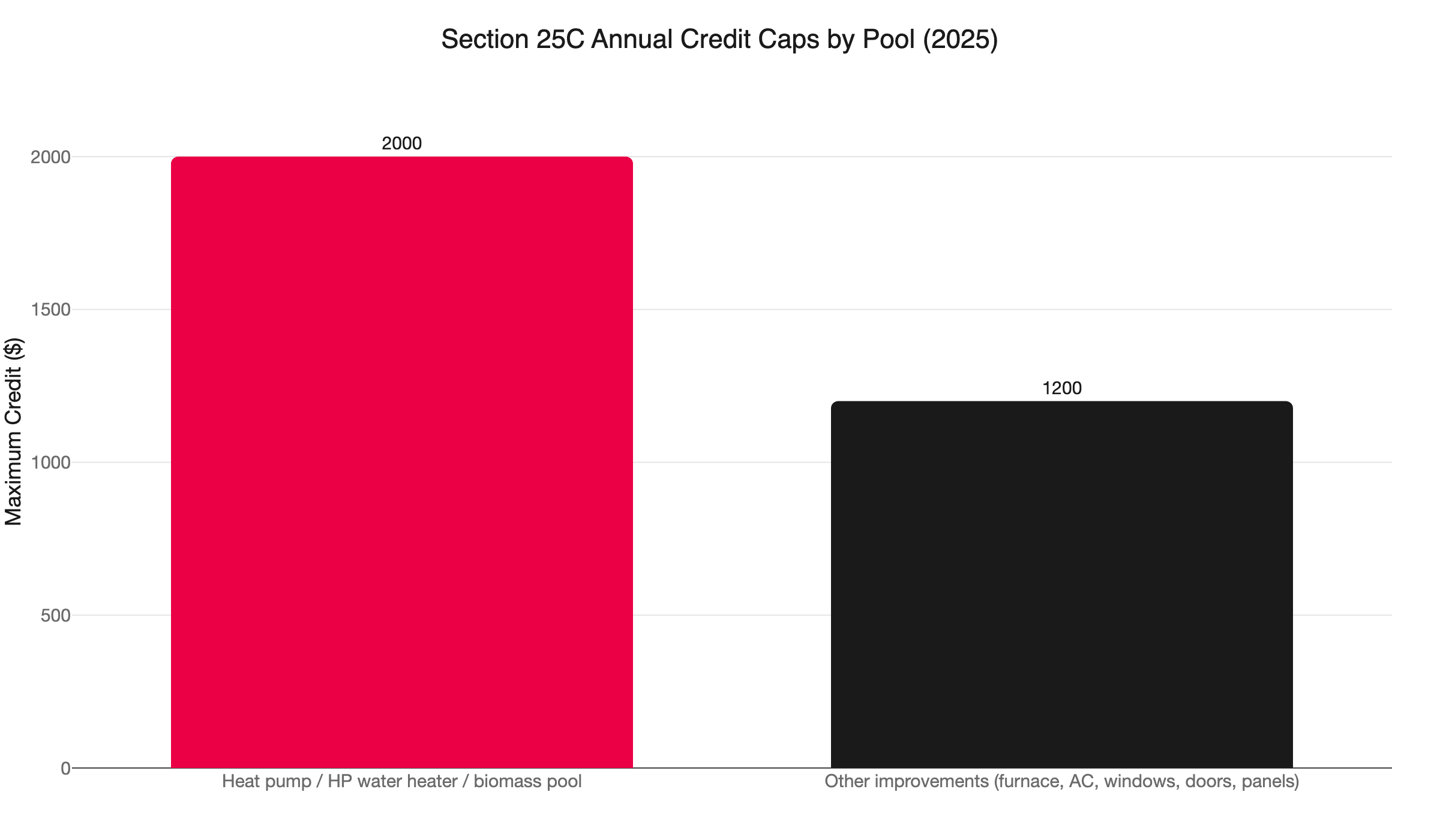
Section 25C Annual Credit Caps by Pool (2025)
## How to Claim the Heat Pump Tax Credit: What Most Guides Leave Out
Most articles about how to claim the heat pump tax credit land on the same three facts: 30% credit, $2,000 cap, file Form 5695. All three are accurate. None of them tell you what goes wrong after you buy qualifying equipment.
The homeowners who lose money aren't confused about the basics. They're missing a four-character code the contractor forgot to put on the invoice. They applied the 30% calculation to the wrong cost basis because Xcel sent a rebate that should have reduced it first. They hit a nonrefundable ceiling mid-calculation and lost hundreds of dollars they thought they had already earned.
This guide walks Form 5695 Part II line by line. It is written for Twin Cities homeowners navigating Xcel Energy and CenterPoint rebates alongside the federal credit.
## Which Form Do You File, and Where Does the Heat Pump Go?
**File [Form 5695](https://www.irs.gov/pub/irs-pdf/i5695.pdf). Air source heat pumps belong on Part II (Section 25C). Geothermal heat pumps go on Part I (Section 25D). One form, two separate credit structures with different caps, different qualifying standards, and different rules for unused credit. Do not put an air source unit on Part I or vice versa.**
Most articles treat the two as interchangeable. They aren't. The structural differences matter:
- **Part II (air source heat pumps)**: 30% of eligible cost, capped at $2,000. Nonrefundable, no carryforward. Equipment must meet the CEE highest-efficiency tier.
- **Part I (geothermal heat pumps)**: 30% of eligible cost, no dollar cap. Unused credit carries forward to future years. Qualifying standard is Energy Star certification, a lower bar than Part II.
If you have both types of equipment, complete both sections on the same Form 5695. If you have only an air source heat pump, fill out Part II only.
Part II shares its credit year with other home improvements. A separate $1,200 annual pool covers central AC, furnaces, windows, exterior doors, insulation, and electrical panel upgrades. The heat pump's $2,000 pool is independent of that $1,200. A homeowner who replaces a heat pump and upgrades their electrical panel in the same tax year could receive up to $2,600 in total credits from both pools, and up to $3,200 if they also replace a furnace or add windows.
## Does Your Heat Pump Actually Qualify?
**To qualify under Part II, your heat pump must achieve the highest efficiency tier established by the Consortium for Energy Efficiency (CEE) as of January 1 of the installation year. This standard is stricter than Energy Star. Energy Star certification alone is not enough. Ask your contractor to confirm CEE highest-efficiency tier compliance before you sign the contract.**
This distinction trips up more Minnesota homeowners than any other qualification detail. In the Twin Cities (HVAC Climate Zone 6) and across northern Minnesota (Climate Zone 7), the only practical air source option is a cold-climate certified unit that holds rated capacity well below 0°F. Models on the NEEP Air Source Heat Pump Specification rated to operate at -13°F or colder tend to overlap with CEE's highest-efficiency tier. Your contractor should be able to confirm this in writing before installation day.
The basic eligibility checkboxes are Lines 21a through 21c on [Form 5695](https://www.irs.gov/pub/irs-pdf/i5695.pdf). All three must be "yes" before you proceed:
- **Line 21a**: Your main home is in the United States.
- **Line 21b**: You are the original user of the equipment. Buying a home that already has a heat pump installed does not qualify, even if the unit is relatively new.
- **Line 21c**: The installation is in an existing home, not new construction. Part II credits are not available for newly built homes.
If any answer is "no," you cannot claim the credit for that equipment.
Your contractor should provide the manufacturer's written certification confirming the unit qualifies. Store it with your tax records. Do not attach it to your return; the IRS can request it separately if needed.
## What Is a QMID, and How Do You Get One?
**A QMID (Qualified Manufacturer Identification Number) is a four-character alphanumeric code the manufacturer assigns to qualifying equipment. Starting January 1, 2025, you must enter the QMID on Form 5695 when claiming any Part II heat pump credit. Missing QMID means denied credit, full stop.**
This requirement is new for tax year 2025. The [Form 5695 instructions](https://www.irs.gov/pub/irs-pdf/i5695.pdf) added it for "specified property," which includes heat pumps and heat pump water heaters.
The QMID flows from the manufacturer to the contractor to you. Before the installation crew leaves your home, ask directly: "Can you give me the QMID for this unit?" It should appear on your invoice or on the manufacturer's product certification document. If your contractor isn't familiar with QMIDs, ask them to contact the manufacturer's technical or warranty support line before tax season.
A missing QMID is easy to catch on installation day and nearly impossible to reconstruct during filing. Build it into your checklist for the day the job is completed.
## Walking Through Form 5695 Part II, Line by Line
Here are the key lines for a standard air source heat pump installation.
**Lines 21a-21c**: Eligibility checkboxes. All must be "yes." See the section above.
**Line 29a**: Enter the QMID and your installed cost for the single most expensive qualifying heat pump placed in service this year.
**Line 29b**: Any additional qualifying heat pumps beyond the most expensive one. Attach a statement listing the QMID and cost for each additional unit.
**Lines 29c and 29d**: Heat pump water heaters, same structure as 29a and 29b.
**Lines 29e and 29f**: Biomass stoves and boilers.
**Line 29h**: Sum the qualifying amounts from lines 29a through 29g, then apply the $2,000 cap. Calculate 30% of your total eligible cost. If that figure is below $2,000, that is your amount. If it exceeds $2,000, enter $2,000.
To make the math concrete: a heat pump installation totaling $10,000 fully installed generates a 30% credit of $3,000, capped to $2,000. An installation totaling $6,000 generates a 30% credit of $1,800, which is below the cap and enters as $1,800. The cap only cuts you off above $6,667 in eligible costs.
**Line 31 worksheet**: This is where the nonrefundable mechanic plays out. The worksheet starts with your tax liability from Form 1040, line 18. It then subtracts foreign tax credits, education credits, retirement savings credits, and several other credits. The resulting number is your ceiling for the Part II credit. If it is below your line 29h amount, you can only claim the lower figure. The remainder is gone permanently.
**Line 32**: The final credit amount. It flows to Schedule 3 (Form 1040), line 5.
The full [Form 5695 instructions](https://www.irs.gov/pub/irs-pdf/i5695.pdf) detail each worksheet step on pages 6-7 if you want to follow along exactly.
## What Happens If You Got a Utility Rebate?
**If your utility company provided a rebate for your heat pump installation that was excluded from your gross income, you must subtract that rebate from your installed cost before calculating the 30% credit. This rule applies even if the contractor received the rebate on your behalf rather than you receiving it directly.**
[IRS Fact Sheet 2025-01](https://www.irs.gov/pub/taxpros/fs-2025-01.pdf) is explicit: "This rule also applies if a third party (such as a contractor) receives the subsidy on your behalf." The [IRS FAQ for energy home improvement credits](https://www.irs.gov/credits-deductions/frequently-asked-questions-about-energy-efficient-home-improvements-and-residential-clean-energy-property-credits) covers the same mechanics in more detail.
Here is the math with an Xcel rebate. Your heat pump installation totals $14,000 fully installed. Xcel provides a $1,500 rebate excluded from your income. Your eligible cost drops to $12,500. Your credit is 30% of $12,500, which is $3,750, capped at $2,000. In this case, the rebate didn't change your final credit because you were already well above the cap.
Now run the same math on a smaller job. Installation cost: $8,000. Xcel rebate excluded from income: $2,000. Eligible cost: $6,000. Your credit drops from $2,000 (30% of $8,000) to $1,800 (30% of $6,000). That $200 difference is real money and it comes entirely from a reporting omission.
One more rule that applies separately: amounts paid through any federal, state, or local program whose principal purpose is subsidized energy financing cannot be used to calculate the Part II credit at all. This is distinct from the rebate basis-reduction rule above.
For current Xcel Energy rebate amounts, verify directly at their programs and rebates page. CenterPoint rebate amounts also change. Check with them directly before filing. Do not rely on a third-party listing for rebate amounts; programs update more often than blogs do.
## What If Your Tax Bill Isn't High Enough?
**The Section 25C credit is nonrefundable. It can reduce your federal tax liability to zero, but not below zero. There is no carryforward. If the credit exceeds your actual tax bill, the difference is permanently lost.**
This is the mechanic that costs retired homeowners and part-year workers the most. A homeowner with a $700 federal tax liability who calculates a $2,000 credit walks away with $700 in tax savings. The remaining $1,300 is gone.
The line 31 worksheet is where this calculation happens. Run it before you assume the full $2,000 is available to you. If you can estimate your 2025 tax liability before you commit to the installation, do it. A conversation with a tax preparer before you sign an installation contract is worth more than the same conversation during filing season, when the timing can no longer be adjusted.
If your income is variable, look at whether other deductions or income recognition decisions in 2025 could raise your liability enough to use the full credit.
Compare this to Part I (geothermal): unused credit there does carry forward to subsequent years. That structural difference is meaningful when a geothermal system can cost $25,000 or more. For higher-cost installations against variable income, the carryforward provision in Part I is a significant advantage worth pricing into the comparison.
For two unmarried co-owners who split the cost of a shared installation, the $2,000 cap applies separately to each filer. Each person files their own Form 5695 and claims their proportionate share of the eligible cost. Two co-owners could collectively receive up to $4,000 in heat pump credits for a single installation.
## Can You Also Claim the Electrical Panel Upgrade?
**Yes, if the panel upgrade was required to enable the heat pump installation. Qualifying panel upgrades go on Lines 25a-25e of Form 5695 and can add up to $600 in credit. The panel and the heat pump must both be installed in 2025, or in consecutive years under the safe harbor.**
Per the [Form 5695 instructions](https://www.irs.gov/pub/irs-pdf/i5695.pdf), enabling property covers electrical panel upgrades made specifically to allow qualifying energy property to be installed and used. The $600 panel credit sits within the separate $1,200 annual aggregate for other improvements, which also includes windows, exterior doors, insulation, furnaces, and central AC.
The consecutive-year safe harbor is useful for homeowners who planned ahead. If you upgraded your panel in 2024 specifically to prepare for a heat pump installation in 2025, both can be treated as placed in service in 2025. The connection must be documented: the panel upgrade must have been made to enable the heat pump installation.
Keep documentation that ties the two together. Your contractor's proposal or invoice linking the panel work to the heat pump installation is the right paper trail.
One downstream note worth knowing: the allowed credit reduces your home's cost basis by the credit amount. This affects the capital gains calculation when you eventually sell. It is not a reason to skip the credit, but it is worth noting before a sale in the near term.
## Minnesota Notes: Xcel, CenterPoint, and the HOMES Program
The Twin Cities sits in HVAC Climate Zone 6. Northern Minnesota is Zone 7. A standard air source heat pump loses most of its rated heating capacity below 0°F. Cold-climate certified units rated to operate at -13°F or colder are the practical choice here, and they also align with the CEE highest-efficiency tier the credit requires. The equipment that works in a Minnesota winter is the equipment that qualifies.
**Xcel Energy** covers most Twin Cities suburbs and much of the metro. They offer residential air source heat pump rebates. Any Xcel rebate excluded from your gross income reduces your cost basis before the 30% calculation. Rebate amounts and program eligibility change: verify current figures at xcelenergy.com before filing, not from a third-party source.
**CenterPoint Energy** provides natural gas across much of the Twin Cities and offers rebates on qualifying dual-fuel and heat pump systems. Same basis-reduction rule applies. Verify current amounts directly with CenterPoint before filing.
**Minnesota HOMES rebates**: Minnesota received IRA funding for consumer HOMES rebates, with potential amounts up to $8,000 for heat pumps for income-qualifying households. As of this writing, Minnesota had not fully launched consumer-facing HOMES rebates through the IRA program. Check mn.gov/commerce for current status before assuming this program is available.
Minnesota does not have a parallel state income tax credit for heat pumps. The federal 25C credit is the primary tax incentive here. State programs run as rebates, not credits.
One local permit note: Minnesota requires building permits for new HVAC installations. Permit fees paid to the city or county are not installation costs and cannot be included in your credit calculation. Labor directly attributable to the heat pump installation is includable.
For a full breakdown of how rebate stacking works for Twin Cities homeowners, see our guide on [stacking HVAC rebates and tax credits in Minnesota](/blog/stacking-hvac-rebates-tax-credits-federal-state-utility-minnesota/). For more on the current rebate landscape, see [Minnesota heat pump rebates and tax credits](/blog/minnesota-heat-pump-rebates-tax-credits/).
## When Is the Last Year to Claim This Credit?
**December 31, 2025, is the final day to place qualifying equipment in service under Section 25C. Tax year 2025 returns, filed in spring 2026, are the last returns on which you can claim this credit. Equipment installed in 2026 does not qualify unless Congress passes an extension.**
"Placed in service" means installed and operational at your home, not ordered or under contract. A signed agreement in November does not protect you if the equipment is not physically installed and running by December 31.
In the Twin Cities, HVAC contractors fill their Q4 schedules fast. Equipment supply chains tighten late in the year. If you are planning a heat pump installation to capture the 2025 credit, schedule it by September or October. Waiting until December is a real risk to the installation date.
Northern One Hour is locally owned and operated, serving Ramsey, Blaine, Maple Grove, Plymouth, Brooklyn Park, and the broader Twin Cities area. We install cold-climate certified heat pumps and provide the manufacturer certification and QMID documentation you need for your Form 5695 filing.
We show up when we say we will. "Always On Time… Or You Don't Pay a Dime!(R)"
Call **(763) 260-6662** or [schedule your heat pump installation](/heat-pumps/) online. Financing is available for qualifying homeowners. Ask us about current options when you book.
---
# Variable Speed Blower Motor Furnace: Worth It in Minnesota?
URL: https://northernonehour.com/blog/variable-speed-blower-motor-furnace-benefits-minnesota/
Published: 2026-10-03 | Category: Heating
Minnesota furnaces run 7+ months for heat. What a variable speed blower motor saves, costs installed, and which 2026 rebates still apply.
Key Takeaways
- An ECM blower motor at minimum speed draws roughly 80 watts. A standard PSC motor draws 510-550 watts. The difference adds up fast over a 7-month Minnesota heating season.
- Minnesota logs about 8,000 heating degree days versus 800 cooling degree days. ECM electricity savings come overwhelmingly from heating, not as a summer AC bonus.
- There are three motor tiers, not two: PSC, constant-torque X13 ECM, and true variable speed ECM. Many homeowners are sold "ECM" and receive an X13 instead.
- In 2026, CenterPoint Energy is the only Twin Cities utility offering gas furnace rebates, up to $1,000 for 97%+ AFUE equipment. Xcel discontinued its program January 1, 2026. The federal 25C credit expired December 31, 2025.
- Duct condition matters. An ECM fighting high static pressure from undersized returns or kinked flex duct draws more current and loses most of its efficiency advantage.
- The best time to capture a variable speed upgrade is at furnace replacement, not as a standalone motor swap.
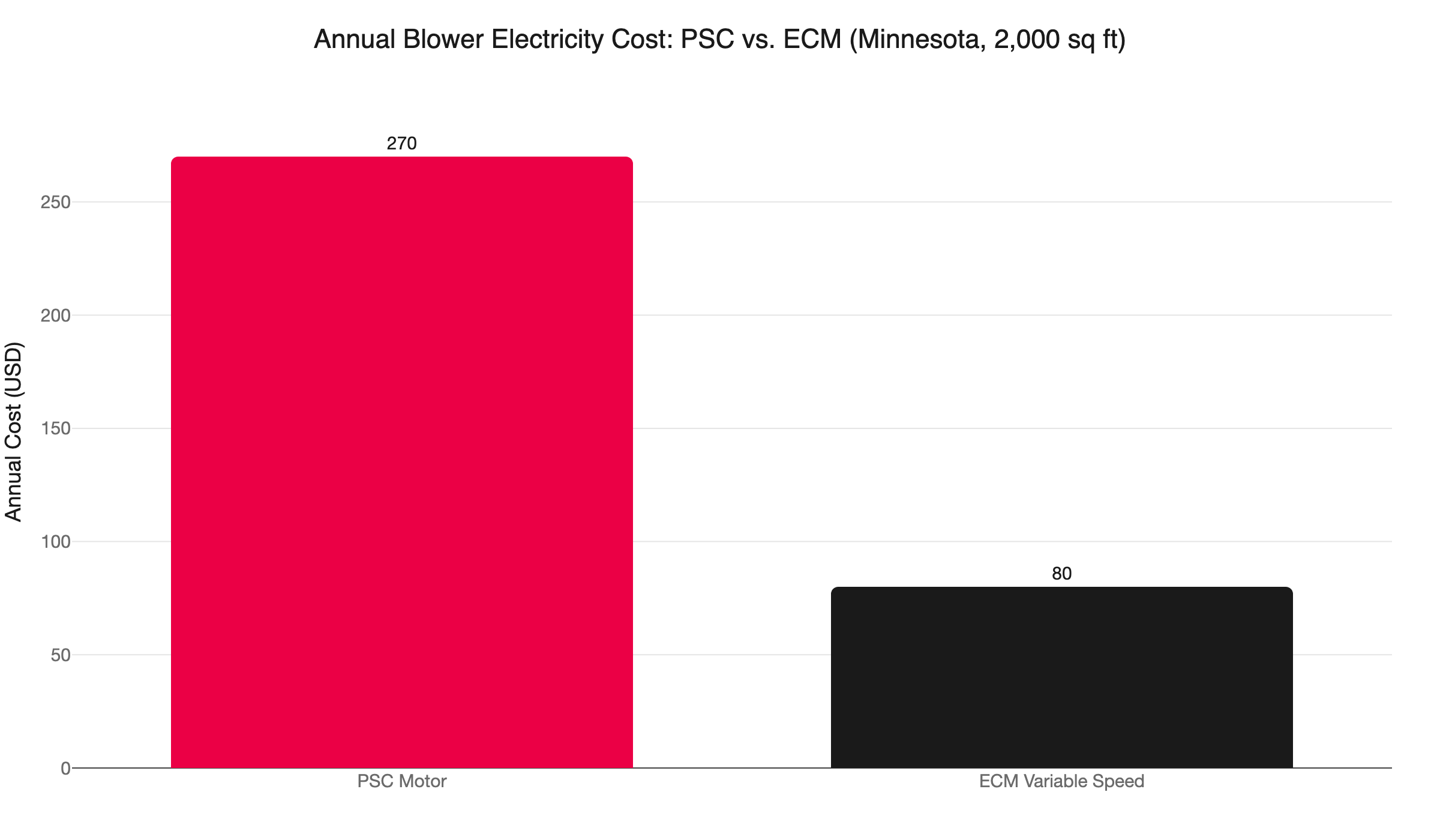
Annual Blower Electricity Cost: PSC vs. ECM (Minnesota, 2,000 sq ft)
## What Is a Variable Speed Blower Motor Furnace?
A variable speed blower motor furnace uses an ECM (electronically commutated motor) to ramp blower speed up and down continuously based on what your home needs. Instead of running at a fixed speed, it starts slow, holds a low steady speed during mild weather, and increases output when conditions call for it. It uses far less electricity than a standard PSC motor.
The standard alternative is a PSC (permanent split capacitor) motor. It runs at one or two fixed speeds. It moves air reliably, but it draws full power every time it runs. At startup, it hits full speed immediately, which is audible and inefficient.
ECM technology has been in residential furnaces since the late 1990s. Most furnaces made after 2010 include some form of ECM motor. The question is which type - and that distinction has a real effect on what you actually get for your money.
## Why Does Minnesota's Climate Change the Payback Math?
Minnesota logs roughly 8,000 heating degree days per year versus about 800 cooling degree days. Your blower runs 7-plus months for heat, not 3-4 months for AC. ECM electricity savings happen overwhelmingly during the heating season, making the payback timeline here materially shorter than national estimates suggest.
Most national content about ECM furnaces frames the efficiency story around summer air conditioning. In Minnesota, that framing undersells the upgrade significantly.
Here, the blower's primary job is heating. It logs far more hours in your furnace's heat cycle than in your AC's cooling cycle. On a -10°F January night, your blower is working. On a 35°F October evening, your blower is working. On a 75°F July afternoon, your blower is working for AC. The ratio is roughly 7-to-3 in favor of heating.
When you compare two furnace quotes - one with a PSC, one with a true variable speed ECM - run the math on a 7-month heating season. That's the calculation that reflects your home's actual usage pattern.
## The Three Tiers: PSC, X13, and True Variable Speed
Most homeowners walk away from an HVAC conversation thinking there are two options: standard (PSC) and efficient (ECM). There are actually three. The middle tier creates the most confusion.
**PSC motors** are the traditional standard. Single or dual speed. They draw 510-550 watts in fan-only mode. Reliable at moving air. Not designed to run at a low, sustained partial speed without wasting electricity.
**X13 motors** (also called constant-torque ECMs) are electronically commutated motors that maintain a constant torque output. Torque is rotational force - not airflow. If your ductwork restricts flow through a dirty filter, an undersized return, or a partially closed register, the X13 delivers less air without compensating. Static pressure shifts; the motor doesn't adapt. You can have a furnace marketed as "ECM" that underperforms because of conditions your ductwork creates.
**True variable speed motors** maintain consistent airflow by adjusting their power output to overcome resistance. If a dirty filter or a kinked flex duct raises static pressure, the motor ramps up to hold its target CFM. These are the motors most homeowners picture when they hear "variable speed." They cost more, and the performance and comfort premium is real.
When a contractor quotes you a furnace with an ECM motor, ask one specific question: is this a constant-torque X13 or a true variable speed? The price difference at furnace purchase is typically $200-$400. The performance difference in a Minnesota heating season is larger.
## How Much Electricity Does a Variable Speed Blower Motor Use?
[An ECM at minimum speed draws roughly 80 watts](https://www.arpis.com/blog/your-furnace-replacement-ecm-motor-or-psc-which-will-it-be/) - less power than a single old incandescent bulb - while moving the same volume of air a PSC draws 510-550 watts to move. ECM efficiency runs 65-75%; PSC efficiency runs 35-45%. For a 2,000 sq ft Twin Cities home, that gap adds up to roughly $190 per year in electricity savings.
The efficiency gap is widest at partial load. That's where Minnesota furnaces spend the majority of their runtime. On a 35-45°F October or April day, your furnace doesn't run at full output. It cycles at partial load repeatedly. A PSC at partial load loses efficiency. An ECM at partial load is at its most efficient operating point.
The [annual electricity cost estimate for a Twin Cities home](https://furnace.direct/blogs/news/variable-speed-furnace-worth-it-minnesota) breaks down to roughly $270 per year for a PSC motor and $80 per year for an ECM, based on Minnesota's average electricity rate of $0.14/kWh across a 7-month heating and 4-month cooling season.
The ECM premium at furnace purchase typically runs $200-$400 over the comparable PSC option. On electricity savings alone, the payback comes in at 1-2 years in a Minnesota heating climate. Over a 15-20 year furnace lifespan, that difference adds up to $2,850-$3,800 at current rates, before any rebates.
## Does a Variable Speed Motor Help With Home Dehumidification?
Yes. Variable speed motors running at 40-60% speed increase air contact time with the evaporator coil. More contact time means more moisture removed per CFM. During Minnesota's humid July and August, this noticeably reduces indoor humidity and makes your home feel more comfortable at the same thermostat setting.
The Twin Cities averages around 65% relative humidity in July. A full-speed PSC rushes air through the system. A slower-running ECM extends the time each cubic foot of air spends near the coil surface. More moisture gets pulled out per pass.
This benefit is secondary to the heating-season electricity savings. But if your home feels sticky even with the AC running, a variable speed blower is part of the fix - along with a correctly sized system and a clean evaporator coil.
## What About Running the Blower Continuously in Minnesota Winters?
Running an ECM blower at its lowest continuous speed costs about $3-$5 per month in extra electricity. In return, your filter works around the clock and you eliminate the cold-blast sensation when the furnace fires on a -10°F morning.
With a PSC motor, continuous fan mode is expensive. The motor draws near-full power all day. Most homeowners turn it off because the monthly cost isn't worth it.
With an ECM, continuous low-speed operation costs almost nothing. Air circulates through your filter between heating cycles. On the worst winter mornings, the blower is already running when the furnace fires. There is no abrupt transition from cold to hot airflow.
This feature has real value during Minnesota's allergy seasons. Birch and tree pollen peak in May and June. Ragweed peaks in August. Running the blower continuously means your filter captures particles throughout the day, not only during heat or cooling cycles. If anyone in your home deals with allergies or asthma, the difference is noticeable over a full season.
Continuous fan mode also reduces temperature stratification between floors. If your upper level runs consistently colder than the main floor in winter, low-speed circulation can help balance things without running full heating cycles. Our post on [why upper floors stay too cold in winter](/blog/upstairs-too-cold-winter-heating-twin-cities/) covers the common causes and what actually fixes them.
## The Duct Condition Caveat
The [U.S. Department of Energy's homeowner HVAC guide](https://www.energy.gov/sites/prod/files/2013/11/f5/hvac_guide.pdf) puts it plainly: if your ducts are poorly installed or in bad condition, an ECM motor will work harder to push air through, negating energy savings.
This is a real issue in the Twin Cities. Homes built before the mid-2000s frequently have undersized return ducts, leaky duct joints, and kinked flex duct sections in attics or crawl spaces. Under those conditions, an ECM fighting elevated static pressure draws more current and runs hotter than its normal operating range. The efficiency advantage shrinks. The motor's projected lifespan can shorten along with it.
Before investing in a variable speed furnace, ask your technician to check static pressure on your current system. High static pressure is a solvable problem. Duct sealing or a return air improvement will amplify the ECM's benefit rather than neutralize it. Our post on [high static pressure symptoms and what to do about them](/blog/high-static-pressure-hvac-symptoms-fixes-twin-cities/) explains what to look for and what the fixes involve.
Duct improvements paired with a new high-efficiency variable speed furnace outperform either upgrade done alone.
## What Rebates Are Still Available in 2026?
In the Twin Cities, CenterPoint Energy is the only utility currently offering gas furnace rebates in 2026, with up to $1,000 for 97%+ AFUE equipment. Xcel Energy discontinued its gas furnace rebate program January 1, 2026. The federal 25C tax credit expired December 31, 2025.
Here is where things stand:
**CenterPoint Energy** (active through December 31, 2026):
- $200 rebate for a 92-95.9% AFUE furnace replacement
- $400 rebate for a 96-96.9% AFUE furnace replacement
- $1,000 rebate for a 97%+ AFUE furnace replacement
Equipment must be AHRI-certified or ENERGY STAR verified to qualify. [CenterPoint's current rebate page](https://www.centerpointenergy.com/en-us/savings-solutions/energy-efficiency/heating-systems) has full requirements and any program updates.
**Xcel Energy:** [Gas furnace rebates were discontinued January 1, 2026](https://centralminnesotaheatingandcooling.com/blog/xcel-centerpoint-hvac-rebates-2026). Most Twin Cities homeowners use CenterPoint for gas and Xcel for electricity. Only the CenterPoint rebate applies in that case.
**Federal 25C tax credit:** Expired December 31, 2025. No federal credit is available for furnace replacements installed in 2026.
**Minnesota Power** (northern Minnesota, not the Twin Cities metro): Offers a $200 rebate for a furnace with an ECM motor when replacing a unit 10 or more years old.
The strongest combination right now: a 97%+ AFUE furnace with a true variable speed motor captures the maximum $1,000 CenterPoint rebate. Add $190 per year in electricity savings and the payback on the higher-efficiency option compresses to under two years for most households.
## What Does a Variable Speed Furnace Cost Installed in Minnesota?
Installed costs vary by efficiency tier. A 97-98% AFUE furnace with a true variable speed ECM blower starts around $9,100 in the Twin Cities. That is the tier that captures the maximum CenterPoint rebate and delivers the full electricity savings. Lower-tier units with PSC or X13 motors start lower. They leave both the rebate and the electricity savings behind.
As a general guide by tier:
- 80% AFUE furnace, PSC motor: starting around $4,950 installed
- 95-96% AFUE furnace, often with X13 ECM: starting around $6,500 installed
- 97-98% AFUE furnace, true variable speed ECM: starting around $9,100 installed
These are starting prices for a standard single-family home installation. Your actual cost depends on the manufacturer, your home's BTU load, current ductwork condition, and any code modifications needed for venting or gas line sizing.
Financing is available for larger furnace replacements. Our team walks through current financing options when we visit for an estimate.
## Should You Replace Just the Blower Motor or the Whole Furnace?
If your furnace is 10-plus years old, a standalone ECM retrofit is slow to pay back and often isn't a direct drop-in replacement. The best time to capture a variable speed upgrade is at furnace replacement, when the motor is matched to the control board and staging from the factory.
A [blower motor replacement](/blog/furnace-blower-motor-failure-signs-cost-minnesota/) on an existing PSC-equipped furnace runs $1,100-$2,200 installed, depending on motor type and brand. An ECM retrofit on an older furnace requires compatibility testing with the existing control board. Many older furnaces were not designed to integrate a variable speed motor the way a modern matched system does.
If your furnace is 5-7 years old and running well, motor repair or replacement makes sense. If it's approaching 15 years or showing other symptoms, furnace replacement gives you the matched components that allow a variable speed motor to perform as designed.
ECM motors [have a life expectancy of up to 10 years and log tens of thousands of operating hours](https://www.roxheating.com/benefits-of-variable-speed-ecm-furnace-blower-fan-motor/). They also run cooler at partial load than PSC motors because they draw less current at that operating point. In a high-runtime Minnesota heating season, that thermal margin extends the motor's useful life.
## What to Expect From Northern One Hour
We're locally owned and operated in Ramsey, serving homeowners across the Twin Cities: Minneapolis, St. Paul, Blaine, Maple Grove, Plymouth, Brooklyn Park, Woodbury, and surrounding communities.
When we quote a furnace replacement, we tell you exactly what motor tier you're getting: PSC, constant-torque X13, or true variable speed. We explain what it means for your specific home. We check static pressure. We verify your ductwork won't undermine the motor you're investing in.
We walk through the rebate situation as it stands today. Xcel's gas furnace program is gone. The federal credit is gone. CenterPoint is the active incentive for most Twin Cities households right now. Not every contractor updates their pitch when the incentive landscape shifts.
We show up when we say we will. That's backed by our guarantee: "Always On Time… Or You Don't Pay a Dime!(R)".
If your furnace is showing signs it's time to replace it, or you want a technician to check how your current system is performing, call us at **(763) 260-6662** or [schedule a furnace replacement consultation online](/heating/heating-equipment/furnaces/furnace-replacements/).
---
# Furnace Blower Won't Shut Off: 4 Causes and What to Do
URL: https://northernonehour.com/blog/furnace-blower-runs-constantly-wont-shut-off-minnesota/
Published: 2026-10-02 | Category: Heating
Your furnace blower keeps running but the heat is off. Learn the four causes, from a free thermostat fix to a carbon monoxide warning, and exactly what to do.
Key Takeaways
- **Try this first:** Switch the thermostat's fan setting from "ON" to "AUTO." This is the single most common cause and costs nothing to fix.
- A clogged filter restricts airflow, causes the heat exchanger to overheat, and trips the high-limit switch. The blower stays on until the heat exchanger cools to roughly 100-130°F. That process takes 20-60 minutes.
- **Stop and call now** if: the blower won't stop, the furnace is not producing heat, and the furnace is 15 or more years old. That combination can indicate a cracked heat exchanger and a carbon monoxide risk.
- A welded relay on the control board keeps the blower powered even when no heat is called. This requires board replacement and is not a DIY repair.
- Minnesota furnaces run 6-7 months per year. Replace your 1-inch filter every 4-6 weeks during heating season. The national 90-day guideline is too infrequent for a Twin Cities winter.
- If diagnostics reveal the furnace needs replacement, CenterPoint Energy offers up to $400 in rebates for a qualifying 95%+ AFUE furnace. The federal 25C tax credit adds up to $600 more, and the two incentives stack.
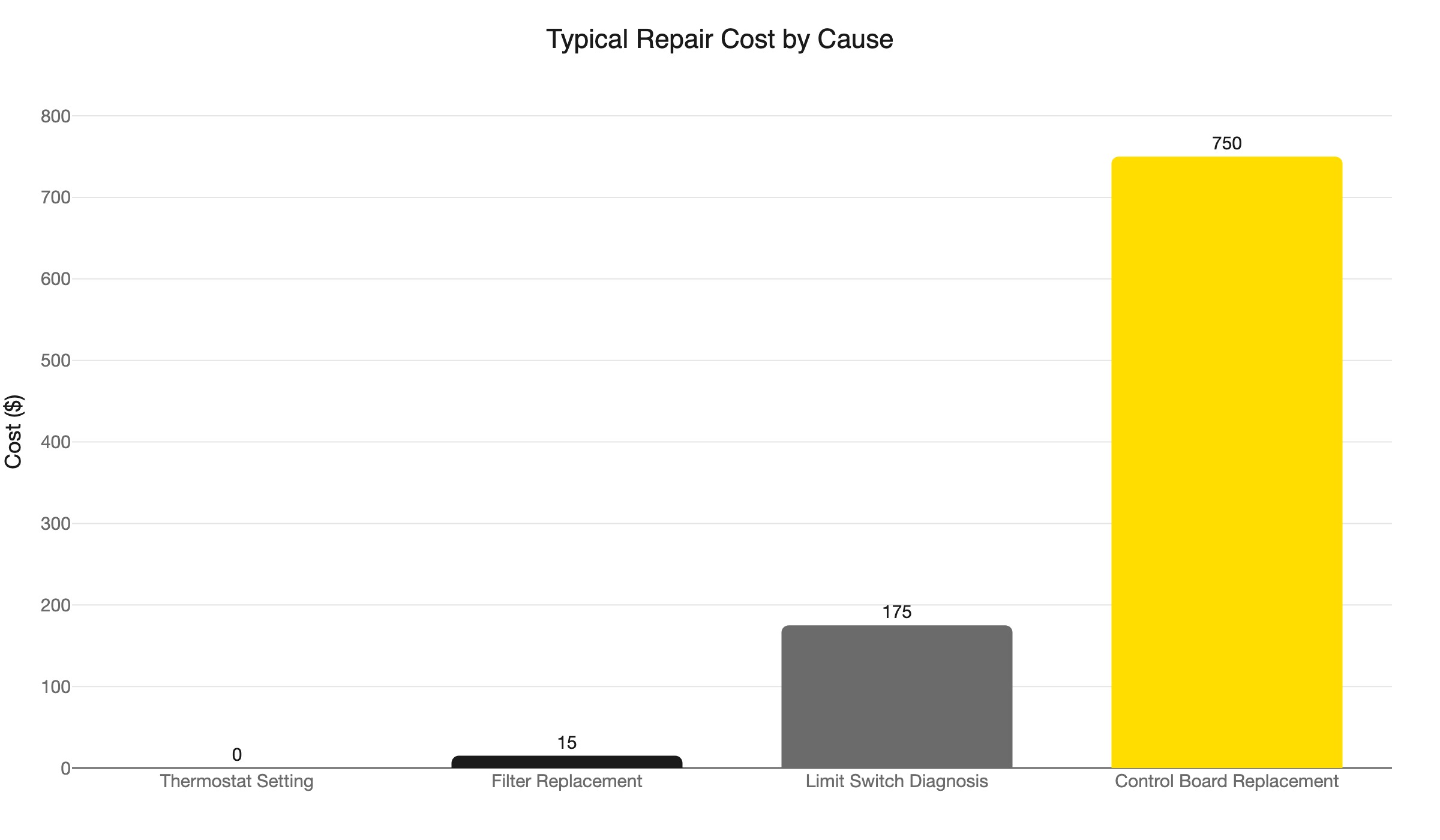
Typical Repair Cost by Cause
## Why Won't My Furnace Blower Shut Off?
Four causes account for nearly every case: the thermostat fan is set to "ON" instead of "AUTO," a dirty filter triggered the furnace's high-limit safety shutoff, the limit switch tripped from overheating, or a relay on the control board has welded shut. Two you can fix yourself in minutes. The other two need a technician.
Your furnace blower is running, but the heat is not on. The house is already warm enough. You have not touched the thermostat in hours. But the fan just keeps going, and you are not sure whether to ignore it, turn off the system, or call someone.
This is one of the more common service calls we receive in the Twin Cities each fall and winter. The cause is almost always one of four things. This guide walks through each one in order: cheapest and most likely first, most serious last.
One of those causes is a safety issue that requires you to stop running the furnace until a technician arrives. It is last on the list because you should always try the two quick DIY checks first. They resolve the problem most of the time.
## What's the First Thing to Check? Your Thermostat's Fan Setting
Check the fan setting on your thermostat right now. If it reads "ON," switch it to "AUTO." "ON" forces the blower to run at all times, regardless of whether the furnace is heating. "AUTO" runs the blower only during a heat call. This single setting is [the most common cause](https://stricklandhvac.com/furnace-blower-wont-turn-off-7-common-causes/) of a furnace blower that will not shut off.
Every thermostat has two fan settings. They look like a minor toggle, but the difference in behavior is significant.
When you choose "ON," the blower motor runs continuously, 24 hours a day, seven days a week. It does not matter whether the furnace has fired or whether your home is already at the setpoint temperature. The fan runs because you told it to run.
This is occasionally intentional. Some homeowners switch to "ON" to improve air circulation on multiple floors or to run air through the filter more often. But if you do not remember making that choice, or if someone else in the house changed it, the fix takes three seconds. Tap "AUTO."
If the fan was already on "AUTO" and the blower is still running nonstop, the cause is inside the furnace. Move to the next section.
One thing worth noting: a nonstop blower is not free to run. Furnace blower motors draw 400-800 watts. Running that load continuously through a seven-month Minnesota heating season adds real cost to your utility bill. "AUTO" is the right setting for comfort and efficiency.
## Could a Dirty Filter Be Keeping the Blower On?
Yes. A clogged filter blocks airflow across the heat exchanger. The heat exchanger overheats. When it overheats, the high-limit switch trips: the burner shuts off, but the [blower stays on to cool the heat exchanger](https://highperformancehvac.com/furnace-blower-fan-wont-turn-off/) to a safe temperature. The blower will not stop until the heat exchanger drops below roughly 100-130°F.
Go to your furnace and pull the filter. Hold it up to a light. If you cannot see light through it, or if the surface looks gray, matted, or packed with hair and debris, replace it.
After installing a fresh filter, turn off the thermostat and give the system 20-30 minutes to cool. Then turn the furnace back on. If the blower runs a normal heat cycle and shuts off afterward, a dirty filter was the cause.
If the blower still will not stop after a filter replacement and a 30-minute cool-down, give it another 30 minutes. The heat exchanger may need more time to drop below the limit reset threshold. If the blower is still running after a full hour, or if the furnace is cycling abnormally, call a technician.
Dirty filters rarely cause problems on their own. They cause problems because the routine of changing them gets skipped. If you have not changed the filter in more than six weeks during heating season, that is likely what happened here. The fix is preventive going forward, not just reactive this time.
## What Does a Limit Switch Do, and Why Does It Keep the Blower Running?
The limit switch is a safety device mounted near the heat exchanger. It shuts off the burner when the furnace overheats. A [standard fan-limit control](https://inspectapedia.com/heat/Fan_Limit_Switch_Guide.php) trips the burner off at around 200°F and keeps the blower running until the heat exchanger cools to roughly 100-130°F. This is not a malfunction. It is the system protecting itself.
Here is the sequence. Airflow is restricted by a dirty filter or a blocked vent. The heat exchanger temperature climbs. At around 200°F, the high-limit trips. The burner shuts off. The blower keeps running to move air over the heat exchanger and bring the temperature down. The furnace will not restart until the heat exchanger drops below the reset threshold.
That cooling process can take 20 to 60 minutes. During that window, you have a blower running with no heat being produced. From the furnace's perspective, it is doing exactly what it should.
The important question is: what caused the overheating in the first place?
If the answer is a dirty filter, and you catch it once, replace the filter and let the system reset. Change the filter more frequently going forward.
If the limit trips again on a clean filter, something else is wrong. A failing blower motor that moves less air than it should, blocked return ducts, or too much static pressure in the duct system can all trigger it. Repeated limit trips accelerate heat exchanger wear over time.
A technician will measure airflow across the heat exchanger and check the blower motor's amp draw. They will also look for duct restrictions or other airflow problems. Our post on [limit switch symptoms and how to reset one](/blog/furnace-limit-switch-failure-symptoms-reset-minnesota/) covers the diagnostic markers in more detail.
## When Should You Stop Running the Furnace Entirely? The Carbon Monoxide Warning
Stop running the furnace immediately if the blower won't stop, the furnace is not producing heat, and the furnace is 15 or more years old. That combination is the warning sign for a flame rollout event triggered by a cracked heat exchanger. A cracked heat exchanger can push carbon monoxide into your living space. Do not restart the furnace until a technician has inspected it.
Most guides that cover a blower that will not stop describe the thermostat setting and the dirty filter clearly. Very few describe the flame rollout scenario in plain terms.
Here it is: the flame rollout switch is a type of limit switch. It trips when flames escape the combustion chamber. That happens when a cracked heat exchanger disrupts normal combustion airflow. [When a flame rollout switch trips](https://www.acservicetech.com/post/6-reasons-why-a-furnace-blower-fan-motor-won-t-shut-off), the burner shuts down and the blower keeps running. Unlike the standard high-limit switch, the flame rollout switch must be manually reset by a technician. It requires an inspection before the system should run again.
Why does this matter more than the other causes? Because a cracked heat exchanger is a carbon monoxide risk. CO is odorless and colorless. It does not warn you the way a gas smell does. Running the furnace with a cracked heat exchanger routes combustion gases through your home's air handling system. That is the same system heating your living space.
This is the "call now, not tomorrow" situation. A blower running with no heat is an inconvenience on a 60-degree October afternoon. On a -10°F February night in the Twin Cities, with an older furnace, it is a health and safety issue.
If you smell anything unusual, get everyone out of the house, including pets, and call 911 before calling anyone else. If there is no smell but the furnace is over 15 years old and the blower is running with no heat, turn it off at the thermostat. Call a technician today.
Our post on [signs of a cracked heat exchanger in Minnesota](/blog/cracked-heat-exchanger-signs-minnesota/) covers what to look for and what the inspection involves.
## What Is a Stuck Relay, and Is It a DIY Fix?
No. A stuck relay is not a homeowner repair. Relay contacts inside the control board can weld shut after a high-current event, keeping the board sending 120V to the blower motor continuously even when there is no call for heat. The furnace otherwise seems fine. The blower just runs.
Inside the control board, relays act as switches. When the thermostat calls for heat, the board closes a relay to power the blower. When the cycle ends, the relay opens to cut power. If contacts are welded shut from a power surge or a previous fault, the relay stays closed. The blower motor receives power because it is physically receiving power. Nothing the thermostat tells the board changes that.
This cause is less common than the thermostat setting or a dirty filter. But it cannot be diagnosed or fixed from the outside. A technician will read voltage on the blower motor circuit and check which terminals are active. From there, they determine whether the issue is a welded relay, a failed capacitor in the blower circuit, or another board-level fault.
The fix is board replacement. A replacement control board, installed, runs around $750 at the midpoint. Variable-speed and communicating system boards on higher-efficiency furnaces sit above that number.
A blown fuse on the board, a failed capacitor in the blower circuit, or a burned sequencer can produce similar symptoms. Each of these is a board-level or electrical repair. Our post on [furnace control board failure symptoms and costs](/blog/furnace-control-board-failure-symptoms-cost-minnesota/) covers the diagnostic signs in more detail.
Do not attempt to access the control board without first turning off the furnace's dedicated circuit breaker. The blower circuit runs at 120V.
## How Does Minnesota's Long Heating Season Change the Math?
It multiplies the filter-related failure risk. Minneapolis sits in IECC Climate Zone 6A. The city logs 7,000-8,500 heating degree days per year, with a 99% heating design temperature around -16°F. Your furnace runs 6-7 months per year, roughly double the national average. A filter that lasts 90 days in a milder climate gets clogged much faster here.
The [90-day filter replacement guideline](https://filterbuy.com/resources/winter/pre-winter-hvac-prep/when-to-change-furnace-air-filter-in-winter/) is calibrated to all U.S. climates. In the Twin Cities, your furnace runs more hours per day and more months per year. It moves far more air through the filter than a furnace in a warmer climate does in the same period.
For a standard 1-inch filter, 4-6 weeks is the right interval during heating season. Certain household factors shorten that interval further. Pets generate hair and dander that load a filter fast. Recent renovation work, including drywall dust, sawdust, and insulation fibers, can clog a filter within a week. A higher-MERV filter catches more particles, but it restricts airflow faster as it loads, so it needs more frequent changes than a standard fiberglass filter.
One habit that prevents a lot of service calls: write the installation date on the new filter when you put it in. Pull it out and look at it at the four-week mark. You will quickly develop a feel for what a loaded filter looks like in your specific home, and you will stop guessing.
Our guide on [how often to change your HVAC filter in Minnesota](/blog/how-often-to-change-hvac-filter-minnesota/) covers filter types, MERV ratings, and the household variables that affect the right replacement interval.
## How Much Does It Cost to Fix a Furnace Blower That Won't Shut Off?
Cost depends on the cause. A thermostat setting change is $0. A filter replacement is $5-$20. From there, costs rise with diagnostic complexity and parts.
A service call to diagnose a limit switch trip or a stuck relay runs $95-$250. That range covers the technician's time and the diagnosis. If the limit switch itself has failed outright (rather than just tripped), replacement is typically included within that range.
A control board replacement runs around $750 installed at the midpoint. Variable-speed or communicating boards on higher-efficiency models sit above that.
If the diagnosis points to a cracked heat exchanger, the economics change significantly. On a furnace 15 or more years old, heat exchanger repair often approaches or exceeds the cost of a new furnace. A new furnace installed in the Twin Cities runs $3,900-$7,800 for a mid-tier unit. An 80% AFUE unit starts around $4,950. A 95-96% AFUE unit starts around $6,500.
If replacement is the outcome, ask about available incentives before signing anything. CenterPoint Energy currently offers up to $400 for a qualifying 95%+ AFUE furnace replacement, plus an extra $100 for an ECM blower motor. Income-qualified households can receive up to $1,200. The [federal 25C tax credit](https://www.energystar.gov/about/federal_tax_credits/air_source_heat_pumps) adds 30% of project cost, up to $600 for a qualifying furnace. Those two incentives stack. Applications for the CenterPoint rebate are open through December 31, 2026.
We offer financing options on furnace replacement. When you call, ask what is available for your situation.
## Schedule Service with Northern One Hour
Here is the decision checklist if your furnace blower will not shut off:
1. Check the thermostat fan setting. Switch from "ON" to "AUTO" if needed. Wait two minutes.
2. Pull the filter. If it is clogged, replace it, turn the system off, wait 30 minutes, then restart.
3. If neither step resolves it, call a technician.
4. If the blower is running with no heat and the furnace is over 15 years old, call now. Do not wait until morning.
We are locally owned and operated in Ramsey, MN, serving Minneapolis, St. Paul, Blaine, Maple Grove, Plymouth, Brooklyn Park, Woodbury, Bloomington, and the surrounding Twin Cities metro. When we book a visit, we show up at the time we said. That is the promise: "Always On Time… Or You Don't Pay a Dime!(R)"
Call **(763) 260-6662** or [schedule furnace repair online](/heating/heating-equipment/furnaces/furnace-repair/). We provide transparent, upfront pricing before any work begins, and every job is backed by our 100% satisfaction guarantee.
---
# New Construction HVAC Problems First Year Minnesota
URL: https://northernonehour.com/blog/new-construction-hvac-first-year-problems-minnesota/
Published: 2026-10-02 | Category: HVAC
Most new Twin Cities homes have at least one HVAC commissioning gap. Here's what to check in year one and what Minnesota law gives you to fix it.
Key Takeaways
- [Minnesota Statute 327A.02](https://www.revisor.mn.gov/statutes/cite/327A.02) gives you a 2-year statutory warranty on all mechanical systems in a new home, including heating, cooling, and ventilation. It is automatic and cannot be waived in the purchase contract.
- Seven commissioning gaps drive most year-one HVAC calls on new Twin Cities construction: unbalanced HRV, missing duct leakage test certificate, no Manual J on file, unregistered equipment, unclaimed utility rebates, unclean ductwork, and no documentation provided at closing.
- Equipment registration closes in 60-90 days from the installation date. Miss it and you lose extended warranty coverage.
- CenterPoint and Xcel both offer new-construction furnace rebates the builder may have already claimed. Ask about it before you close, or contact your utility immediately after.
- A written notice to your builder triggers a 30-day inspection obligation under MN 327A.02. You do not need an attorney to start that clock.
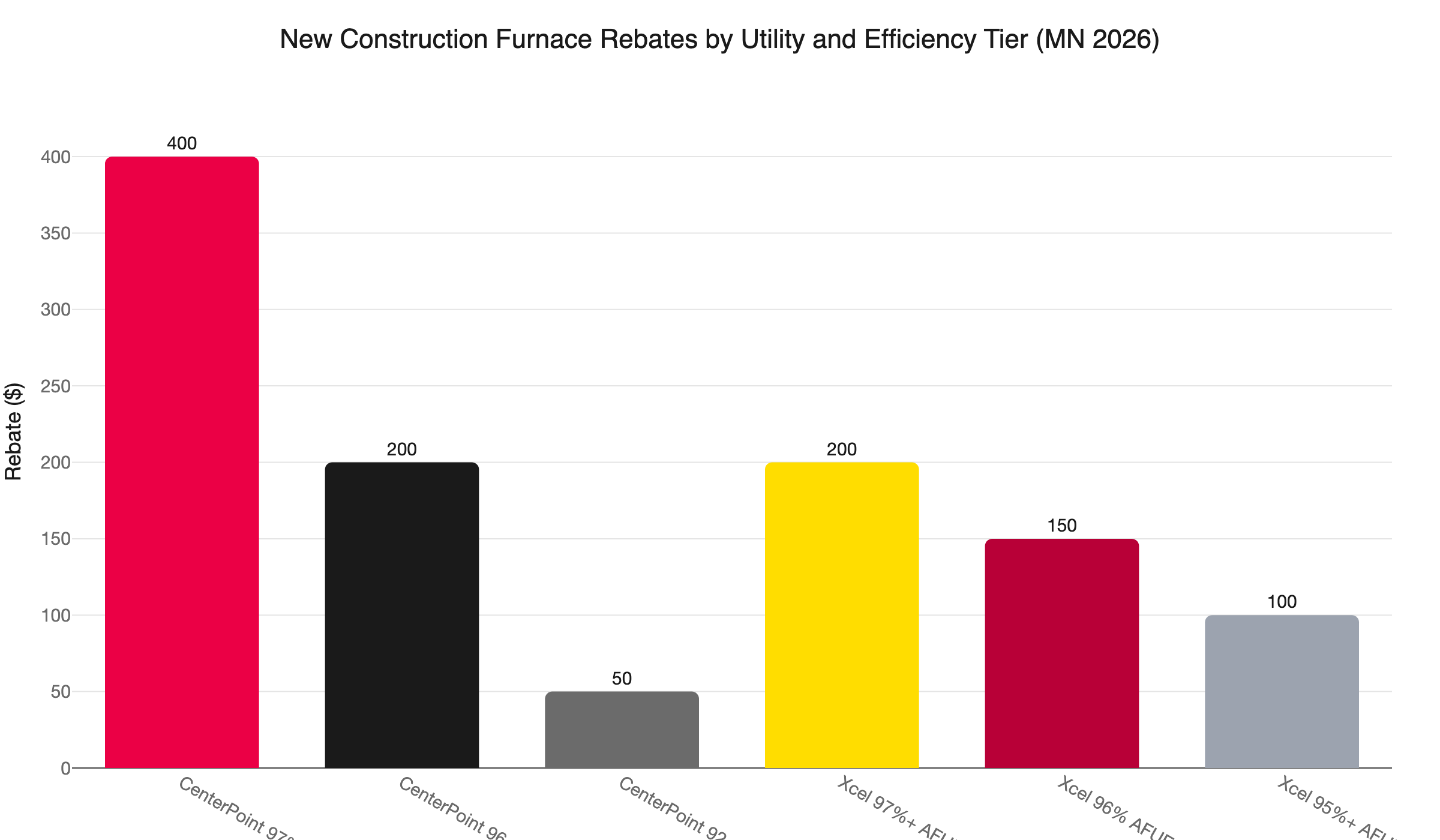
New Construction Furnace Rebates by Utility and Efficiency Tier (MN 2026)
Most new Twin Cities homes have at least one HVAC commissioning gap waiting to be found. New construction HVAC problems in the first year in Minnesota rarely announce themselves as a fully broken system. They show up as a basement that runs 10 degrees colder than upstairs, a house that feels stale and stuffy by January, or a gas bill that does not match what the builder's spec sheet promised.
The reason is simple: permit approval and commissioning are not the same thing. A system can pass inspection without being balanced, tested, or registered. Minnesota averages roughly [8,000 heating degree days a year](https://minnesotahvacauthority.com/minnesota-hvac-new-construction-requirements), and the new homes built here are among the tightest in the country. Those two facts make commissioning gaps expensive fast. The good news: Minnesota law gives you a defined window to make your builder fix them.
Here are seven gaps worth checking in your first 90 days.
## What Are the Most Common New Construction HVAC Problems in Year One in Minnesota?
**In short:** The system runs - it just runs wrong. Uneven temperatures, stale air mid-winter, and utility bills that outpace the builder's estimates are the top complaints. All of them trace back to commissioning steps the HVAC contractor skipped before handing over the keys.
[MN Rules Chapter 1322 sets a maximum blower-door result of 3 ACH50](https://minnesotahvacauthority.com/minnesota-hvac-new-construction-requirements) for new construction. That means natural air infiltration is too low to supply adequate fresh air, combustion makeup air, or humidity relief. The equipment installed to compensate - the HRV, the sealed ductwork, the sized furnace - has to be measured, tested, and balanced precisely. When any of those steps are skipped, the first Minnesota winter finds the problem.
The seven gaps below appear on nearly every year-one new-construction service call we run. Each one is checkable in 90 days or less.
## Gap 1: The HRV Was Installed but Never Balanced
A heat recovery ventilator is not optional in modern Minnesota new construction. With a maximum envelope infiltration rate of 3 ACH50, the house cannot breathe on its own. The HRV is the code path to meeting ASHRAE 62.2-2022 ventilation minimums. It is on the permit, and it passed inspection.
Here is what inspection does not verify: balance. A balanced HRV matches supply and exhaust airflows within the manufacturer's specified tolerance. When those flows are unequal, the home develops a persistent pressure differential. Pull more air out than you bring in and combustion appliances - your furnace, your water heater - can backdraft. Push more in than you exhaust and you pressurize the envelope, driving moisture into wall cavities and rim joists. An HRV that is off by 20 percent in either direction can quietly cause moisture damage before the first heating season ends.
The air quality problems surface first. By February, a home with an unbalanced HRV feels stuffy despite the ventilation system running. CO2 builds in bedrooms overnight. Condensation appears on north-facing windows. None of these are defects in the equipment itself. They are defects in the commissioning.
Ask your builder for the HRV balancing report: a document showing the measured airflow at each supply and exhaust port, the date of the measurement, and the technician's name and license number. If no such document exists, the HRV was installed but not commissioned. Our guide to [whole-home HRV ventilation in Minnesota](/blog/hrv-whole-home-ventilation-minnesota/) explains what a properly commissioned system delivers and what a balancing report should include.
## Did Your Builder Pull a Duct Leakage Test Certificate?
**In short:** Probably not, and that is a code gap. Minnesota adopted the 2012 IECC effective February 14, 2015. That code requires a [physical duct leakage test with a hard numeric limit](https://basc.pnnl.gov/resource-guides/duct-leakage-tests): total leakage cannot exceed 4.0 CFM25 per 100 square feet of conditioned floor area. Visual inspection is not an acceptable substitute; a pressurized test is mandatory.
For a 2,000 square foot home, the maximum is 80 CFM25. A system above that threshold pumps conditioned air into unconditioned space on every cycle: your attic, your wall cavities, your attached garage. You pay to heat or cool that air. It never reaches you. The energy loss is ongoing and compounds over the life of the system.
The test produces a certificate: the blower door pressure setting (25 Pascals), the measured CFM25 result, and a pass or fail against the code limit. That certificate should be in your permit file. Ask your builder for it by name. If they cannot produce it, the ductwork was not tested and you have a documented defect for your MN 327A.02 written notice.
Leaky ductwork is fixable. Aeroseal and manual mastic sealing are both common solutions in the Twin Cities and can bring a system into compliance in a single visit. But you need to know you have the problem before you can fix it. Our post on [leaky ductwork and energy loss](/blog/duct-sealing-leaky-ductwork-energy-loss/) covers what both sealing methods cost and how much energy you recover.
## Was Your New Minnesota Home's HVAC Sized to a Manual J?
**In short:** [Minnesota code requires a Manual J load calculation (ACCA 8th edition)](https://minnesotahvacauthority.com/minnesota-hvac-new-construction-requirements) before a mechanical permit is issued. The document is in your permit file. If the installed equipment is substantially larger than the Manual J called for, you have an oversizing defect worth raising with your builder in writing.
A Manual J sizes the heating and cooling equipment to the specific heat loss and heat gain of your home: its square footage, insulation values, window area, ceiling height, and compass orientation. It is a calculation, not a rule of thumb. "1 ton per 500 square feet" is a rule of thumb. Manual J is a code-required document.
The defect it prevents is oversizing. An oversized furnace in a tight new-construction home hits setpoint in minutes, shuts off, and repeats the short cycle. Short cycling means the heat exchanger never reaches stable operating temperature, which accelerates thermal fatigue. It also means latent heat removal is inadequate - the system shuts down before it has run long enough to pull humidity out of the air. You get cold floors, fluctuating temperatures, and equipment that wears faster than its efficiency ratings imply.
Call the city or county building department that issued the mechanical permit and ask for the permit file. The Manual J should be in it. If the installed equipment nameplate tonnage is significantly higher than the Manual J load, document that gap and include it in any defect notice to your builder.
## How Long Do You Have to Register New HVAC Equipment?
**In short:** Most major manufacturers give you 60 to 90 days from the installation date. Miss that window and the warranty defaults to 5-year parts-only coverage with no labor coverage after year one. Extended heat exchanger lifetime warranties require registration within that same window.
New construction makes this gap easy to miss. The HVAC contractor installs the equipment weeks or months before your closing date. The installation date - which starts the registration clock - is not your move-in date. If no one mentions registration at closing, the window closes before you know it started.
[Major manufacturers default to 5-year parts-only coverage when equipment is not registered within 60-90 days of installation](https://allprohvacminneapolis.com/hvac-warranty-guide/). Labor is excluded after year one regardless of registration status. A compressor that fails in year two may be covered for the part, but the labor cost to swap it still falls to you. That can reach several hundred dollars for a straightforward replacement and more for anything involving refrigerant recovery.
Find the model and serial number on each piece of equipment: the furnace label is usually inside the blower compartment door; the outdoor AC or heat pump unit has a label on the back panel; the HRV label is typically on the front cover. Log in to each manufacturer's portal and check registration status. If anything is not registered, do it now. Our guide to [HVAC warranty registration for Minnesota homeowners](/blog/hvac-warranty-registration-what-homeowners-miss-minnesota/) covers the registration process for every major brand and what documentation you will need.
## What Utility Rebates Are Available for New Construction HVAC in Minnesota?
**In short:** [CenterPoint Energy offers up to $400 for a 97%+ AFUE furnace](https://www.centerpointenergy.com/en-us/savings-solutions/energy-efficiency/heating-systems) in new construction. [Xcel Energy offers up to $200](https://www.xcelenergy.com/staticfiles/xe-responsive/Programs%20and%20Rebates/Residential/24-01-506_MN-Res_HVAC_OpenPrgms_app.pdf). Both utilities state explicitly that new-construction rebates should be negotiated between the builder and the buyer. Most buyers never hear about them.
This is the commissioning gap that generates the most frustration after the fact. The builder's HVAC sub installed a high-efficiency furnace during rough framing. They submitted the rebate application during the permit process. The check arrived at the builder's office weeks before your closing date. You signed the purchase agreement, moved in, and nobody mentioned the rebate.
Here is what the 2026 programs actually pay:
CenterPoint's new-construction furnace schedule: 97%+ AFUE earns $400, 96-96.9% AFUE earns $200, 92-95.9% AFUE earns $50. Xcel's new-construction furnace schedule: 97%+ AFUE earns $200, 96%+ earns $150, 95%+ earns $100. Xcel's program rules include this note verbatim: "rebates for new home construction should be negotiated between the builder and resident."
To check your situation: find the yellow EnergyGuide sticker on your furnace, which shows the AFUE rating. Then ask your builder directly which rebate tier was applied for and who received the check. If you have not closed yet, request a rebate credit at closing. If you have already closed, call your utility with your address and ask whether a rebate was submitted. Some utilities will allow you to claim an unclaimed rebate directly if the 12-month submission window is still open.
Our post on [Xcel and CenterPoint HVAC rebates in Minnesota](/blog/xcel-centerpoint-hvac-rebates-minnesota/) covers the current full schedules and the application process for both utilities.
## Gap 6: The Ductwork Was Never Cleaned Before First Use
New construction produces debris. Drywall dust, insulation fragments, wood scraps, and fasteners collect in open ductwork during framing, drywall, and finish work - weeks before the furnace ever fires. Most builders do not include a post-construction duct cleaning in the standard contract. The system runs at final inspection and circulates that debris into the home from day one.
[One documented thread of homeowner accounts of new construction HVAC problems](https://www.houzz.com/discussions/6231098/concerns-with-hvac-in-new-construction) includes a homeowner who reported eye injury from "shrapnel" when lifting a floor register - drywall dust, screws, and wood scraps. That material passes through the air handler filter, loads the furnace filter faster than normal, and circulates particulates through every room until someone physically removes it.
Ask your builder whether a post-construction duct cleaning was performed and request the service receipt. Post-construction cleaning is different from standard HVAC maintenance cleaning. It uses a higher-capacity vacuum collection method and targets construction debris specifically. If it was not done, schedule it before the first heating season, and replace the furnace filter immediately afterward.
## What Commissioning Documents Should You Have Received at Closing?
**In short:** Six documents, minimum: HRV balancing report, duct leakage test certificate, Manual J load calculation, equipment registration confirmation for every HVAC unit, model and serial numbers for every component, and filter sizes for the furnace and HRV. If any of these are missing, request them in writing before you need them for a warranty claim.
The [ENERGY STAR National HVAC Commissioning Checklist (Rev. 14, January 2025)](https://www.energystar.gov/sites/default/files/2025-01/National%20HVAC%20Commissioning%20Checklist_Rev%2014.pdf) requires a credentialed contractor to verify refrigerant charge, fan airflow, and room-by-room balance before certification. That is the standard for an ENERGY STAR-rated home. Homes not seeking that certification have no equivalent mandatory third-party verification step, which is exactly why buyers need to request the documentation themselves.
Build a simple document file at closing:
- HRV balancing report with measured supply and exhaust airflows and technician signature
- Duct leakage test certificate with date, CFM25 result, and pass/fail notation
- Manual J load calculation matching the installed equipment
- Equipment registration confirmation numbers for furnace, AC or heat pump, and HRV
- Model and serial numbers for every HVAC component in the home
- Filter size and location for the furnace and HRV (write it on a sticky note in the utility room if nothing else)
If your builder cannot produce these documents, request them in writing via email. That timestamp matters. The paper trail you build in the first 30 days is the same paper trail you will hand to an attorney if the problems turn out to be consequential.
## What Does Minnesota Law Give You If Your Builder Won't Fix It?
**In short:** [Minnesota Statute 327A.02](https://www.revisor.mn.gov/statutes/cite/327A.02) mandates a 2-year warranty on all mechanical systems in every new dwelling, including heating, cooling, and ventilation. Written notice to your builder triggers a 30-day inspection obligation. The warranty is automatic, non-waivable, and covers defects the builder's HVAC sub caused, not just the builder directly.
Here is how to use it. When you identify a defect - short-cycling furnace, unbalanced HRV, ductwork that was never tested to code - write a notice to your builder. List each defect specifically, with dates and symptoms. Send it via certified mail or email with read receipt. The 30-day inspection obligation begins on delivery of that notice, and the builder must respond. You do not need an attorney to send the letter.
The 2-year clock runs from the date of the warranty deed or the date you took possession, whichever came first. Do not wait until year two to document problems. The best time to build your defect record is during the first heating season, while symptoms are fresh and the statutory window is fully intact.
Practical steps for documenting your case:
- Keep a dated log of every HVAC symptom, including the outdoor temperature at the time.
- Photograph anything visible: frost on the HRV core, debris in floor registers, error codes on the thermostat display.
- Note room-to-room temperature differentials during heating and cooling. Five degrees is normal; ten or more in a new build is a commissioning defect.
- [All HVAC work on Minnesota new construction must be performed by a contractor licensed under MN Stat. Chapter 326B](https://minnesotahvacauthority.com/minnesota-hvac-new-construction-requirements). Unpermitted work voids manufacturer warranties immediately. Confirm the permit file is complete before the contractor signs off.
- A defect that causes consequential damage, such as moisture infiltration from an unbalanced HRV, may involve additional claims under separate statutes. Consult a construction attorney if the dollar amount is significant.
## A 90-Day Action Plan for New Construction HVAC Problems in Minnesota
Work through this checklist before the first heating season. Most steps take under an hour total, and they are much easier to complete before a problem becomes urgent.
**Closing week:**
- Pull the model and serial number for every HVAC component in the home: furnace, outdoor AC or heat pump unit, HRV, and any supplemental equipment.
- Log in to the manufacturer portal for each unit and check registration status. Register anything that is not yet registered, and save the confirmation numbers.
- Ask your builder in writing which utility's new-construction rebate was submitted, the efficiency tier, and who received the check.
**Within 30 days:**
- Request the duct leakage test certificate and HRV balancing report in writing. Email is sufficient; you want a timestamp on the request.
- Call the city or county building department and ask for the mechanical permit file. Confirm the Manual J is included.
- Locate every filter in the home - furnace and HRV - write down the sizes, and set a calendar reminder at 6 months for the HRV filter. Furnace filters in new construction often load fast in the first 60 days due to construction dust.
**Within 90 days:**
- Schedule a third-party commissioning inspection with a licensed HVAC contractor. This is separate from the home inspection you had before closing. Have the technician verify refrigerant charge, fan airflow, HRV balance, and room-to-room temperature distribution against the Manual J design.
- Note temperature differentials room-to-room during a heating cycle. Under five degrees is normal for a Minnesota cold snap. Ten degrees or more in a new build is a commissioning problem, not a weather problem.
- If you find defects, send written notice to your builder before the 90-day mark. Starting your paper trail early gives you maximum leverage under MN 327A.02 while the statutory window is fully intact.
Our team at Northern One Hour is locally owned and operated in the Twin Cities. We run commissioning inspections on new construction and know the specific gaps that surface in Minnesota-built homes. If your year-one system is not performing the way it should - uneven temperatures, unexplained utility bills, air that feels stale in February - call us at **(763) 260-6662** or book online. We show up when we say we will. "Always On Time... Or You Don't Pay a Dime!(R)"
---
# Spray Foam Insulation Combustion Air Problems in Minnesota
URL: https://northernonehour.com/blog/spray-foam-insulation-combustion-air-furnace-problems-minnesota/
Published: 2026-10-02 | Category: Heating
Learn how rim joist spray foam can starve your gas furnace and water heater of combustion air, warning signs, and what Minnesota code requires.
Key Takeaways
- Atmospheric (natural-draft) furnaces and water heaters pull combustion air from the room they sit in. Spray foam sealing the rim joist removes that air supply.
- The rim joist is the first weatherization target in most Twin Cities homes. The furnace and water heater almost always share the same basement utility room.
- Minnesota code (MN Rules Chapter 1346 / IFGC) requires atmospheric appliances to have adequate combustion air. A tightly sealed space does not comply.
- Warning signs include a pilot light that repeatedly goes out, yellow or orange burner flames, soot near the draft hood or flue collar, and CO detector alarms.
- The permanent, code-compliant fix is sealed-combustion or direct-vent equipment. CenterPoint and Xcel utility rebates plus the IRA 25C tax credit can offset $600 to over $1,750 of upgrade costs.
- Any combustion air modification in Minnesota requires a permit. Work done without one skips the safety review entirely.
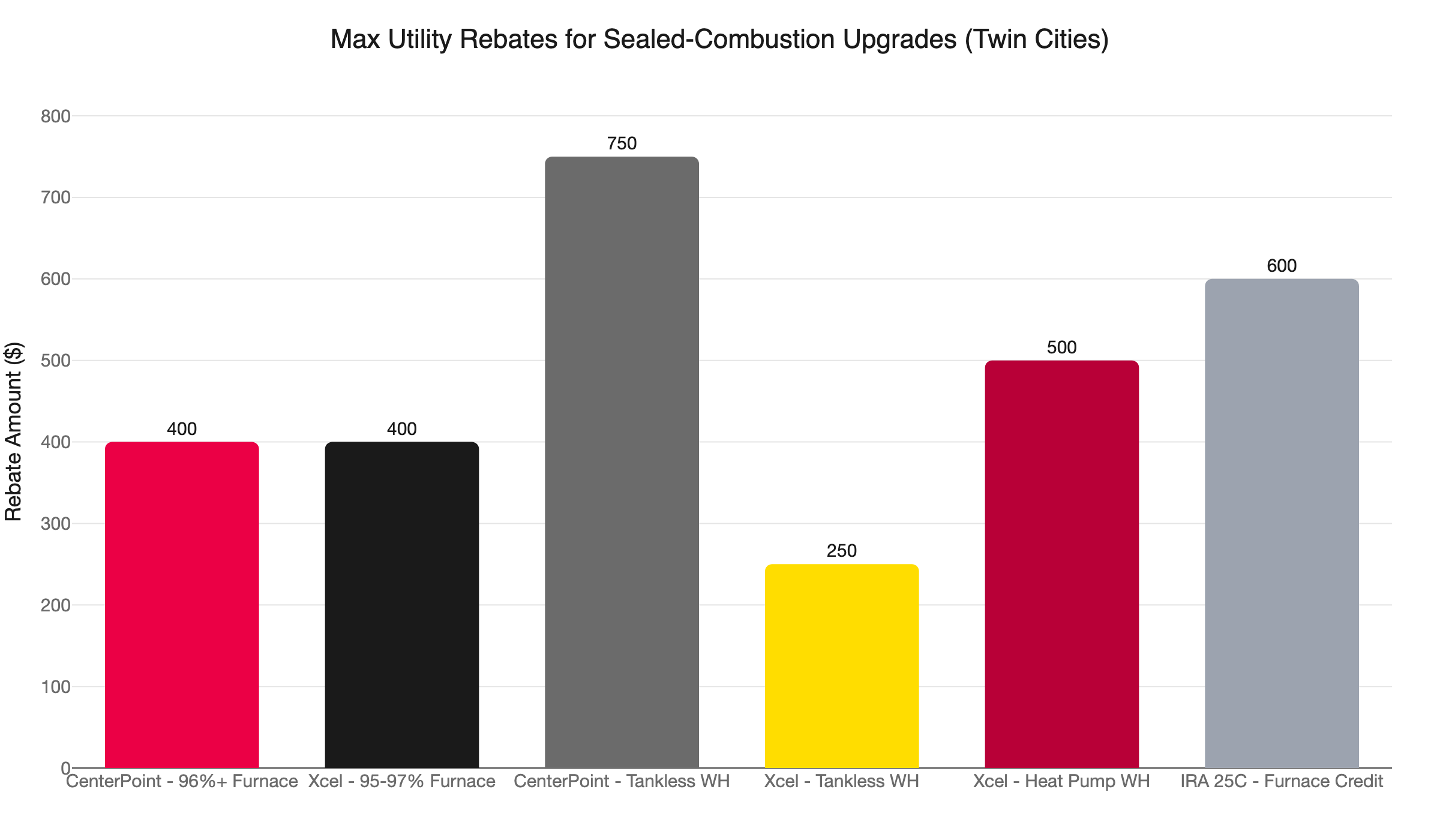
Max Utility Rebates for Sealed-Combustion Upgrades (Twin Cities)
A weatherization contractor just finished your basement rim joists. The house is noticeably tighter. Your energy bill should drop this winter. That is good news.
What they may not have told you is that your gas furnace and water heater have been quietly relying on those gaps for decades.
Spray foam insulation combustion air problems are one of the least-discussed risks in the Twin Cities weatherization market. Insulation contractors seal building envelopes. They are not HVAC technicians, and they do not always flag what a tight envelope does to the atmospheric appliances already sitting in your utility room.
This post explains the risk in plain terms: how atmospheric appliances work, what rim joist foam takes away, how to run a quick self-check on your utility room, what warning signs to watch for, and what Minnesota code requires. We will also show you how to turn a forced compliance upgrade into a rebate opportunity.
## What Is Combustion Air and Why Does Your Furnace Need It?
**The short answer:** Combustion air is the oxygen-bearing air your gas furnace or water heater draws in to sustain the burner flame. Without adequate supply, the burner runs oxygen-poor, produces carbon monoxide, and eventually fails to ignite. For an atmospheric appliance, that air comes straight from the room the unit sits in.
An atmospheric appliance, also called a natural-draft appliance, has no dedicated air intake piped from outside. It breathes room air. The draft hood at the top of the unit draws room air in alongside exhaust gases to dilute the flue stream and create the upward pull that moves combustion products out through the chimney.
That design worked reliably for decades in older Minnesota homes. Pre-1990 construction was leaky by default. Air infiltrated through the rim joist, the sill plate, window frames, and every other gap in the envelope. That infiltration replaced the air the furnace and water heater burned. No one planned that partnership. It simply existed.
The natural-draft tank water heater is part of this equation too. Most articles on this topic focus on furnaces. The water heater sitting two feet away has the same air requirement and the same draft mechanism. Both appliances compete for the same pool of room air. When that pool shrinks, both are at risk.
When you spray-foam the rim joist, you end the partnership that kept both appliances running safely.
## Why Is the Rim Joist the Hidden Combustion Air Risk in Twin Cities Homes?
**The short answer:** The rim joist runs the full basement perimeter, directly adjacent to where the furnace and water heater sit. It is the primary infiltration path those appliances were silently borrowing from. Rim joist foam seals it completely, and the appliances are left with only the air already trapped in the utility room.
Most published content on spray foam insulation combustion air problems addresses attic spray foam. That is a real scenario, but it is not the dominant one in the Twin Cities.
Minnesota is basement-heavy. Nearly every metro home has a poured or block foundation with a full or partial basement. The furnace and water heater are almost always in that basement, directly inside the rim joist zone. When a weatherization contractor seals the rim joist, they work within feet of those appliances.
Attic spray foam affects combustion air through a different path. Rim joist spray foam affects the utility room directly. The risk is more immediate because the appliances are in the same space.
There is a permit gap that makes this worse. Spray foam jobs in Minnesota that pull a building permit trigger a review of combustion appliance compatibility. Many rim joist jobs, particularly those done without a general contractor, skip permits entirely. No permit means no inspector and no flag. The homeowner does not know the problem exists until a symptom appears, and by then the risk has been present through multiple heating cycles.
Most Twin Cities homes built before 2000 have an 80% AFUE atmospheric furnace and a natural-draft tank water heater. Both were installed before sealed combustion became standard. Both depend on infiltration air that rim joist spray foam removes.
## How Spray Foam Seals Off the Air Supply Your Appliances Depend On
[The DOE identifies rim joist and sill plate air sealing as one of the highest-impact weatherization improvements available in a home.](https://www.energy.gov/sites/default/files/2024-07/12-1_air-seal-sill-plate-and-rim-joist.pdf) Energy auditors in the Twin Cities recommend it first precisely because basement perimeter air leakage is one of the biggest heat loss paths in a Minnesota home.
That is also why it is the most common trigger for combustion air problems here.
Before foam, the rim joist zone runs the full perimeter of the house at the foundation-floor junction. Air moved freely through gaps in that zone. After foam, the utility room is significantly tighter. If the furnace and water heater are both atmospheric units, they are now competing for a shrinking pool of room air.
When the air supply is insufficient, several things happen in sequence. The burner flame pulls harder on available oxygen. The flame burns incompletely, producing more carbon monoxide. Draft reversal risk increases: instead of combustion gases rising and exiting the flue, they can spill back into the room. The draft hood, which is designed to admit dilution air, can also let CO back in when the pressure balance reverses.
A sealed room with two atmospheric appliances running is not a safe operating environment. The building science community is clear on this point. [Atmospherically vented appliances have no place in a sealed enclosure.](https://www.energyvanguard.com/blog/How-NOT-to-Retrofit-a-Furnace-in-a-Spray-Foam-Insulated-Attic) The only compliant long-term solution is sealed or direct-vent equipment.
## What Are the Warning Signs of Spray Foam Insulation Combustion Air Problems?
**The short answer:** A pilot light that keeps going out for no obvious reason, yellow or orange burner flames, soot or black residue near the draft hood or flue collar, CO detector alarms, a furnace that short-cycles or locks out, exhaust smell in the utility room, and new condensation on basement windows after the insulation work.
Watch for all of these after any significant air-sealing project:
- **Pilot light repeatedly goes out** with no clear mechanical cause, especially in the weeks after the foam installation.
- **Yellow or orange burner flame** on the furnace or water heater. A properly burning gas flame is blue. Yellow or orange signals incomplete combustion due to insufficient oxygen.
- **Soot or black residue** around the furnace draft hood or the water heater flue collar. This indicates combustion gas spillage back into the room instead of out through the chimney.
- **CO detector alarm** during or shortly after a heating cycle. Do not reset it and keep running the appliance. Leave the house and call for service.
- **Furnace short-cycles or locks out on ignition fault** with no obvious mechanical cause.
- **Musty or exhaust smell** in the basement utility room when the furnace is running.
- **Excessive condensation on basement windows** following the insulation work, which can signal a pressure and humidity imbalance in the space.
If any of these appear, do not wait for the next scheduled tune-up. Call us at (763) 260-6662. Our team will check combustion air safety before you run another full heating cycle.
For related safety context, see our post on [carbon monoxide safety and your furnace](/blog/carbon-monoxide-safety-furnace-season/), which covers detector placement, CO sources, and when to evacuate.
## Does Your Utility Room Have Enough Combustion Air? The Code Math
[Minnesota's mechanical code follows IFGC combustion air provisions, which set the threshold at 50 cubic feet per 1,000 BTU/hr of installed appliance input for indoor-air-supplied combustion.](https://up.codes/viewer/minnesota/mn-mechanical-code-2015/chapter/7/combustion-air)
Here is a quick homeowner self-check:
1. Find the input BTU/hr rating on your furnace nameplate. Common values: 60,000, 80,000, or 100,000 BTU/hr.
2. Find your water heater's input BTU/hr rating. A standard tank heater is typically 36,000-50,000 BTU/hr.
3. Add the two together.
4. Multiply by 50. That is the cubic footage your utility room must provide.
Example: an 80,000 BTU/hr furnace plus a 40,000 BTU/hr water heater equals 120,000 BTU/hr combined. Multiply by 50: you need 6,000 cubic feet of room volume.
A typical 20 x 15 ft basement utility room at 8 ft ceilings is 2,400 cubic feet. That is 40% of the requirement. Most Twin Cities utility rooms fail this calculation before the spray foam, then fail harder after it.
The duct workarounds that insulation contractors sometimes leave behind do not solve this. [A 4-inch combustion air duct provides only about 12.6 square inches of net free area, sufficient for roughly 37,700 BTU/hr at most](https://www.greenbuildingadvisor.com/article/can-atmospheric-combustion-work-in-a-spray-foam-insulated-attic). That is smaller than most residential furnaces running alone, before adding the water heater load. Small flex duct connections are code violations in most configurations.
When all combustion air must be mechanically supplied, IFGC Section 304.9 requires a minimum of 0.35 CFM per 1,000 BTU/hr of total installed appliance input, delivered from outdoors. Sizing that correctly requires a licensed mechanical contractor with a permit.
## Does Minnesota Code Require You to Act?
**The short answer:** Yes. [Minnesota Rules Chapter 1346](https://www.wayzata.org/DocumentCenter/View/209/Minnesota-Mechanical-Fuel-Gas-Code-PDF) governs the state mechanical and fuel gas codes. Gas-fired appliances in tightly sealed homes must be direct-vent, power-vent, or sealed-combustion. Atmospheric draft appliances are not compliant in a tightly sealed space. If your home crosses the tight-construction threshold, the code requires a permitted fix.
The tight-construction trigger under IFGC is 0.40 ACH natural infiltration. Minnesota's 2020 energy code requires 3 ACH50 or better for new construction. A well-executed rim joist spray foam retrofit on a pre-1990 Twin Cities home can push the whole-house number past that threshold from a single job. Once it does, the KAIR method under IFGC Section 304.5.2 governs, and a mechanical solution is required.
Minnesota also requires combustion air openings and makeup air openings to be separate penetrations. A combined system requires building-official approval. Every combustion air modification requires a permit and must be done by a licensed mechanical contractor. This is not a DIY project and is not something the insulation company should handle without mechanical credentials.
This connects directly to the broader interaction between air sealing and HVAC performance. Our post on [air sealing before an HVAC upgrade in Minnesota](/blog/air-sealing-before-hvac-upgrade-minnesota/) covers how tightening the envelope affects sizing and equipment selection across a full system replacement.
## What Are Your Options for Solving the Problem?
**The short answer:** Two paths exist. The first is adding code-compliant combustion air ducts sized to your exact BTU load, which keeps your existing equipment. The second is replacing atmospheric appliances with sealed-combustion or direct-vent units, which removes the problem permanently and qualifies for utility rebates.
### Path 1: Add Dedicated Combustion Air Ducts
This option keeps your furnace and water heater in place. Two permanent openings are cut to the outside, sized per the code calculation for your combined BTU load. Each must meet the minimum net free area under IFGC. A permit is required, and the work must be inspected.
This makes sense when your appliances are relatively young and you want to preserve existing equipment. But it has a ceiling. You are retrofitting atmospheric appliances that will eventually need replacement. You are still relying on correct draft every heating cycle. And if the utility room is very small, even correctly sized ducts may not satisfy the code volume requirement without additional modifications.
### Path 2: Replace with Sealed-Combustion or Direct-Vent Equipment
A sealed-combustion furnace draws air directly from outside through a dedicated PVC intake pipe. It does not breathe room air at all. That eliminates the combustion air problem at the source and makes the appliance fully compatible with a tight building envelope.
High-efficiency furnaces rated 90%+ AFUE are sealed-combustion by design. Power-vent and condensing tankless water heaters are direct-vent by design. Every 96%+ AFUE furnace in production today qualifies for utility rebates.
Installed costs in the Twin Cities: a 96%+ AFUE furnace starts around $6,500 and ranges to $9,100 or more depending on BTU load and model tier. See our [furnace replacement cost guide for the Twin Cities](/blog/furnace-replacement-cost-twin-cities/) for current pricing by tier. Northern One Hour offers financing options for larger jobs. Ask our team when you call.
## Can You Stack Rebates When You Upgrade Your Furnace or Water Heater?
**The short answer:** Yes. A homeowner forced into a compliance upgrade can stack CenterPoint or Xcel utility rebates with the federal IRA 25C tax credit and reduce costs by $600 to over $1,750, depending on the utility provider and equipment selected.
Here is what is currently available in Minnesota:
**CenterPoint Energy rebates:**
- 94-95.9% AFUE furnace: $300
- 96%+ AFUE furnace: $400
- Power-vent tank water heater (.67 EF+): $250
- Tankless water heater (.87 UEF+): $750
**Xcel Energy rebates:**
- 95-97% AFUE furnace: $200-$400
- Storage gas water heater (.64+ UEF): $75
- Tankless gas water heater (.87+ UEF): $250
- Heat pump water heater: $400-$500
**Federal IRA 25C tax credit:**
30% of equipment cost, up to $600, for a qualifying high-efficiency gas furnace. This credit is available through 2032.
Stacking example: a CenterPoint customer upgrading to a 96%+ furnace ($400 rebate) and a tankless water heater ($750 rebate) plus the 25C federal credit (up to $600) captures $1,750 in combined incentives. That turns a forced compliance project into one with a clear payback path.
Sources: [Xcel Energy MN Residential Rebate Summary](https://www.xcelenergy.com/staticfiles/xe-responsive/Working%20With%20Us/24-1-201%20MN%20Res%20Rebate%20Summary%20Information%20Sheet.pdf) / [MN Energy Rebates 2026](https://energyrebatecalculator.com/rebates/minnesota)
For a full breakdown of how these incentives combine, see our [HVAC rebate stacking guide for Minnesota homeowners](/blog/stacking-hvac-rebates-tax-credits-federal-state-utility-minnesota/).
## What to Do Right Now
If you recently had rim joist spray foam installed in your Twin Cities home, or if you are planning to have it done, here is the action list:
1. **Identify your appliance types.** Look at the top of your furnace and water heater. If you see a metal draft hood with an open gap around the flue pipe, the appliance is atmospheric.
2. **Run the BTU math.** Add the input BTU/hr ratings from the nameplates and multiply by 50. Compare that number to your utility room's cubic footage. Most rooms fail.
3. **Check for symptoms.** Review the warning sign list above. Any of those signs means you need service before the next heating cycle.
4. **Do not skip the permit.** Whether you add combustion air ducts or replace equipment, the work requires a Minnesota mechanical permit. Licensed contractors handle that as part of the job.
5. **Call us.** Northern One Hour serves Ramsey, Blaine, Maple Grove, Plymouth, Brooklyn Park, Woodbury, Bloomington, Minneapolis, and St. Paul. We are locally owned and operated, and we schedule around your day.
Call us at **(763) 260-6662** or book online. "Always On Time… Or You Don't Pay a Dime!(R)" We back that with a 100% satisfaction guarantee.
---
# Bathroom Exhaust Fan Winter Moisture: What Minnesotans Miss
URL: https://northernonehour.com/blog/bathroom-exhaust-fan-sizing-winter-moisture-minnesota/
Published: 2026-10-01 | Category: Indoor Air Quality
Rated CFM is measured with no duct attached. Learn why your bathroom exhaust fan may still cause attic frost and mold in a Minnesota winter.
Key Takeaways
- A fan rated 80 CFM delivers that number in free air, with no duct attached. Long attic duct runs with elbows can cut actual delivery by 30-50%, dropping performance below Minnesota's 50 CFM code minimum.
- [Minnesota Mechanical Code Table 403.3.1.1](https://up.codes/viewer/minnesota/imc-2018/chapter/4/ventilation) requires 50 CFM intermittent or 20 CFM continuous for bathrooms.
- Warm shower air entering a cold, uninsulated attic duct condenses before it exits. In documented Twin Cities cases, condensation has filled ducts completely with liquid water.
- Frost accumulates on roof sheathing and nail tips through winter. It melts in spring and mimics a roof leak exactly.
- Run the fan for 60 minutes after every shower. A timer switch makes that automatic.
- Tightly sealed homes face a secondary risk: a bath fan can depressurize the space enough to cause furnace backdraft.
Bathroom exhaust fan winter moisture is one of the most misunderstood problems in Minnesota homes. Every year, Twin Cities homeowners discover spring ceiling stains they assume are roof leaks. The real cause is often a bath fan that passes every visible check, runs every morning, and still fails to remove moisture from the air.
## Does Your Bathroom Exhaust Fan Actually Stop Winter Moisture in Minnesota?
**Your fan may spin and make noise while delivering well under the required 50 CFM. The motor is rarely the failure point. In most Twin Cities homes with this problem, the duct is the culprit.**
A humming fan and a working fan look the same from the bathroom floor. You cannot tell by listening whether the fan is delivering 30 CFM or 80 CFM. Building inspectors and HVAC technicians in the Twin Cities have documented attic frost and moisture damage in homes with fans that ran every single day for years. The fan itself was fine. The duct was too long, too cold, and too restricted to move enough air.
The quick test: hold a tissue against the fan grille while the fan runs. A working fan pulls the tissue firmly against the cover. A tissue that flutters or drops means the fan is moving very little air and deserves closer attention.
## Why Does Rated CFM Mislead Minnesota Homeowners?
**Fan manufacturers measure rated CFM in free air, with no duct restriction. A real installation adds feet of duct, elbows, and a capped termination. Each one reduces actual delivery, and a nominally compliant fan can fall below code minimum in a standard Twin Cities installation.**
[Building science documentation from the Twin Cities](https://structuretech.com/forget-code-bathrooms-need-fans/) shows that every foot of duct and every elbow reduces actual airflow. An 80 CFM fan pushing air through a 15- to 20-foot attic run with two 90-degree elbows can deliver fewer than 45 CFM at the exterior cap. That is below the code-required 50 CFM minimum. That is not ventilation.
[Minnesota Mechanical Code Table 403.3.1.1](https://up.codes/viewer/minnesota/imc-2018/chapter/4/ventilation) sets the floor at 50 CFM intermittent or 20 CFM continuous for bathrooms. That matches the ASHRAE 62.2 national standard. A fan rated exactly 50 CFM has zero margin. Any duct resistance drops it into deficiency.
Twin Cities bungalows and ramblers from the 1940s through the 1960s are the most common stock with this problem. Original duct runs were sometimes pointed directly into the attic with no exterior termination at all. [Minnesota code now prohibits venting into the attic, crawl space, or wall cavity](https://www.honey-doers.com/blog/bathroom-exhaust-and-venting-codes-in-minnesota-navigating-common-issues/). Ducts through unconditioned spaces must be insulated, and roof caps must include a damper. Many of those original installations were never corrected, and no inspection ever flagged them.
A fan that exists, runs daily, and looks code-compliant on paper can still drive attic damage every time someone showers. The rated label is not a performance guarantee.
## What Does Bathroom Exhaust Fan Winter Moisture Do to a Minnesota Home?
**Warm, humid shower air enters the duct, hits the cold duct walls in an unheated attic, and condenses. In a Minnesota winter, that condensate freezes on duct walls, roof sheathing, and roofing nail tips. The damage is invisible until spring.**
The Twin Cities sits in [IECC Climate Zone 6A, with a winter design temperature reaching -9°F](https://autohvac.ai/climate-zones/minnesota). Northern Minnesota is Climate Zone 7. In both zones, the dominant moisture drive is outward: warm, humid interior air pushes toward the cold exterior. Attic condensation is structurally worse here than in most U.S. climate zones, and the physics are unforgiving at those temperatures.
Here is the moisture sequence in a typical underperforming installation:
- A 10-minute hot shower puts roughly a pint of water vapor into the bathroom air.
- The fan pulls that vapor into the duct. If the duct runs 20 feet through a 5°F attic, the air chills to its dew point before it exits.
- Condensation forms on the duct interior. In one [documented home in Richfield, MN, an uninsulated attic duct filled completely with liquid water](https://structuretech.com/forget-code-bathrooms-need-fans/). The fan ran every morning for years. The duct absorbed every drop.
- When the duct is saturated, water drips back through the fan grille. Many homeowners read that drip as a roof leak or a fan failure. It is neither.
- Vapor that makes it past the duct condenses on the coldest attic surfaces: roof sheathing, rafters, and the tips of roofing nails.
- That condensation freezes through the winter, building up frost with every shower.
None of this is visible until temperatures rise in spring.
## Is Attic Frost the Same as a Roof Leak?
**No, but it looks identical. Water appearing at the ceiling or dripping from a light fixture in early spring is often melting attic frost, not a failed shingle. The distinction matters because the repair is completely different.**
[Frost accumulation on roof sheathing and nail tips](https://structuretech.com/attic-frost/) leads to deteriorated sheathing, mold on sheathing, wet insulation, and ceiling stains. Homeowners call roofers. Roofers inspect the roof in April, find no damaged shingles, and leave without identifying a cause. The problem returns the following spring because the bath fan duct was never addressed.
The diagnostic difference comes down to timing and location. A shingle or flashing failure leaks during or after rain. Frost melt happens in the first warm week of spring, often after weeks of cold and dry weather, with no rain event preceding it. The stain clusters near the bath fan penetration, the attic hatch, or recessed lights, anywhere that warm interior air escapes into the attic.
Wet insulation is a compounding cost. In Climate Zone 6A, the ceiling R-value requirement is R-49. Insulation that has been wet and re-frozen loses a significant portion of its R-value. Repeated frost-melt cycles over several winters can degrade attic insulation enough to raise heating bills noticeably all season, not just during the melt event.
When mold follows the moisture, it can spread from the sheathing to the ductwork and eventually the living space. We cover that escalation in our post on [mold in HVAC ducts and remediation for Twin Cities homes](/blog/mold-in-hvac-ducts-signs-remediation-twin-cities/).
If your ceiling stains appeared in March or April, call an HVAC technician before you call a roofer.
## How Long Should You Run the Fan After Every Shower?
**60 minutes after the shower ends, not just during it. Running the fan while you shower clears steam. Running it for 60 minutes afterward removes the moisture load from the air. Most households stop after two to four minutes and leave most of the problem in place.**
[HVAC professionals and building scientists recommend 60 minutes of post-shower fan runtime](https://structuretech.com/attic-frost/) to return indoor humidity to its pre-shower baseline. The steam clears quickly. The moisture does not. Stopping the fan when the mirror clears handles the visible symptom and ignores the humidity still in the air.
The behavioral fix is a switch upgrade. Dial-type timer switches can be set for 30, 45, or 60 minutes and typically cost $20-50 to install. Humidity-sensing switches run the fan until relative humidity drops below a set threshold, usually 50-60%. Either option removes household compliance from the equation. You set it once, and the fan does the right thing automatically.
## What About Backdraft in Tight Minnesota Homes?
**A bath fan that depressurizes a tightly sealed home can pull combustion gases back down through a gas furnace or water heater flue. As more Twin Cities homes are weatherized and air-sealed, this risk is growing.**
A bath fan is an exhaust device. Every cubic foot of air it pushes outside must be replaced from somewhere. In a loose older home, replacement air infiltrates through gaps in the building envelope. In a tightly sealed home, running a powerful bath fan can create enough negative pressure to pull flue gases back through gas appliances.
[Tightly sealed homes can experience combustion appliance backdraft when a bath fan depressurizes the space](https://www.honey-doers.com/blog/bathroom-exhaust-and-venting-codes-in-minnesota-navigating-common-issues/). Minnesota's energy code has tightened steadily, and weatherization programs have air-sealed a meaningful portion of the older housing stock. The risk is most acute in homes that were upgraded without a corresponding makeup air assessment.
If your home is recently weatherized, has new windows and door seals, or was built under the 2012 or later energy codes, and you are considering a higher-capacity replacement fan, discuss makeup air with your HVAC technician first. We cover the full picture of exhaust fans, depressurization, and combustion safety in our post on [exhaust fans and furnace backdraft risk in Minnesota](/blog/exhaust-fans-furnace-backdraft-combustion-air-minnesota/).
## How Do You Know If Your Fan Is Underperforming?
**The tissue test, steam clearance time, and winter dripping are the three informal checks any homeowner can run. An HVAC technician with a flow hood gives you the definitive CFM number.**
Informal checks you can do yourself:
- **The tissue test.** Hold a tissue near the fan grille while the fan runs. A healthy fan pulls the tissue firmly against the grille. A tissue that flutters or drops indicates weak airflow.
- **Steam clearance time.** After a hot shower, bathroom steam should clear from the mirror within two to three minutes with the fan running. Steam that lingers beyond five minutes points to inadequate airflow delivery.
- **Dripping in cold weather.** Water dripping from the fan grille during or after a cold snap means condensation is forming inside an uninsulated duct and draining back toward the room.
- **Loud fan, weak pull.** A fan that hums loudly but fails the tissue test usually has a blocked or overly long duct run, not a motor problem.
- **Spring ceiling stains.** Stains near the fan grille that appear in March or April, especially after a hard winter, are a strong indicator of attic frost melt.
A professional airflow measurement at the grille confirms whether your installed fan actually meets the 50 CFM code minimum under real duct conditions.
## What Does It Take to Fix an Underperforming Bath Fan?
**The fix depends on the diagnosis. A duct reroute, insulation, a fan upgrade, or a switch swap are each the right answer for a different underlying cause. Replacing the fan first is often the wrong call.**
Common scenarios and their solutions:
**Duct vents into the attic.** This violates Minnesota code and must be corrected regardless of anything else. A new run is required to a proper exterior or roof cap, with insulation through any unconditioned section.
**Duct run is too long or too restricted.** Rerouting to shorten the run or eliminate unnecessary elbows restores airflow. In cases where the run cannot be shortened, upgrading to a higher-capacity fan can compensate for the resistance.
**Duct is uninsulated.** Condensation forms on cold duct walls before air exits. Replacing the duct with insulated flexible duct, or wrapping the existing duct, stops the moisture problem at the source without requiring a fan replacement.
**Fan is undersized for the room.** The standard sizing guideline is 1 CFM per square foot of floor area, with a 50 CFM minimum. Bathrooms with jetted tubs or steam showers need more. A correctly sized replacement fan addresses the shortfall directly.
**Fan works but behavior is the problem.** A timer or humidity-sensing switch installed in place of the existing wall switch typically costs $30-80 and removes the need for household compliance entirely.
On permits: [Minnesota requires a permit when new ductwork is run or when a fan replacement is part of a broader remodel](https://www.honey-doers.com/blog/bathroom-exhaust-and-venting-codes-in-minnesota-navigating-common-issues/). Like-for-like swaps in the same location may not require one. Minneapolis, Saint Paul, and most suburbs administer their own programs, so verify with your local building department before starting work.
## Why Is Bathroom Ventilation an HVAC Issue?
**Bath fan underperformance is a ventilation and indoor air quality problem, not a handyman task. It requires the same diagnostic and sizing logic that applies to whole-home mechanical ventilation, and the consequences of getting it wrong reach well beyond the bathroom.**
A bath fan is the primary point-source ventilation device in the most moisture-intensive room in the house. When it underperforms, the consequences extend from frost and structural damage to mold and degraded insulation. Our [indoor air quality services](/indoor-air-quality/) include ventilation consultation for exactly these situations.
For homes that need whole-home fresh air exchange alongside bathroom moisture control, an HRV system handles both simultaneously and recovers the heat that a simple exhaust fan discards. We explain how that works in our post on [whole-home HRV ventilation for Minnesota homes](/blog/hrv-whole-home-ventilation-minnesota/).
Before replacing a fan, it is worth checking for utility rebates. Xcel Energy has offered ENERGY STAR ventilation fan rebates in prior program years. Availability in 2026 is unconfirmed. Verify at [xcelenergy.com/savings](https://www.xcelenergy.com/savings) before counting on it. Minneapolis homeowners can also check the [Minneapolis Bonus Rebate Program through MNCEE](https://www.mncee.org/minneapolis-bonus-rebate-program) for eligible energy upgrades.
If your home is certified under ENERGY STAR's new homes program, [it is required to have bath fans independently tested to verify actual airflow rates, not just the rated label](https://www.energystar.gov/newhomes/features-benefits/indoor-air-quality-features). If you do not know whether your fans were tested at installation, an inspection will confirm it.
## How Northern One Hour Can Help
We are locally owned and operated in Ramsey, MN, and we serve Minneapolis, St. Paul, Blaine, Maple Grove, Plymouth, Brooklyn Park, Woodbury, and the broader Twin Cities metro.
Bathroom ventilation falls within our HVAC scope. We can measure actual airflow at the fan grille and compare it to the code minimum, inspect the duct run for insulation compliance and proper exterior termination, replace undersized or failed fans with correctly sized units, reroute ducts that terminate in the attic instead of the exterior, install timer or humidity-sensing switches, and flag backdraft risk in tightly sealed homes.
When we say we will be there at the scheduled time, we mean it. "Always On Time… Or You Don't Pay a Dime!(R)" is a guarantee. If frost damage, spring ceiling stains, or persistent bathroom moisture are showing up in your home, the right move is a diagnosis before the next heating season.
Call **(763) 260-6662** or book online to schedule a ventilation inspection.
---
# How to Balance HVAC Registers in Your Twin Cities Home
URL: https://northernonehour.com/blog/how-to-balance-hvac-registers-airflow-twin-cities/
Published: 2026-10-01 | Category: HVAC
Step-by-step guide to balancing HVAC registers in Twin Cities homes. Fix uneven room temps and protect your equipment before Minnesota winter hits.
Key Takeaways
- "Balancing registers" means adjusting three physically different hardware points. Only the in-duct butterfly damper, near the supply plenum, gives you real control over airflow volume.
- Start with a full reset: open every register and damper to 100%, run the system for 24 hours, then measure every room before touching anything.
- Never close a damper more than 80-85%. Beyond that point, backpressure builds, conditioned air escapes through duct seams into unconditioned spaces, and equipment damage follows.
- The seasonal flip matters more here than in most of the country. Open upper-floor runs more in summer; open lower-floor runs more in winter.
- Some rooms cannot be balanced from the supply side alone. A room with no return air path and a closed door will stall regardless of how you adjust the supply register.
- If a full reset and two rounds of adjustments do not bring rooms to setpoint, the issue is likely duct leakage or equipment sizing. Both require a professional diagnostic, not more DIY.
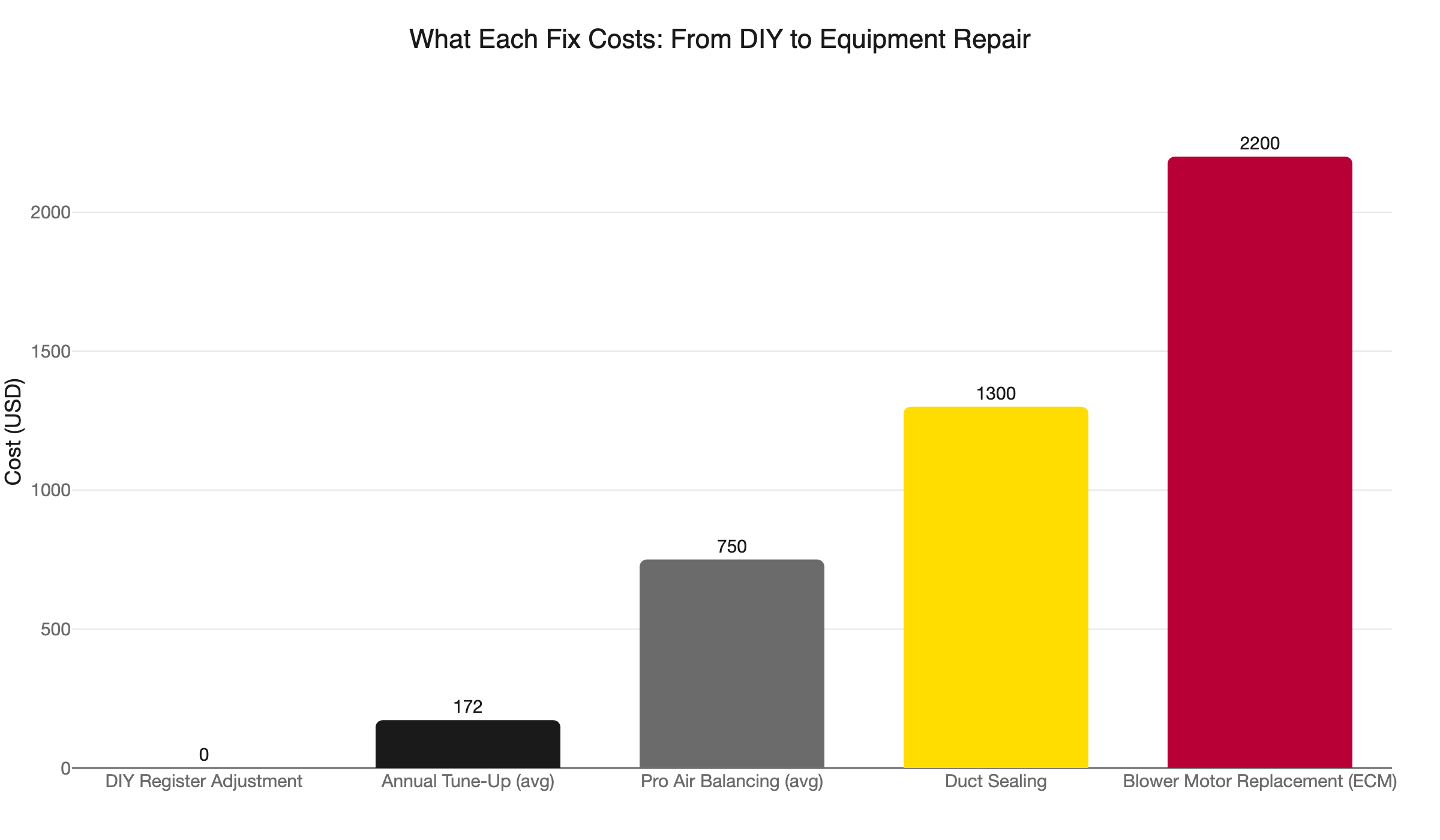
What Each Fix Costs: From DIY to Equipment Repair
## What Does "Balancing HVAC Registers" Actually Mean?
Balancing registers means adjusting airflow through each duct branch so every room reaches your thermostat setpoint at roughly the same time, without starving any zone of conditioned air.
Most guides frame this as "close the hot rooms a little." That framing is imprecise in a way that leads to equipment damage and service calls. Here is the accurate version.
Your forced-air system has one air handler, one supply plenum, and multiple duct branches running to registers throughout the house. The branches closest to the plenum carry more pressure than the branches at the far end. That is physics: the longer the duct run, the more friction loss along the way.
In practice, rooms at the end of long branches often run cold in winter and warm in summer. Shorter branches near the plenum tend to overshoot setpoint by several degrees. Balancing means slightly restricting those high-flow short runs so more pressure reaches the starved branches at the back of the system.
Done right, it produces noticeable improvement. Done wrong, or done with the wrong hardware, it creates backpressure that damages your equipment and wastes energy.
The stakes are higher here than in most cities. At Minnesota design temperatures of -16°F to -20°F, a room running 4°F below setpoint is not just uncomfortable. For elderly residents or young children, that gap is a health issue in January. Getting the system balanced before hard winter sets in is not optional maintenance here - it is preparation.
## What Are the Three Register Controls - and Which One Actually Works?
There are three physically different hardware points that homeowners call "the register control." Only one of them gives you real volume control. The short answer: the louver blades redirect air direction; the register box damper coarsely reduces it; only the in-duct butterfly damper controls airflow at the source.
**The louver blades.** The angled slats on the register face. Closing them redirects air toward a corner or wall. They do not meaningfully reduce flow volume. If your fix for a warm room is closing the louvers all the way, you are pointing hot air at a wall. Nothing more.
**The register box damper.** A small lever or slide built into the register housing, accessible when you remove the face plate. It does partially restrict flow, but it sits at the very end of the duct run, where the supply pressure has already distributed across the branch. It is also the easiest control to over-close. Most levers have no tactile stops between "half open" and "completely shut," so there is no feedback telling you how far you have gone.
**The in-duct butterfly damper.** This is the correct control point. It sits inside the duct run itself, within a foot or two of where the branch leaves the supply plenum. Look for it in your mechanical room, basement ceiling, or crawl space. It is a round plate on a pivot rod. The lever runs parallel to the duct when fully open. It runs perpendicular when fully closed. Adjusting it controls pressure across the entire branch at the source.
The [Department of Energy](https://www1.eere.energy.gov/buildings/publications/pdfs/building_america/strategy_guide_air_distr.pdf) puts it plainly: "With any duct runout, balancing dampers are needed to adjust the pressure of airflow through the outlets because self-balancing systems are not realistic."
Not every Twin Cities home has in-duct dampers. Homes built before 1980 may have supply runs with no butterfly damper at all. In that case you are limited to the register box damper - which means keeping every adjustment small and conservative.
## What Should You Do Before Adjusting Any Register?
Run a baseline reset first: open every register and damper to 100%, let the system run for 24 hours, then measure room temperatures before making any changes. Previous owners, past contractor work, or your own earlier experiments may have left dampers partially closed in ways that compound with what you are about to do. Start from a known state.
**Baseline reset steps:**
1. Walk every supply register in the house. Remove each face plate and open the register box damper to the fully open position.
2. Find the in-duct dampers on each supply branch. In most Twin Cities homes they are in the basement or mechanical room. Turn each lever parallel to the duct - that is fully open.
3. Check all return registers for obstructions. Furniture pushed against a return grille, a rug covering a floor return, or storage bins blocking a return duct will distort your baseline and limit system performance.
4. Set the thermostat to your normal target temperature. Do not adjust it during the test period.
5. After 24 hours, walk every room with a thermometer. Write down how far each room deviates from setpoint - which rooms run warm, which run cold, and by how many degrees.
That list is your map. You will use it to measure progress after each round of adjustments, and to know when you have reached the limit of what register balancing can accomplish.
## How to Balance HVAC Registers Twin Cities Homes: Step-by-Step
With your 24-hour baseline in hand, here is the adjustment procedure.
**Label your in-duct dampers.**
In the basement or mechanical room, trace each supply branch from the plenum. Stick a piece of masking tape on each damper handle and write the room it serves. You will be making one-notch changes over multiple cycles. Know which handle is which.
**Adjust one notch at a time.**
A butterfly damper moves in roughly 15-degree increments. One notch is about 15 degrees from the current position. That is the right unit of change for a first pass. Close the runs serving rooms that are overperforming: rooms that run warm in winter, or cool in summer. Leave underperforming runs fully open.
**Wait between adjustments.**
After each one-notch change, let the system run for 2-4 hours before measuring again. Forced-air systems take time to redistribute pressure and stabilize room temperatures. Change one run per cycle so you know exactly which adjustment produced which result.
**Hold the 80-85% limit.**
[Never close a manual damper more than 80-85% of the way.](https://jacksonsystems.com/common-mistakes-when-adjusting-hvac-dampers/) Past that point, backpressure builds inside the duct. Conditioned air finds the path of least resistance: duct seams and poorly sealed register boots. It escapes into unconditioned spaces instead of your living area. A typical home [already loses 20-30% of conditioned air](https://www.energystar.gov/saveathome/heating-cooling/duct-sealing) through duct leaks before it reaches the register. Closing dampers past the limit makes that worse.
**Work from the far runs first.**
The supply branches furthest from the air handler are the ones most starved for pressure. Before closing anything, confirm those long-run dampers are fully open. Then close the shorter, higher-pressure runs one notch to redirect pressure toward the back of the system.
**If your home has no in-duct dampers:** Use the same one-notch principle with the register box damper. Treat each small click of the lever as your unit of change. Never close a register box damper past halfway. Control is less precise, so the risk of overshooting is higher.
## Should I Adjust Registers Differently in Summer vs. Winter?
Yes - and in the Twin Cities, this seasonal flip matters more than in most U.S. cities. In summer, push more air upstairs. In winter, push more air to the lower floors. Heat rises in summer and loads upper floors harder. Cold settles in winter and underloads them. A one-notch seasonal adjustment on a few dampers in May and again in October handles most of the shift.
[Twin Cities homeowners face roughly a 110°F swing](https://www.candmheatingandair.com/blog/heating-and-air-conditioning-the-complete-minnesota-homeowners-guide-2026) between winter wind chills and summer highs. A home in a temperate climate can use one damper position year-round with minimal comfort loss. Here, the gap between heating and cooling loads is large enough that a fixed setting leaves noticeable deficits in one season or the other.
**Summer settings:** Open upper-floor supply runs more fully. Partially close basement and main-floor runs to push pressure upstairs.
**Winter settings:** Open lower-floor and basement supply runs more fully. Partially close upper-floor runs so the second floor does not overheat while the main level is still trying to reach setpoint.
Take a photo of your seasonal damper positions. Five minutes of labeling and photography now saves a full re-diagnosis every spring and fall. If upper floors still run cold after the seasonal flip, our post on [why upstairs rooms run cold in winter](/blog/upstairs-too-cold-winter-heating-twin-cities/) covers the additional causes - insulation gaps, air sealing, and system sizing - that register adjustment alone cannot fix.
## Why Won't Some Rooms Balance No Matter What I Do?
If a room has no return air path and the door stays closed, supply air builds positive pressure inside until airflow stalls. No adjustment to the supply register will fix this. The problem is on the return side, not the supply side.
Most Twin Cities homes built before 1990 use a central return: one large grille in a hallway or open living area serving the entire house. That design works with interior doors open. With doors closed - a bedroom overnight, a home office during the workday - the room becomes pressurized. Supply air cannot enter because it has nowhere to go.
ENERGY STAR requires new certified homes to hold a pressure differential of [-3 Pa to +3 Pa](https://www.energystar.gov/sites/default/files/2025-04/National%20Rater%20Field%20Checklist_Rev%2014.pdf) between bedrooms and the main body of the house with all air handlers running. That is the professional benchmark for "balanced." Most older homes miss it by a wide margin.
The [DOE Building Science Education Center](https://bsesc.energy.gov/energy-basics/hvac-ducted-returns) identifies three code-compliant solutions: dedicated per-room returns, transfer grilles above interior doors, and jump ducts. For an existing home, an over-door transfer grille is the most accessible retrofit. It is a louvered panel cut through the wall above an interior door. It allows air to circulate from the room back toward the central return.
**How to diagnose it:** Hold a tissue near the bottom gap of a closed bedroom door while the system runs. If the tissue is pulled toward the door, that room has positive pressure and a return air problem. See our post on [return air problems and HVAC airflow in Twin Cities homes](/blog/return-air-problems-hvac-twin-cities/) for the full diagnostic and retrofit options.
## What Happens When You Over-Close Registers?
Over-closing does not just reduce comfort in one room. It creates backpressure that damages equipment at both ends of the heating and cooling cycle. These are the three failure modes the generic guides skip - and the ones that turn a DIY adjustment project into a service call.
**Frozen evaporator coil (summer).**
When too many supply runs are restricted, airflow across the evaporator coil drops below its design minimum. The refrigerant absorbs less heat from the passing air. Coil temperature falls below 32°F, condensation freezes on the surface, and ice accumulates. Airflow drops further as the ice block grows, and the system stops cooling entirely.
Thawing a frozen coil takes up to 24 hours. If the restriction stays, the coil freezes again on the next cycle. Over time, liquid refrigerant makes it back to the compressor - a far more expensive failure. Our post on [why your AC ices up](/blog/frozen-evaporator-coil-why-ac-ice-twin-cities/) covers the diagnostic if you see ice on the outdoor unit or along the refrigerant line.
**Furnace limit switch trips (winter).**
The heat exchanger needs adequate airflow to stay within its safe operating temperature range. Restrict airflow enough and the blower cannot carry heat away. The high-limit safety switch trips and shuts the burner off. At [Minnesota design temperatures of -16°F to -20°F](https://minnesotahvacauthority.com/minnesota-hvac-system-sizing-guidelines), a furnace that keeps cycling off is not an inconvenience. It is a serious problem.
Repeated limit trips stress the heat exchanger over time. Eventually it cracks. A cracked heat exchanger is a carbon monoxide risk and typically costs more to repair than furnace replacement.
**Conditioned air loss into unconditioned spaces.**
Over-closing does not eliminate the air your system produces. It raises duct pressure until that air finds another exit - through seams, joints, and poorly sealed register boots into the attic, crawlspace, or wall cavities. You pay to heat or cool spaces you do not occupy, on top of the 20-30% that is already escaping through existing duct leaks.
## When Should You Call a Professional Instead?
Stop adjusting and call a tech when two full cycles have not moved room temperatures, when you see ice on the AC system, when the furnace is short-cycling, or when energy bills spike without a weather explanation. Those symptoms point to duct leakage or equipment sizing - problems that register adjustment cannot solve.
Specific triggers to pick up the phone:
- **Two full adjustment cycles with no measurable improvement.** Root cause is likely duct leakage or a sizing mismatch. Both require diagnostic tools - blower door, manometer, flow hood - that most homeowners do not have. Professional air balancing runs [$300-$1,200](https://todayshomeowner.com/hvac/guides/hvac-balancing/) depending on home size and complexity. It is the definitive answer when DIY stops working.
- **Ice on the AC unit or evaporator coil.** Open every damper to 100% immediately, power the system off, and call before restarting.
- **Furnace short-cycling or the limit switch tripping.** Open all dampers and call. Continuing to run the system with restricted dampers accelerates heat exchanger wear.
- **Furnace cannot reach setpoint during a cold snap.** A sizing mismatch invisible at 20°F shows up fast at -10°F. Our post on [furnaces that can't reach setpoint in extreme cold](/blog/furnace-cant-reach-setpoint-extreme-cold-minnesota/) walks through the diagnostic steps.
- **Energy bills spiking without a weather cause.** That pattern usually points to duct leakage. Duct sealing runs around $1,300 and typically cuts conditioned-air loss significantly.
If a diagnostic visit points to an aging or undersized system, we can walk you through replacement options and available utility rebates. CenterPoint Energy gas customers qualify for up to $400 on a 97%+ AFUE furnace. Xcel Energy customers upgrading to a cold-climate heat pump can qualify for $400-$800 in rebates. Financing is available to spread the cost of a larger replacement.
Northern One Hour is locally owned and operated in Ramsey. Our team serves Minneapolis, St. Paul, Maple Grove, Blaine, Brooklyn Park, Plymouth, Woodbury, Bloomington, and the surrounding Twin Cities area. Call (763) 260-6662 or book online to schedule a diagnostic visit. We show up when we say we will - "Always On Time… Or You Don't Pay a Dime!(R)."
---
# Slab Foundation Home HVAC Ductwork Minnesota: 3 Paths
URL: https://northernonehour.com/blog/slab-foundation-hvac-ductwork-options-minnesota/
Published: 2026-10-01 | Category: HVAC
Twin Cities slab home with failed or missing under-slab HVAC ductwork? Here are 3 repair paths, what each costs, and what Minnesota code requires.
Key Takeaways
- Thousands of Twin Cities slab homes carry under-slab sheet metal or transite ducts that are now corroding, flooding, or blocked after 50-plus years in the ground.
- Three paths exist: spray-in-place liner with no concrete cutting, jackhammer and replace, or abandon the slab runs and reroute overhead (or convert to ductless).
- Minnesota Energy Code requires R-3.5 insulation plus a vapor retarder on any duct installed inside or below a concrete slab.
- Full overhead ductwork rerouting runs $6,500-$13,000 installed in the Twin Cities. Spray liner avoids concrete work but requires a camera inspection first to confirm eligibility.
- Cold-climate mini-splits work in Minnesota but require a backup heat source and careful load sizing. An oversized unit causes temperature swings and humidity problems.
- Xcel Energy's cold-climate mini-split rebate is $2,000 in 2026. The federal $2,000 heat pump tax credit expired December 31, 2025 and is not available for current installs.
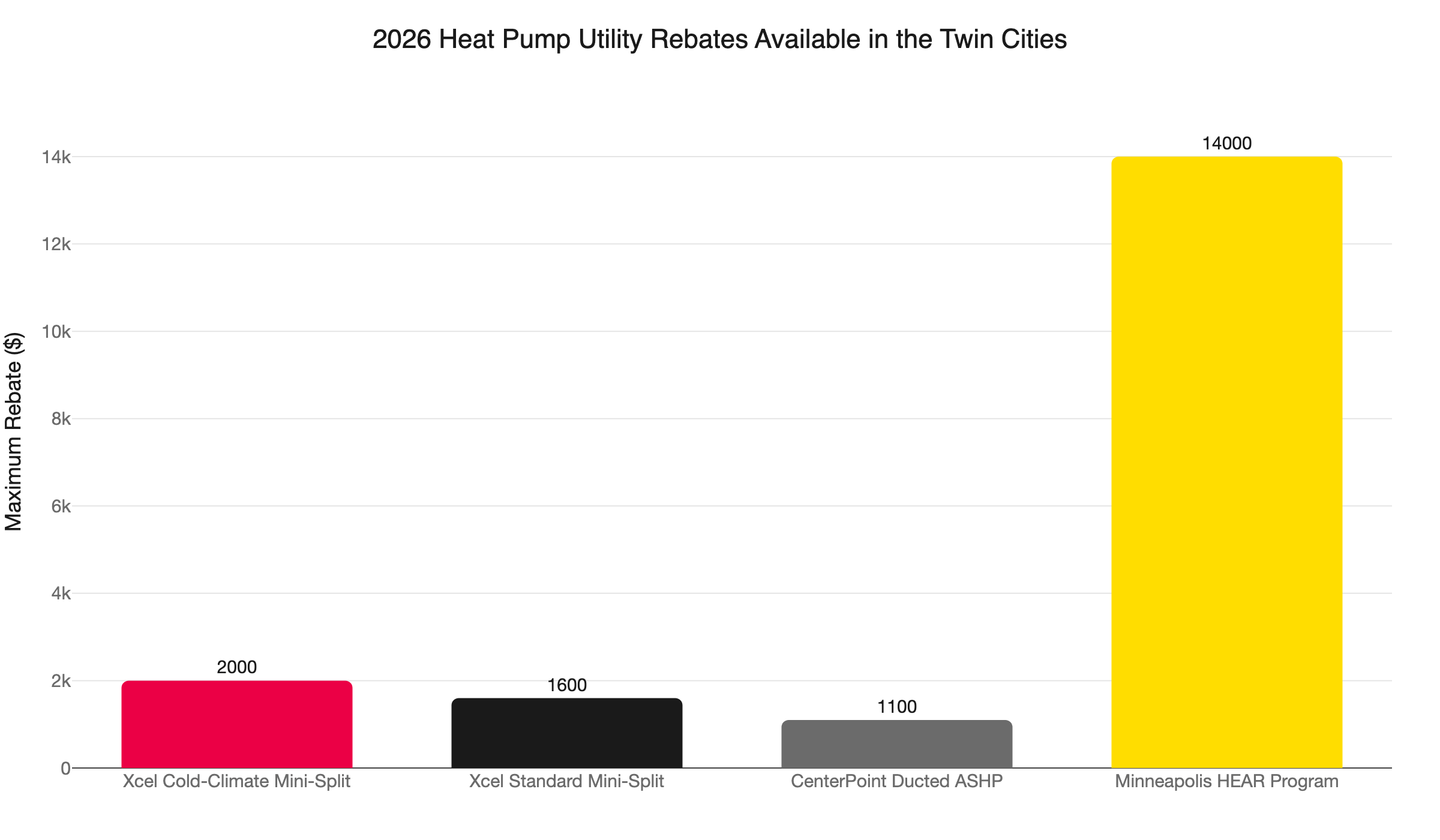
2026 Heat Pump Utility Rebates Available in the Twin Cities
If you own a slab foundation home in Minnesota and a tech just told you your HVAC ductwork is flooded, rusted, or blocked, you are not alone. Thousands of Twin Cities ranch homes built in the 1960s and 1970s are hitting this exact point. This post covers your three repair paths, what Minnesota code requires, what each option costs in 2026, and what rebate money is available if you convert to a heat pump.
## Why Under-Slab HVAC Ductwork Fails in Twin Cities Slab Foundation Homes
The problem starts with location. Ducts buried under a concrete slab sit at soil level, where [groundwater, rain, and nearby plumbing leaks collect for months before a homeowner notices](https://www.ductarmor.org/why-water-gets-into-slab-ducts/). Sheet metal rusts from the outside in. Joints corrode. Duct walls thin and eventually fail.
Twin Cities freeze-thaw cycles add a second layer of stress. [Seasonal ground movement cracks seams and joints on subterranean ducts](https://www.hvac-talk.com/threads/repairs-to-under-slab-ductwork.768592/). A hairline crack in October becomes an open gap by April. Soil, insects, and rodents enter through the openings.
Not all original under-slab ducts were metal, either. [Transite, a cement-asbestos composite, and fiber "Sonotube" ductwork were standard in 1960s-70s slab construction](https://www.diychatroom.com/threads/in-slab-ducting-repair-replacement-options.726530/). Both materials decay over time. Transite in particular must be handled as an asbestos-containing material during any disturbance. If your home predates 1980 and you do not know what material is under the slab, that question needs an answer before any work begins.
## How Do You Know Your Under-Slab Ducts Have Failed?
**A video camera inspection is the only way to confirm the extent of damage. But several symptoms at surface level point there first. Look for musty smells from floor registers, rooms that won't reach setpoint regardless of runtime, and visible rust or moisture inside register covers.**
Watch for these signs:
- Rooms served by floor registers that stay cold or warm no matter how long the system runs
- Musty, earthy, or mildew smells coming from floor registers when the system is on
- Rust staining or visible moisture inside floor register covers
- A recent water event near any floor register: plumbing leak, basement flooding, or heavy snowmelt
- Energy bills that keep climbing with no change in usage or weather pattern
Any one of these, in a slab home over 40 years old, is a reason to schedule an inspection. Two or more together is urgent. A camera run through the system shows exactly where the damage is before you commit money to a repair approach that may not fit the actual problem.
## What Are My Options for HVAC Ductwork in a Minnesota Slab Home?
**Three paths exist: spray-in-place liner, jackhammer and replace, and abandon the slab runs with overhead rerouting or ductless conversion. Each fits a different severity, budget, and home layout. The camera inspection tells you which one applies.**
Think of the three paths as a spectrum from least to most invasive. More invasive does not always mean more expensive once you account for the full scope of each option. The sections below explain where each path makes sense and where it does not.
## Path 1: What Is the Spray-In-Place Liner?
**A polymer coating is sprayed into existing ducts through the current floor registers, with no concrete cutting required. Best when ducts are structurally present but corroded or leaking at seams.**
[Duct Armor's spray liner](https://www.ductarmor.org/) has been in production since 2003. The system enters through existing supply and return openings. One documented homeowner reported a clean five-year video inspection post-install. The product carries a 15-year warranty.
The liner only works when ducts are structurally intact and still connected throughout. Collapsed sections, major blockage, or missing runs rule it out entirely. That is why the camera inspection is not optional. A contractor who recommends spray liner without a camera run first is skipping the step that determines whether the approach is even appropriate for your system.
The liner addresses corrosion and minor seam leaking. It does not restore structural integrity to a crushed or disintegrated run. When a liner is appropriate, it is typically the lowest-cost and least disruptive path of the three. Pricing varies by lineal footage and duct geometry. Get a written quote with the camera inspection listed as its own line item.
## Path 2: When Does Jackhammer and Replace Make Sense?
**When damage is severe but localized - one or two failed runs in an otherwise intact system. Cutting the slab to replace those sections is faster and less expensive than rerouting everything overhead.**
[Cutting the slab, replacing the damaged sections, and re-pouring concrete](https://engineerfix.com/how-to-repair-air-ducts-in-a-slab-foundation/) is the most disruptive of the three paths. The concrete work adds cost, mess, and days out of normal floor use on top of the duct labor and material. It also carries the highest per-lineal-foot cost because of the concrete component.
Where this path makes sense: the camera inspection finds one or two completely failed runs while the rest of the system remains structurally sound. A targeted repair costs less than rerouting everything overhead and avoids the ceiling work.
Where it does not make sense: widespread corrosion throughout the system. When most of the under-slab runs are compromised, a partial repair trades short-term disruption for a fix you will revisit in five years. A full overhead reroute costs more upfront and solves the problem once.
If a contractor recommends jackhammer and replace on a system with widespread corrosion, ask them specifically why overhead rerouting is wrong for your home. The answer should address your layout, ceiling access, and load requirements.
## Path 3: Should I Abandon the Slab Ducts and Reroute Overhead?
**Yes, in most cases of widespread failure. Seal the old runs permanently at both ends, then run new ductwork through the attic, dropped ceiling soffits, or wall chases. This gives you a full new duct system that is accessible, inspectable, and built to current code.**
[Abandoning under-slab ducts entirely](https://engineerfix.com/how-to-repair-air-ducts-in-a-slab-foundation/) means sealing every dead run at two points: at each floor register AND at the HVAC unit connection. Both caps are required. An open slab duct still connected to a running air handler draws radon, pests, and soil gas directly into conditioned space. Do not skip the unit-side seal.
New overhead ductwork runs through one of three configurations, each with real tradeoffs:
**Attic runs** are the least expensive to install in most home layouts. They stay hidden above the living space. Minnesota code ([MN Revisor Rule 1322.0403](https://www.revisor.mn.gov/rules/1322.0403/)) requires R-8 insulation plus a vapor retarder on any duct in an unconditioned attic. Attic routing is not exempt from insulation requirements.
**Dropped soffits** along the ceiling perimeter keep ductwork inside conditioned space, which improves thermal efficiency year-round. They add a visible box along one or more walls, typically six to twelve inches deep. Most homeowners adapt quickly. Some use the soffit line as a design feature with lighting or trim detail.
**Wall chases** are the most labor-intensive option. They preserve full ceiling height with no visible soffit, but routing ductwork through interior walls requires careful planning and more hours on the job. Used selectively where a ceiling soffit would be too prominent.
For a look at what degraded or leaking ductwork costs in actual operating dollars, see our post on [leaky ductwork and home energy loss](/blog/duct-sealing-leaky-ductwork-energy-loss/).
## What About Ductless Mini-Splits? The Honest Answer for Minnesota
**Ductless mini-splits are a real option for Minnesota slab homes, but not a universal replacement for forced air. They need a backup heat source and careful load sizing. An oversized unit causes temperature swings and humidity problems year-round.**
When a homeowner decides to abandon slab ducts and skip new overhead ductwork, mini-splits come up as an alternative. No duct system at all. The appeal is clear.
The honest picture is more layered.
[The smallest ductless units produce 6,000 Btu, with a minimum turndown around 1,500 Btu/hr](https://www.finehomebuilding.com/2025/03/13/hvac-for-a-slab-on-grade-house). In a well-insulated room that needs only a few hundred Btu/hr on a mild spring day, that unit short-cycles: it blasts to setpoint, shuts off, blasts on again. Short cycling hurts humidity control, creates temperature swings, and stresses the compressor. Engineer Allison Bailes makes this point directly in Fine Homebuilding Issue 330 (April/May 2025): whole-house ductless without a load calculation matched to each zone is a reliable source of comfort complaints.
The backup heat requirement is the separate critical issue. Cold-climate mini-splits hold rated capacity at surprisingly low outdoor temperatures, but Twin Cities winters regularly deliver sustained stretches at -10 to -20 degrees Fahrenheit. At those temperatures, capacity drops. A backup heat source, most commonly a gas furnace in a dual-fuel arrangement or electric resistance strips, is a code and comfort requirement, not an optional upgrade.
Mini-splits work well as zone supplements in a forced-air system: a sunroom, a room addition, a basement finishing, a space with no practical duct path from the overhead system. For a typical 1970s slab ranch in Crystal, Richfield, or Roseville, a properly designed forced-air system with new overhead ductwork is usually the cleaner path to whole-home comfort.
## What Does Minnesota Code Require for Slab Replacement Ductwork?
**R-3.5 insulation plus a vapor retarder for any duct in or below a concrete slab. R-8 plus a vapor retarder for any duct in an unconditioned attic. A duct blaster pressure test is required when ductwork exits the conditioned building envelope.**
[Minnesota Energy Code Rule 1322.1103, Table R403.2.1](https://www.revisor.mn.gov/rules/1322.1103/) is explicit: ducts within a cement slab or within the ground require a minimum of R-3.5 plus a vapor retarder. This applies to any new under-slab installation and is relevant to spray liner jobs where existing insulation does not meet the current threshold.
For overhead reroutes into an unconditioned attic, [Rule 1322.0403](https://www.revisor.mn.gov/rules/1322.0403/) requires R-8 plus a vapor retarder. Attic runs are a better thermal environment than ground contact, but the code still mandates meaningful insulation. An attic reroute that skips insulation fails inspection.
Minnesota Mechanical Code Chapter 1346 requires a duct blaster pressure test when ductwork exits the conditioned building envelope. If new overhead runs stay inside conditioned space - inside a wall, a conditioned soffit, or a conditioned attic - no test is required. If the runs extend into an unconditioned attic, a post-installation pressure test is required before the permit closes. Ask your contractor about this at bid time. A permitted installation with a proper inspection protects you at resale and confirms the work was done right.
## What Does Each Path Cost in the Twin Cities?
**Full overhead rerouting runs $6,500-$13,000 installed for a typical Twin Cities home. Spray liner is typically less when ducts qualify, but varies by system size. Jackhammer and replace carries the highest per-lineal-foot cost because of the concrete cutting and re-pour component.**
Here is the honest breakdown for 2026:
**Spray liner:** Cost varies by lineal footage and duct geometry. The camera inspection is a required first step and should appear as a visible line item on the estimate. When ducts qualify structurally, this is typically the lowest-cost and least disruptive of the three paths.
**Jackhammer and replace:** Duct material and labor run in line with a comparable partial duct replacement, plus the cost of concrete cutting, removal, and re-pour. The concrete component adds substantially, making this the highest per-lineal-foot cost. Best reserved for isolated, severe failures in an otherwise sound system.
**Abandon and reroute overhead:** [Full new ductwork for a Twin Cities home](/blog/ductwork-replacement-cost-twin-cities/) runs $6,500-$13,000 installed. Simple layouts with direct attic access fall toward the lower end. Homes that need dropped soffits, wall chases, or have complex floor plans push toward the upper end. Combining the overhead reroute with a new furnace or heat pump replacement is often the right call. [Financing is available](/blog/hvac-financing-options-what-to-know-twin-cities/) to spread that cost over time.
After-hours or emergency scheduling adds $180-$270 per hour on top of standard labor rates. If your system is already down, budget for that reality when you call.
## Can I Stack Rebates When I Convert to a Heat Pump?
**Yes, and the combination can be meaningful in 2026. Xcel Energy offers up to $2,000 for a cold-climate mini-split. CenterPoint offers $1,100 for a ducted heat pump in dual-fuel configuration. But the federal $2,000 heat pump tax credit expired December 31, 2025 and is not available for current installs.**
If Path 3 leads to a heat pump - ducted or ductless - here is the 2026 rebate picture:
**Xcel Energy:** Cold-climate mini-split heat pump, minimum 16 SEER2 and 9.5 HSPF2: [$2,000 rebate](https://www.xcelenergy.com/staticfiles/xe-responsive/Programs%20and%20Rebates/Residential/MN-Mini-SplitHeatPump-Application.pdf). Standard mini-split: $1,600. Rebates are mailed checks, not bill credits. An additional $600 insulation bonus is available when qualifying insulation is added at the same time.
**CenterPoint Energy:** Ducted air-source heat pump in a dual-fuel configuration (92%+ AFUE gas furnace backup, switchover programmed at 40 degrees F or lower): [$1,100 rebate](https://www.centerpointenergy.com/en-us/SaveEnergyandMoney/Pages/Ducted-Air-Source-Heat-Pump-Rebate.aspx?sa=MN&au=bus). Income-qualified households may receive up to $1,200.
**Minneapolis HEAR program:** Minneapolis homeowners specifically may qualify for [up to $14,000 in city rebates](https://homeenergybasics.com/heat-pumps/states/mn). Check eligibility before committing to any large HVAC project.
**Federal tax credit:** The $2,000 heat pump credit under the Inflation Reduction Act expired December 31, 2025. It is not available for equipment installed in 2026.
For the complete stacking guide on what is still available, see our post on [combining HVAC rebates in Minnesota](/blog/stacking-hvac-rebates-tax-credits-federal-state-utility-minnesota/).
## Choosing the Right Path for Your Home
The camera inspection is the document that drives the decision. No contractor should recommend a path before seeing what is actually under the slab. Once you have those results, here is the honest framework:
**Choose spray liner when:** The camera shows ducts that are structurally present and connected throughout the system. Corrosion and minor seam leaking are the primary findings. You want to avoid concrete work and ceiling disruption entirely. Verify the liner warranty covers your expected timeline.
**Choose jackhammer and replace when:** The damage is severe but confined to one or two runs. The rest of the system is intact and the camera confirms it. A targeted repair costs less and disrupts less than a full reroute, and it makes no sense to reroute overhead just to fix a localized problem.
**Choose overhead reroute when:** Corrosion or failure is widespread throughout the under-slab system. The camera shows damage the liner cannot address. You are already replacing the furnace or planning a heat pump anyway. This is the most work upfront, but it gives you a full new duct system built to code, visible, and serviceable for the next 30-plus years.
**Add mini-splits selectively when:** Specific zones have no practical duct path from the overhead system, a sunroom or an addition with unusual geometry. Not as a wholesale replacement for forced air unless the load calculation and backup heat plan are both specific to your home and in writing.
Northern One Hour is locally owned and operated out of Ramsey, Minnesota. We serve homeowners across the Twin Cities: Minneapolis, St. Paul, Richfield, Roseville, Crystal, Brooklyn Park, Blaine, Maple Grove, Plymouth, and the surrounding metro. Our team gives you a straight assessment of what your system actually needs. We do not push the most expensive path when a simpler one does the job.
Call us at **(763) 260-6662** or book online to schedule a camera inspection. We will walk you through exactly which path fits your home and provide a written estimate before any work begins. "Always On Time… Or You Don't Pay a Dime!(R)" - that is the commitment we make every time we take a call.
---
# How Much Does Thermostat Setback Save in Minnesota?
URL: https://northernonehour.com/blog/thermostat-setback-savings-real-numbers-minnesota/
Published: 2026-10-01 | Category: HVAC
Learn how much thermostat setback saves on Minnesota heating bills. Real dollar math for gas and heat pump homes, plus the Xcel smart thermostat rebate.
Key Takeaways
- A gas-heated Minnesota home spending roughly $1,175 per year on heating can save about $118 annually from a disciplined 8-10°F setback schedule - around 10% of the heating bill.
- Larger or colder homes save more in raw dollars. Add 25% to the annual gas bill and the savings scale to roughly $147 per year.
- Cold Minnesota winters amplify the physics of setback. The same 8°F drop saves more BTUs here than it does in a mild-climate state because our baseline heat loss rate is so much higher.
- Heat pumps and large daily setbacks are a mismatch. A deep setback that triggers electric resistance backup strips can erase or reverse your savings. Cap setbacks at 2-3°F with a heat pump-only system.
- Dual-fuel systems handle standard setbacks well. The gas furnace absorbs the recovery load, keeping the economics closer to a furnace-only home.
- Xcel Energy customers can stack a $50 smart thermostat rebate with AC Rewards enrollment for up to $175 in first-year value.
- A smart thermostat automates the schedule your manual thermostat probably skips. At $118 in annual gas savings, payback on the hardware happens in under two years without any rebate.
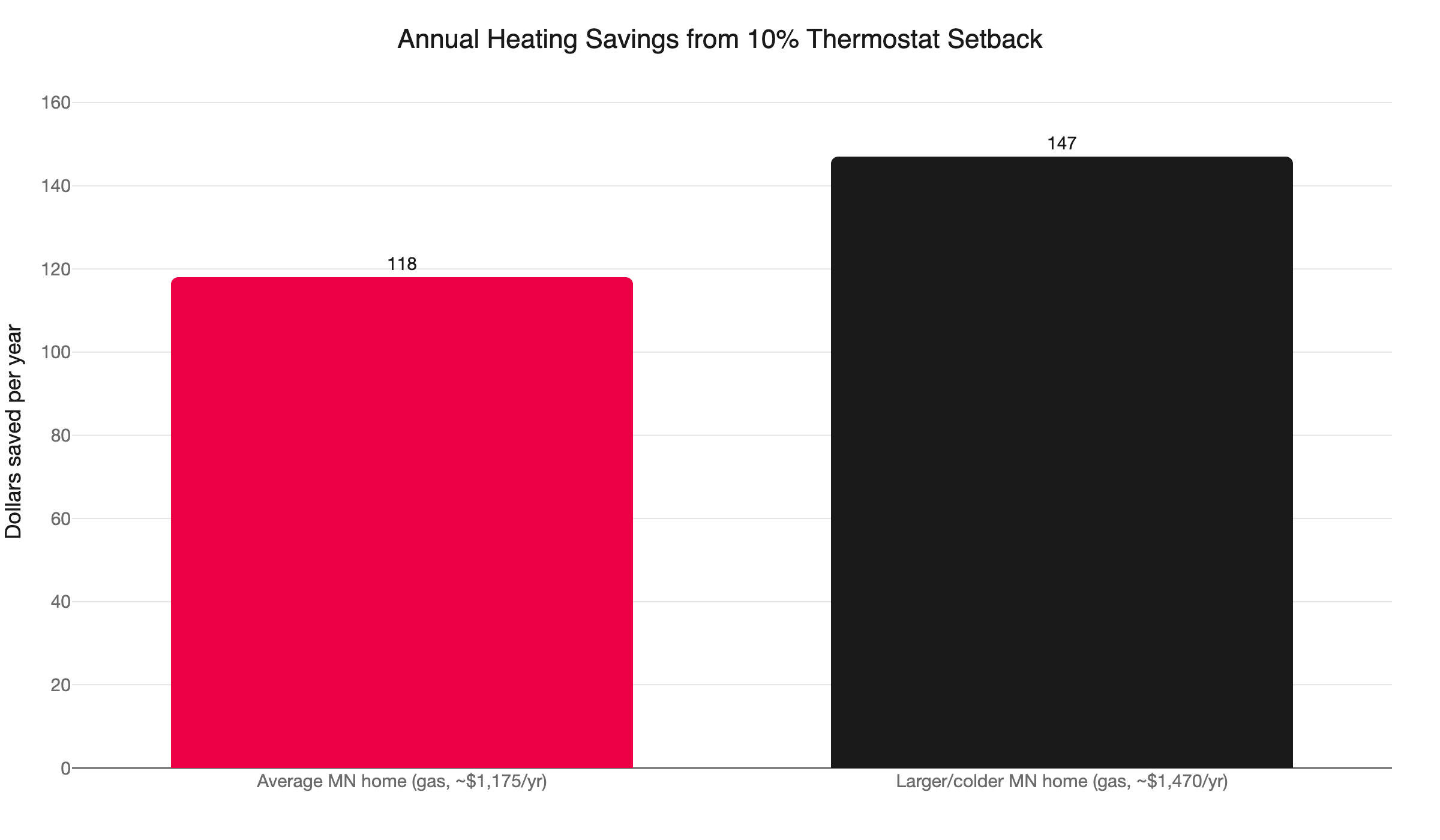
Annual Heating Savings from 10% Thermostat Setback
## How Much Does Thermostat Setback Save in Minnesota?
**The short answer:** A typical gas-heated Twin Cities home can save around $115-$118 per year by setting back 8-10°F for 8 hours twice per day. That works out to roughly 10% of annual heating costs. Larger or colder homes see proportionally higher savings. Heat pump homes require a different strategy entirely.
Most national articles on this subject quote the DOE 10% figure and stop there. They do not convert it to actual dollars, and they do not explain why Minnesota homes benefit more than the national average suggests. Here is the full picture.
The national baseline comes from [DOE Building America research](https://www.energy.gov/sites/default/files/2014/07/f17/ba_case_study_hydronic_setback_0.pdf): for every 1°F setback held over 8 hours, heating energy consumption drops roughly 1%. Two 8-hour setback periods of 10°F each - one overnight, one while the house is empty during the day - can theoretically reduce heating energy use by up to 35% compared to holding a fixed temperature all day.
That 35% ceiling is a physics upper bound. Real-world results land lower. Building scientist Michael Blasnik reviewed eight field studies of gas-heated homes and found incremental setback savings of 5.0% to 8.2% per study. The DOE's 10% figure sits near the high end of what well-maintained systems actually deliver.
Here is what 10% means in Minnesota dollars.
[ENERGY STAR data](https://www.energystar.gov/products/smart_thermostats) puts heating and cooling at nearly half of the average household energy bill - over $900 per year for most U.S. homes. Minnesota runs higher. A typical 1,800-square-foot Twin Cities home with a 96% AFUE gas furnace spends roughly $1,175 per year on natural gas heating. A 10% reduction from a consistent setback schedule saves about $118 per year, or just under $10 per month.
A larger or older home with higher bills - say $1,470 per year - saves around $147 annually from the same schedule. Northern Minnesota homes can run 20-30% higher than Twin Cities averages, so the savings scale up from there.
Propane-heated homes pay two to three times the equivalent cost per BTU compared to natural gas. A $3,000 annual propane bill could yield $300 or more in annual setback savings with the same 10% schedule.
These figures apply to gas and propane furnace households. Heat pump and dual-fuel households have a separate set of rules, covered in the sections below.
---
## Why Minnesota's Cold Climate Amplifies the Savings
Most national setback guides use the same DOE 10% number regardless of where you live. The physics tells a different story. Cold climate states like Minnesota get more raw value from setback than mild-climate states do, and understanding why helps you trust the math.
Heat escapes your home in direct proportion to the temperature difference between inside and outside. That gap is called the delta-T. The bigger the delta-T, the faster heat moves through walls, windows, insulation, and the ceiling. When you lower the indoor temperature, you narrow the delta-T. A narrower gap means a slower rate of heat loss, which means your furnace runs less.
In Minneapolis in January, outdoor temperatures average 15-20°F, with lows routinely reaching -10°F to -20°F. When your home sits at 70°F and it is 15°F outside, the delta-T is 55°F. Setting back to 62°F reduces the delta-T to 47°F - a 14.5% reduction that holds for the entire setback period.
Now compare that to a home in Atlanta where the January outdoor temperature is 50°F. That delta-T is 20°F at a 70°F indoor setpoint. The same 8°F setback produces a 40% relative reduction in delta-T - impressive in percentage terms, but applied to a baseline heat loss rate that is less than a third of what a Minnesota home faces. The raw BTU savings are far larger in the Twin Cities.
As the [Minnesota Center for Energy and Environment confirms](https://www.mncee.org/thermostat-setpoints-have-big-impacts-heating-bills-businesses), even a 5°F setback toward outdoor temperature during unoccupied hours produces significant furnace runtime reduction. And that effect grows as outdoor temperatures fall, because the baseline heat loss rate rises with every degree of delta-T.
One more factor makes Minnesota setback more valuable than national numbers suggest: gas prices here vary sharply by season. The [EIA tracks Minnesota residential gas prices](https://www.eia.gov/dnav/ng/hist/n3010mn3m.htm) that ranged from $9.43 to $18.13 per Mcf across 2025. The coldest months - when setback saves the most BTUs due to high delta-T - also carry the highest seasonal gas rates. High prices and high delta-T compound each other directly.
---
## Does Thermostat Setback Work with a Heat Pump?
**The short answer:** Not for large daily setbacks. A 7-10°F setback can trigger your heat pump's electric resistance backup strips during morning recovery. Those strips operate at roughly one-quarter the efficiency of the heat pump itself. The electric bill for that recovery can exceed what you saved overnight. Limit daily setbacks to 2-3°F with a heat pump-only system.
This is the caveat that most general-audience setback articles skip entirely. In Minnesota, where cold-climate heat pump adoption is growing, it matters a lot.
Here is the mechanism. Your air-source heat pump, running in heating mode on a 25°F morning, delivers roughly 2.5 to 4 watts of heat energy for every watt of electricity it consumes. That ratio is the coefficient of performance, or COP. Your electric resistance backup strips deliver exactly 1 watt of heat per watt consumed - a COP of 1.0.
When you set back 10°F overnight and call for full recovery at 6 a.m., the heat pump alone may not recover the temperature fast enough. The thermostat calls for auxiliary or emergency heat and the resistance strips fire. You pay full watt-for-watt electric rates to recover the temperature you intentionally shed overnight. Depending on how long the strips run, you may spend more on electricity than you saved during the setback.
The [MN Air Source Heat Pump Collaborative](https://mnashp.org/homeownerfaq) states this clearly: minor setbacks of a few degrees have negligible efficiency impact on a heat pump. Large setbacks are the problem. Their guidance for daily cycling: limit setbacks to 2-3°F to avoid triggering strip heat.
The exception is an extended absence. If you drop to 60°F for a week-long vacation, the accumulated savings during the setback period can outweigh even a strip-heat recovery event on your return. For normal daily cycles, though, the 2-3°F limit stands.
If your system is heat pump-only and you want to understand what it can handle in a Minnesota winter, our [heat pump service page](/heat-pumps/) is a good starting point.
---
## What About a Dual-Fuel System?
**The short answer:** Dual-fuel households can use a standard 8-10°F setback without the strip-heat trap. When the heat pump cannot handle the recovery load, the gas furnace takes over - and gas backup heat at high AFUE is far cheaper per BTU than resistance strips.
A dual-fuel or hybrid system pairs an air-source heat pump with a gas furnace. The heat pump runs as the primary heating source down to its balance point, typically around 30-35°F. Below that outdoor temperature, the gas furnace takes over. Xcel dual-fuel rate customers are required to switch to gas at 35°F or below.
When you set back overnight and demand full recovery at 6 a.m. on a 10°F January morning, the dual-fuel system routes the recovery load to the gas furnace. That recovery runs at gas rates and furnace efficiency, not at electric rates with strip efficiency. The economics look much more like a furnace-only home.
[Dual-fuel homeowners](/blog/dual-fuel-heat-pump-gas-furnace-hybrid-minnesota/) get close to the full DOE setback savings during the shoulder seasons when the heat pump is on duty - roughly October through mid-December and March through April in the Twin Cities. During the deep-cold months when the gas furnace runs continuously, setback works the same way it does on any other gas-heated home. Program a standard 8-10°F setback and let the equipment manage the recovery load.
---
## What Temperature Should I Set My Thermostat When Away?
**The short answer:** Most Minnesota utilities recommend 68°F when home and dropping 8°F to 60°F when away or asleep. That pairing is the DOE benchmark for roughly 10% annual heating savings. Do not go below 55-58°F during a Minnesota winter to protect pipes from freezing.
Here are the setpoints that work for most Twin Cities households:
- **Home and awake:** 68-70°F for most families.
- **Asleep (8 hours):** 60-62°F. This is the first of the two main setback windows.
- **Away at work or school (8 hours):** 60-62°F. The second window. Combined with the overnight setback, this covers 16 hours of every day.
- **Extended vacation (gas furnace home):** 55-58°F. Low enough to save energy, high enough to protect pipes during a cold snap.
Do not drop below 55°F if you have any pipes running through exterior walls, in a crawl space, or in an attached but unheated garage. Pipes freeze faster than most people expect when outdoor temperatures fall below -10°F and interior temperatures have been held low for multiple days.
A smart thermostat handles recovery timing automatically. Most devices include a recovery feature that calculates how early to begin heating so the home reaches your target temperature exactly when you wake up or arrive. That gradual ramp-up is gentler on the system and captures most of the setback savings without demanding a full heat call all at once.
For full guidance on managing the thermostat during a Minnesota winter absence, see [what temperature to set your thermostat during a Minnesota winter vacation](/blog/what-temperature-set-thermostat-minnesota-winter-vacation/).
---
## Is a Smart Thermostat Worth It in Minnesota?
**The short answer:** Yes, for most gas-furnace households. [Hardware and installation](/blog/c-wire-smart-thermostat-compatibility-minnesota/) typically costs $150-$250. With the Xcel Energy rebate and AC Rewards enrollment, the first-year net cost can drop to $25-$75. At $118 in annual heating savings, payback on the hardware arrives in one to two years.
The core problem with manual and basic programmable thermostats is follow-through. Most households program a setback schedule once and then override it constantly - guests arrive, plans change, someone comes home early. The thermostat drifts back to a fixed temperature and stays there. A smart thermostat runs the schedule every day, including the days no one thinks about it.
Beyond scheduling, smart thermostats offer features that extend their value:
- Remote access via your phone to adjust settings before you arrive home
- Learning mode that detects your household's typical occupancy pattern and builds a schedule automatically
- Geofencing that triggers setback when your phone leaves the neighborhood
- Alerts when the system runs abnormally long, an early warning of a maintenance issue
- Utility demand-response enrollment, which is required to access the AC Rewards credit
[Xcel Energy's Minnesota smart thermostat program](https://www.xcelenergy.com/staticfiles/xe-responsive/Programs%20and%20Rebates/Residential/Heating%20and%20Cooling/MN-Smart-Thermostat-Application.pdf) offers a $50 rebate on any ENERGY STAR certified model. Add AC Rewards enrollment and you receive a $100 one-time credit plus $25 per year - up to $175 in total first-year value. Customers of Minnesota Energy Resources in southeastern Minnesota can access smart thermostat rebates through that utility as well.
When you are comparing devices, see our breakdown of [Nest vs. Ecobee for Minnesota homeowners](/blog/nest-vs-ecobee-smart-thermostat-minnesota/). The two platforms handle cold-climate heat pump staging and auxiliary heat logic differently, and that gap matters when temperatures drop in January.
---
## How Do You Program a Setback Schedule That Actually Works?
**The short answer:** Start with two 8-hour setbacks per day - one overnight, one while the house is empty. Drop 8-10°F for each window. Use the thermostat's recovery feature to pre-heat before you wake or return. Then leave it alone.
You do not need a smart thermostat to capture setback savings. A basic programmable thermostat, available for under $40, can run a four-period schedule. The key is consistency: the savings come from following the schedule every single day, not programming it once and manually overriding it constantly.
A practical starting schedule for most Twin Cities households:
1. **Wake period (5:30-6:00 a.m.):** Begin pre-heating to 68-70°F about 30 minutes before anyone gets up. This is the recovery window. Set it early enough that the home is comfortable before the alarm goes off.
2. **Away period (8:00 a.m.):** Drop to 60-62°F when the last person leaves for work or school. If schedules vary week to week, use the geofencing feature on a smart thermostat instead of a fixed time.
3. **Home period (5:00 p.m.):** Begin returning to 68-70°F about 20-30 minutes before you arrive. Pre-heat, rather than demanding full heating on arrival.
4. **Sleep period (10:00 p.m.):** Drop back to 60-62°F. The overnight setback does the same work as the away period.
This schedule runs two full 8-hour setbacks each day. For a gas furnace household, it is the core of the DOE savings estimate.
For heat pump households: narrow the setback to 63-65°F rather than 60-62°F. Allow a longer recovery window - 45 to 60 minutes rather than 30. If your thermostat shows auxiliary heat running for more than 10-15 minutes on recovery, the setback is too deep or the recovery window is too short. Adjust one variable at a time.
---
## When Setback Does Not Help
Setback improves most Minnesota heating bills. There are cases where it adds wear without proportional savings.
**Very leaky or poorly insulated homes.** If your home loses heat so fast that indoor temperatures drop well past the set point during a cold snap, recovery demands more energy than the setback saved. Air sealing and attic insulation improvements often deliver faster payback than thermostat changes in homes like this.
**Equipment at the end of its service life.** An aging furnace cycling through setback-and-recovery routines on the coldest mornings of the year puts extra demand on the igniter, flame sensor, and heat exchanger. If your furnace is 18-20 years old and has not had a tune-up in the last year, schedule a maintenance visit before relying on aggressive daily setbacks. Demanding maximum performance from a marginal system accelerates failure.
**Radiant floor heating.** Radiant systems store heat in the thermal mass of a concrete slab. Recovering slab temperature after an overnight setback can take four to six hours, far longer than a forced-air furnace needs. Most radiant households are better served by a small continuous temperature reduction - holding 65°F instead of 68°F all day - rather than a deep daily setback.
**Large open floor plans with high ceilings.** These homes take longer to recover and the recovery period can eat into the savings. A 20-30 minute recovery window may need to stretch to 45-60 minutes, reducing the effective daily setback hours.
---
## Ready to Start Saving?
A well-programmed thermostat is one of the most cost-effective HVAC upgrades available to a Minnesota homeowner. For most Twin Cities gas-furnace households, an 8-10°F setback twice per day saves roughly 10% of annual heating costs - between $100 and $150 per year to start, and more for larger or older homes. Stack a Xcel rebate on top, and a smart thermostat can pay for itself in a single heating season.
Our team installs and programs smart thermostats as part of any HVAC service call. We are locally owned and operated in Ramsey, MN, and we back every visit with the "Always On Time… Or You Don't Pay a Dime!(R)" promise. If we say we will be there at 10 a.m., we will be there at 10 a.m.
Call us at (763) 260-6662 or schedule through our [thermostat services page](/thermostats/). If your system has not had a tune-up recently, let us know - we will check both the equipment and the thermostat settings in the same visit.
---
# Chimney Liner Required: Furnace Replacement Minnesota Guide
URL: https://northernonehour.com/blog/chimney-liner-furnace-replacement-orphaned-water-heater-minnesota/
Published: 2026-09-30 | Category: Heating
Replacing your furnace in Minnesota may leave your water heater venting unsafely. Learn what code requires and what your contractor must disclose.
Key Takeaways
- A 95%+ AFUE condensing furnace vents through PVC - not the masonry chimney. The old shared flue goes cold the day the new furnace starts running.
- When the furnace leaves the shared chimney, the water heater is now the only appliance in an oversized flue. That configuration is both unsafe and non-compliant.
- [Minnesota Admin Rules 1346.5501](https://www.revisor.mn.gov/rules/1346.5501/) require an approved metallic liner in every masonry chimney venting a gas appliance.
- The NFPA 54 "7x rule" is the specific test inspectors use to flag an oversized flue left with a single atmospheric appliance.
- Minneapolis's -16°F design temperature makes cold-chimney backdraft conditions worse here than in most of the country.
- Three compliant solutions exist: reline the chimney, replace the water heater with a power-vent or direct-vent unit, or cap the flue entirely.
- CenterPoint Energy and federal 25C tax credits can offset the cost of a water heater upgrade by $250 to $1,100, depending on the unit you choose.
- Your HVAC contractor is accountable for disclosing this at quote time.
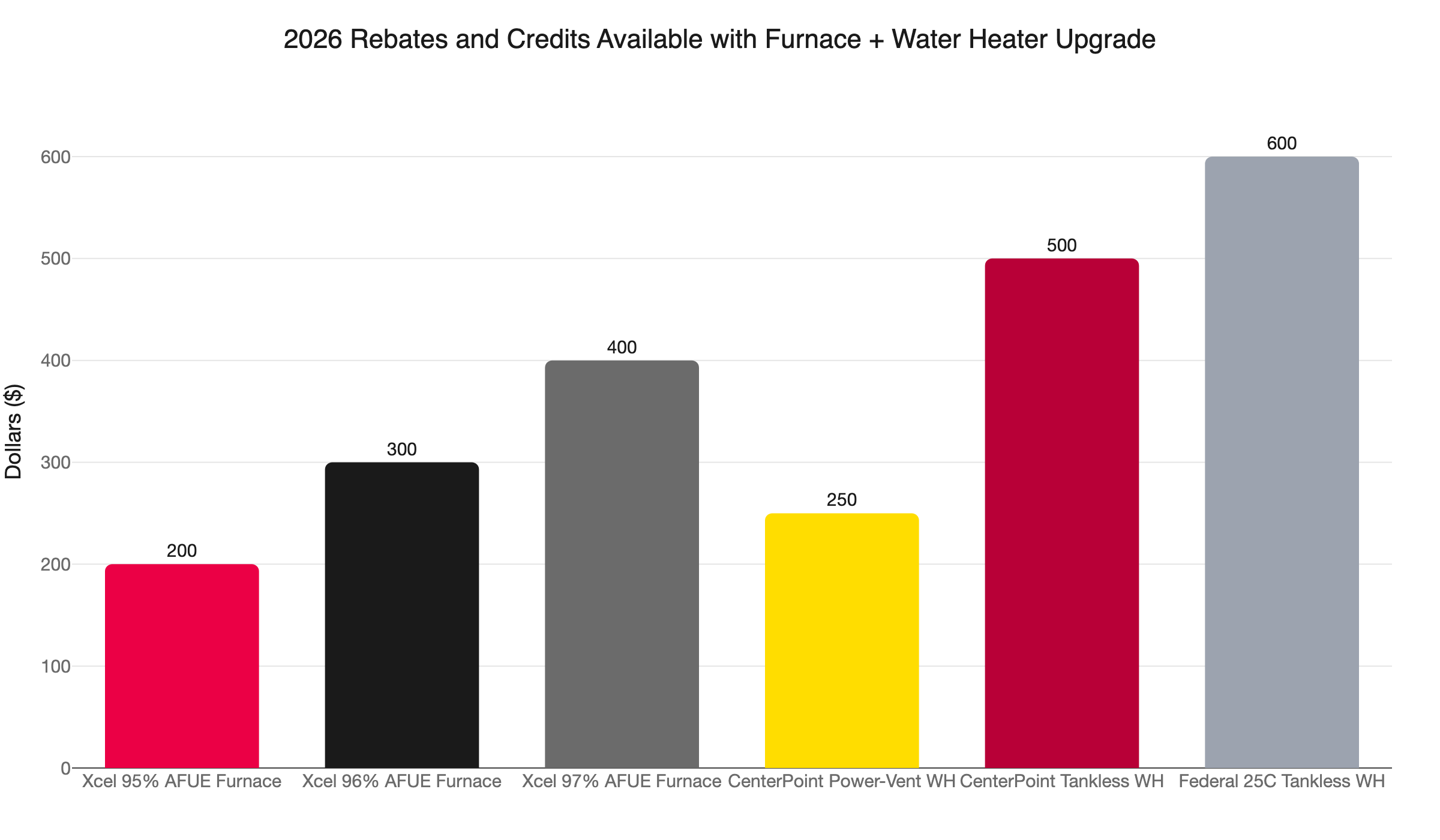
2026 Rebates and Credits Available with Furnace + Water Heater Upgrade
## Introduction: What Your Furnace Quote May Not Cover
The quote for your new furnace looks good on paper. The old 80% AFUE unit goes out, a new high-efficiency condensing furnace goes in, and you save money on gas every winter. What the quote may not mention: the moment that new furnace begins venting through PVC pipe in the side of your house, your masonry chimney runs cold - and your water heater is still connected to it.
This is the orphaned water heater problem. It is one of the most common compliance failures in Twin Cities furnace replacements. [Minnesota Admin Rules 1346.5501](https://www.revisor.mn.gov/rules/1346.5501/) are not ambiguous on this point, and no licensed contractor should leave your home without addressing it. Here is what you need to know.
## What Happens to Your Water Heater When You Replace the Furnace?
**Short answer:** A new condensing furnace vents through PVC and no longer uses the masonry chimney. If your water heater shared that flue, it becomes the only appliance in a chimney sized for two - an "orphaned water heater" that violates code and creates a CO risk.
Most older Twin Cities homes were built with a single masonry chimney serving two gas appliances: the furnace and the water heater. The chimney diameter was sized for the combined exhaust volume of both. That sizing math worked when both units were running.
When a high-efficiency furnace replaces the old unit, combustion exhaust takes an entirely new path - a plastic PVC or CPVC vent pipe that exits through the rim joist or the foundation wall. The masonry chimney is no longer part of the furnace's venting system.
Your water heater, however, is still connected to the old flue. It is now the only appliance left in a chimney built for two. The water heater cannot generate enough exhaust volume to properly warm a flue sized for twice the load. The result is an oversized, under-loaded flue that struggles to draft - especially in winter.
The problem has a name in the industry: an orphaned water heater. CenterPoint Energy has used that exact term in their own documentation and identified CO spillage as the resulting hazard.
## Why Minnesota Winters Make This Especially Dangerous
Minneapolis carries an [ASHRAE 99% heating design temperature of -16°F](https://www.mtlfab.com/media/B-Vent_Sizing_Tables-L1381.pdf). That figure represents the outdoor temperature that a venting system must handle on the coldest 1% of winter hours. It is the baseline engineers use to evaluate whether combustion exhaust will reliably rise and exit.
An atmospheric draft water heater - the standard tank unit in most homes - relies entirely on buoyancy. Warm combustion gases are lighter than the cold air in the flue, so they rise. The physics only work if the temperature difference between the gas and the flue air is large enough to generate the necessary upward velocity.
Minnesota's exterior masonry chimneys compound this. Many Twin Cities homes were built with the chimney on the cold exterior wall, not in the center of the house. On a January night at -16°F, that brick mass can reach temperatures far below freezing. A water heater cycling on its own - much less frequently than a furnace - may not generate enough heat to warm the chimney mass before combustion gases cool and stop rising.
When draft fails, those gases do not just sit in the flue. They can spill backward through the draft hood and into the mechanical room or living space. Carbon monoxide has no color and no odor. There is no warning before it reaches dangerous concentrations. This is not a remote edge case in Minnesota. It is a genuine cold-climate risk that no competing article on this topic discusses with the specificity Minnesota homeowners deserve.
## What Does Minnesota Code Actually Require?
**Short answer:** [Minnesota Admin Rules 1346.5501 § 501.12](https://www.revisor.mn.gov/rules/1346.5501/) require an approved metallic liner in every masonry chimney used to vent a gas appliance. Leaving an unlined masonry flue in service for the water heater after a furnace swap is a code violation, with one narrow exception that does not apply to residential work.
The rule specifies three approved liner materials:
- Aluminum (1100 or 3003 alloy, minimum 0.032-inch wall thickness)
- Stainless steel (304 or 430 alloy, minimum 26 gauge for sizes up to 8 inches)
- Any listed vent system that meets the standard
The only exception is for appliances exceeding 400,000 Btu/hr input. That is commercial-scale equipment with no relevance to a residential furnace or water heater replacement.
The [Minnesota Mechanical Code 2015, Chapter 8](https://up.codes/viewer/minnesota/mn-mechanical-code-2015/chapter/8/chimneys-and-vents) adds a second requirement: the flue liner must be "continuous and free of cracks, gaps, perforations, or other damage." That standard applies to existing liners too. If your masonry chimney has a clay tile liner, and that liner has deteriorated cracks - common in chimneys older than 20 years - it does not qualify even before the orphan problem is factored in.
Both requirements must be satisfied. A structurally intact liner is not compliant if it is the wrong size. A properly sized liner is not compliant if it is cracked. Your contractor is responsible for confirming both.
## The "Orphaned Water Heater" Problem Explained
The term has a precise technical meaning. An atmospheric draft water heater depends entirely on natural convection: warm exhaust rises because it is lighter than the cold column of air in the chimney. The water heater does not have a fan or blower. It contributes no mechanical assistance to the venting process.
For that natural draft to work, the flue must be correctly sized. NFPA 54 defines the rule: the vent area shall not exceed 7 times the draft hood outlet area for a single appliance. This is the [NFPA 54 single-appliance sizing rule](https://www.mtlfab.com/media/B-Vent_Sizing_Tables-L1381.pdf) that mechanical inspectors apply when they evaluate venting after a furnace replacement.
Run the numbers on a typical Minnesota home. The masonry flue was sized for two appliances: a furnace producing 60,000-100,000 Btu/hr and a water heater producing 36,000-50,000 Btu/hr combined. Remove the furnace. The remaining water heater is now venting into a flue that was sized for up to three times its own demand. That commonly exceeds the 7:1 ratio outright - meaning the installation fails the code test on day one.
The second problem compounds it. Before the furnace replacement, the furnace cycled frequently throughout the day and evening, keeping the masonry chimney warm. The flue stayed above draft temperature during active heating hours. Once the furnace vents through PVC and no longer warms the chimney, the masonry reverts to ambient temperature between water heater firings. On cold Minnesota nights, the chimney can cool to near-outdoor temperatures before the next water heater cycle fires.
This is the double failure: oversized flue area and a chronically cold chimney mass. Both working together on a -16°F January night in Ramsey or Blaine or Maple Grove is exactly the scenario that produces CO spillage.
## How Do Inspectors Catch a Failed Installation?
**Short answer:** The inspector applies the NFPA 54 7:1 rule. If the masonry flue area exceeds seven times the water heater draft hood outlet area, the installation fails. An unlined masonry chimney left with a single atmospheric water heater almost always fails this test.
The mechanical inspector reviewing your furnace permit will evaluate the complete venting system - not just the furnace vent pipe. If the water heater is still connected to an unlined or improperly sized masonry chimney, the permit will not close. The contractor must return to address the non-compliant venting before the job is considered complete.
This is the moment where the financial and logistical surprise hits homeowners hardest. The furnace is installed. The house is warm. But the inspector tags the permit as open because the water heater venting was not addressed. Now the homeowner is coordinating a second trade visit, possibly a second permit, and costs that were not in the original quote.
The straightforward solution is to address it upfront - before installation begins - so there are no surprises and the right materials and permits are staged on day one.
## What Are Your Three Code-Compliant Options?
**Short answer:** Reline the masonry chimney to the correct diameter for the water heater alone, replace the water heater with a power-vent or direct-vent unit, or cap the flue entirely if no appliance will use it. Each path has different costs and rebate implications worth reviewing before you choose.
### Option 1: Reline the Masonry Chimney
A stainless steel or aluminum liner, properly sized for the water heater alone, brings the masonry chimney into compliance with both the Minnesota liner requirement and the NFPA 54 sizing rule. This is the traditional path and the right call when the chimney is otherwise in sound structural condition.
A liner installation for a single water heater typically runs $500-$2,500, depending on chimney height, access, whether an insulation wrap is required for an exterior chimney, and the liner material chosen. Stainless steel liners are the more durable choice for Minnesota's freeze-thaw cycles. The liner must be installed with an approved cap and proper termination height to prevent downdraft and animal intrusion.
If your masonry chimney also shows cracks or deterioration in the existing clay tile liner, that must be addressed at the same time. An insulated liner sleeve adds both thermal performance and code compliance in one installation.
### Option 2: Replace the Water Heater with a Power-Vent or Direct-Vent Unit
A power-vent water heater uses an internal blower to push exhaust through a PVC pipe that exits through the side of the house - no chimney required. A direct-vent unit draws combustion air from outside through one pipe and exhausts through a second. Either approach eliminates the orphaned flue problem entirely and allows the masonry chimney to be capped and abandoned if no other appliance remains.
This option has the strongest rebate position in 2026. [CenterPoint Energy's residential rebate program](https://www.centerpointenergy.com/en-us/Documents/CIP-Rebate-Forms/CNP1007.pdf) offers $250 cash for a qualifying power-vent tank water heater (UEF 0.64 or higher, 55 gallons or less) and $500 for a qualifying tankless unit (UEF 0.87 or higher). The federal 25C tax credit covers 30% of qualifying gas tankless water heater costs, up to $600. Those two programs can stack.
Doing the water heater replacement at the same time as the furnace also opens the Xcel Energy furnace rebate: $200 for a 95% AFUE unit, $300 for 96%, and $400 for 97%, per [Xcel's 2026 Trade Ally program](https://centralminnesotaheatingandcooling.com/blog/xcel-centerpoint-hvac-rebates-2026). Combining a 96% AFUE furnace with a qualifying tankless water heater could return $300 + $500 + up to $600 in federal credit against the total project cost.
A power-vent tank water heater installed in the Twin Cities typically runs $1,100-$2,200 depending on unit size and any venting modifications. A tankless unit runs $2,500-$4,500 installed before rebates. For many households, the net-of-rebates cost of the water heater upgrade is comparable to - or lower than - chimney liner installation, with the added benefit of a newer, more efficient water heater.
### Option 3: Cap and Abandon the Flue
If you are removing the gas water heater entirely - upgrading to a heat pump water heater, for example, or converting to all-electric - and no appliance will vent through the masonry chimney, the flue can be properly capped and taken out of service. This eliminates any ongoing compliance obligation for the chimney. The cap must prevent water infiltration and animal access, and the interior termination must be properly sealed.
## Does a Chimney Liner Require a Permit in Minneapolis?
**Short answer:** Yes. Per [Minneapolis's mechanical and venting permit guidance](https://www2.minneapolismn.gov/media/content-assets/www2-documents/departments/Chimneys-and-Vents.pdf), liner work requires a permit. Whether it is a heating permit or a plumbing permit depends on which appliance the liner serves.
If the liner serves a furnace on a B-vent, a heating (mechanical) permit is required, pulled by a Minneapolis-licensed gas installer. If the liner serves only a water heater, it may be pulled as a plumbing permit by a licensed plumber, gas installer, or an owner-occupant.
That permit split matters in practice. Your HVAC contractor will pull the furnace mechanical permit. The water heater venting - if addressed separately - may require a second permit under a different trade. Make sure you know before work begins which contractor is pulling which permit and who is responsible for seeing each to final inspection.
A furnace installation that passes inspection while leaving an open water heater venting permit is not a complete project. The homeowner carries the code violation on their property until the second permit closes. Our guide to [when an HVAC permit is required in Minnesota](/blog/hvac-permit-when-required-minnesota/) walks through the broader permit landscape if you are coordinating multiple trades.
## What Does This Cost, and Can Rebates Help?
**Short answer:** Chimney liner installation runs roughly $500-$2,500. Replacing the water heater to eliminate the need for a liner runs $1,100-$4,500 installed, but 2026 rebates from CenterPoint Energy and the federal 25C credit can reduce that by $250-$1,100 depending on the unit you choose.
The rebate math is most favorable when the water heater replacement happens at the same time as the furnace. CenterPoint's cash rebate deadline is December 31, 2026. Xcel's furnace rebates are also available through the end of the year through their Trade Ally network.
Do not wait until after the furnace is installed to figure out the water heater path. Coordinating both in a single project visit reduces labor, ensures permits are pulled correctly, and keeps you eligible for the full rebate stack.
For a full breakdown of furnace replacement costs and efficiency tier comparisons, see our [furnace replacement cost guide for the Twin Cities](/blog/furnace-replacement-cost-twin-cities/). For a comprehensive look at how utility, state, and federal incentive programs combine, see our post on [stacking HVAC rebates and tax credits in Minnesota](/blog/stacking-hvac-rebates-tax-credits-federal-state-utility-minnesota/).
## What Should Your Contractor Tell You at Quote Time?
**Short answer:** Any licensed HVAC contractor quoting a furnace replacement in Minnesota should identify shared flue configurations, explain what happens to the water heater venting, and present compliant options before you sign. This is a disclosure obligation at the estimate stage, not an afterthought once the new furnace is already running.
A furnace quote that does not address the water heater venting is an incomplete quote. The full project cost includes resolving the orphaned appliance - whether that means a liner or a water heater replacement. When you receive estimates, ask directly: "What happens to my water heater's venting when you remove the old furnace?"
The answer should be specific. Which appliances share the chimney now? What is the current flue diameter? Will the water heater be orphaned after the switch? What are the compliant solutions, and which do they recommend given the chimney's condition and your household's rebate eligibility?
A contractor who cannot answer those questions clearly is not prepared to close the permit on your project.
## We Cover the Whole Job
At Northern One Hour, we are locally owned and operated in Ramsey, MN. Our team serves the Twin Cities: Minneapolis, St. Paul, Blaine, Maple Grove, Plymouth, Brooklyn Park, Woodbury, Bloomington, and the surrounding area. When we quote a furnace replacement, we walk through the complete venting system. We identify shared flue configurations at the estimate stage, not after installation. We present all compliant options, including which rebate programs apply to your specific situation.
Transparent pricing and honest disclosure are not extras. They are part of how we do business. We back every visit with our commitment: "Always On Time… Or You Don't Pay a Dime!(R)" and a 100% satisfaction guarantee.
If your current quote did not cover the water heater venting question - or if you are just starting the process and want the full picture before you commit - call us at **(763) 260-6662** or book online. We will make sure you know exactly what the project involves before any work begins.
## Key Takeaways (Recap)
- A high-efficiency furnace swap orphans any atmospheric water heater that shared the masonry flue.
- [Minnesota Admin Rules 1346.5501](https://www.revisor.mn.gov/rules/1346.5501/) require an approved metallic liner in every masonry flue still serving a gas appliance.
- The NFPA 54 7:1 sizing rule is how inspectors quantify the failure - and unlined masonry chimneys left with a single water heater commonly fail it on the spot.
- Minneapolis requires a permit for liner work - heating or plumbing, depending on which appliance is served.
- Three compliant solutions exist: reline, replace the water heater, or cap the flue.
- The rebate stack in 2026 makes the power-vent or tankless water heater path financially competitive with liner installation for most households.
- Your contractor must disclose this at quote time. If they did not, ask before you sign.
---
# Closed Bedroom Doors Are Hurting Your HVAC Pressure
URL: https://northernonehour.com/blog/closed-bedroom-doors-hvac-airflow-pressure-twin-cities/
Published: 2026-09-30 | Category: HVAC
Closing bedroom doors builds pressure, forces conditioned air out, and strains your return system. Here's what Twin Cities homeowners can do to fix it.
Key Takeaways
- Closing a bedroom door blocks the return air path for that room. Pressure builds and conditioned air leaks out through wall cracks.
- [ENERGY STAR requires](https://basc.pnnl.gov/resource-guides/ducted-returns) bedroom pressure to stay within ±3 Pascals of the rest of the house with the air handler running. Most closed rooms in older Twin Cities homes exceed that.
- In Climate Zone 6 Minnesota, a depressurized main living area can reverse-draft a gas furnace flue. This is a safety risk, not just a comfort problem.
- Most Twin Cities homes built before the 1990s have one or two central return grilles serving the whole house. Every closed door makes the problem worse.
- Four fixes exist, ranked by cost: in-door grilles ($25-50 DIY), transfer grilles, jump ducts, and dedicated return ducts. Dedicated returns run up to $1,500 per room installed.
- You do not need a zoning system to fix this.
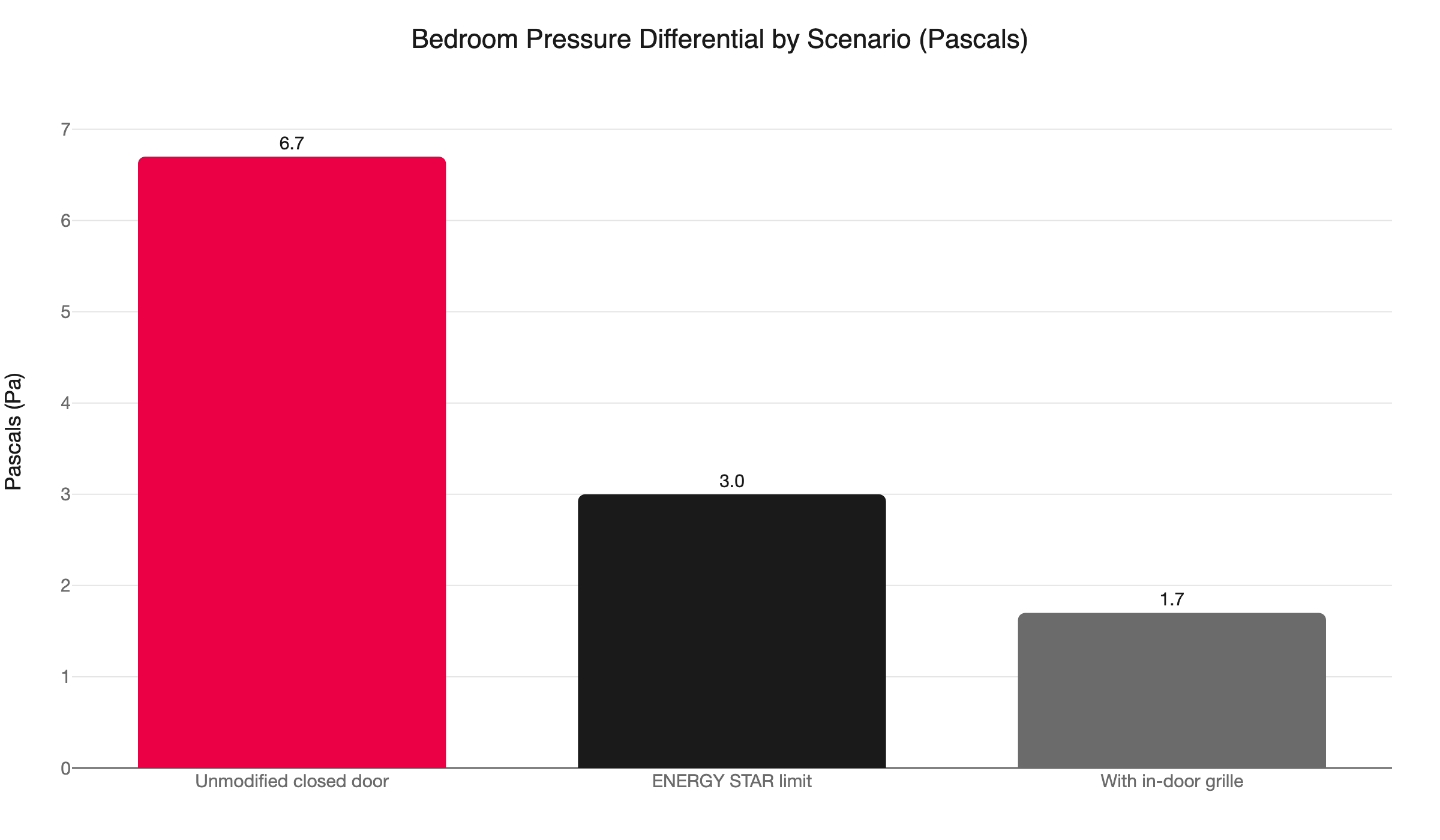
Bedroom Pressure Differential by Scenario (Pascals)
## What Happens When You Close a Bedroom Door?
The supply duct keeps pushing air into the room. The return pathway is gone. Pressure builds until air escapes through wall cracks, and the central return draws in unconditioned outdoor air to replace what it cannot pull from the rooms.
Your HVAC system runs as a loop. The air handler pulls air through the return, conditions it, and pushes it through supply ducts to every room. That loop depends on an open path between each room and the central return grille. Close a bedroom door and you cut the return side of the loop for that room.
The supply duct does not stop. It keeps pushing conditioned air in. With no return path, pressure builds against every surface in the room.
[A measurement in a real training house](https://hvactoday.com/inside-doors-comfort-problems/) found that closing a single door dropped supply airflow from 171 CFM to 143 CFM. The system was still running. The pressure was fighting it.
Meanwhile, the central return is starved. It pulls air from wherever it can find it: foundation cracks, rim joists, gaps around electrical boxes. You paid to heat or cool the air sent to that bedroom. Your system now has to condition outdoor air to replace it.
## Why Does Closed-Door Pressure Hit Harder in Minnesota?
The Twin Cities sit in IECC Climate Zone 6, with design temperatures at -20°F or lower. Infiltration in a pressurized home at those temperatures hits your heating bill hard. Older homes with central-return-only layouts feel every closed door immediately.
Most Twin Cities homes built before the 1990s had one or two central return grilles designed to serve the entire house. That layout worked when interior doors stayed open. It fails when bedrooms are routinely closed for sleep, privacy, or pets.
Minnesota adds two compounding factors. First, infiltration losses at extreme cold are significant. Air drawn into a depressurized living area on a -20°F night is not warm. Second, most existing homes have unsealed duct joints. [Minnesota Mechanical Code Chapter 1346](https://up.codes/viewer/minnesota/mn-mechanical-code-2015/chapter/6/duct-systems) requires sealed seams on all ductwork, but older systems pre-date that enforcement. Unsealed joints add unintended leak paths and make pressure imbalances worse.
## Can a Closed Bedroom Door Create a Carbon Monoxide Risk?
Yes, in a home with gas appliances. A depressurized main living area can reverse-draft a furnace or water heater flue, pulling combustion gases back into the house instead of exhausting them outdoors.
This is the risk that top-ranking articles on this topic skip entirely. Here it is plainly.
When bedroom doors are closed and pressurized, the rest of the house becomes relatively depressurized. The central return hunts for air. In a home with a naturally drafted gas furnace or water heater, the flue is one of the available paths. A sufficiently depressurized area can pull combustion gases backward into the living space.
In a Minnesota January, with multiple doors closed and a furnace running at high demand, that risk is real.
High-efficiency condensing furnaces are much less vulnerable. They draw combustion air from outdoors through a dedicated PVC pipe. They do not compete for indoor air volume. If your furnace has a single-pipe vent installed before the late 1990s, call a technician to check for backdraft potential.
Our post on [exhaust fans and furnace backdraft in Minnesota homes](/blog/exhaust-fans-furnace-backdraft-combustion-air-minnesota/) covers combustion safety in more depth.
## How Do You Know If Your Home Has a Pressure Problem?
Three symptoms you can check without any tools: the bedroom door is hard to push open, you hear whistling at the door gap when the system runs, or a closed bedroom never reaches the thermostat setpoint. Any one of these points to a pressure imbalance.
ENERGY STAR requires bedroom pressure to stay within ±3 Pascals with the air handler at its highest design fan speed. Rooms receiving 150 CFM or more may tolerate ±5 Pa. You do not need a manometer to do a first check.
**Symptoms a homeowner can notice:**
- The bedroom door pushes back when you try to open it toward the supply vent.
- A low whistle or hiss comes from the door gap when the system is running.
- The bedroom runs noticeably warmer in summer or cooler in winter with the door closed, even when the whole-house thermostat is satisfied.
- Cold drafts come from electrical outlets or around window trim in that room during winter.
For a measured result, the Xcel Energy and CenterPoint Home Energy Squad offers a home energy assessment for $50-$100. A technician can measure actual room pressure and flag air sealing opportunities in the same visit. Qualifying Minneapolis homeowners may receive up to $1,300 through the Minneapolis Bonus Rebate Program for air sealing paired with insulation.
## Do Door Undercuts Actually Fix This?
No. The DOE Building America program found that door undercuts "do not always provide an adequate return air pathway." Seasonal wood swelling, carpet changes, and the gap size required make undercuts an unreliable fix.
This is the first thing most homeowners try. It is understandable but insufficient.
[DOE Building America research](https://basc.pnnl.gov/resource-guides/undercut-doors) found that most rooms need a 1.5-inch or larger undercut to pass enough airflow for pressure balance. Standard doors are cut with about a 0.5-inch undercut. The gap required to actually work would be visible from across the room.
The opening does not stay consistent, either. Solid wood doors swell in Minnesota's humid summers and shrink in dry winters. Carpet thickness changes the effective opening. One analyst summarized it plainly: the undercut would need to be the size of a saloon door to work.
Skip this approach and go directly to one of the four options below.
## How Much Is This Hurting Your Energy Bills?
Meaningfully. Closed doors can raise whole-house infiltration by 300-900%. Pressurized rooms push conditioned air out. The central return draws in outdoor air to compensate. Your system pays to condition that replacement air throughout every heating and cooling season.
In a Twin Cities winter, those losses compound across months of continuous heating load. Outdoor temperatures hit -20°F. Every BTU that leaks from a pressurized bedroom costs money to replace.
Pressure imbalances also push moisture through wall assemblies in ways they were not designed to handle. In Minnesota homes, that can mean condensation behind drywall and in attic spaces during extreme cold.
If your ductwork also has unsealed joints, the two problems reinforce each other. Our post on [leaky ductwork and energy loss](/blog/duct-sealing-leaky-ductwork-energy-loss/) covers how duct sealing addresses that related problem.
## Fix 1: In-Door Grilles
This is the cheapest fix, and the measured evidence supports it.
An in-door return air grille mounts through the door panel and creates an air transfer path between the bedroom and the hallway. The Tamarack "Perfect Balance" is the most widely referenced product. [One published measurement](https://www.energyvanguard.com/blog/easy-retrofit-return-air-bedrooms/) dropped a condo bedroom from 6.7 Pa to 1.7 Pa after installation. That is well below the ENERGY STAR 3-Pascal threshold. Materials cost $25-$50 per door. Installation takes about 30 minutes.
The tradeoff is privacy and sound. A grille creates an opening in the door panel. Most designs use an offset or baffled face to reduce sound and light transfer. The path is not sealed, so some bleed is unavoidable. For households where that matters, a transfer grille or jump duct is a better option.
## Fix 2: Transfer Grilles
A transfer grille cuts through the wall between a bedroom and the hallway. It lets air move between the two spaces without opening a branch return duct.
[The sizing rule](https://basc.pnnl.gov/resource-guides/transfer-grilles) is one square inch of free area per CFM of supply airflow to the room. A bedroom receiving 100 CFM needs 100 square inches of grille free area. Two grilles installed offset, one high and one low, reduce sound and light transfer better than a single opening.
Transfer grilles are a clean solution when the bedroom is adjacent to a hallway and the wall is accessible. Installed cost depends on wall construction and access. Transfer grilles typically cost less than jump ducts or dedicated return branches.
## Fix 3: Jump Ducts
A jump duct runs flex duct from the pressurized bedroom through the attic to the central return pathway. It achieves the same ±3 Pa target as a transfer grille when wall access makes grilles impractical.
Two factors matter specifically for Minnesota homes.
First, [jump ducts running through unconditioned attic space must be insulated to current code](https://basc.pnnl.gov/resource-guides/jump-ducts). In a Minnesota attic at -20°F, an uninsulated 10-inch flex duct becomes a heat-loss path. The insulation requirement adds to the cost and scope of the project.
Second, the attic must be accessible. Jump ducts are a good choice when the attic is open and the bedroom wall is not. They cost more than door grilles or transfer grilles, but they solve cases where the other options cannot.
## Fix 4: A Dedicated Return Duct
The most thorough fix is a branch return duct running from the bedroom directly back to the air handler. This is how well-built new construction handles [multi-room airflow balance](/blog/how-to-balance-hvac-registers-airflow-twin-cities/).
Return air capacity across the full system should be roughly double the supply air volume. Return airflow velocity should stay below 500 feet per minute to avoid noise. A dedicated return per room, sized to ACCA Manual D standards, achieves both.
Retrofit cost runs $500-$1,500 per room. The final number depends on routing distance, access, and whether the existing system can handle more return capacity. This makes the most sense when you are addressing multiple rooms at once. It also fits when a whole-system assessment shows overall return capacity is deficient.
If your system shows broader symptoms of restricted airflow, our post on [high static pressure in HVAC systems](/blog/high-static-pressure-hvac-symptoms-fixes-twin-cities/) covers the full diagnostic picture.
## Which Fix Is Right for Your Twin Cities Home?
Start with the least invasive option and work up. In-door grilles are a good first test for one or two rooms. Transfer grilles handle sound-sensitive households. Jump ducts work when walls won't. A dedicated return is the right call for whole-house return deficiency.
A practical decision guide:
- **One or two rooms, sound is not a concern:** In-door grille. DIY, $25-50 per door, 30 minutes.
- **Sound matters, or multiple rooms involved:** Transfer grilles, professionally installed, offset pair per room.
- **Wall access is poor, attic is accessible:** Jump duct with code-compliant insulation.
- **Whole-house deficiency, pre-1990s central-return-only layout:** Dedicated return duct assessment and installation, sized to ACCA Manual D.
If you are unsure where your home falls, a pressure measurement during a service visit will tell you. Our post on [return air problems in Twin Cities HVAC](/blog/return-air-problems-hvac-twin-cities/) covers how deficient return capacity affects the whole system.
## When Should You Call Northern One Hour?
Call when DIY grilles did not solve the problem, when you want a measured pressure result before choosing a fix, or when you have gas appliances and are concerned about backdraft risk.
We are locally owned and operated in Ramsey, MN. We serve Minneapolis, St. Paul, Blaine, Maple Grove, Plymouth, Brooklyn Park, Woodbury, Bloomington, and the surrounding Twin Cities area.
Our team is backed by the national One Hour Heating & Air Conditioning franchise. That means the resources of a national brand with the accountability of a local owner who answers for the work.
We stand behind our on-time commitment: "Always On Time… Or You Don't Pay a Dime!(R)"
To schedule a pressure assessment or duct evaluation, call us at **(763) 260-6662** or book online. We will show up when we say we will.
---
# Frozen Pipes Heating Failure Minnesota: What Freezes First
URL: https://northernonehour.com/blog/frozen-pipes-hvac-failure-risk-minnesota/
Published: 2026-09-30 | Category: Heating
Your furnace just died. Learn which pipes freeze first, how fast at Twin Cities temps, and five steps to take before your heating tech arrives.
Key Takeaways
- Pipes do not freeze at 32°F. The real danger threshold is 20°F measured at the pipe, not the thermostat.
- After a furnace dies, attic pipes can freeze in as little as 2 to 3 hours during a Minnesota cold snap.
- Crawl space and basement pipes follow in 6 to 10 hours. Central interior pipes are last, at 12 hours or more.
- Uninsulated copper pipe in a drafty space freezes in 4 to 6 hours at 25°F. Wind cuts that to 2 to 3 hours.
- PEX is more forgiving than copper but is not freeze-proof. The fittings are the weak point.
- Five steps can buy you critical hours: drip every faucet, open cabinet doors, concentrate residual heat, locate your main shutoff, and never use combustion appliances indoors for warmth.
- Minnesota has emergency assistance programs that can cover furnace repair costs for qualifying households.
- [Average burst pipe claims exceed $27,000](https://www.firstcallrestoration.com/blog/frozen-pipes-minnesota/). Getting the heat back on fast is always the cheaper outcome.
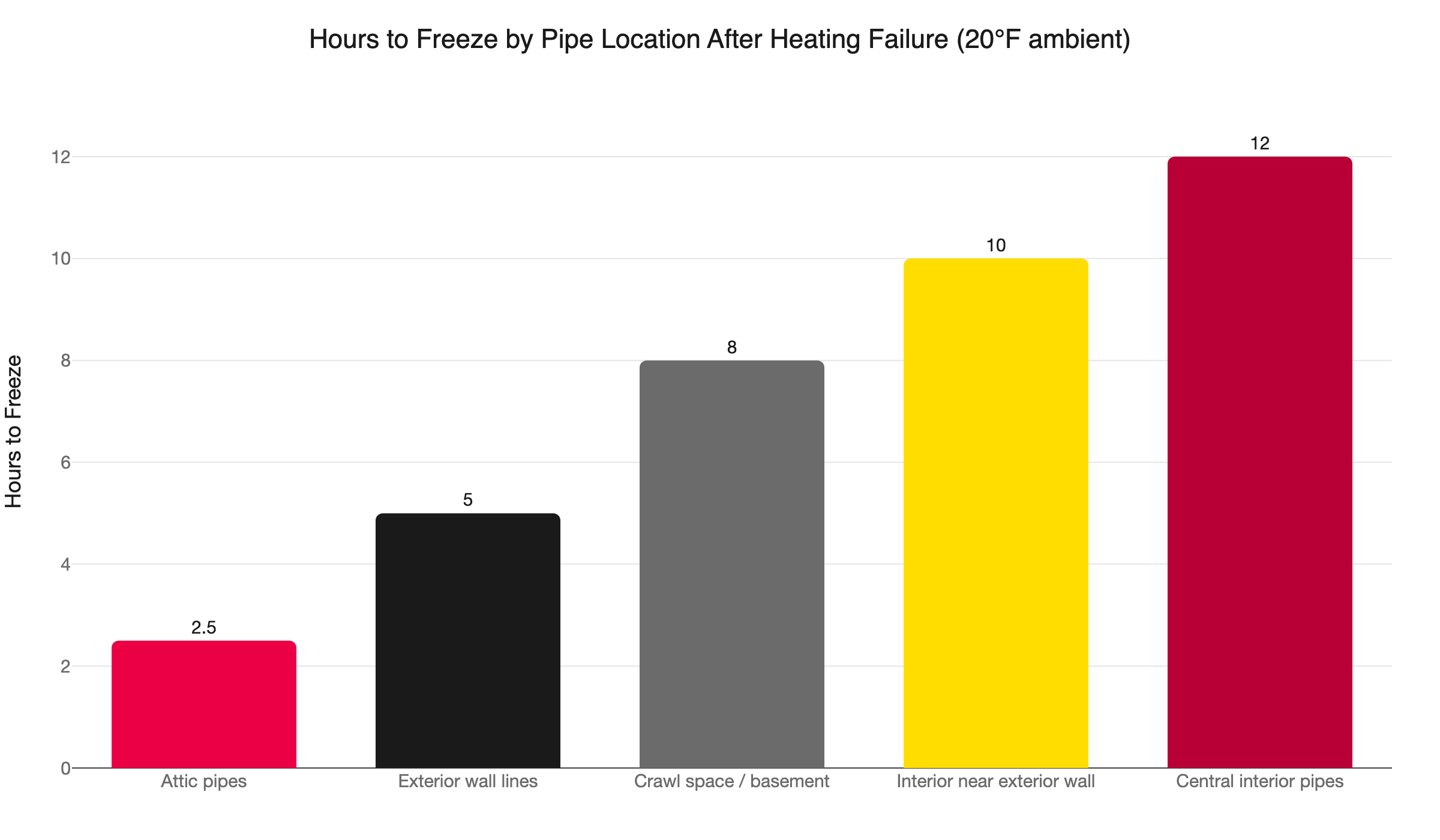
Hours to Freeze by Pipe Location After Heating Failure (20°F ambient)
## When Heating Fails: Your Frozen Pipe Clock
It is 9 p.m. in January. Your furnace just stopped. Outside it is 8 degrees and dropping.
The question is not whether frozen pipes from heating failure are a risk in Minnesota. The question is which ones freeze first and how much time you have.
In a well-insulated Twin Cities home, you likely have 24 hours or more before the most exposed pipes reach the danger zone. In a drafty older home or during a polar event, [that window can shrink to 6 hours or less](https://oaklandheatingcooling.com/pipes-freeze-after-furnace-failure-michigan/). Poor insulation plus extreme cold compress the timeline faster than most homeowners expect.
The [Twin Cities averages 10 days per January at or below zero degrees Fahrenheit](https://www.dnr.state.mn.us/climate/journal/at_or_below_zero_13_14.html), with an average January low of 4°F. On those nights, this is not a situation you sleep on.
Northern One Hour Heating & Air Conditioning is locally owned and operated in Ramsey, MN. We serve the Twin Cities metro and back every call with our "Always On Time… Or You Don't Pay a Dime!(R)" guarantee. Call **(763) 260-6662** the moment the heat goes out. Do not wait for morning.
## What Temperature Do Pipes Actually Freeze?
**Short answer:** The danger zone is not 32°F but approximately 20°F at the pipe. Your building envelope traps residual heat that keeps interior pipes above freezing long after outdoor temps drop below 32°F. Once the furnace fails, that buffer starts disappearing immediately.
Most homeowners assume a freeze starts the moment outdoor temperatures cross the 32°F mark. That is not how it works. [Pipes become vulnerable when the ambient temperature around the pipe reaches about 20°F](https://www.angi.com/articles/what-temperature-pipes-freeze.htm), not when the outdoor thermometer does. A pipe running through a conditioned wall is insulated by the structure around it. A pipe in an unheated attic or a drafty garage cavity is exposed to something much closer to outdoor air.
The distinction matters for timing. Once your furnace goes out, indoor temperatures begin falling. How fast depends on insulation quality, outdoor temperature, and wind. An uninsulated attic in a Minneapolis home during a polar vortex can drop below 20°F within an hour of the furnace shutting down. A finished basement with insulated walls may not reach that threshold for many hours.
Knowing the 20°F threshold - not 32°F - is what tells you which locations in your home are on a short clock.
## Which Pipes Freeze First When Heating Fails in Minnesota?
**Short answer:** Attic pipes go first, typically within 2 to 3 hours once surrounding air drops to 20°F. Exterior wall supply lines follow in 4 to 6 hours. Crawl space and basement pipes are next. Central interior pipes are last. Location determines sequence more than pipe diameter.
The freeze sequence follows heat loss from the outside in. The pipes farthest from your home's thermal core lose heat fastest. [Here is the order once ambient temperature around the pipe reaches 20°F or below](https://oaklandheatingcooling.com/pipes-freeze-after-furnace-failure-michigan/):
1. **Attic pipes** - 2 to 3 hours
2. **Exterior wall supply lines** - 4 to 6 hours
3. **Crawl space and unheated basement pipes** - 6 to 10 hours
4. **Interior pipes running adjacent to an exterior wall** - 8 to 12 hours
5. **Central interior pipes** - 12 hours or more
These are times from when the surrounding air hits 20°F, not times from furnace shutdown. During a polar event in the Twin Cities, the air in an uninsulated attic can reach 20°F within an hour of the heat going out. The clock starts before you realize it has started.
Older Twin Cities homes built before 1980 tend to have more uninsulated pipe runs in high-risk locations. If your home has original plumbing and minimal attic insulation, assume the short end of every range above. If you have had a modern insulation retrofit, assume closer to the long end.
## How Fast Do Pipes Freeze at Minnesota Temperatures?
**Short answer:** At 25°F, uninsulated copper in a drafty space freezes in 4 to 6 hours. Wind cuts that to 2 to 3 hours. At 15°F, the timeline drops to 3 to 4 hours. At 10°F or colder, uninsulated pipe can ice up in under 2 hours. Insulation is the single biggest variable.
The temperature around the pipe is what drives timing. At 25°F, [uninsulated copper pipe in a garage, crawl space, or exterior wall cavity freezes in 4 to 6 hours. Add wind exposure and that compresses to 2 to 3 hours. A pipe wrapped in R-3 foam insulation at the same temperature holds for 12 to 16 hours](https://accessheating.com/blog-pipe-freeze-timeline-25-degrees/).
At 15°F, the timeline drops to 3 to 4 hours for uninsulated pipe. At 10°F or below, you are looking at under 2 hours.
The Twin Cities sees [an average of 22 days per year at or below zero](https://www.dnr.state.mn.us/climate/journal/at_or_below_zero_13_14.html). On those days, the window between furnace failure and attic pipe freeze is not measured in days. It is measured in hours. It may be measured in the time it takes you to get dressed and make a phone call.
One note on Minnesota code: Chapter 7676 of the Minnesota Energy Code requires R-3.3 insulation with a vapor retarder on pipes in unconditioned spaces where the temperature differential exceeds 15°F, and on all pipes within 3 feet of the exterior. If your home was built before a renovation or has original plumbing, those code-required insulation runs may not be present. It is worth a look before the next cold season.
## Does Pipe Material Matter? Copper, PEX, and PVC
**Short answer:** Material matters more for what happens after the freeze than for preventing it. Copper splits under ice pressure. PEX bends instead of bursting, but it still ices up solid. PVC can crack from cold brittleness before the water inside even freezes.
Understanding your pipe material changes what you should worry about most.
**Copper** conducts heat away from the water inside faster than any other common pipe material. That is excellent for hot water delivery. In a freeze event, it works against you. An uninsulated copper line in a garage or crawl space loses its heat to the surrounding air quickly and reaches the ice threshold sooner than other materials. When ice forms inside copper and expands, the pipe wall does not flex. It splits. Copper failures tend to be sudden and catastrophic.
**PEX** is the most forgiving material in a freeze. It is flexible enough to expand with ice formation without rupturing the pipe body itself. For most freeze events, [the fittings are the weak point](https://accessheating.com/blog-pipe-freeze-timeline-25-degrees/): the metal and rigid plastic connections at each end do not flex. PEX will still freeze solid and stop carrying water. It will not necessarily burst at the pipe body, but a fitting failure can release just as much water as a split copper line. PEX reduces burst risk. It does not eliminate freeze risk.
**PVC** becomes brittle at extreme cold. Below 20°F, the material loses impact resistance. It can crack under the mechanical stress of ice expansion, or even from frost buildup on the exterior of the pipe. PVC supply lines are uncommon in post-1990 Twin Cities homes but appear in older plumbing and in outdoor irrigation stub-outs that were never properly winterized.
The practical takeaway: if you have uninsulated copper runs in an attic, garage, or crawl space, your exposure is higher than a home that was repiped with PEX. In either case, the prevention strategy is identical. Keep the heat on, insulate the pipes, and act immediately when the furnace goes out.
## What Should You Do Right Now Before the Tech Arrives?
**Short answer:** Drip every faucet, open cabinet doors under exterior-wall sinks, close off unused rooms, locate your main water shutoff valve, and do not use gas ovens or combustion appliances for heat. Taken together, these steps can add hours before a pipe freezes.
Here are the five steps in order of priority:
**1. Drip all faucets.**
Turn every faucet to a cold-side trickle, roughly the width of a pencil lead. Moving water is harder to freeze than standing water. The slight flow also relieves pressure buildup if ice begins forming somewhere in the line. This applies to every faucet in the home, not just the ones nearest exterior walls.
**2. Open cabinet doors under exterior-wall sinks.**
The cabinets beneath kitchen and bathroom sinks on exterior walls trap cold air away from the supply lines inside. Opening those doors lets whatever residual warmth remains in the home reach those pipes. It is not a substitute for heat, but it slows the rate of heat loss in a critical location.
**3. Concentrate remaining heat.**
Close off unused rooms and open interior doors in the areas with the most pipe exposure. If you have a supplemental electric space heater, position it near the most vulnerable pipes rather than where you happen to be sitting. Keeping all interior doors open in active living spaces helps circulate the remaining warmth.
**4. Know your main shutoff valve before you need it.**
A small crack in a pipe [releases more than 250 gallons of water per day](https://www.firstcallrestoration.com/blog/frozen-pipes-minnesota/). The moment you hear a pop, see a wet spot on a ceiling or wall, or lose water pressure unexpectedly, shut the main water supply valve first and call us second. The valve is usually at the water meter or where the supply line enters the foundation. Know where it is now, not at midnight.
**5. Do not use combustion appliances for heat.**
A gas oven left open, an outdoor grill brought inside, or a propane camp stove all generate carbon monoxide in an enclosed space. The appeal is obvious when it is cold and the furnace is out. The risk is fatal. An electric space heater is a safe bridge. For more on safe and unsafe heat options during a heating emergency, see our guide on [what to do when a power outage affects your furnace](/blog/power-outage-furnace-heat-what-to-do-minnesota/).
One additional step if a pipe is accessible: if you can see the frozen section and it does not appear burst, apply a hair dryer or heating pad starting from the faucet end and work toward the frozen section. Never use an open flame. Keep applying heat until full water pressure returns at the faucet. Stop immediately if you see any bulging, cracking, or wet spots near the frozen area.
Hold indoor temperature at or above 55°F if at all possible. That is the standard the insurance industry and utility providers use as the minimum threshold for occupied and unoccupied homes in winter.
## Minnesota Emergency Assistance Programs
Most families do not know these programs exist until a technician walks them through it on an emergency call. Knowing before the emergency is better.
**Minnesota Cold Weather Rule:** Regulated utilities including CenterPoint Energy and Xcel Energy cannot disconnect heating service between October 1 and April 30 for customers who set up a payment plan. If a billing dispute is part of your situation, call your utility provider before paying any shutoff or reconnection fee.
**MN Energy Assistance Program (LIHEAP):** Up to $2,000 for income-eligible households. This includes emergency furnace repair, not just utility bill assistance. A family of four earning up to $70,552 annually may qualify. Contact your county human services office or your utility provider to start the application.
**Crisis Energy Assistance Program (MNVAC):** Up to $600 emergency benefit for households facing shutoffs or disconnection notices. MNVAC can sometimes move faster than LIHEAP for acute situations and is worth a parallel call.
**Reach Out for Warmth:** A state-administered year-round emergency fuel fund that includes furnace repair assistance. The statewide number is **1-800-657-3710**. This program is available year-round, not only during heating season.
When you call us for an emergency heating repair, we can help you identify which program applies to your situation while we work on getting the furnace running.
## What If a Frozen Drain Caused the Furnace to Fail?
**Short answer:** It happens. High-efficiency furnaces use a condensate drain line to exhaust moisture from combustion. In extreme cold, that drain can freeze solid and trigger a pressure switch lockout. The furnace shuts itself off as a safety measure, and you lose heat without any obvious mechanical failure.
A blocked flue or a snow-packed PVC exhaust terminal can cause the same lockout. The furnace control board detects a restriction in the vent system and shuts down before carbon monoxide can build up.
If your furnace stopped during a polar event and you notice frost or ice near the exhaust vent terminals, or if the error light on the furnace control board points to a pressure switch fault, a frozen condensate drain is a likely cause. Do not try to thaw a drain that runs through an inaccessible wall cavity. Call us and we will diagnose it as part of the service visit.
Our post on [high-efficiency furnace condensate drains freezing in Minnesota](/blog/high-efficiency-furnace-condensate-drain-frozen-minnesota/) covers the symptoms and fixes in more detail. For a broader look at why furnaces stop mid-winter, see our [emergency furnace repair warning signs guide](/blog/emergency-furnace-repair-warning-signs/).
## How Do You Prevent This Before Next Winter?
A midnight heating failure in January is alarming. It is also usually preventable.
Most mid-winter furnace shutdowns are preceded by warning signs that a fall tune-up catches: a clogged filter starving the heat exchanger, a dirty flame sensor triggering repeated lockouts, a blower motor running hot enough to trip a high-limit fault, or a heat exchanger crack that the safety system correctly shuts down to protect your family.
A [professional furnace tune-up](/heating/heating-equipment/furnaces/furnace-tune-ups/) costs a fraction of an after-hours emergency call. It costs far less than a burst pipe claim averaging $27,000. Scheduling it in October, before heating season peaks, means any parts needed are ordered and installed before you need the furnace to run all night at minus 10°F.
Pipe insulation is the other half of the prevention picture. If you have uninsulated copper runs in an attic, crawl space, or within 3 feet of exterior walls, adding R-3 foam insulation to those runs extends your window dramatically if heating failure does occur. It is a straightforward job during a mild weather window and a significant insurance policy against the worst outcomes.
## Call Before the Pipes Do
Northern One Hour Heating & Air Conditioning is locally owned and operated in Ramsey, MN. We serve Minneapolis, St. Paul, Blaine, Maple Grove, Plymouth, Brooklyn Park, Woodbury, Bloomington, and the surrounding Twin Cities metro.
When your heat goes out on a January night, you need a team that shows up when they say they will. That is what we built this company around. Every call is backed by our "Always On Time… Or You Don't Pay a Dime!(R)" guarantee and a 100% satisfaction guarantee.
Call **(763) 260-6662** or [schedule a heating repair online](/heating/heating-repair/). If you suspect a pipe may already be frozen or burst, shut your main water valve first, then call us. Do not wait until morning.
Financing is available on larger repairs and system replacements. Ask us when you call.
---
# Indoor Air Quality for Your Newborn Nursery in Minnesota
URL: https://northernonehour.com/blog/indoor-air-quality-newborn-nursery-minnesota/
Published: 2026-09-30 | Category: Indoor Air Quality
New nursery furniture off-gasses VOCs into a sealed Minnesota home all winter. MERV filter ratings, humidity targets, and when an HRV makes sense.
Key Takeaways
- New nursery furniture - cribs, dressers, carpet, gliders - off-gasses VOCs into your home for months after delivery. In a Minnesota winter, that air has nowhere to go.
- The EPA recommends a minimum MERV 13 filter for homes where improved air quality is a priority. Confirm your blower can handle it before upgrading - not every furnace can.
- Indoor humidity should stay 30-50% year-round. In Minnesota, that means a whole-home humidifier in winter and your AC (or a dehumidifier) holding it below 60% in summer.
- Most forced-air furnaces do not bring in fresh outdoor air. An HRV (heat recovery ventilator) is the only HVAC solution for fresh-air dilution during a sealed Minnesota winter.
- Northern One Hour can install or upgrade all three: filtration, whole-home humidification, and an HRV.
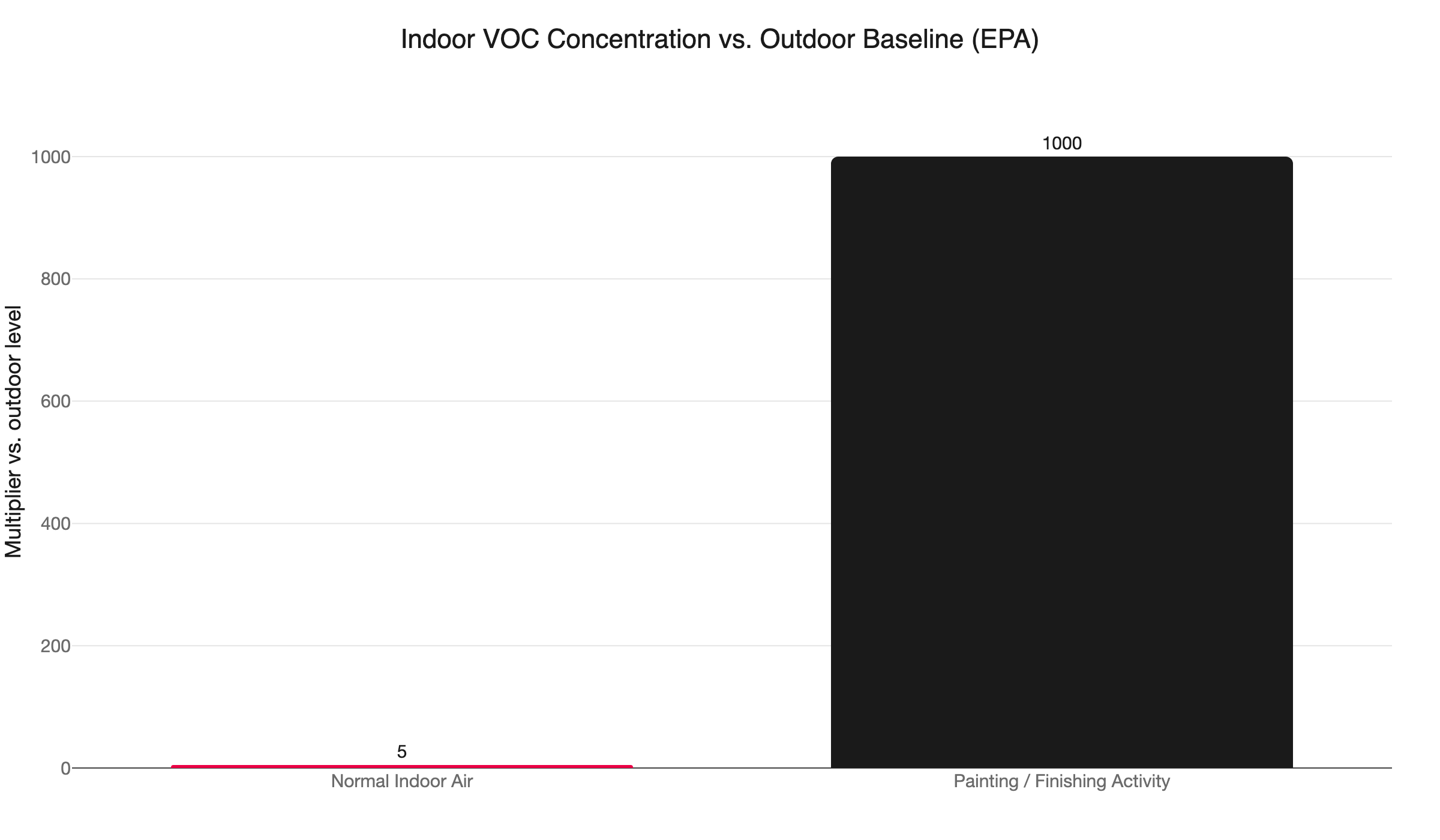
Indoor VOC Concentration vs. Outdoor Baseline (EPA)
## Why Is Indoor Air Quality Different in a Minnesota Nursery?
Generic nursery IAQ guides miss one critical variable: Minnesota winters. Your home seals tight from November through March. New nursery furniture off-gasses VOCs into that sealed envelope for months. A forced-air furnace brings in no fresh outdoor air on its own. The result is prolonged chemical exposure with no dilution path.
Here is what the national parenting sites and generic HVAC guides skip entirely.
When you set up a new nursery, every piece of furniture in that room is releasing volatile organic compounds. [According to the EPA, indoor VOC concentrations run 2-5x higher than outdoor levels under normal conditions.](https://www.epa.gov/indoor-air-quality-iaq/volatile-organic-compounds-impact-indoor-air-quality) During painting or stripping activities, that gap can reach 1,000 times outdoor background levels. Elevated concentrations persist long after the activity ends.
The problem is timing. Most families finish the nursery in fall, ahead of a late-autumn or winter due date. That puts peak off-gassing directly inside the window when your home is fully sealed. Twin Cities average January lows hover between 5 and 13°F. Opening a window for ventilation is not realistic from late November through early March.
A newborn sleeps 16 to 18 hours a day. The nursery is where they spend most of their time. In a sealed Minnesota winter, that room is breathing the same recirculated air as every piece of new furniture you just brought inside.
The generic advice - buy an air purifier, use low-VOC paint, run a humidifier - is not wrong. It is just incomplete without addressing the sealed-envelope problem. That is the angle this post covers.
## What VOCs Come Off New Nursery Furniture?
**The short answer:** Pressed-wood cribs and dressers, new carpet, foam mattresses, adhesives, and fresh paint all release VOCs including formaldehyde and benzene. Concentrations are highest in the first weeks but can persist for months. In a sealed Minnesota winter, there is no natural dilution unless you take active steps.
[The EPA identifies newly installed flooring, carpet, upholstery, and pressed-wood cabinetry as primary indoor air pollution sources.](https://www.epa.gov/indoor-air-quality-iaq/introduction-indoor-air-quality) That list covers nearly every item in a newly assembled nursery.
Common off-gassing sources and what they release:
- **Pressed-wood crib or dresser (MDF, particleboard):** formaldehyde from the urea-formaldehyde resins used in the adhesive layers - the most common VOC in new furniture
- **New carpet and pad:** benzene, toluene, and styrene from synthetic fibers and backing adhesives, plus residual chemicals from the manufacturing process
- **Polyurethane foam mattress or glider cushion:** VOCs from the foam itself and flame retardant coatings applied to meet safety standards
- **Fresh paint:** a range of VOCs during application and for weeks after drying; low-VOC products reduce but do not eliminate them
- **Varnishes, caulk, and trim adhesives:** additional sources from any finish work done in the room before baby arrives
No federally enforceable VOC limits exist for residential indoor spaces. There is no legal ceiling on what the air in your nursery is allowed to contain. Your newborn's developing respiratory system is operating in an environment with no regulated maximum unless you take active steps to lower it.
Source control is the most effective strategy. The EPA is explicit: reducing what off-gasses into the air is more effective than filtering or ventilating it away after the fact. Practical steps before baby arrives:
1. Assemble nursery furniture 4 to 6 weeks before the due date, or earlier. Off-gassing peaks in the first 30 days.
2. Choose low-VOC or no-VOC paint for the walls. The reduction in off-gassing is real and significant.
3. Air out furniture in a garage or separate space during a shoulder season - fall or early spring - when opening windows is practical. This is not possible in January.
4. Choose solid-wood furniture over pressed wood when the budget allows. Solid wood off-gasses significantly less formaldehyde.
Source control reduces the problem. It does not eliminate it. You still need filtration, humidity management, and mechanical ventilation.
## Why Can't I Just Open a Window?
**The short answer:** In Minnesota, opening a window is not a winter ventilation strategy. The EPA acknowledges that ventilation through windows is impractical during extreme outdoor temperatures. Most forced-air furnaces bring no fresh outdoor air inside on their own. For a sealed Minnesota home, an HRV is the only HVAC-grade solution.
[Most home forced-air heating systems do not mechanically bring fresh outdoor air indoors.](https://www.epa.gov/indoor-air-quality-iaq/improving-indoor-air-quality) Opening windows or running window fans is the standard dilution method. The same source notes you should avoid opening windows when outdoor air quality is poor or during extreme temperatures, and recommends checking AirNow.gov for current conditions before ventilating.
That recommendation lands in a specific way in Minnesota: "extreme temperatures" describes four to six months of our year. The EPA's default ventilation advice is practically unusable here from roughly late November through early March.
What makes this worse for a nursery is that a forced-air furnace recirculates indoor air. It heats the same air, over and over, through the same ducts. VOCs from new furniture have no exit. They accumulate in that recirculated supply until they degrade on their own or until something removes them. Filtration captures particles - it does not remove gas-phase VOC molecules. The only way to dilute gas-phase VOCs is with fresh air.
What you can do before installing mechanical ventilation:
1. **Assemble early and in a separate space** - a garage or a spare room with the door closed - so peak off-gassing happens before the baby arrives.
2. **Run bath and kitchen exhaust fans** more often during and after nursery assembly. They create slight negative pressure and exhaust some indoor air. Not a substitute, but better than nothing.
3. **Open windows during mild shoulder-season days** before the due date when temperatures allow. Early October or mid-April gives you a window.
4. **Install an HRV** - the durable mechanical solution covered below.
## What MERV Rating Does a Nursery Need?
**The short answer:** The EPA recommends a minimum MERV 13 filter, or as high as your system can accommodate, for homes where improved indoor air quality is the goal. MERV 13 captures particles down to 0.3 microns, including PM2.5 and mold spores. Always confirm compatibility with an HVAC technician before you upgrade - not every blower can handle the added restriction.
[MERV (Minimum Efficiency Reporting Value) measures a filter's ability to capture particles between 0.3 and 10 microns in size.](https://www.epa.gov/indoor-air-quality-iaq/what-merv-rating) Higher MERV ratings capture smaller particles more effectively. The EPA's explicit guidance: "If you decide to upgrade to a higher efficiency filter, choose a filter with at least a MERV 13 rating, or as high a rating as your system fan and filter slot can accommodate." Consult an HVAC technician to confirm compatibility.
What to know before you upgrade:
- **Not every furnace can handle MERV 13.** Higher MERV ratings increase airflow resistance across the filter. On an older furnace with a standard PSC blower motor, a dense MERV 13 filter can starve the system, overheat the heat exchanger, and accelerate component wear. An HVAC technician can identify the highest MERV your blower supports.
- **Central filters cover the whole house.** That is a meaningful advantage over portable air cleaners, which protect one room. The EPA recommends combining both: a MERV 13 central filter plus a quality portable unit with a true HEPA filter in the nursery itself. The central filter handles the whole house; the portable covers the room where the baby sleeps.
- **Filter replacement schedule matters more with a newborn in the house.** A clogged MERV 13 filter restricts airflow and holds everything it captured. Check the filter monthly. Change it on schedule.
Fine particulate matter - PM2.5, particles under 2.5 microns - is a specific concern for newborns. [A 2024 consensus study by the National Academies of Sciences, Engineering, and Medicine, sponsored by the EPA, established the scientific basis for health risks from indoor PM2.5 in residential settings.](https://doi.org/10.17226/27341) Children face greater risk from PM2.5 exposure than healthy adults. That is exactly the person in the nursery.
For a deeper comparison of central filtration versus portable air cleaners, see [air purifiers vs. filters and MERV ratings explained](/blog/air-purifiers-vs-filters-merv-ratings-explained/).
One important clarification: a MERV 13 filter captures particles. It does not remove gas-phase VOC molecules. Formaldehyde, benzene, and toluene pass through a filter unchanged. Filtration and mechanical fresh-air ventilation solve different problems. A nursery in a sealed Minnesota winter needs both.
## What Humidity Level Is Safe for a Newborn in Minnesota?
**The short answer:** The EPA target is 30-50% relative humidity year-round. Minnesota forces you to fight both extremes: furnace heat drives indoor RH below 30% without a humidifier in winter, and summer humidity can push above 60% without your AC removing moisture as it cools. A whole-home humidifier and a properly sized air conditioner are the two tools that keep you in range.
[The EPA recommends keeping indoor relative humidity below 60% - ideally 30-50% - to prevent mold growth and biological contamination.](https://www.epa.gov/indoor-air-quality-iaq/biological-pollutants-impact-indoor-air-quality) Mold and dust mites are established asthma and allergy triggers. Children, pregnant women, and older adults are more vulnerable to biological contaminants than healthy adults. That population description maps directly onto a nursery.
**The winter problem: indoor RH below 30%**
Cold outdoor air holds almost no moisture. When your furnace heats that air to 68-70°F, relative humidity drops sharply. During a Minnesota cold snap - single digits or below zero - untreated indoor air can fall to 15-20% RH. At those levels:
- Nasal passages and airways dry out, reducing their effectiveness at trapping particles and pathogens
- Mucous membranes crack and irritate, creating entry points for infection
- The nursery air carries suspended particles more easily without moisture to weigh them down
A whole-home bypass or flow-through humidifier mounted to your furnace adds moisture to every cubic foot of conditioned air - not just one room. Set the humidistat to 35-45% as your winter target. On the coldest nights, you may need to dial back slightly to prevent condensation on windows. Condensation creates its own mold risk.
**The summer problem: indoor RH above 60%**
Minnesota summers push indoor humidity high during humid stretches, especially in older homes without tight building envelopes. [Mold can begin growing on surfaces within 24 to 48 hours of moisture accumulation.](https://www.epa.gov/mold/mold-and-health) Mold spores trigger asthma in sensitive individuals - and children are in the sensitive category.
A running central air conditioner dehumidifies as it cools - but only if it is correctly sized and running long enough each cycle. An undersized or short-cycling AC can drop the temperature without removing enough moisture. If your AC cannot hold summer humidity below 60%, a whole-home dehumidifier added to the duct system is more reliable than running portable units room to room.
## What Is an HRV, and Does My Home Need One for the Nursery?
**The short answer:** An HRV (heat recovery ventilator) mechanically exchanges stale indoor air for fresh outdoor air while recovering most of the heat from the exhaust stream. It is the HVAC solution for fresh-air dilution in a sealed Minnesota winter. New MN construction requires HRVs under current mechanical code. Most older Twin Cities homes were not built with one.
[Advanced home designs use heat recovery ventilators - also called air-to-air heat exchangers - to bring outdoor air in efficiently without the energy loss of simply opening a window.](https://www.epa.gov/indoor-air-quality-iaq/improving-indoor-air-quality) HRVs are now standard in new Minnesota construction per ASHRAE 62.2 ventilation standards, which the Minnesota Mechanical Code references. Homes built before roughly 2000 typically were not built to those ventilation standards.
Without an HRV in a pre-2000 home, your sealed winter envelope has no mechanical fresh-air path. A MERV 13 filter captures particles. It does not touch gas-phase VOCs. An HRV addresses the dilution problem that filtration alone cannot solve.
How an HRV works:
- Draws stale indoor air out through one duct path
- Simultaneously draws fresh outdoor air in through a separate path
- Passes both airstreams through a heat-exchange core, where the outgoing warm air heats the incoming cold air
- Delivers fresh, tempered air to the living spaces - recovering 70-80% of the heat that would otherwise be vented outside
An energy recovery ventilator (ERV) works on the same principle but also transfers moisture between the two airstreams. In a heating-dominated climate where you are fighting dry winter air, an ERV can help hold onto indoor humidity while still diluting VOCs with fresh air. For a detailed side-by-side, see [ERV vs. HRV: which ventilation system is right for Minnesota](/blog/erv-vs-hrv-which-ventilation-system-minnesota/).
HRV installation on an existing home integrates with your current ductwork. Our team assesses your layout, confirms compatibility, and quotes the installation. It is not a small job, but it is the permanent solution to the sealed-envelope problem that every other guide sidesteps.
## The Three-Part HVAC Solution for a Minnesota Nursery
Most nursery IAQ guides recommend a portable purifier and low-VOC paint. That is a reasonable start - and it is not the complete answer for a home sealed for five months of winter. The full HVAC solution has three components that work together.
**Part 1: MERV 13 central filter plus a portable HEPA unit in the nursery**
Upgrade your central furnace filter to MERV 13 if your system supports it. Add a standalone HEPA air cleaner in the nursery itself. The combination gives you whole-house particulate capture plus room-level fine particle removal where the baby sleeps. Change the central filter on a 30-day schedule with a newborn in the house. Have a technician confirm your blower is rated for the higher-restriction filter before you install it.
**Part 2: Whole-home humidifier at 35-45% RH**
Install a whole-home humidifier before the heating season begins. Set the humidistat to 35-45%. Adjust downward on the coldest nights to prevent window condensation. If you are unsure whether a bypass or steam humidifier fits your system better, see [bypass vs. steam humidifiers: which type for Minnesota](/blog/bypass-vs-steam-humidifier-which-type-minnesota/). The right choice depends on your furnace type and existing setup.
**Part 3: HRV for fresh-air dilution**
This is the piece no generic nursery guide covers. If your home does not have an HRV, gas-phase VOCs from new nursery furniture circulate in sealed air all winter with no dilution. Filtration captures particles; it does not remove VOC gases. An HRV connected to your existing ductwork provides controlled fresh-air exchange without significant heating losses.
Together, these three upgrades address the complete picture: particulate filtration across the whole house, humidity management in both seasonal directions, and VOC dilution through fresh-air exchange during a sealed Minnesota winter.
## What About Utility Rebates?
Xcel Energy and CenterPoint Energy both offer rebates on qualifying whole-home IAQ equipment. Rebate values and program eligibility change seasonally - verify current programs before you schedule work. Xcel posts savings programs at xcelenergy.com/savings; CenterPoint lists rebates at centerpointenergy.com/rebates.
For a complete picture of how to stack utility rebates with available federal tax credits on HVAC upgrades, see [stacking HVAC rebates and tax credits in Minnesota](/blog/stacking-hvac-rebates-tax-credits-federal-state-utility-minnesota/).
## Call Northern One Hour Before Baby Arrives
We are locally owned and operated in Ramsey, MN, serving homeowners across the Twin Cities: Minneapolis, St. Paul, Blaine, Maple Grove, Plymouth, Brooklyn Park, Woodbury, Bloomington, and the surrounding communities.
Our team can assess your current filter setup, install or service a whole-home humidifier, and evaluate whether your home is a good candidate for an HRV. We show up when we say we will - that is our promise: "Always On Time… Or You Don't Pay a Dime!(R)"
Call us at **(763) 260-6662** or [book online](/indoor-air-quality/). Do not wait until the baby is home to find out your air needs work.
---
# Fiberglass Duct Board vs Metal Ductwork: A Minnesota Guide
URL: https://northernonehour.com/blog/fiberglass-duct-board-vs-metal-ductwork-minnesota/
Published: 2026-09-29 | Category: HVAC
Why installers quote fiberglass duct board, the mold risk in Twin Cities basements, and when to insist on sheet metal for your duct replacement.
Key Takeaways
- Fiberglass duct board and sheet metal are both code-legal in Minnesota. The choice matters most in humid, below-grade spaces like Twin Cities basements.
- Duct board installs faster and costs less upfront. That economic reality - not performance in your specific home - is the primary reason it appears on so many estimates.
- The [EPA requires full removal and replacement](https://www.epa.gov/indoor-air-quality-iaq/should-you-have-air-ducts-your-home-cleaned) of any wet or visibly moldy fiberglass duct insulation. There is no repair, cleaning, or sealing option.
- Twin Cities basements routinely exceed the [EPA's 60% relative humidity mold-risk threshold](https://www.epa.gov/mold/brief-guide-mold-moisture-and-your-home) from May through September. That is an average Minnesota summer, not a worst case.
- In a humid below-grade space, duct board's expected service life drops significantly. Sheet metal lasts 30 or more years and survives moisture events duct board cannot.
- Full duct replacement in the Twin Cities runs $6,500-$13,000 installed. Sheet metal costs more upfront. It usually costs less over the life of the system. Get the material choice documented before the job starts.
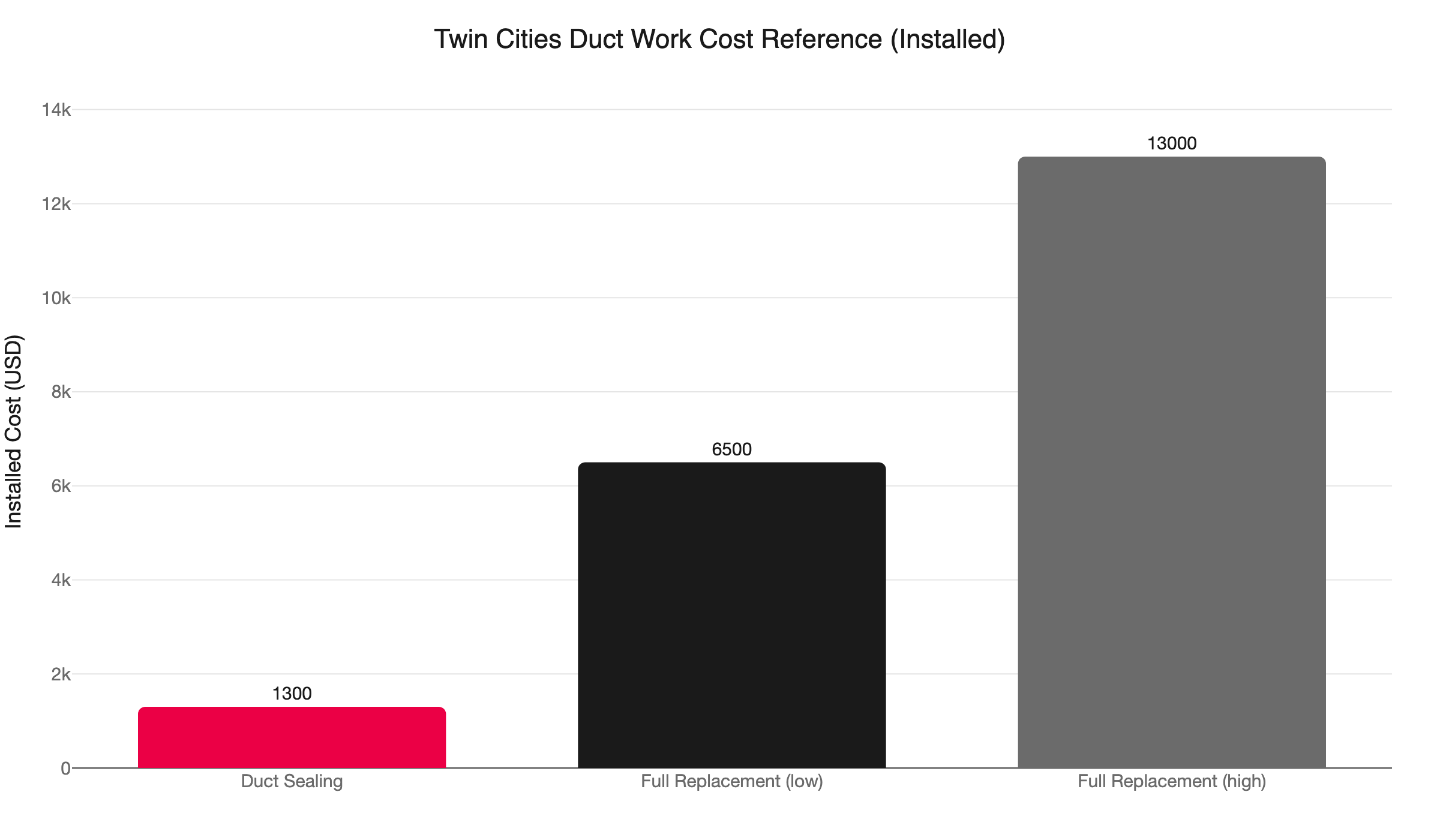
Twin Cities Duct Work Cost Reference (Installed)
The phrase "fiberglass duct board vs metal ductwork" comes up fast in a duct replacement conversation. The estimator mentions it, keeps moving, and you end up agreeing to a material you do not fully understand.
In a dry climate, that might not matter much. In a Twin Cities basement, it matters a great deal - and most articles on this topic never explain why.
## Why Do Contractors Still Quote Fiberglass Duct Board?
**The honest reason: duct board installs roughly 40% faster than sheet metal and requires no sheet metal fabrication shop.** Lower labor hours and no specialized tooling mean more margin per job for the installer. That economic reality, not the material's long-term performance in your specific basement, often drives the recommendation.
Duct board is a legitimate product. It carries UL 181 certification and is permitted under Minnesota's adopted version of the 2020 International Mechanical Code. It is lighter than sheet metal, easier to cut and fit in tight or irregular spaces, and it carries built-in insulation value - typically R-6 to R-8 - without requiring separate insulation wrap. Sheet metal runs through unconditioned space need that wrap added on top.
None of that is dishonest. But there is a difference between a material that works and a material that is right for your home's specific conditions. A basement in Ramsey or Brooklyn Park has different stakes than a dry, well-ventilated attic. The location is everything, and that half of the conversation is often skipped.
When a contractor recommends duct board, a fair question is: "Why is this the right material for my basement specifically?" The answer tells you a lot.
## What Is Fiberglass Duct Board, and What Makes It Different?
Fiberglass duct board is a rigid panel of compressed fiberglass insulation faced with a foil or reinforced foil vapor barrier. Installers score, fold, and join it into rectangular duct sections on-site. No fabrication shop, no brake. The foil facing becomes the interior duct surface that conditioned air contacts.
Sheet metal ductwork is fabricated from galvanized steel in custom sections connected on-site with fittings, mastic sealant, and metal tape. It requires more tooling and setup time. What it produces is a hard, non-porous interior surface that does not absorb or hold moisture.
Both systems can deliver conditioned air efficiently when properly installed and sealed. The material difference becomes decisive the moment moisture enters the picture. One surface sheds it. The other absorbs it.
## Why Are Minnesota Basements the Worst Environment for Fiberglass Duct Board?
**Short answer: three risk factors converge in one space.** Below-grade concrete walls that stay cool year-round, summer dew points that regularly hit 60-65°F, and limited air circulation combine to push Twin Cities basement humidity well above the threshold where moisture damages duct board.
Minneapolis-St. Paul sits in ASHRAE Climate Zone 6A, classified as "cold and humid." According to [NWS Twin Cities climate records](https://www.weather.gov/mpx/mspclimate), the Twin Cities averages approximately 7,900 heating degree days per year - among the highest in the contiguous U.S. That means your ductwork spends a large portion of the year carrying air that is significantly warmer or cooler than the surrounding basement space.
In summer, cool supply air running through duct board inside a warm, humid basement creates a temperature differential at the duct surface. If the vapor barrier is breached - even at a seam, a fitting joint, or a spot where the foil was nicked during installation - that differential causes condensation. Moisture works into the fiberglass insulation layer below the facing. There it stays, because fiberglass cannot dry out the way metal can.
The [EPA states clearly](https://www.epa.gov/indoor-air-quality-iaq/should-you-have-air-ducts-your-home-cleaned): "experts do agree that moisture should not be present in ducts and if moisture and dirt are present, the potential exists for biological contaminants to grow and be distributed throughout the home." Fiberglass is porous. Once moisture penetrates the facing, you have the conditions mold needs to grow inside the insulation itself.
The EPA's guidance on indoor humidity recommends [keeping indoor humidity below 60 percent](https://www.epa.gov/mold/brief-guide-mold-moisture-and-your-home) - ideally between 30 and 50 percent. Minnesota basements without active dehumidification routinely exceed that threshold from May through September. Our post on [ductwork sweating and condensation in Minnesota basements](/blog/ductwork-sweating-condensation-basement-minnesota/) covers the mechanics of how this plays out in a typical Twin Cities home.
## What Does the EPA Actually Say About Wet Fiberglass Duct Insulation?
**One directive: remove and replace it.** There is no cleaning option, no treatment option, no sealing option for fiberglass insulation that has become wet or shows visible mold.
This is the fact that nearly every article comparing fiberglass duct board vs metal ductwork leaves out. It changes the entire cost calculation.
The EPA's duct cleaning guidance is explicit: ["Fiber glass, or any other insulation material that is wet or visibly moldy (or if an unacceptable odor is present) should be removed and replaced by a qualified heating and cooling system contractor."](https://www.epa.gov/indoor-air-quality-iaq/should-you-have-air-ducts-your-home-cleaned)
The reason comes from how porous materials hold contamination. As the EPA's mold guidance explains: ["Absorbent or porous materials, such as ceiling tiles and carpet, may have to be thrown away if they become moldy. Mold can grow on or fill in the empty spaces and crevices of porous materials, so the mold may be difficult or impossible to remove completely."](https://www.epa.gov/mold/brief-guide-mold-moisture-and-your-home)
Mold does not just grow on the surface of fiberglass. It grows through the insulation. You cannot brush it off, treat it with a biocide spray, or seal it in. The EPA specifically addresses that last point: sealants must never be used on wet duct liner or to cover actively growing mold.
For a homeowner, the practical consequence is stark. A single moisture event - a condensation problem, a basement seepage event, a humidifier that drips into a supply run - can turn an entire duct board run into a total loss that requires full replacement. The cheaper upfront material becomes the more expensive long-term outcome.
Sheet metal does not work this way. Metal gets wet and dries. A moisture event requires cleaning, not replacement.
## What Are the Health Risks If Mold Develops in a Duct System?
**Direct answer: every room in the house receives air that has passed through the contaminated material, carrying mold spores with it.**
The [EPA's guidance on mold health effects](https://www.epa.gov/mold/ten-things-you-should-know-about-mold) identifies "allergic reactions, asthma, and other respiratory complaints" as the primary health effects of mold exposure. For households with children, elderly occupants, or anyone managing asthma or respiratory conditions, contaminated supply ductwork is not a minor comfort problem. It is an ongoing health exposure delivered through every vent in the home every time the system runs.
If you are concerned about what may already be present in your current system, our post on [mold in HVAC ducts: signs and remediation in the Twin Cities](/blog/mold-in-hvac-ducts-signs-remediation-twin-cities/) walks through the warning signs and what a professional inspection involves.
## Fiberglass Duct Board vs Metal Ductwork: The True Cost Comparison
**Service life drives the real numbers.** In a dry climate, duct board can reach 15-20 years. In a humid Minnesota basement, that figure drops toward 8-12 years when moisture management is imperfect. Sheet metal, properly installed and sealed, routinely lasts 30 or more years.
The upfront gap is real. Duct board costs less to install. The material is cheaper and the faster installation means fewer labor hours on the invoice. In a climate where humidity is not a variable, that savings represents genuine value.
Run the numbers differently in a Twin Cities basement. A duct board system replaced in year 10 or 12 instead of year 25 means you have spent the full replacement cost twice in the span of a single sheet metal system's service life. The upfront savings disappears, and you have added years of potential indoor air quality risk in the meantime.
Full duct replacement in the Twin Cities runs $6,500-$13,000 installed, depending on home size, duct layout, and material. Sheet metal typically lands toward the upper end of that range. That is a real number. In a humid basement environment, it is a number you pay once. For a detailed look at what drives cost in this market, see our post on [ductwork replacement cost in the Twin Cities](/blog/ductwork-replacement-cost-twin-cities/).
## How Do You Know Which Material Is Currently in Your Home?
A quick visual check is usually enough. Go to your basement and look at the duct runs.
Sheet metal ductwork has smooth, hard exterior surfaces - typically bare galvanized steel, sometimes covered in gray or silver foil-faced insulation wrap. Seams have visible screws or crimped joints. The surface is rigid and cold to the touch.
Fiberglass duct board looks different. The exterior surface has a rigid, slightly textured foil facing. Corners are folded and stapled or taped. The material feels slightly resilient if you press it gently. Seams between sections are typically taped with foil tape.
If you see sagging sections, water staining on the foil facing, dark spots at seams, or a musty odor near the vents, those are signals worth a professional assessment. Our team can identify material condition and tell you whether sealing, insulation repair, or full replacement is the right call.
## When Should You Insist on Sheet Metal?
If any of the following apply, ask for sheet metal specifically before the job is quoted, and get the answer documented.
- **Your ductwork runs through an unfinished or semi-finished basement.** This is the highest-risk location for duct board in Minnesota. It concentrates every factor that shortens its service life.
- **Your basement has had moisture problems.** Prior flooding, seepage, or visible efflorescence on the concrete walls means moisture events happen in your home. Duct board cannot survive repeated ones.
- **You are replacing duct board that failed before its expected service life.** Understand what caused the early failure before installing the same material in the same location.
- **Anyone in the household has asthma or a respiratory condition.** The health stakes raise the value of durable material choices. The cost premium for sheet metal is straightforward insurance.
- **The quote just says "ductwork" without specifying a material.** Ask. Get it in writing before you sign.
## Can You Seal Existing Duct Board Instead of Replacing It?
**Yes, if the material is intact and dry. No, if there is any sign of moisture damage or mold.**
Leaky duct board joints lose conditioned air before it reaches the living space. Sealing intact, dry duct board with mastic sealant or metal tape is a legitimate maintenance step that reduces energy waste. Professional duct sealing on an existing system typically runs around $1,300 and is worth considering before committing to full replacement if the material is in good condition.
The EPA, NADCA, NAIMA, and SMACNA are unified on the limit of sealing: it is not a remediation tool. It cannot be applied to wet duct liner or active mold growth. Sealing over a contaminated surface does not eliminate the problem. It conceals it while the damage continues.
Our post on [duct sealing and leaky ductwork energy loss](/blog/duct-sealing-leaky-ductwork-energy-loss/) covers what sealing can and cannot accomplish and when it makes sense as a standalone step.
## What Should You Ask Before Signing a Duct Replacement Quote?
**Before you agree to anything, get answers to these questions - and get them in writing.**
1. What material is being installed: sheet metal, fiberglass duct board, or a hybrid?
2. Is the material choice documented on the written quote?
3. What is the sealing method: mastic sealant or metal tape?
4. Does the quote include insulation wrap on sheet metal runs through unconditioned spaces?
5. Does the work require a mechanical permit? In most Twin Cities municipalities, full duct replacement does. A permitted job triggers an inspection - an independent quality check.
A contractor who answers these questions directly and puts the answers in writing is showing you how they operate. Vague answers or a quote that cannot be made specific before signing are their own kind of signal.
Our post on [HVAC contractor red flags in the Twin Cities](/blog/hvac-contractor-red-flags-twin-cities/) covers the broader list of what to watch for when comparing quotes on a larger job.
---
We are locally owned and operated in Ramsey, and our team gives you straight answers on material choices before a job starts. When we recommend sheet metal for a Twin Cities basement, we explain why - and we document it on the quote.
Call us at **(763) 260-6662** or schedule online. We show up when we say we will. "Always On Time... Or You Don't Pay a Dime!(R)"
---
# Geothermal vs Air Source Heat Pump Minnesota: 10-Year Cost
URL: https://northernonehour.com/blog/geothermal-vs-air-source-heat-pump-cost-minnesota/
Published: 2026-09-29 | Category: Heating
Twin Cities lot constraints, expired federal credits, and the real 10-year installed cost math for geothermal vs air source heat pump Minnesota.
Key Takeaways
- Both the federal geothermal credit (Section 25D, 30%) and the cold-climate ASHP credit (Section 25C, up to $2,000) expired December 31, 2025. There is no federal offset right now.
- Most Twin Cities suburban lots cannot fit horizontal ground loops. Vertical drilling adds $8,000-$12,000 to the geothermal quote.
- Geothermal installed in the Twin Cities typically runs $22,000-$30,000. A cold-climate ASHP typically runs around $14,000.
- Xcel Energy offers up to $2,600 for qualifying ASHPs. CenterPoint offers $1,500 for ASHPs in a dual-fuel hybrid setup. Neither utility rebates standalone residential geothermal.
- For most homeowners who need vertical drilling, the ASHP comes out ahead through year 10.
- Geothermal's ground loop carries a 300-year service life expectation. The 10-year math captures unit costs, not that longevity.
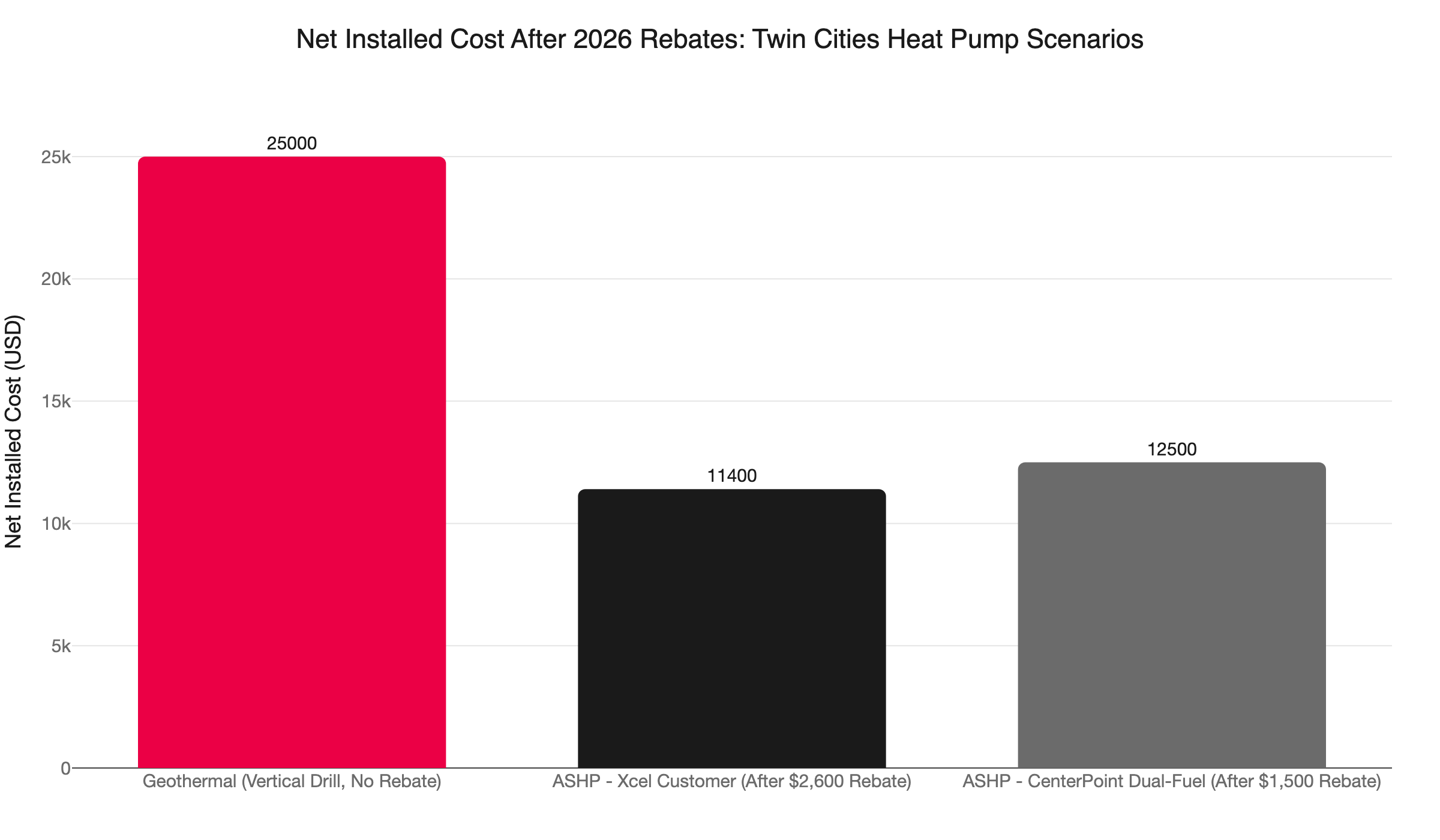
Net Installed Cost After 2026 Rebates: Twin Cities Heat Pump Scenarios
## Geothermal vs Air Source Heat Pump Minnesota: The 2026 Picture
The comparison between geothermal and cold-climate air-source heat pumps has shifted more in the past year than in the decade before it. Both federal tax credits that once helped close the cost gap expired December 31, 2025. Utility rebates for cold-climate ASHPs are still active. And most Twin Cities suburban lots cannot accommodate horizontal ground loops, which pushes geothermal toward the more expensive vertical drilling option.
This post walks through the 10-year cost math for both systems on a typical Twin Cities lot. The numbers use real installed cost ranges from Minnesota contractors, 2026 incentives only, and the lot-size reality most suburban homeowners face.
## Does Your Lot Have Room for Geothermal?
**Short answer:** Probably not for horizontal loops. A 3-ton system needs roughly 5,000-9,000 square feet of clear, diggable ground. Most Twin Cities suburban lots are in that total size range. A house, garage, driveway, and setbacks have already claimed most of it.
This question belongs first. It shapes every cost number that follows.
Horizontal closed-loop geothermal is the more affordable loop type. It [requires roughly 1,500-3,000 square feet of trench area per ton of capacity](https://heartlandheatingandair.com/land-needed-for-geothermal-installation/). A 3-ton system for a typical 2,000 square foot home needs 5,000-9,000 square feet of open, accessible yard. Minnesota frost penetration pushes trench depth to 7-8 feet, which adds excavation cost.
The median suburban Twin Cities lot runs around 7,000-9,000 square feet total. Subtract the house footprint, an attached garage, a driveway, and required setbacks. Most homeowners end up with 2,000-4,000 square feet of usable open yard. Horizontal loops do not fit.
Setbacks from wells, septic systems, and property lines further reduce available area. If any of those features exist on your lot, a site review from a licensed geothermal contractor is a necessary step before any quote is useful.
That forces vertical drilling. Vertical boreholes go straight down, typically 150-250 feet each. A 3-ton system usually needs two or three boreholes. In Twin Cities glacial sediment, vertical drilling [runs $15-$30 per linear foot](https://welldrillingcosts.com/costs/minnesota/). That puts the loop field alone at $6,750-$22,500 before you factor in the heat pump unit, any ductwork work, or permits.
Vertical drilling adds $8,000-$12,000 to the total installed cost compared to a horizontal loop system. That difference drives most of the payback math.
## What Does Geothermal Actually Cost Installed in the Twin Cities?
**Short answer:** Expect $18,000-$35,000 before incentives for a typical 3-ton system. Minnesota installs typically land $22,000-$30,000 because regional geology often demands deeper bore depths. Most homeowners who need vertical drilling fall into that upper range.
[GeothermalFinder's state-level cost data](https://geothermalfinder.com/costs/geothermal-installation-cost-by-state/) puts the Twin Cities range at $18,000-$35,000 before incentives. Minnesota and Wisconsin installs tend toward the upper half because deeper bore depths are more common due to regional geology.
A cold-climate ASHP in the Twin Cities runs considerably less. Local installer data puts the range at $9,000-$18,000, with a median around $14,000. Systems that hold heating capacity at -13°F or lower sit in the middle to upper portion of that range. That cold-weather threshold matters in Minnesota. Design heating loads here are set against temperatures well below zero.
The raw upfront gap before any incentives: roughly $8,000-$16,000 in favor of the ASHP.
## Are There Still Tax Credits or Rebates for Heat Pumps in 2026?
**Short answer:** No federal credits for either system. Both expired at the end of 2025. Utility rebates for cold-climate ASHPs from Xcel and CenterPoint are still active. Neither utility currently rebates standalone residential geothermal.
This is where the comparison shifts hardest against geothermal right now.
**Xcel Energy customers**
Xcel's rebate program pays up to $2,000 for a qualifying cold-climate ASHP. The unit must reach a COP of at least 1.75 at 5°F and retain 70% of its rated capacity at 5°F versus its 47°F rating. Add $600 if you pair the installation with insulation improvements. Total potential: $2,600. See [Xcel's heat pump program](https://mn.my.xcelenergy.com/s/residential/heating-cooling/heat-pumps) for qualifying models and documentation requirements.
Gas furnace rebates from Xcel were discontinued January 1, 2026. The rebate program now points toward heat pump technology.
**CenterPoint Energy customers**
CenterPoint's rebate pays [$1,500 for a ducted ASHP in a dual-fuel hybrid setup](https://www.centerpointenergy.com/en-us/Documents/CIP-Rebate-Forms/CNP-1375.pdf). The setup requires a paired gas furnace at 92% AFUE or better, with the ASHP's switchover temperature set at 40°F or below. Standalone ASHP-only systems do not qualify. Standalone geothermal does not qualify either.
This arrangement has a practical advantage beyond the rebate. The gas furnace carries the load on the coldest nights, when air-source performance drops. The ASHP handles shoulder seasons and moderate-cold days at high efficiency. That hybrid setup is a reasonable answer to Minnesota's wide temperature swings.
**City of Minneapolis**
Minneapolis offers a bonus rebate of up to $1,000 for qualifying ASHPs. In designated Green Zones, that bonus rises to up to $5,000. These stack with Xcel rebates. Check [MN Air Source Heat Pump Collaborative](https://www.mnashp.org/incentives-rates-financing) for current city and utility stacking requirements.
**Geothermal rebates in 2026**
Xcel does not offer a residential geothermal rebate. CenterPoint does not offer one either. The federal 30% credit is gone. CenterPoint is running a community-scale geothermal pilot in Minnesota, but that is a utility infrastructure project, not a homeowner rebate.
Net installed cost after available 2026 rebates:
- Geothermal (Twin Cities, vertical drill, median): approximately $25,000 (no rebate offset)
- Cold-climate ASHP, Xcel customer: approximately $11,400 (after $2,600 rebate)
- Cold-climate ASHP, CenterPoint dual-fuel: approximately $12,500 (after $1,500 rebate)
The net gap is roughly $12,500-$13,600 in favor of the ASHP. To close that gap inside 10 years through energy savings alone, geothermal would need to save $1,250-$1,360 more per year than a cold-climate ASHP. That is a significant annual threshold.
## How Does the 10-Year Cost Math Work Out?
**Short answer:** For most Twin Cities homeowners who need vertical drilling and have no federal credit offset, the ASHP comes out ahead through year 10. Geothermal's edge builds over 20-30 years, especially when you factor in the ground loop's long service life.
Here is a scenario for a 2,000 square foot Twin Cities home replacing a gas system with a heat pump.
**Geothermal path**
- Installed cost (vertical drill, 3-ton, median): $25,000
- Available rebates in 2026: $0
- Net year-zero cost: $25,000
**Cold-climate ASHP path (Xcel customer)**
- Installed cost (median): $14,000
- Xcel rebate: -$2,600
- Net year-zero cost: $11,400
Year-zero gap in favor of the ASHP: $13,600.
The efficiency case for geothermal is real. [The Department of Energy notes](https://www.energy.gov/hgeo/geothermal/geothermal-heat-pumps) that ground-source heat pumps reduce energy consumption 25-50% compared to air-source heat pumps. Ground temperature holds steady at 50-59°F year-round, even when outdoor air hits -20°F. That advantage does not compress in February the way an ASHP's efficiency curve does.
One Minnesota family, profiled by [Clean Energy Resource Teams](https://www.cleanenergyresourceteams.org/minnesota-family-really-digging-their-new-ground-source-heating-and-cooling-system) in a 4,600 square foot home, reported $944 per year in combined heating, cooling, and domestic hot water costs after their geothermal install. That is a strong result. A smaller home with a smaller system sees proportionally smaller absolute savings. The annual efficiency gap between geo and ASHP narrows when total consumption is lower.
To recover a $13,600 premium over 10 years, geothermal needs to save about $1,360 more annually than the ASHP. Whether that threshold is reachable depends on home size, your current energy source, and the ASHP's cold-weather performance at your specific site.
For most average-sized Twin Cities homes, the ASHP wins through year 10. Geothermal closes the gap somewhere between years 20 and 25 for many households.
**Three factors that shift the math**
- **Larger home, higher heating load.** A bigger home spends more on heat each year. The percentage advantage geothermal holds compounds against a larger base. That widens the annual savings gap and shortens the payback timeline.
- **Ground loop longevity.** [The DOE's geothermal consumer guide](https://www.energy.gov/sites/prod/files/guide_to_geothermal_heat_pumps.pdf) notes that in-ground loop fields carry very long service lives. Minnesota installations commonly cite a 300-year loop expectation. The heat pump unit runs 20-30 years. You pay once for infrastructure the equipment outlives several times over. If you plan to stay in the home for decades, that changes the true lifetime cost picture significantly.
- **No vertical drilling premium.** If your lot fits horizontal loops, the installed cost falls to $18,000-$20,000. At that level, the payback timeline shortens materially and the calculus gets closer.
## What Is the Permitting Timeline for Geothermal in Minnesota?
**Short answer:** Plan for 2-4 extra weeks of lead time. Geothermal bored heat exchangers require both a Minnesota Commissioner of Health permit under Minn. Stat. §103I.641 and a DLI mechanical permit. That is two agencies and two review queues before a drill rig can show up.
Most HVAC replacements require only a local or state mechanical permit. Geothermal adds a second layer.
Under [Minn. Stat. §103I.641](https://www.revisor.mn.gov/statutes/2024/cite/103I.641), geothermal bored heat exchangers fall under Minnesota's well and boring jurisdiction. The Minnesota Department of Health reviews the boring permit independently from the Department of Labor and Industry mechanical permit required for the HVAC equipment. Two agencies means two review queues. Depending on workload, that adds two to four weeks before installation can begin.
If you have a failed furnace in November and need heat before the first serious cold snap, geothermal is not a fast answer. A cold-climate ASHP or a dual-fuel hybrid does not carry this dual-agency requirement. It can move to install on a much shorter schedule.
## Geothermal vs. Air Source Heat Pump: Which Is Right for Your Minnesota Home?
**Short answer:** For a standard Twin Cities suburban lot with limited open yard and strong rebate eligibility, a cold-climate ASHP almost always wins through year 10. Geothermal makes a stronger case on larger lots, in high-usage homes, and for homeowners planning to stay 20 or more years.
Use this to frame your own decision:
**Lean toward a cold-climate ASHP if:**
- Your yard cannot fit horizontal loops, which applies to most Twin Cities lots
- You are an Xcel Energy customer eligible for up to $2,600 in rebates
- You want a dual-fuel hybrid and the CenterPoint $1,500 rebate matters to your budget
- You need the system installed this season, not after a two-agency permit process
- Your planning horizon is 10-15 years
**Lean toward geothermal if:**
- Your lot has documented open area for horizontal loops, or the vertical drilling premium fits your budget comfortably
- You are building new and can fold loop cost into the overall construction budget
- You plan to stay 20 or more years and want to pay once for infrastructure the equipment outlives
- Your home has a high heating load where the annual efficiency gain is substantial
For homeowners who are not ready to commit to a full heat pump conversion, a [dual-fuel heat pump and gas furnace hybrid](/blog/dual-fuel-heat-pump-gas-furnace-hybrid-minnesota/) is a practical middle path. The ASHP runs efficiently during shoulder seasons and moderate winter days. The gas furnace takes over on the extreme cold nights when air-source efficiency drops. CenterPoint's $1,500 rebate is specifically structured for this setup.
If you want to compare current rebate programs side by side, our [Xcel and CenterPoint rebate guide](/blog/xcel-centerpoint-hvac-rebates-minnesota/) covers 2026 qualifying requirements in plain terms. For a look at cold-climate ASHP brand performance at low Minnesota temperatures, our [Minnesota heat pump rebates and tax credits overview](/blog/minnesota-heat-pump-rebates-tax-credits/) is a useful companion.
Before getting quotes for either system, ask for a Manual J load calculation. A properly sized system is the first requirement for any heat pump to perform as advertised in a Minnesota winter.
## Ready to Talk Through Your Options?
The ranges in this post reflect typical Twin Cities installations. Your actual numbers depend on your home's heating load, your lot's layout, your utility provider, and how long you plan to stay.
Our team is locally owned and operated in Ramsey, MN. We serve Minneapolis, St. Paul, Blaine, Maple Grove, Plymouth, Brooklyn Park, Woodbury, Bloomington, and the surrounding metro. We give you a straight answer on what makes sense for your home. Not a pitch for whatever has the higher margin.
Call (763) 260-6662 or [book a home assessment](/heating/) to get started. We back every appointment with a simple promise: "Always On Time… Or You Don't Pay a Dime!(R)"
---
# How to Clean Your Outdoor AC Unit (Twin Cities Guide)
URL: https://northernonehour.com/blog/outdoor-ac-unit-cleaning-twin-cities/
Published: 2026-09-29 | Category: Cooling
Twin Cities guide to cleaning your outdoor AC unit: what homeowners can DIY, why cottonwood season changes the timing, and what requires a licensed tech.
Key Takeaways
- Cottonwood peaks from late May through mid-June in the Twin Cities. That window turns a once-a-year task into a weekly routine.
- A cottonwood-clogged condenser can cut AC output by 30 to 50%. Compressor replacement starts at $1,950 and can reach $4,500 or more.
- Homeowners can rinse the condenser, swap filters weekly, and maintain 2-foot clearance. Everything inside the unit housing is licensed-tech territory.
- Federal law (EPA Section 608) prohibits homeowners from handling refrigerant. This is a legal line, not just a skill gap.
- Book your professional AC tune-up in April or early May, before cottonwood peaks and before contractors fill their schedules.
- Xcel Energy customers may qualify for up to $450 in rebates on a qualifying replacement. The federal 25C tax credit expired after December 31, 2025.
- Northern One Hour is locally owned and operated in Ramsey, MN. Call (763) 260-6662 or book online.
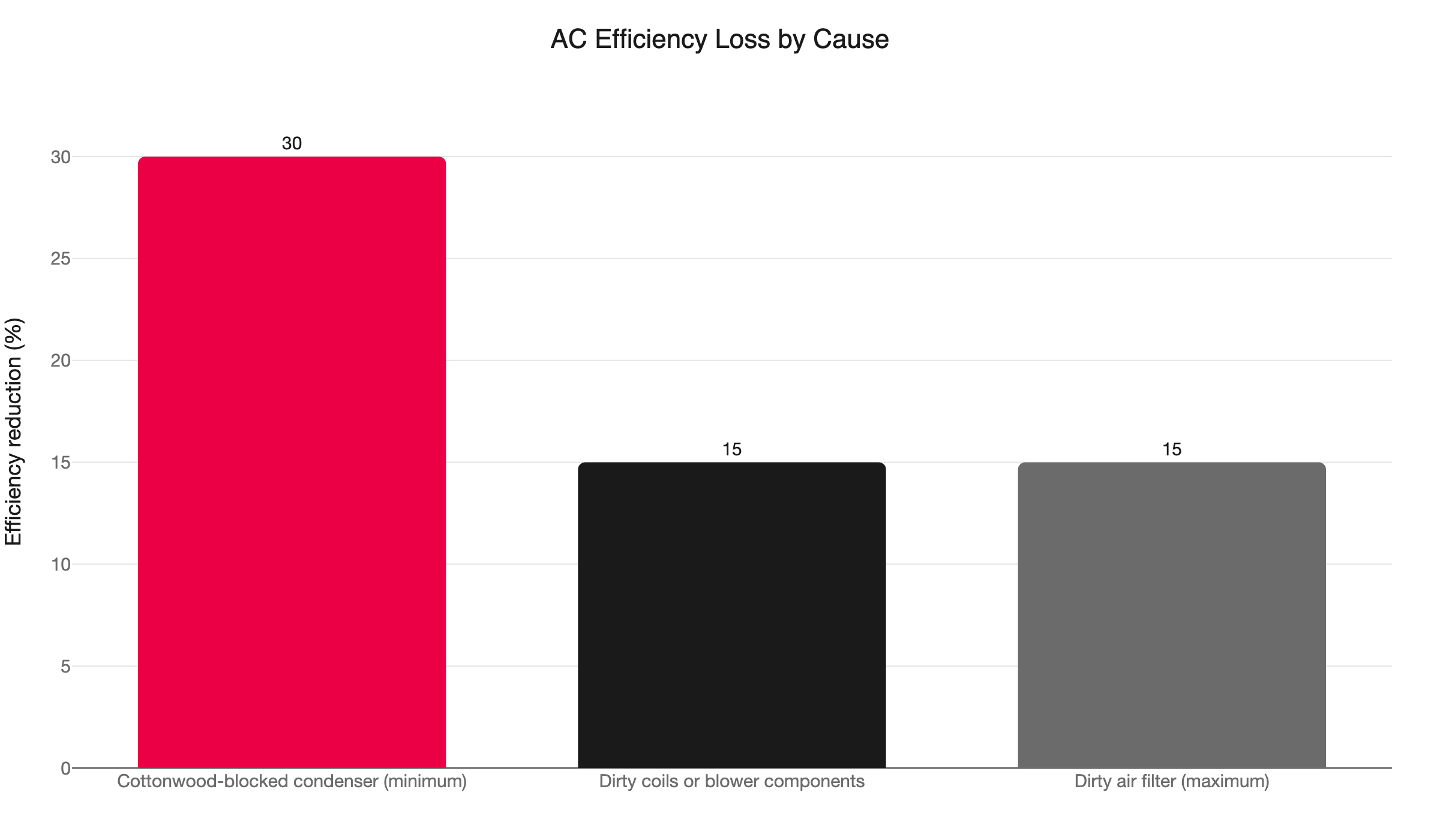
AC Efficiency Loss by Cause
## Why Minnesota's Cooling Season Starts With a Warning
Most guides on how to clean outdoor AC unit are written for a national audience. They say clean it once a year and call it done. That advice works in Phoenix. It does not work here.
Every spring, cottonwood trees across the Twin Cities shed dense white seeds. [According to MPR News](https://www.mprnews.org/story/2024/05/30/cottonwood-snow-season-minnesota), dispersal peaks from late May through mid-June. A warm spring pushes it earlier. A cold one drags it into late June.
That peak lands exactly when most homeowners fire up their AC for the first time. The unit sits through a Minnesota winter. You flip it on. Within days, it is packed with cottonwood fluff.
Ignore it for a week or two, and you are not just running the system less efficiently. You are working toward a compressor failure.
This guide covers exactly what you can safely do yourself, what you should never touch, and why the date on your calendar matters as much as the cleaning itself.
---
## What Happens When Cottonwood Clogs Your Condenser?
**Cottonwood fluff blocks airflow through the condenser fins. Efficiency drops 30 to 50% within days. The compressor overheats under sustained strain. If it fails, replacement runs $1,950 to $4,500. A weekly rinse prevents all of it.**
Your outdoor AC unit (the condenser) moves heat from inside your home to the outside air. It does this through thin aluminum fins. Those fins transfer heat into air passing through them. That transfer depends entirely on airflow.
Restrict the airflow, and the system has to work harder to accomplish the same job.
[Research published this year](https://twincityheatingandair.com/minneapolis-mn-heating-and-air-conditioning-blog/2026-cottonwood-season-in-minnesota-ac-problems-how-to-protect-your-condenser-this-year) found that cottonwood fluff on the condenser coil reduces AC efficiency by at least 30%. During peak cottonwood weeks, [CBS Minnesota reported](https://www.cbsnews.com/minnesota/news/cottonwood-seeds-air-conditioner-hvac-tips/) that efficiency loss can reach 50% and compressor or fan motor burnout is a documented failure mode.
A 30 to 50% drop is not "it runs a little slower." On a hot afternoon, the system strains for hours. It works to cool a house it would normally cool in 30 minutes. That sustained effort overheats the compressor.
When the compressor fails, the cost jumps fast. See our guide on [AC compressor signs, repair costs, and what to expect in the Twin Cities](/blog/ac-compressor-failing-signs-repair-cost-twin-cities/). A replacement runs $1,950 to $4,500 in this market.
A 15-minute garden-hose rinse prevents all of that.
---
## How Do You Clean Your Outdoor AC Unit Step by Step?
**Cut power at the disconnect box, clear debris by hand, then spray the fins gently with a garden hose from the inside out. No pressure washer. No stiff brush. Let it dry 20 minutes before restoring power.**
Here is the complete homeowner checklist:
**Step 1: Cut power to the unit.**
Find the outdoor disconnect box. It is mounted on the wall near the condenser. Flip it to OFF. Also shut the system off at the thermostat. Do not skip this step.
**Step 2: Clear debris by hand.**
Remove cottonwood clumps, leaves, sticks, and grass clippings from the top and sides of the unit. Use your hands or a soft cloth. Do not use a leaf blower aimed directly at the fins.
**Step 3: Rinse the fins with a garden hose.**
Spray from inside the unit outward if you can safely reach the interior. Otherwise, spray from the outside at a low angle. The goal is to flush debris out, not drive it deeper. A garden-hose nozzle on the "shower" setting is the right tool.
**Step 4: Let it dry.**
Wait 20 to 30 minutes before restoring power. Do not run the system on a wet unit.
**Step 5: Restore power and test.**
Turn the disconnect back to ON. Run the system and confirm cool air at your vents within a few minutes.
**Step 6: Confirm clearance around the unit.**
Keep at least 2 feet of clearance on all sides. Trim shrubs, pull weeds, and remove anything that restricts airflow. This is a year-round requirement, not just a cottonwood-season task.
That is the full homeowner process. It takes 15 to 20 minutes.
---
## How Often Should You Clean the Outdoor AC Unit During Cottonwood Season?
**Rinse the condenser weekly from late May through mid-June. Check your air filter every week during that same window. Cottonwood can choke a clean filter in days, not the usual month. Resume normal monthly cadence after the season ends.**
Normal AC maintenance runs on a monthly filter-check schedule. Cottonwood season breaks that cadence entirely.
[Research shows](https://twincityheatingandair.com/minneapolis-mn-heating-and-air-conditioning-blog/2026-cottonwood-season-in-minnesota-ac-problems-how-to-protect-your-condenser-this-year) cottonwood can load a standard filter to the point of airflow restriction within days. A filter that looked clean on June 1 can be choking the system by June 7.
[ENERGY STAR notes](https://www.energystar.gov/saveathome/heating-cooling/maintenance-checklist) that replacing a dirty filter with a clean one lowers AC energy consumption by 5 to 15%. That is the fastest single efficiency gain a homeowner can make. It takes five minutes and costs a few dollars.
Put it on your calendar: weekly rinse, weekly filter check, from late May through mid-June. After that, go back to monthly.
Also check the condensate drain line once a month during the season. A heavy cottonwood year means more debris near the indoor unit. If water is pooling near your air handler, the drain is probably clogged.
---
## What Should You Never Do to Your Condenser?
**Do not use a pressure washer. Do not scrub with a wire brush. Do not remove the top grille unless you are a qualified technician. The capacitor inside holds a dangerous electrical charge even after power is cut.**
Here are the homeowner mistakes that cause more damage than cottonwood does:
**Pressure washers.** The force permanently bends the aluminum fins. Bent fins block airflow. A technician has to straighten them at the next service visit. In bad cases, the coil needs full replacement.
**Wire or stiff brushes.** Same result. These fins are designed to be rinsed, not scrubbed.
**Removing the top grille.** The capacitor inside stores electrical charge even after the disconnect is flipped off. Leave the housing closed unless you know how to safely discharge it.
**Spraying into the top of the unit.** This drives debris deeper into the coil. Spray from the outside at a low angle, or from inside the unit outward.
**Running a clogged unit.** If the condenser is packed with cottonwood and the AC is blowing warm air, shut it down. Rinse it. Let it dry. Then restart. Continuous operation on a blocked coil builds heat that damages the compressor.
**Planting dense shrubs right against the unit.** Airflow restriction does not come only from cottonwood. Ornamental grasses or shrubs within a foot of the unit create the same problem year-round.
---
## What Work Requires a Licensed Technician?
**Any task that touches the refrigerant circuit, the internal electrical components, or anything inside the unit housing belongs to a licensed tech. Federal law requires Section 608 certification to handle refrigerant. That is not a skill gap. It is a legal line.**
Here is the full list of tasks that belong to a licensed technician:
**Refrigerant inspection and charge.** Federal law ([EPA Section 608](https://www.epa.gov/section608)) requires certification to purchase, handle, or recover refrigerants. Homeowners cannot legally service the refrigerant circuit, regardless of skill level. This is a hard stop.
**Electrical connection inspection.** The capacitor, contactor, and all internal wiring need to be checked for wear, looseness, and corrosion. A failing capacitor is one of the most common summer breakdown causes. Caught early, it costs $195 to $500. Left alone, it can take the compressor with it.
**Internal coil cleaning.** The evaporator coil inside your air handler needs cleaning too. You cannot rinse it from the outside. [ENERGY STAR notes](https://www.energystar.gov/products/ask-the-experts/how-keep-your-hvac-system-working-efficiently) that airflow problems from dirty coils or blower components reduce system efficiency by up to 15% independently of anything happening outside.
**Bent fin straightening.** Using a fin comb incorrectly causes more damage than it fixes. Leave this to the technician during a scheduled tune-up visit.
**Refrigerant leak diagnosis.** If the system repeatedly loses charge, there is a leak somewhere. Finding and sealing it requires specialized equipment.
**Diagnosis when a rinse is not enough.** If you clean the condenser, swap the filter, and the AC still blows warm air, a tech needs to find the actual cause.
---
## When Is the Best Time to Book Professional AC Service?
**April or early May. That is before cottonwood peaks, before contractors fill their schedules, and before the first heat wave of the year. A homeowner who waits until July has already run the system through its hardest weeks without a tech's eyes on it.**
[ENERGY STAR recommends](https://www.energystar.gov/saveathome/heating-cooling/maintenance-checklist) scheduling professional cooling-system checkups in spring, before the season begins. Contractors book up quickly once summer arrives.
For Twin Cities homeowners, that general advice has a specific local deadline.
The window:
- **April or early May:** A technician can inspect refrigerant charge, clean both coils, test the capacitor and contactor, and verify airflow. All of this happens before the system faces its first real Minnesota summer load.
- **Late May through mid-June:** Cottonwood season peaks. Appointment availability tightens. The system is already running under the worst conditions of the year.
- **July and August:** Peak cooling season. Emergency call volume goes up. So do wait times.
Book in April. That single scheduling decision covers the tune-up, catches small repairs before they become large ones, and eliminates breakdown risk during a heat wave.
Our [professional AC maintenance service](/air-conditioning/air-conditioning-maintenance/) covers the full licensed-tech checklist above. Northern One Hour is locally owned and operated in Ramsey. We serve Minneapolis, St. Paul, Blaine, Maple Grove, Plymouth, Brooklyn Park, Woodbury, Bloomington, and the surrounding metro. "Always On Time… Or You Don't Pay a Dime!(R)" - on every visit.
---
## What Does a Professional AC Tune-Up Include?
**A technician checks refrigerant pressure, inspects and cleans both coils, tests the capacitor and contactor, clears the condensate drain, and verifies the full electrical system. A standard tune-up at Northern One Hour runs $95 to $250.**
A tune-up is not an inspection. It is a calibrated service visit that covers everything a homeowner cannot safely access.
Here is what our team addresses on a standard visit:
- Refrigerant pressure and charge
- Evaporator coil condition and cleaning
- Condenser coil condition and cleaning
- Capacitor test and replacement if needed
- Contactor inspection
- All electrical connections throughout the unit
- Condensate drain clearance
- Blower motor and condenser fan motor operation
- System airflow and supply/return temperature differential
- Thermostat calibration and staging
A tune-up runs $95 to $250. A compressor replacement runs $1,950 to $4,500. That comparison makes the argument on its own.
For a full breakdown of what each item covers and current pricing in Minnesota, see our detailed guide on [what an AC tune-up includes and what it costs](/blog/ac-tune-up-what-is-included-cost-minnesota/).
---
## What If the Unit Still Underperforms After Cleaning?
**If you rinse the condenser, swap the filter, and the AC still struggles, the problem is somewhere else. Common causes include low refrigerant from a leak, a failing capacitor, a dirty evaporator coil, or a system that is nearing the end of its useful life.**
Here are the most common culprits:
**Low refrigerant.** A refrigerant leak does not seal itself. The system slowly loses charge and cooling capacity. Watch for ice forming on the refrigerant lines, constant running without reaching setpoint, and warm air at the vents.
**Failing capacitor.** A weak capacitor makes the compressor or fan motor struggle to start. It is one of the most common summer breakdowns and one of the least expensive repairs: $195 to $500.
**Dirty evaporator coil.** If the indoor coil is coated with dust or debris, it cannot absorb heat efficiently. This is a tech-only job.
**Airflow restrictions indoors.** Closed or blocked registers, a failing blower motor, or collapsed flex duct all choke airflow from the inside. A clean condenser does not help if the indoor side is restricted.
**Age and wear.** If your system is 12 to 15 years old or more, its performance baseline has likely declined. A tech can evaluate whether repair or replacement makes more financial sense.
Do not run a clearly struggling system for more than a day or two without calling for service. The longer it runs under strain, the higher the repair bill climbs.
---
## Is It Time to Replace?
Not every clean condenser is worth keeping. A few signals that replacement makes more sense than continued repairs:
- Your AC is 12 to 15 or more years old.
- You are facing a compressor repair over $1,950 and the unit is near end of life.
- The system runs R-22 refrigerant, which is no longer manufactured.
A mid-tier central AC replacement in the Twin Cities runs $7,500 to $10,400 installed. A high-efficiency unit at 18 SEER2 or better starts around $11,000 to $15,600.
For Xcel Energy customers, a qualifying replacement at 13.4 SEER2 or better is eligible for up to **$450** in rebates. Applications must be submitted within 60 days of installation. Confirm your utility before assuming this applies. Outer-ring suburbs like Shakopee, Prior Lake, and Buffalo may be on electric co-op service territories, where rebate structures differ.
One note on federal incentives: the 25C tax credit for high-efficiency AC equipment expired for installations completed after December 31, 2025. The Xcel rebate is currently the primary financial incentive for most Twin Cities homeowners replacing a central AC in 2026.
Northern One Hour offers financing on qualifying installations. For a full cost breakdown, see our guide on [AC replacement cost in Minnesota](/blog/ac-replacement-cost-minnesota/).
Call (763) 260-6662 or book a consultation online to talk through whether repair or replacement is the right call for your home.
---
# Replace Window AC with Central Air in the Twin Cities
URL: https://northernonehour.com/blog/replacing-window-air-conditioners-central-ac-cost-twin-cities/
Published: 2026-09-29 | Category: Cooling
Central AC vs. window units in the Twin Cities: real installed costs, the ductwork question for older homes, tax credits, and what to know before you call.
Key Takeaways
- Whether your home has existing ductwork is the single biggest cost variable. It determines whether this is a $9,000 upgrade or a $20,000-plus project.
- Homes with ductwork: central AC installed runs $7,500 to $10,400 for mid-tier equipment.
- Homes without ductwork: add $6,500 to $13,000 for duct installation, pushing totals to $14,000 or higher.
- The federal tax credit for central AC maxes at $600. Ductless mini-splits qualify for up to $2,000.
- Minneapolis has roughly 90 cooling days per year. Comfort and home value are the honest ROI drivers.
- Minnesota requires a mechanical permit for any HVAC installation. Your contractor pulls it.
- Check Xcel Energy and CenterPoint Energy for utility rebates on top of the federal credit.
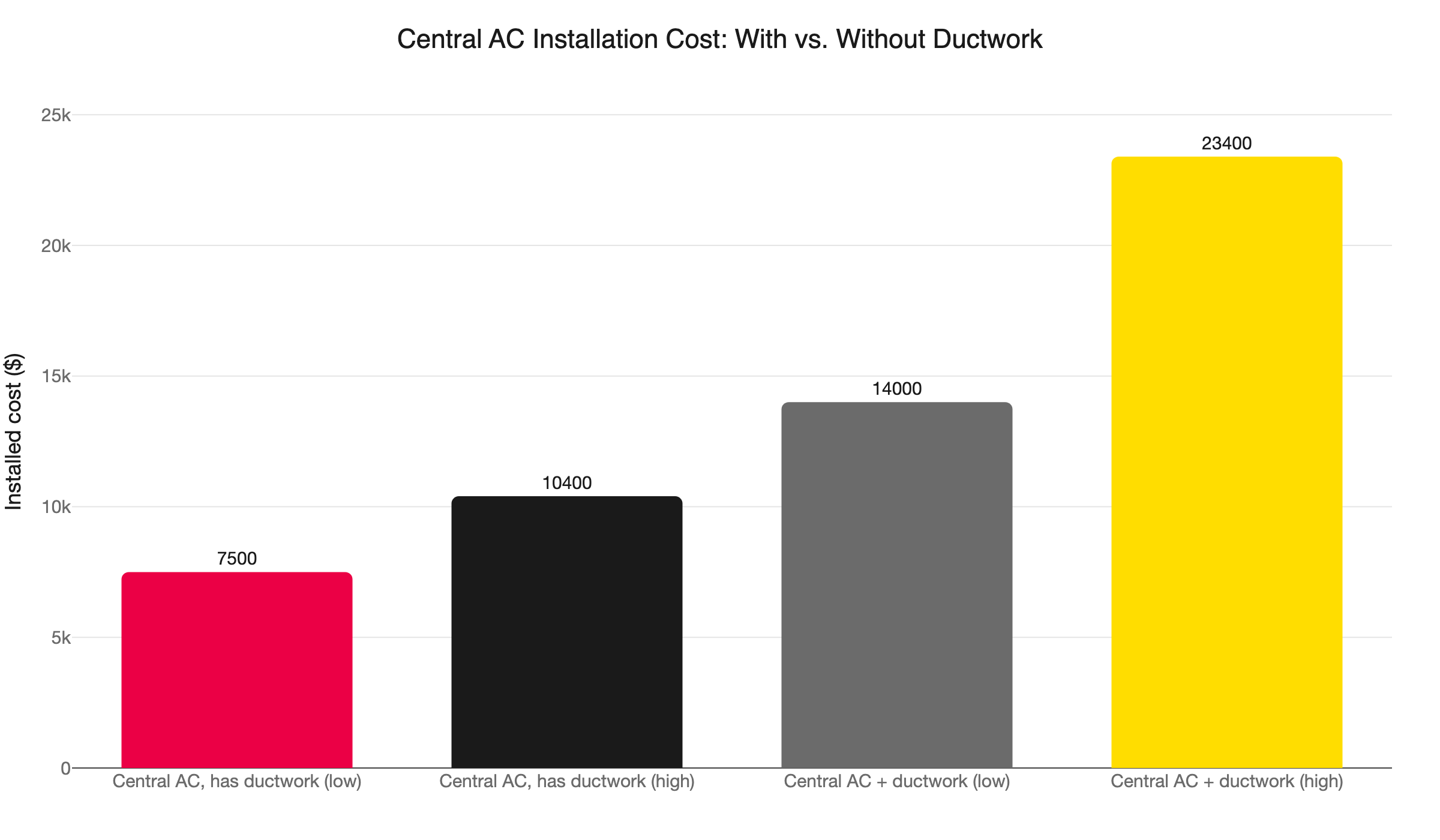
Central AC Installation Cost: With vs. Without Ductwork
Thinking about replacing window air conditioners with central AC in the Twin Cities? Start with one question: does your home have ductwork?
For homes already set up with a forced-air furnace, adding central AC is a direct upgrade. For older Minneapolis, St. Paul, or Ramsey-area homes heated by radiators or hot-water baseboard, the answer is more complicated. That single question determines whether this is a $9,000 project or a $20,000-plus one.
National home-improvement sites list duct installation as a $2,000 to $5,000 line item. In the Twin Cities, full duct installation in a pre-war home runs $6,500 to $13,000 or more. That can equal the cost of the equipment itself.
We're Northern One Hour Heating & Air Conditioning, locally owned and operated in Ramsey, MN, serving the full Twin Cities metro. This guide covers what replacing window units with central AC actually costs here. It explains the cooling season math and when a ductless mini-split is the smarter call.
## Is Central Air Conditioning Worth It in the Twin Cities?
**Central AC delivers whole-home comfort, consistent temperatures, and better humidity control than a collection of window units. For homes with existing ductwork, the upgrade case is straightforward. For homes without it, the ductwork cost and our short cooling season both factor into whether the project makes sense on your timeline.**
Window units are inexpensive to buy and easy to install. What they cannot do is cool a home evenly, manage humidity across multiple rooms, or run quietly enough to forget about. Every Twin Cities summer includes stretches of genuine heat and humidity. A whole-home system handles those weeks in a way that window units never will.
According to the U.S. Energy Information Administration, [heating and cooling account for 52% of a household's annual energy use](https://www.eia.gov/energyexplained/use-of-energy/homes.php). Midwest homes run on the high end because of heating demand. A properly sized central system can reduce the cooling load compared to running several undersized window units on separate circuits.
The key word is "properly sized." An oversized system short-cycles. It shuts off before pulling humidity out of the air. A right-sized system runs longer cycles, dehumidifies effectively, and delivers even comfort. Our team performs load calculations before recommending a system size.
For Twin Cities homeowners, the honest case for central AC rests on comfort, humidity management, and resale value. Energy savings are real, but payback takes longer here than it does in a Sun Belt market running AC for 180 days a year.
## Does Your Home Already Have Ductwork?
**If your furnace pushes heated air through floor or wall registers, you have ductwork and central AC is a direct add-on. If your home heats with steam radiators, hot-water baseboard, or electric baseboard, you almost certainly have no ductwork. Many pre-1960 Twin Cities homes fall into this category. A visual check in the basement or attic confirms it quickly.**
Minneapolis and St. Paul have a large stock of pre-World War II housing. Craftsman bungalows in South Minneapolis, Victorian two-stories in St. Paul, and post-war ranches across the inner-ring suburbs were often built with hydronic heating. These homes were never designed for forced-air systems.
Adding ductwork to an older home is not a simple line item. It means routing sheet metal through finished walls, floors, and ceilings. The layout may require soffits built into rooms or closets used as chase space. The cost reflects that labor, not just the materials.
Full duct installation in a 1,200 to 1,600 square foot Twin Cities home typically runs $6,500 to $13,000. Tighter homes with more finished space cost more. Homes with open, unfinished basements cost less. No estimate is accurate without a site visit.
If your home uses a boiler for heat, see our guide on [adding central air to homes with radiator or hot-water heat](/blog/add-central-air-radiator-hot-water-heat-twin-cities/). It walks through what duct installation actually looks like in these older structures, including the routing challenges that drive cost up.
If you have forced-air heat but suspect existing ductwork has leaks or needs significant work, our [ductwork replacement cost guide for Twin Cities homeowners](/blog/ductwork-replacement-cost-twin-cities/) covers what drives the range.
## What Does It Cost to Replace Window Units with Central AC in the Twin Cities?
**For a home with existing ductwork, expect $7,500 to $10,400 installed for a mid-tier central AC system. High-efficiency systems at 18 SEER2 or above run $11,000 to $15,600. Add $6,500 to $13,000 for full duct installation in a home with no existing ducts. The combined total for a no-ductwork home runs $14,000 to $23,400 or more.**
Here is how the numbers break down by scenario:
**Homes with existing, usable ductwork:**
- Mid-tier central AC, installed: $7,500-$10,400
- High-efficiency (18 SEER2+), installed: $11,000-$15,600
- Duct sealing, if leaks are present: starting around $1,300
**Homes with no existing ductwork:**
- Mid-tier central AC, installed: $7,500-$10,400
- Full duct installation: $6,500-$13,000
- Combined project total: $14,000-$23,400+
These are installed prices for the Twin Cities, parts and labor included. They are not national averages. National figures blend Southern markets with lower labor rates and slab-foundation homes where duct runs are simpler than in a pre-war two-story with finished plaster walls.
A few additional costs to confirm before accepting any bid:
**Electrical.** Most central AC systems require a dedicated 240-volt circuit. If your panel lacks capacity or the circuit does not exist, that adds to the project cost.
**Thermostat.** Upgrading from a heating-only system may require a new thermostat wired for both heating and cooling.
**Refrigerant line set.** Adding AC to a forced-air system that never had it requires a new refrigerant line set from the air handler to the outdoor condenser. This is typically included in the installation cost, but confirm it in writing.
Financing is available for qualifying projects. Ask when you call.
## How Short Is the Twin Cities Cooling Season?
**Minneapolis averages a July high of 82.5°F with a peak near 91°F. The meaningful cooling season is roughly 90 days, compared to 150 to 180 days in Atlanta or Dallas. Comfort and home value are the stronger ROI drivers in this market. Energy savings are real but take longer to pay back here than in the Sun Belt.**
[Minneapolis climate data](https://www.usclimatedata.com/climate/minneapolis/minnesota/united-states/usmn0503) confirms what most Twin Cities homeowners already know: our summers are warm and occasionally very hot, but also short. Annual snowfall averages 55 inches. This is not a climate where AC runs eight months a year.
That does not make central AC a bad investment. It does mean the payback math from a national article written for Phoenix homeowners does not apply here. If the numbers only work on energy savings, the timeline may not satisfy you.
The honest case for Twin Cities central AC rests on four things:
**Comfort during peak heat.** Minneapolis hit 91°F in July 2024. On those days, a properly sized central system is the difference between sleeping well and not sleeping at all.
**Humidity management.** Minnesota summers can be genuinely muggy. Central AC removes moisture from the whole home. Window units handle only the room they occupy.
**Home value.** Buyers in the Twin Cities market expect central air. Window units read as a workaround, not a feature.
**Health and air quality.** A central system filters and circulates air across the whole home. That matters during pollen season and on high smoke-and-pollution days.
## What Federal Tax Credits Apply to Central Air Conditioning?
**A qualifying central AC system earns a 30% federal tax credit, capped at $600 per year. To qualify in 2025, a split-system must meet SEER2 ≥ 17.0 and EER2 ≥ 12.0. The credit is nonrefundable and counts toward the $1,200 annual cap for home energy improvements. Equipment must carry a Qualified Manufacturer Identification Number starting in 2025.**
The [IRS Section 25C credit](https://www.irs.gov/credits-deductions/energy-efficient-home-improvement-credit) is real money, but the ceiling is modest. On a $9,000 installation, 30% would be $2,700. The credit stops at $600. If you also installed new windows or insulation in the same year, those share the same $1,200 annual cap. Full qualifying thresholds are listed on the [ENERGY STAR central AC tax credits page](https://www.energystar.gov/about/federal_tax_credits/central_air_conditioning).
Here is where ductless mini-splits change the equation. Air source heat pumps qualify for a separate $2,000 annual credit under the [ENERGY STAR air source heat pump program](https://www.energystar.gov/about/federal_tax_credits/air_source_heat_pumps). That credit has its own $2,000 annual limit, separate from the $1,200 cap. The difference between $600 and $2,000 is $1,400 per year.
For a homeowner without existing ductwork who is already facing $6,500 to $13,000 in duct installation costs, that $1,400 incentive gap adds meaningful weight to the comparison.
Utility rebates stack on top of the federal credit. Both Xcel Energy and CenterPoint Energy offer rebates on qualifying cooling equipment. Check current offerings at the [ENERGY STAR rebate finder](https://www.energystar.gov/rebate-finder) using your Minnesota zip code. Our guide on [Minnesota heat pump rebates and tax credits](/blog/minnesota-heat-pump-rebates-tax-credits/) covers how to layer federal credits and utility rebates on a single project.
## Should You Consider a Ductless Mini-Split Instead?
**For homes without existing ductwork, a ductless mini-split is worth serious consideration. It eliminates the ductwork cost entirely. It qualifies for up to a $2,000 federal tax credit versus $600 for central AC. And it works as a heat source during Minnesota winters, which improves the total payback picture compared to a cooling-only system.**
A ductless mini-split uses an outdoor compressor unit connected to one or more wall-mounted indoor air handlers. No duct runs. No soffits. No sheet metal routing through finished plaster walls. Installation is less invasive in older homes precisely because there is no forced-air infrastructure to tie into.
Modern cold-climate heat pumps operate efficiently well below 0°F. This is no longer a technology that struggles with Minnesota winters. Our [guide to ductless mini-splits in older Twin Cities homes](/blog/ductless-mini-split-older-twin-cities-homes/) covers how to think about coverage, zone counts, and sizing for pre-war and post-war housing types.
For a home replacing two to four window units, a multi-zone mini-split often covers the same square footage. It manages humidity, runs quietly, and filters air. Because it also handles heating, the comparison shifts from "cooling system only" to "year-round comfort system."
The comparison for a no-ductwork home:
- Central AC plus full duct installation: $14,000 to $23,400+, federal credit up to $600
- Ductless mini-split: installed cost varies by zone count; federal credit up to $2,000
We install both. If you want to compare them side by side before deciding, we will do that on the same visit.
## Permits and Contractors: What Minnesota Requires
Minnesota requires a mechanical permit for any HVAC installation. The 2020 Minnesota State Building Code governs HVAC work statewide. This applies to central AC, ductless mini-splits, and full duct installation alike.
A permit is not a formality. It triggers an inspection confirming the installation meets code. Without it, the manufacturer warranty may be void. Homeowner insurance claims related to an unpermitted installation can be denied. When you sell the home, unpermitted mechanical work can surface during the buyer's inspection and complicate the sale.
Any contractor you hire should pull the permit as part of the job scope. If a bid omits it or leaves the answer unclear, ask directly before signing anything.
Our team is licensed in Minnesota, based in Ramsey, and serves Minneapolis, St. Paul, Blaine, Maple Grove, Plymouth, Brooklyn Park, Woodbury, and Bloomington. We back every installation with a 100% satisfaction guarantee. "Always On Time… Or You Don't Pay a Dime!(R)" is how we show up on every job, start to finish.
## Ready to Replace Your Window Air Conditioners with Central AC?
Replacing window air conditioners with central AC in the Twin Cities is a real investment. The right call depends on your home's existing infrastructure, your cooling goals, and your timeline. Some homes are strong candidates for central air. Others are better served by ductless. A few need a site assessment before the answer is clear.
Our team works across the metro every summer. We will check your home, measure the load, and give you honest pricing on both options before you make any decision.
Call us at **(763) 260-6662** or [schedule your appointment online](/air-conditioning/ac-installation/central-air/). We show up when we say we will. That is the promise.
---
# HVAC for In-Law Suite Addition Twin Cities: 3 Options
URL: https://northernonehour.com/blog/adu-in-law-suite-hvac-options-twin-cities/
Published: 2026-09-28 | Category: HVAC
Compare extending ducts, a ductless mini split, and a separate system for your Twin Cities in-law suite. Cold-climate facts, costs, and permit guidance.
Key Takeaways
- Three HVAC paths exist for an in-law suite addition: extend the main forced-air system via new ductwork, install a dedicated ductless mini split, or add a completely separate heating and cooling unit.
- Extending ducts sounds simple. It often reveals that the existing furnace was already at or near its load limit, which changes the budget significantly.
- A cold-climate mini split rated to -22°F handles Minnesota winters reliably. Verify the ENERGY STAR Cold Climate designation before you buy.
- The IRS 25C federal tax credit for heat pumps expired December 31, 2025. Any article describing it as active is out of date.
- Any new mechanical installation in Minnesota requires a permit from the local authority having jurisdiction.
- An independent zone means an independent thermostat. That matters more than most homeowners expect in a multigenerational household.
- A Manual J load calculation is the right first step for all three options. It tells you whether your existing system has room, and what any new equipment should be sized to.
## What Are the HVAC Options for an In-Law Suite Addition?
**Short answer:** Three paths work for most Twin Cities additions. Extend the existing forced-air system via new ductwork, install a dedicated ductless mini split as an independent zone, or add a completely separate heating and cooling unit. The right choice depends on your existing system's capacity, the addition's size and layout, and whether the occupant needs independent temperature control.
Each option has a different cost structure, a different relationship to your existing equipment, and a different level of comfort independence for the person living in the addition. Here is an honest look at each one.
## Should You Extend the Main Ductwork?
**Short answer:** Extending ducts works when your furnace and existing duct tree have genuine capacity for the added load. If either is already at its limit, a simple duct project becomes a furnace-and-duct project. A Manual J load calculation tells you which situation you are in before any work starts.
Extending the forced-air system to the addition is the most intuitive approach. A contractor runs new trunk lines and branch ducts from the existing air handler into the addition, adds supply and return registers, and balances system airflow. The whole house shares one thermostat. No new equipment is required.
The logic holds when the system has room. Many houses do not.
## Why Does Extending Ducts Often Cost More Than Expected?
**Short answer:** Most residential furnaces are sized for the original square footage. A 400- to 600-square-foot addition adds enough load that the existing furnace may not keep up. A contractor who discovers this mid-project faces a furnace replacement conversation on top of the ductwork cost. A Manual J calculation catches this before the job starts.
This is the gap in most HVAC content on this topic. Generic articles treat "extend the ducts" as a simple line item. It often is not.
If a furnace replacement is required alongside the extension, the budget shifts considerably. Furnace replacement in the Twin Cities runs $4,950 and up for a quality 95-96% AFUE unit, installed. That is before the ductwork cost. A homeowner expecting to spend a few thousand dollars on duct runs can find themselves looking at a very different number.
The duct tree itself can also be the constraint. An older system built for a three-bedroom ranch was not designed to extend to a new wing. Adding runs without checking static pressure reduces airflow across the entire house, not just in the addition. Rooms that were comfortable before become inconsistent.
When extending ducts is the right call:
- The furnace is under eight years old and has documented capacity headroom.
- Duct runs to the addition are short and structurally accessible.
- The addition is attached and under 400 square feet.
- Shared thermostat control is acceptable to all occupants.
When extending ducts is not the right call:
- The furnace is ten or more years old and sized close to current load.
- The addition is 500 square feet or larger.
- The occupant needs an independent thermostat.
- The addition will eventually function as a rental or self-contained unit.
See our post on [HVAC sizing and Manual J right-sizing](/blog/hvac-sizing-manual-j-right-sized-system/) for what a proper load calculation covers and why it matters before any addition HVAC work begins.
## What Is a Ductless Mini Split, and Why Does It Fit an Addition?
**Short answer:** A ductless mini split is a self-contained heating and cooling system. An outdoor compressor connects to an indoor wall unit via a refrigerant line set through a small exterior penetration. It requires no ductwork, creates a fully independent zone with its own thermostat, and places no additional load on the main system.
A single-zone mini split sized for 400 to 600 square feet is the most common HVAC solution for an attached in-law suite in the Twin Cities. The outdoor unit mounts on a pad or wall bracket. The indoor unit mounts high on an interior wall. The refrigerant line runs through a small penetration in the exterior wall. The addition has its own remote or wall thermostat. The main house continues operating on its own system, completely unaffected.
For multigenerational households, that independence is structural, not incidental. The parent runs 74°F. The main house runs 68°F. Both are comfortable. No negotiation required.
A mini split also removes the existing-system capacity question entirely. The addition's equipment is sized only for the addition. The main furnace does not have to absorb extra load. Both systems do their own job without competing.
Visit our [ductless mini split installation page](/air-conditioning/ac-installation/ductless-mini-splits/) for a full overview of what the installation process looks like and what to expect on job day.
## Can a Cold-Climate Mini Split Handle a Minnesota Winter?
**Short answer:** Yes, with the right equipment. [High-performance cold-climate heat pumps provide reliable heating down to -22°F or lower](https://www.efficiencymaine.com/at-home/heat-pumps/), which covers Minnesota's design heating temperatures. The ENERGY STAR Cold Climate designation is the certification to verify. A standard heat pump is a different product with a different performance floor.
This is the question that separates useful Minnesota HVAC guidance from generic national content. Standard heat pump spec sheets show steep efficiency losses below 30°F. Cold-climate certified units operate on a different curve. They extract heat from outdoor air efficiently at temperatures where standard heat pumps struggle. [ENERGY STAR Cold Climate certification](https://www.energystar.gov/about/federal_tax_credits/air_source_heat_pumps) means the unit has been tested for heating-dominated climates like Zone 6B, which is exactly where the Twin Cities sits.
Three installation details matter for a mini split in an in-law suite:
**Indoor unit placement.** [Heat distribution from a ductless wall unit relies on air movement and can be impeded by corners and dead-end spaces](https://www.efficiencymaine.com/at-home/heat-pumps/). A suite with an unusual floor plan or internal hallway may need more than one indoor head, or careful placement to reach the full footprint. Your contractor should map coverage before committing to a mount location.
**Thermostat conflict with the main system.** [If a dedicated mini split runs alongside the home's main heating system, a conflicting setpoint can cause the two systems to work against each other](https://www.efficiencymaine.com/at-home/heat-pumps/). An independent zone fixes this cleanly. The addition has its own thermostat, physically separated from the main house controls.
**Airflow comfort.** Mini splits recirculate interior air. They do not bring in fresh air. Direct fan airflow can feel uncomfortable for an occupant sensitive to drafts. Fan speed and unit position both affect daily comfort, especially for an elderly occupant.
Our post on [heat pump performance in Minnesota winters](/blog/heat-pump-below-zero-performance-minnesota/) covers what cold-climate certified equipment delivers on the coldest nights of the year.
## Comparing the Three Options at a Glance
| Option | Temperature independence | Existing system impact | Relative upfront cost |
|---|---|---|---|
| Extend main ducts | Shared thermostat | Adds load to existing furnace | Lowest (if furnace has capacity) |
| Dedicated mini split | Fully independent zone | None | Mid-range |
| Completely separate unit | Fully independent | None | Highest |
A few notes on reading this table.
"Lowest" for extending ducts assumes the furnace has capacity. If it does not, add the cost of a furnace replacement alongside the ductwork. That changes the comparison significantly and is the scenario most homeowners do not anticipate.
"Mid-range" for a mini split assumes a single-zone system for a standard 400- to 600-square-foot addition. A multi-zone system or a larger space increases cost accordingly.
"Completely separate" covers the widest range because equipment type, site-specific gas line access, and electrical service all factor in.
## When Does a Completely Separate System Make Sense?
**Short answer:** When the addition is large, detached, or designed to function as a self-contained dwelling. A completely separate system is the most expensive option at the start. It is the cleanest long-term solution for a space intended to operate independently from the main house.
A detached ADU or a larger attached addition over 700 square feet often warrants its own equipment from the start. At that scale, you are not extending a system or adding a zone. You are providing a complete second HVAC installation.
Options for a standalone system:
- A single-zone or multi-zone mini split for an addition without existing ductwork.
- A ducted heat pump with a small duct network for a larger, more complex floor plan.
- A gas furnace paired with a dedicated AC unit, where gas service is accessible and a small duct tree is feasible within the addition.
A fully separate system also means fully separate maintenance, separate repair exposure, and a clean path to separate utility billing. If the household arrangement changes, or if the addition ever becomes a rental, a separate system avoids the complications of shared equipment. That future flexibility has real value.
## What Happened to the Federal Tax Credit for Heat Pumps?
**Short answer:** It expired. The [IRS 25C Energy Efficient Home Improvement Credit](https://www.irs.gov/credits-deductions/energy-efficient-home-improvement-credit) covered 30% of heat pump installation cost, up to $2,000 per year, through December 31, 2025. It has not been extended as of this writing. Any article still describing the 25C credit as active is out of date.
This is worth stating directly. A large share of HVAC research content was written in 2023 and 2024 when the credit was active. Many homeowners doing research today find those articles and budget accordingly. That credit is gone.
What it was: 30% of installation cost including labor, up to $2,000 per year, for qualifying heat pumps. Homeowners claimed it on Form 5695. It required a qualified manufacturer ID for each unit. It was nonrefundable and could not be carried forward. It expired December 31, 2025.
The current incentive landscape relies on utility rebates. Xcel Energy serves most of the Twin Cities metro and operates a residential heating and cooling rebate program. CenterPoint Energy covers natural gas customers across many Twin Cities communities. Verify current amounts and qualifying equipment directly with your utility before making equipment decisions. Rebate structures and dollar amounts change by program year.
If the 25C credit is restored by Congress, updated terms will appear on the [IRS credit page](https://www.irs.gov/credits-deductions/energy-efficient-home-improvement-credit) and the [ENERGY STAR federal tax credits page](https://www.energystar.gov/about/federal_tax_credits). Do not rely on secondary coverage for these amounts.
Our post on [Minnesota heat pump rebates and current incentives](/blog/minnesota-heat-pump-rebates-tax-credits/) tracks utility programs and any MN-specific incentives currently in effect.
## Do You Need a Permit for HVAC Work on an Addition in Minnesota?
**Short answer:** Yes. Any new mechanical installation in Minnesota requires a permit from the local authority having jurisdiction. Your HVAC contractor pulls the permit as part of the job. A contractor who proposes to skip it to save time or money is a contractor worth passing on.
The Minnesota State Building Code (Chapter 1309, mechanical) governs HVAC work statewide. Every local jurisdiction enforces it through its own inspection department. Minneapolis, Saint Paul, Ramsey, and each suburban municipality in the metro run their own permit and inspection process. A new mini split installation or a ductwork extension in a permitted addition triggers a mechanical permit in every one of those jurisdictions.
Unpermitted mechanical work creates three problems:
- It may not be covered by homeowner's insurance if an incident occurs.
- It creates a disclosure obligation at resale.
- No independent inspector verified the installation met code.
For a multigenerational household where an elderly or health-sensitive occupant lives in the addition, that last point carries real weight. Pull the permit. It is part of the job.
## What Does HVAC for an In-Law Addition Cost in the Twin Cities?
**Short answer:** Costs depend on the option and your existing system. A single-zone mini split for a standard 400- to 600-square-foot addition runs roughly $4,000-$7,000 installed. Extending ducts alone runs $1,500-$3,500 if the furnace has capacity. A fully separate system for a larger or detached addition starts at $8,500 installed.
These are planning ranges for an honest first conversation, not final quotes. Several variables shift the final number:
- Whether extending ducts exposes a need for furnace replacement. A new 95-96% AFUE furnace runs $4,950 and up installed. That cost is additive, not included in the ductwork range.
- Refrigerant line set length for a mini split. Longer runs between outdoor and indoor units increase both material and labor cost.
- Whether a separate heat pump system requires a new electrical circuit or a panel upgrade. Cold-climate heat pumps in larger spaces may require a dedicated 240V circuit.
- Whether gas line work is needed to reach a detached structure.
Ask every contractor for a written Manual J load calculation alongside the proposal. It documents the sizing basis and is the professional standard for this type of work. A proposal that relies on square footage alone, without a load calculation, is a reason to ask questions.
For larger projects, financing options are available. Ask about them when you call.
## Ready to Get Started?
A site visit and a load calculation are the right first steps for any of these three options. Over the phone, no one can tell you whether your furnace has capacity, what your duct tree looks like, or what size system the addition actually needs.
Northern One Hour is locally owned and operated in Ramsey, MN. Our team works across the Twin Cities. We know what Zone 6B demands from HVAC equipment, and we stand behind the work we do. "Always On Time… Or You Don't Pay a Dime!(R)".
Call **(763) 260-6662** or book online to schedule a consultation. We serve Minneapolis, Saint Paul, Ramsey, Blaine, Maple Grove, Plymouth, Brooklyn Park, Woodbury, Bloomington, and the surrounding communities.
---
# Gas Line Size for a New Furnace in Minnesota: Cost and Code
URL: https://northernonehour.com/blog/gas-line-sizing-furnace-replacement-minnesota/
Published: 2026-09-28 | Category: Heating
Planning a furnace replacement in the Twin Cities? Learn what triggers a gas line upgrade, what it costs in Minnesota, and how to check before work starts.
Key Takeaways
- A gas line upgrade is only needed when the new furnace's BTU demand exceeds what the existing pipe can safely deliver.
- Two triggers can force an upgrade independently: a BTU input change and a venting configuration change on high-efficiency models.
- The combined load trap is common in Twin Cities homes. Furnace, water heater, and dryer on one ½" supply line can push combined demand past what that pipe handles.
- High-efficiency furnaces sometimes have lower BTU inputs than the units they replace. A proper upgrade can resolve an undersizing issue rather than create one.
- Typical cost: $200-$600 for a branch line upgrade; $15-$25 per linear foot for longer interior runs.
- CenterPoint meter upgrades target completion within 20 business days. Plan ahead of peak heating season.
- The federal 25C tax credit expired after December 31, 2025. CenterPoint and Xcel Energy still offer rebates in 2026.
- Minnesota requires a mechanical permit for any new or reconfigured gas line. Your contractor pulls it. Verify before work starts.
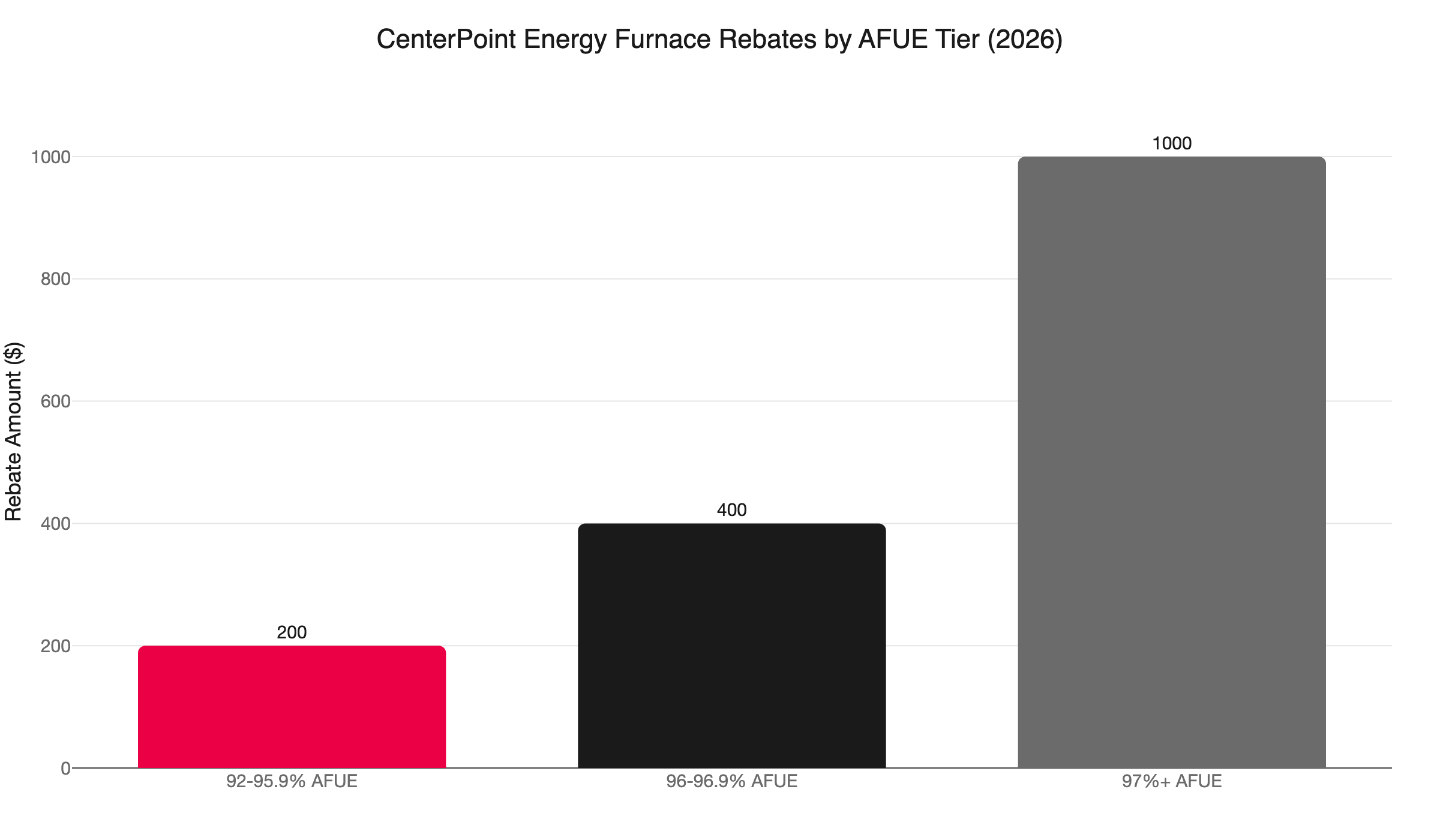
CenterPoint Energy Furnace Rebates by AFUE Tier (2026)
## Gas Line Size for a New Furnace in Minnesota
Getting the gas line size right for a new furnace in Minnesota is a step every installer should assess before the job begins. Most homeowners know little about it. If the pipe is undersized, your new furnace cannot pull enough gas to run at full capacity. That means incomplete combustion, error codes, and reduced heat when you need it most.
This guide covers what triggers a gas line upgrade, which Twin Cities homes face the most risk, what the work costs, and how to check before the contractor shows up.
## What Triggers a Gas Line Upgrade When You Replace a Furnace?
**A gas line upgrade is needed when your new furnace demands more BTU per hour than the existing pipe can safely deliver. Two triggers can force this independently: a higher BTU input on the new unit, and a [venting configuration change](/blog/chimney-liner-furnace-replacement-orphaned-water-heater-minnesota/) tied to high-efficiency models.**
Most homeowners expect a furnace replacement to be a direct swap. Pull the old unit, install the new one. But the pipe connecting your furnace to the gas meter was sized for a specific BTU load. Change that load, and the installer must verify the pipe still qualifies.
The BTU trigger is the more common one. A 60,000 BTU furnace swapped for an 80,000 BTU unit pushes more demand through the same pipe. [Pipe sizing data from Furnace Direct](https://furnace.direct/blogs/news/gas-line-sizing-new-furnace-minnesota-pipe-size) shows a ½" Schedule 40 black iron pipe at a 40-foot run maxes out near 82,000 BTU per hour. Add a 40,000 BTU water heater on the same supply line and that margin disappears completely.
The second trigger is subtler. High-efficiency furnaces often use two-pipe venting: one pipe for combustion air in, one for exhaust out. This configuration affects pressure in the gas train. Even when BTU numbers look unchanged, a good installer checks gas pressure as part of the job.
## What Determines the Right Gas Line Size for a New Furnace in Minnesota?
**Pipe diameter and run length together set the maximum BTU per hour your appliance can safely receive. At a 40-foot run, a ½" pipe handles about 82,000 BTU/hr and a ¾" pipe handles about 170,000 BTU/hr. Minnesota furnaces commonly run 100,000+ BTU input, so many homes sit on or near the capacity threshold.**
Natural gas flows under pressure. A smaller pipe and a longer run both reduce pressure at the burner. Below rated operating pressure, the furnace cannot burn fuel completely. You get incomplete combustion and a carbon monoxide risk. Low-gas-pressure fault codes follow. Heat output drops. The gas valve can be damaged over time.
Run length is the variable most homeowners do not consider first. Sizing tables use 40 feet as a benchmark. In an older split-level or two-story Twin Cities home, the run from the basement meter to a first-floor equipment room can easily be 60, 80, or more feet. Every additional foot reduces carrying capacity. A line that qualifies at 40 feet may not qualify at 70.
Twin Cities homes built in the 1940s through the 1970s often have ½" branch lines from an era when furnaces were smaller. Minneapolis has a design temperature near -16°F. Furnaces sized for that load commonly run 100,000+ BTU. Many older ½" runs are on the wrong side of the capacity table as a result.
Two material issues matter under current Minnesota code. CSST, the yellow flexible pipe used in some remodels, is code-compliant but [must be bonded for lightning protection](https://furnace.direct/blogs/news/gas-line-sizing-new-furnace-minnesota-pipe-size). Galvanized steel pipe is not permitted for new gas work in Minnesota. If your home has galvanized supply lines, a licensed plumber must assess them before gas work proceeds.
For context on what a full furnace job costs in this market, see our guide to [furnace replacement cost in the Twin Cities](/blog/furnace-replacement-cost-twin-cities/).
## Does Upgrading to High Efficiency Always Mean a Bigger Gas Line?
**No. A high-efficiency furnace can have a lower BTU input than the unit it replaces. If you are swapping an oversized older furnace for a correctly sized 96% AFUE model, gas demand may decrease. That can resolve a borderline undersizing issue rather than create one.**
High efficiency describes how much heat the furnace extracts from each BTU it burns, not how much gas it uses total. A 96% AFUE furnace converts nearly all its fuel to usable heat. It does not necessarily burn more gas to do that.
Older furnaces were often oversized. Many Twin Cities homes ran 120,000 BTU furnaces at 80% AFUE for decades. A properly sized replacement for the same home might call for a 100,000 BTU unit at 96% AFUE. That replacement asks less of the gas line.
The scenario most likely to expose an undersized pipe is the opposite: replacing a furnace that was too small for Minnesota winters. The new unit, correctly sized for a -16°F design day, draws more gas. That is when the pipe math gets tight.
For a plain-language breakdown of efficiency ratings and what they cost over time, see our guide to [80% vs. 96% AFUE furnaces in Minnesota](/blog/furnace-afue-rating-80-vs-96-efficiency-explained-minnesota/).
## What Is the Combined Load Trap and Why Does It Catch Homeowners Off Guard?
**The combined load trap happens when multiple gas appliances share one supply line and their total BTU demand exceeds what the pipe can deliver. In Twin Cities homes, furnace plus water heater plus gas dryer on a ½" branch is a common setup that worked for years: the problem only surfaces when a higher-BTU furnace tips the combined load past what the pipe handles.**
Pipe sizing rules require the run from the meter to each branch to carry the simultaneous full load of every appliance it serves. A 60,000 BTU furnace plus a 40,000 BTU water heater is 100,000 BTU combined. A ½" line at 40 feet handles about 82,000 BTU. That line was already undersized for simultaneous full-load operation. It never caused obvious problems because both appliances rarely ran at full demand at the same moment.
Add an 80,000 BTU replacement furnace. Simultaneous full load becomes 120,000 BTU on a pipe rated for 82,000. That surfaces during the first sustained cold snap of the heating season.
The installer performs a load calculation: they tally every gas appliance on the supply, assign its BTU input, and verify the pipe handles the combined total. That calculation determines whether the existing line qualifies, needs to be upsized, or whether a separate branch is the right answer. Doing it right before the job starts prevents a no-heat call on a -10°F January night.
A licensed installer asks about every gas appliance in the home before finalizing the pipe size. If your contractor is not asking, raise it yourself before work begins.
## How Do You Check If Your Gas Line Size Is Right Before the New Furnace Goes In?
**Run through this five-point checklist before the installation appointment. If any item applies, flag it during the estimate. These are the signs most likely to point to a gas line sizing issue.**
- **Pipe diameter at the furnace connection.** If it is ½" and the new furnace is 80,000 BTU or more, ask the contractor to verify the full run length and combined load before work starts.
- **Run length from the meter.** Runs of 60 feet or more on a ½" line are a sizing concern at higher BTU loads. Long runs from a basement meter to a first-floor equipment room are common in older Twin Cities homes.
- **Other gas appliances on the same supply.** List the furnace, water heater, dryer, range, and any gas fireplace. Your installer needs this list to size the line correctly for combined load.
- **Pipe material.** Galvanized steel is not permitted for new gas work under Minnesota code. CSST must be bonded. Either condition requires a conversation before the crew arrives.
- **History of pressure symptoms.** Has the furnace thrown low-gas-pressure error codes? Has a burner cycled off on a hard-cold day while other appliances ran? Those are signs the line was already marginal.
You do not need to diagnose the pipe yourself. This checklist puts you in a position to have an informed conversation at the estimate stage, not after installation begins.
## What Does a Gas Line Upgrade Cost in Minnesota?
**A furnace branch line upgrade typically runs $200-$600. Longer interior gas line runs cost $15-$25 per linear foot all-in. Underground exterior runs cost $15-$50 per linear foot due to trenching. A utility meter upgrade adds $400-$900 with a two-to-six-week lead time.**
These numbers should not surface as surprises at the end of a job. A reputable installer identifies gas line issues during the pre-job assessment and prices any required work in the estimate before the crew arrives.
[Furnace Direct's Minnesota installation data](https://furnace.direct/blogs/news/high-efficiency-furnace-installation-requirements-96-afue) puts typical furnace branch line upgrades at $200-$600 in this market. [National averages for interior gas line work](https://charlesandhudson.com/upgrading-your-home-gas-line/) run $15-$25 per linear foot, with a typical total project near $598. Underground runs carry a premium for the trenching required.
Labor rates vary by job complexity. A straight branch line upgrade in an accessible basement lands at the low end of the range. A job that requires running new pipe through finished walls, adding fittings around a tight equipment room, or coordinating a utility meter upgrade lands at the higher end. Ask for a line-item breakdown before approving the work.
A Northern One Hour furnace replacement starts at $3,900 for an 80% AFUE unit and $6,500 or higher for a 95-96% AFUE model. A $400 branch line upgrade is a small fraction of that total. It protects the equipment investment and, more important, the people in the home.
## What Does CenterPoint's Meter Upgrade Process Look Like?
**CenterPoint Energy targets completing a simple residential meter upgrade within 20 business days. If your total connected load exceeds 550 CFH (equivalent to 550,000 BTU per hour at standard delivery pressure), CenterPoint requires a formal design review before proceeding.**
Most single-family furnace replacements do not reach the 550 CFH threshold. Getting there requires a large furnace, a large water heater, a range, a dryer, and a gas fireplace all running simultaneously. If you are converting multiple appliances from electric to gas at the same time as a furnace replacement, confirm the combined load before ordering equipment.
Per [CenterPoint's meter upgrade process](https://www.centerpointenergy.com/en-us/our-services/meter-upgrade): contact CenterPoint directly to initiate the request. If the project requires a service line resize or relocation, a licensed plumber prepares the property side first. CenterPoint handles the utility-side work after that. The 20-business-day target applies to straightforward capacity upgrades; complex projects take longer.
Timing is the key planning variable. A furnace that fails in late October with a meter upgrade pending can mean several cold weeks waiting. Book furnace work by September or early October to leave room for utility lead times without turning a planned replacement into an emergency.
## What Permits Does Minnesota Require for Gas Line Work?
**Every Minnesota municipality requires a mechanical permit for a furnace replacement. Any new or reconfigured gas line requires a separate mechanical permit. Your contractor pulls the permits. Ask for the permit number before work begins.**
Unpermitted work voids homeowner's insurance for fire and carbon monoxide claims in Minnesota. At resale, an inspector who finds gas line work without a permit card can delay closing until code compliance is proven after the fact.
The permit authority is jurisdiction-specific. Minneapolis, Saint Paul, and each suburb operate their own mechanical permit and inspection process under the Minnesota Mechanical and Fuel Gas Code. The contractor files the permit. Your one task: ask for the permit number before the crew starts.
[Minnesota's high-efficiency furnace installation requirements](https://furnace.direct/blogs/news/high-efficiency-furnace-installation-requirements-96-afue) confirm this across all municipalities, covering both the furnace replacement permit and any gas line permit when the line is new or reconfigured.
For a full walkthrough of which HVAC jobs require a permit in Minnesota, see our [HVAC permit guide for Minnesota homeowners](/blog/hvac-permit-when-required-minnesota/).
## What Rebates Are Available After a High-Efficiency Furnace Install?
**CenterPoint Energy offers rebates up to $1,000 for qualifying high-efficiency furnaces in 2026. Xcel Energy offers furnace rebates for customers in its service territory. The federal 25C tax credit expired after December 31, 2025 and is not available for 2026 installations.**
Which utility handles your rebate depends on where you live:
- **Minneapolis homeowners:** CenterPoint handles natural gas rebates. Xcel handles electric and heat pump rebates separately.
- **Saint Paul homeowners:** Xcel handles both gas and electric rebates.
[CenterPoint's 2026 rebate schedule](https://www.centerpointenergy.com/en-us/savings-solutions/energy-efficiency/heating-systems) pays $200 at 92-95.9% AFUE, $400 at 96-96.9% AFUE, and $1,000 at 97% AFUE and above. [Xcel Energy's gas furnace rebates](https://centralminnesotaheatingandcooling.com/blog/xcel-centerpoint-hvac-rebates-2026) start at 95% AFUE and carry a filing deadline of September 30 of the year following installation. Any licensed contractor qualifies their customer for the rebate.
The rebate is processed after installation. It comes from your utility, not your contractor. Verify current amounts directly with your utility before selecting equipment, since tiers can change.
The federal 25C credit expired for equipment placed in service after December 31, 2025. Minnesota's HEAR and HOMES programs funded by the Inflation Reduction Act had not launched as of mid-2026. Check before filing, but do not plan a 2026 installation around them.
Financing is available for qualifying furnace replacements. Ask when you call.
For a current look at all available programs, see our [Xcel and CenterPoint rebates guide for Minnesota homeowners](/blog/xcel-centerpoint-hvac-rebates-minnesota/).
## Ready to Schedule Your Furnace Replacement?
A gas line upgrade is not a surprise that shows up mid-job. It is a predictable step on certain furnace replacements, identified during a pre-job assessment by a licensed installer.
The homes most at risk are older Twin Cities houses with ½" supply lines, multiple gas appliances sharing a single branch, and a new furnace with a higher BTU input than the unit it replaces.
Northern One Hour is locally owned and operated in Ramsey, Minnesota. We serve Minneapolis, Saint Paul, Blaine, Maple Grove, Plymouth, and communities across the Twin Cities. Call us at (763) 260-6662 or book online. Our team walks you through the full scope of the job, including gas line sizing, before any work starts. We show up when we say we will: "Always On Time… Or You Don't Pay a Dime!(R)."
---
# HRV ERV Filter Cleaning Maintenance Schedule: Minnesota Guide
URL: https://northernonehour.com/blog/hrv-erv-filter-maintenance-cleaning-minnesota/
Published: 2026-09-28 | Category: Indoor Air Quality
Complete seasonal checklist for Minnesota homeowners: how often to clean HRV and ERV filters, wash the recovery core, check the drain, and spot underperformance signs.
Key Takeaways
- Inspect HRV and ERV prefilters every one to three months; clean or replace them every three to six months.
- Clean the recovery core at least twice per year: once in fall before heating season, once in spring.
- ERV cores use moisture-permeable membranes. Vacuum gently, rinse with lukewarm water only, no soap.
- HRV cores (aluminum or polypropylene plates) tolerate mild soap and water.
- At -15F, a clogged prefilter can trigger your HRV's protection mode and stop fresh air delivery entirely.
- Watch for window condensation, stale odors, and extra dust on supply grilles as early warning signs.
- Xcel Energy offers approximately $400 on qualifying units that hit at least 65% Sensible Heat Recovery Efficiency (SRE).
- Annual professional service covers what DIY maintenance cannot: airflow balance, fan inspection, and drain integrity.
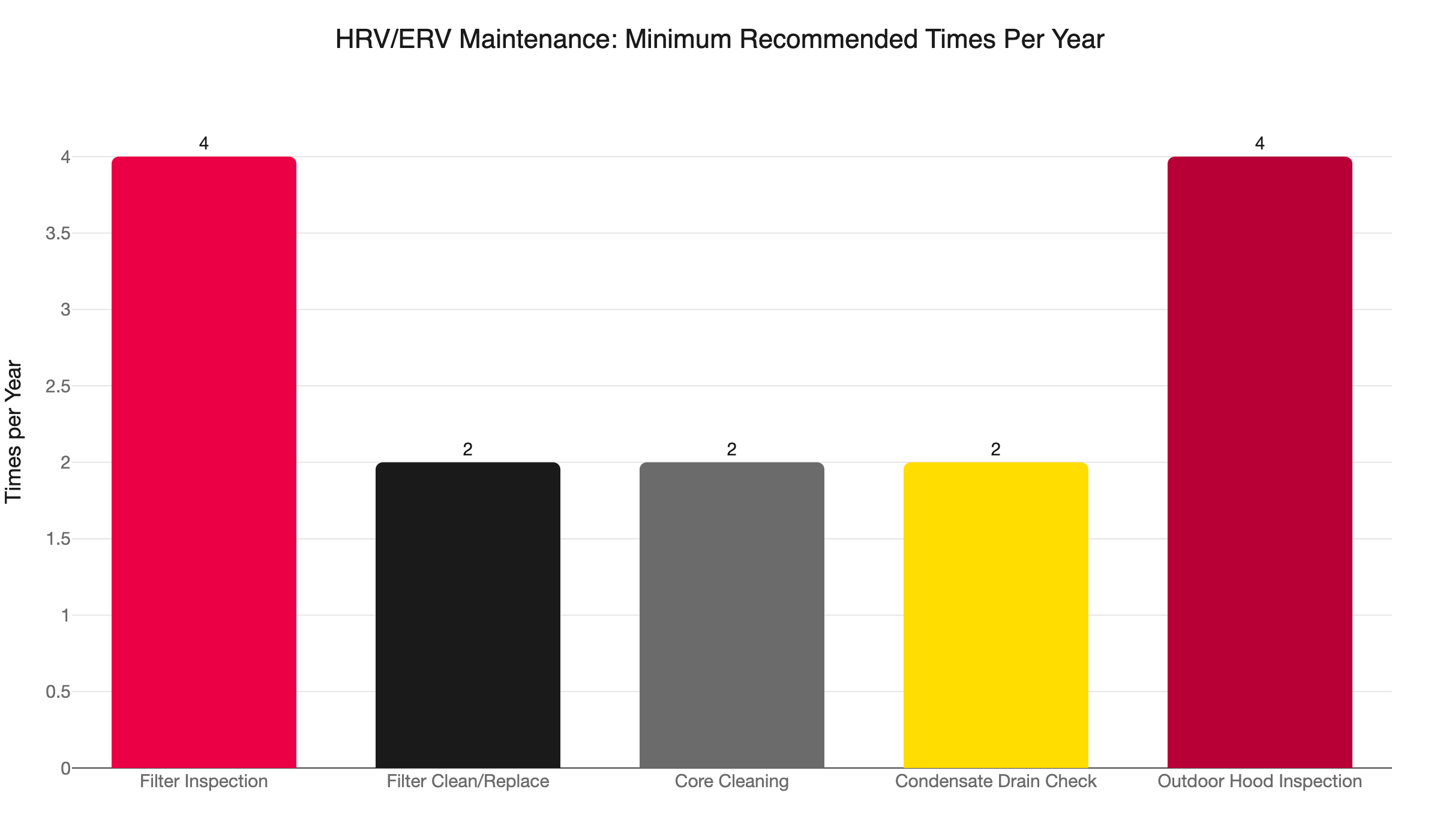
HRV/ERV Maintenance: Minimum Recommended Times Per Year
## What Is an HRV or ERV - and Why Does Your Minnesota Home Have One?
**The short answer:** Minnesota building code has required mechanical ventilation in new construction since the early 2000s. Both units exhaust stale air and bring in fresh air while recovering heat. An ERV also transfers some humidity back indoors, which makes it the more common choice for dry Twin Cities winters.
Most homes built after 2000 in the Twin Cities have one installed, often tucked in a utility room or attached to the furnace air handler. If you have never thought about yours, you are not alone. These units run quietly in the background, and most homeowners only notice them when something goes wrong.
The distinction matters for maintenance: an HRV (Heat Recovery Ventilator) transfers heat only. An [ERV (Energy Recovery Ventilator)](/blog/erv-vs-hrv-which-ventilation-system-minnesota/) transfers both heat and moisture. That difference changes how you clean the recovery core, which is the most important maintenance step and the one most homeowners skip or handle incorrectly.
If your home smells stale after cooking, shows condensation on window corners in January, or seems dustier than it should, your ventilation unit may be the source. A consistent HRV ERV filter cleaning maintenance schedule is the most direct fix.
---
## What Does the Full HRV ERV Filter Cleaning Maintenance Schedule Look Like?
**The short answer:** Six tasks, ranging from monthly visual checks to every three-to-five year airflow balance inspections. Filter work is the most frequent. Core cleaning and drain checks happen twice per year. Airflow balance is a professional step done at installation and every few years after.
Here is the full schedule before we go deeper on each task.
| Task | Interval |
|---|---|
| Prefilter inspection | Every 1-3 months |
| Prefilter clean or replace | Every 3-6 months |
| Outdoor hood visual check | Monthly; deep clean each season |
| Core cleaning | 1-2 times per year (fall and spring) |
| Condensate drain inspection | Every season (minimum 2x per year) |
| Airflow balance check | At installation, then every 3-5 years |
Homes with pets, heavy dust, or near a busy road should move to the shorter end of every interval. Most Minnesota homes qualify as tight construction, and tighter homes need closer attention at seasonal transitions.
---
## How Often Should You Clean or Replace HRV and ERV Filters?
**The short answer:** Inspect prefilters every one to three months. Clean or replace them every three to six months under normal conditions, more often with pets or dusty conditions. A loaded filter in a Minnesota winter is not just an air quality issue; it sets up the conditions for more serious failures.
Prefilters are the first line of defense. They catch dust, pet hair, and pollen before that debris reaches the recovery core. When filters load up, airflow drops. Reduced airflow forces the unit to work harder and, in cold weather, sets the stage for icing problems covered below.
[According to Rise's HRV/ERV maintenance guide](https://www.buildwithrise.com/stories/hrv-erv-maintenance-and-cleaning-guide), filters should be inspected every one to three months and cleaned or replaced every three to six months. [Delta Air Systems](https://deltaairsystems.com/hrv-erv-maintenance-tips/) puts it more simply: check filters every 60 days as a manufacturer rule of thumb.
Most residential HRVs and ERVs use washable mesh prefilters. Pull them out, tap off loose debris over a trash can, rinse with cool water, and let them dry completely before reinstalling. Wet filters restrict airflow just as badly as clogged ones. Check your manual for whether your specific unit uses disposable filters instead; some do, and those get replaced, not washed.
---
## How Do You Clean an HRV or ERV Core - and Does It Matter Which Type You Have?
**The short answer:** Yes, it matters. ERV cores use moisture-permeable membranes that can tear or delaminate if scrubbed. HRV cores (metal or polypropylene plates) tolerate mild soap and water. Clean both once in fall and once in spring for a Minnesota home running year-round.
The core is where heat (and in an ERV, moisture) transfers between the outgoing and incoming airstreams. Debris on the core plates cuts efficiency directly. In a high-efficiency unit, that loss shows up on your energy bill before you notice any air quality change.
**For HRV cores:** Remove the core per your manual, rinse with mild soap and lukewarm water, and let it drain and dry fully before reinstalling. A brief soak is fine if plates are heavily fouled.
**For ERV cores:** Do not soak, do not scrub, and do not use soap. [Rise's ERV/HRV guide](https://www.buildwithrise.com/stories/hrv-erv-maintenance-and-cleaning-guide) is direct: vacuum gently with a soft brush attachment, then rinse with lukewarm water only if your manufacturer permits it. The moisture-permeable membranes that give an ERV its humidity-transfer function are fragile. One round of scrubbing can permanently damage them and no amount of cleaning will restore the performance. Replacement is the only fix.
If you are not sure which type you have, check the brand label or unit manual. Common residential brands include Lifebreath, Fantech, RenewAire, and Venmar. The unit will say HRV or ERV on the label or in the model name.
---
## What Happens to Your HRV During a Minnesota Winter?
**The short answer:** HRV cores begin icing in the low 20s (F). At -15F, the unit may spend more time in defrost mode than in ventilation mode. A dirty filter at those temperatures can trigger a protection mode that halts fresh air delivery entirely, leaving you with no ventilation until temps moderate.
This is where Minnesota's climate creates a maintenance wrinkle that no climate-agnostic guide addresses.
HRVs work by transferring heat from warm outgoing air to cold incoming air. When outdoor temps drop far enough, moisture in the outgoing airstream freezes on the core plates. Most residential HRVs manage this with a defrost cycle: the unit temporarily recirculates indoor air or shuts down the fresh air intake to let the core warm up.
[Energy Vanguard notes](https://www.energyvanguard.com/blog/common-problems-with-cold-weather-ventilation/) that defrost typically engages around 27F in most residential HRVs. When outdoor temps are at -15F in Ramsey or Blaine in January, that unit may be defrosting more than it is ventilating. That is a real limitation of the technology in our climate, not a sign the unit is broken.
ERVs handle cold weather better. [RenewAire's frost whitepaper](https://renewaire.com/whitepaper/erv-hrv-frost-thresholds-and-control-methods-2/) shows that ERV cores with latent effectiveness up to 51% require no frost control down to -15F at 30% indoor relative humidity. The moisture-transfer characteristic that defines an ERV also helps it resist frost formation at extreme temps.
What turns a clogged filter into a cold-weather emergency: restricted airflow through a dirty filter reduces the heat the outgoing air delivers to the core. The core runs colder. Defrost cycles become more frequent and longer. At the extreme, the unit triggers its protection mode and halts fresh air delivery completely. You are not getting stale air in that scenario; you are getting none.
The fix is preventive. Keep filters clean, especially going into the first sustained cold snap. A filter you planned to change "sometime this fall" should be changed before temps drop below 25F and stay there.
Indoor humidity plays into this too. During extreme cold, keep indoor RH at or below 30% if you have double-glazed windows at a 70F interior. Running humidity too high when it is -15F outside means more moisture in the outgoing airstream and faster core icing. If you are already seeing [condensation on your windows in winter](/blog/condensation-on-windows-winter-minnesota-humidity-fix/), that is a signal your ventilation rate or humidifier output needs adjustment before the problem gets worse.
---
## What Are the Signs Your HRV or ERV Is Underperforming?
**The short answer:** Window condensation in winter, stale or musty odors, extra dust on supply grilles, squealing or grinding from the unit, noticeable drafts near exterior doors, and a sudden energy bill spike in a tight home. Any two of these at once warrants a service call, not just a filter swap.
[Rise's maintenance guide](https://www.buildwithrise.com/stories/hrv-erv-maintenance-and-cleaning-guide) catalogs the full symptom list:
- **Window condensation in winter.** The ventilation unit is not removing enough indoor humidity. In a tight Minnesota home, this is often the first visible sign.
- **Stale or musty odors.** Cooking smells, pet odors, or bathroom humidity that lingers. The unit is not turning the air over fast enough.
- **Extra dust on surfaces or supply grilles.** Overloaded or missing filters that are letting debris pass through.
- **Squealing, grinding, or rattling.** Fan bearing wear or debris caught in the blower wheel. These sounds tend to get worse before a failure.
- **Drafts near exterior doors or fireplaces.** A pressure imbalance between supply and exhaust. The unit is moving more air one direction than the other.
- **Sudden energy bill spike.** A tight home with a failing ventilation unit is losing the heat recovery that justifies running the unit. You are paying to heat air you are immediately exhausting without recovery.
Any one of these is worth a closer look. More than one at the same time means the unit needs service, not just a filter swap.
---
## Your Seasonal Maintenance Checklist
Breaking the HRV ERV filter cleaning maintenance schedule into three seasonal passes makes it easier to stay consistent.
### Fall: Before Heating Season (September to October)
This is the most important service window for Minnesota homeowners. The unit is about to run hard for five to six months.
- Clean or replace prefilters. Do not carry a loaded filter into winter.
- Clean the recovery core. HRV: mild soap and water, fully dry before reinstalling. ERV: gentle vacuum, lukewarm water rinse only if the manual permits, no soap.
- Inspect and clear the condensate drain. Cold-weather operation generates condensate as warm indoor air meets the cooler core. A blocked drain causes water to back up into the unit.
- Inspect outdoor hoods and grilles. Clear bird nests, debris, or vegetation that accumulated over summer.
- Confirm the defrost setting is active and correctly configured for your unit model.
- If it has been more than three to five years since your last airflow balance check, schedule one. The [DOE Building America Solution Center](https://basc.pnnl.gov/home-improvement-expert/checklists/balanced-hrverv) recommends measuring airflow with a flow hood, flow grid, or anemometer to confirm the unit is meeting its minimum required ventilation rate. Duct modifications and home settling throw off the supply-exhaust balance over time.
### Mid-Winter: January Check
A quick mid-season inspection during the coldest stretch.
- Inspect prefilters. A filter that looked acceptable in October may be clogged by January in a home with pets or a recent renovation project.
- Check the condensate drain for ice or blockage. Cold snaps can freeze partial obstructions solid.
- Listen for new rattling, squealing, or grinding. Fan bearings are under the most stress during sustained cold-weather operation.
- Check indoor RH. If it is running above 30% during the coldest days, reduce humidifier output or raise the ventilation rate.
### Spring Transition: April to May
The unit shifts from heating-season to cooling-season operation. Spring is also when you catch what winter damaged.
- Clean or replace prefilters again. Winter pulled a lot of dust and debris through.
- Clean the recovery core for the second time this year.
- Inspect outdoor hoods after the thaw. Frost cycles can dislodge debris and deposit it near the intake.
- Check the condensate drain before summer humidity starts adding cooling-mode condensation.
- If you have an ERV, inspect the membrane for tears, soft spots, or obvious deformation. A damaged membrane cannot transfer humidity correctly and needs replacement.
---
## Does Minnesota Offer Rebates for HRV or ERV Equipment?
**The short answer:** Xcel Energy offers approximately $400 on qualifying units that achieve at least 65% Sensible Heat Recovery Efficiency. CenterPoint Energy Home Service Plus offers installation and service plans for the Twin Cities metro. Rebates apply to equipment purchase, not maintenance visits.
If you are replacing an older unit or installing a new one, check the SRE rating before you buy. The 65% SRE threshold is Xcel's bar. Not every unit hits it. Choosing one that does puts several hundred dollars back into your pocket.
For the full picture of what Xcel, CenterPoint, Minnesota Energy Resources, and other utilities are offering this year, our [Minnesota HVAC rebates guide](/blog/xcel-centerpoint-hvac-rebates-minnesota/) covers current amounts and eligibility details in one place.
---
## When Should You Call a Professional?
DIY maintenance covers most of what a ventilation unit needs year to year. But some situations call for a trained technician.
**Call us if:**
- You hear grinding, squealing, or rattling you cannot trace to a loose access panel.
- Airflow from supply registers feels weak even with clean filters.
- You have not had an airflow balance check in more than five years.
- The condensate drain has backed up or shows repeated icing.
- Your ERV core looks physically damaged or humidity recovery seems noticeably reduced.
- The unit is more than 15 years old and you are seeing more than one performance symptom.
Our team serves Ramsey, Blaine, Maple Grove, Plymouth, Brooklyn Park, Minneapolis, St. Paul, Woodbury, Bloomington, and the surrounding Twin Cities area. We are locally owned and operated, and we back every visit with a 100% satisfaction guarantee. Every service call starts and ends the way you expect: on time.
That is the commitment behind "Always On Time... Or You Don't Pay a Dime!(R)."
Call us at **(763) 260-6662** or [schedule service online](/indoor-air-quality/) before heating season starts.
---
# Mini Split for Detached Garage in Minnesota: What to Know
URL: https://northernonehour.com/blog/mini-split-detached-garage-workshop-minnesota/
Published: 2026-09-28 | Category: Cooling
Sizing, cold-climate ratings, electrical panel requirements, and permit rules for a ductless mini split in a Twin Cities detached garage or workshop.
Key Takeaways
- A detached garage in Minnesota needs 40-80 BTU per square foot for heating. That is three to four times the standard rule for conditioned living space.
- Insulating before you size can cut required BTU capacity in half and lower total project cost significantly.
- Any mini split used as a primary heat source in the Twin Cities must be cold-climate rated with confirmed output at -13°F or lower.
- A detached garage installation in Minnesota requires two separate permits: one mechanical, one electrical. Both require DLI-licensed contractors.
- The federal Section 25C tax credit expired December 31, 2025. Utility rebates through Xcel Energy and CenterPoint remain active.
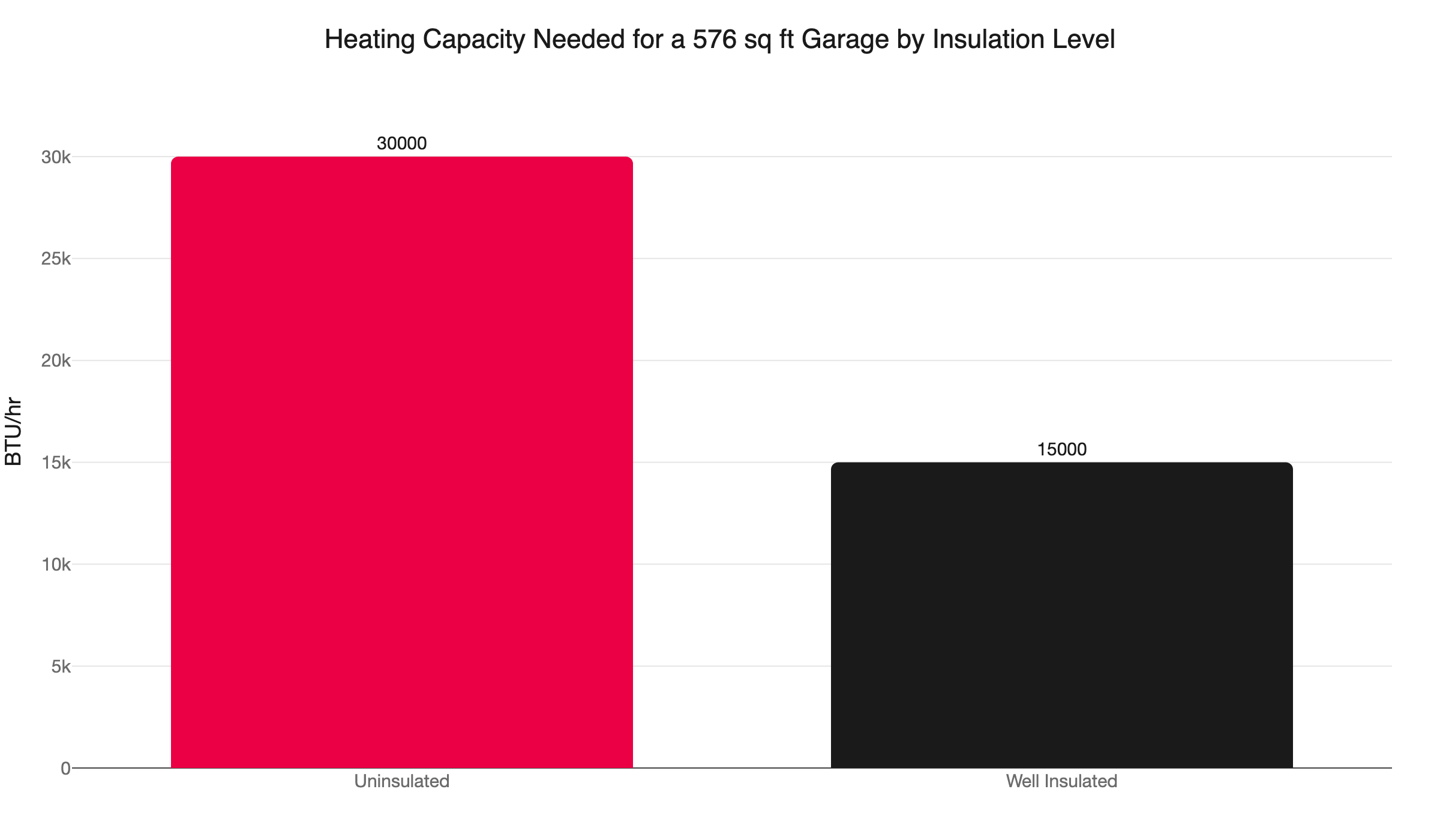
Heating Capacity Needed for a 576 sq ft Garage by Insulation Level
## Why a Detached Garage Is Different From a Bedroom
Most mini split sizing guides are built for bedrooms. The BTU tables, cost estimates, and efficiency figures all assume insulated walls, a floor above a heated basement, and a ceiling below an insulated attic.
A detached garage in the Twin Cities is almost never that.
A standard two-car garage has a door rated at roughly R-2. That is the insulating equivalent of single-pane glass. Uninsulated walls add nothing. A concrete slab conducts cold directly from the ground. Gaps around the service door, overhead door track, and utility penetrations let air move freely.
The structure bleeds heat. It does not retain it.
Minneapolis reaches approximately -13°F at the 99% design heating temperature. An undersized or improperly rated system will run continuously without reaching your target temperature - or shut off before it gets there.
The decisions you make before buying a unit matter more than the brand on the box. Insulation level, cold-climate certification, and electrical panel capacity each determine whether the system can do the job.
Most articles about mini splits for garages treat the space as a modified bedroom. They provide the same sizing tables, the same national cost averages, and the same tax credit information - some of which expired at the end of 2025. This post covers each decision in order, with the specifics Minnesota homeowners need.
## How Much Insulation Do You Have?
**The answer to this question determines the size of the unit you buy. Get it wrong and you are either undersizing the system or paying for capacity you do not need.**
The [industry rule of thumb for Climate Zone 6 (Minneapolis) is 14-18 BTU per square foot](https://www.pickhvac.com/mini-split/) for conditioned living space. That assumes insulated walls, ceiling, and floor. It does not apply to an uninsulated garage.
In Minneapolis winters, an uninsulated garage needs 40-80 BTU per square foot. For a standard 24 by 24 foot garage (576 square feet), here is what that means:
- **Uninsulated:** 24,000-36,000 BTU of heating capacity needed
- **Well-insulated (walls, ceiling, and insulated door):** 12,000-18,000 BTU
That gap is significant. A 36,000 BTU system costs substantially more to buy and run than an 18,000 BTU system. Insulating before you size can mean buying one to two sizes smaller - and lower monthly operating costs for the life of the equipment.
Spending $1,500-$3,000 on insulation often pays back in a lower system cost alone. Then it keeps paying through lower utility bills every month.
The accurate sizing method is a [Manual J load calculation](https://www.pickhvac.com/mini-split/), not a rule-of-thumb table. Ask your contractor to run one before specifying equipment. A rule of thumb is an estimate. It is not a design document.
## Do You Need a Cold-Climate Rated Unit?
**Yes, if this mini split is your primary heat source. Standard units are not built for Twin Cities winters at full capacity.**
[Standard mini splits are not a reliable choice as the only heat source in climates where temperatures are regularly below freezing.](https://www.pickhvac.com/mini-split/) That warning appears in most articles. What it rarely includes is the explanation Minnesota homeowners need.
Minneapolis's 99% design heating temperature is approximately -13°F to -16°F. A standard mini split rated to hold capacity at 5°F or 17°F loses 40-60% of rated output before it reaches those extremes. Some units shut off entirely near -10°F. In a detached garage with no backup heat, that means a system that cannot do its job during the coldest weeks of the year.
What to confirm on any mini split spec sheet:
**Rated heating output at -13°F or lower.** The minimum operating temperature and the rated output temperature are different numbers. Ask for the BTU figure at low ambient, not just the cutoff point. A unit may technically "operate" at -22°F at a fraction of its nameplate capacity.
**[ENERGY STAR Cold Climate certification.](https://www.energystar.gov/about/federal-tax-credits/air-source-heat-pumps)** Since January 1, 2025, ENERGY STAR introduced a dedicated Cold Climate pathway for heat pumps in heating-dominated applications. Minnesota is a heating-dominated application. Look for this designation specifically, not just standard ENERGY STAR certification.
**HSPF2 rating in cold-climate conditions.** Higher HSPF2 in cold conditions means lower operating costs through the heating season.
Cold-climate rated units cost more upfront. In the Twin Cities, that investment pays back in reliability. For a comparison of how cold-climate brands perform in Minnesota conditions, see our post on [cold-climate heat pump brands and performance in Minnesota](/blog/cold-climate-heat-pump-brand-performance-minnesota/).
If the mini split cannot hold capacity at your design temperature, plan for a backup heat source: a dedicated garage heater or electric radiant panels. Factor that cost into the project budget before you commit to a system. For options, see our guide to [garage heater options and installation costs in Minnesota](/blog/garage-heater-options-installation-cost-minnesota/).
## What Are the Electrical Requirements for a Mini Split?
**A mini split requires a dedicated 240V circuit sized to the manufacturer's spec sheet. A detached garage may need a new circuit, a subpanel upgrade, or both - and that work adds real cost.**
This is the item most national pricing guides skip entirely.
Your detached garage likely has one of three electrical situations:
**No 240V service.** Many older Twin Cities detached garages were wired for 120V lighting and a few outlets only. Adding 240V means running a new circuit from the main panel - or installing a subpanel in the garage. That is licensed electrician work with its own permit. It adds a separate cost line to the project.
**A subpanel already carrying large loads.** If the garage has a 60A subpanel running an air compressor, a welder, or a car lift, the available capacity for a mini split may be limited. A cold-climate mini split draws 20-30A. That load on a full panel may require an upgrade before the mini split can be added.
**A subpanel with room.** This is the simplest scenario. The electrician confirms available capacity, pulls the wire, and installs a dedicated breaker.
Two values on the manufacturer's spec sheet drive the electrical scope: MCA (Minimum Circuit Ampacity) and MOCP (Maximum Overcurrent Protection). Your electrician needs both numbers before quoting the work. The MOCP determines breaker size. The MCA determines minimum wire gauge. Getting either wrong is a code violation that fails inspection. Ask your HVAC contractor for the spec sheet before calling the electrician.
Budget for both contractors from the start. The HVAC scope and the electrical scope are separate. Each carries its own permit.
## What Permits Does a Mini Split Require in Minnesota?
**Two permits: a mechanical permit for the mini split installation, and a separate electrical permit for the circuit work. Both require DLI-licensed contractors.**
This is where most online estimates diverge from actual Twin Cities project costs.
[HVAC installations in Minnesota require licensed mechanical contractors regulated by the Department of Labor and Industry.](https://dli.mn.gov/business/plumbing-and-mechanical-contractors) Mechanical contractors must hold a license and surety bond. Your HVAC contractor pulls the mechanical permit.
Electrical work - the 240V circuit and any panel work - requires a separately licensed electrical contractor. They pull the electrical permit. The two licenses come from the same DLI system but are not interchangeable. An HVAC contractor cannot pull an electrical permit.
Both permits require inspection sign-off before the job is considered complete.
National cost guides sometimes list permit costs as "$0-$125." That figure may cover only one of the two required permits - or it may reflect fees in other states. Build both permit costs into your Minnesota budget.
Never skip permits to save a few hundred dollars. An unpermitted installation can affect homeowner's insurance coverage. It can also create problems during a home sale when a buyer's inspector flags work without a permit sign-off.
## How Much Does a Mini Split for a Detached Garage Cost in Minnesota?
**For a single-zone system in a Twin Cities detached garage, the typical installed range is $4,500-$9,500. That covers equipment, installation labor, permits, and startup for a 12,000-24,000 BTU system with straightforward electrical access. Cold-climate equipment, electrical work, or a longer line set push the number higher.**
Most national cost guides apply national average labor rates. Twin Cities installation labor runs higher.
For a detailed breakdown of what drives costs up or down in this market, see our [mini split installation cost guide for the Twin Cities](/blog/mini-split-installation-cost-twin-cities/).
What moves the number higher:
**Cold-climate premium equipment.** [Premium brand single-zone heat pump equipment ranges from $1,550 to $5,700 nationally.](https://www.pickhvac.com/mini-split/) Twin Cities pricing typically runs above those benchmarks given higher labor rates and permit costs.
**Electrical work.** A new 240V circuit or subpanel upgrade is a separate cost line. Get a dedicated electrical quote before finalizing the project budget. This item is easy to undercount.
**Line-set length.** A garage at the back of a deep lot requires a longer refrigerant line set. That adds material and labor.
**Difficult wall penetrations.** Brick, stucco, or thick concrete block takes more time to drill cleanly than framed siding.
If the project also includes insulation work, budget that separately before comparing system sizes. A smaller system installed on a well-insulated garage costs less to buy and less to run every month. Financing is available if the total project clears $7,000-$10,000. Ask about options when you call.
## Are There Rebates or Tax Credits Still Available?
**The federal 25C credit is gone. Utility rebates through Xcel Energy and CenterPoint remain active for qualifying heat pump installations.**
The [Section 25C Energy Efficient Home Improvement Credit covered products purchased and installed between January 1, 2023, and December 31, 2025.](https://www.energystar.gov/about/federal-tax-credits/air-source-heat-pumps) As of September 2026, it has expired. No extension is in effect. Any article still citing a $2,000 federal credit is out of date.
One additional detail is worth knowing. The 25C required the home to be "used as a residence." [A detached garage used as a workshop is not the residence itself.](https://www.irs.gov/credits-deductions/energy-efficient-home-improvement-credit) Its eligibility under the 25C was uncertain even when the credit was active. Homeowners who claimed it for a detached accessory structure were working in ambiguous territory.
What remains available:
**Utility Conservation Improvement Program rebates.** Xcel Energy and CenterPoint are the main investor-owned utilities in the Twin Cities. Both operate active rebate programs for heat pumps under their Conservation Improvement Programs. Amounts and eligibility change regularly. The current listings are at [programs.dsireusa.org/system/program/mn](https://programs.dsireusa.org/system/program/mn). Check there before relying on any dollar figure in an article - program details update faster than most content does.
**Financing.** For a project totaling $8,000-$12,000 when electrical work is included, financing spreads the cost. Ask about options when you call.
For a broader look at rebates and credits still available in Minnesota for HVAC work, see our guide on [Minnesota heat pump rebates and tax credits](/blog/minnesota-heat-pump-rebates-tax-credits/).
## What About Maintenance in a Garage?
**A garage mini split needs more frequent filter cleaning than a bedroom unit. Plan for every four to six weeks during active use, not the standard 90-day residential schedule.**
Sawdust, metal shavings, car exhaust, and general workshop dust clog the indoor air handler filter faster than typical residential use. A clogged filter reduces airflow and forces the system to work harder. In a workshop environment, check the filter monthly.
The outdoor unit needs clear airflow on all sides in winter. Garages often accumulate snow against exterior walls. Keep the condensing unit clear of snowdrift and packed ice. Restricted airflow shortens system life.
For a full maintenance checklist, see our guide on [keeping a ductless mini split running well year-round](/blog/ductless-mini-split-maintenance-cleaning-minnesota/).
## What to Have Ready Before You Call a Contractor
Walk the space before you pick up the phone. Having clear answers to a few questions makes the first call faster and the quote more accurate.
Know these before you call:
- Approximate square footage of the garage
- Current insulation level: walls, ceiling, garage door. The R-value if you have it.
- Electrical panel situation: is there a 240V circuit already? What is the subpanel size, and what does it currently carry?
- What you plan to use the space for: woodworking, car restoration, general storage
- Whether you want summer cooling in addition to winter heat
A contractor who asks these questions before quoting is giving you a more accurate number. One who quotes without asking them is giving you a guess.
## Ready to Get a Quote?
Northern One Hour Heating & Air Conditioning is locally owned and operated in Ramsey. We serve Minneapolis, St. Paul, Blaine, Maple Grove, Plymouth, Brooklyn Park, Woodbury, Bloomington, and the broader Twin Cities metro.
We show up when we say we will. That commitment is backed by our on-time promise: "Always On Time… Or You Don't Pay a Dime!(R)"
When you call, we walk the garage with you. We look at insulation, electrical panel capacity, and the full scope of what this project requires in your specific space. You get a straight quote on what it actually costs to do this right - not a national average applied to a Twin Cities job.
Call **(763) 260-6662** or [schedule a ductless mini split estimate online](/air-conditioning/ac-installation/ductless-mini-splits/).
---
# Attached Garage HVAC Carbon Monoxide Risk Minnesota
URL: https://northernonehour.com/blog/hvac-attached-garage-carbon-monoxide-risk-minnesota/
Published: 2026-09-27 | Category: HVAC
Your HVAC system can pull CO from an attached garage into living space. Learn the return-air mechanism, Minnesota code requirements, and the three-layer fix.
Key Takeaways
- Running your air handler creates negative pressure on the return-air side. That pressure pulls air through every unsealed crack and penetration in your garage-to-house wall, including vehicle exhaust CO.
- This is how a momentary CO pulse in the garage becomes a whole-house event. The duct system distributes whatever the return pulls in.
- Minnesota's extreme winters add a second mechanism: stack effect from a -10°F outdoor temperature drives garage air through lower-envelope gaps even when the HVAC is off.
- IRC Section M1602.2 (Minnesota residential code, effective August 2023) prohibits return-air grilles on garage-side walls.
- IRC R302.6 requires a sealed, fire-rated garage-to-house separation: 1/2" gypsum board on the garage side, a minimum 20-minute rated door, and all penetrations sealed.
- Minnesota Statute 299F.51 requires a UL2034 CO alarm within 10 feet of every sleeping area.
- The complete fix has three layers: seal the envelope, audit return-air placement, and verify alarm coverage.
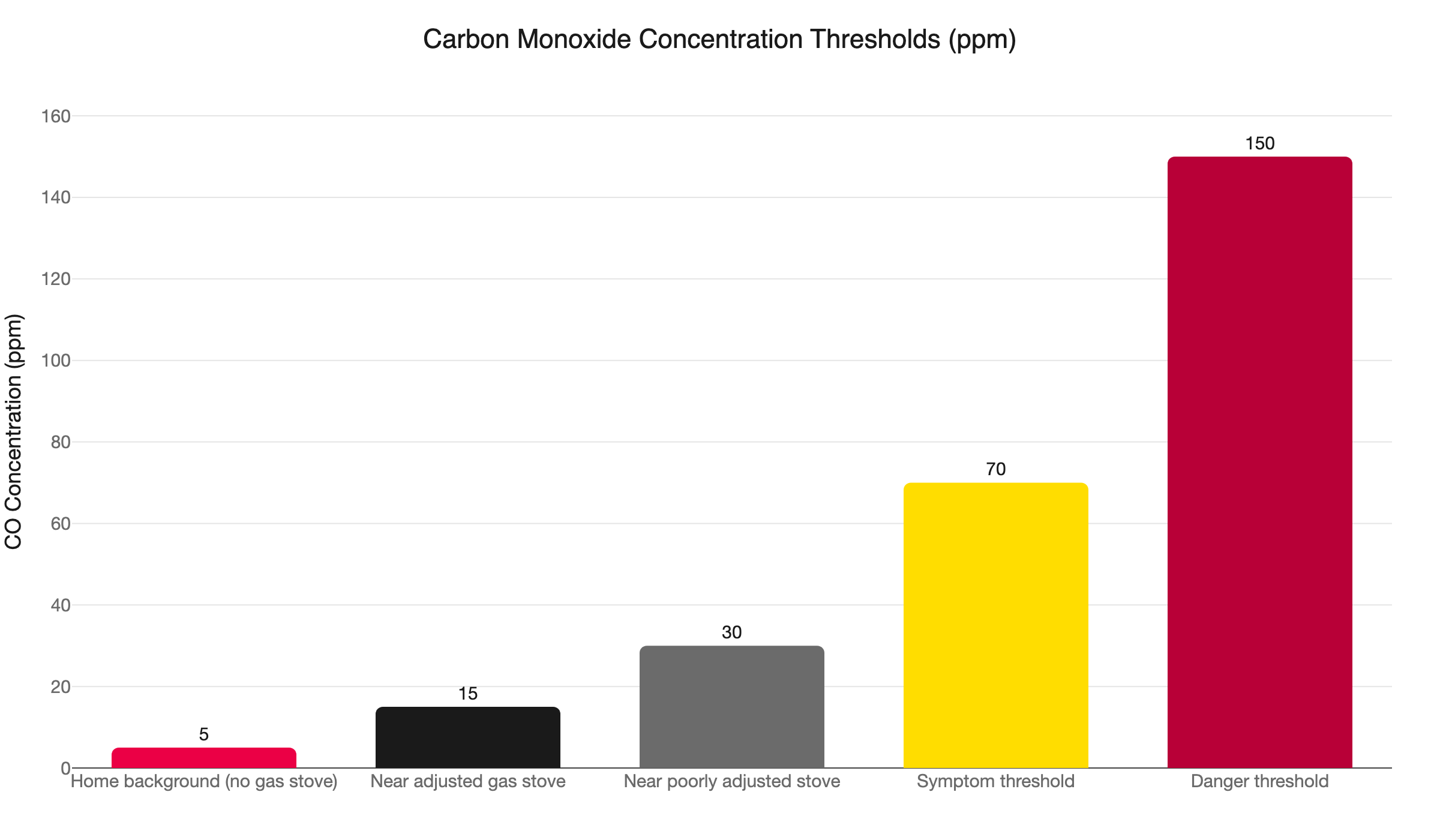
Carbon Monoxide Concentration Thresholds (ppm)
## What Is Carbon Monoxide and Why Do Attached Garages Concentrate It?
**Short answer:** Carbon monoxide is a colorless, odorless gas produced by incomplete combustion. Your vehicle is one of the most concentrated CO sources a home ever encounters. The problem with an attached garage is proximity: the space where CO builds is right next to the living area, separated by a single wall.
There is no sensory warning. No smell, no visible haze, no immediate discomfort at lower concentrations. The only reliable detection is a calibrated alarm or a blood test after the fact.
[The EPA identifies automobile exhaust from attached garages](https://www.epa.gov/indoor-air-quality-iaq/carbon-monoxides-impact-indoor-air-quality) as a primary residential CO source, alongside leaking chimneys and back-drafting furnaces. Concentration builds quickly in an enclosed space. [The EPA's guidance is direct: "Don't idle the car in a garage, even if the garage door to the outside is open. Fumes can build up very quickly in the garage and living area of your home."](https://www.epa.gov/indoor-air-quality-iaq/protect-your-family-and-yourself-carbon-monoxide-poisoning)
Most homeowners stop the analysis there: keep the car moving, avoid long idles, and you're covered. That is reasonable advice about the source. It says nothing about the pathway. Once CO is in the garage, how does it reach the living space - and what role does your HVAC system play in moving it there? That is the question most articles skip.
## How Does Your HVAC System Turn a Garage CO Pulse Into a Whole-House Event?
**Short answer:** When your air handler runs, it creates negative pressure on the return-air side. That pressure pulls air through every unsealed crack in the garage-to-house wall. CO from a vehicle exhaust pulse enters the return duct and the blower distributes it through every supply register in the house.
Here is the step-by-step mechanism.
Your air handler sits in the return-air stream. The blower pulls air toward itself from the duct system, lowering the pressure inside the house relative to the garage, which sits at roughly atmospheric pressure. [Air moves through openings, joints, and cracks in walls, floors, and ceilings whenever a pressure differential exists between two spaces](https://www.epa.gov/indoor-air-quality-iaq/introduction-indoor-air-quality). The HVAC system creates and sustains that differential every time the blower runs.
If the garage-to-house wall has unsealed penetrations - gas line entries, electrical conduit, plumbing rough-ins, gaps around rim joists, recessed lights in a ceiling over the garage - those become the path. Air moves from the higher-pressure garage into the lower-pressure living space through those gaps. CO rides that airflow.
The distribution mechanism is what elevates the risk beyond localized exposure. Once CO enters the return duct, the blower pushes it through every supply register. A family asleep upstairs faces the same concentration as the room nearest the garage wall.
This is why return-air grille placement is a code requirement, not just a best practice. A return grille placed on a garage-side wall skips the indirect infiltration path entirely - it draws from the garage directly. That placement is explicitly prohibited by code, and in older construction it is more common than most homeowners realize.
For more on how return-air placement affects your whole HVAC system, see our post on [return air problems and airflow in Twin Cities homes](/blog/return-air-problems-hvac-twin-cities/).
## Why Minnesota Winters Make the Attached Garage CO Problem Worse
Minnesota's heating season adds a second mechanism on top of HVAC depressurization: stack effect.
Stack effect is driven by temperature differential. Warm indoor air is less dense than cold outdoor air. It rises and exits through upper-envelope gaps - ceiling penetrations, top-floor window frames, attic bypasses. As it exits, it draws replacement air in through lower-envelope gaps. The garage-to-house wall at floor level is exactly where those lower-envelope gaps tend to concentrate.
The strength of stack effect scales with the temperature differential. At -10°F to -20°F outdoors and 70°F inside, Minnesota winters produce some of the strongest stack-effect pressure of any residential climate in the country. Air is being actively pulled through the garage-to-house boundary even when the HVAC blower is off.
Add HVAC depressurization on top of natural stack effect on a January morning and the pull on garage air is substantial. Someone starts the car at 6:45 AM to let it warm up. The furnace runs. Stack effect runs. Both draw from the same boundary. The CO from a five-minute cold-start does not stay in the garage.
That is the Minnesota-specific version of a risk that exists in every climate with attached garages. The physics is the same everywhere. The severity in January is not.
## What Are the Symptoms of Carbon Monoxide Exposure From a Home Source?
**Short answer:** CO often presents like the flu - headache, fatigue, nausea, and dizziness. The classic pattern for chronic low-level exposure is symptoms that improve after you leave home. Sustained exposure above 70 ppm produces headache and fatigue. Above 150-200 ppm, disorientation and loss of consciousness become possible.
CO blocks oxygen delivery at the cellular level. The gas forms carboxyhemoglobin in the blood, which oxygen cannot displace easily. [The EPA notes](https://www.epa.gov/indoor-air-quality-iaq/carbon-monoxides-impact-indoor-air-quality) that this mechanism makes CO especially dangerous for people with cardiovascular disease, who may experience chest pain at concentrations that produce no symptoms in healthy adults.
[The CPSC breaks down the threshold levels](https://www.cpsc.gov/safety-education/safety-guides/carbon-monoxide/carbon-monoxide-fact-sheet) this way:
- 1-70 ppm sustained: most people feel nothing. Cardiac patients may experience chest pain.
- Above 70 ppm: headache, fatigue, and nausea typically appear.
- 150-200 ppm sustained: disorientation, unconsciousness, and death become possible.
For context: the average CO level in a home without gas appliances is 0.5 to 5 ppm. Near a properly adjusted gas stove, 5 to 15 ppm. Near a poorly adjusted stove, 30 ppm or higher. A cold engine warming up in an attached garage produces concentrations far above any of those levels.
If anyone in your household has recurring headaches, fatigue, or nausea that clears up after leaving home, CO exposure is on the differential. Do not treat it as coincidence until you have verified alarm coverage and had the HVAC system inspected.
## What Does Building Code Require for Attached Garages in Minnesota?
**Short answer:** Two IRC sections govern this. IRC R302.6 requires a sealed, fire-rated separation between the garage and living space. IRC M1602.2 prohibits return-air grilles from drawing air from garages or spaces with open-combustion appliances. Minnesota adopted both through the 2020 IRC, effective August 2023.
### Envelope separation: IRC R302.6
The wall between an attached garage and living space must be covered with a minimum 1/2" gypsum board on the garage side. The connecting door must be a minimum 20-minute fire-rated assembly, with a self-closing mechanism and a continuous seal around the frame. All penetrations through the wall - every gap that connects the two spaces - must be sealed.
R302.6 is primarily a fire code requirement. But the same construction standard that limits fire spread also limits CO infiltration. A sealed, gypsum-covered wall with a rated door has far fewer infiltration pathways than an unfinished wall with a standard hollow-core door and gaps around every pipe.
### Return-air prohibition: IRC M1602.2
Section M1602.2 of the 2020 IRC explicitly prohibits return air from being drawn from garages, crawl spaces, attic spaces, or any space containing open-combustion appliances. Return-air grilles and openings cannot be placed on garage-side walls or anywhere that would pull air across an unsealed garage-living boundary.
This section gets less attention than the fire separation code, but it directly addresses the HVAC pathway described above. A grille on a garage-side wall is a code violation and creates direct return-duct access from a space that regularly contains vehicle exhaust.
Older construction - anything built before the 2020 IRC was adopted and enforced - may not have been designed to this standard. If your house was built in the 1990s or early 2000s, the original design may include return-air placement that would not pass today's inspection.
## Three Code-Compliant Fixes for Minnesota Homeowners
The full solution layers three separate corrections. Some of this work is DIY-accessible. Other parts require a licensed HVAC contractor and an HVAC permit.
### 1. Seal the garage-to-house envelope
Walk the garage-to-house wall and ceiling. Look for: pipe penetrations (gas line, water supply, drain), electrical conduit entries, recessed lights on a ceiling that connects to living space above, gaps around rim joists at the foundation line, and the door frame perimeter.
Use fire-rated caulk or intumescent foam for penetrations. The door needs a full weatherstrip seal and a self-closing mechanism if it does not already have one. If the gypsum board on the garage side is cracked, missing sections, or has holes, replace it before the next heating season.
What you cannot see - gaps inside wall cavities, unsealed top plates, penetrations hidden behind finished surfaces - requires a blower door test to locate. An energy auditor or HVAC technician can run that test and identify infiltration points that a visual inspection misses. For a detailed look at how envelope sealing pairs with an HVAC upgrade, see our post on [air sealing before an HVAC upgrade in Minnesota](/blog/air-sealing-before-hvac-upgrade-minnesota/).
### 2. Audit return-air grille placement
Locate every return-air grille in the house. For each one, identify which wall it is on and whether that wall shares a boundary with the garage. Any grille on a garage-side wall is a potential M1602.2 violation and a direct CO intake pathway.
A licensed HVAC technician can map your return-air system and flag grilles that are drawing from the wrong spaces. Relocating a return involves rerouting ductwork and requires an HVAC permit in Minnesota. This is not a DIY project, and it is not expensive to have assessed - an inspection visit covers it.
### 3. Verify CO alarm coverage under Minnesota Statute 299F.51
[Minnesota Statute 299F.51](https://www.revisor.mn.gov/statutes/cite/299F.51) requires an approved, operational CO alarm within 10 feet of every room lawfully used for sleeping purposes. The alarm must be certified to UL2034 standards by a nationally recognized testing laboratory. This is the statutory minimum for every single-family and multifamily dwelling in Minnesota.
The [CPSC recommends](https://www.cpsc.gov/safety-education/safety-guides/carbon-monoxide/carbon-monoxide-fact-sheet) going further: install CO alarms on every level of the home and outside sleeping areas, with interconnected alarms so that when one sounds, they all sound. For a home with an attached garage, an alarm near the garage-to-house wall on the living-space side provides an earlier warning layer than alarms placed only near bedrooms.
Alarms have a rated lifespan, typically 5-7 years, printed on the back of the unit. Replace them if they are past that date regardless of whether they passed their last self-test. A self-test confirms the alarm circuit works. It does not confirm the sensor is still accurate.
For detailed placement guidance near furnaces and boilers - including height and proximity rules - see our post on [carbon monoxide detector placement in Minnesota](/blog/carbon-monoxide-detector-placement-furnace-boiler-minnesota/).
## When Should You Call a Professional?
**Short answer:** Call before the next heating season if you have a return-air grille on a garage-side wall, unsealed penetrations you have not been able to close, a furnace showing back-draft signs, or CO alarms older than 7 years.
The annual furnace tune-up is the right time to raise the attached garage question with your technician. A qualified technician checks combustion appliances for back-draft, inspects the heat exchanger for cracks (a cracked heat exchanger releases CO directly into the air stream), and can walk the return-air system to identify misplaced grilles. The [EPA recommends annual inspection and cleaning of central heating systems](https://www.epa.gov/indoor-air-quality-iaq/carbon-monoxides-impact-indoor-air-quality) - furnaces, flues, and chimneys - as a standard CO exposure reduction step.
Signs that warrant a call before the annual visit: a furnace with soot staining around the burner compartment or above the flue collar, an alarm that has tripped after vehicle use, or any household member with persistent headaches or fatigue that track with time at home.
Northern One Hour is locally owned and operated in Ramsey, Minnesota. We serve Minneapolis, St. Paul, Blaine, Maple Grove, Plymouth, Brooklyn Park, Woodbury, Bloomington, and the surrounding Twin Cities metro. When you schedule with us, we show up when we say we will. That is the "Always On Time… Or You Don't Pay a Dime!(R)" promise we back on every call.
Call (763) 260-6662 or [schedule a heating inspection online](/heating/) to set up a furnace assessment or full HVAC review. If a return-air correction or envelope audit is part of the scope, we will walk you through the options and give you transparent pricing before any work begins.
You may also qualify for rebates on high-efficiency equipment through Xcel Energy's heating and cooling programs. Visit [xcelenergy.com/programs_and_rebates](https://www.xcelenergy.com/programs_and_rebates) for current offerings available to Minnesota residential customers.
---
# Whole Home Electronic Air Cleaner Maintenance Guide
URL: https://northernonehour.com/blog/electronic-air-cleaner-maintenance-minnesota/
Published: 2026-09-26 | Category: Indoor Air Quality
Two EAC types, two different maintenance schedules. Learn how to clean and service plate-type or AprilAire hybrid units in your Twin Cities home.
Key Takeaways
- **Two EAC technologies, two completely different schedules.** Plate-type units (Honeywell F300 series and similar) need collector cells washed every three months. The AprilAire 5000 hybrid needs no washing - just an annual media replacement.
- **A dirty plate-type EAC does not filter better.** Unlike a media filter that improves with loading, a dirty plate-type unit loses electrical charge and gradually stops capturing particles.
- **The AprilAire 5000 reaches MERV 15-equivalent performance** when the electrostatic field is active, up from MERV 10 for the media alone. Particle removal runs 99% on pollen and spores, 94% on bacteria-sized particles, and 80% on virus-sized particles.
- **All ionizing EACs produce small amounts of ozone.** Properly installed in-duct units operate within EPA safety thresholds, but sealed Minnesota homes make this worth discussing with a technician.
- **Professional acid-bath service every three years** restores plate conductivity beyond what home washing can achieve.
- **No Minnesota utility rebates currently cover standalone EAC upgrades.** Xcel Energy discontinued gas furnace rebates in January 2026, and no specific rebate program exists for whole home air cleaner upgrades.
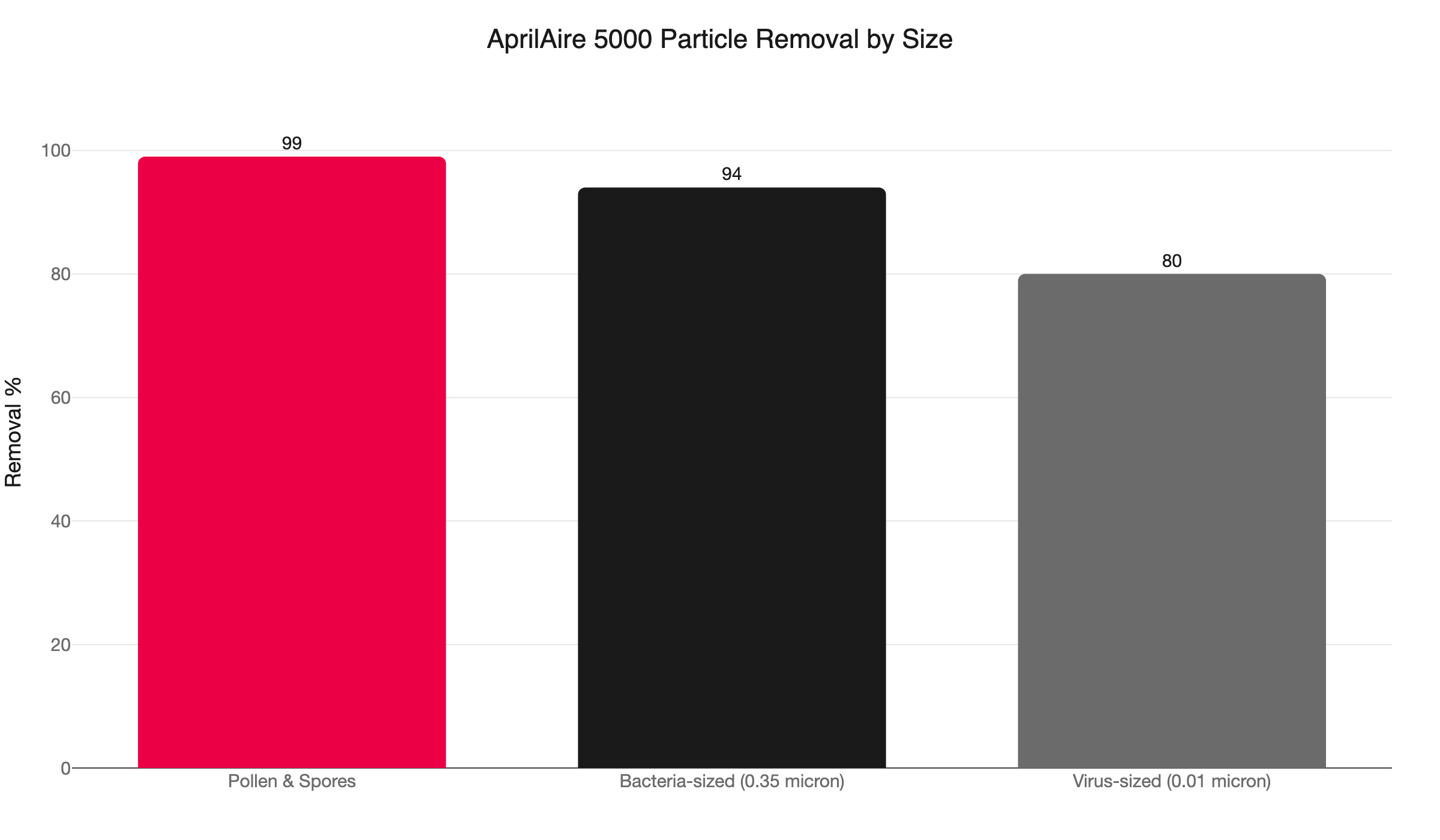
AprilAire 5000 Particle Removal by Size
## Two Types, One Critical Difference
Most homeowners know there is an electronic air cleaner somewhere in their ductwork. What most do not know is that whole home electronic air cleaner maintenance looks completely different depending on which type of unit is installed. The cleaning schedule, the tools, and what happens when you skip a service interval are not the same for each type.
There are two fundamentally different technologies sold under the same "electronic air cleaner" label. One uses high-voltage metal collector plates that need to be pulled out and washed every three months. The other uses ionizing wires to charge particles and trap them permanently in a micro-fiber media pad - no quarterly washing, just an annual filter swap.
Wash the wrong one and you waste an afternoon. Skip maintenance on the plate-type unit and it quietly stops filtering. This guide covers both.
## Plate-Type or Hybrid: Which Electronic Air Cleaner Do You Have?
**Open the access panel on your air handler or furnace cabinet. Flat aluminum fins on rails: you have a plate-type EAC. A thick fiber media pad where the filter normally sits: you have a hybrid electrostatic-media unit. The maintenance for each is completely different, so getting this right is step one.**
Before any maintenance, identify what is inside that panel.
**Plate-type EACs** use a set of removable metal collector cells. The cells look like a stack of flat aluminum fins and slide out on rails. The unit also has one or two flat fiber panels called postfilters. When those collector cells are running, they carry up to [15,000 volts](https://www.cityductcleaning.com/how-to-maintain-your-electronic-air-cleaner/) to create the electrical field that pulls particles out of the airstream. The Honeywell F300 and F50F series are the most common plate-type units you will find in Twin Cities homes.
**Hybrid electrostatic-media units** have no removable metal plates. Instead, you see a thick media pad inside the cabinet. Thin ionizing wires on the upstream face of the unit charge incoming particles. Those charged particles then embed permanently in the media. The AprilAire 5000 is the best-known residential example.
If you are not certain which you have, our team can identify the unit and confirm the right maintenance schedule. That takes about two minutes during any IAQ visit.
## How Do You Maintain a Plate-Type Electronic Air Cleaner?
**Clean the collector cells every three months. Soak them in warm water with dishwasher detergent for 30 minutes, rinse thoroughly, and let them dry completely before reinstalling. Replace the postfilters twice a year. Schedule a professional acid-bath service every three years to restore plate conductivity.**
Here is the step-by-step process:
**Step 1 - Turn off the power.** Flip the switch on the EAC itself, then shut off the air handler at the breaker. The cells carry up to 15,000 volts when the unit is running.
**Step 2 - Remove the collector cells.** They slide out on rails. Carry them to the sink. The black residue on the plates is carbonized particulate matter.
**Step 3 - Soak in warm water with dishwasher detergent.** Use a dishwasher-specific detergent, not standard dish soap. [Regular dish soap leaves a residue that reduces plate conductivity.](https://www.cityductcleaning.com/how-to-maintain-your-electronic-air-cleaner/) Thirty minutes of soak time is the minimum.
**Step 4 - Rinse thoroughly.** Run clean water over both sides until it runs completely clear.
**Step 5 - Dry completely before reinstalling.** Wet plates in a high-voltage circuit will arc abnormally. Air dry for several hours or use a low-heat hair dryer.
**Step 6 - Inspect and replace the postfilters.** [Honeywell recommends replacing postfilters twice per year.](https://www.honeywellhome.com/blogs/support/electronic-air-filter-maintenance) Postfilters are not washable. Replace them; do not rinse them.
**Step 7 - Wipe down the cell frame and housing.** A damp cloth on the interior walls catches loose buildup before you slide the clean cells back in.
**Step 8 - Restore power and listen.** A functioning plate-type EAC produces a faint crackle or pop when particles hit the field. Complete silence after a correct reinstallation signals something worth checking with a technician.
Pair this cleaning with your regular filter check. If you already have a calendar reminder for [how often to change your HVAC filter](/blog/how-often-to-change-hvac-filter-minnesota/), add the EAC cell cleaning to that same reminder.
**Common mistakes to avoid:**
- **Using dish soap instead of dishwasher detergent.** Dish soap leaves a surfactant film that impairs how well the plates hold a charge.
- **Reinstalling before the cells are fully dry.** Even a slightly damp cell in a high-voltage circuit creates a short-circuit risk. Take the extra time.
- **Skipping the postfilter replacement.** Postfilters catch particles that pass through without being captured by the charged plates. A loaded postfilter restricts airflow and raises static pressure on the air handler.
- **Cleaning the cells but ignoring the frame.** Residue on the interior walls settles back onto clean cells within a few weeks.
## How Do You Maintain an AprilAire 5000 Hybrid EAC?
**No quarterly washing required. Inspect the ionizing wires and control electrode every six months and wipe clean with a damp cloth. Replace the Model 501 media filter once per year. Replace it sooner if it appears noticeably gray or brown before the year mark.**
The AprilAire 5000 runs a different system. Ionizing wires charge airborne particles. Those particles then embed permanently in the micro-fiber media. As the media loads, its mechanical filtration efficiency actually improves over time. The more loaded the media, the more surface area particles contact.
Per the [AprilAire 5000 owner's manual](https://www.aprilaire.com/docs/default-source/product-owners-manuals/air-purifier/aprilaire-air-purifier-model-5000-owners-manual-obs.pdf), semi-annual maintenance consists of inspecting the ionizing wires and control electrode for dust buildup and wiping them down with a damp cloth. Annual maintenance means replacing the Model 501 media.
**Semi-annual checklist:**
- Inspect ionizing wires for visible dust or debris
- Wipe the control electrode with a damp cloth
- Check the media pad for gray or brown coloration before the annual swap date
- Confirm the power indicator light is active
**Annual:**
- Replace the Model 501 media filter
- Verify the ionizing field indicator after reinstallation
The media swap is a straightforward homeowner task. If you want a technician to check static pressure across the unit, inspect the ionizing assembly, and verify the electrostatic field is performing correctly, we include that during a standard [air purification service visit](/indoor-air-quality/air-purification/).
## Why Does a Dirty Plate-Type EAC Get Less Effective Over Time?
**Carbonized particles build up on the collector plates and act as an insulator. That insulation weakens the electrical charge. A weaker charge captures fewer particles. The dirtier the plates, the worse the unit works. This is the opposite of how a media filter behaves, and it is the most important thing to understand about plate-type EAC maintenance.**
A standard media filter densifies as it loads. A well-loaded MERV 8 filter starts catching particles it would have missed when clean. Many homeowners assume electronic air cleaners work the same way.
[They do not.](https://www.cityductcleaning.com/how-to-maintain-your-electronic-air-cleaner/) Organic material carbonizes on the plate surface and acts as an electrical insulator. The high-voltage field weakens. Particles are no longer drawn to the plates with the same force. At the extreme end, the unit becomes little more than a mesh screen with very poor filtration efficiency.
If your plate-type EAC has not been cleaned in more than six months, assume it is underperforming. More than a year without service and you should have a technician inspect it before relying on any real air quality benefit.
The professional acid-bath service at the three-year mark addresses a separate layer of the same problem. Over time, carbonized residue polymerizes and bonds to the plate surface in a way that warm water and detergent cannot fully remove. The acid bath restores plate conductivity to close to original specification.
## How Does a Whole Home Electronic Air Cleaner Compare to a MERV 13 Filter?
**A well-maintained plate-type EAC outperforms a standard MERV 8 filter on fine particles but requires more maintenance discipline. An AprilAire 5000 hybrid reaches MERV 15-equivalent performance with lower ongoing maintenance. A MERV 13 media filter is effective without voltage, but not all HVAC systems can handle the added airflow restriction.**
The comparison shifts depending on the unit and the maintenance reality behind it.
A MERV 13 filter that gets replaced every 90 days does its job well. A plate-type EAC that gets quarterly service outperforms it on fine particle capture. A plate-type EAC that gets skipped service performs worse than both.
The [AprilAire 5000's performance specs](https://shop.aprilaire.com/products/model-5000-air-purifier) make the comparison clearer. The media alone rates MERV 10. With the electrostatic field active, it reaches [MERV 15-equivalent performance](https://jacksonsystems.com/product/aprilaire-5000-merv-16-electronic-media-cleaner/). Particle removal comes in at 99% for pollen and spores, 94% for bacteria-sized particles at 0.35 microns, and 80% for virus-sized particles at 0.01 microns.
A standard MERV 13 filter performs well on particles above 1 micron. It loses efficiency significantly below 0.3 microns. The electrostatic charge on the AprilAire 5000 closes that gap.
There is a practical caveat on the MERV 13 route. The [EPA's guide to air cleaners in the home](https://www.epa.gov/indoor-air-quality-iaq/guide-air-cleaners-home) warns that MERV 13 or higher filters need frequent replacement to prevent airflow restriction that can damage HVAC equipment. Not all systems are built for that added static pressure. Consult a technician before upgrading filter ratings. Our post on [air purifiers, media filters, and MERV ratings](/blog/air-purifiers-vs-filters-merv-ratings-explained/) goes into that trade-off in detail.
## Does an Electronic Air Cleaner Produce Ozone?
**Yes, in small amounts. All ionizing EACs produce ozone as a byproduct of the electrical ionizing field. Properly installed in-duct residential units operate well within EPA safety thresholds at normal airflow rates. Standalone portable ionizers are a separate concern and can exceed safe levels in small enclosed spaces.**
The [EPA documents this directly](https://www.epa.gov/indoor-air-quality-iaq/what-are-ionizers-and-other-ozone-generating-air-cleaners). In-duct electrostatic precipitators produce ozone indirectly as a byproduct of the ionizing process. Lab measurements for residential in-duct units show approximately 3 micrograms per second. At normal HVAC airflow rates, that concentration dilutes significantly before reaching the living space.
That said, this is a real consideration for Minnesota homeowners specifically. We seal our homes for six or more months per year. [Fresh air exchange](/blog/hrv-erv-filter-maintenance-cleaning-minnesota/) in January is minimal. If anyone in the household has asthma or is particularly sensitive to ozone, discuss the full IAQ picture with a technician before adding or keeping an ionizing EAC.
For households managing respiratory sensitivities, a properly sized MERV 13 filter in a system confirmed to handle the static pressure may be a better fit than an ionizing unit. Understanding [HVAC factors that affect asthma triggers](/blog/hvac-asthma-triggers-management-twin-cities/) is a useful companion read if this applies to your home.
## When Should You Replace Rather Than Service Your Electronic Air Cleaner?
**Replace it when a thorough cleaning no longer restores performance, when collector plates show visible corrosion pitting, when ionizing wires have broken and replacement parts are unavailable, or when the unit has been in service for 15-20 years and is failing service after service.**
Signs that home service has reached its limit:
- **No audible crackle or spark** after a clean reinstallation with confirmed power - suggests a failed cell or power supply issue
- **Visible corrosion pitting** on collector plates that have already been through multiple acid-bath services
- **Broken ionizing wires** on a hybrid unit, combined with discontinued or unavailable replacement parts
- **Persistent burning smell** after thorough cleaning, suggesting carbonized buildup in inaccessible areas of the cell assembly
- **A unit from the 1980s or 1990s** that has not been professionally serviced in years
If the unit is a plate-type and more than 15 years old, compare the cost of a professional acid-bath service against upgrading to a hybrid system. The AprilAire 5000's annual media replacement model requires far less maintenance discipline and performs at a higher efficiency rating than most aging plate-type units can deliver after extended service.
When EAC replacement comes up, it is usually evaluated as part of a broader HVAC assessment. We can look at the current unit and give you a direct answer on whether service or replacement is the better path for your situation.
## Why Whole Home Electronic Air Cleaner Maintenance Matters More in Minnesota
[Minnesota state indoor air quality guidelines](https://mn.gov/admin/assets/Minnesota_Guide_for_Managing_Indoor_Air_Quality_tcm36-207630.pdf) reflect what our climate does to indoor air. When we heat the house all winter with windows sealed, indoor relative humidity can drop to 15-20%. Dry air keeps particles suspended rather than letting them settle. That sustained particulate load runs through your EAC continuously for months.
What that means in practice: the cleaning interval that works in a temperate climate is a floor here, not a comfortable margin. If your plate-type EAC is in a home with children, pets, or a lot of dust-generating activity, check the cells at eight weeks during peak heating season. You may find quarterly is not quite enough.
It also raises the cost of neglect. Six months of winter, running the blower fan most of the day, through a unit that stopped filtering effectively after month two. That is a lot of particulates recirculating through your home. It is also a lot of carbonized buildup waiting for you on the plates in April.
The practical implication for buying decisions: choosing between a plate-type EAC and a hybrid system looks different in Minnesota than in a moderate climate. In Phoenix, a plate-type unit that slips to a five-month cleaning interval is not catastrophic. In Ramsey or Blaine in January, that same slip means months of degraded air quality in a sealed house. If you are deciding whether to service or replace an aging unit, the maintenance discipline question is worth taking seriously here.
The flip side: a well-maintained EAC genuinely improves winter indoor air quality. For households managing seasonal allergies, asthma, or sensitivity to dust and pet dander, keeping the unit clean and functional is one of the most cost-effective things you can do during those long sealed months.
## Schedule Whole Home Electronic Air Cleaner Maintenance with Northern One Hour
Northern One Hour Heating & Air Conditioning is locally owned and operated in Ramsey, Minnesota. We serve homeowners across Minneapolis, St. Paul, Blaine, Maple Grove, Plymouth, Brooklyn Park, Woodbury, and Bloomington.
If you are not sure which type of EAC you have, when it was last serviced, or whether it is still performing at spec, we can answer those questions during an IAQ visit. We identify the unit, assess its current condition, walk through the right maintenance schedule, and tell you directly if replacement is the better path.
Our team shows up when we say we will. That is the commitment behind "Always On Time… Or You Don't Pay a Dime!(R)" - and it applies to IAQ service calls the same as emergency furnace calls.
A single IAQ maintenance visit starts at $95-$250. A whole-home maintenance plan that covers your air cleaner, filter checks, and HVAC system inspection runs $195-$390 per year. Learn more about what whole home air quality service includes on our [air purification page](/indoor-air-quality/air-purification/).
Call **(763) 260-6662** or book online to schedule.
---
# Heat Pump Aux Heat Strips Cost Minnesota: Monthly Math
URL: https://northernonehour.com/blog/heat-pump-auxiliary-heat-strips-operating-cost-minnesota/
Published: 2026-09-26 | Category: Heating
At 12.35\u00a2/kWh, Minnesota aux heat strips cost 3\u00d7 more per BTU than gas. See the monthly math and when dual-fuel pencils out for Twin Cities winters.
Key Takeaways
- Electric auxiliary heat strips in Minnesota cost roughly **$3.62 per therm-equivalent** of heat - about 3.2 times more than a 96% AFUE gas furnace at current MN energy prices.
- A 10 kW aux strip running 8 hours a day for 10 cold January days adds about **$99** to your electric bill for that stretch alone, stacked on top of base heat pump operation.
- The **economic balance point** - the outdoor temperature where gas becomes cheaper per BTU than the heat pump - falls around 15-25°F for most systems in Minnesota.
- Modern cold-climate heat pumps rated to -13°F can push aux heat activation well below 0°F, cutting monthly strip costs substantially versus standard equipment.
- The IRS 25C tax credit (up to $2,000) **expired December 31, 2025** and is not available for 2026 installations unless Congress acts.
- For most Twin Cities homes, a dual-fuel system - heat pump during mild temps, gas furnace below the balance point - is the lowest-cost-to-operate setup for a Minnesota winter.
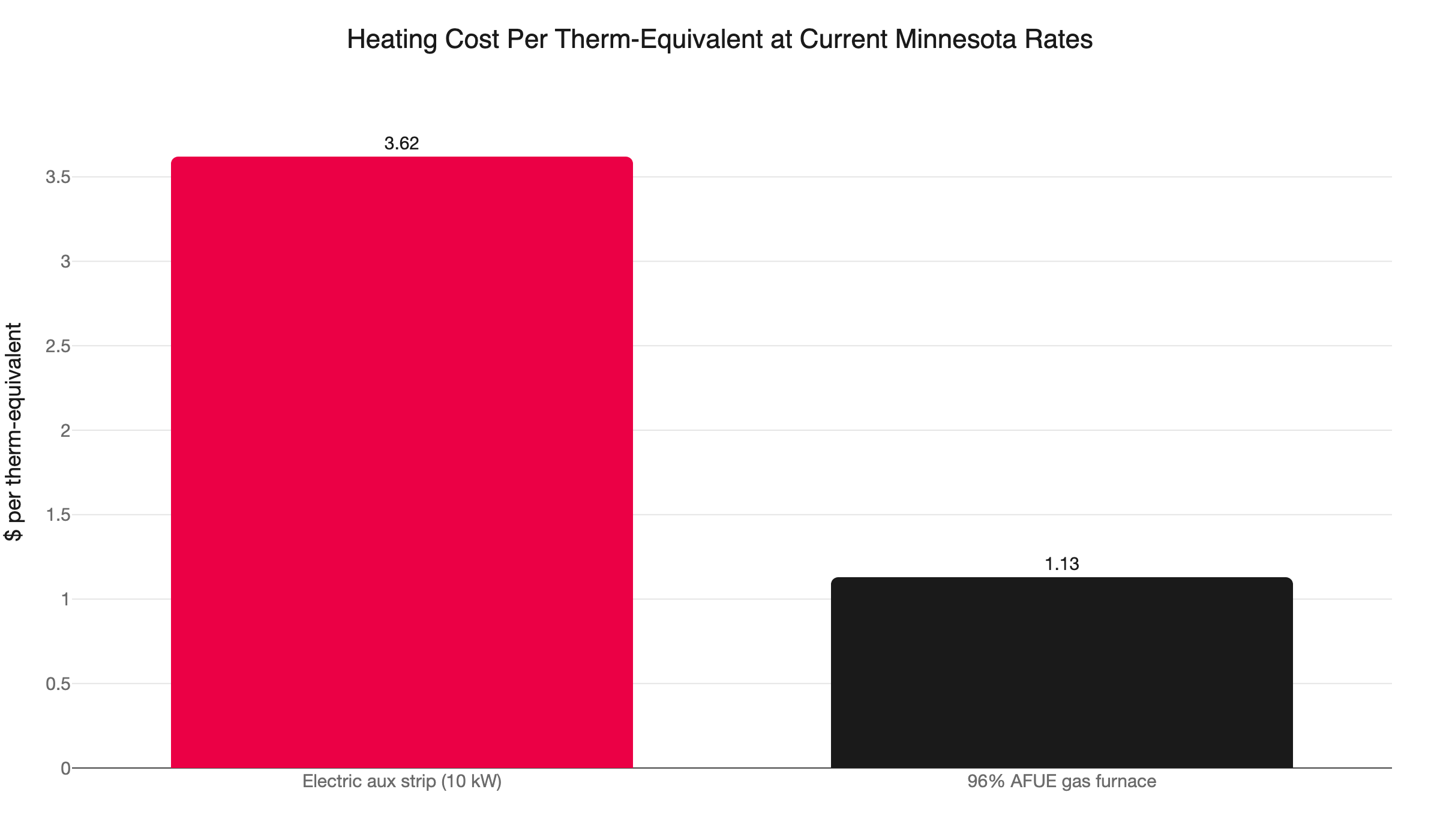
Heating Cost Per Therm-Equivalent at Current Minnesota Rates
When temperatures drop into the single digits across the Twin Cities, your heat pump calls for backup. Those electric auxiliary heat strips kick in to fill the gap. Heat pump aux heat strips cost Minnesota homeowners significantly more per BTU than most people expect - and the articles that rank for this topic almost never publish the actual Minnesota numbers. This post runs the real calculation and explains when a dual-fuel gas backup is the smarter call.
## What Are Heat Pump Aux Heat Strips and How Do They Work?
Electric resistance coils inside your air handler activate when the heat pump cannot produce enough BTUs to meet the heating load alone. The strips convert 100% of electrical energy to heat, with no refrigeration cycle needed. Most residential systems carry 5 to 15 kW of strip capacity, often staged so the second bank only fires when the first bank is not enough.
The system activates auxiliary heat automatically when outdoor temperatures fall below a threshold set in the thermostat or the equipment's own controls. "Auxiliary" is the key word. Aux heat is designed to supplement the heat pump during cold stretches, not replace it entirely.
Emergency heat is different. It bypasses the compressor and runs the strips alone. Emergency heat mode should only be active if the compressor is damaged or the refrigerant circuit has a known fault. Running emergency heat as a default winter setting costs far more than letting the heat pump run with aux support when needed. Many homeowners flip to emergency mode during a polar vortex without realizing the cost difference.
Most residential aux strips are configured in stages. A 10 kW total capacity might be split into two 5 kW stages. The second stage only fires when the first cannot maintain setpoint. This staging limits electric draw and operating cost. A system that throws all its strip capacity at the problem on every heating call bypasses the [efficiency benefit of staging](/blog/how-heat-pump-staging-works-minnesota/) entirely.
## How Much Do Heat Pump Aux Heat Strips Cost to Run in Minnesota?
At Minnesota's average residential electricity rate of **12.35 cents per kWh** ([EIA data](https://www.eia.gov/electricity/state/minnesota/)), a 10 kW aux strip draws 10 kWh per hour of operation, costing **$1.24 per hour**. That same output from a 96% AFUE gas furnace runs about $1.13 per delivered therm - roughly $0.28 per hour equivalent. Running aux strips costs about 3.2 times more per BTU than gas at current Minnesota prices.
Hourly aux strip operating cost at 12.35¢/kWh:
- 5 kW strip: **$0.62/hour**
- 7.5 kW strip: **$0.93/hour**
- 10 kW strip: **$1.24/hour**
- 15 kW strip: **$1.85/hour**
Those hourly figures add up quickly during a sustained cold stretch. A 10 kW strip running 8 hours a day for 10 days costs $99 in aux heat alone. Homes with 15 kW strips - common in larger Twin Cities houses with higher heating loads - face $1.85 per hour of aux run time. A cold January with sustained subzero stretches can mean $220 to $400 in aux heat costs for those homes.
Minnesota's electricity rate is below the US national average. That softens the aux heat penalty compared to states paying 18-20 cents per kWh. Even so, the 3x gap between electric resistance heat and gas is wide enough to drive real bill spikes when temperatures stay low for weeks. If your heating costs climbed faster than expected last winter, see our post on [heat pump electric bill spikes in Minnesota winters](/blog/heat-pump-electric-bill-spike-winter-minnesota/) for the full list of causes beyond aux strips.
## What Is the Balance Point, and Why Does It Drive Your Electric Bill?
The balance point is the outdoor temperature below which your heat pump needs backup heat to maintain indoor comfort. Most standard heat pumps reach that threshold around 30-35°F. In a Twin Cities winter, temperatures fall below 30°F for months at a stretch, creating sustained aux heat operation for a standard all-electric system.
Two balance points exist, and confusing them causes real problems in how these systems are designed and explained.
The **capacity balance point** is the temperature at which the heat pump can no longer produce enough BTUs to meet the home's heating load. Below this temperature, the strips fire regardless of cost. The heat pump physically cannot handle the demand alone.
The **economic balance point** is lower. It is the outdoor temperature at which the heat pump's efficiency (COP - coefficient of performance) drops to the point where gas heat costs the same per BTU. Above this temperature, the heat pump wins on cost. Below it, gas is cheaper - even if the heat pump could still physically produce enough heat.
These two thresholds are typically 10 to 20 degrees apart. A homeowner whose system switches to gas at 35°F may be doing so at a temperature where the heat pump is still the more economical choice. Getting both numbers right, and setting the thermostat's switchover point accordingly, is one of the most valuable things a technician can do during a dual-fuel commissioning.
For a detailed look at how backup heat staging interacts with heat pump operation in the Twin Cities, see our post on [heat pump balance point and backup heat in Minnesota](/blog/heat-pump-balance-point-backup-heat-minnesota/).
## Heat Pump Aux Heat Strips Cost: The Monthly Math for a Twin Cities Home
Minneapolis averages around 8,000-8,400 heating degree days per year at a 65°F base. That is one of the highest HDD figures for any major US metro. January lows average around 3-4°F. January highs average around 20°F. The city sees approximately 200-400 hours per year when temperatures fall below 0°F. During those hours, even cold-climate heat pumps lean on backup heat.
Here is what aux heat costs for a 2,000 sq ft Twin Cities home with a 10 kW strip, at 12.35¢/kWh:
| Scenario | Hours/day | Days | kWh used | Aux heat cost |
|---|---|---|---|---|
| Moderate cold snap (15-25°F) | 4 hrs | 10 days | 400 kWh | $49 |
| Severe cold snap (0 to -10°F) | 8 hrs | 10 days | 800 kWh | $99 |
| Extended polar vortex | 12 hrs | 14 days | 1,680 kWh | $207 |
These are the aux heat costs alone, layered on top of your base heat pump operation. During the severe scenario - 10 days of sustained near-zero temperatures - the strips add $99 to your bill for that window. Add base electricity use and you can see how January electric bills reach $300 to $500 for some Twin Cities heat pump homes.
Scale the math to a 15 kW strip and the severe cold-snap scenario jumps from $99 to $148 for the same 10-day period. Homes that were spec'd with oversized strip packages to meet code minimums - without optimizing for operating cost - pay that premium every January.
Minneapolis uses approximately -16°F as the ACCA Manual J heating design temperature. Your backup heat has to cover the full load at that temperature. That is why most systems carry substantial strip capacity. It was sized for coverage. The economic question is when to hand that load off to gas instead.
## What Is the Difference Between the Capacity Balance Point and the Economic Balance Point?
The capacity balance point is where the heat pump runs out of heating ability and aux strips must fire regardless of cost. The economic balance point is lower: the outdoor temperature at which gas heat costs less per BTU than running the heat pump. At current MN rates, the crossover falls at a heat pump COP of approximately 3.2, which most systems hit somewhere between 15 and 25°F.
Here is the math behind that crossover number.
[EIA data](https://www.eia.gov/dnav/ng/ng_pri_sum_dcu_SMN_m.htm) shows Minnesota residential natural gas averaged $11.17 per MCF in January 2026. Dividing by 10.37 therms per MCF gives **$1.08 per therm**. One delivered therm from a 96% AFUE furnace: $1.08 divided by 0.96 = **$1.13**.
One therm-equivalent of heat from a 10 kW electric strip: 29.3 kWh at 12.35¢ = **$3.62**.
Crossover COP: $3.62 divided by $1.13 = **COP 3.2**.
When your heat pump is operating above COP 3.2, it costs less per BTU than gas at current MN prices. When it drops below COP 3.2, gas wins. Most cold-climate units fall below COP 3.2 somewhere in the 15-25°F range, depending on the model and the system's sizing relative to the home's actual load.
The practical implication: on a 25°F day, your heat pump may still be both capable and cheaper than gas. On a 5°F day, it may still technically run, but gas is now cheaper per BTU. Installer-set switchover temperatures on dual-fuel systems default to 25-35°F, calibrated to national-average energy prices. For a Twin Cities home on Minnesota's below-average electricity rate, the optimal switchover may sit closer to 20-25°F. Ask your technician whether the switchover point reflects MN-specific rates or a national default they left in place.
## When Does a Dual-Fuel Gas Backup Pencil Out Better?
At current Minnesota rates (12.35¢/kWh electricity, $1.08/therm gas), a dual-fuel system running gas backup below the economic balance point delivers heat at roughly one-third the cost of electric aux strips for the same BTUs. For a Twin Cities home spending weeks below 20°F each winter, that adds up to meaningful seasonal savings over an all-electric setup.
A dual-fuel setup makes the most sense when:
- Your home already has a gas line and a forced-air system with a furnace that has remaining service life.
- You want the efficiency advantage of a heat pump during fall and spring shoulder seasons without paying the aux strip penalty in deep winter.
- You are adding central cooling to a gas-heat home at the same time you need a new furnace, and the combined project economics favor adding a heat pump alongside the furnace.
- Your home's heating load is large enough that aux strip run hours in a cold January add up to $150 to $200 or more.
- You want to reduce peak electric demand in your household without committing fully to an all-electric system.
The dual-fuel case weakens under two conditions. First, if natural gas prices rise significantly relative to electricity, the economic balance point shifts toward favoring electric heat at lower outdoor temperatures. Second, if you install a modern cold-climate heat pump that maintains a high COP well below 20°F, aux strips run far fewer annual hours and the operating cost gap between electric and gas narrows enough that adding a gas furnace may not pencil out.
For a full breakdown of dual-fuel system design and installed costs in the Twin Cities, read our post on [dual-fuel heat pump and gas furnace hybrid systems in Minnesota](/blog/dual-fuel-heat-pump-gas-furnace-hybrid-minnesota/).
## How Cold-Climate Heat Pumps Shrink the Aux Heat Bill
Modern cold-climate units rated to -13°F maintain a useful COP at temperatures well below the 30-35°F threshold where standard equipment loses efficiency. Aux strips engage far less often, and monthly aux heat costs drop accordingly.
The difference in annual aux strip hours between a standard and a cold-climate unit is substantial for a Twin Cities home:
- Standard heat pump with a capacity balance point around 30°F: aux heat fires for most of November through February. That is roughly 1,200 to 1,800 hours per heating season in a typical Minneapolis climate.
- Cold-climate heat pump with a capacity balance point near 0°F: aux heat fires primarily during the 200-400 hours per year when temperatures fall below 0°F in Minneapolis.
At $1.24 per hour for a 10 kW strip, the difference between 1,500 and 300 annual aux heat hours is approximately $1,488 per year in operating cost savings. Over 10 years, that gap covers a significant portion of the cold-climate unit's price premium.
The tradeoff is upfront cost. Cold-climate units carry higher equipment prices, and the installed system cost reflects that. With the 25C federal tax credit no longer available for 2026 installs, the payback timeline deserves a careful look before committing. For a homeowner planning to stay in the home long-term in a high-HDD market like Minneapolis, the annual operating savings typically justify the premium within a few heating seasons. Ask about financing options when you call - larger system replacements often qualify.
If you already own a cold-climate heat pump and your electric bill still spiked last winter, the most likely explanation is that the thermostat's aux heat staging threshold was never adjusted from the factory default. A unit rated to -13°F that activates aux heat at 35°F gives up its cold-weather efficiency advantage entirely. Our technicians check this calibration on every heat pump service call. It is a quick fix that can pay for the service visit in its first winter.
## What Rebates and Credits Are Available for 2026?
**The federal 25C Energy Efficient Home Improvement Credit expired December 31, 2025.** Homeowners installing heat pumps in 2026 cannot claim the previous 30%-up-to-$2,000 annual credit unless Congress passes an extension. No extension has been enacted as of this writing ([IRS source](https://www.irs.gov/credits-deductions/energy-efficient-home-improvement-credit)).
That changes the payback math for any project that straddled the 2025-2026 line. A $15,000 cold-climate system that would have netted a $2,000 federal credit in 2025 carries the full cost in 2026. Factor that gap into any dual-fuel or heat pump replacement calculation you are running today.
Utility rebates remain available, though amounts and eligibility change regularly. The most reliable current tool for confirming what your specific utility offers is the [ENERGY STAR Rebate Finder](https://www.energystar.gov/rebate-finder). Xcel Energy has historically offered heat pump incentives for Minnesota residential customers. CenterPoint Energy, primarily a gas distribution utility, focuses most of its efficiency incentives on gas furnace upgrades rather than heat pumps. Call your utility directly or use the ENERGY STAR tool before committing to a purchase - rebate amounts shift and the finder reflects current program status.
For strategies on stacking utility rebates with any remaining state or local programs, read our post on [Minnesota heat pump rebates and tax credits](/blog/minnesota-heat-pump-rebates-tax-credits/).
## Get a Dual-Fuel Assessment Before the Cold Arrives
The numbers in this post come from real Minnesota energy data: [12.35¢/kWh electricity](https://www.eia.gov/electricity/state/minnesota/) and a [January 2026 gas rate of $1.08/therm](https://www.eia.gov/dnav/ng/ng_pri_sum_dcu_SMN_m.htm), not national averages that consistently run low for what the work actually costs in this market.
The right system configuration for your home still depends on your specific Manual J heating load, your current equipment's condition, and whether your gas line can support a dual-fuel install. Those variables require an in-home assessment, not an online calculator.
Our team is locally owned and operated in Ramsey, MN. We serve the full Twin Cities metro: Minneapolis, St. Paul, Blaine, Maple Grove, Plymouth, Brooklyn Park, Woodbury, Bloomington, and the surrounding area. When you call us, we show up when we said we would. That is not just our preference - it is our standing promise: "Always On Time… Or You Don't Pay a Dime!(R)"
If your electric bill spiked last winter or you want to know whether a dual-fuel system pencils out for your specific home and equipment, call us at **(763) 260-6662** or book online. We will run the balance point math against your actual equipment and current MN energy prices - not a national average - so you can make the decision with real numbers in front of you.
---
# Will My Existing Ductwork Work with a Heat Pump?
URL: https://northernonehour.com/blog/heat-pump-existing-ductwork-compatibility-minnesota/
Published: 2026-09-26 | Category: Heating
Most Twin Cities homes don't need full duct replacement for a heat pump. Here's the USE, MODIFY, or REPLACE duct assessment framework for Minnesota.
Key Takeaways
- Heat pumps require 400-450 CFM per ton of airflow. That is significantly more than a gas furnace moves, and your ducts have to handle it.
- Minnesota winters push heat pump supply air down to 85-90°F. That is lower than the 90-110°F numbers used in most national articles, which means even higher airflow demands here than in moderate climates.
- The supply trunk is often not the bottleneck. Minnesota contractors historically oversized furnaces, so ducts were sized for more airflow than you actually need. The return side is where most homes fall short.
- A static pressure test tells you whether your ducts fall in the use, modify, or replace category. Know this before the installer quotes the job.
- Both the Xcel Energy ($2,000) and CenterPoint Energy ($1,100) rebates require a permitted install. The permit is the gateway to the money.
- The federal 25C tax credit expired December 31, 2025. Do not include it in a 2026 budget.
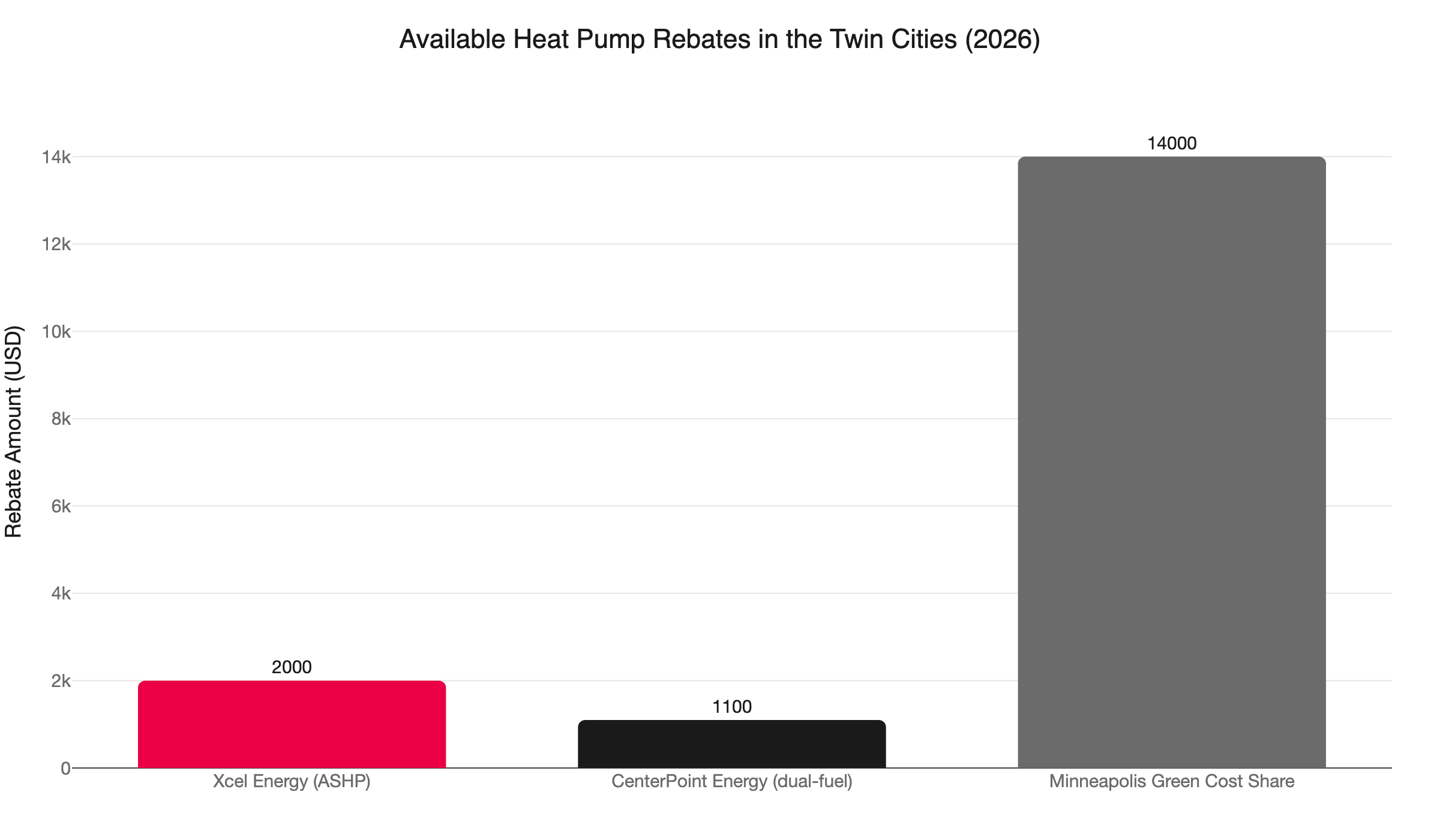
Available Heat Pump Rebates in the Twin Cities (2026)
## Why Do Heat Pumps Need More Airflow Than a Gas Furnace?
Heat pumps deliver cooler supply air than a gas furnace does. To move the same BTUs at that lower temperature, the system compensates with volume - pushing more air through your ducts each minute. In a Minnesota winter, that gap is wider than national articles typically acknowledge, and your duct system has to be ready for it.
A gas furnace pushes supply air at 120-140°F. A cold-climate heat pump in a Minnesota winter delivers supply air at [roughly 85-90°F](https://www.energyvanguard.com/blog/is-heat-pump-supply-air-too-cold-for-heating/). The math is straightforward: cooler air carries fewer BTUs per cubic foot, so you need more cubic feet per minute to heat the same space.
The standard design requirement for a heat pump is [400-450 CFM per ton of capacity](https://mechanicalbusiness.com/2023/10/06/assessing-ductwork-for-heat-pump-installations/). A 3-ton unit needs approximately 1,200-1,350 CFM flowing through your supply and return system. Your gas furnace never made that demand.
Most national articles quote heat pump performance at 47°F outdoor temperature. That is not your design condition. The Twin Cities residential design temperature runs around -15°F. When outdoor temps drop that far, heat pump supply air temperature falls further, pushing the required CFM even higher. The duct problem is more acute in Blaine or Brooklyn Park than it is in Atlanta.
There is also the "cold blow" issue. [Supply air below roughly 98°F](https://www.energyvanguard.com/blog/is-heat-pump-supply-air-too-cold-for-heating/) can feel uncomfortable - air that does not feel warm even when the system is working correctly. That threshold gets crossed more often in Minnesota winters than milder-climate content suggests. Adequate airflow and well-sealed ducts reduce how often and how severely it occurs.
## Will My Existing Ductwork Work with a Heat Pump?
Probably yes on the supply side and probably not on the return side - but the honest answer requires a static pressure measurement, not a visual guess. Most Twin Cities homes were built with oversized furnaces and ducts sized to match. Right-sizing to a heat pump often reveals that the supply trunk has latent capacity. The return side is a different story.
The [CEE Duct Retrofit Decision Guide](https://bsesc.energy.gov/sites/default/files/2024-09/CEE_Duct_Retrofit_Decision_Guide_TRC_01.16.24.pdf) organizes your options into three paths:
- **Use as-is:** ducts pass a visual check, total external static pressure (TESP) is within range, rooms receive adequate CFM, and leakage is under 10% of total system airflow.
- **Modify:** minor leaks, return imbalance, restrictive registers, or marginal static pressure that targeted modifications can resolve.
- **Replace:** duct capacity is fundamentally too small, leakage exceeds 20%, materials are degraded, or runs in unconditioned spaces are uninsulated.
Full replacement is less common than internet articles suggest - especially in Minnesota. The reason is the oversized-furnace starting point that defines most homes in this market.
## Why Do Minnesota Homes Often Have More Supply Duct Capacity Than They Need?
Minnesota contractors historically specified larger furnaces than homes actually required, and ducts were sized for those large furnaces. Right-sizing to a heat pump often means the existing supply trunk already has the capacity to handle the required airflow.
[Energy Vanguard documented a condo example](https://www.energyvanguard.com/blog/will-a-heat-pump-work-with-your-existing-ducts/) where the installed furnace was rated at 66,000 BTU/hr against an actual heating load of 23,000 BTU/hr. The furnace was nearly three times oversized. Right-sizing to a heat pump reduced required airflow proportionally, and the existing duct trunk handled it without modification.
In Minnesota homes with 80,000-100,000 BTU furnaces serving actual loads of 30,000-50,000 BTU, this plays out regularly. The supply trunk is not the weak link. The work tends to be on the return side and in duct sealing - not trunk replacement.
This does not mean nothing needs to change. It means the supply-side capacity question - "are my main trunks too small?" - often resolves in your favor before the installer arrives.
## Why Is the Return Side Almost Always the Weak Link?
Most residential return duct systems were built to minimum code requirements, not to the higher airflow a heat pump demands. Return-side restriction and return imbalance are the most common reasons an otherwise adequate duct system fails a heat pump assessment.
In a typical Twin Cities home, you might have one large return grille in a central hallway and small or no returns in bedrooms. That layout worked with an oversized furnace running short, high-temperature cycles. It struggles when a heat pump runs longer, higher-volume cycles to maintain temperature during a January cold snap.
Duct leakage makes it worse. [Properly installed sheet metal systems lose 20-30% of total airflow](https://bsesc.energy.gov/sites/default/files/2024-09/CEE_Duct_Retrofit_Decision_Guide_TRC_01.16.24.pdf) to leaks before it reaches supply grilles. Up to 50% of return airflow may be drawn through unintended leaks - through gaps in duct joints, around fittings, or through unsealed penetrations - rather than through actual return paths. Your system is drawing unfiltered air from the attic, basement, or wall cavities, and robbing the supply side of what it needs.
The return-side modifications that resolve this in most Twin Cities homes:
- Enlarging the return plenum to accept more airflow volume
- Replacing a 1-inch throwaway filter with a 4-inch media filter housing, which drops flow restriction dramatically
- Installing high-flow return grilles in place of standard ones
- Adding a return pathway in a second-story hallway or bedroom corridor
These changes address the actual bottleneck. They cost less than a full duct replacement and often bring a marginal system into range for a heat pump install. Our post on [leaky ductwork and energy loss](/blog/duct-sealing-leaky-ductwork-energy-loss/) covers what a duct assessment typically finds.
## How Do I Know If My Ducts Need to Be Replaced or Just Modified?
A static pressure test gives you the answer. The design target is 0.5 in. w.c. total external static pressure. Real-world systems [commonly measure 1.0 in. w.c. or higher](https://www.energyvanguard.com/blog/will-a-heat-pump-work-with-your-existing-ducts/) - more than double the design intent.
The threshold that shapes your path forward:
- **Under 0.7 in. w.c.:** Higher heat pump airflows can generally be accommodated with targeted modifications to the return side and duct sealing.
- **Above 0.7 in. w.c.:** More substantial work is needed. Trunk modifications or full replacement may be on the table.
A competent installer measures TESP before quoting any duct work. If a contractor proposes a heat pump without taking this measurement, ask why. You are paying for a diagnosis, not a guess.
Visual inspection catches the obvious problems: crushed flex duct, disconnected runs, uninsulated ductwork in an unconditioned attic or crawl space. Minnesota code requires insulation for ducts outside the air barrier, and UL181-rated mastic is required for duct sealing on those runs - not foil tape, which fails over time. Visual inspection alone does not tell you whether total airflow capacity is adequate for the new equipment. Measurement does.
Leakage testing adds a second data point. Under 10% leakage of total system airflow: use as-is. Above 20%: the leakage itself disqualifies the duct system for a rebate-eligible install, and sealing is required before the heat pump goes in. Our post on [ductwork replacement cost in the Twin Cities](/blog/ductwork-replacement-cost-twin-cities/) covers what scope of work triggers each cost tier.
## What Does Duct Modification Cost in the Twin Cities?
Return-side modifications are the most common scope. Targeted return-side work - plenum enlargement, filter housing upgrade to a 4-inch media cabinet, added return paths - runs roughly $1,300-$3,500 in most Twin Cities homes. The range reflects the size of the home, the number of return paths needed, and whether plenum work requires framing changes.
Duct sealing with UL181-rated mastic runs approximately $1,300 for a whole-home treatment. It is often the first modification recommended because it recovers airflow already being lost to leaks. It is also required by Minnesota code for ducts outside the air barrier.
Full ductwork replacement - the path taken when trunk sizing is fundamentally wrong or materials have failed - runs $6,500-$13,000 in the Twin Cities depending on home size and layout complexity. This is the least common outcome on Minnesota homes with historically oversized furnaces, but it does come up on homes with original flex duct systems in poor condition or severely undersized trunk lines.
The budget question worth asking before the installer visits: what does the modification cost compared to the rebate stack the heat pump itself qualifies for? Return-side work costing $1,500-$2,500 frequently unlocks more in utility rebates than it costs. That math matters when you are deciding whether to proceed with modifications now or delay.
## Do Minnesota Rebates Cover Duct Work?
Current utility rebates apply to the heat pump equipment, not the duct modifications. The duct work is not rebatable directly. It is, however, what makes the equipment eligible - because a permitted install is required to claim any rebate, and duct modifications trigger the permit.
Here is the active rebate stack for 2026:
**Xcel Energy (electric):** Up to $2,000 for a cold-climate air-source heat pump listed on the NEEP qualifying product list. Minimum COP of 1.75 at 5°F. Rated capacity at 5°F must be at least 70% of rated capacity at 47°F. An additional $600 insulation bonus is available if qualifying insulation was installed within the prior two years. Requires installation by a participating contractor. Details at the [Xcel Energy heat pumps page](https://mn.my.xcelenergy.com/s/residential/heating-cooling/heat-pumps).
**CenterPoint Energy (gas):** $1,100 for a ducted air-source heat pump in a dual-fuel configuration. The balance point must be programmed at 40°F or below. This is a hard system-design requirement. A system wired at a higher balance point for convenience loses the $1,100 rebate outright. Details at the [CenterPoint ducted ASHP rebate page](https://www.centerpointenergy.com/en-us/SaveEnergyandMoney/Pages/Residential-Ducted-Air-Source-Heat-Pump-Rebate.aspx?sa=mn&au=res).
**Minneapolis Green Cost Share:** Up to $14,000 additional for Minneapolis city residents. This stacks with utility rebates and can significantly shift the economics of a dual-fuel install. Homeowners in Maple Grove, Bloomington, or Woodbury are not eligible for this specific program.
**Federal 25C tax credit:** Expired December 31, 2025. Not available for 2026 installs.
**MN HEAR/HOMES state rebate:** Not yet launched as of September 2026. Minnesota Commerce has no published launch date. Do not include it in your planning budget.
For a current tracker of all statewide incentives, the [MN ASHP Collaborative](https://www.mnashp.org/incentives-rates-financing) maintains the most accurate and up-to-date list.
## Does a Heat Pump Install Require a Permit in Minnesota?
Yes - and that permit is what makes you eligible for every rebate listed above. A heat pump installation and any duct modifications both require a mechanical permit under [Minnesota Rules Chapter 1346](https://minnesotahvacauthority.com/minnesota-hvac-permits-and-inspections). Your local building department issues the permit. The Department of Labor and Industry oversees code adoption statewide.
An unpermitted install disqualifies Xcel Energy and CenterPoint rebates. Both utilities verify permit status as part of the rebate claim process. Skipping the permit to save time upfront costs you thousands in rebates and leaves you with an install that has not been inspected.
Ask your installer before any work begins: will this job be permitted? A qualified contractor pulls mechanical permits routinely. It is not an unusual request. Our post on [HVAC permits in Minnesota](/blog/hvac-permit-when-required-minnesota/) explains what the mechanical permit process looks like and what the inspection covers.
## What About Dual-Fuel Hybrid Systems?
Dual-fuel systems pair a heat pump with your existing gas furnace, sharing the same air handler and duct system. The heat pump handles heating down to its efficient operating range. The gas furnace takes over when outdoor temperatures drop below the balance point - typically set at 25-40°F in Minnesota.
The duct work requirements are identical whether you install a heat pump only or a dual-fuel hybrid. Static pressure, return-side adequacy, and leakage all apply regardless of which heating source is running.
One detail matters for the CenterPoint rebate: the balance point must be programmed at 40°F or below. That is also a duct-system design decision. A correctly configured dual-fuel system at 40°F runs the heat pump during conditions where supply air temperature is most likely to drop toward the "cold blow" threshold. Adequate return airflow and tight duct sealing matter more in this configuration, not less.
Our post on [dual-fuel heat pump and gas furnace hybrids in Minnesota](/blog/dual-fuel-heat-pump-gas-furnace-hybrid-minnesota/) covers how the balance point affects both efficiency and rebate eligibility in detail.
## Schedule Your Duct Assessment Before You Commit to an Install
The duct assessment should come before the equipment quote, not after. Knowing your static pressure and return-side condition lets you make the equipment decision with accurate total-cost information - and you avoid discovering a $2,000 duct modification after you have already chosen a system.
At Northern One Hour, we are locally owned and operated in Ramsey, serving Minneapolis, St. Paul, Blaine, Maple Grove, Plymouth, Brooklyn Park, Woodbury, Bloomington, and the surrounding Twin Cities area. When we assess your home for a heat pump install, static pressure measurement is part of the process. We check return-side adequacy, identify restrictive filter housings, and flag leakage points. If modifications are needed, you get a clear scope and price before any work starts.
We pull mechanical permits on every install. We are also familiar with the Xcel Energy and CenterPoint rebate programs, including the balance point requirement that costs homeowners $1,100 if it is missed.
"Always On Time… Or You Don't Pay a Dime!(R)" is our promise - and it applies to assessment visits the same as any service call.
Call (763) 260-6662 or book online to schedule your duct and heat pump assessment.
---
# HVAC Warranty Registration: The Window Most Homeowners Miss
URL: https://northernonehour.com/blog/hvac-warranty-registration-what-homeowners-miss-minnesota/
Published: 2026-09-26 | Category: HVAC
Skip HVAC warranty registration and your 10-year parts coverage drops to five years permanently. Here is what it costs and how to protect yourself.
Key Takeaways
- HVAC warranty registration takes about five minutes and doubles your parts coverage from five years to ten years on most major brands.
- The practical deadline to act is 30 days after installation. Most brand deadlines run 60-90 days, but registration is forgotten well before that window closes.
- Missing registration on a Trane or Carrier system can cost you $1,600-$3,100 more on a single compressor repair.
- Goodman offers a lifetime heat exchanger warranty on registered units only. In Minnesota, where furnaces run six months a year, the heat exchanger is the highest-stakes component on the list.
- Xcel Energy and CenterPoint rebate claims require the same four data points as warranty registration. Complete both tasks at the same sitting.
- If you purchased a home with existing HVAC equipment, transferred warranties must be filed within 60-90 days of closing for a $25-$100 fee.
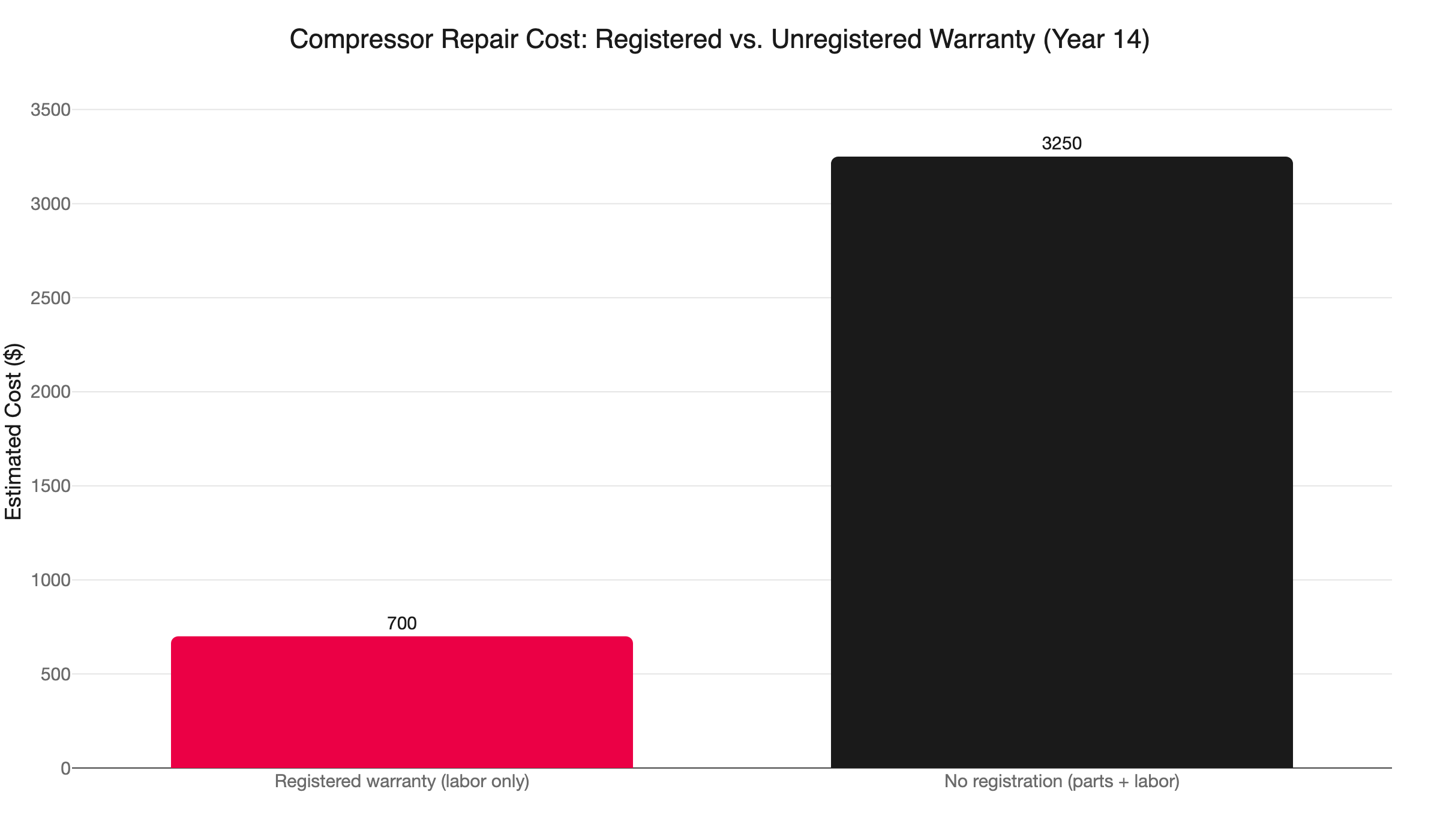
Compressor Repair Cost: Registered vs. Unregistered Warranty (Year 14)
## What Is HVAC Warranty Registration?
New HVAC equipment ships with two warranty tiers. The base tier is automatic. It requires nothing from you and covers parts for five years. The registered tier requires one additional step: submit your equipment information to the manufacturer within a set window after installation. Complete that step and your parts coverage typically extends to 10 years.
Registration is not a service enrollment or a contract. You give the manufacturer your name, address, model number, serial number, and installation date. That is the entire transaction. The form takes about five minutes to complete.
The difficulty is not the paperwork. It is remembering to do it. Most homeowners assume the contractor handled registration. Some contractors do handle it at installation. Many do not. The responsibility defaults to the homeowner, and the consequences of missing the deadline are permanent.
## Why Does the 30-Day Clock Matter When Most Deadlines Are Longer?
**Most brand deadlines run 60-90 days after installation. But the first 30 days are when homeowners forget. Treating day 30 as your personal deadline keeps you safely inside every manufacturer's window, regardless of which brand was installed. It removes the risk of checking the fine print too late.**
Here is the pattern behind most missed registrations. The installer finishes and leaves. The new system runs quietly and perfectly for the first few weeks. There is no problem to solve, so the registration paperwork sits. Days pass. By the time 60 days arrive, most homeowners cannot tell you how many days have elapsed since the installation date.
The 30-day rule is a margin of safety, not a manufacturer deadline. Carrier's window is 90 days. Trane and Lennox give you 60 days. Goodman, Daikin, and Amana also set their deadlines at 60 days. If you act within 30 days, you are well inside every window.
The practical tool is a single calendar reminder set on installation day. When it fires, you complete registration and rebate paperwork at the same sitting. The whole task takes under 20 minutes.
## What Happens If You Miss the HVAC Warranty Registration Deadline?
**Your warranty drops permanently to the five-year base tier. There is no reinstatement option, no grace period, and no appeals process with most manufacturers. The extended 10-year coverage is simply gone, and it cannot be recovered after the deadline passes.**
[Carrier states this plainly](https://www.carrier.com/us/en/residential/homeowner-resources/warranty/): "If you do not register your Carrier equipment within 90 days of installation, the standard 5-year parts-only limited warranty will apply." [Trane's warranty terms](https://www.trane.com/residential/en/resources/warranty-and-registration/) follow the same structure: miss the 60-day window and the five-year base coverage applies going forward.
No amount of explanation after the fact changes this. The manufacturer records the installation date from the installer's report. If registration arrives after the deadline, the extended warranty is denied.
The five-year base warranty is not without value. But most HVAC equipment is designed for a 15-20 year service life. Expensive component failures, such as compressor failure, heat exchanger cracks, and coil deterioration, tend to cluster between years 8 and 15. The five-year base warranty expires before those failures arrive. The 10-year registered warranty covers the exact window when the costliest repairs become likely.
## How Much Does Missing HVAC Warranty Registration Actually Cost?
**On a compressor failure at year 14, skipping registration can mean $1,600-$3,100 more out-of-pocket on a single repair. Parts are covered under a registered 10-year warranty. Without registration, you pay full parts and labor costs when the failure happens.**
[The Cooling Company](https://www.thecoolingco.com/blog/hvac-brand-warranty-registration-guide/) illustrates this with a concrete Trane scenario. The compressor fails at year 14. With a registered 10-year warranty, the part is covered. You pay labor only: roughly $500-$900. Without registration, you pay parts and labor combined: $2,500-$4,000. The net cost of skipping a five-minute registration form is between $1,600 and $3,100 on that one repair.
Compressors are not the only high-cost failure. Heat exchangers run $1,500-$3,000 in parts alone. Control boards cost around $750 installed. Blower motors run $1,100-$2,200 depending on motor type. These components can all fail well outside the five-year base warranty window. A registered warranty shifts those parts costs off your bill when they do.
If your registration window has already closed, third-party extended warranties are available for $300-$800 over five to ten years. They provide a real fallback, but they carry deductibles and claim caps not present in the manufacturer's registered program. Our post on [extended HVAC warranties](/blog/hvac-extended-warranty-worth-it-minnesota/) covers the trade-offs in detail.
## How Do HVAC Warranty Terms Compare Across Brands?
**Every major brand doubles your parts coverage at registration, from five years to ten. Daikin goes to 12 years. Goodman and Amana add lifetime coverage on specific high-cost components. Registration is the only variable between these two tiers. The cost to you is zero.**
Current registration deadlines and warranty terms by brand, based on [manufacturer warranty data](https://www.thecoolingco.com/blog/hvac-brand-warranty-registration-guide/):
| Brand | Registration Deadline | Registered Coverage | Unregistered Coverage |
|---|---|---|---|
| Carrier | 90 days | 10 yr parts | 5 yr parts |
| Trane | 60 days | 10 yr parts + lifetime compressor (XV20i) | 5 yr parts |
| Lennox | 60 days | 10 yr parts | 5 yr parts |
| Goodman | 60 days | 10 yr parts + lifetime heat exchanger | 5 yr parts |
| Rheem | 90 days | 10 yr parts | 5 yr parts |
| Amana | 60 days | Lifetime compressor + 10 yr parts | 5 yr parts |
| Daikin | 60 days | 12 yr parts | 5 yr parts |
| York / Bryant | 90 days | 10 yr parts | 5 yr parts |
A few items stand out. Daikin's 12-year registered term is the longest standard benefit in the market. Most homeowners are not aware of this when comparing brands. Goodman's lifetime heat exchanger warranty is particularly relevant for Minnesota, a point covered in detail in the next section. Amana and Trane's XV20i both offer lifetime compressor coverage on registered units, which eliminates the single highest-probability major repair cost on an AC system.
None of these benefits cost anything additional. They require one form submission within the deadline window.
## Why Minnesota Homeowners Have More at Stake
Twin Cities homes run their furnaces from October through April. That is six-plus months of daily use. The heat exchanger, blower motor, and draft inducer accumulate more annual run hours here than in most other U.S. markets. Wear compounds over a long heating season.
Goodman's lifetime heat exchanger warranty is the most consequential registered benefit for Minnesota homeowners. The heat exchanger is the single most expensive replaceable component in a furnace. A crack is not a repair you can defer. It puts combustion gases at risk of entering your living space. When the heat exchanger fails outside of warranty, the decision between replacing the part and replacing the furnace is often a close call. [Furnace replacement in the Twin Cities](/blog/furnace-replacement-cost-twin-cities/) runs $3,900-$7,800 installed depending on efficiency tier. The heat exchanger alone is $1,500-$3,000 in parts before labor. The registered lifetime warranty eliminates the parts cost entirely.
[All Pro HVAC's Minnesota guide](https://allprohvacminneapolis.com/hvac-warranty-guide/) specifically notes Goodman's lifetime heat exchanger benefit as a differentiator for MN homeowners. It is a real benefit that disappears entirely if registration is skipped within the 60-day deadline.
Knowing early warning signs matters more when you are carrying five-year coverage instead of ten. Our post on [AC compressor failure symptoms and repair costs](/blog/ac-compressor-failing-signs-repair-cost-twin-cities/) walks through the early indicators on the cooling side. Catching those signs early gives you time to address problems before a repair becomes fully out-of-pocket.
## File Your Rebate Paperwork and Your Registration at the Same Sitting
This is the most practical tip in this post. HVAC warranty registration and utility rebate claims use the same four data points: model number, serial number, AHRI certification number, and installation date.
[Xcel Energy's 2026 rebates](https://energyrebatecalculator.com/utility/xcel-energy) include up to $2,000 for a qualifying cold-climate heat pump and $400 for central AC equipment. CenterPoint Energy offers $150-$500 on qualifying gas furnaces rated 96% AFUE or higher. Both programs ask for the same equipment fields your manufacturer registration form requires.
[The rebate stacking guide for Xcel and CenterPoint](https://allprohvacminneapolis.com/how-to-claim-every-centerpoint-and-xcel-energy-rebate-for-your-new-hvac-system/) confirms that both programs pull from model number, serial number, AHRI, and install date. Your installer should leave behind a spec sheet or product data card with all four fields. If that documentation is not in your files, check the data plate mounted on the equipment itself. Your installation invoice typically includes the install date and AHRI number.
The workflow is simple. Set a 30-day calendar reminder on installation day. When the reminder fires, open the manufacturer's warranty registration portal in one browser tab and the relevant rebate portal in a second. Fill both forms from the same documentation. The session takes 15 minutes or less.
One important note on federal credits: the 25C equipment tax credit expired on December 31, 2025. No federal equipment tax credit applies to HVAC installations completed in 2026.
## What If You Just Bought a Home with an Existing HVAC System?
**Check for registration paperwork at closing. If it is missing, you have limited time to initiate a warranty transfer before that window closes too. Most manufacturers allow transfers within 60-90 days of the home sale for a $25-$100 fee.**
A significant share of Twin Cities homebuyers inherit HVAC equipment with no registration documentation. The previous owner may have never registered, or may have registered but not included the confirmation in the closing paperwork. Our [HVAC checklist for buying a home](/blog/hvac-checklist-buying-home-minnesota/) covers what documentation to request from the seller, including warranty registration confirmation, before you sign.
If the previous owner registered the equipment, most manufacturers allow a one-time transfer. The transfer must typically happen within 60-90 days of the home sale closing date and costs $25-$100 in processing fees. Some brands reduce the remaining warranty term on a transferred unit. Read the specific brand's transfer policy before you file.
If the equipment was never registered, that window is permanently closed. The five-year base warranty may still have time remaining if the system is new enough, but the extended registered warranty cannot be obtained retroactively. A third-party extended warranty is the practical fallback in that situation. It is worth considering especially on systems that are 6-10 years old, when the compressor or heat exchanger is approaching its higher-risk years.
[Minnesota Statute § 327A.02](https://www.revisor.mn.gov/statutes/cite/327A.02) provides a two-year statutory warranty on mechanical systems, including HVAC, in [new residential construction](/blog/new-construction-hvac-first-year-problems-minnesota/). This covers workmanship defects by the original builder or contractor. It does not substitute for manufacturer parts coverage and it does not extend or replace the registered warranty.
## How to Register Your HVAC Equipment
The process is three steps and takes about 10 minutes.
**Step 1: Gather your documentation.** You need four fields: model number, serial number, AHRI certification number, and installation date. These appear on the data plate mounted on the equipment, typically on the side or back panel of the unit. Your installation invoice should also list all four. If either document is missing, the data plate on the physical unit is your fallback.
**Step 2: Go to the manufacturer's registration portal.** Search for "[brand name] warranty registration" or check the paperwork your installer left behind. Most portals are straightforward online forms. Some brands send an auto-registration confirmation when an installer files a startup report. If you received that email, check whether registration was completed and save the confirmation regardless.
**Step 3: Save your confirmation.** Screenshot the confirmation page or save the confirmation email. Store it with your home records. If you ever file a warranty claim, that confirmation is the document the manufacturer will ask for first. A claim with no confirmation on file is treated as unregistered, regardless of your recollection.
That is the complete process. Set the 30-day reminder on installation day and you will never miss a deadline.
If you are not certain what brand or model was installed in your home, or if you need help locating the data plate, call our team at (763) 260-6662. We can pull your installation records and confirm or complete your registration status before the window closes.
## Northern One Hour Has Your Back on the Details
Northern One Hour is locally owned and operated in Ramsey, MN. When our team installs equipment in your home, we walk you through registration before we leave. We hold ourselves to "Always On Time… Or You Don't Pay a Dime!(R)" on both arrival windows and the steps that follow an installation.
If you had equipment installed recently and are not certain whether registration was completed, do not wait until the deadline passes. Call (763) 260-6662 or book online. We will pull your installation records and help you confirm or complete registration.
We also assist with:
- Rebate claim paperwork for qualifying Xcel Energy and CenterPoint Energy equipment
- Warranty transfer documentation when you purchase a home with existing HVAC equipment
- Third-party extended warranty guidance when the manufacturer window has already passed
Our team serves Minneapolis, St. Paul, Ramsey, Blaine, Maple Grove, Plymouth, Brooklyn Park, Woodbury, Bloomington, and the surrounding Twin Cities area. Call (763) 260-6662 to schedule service or ask about our 100% satisfaction guarantee.
---
# Ceiling Fan Direction Summer Winter: Minnesota HVAC Guide
URL: https://northernonehour.com/blog/ceiling-fan-direction-hvac-efficiency-twin-cities/
Published: 2026-09-25 | Category: HVAC
How ceiling fan direction cuts furnace and AC runtime in Minnesota. Counterclockwise in summer, clockwise on low in winter saves energy for 7 months.
Key Takeaways
- **Counterclockwise in summer:** Blades moving to the left (viewed from below) create a wind-chill effect. [ENERGY STAR notes this allows you to raise your thermostat up to 4°F](https://www.energystar.gov/products/ceiling_fans/installation-and-usage-tips), which can cut cooling energy use by up to 30%.
- **Clockwise on low in winter:** A gentle updraft redistributes warm air pooled at the ceiling. The [DOE estimates up to 15% savings on heating costs](https://www.energy.gov/energysaver/articles/stay-cool-less-money-ceiling-fan) in rooms with high ceilings.
- **Minnesota's 7-month heating season:** The clockwise setting applies from October through April, not just a few December weeks.
- **Vaulted ceilings amplify the benefit:** Floor-to-ceiling temperature gaps can reach 15°F in a cathedral room. A ceiling fan on low closes that gap without another furnace cycle.
- **Power draw comparison:** [A ceiling fan uses 15 to 75 watts depending on speed](https://www.energystar.gov/products/ceiling_fans/performance_components_count). Your central AC uses 3,500 watts or more. The math on which one to run longer is clear.
- **No rebates for ceiling fans:** Xcel Energy does not currently offer a residential ceiling fan rebate. Pair the direction change with a smart thermostat to capture Xcel's $50 thermostat rebate instead.
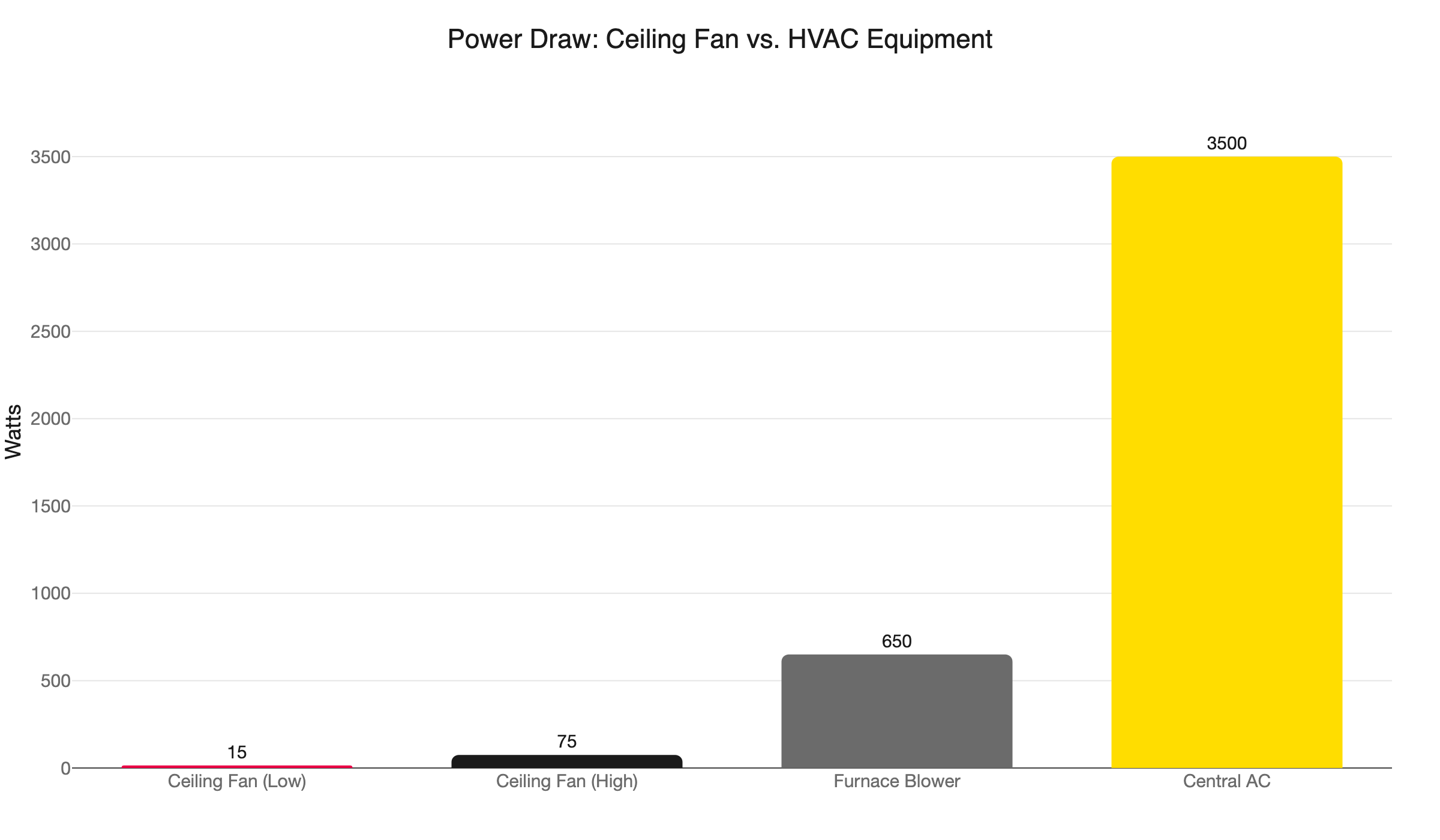
Power Draw: Ceiling Fan vs. HVAC Equipment
## Why Does Ceiling Fan Direction Affect Your Heating and Cooling Bills?
**Ceiling fan direction changes the air movement pattern in a room. In summer, counterclockwise blades push air down across occupants, creating a wind-chill effect that reduces thermostat calls. In winter, clockwise blades on low create an updraft that pulls cool air upward and returns warm ceiling air to the occupied zone, reducing how often the furnace fires.**
Here is the physics in plain terms. Warm air rises and stays near the ceiling. In a standard room, this creates a temperature gradient: the ceiling is warmer than where you actually sit and move around. Your thermostat reads the temperature in the occupied zone, not at the ceiling. When the occupied zone drops below setpoint, your furnace cycles on, even if several degrees of heat are sitting unused six feet above your head.
A ceiling fan in clockwise mode on low speed creates a gentle updraft. That updraft draws cooler floor air upward. The warm ceiling air then slides outward along the ceiling and descends along the walls, back into the occupied zone. The thermostat reads a higher temperature. The furnace stays off longer.
The summer mechanism is different but equally direct. Counterclockwise rotation pushes air straight down in a column. That moving air accelerates evaporation from your skin, which is how your body sheds heat. The room temperature does not actually drop. The perceived temperature does. You feel cooler at a higher thermostat setpoint.
[A ceiling fan draws approximately 15 to 75 watts depending on speed](https://www.energystar.gov/products/ceiling_fans/performance_components_count). Your central AC draws 3,500 watts or more. Your furnace blower alone draws 300 to 1,000 watts. Running a ceiling fan on low for an hour instead of triggering another furnace or AC cycle is an easy trade.
---
## How Does Counterclockwise Direction Keep You Cooler in Summer?
**Counterclockwise blades push air downward across the room, creating a wind-chill effect. [ENERGY STAR reports this allows you to raise your thermostat setpoint by 4°F](https://www.energystar.gov/products/ceiling_fans/installation-and-usage-tips) while maintaining the same perceived comfort. A 4°F higher setpoint means fewer thermostat calls and less AC runtime across a full cooling season.**
The wind-chill effect works through evaporation. Moving air pulls heat away from your skin faster than still air does. A room at 76°F with a ceiling fan running counterclockwise can feel as comfortable as a room at 72°F with no fan movement. That 4°F gap translates directly to runtime savings. Raising your cooling setpoint by 4°F can reduce air conditioning energy use by up to 30%.
There is one rule that comes with this. Turn the ceiling fan off when you leave the room. A fan cools people, not spaces. Running it in an empty bedroom all afternoon wastes electricity without producing any benefit. The savings come from substituting fan runtime for compressor runtime when someone is actually in the room.
Minnesota's true cooling season runs roughly May through September. That is a shorter window than our heating season, but it is when electric bills climb fastest. A 30% reduction in AC energy use during those five months is meaningful money on a summer bill.
[All ENERGY STAR-certified ceiling fans include a reversible motor](https://www.energystar.gov/products/ceiling_fans/installation-and-usage-tips). If your fan does not have a direction switch, it is either very old or a non-reversible decorative model. A standard fan replacement costs less than running a fan the wrong direction for an entire cooling season.
---
## What Does Clockwise on Low Do for Your Furnace This Winter?
**Clockwise rotation on the lowest speed creates a gentle updraft. That updraft pulls cooler floor air upward and pushes warm air trapped at the ceiling outward and down the walls, back into the occupied zone. The [DOE estimates this can reduce heating costs by up to 15%](https://www.energy.gov/energysaver/articles/stay-cool-less-money-ceiling-fan), primarily in rooms with high or vaulted ceilings.**
The word "low" is not optional here. Clockwise on medium or high speed creates a noticeable draft that makes a room feel colder, not warmer. You want barely perceptible air movement. The goal is to gently break up thermal stratification, not create a windchill working against you. If you can feel the fan on your skin while sitting in the room, the speed is set too high.
Timing matters too. In the Twin Cities, you do not wait until January to flip the switch. October nights regularly drop below 40°F. By mid-October, your furnace is cycling in earnest. The clockwise setting starts earning its keep then and stays relevant through late April. That is seven full months where clockwise on low is the correct call.
Forced-air gas furnaces dominate Minnesota residential heating. After a furnace cycle ends, the blower shuts off and residual warm air immediately begins to rise. A ceiling fan running clockwise on low recovers that residual heat before it pools at the ceiling. It extends each cycle's effective warmth by several minutes before the room temperature drops enough to call for the next cycle.
---
## Does Ceiling Fan Direction Actually Reduce Furnace Runtime?
**Yes. A ceiling fan on low clockwise after your furnace shuts off continues to distribute heat already in the room. The thermostat holds its setpoint longer before calling for another cycle. Fewer cycles mean less fuel burned and less mechanical stress on furnace components over the course of a long heating season.**
Here is why Minnesota homeowners get more out of this tip than most. [The Twin Cities averages approximately 8,300 heating degree days per year](https://www.dnr.state.mn.us/climate/historical/energy.html). The U.S. national average sits around 4,500. Minneapolis logs about 84% more heating degree days than the average American city. A tip that generates modest savings in Atlanta generates proportionally larger savings here, because there are far more heating cycles in play across our longer, colder season.
Consider the compounding effect. [Each 1°F reduction in your heating setpoint over an 8-hour period saves approximately 1% on your heating bill](https://www.energy.gov/energysaver/articles/stay-cool-less-money-ceiling-fan). A ceiling fan on clockwise low does not lower the setpoint directly. It holds the occupied zone at setpoint longer after each furnace cycle ends, which has a similar effect on total runtime. Across 7 months and roughly 8,300 heating degree days, those avoided cycles accumulate into real savings.
The other benefit is mechanical. Every furnace cycle starts with an ignition sequence. The igniter, draft inducer, and blower motor all experience wear at startup. A ceiling fan that extends the gap between cycles extends the life of those components. Fewer cycles mean fewer startups. Fewer startups mean less wear per season.
If your furnace is already struggling to keep up in extreme cold, a ceiling fan helps but cannot substitute for a properly serviced heating system. See our guide on [keeping your furnace running efficiently through a Twin Cities winter](/blog/furnace-efficiency-how-to-keep-your-twin-cities-home-warm/) for maintenance steps that address a system under stress.
---
## Why Minnesota's Climate Amplifies This Tip More Than Most States
Generic energy advice calibrates to national averages. National averages are not Minnesota.
[The Twin Cities logs roughly 8,300 heating degree days annually](https://www.dnr.state.mn.us/climate/historical/energy.html), compared to a U.S. national average of about 4,500. Most ceiling fan direction articles mention that the winter clockwise setting helps with heating bills. What they do not say is that the benefit scales with your heating load. In a mild climate, the heating season is short and degree-days are low. In Minneapolis, the heating season is seven months long and degree-days are nearly double the national average.
That gap means the ceiling fan direction tip is proportionally more valuable here than the same tip would be in Atlanta or Phoenix. The underlying savings mechanism is the same. But it applies to a climate that runs nearly twice the heating energy per year.
There is also a forced-air dynamic specific to Minnesota homes. After a furnace cycle ends, the blower shuts off and residual heat starts rising immediately. In a well-insulated room with 8-foot ceilings, that residual heat might stay in the occupied zone for 20 or 30 minutes. In a poorly insulated room or a high-ceiling room, it rises faster and pools near the ceiling before the thermostat can count it. A ceiling fan on low clockwise catches that heat and returns it to the occupied zone before the thermostat calls for more.
This is the real mechanism behind "ceiling fans save on heating costs." The fan does not generate heat. It recovers heat already paid for, before the thermostat asks the furnace to make more. In a climate with 8,300 heating degree days, that recovery happens thousands of times across a season.
Natural gas furnaces dominate Minnesota residential heating. Most Twin Cities homes built in the past 50 years run a forced-air gas furnace. That specific combination, a high-cycle-count gas furnace in a stratification-prone climate, is exactly where a ceiling fan on clockwise low does its best work.
---
## Which Rooms Benefit Most: Vaulted Ceilings and Open Stairwells
Not every room sees the same stratification. The benefit from ceiling fan direction scales with ceiling height and room geometry.
In a standard 8-to-9-foot ceiling room, the temperature difference between floor level and ceiling level runs about 8 to 12°F. That is already worth addressing. A ceiling fan on low clockwise closes a meaningful portion of that gap.
In a vaulted or cathedral ceiling room, the temperature differential can reach 15°F. Twin Cities suburban homes built between 1985 and 2005 frequently include vaulted great rooms, two-story foyers, and open stairwells. These spaces look impressive. They are also genuinely hard to heat evenly. Warm air delivered by the furnace rises directly to the peak and stays there while the occupied zone at floor level stays cool. The thermostat calls for more heat. The furnace fires. That warm air rises again.
A ceiling fan in a vaulted room running clockwise on low does substantially more work than a fan in a standard room. It is pulling a 15°F temperature differential off a high ceiling and returning that air to where people sit. When the thermostat reads a higher temperature in the occupied zone, the furnace stays off. The taller the ceiling, the more often this cycle repeats, and the more each avoided cycle saves across a heating season.
Open stairwells present a related problem. Warm air from the main level flows up the stairwell and accumulates on the upper floor, while the main level stays cool. A ceiling fan at the top of the stairwell on clockwise low can help redistribute this flow. Pairing it with the main level great room fan addresses both zones.
For a deeper look at heating and cooling challenges in these spaces, see our guide on [HVAC in vaulted ceiling homes across the Twin Cities](/blog/hvac-vaulted-ceiling-heating-cooling-twin-cities/).
---
## How Do You Switch Your Ceiling Fan Direction?
**Most ceiling fans have a small slide switch on the motor housing, on the side of the fan body near the canopy. Turn the fan off, wait for the blades to stop completely, flip the switch, then turn the fan back on at low speed. Confirm the change by watching blade rotation from below.**
Step by step:
1. **Turn the fan off** at the wall switch.
2. **Wait for the blades to stop completely.** Do not skip this step. Switching direction while the fan is still spinning can damage the motor.
3. **Locate the direction switch.** It is a small plastic slide switch on the side of the motor housing. On most fans it is within reach from a standard step stool.
4. **Flip the switch** to the opposite position.
5. **Turn the fan back on** at the lowest speed setting.
6. **Confirm direction.** Looking up at the fan from below: counterclockwise (blades moving left) for summer, clockwise (blades moving right) for winter.
Some newer ceiling fans include a remote or wall control with a dedicated direction button. Check your fan's manual if you cannot locate the motor housing switch.
[ENERGY STAR-certified fans all include a reversible motor](https://www.energystar.gov/products/ceiling_fans/installation-and-usage-tips). If your fan has no direction switch, it is likely very old or a non-reversible decorative model. A current ENERGY STAR-certified replacement is worth considering. [ENERGY STAR ceiling fans are 60% more efficient than conventional fan and light units](https://www.energystar.gov/sites/default/files/asset/document/Ceiling%20Fans-at-a-Glance_04-28-2020.pdf), so the upgrade pays back beyond just the direction benefit.
---
## Should You Pair a Ceiling Fan Change with a Thermostat Adjustment?
**Yes. Ceiling fan direction captures savings only when you also adjust your thermostat setpoint. In summer, raise the setpoint by 2 to 4°F when fans are running. In winter, lower it by 1 to 2°F. The fan compensates for the perceived comfort difference. Without the setpoint change, you gain comfort without reducing runtime.**
The summer math is straightforward. You raise the cooling setpoint from 72°F to 76°F. The ceiling fan makes 76°F feel like 72°F through the wind-chill effect. Your AC runs less because the setpoint is higher and the thermostat calls less often. The savings appear on your electric bill.
Winter is more subtle. You drop the heating setpoint from 70°F to 68°F. The ceiling fan on clockwise low closes the floor-to-ceiling temperature gap. You still feel comfortable at 68°F because the occupied zone is no longer running 5 to 8 degrees colder than the ceiling. The furnace cycles less because it is holding a lower setpoint with less stratification working against it.
If you do not yet have a smart thermostat, this is a good time to add one. A smart thermostat can schedule setpoint adjustments automatically: raising the cooling setpoint during the hours fans typically run, dropping the heating setpoint at night when blankets take over. Xcel Energy currently offers a $50 rebate on qualifying smart thermostats. Ceiling fans are not on Xcel's rebate list, but the thermostat that multiplies this tip is.
Our post on [smart thermostats for Twin Cities homeowners](/blog/maximize-comfort-and-savings-the-power-of-smart-thermostats-in-the-twin-cities/) covers which models qualify and how to apply for the credit. For the full picture of available HVAC rebates from both Xcel and CenterPoint, see our guide on [HVAC utility rebates in Minnesota](/blog/xcel-centerpoint-hvac-rebates-minnesota/).
---
## When to Call Northern One Hour
Ceiling fan direction is a free, five-minute adjustment. It genuinely reduces runtime when applied correctly. But if your heating or cooling system is struggling in ways that ceiling fan adjustments cannot fix, the problem is the HVAC equipment itself.
Signs you should call us:
- Your furnace runs nearly continuously but the home does not reach setpoint during cold snaps.
- Your AC runs but the house never cools below 78°F on a mild summer day.
- Your heating or cooling bill jumped 25% or more without a clear weather explanation.
- Your furnace is more than 15 years old and you are facing a repair quote over $600.
- You have persistent uneven temperatures between rooms that fan adjustments have not improved.
We are locally owned and operated in Ramsey, MN. Our team serves Minneapolis, St. Paul, Blaine, Maple Grove, Plymouth, Brooklyn Park, Woodbury, Bloomington, and the surrounding Twin Cities metro.
Our commitment to every visit is simple: "Always On Time… Or You Don't Pay a Dime!(R)." We back every service call with transparent pricing and a 100% satisfaction guarantee. You know the cost before we start any work.
Call **(763) 260-6662** or [schedule online](/heating/). We show up when we say we will.
---
# How to Use a Gas Fireplace to Reduce Your Heating Bill
URL: https://northernonehour.com/blog/gas-fireplace-insert-zone-heating-hvac-savings-minnesota/
Published: 2026-09-25 | Category: Heating
Use your gas fireplace insert to lower furnace runtime in Minnesota. Thermostat strategy, BTU math, and tax credit facts for Twin Cities homeowners.
Key Takeaways
- Lowering your thermostat 4-6 degrees when the fireplace runs is what actually saves money. The fireplace alone changes nothing - the setback is the mechanism.
- A 30,000-40,000 BTU insert can heat 600-1,200 square feet of open-plan living space on a moderate winter day (20-40°F outdoors). It does not replace your furnace.
- On Minnesota nights below -10°F, run both appliances normally. The insert reduces runtime on most winter days but cannot carry the whole house during polar vortex events.
- Gas fireplace inserts do not qualify for the IRS 25C federal tax credit. Standard inserts are not on the qualifying-products list.
- A smart thermostat automates the setback schedule so you capture savings without remembering to adjust the dial every evening.
- Sealed direct-vent inserts (75-90% efficiency) outperform B-vent units (50-70%) and do not pull conditioned indoor air for combustion.
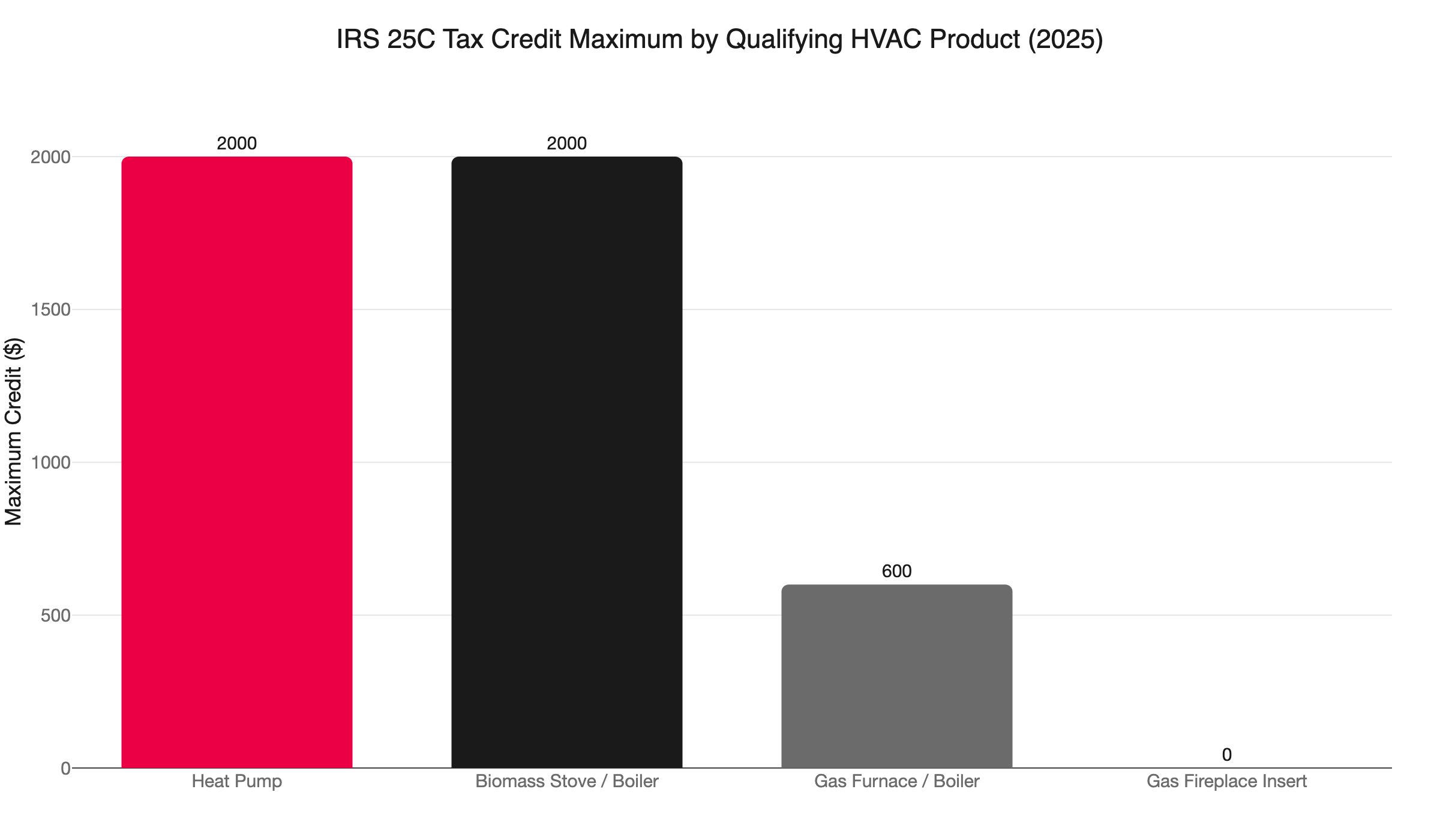
IRS 25C Tax Credit Maximum by Qualifying HVAC Product (2025)
## Is Using a Gas Fireplace to Reduce Your Heating Bill Actually Worth It?
**Yes, with one condition: you have to lower the thermostat.** Without a setback, running the insert alongside a normally set furnace just burns gas in two appliances at once. The savings come from reduced furnace runtime, and that only happens when you deliberately drop the setpoint.
Minnesota makes this strategy more valuable than almost anywhere else in the country. The state sits in the West North Central Census Division, which [has the highest heating degree day totals of any U.S. census division](https://www.eia.gov/energyexplained/units-and-calculators/degree-days.php). Minneapolis averages roughly 8,082 heating degree days per year - nearly double the national average of around 4,600. That means a furnace here runs far longer each season than one in Nashville or Denver. Every hour of reduced runtime adds up.
[Midwest households consume more energy for space heating than any other U.S. region](https://www.eia.gov/energyexplained/use-of-energy/homes.php), and natural gas is used in the majority of those homes. A gas insert and a gas furnace run on the same fuel. The question is which appliance delivers heat to the space you are occupying most efficiently at a given moment.
For the zone you are sitting in - the main living area - a properly sized insert wins during moderate cold. It heats that room directly, without pushing conditioned air through ductwork running through unconditioned attic or basement spaces. Your furnace, by contrast, serves the whole house.
The strategy is straightforward: when you light the fireplace in the evening, drop the thermostat. Let the insert carry the room you are in. Let the furnace rest. The savings are real, but they only materialize if you make that thermostat adjustment every time - which is exactly why a programmable or smart thermostat changes the math so significantly.
## What Thermostat Setting Works Best When the Fireplace Is Running?
**Drop to 62-65°F.** That range keeps your pipes safe, prevents unoccupied rooms from dropping uncomfortably low, and gives your furnace a genuine rest between cycles.
Your furnace is least efficient during its startup cycle. The inducer fan runs, the igniter heats up, the gas valve opens, and the heat exchanger has to reach operating temperature before conditioned air moves through the ducts. Very short runtimes waste gas without heating the house evenly. The furnace fires, the thermostat reads "close enough" because the insert has already warmed the main floor, and the system shuts off after three or four minutes.
A 4-6 degree setback creates enough distance between the current room temperature and the setpoint that the furnace stays off for a meaningful stretch. It fires eventually - bedrooms, the basement, rooms away from the fireplace all lose heat steadily - but the intervals between cycles grow longer. That longer interval is where the savings come from.
A few guardrails worth knowing before you set your schedule:
- Do not drop below 62°F when outdoor temperatures are below 10°F. Heat loss through exterior walls is rapid in extreme cold, and a 62°F whole-house setpoint can cause localized cold spots in poorly insulated areas.
- In older Twin Cities homes with single-pane windows or limited wall insulation, 65°F is a more conservative and appropriate floor.
- Know where your pipes run. A setback to 62°F in a 1960s home with pipes in exterior walls carries more risk than the same setback in a newer, well-insulated build.
For a deeper look at how your furnace responds to setpoint changes over a Minnesota heating season, our post on [keeping your furnace efficient through a Twin Cities winter](/blog/furnace-efficiency-how-to-keep-your-twin-cities-home-warm/) walks through the cycling dynamics in detail.
## What Can a Gas Fireplace Insert Actually Heat?
**A 30,000-40,000 BTU insert heats roughly 600-1,200 square feet of open-plan living space on a moderate winter day.** It is a zone heater. It is not a whole-home system.
A common industry starting point is 25-35 BTU per square foot in a well-insulated Minnesota home at mild-to-moderate outdoor temperatures. The actual number depends on your ceiling height, insulation quality, how open the floor plan is, and outdoor conditions.
Work the math for common insert sizes:
- **20,000 BTU insert:** effective zone coverage of roughly 570-800 sq. ft. in an open layout
- **30,000 BTU insert:** roughly 860-1,200 sq. ft.
- **40,000 BTU insert:** roughly 1,140-1,600 sq. ft.
These numbers assume the insert and the space it is heating share the same open area. Rooms with closed doors - bedrooms, a home office, bathrooms - receive no meaningful benefit from the insert. In a typical Twin Cities two-story or split-level home, the insert warms the main-floor great room and possibly an adjacent dining area. The upper level and the basement stay on the furnace.
That is the right mental model: the insert is a zone. Size it for the zone you are heating and run it like one. If you have been thinking of the insert as a furnace substitute, the bills will disappoint. If you think of it as a zone heater that lets the furnace rest during occupied evening hours, the numbers work.
## What Happens on a -20°F Night?
**Your furnace does the work.** A gas insert helps on most Minnesota winter days, but when temperatures drop below -10°F to -20°F, heat loss through your building envelope exceeds what any single insert can offset for the whole house.
During polar vortex events, keep your thermostat at a normal comfort setpoint - 68-70°F - and let your furnace run as designed. The insert still adds warmth to the main living area and reduces some cycling, but a deep setback at -15°F means cold bedrooms, uncomfortable sleeping conditions, and potential risk to pipes in exterior walls.
The calculation shifts at the extremes. On a 0°F night, a 62°F setback can result in the bedrooms dropping to 58°F by 2 a.m. in a home that leaks heat at a normal rate for its age. That is uncomfortable at best.
Plan for this reality: roughly 30-40 nights per Minnesota heating season will be cold enough that the insert plays a supporting role only. On the other 90-110 nights when temperatures range from the teens to the upper 30s, the strategy works well and delivers genuine savings. The insert is a mild-to-moderate cold weather tool, not a polar vortex solution.
If you notice your furnace struggling to reach your setpoint on extreme cold nights, our post on [furnace performance when it cannot reach setpoint in extreme cold](/blog/furnace-cant-reach-setpoint-extreme-cold-minnesota/) covers what to check.
## Does a Gas Fireplace Insert Qualify for a Federal Tax Credit?
**No. Standard gas inserts are not on the IRS Section 25C qualifying-products list.**
This is one of the most persistent misconceptions in articles about gas fireplaces and heating savings. Many pieces written before 2023 still claim inserts qualify. They do not.
Under [IRS Section 25C (Energy Efficient Home Improvement Credit)](https://www.irs.gov/credits-deductions/energy-efficient-home-improvement-credit), the qualifying heating products are:
- Natural gas furnaces and boilers meeting the CEE highest efficiency tier: up to $600 credit
- Heat pumps: up to $2,000 credit
- Biomass stoves and boilers at 75%+ thermal efficiency: up to $2,000 credit
A gas fireplace insert - even a high-efficiency sealed direct-vent model - is not on that list. It is classified as a hearth appliance, not a heating system, under the credit rules. Its efficiency rating does not change that.
The 25C credit offered 30% of cost, up to $3,200 per year, [through December 31, 2025](https://www.energystar.gov/about/federal_tax_credits). Its status for 2026 was not confirmed on official government pages at the time this was written. If you are considering a high-efficiency furnace replacement, boiler upgrade, or heat pump installation alongside or instead of relying on the insert, those systems may qualify. Talk to our team and your tax advisor about what documentation you will need - starting in 2025, IRS requires a manufacturer QM code on returns for all qualifying equipment.
## Which Gas Insert Type Is More Efficient?
**Sealed direct-vent.** A sealed direct-vent insert draws combustion air from outside through a coaxial vent pipe and exhausts combustion gases back outside through the same assembly. It operates in a fully closed combustion loop. Your indoor conditioned air is never used for combustion.
A B-vent (natural-vent) insert draws combustion air from the room. Every cubic foot of indoor air it uses for combustion exits the house as exhaust, and cold outdoor air infiltrates to replace it. That infiltration adds a hidden load to your furnace. You are paying to heat air just to burn it.
Efficiency ratings reflect this difference directly:
- Sealed direct-vent inserts: typically 75-90% thermal efficiency
- B-vent inserts: typically 50-70%
For a homeowner using the insert specifically to reduce furnace runtime and fuel consumption, only a sealed direct-vent unit delivers meaningful net savings without the infiltration penalty. If you already have a B-vent insert, the thermostat setback strategy still works - you just capture less of the potential benefit.
If you are in the market for a new insert for this purpose, ask for a sealed direct-vent model and verify the thermal efficiency rating on the manufacturer's spec sheet before purchase.
## Combustion Air and Backdraft: What to Know
Running a gas insert and your furnace at the same time in a tightly sealed home raises a combustion air question worth understanding. Both appliances need air to burn. If your home is well-sealed and both are running simultaneously, negative pressure can develop - and that pressure imbalance can cause either appliance to pull combustion gases back into the living space rather than venting them outside.
This is not a reason to avoid using the insert. It is a reason to understand your home's combustion air setup before you lean on the strategy every evening.
Older Twin Cities homes with natural infiltration typically have enough air movement to support both appliances without issue. Newer or recently air-sealed homes are more likely to have inadequate combustion air for both running at once.
Our post on [gas fireplace and furnace combustion air backdraft in Minnesota homes](/blog/gas-fireplace-furnace-combustion-air-backdraft-minnesota/) covers the specifics of how these systems interact and what a technician checks during an inspection. If your home was built after 2000 or has had significant air sealing work done, have a qualified technician verify adequate combustion air before you make simultaneous dual-appliance operation a regular habit.
## Can a Smart Thermostat Automate the Setback Strategy?
**Yes, and it is the most reliable way to run this strategy consistently.** Manual adjustment gets skipped. A programmed schedule does not.
On a Nest or ecobee, set a schedule tied to your fireplace habits: when you typically light the fire on winter evenings, the thermostat automatically drops to 63°F. When your usual bedtime arrives and the fire is winding down, it returns to 68°F. You never have to remember. The furnace gets its rest on every applicable evening.
Both platforms also support remote temperature sensors - a feature that pairs particularly well with this setup. Place a sensor in the main living area near the fireplace. The thermostat reads that space rather than a hallway sensor, giving the furnace accurate data about whether the zone actually needs heat. If the insert has the room at 70°F, the furnace stays off even if the hallway reads 65°F.
Our [Nest vs. ecobee comparison for Minnesota homes](/blog/nest-vs-ecobee-smart-thermostat-minnesota/) breaks down the specific features that matter in our climate. For this particular use case - an evening setback tied to fireplace operation - both platforms handle it cleanly. Smart thermostat installation with programming typically runs in the low hundreds. The payback through fuel savings in a Minnesota home is usually well under two heating seasons.
## Is a Gas Fireplace Safer for Indoor Air Than a Wood Fireplace?
**Yes, significantly.** The [EPA's Burn Wise program](https://www.epa.gov/burnwise) was created specifically because wood combustion produces fine particulate matter (PM2.5) that affects indoor and outdoor air quality. Wood-burning fireplaces and stoves are its focus.
Gas fireplaces fall outside that concern entirely. A properly installed and maintained sealed direct-vent gas insert exhausts all combustion byproducts outside and produces no particulate matter in the living space. For households with asthma, allergies, or members sensitive to smoke and airborne particles, gas is meaningfully cleaner supplemental heat than any wood-burning alternative.
This matters for the using-gas-fireplace-to-reduce-heating-bill strategy because it means you can run the insert more frequently, for more hours, without an indoor air quality tradeoff. More runtime with a consistent setback means more savings and no downside from a health standpoint.
## How Do You Know If the Strategy Is Working?
Track your gas usage month over month and compare with the same month in prior years. Most Twin Cities homeowners on CenterPoint Energy can pull monthly therm usage history from their online account. Because natural gas prices fluctuate, compare therms used rather than dollar amounts for a clean, accurate measurement.
Benchmarks worth watching:
- If you run the insert 4-6 hours per evening with a consistent 4-6 degree setback on 60-80 nights per season, you should see a measurable reduction in therms used during those billing periods.
- If your therm usage is flat despite consistent fireplace use, check whether the thermostat setback is actually happening. A scheduled program is more reliable than manual adjustment.
- Watch for very short furnace run cycles during fireplace hours - two to three minutes per cycle. Short cycling at this scale means the thermostat setpoint is too close to current room temperature. The furnace fires, barely heats the space, and shuts off before completing an efficient cycle. Drop the setback one more degree and monitor.
[Current Minnesota residential natural gas rates are published monthly by the EIA](https://www.eia.gov/dnav/ng/ng_pri_sum_dcu_SMN_m.htm). That page lets you convert your therms-saved number into a real dollar figure for the season.
## What About Your Furnace?
The setback strategy is only as effective as the furnace behind it. If your system is 15-18 years old and already running at declining efficiency, reducing its runtime helps - but every cycle it does run costs more than it should.
An 80% AFUE furnace wastes 20 cents of every dollar of gas. A 97-98% AFUE unit [installed by our team starts at around $9,100 in the Twin Cities](/heating/heating-equipment/furnaces/furnace-replacements/). The operating cost difference over a 15-20 year equipment life is substantial, and those high-efficiency gas furnaces may qualify for the 25C federal tax credit (up to $600) - a credit the insert does not.
If you have noticed rising heating bills over the past two to three winters, even in years with average temperatures, that trend usually points to declining furnace efficiency rather than weather. Combining a new high-efficiency furnace with a deliberate insert setback strategy is the full picture for minimizing gas heating costs in a Minnesota winter.
We also offer financing on larger system work, including furnace replacements. Ask our team for details when you call.
## Call Northern One Hour
We are locally owned and operated in Ramsey, MN, and we serve the entire Twin Cities metro - Minneapolis, St. Paul, Blaine, Maple Grove, Plymouth, Brooklyn Park, Woodbury, Bloomington, and the surrounding suburbs.
Whether you want a smart thermostat installed and programmed for your evening fireplace schedule, a furnace tune-up to verify your system is running efficiently before you lean on the setback strategy, or a full replacement consultation on an aging system, our team is ready to help.
We show up when we say we will. That is the promise behind "Always On Time… Or You Don't Pay a Dime!(R)."
Call **(763) 260-6662** or book online to schedule. Same-day service is available for heating emergencies, and financing options are available for system replacements.
---
# How to Reduce Dust in House HVAC: 3 Upgrades That Work
URL: https://northernonehour.com/blog/how-to-reduce-dust-in-home-hvac-twin-cities/
Published: 2026-09-25 | Category: Indoor Air Quality
Most guides tell you to swap your filter. Here are the three mechanical fixes that cut dust load in Twin Cities homes, backed by EPA and ENERGY STAR.
Key Takeaways
- **The EPA recommends MERV 13 or higher** for capturing PM2.5, the fine particles of greatest health concern. Most residential furnaces handle it.
- **Your filter only works while your system runs,** which is less than 25% of the time during heating and cooling seasons. Continuous fan mode changes that.
- **One undersized return vent creates negative pressure** that pulls dusty air from wall cavities and crawlspaces directly into your air stream. That's a mechanical fix, not a product purchase.
- **Leaky ducts in attics and crawlspaces pull in insulation fibers and soil** every time your furnace kicks on. Duct sealing is a dust fix, not just an energy fix.
- **Minnesota winters amplify all three problems.** More run cycles means faster filter loading, more duct-leak events per season, and more attic air pulled into your home per year.
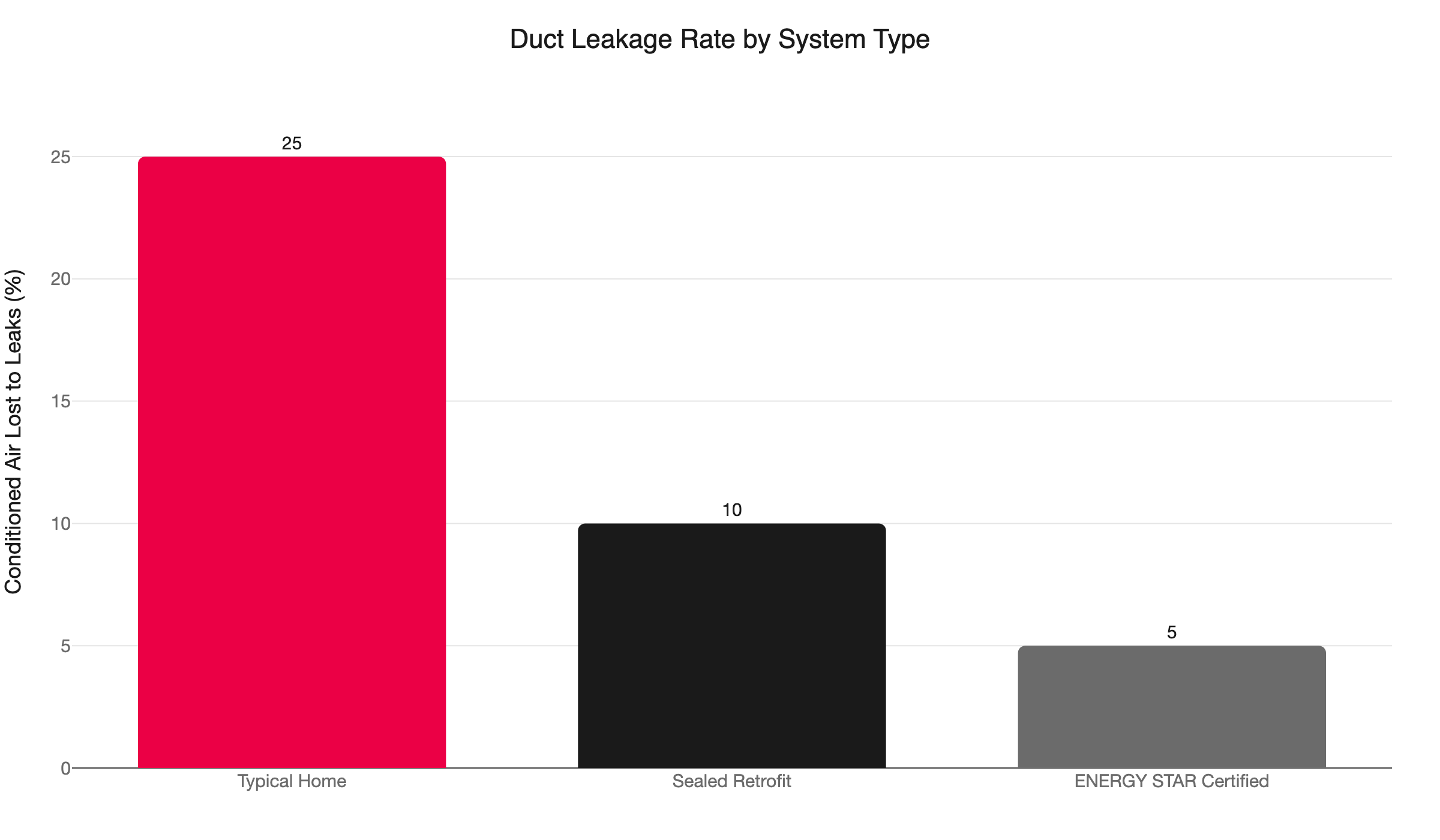
Duct Leakage Rate by System Type
## Why Most Dust-Reduction Advice Falls Short
Search "how to reduce dust in house HVAC" and every result says the same thing. Change your filter. Maybe upgrade to a MERV 8. Schedule a tune-up. That advice isn't wrong. It's incomplete in ways that matter here.
In the Twin Cities, a gas furnace runs from October through April. That's more than five months of heating season. Each cycle is a chance for dust to enter your air stream. A filter catches some of it. But if your return-air path is undersized or your ducts leak into an attic, the filter is working against a problem it was never designed to solve alone.
Three mechanical upgrades change the equation. A smarter filter strategy built around MERV 13. Continuous fan mode, which turns passive filtration into active filtration. And duct sealing, which stops attic and crawlspace air from entering your system in the first place.
All three are grounded in EPA and ENERGY STAR research. All three are jobs our locally owned and operated team in Ramsey, Minnesota, handles across the Twin Cities every week.
## What MERV Rating Should You Use to Reduce Dust?
**The short answer:** The EPA recommends MERV 13 or higher for capturing fine particles of greatest health concern. Most residential furnaces handle MERV 13 without restriction problems if you change the filter every four to six weeks during peak heating season.
Here's what the MERV scale actually measures. MERV stands for Minimum Efficiency Reporting Value. The scale runs from 1 to 20. Filters in the MERV 8-11 range, which most online guides recommend, capture large particles well. They miss a significant fraction of PM2.5 and PM10. Those are the fine particles that carry mold spores, pollen, and combustion byproducts.
PM2.5 refers to particles 2.5 micrometers in diameter or smaller. They're small enough to bypass your nose and throat. They reach deep into the lungs. A MERV 13 filter doesn't eliminate PM2.5 entirely, but it meaningfully reduces the concentration in recirculated air.
[The EPA's guide to air cleaners in the home](https://www.epa.gov/indoor-air-quality-iaq/guide-air-cleaners-home) sets a specific standard. MERV 13 must demonstrate at least 50% removal efficiency for the smallest tested particle range. That's the minimum for meaningful PM2.5 capture. A MERV 8 filter offers no comparable guarantee.
The usual objection is airflow restriction. A denser filter limits how freely air moves through the system. For most modern residential furnaces, a fresh MERV 13 filter is not a problem. A loaded MERV 13 filter is. The fix is frequency: change it every 30 days during winter. [ENERGY STAR recommends monthly filter checks during peak-use seasons](https://www.energystar.gov/saveathome/heating-cooling) for exactly this reason.
One option worth asking about: media filter cabinets. A 4-inch or 5-inch media cabinet mounts at the return-air connection and accepts MERV 13 media. It has far more surface area than a standard 1-inch slot filter. That extra surface area extends replacement intervals even at MERV 13 density, typically to six to twelve months.
For a deeper look at filter types and whole-home filtration options, our guide on [air purifiers, filters, and MERV ratings explained](/blog/air-purifiers-vs-filters-merv-ratings-explained/) covers the full comparison.
## Run Your Fan on Circulate Mode
Look at your thermostat. There's a fan setting, and most people leave it on "Auto."
Auto means the fan only runs when the system is actively heating or cooling. [According to EPA research on home air filtration](https://www.epa.gov/indoor-air-quality-iaq/guide-air-cleaners-home), that accounts for less than 25% of the time during a typical heating or cooling season. For the other 75%, your filter is completely idle.
Switching to "Circulate" or continuous "On" keeps air moving through the filter even without a heating or cooling call. Dust that settles in a still room gets stirred and recaptured. Particles that enter through a door or window get filtered instead of landing on your furniture.
On a variable-speed blower, continuous fan operation costs less than it sounds. The motor runs at a fraction of its full speed in circulate mode, not at full blast. The added electric cost is modest.
There's a secondary benefit in a Minnesota winter. Cold exterior walls create air that is slightly cooler and drier near the perimeter of a room. Continuous circulation helps even out those pockets. It doesn't replace a whole-home humidifier, but it reduces the temperature and humidity stratification that makes dry skin and static electricity worse.
One caveat: if your ducts have significant leakage, running the fan continuously also increases the rate at which you're pulling in outside air. That's the duct sealing argument again. These three upgrades are additive. Each one reinforces the others.
## Is Your Return Air System Making Your Dust Problem Worse?
**The short answer:** Yes, in many Twin Cities homes. An undersized or leaky return creates negative pressure. That pressure draws dusty air from wall cavities, attic bypasses, and crawlspaces directly into your air stream. No filter upgrade fixes a pathway problem.
The supply side of your duct system gets all the attention. Those are the vents in your floors, walls, and ceilings. They push conditioned air into rooms. The return side is quieter. It pulls air back to the furnace to be filtered and reconditioned.
When the return side is undersized, your system works like a vacuum with a blocked hose. It pulls air from wherever it can find it. That's often a wall cavity behind the air handler, a gap around a pipe penetration, or an attic bypass near the furnace. That air has never been filtered. It carries whatever has accumulated in those spaces for years, sometimes decades.
The particles that enter this way skip the filter entirely. They go directly into the blower wheel and through the heat exchanger before reaching your living space. A MERV 13 filter cannot intercept air it never sees.
You might notice this as a house that's consistently dusty despite regular filter changes. You might also notice a bedroom with a supply vent but no return. In that room, the door has to stay open or air can't get back to the furnace. That's a return-air imbalance showing up as both a comfort problem and a dust problem at the same time.
The fix is not a product purchase. It means adding return-air capacity where the system is undersized and sealing air bypasses near the air handler. Identifying the problem requires measuring static pressure on the return side and tracing where the system is drawing from. Our post on [return air problems in Twin Cities HVAC systems](/blog/return-air-problems-hvac-twin-cities/) describes the symptoms in detail and explains what a static pressure diagnostic looks like during a service call.
## Does Duct Sealing Actually Reduce Indoor Dust?
**The short answer:** Yes. Leaky return ducts in attics and crawlspaces pull attic insulation fibers, soil particles, and outdoor particulates into your home every time the furnace runs. Sealing them removes a direct pathway into your air stream.
Most homeowners think of duct sealing as an energy fix. The savings are real. [ENERGY STAR estimates that duct sealing can improve system efficiency by up to 20%](https://www.energystar.gov/saveathome/heating-cooling). But the indoor air quality case is just as compelling.
Here's the mechanics of the problem. Typical U.S. duct systems lose 20-30% of conditioned air through leaks. Those leaks concentrate at joints and connections. Any duct segment running through an attic, crawlspace, unheated basement, or garage is a likely leak location. When a return duct has a leaky joint in the attic, it doesn't just lose conditioned air. It also draws in whatever surrounds that joint: fiberglass insulation particles, accumulated dust, and unfiltered outdoor air.
That air enters your duct system upstream of the filter. It goes through the blower, through the heat exchanger, and into your living space. Your MERV 13 filter never sees it.
The sealing method matters. Use mastic sealant or metal-backed (foil) tape. Standard hardware-store duct tape is not rated for HVAC use and fails within a few years. A proper duct sealing job starts with a pressure test to locate the leaks, then seals them systematically from the air handler outward toward the farthest registers.
Professional duct sealing for a typical Twin Cities home runs around $1,300. For more on the process and what the diagnostic looks like, our post on [leaky ductwork and energy loss](/blog/duct-sealing-leaky-ductwork-energy-loss/) walks through each step.
## How Minnesota's Climate Amplifies Every One of These Problems
Most dust-reduction guides are written for a generic American climate. The Twin Cities is not a generic climate.
[Minneapolis falls in IECC Climate Zone 6](https://minnesotahvacauthority.com/minnesota-climate-hvac-requirements/), with a 99% heating design temperature of approximately -16 degrees Fahrenheit. A furnace in Ramsey or Maple Grove doesn't run a few hours a day. It runs all day, for five or more months straight. That changes the math on every upgrade covered in this post.
**Filter loading is faster.** A filter rated for 90 days in a mild climate loads in four to six weeks here. A loaded filter has two failure modes. It restricts airflow and forces the blower to work harder. It also develops enough pressure differential to push air around the edges of the filter frame. Either way, dust bypasses the filter. Monthly checks from October through April are appropriate for this climate, not overcautious.
**Duct leakage cycles more.** Each time the furnace kicks on, any leaky joint pulls in outside air and loses conditioned air. In a mild climate, that's a few hundred cycles per winter. In Minnesota, it's closer to a few thousand. The same 5% return-side leak has a much greater cumulative impact here than in a warm-weather state.
**Stack effect is stronger.** Cold air outside creates a pressure differential that drives warm interior air upward and out of the home. Replacement air enters through any gap the return-air path can reach. In a cold climate, that pressure difference is strong enough to meaningfully amplify return-air infiltration. Sealing duct bypasses near the air handler matters more here than in most of the country.
The payback on all three upgrades is faster in Minnesota because the operating season is so much longer.
## What Do These Upgrades Cost in the Twin Cities?
**The short answer:** MERV 13 filters run $15-$35 each, with roughly $100-$150 per year in filter costs at monthly replacement. Fan mode changes are free. Duct sealing for a typical home runs around $1,300. Return-air assessments start during any standard service call.
Let's put real numbers on each item.
**MERV 13 filter.** The filter itself runs $15-$35 depending on size. The added cost comes from replacing it more often. Budget $100-$150 per year for filters if you're checking monthly from October through April. That's a modest number for meaningful air-quality improvement.
**Fan mode change.** No cost. Adjust the setting at your thermostat today. If you have a smart thermostat, look for a "Circulate" or "Fan Schedule" option in the app. Two minutes of setup.
**Return-air assessment.** Static pressure readings during a routine service call will identify return-side problems. If return capacity needs to be added or bypasses need to be sealed, we'll give you a clear estimate before any work starts. Transparent pricing is how we operate.
**Duct sealing.** A professional sealing job on a typical Twin Cities home runs around $1,300. ENERGY STAR-level efficiency gains of up to 20% translate directly to savings on your heating bills. Over five months of heating season, the investment pays back. Add lower dust load and reduced wear on your blower and heat exchanger, and the return looks even better.
**Financing.** If you're looking at duct work, return-air upgrades, or any larger HVAC project, ask about financing options when you call. Spreading a $1,300 project over 12 months makes it easy to start this season rather than waiting until next.
## What About Air Purifiers and Whole-Home IAQ Equipment?
**The short answer:** Source control first. Address filter grade, fan mode, return-air paths, and duct leakage before adding downstream equipment. [Whole-home air purifiers](/blog/electronic-air-cleaner-maintenance-minnesota/) complement a sealed system. They can't compensate for a return duct that vacuums attic air into your living space.
Filters, fan mode, return-air sealing, and duct sealing work upstream. They reduce the dust load entering your air stream in the first place. Air purifiers and whole-home IAQ systems work downstream. They catch what the filter misses.
Both approaches are worth doing. But the sequence matters. A whole-home air purifier installed over a leaky return duct is a losing battle.
Once the mechanical side is addressed, our [indoor air quality services](/indoor-air-quality/) include whole-home air purification, humidity control, and ventilation systems that pair well with a MERV 13 filter setup. Together, they address a much broader range of contaminants than either approach alone.
Context for why all of this matters: [the EPA reports that people spend approximately 90% of their time indoors.](https://www.epa.gov/indoor-air-quality-iaq/air-cleaners-and-air-filters-home) Your HVAC system is either your home's first line of defense against particulates, or it's a pathway for attic and crawlspace air into your living space. The three upgrades in this post put it on the right side of that equation.
## Ready to Reduce the Dust in Your Twin Cities Home?
Northern One Hour is a locally owned and operated HVAC company based in Ramsey, Minnesota. We serve Minneapolis, St. Paul, Blaine, Maple Grove, Plymouth, Brooklyn Park, Woodbury, and the rest of the Twin Cities metro.
Our technicians arrive when they say they will. That's the promise behind "Always On Time… Or You Don't Pay a Dime!(R)." It applies to every service call, every duct inspection, and every tune-up we run.
If you're dusting the same surfaces week after week, the cause is almost always mechanical. A leaky return, undersized duct capacity, or filter loading faster than you realize. We can find it and fix it.
Call **(763) 260-6662** or book online to schedule a service visit. We'll give you a straight answer on what your system actually needs.
---
# Kitchen Range Hood Makeup Air: A Minnesota Homeowner's Guide
URL: https://northernonehour.com/blog/range-hood-makeup-air-combustion-safety-minnesota/
Published: 2026-09-25 | Category: Indoor Air Quality
A high-CFM range hood can depressurize your tight Minnesota home and backdraft your furnace. Learn what makeup air systems do and what MN code requires.
Key Takeaways
- Any hood capable of exhausting over 400 CFM, paired with an atmospheric furnace or water heater, requires dedicated makeup air under IRC M1503.6 and MN Chapter 1346.
- Backdrafting can start at 350 CFM in a tight home - below the 400 CFM code trigger. A 300 CFM hood in a tight 1.5 ACH50 home creates roughly 30 Pa of depressurization; the safe limit with combustion appliances is 3 Pa.
- Minnesota code requires makeup air to arrive at the supply diffuser at 50°F or warmer. With Minneapolis's design temperature of -16°F, a duct heater is mandatory in every compliant Minnesota system.
- The makeup air damper and any supply fan must be electrically interlocked with the hood. Passive gravity dampers often do not satisfy this requirement at high flow rates.
- A basic motorized-damper system runs $800-$1,500 installed. A full active system with a duct heater costs more. A permit is required for all installations.
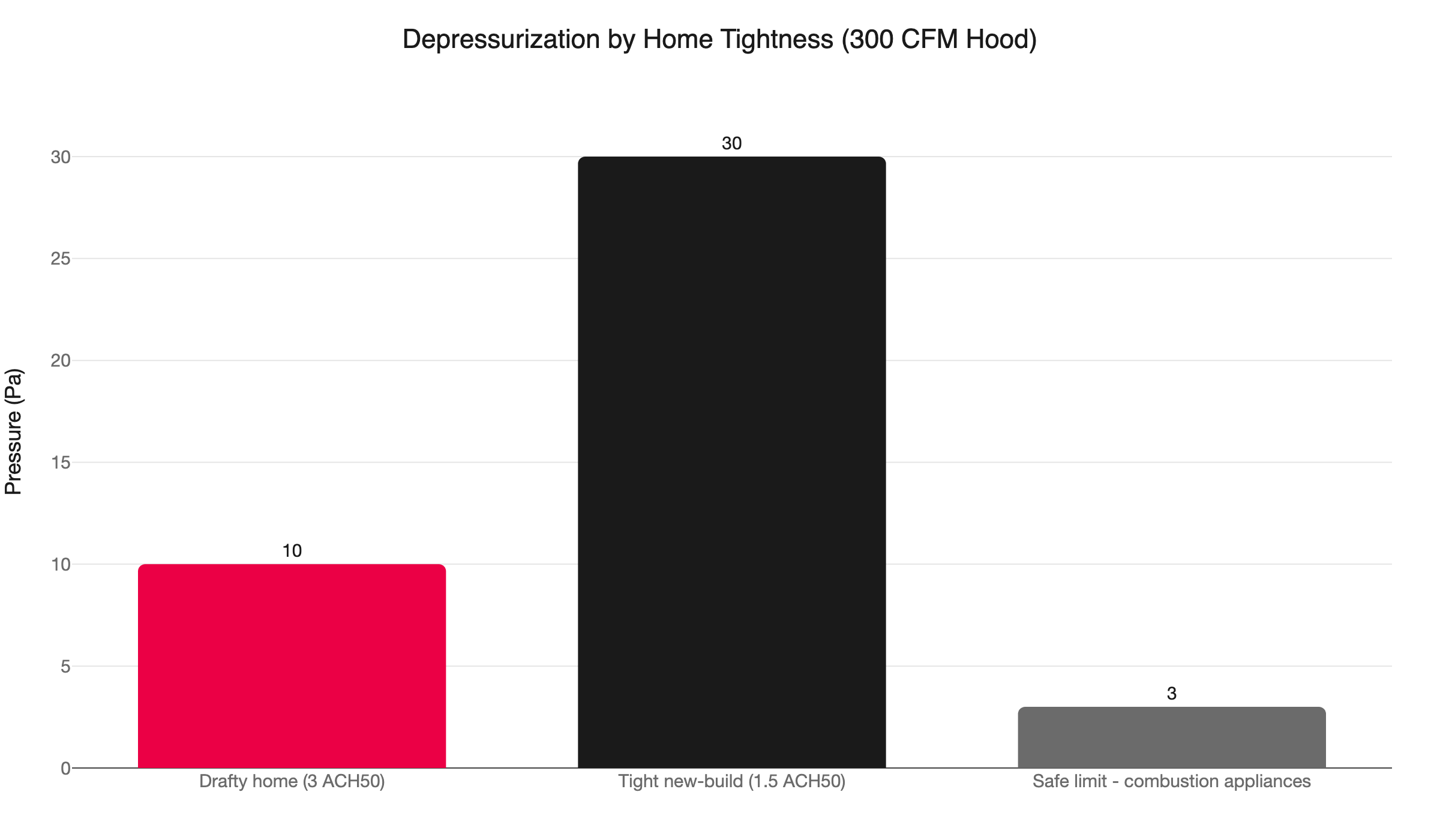
Depressurization by Home Tightness (300 CFM Hood)
## What Is Kitchen Range Hood Makeup Air?
Makeup air is the fresh supply air brought into your home to replace what your range hood exhausts outside. When your hood runs, it pushes air out through a duct. That air has to come from somewhere.
In an older drafty home, replacement air infiltrates through gaps in the building envelope. In a modern energy-tight home, there are no significant gaps. The house pulls replacement air from whatever opening it can find. That opening is often a furnace flue, a water heater vent, or a fireplace chimney. A makeup air system gives that replacement air a controlled, safe path into the house instead.
The distinction matters because an uncontrolled replacement path is also an uncontrolled path for combustion gases to travel in reverse. That reversal is backdrafting, and it is the central risk this post addresses.
---
## Why Do Tight Minnesota Homes Have a Bigger Problem?
**Tighter homes depressurize faster for the same hood CFM.** A 300 CFM hood in a drafty 3 ACH50 home creates roughly 10 Pascal of negative pressure. The same hood in a tight 1.5 ACH50 home - typical of new Minnesota construction - creates roughly 30 Pa. The safe limit when combustion appliances are present is 3 Pa or less.
Those figures come from [Energy Vanguard's analysis of range hood depressurization](https://www.energyvanguard.com/blog/range-hood-makeup-air-the-basics/). The math scales sharply as homes get tighter.
Minnesota's energy code currently caps new homes at 3 ACH50. [A Fresh Energy analysis of the pending code update](https://fresh-energy.org/updating-minnesotas-residential-energy-code-could-lower-emissions-costs) moves the next ceiling to roughly 2.5 ACH50 average. Minnesota new homes averaged a HERS index of 47 in 2024. That means they are built roughly 53% more efficiently than a code-minimum standard home. That efficiency is the goal. But it means a high-CFM range hood in a new Twin Cities build creates dramatically more depressurization than the same hood would have in a 1980s construction.
The common renovation profile here makes this urgent. A homeowner buys a 1990s two-story in Maple Grove or Blaine, upgrades the kitchen with a 600 CFM pro-style hood, and still has the original mid-efficiency furnace and tank water heater on B-vent in the mechanical room. That is exactly where backdrafting happens - and the home does not need to be a certified passive house for it to be a problem.
---
## What Happens When Your Hood Pulls Too Much Air?
**At enough negative pressure, combustion gases in your furnace or water heater flue reverse direction and enter your living space.** That is a backdraft. The primary risk is carbon monoxide. Secondary symptoms include doors that resist opening, cold drafts near electrical outlets and recessed lights, and pilot lights that keep going out.
[Green Building Advisor's analysis of makeup air code history](https://www.greenbuildingadvisor.com/article/makeup-air-for-kitchen-exhaust) puts specific numbers on this: a natural-draft gas appliance can begin backdrafting at hood flow rates of 350 CFM or less. A gas fireplace in a tight home can backdraft at 250 CFM. Both are below the 400 CFM national code trigger.
These are not rare conditions in the Twin Cities. A 1990s or 2000s home that has been [air-sealed and re-insulated](/blog/spray-foam-insulation-combustion-air-furnace-problems-minnesota/) during a renovation, but still carries B-vent combustion appliances in the mechanical room, fits this profile exactly. A 350 CFM hood is not an aggressive commercial unit. It is a mid-range residential model.
Backdrafting is not always obvious. A brief depressurization event during a single cooking session may not produce enough CO to trigger a detector immediately. Repeated events over weeks or months can cause symptoms that look like illness before anyone identifies the source. If your home has a high-CFM hood and atmospheric combustion appliances, this risk deserves a direct answer, not a wait-and-see approach.
---
## Does the 400 CFM Code Threshold Fully Protect You?
**No. The 400 CFM rule sets a floor for when makeup air is required - not a guarantee that homes below the threshold are safe.**
[IRC M1503.6](https://codes.iccsafe.org/s/IRC2021P3/chapter-15-exhaust-systems/IRC2021P3-Pt05-Ch15-SecM1503.6) requires makeup air when any hood is capable of exhausting more than 400 CFM with atmospherically vented combustion appliances present. But as noted above, backdrafting can begin at 350 CFM in a tight home. The code reflects the average; your home may not be average.
IRC M1503.6 also makes an important carve-out: all-electric homes and homes with only sealed-combustion appliances are technically exempt. If your furnace has a PVC exhaust pipe and your water heater is a heat pump model, there is no atmospheric flue to backdraft. If you have even one atmospheric appliance in the mechanical room, the risk applies at CFM levels below the code trigger.
The practical rule: if your hood is rated at 400 CFM or above and you have any natural-draft appliance, makeup air is required. If your hood is below 400 CFM but your home is tight and you still have combustion appliances, ask your HVAC technician whether your specific setup crosses the safety threshold.
---
## What Does Minnesota's Mechanical Code Actually Require?
**MN Chapter 1346 requires ducted kitchen exhaust hoods to have makeup air provided per MN Rules Part 1346.0501. Minnesota adds requirements beyond the national IRC baseline, including a temperature floor for incoming air and mandatory electrical interlocking.**
[MN Rules Part 1346.0505](https://www.revisor.mn.gov/rules/1346.0505/) is the governing provision for ducted kitchen exhaust. The key requirements:
- **Electrical interlock:** The makeup air damper and any supply fan must activate whenever the hood runs. A passive gravity damper that opens from negative pressure alone often does not reliably meet this at high CFM.
- **Temperature floor:** Per [MN Rules Part 1346.0508](https://www.revisor.mn.gov/rules/1346.0508/), makeup air must arrive at the supply diffuser at 50°F or above. In Minnesota, that is a code floor, not a comfort preference.
- **Matched airflow:** The makeup air supply must roughly match the hood's exhaust rate to maintain safe pressure balance across the home.
Local AHJs in Hennepin County, Minneapolis, St. Paul, and Ramsey County inspect for these requirements. A 600 CFM hood installed without a compliant makeup air system will fail a rough-in inspection. See our post on [when an HVAC permit is required in Minnesota](/blog/hvac-permit-when-required-minnesota/) for a full rundown of what triggers that inspection process.
---
## Why Does -16°F Change Everything About Makeup Air?
**Untempered outdoor air at Minneapolis's design temperature of -16°F entering your kitchen at 600 CFM is a safety and comfort problem, not just a theoretical code gap.** MN code's 50°F floor means your duct heater must bridge a 66-degree delta on the coldest design day. An undersized or absent heater fails both the code requirement and the people in the kitchen.
Minneapolis's ASHRAE 99% design heating temperature is -16°F. That is the temperature your entire heating system is sized around. When your makeup air system pulls air from outside at that temperature, a duct heater must condition it to at least 50°F before it reaches the kitchen supply diffuser.
[Fantech's guidance on makeup air for tight homes](https://www.fantech.net/en-us/expertise/fantech-5-hub/blog/safety/if-the-home-is-built-tight-you-need-to-provide-makeup-air) describes pre-heating as a feature for mild climates and a necessity for cold ones. In the Twin Cities, it is the latter. Every active makeup air system installed here needs a heating element capable of conditioning air from the design minimum to code temperature at your hood's maximum CFM rating.
For homes with a hydronic boiler, a coil tapped into the heating loop is one efficient approach. For forced-air homes, an inline electric duct heater is more common. Your contractor sizes the heater to your hood's rated CFM and local design conditions - not a national average.
---
## What Types of Kitchen Range Hood Makeup Air Systems Are Available?
**Two main categories: passive motorized-damper systems and active fan-forced systems. Both require a duct heater for Minnesota use. A third option pairs the makeup air strategy with an HRV for homes planning a broader ventilation upgrade.**
**Passive systems** use a motorized damper that opens when the hood runs. The hood's negative pressure draws outdoor air in through a dedicated makeup air duct. They are simpler and lower in cost. In a moderately tight home with a hood in the 400-600 CFM range, a passive system with a properly sized duct heater can meet Minnesota code. Installed cost starts around $800-$1,500 for the damper, controls, and duct penetration.
**Active (fan-forced) systems** add a supply fan that modulates to match the hood's exhaust rate. A controller opens the motorized damper, runs the supply fan, and activates the duct heater together whenever the hood operates. The fan maintains the home within the 3 Pa safety window even at full hood speed. These systems are the right choice for hoods above 600 CFM and for very tight homes where a passive system cannot maintain adequate flow.
A third option integrates the makeup air strategy with an HRV (Heat Recovery Ventilator). An HRV recovers heat from the outgoing exhaust stream and uses it to pre-condition incoming fresh air. For homes already planning a whole-home mechanical ventilation upgrade, this pairing can be efficient and rebate-eligible. See our full comparison of [ERV vs. HRV systems for Minnesota homes](/blog/erv-vs-hrv-which-ventilation-system-minnesota/) to understand which type fits your situation.
---
## What Does a Makeup Air System Cost in Minnesota?
**A basic passive system with a motorized damper and duct heater starts around $800-$1,500 installed. A full active fan-forced system with a duct heater costs more, depending on fan size and duct routing. Get a quote based on your specific hood CFM and home configuration.**
Cost variables include:
- Hood CFM rating - higher CFM requires a larger heater and likely a supply fan
- Duct routing distance from the outdoor intake to the kitchen
- Whether an existing duct stub-out can be reused or new penetrations are needed
- Heater type: electric inline vs. hydronic coil off a boiler loop
Financing is available for larger kitchen ventilation projects. Call (763) 260-6662 to ask about current options.
One rebate worth checking: Xcel Energy offers a $400 rebate for an HRV or ERV with 65% or higher Sensible Heat Recovery Efficiency. If your makeup air strategy incorporates an HRV, you may qualify. See the [Xcel and CenterPoint 2026 rebate summary](https://centralminnesotaheatingandcooling.com/blog/xcel-centerpoint-hvac-rebates-2026) for current eligibility details. Xcel gas furnace rebates ended January 1, 2026, but the HRV/ERV program remains active.
---
## How Does Makeup Air Connect to Combustion Air and Backdrafting?
**Makeup air and combustion air are separate systems solving related problems. Makeup air keeps the house pressure-neutral. Combustion air supplies the burner. When both are absent, the furnace becomes a backdraft path for the kitchen, and CO enters the living space.**
A furnace already operating near its combustion air limits is much more vulnerable when a 600 CFM hood pulls the house negative at the same time. Our post on [exhaust fans and furnace backdraft in Minnesota homes](/blog/exhaust-fans-furnace-backdraft-combustion-air-minnesota/) covers that full mechanical picture in detail.
If your home has a gas fireplace on top of a furnace and water heater, you have three atmospheric appliances that can become backdraft paths. The combined risk is higher than any single appliance in isolation. If you are planning a kitchen renovation with a high-CFM hood, design the makeup air system before the hood goes in - not after the rough-in inspection comes back failed.
---
## Do You Need a Permit for a Makeup Air System in Minnesota?
**Yes, in almost every case.** New duct penetrations through the building envelope, new electrical circuits for a duct heater, and new mechanical equipment connected to an exhaust system all trigger a permit in Hennepin and Ramsey counties.
This is not a step to skip. A makeup air system installed without a permit creates real liability if a backdraft event causes a [carbon monoxide injury](/blog/hvac-attached-garage-carbon-monoxide-risk-minnesota/). The inspection is the verification that the system was designed and installed correctly - it protects you, not just the code.
Our team handles the permit application as part of every makeup air installation. You do not navigate the AHJ process yourself. When we finish, you have a stamped permit and an inspected, code-compliant system.
---
## What to Do If You Already Have a High-CFM Hood and No Makeup Air
If your kitchen already has a 400 CFM or higher hood and no dedicated makeup air system, take these steps now:
1. **Identify your combustion appliances.** If your furnace has a PVC exhaust pipe and your water heater is a heat pump unit, the backdraft risk is low. If either appliance has a B-vent metal flue, you have atmospheric combustion and the risk is real.
2. **Run a simple smoke test.** With the hood running at full speed, hold a lit incense stick near your water heater's draft hood. If the smoke pulls downward into the appliance, you have active backdrafting.
3. **Place a CO detector near the mechanical room.** This is a stop-gap, not a fix. A slow or intermittent backdraft may not spike the detector right away, but a detector in that space gives you the best early warning.
4. **Call us for an assessment.** Our team will evaluate your home's tightness, hood CFM, and appliance configuration and spec the right makeup air system for your situation.
---
## Ready to Add Makeup Air to Your Twin Cities Kitchen?
We are locally owned and operated in Ramsey, MN. Our team designs, installs, and permits makeup air systems for homes across the Twin Cities - Minneapolis, St. Paul, Blaine, Maple Grove, Plymouth, Brooklyn Park, Woodbury, and Bloomington.
We show up when we say we will. That is the promise: "Always On Time… Or You Don't Pay a Dime!(R)"
Call **(763) 260-6662** or book online through our [indoor air quality services page](/indoor-air-quality/) to schedule a consultation. If your hood is already installed and you are not sure whether you need makeup air, we will assess your setup and give you a straight answer.
---
## Key Takeaways
- Kitchen range hood makeup air replaces exhausted air so your home stays at safe pressure.
- Tight Minnesota homes (1.5-3 ACH50) depressurize three times faster than drafty older homes for the same hood CFM.
- Backdrafting can begin at 350 CFM in a tight home - below the 400 CFM code trigger.
- MN Chapter 1346 requires makeup air to arrive at 50°F or above at the supply diffuser. At Minneapolis's -16°F design temp, a duct heater is mandatory.
- The damper and fan must be electrically interlocked with the hood. Passive gravity-only systems often do not satisfy this requirement.
- A basic passive system starts around $800-$1,500 installed. A permit is required for every makeup air installation in Minnesota.
- Call (763) 260-6662 or book online to schedule an assessment.
---
# What Does an AC Tune-Up Include? 20-Point vs. Filter-Swap
URL: https://northernonehour.com/blog/ac-tune-up-what-is-included-cost-minnesota/
Published: 2026-09-24 | Category: Cooling
A point-by-point breakdown of what a real AC tune-up covers, and what a $29 filter-swap special legally cannot touch. Your Twin Cities guide.
Key Takeaways
- A real AC tune-up covers 20 or more service checkpoints and takes 60 to 90 minutes minimum.
- A filter-swap special covers roughly three items: a new filter, a coil rinse, and a visual check.
- [EPA Section 608](https://www.epa.gov/section608) requires certification to handle refrigerants including R-410A and R-454B. Without it, a technician cannot legally verify your charge or inspect for leaks.
- [DOE/OSTI research](https://www.osti.gov/pages/servlets/purl/2439551) found only 38% of tested residential systems had correct refrigerant charge. Most systems run undercharged.
- A 10% refrigerant undercharge cuts efficiency by roughly 20%. A dirty evaporator coil raises a 3-ton unit's electricity use by 39%.
- Manufacturer warranties require documented annual service. A written checklist with actual readings is documentation. A receipt is not.
- Schedule before late May in the Twin Cities. Cottonwood seeds and maple helicopters clog condenser coils quickly once the season peaks.
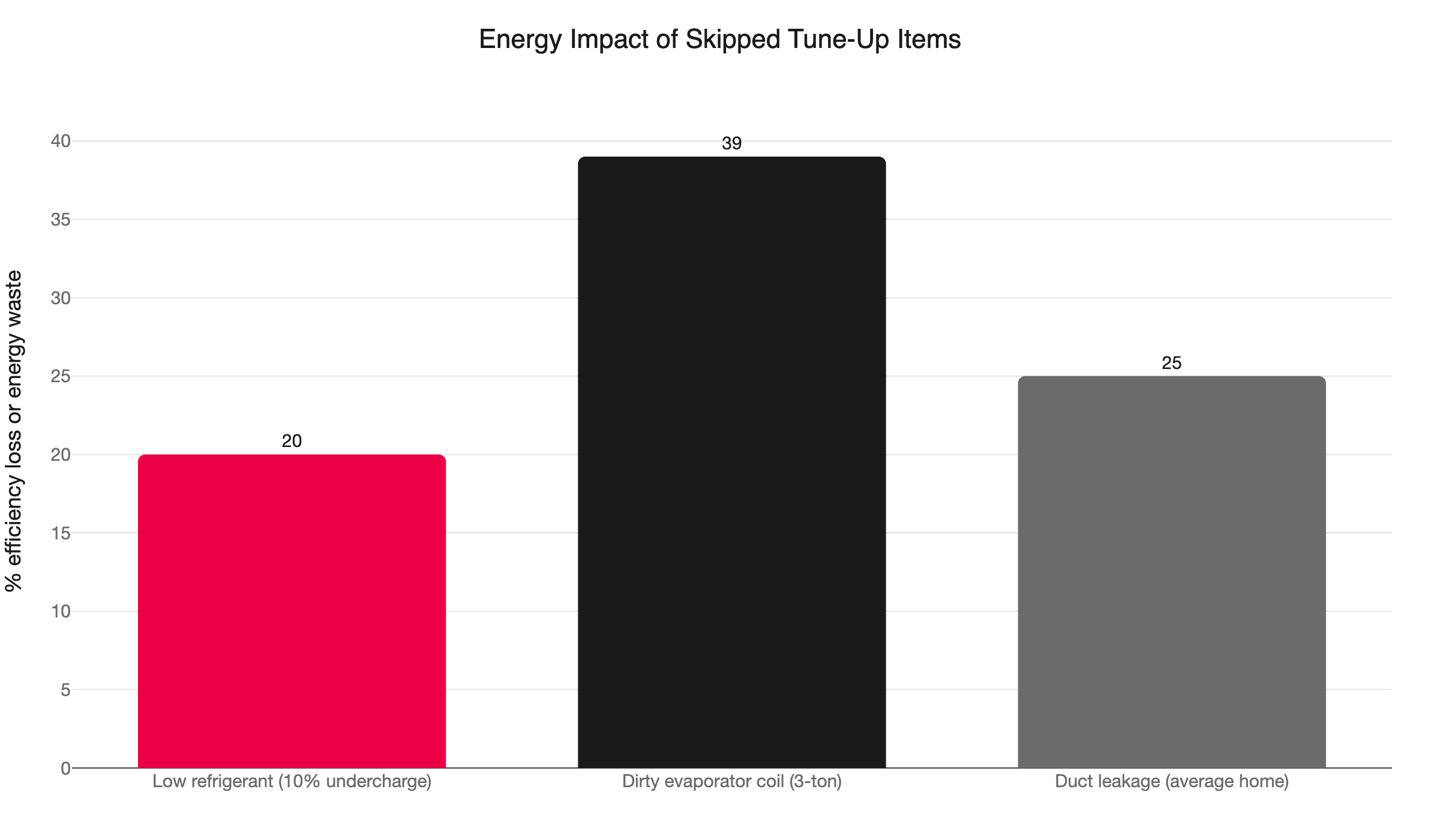
Energy Impact of Skipped Tune-Up Items
## What Does an AC Tune-Up Include?
**A real AC tune-up covers 20 or more checkpoints. These include refrigerant charge verification, capacitor and contactor testing, coil inspection, condensate drain clearing, blower motor assessment, airflow measurement, thermostat calibration, and a written record of all readings. Plan for 60 to 90 minutes on site.**
What a $29 filter-swap special covers: a new filter, a rinse of the outdoor condenser coil, and a quick visual. Those three steps are real. They are just not a tune-up.
The gap between the two is not only effort. Part of it is federal law. Technicians without [EPA Section 608 certification](https://www.epa.gov/section608) cannot legally handle refrigerant. That single fact removes the most important checkpoints from the list. This post maps every item side by side so you know exactly what you are getting and what you are not.
## The Real Tune-Up vs. the Filter-Swap: A Side-by-Side Look
Nobody publishes this comparison side by side. Here it is.
| Service item | Real 20-point tune-up | $29 filter-swap special |
|---|---|---|
| Replace or inspect air filter | Yes | Yes |
| Clean condenser coil and inspect fins | Yes | Rinse only |
| Test run capacitor (microfarad reading) | Yes | No |
| Test start capacitor (microfarad reading) | Yes | No |
| Inspect contactor for pitting and wear | Yes | No |
| Check voltage and amperage at compressor | Yes | No |
| Check amperage at condenser fan motor | Yes | No |
| Verify refrigerant charge (superheat/subcooling) | Yes - EPA 608 required | No - legally cannot |
| Inspect for refrigerant leaks | Yes - EPA 608 required | No - legally cannot |
| Inspect refrigerant line insulation | Yes | No |
| Inspect evaporator coil | Yes | No |
| Clear and flush condensate drain line | Yes | No |
| Check condensate pan for algae and cracks | Yes | No |
| Test blower motor amperage | Yes | No |
| Inspect blower wheel for buildup | Yes | No |
| Measure supply and return temperature differential | Yes | No |
| Lubricate motor bearings where applicable | Yes | No |
| Check electrical connections for corrosion | Yes | No |
| Inspect disconnect and breaker | Yes | No |
| Test thermostat calibration and staging | Yes | No |
| Record all readings for documentation | Yes | No |
The refrigerant rows carry the most legal weight. Under [EPA Section 608 of the Clean Air Act](https://www.epa.gov/section608), any technician who handles refrigerant during maintenance, service, repair, or disposal must hold EPA 608 certification. R-410A and R-454B both fall under this rule. A technician without that certification cannot legally open the refrigerant circuit, add charge, or perform a leak test. That is federal law, not an opinion about quality.
A real tune-up takes 60 to 90 minutes. A filter-swap takes about 20. There is not enough time in 20 minutes to run the electrical checks, pull the air handler access panel, and document the readings. If the technician is gone before your coffee finishes brewing, the refrigerant was never touched.
## Why Can't a $29 Special Touch the Refrigerant?
**Federal law requires EPA Section 608 certification to handle refrigerants such as R-410A and R-454B during AC service. Without that credential, a technician cannot legally check charge, add refrigerant, or inspect for leaks. Those are not optional steps. They address the most common source of residential AC efficiency loss.**
[DOE/OSTI research](https://www.osti.gov/pages/servlets/purl/2439551) tested more than 4,000 residential cooling systems and found only 38% had correct refrigerant charge. A 15% undercharge is common in the field. The EPA estimates residential systems lose 5 to 11% of their charge through normal leakage every year.
A [Purdue/IRACC study](https://docs.lib.purdue.edu/cgi/viewcontent.cgi?article=2121&context=iracc) found that a 10% refrigerant undercharge cuts efficiency by roughly 20%. That is not gradual creep. It is a persistent energy penalty every hour the system runs.
Starting point matters, too. Many systems are installed undercharged. Refrigerant charge is factory-set for a standard line set length. When an installer runs a longer line set to reach a difficult location, the factory charge is short from the first day of operation. The only way to know is to measure, and the only technician who can measure it legally is one holding EPA 608 certification with calibrated gauges.
Our team verifies refrigerant charge on every tune-up visit. For more on what refrigerant undercharge looks like from inside the house, see [how AC refrigerant recharge works and what it costs in the Twin Cities](/blog/ac-refrigerant-recharge-how-it-works-cost-twin-cities/).
## What Does a Dirty Evaporator Coil Actually Cost You?
**A moderately dirty evaporator coil forces a 3-ton unit to use 39% more electricity to achieve the same cooling. For a 5-ton system, the penalty reaches 47%. The evaporator coil sits inside the air handler and is invisible without removing the access panel, which a filter-swap visit never opens.**
The evaporator coil is where warm return air transfers its heat to the refrigerant. When dust, pollen, and debris coat those fins, heat transfer slows. The compressor works harder. Run times grow longer. Your Xcel bill shows every extra minute of that effort.
The [EPA notes](https://www.epa.gov/indoor-air-quality-iaq/improving-indoor-air-quality) that most forced-air systems do not bring fresh outdoor air into the house mechanically. The filter and the evaporator coil are the two main levers a homeowner has over what the system circulates. A coil that is never inspected degrades both air quality and efficiency through the entire cooling season.
A tune-up does not always include a deep evaporator coil cleaning, which is a separate service. But it always includes an inspection. When a technician opens the air handler and finds heavy buildup, you get the information you need to make a call. A filter-swap visit never generates that information.
For more on what a dirty coil produces inside the house, see [dirty evaporator coil symptoms in Twin Cities homes](/blog/dirty-evaporator-coil-ac-symptoms-twin-cities/).
## Why Does Timing Matter for Twin Cities Homeowners?
**In the Twin Cities, schedule your tune-up in April or early May. Cottonwood seeds and maple helicopters settle directly on condenser coils from late May through early June, blocking airflow like a blanket. A June appointment finds a coil already impaired. Scheduling early gives you time to fix what the tune-up finds before the first serious heat.**
Minnesota's winters add wear that warmer markets never face. Freeze-thaw cycles shift the condenser pad and stress refrigerant line connections. Rodents nesting in equipment over winter chew through wiring and insulation. A thorough spring tune-up checks both. The electrical inspection finds damaged wire before it arcs. The refrigerant line check finds stress damage before it becomes a leak.
The refrigerant picture has also shifted in 2026. New AC equipment installed in Minnesota now uses R-454B or R-32. Systems already running R-410A can still be serviced. But supply will tighten the same way R-22 supply did a decade ago. Knowing your current charge level and whether it is holding from year to year is more valuable now than it was five years ago. Our post on the [AC refrigerant transition to R-454B](/blog/ac-refrigerant-change-r454b-what-homeowners-need-to-know/) covers what Minnesota homeowners with existing equipment need to know.
## What Do Capacitors and Electrical Checks Have to Do With AC Tune-Ups?
**Capacitors are the leading cause of summer AC failures. They weaken under heat and electrical surges, and a microfarad test catches the decline before the failure happens. A filter-swap visit does not test capacitors. By the time a weak capacitor shows visible symptoms outside the unit, it has usually already tripped the system.**
Every central AC system has at least two capacitors: one to help start the compressor and one to keep it running. Each is rated in microfarads. A new capacitor reads close to its rating. A weakening one reads lower. A certified technician with the right meter sees that trend at a scheduled tune-up, before it becomes a breakdown on a peak-demand afternoon.
The contactor is the second common failure point. It is the high-voltage switch that connects the compressor and condenser fan to incoming power. Every start cycle arcs across the contact surfaces, leaving microscopic pits over time. A pitted contactor sticks, draws excess current, and eventually fails. It tends to fail when the system has been cycling hard on the hottest days of the year.
A real tune-up tests capacitor microfarad values and inspects the contactor for pitting and wear. Both are in the electrical section of the comparison table above. Neither appears on a filter-swap checklist.
For more on what a failing capacitor looks like and what replacement costs in the Twin Cities, see [bad AC capacitor symptoms and replacement cost](/blog/bad-ac-capacitor-symptoms-cost-twin-cities/).
## How Do Manufacturers Handle Warranty Documentation?
**Most manufacturers require documented annual maintenance to keep the warranty valid. Documented means a signed service report with dated readings, not a receipt. A folder of filter-swap receipts typically fails a warranty dispute, because a manufacturer needs actual measurements, not proof that someone visited.**
That distinction matters when a compressor fails in year five of a 10-year warranty. The manufacturer's first question is whether the unit received annual documented service. A report showing refrigerant charge values, capacitor microfarad readings, temperature differential measurements, and a dated technician signature is documentation. A receipt is not.
Tune-up records also create a year-over-year trend line that shows more than current condition. A capacitor at 38 microfarads one spring and 31 microfarads the next is trending toward failure. A refrigerant charge that drops year over year points to a slow leak. Both are better caught at a scheduled tune-up than when the system stops cooling mid-July.
Our service reports record every reading and are tied to your service address. That paper trail is part of what you are paying for when you schedule with us.
## What Happens When a Tune-Up Finds a Bigger Problem?
**If a tune-up finds a failing compressor, a dropping refrigerant charge, or electrical damage beyond safe repair, the next conversation is replacement. That is actually the best outcome: you found the problem before an emergency, with time to plan instead of calling for help on a Sunday in August.**
The dollar difference between a planned repair and an emergency call is real. A capacitor replaced at a scheduled tune-up runs $195 to $500 parts and labor. The same capacitor failing on a Saturday afternoon in peak summer triggers an after-hours call. Emergency service carries a premium of $180 to $270 per hour on top of standard rates. One tune-up that catches a weak capacitor pays for itself.
If the tune-up points toward a full system replacement, the rebate picture is worth reviewing before you decide. Xcel Energy offers up to $500 on qualifying central AC (SEER2 16+) and up to $1,500 on cold-climate heat pumps for Minnesota customers. These require a participating contractor and a completed Trade Ally form. Rebate checks arrive 6 to 10 weeks after installation. For current details and how to layer other available incentives, see [Xcel and CenterPoint HVAC rebates for Minnesota homeowners](/blog/xcel-centerpoint-hvac-rebates-minnesota/).
The IRS 25C Energy Efficient Home Improvement Credit listed up to $600 for qualifying central AC and up to $2,000 for qualifying heat pumps as of the IRS page last reviewed April 28, 2026. Credit eligibility can change. Verify current status at [irs.gov](https://www.irs.gov/credits-deductions/energy-efficient-home-improvement-credit) before counting on it.
## Book Your AC Tune-Up with Northern One Hour
Northern One Hour is locally owned and operated in Ramsey, MN. We serve Minneapolis, St. Paul, Blaine, Maple Grove, Plymouth, Brooklyn Park, Woodbury, Bloomington, and the surrounding Twin Cities metro.
We show up when we say we will. That commitment runs through every service we offer: "Always On Time… Or You Don't Pay a Dime!(R)." When a tune-up finds something worth addressing, we show you the reading, explain what it means in plain language, and give you the options without pressure.
A single tune-up visit runs $95 to $250. Our annual maintenance plan covers your spring AC tune-up and fall furnace tune-up for $195 to $390 per year. For most homeowners, the plan is the better value. The first visit often identifies repairs that save several times the plan cost in avoided breakdowns and lower monthly utility bills.
Call (763) 260-6662 or [schedule your AC maintenance online](/air-conditioning/air-conditioning-maintenance/). Book before late May to get ahead of the cottonwood season and lock in the date you want.
---
# Heat Pump High Electric Bill in Winter: Why It Happens
URL: https://northernonehour.com/blog/heat-pump-electric-bill-spike-winter-minnesota/
Published: 2026-09-24 | Category: Heating
Heat pump high electric bill in winter usually traces to aux or emergency heat running too much. Learn what's normal, what's a config error, and how to fix it.
Key Takeaways
- Aux heat uses electric resistance strips. They deliver roughly one-third the heat output of your compressor per kilowatt-hour.
- Emergency heat bypasses the compressor entirely. Never leave it on unless the heat pump is broken.
- The balance point is the outdoor temperature where your heat pump needs backup help. It has two versions: a physics number (thermal) and a cost number (economic). Most technicians only set one.
- A lockout temperature set too high is the most common configuration error on heat pump systems. It forces aux heat to run at temperatures the heat pump could handle alone.
- Cold-climate heat pumps rated to -13°F should cover the large majority of your annual heating load without heavy aux heat use.
- Xcel Energy's Electric Space Heating Rate lowers your per-kWh cost during heating season. Most homeowners who qualify have never enrolled.
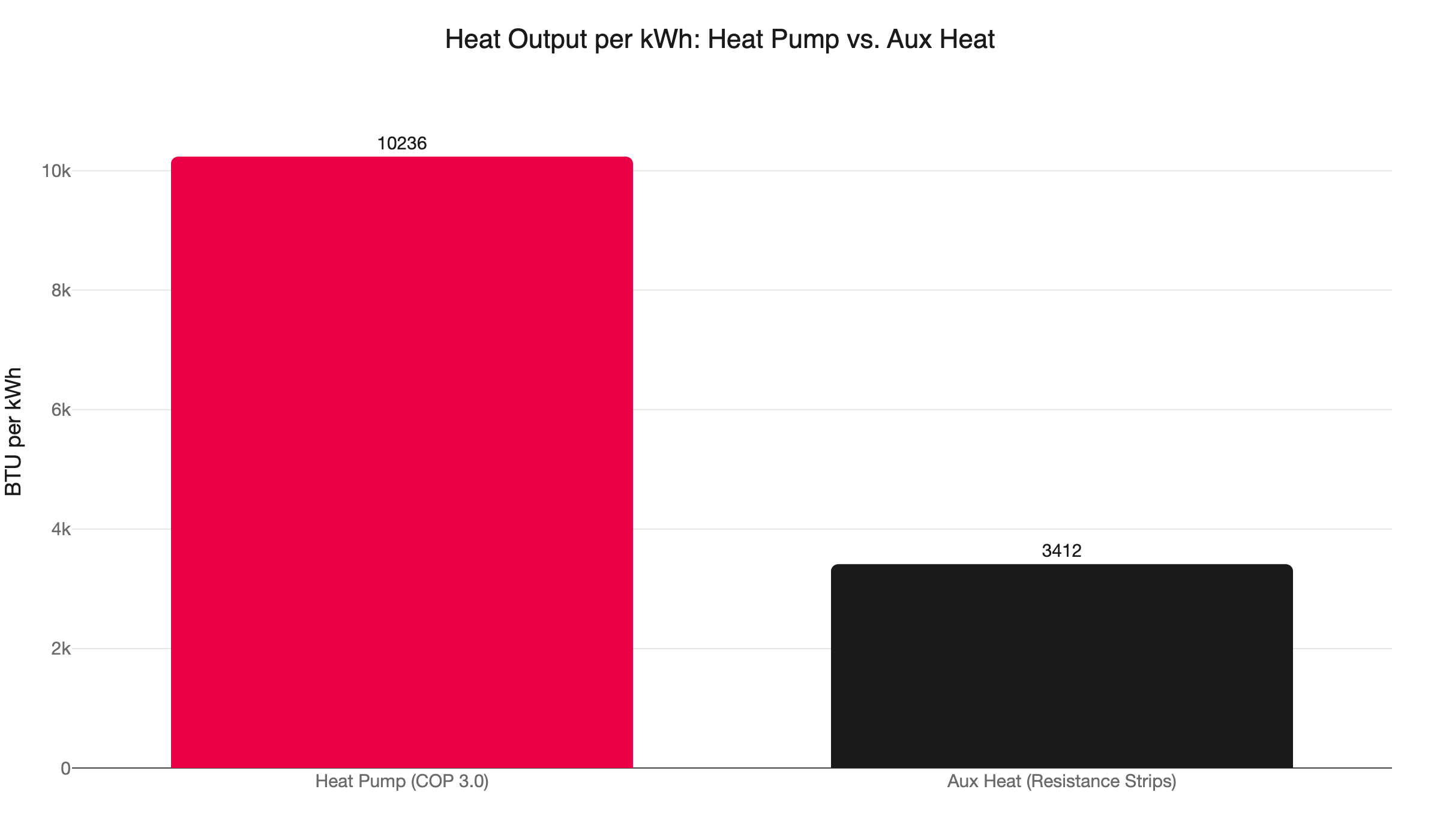
Heat Output per kWh: Heat Pump vs. Aux Heat
## Why Does Your Heat Pump Have a High Electric Bill in Winter?
Your heat pump ran all winter last year without issue. This year your bill spiked. What changed?
In most cases, auxiliary heat is running more than it should. Or someone accidentally left the thermostat in emergency heat mode. Both tap the same expensive source: [electric resistance heating strips](/blog/heat-pump-auxiliary-heat-strips-operating-cost-minnesota/). Both show up on your utility bill within days.
The difference matters. One situation is a physics problem that is normal during hard cold snaps. The other is a configuration problem that a technician can correct in one visit.
This post explains both, introduces the concept of the balance point, and tells you exactly what to ask for when you call.
---
## What Is Aux Heat, and Why Does It Cost So Much?
**Quick answer:** Aux heat is electric resistance backup heat. It draws two to three times more electricity than your heat pump compressor per unit of heat delivered. A heat pump at COP 3.0 produces roughly 10,200 BTU per kWh. Resistance strips produce only 3,412 BTU per kWh.
Here is the physics in plain terms. A heat pump does not burn fuel or run resistance coils to generate heat. It moves heat from outdoor air into your home. Even when it is 10 degrees outside, there is heat energy in that air. Your compressor extracts it and concentrates it inside.
That process is highly efficient. [A heat pump operating at a coefficient of performance between 2.5 and 3.5 delivers between 8,530 and 11,940 BTU of heat per kilowatt-hour.](https://www.logan-inc.com/blog/auxiliary-vs-emergency-heat-pump-settings/) A resistance strip delivers 3,412 BTU per kilowatt-hour. Same electricity in, one-third the heat out.
When aux heat runs, your system draws the same electricity but returns far less heat per dollar. Run it for several days through a cold snap and your bill climbs fast. Run it all winter because a setting is misconfigured and you have the mystery spike most homeowners cannot explain.
---
## When Should Aux Heat Run?
**Quick answer:** Aux heat activating below 30 to 35 degrees Fahrenheit is normal. Below 20 degrees, expect it to run frequently and heavily. That is by design, not a malfunction.
Every heat pump has a thermal balance point. That is the outdoor temperature at which the compressor alone can no longer keep up with your home's heat loss rate. Below that point, the system pulls in aux heat to fill the gap.
[Aux activation below 30 degrees Fahrenheit is normal. Below 20 degrees, expect heavy aux heat use.](https://www.logan-inc.com/blog/auxiliary-vs-emergency-heat-pump-settings/) In the Twin Cities, that means aux heat will run during cold nights. Minneapolis has a 99% design temperature of -10°F, meaning that is roughly as cold as 99% of winter hours ever get. [A properly sized cold-climate heat pump is rated to deliver full capacity down to -13°F.](https://www.energyvanguard.com/blog/can-a-heat-pump-work-in-minnesota/)
Cold-climate systems from brands like Mitsubishi Hyper Heat, Bosch IDS, and Carrier Greenspeed can operate rated capacity through a Twin Cities cold snap. Aux heat should supplement, not replace, the compressor. If your aux heat is doing the bulk of the work all winter, you have either an equipment problem or a configuration problem.
---
## What Is the Balance Point, and Why Does It Have Two Versions?
**Quick answer:** The thermal balance point is the outdoor temperature where your heat pump can no longer cover your home's heat loss on its own. The economic balance point is the temperature where switching to a gas furnace becomes cheaper than running the heat pump plus aux heat. They are not the same number, and confusing them is where bills go wrong.
### The thermal balance point
Every home leaks heat at a rate that depends on insulation, windows, air sealing, and square footage. As outdoor temperatures drop, your heat pump works harder to replace what escapes. At some threshold, the compressor hits its output ceiling. That is the thermal balance point.
[A tight, well-insulated Minneapolis home with a cold-climate heat pump can push its thermal balance point to near 0 degrees Fahrenheit, covering up to 90 percent of annual heating load before aux kicks in.](https://www.energyvanguard.com/blog/can-a-heat-pump-work-in-minnesota/) A drafty older split-level might have a balance point at 20 degrees or even 30 degrees. The home's envelope sets the number. Improving insulation and air sealing actually lowers your balance point, which means less aux heat use.
### The economic balance point
For homes with a dual-fuel setup: a heat pump paired with a gas furnace, there is a second calculation. At some outdoor temperature, the gas furnace becomes cheaper to run than the heat pump plus aux heat, given your specific utility rates.
[For Minnesota dual-fuel homes, the economic balance point is roughly 25 to 45 degrees Fahrenheit.](https://www.mnashp.org/incentives-rates-financing) That wide range reflects how much gas and electricity prices vary across utilities and regions. For natural gas customers, [CEE modeling finds natural gas has the lowest lifetime operating cost](https://www.mncee.org/costs-and-emissions-calculator-heat-pumps-alternative-minnesotans) when gas runs around $0.70 per therm and electricity around $0.13 per kWh. For all-electric homes or propane homes, the cold-climate heat pump wins on cost at nearly every temperature.
The key point: your thermostat's lockout setting should match your economic balance point, not some default number a technician entered without doing the math. See our full breakdown on [dual-fuel heat pump and gas furnace systems in Minnesota](/blog/dual-fuel-heat-pump-gas-furnace-hybrid-minnesota/) for the cost side of this calculation.
---
## The Lockout Temperature: The Setting That Most People Don't Know Exists
Your thermostat has a programmable parameter that tells the system: below this outdoor temperature, shut off the heat pump compressor and switch to aux heat or the gas furnace.
That is the lockout temperature. Set it correctly and it saves money. Set it too high and it is the single most expensive configuration mistake on a heat pump installation.
If your lockout is programmed at 40 or 45 degrees, the compressor shuts off at outdoor temperatures the heat pump could handle efficiently. Your system then runs resistance strips or a gas furnace in weather where the compressor could have delivered two to three times the output per dollar.
[A lockout temperature set too high is the most common technician configuration error on heat pump systems.](https://www.mnashp.org/incentives-rates-financing) A well-configured system in Minnesota typically uses a 35-degree lockout or lower. [Xcel Energy requires a switchover point at or below 35 degrees for its Electric Space Heating Rate](https://www.mnashp.org/incentives-rates-financing), so if you are on that program, your setting should be correct. But if you bought the house used, switched HVAC companies, or had the thermostat replaced at some point, that parameter may have been reset to a default.
One service visit to check and correct that setting can eliminate a meaningful share of your winter electricity cost. It takes about five minutes to adjust once a technician is on site.
---
## Normal vs. Problem: A Quick Reference
| Outdoor temp | What should happen | What signals a problem |
|---|---|---|
| Above 35°F | Heat pump only, no aux | Aux running here means lockout is set too high |
| 30-35°F | Heat pump primary, aux may supplement briefly | Aux running constantly in this range suggests a refrigerant or coil issue |
| 20-30°F | Aux supplements regularly | Heavy use is expected; compare your bill to the same period last year |
| Below 20°F | Aux runs heavily | Normal if the heat pump is still running; problem if only aux runs |
| Any temp | "Em Heat" light is on | Switch off emergency heat immediately unless the compressor is confirmed broken |
---
## What Is Emergency Heat, and When Should You Use It?
**Quick answer:** Emergency heat bypasses the heat pump compressor and runs only the electric resistance strips. Use it only when the heat pump is broken and you are waiting on a repair. [Running emergency heat at normal outdoor temperatures will double or triple your electric bill within days.](https://www.logan-inc.com/blog/auxiliary-vs-emergency-heat-pump-settings/)
Your thermostat has an emergency heat setting, usually labeled "Em Heat." Most homeowners activate it at least once by accident. The name sounds like a cold-weather boost, not a breakdown bypass.
When you switch it on, your system behaves exactly like a purely resistance electric furnace. There is no compressor. There is no heat pump. Every dollar of electricity goes in at a 1:1 efficiency ratio. For a home that normally heats at a COP of 2.5 to 3.5, that is two to three times the electricity for the same heat output, starting the moment you make the switch.
Use it only when a technician has confirmed your compressor or refrigerant circuit has failed. Turn it off the moment the repair is complete.
For the full breakdown on this mode, see our guide on [when to use heat pump emergency heat](/blog/heat-pump-emergency-heat-when-to-use/).
---
## Is Your Aux Heat Running Too Much? Signs to Watch For
You do not need to be a technician to catch this problem early. Four signs point to aux heat running beyond what the system should need.
**Your electric bill spiked compared to the same period last year.** A colder-than-average winter can explain some increase. A 40 to 50 percent spike during a typical winter is worth investigating.
**The "Aux" indicator lights up above 35 degrees Fahrenheit.** Check your thermostat display on a routine 40-degree day. If aux is on, the lockout is almost certainly set too high.
**Aux heat runs without cycling in the 20s and 30s.** Some aux heat use in that range is normal. Constant, non-cycling aux heat in moderately cold weather suggests reduced heat pump output from a refrigerant issue, a dirty coil, or a failing component.
**The outdoor unit has stopped running while the indoor unit still runs.** A compressor that goes quiet while indoor heat continues means only the resistance strips are heating. That is either a tripped breaker, a refrigerant problem, or a compressor failure. All three need a technician.
For additional diagnostic steps, see our guide on [heat pump balance point and backup heat in Minnesota](/blog/heat-pump-balance-point-backup-heat-minnesota/).
---
## How to Lower Your Heat Pump's Winter Electric Bill
Five steps, in order of impact.
**1. Have a technician verify your lockout temperature setting.** This is the highest-impact change for most homeowners. A lockout at 45 degrees when it should be 30 degrees wastes electricity across weeks of moderate cold. Northern One Hour can check this setting on a standard service visit.
**2. Enroll in Xcel Energy's Electric Space Heating Rate.** This is a free program that discounts all electricity from October through May for heat pump owners with a dual-fuel switchover point at or below 35 degrees. Call Xcel at 1-800-895-4999. Most homeowners who qualify have never heard of it and are paying the standard rate instead.
**3. Ask your co-op about dual-fuel demand response rates.** [Most Minnesota electric cooperatives, Minnesota Power, and Otter Tail offer reduced electric rates](https://www.mnashp.org/incentives-rates-financing) in exchange for brief utility control of the heat pump during peak demand periods. The bill savings are real and the comfort impact is minimal. Worth a call to your electric provider.
**4. Rule out an equipment problem.** A low refrigerant charge, a dirty evaporator coil, or a failing reversing valve all reduce heat pump output and push the system into aux heat earlier than it should. If your system is struggling to reach setpoint during weather it handled well in prior years, schedule a diagnostic visit rather than adjusting the thermostat.
**5. Check your thermostat mode before every heating season.** If it reads "Em Heat," switch it back to normal heat immediately. A single week of accidental emergency heat use can add hundreds of dollars to a monthly bill in a Minnesota winter.
---
## Minnesota Programs That Can Offset the Cost
If you are considering upgrading to a cold-climate heat pump, or looking for ways to reduce the cost of running one you already have, several programs apply to Twin Cities homeowners.
**City of Minneapolis:** Up to $1,000 for all residents; up to $5,000 for Green Zone residents. Stackable with utility rebates.
**City of Hopkins Climate Solutions Fund:** Up to $1,500 for all residents; up to $2,500 for income-qualified households under $48,000 AGI.
**Federal HEAR Rebate (new 2026, rolling out in Minnesota):** Up to $8,000 for households under 80% AMI; up to $4,000 for households at 80 to 150% AMI. Equipment must be ENERGY STAR cold-climate rated. Details are at [mn.gov/commerce/energy/consumer/energy-programs/hear.jsp](https://mn.gov/commerce/energy/consumer/energy-programs/hear.jsp).
The full current list of utility rebates and stacking guidance is at [mnashp.org/incentives-rates-financing](https://www.mnashp.org/incentives-rates-financing). For a guide tailored to what is available right now in the Twin Cities, see our [Minnesota heat pump rebates and tax credits overview](/blog/minnesota-heat-pump-rebates-tax-credits/).
---
## Get a Lockout Audit Before the Next Cold Snap
A heat pump's high electric bill in winter is rarely a mystery once you know where to look. Most cases trace back to aux heat running at temperatures the heat pump could have handled on its own: because the lockout setting is off, a component is underperforming, or emergency heat was left on by accident.
None of those problems correct themselves. All of them are straightforward to diagnose.
Northern One Hour is locally owned and operated in Ramsey, serving homeowners across Minneapolis, St. Paul, Blaine, Maple Grove, Plymouth, Brooklyn Park, Woodbury, Bloomington, and the surrounding Twin Cities area. We show up when we say we will. "Always On Time… Or You Don't Pay a Dime!(R)." And we tell you exactly what we find before any work begins.
Call **(763) 260-6662** or book online to schedule a heat pump service visit. We will check your lockout setting, verify refrigerant charge, and give you a clear answer on what is driving your bill.
---
# How to Compare HVAC Quotes: 3 Questions Before You Sign
URL: https://northernonehour.com/blog/hvac-bid-comparison-what-to-look-for-twin-cities/
Published: 2026-09-24 | Category: HVAC
Before signing an HVAC contract, ask these three questions about Manual J sizing, AHRI matching, and labor warranty. A guide for Twin Cities homeowners.
Key Takeaways
- A quote without a Manual J load calculation may be quoting the wrong equipment size entirely. Wrong size means comfort problems from day one.
- AHRI certification confirms the outdoor unit and indoor components were tested as a matched pair. Without it, the efficiency rating on the quote may not apply to your installed system.
- "We stand behind our work" is not a labor warranty. Ask for specific years and covered repairs in writing.
- Non-ENERGY STAR equipment disqualifies you from utility rebates worth $300 to $2,000 or more. That gap does not appear on any quote.
- Minnesota requires a mechanical permit for HVAC replacement. A contractor who offers to skip it transfers real liability to you.
- The cheapest bid on paper is sometimes the most expensive bid over the life of the equipment.
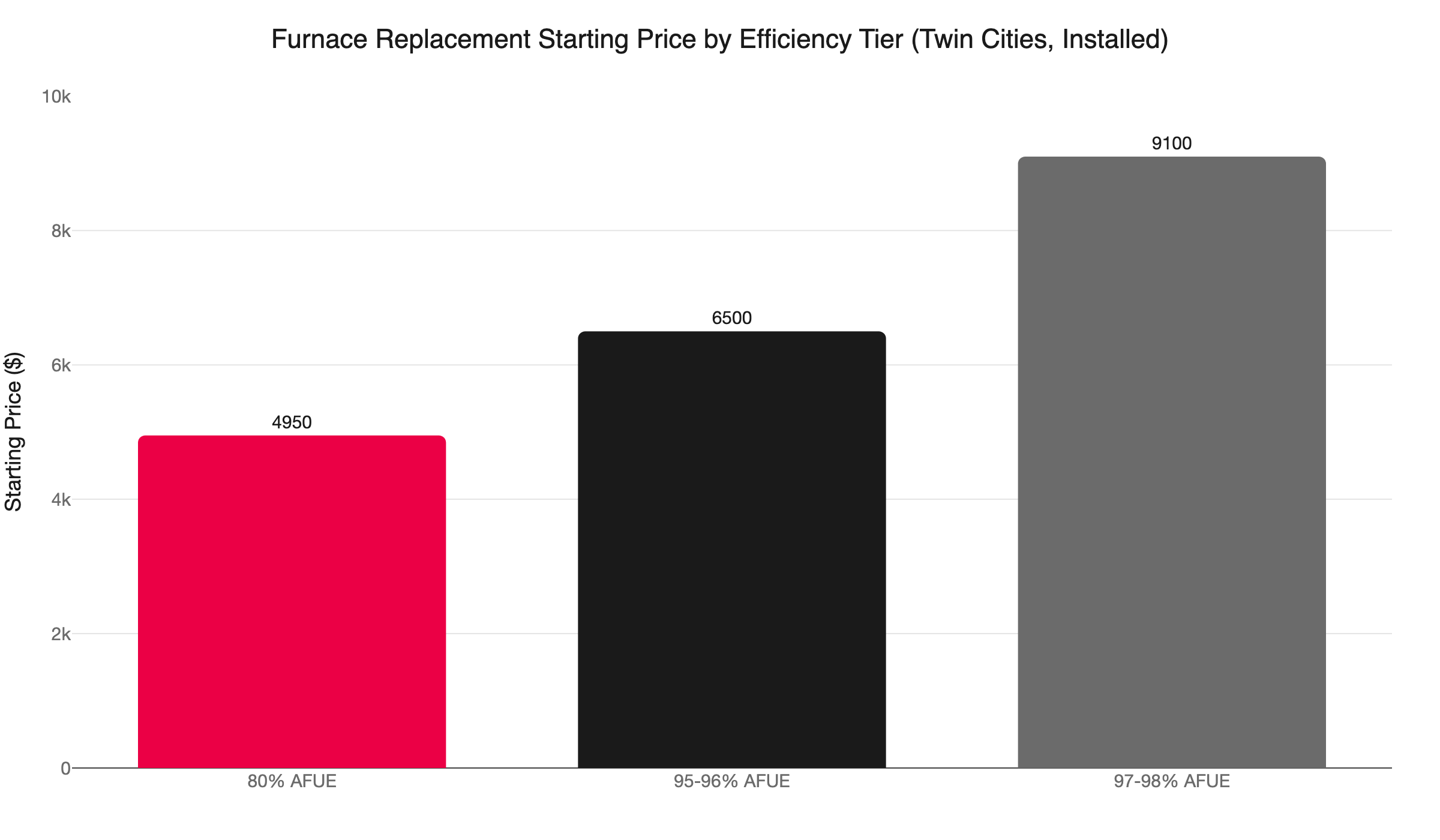
Furnace Replacement Starting Price by Efficiency Tier (Twin Cities, Installed)
## You Have Three Quotes. Here Is How to Compare HVAC Quotes the Right Way.
You called three contractors. You have three numbers on the kitchen table. The lowest bid is $1,200 less than the next one and nearly $2,000 below the highest.
The temptation is to call the higher bidders and ask them to match it. Before you do that, ask three specific questions. The answers will tell you whether the quotes are actually comparing the same job, the same equipment, and the same protection after the job is done.
Most general home-advice sites tell you to get multiple quotes, check reviews, and choose a licensed contractor. All of that is correct. But it stops short of the technical questions that separate a complete bid from a low one.
The gap between a good bid and a low bid is almost never about markup. It is almost always about what the low bid left out: a sizing calculation, a component specification, or a warranty term that does not appear on the price sheet.
Here are the three questions to ask, what a good answer sounds like, and what a bad answer tells you.
---
## Did the Contractor Do a Manual J Load Calculation?
**The short answer:** Manual J is the engineering calculation that determines how much heating and cooling your home actually needs. Without one, the contractor may be quoting the wrong size entirely. A wrong-sized system causes comfort and efficiency problems that cannot be fixed without replacing the equipment.
The [ACCA Manual J 8th Edition](https://www.acca.org) is the national ANSI-recognized standard for residential load calculations. National building codes and most state and local jurisdictions require it before any HVAC installation.
A proper Manual J accounts for your home's square footage, ceiling height, insulation levels in the walls and attic, window area and orientation, air sealing quality, and local climate design temperatures.
That last factor matters more in the Twin Cities than most places. This region sits in ASHRAE Climate Zone 6A. The design heating temperature is -16°F. The design cooling temperature is 91°F dry bulb. Your system needs to handle both extremes reliably, season after season.
When a contractor skips the Manual J, they typically do one of two things. They size the replacement to match the existing system, assuming whoever installed it the first time was right. Or they use square footage rules of thumb that ignore insulation, air sealing, and window load.
Both approaches may miss the actual load. Older systems in the Twin Cities were oversized more often than not. A like-for-like swap can lock in the same problem.
There is another angle to consider. The home you live in today may be different from the home the original system was sized for. Renovations, added insulation, replaced windows, or a finished basement all change the load. A Manual J on the current home reflects those changes. A like-for-like swap does not.
**What a bad answer sounds like:** "We'll match your current system." Or: "We've done hundreds of homes this size, we know what they need."
**What a good answer sounds like:** "Here's the Manual J output. Your home calculates to X tons for cooling and Y BTU for heating."
If a contractor cannot produce a Manual J, their quote may be for the wrong equipment. The price they gave you is not directly comparable to a quote based on an actual sizing calculation.
For more on why right-sizing matters across all seasons, see our guide on [HVAC sizing and the Manual J calculation](/blog/hvac-sizing-manual-j-right-sized-system/).
---
## What Happens When a System Is Oversized?
**The short answer:** An oversized AC short-cycles. It hits the temperature setpoint quickly and shuts off before removing enough humidity. In Minnesota's July, a house can read 72°F on the thermostat and still feel clammy and uncomfortable all day.
The Twin Cities has July and August dew points that regularly hit 65 to 70°F. That range is among the highest in the continental United States outside the Gulf Coast.
Humidity removal requires the AC to run in longer, sustained cycles. An oversized system does not do that. It satisfies the temperature call fast, then shuts off. The moisture stays in the air. The discomfort stays.
Many homeowners assume the system is undersized when this happens. They push the setpoint lower. The system short-cycles even harder. The comfort problem gets worse, not better.
An oversized furnace causes a parallel problem in winter. Short-cycles stress the heat exchanger and reduce real-world efficiency. You can pay for a 97% AFUE furnace and not see it in your utility bills. Short-cycling prevents the furnace from completing a full combustion run, which is when most of that efficiency is captured.
Both problems are invisible during the quote comparison phase. They show up in the first full season.
This is why the Manual J is not a bureaucratic formality. It is the calculation that ties the equipment to your actual home.
---
## Is This an AHRI-Certified Matched System?
**The short answer:** AHRI certification means the outdoor unit and indoor components were tested as a pair. They meet the stated efficiency rating together. A mismatched system may deliver 13 to 14 SEER2 even though the quote specifies 16. You pay the premium price and receive lower-tier performance.
The [Air-Conditioning, Heating, and Refrigeration Institute](https://www.ahrinet.org) runs third-party certification testing for HVAC equipment. SEER2, EER2, and HSPF2 ratings apply to specific tested combinations. Not to individual components. One outdoor unit paired with one specific air handler or coil at a defined airflow rate.
Low bids often achieve their price by mixing brands or substituting a "compatible" coil. The substitute coil may fit physically and operate without fault codes. But the installed efficiency is no longer certified. The 16 SEER2 rating belongs to the tested pair, not to the outdoor unit alone.
Over a 15- to 20-year equipment life, the difference between a certified 16 SEER2 and an actual 13 SEER2 adds up across every single cooling season.
There is a warranty angle as well. Manufacturer warranty terms often require that the installed equipment matches the certified combination. A mismatched system may void or limit the parts warranty on top of delivering lower performance. A low bid that installs mismatched components may cost you twice: once in operating efficiency and once when a warranty claim is denied.
**How to verify:** The AHRI Directory at ahridirectory.org is a free public tool. A legitimate contractor should be able to give you the AHRI certificate number for the exact equipment combination on the quote. Enter it yourself to confirm.
**What a bad answer sounds like:** "It's compatible equipment, it will work fine together."
**What a good answer sounds like:** "Here's the AHRI certificate number. Look it up at ahridirectory.org."
A note on equipment tiers and pricing: the price difference between efficiency levels is real and intentional. Installed furnace replacements in the Twin Cities start around $4,950 for an 80% AFUE system, $6,500 for a 95-96% AFUE, and $9,100 for a 97-98% AFUE. If a quote comes in well below those starting ranges, ask exactly which efficiency tier is on the proposal and whether the components are AHRI-certified as a matched set.
---
## What Does the Labor Warranty Actually Cover?
**The short answer:** Equipment warranties cover parts. They do not cover the labor to install a replacement part. Get the labor warranty terms in writing: coverage years, what is included, and how to file a claim. "We stand behind our work" is not a warranty. It is a phrase that costs the contractor nothing.
Most manufacturers offer a 5- to 10-year parts warranty on registered equipment. That covers the component. It does not cover the technician who shows up to install the replacement.
After the installation warranty expires, a repair visit can run from a few hundred dollars for a simple component swap to over $1,000 for a more involved repair. After-hours emergency calls add $180 to $270 per hour on top of standard rates.
A low bid that comes with no written labor warranty transfers all of that repair exposure to you after year one. The $1,200 you saved on the front end can disappear quickly on the first uncovered repair.
**What a bad answer sounds like:** "We stand behind our work. Just call us if anything comes up." No written document behind it.
**What a good answer sounds like:** A written warranty document that specifies the coverage period, which repairs are included, which are excluded, and how to make a claim.
Ask for that document before you sign. If a contractor does not have one, factor what that unprotected repair exposure looks like over a five-year window. Then compare that number to the gap in the bids.
---
## Will This Equipment Qualify for Rebates?
**The short answer:** A contractor who quotes non-ENERGY STAR equipment disqualifies you from utility rebates. Those rebates do not appear on any quote. But they can reduce the effective cost of the qualifying system by $300 to $2,000 or more, depending on equipment type and your utility provider.
The [ENERGY STAR Rebate Finder](https://www.energystar.gov/rebate-finder) is a free public tool. Enter your Twin Cities zip code and it will show current rebates available for qualifying heat pumps, central AC, and furnaces through Xcel Energy, CenterPoint, and other local utilities.
Current rebate amounts change seasonally. Verify the current figures directly at xcelenergy.com and centerpointenergy.com before finalizing your comparison. Those dollars belong in the side-by-side calculation, not in a footnote.
**A note on the federal tax credit:**
The 25C Energy Efficient Home Improvement Credit covered qualifying HVAC equipment installed January 1, 2023 through December 31, 2025. For eligible heat pumps, the credit was up to $2,000 per year. For other qualifying efficiency improvements, it was up to $1,200 per year. The [IRS Energy Efficient Home Improvement Credit page](https://www.irs.gov/credits-deductions/energy-efficient-home-improvement-credit) covers the full criteria and eligible property types.
For 2026 installations, the credit has lapsed under current IRS guidance. Confirm with a tax professional whether Congress has extended it for your installation date. Do not count it in your budget until you have that confirmation from a qualified source.
For a detailed look at stacking federal, state, and utility incentives, see our post on [IRA tax credits for high-efficiency HVAC in Minnesota](/blog/ira-tax-credits-high-efficiency-furnace-ac-minnesota/).
---
## Did the Contractor Pull a Permit?
**The short answer:** HVAC replacement requires a [mechanical permit](/blog/hvac-permit-cost-minnesota-what-to-expect/) in Minnesota. A contractor who offers to skip it is reducing the bid by transferring risk to you. No permit means no inspection. An uninspected installation can void manufacturer warranties and create disclosure problems at resale.
The [Minnesota Department of Labor and Industry](https://www.dli.mn.gov) governs mechanical licensing and permits in the state. A permitted installation is inspected by a licensed inspector who verifies the work meets code.
That inspection protects you in two concrete ways.
First, it catches installation errors before they run silently for years. A combustion air issue, an improper vent connection, or a condensate drain problem that goes uninspected can create a carbon monoxide risk or persistent efficiency losses. The inspection catches that before the system runs its first full heating or cooling season.
Second, Minnesota has real estate disclosure requirements. An unpermitted installation that surfaces during a home sale can delay or complicate the transaction. The upfront savings from skipping the permit are a small fraction of the potential cost if it surfaces at closing.
Northern One Hour always pulls a permit on every installation. It is part of doing the job correctly, not a line item we offer to remove for a lower price.
For more on the permit process and what it covers, see our guide on [when an HVAC permit is required in Minnesota](/blog/hvac-permit-when-required-minnesota/).
---
## How to Compare HVAC Quotes: Putting the Three Questions Together
You now have a fourth column in your comparison. It is not a price. It is the answers to three specific questions.
- Did the contractor do a Manual J? Can they show you the output?
- Is this an AHRI-certified matched system? Can they provide the certificate number?
- What does the labor warranty cover? Is it documented in writing?
A contractor who can answer all three with supporting documentation is quoting a complete job. One who cannot may be quoting a lower price for a less complete installation.
It is fair to go back to a contractor with these questions after the first meeting. A contractor who is quoting a complete job will not be thrown by them. One who gives vague answers or changes the subject was probably leaving out the details that make those questions relevant.
The $1,200 gap between bids is worth examining. Sometimes it reflects genuinely lower overhead. More often it reflects one of the three omissions covered here: no Manual J, mismatched components that will not deliver rated efficiency, or no labor warranty after year one.
The cheapest bid on paper is sometimes the most expensive bid over the life of the equipment.
For a broader look at the warning signs to watch across the entire contractor selection process, read our post on [HVAC contractor red flags in the Twin Cities](/blog/hvac-contractor-red-flags-twin-cities/).
---
## Ready to Walk Through Your Quotes?
Northern One Hour is locally owned and operated in Ramsey, Minnesota. We serve homeowners across the Twin Cities, including Minneapolis, St. Paul, Maple Grove, Blaine, Plymouth, Brooklyn Park, Woodbury, and Bloomington.
When we quote a job, we run a Manual J. We spec AHRI-certified matched systems. We pull permits on every installation. And we back our work with written labor warranties.
Our guarantee means exactly what it says: "Always On Time… Or You Don't Pay a Dime!(R)." It applies to the quote visit and every service call after.
Call us at (763) 260-6662 or book online to schedule a quote. We will show you the Manual J output, the AHRI certificate number, and the warranty terms before you sign anything.
---
# Furnace Can't Keep House Warm When It's Cold Outside?
URL: https://northernonehour.com/blog/furnace-cant-reach-setpoint-extreme-cold-minnesota/
Published: 2026-09-23 | Category: Heating
Three structurally different reasons your furnace falls short on Minnesota's coldest nights, and a diagnostic framework for telling them apart.
Key Takeaways
- Three structurally different problems share the same surface symptom: undersizing, age-related capacity decline, and acute component failure. Only one of them requires a new furnace outright.
- The Minneapolis-Saint Paul design temperature is approximately -16°F. A correctly sized furnace is engineered to struggle below that number. That is physics, not a defect.
- Frozen condensate lines on 90%+ AFUE furnaces are the most commonly misdiagnosed cold-weather failure in Minnesota. They present identically to a mechanical breakdown but have a different fix.
- Minnesota law requires a minimum 90% AFUE for any new or replacement gas furnace. An 80% unit is not a legal option in this state.
- Federal §25C tax credits and utility rebates from Xcel Energy and CenterPoint Energy can be stacked on a single high-efficiency furnace installation.
- A cracked heat exchanger is a carbon monoxide risk. If your CO detectors alarm, get everyone out first.
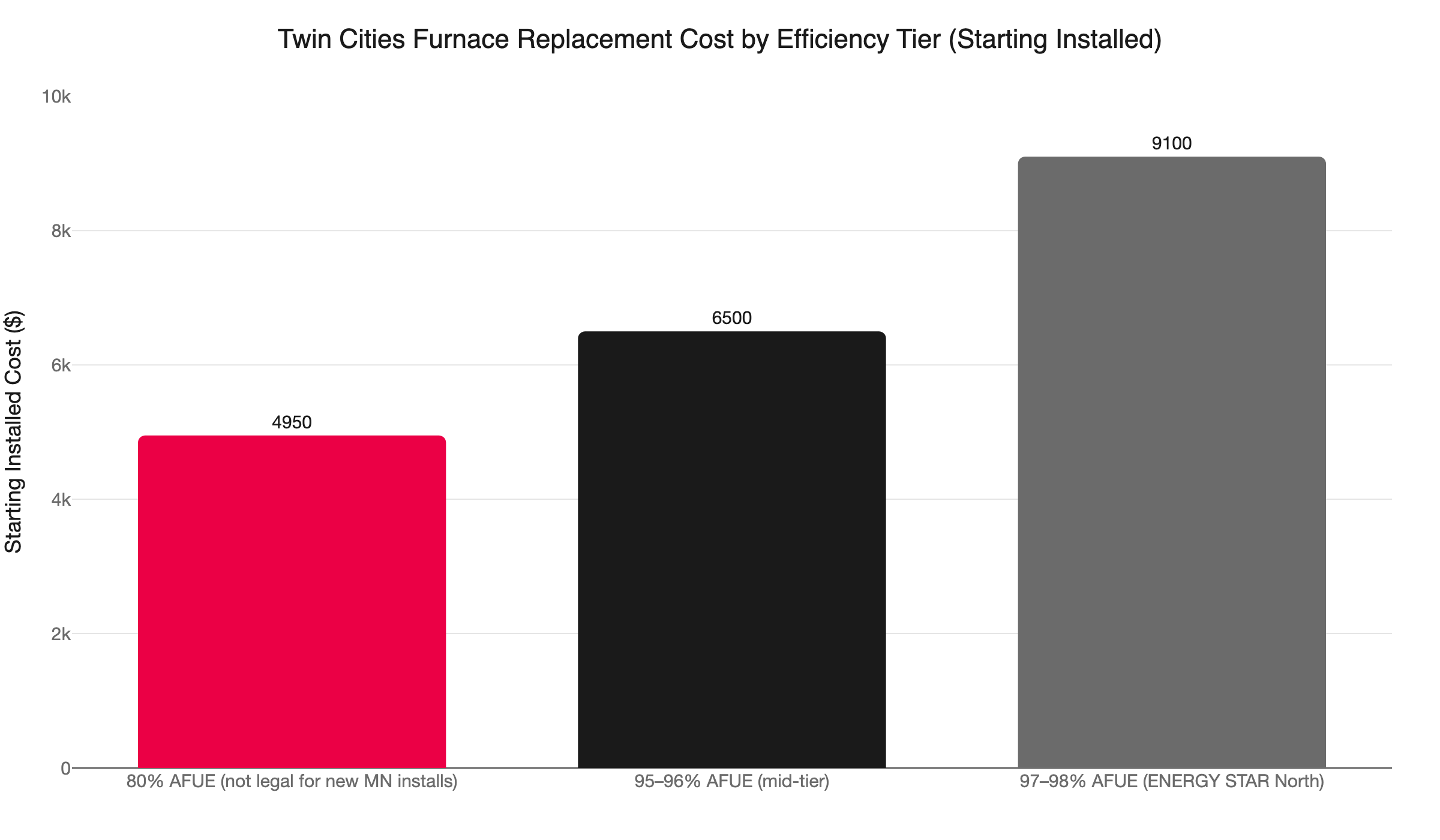
Twin Cities Furnace Replacement Cost by Efficiency Tier (Starting Installed)
## Why -16°F Is the Number That Matters in Minnesota
Before you can diagnose a furnace that isn't keeping up, you need to understand what "keeping up" is actually supposed to mean.
Every furnace is sized to a design temperature. For Minneapolis-Saint Paul, [the ASHRAE 99% heating design temperature is approximately -16°F](https://minnesotahvacauthority.com/minnesota-hvac-system-sizing-guidelines/). That number means the furnace is calculated to hold your thermostat set point during 99% of winter hours.
The coldest 1% of hours fall below -16°F. A correctly sized system is not guaranteed to maintain temperature in that range. That is the engineering, not a malfunction. Homeowners who moved here from the South or from milder northern climates often discover this the hard way.
Duluth's design temperature is approximately -22°F. International Falls falls below -30°F. A furnace sized for Minneapolis is genuinely undersized if it ends up in Duluth, and a contractor who uses the same rules of thumb across all of Minnesota is not doing Manual J work.
[Minneapolis-Saint Paul averages 54 days per year with overnight lows below 0°F.](https://minnesotahvacauthority.com/minnesota-cold-climate-heat-pumps/) That sustained cold is what separates Minnesota from almost every other HVAC market in the lower 48, and it is why national averages and rules of thumb fail here.
---
## What Does It Mean When Your Furnace Can't Keep House Warm When It's Cold Outside?
**Short answer:** Your furnace is running at or beyond its design limits, and one of three things is failing: the system was never the right size, its capacity has declined with age, or a specific component gave out during the cold snap. The timeline and pattern tell you which problem you're dealing with.
The frustrating part is that all three failures produce the same symptom from the homeowner's perspective: the thermostat says 68°F, the furnace is running, and the house is still cold.
The important difference is what comes next. Undersizing requires replacement with a correctly calculated unit. Age-related decline requires a repair-versus-replace assessment. An acute component failure often requires a targeted repair that costs a fraction of a replacement. Treating one as another wastes money and leaves your family cold while you wait for the wrong fix.
---
## Why Is Your Furnace Running Constantly but Still Not Catching Up?
**Short answer:** Continuous operation without temperature recovery means the furnace's output is lower than the heat loss from your home at that outdoor temperature. The gap between those two numbers is the problem. The question is whether the gap was always there, grew gradually, or appeared suddenly.
Three patterns point to three different causes.
**Pattern A:** Every winter during a hard cold snap, the house falls behind. It has always been this way. You've learned to live with it. This points to undersizing.
**Pattern B:** The furnace kept up fine for several years. The past two or three winters, it has struggled more on the coldest nights. The problem has been getting incrementally worse. This points to age-related decline.
**Pattern C:** The furnace was keeping up fine last week. It stopped keeping up when the cold snap arrived. This points to an acute component failure, and in a high-efficiency furnace, a frozen condensate line should be your first suspect.
---
## How Do You Know If the Furnace Is Undersized?
**Short answer:** The clearest sign is continuous running that never recovers the temperature, and the problem appears even during moderate cold snaps, not only polar vortex events. A Manual J load calculation gives you a definitive answer.
[Rules of thumb like "50 BTU/h per square foot" can undersize a Minnesota heating system by 30 to 50%](https://minnesotahvacauthority.com/minnesota-hvac-system-sizing-guidelines/) when applied at -16°F design conditions. Those shortcuts were built for national average climates. They do not reflect Minnesota's actual heating load.
Signs that support undersizing:
- The furnace runs without cycling for hours during any real cold snap, not just extreme events.
- Temperature loss starts in the afternoon and gets worse through the night with no recovery.
- The house was expanded, had the basement finished, or had a major window and insulation upgrade after the furnace was installed, and no one recalculated the heating load afterward.
- A previous technician mentioned the unit was "on the smaller side."
Undersizing has one real fix: a [properly sized replacement furnace](/heating/heating-equipment/furnaces/furnace-replacements/) calculated from a Manual J load analysis that accounts for your square footage, ceiling height, window area, insulation values, air infiltration rate, and the actual design temperature for your zip code.
One note on the opposite error: [oversizing beyond about 40% of the Manual J calculated load creates its own problems](https://minnesotahvacauthority.com/minnesota-hvac-system-sizing-guidelines/), including short cycling, flue gas condensation in conventional furnaces, accelerated heat exchanger fatigue, and reduced steady-state efficiency. The goal is right-sized, not simply bigger. Our overview of [HVAC sizing and the Manual J process](/blog/hvac-sizing-manual-j-right-sized-system/) explains what a legitimate load calculation involves.
---
## What Happens When an Older Furnace Loses Capacity Over Time?
**Short answer:** Age-related decline is accumulated wear across multiple components simultaneously: the heat exchanger fatigues at its welds, the blower moves less air than it did at installation, the inducer loses draft strength. No single part is broken. The system is delivering less heat than it was sized to deliver.
[Minnesota furnaces cycle 8 to 12 times per hour during extreme cold events.](https://minnesotahvacauthority.com/minnesota-hvac-common-system-failures/) At 10 cycles per hour over 54 sub-zero days per year, that is a substantial fatigue load on heat exchanger welds, motor bearings, blower wheel blades, and inducer fan assemblies. A 15-year-old furnace that has run through a series of hard Minnesota winters has accumulated wear that doesn't show up in a spot inspection.
The decline is typically gradual and directional: the furnace keeps up reasonably well in October and November, begins struggling in January and February, and each year the point at which it starts falling behind moves a few degrees warmer.
Signs of age-related decline:
- Heating bills have been climbing even when gas prices haven't moved significantly.
- You've had two or more service calls in the past two winters for different issues.
- The system is 15 years or older.
- Some rooms hold temperature and others don't, where the pattern wasn't that way years ago.
- The problem has been getting worse gradually, not all at once.
A furnace showing these signs is usually a replacement candidate, not a repair candidate. The repair-versus-replace decision hinges on whether money spent on repair extends meaningful useful life or just delays an inevitable replacement by one more winter. In most cases, once a furnace over 15 years starts showing age-related capacity loss across multiple components, replacement is the financially sound call.
---
## What Is a Frozen Condensate Line and Why Does It Shut the Furnace Down?
**Short answer:** High-efficiency furnaces (90%+ AFUE) produce acidic condensate as a combustion byproduct. That liquid drains out through PVC tubing. When those lines pass through unheated spaces, they can freeze in deep cold, block drainage, trigger a pressure switch lockout, and shut the furnace down completely. It looks exactly like a mechanical failure. It isn't.
[Frozen condensate lines are a concentrated seasonal failure in January and February in Minnesota.](https://minnesotahvacauthority.com/minnesota-hvac-common-system-failures/) They are the single most commonly misdiagnosed acute furnace failure in high-efficiency systems, and nearly every national listicle on this topic leaves them out entirely because the writers are not working from Minnesota-specific failure data.
This failure mode only affects 90%+ AFUE furnaces. If your furnace vents through PVC plastic pipes rather than a metal flue, you have a high-efficiency condensing unit and this failure is possible.
How to recognize a frozen condensate failure:
- The furnace attempts to start, fires briefly, then shuts down with a pressure switch error code.
- The failure appeared during a deep cold snap, not ordinary winter weather.
- The condensate drain line exits through an uninsulated wall, a garage, a crawl space, or anywhere it runs through unheated space before reaching a floor drain.
- The furnace was working fine until this week.
The immediate fix is thawing the line using warm water poured carefully along the exterior section. Do not use boiling water. The durable fix is rerouting the drain line so it runs entirely through conditioned space, or adding heat tape and insulation to the exposed section. Our detailed breakdown of [frozen condensate drain lines on high-efficiency furnaces](/blog/high-efficiency-furnace-condensate-drain-frozen-minnesota/) covers both the emergency response and the permanent correction.
Other acute component failures that concentrate during cold snaps:
**Pressure switch failure.** The pressure switch monitors combustion draft from the inducer. If it fails or trips, the furnace will not fire. Repair typically runs $195 to $500 parts and labor.
**Draft inducer motor failure.** Without adequate draft, combustion cannot safely begin. Replacement runs $375 to $900 for most models, and $500 to $1,650 for some brand-specific inducer assemblies.
**Blower motor failure.** The furnace heats air but cannot distribute it. A standard PSC blower motor replacement runs around $1,100 installed. An ECM variable-speed motor runs around $2,200 installed.
**Gas valve failure.** The igniter fires, but no gas reaches the burner. Gas valve replacement typically falls in the $400 to $700 range.
**Capacitor failure.** Less common in heating systems than cooling systems, but a failed run capacitor can prevent the blower motor from starting. Repair typically runs $195 to $500.
---
## Should You Be Worried About Carbon Monoxide?
Yes, and this point separates routine troubleshooting from an emergency.
Age-related capacity decline in a gas furnace frequently involves the heat exchanger. The heat exchanger is the sealed metal assembly that separates combustion gases from the air circulating through your home. When it develops a crack, [carbon monoxide can enter your living space.](https://minnesotahvacauthority.com/minnesota-hvac-common-system-failures/) The CPSC classifies carbon monoxide as a leading cause of non-fire-related poisoning fatalities in the U.S. It is odorless and colorless.
If your CO detectors have alarmed, or if multiple household members are experiencing headaches, nausea, or dizziness during the heating season, get everyone out of the house and call for service from outside. Do not go back in to reset the furnace. Do not troubleshoot. Call.
Our post on [cracked heat exchanger warning signs](/blog/cracked-heat-exchanger-signs-minnesota/) covers what technicians look for and why a cracked heat exchanger almost always leads to a replacement recommendation rather than a repair.
Carbon monoxide detectors belong on every level of your home and within 10 feet of every sleeping area. If you don't have them in place, add them before the next cold snap.
---
## What Does a New Furnace Cost in the Twin Cities?
**Short answer:** Expect a starting installed price around $6,500 for a mid-tier 95-96% AFUE furnace and $9,100 or higher for a premium 97-98% AFUE modulating unit. Final price depends on your equipment selection, home configuration, and labor. An 80% AFUE unit is not a legal option in Minnesota.
[Minnesota sets a minimum of 90% AFUE for any new or replacement gas furnace.](https://minnesotahvacauthority.com/minnesota-furnace-requirements-and-standards/) The requirement has no local waiver provision. If a contractor quotes you an 80% unit for a Minnesota installation, that is a red flag worth noting before you sign anything.
[ENERGY STAR requires 97% AFUE for gas furnaces in northern U.S. states including Minnesota.](https://www.energystar.gov/products/furnaces/key_product_criteria) A furnace at that threshold qualifies for the federal §25C tax credit. [ENERGY STAR-certified northern gas furnaces save an average of $160 per year](https://www.energystar.gov/products/furnaces) compared to baseline models.
For most Twin Cities homeowners replacing an aging system, the 95-96% AFUE tier is the practical starting point. It clears the Minnesota minimum by a comfortable margin, qualifies for utility rebates, and delivers meaningful efficiency gains over the equipment it replaces.
---
## Are Rebates and Tax Credits Available for a New Furnace?
**Short answer:** Yes, and they can be stacked. The federal §25C tax credit covers up to 30% of installed cost, capped at $600 for a qualifying 97% AFUE gas furnace, claimed via IRS Form 5695. Xcel Energy and CenterPoint Energy both offer utility rebates for 95%+ AFUE equipment, and a federal credit and a utility rebate can apply to the same installation.
[Xcel Energy and CenterPoint Energy utility rebates require a minimum 95% AFUE for gas furnaces.](https://minnesotahvacauthority.com/minnesota-hvac-rebates-and-incentives/) Upgrading to 97% AFUE unlocks the federal credit on top of the utility program. If the out-of-pocket cost after incentives still requires financing, ask our team about current options when you call. We will tell you what rebate amounts are in effect at the time of your installation.
---
## What Should You Do Right Now?
If your furnace can't keep house warm when it's cold outside, run through this checklist before calling:
1. **Identify your furnace type.** Do you have PVC (white plastic) exhaust and intake pipes rather than a metal flue? You have a 90%+ AFUE condensing furnace. Look for a frozen condensate drain line before assuming a mechanical failure.
2. **Check your CO detectors.** If they have alarmed, leave first and call from outside.
3. **Note the timeline.** Did this start suddenly during the current cold snap, or has the furnace been losing ground gradually over several winters? That distinction tells you which of the three causes is most likely.
4. **Look for error codes.** Most modern furnaces blink a fault code sequence. Count the blinks and note the pattern before calling.
5. **Note the furnace's age.** A system that is 15 years or older showing gradual decline is a replacement candidate. Come into the call ready to discuss options.
When you call Northern One Hour, we will ask you all of these questions. Having the answers ready speeds the diagnosis significantly.
---
## We're Locally Owned, and We Show Up When It's -20°F
Northern One Hour Heating & Air Conditioning is locally owned and operated out of Ramsey, MN. We serve the Twin Cities metro: Minneapolis, St. Paul, Maple Grove, Plymouth, Blaine, Brooklyn Park, Woodbury, Bloomington, and the communities between them.
When your furnace can't keep house warm and it is -20°F outside, you need a company that shows up when it says it will. That is what this company was built on. Our promise is "Always On Time… Or You Don't Pay a Dime!(R)." We back every job with transparent pricing before any work begins and a 100% satisfaction guarantee.
Call us at (763) 260-6662 or book online. If the furnace is [failing in deep cold](/blog/frozen-pipes-hvac-failure-risk-minnesota/), call directly rather than waiting for a booking form confirmation.
---
## Key Takeaways
- Furnaces that can't keep up in extreme cold have one of three causes: undersizing, age-related decline, or an acute component failure. Each requires a different response.
- The MSP design temperature is approximately -16°F. Struggling below that threshold is expected behavior for a correctly sized system. Struggling at -5°F or warmer is not.
- Frozen condensate lines are the most frequently missed diagnosis in Minnesota cold-weather furnace failures. They only affect 90%+ AFUE units. Check the drain line first when a high-efficiency furnace locks out suddenly during a cold snap.
- Minnesota requires a minimum 90% AFUE for any new or replacement gas furnace.
- Federal §25C credits and utility rebates from Xcel Energy and CenterPoint can be stacked on one installation. Ask about current rebate amounts when you call.
- A cracked heat exchanger is a carbon monoxide risk. Treat it like one.
---
# Minimum Outdoor Temperature to Run AC in Minnesota
URL: https://northernonehour.com/blog/minimum-outdoor-temperature-run-ac-twin-cities/
Published: 2026-09-23 | Category: Cooling
Central AC has a 60\u00b0F minimum. Learn why it matters, how dew point guides the windows-vs-AC decision, and how to protect your compressor in Minnesota.
Key Takeaways
- The minimum outdoor temperature to run a standard central air conditioner is **60°F**. Below that, refrigerant pressure drops too low and the compressor is at risk of serious damage.
- Temperature alone does not tell the whole story. A 63°F day with high humidity may call for running the AC as a dehumidifier, not a cooler.
- **Use dew point, not relative humidity, to decide whether to open windows.** If outdoor dew point is above 55°F, keep windows closed.
- Heat pumps in cooling mode operate safely down to **40-50°F** - well below the limit for a conventional central AC unit.
- The decision guide near the bottom of this post settles the question for any shoulder-season scenario.
It is a Tuesday morning in May. The thermometer reads 63°F. The sky is gray and low. The air has that thick, damp feel, and the house seems stuffy even with the heat off. Do you open the windows or flip on the AC?
That is the question Minnesota homeowners actually wrestle with every spring and early fall. Not just "what temperature breaks the compressor" - though we will cover that too. This post answers both, and gives you a decision framework you can use in about 10 seconds any time the weather is in that ambiguous shoulder-season zone.
## What Is the Minimum Outdoor Temperature to Run Air Conditioner in Minnesota?
**For a standard central air conditioner, the safe minimum is 60°F.** Below that threshold, refrigerant pressure inside the system drops too low for the compressor to operate safely. Most manufacturers list this limit in their installation manuals.
This is not a cautious recommendation. It is a hard mechanical limit tied to how refrigerant behaves at low ambient temperatures. [The 60°F threshold is an industry-wide standard](https://hvacseer.com/running-ac-below-60-degrees-is-it-safe/), not a brand-specific quirk or an installer's conservative preference.
Minnesota makes this question more pressing than it sounds. Our shoulder seasons - May, early June, September, and October - regularly deliver daytime highs in the 60-70°F range. Some of those days are crisp and dry. Others are overcast and damp, with humidity that makes the house feel clammy even at mild temperatures. The 60°F limit comes up often here. So does the harder question about when to open windows.
## Why Does Cold Weather Damage AC Compressors?
**Cold outdoor temperatures trigger two distinct failure mechanisms at once: compressor oil thickening and refrigerant slugging.** Either one can cause a compressor failure. Together they create serious risk on a single run below the limit.
**Compressor oil thickening** is the slower of the two risks. The oil inside every AC compressor is formulated to flow at normal operating temperatures. [When outdoor temperatures drop, that oil thickens and stops coating moving parts effectively](https://homeairadvisor.com/running-air-conditioner-when-it-is-cold-outside/). Running the compressor without adequate lubrication accelerates wear on its internal components.
**Refrigerant slugging** is the more acute danger. Cold conditions cause liquid refrigerant to migrate toward the compressor. A compressor is designed to pump vapor. Vapor compresses; liquid does not. [When liquid refrigerant reaches the compressor's valves at operating speed, the pressure surge can shatter those valves outright](https://www.armadillo.one/resources/frozen-ac-compressor-causes-fixes-prevention-tips/). This can happen on a single overnight run at 45°F.
Slugging damage is not always visible from the outside. A compressor that took a liquid hit may start normally a few times before failing completely, or it may simply stop running and refuse to restart. Our post on [signs your AC compressor may be failing in the Twin Cities](/blog/ac-compressor-failing-signs-repair-cost-twin-cities/) covers the warning signs in detail.
## What Does a Compressor Failure Actually Cost?
**Compressor replacement in the Twin Cities typically starts around $1,950 and can reach $4,500 or more**, depending on system size, refrigerant type, and whether related components were damaged in the failure.
[One HVAC source notes that a single overnight run at 45°F can produce total repair bills exceeding $1,500](https://www.countryside-solutions.com/blog/danger-running-ac-below-60-degrees) - and that estimate does not account for Twin Cities labor rates or the diagnostic fees, refrigerant recovery costs, and secondary component damage that often accompany a compressor failure.
The economic math matters most on older systems. An AC unit that is 12 or more years old may not justify a major compressor repair. The same failure that damaged the compressor may have stressed the condenser coil, fan motor, or refrigerant lines - components that push the total repair cost close to replacement territory. We cover the repair-versus-replace decision in detail in our post on [AC replacement costs in Minnesota](/blog/ac-replacement-cost-minnesota/).
The bottom line: the 60°F limit protects an expensive part. One cold-weather run that fails the compressor on an aging system can easily tip the math toward full replacement.
## Minnesota's Shoulder Seasons: Where the Real Confusion Lives
The 60°F rule is easy to follow in January. Nobody is running AC during a Minnesota winter. The genuinely confusing window is May through early June and again in September.
During those months, outdoor highs regularly fall between 60°F and 70°F. The compressor is not in danger, because the temperature clears the limit. But it does not feel like conventional AC weather, either. The house is not hot. It just feels stale, or clammy, or sticky in a way that is hard to name.
This is where most guidance fails Minnesota homeowners. The answer to "should I open windows or run the AC?" depends on a metric that most weather apps display but most homeowners have never used: dew point.
## Should You Open Windows or Run the AC on a Cool, Humid Day?
**Run the AC if the outdoor dew point is above 55°F, even if the temperature feels mild.** At that dew point, outdoor air carries more moisture than comfortable indoor air. Opening windows imports that moisture. The AC removes it more efficiently than ventilation can.
Open windows when outdoor air is both cooler and drier than indoors - specifically, when the outdoor dew point is below 55°F. That condition reliably describes a crisp Minnesota morning in mid-May or a clear early-September evening. It does not describe a gray, foggy morning with condensation on the windows.
The key shift in thinking: your AC does two jobs in a Minnesota summer. Cooling is the obvious one. Moisture removal - dehumidification - is the one that matters most on a 65°F overcast day. Running the AC on a mild, humid morning is not wasteful. It is exactly the right tool for the conditions.
## How Do You Use Dew Point to Make the Windows-vs-AC Call?
**Pull up the current dew point in your weather app and compare it to 55°F.** Above 55°F, keep windows closed. Below 55°F, outdoor air is dry enough to let in without consequence.
[The Minnesota DNR's dew point comfort scale](https://www.dnr.state.mn.us/climate/summaries_and_publications/dewpoint.html) classifies the ranges this way:
- **Below 50°F:** Dry, comfortable
- **50-60°F:** Some humidity noticeable, still comfortable
- **Above 60°F:** Sticky, muggy
- **Above 65°F:** Oppressive
Most weather apps show dew point in the hourly or detailed forecast section. On weather.gov it appears as a standalone reading. On most phone weather apps, look in the humidity or details panel.
Dew point is more reliable than relative humidity for this decision. Relative humidity changes as temperature rises and falls through the day, even if no moisture is added to or removed from the air. Dew point stays stable. A dew point of 58°F means the same thing at 6 a.m. and at 2 p.m., regardless of how the temperature has moved.
[Twin Cities June and July dew point averages have reached 60°F or above in recent years](https://www.fox9.com/weather/june-july-twin-cities-dew-point-average-5th-highest-since-1938) - firmly in the sticky range. Spring is more variable. May mornings often run 45-50°F dew point (fine to open windows). May afternoons can reach 57-60°F (keep windows closed, run AC for moisture control). Check it before you decide.
## Why Does Opening Windows on a Humid Day Backfire?
**Opening windows when outdoor dew point is high forces your AC to dehumidify the house twice.** First, it has to dry out the humid air you brought in. Then it handles normal indoor moisture loads. That doubles the moisture burden on the system.
[When outdoor relative humidity exceeds 65%, keeping windows closed and letting the AC manage moisture is the right call](https://usainsulation.net/blog/open-windows-or-run-the-ac). A single afternoon of open-window humidity on a muggy May day can extend your AC's runtime significantly the following day as it catches up.
There is also a mechanical consideration. [Running the AC and open windows simultaneously forces the system to fight a constant stream of humid, infiltrating air](https://heatwaveheatingandcooling.com/should-i-sleep-with-the-windows-open-or-run-my-ac-at-night/). The unit runs longer, the house does not dehumidify effectively, and the system operates under unnecessary strain. If you want to open windows, turn the AC off first. Never run both at the same time.
The same logic applies overnight. A 65°F summer night in the Twin Cities often comes with a dew point above 60°F. That feels comfortable outside. Inside, it deposits moisture on every surface the AC was keeping dry during the day.
For a broader look at why spring humidity loads are heavier than most homeowners expect, our post on [why your home feels humid in spring and how AC systems help control it](/blog/why-your-home-feels-humid-in-spring-and-how-ac-systems-help-control-it/) covers the seasonal moisture dynamics in detail.
## What About Heat Pumps - Do They Have a Different Cold-Weather Minimum?
**Yes. Heat pumps in cooling mode operate safely down to 40-50°F outdoor ambient**, well below the 60°F floor for a standard central AC unit. Some cold-climate models have been tested down to 42°F under [Energy Star's test protocols](https://www.energystar.gov/sites/default/files/asset/document/ENERGY%20STAR%20Draft%201%20Test%20Method%20to%20Determine%20Room%20Air%20Conditioner%20Heating%20Mode%20Performance%20Webinar.pdf).
That wider operating window is one reason heat pumps are a strong fit for Minnesota's shoulder seasons. When outdoor temps are in the mid-40s and the house feels clammy, a heat pump can run the compressor safely where a conventional central AC system cannot.
The dew point decision logic still applies regardless of system type. A heat pump running at 48°F outdoor ambient can do so safely, but if the outdoor dew point is high, opening windows remains counterproductive. The windows-vs-AC call is always about moisture content in the air, not about which system you have.
If you are evaluating heat pumps for a Twin Cities home, our post on [heat pumps in Minnesota and whether they are a good fit](/blog/heat-pumps-in-minnesota-are-they-a-good-fit/) covers cold-weather heating and cooling performance, installation economics, and what to expect from shoulder-season operation.
## Can You Extend AC Operation Below 60°F With a Low-Ambient Kit?
**For a standard residential system, not without a technician and the correct hardware.** Low-ambient kits are control modifications that allow certain commercial and specialty systems to cool safely at lower outdoor temperatures. They are not standard on residential central AC units and are not a safe DIY modification.
If your situation genuinely requires cooling at temperatures below 60°F - a home office with significant heat-producing equipment, a specific medical need - consult an HVAC technician before running the system below its rated minimum. The right kit, installed correctly, changes the safe operating range. Running a stock residential system below 60°F without those controls installed is precisely how slugging-related compressor failures happen.
## Quick Decision Guide for Minnesota Homeowners
Use this table any time the weather is in shoulder-season territory and you are unsure what to do:
| Outdoor Conditions | What to Do |
|---|---|
| Below 60°F | AC off entirely - compressor damage risk |
| 60-70°F, dew point below 55°F | Open windows, AC off - outdoor air is drier |
| 60-70°F, dew point above 55°F or air feels muggy | AC on for dehumidification |
| Above 70°F | Normal AC cooling operation |
The third row is the one most homeowners miss. Mild, humid conditions are exactly when running the AC makes sense - not because the house needs cooling, but because the AC is the most effective dehumidifier available to you. Treating that row as "too cool to run AC" is how houses stay clammy all of June.
## What Do Xcel Energy's Tips Mean for Shoulder-Season Operation?
**Xcel's summer guidance assumes standard cooling conditions.** Their recommended 78°F thermostat setting and demand-response cycling are designed for peak summer loads, not shoulder-season dehumidification runs. Their [AC Rewards program](https://mn.my.xcelenergy.com/s/residential/heating-cooling/ac-rewards) offers a $100 enrollment credit and $25 per year for homeowners who allow Xcel to cycle the AC during peak demand periods.
On a shoulder-season dehumidification run, you are not cooling to a temperature set point the way you would at 90°F. The goal is moisture control. Set the fan to a low speed and allow longer cycles rather than pushing the thermostat down aggressively. Longer cycles remove more moisture per run. Short, aggressive cooling cycles drop the temperature quickly but do less dehumidification work before the compressor shuts off.
One maintenance point worth acting on now: a dirty air filter restricts airflow through the evaporator coil, which is the surface that removes moisture from the air. A clogged filter means reduced dehumidification - and it can cause the coil to freeze over rather than dehumidify. [Replacing a dirty filter reduces AC energy consumption by 5-15%](https://stories.xcelenergy.com/stories/How-to-save-energy-and-money-when-the-summer-heat-hits) and keeps the coil in its effective operating range.
AC efficiency ratings like SEER2 are tested at 95°F outdoor ambient. Running the system at 65°F operates well outside that tested range. The system still performs its dehumidification function well. But quoted efficiency figures do not translate directly to shoulder-season operation.
## When to Call Northern One Hour for a Pre-Season AC Check
If the system has not been serviced since last cooling season, late spring is the right time to schedule a maintenance visit. A technician will inspect the compressor, verify refrigerant charge, clean the evaporator and condenser coils, and confirm the system is operating within its rated parameters before shoulder-season conditions arrive.
We are locally owned and operated, serving Minneapolis, St. Paul, Ramsey, Blaine, Maple Grove, Plymouth, Brooklyn Park, and the surrounding Twin Cities area. Our promise is simple: "Always On Time… Or You Don't Pay a Dime!(R)". If we are not there when we said we would be, the visit is on us.
Call **(763) 260-6662** or [schedule your AC maintenance visit online](/air-conditioning/air-conditioning-maintenance/). We will get your system confirmed and ready before the first real cooling day of the season.
---
# Not Enough Return Air HVAC Problems in Twin Cities Homes
URL: https://northernonehour.com/blog/return-air-problems-hvac-twin-cities/
Published: 2026-09-23 | Category: HVAC
Hot and cold spots in your Twin Cities home often trace back to not enough return air. Learn the signs, the tissue-paper test, and your fix options.
Key Takeaways
- Not enough return air HVAC problems cause cold bedrooms, stuffiness, and high energy bills - not broken equipment.
- Most pre-1980 Twin Cities homes have one central hallway return. That design cannot feed a modern variable-speed blower.
- Installing a new high-efficiency furnace without upgrading the return side often makes bedroom comfort worse, not better.
- Fixes range from a simple door undercut (DIY, under $100) to transfer grilles, jump ducts, or a dedicated return run.
- [ENERGY STAR reports](https://www.energystar.gov/saveathome/heating-cooling/duct-sealing) that typical duct systems lose 20-30% of conditioned air through leaks and poorly connected sections.
- CenterPoint and Xcel both offer 2026 rebates on air sealing work that often accompanies a return air fix.
- Call (763) 260-6662 or book online for a return air assessment with Northern One Hour.
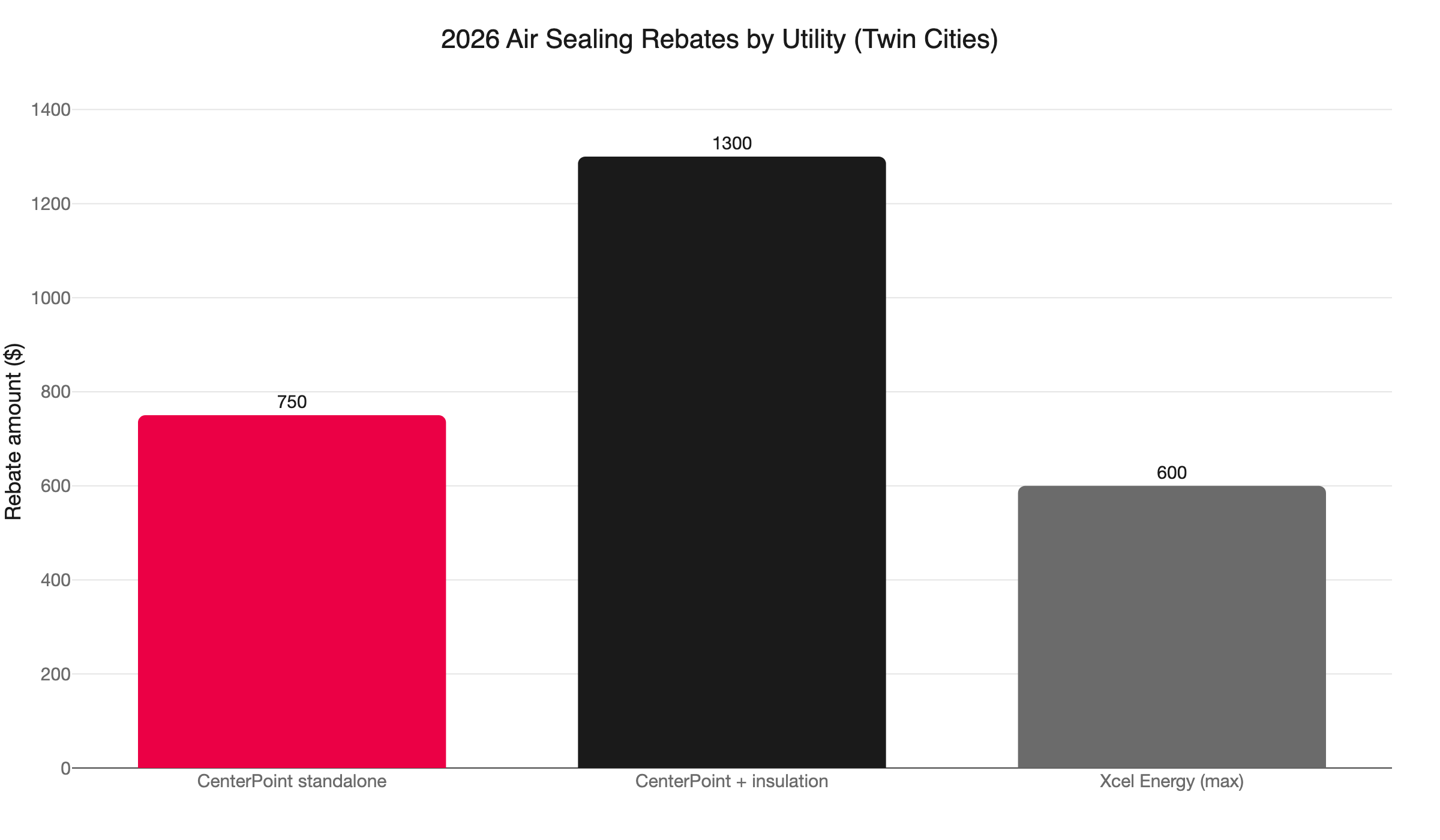
2026 Air Sealing Rebates by Utility (Twin Cities)
## What Is Return Air, and Why Does It Matter?
**Return air is the air your furnace or air handler pulls back from your living spaces to recondition. Without enough of it, pressure builds in closed rooms. Conditioned air is forced out through wall gaps. Cold exterior air infiltrates from the other side. Your system works harder and your home stays uncomfortable.**
Every forced-air HVAC system runs as a loop. Conditioned air flows out through supply registers. That same air must come back through return grilles. The furnace reheats it. The air conditioner recools it. Both sides of that loop need to be sized correctly.
When the return side is undersized, static pressure rises throughout the ductwork. Rooms that receive supply air but have no return path build up positive pressure. That pressurized air pushes outward through every gap it can find. Cracks around window frames. Outlet boxes. Baseboards. Wall penetrations.
In Minnesota, that gap becomes a constant exchange. January outdoor temperatures in the Twin Cities regularly drop to -10°F. Warm conditioned air exits. Frigid outdoor air enters. Your furnace runs longer to compensate. The bedroom still feels cold.
## Why Are Older Twin Cities Homes So Vulnerable?
**Most pre-1980 homes in the metro were designed with a single central hallway return. Think ramblers in Eden Prairie, split-levels in Roseville, cape cods in Minnetonka. That design worked for the original equipment. Modern high-efficiency furnaces need significantly more return air to do their job.**
The original design was adequate for the era. One large grille in the hallway fed a framing cavity or a basic sheet-metal trunk back to the furnace. Bedroom doors could stay open. The system balanced passively.
Two things changed over the decades. First, homeowners started closing bedroom doors for privacy and temperature control. Second, and more significantly, they replaced aging furnaces with modern high-efficiency units.
According to the [Minnesota HVAC Authority](https://minnesotahvacauthority.com/minnesota-hvac-ductwork-considerations/), pre-1980 homes commonly have under-insulated duct systems with failed fiberglass tape. Many use framing cavities as return pathways. After 40 years of thermal cycling, that tape has often failed.
The [Minnesota Mechanical Code (IMC 2018)](https://up.codes/viewer/minnesota/imc-2018/chapter/6/duct-systems) now prohibits framing cavities as supply ducts and corridors as return ducts. Pre-1980 homes were built before those standards. No code trigger forces a retrofit when existing homes get new equipment.
New construction in Minnesota requires post-installation duct leakage testing before final inspection. Existing homes have no such requirement. A return system can degrade for 40 years undetected.
## What Are the Signs of Not Enough Return Air HVAC Problems?
**The clearest signs are: one or two rooms always hotter or colder than the thermostat setting; a bedroom door that resists opening slightly when the fan runs; louder register noise with the door closed; and cold drafts near outlets or baseboards in those rooms.**
The full list of symptoms to check:
- **Uneven temperatures.** Rooms with supply registers but no return path over- or under-heat relative to the rest of the house.
- **Pressurized rooms.** A [closed bedroom door](/blog/closed-bedroom-doors-hvac-airflow-pressure-twin-cities/) pushes back slightly when the furnace fan runs. Air leaks out around the door frame.
- **Noisy supply registers.** When the bedroom door is shut, register noise increases. The system is fighting elevated static pressure.
- **Cold drafts near outlets and baseboards.** Pressurized air exits through wall penetrations. Cold outdoor air infiltrates through other gaps.
- **High heating bills despite good equipment.** The furnace runs longer to compensate for heat lost through pressure-driven infiltration.
- **Furnace short-cycling.** In more severe cases, restricted return airflow overheats the heat exchanger. The limit switch trips. The furnace shuts down before the heating cycle finishes.
If your furnace is [short-cycling](/blog/furnace-short-cycling-causes-fixes/), return air restriction is a cause that often goes undiagnosed alongside more obvious culprits.
## The Equipment Replacement Trap
This is the scenario that rarely gets explained clearly, and it is common in the Twin Cities.
A homeowner replaces a 1970s 80% AFUE single-speed furnace. The new unit is a 95-96% AFUE two-stage or variable-speed model. That is a significant and worthwhile upgrade for a Minnesota winter. Our post on [furnace AFUE ratings explained](/blog/furnace-afue-rating-80-vs-96-efficiency-explained-minnesota/) shows what that efficiency gap means for your gas bill.
Here is the problem. A modern ECM blower is engineered to move more air than the single-speed unit it replaced. The new blower needs a larger return path to deliver on that design. When the original single-hallway return cannot feed that demand, static pressure climbs.
Bedroom supply registers push more conditioned air into rooms with no return path. Pressurization worsens. More conditioned air exits through wall gaps. The homeowner spent $5,000 to $7,800 on a new furnace and the bedrooms are colder than before.
This is not a furnace defect. It is a duct system mismatch. The fix belongs on the return side, not on the equipment.
## How Do Pressure Imbalances Drive Up Your Energy Bills?
**A closed bedroom under positive pressure pushes conditioned air out through wall gaps. Cold outdoor air infiltrates from the other side. In Minnesota's climate zone 6A, the indoor/outdoor temperature difference in January can exceed 80°F. That infiltration shows up on your gas bill every single day.**
According to [ENERGY STAR](https://www.energystar.gov/saveathome/heating-cooling/duct-sealing), typical duct systems lose 20-30% of the air they move through leaks and poorly connected sections. That translates to 25-40% of heating and cooling energy lost before it reaches the room.
The [LBNL Residential Leakage Database](https://homes.lbl.gov/residential-leakage-database), drawing on data from over 150,000 homes, found that buildings get leakier over time. Every year of thermal cycling opens new pathways through insulation and framing. Minnesota's annual temperature swing exceeds 100°F.
The [DOE Building America Solution Center](https://basc.pnnl.gov/resource-guides/ducted-returns) sets a clear benchmark. ENERGY STAR requires that rooms supplied under 150 CFM maintain a pressure differential of no more than plus or minus 3 Pascals. Very few pre-1980 Twin Cities homes meet that standard when bedroom doors are closed.
Climate zone 7A in northern Minnesota sees design temperatures as low as -30°F near Duluth. The energy cost of pressure-driven infiltration in that environment is substantially higher than in mild markets. In the metro's zone 6A, the gap is still severe enough to see on your monthly utility statement.
## The DIY Test: Can You Check for Return Air Problems Yourself?
**Yes. The tissue-paper test takes two minutes and costs nothing. It tells you whether a pressure imbalance exists in a given room. It does not quantify the severity, but it confirms whether you have a problem worth investigating.**
Here is how to run it:
1. Close all bedroom doors.
2. Set the furnace fan to "On" at the thermostat (not "Auto").
3. Cut a short strip of tissue paper or a light paper towel.
4. Hold it near the bottom gap of a closed bedroom door from the hallway side.
5. If the tissue is pulled toward the gap, the room is under negative pressure. The return side is starved for air.
6. If the tissue is pushed away from the gap, the room is under positive pressure. Conditioned air is being forced out.
Either result points to a return air imbalance.
You can also check supply registers by hand. Place your palm over the register in a closed bedroom. If airflow feels noticeably weaker with the door shut than with it open, the system is fighting its own static pressure.
These tests tell you a problem exists. Measuring the actual Pascal differential requires a calibrated pressure gauge and a professional visit. That measurement matters when you are choosing between fix options. The severity of the imbalance shapes which solution is right.
## What Are the Fix Options for Not Enough Return Air HVAC Problems?
**Four options exist, from a DIY door trim under $100 to a new dedicated return duct run. The right choice depends on the imbalance severity and the distance from the room to the central return.**
Here is the fix spectrum:
**Door undercuts.** Trim the bottom of a bedroom door to a 1-inch gap. That gives air a passive path out when the door is closed. It reduces the pressure differential without eliminating it. This is often sufficient for mild imbalances and costs very little.
**Transfer grilles.** A double-faced grille installed high in a shared wall creates an air pathway without adding ductwork. A technician cuts two holes, installs the grille, and the path is open. This works well when the bedroom shares a wall with a hallway or another return-side space.
**Jump ducts.** A jump duct is a short duct section running through a ceiling or floor cavity. It connects the bedroom to a return-side space. It is more involved than a transfer grille. It works better in rooms farther from the central return, or where a wall grille is not practical.
**Dedicated return duct.** A new duct run from the bedroom back to the return plenum. This is the right call when the imbalance is severe. It also fits when the room is far from the central return, or when the whole return network is undersized for the installed equipment. For what system-level signs look like when the entire return side is undersized, see our post on [high static pressure in HVAC systems](/blog/high-static-pressure-hvac-symptoms-fixes-twin-cities/).
The [DOE Building America Solution Center](https://basc.pnnl.gov/resource-guides/ducted-returns) lists all four as ENERGY STAR-accepted solutions. It also specifies that framing cavities alone cannot serve as return pathways. Many pre-1980 configurations need upgrading regardless of fix type.
## What Does This Work Cost in the Twin Cities?
**Door undercuts are a DIY or handyman task under $100. Transfer grilles and jump ducts are moderate scoped jobs. A dedicated return duct run is priced as a ductwork modification. Get a written quote based on your actual home layout.**
Door undercuts require a trim saw and an afternoon. They are not an HVAC line item.
Transfer grilles and jump ducts involve cutting into walls or ceilings, installing hardware, and sometimes working in tight framing cavities. Pricing reflects that scope and varies by access difficulty and number of rooms.
Pricing a dedicated return duct run works like any ductwork modification. Run length, access difficulty, and system configuration all factor in. For reference, a full ductwork replacement in the Twin Cities runs $6,500 to $13,000. A scoped return-only modification for one or two rooms is substantially less - but get a specific quote.
If the scope covers multiple rooms, ask your technician for a Manual D airflow calculation. Minnesota requires ACCA Manual D sizing for new residential installations. A proper calculation shows exactly how much return capacity the system needs.
Ask about financing when you call. Northern One Hour offers financing options for larger HVAC projects.
## Are There Rebates for Air Sealing Work That Goes with a Return Air Fix?
**Yes. CenterPoint Energy and Xcel Energy both offer 2026 rebates on air sealing work. That work often accompanies a return air fix. The same project identifies and seals the wall penetrations and duct gaps that pressure imbalance has been exploiting.**
Here is what is currently available:
**CenterPoint Energy (2026):**
- Attic air sealing alone: $750 rebate
- Combined with insulation upgrade to R-49 or higher: $1,300 rebate
- Up to $3,000 total for eligible projects
- Deadline: December 31, 2026
- Must use a BPI-certified installer
- Apply at centerpointenergy.com/insulationrebate
- Source: [CenterPoint Energy rebates](https://www.centerpointenergy.com/en-us/savings-solutions/energy-efficiency/air-sealing-insulation)
**Xcel Energy (2024-2026):**
- 40% of attic air sealing cost, up to $600
- Whole Home Efficiency bonus: an additional 25% if three qualifying projects are completed within two years
- Home Energy Squad visits are available jointly to Xcel and CenterPoint customers at no or low cost - a useful first step before committing to a fix scope
- Source: [Xcel Energy MN residential programs](https://www.xcelenergy.com/staticfiles/xe/Marketing/Files/MN-Res-Programs-Brochure.pdf)
Many Twin Cities homes have both utilities. If yours does, you may be able to stack rebates from both programs. Our guide on [stacking HVAC rebates in Minnesota](/blog/stacking-hvac-rebates-tax-credits-federal-state-utility-minnesota/) covers how to sequence both programs without leaving money behind.
## When to Call Northern One Hour
If the tissue-paper test confirms a pressure imbalance, schedule a return air assessment. The same goes if your bedrooms have never been comfortable despite working equipment.
We are locally owned and operated in Ramsey, MN. We serve the full Twin Cities area: Minneapolis, St. Paul, Blaine, Maple Grove, Plymouth, Brooklyn Park, Woodbury, Bloomington, and surrounding suburbs.
A return air assessment includes pressure measurement and a review of your existing return network. You get a recommendation sized to your specific home and equipment. Not a generic fix.
We back every service call with "Always On Time… Or You Don't Pay a Dime!(R)". If we are not on time, you do not pay.
Call (763) 260-6662 or book online to schedule your return air assessment today.
---
# Indoor Air Quality VOCs After Renovation in Minnesota
URL: https://northernonehour.com/blog/voc-off-gassing-indoor-air-quality-after-renovation-minnesota/
Published: 2026-09-23 | Category: Indoor Air Quality
New floors, fresh paint, and new cabinets all off-gas VOCs. Minnesota homeowners can't open windows for months. Here's how your HVAC system clears the air.
Key Takeaways
- [According to the EPA](https://www.epa.gov/indoor-air-quality-iaq/addressing-indoor-environmental-concerns-during-remodeling), indoor VOC concentrations run 2 to 5 times higher than outdoors. After a renovation, they climb higher still.
- There is no Minnesota state or federal VOC safety standard for homes. Symptoms are your signal to act.
- Standard MERV filters capture particles. They do not remove gaseous VOCs. Activated carbon media is the separate layer that does.
- An ERV or HRV is the primary mechanical tool for VOC dilution during Minnesota's cold months, when outdoor ventilation is not practical.
- For most Twin Cities homes, an ERV outperforms an HRV: it recovers both heat and moisture through dry winters and humid summers.
- Most homeowners with an ERV or HRV have never changed it from factory defaults. Boost mode is the first thing to adjust after renovation work is complete.
- The bake-out and flush-out protocol can cut weeks off your off-gassing timeline.
- Minnesota Power, Minnesota Energy Resources, and the IRA 25C tax credit can stack to $1,300 or more toward ERV or HRV installation.
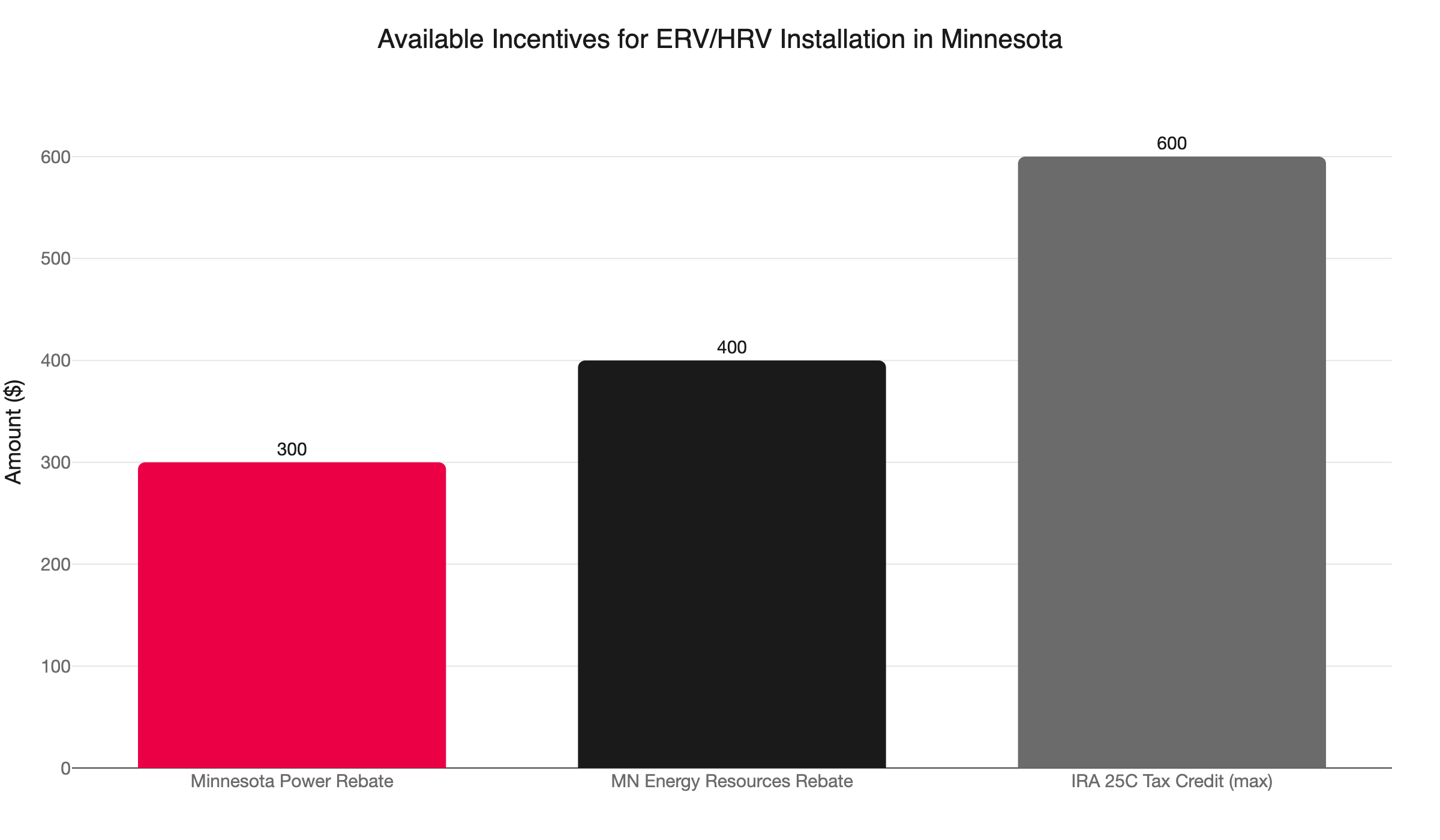
Available Incentives for ERV/HRV Installation in Minnesota
## What Are VOCs and Why Do Levels Spike After Renovation?
**VOCs, or volatile organic compounds, are gases released by building materials. New flooring, paint, adhesives, and cabinetry all off-gas VOCs at peak levels immediately after installation, then decline over the following months. There is no state or federal VOC limit for residential spaces in Minnesota. Symptoms are the only practical cue to act.**
VOCs are not a single chemical. They are a large family of gases - formaldehyde, benzene, toluene, xylene, and hundreds of others - released from paints, finishes, adhesives, laminates, pressed wood, carpet backing, and cabinetry. That new-construction smell after a renovation is real chemistry in your air.
[The EPA documents](https://www.epa.gov/indoor-air-quality-iaq/addressing-indoor-environmental-concerns-during-remodeling) that indoor VOC concentrations run consistently 2 to 5 times higher than outdoor levels, even before renovation materials are added. After a renovation, concentrations climb significantly above that already-elevated baseline.
New laminate and engineered wood flooring off-gasses formaldehyde at peak concentration right at installation. The most significant drop occurs in the first 2 to 4 months. Off-gassing continues at lower levels for up to a year. Heat accelerates emissions: materials installed in September can spike again when your home reaches peak temperature the following July.
[The Minnesota Department of Health](https://www.health.state.mn.us/communities/environment/air/toxins/voc.htm) lists acute VOC exposure symptoms as eye, nose, and throat irritation; headaches; nausea; dizziness; and worsened asthma, appearing within hours to days. Chronic exposure over years carries cancer risk and liver, kidney, and central nervous system damage. Critically: there is no state or federal VOC standard for non-industrial residential spaces in Minnesota. There is no number to check against. If occupants are symptomatic, that is the signal to act.
The EPA's framework for addressing post-renovation VOCs follows three priorities in order: eliminate sources by choosing low-VOC materials in the first place, mitigate what remains by sealing exposed engineered wood, and then ventilate by bringing in fresh outdoor air. Ventilation is the action step when the materials are already in place.
---
## Why "Open a Window" Fails for Minnesota Indoor Air Quality
Every article about renovation VOCs gives you the same advice: open your windows. That is useful guidance if you can follow it.
In the Twin Cities, you cannot for roughly five months of the year. Minnesota averages 155 to 160 days below freezing. From November through March, opening windows to clear renovation VOCs is not a ventilation strategy. If you install new hardwood floors in October, renovate a kitchen in November, or finish a basement in September, you are walking into the cold months with elevated off-gassing and no passive way to clear it.
Modern Minnesota construction compounds the problem. Homes built to current energy codes are far tighter than older stock. The natural air infiltration that once provided passive dilution - drafts around older windows, gaps in framing - has been engineered away. That benefits your heating bill significantly. It also traps indoor air pollutants with far less natural dilution than older homes ever had.
A tighter envelope combined with peak renovation off-gassing, combined with a sealed Minnesota winter, is the exact scenario where mechanical ventilation shifts from optional to necessary.
---
## Does Your HVAC Filter Remove VOCs?
**No. HVAC filters, even high-MERV options, capture airborne particles: dust, pollen, dander, mold spores. VOCs are gases, not particles. A MERV 13 filter passes gaseous VOCs without reducing them. Activated carbon media is the separate filtration layer that adsorbs VOC gases from the airstream.**
This distinction matters in practice. Upgrading to a higher-MERV filter after a renovation is a reasonable step for particle control, and it is the right move for overall air quality. But if the symptom driving the decision is headaches and throat irritation from renovation off-gassing, a MERV upgrade does not touch the cause.
Activated carbon works through adsorption: carbon surfaces bond with VOC molecules and pull them out of the airstream. Activated carbon media can sit alongside your standard filter in a media cabinet, or in a dedicated whole-home air purifier. It has a shorter service life than a standard filter because it saturates. Once the carbon is loaded, it stops adsorbing. Replacement schedule depends on the concentration of compounds in your air, which is higher after a renovation.
The right carbon product also depends on what you are dealing with. Formaldehyde from new flooring behaves differently in filtration than solvent vapors from fresh paint. If you have a mix of sources - new floors, painted walls, and new cabinetry all at once - a broad-spectrum activated carbon media is the practical starting point.
For a full breakdown of what MERV ratings do and do not do, our post on [air purifiers, filters, and MERV ratings explained](/blog/air-purifiers-vs-filters-merv-ratings-explained/) covers the mechanics in detail.
---
## What Can an ERV or HRV Do About VOCs After Renovation?
**An energy recovery ventilator (ERV) or heat recovery ventilator (HRV) draws stale indoor air out and pulls filtered outdoor air in while recovering most of the heat energy. This continuously dilutes VOC concentrations. In a Minnesota winter, it is the primary mechanical tool for reducing post-renovation off-gassing.**
Here is the mechanism. Your home is at 70°F. Outdoor air is at 5°F. Bringing in that outdoor air without recovery would require your furnace to heat it by 65 degrees. Multiply that across hours of continuous ventilation and the energy cost adds up fast. An ERV or HRV captures 70 to 85% of the heat from the outgoing exhaust air and transfers it to the incoming fresh air stream before it enters your living space. You get continuous air exchange. You do not get an oversized furnace bill.
[ASHRAE 62.2](https://www.ashrae.org/technical-resources/bookstore/standards-62-1-62-2) establishes minimum whole-house ventilation rates for residential buildings. ERVs and HRVs achieve full credit under the standard. They are the designed mechanical solution for tight, energy-efficient homes. That describes most modern Twin Cities construction. Post-renovation off-gassing is exactly the high-load scenario they are built to handle.
The math of dilution is straightforward: fresh air in, VOC-laden air out, every hour of operation. Each exchange cycle lowers the concentration in your home. Running an ERV or HRV at elevated airflow during the first weeks after renovation work is complete accelerates this far more than maintenance-mode operation would.
---
## ERV vs. HRV: Which One Is Right for a Minnesota Home?
**For most Twin Cities homes, an ERV is the better fit. It transfers both heat and moisture, preventing indoor humidity from falling further in cold, dry Minnesota winters. An HRV transfers heat only. Homes with strong existing dehumidification may prefer an HRV, but the ERV handles the full Minnesota climate profile better for most households.**
The humidity question is what most ERV and HRV guides skip entirely.
A Minnesota winter already dries your home out. You run a humidifier, deal with static electricity, and wake up with dry sinuses. An HRV exchanges heat but also exhausts indoor moisture with the outgoing air. In a home that is already running low on humidity, an HRV compounds the problem.
An ERV transfers moisture along with heat. In cold winter conditions, it recovers a portion of the indoor humidity from the exhaust air before it exits. Your home maintains relative humidity without requiring the humidifier to work harder. In summer, when Minnesota air is humid, the ERV's moisture rejection reduces the dehumidification load on your air conditioner. It handles both ends of the climate.
[According to Rise](https://www.buildwithrise.com/stories/can-you-add-an-erv-or-hrv-to-an-existing-home), the ERV versus HRV decision turns on your home's existing dehumidification capacity. Homes with powerful whole-home dehumidifiers already in place can manage moisture without ERV recovery. For most Twin Cities homes - particularly tight modern builds where winter dryness is a regular complaint - the ERV is the right call.
We cover the full decision framework in our post on [ERV vs. HRV: which ventilation system is right for Minnesota](/blog/erv-vs-hrv-which-ventilation-system-minnesota/).
---
## The One Setting Most Homeowners Never Change
Here is what every "increase ventilation" article leaves out: the instructions for how to actually operate the equipment.
Many newer Twin Cities builds include an ERV or HRV as part of the original HVAC installation. The proposed Minnesota code change would make them standard in all new single-family construction. The problem is not the hardware. [Rise documents](https://www.buildwithrise.com/stories/can-you-add-an-erv-or-hrv-to-an-existing-home) that the most common ERV and HRV mistake is leaving the system at factory default settings that do not match the home's actual ventilation needs. Factory defaults are calibrated for steady-state normal occupancy. They are not calibrated for the elevated VOC loads a major renovation generates.
Here is what to look at and adjust:
- **Boost mode.** Most ERVs and HRVs have a boost mode on the wall control. In boost, the unit runs at maximum rated airflow rather than the default lower rate. Set boost to run continuously for the first 2 to 4 weeks after renovation work is complete and the space is being occupied again.
- **Intermittent vs. continuous.** Many units ship set to run intermittently: 20 minutes per hour is a common default. After a renovation, switch to continuous operation. Accumulating air exchange hours as quickly as possible is the goal during the off-gassing peak.
- **Runtime duration.** For a large-scope renovation - new flooring plus fresh paint plus new cabinetry across a significant portion of the home - plan for 4 to 6 weeks at elevated ventilation before stepping back to maintenance mode. A smaller scope can be managed in 2 to 3 weeks.
If you are unsure what mode your unit is currently running, or if the controls are unclear, we can check the configuration on a service visit and set it correctly for your situation.
---
## The Bake-Out and Flush-Out Protocol
This is an established building science technique that most renovation guides never mention.
A bake-out intentionally raises the home temperature - typically to 85 to 90°F - for 24 to 48 hours. At elevated temperature, building materials release their VOC load at an accelerated rate. The heat compresses off-gassing that would otherwise unfold gradually over weeks into a shorter, more concentrated window.
The flush-out follows immediately. Run the ERV or HRV at maximum airflow for 12 to 24 hours after the bake-out, exhausting the concentrated VOC-laden indoor air and drawing in fresh outdoor air. The goal is to exchange as much air volume as possible while the peak concentration is present.
The result is a shorter overall off-gassing period. Instead of a months-long gradual decline, you drive a compressed high-concentration peak and ventilate it out. The materials continue off-gassing afterward at lower levels, but the acute exposure window has been managed.
A few practical caveats apply:
- Run a bake-out only after materials are fully cured. Fresh paint that has not dried or adhesives that have not set will not respond the same way. Wait until the work is complete and cured before attempting the protocol.
- You need sufficient ventilation capacity to execute the flush-out effectively. An undersized ERV or HRV may not exchange enough volume for a very large renovation footprint. A service check before attempting the protocol on a large job is worthwhile.
- This protocol complements low-VOC material selection. It does not replace it.
---
## How Do You Know If Your Air Quality Is Improving?
**A consumer-grade home air quality monitor tracks VOC levels and shows trends over days and weeks. You can confirm whether your ventilation is working and how long the off-gassing peak lasts. If readings plateau, that signals something else: a new source you have not identified, or ventilation capacity that is not keeping pace.**
Devices in the $150 to $400 range detect total VOC concentration and display trends over time. Run your ERV in boost mode for a week, then check the trend. If the VOC reading is declining steadily, the ventilation is working. If it plateaus or rises, you have a signal to investigate: another off-gassing source, a system that is not running at the setting you think it is, or materials releasing faster than expected due to temperature.
Pair the monitor reading with symptom tracking. If occupants stop experiencing headaches and eye irritation, that is meaningful confirmation that concentrations have dropped to tolerable levels - regardless of what the monitor shows in absolute terms.
For a full guide to what home air monitors track and how to read the data, see our post on [home air quality monitoring for Twin Cities homeowners](/blog/home-air-quality-monitor-hvac-twin-cities/).
If symptoms are significant, or occupants have asthma or chemical sensitivities, a professional air quality test provides specific compound identification. That changes the mitigation plan. Not all VOCs respond the same way to ventilation, and some materials benefit more from sealing than from air exchange as the primary response.
---
## Is Minnesota Requiring ERVs and HRVs in New Construction?
**Minnesota's Technical Advisory Group has proposed requiring an HRV or ERV in all new single-family, two-family, and townhome construction under the 2024 IRC adoption. The proposal covers all Minnesota climate zones. It is not yet in effect, but the direction is clear.**
The [Minnesota Department of Labor and Industry Technical Advisory Group](https://dli.mn.gov/sites/default/files/pdf/TAG-residential-020425-handouts3.pdf) submitted the proposal as part of the state's 2024 International Residential Code adoption process. If it passes, heat recovery ventilation becomes a code baseline for new residential construction in Minnesota. Not an upgrade. A standard.
For existing homeowners, this matters in two ways. First, if your home already has an ERV or HRV, now is the right time to verify it is configured correctly and that you know how to operate it for high-demand scenarios like post-renovation off-gassing. Most homeowners with these systems have never been walked through the controls. Second, if your home does not have one, a major renovation is a practical trigger for adding one. The construction disruption is already happening. Adding ventilation equipment during a renovation is more cost-effective than scheduling a standalone installation later.
---
## What Will This Cost, and Are There Rebates?
**ERV and HRV installation typically runs $1,500 to $3,900 installed in the Twin Cities, depending on system type, home size, and ductwork configuration. Three active incentive programs can stack to cover a significant portion of that cost.**
Available incentives for qualifying ERV and HRV installations:
- **Minnesota Power:** $300 rebate for ERV or HRV with a sensible recovery efficiency (SRE) of 60% or higher at 32°F, installed by December 31, 2026, through a program contractor. [(Details)](https://www.mnpower.com/ProgramsRebates/ERVHRVRebate)
- **Minnesota Energy Resources:** $400 rebate for qualifying HRV or ERV installation. Confirm current availability at mnenergyresources.com before applying, as program availability can change.
- **IRA 25C federal tax credit:** Up to $600 for qualifying ventilation upgrades under the Inflation Reduction Act. Confirm the current year's guidance directly with the IRS, as program amounts have been subject to update.
Those three sources can combine to $1,300 in incentives on a single installation. Stacking utility rebates with federal tax credits in Minnesota is worth doing carefully - for a full walkthrough, see our guide to [stacking HVAC rebates and tax credits in Minnesota](/blog/stacking-hvac-rebates-tax-credits-federal-state-utility-minnesota/).
Financing is available for larger IAQ equipment purchases. Ask about current terms when you call.
---
## When to Call Northern One Hour
Our team handles both sides of post-renovation indoor air quality: configuring and testing equipment you already have, and installing equipment your home is missing.
We can assess your existing ERV or HRV settings, confirm the system is sized and configured correctly for your home, add activated carbon filtration to your airstream, run a whole-home IAQ consultation, or install a new ERV or HRV where one does not exist. We are locally owned and operated in Ramsey, serving the Twin Cities metro and surrounding communities.
When you schedule with us, we show up. "Always On Time… Or You Don't Pay a Dime!(R)" is not a marketing line - it is the standard we hold on every call.
Call (763) 260-6662 or book online to schedule. If your renovation is coming up and you want to plan your IAQ approach before the work starts, that conversation is easier than a remediation call after the materials are already in.
---
# Gas Fireplace and Furnace Sharing Combustion Air Minnesota
URL: https://northernonehour.com/blog/gas-fireplace-furnace-combustion-air-backdraft-minnesota/
Published: 2026-09-22 | Category: Heating
When a 95%+ furnace seals off from your indoor air, your gas fireplace carries the full depressurization risk. Learn what this means for Minnesota homes.
Key Takeaways
- Replacing an 80% furnace with a 95%+ sealed-combustion unit removes the furnace from the indoor-air equation. Your B-vent gas fireplace becomes the only atmospheric appliance left exposed to house pressure.
- [A drop of just 10 Pa of indoor pressure is enough to trigger backdrafting](https://bluehouseenergy.com/blogs/bhe-blog/depressurization-test) in naturally vented gas appliances. A large range hood can clear that threshold on its own.
- [Stack effect increases with temperature difference and building height](https://www.energyvanguard.com/blog/negative-pressure-causing-problem-your-home/). At -20°F design temperatures, Minnesota stack effect can depressurize a house before any fan turns on.
- CO above 30 ppm means leave immediately and call an HVAC professional.
- Minnesota deleted the two-permanent-openings method from its mechanical code. Natural-draft appliances need a single direct outdoor opening sized by calculation.
- Fixes range from adding a missing combustion air opening to converting to a direct-vent fireplace to a [makeup air unit](/blog/range-hood-makeup-air-combustion-safety-minnesota/) ($3,000 to $5,000 installed).
## The Upgrade That Changes Everything
You replaced your aging furnace last fall. The contractor did solid work. The new 95%+ unit runs clean, heats the house evenly, and the gas bills dropped.
Then a cold January morning arrives. The CO detector trips. The fireplace smells like exhaust. A faint black smudge sits above the firebox.
Nobody connects it to the furnace replacement. They should.
The upgrade most homeowners focus on is efficiency. An 80% AFUE furnace wastes 20 cents of every gas dollar up the flue. A 95%+ unit wastes less than 5 cents. Over a Minnesota winter, that gap shows up clearly on the gas bill.
What the efficiency improvement also does is change the combustion architecture of the house. The furnace is no longer connected to your indoor air supply at all. And that change has a side effect that does not show up on any rebate calculator.
The high-efficiency furnace upgrade is often the trigger. It changes the pressure balance inside your house in a way most contractors do not explain at installation.
## What Is the Combustion Air Problem?
**Your house is not airtight. Every exhaust fan, clothes dryer, and range hood pushes air out. If replacement air cannot enter fast enough, pressure drops. Naturally vented appliances like a B-vent gas fireplace reverse-flow combustion gases back into the room. That is backdrafting, and it takes very little pressure change to trigger it.**
Houses breathe. They exchange air with the outdoors through intentional openings and unintentional gaps. When the rate of outflow exceeds the rate of inflow, the house goes negative. Indoor pressure falls below outdoor pressure.
When that happens to a naturally vented gas appliance, the physics work against you. A B-vent fireplace relies on warm exhaust gas rising through the flue. That column works because warm air is less dense than cool air. When indoor pressure drops, the column weakens or reverses. Outside air pushes down the flue instead of letting exhaust escape.
[A drop of just 10 Pa of indoor pressure is enough to cause backdrafting in gas fireplaces and naturally vented water heaters](https://bluehouseenergy.com/blogs/bhe-blog/depressurization-test). That threshold is not extreme. A large range hood running on high can approach it alone. Add a bath fan and a running clothes dryer and the pressure drop compounds quickly.
The problem is not new. What changed for millions of Minnesota homes is the removal of one of the appliances that was sharing the pressure load.
## Why Does a High-Efficiency Furnace Change the Equation?
**Before your furnace upgrade, you had two atmospheric appliances in the house. The old 80% furnace had an open combustion-air grill that acted as a passive pressure inlet. When you replaced it with a sealed 95%+ unit, that inlet disappeared. Your fireplace became the only atmospheric appliance left exposed.**
[Natural-draft Category I furnaces pull combustion air from the room through an open grill on the combustion chamber](https://basc.pnnl.gov/resource-guides/combustion-furnaces). That grill is also a passive pressure opening. It allows a real - if modest - flow of air between the combustion zone and the room. When the house goes slightly negative, the furnace shares the exposure with the fireplace.
[A Category IV (90%+ AFUE) furnace should be installed as sealed-combustion and direct-vent: combustion chamber sealed from the room, combustion air drawn from outside via a dedicated PVC pipe](https://basc.pnnl.gov/resource-guides/combustion-furnaces). After installation, that furnace is completely pressure-indifferent. It draws air from outside regardless of what is happening inside the house.
The sealed furnace did not create the problem. It removed a buffer. Your B-vent fireplace, which was sharing pressure exposure with the furnace before, now carries the full load alone. Every exhaust fan, every cooking session, every dryer cycle pushes the house toward negative pressure with no furnace combustion-air opening to compensate.
The problem is more acute in a tight modern house. Many Twin Cities homeowners have [air-sealed and insulated](/blog/spray-foam-insulation-combustion-air-furnace-problems-minnesota/) their homes alongside a furnace upgrade, taking advantage of rebate programs from CenterPoint Energy and Xcel Energy. Tight homes have fewer passive infiltration paths. When mechanical exhaust runs, pressure drops faster and drops further.
## Does Minnesota's Winter Climate Make This Worse?
**Yes. Stack effect increases with indoor-outdoor temperature difference. At -20°F design temperatures, Minnesota stack effect can depressurize a house enough to trigger backdrafting before any mechanical exhaust runs. It is one of the most severe combustion-air environments in the country.**
[The three drivers of house depressurization are wind, stack effect, and mechanical exhaust. Stack effect increases with temperature difference and building height](https://www.energyvanguard.com/blog/negative-pressure-causing-problem-your-home/), making Minnesota winters the worst-case scenario for naturally vented appliances.
Stack effect works like this. Warm indoor air is less dense than cold outdoor air. It rises and escapes through gaps at the top of the house. That creates low pressure at the bottom, pulling cold outdoor air inward through lower openings. In a two-story home, the pressure gradient from basement to attic is significant.
At -20°F outdoors with 70°F inside, the indoor-outdoor temperature difference hits 90°F. Stack effect is extreme. The fireplace flue is a vertical channel running through the middle of that pressure gradient. The warm gases trying to rise and exhaust are competing with a strong physical force pushing the opposite direction.
This is why problems surface on the coldest mornings. A homeowner makes breakfast. The range hood runs on high. The dryer is going. The temperature outside is -15°F. Stack effect is already pushing the house toward negative pressure. The range hood tips it past the backdraft threshold. The CO detector trips.
The Minnesota angle matters because it is not a marginal effect. In a Southern climate, stack effect is modest and mechanical exhaust is the primary driver. In Minnesota, stack effect alone can cross the backdraft threshold before a single fan turns on. Add a sealed furnace that no longer provides any pressure relief, and the fireplace flue operates under the most difficult conditions possible.
## What Are the Warning Signs of Backdrafting?
**Soot staining above the fireplace opening, an exhaust or gas smell near the firebox, CO detector alarms on cold mornings, and a flame that flickers or goes out unexpectedly are all signs of backdrafting. Stop using the appliance and call a technician. Do not wait for a CO alarm to confirm what soot staining already suggests.**
Here is the full symptom list to watch for:
- **Soot or black staining** above the fireplace opening, on the mantel, or on surrounding walls
- **Exhaust or gas smell** near the firebox when the fireplace is running or has recently shut off
- **CO detector alarms**, particularly on cold mornings or when range hoods and bath fans run simultaneously
- **Pilot or flame that flickers unexpectedly** or extinguishes more often than normal
- **Condensation or moisture** near the flue collar or damper area
- **Staining or discoloration** on the ceiling above the fireplace
[CO levels above 9 ppm over 8 hours are considered unsafe. At 30 ppm or higher, occupants should leave immediately and call an HVAC technician](https://basc.pnnl.gov/diy-guides/look-signs-gas-furnace-backdrafting). Do not stay in the house to troubleshoot the source.
[Backdrafting and flame rollout are life-threatening. Flame rollout occurs when the space is at such negative pressure that flames are pulled out of the combustion chamber entirely](https://basc.pnnl.gov/diy-guides/look-signs-gas-furnace-backdrafting). Soot staining and exhaust odor are reason enough to schedule a service call before any alarm fires - not after.
For more on CO detector placement and the right response protocol when an alarm trips near a gas appliance, see our guide to [carbon monoxide safety during furnace season](/blog/carbon-monoxide-safety-furnace-season/).
Also watch for secondary symptoms. [A house under sustained negative pressure faces higher utility bills, poor indoor air quality, and moisture condensing inside wall cavities](https://bluehouseenergy.com/blogs/bhe-blog/depressurization-test). If you are seeing unexplained humidity damage alongside fireplace odors, they may share the same root cause.
## Can You Test for Depressurization Yourself?
**A partial check: yes. Close all windows, run every exhaust fan and the dryer simultaneously, and hold a lit incense stick near the closed fireplace damper. If smoke pulls toward the damper, the house is under negative pressure. A proper diagnostic requires a manometer and a licensed technician, but this test tells you whether to make the call.**
The test, step by step:
1. Close all windows and exterior doors.
2. Turn on all bath fans, the kitchen range hood on its highest setting, and the clothes dryer.
3. Let the system run for two to three minutes to reach a steady state.
4. Light a stick of incense and hold it near the fireplace damper (with the fireplace off).
5. Watch the smoke. If it pulls toward the damper instead of rising, the house is under negative pressure.
You can also hold the incense near the base of the ash door or any unsealed opening to the firebox. Air pulling inward confirms the result.
This is a screening test. It tells you there is a pressure problem. It does not tell you how severe it is, whether the combustion air opening is adequate, or whether the installation is code-compliant. A licensed technician uses a calibrated manometer to measure indoor pressure differentials, identify the sources of depressurization, and determine the right remediation path. That assessment is called a combustion appliance zone (CAZ) test.
While you are inspecting, look for the dedicated combustion air opening. It should be a single permanent opening within 12 inches of the floor, communicating directly with the outdoors or through a dedicated duct. If you cannot locate one, or if it appears blocked by a past remodel, that is a code issue independent of the pressure test result.
## What Does Minnesota Code Require?
**Minnesota deleted the two-permanent-openings method entirely from its mechanical code. Naturally vented appliances require a single permanent opening within 12 inches of the floor, communicating directly with the outdoors through a dedicated duct. No sharing with the return air plenum, no using the chimney liner annular space.**
[Minnesota Rules Part 1346.5304 deleted the two-opening method (IFGC 304.6.1)](https://www.revisor.mn.gov/rules/1346.5304/) that older installations sometimes relied on. The current requirement is a single permanent opening, properly sized by calculation, directly communicating with the outdoors.
The specific requirements:
- Combustion air ducts must serve a single appliance space. You cannot run a shared duct to multiple appliances.
- The duct cannot terminate in the return air plenum of the forced-air heating system. Combustion air and return air are separate systems.
- The chimney liner annular space cannot supply combustion air. The exception is certain direct-vent appliances listed for solid-fuel fireplaces.
- Sizing uses Worksheet E-1, the Residential Combustion Air Calculation Method in IFGC Appendix E as amended by Minnesota Rules 1346.6012 and 1346.6014.
- [A mechanical permit is required for any new gas fireplace installation or wood-to-gas conversion in Minnesota, with required rough-in and final inspections](https://www.goldenvalleymn.gov/DocumentCenter/View/821/fireplace-conversion-handout-PDF).
Many Twin Cities homes have gas fireplaces installed before these rules took effect, or converted from wood without a permit. The combustion air opening may have been omitted, undersized, or blocked during a subsequent remodel. A CAZ assessment is the tool that surfaces these issues.
One detail worth understanding: if your furnace was replaced after the gas fireplace was already installed, the combustion air calculation should have been redone at that time. Replacing the furnace changes the appliance inventory and the pressure dynamics in the home. That recalculation often does not happen. A homeowner who upgraded to a 95%+ furnace two years ago and has never had a CAZ assessment since is in exactly this situation.
## What Are Your Fix Options, and What Do They Cost?
**Three options, in order from least to most expensive: add or repair the dedicated combustion air opening, convert the fireplace to a sealed direct-vent unit, or install a makeup air system. The right choice depends on what the CAZ assessment finds and whether you plan to replace the fireplace unit anyway.**
### Option 1: Add or Repair the Combustion Air Opening
If the CAZ assessment finds no code-compliant outdoor combustion air opening, this is the required first step. A licensed technician cuts a properly sized opening and installs a screened, direct-to-outdoor duct that meets MN Rules 1346.5304 sizing requirements for the appliance BTU load.
Cost varies by construction type, wall material, and access. This is typically the lowest-cost option of the three. It is the right starting point when the pressure problem is moderate, the fireplace unit itself is in good condition, and the missing or undersized opening is the primary gap.
In some homes, adding the opening is sufficient on its own. In homes with very powerful exhaust appliances or unusually tight construction, the opening helps but may not fully resolve the depressurization. The CAZ measurement tells you which scenario you are in.
### Option 2: Convert to a Direct-Vent Gas Fireplace
A direct-vent gas fireplace uses sealed combustion. A coaxial pipe runs through the wall or roof. The outer sleeve draws outside air in. The inner pipe exhausts combustion gases out. The combustion chamber is completely sealed from the room.
Direct-vent fireplaces are immune to indoor pressure problems. There is no atmospheric pathway for backdrafting, regardless of how much mechanical exhaust runs. This is the cleanest long-term resolution if the fireplace unit is aging, has already shown backdraft staining or damage, or you want to upgrade the firebox appearance.
Our team is locally owned and operated out of Ramsey, MN, and serves the Twin Cities metro. We can assess whether a direct-vent conversion is a fit for your home and existing framing before you commit to the work.
### Option 3: Install a Makeup Air Unit
A makeup air (MUA) system is a powered fresh-air intake, typically sized for the largest exhaust appliance in the house. It delivers preheated outdoor air into the house so mechanical exhaust always has a dedicated supply source. The house stays at neutral pressure regardless of what fans are running.
[A makeup air system sized for a 600 to 1,000 cfm range hood runs $3,000 to $5,000 installed](https://bluehouseenergy.com/blogs/bhe-blog/depressurization-test). It adds a conditioning load because it brings in outside air that must be heated in winter and cooled in summer. But it solves depressurization for the whole house, not just the fireplace.
This is the right fix when multiple atmospheric appliances are present, when the range hood is a commercial-grade high-cfm unit, or when option 1 alone is not sufficient to reach pressure balance.
If the cost of a direct-vent conversion or makeup air unit is a concern, ask our team about financing options. Northern One Hour offers financing to help you move forward without waiting through another Minnesota winter.
## Getting a Professional Assessment
If your CO detector has tripped on a cold morning, if you smell exhaust near the fireplace, or if you replaced your furnace in the last few years without a combustion appliance zone check since, schedule one now.
Northern One Hour is locally owned and operated in Ramsey, MN. We serve Minneapolis, St. Paul, Blaine, Maple Grove, Plymouth, Brooklyn Park, Woodbury, Bloomington, and the broader Twin Cities metro. Our technicians carry combustion analysis equipment and perform CAZ testing as part of a heating system diagnostic. We identify pressure defects, find missing or undersized combustion air openings, and walk you through the options before any work begins.
For a related read on how mechanical exhaust interacts with gas appliance safety, see our post on [exhaust fans and furnace backdraft in Minnesota homes](/blog/exhaust-fans-furnace-backdraft-combustion-air-minnesota/). If you are overdue for a seasonal check, our [furnace tune-up service](/heating/heating-equipment/furnaces/furnace-tune-ups/) includes combustion analysis and a safety inspection.
"Always On Time… Or You Don't Pay a Dime!(R)"
Call us at **(763) 260-6662** or [schedule your appointment online](/heating/heating-repair/).
---
# Heat Pump Compressor Failure: Signs and Costs in Minnesota
URL: https://northernonehour.com/blog/heat-pump-compressor-failure-signs-replacement-cost-minnesota/
Published: 2026-09-22 | Category: HVAC
Your heat pump can fail in heating or cooling mode. Learn the warning signs, repair vs. replace costs in Minnesota, and what the Xcel rebate covers.
Key Takeaways
- A heat pump compressor can fail in heating mode or cooling mode. The same component handles both, and the diagnostic path differs depending on which mode surfaces the problem.
- Steam and temporary ice on the outdoor unit in winter are usually a normal defrost cycle, not a failure sign.
- A failed reversing valve mimics compressor failure in heating mode. Confirm the diagnosis before authorizing a compressor replacement.
- Warning signs include a repeatedly tripping breaker, a 10-30% jump in electricity bills, short cycling, hard starts with a shudder, and loud banging from the outdoor unit.
- Compressor repair runs $1,950-$4,500 installed in the Twin Cities. A new mid-tier cold-climate system starts at $7,500-$10,400 installed.
- The federal 25C heat pump tax credit expired December 31, 2025, and has not been renewed. Do not budget for it on a 2026 purchase.
- Xcel Energy offers up to $2,000 for a qualifying cold-climate heat pump installation in Minnesota. That rebate does not apply to a compressor swap on an existing unit.
- The 10-year rule: if your system is 10 or more years old and the repair quote approaches half the cost of a new system, replacement is usually the better investment.
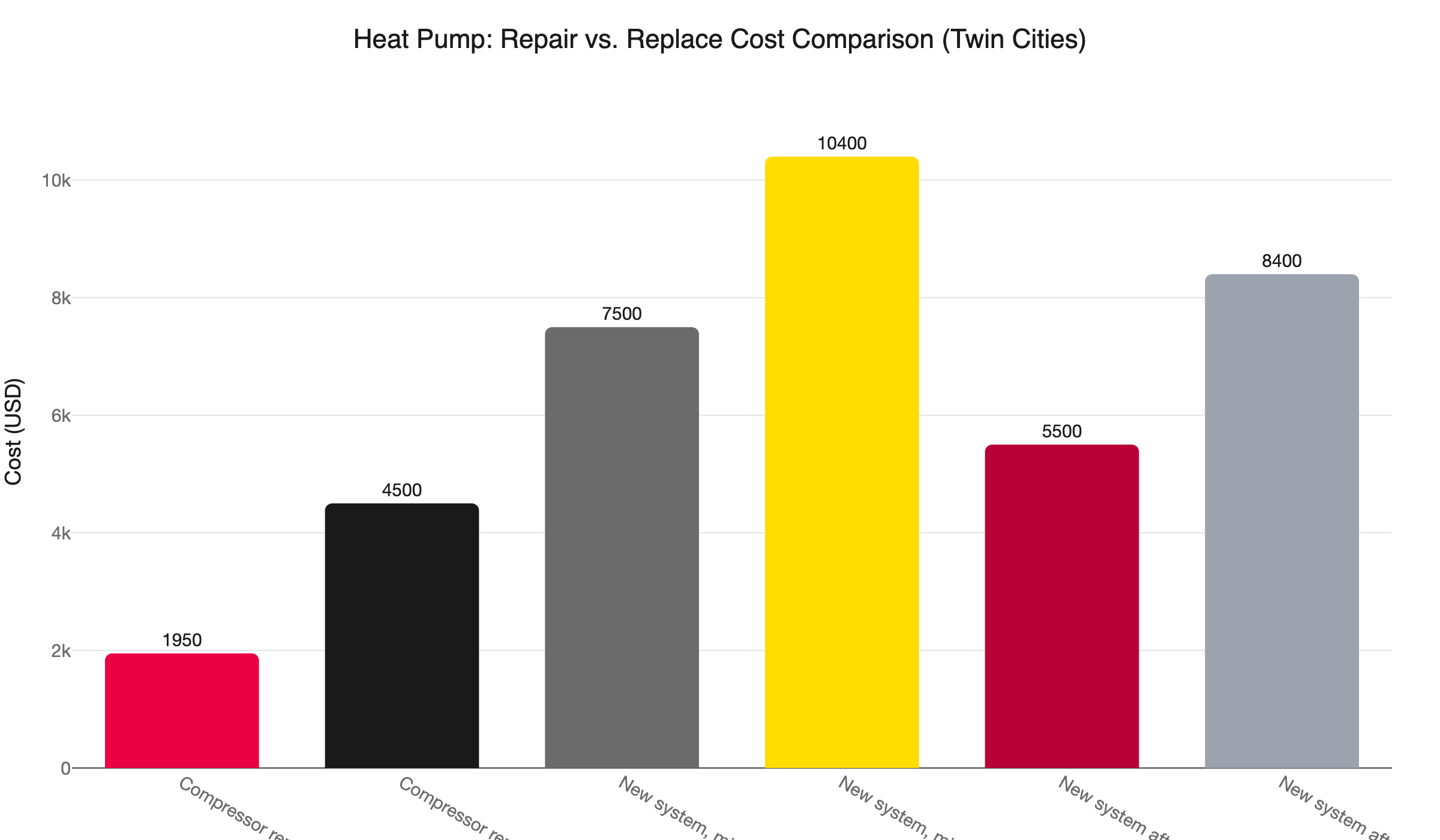
Heat Pump: Repair vs. Replace Cost Comparison (Twin Cities)
## What Makes Heat Pump Compressor Failure Different From AC Failure?
A heat pump compressor runs in both heating and cooling modes. That means failure can appear in January as "my heat pump is blowing cold air," or in July as "the house won't cool down." An AC compressor only fails in one mode. The diagnostic path is different, and so is the replacement math.
Most articles about compressor failure are written with a central AC in mind. They address one mode of operation and one failure scenario. A heat pump in the Twin Cities is a different machine. With roughly [7,900 heating degree days annually](https://texastempmasters.com/guides/heat-pump-repair-cost-in-minnesota/), your heat pump runs in heating mode for about six to seven months each year. That means the compressor accumulates heating-mode runtime that a southern AC-only system never sees. More runtime means more wear, and it means more situations where failure presents differently than expected.
In heating mode, compressor failure is not the only explanation for cold air from a running heat pump. A failed reversing valve produces the same symptom. A normal defrost cycle, in the middle of a cold snap, can look alarming to a homeowner who has never seen it. None of this means the compressor is fine - but it means diagnosis matters before any repair is authorized.
This post focuses on the heat-pump-specific diagnostic path: how to recognize real compressor failure, how to tell it from a reversing valve problem or a defrost cycle, what the repair-vs-replace math looks like with current Minnesota rebates, and why the federal tax credit many homeowners are expecting is no longer available for 2026 installs. For a parallel look at central AC compressor problems, see our [AC compressor failing signs and repair cost guide](/blog/ac-compressor-failing-signs-repair-cost-twin-cities/).
---
## What Are the Warning Signs of Heat Pump Compressor Failure?
The most reliable signs are a circuit breaker that keeps tripping, a 10-30% spike in your electricity bill without a weather explanation, short cycling, hard starts with a shudder, and loud banging from the outdoor unit. Any of these warrants a service call before the problem gets worse.
Here is the full list of what to watch for, whether the issue surfaces in [heating or cooling mode](https://advancedhvacri.com/the-heart-of-the-matter-diagnosing-frequent-heat-pump-compressor-failures/):
- **Breaker tripping repeatedly.** A failing compressor draws high amperage as it struggles. Reset the breaker once. If it trips again, stop resetting it and call a technician.
- **Electricity bill spike.** A compressor losing efficiency works harder to move the same amount of heat. A 10-30% jump in your electric bill with no weather explanation is a warning sign worth investigating.
- **Short cycling.** The system starts, runs briefly, shuts off, and starts again within minutes. Short cycling accelerates compressor wear and speeds up failure.
- **Hard start or shuddering.** A shudder when the outdoor unit kicks on means the compressor is straining to start. A hard-start capacitor sometimes buys time, but it is a patch, not a cure.
- **Loud banging or clunking.** This sound from the outdoor unit often means the compressor is slugging liquid refrigerant. Liquid does not compress; the result is internal mechanical damage that typically requires a full compressor replacement.
- **Weak or lukewarm airflow in the expected direction.** The system is running but is not heating or cooling effectively. The air coming from your vents does not match what the thermostat is calling for.
- **Persistent ice on the outdoor unit.** Some frost in cold weather is expected. A solid block of ice that does not clear between defrost cycles is not.
One important qualifier: a refrigerant leak, a failing capacitor, or a failed contactor can produce several of these same symptoms at a fraction of the compressor replacement cost. Our [AC keeps tripping the breaker guide](/blog/ac-keeps-tripping-breaker-causes-twin-cities/) covers how electrical component failures overlap with compressor symptoms. Do not assume it is the compressor until a technician has confirmed the diagnosis.
---
## Is That Ice and Steam on the Outdoor Unit Normal?
In cold weather, ice forming on the outdoor coil is expected. The heat pump extracts heat from outside air, moisture in that air freezes onto the coil, and the defrost cycle melts it - producing visible steam. That process is normal operation. The problem is ice that never clears, combined with declining heat output.
Every winter, we get calls from Twin Cities homeowners who have never owned a heat pump before and are alarmed by the steam coming off the outdoor unit. In most of those cases, [they are watching a normal defrost cycle](https://advancedhvacri.com/the-heart-of-the-matter-diagnosing-frequent-heat-pump-compressor-failures/). The cycle runs roughly every 30-90 minutes in cold weather, briefly reverses refrigerant flow to melt the accumulated frost, and then returns to heating mode. You may notice a short drop in heat output during that reversal, which is also normal.
The signs that ice buildup is an actual problem:
- Ice does not clear after multiple defrost cycles
- The outdoor unit is a solid block of ice after several hours of operation
- Performance has declined alongside the ice buildup and the house is not reaching setpoint
- An error code or blinking light has appeared on the indoor unit
The practical test: does the ice fully clear between cycles? If yes, you are watching normal operation. If ice builds faster than defrost can handle it, or the unit is running but not producing heat, that warrants a call.
---
## How Do You Tell Compressor Failure From a Reversing Valve Problem?
In heating mode, a failed reversing valve and a failed compressor produce nearly identical symptoms: the system runs but delivers cold or cool air. A reversing valve failure usually preserves cooling capacity but blocks the shift into heating mode. A technician confirms the difference with refrigerant pressure readings and a mode-switching test.
This distinction is what every other article on heat pump compressor failure misses, and it matters significantly for your repair bill. The reversing valve switches the direction of refrigerant flow between heating and cooling modes. When it fails or sticks in the cooling position, the system blows cold air in heating mode. To a homeowner, that looks exactly like compressor failure. The cost difference between a reversing valve replacement and a compressor replacement is not small.
A solid diagnostic rules out the reversing valve before condemning the compressor. If a technician quotes you a compressor replacement based purely on heating-mode symptoms, ask whether the reversing valve was tested and what the refrigerant pressure readings showed. If you cannot get a clear answer, request a written summary of what was tested - or get a second opinion. For more on the reversing valve specifically, see our [heat pump reversing valve failure symptoms post](/blog/heat-pump-reversing-valve-failure-symptoms-minnesota/).
The diagnostic sequence for a heat pump that is not heating:
1. Check refrigerant charge. Low charge causes weak heating and weak cooling.
2. Check the capacitor and contactor. These are inexpensive to replace and produce convincing compressor-failure symptoms when they fail.
3. Test the reversing valve. Confirm it is shifting modes correctly.
4. Check the defrost board and outdoor sensor. A stuck defrost cycle interferes with normal heating.
5. If all of the above check out: test the compressor directly with electrical and pressure measurements.
Do not skip steps. Step 5 is the expensive one.
---
## What Causes a Heat Pump Compressor to Fail?
Heat pump compressors are designed to last 10-15 years with proper maintenance. Most early failures trace to a handful of preventable causes.
**Low refrigerant charge.** [The leading cause of compressor failure](https://qualityhomeaircare.com/heat-pump-compressor-failure-causes-signs-replacement/). When a system runs undercharged, the compressor operates at higher temperatures and under greater stress than it was built for. The internal components break down over time. Finding and repairing the refrigerant leak is the fix; topping off the charge without addressing the leak is not.
**Failed capacitor or contactor.** The capacitor delivers the electrical jolt the compressor needs to start. When it weakens, the compressor hard-starts repeatedly. Hard starting shortens compressor life significantly. Capacitor and contactor replacements are among the least expensive HVAC repairs - catching them before they damage the compressor is exactly what an annual maintenance plan is designed to do.
**Dirty condenser coil.** A coil coated in dirt, cottonwood, or debris cannot shed heat efficiently. The compressor runs longer and hotter to compensate. Annual coil cleaning during a tune-up prevents this failure mode.
**Liquid slugging.** When liquid refrigerant enters the compressor, it causes immediate mechanical damage. It usually arrives with a loud banging from the outdoor unit. Once slugging has caused internal damage, the compressor must be replaced, not repaired.
**Age and accumulated runtime.** A heat pump in Minnesota runs in heating mode roughly six to seven months per year, accumulating far more total compressor hours than a unit in a warmer climate. Normal wear eventually catches up, and on a system approaching 12-15 years, it often arrives alongside another component failure.
One additional factor worth noting: R-410A refrigerant is in active phasedown. Recharge costs on existing systems are rising. If your unit needs a refrigerant recharge as part of a compressor repair, factor current and future recharge costs into the repair-vs-replace math.
---
## How Much Does Heat Pump Compressor Repair or Replacement Cost in Minnesota?
Compressor repair - part, labor, and refrigerant recharge where needed - runs $1,950-$4,500 in the Twin Cities for most units. A new mid-tier cold-climate heat pump system, fully installed, starts at $7,500-$10,400. A high-efficiency cold-climate unit starts at $11,000-$15,600.
Several factors push repair costs toward the high end of that range:
- **Refrigerant recharge.** If a refrigerant leak caused or contributed to the compressor failure, a recharge is part of the job. Leak detection and repair add to the total.
- **Proprietary compressors.** Some manufacturers require brand-specific components that carry a price premium.
- **Additional components found during service.** A capacitor, contactor, or coil issue found in the same visit is worth addressing at the same time. Catching these while the technician is already on-site costs less than a separate call.
For broader context: [average heat pump repair cost in Minnesota is around $420 for minor work, and $800-$4,500 for major repairs including compressor replacement](https://texastempmasters.com/guides/heat-pump-repair-cost-in-minnesota/). The top of that range reflects compressor work on larger or more complex systems.
---
## Should You Repair the Compressor or Replace the System?
If your heat pump is under eight years old and the compressor is the confirmed failure, repair usually makes sense. If it is 10 or more years old and the repair quote approaches half the cost of a new system, replace - especially with the Xcel rebate available for a qualifying new install.
**The 10-year rule.** [If the unit is 10 or more years old and the repair cost approaches half the replacement cost, replace](https://www.pickcomfort.com/typical-cost-replace-heat-pump-compressor/). A compressor swap on an aging system still leaves you with old coils, old refrigerant circuits, and the system's original efficiency rating. You are paying a major repair bill to continue operating an aging machine.
**What repair does not give you.** Replacing the compressor keeps the system's existing SEER2 and HSPF2 ratings. It does not restart the warranty clock on the rest of the system. It does not make the system eligible for utility rebates. And it keeps you on R-410A refrigerant that costs more to recharge with each passing year.
**What a new system gives you.** Modern cold-climate heat pumps are rated to maintain heating capacity down to -13 degrees Fahrenheit - a spec that matters in a Minnesota January. A new system comes with a 10-year equipment warranty, a higher efficiency rating, and full rebate eligibility.
**The Xcel rebate changes the numbers.** Xcel Energy offers [up to $2,000 for a qualifying cold-climate ducted heat pump in Minnesota](https://mn.my.xcelenergy.com/s/residential/heating-cooling/heat-pumps). Eligibility requires the unit to be listed on the NEEP database with a COP at 5 degrees Fahrenheit of at least 1.75 and heating capacity at 5 degrees Fahrenheit of at least 70% of its 47-degree rated capacity. Those thresholds are designed for climates like ours, where the system may run near or below that temperature for days at a time.
If you are deciding between a $3,500 compressor repair and an $8,500 new system, the Xcel rebate brings the net replacement cost to $6,500. On a 12-year-old unit, that gap narrows considerably, and the new system wins.
Xcel also offers a $600 bonus when a qualifying heat pump is installed following qualifying insulation or air-sealing upgrades. Minneapolis homeowners in Green Zone areas may qualify for [Green Cost Share up to $14,000](https://homeenergybasics.com/heat-pumps/states/mn), which can stack on top of the Xcel rebate. Ask our team about eligibility when you call.
Financing is available on new system installs. We will walk you through current terms on the call.
---
## What About the Federal Tax Credit?
The 25C Energy Efficient Home Improvement Credit for air-source heat pumps expired December 31, 2025, and has not been renewed. Do not budget for it on a 2026 purchase.
Many homeowners are still researching based on 2024 articles referencing a 30% federal credit worth up to $2,000. That credit covered [air-source heat pumps purchased and installed January 1, 2023 through December 31, 2025](https://www.energystar.gov/about/federal_tax_credits/air_source_heat_pumps). The IRS page for the credit was last reviewed April 28, 2026, and no renewal is in place as of that date.
The credit may return. We will update this post if it does. For now, the Xcel Energy rebate is the confirmed available incentive for Minnesota homeowners. The Minnesota HEAR and HOMES rebates under the Save Energy Minnesota program have not launched as of fall 2026 - the state is still awaiting formal federal approval, and no launch date is confirmed.
Use the Xcel rebate now. It is real money on qualifying installs, and we will confirm your system's eligibility at the time of the quote.
---
## Schedule a Diagnostic With Northern One Hour
We are locally owned and operated in Ramsey, MN, serving Minneapolis, St. Paul, Blaine, Maple Grove, Plymouth, Brooklyn Park, Woodbury, Bloomington, and the Twin Cities metro. When you call about a heat pump that is not performing, here is our approach.
We run a full diagnostic before recommending any repair. We check refrigerant charge, electrical components, reversing valve function, and coil condition. We give you a written explanation of what was tested, what was found, and your options - repair and replacement side by side with current numbers. If replacement is on the table, we will walk you through Xcel rebate eligibility at the time of the call.
We back our work with a 100% satisfaction guarantee, and we stand by the promise we have kept since we opened: "Always On Time… Or You Don't Pay a Dime!(R)"
Call us at **(763) 260-6662** or [book your service online](/heat-pumps/). We show up when we say we will.
---
# Need a Smaller Furnace After Insulation and Windows? MN
URL: https://northernonehour.com/blog/hvac-resizing-after-home-improvements-insulation-windows-minnesota/
Published: 2026-09-22 | Category: HVAC
You upgraded insulation and added new windows in Minnesota. Now your furnace short-cycles. Here is how to diagnose oversizing and what to do about it.
Key Takeaways
- Insulation and window upgrades cut your home's heat loss. If your furnace was already oversized before the work, that mismatch just got wider.
- The primary symptom: short-cycling, where the furnace fires for 3-7 minutes, overshoots the thermostat, shuts off, and repeats all day.
- The correct ACCA 99% design temperature for the Twin Cities is -11°F, not the old -20°F figure still in many contractor spreadsheets.
- A fuel-bill load check using your gas utility history takes about 15 minutes and costs nothing. Run it before you call anyone.
- A [Manual J calculation](/blog/hvac-sizing-manual-j-right-sized-system/) is the only proper basis for a sizing conversation. It accounts for your new insulation levels, window U-values, and air infiltration rate.
- A CenterPoint natural gas customer replacing with a qualifying 95%+ furnace can stack a $1,000 utility rebate with a $600 federal 25C tax credit in the same transaction.
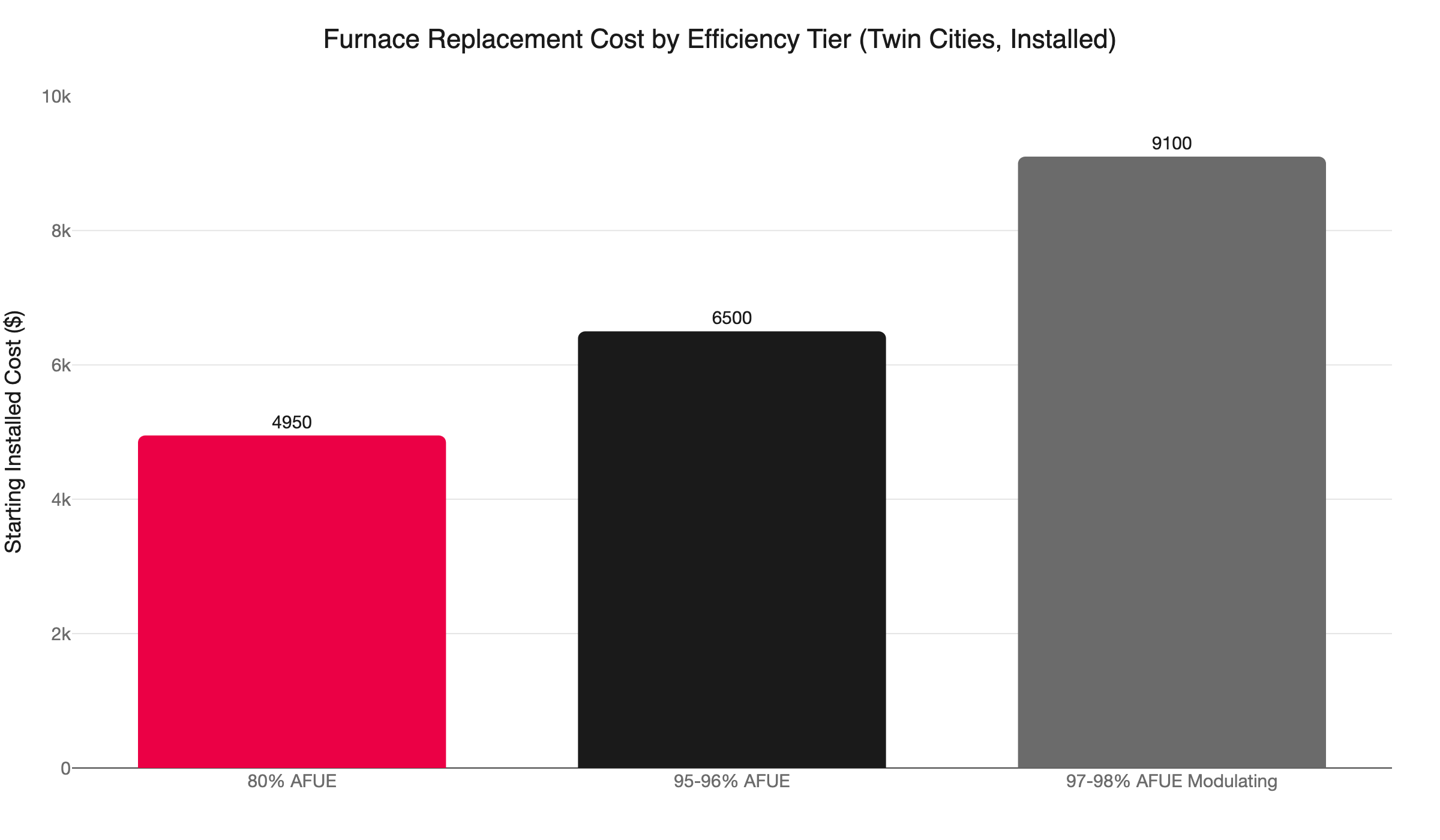
Furnace Replacement Cost by Efficiency Tier (Twin Cities, Installed)
You spent the money on new insulation and triple-pane windows. Now you are wondering: do I need a smaller furnace after adding insulation and new windows in Minnesota? Here is the honest answer, and a free way to check before you call anyone.
## Do I Need a Smaller Furnace After Adding Insulation and New Windows in Minnesota?
Possibly, yes. Insulation and window upgrades reduce your home's heat loss, which shrinks its design load. If your furnace was already oversized before the upgrade, the gap is now wider. The clearest signs are short-cycling, uneven temperatures, and a heating bill that dropped while comfort did not improve.
Most articles about furnace sizing assume you are looking at a sales quote and deciding what to buy. This post is for a different situation. You have already improved the envelope, you have a running furnace, and you want to know whether the system is now a mismatch worth addressing.
Here is the scenario our technicians see regularly. A Twin Cities homeowner invests in new triple-pane windows and added attic insulation. The heating bill drops 15-20% that first winter. But the house still runs too warm in short stretches, then drifts cold within an hour. The thermostat never holds steady. That is not a thermostat problem. That is an oversized furnace problem the envelope upgrade just made more visible.
[Research by GreenBuildingAdvisor](https://www.greenbuildingadvisor.com/article/replacing-a-furnace-or-boiler) shows that oversizing by 3x is the norm rather than the exception in residential HVAC replacements. ASHRAE recommends sizing heating equipment at no more than 1.4x the design heat load. The gap between that standard and what most homes actually have is wide. Your insulation project did not create the oversizing problem. It exposed it.
---
## How Do I Know If My Furnace Is Now Too Big?
The most reliable sign is short-cycling: the furnace fires, the house heats fast, the system shuts off before finishing a proper run, and then it fires again a few minutes later. Run times of 3-7 minutes with repeated restarts throughout the day are the oversize signature.
Watch for these patterns after your envelope upgrade:
- **Short on/off cycles.** A correctly sized furnace runs 15-20 minutes in moderate cold. Three-to-five-minute cycles are a red flag.
- **Temperature swings.** The furnace blasts on, overshoots the thermostat target, shuts down, and the house drifts cold quickly. No stable temperature is held.
- **Uneven rooms.** Short cycles do not push heat evenly through ductwork. Far rooms fall short while rooms near the furnace run too warm.
- **Humidity problems in winter.** [Short cycles degrade humidity management](https://furnace.direct/blogs/news/furnace-sizing-guide-btu-square-footage-minnesota-homes): the unit does not run long enough for the whole-house humidifier to complete its cycle.
- **Bills fell but comfort did not improve.** The envelope investment reduced the load, but the system cannot modulate down to match it.
There is a less obvious failure mode worth knowing about. [An oversized furnace runs hotter than its design target and can trip its own overheat safety on the coldest days](https://structuretech.com/dont-oversize-your-furnace/) - the exact moment you need reliable heat the most. The unit shuts itself down in self-protection mode. You are calling for emergency service at -20°F not because something broke, but because the furnace was too large for the house it is serving.
---
## Can I Check My Own Heating Load Before Calling Anyone?
Yes, and it takes about 15 minutes. The fuel-bill load method uses your actual gas utility history to estimate your home's real design heat load. No contractor, no tools, no fee.
Here is how to do it:
**Step 1.** Pull your gas bills for the three coldest months of the past one to two heating seasons. You need monthly therms used and the billing-period dates.
**Step 2.** Find heating degree-days for each billing period. Your utility often prints this on the bill. If not, it is available by zip code through most weather data services.
**Step 3.** Subtract your baseline non-heating gas use. For a typical Twin Cities home with a gas range and water heater, this is roughly 10-15 therms per month.
**Step 4.** Convert remaining therms to BTUs (multiply by 100,000) and divide by billing-period hours. This gives you average hourly heat output for that month.
**Step 5.** Scale to your design temperature. If your coldest billing period averaged 10°F and your design temperature is -11°F, your worst-case load is proportionally higher.
[GreenBuildingAdvisor's guide](https://www.greenbuildingadvisor.com/article/replacing-a-furnace-or-boiler) walks through this math step by step. The goal is not to replace a Manual J. The goal is a sanity check: if your calculation suggests a peak load of roughly 55,000 BTU/hr and your furnace is rated at 100,000 BTU/hr, you have close to a 2x oversize situation before even accounting for the load reduction from your new insulation and windows.
Do this before you invite anyone to give you a quote. It puts you in a much stronger position in that conversation.
---
## What Is the Correct Design Temperature for Twin Cities Furnace Sizing?
The current ACCA 99% design temperature for the Twin Cities metro is **-11°F**. A properly sized furnace runs near-continuously on a -11°F night and falls slightly short only on the rare days below that threshold. That is the intended design behavior, not a failure.
The -20°F figure that still appears in many contractor estimates is outdated. [Structure Tech's research on oversizing](https://structuretech.com/dont-oversize-your-furnace/) flags this directly: the -20°F benchmark does not reflect current ACCA methodology for most of the Twin Cities metro, but it persists in older estimating tools and has not been corrected in many contractor workflows.
The practical consequence is meaningful. A furnace sized for -20°F instead of -11°F carries roughly 25-30% more capacity than the design load requires, before any other margin is added. Stack that on top of a like-for-like replacement that ignores the load calculation, then add the load reduction from your new insulation and windows, and the total mismatch can reach 2x to 3x the actual need.
A furnace operating at 30-40% of its rated capacity during a typical January morning is not running well. It is cycling more, wearing components faster, and delivering less comfort than a correctly sized unit would at the same or lower fuel cost.
---
## What Should a Contractor Do When You Ask About Right-Sizing?
They should run a Manual J calculation, not a square-footage rule of thumb. A real Manual J accounts for your current insulation R-values, window U-values, air infiltration rate, home orientation, ceiling height, duct losses, and the local design temperature. If a contractor's proposal does not mention Manual J, ask directly why not.
[Many Minnesota contractors skip Manual J entirely and replace like-for-like](https://furnace.direct/blogs/news/furnace-sizing-guide-btu-square-footage-minnesota-homes), installing the same BTU/hr as the old unit without calculating what the house now needs. For a house whose envelope has not changed, that is already a problem. For a house that just had insulation and windows upgraded, a like-for-like replacement locks in the mismatch for another 15-20 years.
Ask the contractor these specific questions before accepting any proposal:
- "Will you run a Manual J based on my current insulation R-values and window U-values?"
- "What design temperature are you using for the Twin Cities?"
- "What run ratio are you targeting at 0°F outdoor temperature?"
Vague answers are informative. A contractor who will run [a proper Manual J calculation](/blog/hvac-sizing-manual-j-right-sized-system/) is taking the problem seriously. One who quotes from a table tied to square footage is not.
A note on modulating furnaces: some contractors will propose a modulating unit as a partial response to the sizing question. A modulating furnace can ramp its output down to 40-60% of rated capacity in mild weather. That softens the oversize comfort penalty and is a legitimate engineering response when the Manual J shows mild oversizing. It is not a substitute for right-sizing, but it is a useful tool when the numbers are close and replacement timing is uncertain.
---
## The Permit You Cannot Skip
Every furnace replacement in Minnesota requires a mechanical permit under Minnesota Statutes Chapter 326B. The permit is pulled by the contractor. The work must be performed by a DLI-licensed technician. Typical Twin Cities permit cost is $150-$450.
The inspection matters beyond compliance. It creates a paper trail that protects you at resale: buyers' home inspectors flag unpermitted HVAC work, and title companies increasingly request documentation that major mechanical systems were installed to code. If you paid for insulation and window upgrades and kept those receipts for the 25C tax credit, you already have a model for the kind of documentation that protects an investment. The furnace permit and inspection is the HVAC version of that.
An unpermitted system can also complicate a homeowner's insurance claim if a fire or carbon monoxide incident is later tied to the equipment. Any contractor who suggests the permit is optional is a red flag. Verify contractor license status at [dli.mn.gov](https://dli.mn.gov).
---
## Can I Stack Rebates and Tax Credits If I Right-Size?
Yes, and the combination is worth understanding before you get to the contract stage. A CenterPoint natural gas customer who replaces with a qualifying 95%+ AFUE furnace can combine a $1,000 utility rebate with a $600 federal 25C tax credit. If you already claimed the insulation credit in a prior year, that was a separate annual limit. The furnace credit is its own category.
**CenterPoint Energy (natural gas customers):**
Up to $1,000 rebate on a high-efficiency furnace replacement, for equipment installed January 1 through December 31, 2026. Equipment must be AHRI-verified. Full program details at [CenterPoint Energy's Minnesota Heating Rebates page](https://www.centerpointenergy.com/en-us/savings-solutions/energy-efficiency/heating-systems).
**Federal 25C tax credit:**
The [IRS Energy Efficient Home Improvement Credit](https://www.irs.gov/credits-deductions/energy-efficient-home-improvement-credit) allows up to $600 per year for a qualifying 95%+ AFUE natural gas furnace. This is a separate category from the up to $1,200 credit for insulation and air sealing materials. These are per-category annual limits, not a single lifetime cap. Banking the insulation credit in one tax year does not reduce what you can claim for HVAC equipment in another year.
**Xcel Energy:**
Xcel offers HVAC rebates on qualifying high-efficiency equipment, plus a $600 bonus rebate for customers who install qualifying insulation and air sealing and then a qualifying heat pump within two years. If your envelope upgrade was recent, that two-year window is already open. Check current amounts at [Xcel's heat pump rebate page](https://mn.my.xcelenergy.com/s/residential/heating-cooling/heat-pumps).
For a full walkthrough of how these programs interact, including income-qualified bonus tiers, see our [guide to IRA tax credits for high-efficiency HVAC in Minnesota](/blog/ira-tax-credits-high-efficiency-furnace-ac-minnesota/).
---
## What a Right-Sized Replacement Costs in the Twin Cities
If Manual J confirms your house now needs a smaller, more efficient furnace, installed starting prices in the Twin Cities run as follows. An 80% AFUE unit starts around $4,950. A qualifying 95-96% AFUE furnace, the tier that earns CenterPoint rebates and the federal 25C credit, starts around $6,500. A top-tier 97-98% AFUE modulating furnace starts around $9,100.
For most post-upgrade Twin Cities homes, the 95-96% AFUE tier is the practical choice. The efficiency gain over an 80% unit translates to real savings at Minnesota natural gas rates over a 15-20 year lifespan. A mechanical permit adds $150-$450 to the project total. If the contractor recommends duct modifications to match the new equipment footprint, budget separately for that work; smaller equipment can change static pressure across the duct system.
For a detailed breakdown of what drives furnace replacement pricing, including brand comparisons and financing options, see our [furnace replacement cost guide for the Twin Cities](/blog/furnace-replacement-cost-twin-cities/).
---
## When to Act Now vs. Wait It Out
You do not need to replace a running furnace the week after your insulation contractor finishes. Here is how to frame the decision.
**Consider replacing now if:**
- The furnace is 15 years old or older. The average lifespan in Minnesota is 15-20 years. A furnace already showing [short-cycling symptoms](/blog/furnace-short-cycling-causes-fixes/) and approaching end of life is near its natural replacement window.
- Short-cycling has gotten noticeably worse since the envelope upgrade. The mismatch is accelerating wear on the ignitor, heat exchanger, and blower. Those are the components most stressed by oversize-driven cycling.
- Your heating bills did not drop as much as the insulation and window contractor projected. That gap is money leaving the house every month through operating inefficiency.
- You are already spending on repairs. Continued investment in an oversized, aging furnace rarely makes financial sense when a replacement qualifies for rebates.
**Hold off if:**
- The furnace is under 8-10 years old and otherwise running well. If the fuel-bill check and a Manual J confirm only mild oversizing, wait for a natural trigger: a repair that crosses the half-the-replacement-cost threshold, or the next pre-season service visit.
- Short-cycling is intermittent and has not been confirmed by a contractor. Get the diagnosis before committing to a decision.
- Budget is already committed to other priorities this season. An oversized furnace is a problem, but it is not an emergency the day after the insulation crew packs up.
The decision is not always binary. If the Manual J confirms moderate oversizing on a younger furnace, a two-stage or modulating unit can reduce the comfort penalty while the furnace completes its useful life. Ask about that option in the same conversation as the sizing calculation.
---
## Ready to Get a Proper Sizing Answer?
Our team serves the Twin Cities from Ramsey, MN. We are locally owned and operated, and we run actual Manual J calculations rather than quoting from a square-footage table. We use the current ACCA design temperature, we factor in what you have already done to the envelope, and we give you a straight answer on what your house actually needs now.
Every appointment is backed by the promise we have kept since day one: "Always On Time… Or You Don't Pay a Dime!(R)"
Call **(763) 260-6662** or book online. If a right-sized replacement makes sense, we will walk you through the CenterPoint rebate application and the 25C credit documentation in the same visit. Financing is available on qualifying jobs.
---
# Bonus Room Over Garage Too Hot or Too Cold in Minnesota
URL: https://northernonehour.com/blog/bonus-room-over-garage-heating-cooling-minnesota/
Published: 2026-09-18 | Category: HVAC
Twin Cities homeowners: learn why your bonus room over the garage stays uncomfortable and how duct delivery, air sealing, and a cold-climate mini-split fix it.
Key Takeaways
- A bonus room over the garage fails on two fronts: the thermal envelope (insulation and air sealing) and HVAC delivery (duct length, leakage, and original system sizing). Both need to be fixed.
- [The DOE reports that the typical home loses 20-30% of conditioned air through leaky ducts routed through unconditioned space](https://basc.pnnl.gov/resource-guides/duct-leakage-tests) - exactly where bonus room duct runs travel.
- [Minneapolis carries a -9°F heating design temperature and roughly 8,300 heating degree-days per year](https://autohvac.ai/climate-zones/minnesota/minneapolis-minnesota), nearly twice the national average. The stakes here are higher than national guides describe.
- Gaps in the floor assembly between the garage and the room above are a carbon monoxide pathway, not just a source of drafts.
- The complete fix: air seal the floor assembly, bring insulation to [Zone 6A code minimums](https://remodelcalculators.com/guides/iecc-climate-zone-6), and add a dedicated cold-climate mini-split zone.
- Up to $5,600 in combined rebates is available from Xcel Energy and CenterPoint Energy for 2026 installs. The federal 25C tax credit expired December 31, 2025.
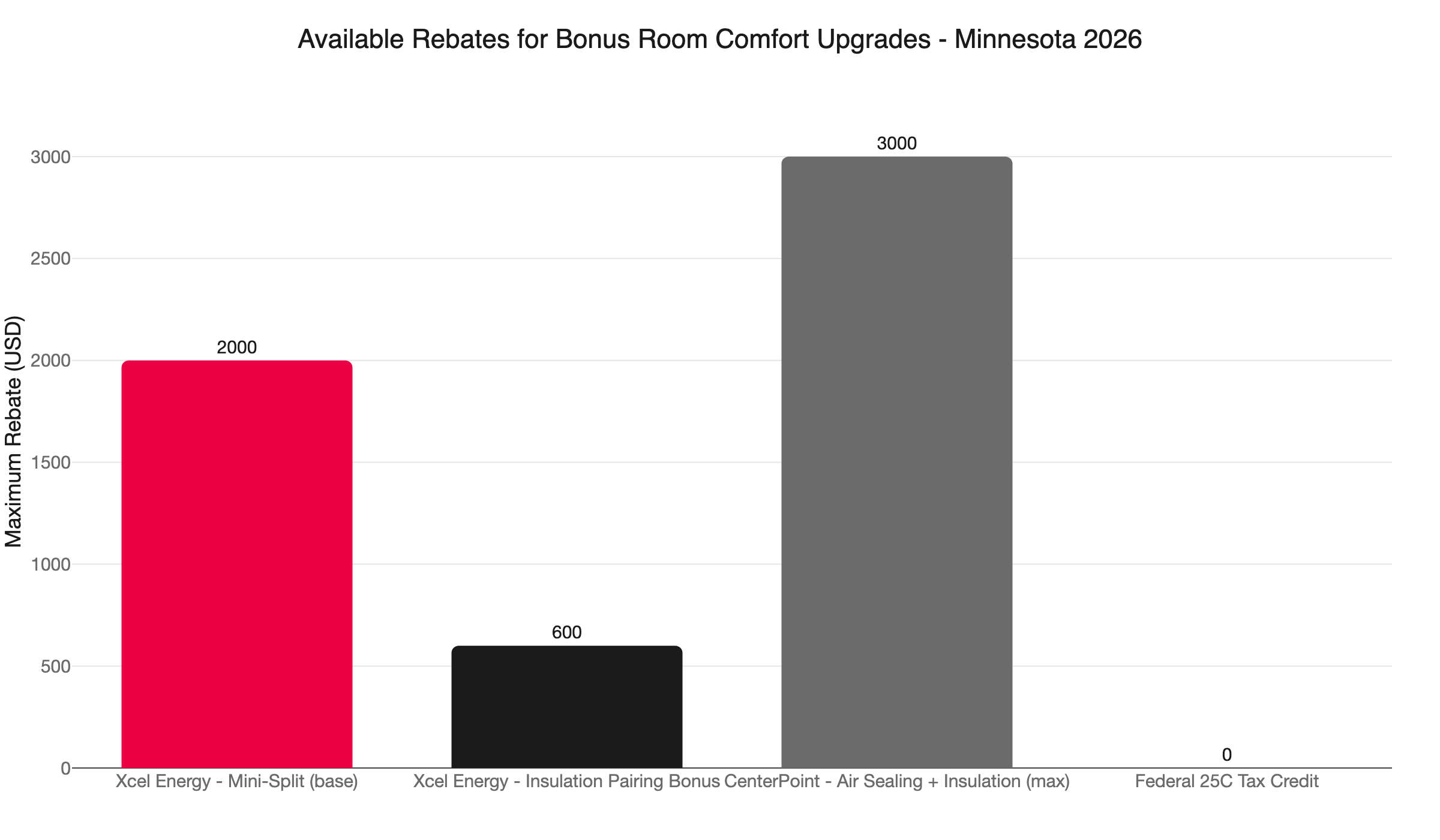
Available Rebates for Bonus Room Comfort Upgrades - Minnesota 2026
## Why Is a Bonus Room Over the Garage So Hard to Keep Comfortable?
Your bonus room sits at the worst possible location in your HVAC system. It is the farthest room from the air handler, served by the longest duct run in the house, and surrounded by unconditioned space on three sides: the garage below, the roof above, and often thin or uninsulated knee walls on each end.
Most homeowners hear the same advice: add insulation. They do. The room is still 10 degrees colder than the rest of the house in February and still sweltering in July. The reason is that insulation addresses the thermal envelope - it slows heat transfer. It cannot solve a delivery problem. If conditioned air is not arriving in adequate volume and at the right temperature, no R-value will bring the room to setpoint.
There are two distinct problems in a bonus room over a garage, and most contractors - and most articles - only address one of them.
## Is the Insulation Advice You Received Correct?
Yes - and incomplete. Insulation is necessary. Getting to code on the thermal envelope will meaningfully reduce heat transfer in both directions. But insulation is a buffer, not a source of conditioning. It cannot compensate for a delivery system that cannot do its job.
Minnesota's Zone 6A code sets a demanding bar for good reason. Minimum requirements are R-49 on ceiling assemblies (R-60 with a raised-heel truss), R-21 cavity plus R-5 continuous insulation on walls, and R-8 on any duct runs outside conditioned space. Most older bonus rooms fall short on all three counts. The ceiling below the roof is under-insulated. The knee walls have compressed batts or nothing. The duct run to the room passes through an attic space with zero insulation on the exterior of the duct itself.
Getting to those minimums matters. But once you have, the room still needs an adequate volume of conditioned air arriving at the register. If the duct system cannot deliver that volume - because of distance, leakage, or original undersizing - the insulation holds the temperature that arrives, not the temperature you want. Both repairs are necessary. Neither one alone gets the room to setpoint on a -9°F morning.
## How Does Duct Delivery Fail a Bonus Room?
Duct delivery to a bonus room fails in three specific and compounding ways. Each one reduces the volume and temperature of conditioned air reaching the register. Together, they explain why the room stays uncomfortable even after insulation work.
**Distance and friction loss.** The air handler sits in a basement or utility closet. The bonus room is on the second floor above the attached garage. By the time conditioned air travels the full length of that run - typically the longest duct run in the house - it has lost velocity, pressure, and volume at every elbow, transition fitting, and tap. A duct that is even slightly undersized for that distance cannot deliver adequate airflow to the register, regardless of how well the furnace itself performs.
**Thermal loss through unconditioned cavities.** [The typical system loses 20-30% of conditioned air through leaky ducts routed through unconditioned space](https://basc.pnnl.gov/resource-guides/duct-leakage-tests), according to the DOE Building America Solution Center. Bonus room duct runs almost always pass through attic space, knee-wall cavities, or floor joist bays fully exposed to outdoor temperatures. Minnesota code requires R-8 insulation on ducts outside conditioned space. Most older installations have none. Furnace supply air leaving the plenum at 120°F can arrive at the bonus room register noticeably cooler - and at lower volume - because heat bleeds out through the duct wall across the entire length of the run.
**Original sizing that never included the room.** Many bonus rooms are additions, conversions from unfinished storage space, or features the original HVAC designer never factored into the load calculation. The furnace and duct system were sized for the base footprint of the house. The bonus room was finished later. No one revisited the load calculation or added duct capacity. The result is one small supply register, no dedicated return air path, and a system running at or beyond its original design limit whenever the bonus room calls for heat or cooling. For more on how proper load sizing affects whole-house comfort, see our post on [HVAC sizing and Manual J load calculations](/blog/hvac-sizing-manual-j-right-sized-system/).
Correcting the delivery problem means one of three things: re-running a dedicated supply and return to the bonus room, adding a duct booster fan, or - most reliably - installing a dedicated mini-split that bypasses the duct system entirely.
## What Does Air Sealing Do That Insulation Doesn't?
Air sealing stops air movement. Insulation slows heat transfer. They address different failure modes, and both are required before the comfort problem in a bonus room over a garage is fully resolved.
[The DOE Building America Solution Center identifies open joist bays above the garage as unwanted air pathways](https://basc.pnnl.gov/resource-guides/air-sealing-attached-garage). Pressure-driven air leaks travel through rim joists, top plates, and every ceiling penetration: wiring holes, pipe chases, HVAC duct boots, and recessed lighting cans. Without sealing those pathways, warm interior air rises through the gaps in winter. Hot garage air infiltrates upward in summer. Insulation in the cavity slows the rate at which temperature crosses the assembly, but it does not stop air from moving through it. Only spray foam or caulk applied directly to each penetration closes the pathway.
The problem intensifies under normal household loads. When you run a range hood, bathroom exhaust fan, or clothes dryer, those appliances depressurize the house. Lower-pressure zones pull air inward through every available crack. The garage-to-living-space gap is one of the easiest paths. The result is temperature swings your thermostat cannot fully correct, because the conditioned air you are paying to generate keeps escaping before it can hold the room at setpoint.
The correct sequence is: seal first, then insulate over the sealed assembly. Adding insulation before air sealing buries the leak pathways where they become harder to reach and verify later.
## Is Carbon Monoxide a Risk When the Air Barrier Fails?
Yes - and this is the safety issue every insulation-focused bonus room article ignores. Unsealed gaps between an attached garage and the living space above are not just a thermal problem.
[The DOE identifies isolating attached garages from living space as critical for preventing carbon monoxide and other contaminants from infiltrating the dwelling](https://basc.pnnl.gov/resource-guides/air-sealing-attached-garage). That language is not a comfort recommendation. It is a safety mandate from the agency that sets national building science standards for residential construction.
Car exhaust, CO from a running engine, and combustion byproducts from garage equipment migrate through every unsealed gap in the floor assembly. Home depressurization - the same pressure mechanism that makes the bonus room drafty - actively draws that air upward into the living space. A vehicle idling briefly in the garage below can introduce meaningful CO concentrations into the room above through gaps you cannot see from inside.
If you can smell exhaust in the bonus room after parking in the garage, treat that as an emergency. Ventilate the space and call a professional before scheduling any other work. If your CO detectors are only on the main living floor, add a detector to the bonus room immediately. For guidance on detector placement throughout the rest of the house, see our post on [carbon monoxide detector placement for furnace and boiler homes](/blog/carbon-monoxide-detector-placement-furnace-boiler-minnesota/).
## How Much More Severe Is This Problem in Minnesota?
Significantly more severe than what most national guides or articles from neighboring states describe. The physics are the same, but the margins are far less forgiving here.
[Minneapolis carries an ASHRAE 99% heating design temperature of -9°F and logs roughly 8,300 heating degree-days annually](https://autohvac.ai/climate-zones/minnesota/minneapolis-minnesota). The national average is around 4,500 heating degree-days. Our heating season is nearly twice as long and nearly twice as intense as the American average. Every insulation gap, every unsealed joist bay, and every foot of uninsulated duct run that costs a homeowner a few degrees in a milder climate costs a Twin Cities homeowner far more, across far more days per year.
Homeowners frequently report [up to a 10°F temperature difference between the bonus room and the rest of the house](https://www.retrofoamofmichigan.com/blog/bonus-room-above-garage-insulation-problems). In a mild climate, 10°F off setpoint is an annoyance. In Minnesota at -9°F outside with a thermostat set to 68°F, a 10°F shortfall means the bonus room sits at 58°F while the rest of the house is comfortable. For a home office, a child's bedroom, or a guest room used throughout the year, that is not acceptable.
Minnesota also sets a minimum furnace efficiency of 90% AFUE by state code - stricter than the federal 80% floor. If your furnace predates that requirement, it is already leaving performance on the table before you factor in any bonus room delivery shortfall.
## What Does the Complete Fix Look Like?
The correct fix has three steps. Completing just one or two of them typically leaves the room still uncomfortable, because each step addresses a separate failure mode.
**Step 1: Air seal the floor and knee-wall assemblies.** Before any insulation is installed, every penetration in the bonus room floor - wiring holes, pipe chases, HVAC duct boots, rim joists, and top plates - gets sealed with spray foam or caulk. This closes the CO pathway and stops pressure-driven infiltration from the garage. CenterPoint Energy currently offers $750 for attic air sealing alone, rising to $1,300 when paired with qualifying insulation work. Both programs are available through December 31, 2026, on a first-come/first-served basis.
**Step 2: Bring insulation to Zone 6A code minimums.** That means R-49 or better on the ceiling assembly, R-21 cavity plus R-5 continuous on knee walls, and R-8 on any duct runs passing through unconditioned space. CenterPoint's wall insulation rebate adds up to $1,500, with a $200 add-on for rim joist insulation. Done correctly with all available rebates stacked, CenterPoint can return up to $3,000 toward the insulation and air-sealing work.
**Step 3: Add a dedicated cold-climate mini-split zone.** This is the piece that insulation-only articles consistently omit. Even with perfect air sealing and full Zone 6A insulation in place, a bonus room at the end of the longest duct run in the house may still fall short on the coldest design days. A cold-climate mini-split installed directly in the bonus room gives it an independent conditioning zone, sized for that load alone, independent of the main system's capacity constraints. It heats the room without asking the furnace to overperform. It cools it without loading the central AC on a 95°F July afternoon when the rest of the house is already at the system's limit. This is the step that closes the gap the other two cannot.
## How Much Does a Cold-Climate Mini-Split Cost in the Twin Cities?
Budget $3,900-$7,800 for a single-zone cold-climate mini-split fully installed. That range covers most residential bonus room applications. Variable-capacity units with the highest cold-weather performance ratings and premium efficiency numbers land at the higher end of that range.
That figure is before rebates. Xcel Energy currently offers up to $2,000 for a qualifying cold-climate heat pump installed in a Minnesota home, plus a $600 bonus when the installation follows qualifying insulation and air-sealing upgrades. The qualifying unit must appear on the NEEP cold-climate list and carry a minimum COP of 1.75 at 5°F - a threshold that filters out heat pumps that lose most of their output in a real Minnesota winter.
The Xcel rebate stack tops out at $2,600, which reduces a mid-range installation to a net cost of roughly $1,300-$5,200 after rebates. Financing is available for qualifying projects - ask our team about current options when you call. For a full breakdown of installation cost factors including multi-zone configurations, see our post on [mini-split installation cost in the Twin Cities](/blog/mini-split-installation-cost-twin-cities/).
## What Rebates Are Available for Minnesota Homeowners in 2026?
Two active rebate sources remain for this type of project in 2026. The federal 25C Energy Efficient Home Improvement Credit for heat pumps expired December 31, 2025, and no federal credit is currently available for 2026 installations.
**Xcel Energy (electric utility, Minnesota):**
- Cold-climate mini-split heat pump: up to $2,000
- Bonus when paired with qualifying insulation and air-sealing work: $600
- Maximum Xcel stack: $2,600
- Unit must be on the NEEP cold-climate list, minimum COP 1.75 at 5°F
**CenterPoint Energy (gas utility, Minnesota):**
- Attic air sealing only: $750
- Attic air sealing plus qualifying insulation: $1,300
- Qualifying wall insulation: $1,500
- Rim joist insulation (add-on): $200
- Maximum CenterPoint stack: $3,000
- Deadline: December 31, 2026, first-come/first-served
A homeowner doing the full three-step fix with an Xcel-eligible mini-split and CenterPoint-eligible insulation and air-sealing work can recover up to $5,600 in total rebates. Utilities process these programs on a first-come/first-served basis and have closed programs early when funds ran out in prior years. Do not wait until late fall to schedule the work.
For a complete guide to stacking Minnesota HVAC rebates from all available programs, see our post on [Xcel Energy and CenterPoint HVAC rebates in Minnesota](/blog/xcel-centerpoint-hvac-rebates-minnesota/).
## When Should You Call a Professional?
Call when the comfort problem has persisted through at least one full heating or cooling season and straightforward fixes - a new air filter, a thermostat adjustment, furniture moved away from registers - have not made any difference. A bonus room that is consistently 8-10 degrees off from the rest of the house is not a thermostat problem.
A proper professional assessment for this type of comfort complaint should cover several things. First, a duct leakage test that measures actual system loss rather than estimating it. Second, a Manual J load calculation for the bonus room treated as an isolated zone, which will reveal whether the existing duct run can ever be corrected or whether a dedicated zone is the only lasting solution. Third, an inspection of the garage-to-living-space air barrier with specific attention to CO risk, not just thermal performance. Fourth, current insulation R-values checked against Zone 6A minimums. And fifth, a specific proposal for either duct correction or a mini-split zone depending on what the assessment finds.
This is not a single-trade job. The problem crosses insulation, air sealing, and HVAC delivery. A contractor who only installs insulation will fix the envelope and leave the delivery problem. A contractor who only installs ductwork will fix the delivery and leave the air barrier problem. The full fix requires someone who can assess both and propose a coordinated solution.
Northern One Hour is locally owned and operated in Ramsey, MN. Our team serves Minneapolis, St. Paul, Blaine, Maple Grove, Plymouth, Brooklyn Park, Woodbury, Bloomington, and the surrounding Twin Cities metro. We show up when we say we will. That is the commitment behind "Always On Time... Or You Don't Pay a Dime!(R)."
Call us at (763) 260-6662 or book online to schedule a comfort assessment. CenterPoint's rebates are first-come/first-served with a hard December 31, 2026 deadline - the sooner you schedule, the more options remain available.
---
# Smoke Smell Coming from Furnace Vents in Minnesota
URL: https://northernonehour.com/blog/smoke-smell-from-furnace-vents-causes-fix-minnesota/
Published: 2026-09-18 | Category: Heating
Smoke smell from furnace vents? This Minnesota guide diagnoses four causes: wildfire smoke, neighbor chimney, cracked heat exchanger, and electrical faults.
Key Takeaways
- A smoke smell from furnace vents comes from one of two buckets: something outside getting pulled in through the HVAC system, or something inside the furnace failing. The diagnosis takes five minutes.
- Wildfire smoke and a neighbor's wood stove can enter through the fresh-air intake or an HRV or ERV. The fix: recirculate mode, HRV off, MERV 13 filter.
- A chemical, metallic, or formaldehyde-like smell from the vents when the heat runs is the signature of a cracked heat exchanger. Shut the furnace off.
- A burning plastic or rubber smell points to an electrical fault. Shut the furnace off.
- Carbon monoxide is odorless. A cracked heat exchanger raises CO levels before you smell anything. CO detectors on every level are non-negotiable.
- If your CO detector alarms or anyone in the home has a headache, nausea, or dizziness: get out, call 911, then call Northern One Hour.
Indoor Carbon Monoxide Levels by Source
## Why Does My Furnace Smell Like Smoke?
**The short answer:** Smoke at your vents comes from one of four sources. Wildfire smoke pulled through the HVAC system. A neighbor's chimney gas drifting into the fresh-air intake. A cracked heat exchanger releasing combustion gases into the airstream. Or an overheating electrical component. Knowing which one determines whether you change a filter or shut the furnace off entirely.
Most homeowners search for a "furnace smoke smell" and land on articles about burning dust at first startup. That article describes a different event: settled dust burning off the heat exchanger on the first cool morning of fall. It clears in 20-30 minutes and does not return.
This post covers a smoke smell that persists or comes back every time the furnace runs. One that smells like a campfire, a chemical burn, or melting plastic. The right response ranges from swapping a filter to evacuating the home. Knowing which situation you are in before you call saves time and keeps your family safe.
We are locally owned and operated in Ramsey, MN. We serve the Twin Cities metro every day, and this call spikes every fall as furnaces come back online. The diagnostic framework below reflects what our technicians actually check when a homeowner reports smoke from the vents.
---
## The Two-Bucket Diagnosis: Is the Smoke Coming Through or From Your Furnace?
Before calling anyone, place the smell in one of two buckets.
**Bucket 1 - Coming through.** The furnace acts as a fan. It pulls outdoor air, or nearby combustion air, into your home. The smoke originates outside the system. The furnace itself is fine.
**Bucket 2 - Coming from.** The smoke originates inside the furnace or ductwork. This is a mechanical or combustion failure. The furnace needs to be shut down and inspected.
Here is the fastest triage:
| Smell | Where it concentrates | Furnace running? | Likely bucket |
|---|---|---|---|
| Wood smoke or campfire | Whole house | Doesn't matter | External source |
| Chemical, formaldehyde, or metallic | From vents when heat runs | Yes | Internal - cracked exchanger |
| Burning plastic or rubber | From one vent, starts suddenly | Yes | Internal - electrical fault |
If you are not certain which bucket applies, treat it as an internal failure until a technician confirms otherwise. The downside of being wrong about Bucket 1 is a wasted service call. The downside of being wrong about Bucket 2 is CO in your living space.
---
## Is Wildfire Smoke Getting into Your Home Through the HVAC System?
**The short answer:** Yes, and more often than homeowners realize. Your furnace's fresh-air intake and any HRV or ERV unit actively pull outdoor air inside. When wildfire smoke is in the air, those pathways bring it directly into your ductwork.
[Minnesota has seen more air quality alerts from wildfire smoke in the past five years than ever before.](https://www.health.state.mn.us/communities/environment/emergency/natural/wildfires.html) Smoke arrives from Canada and the western US during hotter, drier fire seasons and lingers for days. September is a critical crossover month in the Twin Cities. The tail of wildfire smoke season overlaps with the first weeks you fire up the furnace for fall.
### HRVs and ERVs: the smoke pathway most homeowners miss
Homes built after roughly 2000 in Minnesota are sealed tight enough to require mechanical ventilation. Many have a heat recovery ventilator (HRV) or energy recovery ventilator (ERV) wired into the duct system. These units continuously bring outdoor air inside. That is their job.
During a smoke event, that same intake [pulls contaminated outdoor air directly into your duct system.](https://www.cbsnews.com/minnesota/news/tips-keep-wildfire-smoke-out-of-home/) Experts recommend turning HRVs and ERVs off entirely during high-smoke periods and running the furnace fan on recirculate mode instead. If you smell wood smoke in your home and outdoor air quality is elevated, the HRV or ERV is a more likely culprit than the furnace itself.
Our post on [whole-home HRV ventilation in Minnesota](/blog/hrv-whole-home-ventilation-minnesota/) explains how to adjust ventilation settings without letting indoor air quality deteriorate long-term.
### MERV 13: the right filter during smoke season
[MERV ratings measure a filter's ability to capture particles between 0.3 and 10 microns.](https://www.epa.gov/indoor-air-quality-iaq/what-merv-rating) MERV 13 is the minimum rating needed to capture fine wildfire smoke particles (PM2.5). Higher-rated filters restrict airflow and stress the blower motor. MERV 13 is the practical ceiling for most residential systems.
A local Minneapolis HVAC technician confirmed that MERV 13 ["gives you the best of both worlds at cleaning the air in your home but also not stressing your system out."](https://www.cbsnews.com/minnesota/news/tips-keep-wildfire-smoke-out-of-home/)
During active smoke events, [check and replace the filter at least monthly.](https://www.health.state.mn.us/communities/environment/emergency/natural/wildfires.html) A MERV 13 filter loaded with wildfire particulate loses effectiveness quickly.
### Steps to take during a wildfire smoke event
1. Switch your thermostat fan to "recirculate." This stops the fresh-air intake from pulling smoke inside.
2. Turn off any HRV or ERV.
3. Install a MERV 13 filter if you do not already have one.
4. Check the filter every two to three weeks. Replace it when it looks gray or black.
5. Keep windows and doors closed during peak smoke hours.
Once air quality improves, you can return the fan setting to "auto" and restart the HRV or ERV.
---
## Could a Neighbor's Wood Stove Be the Source?
**The short answer:** Yes. Wood-burning is common in older Minneapolis and St. Paul neighborhoods. On calm evenings with little wind, chimney exhaust drifts sideways toward adjacent homes' fresh-air intakes rather than rising straight up.
This situation differs from wildfire smoke in a few ways. It is localized to one neighbor and one wind direction. It is most noticeable on calm, cold evenings when little air is moving. It smells like a clean wood fire in a fireplace, not the acrid smell of smoke that has traveled hundreds of miles.
[The EPA's indoor air quality guide identifies back-drafting from nearby combustion appliances as a documented source of combustion gases entering living spaces.](https://www.epa.gov/indoor-air-quality-iaq/inside-story-guide-indoor-air-quality) A neighbor's wood stove or fireplace exhausts into the air. That air can find its way through your fresh-air intake, a leaky duct run near an exterior wall, or any infiltration point it can reach.
If the smell correlates with a neighbor's fireplace use, peaks on calm cold evenings, and smells like clean wood fire rather than something burning inside your own home, a ventilation audit is the next step. A trained technician can locate where outdoor air is entering and recommend a fix.
---
## What Does a Cracked Heat Exchanger Smell Like?
**The short answer:** Not like wood smoke. A cracked heat exchanger releases combustion gases into the airstream, producing a chemical, metallic, or formaldehyde-like odor. If you notice that smell from the vents and it appears only when the heat runs, shut the furnace off immediately.
The heat exchanger is the metal barrier that keeps combustion gases separate from the air circulating through your home. When it develops a crack, [those gases, including carbon monoxide, escape into the airstream.](https://www.lennox.com/residential/lennox-life/consumer/furnace-cracked-heat-exchanger) The disturbed flame pattern that results causes incomplete combustion. That means the cracked furnace produces more CO than a properly burning one would.
### Warning signs of a cracked heat exchanger
- CO detector alarm or a reading above 30 ppm
- A chemical, metallic, or formaldehyde-like odor from vents when the heat is running
- Soot deposits around the burners or near vent outlets
- Unexplained headaches, nausea, or dizziness that improve when you leave the house
- Furnace short-cycling or shutting down before the home reaches temperature
- Visible rust or corrosion on the flue pipes
Soot in the ductwork is its own warning. Soot escaping into vents signals incomplete combustion, and soot is combustible. Accumulated soot in ductwork creates a fire hazard.
### What CO exposure levels actually mean
[Indoor CO in homes without gas stoves typically runs 0.5-5 ppm. Near a properly adjusted gas stove, 5-15 ppm. Near a poorly adjusted stove, 30 ppm or higher.](https://www.epa.gov/indoor-air-quality-iaq/inside-story-guide-indoor-air-quality) At those higher levels, CO symptoms mimic the flu: headaches, dizziness, nausea, and fatigue. They are routinely misdiagnosed.
A cracked heat exchanger can push living-space CO into symptomatic territory before the chemical smell tips you off. That is why CO detectors are not optional. Minnesota requires them on each level of a home. If yours are past their expiration date (most are rated for 5-7 years), replace them before heating season.
Our post on [carbon monoxide safety and furnace season](/blog/carbon-monoxide-safety-furnace-season/) covers detector placement, what CO symptoms look like, and the exact steps to take if the alarm sounds.
### What to do if you suspect a cracked heat exchanger
1. Turn the furnace off at the thermostat. Do not restart it.
2. Check every CO detector in the home. If any has sounded or anyone has symptoms, get everyone out and call 911 before anything else.
3. Once the home is confirmed safe, call a licensed HVAC technician. The furnace stays off until the heat exchanger has been inspected.
If the exchanger is cracked, the decision is repair versus full furnace replacement. On a furnace past 15 years, the math usually favors replacement. A new furnace installed in the Twin Cities starts at $3,900-$7,800. Parts and labor for an exchanger replacement on an aging unit can approach that figure without adding years of reliable service life.
For more on what to look for and how to evaluate the repair-versus-replace decision, see our post on [cracked heat exchanger signs in Minnesota.](/blog/cracked-heat-exchanger-signs-minnesota/)
---
## Could an Electrical Problem Cause a Smoke Smell?
**The short answer:** Yes. An overheating blower motor, failing capacitor, or wiring fault produces a burning plastic or rubber smell. It is distinct from wood smoke or a chemical exchanger smell. It usually concentrates near one vent and starts suddenly during a normal heat cycle.
If you smell burning plastic or rubber from a vent, turn the furnace off. An electrical fault left running can escalate to a fire. Do not restart the furnace until a technician has diagnosed the source.
Signs this is an electrical issue rather than an external smoke source or a cracked exchanger:
- The smell is burning plastic, rubber, or hot metal, not wood smoke or formaldehyde
- It is strongest near one vent, not spread evenly through the house
- It started suddenly during normal operation, not at first startup of the season
- The furnace trips the breaker or shows an error code
Blower motor replacement, if that is the source, runs $1,100-$2,200 installed depending on motor type. A failing capacitor is less expensive: $195-$500 including parts and labor. Either way, the diagnosis requires a technician. Do not restart the system before the fault is found.
---
## What Should You Do When You Smell Smoke from Vents?
**The short answer:** Identify the smell first. Wood fire or campfire: likely external, start with the fresh-air pathway. Chemical or formaldehyde: shut the furnace off now. Burning plastic: shut the furnace off now.
Here is the full decision path:
**If it smells like wood smoke or campfire:**
- Check outdoor air quality at AirNow.gov or the [Minnesota Department of Health wildfire smoke page.](https://www.health.state.mn.us/communities/environment/emergency/natural/wildfires.html)
- Switch the thermostat fan to recirculate. Turn off any HRV or ERV.
- Install a MERV 13 filter if you do not already have one.
- Consider whether a neighbor's wood stove or fireplace is the source.
- Call Northern One Hour if the smell continues after closing off external pathways.
**If it smells chemical, metallic, or like formaldehyde:**
- Turn the furnace off at the thermostat immediately.
- Check every CO detector in the home. If any alarms or reads above 30 ppm, get everyone out, call 911, then call us.
- Do not restart the furnace until a technician has inspected the heat exchanger.
**If it smells like burning plastic or rubber:**
- Turn the furnace off at the thermostat immediately.
- Call Northern One Hour. An electrical fault requires a technician before the system runs again.
---
## What a Professional Furnace Inspection Covers
When our team responds to a smoke smell call, here is what the inspection includes.
- **Heat exchanger check.** Visual and combustion analysis for cracks, corrosion, and abnormal flame patterns. CO is measured at the supply registers while the furnace runs. Elevated readings above background confirm a combustion leak.
- **Flue and vent inspection.** We check the flue pipe for blockages, leaks, and back-drafting points where combustion gas can re-enter the living space.
- **Fresh-air intake check.** We confirm the intake is unobstructed, positioned correctly, and not drawing from a contaminated source.
- **Blower motor and electrical check.** We look for overheating, worn wire insulation, and failing components that could cause a burning electrical smell.
- **Filter and ventilation review.** If the smoke source is external, we confirm the filter is the right MERV rating and verify HRV or ERV settings.
[The EPA recommends having a trained professional inspect, clean, and tune the central heating system, including the furnace, flue, and chimney, annually.](https://www.epa.gov/indoor-air-quality-iaq/inside-story-guide-indoor-air-quality) That annual tune-up catches a developing crack or venting problem before it becomes an emergency. See our [furnace tune-up page](/heating/heating-equipment/furnaces/furnace-tune-ups/) to schedule one.
---
We are locally owned and operated in Ramsey, MN. Our team serves Minneapolis, St. Paul, Blaine, Maple Grove, Plymouth, Brooklyn Park, Woodbury, Bloomington, and the surrounding Twin Cities metro.
A smoke smell from your vents is not something to sit on. Call us at **(763) 260-6662** or book online. We stand behind "Always On Time… Or You Don't Pay a Dime!(R)" and we will be there when we say.
---
# How to Add Central Air to a Twin Cities Home With Radiators
URL: https://northernonehour.com/blog/add-central-air-radiator-hot-water-heat-twin-cities/
Published: 2026-09-17 | Category: Cooling
Have a Twin Cities home with radiators and no ductwork? Three options for adding AC, with real installed costs, permits, and Minnesota rebate tips.
Key Takeaways
- You do not need to replace your boiler to add AC. The boiler stays and handles all heating.
- Three options work for no-ductwork homes: ductless mini-splits, high-velocity small-duct systems, and window or portable units.
- Only cold-climate-rated mini-splits perform reliably at the Minneapolis heating design temperature of -13°F. Standard models fail in deep cold.
- Minnesota requires a mechanical permit for all HVAC installs under MN Rules 1346. Pull the permit every time.
- A heat-pump mini-split qualifies for a 30% federal tax credit, up to $2,000 per tax year.
- Stack the federal credit with Xcel Energy or CenterPoint Energy utility rebates in the same project year for maximum savings.
- A subsidized [Home Energy Squad audit](https://www.mncee.org/home-energy-squad) leads directly to the rebate programs that apply to your home.
- High-velocity small-duct systems are the best single-system option for whole-house cooling in a two-story plaster-wall home.
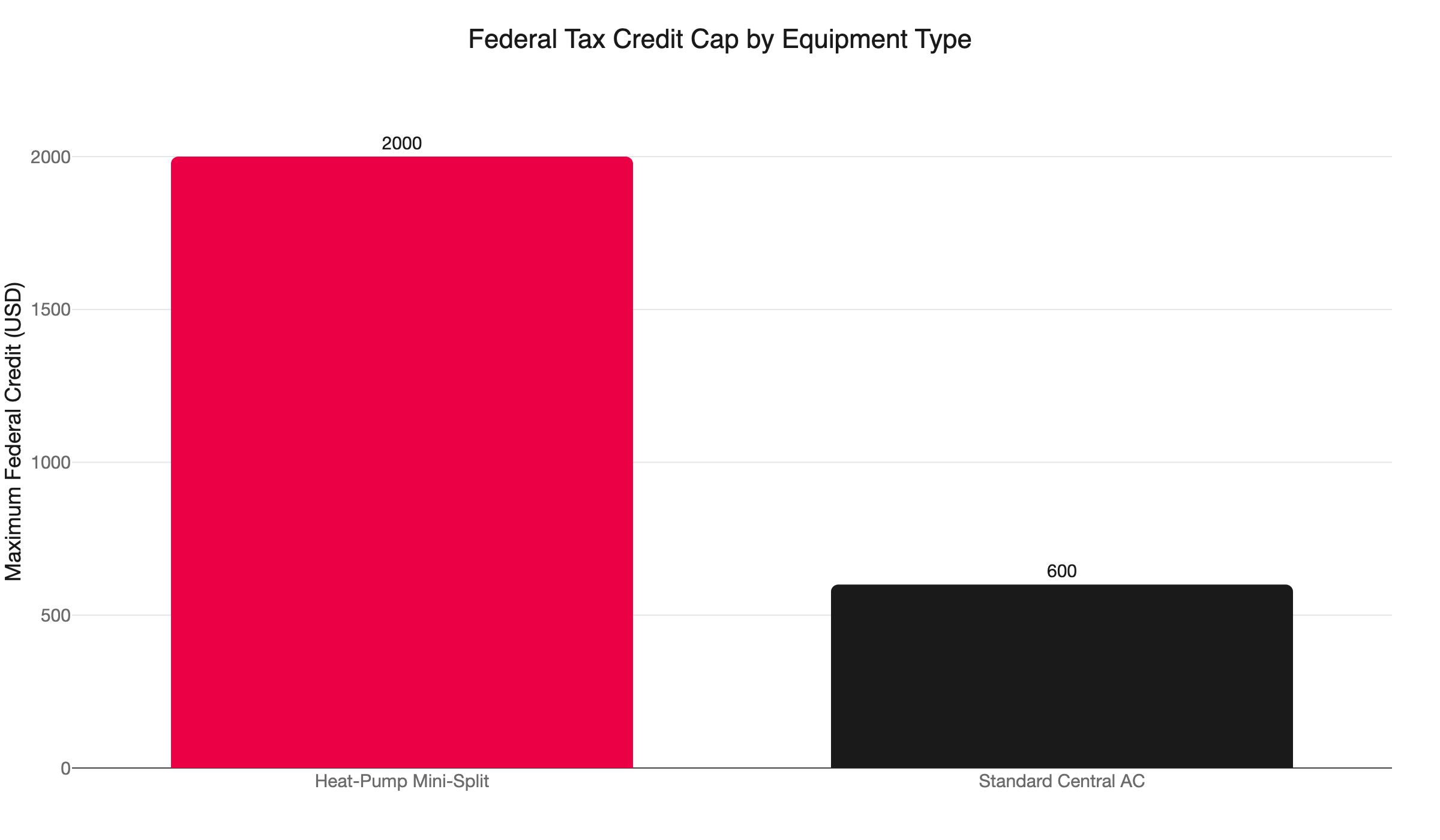
Federal Tax Credit Cap by Equipment Type
Your boiler has kept your family warm through every January Minnesota could deliver. That is not a system to replace. But boilers do not cool, and a Twin Cities July with dew points in the mid-60s and temperatures near 90 is a separate problem entirely.
The solution is not to replace the boiler. The solution is to add a cooling system alongside it. Three options work for homes with radiator heat and no ductwork. Each fits a different budget, house layout, and comfort goal. This guide covers all three: what they cost, what permits they require, and how to stack federal credits and Minnesota utility rebates to bring the investment down.
## Should You Replace Your Boiler When Adding AC?
No. A working hot-water or steam boiler is one of the best heating systems for a Minnesota climate. With a design heating temperature of -13°F, the boiler's ability to deliver consistent, high-output heat through radiators makes it worth keeping. The goal is a cooling-only system added alongside your existing boiler.
Most national home-improvement articles frame this as an HVAC replacement project. That framing makes sense for forced-air homes where heating and cooling share the same ductwork. In a radiator home, the two systems never shared infrastructure to begin with. Cooling gets its own delivery method. The boiler goes right on doing its job.
A working hot-water boiler is a long-lived, efficient asset. Replacing a good boiler just to add AC is an unnecessary expense. Keep the boiler. Buy the cooling system that runs alongside it.
## Option 1: Ductless Mini-Splits
A ductless mini-split places an outdoor compressor unit outside the home and connects it to one or more wall-mounted indoor heads via small refrigerant line sets. No ductwork required. Each indoor head conditions one zone independently.
A single-zone setup works well for cooling one room or an open main-floor layout. For whole-house coverage, a multi-zone system runs one outdoor unit connected to two, three, or four indoor heads placed in different rooms or floors. You choose which areas get a head. You control each zone independently.
The zone-by-zone control is one of the main appeals. A bedroom head runs at night while the living room head is off. A home office stays cool during work hours without conditioning the rest of the house. That flexibility suits homeowners who want comfort where they actually spend time.
Installed costs run $3,000-$8,000 per zone. A whole-house multi-zone setup with three or four heads typically lands between $12,000 and $22,000 installed. The final number depends on the number of heads, the outdoor unit capacity, and the complexity of routing line sets through the house.
Our [mini-split installation cost guide for the Twin Cities](/blog/mini-split-installation-cost-twin-cities/) has a detailed breakdown by zone count and configuration.
## What Makes a Mini-Split Safe for Minnesota Winters?
Standard mini-splits lose heating capacity quickly below 20°F and stop operating reliably below 0°F. Cold-climate-rated models - the Mitsubishi H2i, Daikin Aurora, and Bosch IDS series - are engineered to maintain heating output at -13°F and below, matching the Minneapolis ASHRAE design temperature.
If you plan to use the mini-split as a heating backup during shoulder seasons or mild winter days, the cold-climate rating is not optional. A standard mini-split leaves you without heat on the nights that matter most in Minnesota. The cold-climate designation is a functional performance requirement, not a premium upgrade tier.
The [ENERGY STAR Cold Climate designation](https://www.energystar.gov/about/federal_tax_credits/air_source_heat_pumps) identifies units engineered for heating-dominated climates like Minnesota's. It is also the qualifying pathway for the heat pump federal tax credit. Any contractor quoting a mini-split in the Twin Cities should name the specific model and confirm it carries the cold-climate or ENERGY STAR Most Efficient designation.
For detail on how cold-climate units perform at extreme temperatures, see our guide to [heat pump performance below zero in Minnesota](/blog/heat-pump-below-zero-performance-minnesota/).
## What About Line Set Routing in Plaster-Wall Homes?
The refrigerant line sets connecting the outdoor unit to each indoor head have to go somewhere. A typical 1920s Minneapolis two-story has thick plaster walls, balloon-frame construction, and very few interior chases running floor to floor. That makes line set routing a real planning conversation before any quote is signed.
The most common approach is exterior routing. The line set runs along the outside of the house in a protective channel or conduit, enters through a small wall penetration near each indoor head, and connects. Done well, this looks clean. The channel is painted to match the siding and sits flush against the exterior. Done carelessly, it looks like an afterthought.
Interior routing through closets, utility walls, or floor joist bays is possible on some houses. It hides the line sets entirely but requires more labor and planning. The feasibility depends on the specific framing of the house.
A competent contractor walks through the home in person before quoting and maps the line set route for each head. Ask to see photos of their line set work on houses similar to yours. Routing quality is a visible part of the finished job.
## Option 2: High-Velocity Small-Duct Systems
A high-velocity system uses a centrally located air handler - typically in the basement, utility room, or attic - connected to 2-inch flexible supply ducts. Those small ducts thread through existing wall cavities, floor joist bays, and ceiling spaces. Each room gets one or two 2-inch round outlets, smaller than a hockey puck, that deliver high-velocity conditioned air.
The small, flexible ducts navigate the irregular framing of a 1920s or 1930s home without large wall openings. The outlets are subtle. When the installation is done, the system is largely invisible: no wall-mounted heads, no visible line sets, no equipment taking up floor space.
This is the best option if your goal is whole-house cooling from a single system. One air handler, one thermostat, and consistent conditioning throughout every room. For a two-story plaster-wall home, it is often the only practical way to achieve true whole-house coverage without major demolition.
High-velocity delivery also provides better dehumidification than ductless heads. All the home's air passes through the air handler continuously, so moisture control is even across the house. In a Twin Cities July, that matters. Dew points regularly reach the mid-60s. A house at the right temperature but too humid is not comfortable.
The tradeoffs are real. Installation is more disruptive than a mini-split install. Contractors open walls or ceilings in some locations to route the small ducts, particularly going from the basement to the second floor. The job takes longer, and the upfront cost is higher. But the result is a permanent, integrated cooling system.
A high-velocity system is cooling-only, just like a ductless mini-split. Your boiler continues to handle all winter heating.
## What Does High-Velocity Small-Duct Installation Cost?
Expect $15,000-$25,000 installed for a whole-house high-velocity system in a typical Twin Cities two-story home. Larger homes, additional floors, and complex routing in tight balloon-frame construction push toward the top of that range. The upfront cost is higher than a single-zone mini-split but comparable to a full multi-zone ductless setup.
The right comparison is not a single-zone mini-split: it is a three- or four-zone ductless system covering the same square footage. Both approaches to whole-house coverage land in a similar installed price range. High-velocity wins on invisibility and whole-house dehumidification. Ductless multi-zone wins on zone-by-zone flexibility and the ability to provide heating from the same equipment.
For help layering federal and utility incentives to offset the upfront cost of either system, our [guide to stacking HVAC rebates in Minnesota](/blog/stacking-hvac-rebates-tax-credits-federal-state-utility-minnesota/) walks through the current programs.
## Option 3: Window and Portable Units
Window air conditioners are the honest starter option for homeowners who need cooling this summer and are not ready for a larger investment. A window unit installs in an open window, requires no permit, and needs no contractor. A 12,000-BTU unit cools one room effectively. You can buy one at a local hardware store and install it the same day.
Portable units vent through a flexible hose to a window opening. They are less efficient than window units and take up floor space, but they move easily between rooms and require no permanent mounting.
The limitations deserve honesty. Window and portable units do not cool a whole house. They are louder than ductless mini-splits. They block natural light in the window they occupy. They do not control humidity in adjacent rooms. Condensate management can be a nuisance with portable units.
Window and portable units are a legitimate phase-one bridge when budget is the primary constraint. They get you through this summer while you plan a ductless or high-velocity project. They are not a permanent whole-house solution.
## Do You Need a Permit for AC in Minnesota?
Yes. Minnesota Mechanical Code (MN Rules 1346) requires a mechanical permit for HVAC equipment installations, including new ductless mini-splits and high-velocity AC systems. A homeowner can pull their own permit, but the installation must pass inspection. All refrigerant work requires EPA 608 certification, which means a licensed HVAC contractor handles the refrigerant connections.
The permit process creates a record that the install was inspected and met Minnesota's mechanical and energy codes. That record matters at resale. A buyer's inspector who asks about the AC installation will look for a permit. An unpermitted install can complicate a sale or require a retroactive inspection.
No reputable contractor skips the permit. If a quote comes in noticeably low and the contractor suggests skipping the permit to save money, that is a red flag. Our [HVAC permit guide for Minnesota](/blog/hvac-permit-when-required-minnesota/) explains what the permit process involves and what the inspector checks.
## How Do You Stack Federal Credits and Minnesota Rebates?
Combine the federal heat pump tax credit (30%, up to $2,000) with a Xcel Energy or CenterPoint Energy utility rebate in the same project year. A [Home Energy Squad audit](https://www.mncee.org/home-energy-squad) shows you exactly which rebates apply to your home and costs very little to schedule.
Here is how each piece works.
**Federal credit for a heat-pump mini-split:** A unit that carries the [ENERGY STAR Most Efficient or ENERGY STAR Cold Climate designation](https://www.energystar.gov/about/federal_tax_credits/air_source_heat_pumps) qualifies for a 30% federal tax credit, capped at $2,000 per tax year. In Minnesota, you want the cold-climate designation for performance reasons anyway. The credit eligibility and the performance requirement align.
**Federal credit for standard central AC:** A non-heat-pump split system that meets [SEER2 17.0 and EER2 12.0 minimums](https://www.energystar.gov/about/federal_tax_credits/central_air_conditioning) qualifies for a 30% credit capped at $600. That is the ceiling for cooling-only equipment that is not a heat pump.
**Stacking credits:** The [maximum combined energy-efficiency credit](https://www.energystar.gov/about/federal_tax_credits) in one tax year is $3,200. Claim the heat pump credit ($2,000) and an attic insulation credit ($1,200 cap) in the same year. You reach the full $3,200 ceiling. If your plaster-wall home is also underinsulated - common in pre-1940 Twin Cities construction - that combination makes strong financial sense in a single project year.
**Utility rebates:** Before committing to a system, schedule a [Home Energy Squad audit](https://www.mncee.org/home-energy-squad) through the Center for Energy and Environment. The program is subsidized by Xcel Energy and CenterPoint Energy. The auditor assesses your heating, cooling, and insulation situation and connects you directly with the utility rebate programs that apply to your specific home. Call 651-328-6220 or visit mncee.org to book.
After the audit, check current rebate amounts at centerpointenergy.com/rebates (CenterPoint customers) or Xcel's rebate portal. Rebate amounts update annually, so current figures from the audit are more reliable than numbers published in any blog post.
One important note: the ENERGY STAR pages cited here state credit eligibility through December 31, 2025. Confirm the current extension status with a tax professional before filing your return.
## Will a Single Mini-Split Dehumidify the Whole House?
No. A mini-split head cools and dehumidifies the zone it serves. Adjacent rooms, upper floors, and unconditioned areas stay at ambient humidity. In a Twin Cities July, when outdoor dew points regularly reach the mid-60s, rooms without a head will feel sticky even when the temperature seems acceptable.
This is one of the most overlooked comfort gaps in older homes. It is easy to install one mini-split on the main floor and call the problem solved. But a humid second floor or a sticky basement signals that the job is only half done.
A high-velocity system handles this better. The air handler processes all the home's air continuously. Dehumidification is consistent throughout the house, not zone by zone.
If you go the ductless route with limited zones, one practical option is pairing the mini-split with a whole-home dehumidifier. That adds a second system to maintain and some additional cost, but it addresses the comfort gap in rooms the mini-split does not directly serve.
## Which Option Is Right for Your Home?
The answer depends on your house layout, budget, and what you are trying to solve.
**Choose ductless mini-splits if:**
- Zone-by-zone comfort control is the priority
- You want heating capability from the same equipment (cold-climate model required)
- Budget suits a phase-in approach: start with one or two zones, add more later
- Exterior line set routing is feasible on your specific house
**Choose a high-velocity small-duct system if:**
- Whole-house cooling from one invisible system is the goal
- You have a two-story home and want consistent coverage throughout every room
- Whole-house dehumidification matters as much as cooling
- You can accept a more involved installation in exchange for a permanent, invisible result
**Choose window or portable units if:**
- Budget is the main constraint for this cooling season
- You need cooling in one or two rooms while planning a larger project next year
- You are renting or planning to sell in the near term
For most Twin Cities homeowners with a working boiler and no ductwork, a cold-climate-rated ductless mini-split is the most practical starting point. It delivers real comfort, qualifies for the strongest federal credits, works alongside your boiler without modifying it, and can be expanded zone by zone as budget allows.
As a locally owned and operated HVAC company based in Ramsey, we have assessed dozens of Twin Cities homes with exactly this situation. We know where line sets route in a 1920s plaster house. We know which cold-climate models hold capacity at -13°F. And we show up when we say we will. That is the promise behind "Always On Time… Or You Don't Pay a Dime!(R)".
Call (763) 260-6662 or [schedule your assessment online](/air-conditioning/ac-installation/ductless-mini-splits/) to get a straight answer about the right option for your home.
---
# Furnace Burning Smell When First Turned On Minnesota
URL: https://northernonehour.com/blog/furnace-burning-smell-first-use-fall-minnesota/
Published: 2026-09-17 | Category: Heating
That first-fall burning smell is usually normal. Here is how Twin Cities homeowners tell the difference between dust burn-off and a real danger.
Key Takeaways
- A dusty, scorched smell at first startup is normal. Dust settles on the heat exchanger and burners all summer and burns off when the furnace ignites for the first time.
- The smell should fade within 30 to 60 minutes. If it lingers past an hour or grows stronger over time, that is a warning sign, not a normal startup.
- A rotten-egg or sulfur smell near your furnace means a possible gas leak. Leave the house immediately, do not use any electronics indoors, call 911, then CenterPoint Energy at 888-876-5786 from outside.
- A burning plastic smell signals electrical component failure. Shut the furnace off and call for service before running it again.
- A sharp metallic or chemical odor can indicate a cracked heat exchanger, which is a carbon monoxide hazard. Shut down and call a technician.
- Minnesota law requires CO detectors in all single-family homes with fuel-burning appliances.
- Twin Cities furnaces sit idle for five or more months before October. That longer dormancy means a stronger first-startup smell is entirely expected.
- If your furnace is over 15 years old, take any unusual first-startup smell more seriously. Older heat exchangers in cold-climate homes are prime candidates for cracks.
Typical Service Costs by Furnace Smell Type (Twin Cities)
## Why Does My Furnace Smell Like It's Burning When First Turned On?
**Short answer:** Dust settles on the heat exchanger and burners during the long summer idle. The first ignition burns that dust off. The smell is real, but it is usually harmless and should clear within 30 to 60 minutes.
Every fall, furnaces across the Twin Cities wake up from a long sleep. From roughly May through early October, most Minnesota heating systems sit completely idle. That is five or more months for dust, pet dander, debris, and other particles to accumulate on every hot surface inside the unit.
When the burners fire for the first time, all of that material burns off at once. The result is a dusty, slightly scorched smell that [drifts through the house](/blog/smoke-smell-from-furnace-vents-causes-fix-minnesota/). [According to Carrier](https://www.carrier.com/residential/en/us/products/furnaces/burning-smell-in-house/), this smell typically lasts 30 minutes to a few hours on first startup of the season. After that, it should be gone for the rest of the heating year.
This is an area where the Minnesota experience is different from what most national articles describe. A furnace in a mild-winter state may sit idle for two to three months. A Twin Cities furnace often sits idle for five to six months. More dust accumulates over that longer window. The first-startup smell will often be noticeably stronger here. That is not a sign of a problem. That is a sign of our climate.
---
## The 30-Minute Test: What Normal Startup Looks Like
The clock starts the moment you hear the furnace kick on. [Here is what a healthy first startup looks like](https://anderson-hvac.com/first-time-furnace-normal-smells-vs-warning-signs/):
- **0 to 10 minutes:** The smell peaks. A strong dusty or scorched odor as accumulated debris burns off the heat exchanger and burners.
- **10 to 30 minutes:** The smell fades noticeably. The house begins to warm. Airflow from the vents smells less strong.
- **30 to 60 minutes:** The odor is barely detectable or gone entirely.
- **Beyond 60 minutes:** If the burning smell is still present or getting stronger, you are no longer in normal dust burn-off territory. Something needs attention.
Set a timer when you first notice the smell. Many homeowners catch the startup odor, assume it will pass, and never circle back to check. When the smell is still present two hours later, it is a bigger problem than it needed to be.
One practical habit worth starting: run the furnace for the first time in late September, when outdoor temperatures are still in the 50s. If something is off, you have weeks to schedule service before the first real cold snap. We come back to this idea below.
---
## What Does a Burning Plastic Smell Mean?
**Short answer:** Burning plastic points to an electrical component failing inside the furnace, such as a motor, wiring, or control board. Shut the furnace off immediately and call a technician. Do not run it again until the cause is identified.
Dust burn-off has a familiar smell: slightly earthy, like a warm radiator. Burning plastic is sharper and more chemical, similar to a melting appliance cord or an overheating motor. If that is what you smell, the distinction matters.
[Carrier identifies burning plastic as a sign of electrical component failure](https://www.carrier.com/residential/en/us/products/furnaces/burning-smell-in-house/). Common culprits include the blower motor, the control board, or wiring that has developed a fault over a long summer of sitting idle. These problems do not go away on their own. Running the furnace through a burning electrical smell risks additional damage and, in the worst case, a fire.
Turn the furnace off at the thermostat. If the smell is strong or you notice any discoloration near the unit, cut power at the breaker. Then call for service.
A [failing blower motor](/blog/furnace-blower-motor-failure-signs-cost-minnesota/) is one of the more common sources of this smell on units that have been dormant for months. A motor that started seizing before last heating season ended is now being asked to run again. First startup is often where the problem becomes undeniable. Blower motor replacement (PSC type) starts around $1,100 installed. A control board runs roughly $750. Neither of those repairs is cheap, but catching them early keeps the rest of the system intact.
---
## Is That Rotten Egg Smell from Your Furnace a Gas Leak?
**Short answer:** Yes. A rotten-egg or sulfur smell near your furnace means a possible gas leak. [Natural gas is odorless on its own](https://www.centerpointenergy.com/en-us/residential/safety/natural-gas-safety). Utility companies add mercaptan so leaks are detectable by smell. Treat every rotten-egg smell as an emergency, every time.
Do not try to find the leak. Do not flip any light switches. Do not unplug appliances. Do not use your cell phone while still inside the building. [Even the small electrical spark from a light switch can ignite trapped gas](https://anderson-hvac.com/first-time-furnace-normal-smells-vs-warning-signs/). This is not an exaggeration.
**Exactly what to do:**
1. Leave the house immediately, along with everyone in the building, including pets.
2. Leave doors open as you exit. Do not stop to gather belongings.
3. Once you are safely outside and away from the structure, call 911.
4. Call CenterPoint Energy at **888-876-5786**. [CenterPoint is the primary gas utility for a large portion of the Twin Cities](https://www.centerpointenergy.com/en-us/residential/safety/natural-gas-safety) and operates 24/7 emergency response.
5. Do not re-enter the building until utility technicians and emergency responders have cleared it.
Xcel Energy serves gas customers in parts of the metro as well. Their gas emergency number is 800-895-2999. Check your utility bill to confirm which company serves your address, and save both numbers in your phone before you need them.
This is one situation where waiting costs lives. A gas leak near an ignition source can escalate in seconds.
---
## What Causes a Chemical or Metallic Smell Near My Furnace?
**Short answer:** A sharp, metallic, or formaldehyde-like chemical odor is one of the early warning signs of a cracked heat exchanger. This is a serious safety issue. A cracked heat exchanger allows carbon monoxide and combustion gases to mix with your breathing air. Shut the furnace off and call a technician before running it again.
The heat exchanger is the barrier inside your furnace that separates combustion gases from the conditioned air flowing through your home. When it develops a crack, those gases, including CO, can escape directly into your living space.
[The metallic or chemical smell comes from the failing metal itself](https://anderson-hvac.com/first-time-furnace-normal-smells-vs-warning-signs/). Carbon monoxide is completely odorless. That metallic smell may be the only warning sign you get before CO levels in the home rise to a dangerous level. Do not ignore it.
Heat exchanger cracks develop through thermal fatigue. Years of heating cycles cause the metal to expand and contract repeatedly. Over time, that stress opens small cracks. Overheating from poor airflow or incorrect gas pressure accelerates the process. In Minnesota, the thermal demand on a heat exchanger is more extreme than in a milder climate. A furnace heating against -20°F winters for 15 or 20 years has been through thousands of thermal cycles.
If your furnace is over 15 years old, take this smell especially seriously. The inner-ring suburbs of Minneapolis and St. Paul hold a lot of housing stock from the 1950s through the 1970s. Furnaces that have not been replaced in those homes are running aging heat exchangers against serious Minnesota cold. A [cracked heat exchanger](/blog/cracked-heat-exchanger-signs-minnesota/) typically points toward furnace replacement rather than repair. A replacement system starts around $3,900 installed. A technician can inspect with a combustion analyzer and camera and give you a clear answer before you spend a dollar on a repair estimate.
---
## Why Does My Furnace Smell Musty?
**Short answer:** A musty smell usually points to mold or mildew in the ductwork or on the evaporator coil. This is most common at first startup in fall, after the AC coil has been damp for weeks. Unpleasant, but not an emergency.
Minnesota summers bring real humidity. That moisture collects on the evaporator coil and inside ductwork. When the furnace fires in October and air starts moving through those spaces, any mold or mildew smell travels through the house.
[Carrier specifically flags musty odor as a sign of mold in ductwork or on the evaporator coil](https://www.carrier.com/residential/en/us/products/furnaces/burning-smell-in-house/). A one-time musty smell on first startup that clears after a day or two is often just the coil drying out. If the smell persists across multiple days of heating, or if anyone in the household has worsening allergy or asthma symptoms, it is worth having the ductwork and coil inspected.
Duct cleaning and coil cleaning are the standard fixes. They are also good preventive steps for any system that has not been professionally serviced in a few years.
---
## Should You Test Your Furnace Before the First Cold Night?
**Short answer:** Yes. HVAC technicians in Minnesota recommend running the furnace for the first time in September, while outdoor temperatures are still in the 50s. Finding a problem at 55°F gives you time to schedule a repair. Finding one at -10°F does not.
The approach is simple. In late September, before you actually need heat, turn the thermostat up and run a full heating cycle. Pay attention to smells, sounds, and whether the house heats evenly. Set a timer and check back after 30 minutes to confirm any startup smell has cleared.
If something is off, you have weeks to schedule a service call, source the part, and have the repair completed before cold weather arrives. That window disappears fast in Minnesota. The first true cold snap often lands in October, and by November a failed furnace can put pipes at risk within days.
A [fall furnace tune-up](/heating/heating-equipment/furnaces/furnace-tune-ups/) is the right time for a technician to inspect the heat exchanger, clean the burners and flame sensor, verify CO levels, and test all safety controls. A tune-up starts at $95 to $250. Catching a cracked heat exchanger or a failing motor before the first freeze is worth considerably more than that visit costs.
---
## Do CO Detectors Matter If My Furnace Smells?
**Short answer:** Yes, and not just when the furnace smells. Carbon monoxide is completely odorless. A cracked heat exchanger can be leaking CO into your home with no detectable smell at all. A working CO detector is the only reliable alert for that scenario.
[The U.S. Consumer Product Safety Commission estimates approximately 170 people die each year](https://www.cpsc.gov/Safety-Education/Safety-Education-Centers/Carbon-Monoxide-Information-Center/Carbon-Monoxide-Questions-and-Answers) from CO produced by non-automotive consumer products, including furnaces, water heaters, and room heaters. Thousands more are treated in emergency rooms annually for CO exposure.
Minnesota requires CO detectors in all one- and two-family dwellings under MN Statute 299F.50. You can read the current text at [revisor.mn.gov](https://www.revisor.mn.gov/statutes/cite/299F.50).
The CPSC recommends alarms that meet the [UL 2034 standard](https://www.cpsc.gov/Safety-Education/Safety-Education-Centers/Carbon-Monoxide-Information-Center/Carbon-Monoxide-Questions-and-Answers). Place detectors on every level of the home, and within 10 feet of each sleeping area. Replace batteries annually. Replace the unit itself every five to seven years, or per the manufacturer's guidance.
A working CO detector is not a substitute for annual furnace maintenance. It is your last line of defense when the heat exchanger fails between service visits. Our guide to [furnace season carbon monoxide safety](/blog/carbon-monoxide-safety-furnace-season/) goes deeper on detector placement, alarm response, and what to tell the technician when CO levels are found.
---
## What to Do When the Smell Does Not Clear
If the smell is normal dust burn-off, it clears within 30 to 60 minutes and you move on. If it does not clear, here is how to triage the situation:
**Dusty or scorched smell that lingers past two hours:** Not an emergency, but a tune-up is overdue. Schedule a service visit before the heating season is in full swing.
**Burning plastic smell:** Turn the furnace off at the thermostat. Call for service before running the furnace again. Do not wait to see if it clears on its own.
**Rotten egg or sulfur smell:** Leave the house immediately without using any electronics inside. Call 911, then CenterPoint at 888-876-5786, from outside.
**Metallic or chemical smell:** Turn the furnace off. Do not run it again until a technician has inspected and cleared the heat exchanger.
**Musty smell that persists beyond the first week of heating:** Schedule duct cleaning and coil inspection. Not urgent, but worth addressing before cold weather drives the furnace into heavy use.
Northern One Hour is locally owned and operated in Ramsey, MN. Our team serves the Twin Cities metro: Minneapolis, St. Paul, Blaine, Maple Grove, Plymouth, Brooklyn Park, Woodbury, Bloomington, and the communities in between. We show up when we say we will. That is the promise behind "Always On Time… Or You Don't Pay a Dime!(R)".
If your first-startup smell has you asking questions, call us at **(763) 260-6662** or book a service visit online. Our team can inspect, diagnose, and give you a straight answer before the hard cold of a Minnesota winter arrives.
---
# Home Energy Audit HVAC Upgrades Minnesota: Do This First
URL: https://northernonehour.com/blog/home-energy-audit-hvac-next-steps-minnesota/
Published: 2026-09-17 | Category: HVAC
Learn the right sequence for home energy audit HVAC upgrades in Minnesota. Air seal before equipment to save thousands and avoid an oversized system.
Key Takeaways
- Get a blower door test before you bid any HVAC equipment. Air sealing first can shrink your load enough to step down one equipment size.
- [An estimated 75% of HVAC systems are oversized](https://www.greenbuildingadvisor.com/article/oversized-hvac-equipment) when contractors skip proper load calculations. Short-cycling wastes 15-30% more energy annually.
- If air sealing pushes your home to 5 ACH50 or tighter, Minnesota code requires mechanical ventilation. Budget $1,500-$3,500 for an HRV or ERV.
- CenterPoint Energy requires a qualifying audit completed before installation to unlock insulation and air sealing rebates. Sequencing is written into their rules.
- Xcel Energy pays a $600 stacking bonus when you install qualifying insulation or air sealing first and then a qualifying heat pump within two years.
- The [Home Energy Squad through CEE](https://www.mncee.org/home-energy-squad) costs $100 for most Twin Cities homes and is the logical first step before any contractor bids.
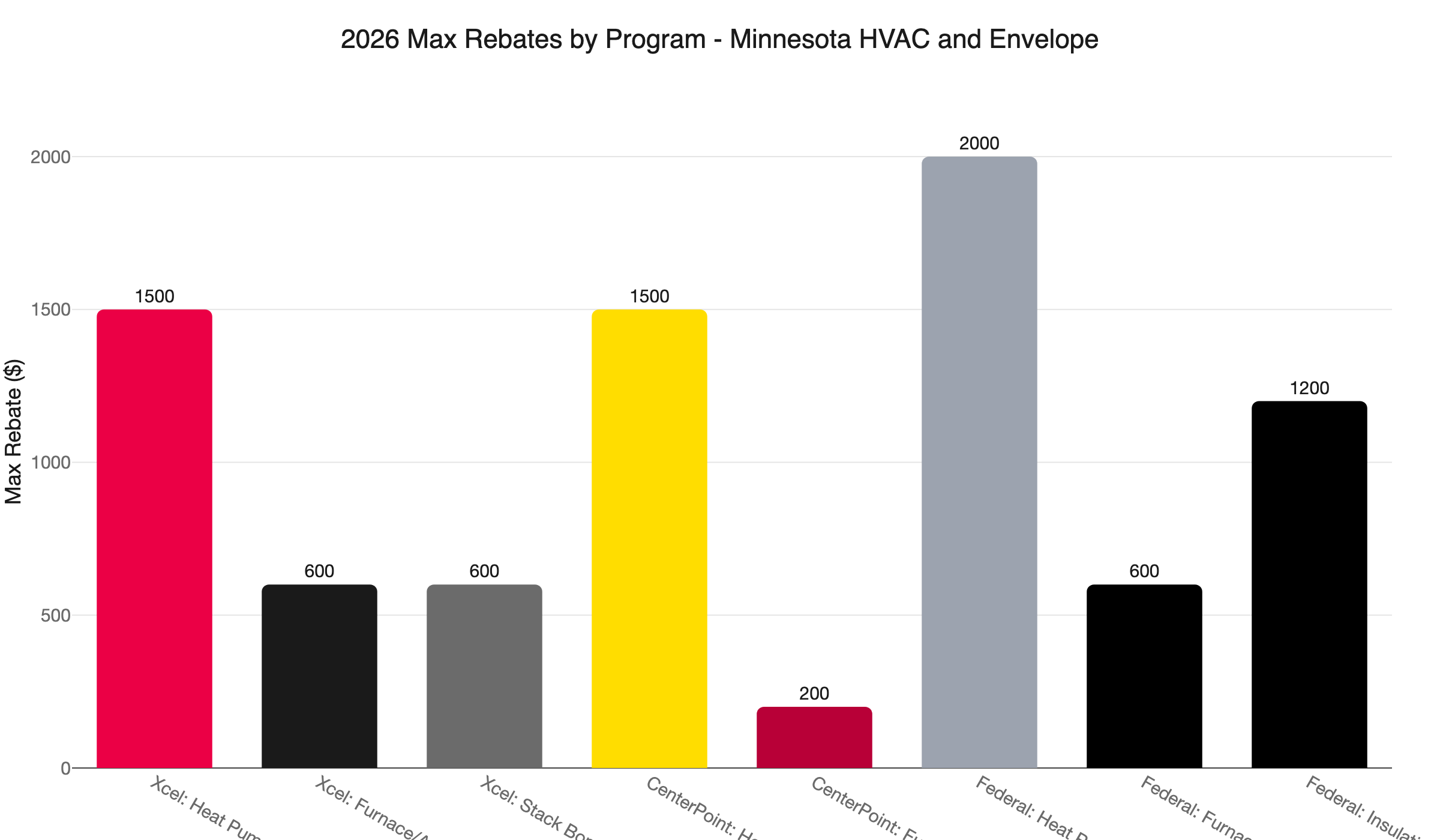
2026 Max Rebates by Program - Minnesota HVAC and Envelope
## What Does Your Blower Door Number Actually Mean?
**ACH50 measures how many times your home's total air volume leaks through gaps and cracks per hour under test pressure. Lower is tighter. Minnesota's new construction code requires 3 ACH50 or better. Most older Twin Cities homes test between 6 and 12 ACH50.**
The tester depressurizes your home to 50 pascals. Then they measure how fast air flows back in through every unsealed gap, penetration, and crack in the building shell. A high number means a leaky house. A low number means a tight one.
[Minnesota's residential energy code](https://www.finehomebuilding.com/project-guides/insulation/using-a-blower-door-test-and-interpreting-the-results) sets 3 ACH50 as the new construction standard. That threshold is stricter than most states, driven by Minnesota's six-plus month heating season. An older Minneapolis bungalow might test at 8, 10, or even 12 ACH50.
The number matters for your HVAC decision because it directly sets your heating and cooling load. A leaky house needs more capacity than a tight one of the same square footage. Replace equipment before you tighten the shell and you size for the wrong building. The furnace or heat pump will be oversized the moment you finish the air sealing.
Think of it this way: fixing a car's fuel leak before you rebuild the engine makes more sense than doing it in reverse. The blower door number is your fuel leak reading.
## Why Envelope Work Comes Before HVAC Equipment
[BPI, ENERGY STAR Home Performance, and ACCA Quality Installation](https://building-performance.org/bpa-journal/smarter-retrofits-start-with-hvac-load-calculation/) all specify the same sequence: air seal, insulate, re-run the Manual J load calculation on the tightened house, then select equipment. This is not an opinion. It is the methodology every certified contractor is trained to follow.
The consequences of skipping it are well-documented. [An estimated 75% of HVAC systems are oversized](https://www.greenbuildingadvisor.com/article/oversized-hvac-equipment) when contractors skip proper load calculations. An oversized furnace or AC short-cycles. It heats or cools the space quickly, then shuts off before it has run long enough to dehumidify the air, distribute heat evenly, or reach peak efficiency. The result is humidity problems in summer, cold spots in winter, and 15-30% more energy waste year-round.
[ENERGY STAR estimates homeowners save an average of 15% on heating and cooling costs](https://www.energystar.gov/saveathome/seal_insulate/why-seal-and-insulate) by air sealing and insulating before any equipment change. Nine out of 10 U.S. homes are under-insulated. Air leakage in a typical home is equivalent to leaving a window open every day of the year.
The savings from the right sequence are documented and real. A retrofit that drops infiltration from 0.50 ACH to 0.25 ACH can cut 15% off the heating and cooling load. That is often enough to step down one full ton of capacity. [One real-world case](https://building-performance.org/bpa-journal/smarter-retrofits-start-with-hvac-load-calculation/) found that envelope work cut a home's cooling load in half. The right-sized equipment came in at $14,500. The pre-envelope quote had been $22,000. A $300 load calculation saved $7,500 on installed equipment.
For a deeper look at why this step matters, see our post on [air sealing before an HVAC upgrade in Minnesota](/blog/air-sealing-before-hvac-upgrade-minnesota/).
## What Happens If Your House Tests at 5 ACH50 or Below?
**When air sealing pushes your home to 5 ACH50 or tighter, Minnesota code requires mechanical ventilation. Natural infiltration no longer covers the ASHRAE 62.2 fresh-air requirement below that threshold. An HRV or ERV is not optional. Budget $1,500-$3,500 and add it to the HVAC scope before you sign any contract.**
When your home is leaky, fresh air seeps in through all those cracks. That is not a good system, but it functions as one. When you air seal below 5 ACH50, you remove that accidental fresh air supply. The house becomes too tight to ventilate on natural infiltration alone.
[IECC 2021, which Minnesota residential code tracks](https://up.codes/viewer/minnesota/imc-2018/chapter/4/ventilation), requires whole-house mechanical ventilation when a home tests at 5 ACH50 or tighter. Minnesota mechanical code goes further: it requires a balanced ventilation system for all low-rise dwellings. Exhaust-only ventilation, like a bath fan running continuously, does not satisfy the requirement. You need an HRV or ERV that both exhausts stale indoor air and brings in conditioned fresh air.
For a 2,000-square-foot, 3-bedroom home, ASHRAE 62.2 requires approximately 90 CFM of continuous fresh air. An HRV or ERV that meets this spec adds $1,500-$3,500 to the project cost.
If your auditor projects that sealing will push your home below 5 ACH50, add ventilation to the HVAC scope before any contractor bids. The contractor who surprises you with it on install day is the one who did not read the blower door report.
Our post on [ERV vs. HRV: which ventilation system for Minnesota](/blog/erv-vs-hrv-which-ventilation-system-minnesota/) explains the difference and helps you decide which type fits a Twin Cities climate.
## How the Right Sequence Changes What You Pay for Equipment
Doing the envelope work first changes the Manual J output. That output changes the equipment recommendation. The recommendation changes the price.
A house that needed a 100,000 BTU furnace before tightening might need only an 80,000 BTU unit after. On a heat pump project, that load reduction might shift you from a 4-ton system to a 3-ton system. The installed price difference between those two tiers can be $2,000-$4,000 on equipment alone. Smaller electrical service requirements and shorter line sets add more savings on top.
The same logic applies to central AC. Right-sizing after envelope work is one of the most reliable ways to keep the installed cost in range. Our post on [HVAC sizing and the Manual J load calculation](/blog/hvac-sizing-manual-j-right-sized-system/) covers what a proper calculation involves and what to ask your contractor.
An oversized unit also carries a comfort penalty that lasts for the life of the equipment. Short-cycling means the blower runs in short bursts at full capacity. A right-sized or modulating system runs longer cycles at lower output. The result is more even temperatures, better humidity control in summer, and less mechanical noise throughout the year. That comfort difference is something you notice every day - not just on your utility bill.
If you are planning to replace both a furnace and AC at the same time, the load reduction from air sealing can affect both systems. A lower heating load may let you step down furnace size. A lower cooling load may let you step down AC tonnage. Both savings land on the same project.
## How Much Can You Save by Getting the Order Right?
**Documented cases show the right sequence can cut equipment costs by $5,000-$7,500 on a single project, on top of 15-30% lower annual energy bills. The audit itself costs $100-$500. That is a strong return on the first step.**
The $22,000 vs. $14,500 case is not an outlier. It is what happens when a contractor runs a real Manual J on a post-sealing load instead of sizing by square footage rules of thumb. The $300 load calculation cost is recovered in the first year of lower utility bills alone.
Add the rebate stacking math and the gap widens further. Xcel Energy's $600 stacking bonus rewards the correct sequence with real dollars. CenterPoint's audit-first requirement for insulation rebates builds the sequence into the rules. The programs exist because utilities have the billing data to confirm what happens when you do it right.
The per-project saving from right-sizing typically dwarfs the cost of the audit and the load calculation. The audit is where you start.
## Which Rebates Stack for Home Energy Audit HVAC Upgrades in Minnesota?
**In 2026, a homeowner who follows the correct sequence can stack Xcel or CenterPoint utility rebates with the federal 25C tax credit. Combined value on a heat pump project can reach $4,000-$5,800. CenterPoint requires the audit completed before installation; the sequencing is written into their rules.**
Here is how the programs line up:
**Xcel Energy** offers up to $1,500 on cold-climate heat pumps, up to $2,000 on mini-splits, and $200-$600 on high-efficiency furnaces and AC. The $600 stacking bonus applies when you install qualifying insulation or air sealing first and then a qualifying heat pump within two years. Apply at xcelenergy.com; deadline is September 30 of the following year.
**CenterPoint Energy** offers up to $1,500 for ducted air-source heat pumps and $50-$200 for qualifying high-efficiency gas furnaces. To unlock insulation and air sealing rebates, CenterPoint requires a qualifying energy audit completed before installation. This is written into their rebate rules on form CNP-1153, not just suggested practice. Deadline is December 31, 2026.
**Federal 25C tax credits** pay 30% of project cost: up to $2,000 for qualifying heat pumps, up to $600 for high-efficiency furnaces, and up to $1,200 combined for insulation and air sealing. Utility rebates and federal credits are not mutually exclusive. You can claim both.
One note: the MN HOMES and HEAR rebate programs are not yet launched. As of June 2026, Minnesota is still waiting for formal DOE approval with no estimated launch date. Do not hold your project waiting for them.
For a full breakdown of how to combine these programs, see our post on [stacking HVAC rebates and tax credits in Minnesota](/blog/stacking-hvac-rebates-tax-credits-federal-state-utility-minnesota/). Financing is also available for larger projects. Call (763) 260-6662 and ask about options for furnace replacements, AC installs, and heat pump projects.
## Does Minnesota Require a Permit for HVAC Work?
**Yes. A mechanical permit is required for every furnace and HVAC replacement in Minnesota with no exceptions. Twin Cities suburb fees typically run $50-$450 depending on the municipality. Unpermitted work shows up as a defect at closing.**
[Minnesota requires a mechanical permit for every HVAC installation](https://minnesotahvacauthority.com/minnesota-hvac-permits-and-inspections). The installing contractor must hold a current license from the Minnesota Department of Labor and Industry. You can verify a contractor's license at dli.mn.gov before you sign a contract.
The permit process protects you. An inspection confirms that combustion venting is correct, refrigerant lines meet code, and electrical connections are safe. A permitted installation also documents that the work was done to code - which matters when you sell.
When you collect bids, ask each contractor to confirm they will pull the permit and schedule the inspection. That is standard practice for a properly licensed contractor. A bid that does not include permit costs deserves a follow-up question.
## How Northern One Hour Handles Home Energy Audit HVAC Upgrades in Minnesota
We are locally owned and operated in Ramsey, MN. We serve Minneapolis, St. Paul, Blaine, Maple Grove, Plymouth, Brooklyn Park, Woodbury, Bloomington, and the surrounding Twin Cities area.
When a homeowner calls us after a blower door test, we ask for the results before we size anything. If you have a post-tightening ACH50 projection from your auditor, we use the tightened number for the Manual J calculation. If you have not yet done the air sealing, we talk through sequencing before we schedule the estimate. The equipment we recommend depends on the house you will have after shell work is done - not the house you have right now.
We run the load calculation after the envelope work is complete. We pull the permit. We schedule the inspection. We show up when we say we will. That is the commitment behind "Always On Time... Or You Don't Pay a Dime!(R)."
If your project crosses the 5 ACH50 line, we scope the HRV or ERV as part of the HVAC project. The ventilation requirement is a technical fact. It goes in the proposal upfront, not as a surprise addition on install day.
On pricing: furnace replacements in the Twin Cities start at $3,900-$7,800 installed, depending on efficiency tier and home size. High-efficiency 95-96% AFUE units start around $6,500; top-tier 97-98% AFUE units start around $9,100. Central AC replacement starts at $7,500-$10,400 for mid-tier equipment; high-efficiency 18-20+ SEER2 systems run $11,000-$15,600. Cold-climate heat pump projects vary based on your post-sealing load calculation - call for a quote specific to your home. All pricing includes equipment, labor, and permit.
## What Should You Do Right After Your Energy Audit?
**Get a copy of the blower door report. Note your ACH50 number. Share it with every HVAC contractor who gives you a bid. If your number is above 5 ACH50, prioritize envelope work before equipment. If you are already at or below 5 ACH50, add an HRV or ERV to the project scope.**
Here is a clear action sequence:
1. **Get the blower door report.** Ask your auditor for the ACH50 result and any recommendations for air sealing and insulation.
2. **Handle the envelope first.** If your home tests above 5 ACH50, focus on air sealing and insulation before you bid equipment. The [Home Energy Squad through CEE](https://www.mncee.org/home-energy-squad) is the lowest-friction audit entry point in the Twin Cities at $100 for pre-2000 homes.
3. **Get a post-sealing blower door test.** Confirm your new ACH50 number before you size any equipment.
4. **Require a Manual J on the tightened house.** Do not accept sizing based on square footage rules of thumb.
5. **Check the 5 ACH50 threshold.** If your post-sealing number is at or below 5 ACH50, add an HRV or ERV to the HVAC scope.
6. **Stack your rebates.** Apply for utility rebates before installation. CenterPoint requires the audit already completed; do not skip that step. Claim federal tax credits on your return.
7. **Verify permits.** Confirm your contractor will pull a mechanical permit and schedule an inspection.
Call our team at (763) 260-6662 or schedule online. Share your blower door results when you call. We will tell you whether the numbers point to envelope-first or equipment-first, and give you a written scope that includes everything the project actually requires.
---
# Whole House Fan Minnesota: What Twin Cities Homes Should Know
URL: https://northernonehour.com/blog/whole-house-fan-minnesota-worth-it/
Published: 2026-09-17 | Category: Cooling
A whole house fan can reduce cooling costs in Minnesota - if you time it right. Learn the real seasonal window, humidity caveats, winter risks, and combustion safety.
Key Takeaways
- The whole house fan Minnesota sweet spot is the shoulder seasons: May through mid-June and late August through October.
- July and August are usually the wrong time to run one. Twin Cities dew points regularly hit 65-70°F, and running the fan then pulls humid air into your home and attic.
- Your attic needs adequate vent area. Without enough exhaust capacity, you push warm air into a heat trap instead of cooling the house.
- Older homes with atmospheric-vent gas water heaters or furnaces face a real carbon monoxide risk when a large fan runs.
- Minnesota winters demand tight sealing. An unsealed fan housing at -20°F drives attic frost, ice dams, and added furnace bills.
- No utility or state rebate currently covers whole house fan installation as a standalone upgrade.
## What Is a Whole House Fan?
A whole house fan is one of those tools that sounds perfect for Minnesota homeowners: fresh air, low energy cost, fast results. The fan mounts in the ceiling between your living space and your attic. Open windows throughout the house and turn it on. It pulls air from the living area up through the ceiling and out through your attic vents.
On a cool night, this exchange drops indoor temps by several degrees in under 30 minutes. The fan draws a fraction of the electricity a central AC system uses. For Twin Cities homeowners, the appeal is real. So are the caveats.
## Is a Whole House Fan Worth It in Minnesota?
**For the right home, yes. The Twin Cities shoulder seasons give this tool a genuine window to work well.** May through June and September through October bring cool overnight lows and low humidity. Run the fan on those nights and it earns its cost over a few seasons.
The problem is the framing. Most guidance treats whole house fans as summer cooling tools. In Minnesota, that framing leads homeowners astray. July and August humidity spikes change the equation. The fan that works beautifully in May can pull moisture and misery into your home in August.
The real question is whether your home is ready: the attic, the gas appliances, and the winter seal plan. This post walks through each.
## When Should You Run a Whole House Fan in Minnesota?
**Run it when outdoor temps drop below 65°F at night and dew points fall below 55-60°F. In the Twin Cities, that is roughly May through mid-June and late August through October.** The [65°F nighttime threshold](https://www.greenbuildingadvisor.com/article/should-we-install-a-whole-house-fan) is a widely cited benchmark. Above it, the warm air the fan pulls in offsets the cooling from air movement.
What that looks like by season:
- **May and early June:** Overnight lows often reach the mid-50s to low 60s. Dew points stay low. This is the prime window.
- **Mid-June through July:** Overnight temps stay warm. Dew points climb into the 60s. Marginal at best for most nights.
- **August:** Most nights are too warm and too humid. A strong cold front can create an excellent window. Those nights arrive without much warning.
- **September and October:** Overnight lows drop back into the 50s and 60s. Humidity falls. The second strong window opens.
A few rules regardless of conditions:
- Open windows throughout the house before starting the fan. Running it against a closed house builds dangerous negative pressure quickly.
- Never run the fan with the central AC on. They work against each other.
- Run it in the evening and overnight. Close windows in the morning before outdoor temps rise.
- Watch the dew point, not just the temperature. A 62°F night at a 63°F dew point is not a good night for the fan.
## Why Are July and August Usually the Wrong Months?
**Minnesota's summer humidity load makes whole house fan use counterproductive on most July and August nights.** When Twin Cities dew points hit 65-70°F, a standard midsummer pattern, you are drawing in warm and humid air. You are not drawing in cool air.
That air moves through your living space and into your attic. Even if indoor temps drop slightly, your humidity load rises. You feel warm and sticky. Your attic sheathing absorbs moisture it did not need.
The [PNNL Building America Solution Center](https://basc.pnnl.gov/information/extreme-heat-attic-ventilation-fans) documents that pulling warm, moist outdoor air into attic spaces under high-humidity conditions creates pathways for frost and mold damage over time. The moisture risk is real, not theoretical.
The exception is a strong post-cold-front night in late August or September. When the dew point drops below 55°F and overnight lows fall to the upper 50s, the fan works well. Plan around the forecast, not the calendar.
## Does Your Attic Need to Be Ready First?
**Yes. Insufficient attic vent area turns a whole house fan from an asset into a liability.** The fan pushes a large volume of air into the attic. Without enough exhaust capacity, pressure builds and attic temps stay high. Twin Cities attics in poorly vented homes can reach 130-150°F in July. Exhausting into that environment delivers little actual cooling relief to the living space below.
A rough target: 1 square foot of net free vent area per 150 square feet of attic floor. Check your ridge vents and soffit vents before assuming you have enough capacity. Blocked soffit vents or attics with only gable vents may fall short.
The ceiling air seal matters just as much. Gaps around light fixtures, attic hatches, and plumbing penetrations create bypass paths. Even with windows open, the fan can pull conditioned air out through those gaps. [PNNL research](https://basc.pnnl.gov/information/extreme-heat-attic-ventilation-fans) confirms that negative pressure from whole house fan operation draws air through ceiling gaps, pulling heat and moisture into wall cavities and reducing the fan's effectiveness.
Pairing the fan installation with ceiling air sealing pays twice: it makes the fan more effective in summer and reduces your heating and cooling load all year. Our post on [air sealing before an HVAC upgrade](/blog/air-sealing-before-hvac-upgrade-minnesota/) covers the attic and ceiling work worth doing first.
## Can a Whole House Fan Create a Carbon Monoxide Risk?
**Yes, in homes with atmospheric-vent gas appliances.** A large whole house fan places the house under significant negative pressure. Gas appliances that rely on natural draft to exhaust combustion gases can backdraft under those conditions. Combustion byproducts then flow back into the living space instead of up the flue. That is a carbon monoxide risk, not a theoretical concern.
[HomesMSP](https://homesmsp.com/2014/03/whole-house-fans.html) puts it plainly: when the fan runs, the house becomes "a big vacuum," and atmospheric-vent appliances are the hazard. Draft-hood water heaters are the most common culprit.
Many Twin Cities bungalows, ramblers, and 1950s-70s splits were built with draft-hood gas water heaters. A large share of the Metro's older housing stock still has one. If that describes your mechanical room, you have two practical paths forward:
1. Upgrade the water heater to a sealed-combustion or power-vented model before running the fan.
2. Ensure the appliance is on a floor separate from the fan's main airflow. Verify that passive makeup air is adequate to keep the pressure balance safe.
Do not run a large whole house fan in the same pressure zone as a draft-hood water heater without resolving this first. Our post on [exhaust fans and furnace backdraft risk in Minnesota](/blog/exhaust-fans-furnace-backdraft-combustion-air-minnesota/) walks through the combustion safety interaction in detail.
## What Type of Whole House Fan Works Best for Minnesota Homes?
**Insulated fans with motorized, self-closing dampers are the right choice for Minnesota's climate.** Two main types are on the market, and the difference matters here more than in milder states.
Older-style fans use gravity-operated louvers: slats that open when the fan runs and fall shut by gravity when it stops. In mild climates, that is acceptable. In Minnesota winters, a gravity louver does not seal tightly enough. Cold air infiltrates through the gaps. Warm indoor air bypasses the louver and migrates into the attic.
Newer insulated fans use motorized dampers that close positively when the fan shuts off. The insulated panels resist both airflow and heat loss far better than gravity louvers. These models cost more upfront, but in Minnesota's climate, the winter performance difference is worth the premium.
If you are replacing an older fan or installing for the first time, specify an insulated model with motorized dampers. You will still want to inspect the seal annually, especially after several seasons of use. But the annual attic-box-build-and-remove task goes away, which is a real quality-of-life improvement on a cold October morning.
## What Happens to a Whole House Fan in a Minnesota Winter?
**An unsealed fan housing is one of the most damaging attic air leaks a Minnesota home can have.** Minneapolis home inspector Reuben Saltzman at [Structure Tech](https://structuretech.com/whole-house-fans/) is direct: "without a doubt, one of the worst sources of air leakage into the attic space is an opening for a whole-house fan."
Generic winterizing guides understate the stakes in Minnesota. At -20°F to -30°F overnight lows, a poorly sealed fan opening causes compounding damage:
- **Attic frost:** Warm, moist indoor air rises through the opening and deposits frost on attic sheathing and framing. Over a winter, that drives rot and mold.
- **Ice dams:** Heat escaping through the fan opening creates the temperature gradient at the eave that causes ice dams. A failing whole house fan seal can be the direct cause of ice dam damage to your roof and gutters.
- **Added furnace load:** The opening bypasses your insulation entirely. At -20°F, you pay to heat air that goes straight to the attic.
The common workaround of laying fiberglass batts over the opening does not work. [Structure Tech](https://structuretech.com/whole-house-fans/) is explicit on this point: fiberglass batts block radiant heat transfer. They do not stop air movement. The correct approach for an older fan is an airtight, insulated box built from the attic side each fall. One St. Paul homeowner spent multiple weekends building and fitting a custom cover. For a newer fan with a motorized insulated damper, the damper handles most of this. Inspect the seal every October regardless.
For the full picture on attic air leaks, ice dams, and heating bills in Twin Cities homes, see our guide on [attic insulation, ventilation, and ice dams](/blog/attic-insulation-ventilation-hvac-bills-ice-dams-twin-cities/).
## Do You Need a Permit to Install a Whole House Fan in Minnesota?
**In most Twin Cities jurisdictions, yes.** Minnesota mechanical code follows the IRC, and adequate makeup air is a code requirement. This is not paperwork for its own sake. At least one St. Paul building inspector raised depressurization and backdrafting objections during a permit review for a new-construction home. The inspector initially threatened to require a 1:1 mechanical makeup air system. That requirement would have largely offset the fan's energy savings.
The path through permitting is preparation: document your attic vent area, your makeup air plan, and how you are handling any atmospheric-vent appliances before you apply. A contractor who has pulled these permits in the Twin Cities knows what the inspectors need to see.
Never skip the permit. It protects you at resale and gives you a code-compliant record of the installation.
## Are There Rebates for Whole House Fans in Minnesota?
**No utility or state rebate currently covers whole house fan installation as a standalone upgrade.** Xcel Energy, CenterPoint Energy, and other Minnesota utilities offer HVAC rebates for eligible equipment. Whole house fans are not on those lists.
The [Minnesota HOMES program](https://mn.gov/commerce/energy/consumer/energy-programs/homes.jsp) (Home Efficiency Rebates, funded through the Inflation Reduction Act) had not launched as of mid-2026, pending federal DOE approval. When it does, whole house fans are unlikely to qualify on their own. However, the ceiling air sealing you should pair with any whole house fan installation may qualify. HOMES rebates tier by whole-home energy savings: 20-34% savings yields $2,000-$6,000 (income-dependent), and 35%+ savings yields $4,000-$12,000. If your home is a candidate for that level of work, the air sealing conversation is worth having with your contractor.
## How Does a Whole House Fan Fit With Central Air Conditioning?
**A whole house fan supplements central AC during shoulder seasons. It does not replace it.** On cool, low-humidity spring and fall evenings, the fan drops indoor temps faster than the AC. It uses much less electricity to do it. Those are the nights to run it hard.
On hot, humid July and August days, run the central AC and leave the fan off. The AC needs a sealed, dehumidified envelope to do its job. Running the whole house fan against that setup wastes both systems.
The smart pattern: run the fan aggressively overnight during the right windows and close windows in the morning before outdoor temps climb. If the house hits 67°F overnight, your AC may not need to run until midmorning. That flywheel effect is where the real savings accumulate over a season.
If summer humidity is the bigger comfort problem in your home, our post on [whole home dehumidifiers in the Twin Cities](/blog/whole-home-dehumidifiers-in-the-twin-cities-comfort-fix-for-sticky-summer-days/) covers the options.
## Ready to Sort Out Your Cooling Strategy?
Northern One Hour Heating & Air Conditioning is locally owned and operated in Ramsey, MN. Our team serves the full Twin Cities metro: Minneapolis, St. Paul, Blaine, Maple Grove, Plymouth, Brooklyn Park, Woodbury, Bloomington, and the surrounding area.
If you are weighing whether a whole house fan makes sense for your home, or thinking about a new central air system or heat pump, our team can walk through the options with you. We give you a straight answer on what fits your home and your budget.
We back every visit with our on-time promise: "Always On Time… Or You Don't Pay a Dime!(R)"
Call us at (763) 260-6662 or [schedule your appointment online](/air-conditioning/).
---
# How Much Clearance Around AC Condenser Unit Do You Need?
URL: https://northernonehour.com/blog/ac-condenser-unit-clearance-landscaping-twin-cities/
Published: 2026-09-16 | Category: Cooling
Learn the exact clearance rules for your outdoor AC condenser and what restricted airflow actually costs Twin Cities homeowners in efficiency and equipment life.
Key Takeaways
- Most manufacturers require **18-24 inches** on non-service sides and **24-36 inches** on the service access side.
- Overhead clearance is the most critical: keep at least **48-60 inches** above the fan discharge. A deck or low overhang causes more damage than a side fence.
- A solid fence within **12 inches** of any side creates measurable airflow restriction and high-pressure risk.
- Shrubs need **24-36 inches** of clearance - and they keep growing, so that distance requires ongoing maintenance.
- Restricted airflow can cut system efficiency by approximately **15%**, raising cooling costs every month the condition continues.
- Compressor replacement costs **$1,950-$4,500** installed. Most clearance-driven failures are preventable.
- Clearance violations can void manufacturer warranties and disqualify Xcel Energy rebates of up to $450.
- Minnesota's 2020 Mechanical Code defers clearance requirements to the manufacturer's installation manual. There is no single state-prescribed distance.
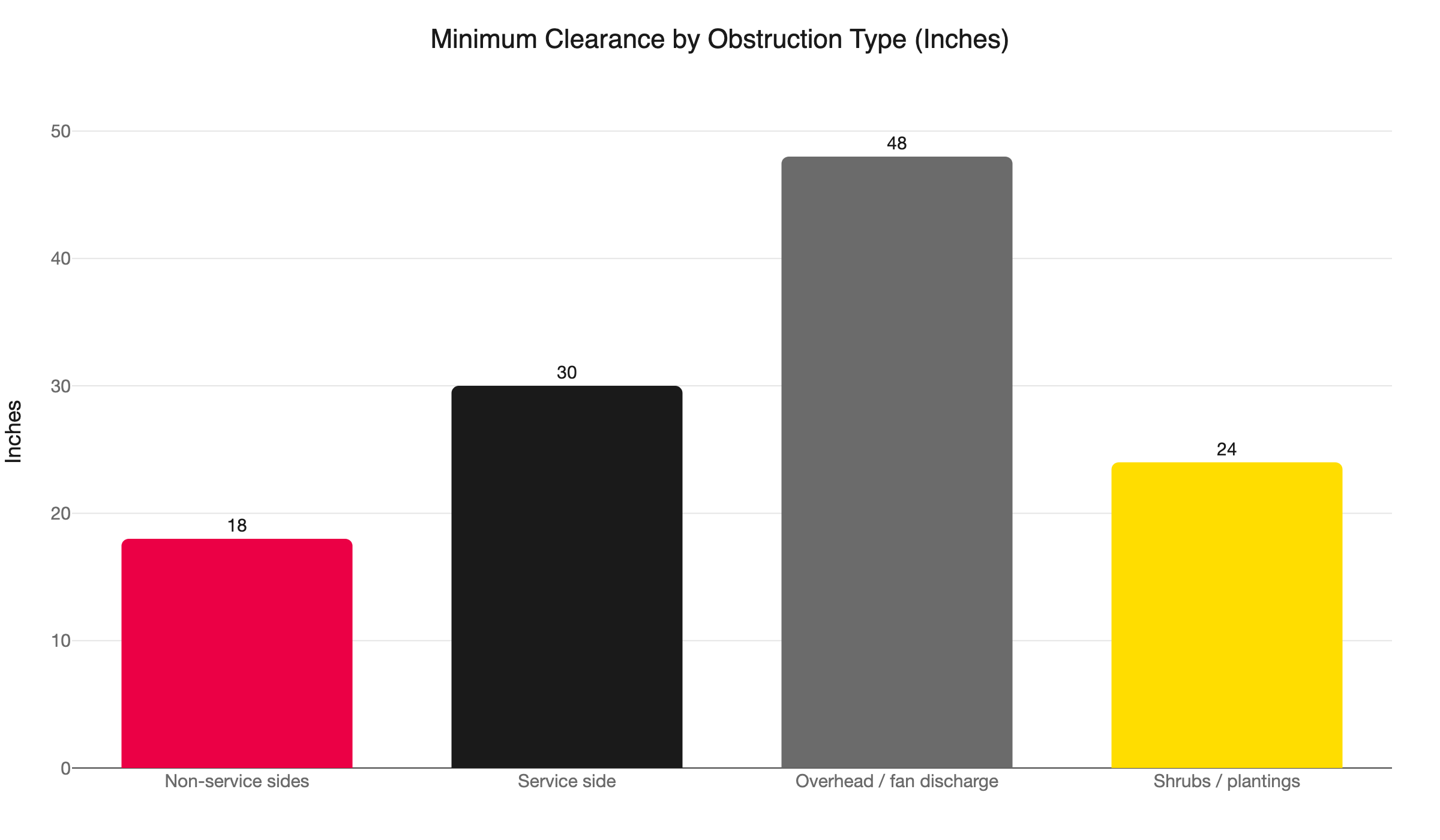
Minimum Clearance by Obstruction Type (Inches)
## How Much Clearance Around AC Condenser Unit Actually Matters?
How much clearance around your AC condenser unit do you actually have? Most Twin Cities homeowners never measure. They plant arborvitaes, build decks, and put up privacy fences. Everything seems fine - until the first hot week of July.
That is when the calls come in. The unit trips a safety shutoff on a 95-degree afternoon. The house stops cooling. When our technician arrives, the problem is not low refrigerant or a failed capacitor. It is a shrub pressed against the coil, or a cedar deck sitting 38 inches above the fan discharge.
Clearance is not a technicality buried in a manual. It is what allows the condenser to do its one job: pull heat out of your home and dump it outside. When the space around it shrinks, the unit works harder, runs hotter, and wears out faster.
This guide gives you the real clearance numbers, explains why overhead obstructions cause the worst damage, and puts a dollar figure on what a clearance problem actually costs.
## What Does "Clearance" Mean for Your Outdoor AC Unit?
**The short answer:** Clearance is the open air space around and above your condenser. It lets the unit draw ambient air across the coil, transfer heat into that air, and exhaust the hot air straight up - without recirculating its own exhaust back into the intake.
Your outdoor condenser has one job: move heat from inside your home to outside. Refrigerant carries that heat out to the condenser coil. The coil transfers the heat into outdoor air. A fan drives that hot air straight up and out.
For that process to work, the unit needs two things. First, a clean supply of cooler ambient air on its intake sides. Second, enough unobstructed space above the fan discharge so the hot exhaust escapes rather than curling back down.
When a fence, deck, or shrub blocks either of those - intake or exhaust - the unit begins working against itself. It is trying to cool refrigerant using air that is already warm from the previous cycle. Refrigerant pressure climbs. The system runs longer. And the components that bear that extra load start wearing out ahead of schedule.
---
## How Much Clearance Around AC Condenser Unit Does the Code Require?
**The short answer:** Minnesota defers to the manufacturer's installation manual, not a fixed state distance. Most manufacturers require 18-24 inches on non-service sides, 24-36 inches on the service access side, and 48-60 inches above the fan discharge. The absolute minimum to any solid surface, when no manufacturer spec is available, is 12 inches.
[Under IRC 2024 §M1411](https://www.jaspector.com/codes/irc-2024/ch14-heating-cooling-equipment/ac-condenser-installation-irc-2024/), clearance requirements defer to the manufacturer's installation instructions. Minnesota's [2020 Mechanical Code](https://www.dli.mn.gov/sites/default/files/pdf/BOL_Mechanical_Fuel_Gas_Code.pdf) follows the same approach. All mechanical cooling installations require a permit. The AHJ (authority having jurisdiction) verifies clearances at the final inspection against the installation manual - not against a state-prescribed number.
That distinction matters in practice. If your neighbor says their contractor left 12 inches and passed inspection, they may be right - for their unit's manual. Your unit's manual may require more.
[InspectAPedia's HVAC clearance reference](https://inspectapedia.com/aircond/HVAC_Clearance_Distances.php) cites specific manufacturer examples, including the Carrier 24ANA Infinity and the Lennox Elite XC13. Both publish detailed clearance tables by obstruction type. The numbers vary by model. Pulling your unit's manual and verifying is the right move - not assuming a neighbor's approval applies to your unit.
Here is a practical working guide by obstruction type:
| Obstruction | Minimum clearance |
|---|---|
| Solid fence or wall (non-service side) | 18-24 inches |
| Service access side | 30-36 inches |
| Overhead, above fan discharge | 48-60 inches |
| Shrubs or plantings | 24-36 inches |
| Open-lattice screen | Permissible only if open area equals or exceeds the unit's venting area |
The working clearance on the service side matters beyond airflow. It is what allows a technician to safely reach the electrical disconnect, access refrigerant ports, inspect the contactor, and clean the coil. Service costs go up when the technician cannot get to the unit without moving structures first.
---
## Why Is Overhead Clearance More Damaging Than Side Clearance?
**The short answer:** A fence on the side limits how much air the condenser can pull in. A low deck or overhang traps the hot air the fan just discharged and feeds it directly back into the intake. Those are different failure modes. Side restriction reduces airflow volume. Overhead obstruction raises the temperature of every cubic foot of air the unit processes.
[The overhead clearance minimum is 48-60 inches above the fan discharge](https://www.netrinc.com/blog/how-much-clearance-should-my-outdoor-ac-unit-have-around-it/). A deck sitting 36 or 40 inches above the fan does not meet that threshold. The fan pushes 105-115°F air straight up. If a deck ceiling is there to catch it, that hot air bounces back down and re-enters the intake.
The unit is now trying to cool refrigerant against air that is 10-20°F hotter than the true outdoor temperature. Refrigerant head pressure climbs above safe operating limits. The high-pressure safety switch trips. The system shuts off - on the hottest day of the year, when the demand is highest.
The practical issue: most decks are designed around outdoor furniture, grills, and shade. Condenser clearance rarely appears in the contractor's plans. If a deck passes over your outdoor unit, measure the height above the fan before assuming it clears the 48-inch minimum. It is a 90-second check that can prevent a compressor replacement.
---
## What Does a Privacy Fence Do to Your AC Unit?
**The short answer:** A solid privacy fence within 12 inches of any condenser side restricts airflow and forces the unit to work harder on every cooling cycle. Closer is worse. The service access side needs 30-36 inches of clear working space regardless of fence type.
A cedar or vinyl privacy fence is solid on every face it presents to the condenser. For the intake sides, that restriction reduces how much ambient air crosses the coil each minute. The unit compensates by running longer and pushing head pressure higher.
A fence at 18-24 inches is generally within manufacturer spec. A fence at 10 inches creates measurable restriction. A fence built flush against the unit is close to a blockage.
Open-lattice and decorative screens are permissible - with a condition. [The open area in square inches must equal or exceed the unit's intake and exhaust venting area](https://inspectapedia.com/aircond/HVAC_Clearance_Distances.php). A decorative lattice with 30% open area placed around a large-capacity unit may still fail that test. If a screen enclosure is in the plan, confirm the open-area calculation before construction starts.
One more thing the fence affects: service access. Even a fence that does not cause airflow issues can make service difficult. If the technician cannot reach the electrical disconnect or the refrigerant ports without dismantling something, your service appointments take longer and cost more. That 30-36 inch clearance on the service side is not an arbitrary comfort zone.
---
## What Happens When Shrubs Grow Too Close?
**The short answer:** Shrubs that press against the coil block airflow and push debris into the fins. Even a thin layer of embedded debris reduces heat-transfer efficiency by approximately 15%. Shrubs also continue to grow, so a compliant clearance at planting time can become a violation by the following summer - with no decision ever made to let it happen.
Vegetation against the coil creates two problems at once. First, it restricts the airflow the unit draws across the coil. Second, leaves, seeds, and fine debris are pulled into the coil fins and embed there. That layer acts as insulation between the refrigerant and the outdoor air.
[Even a thin debris layer on the condenser coil can reduce system efficiency by approximately 15%](https://cielowigle.com/blog/ac-compressor-failure/). That is a 15% increase in the energy required for every cooling cycle. Compounded over a full cooling season, it is a meaningful addition to your utility bill - and the coil still needs cleaning after the shrubs are trimmed back.
The fix is routine but requires ongoing attention: maintain shrubs at 24-36 inches of clearance year-round. If landscaping has grown in since the unit was installed, measure it before next summer. If shrubs have been pressing against the unit for a season or more, a coil cleaning at the same time as the clearance correction will restore full heat-transfer efficiency.
---
## The Minnesota Summer Problem
Most clearance violations do not surface in spring. They surface in late July.
The Twin Cities average 15-20 days per year above 90°F. On a 95-degree afternoon with high humidity, the condenser already has less margin than on a mild day. The difference in temperature between the refrigerant and the outdoor air compresses. The unit has to work harder to push heat into already-hot air.
Add a recirculation loop from a low deck, or restricted airflow from a fence at 10 inches, and the unit that ran without trouble through May now trips a high-pressure safety shutoff during the worst heat of the season.
It restarts, runs for a while, and trips again. Each cycle of restart and shutoff compounds the wear on the compressor. And our team is responding to those calls while other Twin Cities homeowners are waiting for the same service window on the same hot days.
A unit that "runs fine in May" is not proof that clearance is adequate. May temperatures give the system margin to absorb problems that July will not tolerate. If you have any doubt about clearance, check it in spring - not during a heat wave.
Our post on [AC struggling on extreme heat days in the Twin Cities](/blog/ac-struggling-extreme-heat-days-twin-cities/) covers the full range of what stresses an AC system when temperatures spike. Clearance is one piece of a larger picture.
---
## What Does Restricted Airflow Actually Cost You?
**The short answer:** Chronic restricted airflow raises energy bills and shortens the life of the compressor, capacitors, and contactor. A compressor replacement runs $1,950-$4,500 installed. The fan motor, capacitor, and contactor add up separately on top of that. All of it is preventable if the clearance issue is caught early.
[Systems with chronic airflow restriction run longer cycles, which increases cumulative compressor hours and accelerates wear on capacitors, contactors, and fan motors](https://www.meyer-depew.com/restricted-airflow-shortens-ac-system-life/). Those components fail first. If you are seeing a pattern of repeated summer repairs on the same system, restricted airflow is worth investigating before the next failure occurs.
[Sustained high-pressure cycles can trigger liquid refrigerant slugging - where liquid refrigerant returns to the compressor instead of vapor](https://cielowigle.com/blog/ac-compressor-failure/). Slugging destroys internal compressor components. It is not a recoverable failure: replacement is the only path forward.
Cost reference for the components most often damaged by clearance-driven stress:
- Compressor replacement: $1,950-$4,500 installed
- Condenser fan motor: $375-$900 installed
- Capacitor repair (part and labor): $195-$500
See our post on [AC condenser fan motor failure symptoms and cost](/blog/ac-condenser-fan-motor-failure-symptoms-cost-twin-cities/) for what that failure looks like before it becomes a full replacement. And for the compressor - the most expensive repair on this list - our guide on [AC compressor failure signs and repair cost in the Twin Cities](/blog/ac-compressor-failing-signs-repair-cost-twin-cities/) covers when repair still makes sense and when replacement is the better call.
---
## Does a Clearance Violation Affect Your Warranty or Xcel Rebate?
**The short answer:** Yes to both. Manufacturer warranties require installation within published clearance specs. A violation documented at a service call gives the manufacturer grounds to deny a compressor warranty claim. Xcel Energy's rebate is tied to the system reaching its rated SEER2 efficiency - which a clearance violation prevents.
Warranty language from most major brands states that the unit must be installed per the published installation manual. A technician who finds a clearance violation during a service call on a failed compressor has grounds to document it. The manufacturer uses that documentation to deny the claim. A repair that should have been covered becomes a $1,950-$4,500 cost paid out of pocket.
On the utility side: [Xcel Energy's 2026 rebate offers up to $450 for qualifying central AC installations](https://centralminnesotaheatingandcooling.com/blog/xcel-centerpoint-hvac-rebates-2026). It requires AHRI certification and proper installation by a participating contractor. A unit blocked from reaching its rated SEER2 by an airflow restriction has not been properly installed. The rebate is at risk.
The [federal 25C tax credit](https://centralminnesotaheatingandcooling.com/blog/xcel-centerpoint-hvac-rebates-2026) adds 30% of qualifying project cost up to $600 and stacks with the Xcel rebate. Both credits assume the system performs as rated. A clearance violation disrupts that assumption.
These are not edge-case scenarios. They come up when a homeowner files a warranty claim on a unit that spent three summers in a tight fence enclosure - and learns the hard way that the installation condition voids the coverage.
---
## What to Do If Your Unit Is Already Too Close to Something
If you measure and find your condenser is within the clearance minimums, the fix depends on what is causing the problem.
**Shrubs and plantings.** Trim back to 24-36 inches and commit to maintaining that distance each season. If vegetation has been pressing against the unit, schedule [a coil cleaning](/blog/outdoor-ac-unit-cleaning-twin-cities/) at the same time. Debris embedded in the fins will continue reducing efficiency even after the shrubs are cut back.
**Solid fencing.** A fence within 12 inches on any side, or within 30 inches on the service access side, is a structural problem. Options include relocating that section of fence, replacing the fence with an open-lattice design that meets the venting area requirement, or relocating the condenser unit. A licensed HVAC technician can evaluate which option is practical for your installation.
**Decks and overhangs.** Overhead clearance violations are the hardest to fix after the fact. If the deck is already built, options include cutting a ventilation opening directly above the fan discharge, relocating the condenser, or modifying the deck structure. If a deck addition is in the planning stage and it will pass over the unit, confirm the height against the 48-60 inch minimum before framing starts - not after the concrete is poured.
**Before any landscaping or deck project.** Run the clearance numbers before the contractor finalizes the design. Moving a condenser unit before construction costs far less than relocating it after the fact. It takes one conversation and a tape measure.
For AC maintenance questions or a clearance evaluation, our [air conditioning maintenance](/air-conditioning/air-conditioning-maintenance/) service is the right starting point.
---
## Not Sure If Your Unit Has Enough Room? Here's What to Do.
Clearance problems are not always obvious from a visual check. A fence that looks compliant may be 11 inches on the side that counts. A deck that appears high enough may be 42 inches above the fan discharge instead of the required 48. Shrubs that looked fine last fall may be significantly closer after one growing season.
If you are not certain your unit has the clearance it needs - or if your system has been tripping on hot days and airflow restriction is a possible cause - our locally owned team can evaluate it. We serve Ramsey, Blaine, Maple Grove, Plymouth, Brooklyn Park, and the broader Twin Cities metro.
When we say we will be there, we mean it: "Always On Time… Or You Don't Pay a Dime!(R)"
Call **(763) 260-6662** or [schedule online](/air-conditioning/air-conditioning-maintenance/) to set up an inspection.
---
*Sources: [Netr Inc - How Much Clearance Should My Outdoor AC Unit Have?](https://www.netrinc.com/blog/how-much-clearance-should-my-outdoor-ac-unit-have-around-it/) | [InspectAPedia - HVAC Clearance Distances](https://inspectapedia.com/aircond/HVAC_Clearance_Distances.php) | [Jaspector - IRC 2024 AC Condenser Installation](https://www.jaspector.com/codes/irc-2024/ch14-heating-cooling-equipment/ac-condenser-installation-irc-2024/) | [MN DLI - 2020 Mechanical Code](https://www.dli.mn.gov/sites/default/files/pdf/BOL_Mechanical_Fuel_Gas_Code.pdf) | [Cielo Wigle - AC Compressor Failure Causes](https://cielowigle.com/blog/ac-compressor-failure/) | [Meyer & Depew - Restricted Airflow Shortens AC Life](https://www.meyer-depew.com/restricted-airflow-shortens-ac-system-life/) | [Central MN Heating & Cooling - Xcel Rebates 2026](https://centralminnesotaheatingandcooling.com/blog/xcel-centerpoint-hvac-rebates-2026)*
---
# Why Heat Pump Vibration Noise Travels Through Your House
URL: https://northernonehour.com/blog/heat-pump-vibration-noise-transmission-house-minnesota/
Published: 2026-09-16 | Category: Heating
A low hum through walls and floors usually means a lineset or mount problem. Learn the three vibration paths and the fixes that actually work in Minnesota.
Key Takeaways
- Heat pump vibration noise through the house travels via three paths: the unit body, the refrigerant lineset, and the electrical conduit.
- Pads alone rarely solve the problem when the lineset is rigid. All three paths need isolation.
- Wall-mounted outdoor units cause the vast majority of vibration complaints. Ground mounting with a deliberate lineset loop is the superior fix.
- Adding soft isolators under a ground-mounted unit with a rigid lineset can make noise worse, not better.
- Standard elastomeric mounts crack in Minnesota winters. Cold-rated materials and a fall inspection are non-negotiable here.
- Xcel Energy, the City of Minneapolis, and the federal 25C credit can stack to $5,000 or more on a qualifying install in the Twin Cities.
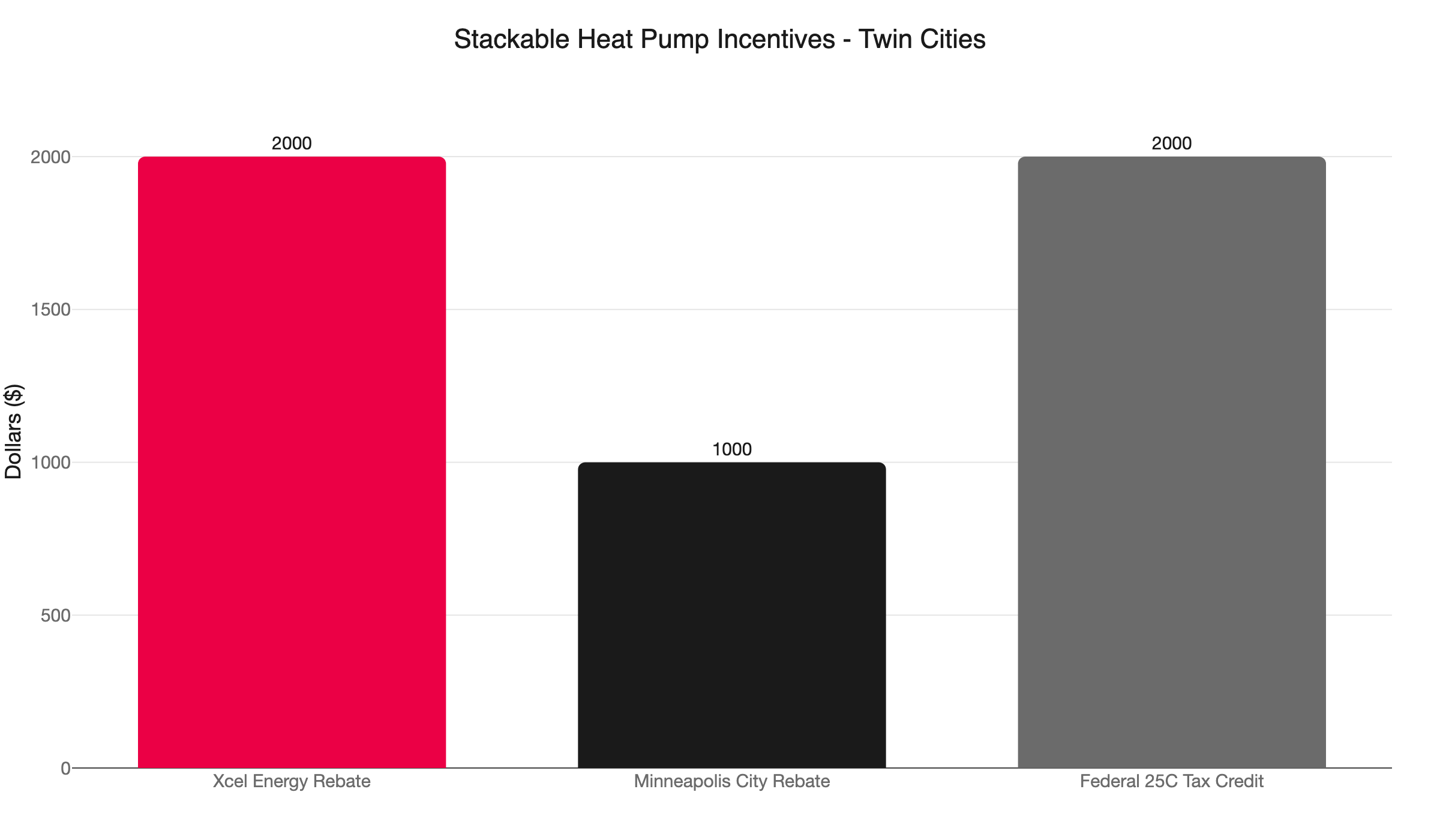
Stackable Heat Pump Incentives - Twin Cities
## Why Does Heat Pump Vibration Noise Travel Through the House?
Your outdoor unit vibrates at operating speed. That is normal. The problem starts when the unit connects rigidly to your home's framing. A wall bracket bolted into studs, a refrigerant lineset running straight through a wall, or a rigid electrical conduit clamped to both the unit and the structure - each one creates a direct path for vibration to reach your floors, walls, and ceilings.
The hum you hear is mechanical energy moving through wood and drywall. The source is not always the unit itself. Most of the time, it is the connection between the unit and the structure.
## The Three Paths Vibration Takes Into Your Home
Most guides focus on the unit's base. That is only one of three vibration paths. Closing one while leaving the others open rarely solves anything.
**Path 1: The unit body.** The compressor and fan motor create mechanical vibration. When the unit sits directly on a rigid surface - concrete, metal, or an asphalt pad without any isolation layer - that energy transfers into the structure with little resistance. This is the path that anti-vibration pads address.
**Path 2: The refrigerant lineset.** This is the path most guides skip entirely, and it is often the dominant source of persistent noise. The copper or aluminum lines connecting the outdoor unit to the indoor air handler pass through a hole in the wall. If those lines run rigid from the unit to the framing - no flex, no loop, just a straight shot - every compressor pulse travels down the line and into your studs like a drumstick hitting a frame. [Lineset rattling against framing is a separate noise source from compressor vibration. The fix is a gentle bend in the lines and foam or mass-loaded vinyl isolation at the wall penetration.](https://www.greenbuildingadvisor.com/question/vibrations-from-minisplit-outdoor-unit-make-adjacent-room-almost-unlivable-zone-4c)
**Path 3: The electrical conduit.** Wiring between the outdoor unit and the disconnect box often runs in rigid conduit. When that conduit is clamped firmly to both the unit and the wall, it creates a direct vibration bridge - the same mechanical problem as the lineset, just smaller in diameter.
Understanding all three paths matters because most persistent hum problems involve more than one of them. If you address only path 1 and the unit is wall-mounted, you have barely touched the problem.
## Is a Wall-Mounted Outdoor Unit Causing Your Noise Problem?
**The short answer:** Almost certainly yes, if your unit is on a wall bracket. [HVAC experts at Green Building Advisor identify wall-mounted outdoor units as the root cause in 99% of vibration-through-house complaints. Units should carry a warning not to mount onto stud walls.](https://www.greenbuildingadvisor.com/question/vibrations-from-minisplit-outdoor-unit-make-adjacent-room-almost-unlivable-zone-4c)
A stud wall is essentially a large speaker cabinet. The framing members run continuously from the mount point to other rooms, floors, and ceilings. Mount a vibrating compressor to that structure and the energy has a highway into your living space.
Wall brackets made sense as a space-saving solution in tight lots or on properties where a pad would require grading work. The tradeoff is direct structural contact. Anti-vibration pads between the bracket and the wall reduce energy at that specific contact point. They do nothing for the lineset, which enters the structure a few inches away and often carries more vibration into the framing than the bracket itself.
If your outdoor unit is on a wall bracket and the hum is severe, the most effective fix is relocating the unit to a ground-mounted pad. That is a significant job. It is not a same-day band-aid. For a mild or moderate hum on a wall-mounted unit, a combination of improved lineset isolation, mount pads, and conduit decoupling can bring noise down to an acceptable level - but the wall-mount limitation is always working against you.
## What Is the Lineset Loop, and Why Does It Matter?
**The short answer:** A lineset loop is a deliberate extra bend in the refrigerant lines before they enter the wall. That bend acts as a spring, absorbing compressor movement and breaking the rigid mechanical link between the unit and your framing. It is the most commonly missed detail in heat pump installations.
When a lineset runs from the outdoor unit directly into a wall penetration with no slack, it acts like a rigid rod. Every micro-movement at the compressor travels down that rod and into the structure. Add a loop - a graceful curve with extra line length before the wall - and those movements have somewhere to go other than your studs.
[Energy Star guidance supports this directly: flex piping on refrigerant connections and rubber grommets at penetration points meaningfully deaden sound transmission.](https://www.energystar.gov/partner-resources/residential_new/educational_resources/sup_program_guidance/heat_pump_water_heater_guide/installation_best_practices)
A good installer accounts for the loop at installation time. The extra line is inexpensive. The routing is planned before the first connection is made. Retrofitting a loop after the fact requires unstrapping the lineset, adding slack, reforming the route, re-insulating the lines, and re-sealing the wall penetration. It is doable on an existing installation. It is just easier and cheaper to get right on day one.
When discussing a new installation, ask specifically: "How will the lineset be routed at the wall penetration? Will there be a service loop?" A well-trained technician will know exactly what you mean and give you a clear answer. See our post on [heat pump normal noises versus problem sounds](/blog/heat-pump-normal-noises-vs-problem-sounds-minnesota/) for more on what to listen for once a unit is running.
## Why Anti-Vibration Pads Alone Often Fall Short
Anti-vibration pads are the first recommendation in nearly every article on this topic - and they are not wrong, exactly. [Rubber or elastomeric pads placed under all four corners of the unit, properly sized for unit weight and rated for outdoor UV and temperature exposure, measurably reduce energy transmission at the base.](https://qualityhomeaircare.com/heat-pump-vibration-eliminator/)
The problem is that pads only address path 1. When a homeowner adds pads under a unit with a rigid lineset, path 2 continues carrying vibration directly into the framing. The hum continues. The pad gets the blame.
Pads work when they are part of a complete isolation system. That system requires:
- Properly rated pads under the unit feet, sized for the unit's actual weight
- A loop in the lineset before the wall penetration
- Foam backer rod or mass-loaded vinyl at the penetration point itself
- Flexible conduit sections or a service loop in the electrical run near the unit
When all three paths are addressed together, pads do their job. When they are the only intervention, the result is usually disappointment.
## Does a Vibration Isolator Under a Ground-Mounted Unit Help or Hurt?
**The short answer:** It depends on the lineset. Soft isolators under a unit with a rigid lineset can make noise worse. The correct pairing is a rigid, heavy base combined with a flexible lineset loop.
This is the counterintuitive finding that most guides miss entirely. [A too-soft mount under a ground-mounted unit creates a flexible link that allows the unit to rock. That rocking pushes energy into the linesets and wiring rather than absorbing it.](https://www.greenbuildingadvisor.com/question/vibrations-from-minisplit-outdoor-unit-make-adjacent-room-almost-unlivable-zone-4c) The unit needs a stable, heavy base. The isolation work belongs at the lineset and conduit connection points - not under the compressor feet.
[Effective vibration isolation targets a system natural frequency well below the heat pump's operating range. Mounts that are too soft cause excessive lateral movement. Mounts that are too stiff pass more energy into the building.](https://heatingnewsjournal.com/heat-pump-vibration-isolation-noise-reduction-longevity/) Getting that balance right requires knowing the unit's weight and compressor frequency - not simply buying the thickest pad on the shelf.
The correct configuration for a ground-mounted unit looks like this:
- A heavy, stable concrete pad or compacted gravel base
- Properly rated anti-vibration pads under the unit feet - matched to the unit's weight spec
- A deliberate loop in the lineset before it enters the wall
- Foam backer or mass-loaded vinyl at the wall penetration
- Flexible sections or a service loop in any rigid conduit run near the unit
## What About Minnesota's Winters?
**The short answer:** Standard elastomeric mounts crack and harden in sustained sub-zero temperatures. A cold-climate installation in the Twin Cities requires temperature-rated materials and a fall inspection cycle - not just whatever pad came in the truck.
Minnesota winters are not gentle on rubber. Mounts that perform fine in Georgia or even Chicago can become brittle and transmission-prone in a sustained January cold snap. [Selecting low-quality elastomeric mounts that crack in cold weather is the most common cold-climate installation mistake. Piping and electrical decoupling is the second most common oversight.](https://www.pickcomfort.com/heat-pump-vibration-isolation/) Once a mount hardens, it transmits vibration instead of absorbing it. The hum that was not there in October shows up in February, and the connection to the pad is not obvious.
What this means practically for Twin Cities homeowners:
- Ask for the product spec sheet on any isolation material used, not just a verbal assurance. UV- and cold-rated pads designed for HVAC use in northern climates exist. Insist on them.
- Add a pad inspection to your annual maintenance visit. A cracked or compressed pad in October is a quick fix. The same problem discovered in January while the unit is the primary heat source is a longer diagnostic under pressure.
- Check the lineset insulation at the wall penetration each fall. Minnesota's freeze-thaw cycles stress that sleeve over time. Cracked insulation allows the copper to contact framing directly, and the hum returns even when everything else was done right.
Our team checks all of these details during a [heat pump service visit](/heating/heat-pump-repair/). If you have not had the unit looked at since install, a pre-season call before October is a reasonable step.
## What Does Minnesota Code Require for Heat Pump Installation?
**The short answer:** The Minnesota Mechanical Code requires noise and vibration minimization using manufacturer-specified dampening materials, and a mechanical permit is required before any installation begins.
[The Minnesota Mechanical Code - MN Rules Chapter 1346, based on the 2018 IMC - mandates that HVAC components be installed to minimize noise and vibration transmission using manufacturer-specified dampening materials. A mechanical permit is required before installation.](https://www.dli.mn.gov/sites/default/files/pdf/BOL_Mechanical_Fuel_Gas_Code.pdf)
That permit requirement matters beyond paperwork. A permitted installation gets inspected. An inspector can flag a wall-mounted unit in a location likely to cause structural noise transmission before the homeowner ever hears the hum. A permit trail also protects you at resale and on any manufacturer warranty claims tied to proper installation.
If your heat pump was installed without a permit, or if you are not sure whether one was pulled, our team can review the installation documentation. This question comes up regularly when homeowners buy a house with an existing heat pump and later discover a vibration problem with no service history attached to it.
## Can I Fix Heat Pump Vibration Myself, or Do I Need a Pro?
**The short answer:** Some steps are genuinely DIY-friendly. Others require a licensed technician - especially anything involving the refrigerant lineset, electrical connections, or a unit relocation.
What you can do on your own:
- Replace worn or hardened pads under the unit feet. Measure the unit's weight first, buy pads rated for that load and for outdoor temperature exposure, and confirm all four corners are making solid, even contact.
- Check the lineset at the wall penetration. If the lines are touching the framing or passing through the hole without any isolation, adding foam backer rod or a rubber grommet at that point is a straightforward fix.
- Check the electrical conduit run near the unit. If rigid conduit is clamped directly to the unit body without any flex section, a conduit body fitting that allows slight movement can help.
What requires a licensed technician:
- Adding a lineset loop. Reforming a refrigerant lineset requires recovering the refrigerant, making new fittings or using pre-flared sections, pressure testing, and recharging. This is not a homeowner task.
- Relocating a wall-mounted unit to a ground pad. That is a full reinstallation - new lineset route, new electrical run, new pad, permit pulled.
- Any diagnostic that involves the refrigerant charge, as low refrigerant can produce sounds that mimic vibration noise.
If you are unsure which path is driving the noise, a diagnostic call gets the answer faster than trial and error on pads. Our team is locally owned and operated in Ramsey. We schedule promptly and show up when we say we will - "Always On Time… Or You Don't Pay a Dime!(R)"
## What Should I Ask My HVAC Installer Before Work Starts?
**The short answer:** Four specific questions cover the decisions that prevent most vibration problems: mount location, lineset routing, pad material ratings, and conduit handling.
Before work begins on a new installation:
1. "Is this a wall mount or a ground pad?" Push for a ground pad whenever the lot allows it.
2. "How will the lineset be routed at the wall penetration? Will there be a service loop before the wall entry?" Any experienced installer should be able to answer this without hesitation.
3. "What anti-vibration pad material are you using? Is it rated for Minnesota temperatures and UV exposure?" Ask to see the product spec.
4. "How is the electrical conduit handled at the unit? Is there a flex section or service loop near the unit body?" Rigid conduit clamped end-to-end is a vibration bridge.
You have every right to ask these questions before signing. A contractor who cannot answer or dismisses them is worth paying attention to. Our post on [HVAC contractor red flags in the Twin Cities](/blog/hvac-contractor-red-flags-twin-cities/) covers more questions worth asking before you hire anyone for a major installation.
## Heat Pump Rebates in Minnesota Right Now
A properly installed, cold-climate heat pump in the Twin Cities qualifies for a meaningful stack of financial incentives. These are not small discounts.
**Xcel Energy:** Up to $2,000 rebate for cold-climate air source heat pumps with a COP at 5 degrees Fahrenheit of 1.75 or higher, listed on the NEEP cold-climate database. A $600 bonus applies when the install pairs with insulation or air sealing work.
**City of Minneapolis:** Up to $1,000 city rebate, stackable on top of the Xcel rebate. Residents in designated Green Zones may qualify for up to $5,000 from the city program alone.
**Federal 25C tax credit:** 30% of project cost, up to $2,000 per year. This is a tax credit, not an upfront rebate. It reduces your federal tax bill at filing.
A qualified Twin Cities homeowner can access up to $5,000 in stacked incentives on a single install. Green Zone Minneapolis residents can reach $7,600 or more when all three programs apply.
A correctly installed heat pump - ground-mounted, with a proper lineset loop, cold-rated pads, and a sealed conduit run - is also the one that runs quietly for years. The rebate stack is a bonus on a job done right.
Our guide to [heat pump rebates and tax credits in Minnesota](/blog/minnesota-heat-pump-rebates-tax-credits/) covers the full list of current programs and how to apply. Or call us at (763) 260-6662 to talk through what a new installation looks like for your home. We are locally owned and operated, and we take the on-time promise seriously on every call.
---
# HVAC Vaulted Ceiling Heating Problems: 4 Fixes That Work
URL: https://northernonehour.com/blog/hvac-vaulted-ceiling-heating-cooling-twin-cities/
Published: 2026-09-16 | Category: HVAC
Cold floors, warm ceiling in your Twin Cities great room? Here's why heat stratifies in vaulted spaces and four proven HVAC fixes in order of cost.
Key Takeaways
- Warm air rises. In rooms taller than 10 feet, a 15 to 20°F floor-to-ceiling gradient is common without active air mixing.
- [ASHRAE Standard 55-2020](https://www.ashrae.org/technical-resources/bookstore/standard-55) limits the acceptable vertical temperature difference to 5.4°F at seated occupant height. Most vaulted rooms exceed that limit by a wide margin.
- The most common root cause: supply registers placed high on walls, the builder default, deliver warm air straight into the ceiling layer. The floor stays cold.
- Four fixes in order of cost: [ceiling fan direction](/blog/ceiling-fan-direction-hvac-efficiency-twin-cities/) (free), supply register relocation, motorized damper zoning, and variable-speed furnace or heat pump.
- Minnesota rebates from Xcel Energy, CenterPoint Energy, and the federal IRA help offset the cost of the more expensive fixes.
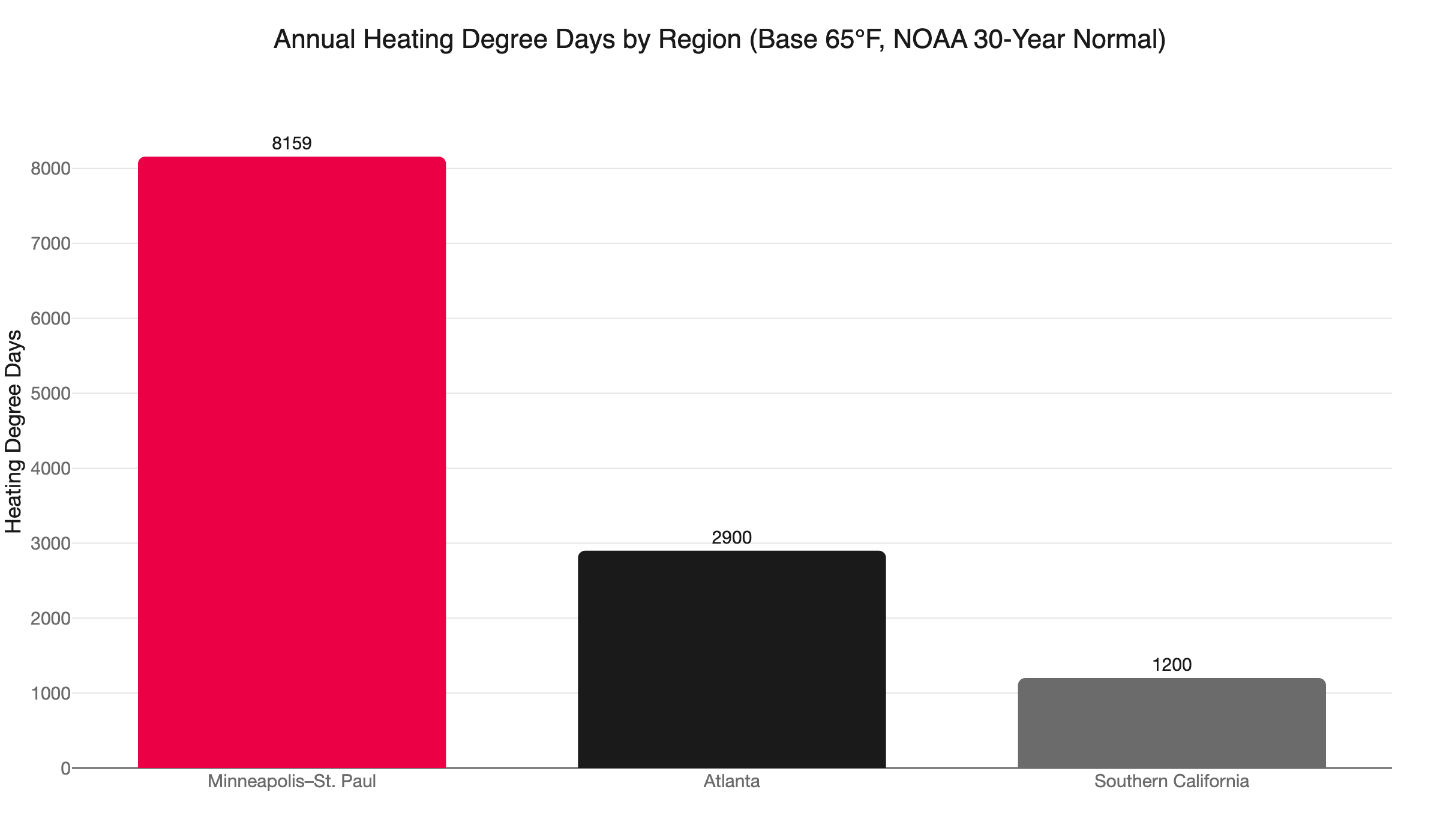
Annual Heating Degree Days by Region (Base 65°F, NOAA 30-Year Normal)
The sensation is specific. You're in wool socks on a January morning. The thermostat says 70°F. But the kitchen floor feels like a different building from the ceiling 18 feet overhead. The upstairs hallway is t-shirt weather. The main-floor couch is a blanket situation.
This is heat stratification. It's one of the most common HVAC vaulted ceiling heating problems in Twin Cities homes. It shows up in open floor plans, great rooms, cathedral ceilings, and any space where the ceiling climbs past 10 feet. Most content on this topic was written for Southern California or Atlanta. That content is nearly useless here.
[Minneapolis-St. Paul averages approximately 8,159 heating degree days per year](https://www.ncei.noaa.gov/products/land-based-station/us-climate-normals), based on NOAA's 30-year climate normal. That's roughly seven times the heating load of Southern California and nearly three times Atlanta's. Stratification that wastes 10% of your heating output here costs far more than it does anywhere warmer.
This post covers the physics, the root cause most homes share, and four concrete fixes in order of cost. Starting with free.
## Why Does Heat Stratify in a Vaulted Ceiling Room?
Warm air is lighter than cool air and rises. Without enough turbulence to mix a tall room, warm air pools at the ceiling while the floor stays cold. A 20-foot vaulted ceiling can develop a 15 to 20°F floor-to-peak gradient before any corrective mixing occurs. The thermostat at mid-wall calls the heating cycle satisfied while the occupied zone is still cold.
Your forced-air system pushes heated air into the room. That air rises immediately. In a standard 8-foot room, the system generates enough turbulence to mix the air before a significant gradient forms. A vault that rises 16 or 20 feet changes that equation. Warm air reaches the ceiling and stays there. Gravity keeps cool air near the floor. The two layers barely exchange without some form of intervention.
In a poorly mixed room, temperature rises roughly 1°F for every foot of height. Your thermostat sits at mid-wall, about 5 feet off the floor. It reads the comfortable middle layer and calls the cycle off. Your ankles are still in 60°F air.
This is not a furnace-sizing problem. Your furnace is likely the right size. The problem is air distribution: where the heat goes once it leaves the equipment, not how much of it there is.
## How Big Is the Temperature Gap?
[ASHRAE Standard 55-2020](https://www.ashrae.org/technical-resources/bookstore/standard-55) sets a clear threshold: the vertical temperature difference between ankle height (4 inches off the floor) and head height (4 feet, for a seated occupant) should not exceed 5.4°F. Vaulted rooms with poor air mixing routinely exceed that limit by a factor of three or more, with floors running 15°F colder than the thermostat reading on a January afternoon.
That standard exists because the discomfort is real, measurable, and well documented. You're not imagining the cold floor. The building science community has quantified it. Meeting that standard is the job your HVAC system is supposed to do.
## Why Does Builder-Standard Duct Placement Make the Problem Worse?
High-wall supply registers deliver warm air directly into the ceiling layer that is already stratified. The thermostat at mid-wall satisfies quickly while the floor stays cold. For heating-dominated climates, registers belong low on exterior walls or near floor level. Warm air then enters the occupied zone first and rises naturally through the space where people actually live.
Most new construction places supply registers high on interior walls. Builders do this for two reasons: it looks cleaner, and routing ductwork through attic chases is easier than running it through floor framing. The result is a system built for contractor convenience, not for heating performance in Minnesota winters.
High-wall registers dump warm air into the ceiling layer. The air exits the register and spreads across the ceiling plane. The thermostat satisfies quickly. The floor stays cold. The system cycles off. Nothing changes for your feet.
The [U.S. Department of Energy](https://www.energy.gov/energysaver) estimates that 20 to 30 percent of air moving through a duct system is lost to leaks, holes, and poorly connected sections. In a vaulted home where registers are already aimed at the ceiling, that loss compounds. You pay to heat a zone where no one sits.
ACCA Manual T, the engineering standard for residential air distribution, recommends supply registers low on exterior walls for heating-dominant climates. Warm air enters at floor level. It rises through the occupied zone. The thermostat satisfies from the correct elevation. That's the right design.
Minnesota falls in [IECC Climate Zone 6](https://www.dli.mn.gov/business/codes-and-statutes/construction-codes) (the southern two-thirds of the state), which requires R-49 ceiling insulation. Vaulted ceilings often fall short because shallow rafter bays limit insulation depth. A cold ceiling surface accelerates heat loss and compounds every stratification fix applied below it. If your vaulted ceiling is under-insulated, that's a parallel problem worth addressing.
## Fix 1: Reverse Your Ceiling Fan - This Week, Free
Every ceiling fan has a direction switch on the motor housing: a small toggle or slider. In summer, the blades run counterclockwise (viewed from below) to push air down and create a cooling effect. In winter, flip that to clockwise, at the lowest speed setting.
A clockwise blade on the lowest speed pushes the warm ceiling layer down along the walls. It does this without creating a draft at occupant level. The speed is too low for any wind-chill effect at floor height. The [U.S. Department of Energy](https://www.energy.gov/energysaver) credits this change with reducing heating costs by up to 15% in rooms where stratification is the primary issue.
In a Minnesota home running through a full heating season, 15% is real money. If your great-room ceiling fan has been running in summer mode since October, flip it today. Set it to the lowest speed setting. Give it a week and note whether the floor temperature improves.
This fix costs nothing and takes 30 seconds. It works well when the stratification problem is mild to moderate. If the floor is still cold after a week with the fan reversed, the duct system needs attention.
## Fix 2: Relocate the Supply Registers
Moving supply registers from high-wall positions to floor-level placements is a duct modification job. Scope depends on your home's framing and what's accessible below the great room floor.
A great room over a basement or accessible crawl space can often be retrofitted with floor registers without major structural work. The branch duct drops through the floor assembly and terminates in a floor boot. The original high-wall register is capped or converted to a return-air grille. A room over a slab or an attic requires more creative routing, but it is achievable in most cases.
Register relocation is also the right time to seal the duct system. Leaky ducts in a vaulted home send conditioned air into ceiling cavities or attic space before it reaches the living area. Sealing the supply trunk and branches while the system is already open adds little incremental labor. It solves a parallel problem at the same time. For a deeper look at what a proper duct seal involves, see our post on [duct sealing and leaky ductwork energy loss](/blog/duct-sealing-leaky-ductwork-energy-loss/).
Full ductwork replacement runs $6,500 to $13,000 for most homes. Duct sealing alone runs around $1,300. Targeted register relocation on a specific duct section typically falls between those figures, depending on run length and access difficulty. A technician can scope the job after reviewing your floor plan and existing duct layout.
## Does HVAC Zoning Actually Solve Stratification?
Yes, if the system is designed correctly. A two-zone setup with motorized dampers and separate thermostats for the main floor and upper level can reduce the temperature differential from 8 to 12°F down to 2 to 3°F in a typical two-story open-plan home. That puts the space within the ASHRAE 55 comfort threshold.
Zoning works by directing airflow where each zone's thermostat is currently calling for heat. The main-floor thermostat stays in its zone. The system keeps running until the floor zone is actually comfortable. Without zoning, a single mid-wall thermostat satisfies and the system shuts off while the occupied zone is still cold.
Zoning also corrects the stratification feedback loop that affects two-story open-plan homes. Without zoning, the main-floor thermostat satisfies while the upper level is still 8°F warmer. The main floor is cold. The upstairs is overheated. The system cycles off when half the home is uncomfortable. With separate zone thermostats, each area controls its own setpoint independently.
One additional variable: where the thermostat is placed within each zone matters. A thermostat mounted too high samples the warm air layer and shuts the system off before the floor zone reaches setpoint. Standard mounting height, about 5 feet from the floor on an interior wall away from supply air, is correct. Small placement errors compound stratification problems rather than solving them.
For a full breakdown of how zoning works in two-story and open-plan homes, see our guide to [HVAC zoning systems for two-story homes](/blog/hvac-zoning-systems-two-story-homes/).
## Fix 4: Variable-Speed Equipment and Why It Matters for Zoning
Zoning only functions correctly with variable-speed equipment. A standard single-stage furnace runs at 100% output or off. Close zone dampers while that furnace is running and the duct system over-pressurizes. That excess pressure stresses the blower motor, flexes duct joints, and can accelerate duct leakage over time. Variable-speed capability is not optional for a properly designed zoning system.
Variable-speed (ECM) furnaces adjust airflow continuously. When a zone satisfies and its dampers close, the furnace reduces blower speed to match the smaller duct opening. The system stays in pressure balance. It also runs longer at lower speed, which creates sustained, gentle air mixing rather than short, high-intensity blasts. That sustained mixing is what keeps the floor zone comfortable between heating cycles.
For more on how variable-speed and modulating furnaces perform across a Minnesota heating season, see our post on [whether a modulating furnace is worth the cost](/blog/modulating-furnace-worth-the-cost-minnesota/).
A high-efficiency, variable-speed furnace in the 95 to 96% AFUE range starts at around $6,500 installed in the Twin Cities. A modulating unit in the 97 to 98% AFUE range starts at around $9,100. Both figures include equipment, labor, and startup. Financing is available for qualifying systems.
Cold-climate heat pumps are also worth considering here. They operate at lower supply-air temperatures than gas furnaces. Lower supply-air temperature means the system needs more airflow to deliver the same BTUs. More airflow means more room mixing by design. A cold-climate heat pump paired with correctly placed registers and a zoning system addresses stratification at the system level rather than just managing its symptoms. If your furnace or central air is approaching the end of its useful life, a heat pump consultation is worth scheduling alongside any duct work discussion.
## What Minnesota Rebates Apply to These Upgrades?
Xcel Energy and CenterPoint Energy offer rebates for high-efficiency furnaces (AFUE 96% or higher) and qualifying smart thermostats. The federal 25C tax credit covers 30% of qualifying equipment costs up to $2,000 per year for heat pumps. Income-qualified homeowners may receive up to $8,000 for a qualifying heat pump system under the federal Inflation Reduction Act programs.
Here is what's currently available, and where to verify the current amounts before you buy.
**Xcel Energy:** Rebates for high-efficiency gas furnaces (AFUE 96% or higher), qualifying smart thermostats, and heat pump systems for MN customers. Amounts change each program year. Verify current offers at [Xcel Energy's residential heating and cooling rebate page](https://www.xcelenergy.com/programs_and_rebates/residential_programs_and_rebates/heating_and_cooling/).
**CenterPoint Energy:** Rebates for high-efficiency furnaces and smart thermostats for MN natural gas customers. Check current amounts through the [DSIRE database](https://www.dsireusa.org/), which aggregates state and utility incentive programs by ZIP code.
**Federal 25C tax credit:** The Energy Efficient Home Improvement Credit covers 30% of qualifying equipment costs. The annual cap is $2,000 for heat pumps and $600 for qualifying furnaces and thermostats. This credit stacks with utility rebates in the same tax year.
**Federal IRA home energy rebates:** Income-qualified Minnesota homeowners may qualify for up to $8,000 for a qualifying heat pump system under the IRA's HEAR and HEEHRA programs. Check current availability at [mn.gov/commerce/energy](https://mn.gov/commerce/energy/programs/residential/) or the federal [Home Energy Rebates page](https://www.energy.gov/scep/slsc/home-energy-rebates-programs).
Our guide to [Xcel and CenterPoint HVAC rebates in Minnesota](/blog/xcel-centerpoint-hvac-rebates-minnesota/) walks through how to layer these incentives correctly so you capture every available dollar on a single project.
## When Is It Time to Call a Pro for HVAC Vaulted Ceiling Heating Problems?
If reversing your ceiling fan doesn't solve the cold floor, the duct system is the likely cause. A technician can assess register placement, measure airflow at each supply grille, and identify where heat is going instead of the occupied zone. Most solutions are less invasive than a full ductwork replacement.
If the fan flip helps but doesn't fully solve the problem, the next step is a diagnostic visit. A technician reviews your actual duct layout, measures airflow at each grille, and identifies the shortest path to a comfortable floor. Register relocation, duct sealing, zoning design, and equipment decisions all follow from that assessment. Skipping the diagnostic leads to guesswork and rework.
Expect the technician to ask about your ceiling insulation as well. [IECC Climate Zone 6](https://www.dli.mn.gov/business/codes-and-statutes/construction-codes) calls for R-49 above the ceiling plane. Vaulted ceilings with shallow rafter bays often fall short of that depth. A cold ceiling surface makes every stratification fix work harder than it should. If the insulation is thin, that's a parallel project worth addressing at the same time.
We're locally owned and operated in Ramsey, MN. We serve the Twin Cities, including Minneapolis, St. Paul, Blaine, Maple Grove, Plymouth, Brooklyn Park, Woodbury, and Bloomington. When you schedule an appointment, we show up when we say we will. "Always On Time… Or You Don't Pay a Dime!(R)."
Call (763) 260-6662 or book online to schedule a comfort diagnostic for your vaulted-ceiling home.
---
# AC Line Set Replacement Cost: When to Reuse or Replace
URL: https://northernonehour.com/blog/ac-refrigerant-line-set-replacement-cost-twin-cities/
Published: 2026-09-15 | Category: Cooling
What does AC line set replacement cost in Minnesota? Learn the five conditions that force replacement and what the R-454B shift means for your 2026 install.
Key Takeaways
- A copper line set can be reused when a new AC is installed, but only after your technician confirms correct sizing, interior cleanliness, and physical condition.
- New residential AC systems run on R-454B, a mildly flammable A2L refrigerant. Old or corroded line sets carry a fire hazard with that chemistry that did not exist with R-410A.
- Five conditions require replacement: compressor burnout contamination, moisture or acid damage, wrong sizing for the new unit, physical damage from age or freeze-thaw stress, and corrosion on a line set being transitioned to R-454B.
- AC line set replacement adds $600-$1,500 to a Twin Cities project, depending on run length and access difficulty.
- Minnesota requires a mechanical permit for line set work. Only a licensed contractor may pull it.
- A compromised line set can disqualify a Xcel Energy Quality Install rebate worth $150-$450.
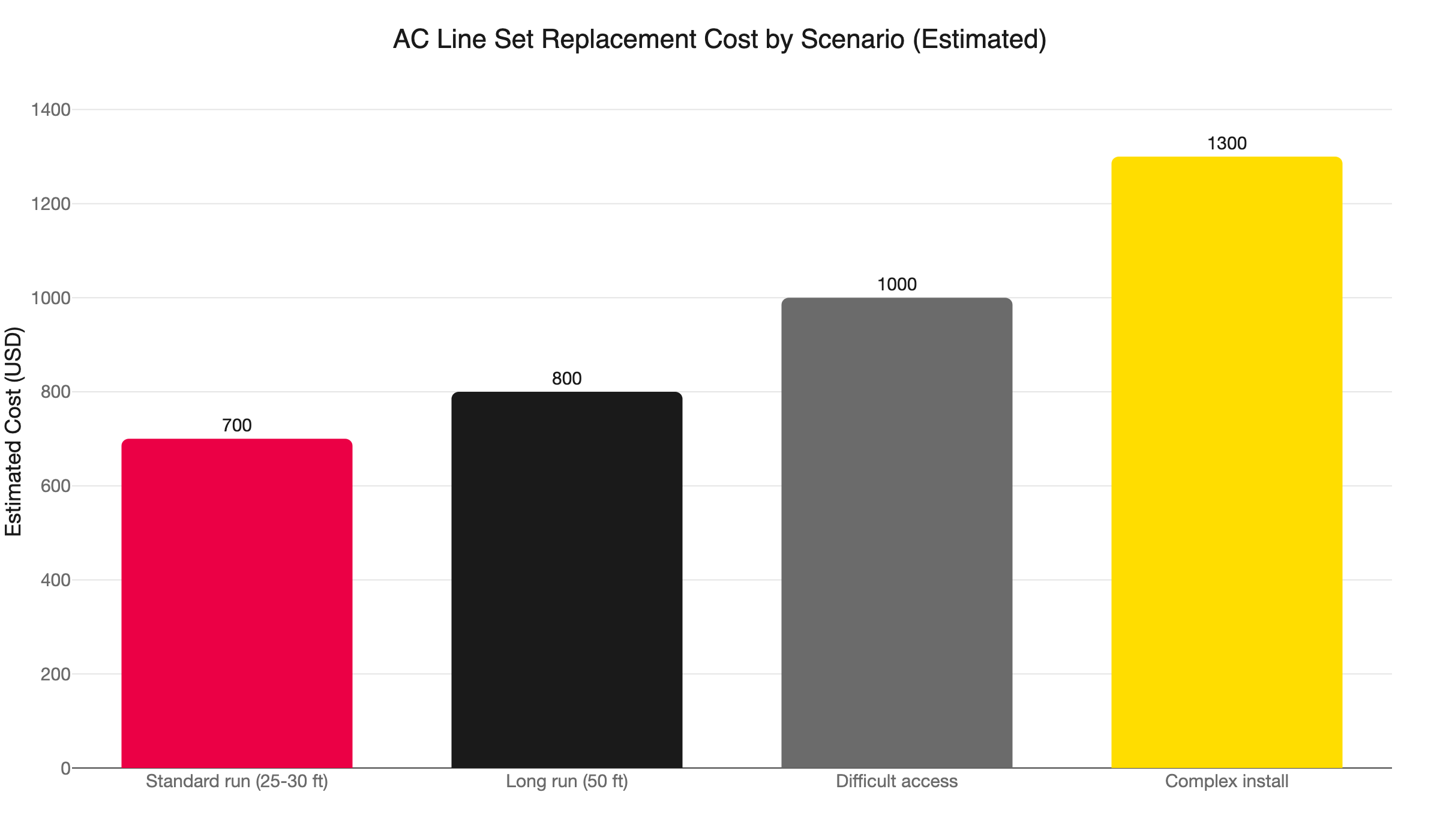
AC Line Set Replacement Cost by Scenario (Estimated)
## When the Line Set Conversation Comes Up
AC line set replacement cost is not a question most homeowners think about until an HVAC technician raises it mid-estimate. You are planning an air conditioner replacement, and now you are looking at a line item you did not budget for.
Here is what you need to know upfront: the existing copper line set is sometimes reusable. Whether it is depends on inspection. In 2026, the stakes for getting that decision right are higher than they were even two years ago. The refrigerant chemistry on new AC equipment changed at the start of this year, and that change affects how your technician should evaluate your line set before any new unit gets connected.
This guide covers what drives the reuse-or-replace decision, what ac line set replacement cost looks like in the Twin Cities market, and what Minnesota homeowners specifically need to know before they sign off.
## What Is an AC Line Set?
**A line set is the pair of insulated copper tubes connecting your outdoor condenser to your indoor evaporator coil. The two tubes carry refrigerant in opposite directions, forming the continuous loop that makes cooling possible.**
The larger tube - the suction line, wrapped in foam insulation - carries refrigerant vapor from the indoor coil back to the outdoor compressor. The smaller liquid line carries high-pressure refrigerant liquid from the condenser back indoors to the evaporator coil.
Most residential line sets run 25 to 50 feet. After installation they typically disappear inside walls, through crawl spaces, or along the exterior of the house. You rarely see them. But they affect system efficiency, equipment longevity, and now - with the 2026 refrigerant transition - refrigerant safety in ways that make the inspection before any new installation more consequential than it used to be.
## Does Every New AC Need a New Line Set?
**No. A line set that is correctly sized, clean inside, physically sound, and compatible with the new refrigerant can be reused. Inspection drives the decision, not age alone.**
A 15-year-old line set on a well-maintained system with no leak history may pass. A 6-year-old line set from a system that had a compressor burnout will not. Your technician is answering one question: can this copper tube safely carry the new refrigerant at the correct pressures, without contaminating the new equipment?
## Why Does the 2026 Refrigerant Shift Change the Line Set Decision?
**As of January 1, 2026, new residential AC systems must use refrigerants with a global warming potential below 750. The dominant replacement is R-454B. Unlike R-410A, R-454B is mildly flammable, and that changes the safety calculus for old or corroded line sets.**
The [EPA AIM Act Technology Transitions Rule](https://www.epa.gov/hfcs/regulatory-actions-technology-transitions) established this requirement. R-454B carries a GWP of 466, roughly 78% lower than R-410A's 2,088.
What this does NOT mean: the EPA does not require replacing a working R-410A system. As the [EPA's FAQ on HFC phasedown](https://www.epa.gov/climate-hfcs-reduction/frequent-questions-phasedown-hydrofluorocarbons) confirms, existing systems can still be serviced while R-410A supply lasts. A May 2026 final rule also allows continued installation of R-410A equipment manufactured before January 1, 2025, until existing inventory is depleted. The regulatory picture is still settling.
But when your system reaches end of life and you replace it, the new unit is almost certainly running R-454B.
That changes the line set question. R-410A and R-22 are not flammable. R-454B is classified A2L - mildly flammable under ASHRAE 34. A refrigerant leak from a corroded or compromised line set near an ignition source - a gas water heater, a furnace burner - carries fire risk with R-454B. With R-410A, the same leak was a refrigerant loss. With R-454B, it is a potential ignition hazard.
Mechanically, the transition is workable. R-454B operates at slightly lower pressures than R-410A: roughly 674 psia versus 711 psia. [Copper tube diameters are identical](https://www.acdirect.com/blog/r454b-vs-r410a-comparison/). A clean, intact R-410A line set is often mechanically compatible with the new refrigerant.
But the [industry checklist for A2L line set transitions](https://www.plumbingsupplyandmore.com/r454b-refrigerant-transition-line-set-checklist-for-hvac-contractors) is explicit: corroded or aging line sets should be replaced when the refrigerant type changes. Even for a line set that passes inspection, the reconnection procedure is more involved than a standard R-410A hookup. Your technician must perform a triple evacuation, replace the filter-drier, flush mineral oil and replace it with POE oil, and swap all service ports and Schrader fittings with A2L-compatible versions. None of those steps are optional. Skipping them voids the equipment warranty and risks contaminating the new compressor from day one.
For a broader look at what the R-454B shift means for Twin Cities homeowners, see our guide on the [R-454B refrigerant transition and your AC system](/blog/ac-refrigerant-change-r454b-what-homeowners-need-to-know/).
## When Does AC Line Set Replacement Become Necessary?
**Five conditions make reusing the existing line set unsafe. Each has a different root cause, and knowing which applies to your system helps you evaluate your technician's recommendation before you approve the work.**
**Compressor burnout contamination.** When a compressor fails by burning out, it does not fail cleanly. It leaves acid, carbon, and metal debris inside the refrigerant circuit. Those contaminants travel through the line set tubing. Connect a new compressor to a contaminated line set, and the debris migrates directly into the replacement equipment. Flushing is unreliable at removing all of it. [Replacement is the safe answer after a burnout event](https://nationalairwarehouse.com/blog/the-importance-of-changing-out-copper-refrigerant-lines/).
If your system failed through burnout rather than gradual wear, plan on the line set going with it. For what compressor failure looks and sounds like before it happens, see our post on [AC compressor symptoms and repair costs in the Twin Cities](/blog/ac-compressor-failing-signs-repair-cost-twin-cities/).
**Moisture or acid damage.** Moisture inside the refrigerant circuit reacts with refrigerant to form hydrofluoric acid. That acid destroys compressor motor windings from the inside. Any system that lost refrigerant to a slow leak is at elevated risk. When refrigerant escapes through a breach, atmospheric moisture can enter the same way. Full dehydration via triple evacuation is required before the line set is safe to reuse. If the technician cannot confirm the interior is dry, the risk to the new compressor outweighs any savings on materials.
**Wrong sizing for the replacement unit.** Liquid and suction line diameters are specified per unit in the installation manual. A line set sized for a 2-ton system may be undersized or oversized for a 3-ton replacement. [Wrong-sized tubing reduces efficiency and stresses the compressor from day one](https://www.pvhvac.com/blog/does-a-new-ac-always-need-a-new-line-set/). If the replacement unit is a different tonnage than the original, sizing must be confirmed against the new equipment specs before assuming the existing line set works.
**Physical damage from age or Minnesota freeze-thaw cycles.** Line sets running along exterior walls, through uninsulated crawl spaces, or underground face repeated thermal stress from Minnesota's freeze-thaw cycles. That stress causes micro-cracks in copper, deteriorated foam insulation, and eventual pinhole leaks. Visible kinks, dents, or damaged insulation are immediate disqualifiers. Copper line sets typically last 15 to 20 years depending on environment. A 20-year-old line set in a refrigerant-transition scenario is always a close inspection candidate, regardless of how it looks from the outside.
**Corrosion that makes A2L reuse unsafe.** A line set that would have been fine for another R-410A system may not meet the bar for R-454B. Corrosion at fittings, discolored braze joints, or scale buildup inside the tube create potential leak points. With A2L refrigerant and a nearby ignition source, a leak point is a fire hazard. When an inspector finds corrosion on a line set being transitioned to R-454B, replacement is the right call.
## How Long Does a Copper Line Set Last?
**Most copper line sets last 15 to 20 years depending on environment and installation quality. In Minnesota, the range skews lower for exposed outdoor runs.**
Indoor runs through conditioned space face minimal thermal stress and typically reach the upper end of that range. Outdoor runs along the house exterior or through uninsulated crawl spaces face repeated freeze-thaw cycles, UV degradation on foam insulation, and occasional physical contact from landscaping or maintenance work. Those age faster.
What shortens a line set's life: refrigerant leaks that allow moisture ingress, corrosion from standing water around buried sections, and insulation damage that exposes copper to oxidation. What extends it: fully enclosed interior runs, quality braze joints at installation, and maintenance visits that catch small leaks before they grow.
For a system past 15 years, the line set should always be evaluated rather than assumed reusable when the AC is replaced. That inspection takes 15 minutes and can prevent a failed compressor in year two.
## What Does AC Line Set Replacement Cost?
**Replacing a line set adds $600-$1,500 to an AC installation project in the Twin Cities, depending on run length and access difficulty.**
Here is what drives that range:
**Standard run, easy access ($600-$800).** A 25-30 ft line set running along an exterior wall or through an open, unfinished basement. Labor is straightforward, access is clean, and the total stays toward the low end.
**Difficult access add-on ($100-$300 more).** Buried runs, finished-wall penetrations, and multi-story routing all add labor time. Labor runs roughly $75-$150 per hour in the Twin Cities and makes up 40-60% of the total line set job cost. Complex access can push a standard job well above the baseline range.
**Longer runs ($3-$5 per additional foot).** A 50-foot run adds $60-$100 in copper materials alone, before labor. Long runs through difficult spaces compound both material and labor costs.
**Complex installations ($1,500 or more).** Long run plus difficult access plus extra fittings or replacement insulation puts a project at the top of the range.
One number to ignore: the $200-$750 figures that appear frequently in online searches. Those come from automotive AC line replacement data - a smaller-diameter, lower-pressure, unlicensed application with nothing in common with residential central HVAC. Do not use them when budgeting.
These costs are add-ons to the AC installation itself. For the full picture of what a new central air conditioner costs in the Twin Cities, our [AC replacement cost guide for Minnesota](/blog/ac-replacement-cost-minnesota/) covers the complete project range.
## Does Line Set Replacement Require a Permit in Minnesota?
**Yes. Line set replacement requires a mechanical permit from the local building authority. Minnesota law does not treat it as a minor part swap.**
[Minnesota Rule 1346.0105](https://www.law.cornell.edu/regulations/minnesota/Minn-R-1346-0105) classifies line set work as requiring a permit from the authority having jurisdiction - your city or county building department. Only a contractor holding a valid DLI-licensed mechanical contractor credential may pull it. Minnesota also requires a [$25,000 mechanical contractor bond filed with DLI](https://mn.gov/elicense/a-z/?id=1083-231684) to contract HVAC work of this kind.
Practically, that means:
- Unpermitted work creates liability that follows the home, not the contractor.
- Equipment manufacturers may void warranties on unpermitted installations.
- An unpermitted HVAC modification can surface during a home sale inspection and delay or complicate closing.
- Ask any contractor whether the permit is included in the quote. A reputable company pulls it as part of the job, without prompting.
For a full breakdown of which HVAC jobs trigger the permit requirement in our state, see our post on [when HVAC work requires a permit in Minnesota](/blog/hvac-permit-when-required-minnesota/).
## Will a Poor Line Set Condition Affect My Xcel Energy Rebate?
**Yes. A compromised line set can cause the system to run below its rated efficiency, which can fail Xcel Energy's Quality Install verification and cost you the rebate.**
[Xcel Energy's 2026 residential rebates for central AC](https://www.xcelenergy.com/staticfiles/xe-responsive/Working%20With%20Us/24-1-201%20MN%20Res%20Rebate%20Summary%20Information%20Sheet.pdf) run $150-$450 for qualifying installations. Qualification requires a Quality Install verification by a participating contractor, confirming the system is operating at rated efficiency. A contaminated or wrong-sized line set pulls measured performance below the equipment's nameplate rating. That check fails, and the rebate goes with it.
The Xcel rebate can stack with the federal 25C tax credit: 30% of qualified equipment cost, up to $600 for central AC or up to $2,000 for a qualifying heat pump. Getting the line set right is worth more than the replacement cost when it is the difference between collecting both credits and collecting neither.
The reverse is equally true: a clean, properly sized, and correctly evacuated line set lets the system perform as rated. Quality Install verification goes smoothly, and you collect what you are entitled to.
## What to Ask Before the New AC Goes In
When your technician recommends replacing the line set, ask these questions before approving:
- What specifically failed inspection? Contamination, corrosion, wrong sizing, or physical damage?
- Is the mechanical permit included in the quoted price?
- For an R-454B installation: are you replacing all service ports and Schrader fittings with A2L-compatible versions, replacing the filter-drier, and performing a full triple evacuation?
- How will this affect Xcel Energy Quality Install qualification?
A technician who answers those questions clearly is doing the job correctly. Vague answers are worth pressing on before any equipment is ordered.
Our team is locally owned and operated in Ramsey. When we replace an AC system, we inspect the line set, give you a straight yes-or-no on reuse, and pull the permit. We back every installation with a 100% satisfaction guarantee. We live by "Always On Time... Or You Don't Pay a Dime!(R)" - not as a slogan, but as what you should expect from a company that shows up when it says it will.
Call (763) 260-6662 or book online to schedule your AC assessment. If your system is aging or you are already planning a replacement this season, start the line set conversation now, before summer heat puts you on a deadline.
---
# HVAC High Static Pressure Symptoms: Signs and Fixes
URL: https://northernonehour.com/blog/high-static-pressure-hvac-symptoms-fixes-twin-cities/
Published: 2026-09-15 | Category: HVAC
Whistling vents, short cycling, and high bills are signs of HVAC high static pressure. Learn the causes and fixes Twin Cities homeowners need to know.
Key Takeaways
- Normal residential total external static pressure is 0.5" WC (inches of water column). Above 0.8" WC signals a restriction problem. Above 1.0" WC is severe.
- Symptoms include whistling at registers, rooms that never reach temperature, a blower running at full speed without cycling down, short cycling, and energy bills that climb without a weather explanation.
- The ECM blower motor - the expensive, efficient one in modern furnaces - is actually more vulnerable to high static pressure than the older PSC motor, for a reason most homeowners never hear.
- The return side of the duct system causes the problem more often than the supply side. A single undersized central return grille is the most common culprit in older Twin Cities homes.
- Replacing a failed blower motor without first measuring static pressure guarantees the same failure on the new motor.
- Duct sealing and return air additions can qualify for CenterPoint Energy rebates and the federal 25C tax credit.
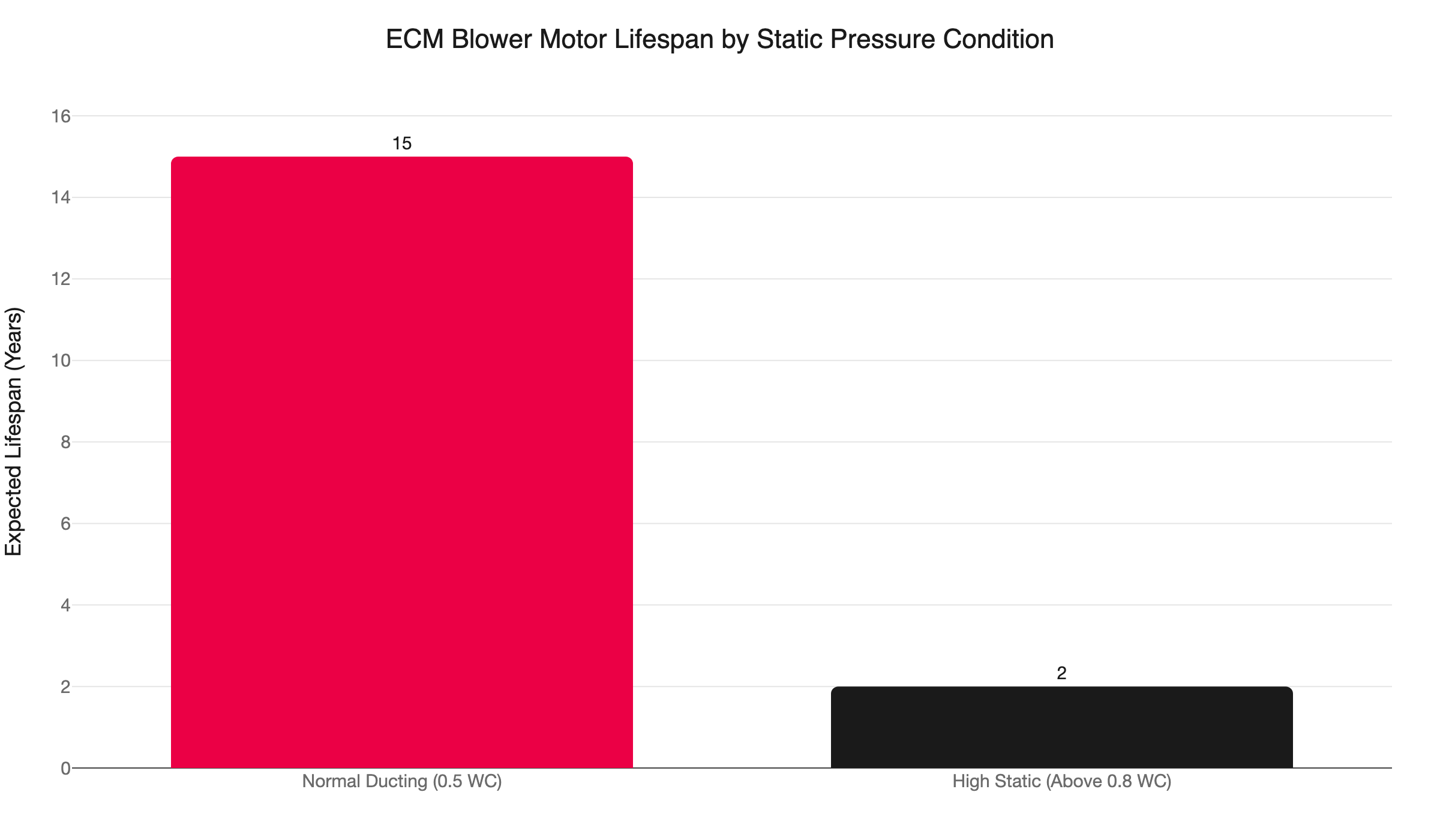
ECM Blower Motor Lifespan by Static Pressure Condition
Your blower motor is fighting something it cannot beat on its own. The system runs longer. Certain [rooms stay cold in January](/blog/hvac-vaulted-ceiling-heating-cooling-twin-cities/) no matter what you set the thermostat to. The air handler sounds like it is straining at full speed. These are textbook HVAC high static pressure symptoms, and in a Twin Cities home running a furnace 2,800 to 3,200 hours every winter, the damage adds up fast.
This post explains what static pressure is, why it matters more in Minnesota than almost anywhere else, and what you can do about it before it takes out your blower motor.
## What Are HVAC High Static Pressure Symptoms?
**Quick answer:** Hissing at supply vents, rooms that never reach temperature, a blower running at maximum speed constantly, short cycling, and rising energy bills are the primary signs. A static pressure test confirms the diagnosis - normal is 0.5" WC; above 0.8" is a problem that needs attention.
These symptoms overlap with a lot of other HVAC problems, which is why high static pressure often stays hidden until something expensive breaks. A [failing blower motor](/blog/furnace-blower-motor-failure-signs-cost-minnesota/) causes airflow loss. A dirty evaporator coil causes uneven cooling. Short cycling points to half a dozen different faults. What separates static pressure from those individual parts failures is that it underlies and accelerates all of them.
Watch for these signs:
- **Hissing or whistling from supply registers.** Air accelerates through restriction. The sound is the pressure. Registers closest to the air handler tend to be loudest.
- **Rooms that stay uncomfortable no matter how long the system runs.** Restricted supply means some zones receive less conditioned air than the thermostat demands.
- **The blower runs at high speed without cycling down.** ECM motors compensate for restricted airflow by speeding up. A motor that never slows is a motor under sustained stress.
- **Short cycling on heat or cool calls.** Pressure buildup trips limit switches before the call is satisfied. The system shuts off, restarts, and repeats.
- **Energy bills that don't match the weather.** [Fan power scales with the cube of pressure increase](https://www.aaon.com/resources/what-is-static-pressure-and-how-does-static-pressure-affect-the-performance-of-an-hvac-system). A 20% increase in static pressure raises fan energy draw by roughly 73%. A 40% increase nearly triples it.
## Why Does High Static Pressure Destroy Your Blower Motor?
**Quick answer:** A PSC motor slows under high static pressure, starving its windings of cooling air until they overheat. An ECM motor does the opposite: it speeds up and draws more current until the control module overheats. The efficient, expensive motor often fails faster than the old one - for a completely different reason.
This distinction matters when you are looking at a repair quote.
**Older PSC motors** (single-speed, common in furnaces installed before 2010) respond to high static by slowing down. Reduced airflow across the motor windings eventually causes thermal failure. Warning signs are gradual - reduced output, the motor running hot, then a hard failure.
**ECM motors** (variable-speed, standard in modern furnaces) detect reduced airflow and compensate by increasing speed and torque to maintain target flow. From the homeowner's perspective, the blower seems to be doing its job. From the motor's perspective, it is drawing sustained excess current to overcome a restriction it was never designed to fight. The control module - not the windings - overheats from the prolonged overcurrent draw.
[United HVAC Motors reports](https://unitedhvacmotors.com/blogs/hvac-technical/what-is-the-ideal-static-pressure-in-hvac-systems) that high static pressure left unaddressed destroys an ECM blower module in 2-5 years. The same motor in a properly ducted system lasts 15-20 years.
Installed ECM replacement runs about $2,200. PSC replacement runs about $1,100. A static pressure test before the replacement - and fixing the underlying cause - is what makes the next motor last.
## The Return Side: Why Most Twin Cities Homes Are Set Up to Fail
Most articles about high static pressure focus on the supply side: close your vents and you raise backpressure. True. But the bigger structural problem in most older Twin Cities homes is the return side of the duct system.
Every residential HVAC system has two sides. Supply ducts push conditioned air into rooms. Return ducts pull that air back to the air handler to be re-filtered and reconditioned. The return side needs enough cross-sectional area to pull air back as fast as the supply side pushes it out. When [the return is undersized](/blog/return-air-problems-hvac-twin-cities/), the blower fights restriction in both directions at once.
Ramblers and split-levels built in the Twin Cities between the 1960s and 1990s were typically designed with a single central hallway return grille. That design was marginal from the start. It worked acceptably with the MERV 4-5 fiberglass filters and low-static PSC motors of that era. Add any of the following and you cross into high static territory:
- A MERV 13 or MERV 16 filter (a common IAQ upgrade, but far more restrictive than the MERV 8 the duct system was sized for)
- [Closed bedroom doors](/blog/closed-bedroom-doors-hvac-airflow-pressure-twin-cities/) during winter, which block return air from reaching the central hallway grille
- A filter that has not been changed in more than 90 days
- Any kink or partial collapse in a flex duct return run
[Energy Star reports](https://www.energystar.gov/saveathome/heating-cooling/duct-sealing) that 20-30% of conditioned air is lost through typical duct leaks. Return-side leaks are particularly costly: they pull unconditioned air from crawl spaces and basements into the system rather than recirculating treated indoor air.
Minnesota Mechanical Code (Chapter 1346) explicitly prohibits using building framing cavities - joist bays, stud cavities, floor chases - as supply ducts. Older homes built before that requirement often have exactly this. A framing cavity cannot be sealed the way a metal duct can. If your home has rooms served by openings in the floor or wall with no visible duct liner, those are almost certainly a significant source of both leakage and return air restriction.
## What Causes HVAC High Static Pressure?
**Quick answer:** A clogged or overly restrictive filter, a single undersized return grille, closed supply vents, collapsed flex duct, and return-side duct leaks are the most common causes. Any one of these can push a residential system above the 0.8" WC warning threshold defined by [ACCA Manual D](https://hvac-blog.acca.org/use-static-pressure-measurement-pinpoint-duct-deficiencies/).
Ranked by frequency in Twin Cities homes:
1. **Clogged or wrong filter.** The fastest fix. If your filter is dark and opaque, change it today. If you recently upgraded to MERV 13+ for better air quality, the static pressure cost may outweigh the filtration benefit unless your system was specifically sized for high-resistance media.
2. **Single undersized central return.** The structural cause. Found in most pre-1990s Twin Cities homes. Adding a second return in a bedroom or main hallway can reduce static pressure by 0.2-0.3" WC on its own.
3. **Closed supply vents.** Closing a vent does not redirect airflow to other rooms. It raises system-wide backpressure. Our post on [closing vents in unused rooms](/blog/closing-hvac-vents-unused-rooms-myth-twin-cities/) covers why this shortcut backfires.
4. **Collapsed or kinked flex duct.** A few inches of collapsed flex has the same restriction effect as several feet of undersized rigid duct. Common in [attic and crawl space runs](/blog/attic-air-handler-installation-problems-minnesota/) where duct hangers are too far apart.
5. **Return duct leaks.** [Sealing ducts can improve system efficiency by as much as 20%](https://www.energystar.gov/saveathome/heating-cooling/duct-sealing/benefits), per Energy Star. Leaky returns are the highest-impact leaks to address.
6. **Dirty blower wheel or evaporator coil.** Both restrict the air path across the coil and can push an otherwise normal system over the threshold.
## Does Closing Vents Save Energy?
**Quick answer:** No. Closing supply vents raises static pressure, forces the blower to work harder, and - in ECM-equipped systems - accelerates control module failure by demanding sustained excess current output. The energy you think you are saving in one room costs more in blower wear and elevated utility bills system-wide.
This is one of the most persistent myths in residential HVAC. The logic seems sound: if a room does not need heating, close its vent. But an HVAC blower is not a water pipe where closing one outlet increases flow elsewhere. The blower moves against total system resistance. More resistance means more power drawn at the fan.
[That power scales with the cube of the pressure increase](https://www.aaon.com/resources/what-is-static-pressure-and-how-does-static-pressure-affect-the-performance-of-an-hvac-system), not linearly. Close two registers in a four-bedroom rambler and you have not redistributed 20% of the airflow to three other rooms. You have raised system backpressure and pushed the blower further up its power curve.
The right solution for rooms that run too hot or too cold is [duct balancing](/blog/how-to-balance-hvac-registers-airflow-twin-cities/), added return air, or a zoning upgrade. A static pressure test and a Manual J load calculation together identify which approach fits your home's specific layout.
## Is High Static Pressure Damaging My System Right Now?
**Quick answer:** If your blower runs at high speed without cycling down, or rooms never hit temperature on the coldest January days, there is a real chance your system is already operating above 0.8" WC. The only way to confirm it is a static pressure test during a diagnostic visit.
Minnesota amplifies the stakes considerably. A system fighting 0.9" WC static in a warm climate logs roughly 1,200 heating hours per year. In the Twin Cities, with an ASHRAE 99% heating design temperature of -16°F to -20°F, that same system logs closer to 3,000 hours annually. Every hour above the threshold static pressure is wear the equipment cannot recover from.
[Peer-reviewed research confirms](https://www.sciencedirect.com/science/article/abs/pii/S0378778815302103) that excess static pressure increases annual energy costs, with the magnitude varying strongly by blower type and climate. Cold climates land at the high end of that range.
The DOE has identified [duct leakage and undersized ductwork as having the highest potential for significant HVAC performance degradation](https://www.energy.gov/sites/default/files/2018/06/f53/bto-ResidentialHVACLitReview-06-2018.pdf) among all residential system problems. Static pressure is not a minor efficiency annoyance. It is the primary mechanism by which duct problems destroy equipment.
One pattern we see repeatedly in older Twin Cities homes: a homeowner replaces a blower motor and the new motor fails within a few years. The installer replaced the part without testing static pressure first. The new motor inherited the exact conditions that killed the original. If you are being quoted a blower motor replacement, ask whether a static pressure test is included in the diagnostic scope.
## How Is Static Pressure Measured and Fixed?
**Quick answer:** A technician drills small test ports into the supply and return plenums and reads pressure differentials at key points in the system with a digital manometer. The readings map exactly where the restriction lives - filter, coil, return duct, or supply duct. The fix follows the reading.
The test takes about 20 minutes. Most of its value is in locating the restriction rather than simply confirming one exists. A reading that spikes across the filter means a filtration problem. A reading that spikes across the return plenum means a return-side restriction. A reading that is elevated throughout points to duct design rather than a single clog.
Once the readings are in hand, fixes are ranked by cost and impact:
**Immediate, low cost:**
- Replace the filter with a clean MERV 8 on a 60-90 day schedule during peak heating and cooling season.
- Open all supply registers fully and keep bedroom doors open during heating season to restore return air paths.
**Moderate investment:**
- Add a return air grille in a key location - a primary bedroom or main hallway. This is often a half-day project and can drop static pressure by 0.2-0.3" WC in a single-return home.
- Seal accessible duct leaks with mastic compound or foil tape on metal connections. This is also the documented scope that supports utility rebate claims on duct sealing projects.
**Larger-scope work:**
- Replace collapsed or undersized flex duct sections with properly sized rigid duct.
- Full duct system replacement or redesign. In the Twin Cities, full duct replacement typically runs $6,500-$13,000 depending on home size and current system condition.
A duct system installed in the 1970s was designed for a different era of filter grades and blower technology. Installing a modern ECM furnace and a MERV 13 filter into that original duct envelope puts the new equipment into conditions it was not built to handle. The static pressure test shows whether the existing ductwork can support what is now connected to it.
## Rebates and Next Steps for Minnesota Homeowners
Duct work and equipment upgrades driven by a static pressure diagnosis carry real rebate support right now. Here is where things stand:
**CenterPoint Energy:** A 95%+ AFUE furnace qualifies for up to $400 rebate standard, or up to $1,200 for income-qualified customers. A [ducted hybrid heat pump](/blog/heat-pump-existing-ductwork-compatibility-minnesota/) is $1,100. If the static pressure diagnosis points toward equipment replacement as well as duct work, these rebates stack with the project.
**Federal 25C tax credit:** 30% of project cost, up to $600 for high-efficiency furnaces and central air conditioners, and up to $2,000 for qualifying heat pumps. Stackable with utility rebates.
**Xcel Energy:** Gas furnace rebates ended January 1, 2026. Cold-climate heat pump rebates of up to $1,500 remain active. Verify current amounts at xcelenergy.com/rebates before committing to a project budget.
**Minnesota HOMES program:** This program would make duct sealing eligible for additional rebate support, but it is still awaiting DOE approval as of early 2026 with no confirmed launch date. Homeowners who planned to rely on HOMES funding should not delay. Stack CenterPoint and 25C now. Revisit HOMES if it launches before the project closes.
For larger duct replacement or new equipment, [HVAC financing options](/blog/hvac-financing-options-what-to-know-twin-cities/) are worth discussing on the estimate. A system that is actively destroying its blower motor is not a project to defer until next season.
---
The fix starts with the measurement. Our team carries static pressure equipment on every diagnostic visit - it is part of finding the root cause rather than just swapping parts. We are locally owned and operated in Ramsey, and we back every visit with our on-time guarantee: "Always On Time… Or You Don't Pay a Dime!(R)"
Call (763) 260-6662 or book a diagnostic through [our heating service page](/heating/). We will find what is fighting your system - and fix it so the next motor lasts as long as it should.
---
# Mini Split Outdoor Unit Snow, Ice & Winter Care: Minnesota
URL: https://northernonehour.com/blog/mini-split-outdoor-unit-snow-ice-winter-minnesota/
Published: 2026-09-15 | Category: Heating
Know what to clear from your mini split outdoor unit in snow and ice, what not to touch, and why the drain pan heater is non-negotiable in Minnesota.
Key Takeaways
- Brush loose snow off the cabinet top and side grilles. Never use a tool on the coil fins.
- Frost on the outdoor coil during heating is normal. The defrost cycle handles it. Do not touch it.
- A base pan heater is not optional in Minnesota. Without one, refreezing meltwater can shear the fan blade or crack the coil.
- Your outdoor unit needs to sit 36 to 48 inches off the ground in the Twin Cities - not just the 24-inch manufacturer minimum.
- Ask for an OEM base heater kit. It wires into the control board and activates automatically when temperatures drop.
- Cold-climate mini splits are rated to -13°F. Standard models lose useful capacity below 20°F.
- Have a technician energize the crankcase heater 24 hours before the first cold-weather startup of the season.
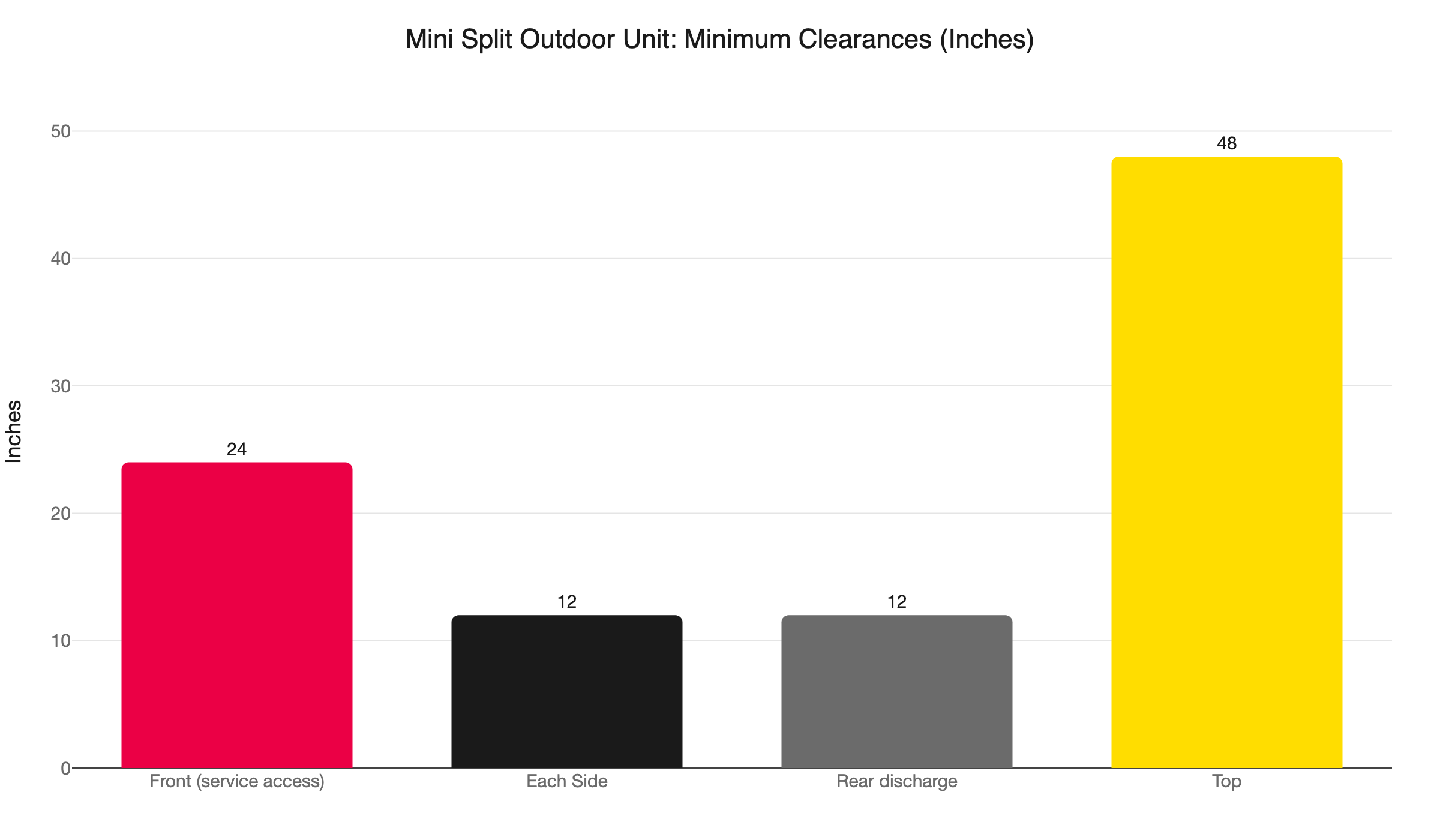
Mini Split Outdoor Unit: Minimum Clearances (Inches)
## Mini Split Outdoor Unit Snow, Ice, and Winter: What Minnesota Homeowners Need to Know
A mini split outdoor unit will run through a Minnesota winter. Whether it runs well depends on where it sits, what is installed on the drain pan, and how you respond when snow and ice accumulate on the cabinet.
The standard online advice to elevate the unit, brush off snow, and let defrost mode run is not wrong. It is incomplete. This guide fills in what those articles leave out, including the specific failure chain that destroys fan blades and cracks coils in cold climates, the base pan heater most Minnesota installs skip, and the snow clearance minimums that actually hold up in the Twin Cities.
## Can a Mini Split Outdoor Unit Handle a Minnesota Winter?
Yes, with the right unit and a correct installation. Cold-climate mini splits maintain full heating output to -13°F. Standard residential models lose meaningful capacity around 20°F, which Twin Cities winters routinely exceed for days at a time.
[NespoloHVAC confirms](https://nespolohvac.com/do-ductless-mini-splits-work-in-cold-weather/) that standard mini splits lose useful capacity below 20°F, while cold-climate hyper-heat models hold output to -13°F. If you are not sure which type you have, the model number on the outdoor cabinet will tell you. Our technicians can confirm it on a service call.
If you have a standard-efficiency model installed as a supplement to a gas furnace, you are likely fine. The furnace covers the coldest days, and the mini split handles mild-to-moderate shoulder-season heating. If your mini split is your primary heat source, the cold-climate model is not optional in Minnesota.
For homeowners considering a first mini split installation, see our guide to [ductless mini splits in older Twin Cities homes](/blog/ductless-mini-split-older-twin-cities-homes/). It covers how these systems typically fit the insulation levels and room layouts common in Minnesota housing stock.
## What Should You Clear From Your Mini Split Outdoor Unit in Winter?
Clear loose snow from the cabinet top, side intake grilles, and front discharge grille. Leave frost on the outdoor coil fins completely alone. The defrost cycle is automatic. Touching the fins with a tool risks bending the aluminum and cracking the coil - a repair that costs far more than a service call would have.
Here is the full breakdown.
**Clear these from your mini split outdoor unit in winter:**
- Loose snow sitting on top of the cabinet
- Snow or ice blocking the side intake grilles
- Packed snow against the discharge grille at the top or front of the unit
- Drifted snow closing off the [clearance space around all four sides](/blog/ac-condenser-unit-clearance-landscaping-twin-cities/)
Use a soft brush or a gloved hand. Work around the cabinet, not across the coil fins. The goal is to keep the airflow path open on all sides so the system can pull heat from the outside air and discharge it properly during defrost cycles.
**Leave this completely alone:**
- Frost on the outdoor coil fins during heating operation
[Pioneer Mini Split](https://www.pioneerminisplit.com/blogs/news/ways-to-keep-your-mini-split-working-through-the-winter) and [Skylands Energy](https://www.skylandsenergy.com/ductless-heating-cooling/ductless-mini-split-winter) both confirm that coil frost during heating is a normal part of the refrigerant cycle. The system senses the buildup and runs an automatic defrost sequence. Your role is to keep the clearance space open and let the system finish.
Never use a scraper, a shovel edge, or any tool on the coil fins. The fins are thin aluminum. Bending a small section reduces heat transfer efficiency across the entire coil surface. Cracking the coil is an avoidable and expensive repair.
## Should You Cover Your Mini Split Outdoor Unit in Winter?
No. Never cover a mini split outdoor unit for the winter, even in the coldest months. Covering the unit blocks airflow, traps moisture inside the cabinet, and prevents the defrost cycle from running. If the unit needs to operate in heating mode, a cover defeats it entirely.
Mini splits are designed to operate year-round in cold weather. The cabinet is built to handle snow, ice, and sub-zero temperatures without a protective cover. Covering it for the season is a window-air-conditioner habit applied to the wrong appliance.
The one exception is protecting the top of the unit from falling ice or icicles dropping from an overhang above. For that scenario, a purpose-built shelter maintaining at least 48 to 60 inches of vertical clearance above the unit is the right answer. More on that in the clearances section below.
## Is the Frost on Your Outdoor Coil Normal?
Yes. Light frost on the outdoor coil fins during heating is a normal part of how a mini split extracts heat from cold air. The system senses the buildup and runs a short defrost cycle automatically. You do not need to do anything.
What a normal defrost cycle looks like from the outside: the outdoor fan may slow or stop briefly, you might hear a low click as the reversing valve shifts, and steam or vapor may rise from the unit as the coil warms and the frost melts. Condensate drips from the base drain. Heating output pauses for a few minutes. Then the fan restarts, the reversing valve clicks back, and the unit returns to heating.
All of that is expected behavior. A defrost cycle typically runs a few minutes and clears on its own.
Solid ice that does not clear within 30 to 60 minutes is not normal. Neither is ice accumulating on the cabinet sides or base between cycles. Those are service calls.
Defrost cycles produce meltwater. That water needs somewhere to go. Where it goes in a Minnesota winter is the source of the most common and most avoidable mini split damage we see in the field.
## Why Does the Drain Pan Fail in Minnesota Winters?
The drain pan collects defrost meltwater at the base of the outdoor unit. In Minnesota temperatures, that water refreezes between cycles. Ice builds cycle by cycle until it contacts the spinning fan blade or wedges into the coil from below. Both outcomes mean costly repairs. A base pan heater stops this before it starts.
Here is the full failure sequence.
Meltwater from a defrost cycle pools in the drain pan. Between cycles, outdoor temperatures drop and the water refreezes in the pan. The next defrost cycle adds more water. That refreezes too. Over several days of cold weather, the ice column builds taller with each cycle.
Eventually the ice contacts the spinning fan blade. The blade shears. Or the motor burns out resisting the load. Or the ice column grows upward into the coil fins from below, cracking the coil at its base.
[Home Heat Problems](https://homeheatproblems.com/base-pan-heater/) documents this failure chain directly. It is consistent with what our technicians find in the field here in the Twin Cities every winter. A condenser fan motor replacement runs $375 to $900. Coil damage is more expensive. The base pan heater that prevents the entire sequence costs a fraction of either repair.
## What Happens if You Skip the Base Pan Heater?
Without a base pan heater, you are counting on the drain pan to stay clear between defrost cycles. In a normal Minnesota winter, it will not stay clear. Ice will build cycle by cycle.
[Home Heat Problems](https://homeheatproblems.com/base-pan-heater/) is direct on this point: a base pan heater is required for any cold climate where freezing weather occurs. It is optional only in frost-free areas or for cooling-only installs. The Twin Cities qualifies as neither.
A base pan heater is an electric strip mounted under the drain pan. It keeps the pan just warm enough so meltwater drains properly between defrost cycles instead of pooling and refreezing. When it is installed and working, the ice column failure chain cannot begin.
If your system was installed without a base pan heater, we can add one. If you are pricing a new installation, insist on it before the job begins. It should not be a line-item upsell on a cold-climate install.
## OEM vs. Aftermarket Base Heater Kits: Does It Matter?
Yes. OEM kits wire into the control board and activate automatically when temperatures drop. Aftermarket strips do not integrate with the board, may not match your drain pan geometry, and offer no guarantee of activating at the right threshold for your system.
This distinction does not appear in most online mini split winter guides, and it matters.
An OEM base heater kit wires directly into the unit's control board. [Skylands Energy notes](https://www.skylandsenergy.com/ductless-heating-cooling/ductless-mini-split-winter) that the board activates the heater automatically when temperatures reach the manufacturer's preset threshold. You do not manage it manually. It turns on when it needs to be on, without any action on your part.
Aftermarket strip heaters may require a separate thermostat controller to activate. They may not be geometrically compatible with your unit's drain pan. And they are not calibrated to your system's specific needs.
When you schedule service, ask specifically for the OEM base heater kit for your unit's make and model. If that part is unavailable, we will tell you honestly and recommend the best compatible alternative. We will not install something that does not integrate properly and tell you it is the same.
## How High Off the Ground Does Your Outdoor Unit Need to Be?
The manufacturer minimum is 24 inches. In the Twin Cities, treat that as a floor, not a target. A single overnight storm can drop 12 or more inches of snow. Drifts against a wall or fence easily double that. Wall-mount brackets at 36 to 48 inches are the practical Minnesota standard.
[Pick Comfort's cold-climate installation notes](https://www.pickcomfort.com/heat-pump-clearance-requirements-safe-distances-installation/) make the point directly: elevation must clear the local historical maximum snow depth, not just the average. For the Twin Cities, wall-mount brackets positioning the unit at 36 to 48 inches above grade are the correct answer. A ground pad at the 24-inch minimum is not built for Minnesota winters.
A unit buried in an overnight drift has three bad options: work against severely restricted airflow, trip a safety fault and shut down, or run in a degraded state that shortens its service life. None of those is acceptable as a recurring winter condition.
[Home Heat Problems](https://homeheatproblems.com/base-pan-heater/) adds a related point: the drain pan itself should sit at least 6 inches off any flat surface so the drain holes stay clear of ground ice. That is separate from overall unit elevation. Both matter.
If your unit was installed on a ground pad close to the 24-inch minimum, ask us to assess whether a wall-mount bracket relocation is worth doing. We see snow burial on low-mounted units every single winter. The relocation is far less disruptive than a mid-February service call for a buried and faulted unit.
## What Clearances Does the Unit Need on All Four Sides?
The unit needs 24 to 36 inches at the front, 12 to 24 inches on each side and at the rear, and 48 to 60 inches of unobstructed space above the top discharge. Blocking any of these paths reduces heating output and efficiency. Elevation alone is not enough.
Per [Pick Comfort's clearance guidance](https://www.pickcomfort.com/heat-pump-clearance-requirements-safe-distances-installation/), the recommended minimums are:
- **Front (service access):** 24 to 36 inches
- **Each side:** 12 to 24 inches
- **Rear discharge:** 12 to 24 inches
- **Top:** 48 to 60 inches, unobstructed
The top clearance is the one most commonly violated by well-meaning homeowners. A small shelter built over the unit to protect it from falling snow can be perfectly fine, but only if it maintains at least 48 to 60 inches of open space above the unit's top discharge. A shelter built too close traps the warm discharge air and creates a condensate icing problem that gets worse with each defrost cycle. [Skylands Energy](https://www.skylandsenergy.com/ductless-heating-cooling/ductless-mini-split-winter) covers this in their winter operation section.
If you have an existing roof overhang that the unit mounts under, that is the ideal arrangement. The overhang keeps snow off the top of the cabinet without restricting the vertical clearance the system needs to breathe.
## What Is the Crankcase Heater and Why Does It Matter at Cold-Weather Startup?
The crankcase heater is an electric element wrapped around the compressor housing. It prevents refrigerant from condensing into compressor oil during cold periods when the system is not running. Many manufacturers require it to be energized for 24 hours before the first cold-weather startup of the season.
When a compressor sits cold for an extended period, refrigerant can condense and dissolve into the oil. When the system then starts up, the compressor runs without adequate lubrication. Damage can be severe and immediate.
This step is easy to miss. If the system was installed or last serviced in warm weather and sat unused through October, it may have started up for the first time in November without the crankcase heater properly energized.
If your system went through a cold dormant period before its first winter startup, a technician check is worth scheduling. Our [ductless mini split maintenance service](/air-conditioning/air-conditioning-maintenance/) includes crankcase heater verification and the full set of pre-winter checks in a single visit.
## When to Call Northern One Hour Instead of Handling It Yourself
Some of this is genuinely a homeowner task. Brushing loose snow off the cabinet, keeping intake and discharge grilles clear, and making sure nothing has been stacked against the unit are all yours to manage.
Call us for any of these:
- Solid ice on the coil that does not clear after 30 to 60 minutes in a defrost cycle
- Ice accumulating under the unit and growing upward toward the fan blade
- Heating output has dropped noticeably in cold weather
- Grinding, clicking, or rattling during startup or operation
- The unit is shutting off on fault codes
- You do not know whether your installation included a base pan heater and want to know before the first hard freeze
We are locally owned and operated, serving Ramsey, Blaine, Maple Grove, Plymouth, Brooklyn Park, Minneapolis, St. Paul, and the surrounding Twin Cities metro. When we say "Always On Time… Or You Don't Pay a Dime!(R)," that is a commitment we stand behind on every call.
Call (763) 260-6662 or [book a ductless mini split service visit online](/air-conditioning/air-conditioning-repair/ductless-mini-splits-repair/).
## What Minnesota Rebates Apply to Mini Split Systems?
A qualifying cold-climate mini split is eligible for the federal IRA heat pump tax credit, worth up to $2,000 for Energy Star-certified systems. Xcel Energy and CenterPoint Energy both offer utility rebates on qualifying heat pump installations. Verify current amounts with your utility before purchasing, as figures change.
[Genz-Ryan's Minnesota heat pump overview](https://genzryan.com/blog/heat-pump-installation-minnesota/) cites utility rebates in the $500 to $1,000-plus range depending on system efficiency rating. The federal credit and the utility rebate can be stacked on the same installation. For a full breakdown of how to combine them, see our guide to [Minnesota heat pump rebates and tax credits](/blog/minnesota-heat-pump-rebates-tax-credits/).
The rebates make a strong case for upgrading to a cold-climate model if you are still running a standard mini split as a primary heat source. The system you replace it with will perform better in January and cost less after incentives than you might expect.
---
# Furnace Not Heating During Cold Snap in Minnesota
URL: https://northernonehour.com/blog/natural-gas-pressure-cold-snap-furnace-minnesota/
Published: 2026-09-15 | Category: Heating
Before you call an HVAC company during a polar vortex, run this 2-minute water heater flame test to find out if the gas grid is the problem.
Key Takeaways
- If your [furnace is not heating](/blog/furnace-cant-reach-setpoint-extreme-cold-minnesota/) during a cold snap in Minnesota, the gas distribution grid may be the cause, not the furnace itself.
- At -30°F, sustained demand across an entire neighborhood can drop gas supply pressure below what your furnace needs to fire.
- Run the 2-minute water heater flame test before calling anyone. It tells you whether to call your gas utility or an HVAC company.
- If the water heater flame dims or turns yellow when the furnace fires, the problem is upstream of your house. Call Xcel Energy or CenterPoint Energy. That service call is on them.
- If other gas appliances work normally and only the furnace fails, you have an equipment fault. Call Northern One Hour at (763) 260-6662.
- Homes on the far ends of distribution mains in newer subdivisions face the highest pressure-drop risk during extreme cold.
## Why Your Furnace May Not Be the Problem
When your furnace stops heating during a brutal Minnesota cold snap, the obvious move is to call an HVAC company. That instinct is sometimes right. But sometimes the furnace is not the problem at all.
During extreme cold, every home on your gas distribution main runs its furnace almost continuously. That sustained draw can drop supply pressure at the far ends of the line. When pressure falls below what your furnace needs to fire reliably, you get the same symptoms as a broken igniter, a faulty control board, or a bad flame sensor: no heat, failed ignition, error codes.
The 2-minute test below tells you which call to make before anyone rolls a truck and charges you a dispatch fee.
## How Does Extreme Cold Strain the Gas Grid?
**When temperatures drop to -30°F, every furnace on a gas distribution main runs almost continuously. That sustained demand drops supply pressure at the far ends of the line. When pressure falls far enough, burners cannot fire reliably and the furnace locks out.**
Natural gas travels from the utility's high-pressure transmission lines through progressively smaller distribution mains to your meter. Normal residential supply pressure is approximately 6.0 inches of water column, roughly one-quarter pound per square inch. Interior piping is designed to lose no more than 0.03 inches of water column under full load.
When every home on a local main pulls gas at the same time, pressure at the end of the line drops. If it falls far enough, your furnace's gas valve and pressure regulator cannot fully compensate. The air-to-gas mixture goes wrong. Burners produce a weak or yellow flame. The furnace locks out on a safety fault.
This is exactly what happened in the Princeton and Hugo areas during a recent polar vortex. [Temperatures hit -30°F and 152 families in Princeton and 30 in Hugo lost natural gas service for nearly three days](https://www.cbsnews.com/amp/minnesota/news/why-did-princeton-residents-lose-natural-gas-during-the-polar-vortex). Xcel Energy's pressure prediction model was calibrated to -26°F. Actual temperatures reached approximately -35°F, nine degrees colder than the model anticipated. The model underestimated demand and missed the pressure collapse entirely.
One Princeton homeowner cycled his circuit breaker and pressed the furnace reset switch repeatedly. From every visible sign, the furnace appeared broken. [His home reached 68°F indoors with -30°F outside before help arrived](https://www.cbsnews.com/amp/minnesota/news/why-did-princeton-residents-lose-natural-gas-during-the-polar-vortex). The actual cause was zero gas reaching the house.
The Twin Cities ASHRAE design temperature sits around -16°F to -20°F for the coldest 1% of winter hours. When actual polar vortex temperatures push 10 to 15 degrees below that, the gas distribution system operates outside the range it was engineered to handle reliably.
## What Is the 2-Minute Water Heater Flame Test?
**Watch your water heater burner when the furnace fires. If the water heater flame dims, shrinks, or turns yellow, the shared gas supply is being starved and the problem is upstream of your house. If the flame holds steady, the furnace has a real equipment fault.**
The test works because your furnace and water heater share the same gas supply line inside your home. When the furnace draws gas, supply pressure briefly drops in the interior piping. If incoming supply pressure from the utility is already low, that brief drop shows up visibly at the water heater burner.
Here is how to run it:
**Step 1.** Find your natural gas water heater. Most Twin Cities homes have it in the basement or utility room. Look for the inspection window or viewing port near the base of the unit where you can see the burner flame.
**Step 2.** Turn the furnace off at the thermostat. Set it to OFF or well below room temperature. Wait two minutes.
**Step 3.** Look at the water heater flame. A healthy, stable flame is mostly blue and consistent. Note what it looks like with the furnace off.
**Step 4.** Turn the furnace back on. Set the thermostat above room temperature to call for heat. Watch the water heater flame as the furnace fires up.
**Step 5.** Read the result:
- **Water heater flame dims, weakens, or turns yellow:** Gas supply pressure is being shared too thin. The problem is upstream of your house. Call the utility.
- **Water heater flame holds steady:** Gas supply is fine at your house. The furnace has a real fault. Call Northern One Hour.
A secondary check is even simpler. [Try a gas stove burner while the furnace is calling for heat. If it lights with a weak or mostly yellow flame, the supply is starved](https://forum.heatinghelp.com/discussion/195961/can-cold-natural-gas-cause-poor-combustion-how-is-this-compensated-for). [If multiple gas appliances fail simultaneously, the problem is almost certainly upstream of the house, not inside the furnace](https://forum.heatinghelp.com/discussion/195961/can-cold-natural-gas-cause-poor-combustion-how-is-this-compensated-for).
## What Does Low Gas Pressure Do to Your Furnace?
**Low supply pressure causes the furnace to attempt ignition, fail to satisfy the call for heat, and lock out. The control board logs an error code that looks exactly like an ignition fault or a pressure switch fault. Other gas appliances in the house are also affected.**
[Low supply pressure typically shows as denser, cooler gas arriving from the street. The furnace's gas valve and pressure regulator may not fully compensate.](https://forum.heatinghelp.com/discussion/195961/can-cold-natural-gas-cause-poor-combustion-how-is-this-compensated-for) The symptom chain unfolds like this:
- The thermostat calls for heat.
- The draft inducer motor starts and runs normally.
- The furnace attempts ignition. The burner fires weakly or fails to light.
- The call for heat is not satisfied.
- The control board registers an ignition failure or a pressure fault.
- After one or more failed attempts, the board locks out.
- The furnace sits cold with a blinking fault code.
That sequence is nearly identical to a dirty flame sensor, a failing hot surface igniter, or a faulty pressure switch. Our post on [furnace error codes and blinking light patterns](/blog/furnace-error-codes-blinking-light-guide/) explains what each sequence means. But run the water heater flame test before using that guide. A supply starvation event can trigger the same codes as hardware failures. Without the test, even an experienced technician dispatched to your home may begin replacing parts that are functioning perfectly.
## How Can You Tell If the Furnace Itself Has Failed?
**The furnace is the likely culprit when other gas appliances work normally, only the furnace is affected, and the water heater flame holds steady while the furnace struggles. Furnace faults isolate to the furnace. Supply failures affect multiple appliances at once.**
Here is how the most common real furnace faults behave, and how each differs from a gas pressure event:
**Clogged air filter.** [The furnace fires briefly, overheats, and shuts off on the high-limit switch. It typically restarts in 30 to 90 minutes.](https://marshheating.com/what-to-do-if-your-furnace-stops-working-during-a-winter-storm/) The water heater flame is unaffected. Pull your filter and hold it up to a light. If you cannot see light through it clearly, change it. A dirty filter is the most common cold-snap service call, and it is the cheapest to resolve.
**Blocked PVC exhaust vent or [frozen condensate drain](/blog/frozen-pipes-hvac-failure-risk-minnesota/).** High-efficiency furnaces use white PVC pipes to exhaust combustion gas through the wall. In a Minnesota winter, ice can form at the outdoor termination. [A blocked exhaust causes the furnace to lock out with an error code. Symptoms are furnace-only. Other gas appliances work normally.](https://marshheating.com/what-to-do-if-your-furnace-stops-working-during-a-winter-storm/) Our post on [high-efficiency furnace exhaust vents blocked by snow and ice](/blog/high-efficiency-furnace-exhaust-vent-blocked-snow-ice-minnesota/) covers this scenario step by step.
**Short cycling from an oversized unit or thermostat problem.** [The furnace fires and cuts off repeatedly in short bursts. The water heater flame is steady and unaffected.](https://finkens.com/blog/7-common-winter-hvac-problems-for-minnesota-homeowners-and-how-to-solve-them) The pattern is intermittent, not a complete failure to produce heat.
**Dirty flame sensor.** The furnace lights and shuts off within a few seconds of ignition. The cycle repeats. Other gas appliances work fine.
**Failed hot surface igniter.** The furnace attempts a heat cycle, the inducer runs, but no ignition follows. The water heater works normally.
The shared pattern across every real furnace fault is isolation. The failure affects the furnace only. Gas stove burners light normally. The water heater flame is stable.
## Is Your Neighborhood at Higher Risk?
**Homes at the far ends of gas distribution mains, especially in newer residential subdivisions on the outer rings of the Twin Cities, face the highest pressure-drop risk during extreme cold. Older neighborhoods closer to the utility's main feed see less exposure.**
[The Princeton and Hugo outages occurred on the edge of the distribution system: the far ends of mains where pressure is lowest and demand spikes are hardest to buffer. Newer residential buildout areas face the most exposure.](https://www.cbsnews.com/amp/minnesota/news/why-did-princeton-residents-lose-natural-gas-during-the-polar-vortex)
Xcel's permanent fix for the Princeton area was replacing 2-inch distribution pipes with 4- or 6-inch substitutes to add carrying capacity. That infrastructure upgrade took years and followed a documented failure event. Until similar upgrades reach your neighborhood, the exposure remains.
If your home is in a newer subdivision in Blaine, Maple Grove, Plymouth, Woodbury, or similar outer-ring communities, your supply main may be sized tighter than older neighborhoods closer to the city. During a genuine polar vortex, pressure at the end of your street drops faster than it does for homes closer to the utility's main feed.
This does not mean your furnace will definitely fail during extreme cold. It means the water heater flame test takes two minutes and can save you a dispatch fee. Run it first.
## What Does the Utility Owe You If Supply Fails?
**If Xcel Energy or CenterPoint Energy confirms their supply pressure caused your heat loss, the utility is responsible for the service call. They may also provide temporary heat equipment or alternative housing at their expense. You do not pay for a problem they created.**
[When Xcel confirmed the Princeton distribution failure, it provided 2,000 space heaters and covered hotel stays for affected customers](https://www.cbsnews.com/amp/minnesota/news/why-did-princeton-residents-lose-natural-gas-during-the-polar-vortex). That response confirms the utility acknowledges responsibility when supply pressure fails at their end.
If your water heater test points to a grid problem, here is what to do:
1. **Call the gas utility.** Xcel Energy customers: 1-800-895-4999. CenterPoint Energy customers: 1-800-245-2377. Tell them your furnace is failing and you suspect low gas supply pressure. Ask them to measure pressure at your meter. That measurement is free.
2. **Document the call.** Write down the time, the representative's name, and your case or confirmation number.
3. **Ask about temporary equipment.** If the utility confirms supply is the problem and restoration will take time, ask what they will provide in the meantime.
4. **Keep your household safe.** Use supplemental electric heat while you wait. Never use gas-powered camp stoves or portable generators indoors. Carbon monoxide is a genuine risk in a sealed Minnesota home in winter.
5. **Do not pay for HVAC service until you know who owns the problem.** If the utility confirms supply is the issue, the service call is their cost, not yours.
## When to Call Northern One Hour
If the water heater flame holds steady while your furnace struggles, you have a furnace fault. That is the call to make to our team.
We are locally owned and operated in Ramsey, MN. Our technicians serve the Twin Cities metro including Minneapolis, St. Paul, Blaine, Maple Grove, Plymouth, Brooklyn Park, Woodbury, and Bloomington. They carry common parts on their trucks and arrive ready to diagnose, not just to look.
We offer honest, transparent pricing before work begins. No surprises. Every visit comes with a 100% satisfaction guarantee. We back our scheduling commitment with our promise: "Always On Time… Or You Don't Pay a Dime!(R)."
Before our technician arrives, check these items:
- **Filter.** Pull it and hold it up to a light. If you cannot see clearly through it, replace it. A clogged filter is the most common cause of cold-snap service calls.
- **Thermostat.** Confirm it is set to HEAT and the setpoint is above room temperature. Replace the batteries if it is battery-powered.
- **PVC exhaust vent.** If your high-efficiency furnace has a white PVC pipe through the exterior wall, check that the outdoor termination is clear of snow and ice.
- **Reset button.** After checking the above items, press the reset button on the furnace control board once. One attempt is fine. Repeated resets can flood unburned gas into the heat exchanger and create a hazard.
If you smell gas, stop. Do not press reset. Leave the house, leave the door open, and call the utility from outside before calling anyone else. Our post on [what to do if your furnace smells like gas in Minnesota](/blog/gas-smell-furnace-what-to-do-minnesota/) has the complete safety protocol.
For everything else, call **(763) 260-6662** or [book service online](/heating/heating-equipment/furnaces/furnace-repair/). We provide emergency service for heating failures. After-hours response is available when Minnesota decides to hit -20°F overnight.
If your furnace has needed several repairs and is more than 15 years old, a cold-snap failure may be the right moment to weigh repair against replacement. Furnace replacement in the Twin Cities runs $3,900 to $7,800 installed for most homes, with higher-efficiency models running more. We offer financing options for larger jobs. If you are weighing that decision, our guide on [when it is time to replace rather than repair your furnace](/blog/is-it-time-for-a-new-furnace-how-to-know-when-its-time-to-replace-not-repair/) walks you through the numbers.
The two-minute water heater flame test costs you nothing. It takes the guesswork out of who to call. And in a Minnesota cold snap, calling the right person first is the difference between a free utility pressure check and an unnecessary dispatch fee.
---
# Evaporator Coil Replacement Cost: Twin Cities Homeowners' Guide
URL: https://northernonehour.com/blog/evaporator-coil-replacement-cost-minnesota/
Published: 2026-09-14 | Category: Cooling
What evaporator coil replacement costs in Minnesota, when to repair vs. replace, how refrigerant type and permits change the math, and which rebates apply.
Key Takeaways
- Evaporator coil replacement in the Twin Cities typically runs $1,950-$4,500 installed, covering parts, labor, refrigerant recharge, and permit fees.
- Age and refrigerant type are the two biggest variables. A coil failure on an R-22 system, or any system 15 or more years old, almost always tips the math toward full replacement.
- New residential AC equipment using R-410A was restricted from manufacture after January 1, 2026. Repairing an aging R-410A system today means staying on a refrigerant already in transition to R-454B.
- Minnesota requires a mechanical permit for evaporator coil replacement. Always ask your contractor to pull it before work begins.
- The 25C federal tax credit does not apply to a standalone coil repair. It only applies when you replace a qualifying whole system - a fact that significantly shifts the repair-vs.-replace math.
- When replacement is the right call, stacking Xcel Energy, CenterPoint, and the federal 25C credit can total $3,000-$5,000 off a qualifying heat pump installation.
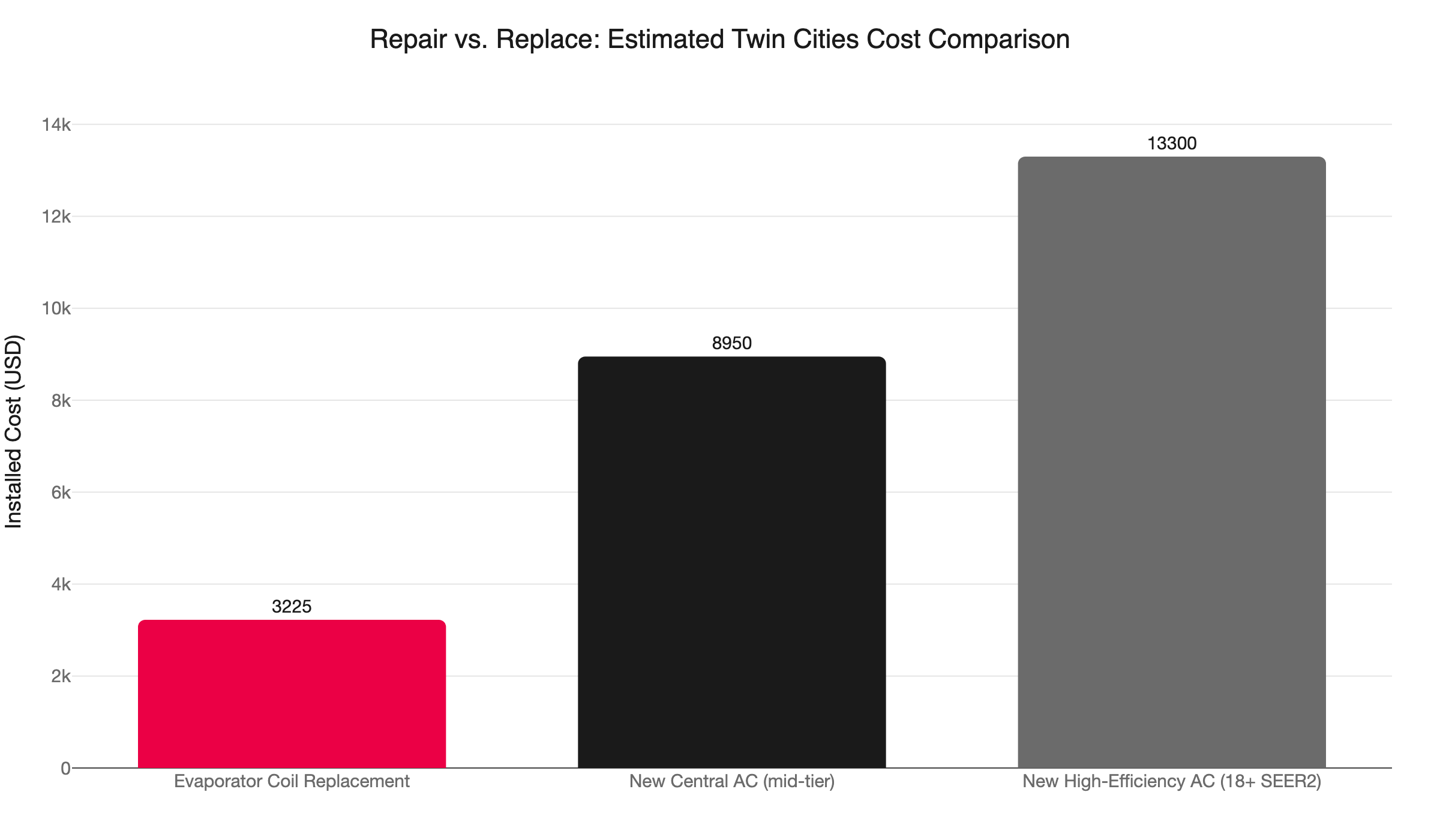
Repair vs. Replace: Estimated Twin Cities Cost Comparison
## What Is an Evaporator Coil, and What Does It Do?
**The evaporator coil is the indoor half of your cooling system.** It is a set of refrigerant-filled copper or aluminum tubes housed inside your air handler or furnace cabinet. Warm indoor air passes over the coil, the refrigerant absorbs the heat, and the system pushes cooled air back into your home.
The outdoor condenser releases that heat outside, then cycles refrigerant back to the indoor coil. Without a functioning coil, your system moves air but cannot cool it.
Coils fail for several reasons. Formaldehyde off-gassing from building materials and cleaning products reacts with copper tubing to cause "formic acid corrosion," creating pinhole leaks in newer equipment. Older coils develop leaks as joints and tubing degrade with age and pressure cycles. Refrigerant escapes through those leaks, cooling capacity drops, and eventually the system quits entirely.
Symptoms of a failing coil include ice forming on the indoor unit, weak airflow despite the system running, warm air blowing from vents when the thermostat calls for cooling, or refrigerant levels that keep dropping after recharges. A technician needs to pressure-test the system to confirm the coil is the source, not another component.
## What Does Evaporator Coil Replacement Cost in the Twin Cities?
**Most Twin Cities homeowners pay $1,950-$4,500 installed for an evaporator coil replacement.** That range covers parts, labor, a refrigerant recharge, and permit fees. Nationally, sources like [Angi](https://www.angi.com/articles/how-much-should-it-cost-replace-evaporator-coil.htm) put the all-in range at $1,000-$2,500. Local labor rates and Minnesota permit requirements push Twin Cities costs above that benchmark.
Here is how the components break down:
- **Coil (parts only):** $300-$1,100, depending on system size and brand
- **Labor:** $400-$1,000 for removal, installation, and leak testing
- **Refrigerant recharge:** $150-$400 for R-410A systems; significantly more for R-22 (covered below)
- **Mechanical permit:** typically $75-$200 depending on the city
A straightforward coil swap on a mid-size R-410A system in otherwise good condition lands in the $1,950-$2,800 range. Larger systems, specialty or hard-to-source coils, or systems that require a full refrigerant charge after extended downtime push costs closer to $4,500.
If the coil failure is caught early and the refrigerant loss was minimal, the recharge portion stays modest. If the system has been slowly leaking for months before the homeowner noticed, the technician may need to pull a vacuum, leak-test all connections, and perform a full charge - adding time and materials.
## What Factors Drive Evaporator Coil Replacement Cost Up or Down?
**Four variables move the needle more than anything else:** system size, refrigerant type, matched vs. unmatched equipment, and labor complexity.
**System size.** A 2-ton coil is smaller and less expensive than a 4- or 5-ton unit. Labor time scales with the coil size. Most single-family Twin Cities homes land in the 3-4 ton range.
**Refrigerant type.** R-22 systems cost dramatically more to service, for reasons covered in the next section. R-410A systems are more straightforward and far more economical to recharge.
**Matched vs. unmatched equipment.** Manufacturers design coils as matched sets with specific condensing units. An unmatched coil can void the manufacturer's warranty and reduce system efficiency. If the original coil model has been discontinued, sourcing a compatible replacement takes longer and sometimes costs more. This is increasingly common on systems more than 10-12 years old.
**Labor complexity.** A coil inside an accessible first-floor mechanical room is straightforward work. A coil jammed into a tight attic, or one that requires significant ductwork disconnection to reach, adds labor time and cost. Always get a written breakdown before authorizing work.
## How Does Refrigerant Type Change the Repair-vs.-Replace Math?
**If your system uses R-22, a coil repair is rarely worth the cost.** R-22 is scarce, expensive, and your system is almost certainly past its reliable service life. R-410A systems require a closer look, but a new variable has entered the picture.
R-22 production and import were banned on January 1, 2020 under the Montreal Protocol, per the [EPA](https://www.epa.gov/ods-phaseout/homeowners-and-consumers-frequently-asked-questions). Only reclaimed R-22 remains available on the market, priced at $50-$150 per pound. A standard 3-ton system holds 6-12 pounds of refrigerant. That is $300-$1,800 in refrigerant alone, before parts or labor. Combine that with coil and labor costs and you can reach $4,000-$5,000 on a repair for a system that is already 15-plus years old.
For R-410A systems: a coil repair is more defensible on a system under 10 years old that is otherwise performing well. But there is a new regulatory factor that changes the long-range calculus.
## The R-410A Phasedown: What It Means for Your Repair Decision
New residential AC equipment using R-410A was restricted from manufacture after January 1, 2026 under the AIM Act. New systems sold today ship with R-454B, a lower-GWP successor refrigerant. R-410A is not banned in existing equipment - service refrigerant remains available - but availability will tighten as the industry transitions.
Repairing a 2015 or 2016 R-410A system with a new evaporator coil today keeps you invested in aging equipment running a refrigerant whose supply chain is shrinking. You are not locked in permanently. But you are spending $2,000-$4,500 to extend a system that will still need full replacement within the decade, without capturing any of the incentives available at replacement.
Our post on [what homeowners need to know about the R-454B refrigerant change](/blog/ac-refrigerant-change-r454b-what-homeowners-need-to-know/) covers the transition timeline in more detail. For R-410A systems already in the 10-12 year range, the math often favors replacement before the refrigerant question even factors in.
One other note: [EPA Section 608](https://www.epa.gov/section608/section-608-technician-certification-requirements) requires certified technicians to handle any refrigerant addition or removal. Venting refrigerant is illegal under the Clean Air Act, regardless of refrigerant type. Verify that any contractor you hire holds current Section 608 certification before authorizing coil work.
## Does Minnesota Require a Permit for Evaporator Coil Replacement?
**Yes. Evaporator coil replacement requires a mechanical permit in Minnesota.** The "no permit required" exemption under [Minnesota Rules 1346.0105](https://www.law.cornell.edu/regulations/minnesota/Minn-R-1346-0105) covers only replacement of minor parts that do not alter the approval of the equipment. An evaporator coil is not a minor part. The work involves refrigerant handling and modifies the core equipment installation.
The [City of Minneapolis requires mechanical permits](https://www.minneapolismn.gov/business-services/licenses-permits-inspections/construction-permits/permits-overview/permit-types/mechanical-heating-permits/) for all HVAC installation and replacement work. This requirement holds across the metro: St. Paul, Blaine, Maple Grove, Plymouth, and surrounding communities follow the same standard.
Why does the permit matter to you? It protects you in two ways. First, the inspection process catches installation errors before they become safety or efficiency problems. Second, permitted work creates a documented record. Unpermitted HVAC work can be flagged by a buyer's inspector during a home sale, requiring disclosure or remediation.
At Northern One Hour, we pull permits on every job that requires one. Ask to see documentation before any coil work begins. If a contractor waves off the permit question, that is a red flag.
## When Does a Coil Failure Mean You Should Replace the Whole System?
**Replace the system when the repair cost exceeds 40-50% of a new system's installed price, when the system is 15 or more years old, or when it runs on R-22.** In Minnesota, you also need to factor in your furnace's remaining life alongside the AC.
The standard industry threshold: [repair cost exceeding 50% of new system cost](https://hvaccalculatorhub.com/blog/r22-refrigerant) generally favors replacement. For repairs where refrigerant cost is driving the bill, some contractors use a lower 30-40% threshold.
A mid-tier central AC installation in the Twin Cities runs $7,500-$10,400. At the 50% rule, a repair over $3,750-$5,200 tips toward replacement. A coil repair at $3,500 or more on a system approaching 15 years is getting close to that line before the furnace question comes up at all.
**The Minnesota furnace factor.** Our heating season runs nine months of the year. The furnace and evaporator coil often enter a home at the same time and age together. A coil failure on a 15-year-old system frequently means the furnace is also 15 years old. Replacing the AC now and the furnace in two years means two service disruptions, two permit pulls, two sets of installation labor, and a mismatched system in between.
Our post on [replacing just the AC vs. replacing both systems together](/blog/replace-just-ac-or-furnace-mismatched-hvac-minnesota/) runs through the cost math in detail. For older matched systems, replacing both in a single project almost always pencils out better than staggering the replacements.
**Quick decision framework:**
- System under 10 years old, R-410A, otherwise good condition: coil repair is usually worth it.
- System 10-14 years old, R-410A: compare repair cost directly against full replacement, and factor in rebates before deciding.
- System 15 or more years old, any refrigerant: replace the system.
- System any age, R-22: replace the system.
## What Rebates and Tax Credits Apply When You Replace the System?
**A full system replacement unlocks incentives that a coil repair never does.** The 25C federal tax credit, Xcel Energy rebates, and CenterPoint Energy rebates all require a qualifying whole-system installation. A standalone coil repair qualifies for none of them.
**The 25C federal tax credit.** Under the [IRS Section 25C Energy Efficient Home Improvement Credit](https://www.irs.gov/credits-deductions/energy-efficient-home-improvement-credit), qualifying heat pump installations earn 30% of cost, up to $2,000 per year. Qualifying central AC systems earn up to $600. The credit requires a qualifying whole system, not a component swap. Spend $3,500 on a coil repair and you receive zero in federal credits.
One important note: the "One Big Beautiful Bill" (Public Law 119-21, signed July 4, 2025) modified several energy credits, including 25C. The IRS has updated its FAQ accordingly. Verify current 2026 limits directly at the IRS website before relying on specific dollar figures - some amounts differ from pre-2025 guidance still circulating online.
**Xcel Energy rebates** (qualifying replacement systems only):
- Up to $400 for qualifying central AC at SEER2 16+
- Up to $2,000 for a cold-climate ducted heat pump
- $600 bonus when paired with qualifying insulation or air-sealing upgrades
**CenterPoint Energy rebates** (existing Minnesota homes):
- Up to $1,500 for a ducted air-source heat pump
- $1,100 for a dual-fuel configuration (heat pump plus gas furnace)
- Requires SEER2 16+ and a switchover temperature programmed at 40 degrees Fahrenheit or lower
[Stacked together, Xcel plus CenterPoint plus the federal 25C credit can total $3,000-$5,000 off](https://centralminnesotaheatingandcooling.com/blog/xcel-centerpoint-hvac-rebates-2026) a qualifying heat pump installation. Our post on [Minnesota heat pump rebates and tax credits](/blog/minnesota-heat-pump-rebates-tax-credits/) covers how the stacking works and which systems qualify.
When you run the numbers with rebates, the net cost gap between a coil repair and a new qualifying system often narrows considerably. Add the warranty, modern refrigerant, and improved efficiency a new system brings, and the case for repair on an older system weakens further.
Financing is available for qualifying system replacements. Ask about current terms when you call.
## What to Expect From Our Team
When a Northern One Hour technician arrives, the diagnostic visit covers more than just the coil.
We confirm where the leak is, not where we assume it is. We check the refrigerant type, system age, and overall condition before quoting anything. If the repair does not make financial sense given the system's age and the cost of the work, we tell you. We are not going to sell you a $3,500 coil repair on a 16-year-old R-22 system.
We pull permits on every job that requires one. Our technicians carry current EPA Section 608 certification. Pricing is transparent before work starts, with no surprise line items after the fact.
We are locally owned and operated in Ramsey, MN, and our team works across the Twin Cities: Minneapolis, St. Paul, Blaine, Maple Grove, Plymouth, Brooklyn Park, Woodbury, Bloomington, and surrounding communities. When you call, you reach our local team, not a national call center.
"Always On Time… Or You Don't Pay a Dime!(R)" That is not a marketing slogan. It is how we run our business.
**Call [(763) 260-6662](tel:7632606662) or [schedule a diagnostic visit online](/air-conditioning/air-conditioning-repair/).** If the coil is the problem, we will walk you through repair vs. replace with honest numbers, explain the permit requirements, and give you a clear total before any work begins.
---
# Radon Mitigation HVAC Minnesota: The Furnace Connection
URL: https://northernonehour.com/blog/radon-hvac-pressure-balance-minnesota/
Published: 2026-09-13 | Category: Indoor Air Quality
Your furnace actively pulls radon into your home in winter. Learn how HVAC systems interact with radon in Minnesota and what actually fixes it.
Key Takeaways
- [Radon is the second-leading cause of lung cancer in the U.S.](https://www.epa.gov/radon/health-risk-radon) The five-year survival rate after diagnosis is 11-15%.
- Fix at [4 pCi/L or above](https://www.epa.gov/radon/epa-map-radon-zones). Between 2-4 pCi/L, action is still worth considering.
- Most of the Twin Cities metro sits in EPA Radon Zone 1. Average indoor radon above 4 pCi/L is predicted there.
- Your forced-air furnace depressurizes your home's lower envelope with every heating cycle. That pressure difference pulls radon through foundation cracks, sump pits, and floor drains.
- Minnesota winters seal the house tight and amplify the stack effect. Radon entry and accumulation peak at the same time.
- An HRV dilutes indoor radon but does not stop it from entering. It is not a mitigation system.
- Sub-slab depressurization, or SSD, is the EPA-recommended primary fix for most homes.
- Running SSD and an HRV in the same tight home requires coordination. Done without planning, they work against each other.
- Minnesota requires radon mitigators to be licensed through the Department of Health under [MN Stat. 144.4961](https://www.revisor.mn.gov/statutes/cite/144.4961).
## What Makes Minnesota's Radon Risk So High?
Minnesota's geology creates near-universal radon risk. Glacial till deposits over uranium-bearing granite bedrock span much of the state. Most of the Twin Cities metro, including Hennepin, Ramsey, Anoka, and Washington counties, sits in EPA Radon Zone 1, where average indoor radon above 4 pCi/L is predicted.
As uranium decays underground, it produces radium, which then decays into radon gas. Radon is colorless, odorless, and tasteless. It moves freely through soil and into structures through any available opening.
The Minnesota Department of Health reports that approximately 40% of tested Minnesota homes exceed 4 pCi/L. The national rate is roughly 1 in 15 homes. That gap is geology-driven. Minnesota's numbers are not an anomaly. They are a predictable outcome of what sits under the ground across most of the state.
You cannot smell or feel radon. Testing is the only way to know your home's level. And if your home has a forced-air heating system, your radon exposure may be higher than a test result alone suggests.
## Does Your Forced-Air Furnace Pull More Radon Into Your Home?
Yes. A forced-air furnace pulls [air for combustion](/blog/gas-fireplace-furnace-combustion-air-backdraft-minnesota/) and circulation. That process depressurizes the basement and lower envelope. Negative pressure then draws soil gas, including radon, through every opening in your foundation: cracks in concrete, sump pit lids, floor drain gaps, and unsealed pipe penetrations. The harder your furnace runs, the stronger that pull.
[The EPA confirms](https://www.epa.gov/indoor-air-quality-iaq/improving-indoor-air-quality) that most forced-air heating and cooling systems do not bring fresh air into the house mechanically. Infiltration and natural ventilation handle that by default. That means the only air replacing what the furnace draws from the lower envelope enters through uncontrolled gaps, often at or below grade, where soil gas concentrations are highest.
The furnace does not create radon. But it acts as a pump that increases the rate of entry.
Here is what that cycle looks like in practice. Your furnace turns on. It draws air for combustion and circulation. The basement depressurizes slightly. Soil gas moves through the path of least resistance into that lower-pressure zone. Some of that gas mixes with your conditioned air and distributes through the duct system into the living space.
Most radon entry happens during heating season. In Minnesota, that runs from roughly October through April. That is a long window covering exactly the months when your home is sealed and your system runs hardest.
## Why Does a Minnesota Winter Make the Radon Problem Worse?
Two forces compound in a Minnesota winter: the stack effect and a fully sealed building envelope. Warm indoor air rises and escapes through upper-floor gaps. Cold air pulls in from below through the same foundation openings that admit radon. A sealed house then traps everything that enters. Entry and accumulation peak at the same time, during the same months.
The stack effect is a pressure difference created by temperature. Warm air is less dense than cold air. It rises and pushes out through gaps at the top of the house. Cold air is pulled in at the bottom to replace it. In Minnesota's extreme cold, the stack effect is at its strongest. That is also when heating runs hardest.
The stack effect acts on the same entry points as your furnace: foundation cracks, sump pits, floor drains, and utility penetrations. These two forces overlap. You get increased entry and reduced natural dilution at the same time.
The sealed winter envelope compounds the problem further. In July you might crack a window. In January you do not. The house stays shut, and whatever radon enters accumulates rather than diluting through casual ventilation. The combination of maximum entry and minimum natural dilution is worst in deep winter. That is also when you most need your heating system to run.
This is a seasonal HVAC problem, not just a geology problem. The two are linked in Minnesota homes in a way that most radon resources never address.
## Does an HRV Actually Fix a Radon Problem?
No. An HRV brings in fresh outdoor air and exhausts stale indoor air while recovering heat energy. That dilutes radon concentration but does not stop radon from entering your home. The EPA does not recommend ventilation as a primary radon fix. Source control through sub-slab depressurization is the correct approach, not dilution.
[The EPA describes HRVs](https://www.epa.gov/indoor-air-quality-iaq/improving-indoor-air-quality) as an energy-efficient design feature for bringing outdoor air into a home. The framing is dilution, not mitigation. Dilution lowers the measured concentration only as long as the HRV is running. If radon keeps entering at the same rate, the HRV must run continuously to keep levels down. That is not a sustainable strategy, and it is not guaranteed to work.
There is also a pressure consideration. If the HRV is exhausting more than it supplies, it adds to whole-home depressurization. Under some conditions, that can actually increase radon entry through above-slab pathways.
We install HRVs for many Twin Cities homeowners, and they are excellent for [whole-home ventilation and indoor air quality](/blog/hrv-whole-home-ventilation-minnesota/). But when clients ask whether an HRV will solve a radon problem, the honest answer is no. Source control is the fix. An HRV is a supplement.
## What Is Sub-Slab Depressurization and How Does It Work?
Sub-slab depressurization, or SSD, reverses the pressure equation under your slab. A licensed contractor installs a pipe through the concrete and connects it to an exhaust fan. The fan creates negative pressure under the slab. Soil gas, including radon, moves toward that lower pressure and vents to the exterior before entering your home.
SSD works by reversing the direction of soil gas flow. Instead of the house pulling radon in, the system pulls radon out. This is source control. The gas never reaches the living space.
The system works even when moderate foundation cracks are present. The pressure field extends through the gravel or aggregate layer beneath most slabs. Suction reaches far enough to capture gas before it migrates upward.
For homes with crawl spaces, similar techniques use vapor barriers and exhaust pipes. Block-wall foundations may need interior drain tile systems. The exact method depends on your foundation type and the pressure field that diagnostic testing reveals. A qualified, MDH-licensed contractor will assess your specific conditions before recommending a design.
SSD is highly effective. The EPA recommends it as the primary mitigation approach for most residential applications. In Minnesota, the work must be done by an MDH-licensed contractor.
## Should You Test Before You Mitigate?
Yes, always. Testing tells you your actual level and gives you a baseline to verify mitigation worked. Short-term kits (2-7 days) give a snapshot. Long-term tests (90 days or more) give a seasonal picture. Act at 4 pCi/L. Consider action between 2-4 pCi/L, especially in Minnesota, where winter conditions push levels higher than a single test average suggests.
Test in the lowest livable level of your home. For most Twin Cities homes, that is the basement. Place the kit away from drafts, exterior walls, windows, and sump pits. Follow the instructions for the specific kit you choose.
If your result is at or above 4 pCi/L, mitigate. After mitigation, test again to confirm the system is performing. An SSD system that is poorly designed or improperly installed may not reduce levels enough. Post-mitigation testing closes that loop.
Annual retesting is wise in Minnesota. The geology maintains constant baseline pressure. Structural changes and new penetrations can open entry pathways over time. Retesting catches a rising level before it becomes a long-term health risk.
## How SSD and HRV Systems Need to Work Together in Minnesota Homes
Modern Minnesota homes are tightly built. That is good for energy efficiency. It also means that multiple mechanical systems, each affecting indoor pressure, need to be coordinated.
An SSD fan creates a continuous negative pressure zone under the slab. An HRV exhausts indoor air and brings in outdoor air. A common setup error is an HRV that exhausts more than it supplies. That adds to whole-home depressurization that the SSD is already managing. If both systems are pulling against the building envelope simultaneously, entry through above-slab pathways may increase. Wall penetrations and rim joist areas become new weak points.
The solution is not to avoid one system or the other. Both have real value. The solution is coordination. Your HVAC technician should know an SSD system is present. Your radon mitigator should know about your HRV.
A well-coordinated setup runs the SSD continuously. The HRV operates on its own schedule. The building envelope is tight enough that uncontrolled infiltration is not the path of least resistance.
If you are weighing ventilation options alongside a mitigation project, see our post on [choosing between an ERV and HRV for Minnesota homes](/blog/erv-vs-hrv-which-ventilation-system-minnesota/). The choice affects your pressure balance and should factor into how the mitigator sizes the SSD fan.
## Minnesota's Licensing Requirements for Radon Mitigation
Minnesota requires radon mitigators to hold a license from the Department of Health. [MN Stat. 144.4961](https://www.revisor.mn.gov/statutes/cite/144.4961) defines mitigation as repairing or altering a building to reduce indoor radon concentration. The Commissioner of Health sets the work standards and oversees licensing.
New construction is handled separately. Radon-resistant features in newly built homes fall under MN Building Code 326B.106 subd. 6, not the licensing act.
Before any mitigator starts work, ask to see their MDH license. You can verify a license through the MDH contractor lookup at the Department of Health website. An unlicensed contractor may produce an underperforming system, and you will have limited recourse.
Northern One Hour does not perform SSD installation or radon mitigation. That work requires MDH licensure and sits outside our HVAC scope. What we can do is assess your ventilation, pressure dynamics, and HRV performance so your HVAC system is not working against the mitigation system you install.
## What Air Purifiers Cannot Do for Radon
This question comes up often. Homeowners install a quality air purifier, feel better about indoor air, and assume the radon problem is handled. It is not.
[The EPA is clear](https://www.epa.gov/indoor-air-quality-iaq/improving-indoor-air-quality): air cleaners only partially remove radon decay products, the radioactive particles radon breaks down into. They do not reduce the amount of radon gas entering the home. The gas itself passes through most filter media.
A HEPA filter or UV purifier can reduce some particulate decay products. That is not nothing. But it is a partial response to a symptom, not a fix for the source. Radon gas keeps entering. Decay products keep forming. The underlying risk does not change.
Do not substitute an air purifier for radon testing and SSD mitigation. For a full look at what air purification and filtration actually accomplish for general indoor air quality, see our post on [air purifiers, HEPA filters, and MERV ratings](/blog/air-purifiers-vs-filters-merv-ratings-explained/). Those tools belong in a different part of your IAQ strategy.
## The HVAC Side of a Radon-Safer Home
Radon mitigation requires a licensed specialist. But your HVAC system shapes how much radon enters your home and how it moves through the building. There are several things our team can address on the HVAC side.
**Ventilation.** If your home does not have an HRV, this is worth considering. Controlled fresh-air exchange is better than relying on infiltration through the same gaps that admit radon. An HRV recovers heat from exhaust air so you get fresh air without the winter energy penalty.
**Pressure balance.** Significant basement negative pressure often traces to duct leakage or a supply-return imbalance. A duct inspection identifies where the system is pulling hardest and opens the conversation about sealing leaky ductwork to reduce uncontrolled airflow through foundation openings.
**HRV maintenance.** An HRV running dirty or out of balance adds to the pressure problems described above. Annual cleaning and balancing keep it operating as designed. An unmaintained HRV becomes part of the problem rather than part of the solution.
**Coordination with your mitigator.** If you are having SSD installed, let us know. We can review your HRV settings and duct system. That review ensures the two systems are not working against each other.
As a locally owned and operated Twin Cities HVAC company, we take indoor air quality seriously for our neighbors across Ramsey, Blaine, Maple Grove, Plymouth, and the broader metro. We back every service call with a 100% satisfaction guarantee and a promise we stand behind: "Always On Time… Or You Don't Pay a Dime!(R)"
For an HVAC assessment covering your home's pressure dynamics and ventilation strategy, call us at (763) 260-6662 or [schedule online](/indoor-air-quality/). We will show up when we say we will.
---
# Should I Air Seal Before Replacing My Furnace? Here's Why
URL: https://northernonehour.com/blog/air-sealing-before-hvac-upgrade-minnesota/
Published: 2026-09-12 | Category: HVAC
Seal the envelope first, then size the furnace. Minnesota homeowners save twice: lower load means less furnace to buy, plus CenterPoint rebates up to $3,000.
Key Takeaways
- Air sealing lowers your Manual J heat-load number. A lower load means a [smaller, less expensive furnace](/blog/hvac-resizing-after-home-improvements-insulation-windows-minnesota/) is the right answer.
- In IECC Climate Zone 6A (Minneapolis, St. Paul, Ramsey, and surrounding suburbs), the load difference between a leaky pre-1990 house and a properly sealed version can be 20-30%. That gap often drops you one full equipment tier.
- CenterPoint Energy customers can collect $750 to $3,000 in rebates for air sealing and insulation done before December 31, 2026.
- Xcel Energy customers who add qualifying insulation now can stack a $600 bonus rebate when they install a qualifying heat pump within two years.
- An oversized furnace short-cycles. Repeated short cycles stress the heat exchanger. In a long Minnesota heating season, that stress leads to cracks, and a cracked heat exchanger is a carbon monoxide risk.
- The right sequence: seal first, collect the rebate, run a fresh load calculation, then buy the furnace sized for the house you actually have.
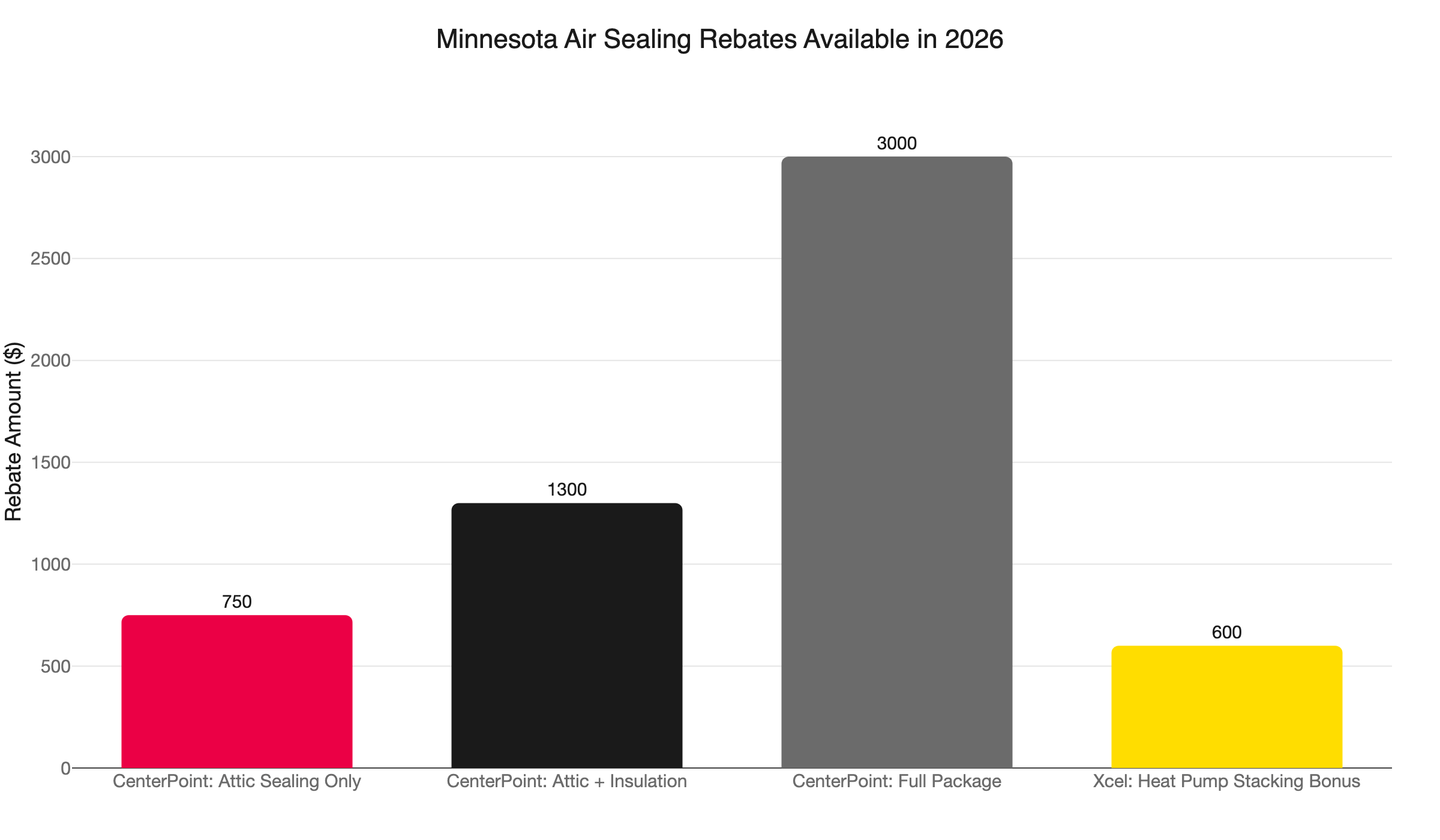
Minnesota Air Sealing Rebates Available in 2026
## Should I Air Seal Before Replacing My Furnace?
**Short answer:** Yes. Sealing the building envelope before furnace replacement prevents you from buying a furnace sized for a house you are about to fix. Seal first, then size the equipment to the tighter building. You save on the purchase price and on every heating season that follows.
Most furnace replacement conversations start with a symptom. The unit is old, it runs constantly, or the heating bills keep climbing. The contractor measures the house, quotes a furnace, and the work is done in a day.
What often gets skipped is this: the house itself is part of the sizing equation.
A furnace is sized to meet the heating load of the building it serves. That load is calculated using a method called Manual J. The calculation accounts for insulation levels, window area, and how much air bleeds through the building envelope on a cold day.
[According to the U.S. Department of Energy](https://www.energy.gov/energysaver/air-sealing-your-home), air leakage accounts for 25-40% of heating and cooling energy use in a typical home. That is not a rounding error. A house losing 30% of its heat through cracks and gaps carries a 30% inflated load calculation. Fix the leaks and the calculated load drops. The furnace you need drops with it.
If you replace the furnace before sealing, you buy equipment sized for the leaky house. You then pay for more capacity than the sealed house will ever demand. That oversize penalty shows up on your gas bill every month for the next 15-20 years.
## Why the Order Matters: Manual J and Load Calculations
Minnesota requires Manual J sizing for all residential HVAC work under state building code. The standard uses your home's infiltration rate as a key input. A leaky house has a high infiltration rate. A sealed house has a lower one. The two rates produce different load outputs and different equipment recommendations.
The [Building Performance Association](https://building-performance.org/bpa-journal/smarter-retrofits-start-with-hvac-load-calculation/) addresses this directly: "Weatherization will significantly reduce a building's heating and cooling requirements; therefore, it is vital to have an understanding of the calculated load after weatherization."
If your contractor runs Manual J before you seal, the load number reflects the leaky house. The equipment they recommend is sized for that inflated number. You then seal the house and own a furnace with more capacity than the tighter building will ever need.
Contractors who size by square footage instead of running a proper Manual J commonly end up recommending equipment two to four times larger than the actual calculated load. The overcorrection is worst in houses that have recently been air sealed, because the load drop after sealing is steeper than a square-footage guess can anticipate.
The fix is straightforward. Tell your contractor that air sealing work is planned or already completed. Ask them to run the load calculation after the weatherization, not before. A contractor who pushes back on that request is a contractor worth questioning.
We have a detailed post on [how Manual J sizing protects Twin Cities homeowners](/blog/hvac-sizing-manual-j-right-sized-system/) if you want the full technical picture.
## How Much Can Sealing Reduce Your Furnace Size?
**Short answer:** In a typical pre-1990 Twin Cities home with significant air leakage, sealing can reduce the heating load by 20-30%. At Minneapolis's -9°F design temperature, a 20-30% load reduction can shift you from one furnace capacity tier to a lower one. Smaller capacity means lower equipment cost upfront and lower operating costs every year after.
The [EPA's ENERGY STAR program](https://www.energystar.gov/saveathome/seal_insulate/why-seal-and-insulate) documents an average 15% reduction in heating and cooling costs when homeowners air seal and insulate attics, floors over crawl spaces, and basements. The DOE puts the combined range for weatherization paired with an HVAC upgrade at 20-50%.
For a Zone 6A house with a six-month heating season, those percentages represent real savings compounded over years. The total value of proper air sealing goes well beyond the first winter.
The equipment-size implication is the bigger story for day-one cost. If sealing drops your calculated load enough to shift you from a higher capacity tier to a lower one, you spend less on the furnace itself. You also avoid the operational problems that come with an oversized unit, which are covered in the carbon monoxide section below.
Sealing first forces an honest calculation. The furnace that results from that honest calculation is sized to serve the building you are actually heating, not a leaky version of it.
## Should I Air Seal Before Replacing My Furnace in Minnesota? The Rebate Case
**Short answer:** Yes, especially now. Minnesota utility rebates make 2026 the most financially compelling year to seal first. CenterPoint Energy is offering $750 to $3,000 in cash rebates for air sealing and insulation through December 31, 2026. Xcel Energy adds a $600 heat pump stacking bonus for customers who seal this year.
Minnesota's climate amplifies every argument for sealing. Minneapolis sits in IECC Zone 6A with an ASHRAE 99% winter design temperature of -9°F. That number is the worst-case scenario baked into every load calculation in this market. A house that leaks heat at -9°F loses an enormous amount of energy over a long heating season.
Every BTU that escapes through an attic gap or an uninsulated rim joist inflates the calculated load. More load means more furnace. More furnace means higher equipment cost on day one and more gas burned every winter for the life of the unit.
The utility rebates make the sequence pay for itself before the new furnace even goes in. A homeowner who collects the full CenterPoint air sealing package has already recovered $3,000 of the weatherization cost. The furnace purchase then reflects the sealed load, not the inflated one.
For context on what current furnace installation costs look like at each capacity tier, our [furnace replacement cost guide for Twin Cities homeowners](/blog/furnace-replacement-cost-twin-cities/) breaks down what to expect with equipment and labor included.
## What Are the Current Minnesota Rebates for Air Sealing?
**Short answer:** CenterPoint Energy offers $750 for attic air sealing alone, $1,300 for attic air sealing plus insulation, and up to $3,000 for a full package. Xcel Energy adds a $600 bonus when you pair qualifying insulation with a heat pump installation within two years. Both programs run through the end of 2026.
The CenterPoint program details are on their [air sealing and insulation rebates page](https://www.centerpointenergy.com/en-us/residential/save-energy-money/efficiency-programs-and-rebates/air-sealing-insulation-rebates?sa=mn):
- Attic air sealing alone: $750
- Attic air sealing plus attic insulation: $1,300
- Full package with wall and rim joist sealing: up to $3,000
These rebates are funded through Minnesota's Conservation Improvement Program, a state-mandated efficiency initiative. Most Twin Cities natural gas customers served by CenterPoint qualify. Rebates are first-come, first-served with a December 31, 2026, postmark deadline.
The [Xcel Energy residential rebate program](https://www.xcelenergy.com/staticfiles/xe-responsive/Working%20With%20Us/24-1-201%20MN%20Res%20Rebate%20Summary%20Information%20Sheet.pdf) adds a $600 bonus rebate when a qualifying heat pump is installed within two years of completing qualifying insulation or air sealing work. Most Twin Cities homes are served by both CenterPoint for gas and Xcel for electric, so the two programs can be used together.
One note on federal incentives: the Section 25C Energy Efficient Home Improvement Credit for air sealing and insulation was terminated for projects placed in service after December 31, 2025. That credit is not available for 2026 work. The CenterPoint and Xcel programs above are the active incentives this year.
## Why an Oversized Furnace Raises Carbon Monoxide Risk
**Short answer:** An oversized furnace heats the house too quickly, satisfies the thermostat in under five minutes, shuts off, and starts again shortly after. Each rapid on-off cycle thermally stresses the heat exchanger. In a Minnesota heating season, those cycles accumulate fast. A cracked heat exchanger allows combustion gases including carbon monoxide into the living air supply.
[Trane's guidance on furnace short cycling](https://www.trane.com/residential/en/resources/troubleshooting/gas-furnaces/furnace-short-cycling/) identifies 10-15 minutes as the healthy run cycle for a properly sized furnace. An oversized furnace often runs 3-5 minutes per call for heat. It reaches the thermostat setpoint too fast, shuts off, and the house cools back down. Then the cycle repeats.
Each start-stop cycle involves rapid heating and cooling of the heat exchanger. The exchanger is a thin metal wall separating combustion gases from the supply air stream. Repeated thermal cycling causes metal fatigue. Over time, that fatigue leads to cracks.
In Minnesota, the furnace runs from October through April. An oversized unit accumulates that fatigue every day of a six-month heating season. The failure timeline is shorter than most homeowners expect.
A cracked heat exchanger does not always produce immediate symptoms. Carbon monoxide is odorless. By the time a detector sounds, the damage has been developing for some time.
Sealing the house before sizing the replacement prevents this pattern from starting. A furnace sized for the sealed load runs full cycles, stresses the heat exchanger far less, and lasts longer.
Our post on [cracked heat exchanger warning signs in Minnesota](/blog/cracked-heat-exchanger-signs-minnesota/) walks through what to watch for before a failure becomes a safety event.
## Can I Stack the Xcel Heat Pump Bonus With CenterPoint Air Sealing Rebates?
**Short answer:** Yes, if your home is served by both utilities. CenterPoint handles natural gas for most Twin Cities homes; Xcel handles electric. The two programs run through separate utilities with separate eligibility processes, but they are fully compatible. You collect the CenterPoint rebate now and the Xcel bonus when you install a qualifying heat pump within two years.
The stacking scenario in practice: a homeowner in Ramsey who does the full CenterPoint air sealing and insulation package collects $3,000 upfront. Within two years, they install a qualifying heat pump and collect the Xcel $600 bonus. Total utility rebates: $3,600, before any additional heat pump incentives that may also apply.
That is real money returned on two separate home improvement investments, timed to work together.
The CenterPoint deadline is the time-sensitive piece. The December 31, 2026, postmark cutoff creates urgency. If you are considering a heat pump on any timeline in the next two years, sealing now captures the CenterPoint rebate while starting the full Xcel two-year clock.
## What Does Air Sealing Actually Involve?
**Short answer:** Air sealing addresses gaps that insulation does not cover. A contractor runs a blower door test to measure and locate leakage, then seals those gaps with caulk, [spray foam](/blog/spray-foam-insulation-combustion-air-furnace-problems-minnesota/), or rigid foam board. Work focuses on the attic floor, rim joists, and mechanical penetrations. Most jobs on a Twin Cities home take one to two days.
Air sealing and insulation are related but different. Insulation slows conductive heat transfer through walls and ceilings. Air sealing stops convective loss through holes, gaps, and penetrations where conditioned air moves directly into unconditioned space.
The main locations in a typical older Twin Cities home:
- **Attic floor penetrations:** plumbing and electrical chases, HVAC drops, and the unsealed tops of interior partition walls. These are often the largest single leakage source.
- **Rim joists:** the band of framing between the foundation wall and the first-floor subfloor. A major air leakage path in pre-1990 homes.
- **Recessed lights:** older can lights that open directly into the attic are significant leakage points.
- **Basement mechanical penetrations:** where pipes and ducts exit the conditioned envelope into the rim joist cavity or crawl space.
A qualified weatherization contractor starts with a [blower door test](/blog/home-energy-audit-hvac-next-steps-minnesota/). It depressurizes the house and measures total leakage in CFM50 (cubic feet per minute at 50 pascals). That number feeds directly into your Manual J calculation. The contractor then seals the identified gaps before adding insulation over the sealed surfaces.
After the work is complete, ask for a new Manual J before signing anything on a furnace. That calculation is the step that converts your tighter envelope into a specific equipment recommendation. The entire financial case for sealing first depends on running the load calc against the sealed house, not the leaky one.
## Ready to Right-Size Your Furnace?
If your furnace is aging and your home was built before 1990, this is the year to get the sequence right. Seal first. Collect the CenterPoint rebate. Run a fresh Manual J against the tighter house. Then buy the furnace the sealed building actually needs.
Northern One Hour is locally owned and operated in Ramsey, MN. We serve homeowners across the Twin Cities, from Minneapolis and St. Paul to Blaine, Maple Grove, Plymouth, and Woodbury. We run accurate Manual J calculations and size equipment to the real load, not a square footage estimate. We back every installation with a 100% satisfaction guarantee and stand by the on-time promise: "Always On Time… Or You Don't Pay a Dime!(R)"
Financing is available for qualifying equipment. Ask about your options when you call.
Call us at **(763) 260-6662** or [schedule your furnace assessment online](/heating/heating-equipment/furnaces/furnace-replacements/). We will walk through the sequencing with you, help you time the rebates correctly, and make sure the furnace we install is sized for the house you are actually heating.
---
# Ductwork Making Popping Noise: What's Normal and What's Not
URL: https://northernonehour.com/blog/ductwork-ticking-popping-noise-thermal-expansion-minnesota/
Published: 2026-09-12 | Category: HVAC
Metal ductwork pops as it expands with heat and contracts with cold. Here's how to tell normal thermal noise from a real airflow or pressure problem.
Key Takeaways
- If your ductwork is making a popping noise when the furnace or AC cycles on, the most likely cause is thermal expansion. Duct metal swells when hot air hits it and contracts when the system shuts off.
- Rectangular [sheet-metal ducts](/blog/fiberglass-duct-board-vs-metal-ductwork-minnesota/) pop more than round ones. Large flat panels flex and snap under temperature changes, while round geometry distributes the same pressure evenly around the circumference.
- Normal: one or two pops at cycle start or end, fading once the system warms up. Not normal: continuous noise during the blower cycle, weak airflow in a room, or a home that is not reaching its set temperature.
- Minnesota's extreme winters make duct popping more intense here than in most of the US. On a design-temperature day, a 140°F-plus temperature delta hits your duct metal the moment the furnace fires.
- Two quick self-checks before calling anyone: replace a dirty filter and reopen any closed vents. Elevated static pressure from either one worsens duct noise.
- A technician with a manometer can measure actual static pressure and tell you definitively whether the popping signals a real problem.
## Why Is Your Ductwork Making a Popping Noise?
**Short answer:** Your duct metal is expanding and contracting with temperature changes. When your furnace fires, it pushes air at 125-135°F through metal that may be sitting at near-basement temperatures. That sudden heat causes the metal to swell rapidly. The snap you hear is a flat panel flexing outward under the stress.
Metal expands when it gets hot. That is true of the pipes under your sink and the rails on your deck. It is also true of the sheet steel that forms your duct system. The difference with HVAC ductwork is speed.
Your furnace does not warm the ducts gradually over hours. It sends a burst of hot supply air through the system in seconds. Large flat panels on the main trunk line can't absorb that stress silently. They pop.
The same thing happens in reverse when the system shuts off. The metal cools, contracts, and pops again. Most homeowners hear the startup pop more often because the temperature change is fastest then. Both directions produce noise, but startup is the louder event.
This is, in most cases, a physics problem rather than a mechanical failure. The popping can also be a normal part of a system that has performed reliably for years. But there are specific conditions that turn a harmless thermal pop into a sign of something worth fixing. Knowing the difference saves you from unnecessary anxiety on one end and an avoidable repair bill on the other.
---
## What Makes Rectangular Ducts Pop More Than Round Ones?
**Short answer:** Flat panels bow outward under pressure and temperature changes, then snap back. Round ducts distribute those same forces evenly around the circumference. Geometry is the deciding factor, and the rectangular sections of your system are almost always the noisy ones.
Most residential duct systems mix shapes. The main trunk line running the length of your basement is usually a large rectangular box. Branch runs to individual rooms are often round flex duct or round rigid metal. The rectangular sections are the ones you hear.
Think of a large flat cardboard box. Press one side and you can feel it want to buckle. That tendency is built into flat geometry. Sheet-metal ducts do the same thing, only the force comes from temperature changes or blower pressure rather than your hands.
This effect has a name in metal fabrication: oil-canning. [A flat panel under compression pops from one buckled shape to another with a distinct snap](https://advancedairconditioningandheating.com/blog/understanding-attic-ductwork-popping-noises). [Most residential duct is fabricated from 24 to 26 gauge galvanized steel or aluminum](https://www.boothehvac.com/blog/hvac-ducts-making-popping-noises/). At those gauges, the metal is thin enough to flex noticeably under normal operating conditions.
Manufacturers add shallow diagonal bends called crossbreaks to flat rectangular duct panels. Crossbreaks stiffen the panel the same way a crease stiffens a piece of paper. They reduce oil-canning significantly when the ductwork is new. After years of pressure cycling and temperature swings, those crossbreaks fatigue and lose their rigidity, and the popping returns louder than before.
The takeaway: round duct pops less because round is an inherently stiff shape. If you are noticing noise exclusively from one section of the system, it is almost certainly the largest rectangular panel in that area.
---
## Five Common Causes of Ductwork Popping Noise
Not every duct pop has the same cause. Running through this list helps you narrow down the source before a technician arrives.
**1. Thermal expansion and contraction**
This is the most common cause and the one most homeowners are dealing with. Supply air from the furnace reaches 125-135°F. In a cold Minnesota basement, duct metal may be sitting at 50-60°F before the system starts. That temperature swing happens in seconds, and the metal responds with a pop. The same physics applies in summer: your AC sends 55°F air through duct metal that has been baking in an uninsulated attic all afternoon. Both directions create noise. Both are normal if they fade quickly and airflow remains strong.
**2. Fatigued crossbreaks on the trunk line**
[After years of pressure cycling, the crossbreaks formed into trunk-line panels can fatigue and lose their shape](https://ductworks.com/why-your-homes-air-ducts-are-ticking-or-popping-causes-and-solutions/). When the blower starts, the panel flexes under pressure and snaps back with a loud pop. This is distinct from thermal expansion. It happens the instant the blower starts, not gradually as the system heats up. The noise typically comes from near the furnace, where the main trunk is largest and takes the most pressure. A reinforcement bracket or stiffener resolves it.
**3. Closed vents or a dirty filter raising system pressure**
[Closing vents or running a clogged filter raises static pressure inside the duct system](https://www.meyer-depew.com/what-causes-popping-sounds-in-ductwork/). That elevated pressure forces duct walls to flex with every blower cycle. HVAC equipment is designed to operate within a specific static pressure range. Push it above that range and the duct walls protest. At least 80 percent of your supply vents should remain open at all times. A filter past its change date does exactly the same thing. Our post on [closing HVAC vents in unused rooms](/blog/closing-hvac-vents-unused-rooms-myth-twin-cities/) explains why closed vents cause more harm than most homeowners expect.
**4. Undersized ductwork**
A duct system built for a smaller furnace will produce elevated static pressure every time the blower runs. Unlike thermal expansion noise, this pops constantly through the whole cycle rather than just at startup. If the noise started after a furnace replacement and was never an issue before, undersizing is the first thing to ask about on the service call. A technician can verify whether the duct cross-sections match the equipment's airflow requirements.
**5. Duct leakage**
[In homes with unsealed ductwork, studies estimate that 20 to 30 percent of conditioned air escapes through duct leaks before it reaches living spaces](https://tuckandhowell.com/ac-cant-keep-up-on-hot-days-understanding-system-limits/). A leaky duct drops below its designed pressure range. That imbalance causes duct walls to draw inward, then flex back outward, producing noise at the leak points. Leakage also concentrates mechanical stress at seams and joints, which pop repeatedly and gradually work loose further. If the noise is accompanied by rooms that never quite reach temperature, leakage is high on the suspect list.
---
## Is the Popping Normal or a Real Problem?
**Short answer:** [Normal popping happens only at cycle start or end, fades as the system reaches operating temperature, and coincides with strong, consistent airflow at every register](https://advancedairconditioningandheating.com/blog/understanding-attic-ductwork-popping-noises). Continuous noise during the blower cycle or weak airflow in any room is worth investigating.
Here is the clearest line you can draw before calling anyone:
**Likely normal:**
- One or two pops when the furnace or AC kicks on
- Noise fades within a few minutes once the system reaches operating temperature
- Airflow at every register feels strong and consistent
- Every room reaches the set temperature in a reasonable timeframe
- The noise has been consistent for years without getting louder or more frequent
**Worth investigating:**
- Popping continues throughout the entire blower cycle, not just at startup
- One or more rooms feel noticeably weaker than the rest
- The home is not reaching the set temperature despite the system running
- A new loud bang or clunk started after a furnace or AC replacement
- The noise has gotten significantly louder or more frequent over the past year
The definitive test is static pressure measurement. [HVAC equipment is engineered to operate within a specific pressure range, and a technician measures this with a manometer](https://georgebrazilhvac.com/blog/why-your-ducts-are-making-a-popping-noise/). If the reading falls above or below that range, the root cause is usually findable: a leak, a restriction, undersized ductwork, or a failing blower component. Static pressure testing is the one diagnostic that removes all guesswork.
---
## Why Minnesota Ducts Pop Louder Than Most
Phoenix in January averages around 60°F. Minneapolis in January hits -13°F on a design-temperature basis. That gap matters more than most homeowners realize when thinking about duct noise.
On a genuine cold snap in the Twin Cities, your furnace sends 130°F supply air through duct metal. That metal has been sitting near basement temperatures, which can drop into the low-to-mid 40s during a hard cold snap. The temperature delta between the duct metal and the supply air can exceed 140°F. It arrives in seconds. That is more violent thermal stress than anything a contractor writing for a Phoenix or Dallas market is dealing with.
Minnesota also delivers the stress from both directions. Our summers are real: July highs routinely push into the low-to-mid 90s, and uninsulated attic spaces can exceed 130°F by mid-afternoon. When your AC kicks on at the hottest point of a July day, 55°F conditioned air hits superheated duct metal. Same oil-canning physics, opposite direction, same annual fatigue accumulation.
The practical result: Minnesota ducts cycle hard in both the expansion and contraction directions every year. A duct system in a warmer climate builds up mostly one-directional thermal stress. Ours absorbs it from both extremes with every season. That accelerates the timeline for crossbreak fatigue, seam separation, and panel flex.
[Ductwork lifespan is generally 20 to 25 years, and homeowners often begin noticing fatigue-related noise and leakage within 10 to 15 years](https://www.boothehvac.com/blog/hvac-ducts-making-popping-noises/). In Minnesota, plan for the earlier end of that range, not the later. A system installed with your 2008 furnace is already in the window where an inspection makes sense.
When you are weighing repair against replacement, our guides on [ductwork replacement cost in the Twin Cities](/blog/ductwork-replacement-cost-twin-cities/) and [duct sealing and energy loss](/blog/duct-sealing-leaky-ductwork-energy-loss/) lay out the numbers specific to this market.
---
## How to Run a Two-Minute Self-Diagnostic
You do not need any tools to gather useful information before calling. Here is a quick sequence any homeowner can run.
**Step 1: Identify the timing.**
Stand near your furnace or air handler when the system cycles on. Does the pop happen the instant the blower starts? That points to pressure-related causes: closed vents, a dirty filter, or fatigued crossbreaks. Does the noise start a minute or two after startup and then fade as the system warms up? That is thermal expansion.
**Step 2: Check your filter.**
Pull the filter and hold it up to a light. If you cannot see light through it, replace it before anything else. A clogged filter is the single most common reason static pressure climbs above normal. A replacement filter costs a few dollars and takes two minutes to swap.
**Step 3: Walk your vents.**
Count your supply registers. If more than 20 percent are closed or blocked by furniture, reopen them. Closed vents do not redirect heat to other rooms. They redirect pressure into the duct walls, and that pressure has to go somewhere.
**Step 4: Put your hand at each register.**
Walk every supply register while the system is running. Note any room where airflow feels noticeably weaker than the others. Write down which rooms. Weak airflow concentrated in a specific part of the house points to a duct leak or restriction along that branch run.
**Step 5: Monitor the temperature.**
If the home reaches the set temperature at a normal pace and every room feels even, the noise is very likely benign. If one zone consistently underperforms, the ductwork serving that run is worth a closer look.
For sounds that seem to come from the furnace itself rather than the ductwork, our post on [furnace popping, banging, and squealing noises](/blog/furnace-banging-popping-squealing-noise-what-it-means-minnesota/) covers the furnace-side causes that often get mistaken for duct noise.
---
## What Should You Do If the Popping Continues?
**Short answer:** Start with the filter and vents, then schedule a service call if the noise persists or any room shows weak airflow. Continued popping after basic checks points to elevated static pressure, fatigued duct panels, or leakage. None of those fix themselves.
If the self-diagnostic reveals a dirty filter or closed vents, correct those first and give the system a few cycles to settle. Many homeowners find that a fresh filter and reopened vents quiets the ductwork noticeably within a day.
If the noise continues after that, it is time for a technician. A service visit can include static pressure measurement, trunk-line panel inspection for fatigue, a check for leakage at seams and joints, and verification that the duct system is correctly sized for the equipment it serves.
Repair options range from simple to substantial:
- **Reinforcing a fatigued trunk panel** with a bracket or stiffener is a common, straightforward repair that addresses the specific crossbreak failure pattern.
- **Duct sealing** with mastic or metallic tape addresses leakage that contributes to pressure swings and energy loss. Professional duct sealing on a complete system typically runs around $1,300.
- **Partial duct replacement** makes sense for sections that are undersized, corroded, or too damaged to seal effectively.
- **Full duct replacement** is the right call when the system is past 20 years, showing widespread fatigue, and losing more conditioned air than targeted repairs can recover. [Full duct replacement in the Twin Cities typically runs $6,500 to $13,000 installed](/blog/ductwork-replacement-cost-twin-cities/), depending on home size and system complexity.
If your ductwork is 15 or more years old and you are starting to hear new problems, ask for a full assessment rather than patching one section at a time.
---
## When Should You Call a Professional About Noisy Ductwork?
**Short answer:** Call if the popping is continuous during the blower cycle, if any room has weak airflow, if the home is not reaching temperature, or if the noise started suddenly after an equipment replacement. Those signs go beyond what a filter change or open vents can fix.
You do not need to call a pro every time a duct makes a sound. Normal thermal pops are a fact of life in a Minnesota home with a sheet-metal duct system. The triggers that warrant a call are:
- Continuous noise during the entire blower cycle, not just the first minute
- A loud bang or clunk that started after a furnace or AC replacement
- Weak airflow in one or more rooms that is not explained by a closed vent
- Higher-than-normal energy bills without a clear weather explanation
- Ductwork that is 15 or more years old and has never been inspected or sealed
At Northern One Hour, we are locally owned and operated in Ramsey, MN. We serve the Twin Cities and surrounding communities, from Blaine to Woodbury to Plymouth. When we say we will be there, we back it: "Always On Time… Or You Don't Pay a Dime!(R)." That is not a line we print and forget. It is a real accountability standard.
Our technicians carry manometers and can measure static pressure on the same visit as a general inspection or tune-up. If a pressure problem is driving your duct noise, we will find it and give you a straight answer on what fixing it involves, including honest pricing upfront.
---
## Schedule Your Ductwork Inspection with Northern One Hour
A pop when your furnace fires up on a January morning? That is Minnesota physics. Noise that runs through every blower cycle, rooms that will not heat evenly, or energy bills that keep climbing? Those are worth a call.
Reach our team at **(763) 260-6662** or book an appointment online. We serve the Twin Cities metro including Minneapolis, St. Paul, Ramsey, Blaine, Maple Grove, Plymouth, Brooklyn Park, Woodbury, and Bloomington. Honest pricing, on-time arrival, and a 100% satisfaction guarantee on every visit.
---
# Flex Duct Airflow Problems: Older Twin Cities Home Guide
URL: https://northernonehour.com/blog/flex-duct-problems-hvac-airflow-twin-cities/
Published: 2026-09-12 | Category: HVAC
Kinked or compressed flex duct can cut airflow by 50% and push your furnace near its limit all winter. Here's what causes it and how a proper re-run fixes it.
Key Takeaways
- A flex duct compressed just 25% can lose up to 50% of its airflow capacity.
- Kinks, sags, and over-length runs force your furnace to work harder throughout Minnesota's long heating season.
- Minneapolis averages roughly 8,300 heating degree-days per year. Restricted airflow is not a comfort nuisance. It is sustained mechanical stress on your furnace for months at a time.
- DOE standards require supports no more than 4 feet apart, each at least 1.5 inches wide, with no more than 1/2 inch of sag per foot between supports.
- Minnesota's mechanical code caps flexible air connectors at 14 feet per run.
- Homes built between the 1950s and 1980s in the Twin Cities often predate these standards and are the most likely to have problem runs.
- A proper re-run, not just a patch, is the correct fix.
- Paired with a qualifying heat pump upgrade, stacked utility and federal rebates can total $3,000-$5,000.
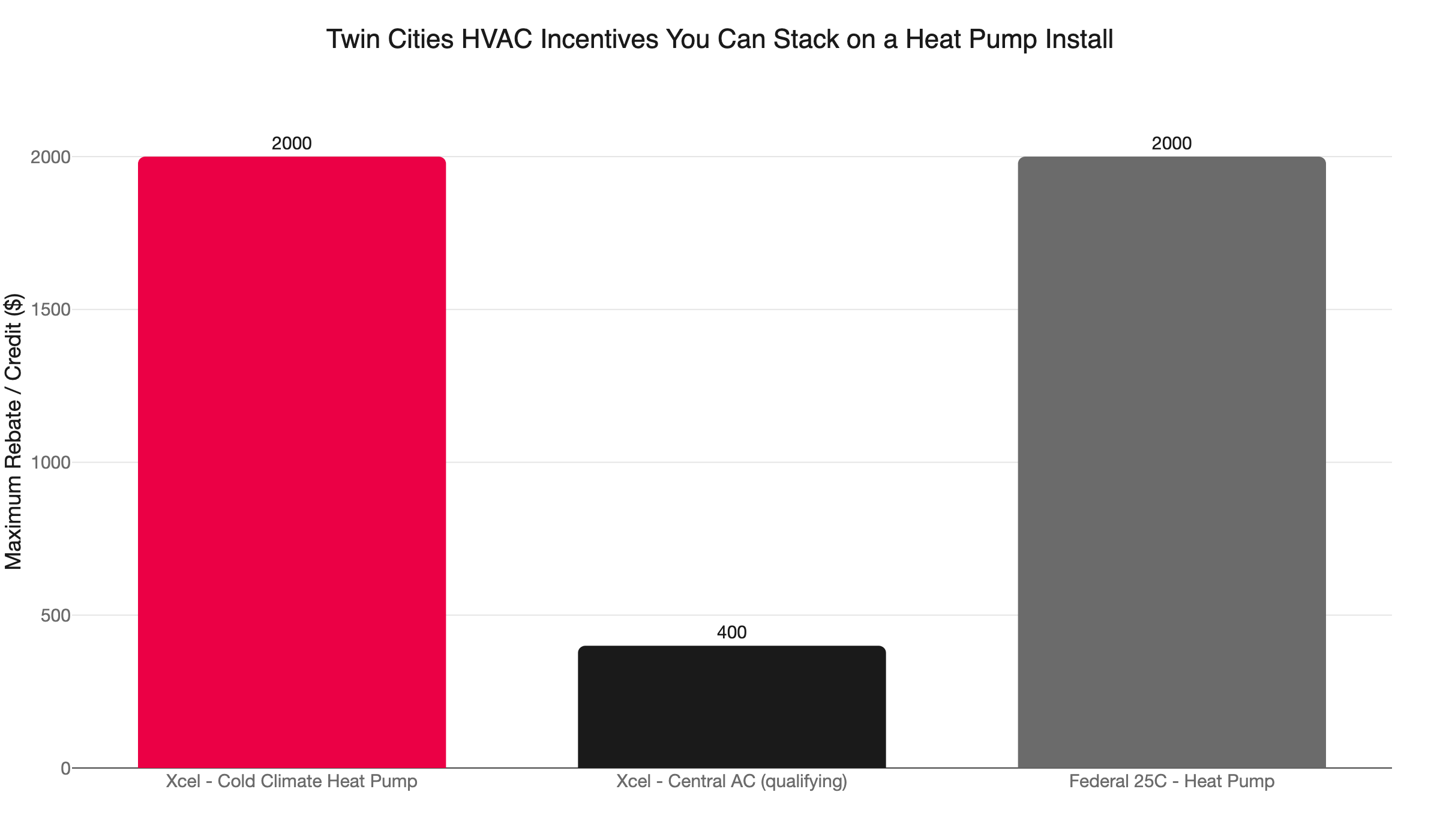
Twin Cities HVAC Incentives You Can Stack on a Heat Pump Install
## What Are Flex Duct Airflow Problems?
Flex duct airflow problems happen when flexible duct runs kink, sag, compress, or run too long - cutting the volume of conditioned air that reaches a room. Even a well-installed flex run has more internal friction than smooth hard duct. Add a kink or a sag, and airflow can drop by half or more.
Flex duct is a standard choice in residential HVAC because it is inexpensive and easy to route around framing. It has three layers: a corrugated inner liner, fiberglass insulation, and an outer jacket. The corrugated liner creates friction even in a straight, properly supported run. That friction compounds quickly when the liner gets pinched, sags between hangers, or bends past its design radius. The furnace blower [pushes against more resistance](/blog/high-static-pressure-hvac-symptoms-fixes-twin-cities/). Air slows. The room at the end of that run stays cold no matter how long the system runs.
## Why Does Flex Duct Lose Airflow?
Four failure modes cause most flex duct problems on older Twin Cities installs. Each one restricts the duct's cross-section or adds friction. In combination, they can reduce delivery to a room by more than half even when the furnace is running correctly.
**Compression.** [A flex duct compressed just 25% can lose up to 50% of its airflow capacity.](https://www.achrnews.com/articles/96367-ductwork-problems-cause-issues-with-airflow) Compression happens when a run is stuffed into a tight space, rests on a joist without proper support, or is installed with too much slack and left to pile up on itself.
**Kinks and sharp bends.** The inner liner must maintain a bend radius of at least one duct diameter. A tighter bend collapses the liner and blocks airflow. The [DOE Building Science Education Center](https://bsesc.energy.gov/energy-basics/hvac-support-flexible-ducts) prohibits sharp turns with a radius less than one duct diameter and requires the liner to be pulled taut with no kinks or u-turns.
**Sagging.** DOE standards require hangers no more than 4 feet apart, each at least 1.5 inches wide, with no more than 1/2 inch of sag per foot between supports. A run that droops past that threshold adds friction equivalent to several feet of extra duct on every cubic foot of air moving through it.
**Over-length runs.** Minnesota's mechanical code limits flexible air connectors to [14 feet per run](https://up.codes/viewer/minnesota/imc-2018/chapter/6/duct-systems). Beyond that length, friction accumulates to a point where delivery to the connected room falls well below design. Many older homes have runs that exceed this limit, built under less restrictive codes that were in effect at the time.
## Why Does Kinked Flex Duct Matter More in Minnesota?
In Minnesota, flex duct airflow problems are not a comfort issue. They put sustained mechanical stress on your furnace for most of the year. Minneapolis averages roughly 8,300 heating degree-days annually. A struggling furnace is short-cycling on its limit switch for six months straight, not two weeks.
[Minneapolis is in IECC Climate Zone 6A with approximately 8,300 heating degree-days annually](https://autohvac.ai/climate-zones/minnesota) - one of the highest totals for any major metro in the lower 48. The heating season runs six to seven months. Winter design temperatures fall to around -9°F.
When restricted ductwork cuts airflow, your furnace runs longer cycles trying to meet setpoint. Heat builds inside the heat exchanger. The high-limit switch trips. The system shuts down before the house reaches temperature. That cycle repeats all winter.
[If many heat runs are kinked or crushed, it can cause the furnace to overheat and cut out on limit - and sustained overheating can crack the heat exchanger over time.](https://www.achrnews.com/articles/96367-ductwork-problems-cause-issues-with-airflow) A cracked heat exchanger is a carbon monoxide risk, not just an efficiency problem. See our guide to [cracked heat exchanger signs in Minnesota](/blog/cracked-heat-exchanger-signs-minnesota/) for the specific symptoms to watch for before calling for service.
[The DOE estimates that poor HVAC installation can reduce overall system energy efficiency by up to 30%.](https://www.energy.gov/scep/wap/articles/job-aid-20-2-insulate-and-install-flex-ducts) In Minnesota, that efficiency loss runs for six consecutive months.
## How Do You Know If Your Flex Duct Is the Problem?
The clearest sign is one or two rooms that stay cold in winter, or warm in summer, while the rest of the house is comfortable - despite a furnace that runs frequently and a thermostat set correctly. Weak airflow at a specific register and [long run cycles](/blog/return-air-problems-hvac-twin-cities/) with little temperature movement are the two things to check first.
Other indicators to watch for:
- One or two registers with noticeably weaker airflow than others on the same system
- A furnace that trips its limit switch repeatedly, often visible as a flashing error code on the control board
- Long heating cycles that do not move the thermostat reading much
- Energy bills that feel high relative to your setpoints and insulation level
If you can get into your attic or basement, look directly at the flex runs. A run that has gone slack and coiled on top of a joist, taken a sharp angle around framing, or visibly sagged between hangers tells you exactly what you are dealing with. A run that looks fine from a distance may still be compressed at the boot end or kinked where it connects to the trunk - the spots that are hardest to see from the floor.
For context on how ductwork, insulation, and air sealing interact in older homes, our post on [why older Twin Cities homes struggle more with winter comfort](/blog/why-older-twin-cities-homes-struggle-more-with-winter-comfort/) covers the full picture.
## The Older-Home Factor in Twin Cities Ductwork
Twin Cities homes built between the 1950s and the 1980s deserve extra attention when it comes to flex duct. Most of the worst cases our technicians encounter are in this housing stock.
Many of these homes were built before current standards existed in their present form. The 14-foot connector limit, the 4-foot hanger interval, and the specific bend-radius requirements were not the universal baseline when these homes went up. Installers used available materials and followed the code of the day. A home built in 1963 in Ramsey or Brooklyn Park may have original flex runs that are 18 to 22 feet long, supported only at the ends, with one or two kinks where the run routes around framing.
That home has operated this way for six decades. The homeowner assumes the cold room is just a quirk of the house. The real cause is ductwork that has been underperforming since installation.
A thorough inspection of these homes frequently turns up multiple defects on a single run. A kink at the trunk connection. A sag in the middle third. A compression at the register boot. Each defect adds restriction. Together they can cut delivery to a room by more than half, and none of them are visible without physically tracing the run through the space.
Minnesota's mechanical code also requires all flex duct to be listed and labeled Class 0 or Class 1 per UL 181. Older unlisted material, if it remains in place, adds a compliance issue on top of the airflow problem. When we pull an old run on a 1970s install, it is not unusual to find material that predates modern listing requirements entirely.
## What Does a Proper Flex Duct Re-Run Look Like?
A proper re-run is not a patch. It is the full removal of the defective run and installation of a correctly routed, correctly supported replacement from trunk connection to register boot - nothing less.
Here is what that process looks like on a typical older Twin Cities home.
**Diagnosis and measurement.** A technician traces the run from register back to trunk, documents its total length, and identifies every defect. Airflow at the register is measured before any work begins. That baseline number gets verified against after the re-run is complete.
**Removal.** The old flex run comes out completely. Splicing new material into the middle of a defective run is sometimes done as a shortcut. It rarely produces the same result as a full replacement, because compression and kinking at the fittings often remain.
**Route planning.** The new route is planned to minimize length, eliminate sharp turns, and stay within Minnesota's 14-foot limit. If the distance requires a longer path, the correct answer is a transition to [hard duct](/blog/fiberglass-duct-board-vs-metal-ductwork-minnesota/) for part of the run, not a flex connector that exceeds code.
**Inner liner stretch.** The corrugated inner liner must be pulled taut between fittings before the run is secured. A liner with even modest slack adds friction equivalent to several extra feet of duct. This is the step that separates a correct installation from a mediocre one, and it is the step most often skipped on quick re-runs.
**Support installation.** Hangers go in no more than 4 feet apart, each at least 1.5 inches wide. Sag between supports stays under 1/2 inch per foot.
**Boot seal.** The connection at the register boot is sealed with mastic or UL 181-rated tape. An unsealed boot loses conditioned air into unconditioned space, partially defeating the re-run.
**Verification.** Airflow is measured again at the register. The technician confirms that delivery has improved and that the furnace is no longer short-cycling on that zone.
Where a run passes through unconditioned attic space, [the DOE requires minimum R-8 insulation on new flex duct.](https://www.energy.gov/scep/wap/articles/job-aid-20-2-insulate-and-install-flex-ducts) In a Minnesota attic, this is not a technicality. It directly affects whether conditioned air arrives at the register at anything close to its supply temperature.
## What Does Flex Duct Repair Cost in the Twin Cities?
Costs vary based on scope. A duct sealing visit - which addresses leaks at boots and connections but does not re-route defective runs - runs around $1,300. Full duct replacement, where all runs are removed and re-installed correctly, runs $6,500-$13,000 depending on home size and how accessible the spaces are.
Individual run re-routes fall between those two numbers. A single re-run with new flex, correct support spacing, and a sealed boot is a contained job. The exact cost depends on the route length and the difficulty of access in your attic or basement.
If your ductwork problems are paired with a furnace that is already showing stress from years of restricted airflow - short cycling, repeated limit trips, or a heat exchanger with a history of overheating - it makes sense to evaluate both together. See our post on [ductwork replacement cost in the Twin Cities](/blog/ductwork-replacement-cost-twin-cities/) for what drives full-system pricing in this market.
## Can a Flex Duct Re-Run Qualify for Rebates or Tax Credits?
Duct repair alone does not typically qualify for a direct utility rebate. But pairing a re-run with a qualifying cold-climate heat pump install can unlock up to $2,000 from Xcel, $2,000 from the federal 25C credit, and additional money from the Minneapolis bonus program.
Xcel Energy's current Minnesota residential program includes up to $2,000 for a qualifying cold-climate ducted heat pump and $400 for a qualifying central AC replacement. Note that Xcel discontinued gas furnace rebates as of January 1, 2026. The federal 25C tax credit adds 30% of project cost, capped at $2,000, for a qualifying heat pump. Combined, Twin Cities homeowners doing a heat pump install can access $3,000-$5,000 in stacked incentives, per [Central Minnesota Heating and Cooling's 2026 rebate summary](https://centralminnesotaheatingandcooling.com/blog/xcel-centerpoint-hvac-rebates-2026).
If you are in Minneapolis, the [Minneapolis Bonus Rebate Program](https://www.mncee.org/minneapolis-bonus-rebate-program) stacks on top of Xcel and CenterPoint rebates for qualifying improvements made after December 15, 2025.
The case for pairing duct work with a heat pump upgrade is practical. A heat pump installed in a home with correctly functioning ductwork performs better than one fighting restricted runs from day one. Fixing the ductwork at the same time maximizes the efficiency gain, protects the new equipment, and positions the project to capture the full rebate stack.
For the complete breakdown of available programs and how to stack them, see our post on [Minnesota heat pump rebates and tax credits](/blog/minnesota-heat-pump-rebates-tax-credits/).
## Why Flex Duct Problems Are Worth Fixing Now
A kinked flex run is not just a cold room.
Sustained short-cycling over a Minnesota winter adds up in real terms. Repeated limit trips put cumulative stress on the heat exchanger. A cracked heat exchanger is the path from a ductwork problem to a carbon monoxide problem, and that path runs faster when the furnace has been overheating on high-limit every night for several winters in a row.
Restricted ductwork also drives your energy costs up every month the heating system runs. In Minnesota, that is a six-month-a-year penalty that compounds year after year until the ductwork is fixed. The longer the problem goes unaddressed, the more the savings from a correct installation are deferred.
These problems are diagnosable and fixable. A proper inspection identifies which runs are the issue, what the correct scope of repair is, and whether a targeted re-run or a broader duct replacement is the right call for your home's layout and age.
## Schedule a Flex Duct Inspection with Northern One Hour
Northern One Hour is locally owned and operated, serving homeowners across the Twin Cities, including Ramsey, Blaine, Maple Grove, Plymouth, Brooklyn Park, Woodbury, and Bloomington. We back every visit with our on-time promise: "Always On Time… Or You Don't Pay a Dime!(R)"
If you have a room that stays cold, a furnace that short-cycles, or flex runs you suspect have never been properly inspected, call (763) 260-6662 or book online. We will send a technician to assess your ductwork, measure actual airflow at the registers, and give you a straight answer on what needs to be done.
If your inspection points toward a system upgrade, ask about financing. Pairing a duct re-run with a new furnace or a qualifying heat pump can be structured to fit your budget, and the rebate stack can bring the net cost down substantially.
---
# How to Clean a Whole-Home Humidifier Before Heating Season
URL: https://northernonehour.com/blog/whole-home-humidifier-cleaning-maintenance-minnesota/
Published: 2026-09-12 | Category: Indoor Air Quality
Step-by-step fall startup guide for Twin Cities homeowners: water panel swap, drain line flush, and hard-water tips for bypass and fan-powered humidifiers.
Key Takeaways
- Twin Cities water hardness averages [16.2 GPG in Minneapolis](https://dropconnect.com/water-hardness-in-minnesota-cities/) and up to 18 GPG in Bloomington. That is roughly three times the US average of 5 GPG, and it means your humidifier accumulates scale far faster than national maintenance guides assume.
- Bypass and fan-powered units have different startup steps. Know which type is on your furnace before you start.
- A water panel costs $15-35. The full fall startup takes under an hour. Skip it and you risk a clogged drain line, a flooded furnace cabinet, or a full season of dry air despite a running unit.
- Most Twin Cities homes without a water softener need two panel replacements per heating season, not one.
- Drop your humidistat to 25-30% on the coldest nights. Running humidity too high in Minnesota winters causes condensation damage inside walls and on windows.
- Three signals mean stop and call a pro: water pooling at the furnace base, no click from the solenoid valve, or a panel caked in scale after only six weeks.
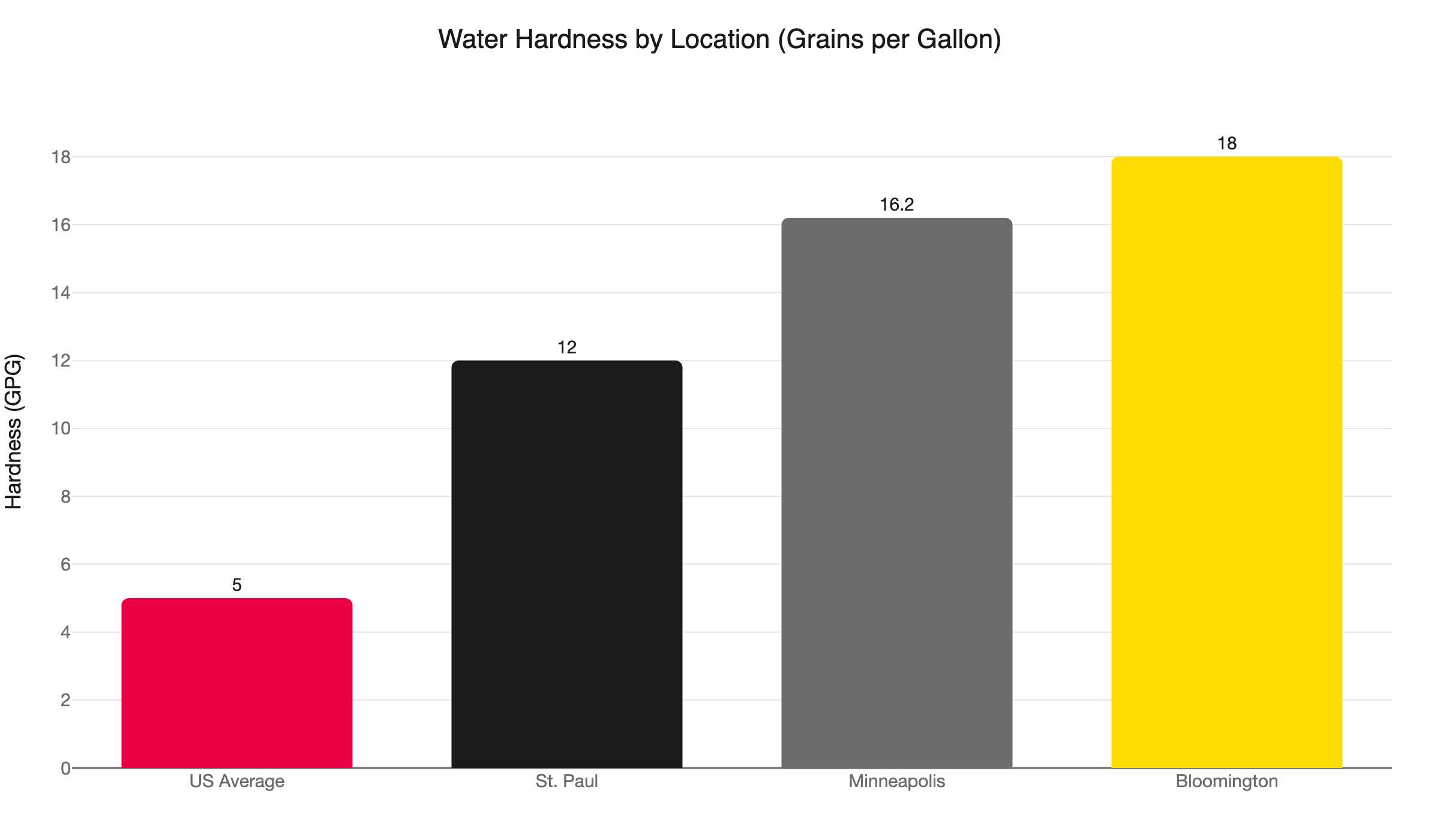
Water Hardness by Location (Grains per Gallon)
## Why Twin Cities Humidifiers Need Extra Attention
Most cleaning guides tell you to change the water panel once before heating season. That is reasonable advice for the average US city. It undersells the job for anyone on Minneapolis or Bloomington city water.
The reason is geology. The Twin Cities sit above a limestone aquifer system called the Prairie du Chien-Jordan formation. Water percolating through limestone dissolves calcium and magnesium before it ever reaches your tap. The result is some of the hardest municipal water in the country.
[Research from the Battelle Memorial Institute](https://hardwaterhq.com/minnesota-water-hardness/) found that every 5 GPG of water hardness deposits approximately 0.4 pounds of mineral scale per year in water-using equipment. At 16 GPG, a Twin Cities humidifier accumulates about 1.3 pounds of calcium and magnesium scale in a single heating season. That crust coats the water panel and blocks the drain line. It also cuts equipment efficiency by up to 8%.
A whole-home evaporative humidifier loses most of its effectiveness long before it shows any visible sign of failure. The panel looks wet. Water still drips through the drain. But output drops steadily as scale builds, and the homeowner assumes it is working because it is running. Fall startup is the right moment to reset the baseline, before the first cold snap of the season forces the issue.
The practical result: if you do not have a whole-home water softener, plan on replacing the water panel twice per heating season. Once at fall startup, and once in mid-January.
---
## What Type of Whole-Home Humidifier Do You Have?
**Quick answer:** Look at what is mounted on your furnace ductwork. A bypass humidifier (like the Aprilaire 600) connects to both the supply and return ducts via a bypass duct and has no motor of its own. A fan-powered humidifier (like the Aprilaire 700) mounts on the supply duct only, houses a small internal blower, and can run independently of the furnace. The cleaning steps diverge from here.
This distinction matters for two reasons. First, [fan-powered humidifiers run their internal blower independently of the furnace](https://www.superior-air.com/blog/hvac/bypass-vs-fan-powered-humidifiers/), so the startup check for a fan-powered unit includes inspecting a motor that has no equivalent on a bypass model. Second, [bypass humidifiers flush excess water continuously through the drain](https://andersonaircorps.com/blog/air-conditioning/comparing-bypass-and-fan-powered-humidifiers/) to keep the panel from clogging. That higher water volume leaves more mineral residue in the drain line, which makes the drain flush a non-optional step for bypass owners.
There is one feature found only on bypass units: the bypass damper. This is a lever or rotating dial, often orange or red, mounted on the bypass duct connecting the supply and return sides of your furnace. It has two positions: summer (closed) and winter (open). If you moved it to the summer position before last spring and never changed it back, your humidifier ran with zero airflow all heating season. It is the most common reason a humidifier produces no humidity after what looked like a complete cleaning.
---
## How Do You Clean a Bypass Humidifier: Step-by-Step
**Quick answer:** Start by cutting power and closing the saddle valve. Then open the bypass damper to the winter position, remove and replace the water panel, scrub the distribution tray in vinegar, wipe the housing interior, flush the drain line, and test at 40% humidity. Budget 45-60 minutes and under $40 in parts.
**Before you touch anything:** Set the humidistat to OFF. Close the saddle valve on the supply line fully. Cut power at the furnace disconnect or the breaker panel. Never work on a live unit.
**Step 1: Open the bypass damper.**
Find the lever on the bypass duct and move it to the open/winter position. Confirm it is fully open before you proceed.
**Step 2: Remove the water panel.**
Open the humidifier cabinet cover, usually held by two clips or screws. Pull the water panel frame straight out. After a full heating season in the Twin Cities, expect the frame to be coated in white or gray scale. A panel fused solid with calcium should have been replaced months ago.
**Step 3: Replace the panel. Do not try to clean it.**
The expanded aluminum media cannot be rehabilitated once it has calcified. Soaking it in vinegar softens surface deposits, but the internal structure has already compressed and will not distribute water evenly. A new panel costs [$15-35](https://greenleafair.com/humidifier-water-panel-replacement/). [Aprilaire recommends replacing the panel at least once per heating season](https://engineerfix.com/how-to-change-the-water-panel-in-an-aprilaire-humidifier/), and high-output models may need two replacements in a single season. For most Twin Cities homes without a softener, plan on two. Slide the new panel into the frame in the correct orientation (most frames are labeled) and set it aside while you clean the rest of the cabinet.
**Step 4: Scrub the distribution tray.**
The distribution tray is the horizontal plastic tray sitting above the water panel. Its small holes or slots spread water evenly across the panel surface. Scale clogs those holes just as fast as it clogs the panel itself. Remove the tray, submerge it in undiluted white vinegar for 30-60 minutes, scrub with a stiff nylon brush, and rinse clean. This step is absent from most cleaning guides and is one of the primary reasons humidifiers underperform even after a panel swap.
**Step 5: Wipe the interior housing.**
While the tray soaks, dampen a cloth with white vinegar and wipe every interior surface: walls, drain opening, brackets, and fittings. Follow with a clean damp cloth. Full-strength white vinegar dissolves calcium carbonate well for this application.
**Step 6: Inspect the saddle valve and supply tubing.**
Slowly reopen the saddle valve. Watch for drips at the connection point and at the compression fitting where the tubing meets the humidifier inlet. Check the 1/4-inch supply tubing for kinks and mineral buildup at the inlet screen. A clogged inlet screen restricts flow and causes the panel to dry unevenly, which accelerates scale formation.
**Step 7: Flush the drain line.**
See the drain section below. This is required, not optional.
**Step 8: Reassemble and test.**
Reinstall the distribution tray and the new panel. Close the cabinet. Restore power and set the humidistat to 40%. Run the furnace through a full heat cycle. Watch for a solenoid click within a minute of the heat call and water dripping through the panel shortly after. Check the base of the furnace cabinet and the floor below for any pooling.
---
## What's Different About Cleaning a Fan-Powered Humidifier?
**Quick answer:** Skip the bypass damper step, since fan-powered units do not have one. Add one step not on the bypass list: with power off, spin the auxiliary blower fan by hand. It should rotate smoothly with no grinding or wobble. If it catches, the motor is likely failing and that is a service call. All other steps are the same.
Since fan-powered units have their own blower, they can humidify during any call for fan operation, not only during a heat call. The auxiliary motor therefore runs more hours than the furnace blower and wears independently. A quick hand-spin check at startup takes 10 seconds and can catch a bearing failure before it stops the unit mid-season.
A rough spin can also indicate debris stuck in the fan wheel rather than a failing bearing. While the cabinet is open, shine a flashlight into the fan wheel and remove any lint, dust, or debris before testing rotation. A clean wheel that spins smoothly means the motor is ready for another season.
Fan-powered units send less total water through the drain than bypass models. The 1/2-inch drain line can still build up a partial restriction over a full season, though. Flush the drain at startup and again at the mid-season panel swap.
---
## How Do You Flush the Drain Line?
**Quick answer:** Pour one cup of clean water slowly into the drain pan opening at the base of the humidifier cabinet. Watch the far end of the drain hose where it exits to the floor drain or condensate drain. Water flowing through within 10-15 seconds means the line is clear. Slow drainage or backflow means the line is partially blocked and needs to be cleared before the season starts.
The drain hose on most Aprilaire evaporative humidifiers has a [1/2-inch inside diameter](https://www.hvac-talk.com/threads/aprilaire-fan-system-vs-bypass-humidifiers.2261789/). That is small enough that a modest accumulation of mineral flake or debris can restrict flow. A fully blocked drain is one of the most common causes of water pooling inside the furnace cabinet. Water inside that cabinet can reach the heat exchanger, the control board, and the blower motor. Any of those repairs costs far more than the 10 minutes it takes to flush the drain at startup.
To clear a partial clog, disconnect the hose at the cabinet end and blow through it by mouth. If that does not work, soak the hose in white vinegar for 30-60 minutes and flush again. A small bottle brush handles clogs at the cabinet drain fitting. Replace the hose if it has hard kinks, cracks, or a thick interior scale layer. A replacement hose is inexpensive at any HVAC or plumbing supply house.
Once the line is clear, run the flush test one more time before you close the cabinet. A clear line passes one cup of water in under 15 seconds.
---
## How Often Should You Replace the Water Panel in Minnesota?
**Quick answer:** Twice per heating season is the right cadence for most Twin Cities homes with untreated city water. Replace the panel at fall startup in September or October and again mid-winter in January. Homes with a whole-home water softener can return to once per season. Check the panel at mid-season either way.
The two-replacement cadence comes from scale math. [Battelle research](https://hardwaterhq.com/minnesota-water-hardness/) puts accumulation at roughly 0.4 pounds per year per 5 GPG of water hardness. Minneapolis at 16 GPG deposits about 1.3 pounds of mineral scale per heating season. A panel fully coated in calcium and magnesium cannot absorb and evaporate water effectively. The unit runs, the furnace blower moves air across the panel, but the air picks up little or no moisture.
The cost math is straightforward. Two panels at $15-35 each totals $30-70 per season. A service call to diagnose why a house still feels dry after a running humidifier costs considerably more. If the root cause turns out to be a calcified panel that should have been swapped in January, that expense was preventable.
If you do have a water softener, once per season is usually enough. Softened water removes the calcium and magnesium that drive scale formation. Check the panel at mid-season regardless. If it looks clean and evenly wetted, skip the second replacement.
---
## How Should You Set the Humidistat This Winter?
**Quick answer:** Start at 35-45% relative humidity when outdoor temperatures are above 20°F. Drop to 30-35% when temps fall between 0°F and 20°F. Go down to 25-30% when it goes below zero. Check your coldest windows: condensation pooling at the bottom of the glass means the setting is too high for that outdoor temperature.
The [EPA recommends keeping indoor humidity at 30-50%](https://www.epa.gov/indoor-air-quality-iaq/improving-indoor-air-quality) to reduce airborne virus survival and minimize allergen levels. The challenge in Minnesota is that running humidity above 35-40% during the coldest weeks can deposit moisture on the interior face of exterior walls, especially in older homes without modern vapor barriers. Triple-pane windows can still show condensation when outdoor temps drop well below zero and indoor humidity is above 30%.
Use this table as a starting point:
| Outdoor temperature | Recommended indoor humidity |
|---|---|
| Above 20°F | 35-45% |
| 0°F to 20°F | 30-35% |
| Below 0°F | 25-30% |
Check your windows on the coldest nights of the season. If condensation pools at the bottom of the glass, lower the humidistat by 5% and check again after 24 hours. For more on dialing in the right setting across a full Minnesota winter, see our guide to [humidistat settings for Minnesota winters](/blog/humidistat-settings-winter-minnesota/).
Getting humidity right also protects the structure of your home. Dry air shrinks hardwood flooring joints and splits wood trim and casings. Our post on [protecting hardwood floors from low humidity in winter](/blog/low-humidity-hardwood-floors-winter-minnesota/) covers the damage thresholds and what the fix looks like. If you have been seeing [winter window condensation](/blog/condensation-on-windows-winter-minnesota-humidity-fix/) and are not sure whether humidity or window performance is the culprit, that post walks through both sides.
---
## When Should You Call a Pro Instead of DIY?
**Quick answer:** Call when water is pooling at the furnace base, when the solenoid valve makes no sound during a heat cycle, or when the panel is heavily crusted after only six weeks. These are repair calls, not cleaning sessions.
**Water at the base of the furnace.**
A small amount of water at the humidifier drain outlet during a heat cycle is normal. Water pooling at the bottom of the furnace cabinet or on the floor below it is not. A fitting has failed, the drain pan is cracked, or the drain line is completely blocked. Water near the furnace control board or heat exchanger is an emergency. Shut off the unit at the humidistat and the saddle valve, then call.
**No click from the solenoid valve.**
The solenoid valve is the water inlet valve that opens on each heat call. You should hear a soft click when the furnace begins heating. If the unit is clean, the panel is new, the saddle valve is open, the humidistat is set above current room humidity, and there is still no click and no water flowing, the solenoid has likely failed. Solenoid replacement requires the correct part number for your specific unit plus electrical work. It is a [professional repair](https://www.carrier.com/us/en/residential/hvac-resources/humidifiers/humidifier-maintenance/), not a homeowner fix.
**Panel caked after six weeks.**
If a freshly installed panel is already heavily scaled after only six weeks of operation, your water may be running above 20 GPG or the saddle valve is restricting flow and concentrating minerals in the small volume that gets through. Have your water tested. If the hardness is extreme, a point-of-use filter on the humidifier supply line or a whole-home water softener can extend panel life considerably and pay for itself in reduced service calls.
---
Northern One Hour is locally owned and operated in Ramsey, and we serve the full Twin Cities metro, from Minneapolis and St. Paul to Blaine, Maple Grove, Plymouth, and Woodbury. When your fall humidifier startup uncovers something beyond a cleaning job, call us at **(763) 260-6662** or [book your service online](/indoor-air-quality/humidifiers/). We back every visit with our promise: "Always On Time… Or You Don't Pay a Dime!(R)"
---
# AC Can't Keep Up on 95-Degree Days: Normal or a Problem?
URL: https://northernonehour.com/blog/ac-struggling-extreme-heat-days-twin-cities/
Published: 2026-09-11 | Category: Cooling
Learn why your AC can't keep up on 95-degree days in the Twin Cities, how to run a quick diagnostic at home, and when to call for HVAC service.
Key Takeaways
- When your AC can't keep up on 95-degree days, that's usually a design limit, not a breakdown. A healthy central AC holds your home roughly 20°F cooler than outdoor temperature. On a 95°F day, 75-80°F indoors is a working system.
- Minneapolis HVAC equipment is sized for a local design temperature of roughly 88-89°F. A 95°F day is already above that mark. Your system is working beyond its rated range before anything else goes wrong.
- The July 2026 heat wave gave the Twin Cities 10 consecutive days at or above 90°F. The 30-year normal is 13 such days in an entire year. Your system was not built for that sustained pace.
- A simple thermometer test at your supply registers reveals whether you have a real fault. Healthy cooling delivers air 15-20°F colder than room temperature. Below 8°F, something is wrong.
- Call for service when the indoor-outdoor gap is shrinking steadily over hours, when vents blow warm air, when ice appears on the refrigerant line, or when the breaker trips.
- Minnesota's overnight lows - typically 65-70°F even during heat waves - are a genuine advantage. Flush heat out of the house at dusk and get ahead of the next day.
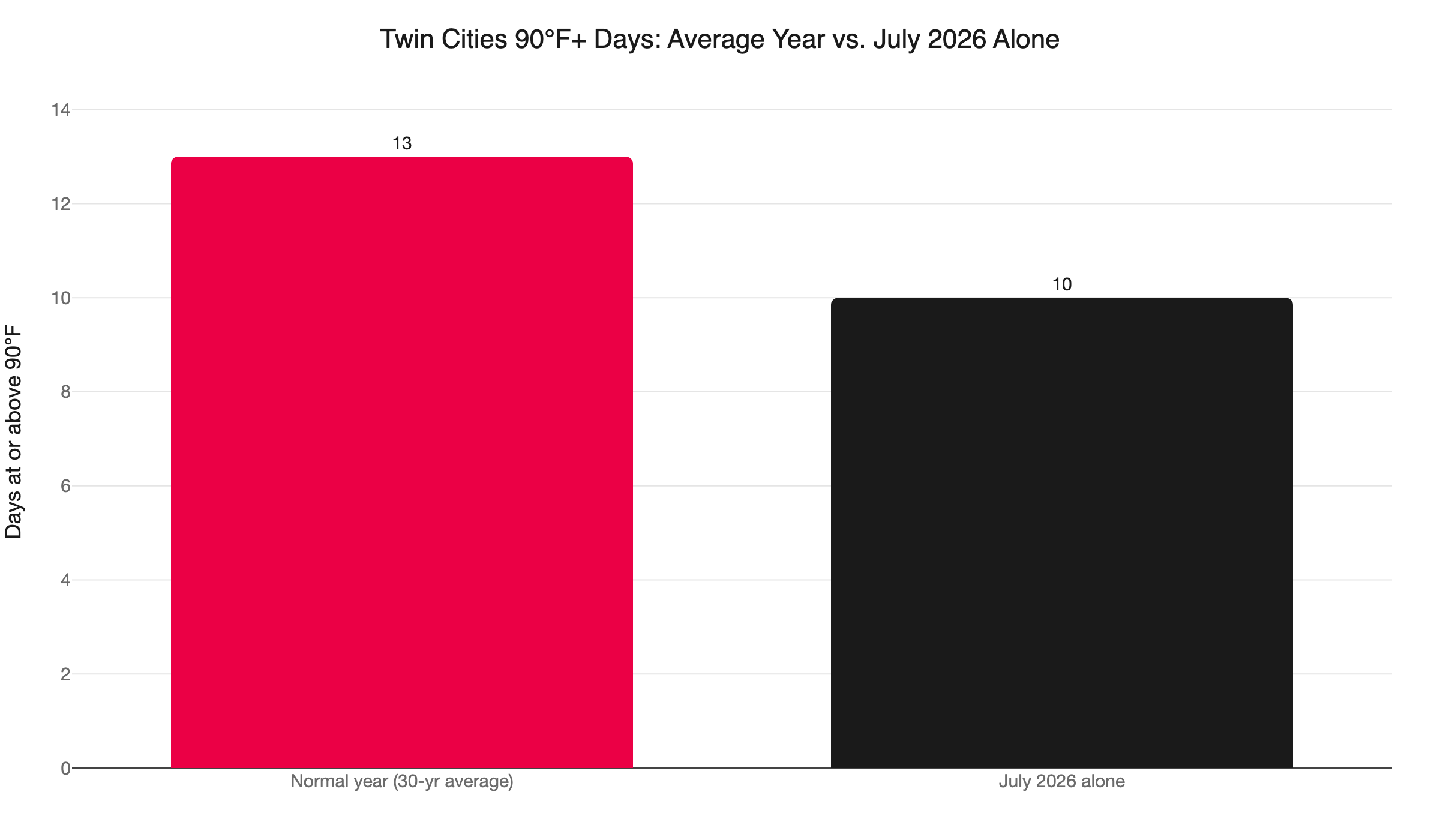
Twin Cities 90°F+ Days: Average Year vs. July 2026 Alone
## Why Was the Summer of 2026 So Punishing?
The short answer: it was genuinely historic. The July 2026 heat wave broke records standing since 1936. Your AC was sized for a typical Minnesota summer, not an exceptional one. If your system struggled, you were not imagining it - and your system was probably not broken.
[The Twin Cities recorded 10 consecutive days at or above 90°F in July 2026](https://www.dnr.state.mn.us/climate/journal/heat-mid-july-2026.html), the third longest such streak on record. MSP airport reached 100°F on July 27. [Heat index values hit 110°F](https://www.axios.com/local/twin-cities/2026/07/14/minnesota-heat-wave-air-conditioning-map) in parts of the metro on the worst days.
[The Twin Cities averages 13 days of 90°F or above per year](https://www.mprnews.org/story/2026/07/12/heat-dome-set-to-double-the-twin-cities-90degree-days-this-week) as its 30-year climate normal. Your AC was designed and sized for a Minnesota summer that includes roughly two weeks of significant heat spread across the entire season. Ten consecutive days of it, with a 100°F peak, is a different problem entirely.
Your frustration is justified. What you may not need is a repair call. Understanding the difference between a design limit and an equipment fault is what this post is about.
## What Is Your AC Actually Built to Do on a 95-Degree Day?
A standard central AC is designed to keep indoor temperatures roughly 20°F below the outdoor temperature. On a 95°F day, that means 75-80°F indoors is a working system, not a broken one.
This is not a rough estimate. [HVAC equipment is ARI/AHRI-rated at exactly 95°F outdoor and 80°F indoor at 50% relative humidity](https://indoortemp.com/resources/what-is-cooling-limit-of-air-conditioner). A 95°F day sits at the literal boundary of the published performance spec. Once outdoor temperatures exceed that mark, rated output begins to drop.
What this means practically: setting your thermostat to 65°F on a 95°F day does not make the air from your registers any colder. The system will run continuously, burning electricity and wearing on components, chasing a setpoint it physically cannot reach. [A well-maintained central AC can realistically cool your home to approximately 70-80°F when it's 95°F outside](https://indoortemp.com/resources/what-is-cooling-limit-of-air-conditioner). That number assumes clean coils, a correct refrigerant charge, and reasonably sealed ductwork. When any of those conditions slip, the real-world number slides further in the wrong direction.
The 20°F rule applies everywhere. What changes in Minneapolis is what happens on top of it.
## Why Does Minneapolis Make 95-Degree Days Harder?
Minneapolis combines two factors that don't appear in most HVAC content: a local design temperature already below 95°F, and summer dew points that force your system to cool and dehumidify at the same time. Both stack against you on an extreme-heat day.
**Local design temperature.** [ACCA Manual J load calculations](https://www.energystar.gov/products/air_source_heat_pumps) use local climate data - your home's insulation levels, window exposure, square footage, and an outdoor design temperature - to determine how much equipment capacity you need. For Minneapolis, the standard cooling design dry-bulb temperature is approximately 88-89°F. Your system was sized to handle a typical hot Minnesota day. A 95°F day is already 6-7 degrees above that local number. The system is running above its rated design threshold before any maintenance issue or age-related wear enters the picture.
**Humidity.** Your AC removes moisture from the air at the same time it lowers temperature. Those are two separate thermodynamic processes competing for the same capacity. On a hot Twin Cities day, dew points routinely reach 65-75°F. That double load - simultaneous cooling and dehumidification - is a meaningful burden that doesn't show up in the temperature reading alone. A humid 92°F afternoon in Minneapolis can demand more from your system than a dry 98°F afternoon in Phoenix. Desert heat is hot but light. Our summer heat is hot and heavy with moisture.
The consequence in your home: you may feel warm and sticky on days when the temperature reading alone doesn't explain it. Your indoor temperature is close to the setpoint, but the air is still clammy because the system is running at capacity without getting ahead of the humidity load. That's not a malfunction. It's physics, and it's specific to this climate.
This combination - above-design outdoor temperatures plus a heavy simultaneous dehumidification demand - is why extreme-heat days in the Twin Cities feel different from anything you'd read about in HVAC content written for Virginia or South Carolina.
## Should You Be Worried If Your AC Runs All Day?
No. On a 95°F day, your AC running nonstop is correct behavior. Continuous runtime is not the signal to watch. A gap that keeps shrinking is.
On a mild 78°F day, your system cycles: on for a few minutes, off for a few minutes, on again. That pattern works because the outdoor temperature is comfortably inside the system's design range and the unit catches up quickly. On a 95°F day, there is no comfortable margin. The system runs at full capacity to hold the gap, and it may never cycle off until outdoor temperatures drop in the evening.
Here is what to watch instead: if outdoor temperatures are holding steady and your indoor temperature is slowly climbing from 76°F to 79°F to 83°F over the course of an afternoon, the gap is shrinking. That trend is worth paying attention to. If you're holding at 77°F inside while it's 95°F outside - even if that's warmer than you'd like - your system is doing its job.
## The Register Thermometer Test
You can run a useful first-pass diagnostic before calling anyone. You need a thermometer and about five minutes.
Hold it at a supply register - the vents that push conditioned air into your rooms - and note the temperature reading. Then compare it to the ambient temperature in the room.
A healthy evaporator coil delivers supply air 15-20°F colder than room temperature. If your room is at 78°F, supply air should read between 58°F and 63°F at the register. That spread is called the temperature split, and it tells you whether the coil is actually doing work.
If your reading shows 70-73°F from the register in a 78°F room, you have a 5-8°F split. That's a real fault - and it's meaningful regardless of the outdoor temperature. A collapsed split indicates a problem with the coil, the refrigerant charge, or airflow through the system.
The two most common causes of a collapsed split:
- **A dirty or frozen evaporator coil.** A coil coated with dust restricts heat transfer. A frozen coil - which happens when airflow is blocked or refrigerant is low - stops transferring heat almost entirely.
- **Low refrigerant.** A system with an insufficient charge cannot absorb enough heat from the air passing over the coil. Low refrigerant is never a top-off situation - it always means there is a leak (see below).
If your split is 15-20°F and the indoor-outdoor gap is holding steady, your system is working. The weather is the problem, not the equipment. Focus on the comfort steps in the overnight recovery section below and wait for the heat wave to pass.
## When Should You Call for Service on a 95-Degree Day?
Call when the indoor-outdoor gap is shrinking steadily over hours, when supply air is barely cool at the registers, when you see ice forming anywhere on the system, or when the breaker trips. Running continuously in extreme heat is not a reason to call.
Here is the field guide:
**Normal operation - leave it:**
- System runs continuously without cycling off
- Indoor temperature holding roughly 20°F below outdoor temperature
- Supply air noticeably cooler than room temperature at registers
**Call for service:**
- Indoor-outdoor gap shrinking hour by hour while outdoor temperature holds steady
- Supply air at registers only 5-8°F cooler than room temperature
- Ice visible on the refrigerant line, the indoor coil, or the outdoor unit
- [Breaker tripping repeatedly](/blog/ac-keeps-tripping-breaker-causes-twin-cities/)
- Short cycling: system kicks on, runs briefly, then shuts off in a repeating loop
That last item - short cycling on a humid day - deserves specific attention. [An oversized AC short-cycles](https://www.webrown.com/blog/my-a-c-wont-keep-my-house-cool-enough-on-a-95-degree-day): it brings the air temperature down fast, shuts off before completing a full dehumidification pass, and leaves the house feeling warm and muggy even when the thermostat reads the setpoint. On a 95°F Minnesota day with 70°F dew points, an oversized short-cycling unit performs worse than a properly sized system running steadily. If your AC was replaced in the last 5-10 years and has never quite felt right, oversizing is a question worth asking.
## Does Refrigerant Run Out?
No. Refrigerant circulates through a closed loop inside your system and should never need topping off unless something has gone wrong. If your system is low on refrigerant, there is a leak, and a recharge without finding and fixing that leak is a temporary patch.
[Low refrigerant requires professional leak diagnosis and repair, not just a top-off](https://tuckandhowell.com/ac-cant-keep-up-on-hot-days-understanding-system-limits/). A technician needs to locate where refrigerant is escaping, repair it, and then restore the correct charge. Topping off a leaking system buys you a few weeks of improved performance before the same problem returns, along with another service call.
Signs of low refrigerant: ice on the refrigerant line or the indoor unit, a hissing or bubbling sound near the indoor equipment, and a collapsed temperature split at the supply registers. Our post on [AC refrigerant leak signs in Minnesota](/blog/ac-refrigerant-leak-signs-minnesota/) walks through each symptom in detail and explains what the repair process looks like.
## What About Leaky Ductwork?
Leaky ductwork silently wastes conditioned air before it reaches your rooms. On a 95°F day when you need every degree of cooling capacity, that hidden loss makes a working system feel like a failing one.
[Leaky ductwork can waste 20-30% of conditioned air](https://tuckandhowell.com/ac-cant-keep-up-on-hot-days-understanding-system-limits/) before it reaches your living spaces. Your system may be producing the right output and losing nearly a third of it to attic spaces, wall cavities, or unconditioned mechanical chases. The result in your rooms: weak airflow, uneven temperatures between floors or wings of the house, and a system that runs constantly without keeping up.
Signs of significant duct leakage: some rooms are noticeably warmer than others during a heat wave, energy bills feel high relative to the comfort you're getting, or you can find visible gaps and disconnected sections in accessible ductwork. Professional duct sealing in the Twin Cities typically runs around $1,300 and can recover a meaningful share of that lost cooling capacity.
## The Minnesota Overnight Recovery Advantage
This is a strategy that works in Minneapolis and doesn't apply in Texas, Arizona, or most of the southeast. Use it.
Unlike southern states where overnight temperatures during heat waves stay in the 80s, the Twin Cities typically cools to the mid-to-upper 60s overnight. Even during the July 2026 heat wave, overnight lows stayed manageable across much of the metro. That window is real, and it gives your home a recovery opportunity that most of the country doesn't have.
Here is how to use it:
- At dusk, check whether outdoor temperatures have dropped below your indoor temperature. If so, open windows and run exhaust fans - especially a [whole-house fan](/blog/whole-house-fan-minnesota-worth-it/) if you have one - to flush stored heat out of the house and the building mass (walls, floors, furniture) that absorbed it all day.
- Once outdoor air is cooler than indoor air, run fans for 30-60 minutes to pull cool outdoor air through and drop the temperature of the house itself, not just the air inside it.
- Close windows and doors before outdoor temperatures start climbing the next morning, typically by 8-9 a.m.
- Keep blinds and curtains closed on south- and west-facing windows from noon to 6 p.m., the peak solar-gain window.
A home that starts a 95°F day at 72°F has a much bigger buffer than one that starts at 78°F. That 6-degree head start can be the difference between manageable and miserable by 4 p.m.
## When Should You Consider Replacing Your AC?
If your system is over 10 years old and struggled this summer, the heat wave may have exposed a problem that was developing for years - not caused one.
[ENERGY STAR recommends considering replacement when a system is more than 10 years old and requires frequent repairs](https://energo.com/blog/why-your-ac-cant-keep-up-in-a-heat-wave-and-when-its-actually-broken/). An aging system running with a marginal refrigerant charge, a partially clogged coil, and worn components will hit its performance ceiling sooner and lower than a newer, well-maintained unit. Extreme heat does not break a healthy system - it reveals one that was already struggling. A system installed when the home sold, run for a decade without a tune-up, and now showing a collapsed temperature split on a hot day is almost certainly a replacement conversation.
Replacement costs for a mid-tier central AC in the Twin Cities start around $7,500-$10,400 installed. High-efficiency systems rated 18-20+ SEER2 typically run $11,000-$15,600. Financing is available and can convert a large single expense into a manageable monthly number - ask us about it if cost is the thing holding the decision.
If you're weighing repair versus replacement, age and repair history are the most important inputs. Our post on [AC replacement cost in Minnesota](/blog/ac-replacement-cost-minnesota/) walks through what drives those numbers and what questions to ask your technician before committing either way.
As a locally owned and operated Twin Cities HVAC company, we give you a straight answer on that math. We would rather tell you a repair makes sense for another few years than sell you a replacement you don't need. And we would rather tell you a repair is money down the drain on a system at the end of its life than take your money and have you back in the same conversation next summer.
## Ready to Stop Guessing?
If you've run the register thermometer test, watched the indoor-outdoor gap trend, and you're still not sure whether you're hitting a design limit or have a real fault, a diagnostic visit answers that question in a single call.
We are Northern One Hour Heating & Air Conditioning, locally owned and operated in Ramsey, MN, serving the Twin Cities. Every visit is backed by our on-time promise: "Always On Time… Or You Don't Pay a Dime!(R)" If our technician is not there when we said, you owe nothing for the visit.
Call (763) 260-6662 or [schedule your service online](/air-conditioning/air-conditioning-repair/). On a 95°F day, you don't have time to wonder.
---
# Replace Electric Baseboard Heat Minnesota: 3 Proven Paths
URL: https://northernonehour.com/blog/electric-baseboard-heat-upgrade-options-minnesota/
Published: 2026-09-11 | Category: Heating
Ductless mini-split, small-duct high-velocity, or hydronic boiler: pick the right path to replace electric baseboard heat in Minnesota and see 2026 rebates.
Key Takeaways
- Electric baseboard is one of the most expensive ways to heat a Twin Cities home. Replacing it cuts your heating bill and adds cooling in a single project.
- Three replacement paths work for older Minnesota homes: ductless mini-split, small-duct high-velocity (SDHV), and hydronic boiler conversion. Building type determines which fits best.
- The [federal 25C tax credit expired December 31, 2025](https://homeenergybasics.com/heat-pumps/states/mn). It does not apply to 2026 installs. State and utility rebates remain active.
- Xcel Energy pays up to $2,000 for a qualifying cold-climate mini-split. Minneapolis homeowners can stack the Green Cost Share on top for up to $14,000 more.
- [Minneapolis-St. Paul's design temperature is -12°F (Climate Zone 6A)](https://homeenergybasics.com/heat-pumps/states/mn). Backup heat is required on every path, no matter how efficient the equipment.
- A boiler conversion is often the most practical path for condos. HOA restrictions frequently prohibit the exterior refrigerant line sets that a mini-split requires.
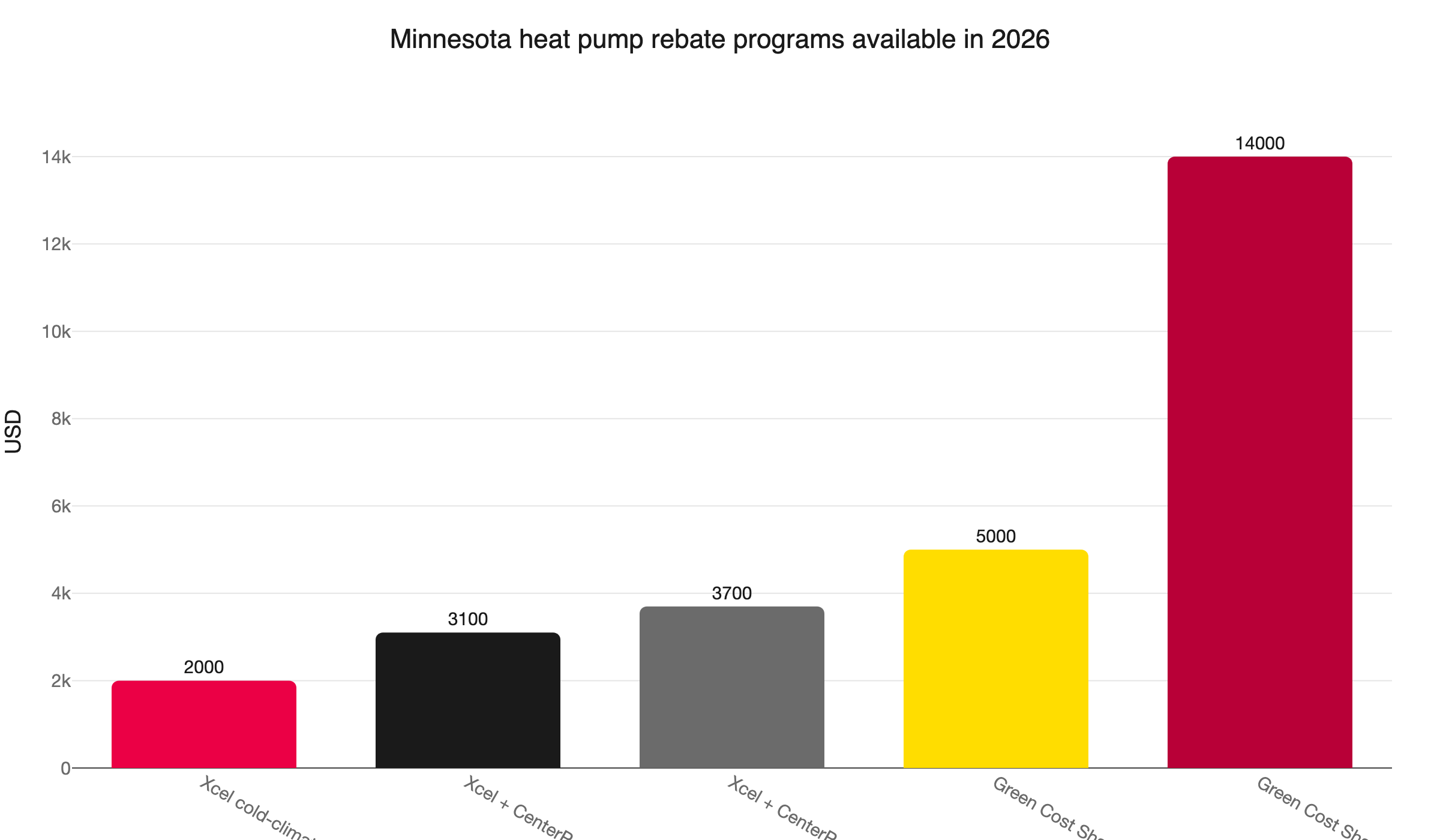
Minnesota heat pump rebate programs available in 2026
If you want to replace electric baseboard heat in Minnesota, you have three real paths - not one. This guide maps each option to a building type and shows what you actually pay in 2026 after stacking rebates.
## Why Is Electric Baseboard Heat So Expensive to Run in Minnesota?
Electric resistance heat converts electricity to heat at 100% efficiency. That number sounds good until you compare it to a heat pump, which moves three to four units of heat for every one unit of electricity it consumes.
Minnesota winters are long. Baseboards run from November through March, and sometimes into April. At current electricity rates, heating a home entirely with baseboard can cost two to three times more per BTU than a natural gas or heat pump alternative.
There is also a cooling gap. Baseboard does nothing in summer. Many homeowners on baseboard-only systems run [portable or window units](/blog/replacing-window-air-conditioners-central-ac-cost-twin-cities/) in July and August. A single replacement system handles both seasons together: one installation, one maintenance schedule, one rebate to claim.
## What Are the Three Paths to Replace Electric Baseboard Heat in Minnesota?
**Quick answer:** The three proven paths are ductless mini-split, small-duct high-velocity (SDHV), and hydronic boiler conversion. Each solves a different constraint. The right choice depends on your building type: condo with HOA restrictions, pre-1950 home with plaster walls, or a postwar home with accessible interior spaces.
Each path fits a different set of constraints. A homeowner in a Minneapolis condo where the HOA prohibits exterior line sets has a different problem than the owner of a 1912 bungalow with plaster ceilings and no existing ductwork. The sections below walk through each option in detail, then match each to a building type.
## Path 1: Ductless Mini-Split
A mini-split connects an outdoor compressor to one or more indoor air-handling heads through small refrigerant lines. No ductwork is required. The heads mount high on the wall and provide both heating and cooling from the same unit.
Modern cold-climate mini-splits are designed to operate well below zero. To qualify for Xcel Energy's top rebate tier, equipment must appear on the [NEEP cold-climate product list](https://ashp.neep.org) with a COP (coefficient of performance) of 1.75 or higher at 5°F.
One outdoor unit can serve multiple indoor zones. Each zone controls its temperature independently. A single-zone system runs [$3,000-$5,500 installed](https://filterbuy.com/heating-cooling/mini-splits/minnesota/adding-a-mini-split-ac-system-including-rebates-in-mn/) before rebates. Multi-zone systems - one outdoor unit serving two to four heads - run [$6,500-$14,500+](https://filterbuy.com/heating-cooling/mini-splits/minnesota/adding-a-mini-split-ac-system-including-rebates-in-mn/) before rebates, depending on the number of zones and the equipment tier.
**Best fit for:** Any room or home without existing ductwork. Additions and sunrooms. Properties where the exterior is accessible and no HOA restriction applies to line sets.
**Not a good fit for:** Condos where HOA rules prohibit exterior refrigerant line sets. Buildings where exterior wall penetration is structurally difficult or where the HOA controls all exterior surfaces.
## Is a Mini-Split Enough for a Minnesota Winter?
**Quick answer:** A qualifying cold-climate mini-split handles most of your heating load through a typical Twin Cities winter. But [Minneapolis-St. Paul's design temperature is -12°F](https://homeenergybasics.com/heat-pumps/states/mn), which is Climate Zone 6A. Backup heat - either an electric strip in the air handler or a gas furnace in a hybrid configuration - is required to cover the coldest nights reliably.
The dual-fuel hybrid is the highest-rebate path for most Twin Cities homeowners on natural gas. It pairs a cold-climate heat pump with a 92%+ AFUE gas furnace. The heat pump handles heating down to roughly 40°F. The furnace takes over when temperatures drop below the switchover point.
This configuration qualifies for both the Xcel Energy rebate and the CenterPoint dual-fuel rebate simultaneously. It is the only path that unlocks both utility programs at once. It typically delivers the lowest operating cost over the life of the equipment.
For a deeper look at how heat pumps perform when temperatures drop below zero, see our post on [heat pumps in Minnesota and whether they are a good fit](/blog/heat-pumps-in-minnesota-are-they-a-good-fit/).
## Path 2: Small-Duct High-Velocity (SDHV)
Small-duct high-velocity systems use [2-to-2.5-inch diameter flexible ducts](https://landing.unicosystem.com/choosing-a-small-duct-high-velocity-system-0) with a nylon inner core wrapped in insulation. These ducts thread through existing wall cavities, floor joist bays, and ceiling spaces. Plaster stays on the wall. Interior walls stay closed.
The supply outlets are small round discs that install in the ceiling or high on the wall. Air delivers at high velocity and mixes quickly with room air. The result is a system that [removes about 30% more humidity](https://callhero.com/blog/what-is-small-duct-high-velocity-hvac/) than a conventional ducted system - a real advantage during Minnesota's humid summers when indoor moisture makes a cooled space feel stuffy.
The central air handler connects to a heat pump or a gas furnace. The system delivers whole-home heating and cooling through ducts that route through existing framing without opening walls. A properly installed SDHV system achieves near-zero duct leakage, versus the 20-30% duct loss common in conventional ductwork.
**Best fit for:** Pre-1940 Minneapolis homes with plaster walls and no existing ductwork. Historic properties where wall restoration would be costly. Homeowners who want central, whole-home heating and cooling from a single system without disrupting their interiors.
**Not a good fit for:** Buildings where fire-blocking or structural framing between floors makes threading small-diameter ducts impossible. Spaces with no practical location for the central air handler.
For more on how SDHV compares to other options in older Twin Cities homes, see our post on [high-velocity HVAC for Twin Cities homes with no ductwork](/blog/high-velocity-hvac-older-home-no-ductwork-twin-cities/).
## Path 3: Hydronic Boiler Conversion
Hydronic baseboard looks nearly identical to electric baseboard from the outside. The enclosure and profile are the same. What changes is what runs inside: hot water through copper pipe and aluminum fins, instead of an electric element.
In a boiler conversion, a high-efficiency condensing gas boiler replaces your electric heat source. Hot water circulates through a loop running to each baseboard unit. In many older Minneapolis homes, the existing baseboard enclosure stays in place. Only the internal element is swapped for a fin-tube hot-water section fed by the new boiler.
A condensing boiler replacement in Minnesota starts at $9,100-$15,600 installed, depending on boiler size and whether zone valves, circulator pumps, or distribution piping also need replacement.
**Best fit for:** Condos where HOA rules prohibit exterior refrigerant line sets or exterior wall penetrations. Properties with existing hydronic distribution in the walls. Homeowners who want quiet, even heat without adding ductwork.
**Not a good fit for:** Homes without natural gas service. Properties where existing piping is in poor condition and would need full replacement alongside the boiler.
One important note: a boiler conversion provides heat only. If your condo has no cooling solution today, you still need one for summer. Many condo owners in this situation pair a hydronic boiler with a single small-zone ductless mini-split run in cooling-only mode on the warmest floors.
See our [boiler installation and replacement service](/heating/boiler-installation-replacement/) page for what a conversion project involves.
## Which Path Fits Your Building Type?
**Quick answer:** Condos with HOA restrictions: boiler conversion, or a mini-split if line sets are permitted. Pre-1950 homes with plaster walls: SDHV or mini-split depending on exterior wall access. Postwar ranch with attic or basement access: mini-split, SDHV, or a dual-fuel hybrid heat pump paired with a high-efficiency furnace.
**If you live in a condo:**
Start with your HOA documents. If exterior refrigerant lines or roof penetrations are restricted, a hydronic boiler conversion is your most practical option. If line sets are permitted and you have an accessible exterior wall, a single-zone mini-split can heat and cool the unit without touching any HOA-controlled common space.
**If you own a pre-1950 Minneapolis home:**
Plaster walls, no duct chase, and limited basement clearance all point toward SDHV. The 2.5-inch flexible ducts route through existing framing cavities and preserve the plaster ceilings that make older homes worth keeping. If your exterior is accessible and you prefer room-by-room control, a multi-zone mini-split is a strong alternative at a lower upfront cost.
**If you own a postwar home (roughly 1945-1975):**
These homes often have attic access, some existing partial ductwork, or open stud bays that make routing straightforward. A dual-fuel hybrid - cold-climate heat pump plus high-efficiency furnace - is typically the highest-rebate and lowest-operating-cost path. The furnace handles the deep-cold backup; the heat pump handles the swing seasons and summer cooling.
**A note on permits:**
Any replacement path requires a [mechanical permit under the Minnesota State Building Code](https://furnace.direct/blogs/news/minnesota-energy-code-furnace-requirements-2026). All gas appliance work must be performed by a licensed contractor. Our team handles the permit paperwork and can provide the documentation your HOA or building association may require before and after the project.
## How Do Minnesota Rebates Stack in 2026?
**Quick answer:** Xcel Energy pays up to $2,000 for a qualifying cold-climate mini-split. Pair it with a 92%+ AFUE gas furnace and add CenterPoint's dual-fuel rebate for $3,100 total. Add the Xcel insulation bonus for $3,700 total. Minneapolis homeowners can stack the [Green Cost Share](https://www.minneapolismn.gov/government/programs-initiatives/environmental-programs/green-cost-share/) on top for up to $14,000 more in a Green Zone.
Here is what each layer includes:
**Xcel Energy cold-climate mini-split rebate:** $2,000. Equipment must appear on the [NEEP cold-climate product list](https://ashp.neep.org) with a COP of 1.75 or higher at 5°F. Standard mini-splits that do not meet the cold-climate spec qualify for $1,600. No participating contractor is required. A homeowner can self-install and still claim the rebate.
**Xcel insulation and air sealing bonus:** An additional $600 if qualifying insulation is installed within two years of the heat pump. This stacks on top of the mini-split rebate.
**CenterPoint dual-fuel rebate:** $1,100 for a heat pump paired with a 92%+ AFUE gas furnace, with the switchover temperature set at 40°F or lower. This requires both a heat pump and a gas furnace. It does not apply to full-electric replacements or to standalone mini-splits without a gas backup.
**Minneapolis Green Cost Share:** Stacks on top of all utility rebates. Up to $14,000 inside a Green Zone, up to $5,000 outside one. Limited to 1-4 unit residential properties in Minneapolis. Funding is first come, first served.
**Save Energy Minnesota (HEAR):** A state income-qualifying program that could add $8,000-$12,000 for eligible households. As of September 2026, [this program has not launched and has no set date](https://mn.gov/commerce/energy/consumer/energy-programs/save-energy-mn.jsp). If your household might qualify, waiting may make financial sense. No retroactive rebates apply once a system is already installed.
For the complete guide to layering every available program, see our post on [stacking HVAC rebates and tax credits in Minnesota](/blog/stacking-hvac-rebates-tax-credits-federal-state-utility-minnesota/).
## What Happened to the Federal 25C Tax Credit?
**Quick answer:** The federal 25C energy-efficient home improvement tax credit, which had been worth up to $2,000 for qualifying heat pump installations, [expired December 31, 2025](https://homeenergybasics.com/heat-pumps/states/mn). It is not available for any system installed in 2026. State and utility rebates described above remain in effect.
Any quote or proposal from 2025 that includes a $2,000 federal tax credit is working from outdated information. Do not count on it. If you received a 2025 proposal with the credit factored into the net cost, ask for a revised quote before signing.
This change does not affect Xcel, CenterPoint, or the Minneapolis Green Cost Share programs. Those are currently active.
## What Does It Cost to Replace Electric Baseboard Heat in Minnesota?
**Quick answer:** A single-zone mini-split runs $3,000-$5,500 installed before rebates. SDHV pricing is site-specific and best quoted after a home assessment. A condensing boiler conversion starts at $9,100-$15,600 installed.
Here are realistic ranges for the Twin Cities market in 2026:
**Ductless mini-split, single zone:** $3,000-$5,500 installed before rebates. After Xcel's $2,000 cold-climate rebate, a qualifying single-zone system can net out under $3,500. Multi-zone systems serving two or more rooms run $6,500-$14,500+ before rebates.
**Small-duct high-velocity:** SDHV pricing depends on your home's square footage, the number of supply outlets needed, and the equipment tier. Request a Manual J load calculation and a site-specific quote. Budget in a range comparable to a full furnace installation combined with new ductwork.
**Hydronic boiler conversion:** $9,100-$15,600 installed for a condensing boiler in a typical Twin Cities home. Complexity increases - and cost goes up - if zone valves, circulator pumps, or distribution piping also need replacement.
**Ongoing maintenance:** Plan for an annual tune-up regardless of which path you choose. Tune-up visits typically run $95-$250. An annual maintenance plan costs $195-$390 and usually includes priority scheduling and discounts on parts.
**Financing:** For larger installations, financing options are available. Call us at (763) 260-6662 and we will walk you through terms before any work begins.
## Ready to Replace Your Electric Baseboard Heat?
Northern One Hour Heating & Air Conditioning is locally owned and operated in Ramsey, MN. Our team serves the full Twin Cities metro, including Minneapolis, St. Paul, Blaine, Maple Grove, Plymouth, Brooklyn Park, Woodbury, and the surrounding communities.
We will come to your home, assess your building type, and explain the replacement paths that actually fit your situation. Honest pricing upfront. No surprises after the work starts. "Always On Time… Or You Don't Pay a Dime!(R)".
Call us at (763) 260-6662 or book online to schedule your consultation.
---
# SEER2 Rating Explained: The Minnesota Homeowner's Guide
URL: https://northernonehour.com/blog/seer2-rating-explained-ac-efficiency-minnesota/
Published: 2026-09-11 | Category: Cooling
The 2023 SEER2 standard changed AC efficiency ratings. Learn what the number on your Minnesota quote means, why it looks lower, and what rebates it unlocks.
Key Takeaways
- SEER2 replaced the old SEER standard for all new central AC and heat pump equipment sold in the US starting January 1, 2023.
- SEER2 numbers run 4-7% lower than the old SEER for identical equipment. The test got harder, not the equipment worse.
- Minnesota's legal minimum is **14.3 SEER2** for split-system central AC (North region, Climate Zone 6A).
- You need at least **15 SEER2** to qualify for the Xcel Energy $200 rebate and the IRS 25C tax credit (up to $600 for central AC). At **17 SEER2**, the Xcel rebate jumps to $400.
- Minnesota's short cooling season makes the payback on premium efficiency thinner than national averages suggest. Rebates and credits close that gap.
- Ductwork condition shapes real-world efficiency as much as the SEER2 number on the spec sheet.
- Call (763) 260-6662 or [book a consultation](/air-conditioning/ac-installation/central-air/) to get a straight answer on what SEER2 rating makes sense for your home.
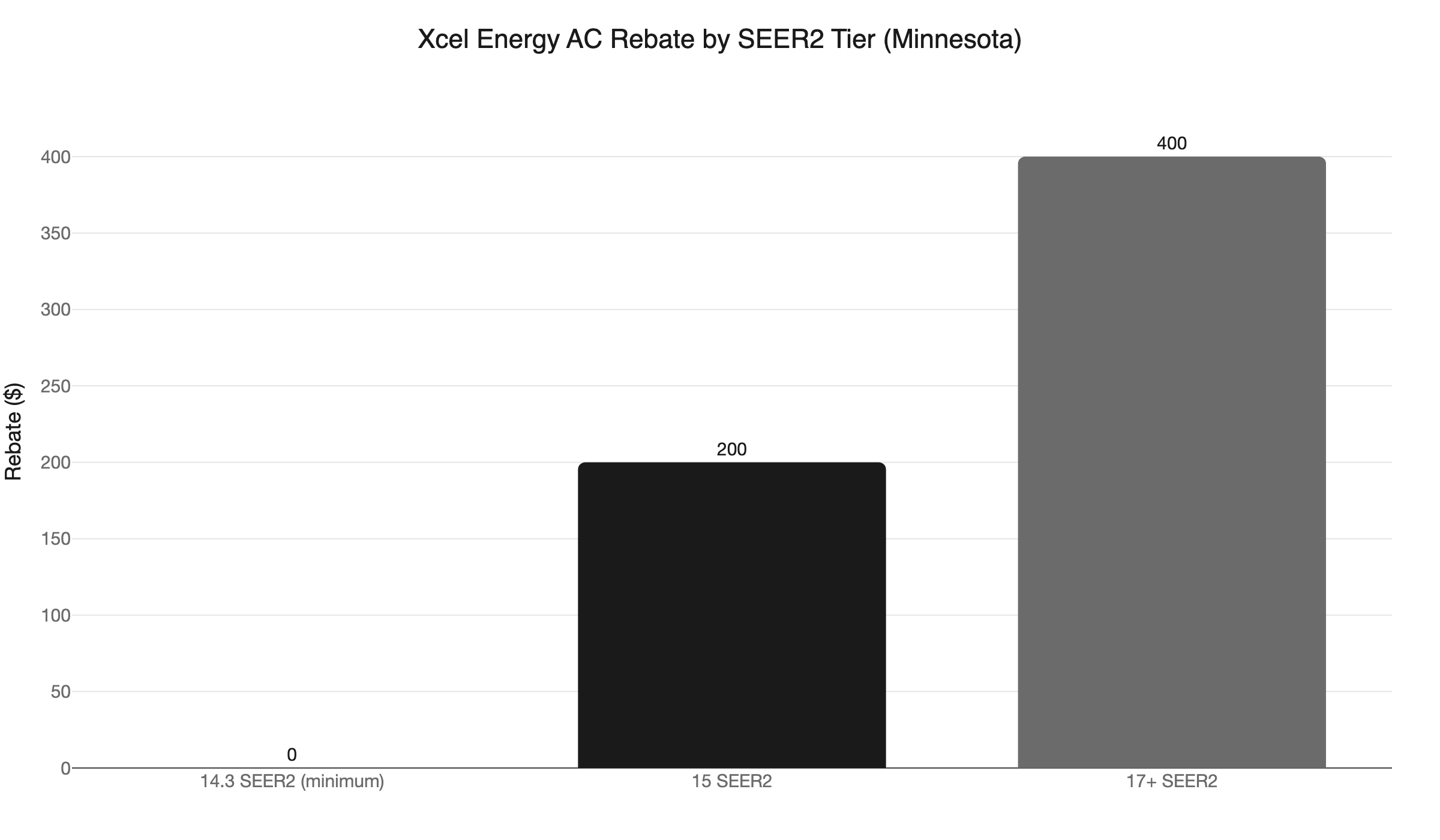
Xcel Energy AC Rebate by SEER2 Tier (Minnesota)
Getting a quote for a new central air conditioner can feel like reading a foreign language. The technician hands you a spec sheet with a rating like "14.3 SEER2" or "17 SEER2," and you have no easy way to know whether that is the legal bare minimum or a meaningful upgrade worth paying for. You may also notice that the number looks lower than an old quote you found in a file from five years ago - same brand, roughly the same price, but the rating is smaller.
That is not a mistake. The efficiency standard changed in 2023, and most contractors do not take time to explain what that actually means for a Minnesota homeowner.
## What Is SEER2?
SEER2 stands for Seasonal Energy Efficiency Ratio, version 2. It is the current federal standard for measuring how efficiently a central air conditioner or heat pump converts electricity into cooling over a full season. A higher number means more cooling output per dollar of electricity. As [Carrier describes it](https://www.carrier.com/residential/en/us/products/air-conditioners/): "The SEER2 rating of an air conditioner is much like miles per gallon (MPG) for a car."
The calculation works the same way the old SEER did: total BTUs of cooling delivered divided by watt-hours of electricity consumed, measured across a representative cooling season. What changed is how the test is conducted, not the underlying math.
The DOE updated the standard under [AHRI Standard 210/240-2023](https://www.federalregister.gov/documents/2022/01/03/2021-28081/energy-conservation-standards-for-central-air-conditioners-and-heat-pumps), with a compliance date of January 1, 2023. Any new central AC or heat pump manufactured or sold in the US after that date carries a SEER2 rating. Older equipment that was already rated under the original SEER standard stays labeled as-is. Only new sales and installations are subject to the updated rule.
## Why Does My New Quote Show a Lower Number Than My Old One?
The test got harder, not the equipment less efficient. That is the entire story, but the details matter for comparing quotes across years.
The original SEER test used an external static pressure of 0.1 inches of water column. That is essentially an ideal lab condition with almost no duct resistance. [The SEER2 test runs at 0.5 inches of water column](https://www.federalregister.gov/documents/2022/01/03/2021-28081/energy-conservation-standards-for-central-air-conditioners-and-heat-pumps) - five times higher - which much more closely simulates the resistance a real duct system puts on the equipment. Because the test is harder, SEER2 ratings run approximately 4-7% lower for identical equipment. A unit that would have scored SEER 15 under the old test earns roughly SEER2 14.3 under the new one.
This is particularly relevant for Twin Cities homeowners. Pre-1980 ramblers, 1960s split-levels, and 1970s two-stories throughout the metro often have flex duct runs that are undersized or have degraded over decades. The 0.5 iwc test condition is a much closer proxy to what those duct systems actually impose on an AC unit running on a humid July afternoon. The old 0.1 iwc test produced ratings that were sometimes difficult to achieve outside a controlled lab. SEER2 is simply more honest.
If you see a SEER2 14.3 quote today and remember a SEER 15 quote from five years ago for similar equipment at a similar price, those units perform at essentially the same real-world level. The 2023 unit is not inferior. The ruler changed.
## What Is the Minimum SEER2 in Minnesota?
**14.3 SEER2** for split-system central AC. That is the legal floor as of January 1, 2023. No contractor can install new or replacement central AC below this threshold in Minnesota.
The DOE divided the country into two efficiency regions. Minnesota falls in the North region, classified as [Climate Zone 6A](https://www.energy.gov/eere/buildings/climate-zone-map) - moist, heating-dominant, with cold winters and a cooling season that runs roughly June through August. The North minimum is 14.3 SEER2. The South and Southeast minimum is a higher 15 SEER2, because those regions run their AC many more hours per year and the payback on higher efficiency comes faster.
When a contractor quotes you 14.3 SEER2 for a Minnesota home, they are quoting the legal entry point - not a substandard or cut-rate product. It is fully capable equipment. The question is whether stepping up to 15, 17, or higher justifies the premium cost, given what those thresholds unlock in rebates and credits.
It also helps to know that the 14.3 SEER2 North minimum is effectively equivalent in real-world cooling performance to the old SEER 15 minimum. The standard actually rose when you account for the stricter test. A homeowner who bought a "SEER 13" unit fifteen years ago and is now getting a "14.3 SEER2" replacement is moving to meaningfully better efficiency - the label just does not make that obvious at first glance.
## What Does a Higher SEER2 Unlock for Minnesota Homeowners?
Going above the 14.3 SEER2 floor opens two significant financial incentives: a utility rebate from Xcel Energy and a federal tax credit. Both have specific SEER2 thresholds. Both stack with each other.
### Xcel Energy rebates
Xcel Energy serves most Twin Cities metro customers for electricity. Their residential central AC rebate program currently offers $200 for units rated at 15 SEER2 or higher, and $400 for units rated at 17 SEER2 or higher. Verify the current amounts directly at [Xcel's rebate page](https://www.xcelenergy.com/programs_and_rebates/residential_programs_and_rebates/heating_and_cooling) before signing a contract - program amounts change between annual cycles, and the dollar figures above should not be treated as guaranteed until confirmed against the current program year.
One useful note for homeowners replacing both a furnace and an AC at the same time: Xcel rebates cover the AC side (which runs on electricity). CenterPoint Energy or Minnesota Energy Resources rebates may apply to the furnace side (which runs on natural gas) through separate programs. They do not compete with each other; you may be able to capture both. Our guide to [stacking HVAC rebates and tax credits in Minnesota](/blog/stacking-hvac-rebates-tax-credits-federal-state-utility-minnesota/) walks through how to combine them effectively.
### IRS 25C tax credit
The [Energy Efficient Home Improvement Credit under Section 25C](https://www.irs.gov/credits-deductions/energy-efficient-home-improvement-credit) equals 30% of the installed cost of qualifying central AC, capped at $600 per year. For qualifying heat pumps, the cap is a higher $2,000. The credit applies to installations through December 31, 2025 under current law.
To qualify, equipment must meet the CEE (Consortium for Energy Efficiency) Tier 1 thresholds for the North region: 15 SEER2 and 12.5 EER2. CEE Tier 2, which some utility programs treat as a separate qualifying level, requires 17 SEER2 and 12.5 EER2.
The minimum 14.3 SEER2 unit does not qualify for 25C. You need to reach at least 15 SEER2 to unlock it. Since 15 SEER2 is also the bottom of the Xcel $200 rebate tier, clearing 15 SEER2 activates two incentives at once. That makes 15 SEER2 the first meaningful threshold above the legal floor for most Minnesota homeowners.
### ENERGY STAR certification
[ENERGY STAR Version 5.0](https://www.energystar.gov/products/heating_cooling/central_air_conditioning) for central AC in the North region requires 15.2 SEER2 and 12.5 EER2. Some utility programs use ENERGY STAR certification as the qualifying threshold rather than raw SEER2 numbers. Confirm which standard your utility program references when you apply for a rebate.
## Why Doesn't a Higher SEER2 Always Pay Off Faster in Minnesota?
Minnesota's cooling season is short - and that changes the math in a way most manufacturer literature ignores.
Minneapolis averages roughly 700-800 cooling degree days per year. Houston is around 2,800. Phoenix is near 4,000. The fewer hours your AC runs each year, the smaller the annual energy savings from a higher SEER2 rating. A 20 SEER2 unit might pay for its premium over a 16 SEER2 unit in 3-4 years in Phoenix. In Minneapolis, the same comparison might take 8-12 years before the energy savings recover the cost difference.
This does not mean high-efficiency equipment is a bad investment in Minnesota. It means the financial case rests more heavily on rebates and credits than on raw energy savings. A $1,000 combined stack of a $400 Xcel rebate and a $600 25C credit against a mid-tier AC installation - which runs $7,500-$10,400 installed in the Twin Cities - meaningfully shortens the payback window.
Going from 15 to 17 SEER2 to capture the $400 Xcel tier (up from $200) typically costs a few hundred dollars more in equipment. If that same step also satisfies CEE Tier 2, the incentive math often supports the upgrade.
Going from 17 to 20 SEER2 is harder to justify purely on numbers here. High-efficiency central AC in the Twin Cities starts around $11,000 and can reach $15,600 installed for top-tier units. There is no additional Xcel rebate tier above 17 SEER2, and the 25C credit caps at $600 regardless of how far above 15 SEER2 you go. Our guide on [AC replacement costs in Minnesota](/blog/ac-replacement-cost-minnesota/) covers what the installed price ranges look like across efficiency tiers.
For a detailed look at how the short cooling season shapes the payback math on different efficiency tiers, see our post on [AC replacement payback in a short Minnesota cooling season](/blog/ac-short-cooling-season-replacement-payback-minnesota/).
## What About Heat Pumps and SEER2?
Heat pumps carry a SEER2 rating for cooling and an HSPF2 rating for heating. For Minnesota homeowners considering a heat pump, the SEER2 number alone does not tell the full story.
Minneapolis has a design temperature around -13 degrees F. A heat pump that performs well at moderate temperatures but loses significant heating capacity below 20 degrees F is not a reliable primary heat source in Zone 6A. Cold-climate heat pumps rated to -13 degrees F or colder are the only models worth quoting in the Twin Cities. Evaluate SEER2 alongside low-temperature heating capacity - do not let a high SEER2 number distract from whether the unit can actually heat your home in February.
The 25C credit is more generous for heat pumps: 30% of installed cost with a $2,000 cap, compared to $600 for central AC. That higher cap reflects the larger installed cost and the fact that a heat pump replaces both your AC and your primary heating source. If you are exploring a heat pump, ask specifically about cold-climate models and make sure the SEER2 conversation includes an HSPF2 discussion.
## The Ductwork Caveat Most Contractors Skip
The SEER2 number on your quote is only as good as the duct system delivering the air to your rooms.
SEER2 is tested at 0.5 inches of water column. That is more realistic than the old test, but it is still a controlled condition. In an older Twin Cities home with undersized or deteriorated duct runs, actual resistance often exceeds the test condition. A leaky duct system can erase 20-30% of any efficiency gain regardless of what the SEER2 label says.
In practical terms: a 14.3 SEER2 unit installed into a well-sealed, correctly sized duct system can outperform a 20 SEER2 unit installed into a leaky one. Before you spend significantly more for higher-efficiency equipment, it is worth asking your contractor to assess the duct system. Addressing major leaks or undersized runs often delivers more real-world comfort and efficiency improvement than stepping up two or three SEER2 tiers.
Proper equipment sizing matters for the same reason. We size systems using Manual J load calculations - the method that accounts for your home's actual square footage, insulation levels, window area, orientation, and air leakage. An oversized AC short-cycles regardless of its SEER2 rating. It removes less humidity, leaves rooms feeling clammy, and wears out faster. Getting the size right is foundational to any efficiency investment paying off.
## How to Read the SEER2 Number on Your Quote
When a technician hands you a proposal, here is a straightforward framework:
- **14.3 SEER2:** Legal minimum for Minnesota. Fully capable equipment. Does not qualify for Xcel rebates or the 25C credit. A reasonable choice for homeowners focused on keeping installed cost down, or for a home they do not plan to own long-term.
- **15-15.2 SEER2:** Qualifies for the $200 Xcel rebate. Meets ENERGY STAR Version 5.0 at 15.2. Meets CEE Tier 1 for the 25C credit at 15 SEER2 / 12.5 EER2. This tier is often the best balance of upfront cost and incentive capture in Minnesota.
- **17 SEER2:** Qualifies for the $400 Xcel rebate. Meets CEE Tier 2. The combined rebate and credit stack makes this tier financially defensible even at a higher equipment price for homeowners staying in the home 10 or more years.
- **18-21 SEER2:** Premium efficiency. Worth considering for homes with strong summer cooling loads, good ductwork, and long-term ownership plans. Run the numbers on payback before committing at these price points.
## What Northern One Hour Will Tell You Straight
We are locally owned and operated in Ramsey, MN - not a national call center routing you to whoever is closest. Our technicians work across the Twin Cities every day: Ramsey, Blaine, Maple Grove, Plymouth, Brooklyn Park, Minneapolis, Woodbury, Bloomington, and throughout the metro. We understand how Minnesota cooling seasons actually work, which is nothing like the markets that most national efficiency calculators were built around.
When we quote you a SEER2 number, we tell you exactly which rebate and credit tiers it hits, what the installed cost looks like across efficiency levels, and whether your duct system warrants attention before you invest in higher-efficiency equipment. We do not push the most expensive unit on the spec sheet. We explain the payback math honestly and size systems correctly using Manual J.
Every installation is backed by our 100% satisfaction guarantee. And we show up when we say we will - that is not a slogan. It is covered by our commitment to every customer: "Always On Time... Or You Don't Pay a Dime!(R)."
Call (763) 260-6662 or [schedule your consultation online](/air-conditioning/ac-installation/central-air/). If you have a quote in hand and want to understand what the SEER2 number on it actually means for your home and your budget, that is exactly the conversation we are here for.
---
# Combi Boiler vs Separate Water Heater: Minnesota Guide
URL: https://northernonehour.com/blog/combi-boiler-space-heating-hot-water-cost-minnesota/
Published: 2026-09-10 | Category: Heating
A combi boiler eliminates the storage tank - but does it deliver in a Minnesota winter? Real installed cost, efficiency, rebates, and home-fit guidance.
Key Takeaways
- A combi boiler combines home heating and domestic hot water in one condensing unit, eliminating the storage tank entirely.
- Minnesota groundwater runs approximately 48-50°F. Most combi specs are rated at a 70°F rise. Delivering 120°F water from 48°F incoming requires a 72°F rise, which pulls effective flow rate below the brochure number.
- Most combi boilers give hot water priority over space heating. During a -20°F Minnesota night with a system running near capacity, that pause matters more than it does in a mild climate.
- Combi setups work best in 1-2 bathroom homes of 1,200-2,000 sq ft with tight mechanical rooms and moderate hot water demand.
- Three or more bathrooms, recirculation lines, high heating loads, or a boiler still mid-life all tip the balance toward a solo boiler with a separate water heater.
- Xcel Energy eliminated all gas boiler rebates in 2026. CenterPoint Energy still offers up to $300 for qualifying boilers and $750 for qualifying tankless water heaters.
- The federal 25C tax credit covers 30% of project cost, up to $600 for boilers, and stacks with CenterPoint rebates.
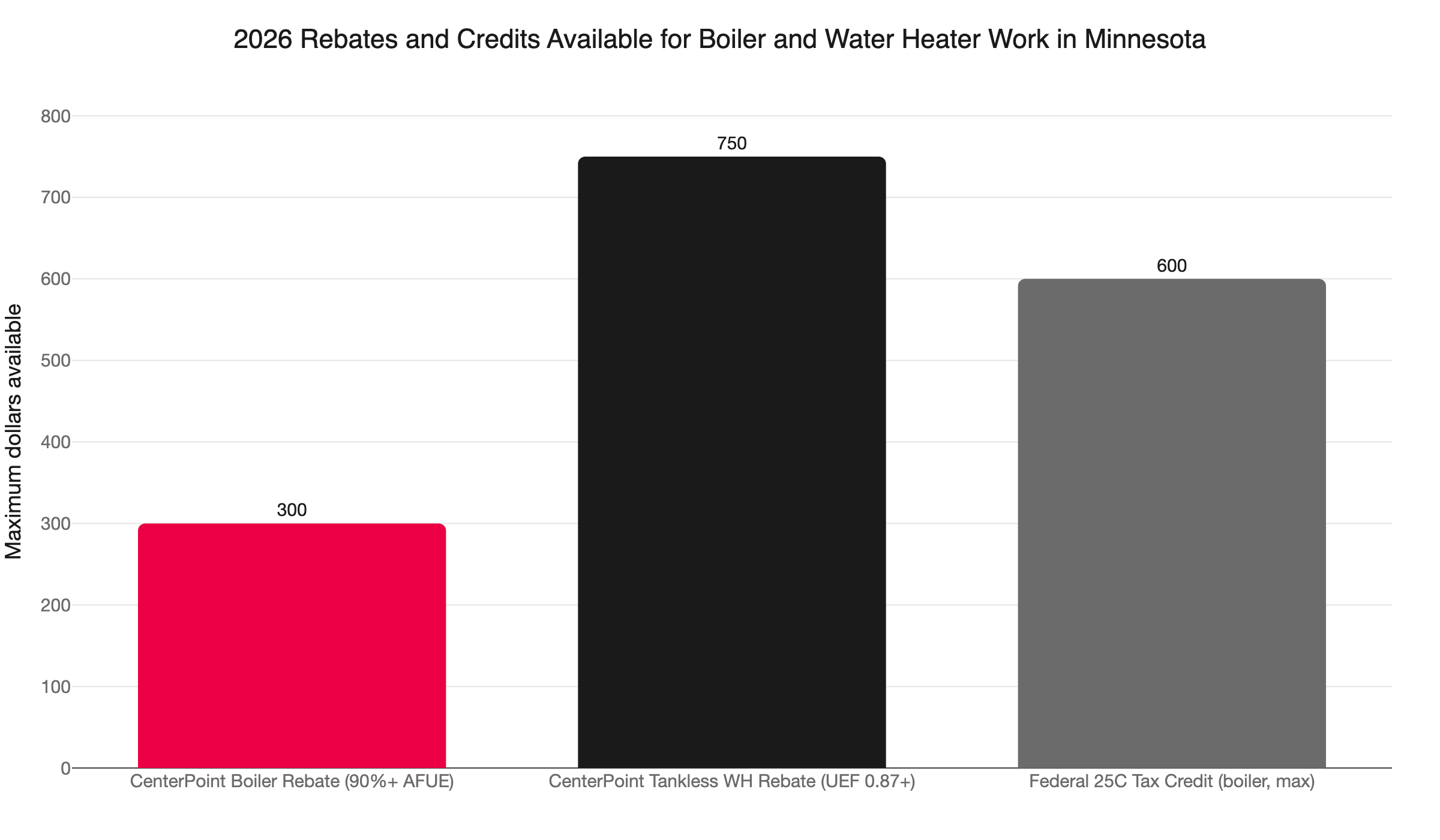
2026 Rebates and Credits Available for Boiler and Water Heater Work in Minnesota
## What Is a Combi Boiler, and How Is It Different from a Solo Boiler?
A combination boiler, or combi boiler, is a condensing gas appliance that does two things. It heats your home through radiators or in-floor tubing. It also heats domestic hot water on demand. There is no storage tank. When you open a faucet, the boiler fires and pushes water through a secondary heat exchanger before it reaches your tap.
The main appeal is simplicity. One appliance, one service call, one maintenance visit per year. In a tight mechanical room, eliminating a 40-50 gallon storage tank frees up real, usable space.
The tradeoff is that hot water output is capped. A combi does not store water; it heats it in real time. [TriangleTube describes it plainly](https://triangletube.com/blog/combi-boilers-vs-solo-boilers-for-domestic-water/): the output is "endless up to a cap," not infinite. That ceiling becomes a real constraint in Minnesota, which the sections below explain.
A solo boiler with an indirect tank works differently. The boiler heats a separate, insulated storage tank. Hot water sits ready at volume. You can run two showers and the dishwasher at the same time without hitting a flow ceiling. You can also add a recirculation line so hot water arrives at a distant faucet quickly.
Both setups run on natural gas. Both can achieve high AFUE ratings. The difference is in how they handle simultaneous demand, mechanical room space, and long-term complexity.
## Combi Boiler vs Separate Water Heater: How Does Minnesota Cold Change the Math?
**Quick answer:** Minnesota groundwater sits at approximately 48-50°F. Most combi spec sheets rate flow at a 70°F temperature rise. Delivering 120°F water from 48°F incoming requires a 72°F rise - slightly above spec. Your actual flow rate will run a few tenths of a GPM lower than the brochure number.
The performance gap is real and worth understanding before you buy.
[Navien's NCB-H combi is rated at 5.4 GPM at a 70°F temperature rise](https://www.navieninc.com/blog/notice/combi-boiler-pros-cons). The manufacturer cites three simultaneous showers plus a dishwasher at that rate. But [Twin Cities groundwater at 10-foot depth runs around 48-50°F](https://www.bradleycorp.com/sizing-tankless-water-heaters/united-states-groundwater-temperatures). With a delivery target of 120°F, the required temperature rise is 72°F. That two-degree difference trims effective output below the rated spec.
Across brands, [combi DHW flow ranges from roughly 2.6 to 5.5 GPM at a 45°F rise](https://www.rinnai.us/announcements/rinnais-e-series-combi-boilers-are-the-industrys-most-efficient-option). That rate drops as the required rise increases. In Minnesota, you are always working at the high end of the rise requirement.
The practical ask before you buy: request the rated GPM at a 72°F temperature rise, not the 70°F figure on the spec sheet. A one-bathroom home will rarely notice the gap. A 2.5-bath home running concurrent loads on the coldest January morning can feel it clearly.
## What Does a Combi Boiler Cost to Install in Minnesota?
**Quick answer:** Installed condensing boiler costs at Northern One Hour typically run $9,100-$15,600 for a residential Twin Cities replacement. Combi units fall in the same range. Equipment alone can be around $1,300 before labor and materials, but all-in costs compress the gap between a combi and a boiler-plus-tank setup.
[Angi reports the average boiler replacement in Minneapolis at $7,896, with a market range of $3,201-$13,171](https://www.angi.com/articles/how-much-does-boiler-installation-cost/mn/minneapolis) depending on unit type and scope. Minnesota construction costs run about 6% above the national average. Skilled HVAC labor in the metro averages approximately $51 per hour.
One cost item that catches homeowners off guard: recirculation. If your home has a hot water recirculation loop, a combi setup requires a buffer tank to support it. That adds parts and labor. A solo boiler with an indirect tank handles recirculation natively, without the buffer. The space savings and simplicity argument for the combi weakens considerably once the buffer tank goes back in.
For a deeper look at what drives installed cost up or down on condensing boiler work in the Twin Cities, see our guide on [condensing boiler upgrades for Minnesota homes](/blog/condensing-boiler-upgrade-cost-minnesota/).
## What Rebates Are Available for Boiler Work in Minnesota in 2026?
**Quick answer:** Xcel Energy dropped all gas boiler rebates on January 1, 2026. CenterPoint Energy still offers $200-$300 for qualifying boilers at 90%+ AFUE and $750 for qualifying tankless water heaters. The federal 25C tax credit adds up to $600 for boilers and stacks with utility rebates.
The rebate landscape shifted significantly this year. [Xcel Energy eliminated all gas furnace and boiler rebates effective January 1, 2026](https://centralminnesotaheatingandcooling.com/blog/xcel-centerpoint-hvac-rebates-2026). If your home runs on Xcel gas service, there is no utility rebate on the boiler side for 2026.
CenterPoint Energy customers still have options. [CenterPoint's 2026 program offers $200-$300 for boilers at 90%+ AFUE](https://centralminnesotaheatingandcooling.com/blog/xcel-centerpoint-hvac-rebates-2026). Verify the exact tier with a CenterPoint Trade Ally before purchase. If the combi unit also qualifies as a tankless water heater at UEF 0.87 or higher, [CenterPoint offers a $750 replacement rebate](https://centralminnesotaheatingandcooling.com/blog/xcel-centerpoint-hvac-rebates-2026) on that component separately.
On the federal side, the [25C tax credit covers 30% of project cost, capped at $600 for boilers](https://allprohvacminneapolis.com/how-to-claim-every-centerpoint-and-xcel-energy-rebate-for-your-new-hvac-system/). That stacks on top of any CenterPoint rebate. A CenterPoint customer who qualifies for both the boiler rebate and the tankless DHW rebate could see $950-$1,350 in combined incentives before applying the federal credit. Verify current terms in the official [CenterPoint 2026 Trade Ally Resource Guide](https://www.centerpointenergy.com/en-us/Documents/Natural-Gas-Minnesota/2026-MN-Res-Trade-Ally-Resource-Guide.pdf) before you commit.
## Efficiency: Is a Combi Boiler Actually More Efficient in Minnesota?
[Gas condensing combis run 90-95% AFUE](https://www.navieninc.com/blog/notice/combi-boiler-pros-cons) on the heating side. Eliminating the storage tank removes standby losses - the energy a tank burns keeping 40-50 gallons hot around the clock, whether or not anyone uses it. [Condensing combis use roughly 10-15% less energy per liter than a conventional tankless or tank water heater at equivalent output](https://www.usboiler.net/what-is-a-combi-and-which-is-best-2022.html).
In practice, the efficiency advantage is real but narrower than the marketing suggests. A condensing solo boiler paired with a well-insulated indirect tank also runs 90-95% AFUE. The standby loss from a modern indirect tank is lower than from a conventional atmospheric storage tank. Eliminating standby loss entirely is meaningful - but it is not the dramatic step-change the brochures imply.
The efficiency risk unique to combis is undersizing. A unit pushed to its ceiling on a -20°F night runs less efficiently than a properly sized unit with headroom. [Minneapolis-Saint Paul has a 7+ month heating season with winter lows that regularly reach -20°F](https://en.wikipedia.org/wiki/Climate_of_Minneapolis%E2%80%93Saint_Paul). Sizing a combi for that environment requires a Manual J heat load calculation specific to your home. A contractor who skips that step is guessing. An undersized combi costs you money every month.
## Which Minnesota Homes Are a Good Fit for a Combi Boiler?
**Quick answer:** Combi boilers suit 1-2 bathroom homes of 1,200-2,000 sq ft where hot water demand is moderate, the mechanical room is tight, and the owner prefers one system to maintain. If five of the six criteria below describe your home, a combi is worth a detailed quote.
Here is the specific profile that makes a combi a sound choice in the Twin Cities:
- **1-2 bathrooms.** Peak hot water demand stays within the unit's flow ceiling.
- **1,200-2,000 sq ft.** The heating load fits the combi's capacity without running it at its limit on the coldest days.
- **Tight mechanical room.** Eliminating the storage tank is a genuine space gain, not a theoretical one.
- **Moderate hot water demand.** No simultaneous heavy draws - no two showers running while the laundry cycles.
- **No recirculation need.** Fixtures sit close enough to the mechanical room that the wait for hot water is acceptable.
- **Preference for simplicity.** One annual [boiler maintenance visit](/blog/boiler-annual-maintenance-what-to-expect-minnesota/) covers both heating and hot water.
When most of those bullets describe your home, a combi is worth a serious look and a flow-rate conversation with your installer.
## Combi Boiler vs Separate Water Heater: Which Homes Do Better with a Solo Setup?
**Quick answer:** Three or more bathrooms, simultaneous peak draws, recirculation lines, high heating loads, or a boiler still mid-life all tip the balance toward a solo boiler paired with a separate indirect tank or water heater.
Here is when the separate-system approach wins:
- **3+ bathrooms.** Two showers running while the dishwasher cycles can push demand past what most combi units can deliver. The result is lukewarm water at the second fixture.
- **Homes with recirculation lines.** [A solo boiler with an indirect tank supports hot-water recirculation natively](https://triangletube.com/blog/combi-boilers-vs-solo-boilers-for-domestic-water/). A combi can handle recirculation, but it requires a buffer tank - adding back the cost and complexity you were trying to eliminate.
- **Large homes with high heating loads.** When the boiler is already working hard to hold indoor temperature at -20°F, a DHW priority interruption becomes noticeable. Zones at the far end of the hydronic loop cool faster than they recover.
- **Existing boiler still mid-life.** If your current boiler has 5-8 useful years left and only the water heater needs replacing, swap the water heater. Replacing a working boiler just to eliminate the tank rarely pencils out, even with rebates.
- **Fixtures far from the mechanical room.** Long pipe runs without a recirculation loop mean a long wait for hot water. A combi has no stored volume to push through the line quickly.
The solo boiler with an indirect tank has been the standard in Minnesota homes for good reasons. It handles volume, peak loads, and recirculation without compromise.
## The Peak-Load Problem That Minnesota Winters Expose
Most combi boilers prioritize domestic hot water over space heating. When you open a hot water tap, the boiler shifts its capacity to DHW. Space heating pauses.
In a mild climate, that pause is brief. No one notices.
In Minneapolis on a -20°F night, the system is often already running near full capacity just to hold 68°F indoors. A hot water draw interrupts that work. In a properly sized combi with headroom, the pause lasts a few seconds and the boiler catches up quickly. In an undersized combi - or in a larger home where the heating load already pushes the unit hard - the interruption is long enough that zones cool noticeably before heat resumes.
This is the scenario that national comparisons and manufacturer specs almost never address. It is not a reason to rule out a combi. It is a reason to insist on a Manual J calculation before sizing, and to right-size the unit for Minnesota's design temperatures. Our team will not quote a combi without running that calculation first.
## What Are the Permit Requirements for Boiler Replacement in the Twin Cities?
**Quick answer:** Local mechanical permits are required for boiler installation across the Twin Cities metro, regardless of state-level residential exemptions. Your licensed contractor pulls the permit before work begins. If a contractor offers to skip it to lower the price, that is a warning sign.
[Minnesota Statutes 326B.988 exempts residential buildings with five or fewer units from state boiler pressure-vessel registration](https://www.revisor.mn.gov/rules/1346/full). That exemption does not remove the local mechanical permit requirement. Minneapolis and Saint Paul can set requirements above the state minimum, and in some cases they do. Verify with your local building department before any work is scheduled.
The [Minnesota Department of Labor and Industry](https://www.dli.mn.gov/workers/boiler-engineers) oversees boiler engineers and high-pressure permits at the state level. For residential hot water boilers - the type in most Twin Cities homes - the local mechanical permit is what matters in practice.
An unpermitted boiler can complicate a home sale, void the manufacturer warranty, and leave you without recourse if something goes wrong. For more on what to watch for when selecting a contractor, see our guide on [HVAC contractor red flags in the Twin Cities](/blog/hvac-contractor-red-flags-twin-cities/).
## Ready to Choose? Here Is How Northern One Hour Helps
The combi boiler vs. separate water heater question in Minnesota does not have a single right answer. It depends on your home's size, bathroom count, hot water habits, mechanical room layout, and utility provider.
Here is how our locally owned and operated team works through it for Twin Cities homeowners:
1. We assess your actual heating load and hot water demand - specific to your home, not a national average.
2. We give you the rated flow at a 72°F temperature rise, not the 70°F figure on the spec sheet, so you know what to expect in a Minnesota winter.
3. We lay out both options with real installed cost ranges and current rebate eligibility.
4. We pull the permit, do the work, and back it with our 100% satisfaction guarantee.
Whether the answer is a combi or a solo boiler with an indirect tank, you will understand the reasoning before any equipment is ordered. We stand behind every job with our commitment: "Always On Time… Or You Don't Pay a Dime!(R)"
Call us at **(763) 260-6662** or [schedule a boiler consultation online](/heating/boiler-installation-replacement/) today. If you want to see what an annual service program looks like for your boiler system before you commit to a new unit, start with our overview of [boiler maintenance for Minnesota homeowners](/blog/boiler-annual-maintenance-what-to-expect-minnesota/).
---
# Electrical Panel Upgrade for Heat Pump: Twin Cities Costs
URL: https://northernonehour.com/blog/heat-pump-electrical-panel-upgrade-requirements-minnesota/
Published: 2026-09-10 | Category: Heating
A panel upgrade for a heat pump runs $7,700-$9,500 in the Twin Cities. Learn why national estimates fall short and how to stack rebates to close the gap.
Key Takeaways
- An electrical panel upgrade for a heat pump in the Twin Cities costs **$7,700 to $9,500 installed.** National averages of $2,000-$5,000 do not apply here.
- Minnesota's 2023 electrical code requires a whole-home surge protector and an outdoor emergency shutoff on every service upgrade. Both are included in that installed price.
- Xcel Energy must coordinate the disconnect and reconnect before and after the work. Plan for extra lead time.
- A 3-ton heat pump requires a dedicated 240V circuit drawing 30 to 40 amps. Cold-climate units designed for Minnesota winters often draw at the higher end of that range.
- Income-qualified homeowners can stack Xcel ($1,500), the HEAR program ($4,000), and the IRS 25C heat pump credit ($2,000) for up to $7,500 in total offsets.
- Northern One Hour handles the HVAC side. Call **(763) 260-6662** or book online to start with a heat pump assessment.
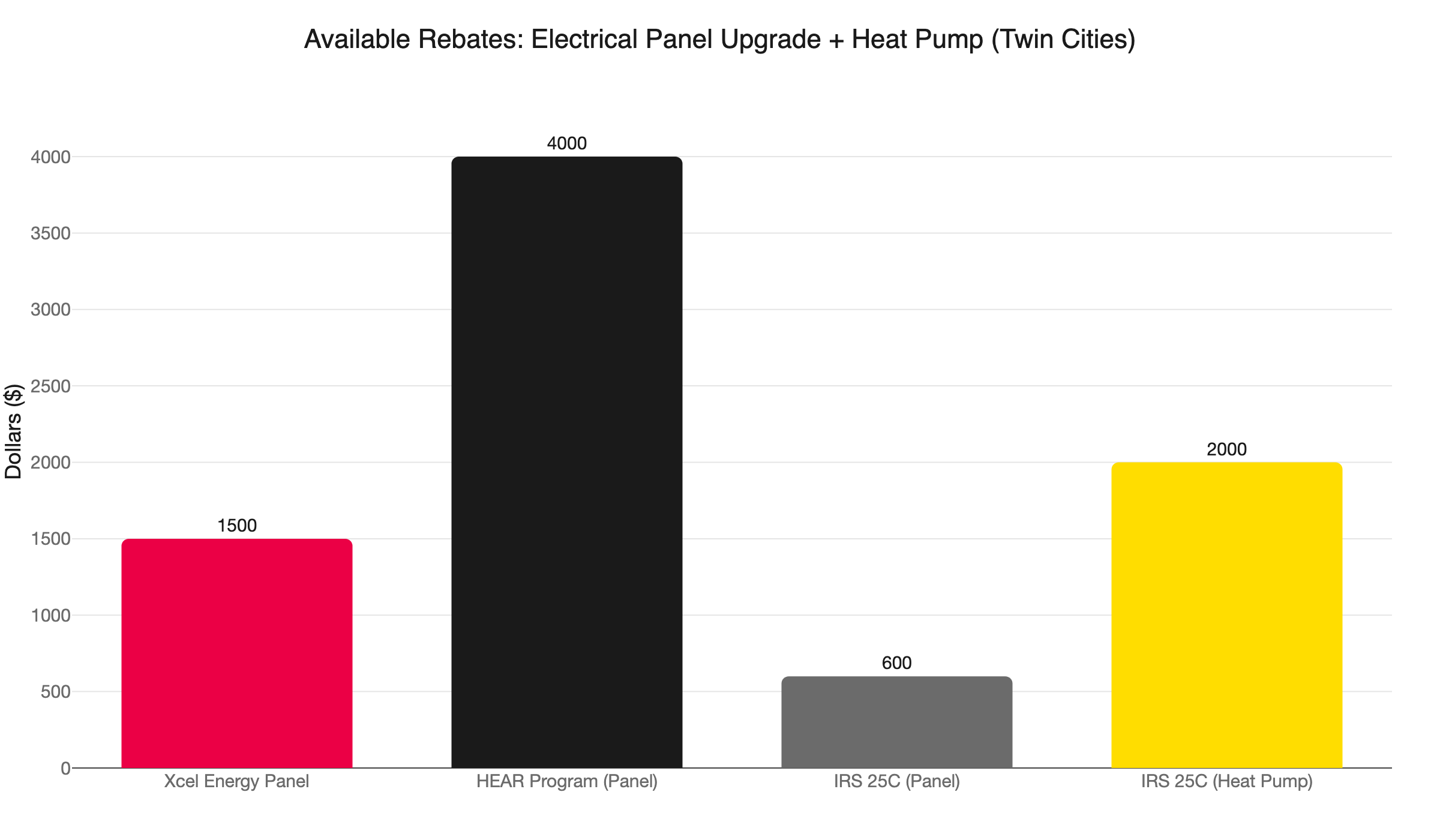
Available Rebates: Electrical Panel Upgrade + Heat Pump (Twin Cities)
## The Number That Stops Heat Pump Projects Cold
A homeowner reads an article about switching to a heat pump. The article mentions a panel upgrade might be needed. It quotes a cost of $2,000 to $5,000. The homeowner notes it and moves on.
Then they call a local electrician. The quote is $8,500.
Nothing is wrong with that quote. The homeowner just got their first look at what an electrical panel upgrade for a heat pump actually costs in the Twin Cities.
National cost articles draw on national averages. They do not account for Minnesota's code cycle, Xcel Energy's role in every service upgrade, or Twin Cities labor rates. All three push the number well above what you read online. A homeowner who budgets $3,000 and receives an $8,500 quote does not have a dishonest contractor. They have a budget gap nobody warned them about.
This post covers what the Twin Cities job actually includes, why the number lands where it does, and how to stack rebates that can erase most of the difference. If you are budgeting a heat pump project right now, these are the numbers to use.
---
## Does Every Heat Pump Require an Electrical Panel Upgrade?
**Short answer:** No, but most older Twin Cities homes do. The only way to know for certain is a load assessment by a licensed electrician.
A 3-ton heat pump requires a [dedicated 240V circuit drawing 30 to 40 amps](https://www.prairielectric.com/uncategorized/is-your-panel-ready-heat-pump-electrical-requirements/), plus a double-pole breaker occupying two adjacent slots in your panel. If you are on 100-amp service and your panel is already carrying a dryer, an electric range, a water heater, and possibly an EV charger, the available capacity may simply not exist.
Units with [electric backup heat strips draw even higher amperage](https://alternativeaire.com/heat-pump-electrical-requirements-checklist/) and can require a second dedicated breaker. For a Minnesota climate, backup strips are not optional equipment. When outdoor temperatures drop well below zero, the heat pump compressor alone cannot always keep up. The strips engage.
Inverter-driven, variable-speed units ramp up gradually and produce a lower startup surge than single-stage units. That helps with breaker sizing. But the sustained running load is what a panel assessment focuses on, not just the startup current.
Nationally, roughly 25 to 35 percent of heat pump installs require a panel upgrade. In Minnesota, older housing stock and cold-climate units that run harder both push that share higher. If your home was built before 1980 and still runs on 100-amp service, assume an upgrade is in your future.
---
## What Does an Electrical Panel Upgrade for a Heat Pump Cost in the Twin Cities?
**Short answer:** A [100-to-200-amp service upgrade in the Twin Cities runs $7,700 to $9,500 installed](https://3riverselectricmn.com/200-amp-service-upgrade/). A 150-amp upgrade is approximately $8,100. A sub-panel without a service upgrade costs $1,400 to $2,300.
The national range quoted in most articles is $2,000 to $5,000. That figure reflects national average labor and does not include Minnesota-specific code items. In rural Minnesota, the range is [$1,800 to $4,500](https://bhelectric.ltd/electrical-panel-upgrade-cost-minnesota/), still below the metro figure. The Twin Cities premium has a specific cause, which the next section breaks down.
---
## Why Is the Twin Cities More Expensive Than the National Average?
**Short answer:** Three things drive the gap: Minnesota's 2023 electrical code adds mandatory line items, Xcel Energy controls the service entrance and must schedule every disconnect, and Twin Cities labor rates exceed the national average.
**Minnesota's 2023 electrical code.** Minnesota adopted the 2023 NEC. That code requires a whole-home surge protector and an outdoor emergency shutoff on every service upgrade. These are not optional upsells. They are required to pass inspection. The [whole-home surge protector runs approximately $527 as a standalone line item](https://3riverselectricmn.com/200-amp-service-upgrade/). The outdoor emergency shutoff adds hardware and labor on top of that. Both are baked into the $7,700 to $9,500 figure.
**Xcel Energy's role.** Xcel owns the service entrance up to the meter. Before your electrician can work on the meter socket and service panel, Xcel must schedule a disconnect. After the inspection passes, Xcel must reconnect. You cannot coordinate this on a Saturday morning. The Xcel scheduling step adds lead time to the job. Most homeowners do not find this out until they have already committed to an HVAC install date.
**Metro labor rates.** Licensed electricians in the Minneapolis metro charge more per hour than rural Minnesota or the national average. The same job that runs $4,500 in Greater Minnesota runs $8,500 in Ramsey or Maple Grove. That is not a markup. It is the market.
**Permits and inspections.** Every service upgrade in Minnesota requires a permit and a final inspection. That is a code requirement, not a contractor add-on. The mechanical permit for the heat pump side is separate: typically $75 to $200, usually rolled into the HVAC installer's quote.
---
## What Does the $7,700 to $9,500 Include?
**Short answer:** The installed price covers the new panel, meter socket, updated grounding, a code-required whole-home surge protector, an outdoor emergency shutoff, Xcel coordination, and the permit and inspection. All of these are required items in Minnesota, not optional upgrades.
A complete 200-amp service upgrade in the Twin Cities covers:
- The new 200-amp service panel
- Meter socket replacement
- Updated grounding and bonding to current code
- A code-required whole-home surge protector (approximately $527)
- An outdoor emergency shutoff (2023 NEC requirement)
- Xcel Energy disconnect and reconnect coordination
- Permit and final inspection
This is the minimum required to pass inspection in Minnesota today. It is not a premium version of the work.
If you receive a quote significantly below $7,700, ask the contractor specifically whether the surge protector, outdoor shutoff, and permit are included. A quote that excludes those items is a quote for non-compliant work. Beyond the code violation, unpermitted electrical work can complicate a home insurance claim or a future sale.
---
## Is a Sub-Panel a Cheaper Path to the Same Result?
**Short answer:** Sometimes. A 60-to-100-amp sub-panel fed from your existing main panel costs $1,400 to $2,300. It works only if your main panel already has enough capacity and open slots to feed it.
A sub-panel makes sense when your main service is already 200 amps, the heat pump install is far from the main panel (a detached garage, a finished basement, or a room addition on the far end of the house), and you just need a local distribution point. The sub-panel delivers the dedicated 240V circuit without a full service upgrade.
A sub-panel does not work when your main panel is 100 amps and already loaded. Adding a sub-panel to an undersized main is a code violation and a fire risk. If your service is 100 amps, the correct path is a full service upgrade. A licensed electrician's load assessment will confirm which situation you are in before any money changes hands.
---
## Why Do Cold-Climate Minnesota Heat Pumps Draw More Power?
**Short answer:** Minnesota design temperatures regularly hit -20°F. Cold-climate units rated to -13°F or lower keep the compressor running rather than switching to resistance backup heat. That sustained compressor load sits at the high end of the amperage range.
A heat pump spec sheet shows rated efficiency and capacity at standardized test conditions. Those test conditions are not -20°F. A unit marketed as a cold-climate heat pump needs to maintain meaningful heating output when your home needs it most: deep winter nights in January.
NEEP-certified cold-climate units meet the requirement for Minnesota utility rebates. These units are engineered to run the compressor efficiently at low ambient temperatures instead of relying on electric resistance strips. That is the right design for Minnesota. It is also more efficient than cycling backup strips constantly.
The tradeoff is that the sustained compressor draw at low ambient temperatures runs toward the high end of the 30-to-40-amp range. When an electrician sizes your dedicated circuit, they account for Minnesota design temperatures, not Arizona ones. That is part of why a proper Twin Cities electrical job costs what it does.
If you want a thorough look at cold-climate heat pump performance in Minnesota, see our guide on [heat pumps in Minnesota and whether they are a good fit](/blog/heat-pumps-in-minnesota-are-they-a-good-fit/).
---
## How Do Rebates Stack Against the Upgrade Cost?
**Short answer:** An income-qualified Twin Cities homeowner can combine Xcel's $1,500 panel rebate, up to $4,000 from the HEAR program, and a $2,000 IRS 25C heat pump credit for $7,500 in total offsets. That covers most of the panel upgrade cost on its own.
Here is each rebate, what it covers, and what to watch for.
**Xcel Energy panel rebate.** Xcel offers up to $1,500 on a qualifying electrical panel upgrade that supports efficient electric equipment, including heat pumps. Your electrician typically handles the application. If you are an Xcel customer, ask your electrician to include the rebate paperwork in their quote process.
**HEAR program.** The IRA's High-Efficiency Electric Home Rebate Act offers up to $4,000 toward an electrical panel upgrade for income-qualified households. As of 2026, [this program has faced federal funding uncertainty](https://www.angellsconstruction.com/how-much-can-i-save-on-a-home-remodel-using-minnesota-energy-rebates-in-2026/). Verify current Minnesota program status before building this rebate into your budget. It also requires a pre-application before the work begins, not after.
**IRS 25C panel credit.** Under the [Energy Efficient Home Improvement Credit](https://www.irs.gov/credits-deductions/energy-efficient-home-improvement-credit), a panel upgrade that enables a qualifying heat pump installation is eligible for 30 percent of cost, up to $600. This counts against the $1,200 envelope-and-electrical annual cap, which is separate from the heat pump credit cap.
**IRS 25C heat pump credit.** A qualifying [air-source heat pump earns a 30 percent credit up to $2,000 per year](https://www.energystar.gov/about/federal-tax-credits/air-source-heat-pumps). This is the single largest federal credit available for residential HVAC. It is separate from the panel credit cap.
A fully stacked scenario for an income-qualified homeowner: Xcel $1,500 + HEAR panel $4,000 + IRS 25C heat pump $2,000 = $7,500 in total offsets on a $7,700 to $9,500 panel job. That leaves $200 to $2,000 of the panel cost uncovered before any utility or federal rebates on the heat pump equipment itself.
Not every homeowner qualifies for the HEAR program. Even without it, Xcel's $1,500 plus the 25C panel credit ($600) plus the 25C heat pump credit ($2,000) brings $4,100 in offsets within reach of any homeowner who files federal taxes.
For a full breakdown of how to layer these programs, see our post on [heat pump rebates and tax credits in Minnesota](/blog/minnesota-heat-pump-rebates-tax-credits/).
---
## What Northern One Hour Handles (and What We Don't)
A heat pump project crosses two licensed trades: HVAC and electrical. These are separate scopes. That is not a runaround. It is how licensed work is structured in Minnesota.
**Northern One Hour's scope.** We size the heat pump using Manual J load calculations, install the indoor air handler or coil, set the outdoor unit, run the refrigerant lines, connect the low-voltage thermostat wiring, and pull the mechanical permit. We coordinate the job sequence so the electrical upgrade happens before we energize the HVAC system.
**The electrician's scope.** They upgrade or add to the panel, run the dedicated 240V circuit to the outdoor unit, install the outdoor disconnect box, coordinate the Xcel disconnect and reconnect, and pull the electrical permit. Their work must pass inspection before our connection goes live.
We are locally owned and operated in Ramsey. When you call us, you reach a team that services Twin Cities homes year-round. We know what the panel story looks like in this market. We stand behind our work and show up when we say we will: "Always On Time… Or You Don't Pay a Dime!(R)"
---
## How to Build a Realistic Budget Before You Commit
The worst time to discover your panel needs upgrading is after you have already signed an HVAC contract and the electrician comes out for their quote. Get these steps in order.
**Step one: electrical assessment first.** Have a licensed electrician assess your panel and current service before you commit to any HVAC purchase. Ask them specifically: "Will this panel support a 3-ton cold-climate heat pump with electric backup strips in Minnesota?" Get a written scope and price.
**Step two: HVAC quote second.** Contact Northern One Hour for a heat pump assessment. We size systems for your actual home using load calculations, not rules of thumb based on square footage alone.
**Step three: apply for rebates before the work starts.** The HEAR program requires a pre-application. Xcel's rebate application runs through your electrician. The IRS 25C credits are claimed at tax time, but you need documentation from both the electrical and HVAC receipts to file correctly.
**Step four: sequence the work correctly.** Electrical upgrade first. HVAC installation second. Running these in reverse creates delays and can require rework.
If you want to see whether your home is a heat pump candidate, call **(763) 260-6662** or visit our [heat pump services page](/heat-pumps/) to book an assessment. We serve Ramsey, Blaine, Maple Grove, Plymouth, Brooklyn Park, Minneapolis, St. Paul, Woodbury, Bloomington, and the surrounding Twin Cities metro.
For homeowners not yet ready to invest in a full panel upgrade, a [dual-fuel heat pump paired with your existing gas furnace](/blog/dual-fuel-heat-pump-gas-furnace-hybrid-minnesota/) may be the right transition. The heat pump handles moderate weather. The gas furnace covers the deep cold. The electrical draw is lower, and many homes on 100-amp service can accommodate the load without a full upgrade right away.
Whatever path fits your timeline and budget, the starting point is an honest load assessment and a straight answer on what your home actually needs. That is what we do.
---
# Replace Just the AC or Furnace Together: Twin Cities Guide
URL: https://northernonehour.com/blog/replace-just-ac-or-furnace-mismatched-hvac-minnesota/
Published: 2026-09-10 | Category: HVAC
Replace just the AC or furnace together, or both? Matched-system rules, warranty risks, MN code, and 2026 rebate math for Twin Cities homeowners.
Key Takeaways
- Pairing a new AC with an old, unmatched furnace coil costs you 20-30% of the new unit's rated efficiency before it runs its first cycle.
- Replacing the outdoor condenser without a matched indoor coil voids the manufacturer's warranty. All repairs come out of pocket from day one.
- Every furnace and AC replacement in Minnesota requires a mechanical permit. Only a DLI-licensed contractor can pull it.
- Minneapolis and St. Paul require 90% AFUE for replacement furnaces. Most suburbs default to the statewide 80% minimum.
- Xcel Energy discontinued its gas furnace rebate as of January 1, 2026. Stacked utility rebates are only available when you replace both systems.
- Replacing both systems in one visit typically costs less than two separate jobs and unlocks incentives you cannot stack any other way.
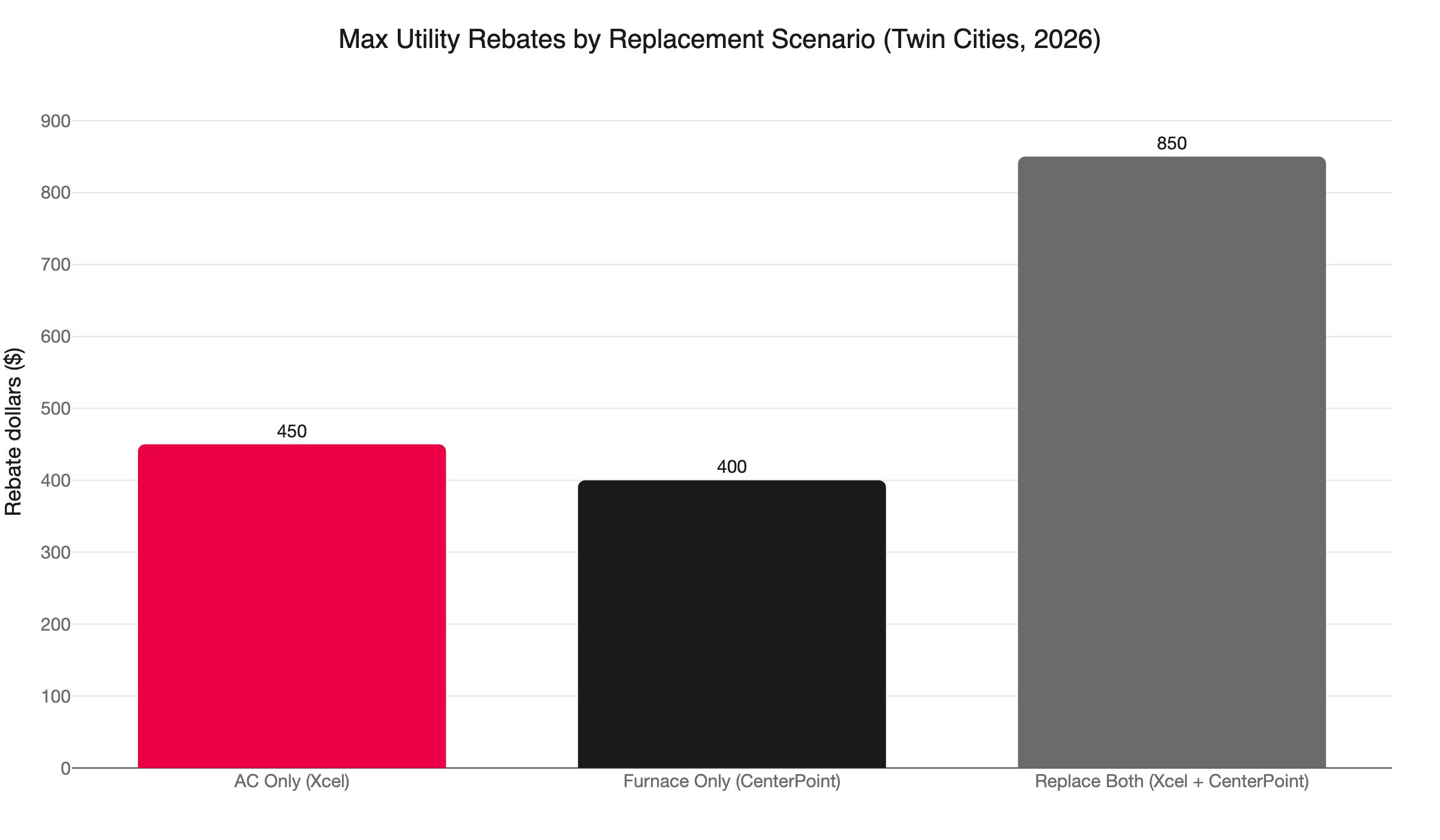
Max Utility Rebates by Replacement Scenario (Twin Cities, 2026)
## Should You Replace Just the AC or Furnace Together, or Both?
**Short answer:** If one system is near end of life and the other has fewer than five years left, replace both. If the second system is genuinely new and the indoor coil is already matched to the replacement condenser, a partial swap can work - but it is a narrow window.
This question sounds simple. Your AC died, your furnace still runs. Why spend money you do not have to? Or your furnace quit in January and you want to defer the AC until summer. Both instincts are reasonable. But the answer depends on four things most homeowners do not know to ask about: matched-system certification, warranty terms, Minnesota code minimums, and how utility rebates stack in 2026.
We are locally owned and operated in Ramsey, serving Minneapolis, St. Paul, Blaine, Maple Grove, Plymouth, Brooklyn Park, and the surrounding Twin Cities area. We see this decision play out across hundreds of homes every year. Here is what you need to know before you make it.
---
## What Is a Matched HVAC System, and Why Does It Matter?
**Short answer:** A matched system is a specific outdoor condenser paired with a specific indoor coil, tested together and registered in the AHRI Directory. That registration is what earns the SEER2 efficiency rating on the equipment label. An unregistered pairing cannot claim that rating.
Your central air system has two refrigerant-side components: the outdoor condenser (the unit beside your house) and the [indoor evaporator coil](/blog/evaporator-coil-replacement-cost-minnesota/) (the A-frame unit above your furnace). Manufacturers test these components as a pair and submit the results to the Air-Conditioning, Heating, and Refrigeration Institute (AHRI). The [AHRI Directory](https://www.ahridirectory.org/Search/SearchHome) certifies each tested combination and assigns its SEER2 and EER2 ratings.
When you replace just the condenser and leave the old coil in place, the combination was never tested together. The efficiency rating on the new unit's label applies to the certified pairing - not to your specific combination. You cannot claim that rating, because it does not cover what you installed.
This matters for two concrete reasons.
First, you paid for efficiency you will not get. According to [research from CenterPoint Energy](https://www.centerpointenergy.com/en-us/savings-solutions/resource-hub/energy-101/replacing-ac-furnace-together), an old furnace blower paired with a new high-efficiency AC can reduce the new unit's efficiency by an estimated 20-30%. A 16 SEER2 system carrying that penalty runs closer to 12 SEER2. That gap shows up on your utility bill every month.
Second, federal minimum efficiency standards are tested on matched pairs. [The federal minimum for new central ACs in northern states, including Minnesota, is 14 SEER2 as of 2023](https://www.hvac.com/expert-advice/should-you-replace-furnace-and-ac-at-the-same-time/). An unregistered pairing cannot demonstrate compliance with that standard, which affects whether the installation clears permit inspection.
---
## What Happens When You Pair a New AC With an Old Furnace Coil?
**Short answer:** Reduced cooling capacity, poor humidity control, and premature component failure - on top of the efficiency loss. The parts working hardest to compensate for the mismatch are the parts that fail first.
An old evaporator coil can be undersized, fouled from years of use, or built for a different refrigerant charge. Even a physically compatible coil causes performance problems when it was sized for a different system capacity.
[Research on mismatched HVAC systems](https://www.kilowatthvac.com/blog/2022/july/caution-the-mismatched-air-conditioning-system-i/) documents the failure modes homeowners encounter:
- **Reduced cooling capacity.** The system cannot move heat efficiently. Your home does not reach setpoint even when the AC runs continuously.
- **Humidity control problems.** An old coil that cannot keep pace with the new compressor's output leaves excess moisture in the air. In a Minnesota summer, that makes a warm house feel significantly worse.
- **Premature component failure.** The compressor and fan motor work harder to compensate for the mismatch. Thermal stress accumulates faster than it would on a properly matched system.
The efficiency and comfort losses start immediately. Component failures take longer to appear, but they follow a predictable pattern. Our post on [AC compressor signs and repair costs in the Twin Cities](/blog/ac-compressor-failing-signs-repair-cost-twin-cities/) covers what that repair looks like when it arrives.
Minnesota's climate adds pressure to this problem. High summer humidity means your AC carries a real latent load. A coil that cannot keep up during our sticky August weeks is not just uncomfortable. It runs the compressor harder and accelerates wear.
---
## Does a Mismatched System Void the Warranty?
**Short answer:** Yes. Replacing the outdoor condenser without a matched indoor coil voids the manufacturer's warranty per AHRI standards. Every repair after installation becomes an out-of-pocket expense, regardless of how new the equipment is.
This is not a technicality manufacturers rarely enforce. Warranty coverage on HVAC equipment is explicitly tied to the AHRI-certified pair. If the installation does not match a registered combination, the warranty language excludes it - in writing.
[Per AHRI standards](https://www.kobiecomplete.com/blog/why-a-mismatched-air-conditioning-system-is-a-no-go/), a mismatched pairing voids the manufacturer's warranty on the equipment. Any compressor failure, refrigerant leak, or coil problem that develops is your bill to pay, not the manufacturer's. On a central AC system that costs $7,500-$10,400 installed, that exposure adds up quickly.
Brand mixing creates the same problem. A condenser from one manufacturer paired with a coil from another is a mismatched system, even if the coil is brand new. The combination is simply not in the AHRI Directory. [Same-manufacturer, AHRI-registered pairings are the only path to full warranty protection](https://eacair.com/blog/what-is-a-matched-hvac-system/).
Factor in the warranty exposure when comparing a partial swap to a full replacement. A single out-of-warranty compressor repair can run $1,950-$4,500. That savings from skipping the second system can disappear with one service call.
---
## What Does Minnesota Code Require for a Partial Replacement?
**Short answer:** A mechanical permit is required for every furnace and AC replacement in Minnesota, including like-for-like swaps. Minneapolis, St. Paul, and Edina impose stricter AFUE minimums than the statewide floor - and that often closes the cost gap between replacing one system and replacing both.
Every HVAC replacement in Minnesota requires a mechanical permit issued by the local jurisdiction. Only a DLI-licensed HVAC contractor can pull it. Permit cost is typically $75-$200 and is usually included in the contractor's quote. Our full breakdown on [when a permit is required in Minnesota](/blog/hvac-permit-when-required-minnesota/) explains what the inspection process covers.
[Minnesota State Building Code Chapter 1322 sets 80% AFUE as the statewide minimum](https://furnace.direct/blogs/news/minnesota-energy-code-furnace-requirements-2026) for gas furnace replacement. That floor applies to most suburban communities in the metro.
Minneapolis and St. Paul go further. [Both cities require 90% AFUE under their Climate Action Plan requirements](https://furnace.direct/blogs/news/minnesota-energy-code-furnace-requirements-2026). Edina requires 92% or higher. If you live in one of those cities and planned to keep costs down with an 80% furnace, the permit inspection will flag it. You will need to upgrade to meet the local minimum.
Here is why this affects the "replace one vs. both" calculation. A 90% or 95%+ AFUE furnace narrows the cost gap between a furnace-only replacement and a full-system replacement. Once you are already buying a high-efficiency unit, adding a matched new AC in the same service call often makes more financial sense - especially when rebates enter the picture.
The permit also creates a record. A mismatched system that causes problems later will surface in a home inspection when you sell. A paper trail of a code-compliant, permitted install is an asset. A paper trail of a mismatched install is a liability.
---
## How Do Rebates Stack When You Replace Both Systems?
**Short answer:** Xcel Energy discontinued its gas furnace rebate as of January 1, 2026. A furnace-only replacement earns no Xcel incentive. Replace both the AC and furnace, and you can stack Xcel's AC rebate with CenterPoint's furnace rebate - up to $850 in utility incentives alone.
This is the most locally specific argument for replacing both systems, and it is not covered by any national source ranking for this topic.
Here is what is available for Twin Cities homeowners in 2026:
**Xcel Energy AC rebates (Minnesota):**
- $150 for systems at 13.4 SEER2 minimum
- Up to $450 at 15.2 SEER2 with a Quality Install
- Cold-climate heat pump: up to $2,000
**Xcel Energy gas furnace rebate:** Discontinued as of January 1, 2026. No Xcel rebate exists for a furnace-only replacement this year.
**CenterPoint Energy gas furnace rebates:**
- Up to $400 for a 95%+ AFUE furnace (standard)
- Up to $1,200 income-qualified
- $1,100 for a dual-fuel heat pump with a 92%+ AFUE backup furnace
The rebate math by scenario:
- **Replace just the AC:** Xcel rebate, up to $450. No CenterPoint rebate.
- **Replace just the furnace:** CenterPoint rebate, up to $400. No Xcel rebate.
- **Replace both:** Stack both - up to $850 in utility rebates. Income-qualified households can access significantly more.
The federal 25C Energy Efficient Home Improvement Tax Credit covered qualifying central ACs and furnaces through December 31, 2025: 30% of cost, up to $600 for AC or furnace, and up to $2,000 for heat pumps. Whether Congress extended 25C for 2026 was not confirmed at press time. Before counting on it, check the [ENERGY STAR guidance on the 25C credit](https://www.energystar.gov/about/federal_tax_credits/central_air_conditioning) or consult your tax professional directly.
For a deeper look at how these incentives layer together, our guide on [stacking HVAC rebates and tax credits in Minnesota](/blog/stacking-hvac-rebates-tax-credits-federal-state-utility-minnesota/) covers all current programs in one place.
---
## When Does Replacing Just the AC or Furnace Make Sense?
**Short answer:** When the remaining system is fewer than five years old, the indoor coil is already AHRI-matched to the replacement condenser, and the equipment is within its expected service life. That is a narrow window, but it exists.
A partial replacement makes the most sense when:
- **The remaining system is genuinely new.** A furnace installed two or three years ago with a compatible, AHRI-matched coil may pair cleanly with a new condenser. Confirm the AHRI certificate number before agreeing to the install.
- **The systems' ages are far apart.** If your furnace is two years old and your AC just died at 15, replacing only the AC is the right call. If both units are 12-15 years old, replace both. You will be back doing the second job in two or three years anyway.
- **Budget requires it this season.** If a partial replacement is the only option right now, do it right: install a matched coil with the new condenser. The coil adds upfront cost, but it restores the warranty and the efficiency rating.
- **You are adding a ductless system.** Ductless mini-splits do not share an indoor coil with the furnace. Adding or replacing a mini-split does not raise the same matched-system concerns.
What does not hold: the assumption that a condenser swap is fine because the old coil "still works." That reasoning produces a voided warranty and a 20-30% efficiency penalty on a system you paid $7,500 or more to install.
---
## What Does It Cost to Replace Both Systems in the Twin Cities?
**Short answer:** Expect $4,950-$9,100 or more for an installed furnace, depending on efficiency tier. Central AC adds $7,500-$15,600. Replacing both in one visit reduces total cost compared to two separate service calls, and unlocks rebate stacking that neither system alone qualifies for.
Here is what a full matched-system replacement looks like at Northern One Hour, installed:
**Furnace by efficiency tier:**
- 80% AFUE: starting around $4,950 installed
- 95-96% AFUE: starting around $6,500 installed
- 97-98% AFUE: starting around $9,100 installed
**Central AC, installed:**
- Mid-tier split system: $7,500-$10,400
- High-efficiency (18-20+ SEER2): $11,000-$15,600
Replacing both systems in the same visit lowers the combined cost compared to two separate jobs. Permit fees, refrigerant handling, and mobilization overlap. You also avoid paying diagnostic charges twice.
Financing is available for homeowners who need to spread a larger replacement over time. Ask about current options when you call or book online.
---
## Questions to Ask Before the Install
Whether you are replacing one system or both, these five questions protect your investment:
1. **Is this an AHRI-registered combination?** Ask for the AHRI certificate number for the condenser-coil pair. If the contractor cannot produce it, that is a problem.
2. **Does this install include a new indoor coil?** If the answer is no, ask why - and get the warranty terms in writing before you agree.
3. **What AFUE does my city require?** Minneapolis, St. Paul, and Edina all exceed the statewide 80% floor. Know your local code before the estimate.
4. **Is the mechanical permit included?** It should be. A contractor who does not mention the permit is a warning sign.
5. **What rebates do I qualify for?** A contractor worth hiring will run the rebate math with you before the job, not after.
Knowing what to look for when comparing bids is as important as knowing the right questions. If you want a full list of warning signs to watch for, keep them in mind when you are vetting any HVAC company you have not worked with before.
---
## Ready to Make the Right Call for Your Home?
The matched-system rules, Minnesota permit requirements, and 2026 rebate changes make this decision more nuanced than a quick internet search will show you. The right answer depends on your equipment's age, your city's code floor, your utility providers, and whether an AHRI-certified pairing exists for your specific combination.
We are locally owned and operated in Ramsey. Our team pulls the permit, confirms the AHRI match, and handles the rebate paperwork so you are not navigating it alone.
"Always On Time… Or You Don't Pay a Dime!(R)"
Call us at **(763) 260-6662** or [schedule your estimate online](/air-conditioning/ac-installation/central-air/) to get an honest answer for your home.
---
# Why Heat Pump Thermostat Wiring Trips Up Minnesota DIYers
URL: https://northernonehour.com/blog/heat-pump-thermostat-wiring-aux-heat-staging-minnesota/
Published: 2026-09-09 | Category: Heating
Correct wiring is step one. Learn why O/B selection, aux lockout temp, and staging logic are where Minnesota heat pump thermostat installs actually fail.
Key Takeaways
- A heat pump thermostat has terminals and installer-menu settings that a furnace thermostat does not. Getting the wires in the right holes is necessary - but it is not sufficient.
- The O/B terminal controls the reversing valve. The correct setting depends on your heat pump's manufacturer. A wrong selection runs the system in reverse: heating when you call for cooling, cooling when you call for heat.
- Minnesota's Climate Zone 6 winters push outdoor temps below the heat pump's balance point regularly from November through February. Aux heat is routine here, not a backup system.
- The aux heat lockout temperature must be set at or below 35°F. Many thermostats ship with this unset. The result is expensive electric resistance heat running when the heat pump could handle the load alone.
- Dual-fuel systems need a thermostat that can issue a fuel-source switchover command at a programmed outdoor temperature. That temperature must be set in the installer menu - not the app.
- A misconfigured thermostat can drive aux heat to run two to three times more than necessary. In a Minnesota January, that gap can add $150 to $250 to a single electric bill.
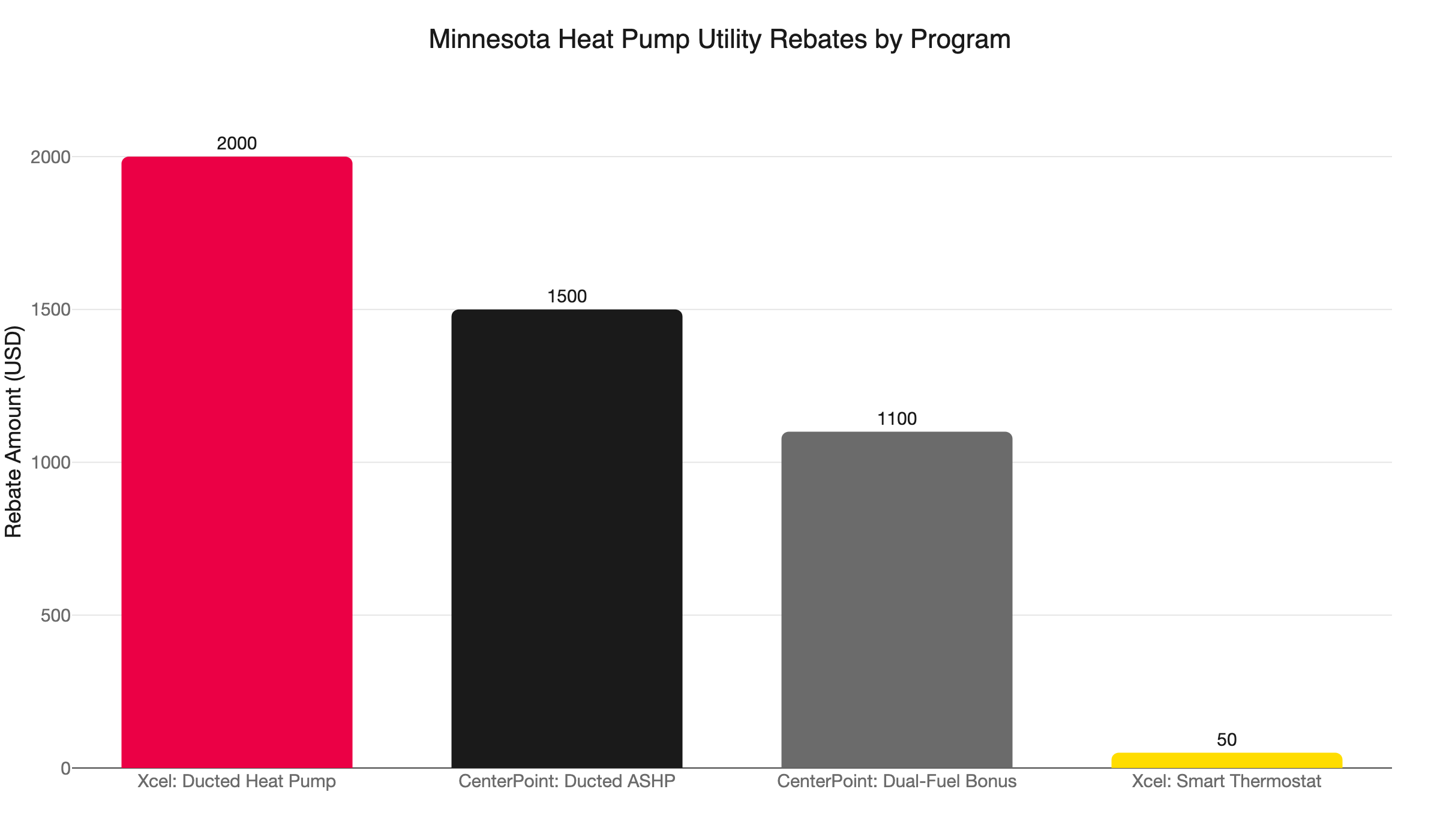
Minnesota Heat Pump Utility Rebates by Program
## When the Wiring Is Right and the Bill Still Doubles
Getting heat pump thermostat wiring and aux heat right in Minnesota takes more than matching wire colors. You followed the color-coded diagram. You matched every wire to the app's on-screen guide. Your new smart thermostat powered on, showed the correct temperature, and seemed to work. Then your January electric bill arrived.
This is the most common complaint our team hears after a DIY heat pump thermostat swap in the Twin Cities. The wiring itself is correct. The three installer-menu settings the app never prompted you for are not. Heat pump thermostat wiring and aux heat configuration in Minnesota is a two-part job. Most homeowners only know about the first part.
## Why Heat Pump Thermostats Are Different From Furnace Thermostats
A gas furnace thermostat has one job. Signal a call for heat. The furnace fires. The set temperature is reached. The furnace stops.
A heat pump works differently. It moves heat instead of generating it. In heating mode, it extracts thermal energy from outdoor air and delivers it inside. In cooling mode, it reverses that process. The reversing valve is the component that flips the refrigerant flow direction. Your thermostat controls that valve through a dedicated terminal called O/B.
Standard furnace thermostats use R (24V power), C (common), Y (cooling compressor), G (fan), and W (heat call). Heat pump thermostats add the O/B terminal for the reversing valve and often a second W terminal for supplemental heat staging. Those additions carry real stakes when the corresponding installer-menu settings are not configured correctly.
A wrong wire connection is visible. You can trace the wire back to the terminal and catch the error immediately. A wrong installer-menu setting is invisible. It runs silently through every heating cycle and shows up only on the electric bill.
## What Does the O/B Wire on a Heat Pump Thermostat Control?
**The O/B wire energizes the reversing valve, which switches refrigerant flow direction between heating and cooling modes. Whether your thermostat energizes it during cooling (O) or during heating (B) depends on your heat pump's manufacturer. Getting this wrong causes the system to heat when you call for cooling and cool when you call for heat.**
Different manufacturers choose a different default valve position. That creates two distinct wiring conventions.
**O convention (energize in cooling):** Carrier, Lennox, Goodman, Bryant, and York. The thermostat energizes the valve when you call for cooling. When you call for heat, the wire is not energized, and the valve rests in its default heating position.
**B convention (energize in heating):** Rheem, Ruud, Bosch, Trane, and American Standard. The thermostat energizes the valve in heating mode. When you call for cooling, the wire is not energized.
[HVAC field documentation confirms](https://homeheatproblems.com/do-i-use-o-or-b-on-my-heat-pump-thermostat/) that swapping O and B does not blow a fuse or trip a breaker. The system runs. It just runs backward. Your heat pump blows warm air when you call for air conditioning on a July afternoon. Your electric bill arrives with no obvious explanation, and a service call follows.
Both Nest and Ecobee ask you to select O or B during setup. The app does not know your equipment brand. Check the outdoor unit's model label or the original installation manual to confirm which convention applies before you finish the setup sequence. This single setting is the most common reason our team gets called back after a DIY thermostat swap.
## Why Does Aux Heat Cost So Much More in Minnesota Than Anywhere Else?
**Minnesota is in IECC Climate Zone 6. Outdoor temps fall below the heat pump's balance point - roughly 35 to 40°F - from November through February. That means aux heat stages in regularly here, not only during rare cold snaps. Every configuration error compounds across months of continuous winter operation.**
In Charlotte or Phoenix, the balance point may be crossed a handful of nights per year. In the Twin Cities, it is crossed routinely for four solid months. A staging error that costs a Phoenix homeowner $15 a month costs a Minnesota homeowner $150 or more.
[The Department of Energy lists incorrectly wired aux heat controls among the most commonly violated heat pump installation practices](https://www.energy.gov/energysaver/air-source-heat-pumps). The error is widespread everywhere. The cost of that error scales with how cold your winters are.
Minnesota winters make correct aux heat configuration mandatory, not optional. The system is doing exactly what the installer menu told it to do. The problem is that the installer menu was never set.
## What Is the Aux Heat Lockout Setting, and Where Do You Find It?
**The aux lockout temperature tells the thermostat to stop calling for electric resistance strips when outdoor temps are above a set point. Set it at or below 35°F in Minnesota. This setting lives in the installer menu, not the user-facing app - and many thermostats ship with it unset or left at a factory default that is far too high.**
When outdoor temps are above the heat pump's balance point, the unit handles the heating load on its own. Running electric resistance strips alongside it at 40°F wastes money with no benefit to comfort. The lockout setting is what prevents that.
[Energy Trust field specifications require the aux heat lockout to be set at or below 35°F](https://insider.energytrust.org/auxiliary-heat-lockout-settings-vital-to-energy-efficient-operation-of-heat-pump-equipment/). The setting is adjustable over a wide range - typically 5°F to 80°F - but the thermostat may ship without this configured at all.
On a Nest, reach it through Settings > Equipment after the initial guided setup. On an Ecobee, find it under Main Menu > Installation Settings > Thresholds > Heat Pump Options > Aux Heat Only Above. The standard app-guided setup flow does not walk you to this screen. Most homeowners who complete the guided installation have never seen it.
[The DOE warns](https://www.energy.gov/energysaver/operating-and-maintaining-your-heat-pump) that at 50°F outdoor temp, strip heat should never activate on a 4-degree setpoint rise. An unset lockout allows exactly that to happen every time the thermostat calls for a morning recovery from overnight setback.
## What About Dual-Fuel Systems in the Twin Cities?
**A dual-fuel system pairs a heat pump with a gas furnace for the coldest days. It needs a thermostat that can issue a fuel-source switchover command at a programmed outdoor temperature. That switchover temperature must be set in the installer menu. Standard app-guided setups never prompt you for it.**
Many Twin Cities homes run a hybrid setup. The heat pump handles mild-weather loads efficiently. Below about 25 to 35°F, the gas furnace takes over because gas often costs less per BTU at those temperatures. That handoff is automatic only if the thermostat's switchover temperature is configured correctly.
[DOE Building Science training documentation confirms](https://bsesc.energy.gov/training-modules/hvac-thermostats-heat-pumps-and-dual-fuel-heat-pumps) that the dual-fuel outdoor temperature setting for fuel-source switching must be programmed in thermostat installer settings. The thermostat must also support dual-fuel operation natively. A standard smart thermostat that does not have this capability will treat the gas furnace as simple electric strip backup, which eliminates the efficiency advantage of the hybrid setup entirely.
Generic thermostat guides treat aux heat as electric resistance strips only. None of them mention fuel-source switching. If you have a CenterPoint gas furnace paired with a heat pump and the switchover temperature was never programmed, you may be running electric strips at 15°F when the gas furnace should have taken over. That is the costliest configuration error on this list.
Our post on [dual-fuel heat pump and gas furnace hybrid systems](/blog/dual-fuel-heat-pump-gas-furnace-hybrid-minnesota/) covers how these systems are sized and staged for Minnesota's climate.
## How Does Staging Logic Affect Your Monthly Electric Bill?
**Staging logic controls how the thermostat calls for heat across W1 and W2 terminals. W1 calls for first-stage supplemental heat; W2 calls for full electric resistance. Leaving the thermostat in "conventional" mode instead of "heat pump" mode causes it to call for strip heat immediately rather than ramping the heat pump through its stages first.**
[The DOE notes that programmable thermostats are generally not recommended for heat pumps in heating mode](https://www.energy.gov/energysaver/programmable-thermostats) unless the thermostat uses special algorithms to ramp temperature slowly and avoid triggering resistance elements. A standard setback program wakes up at 6 a.m. and calls for a 4-degree setpoint recovery all at once. That triggers electric strips immediately. A heat-pump-aware thermostat spreads recovery across time and lets the heat pump do the work without staging in resistance heat.
Ecobee and Nest both include heat-pump-specific recovery logic. You must enable it in the installer settings. You must also confirm that the thermostat is operating in "heat pump" mode and not "conventional" mode. If the mode is wrong, the staging logic never activates. The thermostat treats your heat pump like a gas furnace, and the consequences appear on the electric bill.
The cumulative impact is substantial. Field research indicates incorrect staging and aux lockout settings cause aux heat to run two to three times more than necessary. On a January bill in the Twin Cities, that is not a rounding error. It is $150 to $250 in a single month, every month from November through February.
For a side-by-side look at how Nest and Ecobee handle heat pump staging, see our comparison of [Nest vs. Ecobee for Minnesota homes](/blog/nest-vs-ecobee-smart-thermostat-minnesota/).
## Does Thermostat Replacement Require a Permit in Minnesota?
**Swapping a thermostat on existing low-voltage wiring is typically a minor repair that does not require a permit. Running new wiring, adding terminals, or modifying control boards at the air handler may trigger a mechanical permit requirement under Minnesota Chapter 1346. Check with your local building department before starting any work beyond a straight swap.**
[Minnesota mechanical code Chapter 1346](https://www.revisor.mn.gov/rules/1346/full) governs heat pump installation. Any new heat pump system requires a mechanical permit. Supplementary heater operation is permitted during transient periods of no more than 15 minutes. A two-stage thermostat controlling supplementary heat on the second stage satisfies this requirement and is standard practice for properly staged installations.
For most homeowners replacing one thermostat with another on the same existing wiring, no permit is required. [Add a C-wire](/blog/c-wire-smart-thermostat-compatibility-minnesota/) at the air handler, modify control terminals, or run new cable between the thermostat and the unit, and the scope may no longer qualify as a simple component swap.
A licensed HVAC contractor handles permits and inspections as part of the job. That protects your homeowner's insurance coverage and keeps the equipment warranty intact.
## What Rebates Could You Lose by Getting the Configuration Wrong?
Minnesota utility rebates are paid on qualifying equipment, not on thermostat configuration. But a misconfigured thermostat steadily erodes the efficiency the rebate was designed to fund.
[Xcel Energy offers up to $2,000 for a ducted cold-climate heat pump](https://mn.my.xcelenergy.com/s/residential/heating-cooling/heat-pumps) with a COP of at least 1.75 at 5°F. The system must appear on the NEEP qualifying products list at ashp.neep.org. Xcel also offers a $50 rebate for an ENERGY STAR certified smart thermostat.
[CenterPoint Energy offers up to $1,500 for a ducted air-source heat pump](https://homeenergybasics.com/heat-pumps/states/mn), with an additional $1,100 available for dual-fuel systems in existing homes.
You keep the rebate check regardless of how the thermostat is configured. But if the aux lockout is never set and electric resistance strips run at 40°F all winter, you spend the rebate on electric bills within two heating seasons. The equipment delivered the efficiency it was rated for. The configuration threw it away.
The federal 25C heat pump tax credit and IRA provisions ended December 31, 2025. Minnesota's HEAR program state rebates have not launched as of this writing. No rollout date has been announced.
For a full breakdown of what is still available, see our post on [stacking HVAC rebates and tax credits in Minnesota](/blog/stacking-hvac-rebates-tax-credits-federal-state-utility-minnesota/).
## Should You Call a Pro for Heat Pump Thermostat Configuration?
Replacing the thermostat itself is a manageable DIY project if you know your equipment's O/B convention and can navigate to the installer menu on the new thermostat. The mechanical risk is low. The invisible configuration risks are significantly higher.
A reversed wire is visible and correctable in minutes. An unset aux lockout produces no error code, no alert, and no symptom beyond a high electric bill. A dual-fuel switchover temperature that was never programmed is completely silent until you notice that your gas furnace never seems to run in January. These errors only surface weeks after the install, when the configuration is the last thing on your mind.
If you have a dual-fuel system, if your heat pump was installed without a thorough thermostat configuration walkthrough, or if you are uncertain which settings apply to your specific equipment combination, a thermostat verification visit pays for itself quickly. Our team checks every setting in the installer menu: O/B by brand, aux lockout temperature, staging mode, heat-pump recovery logic, and dual-fuel switchover temperature when the system has one.
We are locally owned and operated in Ramsey, MN, and we serve the full Twin Cities metro - Minneapolis, St. Paul, Blaine, Maple Grove, Plymouth, Brooklyn Park, Woodbury, Bloomington, and the surrounding communities. We show up when we say we will. That is the promise we back every day: "Always On Time… Or You Don't Pay a Dime!(R)"
Call **(763) 260-6662** or visit our [thermostat services page](/thermostats/) to book a configuration visit. If you have a CenterPoint gas system paired with a heat pump, mention dual-fuel when you call so we bring the right installer documentation for your equipment.
---
# Indoor Air Quality Professional Test Minnesota: What to Know
URL: https://northernonehour.com/blog/indoor-air-quality-professional-test-vs-diy-monitor-minnesota/
Published: 2026-09-09 | Category: Indoor Air Quality
A $50 monitor gives you a number. A professional IAQ test gives you a diagnosis. Learn what each contaminant measures and when to invest in Minnesota.
Key Takeaways
- A consumer IAQ monitor gives you an aggregate number. A professional test identifies specific compounds, biological agents, and particle types that no monitor can detect at all.
- [Minnesota's average radon level is more than 3x the national average](https://www.health.state.mn.us/communities/environment/air/radon/index.html). More than 2 in 5 Minnesota homes have levels that pose a significant health risk.
- Long Minnesota winters seal homes for 5-6 months. Radon, VOCs, biologicals, and CO2 all accumulate without the dilution that natural ventilation provides in milder climates.
- Consumer TVOC sensors report a single aggregate number that cannot be compared to any health standard. A professional test identifies individual compounds separately.
- No consumer monitor detects mold spores or allergens. Biological testing requires physical sample collection and lab analysis.
- The right sequence is inspection first, then targeted testing. A blind test panel can waste money and produce results that are hard to act on.
- Northern One Hour can assess your HVAC system and ventilation as a first step. Call (763) 260-6662 or book online.
## What Does a Professional Indoor Air Quality Test in Minnesota Actually Measure?
A professional IAQ test measures what consumer devices cannot: individual VOC compounds identified by GC-MS lab analysis, biological particles classified by type and species, actual particle mass and composition, and radon concentrations under EPA-protocol chain of custody. Consumer monitors report readings. Professional tests produce diagnoses.
The $50 air quality monitor on your wall is not useless. It can alert you to significant particulate changes, track CO2 as a rough ventilation proxy, and confirm humidity is in range. But each of those readings has a ceiling on its usefulness. For several key contaminant categories, that ceiling is low enough to miss serious problems entirely.
Different contaminant categories require different professional collection methods. Whole-air Summa canisters for VOCs. Air cassettes, either spore traps or liquid impingers, for biologicals. Weighed filters for gravimetric particulate analysis. Long-term alpha-track devices for radon. No single consumer instrument covers all of them.
Understanding what each test actually captures helps you decide which is worth the investment for your home and situation. Start here.
## Can a $50 VOC Monitor Tell You What Is Actually in Your Air?
No. Consumer VOC monitors report a single "TVOC" number calibrated to one reference gas, typically isobutylene. That number is unspeciated, meaning it does not identify which compounds are present or at what concentration. A professional test using a Summa canister analyzed by GC-MS identifies and quantifies hundreds of individual compounds, each comparable to a specific health standard.
[Indoor VOC concentrations are consistently 2-5x higher indoors than outdoors](https://www.epa.gov/indoor-air-quality-iaq/volatile-organic-compounds-impact-indoor-air-quality), according to EPA research. The agency's TEAM study found elevated levels inside homes regardless of rural or industrial location. During activities like paint stripping, indoor VOC concentrations can reach 1,000 times background outdoor levels. Those elevated concentrations can persist for hours or days after the activity ends, long after the smell fades.
VOCs enter homes from a wide range of sources. Cleaning products, fresh paint, adhesives, new flooring, pressed wood furniture, cabinetry, and certain personal care products all contribute. Health effects include eye, nose, and throat irritation, headaches, nausea, liver and kidney damage, and central nervous system effects. Some VOCs are suspected or confirmed carcinogens. The specific health risk depends heavily on which compound is present and at what concentration - not on the total load.
Here is the core limitation of a consumer device. Metal oxide or PID sensors detect the total presence of volatile organic compounds and report them as one number. That number is calibrated to one reference chemical. It cannot tell you whether formaldehyde, a probable human carcinogen, is elevated. It cannot distinguish benzene from toluene from acetone. No health standard is written against a TVOC number because health impact depends on which specific compounds are present, not the aggregate.
A professional GC-MS analysis names each compound individually. Formaldehyde, benzene, toluene, and dozens of others each receive a separate concentration value that can be compared against a reference threshold from a public health agency. That is actionable information. A TVOC reading that says "elevated" tells you something is present. It does not tell you what to do next.
If your home had new flooring, fresh paint, or cabinetry installation in the past year or two and you have experienced persistent symptoms, a professional VOC panel is the only test that can confirm whether [off-gassing from those materials](/blog/voc-off-gassing-indoor-air-quality-after-renovation-minnesota/) is still occurring at meaningful concentrations - and identify which compound is driving the problem.
## Why Can't Consumer Monitors Detect Mold and Biologicals?
No consumer air monitor detects biological particles. Optical particle counters used in consumer sensors count particles by size fraction but cannot distinguish a mold spore from a dust particle or a combustion byproduct. Biological testing requires physical collection of an air sample, shipped to an accredited lab for microscopy or culture analysis. This is a categorical limitation, not an accuracy problem.
[Biological contaminants include bacteria, mold and other fungi, dust mites, pollen, pet allergens, cockroach proteins, and rodent urine proteins](https://www.epa.gov/indoor-air-quality-iaq/biological-pollutants-impact-indoor-air-quality). They go airborne when normal household activity disturbs settled dust, when HVAC equipment draws air across a contaminated surface, or when moisture creates the conditions for active biological growth. Moist, poorly ventilated areas are the most common source.
Minnesota's climate creates specific biological risk patterns. Basements and crawl spaces that absorbed moisture during spring snowmelt or a humid summer can harbor mold growth behind finished walls or inside HVAC equipment, where it is not visible during a casual inspection. If mold has colonized your evaporator coil, drain pan, or ductwork, your system distributes spores to every register every time it runs. That is a problem worth detecting before it spreads. See the related post on [signs of mold in HVAC ducts and what remediation involves](/blog/mold-in-hvac-ducts-signs-remediation-twin-cities/).
An optical particle counter sorts particles into size fractions by measuring how they scatter laser light. A mold spore and a similarly sized dust particle produce the same signal. The device has no mechanism to tell them apart. Lab analysis of a physical air cassette is the only method that identifies and counts specific biological types. An accredited analyst examines the collected sample under microscopy and reports both the species present and their concentrations.
The [Minnesota Department of Health recommends beginning with a thorough visual inspection before sampling for mold](https://www.health.state.mn.us/communities/environment/air/mold/selectingiaq.html). If visible mold or moisture damage is already present, remediation typically comes before air testing, because the source has been located. Testing without that context can produce ambiguous results and an expensive lab bill with no clear path forward.
## What Does Professional Particulate Testing Add?
Consumer PM sensors estimate PM2.5 and PM10 mass concentrations using optical scattering. Accuracy varies by particle type, because different particles scatter laser light differently. Consumer sensors are typically calibrated for one reference aerosol. A gravimetric filter-based professional test captures actual particle mass on a weighed filter, and that filter can go to a lab for compositional analysis, identifying what the particles are made of.
That distinction matters when combustion is a concern. [Particles from incomplete fuel combustion can lodge deep in lung tissue and carry other carcinogens with them](https://www.epa.gov/indoor-air-quality-iaq/inside-story-guide-indoor-air-quality), including radon decay products. Knowing that PM2.5 is elevated is useful. Knowing whether those particles are primarily combustion-derived, biological, or inert mineral dust tells you which source to address and how urgently.
For most Minnesota homeowners, professional particulate testing is most relevant when a combustion appliance is suspected of incomplete combustion, when vehicle exhaust intrusion from an attached garage is a concern, or when a wood-burning appliance is in regular use. If any of those conditions are present, composition matters, not just count.
## How Bad Is Minnesota's Radon Problem?
Very bad by national standards. Minnesota's average radon level is more than 3x the national average, and [more than 2 in 5 Minnesota homes have radon levels that pose a significant health risk](https://www.health.state.mn.us/communities/environment/air/radon/index.html). Radon is the leading cause of lung cancer in non-smokers. A professional long-term alpha-track test meets the EPA protocol and chain-of-custody standard that a consumer monitor does not.
At the EPA action level of 4 pCi/L, 23 out of every 1,000 people in the general population will develop fatal radon-caused lung cancer. Radon is the second-leading cause of lung cancer overall, behind only smoking. In non-smokers, it ranks first. Minnesota's geology concentrates radon in soil and bedrock. Long winters seal homes for 5-6 months at a stretch. Radon seeps in through basement cracks, foundation penetrations, and soil contact. Without the dilution that natural ventilation provides in milder climates, it accumulates season after season.
A home that tests at 3 pCi/L in late summer, with windows occasionally open, may test above the 4 pCi/L action level in January, when the house has been tightly closed for weeks and the stack effect pulls more soil gas in through the foundation. Short-term readings taken in the shoulder seasons miss this variation entirely.
Consumer radon monitors exist and some are reasonably accurate at measuring a current concentration. The limitation is protocol. An EPA-recommended long-term alpha-track test runs for at least 90 days, captures the full seasonal range including the worst-case winter scenario, and produces a certified lab result that meets the documentation standard for real estate transactions, mitigation contractor planning, and school or workplace disclosure requirements. A digital consumer monitor's rolling average can shift significantly from day to day with barometric pressure changes. Acting on a reading taken during a low-radon day can produce a false sense of safety.
If you have never tested your home for radon, or if your last test preceded a basement renovation, major air-sealing project, or new window installation, a professional long-term test is a low-cost, high-value step. Remediation, when needed, is a well-established process. But you cannot remediate what you have not measured.
## Is Elevated CO2 a Warning Sign for Other Indoor Pollutants?
Yes. CO2 at residential concentrations is not itself dangerous, but elevated CO2 reliably signals that fresh-air exchange is inadequate. When ventilation is inadequate, every other pollutant accumulates alongside it: VOCs off-gassing from building materials, biological particles, combustion byproducts, and radon. A consumer CO2 monitor can flag the condition. A professional assessment interprets it in context.
Some consumer monitors include NDIR CO2 sensors that measure concentration with reasonable accuracy. The gap is not measurement but interpretation. A professional assessment maps your CO2 reading against your home's size, occupancy load, and HVAC ventilation design, then compares it against ASHRAE 62.2 minimum ventilation rate standards. That comparison tells you whether your system is delivering adequate fresh air or simply recirculating what is already inside.
Minnesota homes are among the tightest in the country once energy upgrades, added attic insulation, and new windows are factored in. An older home that was drafty by default sometimes had better natural ventilation than a renovated one. If your home has been significantly air-sealed without a corresponding mechanical ventilation upgrade, elevated CO2 is a predictable result - and it indicates that every other contaminant category is also accumulating above what it would be in a better-ventilated home. For more on how HVAC systems interact with indoor air quality, see the related post on [home air quality monitors and HVAC systems](/blog/home-air-quality-monitor-hvac-twin-cities/).
## When Is a Professional IAQ Test Worth the Money?
Professional IAQ testing is most justified when you have specific triggers: health symptoms tied to time at home, visible moisture or mold, recent renovation, combustion appliance concerns, or an untested radon level. Without a clear trigger, an inspection and HVAC assessment is the better, lower-cost starting point.
[The EPA's Inside Story guide frames it plainly](https://www.epa.gov/indoor-air-quality-iaq/inside-story-guide-indoor-air-quality): professional testing for non-radon pollutants is most appropriate when health symptoms or signs of poor ventilation exist and specific sources or pollutants have been identified as possible causes. The right sequence is to observe conditions first, then test to confirm and quantify. Testing first and looking for a cause after produces ambiguous results.
Spend the money on a professional indoor air quality test in Minnesota if any of these apply:
- You or a family member has persistent respiratory symptoms, headaches, or fatigue that improve when away from home and return when you come back.
- Your home has visible mold, water staining, or a known history of moisture intrusion.
- You recently renovated, refinished floors, painted, or brought in significant new furniture or cabinetry, and symptoms appeared afterward.
- Your home has an attached garage with regular vehicle use, a combustion appliance with a suspected issue, or a wood-burning fireplace in regular use.
- You have never tested for radon, or your last test was more than five years ago or preceded a renovation.
- Your home is especially tight: new construction, post-weatherization, or heavily insulated without a mechanical ventilation upgrade to match.
- You are buying or selling a home and need documented baseline data.
- A family member has asthma, chronic respiratory issues, or severe allergies that are not responding well to standard management. The post on [HVAC and asthma management in the Twin Cities](/blog/hvac-asthma-triggers-management-twin-cities/) covers that angle in more detail.
If none of those triggers apply, start with an inspection. MDH recommends inspection before sampling specifically because testing without context produces results that are difficult to interpret and expensive to act on.
## What Credentials Should You Look For in a Minnesota IAQ Tester?
Ask for credentials before hiring any IAQ service provider. Look for a Certified Industrial Hygienist (CIH) from the American Industrial Hygiene Association, or certification through the American Council for Accredited Certification (ACAC), which includes the Council-Certified Microbial Consultant (CMC) designation. A qualified professional will tell you which test method they use, which accredited lab analyzes the samples, and how results are interpreted against specific health-based reference values.
[Minnesota has no state or federal certification requirement for most IAQ service providers](https://www.health.state.mn.us/communities/environment/air/mold/selectingiaq.html). Asbestos, lead, and radon have separate regulated licensure. For everything else, "IAQ tester" carries no legal meaning. That makes credentials a trust signal, not a baseline expectation. A tester who cannot explain their method, their lab, and their reference values in plain terms is one worth looking elsewhere from.
The MDH guidance on this point also reinforces the inspection-first approach. A credentialed professional can look at your home, identify the most likely source categories, and recommend a targeted test battery. A blind panel that covers every contaminant category costs more and generates more data than most situations warrant.
## How Northern One Hour Fits Into This
Northern One Hour is a locally owned and operated Twin Cities HVAC company. We do not perform third-party IAQ laboratory sampling, and we do not hold CIH credentials. What we do is assess your HVAC system and ventilation as the natural starting point for understanding your home's air quality picture - which is exactly where MDH and the EPA recommend starting.
HVAC systems are among the primary mechanisms for transporting indoor air pollutants. A furnace operating with combustion inefficiency distributes byproducts through every register. A dirty evaporator coil or drain pan grows biological contamination that the system then carries throughout the home. Leaky ductwork pulls unconditioned air from attic or crawl space into living areas. A home without adequate mechanical ventilation concentrates every pollutant category we discussed above. None of those problems show up on a consumer monitor as anything other than a vague elevated reading.
Our team can assess your system's condition, identify ventilation shortfalls, and guide you toward targeted next steps. That might mean a [filter upgrade](/blog/how-to-reduce-dust-in-home-hvac-twin-cities/), a ventilation modification, or a referral to a credentialed IAQ professional when the conditions in your home call for lab sampling. We give you straight answers either way.
We serve homeowners across Minneapolis, St. Paul, Ramsey, Blaine, Maple Grove, Plymouth, Brooklyn Park, Woodbury, Bloomington, and surrounding communities. We are locally owned and built on one commitment: show up when we say we will. That is the foundation behind "Always On Time... Or You Don't Pay a Dime!(R)."
Call us at (763) 260-6662 or book online. If your air quality picture points toward a larger HVAC upgrade, ask about financing options when you call. For a full look at our indoor air quality services, visit our [indoor air quality page](/indoor-air-quality/).
---
# Mobile Home HVAC Options Minnesota: The Right Systems
URL: https://northernonehour.com/blog/mobile-home-manufactured-home-hvac-options-minnesota/
Published: 2026-09-09 | Category: HVAC
Standard HVAC fails in manufactured homes. Learn which systems meet HUD code, survive Minnesota winters, and pass the required permit inspection.
Key Takeaways
- Standard residential furnaces are not legal in manufactured homes. Federal code requires a unit listed specifically for manufactured home use.
- Three structural constraints disqualify most standard equipment: narrow duct dimensions, belly board weight limits, and the data plate thermal zone requirement.
- Ductless mini-splits are the strongest fallback when existing ducts are absent, damaged, or undersized.
- Cold-climate heat pumps need a cold-climate rating or a gas backup to hold temperature at Minnesota's -16F design condition.
- Every furnace replacement in a Minnesota manufactured home requires a permit. Inspections are mandatory.
- CenterPoint rebates reach $400 for 97%+ AFUE furnaces. Xcel offers up to $2,000 for cold-climate heat pumps, but manufactured home eligibility is not confirmed in writing. Call your utility before budgeting any rebate.
- Hire a contractor who holds a Minnesota Manufactured Home Installer license, not just a standard HVAC credential.
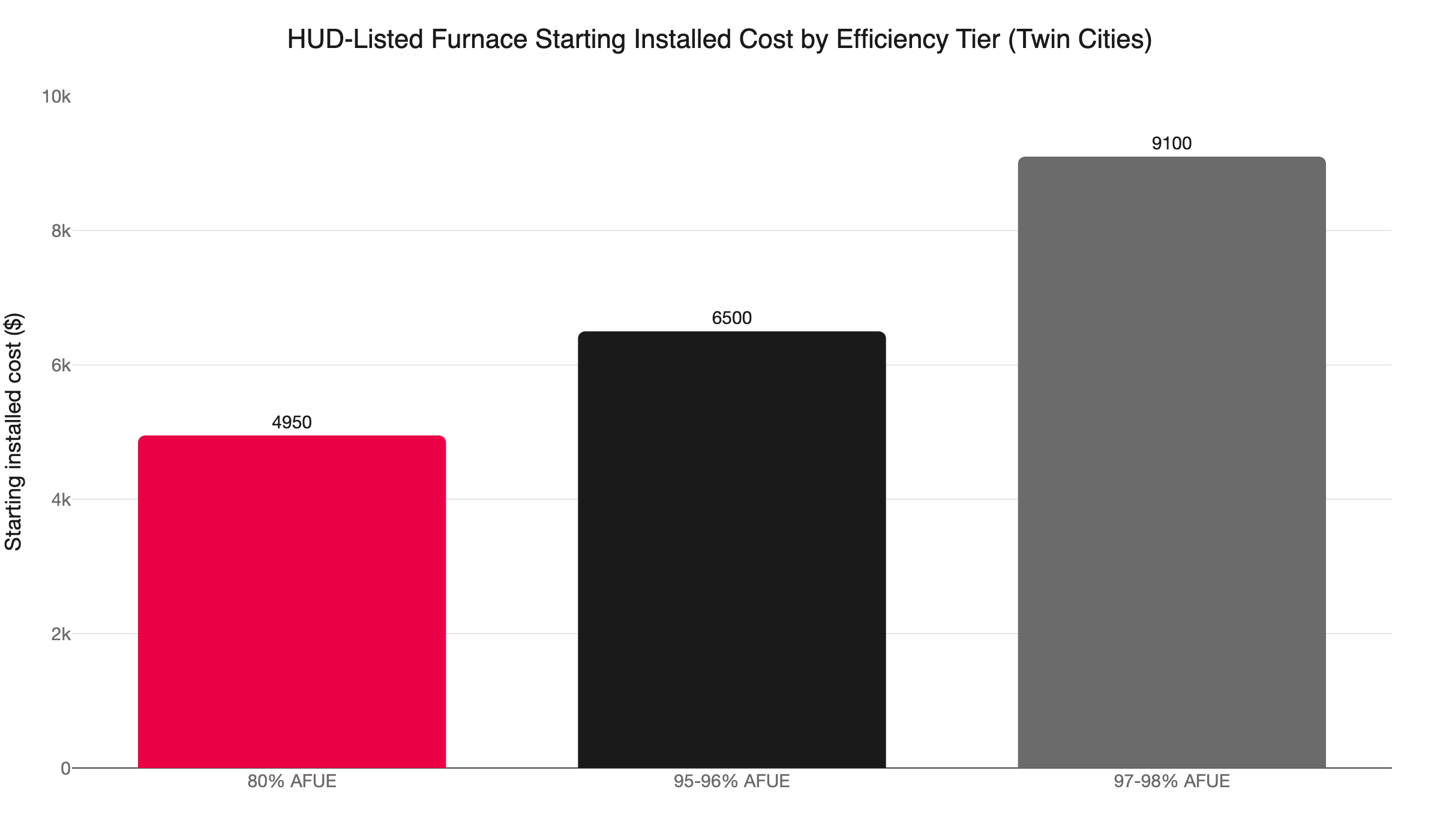
HUD-Listed Furnace Starting Installed Cost by Efficiency Tier (Twin Cities)
## Why Standard HVAC Equipment Fails in Manufactured Homes
If you own a manufactured home in the Twin Cities, a contractor may have told you a furnace swap is simple. It rarely is. Standard residential HVAC is designed for site-built homes. Those homes have deep duct chases and full-depth floor joists. They also have attics or basements where a large air handler can mount securely. A manufactured home shares none of those characteristics.
Three structural realities disqualify most standard equipment before the first measurement is taken.
**Narrow ducts.** Manufactured home duct systems use shallower trunk lines and shorter branch runs than site-built homes. Standard residential sizing assumptions do not apply. [Budget Heating's manufactured home HVAC guide](https://www.budgetheating.com/heating-and-cooling-options-for-mobile-homes-guid/) confirms that a Manual D airflow calculation is required before any HVAC replacement. A system installed without proper airflow calculations will short-cycle, waste energy, and fail early. See our [Manual J sizing guide](/blog/hvac-sizing-manual-j-right-sized-system/) for more on what a correct load calculation covers.
**Belly board weight limits.** The belly board is the insulated sheathing that seals the underside of the home's floor cavity. It holds insulation in place and keeps moisture and pests out. It is not engineered to carry a standard residential air handler or coil. Equipment mounted in the chassis must stay within the structural weight limits the home was built to handle.
**The data plate thermal zone requirement.** Every HUD-labeled manufactured home carries a data plate listing its heating design zone. Replacement equipment must be rated for that zone or higher. A mismatch is a code violation. It also means the system will fail to hold temperature when the Twin Cities drops to -16F on a January night in Ramsey, Blaine, or Brooklyn Park.
## What Is the Belly Board, and Why Does It Matter?
**The belly board is the insulated sheathing that seals the underside of a manufactured home's floor cavity. It protects insulation and keeps moisture out. Any HVAC work that penetrates the belly board must restore the vapor barrier when the job is done. Standard residential contractors frequently skip this step, creating condensation risk and long-term heat loss.**
When a technician cuts into the belly board to access duct connections and doesn't seal the opening, moisture enters the floor cavity. Over one Minnesota winter, that moisture deteriorates insulation and creates conditions for mold. The damage compounds quietly and is expensive to remediate once it takes hold.
The belly board also limits where equipment can be placed. An oversized coil or air handler that physically doesn't fit the chassis is a common surprise when a standard residential contractor shows up unprepared. The job stalls, and the homeowner pays for a second service trip. A qualified manufactured home installer accounts for belly board clearance and structural limits before any equipment is sized or ordered.
A properly completed installation restores the belly board's vapor barrier at every penetration point. That detail is what separates a compliant job from one that causes problems two winters later.
## Does Your Data Plate Govern Your Equipment Choice?
**Yes. The data plate determines which HVAC equipment is legal for your specific home. It must be verified before any equipment is selected or ordered.**
[Minnesota's DLI](https://www.dli.mn.gov/business/manufactured-structures/manufactured-homes-hud) confirms that HUD-labeled homes must be equipped to meet their rated heating design zone. When you replace the furnace, the new unit must match or exceed that zone rating. Installing an under-rated unit is a permit violation. It also typically voids the equipment warranty.
Find your data plate inside a kitchen cabinet, bedroom closet, or utility room. If it is missing or damaged, contact the home's manufacturer or DLI before scheduling HVAC work. Running the job without confirming zone compliance risks a failed inspection and a required reinstallation.
Homes built before HUD issued its manufactured home construction code in June 1976 are not HUD-labeled. Work on pre-1976 homes falls under different rules. If your home predates that year, mention it when you call. It changes the applicable code path and what the inspector will look for.
## What HVAC Systems Are Approved for Manufactured Homes?
**Four system types are viable for manufactured homes in Minnesota: HUD-listed furnaces, ductless mini-splits, cold-climate heat pumps, and packaged units. The right choice depends on your existing ductwork, lot configuration, and heating load.**
**HUD-listed furnaces.** [Federal regulation 24 CFR 3280.709](https://www.dli.mn.gov/business/manufactured-structures/manufactured-homes-hud) requires that any replacement furnace be listed specifically for manufactured home use. These units use sealed or direct-vent combustion. Combustion air and exhaust are completely isolated from the home's interior atmosphere. That isolation is not optional. Manufactured homes are tight structures. Any combustion spillage creates a carbon monoxide hazard. Installed cost in the Twin Cities starts around $4,950 for an 80% AFUE unit, $6,500 for a 95-96% AFUE model, and $9,100 or more for 97-98% AFUE high-efficiency equipment.
**Ductless mini-splits.** When existing ducts are absent, leaky, or undersized, a ductless system is the cleanest solution. No belly board penetration for new ductwork is required. An outdoor condenser sits beside the home. A refrigerant line set runs through a small wall penetration. One or more indoor heads mount on the wall or ceiling. A multi-zone system can serve several rooms from one outdoor unit. Our [ductless mini-split guide for older homes](/blog/ductless-mini-split-older-twin-cities-homes/) covers sizing, placement, and what to expect during installation.
**Cold-climate heat pumps.** A cold-climate-rated heat pump extracts heat from outdoor air even as temperatures approach -13F and below. For Minnesota, pair it with a HUD-listed gas furnace or electric resistance backup. This combination is sometimes called a dual-fuel setup. The heat pump carries the load during moderate cold. The backup heat source handles the extreme days. Our [dual-fuel heat pump guide](/blog/dual-fuel-heat-pump-gas-furnace-hybrid-minnesota/) explains how the two systems hand off at different outdoor temperatures.
**Packaged units.** A packaged unit houses heating and cooling components in one outdoor cabinet, connected to the home's duct system through a crossover duct. Packaged units are common in older manufactured homes and in parks where routing refrigerant lines inside the home is difficult. Duct condition still matters: a damaged crossover duct defeats most of the unit's efficiency.
## Is a Ductless Mini-Split the Right Call?
**For many Twin Cities manufactured home owners, yes. A ductless mini-split avoids new belly board penetrations for ductwork, does not require a full duct inspection before installation begins, and handles both heating and cooling in one system.**
[Budget Heating's guide](https://www.budgetheating.com/heating-and-cooling-options-for-mobile-homes-guid/) identifies ductless mini-splits as the best path when existing ducts are absent, leaky, or undersized. In many Twin Cities manufactured homes, that describes the actual duct condition accurately.
The main trade-off is upfront cost. A single-zone installed mini-split costs more than a HUD-listed furnace swap. A multi-zone system serving two or three rooms adds considerably more. The system still needs to be sized to the home's actual heat load. An oversized mini-split short-cycles just as destructively as an oversized furnace.
A cold-climate-rated mini-split head also qualifies as the heat pump in a dual-fuel pairing. If you want electric heating efficiency during moderate-cold weather and gas backup for extreme cold, a mini-split plus a HUD-listed gas furnace is a workable combination for a manufactured home.
## What About Cold-Climate Heat Pumps in Minnesota?
**Standard heat pumps lose most of their capacity near 25F. Minnesota's ASHRAE 99% design temperature runs approximately -16F to -20F. That gap makes a standard heat pump inadequate for a Twin Cities manufactured home without robust backup heat in place.**
Cold-climate-rated heat pumps are engineered for low-ambient conditions. Top models maintain meaningful heating output at -13F and below. A backup heat source, either a HUD-listed gas furnace or electric resistance strips, handles the coldest days. The result is a system that runs efficiently through most of the heating season. It still keeps the home warm during the extreme cold events that Minnesota delivers every January.
Some manufactured home parks restrict heating to electric-only systems based on lease terms or utility connections. If your park has that rule, an all-electric cold-climate heat pump with electric resistance backup is the compliant path. Confirm your park's rules before choosing any system type.
Also confirm that the outdoor unit can sit on a stable pad beside the home. In a park setting, placement may require management approval. Nail down access and site conditions before signing a contract.
## Do Manufactured Homes Qualify for HVAC Rebates?
**Possibly, but eligibility is not guaranteed for manufactured homes by either major Twin Cities utility. Call your utility before factoring any rebate into your project budget. A rebate that doesn't apply to your dwelling type can throw off your cost comparison significantly.**
**CenterPoint Energy** (natural gas customers) offers rebates on high-efficiency furnaces: [$200 for a 95-96% AFUE unit, $400 for a 97%+ AFUE unit, and $100 more for an ECM variable-speed blower](https://centralminnesotaheatingandcooling.com/blog/xcel-centerpoint-hvac-rebates-2026). Income-qualified households may reach $1,200 in total rebates. CenterPoint's program targets equipment type rather than dwelling type, so manufactured home owners may qualify. Call to confirm before booking.
**Xcel Energy** (electric customers) offers [up to $2,000 for a cold-climate ASHP and up to $1,600 for a standard ASHP](https://www.xcelenergy.com/staticfiles/xe-responsive/Working%20With%20Us/24-1-201%20MN%20Res%20Rebate%20Summary%20Information%20Sheet.pdf). A $600 bonus applies if the installation follows qualifying insulation and air-sealing work. Xcel's published rebate materials list single-family homes, duplexes, and fourplexes as eligible properties. Manufactured home eligibility is not confirmed in those materials. Call Xcel directly before scheduling.
**Federal tax credits.** The 25C and 25D federal heat pump tax credits [expired December 31, 2025](https://www.energystar.gov/about/federal_tax_credits/air_source_heat_pumps). No replacement credit is in effect as of September 2026. Do not count on federal incentives in your project budget.
**Minnesota's HEAR low-income rebate program** has not launched as of this writing. It awaits US DOE formal approval. Ask your contractor for the current status when you call.
## What Permits Are Required in Minnesota?
**Every furnace or water heater replacement in a Minnesota manufactured home requires a permit. Inspections are mandatory. A contractor who skips the permit is creating code, warranty, and insurance liability for you.**
[Minnesota's DLI](https://www.dli.mn.gov/business/manufactured-structures/manufactured-homes-hud) requires permits for manufactured home installation, and separately for replacement furnaces and water heaters. The contractor pulls the permit before work begins. An inspector reviews the completed installation. If a contractor says permits aren't needed for a furnace swap in a manufactured home, that is grounds to find a different contractor.
For alternative installation methods on private property, a licensed Minnesota engineer may need to review and approve the design. [DLI's installation Q&A](https://www.dli.mn.gov/business/manufactured-structures/manufactured-structures-installation-qa) outlines when DAPIA-approved alternates apply in manufactured home parks. Our [Minnesota HVAC permit guide](/blog/hvac-permit-when-required-minnesota/) covers the general permit process and what to expect at the inspection.
Minnesota also requires HVAC contractors working on manufactured homes to hold a Manufactured Home Installer license. This is a separate credential from a standard HVAC contractor license. Ask for the license number before you sign any contract. The market for qualified manufactured home HVAC installers in the Twin Cities is thin. Credentials matter more than they do in the standard residential market.
## Common Contractor Mistakes That Get Homeowners in Trouble
Three errors surface repeatedly in Twin Cities manufactured home HVAC work.
**Installing a non-listed residential furnace.** This is the most common mistake. A standard residential furnace is easier to source and sometimes cheaper to install. It is also not legal in a manufactured home. It will fail the permit inspection. If the work was done without a permit, your homeowner's insurance may not cover a resulting fire or carbon monoxide event. The liability stays with the homeowner.
**Skipping the duct inspection before adding AC.** Adding central air conditioning without inspecting the existing ducts first is a setup for failure. Undersized ducts will short-cycle the new system and drive up energy bills. The duct inspection also surfaces belly board damage that needs repair before new equipment goes in. Skipping that step means the damage compounds under the new system.
**Oversizing the equipment.** A unit too large for the home heats or cools the space before running long enough to control humidity. In a tight manufactured home, that produces sticky, uncomfortable air in summer and erratic comfort in winter. A proper Manual J load calculation is required before any equipment selection. Guessing from square footage is not adequate for a manufactured home's specific duct geometry and thermal envelope.
**Ignoring park lease rules.** Some parks prohibit specific fuel types or restrict where outdoor equipment can be placed. Installing a propane system in a park that requires electric-only heat, or placing a condenser where the lease prohibits it, can result in removal at the homeowner's expense. Read the lease and call the park manager before selecting a system.
## Schedule Service With Northern One Hour
We are locally owned and operated in Ramsey, MN, and we serve the full Twin Cities metro. When we evaluate a manufactured home HVAC project, we start with the data plate, the existing duct condition, and the belly board. We size to the home's actual load, not a square-footage estimate.
Our on-time promise is exactly what it sounds like: "Always On Time… Or You Don't Pay a Dime!(R)" We back every installation with a 100% satisfaction guarantee and transparent pricing before any work begins. Financing is available for larger replacements, including furnace swaps and heat pump installs.
If your manufactured home needs a furnace replacement, a mini-split installation, or a heat pump assessment, call us at **(763) 260-6662** or book online. We will tell you what the home needs, which permits we will pull, and what it will cost. No surprises.
---
# HVAC Rebates Tax Credits How to Stack Minnesota 2026
URL: https://northernonehour.com/blog/stacking-hvac-rebates-tax-credits-federal-state-utility-minnesota/
Published: 2026-09-09 | Category: HVAC
The federal 25C credit ended December 31, 2025. Here is what Minnesota homeowners can stack in 2026: Xcel, CenterPoint, and Save Energy MN.
Key Takeaways
- The federal 25C energy efficiency tax credit ended December 31, 2025. It does not apply to any HVAC equipment installed in 2026.
- Xcel Energy and CenterPoint Energy rebates are active and stackable in 2026. Both are funded through Minnesota's Conservation Improvement Program.
- Twin Cities homeowners with Xcel electric and CenterPoint gas service can stack rebates from both utilities on a qualifying dual-fuel heat pump system.
- Minnesota's Save Energy MN program (HOMES and HEAR) has not launched as of September 2026. There is no confirmed timeline.
- Federal rules prohibit retroactive Save Energy MN rebates. Do not install expecting to claim them after the program opens.
- Use a Trade Ally contractor. Both utility programs require it to claim the rebate.
- Ready to move? Call (763) 260-6662 or book online.
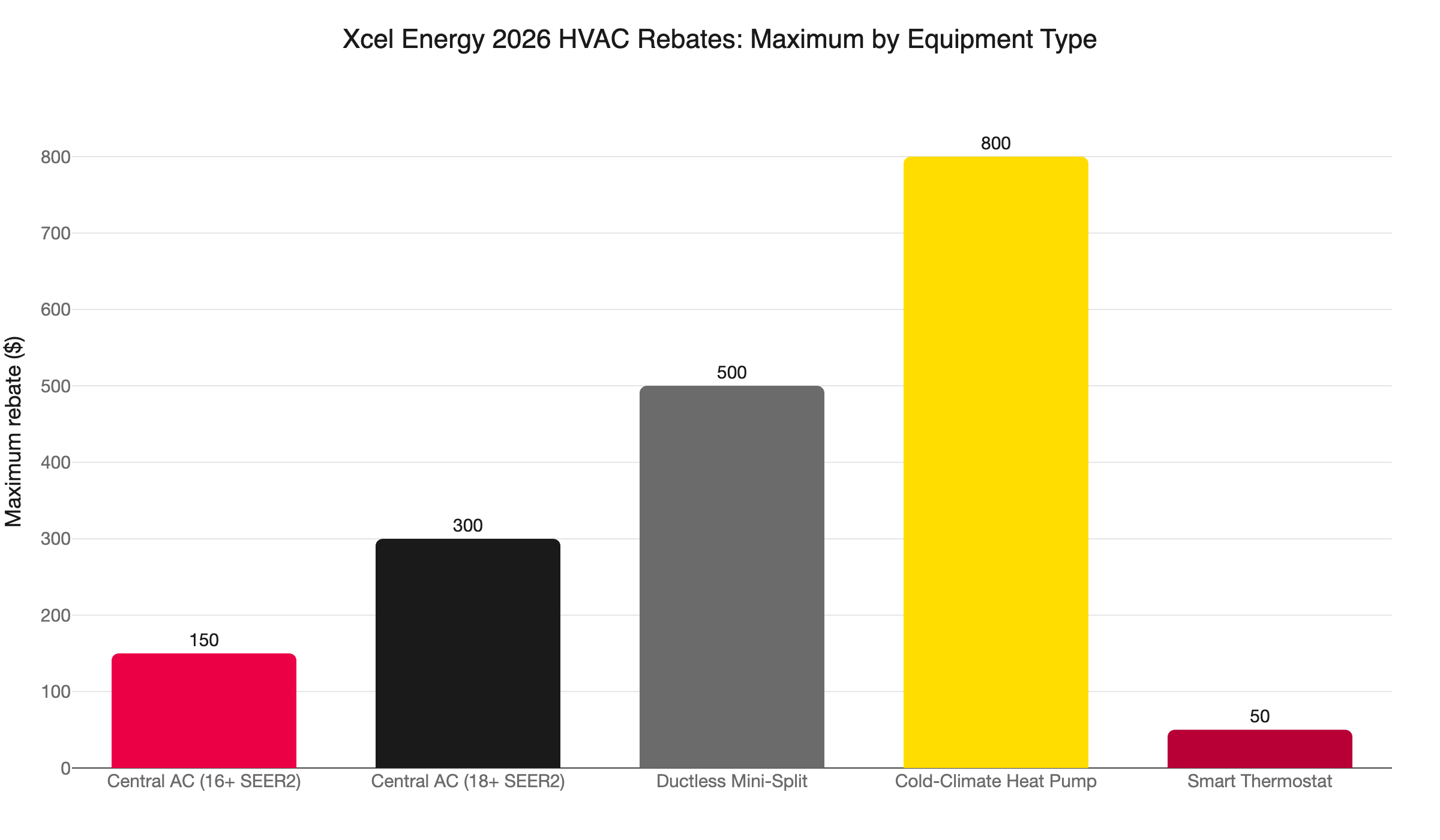
Xcel Energy 2026 HVAC Rebates: Maximum by Equipment Type
## The 2026 HVAC Incentive Landscape in Minnesota
If you have been researching HVAC rebates and tax credits in Minnesota, you have likely come across articles still listing the federal Section 25C credit as a key piece of the savings picture. That information is wrong. Budgeting for a tax credit you will never receive is a costly mistake on a job that already runs well into the thousands.
This guide covers what actually remains available in 2026. That means which federal credits are gone, which utility rebates are live and funded, what the state's Save Energy MN program is doing and not doing, and how to combine what is left to get the most out of your next HVAC install.
Northern One Hour is locally owned and operated in Ramsey, MN, serving Minneapolis, St. Paul, Blaine, Maple Grove, Plymouth, and communities across the Twin Cities. Our team is a Trade Ally for both Xcel Energy and CenterPoint Energy, which means we file your rebate paperwork at install.
## What Happened to the Federal 25C Tax Credit?
**Short answer:** Section 25C was terminated for any HVAC equipment installed after December 31, 2025. The One Big Beautiful Bill (Public Law 119-21), signed July 4, 2025, ended the credit with no HVAC-specific transition rule. If your new furnace, heat pump, or AC goes in during 2026, you will not receive a federal tax credit.
Most articles ranking on the first page for Minnesota HVAC rebates still present 25C as active. Some cite specific dollar amounts: $2,000 for heat pumps, $600 for high-efficiency furnaces. Those numbers were accurate while the credit was active. They are not accurate for 2026 installs.
The [IRS FAQ on the One Big Beautiful Bill](https://www.irs.gov/newsroom/faqs-for-modification-of-sections-25c-25d-25e-30c-30d-45l-45w-and-179d-under-public-law-119-21-139-stat-72-july-4-2025-commonly-known-as-the-one-big-beautiful-bill-obbb) confirms that [Section 25C](https://www.irs.gov/credits-deductions/energy-efficient-home-improvement-credit) "will not be allowed for any property placed in service after December 31, 2025." There is no binding-contract rule for HVAC equipment. Signing before the cutoff did not preserve the credit. Installation completion is what counted.
The same legislation ended Section 25D, the residential clean energy credit covering [geothermal heat pumps](/blog/geothermal-vs-air-source-heat-pump-cost-minnesota/). The IRS FAQ makes clear that even paying before December 31, 2025 did not preserve eligibility. The equipment had to be fully installed before the deadline.
Two things are worth understanding about what 25C was. First, it had no income limit. Any homeowner could claim it, regardless of income. Some older articles describe efficiency credits as income-gated; 25C never was. Second, it was a nonrefundable credit. It reduced what you owed the IRS but did not generate a refund if the credit exceeded your tax liability.
If you installed qualifying equipment before December 31, 2025, you can still claim the credit on your 2025 tax return using [Form 5695](https://www.irs.gov/instructions/i5695). Talk to your tax preparer about documentation requirements and timing.
## What HVAC Rebates Are Still Available in Minnesota for 2026?
**Short answer:** Xcel Energy and CenterPoint Energy both operate active rebate programs in 2026, funded through Minnesota's Conservation Improvement Program. Together they cover central AC, heat pumps, ductless systems, high-efficiency furnaces, and qualifying thermostats. These are funded programs with real deadlines, not promotional deals.
The loss of 25C is meaningful, but it does not eliminate all financial help for Minnesota homeowners upgrading their systems. Both major Twin Cities utilities offer rebate programs funded through the state-mandated Conservation Improvement Program. CIP is not optional for utilities of Xcel's and CenterPoint's scale in Minnesota. It is a long-term regulatory obligation. These programs are funded accordingly.
That said, programs can hit budget caps before the year ends. Call your utility before signing any install contract to confirm current availability and amounts.
Here is the overview:
**Xcel Energy (electric service):**
- Central AC at 16+ SEER2: $150
- Central AC at 18+ SEER2: $300
- Cold-climate air-source heat pump: $400-$800 based on capacity and HSPF2 rating
- Ductless mini-split: $200-$500
- ENERGY STAR smart thermostat: $50
- Bonus rebate: air sealing or insulation completed up to two years before a qualifying heat pump install can add an additional stacking bonus
**CenterPoint Energy (gas service):**
- High-efficiency gas furnaces and boilers: rebates available for qualifying equipment on CenterPoint gas service in Minnesota
- Ducted heat pump, dual-fuel setup: eligible when paired with a gas furnace rated 92%+ AFUE
- Smart and programmable thermostats: rebates available for qualifying models
Sources: [Xcel Energy 2024-2026 MN Rebate Summary](https://www.xcelenergy.com/staticfiles/xe-responsive/Working%20With%20Us/24-1-201%20MN%20Res%20Rebate%20Summary%20Information%20Sheet.pdf) and [CenterPoint Energy efficiency programs](https://www.centerpointenergy.com/en-us/savings-solutions/energy-efficiency).
## What Does Xcel Energy Offer in 2026?
**Short answer:** Xcel rebates range from $50 for a qualifying smart thermostat up to $800 for a cold-climate heat pump that meets NEEP certification and specific performance specs. The biggest rebates go to systems designed to perform on Minnesota's coldest days, not just in moderate weather.
Xcel's rebate structure rewards higher efficiency directly. A standard [16 SEER2 central AC](/blog/seer2-rating-explained-ac-efficiency-minnesota/) earns $150. Step up to 18+ SEER2 and that doubles to $300. For cold-climate heat pumps, the range widens to $400-$800, with the higher end reserved for larger systems with stronger COP ratings.
Cold-climate heat pumps carry specific qualifying requirements. According to [Xcel's heat pump program page](https://mn.my.xcelenergy.com/s/residential/heating-cooling/heat-pumps), a qualifying system must:
- Show a COP at 5°F of at least 1.75
- Be listed on the NEEP cold-climate heat pump list at ashp.neep.org
- Deliver maximum heating capacity at 5°F that is at least 70% of the 47°F rated capacity
Those specifications reflect Minnesota's actual climate. The Twin Cities falls in ASHRAE Zone 6A. A heat pump that performs well at 47°F but loses meaningful capacity at 5°F is not suited for our winters. Xcel's spec filters directly for systems that will carry the load when temperatures bottom out in January.
To claim the rebate, your contractor must be an Xcel Trade Ally and file the application at installation. The rebate arrives as a check or bill credit 6-10 weeks after that filing. One timing note: Xcel is still accepting applications for equipment installed in 2025 through September 30, 2026. If you had a qualifying install last fall and have not yet applied, there may still be time.
There is also a bonus rebate layer. If you had qualifying air sealing or insulation work done at your home in the past two years, that prior investment may stack a bonus on top of the standard heat pump rebate. Mention it when you schedule your estimate.
## What Does CenterPoint Energy Offer for Minnesota Homeowners?
**Short answer:** CenterPoint's program covers high-efficiency gas furnaces, condensing boilers, and ducted heat pump systems paired with a 92%+ AFUE gas furnace. Applications must be submitted by December 31, 2026. Rebate checks are mailed from Houston and expire 90 days from the issue date.
CenterPoint serves the natural gas side of most Twin Cities homes. Its rebate program covers qualifying gas furnaces and boilers installed in Minnesota homes on CenterPoint service. Equipment must be new and listed on the AHRI or ENERGY STAR database.
The dual-fuel detail matters for homeowners considering a [dual-fuel heat pump system](/blog/dual-fuel-heat-pump-gas-furnace-hybrid-minnesota/). CenterPoint's heat pump rebate applies when the electric heat pump pairs with a gas furnace rated 92% AFUE or higher. It does not extend to boilers or air handlers without a qualifying gas backup. If your existing furnace is below the 92% AFUE threshold, a full system upgrade may be required to access the full rebate stack.
CenterPoint's processing timeline runs about eight weeks. The check is mailed from their Houston office. It expires 90 days from the issue date. That is a shorter window than most homeowners expect. Deposit it promptly rather than setting it aside.
For questions or to confirm eligibility before your install: 612-399-1545 or RebateCenter@CenterPointEnergy.com. Applications must be in by December 31, 2026.
If you are replacing a furnace as part of a rebate-qualifying upgrade, our [furnace replacement service](/heating/heating-equipment/furnaces/furnace-replacements/) covers the full range of efficiency tiers. A 95-96% AFUE unit typically starts around $6,500 installed. A 97-98% AFUE model starts around $9,100. Both tiers clear CenterPoint's 92% threshold for dual-fuel rebate eligibility.
## Can You Stack Xcel and CenterPoint Rebates on the Same System?
**Short answer:** Yes. Homeowners with Xcel electric service and CenterPoint gas service - the most common Twin Cities configuration - can combine rebates from both utilities on a qualifying dual-fuel heat pump system. That stacking opportunity does not exist on a single-fuel setup.
A dual-fuel heat pump pairs an electric cold-climate heat pump with a gas furnace backup. In mild weather, the heat pump carries the heating load efficiently. When temperatures drop below the switchover point - CenterPoint recommends around 40°F for Minnesota systems - the gas furnace takes over. That switchover is not a workaround. It is the right call for our climate. Deep Minnesota cold demands gas backup.
The rebate stacking works because each utility rebates the equipment it serves:
- Xcel rebates the electric heat pump component ($400-$800 for a qualifying cold-climate system)
- CenterPoint rebates the qualifying gas furnace component (when it meets the 92%+ AFUE threshold)
Both rebates apply to the same installation. Your contractor must be a Trade Ally for both programs and file both applications at install. Our team handles that paperwork directly. You do not manage two utility processes separately.
If you had air sealing or insulation work done in the past two years, the Xcel bonus rebate may stack on top of the standard heat pump amount. That adds a third layer without requiring any additional equipment purchase.
For a combined dual-fuel system, installed costs vary by system size, efficiency tier, and duct configuration. Call (763) 260-6662 for a quote based on your specific home. [Financing options are also available](/blog/hvac-financing-options-what-to-know-twin-cities/) to spread the cost without delaying the work.
## Has Minnesota's Save Energy MN Program Launched?
**Short answer:** No. As of September 2026, Save Energy MN - which includes both HOMES and HEAR - has not launched. Minnesota's Department of Commerce posted an update on June 12, 2026, confirming the program is still awaiting formal DOE approval. There is no confirmed launch date.
Save Energy MN generated significant interest when announced. The HEAR program targets income-qualified households. Those below 80% of area median income could receive up to 100% of costs covered. Those between 80% and 150% AMI could receive up to 50%. The HOMES program covers whole-home energy improvements based on [an energy assessment](/blog/home-energy-audit-hvac-next-steps-minnesota/) rather than individual equipment swaps.
Those amounts are real. The program structure is funded through the Inflation Reduction Act. But the program has not opened, and federal rules explicitly prohibit retroactive rebates. That is not a technicality. If you install a new furnace today and Save Energy MN opens next month, you will not qualify after the fact. The installation must happen after the program officially launches.
[Minnesota's Department of Commerce](https://mn.gov/commerce/energy/consumer/energy-programs/save-energy-mn.jsp) is the authoritative source for launch updates. Bookmark that page and check it periodically. Do not rely on contractor estimates or news articles for a launch date - check Commerce directly.
For households who may qualify under [HEAR](https://mn.gov/commerce/energy/consumer/energy-programs/hear.jsp), income thresholds are set by AMI tables that vary by county. The MN Commerce site will have county-level income lookup tools when the program opens.
## How Do You Claim HVAC Rebates in Minnesota?
**Short answer:** Call your utility before signing any install contract, use a Trade Ally contractor for both Xcel and CenterPoint programs, and keep your install documentation. The contractor files the utility rebate application at install. Your job is to keep records and deposit the check when it arrives.
Here is the process in order. Skipping a step can cost you the rebate.
**Step 1: Call your utility before you commit.**
Confirm current rebate availability and amounts for the specific equipment you are considering. Program budgets can hit caps before year-end. Verify with Xcel and CenterPoint separately [before you sign anything](/blog/hvac-bid-comparison-what-to-look-for-twin-cities/).
**Step 2: Confirm equipment eligibility.**
For Xcel, verify the AC is 16+ SEER2 or that the heat pump meets cold-climate specs. For CenterPoint, confirm the furnace or boiler is AHRI-listed and meets the efficiency threshold. Your contractor should confirm both before you approve the work.
**Step 3: Use a Trade Ally contractor for both programs.**
This is not optional. Xcel and CenterPoint both require a participating Trade Ally to file the rebate application at installation. If your contractor is not enrolled, you generally cannot file retroactively as a homeowner. Verify Trade Ally status before you book.
**Step 4: Keep all install documentation.**
Save the invoice, equipment model and serial numbers, and AHRI or ENERGY STAR certificates. The utility may request these if a question comes up on your application.
**Step 5: Watch the timeline and deposit promptly.**
Xcel rebates arrive 6-10 weeks after install. CenterPoint checks take about 8 weeks and expire 90 days from the issue date. Mark your calendar and do not let the check sit.
**Step 6: File 2025 equipment on your 2025 tax return if applicable.**
If you installed qualifying HVAC equipment before December 31, 2025, [Form 5695](/blog/heat-pump-tax-credit-how-to-claim-form-5695-minnesota/) is how you claim the 25C credit on your 2025 return. Consult your tax preparer about documentation and which tax year to file under.
## Should You Wait for Save Energy MN Before Replacing Your HVAC?
**Short answer:** If your system is failing or at end of life, do not wait. Save Energy MN has no confirmed launch date. Waiting for a program with no timeline risks leaving your home without heat or cooling when the system finally gives out.
This is the most common question we hear right now. The math seems to make sense: 100% of costs for income-qualifying households is a meaningful number. Holding off and checking for a launch announcement sounds reasonable.
Here is the practical problem. Minnesota winters are long and cold. A furnace at the end of its service life is not a deferrable problem. If the system fails in January, you face emergency replacement - and emergency service carries a premium above standard rates. The utility rebates available today are funded and real. Save Energy MN is not available today, and there is no timeline that says it will be available this fall or this winter.
If your system is running acceptably and you have flexibility, watching for a Save Energy MN announcement before booking a proactive replacement is a reasonable call. Keep the MN Commerce page bookmarked and check it monthly.
If you are not sure how much life your system has left, start with a [furnace tune-up](/heating/heating-equipment/furnaces/furnace-tune-ups/). A professional inspection gives you a real assessment of remaining service life. That is the information you need to make a timing decision based on facts rather than guesswork. A tune-up costs far less than an emergency replacement.
## Why the Contractor You Choose Matters
Every rebate program covered in this article flows through the contractor. Xcel's Trade Ally files the Xcel application. CenterPoint's Trade Ally files the CenterPoint form. If your contractor is not enrolled in the relevant program, you generally cannot file after the fact as a homeowner. Choosing a contractor who is not a Trade Ally to save a few dollars upfront can cost you the entire rebate.
Our team at Northern One Hour is a Trade Ally for both programs. We file both sets of paperwork at install. You do not track two separate utility processes.
We also size systems to qualifying efficiency thresholds. An oversized or undersized system will not perform the way the specs promise, regardless of what rebate it earned. And we price jobs transparently before any work starts.
We stand behind our schedule: "Always On Time… Or You Don't Pay a Dime!(R)" If the job involves a larger investment - a full furnace replacement, a cold-climate heat pump, or a combined dual-fuel upgrade - ask about financing when you call. We have options that let you move forward now without waiting for a system failure to force the decision.
Call (763) 260-6662 or book online. We will confirm your rebate eligibility before we arrive, so there are no surprises on either end of the install.
---
# When to Replace AC: Cost Savings Math for Minnesota
URL: https://northernonehour.com/blog/ac-short-cooling-season-replacement-payback-minnesota/
Published: 2026-09-08 | Category: Cooling
Minnesota's short cooling season changes AC replacement payback math. Here's why the real window is 7-10 years, not 30, for an aging unit.
Key Takeaways
- Minnesota AC units run roughly 1,000 hours per cooling season, about one-third the runtime of a unit in Arizona or Texas.
- National payback calculators assume your aging unit still operates at its original nameplate SEER. Most units older than 10 years do not.
- A unit degraded to 8-10 effective SEER makes a new 16 SEER2 system 40-50% more efficient, not 20%. That gap matters more than the season length.
- Annual repair costs on aging systems accelerate. At $600-$800 per year in repair spend, the real payback window on replacement drops to 7-10 years, even in Minnesota's short cooling season.
- R-22 refrigerant on pre-2010 units changes the repair economics entirely. That refrigerant is no longer produced.
- Xcel Energy offers $150-$300 for qualifying high-efficiency central AC in 2026. The federal 25C tax credit expired December 31, 2025.
- Installed replacement cost in Minnesota: $7,500-$10,400 for a standard 16 SEER2 system.
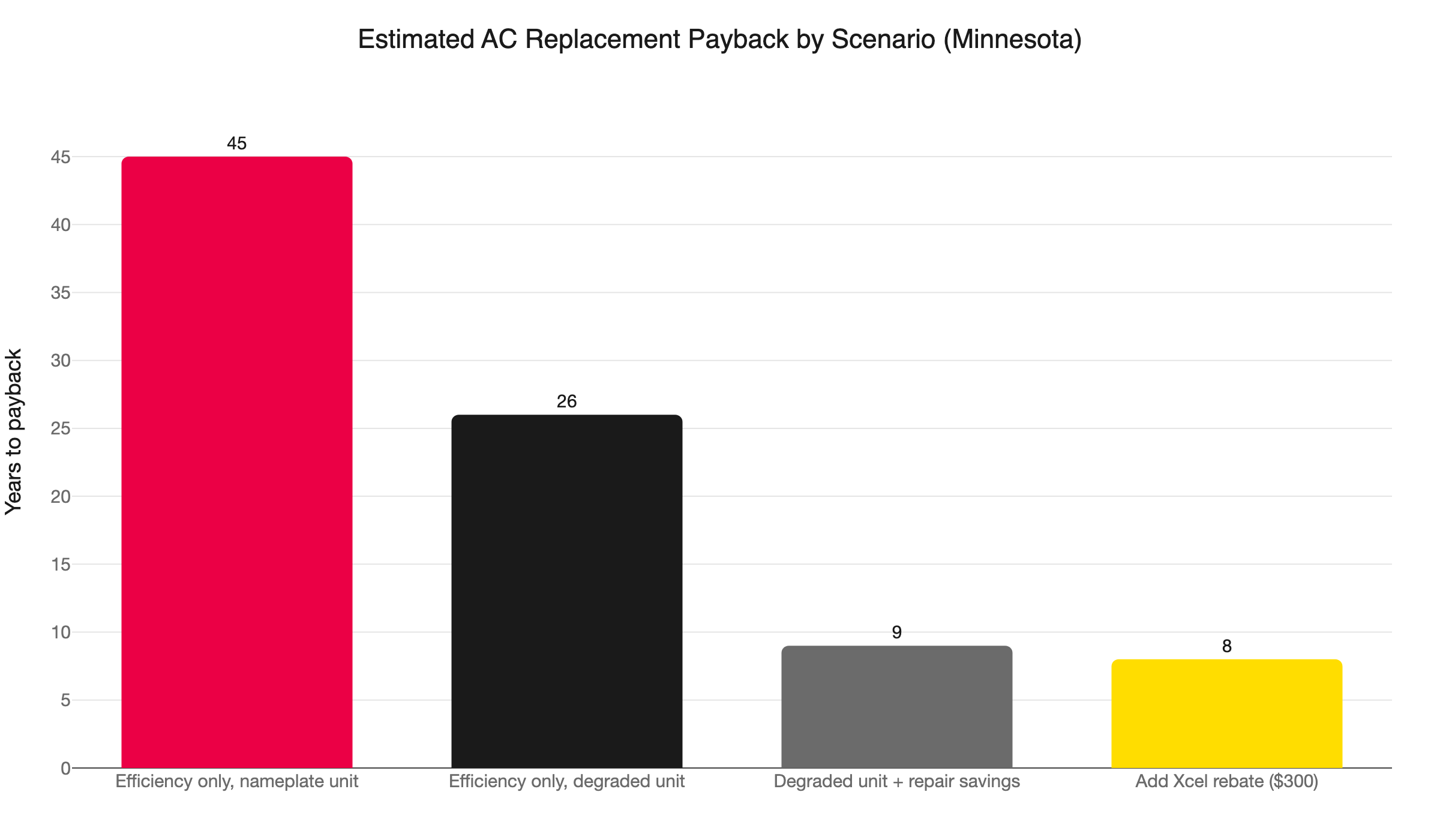
Estimated AC Replacement Payback by Scenario (Minnesota)
## Why National Payback Math Misleads Minnesota Homeowners
Minneapolis averages [approximately 700-800 cooling degree days per year](https://www.dnr.state.mn.us/climate/twin_cities/normals.html), compared to roughly 2,700 in Houston and 4,000-plus in Phoenix. A Twin Cities central AC runs [approximately 1,000 hours per cooling season](https://midlandhtg.com/how-short-is-too-short-deciding-if-a-new-ac-makes-sense-for-your-climate/) versus 3,000 hours per year in Arizona. That runtime difference is real, and it does compress raw efficiency savings.
The problem with national payback calculators: they apply full-year efficiency numbers to Minnesota's shorter season, and they assume the aging unit still runs at nameplate efficiency. Upgrade from a 10 SEER unit to a 16 SEER2 unit, run it 1,000 hours at Minnesota's residential electricity rate of roughly $0.15/kWh, and you save about $150-$200 per summer. At $7,500-$8,500 installed, payback from efficiency alone stretches to 37-57 years. That number discourages a lot of homeowners from a replacement that actually makes sense.
But there is a buried assumption in that calculation. It assumes your old unit is still performing at its original nameplate SEER rating. In most cases, after 10 or more years, it is not.
That single assumption is where national guidance falls apart. It is also where Minnesota homeowners end up keeping aging systems years longer than the math actually supports.
## What Is Your Old Unit Actually Running At?
**A unit rated 13 SEER when new is likely running at 10-11 effective SEER today, after more than a decade of Minnesota winters.** Coil pitting, motor wear, and refrigerant micro-leaks degrade real operating efficiency over time. [A 13 SEER unit installed in 2010 is not still running at 13 SEER](https://midlandhtg.com/the-short-season-struggle-when-to-replace-your-aging-minnesota-ac/). In practice, it is closer to 10-11 effective SEER. A unit rated 10 SEER from the mid-2000s may be running at 8-9 effective SEER.
That gap reshapes the payback calculation completely.
Compare a new 16 SEER2 unit to a system running at 8-9 effective SEER. The efficiency difference is 40-50%, not 20%. On a 3-ton unit running 1,000 hours at $0.15/kWh, annual energy savings from replacing a degraded unit jump to $280-$330 per summer, not $150-$200.
One more point of context: the 2023 federal minimum for new central AC in the North Central region is [13.4 SEER2, equivalent to roughly 14.5 old-SEER](https://midlandhtg.com/the-short-season-struggle-when-to-replace-your-aging-minnesota-ac/). A unit installed at 10 SEER in 2005 that is now running at 8-9 effective SEER is operating 30-40% below today's code minimum. That is not "a little less efficient." That is a meaningful performance deficit, and it changes the payback math accordingly.
## The Payback Calculation No One Is Publishing
This is the breakdown that does not appear in the top search results for "when to replace AC cost savings Minnesota."
**Scenario 1: New unit versus a nameplate-perfect aging unit.**
Annual energy savings: $150-$200 per summer. On an $8,000 installed system, payback from efficiency alone: roughly 45 years. This is the number that convinces homeowners that Minnesota's short season makes replacement economically pointless. It only applies to a unit still performing at its original nameplate efficiency, which is unlikely after 12-plus years.
**Scenario 2: New unit versus a degraded aging unit at 8-10 effective SEER.**
Annual energy savings: $280-$330 per summer. Payback narrows to roughly 26 years. The direction has changed significantly.
**Scenario 3: Add accelerating repair costs.**
A 12-15 year old system does not have flat annual repair costs. It has accelerating ones. A capacitor this year ($195-$500). A condenser fan motor next summer ($375-$900). A compressor in the next few years ($1,950-$4,500 for the compressor alone, often a replacement-trigger event on its own). Average those at $600-$800 per year conservatively, which is not aggressive for a system in the second half of its service life. The annual benefit of replacing the system becomes energy savings plus repair avoidance: $880-$1,130 per year combined. On an $8,000 installed system, payback drops to 7-9 years.
**Scenario 4: Add the Xcel rebate.**
Xcel Energy's $300 rebate on an 18+ SEER2 system comes off year-one cost. With energy savings, repair avoidance, and the rebate applied, the realistic payback window for replacing a functional but aging Minnesota AC lands at 7-9 years.
That is the number the short-season framing has been obscuring. The payback on AC replacement in Minnesota is not 30 years. It is 7-10 years when you account for the full picture.
## Does the $5,000 Rule Apply to Minnesota?
**Yes. It is the fastest filter to run before you approve any repair quote.**
Multiply your unit's age in years by the repair estimate in dollars. If the result exceeds $5,000, [replacement is the financially sound choice](https://midlandhtg.com/the-short-season-struggle-when-to-replace-your-aging-minnesota-ac/). A 15-year-old unit with a $400 repair quote: 15 times 400 equals $6,000. Replace. A 10-year-old unit with a $300 repair quote: 10 times 300 equals $3,000. Repair for now.
Use the 50% Rule as a second filter: if a single repair costs more than half the price of a full replacement, stop repairing. On a $7,500 installed system, that threshold is $3,750. A compressor replacement at $1,950-$4,500 sits right at that line. And a compressor failing on a 12-year-old system is rarely an isolated event. It typically signals a unit entering its failure phase, not a one-time fix.
Both rules are quick filters. If a repair quote passes both, it is usually worth proceeding. If either one fires, call us before you approve the repair. Our team will give you a straight read on whether the economics point toward repair or replacement.
## What About R-22 Refrigerant?
**If your unit was manufactured before 2010, the repair economics may already be settled.**
Pre-2010 units almost certainly use R-22 refrigerant. R-22 is no longer manufactured under EPA phaseout rules. [R-22 recharge costs have risen sharply](https://midlandhtg.com/the-short-season-struggle-when-to-replace-your-aging-minnesota-ac/) due to limited supply from reclaimed and recycled sources. A refrigerant leak on a pre-2010 system is not a repair. It is a delay. Without fixing the underlying leak, the refrigerant exits again at the same rate. And fixing the underlying leak on an aging system can cost nearly as much as the recharge.
R-22 exposure changes the economics of keeping a system entirely. Even a successful repair leaves you on a refrigerant that is increasingly scarce and expensive every season. If our technicians find a refrigerant leak on a pre-2010 system, replacement is almost always the correct answer, independent of the $5,000 Rule or any other calculation. The math on patching an R-22 system rarely adds up.
## Is Short Cycling Always a Replacement Signal?
**On units older than 12 years, it is almost always a replacement signal.**
Normal AC cycles run 12-20 minutes. [Short cycling under 7 minutes](https://midlandhtg.com/how-short-is-too-short-deciding-if-a-new-ac-makes-sense-for-your-climate/) burns compressor life faster than normal operation, regardless of season length. Each startup draws a large current surge. A compressor that is starting every four or five minutes degrades faster than one running long, efficient cycles.
Short cycling on a unit under five years old usually points to a sizing problem or a refrigerant issue. Both are worth diagnosing and repairing. Short cycling on a unit 12 years or older is a different story. By the time it is chronic and obvious to the homeowner, the compressor is typically already stressed.
Our guide to [AC short cycling causes and fixes in the Twin Cities](/blog/ac-short-cycling-causes-fixes-twin-cities/) walks through the diagnostic steps. When our team identifies compressor-related short cycling on an older system, replacement is usually the more economical path -- and the more reliable one for getting through a Minnesota summer without an emergency call.
## Minnesota's Unique Wear Pattern
Twin Cities AC units do not just run less than units in warmer climates. They age differently.
[Minnesota AC systems sit dormant approximately 8 months per year](https://midlandhtg.com/how-short-is-too-short-deciding-if-a-new-ac-makes-sense-for-your-climate/). That dormancy is not neutral. Rubber seals dry and crack over long Minnesota winters. Rodents nest in outdoor cabinets during the off-season. Refrigerant lines cycle from -20 degrees Fahrenheit in January to 95 degrees in July -- a 115-degree thermal range that fatigues materials in ways that steady Southern heat does not. That stress pattern is different from year-round use, not simply less of it.
The practical result: a 15-year-old Minnesota AC has often experienced as much material stress as a 10-year-old unit in a warm climate. National age-based guidelines and payback benchmarks understate this pattern. When a Southern HVAC resource says "a well-maintained AC should last 15-20 years," that guidance often does not fully account for what Minnesota winters do to components sitting idle for eight months at a time.
There is also a cost that payback calculators never capture: the reliability premium. One emergency service call in July costs $400-$900 in parts and labor. An after-hours or weekend call adds $180-$270 per hour on top of standard rates. Miss one week of functional cooling during the six weeks per year you rely on your AC, and you have erased two to three years of marginal efficiency savings. An aging unit that holds on through May can still strand you in August, and that failure always arrives on the worst possible day.
## What Does AC Replacement Cost in Minnesota in 2026?
**Installed replacement costs in the Twin Cities for 2026:**
- Standard central AC (14-16 SEER2): $7,500-$10,400 installed
- High-efficiency central AC (18+ SEER2): $11,000-$15,600 installed
- Heat pump system: $12,000-$19,000 installed
The range within each tier depends on home size, duct condition, the refrigerant type in the existing system, and equipment brand. Our full guide to [AC replacement costs in Minnesota](/blog/ac-replacement-cost-minnesota/) covers what drives those variables and what to expect on installation day.
Financing is available for larger jobs. Ask our team when you call and we will walk you through current options. For homeowners also considering a furnace replacement in the same season, bundling both units in one installation often reduces total labor cost.
## What Rebates Are Available for AC Replacement in 2026?
**Xcel Energy offers $150-$300 for qualifying central AC. The federal 25C tax credit expired December 31, 2025 and is not available for 2026 installations.**
[Xcel Energy's 2026 rebate program](https://centralminnesotaheatingandcooling.com/blog/xcel-centerpoint-hvac-rebates-2026) covers the following for cooling equipment:
- Central AC, 16+ SEER2: $150 rebate
- Central AC, 18+ SEER2: $300 rebate
- Cold-climate heat pump: $400-$800, based on capacity and HSPF2 rating
- ENERGY STAR smart thermostat: $50
Rebates require a participating contractor and an AHRI certificate. Submit within 60 days of installation. These are funded through Minnesota's Conservation Improvement Program, which is state-mandated and does not depend on federal budget cycles. That makes the Xcel rebate a reliable, bankable year-one savings, not a politically contingent one.
On the federal side: the Section 25C Energy Efficient Home Improvement Credit (30% of cost, up to $600 for central AC) [was terminated by the One Big Beautiful Bill Act, signed July 4, 2025](https://www.acdirect.com/blog/federal-hvac-tax-credits-2026/). No federal credit is available for AC equipment placed in service in 2026. If a contractor mentions a federal tax credit for a 2026 installation, ask them to show you the current IRS guidance.
Our [Minnesota HVAC rebate guide](/blog/xcel-centerpoint-hvac-rebates-minnesota/) keeps the current figures up to date as program rules change between seasons.
## When Does Replacing Your AC Actually Make Financial Sense?
Here is a practical framework that pulls together everything above.
**Replace now if any of these are true:**
- Your unit uses R-22 refrigerant (manufactured before 2010)
- Your unit is over 15 years old and facing any repair over $500
- The $5,000 Rule fires: age in years times the repair estimate exceeds $5,000
- A single repair quote exceeds 50% of installed replacement cost
- You are seeing chronic short cycling on a unit older than 12 years
- You have had two or more repair calls in the past 18 months
**Consider replacement if:**
- Your unit is 10-14 years old and repairs are becoming annual events
- You are on R-410A but seeing longer run times, higher cooling bills, or reduced comfort, all signs of efficiency degradation
- You want to replace before the next cooling season; spring installs avoid the peak July scheduling pressure
**Hold and maintain if:**
- Your unit is under 10 years old, passing annual tune-ups without repairs
- A repair quote passes both the $5,000 Rule and the 50% Rule
- The system is cooling reliably and running full cycles without short cycling
---
The short cooling season is real. But it does not change the math the way most homeowners expect. When you account for how much an aging Minnesota unit has actually degraded, how repair costs accelerate in the second half of a system's life, and how the Xcel rebate front-loads the payback curve, replacing a functional but aging AC often pays off in 7-10 years. Not 30.
We are locally owned and operated in Ramsey, serving Minneapolis, St. Paul, and the Twin Cities metro. Our team gives you an honest read on your system, not a sales pitch. We back every visit with our promise: "Always On Time… Or You Don't Pay a Dime!(R)"
Ready to know where your system stands? Call us at **(763) 260-6662** or [schedule a visit online](/air-conditioning/ac-installation/). We will tell you straight whether your system is worth repairing, worth replacing now, or worth watching for another season.
---
# Asbestos Duct Insulation in Older Minnesota Homes: A Guide
URL: https://northernonehour.com/blog/hvac-asbestos-duct-wrap-older-minnesota-homes/
Published: 2026-09-08 | Category: HVAC
Pre-1978 Twin Cities homes often have asbestos-wrapped ducts. Learn to identify it, understand Minnesota law, and know when to pause your HVAC service call.
Key Takeaways
- Asbestos in duct systems typically appears as a cloth-like or canvas wrap on trunk lines, gray or white tape at duct joints, and flexible pads above the furnace.
- [The Minnesota Department of Health](https://www.health.state.mn.us/communities/environment/asbestos/homeowner/asbinhomes.html) lists ductwork insulation and furnace insulation among materials that may contain asbestos. MDH recommends checking for asbestos markings or hiring a certified inspector before disturbing any suspect material.
- Minnesota regulates asbestos-related work at 10 linear feet, 6 square feet, or 1 cubic foot. A single duct run typically exceeds all three thresholds.
- Even encapsulation (not just removal) counts as regulated asbestos-related work in Minnesota and requires MDH notification before work begins.
- If a technician spots suspect duct wrap during an HVAC appointment, the right move is to pause the job and refer you to a licensed inspector - not proceed.
- Never scrape, chip, or sample suspect material yourself.
- Use the [MDH asbestos contractor directory](https://www.health.state.mn.us/communities/environment/asbestos/asbcontrlookup.html) to find a licensed inspector or abatement contractor in your area.
If your Twin Cities home was built before 1978, asbestos duct insulation is a real possibility in your basement. Homes in Minneapolis, St. Paul, Ramsey, Blaine, and across the metro were built during the peak years of asbestos use in residential HVAC construction. Most homeowners never think about it until a contractor shows up for service - and by then, the situation can get complicated fast.
This post covers how to identify asbestos duct insulation in an older Minnesota home, how the state regulates it, what your options are once material is confirmed, and what should actually happen when an HVAC technician walks into a pre-1978 basement.
## What Does Asbestos Duct Insulation Look Like in an Older Home?
**Asbestos duct insulation appears as cloth-like or canvas wrap on trunk lines, gray or white tape at joints, vibration dampener pads above the furnace, rough fibrous duct sections, and spray-applied gray material on pipes. Any of these in a pre-1978 home should be treated as suspect until a certified inspector tests it.**
Asbestos was standard in residential HVAC construction through the late 1970s. It was cheap, heat-resistant, and durable - exactly what builders wanted around a furnace and ductwork. In a typical Twin Cities basement, it shows up in five forms:
- **Full trunk wrap.** A cloth-like or canvas material covers the large rectangular or round duct runs branching from the furnace. This is the most common form and the hardest to miss.
- **Joint tape.** Gray or white tape seals the seams where duct sections connect.
- **Vibration dampener pads.** Flexible pads sit between the furnace and the first duct section. They absorb motor vibration and are often the first thing a technician handles.
- **Asbestos cement sections.** Some duct runs used asbestos cement. Cut edges look crumbly and fibrous.
- **Spray-applied insulation.** Gray, textured material on pipes or duct surfaces, often in mechanical rooms or utility closets.
[Published guidance on duct asbestos identification](https://stevesairductcleaning.com/info/asbestos-tape-ductwork-identifying) notes that visual red flags include flaking or fraying wrap, cloth-like texture, and gray or white tape at joints. The same source is clear: homeowners should never scrape or sample suspect material themselves.
Here is the key limit of visual inspection: you cannot confirm asbestos by looking at it. Only a certified inspector with laboratory testing can make that call. If your home predates 1978 and you see any of the above, treat the material as asbestos until a licensed professional says otherwise.
---
## Is Asbestos Duct Insulation Dangerous?
**Asbestos-containing duct insulation poses a health risk when fibers become airborne. Intact, undisturbed material carries lower immediate risk. The danger rises sharply when the wrap is fraying, crumbling, or disturbed by renovation, duct cleaning, or HVAC service work. Inhaled asbestos fibers cause serious lung disease.**
Asbestos-containing materials (ACM) that are intact and left alone are not an immediate hazard. The problem is disturbance. When someone cuts, scrapes, drills near, or mechanically contacts ACM, fibers become airborne. In a duct system, those fibers can travel through the air distribution system and reach every room in the house.
The service context matters more than most homeowners realize. A duct cleaning in a pre-1978 home - especially on older flex connections or wrapped trunk lines - can stir material that has been stable for decades. A furnace tune-up that requires disconnecting a vibration pad or moving a duct section near the furnace can do the same. Even a rough visual inspection that involves pressing on or bending wrapped material can release fibers.
[The Minnesota Department of Health](https://www.health.state.mn.us/communities/environment/asbestos/homeowner/asbinhomes.html) recommends checking for asbestos markings or hiring a certified inspector before disturbing any suspect materials. MDH also warns that many home inspectors will not test for asbestos. Buyers and sellers of pre-1978 properties should ask specifically - a standard inspection report will not necessarily flag it.
If you are planning a purchase or sale of an older Twin Cities home, see our [HVAC checklist for buying a home in Minnesota](/blog/hvac-checklist-buying-home-minnesota/) for the full list of questions to raise before closing.
---
## What Are Your Options Once Asbestos Is Confirmed?
**Once a licensed inspector confirms asbestos and assesses the material's condition, there are three paths: leave it alone, encapsulate it, or remove it. The inspector's condition assessment drives the decision. No general HVAC contractor should be making this call on your behalf.**
### Leave it alone
If the material is intact, firmly adhered, and not in the path of any planned HVAC service or renovation work, Minnesota guidance supports leaving it in place. Undisturbed ACM that is not deteriorating poses minimal immediate risk.
This is not a permanent answer as the material ages. Revisit the condition before any duct-related service call or home renovation, and check it annually in the meantime.
### Encapsulate it
[Minnesota Rules part 4620.3100, subpart 19](https://www.health.state.mn.us/communities/environment/asbestos/workprac/awpencmainrep.html) defines encapsulation as treatment with a sealant material that surrounds or embeds asbestos fibers in an adhesive matrix to prevent fiber release. Two types are used in practice:
- **Bridging encapsulants** create a membrane over the surface of the material.
- **Penetrating encapsulants** bind the internal components of the ACM itself.
Encapsulation works when the material is deteriorating but still coherent. It is not a substitute for removal when material is already friable (crumbling or sagging). Loose or hanging ACM must be removed before encapsulation can proceed.
One detail most homeowners do not know: duct insulation that already has a canvas or paper covering is considered previously encapsulated under Minnesota rules. "Patch and repair" work applies encapsulant to return it to intact state. If that canvas covering is what you see in your basement, that history matters to the abatement contractor's scope decision.
### Remove it
Abatement is required when the material is friable, damaged, or directly in the path of planned renovation or HVAC system replacement. If you are replacing a furnace or the full duct system, abatement typically comes first - then HVAC work proceeds after a clearance air test confirms the work area is clean.
These two scopes use separate contractors, separate permits, and separate timelines. Plan for both when budgeting a project in a pre-1978 home.
---
## Asbestos Duct Insulation in Older Minnesota Homes: What State Law Requires
Minnesota regulates asbestos-related work in residences at thresholds low enough to capture almost any duct work in a pre-1978 home. Most homeowners assume regulation applies only to commercial buildings or full demolition. It does not.
[Minnesota's regulatory thresholds](https://www.health.state.mn.us/communities/environment/asbestos/workprac/awpencmainrep.html) for asbestos-related work in a residence are:
- **10 linear feet** of pipe or duct insulation
- **6 square feet** of other flat materials
- **1 cubic foot** in any form
A single furnace trunk line easily exceeds all three. That means repairs, encapsulation, and removal of duct insulation in an older Minnesota home will almost always fall under state regulation.
The part that surprises most people: encapsulation counts. It is not just removal that triggers the rules. Applying encapsulant to asbestos-containing duct insulation is asbestos-related work (ARW) under Minnesota law. That means it requires a licensed MDH contractor and advance notification before work begins.
The notification requirements are specific:
- [MDH requires at least 5 calendar days' notice](https://www.pca.state.mn.us/business-with-us/asbestos-in-demolition-or-renovations) before regulated asbestos-related work begins.
- The MPCA requires at least 10 working days for renovation or demolition projects.
- Both encapsulation and removal require an MDH-licensed contractor above those thresholds.
MDH licenses asbestos inspectors and abatement contractors separately. Ask for both credentials before signing any contract. If a company wants to inspect and abate without showing two distinct license numbers, call MDH to verify their standing before work begins. The MDH Asbestos Program can be reached at (651) 201-4620.
---
## What Happens When Your HVAC Tech Arrives at a Pre-1978 Home?
**A responsible HVAC technician who spots suspect duct wrap should stop the appointment and refer you to a licensed asbestos inspector before any duct cleaning, furnace service, or system replacement touches that material. Proceeding without testing can circulate fibers through your entire home's air supply.**
This is the part of the conversation most homeowners never hear - because most HVAC companies do not raise it before the visit.
When our team arrives at an older Twin Cities home for a furnace tune-up, system replacement, or [duct cleaning](/indoor-air-quality/duct-cleaning/), we pay attention to what we are working around. If we see suspect material - cloth wrap on trunk lines, gray tape at joints, crumbling insulation near the furnace connection - we stop. We let you know what we found, and we recommend a licensed asbestos inspector before any duct-related work proceeds.
That is not excessive caution. It is basic professional responsibility. Disturbing ACM during a cleaning or tune-up can send fibers through the air distribution system and into every room in the house. That is the kind of problem that does not show up immediately and does not resolve on its own.
The same logic applies to duct cleaning. Running a cleaning machine through wrapped trunk lines without first confirming there is no asbestos present is how fibers end up circulating through an older home's entire duct system. If you are considering duct cleaning in a pre-1978 home, our post on [whether air duct cleaning is worth it in the Twin Cities](/blog/air-duct-cleaning-worth-it-twin-cities/) covers what to ask before you schedule.
If your home was built before 1978 and you have never had the duct wrap inspected, mention it when you call to schedule service. A note before arrival lets the technician come prepared to assess, rather than finding out mid-appointment.
---
## Does Asbestos Duct Insulation Affect a Home Sale in Minnesota?
**Yes. Pre-1978 Twin Cities homes frequently change hands with asbestos-wrapped ducts that neither buyer nor seller knows about. Standard home inspections typically do not test for asbestos. MDH warns buyers and sellers to ask specifically. Addressing it before listing puts you in a stronger position.**
Pre-1978 homes sell every year in Minneapolis, Ramsey, Woodbury, and across the metro with asbestos-containing duct insulation that goes undetected through the entire transaction. The reason is a straightforward gap in standard practice.
[MDH explicitly warns](https://www.health.state.mn.us/communities/environment/asbestos/homeowner/asbinhomes.html) that many home inspectors will not check for asbestos products. A general home inspection addresses visible condition and mechanical function. It does not include material sampling or laboratory testing. An inspector may note that duct wrap is present and appears worn - but they will not tell you whether it contains asbestos.
**If you are selling a pre-1978 Twin Cities home:**
- Consider scheduling an asbestos inspection before you list.
- Document the condition in writing. Intact material with a written assessment is a cleaner disclosure than an unknown flagged by the buyer's inspector.
- If abatement is needed, completing it before listing removes a common pressure point in negotiations.
**If you are buying a pre-1978 home:**
- Do not assume the general inspection covers asbestos.
- Add a separate asbestos inspection to your inspection contingency.
- Ask whether any duct, furnace, or pipe insulation was previously identified, tested, or disturbed.
The MDH warning is worth taking seriously. A pre-purchase asbestos inspection costs far less than dealing with a disclosed finding after you have already closed.
---
## What Happens to Your Ducts After Asbestos Abatement?
**Once abatement is complete and the work area passes a clearance air test, duct repair or replacement can proceed. If you were already planning a furnace replacement or full system upgrade, the same sequence applies: abatement first, clearance second, HVAC work third.**
Abatement and HVAC replacement are separate scopes of work. They require different contractors, different permits, and different timelines. Trying to compress them into a single visit creates both regulatory and air quality risk.
[Full ductwork replacement in the Twin Cities](/blog/ductwork-replacement-cost-twin-cities/) typically runs $6,500 to $13,000 for a full system, depending on home size, configuration, and access. Budget for both scopes separately and build in time for the clearance test between them. The clearance test is not optional - it confirms the work area meets MDH air quality standards before anyone else enters to continue the project.
If the scope is smaller - replacing a single damaged duct section rather than the full system - the same sequence applies at that scale.
---
## How Do You Find a Licensed Asbestos Contractor in Minnesota?
**MDH maintains a searchable contractor directory. Look for separately licensed inspectors and abatement contractors. The MDH Asbestos Program at (651) 201-4620 can answer questions about notification requirements and which license type covers a given scope of work.**
Start at the [MDH asbestos contractor lookup](https://www.health.state.mn.us/communities/environment/asbestos/asbcontrlookup.html). The directory lists both licensed inspectors and licensed abatement contractors. When you contact a contractor, look for:
- An MDH-licensed inspector credential, separate from the abatement license
- An MDH-licensed abatement contractor credential
- A clear notification process: a reputable contractor handles MDH notification on your behalf as part of the job
If you are unsure whether a specific scope triggers regulation, or if you have questions about the MDH licensing process, call the MDH Asbestos Program at (651) 201-4620 before committing to a contractor. That call is free and can save you from hiring someone without the right credentials.
---
## Ready to Schedule Service at Your Twin Cities Home?
Asbestos duct insulation in an older Minnesota home is a manageable situation. The path is well-defined: licensed inspection first, condition assessment second, abatement or encapsulation if required, then HVAC work in sequence.
Northern One Hour Heating & Air Conditioning is locally owned and operated in Ramsey, MN. We serve Minneapolis, St. Paul, Blaine, Maple Grove, Plymouth, Brooklyn Park, Woodbury, Bloomington, and the full Twin Cities metro. When we arrive at an older home and see something that should be inspected before we proceed, we tell you. That is what "Always On Time… Or You Don't Pay a Dime!(R)" looks like in practice - honest service, not just a fast appointment.
Call **(763) 260-6662** or book online to schedule your service. If you have questions about what a tune-up or duct cleaning involves in an older home, we can talk through the specifics before you book.
---
# Heat Pump Low Refrigerant Symptoms: A Minnesota Winter Guide
URL: https://northernonehour.com/blog/low-refrigerant-heat-pump-symptoms-heating-cooling-minnesota/
Published: 2026-09-08 | Category: HVAC
Learn why heat pump low refrigerant symptoms Minnesota homeowners see in winter differ from summer, and why subzero temps make early action critical.
Key Takeaways
- Heat pump low refrigerant symptoms in Minnesota change with the season. In cooling mode, the indoor coil ices. In heating mode, the outdoor coil ices instead. The same problem shows up in a completely different location.
- Normal frost on an outdoor heat pump unit clears within 5-15 minutes during the defrost cycle. Ice that persists or returns quickly after defrost is a warning sign.
- Below 0°F, a low-refrigerant heat pump can reach compressor failure within hours. Same-day service is the right call.
- You cannot legally buy or recharge refrigerant yourself. EPA Section 608 certification is required, and R-410A sales to uncertified buyers are now restricted.
- R-410A supply will tighten as the industry transitions to newer refrigerants. Fixing a leak now costs less than replacing a compressor later.
- If you suspect a refrigerant problem this winter, call (763) 260-6662 or book online today.
## Why Do Heat Pump Low Refrigerant Symptoms in Minnesota Differ by Season?
**In short:** The reversing valve switches which coil acts as the evaporator. In summer, the indoor coil absorbs heat from your home and can ice over when refrigerant is low. In winter, the outdoor coil absorbs heat from outside air. That role switch changes where symptoms appear and what to look for.
Most guides on heat pump low refrigerant symptoms treat heating and cooling mode as interchangeable. They are not. The difference comes down to one component: the reversing valve.
In cooling mode, refrigerant enters the indoor coil at low pressure. It absorbs heat from your home's air. The indoor coil is the evaporator. When refrigerant is low, pressure drops and that indoor coil ices over.
In heating mode, the reversing valve sends the flow in the opposite direction. Now the outdoor coil is the evaporator. [Refrigerant absorbs heat from outdoor air and carries it inside.](https://highperformancehvac.com/heat-pump-leaking-refrigerant-question/) Ice from a low-refrigerant charge in winter forms on the outdoor unit, not the indoor one.
That is the opposite of what happens in summer. And it is what every generic symptom list misses.
For Minnesota homeowners, this distinction is not academic. Your heat pump is already working close to its rated limits during a January cold snap. A system running low on refrigerant at those conditions has no buffer left. When suction pressure drops, the compressor takes the hit. Understanding where to look is the first step to catching the problem before it becomes a component failure.
## What Does Low Refrigerant Look Like in Cooling Mode?
**In short:** In summer, watch for ice on the indoor air handler, warm air from vents, longer run times, and higher electricity bills. The indoor coil is the evaporator in cooling mode. That is where symptoms show up first.
Understanding the summer picture makes the winter picture clearer by contrast. When refrigerant is low in cooling mode, these signs appear:
- Ice on the indoor air handler or on the refrigerant lines near your basement or utility closet.
- Air from your vents that feels barely cool or warm even on a moderate day.
- Longer run cycles that still do not bring the home to the set temperature.
- Electricity bills that climb without a clear explanation.
- A faint hissing or bubbling sound near the refrigerant lines.
Summer symptoms tend to appear gradually. You might notice the house is never quite as cool as it should be, or that the system runs all afternoon without shutting off. By the time ice is visible on the air handler, the problem has usually been building for a while.
For a fuller look at warm-weather refrigerant problems, see our post on [AC refrigerant leak signs in Minnesota](/blog/ac-refrigerant-leak-signs-minnesota/). Summer diagnosis is more straightforward because the ice forms on the indoor unit, which is usually visible, and a technician can check system pressures in the same mode the home is actively running.
## What Are the Heat Pump Low Refrigerant Symptoms Minnesota Homeowners See in Heating Mode?
**In short:** In winter, watch for the outdoor unit encased in thick ice that does not clear after the defrost cycle, short cycling, weak warm airflow, and heating bills that spike without explanation. Backup or emergency heat switching on earlier than expected is another signal to take seriously.
[A technician who only services a heat pump in summer can miss a winter-mode refrigerant leak.](https://hvac-talk.com/vbb/threads/2216689-Possible-Heat-Pump-leak-received-different-diagnoses-and-need-advice) On some systems, Schrader access port pressure on the indoor coil is lower in cooling mode. The leak does not show then. In heating mode, suction-side pressure shifts and the leak becomes detectable. A diagnosis of "no problem" in July does not rule out a refrigerant issue in January.
As a homeowner, here is what to look and listen for when the system is in heating mode:
- **Outdoor unit fully coated in thick ice.** Not just frost on the fins. The whole cabinet, including the top and sides, is coated in ice and will not clear.
- **Ice that returns quickly after the defrost cycle.** A defrost cycle should clear the outdoor unit in 5-15 minutes. Rapid refreezing after defrost is a red flag.
- **Short cycling.** The system starts, runs briefly, then shuts off before the home reaches the set temperature. The cycle repeats without heating the space.
- **Weak or lukewarm airflow.** In heating mode, a properly charged heat pump delivers noticeably warm air. Lukewarm output means the system is struggling to move heat.
- **Heating bills up with no clear cause.** The compressor works harder and longer to compensate for the shortfall. Electricity use rises, sometimes sharply.
- **Backup or emergency heat switching on earlier than normal.** This mode is designed for temperatures below your system's rated floor. Premature activation suggests the heat pump is not keeping up.
If your backup heat is running more than it should, read our post on [when to use heat pump emergency heat mode](/blog/heat-pump-emergency-heat-when-to-use/). It explains what that mode actually costs to run and how to respond when it activates unexpectedly.
## Normal Frost vs. Dangerous Ice: How Can You Tell the Difference?
**In short:** Light surface frost on the fins that clears within 5-15 minutes of a defrost cycle is normal operation. A unit coated in thick ice that does not clear after defrost, or that refreezes within an hour, needs a technician the same day.
This is one of the most common points of confusion for Twin Cities homeowners. Heat pumps are designed to frost over in cold weather. The defrost cycle exists to melt that frost. Most of what you see on a cold January morning is exactly what the system was built for.
The defrost cycle has a sound to it. The system briefly reverses to cooling mode to warm the outdoor coil. You may hear the unit hum differently, and warm air may discharge from the outdoor unit for a few minutes. That is normal. What is not normal is a defrost cycle that completes and leaves the unit still coated in ice, or one that clears the ice only to have it return within the hour.
Here is the clearest way to tell the difference:
- Normal: light frost on the fins, clears fully within 5-15 minutes of defrost.
- Warning: thick ice coating the entire outdoor cabinet, top, and sides.
- Warning: ice that persists more than 20-30 minutes after the defrost cycle ends.
- Warning: ice that returns within an hour after defrosting.
- Warning: frost or ice on the refrigerant lines themselves at the wall penetration point.
[Lennox's consumer guidance](https://www.lennox.com/residential/lennox-life/consumer/heat-pump-frozen) draws the same line: light surface frost on cold mornings is expected; a unit encased in ice is not. That same guidance warns against chipping ice with sharp tools. Puncturing a coil turns a repairable refrigerant situation into a far more expensive one. If you are unsure what you are looking at, take a photo and call us at (763) 260-6662. Our team can walk you through what the image shows before we dispatch a technician.
## What Happens to a Heat Pump Running Low on Refrigerant in a Minnesota Winter?
**In short:** A correctly charged cold-climate heat pump already loses significant capacity at -13°F. Low refrigerant removes the margin that remains. Compressor failure can follow within hours at subzero temperatures. In Minnesota, subzero temperatures are not a rare scenario. They are the expected design condition.
This is where the Minnesota context separates this topic from every guide written for a warmer climate.
The Twin Cities metro sees [extended stretches below 0°F most winters.](https://www.cbsnews.com/minnesota/news/minnesota-weather-subzero-low-temperatures-to-last-at-least-10-days-in-the-metro/) Metro temperatures reaching -14°F are documented. Subzero cold is not an edge case here. It is the baseline condition that every Twin Cities heat pump must be sized and charged to handle.
At that baseline, a correctly charged cold-climate system is already working near its rated limits. [The Department of Energy's cold-climate heat pump challenge data shows that top-rated systems can lose up to 60% of rated capacity and 50% of COP at the -13°F test condition.](https://www.energy.gov/cmei/buildings/residential-cold-climate-heat-pump-challenge) That is when everything is working as designed.
Now add low refrigerant. Suction pressure drops below the minimum safe range for the compressor. The system cannot maintain the pressure differential it needs to move heat effectively. The compressor strains against conditions it was not designed to handle in that state.
What this means practically: at -10°F with a depleted refrigerant charge, this is not a comfort problem. It is a [compressor failure problem](/blog/heat-pump-compressor-failure-signs-replacement-cost-minnesota/). The window to act is measured in hours, not days.
[Real-world performance data from Minneapolis homes confirms the stakes.](https://isolarmn.com/blog/do-heat-pumps-work-in-minnesota-winters/) A properly charged cold-climate heat pump measured a COP of 1.98 at -17°F. At -27°F, it measured 1.37. Both figures are still ahead of electric resistance backup heat. A low-refrigerant system loses that advantage entirely. At that point, your backup heat carries the full load while the heat pump contributes nothing useful and risks permanent damage.
For more on how cold-climate heat pumps actually perform at the extreme low end of a Twin Cities winter, see our post on [heat pump below-zero performance in Minnesota](/blog/heat-pump-below-zero-performance-minnesota/).
## Can You Just Top Off the Refrigerant?
**In short:** No. The EPA requires a certified technician to find and repair the leak within 30 days of discovery. Simply recharging without fixing the source does not meet that requirement, will not solve the problem long-term, and may void your equipment warranty.
This is the most common misunderstanding in refrigerant service. A homeowner gets a diagnosis of "low charge," a technician offers a quick recharge, and the problem seems to go away. A few months later, it is back. The cycle repeats.
Refrigerant does not wear out or evaporate on its own. A system that is low has a leak. Topping it off adds refrigerant to a system that is still losing it. The charge drops again.
There is also a legal requirement. [The EPA mandates that Section 608 certified technicians find and repair leaks within 30 days of discovery.](https://www.epa.gov/section608/epas-refrigerant-management-program-questions-and-answers-section-608-certified-technicians) The 2026 AIM Act rule lowered the charge threshold that triggers leak-rate tracking from 50 pounds to 15 pounds. Comfort cooling systems above that threshold must be repaired, not just recharged. Documenting that you found the leak and simply refilled it does not satisfy the requirement.
For homeowners, there is an additional barrier: R-410A in containers larger than two pounds is restricted to EPA-certified technicians under the AIM Act's expanded sales restrictions, which took effect January 1, 2025. Refrigerant is not a DIY project. It is certified-technician-only work under federal law.
The correct sequence is the only sequence: find the leak, fix the leak, verify the repair, then recharge to manufacturer specifications.
## What Does Refrigerant Service Cost in the Twin Cities?
**In short:** Costs vary by leak location and system condition. A pressure check visit runs $95-$250. Compressor replacement from a delayed repair runs $1,950-$4,500. A full high-efficiency cold-climate heat pump replacement, fully installed, runs $11,000-$15,600. Catching the problem early is almost always the cheaper path.
There is no flat rate for refrigerant leak service. The cost depends on where the leak is, how long it went unaddressed, and whether secondary damage has occurred. A technician who arrives before the compressor is stressed gives you the most options.
Key cost thresholds to understand before you call:
- A single tune-up and pressure check: $95-$250.
- Compressor replacement if a delayed leak led to failure: $1,950-$4,500.
- A high-efficiency cold-climate heat pump system, fully installed: $11,000-$15,600.
The rebate picture is also a reason to keep your system correctly charged. Xcel Energy offers up to $2,000 for qualifying cold-climate heat pump installations. One of the qualification thresholds is efficiency performance at 5°F. A heat pump running low on refrigerant cannot meet that efficiency benchmark. The system would not qualify for the rebate. Our post on [Minnesota heat pump rebates and tax credits](/blog/minnesota-heat-pump-rebates-tax-credits/) covers the full incentive landscape, including how to stack Xcel and CenterPoint incentives.
If a repair or replacement creates sticker shock, ask our team about financing. Northern One Hour works with financing partners to make service manageable for Twin Cities homeowners. Spreading the cost over monthly payments changes the calculus considerably.
## The Refrigerant Transition Is Another Reason to Act Now
This applies to any homeowner with a heat pump running R-410A, which covers most systems installed before 2025.
New HVAC equipment manufactured after January 1, 2025 must use refrigerants with a global warming potential at or below 700. R-410A carries a GWP of 2,088. [It is being replaced by R-454B (brand name Puron Advance, GWP 466) and R-32 (GWP 675).](https://www.acdirect.com/blog/r454b-refrigerant-2026-homeowner-guide/) R-410A will remain available to service existing systems for years. But supply tightens and prices rise as the industry transitions away from it. The R-22 phase-out is the exact pattern to expect, and it is already underway.
If you have been topping off a leaking R-410A heat pump each season, you are paying more each time. That cost will keep climbing.
Fixing the leak now is the more cost-effective path. After the repair, look honestly at the system's age. If it is within a few years of end of life, a new high-efficiency cold-climate heat pump gives you lower operating costs, a modern refrigerant with long-term availability, and eligibility for available rebates while programs are funded. Waiting costs you on every front.
## When to Call and What Not to Do
The list of heat pump low refrigerant symptoms Minnesota homeowners should treat as same-day calls:
- Outdoor unit coated in thick ice that does not clear during or after the defrost cycle
- Short cycling in heating mode
- Backup or emergency heat activating above your system's rated temperature floor
- Heating bills rising sharply with no clear explanation
- Weak or lukewarm airflow when the system is set to heat
- Hissing or bubbling sounds near the refrigerant lines
Do not chip ice off the outdoor unit. Do not attempt to recharge the system yourself. Do not wait a few days to see if the problem resolves on its own. At subzero temperatures, waiting is how a repair call becomes a compressor replacement.
Northern One Hour Heating & Air Conditioning is locally owned and operated in Ramsey, serving the Twin Cities metro. Our team shows up when we say we will. That is the promise behind "Always On Time… Or You Don't Pay a Dime!(R)"
Call **(763) 260-6662** or book online to schedule service. If you are not certain whether what you are seeing is urgent, call anyway. We would rather talk you through a non-emergency than miss a real one.
---
# AC Refrigerant Line Sweating Outside: Normal or a Problem?
URL: https://northernonehour.com/blog/suction-line-sweating-refrigerant-pipe-insulation-twin-cities/
Published: 2026-09-08 | Category: Cooling
Learn when AC refrigerant line sweating outside is harmless versus a sign of failing insulation that causes hidden wall damage. Twin Cities HVAC guide.
Key Takeaways
- Only the large insulated pipe (the suction line) sweats. The small bare pipe is intentional and correct.
- Light surface dampness on humid days is normal. Steady dripping that pools on the ground or runs down a wall is not.
- The wall penetration, where the line set enters your home, is the highest-risk point. Damage there is invisible until drywall is already wet.
- Closed-cell foam insulation begins degrading within 3-7 years without UV protection or protective wrapping.
- Twin Cities dew points hit 65-70°F in July and August. In that climate, line-set insulation is load-bearing, not optional.
- Minnesota code requires thicker outdoor pipe insulation than the standard IRC table.
- If you see heavy sweating, pooling water, or soft drywall near the line-set entry point, call a technician.
AC refrigerant line sweating outside is one of those issues that ranges from completely normal to a warning that moisture is collecting inside your wall. Here is how to tell the difference, what makes the Twin Cities climate a bigger factor than most of the country, and where to look when the real damage is invisible.
## What Causes AC Refrigerant Line Sweating Outside?
**Short answer:** The large insulated pipe carries refrigerant vapor at roughly 40°F. When humid outdoor air contacts that cold surface, moisture condenses, just as it does on a cold glass in summer. The foam sleeve prevents that contact when intact. When the sleeve degrades, condensation forms directly on the pipe.
Your AC system runs two refrigerant lines between the outdoor condenser and the indoor evaporator coil. One is large with a black foam jacket. The other is small and bare. [Only the suction line, the large insulated one, runs cold enough to condense moisture.](https://www.mrcool.com/blog/guide-to-hvac-refrigerant-line-insulation) It carries refrigerant vapor at roughly 40°F back to the compressor after absorbing heat from your indoor air. The smaller liquid line carries warm, high-pressure refrigerant toward the house. Its temperature does not cause condensation, so it is intentionally bare.
The foam jacket on the suction line has one job: keep warm, humid outdoor air from reaching cold copper. When the jacket is intact and dry, it handles that job quietly. When it deteriorates, the physics take over, and water forms on the pipe surface.
This distinction matters before you do anything else. If the small bare line is dry and the large insulated line is lightly damp on a humid afternoon, that is normal system operation. If the large line is dripping heavily regardless of conditions, something has changed.
## Why Does Only the Large Line Sweat?
**Short answer:** The suction line runs cold enough to fall below the dew point of summer air. When pipe temperature drops below dew point, condensation is unavoidable. The liquid line stays warm enough that this effect never occurs.
Dew point is the air temperature at which moisture condenses onto a surface. In the Twin Cities in July, dew points commonly reach 65°F or higher. A suction line running at 40°F sits 25 degrees below that threshold. Any warm, moist air that contacts the bare copper will immediately shed moisture onto it.
The foam jacket is a thermal break between ambient air and cold pipe. As long as the jacket is continuous and undamaged, the copper never contacts humid outdoor air, and no condensation forms at the surface.
This is also why a partially wrapped or patched line still sweats at every gap. The thermal break only works where it is complete.
## Is AC Refrigerant Line Sweating Outside Normal?
**Short answer:** Light, surface-level condensation on the most humid days is normal and expected. [Heavy, steady dripping that pools on the ground, soaks the insulation, or runs down an exterior wall points to insulation failure](https://smartacsolutions.com/how-do-i-stop-my-ac-pipe-from-sweating/) and needs attention.
Here is how to read what you see:
**Normal:**
- A faint dampness on the foam surface during high-humidity days
- Moisture that dries when humidity drops or the system cycles off
- No dripping below the line run, no pooling at the base of the outdoor unit
**Not normal:**
- Steady dripping that continues regardless of humidity levels
- Water pooling on the ground below the outdoor unit or along the wall
- Foam that feels soft, spongy, or wet when squeezed
- Visible cracks, gaps, or missing sections in the foam jacket
- Water staining on siding near where the line enters the house
The foam condition is a more reliable indicator than the dripping alone. A jacket that looks intact from across the yard may be saturated with moisture and thermally useless. The squeeze test is quick: if the foam compresses easily and feels damp inside, it has failed even if the exterior surface appears acceptable.
## What's Happening Inside Your Wall When Insulation Fails?
**Short answer:** The line set passes through your exterior wall via a 3-4 inch sleeve. If insulation has deteriorated at that transition, condensation forms on cold copper inside the wall cavity, wetting framing and drywall from the inside. There is no visible dripping outside until the damage is already done.
This is the piece most articles about AC refrigerant line sweating outside skip entirely, because it requires explaining what you cannot see.
The line set enters your house through a sleeve in the framing. That sleeve should contain continuous foam insulation, a proper vapor retarder seal, and no air gap between the jacket and the sleeve wall. When the foam cracks at or near the wall penetration, the insulation fails at the worst possible location.
Warm interior air enters the sleeve from inside the house. That air contacts cold copper at 40°F and immediately sheds moisture. Condensation forms on the pipe surface inside the wall cavity. Over days and weeks, that moisture migrates into the surrounding framing, the vapor retarder, and eventually the drywall.
The progression plays out like this:
1. Insulation cracks at the wall penetration, often the first failure point because the pipe transitions from exterior to interior conditions here
2. Interior air infiltrates the sleeve and contacts cold copper
3. Condensation forms on the pipe inside the wall
4. Moisture wets framing and vapor retarder
5. Drywall softens, paint bubbles, or a musty smell develops near the baseboard
By the time you notice a soft spot, moisture damage has been accumulating for weeks. This is why the wall penetration needs its own inspection, not just a glance at the visible outdoor run.
Here is a quick field check. Go inside and find where the line set enters the house. Push gently on the drywall within a foot of the entry point. Check for softness, bubbling paint, or discoloration. If the entry point is in a utility closet, check along the baseboard as well. Then go outside and look at the siding or caulking at the penetration. Cracked caulk, gaps in the sleeve cover, or water staining on the siding below the line are all worth noting.
If you find any of those signs, call a technician before attempting a patch. Covering a deteriorated penetration with foam spray or caulk traps moisture inside and makes the underlying damage harder to assess later. A related form of the same problem, cold surfaces creating condensation damage in a different location, is covered in our post on [ductwork sweating and condensation in basements](/blog/ductwork-sweating-condensation-basement-minnesota/).
## How Foam Insulation Deteriorates: The Four Stages
Most standard pipe insulation sold at home improvement stores is not UV-rated. The [DOE's Building America Solution Center recommends annual inspection of refrigerant line insulation](https://basc.pnnl.gov/diy-guides/look-refrigerant-line-set-insulation-air-conditioners-or-heat-pumps-and-replace-if) because outdoor exposure causes it to "degrade quickly." Understanding the stages helps you catch the problem early.
**Stage 1: New insulation (Years 1-3)**
The foam jacket is flexible, tightly fitted, and intact. Condensation may bead on the surface on the most humid days but does not penetrate. The insulation is doing its job correctly.
**Stage 2: Early UV degradation (Years 3-5)**
The surface hardens and small cracks form, especially on south- and west-facing runs with direct sun. The BASC guide specifically warns that most home improvement store foam is not UV-rated and [must be wrapped with line-set tape](https://basc.pnnl.gov/diy-guides/look-refrigerant-line-set-insulation-air-conditioners-or-heat-pumps-and-replace-if) to extend its life. A technician who catches insulation at this stage can add UV-protective tape before moisture infiltrates. That detail is absent from nearly every DIY article on the subject.
**Stage 3: Moisture infiltration (Years 5-7)**
[Closed-cell elastomeric foam begins cracking and degrading within 3-7 years](https://www.plumbingsupplyandmore.com/uv-damage-to-hvac-line-set-insulation-prevention-and-repair-guide) without UV-resistant coating or protective wrapping. Once surface cracks deepen enough to admit water, the foam absorbs moisture, swells, and loses its thermal resistance. The jacket may still look intact from a distance. Squeezing it reveals spongy, wet material inside. Thermal performance has collapsed.
**Stage 4: Full thermal failure (Year 7+)**
The foam provides negligible insulation. Cold copper is exposed to humid air at every gap and seam. Condensation runs continuously during system operation. [Deteriorated insulation is estimated to reduce system efficiency by 2-5%](https://hvacdatabase.com/us/articles/how-to-insulate-ac-lines/). That number compounds over time, because warmer refrigerant returning to the compressor increases compressor wear and shortens its working life.
At Stage 3 or beyond, patching does not work. Full replacement is the only effective repair.
## Why Minnesota's Summers Make This Worse Than Most States
Most of the country deals with moderate summer humidity. The Twin Cities is not most of the country.
Minneapolis summer dew points regularly reach 65-70°F in July and August. When outdoor air at a 70°F dew point contacts a suction line at 40°F, condensation is not a risk to manage. It is a physical certainty. The foam jacket is the only thing standing between humid ambient air and cold copper. In a moderate climate with lower dew points, marginal insulation can sometimes perform adequately. In Minnesota, there is no margin.
The freeze-thaw cycle compounds the problem. A line set on the exterior of a Minnesota home goes through roughly 150 freeze-thaw cycles per year. Each cycle creates small mechanical stress in the foam as the material expands and contracts. Combined with direct UV radiation during summer, this accelerates the transition from Stage 1 to Stage 3 faster than national averages suggest.
An installation that might last eight to ten years in a mild climate can reach Stage 3 failure in five to six years here. Annual inspection is not a suggestion in Minnesota. It is the minimum effective maintenance for line-set insulation.
This also changes how you should read the word "optional" on any installation quote. On a south-facing line set in the Twin Cities, UV-protective wrapping at installation is not an upgrade. It is the difference between five years and nine years of useful life.
## Does Minnesota Have a Code Requirement for Refrigerant Line Insulation?
**Short answer:** Yes. Minnesota requires outdoor refrigerant piping insulation to be 0.5 inch thicker than the standard IRC table value, plus a vapor retarder. The Minnesota Mechanical Code adds minimum R-3 and low permeance requirements. Most of the country follows less stringent standards.
Two code sections govern this:
**Minnesota Residential Energy Code (Chapter 1322, Section N1103):** For piping exposed to outdoor air, insulation thickness must be 0.5 inch greater than the standard IRC table value. A vapor retarder is also required.
**Minnesota Mechanical Code (Chapter 1346):** Covers refrigerant suction line insulation directly. It requires minimum R-3, surface permeance not exceeding 0.05 perm, and conductivity in the 0.21-0.26 Btu·in/(h·ft²·°F) range.
These are not arbitrary numbers. They reflect what Climate Zone 6 demands from insulation that faces July dew points above 65°F and January temperatures below zero.
What this means for you: if a previous installation used off-the-shelf foam that does not meet the required thickness or permeance rating, it may have been non-compliant from the start. A replacement should bring the installation to current Minnesota code, not just swap like-for-like. When our team at Northern One Hour replaces refrigerant line insulation, we install to current code and pull permits where required.
## When Should You Call a Tech?
**Short answer:** Call when you see steady dripping rather than surface dampness, when the foam feels soft or saturated, when you spot cracks at or near the wall penetration, or when interior drywall near the line-set entry shows any sign of softness or moisture.
Here is a practical decision guide:
**Watch it yourself if:**
- The foam jacket looks and feels intact, no visible cracks or gaps
- Sweating is light and appears only on the most humid summer days
- No dripping reaches the ground
- The wall penetration area looks dry and properly sealed inside and out
**Call a technician if:**
- Dripping is steady and does not stop when humidity drops
- The foam sleeve feels soft, spongy, or wet when squeezed
- You see cracks or gaps in the foam, especially at the wall penetration or at fittings
- Drywall near the line-set entry feels soft, shows discoloration, or smells musty
- The insulation is more than seven years old and has never been inspected or replaced
- Your AC runs longer than usual but cools less effectively (deteriorated line insulation raises the heat load on the refrigerant circuit)
If low refrigerant is also a possibility, that is a separate diagnostic path. Our [AC refrigerant leak signs guide for Minnesota homeowners](/blog/ac-refrigerant-leak-signs-minnesota/) covers what a refrigerant leak looks and sounds like and how it overlaps with insulation symptoms. If your system is also forming ice on the indoor coil, read our post on [why AC coils freeze in the Twin Cities](/blog/frozen-evaporator-coil-why-ac-ice-twin-cities/) before assuming the outdoor line is the whole story.
Insulation failure and low refrigerant can coexist. A diagnostic visit gives you a clear picture of which problem you are actually solving.
## Getting It Fixed Right
[Replacing refrigerant line insulation](/blog/ac-refrigerant-line-set-replacement-cost-twin-cities/) is a straightforward repair when caught before moisture damage occurs. A technician will:
1. Remove the old foam jacket completely rather than installing new insulation over saturated material
2. Inspect the bare copper for pitting, corrosion, or signs of moisture contact
3. Check the wall penetration sleeve and clear any deteriorated material or debris
4. Install closed-cell elastomeric foam in the thickness required by current Minnesota code
5. Wrap the outdoor run with UV-resistant line-set tape
6. Seal the wall penetration with a proper vapor retarder
If moisture has already reached the wall cavity, the honest step is a full assessment before any insulation work begins. Our team tells you exactly what we found and what it will take to correct it. That is what transparent pricing looks like in practice.
For [ongoing protection, an annual AC tune-up](/air-conditioning/air-conditioning-maintenance/) includes a line-set inspection and catches Stage 2 degradation before moisture infiltrates. Catching it at Stage 2 is a tape wrap. Catching it at Stage 4 is a full replacement plus a moisture remediation assessment. The earlier visit costs less on every measure.
Northern One Hour is locally owned and operated in Ramsey, MN. We serve the full Twin Cities metro, and we back every visit with our on-time guarantee: "Always On Time… Or You Don't Pay a Dime!(R)" Call us at (763) 260-6662 or [schedule a service visit online](/air-conditioning/air-conditioning-repair/). We will inspect the line set, check the wall penetration, and give you a straight answer on what needs to happen next.
---
# Furnace Limit Switch Failure Symptoms: Minnesota Guide
URL: https://northernonehour.com/blog/furnace-limit-switch-failure-symptoms-reset-minnesota/
Published: 2026-09-07 | Category: Heating
Your limit switch keeps tripping. In Minnesota, that's not a nuisance to reset - it's a diagnostic signal. Here's what it means and when to call.
Key Takeaways
- A single limit switch trip usually points to restricted airflow. Replace the filter first.
- Repeated trips after a fresh filter are a diagnostic signal, not a switch malfunction.
- The most dangerous cause of repeated trips is a heat exchanger that is overheating and beginning to crack.
- A cracked heat exchanger allows combustion gases, including carbon monoxide, into your home's air supply.
- [Minnesota data](https://dps.mn.gov/divisions/sfm/fire-safety/carbon-monoxide-poisoning) shows 14 Minnesotans die from CO poisoning every year; 300 more visit emergency rooms.
- On high-efficiency furnaces, a snow-blocked combustion air intake is a Minnesota-specific cause that no national guide covers.
- If the switch trips more than once after a filter change and cleared vents, call a technician. Do not keep resetting.
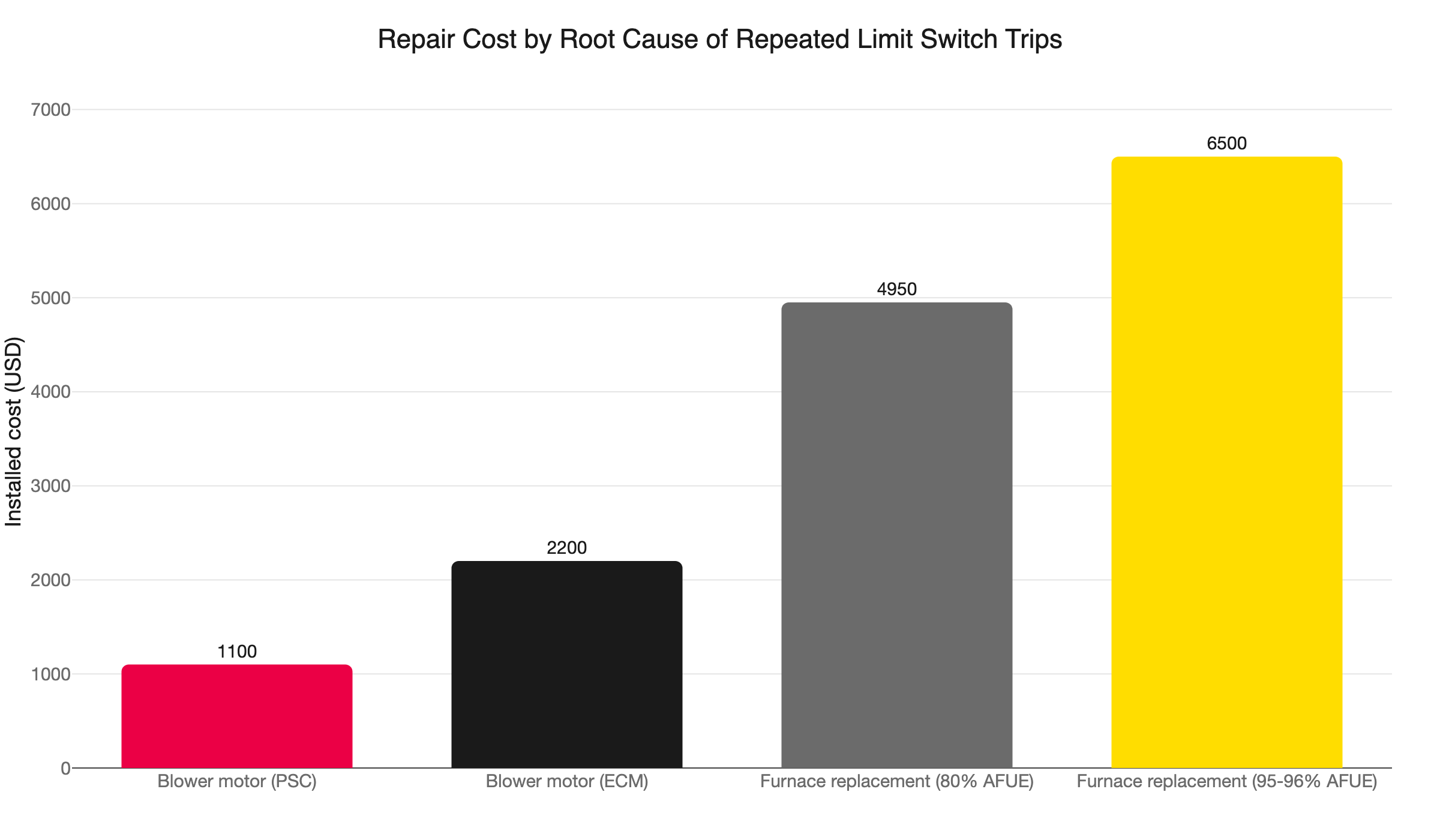
Repair Cost by Root Cause of Repeated Limit Switch Trips
Your furnace limit switch tripped last night. You pressed the reset button, the heat came back on, and you went to bed. That is what most Minnesota homeowners do. It is also exactly when a nuisance turns into a hazard.
The limit switch is not malfunctioning when it trips. It is working. Its job is to shut the furnace down before the heat exchanger gets hot enough to crack. A single trip on a dirty filter is a warning you can handle yourself. A switch that trips again two days later - after you already changed the filter - is not a repeat nuisance. It is a diagnosis.
In Minnesota, where furnaces run five to six months at sustained high demand, the difference between those two scenarios matters more than it does almost anywhere else.
## What Does a Furnace Limit Switch Do?
**The limit switch is a heat-activated safety device in the supply plenum. It shuts the burners off when plenum temperature exceeds roughly 160 F - before the heat exchanger overheats and cracks. It stays closed during normal operation and opens only when something is wrong with airflow or heat exchange.**
The switch sits between the blower and the heat exchanger. When your furnace blower moves air across the heat exchanger at the right volume, that air stays in the 100-140 F range as it enters your duct system. The limit switch stays closed, the burners keep running, and you stay warm.
When airflow drops - from a clogged filter, a closed vent, a slow blower motor, or a blocked combustion air intake - the heat exchanger has nowhere to push its heat. Temperature in the plenum climbs past 160 F. The limit switch opens, cutting power to the burners. The [blower often continues running](/blog/furnace-blower-runs-constantly-wont-shut-off-minnesota/) briefly to pull heat away from the exchanger before the system shuts down completely.
That shutdown is correct behavior. The switch is doing its job. The problem is what you do next.
## Furnace Limit Switch Failure Symptoms Minnesota: One Trip vs. Repeated Trips
**One trip followed by a filter change and no further trips means the restriction was the filter. Repeated trips within days of each other - especially after the filter is already fresh - are the furnace limit switch failure symptoms Minnesota technicians use to diagnose the next layer of problems.**
The cause of a single trip is almost always a dirty filter. Fix the filter, the problem is gone. But if the furnace trips again and then again, the cause is one of three things:
1. Airflow is still restricted despite the new filter: closed vents, blocked return grilles, or a failing blower.
2. A Minnesota-specific blockage: snow or ice covering the combustion air intake pipe on a high-efficiency furnace.
3. The heat exchanger is already damaged from previous overheating, and the switch is doing everything correctly while the furnace fails.
Each scenario has a different fix. None of them are a broken limit switch.
## Why Does the Limit Switch Keep Tripping?
**The switch keeps tripping because the root cause of the overheating was never resolved. A fresh filter fixes a dirty-filter problem. It does not fix a blocked vent, a slow blower, a clogged combustion air intake, or a heat exchanger that is already compromised.**
Working through the causes in order prevents replacing parts that are not the problem.
## The Four Causes Behind Repeated Trips
### 1. Airflow Restriction Beyond the Filter
A new filter that is too restrictive causes trips just as reliably as a dirty one. MERV 13 filters trap more particles, but many older blower motors cannot pull air through that density at full volume. The result is the same as a dirty filter: restricted airflow, rising plenum temperature, and a limit switch that trips.
Check that every supply and return vent in the house is open. Closing vents in unused rooms is a common homeowner habit, but it actually raises static pressure and reduces airflow rather than saving energy. Also check the return air path: furniture pushed against a return grille, a rug over a floor return, or a bedroom door closed in a room with a supply vent but no dedicated return. Each one chokes the airflow loop.
Fix cost: usually zero. Open the vents, move the furniture, drop to a MERV 8 filter.
### 2. Blocked Combustion Air Intake (A Minnesota-Specific Cause)
High-efficiency furnaces (90%+ AFUE) draw combustion air from outside through a dedicated PVC pipe. In Minnesota winters, that pipe can be buried under a snowdrift or blocked by ice buildup after a melt-freeze cycle. When combustion air is restricted, the burner runs hotter than designed, the heat exchanger temperature climbs faster, and the limit switch trips.
This does not show up in national troubleshooting guides because it is a Minnesota problem. After heavy snowfall, walk the perimeter of your home and find the white PVC pipes exiting the foundation. They typically run in pairs: one for combustion air in, one for exhaust out. Both must stay clear. Clearing snow from the openings is a DIY task. If you suspect ice blockage inside the pipe, that requires a technician.
The [Minnesota Dept. of Public Safety specifically recommends](https://dps.mn.gov/divisions/sfm/fire-safety/carbon-monoxide-poisoning) clearing snow and debris from furnace vents to prevent carbon monoxide buildup - a recommendation that applies directly to the combustion air intakes on modern high-efficiency systems.
### 3. Blower Motor Problems
The blower motor moves air across the heat exchanger. If it is running slow due to worn bearings, a failing capacitor, or a dirty blower wheel, airflow drops even with a clean filter and open vents. The heat exchanger overheats and the limit trips.
A dirty blower wheel accumulates dust on its fins and loses the ability to move air at rated volume. The [signs of a failing blower motor](/blog/furnace-blower-motor-failure-signs-cost-minnesota/) often include noise - humming, grinding, or a labored start-up - before the motor fails outright. But a motor running slow without obvious noise can cause repeated limit trips for weeks before it fully stops.
Installed repair cost: $1,100 for a standard PSC motor, up to $2,200 for an ECM variable-speed motor.
### 4. A Cracking Heat Exchanger
If the filter is fresh, vents are open, the blower tests at full speed, and the limit switch still keeps tripping, the heat exchanger is the next thing to look at. If it is cracked, the furnace is done.
[HVAC Training Shop explains](https://hvactrainingshop.com/furnace-high-limit-switch-tripping/) that repeated overheating is the primary mechanism behind heat exchanger cracking. The limit switch exists to prevent that overheating. When the switch trips and a homeowner resets rather than diagnosing, the heat exchanger overheats again. Each cycle adds thermal stress. Cracks propagate.
[PickHVAC confirms](https://www.pickhvac.com/furnace/troubleshoot/high-limit-switch-keeps-tripping/) that a cracked heat exchanger "essentially ruins the furnace" and opens a pathway for flue gases - including carbon monoxide - to enter the supply air stream. The blower then distributes that air to every room in the house.
The effective repair cost is furnace replacement: $3,900-$7,800 installed depending on efficiency tier and equipment size.
## Is the Limit Switch Broken, or Is It Doing Its Job?
**In almost all repeated-trip cases, the limit switch is not defective. It is responding correctly to an abnormal operating condition. A defective switch is one that trips at normal plenum temperatures - something a technician can verify in minutes with a meter. That scenario is uncommon.**
The dangerous assumption is that the switch is the problem. It leads to resetting repeatedly or replacing the switch without diagnosing the upstream cause. A new limit switch installed in front of a cracked heat exchanger will trip just as reliably as the old one - because the heat exchanger is still overheating.
If a technician tests the switch and confirms it trips below normal temperature thresholds, replacement is the right call. The switch itself is an inexpensive part; the service call is the cost. But diagnosis comes before parts.
## Why Is a Cracked Heat Exchanger a Carbon Monoxide Risk?
**A crack in the heat exchanger allows combustion byproducts - including carbon monoxide - to mix with the air your blower circulates through the house. CO is colorless and odorless. By the time a family has symptoms, the concentration may already be dangerous.**
This is where the repeated-trip pattern escalates from an expensive repair problem to a safety problem. The [carbon monoxide risk from a cracked heat exchanger](/blog/carbon-monoxide-safety-furnace-season/) is not theoretical - it is the mechanism behind real Minnesota fatalities every winter.
[Minnesota Dept. of Public Safety data](https://dps.mn.gov/divisions/sfm/fire-safety/carbon-monoxide-poisoning) shows 14 Minnesotans die from CO poisoning annually; 300 more visit emergency rooms every year. Per [Minnesota Health Department tracking](https://data.web.health.state.mn.us/co), ER visits for CO poisoning more than double between September and November, peaking in February. The months of highest heating demand are the months of highest CO incident rates.
Minnesota law (Minn. Stat. §§ 299F.50-299F.51) requires working CO alarms near every sleeping area in all single and multi-family residences. If you do not have them in place, that is step one. Several Twin Cities suburbs - Eagan, Hopkins, Maple Grove, White Bear Lake, and others - run free CO alarm programs through a Minnesota DPS partnership. Contact your city directly to ask if yours participates.
A CO alarm is a backup. A professional heat exchanger inspection is the prevention. Both matter.
## Why Is Resetting the Limit Switch Especially Risky in a Minnesota Winter?
**At -10 F with a furnace that keeps shutting off, every reset feels like survival. But each reset in a polar vortex adds another thermal cycle to a heat exchanger that may already be cracked - and CO seeps into living space hours before anyone wakes up with symptoms.**
Twin Cities furnaces run five to six months of heating season at sustained high demand. A 15-year-old furnace in Minnesota has logged far more thermal cycles than the same model in Dallas or Atlanta. The heat exchanger has expanded and contracted more times. The thermal fatigue accumulates.
The urgency of a January night at -15 F is exactly when a propagating crack goes undetected. The switch trips. The homeowner is in survival mode. They reset it. The heat runs a few more hours. The switch trips again. They reset again. Each cycle stresses the heat exchanger further. CO seeps into living space in the early morning hours before anyone wakes up with a headache.
The right move at 2 a.m. is to call an emergency HVAC line and use portable electric space heaters in key rooms while waiting for a technician. Space heaters bridge the gap safely. They are not a reason to keep running a furnace whose own safety device keeps shutting it down.
## What Should You Do When the Limit Switch Trips?
**Replace the filter. Check all vents. Clear the combustion air intake on high-efficiency furnaces. Press the reset button once. If the furnace trips again within 24-48 hours, do not press reset again - call a technician. A second trip after a fresh filter points to a cause that requires professional diagnosis.**
Here is the sequence:
1. **Replace the filter.** If it is visibly dirty or you cannot remember the last change, swap it now. This resolves most single-trip events.
2. **Check every supply and return vent.** Walk the house. Open any closed vents. Move furniture or rugs blocking return grilles.
3. **Check the combustion air intake pipes** on high-efficiency furnaces. After any heavy snowfall, walk outside and confirm both the intake and exhaust PVC pipes are clear.
4. **Press the reset button once.** Monitor the furnace for 24-48 hours.
5. **If it trips again, call a technician.** Do not reset a second time without a diagnosis.
The [Minnesota Dept. of Public Safety recommends annual professional inspection](https://dps.mn.gov/divisions/sfm/fire-safety/carbon-monoxide-poisoning) of fuel-burning equipment before cold weather. That inspection is the right time to catch a limit switch tripping below normal thresholds, a blower motor showing early wear, or heat exchanger stress before it cracks through.
## When Does Repeated Tripping Mean Replacement Instead of Repair?
**A confirmed cracked heat exchanger on a furnace 15 years or older almost always means replacement is the better financial decision. Replacing only the heat exchanger can cost as much as a new furnace, with the rest of the aging system unchanged and still at risk.**
The math is not complicated. A heat exchanger replacement leaves the inducer motor, control board, blower motor, and gas valve all in place - every one of them as old as the system that just failed. Any one of them can be the next service call.
Northern One Hour installs furnaces starting at $4,950 for an 80% AFUE unit, $6,500 for a 95-96% model, and $9,100 for a top-tier 97-98% variable-speed system. Financing is available. For most homeowners replacing a system that is 15 years or older, the efficiency gain recovers a meaningful portion of the replacement cost over the next several heating seasons.
If you are weighing the numbers, our technicians walk through that comparison on-site and give you a clear picture before any decision.
## How Northern One Hour Can Help
Northern One Hour Heating & Air Conditioning is locally owned and operated in Ramsey, MN. Our technicians serve Minneapolis, St. Paul, Blaine, Maple Grove, Plymouth, Brooklyn Park, Woodbury, Bloomington, and the broader Twin Cities metro.
When a limit switch keeps tripping, we diagnose the cause before recommending any repair. We do not replace switches without understanding why the switch tripped. We check the filter, the airflow path, the blower, and the heat exchanger - in that order - and explain what we find before any work begins.
"Always On Time… Or You Don't Pay a Dime!(R)"
Call **(763) 260-6662** or [schedule a furnace repair online](/heating/heating-equipment/furnaces/furnace-repair/). For a pre-season inspection before the next cold snap, our [furnace tune-up service](/heating/heating-equipment/furnaces/furnace-tune-ups/) covers airflow, heat exchanger condition, and limit switch function - the three things a repeated trip is telling you to check.
---
# Quietest HVAC Systems Twin Cities: Noise Ratings Explained
URL: https://northernonehour.com/blog/hvac-sound-ratings-quiet-systems-twin-cities/
Published: 2026-09-07 | Category: HVAC
Minnesota's noise law caps outdoor HVAC at 50 dBA at night. Learn to compare specs, find the quietest systems, and qualify for Twin Cities utility rebates.
Key Takeaways
- Spec sheet noise ratings are only comparable when both products carry AHRI Standard 270 certification. Marketing figures without that certification cannot be reliably compared across brands.
- MPCA Rule 7030 caps outdoor HVAC at 60 dBA daytime and 50 dBA nighttime at the residential property line. Standard single-stage condensers commonly run 60-72 dBA.
- Variable-speed and inverter systems run 8-15 dB quieter than single-stage alternatives at partial load. A 10 dB reduction represents a tenfold drop in acoustic energy.
- Bedroom additions need variable-speed equipment and correct Manual J sizing. Open-plan homes need return duct evaluation. Attached garages need vibration isolation, not just a lower dBA rating.
- Minnesota utility rebates and the federal 25C tax credit commonly reduce the cost of qualifying inverter heat pump installs by $3,000-$5,000.
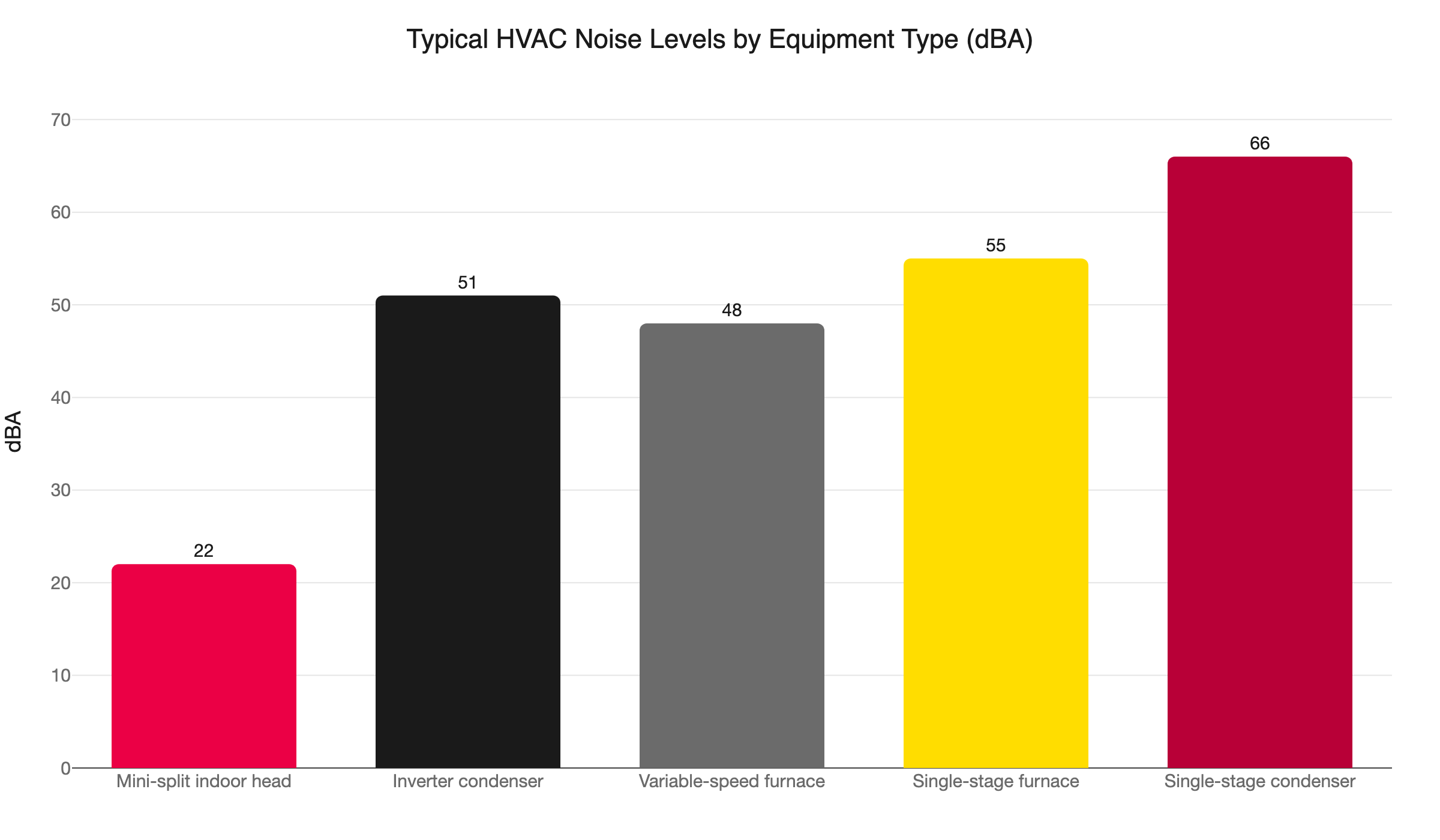
Typical HVAC Noise Levels by Equipment Type (dBA)
When you shop for the quietest HVAC systems in the Twin Cities, you end up comparing brochure noise figures with no reliable way to read them. Brand A says its condenser runs at 58 dB. Brand B says 60. Neither spec sheet explains whether those numbers come from the same test protocol, what distance was used, or how they translate to sound at your neighbor's property line. There is also one detail no competing article on this subject mentions: Minnesota law sets a nighttime noise limit at the residential property line. A standard single-stage condenser running in a tight suburban lot may already exceed that limit. This post teaches you how to read the specs, explains the legal context specific to Minnesota, and walks through the right approach for three distinct scenarios: a bedroom addition, an open-plan home, and an attached garage.
## Why Brochure Numbers Cannot Be Compared Directly
Before you can find the quietest HVAC systems in the Twin Cities, you need to know what the spec sheet actually measures.
[AHRI Standard 270](https://www.ahrinet.org/search-standards/ahri-270-sii-p-sound-performance-rating-outdoor-unitary-equipment) is the industry's certified test protocol for outdoor unitary equipment. It measures Sound Power Level at a standardized test setup and distance. AHRI Standard 275 is the companion that estimates what that power level becomes at a real-world distance from the equipment. Only ratings that explicitly state "Rated in accordance with AHRI Standard 270" can be compared across manufacturers. A brochure figure without that statement is a marketing number, not a certified spec.
Indoor air handlers complicate things further. Manufacturers sometimes publish ratings in sones rather than decibels for air handlers and fan coil units. [The sone and decibel scales measure different things.](https://www.hvacbase.org/hvac-noise-levels-explained) One sone is roughly equivalent to a quiet refrigerator, about 28 dBA. Two sones is twice as loud as one sone. The sone scale is linear.
[The decibel scale is logarithmic.](https://www.hvacbase.org/hvac-noise-levels-explained) A 10 dB increase represents a tenfold rise in acoustic energy. A 3 dB difference is roughly the threshold most people can detect. Moving from a 72 dBA single-stage condenser to a 62 dBA variable-speed unit is not a 10-point improvement. It is a tenfold reduction in acoustic energy. That difference is audible on every cycle. The brochure does not explain the math, which is exactly why the numbers mislead.
## Does Minnesota Actually Have a Noise Limit for Outdoor HVAC?
**Yes. [MPCA Rule 7030](https://www.revisor.mn.gov/rules/7030/full) sets a 60 dBA daytime limit and a 50 dBA nighttime limit at the property line in residential zones. Standard single-stage condensers run 60-72 dBA. Without adequate setback, they can exceed the nighttime limit from the moment they are installed.**
The rule applies to Noise Area Classification 1 zones, also called NAC 1. That covers standard residential neighborhoods across Minneapolis, St. Paul, Ramsey, Maple Grove, Blaine, and most of the Twin Cities suburbs. The 50 dBA limit runs from 10 p.m. to 7 a.m. Both limits are measured at the neighbor's property line, not at your equipment.
[Minneapolis Chapter 389](https://library.municode.com/mn/minneapolis/codes/code_of_ordinances/409829?nodeId=COOR_TIT15OFIS_CH389NO) incorporates MPCA Rule 7030 by reference. It sets the enforcement trigger at 5 dBA or more above ambient. Equipment violations are enforceable by the city. A neighbor complaint to 311 can produce a formal notice of violation and a required correction.
Minneapolis zoning also requires 3-5 feet of clearance between outdoor HVAC and the property line, depending on the zoning district. A unit placed at minimum setback with a 68 dBA rating will not satisfy the 50 dBA nighttime limit. Equipment output and placement distance must be planned together from the start, not treated as separate decisions.
## What Does a dBA Rating Feel Like in Practice?
**[The dBA scale is A-weighted](https://www.hvacbase.org/hvac-noise-levels-explained), filtering out frequencies humans deprioritize. A normal conversation is 60-65 dBA. A quiet library is around 40 dBA. ASHRAE sets professional Noise Criteria targets for bedrooms and private offices at NC 20-30, roughly 25-35 dBA of background HVAC sound.**
Here is how common equipment types map against those reference points. These are typical operating levels at normal load conditions, not best-case marketing figures:
- Mini-split indoor heads: 19-25 dBA; typical quiet operation around 22 dBA
- Ultra-quiet variable-speed or inverter condenser: as low as 51 dBA
- Variable-speed furnace at moderate load: approximately 48 dBA
- Standard single-stage furnace: 55 dBA typical
- Standard single-stage condenser: 60-72 dBA; midrange around 66 dBA
The gap between a 66 dBA single-stage condenser and a 51 dBA inverter model is not a marginal upgrade. It is the difference between equipment that stays under neighbors' notice and equipment that eventually produces complaints.
Blower motors matter as much as compressors. An ECM variable-speed blower reduces steady-state duct noise by [5-15 dB compared to a standard PSC motor.](https://thefurnaceoutlet.com/blogs/hvac-tips/variable-speed-blowers-explained-quiet-efficient-and-smart) That improvement is felt in every room on every cycle. It is not captured in the outdoor condenser rating, which is why the condenser spec sheet alone does not tell the full story.
## Which Are the Quietest HVAC Systems for a Bedroom Addition?
**Variable-speed equipment with an ECM blower is the right specification. Correct sizing is equally important. An oversized system [short-cycles](/blog/ac-short-cycling-causes-fixes-twin-cities/), producing noise spikes at every start and stop. That pattern is more disruptive at night than the steady low hum of a correctly sized variable-speed unit.**
Variable-speed compressors and ECM blowers at partial load produce [8-12 dB less noise than single-stage equivalents.](https://thefurnaceoutlet.com/blogs/hvac-tips/quiet-by-design-homes-samantha-s-noise-control-framework-for-modern-furnace-layouts) That perceptible difference becomes significant in a bedroom where ambient noise drops low. At 60% load, a variable-speed system runs continuously at a quiet hum. A single-stage system hammers on at full capacity and cuts off completely, repeatedly, through the night.
Correct sizing requires a Manual J load calculation. That is not a rule-of-thumb adjustment. It accounts for the room's insulation values, window area, orientation, and Minnesota climate data specific to your part of the metro. Our team performs Manual J calculations on every new install.
If the bedroom addition is a ductless zone, a mini-split is the quietest available option. Indoor heads operate as low as 19 dBA at the lowest fan setting. That is quieter than most people can consciously perceive in a still room. The outdoor unit for a mini-split typically runs 56-60 dBA, quieter than most single-stage condensers and within the MPCA nighttime limit at standard setbacks. Our guide on [ductless mini-splits for older Twin Cities homes](/blog/ductless-mini-split-older-twin-cities-homes/) covers how these systems serve additions and spaces that ducted systems cannot reach efficiently.
## Open-Plan Homes: The Return Duct Problem
Open-plan layouts have a noise problem that equipment ratings do not address. Return ductwork is the hidden variable.
Return air moves faster than supply air. An undersized return creates turbulence and duct roar: a rushing sound that comes from the grilles, not the equipment. [More return duct area means lower air velocity.](https://thefurnaceoutlet.com/blogs/hvac-tips/quiet-by-design-homes-samantha-s-noise-control-framework-for-modern-furnace-layouts) Lower velocity means a quieter system, regardless of what the furnace rating says. A variable-speed furnace installed into undersized returns will still be noisy. These are separate problems that need separate fixes.
When we assess a system for an open-plan home, we evaluate the duct system alongside the equipment. Return sizing is part of that evaluation. Static pressure analysis identifies where return capacity is insufficient. Adding return area or enlarging existing paths is usually straightforward during a system replacement.
Open plans also carry sound farther than compartmentalized floor plans. A mechanical room sharing a wall with a great room becomes a direct noise path. Supply registers positioned near seating areas produce audible turbulence at higher static pressures. These are installation design factors, not equipment-rating factors. Addressing them requires evaluating the system as a whole, not just swapping a furnace.
## Attached Garages: Vibration Is the Overlooked Issue
**A condenser mounted directly against the garage wall transmits vibration into the building structure. The dBA spec sheet does not measure structure-borne transmission. A unit rated at 51 dBA that is bolted to a concrete wall can still cause a low-frequency hum that resonates through the floor of the room above.**
Standard practice for garage-adjacent installations includes rubber isolation mounts between the concrete pad and the unit base. Six or more inches of clearance between the unit and any wall surface is also standard. That gap prevents direct-contact vibration and keeps the airflow path open around the equipment. Refrigerant line sets need isolation at the building penetration. A braided flex connector at the wall entry point stops line-transmitted hum from reaching the structure.
For bedrooms directly above or beside an attached garage, [structure-borne vibration](/blog/heat-pump-vibration-noise-transmission-house-minnesota/) is typically more intrusive than airborne sound. You feel it in the floor or wall before you consciously register it as noise. If an existing installation lacks isolation mounts, adding them is usually a straightforward service call, not a full replacement.
Placement also determines how far sound travels to the property line. A condenser on the garage side of the house may sit closer to the neighbor's window than one on the back of the lot. Rule 7030 applies regardless of which wall the unit is on.
## What Are the Quietest HVAC Systems for Minnesota Winters?
**Minnesota winters require equipment rated for reliable heating capacity at -13°F or colder. Cold-climate inverter compressors that meet this threshold also modulate speed continuously, making them inherently quieter than single-stage systems. The coldest-capable and the quietest equipment converge on the same product class.**
Inverter compressors run continuously at partial load rather than cycling on and off at full power. Every startup on a single-stage system is a noise event. In a Minnesota winter, with the system running most of the night, that means repeated noise spikes across hours of operation. An inverter running at 40% capacity produces a steady, low hum throughout. The difference is noticeable in any room adjacent to the outdoor unit or the mechanical area.
[Variable-speed AC systems](/blog/variable-speed-ac-benefits-twin-cities/) deliver the same benefit in cooling season. The compressor matches load rather than cycling repeatedly at full capacity. The result is quieter, and the reduced cycling also extends equipment life.
For homeowners who want cold-climate performance and lower noise without full electrification, dual-fuel heat pump systems pair an inverter heat pump with a gas furnace for deep-cold backup. These systems run in heat pump mode for the majority of the Minnesota heating season. That mode is quiet. The gas furnace only kicks in when temperatures drop below the balance point, typically around 0 to -5°F depending on the model and home.
## Do Minnesota Rebates Apply to the Quietest Equipment?
**Yes. The equipment class with the lowest noise output also carries the largest available rebates. The economics of variable-speed and cold-climate inverter systems have shifted meaningfully toward affordability in the past two years.**
Current incentives available to Twin Cities homeowners include:
- **Xcel Energy:** Up to $2,000 for qualifying cold-climate heat pumps. $400 for central AC rated SEER2 16 or higher. $50 for an ENERGY STAR smart thermostat. Gas furnace rebates ended January 1, 2026.
- **CenterPoint Energy:** $1,100 for a ducted heat pump in dual-fuel configuration. $150-$500 for furnaces rated 96% AFUE or higher. Up to $1,200 for income-qualified customers on qualifying high-efficiency furnaces.
- **Federal 25C tax credit:** 30% of project cost, capped at $2,000 for heat pumps. Stacks with utility rebates.
- **HEAR program:** Point-of-sale rebates for income-qualified Minnesota households on heat pump installs, launched in 2026.
Combined Xcel, CenterPoint, and federal incentives commonly reach $3,000-$5,000 on a qualifying inverter heat pump install. Our [Minnesota heat pump rebates guide](/blog/minnesota-heat-pump-rebates-tax-credits/) has current amounts and the specific equipment thresholds that trigger each rebate. We confirm current figures before every estimate. Rebate programs change, and a number published online may already be out of date.
## What Should You Ask Before Hiring an HVAC Contractor?
**Three questions separate contractors who can deliver a real quiet result from those selling spec sheet promises. Ask before signing. The answers tell you more about the actual outcome than any brochure number will.**
First: is the equipment rated under AHRI Standard 270? Ask for the AHRI certification number. That number is searchable in the AHRI product directory. If the contractor cannot provide it, or if the noise rating is listed as an unadjusted manufacturer figure, the spec is not verified.
Second: what is your return duct evaluation approach? Duct roar is one of the most common HVAC noise sources in the Twin Cities, and it has nothing to do with the equipment rating. A contractor who cannot explain how they assess return sizing will likely install a quiet unit into a system that still generates noise at the grilles.
Third: how will you handle vibration isolation for the outdoor unit? This question applies to any installation near a property line, a garage wall, or a structure adjacent to a sleeping area. The answer should cover the pad type and the clearance from walls and fences. It should also address how the refrigerant line set is isolated at the building penetration.
At Northern One Hour, we are locally owned and operated in Ramsey, Minnesota. Our technicians work in Twin Cities neighborhoods every day. MPCA Rule 7030 and Minneapolis setback requirements are the rules that apply to our own community. That local accountability shapes how we plan every install.
We back every job with a 100% satisfaction guarantee. "Always On Time… Or You Don't Pay a Dime!(R)" is the promise behind every appointment we book. Call (763) 260-6662 or book online to schedule a consultation on quiet HVAC options for your home.
---
# HVAC Split-Level Home Twin Cities: Solve Uneven Heat and Cooling
URL: https://northernonehour.com/blog/hvac-split-level-home-twin-cities/
Published: 2026-09-07 | Category: HVAC
Twin Cities split-level homes battle cold entry levels and hot upper bedrooms. Learn why it happens and which HVAC fix actually solves it for good.
Key Takeaways
- HVAC in a Twin Cities split-level home presents a structural comfort problem. These 1950s-70s floor plans were designed for square footage, not airflow. Every furnace or AC installed in one inherits the same duct layout.
- The stairwells act like chimneys. Warm air rises through the home, leaving the entry level freezing in winter and the upper bedrooms overheated in summer.
- Minnesota's outdoor design temperature of -16°F to -20°F makes the stack effect far more punishing than in most states. The pressure delta between levels here approaches 90°F. In Atlanta it is roughly 40°F.
- One thermostat on the main level cannot fix what is happening one floor up or one floor down.
- Three proven fixes exist: zoned dampers on existing ductwork, ductless mini-splits on the problem level, or a dual-fuel hybrid heat pump system.
- In 2026, Twin Cities homeowners can stack up to $3,700 in Xcel and CenterPoint rebates on a qualifying dual-fuel install.
- The federal 25C heat pump tax credit expired December 31, 2025. Verify any Congressional extension before counting on it.
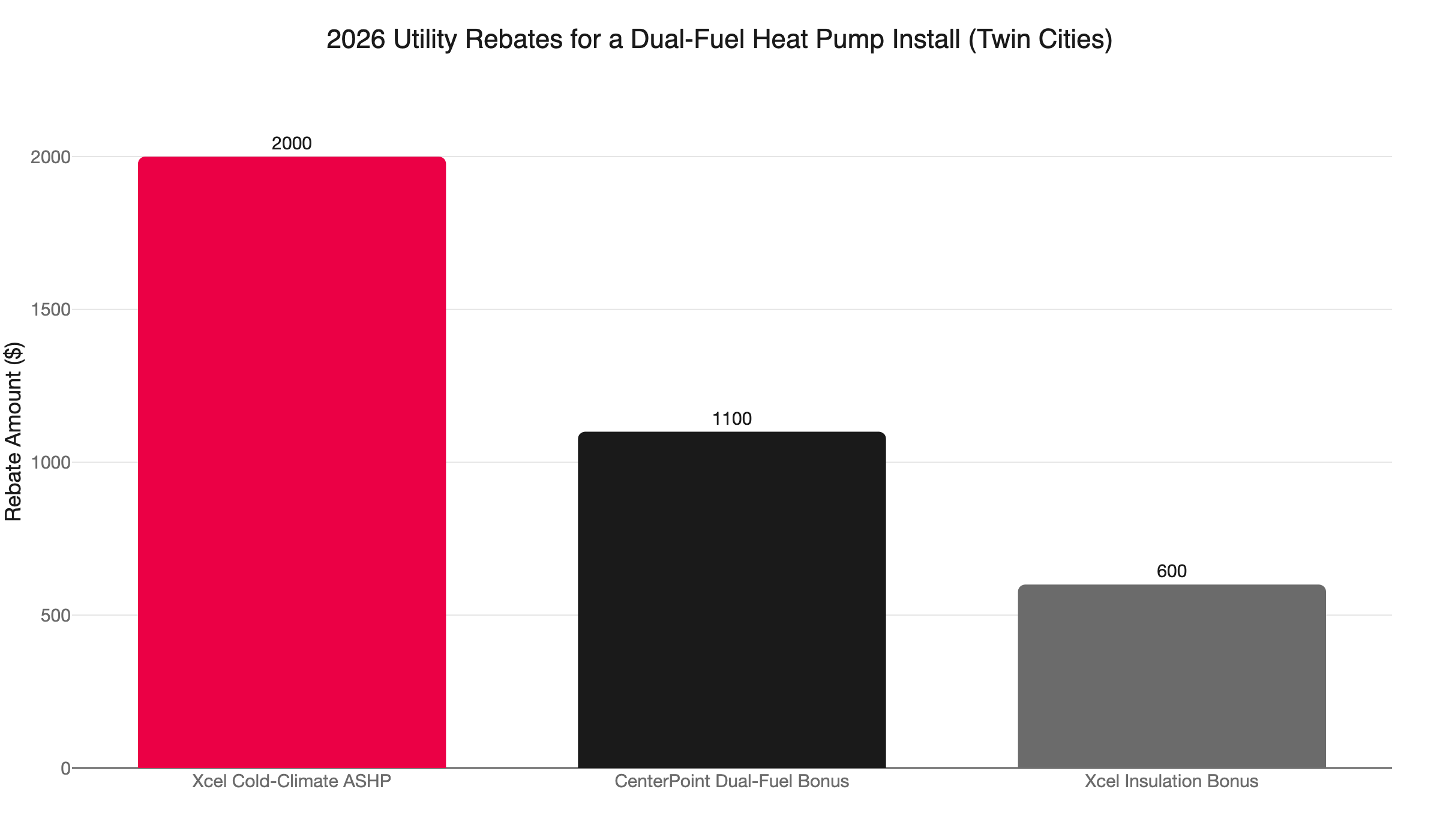
2026 Utility Rebates for a Dual-Fuel Heat Pump Install (Twin Cities)
## Why Does an HVAC Split-Level Home in the Twin Cities Have Uneven Temps?
**Short answer:** The 1950s-70s split-level was optimized for square footage per dollar, not for airflow. Short stair runs, [odd ceiling heights](/blog/hvac-vaulted-ceiling-heating-cooling-twin-cities/), and open half-floors create pressure imbalances that push conditioned air to the wrong places.
The postwar housing boom shaped how suburban Minneapolis and St. Paul grew outward. Builders in Bloomington, Fridley, Edina, Brooklyn Park, and Burnsville staggered floor levels to fit more livable space onto a narrow lot without a full two-story foundation. A half-flight up to the main level. Another half-flight to the bedrooms. A walk-out or look-out lower level for family space.
It was an efficient layout. HVAC was an afterthought.
The original furnace in most of these homes was a single-zone forced-air system fed from a basement unit. Modern high-efficiency furnaces replaced that equipment, but they inherited the same duct topology. The supply registers and return air paths were designed for a gravity or early forced-air system. They were never laid out for the precise pressure management that comfort on three separate levels demands.
That mismatch is still fighting you today. The floor plan did not cause the problem - the combination of that floor plan with a single-zone system did.
---
## Minnesota's Stack Effect Is More Severe Than Almost Anywhere
[Stairwells and open half-floors act like chimneys for air](https://www.sunheating.com/how-to-fix-hvac-airflow-in-split-level-homes/), creating pressure imbalances that lift warm air to upper levels and leave cold air pooled below. In a moderate climate, that is a nuisance. In Minnesota, it is a months-long chronic complaint.
The Twin Cities uses an outdoor design temperature of -16°F to -20°F for heating load calculations. When outdoor temps are -18°F and your home is set to 70°F, the pressure differential between your cold entry and your warm upper floor approaches 90 degrees. Denver homeowners see roughly 55 degrees of delta. Atlanta homeowners see about 40. Every degree of heat stratification costs more here because the gap is so much larger to start.
Minneapolis logs roughly 8,000 heating degree days per year, placing it among the highest in the continental US. The cold-entry problem does not run for a few weeks in January. It runs from November through March, month after month, heating bill after heating bill.
Summer adds its own version of the same problem. Upper bedrooms collect [heat rising from below](/blog/ceiling-fan-direction-hvac-efficiency-twin-cities/) and radiating from the roof. The entry level stays cooler. The thermostat on the main level satisfies itself and shuts off, leaving the bedrooms sticky and overheated. It is the same structural problem in a different season.
---
## Why Can't One Thermostat Fix the Problem?
**Short answer:** A thermostat reads only the air immediately around it. When the main-level thermostat reaches setpoint and shuts off, the upper bedrooms may still be 8-12°F warmer than you set, and the entry 10°F or more colder.
[A single thermostat placed on the main floor cannot sense what is happening one level up or one level down](https://www.sunheating.com/how-to-fix-hvac-airflow-in-split-level-homes/). When it satisfies the main level, the system shuts off. Everyone else in the house is still uncomfortable, just in opposite directions.
In winter: the furnace runs until the main level hits 70°F. The entry might read 58°F. The upper bedrooms might read 74°F.
In summer: the AC runs until the main level hits 74°F. The upper bedrooms are 82°F. Someone cranks the thermostat down to fix a problem the thermostat cannot actually reach.
Relocating the thermostat helps one end while making the other worse. Adding a remote sensor to a smart thermostat gives the system more information. But it does not change where the conditioned air goes. The duct layout decides that. Changing the comfort result means changing the duct layout, the equipment, or both.
---
## What Are the Three Fixes for a Split-Level HVAC Problem?
**Short answer:** Zoned dampers rebalance your existing ducts using per-floor thermostats. Ductless mini-splits add independent conditioning to one problem level. A dual-fuel hybrid heat pump replaces the whole system with better capacity and efficiency across every level.
Each approach suits a different situation. The right answer depends on your current equipment, your ductwork condition, and how many levels need help.
---
## Fix 1: Zoned Dampers on Existing Ductwork
Motorized dampers install at the branch points in your duct system. A zone control panel wires to per-floor thermostats. When the upper bedroom zone calls for cooling, the panel closes dampers to the other zones and routes airflow upstairs. When the entry calls for heat, the same process runs in reverse.
[Most split-levels need three to four zones](https://www.sunheating.com/how-to-fix-hvac-airflow-in-split-level-homes/), and a skilled technician can typically complete the installation in a few hours to one full day.
The critical step before adding zones is a capacity check. The existing furnace or AC must handle a reduced airflow path without short-cycling. Short-cycling means the system runs in brief bursts, satisfies the thermostat before the air is fully conditioned, and shuts off too quickly. Our team checks system capacity before we touch a duct.
Zoning works best when:
- Your ductwork is in reasonable condition with accessible branch points
- Your furnace or AC was installed within the last eight to ten years
- The complaint is about control, not about total system capacity
For more on how zoning works across a multi-level floor plan, see our guide to [HVAC zoning systems for two-story homes](/blog/hvac-zoning-systems-two-story-homes/).
---
## Fix 2: Ductless Mini-Splits for Problem Levels
A ductless mini-split adds a wall-mounted or ceiling-cassette air handler directly to the level that needs help. It runs on its own refrigerant line from an outdoor unit and carries its own thermostat. The existing duct system keeps handling the levels it already serves. The mini-split takes over the one it could not reach.
This is the right approach when:
- One level is the chronic problem and the rest of the house is tolerable
- The ductwork is too old or poorly routed to support added zones
- You want independent control on that level without touching the rest of the system
Cold-climate mini-splits built for Minnesota winters maintain rated capacity down to -13°F to -22°F depending on the model. That covers the vast majority of what a Twin Cities winter delivers, though a gas furnace remains the right backup for the coldest stretches.
Xcel Energy's 2026 rebate for a [cold-climate ductless mini-split is $2,000](https://homeenergybasics.com/heat-pumps/states/mn). A standard (non-cold-climate) model qualifies for $1,600. Rebates do not require a participating contractor.
For details on how ductless systems fit into older Twin Cities homes, read [ductless mini-splits for older Twin Cities homes](/blog/ductless-mini-split-older-twin-cities-homes/).
---
## Fix 3: A Dual-Fuel Hybrid Heat Pump System
A dual-fuel hybrid pairs a cold-climate air-source heat pump with a high-efficiency gas furnace. The heat pump handles heating and cooling during shoulder seasons and mild winter days, when it runs at peak efficiency. When the temperature drops below 40°F, the system automatically hands off to the gas furnace. The furnace handles Minnesota's coldest nights.
This is the most complete fix on the list. A properly sized dual-fuel system addresses every level, pairs well with a zoning upgrade, and qualifies for the largest rebate stack available to Twin Cities homeowners.
Dual-fuel is particularly well matched to Minnesota's weather. The heat pump carries the fall, spring, and mild-winter load efficiently, cutting gas consumption without sacrificing the backup capacity that -20°F nights demand. Gas still has the cost advantage on the coldest days, and the system switches automatically.
For a full explanation of how dual-fuel systems work in Minnesota, read [dual-fuel heat pump and gas furnace hybrid for Minnesota](/blog/dual-fuel-heat-pump-gas-furnace-hybrid-minnesota/).
---
## What Will This Cost in the Twin Cities?
**Short answer:** Zoned damper costs vary by zone count and duct condition. A cold-climate mini-split for one zone starts at $3,900 and up installed. A dual-fuel heat pump system starts at $7,500 and scales with equipment tier and project scope.
Here is how to think about each option:
**Zoned damper system (added to existing HVAC):**
Pricing depends on zone count, duct access, and the control panel selected. A three-to-four zone split-level job runs a half-day to a full day. A scoped estimate from a technician who has seen your duct layout is the only reliable number.
**Ductless mini-split, one zone, cold-climate, installed:**
$3,900 and up for a single cold-climate zone installed in the Twin Cities. Higher-capacity models rated for lower temperatures run more. A multi-zone system covering several levels increases accordingly.
**Dual-fuel hybrid system, full replacement, installed:**
- Mid-tier equipment: $7,500-$10,400 installed
- High-efficiency 18-20+ SEER2 equipment: $11,000-$15,600
- A full project including ductwork re-zoning, new furnace, and heat pump will vary based on scope. Financing options are available for larger installs.
All ranges are installed prices covering parts and labor. A split-level installation takes more time than a single-story job. The technician works across multiple levels and duct branches. Never compare a bare equipment price to an installed estimate.
---
## Can Xcel and CenterPoint Rebates Lower Your Cost?
**Short answer:** Yes, significantly. [A dual-fuel heat pump install in the Twin Cities can qualify for $3,700 in stacked utility rebates](https://homeenergybasics.com/heat-pumps/states/mn) in 2026: $2,000 from Xcel (cold-climate ASHP) plus $1,100 from CenterPoint (dual-fuel bonus) plus $600 from Xcel (insulation and air-sealing bonus).
Here is the full 2026 picture:
**Xcel Energy (customers with Xcel electric service):**
- Cold-climate ductless mini-split: $2,000
- Standard ductless mini-split: $1,600
- Cold-climate ducted air-source heat pump, combo customer (gas and electric): $2,000
- Insulation and air-sealing bonus stacked with a heat pump install: $600 additional
Xcel mini-split rebates do not require a participating contractor.
**CenterPoint Energy (customers with CenterPoint gas service):**
- Dual-fuel heat pump paired with a 92%+ AFUE gas furnace, switching to gas at 40°F: $1,100
- CenterPoint does not rebate standalone mini-splits or full-electric heat pump replacements
**How the stack works on a dual-fuel install:**
Combo Xcel-CenterPoint customers who install a qualifying cold-climate dual-fuel system can claim the Xcel ASHP rebate and the CenterPoint dual-fuel bonus together. Add qualifying insulation or air sealing within two years of the heat pump install and the Xcel insulation bonus applies as well:
- Xcel cold-climate ASHP rebate: $2,000
- CenterPoint dual-fuel rebate: $1,100
- Xcel insulation and air-sealing bonus: $600
- **Total: $3,700 in utility rebates**
That offset is specific to Minnesota. A homeowner in Michigan or Pennsylvania doing the same project would see little to none of it. It is a genuine advantage for Twin Cities split-level owners weighing a full system upgrade.
For the complete 2026 rebate breakdown, see [Xcel and CenterPoint HVAC rebates in Minnesota](/blog/xcel-centerpoint-hvac-rebates-minnesota/).
---
## Is the Federal Tax Credit Still Available?
**Short answer:** Not as of September 2026. The 25C ENERGY STAR heat pump tax credit [covered products purchased and installed through December 31, 2025](https://www.energystar.gov/about/federal_tax_credits/air_source_heat_pumps). That credit has expired. Verify with a tax professional or check energystar.gov directly for any Congressional extension before building it into your budget.
Do not let an expired credit be the reason you delay a project. The utility rebates above are active and verified as of 2026. They do not require Congressional action to claim. The $3,700 rebate stack is available now.
---
## Do You Need a Mechanical Permit for a Mini-Split in Minnesota?
**Short answer:** Yes. [Most Minnesota municipalities require a mechanical permit for ductless mini-split installation](https://mcquillanbros.com/air-conditioning/ductless-mini-splits/). A licensed contractor pulls it as part of the job. It confirms the install meets code and protects you at resale time.
If a contractor proposes skipping the permit to save time or cost, treat that as a flag. The permit process confirms the work is safe and code-compliant. A homeowner who skips it can face inspection complications and questions from buyers. Our team pulls every required permit on every install.
---
## Which Fix Is Right for Your Twin Cities Split-Level Home?
**Short answer:** If your existing system is newer and your ducts are in good shape, start with zoned dampers. If one level is the chronic problem, a mini-split on that level is the most targeted fix. If your furnace or AC is aging, a dual-fuel hybrid gives the most complete solution and qualifies for the largest rebate stack.
Use these four questions to narrow it down:
**1. How old is your current equipment?**
Furnaces and central AC systems typically run 15-20 years with regular maintenance. If yours is under ten years old, adding zoning extends its useful life without a major capital outlay. If it is 15 years or older, a full replacement often costs less over five years than repairing aging equipment and adding zoning on top of it.
**2. Which level is the worst?**
If the entry level or a finished lower level is always the problem and the rest of the house is tolerable, a single-zone mini-split is the most targeted fix. If every level has a complaint, zoning or a full system replacement makes more sense than adding a point solution to a systemic problem.
**3. What is your utility setup?**
Xcel and CenterPoint combo customers have access to the full rebate stack. Homeowners with electric-only service lose the CenterPoint dual-fuel rebate. Know your utility accounts before you talk to a technician. The rebate eligibility changes the math significantly.
**4. Is financing a factor?**
Larger projects, including a dual-fuel hybrid system or a full ductwork re-zoning, qualify for financing that spreads the cost across monthly payments. Ask our team about current financing options when you call. A project that fits your budget now prevents a more expensive emergency repair later.
---
## Get the Right Diagnosis First
Northern One Hour Heating and Air Conditioning is locally owned and operated in Ramsey, MN. Our team serves homeowners across the Twin Cities, including Bloomington, Brooklyn Park, Burnsville, Edina, Fridley, Maple Grove, and Plymouth. These are the neighborhoods full of the 1950s-70s split-levels described above. We have seen every version of this problem.
We diagnose the actual cause before recommending a fix. Zoned dampers are not the right call for every home. A mini-split is not always the cheapest path forward. A full system replacement is not always the most expensive one. Honest, transparent pricing means you hear what makes sense for your specific home, not what produces the largest ticket.
"Always On Time… Or You Don't Pay a Dime!(R)"
Call **(763) 260-6662** or book online to schedule a diagnostic visit. If your split-level has been fighting itself for years, we can tell you exactly which fix makes sense for your equipment, your ductwork, and your utility setup.
---
# Low Humidity Hardwood Floors Damage: Minnesota Winter Guide
URL: https://northernonehour.com/blog/low-humidity-hardwood-floors-winter-minnesota/
Published: 2026-09-07 | Category: Indoor Air Quality
Gaps, squeaks, and cupping in your hardwood floors are humidity problems, not flooring defects. Get outdoor-temp RH targets and the whole-home fix for Minnesota.
Key Takeaways
- Gaps, squeaks, and cupping in hardwood floors are almost always a humidity problem, not a flooring defect. The floor is responding to the air in your home.
- The [National Wood Flooring Association](https://pidfloors.com/blogs/sustainability/nwfa-1) specifies 30-50% relative humidity as the performance range for hardwood. Below 30%, planks shrink and gap. Most flooring warranties void outside this range.
- Without humidification, a Twin Cities home in January can fall to [10-15% RH](https://genzryan.com/blog/ideal-humidity-levels-in-home/), below the Sahara Desert's typical 25%.
- The safe maximum indoor RH drops as outdoor temperatures fall. Setting 40% on a night that hits -20°F drives moisture into walls and windows.
- A portable humidifier cannot raise whole-home RH. Only an HVAC-integrated whole-home humidifier covers every room through every duct run.
- Addressing dry air this winter costs far less than refinishing or replacing a cupped or split hardwood floor.
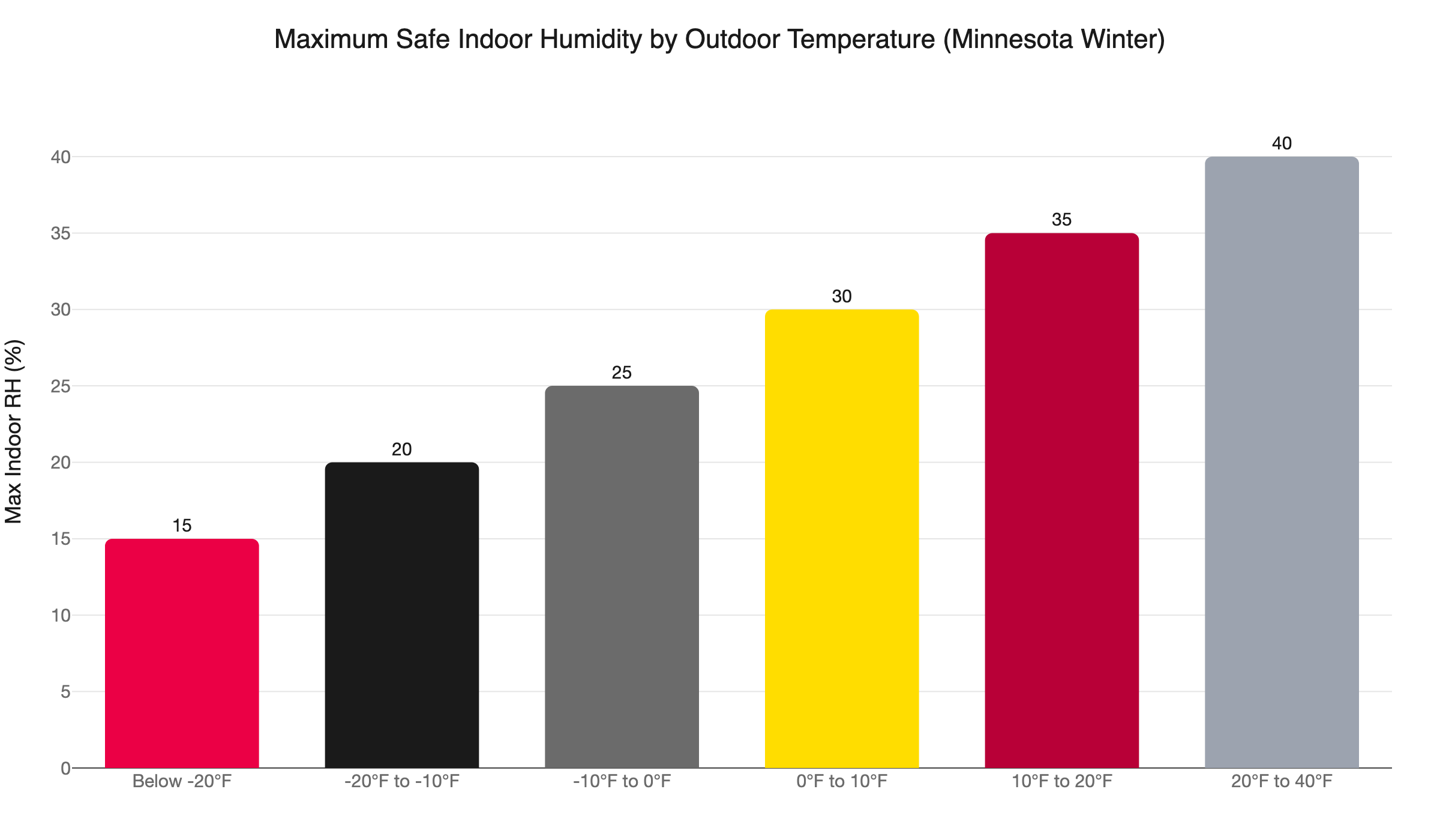
Maximum Safe Indoor Humidity by Outdoor Temperature (Minnesota Winter)
## What Does Low Humidity Do to Hardwood Floors?
Wood is hygroscopic. It releases moisture when the surrounding air is dry and absorbs it when the air is humid. When your furnace runs through a Minnesota winter without humidification, it creates a very warm, very dry environment. The wood in your floor responds by shrinking.
When humidity drops, wood shrinks across its width. Planks pull away from adjacent boards at the seams. Tongue-and-groove joints loosen. The finish floor and subfloor no longer move as a single unit, and that mismatch is where the squeaks originate. The movement is not random: it follows the grain direction of each board and affects every room in the house that shares the same dry air.
Cupping is the more serious symptom. It happens when the bottom face of a plank dries faster than the top, often because warm dry air circulates across the surface while the subfloor traps slightly more moisture underneath. The board bows across its width, edges rising above the center. In mild cases, the boards flatten when humidity returns in spring. In severe or prolonged cases, the deformation becomes permanent.
The [National Wood Flooring Association](https://pidfloors.com/blogs/sustainability/nwfa-1) establishes hardwood performance at 30-50% relative humidity. Below 30%, shrinkage begins in earnest. Most flooring manufacturers tie their warranty directly to this range. If your home has been under 30% RH for most of the winter, you may have voided coverage on a floor that still looks new from across the room.
At the correct humidity, the moisture content of hardwood runs [6-9%](https://www.bessemeter.com/blog/ideal-moisture-content-for-hardwood-floors/). Fall below that for long enough, and the wood becomes brittle. Gaps that form when the MC drops that far do not always close back up when humidity rises. The wood has been stressed past its recovery point.
---
## How Bad Does Minnesota's Winter Humidity Actually Get?
Without humidification, a Twin Cities home in deep winter can fall to 10-15% relative humidity. That is [below the Sahara Desert's typical 25%](https://genzryan.com/blog/ideal-humidity-levels-in-home/). Most homeowners have no idea their home reaches those levels because they have lived with it for years and adapted to how it feels.
The physics is simple. Cold outdoor air holds almost no moisture. At -10°F, the air outside your home is nearly devoid of water vapor. When your furnace pulls that air in, heats it to 70 degrees, and circulates it through every room, you have very warm air with almost no water vapor in it. Relative humidity drops sharply. A furnace running continuously through five or six months of Minnesota winter compounds that drying effect with no offset.
Minneapolis sits in [ASHRAE Climate Zone 6](https://midlandhtg.com/everything-you-need-to-know-about-how-minnesota-humidity-swings-affect-your-home-comfort-systems/), one step from the coldest residential classification in the country. Humidity control is not a comfort upgrade in this climate. It is a structural concern. The Minnesota Department of Administration's indoor air quality guidance [flags RH below 30%](https://mn.gov/admin/assets/Minnesota_Guide_for_Managing_Indoor_Air_Quality_tcm36-207630.pdf) as a documented health and comfort risk for occupied buildings.
Your hardwood floors register that condition before most people notice anything else. The floor is measuring your air quality with every board gap.
---
## What RH Level Do Hardwood Floors Need to Stay Stable?
The NWFA target is 30-50% relative humidity at an indoor temperature between 60 and 80 degrees Fahrenheit. For most of a Minnesota winter, the practical goal is to stay at or above 30%, because without active humidification the home drifts well below that within weeks of the heating season starting.
The 30-50% band is the year-round performance range for hardwood. In a Minnesota winter, the upper end of that band has a cap that changes with outdoor temperature. Holding 40% RH indoors is fine when it is 25 degrees outside. Hold 40% when it is -15 degrees outside, and you are pushing moisture through your wall assembly toward the cold exterior. It hits the dew point inside the wall or at the window glass and condenses. That is how you get frost on interior window panes and, eventually, mold or wood rot behind the drywall.
The right humidity target is a band: high enough to protect your hardwood, low enough to avoid driving moisture into the structure.
---
## The Outdoor-Temperature RH Guide Minnesota Homeowners Need
Most humidifier guides say "aim for 35-45% in winter" and leave it there. That is not specific enough for a climate where outdoor temperatures swing from 40°F to -20°F in the same season. [Aprilaire's humidity research](https://www.aprilaire.com/benefits/preservation/relative-humidity-chart) and building science guidance both document that the safe maximum indoor RH shifts significantly as outdoor temperatures change.
Here are the thresholds for a Minnesota home:
- 20°F to 40°F outdoors: max 40% indoor RH
- 10°F to 20°F outdoors: max 35%
- 0°F to 10°F outdoors: max 30%
- -10°F to 0°F outdoors: max 25%
- -20°F to -10°F outdoors: max 20%
- Below -20°F outdoors: max 15%
Going above these caps at the corresponding outdoor temperature pushes moisture into your building envelope. The first warning sign is condensation forming at the base of window glass. If it progresses, you get frost on interior panes. If moisture continues migrating into wall cavities, the long-term result is mold and structural wood rot.
The practical implication: you cannot set your humidistat to one number and walk away for the season. You need either a humidistat with an outdoor temperature sensor that adjusts automatically, or a personal habit of stepping the setting down during hard cold snaps. Our [humidistat settings guide for Minnesota winters](/blog/humidistat-settings-winter-minnesota/) covers what to watch and when to make adjustments.
---
## Why Won't a Portable Humidifier Protect Your Whole House?
A portable humidifier raises humidity in the room where it runs. A two-story Minnesota home with multiple bedrooms, a main floor, and a basement cannot reach NWFA targets throughout the house from a single portable unit, even a large one running at full output.
Forced-air HVAC systems move conditioned air through every duct run in the house. An HVAC-integrated whole-home humidifier mounted on the furnace or air handler adds moisture to that airstream before it distributes to every room. Every register delivers humidified air. The humidity level across the house equalizes. [A portable unit sitting in the bedroom, 40 feet from a guest room separated by walls and a closed door](https://www.a1mechanical.com/blog/heating-service/what-should-i-set-my-humidistat-to-in-winter/), cannot replicate that effect in the far room.
This matters for hardwood because the floor system spans the whole house. The planks in the living room and the planks in the back hallway are the same continuous system on the same subfloor. Uneven humidity across rooms means uneven movement across the floor. You may see gaps in the bedroom and none in the living room, which leads some homeowners to blame installation quality. The installation is not the variable. The humidity distribution is.
Two types of whole-home units are common in Minnesota homes. A bypass humidifier uses furnace heat to evaporate water from a media panel and adds moisture to the supply airstream. A steam humidifier generates its own output and works effectively even during extended cold snaps when outdoor temperatures stay well below zero. Our [bypass vs. steam humidifier guide](/blog/bypass-vs-steam-humidifier-which-type-minnesota/) covers the trade-offs and which type fits different home configurations.
---
## Will the Floor Recover Once Humidity Returns in Spring?
Mild gaps and minor squeaks often close on their own as spring moisture raises indoor RH and the planks re-absorb moisture. This creates a false impression that the problem has resolved and no action is needed.
The problem has not resolved. It is seasonal. The same floor will gap again in October when the furnace turns on. Each cycle of contraction and re-expansion stresses the finish, the tongue-and-groove joints, and the fasteners securing the boards to the subfloor. Over several heating seasons, that cumulative stress shows up as cracked finish along board edges, permanently widened seams that spring humidity no longer fully closes, and individual boards that rock slightly underfoot.
Cupping carries the greater risk of permanent damage. A cupped board has dried unevenly, with the bottom face losing moisture faster than the top face. When humidity returns, the board may flatten or may not, depending on how severe the cupping was and how long it lasted. If the wood memory has set, a professional can sometimes sand and refinish the floor to level. For widespread cupping that affected many boards through multiple winters, the answer may be partial or full board replacement.
Refinishing a single room runs $900-$2,000 or more. Board replacement on a cupped floor runs higher. A whole-home humidifier that prevents that outcome pays for itself in the first season it prevents a refinish call.
---
## How Do You Set Your Humidistat Through a Minnesota Winter?
Set your humidistat based on outdoor temperature, not a fixed year-round number. Use the outdoor-temperature thresholds listed above. At 20 degrees Fahrenheit outside, 35-40% indoor RH is appropriate. At -10 degrees outside, drop to 25%. At -20 degrees or below, cap at 15%.
Modern humidistats often include an outdoor temperature sensor or connect to a smart thermostat that adjusts the target automatically based on outdoor conditions. If your control is manual, build a habit of checking the outdoor temperature during extended cold snaps and stepping the setting down accordingly. The Minnesota Center for Energy and Environment warns that [whole-home humidifiers left at a fixed 40% setting during a -10-degree cold snap](https://www.mncee.org/managing-humidity-levels) can over-humidify and push excess moisture into wall assemblies and onto window glass.
Signs your humidistat is set too high for current outdoor conditions: condensation or frost forming at the bottom corners of window glass. Dial the setting down until condensation clears.
Signs your humidistat is set too low: static shocks when touching light switches or door handles, dry nasal passages when you wake up, and the primary symptom that brought you to this article: gaps forming and widening in your hardwood floors.
A seasonal humidistat check is low-effort maintenance with a high return. Our [home air quality monitoring guide](/blog/home-air-quality-monitor-hvac-twin-cities/) covers the sensors and tools that make it easy to read your home's actual RH at any moment.
---
## What Else in Your Home Suffers When RH Falls Too Low
Hardwood floors are the most visible indicator of low winter humidity. They are not the only part of the house affected.
Interior wood trim, door casings, and baseboards shrink the same way hardwood planks do. The gaps that open between baseboard and drywall in February are the same humidity-driven shrinkage process as floor gaps, just less visible because they are painted over and low to the ground. Wood door frames shift enough to make doors stick against the jamb or stop latching, then loosen again in spring, then repeat the cycle next winter.
The structural lumber inside your walls moves through the same cycle. The U.S. Department of Energy's building science resources [classify uncontrolled moisture loss as a structural health issue](https://bsesc.energy.gov/energy-basics/mold-and-rot-brief-guide-mold-moisture-and-home), not a comfort inconvenience. Nail pops appearing in drywall, small paint cracks running along seams in the ceiling, and hairline separations at interior corners often trace back to wood framing cycling through humidity-driven movement across multiple heating seasons.
Dry air also costs money. [Humid air at 68 degrees Fahrenheit feels as warm as dry air at 72 degrees](https://iaq.works/humidity/the-best-winter-season-indoor-humidity-range-for-your-home/). Homeowners who add whole-home humidification regularly lower their thermostat setting by 2-4 degrees without noticing any change in how comfortable the house feels. Reduced furnace runtime lowers the heating bill. The humidifier offsets part of its own cost through energy savings alone.
Static electricity in an under-humidified home is hard on electronics and a nuisance in everyday life. Dry air also dries out the mucous membranes that act as the body's first line of defense against airborne pathogens. Minnesota heating seasons run long. The cumulative effect on respiratory health over five or six months adds up. Whole-home humidification addresses all of these conditions at once.
---
## Is Installing a Whole-Home Humidifier Worth It in Minnesota?
For a Twin Cities homeowner with hardwood floors, the answer is almost always yes. The cost comparison is direct and the math is not close.
A bypass whole-home humidifier installed by a licensed HVAC technician typically runs $600-$1,200 all-in, depending on the unit, your home's furnace configuration, and how easily a plumber or HVAC technician can tap the water supply. A fan-powered or steam unit costs more: steam units run $700-$1,800 installed in most Twin Cities homes. Annual maintenance is a water panel replacement once per year and a seasonal inspection during your fall heating tune-up.
A professional refinish on a single room of cupped or gapped hardwood starts at $900-$2,000. For severe cupping requiring board replacement, costs climb higher. One season without humidification can generate repair costs that exceed the price of the whole-home unit. Two or three seasons of cumulative damage can multiply that.
The savings extend past the floors. Reduced furnace runtime, extended life on wood finish, less trim movement, fewer nail pops, and the health benefits of appropriate indoor humidity all represent real value that a single repair bill does not capture.
If your home already has a bypass humidifier that seems to be underperforming, the problem is usually a clogged water panel, a failed float valve, or a stuck solenoid. All are inexpensive repairs. Our team can diagnose the unit during a service visit and restore its output without a full replacement.
For homes without any whole-home humidifier, this is the season to install one. We are a locally owned and operated HVAC team based in Ramsey, serving Minneapolis, St. Paul, Maple Grove, Blaine, Brooklyn Park, Plymouth, Woodbury, Bloomington, and the surrounding Twin Cities area.
---
## Get Ahead of the Damage This Season
Low humidity hardwood floors damage does not happen overnight, but it compounds every winter you leave it unaddressed. Gaps widen, cupping deepens, and what might have been a seasonal reversal becomes a refinishing project.
The fix is not complicated. A whole-home humidifier properly sized and set to the right outdoor-temperature targets protects the floor, the trim, the structure, and the people inside. It is a one-time installation with minimal ongoing maintenance and a payback period measured in winters, not years.
Our [indoor air quality team](/indoor-air-quality/humidifiers/) handles whole-home humidifier installation, repair, and seasonal service. We carry bypass, fan-powered, and steam models and will recommend the right type for your home's layout and furnace setup.
Call (763) 260-6662 or book online to schedule a visit. We are "Always On Time… Or You Don't Pay a Dime!(R)" -- and we will get your humidifier running before the next cold snap takes your floors any further.
---
# Ductwork Sweating and Condensation in Minnesota Basements
URL: https://northernonehour.com/blog/ductwork-sweating-condensation-basement-minnesota/
Published: 2026-09-06 | Category: Cooling
Cold supply ducts drip in humid Minnesota summers. Learn why ductwork sweating and condensation happen in basements and when to call for help.
Key Takeaways
- Ductwork sweating and condensation in Minnesota basements happens when humid basement air contacts cold supply ducts. Supply air runs around 55°F. Twin Cities dew points spike to 65-72°F in summer.
- Minnesota energy code requires R-6 duct insulation on ducts outside the thermal envelope. That is a floor, not a performance guarantee on peak-humidity days.
- Three root causes: high basement humidity, failing or missing insulation, and HVAC system problems (airflow restriction, oversized equipment, low refrigerant, duct leaks).
- Return-side duct leaks pull humid basement air into the system and spread moisture to every room. Supply-side leaks chill nearby surfaces and create condensation outside the duct itself.
- Materials that stay wet longer than 24 to 48 hours can grow mold, according to EPA guidance. Recurring drips need to be addressed this season.
- A diagnostic visit runs $95 to $250. Duct sealing runs about $1,300. Full ductwork replacement is $6,500 to $13,000 installed.
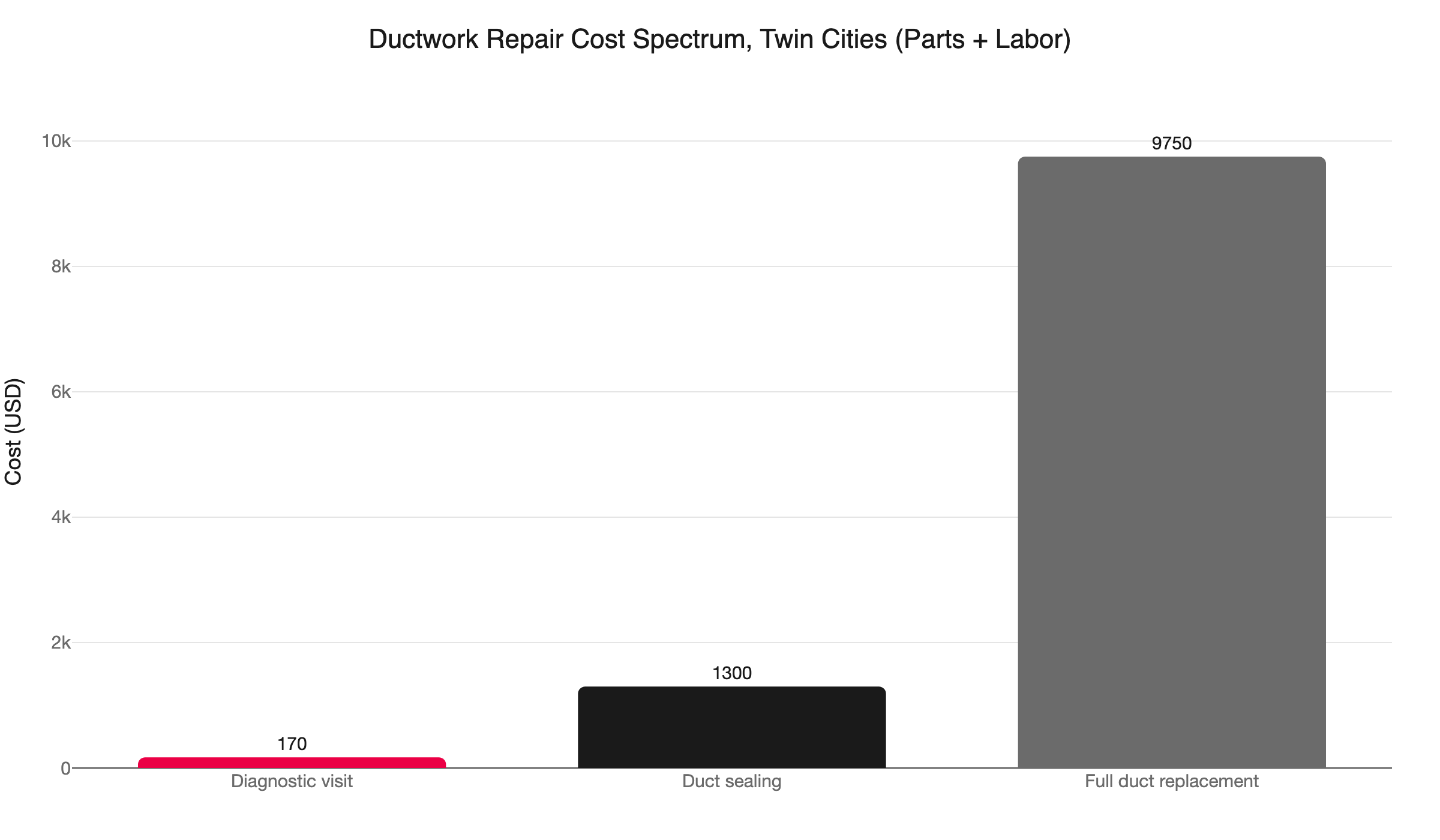
Ductwork Repair Cost Spectrum, Twin Cities (Parts + Labor)
Ductwork sweating and condensation in Minnesota basements is one of the most common summer HVAC complaints we hear from Twin Cities homeowners. The ducts drip. The insulation looks damp. The floor gets wet.
Sometimes the fix is simple. Sometimes the dripping is a symptom of a system problem: airflow restriction, duct leakage, or low refrigerant. Those problems waste energy and affect comfort throughout the whole house. This guide covers how to tell the difference.
## Why Does Ductwork Sweat in a Minnesota Basement?
**Short answer:** Your supply ducts carry air at roughly 55°F. When surrounding basement air has a dew point higher than that surface temperature, moisture condenses on the metal jacket. On humid Minnesota days, basement dew points routinely exceed 65°F. That gap drives dripping.
The physics is the same as a cold glass at a summer cookout. A glass filled with ice water drops below the dew point of the surrounding air. Moisture appears on the outside of the glass. Your supply ducts do the same thing.
[Condensation forms on duct surfaces when those surfaces drop below the dew point of the surrounding air.](https://www.energyvanguard.com/blog/buried-ducts-risk-condensation-humid-climates/) Your AC system delivers supply air at roughly 55°F. A well-insulated duct jacket stays above that temperature because insulation slows heat transfer from warm basement air to the cold duct surface. A bare, poorly wrapped, or damaged jacket drops toward 55°F.
When the basement dew point is 68°F and the duct jacket is 56°F, you get condensation. When the dew point is 62°F and the jacket is 60°F, you might not. The margin is narrow. Small insulation gaps and modest humidity spikes tip the balance.
## What Minnesota Summers Do to Your Basement Air
[Duct condensation is a humid-climate, cooling-season problem.](https://www.energyvanguard.com/blog/buried-ducts-risk-condensation-humid-climates/) In dry western states, summer dew points stay below 50°F and bare ducts rarely sweat. Minnesota is not a dry climate.
The Twin Cities sit in a continental humid zone. Dew points climb into the mid-60s regularly and hit the low 70s during the worst stretches of July and August. That puts basement air well above the surface temperature of a running supply duct.
Minnesota basements add their own moisture sources on top of summer humidity:
- Frost heave and spring snowmelt push water through foundation cracks and porous concrete.
- Freeze-thaw cycles open seams in foundations that look solid from the inside.
- Unfinished concrete stays cold and damp well into summer, wicking ground moisture upward.
- Basement windows left open during mild spells bring in humid outdoor air.
An unfinished basement with no dehumidifier is the hardest environment for duct insulation to manage. Our post on [basement humidity control in summer](/blog/basement-humidity-control-summer-minnesota/) covers the mechanical and structural steps for lowering basement moisture year-round.
## Is Your Duct Insulation Meeting Minnesota Code?
**Short answer:** Minnesota energy code requires R-6 insulation on supply and return ducts outside the building thermal envelope, including most unfinished basements. R-6 is a code minimum, not a performance target. On peak-humidity days with dew points near 70°F, correctly installed R-6 wrap may still leave the duct jacket close to the condensation threshold.
[Minnesota is in Climate Zone 6.](https://up.codes/viewer/minnesota/mn-energy-code-2015/chapter/RE_4/re-residential-energy-efficiency) The state energy code (Chapter 1322, adopting the IECC with Minnesota amendments) requires a minimum of R-6 insulation on supply and return ducts that run outside the conditioned building envelope. Most unfinished basements qualify as outside the thermal envelope when the basement walls are uninsulated and unconditioned.
R-6 slows heat transfer from warm basement air to the cold duct surface. On a typical summer day, that is enough. On a day when the basement dew point hits 70°F and supply air is 55°F, the math gets tighter.
[Air-permeable insulation like fiberglass duct wrap allows ambient air to reach the duct surface if the wrap is not airtight.](https://www.energyvanguard.com/blog/buried-ducts-risk-condensation-humid-climates/) Adding more thickness does not solve a gaps problem. If humid air can reach the duct jacket through an opening in the wrap, the jacket temperature tracks the dew point of that air regardless of what is around it.
Common insulation failure points in Minnesota basements:
- Gaps at duct joints and elbows where the wrap does not fully cover the metal.
- Compressed or crushed sections that have lost R-value.
- Loose seams where the wrap has pulled away from the duct surface.
- Missing or damaged vapor barriers, which allow moisture to migrate into the insulation itself.
- Bare sections left after a renovation and never re-wrapped.
A single uncovered joint on a long supply run is enough to produce visible drips on a humid day.
## What Causes Ductwork Sweating and Condensation in Minnesota Basements?
**Short answer:** Three layers drive the problem. High basement humidity sets the conditions. Insulation gaps give moisture a surface to condense on. And system problems, including dirty coils, oversized equipment, and duct leaks, push supply air colder than design and make condensation worse. Most homeowners and most articles only address the first two layers.
### Layer 1: High basement humidity
If the air around your ducts holds excess moisture all summer, condensation is nearly unavoidable on hot days. The starting point is reducing moisture at the source: grade drainage away from the foundation, seal visible cracks in the concrete, and manage basement ventilation. A whole-home dehumidifier can keep basement relative humidity below the [EPA-recommended ceiling of 60%](https://www.epa.gov/mold/brief-guide-mold-moisture-and-your-home) even during humid Minnesota summers.
### Layer 2: Insulation gaps and failures
Even moderate basement humidity causes sweating when duct insulation is missing, damaged, or incorrectly installed. Old [fiberglass duct wrap](/blog/fiberglass-duct-board-vs-metal-ductwork-minnesota/) compresses over time, pulls away at seams, and loses its vapor barrier integrity. [Duct insulation requires an exterior vapor barrier. Without one, moisture migrates into the insulation itself,](https://www.meyer-depew.com/why-basement-ductwork-can-sweat/) creating a hidden damp zone and eventually mold inside the wrap.
### Layer 3: System problems that drive supply air colder
Your AC is designed to deliver supply air at a specific temperature under normal operating conditions. When something goes wrong, supply air runs colder than intended. A colder duct surface means condensation happens at lower dew points: days that should be manageable start producing drips.
Three system problems do this:
**Airflow restriction.** [A dirty filter, blocked return vent, or closed supply registers restricts airflow and changes how the cooling system operates.](https://www.meyer-depew.com/why-basement-ductwork-can-sweat/) The evaporator coil runs colder than it should. A [dirty evaporator coil](/blog/dirty-evaporator-coil-ac-symptoms-twin-cities/) compounds the problem by restricting airflow further and causing the coil to run abnormally cold.
**Oversized equipment.** An AC that is too large for the house short-cycles. It blasts very cold air for short bursts and shuts off before fully removing humidity. Each burst delivers supply air colder than design, while leaving the basement air damp overall. Our post on [oversized AC problems](/blog/oversized-ac-problems-twin-cities/) explains what that looks like from a comfort and humidity standpoint.
**Low refrigerant.** A refrigerant leak causes the evaporator coil to run colder than designed. Supply air temperature drops. Dehumidification capacity falls. Both effects worsen duct condensation at the same time. Fixing the insulation alone will not stop the dripping if the system is undercharged.
When ductwork that has been dry for years suddenly starts sweating, a system problem is the most likely explanation. Weather and insulation conditions did not change. Something in the system did.
## How Do Return and Supply Duct Leaks Make Condensation Worse?
**Short answer:** Supply-side leaks let cold air escape into the basement, chilling nearby surfaces that then condense moisture. Return-side leaks pull humid basement air into the system and spread that moisture throughout the house. Both types require professional testing to find reliably.
[Supply-side leaks allow cold conditioned air to escape into the basement.](https://www.meyer-depew.com/why-basement-ductwork-can-sweat/) That escaped air chills surrounding metal, joists, and strapping. You may see condensation on surfaces near the duct that have no insulation: floor joists, metal hangers, [nearby pipes](/blog/suction-line-sweating-refrigerant-pipe-insulation-twin-cities/). The actual leak point may be several feet away.
[Return-side leaks pull humid basement air directly into the HVAC system.](https://www.meyer-depew.com/why-basement-ductwork-can-sweat/) The system then distributes that humid air through supply registers to every room in the house. You get higher indoor humidity on every floor, reduced dehumidification performance, and worsening duct condensation. Return leaks are harder to detect visually because you are looking for air being pulled in, not blown out. A pressure test during a professional inspection is the reliable detection method.
Duct leakage also costs money in lost conditioned air across the cooling season. Our post on [duct sealing and leaky ductwork](/blog/duct-sealing-leaky-ductwork-energy-loss/) covers what that loss adds up to over a summer. Professional duct sealing typically runs about $1,300. If the ductwork is deteriorated, undersized, or poorly configured, full replacement ranges from $6,500 to $13,000 installed in the Twin Cities.
## When Can You Fix It Yourself, and When Should You Call?
**Short answer:** A single humid day that resolves on its own is weather, not a system problem. Call a professional when dripping is recurring, when it started suddenly after years without a problem, when you see mold or persistent wet spots, or when the AC is running differently than before.
**Handle it yourself if:**
- Dripping appeared during an extreme humidity stretch and has not returned.
- You can see a clear insulation gap on a short section of duct. Re-wrapping a small area with R-6 duct wrap and sealing the seams with mastic is a manageable DIY task.
- Basement humidity is high and you have not yet run a dehumidifier. Starting one and sealing basement windows is a reasonable first step.
**Call a professional if:**
- Dripping returns every summer, even on days that are not unusually humid.
- Condensation appeared in a new location that was dry in previous years.
- The insulation looks intact but the duct is still sweating.
- You see mold, staining, or deterioration on the duct jacket, nearby joists, or drywall. [The EPA notes that wet or damp materials not dried within 24 to 48 hours will grow mold in most cases.](https://www.epa.gov/mold/brief-guide-mold-moisture-and-your-home) Recurring drips almost always exceed that window.
- The AC is running differently: longer or shorter cycles, reduced airflow, or rooms that are harder to cool than in previous years.
The system-problem layer is the reason professional diagnosis matters. Visible insulation failures are easy to spot. Finding return-side leakage, low refrigerant, or restricted airflow requires equipment and a trained eye.
## What Does a Professional Inspection Cover?
When our team responds to a ductwork sweating call, we check more than the insulation. A diagnostic visit typically runs $95 to $250 and covers:
- **Insulation coverage and condition.** We check seams, joints, elbows, takeoffs, and vapor barrier integrity. Any section that has been re-routed or left bare gets noted.
- **Supply air temperature.** If it is running significantly below 55°F, the system is working differently than designed. That points toward refrigerant charge, coil condition, or airflow issues.
- **Airflow volume.** We check filter condition, evaporator coil condition, and whether supply and return registers are properly positioned and open.
- **Duct leakage testing.** A pressure test identifies supply- and return-side leaks that a visual walkthrough misses.
- **Refrigerant charge.** Low refrigerant drives the evaporator coil colder and cuts dehumidification capacity. It is a common hidden driver of summer duct condensation.
We will give you a clear explanation of what we find and a straight quote on fixing it. No surprises, no pressure. That is what locally owned and operated means in practice.
## The Risk of Ignoring Summer Drips
Water dripping from ductwork feels like a nuisance. Over time, it becomes a mold, structural, and indoor air quality problem.
Wet duct insulation loses R-value and does not fully recover when it dries. Fiberglass wrap that has been saturated will perform below its rated value in future seasons even if the outer surface looks dry.
Dripping that falls on wood joists or drywall creates the moisture conditions mold needs. The 24 to 48 hour window in the EPA guidance applies to materials that get wet once. Ducts that drip every hot day through July and August keep those materials consistently wet across the entire cooling season.
Mold that grows near a return duct can be pulled into the living space through the system. That is a real concern for any household member with asthma or allergies.
The right time to address ductwork sweating and condensation in a Minnesota basement is the summer it starts. Not next spring.
---
Call Northern One Hour at **(763) 260-6662** or book online to schedule a ductwork inspection. We are locally owned and operated in Ramsey, MN, and we serve Minneapolis, St. Paul, Blaine, Maple Grove, Plymouth, Brooklyn Park, Woodbury, and the surrounding Twin Cities area. Every appointment is backed by our on-time commitment: "Always On Time… Or You Don't Pay a Dime!(R)" We will diagnose the full problem, whether it is an insulation gap, a duct leak, or a system issue, and give you a straight quote on fixing it.
---
# HVAC Inspection When Selling a Minnesota Home
URL: https://northernonehour.com/blog/hvac-before-selling-home-minnesota/
Published: 2026-09-06 | Category: HVAC
Minnesota seller's guide: disclosure laws, city TISH mandates, the heat exchanger blind spot, and when to repair, disclose, or replace your HVAC.
Key Takeaways
- [Minnesota law (Minn. Stat. § 513.55)](https://www.nolo.com/legal-encyclopedia/selling-minnesota-home-what-are-my-disclosure-obligations.html) requires sellers to disclose all known HVAC defects in writing before the purchase agreement is signed. Buyers have two years after closing to sue for undisclosed known defects.
- Age alone is not a disclosable defect. Known malfunctions, repeated repairs, and imminent failure are.
- Minneapolis and Saint Paul require Truth-in-Sale of Housing (TISH) reports before listing. Richfield requires HVAC certification by a licensed journeyman or master heating installer.
- Standard home inspectors often cannot diagnose a cracked heat exchanger. Only a dedicated HVAC technician inspection catches it reliably.
- Minnesota has no statewide individual HVAC technician license. Contract language demanding one is unenforceable under state law.
- Sellers typically recover 40-60 cents per dollar on pre-sale HVAC replacement. A closing credit is usually the better financial move.
- Replace before listing and the buyer captures your utility rebate. A closing credit lets the buyer claim both the rebate and the federal tax credit.
- FHA and VA loans require functional HVAC at closing. A failed system blocks loan approval outright.
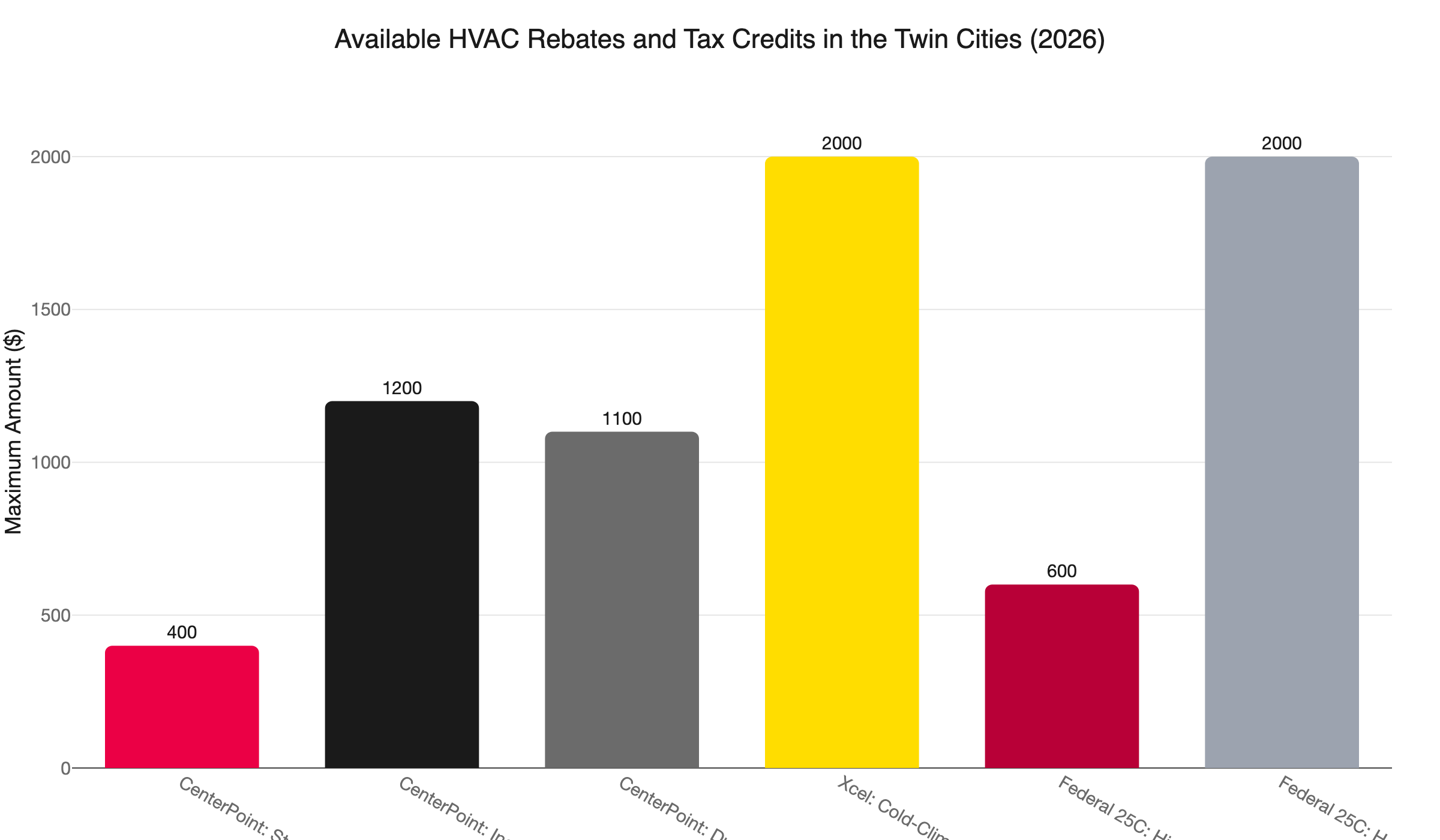
Available HVAC Rebates and Tax Credits in the Twin Cities (2026)
## What Does Minnesota Law Require You to Disclose?
[Minn. Stat. § 513.55](https://www.nolo.com/legal-encyclopedia/selling-minnesota-home-what-are-my-disclosure-obligations.html) requires sellers to disclose all known material facts about home condition - including HVAC - in writing before the purchase agreement is signed. Known malfunctions, repeated repairs, and imminent failure must be disclosed. Age alone is not a required disclosure. Buyers have two years after closing to sue for undisclosed known defects.
The practical test is simple. If you know your HVAC system has a problem, you must disclose it. If you have never had it professionally inspected, you are disclosing what you know - which may be limited to the system's age and basic operation. That is legally acceptable. But it creates exposure if a problem surfaces post-closing that a technician would have found before listing.
[Minnesota real estate guidance](https://hammerhomegroup.com/minnesota-seller-disclosure-statement/) is consistent on one point: "old" is not the same as "defective." A 20-year-old furnace that heats reliably every Minnesota winter is not a defect you must flag. A 10-year-old furnace with two failed igniters, a known leak history, and a heat exchanger a technician flagged last season - that is. Disclose what you know.
As-is sales do not change this. An as-is contract tells the buyer you are not making repairs. It does not release you from disclosing defects you are aware of. The obligation runs with your knowledge, not with your willingness to fix things.
## Does Your City Require a Point-of-Sale HVAC Inspection?
Several Twin Cities cities have point-of-sale inspection requirements that operate on top of state disclosure law. Minneapolis and Saint Paul require Truth-in-Sale of Housing (TISH) reports before any listing. Richfield requires HVAC certification by a licensed journeyman or master heating installer. Check your city before you schedule anything else.
**Minneapolis:** The city requires a [TISH Disclosure Report](https://www2.minneapolismn.gov/media/content-assets/www2-documents/business/convert_277433.pdf) in the seller's name before any sale. Some items identified in the mandatory evaluation must be corrected by the buyer after closing, unless a Certificate of Approval has been issued. Failing to file the Acknowledgment of Responsibility within one business day of closing is a misdemeanor.
**Saint Paul:** [Saint Paul's TISH program](https://www.stpaul.gov/departments/safety-inspections/rent-buy-sell-property/selling-or-buying-properties/truth-sale-housing) (last updated July 15, 2026) is disclosure-only. The report identifies observed conditions but does not require sellers to fix everything before closing. It applies to single-family homes, duplexes, condos, and townhomes.
**Other cities with requirements:** Bloomington, Richfield, St. Louis Park, South St. Paul, and Maplewood all have their own point-of-sale requirements that vary in scope. Richfield specifically requires HVAC certification by a licensed journeyman or master heating installer - not just a general home inspection report. That is a meaningful distinction if you are selling in that city.
If you are selling in any of these municipalities, schedule your HVAC inspection before you list. The city's mandated report may reference HVAC condition. Having your own documentation in hand before an inspector writes it up gives you options.
## What Do Standard Home Inspectors Miss?
Standard home inspectors can flag HVAC age, visible condition, and obvious malfunctions. What they often cannot do reliably is diagnose a cracked heat exchanger - the most dangerous furnace defect, and the one most likely to trigger a safety-based buyer walkout or a lender hold. Catching it requires a dedicated HVAC technician with the right equipment.
A cracked heat exchanger does not always show visible signs. It can release combustion gases into living spaces while the furnace appears to run normally. [Diagnosing one requires a trained HVAC technician](https://www.metroheating.net/sale-of-home-hvac-inspection/) using combustion testing equipment - not a generalist running through a multi-system home inspection checklist.
This matters because of what happens when a cracked heat exchanger surfaces in a buyer's inspection instead of yours. A buyer's technician who flags it can recommend red-tagging the furnace as a safety hazard on the spot. That is not a repair negotiation. It is a potential safety condemnation, a hard lender hold, and a deal at serious risk - at the worst possible point in the transaction.
Getting ahead of it is straightforward: schedule your own HVAC inspection before you list. If there is a problem, you find out first. You decide on your terms whether to repair, replace, or disclose.
For a detailed look at what a failing heat exchanger actually signals, see our post on [cracked heat exchanger warning signs for Minnesota homeowners](/blog/cracked-heat-exchanger-signs-minnesota/).
Unpermitted HVAC installations are another common inspector flag. If a previous owner replaced a furnace without pulling a mechanical permit, a buyer's inspector will note it. Retroactive permits may require opening walls to verify venting. Permit fees run $75-$150 in most suburbs and $150-$300 in Minneapolis and Saint Paul. Our guide to [HVAC permits in Minnesota](/blog/hvac-permit-when-required-minnesota/) covers what unpermitted work means for a sale and how the permit process works.
## What Is the Minnesota HVAC Licensing Gap?
Minnesota has [no statewide individual HVAC technician license](https://homesmsp.com/2026/06/minnesota-does-not-have-licensing-for-hvac-technicians.html). The state requires only contractor bonding: a $100 bond, valid two years, at the business level - not per technician. Contract language in a purchase amendment requiring "inspection by a licensed HVAC technician" has no enforceable meaning under Minnesota law.
This catches buyers' agents off guard. The phrase "licensed HVAC technician" appears in purchase amendments regularly. It sounds official and precise. But it does not correspond to any actual licensure category in Minnesota state law. There is nothing to verify against.
What does matter is city-level contractor authorization. Minneapolis requires HVAC contractors to hold a city-specific Competency Card. Saint Paul, Bloomington, and Saint Cloud each have their own separate contractor authorization requirements. When you choose a company for a pre-sale HVAC inspection, ask whether they hold the appropriate city contractor authorization - not just whether their technicians are "licensed." At Northern One Hour, our technicians are authorized to work in Minneapolis, Saint Paul, and across the Twin Cities metro.
## Should You Repair, Disclose, or Replace Before Listing?
Sellers [typically recover about 40-60 cents per dollar](https://ibuyer.com/blog/should-i-replace-hvac-before-selling-my-house/) spent on pre-sale HVAC replacement. A closing credit or price adjustment is usually the better financial move. The exceptions are a fully failed system and buyers using FHA or VA financing, which require functional HVAC for loan approval.
Here is a decision framework:
**Repair:** Best when the system is functional and the repair cost is low relative to system age. A useful [age-times-cost rule of thumb](https://kennarealestate.com/blog/should-i-replace-hvac-before-selling-my-house-or-repair-it): multiply the system's age in years by the repair cost in dollars. If the result exceeds $5,000, replacement is generally more cost-effective than repair. A 14-year-old furnace needing a $400 repair lands at $5,600 - that crosses the threshold.
**Disclose without repair:** Valid when the system is aging but functional and you have no knowledge of a specific defect. Include system age and maintenance history on the disclosure form. Price the home to reflect condition.
**Closing credit:** Often the best move for both sides. Instead of spending $4,950 or more on a furnace replacement that returns 40-60 cents on the dollar, offer the buyer a credit toward their own replacement. They hire their own contractor, choose their own equipment, and claim the rebates themselves. You skip the capital outlay and avoid the rebate trap covered below.
**Replace:** The right call when the system has failed completely, when the buyer's lender requires it for loan approval, or when the system poses a documented safety risk. For Twin Cities furnace replacement, plan on $4,950 and up for an 80% AFUE unit, $6,500 and up for a 95-96% AFUE model, and $9,100 and up for a top-tier high-efficiency system - installed, parts and labor.
For a deeper look at how a new HVAC system affects your home's sale value, see our post on [HVAC and home resale value in Minnesota](/blog/new-hvac-home-resale-value-minnesota/).
## Do You Lose the Rebate If You Replace Before Listing?
Yes. Utility rebates attach to the equipment owner at the time of installation. Replace before listing and you absorb the full cost - but the buyer captures the rebate when they take ownership. A closing credit lets the buyer fund their own replacement and claim the rebate themselves, which often makes a credit the faster resolution for both sides.
Here is what is on the table in the Twin Cities in 2026:
**CenterPoint Energy:** Up to $400 on a 95%+ AFUE gas furnace. Up to $1,200 for income-qualified households. Up to $1,100 on a dual-fuel heat pump paired with a 92%+ AFUE furnace. [Full rebate details are available here.](https://www.centerpointenergy.com/en-us/business/services/dealers-distributors/efficiency-programs-rebates/heating-system-rebates?sa=mn)
**Xcel Energy:** Gas furnace rebates ended January 1, 2026. Cold-climate heat pump rebates remain, up to $2,000.
**Federal Section 25C credit:** Up to $600 for qualifying high-efficiency furnaces and up to $2,000 for qualifying heat pumps, covering 30% of installation costs. Note: some sources report the federal heat pump credit ended December 31, 2025. Verify current status before committing to a specific system.
A buyer who negotiates a closing credit can apply it toward their own installation and claim the applicable rebate on top. That combination - credit plus rebate - is why closing credits often resolve HVAC issues faster than a pre-listing replacement does for either party. Our [Xcel and CenterPoint HVAC rebates guide](/blog/xcel-centerpoint-hvac-rebates-minnesota/) covers the full picture for Twin Cities homeowners.
## What Happens With FHA or VA Buyers?
FHA and VA loans require functional HVAC at closing. A system that has failed or been condemned does not create negotiating leverage - it blocks loan approval. If your buyers are using government-backed financing, a non-functional HVAC system must be repaired or replaced before closing. A closing credit does not satisfy the lender's requirement.
This is the one scenario where repairing to functional status - or replacing outright - is required rather than optional. Talk with your listing agent early about the type of financing your buyers are likely to use. FHA buyers are common across many Twin Cities price ranges. Their lenders will require a working system before a loan closes. You want to know that before you are in contract, not after.
If your system has failed or been flagged as unsafe, call us before you list. We can assess what it takes to bring the system to functional status and tell you whether a targeted repair or a full replacement fits your timeline and sale price.
## How Much Does a Pre-Sale HVAC Inspection Cost in Minnesota?
A dedicated pre-sale HVAC inspection with a written condition report typically runs $95-$250. That cost is small relative to what it protects against: a safety flag during buyer negotiations, a heat exchanger diagnosis that surfaces at the worst moment, or an FHA lender hold the week before closing.
The inspection delivers a written assessment of current system condition. Share it with your listing agent. Include it in your disclosures. Use it to decide whether a repair makes sense before going live. It also documents that you acted in good faith - which matters if a disclosure question comes up after closing.
Many pre-sale inspections include a tune-up pass at the same visit. For aging systems, the technician can tell you directly whether a repair crosses or falls below the replacement threshold. If the repair is the right call, it can usually be handled that same day.
## Schedule Your Inspection Before You List
We are Northern One Hour Heating and Air Conditioning, locally owned and operated in Ramsey, MN. We serve Minneapolis, Saint Paul, Blaine, Maple Grove, Plymouth, Brooklyn Park, Woodbury, Bloomington, and the surrounding Twin Cities metro. When you call us for a pre-listing inspection, you get a straight answer about what the system's condition is - not a sales pitch.
Our promise is "Always On Time… Or You Don't Pay a Dime!(R)" That applies to your pre-listing inspection the same as any other service call. We show up when we say we will, and we give you a written report you can take into the sale with confidence.
Call **(763) 260-6662** or book online to schedule your pre-listing HVAC inspection. The sooner you have documentation, the more options you have when offers start coming in.
---
# Generator for Furnace or Heat Pump Minnesota: Size It Right
URL: https://northernonehour.com/blog/standby-generator-furnace-heat-pump-minnesota/
Published: 2026-09-06 | Category: Heating
Gas furnaces and heat pumps need very different generators and transfer switches. Here is what Minnesota homeowners need before an ice storm.
Key Takeaways
- A gas furnace [draws 300-1,200 watts at 120V while running](https://udpwr.com/blogs/portable-power-station-knowledge/backup-generator-for-gas-furnace). A 5,500W portable inverter generator with a 120V interlock kit is often sufficient.
- A heat pump compressor can demand 15,000-19,200 watts of startup surge. Most portable generators stall at that load.
- A [soft-start kit can cut compressor inrush by up to 75%](https://www.microair.net/products/easystart-flex-home-ac-soft-starter), potentially dropping the generator requirement from 20 kW to 5-8 kW.
- A dual-fuel (hybrid) system does NOT protect you during a power outage. The furnace blower still needs electricity to run.
- All transfer switch work in Minnesota requires a licensed electrician and a permit. Minnesota adopted the 2026 NEC on August 17, 2026.
- Transfer switch type depends on your system: a 120V interlock for a gas furnace, a 240V LRA-rated switch for a heat pump.
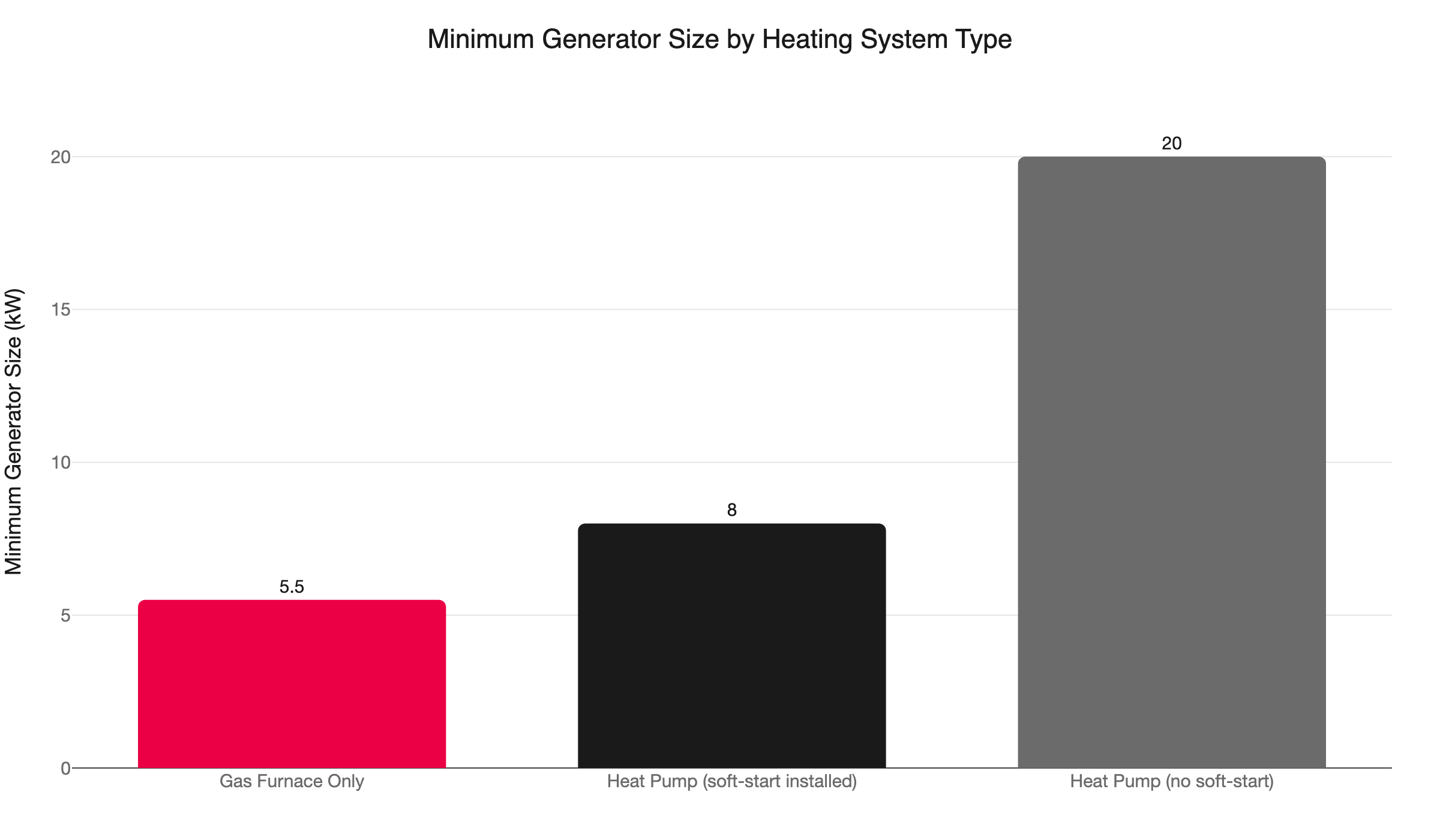
Minimum Generator Size by Heating System Type
## Why Do Minnesota Ice Storms Hit HVAC Systems So Hard?
**Short answer:** Ice storms knock out the electric grid but leave underground natural gas lines intact. Gas furnace owners need a modest portable generator for the blower and controls. Heat pump owners need a solution sized for the compressor's startup surge, which is a fundamentally different problem.
An ice storm is not the same as a cold snap. Cold air does not bring transmission lines down. Ice loads on overhead lines do.
When a multi-day ice event hits the Twin Cities, here is the situation. CenterPoint's natural gas distribution system runs underground and stays pressurized. Gas keeps flowing. Xcel Energy's electric grid goes down, and it can stay down for days.
If you heat with a gas furnace, your fuel source is intact. You need electricity only for the blower motor, draft inducer, igniter, and control board. That is a manageable load for a portable generator.
If your home heats with a heat pump, electricity is the fuel. The generator sizing problem is a completely different order of magnitude.
If you have a dual-fuel hybrid system, you might assume the gas leg protects you during an outage. It does not.
Which of those three situations applies to your home determines everything else in this article.
## Why Equipment Type Is the Whole Ballgame
Most "what size generator do I need?" guides work from a load list. Square footage times a rough watt-per-square-foot estimate. That approach works for figuring out which appliances to run. It fails for HVAC backup sizing.
The reason: a gas furnace and a heat pump have completely different electrical profiles. A gas furnace is a 120V appliance with a modest running draw. A heat pump compressor is a 240V motor with a startup surge that can reach 19,000 watts. Same house, same square footage. Completely different generator requirements.
Get this wrong and you overspend by tens of thousands on standby equipment you do not need. Or you buy a generator that stalls the instant the heat pump compressor tries to start.
Knowing your system type determines which generator size is right and which transfer switch is required. It also determines what the full project will cost.
## What Is a Gas Furnace's Actual Electrical Load?
**Short answer:** A gas furnace [draws 300-1,200 watts while running](https://udpwr.com/blogs/portable-power-station-knowledge/backup-generator-for-gas-furnace), with a startup surge two to three times that. The gas does the heating work. Electricity only runs the blower motor, draft inducer, igniter, and control board. A 5,500W portable inverter generator with a 120V interlock kit covers most gas furnaces.
That 300-1,200W range reflects the difference between a basic single-stage furnace and a variable-speed system with an ECM blower motor. Variable-speed blowers run much of the time at partial capacity, but they still draw from the same 120V circuit. A 5,500W generator handles either case with headroom to spare.
The gas valve and flame produce no electrical load. They draw no amps. All electricity goes to mechanical and control functions.
A licensed electrician installs the interlock kit, which ties into a single circuit breaker on your panel. The kit lets you safely connect a portable generator without backfeeding the grid. Hardware cost: $50-200. Electrician labor varies by panel complexity.
CenterPoint's underground distribution system means the gas supply in a typical Twin Cities ice storm stays intact. You already have fuel. You just need a small amount of electricity to run the mechanical side of the furnace.
One practical point: a well-maintained furnace is less likely to fail during an extended outage run on a generator. A tune-up before ice storm season reduces that risk.
## Why Is a Heat Pump Harder to Back Up?
**Short answer:** A heat pump compressor is a 240V motor with a massive startup current called locked rotor amps (LRA). That surge can demand 15,000-19,200 watts from a generator for a fraction of a second. Most portable generators in the 5,000-8,000W class cannot supply it and stall the moment the compressor tries to start.
During steady operation, a 3-ton residential heat pump might draw 3,000-4,000 watts. That sounds like something a portable generator can handle.
The problem happens in the first fraction of a second.
A compressor motor requires full voltage across all windings to overcome static friction and begin spinning. The current drawn during that locked rotor moment can be four to six times the running current.
[A generator sized for running watts stalls the instant the compressor tries to start](https://engineerfix.com/what-size-generator-do-you-need-to-run-a-heat-pump/). The compressor sees insufficient voltage, fails to turn over, and trips its thermal protection. You have a running generator and no heat.
Heat pump homes in the Twin Cities face temperatures near our design temperature of approximately -16°F. At that point, losing heat is not a minor inconvenience. It is a safety event.
## What Are Locked Rotor Amps, and Where Do You Find the Number?
**Short answer:** LRA is the peak current a motor draws in the fraction of a second before it starts turning. It is printed on the outdoor unit nameplate. [Multiply LRA by 240 to get the startup volt-amp requirement](https://generators.smps.us/start.html). An 80-amp LRA unit demands 19,200 watts of surge capacity from the generator.
Find the nameplate on your outdoor condenser unit. It is usually on a metal label inside the unit's electrical panel cover. Look for a line labeled "LRA" along with the operating voltage.
LRA x 240V = starting volt-amps. That is the surge figure your generator must supply for the compressor alone.
The condenser fan motor adds its own LRA. [Combined, compressor and fan can reach 75 amps at 240V](https://engineerfix.com/what-size-generator-do-you-need-to-run-a-heat-pump/), requiring 18,000 watts of surge capacity for the outdoor unit. Add the air handler, blower motor, and controls, and a heat-pump-only home typically needs a standby generator in the 15-22 kW range.
That is why heat pump backup almost always means a whole-home standby generator. A portable unit is not rated for that surge.
## Can a Soft-Start Kit Change the Generator Math?
**Short answer:** Yes, significantly. [A soft-start kit reduces compressor inrush by up to 75%](https://www.microair.net/products/easystart-flex-home-ac-soft-starter) by ramping the motor over five to eight seconds instead of hitting it with full voltage. This can drop the generator requirement from 20 kW to 5-8 kW for many residential systems.
A soft-start kit is a solid-state device that mounts on the compressor terminals inside your outdoor unit. It manages the voltage ramp at startup. The current draw spreads over several seconds instead of hitting all at once.
The generator sees a much lower surge. Many systems that stall a 10 kW generator will run reliably on a 7,500W standby unit with a soft-start installed.
Two caveats apply. First, the right generator size still depends on your specific unit's LRA and the condenser fan motor load. Second, a soft-start kit does not eliminate the 240V requirement. It reduces the surge, but the heat pump still needs a 240V transfer switch and a generator that can sustain the running load.
An HVAC technician installs the soft-start kit. A licensed electrician handles the transfer switch and generator connection. These are two separate scopes of work with separate permit categories.
## Does a Dual-Fuel System Protect You During an Outage?
**Short answer:** No. A dual-fuel (hybrid) heat pump pairs with a gas furnace for backup below the balance point, but the furnace blower still needs electricity. If the grid goes out, neither the heat pump nor the gas furnace runs without a generator supplying power to the blower and controls.
Dual-fuel homeowners often assume the gas leg is their safety net. During a power outage, it is not.
CenterPoint's underground gas supply stays pressurized through a typical ice storm. That part of the equation holds. But the furnace blower motor, draft inducer, igniter, and control board all need electricity. Without it, the gas furnace cannot start, even with a full gas supply.
Dual-fuel homeowners have two practical backup approaches.
The first option: a portable generator and a 120V interlock for the furnace circuit. This covers the gas furnace leg only. The heat pump compressor stays offline. You have heat.
The second option: a 240V standby system rated for the heat pump compressor's LRA. This covers the full system. It costs significantly more but keeps both legs available.
One useful detail: ice storms typically occur when outdoor temperatures hover near 32°F. At that temperature, a heat pump operates efficiently and would normally be the preferred heat source. Backing up only the gas furnace leg means losing that efficiency advantage during the outage. That tradeoff is worth considering before you choose your backup strategy.
For more on how dual-fuel systems operate day to day, see our post on [dual-fuel heat pump and gas furnace hybrid systems in Minnesota](/blog/dual-fuel-heat-pump-gas-furnace-hybrid-minnesota/).
## Gas Furnace vs. Heat Pump: Which Transfer Switch Do You Need?
**Short answer:** A gas furnace needs a 120V single-circuit interlock or transfer switch, typically $50-200 in parts plus electrician labor. A heat pump requires a 240V transfer switch rated for the unit's LRA, which almost always means a whole-panel standby installation. The electrical requirements are not interchangeable.
A [transfer switch](https://generatorvault.com/blogs/news/generator-transfer-switch-guide-safety-sizing-and-installation-for-2026) disconnects your home from the utility grid before connecting to the generator. This step is not optional. Backfeeding a portable generator through an open main without a transfer switch is dangerous and illegal.
**For a gas furnace:**
- A single-circuit manual interlock on the furnace breaker is code-compliant.
- The generator connects via a 120V inlet box or a heavy-duty cord rated for the load.
- Hardware cost: $50-200. Electrician labor is additional.
**For a heat pump:**
- Heat pumps operate on 240V. A 120V interlock does not apply.
- The transfer switch must be rated for the compressor's LRA, not just the running watts.
- A manual or automatic whole-panel transfer switch is the standard approach.
- Most heat pump backup installations use a whole-home standby generator to avoid manually managing surge loads during an outage.
**For a dual-fuel system:**
- Gas furnace leg only: use the gas furnace approach above.
- Full system coverage: use the heat pump approach above.
## What Permits Does Minnesota Require for a Transfer Switch?
**Short answer:** Every transfer switch installation in Minnesota requires a permit and a licensed electrician. Homeowners cannot self-permit under MN Stat. 326B. Minnesota adopted the [2026 NEC on August 17, 2026](https://atekdistribution.com/minnesota-2026-nec-changes/). The minimum permit fee is $55 plus $35 per generator source and $12 per circuit, per the [Minnesota Department of Labor and Industry](https://www.dli.mn.gov/business/electrical-contractors/electrical-codes-and-standards).
Permits filed on or after August 17, 2026 fall under 2026 NEC Article 702 (optional standby systems). Permits filed before that date use the 2023 NEC. If you are planning this project now, your electrician files under the current code.
Not every city files permits through state DLI. St. Paul, Plymouth, and Maple Grove each have their own electrical inspection offices. Filing in the wrong jurisdiction delays the inspection. If your electrician pulls the permit, confirm they know which office serves your city before work begins.
A permit also protects you at resale. A transfer switch without a final inspection is a flag on a home inspection report. The permit fee is modest. The cleanup cost if you skip it is not.
## What Does a Generator Backup Project Cost?
**Short answer:** A gas furnace backup with a portable generator and interlock kit typically runs under $2,000. A heat pump backup with a whole-home standby generator and panel-level transfer switch is a significantly larger project. Get a site-specific quote from an electrician based on your unit's LRA nameplate data.
**Gas furnace only:**
- Interlock kit hardware: $50-200
- Portable inverter generator (5,500-7,000W): $500-1,500
- Electrician labor for interlock installation: varies by panel and jurisdiction
- Total project: typically under $2,000
**Heat pump or full dual-fuel coverage:**
- Whole-home standby generator and panel-level transfer switch: priced per equipment spec and LRA data
- A soft-start kit (HVAC technician scope) may reduce the generator size needed, which changes total cost meaningfully
- An electrician needs your unit's nameplate LRA to quote accurately
If a new heat pump installation is part of the conversation, ask our team about financing when you call. New heat pump equipment may qualify for the federal [ENERGY STAR 25C tax credit](https://www.energystar.gov/products/air_source_heat_pumps) of up to $2,000 and for the [Xcel Energy cold climate heat pump rebate](https://mn.my.xcelenergy.com/s/residential/heating-cooling/heat-pumps) if the equipment meets qualifying efficiency thresholds. For a full breakdown of current programs, see our [Minnesota heat pump rebates and tax credits guide](/blog/minnesota-heat-pump-rebates-tax-credits/).
## Ready to Prepare Your Home Before Ice Storm Season?
A generator for a furnace or heat pump in Minnesota is not a size-lookup decision. It is a system-type decision. The wrong generator stalls your compressor. Or it costs five times more than a portable unit and a 120V interlock kit would have.
We are locally owned and operated in the Twin Cities, and we back every visit with our on-time promise: "Always On Time… Or You Don't Pay a Dime!(R)". Whether you need a system assessment to read your heat pump's LRA nameplate, a tune-up before winter, or guidance on whether a soft-start kit is the right move for your unit, our team is ready.
Call us at **(763) 260-6662** or [schedule your appointment online](/heating/). If your project involves a new furnace or heat pump installation, ask about financing when you call.
And if the power goes out before backup is in place, our post on [what to do when your furnace or heat pump stops working during a power outage](/blog/power-outage-furnace-heat-what-to-do-minnesota/) covers the immediate steps to keep your household safe.
---
# Condensation on Windows in Winter Minnesota: Humidistat Fix
URL: https://northernonehour.com/blog/condensation-on-windows-winter-minnesota-humidity-fix/
Published: 2026-09-05 | Category: Indoor Air Quality
Sweaty or frosted windows in a Minnesota winter are almost always a humidistat problem. Here is the outdoor temp sliding scale that fixes it.
Key Takeaways
- Condensation on windows in winter Minnesota is almost always a humidity problem, not a window problem.
- The primary cause is a whole-home humidifier set too high for the outdoor temperature.
- The correct indoor humidity ceiling at 0°F to 10°F outside is 25-30%. At -10°F to 0°F, drop to 20-25%.
- Energy-efficient windows make condensation more likely, not less. They stop warm air from leaking out around the frame, so moisture hits the glass instead.
- Closing blinds at night traps cold air against the glass and accelerates condensation.
- Sustained over-humidification drives moisture into exterior walls and attic sheathing. Wood rot and mold follow months later.
- A technician can check your humidistat, verify the outdoor sensor, and identify air sealing gaps in one visit.
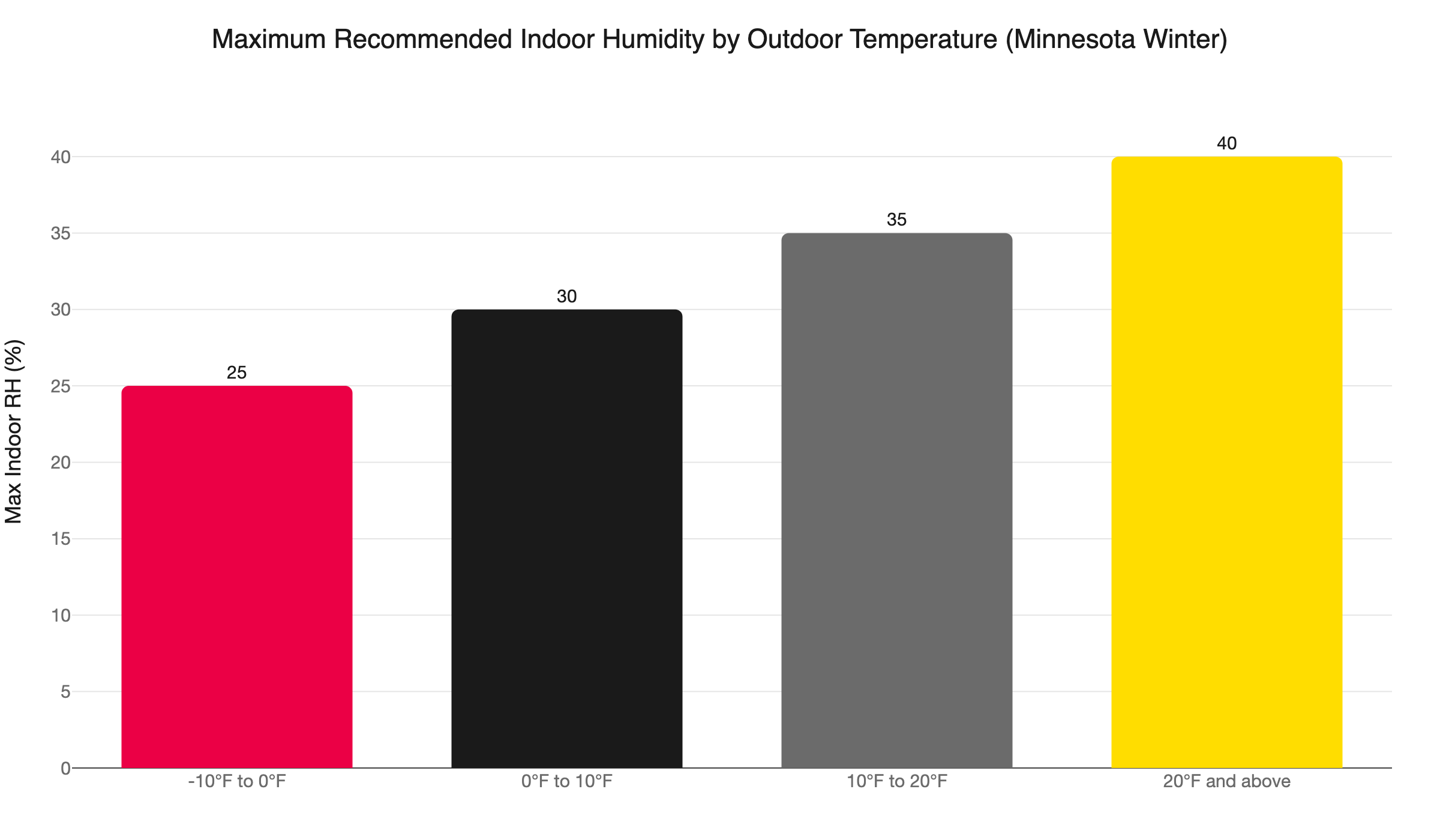
Maximum Recommended Indoor Humidity by Outdoor Temperature (Minnesota Winter)
## Why Are My Windows Sweating or Frosted in Winter?
**Short answer:** Warm, moist indoor air contacts cold glass and reaches its dew point. The moisture drops out as condensation or frost. Minnesota winters make this happen at surprisingly low humidity levels. In most cases, a whole-home humidifier running at the wrong setpoint is the root cause.
Every Twin Cities heating season, we get calls from homeowners who are convinced their windows are failing. Some replaced them last year. Some installed triple-pane units at significant cost. The windows are almost never the problem.
When outdoor temperatures drop to -25°F, [frost begins forming on windows at just 13% indoor relative humidity](https://replacementwindowsmpls.com/minnesota-winter-its-not-your-windows/). A modest humidifier running at half capacity can tip a home over that threshold on a bitter night. The problem is not the glass. The problem is the moisture level in your air relative to how cold the glass surface has become.
Understanding that distinction is the key to fixing condensation on windows in winter Minnesota without spending money on windows.
## What Actually Causes Condensation on Windows in Winter Minnesota?
**Short answer:** Warm, humid indoor air meets cold glass. When the glass surface temperature drops below the dew point of your indoor air, moisture condenses out. The colder the outdoor temperature, the lower indoor humidity needs to be to prevent it. Minnesota winters push this threshold hard for weeks at a time.
The physics are straightforward. A [single-pane window shows condensation at just 30% indoor relative humidity](https://natural-resources.canada.ca/energy-efficiency/product-energy-ratings/condensation) in moderate cold-weather conditions. A double-pane unit pushes that threshold to 60% RH. Better glass buys real headroom. But it does not protect you if the humidistat is set too high for the outdoor temperature.
Your home in January is balancing two forces. Your heating system pumps warm air through the house. The outdoor cold chills every exterior surface. Every window, exterior door frame, and uninsulated rim joist is a potential condensation point. The colder it gets outside, the colder those surfaces get, and the lower your indoor humidity needs to be.
Most Twin Cities homes run a whole-home humidifier through the heating season. That is the right call. Unhumidified Minnesota homes can drop to 10-15% RH in deep winter, drier than most deserts. The answer is not to stop humidifying. The answer is to humidify the right amount for whatever the temperature is outside.
## Is My Whole-Home Humidifier the Problem?
**Short answer:** Almost certainly, if you have one and the setting has not changed since fall. Whole-home humidifiers are often set once and left there. When January temperatures arrive, that static setting drives too much moisture into the air for the outdoor conditions. The humidistat needs to back off as temperatures drop.
This is the most common and most fixable cause of condensation on windows in winter Minnesota. A bypass or steam humidifier running at 35-40% indoor relative humidity during a -10°F cold snap is doing exactly what it is programmed to do. The programming is wrong for the temperature.
The [Center for Energy and Environment](https://www.mncee.org/managing-humidity-levels), Minnesota's primary energy efficiency nonprofit, recommends 30-40% indoor humidity in winter. It also warns explicitly that whole-home humidifiers over-humidify when setpoints are not adjusted as temperatures fall. Those two facts belong together. Forty percent is a reasonable target in October or on a mild January day above 20°F. It is not the right number when temperatures are in single digits or below zero.
Two types of humidistats handle this differently. A simple single-dial humidistat sets a fixed indoor humidity target. It runs the humidifier until the home reaches that level, regardless of what is happening outside. A humidistat with an outdoor temperature sensor reads outdoor conditions and automatically scales back moisture output as temperatures drop. If your system has the outdoor sensor option but nothing is wired in, or if the sensor has failed, you may be running a manual system without knowing it.
## What Indoor Humidity Should You Target in a Minnesota Winter?
**Short answer:** Lower than most guides say, and the correct number depends on outdoor temperature. The common recommendation of 40% is appropriate in mild conditions. When Twin Cities temperatures fall to single digits or below zero, the correct indoor humidity ceiling drops to 25-30% or even 20-25%.
Here is the outdoor-temp-keyed sliding scale from [Northern One Hour's whole-home humidifier guide](/blog/whole-home-humidifier-winter-dry-air/), consistent with standard HVAC industry guidance:
- At -10°F to 0°F outside: keep indoor humidity at 20-25% maximum.
- At 0°F to 10°F outside: 25-30% is the ceiling.
- At 10°F to 20°F outside: 30-35% maximum.
- At 20°F and above: up to 40% is acceptable.
Twin Cities January and February sit mostly in the 0-20°F range. That means the practical ceiling for much of the heating season is 25-35%, not 40%. Most humidistats are set to 35-40% in October and never adjusted again. By mid-January, those homes are significantly over-humidified for the conditions outside.
If your humidistat has a manual setpoint and no outdoor sensor, check the outdoor temperature each morning during cold snaps and dial the setting accordingly. It only takes a few days to become habit. The alternative is persistent window condensation and, eventually, moisture damage inside your walls.
Modern humidistats with integrated outdoor sensors adjust automatically. If your current control does not have this capability, it is an upgrade worth considering. Our team installs and calibrates humidity controls as part of routine service visits.
## Why Did Condensation Get Worse After I Got New Windows?
**Short answer:** Energy-efficient windows seal tighter. Before, warm indoor air leaked through gaps around the old frame, warming the glass surface slightly. With a tight new frame, the air stays inside. So does the moisture. The condensation is evidence the windows are working correctly. The humidity management is what needs to change.
This is one of the most counterintuitive outcomes in home performance, and window contractors rarely warn customers about it upfront. A homeowner spends several thousand dollars on new windows expecting the condensation to stop. Instead, it continues or shifts to a new location.
[Energy-efficient windows and modern air sealing keep interior air inside](https://replacementwindowsmpls.com/minnesota-winter-its-not-your-windows/). That is the design intent. But it also means moisture has nowhere to escape. It hits the cold glass instead. Tight new windows can actually raise effective indoor humidity in winter because the old infiltration path for moist air is gone.
ENERGY STAR estimates that [up to 40% of a home's heating, cooling, and moisture-control costs come from air leakage](https://www.energystar.gov/sites/default/files/asset/document/DOE_Air%20Sealing%20Guide%20for%20Contractos.pdf). When you reduce that leakage through better windows or deliberate air sealing, you change the moisture balance of the home. A humidistat calibrated before the renovation may now be running too aggressively for the tighter envelope.
The fix is the same sliding scale from the section above. For a recently air-sealed home, start at the lower end of each temperature range. Learn how the home responds before moving the setpoint higher.
## Does Air Circulation at the Window Make a Difference?
**Short answer:** Yes, but modestly. Moving warm room air across the glass surface raises the glass temperature by a few degrees. That can keep it above the dew point at mild outdoor temperatures. Closing blinds and drapes at night has the opposite effect. Air circulation is a useful secondary tool, not a substitute for correct humidity management.
[Closing blinds and drapes traps cold, still air against the glass](https://natural-resources.canada.ca/energy-efficiency/product-energy-ratings/condensation), which speeds up dew point contact. The air closest to the glass is not being refreshed with warmer room air. It cools faster and hits dew point sooner.
Leaving blinds open during the day lets warmer room air circulate across the glass. Running a ceiling fan on its lowest setting pulls warm air off the ceiling and moves it toward the windows. Either approach can raise the effective glass surface temperature by a few degrees.
At the margins, that difference is enough to prevent condensation on a mild night when indoor humidity is close to but not over the outdoor-temp threshold. On a -20°F January night with the humidistat set wrong, no amount of air movement will help.
Use air circulation as your last line of defense. It pairs well with a correctly set humidistat. It does not replace one.
## Over-Humidification Causes Damage Beyond Wet Windows
Wet glass is frustrating to deal with. What happens inside your walls is worse.
When indoor humidity runs too high for the outdoor temperature, moisture does not stay on the window. It works through the building envelope into exterior wall cavities, through insulation, and into roof sheathing. In Minnesota's freeze-thaw cycle, that moisture freezes in winter and thaws in spring. Repeat that over a few seasons and you get wood rot, mold on the sheathing, and framing damage that does not announce itself until a contractor opens a wall.
The window condensation you see right now is an early warning. The structural damage follows months later. Fixing moisture damage inside a wall costs far more than a humidistat adjustment ever will.
The [Minnesota Mechanical Code treats humidifier installation as mechanical work requiring a permit](/blog/whole-home-humidifier-winter-dry-air/). Cities including Plymouth, Brooklyn Park, and Apple Valley list humidifiers on their mechanical permit pages. That reflects the real stakes. An improperly controlled humidifier is not just a comfort issue. It is a building-health issue.
If you have run high indoor humidity through multiple Minnesota winters with persistent window condensation, it is worth having a technician assess your attic sheathing and exterior wall cavities. Catching moisture damage early is far less expensive than discovering it during a remodel.
## When Should You Call a Technician for Window Condensation?
**Short answer:** Call when you cannot find or read the humidistat, when condensation continues after you correct the setting, when you suspect the outdoor sensor is not working, or when only one side of the house is affected. Each of those scenarios points to something beyond a simple setpoint adjustment.
Here are the specific situations that warrant a service visit:
**The humidistat is not where you think it is.** Whole-home humidifier systems often have a humidistat on the unit in the furnace room, a wall-mounted control in a hallway, and sometimes a separate outdoor temperature sensor. That is three controls. Any one of them can be misconfigured or failed.
**The outdoor sensor may not be reading correctly.** If your system has an outdoor temperature sensor but condensation continues after you adjust for the outdoor temp, the sensor may be reading the wrong temperature. A technician can verify the reading against a known outdoor value and recalibrate or replace the sensor.
**Condensation is localized.** Condensation on only north-facing windows or in one room may point to a cold-air infiltration gap, a failed window seal, or a localized air circulation issue. Those require a physical inspection, not a humidistat adjustment.
**The humidifier has not been serviced in several years.** The media pad, water panel, and solenoid valve all need [periodic maintenance](/blog/whole-home-humidifier-cleaning-maintenance-minnesota/). A clogged or failing unit may not humidify consistently, creating swings that hit dew point unpredictably.
We are locally owned and operated in Ramsey, MN. We serve the Twin Cities and surrounding communities, and we back every appointment with our on-time promise. "Always On Time… Or You Don't Pay a Dime!(R)" applies to humidifier inspections the same as any other service call.
## A Diagnostic Checklist: Work Through This Before Calling
Work through these seven steps when you first notice condensation on windows in winter Minnesota:
**Step 1: Check the outdoor temperature.** Look it up right now. That determines the correct indoor humidity ceiling from the sliding scale above.
**Step 2: Find your humidistat and read the current setting.** It may be on the furnace unit in the furnace room, on a wall panel in a hallway, or both. Note the setpoint.
**Step 3: Compare the setting to the correct ceiling.** If it is 5°F outside and your humidistat reads 38%, you are running 8-13 percentage points too high. Lower it now.
**Step 4: Check whether an outdoor sensor is connected.** If your humidistat has a sensor port but nothing is wired in, the unit may default to a fixed setpoint. Adding a sensor is not expensive and handles future adjustments automatically.
**Step 5: Open the blinds.** Leave them open during the day. Note whether condensation clears or decreases.
**Step 6: Note which windows are affected.** Condensation on all windows points to whole-home humidity. Condensation on only one side or one room suggests a localized problem that a technician needs to assess.
**Step 7: Adjust and wait 24-48 hours.** Humidity shifts take time to work through the house. Give the corrected setting at least a full day before deciding it did not help.
If you work through all seven steps and condensation continues, it is time to call a technician.
## Fix Condensation on Windows in Winter Minnesota Before the Next Cold Snap
Sweaty or frosted windows are solvable. The fix almost never involves new windows.
Start with the humidistat sliding scale. Adjust the setpoint for the outdoor temperature. Make sure the outdoor sensor is connected and reading correctly. Keep blinds open during the day so room air circulates across the glass. For most Twin Cities homes, those three steps end the problem.
If you have a whole-home humidifier that has not been serviced in several years, a [humidifier inspection visit](/indoor-air-quality/humidifiers/) is the right first step. Our technicians check the unit, calibrate the controls, verify the outdoor sensor, and set the system up for what Minnesota winters actually deliver.
For a broader look at your home's moisture balance, our [indoor air quality services](/indoor-air-quality/) cover ventilation, air sealing assessment, and filtration, all of which interact with humidity in ways that affect both comfort and building health. If you want to go deeper on humidity control options, our [humidistat settings guide](/blog/humidistat-settings-winter-minnesota/) covers the full range of controls and upgrade paths for Minnesota homes.
We serve Minneapolis, St. Paul, Ramsey, Blaine, Maple Grove, Plymouth, Brooklyn Park, Woodbury, Bloomington, and the surrounding Twin Cities area. We are locally owned and operated, and we back every appointment with our on-time promise.
Call **(763) 260-6662** or book online to schedule a humidifier inspection or heating service visit. Do not wait for the next cold snap to find out the setting is still wrong.
---
# Heat Exchanger Replacement Cost Minnesota: Repair or Replace?
URL: https://northernonehour.com/blog/heat-exchanger-replacement-cost-vs-new-furnace-minnesota/
Published: 2026-09-05 | Category: Heating
Cracked heat exchanger confirmed in your Twin Cities furnace? Follow this four-step decision framework covering warranty, parts, cost math, and Minnesota rebates.
Key Takeaways
- Heat exchanger replacement cost in Minnesota runs $1,000-$3,000 for parts and labor. On a furnace under 10 years old with an active parts warranty, you may pay labor only - roughly $650-$2,150.
- On a furnace 12 years or older, heat exchanger repair often exceeds 50% of the cost of a new unit. At that point, replacement is usually the smarter call.
- OEM heat exchanger assemblies are frequently discontinued for furnaces 15 years or older. If the part is not available, repair is not a real option at any price.
- A qualifying 97% AFUE furnace can unlock up to $1,400 in stacked incentives: $400 from CenterPoint Energy, $400 from Xcel Energy, and $600 from the federal 25C tax credit.
- A DOE rule effective late 2028 raises the federal minimum furnace efficiency to 95% AFUE. An 80% unit you repair today will fall below that floor when it eventually needs replacing again.
- Get a written diagnosis with combustion analysis results or borescope images before authorizing any work.
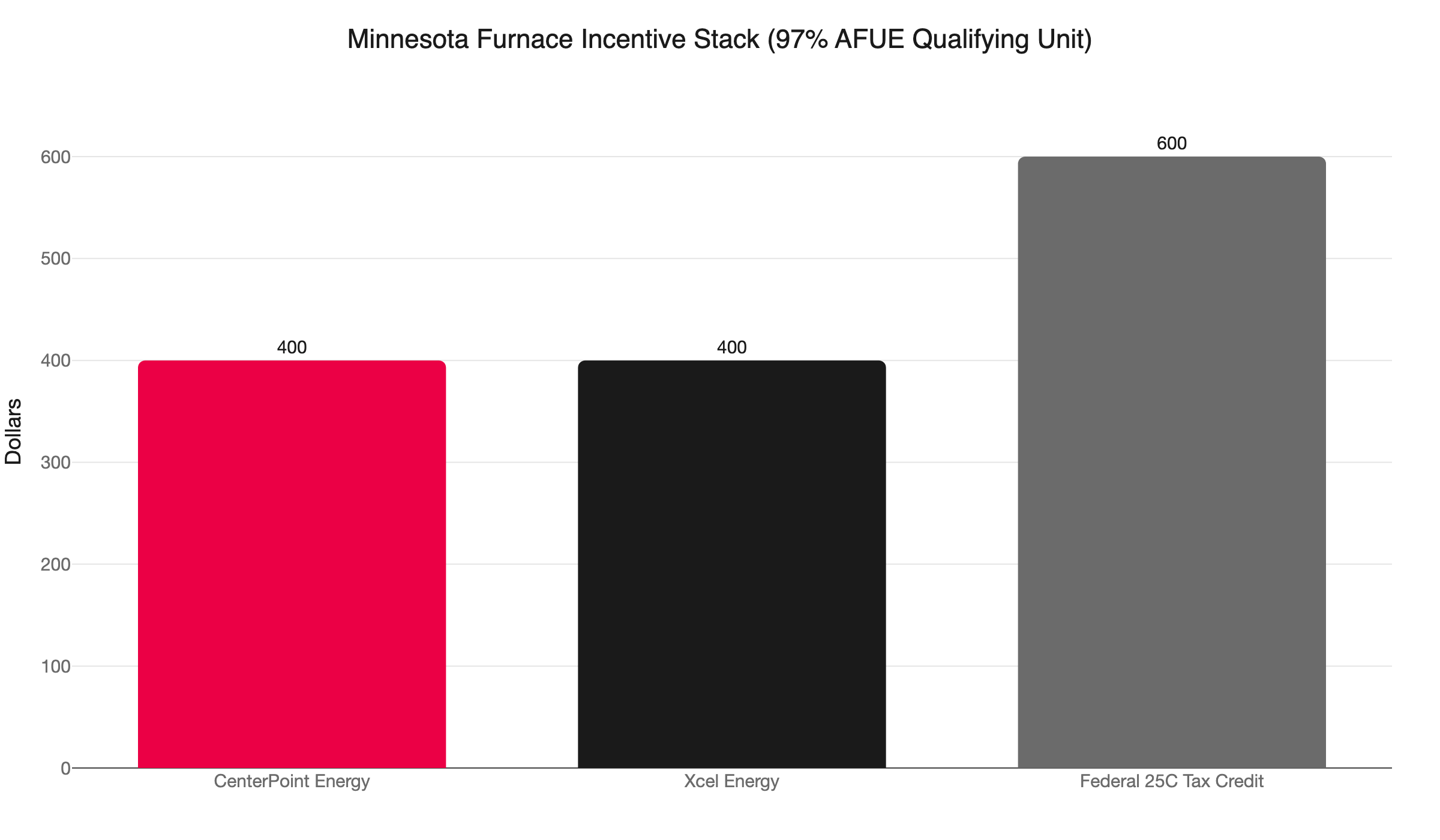
Minnesota Furnace Incentive Stack (97% AFUE Qualifying Unit)
## What Is a Heat Exchanger, and Why Does a Crack Matter?
**The short answer:** The heat exchanger is the metal chamber that separates combustion gases from the air your family breathes. A crack allows carbon monoxide into your living space. That is an evacuation-level safety event - not a "keep an eye on it" situation.
Your furnace burns gas to generate heat. The heat exchanger captures that heat and transfers it to the air moving through your ductwork. At the same time, it keeps combustion byproducts - including carbon monoxide - contained and vented outside. When the exchanger cracks, that separation fails.
CO is odorless and colorless. You cannot detect it without a working detector. Before you relight any furnace tagged for a cracked heat exchanger, verify that CO detectors are working on every level of your home. Replace any detector that is more than seven years old. If any CO alarm is sounding, get everyone out and call 911 first. That step comes before any repair-or-replace decision.
Once the immediate safety question is handled, you are left with a financial decision. This post walks you through that decision in four sequential steps. Skipping any one of them can cost you money - or lead you to a repair that was never a real option.
---
## How Much Does Heat Exchanger Replacement Cost in Minnesota?
**The short answer:** [Parts run $350-$850 and labor runs $650-$2,150, for a total of roughly $1,000-$3,000](https://homeguide.com/costs/heat-exchanger-cost) depending on your furnace brand, model, and how accessible the exchanger assembly is.
That range is wide for a reason. Heat exchangers are not universal parts. A secondary heat exchanger on a 96% AFUE condensing furnace is a completely different assembly than the primary on an older 80% unit. The labor hours also swing based on your setup. An exchanger buried in a tight mechanical closet takes considerably longer to reach than the same part in an open basement.
Here is the number that puts the whole range in context. If your repair quote lands at $2,500 and a new mid-tier furnace installed in the Twin Cities starts around $4,950, you are spending more than 50% of replacement cost to keep an old unit running. The four steps below help you determine whether that math applies to your situation - and what to do about it if it does.
---
## Should You Check the Warranty Before Calling for an Estimate?
**The short answer:** Yes, and do it first. [Heat exchanger warranties on major brands typically run 10-20 years, or lifetime on that specific component.](https://homeguide.com/costs/heat-exchanger-cost) A covered part transforms your out-of-pocket cost from $1,000-$3,000 to labor only.
Heat exchanger warranties are often the longest warranties on any component of a furnace. Manufacturers treat the exchanger as the structural core of the unit, and their warranty terms reflect that. If your furnace is seven years old and the heat exchanger carries a 20-year parts warranty, the component itself costs you nothing. You pay for the technician's time, which typically runs $650-$2,150. That is a very different conversation than the full parts-and-labor range.
**How to check your warranty:**
- Locate the data plate on your furnace. It lists the manufacture date, model number, and serial number.
- Look up your specific model on the manufacturer's website. Warranty terms vary by product line, not just brand.
- If you registered the unit at purchase, your warranty card or online account has the details on file.
- A licensed contractor can pull warranty terms from the model number during a diagnostic visit.
If the part is under warranty and the exchanger is available, repair is almost certainly the right call. If the warranty is expired or the unit was never registered, move to Step 2.
---
## What If the OEM Part Is No Longer Available?
**The short answer:** If the manufacturer has discontinued the heat exchanger assembly for your model, repair is not a viable option regardless of your warranty status or budget. You are replacing the furnace.
This is the question most homeowners - and some contractors - skip. It is also the one that most often turns "should I repair or replace?" into a decision that has already been made for you.
[Furnaces 15 years or older frequently have no OEM heat exchanger assembly available.](https://parts4heatingsystems.com/blogs/news/where-to-buy-outdated-obsolete-heating-system-parts) Manufacturers discontinue these assemblies on a rolling basis as product lines age out of production. When the OEM part is gone, your contractor is left with three paths, none of them good:
1. Source an aftermarket or pulled-used assembly. These carry no manufacturer backing and no meaningful service history.
2. Hunt for new-old-stock across multiple distributors. This can take weeks and frequently comes up empty.
3. Replace the furnace.
Ask your contractor directly: "Is the OEM heat exchanger for my model and serial number currently in stock, and what is the lead time?" A clear answer to that question narrows your options fast. If the part is unavailable or backordered by weeks, the decision has already been made. Skip the remaining math steps and move to planning a replacement.
---
## How Do You Know When a New Furnace Makes More Financial Sense?
**The short answer:** Two thresholds help. [If repair cost is at or above 50% of replacement cost on a furnace over 10 years old, replace.](https://furnace.direct/blogs/news/when-to-replace-vs-repair-furnace-cost-analysis-minnesota) Or multiply the furnace's age by the repair cost in dollars - [if that number exceeds $5,000, replacement is typically the better call.](https://genzryan.com/blog/furnace-replacement-cost-mn/)
[Furnaces under 10 years old with an active warranty are repair candidates. Furnaces 12-15 years or older lean strongly toward replacement.](https://midlandhtg.com/tipping-point-cracked-heat-exchanger/)
Let us run both tests on a concrete example. Say your furnace is 14 years old and the repair quote is $2,000.
- **50% rule:** A mid-tier replacement starts at $4,950 installed. $2,000 is roughly 40% of that - technically under the threshold.
- **Age x cost:** 14 x $2,000 = $28,000. That is well over the $5,000 threshold.
Both tests together give a clearer picture than either one alone. A 14-year-old furnace this close to the 50% rule, with an age-cost score that high, is not a repair candidate. Repair costs also rarely stop at one event. You are buying time on a system that is already at or past its reliable service life.
### What does a new furnace cost in Minnesota?
Installed prices in the Twin Cities start around $4,950 for a standard 80% AFUE unit, $6,500 for a 95-96% AFUE model, and $9,100 or more for a top-tier 97-98% AFUE furnace. Our [full furnace replacement cost guide for Twin Cities homeowners](/blog/furnace-replacement-cost-twin-cities/) breaks those ranges down by tier. The actual quote depends on your home's size, existing ductwork condition, and the model your contractor installs.
### The efficiency argument in Minnesota is stronger than the national numbers suggest
Our heating season runs six months or more. Minneapolis homeowners run their furnaces from October through April, sometimes longer. That extended run time changes the payback math on efficiency upgrades considerably compared to national averages.
Upgrading from 80% to 96%+ AFUE in Minnesota saves approximately $150-$250 per year in gas costs at average usage. In a high-usage home with an aging 80% unit, the savings can run higher. Over a decade, that is $1,500-$2,500 in recovered costs - before any rebates. Our breakdown of [furnace AFUE ratings and what they mean for Minnesota homeowners](/blog/furnace-afue-rating-80-vs-96-efficiency-explained-minnesota/) shows the full math, including how the savings grow in colder zip codes and larger homes.
---
## What Does the 2028 Efficiency Mandate Mean for Your Decision?
A piece of the decision that most homeowners do not hear about: the DOE finalized a rule that raises the minimum efficiency standard for non-weatherized residential gas furnaces to [95% AFUE, effective late 2028.](https://www.energy.gov/articles/doe-finalizes-energy-efficiency-standards-residential-furnaces-save-americans-15-billion) The current federal minimum is 80% AFUE.
Here is what that means in practice. If you repair an 80% AFUE furnace today, you still own an 80% AFUE furnace when this rule takes effect. Existing equipment is grandfathered - you are not forced to replace it. But when that furnace eventually fails or needs significant work again, a licensed contractor cannot install a new 80% unit in its place. You will be choosing a replacement under that constraint, rather than on your own terms and timeline.
There is also a resale consideration. A home with a flagged-below-minimum furnace will draw questions during an inspection and may require disclosure depending on how the transaction is structured.
The mandate does not change the repair-or-replace math by itself. But if the numbers are already pointing toward replacement, it removes any remaining reason to land on the lower-efficiency option when choosing a new unit.
---
## What Rebates Can Minnesota Homeowners Stack on a New Furnace?
**The short answer:** Up to $1,400 in stacked incentives is available right now for a qualifying 97% AFUE furnace - $400 from CenterPoint Energy, $400 from Xcel Energy, and $600 from the federal 25C tax credit.
Here is how each piece works.
**CenterPoint Energy (natural gas customers)**
CenterPoint offers up to $400 for a 95%+ AFUE furnace installation. Income-qualified households can receive up to $1,200. The rebate requires a participating contractor and a completed Trade Ally enrollment form submitted at the time of installation. The check arrives 6-10 weeks after the job is complete.
**Xcel Energy**
Xcel offers $300 for a 96% AFUE unit and $400 for a 97% AFUE unit. The same contractor participation and paperwork requirements apply as with CenterPoint. If you have both gas from CenterPoint and electric from Xcel, both rebates can be claimed on a single qualifying installation.
**Federal 25C Tax Credit**
The Inflation Reduction Act expanded the 25C credit. You can claim 30% of qualifying costs, up to $600 for a furnace, within the $1,200 annual cap shared with other home energy efficiency improvements. The unit must meet the CEE highest efficiency tier. File IRS Form 5695 with your return and include the manufacturer's Qualified Manufacturer ID (QMID) code. There is no carryover of unused credit to the following tax year.
Stack them: $400 CenterPoint + $400 Xcel + $600 federal = $1,400 off a qualifying 97% AFUE furnace.
Both utility rebates require your contractor to be enrolled as a Trade Ally. Confirm that before the installation date, not after. Our full guide to [Xcel and CenterPoint HVAC rebates for Minnesota homeowners](/blog/xcel-centerpoint-hvac-rebates-minnesota/) covers current amounts, eligibility requirements, and step-by-step claim instructions.
Financing is also worth a conversation if the upfront cost is the sticking point even after rebates. Ask our team about current options when you call.
---
## What Heat Exchanger Replacement Cost in Minnesota Looks Like Across Three Scenarios
The four steps above collapse into three common situations. Here is how each one plays out.
**Scenario A: 7-year-old furnace, active parts warranty**
The exchanger is covered under warranty. Labor runs $650-$2,150. A new furnace starts at $4,950. The repair cost lands well under 50% of replacement, and the furnace has years of productive life ahead. The age-cost formula (7 x $1,400 = $9,800) passes the $5,000 threshold on paper, but warranty coverage is the overriding factor when the part itself costs nothing. Repair is the right call.
**Scenario B: 13-year-old furnace, warranty expired, OEM part in stock**
Repair quote: $2,200. New furnace starts at $4,950. The repair is 44% of replacement - borderline on the 50% rule but technically under it. The age-cost formula (13 x $2,200 = $28,600) is far over $5,000. This is almost certainly an 80% AFUE unit. A 96% replacement saves $150-$250 per year in gas costs and positions you ahead of the 2028 mandate. Combined rebates can take $1,000-$1,400 off the new unit.
Decision: Replace. Target 96-97% AFUE to maximize rebate eligibility.
**Scenario C: 17-year-old furnace, OEM part discontinued**
No OEM exchanger is available. Aftermarket sourcing carries unknown quality and no warranty backing. The unit is at or past the end of its expected service life regardless.
Decision: Replace. This is not a close call - the repair option was never real.
---
## What Should I Demand Before Authorizing Any Work?
**The short answer:** A written diagnosis that includes combustion analysis results or borescope images showing the crack. Do not authorize repair or replacement based on a verbal diagnosis alone.
Reputable contractors document what they find. [A written diagnosis with combustion analysis or borescope images is the standard before authorizing any work.](https://midlandhtg.com/repair-vs-upgrade-cracked-heat-exchanger/) Those images confirm the crack is real, show its location and extent, and give you something concrete to reference if you want a second opinion. If a contractor pressures you to decide on the spot without documentation, that is a red flag worth taking seriously. Our post on [signs of a cracked heat exchanger in Minnesota homes](/blog/cracked-heat-exchanger-signs-minnesota/) covers what a thorough technician is actually looking for during a diagnostic visit.
One more thing on the physics. [Metal fatigue from thermal cycling is systemic, not localized.](https://midlandhtg.com/repair-vs-upgrade-cracked-heat-exchanger/) The furnace heats and cools thousands of times through a Minnesota heating season. A repair that patches one crack does not stop the metal from developing new ones elsewhere in the assembly. On an older furnace, the exchanger failure is often a symptom of an aging system, not an isolated defect.
---
## What to Do Right Now
A cracked heat exchanger diagnosis in the middle of a Minnesota winter puts you in a time-pressured spot. Here is the sequence:
1. If any CO alarm is sounding, get everyone out immediately and call 911. Do nothing else first.
2. Check CO detectors on every level. Replace any that are more than seven years old.
3. Do not relight the furnace until a qualified technician clears it.
4. Find the data plate on your furnace and note the manufacture date, model number, and serial number.
5. Look up your warranty terms online, or ask your contractor to pull them by model number during the diagnostic visit.
6. Ask the contractor directly: "Is the OEM heat exchanger for this model currently in stock?"
7. Run the 50% rule and the age-times-cost formula against your specific quote.
8. If replacement makes sense, ask about 96-97% AFUE options and confirm your contractor is a Trade Ally for both CenterPoint and Xcel before the job is scheduled.
Northern One Hour Heating & Air Conditioning is locally owned and operated in Ramsey, MN. Our team serves the Twin Cities and the surrounding metro - Minneapolis, St. Paul, Blaine, Maple Grove, Plymouth, Brooklyn Park, Woodbury, Bloomington, and beyond. We diagnose with documentation, price transparently, and show up when we say we will. "Always On Time… Or You Don't Pay a Dime!(R)"
Call us at **(763) 260-6662** or book online to schedule a diagnostic visit. We will help you work through the decision - not push you toward one.
---
# R-410A Refrigerant Phase-Out: What Minnesota Homeowners Face
URL: https://northernonehour.com/blog/r410a-phase-out-existing-ac-what-to-do-minnesota/
Published: 2026-09-05 | Category: Cooling
The R-410A phase-out is already raising repair costs across Minnesota. Learn when the keep-vs-replace math flips and what Twin Cities rebates are available now.
Key Takeaways
- The R-410A refrigerant phase-out in Minnesota follows federal EPA rules, not state rules. New equipment using R-410A was banned January 1, 2025. You are not required to replace a working system.
- R-410A service refrigerant is still legal, but a full recharge on a 3-ton system now runs $500-$1,500. In 2022, the same job cost $240-$560.
- A 2029 HFC production cut will roughly halve R-410A supply from 2024 levels, pushing repair costs higher on a defined schedule.
- The 25C federal heat pump tax credit expired December 31, 2025. It is gone for 2026 installations.
- Xcel Energy and CenterPoint rebates are still active. Stacking both programs can yield up to $3,100 in combined incentives right now.
- Systems 12 or more years old that face a refrigerant or compressor repair are strong replacement candidates. Systems under 8 years in good condition: service and wait.
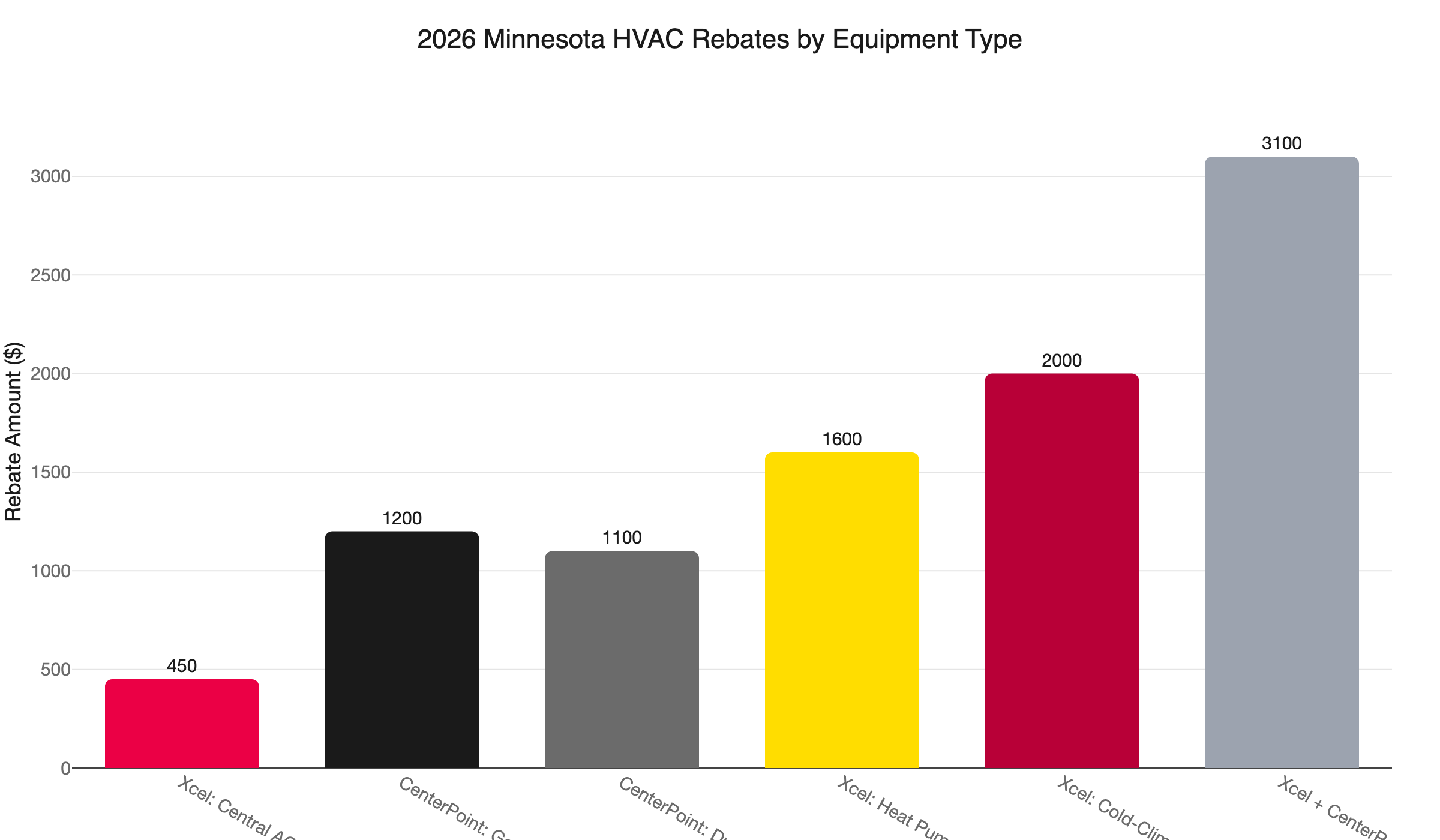
2026 Minnesota HVAC Rebates by Equipment Type
## What Is the R-410A Refrigerant Phase-Out?
**The short answer:** The EPA's AIM Act banned the manufacture and import of new residential HVAC equipment using R-410A as of January 1, 2025. Minnesota has no separate state requirements. The federal timeline is the only one that applies here.
R-410A has a global warming potential (GWP) of 2,088. [The AIM Act](https://www.epa.gov/climate-hfcs-reduction/aim-act) caps new residential HVAC equipment at a GWP of 750. R-410A is nearly three times that limit. Manufacturers shifted to alternatives like R-454B (GWP 466) and R-32 (GWP 675) for equipment built in 2025 and later.
There was also a question about whether pre-2025 R-410A inventory could still be installed. Originally, January 1, 2026 was the installation cutoff. The EPA issued a final rule effective July 27, 2026 that [removed that installation deadline for pre-2025 R-410A inventory](https://hvacprosales.com/blog/epa-removes-r410a-installation-deadline-hvac-contractors-homeowners). Contractors can still legally install pre-2025 equipment.
This is not the first refrigerant transition Twin Cities homeowners have seen. R-22 (Freon) went through the same pattern: service refrigerant grew scarce, repair costs climbed, and replacement eventually became the obvious call. The direction is the same here. The timeline is different. See how that transition played out in our overview of the [R-22 phase-out and what it meant for older AC systems in Minnesota](/blog/r22-freon-phase-out-older-ac-minnesota/).
---
## Does This Mean You Have to Replace Your R-410A System?
**No.** You are not required to replace a working R-410A system. The EPA ban covers manufacturing, not the systems already in your home. R-410A service refrigerant is still legal to purchase and use. Your contractor can still legally recharge your system if it develops a leak.
The question is not what the law requires. The question is what the economics require. And for some systems, that answer is changing.
Two forces are raising R-410A repair costs every year. First, as manufacturers shift production to A2L systems, new R-410A supply is declining. Second, [R-410A is a refrigerant blend that cannot be reclaimed by simple filtering](https://refrigeranttrack.com/guide/r410a-phase-out). It requires full reclamation, which limits how much recovered refrigerant can offset the drop in new production. Both forces point the same direction: higher service costs over time.
You are not being pushed out. But staying gets more expensive on a predictable schedule.
---
## How Much Does an R-410A Repair Cost in the Twin Cities Right Now?
**At mid-2026 prices, a full recharge on a 3-ton central AC system runs $500-$1,500 installed.** That compares to roughly $240-$560 at 2022 prices. Installed per-pound cost is now $80-$150, up significantly from what contractors paid per cylinder just a few years ago.
That cost jump matters because refrigerant leaks are rarely a one-time event. A leak repaired and recharged today may reopen within 12-24 months. Each repair cycle costs more than the last. And the cost will climb further after 2029 as supply tightens.
The cost also depends on the cause. A loose fitting on a 6-year-old system is a different conversation than a corroding evaporator coil on a 13-year-old system. If the coil itself is failing, a recharge buys months, not years. Our team will always tell you the underlying cause, not just top off the refrigerant and schedule the next call.
---
## What Does the 2029 Supply Cut Actually Mean for Your Repair Bill?
**In 2029, HFC production allowances drop to 30% of the 2011-2013 baseline, cutting R-410A supply roughly in half from 2024 levels.** [Allowances then drop to 20% in 2034 and 15% in 2036](https://refrigeranttrack.com/guide/r410a-phase-out), representing an 85% total reduction from the baseline.
Put that in plain terms: the refrigerant your current system depends on will get more expensive in 2029, then more expensive again in 2034. There is no reversal in that trajectory. If your AC is 10 years old today, it will be 13 when the first major supply cut hits. It will need refrigerant service at least once in that window, possibly twice.
This is why "do I need to replace now" is not quite the right question. The better question is: given what refrigerant will cost between now and my system's likely failure date, does the math of continued repair beat the math of a planned replacement today?
---
## Keep vs. Replace: A Framework for Twin Cities Homeowners
This is the question the national articles skip. They explain the AIM Act, reassure you that your system is legal, and leave you to figure out the repair-or-replace math alone. Here is the framework our team uses when a homeowner calls about an R-410A repair.
**Service and wait: system is under 8 years old, good condition**
A system under 8 years old that needs a refrigerant repair is not a replacement conversation yet. The system has a decade or more of useful life ahead of it. A single refrigerant event on a young system is usually a fixable problem, not a pattern. Identify the root cause, make the repair, and revisit replacement when the system is older and the math changes.
**Evaluate carefully: system is 8-12 years old**
At this age, the system is approaching the later half of its expected service life. A refrigerant leak at year 9 or 10 is a signal worth taking seriously. It does not automatically mean replace, but it does mean get a full system assessment, not just a refrigerant check. Is the evaporator coil corroding? Has the compressor shown stress symptoms? Have you had refrigerant events before? If two or more of those are true, treat the repair cost as a down payment on a machine that may not reach 2029 in serviceable shape.
**Replace: system is 12 or more years old, facing refrigerant or compressor repair**
At 12-plus years, the math almost always favors replacement. You are paying $500-$1,500 for R-410A refrigerant on equipment headed toward compressor failure. A compressor replacement on a 3-ton central AC system runs $1,950-$4,500. Stack a refrigerant recharge and a compressor event together. You may spend $2,500-$6,000 on a machine that is already 12 years old. A new system often costs the same or less at that point. It comes with a 10-year warranty. And it runs on a refrigerant that will not get more expensive every few years.
You are also doing this repair before the 2029 supply cut makes refrigerant more expensive and before the current rebate landscape changes. That timing matters.
---
## What Happened to the Federal Tax Credit?
**The 25C Energy Efficient Home Improvement Tax Credit for air-source heat pumps expired December 31, 2025.** [It applied to products purchased and installed between January 1, 2023, and December 31, 2025.](https://www.energystar.gov/about/federal_tax_credits/air_source_heat_pumps) It is not available for 2026 installations.
If you were planning to use that credit and waited, that window is closed. The credit covered up to 30% of eligible costs, with a $2,000 cap for heat pumps. That is real money that does not come back by waiting longer.
The incentive picture is not empty. Minnesota utility rebates are still active, and they are significant. But the federal layer is gone for now, which is one reason "wait and see" carries a cost that homeowners do not always account for.
---
## What Minnesota Utility Rebates Are Still Available in 2026?
**Xcel Energy and CenterPoint both have active rebate programs in 2026.** [Stacking both programs on a cold-climate heat pump installation can yield $3,100 in combined rebates](https://www.metroheating.net/minnesota-heat-pump-rebates-2026-guide-for-saving-big-on-air-conditioner-or-heat-pump-installation/) before any income-qualified add-ons.
Here is what each utility offers:
**Xcel Energy rebates (2026):**
- Central AC: $150 (13.4 SEER2) to $450 (15.2 SEER2)
- Standard air-source heat pump: up to $1,600
- Cold-climate-rated heat pump: up to $2,000
- Requires Quality Install verification by a participating contractor
Note: Xcel discontinued its standalone gas furnace rebate program January 1, 2026. Furnace rebates from Xcel now require pairing with heat pump equipment.
**CenterPoint Energy rebates (2026):**
- Dual-fuel heat pump paired with a 92%+ AFUE gas furnace: $1,100
- High-efficiency gas furnace (95%+ AFUE): up to $400 standard, up to $1,200 income-qualified
**Stacking the programs:**
Xcel's cold-climate heat pump rebate ($2,000) plus CenterPoint's dual-fuel rebate ($1,100) totals $3,100. On a dual-fuel installation where both utilities serve the home, that combination meaningfully offsets the cost of a new system. Income-qualified tiers can push the total higher still.
We cover the full details of both programs, including how to verify which one applies to your address, in our [Xcel and CenterPoint HVAC rebates guide](/blog/xcel-centerpoint-hvac-rebates-minnesota/).
---
## Why Does Cold-Climate Rating Matter Here?
**Standard heat pumps have a low-temperature lockout that can fire right when you need heat most.** Twin Cities design temperatures run -15 to -20 degrees Fahrenheit. A heat pump rated to only -5F will stop delivering meaningful heat on our coldest nights, precisely when you depend on it most.
Cold-climate-rated units are engineered to deliver useful heating capacity at -13F or below. That threshold matters in Minnesota in a way it simply does not in warmer climates. It is also the threshold that unlocks Xcel's higher $2,000 rebate tier instead of the $1,600 standard rate. Choosing a cold-climate unit is not just about January performance. For Xcel customers, it is also the financially correct choice when comparing rebate tiers.
Dual-fuel configuration is the practical sweet spot for most Minnesota homes. A cold-climate heat pump handles the bulk of the heating season efficiently. The gas furnace takes over below the switchover point, typically around 25-35 degrees. You get the efficiency of a heat pump for the majority of your heating hours and the reliability of gas on the nights that matter most. CenterPoint's $1,100 dual-fuel rebate was built specifically for this pairing. Our post on [dual-fuel heat pump and gas furnace systems in Minnesota](/blog/dual-fuel-heat-pump-gas-furnace-hybrid-minnesota/) walks through how the switchover point works and what to expect in practice.
One more factor worth raising: not every contractor is certified to install A2L refrigerant equipment. R-454B and R-32 are classified A2L, meaning mildly flammable. Proper installation requires specific handling protocols, leak detection sensors, and spark-proof components. [New A2L equipment carries a 5-10% upfront cost premium](https://hvacprosales.com/blog/epa-removes-r410a-installation-deadline-hvac-contractors-homeowners) over legacy R-410A models partly because of those added safety components. When choosing an installer, ask whether their technicians are A2L certified. Ours are. That training matters when the work involves mildly flammable refrigerant in your home.
For a broader view of what is replacing R-410A in new systems and how the transition affects equipment choices, see our overview of [what homeowners need to know about the R-454B refrigerant switch](/blog/ac-refrigerant-change-r454b-what-homeowners-need-to-know/).
---
## What to Do If Your R-410A System Needs a Repair This Season
The decision is not complicated once you know the variables. Here is how to work through it:
**Step 1: Find out your system's age.** The manufacture date is on the data plate on the outdoor condensing unit. It is usually embedded in the serial number. If you cannot read it, our technician can interpret it during a service call. Age is the single most important variable in the keep-vs-replace decision.
**Step 2: Get a full system assessment, not just a refrigerant check.** A refrigerant leak is a symptom. The cause matters as much as the cost. A corroding evaporator coil on a 13-year-old system is a different repair conversation than a loose service fitting on a 6-year-old system. Before authorizing a recharge, understand what failed and why.
**Step 3: Run the repair-vs-replace math.** Estimate the refrigerant repair cost. Factor in the realistic probability of another refrigerant event or a compressor failure within the next three to four years. Compare that combined total against a replacement with available utility rebates applied. On systems 12 years or older, that comparison closes faster than most homeowners expect.
**Step 4: If replacing, act before 2029.** The window between now and the next major R-410A supply cut is the best window for a planned replacement. Rebates are defined and available. Equipment selection is broad. Refrigerant costs on existing systems are already rising. Waiting until a system fails in the middle of a heat wave or a cold snap costs more in every direction.
---
## Ready to Know Where Your System Stands?
We are locally owned and operated in Ramsey, Minnesota. Our team serves homeowners across Minneapolis, St. Paul, Blaine, Maple Grove, Plymouth, Brooklyn Park, Woodbury, Bloomington, and the surrounding Twin Cities.
When you call us, you get a technician who knows what Minnesota winters and summers ask of your HVAC system. Not a call center, not a national dispatch queue.
Our technicians are A2L certified and familiar with both the Xcel and CenterPoint rebate programs. We can assess your current R-410A system, tell you honestly whether the repair math works in your favor, and walk you through what a replacement looks like with rebates applied. If your system is worth repairing, we will tell you that. If the numbers point toward replacement, we will show you why.
We back every visit with our on-time promise: "Always On Time… Or You Don't Pay a Dime!(R)."
Call us at **(763) 260-6662** or book online to schedule a system assessment. If your R-410A system needs attention this season, now is the right time to get the full picture.
---
# AC Refrigerant Recharge Cost Twin Cities: What to Expect
URL: https://northernonehour.com/blog/ac-refrigerant-recharge-how-it-works-cost-twin-cities/
Published: 2026-09-04 | Category: Cooling
What a refrigerant recharge costs in Minneapolis-St. Paul, which scenario you are in, and when repair versus replacement makes more financial sense in 2026.
Key Takeaways
- A simple recharge with no leak found typically runs [$210-$524 in Minneapolis, with an average around $314](https://www.angi.com/articles/home-ac-recharge-cost/mn/minneapolis).
- Low refrigerant almost always means a leak. Recharging without fixing the leak is a temporary fix, not a solution.
- R-410A refrigerant prices are rising sharply because of the [EPA AIM Act phase-down](/blog/r410a-phase-out-existing-ac-what-to-do-minnesota/). Your recharge costs more in 2026 than it did three years ago.
- R-22 systems (pre-2010) face reclaimed refrigerant at $100-$150 per pound. A full recharge can run $900-$1,800 in refrigerant and labor alone.
- Federal law requires EPA Section 608 certification to purchase or handle any refrigerant. Homeowners cannot legally recharge their own AC.
- Xcel Energy offers up to $500 for a qualifying central AC replacement. The 25C federal tax credit expired December 31, 2025.
- A refrigerant recharge call does not require a Minnesota mechanical permit. A full system replacement does.
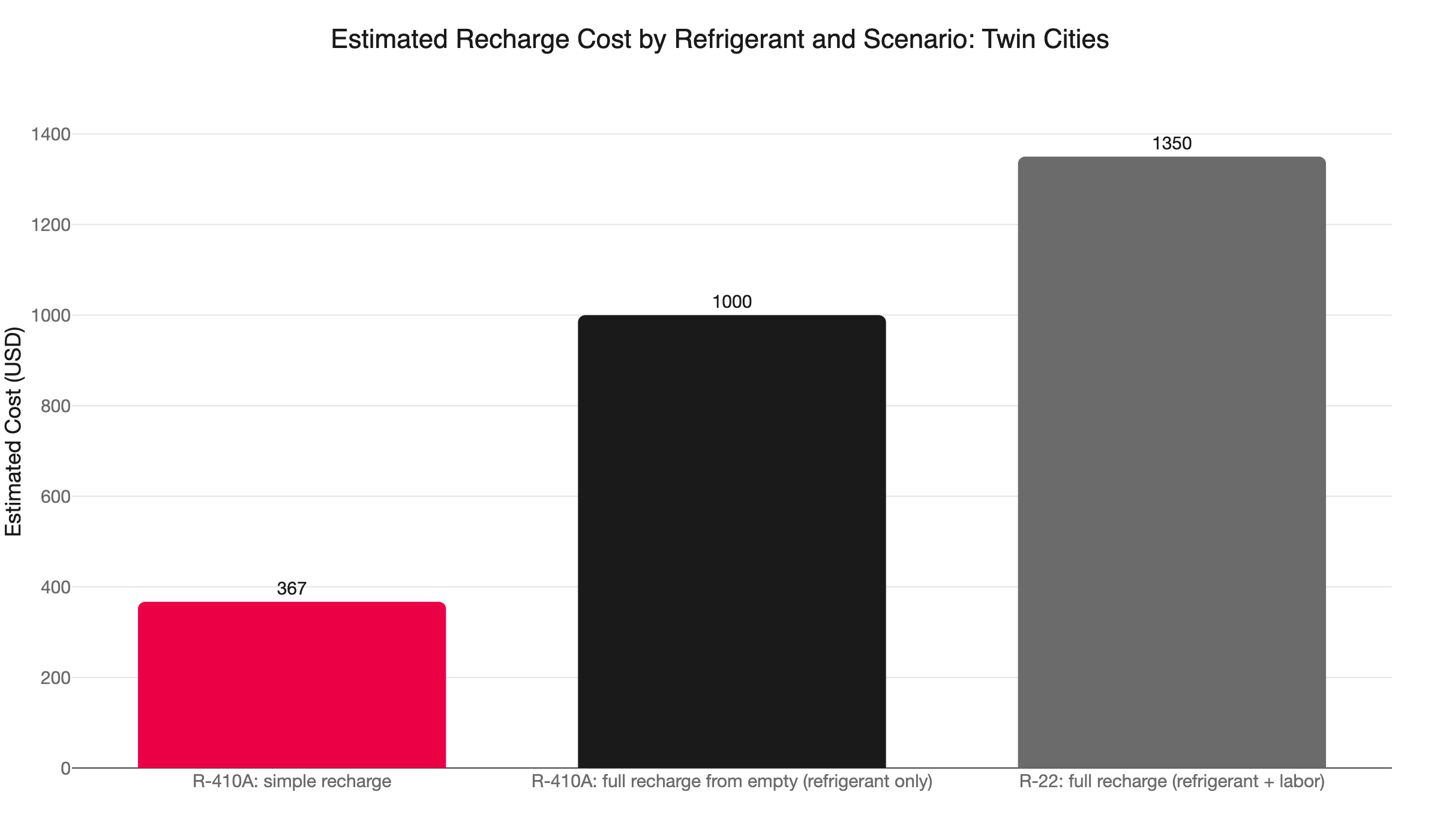
Estimated Recharge Cost by Refrigerant and Scenario: Twin Cities
## AC Refrigerant Recharge Cost in the Twin Cities: What to Expect
Low refrigerant is one of the most common summer AC calls we see across Minneapolis, St. Paul, Blaine, Maple Grove, and the rest of the Twin Cities metro. The ac refrigerant recharge cost in the Twin Cities is not a single number. It depends on why the refrigerant is low. This post walks you through the three scenarios a homeowner actually faces, what a recharge visit involves, and how rising R-410A prices and the Xcel rebate have shifted the math in 2026.
## What Does a Refrigerant Recharge Cost in the Twin Cities?
**A simple recharge with no leak found typically runs $210-$524 in Minneapolis, averaging around $314. If a leak is found and repaired, total costs reach $200-$1,600 or more, depending on where the leak is and how extensive the repair is.**
That spread is wide because "recharge" covers very different jobs. A slightly undercharged system with no leak found is a one-visit fix. A corroded evaporator coil is a different conversation entirely. The section below explains which situation you are likely facing before you commit to a service call.
## Which Scenario Are You In? Three Situations That Drive Very Different Costs
Before our technicians add a pound of refrigerant, they run a leak check. That result puts you in one of three buckets. Each bucket has a different correct answer.
**Scenario 1: No leak found, system was undercharged**
This happens occasionally on older systems or after a previous repair where the charge was not set precisely. If a thorough leak check comes back clean, a top-off is appropriate. Budget $210-$524 for a typical 2-3 ton residential system, including current R-410A service rates and labor.
**Scenario 2: Small, repairable external leak**
A Schrader valve, service valve, or line fitting is leaking. These are surface-level, external leaks. They are often fixable in the same visit. [Leak detection in Minneapolis runs $100-$330; external leak repair adds $150-$500.](https://www.homeyou.com/mn/ac-repair-minneapolis-costs) Add the recharge and expect $400-$1,000 total for this scenario.
**Scenario 3: Internal leak - evaporator coil or refrigerant line inside the air handler**
This is the expensive path. Evaporator coil repair or replacement in Minneapolis runs $800-$2,500, not counting the refrigerant recharge. Add those together and the total reaches $1,100-$3,000 or more. At that cost level, the system's age becomes a critical variable.
A 12-year-old R-410A system facing a coil repair plus climbing refrigerant prices may cost less over the next five years to replace than to repair. That is not a pitch for a new system. It is math worth running before you write the check.
## What Does a Technician Actually Do During a Recharge Visit?
**A proper recharge includes recovery of remaining refrigerant, a leak check, a deep vacuum pull to remove moisture, and a precise charge added by weight. It takes 60-90 minutes on a typical residential system. Labor runs $100-$250 per hour before refrigerant cost.**
Most price guides skip straight to the table. Here is what should actually happen on a legitimate recharge call.
**Recovery.** Any refrigerant left in the system is recovered into a certified tank before the system is opened. [Knowingly venting refrigerant while servicing equipment is prohibited under Section 608 of the Clean Air Act.](https://www.epa.gov/ods-phaseout/homeowners-and-consumers-frequently-asked-questions) A contractor who skips recovery is violating federal law and cutting corners.
**Leak detection.** The system is pressurized with nitrogen or swept with an electronic leak detector. A technician who skips this step and adds refrigerant anyway is giving you a temporary result. The leak will cause the same call again, usually by next summer.
**Evacuation.** A vacuum pump pulls the system into a deep vacuum. This removes moisture and non-condensables - air and residual nitrogen - that would degrade compressor performance and shorten equipment life.
**Charge by weight.** Refrigerant is weighed in to match the manufacturer's nameplate specification. Overcharging damages the compressor and wastes expensive refrigerant. The goal is the spec, nothing more.
**Verification.** Suction and discharge pressures are checked. Superheat and subcooling are measured to confirm the charge is correct. A good technician shows you those readings before leaving.
If a quote does not include a leak check and evacuation, ask why. Skipping those steps is how a one-time recharge turns into an annual expense.
## Why Is R-410A Getting More Expensive in Minnesota Right Now?
**The EPA's AIM Act phased out new R-410A equipment as of January 1, 2026. Service refrigerant for existing systems now comes from reclaimed supply only, and reclaimed costs significantly more than virgin refrigerant did.**
[Wholesale R-410A cost $4-$8 per pound five years ago. It now runs $12-$25 per pound at the contractor level.](https://homeguide.com/costs/r-410a-refrigerant-cost-per-pound) At the retail service rate, you are paying $50-$150 per pound depending on the market and the contractor.
For a 3-ton system holding 6-12 lbs, a full recharge from empty - worst case - runs $500-$1,500 in refrigerant alone, before labor. That is higher than most national guides reflect, and it is higher than what local contractors quoted three years ago.
[The AIM Act also requires that reclaimed HFC refrigerant sold for service use contain no more than 15% virgin HFCs by weight as of January 1, 2026.](https://www.epa.gov/hfcs/frequent-questions-phasedown-hydrofluorocarbons) That purity standard tightens supply and raises cost at the same time.
For Twin Cities homeowners, this has a specific implication. Our cooling season runs roughly June through August and brings high humidity. A system that cannot hold charge will underperform exactly when Minnesota heat and humidity peak. And the cost of recharging that system will be higher next summer than it is today.
## Is a Recharge Worth It on an R-22 System?
**Only if the refrigerant needed is small. R-22 runs $100-$150 per pound in reclaimed supply. A full recharge on a pre-2010 system can cost $900-$1,800 in refrigerant and labor. On a 15-year-old system, that math rarely works in the homeowner's favor.**
[New R-22 production was banned by the EPA as of January 1, 2020.](https://www.epa.gov/ods-phaseout/homeowners-and-consumers-frequently-asked-questions) Only reclaimed R-22 remains on the market. The supply shrinks each year as old systems are retired and that refrigerant is recovered. The EPA does not require you to replace an existing R-22 system. You can keep servicing it as long as reclaimed refrigerant is available.
Here is what a pre-2010 system needing a full recharge typically faces:
- Refrigerant: $600-$1,200+ (4-8 lbs at $100-$150 per lb)
- Labor, leak check, and recovery: $300-$600
- Total: $900-$1,800 or more, before any leak repair work
If that system holds charge for two more summers, you break even on the service call. If it leaks again by next July, you paid for borrowed time. We cover the R-22 decision in more detail in our post on [R-22 phase-out and what it means for older Minnesota AC systems](/blog/r22-freon-phase-out-older-ac-minnesota/).
## Can You Buy Refrigerant and Recharge Your Own AC?
**No. Federal law requires EPA Section 608 certification to purchase or handle refrigerant. This applies to R-22, R-410A, and all HFC substitutes. Homeowners cannot legally buy or charge refrigerant themselves.**
This is not a gray area. [The EPA requires Section 608 certification to purchase and handle refrigerants used in stationary refrigeration and air conditioning equipment.](https://www.epa.gov/ods-phaseout/homeowners-and-consumers-frequently-asked-questions) When you hire a technician, ask if they hold that certification. Every legitimate HVAC contractor has it.
One specific warning: products marketed as "R-22a" or "22a" refrigerant are typically propane-based substitutes. They are not approved for use in existing AC systems. They are a fire hazard. [The EPA has taken enforcement actions against companies selling these products.](https://www.epa.gov/section608/stationary-refrigeration-resources-homeowners) If a contractor or online seller offers you a cheap "drop-in replacement" for R-22 or R-410A, decline and find someone else.
## Does the EPA Require You to Fix a Leak Before Recharging?
**For most residential systems, no. The formal EPA leak-repair mandate covers appliances with a full charge of 15 lbs or more. A standard home central AC holds 6-12 lbs. Most residential systems fall below that threshold.**
[The EPA is explicit: the commercial leak-repair requirement does not apply to "appliances used in the residential and light commercial air conditioning and heat pumps subsector."](https://www.epa.gov/hfcs/frequent-questions-phasedown-hydrofluorocarbons) No federal rule requires a technician to repair a leak in your home AC before recharging it.
But the absence of a legal requirement does not make skipping the repair smart. The EPA's own guidance says it plainly: "Repairing leaks will keep your system operating at its best, while reducing refrigerant emissions and energy use." A system that leaks today will lose that charge again. You will face another service call, another round of refrigerant at current prices, and the leak will typically be worse the second time.
We will not top off a leaking system without telling you the leak is there and what it will take to fix it. That is the only honest way to handle the job.
## How Does the Xcel Energy Rebate Change the Replacement Math?
**Xcel Energy offers up to $500 for a qualifying central AC replacement (16+ SEER2) and up to $1,500 for a qualifying cold-climate heat pump. The Section 25C federal tax credit expired December 31, 2025. The Xcel rebate is now the primary financial incentive for Twin Cities homeowners replacing equipment in 2026.**
If you are weighing a major repair - coil replacement plus recharge, or a third recharge in as many summers - run the replacement numbers before committing.
[A qualifying central AC replacement earns up to $500 from Xcel Energy, with an additional $100 rebate for a qualifying smart thermostat.](https://www.xcelenergy.com/staticfiles/xe-responsive/Working%20With%20Us/24-1-201%20MN%20Res%20Rebate%20Summary%20Information%20Sheet.pdf) These require installation by a participating contractor and a Trade Ally form filed at installation.
A mid-tier central AC replacement in the Twin Cities runs $7,500-$10,400 installed. After the Xcel rebate, net cost comes to roughly $7,000-$9,900. Compare that to a $1,500-$2,500 coil repair plus ongoing refrigerant costs on an aging system. The gap closes faster than most homeowners expect.
We have a full cost breakdown in our [AC replacement cost guide for Minnesota](/blog/ac-replacement-cost-minnesota/).
One procedural note: full system replacement in Minnesota requires a local mechanical permit. A refrigerant recharge service call does not. Any contractor who installs a new system without pulling a permit is a serious red flag.
## Warning Signs That Mean the Problem Goes Beyond a Recharge
A recharge adds refrigerant. It does not fix whatever caused the level to drop. If you are seeing any of the following signs, call us for a diagnostic before authorizing refrigerant cost.
- **Ice on the [refrigerant line](/blog/suction-line-sweating-refrigerant-pipe-insulation-twin-cities/) or evaporator coil.** Low refrigerant can cause ice buildup, but so can a dirty coil or restricted airflow. A dirty coil compounds a low-charge problem. See our post on [dirty evaporator coil symptoms in Twin Cities homes](/blog/dirty-evaporator-coil-ac-symptoms-twin-cities/).
- **Hissing or bubbling sounds near the refrigerant lines or indoor unit.** These often indicate refrigerant escaping under pressure.
- **Weak cooling that returns within weeks of a recharge.** If the system cooled normally after a top-off and now does not, the refrigerant leaked out. There is an active leak.
- **Oil staining around fittings, coil connections, or the outdoor unit.** Refrigerant and compressor oil travel together. Oil marks a leak point.
- **Warm air blowing despite the system running continuously.** Low refrigerant is one cause. Compressor failure is another. Refrigerant will not fix a compressor problem.
- **Rising electricity bills with no change in usage pattern.** A low-charge system works harder for the same cooling result. Efficiency drops sharply when refrigerant levels are off.
If these signs are stacking up, the underlying problem almost certainly goes past a simple recharge. Our post on [AC refrigerant leak signs in Minnesota](/blog/ac-refrigerant-leak-signs-minnesota/) walks through the full diagnostic picture and what each sign typically means.
## How Northern One Hour Handles Refrigerant Service
We are locally owned and operated in Ramsey, serving Minneapolis, St. Paul, Blaine, Maple Grove, Plymouth, Brooklyn Park, and the broader Twin Cities metro. Refrigerant calls are part of every cooling season, and we handle each one the same way: diagnostic first, written quote before any work begins, no surprises.
Our technicians hold Section 608 certification. We use reclaimed-certified refrigerant and do not carry propane substitutes or uncertified drop-in products. If a leak check finds a problem, we tell you, quote the repair, and let you decide. We do not top off a leaking system and call the job done.
If a service call turns into a replacement conversation, we walk you through the Xcel rebate paperwork and pull the required mechanical permit. A written quote with options comes before any work begins. Financing is available on replacement installations. Ask about current terms when you call.
Schedule service at (763) 260-6662 or book online. "Always On Time… Or You Don't Pay a Dime!(R)" - that is our promise on every call, refrigerant work included.
---
# Animals Nesting in Furnace Flue Vent: What to Do Before Fall
URL: https://northernonehour.com/blog/animals-nesting-furnace-flue-vent-pipe-minnesota/
Published: 2026-09-04 | Category: Heating
Squirrels, wasps, and birds move into idle furnace flue vents over summer. Know the signs, the federal law, and safe removal steps for Twin Cities homeowners.
Key Takeaways
- High-efficiency furnace PVC exhaust pipes sit completely idle from May through September, making them prime nesting spots for wasps, birds, and squirrels.
- The highest-risk window is early fall: squirrel second nesting season (August-September) and wasp colony peak (August-September) overlap directly with first furnace startup.
- A blocked vent triggers a pressure-switch shutdown at best. If that safety switch fails, combustion gases, including carbon monoxide, can backdraft into your home.
- Removing an active bird nest with eggs or chicks is illegal under the Migratory Bird Treaty Act. House sparrows and European starlings are the exception: they are not protected and can be removed without a permit.
- DIY wire-mesh screens freeze solid on condensing furnace exhausts in Minnesota winters. Use only manufacturer-approved, UL-listed termination guards.
- Clearance is a two-trade job: HVAC tech confirms the blockage first, wildlife professional removes any active nest second, HVAC tech returns for cap installation and system test.
- A fall furnace tune-up with flue inspection is the easiest way to catch a blockage before it leaves you without heat.
A furnace that has sat idle all summer is exactly what animals nesting in furnace flue vents are looking for. The white PVC exhaust pipe on the side of your house has had no airflow, no heat, and no human attention since April. In the Twin Cities, early September means squirrels are in their second nesting season, wasp colonies are at peak size, and the furnace is about to run for the first time in months. That combination has consequences.
## Why Do Animals Nest in Furnace Flue Vents?
**Short answer:** A high-efficiency furnace's PVC exhaust pipe is completely dormant from spring through early fall. No airflow, no heat, no predators, and a dry plastic tube that holds no traffic. To wasps, birds, and squirrels, that combination checks every box for a protected nesting site, just one that will cause a serious problem when the heat kicks on in October.
Your furnace exhausts through one white or gray PVC pipe in the side wall or rim joist, usually near the foundation. A second pipe pulls in combustion air. From the day you switched off the heat in April through the first cool night that triggers the furnace in late September, nothing moves through either pipe.
To a paper wasp colony scouting build sites in May, that pipe is nearly ideal: dry, shaded, protected from wind and rain, and completely ignored by the household above it. [Research confirms that high-efficiency furnaces attract wasps precisely because they are completely idle in summer](https://lcsheatingandcooling.com/blog/why-wasps-birds-nesting-furnace-exhaust): no heat, no airflow, no threat. Colony size peaks in August and September, which is exactly when you are not thinking about your furnace.
Birds look for cavities in early spring. Squirrels need warm, sheltered den sites twice a year. An unprotected pipe termination is an open door for all of them.
## What Animals Are Most Common in Twin Cities Furnace Vents?
**Short answer:** Wasps, house sparrows, European starlings, and gray squirrels are the most frequent offenders in the Twin Cities. Each follows a different nesting calendar, which means different threat windows and, critically, different removal rules.
Here is the Minnesota seasonal clock for furnace vent nesters:
**Paper wasps** begin scouting and building in May. Colony size grows through the summer and peaks in August-September. A colony that started in June can be a substantial nest by September, filling the first several inches of the pipe with papery cells packed tightly enough to block airflow.
**House sparrows and European starlings** nest actively from April through June. Both are aggressive cavity nesters. Starlings especially will pack nesting material deep into a pipe in a matter of days. Both species tend to return to the same site in subsequent years, so a cleared vent without a proper cap is at high risk again the following spring.
**Gray squirrels** have two nesting seasons per year: March through April, and August through September. The second nesting window overlaps directly with fall furnace startup, making it the most dangerous combination on this list. [Squirrels can chew through plastic and aluminum vent covers](https://www.crittercontrol.com/wildlife/squirrels/squirrel-in-vent/), so a standard plastic cap is not a reliable barrier against them.
Knowing which animal you are dealing with shapes every decision that follows, including the legal one.
## The October Surprise: What Happens When a Blocked Vent Meets First Heat Call
This is where the problem stops being inconvenient and starts being dangerous.
When your furnace fires up and the exhaust path is blocked, the pressure switch should detect the restriction and shut the system down. You get no heat, a blinking error code, and a service call. That is the best-case outcome. Our post on [furnace pressure switch failures](/blog/furnace-pressure-switch-failure-symptoms-minnesota/) explains what those error signals look like and how to read them.
The worse case: the pressure switch is stuck or failing. The furnace keeps running. Combustion gases have nowhere to go but back into the heat exchanger. From there, they can enter your living space.
[The EPA identifies blocked flues and chimneys as a direct cause of accidental carbon monoxide poisoning](https://www.epa.gov/indoor-air-quality-iaq/protect-your-family-and-yourself-carbon-monoxide-poisoning). The agency specifically recommends inspecting flues and chimneys at the start of every heating season. Carbon monoxide is colorless and odorless. You will not detect it before it affects you.
Modern furnaces include pressure-switch safety shutoffs. But those switches can fail or stick. That means CO backdraft is a realistic failure mode, not just a theoretical worst case. A blocked vent plus a stuck safety switch is the combination you want to catch during an inspection, not on a January night when temperatures are dropping and the house is full. If you have not checked your CO detectors recently, our post on [carbon monoxide safety during furnace season](/blog/carbon-monoxide-safety-furnace-season/) covers placement and testing.
Do not override a furnace lockout and keep forcing restarts. When the furnace trips and locks out, it is telling you something is wrong. Shut it off and call.
## How Can You Tell If Something Has Nested in Your Furnace Flue?
**Short answer:** Walk outside and inspect the vent termination before first startup. Look for nesting material at the pipe opening, chew marks on the cap, wasp activity around the pipe, or a cracked or dislodged cover. Inside, a furnace that attempts to start and immediately shuts off is a classic pressure-switch trip and often the first sign of a blocked vent.
At the exterior termination, here is what to look for:
- **Nesting material at the opening.** Grass, twigs, leaves, feathers, or mud at or just inside the pipe rim.
- **Wasp activity.** Wasps flying in and out of the pipe during late summer is unambiguous confirmation.
- **Squirrel gnaw marks.** A cracked or chewed plastic cap with rough edges along the rim indicates squirrel access.
- **Packed depth.** A bird or wasp nest can extend several inches into the pipe. Shine a flashlight into the opening to see depth that is not visible at a glance from outside.
- **A damaged or missing cap.** A cap blown off or partially dislodged over the winter leaves the pipe fully open for whatever comes along first in spring.
Inside the house, watch for these symptoms on first startup of the season:
- The furnace ignites, runs briefly, then shuts off without completing a full heating cycle.
- A blinking error code on the control board. Your owner's manual decodes the pattern, or call us and read us the sequence.
- Multiple failed start attempts followed by a hard lockout that requires a manual reset.
- An [unusual smell near the furnace](/blog/furnace-burning-smell-first-use-fall-minnesota/) or at the supply registers on first fire-up.
If you see any of these signs, shut the furnace off and go back outside to inspect the vent termination before calling for service.
## The Legal Wrinkle: Federal Bird Protection Law
This is the part that surprises most homeowners, and it is the detail that no general HVAC guide covers.
If a bird has built an active nest in your furnace vent, and that nest contains eggs or chicks that still depend on it for survival, you cannot legally remove it yourself. The [Migratory Bird Treaty Act prohibits destroying an active nest with eggs or dependent young](https://www.fws.gov/story/bird-nests). The law covers most native North American bird species. Penalties can be significant, and not knowing the law is not a legal defense.
There is an important exception that applies specifically to the Twin Cities: [house sparrows and European starlings are not protected under the MBTA](https://www.fws.gov/story/bird-nests). Both are non-native, introduced species that the federal government excludes from protection. If you can positively identify the nest as belonging to one of those two species, removal requires no federal permit.
The problem is species identification. Most homeowners cannot reliably tell a house sparrow nest from a protected species nest by peering into the end of a PVC pipe with a flashlight. The safer path is to call a licensed wildlife professional who makes that determination correctly, with the training and permits to handle protected species legally if needed.
The good news for September inspections: bird nesting season for most species ends by late June. An empty, inactive nest from any species can be removed without a permit. If your inspection finds an old, dry, unoccupied nest, it can come out immediately. The MBTA protection applies only to active nests with eggs or live chicks.
Wasps are not covered by any wildlife protection law. A pest control company can address an active wasp colony without permits. Squirrels fall under Minnesota wildlife regulations. A licensed wildlife control operator knows the rules for your county and handles removal correctly.
In the Twin Cities, companies like [Varment Guard (formerly BEAST Wildlife Solutions in Eagan)](https://www.beastwildlife.com/remove-birds-in-vents-or-home-eagan-mn) specifically list furnace vents and dryer vents as primary call types for bird and squirrel removal. They are the right second call, after your HVAC technician has confirmed the blockage and shut down the system.
## The Right Clearance Sequence: Two Trades, One Job
Clearance is a two-trade job. The temptation is to reach into the pipe yourself, pull the material out, and call it done. That skips the vent inspection step, and if a protected bird nest is involved, it puts you in federal violation.
Here is the correct sequence:
**Step 1: HVAC tech first.** Before anyone touches the vent, a heating technician confirms the blockage, shuts down the furnace safely, and inspects the full condition of the vent pipe. Animal activity can crack, compress, or chew through PVC vent sections. A compromised vent pipe cannot safely carry combustion gases out of your home, even after the nest or colony is removed. The tech documents what needs to be repaired or replaced before the furnace runs again. This step also protects the wildlife professional: knowing the exact nature and location of the blockage before removal avoids disturbing anything unnecessarily.
**Step 2: Wildlife professional second.** If the nest is active, if species identification is uncertain, or if squirrels are involved, a licensed wildlife removal company handles extraction. In the Twin Cities, that means a pest control company for wasp colonies and a licensed wildlife control operator for birds and squirrels.
**Step 3: HVAC tech returns.** After clearance, the HVAC tech comes back to install a manufacturer-approved termination guard, inspect the full vent run for cracks and animal damage, and run a complete system test before the heating season starts. This includes verifying the pressure switch, checking combustion, and confirming CO readings. This return visit pairs naturally with a [furnace tune-up](/heating/heating-equipment/furnaces/furnace-tune-ups/) that covers the full system, so the furnace goes into winter fully inspected.
## Why DIY Wire-Mesh Screens Fail in a Minnesota Winter
**Short answer:** A tight wire-mesh screen traps condensation on the PVC exhaust of a high-efficiency furnace. At sub-zero temperatures, that condensation freezes into an ice plug within hours and fully blocks the vent. In Minnesota, this is near-certain failure, not a remote risk. DIY screens also frequently void the manufacturer warranty.
After clearing a nest, the instinct is to staple hardware cloth or window screen over the pipe opening. For a Minnesota homeowner with a high-efficiency condensing furnace, that instinct leads to a bigger problem.
A condensing furnace produces water vapor during combustion. That vapor condenses inside the PVC pipe and exits at the termination. In a mild climate, this is a manageable side effect. At -15 degrees in January, moisture hitting tight mesh screen freezes almost immediately. Within a few hours, the mesh can form a solid ice plug that fully blocks the vent. The result is identical to an animal blockage: pressure-switch trip, furnace lockout, no heat on the coldest night of the year.
[Manufacturer guidelines require approved termination guards with wide-angled slats, not tight mesh](https://lcsheatingandcooling.com/blog/why-wasps-birds-nesting-furnace-exhaust). Wide slats allow vapor to escape and moisture to drain while still blocking animals. A hardware-store screen does neither correctly.
Code matters here as well. [Minnesota Mechanical Code requires PVC exhaust terminations to sit a minimum of 12 inches above grade, 12 inches from openings, and to use an approved, UL-listed cap](https://regulations.justia.com/states/minnesota/agency-151/chapter-1346/minnesota-mechanical-code/part-1346-0506). Manufacturer installation instructions control when they are more restrictive than code. A DIY screen that is not UL-listed for this application does not meet that standard and can void the equipment warranty.
For squirrel-prone areas, choose stainless steel. Squirrels chew through plastic and aluminum. Stainless steel resists gnawing reliably.
## How to Prevent Animals From Nesting in Your Furnace Flue Vent
**Short answer:** The key is an approved termination guard installed before the first nest is built, combined with a late-April inspection each year before nesting season opens. A fall furnace tune-up with flue check handles the other end of the calendar. Together, those two visits close the window.
Here is what effective prevention looks like in practice:
**Install a manufacturer-approved termination guard.** Every furnace brand specifies which guards are acceptable for its equipment. An HVAC technician installs the correct guard for your pipe diameter and model. The guard listed in the installation manual is the right one, not whatever fits at the hardware store.
**Choose stainless steel in squirrel-active areas.** If you see regular squirrel activity in your yard, especially in northern Twin Cities communities like Brooklyn Park, Blaine, Maple Grove, and Ramsey, upgrade to stainless steel. The cost difference is modest. The difference in durability against gnawing is significant.
**Inspect in late April.** The window before nesting season peaks is the ideal time to verify that your termination guard survived winter intact. A guard cracked by ice expansion or partially dislodged by frost heave is an open invitation to whatever species is looking in May.
**Include the vent in your annual tune-up.** Our post on [fall heating maintenance essentials for Twin Cities homeowners](/blog/twin-cities-homeowners-guide-heating-system-tune-up-essentials-for-a-comfortable-fall/) covers what a complete pre-season inspection looks like. Flue condition and termination cap are part of every tune-up visit we do.
## What to Do Right Now if You Suspect Animals Nesting in Your Furnace Flue Vent
If the furnace has not run since April and you have not inspected the vent this fall, treat it as unverified. That is the correct starting position for most Twin Cities homeowners in September.
**Short answer:** Inspect the exterior vent termination with a flashlight before running the furnace this fall. If you find any blockage, call an HVAC technician before anything else. Do not force-restart the furnace until the vent is confirmed clear and the pressure switch is tested.
Here is the checklist:
1. **Walk outside and look at the vent termination.** Bring a flashlight. Look for nesting material, gnaw marks, wasp activity, or a cracked or missing cap.
2. **Do not force-start the furnace if you see any sign of blockage.** Shut the system off at the thermostat and call for service.
3. **Call a licensed HVAC company first, before pest control.** The HVAC tech confirms the blockage, makes the system safe, and inspects the vent pipe condition before anything is disturbed.
4. **If a wildlife professional is needed**, coordinate the call after the HVAC tech's visit. In the Twin Cities, licensed wildlife removal companies that list furnace vents as a specialty are the right resource for active bird or squirrel nests.
5. **After clearance, have the HVAC tech return** for cap installation and a full system test before the heating season starts.
We are locally owned and operated in Ramsey, and our team serves homeowners throughout Minneapolis, St. Paul, Blaine, Maple Grove, Plymouth, Brooklyn Park, Woodbury, Bloomington, and the surrounding metro. "Always On Time… Or You Don't Pay a Dime!(R)" is our operational standard, not just a tagline, and that applies from your first call through the final system test after clearance.
If the furnace is past 15 years or the vent pipe has sustained animal damage, this is also the right moment for a replacement assessment alongside the inspection. A cracked or chewed vent run is a CO hazard every time the system fires, regardless of whether the nest is cleared.
Call us at **(763) 260-6662** or [book your fall furnace inspection online](/heating/heating-equipment/furnaces/furnace-tune-ups/). We check the vent termination, inspect the flue run, and get your system tested before Minnesota winter arrives.
---
# Heat Pump Reversing Valve Failure Symptoms Explained
URL: https://northernonehour.com/blog/heat-pump-reversing-valve-failure-symptoms-minnesota/
Published: 2026-09-04 | Category: HVAC
Learn to spot heat pump reversing valve failure symptoms, understand the solenoid vs. valve body diagnostic split, and decide when to repair or replace.
Key Takeaways
- The reversing valve is the single component that switches a heat pump between heating and cooling. When it fails, the system locks into one mode regardless of what the thermostat says.
- Two failure types, two very different repair costs: a dead solenoid coil runs $100-350 installed, while a failed valve body costs $450-$1,500 after refrigerant recovery and recharge.
- Minnesota winters force more defrost cycles than mild climates do, putting extra mechanical stress on the valve's internal slide over years of service. That makes this failure more common here than national guides suggest.
- A useful homeowner observation: if both refrigerant lines at the outdoor unit feel the same temperature while the system runs, that is a signal worth relaying to your technician.
- Systems older than 12 years, or those running R-22 refrigerant, are often better replaced than repaired. Minnesota utility rebates can offset $3,000-$5,000 of a qualifying replacement.
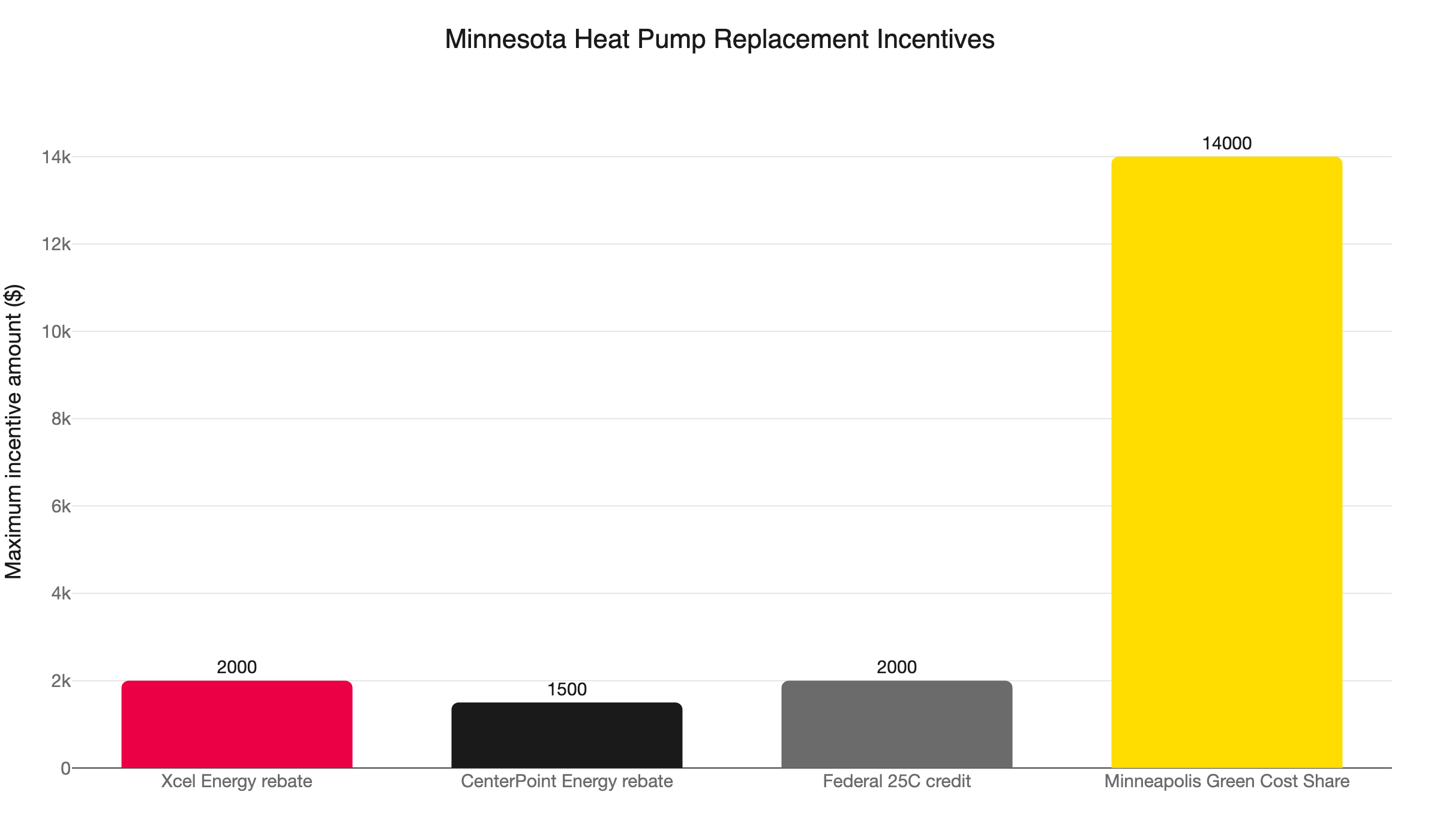
Minnesota Heat Pump Replacement Incentives
## What Is a Reversing Valve, and What Does It Do?
**Short answer:** It is a four-port refrigerant valve with an internal slide controlled by a solenoid coil. The slide reroutes refrigerant between the indoor and outdoor coils, letting one machine both heat and cool your home. When it stops shifting, the machine stops switching.
A heat pump does not generate heat the way a gas furnace does. It moves heat: pulling warmth from outdoor air in winter, and pushing heat out of your home in summer. That reversal requires a switching mechanism, and the reversing valve is it.
[The valve has four refrigerant ports and an internal slide.](https://www.hvacrschool.com/how-heat-pump-reversing-valve-works/) Energizing the solenoid coil shifts the slide, rerouting refrigerant flow so the indoor coil functions as either a heat exchanger or a condenser depending on the season.
One detail that matters for diagnosis: [manufacturers choose which operating mode is energized and which is the default when power is absent.](https://www.achrnews.com/articles/165255-troubleshooting-tips-for-heat-pump-reversing-valves) A system wired to energize in cooling mode defaults to heating when the solenoid loses power. A system wired the other way defaults to cooling. That design choice dictates which failure mode appears. A knowledgeable technician will ask about your system's wiring before interpreting the symptoms.
The reversing valve also handles the defrost cycle. [The control board briefly shifts the valve back to cooling mode so hot discharge gas flows through the outdoor coil and melts accumulated ice.](https://www.hvacrschool.com/how-heat-pump-reversing-valve-works/) In a Minnesota winter, that sequence can run multiple times per night. Over years of service, those cycles accumulate into real mechanical wear on the valve's internal slide.
---
## What Are the Heat Pump Reversing Valve Failure Symptoms?
**Short answer:** The primary signs are wrong-temperature air for the selected mode, a hissing or whooshing sound at the outdoor unit, and a system that runs but never reaches setpoint. Two or three of these together point directly at this component.
When this valve fails, it rarely announces itself dramatically. The symptoms tend to be operational: the system runs, the compressor hums, but comfort is wrong in a specific and persistent way.
**Blowing the wrong temperature air**
This is the most common presentation. [Your heat pump blows warm air in cooling mode, or cold air in heating mode, and changing the thermostat setting has no effect.](https://www.hvac.com/expert-advice/heat-pump-reversing-valve-stuck/) The compressor is running and refrigerant is moving, but the valve is not routing it to the right circuit. The symptom holds steady across multiple thermostat adjustments.
**A hissing or whooshing sound at the outdoor unit**
[A hissing or whooshing at the outdoor unit while the compressor runs suggests the valve slide is not fully seating.](https://lovingoodheating.com/blog/symptoms-of-a-faulty-heat-pump-reversing-valve) Refrigerant is leaking past the valve internally rather than following its intended path. This is distinct from the brief hiss you might hear when the system switches modes normally at startup or shutdown.
**Short cycling without reaching setpoint**
[A partially stuck valve allows refrigerant to bleed between the high and low sides simultaneously, reducing system capacity and causing short cycling.](https://hvacknowitall.com/blog/heat-pump-reversing-valves-explained-how-they-work-in-hvac-systems) The system runs in short bursts, never quite reaching the temperature you set. This pattern is easy to confuse with a refrigerant leak, a dirty filter, or an oversized system, which is exactly why professional diagnosis matters.
**Rising utility bills with declining comfort**
When the valve is partially stuck, refrigerant is not completing the intended circuit efficiently. The system works harder for less result. That combination often shows up on the utility bill before the homeowner connects it to the HVAC equipment. If your bills crept up while comfort dropped, and the filter and thermostat check out fine, the reversing valve belongs on the short list.
**The same-temperature line observation**
Here is something any homeowner can check at the outdoor unit. Both refrigerant lines connect to the reversing valve. When the system is running, those lines should be at noticeably different temperatures. [A temperature difference of less than 3 degrees Fahrenheit between the two refrigerant lines indicates internal leakage; valve replacement is typically warranted.](https://www.achrnews.com/articles/165255-troubleshooting-tips-for-heat-pump-reversing-valves) You do not need a clamp thermometer to notice they feel identical to the touch. If they do, report that observation to your technician. It is a useful diagnostic starting point that sets the direction for the service call.
---
## Why Does Minnesota's Climate Stress the Reversing Valve?
**Short answer:** Each defrost cycle mechanically shifts the valve's internal slide under refrigerant pressure. Minnesota winters force far more defrost cycles than a mild climate does, accelerating wear on the slide and its sealing surfaces faster than most national HVAC guides account for.
When outdoor temperatures drop into the single digits, ice builds quickly on the outdoor coil. The heat pump cannot extract heat through a frozen coil, so the control board has to clear it periodically. [Cold-climate heat pumps rated for Minnesota winters run more defrost cycles than systems in mild climates, stressing the reversing valve's mechanical slide more frequently.](https://andersonair.com/winter-heat-pump-valve-care/)
Each defrost event shifts the slide from heating mode to cooling mode and back again under live refrigerant pressure. Over a single Minnesota winter, that can mean dozens of cycles. Over ten years of Minnesota winters, it adds up to thousands of mechanical shifts on the same internal component. The sealing surfaces inside the valve body wear gradually with each one.
Generic HVAC articles written for homeowners in moderate climates do not factor this in. When you read a national estimate of how long a reversing valve lasts, apply some skepticism if you live in the Twin Cities. The wear profile here is not comparable.
There is a summer dimension too. A valve stuck in heating mode in a Minnesota July cannot run a proper cooling cycle. That means no dehumidification. Minnesota summers carry real humidity, and an HVAC system stuck delivering warm air will let indoor moisture climb fast. The comfort problem compounds beyond temperature alone: a humid 78 degrees feels much worse than a dry 78 degrees, and a stuck valve in summer creates both problems at once.
---
## How Do Technicians Diagnose Heat Pump Reversing Valve Failure?
**Short answer:** The technician first measures solenoid coil resistance and checks the 24V supply. If the coil is good but the valve will not shift, they try rapid mode cycling to free a stuck slide. If that fails, the valve body needs replacement. The solenoid test is quick; the valve body job involves refrigerant recovery and brazing.
This diagnostic sequence is what separates an efficient service call from a guessing game. The reversing valve is two components in one housing: the solenoid coil (electrical) and the valve body (mechanical). Either can fail, and the repair is very different depending on which one is the problem. Most homeowner-facing articles skip this fork entirely.
**Checking the solenoid coil**
[A technician checks solenoid resistance, typically 15-65 ohms depending on the model, and verifies that 24V AC is reaching the coil terminals.](https://www.achrnews.com/articles/165255-troubleshooting-tips-for-heat-pump-reversing-valves) An open circuit reading (OL on the meter, meaning infinite resistance) tells the technician the coil has burned out. The valve body is likely intact. Replacing just the coil runs $100-350 installed. It does not require opening the refrigerant circuit, which keeps the job fast and the cost low.
**When the coil tests good but the valve will not move**
[If the coil is within spec but the valve still does not shift, the technician can try cycling rapidly between heating and cooling modes; this sometimes frees a mechanically stuck slide.](https://hvacprosales.com/blog/heat-pump-stuck-in-cooling-mode-reversing-valve-fix/) This is a diagnostic step, not a repair. If rapid cycling frees the slide and it holds position reliably, the technician will note it and monitor for recurrence. If it does not free the slide, the valve body must come out.
**Replacing the valve body**
This is a full refrigerant circuit job. The technician recovers the refrigerant, cuts out the old valve, brazes in a new one, pressure-tests the system, evacuates it, and recharges with fresh refrigerant. Parts run $250-$900 depending on system tonnage and brand. Refrigerant recovery and recharge adds $150-$700. Total installed cost for most residential systems lands in the $450-$1,500 range.
Labor runs $80-$150 per hour, and the job typically takes four to ten hours. If the valve has failed on a weekend or after hours, the emergency premium applies on top of that.
Knowing which failure is in front of you before any work begins lets you evaluate the estimate with full context. Our technicians confirm the diagnosis before quoting the repair, and they explain the finding in plain terms.
---
## What Does a Reversing Valve Repair Cost in the Twin Cities?
**Short answer:** Solenoid coil replacement: $100-350 installed. Full valve body replacement: $450-$1,500 for most residential systems, depending on brand, tonnage, and refrigerant costs. After-hours or emergency service adds $180-$270 per hour on top of standard rates.
Here is a breakdown across the repair scenarios:
- **Solenoid coil replacement:** $100-350 installed. Best-case scenario; no refrigerant handling required.
- **Valve body parts:** $250-$900, depending on system size and manufacturer.
- **Refrigerant recovery and recharge:** $150-$700, added to any job that opens the refrigerant circuit.
- **Full valve body replacement (combined):** $450-$1,500 for most residential systems.
- **After-hours or emergency premium:** $180-$270 per hour above standard labor rates for evening, weekend, or same-day calls.
For context on where this falls in the broader HVAC repair range: an [AC compressor replacement](/blog/ac-compressor-failing-signs-repair-cost-twin-cities/) runs $1,950-$4,500 in the Twin Cities. A full heat pump replacement starts at $7,500-$10,400 for a mid-tier installed system. Knowing where the reversing valve repair lands on that spectrum helps you frame whether the fix is straightforward or whether the repair-vs.-replace conversation deserves time.
If the diagnosis is a burned-out solenoid coil on an otherwise healthy system, the decision is simple. If it is a full valve body replacement on a 10-year-old system with additional wear items, the next question matters more.
---
## Should You Repair the Reversing Valve or Replace the Whole System?
**Short answer:** Under 8 years old, repair. Between 8 and 12 years, weigh the repair cost against remaining useful life and refrigerant type. Over 12 years, or if the system uses R-22, lean strongly toward replacement.
Most articles say "ask your technician" here. That is correct, but going into the conversation with a framework lets you evaluate what you hear.
**Under 8 years: repair almost always makes sense**
A heat pump this young has a good decade or more of service life ahead. Even a full valve body replacement at the high end of the cost range is money well spent on a system that should run cleanly for years. The math works clearly in favor of repair.
**8-12 years: run the numbers**
[Between 8 and 12 years, weigh the repair cost against remaining useful life.](https://www.covenantairesolutions.com/post/heat-pump-reversing-valve-replacement-cost) If the repair is $600 and the system otherwise checks out cleanly, fix it. If the repair is $1,400 and [the compressor is making noise](/blog/heat-pump-compressor-failure-signs-replacement-cost-minnesota/) and the coils show corrosion, you may be spending toward an inevitable replacement anyway.
Ask your technician to assess the full system before committing to the repair. Request written estimates for both options so you have a real basis for comparison. A technician who will not produce both estimates is a signal worth noting.
**Over 12 years: lean toward replacement**
[Over 12 years, replacement is typically the better call, especially if the system uses R-22 refrigerant.](https://www.covenantairesolutions.com/post/heat-pump-reversing-valve-replacement-cost) An aging system will face the next failure sooner. Spending $1,500 on a valve today does not reset the clock on the compressor, the coils, or the heat exchanger. You are buying time, not a renewed system.
**The R-22 accelerator**
[R-22 systems are past end-of-life for refrigerant support, making a costly valve repair hard to justify financially.](https://www.pickhvac.com/heat-pump-reversing-valve-replacement-cost-prices-symptoms/) R-22 is no longer manufactured in the United States. When a system running R-22 needs refrigerant, the cost is unpredictable and climbing because supply is limited and shrinking every year.
If you are unsure whether your system uses R-22, check the data plate on the outdoor unit. A system installed before 2010 is a reasonable candidate to check.
For a broader framework on the repair-vs.-replace decision, see our post on [when to repair or replace your HVAC system](/blog/repair-or-replace-which-should-you-do-when-your-heating-and-cooling-system-breaks-down/).
---
## Minnesota Rebates: When Valve Failure Opens a Replacement Conversation
When a repair estimate runs high and your system is aging, the replacement math in Minnesota changes quickly. Stacking available incentives can reduce out-of-pocket cost on a qualifying cold-climate heat pump by $3,000-$5,000 or more. That materially changes the decision when a repair estimate and a replacement estimate are closer than you might expect.
Here is what is available to Twin Cities homeowners:
- **Xcel Energy (electric customers):** up to $2,000 rebate on a qualifying cold-climate air-source heat pump replacement.
- **CenterPoint Energy (gas customers):** up to $1,500 for a qualifying dual-fuel hybrid setup pairing a heat pump with a high-efficiency gas furnace, with a switchover temperature at or below 40 degrees Fahrenheit.
- **Federal 25C tax credit:** 30% of installed cost, up to $2,000. Confirm current-year eligibility with your tax preparer before counting this number in your budget.
- **Minneapolis Green Cost Share:** residents in qualifying Green Zone areas may stack additional funding, potentially up to $14,000 for eligible projects.
When a valve repair on an older system costs $1,200-$1,500 and rebates can put $3,000-$5,000 back in your pocket on a new system, the gap between the two paths narrows significantly. Spending $8,000 on a new cold-climate heat pump with $4,000 in combined incentives is a different calculation than it looks at first glance.
For the complete picture of what is available and how to apply, see our [Minnesota heat pump rebates and tax credits guide](/blog/minnesota-heat-pump-rebates-tax-credits/).
If a dual-fuel hybrid configuration fits your home, a heat pump handles shoulder-season heating efficiently while a high-efficiency gas furnace takes over when temperatures drop past the balance point. CenterPoint's rebate is specifically designed for that pairing. Read more about [dual-fuel heat pump and gas furnace hybrid systems in Minnesota](/blog/dual-fuel-heat-pump-gas-furnace-hybrid-minnesota/) if that option is on the table.
---
## What to Expect When You Call Northern One Hour
Diagnosing and repairing a reversing valve is not a DIY job. It requires refrigerant handling certification, brazing skills, and calibrated test equipment. Our technicians carry what is needed to measure solenoid resistance, compare refrigerant line temperatures, and recover refrigerant without releasing it into the atmosphere.
As a locally owned and operated company serving the Twin Cities from Ramsey, we are invested in the outcome beyond the initial service call. When you call, here is how the visit goes:
1. We diagnose whether the failure is the solenoid coil or the valve body before quoting the repair. You know exactly what you are paying for before we start.
2. We give you transparent, itemized pricing upfront. No surprises on the invoice.
3. If the repair-vs.-replace question is close, we walk through the age-and-refrigerant framework with you. No pressure; just the information you need to make a confident decision.
4. If replacement makes more financial sense and rebates apply, we identify which programs your system qualifies for so you can capture every dollar available.
Our scheduling commitment means you will not spend half your day in a four-hour wait window: "Always On Time… Or You Don't Pay a Dime!(R)"
Call us at (763) 260-6662 or [schedule a heat pump repair online](/heating/heat-pump-repair/). We serve homeowners across Minneapolis, St. Paul, Ramsey, Blaine, Maple Grove, Plymouth, Brooklyn Park, Woodbury, Bloomington, and the surrounding Twin Cities metro.
---
# Does Shading Your AC Unit Save Energy? The Real Numbers
URL: https://northernonehour.com/blog/shading-outdoor-ac-unit-energy-savings-minnesota/
Published: 2026-09-04 | Category: Cooling
The government says shading your AC saves up to 10%. The only field study that measured it says 0.1%. Here is what actually cuts your cooling bill.
Key Takeaways
- Does shading AC unit save energy? Measured field data says barely: 0.1% average efficiency gain across three homes, 1% at best.
- The DOE's "up to 10%" figure has no published methodology. A Snopes investigation rated the underlying claim unproven.
- Shading your home's west-facing walls and windows cuts cooling energy by 15-35%. That is 15 to 30 times more effective than shading the condenser.
- A poorly placed shade structure can recirculate hot exhaust air back across the intake coil. That forces the system to work harder, not less.
- Minneapolis-area code requires 12-24 inches of clearance on the condenser's sides and 5 feet above. Permanent structures also face property-line setback rules.
- The better bets for lower cooling bills: a seasonal tune-up, a smart thermostat, improved air sealing, and strategic landscaping around the house itself.
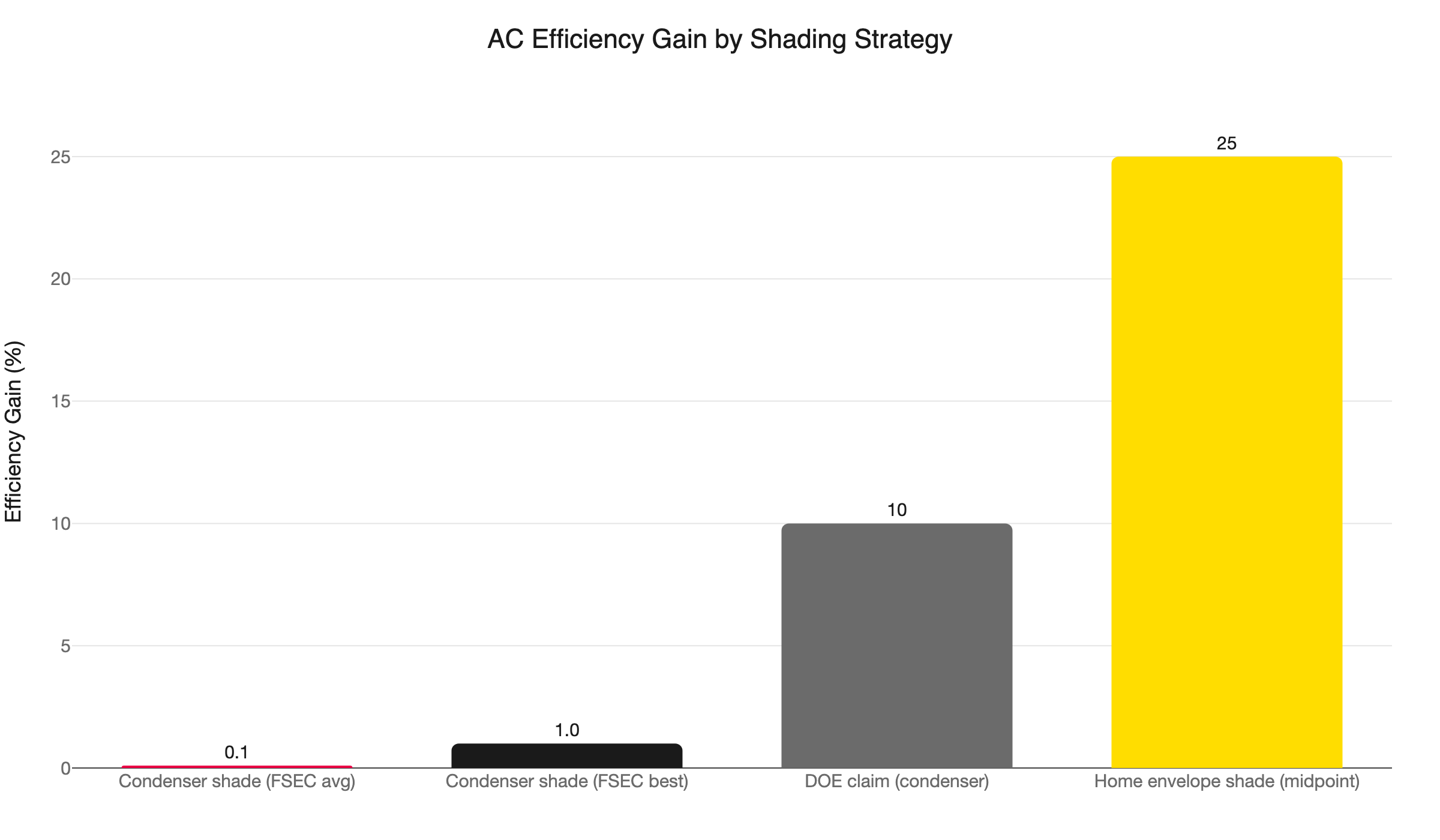
AC Efficiency Gain by Shading Strategy
## Does Shading Your AC Unit Save Energy?
**The short answer:** Barely, and possibly not at all. A [1996 FSEC field study](https://publications.energyresearch.ucf.edu//wp-content/uploads/2018/06/FSEC-PF-302-96.pdf) measured real condenser shading at three homes over two full cooling seasons. The average efficiency improvement was 0.1%, within the study's own margin of error. The best result at any single site was 1%.
That 0.1% average is the only measured data we have. The rest of the landscaping-tip internet has run for three decades on a DOE claim that has never come with a published methodology.
So why is the measured gain so small? The answer is physics.
A standard 3-ton condenser moves roughly 170,000 cubic feet of air per hour across its coils. That airflow volume is enormous relative to the cabinet's surface area. The metal casing of the condenser does not conduct significant solar heat to the refrigerant inside. Most heat exchange happens at the fins and coils, where outdoor air flows directly through.
When direct sunlight hits the cabinet, it raises the condenser-inlet temperature by at most 0.2 degrees Fahrenheit. At the accepted rate of 1.2% efficiency gain per degree F, that caps direct-shade savings at well under 0.25%. A [2002 ACEEE analysis](https://www.aceee.org/files/proceedings/2002/data/papers/SS02_Panel1_Paper24.pdf) by the same FSEC researchers confirmed this theoretical ceiling.
The physics and the field data agree. Shading the box does not move the needle.
## What the Field Research Actually Found
The FSEC study ran at three Florida residential sites over two full cooling seasons. Researchers used paired data loggers and measured actual energy consumption before and after condenser shading was applied.
Here is what they found:
- Site 1: 1% efficiency gain (the best result in the study)
- Site 2: Near zero change
- Site 3: Near zero change
- Average across all three sites: 0.1%, plus or minus 2.0%
That margin of error matters. A 0.1% average with a +/- 2.0% band means the effect was statistically indistinguishable from zero. The shading could have helped or hurt, and the instruments could not tell the difference.
Most people assume a condenser sitting in direct sun must be getting hot and working harder because of it. That intuition is understandable. Metal in the sun heats up fast. But the condenser is not a passive solar collector. It is an active heat-rejection machine moving air at high volume. The cabinet surface temperature barely reaches the refrigerant circuit.
The researchers concluded that the casing conducts very little solar heat to the fins and refrigerant. The 2002 ACEEE follow-up put a theoretical ceiling on the physics. If direct shade lowers condenser-inlet air temperature by 0.2 degrees F, and each degree is worth 1.2% efficiency, the ceiling is well under 0.25%. No shade structure can engineer around that constraint.
## Why Does the DOE Claim "Up to 10%"?
**The short answer:** Nobody knows. Energy.gov states that shading the outdoor unit can increase efficiency by up to 10%. That claim has circulated for years. But neither the DOE nor any source citing it has published a field study, a lab test, or a data set to support it.
The number directly contradicts the FSEC field measurements and the ACEEE theoretical ceiling. One plausible explanation: the DOE may be conflating two different interventions. Shading the condenser is one thing. Shading the entire home is another. The results are completely different. If the agency folded strategic landscaping around a house into a figure labeled "shade the unit," it would explain the gap.
[Snopes investigated](https://www.snopes.com/fact-check/ac-unit-shade-lower-energy-bills/) the related claim that covering an AC unit with an umbrella or canopy lowers energy bills. They rated it unproven and misleading. They also quoted a DOE spokesperson directly: "This is a myth. Shading an AC with an umbrella would have a negligible effect."
That is the same agency that published the 10% figure. Their own representative called it a myth.
The honest takeaway: the DOE claim should not be taken at face value. It contradicts measured data, and the agency's own staff contradicts it. Use it as a conversation starter, not as a basis for a landscaping project.
## When Does Shade Actually Hurt Your AC?
**The short answer:** When it restricts airflow. The condenser exhausts heat upward and draws cool air in from the sides. When a fence, trellis, or dense shrub surrounds the unit too tightly, that exhaust air loops back across the intake coil. The unit now operates in air hotter than ambient temperature, and efficiency drops below baseline.
[Manufacturer specs and the 2024 IRC](https://www.jaspector.com/codes/irc-2024/ch14-heating-cooling-equipment/ac-condenser-installation-irc-2024/) establish [minimum clearances](/blog/ac-condenser-unit-clearance-landscaping-twin-cities/) for exactly this reason: typically 12-24 inches on the sides and 5 feet of unobstructed space directly above. These are not aesthetic guidelines. They are the engineering margins required to prevent recirculation.
The practical problem is predictable. Most homeowners who want to hide the condenser plant shrubs or build a lattice screen close enough to create the recirculation effect. They add something intended to save energy. They end up spending more instead.
A technician diagnosing an overworked system will often find a too-close fence or an overgrown shrub as the culprit. It is more common than most homeowners expect.
If the theoretical gain from condenser shading is already under 1%, and airflow restriction pushes efficiency below baseline, the risk-reward calculation is easy. A shade structure that respects clearances has marginal upside. One that does not has real downside.
## Where Shade Really Pays Off
The actual efficiency gains from shading come from your home's envelope, not from your condenser.
[Research from the Building America Solution Center](https://basc.pnnl.gov/resource-guides/landscaping-reduce-cooling-load) and [USDA Forest Service data](https://research.fs.usda.gov/treesearch/61736) show that three well-placed trees can cut annual cooling energy use by 10-50% and save $100-$250 per year. Strategic landscaping around west-facing walls and windows produces a 15-35% reduction in cooling energy. That is 15 to 30 times larger than the measured condenser-shading benefit.
Two mechanisms drive this:
**Solar gain reduction.** West-facing windows are the biggest summer heat source in most Twin Cities homes. Afternoon sun drives radiant heat directly into the living space. Because that heat enters before the thermostat has a chance to respond, the AC starts every cooling cycle at a higher setpoint. A tree or tall shrub shading those windows reduces the heat load before the system ever turns on. Shorter cycles, lower bills.
**Evapotranspiration.** Trees release water vapor as they grow. That natural evaporation cools the surrounding air by several degrees. Lower ambient temperature near the home means the air your condenser actually draws in is cooler. This reduces condenser-inlet temperature the way shading the cabinet tries to, but at a dramatically larger scale.
To make the gap concrete: if your home spends $200 per month on cooling during peak summer, a 25% reduction from home shading saves $50 per month. Condenser shading at 0.1% saves $0.20. That is the actual difference between these two strategies.
If you have $500-$1,000 to spend on trees and shrubs this fall, put them on the west and southwest sides of the house. Shade the windows and walls. That is where the return on investment is.
## Does Shading AC Unit Save Energy in a Minnesota Summer?
**The short answer:** Less than anywhere else in the country. The Twin Cities averages roughly 12-15 days above 90 degrees Fahrenheit per year, based on NOAA climate normals. That is the narrow window when high ambient temperature meaningfully stresses a properly sized condenser.
Compare that to Phoenix or Houston, where systems operate at 95 degrees or hotter for 60 or more days per year. Even if condenser shading offered a 1% efficiency gain in those climates, the benefit compounds across a long, brutal season. In Minnesota, you are optimizing for a problem that appears for about two weeks per summer.
There is also a self-selecting problem with this advice. The days you feel most motivated to shade the condenser, the genuinely brutal 95-degree days, are the days when it would matter most. But those days are rare here. Most Twin Cities cooling happens at 78-88 degrees, where condenser stress is minimal and the shading effect is even smaller than what the FSEC measured.
The FSEC study that found 0.1% average savings was conducted in Florida. If the results were that marginal in a climate built to stress AC equipment, the effect here is smaller still.
This is not an argument to skip maintenance. A dirty evaporator coil or a low refrigerant charge will cost far more than condenser shading will ever save. Our [guide to extending your AC's lifespan](/blog/5-maintenance-tips-to-extend-your-acs-lifespan/) covers the items that actually move your cooling bill.
## What Are the Clearance Rules for Condenser Placement?
**The short answer:** Equipment specs require 12-24 inches on the sides and 5 feet above. In Minneapolis, permanent structures near the pad also face 3-5 foot setbacks from the property line, measured to the edge of the equipment pad.
If you are planning a shade structure, pergola, or lattice screen near your condenser, you need to know both sets of rules before you build.
**Equipment clearances.** [The 2024 IRC](https://www.jaspector.com/codes/irc-2024/ch14-heating-cooling-equipment/ac-condenser-installation-irc-2024/) and manufacturer documentation require a minimum of 12-24 inches on the sides and 5 feet of clear vertical space directly above, where heat is expelled upward. An HVAC technician who finds a system running extended cycles will check clearances early in the diagnostic. A violation does not need to be dramatic to cause real problems.
**Minneapolis zoning.** [Minneapolis Chapter 535](https://midlandhtg.com/minneapolis-zoning-new-exterior-ac-placements/) requires any permanent structure near the condenser to meet property setbacks of 3-5 feet, measured from the edge of the equipment pad. Most suburban municipalities across the metro follow similar rules. Check with your city before you build anything.
A setback violation can surface during a home sale. Inspectors flag it. Your HVAC manufacturer's warranty may also require minimum clearances to remain valid.
If you want to screen the condenser for aesthetics, use an open lattice design and keep it well outside manufacturer minimums. Function before form.
## What Should You Do Instead?
**The short answer:** Spend the budget where the data says it pays. A tune-up, a filter swap, a smart thermostat, and strategic home landscaping all deliver documented, measurable results that condenser shading cannot match.
**1. Schedule a tune-up.** A professional [AC maintenance visit](/air-conditioning/air-conditioning-maintenance/) catches dirty coils, worn capacitors, low refrigerant, and airflow problems before they compound. These are the real efficiency killers. A tune-up runs $95-$250 and typically pays back quickly in lower runtime hours.
**2. Check your filter.** A clogged air filter restricts airflow across the evaporator coil. That is a documented, measurable efficiency loss. Check it monthly in summer. Replace it every one to three months depending on your household and whether you have pets.
**3. Install a smart thermostat.** A Wi-Fi thermostat that lets the temperature drift while you are away cuts cooling costs by 10-15%. That is a real, documented savings. No permits required, no clearance rules, no landscaping budget.
**4. Shade the house, not just the unit.** Strategic trees and shrubs on the west and southwest sides of the house deliver 15-35% cooling energy reductions. Put the landscaping budget there.
**5. Ask about a system upgrade if yours is aging.** A central AC unit older than 12-15 years loses efficiency as components wear. A modern [high-efficiency central AC system](/air-conditioning/ac-installation/central-air/) running at 18-20+ SEER2 uses significantly less energy than a 10-SEER unit from a decade ago. High-efficiency installs in the Twin Cities typically start at $11,000-$15,600. Xcel Energy offers up to $400-$450 in rebates for qualifying units, stackable with the federal 25C tax credit of $600. [See the full rebate breakdown here](/blog/xcel-centerpoint-hvac-rebates-minnesota/).
## Ready to Lower Your Cooling Bill?
The research is clear. Shading the condenser is not the lever. Real cooling savings come from a well-maintained, properly charged system and from managing heat before it enters the house.
Northern One Hour is locally owned and operated in the Twin Cities. Our team serves Ramsey, Blaine, Maple Grove, Plymouth, Brooklyn Park, Woodbury, Bloomington, and the surrounding metro. We show up when we say we will. That is our guarantee: "Always On Time… Or You Don't Pay a Dime!(R)"
Call us at **(763) 260-6662** or [book your service visit online](/air-conditioning/air-conditioning-maintenance/). We will give you a straight answer on what will actually move your cooling bill this season.
---
# HVAC System for Asthma Sufferers: A Minnesota Home Guide
URL: https://northernonehour.com/blog/hvac-asthma-triggers-management-twin-cities/
Published: 2026-09-03 | Category: Indoor Air Quality
418,000 Minnesota adults live with asthma. How to configure an HVAC system for asthma sufferers: filters, humidity, NO2 risks, and ventilation upgrades.
Key Takeaways
- The EPA recommends MERV 13 filters as the minimum for asthma households with forced-air systems.
- High-efficiency filtration reduces cat allergen by at least 30%, fungal spore levels by at least 50%, and environmental tobacco smoke by at least 90% compared to lower-spec systems.
- Keep indoor relative humidity between 30% and 50%. Too low dries airways; too high feeds dust mites and mold.
- Gas stoves produce nitrogen dioxide (NO2), an odorless asthma trigger. In sealed Minnesota homes, it accumulates without mechanical ventilation.
- Modern tightly built homes in the Twin Cities likely need an HRV or ERV to maintain healthy indoor air through the heating season.
- Minnesota utility rebates of $300-$500 are available in 2026 for qualifying HRV/ERV installations.
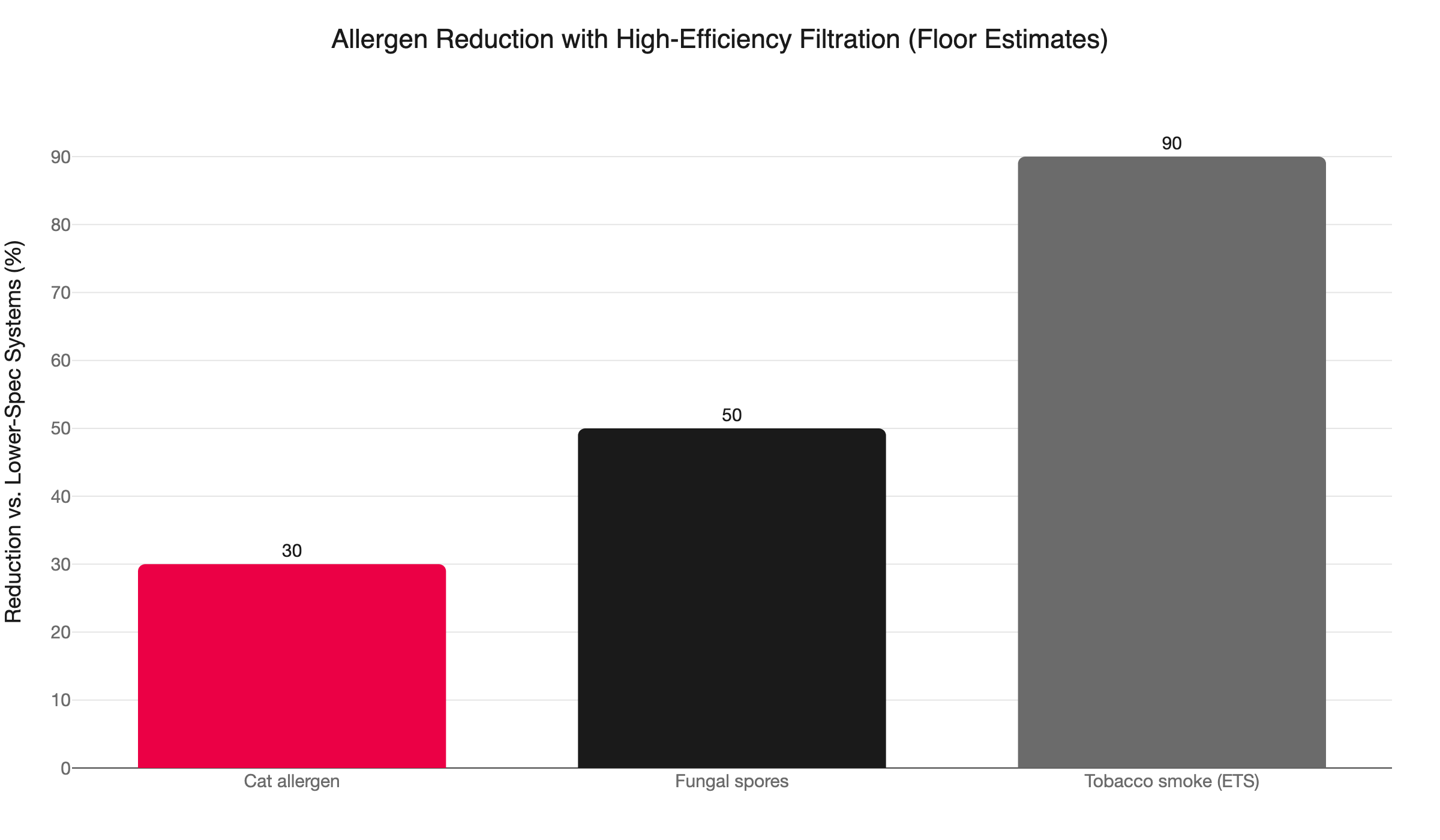
Allergen Reduction with High-Efficiency Filtration (Floor Estimates)
If you manage asthma in your household, the right HVAC system for asthma sufferers is one of the most useful tools you control. More than [418,000 Minnesota adults](https://www.health.state.mn.us/diseases/asthma/data/index.html) have been diagnosed with asthma. Nearly half had at least one attack in the past year. Asthma is the third most common chronic disease in Minnesota.
Most resources stop at filter recommendations. They cover MERV ratings and the 30-50% humidity band, then move on. What they miss: the nitrogen dioxide accumulating from your gas stove all winter, the humidity spikes that let dust mites survive even in a well-controlled room, and the mechanical ventilation that tightly sealed Twin Cities homes need from October through April. This guide covers all of it.
## What makes an HVAC system good for asthma sufferers?
**A good setup for asthma targets four things: particle filtration, humidity control, fresh-air ventilation, and equipment cleanliness. Each addresses a different trigger category. Skipping one leaves a gap the others cannot fill.**
Asthma triggers split into two categories. Particles include dust mite allergens, pet dander, mold spores, and pollen. Gases include nitrogen dioxide from gas appliances, VOCs from flooring and furniture, and carbon dioxide from normal occupancy.
Your HVAC filter catches particles. It cannot catch gases. Humidity affects both categories: high indoor humidity grows mites and mold; low humidity dries the mucous membranes that protect airways from the particles that do get through.
Mechanical ventilation - an HRV or ERV - dilutes gases by exchanging stale indoor air for fresh outdoor air. No filter does that job. And all three systems depend on clean equipment. Mold on a coil or debris in ductwork reverses every other gain.
Minnesota adds a specific challenge. From October through April, most homes run sealed against outdoor air. Indoor pollutants have nowhere to go. A home without mechanical ventilation is essentially recirculating the same air all winter, with pollutants accumulating across the entire heating season.
## What MERV rating does an asthma household actually need?
**The EPA recommends MERV 13 as the minimum for asthma households with forced-air systems. It captures particles in the 0.3-1.0 micron range, covering dust mite feces, pet dander, and most mold spores. A MERV 7 or 8 filter provides limited protection against these specific triggers.**
The [EPA's Indoor AirPlus program](https://www.epa.gov/indoorairplus/indoor-airplus-and-asthma) treats high-efficiency filtration as a core asthma-health measure. Homes with forced-air systems and MERV 13 filtration show:
- At least 30% lower cat allergen levels
- At least 50% fewer airborne fungal spores
- At least 90% lower environmental tobacco smoke
compared to homes running lower-rated filters. The [EPA's residential air cleaner guide](https://www.epa.gov/indoor-air-quality-iaq/guide-air-cleaners-home) notes that MERV 7-13 filters are "nearly as effective as true HEPA" for residential IAQ. Whole-home HEPA filtration requires system modifications that most existing forced-air setups cannot accommodate without professional evaluation.
Two practical cautions before you upgrade:
**Check your system's maximum rated MERV.** Older air handlers may be rated for MERV 8 or lower. Installing a MERV 13 filter in an undersized system increases static pressure. That can overheat the blower motor and trigger shutdowns. Ask a technician to confirm the safe maximum before you change filter grades.
**Change filters on schedule.** A MERV 13 filter loaded with particulate becomes a barrier to airflow. Asthma households should plan on replacement every 60-90 days, not the 90-day default printed on the package.
For a deeper comparison of portable air purifiers versus whole-home filtration, see our guide on [air purifiers vs. HVAC filters and MERV ratings](/blog/air-purifiers-vs-filters-merv-ratings-explained/).
## Why humidity control matters - and why average RH misleads you
Minnesota creates a humidity problem in both directions, and both matter for asthma.
In winter, outdoor air holds very little moisture. As it infiltrates your home and warms up, indoor relative humidity (RH) can fall below 25-30%. Dry indoor air irritates mucous membranes. That reduces the airway's first-line defense against every trigger in the air.
In summer, outdoor humidity rises. An undersized or poorly maintained AC may not dehumidify well enough to keep indoor RH below 50%. Above that threshold, dust mite colonies expand and mold risk increases.
The [American Lung Association](https://www.lung.org/clean-air/indoor-air/indoor-air-pollutants/dust-mites) recommends keeping indoor RH below 50% to suppress dust mite populations. One controlled study held household RH below 51% for 17 months. [Live mite counts dropped from 401 to 8 per gram of dust](https://pubmed.ncbi.nlm.nih.gov/11149998/) - roughly a 98% reduction.
Here is the precision most guides skip. A separate study found that mites [can survive with as little as 1.5 hours of high RH above 90% per day](https://pubmed.ncbi.nlm.nih.gov/9140520/). A mattress during sleep creates exactly that microclimate. Body heat and perspiration push mattress-surface RH well above the ambient room level, even if your humidistat reads 45%.
Average RH is a misleading metric. Managing humidity for asthma means managing the spikes, not just the average.
Practical steps for Twin Cities homeowners:
- Install a whole-home humidifier to hold winter RH in the 30-40% range. Our guide to [whole-home humidifiers for dry winter air](/blog/whole-home-humidifier-winter-dry-air/) covers bypass and steam options for Minnesota homes.
- Run your AC system's dehumidification mode to hold summer RH below 50%.
- Run bathroom exhaust fans for at least 20 minutes after showers. Steam migrates to sleeping areas, where it creates exactly the high-humidity refuge mites need.
## Can a gas stove worsen asthma symptoms?
**Yes. Gas stoves produce nitrogen dioxide (NO2), an odorless gas that aggravates asthma. Indoor NO2 levels rise significantly during heating season as homes seal up and ventilation drops. A standard range hood may not remove it.**
The [EPA identifies indoor NO2 as a significant asthma trigger](https://www.epa.gov/indoor-air-quality-iaq/nitrogen-dioxides-impact-indoor-air-quality). Levels climb in winter because homes are sealed and combustion appliances run longer without fresh-air dilution to offset them.
The research numbers are specific. A study found that [44% of homes with gas stoves exceeded the EPA's outdoor 1-hour NO2 standard of 100 ppb](https://pmc.ncbi.nlm.nih.gov/articles/PMC5623630/) during standardized cooking events. Those conditions apply broadly to any tightly sealed home, including gas-heated Minnesota homes that close up in October and open in April.
A separate intervention study found that [replacing a gas stove with an electric model cut kitchen NO2 by 51%](https://www.ncbi.nlm.nih.gov/pmc/articles/PMC4909253/). A HEPA-plus-carbon air purifier running during cooking reduced NO2 by 27%. Range hoods alone showed no significant reduction in that study. Most residential range hood models recirculate air back into the kitchen rather than exhausting it outdoors.
If you cook with gas and have an asthmatic household member, four steps help:
- Confirm your range hood exhausts outdoors, not through a recirculation filter.
- Run a carbon-filter air purifier in the kitchen during and after cooking.
- Open a window when outdoor temperatures allow.
- Consider whole-home mechanical ventilation, which dilutes NO2 continuously, not just during cooking.
## Does your Minnesota home need mechanical ventilation?
**If your home was built or significantly tightened after 2000, almost certainly yes. Modern construction seals the building envelope to reduce energy loss. The tradeoff is that indoor pollutants, combustion gases, and allergens accumulate without deliberate mechanical ventilation to dilute them.**
An HRV (heat recovery ventilator) or ERV (energy recovery ventilator) brings fresh outdoor air into your home while recovering around 80% of the heat from the outgoing stale air. You get continuous fresh-air exchange without the energy cost of pumping cold outdoor air directly through your heating system.
For an asthma household, that continuous dilution matters. NO2 from gas appliances, VOCs from flooring and furniture, and CO2 from occupants all drop when fresh-air exchange runs around the clock. Filtration removes particles. An HRV or ERV removes gases and odors that no filter can capture.
This matters especially in Minnesota because our winters are long. Homes stay sealed for five to six months. Without mechanical ventilation, indoor air quality degrades across the entire heating season. Pollutant levels that feel tolerable in November can become genuinely problematic by February.
Our guide on [choosing between an ERV and HRV for Minnesota homes](/blog/erv-vs-hrv-which-ventilation-system-minnesota/) covers which unit fits different home moisture conditions and construction types.
## Setting up an HVAC system for asthma sufferers: upgrade priorities
Competing upgrade options can make it hard to know where to start. Here is a practical order of operations for most Twin Cities asthma households.
**Step 1: Filtration.** Confirm your filter is MERV 13 and that your system can handle the added static pressure. This is the lowest-cost, highest-speed-to-impact move. If your system is rated for a lower grade, ask a technician what the safe maximum is before installing.
**Step 2: Mechanical ventilation.** If you have a tightly built home without an HRV or ERV, this is likely the highest-ROI upgrade for an asthma household. It addresses gas-phase pollutants, combustion byproducts, and accumulated VOCs that filtration cannot touch.
**Step 3: Humidity control.** A whole-home bypass or steam humidifier handles winter dry air. A whole-home dehumidifier, or a properly functioning AC, handles summer humidity. Both integrate with your forced-air system and run automatically based on a humidistat.
**Step 4: Additional purification.** UV air purifiers and whole-home HEPA bypass units reduce microbial load on coils and in the airstream. These work best after the first three steps are already in place.
Financing is available for larger IAQ projects, including HRV/ERV installation and whole-home purification systems. Visit our [indoor air quality services page](/indoor-air-quality/) for a full overview of what our team installs and maintains.
## Are there rebates for IAQ equipment in Minnesota?
**Yes, primarily for HRV and ERV systems. Minnesota Power offers a $300 rebate for qualifying units, and CenterPoint Energy offers up to $500. Confirm current program terms directly with your utility before purchasing, as programs and budgets can update mid-year.**
Current 2026 programs on record for Minnesota homeowners:
- **Minnesota Power:** $300 for a qualifying HRV or ERV with at least 60% sensible recovery efficiency at 32 degrees Fahrenheit, January through December 2026. See the [Minnesota Power HRV/ERV rebate page](https://www.mnpower.com/ProgramsRebates/ERVHRVRebate) for current requirements.
- **CenterPoint Energy:** $0.50 per CFM, up to $500, for qualifying ERV installations through their prescriptive rebate program.
- **Additional Minnesota utilities:** Some utilities offer a $400 rebate for HRV/ERV systems that meet a 65% sensible recovery efficiency minimum.
For Xcel Energy customers: Xcel's 2026 Minnesota program covers heat pumps, central AC upgrades at 18+ SEER2, and smart thermostats. There is currently no Xcel rebate listed for standalone humidifiers, dehumidifiers, or air purifiers. Check the Xcel Energy rebate page directly for any updates.
The federal 25C tax credit covers certain qualifying heat pump and building efficiency upgrades. It does not currently apply to standalone HRV/ERV or whole-home filtration equipment. Confirm your specific project with a tax professional before filing.
## How do I know if my HVAC system is making my asthma worse?
**The clearest signal: symptoms that consistently worsen when your heating or cooling system runs. Attacks that are markedly worse in winter are another indicator. Other clues include musty odors from supply vents, humidity readings outside the 30-50% range, and a filter overdue for replacement.**
A basic self-assessment checklist:
- Symptoms worsen during heating or cooling system operation
- Attacks are more frequent or severe in winter, when the home is sealed
- A musty or dusty odor comes from supply registers when the system first starts
- Your filter has not been changed in more than 90 days
- Indoor humidity consistently reads above 50% or below 30%
- You cook with gas and notice respiratory irritation during or after meals
A carbon monoxide detector and an [indoor air quality monitor](/blog/indoor-air-quality-professional-test-vs-diy-monitor-minnesota/) can help you establish baseline readings. They are not a substitute for a professional inspection. A qualified technician can measure static pressure, check coil cleanliness, inspect ductwork for leaks and contamination, and verify ventilation rates. All of these affect IAQ in ways that are invisible from the supply register.
## Ready to improve indoor air quality in your Twin Cities home?
Asthma cannot be managed with a single upgrade. But the right combination of MERV 13 filtration, humidity control, and mechanical ventilation can meaningfully reduce the triggers your household breathes every day.
Northern One Hour is a locally owned and operated HVAC company serving the Twin Cities, including Minneapolis, St. Paul, Ramsey, Blaine, Maple Grove, Plymouth, Brooklyn Park, Woodbury, and Bloomington. We show up when we say we will. That is the commitment behind "Always On Time… Or You Don't Pay a Dime!(R)."
Call **(763) 260-6662** or book online to schedule an indoor air quality consultation. We will assess your existing system, confirm what upgrades your equipment can support, and give you honest recommendations on what makes the most difference for an asthma household - not the most expensive option.
---
# Single Zone vs. Multi Zone Mini Split Cost: Twin Cities
URL: https://northernonehour.com/blog/mini-split-single-zone-vs-multi-zone-cost-twin-cities/
Published: 2026-09-03 | Category: Cooling
Compare single zone vs multi zone mini split cost for Twin Cities homes: installed prices, wiring math, 2026 rebates, and when adding zones stops making sense.
Key Takeaways
- A single-zone mini split costs $2,500 to $5,500 installed in the Minneapolis area.
- A 2-zone multi system runs $4,500 to $7,500; a 3-to-5-zone system runs $7,500 to $15,000+.
- Three separate single-zone units covering the same three rooms run $9,000 to $16,500 installed, plus $1,500 to $4,000+ in additional electrical work for older panels.
- Multi-zone outdoor units need one dedicated circuit. Three separate units need three.
- Most multi-zone systems run in heating mode or cooling mode - not both at the same time.
- Multi-zone is typically the better value at two to three zones. Past three or four zones, separate single-zone units often match or beat it.
- Federal Section 25C tax credits expired December 31, 2025. No federal rebate applies to 2026 installs.
- Xcel Energy offers up to $2,000; CenterPoint Energy offers up to $1,500 for qualifying cold-climate systems.
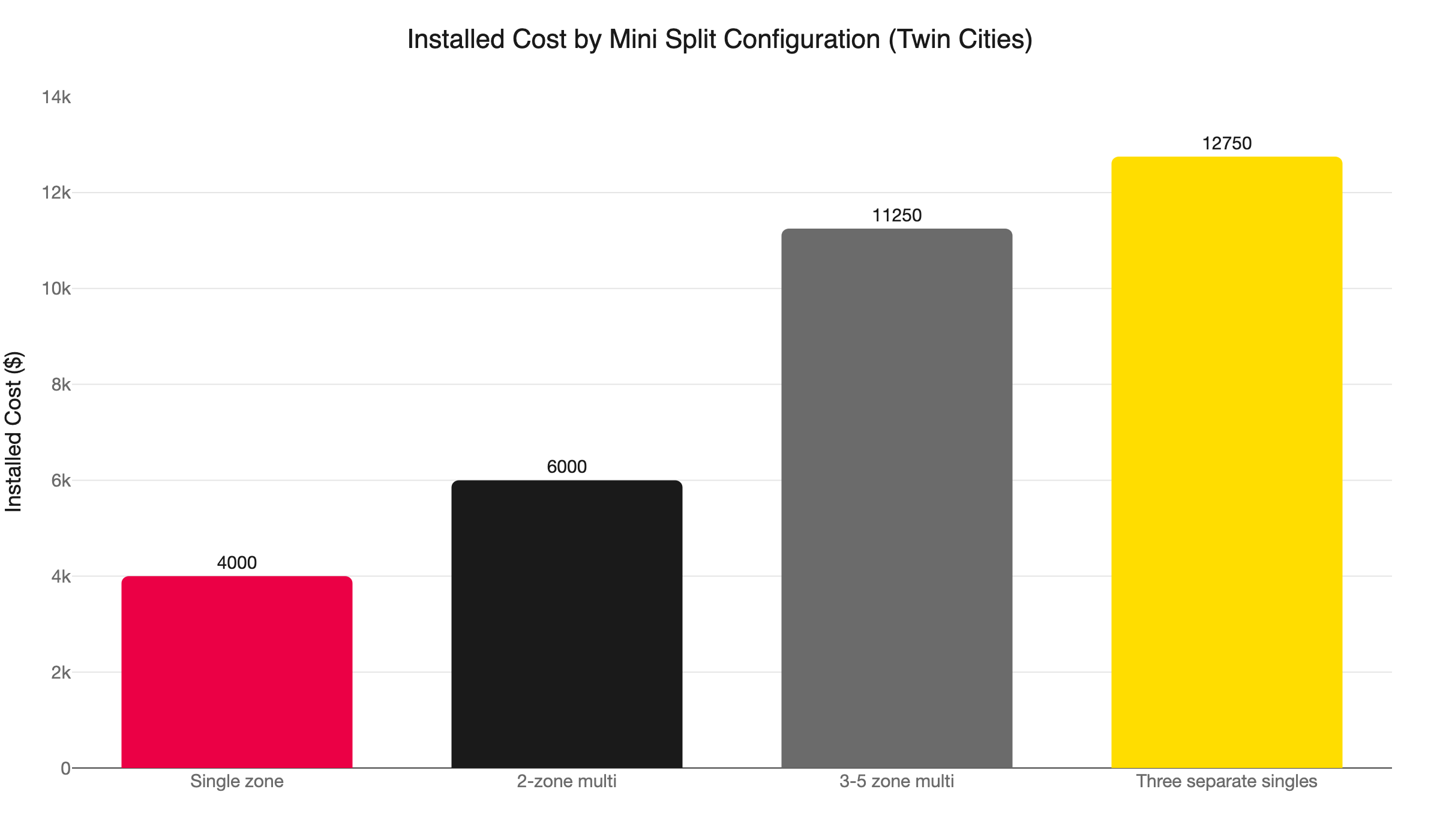
Installed Cost by Mini Split Configuration (Twin Cities)
## Why Single Zone vs. Multi Zone Mini Split Cost Isn't Just About Zone Count
Comparing single zone vs multi zone mini split cost seems simple. Pick a zone count, find a price, and go. But equipment price is only part of the number.
Electrical work, panel age, and how your household actually uses conditioning can each flip the decision. In older Twin Cities homes, wiring three separate single-zone units can cost $1,500 to $4,000 more than wiring one three-zone multi system. That delta changes the comparison entirely.
This guide runs the real numbers for Minnesota homeowners. It covers the breakeven zone count, the efficiency trade-offs, the one operational constraint most contractors skip, and which rebates are still available in 2026.
## What Is the Difference Between Single Zone and Multi Zone Mini Splits?
A single-zone mini split pairs one outdoor compressor with one indoor air handler. A multi-zone system pairs one compressor with two to five or more indoor handlers, each serving a separate room. That configuration difference drives every cost, efficiency, and operational trade-off in this guide.
Single-zone systems are self-contained. Each unit operates independently. Multi-zone systems share an outdoor compressor. That shared compressor reduces cost and infrastructure at two to three zones. It also introduces constraints when zone count grows or household demands diverge.
## What Does Single Zone Mini Split Cost Installed in the Twin Cities?
A single-zone mini split runs $2,500 to $5,500 installed in Minneapolis, [according to Angi's Minneapolis mini split cost data](https://www.angi.com/articles/how-much-does-it-cost-install-ductless-mini-split-ac/mn/minneapolis). Cold-climate models - required for Minnesota utility rebates and reliable winter performance - land in the upper half of that range. Electrical is a separate line item, from $300 for a simple new circuit to $2,500 or more for a panel upgrade.
That range covers equipment and typical labor. Your actual number depends on BTU capacity, SEER2 rating, line-set length, and any routing complexity (attic runs, second-story penetrations, long exterior walls).
[Cascadia Comfort's electrical requirements guide](https://cascadiacomfort.com/blog/mini-split-electrical-panel-requirements/) documents the wiring cost range:
- New 240V circuit, adequate panel with open slots: $300 to $700
- Subpanel, panel has ampacity but no breaker room: $500 to $1,200
- Full panel upgrade: $1,500 to $2,500
- Full service upgrade, undersized panel: $5,350+
Each single-zone outdoor unit also needs two free breaker slots. In a pre-1990 home with a 100-amp panel, those slots may not exist without an upgrade.
## What Does a Multi Zone System Cost Installed?
A 2-zone system runs $4,500 to $7,500 installed; a 3-to-5-zone system runs $7,500 to $15,000 or more, [per FilterBuy's mini split sizing data](https://filterbuy.com/heating-cooling/mini-splits/sizing/single-zone-vs-multi-zone-mini-split/). The electrical footprint is simpler than three separate units. One outdoor unit needs one dedicated circuit and two breaker slots - regardless of how many indoor handlers you connect.
Indoor units draw power through the outdoor unit. No separate circuits per handler. That one-circuit structure is a genuine advantage in older homes where panel capacity is already stretched.
What pushes multi-zone cost up:
- More indoor units (each adds equipment and labor)
- Longer line-set runs to farther rooms
- Second-story or attic routing
- Cold-climate-rated equipment (required in Minnesota; more expensive than standard units)
## The Electrical Math Competitors Skip
This is where most cost comparisons fall apart. The equipment price comparison looks one way. The full installed price, including electrical, can look entirely different.
Picture conditioning three rooms in your home. You have two paths:
**Option A - Three separate single-zone units.** Each outdoor unit is its own system. Each needs a dedicated 240V circuit and two free breaker slots. Three units equal three circuits and six slots. A 100-amp panel running a kitchen, laundry, and workshop doesn't have that headroom without work.
**Option B - One three-zone multi system.** One outdoor unit. One circuit. Two breaker slots. Three indoor handlers share that one connection.
The electrical delta for a pre-1990 home can run $1,500 to $2,500 for a panel upgrade - or $5,350 and up for a full service upgrade, [per Cascadia Comfort](https://cascadiacomfort.com/blog/mini-split-electrical-panel-requirements/). In a post-2000 home with a 200-amp panel and open slots, the delta is modest. In a 1960s Ramsey rambler or a 1970s Brooklyn Park split-level with a 100-amp panel, the electrical gap is large enough to flip the comparison.
Run the full installed cost before you decide: equipment, labor, and electrical together. Our team includes a panel assessment on every site visit. We won't quote a system your panel can't support. For more on the installation process, see our [ductless mini split installation service page](/air-conditioning/ac-installation/ductless-mini-splits/).
## When Does Multi Zone Save Money Per Zone?
At two to three zones, a multi-zone system almost always beats separate single-zone units on total installed cost. Past three or four zones - or when rooms are far from the outdoor unit - separate units often match or beat the multi-zone price.
The per-zone math at two or three zones is clear. One outdoor unit costs less than two or three. One electrical run costs less than two or three. Even with similar equipment cost per zone, shared infrastructure gives multi-zone the value lead at lower zone counts.
The math shifts at four or more zones for several reasons:
- **Line-set length.** Long runs add material cost and can reduce efficiency. A handler 60 feet from the outdoor unit costs more to serve than one 20 feet away.
- **Compressor mismatch.** A four-zone compressor sized for peak combined load runs oversized when only one zone calls. It still works, but a matched single-zone unit operates more efficiently for that specific load.
- **System risk.** A multi-zone compressor failure affects all zones at once. A single-zone failure affects one room.
- **Operational flexibility.** Separate units each run independently - heat in one room, cooling in another, no coordination required.
The practical breakeven is roughly three to four zones in a typical Twin Cities home. A Manual J load calculation confirms the right configuration for your specific floor plan. For more on how load calculations affect pricing, see our [mini split installation cost guide for the Twin Cities](/blog/mini-split-installation-cost-twin-cities/).
## The Same-Mode Constraint: Why It Matters in Minnesota
Most multi-zone mini split systems run in one mode at a time. The outdoor compressor sets the direction: heating or cooling. Every indoor handler in the system follows that directive.
In Minnesota's shoulder seasons, that constraint becomes a real household friction point. October days in the Twin Cities can open at 38°F and reach 65°F by afternoon. One person wants morning heat. Another wants afternoon cooling. A standard multi-zone system picks one for everyone.
This isn't a rare edge case. April and October in Minnesota regularly span 30°F in a single day. Families in two-story homes know this conflict well. Upstairs runs warm in the afternoon. Downstairs stays cold in the morning. A system that can only choose one mode creates constant compromise.
Your options if simultaneous mixed modes matter:
- **Heat-recovery multi-zone systems** support mixed heating and cooling across zones. They cost more and are less common in residential installs. Ask specifically for this capability before you assume it's included.
- **Separate single-zone units** each operate independently. One room can heat while another cools - no coordination, no compromise.
- **Dual-fuel hybrid systems** handle heating separately through a gas furnace. The mini splits cover cooling. That's a different system design, not a multi-zone feature, but it resolves the mixed-demand problem for many Minnesota homes.
## Does Partial Load Efficiency Actually Matter?
Single-zone mini splits achieve slightly higher SEER2 ratings because the compressor is matched exactly to one indoor load. There's no oversizing penalty at any operating point. [FilterBuy's mini split sizing guide](https://filterbuy.com/heating-cooling/mini-splits/sizing/single-zone-vs-multi-zone-mini-split/) notes this advantage for single-zone configurations.
Multi-zone compressors modulate down when fewer zones call. Modern variable-speed units do this well. But a four-zone compressor running one zone is still larger than that one zone needs. The efficiency gap widens with zone count and with how often handlers sit idle.
For two- or three-zone systems, the difference is small and unlikely to drive your decision. For four-plus zone installations where most handlers sit idle most of the day, it's worth factoring into your operating cost estimate. Ask your installer for SEER2 ratings at your home's typical load conditions - not the peak-rated number on the spec sheet.
## What Minnesota Rebates Are Available in 2026?
Minnesota has no statewide mini split rebate program. All incentives run through utilities only, and you can claim just one. [Heat Pump Network's Minnesota incentive data](https://heatpumpnetwork.com/incentives/minnesota), verified July 2026, documents the current programs:
**Xcel Energy:** Up to $2,000 for a qualifying cold-climate air-source heat pump, plus a $600 insulation bonus available separately. Applies to Xcel electric customers only.
**CenterPoint Energy:** Up to $1,500 for a ducted heat pump in a hybrid dual-fuel configuration - paired with a 92%+ AFUE gas furnace, with a system switchover set at or below 40°F. This rebate is built around ducted systems. Verify ductless eligibility directly with CenterPoint before counting on it.
**Minnesota Power:** Up to $1,200 for qualifying cold-climate systems. This primarily serves rural and northern Minnesota customers.
Cold-climate specification is not optional here. The Minneapolis-St. Paul 99% design temperature is -12°F. To qualify for Xcel's top rebate, the system must achieve a COP of at least 1.75 at 5°F. That's a cold-climate performance baseline, not a premium upgrade, for a Minnesota winter.
Homeowners claim one utility program only. No stacking across utilities is allowed.
For the full breakdown, see our [Minnesota heat pump rebates and tax credits guide](/blog/minnesota-heat-pump-rebates-tax-credits/).
## Are There Federal Tax Credits for Mini Splits in 2026?
No. The Section 25C federal tax credit - up to $2,000 for qualifying heat pumps under the Inflation Reduction Act - expired December 31, 2025. The One Big Beautiful Bill Act, signed July 4, 2025, ended the program nine years early.
Equipment purchased in 2025 but not installed until 2026 does not qualify. If a contractor or online article still references the $2,000 IRA credit, that information is outdated.
Plan your 2026 budget around utility rebates only. Federal credits are gone.
## How Do You Decide Between Single Zone and Multi Zone?
Zone count and panel age are the two clearest deciding factors. Multi-zone wins at two to three zones in homes with adequate panel capacity. Single-zone wins at one zone or when you're covering four or more rooms spread across a large home.
Here is a practical starting guide:
**Choose single-zone if:**
- You're conditioning one defined room or addition
- Your panel is older and adding circuits is expensive
- The space is far from where you'd locate an outdoor unit
- You want maximum per-zone efficiency with no shared-system trade-offs
**Choose multi-zone if:**
- You're conditioning two or three rooms from one outdoor location
- Your panel can handle one new circuit without an upgrade
- Everyone in the home can agree on running one mode at a time
- Rooms are reasonably close to the planned outdoor unit location
**Consider separate single-zone units instead of multi-zone if:**
- You need four or more zones
- Rooms are on opposite ends of the house
- Some occupants need heat while others need cooling simultaneously
- Long line-set runs from one outdoor unit would push costs above the multi-zone savings
When in doubt, a Manual J load calculation tells you what size and configuration your home actually needs. Skipping it leads to oversized equipment, higher bills, and shorter equipment life.
## What Does a Three-Zone Cost Comparison Actually Look Like?
Three separate single-zone units covering three rooms run $9,000 to $16,500 installed, plus electrical work. One three-zone multi system runs $7,500 to $15,000 installed, plus one circuit.
Here is the full picture for a pre-1990 Twin Cities home:
**Option A - Three separate single-zone units:**
- Equipment and installation: $9,000 to $16,500
- Electrical (three circuits, older panel requiring upgrade): $1,500 to $5,350+
- Total: $10,500 to $21,850+
**Option B - One three-zone multi system:**
- Equipment and installation: $7,500 to $15,000
- Electrical (one circuit): $300 to $700
- Total: $7,800 to $15,700
In a post-2000 home with a 200-amp panel and open breaker capacity, Option A's electrical cost is modest and the total ranges overlap. In a 1960s or 1970s home with a 100-amp panel - common across Ramsey, Brooklyn Park, and inner-ring Minneapolis - the electrical delta makes Option B the clear value before a single utility rebate is applied.
That variable is exactly why a phone quote isn't enough. An in-home assessment tells you what your specific panel can handle and what the full installed cost actually is.
## Locally Owned. On Time. Every Time.
Northern One Hour is locally owned and operated in Ramsey, MN. We serve Minneapolis, St. Paul, Blaine, Maple Grove, Plymouth, Brooklyn Park, Woodbury, Bloomington, and the surrounding Twin Cities.
We run a panel assessment and Manual J load calculation on every mini split project. That means you get the right configuration for your home - not a configuration that happens to be easiest to install.
Our commitment is straightforward: "Always On Time… Or You Don't Pay a Dime!(R)" We back every installation with a 100% satisfaction guarantee and honest, transparent pricing.
Ready to find out which system fits your home and budget? Call us at **(763) 260-6662** or book online. If upfront cost is a factor, ask about [HVAC financing options for Twin Cities homeowners](/blog/hvac-financing-options-what-to-know-twin-cities/) - larger mini split installations often qualify.
---
# AC Contactor Bad Symptoms: Why Your Outdoor Unit Fails
URL: https://northernonehour.com/blog/ac-contactor-failure-symptoms-replacement-cost-twin-cities/
Published: 2026-09-02 | Category: Cooling
Learn the AC contactor bad symptoms that shut down your outdoor unit, how to tell them from capacitor issues, and what repair costs in Minneapolis-St. Paul.
Key Takeaways
- The contactor is the high-voltage relay that delivers power to your outdoor unit's compressor and fan motor every cooling cycle.
- A stuck-open contactor leaves the outdoor unit completely silent. A stuck-closed contactor makes it run nonstop.
- The nonstop-run failure is unique to the contactor. No other common HVAC failure produces it.
- Chattering or rapid clicking from the outdoor unit points to the contactor, not the capacitor.
- Visual signs include pitting, charring, and green or white residue on the contact surfaces.
- Contactor replacement in the Twin Cities runs approximately $195-$500, parts and labor. It is usually a same-visit fix.
- The stuck-closed failure is the more urgent one. A compressor running nonstop in summer heat can overheat and fail.
## What Are AC Contactor Bad Symptoms?
**AC contactor bad symptoms fall into four patterns: a completely silent outdoor unit, a humming outdoor unit that won't start, rapid chattering or clicking from outside, or an outdoor unit that won't stop running after the thermostat calls for off. That last one - nonstop running - belongs almost exclusively to the contactor.**
The contactor is the relay switch inside your outdoor unit. It connects the compressor and condenser fan motor to line voltage every time your thermostat calls for cooling. When demand drops, the contactor opens and power stops. Simple in theory. Under stress, the contacts wear out.
That wear is accelerated in the Twin Cities. Our summers hit the mid-90s. Our winters hit -20. Your outdoor unit lives through more than a hundred degrees of temperature swing between seasons. The contactor opens and closes dozens of times on a hot July day. Over a season, that adds up to thousands of cycles. The contacts pit, they oxidize, and eventually they fail.
When they fail, they go in one of two directions. Either the contacts cannot close - the outdoor unit goes dead - or they cannot open - the outdoor unit won't stop. Both failures surface most often on the hottest, busiest days of summer, when the system has been running the hardest and the contacts are most stressed.
## What Does the AC Contactor Do?
**The contactor is a high-voltage relay. Your thermostat sends a low-voltage (24V) signal that energizes the contactor's coil. The coil pulls a metal plunger down to bridge a set of contacts, which delivers line voltage to your outdoor unit's compressor and condenser fan motor. When the signal drops, the plunger releases and power stops.**
One switch. Two states. Every cooling cycle depends on it.
The part itself costs $20-$100. But it handles every amp of power your compressor and fan motor draw, hundreds of times per season, under conditions that stress it more than a national average suggests.
Minnesota's climate is hard on contactors. The wide seasonal temperature swing causes metal contact surfaces to expand and contract with every cycle. Summer humidity adds moisture to the equation. A contactor that lasts 10 years in a mild climate may show wear in 7 or 8 years here. Peak failure season is July and August, when systems run the longest hours and local technicians are at their busiest.
The good news: a failing contactor almost always shows warning signs before it fails completely. Catching those signs means a routine repair call instead of an emergency one.
## What Are the Two Ways an AC Contactor Fails?
**Contactors fail in two opposite directions: stuck open and stuck closed. Stuck open means no power reaches the outdoor unit. Stuck closed means power stays on permanently. Each produces a distinct symptom profile, and knowing the difference helps you decide how quickly to act.**
### Stuck open: the outdoor unit goes dead
A stuck-open contactor fails to close when the coil energizes. The plunger does not bridge the contacts, so no line voltage reaches the compressor or fan motor.
Symptoms of a stuck-open contactor:
- Complete silence from the outdoor unit while the indoor air handler continues running.
- Air moving through the vents, but the air is warm or barely cooled.
- A faint hum or buzz from the outdoor unit area without the fan or compressor starting - the coil is energized but the contacts are not closing.
- [Chattering or rapid clicking](https://starheatcool.com/blog/bad-ac-contactor-symptoms/), if the contacts are partially degraded and the coil is cycling the plunger repeatedly without latching shut.
A stuck-open contactor is uncomfortable - you lose cooling - but it is not usually an active damage risk. You can wait for a scheduled repair call in most cases.
### Stuck closed: the outdoor unit won't stop
A stuck-closed contactor has contact surfaces that have fused or welded together. The plunger cannot release even when the coil drops power. Line voltage stays connected to the compressor and fan motor permanently.
Symptoms of a stuck-closed contactor:
- [The outdoor unit runs nonstop regardless of what the thermostat says](https://hvacprosales.com/blog/ac-clicking-but-not-turning-on-contactor-or-capacitor/).
- The unit continues running after you raise the setpoint, switch to fan-only mode, or turn the thermostat off.
- The unit runs through the night when no cooling is needed.
This failure mode is more urgent. A compressor running without the normal stop-start cycle cannot manage heat dissipation the way it is designed to. Extended nonstop run on a hot day risks overheating and compressor failure. That is a much more expensive outcome than a contactor swap.
If your outdoor unit won't stop, shut off the outdoor disconnect and call for same-day service.
## How Do You Tell a Bad Contactor from a Bad Capacitor?
**Use the symptom profile. Completely silent outdoor unit with no sound: the contactor is more likely. Fan or compressor hums but won't spin: the capacitor is more likely. Outdoor unit won't shut off: the contactor, almost certainly. Both parts can cause a no-start, but only the contactor causes nonstop running.**
The two parts affect the same outcome - whether the outdoor unit starts - but they fail at different steps in the power chain.
The contactor delivers power to the outdoor unit. [When the contactor fails open, no power reaches the motors at all](https://hvacprosales.com/blog/ac-clicking-but-not-turning-on-contactor-or-capacitor/). [When the capacitor fails, power is present but the motors cannot generate the starting torque needed to turn over](https://hvacprosales.com/blog/ac-clicking-but-not-turning-on-contactor-or-capacitor/).
Think of it as a two-step process. Step one: the contactor closes and delivers electricity. Step two: the capacitor gives each motor its starting push. Step-one failure is a contactor problem. Step-two failure is a capacitor problem.
Chattering is the clearest differentiator by sound. Rapid clicking from the outdoor unit points to the contactor's coil cycling without holding the plunger closed. A bad capacitor does not produce that sound.
For a full look at capacitor failure specifically, see our post on [bad AC capacitor symptoms and repair cost in the Twin Cities](/blog/bad-ac-capacitor-symptoms-cost-twin-cities/).
## What Sounds Does a Bad AC Contactor Make?
**A working contactor makes one solid thunk when it closes at the start of a cooling cycle. A failing contactor either makes no sound at all (stuck open) or chatters rapidly (coil cycling the plunger without holding it shut). A faint buzz from the outdoor unit with nothing running points to partial contact failure.**
Breaking it down by sound:
- **Silence from the outdoor unit:** The stuck-open failure. No power is reaching the compressor or fan motor. The indoor unit runs, air moves through the vents, but the outdoor unit is completely quiet.
- **Chattering or rapid clicking:** The coil is cycling the plunger rapidly because it cannot hold it closed. Each failed closure attempt produces a click. This creates a machine-gun sound from inside the outdoor unit. It is a contactor-specific failure mode.
- **Faint buzzing with nothing running:** The coil is partially energized but the contacts are not making solid connection. The outdoor unit receives some signal but not enough to start.
None of these sounds resolve on their own. A chattering contactor is also stressing the coil with each failed attempt. Left alone, a contactor problem can become a wiring or transformer problem.
## What Do the Visual Warning Signs Look Like?
**Pitting, charring, burn marks, or green and white residue on the contact surfaces are the visible signs of a worn or damaged contactor. A technician identifies these during any routine inspection. Visible damage usually means the contactor has been failing for some time.**
The contacts are inside the outdoor unit's electrical compartment. Opening that compartment safely requires cutting power at the disconnect and waiting for internal capacitors to discharge. A technician also uses test equipment to verify the unit is fully de-energized before touching anything inside. This is not a homeowner visual check.
Here is what a technician looks for:
- **Pitting or craters on the contact faces:** Minor pitting is expected after several seasons. Deep cratering signals end-of-life for the part.
- **Charring or carbon deposits:** Burn marks from arcing. The contacts have been running degraded for some time.
- **Green or white residue:** [Green discoloration is oxidation from moisture exposure. White residue is mineral deposit from condensation](https://contactordepot.com/blogs/news/contactor-for-ac-units-identifying-symptoms-of-a-faulty-contactor). Both increase contact resistance and accelerate wear.
- **Fused or welded surfaces:** Metal visibly melted together at the contact face. This is the stuck-closed failure mode.
Our technicians inspect the contactor during every [AC tune-up and maintenance visit](/air-conditioning/air-conditioning-maintenance/). A worn contactor caught during maintenance is a straightforward swap at a scheduled rate. The same problem found on a 95-degree afternoon with the house heating up is a more expensive, more stressful call.
## How Much Does Contactor Replacement Cost in the Twin Cities?
**Contactor replacement in the Twin Cities runs approximately $195-$500, parts and labor. The contactor itself costs $20-$100. Labor and the service visit make up most of the total. Local technicians stock contactors on their trucks, so this is typically a same-day repair.**
[National sources put the average range at $150-$450](https://hvacpricingguide.com/ac-contactor-replacement-cost/). Twin Cities pricing runs above that. Regional labor rates and the concentrated July-August demand window both push local repair costs higher than a national average built from dozens of markets.
For context, [capacitor replacement nationally averages $100-$250](https://homeguide.com/costs/ac-repair-cost). Both are inexpensive repairs relative to what an unaddressed failure can become. A stuck-closed contactor that runs a compressor nonstop in summer heat turns a $200-$400 repair into a compressor replacement conversation.
A few factors that affect your final number:
- **After-hours and weekend calls:** Emergency calls carry a premium on top of standard rates. If the failure is stuck-open (no cooling but no active damage risk), scheduling during regular hours saves money without meaningful risk.
- **System age:** If your system is 12 years or older, ask about overall condition while the technician is already on-site. A contactor repair that buys another full season is often worth it. A pattern of multiple repairs in a short window is a signal that a replacement conversation makes sense.
## Should You Replace an AC Contactor Yourself?
**A contactor costs $20-$100 online. The swap looks simple on YouTube. But the outdoor unit's electrical compartment carries line-voltage wiring, and capacitors inside the unit hold a charge even after you cut the outdoor disconnect. Working at line voltage without proper training and test equipment is a real shock risk.**
There is also a diagnostic argument for professional replacement. A contactor is cheap. A compressor is not. If the real problem is a failing compressor, a low-voltage wiring fault, or a control board issue, replacing the contactor will not fix it. A technician tests coil voltage and contact resistance before condemning the part. That verification is part of what the labor cost covers.
A licensed HVAC technician can complete the swap in under an hour. Labor costs are modest. A missed diagnosis or a wiring error on a unit carrying thousands of dollars in compressor and coil value is not.
## When Should You Call a Technician?
**Call for same-day service if the outdoor unit won't shut off, if you hear loud chattering or repeated clicking from outside, or if you see burn marks or smell burning near the outdoor unit. Schedule during regular hours if the outdoor unit is silent and the situation is stable.**
Situations that warrant same-day attention:
- The outdoor unit is running nonstop and does not respond to the thermostat.
- Loud chattering or rapid clicking from the outdoor unit.
- A burning smell or visible burn marks near the outdoor disconnect or access panel.
Situations where a regular-hours call is appropriate:
- The outdoor unit is completely silent. No cooling, but no active damage risk while you wait.
- Intermittent failures that resolve on their own but are becoming more frequent.
Our team is locally owned and operated, serving Minneapolis, St. Paul, Ramsey, Blaine, Maple Grove, Plymouth, Brooklyn Park, Woodbury, and Bloomington. We stock contactors on our service trucks and book same-day appointments during the cooling season when slots are available.
Call **(763) 260-6662** or book online. We back every visit with our on-time guarantee: "Always On Time… Or You Don't Pay a Dime!(R)."
If your AC has been showing other warning signs alongside contactor symptoms, our guide to [AC compressor failure signs and repair costs in the Twin Cities](/blog/ac-compressor-failing-signs-repair-cost-twin-cities/) covers what to watch for next. And if short cycling is part of the pattern, [our post on AC short cycling causes and fixes](/blog/ac-short-cycling-causes-fixes-twin-cities/) covers the other faults worth ruling out.
---
# Where to Place a Carbon Monoxide Detector Near a Furnace
URL: https://northernonehour.com/blog/carbon-monoxide-detector-placement-furnace-boiler-minnesota/
Published: 2026-09-02 | Category: Indoor Air Quality
Learn the 5-20 ft placement rule, why it exists, the two-detector strategy for Twin Cities homes, and what Minnesota law requires for CO alarms.
Key Takeaways
- Place a CO detector **5 to 20 feet** from your furnace, water heater, or boiler. That window gives early warning without triggering false alarms from normal ignition startup.
- CO is nearly the same density as air and distributes throughout the room. Height is not the critical variable: knee-to-chest level (2-5 feet off the floor) is a practical target, but a ceiling mount also works.
- Avoid dead-air corners, spots next to windows or exterior vents, and areas directly behind large equipment.
- Twin Cities homes with a basement furnace and upstairs bedrooms need at least two detectors: one near the appliance, one outside the sleeping areas on the upper level.
- One detector covers multiple fuel-burning appliances (furnace, water heater, gas dryer) in a shared mechanical room, as long as no wall separates them.
- Minnesota law requires CO alarms in every home with fuel-burning appliances (MN Statutes 299F.50/299F.51). This is a legal requirement, not a suggestion.
- Replace the entire detector unit every 5 to 7 years. The test button checks the alarm circuit, not the sensor's ability to detect CO.
- An annual professional furnace inspection is the front-line defense. A correctly placed detector is the backup.
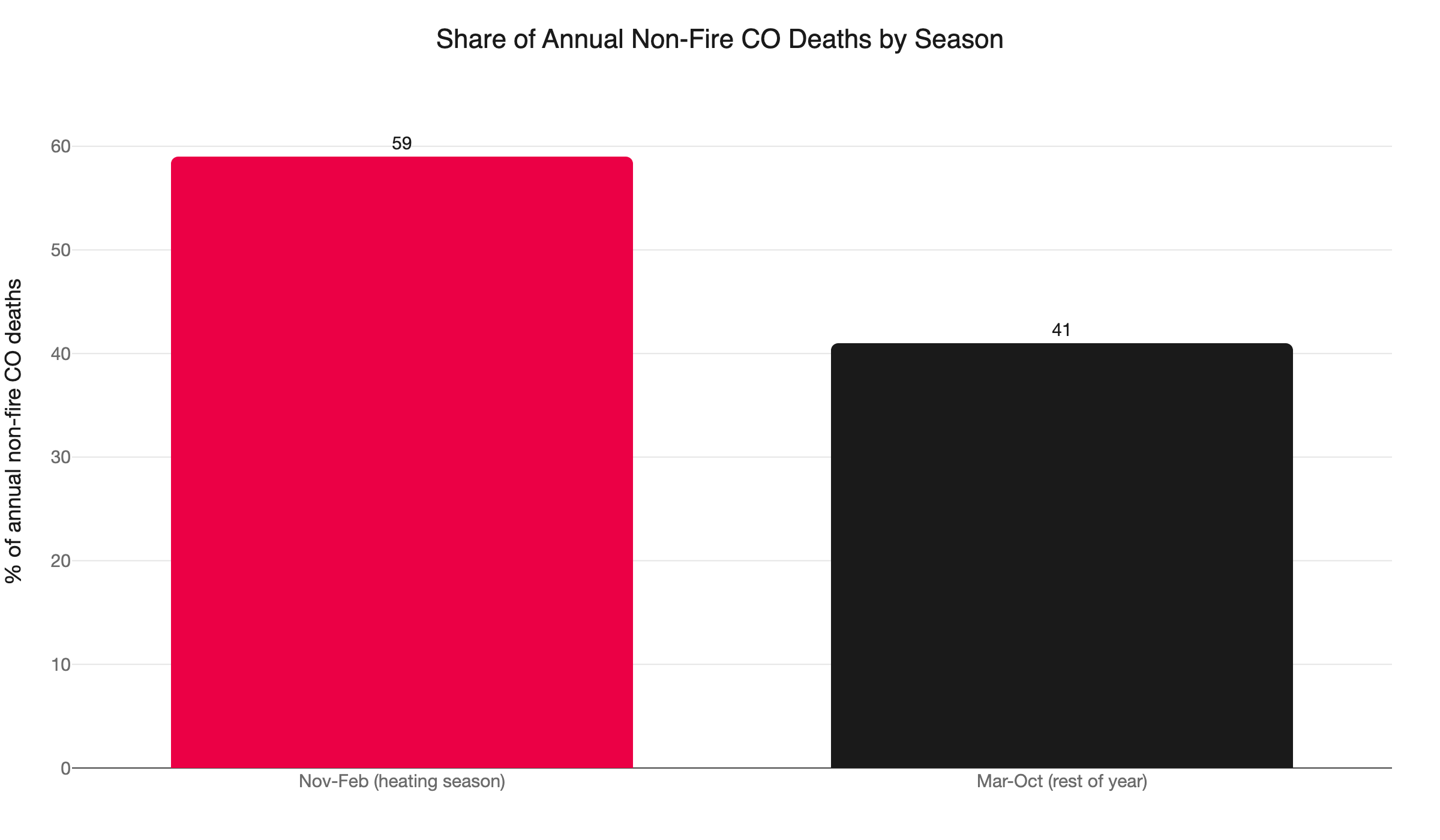
Share of Annual Non-Fire CO Deaths by Season
## Carbon Monoxide and the Minnesota Heating Season
Carbon monoxide is colorless and odorless. You cannot see it, smell it, or taste it.
Most homeowners know CO is dangerous. Fewer understand why furnaces are the central risk. [According to the CPSC](https://www.cpsc.gov/Safety-Education/Safety-Education-Centers/Carbon-Monoxide-Information-Center/Home-Heating-Equipment), heating equipment is one of the top contributors to unintentional non-fire CO poisoning deaths each year in the United States. In the CPSC's 2022 annual estimates, heating systems were linked to an estimated 76 deaths: 28% of the 274 total non-fire CO poisoning deaths associated with consumer products that year.
The timing tells the story. [59% of all non-fire CO deaths occur November through February](https://www.cpsc.gov/content/Non-Fire-Carbon-Monoxide-Deaths-Associated-with-the-Use-of-Consumer-Products-2022-Annual-Estimates) - the coldest months, when furnaces run the hardest. In the Twin Cities, that risk window is even longer. Our heating season runs October through April: six months or more. During a cold snap, a gas furnace cycles nearly continuously. That constant demand stresses heat exchangers, draft inducers, and flue connections - the components most likely to let CO into a living space when something fails.
A correctly placed detector gives you warning time. A detector in the wrong spot nuisance-alarms on a cold January morning, gets its battery pulled, and sits silent when the threat is real.
## Where Should You Place a Carbon Monoxide Detector Near a Furnace?
**The correct placement window is 5 to 20 feet from the furnace or any other fuel-burning appliance. That range provides early warning of a real CO leak while staying far enough back to avoid false alarms from normal furnace startup behavior.**
Here is the mechanism most placement guides leave out.
Every time a gas furnace ignites, combustion produces a brief, small puff of carbon monoxide. Under normal operation, that puff is harmless: it is pulled through the heat exchanger and exhausted through the flue or [PVC vent pipe](/blog/high-efficiency-furnace-pvc-vent-pipe-problems-minnesota/) immediately. But if a CO detector sits within a foot or two of the appliance, that ignition puff is enough to trigger the alarm. [As Carrier explains](https://www.carrier.com/us/en/residential/hvac-resources/co-alarms/best-carbon-monoxide-detector-placement/), combustion appliances "may emit small, harmless amounts of CO upon start-up that could trigger nuisance alarms" - which is why manufacturers specify a minimum standoff distance from any combustion appliance.
A nuisance alarm is not just annoying. It trains homeowners to silence the alarm or pull the battery. A detector with a dead battery cannot warn you when the CO is genuine.
At 5 feet and beyond, the ignition puff has dispersed enough to read as baseline. At 20 feet and closer, a genuine CO buildup from a failing component - a cracked heat exchanger, a blocked flue, a disconnected vent connection - reaches the sensor quickly enough to matter. [Kidde recommends](https://www.kidde.com/safety-hub/smoke-and-co-detection/placement-of-carbon-monoxide-alarms) a CO alarm on any level of the home with fuel-burning appliances, with placement in the 5-to-20-foot window near any specific appliance.
## Where Exactly in the Room Should the Detector Go?
**Mount it on an interior wall with natural air circulation at roughly 2 to 5 feet off the floor. Avoid corners, spots next to windows or exterior vents, and any position blocked by shelving or large equipment.**
CO is nearly the same density as air: slightly lighter, but not enough to stratify the way propane does (which sinks to the floor) or the way smoke does (which rises sharply to the ceiling). CO distributes throughout the room. That means height matters less for CO than for either of those other gases. A ceiling-mounted detector is fine. A mid-wall detector is fine. What matters most is air circulation.
Dead-air spaces degrade sensor performance. [Kidde specifically flags](https://www.kidde.com/safety-hub/smoke-and-co-detection/placement-of-carbon-monoxide-alarms) room corners, areas next to windows or exterior air vents, and spots behind large furniture as locations to avoid. In a basement mechanical room, the worst possible placement is a corner directly behind the water heater where air stagnates against the wall.
The practical guidance for a Twin Cities basement utility room: mount the detector on the interior wall between the furnace and the water heater, at about chest height (3 to 4 feet off the floor), with clear air movement around it. That position puts the sensor within the 5-to-20-foot window from both appliances and away from dead-air corners.
## Do You Need More Than One CO Detector?
**Yes, almost certainly. Minnesota code requires a detector outside each sleeping area. One unit in the basement does not cover bedrooms on the main or upper floor.**
This is the gap that most placement guides skip. They treat a CO detector installation as a single-alarm question. In a typical Twin Cities home - basement furnace, bedrooms one or two floors up - you need at minimum:
1. A detector in or just outside the basement mechanical room, 5 to 20 feet from the furnace.
2. A detector outside each sleeping area on the upper level, no more than 10 feet from each bedroom door.
The basement detector catches a CO event near the source. The upstairs detector is the one that wakes your family before dangerous concentrations build in the rooms where they sleep. One well-placed detector cannot do the work of two.
If your home has sleeping areas on multiple levels, add a detector on each of those levels. Minnesota Statutes 299F.50 and 299F.51, implemented through MN Residential Code R315, are specific: alarms must be outside each sleeping area, within 10 feet of the bedroom door, and present on every level of the home with sleeping areas.
In new construction, the code also requires hardwired alarms with battery backup, all interconnected. That interconnection is the critical piece: when the basement unit detects CO, every alarm in the house sounds at once. You do not have to be near the source to hear the warning.
## What If You Have Multiple Fuel-Burning Appliances in the Same Room?
**You do not need a separate detector for each appliance. A single detector in the 5-to-20-foot window from the furnace, roughly centered in the room, covers the furnace, water heater, and gas dryer together, as long as no wall separates them.**
Most Twin Cities basements put all three fuel-burning appliances in the same utility room. Every one of them burns gas. Every one of them is a potential CO source. But the placement logic does not require one detector per appliance.
If the mechanical room is unusually large, or if a partition wall separates the furnace from the water heater, add a second unit rather than relying on one detector to cover the full space.
One placement mistake to avoid: do not mount the detector on the exterior wall behind the workbench just because that surface is convenient. That often puts the sensor facing away from all three appliances, in a dead-air corner, with the worst possible position relative to the actual CO sources.
## Does the Type of Furnace Change Where to Place the Detector?
**The 5-to-20-foot placement window applies to both standard and high-efficiency furnaces.** But the failure modes that produce CO differ between the two, and knowing your furnace type helps you understand what a technician is looking for during an inspection.
A standard 80% AFUE furnace uses a metal flue pipe that vents combustion gases up through the roof. The primary CO risk is a cracked heat exchanger or a blocked or disconnected flue. A cracked heat exchanger can let combustion gases - including CO - leak into the circulated air stream before those gases ever reach the exhaust path. Our guide to [cracked heat exchanger signs](/blog/cracked-heat-exchanger-signs-minnesota/) walks through the warning symptoms in detail.
A high-efficiency condensing furnace (90%+ AFUE) uses sealed combustion and exhausts through a PVC pipe that exits low on an exterior wall. The sealed design eliminates several of the flue-related failure modes of an 80% furnace. But it introduces a different risk: a blocked PVC vent - from snow, ice, debris, or [a bird nest](/blog/animals-nesting-furnace-flue-vent-pipe-minnesota/) - can [force exhaust gases back](/blog/gas-fireplace-furnace-combustion-air-backdraft-minnesota/) into the system and into the home. Our guide on [high-efficiency furnace exhaust vent blockages](/blog/high-efficiency-furnace-exhaust-vent-blocked-snow-ice-minnesota/) covers that scenario specifically, and it is more common in Minnesota winters than most homeowners expect.
Place the detector in the same 5-to-20-foot window regardless of furnace type. But know which furnace you have so you can have an informed conversation with the technician at your next annual inspection.
## Does CO Detector Height Matter?
**Less than most people assume. Knee-to-chest height (2 to 5 feet off the floor) is a sensible target, but a ceiling-mounted detector also works. CO does not pool on the floor or stratify near the ceiling the way other gases do.**
This is where CO differs from both smoke and propane. Smoke rises sharply, which is why smoke detectors belong high on the wall or on the ceiling. Propane is heavier than air, which is why propane detectors go near the floor. CO's density is close enough to air that it disperses throughout the room without strong stratification. [Carrier confirms](https://www.carrier.com/us/en/residential/hvac-resources/co-alarms/best-carbon-monoxide-detector-placement/) that height is not the critical variable for CO placement: the breathing zone (roughly knee-to-chest) is a practical guideline, but the rules around distance from the appliance and air circulation matter more.
What does matter at any height: keep the detector away from direct humidity sources (right above a utility sink), away from supply vents that push conditioned air directly at the sensor and could dilute readings, and away from corners where air stagnates and sensor response slows.
## What Does Minnesota Law Require for CO Detectors?
**Minnesota requires CO alarms in all residential dwellings with fuel-burning appliances or [attached garages](/blog/hvac-attached-garage-carbon-monoxide-risk-minnesota/). This is state statute, not a building-code recommendation. If your home has a gas furnace, a CO alarm is legally required.**
The specific requirements under MN Statutes 299F.50 and 299F.51 (implemented through MN Residential Code R315):
- An alarm located outside each sleeping area, no more than 10 feet from the bedroom door
- An alarm on each level of the home that contains sleeping areas
- In new construction: hardwired alarms with battery backup, all interconnected so every unit sounds when one triggers
If your home predates the interconnection requirement, you are not required to retrofit hardwired wiring. Battery-operated wireless interconnected units are an affordable way to get the interconnection benefit in an older home.
Minnesota is among approximately 27 states that mandate CO alarms by law. This is not a best-practice suggestion for our customers - it is a legal baseline.
## How Often Should You Test and Replace a CO Detector?
**Test the alarm button monthly. Replace the entire unit every 5 to 7 years, even if the alarm sounds when you press the test button. The electrochemical sensor inside degrades silently over time and may no longer detect actual CO even when the alarm circuit functions correctly.**
This is the most overlooked part of CO detector maintenance. The test button verifies the alarm circuit and the battery. It does not verify whether the sensor can still detect carbon monoxide at meaningful concentrations. That degradation happens invisibly and gradually. A seven-year-old detector that beeps on command may have a sensor that no longer responds to a real CO event.
Check the manufacture date printed on the label on the back of the unit. Most detectors include a "replace by" date. If yours is past that date, or if you do not know how old it is, replace it now. The cost of a new unit is minimal.
A few more maintenance rules worth following:
- Do not paint over the detector. Paint seals the sensor vents and blocks the air sample the sensor needs.
- Do not store the unit in an enclosed cabinet between uses.
- Vacuum the exterior once a year to clear dust buildup that restricts airflow to the sensor.
## What to Do When a CO Alarm Sounds
Do not silence the alarm and go back to sleep. Do not assume it is a false alarm because you feel fine. CO symptoms - headache, nausea, dizziness - develop slowly, and you may not notice them yet when the alarm first triggers.
When the alarm sounds:
1. Get everyone out of the house immediately, including pets.
2. Leave the door open as you exit to help vent the space.
3. Call 911 from outside.
4. Do not re-enter until emergency responders clear the building.
5. Contact a qualified HVAC technician before running the furnace, water heater, or any other fuel-burning appliance again.
The CPSC reports that [more than 200 people die each year from unintentional non-fire CO poisoning linked to consumer products](https://www.cpsc.gov/Safety-Education/Safety-Education-Centers/Carbon-Monoxide-Information-Center/Home-Heating-Equipment), with heating equipment among the top contributors. A working detector in the right location and a clear exit plan cut that risk significantly. Neither requires any special skill. Both require follow-through.
## The Detector Is the Backup. An Annual Inspection Is the Defense.
A correctly placed CO detector matters. Replacing it on schedule matters. But neither one substitutes for a properly maintained furnace.
An annual [furnace tune-up](/heating/heating-equipment/furnaces/furnace-tune-ups/) includes a direct inspection of the components most likely to produce CO: the heat exchanger for cracks, the flue or PVC vent for blockages and disconnections, the combustion chamber for proper burner operation, and the draft inducer for correct exhaust pull. The CPSC recommends annual professional inspections of all fuel-burning systems - furnaces, boilers, water heaters, chimneys, flues, and vents. In Minnesota, where furnaces run six months a year and face the thermal cycling of our winters, that annual check is how you catch problems before they become CO events.
Northern One Hour is locally owned and operated in Ramsey, Minnesota. We serve the full Twin Cities metro: Minneapolis, St. Paul, Blaine, Maple Grove, Plymouth, Brooklyn Park, Woodbury, Bloomington, and the surrounding communities. Our technicians cover everything on the CPSC checklist as part of a standard [heating maintenance visit](/heating/heating-maintenance/).
If your detector is in the wrong spot, we can tell you when we are there.
"Always On Time… Or You Don't Pay a Dime!(R)"
Call us at **(763) 260-6662** or book online to schedule your furnace inspection. We will check your heat exchanger, combustion system, and flue - and you will know your heating system is ready for whatever the Minnesota winter brings next.
---
# Furnace PVC Vent Pipe Cracked or Deteriorating: MN Guide
URL: https://northernonehour.com/blog/high-efficiency-furnace-pvc-vent-pipe-problems-minnesota/
Published: 2026-09-02 | Category: Heating
Cracked furnace PVC vent pipe can leak carbon monoxide and fail in MN winters. Learn the three failure modes and what repair costs in the Twin Cities.
Key Takeaways
- A furnace PVC vent pipe cracked or deteriorating is not a minor maintenance issue. It is a potential carbon monoxide pathway into your home.
- High-efficiency condensing furnaces produce acidic condensate at pH 3-5, close to vinegar. That liquid destroys metal pipe, which is why PVC is required.
- Minnesota winters create a failure mode warmer climates never see: pooled condensate in a low-slope run freezes, expands, and splits the pipe from the inside.
- Three distinct failure modes exist: condensate corrosion at cemented joints, improper slope causing drain backup, and freeze-crack in cold exterior or attic runs.
- Older Twin Cities homes with cast iron drain stacks face a double risk. Acidic condensate corrodes the iron downstream while freeze-crack damages the PVC vent upstream.
- Minnesota code requires sidewall vent terminations 12 inches above finished grade with manufacturer-specified sealing. Most vent repairs are not legal DIY work.
- If your furnace is old enough to have aging PVC vent pipe, CenterPoint Energy rebates of $200-$400 (up to $1,200 for income-qualified households) can offset a high-efficiency replacement.
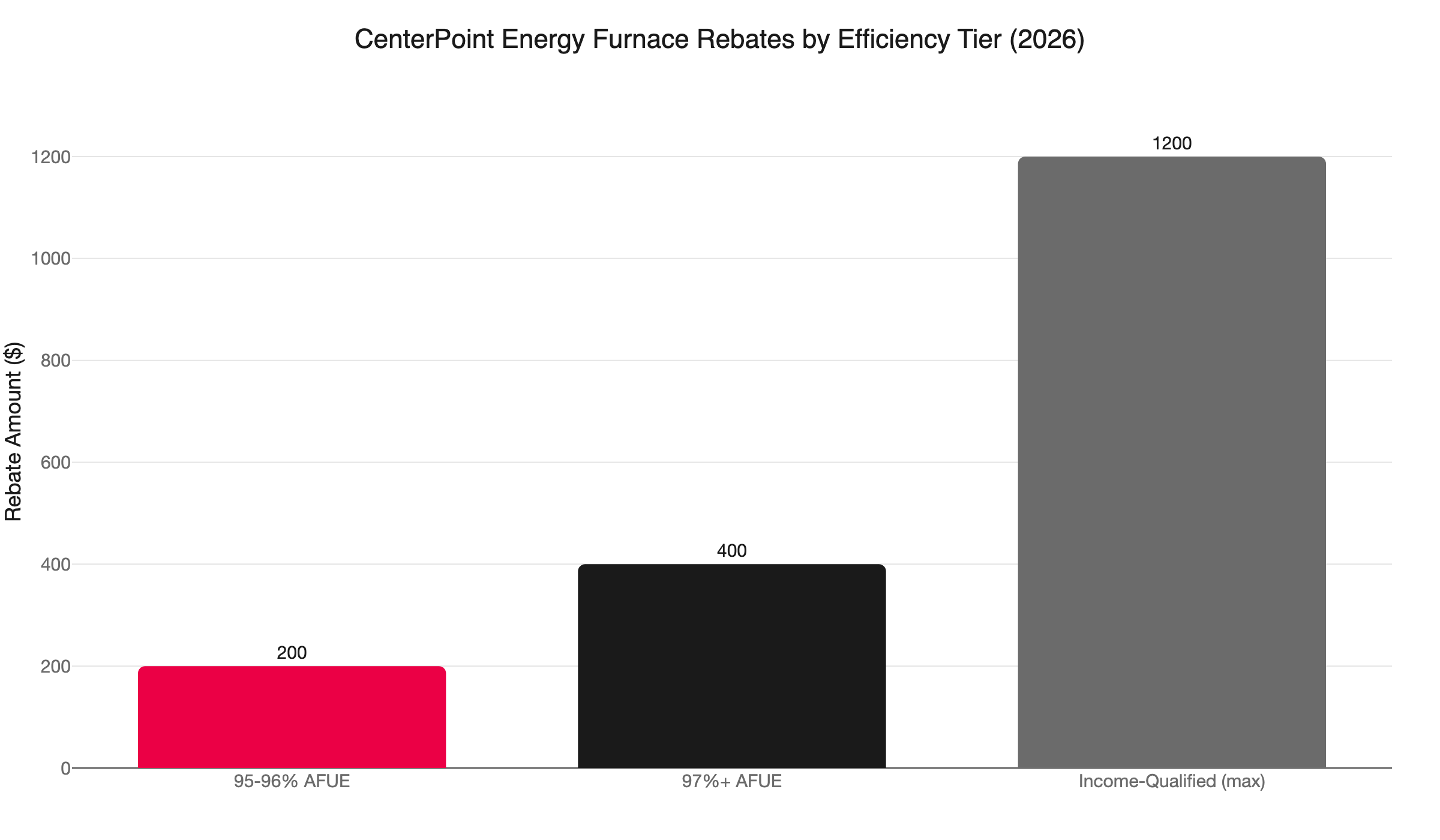
CenterPoint Energy Furnace Rebates by Efficiency Tier (2026)
## Why High-Efficiency Furnaces Use PVC Vent Pipe
A standard 80% AFUE furnace vents exhaust gases through a [metal flue](/blog/chimney-liner-furnace-replacement-orphaned-water-heater-minnesota/). Those gases leave the heat exchanger around 400°F. At that temperature, condensation is not a concern, and metal holds up fine.
A high-efficiency condensing furnace (90% AFUE or better) works differently. It extracts so much heat from combustion that exhaust gases exit the heat exchanger at only 100°F to 130°F. Water vapor in those gases condenses into liquid inside the vent pipe.
That liquid is not plain water. [Condensate from a condensing furnace measures pH 3-5](https://inspectapedia.com/heat/Condensing-Boiler-Furnace-Condensate-Drain.php), roughly equal to vinegar or black coffee. At that acidity, the liquid corrodes metal quickly. It attacks brass, iron, copper, and galvanized fittings in ways that cause leaks and structural pipe failure within a few years.
The [U.S. Department of Energy and Building America research confirm](https://www1.eere.energy.gov/buildings/publications/pdfs/building_america/highefficiency_gas_furnaces.pdf) that high-efficiency gas furnaces require stainless-steel heat exchangers and plastic flue vent piping for this reason. PVC is not a cost-cutting substitution. It is the only vent material that holds up to the chemistry of condensing combustion.
---
## What Does a Healthy PVC Vent System Look Like?
A properly installed condensing furnace vent has two PVC pipes exiting through the sidewall. One brings in combustion air. One exhausts flue gases. Both are cemented at every joint, sloped 1/4 inch per foot back toward the furnace, and supported every four feet. The exterior termination sits at least 12 inches above finished grade.
[Proper exhaust slope means 1/4 inch per foot pitched back toward the furnace](https://www.hvacrschool.com/condensate-drainage-in-a-high-efficiency-gas-furnace/) so condensate drains into the internal drain system rather than pooling in the pipe run. When that slope is correct, condensate never accumulates. When it is off by even a small margin, problems start. In Minnesota, a small slope error becomes a serious structural failure when January arrives.
---
## What Causes a Furnace PVC Vent Pipe to Crack or Deteriorate?
Three root causes account for most furnace PVC vent pipe failures in the Twin Cities. Condensate corrosion attacks cemented joints over years. Improper slope causes condensate to pool and back up. Minnesota winter turns that pooled condensate into a pipe-splitting ice plug. The third cause is specific to cold-climate markets and does not appear in national HVAC content.
### The Minnesota Winter Cascade
Here is how a simple slope error becomes a freeze-crack failure in a Minneapolis winter.
**Step one: the slope is wrong.** The installer cuts the vent run a quarter-inch too flat. Or the pipe settles over years. Or a long horizontal run in a cold attic sags between supports. Condensate pools in the low spot instead of draining toward the furnace.
**Step two: the pool grows.** Every heating cycle produces more condensate. It collects in the low spot. Over time, standing liquid begins to seep through imperfect joint seals and causes drips.
**Step three: Minnesota winter turns the pool into a plug.** The [Twin Cities average January low is 9°F, with extremes regularly below -11°F and severe winters reaching below -22°F, with roughly 7,500-7,900 heating degree days per season](https://www.dnr.state.mn.us/climate/historical/energy.html). A vent pipe running through an exterior wall, a garage, or a cold attic drops below freezing in a polar vortex event. The pooled condensate freezes solid.
**Step four: the plug cracks the pipe.** Water expands roughly 9% when it freezes. In a rigid PVC pipe, that expansion has nowhere to go. The pipe splits along the freeze zone.
**Step five: the furnace shuts down or vents into the house.** A blocked vent triggers a pressure switch fault and the furnace locks out. Or, if the crack is downstream of the blockage, exhaust bypasses the plug and exits through the crack into conditioned space instead of outside.
Installers in Atlanta or Dallas never see steps three through five. In our market, any vent run that crosses a cold zone is a freeze-crack risk if the slope is not precise.
---
## Why Is a Cracked Furnace PVC Vent Pipe Dangerous?
A cracked furnace PVC vent pipe is a direct pathway for carbon monoxide to enter your living space. It is not a drip problem. It is a safety emergency when cracks are present.
High-efficiency furnaces operate under positive pressure. The inducer motor pushes exhaust gas through the pipe. Any crack means exhaust exits at that crack, not at the termination cap outside. In a well-sealed modern home, that carbon monoxide has nowhere to go.
Carbon monoxide is colorless and odorless. It does not trigger a smell warning the way a gas leak does. Concentration can build before any symptoms appear.
If you find visible cracks in the vent pipe and you notice any unusual odor near the furnace or feel unexplained headaches or nausea, get everyone out of the home and call 911. Do not stop to turn off the furnace. Once the home is clear and gas is shut from outside, call (763) 260-6662.
If you see dripping or mineral deposits at a joint but no visible cracks and no symptoms, schedule a diagnostic call and avoid running the furnace until the system is inspected.
---
## What Are the Three Main Ways a Furnace PVC Vent Pipe Fails?
Furnace PVC vent pipe fails three ways: condensate corrosion eats through cemented joints over time, improper slope causes condensate to pool and back up into the furnace, and freeze-crack splits the pipe from the inside when pooled condensate turns to ice in a Minnesota winter. Each failure mode has distinct warning signs.
### 1. Condensate corrosion at joints
The cemented joint is the weakest point in any PVC vent run. Over years, acidic condensate seeps into any imperfect seal and erodes the bond. The joint opens slowly. Water stains or drips appear on the wall or ceiling near the vent path.
Signs to look for:
- Water stains or white mineral deposits at elbows and couplings
- Visible gap or separation at a joint
- Rust or corrosion on adjacent metal components near the vent
### 2. Improper slope causing drain backup
If the exhaust pipe slopes away from the furnace, condensate flows toward the exterior and pools at the termination or at a low elbow. The internal drain system cannot remove it. Water backs up into the heat exchanger or out of the condensate drain port.
Signs to look for:
- Water puddling near the base of the furnace
- Pressure switch or drain error codes that repeat
- Condensate drain port overflowing with no other clear cause
### 3. Freeze-crack in exterior or attic runs
Low-slope run, pooled condensate, a January cold snap, ice plug, split pipe. This failure tends to appear suddenly at the start of a polar vortex. The furnace shuts down when you need it most.
Signs to look for:
- Furnace lockout in cold weather with no other obvious cause
- Visible split or crack on the pipe near an exterior wall or in a cold attic space
- Ice visible at or near the exterior vent termination cap
---
## Do Older Twin Cities Homes Face Extra Risk?
Yes. Many Twin Cities homes built before 1990 have cast iron drain stacks. Acidic furnace condensate at pH 3-5 corrodes cast iron quickly. If the condensate drain discharges into a cast iron stack without a neutralizer in place, damage happens on two fronts at once: freeze-crack in the PVC vent pipe and acid corrosion inside the cast iron drain.
[Condensate is corrosive to brass, iron, copper, and galvanized pipe. PVC, CPVC, ABS, and stainless steel are the correct drain materials. Condensate neutralizers using limestone chips are recommended before discharge into any metal plumbing.](https://inspectapedia.com/heat/Condensing_Boilers_Furnaces.php)
A condensate neutralizer is a small cartridge inline on the condensate drain line. It raises the pH before water enters any metal drain. If your high-efficiency furnace drains directly into a cast iron stack and you do not see a neutralizer on the condensate line, ask your technician about adding one.
This failure mode is quiet. The condensate eats cast iron slowly, often inside the wall, until a plumber discovers a corroded stack years later. The furnace usually gets blamed. The root cause is usually a condensate drain plumbed without the right materials or without a neutralizer.
---
## What Does a Proper PVC Vent Repair Look Like?
A proper repair fixes the visible damage and corrects the root cause. Patching a cracked joint without correcting the slope that caused the freeze means the same section cracks again the following January.
For cracked or separated joints, the technician cuts out the damaged section and cements a new fitting with correct primer and PVC cement. That is enough only when the joint failed from age, not from a slope-driven freeze event.
For freeze-crack caused by a low-slope run, [HVAC School documents two field fixes proven in northern climates](http://www.hvacrschool.com/two-ways-to-prevent-freezing-in-90-furnace-condensate-lines/):
1. **Exit at a 45-degree downward angle.** Routing the exhaust pipe to exit the structure on a downward pitch increases condensate velocity. Liquid drains before it pools and freezes.
2. **Upsize the pipe.** Increasing interior diameter from 3/4-inch to 1.5-2-inch PVC adds volume. A small ice plug that fully seals a narrow pipe does not block a larger one. The furnace can continue to operate or at least drain.
Both fixes require rerouting sections of vent pipe. That often means opening wall cavities or attic access panels. If cast iron drain lines are present, add a condensate neutralizer at the same visit.
---
## Can I Fix a Cracked Furnace PVC Vent Pipe Myself?
Most furnace PVC vent repairs are not legal DIY work in Minnesota. The [2020 Minnesota Mechanical Code](https://up.codes/viewer/minnesota/imc-2018/chapter/8/chimneys-and-vents) requires sidewall vent terminations at least 12 inches above finished grade, minimum horizontal clearances from windows and doors, and manufacturer-specified sealing for positive-pressure vent systems. An improperly sealed joint creates a direct carbon monoxide pathway.
PVC cement requires correct priming and bonding technique to form a pressure-rated seal. A joint that looks closed can fail under the pressure cycling of a condensing furnace if it was not done correctly.
Beyond the code question, the slope error that caused a freeze-crack requires accurate measurement and rerouting judgment. Fixing the visible crack without correcting the slope means repeating the repair next winter.
Our team is locally owned and operated in Ramsey and serves the Twin Cities every day. We know the code requirements in Hennepin, Ramsey, Anoka, and Washington counties. "Always On Time… Or You Don't Pay a Dime!(R)" is what we commit to on every call, not just a tagline.
---
## When Does Vent Damage Point Toward Furnace Replacement?
If your furnace is 15 or more years old and the PVC vent pipe is cracking or deteriorating, the repair may cost more than the system is worth. A cracked vent on an aging furnace is often one of several components failing at the same time.
Consider the full picture before committing to a vent repair:
- **Age.** Most furnaces last 15-20 years. A 17-year-old unit with a cracked vent and an aging heat exchanger is usually a replacement candidate. See our [repair-or-replace guide](/blog/repair-or-replace-which-should-you-do-when-your-heating-and-cooling-system-breaks-down/) for a straightforward framework.
- **Repair history.** If you have had multiple vent, igniter, or blower motor calls in recent seasons, the cumulative cost may already approach replacement value.
- **Efficiency gap.** An 80% AFUE furnace from 2008 wastes 20 cents of every gas dollar. A 95-96% AFUE replacement captures most of that loss starting in the first month.
[Furnace replacement cost in the Twin Cities](/blog/furnace-replacement-cost-twin-cities/) starts around $4,950 installed for an 80% AFUE unit, $6,500 for a 95-96% model, and $9,100 for a 97-98% high-efficiency unit. Those figures reflect real Twin Cities market pricing.
---
## How Do CenterPoint Rebates Lower the Cost of Replacement?
CenterPoint Energy pays $200 back on a 95-96% AFUE furnace replacement and $400 back on a 97%+ AFUE unit in 2026. Income-qualified households can receive up to $1,200. Rebates must be submitted within 60 days of installation and stack with the federal 25C tax credit.
If your furnace is old enough to have deteriorating PVC vent pipe, it is likely old enough to qualify for these replacement incentives.
[CenterPoint Energy's 2026 rebate program](https://www.centerpointenergy.com/en-us/Documents/CIP-Rebate-Forms/CNP1153.pdf) pays $200 for a 95-96% AFUE replacement and $400 for a 97%+ AFUE unit. Income-qualified households can receive up to $1,200, with a 60-day submission window from the installation date.
The federal 25C tax credit adds another layer: 30% of qualifying costs, up to $600, for a high-efficiency replacement. [Minnesota rebate guides confirm this combination is available in 2026](https://centralminnesotaheatingandcooling.com/blog/xcel-centerpoint-hvac-rebates-2026) and the two incentives stack without conflict.
We walk through the rebate math during your service call, before any decision is made.
---
## What to Do If You Suspect a Cracked Furnace PVC Vent Pipe
Start with a visual inspection. Walk the visible length of your furnace exhaust pipe and look for:
- Cracks, splits, or discoloration on the white PVC
- Water stains or mineral deposits at joints and elbows
- Disconnected or partially separated couplings
- Ice buildup at the exterior vent cap during cold weather
- Furnace error codes related to pressure switch or venting
If you find visible cracks, do not tape over the pipe and wait for spring. A compromised vent is a carbon monoxide risk that is active every time the furnace fires.
Call (763) 260-6662. Northern One Hour serves the Twin Cities from Ramsey. We are a locally owned and operated team backed by the national One Hour Heating & Air Conditioning network. Our [furnace repair service](/heating/heating-equipment/furnaces/furnace-repair/) includes a full vent system inspection. We explain what we find before quoting any work.
If the diagnosis points toward replacement, we go through available rebates and financing options the same day. No pressure. No surprises.
---
# Upstairs Too Cold in Winter? The Duct Problem Behind It
URL: https://northernonehour.com/blog/upstairs-too-cold-winter-heating-twin-cities/
Published: 2026-09-02 | Category: Heating
If your second floor stays cold while the furnace runs fine, the cause is almost always a return-air deficit or a damper stuck in summer mode.
Key Takeaways
- A cold second floor in winter is almost always a duct distribution problem, not a furnace failure.
- [Return-air deficit](/blog/return-air-problems-hvac-twin-cities/) is the most overlooked root cause. Without a path to pull air back from the upper floor, supply runs upstairs starve regardless of thermostat setting.
- Seasonal dampers left in summer position restrict upstairs airflow in winter. Flipping them takes ten minutes and costs nothing.
- Bypass dampers are the standard contractor fix for single-stage zoned systems. Building scientists say they should not be used. They steal airflow, lower efficiency, and can freeze the coil.
- The right fix order: flip seasonal dampers, professional duct balancing, return-air addition, then variable-speed system with proper zoning.
- CenterPoint Energy, Xcel Energy, and the federal 25C tax credit can be stacked to meaningfully cut upgrade costs.
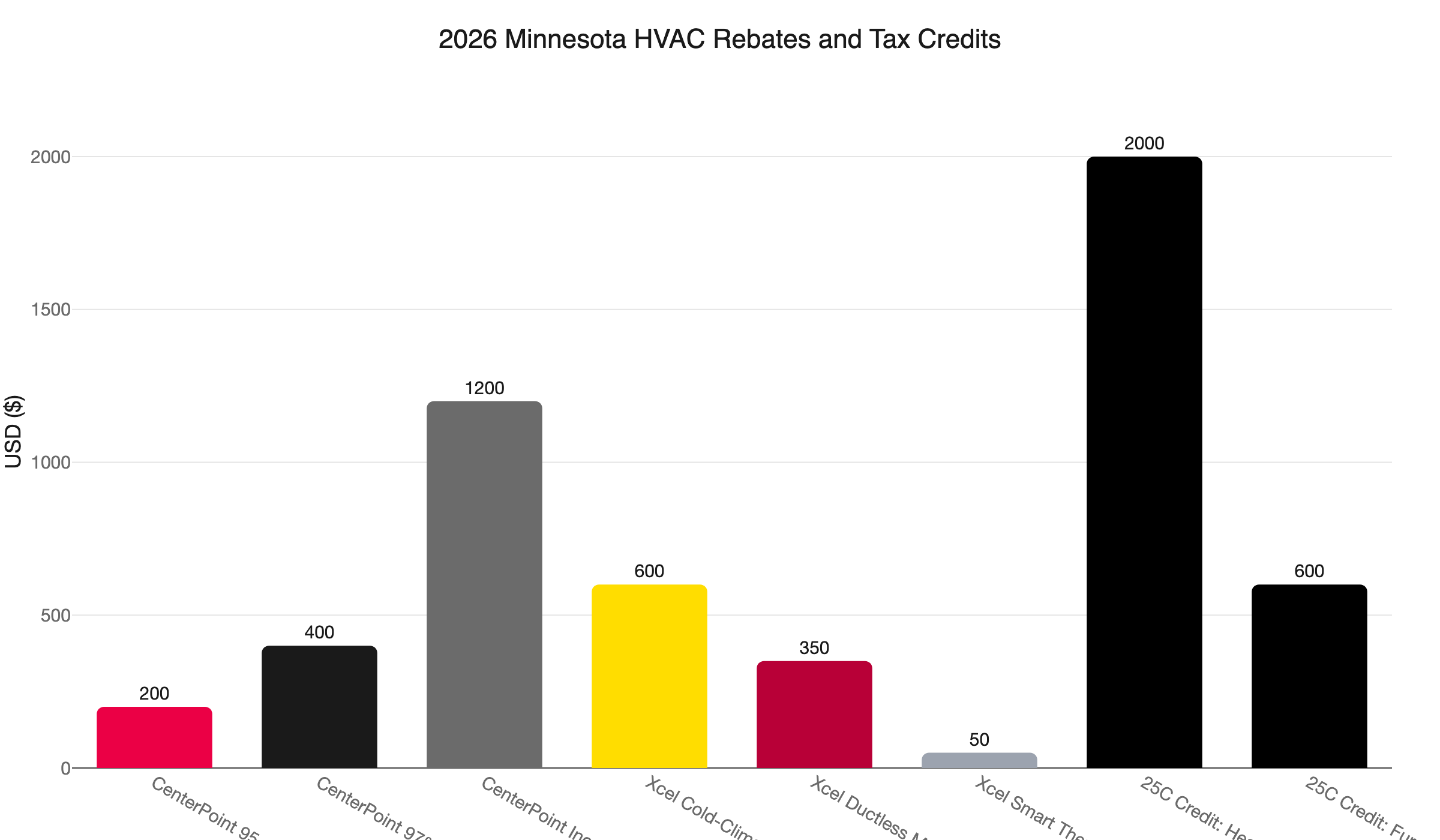
2026 Minnesota HVAC Rebates and Tax Credits
Your furnace is running. The main floor is 70 degrees. But walk upstairs and it feels like a different building. If your home is upstairs too cold in winter while the first floor is comfortable, the thermostat is not lying to you. It is just measuring the wrong floor.
This is almost never a furnace problem. It is a [duct distribution problem](/blog/flex-duct-problems-hvac-airflow-twin-cities/). And the fix depends entirely on which of three root causes is actually driving it.
This post walks through each one: from the free fix you can do yourself this afternoon to the equipment upgrade that solves it permanently. It is the winter mirror of our guide to [hot upstairs rooms in summer](/blog/upstairs-too-hot-summer-cooling-twin-cities/). The physics work differently in heating season, and so do the fixes.
## Why Is Your Upstairs Too Cold in Winter When Heat Rises?
**The short answer:** In a forced-air system, hot air does not float upstairs on its own. The blower pushes it through supply ducts. If those ducts cannot deliver adequate airflow, or if return air cannot complete the loop, the second floor stays cold no matter how hard the furnace works.
This surprises a lot of homeowners. Heat rises, so why is the upstairs still cold? The answer is that forced-air heating is about pressure, not buoyancy. The blower creates positive pressure in the supply ductwork and pushes air to every register in the house. If a register is getting weak airflow, physics is not going to compensate. The duct system has to.
Minnesota winters make this problem more punishing than anywhere the generic internet advice was written. The Twin Cities heating design temperature is -16 degrees Fahrenheit at the 99th percentile. A distribution imbalance that creates a minor 2-degree gap at 20 degrees can produce a much harsher gap during a polar vortex. Duct design matters here more than it does in California or Ohio.
## The Real Culprit: A Return-Air Deficit
This is the cause that nearly every article on cold upstairs rooms misses entirely, and it is the most common root cause.
A forced-air system works as a closed loop. The furnace heats air. The blower pushes it through supply ducts to every room. That air must return to the furnace through return ducts. When the upper floor has inadequate return-air capacity, the system cannot complete the loop upstairs.
The result is a pressure imbalance. Upstairs rooms become slightly positively pressurized because supply air pushes in but has no easy path out. That backpressure fights the blower and actually reduces the volume of air delivered to those rooms. You end up with less airflow upstairs, not more, even while the furnace runs at full output.
[U.S. Department of Energy Building America research](https://www1.eere.energy.gov/buildings/publications/pdfs/building_america/30506.pdf) found that "most homes have only one or two return registers located in common areas such as hallways. Some homes have no return duct systems at all. Such design shortcuts often result in lower efficiency and higher heating and cooling bills."
That last line matters. A home with no upstairs return register was not built badly by accident. It was built to a cheaper standard common in tract construction through the 1990s. If your home is from that era and has always had a cold second floor, this is likely why.
**Signs of a return-air deficit upstairs:**
- Interior doors feel like they have slight positive pressure pushing them, especially when the furnace is running
- Supply vents upstairs feel weak compared to downstairs vents, even with everything fully open
- The main-floor thermostat satisfies quickly but upstairs rooms never catch up
- The problem gets noticeably worse when [bedroom doors are closed](/blog/closed-bedroom-doors-hvac-airflow-pressure-twin-cities/)
The fix for a return-air deficit is professional work: adding a return register, extending a return duct run, or cutting a transfer grille between a hallway and a closed room to allow air movement without full ductwork. Scope and cost depend on [your home's layout](/blog/hvac-split-level-home-twin-cities/). A diagnostic visit is the right starting point.
## Did You Leave Your Seasonal Dampers in Summer Mode?
**The short answer:** If your home has manual damper handles on the supply trunk lines, check them. They may still be set to restrict upstairs airflow from summer and never flipped back for heating season. Correcting this costs nothing.
Many homes built from the 1970s through the early 2000s have manual balancing dampers: a flat metal plate inside a duct, adjusted by a handle or wing nut on the outside of the trunk line. In summer, partially closing the upstairs supply branches forces more cool air downstairs, where the thermostat sits. Cool air does not naturally fall to the lower floor, so that adjustment makes sense in the cooling season.
In winter, the logic reverses. The furnace pushes hot air upward. Upstairs supply runs should receive air more easily than they do in summer. But if the dampers are still in their summer position, those runs are being partially choked, and you are fighting your own ductwork.
**How to check:**
- Find the main supply trunk running from the furnace into the basement ceiling or mechanical space.
- Look for handles, tabs, or wing nuts on the branches that extend toward the second floor.
- A handle aligned parallel to the duct: fully open. Perpendicular: fully closed. Angled: partial restriction.
- For winter heating: open the upstairs branches to maximum or near-maximum position.
- If you want to restrict downstairs runs slightly to redirect more air up, do it gently and check comfort after 24 hours before adjusting further.
Not every home has manual dampers. Newer construction and some older homes have none at all. If you cannot find handles on your ductwork, a technician can confirm whether your system has adjustable dampers during a diagnostic visit.
## What Is a Bypass Damper, and Should You Trust One?
**The short answer:** A bypass damper relieves pressure in a zoned system when some zone dampers close. Contractors install them on single-stage furnaces with multiple zones. Building scientists say they create as many problems as they solve and should not be used.
Here is the mechanical problem. When a zone damper closes on one floor, the blower still pushes the same air volume. That air has to go somewhere. Without a release valve, static pressure spikes. High static pressure stresses the blower motor, can cause short cycling, and risks freezing the evaporator coil.
A bypass damper is supposed to solve this by opening a path between the high-pressure supply plenum and the return side when zone dampers close. The concept makes sense. The reality does not hold up.
[Building scientist Allison Bailes, PhD, documented the consensus among building scientists on this approach](https://www.energyvanguard.com/blog/navigating-the-twilight-zone-the-hidden-flaw-in-a-zoned-duct-system/): "Bypass ducts should never be used." Both pro-zone and anti-zone experts agreed. Three specific failure modes emerged:
1. The bypass routes cold return air into the supply stream near the coil, lowering efficiency.
2. "The bypass duct steals air. Even with all zone dampers open, the bypass duct has a big pressure difference across it, and air is lazy. It'll cheat and take the path of least resistance."
3. A colder coil freezes more easily. "A frozen coil is way worse" for airflow than the original pressure problem.
[HVAC contractor PV HVAC echoed the conclusion](https://www.pvhvac.com/blog/got-hvac-zones-you-might-need-a-bypass-damper-or-not/): "Bypass components can't fix bad HVAC design. Zoning a single-stage system is always going to be a sub-par design." Their guidance: manage comfort as well as you can on the existing single-stage system, then zone properly at replacement time.
What "properly" means: pair your zoning controls with a variable-speed or modulating furnace. A variable-speed system adjusts its output based on how many zones are calling. No pressure spike. No bypass needed. The zones actually behave as designed.
## What Does Minnesota Code Say About Duct Design?
Minnesota law requires HVAC equipment be sized per ACCA Manual S and designed per Manual J and Manual D. [Minnesota Rules Chapter 1346](https://www.dli.mn.gov/sites/default/files/pdf/BOL_Mechanical_Fuel_Gas_Code.pdf) specifies that "oversizing of heating equipment shall not exceed 40% of the calculated load requirements."
An oversized furnace is a root cause most homeowners never suspect. When a furnace is significantly oversized, it fires, heats the main floor quickly to thermostat setpoint, and shuts off. The run cycle is short. The second floor, which takes longer to warm, never gets enough run time to reach temperature.
A proper Manual J load calculation accounts for your home's square footage, insulation, windows, air sealing quality, and local climate data. In the Twin Cities, that means designing for -16 degrees, not a national average. If your furnace was installed without a Manual J, oversizing is a real possibility, especially in older homes where contractors sized equipment by rule of thumb.
The same code chapter governs [duct sealing](/blog/duct-sealing-leaky-ductwork-energy-loss/). Minnesota Rules prohibit unlisted duct tape as a primary sealant on any duct. If your home has older ducts sealed with standard silver tape, assume they are leaking. Leaky supply runs in an unconditioned basement dump heated air before it ever reaches the second floor.
The [DOE also notes](https://www1.eere.energy.gov/buildings/publications/pdfs/building_america/30506.pdf) that ducts should "be designed so they can be balanced in the field." A duct system built without that capacity was never designed to solve a comfort imbalance without significant rework.
## How Do You Fix an Upstairs Too Cold in Winter? Start Here.
Work through this list from top to bottom. Most homeowners find their fix before reaching the end.
**Step 1: Flip your seasonal dampers (cost: $0)**
Check the supply trunk lines for manual damper handles. Open the upstairs branches wider than they were in summer. Confirm handles are parallel to the duct, meaning fully open. This takes 10-20 minutes.
**Step 2: Switch the thermostat fan to "ON" as a diagnostic test (cost: $0)**
Switching from "AUTO" to "ON" runs the blower continuously, even when the furnace is not firing. If the second floor warms up over several hours with continuous circulation, you have a distribution problem a duct balance can likely fix. If it does not warm up, you probably have a return-air deficit. This test costs nothing and saves you a diagnostic visit if the answer is obvious.
**Step 3: Schedule a [professional duct balance](/blog/how-to-balance-hvac-registers-airflow-twin-cities/) and heating diagnostic (cost: $95-$250)**
A technician measures airflow at each register, checks static pressure, inspects for duct leaks, and confirms damper positions. This is the right entry point before committing to any structural work. You want a clear diagnosis before spending money on a fix.
**Step 4: Return-air addition (cost: varies by scope and home layout)**
If the diagnostic confirms a return-air deficit, adding return capacity is the structural fix. In some homes this means a register and a short duct run. In others it means a transfer grille cut between a hallway and a bedroom. Scope determines cost. Get the diagnostic first.
**Step 5: Duct sealing or ductwork replacement (cost: $1,300 for duct sealing; $6,500-$13,000 for full ductwork replacement)**
If the supply ducts serving the second floor are leaking heavily, undersized, or poorly routed, more significant work may be the best long-term investment. Ask your technician to compare repair costs against replacement and expected energy savings before deciding.
**Step 6: Variable-speed furnace replacement with proper zoning (cost: $6,500-$9,100+ installed)**
This is the permanent fix. A [variable-speed furnace](/heating/heating-equipment/furnaces/) runs long, slow cycles at low capacity. Those extended run times allow air to reach every corner of the house, including the second floor. Paired with properly designed zoning and without a bypass damper, this solves the root cause rather than managing it. For a full breakdown of how zoning works in two-story homes, see our guide to [HVAC zoning systems](/blog/hvac-zoning-systems-two-story-homes/).
## What Minnesota Rebates Apply to These Fixes?
**The short answer:** CenterPoint Energy offers up to $400 on a high-efficiency furnace (or $1,200 for income-qualified customers). Xcel Energy offers rebates on heat pumps and smart thermostats. Both stack with the federal 25C tax credit.
If you reach Step 6, the rebate math meaningfully changes the cost picture.
**CenterPoint Energy (natural gas customers):**
- 95-96% AFUE furnace: $200 rebate
- 97%+ AFUE furnace: $400 rebate
- Income-qualified households: up to $1,200
- [Source](https://centralminnesotaheatingandcooling.com/blog/xcel-centerpoint-hvac-rebates-2026)
**Xcel Energy:**
- Gas furnace rebates: discontinued January 1, 2026
- Cold-climate air-source heat pump: $400-$800 depending on capacity and HSPF2
- Ductless mini-split heat pump: $200-$500
- ENERGY STAR smart thermostat: $50
- Air sealing combined with insulation: 40% of project cost, up to $600
- [Source](https://centralminnesotaheatingandcooling.com/blog/xcel-centerpoint-hvac-rebates-2026)
**Federal 25C tax credit:**
- Heat pumps: 30% of project cost, up to $2,000
- Furnaces and central ACs: 30% of project cost, up to $600
- Stacks on top of utility rebates
- [Source: MNCEE](https://www.mncee.org/minneapolis-bonus-rebate-program)
A practical example: a 97%+ AFUE variable-speed furnace installed at $9,100 qualifies for a $400 CenterPoint rebate and a $600 federal tax credit. Your effective cost drops to roughly $8,100 before financing. Income-qualified CenterPoint customers can reduce it further. Rebate programs are funded through Minnesota's Conservation Improvement Program and can hit budget limits mid-year. Confirm current availability at the time of your quote.
Northern One Hour offers financing on larger jobs. Ask about current terms when you call.
## Schedule a Diagnostic With Northern One Hour
We are locally owned and operated out of Ramsey, MN. Our team serves the Twin Cities metro, including Minneapolis, St. Paul, Blaine, Maple Grove, Plymouth, Brooklyn Park, Woodbury, and Bloomington.
When you call about a cold second floor, we start with a diagnostic, not a guess. We measure airflow at each register, check static pressure at the furnace, inspect ductwork for leaks or restrictions, and confirm damper positions. Then we give you a clear picture of what is causing the problem and what fixing it actually costs.
We show up when we say we will. That is the Northern One Hour commitment: "Always On Time… Or You Don't Pay a Dime!(R)"
Call us at **(763) 260-6662** or book online to schedule a heating diagnostic. If your upstairs has been too cold in winter and you have been living with it, the first step is knowing exactly why.
---
# Air Conditioner Making House Too Dry in Summer? Here's Why
URL: https://northernonehour.com/blog/ac-making-house-too-dry-summer-twin-cities/
Published: 2026-09-01 | Category: Cooling
If your air conditioner is making your house too dry this summer, learn the two root causes and how to fix it without buying a new humidifier.
Key Takeaways
- An AC over-dries your home when the unit is oversized and short-cycles, or when mild outdoor temperatures let latent (humidity) load dominate while sensible (temperature) load stays low.
- The [EPA recommends](https://www.epa.gov/indoor-air-quality-iaq/inside-story-guide-indoor-air-quality) keeping indoor humidity between 30% and 50%. Below 30%, respiratory irritation, static electricity, and wood damage are common.
- The most common free fix is switching the fan from ON to AUTO. Fan-ON blows air over the wet coil during the off-cycle, re-evaporating moisture the coil just collected.
- Raising the thermostat 2-3 degrees reduces daily cycle count, giving indoor humidity more time to stabilize between runs.
- Cycles under 8 minutes on an 80°F day are a short-cycling flag. A Manual J load evaluation is the right response.
- A blower speed adjustment or variable-speed equipment upgrade solves the problem at the equipment level without adding a humidifier.
## Your Air Conditioner Making Your House Too Dry in Summer Is a Real Problem
Most articles about AC and summer humidity chase the opposite problem: the system is not removing enough moisture and the house feels swampy. There is a second failure mode that gets far less coverage, and it might be the one you are living with right now.
Your air conditioner is making your house too dry in summer. The AC is running. The house is cool. But your skin is cracking, you are getting static shocks off the doorknob, and your wood floors are starting to show gaps. Indoor humidity has dropped below 30% and nothing about that feels like summer comfort.
This post explains what causes it, how to confirm the AC is the source, and how to fix it without adding a whole-house humidifier.
## What Are the Symptoms of an Over-Dry Home in Summer?
**Quick answer:** Sustained static shocks, cracking or bleeding skin, repeated nosebleeds, gaps between wood floor planks, and a hygrometer reading below 30% RH are the signals. One or two dry days are weather. When the pattern is daily and the AC is running, the humidity is too low.
The clearest diagnostic tool costs about $15. A basic digital hygrometer, available at any hardware store, gives you a live indoor relative humidity reading. Place it in the room where you spend the most time. Check it mid-afternoon after the AC has been running for several hours.
Symptoms to watch for:
- Static electricity when touching metal surfaces, doorknobs, or other people
- Dry, cracked lips and skin that lotion does not fully relieve
- Nosebleeds, especially in children, without illness or allergies
- A scratchy throat in the morning when you have not been sick
- Wood furniture, floors, or trim showing gaps or separation at the seams
- Paper curling at the edges on flat surfaces
[ASHRAE Standard 55](https://www.ashrae.org/file%20library/technical%20resources/standards%20and%20guidelines/standards%20addenda/55_2017_d_20200731.pdf) sets the summer thermal comfort zone at 73-79°F and 30-60% relative humidity. The standard sets no lower humidity floor for thermal comfort, but notes that skin drying, mucous membrane irritation, and static electricity all occur when RH drops to very low levels. If your hygrometer reads below 30%, you are outside that comfort band.
## What Causes an Air Conditioner to Over-Dry Your Home in Summer?
**Quick answer:** Two distinct failure modes drive this. Either the unit is oversized and short-cycles through the cooling load before the coil can do sustained moisture work, or the unit is correctly sized but mild outdoor conditions let latent load dominate and the AC strips humidity on every short run. Both leave the house cold and dry. Each has a different root cause and a different fix.
### Root cause one: the oversized unit
Every pound of water vapor your AC removes from the air must condense on the cold evaporator coil before it drains away. That condensation takes time. The coil has to drop below the dew point and stay there long enough to pull moisture out of passing air consistently.
An oversized unit cools the house too fast. It hits the thermostat set point in 5-8 minutes, shuts off, and the coil never had time for sustained moisture work. The next cycle starts, the temperature drops again quickly, the unit shuts off again. Short-cycling means the unit is effective at cooling but poor at dehumidifying.
The [U.S. Department of Energy](https://www.energy.gov/sites/prod/files/2013/12/f6/humidity_control.pdf) states it plainly: "Conventional over-sizing to cover for lack of confidence in building enclosure or conditioning system performance causes short-cycling, yielding less moisture removal." ACCA's Manual S standard draws the line at 115% of the Manual J calculated load. Any unit above that is oversized by definition and will short-cycle into dehumidification problems regardless of how well it was otherwise installed.
### Root cause two: mild-day latent dominance
Even a correctly sized AC can over-dry a home on mild summer days. Think 68-72°F outdoors in late June or early September. On those days, outdoor air carries high relative humidity - the [Twin Cities averages 80% RH at 6am in July](https://www.currentresults.com/Weather/Minnesota/humidity-july.php) - but the sensible load on the AC is low. The thermostat barely calls for cooling, but every time it does, the coil strips moisture. The result is a home at 72°F but with humidity at 28%.
This is the scenario most homeowners do not expect: the problem gets worse when the weather is mild, not during heat waves. On a 95°F day, the AC runs long cycles, the coil stays cold and wet, and moisture is removed steadily. On a 68°F morning in July, the unit fires briefly and repeatedly, strips humidity on each short cycle, and the floors start to creak.
## Why Do Oversized ACs Short-Cycle? The Sealed-Home Effect
A third angle makes this especially relevant to Twin Cities homeowners. Many older homes in Minneapolis, St. Paul, Ramsey, Blaine, and Plymouth have gone through energy upgrades in the past 10-20 years. New windows, added attic insulation, and air-sealing reduce the sensible load on the AC. If the system was sized before those upgrades, it is now effectively oversized even if it was correctly specified at installation.
Minnesota does not require a Manual J load calculation for replacement equipment, only for new construction under the MN Energy Code. That means many contractors replace a 4-ton unit with another 4-ton unit without checking whether the improved envelope still needs that capacity. The replacement short-cycles from its first season because the house cannot absorb cooling fast enough.
This sealed-up-home scenario is diagnosable. A $15 hygrometer and a phone timer watching cycle lengths will tell you what you need to know in 20 minutes. See our post on [oversized AC problems in the Twin Cities](/blog/oversized-ac-problems-twin-cities/) for a detailed breakdown of how oversizing compounds over time.
## How Do You Know If Your AC Is the Problem?
**Quick answer:** On a warm but not extreme day, 78-82°F is ideal, note when your outdoor compressor kicks on and when it shuts off. Do this three times. If cycles are consistently under 8 minutes and your hygrometer reads below 35%, the AC is stripping more moisture than the house can replace. That combination is the diagnostic.
Here is the step-by-step check:
1. **Get a hygrometer.** About $15 at any hardware store. Place it in the main living area, away from windows and vents.
2. **Watch the cycle length.** Use your phone stopwatch. Start it when the outdoor compressor kicks on. Stop it when the compressor shuts off. Do this three times and average the results.
3. **Check the pattern.** A well-matched system running on a warm day should run well over 10 minutes per cycle. Consistent cycles under 8 minutes on an 80°F day are a red flag. Under 6 minutes is a strong indicator of oversizing.
4. **Compare the hygrometer reading.** If cycle times are short and indoor humidity is below 30-35%, the AC is the source. If cycles look normal but humidity is still low, the issue is more likely mild-day latent dominance.
Both conditions respond to the same first-line fixes, described next.
## The Free Fixes: Fan Setting and Thermostat
You may not need a service call. Two thermostat settings can make a significant difference, and both cost nothing.
### Switch the fan to AUTO
This is the single most common mistake that makes summer over-drying worse. When the fan is set to ON instead of AUTO, the blower keeps running after the compressor shuts off. Air flows over the wet evaporator coil during the off-cycle, the moisture that just condensed out of the air re-evaporates, and indoor humidity rises back toward where it started. The coil's work is partially undone every cycle.
[Setting the fan to AUTO](https://speerair.com/how-to-fix-oversized-ac-humidity-problems-the-right-way/) stops the blower when the compressor stops. Moisture stays on the coil until it drains through the condensate line. What the coil pulled from your air stays removed. Check your thermostat now. The fan toggle is usually on the main screen or in system settings: AUTO or ON. It should be on AUTO during the cooling season.
### Raise the thermostat 2-3 degrees
A higher set point means fewer cooling cycles per day. Fewer cycles means the coil is cold and wet for longer each run, and indoor air has more time between cycles for humidity to stabilize naturally from breathing, cooking, and normal air infiltration.
This is not a permanent comfort sacrifice. Try raising from 70°F to 72°F or 73°F for a day and monitor the hygrometer. Many homeowners find the home feels more comfortable at 72°F with 45% RH than at 70°F with 28% RH. [DOE's Building America research](https://www.energy.gov/sites/prod/files/2013/11/f5/case_study_wholehouse_dehumidifier.pdf) found that at a 75°F set point, perceived air temperature can vary by as much as 11°F depending on indoor RH. A slightly warmer, properly humid room often feels cooler than an over-dried one.
## When Should You Call for a Service Technician?
**Quick answer:** If switching the fan to AUTO and raising the thermostat do not bring humidity into the 35-50% range within a few days, or if cycles are consistently under 8 minutes on warm days, a technician visit is the right next step. A blower speed adjustment is a sub-hour service that often resolves persistent over-drying without replacing any equipment.
### Blower speed reduction
The blower fan speed controls how fast air moves across the evaporator coil. Faster airflow means air spends less time against the cold coil surface and the system removes less moisture per pass. Slowing the blower - within manufacturer specs - increases air-to-coil contact time and improves moisture removal without shortening the compressor run.
A technician can make this adjustment in a single visit. The work typically falls within a standard cooling system tune-up, priced at $95-$250 depending on system access and whether the technician finds other items to address. If you have not had a system check this cooling season, this is a practical time to do one.
### Ruling out other short-cycle causes
If short cycles are confirmed, a technician will also check for other causes: a refrigerant charge that is slightly high, a dirty evaporator coil restricting airflow, or a clogged condensate drain holding moisture on the coil and triggering a pressure safety shutoff. Those conditions cause short cycles for different reasons than oversizing, and each has its own remedy.
Our post on [AC short-cycling causes and fixes](/blog/ac-short-cycling-causes-fixes-twin-cities/) covers what a technician looks for and what corrective options look like at each step.
## Is a Variable-Speed System the Right Long-Term Fix?
**Quick answer:** If your AC is past 10-12 years and you have confirmed short-cycling through multiple cooling seasons, a variable-speed replacement addresses the problem structurally. Variable-speed equipment runs at lower capacity for extended runtimes, keeping air moving across a consistently cold, wet coil. This removes significantly more moisture per hour than a single-stage unit running at full capacity in short bursts.
Variable-speed systems avoid short-cycling by design. Instead of running at 100% until the thermostat trips, they ramp down to 40-60% capacity and hold longer cycles. The coil stays at condensation temperature continuously. Air makes extended contact. The system removes more total moisture per day even though each individual cycle feels less aggressive.
[DOE's Building America program](https://www.energy.gov/eere/buildings/articles/building-america-success-story-evaluating-moisture-control-variable) identified variable-speed air handlers as the structural solution for homes where conventional sizing fails - specifically homes where low peak loads mean a right-sized conventional unit is still effectively oversized during partial-load conditions. That describes a large share of renovated Twin Cities homes.
For homes where summer humidity swings from 80% RH at dawn to 50% by mid-afternoon, variable-speed equipment removes the tradeoff between correct sizing and latent control. See our detailed post on [variable-speed AC benefits in the Twin Cities](/blog/variable-speed-ac-benefits-twin-cities/) for what to expect from modern systems.
A central AC replacement at the mid-tier installed level in the Twin Cities starts at $7,500-$10,400. High-efficiency variable-speed systems with 18-20+ SEER2 ratings run $11,000-$15,600 installed. Financing is available for qualifying equipment and installations. If the existing system is past its useful life and short-cycling is confirmed, replacement often makes better financial sense than repeated service visits on a system that is structurally mismatched to the home.
## Why Twin Cities Homes Are Especially Vulnerable to This Problem
The Twin Cities sits in HVAC Climate Zone 6, with some of the most extreme seasonal temperature swings in North America. Systems sized for a 95°F design day are structurally oversized on the mild, humid mornings that run throughout June and early September. That mismatch is not a contractor error - it is a design tradeoff that becomes more pronounced as homes get tighter.
Minnesota's summer humidity is higher than most homeowners register. [Minneapolis and St. Paul average 65% daily RH in July, with readings near 80% at 6am](https://www.currentresults.com/Weather/Minnesota/humidity-july.php). [Scientists tracking Minnesota weather have noted an increase in dew-point readings at or above 70°F](https://www.startribune.com/in-minnesota-it-really-is-the-humidity/601375874), which means the latent load your AC handles has grown even as tighter envelopes have reduced the sensible load.
This combination - high outdoor latent load, tighter home envelopes, and AC units sized before renovations - is the exact scenario that produces summer over-drying. The unit was not wrong when it was installed. The home changed around it. The fix starts with measuring what is actually happening (hygrometer plus cycle timer) and then applying corrections that match the root cause.
If cycle times are under 8 minutes on an 80°F day and indoor RH is below 35%, you have the evidence you need to make a confident decision about what to adjust and how.
## Ready to Get Your Home Dialed In?
Our team is locally owned and operated in Ramsey, MN. We serve Minneapolis, St. Paul, Blaine, Maple Grove, Plymouth, Brooklyn Park, Woodbury, Bloomington, and the broader Twin Cities area. Whether the fix is a fan setting walk-through, a blower speed adjustment, or a full Manual J evaluation ahead of a replacement, we show up when we say we will.
We back every visit with a 100% satisfaction guarantee and the on-time promise: "Always On Time… Or You Don't Pay a Dime!(R)"
Call **(763) 260-6662** or [schedule a cooling system check online](/air-conditioning/air-conditioning-maintenance/) and we will take a look.
---
# Should I Close Vents in Unused Rooms to Save Energy?
URL: https://northernonehour.com/blog/closing-hvac-vents-unused-rooms-myth-twin-cities/
Published: 2026-09-01 | Category: HVAC
Closing a vent seems like a smart way to cut heating costs. Here is what actually happens inside your ducts, blower, and furnace, and what works instead.
Key Takeaways
- Closing vents in unused rooms does not reduce how much energy your system uses. It changes where the air exits, not how much energy was spent making it.
- [Most residential duct systems already run at roughly 0.8 inches of water column](https://www.energyvanguard.com/blog/can-you-save-money-by-closing-hvac-vents-in-unused-rooms/) - 60% above the rated maximum of 0.5 iwc - before a single vent closes.
- Modern ECM blower motors respond to rising pressure by spinning faster and drawing more electricity. Closing vents makes them work harder, not easier.
- Older PSC blower motors lose airflow under pressure, which can ice over the evaporator coil and shorten compressor life.
- In a Minnesota winter at -15F to -25F, a sealed room can drop below 32F inside wall cavities and freeze supply lines. No national guide mentions this because it is not a warm-climate problem.
- Elevated duct pressure forces air into duct seams, creating leaks that send conditioned air into your attic or wall cavities instead of your living space.
- Two alternatives actually work without harming your system: HVAC zoning and smart thermostats. Both are rebate-eligible in Minnesota.
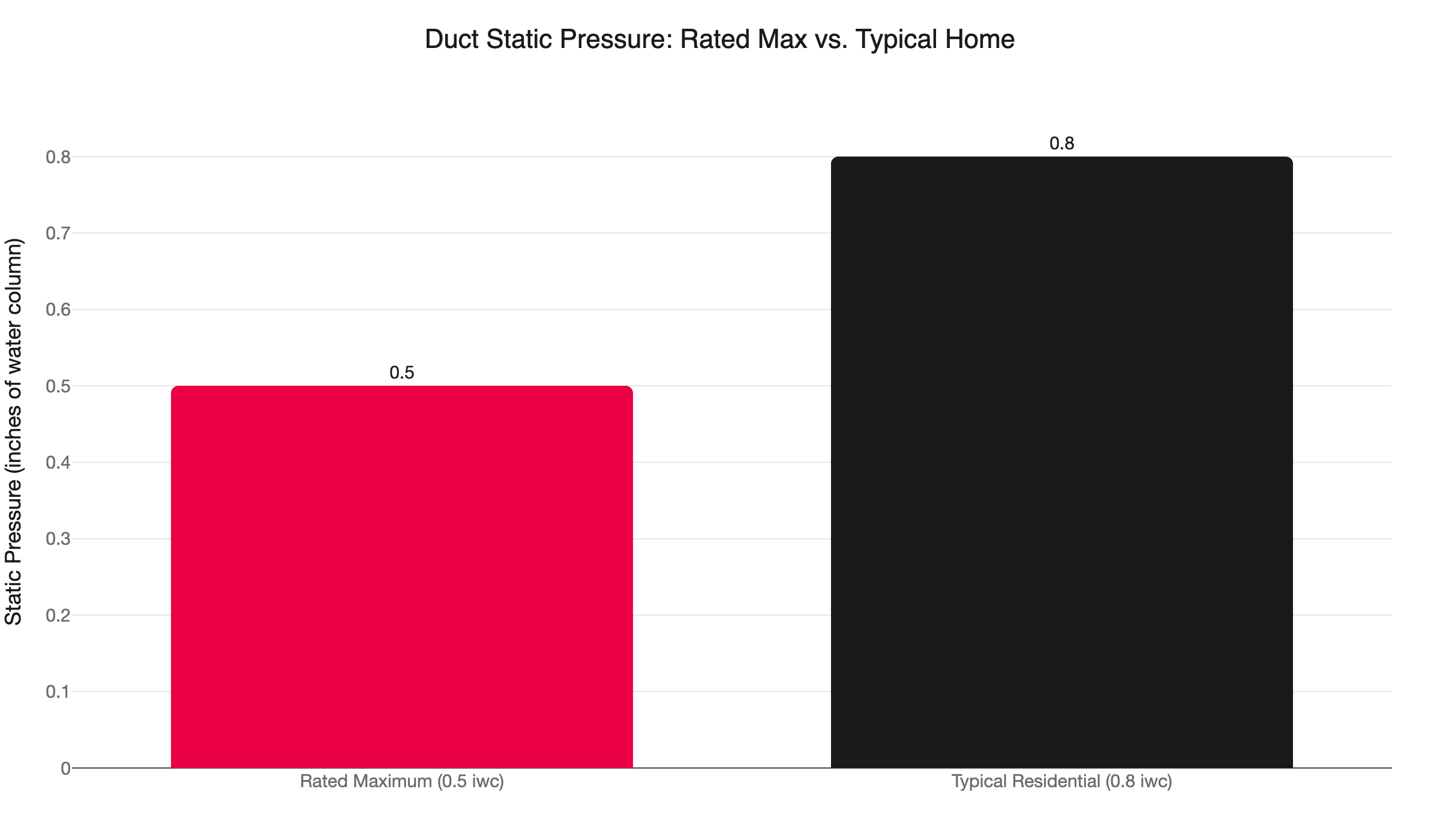
Duct Static Pressure: Rated Max vs. Typical Home
## Should I Close Vents in Unused Rooms to Save Energy?
**The direct answer:** No. [The Department of Energy calls this practice not recommended](https://www.energy.gov/sites/default/files/2013/11/f5/hvac_guide.pdf) for homes with forced-air systems. Closing a register raises static pressure inside your ductwork. Your blower keeps pushing the same volume of conditioned air, now against a system with fewer exits for that air. The energy required to condition and move it does not decrease. In many cases, it increases.
The intuition is understandable. Not heating that room should cost less. But your furnace has already burned the gas. Your blower is already running. Closing the vent only reroutes where the air goes. It does not reduce how much work was done to make it.
A 2003 study from Lawrence Berkeley National Laboratory measured register-closing effects on forced-air heating systems across a range of climate conditions, duct leakage levels, and numbers of closed registers. [The finding was consistent in every scenario tested](https://www.energyvanguard.com/blog/can-you-save-money-by-closing-hvac-vents-in-unused-rooms/): closing registers increased energy use. Any thermal savings from not conditioning certain rooms were offset - and often exceeded - by the energy penalties that elevated pressure creates downstream.
## How Does Closing a Vent Change the Pressure in Your Duct System?
**Short answer:** Closing a register works like putting your thumb over part of a hose nozzle. The water keeps coming. The pressure behind your thumb rises. Inside your ducts, the same physics apply - and most Twin Cities systems have zero margin to absorb the change before a vent is ever touched.
A forced-air system is designed to operate within a specific static pressure range. [The rated maximum for a residential duct system is 0.5 inches of water column (iwc)](https://www.energyvanguard.com/blog/can-you-save-money-by-closing-hvac-vents-in-unused-rooms/). Field measurements across many homes show that most systems already run at roughly 0.8 iwc under normal conditions. That is 60% above the rated limit before a single vent closes.
When you shut two or three registers in rooms you rarely use, you push an already over-pressured system higher still. Your blower, your duct joints, and your heat exchanger all absorb the consequence. Some absorb it for years. Some give out ahead of schedule.
Twin Cities homes carry extra exposure here. Much of the metro's housing stock was built before 1980, with original sheet metal or [unsealed flex duct](/blog/flex-duct-problems-hvac-airflow-twin-cities/). These systems are the most vulnerable to pressure-induced duct leakage and the most likely to be at or above the 0.8 iwc threshold already. They have the least margin and the most to lose.
## What Happens to a Modern ECM Blower Motor When Vents Are Closed?
**Short answer:** It speeds up and draws more electricity. An ECM (electronically commutated motor) is programmed to maintain target airflow. When duct pressure rises, the motor compensates by spinning faster. Closing vents makes it work harder - the opposite of what most homeowners expect.
If your furnace was installed or replaced in the last decade, it almost certainly has an ECM blower. Rebate programs through Xcel Energy and CenterPoint Energy have pushed 95%+ AFUE furnaces with ECM motors into most replaced systems across the Twin Cities. Under normal operating conditions, this is exactly what you want: a motor that adapts continuously to maintain consistent airflow and comfort.
But [when vents close and duct pressure rises, the ECM ramps up speed and electricity draw to compensate](https://www.energyvanguard.com/blog/can-you-save-money-by-closing-hvac-vents-in-unused-rooms/). Your gas bill may stay flat. Your electricity bill climbs every time the blower runs.
Minnesota furnaces run 200 or more days each year. The added electricity draw from a motor running at elevated speed compounds over a long heating season. Most homeowners with modern, high-efficiency equipment assume the furnace will simply work less hard when rooms are closed off. The physics push in the opposite direction.
## What About an Older PSC Blower Motor?
**Short answer:** A PSC (permanent split capacitor) motor cannot adapt to rising pressure the way an ECM can. It slows down instead. Lower airflow creates two distinct failure paths: a frozen evaporator coil in summer and an overheated heat exchanger in winter. Both are expensive.
A PSC motor is a simpler, less adaptive design. When static pressure rises, it loses speed and moves less air. In cooling mode, reduced airflow across the evaporator coil drops refrigerant temperatures too low. Ice forms on the coil. Airflow drops further. The compressor strains to maintain pressure against a partial blockage. A [frozen evaporator coil](/blog/frozen-evaporator-coil-why-ac-ice-twin-cities/) is often the first visible symptom, but the compressor absorbs the long-term punishment.
If your home still has its original blower from a furnace installed before 2010, there is a reasonable chance it uses a PSC motor. The fix is not closing fewer vents. It is having a technician measure airflow and static pressure so you know where your system actually stands.
In heating mode, the reduced airflow problem shifts to the heat exchanger. Which brings us to the most serious consequence of closing vents.
## Can Closing Vents in Unused Rooms Crack My Heat Exchanger?
**Short answer:** Yes, over time. Restricted airflow causes the heat exchanger to overheat on every heating cycle. Repeated overheating causes metal fatigue. Eventually the exchanger cracks, allowing carbon monoxide to enter your living space through the supply air stream.
[The heat exchanger is the most expensive component in a gas furnace](https://www.bobvila.com/articles/this-common-home-heating-hack-will-waste-more-energy-and-money-than-it-saves/). Its job is to separate combustion gases from the air you breathe. When airflow is restricted, the exchanger runs hotter than it was designed to on every call for heat. The metal expands and contracts unevenly under that elevated temperature. Over enough heating cycles, it cracks.
[A cracked heat exchanger lets combustion byproducts - including carbon monoxide - leak into the supply air stream](https://www.hunker.com/2094575/should-you-close-vents-unused-rooms-warm-winter/). Carbon monoxide is colorless and odorless. You will not detect it without a working CO alarm. A cracked heat exchanger is not a problem to defer: the furnace cannot safely run until the issue is addressed.
For more on the warning signs before a crack develops, our [cracked heat exchanger guide](/blog/cracked-heat-exchanger-signs-minnesota/) covers what to look for and when to call for an inspection.
## Does Closing Vents Cause Duct Leaks?
**Short answer:** Yes. Elevated pressure pushes conditioned air into every imperfection in your duct system. Small gaps at joints and seams widen over time. Air escapes into attics and wall cavities - spaces you paid to condition that receive none of the benefit.
[Closing registers forces conditioned air through duct seams and out through leaks into unconditioned spaces](https://www.energyvanguard.com/blog/can-you-save-money-by-closing-hvac-vents-in-unused-rooms/), raising heating and cooling costs rather than reducing them. The Lawrence Berkeley study confirmed this effect across different levels of baseline duct leakage. Even homes that started with reasonably tight ductwork lost more energy through pressure-induced leaks when registers were closed.
Duct leaks compound. A seam that weeps a small amount of air this winter leaks more next winter. On an older home with sheet metal duct that has never been sealed, this process is likely already underway. For a clear picture of what duct leakage costs and what professional sealing addresses, our [duct sealing guide](/blog/duct-sealing-leaky-ductwork-energy-loss/) walks through the details.
## What Is the Pipe-Freeze Risk Specific to Minnesota Winters?
**Short answer:** In a Minnesota winter, a sealed room can drop below 32F inside exterior wall cavities when outdoor temperatures hit -15F to -25F. Supply lines running through those walls can freeze and burst. This is a real, expensive consequence that no national HVAC guide mentions - because in most of the country, it is not a realistic outcome.
Most national guides stop their analysis at duct leaks and heat exchanger stress. Those are real problems, but they develop gradually. Frozen pipes can happen in a single overnight cold snap.
Twin Cities temperatures regularly reach -15F to -25F in January and February. A spare bedroom with the vent closed and [the door shut](/blog/closed-bedroom-doors-hvac-airflow-pressure-twin-cities/) loses heat through exterior walls faster than it can gain heat from adjacent rooms. The air temperature inside the room may remain above 32F. The interior cavity of the exterior wall - where plumbing supply lines commonly run - may not.
When a supply line inside a wall freezes and bursts, the repair is not straightforward. You need to locate the break, cut drywall to access it, repair or replace the section of pipe, then patch and repaint. Locating a hidden break alone can take hours. Total repair costs commonly run into the thousands of dollars. That outcome is not offset by a season of utility savings from closing a vent.
This risk is specific to Climate Zone 6, where Minnesota sits. It does not appear in national guides because in Texas, Georgia, or California it is not a realistic winter outcome. In the Twin Cities metro, it is.
## What Should I Do Instead of Closing Vents?
Two approaches deliver real energy savings in underutilized rooms without creating duct pressure problems: HVAC zoning and smart thermostats. Both give you meaningful control over which areas of your home are conditioned. Neither fights against your duct system's design.
**HVAC zoning** uses motorized dampers installed inside the ductwork, not [at the register face](/blog/how-to-balance-hvac-registers-airflow-twin-cities/). A zone panel opens and closes those dampers based on individual thermostat calls from each zone. When a zone does not need conditioning, the damper adjusts inside the duct, where the system accounts for pressure. The rest of the duct system is not penalized.
A zoning system can divide your home into two, three, or more independently controlled areas. If the guest room sits empty for three weeks, that zone runs at a setback temperature. Your living areas and master bedroom get full conditioning. This is the right tool for homes with [consistent hot and cold spots](/blog/upstairs-too-cold-winter-heating-twin-cities/). Our [HVAC zoning guide for two-story homes](/blog/hvac-zoning-systems-two-story-homes/) covers how zoning works, what installation involves, and when it makes the most financial sense.
**Smart thermostats** address the scheduling side of the problem. Programming setbacks during hours when rooms are consistently empty reduces energy use without touching the duct system. [Xcel Energy offers rebates for qualifying smart thermostats](https://www.xcelenergy.com/programs_and_rebates/residential_programs_and_rebates/heating_and_cooling) for Minnesota homeowners. That rebate takes a meaningful portion off the upfront cost and shortens the payback period considerably.
The right choice depends on how your home is laid out, where the comfort problems are most persistent, and what your budget for a fix looks like. As a locally owned and operated team, we will give you a straight answer on which option fits - not the one with the higher margin.
## What Are the Signs My Duct System Is Already Under Stress?
**Short answer:** Watch for rooms that stay [too hot or cold](/blog/hvac-vaulted-ceiling-heating-cooling-twin-cities/), a blower that runs louder than usual, and energy bills that climb without a weather explanation. Any single symptom warrants a look. More than one means the system needs a professional evaluation now, not at the next tune-up.
You may not need to close any vents to trigger duct pressure problems. Many Twin Cities systems already run over their rated limit. These are the signals to watch:
- Rooms that take noticeably longer to reach the thermostat setpoint than the rest of the house
- Heating or cooling bills that increase without a clear weather explanation
- A blower that runs louder or at a noticeably higher pitch than it used to
- Dusty or musty air coming from specific registers
- Ice forming on the indoor coil during a summer cooling call
- A furnace or AC that short-cycles - turns on and off more frequently than normal
More than one of these together points toward a [static pressure or airflow problem](/blog/high-static-pressure-hvac-symptoms-fixes-twin-cities/). A pressure measurement during a [furnace tune-up](/heating/heating-equipment/furnaces/furnace-tune-ups/) will tell you exactly where your system stands. The same visit catches heat exchanger issues before they become a safety problem, not after.
## When Should You Call Northern One Hour?
Call when the system shows symptoms - not only when something fails. A technician who finds elevated static pressure, duct leaks, or a stressed blower during a maintenance visit addresses those at a fraction of the cost of a downstream failure.
If you have been closing vents as a regular habit for years, schedule an inspection. The cost of that evaluation is far lower than a heat exchanger replacement, a compressor failure, or burst pipe repairs inside your walls. Catching problems early is always the better trade.
Northern One Hour is locally owned and operated in Ramsey, MN, serving the full Twin Cities metro: Minneapolis, St. Paul, Blaine, Maple Grove, Plymouth, Brooklyn Park, Woodbury, Bloomington, and the surrounding communities. We back every service call with our on-time promise: "Always On Time… Or You Don't Pay a Dime!(R)" Call us at (763) 260-6662 or book online to schedule an inspection or seasonal tune-up at a time that works for you.
---
# Is an HVAC Extended Warranty Worth It? Minnesota Guide
URL: https://northernonehour.com/blog/hvac-extended-warranty-worth-it-minnesota/
Published: 2026-09-01 | Category: HVAC
Most extended warranty advice ignores Minnesota's climate. Here's what manufacturer, contractor, and third-party warranties actually cover for Twin Cities homeowners.
Key Takeaways
- Registering your new equipment within 60-90 days of install doubles your parts coverage from 5 years to 10 years. This is free.
- Manufacturer warranties cover parts. Labor coverage expires after year one on most brands. You pay the technician even when the part ships for free.
- Heat pumps in Minnesota see [40% more service calls](https://hvaccalculatorhub.com/blog/hvac-lifespan-when-replace) than the same models in warmer states. The "not worth it" math is built on moderate-climate failure rates.
- Third-party home warranties cap HVAC claims at $1,500-$3,000 and commonly deny claims for missed maintenance or unpermitted installs.
- A contractor-issued extended labor warranty ($500-$1,550 one-time) paired with a registered manufacturer warranty covers the most likely gap for less than most home warranty premiums.
- Minnesota requires a mechanical permit for every furnace, AC, and heat pump replacement. An unlicensed install voids your manufacturer warranty.
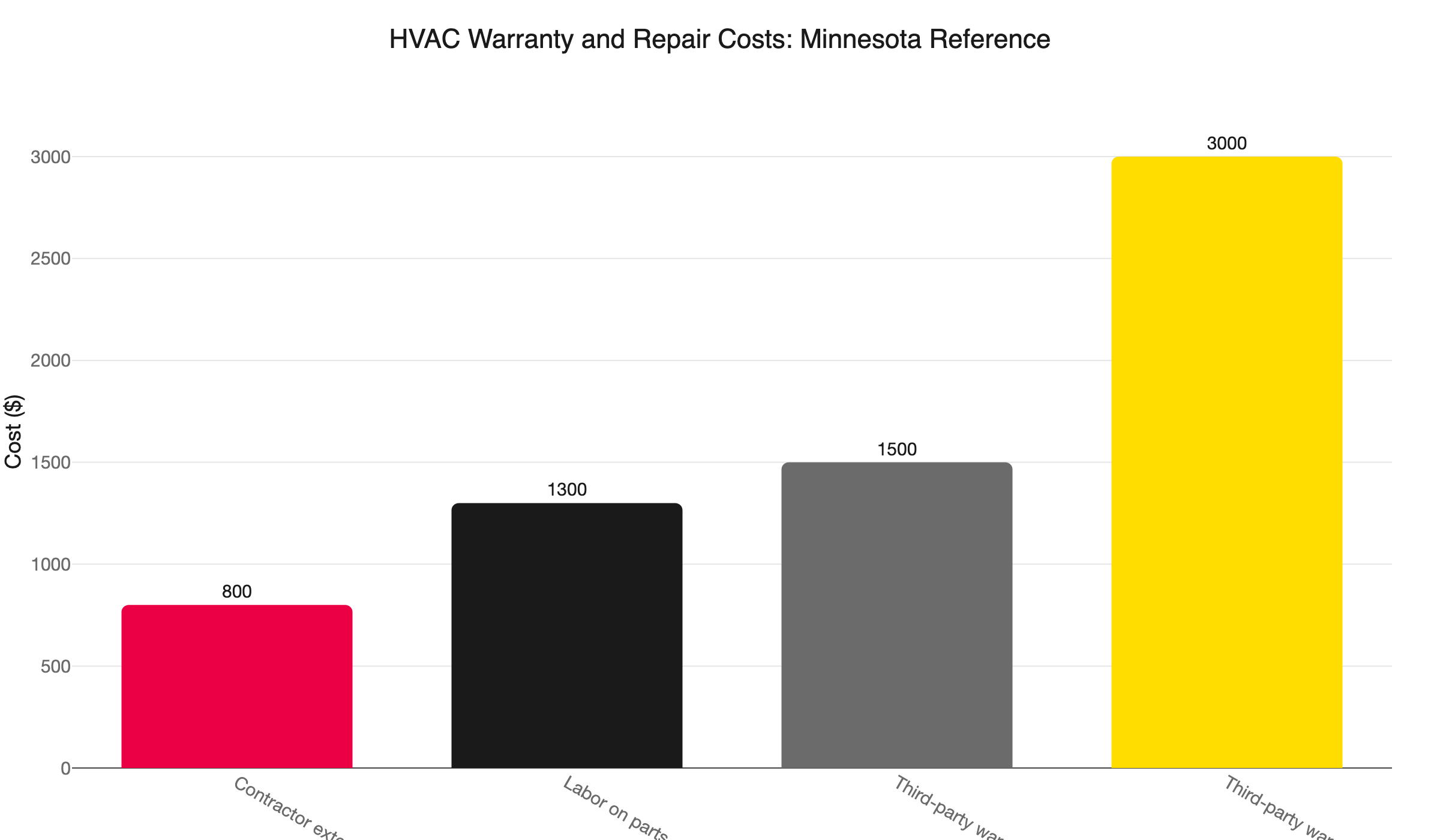
HVAC Warranty and Repair Costs: Minnesota Reference
## What Does an HVAC Warranty Actually Cover?
**Short answer:** The part, not the labor, and only when the failure is a manufacturing defect rather than wear, neglect, or improper installation. Most homeowners learn this when a repair bill arrives for a system they thought was covered.
HVAC warranty coverage stacks in three layers:
**Manufacturer warranty (included with the equipment)**
- Parts: 5 years if you skip registration, 10 years if you register on time
- Labor: typically expires after the first year
- Covers: factory defects in materials and workmanship
- Does not cover: wear and tear, refrigerant leaks from an improper install, failures tied to skipped maintenance
**Contractor labor warranty (offered at install)**
- Standard: 1-2 years on workmanship
- Extended option: some contractors offer a paid add-on covering labor for 5-10 years
- Covers: technician time when a parts-covered component fails
**Third-party home warranty (sold by warranty companies)**
- Per-claim caps: $1,500-$3,000 on HVAC
- Common exclusions: pre-existing conditions, improper installation, lack of documented maintenance
- Added cost: most require an annual inspection at $150-$300 per year, separate from the plan premium
Understanding these layers tells you where your real exposure sits. It is almost always in labor, not parts.
---
## Did You Know Your Manufacturer Warranty Can Double for Free?
**Short answer:** Yes. Every major HVAC brand offers a 10-year parts warranty if you register within 60-90 days of install. Miss the deadline and you fall back to a 5-year base. Registration costs nothing. Your contractor can handle it on install day.
This is the most valuable single step a homeowner can take for warranty protection, and it gets skipped constantly. The [registration deadlines](/blog/hvac-warranty-registration-what-homeowners-miss-minnesota/) by brand:
- **Carrier:** 90-day window; unregistered = 5-year parts, registered = [10-year parts](https://www.thecoolingco.com/blog/hvac-brand-warranty-registration-guide/)
- **Trane:** 60-day deadline; same 5-to-10-year upgrade - [details here](https://greenleafair.com/trane-hvac-warranty-explained/)
- **Lennox:** 60-day window; registration also unlocks up to 3 years of labor coverage at no extra charge - see [warrantyyourway.com](https://www.warrantyyourway.com/) for the terms
- **Goodman:** 60-day window; [same 5-to-10-year parts upgrade](https://www.thecoolingco.com/blog/hvac-brand-warranty-registration-guide/)
That five-year difference in coverage is worth $1,000-$4,000 depending on the component. A compressor alone runs several thousand dollars as a part.
When we install a new system at Northern One Hour, we register the equipment for you. If a different contractor installed your current system, check your paperwork now. A quick call to the manufacturer's warranty support line will confirm whether registration was completed.
If the window has already closed, that is still useful information. It tells you your current exposure and whether a contractor-issued extended labor warranty makes sense as a backstop going forward.
---
## Is an HVAC Extended Warranty Worth It in Minnesota?
**Short answer:** It depends on which warranty. The free manufacturer registration is always worth claiming. Third-party home warranty coverage for HVAC rarely pencils out once you review the caps and exclusions. A contractor's extended labor warranty often does, especially for heat pumps and high-efficiency furnaces.
The online consensus - "extended warranties are almost never worth it" - is built on national average data weighted toward mild-climate states. Minnesota is not a mild-climate state.
You run a furnace hard from October through April. You lean on your AC through July and August humidity swings. That is two systems under sustained stress, not one. Most Twin Cities homes also carry both a furnace and a central AC, and many add a heat pump for shoulder-season efficiency. Every system adds warranty exposure over time.
The failure rates that drive moderate-climate math simply do not port here. A heat pump working through a Minnesota January operates at the edge of its rated range. The math has to match the climate.
---
## Does Minnesota's Climate Make Extended Warranties More Valuable?
**Short answer:** Yes, materially. Heat pumps in DOE Climate Zone 6 - which covers Minnesota, Wisconsin, and Maine - generate 40% more service calls than the same models in warm-climate states. Standard heat pump lifespan here runs 8-12 years, compared to 15-20 years in moderate climates.
Gas furnaces carry an average lifespan of 15-25 years. Manufacturer parts warranties cover only the first 10 years, even when registered. That leaves a 5-15 year gap where you own a working furnace with no parts coverage. [Replacement costs $3,500-$6,000](https://hvaccalculatorhub.com/blog/hvac-lifespan-when-replace) in that window.
Heat pumps in our climate also reach their balance point - the outdoor temperature where they need backup heat - more frequently than units in warmer zones. Every hour spent near the operating limits puts stress on compressors and reversing valves. Those are the expensive components. When they fail in Minnesota, labor alone can run 3-6 hours. The part may be covered. The technician is not.
This is the specific gap that cold-climate homeowners need to account for when evaluating any extended warranty product. The standard calculations assume milder failure rates.
See [how long HVAC systems last in Minnesota](/blog/how-long-do-hvac-systems-last-in-minnesota/) for expected lifespans by system type, including furnaces, heat pumps, and central AC.
---
## What Do Third-Party Warranties Actually Exclude?
**Short answer:** Pre-existing conditions, lack of documented maintenance, and improper installation are the three most common reasons HVAC claims get denied. Per-claim caps of $1,500-$3,000 can also fall short when a compressor quote arrives.
Third-party home warranty providers offer broad coverage across many home systems but manage costs with caps and exclusions. For HVAC, the key terms to read carefully:
- **Maintenance documentation requirement:** Many plans require dated service records to honor a claim. No records on file means a potential denial. The inspection may need to come from an approved provider list.
- **Annual inspection add-on:** Many plans require a separate inspection at [$150-$300 per year](https://dulocore.com/blog/hvac-warranty-comparison/) on top of the plan premium. This is not always disclosed clearly at sign-up.
- **Improper installation exclusion:** If your system was installed without a permit or by an unlicensed contractor, the claim can be denied on installation grounds.
- **Pre-existing condition language:** Often defined broadly enough to capture a problem that began before you enrolled, even if no error code had appeared.
[CBS News](https://www.cbsnews.com/news/hvac-extended-warranties-service-plans-whats-worth-paying-for/) has reported that maintenance plans frequently outperform third-party home warranty products specifically for HVAC coverage. For a permitted, registered, maintained system, the math often favors the registered manufacturer warranty plus a maintenance plan over a third-party product.
---
## Does Your HVAC Warranty Require Annual Maintenance?
**Short answer:** Yes. Both manufacturer warranties and third-party plans include maintenance requirements. Missing service records is the most common reason a warranty claim gets denied. A maintenance plan creates the paper trail that keeps your coverage valid.
Manufacturers list "improper maintenance" as an exclusion. If a technician opens your system and finds a coil caked with debris, or a heat exchanger that failed partly because of years of restricted airflow, the manufacturer can attribute the failure to neglect rather than a factory defect. The claim gets denied.
Third-party warranty providers list lack of maintenance explicitly in their exclusion language. File a claim without dated service records and expect questions. File without any records and expect a denial.
This means an annual maintenance plan is not just a tune-up. It is the documentation layer that keeps both your manufacturer warranty and any extended coverage valid. Each visit creates a dated, signed record.
Our post on [whether an HVAC maintenance plan is worth it](/blog/hvac-maintenance-plan-worth-it/) covers what a plan includes and how the annual visit protects more than just the equipment.
---
## When Does a Contractor's Extended Labor Warranty Make Sense?
**Short answer:** When you have a registered 10-year parts warranty but labor coverage that expired after year one. A one-time cost of $500-$1,550 can cover an $1,000-$2,300 labor bill on a parts-covered repair. For heat pumps and high-efficiency furnaces, it usually pencils out.
Here is the scenario it addresses. You install a new heat pump. You register it and get 10 years of parts coverage. Your installer gives you one year of labor warranty. In year four, the reversing valve fails. The part ships from the manufacturer for free. The 3-4 hours of technician time is your bill.
A contractor-issued extended labor warranty fills that specific gap. It is different from a home warranty product. It is an add-on from your installer that covers technician time specifically when an in-warranty part fails.
It makes the most sense for:
- Heat pumps (more mechanical complexity, shorter lifespan in Zone 6 than in mild climates)
- High-efficiency, variable-speed, or two-stage furnaces (more electronics and more potential failure points than a single-stage unit)
- Homeowners who want predictable costs over the first 5-10 years of a new system
Ask at install time. Adding this coverage before the first heating season costs less than trying to add it later, and some contractors do not offer it at all after the initial install window closes.
---
## Can an Unpermitted Install Void Your HVAC Warranty?
**Short answer:** Yes, outright. Minnesota requires a mechanical permit for every furnace, AC, and heat pump replacement. An unlicensed install gives the manufacturer grounds to deny any warranty claim. Most homeowners are never told this at the time of the job.
The permit triggers a municipal inspection that confirms the system was installed to code. That inspection record is also proof of a proper, licensed install - which is exactly what manufacturers and warranty companies look for when evaluating a claim. No permit means no inspection record and no proof.
If you bought a home and are not sure whether the HVAC system was permitted, it is worth checking with your municipality. A missing permit does not automatically mean you have no options, but it narrows them if a covered component fails.
See our post on [when an HVAC permit is required in Minnesota](/blog/hvac-permit-when-required-minnesota/) for the full list of what triggers a permit requirement and what the inspection process involves.
At Northern One Hour, we pull the mechanical permit on every installation. It is included in the job, not billed separately.
---
## Minnesota Rebates and the Cost Picture
Available rebates shift the overall cost picture and can make a higher-tier system - with better built-in reliability and a longer expected lifespan - more accessible.
Current 2026 programs:
**Xcel Energy:**
- Cold-climate air-source heat pump: up to $2,000
- Standard central AC: $150-$450
**CenterPoint Energy:**
- Ducted ASHP hybrid system: $1,100
- 95%+ AFUE furnace: $200; 97%+ AFUE: $400
**Federal 25C tax credit (IRA):**
- Heat pumps: 30% of installed cost, up to $2,000
- Furnaces and central AC: up to $600
A licensed contractor completing a permitted install satisfies Xcel's Quality Installation documentation requirement at the same time. One set of paperwork covers the permit, the rebate, and the warranty documentation record.
See the full breakdown in our post on [Minnesota heat pump rebates and tax credits](/blog/minnesota-heat-pump-rebates-tax-credits/).
---
## The Decision Framework for Twin Cities Homeowners
Here is a practical way to work through the warranty decision:
**Always do this (free):**
Register your equipment within 60-90 days of install. It doubles your parts coverage and costs nothing.
**Strongly consider ($150-$300 per year):**
An annual maintenance plan. It keeps your system running efficiently, extends component life, and creates the dated service records both manufacturer warranties and third-party plans require to pay a claim.
**Worth evaluating ($500-$1,550 one-time):**
A contractor extended labor warranty. If you have a heat pump or a high-efficiency furnace and want labor coverage past year one, this fills the most common gap for less than most home warranty premiums. Ask your installer at the time of the new install.
**Read carefully before buying:**
A third-party home warranty for HVAC. Check the per-claim cap, the maintenance documentation requirement, and the installation exclusions. For a permitted, registered, maintained system, the math often favors the registered manufacturer warranty plus a maintenance plan.
**Non-negotiable in Minnesota:**
A licensed contractor and a pulled mechanical permit. No permit means no manufacturer warranty and no rebate documentation. A single permitted, licensed install satisfies both requirements.
Ask about financing options when you call if a full system replacement is part of the plan.
Northern One Hour is locally owned and operated in Ramsey, MN. We serve Minneapolis, St. Paul, Blaine, Maple Grove, Plymouth, Brooklyn Park, Woodbury, Bloomington, and the surrounding Twin Cities area. Every installation includes the mechanical permit, equipment registration, and our on-time commitment: "Always On Time… Or You Don't Pay a Dime!(R)"
Call us at **(763) 260-6662** or [book a service appointment online](/heating/) today.
---
# Condensing Boiler Upgrade Cost Minnesota: 2026 Guide
URL: https://northernonehour.com/blog/condensing-boiler-upgrade-cost-minnesota/
Published: 2026-08-31 | Category: Heating
What a condensing boiler upgrade costs in Minnesota: 2026 rebates, real efficiency numbers, and the venting changeover most contractors skip from their quotes.
Key Takeaways
- A condensing gas boiler installed in Minnesota runs **$7,000-$12,000**. A standard non-condensing replacement costs $5,000-$8,500.
- Budget an additional **$650-$1,950** for the venting changeover. This is a real line item that most cost articles and many quotes leave out.
- Old atmospheric boilers in cast-iron radiator homes typically run 60-70% AFUE. Modern condensing units reach 90-96% AFUE. The jump from 70% to 95% cuts fuel consumption by roughly 26%.
- Cast-iron radiator systems are the ideal match for a condensing boiler. Low return-water temperatures keep the unit in condensing mode for most of a Minnesota heating season.
- **CenterPoint Energy** pays $500 for a condensing boiler rated at least 91% AFUE. No heat pump required. The deadline is December 31, 2026.
- The **Minneapolis Bonus Rebate** can add $1,000-$2,500, but only when you install a qualifying air-source heat pump at the same time.
- The **federal 25C tax credit for boilers is gone**. It expired December 31, 2025. Any contractor still advertising it is citing dead law.
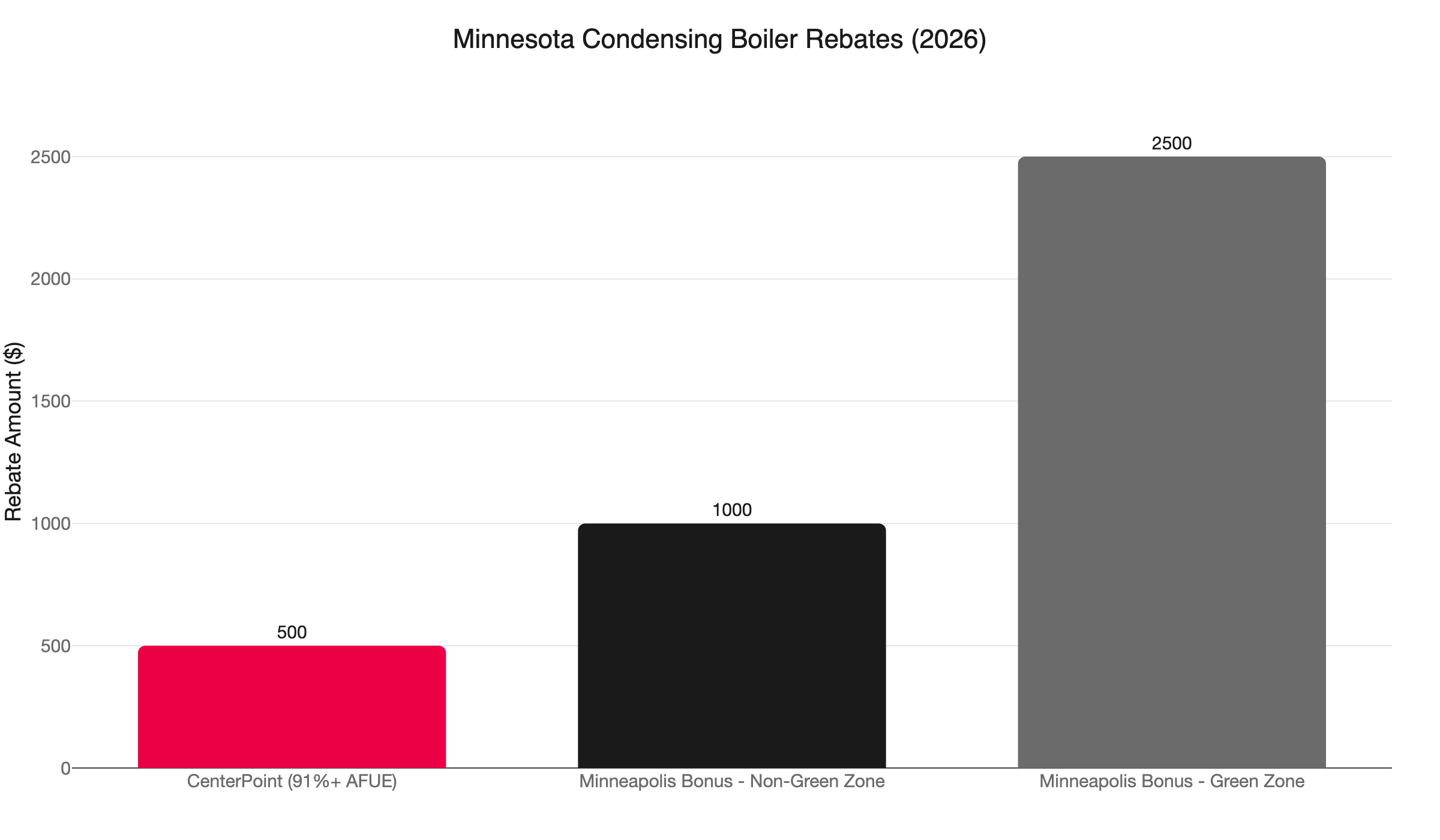
Minnesota Condensing Boiler Rebates (2026)
## Why Do Cast-Iron Homes Benefit Most from a Condensing Upgrade?
**A condensing boiler hits peak efficiency when return water arrives below 140F. Cast-iron radiators naturally operate at 130-140F return. That pairing keeps the boiler in condensing mode for most of a Minnesota winter. Homes with standard hot-water baseboard run hotter and rarely reach the threshold for full condensing operation.**
This is the information gap most condensing boiler upgrade cost articles skip. It matters a lot if your home was built before 1960.
A condensing boiler extracts heat from exhaust gases that a standard atmospheric boiler simply vents out the chimney. For that heat recovery to happen, the return water has to arrive cool enough to condense water vapor inside the heat exchanger. [Industry data puts the condensing threshold at roughly 140F return water temperature](https://forum.heatinghelp.com/discussion/99637/condensing-vs-atmospheric).
Cast-iron radiators are a low-temperature distribution system by design. They are physically large, they radiate heat slowly and evenly, and they do not need high supply temperatures to warm a room effectively. Return water typically comes back to the boiler at 130-140F. A condensing boiler on a cast-iron system runs in condensing mode for most of the heating season. That is where the 90-96% AFUE rating actually materializes.
Hot-water baseboard is a different situation. Fin-tube baseboard elements are compact. They need supply temperatures around 180F to deliver enough heat output. Return water comes back too warm for consistent condensing. A condensing boiler on a baseboard system still works, but you will not capture the full efficiency benefit unless the distribution is redesigned for low-temperature operation.
The Twin Cities has a large stock of homes built between 1900 and 1950 with original cast-iron radiators still in service. Many of these homes also have atmospheric boilers that are 30-50 years old and operating at 60-70% AFUE. If that describes your home, you are positioned to get the complete benefit of a condensing upgrade.
The cast-iron radiators themselves do not need replacement or modification. They stay in place. The boiler swaps out, the venting changes, and the system runs more efficiently than it has in decades.
---
## What Does a Condensing Boiler Upgrade Cost in Minnesota?
**Installed condensing gas boiler in Minnesota: $7,000-$12,000. Standard non-condensing replacement: $5,000-$8,500. Add $650-$1,950 for the venting changeover. After the $500 CenterPoint rebate, your net cost lands between $7,000 and $13,000 depending on system size and job complexity.**
The total project cost breaks into several components: the unit, installation labor, venting work, and permitting.
**Equipment and installation**
[One Twin Cities HVAC contractor puts the installed cost of a condensing boiler at $7,000-$12,000](https://genzryan.com/blog/new-boiler-system-cost/), versus $5,000-$8,500 for a standard non-condensing replacement. A [combi boiler](/blog/combi-boiler-space-heating-hot-water-cost-minnesota/) - one unit that handles both home heating and domestic hot water - runs $6,500-$11,000.
St. Paul homeowners typically land near the top of those ranges. Labor and materials in St. Paul run approximately 6% above the national average, putting a condensing install at $7,000-$9,200 and a combi install at $9,200-$11,900 in that market specifically.
The spread within each range comes from a few variables: the unit's output capacity (matched to your home's heat load), the brand and efficiency tier, and the complexity of connecting to your existing piping.
**Permits and inspections**
All boiler replacements in Minnesota require a mechanical permit under [MN Rules Chapter 1346](https://www.revisor.mn.gov/rules/1346/full), the state's Mechanical Code based on the International Mechanical Code with Minnesota amendments. Minneapolis charges $132.40 for the permit. Most Minnesota municipalities charge between $75 and $200. A licensed inspector signs off after the installation is complete.
Work must be performed by a licensed Minnesota HVAC contractor. An unlicensed installation fails the inspection and voids most manufacturer warranties. Minnesota code also requires a minimum 18-inch clearance on all sides of the boiler. Confirm the new unit's footprint before ordering equipment if your mechanical room is tight.
**Financing**
A condensing boiler upgrade is a meaningful investment. If spreading the cost over time makes the project easier to commit to, [HVAC financing options](/blog/hvac-financing-options-what-to-know-twin-cities/) are available and worth reviewing before the job.
---
## How Much More Efficient Is a Condensing Boiler?
**Old atmospheric boilers typically run 60-70% AFUE. Modern condensing units reach 90-96% AFUE. Going from 70% to 95% cuts fuel consumption by roughly 26% for the same heat delivered. Going from 60% to 95% cuts it by about 37%. With Minnesota averaging roughly 8,000 heating degree-days per year, that efficiency gap translates to hundreds of dollars in annual gas savings.**
AFUE stands for Annual Fuel Utilization Efficiency. A boiler rated at 70% AFUE converts 70 cents of every gas dollar into useful heat. The other 30 cents escapes up the flue as exhaust. A 95% AFUE condensing unit sends only 5 cents out the exhaust pipe.
[Heating industry data confirms that older cast-iron atmospheric boilers run 60-84% AFUE in practice](https://forum.heatinghelp.com/discussion/99637/condensing-vs-atmospheric). Units 30-50 years old typically fall in the 60-70% range. Newer cast-iron atmospheric models top out around 82-84%. Modern condensing units run 90-96% AFUE.
At Minnesota's current all-in residential gas rate of approximately $1.00-$1.10 per therm, those efficiency differences are meaningful. A home that needs 780 therms of delivered heat per heating season burns about 1,200 therms at 65% AFUE. At 95% AFUE, it burns roughly 820 therms. That is a savings of about 380 therms, or $380-$420 per year at current rates.
[Xcel Energy raised Minnesota residential gas rates 6.8% effective January 1, 2026](https://www.startribune.com/xcel-energy-gas-rates-will-go-up-68-for-2026-heres-why/601544882), with another increase of up to 8.2% pending regulatory review. Gas costs are not going down. Every therm you do not burn stays in your account.
Minneapolis averages roughly 8,000 heating degree-days per year, well above the national average. A boiler in Minnesota runs a lot of hours. That means the efficiency difference between 65% and 95% AFUE shows up as more dollars saved here than it would in a milder climate.
---
## The Venting Changeover: The Cost Most Quotes Leave Out
Your old atmospheric boiler relies on the masonry chimney. Hot exhaust gases rise naturally through the flue. No fan, no PVC pipe, no problem.
A condensing boiler exhausts differently. Its gases exit the heat exchanger at roughly 100-120F - much cooler than the 350-500F exhaust from an atmospheric unit. Cool exhaust will not rise on its own. It also carries slightly acidic condensate. Running it through a masonry chimney corrodes the masonry over time and risks dangerous backdrafting. The code requires a dedicated vent path.
In most installations, a two-inch or three-inch PVC pipe runs from the boiler through an exterior wall. Direct-vent configurations use two pipes: one for exhaust, one to pull combustion air in from outside.
Two things happen when the chimney connection gets abandoned. The old flue gets capped, blocked, or the liner gets removed. New PVC runs from the boiler to the exterior wall. Both steps take real labor and materials.
Budget $650-$1,950 for the venting changeover. A boiler sitting near the rim joist on an exterior wall is a short, straightforward run. A boiler in the center of a finished basement with a long path to the exterior costs more. Complexity in the chimney abandonment also adds to the range.
When you collect quotes, ask each contractor to list the venting work as a separate line item. If one bid comes in significantly below the others, find out whether the venting changeover is included before you sign anything.
---
## What Rebates Can You Claim in Minnesota in 2026?
**CenterPoint Energy pays $500 for a condensing boiler rated at least 91% AFUE. No heat pump required. Apply by December 31, 2026. Minneapolis homeowners who also install a qualifying air-source heat pump can stack an additional $1,000-$2,500 through the Minneapolis Bonus Rebate. The federal 25C tax credit does not apply to any 2026 installs.**
**CenterPoint Energy Rebate**
The most straightforward rebate available is the [CenterPoint Energy residential heating system rebate](https://www.centerpointenergy.com/en-us/Documents/CIP-Rebate-Forms/CNP1153.pdf). It pays $500 for a condensing boiler rated at least 91% AFUE installed in an existing home. You do not need to also install a heat pump or any other system. The application must be submitted by December 31, 2026.
A lower tier is also available: $300 for a non-condensing boiler rated at least 85% AFUE. Most homeowners replacing an aging atmospheric boiler should aim for the condensing tier. The higher rebate and the long-term fuel savings both point the same direction.
**Minneapolis Bonus Rebate**
If you live in Minneapolis and are considering a larger project, the [Minneapolis Bonus Rebate program](https://www.mncee.org/minneapolis-bonus-rebate-program), administered through MNCEE, can be significant. A condensing boiler rated at least 95% AFUE, installed alongside a qualifying air-source heat pump, qualifies for $500 in utility rebates plus a city bonus: $2,500 in Green Zone areas or $1,000 in Non-Green Zone areas.
Total potential value in a Green Zone: $3,000. That is a meaningful offset on a $7,000-$12,000 project. But this program requires the heat pump installation - the boiler alone does not unlock the bonus amount. Funds are first-come, first-served, and the program has per-household caps ($20,000 in the Green Zone, $6,000 in the Non-Green Zone across all qualifying improvements). If this path fits your situation, move on it early.
For a complete look at what CenterPoint and Xcel are offering this year, see our [Xcel and CenterPoint HVAC rebate guide](/blog/xcel-centerpoint-hvac-rebates-minnesota/).
---
## What Happened to the Federal Tax Credit for Boilers?
**The Section 25C federal tax credit for high-efficiency boilers expired December 31, 2025. It no longer applies to any equipment placed in service in 2026. Up to $600 was available for qualifying condensing boilers under the old law. That credit is gone for this heating season.**
The One Big Beautiful Bill Act (Public Law 119-21), signed July 4, 2025, terminated Section 25C for equipment placed in service after December 31, 2025. [Sources tracking current federal energy incentives confirm the credit has ended for 2026 installs](https://homeenergybasics.com/heat-pumps/states/mn). At least one contractor website was still advertising it as of mid-2025 without noting it had expired.
If a contractor's proposal includes a federal tax credit line item on your boiler, ask them to cite the current law. It is worth $0 on a 2026 installation.
Your real incentive stack for 2026 is the CenterPoint rebate ($500) and, if you are in Minneapolis and adding a qualifying heat pump, the Minneapolis Bonus Rebate ($1,000-$2,500). Those are verified programs with 2026 deadlines. Do not budget for the federal credit.
There is also no pending legislation that would restore the credit retroactively for 2026. Plan around what is available now, not what may return in a future tax year.
---
## Does the Payback Math Work in Minnesota?
**Yes, for most homes with aging cast-iron systems. Fuel savings of $300-$420 per year, combined with the $500 CenterPoint rebate, typically produce payback on the condensing upgrade premium in under 10 years. The boiler itself lasts 20-25 years.**
The comparison that matters is not condensing versus doing nothing. It is condensing versus non-condensing replacement. If your boiler has failed or is showing signs of failure, you are already spending $5,000-$8,500 on a new unit. The question is whether the extra $2,600-$4,500 for the condensing tier pays back over the life of the equipment.
Here is the math with round numbers. A home that needs 780 therms of delivered heat per season burns about 1,200 therms at 65% AFUE. At 95% AFUE, it burns roughly 820 therms - a savings of about 380 therms. At $1.05 per therm all-in, that is approximately $400 per year in fuel savings.
The condensing premium over a non-condensing unit is roughly $2,600-$4,500. Subtract the $500 CenterPoint rebate and the out-of-pocket premium falls to $1,500-$3,000. At $400 per year in savings, payback is 4-8 years. The boiler lasts 20-25 years. The math is in your favor.
Gas rates are trending up, not down. Xcel raised Minnesota residential rates 6.8% at the start of 2026, with more increases pending. Every year that gas prices rise, the fuel savings calculation improves and the payback period shortens.
If your boiler is under 10 years old and passing its annual checks, a replacement is not urgent yet. Keep up with service to extend its remaining life. See [what annual boiler maintenance covers](/blog/boiler-annual-maintenance-what-to-expect-minnesota/) so you know what to ask for at each service visit.
---
## Is a Condensing Boiler Right for Your Home?
**Strong candidates: homes with cast-iron radiators, a CenterPoint gas account, and an atmospheric boiler that is more than 20 years old or has needed multiple repairs in recent years. If all three apply, the upgrade almost always makes sense. If your boiler is under 10 years old and holding pressure well, you likely have more time to plan.**
Here is a checklist to work through:
- **Cast-iron radiators:** Your distribution system already operates at the return-water temperature where a condensing boiler excels. No changes to the radiators are needed. The boiler swaps; the radiators stay.
- **Aging atmospheric boiler:** A unit over 20 years old is likely running at 60-70% AFUE. The jump to 90-96% AFUE is real, verifiable on your gas bill, and pays back at Minnesota gas rates within a reasonable timeframe.
- **Repeated repairs:** Two or more service calls in the past three years is a signal. A condensing replacement resets your maintenance horizon for 20-25 years.
- **CenterPoint customer:** The $500 rebate is verified and available through December 31, 2026. It requires only that the boiler rate at least 91% AFUE. Nearly all modern condensing units exceed that threshold.
- **Minneapolis homeowner planning a heat pump:** If you are considering both projects, coordinating the installations unlocks the Minneapolis Bonus Rebate. That can be $1,000-$2,500 on top of the CenterPoint rebate. Apply before the funds are exhausted.
The upgrade makes less sense if your boiler is newer and performing well. A well-maintained boiler can serve reliably for another decade. In that case, start planning now so the replacement is a deliberate decision, not an emergency one.
As a locally owned Twin Cities company, we see a lot of these cast-iron homes in Ramsey, Blaine, Maple Grove, Minneapolis, and St. Paul. We will give you a straight answer on whether a condensing upgrade makes sense for your system or whether a repair will carry you several more years. We do not push replacements when a repair is the right call.
Our on-time promise backs every job: "Always On Time… Or You Don't Pay a Dime!(R)"
Call **(763) 260-6662** or [schedule your boiler estimate online](/heating/boiler-installation-replacement/).
---
# Ductless vs. Ducted Heat Pump Minnesota: Which Fits Your Home?
URL: https://northernonehour.com/blog/ductless-vs-ducted-heat-pump-minnesota/
Published: 2026-08-31 | Category: Heating
Compare install cost, below-zero performance, and home-type fit for ductless vs. ducted heat pumps in the Twin Cities - plus 2026 rebates.
Key Takeaways
- Ducted heat pumps average **$14,529** installed before incentives. Whole-home ductless multi-zone systems average **$25,957**. Adding new ductwork narrows the gap considerably for homes without existing duct infrastructure.
- Cold-climate heat pumps work in Minnesota winters. Certified systems maintain a COP of at least 1.75 at 5F. At -15F, they still outperform electric resistance heat by 30-80%.
- Xcel Energy offers $2,000 back on either system in 2026. CenterPoint's $1,100 rebate applies only to ducted dual-fuel setups. Mini-splits do not qualify for CenterPoint's rebate.
- The federal 25C tax credit expired December 31, 2025. There is no federal credit for 2026 heat pump installs.
- Your home's existing ductwork and layout usually point to the right answer. A load calculation and duct assessment give you the data to decide.
- Both ducted and ductless systems require a mechanical permit in Minnesota.
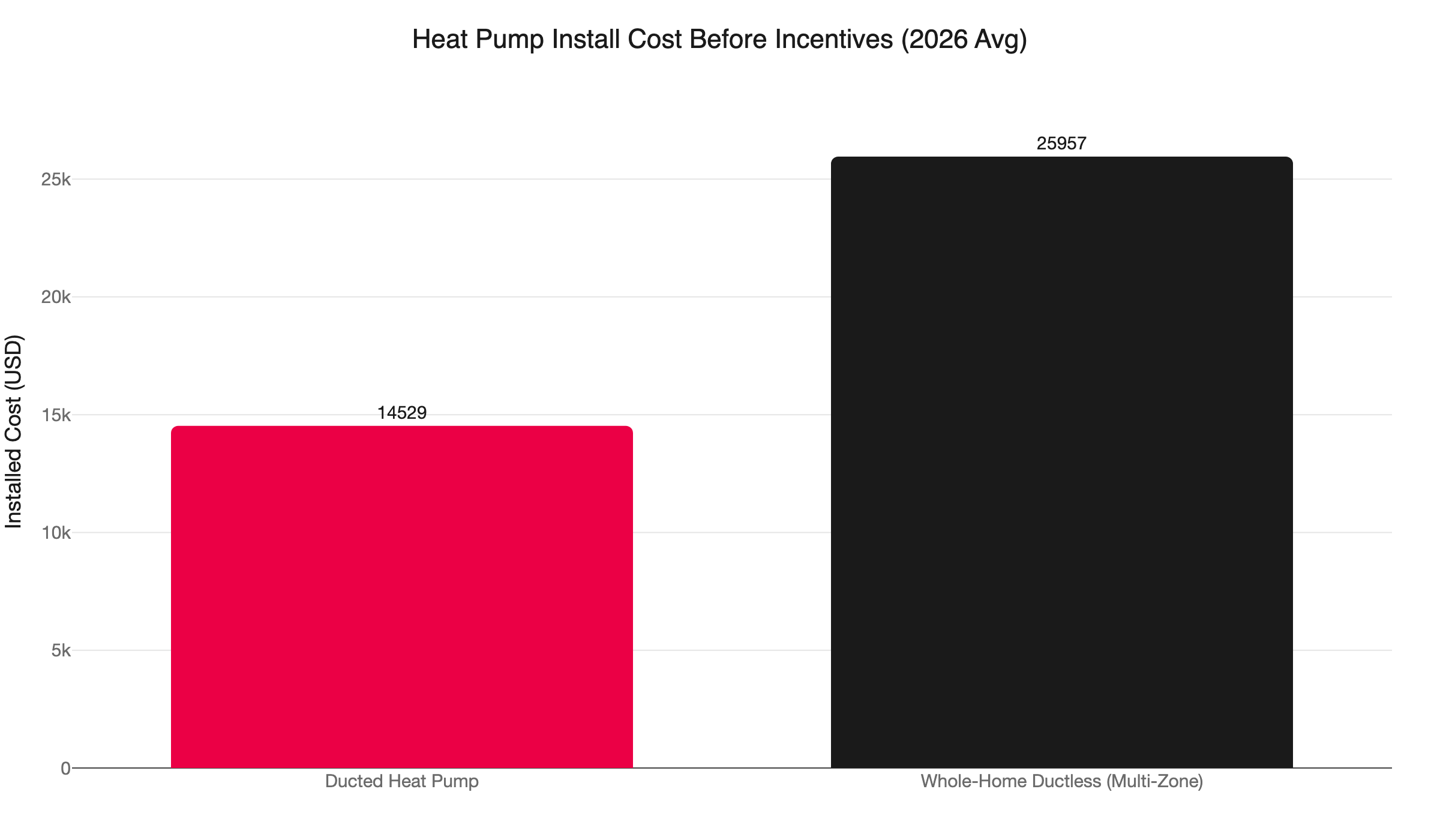
Heat Pump Install Cost Before Incentives (2026 Avg)
The ductless vs. ducted heat pump Minnesota question comes up in nearly every heat pump conversation we have with Twin Cities homeowners. The answer affects install cost by as much as $11,000, determines which rebates you can collect, and shapes whether every room stays comfortable when it is -20F outside. This post covers the numbers, maps each system to the homes people actually live in here, and gives you a straight framework for making the call.
## What Is the Difference Between a Ducted and a Ductless Heat Pump?
A ducted heat pump moves conditioned air through your home's existing forced-air duct system. A ductless heat pump - also called a mini-split - delivers air directly through wall-mounted heads in each zone. Both heat and cool. Both run on electricity. The delivery method is what differs.
That difference has real consequences for cost, comfort, and how well the system performs in your specific home.
A ducted system pairs an outdoor unit with an air handler or furnace inside. The air handler pushes heated or cooled air through your supply and return ducts to every room. If your ductwork is in solid shape and well-sealed, this is usually the most cost-effective path for whole-home comfort. If your ducts are leaky, undersized, or missing in key areas, you lose conditioned air before it ever reaches the rooms that need it.
A ductless system pairs the outdoor unit with one or more wall-mounted indoor heads. Each head handles its own zone independently. You can heat the main bedroom without heating an empty guest room. That flexibility has real value in certain homes - but it comes at a price. Each additional indoor head adds approximately $8,000 to the installed cost, [according to EnergySage's 2026 marketplace data](https://www.energysage.com/heat-pumps/heat-pumps-vs-mini-splits/).
One note on terminology: "mini-split" and "ductless heat pump" mean the same thing. The "split" in the name refers to the split between the outdoor unit and the indoor heads, with no duct system connecting them. Both ducted and ductless systems use the same refrigerant-cycle technology. The distinction is in how they move air through your home.
## How Much Does Each System Cost to Install in Minnesota?
Ducted heat pumps average $14,529 installed before incentives. Whole-home ductless multi-zone systems average $25,957. If your home needs all-new ductwork, that gap narrows: a full-home duct retrofit adds $2,600 to $13,000 or more to the ducted cost.
[EnergySage's 2026 marketplace data](https://www.energysage.com/heat-pumps/heat-pumps-vs-mini-splits/) puts the national install averages at $14,529 for ducted and $25,957 for a whole-home multi-zone ductless system. These are averages with real variance based on home size, equipment tier, and number of zones. They give you the right order of magnitude, not a final quote for your specific home.
The ductwork variable is the biggest factor for homes built before the 1970s. Many ramblers, split-levels, and older two-story homes in the Twin Cities have duct systems with real problems: leaky joints, undersized returns, or uninsulated runs through cold crawlspaces. If your ductwork needs $8,000 in repairs and sealing before a heat pump can perform well in it, the cost gap between ducted and ductless compresses significantly.
[Single-zone ductless](/blog/mini-split-single-zone-vs-multi-zone-cost-twin-cities/) is a different calculation entirely. One outdoor unit, one indoor head, one room or space. For a sunroom, a garage conversion, or an addition that was never connected to the main duct system, a single-zone unit is almost always the most cost-effective solution. You are solving a specific comfort problem in a specific space, not replacing whole-home heating and cooling.
Multi-zone ductless - one outdoor unit serving three or four indoor heads throughout the home - is the most expensive option upfront. It makes the most sense when the home has no existing duct infrastructure and installing new ductwork would require opening walls, ceilings, and finished spaces throughout the house.
## Do Ductless Heat Pumps Work in Minnesota Winters?
Yes. Cold-climate certified heat pumps maintain a COP of at least 1.75 at 5F. At -15F, they still deliver 30-80% more heat per electricity dollar than electric resistance. Output does drop in extreme cold, which is why most Minnesota installs include a backup heat source.
[NEEP's cold-climate certification standard](https://ashp.neep.org/) requires a minimum COP of 1.75 at 5F for a system to appear on the qualified product list. The field data behind that standard shows how these systems actually behave across a Minnesota winter.
[Cold-climate field data from electrifyguide.com](https://electrifyguide.com/cold-climate-heat-pump-guide/), citing NEEP and the Cold Climate Housing Research Center, shows real COP ranges at key outdoor temperatures:
- At 47F: COP 3.5-4.2
- At 17F: COP 2.2-2.8
- At 5F: COP 1.8-2.3
- At -15F: COP 1.3-1.8
A COP of 1.3-1.8 at -15F means the system is still generating more heat than it consumes in electricity, even on the coldest nights in the Twin Cities metro. Electric resistance heat sits at a flat COP of 1.0 at every temperature. The efficiency advantage holds all the way down.
Real-world confirmation comes from a [Minnesota Department of Commerce-funded field study by MNCEE](https://www.mncee.org/cold-climate-air-source-heat-pump-field-assessment-closed), which studied cold-climate heat pumps in six occupied Minnesota homes. Metro-area homes replacing a propane furnace with a ducted heat pump saw roughly 41% reductions in site energy use and roughly 30% reductions in energy cost. Homes replacing electric resistance heat with ductless systems saw roughly 56% reductions in both site energy and cost.
That said, heat pump output does fall at temperatures below -15F. For Minnesota, the practical approach is to include a backup heat source for the handful of nights per year that hit extreme cold. The dual-fuel ducted setup - heat pump runs down to around 40F, gas furnace handles below that - is popular here for good reason. It combines heat pump efficiency for most of the heating season with proven gas reliability on the coldest days.
See our post on [heat pump performance below zero in Minnesota](/blog/heat-pump-below-zero-performance-minnesota/) for a deeper look at the cold-weather data.
## Which System Fits Your Twin Cities Home?
Your home's existing ductwork is the clearest signal. Solid, well-sealed ducts point to a ducted system. Problem zones, missing duct runs, or no duct infrastructure at all point toward ductless or a hybrid of both. Home type is a useful starting framework.
No national content maps this choice to the specific housing stock of the Twin Cities metro. Here is how it breaks down for the homes people actually live in here.
**1950s-1970s rambler with forced-air ducts**
Single-story ramblers typically have simpler duct layouts that serve one level. If the ductwork is in reasonable shape, a ducted heat pump is usually the right call. The common caveat: many ramblers have duct runs in uninsulated crawlspaces. Those leaky ducts bleed conditioned air before it reaches the living space. Sealing them before adding a heat pump pays off twice: the heat pump works less hard, and more of the conditioned air reaches the rooms you use. Our post on [duct sealing and energy loss](/blog/duct-sealing-leaky-ductwork-energy-loss/) covers what that process looks like.
**Split-level**
Split-levels are notoriously uneven. The main level usually gets adequate airflow. One of the other levels - often the lower level or the upper half-level - ends up with chronic comfort complaints year-round. A hybrid approach works well here: ducted system for the main level, one ductless head on the problem floor. You keep the cost efficiency of ducted coverage for most of the home while solving a comfort problem the duct system never handled well.
**1.5-story craftsman or cape cod**
The upper floor in these homes is the classic complaint. Duct runs to the knee-wall rooms are often undersized or nonexistent. A ductless head upstairs fixes a problem that has existed since the house was built. Pair it with the ducted system on the main level and you have a capable whole-home setup. We see this pattern regularly in older neighborhoods across Minneapolis, St. Paul, Ramsey, and the inner-ring suburbs.
**Post-1990s two-story with good ductwork**
If the ductwork was sized correctly when the home was built and has been maintained well, a ducted heat pump is the simplest and most cost-effective path. You replace the outdoor condenser and air handler. The duct infrastructure that already works stays in place. No additional indoor heads to manage, no extra wall penetrations, no added complexity.
**Addition, sunroom, or garage conversion**
Ductless is almost always the right answer here. Extending an existing duct run into a new addition is expensive and often impractical. A single-zone ductless unit covers the added space precisely and installs cleanly. Our [ductless mini-split installation page](/air-conditioning/ac-installation/ductless-mini-splits/) walks through what that process looks like for a typical Twin Cities home.
## What Rebates Are Available for Minnesota Heat Pumps in 2026?
Xcel Energy offers $2,000 for qualifying ducted or ductless heat pumps. CenterPoint's $1,100 rebate is for ducted dual-fuel systems only - mini-splits do not qualify. The federal 25C tax credit expired December 31, 2025, and does not apply to 2026 installs.
This is the detail that catches the most homeowners off guard. Here are the specifics.
**Xcel Energy (2026)**
If you are an Xcel electric customer, the available rebates are:
- $2,000 for a cold-climate ducted ASHP (combo gas and electric customer)
- $1,500 for a cold-climate ducted ASHP (electric-only customer)
- $2,000 for a cold-climate ductless mini-split
- A $600 bonus when you also complete qualifying air sealing or insulation within two years, bringing the potential total to $2,600
The system must appear on [NEEP's qualified product list](https://ashp.neep.org/) with a minimum COP of 1.7 to qualify for Xcel rebates.
**CenterPoint Energy (2026)**
CenterPoint's $1,100 rebate applies only to ducted dual-fuel systems: an air-source heat pump paired with a 92%+ AFUE gas furnace, with a switchover point at 40F or lower. Ductless mini-splits do not qualify. Ground-source heat pumps do not qualify. Full-electric heat pump replacements do not qualify. New construction qualifies for only $400.
If you are a CenterPoint customer who was planning a ductless system and counting on a $1,100 rebate, that is the most important fact to confirm before signing a contract.
**No federal tax credit in 2026**
The Section 25C Energy Efficient Home Improvement Credit expired December 31, 2025. The One Big Beautiful Bill Act, signed July 4, 2025, ended the credit nine years ahead of schedule. No federal credit is available for heat pump installations in 2026.
Source: [homeenergybasics.com/heat-pumps/states/mn](https://homeenergybasics.com/heat-pumps/states/mn)
For homeowners on both Xcel and CenterPoint, a qualifying ducted dual-fuel system stacks the available rebates: $2,000 from Xcel plus $1,100 from CenterPoint, for a combined $3,100 offset against the $14,529 average install cost. That is a meaningful reduction. Our post on [Minnesota heat pump rebates](/blog/minnesota-heat-pump-rebates-tax-credits/) stays current with the incentive landscape if you want the full picture.
## Do Both Systems Require Permits in Minnesota?
Yes. Both ducted and ductless heat pump installations require a mechanical permit in virtually all Minnesota jurisdictions. Ductwork modifications need a separate permit. Cold-climate installs may also trigger an energy code review.
Permits protect you. The installation gets inspected against Minnesota State Mechanical Code. An unpermitted heat pump installation creates problems at resale and with an insurance claim. Our licensed technicians pull all required permits as a standard part of every installation - you do not manage that separately.
## Should You Go Ducted, Ductless, or a Hybrid?
For most Twin Cities homes with working forced-air ductwork, a ducted heat pump is the more cost-effective starting point. Ductless wins for spaces without duct access and for specific problem zones. The hybrid approach - ducted for the main system, ductless for the zones that need it - is underused and often the most practical fit for real Twin Cities homes.
The honest answer is that the right system depends on your home's actual infrastructure and how you use the space. General rules only get you so far.
For a home with solid ductwork and no major comfort complaints, a ducted heat pump is the clear choice. You replace the outdoor unit and air handler. The duct system that already works stays in place. Whole-home heating and cooling through a single, central system, backed by years of cold-climate performance data.
For a home with a problem zone - the upstairs bedroom that never cools down, the addition the ducts do not reach, the bonus room above the garage that runs 10 degrees warmer than the main floor - a ductless head in that space solves the complaint without replacing the whole system. You add a zone where you need it.
For a home with no duct infrastructure, a multi-zone ductless system avoids the cost and disruption of running new ducts through finished walls and ceilings. More expensive upfront, but far less disruptive than a full duct retrofit in a home with plaster walls and finished spaces throughout.
The right answer starts with two things: a Manual J load calculation that sizes the system correctly to your home, and a duct assessment that tells you whether your existing ductwork is worth building on. Those two data points make the choice clear.
We are locally owned and operated, based in Ramsey and serving the Twin Cities metro: Minneapolis, St. Paul, Blaine, Maple Grove, Plymouth, Brooklyn Park, Woodbury, Bloomington, and the surrounding area. We give you a straight recommendation with honest, upfront pricing before any work begins.
Call us at **(763) 260-6662** or book online to schedule your heat pump assessment. We show up when we say we will - "Always On Time... Or You Don't Pay a Dime!(R)" - and financing is available for qualifying heat pump installations.
---
# Bathroom Exhaust Fan Furnace Backdraft: A Minnesota Guide
URL: https://northernonehour.com/blog/exhaust-fans-furnace-backdraft-combustion-air-minnesota/
Published: 2026-08-31 | Category: HVAC
Your exhaust fan could pull carbon monoxide back into your home. Learn the physics, the risks, and how to fix furnace backdraft in Minnesota.
Key Takeaways
- High-CFM exhaust fans create negative air pressure inside your home. When that pressure drops past certain thresholds, combustion gases reverse direction through your furnace or water heater flue.
- Atmospherically vented (B-vent) furnaces can backdraft at just 5 Pascals of negative pressure. Natural-draft water heaters can spill combustion gases at 2-3 Pa. Most bathroom fans can exceed both thresholds in a tight house.
- Sealed-combustion appliances draw combustion air from outside and are largely immune to indoor pressure swings. They are the permanent fix.
- Minnesota winters are the worst season: your home is sealed tight, the stack effect pulls warm air up and out, and heating appliances run their longest cycles.
- Pre-2000 homes with recently upgraded exhaust fans carry the highest risk.
- A DIY smoke-match test takes ten minutes and confirms whether a backdraft condition exists.
- CO detectors are essential, but they are a backup, not a prevention. Do not rely on them in place of proper venting and equipment.
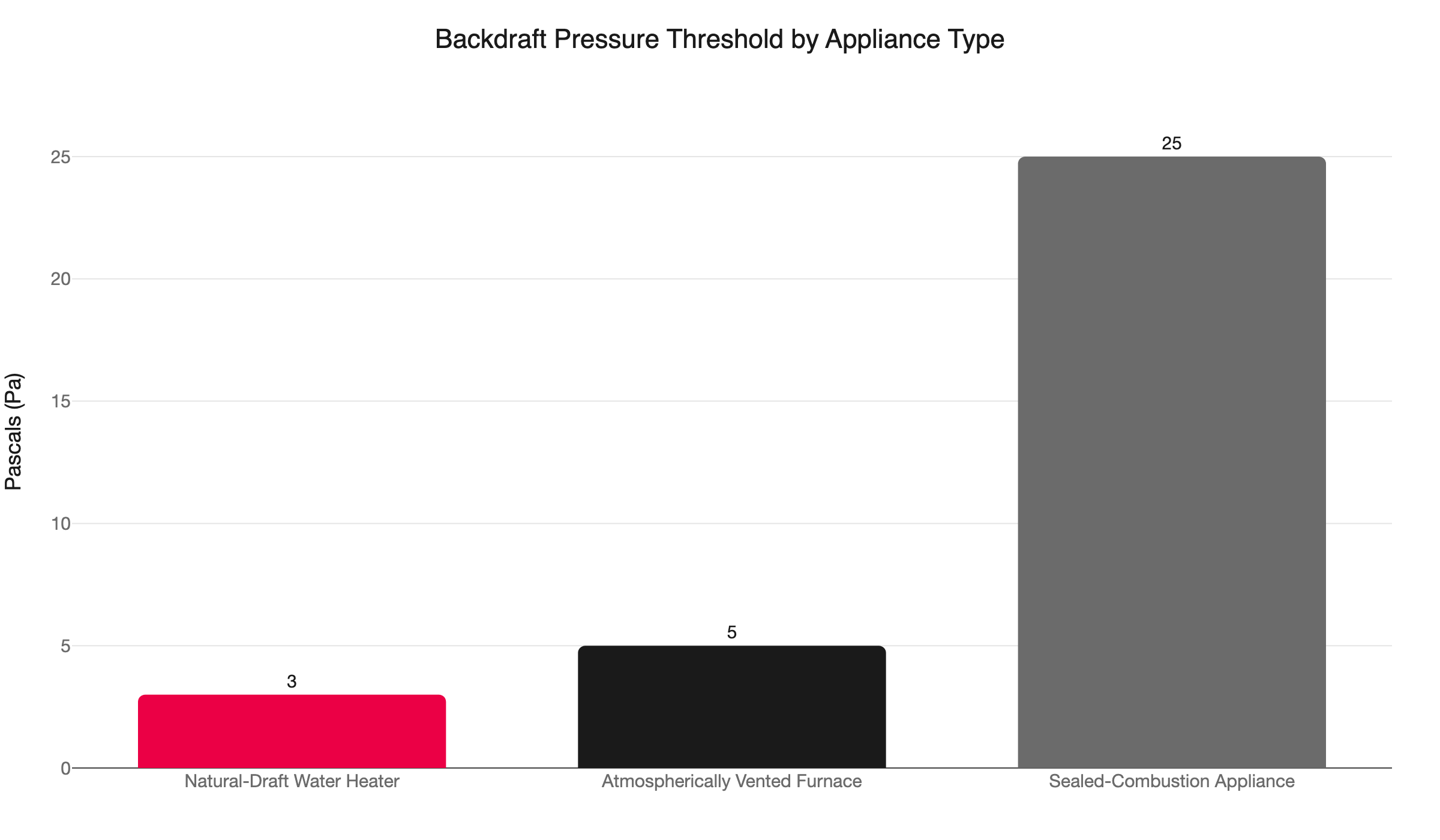
Backdraft Pressure Threshold by Appliance Type
Your bathroom exhaust fan is doing exactly what it was built to do. That is the problem. In a sealed-up Minnesota home, a high-CFM exhaust fan does more than clear shower steam. It lowers air pressure inside your house. When that pressure drops far enough, it can reverse the draft on your furnace or water heater. Bathroom exhaust fan furnace backdraft in Minnesota is a documented, measurable safety hazard. It is most common in exactly the kinds of homes that fill Twin Cities neighborhoods: pre-2000 construction with older atmospheric venting, gradually tightened over the years but never recalculated for the pressure consequences.
## What Is Furnace Backdraft?
Backdraft is the reversal of combustion gases through a furnace or water heater flue. Instead of exiting the home, those gases, including carbon monoxide, flow back in. The driver is negative air pressure: when your home is depressurized enough, the flue becomes a path of least resistance for air to enter rather than exit. Exhaust fans are a common trigger, especially in tight Minnesota homes.
[According to the EPA](https://www.epa.gov/indoor-air-quality-iaq/addressing-indoor-environmental-concerns-during-remodeling), backdraft is the pressure-induced reversal of combustion products into the living space, and the primary hazard is carbon monoxide. Carbon monoxide is colorless and odorless. It gives no warning.
A furnace running during a backdraft event may appear completely normal. The burner fires, the blower runs, heat moves to your rooms. Meanwhile, combustion byproducts enter your living space through the draft hood at the appliance. That invisibility is what makes this hazard different from a broken component or an audible problem. Homeowners rarely connect recurring headaches or fatigue during heating season to a pressure problem in the mechanical room.
## The Pressure Physics Behind the Problem
Air flows from high pressure to low. Every exhaust fan removes air from your home and creates a slight vacuum. In a leaky old house, replacement air seeps in through gaps fast enough to keep pressure near neutral. In a tight home, those paths are closed.
A 1993 study of newly built energy-efficient Minnesota homes found something direct. Exhaust airflows of 300-550 CFM [depressurized those homes to 5 Pa](https://inspectapedia.com/BestPractices/Backdrafting_Heating_Equipment.php) - exactly the threshold at which natural-draft appliances start spilling combustion gases. A 600-CFM kitchen range hood in a tight house can produce [negative pressures from 3 to over 20 Pa](https://inspectapedia.com/BestPractices/Backdrafting_Heating_Equipment.php). That range depends on how sealed the home is.
At those pressure levels, the fan is not just pulling air from one room. It pulls from the entire building envelope. Every gap, every penetration, every low-resistance opening becomes a candidate for makeup air. The furnace or water heater flue is a large, direct connection to the outside. It is often the easiest path available. That is how a bath fan on the second floor ends up pulling combustion gases back down from a basement furnace.
One more factor: the worst-case moment is not when the fan first turns on. It is after the fan has been running long enough to deplete the available envelope leakage. Pressure can continue dropping for several minutes. The furnace may have been drafting fine at startup and fail fifteen minutes later.
## Which Appliances Are Most Vulnerable to Backdraft?
Atmospherically vented (B-vent) gas furnaces and natural-draft water heaters carry the highest risk. They rely on passive buoyancy to move combustion gases up the flue, and they fail at very small pressure differences. Sealed-combustion appliances draw combustion air from outside the house and are largely immune to indoor pressure changes.
The specific thresholds make the gap concrete. A natural-draft water heater can spill combustion gases at [as little as 2-3 Pascals of negative pressure](https://inspectapedia.com/BestPractices/Backdrafting_Heating_Equipment.php). An atmospherically vented furnace can backdraft at 5 Pa or less. Sealed-combustion appliances can tolerate 25-50 Pa before they are affected. A standard bathroom exhaust fan can generate depressurization well above the 5 Pa threshold in a tight home.
You can identify your appliance type by the vent pipe. A B-vent is a double-wall metal pipe, usually silver or gray, that exits through the roof. A direct-vent (sealed-combustion) appliance uses two pipes: one draws outside combustion air in, and one exhausts gases out. Both pipes typically exit through a sidewall. If your furnace or water heater has a single vent pipe heading up through the roof, it is almost certainly atmospherically vented.
Homes across Ramsey, Blaine, Maple Grove, Plymouth, and Brooklyn Park are full of these systems. Atmospheric and B-vent equipment was the industry standard through the mid-to-late 1990s. Many of those appliances are still running, in houses that are meaningfully tighter than they were when those appliances were installed.
## Why Minnesota Winters Raise the Stakes
Minnesota homes stay sealed for five or more months during heating season. Every window and door stays closed. Mechanical ventilation may be limited to bathroom and kitchen fans. That seal removes every passive ventilation path that would otherwise let a fan pull replacement air without lowering house pressure.
Two forces compound at exactly the wrong time on a cold Minnesota day.
The first is the stack effect. Warm indoor air rises and escapes through gaps and penetrations high in the building. Cold replacement air has to enter from below. If the flue is the lowest-resistance inlet path, that air enters down the flue, working against the combustion gases that need to travel up.
The second is run time. The colder it is outside, the longer your furnace and water heater run. Long run cycles extend the window for a fan-driven depressurization event to intersect with appliance operation. A furnace running nearly continuously at 0 degrees Fahrenheit is in far more danger than one cycling briefly on a mild October night.
The Twin Cities and most of greater Minnesota sit in [IRC Climate Zone 6](https://www.protradecraft.com/construction-phase/hvac-mechanicals/article/55180305/whole-house-mechanical-ventilation-exhaust-supply-balanced-and-backdrafting). That classification sets a tightness standard of 3 ACH50 or better for newer construction. Meeting that standard is good for efficiency. It is also exactly the condition that raises depressurization risk whenever exhaust fans run without makeup air.
## What's the Riskiest Setup in Twin Cities Homes?
A pre-2000 home with an atmospherically vented furnace or natural-draft water heater, plus a recently upgraded high-CFM bathroom or kitchen fan. The appliances were designed when the house leaked enough to supply their combustion air. The new fan removes that leakage margin and can tip the pressure balance past the backdraft threshold.
This scenario plays out regularly across Twin Cities neighborhoods. A homeowner remodels a bathroom and replaces the original 50 CFM fan with a modern 110 CFM unit for [better humidity control](/blog/bathroom-exhaust-fan-sizing-winter-moisture-minnesota/). Or a new [kitchen range hood](/blog/range-hood-makeup-air-combustion-safety-minnesota/) goes in during a renovation. The upgrade seems routine. What changed is the home's [pressure balance](/blog/radon-hvac-pressure-balance-minnesota/).
The older appliances were sized and installed when the house leaked enough through the envelope to supply [passive combustion air](/blog/gas-fireplace-furnace-combustion-air-backdraft-minnesota/). Over the years, many of these homes have been progressively tightened: new weatherstripping, caulked windows, [spray foam around penetrations](/blog/spray-foam-insulation-combustion-air-furnace-problems-minnesota/). That tightening was smart for energy efficiency. It also reduced the passive leakage those appliances depended on.
Add a new high-CFM fan, and the margin disappears. The furnace or water heater can no longer maintain draft under worst-case fan operation. Combustion gases spill. Because the episode may last only as long as the fan runs, it can be intermittent and easy to miss or misattribute. A household that runs the bath fan for 20 minutes after a shower every morning may be experiencing a daily backdraft event without knowing it.
The inflection point in Minnesota is roughly the **1994 Energy Code**. Post-1994 construction is tight enough that makeup air calculations became mandatory under certain triggers. Pre-1994 homes are typically leaky enough to be self-compensating - but many of them also still have the atmospherically vented appliances that are most vulnerable.
## How Can You Test for Backdraft at Home?
Close the house, run all exhaust fans and the dryer, fire the water heater, then hold a blown-out match near the draft hood opening. Smoke drifting toward you, rather than up into the vent, confirms a backdraft condition under that fan load. The test takes about ten minutes and requires no equipment beyond a box of matches.
Here is the full sequence:
1. Close all windows and exterior doors.
2. Turn on every exhaust fan in the home: bathroom, kitchen, whole-house exhaust.
3. Start the clothes dryer on a heat cycle.
4. Turn the water heater thermostat up until the burner fires.
5. Light a match, blow it out immediately, and hold the smoking tip near the draft hood opening on the water heater.
6. Watch the smoke. If it drifts toward you or moves horizontally, the house is depressurized enough to backdraft under that load.
[Energy auditors and home performance contractors reference this test](https://bluehouseenergy.com/blogs/bhe-blog/depressurization-test) as a quick worst-case depressurization screen. It confirms whether a problem exists, not the severity of it.
The [BPI Building Analyst Standard](https://www.protradecraft.com/construction-phase/hvac-mechanicals/article/55180305/whole-house-mechanical-ventilation-exhaust-supply-balanced-and-backdrafting) goes further. A trained technician uses a digital manometer to measure baseline house pressure, then measures worst-case negative pressure under all-fans operation, and compares both readings against each appliance's backdraft limit. That is the definitive evaluation.
If the smoke-match test flags a problem, stop running the exhaust fan in combination with those appliances until an assessment is complete. Our guide on [carbon monoxide safety during furnace season](/blog/carbon-monoxide-safety-furnace-season/) covers immediate precautions while you wait.
## What About Carbon Monoxide Detectors?
CO detectors are essential, but the [EPA is direct](https://www.epa.gov/indoor-air-quality-iaq/what-about-carbon-monoxide-detectors): CO alarms are a backup to, not a replacement for, proper installation and maintenance of fuel-burning appliances. A detector will not prevent backdraft. It alerts you after combustion gases have already entered your home.
[Install a CO detector](/blog/carbon-monoxide-detector-placement-furnace-boiler-minnesota/) on every level of your home and within 15 feet of each sleeping area. Check the battery and the unit's expiration date regularly. Many detectors have a seven-year service life, but homeowners often replace the battery and assume the unit is still functional long past that point.
Do not treat a working CO detector as a reason to defer a combustion safety assessment.
Some CO exposure causes symptoms - headaches, nausea, dizziness, fatigue - at concentrations below the threshold at which most consumer detectors sound an alarm. If members of your household feel unwell inside the home during heating season but recover when they go outside, mention that pattern to a technician. It is a recognized indicator of low-level CO exposure.
## What Does Minnesota Code Require for Makeup Air?
Minnesota Mechanical Code Section 501.4.3 governs makeup air. The 300 CFM threshold triggers a calculation, but it is not a safe limit. Six specific conditions require that calculation, including adding any exhaust system in a home built after 1999. The actual need for makeup air depends on home vintage, appliance types, and total exhaust load across all fans.
The 300 CFM myth is widespread. [It does not work the way most people think](https://structuretech.com/how-to-calculate-makeup-air-for-minnesota-homes-and-the-300-cfm-myth/). Installing a kitchen fan rated under 300 CFM does not exempt your home from makeup air requirements. Under [MN Mechanical Code Section 501.4.3](https://up.codes/viewer/minnesota/imc-2018/chapter/5/exhaust-systems), a makeup air calculation is required whenever any of six triggers are met. Two of the most common:
- Replacing a vented combustion appliance
- Replacing or adding any exhaust system in a home built after 1999
The calculation accounts for home tightness, appliance types, and total exhaust airflow across all fans. A home with an atmospherically vented furnace, a natural-draft water heater, and three bathroom fans may require makeup air even if no single fan exceeds 300 CFM. The total load is what matters.
A permit is required for new makeup air equipment installations in Minnesota. Our post on [when an HVAC permit is required in Minnesota](/blog/hvac-permit-when-required-minnesota/) covers which projects trigger the permit process and what to expect from it.
## How to Fix Bathroom Exhaust Fan Furnace Backdraft
The fix depends on which part of the system is the weakest link. Three approaches address the problem, and they are not mutually exclusive.
**Upgrade to sealed-combustion appliances.** The [EPA identifies this as the definitive fix](https://www.epa.gov/indoor-air-quality-iaq/best-practices-indoor-air-quality-when-remodeling-your-home): replace atmospherically vented appliances with sealed-combustion or power-vented equipment. A sealed-combustion furnace draws its combustion air through a dedicated pipe from outside. Indoor pressure cannot affect it. The same principle applies to a direct-vent or power-vented water heater.
This is the only approach that eliminates the underlying vulnerability rather than managing around it. A modern 95%+ AFUE sealed-combustion furnace also costs less to operate than the B-vent unit it replaces. If your current furnace is 15 or more years old, replacement may already be due on its own timeline. See your [furnace replacement options](/heating/heating-equipment/furnaces/furnace-replacements/) for a look at what is available.
**Add a makeup air system.** A dedicated makeup air intake supplies replacement air whenever exhaust fans run. Properly designed and permitted under the MN Mechanical Code, makeup air keeps interior pressure near neutral and removes the depressurization risk without requiring appliance replacement. For homes that also want year-round fresh air, a [whole-home HRV](/blog/hrv-whole-home-ventilation-minnesota/) is the most efficient option in Minnesota's climate. It supplies fresh air while recovering heat from the exhaust stream, so you are not simply venting conditioned air to the outside.
**Right-size the exhaust fan.** If the culprit is a grossly oversized bathroom or kitchen fan, replacing it with a correctly sized unit reduces the depressurization load. This is a partial measure. In a tight home with multiple fans, it will rarely be sufficient on its own. Most homes with a confirmed backdraft condition require the first approach.
## Are CenterPoint Energy Rebates Available for Backdraft Fixes?
Yes, if the fix involves upgrading the gas furnace or water heater to a high-efficiency unit. CenterPoint Energy offers up to $400 on a 95%+ AFUE gas furnace replacement and up to $750 on a qualifying tankless water heater. Both high-efficiency designs use sealed-combustion or power-vent configurations that eliminate backdraft risk entirely.
[These are 2026 program figures](https://centralminnesotaheatingandcooling.com/blog/xcel-centerpoint-hvac-rebates-2026). Verify current amounts at centerpointenergy.com before scheduling. CenterPoint serves most of the Twin Cities gas service area, including Minneapolis, St. Paul, Ramsey, Blaine, Maple Grove, and surrounding suburbs.
Paired with federal tax credits under the Inflation Reduction Act - up to 30% of installed cost for qualifying high-efficiency equipment - the net cost of replacing a backdraft-vulnerable system can be meaningfully lower than the sticker price. Ask our team about financing if upfront cost is a factor. A project that eliminates a safety hazard and cuts your heating bill is worth looking at the full financial picture before deciding.
## When to Call Northern One Hour
If the smoke-match test flagged a problem, or if you have an older home with B-vent equipment and a recently upgraded exhaust fan, a combustion safety assessment is the right next step. You do not need to wait for symptoms.
Northern One Hour is locally owned and operated in Ramsey, MN. We serve the Twin Cities and surrounding communities: Minneapolis, St. Paul, Blaine, Maple Grove, Plymouth, Brooklyn Park, Woodbury, and Bloomington. We back every service visit with our on-time promise: "Always On Time… Or You Don't Pay a Dime!(R)"
A combustion safety assessment includes a worst-case depressurization test for each combustion appliance zone, digital manometer readings against backdraft thresholds, and a complete walkthrough of findings and options. We do not lead with a replacement recommendation. We show you the data and let the situation drive the conversation. If the makeup air calculation resolves the problem without a new furnace, that is what we will tell you.
If the assessment does point to an equipment upgrade, we will walk you through replacement options, efficiency ratings, available rebates, and financing. Replacing a backdraft-prone B-vent furnace on your schedule is better than replacing it on a February night. Call us at (763) 260-6662 or book online to schedule your assessment.
---
# HVAC During Home Renovation Minnesota: Before Drywall Goes Up
URL: https://northernonehour.com/blog/hvac-home-renovation-planning-minnesota/
Published: 2026-08-31 | Category: HVAC
Adding square footage or opening walls in a Twin Cities home? Here's how to handle permits, load calculations, ductwork, and combustion safety first.
Key Takeaways
- Rerouting or resizing ductwork triggers a mechanical permit in virtually all Minnesota jurisdictions. A rough-in inspection must pass before walls close.
- Minnesota energy code requires a Manual J load calculation and Manual S equipment selection for any addition permit application. These are submittal requirements, not suggestions.
- Seal all supply and return registers with poly sheeting before demolition begins. Cloth duct tape is not an approved sealant.
- Opening walls shifts building pressure. Combustion appliances, including furnaces, boilers, and water heaters, must be evaluated for backdraft risk before and after renovation.
- 2026 rebates from Xcel Energy, CenterPoint Energy, and the federal 25C tax credit can be stacked. A heat pump installation in an Xcel service area can draw $4,000 or more in combined incentives.
- Northern One Hour is locally owned and operated in Ramsey, MN. We serve Minneapolis, St. Paul, Blaine, Maple Grove, Plymouth, Brooklyn Park, Woodbury, Bloomington, and surrounding communities.
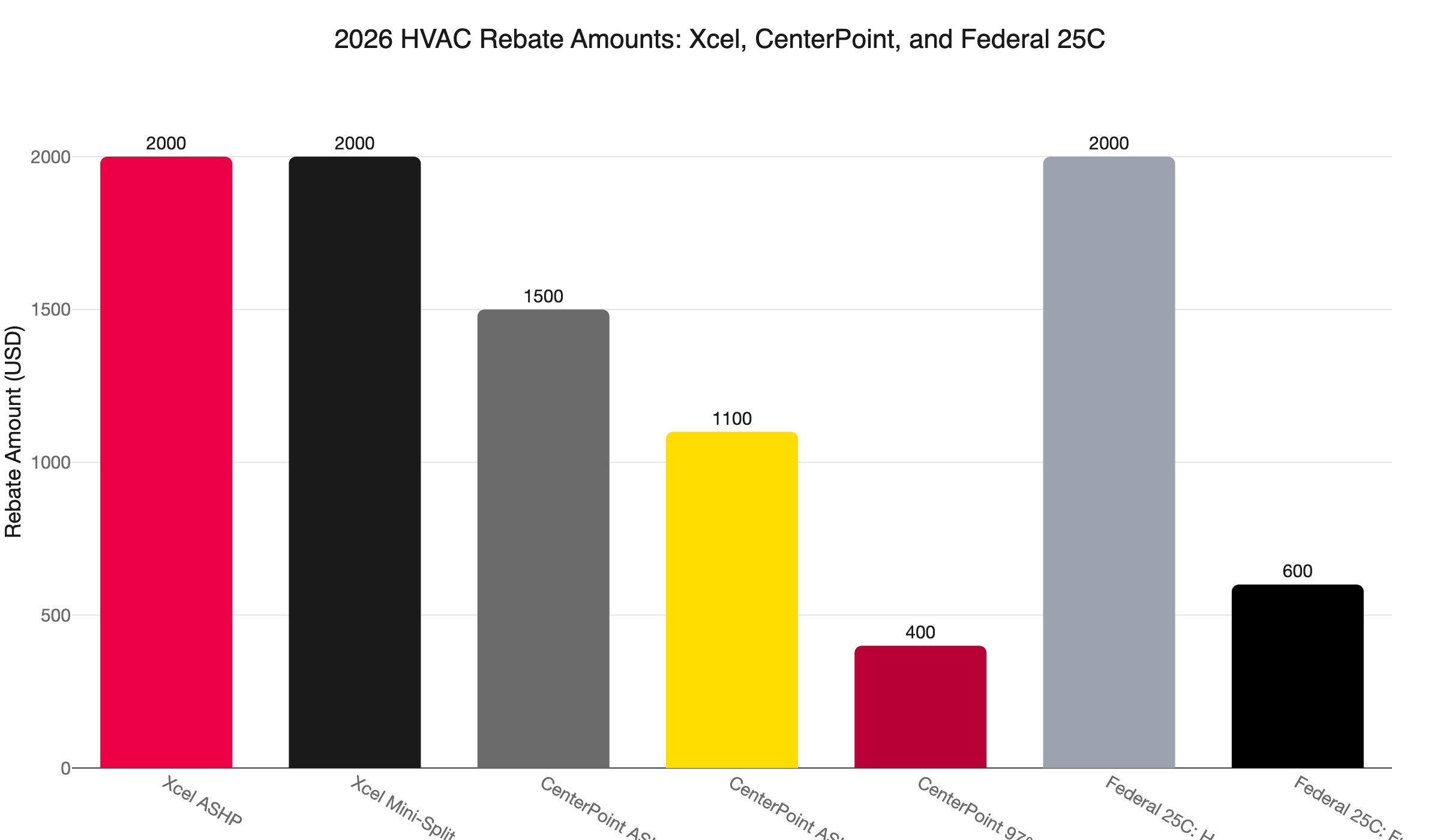
2026 HVAC Rebate Amounts: Xcel, CenterPoint, and Federal 25C
## HVAC During Home Renovation in Minnesota: The Window That Matters
Planning HVAC during home renovation in Minnesota means more than moving a vent. The window between framing and drywall is short. Every HVAC decision must be made during it, or it gets buried in a wall for decades.
Miss that window and the consequences are real. A failed rough-in inspection means walls come back down. An undersized furnace forced to heat a larger floor plan shortens equipment life and leaves the addition cold. A combustion appliance backdrafting into a newly sealed home is a life-safety issue.
This guide covers what Twin Cities homeowners need to do during that window: permits, load calculations, ductwork protection and rerouting, combustion safety, equipment decisions, and 2026 rebates that can offset thousands of dollars in project cost.
## Do You Need a Permit for HVAC During Home Renovation in Minnesota?
Yes. Adding, rerouting, or significantly resizing ductwork triggers a mechanical permit in virtually all Minnesota jurisdictions. A rough-in inspection must pass before walls close. Drywall before that inspection means a failed inspection. The wall comes back down.
Minnesota homeowners renovating their primary residence may pull a mechanical permit themselves. All other applicants require a licensed contractor. [Minnesota DLI rules](https://minnesotahvacauthority.com/minnesota-hvac-permits-and-inspections) govern who may pull which permit. For rental properties and investment homes, the HVAC contractor must pull the permit, not the property owner.
The rough-in inspection comes after ductwork is routed and before insulation and drywall go in. The inspector checks duct routing, pipe sizing, combustion-air provisions, and clearances. Everything must be visible and accessible. Any ductwork buried in a wall without prior inspection is a code violation, regardless of how well the work was done.
Minor repairs typically fall below the permit threshold. Sealing a joint or swapping a register usually does not require a permit. Rerouting or resizing does. Your local authority having jurisdiction (AHJ) makes the final call when scope is ambiguous. Our post on [when an HVAC permit is required in Minnesota](/blog/hvac-permit-when-required-minnesota/) walks through common thresholds by project type.
Schedule the permit application before framing is complete. The process adds lead time you cannot recover later. Waiting until drywall is on the schedule is waiting too long.
## Does Adding Square Footage Require a New Load Calculation?
Yes. Minnesota energy code requires a room-by-room Manual J load calculation as part of any addition permit application. Equipment selection via Manual S must follow that calculation. Skipping either step is a code violation, not a best-practice miss.
Blaine, MN, representative of metro-area AHJs, [requires both Manual J and Manual S](https://www.blainemn.gov/4247/HVAC-Submittal-Requirements---New-Home-T) for addition permits. Manual D is also required: duct layout, friction rates, and register sizing per Minnesota Mechanical Code Section 603.2. These are permit submittal requirements. No submission, no permit.
The underlying reason is practical. A system sized for your original floor plan has no capacity reserve for new conditioned space. An undersized furnace forced to heat 400 more square feet through a Minnesota winter shortens equipment life. It also leaves the addition cold. An oversized unit that was already borderline too big will short-cycle and fail to dehumidify. Either way, the homeowner loses.
[DOE Building America guidance](https://www1.eere.energy.gov/buildings/publications/pdfs/building_america/strategy_guide_hvac_sizing.pdf) identifies improper HVAC sizing as one of the most common residential installation mistakes nationally. The correct sequence is Manual J, then Manual S, then Manual D, then Manual T. No step can be reversed.
One more code point that surprises homeowners: [MN Rules Chapter 1322](https://www.dli.mn.gov/sites/default/files/pdf/fs-2020-res-energy-code.pdf), adopting the IECC, requires any nonconditioned space converted to conditioned space to comply with the full Minnesota energy code. A previously unheated bonus room, garage conversion, or finished attic does not get grandfathered. Full code compliance applies from the date of occupancy, not from when the space was originally built.
Our post on [HVAC sizing and Manual J calculations](/blog/hvac-sizing-manual-j-right-sized-system/) explains what these numbers mean for your specific home and why getting the calculation right at permit time costs less than correcting a mismatched system later.
## How Do You Protect Your HVAC System During Renovation?
Seal all supply and return registers in the work zone with poly sheeting before demo begins. Cloth duct tape is not a suitable sealant. Turn off the HVAC system when dust-generating work is active. Change the furnace filter every two to four weeks during construction.
Renovation generates drywall dust, insulation fibers, sawdust, and construction debris. Duct systems are not designed to filter or expel that material. Once debris enters the system, it distributes through every room in the home. The result is reduced airflow, coil contamination, and blower motor wear that can show up months after the project ends.
The [EPA recommends](https://www.epa.gov/indoor-air-quality-iaq/best-practices-indoor-air-quality-when-remodeling-your-home) sealing all supply and return registers in the renovation zone with poly sheeting before any dust-generating work begins. Standard cloth duct tape is not sufficient for this purpose. Use heavier poly film secured with quality masking tape, or have your HVAC contractor install temporary construction-grade register covers.
Steps to protect your system during active renovation:
- Seal supply and return registers in the work zone before demolition begins.
- Turn off the HVAC system when cutting, sanding, or demo is underway in the zone.
- Change the furnace filter every two to four weeks during active construction.
- Do not run the system to "clear the air" after heavy dust work. Running it pushes debris deeper into the duct system.
- Have the ducts inspected after all work is complete before the system returns to full operation.
Return ducts deserve specific attention. [The EPA notes](https://www.epa.gov/indoor-air-quality-iaq/addressing-indoor-environmental-concerns-during-remodeling) that leaky return ducts create negative pressure that can trigger combustion backdrafting and pull radon from soil into the home. Sealing with mastic or UL181-rated metal tape is the correct fix. Leaky returns are one of the most common duct defects in older Twin Cities homes. A renovation is the right time to correct them while walls are open.
For any new duct runs added to serve the renovation zone, location relative to the thermal envelope matters. Ducts placed in unconditioned attics or crawlspaces require insulation per Minnesota energy code. [In climate zone 7A](https://minnesotahvacauthority.com/minnesota-hvac-ductwork-considerations/) ducts in vented attics require minimum R-8 insulation, and designers commonly specify R-10 or higher given -20°F ambient temperatures. The better approach for additions: route new ductwork inside the conditioned thermal envelope entirely. That eliminates attic losses without relying on insulation to compensate for poor placement.
## Can Opening Walls During Renovation Cause Combustion Backdraft?
Yes, under certain conditions. Opening walls, removing exterior sheathing, or cutting large penetrations for windows and doors shifts building pressure dynamics. In tight Minnesota homes, that shift can cause combustion products to spill into living space. Furnaces and water heaters normally exhaust safely through the flue. When building pressure reverses, the direction of exhaust can reverse too.
This is the risk no general contractor mentions at the project kickoff. It is also the most dangerous one in this guide.
The [EPA identifies combustion spillage and backdrafting](https://www.epa.gov/indoor-air-quality-iaq/best-practices-indoor-air-quality-when-remodeling-your-home) as a real risk in tightly sealed homes. Wall openings that shift building pressure are a documented cause. Minnesota homes are built to tighter standards than much of the country. That makes this risk higher here than in warmer climates where construction has historically been looser.
Before renovation begins:
- Have a licensed HVAC technician classify all combustion appliances. Atmospherically vented appliances carry the highest backdraft risk. Sealed-combustion and induced-draft units carry significantly lower risk.
- Locate and document all combustion air inlets. Confirm they are functional before any work starts.
- Note the location of every gas shut-off in the renovation zone as a precaution.
During active renovation:
- Do not operate atmospherically vented appliances while large exterior wall sections are open.
- Ventilate the work zone with fans exhausting to the outside if combustion appliances must run during construction.
After renovation is complete:
- Have a licensed technician perform a combustion safety test before occupying the renovated space.
- Install carbon monoxide detectors on every level of the home. [The EPA recommends this](https://www.epa.gov/indoor-air-quality-iaq/addressing-indoor-environmental-concerns-during-remodeling) specifically after remodeling that affects building pressure. Test each unit and confirm it is operational.
If your renovation includes replacing a furnace or boiler, now is the right time to upgrade to a sealed-combustion or power-vented unit. The EPA recommends these designs for remodeled homes. They draw combustion air from outside, not from room air. That eliminates the backdraft risk regardless of how tight the building becomes after the renovation is closed up.
## Should You Extend, Replace, or Add Equipment for the Renovation?
The Manual J calculation drives this decision. If the existing system has enough capacity for the new space and ductwork can reach it without pressure problems, extension may work. If the unit is 12 or more years old, or the addition is large, replacement or a dedicated system often makes more financial sense.
Three paths cover most Twin Cities renovation scenarios:
**Extend the existing system.** When the load calculation confirms capacity and the duct run is manageable, extending may be the right call. This works best for modest additions under 400 square feet with straightforward routing back to the existing air handler. The key check: confirm the blower can handle the additional static pressure without noise or airflow problems in existing rooms.
**Replace the existing system.** If your furnace or air conditioner is 12 or more years old, a renovation is the right time to replace it. Walls are already open. Duct modifications are already budgeted. Financing is available to help spread the cost of a new system. Doing replacement separately later adds labor cost without adding any access benefit. Our overview of [HVAC options for home additions in Minnesota](/blog/hvac-home-addition-options-minnesota/) breaks down the most common approaches by project type.
**Add a dedicated system for the new space.** For larger additions, finished basements, or spaces with independent comfort requirements, a ductless mini-split is often the right answer. Mini-splits do not require new ductwork runs back to the main air handler. They provide heating and cooling from a single unit. Cold-climate models from current manufacturers heat effectively well below zero. That makes them a real option in Minnesota, not just a mild-climate workaround.
[Zoned duct systems with motorized dampers](https://minnesotahvacauthority.com/minnesota-hvac-ductwork-considerations/) can serve additions that remain connected to the main system. They require careful static pressure management during design. Poorly sized zoned systems produce noise, premature blower failure, and comfort complaints. These problems are difficult to trace back to the original design error once the walls are closed. That engineering belongs to a licensed mechanical contractor running the numbers, not a general contractor adding dampers to an existing trunk.
## What Rebates Are Available for HVAC Work in a Minnesota Renovation in 2026?
Substantial rebates exist in 2026 and can be stacked. Xcel Energy offers up to $2,000 for a cold-climate heat pump. CenterPoint Energy offers up to $1,500 for a ducted heat pump in an existing home. The federal 25C tax credit adds up to $2,000 more. Combined, those incentives can reach $4,000 or more.
A renovation is the ideal time to capture these programs. Equipment replacement is already in the project budget. Adding a heat pump during the renovation means one mobilization, one permit, and one set of rebate filings. Doing it separately later adds cost on every front.
**Xcel Energy (electric service areas):**
- Cold-climate air-source heat pump: up to $2,000.
- Ductless cold-climate mini-split: up to $2,000.
- Insulation bonus: $600 if qualifying insulation is installed within two years of the heat pump installation. Total potential: up to $2,600.
- Gas furnace rebates from Xcel ended January 1, 2026.
**CenterPoint Energy:**
- Ducted air-source heat pump in an existing home: up to $1,500.
- Ducted ASHP installed as a dual-fuel system with a high-efficiency gas furnace: $1,100.
- High-efficiency gas furnace (97%+ AFUE): $400.
**Federal 25C tax credit:**
- Heat pumps: 30% of project cost, up to $2,000.
- Furnaces and air conditioners: 30% of project cost, up to $600.
- Utility rebates and the 25C credit can be stacked. They are not mutually exclusive.
Minnesota's HOMES and HEAR state programs remain pending DOE approval as of mid-2026. Do not factor them into a project budget for work starting this year. Rely on utility programs and the federal credit.
[Rebates require a participating contractor](https://centralminnesotaheatingandcooling.com/blog/xcel-centerpoint-hvac-rebates-2026), either a CenterPoint Trade Ally or an Xcel Approved Contractor. Applications must be filed within 60 days of installation with an invoice and AHRI certificate. Our team is a participating contractor. We handle the filing.
More detail on current Minnesota incentives is in our post on [Minnesota heat pump rebates and tax credits](/blog/minnesota-heat-pump-rebates-tax-credits/).
## What Should Be Done Before Drywall Goes Up?
Every item below has a hard deadline: the rough-in inspection. Once walls close, your window closes with them. None of this work is easier or cheaper after drywall goes up, and most of it is impossible without tearing walls back open.
Before the rough-in inspection:
- Mechanical permit pulled by the homeowner or licensed contractor.
- Manual J load calculation completed and submitted with the permit application.
- Manual S equipment selection confirmed to match Manual J output.
- All supply and return registers in the work zone sealed with poly sheeting.
- Combustion appliance evaluation completed by a licensed HVAC technician.
- New duct routing laid out inside the conditioned thermal envelope where possible.
- New duct runs in place and accessible for the inspector.
- Equipment replacement scheduled to coincide with open-wall access if the unit is 12 or more years old.
- Rebate contractor confirmed and documentation process started before installation date.
If any item on this list is unresolved when the inspector arrives, you will not pass the rough-in inspection. Correcting deficiencies after drywall is installed costs significantly more than correcting them before.
## Call Before the Framing Crew Leaves
Northern One Hour is locally owned and operated in Ramsey, MN. We serve Minneapolis, St. Paul, Blaine, Maple Grove, Plymouth, Brooklyn Park, Woodbury, Bloomington, and the surrounding Twin Cities area.
The right time to call us is before your framing crew finishes. Not after the drywall crew is scheduled. We walk the renovation zone with you, evaluate your existing equipment, run the load calculation, pull the permit, and show up for the rough-in inspection. On time, every time.
"Always On Time… Or You Don't Pay a Dime!(R)"
Call (763) 260-6662 or book online. We coordinate around your general contractor's schedule.
---
# Heat Pump Water Heater Minnesota: Honest 2026 Payback Math
URL: https://northernonehour.com/blog/heat-pump-water-heater-minnesota/
Published: 2026-08-30 | Category: HVAC
The IRA credit expired. Minnesota's HEAR rebate has no launch date. Here is the real payback math for a 2026 heat pump water heater install in the Twin Cities.
Key Takeaways
- The IRA Section 25C tax credit for heat pump water heaters expired December 31, 2025. Installations completed in 2026 receive $0.
- Minnesota's HEAR rebate has no launch date. Installations completed before it launches are not eligible retroactively.
- Utility rebates are live right now: Xcel Energy ($400-$500), Minnesota Power ($300), and Minnesota Energy Resources (bonus rebates through November 2026 for natural gas customers).
- Modern heat pump water heaters operate efficiently down to 35°F. A 55-degree Minnesota basement is mid-range for these machines.
- Payback for an average-usage household replacing an electric resistance tank: 3-5 years with an Xcel rebate applied.
- Most Twin Cities basements have a gas furnace or boiler, which significantly reduces the basement cooling effect.
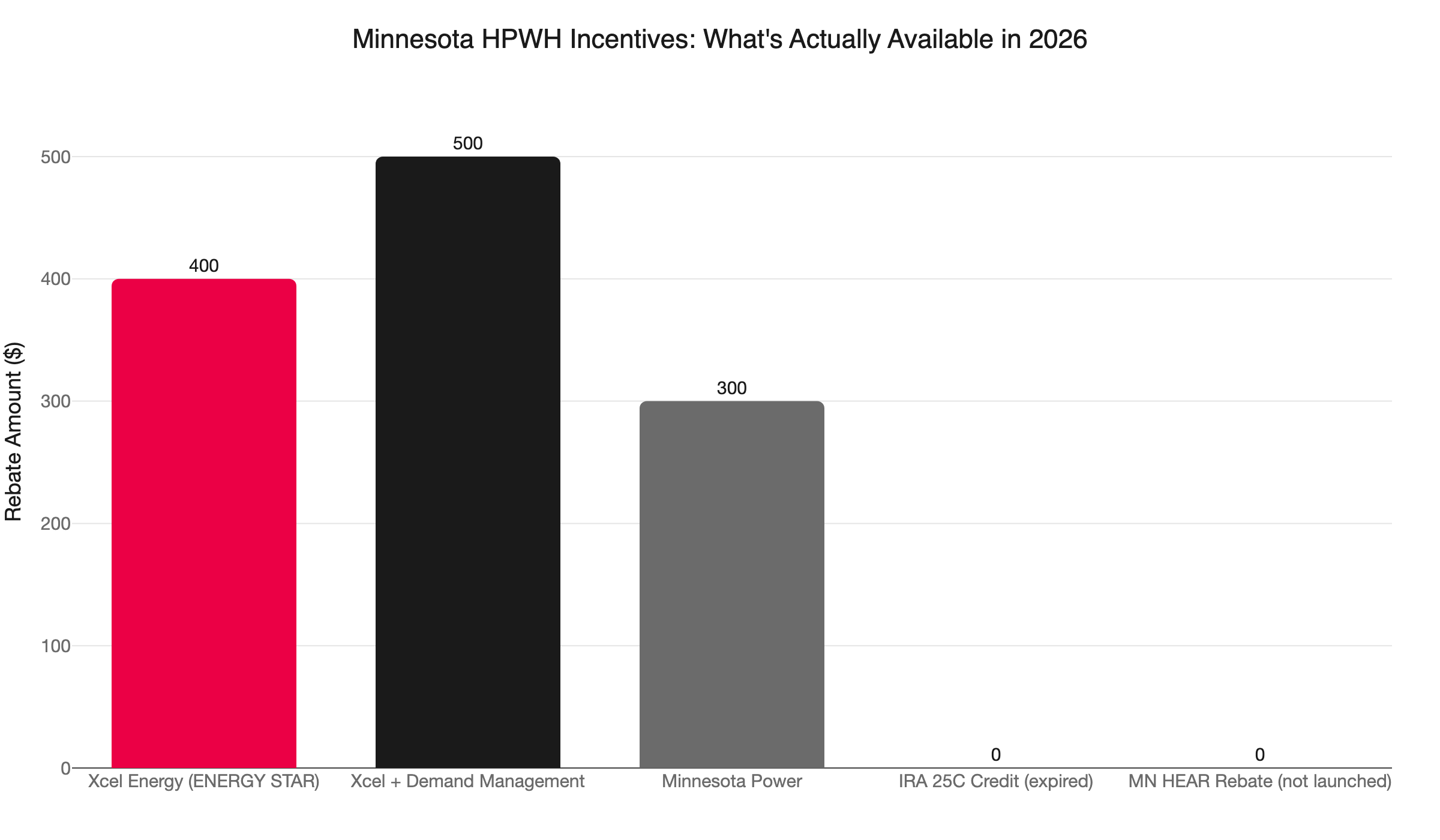
Minnesota HPWH Incentives: What's Actually Available in 2026
A heat pump water heater sounds like a straightforward upgrade for a Minnesota home. The reality in 2026 is more nuanced. Two of the biggest incentives homeowners have heard about are either expired or have no launch date. The good news: utility rebates are real, available right now, and the payback math still works for most households.
## Is a Heat Pump Water Heater Worth It in Minnesota Right Now?
**Short answer:** Yes, for most homeowners replacing an electric resistance water heater. Federal credits are gone, but utility rebates close much of the gap. Payback lands between 3 and 7 years for average households. The 55-degree basement concern is real but overstated by the field data.
A heat pump water heater (HPWH) works similarly to your central air conditioner. It pulls heat from the surrounding air and transfers it into your water. That process uses roughly [3-5 times less electricity than a conventional resistance tank](https://www.energystar.gov/products/ask-the-experts/busting-myths-about-heat-pump-water-heaters). The efficiency gap is the foundation of every payback calculation.
Northern One Hour is locally owned and operated in Ramsey, Minnesota. We install and service HPWHs across the Twin Cities. Our approach is simple: give you the numbers as they actually are, even when the news is inconvenient.
## The IRA Credit Is Gone. What That Means for Your Decision.
Until December 31, 2025, the IRA Section 25C credit returned up to $2,000 to homeowners who installed a qualified HPWH. The credit required a Uniform Energy Factor (UEF) of 2.0 or higher. Most ENERGY STAR-certified units clear that bar without difficulty.
[The credit expired at the end of 2025](https://homes.rewiringamerica.org/federal-incentives/25c-heat-pump-water-heater-tax-credits). Installations in 2026 receive $0 from that program. Full stop.
Many articles still lead with the $2,000 credit as a reason to act now. That information is outdated or misleading. We are not going to do that to you.
The Minnesota HEAR (Home Energy for All Rebate) program is designed to offer substantial support. When it launches, it could provide up to $8,000 for households below 80% of Area Median Income and up to $4,000 for households at 80-150% AMI. A separate Minnesota Residential Heat Pump Rebate of up to $4,000 is also in the design phase.
As of July 2026, [neither program has launched and neither has an estimated start date](https://homeenergybasics.com/heat-pumps/states/mn). Installations completed before the launch date are not eligible retroactively. If your payback math depends on HEAR, your math depends on a program with no timeline.
What is left? Utility rebates. They are real, available today, and worth understanding in detail.
## What Utility Rebates Are Actually Available in 2026?
**Short answer:** Xcel Energy customers can get $400 or $500 with Demand Management enrollment. Minnesota Power customers get $300. Minnesota Energy Resources customers have bonus rebates available through November 2026. These programs are live now, and you can apply after installation.
Here is what each utility is offering:
**Xcel Energy:** $400 for any ENERGY STAR-certified HPWH. Enroll in their Demand Management program and the rebate increases to $500. Demand Management allows Xcel to adjust the heater's schedule during peak grid demand periods. Xcel serves most of the Twin Cities metro, so this applies to the majority of Northern One Hour's service area.
**Minnesota Power:** $300 for an ENERGY STAR-certified HPWH. Valid January 1 through December 31, 2026. One rebate per unit. It cannot be combined with other Minnesota Power offers.
**Minnesota Energy Resources:** Bonus rebates stacked on top of standard amounts for qualifying installations between July 15 and November 15, 2026. [Applications must be postmarked by December 4, 2026](https://www.minnesotaenergyresources.com/savings/water-heating-rebates). These are for natural gas customers only. If you are a Minnesota Energy Resources customer, the window closes soon.
The ENERGY STAR qualification bar is not steep. Any modern HPWH worth installing will carry a UEF well above 2.0. That is the same bar the (now-expired) federal credit used, and the same bar Xcel requires for its rebate. The spec sheet will confirm it.
For a broader view of Minnesota incentive programs, see our guide to [Minnesota heat pump rebates and tax credits](/blog/minnesota-heat-pump-rebates-tax-credits/).
## Does a Heat Pump Water Heater Work in a 55-Degree Minnesota Basement?
**Short answer:** Yes. Modern heat pump water heaters operate efficiently from 35°F to 120°F. A 55-degree Minnesota basement is comfortably mid-range for these machines. Below 35°F, the unit automatically switches to standard electric resistance mode. Typical Minnesota basements rarely approach that threshold.
This is the question we hear most from Twin Cities homeowners, and it is a fair one. Minnesota winters are not abstract. A 55-degree basement is realistic when outdoor temperatures are in single digits and the furnace is cycling.
[ENERGY STAR addresses this directly](https://www.energystar.gov/products/ask-the-experts/busting-myths-about-heat-pump-water-heaters): modern HPWHs handle the full range between 35°F and 120°F without any manual intervention. The unit reads ambient air temperature and adjusts automatically. You do not manage this. The machine does.
One real-world data point: a New England homeowner without any heat source in their basement reported basement temps holding at 50-54°F under normal conditions. During -2°F outdoor temperatures with heavy hot water use, [the basement dipped to 47°F](https://www.buildinggreen.com/blog/heat-pump-water-heaters-cold-climates-pros-and-cons). The unit ran correctly the entire time.
The Minnesota nuance that matters most: the majority of Twin Cities homes have a [gas furnace or boiler](/blog/combi-boiler-space-heating-hot-water-cost-minnesota/) in the basement. That changes the equation. The HPWH scavenges waste heat off the furnace jacket and nearby ductwork while those systems run. It captures heat that would otherwise dissipate into the room. The cooling effect in this scenario is much smaller than in a basement without any heat source. No competitor article addresses this clearly, but it is the scenario most Minnesota homeowners are actually in.
## Will It Freeze Out Your Basement?
**Short answer:** No, not in any meaningful way. A Slipstream field study of 81 cold-climate homes found an average basement temperature drop of 2.3°F per HPWH cycle. After four hours of recovery, the basement was only 0.1°F cooler than before the cycle started.
The fear is logical. A HPWH pulls heat from surrounding air and moves it into water. If the basement is already cold, pulling more heat out sounds like a compounding problem.
The [Slipstream field study](https://slipstreaminc.org/sites/default/files/2022-04/heat-pump-water-heaters-cold-climates.pdf) ran real measurements in 81 homes in cold-climate regions with partially conditioned basements. Those conditions are similar to what you find across the Twin Cities. The cooling effect per cycle averaged 2.3 degrees. Temperature recovered almost completely within four hours. On a normal day with typical hot water use, the cumulative impact on basement temperature is negligible.
A Canadian Centre for Housing Technology and National Research Council joint study went further. Under monitored cold-weather conditions, any increase in heating load from HPWH operation was [fully offset by the HPWH's own energy savings](https://www.energystar.gov/products/ask-the-experts/busting-myths-about-heat-pump-water-heaters). Net impact on whole-home heating costs: effectively zero. HPWHs consumed 3,000 to 35,000 watts less than resistance heaters and delivered 60% energy savings in both winter and summer months.
If you have a gas furnace in that basement, recovery is faster. The furnace runs on its own schedule and continuously returns heat to the basement air.
## The Payback Math: Three Scenarios
The right payback number depends on three things: what you are replacing, how much hot water your household uses, and which utility rebates apply to your address.
**Scenario 1: Replacing an electric resistance tank, Xcel customer, average usage**
This is the clearest win. A HPWH typically costs $800 to $1,500 for the unit, plus $375 to $750 for installation. A resistance tank runs $500 to $900 installed. The premium for the HPWH is real.
A Minnesota homeowner documented their exact numbers: a HPWH cost $1,486 versus $609 for a resistance unit. [At $0.11 per kilowatt-hour, payback was approximately 3 years](https://vettingwolfhomestead.com/hot-water-heat-pump-in-a-minnesota-basement-work-towards-net-zero/). The unit performed as expected in a Minnesota basement throughout. Add a $400 to $500 Xcel rebate and payback compresses further. For an average-usage household, the range is 3-5 years.
**Scenario 2: Replacing a natural gas tank, Xcel customer, average usage**
The math is tighter here. A gas water heater already costs less to operate than electric resistance. You are not replacing a $400-$500/year energy cost. You are replacing a $150-$250/year gas cost with a $100-$200/year electricity cost. Annual savings are smaller.
With a $400 rebate applied, payback stretches to 6-9 years. That is still within a typical HPWH's 10-15 year service life. It is a reasonable investment if you plan to stay in the house.
**Scenario 3: Conservative low-usage household, no rebate applied**
[One detailed cold-climate calculation](https://www.greenbuildingadvisor.com/question/calculating-hpwh-simple-payback-period) de-rated winter COP for Minnesota's seasonal temperatures and estimated annual savings of roughly 1,070 kilowatt-hours. At about $139 per year in savings and low electricity rates, payback without a rebate lands around 14 years.
This is the pessimistic floor. It assumes minimal hot water use, no rebate, and the lowest electricity rates. Most Minneapolis and St. Paul households land somewhere between scenario 1 and scenario 2.
Typical savings versus an electric resistance tank run $300 to $450 per year. With a $400 to $500 Xcel rebate reducing upfront cost, payback for an average household falls to 4-7 years.
If upfront cost is a concern, see our post on [HVAC financing options in the Twin Cities](/blog/hvac-financing-options-what-to-know-twin-cities/).
## What About the Heating Penalty in Winter?
**Short answer:** For most Minnesota homeowners with a gas furnace in the basement, the net effect on total energy bills in winter is close to zero. Field studies show the HPWH's efficiency savings offset any added heating load. This is measured data, not a theoretical assumption.
The concern is reasonable. If the HPWH cools the basement, the furnace runs slightly more to compensate. That sounds like you give back some of the efficiency gain.
In practice, the Canadian study cited above found the heating penalty was fully offset by HPWH savings under monitored cold-weather conditions. Net impact on whole-home heating: effectively zero. HPWHs still delivered 60% energy savings on water heating even during winter months.
The key variable is your basement. If your furnace is down there, it already leaks heat into that space during every cycle. The HPWH captures that leaked heat before it dissipates. The interaction is more efficient in practice than it sounds in theory.
If your basement is fully unheated and unconditioned, discuss placement with us before installation. In most Twin Cities homes, that is not the situation.
## Who Gets the Best Payback from a Heat Pump Water Heater?
**Short answer:** Homeowners replacing an electric resistance water heater, with above-average hot water use, who qualify for a utility rebate. Those three conditions together push payback below five years and sometimes close to three.
Here is the spectrum, from fastest to slowest:
- **Electric tank replacement, Xcel customer, 3+ person household:** 3-5 years
- **Electric tank replacement, Minnesota Power customer:** 4-6 years
- **Gas tank replacement, above-average usage, Xcel customer:** 5-8 years
- **Gas tank replacement, average usage, Xcel customer:** 6-9 years
- **Any replacement, no applicable utility rebate:** add 2-3 years to the above ranges
Single-person households with minimal hot water use are the one group where the math gets genuinely hard. If you fall into that category, we will tell you honestly. Most households do not.
One constant across every scenario: [HPWHs are 3-5 times more efficient than electric resistance](https://www.energystar.gov/products/ask-the-experts/busting-myths-about-heat-pump-water-heaters). That advantage exists in January as much as July. The only question is how large a baseline cost you are replacing.
For more context on how heat pump technology performs in Minnesota conditions, see our guide to [heat pumps in Minnesota and whether they are a good fit](/blog/heat-pumps-in-minnesota-are-they-a-good-fit/).
## What to Ask Before You Install
**Short answer:** Confirm your utility and the current rebate amount, your panel readiness for a 240-volt circuit, your available air space around the unit, and the age of your current water heater. Those four items determine your true payback period and installation scope.
A few specifics worth confirming before you commit:
**Which utility serves your home?** Xcel, Minnesota Power, and Minnesota Energy Resources each offer different rebate amounts with different deadlines and eligibility rules. Confirm yours and the current amount before you select a unit.
**Is your electrical panel ready?** HPWHs run on 240-volt circuits. If your current water heater is gas, this may require a panel upgrade. That cost belongs in the payback calculation from the start.
**How much space surrounds the unit?** A HPWH needs adequate surrounding air to operate at rated efficiency. A cramped mechanical room may require relocation or added venting. We assess this before recommending a model.
**How old is your current unit?** If it is fewer than five years old and running correctly, waiting may make sense. Past 10 years, you are moving toward emergency-replacement territory. Replacing on your schedule is always better than replacing under pressure.
Our team walks through all of this before recommending a unit. We are locally owned, based in Ramsey, and we serve homeowners across Minneapolis, St. Paul, Blaine, Maple Grove, Plymouth, and the broader Twin Cities area. We show up when we say we will. "Always On Time… Or You Don't Pay a Dime!(R)" is not a tagline we take lightly.
Ready to see whether the numbers work for your home? Call us at **(763) 260-6662** or book online. We will review your utility, your current setup, and the rebates available to you before you spend a dollar.
You can also read our breakdown of [Xcel and CenterPoint HVAC rebates in Minnesota](/blog/xcel-centerpoint-hvac-rebates-minnesota/) for the full picture of available incentives.
---
# How to Choose an HVAC Contractor in the Twin Cities
URL: https://northernonehour.com/blog/hvac-contractor-red-flags-twin-cities/
Published: 2026-08-30 | Category: HVAC
Six warning signs and the questions that separate honest Twin Cities HVAC contractors from upsell shops. Minnesota licensing, permits, and rebates explained.
Key Takeaways
- Minnesota has no statewide HVAC license. The only state requirement is a $25,000 bond filed with DLI. Ask for proof before the estimate ends.
- Mechanical permits are required before any equipment swap in virtually every Minnesota city and county. "No permit needed" is a walk-away line.
- Manual J load calculations are code-required in Minnesota for HVAC sizing. "Same size as what you have" is not an acceptable bid.
- Xcel Energy eliminated gas furnace and boiler rebates on January 1, 2026. A contractor still quoting Xcel furnace rebates is working from an outdated price sheet.
- CenterPoint rebates are dealer-submitted. If your contractor is not a Trade Ally, you will not receive the rebate even if the equipment qualifies.
- The six questions in this guide are designed to fail dishonest contractors, not honest ones. A straight contractor answers all of them without hesitation.
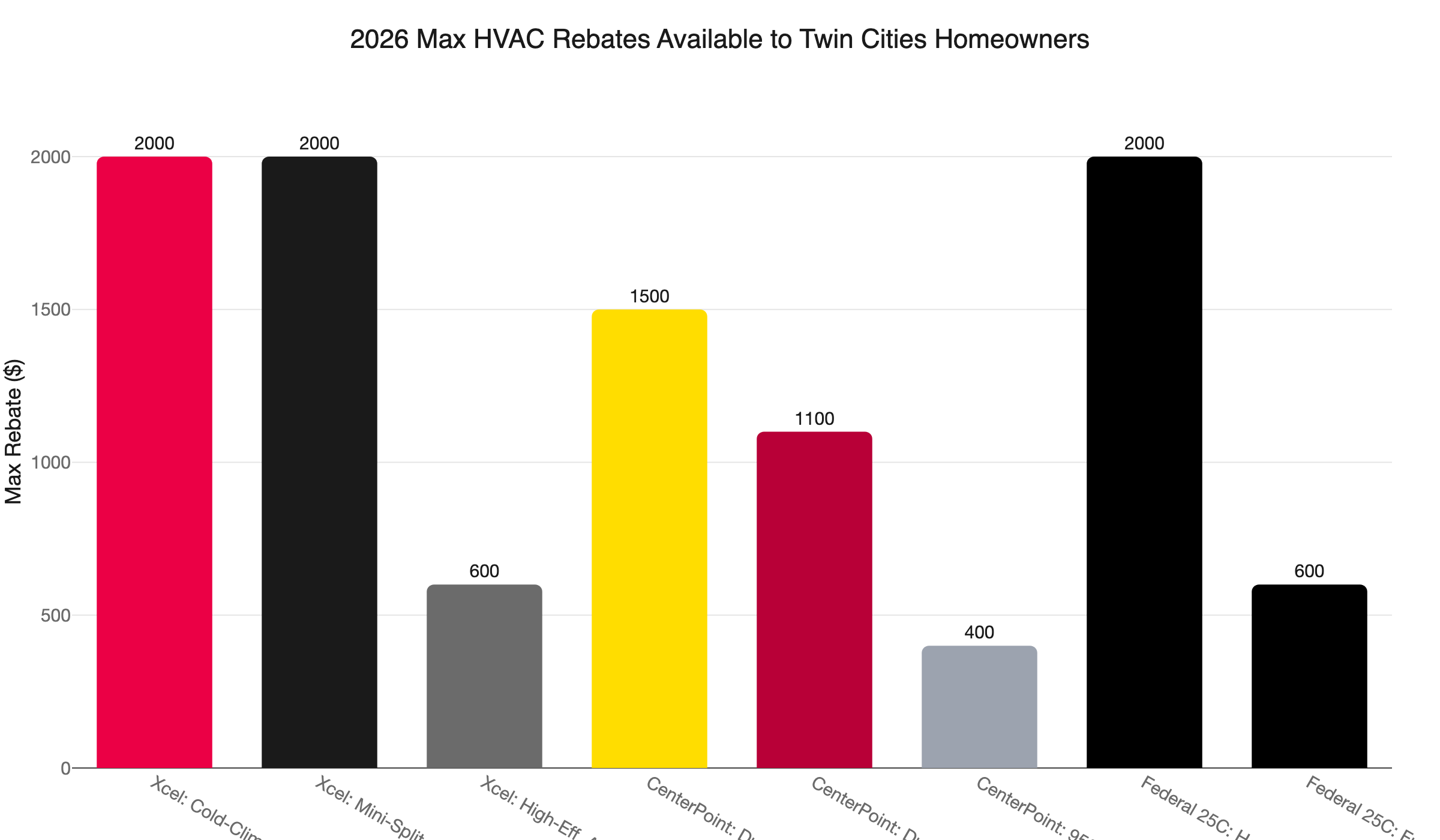
2026 Max HVAC Rebates Available to Twin Cities Homeowners
## Why This Decision Looks Different in Minnesota
Minnesota winters are not typical. Minneapolis carries a design temperature of approximately -16°F. That number matters when contractors from other climates apply rules written for warmer markets.
The regulatory picture is also unusual. Most homeowners assume HVAC contractors hold a state license, the way plumbers and electricians do in most states. They do not. Understanding what Minnesota actually requires is step one in evaluating any contractor who walks through your door.
## What Does "Licensed" Actually Mean in Minnesota?
There is no statewide HVAC license in Minnesota. The only state requirement is a [$25,000 mechanical contractor bond filed with DLI](https://mn.gov/elicense/a-z/?id=1083-231684) under Minn. Stat. § 326B.197. A contractor who cannot produce proof of this bond should not be working in your home.
That does not mean there are no licenses to check. Minneapolis requires city trade licenses by category: HVAC Class A, HVAC Class B, gas fitter, oil burner, and steam/hot water. St. Paul requires $500,000 in liability coverage. Minneapolis requires $100,000 per occurrence and $300,000 aggregate. A contractor licensed to work in Maple Grove may not be licensed to work in either city.
Federally, any technician who handles refrigerants on an air conditioner or heat pump must hold [EPA Section 608 certification](https://www.servicetitan.com/licensing/hvac/minnesota). Ask to see the cert card, not just verbal confirmation.
The practical check is simple. Ask for the DLI bond number and any city trade license covering your address. A legitimate contractor hands this over without hesitation.
## Six Warning Signs to Walk Away Before You Sign
These are not opinions. Each one maps to a Minnesota rule, a code requirement, or a documented pattern that costs homeowners money.
**1. They cannot produce a DLI bond or local city license.**
The bond is the minimum bar the state sets. If a contractor hedges, promises to email it later, or gets defensive when you ask, that tells you what you need to know. Ask before the estimate visit ends, not after you have signed.
**2. They say no permit is needed for a full equipment swap.**
[Mechanical permits are required before work starts](https://minnesotahvacauthority.com/minnesota-hvac-permits-and-inspections) in virtually all Minnesota jurisdictions for any furnace replacement, AC installation, heat pump installation, or ductwork modification. "It's a straight swap" is not a code exception.
A contractor who skips the permit is either uninformed or planning to cut a corner that protects you, not them. The consequences are real: your homeowner's insurance may deny a fire or CO claim; unpermitted work can block a home sale; manufacturers may void the [equipment warranty](/blog/hvac-warranty-registration-what-homeowners-miss-minnesota/).
You can read more about when permits apply in our post on [Minnesota HVAC permit requirements](/blog/hvac-permit-when-required-minnesota/).
**3. They quote a replacement size without mentioning a load calculation.**
"Same size as what you have" is not an acceptable bid. [ACCA Manual J load calculation is required by code](https://minnesotahvacauthority.com/minnesota-hvac-system-sizing-guidelines) under the Minnesota State Mechanical Code for HVAC sizing. The calculation accounts for your home's square footage, insulation, windows, orientation, and local climate data, including that -16°F design temperature.
A contractor who skips the Manual J and quotes by gut is violating code. They are also guessing at the most important variable in your home's comfort for the next 15 to 20 years.
**4. They are still advertising Xcel Energy gas furnace rebates in 2026.**
[Xcel eliminated gas furnace and boiler rebates as of January 1, 2026](https://centralminnesotaheatingandcooling.com/blog/xcel-centerpoint-hvac-rebates-2026). A contractor quoting Xcel furnace rebates on a 2026 estimate is working from an old price sheet. That is a reason to question every other number on the quote.
Xcel still offers rebates on heat pumps and high-efficiency ACs, so not every rebate claim is wrong. The furnace line item is a concrete check you can run in seconds.
**5. They are not enrolled as a Trade Ally with CenterPoint or Xcel.**
CenterPoint rebates are dealer-submitted via form CNP-1375. Your contractor files the rebate on your behalf. You do not file it yourself. If your contractor is not a CenterPoint Trade Ally, you will not receive the rebate even if the equipment qualifies.
Some Xcel rebate programs for central and ground-source installations also require a participating contractor enrolled through hvacree.net/Xcel. Ask directly: "Are you a Trade Ally with both utilities? Can you file the rebates on my behalf?" Both answers should be yes.
**6. They demand full payment or a large deposit before any work begins.**
A deposit to cover materials on a large equipment order is normal, sometimes in the 30-50% range. Full payment before work starts removes your leverage. If the work is done wrong or the permit inspection fails, you have fewer options when you have already paid in full.
## What Questions Should You Ask Before Signing?
Ask these six questions in any order. An honest contractor answers all of them without friction. A contractor who stumbles on more than one is telling you something worth paying attention to.
These questions do not catch good contractors off guard. They reveal process. A contractor who cannot answer them is a contractor who does not follow them.
**"Will you pull the permit, or should I?"**
The honest answer is direct: "We pull it, and it's included in the price." If a contractor says permits are optional, that you can save money by pulling it yourself, or that they usually skip it on simple jobs, stop the conversation there.
**"Can I see the Manual J load calculation before you spec the equipment?"**
You are not asking for a textbook. You are asking whether they ran one. A contractor following code can show you the output or walk you through the key inputs. A contractor who says "we just match the existing unit" skipped a step the Minnesota State Mechanical Code requires.
**"Are you a CenterPoint and Xcel Trade Ally? Can you file my rebates?"**
You want both answers to be yes. For a current breakdown of what is available this year, see our [guide to Xcel and CenterPoint HVAC rebates](/blog/xcel-centerpoint-hvac-rebates-minnesota/).
**"What efficiency tier are you recommending and why, not just the brand?"**
An honest contractor explains why a 96% AFUE furnace makes sense for your home versus an 80%, or why a cold-climate heat pump might outperform a standard system at your address. A contractor who leads with brand loyalty over efficiency math is optimizing for their margin, not your outcome.
**"What happens if the inspection fails?"**
The right answer: they fix it, they reschedule the inspection, and they cover it at no additional cost to you. Any answer that shifts the risk back to you is a signal worth noting.
**"What is your warranty on labor, separate from the manufacturer warranty?"**
Equipment warranties cover parts. Labor warranties cover the install. These are different documents. A contractor confident in their work provides a written labor warranty. Get it in writing before you sign.
## Will Your Contractor Handle the Permit?
In virtually every Minnesota city, pulling the permit is the contractor's responsibility, and a formal inspection follows the install. If the contractor does not raise this during the estimate, ask directly. The permit record also protects you at resale and can be the deciding factor in an insurance claim.
Properties outside organized local building departments fall under the [DLI's direct permitting authority](https://minnesotahvacauthority.com/minnesota-hvac-permits-and-inspections). Contractors who work across Minnesota's 87 counties must verify the authority having jurisdiction at each address. A contractor covering the metro should know this and handle it without being prompted.
When a buyer's inspector asks whether the furnace was permitted, a permit card in the city's system is the cleanest answer you can give. Unpermitted work creates disclosure headaches and can derail a deal.
## Does Your Contractor Know the 2026 Rebate Landscape?
Xcel eliminated gas furnace rebates on January 1, 2026. CenterPoint still offers them. The federal 25C credit stacks on top of both. A knowledgeable contractor knows all three programs and which apply to your specific project.
Xcel still offers real money on heat pumps and ACs. Qualifying cold-climate heat pumps, those with a COP of at least 1.75 at 5°F and listed on the NEEP database, are eligible for up to $2,000. Mini-splits qualify for up to $2,000. High-efficiency ACs fall in the $200-$600 range.
CenterPoint continues to offer rebates on gas equipment. A 95%-plus AFUE furnace qualifies for up to $400. Ducted air-source heat pumps are eligible for up to $1,500. Dual-fuel heat pump systems qualify for up to $1,100. [CenterPoint rebates carry a December 31 filing deadline](https://centralminnesotaheatingandcooling.com/blog/xcel-centerpoint-hvac-rebates-2026), and your contractor submits the paperwork, not you.
On top of utility rebates, the [federal 25C tax credit](https://www.jsmithhvac.com/step-by-step-guide-to-minnesota-energy-rebates-for-hvac-upgrades/) covers 30% of project cost, up to $2,000 for qualifying heat pumps and $600 for qualifying furnaces and ACs. That credit is yours to claim at tax time, separate from anything your contractor files.
## Why Does Sizing Matter So Much in a Minnesota Winter?
Minneapolis has a design temperature of approximately -16°F. Oversized equipment short-cycles, fails to dehumidify in summer, and wears faster under cold-start stress. The only way to get sizing right is a code-required Manual J calculation.
[Poor installation, including wrong sizing, can reduce system performance by up to 30%](https://www.energystar.gov/saveathome/heating-cooling/hvac-quality-installation). That figure comes from ENERGY STAR quality installation research, not a contractor's marketing sheet.
An oversized furnace is not more heat when you need it. It is short bursts of heat followed by cold drops. The system reaches setpoint too fast and shuts off before the air circulates evenly. An oversized AC chills the air without running long enough to pull humidity out. In a Minnesota summer, that means a house that reads 72 degrees on the thermostat but still feels clammy.
Contractors who skip the Manual J are not just cutting a paperwork corner. They are guessing at the most important variable in your home's comfort for the next 15 to 20 years. For more on what a properly sized system looks like, see our post on [HVAC sizing and Manual J calculations](/blog/hvac-sizing-manual-j-right-sized-system/).
## What Does a Quality Installation Include?
[ENERGY STAR Quality Installation guidelines](https://www.energystar.gov/saveathome/heating-cooling/hvac-quality-installation) require right-sized equipment based on Manual J, proper airflow tested to manufacturer specs, and correct refrigerant charge with documentation. Ask whether the contractor follows these standards and will provide a written checklist when the job is done.
A complete quality installation includes:
- Manual J completed before equipment is ordered
- Equipment sized to the calculation, not matched to the old unit's tonnage
- Ductwork inspected and tested for leaks before the new system runs
- Refrigerant charge verified with gauges, not estimated by feel
- Airflow tested and documented to manufacturer specification
- Permit pulled and inspection scheduled before work begins
- Written labor warranty provided at job completion
A contractor willing to put all of that in writing is a contractor confident in their own work. Our walkthrough of [what to expect on HVAC install day in the Twin Cities](/blog/what-to-expect-hvac-install-day-twin-cities/) covers what the day itself should look like from start to finish.
## Is a Low Bid a Red Flag?
Yes, if it is significantly lower than other quotes. Low bids often reflect skipped load calculations, inferior equipment tiers, or a plan to skip the permit. They can also signal an intent to push add-ons once the job is open and your old system is already out.
Heating and cooling account for a large share of a home's total energy use. Cutting corners on the install to save money upfront often costs more in energy bills, repairs, and shortened equipment life over time.
Get [at least three quotes](/blog/hvac-bid-comparison-what-to-look-for-twin-cities/) on any major HVAC project. If one is dramatically lower than the others, ask specifically what it excludes. A contractor who cannot explain the gap cannot be trusted to close it honestly.
## How Northern One Hour Approaches Every Job
We are locally owned and operated in Ramsey, MN, and we serve homeowners across Minneapolis, St. Paul, Blaine, Maple Grove, Plymouth, Brooklyn Park, Woodbury, and Bloomington.
Every job starts with an honest assessment. We pull permits. We run Manual J calculations before we spec equipment. We are enrolled as a Trade Ally with both CenterPoint and Xcel, and we file rebates on your behalf. Our technicians hold EPA Section 608 certification for all refrigerant work. We maintain our DLI bond and carry all applicable city trade licenses for the markets we serve.
We back every appointment with our on-time promise: "Always On Time… Or You Don't Pay a Dime!(R)."
If you are getting quotes on a furnace replacement, AC installation, or heat pump and you want a contractor who will answer all six of those questions without hesitation, call us at **(763) 260-6662** or book online. If budget is a concern on a larger install, ask about our financing options when you call. Straight answers. No upsell.
---
# Nest vs Ecobee Thermostat Minnesota: Cold-Climate Guide
URL: https://northernonehour.com/blog/nest-vs-ecobee-smart-thermostat-minnesota/
Published: 2026-08-30 | Category: HVAC
Compare Nest vs. Ecobee thermostats for Minnesota homes: rebates, two-stage compatibility, aux heat control, and which brand wins for Twin Cities winters.
Key Takeaways
- The entry-level Nest Thermostat (~$130) does not support two-stage furnaces. Most Minnesota homes need the Nest Learning Thermostat 4th Gen ($279) or the Ecobee Smart Thermostat Premium ($249).
- Both brands qualify for the same $50 rebates from CenterPoint Energy and Xcel Energy. Rebates are not a tiebreaker between the two.
- For heat pump homes, Ecobee's configurable aux heat lockout is a genuine cold-climate advantage over Nest's preset-based approach.
- Ecobee includes a built-in humidity sensor. Nest does not. That gap matters across a long Minnesota heating season.
- Minnesota's HEAR and HOMES state rebate programs are not yet available as of mid-2026. Utility CIP rebates are the main stacking incentive today.
- Net cost after a $50 utility rebate: Nest Thermostat ~$80, Ecobee Smart Premium ~$199, Nest Learning 4th Gen ~$229.
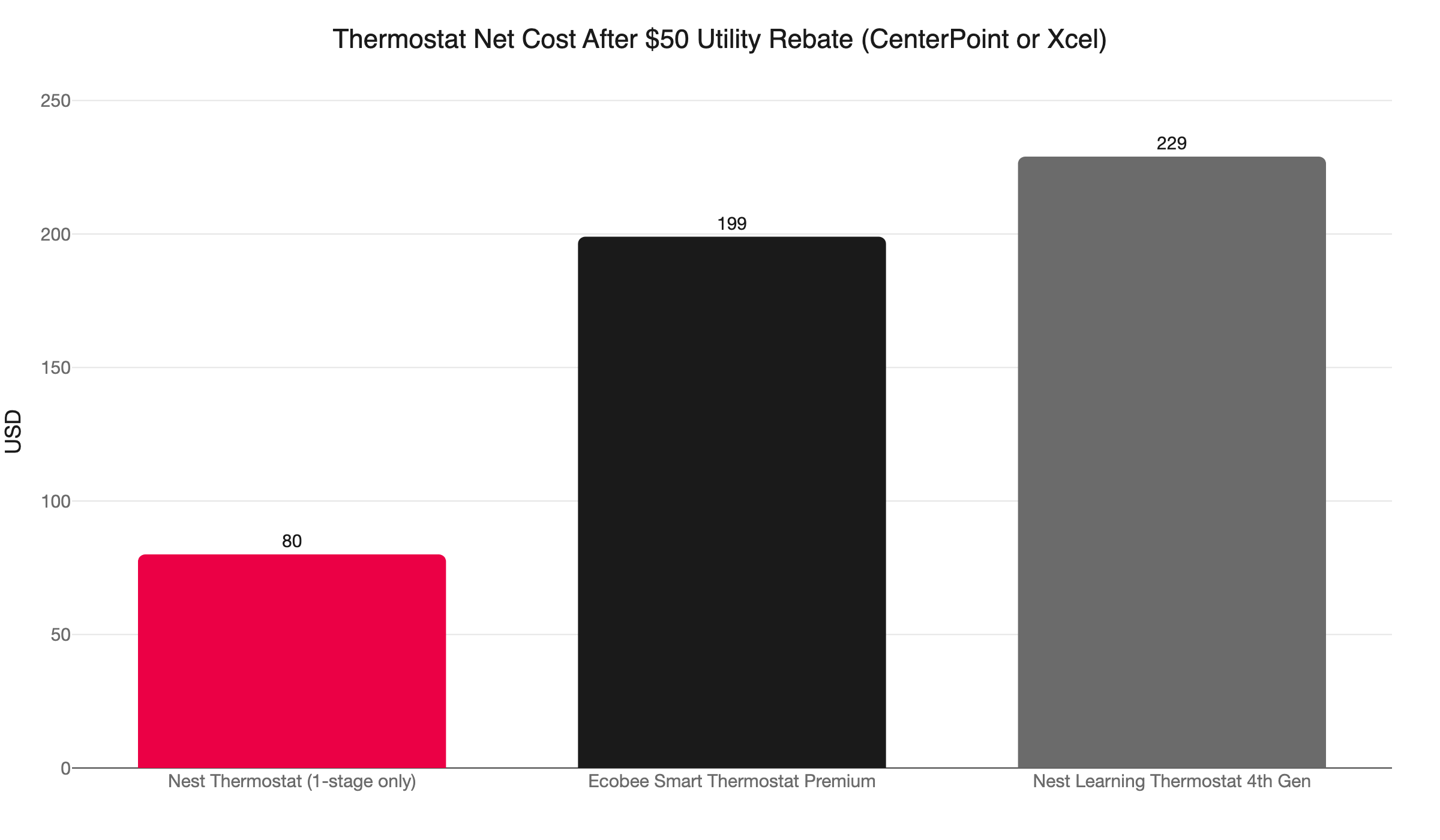
Thermostat Net Cost After $50 Utility Rebate (CenterPoint or Xcel)
## What Makes Minnesota Different for Thermostat Shoppers?
**Short answer:** Minnesota's heating demands are extreme by national standards. A 99% heating design temperature near -16°F and 6,000 to 8,500 annual heating degree days mean aux heat control, multi-stage compatibility, and indoor humidity monitoring matter more here than in most US markets.
Minnesota falls in [IECC Climate Zone 6A](https://minnesotahvacauthority.com/minnesota-climate-hvac-requirements/), a cold and humid classification. The Twin Cities carry a 99% heating design temperature of approximately -16°F and log between 6,000 and 8,500 heating degree days per year. That is not a worst-case scenario. That is a normal Minnesota winter.
A thermostat that performs fine in Colorado or Illinois operates in a different environment here. Multi-stage compatibility, auxiliary heat management, and indoor humidity monitoring all become more important when your system runs for six months straight.
Air-source heat pumps lose efficiency as outdoor temperatures fall. Below roughly 0°F, the system leans on electric resistance backup heat. [Minneapolis exceeds 0°F on approximately 50 days per winter](https://minnesotahvacauthority.com/minnesota-climate-hvac-requirements/). How your thermostat manages the handoff between heat pump and backup heat has a direct effect on your utility bill. Most national comparison guides never raise this point. Twin Cities homeowners have real reason to care about it.
Indoor humidity is the other factor. Minnesota winters are long and dry. Indoor humidity commonly drops below 30% during the heating season, causing static, wood shrinkage, and respiratory irritation. The thermostat you choose either gives you visibility into that or it does not.
## Nest vs. Ecobee Thermostat: Minnesota-Relevant Specs Compared
Both thermostats offer Wi-Fi control, scheduling, energy reporting, and integration with major smart home platforms. Here is where they diverge on specs that matter for Minnesota homes:
**Nest Learning Thermostat 4th Gen ($279)**
- Supports up to 3 stages of heating and 2 stages of cooling on conventional systems
- Heat pump support: 4 total stages (2 heat pump + 2 auxiliary/alternate heat), plus humidifier, dehumidifier, and ventilation terminals
- No built-in humidity sensor
- Google Home native; compatible with Amazon Alexa
- No C-wire required: uses a power-sipping method from the HVAC system
**Nest Thermostat (non-Learning, ~$130)**
- Supports 1 stage of heating, 1 stage of cooling, plus 1 additional stage only
- Not compatible with two-stage furnaces
- Entry-level price; single-stage systems only
**Ecobee Smart Thermostat Premium ($249)**
- Supports 24V systems including dual-fuel, 3H/2C + auxiliary heat, and heat pumps with reversing valve
- Compatible with [95% or more of US HVAC systems](https://www.smarthomeexplorer.com/guides/ecobee-vs-nest-thermostat-2026)
- Built-in humidity sensor and indoor air quality alerts
- Works with Google Home, Amazon Alexa, and Apple HomeKit natively
- No C-wire required: includes Power Extender Kit (PEK)
The price spread is narrower than most shoppers expect. After a $50 utility rebate, the Ecobee Smart Premium lands at roughly $199 and the Nest Learning 4th Gen at roughly $229. A $30 difference at that price point should not be the deciding factor.
## Does the Nest Thermostat Work With Two-Stage Furnaces?
**Short answer:** The entry-level Nest Thermostat ($130) does not support two-stage systems. Only the Nest Learning Thermostat 4th Gen ($279) handles two-stage heating. Many Minnesota homes have two-stage furnaces. Buying the wrong Nest model is the most common purchase mistake we see.
Two-stage furnaces are widespread in the Twin Cities because they run efficiently at a lower first stage during moderate weather and ramp up to full capacity only when temperatures drop hard. A thermostat that cannot communicate with both stages leaves that efficiency on the table.
The [Nest Learning Thermostat 4th Gen supports up to 3 stages of heating](https://support.google.com/googlehome/answer/9235693) on conventional systems. The non-Learning Nest handles only 1H/1C plus one additional stage, which is not sufficient for a standard two-stage gas furnace.
The Ecobee Smart Thermostat Premium handles two-stage heating without special configuration. It supports 3H/2C plus auxiliary heat, which covers the most common Minnesota residential HVAC configurations.
Before you buy either thermostat, remove your current thermostat from the wall and photograph the wiring. Terminals labeled Y2, W2, or a second G wire confirm a two-stage or multi-stage system. If you see any of those, skip the entry-level Nest entirely.
Our team verifies your system's stage configuration during any furnace tune-up. See our [furnace tune-up services](/heating/heating-equipment/furnaces/furnace-tune-ups/) if you want a professional check before purchasing.
## Which Thermostat Handles Heat Pump Aux Heat Better in Cold Climates?
**Short answer:** Ecobee. Its aux heat lockout temperature is fully user-configurable. You set the exact outdoor temperature at which backup heat engages. Nest's "Heat Pump Balance" uses preset modes and gives you less control. When sub-zero temperatures are routine, that precision difference is worth money.
Heat pumps run efficiently down to a threshold temperature. Below that point, electric resistance backup heat carries the load. Electric resistance is significantly more expensive to operate than the heat pump. The thermostat setting that governs when the switch happens affects every utility bill through a Minnesota winter.
[Ecobee's aux heat lockout](https://smarthomefuel.com/article/nest-vs-ecobee-comparison) lets you enter a specific outdoor temperature. If your heat pump runs efficiently to -5°F, you can set the lockout there and extract every hour of efficient heat pump operation before the more expensive backup kicks in. Nest's "Heat Pump Balance" mode offers preset efficiency or comfort options rather than a specific temperature threshold. It works, but it hands less control to the homeowner.
For a Twin Cities home with a heat pump, that granularity has real dollar value across 50-plus sub-zero days per year.
For more on how balance point logic works and how to set it correctly for a Minnesota climate, see our post on [heat pump balance point and backup heat in Minnesota](/blog/heat-pump-balance-point-backup-heat-minnesota/).
## What Rebates Are Available for Minnesota Thermostat Shoppers?
**Short answer:** Both brands qualify for the same rebates. CenterPoint Energy and Xcel Energy each offer approximately $50 for qualifying Wi-Fi smart thermostats. Both Nest and Ecobee are eligible. Rebates should not drive your thermostat choice, but they reduce your net cost and are worth claiming.
**CenterPoint Energy (natural gas customers)**
[CenterPoint Energy offers a $50 rebate](https://www.centerpointenergy.com/en-us/savings-solutions/energy-efficiency/smart-thermostat) on Wi-Fi enabled smart thermostats installed between January 1 and December 31, 2026. One rebate per gas service address. The thermostat must be new and listed on the manufacturer's current website. Both Nest and Ecobee meet that requirement.
You or your dealer can submit the application. Dealer online submission is the fastest processing path. Mail applications go to: CenterPoint Energy, PO Box 59038, Minneapolis MN 55459-0038.
**Xcel Energy (electric customers)**
Xcel Energy's Minnesota residential rebate for qualifying connected thermostats is [approximately $50](https://www.xcelenergy.com/staticfiles/xe-responsive/Working%20With%20Us/24-1-201%20MN%20Res%20Rebate%20Summary%20Information%20Sheet.pdf). Both Nest and Ecobee qualify. Apply at xcelenergy.com/rebates. Note: Xcel's gas furnace rebates were discontinued January 1, 2026. The thermostat rebate remains.
**Minnesota Energy Resources (MER)**
MER runs a bonus rebate period from July 15 through November 15, 2026: 50% of thermostat cost up to the program maximum. The standard application deadline is December 4, 2026. One qualifying thermostat per natural gas service address.
**State HEAR/HOMES Programs**
Minnesota's HEAR and HOMES federal rebate programs are not yet available as of mid-2026. The state is awaiting formal program approval. Utility CIP rebates are the main stacking incentive available today.
The chart above shows net cost for each thermostat after a standard $50 utility rebate. The Nest Thermostat drops to roughly $80, but remember: it does not support two-stage systems. The practical comparison for most Minnesota homeowners is $199 for the Ecobee versus $229 for the Nest Learning 4th Gen.
Our guide to [Xcel and CenterPoint HVAC rebates in Minnesota](/blog/xcel-centerpoint-hvac-rebates-minnesota/) covers the full current incentive picture across heating, cooling, and IAQ categories.
## Does Ecobee's Built-In Humidity Sensor Matter in a Minnesota Winter?
**Short answer:** Yes. Minnesota indoor humidity typically drops below 30% during heating season. Ecobee's built-in sensor surfaces that data in the app and sends air quality alerts. The Nest Learning Thermostat has no built-in humidity sensor. Over a six-month heating season, that gap is real.
Sustained low humidity causes static electricity, cracking hardwood floors, dry skin, and increased susceptibility to respiratory illness. Minnesota's heating season is long enough that unmonitored dry air is not a brief nuisance. It is a sustained condition that affects comfort and the home itself.
The [Ecobee Smart Thermostat Premium includes a built-in humidity sensor](https://www.smarthomeexplorer.com/guides/ecobee-vs-nest-thermostat-2026) and alerts you through the app when indoor conditions fall outside a healthy range. You see the problem and can respond before the effects compound.
Nest's Learning Thermostat can control a whole-home humidifier wired to your system, and so can the Ecobee. Both have a humidifier terminal. Only the Ecobee tells you in real time what the humidity actually is, without an additional sensor purchase.
If your home has a whole-home humidifier, Ecobee simplifies the feedback loop. If it does not, and you have noticed static, cracking trim, or persistent dry air in January, the monitoring capability alone can tip the decision.
## No C-Wire? Here Is What Each Brand Does
**Short answer:** Both brands handle homes without a dedicated C-wire. Ecobee includes a Power Extender Kit that repurposes an existing wire. Nest uses a power-sipping method from the system. On older or complex Twin Cities wiring, Ecobee's PEK is the more reliable option.
Older Twin Cities homes frequently [lack a C-wire](/blog/c-wire-smart-thermostat-compatibility-minnesota/) at the thermostat. This is common in homes built before the 1990s, when continuous 24V power became standard on most installs. Neither brand requires you to run new wire in most cases.
[Ecobee's Power Extender Kit](https://matterhomelabs.com/ecobee-vs-nest/) repurposes one of your existing thermostat wires to deliver continuous power. It installs at the furnace or air handler, not at the thermostat, and works reliably on most multi-stage, dual-fuel, and older wiring configurations.
Nest draws small amounts of power from your heating and cooling wires directly. This works on most standard systems. On sensitive control boards or complex multi-stage setups, it can occasionally cause intermittent issues.
For straightforward single-stage or two-stage gas furnace installations, either approach generally works. For dual-fuel systems or homes with aging wiring of uncertain origin, Ecobee's PEK is the lower-risk starting point. Our technicians check wiring as part of any thermostat installation, before the new thermostat comes out of the box.
## Nest vs. Ecobee Thermostat in Minnesota: Which Should You Choose?
**Short answer:** For heat pump homes, Ecobee wins on aux heat control. For standard two-stage gas furnace homes, both perform well and smart home ecosystem is the tiebreaker. For Apple HomeKit households, the choice is effectively made: Ecobee is the only one of the two with native HomeKit support.
Here is the recommendation broken down by situation:
**Standard two-stage gas furnace:**
Both the Nest Learning 4th Gen and the Ecobee Smart Premium work well. After a $50 utility rebate, the gap is roughly $30. Google Home households fit naturally with the Nest Learning model. Apple HomeKit users should choose Ecobee.
**Heat pump with auxiliary heat:**
Ecobee. The configurable aux heat lockout setting is worth more than a $30 price difference over a full Minnesota heating season. Nest's preset modes do not give you the same level of control over an expensive variable.
**You want humidity monitoring without extra hardware:**
Ecobee. The built-in sensor is standard on the Smart Thermostat Premium, not an optional add-on. It gives you real-time indoor humidity data and alerts through the app.
**Budget-conscious, confirmed single-stage system:**
The Nest Thermostat at roughly $80 net after a rebate makes sense if your system has only one heating stage and the wiring is simple. Confirm the stage count first. Do not buy it assuming it will work on a two-stage furnace.
**Older home, complex or unknown wiring:**
Ecobee. The Power Extender Kit handles non-standard wiring more reliably than Nest's power-sipping approach.
## Is Professional Installation Worth It?
**Short answer:** For systems with multiple stages, a heat pump, or older wiring, yes. A professional confirms compatibility before the box is opened, configures the aux heat lockout correctly for your specific system, and can submit the CenterPoint rebate through the dealer online portal.
Self-installation is manageable on simple single-stage systems with clean, identifiable wiring. Before removing your current thermostat, photograph the wiring. If you see more than five wires, terminals labeled [W2, Y2, or O/B](/blog/heat-pump-thermostat-wiring-aux-heat-staging-minnesota/), or anything you cannot identify, stop and call a technician.
For heat pump homes, professional configuration of the aux heat threshold matters most. A lockout set too warm means your electric resistance backup runs more hours than it needs to. A lockout set too cold means your heat pump labors through conditions where backup heat would have been the right call. Either misconfiguration adds cost across a season. Getting it set correctly once, by someone who knows your specific system, is worth the installation fee.
We are locally owned and operated, serving Twin Cities communities including Ramsey, Blaine, Maple Grove, Plymouth, Brooklyn Park, Woodbury, and Bloomington. Our team shows up when it says it will. "Always On Time… Or You Don't Pay a Dime!(R)"
## Ready to Upgrade Your Thermostat?
A smart thermostat configured correctly for your specific system [pays for itself](/blog/thermostat-setback-savings-real-numbers-minnesota/) across a few heating seasons. The right model, with the right aux heat and humidity settings dialed in, earns its cost in comfort and efficiency.
Our team installs and programs both Nest and Ecobee thermostats. We check your wiring before the box is opened, set up the thermostat for your system type, and handle CenterPoint rebate submission through the dealer online portal so you get the fastest turnaround on your $50 back.
Call **(763) 260-6662** or visit our [thermostat services page](/thermostats/) to schedule your installation.
---
# Oversized Air Conditioner Problems: Why Bigger Isn't Better
URL: https://northernonehour.com/blog/oversized-ac-problems-twin-cities/
Published: 2026-08-30 | Category: Cooling
A too-big AC short-cycles, leaves your home clammy, and wears out early. Confirm oversized air conditioner problems yourself: no service call required.
Key Takeaways
- A healthy AC runs 10-20 minutes per cycle on a hot day. Under 10 minutes is short cycling.
- An oversized unit hits the temperature target fast, shuts off early, and never finishes removing humidity from the air.
- Condensate that forms on the evaporator coil re-evaporates back into the room when cycles end too soon. That is why the house feels clammy even while the system runs.
- You can check for oversized air conditioner problems yourself with a stopwatch, the nameplate on your outdoor unit, and a $15-20 hygrometer.
- Frequent hard starts from short cycling accelerate wear on the compressor, capacitor, and contactor, cutting system life short.
- Minnesota's lakes and rivers add significant atmospheric moisture in summer, making dehumidification more important here than in drier climates.
- Xcel Energy rebates ($150-$450) and the federal 25C tax credit (up to $600) can stack when you replace an oversized unit with a qualifying high-efficiency system.
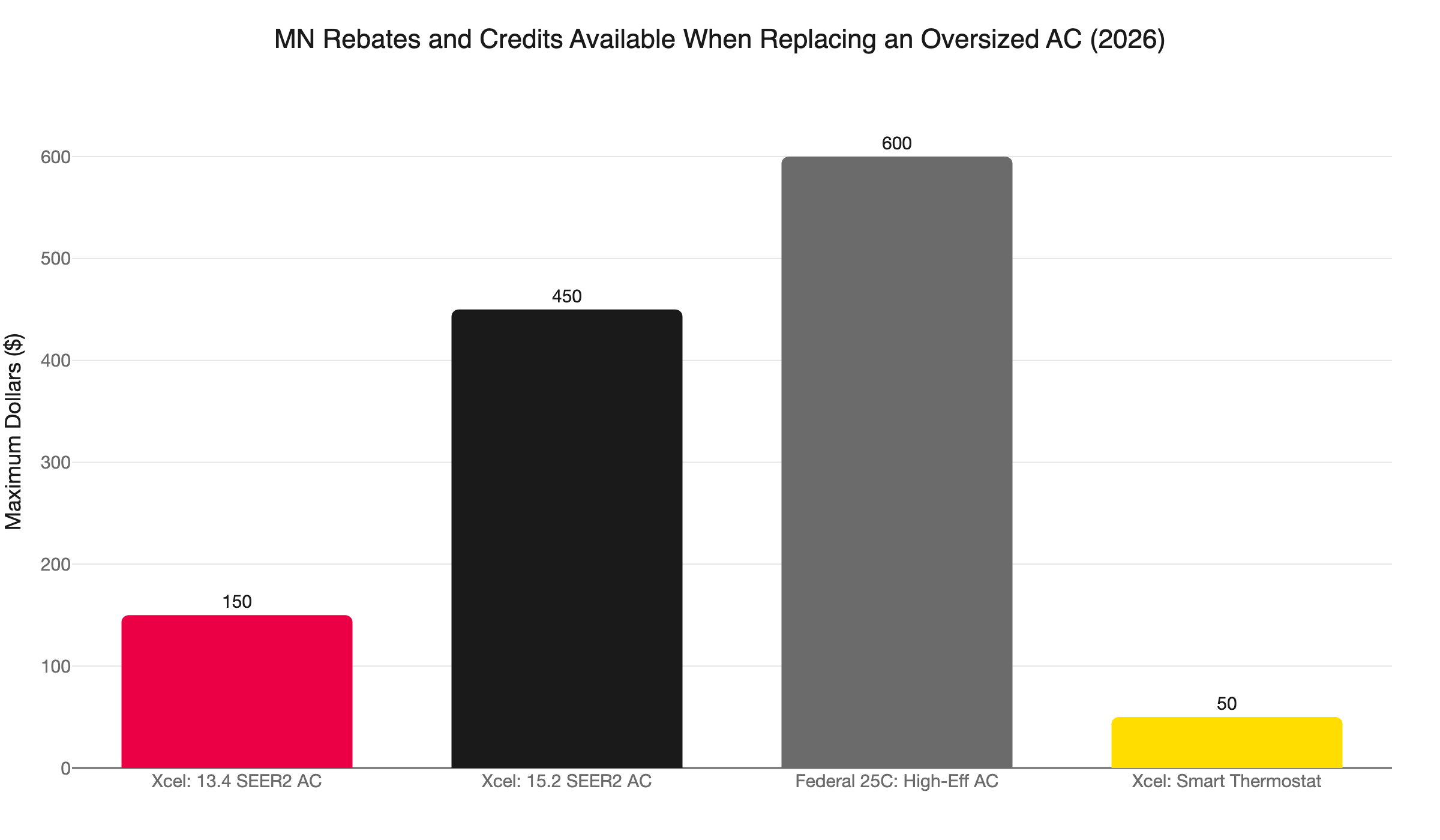
MN Rebates and Credits Available When Replacing an Oversized AC (2026)
## The Problem With "Bigger Is Better" in AC Sizing
Your air conditioner kicks on. Two minutes later, it shuts off. The thermostat reads 72°F. Your house feels cold, but also somehow sticky. The air is heavy.
This is one of the most common oversized air conditioner problems, and it gets misdiagnosed constantly. Homeowners assume the system is working because the temperature number looks right. Temperature is only half of indoor comfort. The other half is humidity.
A too-big AC cools the air fast. It hits its thermostat target and shuts down before doing the other half of its job. The result is a house that is cold and clammy at the same time, a system that wears out faster than it should, and utility bills that do not reflect the power you paid for.
Here is how to confirm you have this problem today, without calling anyone. And if you do need to replace the unit, there are rebates available in Minnesota that make the fix less expensive than most homeowners expect.
## What Are the Signs of Oversized Air Conditioner Problems?
**The short answer:** An oversized AC runs very short cycles, often under 5 minutes, cools the air quickly, shuts off before removing humidity, and cycles back on frequently. High indoor relative humidity while the AC is running is the clearest indicator something is wrong with how the system is sized.
The experience is distinctive. The air temperature drops quickly. The thermostat number looks right. But something feels off. The air is heavy and thick. Surfaces feel slightly damp. You might notice a musty smell from the vents, or condensation on windows that should not be there.
None of that happens with a properly sized system. A right-sized AC runs longer, maintains a steadier temperature, and takes down humidity alongside the air temperature. If your house cools fast but never feels truly comfortable on a humid July day, that pattern is worth looking into.
## Why Does an Oversized AC Short-Cycle?
**The short answer:** A larger unit cools the air to the set point faster than a right-sized unit would. It hits its target, shuts off, the house warms back up, and it fires again. That pattern repeats all day: many short cycles instead of fewer long, complete ones.
[According to HVAC performance data](https://qrc123.com/short-cycling-air-conditioners/), a properly sized AC runs 10-20 minutes per cycle on a hot day. A short-cycling system may run only 2-3 minutes before shutting off. [On a 90°F day](/blog/ac-struggling-extreme-heat-days-twin-cities/) in the Twin Cities, that means the system fires and stops dozens of times rather than running in steady, sustained cycles.
This is not a thermostat problem or a refrigerant problem. It is a sizing problem. The unit was installed with more cooling capacity than the house needs, so it always reaches the target too fast.
## Why Does Your House Feel Clammy Even When the AC Is Running?
**The short answer:** Dehumidification takes time. When cycles end too quickly, moisture that condensed on the evaporator coil re-evaporates back into the room rather than draining away. The system ran, used electricity, and cooled the temperature. But the humidity it temporarily captured went right back in.
Here is the mechanic. When warm, moist air passes over the evaporator coil (the cold coil inside your air handler), moisture from the air condenses on the coil surface. Think of a cold glass of water on a humid afternoon. That condensate drips down into a drain pan and exits through the condensate drain line.
The catch is that [condensate needs time to actually drain](https://qrc123.com/short-cycling-air-conditioners/). If the cycle ends before the condensate leaves the pan, it sits on the coil when the system shuts off. The coil warms up. The condensate re-evaporates, right back into the air in your home.
You end up with the worst of both situations. The system ran. It used power. It cooled the air temperature down. But the humidity it temporarily pulled out went right back in. Your home reads 74°F and 62% relative humidity. You are cold and sweaty at the same time.
This re-evaporation cycle repeats every time the system short-cycles. On a humid Minnesota summer day, an oversized AC is not just failing to dehumidify. It may be making the humidity problem incrementally worse on each cycle.
For more on what keeps indoor moisture elevated even when your system is running, see our post on [why your home feels humid in spring and how AC systems help control it](/blog/why-your-home-feels-humid-in-spring-and-how-ac-systems-help-control-it/).
## How Can You Tell If Your AC Is Oversized?
**The short answer:** Three checks, none of which require calling anyone: time a cycle with a stopwatch on a hot day, find the tonnage on your outdoor unit's nameplate and compare it to your square footage, and read indoor relative humidity with a $15-20 hygrometer while the system runs.
Here is how to run each one.
**The stopwatch test**
On a day above 80°F, go outside when your outdoor unit kicks on and start timing. When the compressor shuts off, stop the clock. Under 10 minutes is a short cycle. Consistently 2-3 minutes is significant short cycling.
Run this test a few times throughout the day. One short cycle can be a warm startup anomaly. A pattern across multiple cycles is a sizing signal.
**The nameplate check**
The [outdoor condenser unit](/blog/ac-condenser-unit-clearance-landscaping-twin-cities/) has a model number plate, usually on the side panel. Look for a BTU or tonnage label. Tonnage is sometimes embedded in the model number: a model ending in 036 typically indicates 36,000 BTU (3 tons); 042 = 3.5 tons; 048 = 4 tons; 060 = 5 tons.
[A rough sizing guideline](https://thefurnaceoutlet.com/blogs/hvac-tips/ac-sizing-guide-oversizing-risks-why-bigger-units-waste-money-and-comfort) is 400-600 square feet per ton of cooling capacity. A 3-ton unit in a 1,200-1,800 square foot home is often reasonable. A 5-ton unit in a 1,500 square foot home is a significant red flag.
That said, square footage alone is not the right sizing tool. [The DOE recommends a Manual J load calculation](https://www.energy.gov/eere/buildings/downloads/hvac-right-sizing-part-1-calculating-loads) for every HVAC installation. It accounts for ceiling height, insulation levels, window area and orientation, occupant count, local climate zone, and appliances. The nameplate comparison tells you whether you're in the ballpark. A Manual J gives you the right number.
**The hygrometer check**
A hygrometer reads relative humidity. You can find one for $15-20 at most hardware stores. Set it in your main living area while the AC is running on a warm day.
The ASHRAE comfort range for indoor relative humidity is 30-50% RH. If you are reading 55%, 60%, or higher while the system is actively running, dehumidification is failing. That is not a normal operating result, and oversizing is one of the most common causes.
## What Does Short Cycling Do to Your AC Over Time?
**The short answer:** Every startup puts maximum electrical load on the compressor, contactor, and capacitor. A right-sized system cycles through this startup load fewer times per day. An oversized system does it many more times, accelerating wear on the most expensive components faster than normal.
The compressor is the most expensive component in your AC system. It is also what makes cooling physically possible. Compressors are engineered for a certain number of start events over their service life. Short cycling multiplies that number dramatically.
[Frequent hard starts accelerate wear on the compressor, contactor, and capacitors](https://indoortemp.com/resources/oversized-air-conditioner-problem) faster than a properly matched system would generate. Technicians often find evidence of repeated hard-start stress when they open up units that failed well ahead of their expected lifespan.
The practical outcome: a system that should run 15-20 years may develop compressor problems in 8-10 years. The extra money spent on more tonnage comes back out of your equipment's service life instead of staying in your pocket.
For what early compressor wear looks like from the outside, see our post on [signs your AC compressor is failing and what repair costs in the Twin Cities](/blog/ac-compressor-failing-signs-repair-cost-twin-cities/).
## Why Are Oversized Air Conditioner Problems Worse in Minnesota?
**The short answer:** Minnesota's lakes, rivers, and summer weather patterns load significantly more atmospheric moisture into the air than drier climates do. Dehumidification is not optional here. It is the primary comfort variable on humid days, and short cycling fails at exactly that job.
Minnesota is not a dry-heat state. Our [10,000 lakes and major river systems add significant atmospheric moisture during summer months](https://bwsheatingandair.com/blog/why-your-minnesota-ac-is-struggling-in-high-humidity/). The latent cooling load, which is the energy required to remove moisture from the air as distinct from lowering temperature, is unusually high in our region compared to drier parts of the country.
On a typical humid July day, dew points in the Twin Cities can reach the mid-60s or higher. At 74°F with a dew point above 65°F, the air feels muggy and uncomfortable regardless of what your thermostat reads. Your system can hold 74°F perfectly, and you will still reach for a fan. That is the humidity side of the equation failing.
When an oversized AC short-cycles here, the problem goes beyond comfort. High indoor humidity supports mold growth in ductwork and on surfaces. It makes allergens more active. It makes the air feel warmer than it is, so people lower the thermostat to compensate. Lowering the thermostat makes short cycling more aggressive, not less.
[Variable-speed (inverter-driven) AC systems](https://bwsheatingandair.com/blog/why-your-minnesota-ac-is-struggling-in-high-humidity/) are particularly effective for Minnesota's humid summers. They run longer at lower capacity rather than blasting cold air and shutting off. The evaporator coil has more contact time with the moist air, which means far better moisture removal on each cycle. That is worth understanding when evaluating a replacement in the Twin Cities.
## What Rebates Are Available When Replacing an Oversized AC in Minnesota?
**The short answer:** Xcel Energy offers $150-$450 for qualifying high-efficiency central AC systems in 2026, and the federal 25C tax credit adds up to $600 for high-efficiency AC or up to $2,000 for a qualifying cold-climate heat pump. Both incentives can be stacked on the same install.
If your checks confirm oversizing and the system is already showing wear, replacement is a practical question, not just a comfort one. Here is where the picture often shifts for Twin Cities homeowners.
**Xcel Energy central AC rebates (2026):**
- $150 for systems rated at the 13.4 SEER2 threshold
- Up to $450 for higher-efficiency 15.2 SEER2 systems
- $50 for an ENERGY STAR-certified smart thermostat
[These rebates require a participating Trade Ally contractor and Quality Install documentation](https://www.metroheating.net/minnesota-heat-pump-rebates-2026-guide-for-saving-big-on-air-conditioner-or-heat-pump-installation/). The install must also be permitted with your city. Skip the permit and the rebate does not get issued.
**Federal 25C tax credit:**
The Inflation Reduction Act created a federal tax credit for qualifying high-efficiency HVAC equipment. A high-efficiency central AC qualifies for up to $600. A cold-climate heat pump, which handles both heating and cooling in one system, qualifies for up to $2,000. [These credits stack with Xcel utility rebates](https://centralminnesotaheatingandcooling.com/blog/xcel-centerpoint-hvac-rebates-2026). You do not have to choose one or the other.
The credit is claimed on IRS Form 5695 when you file your federal taxes. It reduces your tax owed dollar-for-dollar, not just your taxable income.
**The regional minimum standard:**
All new central AC installations in the northern climate zone must meet at least 14 SEER2 efficiency. If your existing oversized system is an older, lower-efficiency unit, a replacement meets the current standard by default. The question becomes which efficiency tier makes sense given your budget and rebate picture.
For a full breakdown of rebate options available to Twin Cities homeowners, see our post on [Xcel and CenterPoint HVAC rebates in Minnesota](/blog/xcel-centerpoint-hvac-rebates-minnesota/).
## What Does Proper AC Sizing Actually Look Like?
A correctly sized AC for your home does not come from picking the highest-tonnage unit available. It comes from a Manual J load calculation.
[Manual J factors in square footage, ceiling height, insulation levels, window area and orientation, occupant count, local climate zone, and appliances](https://thefurnaceoutlet.com/blogs/hvac-tips/ac-sizing-guide-oversizing-risks-why-bigger-units-waste-money-and-comfort), not square footage alone. The DOE and ACCA require it on every HVAC installation. If a contractor quotes you a replacement based only on the tonnage of your existing system, that is a problem. The existing system might be the problem.
Manual J produces the load number. Manual S, the equipment selection process, narrows that number to the right unit. A proper installation uses both.
In Minnesota, this matters specifically because our climate zone and humidity load can produce different results than a square-footage rule of thumb implies. Modern, well-sealed Twin Cities homes often need less cooling capacity than older sizing methods suggest. The industry shorthand of "one ton per 500 square feet" overestimates cooling needs in [well-insulated newer builds](/blog/new-construction-hvac-first-year-problems-minnesota/) more often than homeowners realize.
## Is an Oversized AC Always the Installer's Fault?
**The short answer:** Not always. A system sized correctly at installation can effectively become oversized over time if the home has been significantly improved. Better insulation, new windows, and reduced air leakage all reduce the cooling load, so the unit that was right for the house in 2005 may be oversized for the same house in 2025.
This happens more often than people expect. Energy efficiency upgrades, new triple-pane windows, and added attic insulation all reduce heat gain into the house. The unit that matched at installation can be oversized years later after substantial home improvements.
It also happens when contractors default to square-footage estimates rather than Manual J calculations. Both situations lead to the same result: a system that short-cycles, misses humidity, and wears out early.
Neither case means an immediate replacement is the only path. But the next system needs a fresh load calculation, not a copy of the old tonnage.
## Our Team Does Manual J on Every Install
Northern One Hour Heating & Air Conditioning is locally owned and operated in Ramsey, Minnesota. We serve the Twin Cities metro, including Minneapolis, St. Paul, Blaine, Maple Grove, Plymouth, Brooklyn Park, Woodbury, and Bloomington.
We run Manual J load calculations on every new installation. Not because it is required, but because installing the wrong size defeats the whole point of replacing a system. You should not spend money on a new unit only to have the same short-cycling, clammy-house problem a week later.
If your AC short-cycles, your house feels sticky at 74°F, or your outdoor unit runs 2-3 minutes at a time on a hot day, we can take a look. We will check the cycles, verify the sizing, and give you an honest read on what is going on.
We back every visit with our on-time promise: "Always On Time… Or You Don't Pay a Dime!(R)." If we say we are coming, we show up.
Call us at (763) 260-6662 or [schedule online](/air-conditioning/ac-installation/) to set up a sizing consultation. If a replacement makes sense, we will walk you through the rebate options before you commit to anything.
---
# HVAC Second Opinion Twin Cities: Red Flags and How to Ask
URL: https://northernonehour.com/blog/hvac-second-opinion-when-to-call-another-contractor-twin-cities/
Published: 2026-08-29 | Category: HVAC
When a Twin Cities HVAC diagnosis feels off, here are the red flags to watch, two repair-vs-replace rules, and how to get a second look without burning the relationship.
Key Takeaways
- Get a second opinion any time replacement is recommended on a system under 15 years old, or a repair exceeds a few hundred dollars.
- A cracked heat exchanger must be confirmed with a combustion analyzer and inspection camera. A visual inspection alone is not sufficient.
- The 50% Rule and the $5,000 Rule are two fast benchmarks for evaluating repair-versus-replace decisions.
- Minnesota requires a mechanical permit for virtually every equipment replacement. A contractor who skips that conversation [is a red flag](/blog/hvac-contractor-red-flags-twin-cities/).
- A second opinion from a Trade Ally contractor may unlock federal tax credits and utility rebates the first tech never mentioned, potentially $3,000 to $5,000 in combined savings.
- Most reputable technicians will not object when you ask for 24 hours to verify a diagnosis. A defensive reaction is itself useful information.
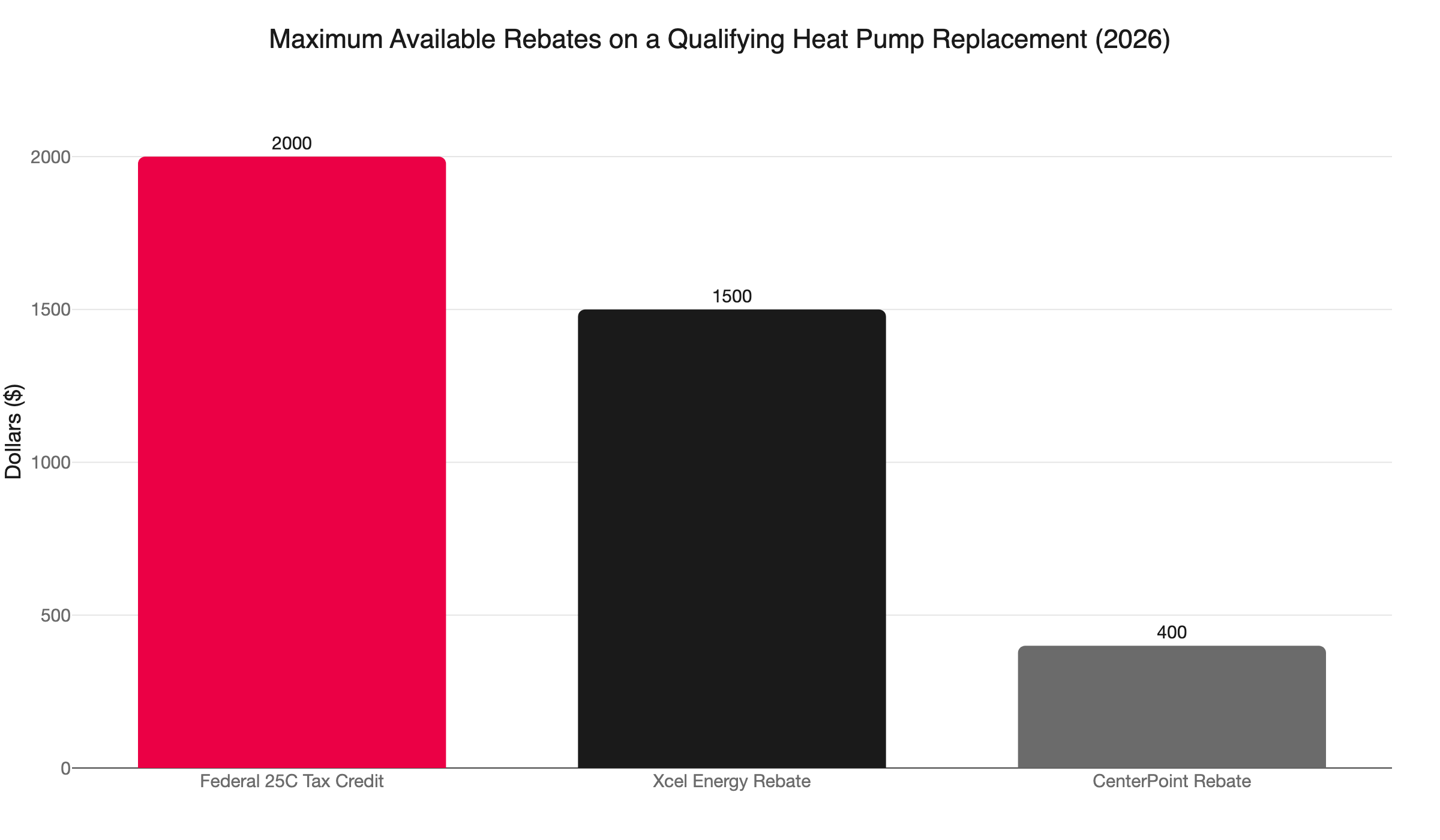
Maximum Available Rebates on a Qualifying Heat Pump Replacement (2026)
## When Should You Get an HVAC Second Opinion in Twin Cities?
Get a second opinion any time a technician recommends replacing a system under 15 years old, quotes a single repair over a few hundred dollars, or diagnoses a cracked heat exchanger without showing you camera footage or combustion readings. Those three scenarios account for most high-dollar misdiagnoses in the Twin Cities HVAC market.
Your heating and cooling system is one of the largest mechanical assets in your home. A furnace replacement in the Twin Cities runs $4,500 to $11,000 installed. A central AC replacement costs $6,500 to $13,000. A second diagnostic visit takes about 30 minutes and can pay for itself many times over, even when the first technician was completely right.
Minnesota's climate makes accurate diagnosis more urgent here than in most markets. Our design temperature of -20°F means furnaces log more operating hours than the same equipment would in a moderate-winter state. A 12-year-old furnace in Plymouth has worked harder than a 12-year-old furnace in Atlanta. Age-based rules of thumb still apply, but our winters compress the upper end of typical lifespan ranges. A unit that might push 18 years in a mild climate may start showing stress at 14 or 15 here.
## What Are the Red Flags That Warrant an HVAC Second Opinion?
Any diagnosis where the technician did not run the equipment, open the cabinet, or show you physical evidence of the problem is worth questioning. A legitimate technician expects you to verify their work.
Here is the checklist. Two or more of these on a single service call means you should make another call before signing anything:
- Replacement recommended without running the system or opening the cabinet
- Estimate delivered verbally with no written, itemized breakdown
- Cracked heat exchanger diagnosed by sight alone, with no camera footage or CO readings
- Refrigerant added without showing measured levels before and after
- "Limited time" pricing pressure or urgency to decide the same day
- No mention of a permit for a full equipment replacement
- Refusal or inability to show photos, readings, or a written report of the problem
- A defensive or offended reaction when you say you want another opinion
That last item deserves extra attention. Reputable technicians get asked for second opinions routinely. They do not take it personally. A tech who pushes back hard when you ask for 24 hours to think is telling you something important about how their company operates. Consider that reaction part of the diagnosis.
### The Cracked Heat Exchanger: The Most Common Scare Diagnosis
The cracked heat exchanger is the single most-cited upsell in residential HVAC. It works because the carbon monoxide safety concern is real and frightening. A homeowner who hears "CO risk" often stops asking questions and reaches for their wallet.
Here is what a legitimate diagnosis actually requires. [A visual inspection alone is not sufficient to confirm a crack. A proper diagnosis uses a combustion analyzer to measure CO levels in the cabinet and living space, plus an inspection camera to document the problem.](https://www.hvacrschool.com/heat-exchanger-crack-diagnosis/) Ask the technician which method they used. Ask to see the photo or the readings. A trustworthy tech will put a phone in your hand with the image on it.
Even a confirmed crack is not automatically a case for full system replacement. [Many homeowners who sought a second opinion found nothing wrong.](https://www.watkinsheating.com/blog/cracked-heat-exchangers/) Most furnace heat exchangers carry a lifetime limited warranty from the manufacturer. If your furnace is under 15 years old, a confirmed crack may mean a labor-only heat exchanger swap at roughly $650 to $1,950, not a full system replacement at $4,500 to $11,000. [A full breakdown of diagnosis methods, costs, and warranty coverage is here.](https://www.pickhvac.com/furnace-cracked-heat-exchanger-symptoms-risks-diagnosis-fix/)
Before agreeing to anything, ask which diagnostic method the technician used. If they cannot or will not show you evidence, stop the conversation and call someone else. For more on what a proper heat exchanger diagnosis involves, see: [Cracked heat exchanger: signs and what to do in Minnesota](/blog/cracked-heat-exchanger-signs-minnesota/).
### Are Refrigerant Claims a Red Flag?
Yes, in specific patterns. A contractor who claims you need refrigerant on every visit, or who "finds a leak" without showing you the location, is following a pattern worth questioning. [A legitimate technician measures refrigerant levels before adding anything and provides written documentation of where the leak was found.](https://centralplumbinghvac.com/is-your-ac-contractor-ripping-you-off-red-flags/) If a tech cannot show you those measurements before and after any refrigerant work, ask for them before authorizing anything.
One legitimate reason refrigerant costs spike: systems built before 2020 may still use R-22, which is no longer manufactured in the United States. R-22 recharge costs can make repair look unaffordable on paper. That situation is real, but you should understand what you are paying for and why before agreeing to a costly recharge on an aging system. Our post on [AC refrigerant leaks and what to watch for in Minnesota](/blog/ac-refrigerant-leak-signs-minnesota/) covers how to read a proper refrigerant diagnosis report.
### Does Minnesota Require a Permit for HVAC Replacement?
Yes, in virtually all cities and townships statewide. A mechanical permit is required for any furnace or AC replacement, including a direct swap of the same model and size. A contractor who tells you a permit is not needed for a full replacement is either misinformed or hoping you will not check.
[The requirement comes from the Minnesota State Mechanical Code, Chapter 1346.](https://www.revisor.mn.gov/rules/1346/full) Unpermitted work can void your homeowner's insurance and create problems [when you sell the house](/blog/hvac-before-selling-home-minnesota/). A future buyer's inspector will find it. You can verify a contractor's active mechanical license at [dli.mn.gov/license-and-registration-lookup](https://dli.mn.gov/license-and-registration-lookup) in about 60 seconds. Do that before the technician arrives, not after.
## How Do the 50% Rule and the $5,000 Rule Work?
Both rules give you a fast benchmark for evaluating repair-versus-replace decisions without needing an engineering background. Use them together, not in isolation.
**The 50% Rule:** [If a single repair exceeds 50% of the installed cost of a new system, replacement is typically the smarter financial call.](https://colemanmitchell.com/blog/ac-repair-vs-ac-replacement/) If a new central AC costs $7,000 installed and the repair quote is $3,800, you are over the line.
**The $5,000 Rule:** [Multiply the equipment's age in years by the repair cost in dollars. If the product exceeds $5,000, lean toward replacement.](https://www.callperfectclimate.com/blog/ultimate-repair-vs-replace-hvac-guide) A 12-year-old furnace needing a $500 repair gives you 12 × $500 = $6,000. That clears the threshold and favors replacement. An 8-year-old unit needing the same $500 repair gives you 4,000, well below the line.
Two Minnesota-specific caveats. First, our winters run furnaces harder than moderate-climate states, so a 10-year-old system in Eden Prairie may have accumulated wear equivalent to a 12-year-old system in a milder market. Apply the rules, but shade them toward the conservative end. Second, [AC systems typically last 10 to 15 years and furnaces 15 to 20 years](https://lcsheatingandcooling.com/blog/hvac-repair-vs-replace-guide-2026) under typical conditions. A unit under 10 years old on its first major issue almost always warrants repair, not replacement, under both rules regardless.
These are starting points. A second opinion from a technician you trust can confirm which side of the line you actually sit on before you commit to anything.
## Are You Leaving Rebate Money on the Table?
This is where a second opinion pays off even when the first diagnosis was accurate. Replacement decisions unlock federal tax credits and utility rebates that many technicians do not mention. A tech who skips this part of the conversation may simply not be tracking the programs, or may not be enrolled as a Trade Ally contractor.
**Federal 25C tax credits (current law):**
- Qualifying central air conditioner replacement: up to $600 credit
- Qualifying heat pump replacement: up to $2,000 credit
- Annual aggregate cap across all energy-efficiency improvements: $3,200
**2026 utility rebates for Twin Cities homeowners:**
- Xcel Energy: up to $1,500 on cold-climate heat pumps; $200 to $600 on qualifying high-efficiency central AC. Gas furnace rebates ended as of January 1, 2026. Verify current amounts at xcelenergy.com/rebates before any replacement decision.
- CenterPoint Energy: up to $400 for standard households, or up to $1,200 for income-qualified households, for a 95%+ AFUE furnace installed by a Trade Ally contractor.
A Trade Ally contractor can stack all three programs. A qualifying heat pump replacement that captures every available program can net $3,000 to $5,000 in combined credits and rebates. If the first technician recommended replacement without walking you through any of this, a second opinion may recover real money before you [sign a contract](/blog/hvac-bid-comparison-what-to-look-for-twin-cities/).
See our full guides on [HVAC rebates for Xcel and CenterPoint customers in Minnesota](/blog/xcel-centerpoint-hvac-rebates-minnesota/) and [IRA tax credits for high-efficiency heating and cooling](/blog/ira-tax-credits-high-efficiency-furnace-ac-minnesota/).
## How Do You Ask for an HVAC Second Opinion Without Burning the Relationship?
Say it plainly and professionally. Something like: "I want to be a good decision-maker on something this significant. Can you give me 24 hours to review this and potentially have a colleague confirm your findings?" A reputable technician will not object. Most will respect it.
This is the angle that no Twin Cities competitor page addresses. The mechanics of getting a second opinion are simple. The social friction is what stops homeowners from actually following through, and that friction costs real money.
Here is the reality. Any technician confident in their diagnosis welcomes confirmation. A homeowner who fully understands and agrees with a recommendation completes the work and refers friends. A tech who reacts with pressure or irritation to the script above is signaling that they are counting on urgency to close the sale. That reaction is information.
A few additional questions that open the conversation without accusation:
- "Can I have the written diagnosis with the part numbers before we schedule?"
- "What warranty covers this repair if another technician confirms the diagnosis?"
- "Who is the equipment manufacturer? I'd like to check the warranty status before we go further."
None of these questions are aggressive. They are what any careful consumer should ask before spending thousands of dollars. You owe the first company a professional conversation. You do not owe them a check before you understand what you are buying.
## What Does a Legitimate HVAC Diagnosis Actually Include?
A trustworthy technician shows their work. Here is what a solid diagnostic visit includes:
- **Written, itemized estimate.** Labor and parts broken out separately. Model numbers of any replacement components listed so you can verify them.
- **Physical evidence of the problem.** An inspection camera photo, CO analyzer readings, refrigerant measurements on paper, or a combination of these.
- **System run time.** The technician should have run the equipment and observed it operating. A diagnosis from across the room is not a diagnosis.
- **Repair-versus-replace math.** If replacement is the recommendation, the tech should walk you through the financial logic, including the 50% Rule or age-times-cost math.
- **Permit mentioned proactively.** For any full equipment replacement, the permit requirement should come up before the quote is signed.
- **Rebate and credit awareness.** A Trade Ally contractor knows what programs apply to your situation and will bring them up unprompted.
If the first visit did not include most of this, a second call is not just reasonable. It is responsible home ownership.
## Why Our Team Welcomes Second Opinions
Northern One Hour is a locally owned and operated HVAC company based in Ramsey, serving the entire Twin Cities metro from Minneapolis and St. Paul to Maple Grove, Woodbury, Blaine, and beyond. We do not win business by hoping homeowners skip the verification step. We win it by showing our work.
When our technicians diagnose a cracked heat exchanger, we show you the camera image and the combustion analyzer readings. When we service a refrigerant system, we document measured levels before and after, in writing. When we recommend replacement, we walk you through the financial math, the permit requirement, and the rebates and credits available to you before we ask you to sign anything.
If you called another company first and want a second look, call us at (763) 260-6662 or book a visit online. We treat the previous diagnosis with respect, run our own independent assessment, and give you a straight answer. "Always On Time… Or You Don't Pay a Dime!(R)" is the standard we hold every visit to, including the ones where we are the second set of eyes.
---
# IRA HVAC Tax Credits Minnesota: What Most Homeowners Missed
URL: https://northernonehour.com/blog/ira-tax-credits-high-efficiency-furnace-ac-minnesota/
Published: 2026-08-29 | Category: HVAC
The federal 25C HVAC credit ended Dec. 31, 2025. Here are the thresholds most Minnesotans missed, who might still claim, and what's available now.
Key Takeaways
- The federal 25C energy-efficient home improvement credit ended December 31, 2025. You cannot claim it for HVAC equipment installed in 2026 or later.
- The credit had two tracks: a $600 cap for furnaces and central ACs, and a separate $2,000 cap for heat pumps. Most homeowners never knew the furnace track existed.
- Gas furnaces required AFUE 97% or higher to qualify. The commonly assumed 95% AFUE threshold did not meet the bar.
- Split-system central ACs required SEER2 17.0 or higher and EER2 12.0 or higher - much higher than standard ENERGY STAR certification.
- Starting with tax year 2025, the IRS required a Qualified Manufacturer Identification Number (QMID) on the return. Many filers never received one from their contractor.
- If you installed a qualifying system in 2025 and didn't claim the credit, an amended return may still be an option. Talk to a tax professional.
- For 2026 installs in the Twin Cities, the real incentives are CenterPoint Energy rebates for high-efficiency gas furnaces, Xcel Energy rebates for cold-climate heat pumps, and the Minnesota HEAR program for income-qualified households.
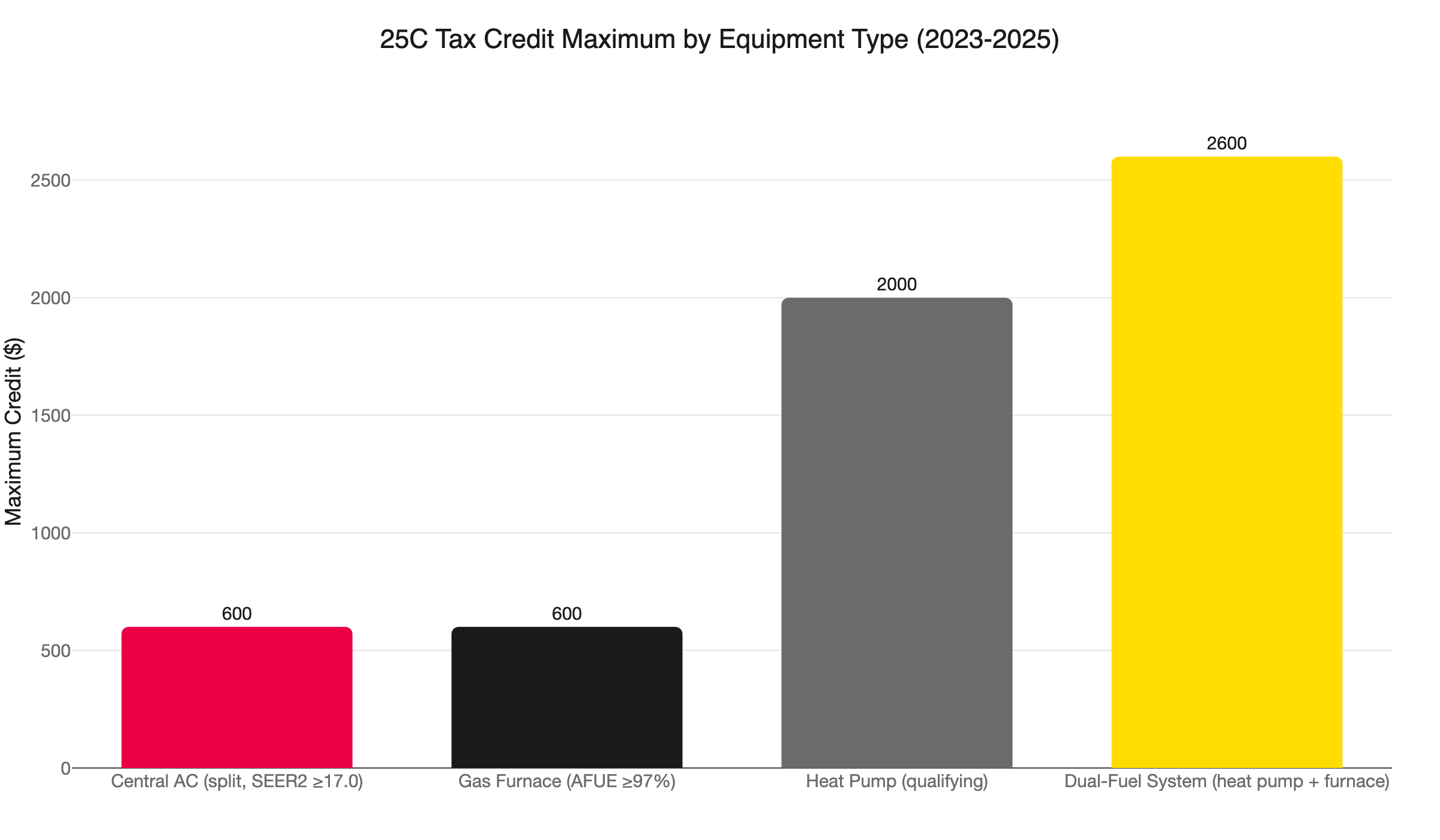
25C Tax Credit Maximum by Equipment Type (2023-2025)
## The Credit Is Gone for New Installs - But the Confusion Isn't
Search "IRA HVAC tax credits Minnesota" today and most results claim the 25C credit runs through 2032. That is wrong.
Congress terminated the credit for new installations after December 31, 2025. The legislation was signed July 4, 2025. The [IRS page for the Energy Efficient Home Improvement Credit](https://www.irs.gov/credits-deductions/energy-efficient-home-improvement-credit) now describes it as available "until 2025." [Energy Star's central AC page](https://www.energystar.gov/about/federal_tax_credits/central_air_conditioning) states the credit period ran "January 1, 2023 through December 31, 2025."
That outdated information has real consequences. Some Minnesota homeowners who replaced a furnace or AC between 2023 and 2025 missed a credit they could have claimed. Others claimed it on equipment that didn't qualify. A few got the math wrong by leaving labor costs out of the calculation. Still others didn't know the furnace track existed at all.
This post is for all of those homeowners. If you replaced a system in 2025 and didn't claim, there may still be a path. If you're planning a 2026 replacement, the federal credit is gone - but real incentives still exist in Minnesota.
---
## What IRA HVAC Tax Credits Minnesota Homeowners Could Actually Claim
**The short answer:** The 25C credit covered central air conditioners, gas furnaces, oil furnaces, propane furnaces, and qualifying heat pumps. For HVAC specifically, there were two separate tracks with two separate dollar caps. Most Minnesota homeowners only ever heard about one of them.
Most coverage of IRA HVAC tax credits focused on heat pumps. The heat pump track had a $2,000 annual cap. That figure got the attention.
But there was a parallel track for furnaces and central ACs. The cap was $600 per item. The credit still calculated at 30% of installed cost, including labor. And it applied to equipment many Twin Cities homeowners were already buying for efficiency reasons - not because they knew a credit existed.
That $600 track is what the majority of Minnesota homeowners missed. Contractors didn't always flag it. Online coverage rarely led with it. Homeowners who replaced a high-efficiency gas furnace or central AC often assumed the credit wasn't for them - or had no idea it was available.
It was for them, if their equipment hit the thresholds. Those thresholds are where things got complicated.
---
## Were Furnaces and ACs Worth More Than $600 Under the Credit?
**The short answer:** For a standalone furnace or central AC, the maximum was $600. But a qualifying heat pump installed alongside a qualifying furnace - a dual-fuel or hybrid system - stacked both credits: up to $2,000 for the heat pump plus $600 for the furnace, for a combined $2,600 maximum. Most homeowners and even some contractors didn't know that combination was possible.
That dual-fuel configuration is especially relevant in the Twin Cities. Minnesota winters regularly reach -15°F to -20°F. A cold-climate heat pump handles most of the heating load in typical conditions. The gas furnace covers the coldest stretches, when temperatures fall below the heat pump's efficient range.
That system is practical for Minnesota's climate and, when the 25C credit was active, among the highest-value configurations for tax purposes. [The MN ASHP Collaborative documented this stacking possibility explicitly](https://www.mnashp.org/understanding-25c-tax-credit-updates-heat-pumps-and-hvac-systems-what-contractors-need-know), noting it was a combination most homeowners and contractors were unaware of.
If you installed a qualifying dual-fuel system in 2025 and only [claimed the heat pump portion](/blog/heat-pump-tax-credit-how-to-claim-form-5695-minnesota/), you may have left $600 on the table for the furnace component.
---
## Why Did Most Furnaces and ACs Not Qualify for IRA HVAC Tax Credits in Minnesota?
**The short answer:** The efficiency thresholds were much higher than most people assumed. Gas furnaces needed AFUE 97% or higher. Split-system central ACs needed SEER2 17.0 or higher and EER2 12.0 or higher. Standard ENERGY STAR certification doesn't reach either bar.
This is where most eligible claims were missed - and where ineligible claims were filed by mistake.
**For gas furnaces:** The IRS required the highest CEE (Consortium for Energy Efficiency) efficiency tier, explicitly excluding any "advanced tier." [Energy Star's furnace page](https://www.energystar.gov/about/federal_tax_credits/natural_gas_propane_oil_furnace) puts the requirement at AFUE 97% or higher. The furnace that most homeowners and contractors assumed was "high efficiency" - a 95% AFUE unit, common in the market, compliant with standard ENERGY STAR requirements - did not qualify.
A 96% AFUE furnace also did not qualify.
That single percentage point disqualified a large share of furnaces installed between 2023 and 2025. Some homeowners claimed the credit on equipment that fell short. Others skipped it on a 97% unit that genuinely qualified.
If you replaced a furnace between 2023 and 2025, start with one question: what AFUE rating did the installed unit have? Your paperwork or your contractor's invoice will have it. If the answer is 97% or higher - and the unit carried ENERGY STAR certification from a qualified manufacturer - you likely had a legitimate credit.
**For split-system central ACs:** [Energy Star](https://www.energystar.gov/about/federal_tax_credits/central_air_conditioning) set the threshold at SEER2 17.0 and EER2 12.0, effective January 1, 2025. Packaged units needed SEER2 16.0 and EER2 11.5. Standard ENERGY STAR AC certification does not reach those numbers. Many high-efficiency central AC units sold and installed in 2024 and 2025 fell short.
If you replaced a central AC in 2024 or 2025, look up the SEER2 and EER2 ratings on the model installed. Your paperwork or the manufacturer's product sheet has both numbers. If they clear both thresholds, and the unit came from a qualified manufacturer, you may have had a legitimate credit - and possibly still do.
Our [guide to AC and furnace replacement costs in the Twin Cities](/blog/furnace-replacement-cost-twin-cities/) explains efficiency ratings and how they factor into equipment selection if you're evaluating options now.
---
## What Other Rules Killed Valid Claims - Even With Qualifying Equipment?
**The short answer:** Three rules tripped up filers whose equipment genuinely qualified. The credit is nonrefundable, so you can't receive more than your tax liability. There's no carryforward, so unused credit disappears. And starting in 2025, the IRS required a Qualified Manufacturer Identification Number (QMID) on the return - a step many filers missed entirely.
**The nonrefundable cap.** The 25C credit reduces what you owe. It does not produce a refund if the credit exceeds your tax bill. If your 2025 federal tax liability was $400 and you qualified for the full $600 furnace credit, you captured $400 of it. The remaining $200 was gone. No carryforward to 2026.
The [IRS page](https://www.irs.gov/credits-deductions/energy-efficient-home-improvement-credit) is explicit on both points. Homeowners who assumed unused credit would roll forward were mistaken. So were those who expected a larger refund.
**The QMID requirement.** Starting with tax year 2025, the IRS required homeowners to report a Qualified Manufacturer Identification Number on their return. Manufacturers were supposed to supply this number at point of sale. In practice, many homeowners never received it, and many contractors didn't know it was required.
Without a QMID on the return, the 25C claim is incomplete - even when the equipment fully qualifies.
The MN ASHP Collaborative flagged this requirement in detail. If you filed for a 2025 installation without a QMID, review the situation with a tax professional before the amendment window closes.
**One note on labor.** The 30% calculation applied to total installed cost, including labor. If you estimated the credit on equipment cost alone, you may have underclaimed on a return that was otherwise valid.
---
## If You Installed in 2025 and Didn't Claim, Is It Too Late?
**The short answer:** Not necessarily. If you filed your 2025 return with an extension, you may still be within the original window. If you already filed, IRS Form 1040-X allows an amendment - generally available within three years of the original filing deadline. A tax professional can tell you whether the credit is worth pursuing for your specific situation.
This applies to homeowners who:
- Installed a qualifying furnace (AFUE 97% or higher) or central AC (SEER2 17.0 or higher and EER2 12.0 or higher) between January 1 and December 31, 2025.
- Did not claim the 25C credit on their 2025 return, or claimed it on equipment that didn't qualify.
- Have enough federal tax liability to benefit from a nonrefundable credit.
The math: 30% of total installed cost (including labor), capped at $600 for a qualifying furnace or central AC. For a qualifying heat pump installed in 2025, the cap was $2,000. For a qualifying dual-fuel system, up to $2,600 combined.
None of this applies to a 2026 installation. The credit ended December 31, 2025.
To check your 2025 equipment, start with the model number. Look up the AFUE or SEER2 and EER2 specifications. Then ask your contractor whether the manufacturer was on the IRS qualified manufacturer list.
---
## What IRA HVAC Tax Credits Are Available in Minnesota Right Now?
**The short answer:** None at the federal level. The 25C credit ended December 31, 2025, and no federal replacement has been enacted. But for 2026 installs in the Twin Cities, three meaningful incentive categories remain: CenterPoint Energy rebates for high-efficiency gas furnaces, Xcel Energy rebates for qualifying cold-climate heat pumps, and the Minnesota HEAR program for income-qualified households.
The framing matters. Searching for IRA HVAC tax credits in Minnesota in 2026 returns mostly outdated results. The federal credit is gone. But incentives exist through utility and state channels - they just require different paperwork and different equipment decisions.
**CenterPoint Energy rebates.** CenterPoint is the dominant natural gas provider in the Twin Cities metro. For 2026, CenterPoint offers rebates for qualifying high-efficiency gas furnaces. Standard rebates run approximately $400 for 95% AFUE or higher equipment. Income-qualified households may qualify for more. A dual-fuel system using a qualifying backup furnace may qualify under a separate tier.
Confirm current amounts directly with CenterPoint before planning around any specific figure. Rebate programs can change.
**Xcel Energy rebates.** Xcel is the dominant electric provider in the metro. As of January 1, 2026, Xcel discontinued rebates for gas furnaces and boilers. A straight gas furnace replacement no longer qualifies for any Xcel rebate. But Xcel continues to offer rebates up to $2,000 for qualifying cold-climate heat pumps in Minnesota.
Most Twin Cities homeowners have both CenterPoint gas service and Xcel electric service. A qualifying dual-fuel system captures rebates from both utilities. That's one heat pump and one qualifying gas furnace - two rebate programs on a single install.
Our post on [current Xcel and CenterPoint rebates for Minnesota homeowners](/blog/xcel-centerpoint-hvac-rebates-minnesota/) covers how these programs work and what questions to ask before you commit to equipment.
**Minnesota HEAR program.** The Home Electrification and Appliance Rebate program is Minnesota's income-qualified electrification incentive. It's administered by the Department of Commerce at mn.gov/commerce. Households below 80% of Area Median Income may qualify for up to 100% of project costs. Households between 80% and 150% AMI may qualify for 50%. HEAR is specifically for electrification - not gas-only replacements.
Confirm current eligibility and amounts with the Department of Commerce before counting on HEAR coverage in your planning.
---
## Should You Consider a Heat Pump Instead of a Gas Furnace in the Twin Cities?
**The short answer:** The 2026 rebate picture favors dual-fuel over a straight gas replacement. Xcel no longer rebates gas-only furnace installs. A qualifying cold-climate heat pump paired with a qualifying gas backup furnace can [stack rebates from both](/blog/stacking-hvac-rebates-tax-credits-federal-state-utility-minnesota/) Xcel and CenterPoint - and delivers real efficiency gains in milder weather.
Minnesota's Climate Zone 6-7 conditions make equipment selection critical. A heat pump must be rated for cold-climate operation at -15°F to -20°F. Units that aren't rated for those temperatures fall back to the gas furnace more often, reducing the efficiency benefit you're paying for.
Our post on [cold-climate heat pump performance in Minnesota](/blog/cold-climate-heat-pump-brand-performance-minnesota/) covers how to evaluate cold-weather ratings for specific models and what to prioritize in this market.
Our post on [dual-fuel heat pump and gas furnace hybrid systems](/blog/dual-fuel-heat-pump-gas-furnace-hybrid-minnesota/) covers how these systems operate, when they make financial sense for a Twin Cities home, and what the installation involves.
For homeowners weighing the decision: a qualified local HVAC contractor can run the numbers on operating costs, available rebates, and what [your existing ductwork and electrical service](/blog/home-energy-audit-hvac-next-steps-minnesota/) can support before you commit to a direction.
---
## Talk to Northern One Hour Before Your Next HVAC Purchase
Whether you're working backward on a missed 2025 credit or planning a 2026 replacement, the next step is the same. Get the right information before you buy.
The 25C credit had thresholds that disqualified most equipment - including equipment contractors and homeowners assumed was eligible. The 2026 incentive landscape has shifted toward electrification. Dual-fuel systems in dual-utility households have real stacking opportunities that a gas-only replacement can't match.
As a locally owned and operated Twin Cities HVAC company, we know how these rebate programs work in this market. We know the efficiency thresholds that trigger CenterPoint rebates, the cold-climate ratings Xcel accepts, and which equipment configurations let you stack both. We're not going to recommend a furnace that falls one percentage point short of a rebate you could have captured.
If the project involves a larger system investment, we can also walk you through financing options that make higher-efficiency equipment more accessible upfront - especially when rebate checks take weeks to arrive.
Our promise is "Always On Time… Or You Don't Pay a Dime!(R)" That applies to every service call. It also applies to giving you a straight answer about what incentives are real and what is outdated information.
Call us at **(763) 260-6662** or book online to talk through your options before your next HVAC purchase.
---
# Heat Pump vs. Gas Furnace Cost in Minnesota: Real Numbers
URL: https://northernonehour.com/blog/heat-pump-vs-gas-furnace-annual-operating-cost-minnesota/
Published: 2026-08-28 | Category: HVAC
See the exact crossover temperature where gas beats a heat pump in Minnesota, using real Xcel and CenterPoint rates and current 2026 rebate facts.
Key Takeaways
- At the standard Xcel residential rate (~$0.17/kWh), a heat pump costs more per delivered therm than a 96% AFUE gas furnace once outdoor temperatures fall below about 47-50°F. That threshold covers most of a Minnesota heating season.
- At Xcel's electric space heating tariff (~$0.12/kWh), the crossover drops to about 28-32°F. The heat pump is the cheaper fuel for the majority of heating hours.
- The [Section 25C federal tax credit](/blog/ira-tax-credits-high-efficiency-furnace-ac-minnesota/) expired December 31, 2025. Equipment installed in 2026 does not qualify.
- Xcel rebates: up to $1,200 for qualifying cold-climate heat pumps; up to $150 for high-efficiency gas furnaces.
- Cold-climate heat pumps are rated to operate at -13°F to -22°F. The "heat pumps don't work in Minnesota" objection applies to older standard models, not current equipment.
- The single most important question before choosing: which Xcel tariff does your home qualify for after a heat pump installation? That one number changes the entire calculation.
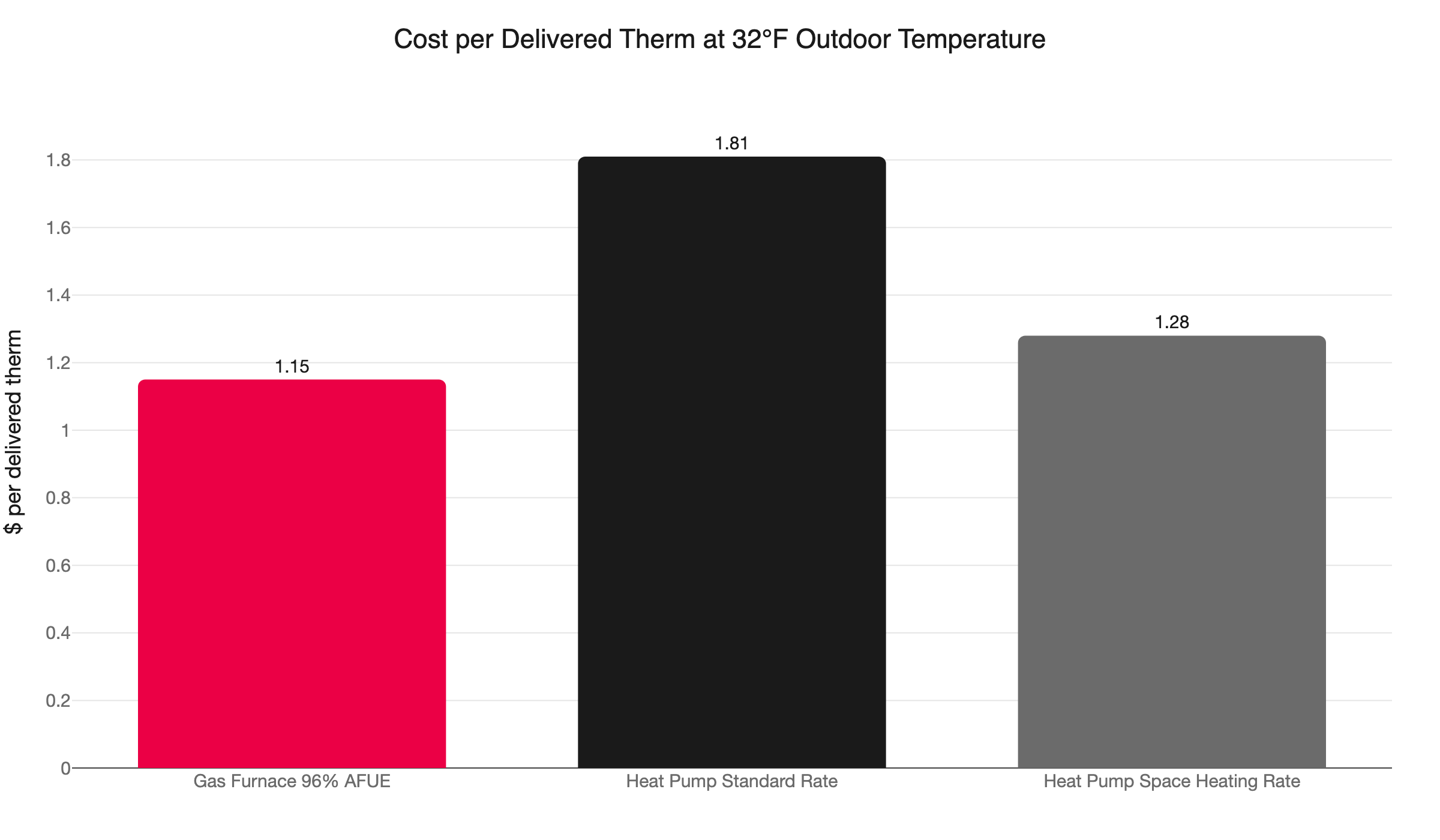
Cost per Delivered Therm at 32°F Outdoor Temperature
## Why Minnesota Makes This Comparison Harder
Most heat pump vs. gas furnace cost comparisons are written for mild climates. They plug in national electricity averages and wrap up quickly. That framework breaks down in the Upper Midwest.
The Twin Cities sits in IECC climate zone 6. A typical heating season runs [5,000 to 7,000 heating degree days](https://cleanenergycalc.com/blog/heat-pump-vs-furnace-2026). Minneapolis averages a January low around 6°F. Stretches below -20°F happen every winter.
A heat pump can be cost-competitive in Denver or Chicago. In Minneapolis during January, it can still be the more expensive fuel. The equipment works. The economics depend on local rate variables that no national article handles correctly.
Two variables drive the Minnesota answer: Xcel's electric space heating tariff (which most articles skip entirely) and the current CenterPoint therm cost (which changes monthly). This post uses both.
We are locally owned and operated in Ramsey, MN. We install heat pumps, gas furnaces, and dual-fuel systems across the Twin Cities. Here is the honest comparison.
## How Much Does Heating Actually Cost Per Delivered Therm?
**The short answer:** A 96% AFUE gas furnace delivers heat at about $1.15 per therm at current CenterPoint rates. A cold-climate heat pump ranges from $0.94 to $1.99 per equivalent therm, depending on outdoor temperature and which Xcel tariff applies. The tariff is the deciding variable.
To compare gas and electric heat fairly, both need to be measured in the same unit: the therm, or 100,000 BTUs of delivered heat.
**Gas furnace math:**
CenterPoint's natural gas rate has two components. The delivery charge is currently proposed at $0.27884 per therm. The fixed monthly basic charge is proposed to rise from $9.50 to $11.00. [CenterPoint has filed for this rate increase](https://investors.centerpointenergy.com/news-releases/news-release-details/centerpoint-energy-files-change-its-natural-gas-distribution). The commodity charge passes through at wholesale and changes monthly. Verify the current rate at centerpointenergy.com before running your final numbers.
The all-in cost for most Twin Cities homeowners runs roughly $0.90 to $1.20 per therm across the season. Using $1.10 per therm as a mid-season estimate with a 96% AFUE furnace:
**$1.10 ÷ 0.96 AFUE = $1.15 per delivered therm**
**Heat pump math:**
A heat pump moves heat rather than burning fuel. Its efficiency ratio is COP (Coefficient of Performance). COP 3.0 means three therms of heat for every therm-equivalent of electricity consumed.
The formula, via [homeenergybasics.com](https://homeenergybasics.com/heat-pumps/vs-furnace): **(electricity rate x 29.3 kWh/therm) ÷ COP = cost per delivered therm**
At [Minnesota's average residential rate of about $0.17/kWh](https://www.electricchoice.com/electricity-prices-by-state/minnesota/):
| Outdoor temp | Typical COP | Cost per delivered therm |
|---|---|---|
| ~47°F | 3.75 | $1.33 |
| ~32°F | 2.75 | $1.81 |
| ~5°F | 2.50 | $1.99 |
At Xcel's electric space heating rate (~$0.12/kWh):
| Outdoor temp | Typical COP | Cost per delivered therm |
|---|---|---|
| ~47°F | 3.75 | $0.94 |
| ~32°F | 2.75 | $1.28 |
| ~5°F | 2.50 | $1.41 |
At the standard rate, gas wins for most of the Minnesota heating season. At the space heating rate, the heat pump beats gas at $1.15 per therm down to about 30°F. The tariff is the headline, not the equipment.
## At What Outdoor Temperature Does Gas Become the Cheaper Fuel?
**The short answer:** At the standard Xcel rate (~$0.17/kWh), a heat pump needs a COP of 4.33 to match gas at $1.15 per therm. That COP only exists above 47-50°F outdoors. At the space heating rate (~$0.12/kWh), the breakeven COP is 3.06, which cold-climate heat pumps reach around 28-32°F.
The math is direct once you have the rate in hand.
To match gas at $1.15/therm at the standard rate: **(0.17 x 29.3) ÷ COP = 1.15**
Solving: **COP needed = 4.33**
[Cold-climate heat pumps hit COP 3.5-4.0 around 47°F](https://cleanenergycalc.com/blog/heat-pump-vs-furnace-2026). They rarely exceed 4.33. Gas is the cheaper fuel for most of the Minnesota heating season on the standard tariff.
To match gas at the space heating rate: **(0.12 x 29.3) ÷ COP = 1.15**
Solving: **COP needed = 3.06**
Cold-climate heat pumps reach COP 2.5-3.0 around 32°F. The economic crossover falls near 28-32°F. Gas only wins below that point. That is a meaningful portion of Minnesota winters but not the majority of heating hours.
The dual-fuel crossover setpoint is typically set at 25-35°F by the installer. That setpoint should be calibrated to which tariff the homeowner qualifies for.
## What Is Xcel's Electric Space Heating Rate, and Who Qualifies?
**The short answer:** Xcel offers a separate space heating tariff at roughly $0.11-0.13/kWh for customers whose primary heating source is electric. That rate is significantly below the standard residential rate of about $0.17/kWh. It may apply after a heat pump installation. Confirm eligibility directly with Xcel before running your numbers.
This tariff exists because Minnesota regulators recognize that electric heat competes against cheap natural gas. The rate is designed to make the math workable for homeowners who choose electric heating.
Qualifying generally requires [electric heat](/blog/electric-baseboard-heat-upgrade-options-minnesota/) to be the primary source, not supplemental. If you install a heat pump and it becomes your main heating system, you may qualify for this rate. That eligibility question changes the economics from "gas wins most of the season" to "heat pump wins most of the season."
Note that [Xcel received PUC approval for a 5.8% rate increase in June 2026](https://cubminnesota.org/xcels-electric-rate-increase). The per-tariff impact is still being finalized. Get the current rate schedule from xcelenergy.com and ask directly whether a heat pump installation qualifies your home for the space heating tariff.
## Is the Federal Tax Credit Still Available in 2026?
**The short answer:** No. The Section 25C energy efficient home improvement credit expired December 31, 2025. No equipment placed in service in 2026 qualifies. Several articles currently in the top search results still claim a 30% credit worth up to $2,000 is available for heat pumps this year. Those claims are wrong.
[The 25C credit expired at the close of 2025](https://homeenergybasics.com/heat-pumps/vs-furnace). Congress has not enacted a replacement. Do not factor a federal tax credit into a 2026 heat pump purchase.
This is the biggest single piece of misinformation circulating for Minnesota homeowners researching this topic right now. If you read a comparison article that lists the 25C credit as a current benefit, that article is working from outdated information. Verify current tax law status with your tax advisor or at IRS.gov.
## What Rebates Are Actually Available Right Now?
**The short answer:** Xcel offers up to $1,200 for qualifying cold-climate heat pumps and up to $150 for high-efficiency gas furnaces. That $1,050 gap on day one meaningfully offsets the higher upfront cost of a heat pump. Verify current amounts at xcelenergy.com before purchasing - rebate program pages were returning errors during our research.
Xcel's rebate structure favors heat pumps clearly. The cold-climate heat pump category draws the highest equipment rebate Xcel offers on the heating side. Gas furnaces at 96% AFUE qualify for a fraction of that amount.
State-level rebates are worth investigating separately. The MN Department of Commerce and Fresh Energy Minnesota are the right starting points. HEEHRA funding availability in Minnesota was unconfirmed at the time of writing. Call us and our team can point you to what is currently active in your area.
For a current summary of Minnesota-specific incentives, see our post on [Minnesota heat pump rebates and tax credits](/blog/minnesota-heat-pump-rebates-tax-credits/).
## How Do Cold-Climate Heat Pumps Perform on Minnesota's Coldest Nights?
**The short answer:** Modern cold-climate heat pump models are rated to operate at -13°F to -22°F. They do not shut off at 32°F. The argument that heat pumps fail in Minnesota applies to older standard models, not equipment from Mitsubishi, Daikin, Bosch, or Hyundai installed today.
[Cold-climate heat pumps](/blog/geothermal-vs-air-source-heat-pump-cost-minnesota/) maintain a seasonal COP of 2.8-3.1 in a Minnesota climate. Standard models average about 2.2. That difference drives the annual operating cost gap between the two equipment categories.
These systems do lose efficiency as temperatures fall. COP drops from about 3.75 at 47°F to 2.5 at 5°F. They still run at extreme temperatures. They [consume more electricity per therm delivered](/blog/heat-pump-electric-bill-spike-winter-minnesota/). At the space heating rate, they remain competitive with gas until outdoor temperatures reach the low 20s.
For a detailed look at what to expect during Minnesota's coldest stretches, read our post on [heat pump performance below zero in Minnesota](/blog/heat-pump-below-zero-performance-minnesota/).
## What Is a Dual-Fuel Hybrid System, and Is It Right for the Twin Cities?
**The short answer:** A dual-fuel system pairs a heat pump with a gas furnace. The heat pump handles the majority of the heating season. The thermostat switches automatically to gas when outdoor temperatures drop below a configured setpoint - typically 25-35°F. It captures heat pump efficiency for most heating hours while running gas when gas is the cheaper fuel.
This setup is the most common recommendation for Twin Cities homes that want to reduce gas use without eliminating it. The heat pump runs efficiently through the shoulder season. When temperatures fall far enough that gas wins on cost, the furnace takes over automatically. No manual switching, no guesswork.
The upfront cost is higher because you are installing two systems. The operating cost savings from the heat pump need to offset that difference over time. In a typical Twin Cities year, the heat pump handles the majority of heating hours. The furnace covers the coldest fraction of the season.
For sizing details and how the crossover setpoint is calibrated, see our post on [dual-fuel heat pump hybrid systems in Minnesota](/blog/dual-fuel-heat-pump-gas-furnace-hybrid-minnesota/).
## Upfront Cost: What Each System Runs in the Twin Cities
Installed costs depend on home size, equipment tier, and ductwork condition.
**Cold-climate heat pump (whole-home split system):**
- Equipment and installation: $8,000-$16,000
- Ductwork repairs or replacement if needed: add $2,000-$5,000
- Xcel rebate: up to $1,200 for qualifying cold-climate models
**Gas furnace (96% AFUE replacement):**
- Equipment and installation: $3,500-$7,500
- Xcel rebate: up to $150
The heat pump costs more upfront in nearly every scenario. The payback period depends on the tariff gap and annual fuel savings. At the electric space heating rate, payback periods of 6-10 years are achievable for homes with high heating loads. At the standard rate, the payback extends substantially or may not close within a typical equipment lifespan.
## Which System Makes Financial Sense for Your Home?
**The short answer:** It depends on which Xcel tariff your home qualifies for after installation and whether you are replacing heating alone or heating and cooling together. There is no single right answer for all Twin Cities homes.
Here is how to frame the decision:
**Lean toward a heat pump when:**
- You qualify for Xcel's electric space heating tariff after installation
- You are replacing both an aging furnace and an aging AC - compare heat pump to furnace-plus-AC combined, not furnace alone
- You want the $1,200 Xcel rebate as a day-one cost offset
- Your ductwork is modern and well-sealed
**Lean toward a gas furnace when:**
- You are on the standard Xcel residential rate and do not qualify for the space heating tariff
- You are replacing only heating, not also the air conditioner
- The upfront cost gap does not close within a reasonable payback horizon for your situation
**Consider a dual-fuel hybrid when:**
- You want heat pump efficiency for the majority of the season
- You already have gas service and want to keep gas backup for the coldest days
- You are not ready to go fully electric
## What About Replacing the Furnace and AC at the Same Time?
**The short answer:** Compare a heat pump to furnace-plus-AC combined, not furnace alone. A heat pump handles both heating and cooling in one system. When both systems are aging, the upfront cost gap between a heat pump and two separate replacements is often much smaller than it first appears.
Comparing a $15,600 heat pump to a $7,100 furnace makes the heat pump look expensive. Comparing that same heat pump to a $7,100 furnace plus $6,500-$7,800 in central AC replacement changes the picture significantly.
If your AC is under 10 years old and running well, replacing just the furnace now usually makes sense. If both systems are at the end of their service life, run the combined replacement comparison before making a decision either way.
## Ready to Compare for Your Home Specifically?
A blog post gives you the framework. It cannot tell you which Xcel tariff your address qualifies for, what your ductwork condition is, or what load calculation your home requires.
That is what a site assessment is for.
We are locally owned and operated in Ramsey, MN, and we serve the Twin Cities: Minneapolis, St. Paul, Maple Grove, Plymouth, Blaine, Brooklyn Park, Woodbury, Bloomington, and the surrounding area. We install heat pumps, gas furnaces, and dual-fuel systems. We have no stake in steering you toward one fuel type over the other. We show you the math for your home.
When we say we will be there, we mean it: "Always On Time… Or You Don't Pay a Dime!(R)."
Call **(763) 260-6662** or [book your estimate online](/heat-pumps/). When you call, ask about current Xcel rebate eligibility for cold-climate heat pumps. Our team will confirm what is active and help you capture it.
---
# HVAC for Minnesota Cabin: Freeze Protection and Sizing
URL: https://northernonehour.com/blog/hvac-minnesota-lake-home-cabin-seasonal/
Published: 2026-08-28 | Category: HVAC
A weekend cabin needs different HVAC than your home. Learn freeze protection thresholds, cold-climate mini-split sizing, and 2026 rebates for Minnesota.
Key Takeaways
- A weekend cabin must be sized for recovery load, not maintenance load. A cabin at 45°F setback requires meaningfully more peak capacity than one coasting at 68°F.
- [Hold the interior above 55°F continuously](https://minnesotahvacauthority.com/minnesota-hvac-freeze-protection/) when the cabin is unoccupied, or drain all water-bearing systems. At -10°F outdoor temperature, an unprotected hydronic coil can rupture within two to four hours of heating loss.
- Modern cold-climate mini-splits include an autonomous freeze-protection mode. The unit holds the space above approximately 50°F even when set to "off."
- Manufacturers enrolled in the [DOE Cold Climate Heat Pump Challenge](https://www.energy.gov/cmei/buildings/residential-cold-climate-heat-pump-challenge) are rated for full output at -13°F. Standard heat pumps lose up to 60% of their capacity at that temperature.
- Xcel Energy's $2,000 cold-climate heat pump rebate, plus a $600 insulation bonus, is active through September 30, 2026. Federal 25C tax credits expired December 31, 2025.
- A mechanical permit is required before any HVAC installation, including mini-splits, even at a rural cabin. Skipping it voids most warranties.
- The practical design for most Minnesota cabins: a cold-climate mini-split as the primary system, with propane backup for nights below -15°F to -20°F.
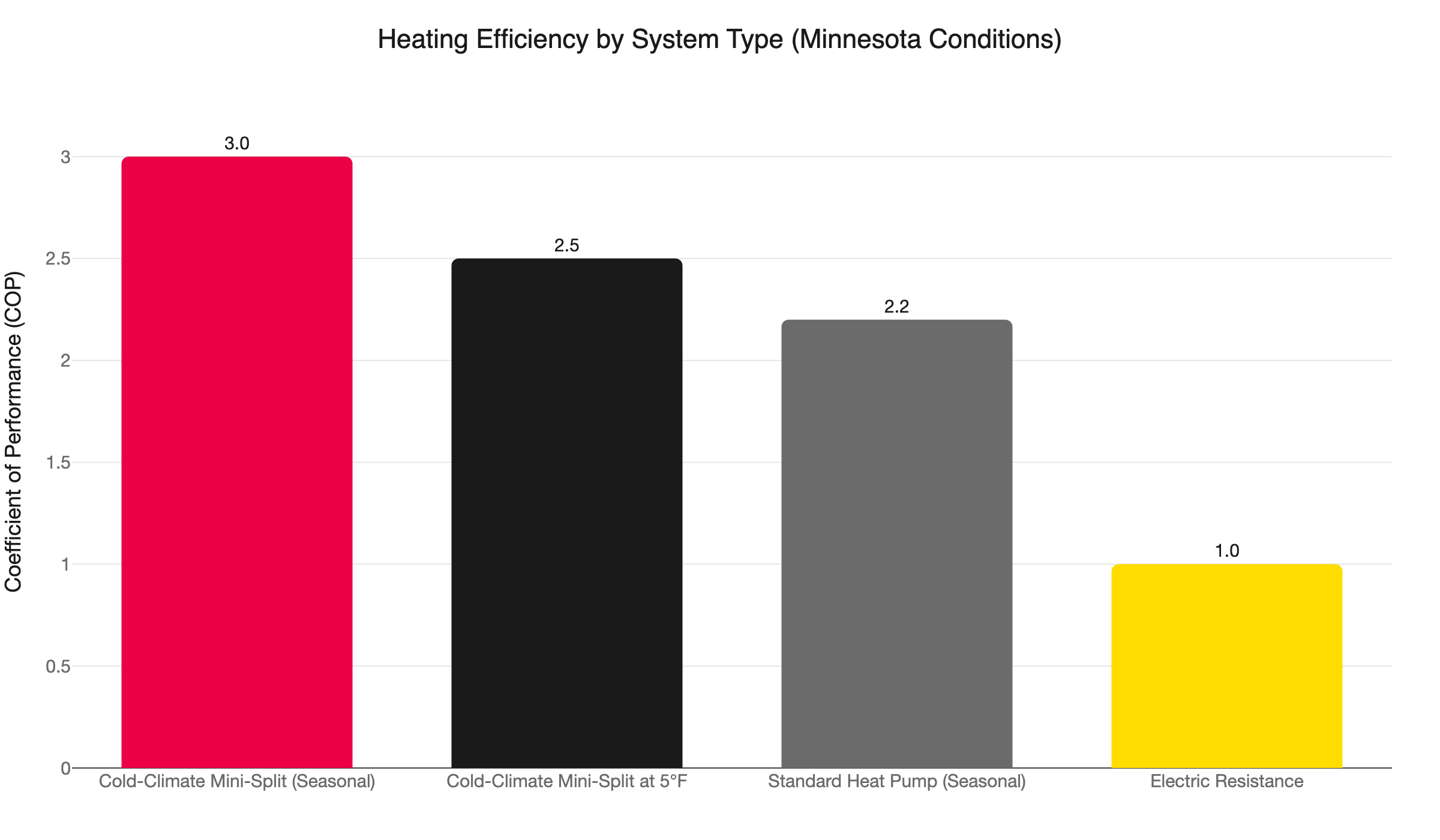
Heating Efficiency by System Type (Minnesota Conditions)
HVAC for a Minnesota cabin is not the same problem as HVAC for your primary home. Your house runs at 68°F around the clock. Your cabin doesn't. It sits at 45-50°F most of the week. When you pull in Friday evening, every wall, floor, and stick of furniture has been shedding heat for five days. Getting the place to comfortable in two to three hours on a cold afternoon is a different engineering problem.
Most HVAC guidance for cabins misses this. It treats the cabin like a smaller house and applies the same sizing logic. That produces a system that either runs out of capacity on a bad winter Friday or costs far more than it should.
This post explains the three-part logic that governs every cabin HVAC decision: freeze protection, recovery sizing, and shoulder-season efficiency. Get all three right and you have a system that works. Miss any one and you're overspending on propane, underpowered when it matters, or staring at a burst pipe come spring.
## Why HVAC for a Minnesota Cabin Is a Different Problem
[Minnesota falls in IECC Climate Zones 6 and 7](https://minnesotahvacauthority.com/minnesota-climate-hvac-requirements/) - the two coldest non-subarctic designations in the contiguous U.S. Metro-area lakes (Mille Lacs, Brainerd, St. Croix) land in Zone 6. Northern Minnesota (Boundary Waters, Grand Marais) reaches Zone 7. Zone determines minimum insulation requirements, duct leakage limits, and equipment efficiency thresholds. A system designed for a milder climate will not hold up here.
Design temperature varies significantly across the state. The Twin Cities metro design temperature is roughly -16°F. Cabins north of Brainerd, on the Iron Range, or near the Boundary Waters face -25°F to -30°F. That 10-15°F difference changes every system decision. It affects the cold-climate rating you need, the backup heat sizing required, and the insulation threshold below which a mini-split alone can't keep up.
The second problem is occupancy pattern. A primary home runs at 68°F continuously. A weekend cabin drops to 45-50°F every time you leave. When you arrive Friday evening, the structure is cold-soaked. Every surface has been shedding heat for five days. Warming that thermal mass in two to three hours is a different load. It is not the same calculation as maintaining 68°F in a home that never cools way down.
Three questions govern every cabin HVAC decision:
1. **Freeze protection:** Will the system hold the interior above a safe threshold autonomously when you're gone?
2. **Recovery capacity:** Can it bring a cold-soaked structure to comfort in two to three hours?
3. **Shoulder-season efficiency:** Does it run cheaply in September and October, when cabin use peaks before freeze-up?
Answered together, those three questions point to the same design most of the time: a cold-climate ductless mini-split as the primary system, with propane backup for the coldest nights.
## What Temperature Should You Hold in a Minnesota Cabin When You're Not There?
[Hold the interior above 55°F continuously, or drain all water-bearing systems before you leave.](https://minnesotahvacauthority.com/minnesota-hvac-freeze-protection/) At -10°F outdoor temperature, an unprotected hydronic coil can [freeze and rupture](/blog/frozen-pipes-hvac-failure-risk-minnesota/) within two to four hours of heating loss. The 55°F threshold is the standard protocol for Minnesota vacation properties.
Running an old propane furnace as a week-long freeze guard has real costs. Propane prices swing. Rural tank runs can be unpredictable. A furnace cycling to hold 55°F for five days also operates inefficiently. It burns fuel and equipment cycles on a task it wasn't designed to run continuously.
Cold-climate mini-splits handle this differently. Most modern units from manufacturers like Mitsubishi, Daikin, and Bosch include a frost-guard or freeze-protection mode. When you set the unit to "off" before leaving, it does not fully shut down. It continues sampling interior air temperature. If the cabin drops toward 50°F, the unit switches on and heats until the threshold is met. Then it goes quiet again.
That behavior eliminates a frustrating tradeoff. You no longer have to choose between running the heat at setpoint all week or draining the plumbing before every departure. The mini-split monitors the space and responds. You get freeze protection without a propane furnace running a long, inefficient duty cycle for one degree of margin.
For guidance on setback temperatures during extended winter absences, see our post on [what temperature to set your thermostat when leaving a Minnesota home in winter](/blog/what-temperature-set-thermostat-minnesota-winter-vacation/).
## Does a Cold-Climate Mini-Split Actually Work at Minnesota Temperatures?
Yes, if the unit is rated for cold-climate operation. Modern cold-climate heat pumps maintain full rated capacity to -13°F and useful output to -22°F or colder. Through the [DOE Cold Climate Heat Pump Challenge](https://www.energy.gov/cmei/buildings/residential-cold-climate-heat-pump-challenge), eight major manufacturers have committed to those specifications: Bosch, Carrier, Daikin, Johnson Controls, Lennox, Midea, Rheem, and Trane Technologies.
Standard heat pumps are a different product. They can lose up to 60% of their heating capacity at -13°F. If you're installing at a cabin where the design temperature is -16°F, you need a unit explicitly rated for cold-climate operation. A standard unit marketed with vague cold-weather language is not the same thing.
The efficiency case for shoulder seasons is the clearest argument for the mini-split. [A cold-climate mini-split delivers a seasonal COP of 2.8 to 3.1](https://cleanenergycalc.com/blog/heat-pump-vs-furnace-2026), meaning each unit of electricity produces 2.8 to 3.1 units of heat. At 5°F outdoor temperature, COP holds at 2.4 to 2.6. Compare that to a standard heat pump at 2.2 seasonal COP, or electric resistance heat at 1.0 by definition.
In September and October, when Minnesota temps run 35-55°F, cold-climate COP climbs to 3.5 or above. That is the cheapest heat available in the structure short of a geothermal system. It is also when cabin use peaks. The last weekends before freeze-up are the ones people fight to keep. Running a propane furnace at $2-plus per gallon for those weekends costs significantly more than a mini-split at Minnesota electric rates.
The dual-season argument is often underweighted in cabin planning. Many owners focus on the heating question and treat summer cooling as secondary. August weekends at a Minnesota lake cabin can be warm enough to want air conditioning. A cold-climate mini-split handles both seasons from one installation.
For a comparison of how cold-climate brands perform in real Minnesota conditions, see our post on [cold-climate heat pump brand performance in Minnesota](/blog/cold-climate-heat-pump-brand-performance-minnesota/).
## How Should You Size HVAC for a Minnesota Cabin?
Start with a Manual J calculation for the steady-state load, then account for recovery. [Minnesota mechanical code (MN Rule 1346) requires equipment to be sized per ACCA Manual J, but permits oversizing up to 43%.](https://www.dli.mn.gov/sites/default/files/pdf/energy7672.pdf) A cabin recovering from 45°F to 68°F in two to three hours on a cold design day justifies using most of that allowance.
The steady-state Manual J tells you how much capacity you need to hold 68°F when the structure is already at 68°F. That is the maintenance load. The recovery load is different. It accounts for heating every wall, floor, ceiling, piece of furniture, and any slab from a cold setback temperature in a fixed window. Those two numbers are not equal.
A contractor who quotes a system based only on square footage is using the wrong design basis. They need to ask about setback temperature, insulation level, and design temperature. A 1,000 square-foot cabin at 45°F on a -10°F afternoon demands more peak capacity than that same cabin maintaining 68°F under identical outdoor conditions.
Ask your contractor to show you the Manual J inputs and outputs before they recommend equipment. Any competent HVAC contractor can run Manual J. A contractor who can't show you the calculation is working from intuition, not engineering.
Bring these questions to any contractor you evaluate:
- What is the design outdoor temperature for this specific location?
- What is the cabin's current insulation level, and how does it affect the Manual J?
- What setback temperature are we targeting, and what recovery window is realistic?
- Are we sizing for maintenance load or recovery load?
## What Happens Below -15°F?
A cold-climate mini-split will operate below -15°F, but its output drops and may not keep pace with a poorly insulated cabin on the coldest Minnesota nights. The practical design for most northern Minnesota cabins: mini-split as the primary system, propane backup for the coldest stretches. Backup heat is a design requirement, not an afterthought.
Even the best cold-climate units have a performance floor. Full rated capacity holds to -13°F, useful output extends to -22°F or colder. Below that, the unit still runs but delivers less. On the Iron Range or near the Boundary Waters, where temperatures can sit at -20°F or lower for days, a cabin with thin walls will lose heat faster than the mini-split can replace it.
The propane backup fills two roles. First, it handles the cold extremes the mini-split cannot cover alone. Second, it provides redundancy. If the mini-split needs service in February, the propane backup holds the pipes safe.
The right framing: the mini-split isn't replacing propane entirely. It covers freeze protection, all shoulder-season weekends, and most of the heating season. A cabin with a cold-climate mini-split and propane backup may use 30-50% less propane than a propane-only setup. The backup runs when it needs to. The mini-split handles the rest.
For more on how heat pumps and backup systems interact at extreme Minnesota temperatures, see our post on [heat pump balance point and backup heat in Minnesota](/blog/heat-pump-balance-point-backup-heat-minnesota/).
## What Rebates Are Available Right Now for Cabin HVAC in Minnesota?
Xcel Energy offers up to $2,000 for a qualifying cold-climate air-source heat pump, plus a $600 insulation bonus, for Minnesota residential electric customers. CenterPoint Energy offers up to $1,500 for ducted heat pump systems. These utility CIP rebates are the active incentive stack as of August 2026. Federal 25C tax credits expired December 31, 2025 and are not available for new installations.
The full rebate picture:
- **Xcel Energy:** Up to $2,000 for a cold-climate ASHP, plus a $600 insulation bonus. Applications accepted through September 30, 2026. Confirm eligibility at the [Xcel Energy heat pump rebate page](https://mn.my.xcelenergy.com/s/residential/heating-cooling/heat-pumps).
- **CenterPoint Energy:** Up to $1,500 for ducted heat pump systems. Can stack with Xcel if the cabin has dual-utility service.
- **Federal 25C/25D credits:** Expired December 31, 2025. Any source still citing these for 2026 installations is giving outdated guidance.
- **MN HEAR/HOMES state rebates:** [Not yet launched as of mid-2026.](https://www.mnashp.org/incentives-rates-financing) Minnesota Department of Commerce is awaiting federal DOE approval with no confirmed launch date. Do not budget on these for a 2026 installation.
The Xcel rebate is meaningful money on a mini-split job. If the cabin is on Xcel electric service, that $2,000 should be captured before the September 30 deadline. Verify the cabin's utility service territory with Xcel directly. Rural lake properties sometimes fall outside Xcel's coverage area.
For a full summary of current incentives, see our post on [Minnesota heat pump rebates and tax credits](/blog/minnesota-heat-pump-rebates-tax-credits/).
## Do You Need a Permit to Install HVAC in a Minnesota Cabin?
Yes. Minnesota State Mechanical Code (MN Rule 1346.0105) requires a permit for any HVAC installation, including ductless mini-splits, in a cabin or vacation property. In rural counties without their own inspection program, the Minnesota Department of Labor and Industry serves as the Authority Having Jurisdiction. The permit must be pulled before work begins, not after.
Cabin installations get skipped more often than homeowners expect. The job is at a remote property. The contractor is a local operator. Nobody seems to be watching. The permit feels like unnecessary paperwork for a small structure.
Skipping it has consequences. An unpermitted installation voids most manufacturer warranties. It can complicate an insurance claim after a freeze event. It creates problems at resale. The Department of Labor and Industry has authority to require removal and reinstallation of unpermitted work in the counties it covers.
Ask your contractor to confirm they will pull the permit before the job is scheduled. Reluctance to pull a permit on a remote cabin job is a red flag.
## The Practical Setup for Most Minnesota Cabins
Most lake and weekend cabins in Minnesota arrive at the same system design once the three-part logic is applied.
**Primary system: cold-climate ductless mini-split.** A single-zone wall unit handles an open-plan cabin with a great room and sleeping loft. Multi-zone is the right call for separated bedrooms or a finished lower level. This unit handles freeze protection autonomously, covers all shoulder-season weekends efficiently, and carries most of the heating season. It covers summer cooling, too.
**Backup: propane wall heater or small propane furnace.** Set to 50°F as a hard floor. This handles nights below -15°F to -20°F and provides redundancy if the mini-split needs service in deep winter. It is the last freeze-protection line if the primary system and its controls ever fail.
**Setback strategy:** Engage the mini-split's freeze-protection mode before leaving. The unit monitors the interior autonomously and responds to drops near 50°F. Neither system needs to run at full setpoint all week.
Cabin layout shapes the mini-split decision more than square footage alone. An open great room with a sleeping loft may work perfectly with one wall unit. A cabin with a back bedroom and a walk-out lower level requires a conversation about head placement and zone count before equipment is chosen.
Building envelope matters as much as equipment selection. A cabin with thin walls, single-pane windows, and little attic insulation loses heat rapidly. A system sized for a well-insulated cabin may be undersized in a drafty one. If the building envelope hasn't been addressed since the cabin was built, that conversation should happen before the equipment is specified.
## Ready to Get Your Cabin HVAC Right?
Getting HVAC right in a Minnesota cabin requires someone who knows cold-climate equipment, can size for recovery load, and understands what a Zone 6 or Zone 7 design temperature actually demands.
Northern One Hour Heating & Air Conditioning is locally owned and operated out of Ramsey, MN. We serve the Twin Cities metro and the surrounding communities. We back every job with our on-time promise, "Always On Time… Or You Don't Pay a Dime!(R)," and a 100% satisfaction guarantee.
If you're planning a mini-split installation before the Xcel rebate deadline, or you want an honest assessment of what your current cabin setup can handle in a Minnesota winter, call us at (763) 260-6662 or book online. Financing is available for larger installations, including new mini-split systems and full HVAC replacements.
---
# Furnace Power Outage Minnesota: Why Your Heat Stops
URL: https://northernonehour.com/blog/power-outage-furnace-heat-what-to-do-minnesota/
Published: 2026-08-28 | Category: Heating
Gas furnaces need electricity to run. Learn how fast Minnesota homes lose heat in a winter power outage and what generator size actually fits your furnace.
Key Takeaways
- Your gas furnace needs electricity to run. Even with natural gas flowing normally, a 90%+ AFUE furnace requires 300-1,400W of power to fire.
- A modern high-efficiency furnace has five sequential electrical components. Any power interruption breaks the chain and the furnace locks out.
- At Minneapolis's design temperature of -16°F, a typical home loses 1-2°F of indoor temperature per hour. Older, less-insulated homes cool faster.
- Underground natural gas lines from CenterPoint and Xcel are unaffected by ice storms. The gas is available. Only the electrical controls are missing.
- Generator sizing depends on blower motor type. ECM motors are efficient at steady state but can surge to 3,500W on startup. Size for starting watts, not running watts.
- Keep indoor temperatures at or above 55°F during an outage. Below that, pipes in unheated spaces enter freeze territory.
## Why Does a Gas Furnace Need Electricity?
A gas furnace is not a simple flame you can light with a match. It is a sequence of electrical events that must happen in the correct order before any heat moves through your home. Remove power and the sequence stops.
The [U.S. Department of Energy](https://www.energy.gov/cmei/buildings/articles/heat-performance-improvements-natural-gas-devices) puts it plainly: "most equipment uses electricity to drive controls and other auxiliary functions. This means that if an electrical outage occurs, even though a furnace is mainly gas powered, it will not be able to function and provide heating."
That applies to every gas furnace made in the last 30 years. It is not a design flaw. It is how controlled, safe combustion works.
[CenterPoint Energy's underground distribution network](https://www.centerpointenergy.com/en-us/Services/Pages/Winter-Reliability.aspx?au=bus&sa=MN) stays operational when surface power lines go down. The fuel is there. The furnace simply cannot use it without electricity.
## What Happens Inside Your Furnace When the Power Cuts?
Every time your furnace calls for heat, it runs through five electrical steps in sequence. Power loss at any point breaks the chain. The furnace locks out on safety and will not try again until power returns and the lockout resets.
Here is each component and what it does.
**Inducer motor.** The furnace starts by energizing the draft inducer motor. This fan clears combustion gases from the flue before ignition begins. A [failed or unpowered inducer](/blog/furnace-draft-inducer-motor-failure-minnesota/) means no draft. No draft means the pressure switch stays open. Everything stops here.
**Pressure switch.** The pressure switch confirms that the inducer is moving enough air through the combustion chamber. It closes only when a specific negative pressure is established. Without power, there is no pressure and the switch stays open.
**Hot surface igniter.** The [igniter](/blog/furnace-igniter-failure-signs-replacement-cost-minnesota/) is a silicon carbide or silicon nitride element that heats to glowing red-orange on 120V AC. It typically draws 80-120W on its own. Without power, it cannot produce heat. The gas valve will not open without a confirmed ignition source.
**Control board.** The control board is the furnace's central computer. It sequences all other components, monitors safety inputs, and is the only component authorized to open the gas valve. Without power, it does nothing.
**ECM blower motor.** Once the burner lights and the heat exchanger reaches temperature, the variable-speed blower distributes warm air through your ductwork. Modern ECM motors require consistent, clean power to operate correctly. Generator type matters here, and that distinction is covered below.
[All five components together draw 300-1,400W](https://acceleratenetzero.com/gas-furnace-wattage-usage-understanding-electrical-power-gas/) depending on furnace model and blower type. That is the only barrier between your gas supply and warm air in your home.
## Are Newer High-Efficiency Furnaces More Vulnerable?
Yes, in practice. The 96% AFUE furnace has more electrical dependencies than the 80% furnace it replaced. More efficiency requires more complexity, and more complexity requires more power.
An older furnace often used a standing pilot light, a simple fan relay, and a basic control board. The newer furnace uses a sealed combustion system, a secondary heat exchanger, a variable-speed inducer motor, an ECM blower, and a more capable control board monitoring additional sensors.
None of that is a bad trade. The efficiency gains reduce your heating bills meaningfully over a Minnesota winter. But homeowners should understand the full picture: every point of AFUE comes with additional electrical complexity. A furnace power outage in Minnesota hits a modern furnace in five places instead of two or three.
## How Fast Does a Minnesota Home Lose Heat?
Typical Minnesota homes drop roughly 1-2°F of indoor temperature per hour during ordinary freezing conditions. Older homes, homes with poor insulation, and homes exposed to wind infiltration lose heat faster.
Minneapolis-Saint Paul has an [ASHRAE 99% winter design temperature of approximately -16°F](https://www.energystar.gov/sites/default/files/asset/document/Design%20Temperature%20Limit%20Reference%20Guide%20(2019%20Ed)%20-%20ENERGY%20STAR%20Certified%20Homes_Rev10.pdf). That is the temperature a properly sized heating system is engineered to handle at maximum load. During a polar vortex, you are at or near that design extreme.
At -16°F outside and 68°F inside, the temperature gap is 84 degrees. That differential pushes heat out through every wall, window, and door. [The actual rate of heat loss depends on insulation quality, window ratings, and home size](https://www.greenbuildingadvisor.com/question/calculating-heat-loss-based-on-drop-in-temperature), but the direction is always the same.
Northern Minnesota near International Falls sees design temperatures below -30°F. At those conditions, the same home cools considerably faster.
Factors that accelerate indoor cooling:
- Attic insulation below current code, common in homes built before 1980
- Single-pane windows or older double-pane units with failed seals
- Uninsulated crawl spaces or rim joists
- Wind infiltration around doors, windows, and utility penetrations
Six hours without heat on a -10°F morning can mean 6-12°F of indoor temperature lost in a typical home. That is enough to push the unheated zones of your house into dangerous territory.
## When Do Pipes Enter the Danger Zone?
[Pipe freeze risk rises sharply when outdoor temperatures stay below 20°F for several hours](https://patch.com/minnesota/edenprairie/minnesota-homeowners-how-prevent-damage-freezing-pipes), especially for pipes in unheated attics, crawl spaces, and exterior walls. Your main living space may still feel livable. The unheated spaces behind your walls may already be at the freeze threshold.
[Keep indoor temperatures at or above 55°F](https://northernservicestoday.com/blog/how-to-avoid-frozen-pipes-during-a-minnesota-power-outage/) to protect plumbing in those unheated zones. Below 50°F, the buffer between your conditioned living space and your unheated cavities disappears quickly.
The damage from frozen pipes is usually not the freeze itself. It is the burst when the ice thaws and expands. Water pressure has to go somewhere.
Steps that buy time during an outage:
- Open cabinet doors under sinks on exterior walls to let interior air reach the pipes.
- Allow a cold-water faucet to drip slowly on the side of the home most exposed to cold.
- Know where your main water shutoff is before you need it.
- If you must leave the home, shut off the water main and drain the plumbing.
None of these replace heat. They slow the clock.
## What Generator Capacity Actually Runs a Furnace?
The [right generator size](/blog/standby-generator-furnace-heat-pump-minnesota/) depends on your blower motor type, not a one-size-fits-all wattage recommendation. Older PSC motor furnaces need at least 2,000W of starting capacity. Modern ECM motor furnaces may run on a 2,000W inverter at steady state, but [their startup surge can reach 3,500W](https://www.roxheating.com/benefits-of-variable-speed-ecm-furnace-blower-fan-motor/). Always size for starting watts, not running watts.
Generic articles recommend "5,000-7,500W portable or 14-16kW standby" without explaining why the range spans so wide. The blower motor type explains it. The next section breaks down the difference.
## ECM vs. PSC: Why Motor Type Changes the Sizing Answer
Older furnaces use PSC (permanent split capacitor) blower motors. [PSC motors draw 550-800W running and surge to two to four times that on startup](https://eta.lbl.gov/publications/residential-furnace-blower-0). A PSC furnace needs a generator that can handle at least 2,000W of starting load, even if its steady-state draw is lower.
Modern furnaces use ECM (electronically commutated motor) blowers. The Department of Energy required ECM motors in all new residential furnaces as of 2019. [ECM motors run on 90-300W and soft-start](https://www1.eere.energy.gov/buildings/appliance_standards/pdfs/ff_prelim_app_07_c_furnacefanconsumption_2012_06_22.pdf), which reduces startup surge compared to PSC motors. In theory, a 2,000W inverter generator can keep a modern ECM furnace running.
The catch: the control board and ECM motor still produce an inrush current spike when the furnace fires. That spike can reach 3,500W. A generator rated for 2,000W running and 2,200W starting may trip its own overload protection the moment your furnace tries to start.
Two things to check before buying:
**Read the furnace nameplate.** Every furnace has a data label near the blower compartment. It lists minimum circuit ampacity and maximum overcurrent protection. Those numbers reflect the electrical load the system was designed to handle.
**Buy for starting watts, not running watts.** A portable inverter generator rated for 2,000W running and 3,500W starting covers most modern ECM furnaces. A generator rated for 2,000W running and 2,200W starting likely will not.
One more detail: ECM motors are sensitive to power quality. A conventional open-frame generator produces modified sine-wave power. That can cause control board faults or rough motor operation on a modern furnace. Inverter generators produce clean true sine-wave power and are the correct choice for furnace-only portable backup.
## Portable vs. Standby: Which Generator Fits Your Situation?
For most Twin Cities homeowners, the practical question is which generator type fits the situation. A portable unit covers furnace-only loads at lower upfront cost. A whole-home standby unit covers the entire house automatically but costs significantly more to install.
**Portable generators (2,000-7,500W):**
- Lower upfront cost, generally $500-$2,000 for a quality inverter unit
- Require manual setup, outdoor placement, and fuel management
- Run on gasoline or dual-fuel configurations (gasoline plus propane)
- Adequate for furnace-only or furnace-plus-essentials loads
- Key limitation: you need fuel stored safely in advance and you must be home to deploy
**Whole-home standby generators (14-16kW for a typical Twin Cities home):**
- [Automatically cover furnace, sump pump, refrigerator, and selected circuits](https://tcomfort.com/blog/do-i-need-generator-for-my-home-in-minneapolis/) without any manual action
- Connect to the same underground natural gas supply line your furnace uses
- Sense an outage and start within seconds, no action required from you
- Higher upfront investment, generally $5,200-$13,000 or more installed
If you travel frequently during Minnesota winters, if anyone in your household depends on powered medical equipment, or if you experienced a multi-day outage in a prior winter, a standby unit is worth pricing. If you want furnace-only protection at manageable upfront cost, a quality inverter-type portable generator is a practical starting point.
One note on natural gas standby generators: they connect to the same underground supply that powers your furnace. The outage that stopped your grid power does not stop that supply line. Your generator keeps running as long as the gas flows.
## What to Do Before the Next Outage
A furnace power outage in Minnesota is not a hypothetical planning exercise. A single Xcel Energy winter storm [knocked out 58,000 customers across Minnesota and Wisconsin](https://www.cbsnews.com/amp/minnesota/news/xcel-energy-working-to-restore-power-after-winter-storm). More than 4,400 Twin Cities customers were still without power the following morning.
The preparation steps are practical, and most cost nothing:
1. **Identify your blower motor type.** Check your furnace manual or the data label near the blower compartment. "ECM" or "variable speed" means a modern motor. If you do not see either term, assume PSC and size your generator accordingly.
2. **Size for starting watts.** Get the starting wattage rating for any generator you consider. Compare it against your furnace nameplate ampacity. A unit that cannot handle the startup surge will fail at the worst possible moment.
3. **Keep a battery-backup carbon monoxide detector.** Gas combustion produces CO. Running a furnace on generator power does not change that. Make sure your detector is functional and has fresh batteries before winter.
4. **Know the 55°F rule.** If indoor temperature approaches 55°F during a hard freeze, you are in pipe-protection territory. Have a plan before that situation arrives.
5. **Schedule a [furnace tune-up](/heating/heating-equipment/furnaces/furnace-tune-ups/) before winter.** A furnace struggling before an outage will not improve during one. A clean igniter, a tested pressure switch, and a properly functioning inducer motor all matter when the system is running hard.
We are locally owned and operated in Ramsey, and our team serves the entire Twin Cities metro. If your furnace is overdue for service, or if it behaved strangely after a recent power event, call us at **(763) 260-6662** or [book your appointment online](/heating/). We show up when we say we will. That is the promise behind "Always On Time… Or You Don't Pay a Dime!(R)."
---
# Boiler Losing Pressure in Minnesota: When to Call a Tech
URL: https://northernonehour.com/blog/boiler-losing-pressure-how-to-fix-minnesota/
Published: 2026-08-27 | Category: Heating
If your Minnesota boiler keeps losing pressure, you may have more than a slow leak. Learn what's normal, what causes recurring drops, and when to call.
Key Takeaways
- Normal boiler pressure: 12-15 psi cold, 20-22 psi hot. [Minnesota code caps residential systems at 30 psi](https://www.revisor.mn.gov/rules/1346.1006/) via a required pressure relief valve (PRV).
- Once-a-year top-up is normal. Once-a-month top-up is a problem that needs a diagnosis, not more water.
- The most common cause of recurring pressure loss is a waterlogged expansion tank - not a visible pipe leak.
- A dripping PRV is almost always a symptom of expansion tank failure. Replacing the PRV without fixing the tank will not solve it.
- Minneapolis and most Twin Cities suburbs have hard water (15+ GPG). Hard water accelerates mineral scale on PRV seats and heat exchangers.
- A repeatedly cycling PRV can clog with mineral scale and permanently fail, removing the boiler's only pressure safety device.
- Residential expansion tanks typically last 5-8 years. If yours is in that range and you are losing pressure repeatedly, it is the first thing a tech should check.
- A boiler lockout at -10°F in January is not an inconvenience. It is a frozen-pipe risk. Do not defer this problem into winter.
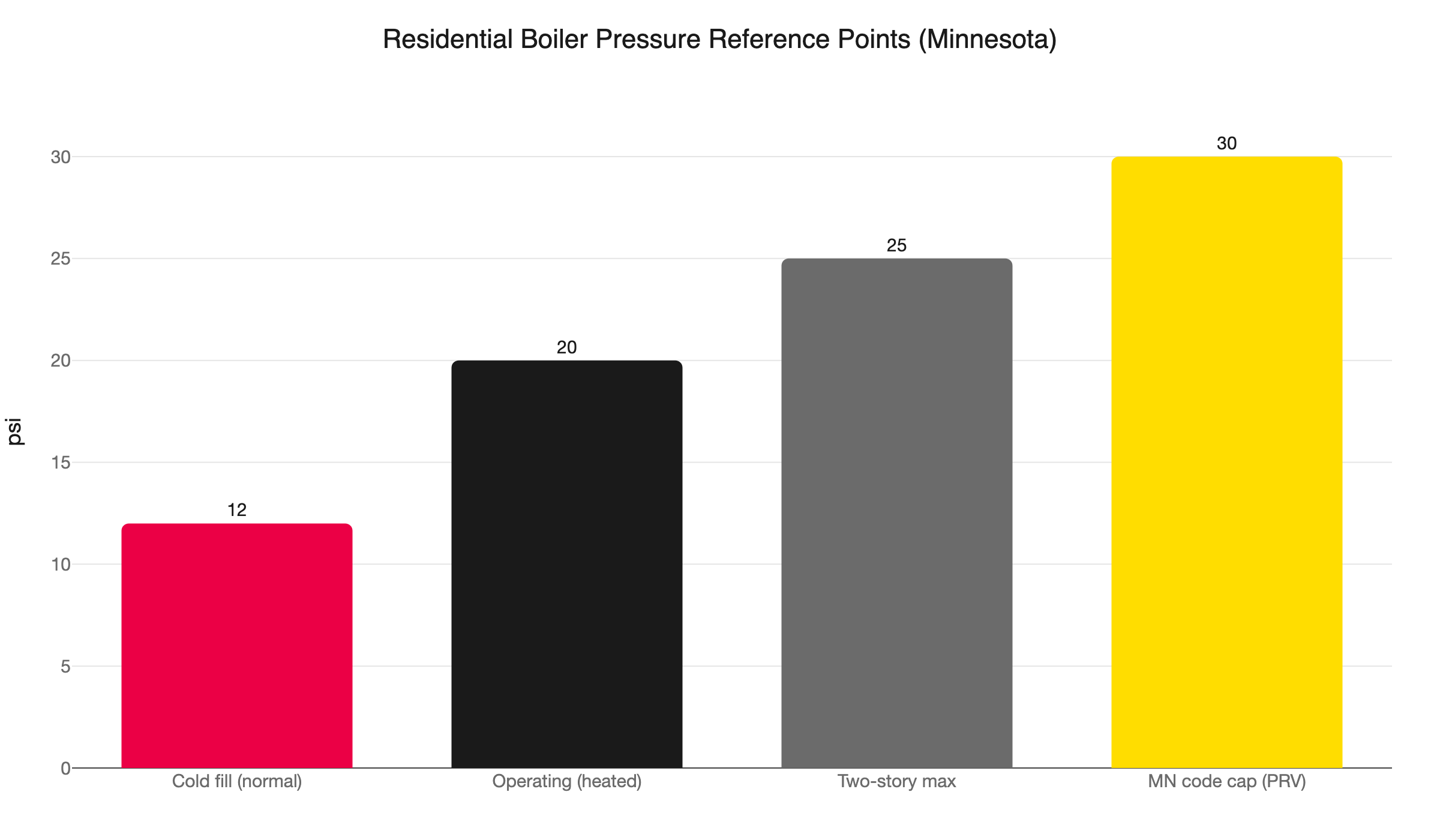
Residential Boiler Pressure Reference Points (Minnesota)
## Is Your Boiler Losing Pressure in Minnesota Normal?
**The answer depends on frequency, not the number on the gauge. A once-a-year top-up on a sealed boiler is within normal range. If you are adding water monthly or more often, something is wrong. Frequency tells you more than the gauge reading alone.**
If you are asking whether your boiler losing pressure in Minnesota is something to worry about, you are asking the right question. A hot-water boiler is a closed, sealed system. It is not designed to consume water the way a car burns oil. Slow, seasonal pressure loss is expected. Recurring monthly loss is not.
This post explains what the gauge is actually showing you. It covers why recurring pressure loss almost always traces to an expansion tank failure cycle most homeowners have never heard of. And it tells you exactly when to call a tech instead of reaching for the fill valve.
## What Is Normal Boiler Pressure in Minnesota?
**For most Twin Cities homes, normal operating pressure is 12-15 psi when cold and 20-22 psi when fully heated. Two-story homes may run up to 25 psi at operating temperature. [Minnesota code caps residential hot-water boilers at 30 psi](https://www.revisor.mn.gov/rules/1346.1006/) via an ASME-rated pressure relief valve.**
[Heating system guidelines](https://heatinghelp.com/systems-help-center/what-is-the-right-pressure-for-a-hot-water-heating-system/) recommend setting cold fill pressure at about 5 psi above what is needed to push water to the system's highest point. A single-story ranch typically needs 12 psi. A two-story home often needs 15 psi.
A gauge that reads the same number hot and cold probably has a stuck needle. A gauge at zero when the system is cold has likely failed. Either way, verify the gauge is working before drawing conclusions from its reading. A basic pressure gauge swap is inexpensive compared to chasing a phantom pressure problem.
## How Often Should a Boiler Lose Pressure?
**Once a year or less is the normal range for a properly sealed system. If you are adding water more than twice in a single heating season, the system has a mechanical problem that needs diagnosis. Frequency is the signal that matters, not the pressure number alone.**
Hot-water boilers run as closed loops. They are not designed to regularly consume water. Minimal loss over a full heating season - micro-seepage at fittings or evaporation at [air vents](/blog/how-to-bleed-air-from-radiators-minnesota/) - is within normal range. One top-up per year to restore the cold fill level is fine. Monthly top-ups are not.
Write down the date every time you add water. If the gauge returns to the low mark within 30 days of a top-up, stop adding water and call a tech. You are not managing a slow leak. You are masking a component failure.
## Why Does a Boiler Keep Losing Pressure?
**The four main causes are a waterlogged expansion tank, a dripping PRV, a slow pipe or fitting leak, and a stuck auto-fill valve. The expansion tank is the most commonly overlooked cause and the most important one to understand.**
**Expansion tank failure.** When the tank's internal diaphragm fails, it can no longer cushion the pressure rise from heated water. Pressure spikes every heating cycle. The PRV opens. The system cools, pressure drops. The fill valve adds water. From the outside, it looks like a persistent slow leak. It is not. It is a failed component driving a venting loop.
**PRV dripping.** A PRV that weeps steadily is almost always a symptom of expansion tank failure driving the pressure spike - not a standalone PRV problem. Replacing the PRV without addressing the tank will not fix it. The new PRV will start dripping within weeks for the same reason.
**Pipe or fitting leak.** A real leak shows up as water stains, mineral deposits, or wet spots near pipes, fittings, or radiator connections. Run your hand along accessible piping and check the boiler base. White or rust-colored mineral staining on a fitting means water has been weeping there for a while.
**Auto-fill valve stuck open.** The auto-fill valve lets fresh city water into the system when pressure drops below the set point. A stuck valve continuously adds new water, bringing dissolved oxygen and minerals into the closed loop. Over time that drives corrosion and scale buildup - especially in the Twin Cities, where most homes have hard water.
## The Expansion Tank Failure Cycle: The Hidden Loop
This mechanic drives the majority of "I keep adding water but pressure keeps dropping" service calls. None of the articles homeowners typically find online explain it.
A healthy expansion tank has two chambers divided by a rubber diaphragm. The air side holds a pressurized cushion. The water side connects to the boiler loop. When the boiler fires and heats the water, the water expands. It grows roughly 4% by volume. That expansion pushes fluid against the diaphragm, compressing the air cushion. Pressure rises to normal operating range. When the boiler shuts off, the air cushion pushes fluid back. Pressure returns to the cold fill level. The PRV never opens.
When the diaphragm fails or the air charge bleeds off, the tank is waterlogged. It is a sealed steel vessel full of water, not a cushion. Every time the boiler fires, expanding water has nowhere to go except through the PRV. A waterlogged tank causes the PRV to vent water on every single heating cycle. [InspectAPedia's expansion tank diagnostic documentation](https://inspectapedia.com/heat/Expansion_Tank_Diagnosis.php) describes this failure pattern in detail. The fill valve then replaces that vented water. The homeowner manually tops up the system when the gauge drops. Pressure normalizes temporarily. Two weeks later the cycle repeats.
This looks like a leak. It is a failed component creating a pressure venting loop.
The compounding risk is the PRV itself. A PRV that cycles repeatedly accumulates mineral scale on its seat and stem. [It can eventually clog and fail permanently](https://inspectapedia.com/heat/Expansion_Tank_Diagnosis.php) - either stuck open (constant weeping, no ability to hold pressure) or stuck closed (unable to relieve a true overpressure event). A PRV stuck closed is not a repair job. It is a safety incident. That is the argument for never letting a dripping PRV become the new normal.
Residential expansion tanks typically last [5-8 years](https://homeinspectioninsider.com/expansion-tanks-signs-of-failure-safety-concerns-costs-to-replace/). Diaphragm fatigue accounts for the majority of failures. If your boiler is in that age range and you are seeing recurring pressure loss, the expansion tank should be the first thing your tech checks. Our post on [waterlogged expansion tank symptoms in Minnesota](/blog/boiler-expansion-tank-waterlogged-symptoms-minnesota/) covers what that failure looks like in practice.
## How Can I Tell If My Expansion Tank Has Failed?
**Two quick DIY tests give you useful diagnostic information before you call a tech. Neither requires tools, and neither is definitive - but both point you toward an answer before you spend money on a service call.**
**The tap test.** Find the expansion tank near the boiler. It usually hangs from a pipe and is often red or blue painted steel. Tap firmly on the bottom half with your knuckles. A hollow sound means the air cushion is still present. A dull, solid thud - the same sound as tapping a water-filled bottle - means the tank is waterlogged.
**The Schrader valve test.** Look for a valve stem on the tank that resembles a bicycle tire valve. Before testing: shut off the boiler. Let the system cool completely. Then bleed system pressure down to 0 psi at the drain valve. Press the center pin of the Schrader valve. Air comes out: the diaphragm is intact. Water comes out: the diaphragm has failed.
Never probe the Schrader valve while the system is pressurized. If the boiler is still hot or under pressure, wait. The tap test can be done at any time.
If either test suggests a waterlogged tank, call a tech. Expansion tank replacement requires depressurizing and draining the system. The tech removes the old tank and commissions the new one at the correct pre-charge pressure. That pre-charge must match your system's cold fill pressure. Get it wrong and you recreate the same failure pattern.
## Is It Safe to Keep Adding Water to My Boiler?
**Adding water once or twice a heating season is fine and within normal range. Adding water monthly is not - and it actively makes the underlying problem worse, accelerating scale buildup and masking the real failure.**
Every time you add fresh municipal water to a closed loop, you introduce dissolved oxygen and minerals. Oxygen drives internal corrosion. In most of the Twin Cities, the minerals are calcium and magnesium carbonate. They deposit as limescale wherever water is heated. That means your heat exchanger, the PRV seat, and the fill valve seat. Monthly top-ups over a single winter can accumulate more scale damage than three years of normal closed-loop operation.
There is also a diagnostic problem with repeated top-ups. Each one masks the symptom. Pressure normalizes. The PRV drip slows temporarily. Two weeks later the cycle starts again. The underlying failure - waterlogged tank, scaled PRV, failing fill valve - keeps degrading while appearing managed.
The practical rule: add water once, note the date, and watch the gauge. If pressure drops below your cold-fill target within 30 days, stop adding water and schedule a service call. The system is telling you something specific. It can not say it more clearly.
## Minnesota Hard Water and Your Boiler
Most national articles on boiler pressure treat PRV failure and expansion tank degradation as generic HVAC problems. In the Twin Cities, there is a local factor that speeds every part of this failure pattern up: hard water.
[Minneapolis city water tests at roughly 15 GPG hardness](https://mattsplumbingmn.com/blog/hard-water-minneapolis-best-water-softener-for-mn-water-guide/). Well water in the western and northern suburbs often reaches 18-20 GPG. St. Paul city water is softer - around 5-6 GPG after lime treatment - but still above the soft-water threshold. Hard water deposits calcium and magnesium carbonate as limescale wherever it is heated. That scale builds inside your heat exchanger, on your PRV seat, and inside your fill valve.
Scale on a PRV seat means the valve cannot close cleanly after it relieves pressure. A valve that cannot close cleanly drips. Replace the PRV without [flushing the system](/blog/boiler-power-flush-sludge-removal-minnesota/) first. The new valve often starts dripping within a year for the same reason.
Annual boiler maintenance is the practical counter to this pattern. Annual service catches scale buildup before it reaches the failure threshold. A tech checks corrosion inhibitor concentration, flushes accumulated scale, and inspects the PRV seat. Our guide to [boiler annual maintenance in Minnesota](/blog/boiler-annual-maintenance-what-to-expect-minnesota/) explains what that visit covers and why it matters more here than the national averages suggest.
## When Should You Call a Tech?
**Three conditions mean call a tech instead of adding more water. First: you have added water more than twice this heating season. Second: the PRV is dripping or weeping. Third: pressure drops back to the low mark within 30 days of a top-up. Those three cover the majority of situations that need professional diagnosis.**
The full call-now checklist:
- You have added water more than twice this heating season.
- The PRV is dripping, weeping, or discharging water to the discharge pipe or floor.
- Pressure drops below your cold-fill target within 30 days of a top-up.
- The tap test returns a solid, waterlogged thud on the expansion tank.
- The Schrader valve test (system fully depressurized first) produces water, not air.
- You can hear the PRV cycling - a brief hiss or drip - during or right after a heating call.
- You see mineral staining on fittings, the relief valve discharge pipe, or the boiler base.
- Your expansion tank is 7 or more years old and has never been serviced.
You can handle it yourself if pressure has dropped slowly over five or more months. There must be no visible drips or stains. And after a single top-up, the system must hold stable for at least 60 days. All three conditions together.
Cold zones, uneven heat, or banging pipes can share a root cause with pressure loss. Our post on [boiler circulator pump failure signs and costs in Minnesota](/blog/boiler-circulator-pump-failure-signs-cost-minnesota/) covers what to look for when the distribution side is also involved.
## What Happens If I Ignore Boiler Losing Pressure in Minnesota?
**In the short term, the boiler locks out on a low-pressure fault and stops heating the home. In Minnesota's climate, a mid-winter lockout is a frozen-pipe risk - not an inconvenience.**
Modern boilers refuse to fire when pressure drops below minimum operating level, typically around 10-12 psi. That protection is correct. The failure mode is discovering it at 2 AM in January. The thermostat has stopped satisfying. The house is already cooling.
At -10°F outside, an unheated home drops quickly. Water in uninsulated basement supply lines and exterior wall runs can begin to freeze within a few hours. Burst pipe damage often costs significantly more than the expansion tank or PRV repair that would have prevented the lockout.
The longer-term consequence is PRV degradation. A relief valve that cycles through multiple heating seasons accumulates scale on its seat and stem. At some point it stops functioning. Either it weeps constantly - uncontrolled pressure loss with water on the floor - or it seals shut, removing all overpressure protection. Either condition is more expensive to address than a proactive expansion tank replacement before the failure cascade starts.
The pattern is predictable. The fix is straightforward. The window to act before January is finite.
## Schedule a Diagnosis Before January
If your boiler pressure gauge is telling you something is off, do not wait to find out exactly what.
Northern One Hour is locally owned and operated in Ramsey, MN. We serve Minneapolis, St. Paul, Blaine, Maple Grove, Plymouth, Brooklyn Park, Woodbury, Bloomington, and the broader Twin Cities metro. Our team backs every visit with the promise: "Always On Time… Or You Don't Pay a Dime!(R)"
Call **(763) 260-6662** or [schedule online with our boiler repair and maintenance team](/heating/boiler-repair-maintenance/). We handle pressure diagnostics, expansion tank testing and replacement, PRV inspection, and full annual boiler service. If you are overdue for your seasonal checkup, we can include it in the same visit.
Do not let a pressure problem become a January emergency.
---
# How to Bleed Radiators in Minnesota: A Twin Cities Guide
URL: https://northernonehour.com/blog/how-to-bleed-air-from-radiators-minnesota/
Published: 2026-08-27 | Category: Heating
Cold radiator in a Twin Cities home? Diagnose first, then bleed. How to bleed radiators Minnesota - steam vs. hot-water, step-by-step, and when to call a pro.
Key Takeaways
- Run a four-step diagnostic before bleeding: thermostat, zone valve, circulator pump, and boiler. All four should check out before you open any bleed valve.
- Steam radiators do not have bleed valves. Many older Minneapolis and St. Paul homes use one-pipe steam heat. If you see an air vent on the side of the radiator rather than a valve on top, it is a steam system. Do not bleed it.
- Target pressure for most Twin Cities homes: 12 to 15 psi cold.
- Bleed once a year in September or early October, before the first hard freeze.
- If radiators go cold again within a few weeks of bleeding, the expansion tank is likely waterlogged. That is a professional repair.
- Minnesota residential boilers are exempt from mandatory state inspection. Annual service is the only proactive check on your system's condition.
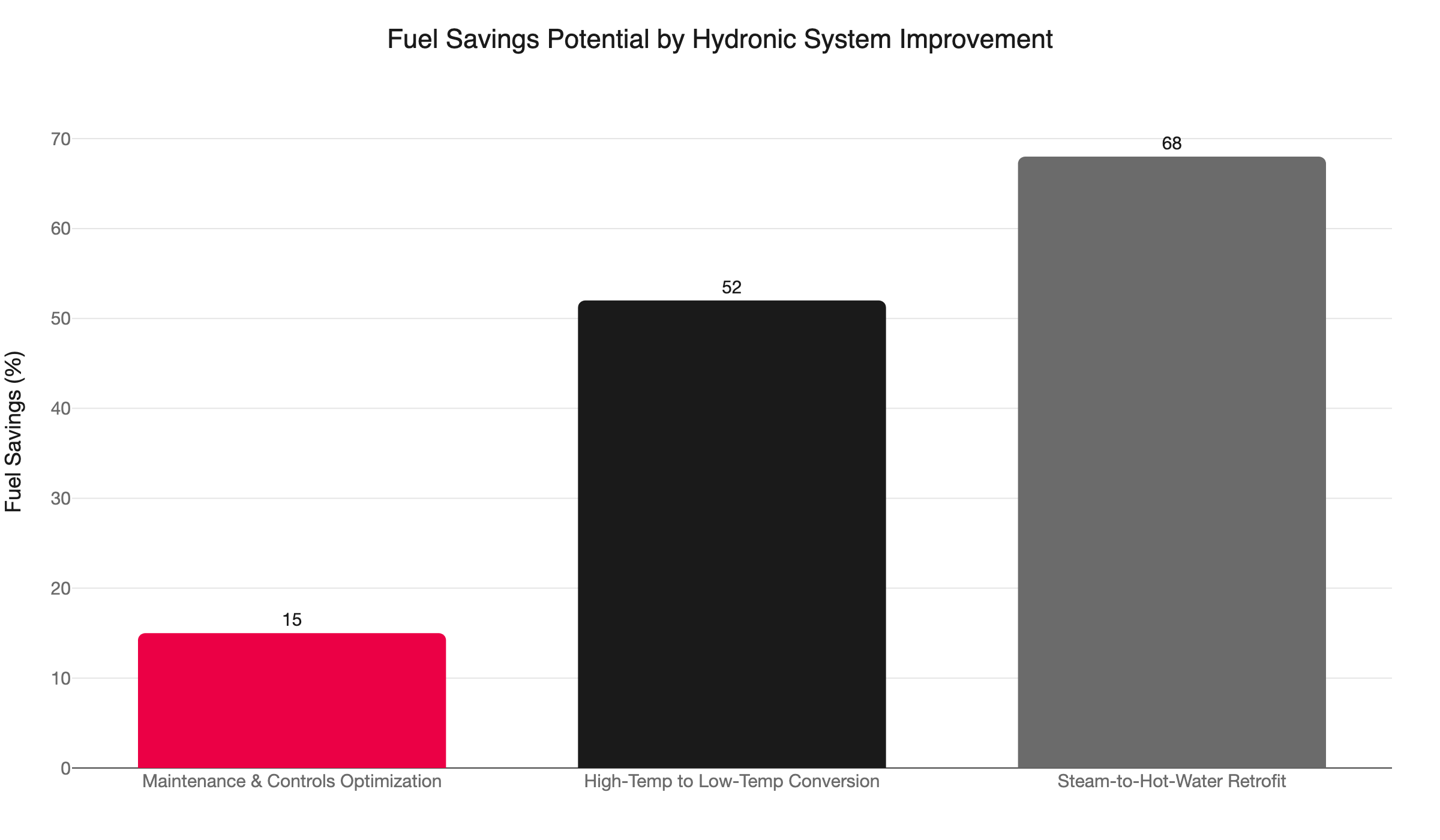
Fuel Savings Potential by Hydronic System Improvement
## Why Radiators Go Cold - And Why Bleeding Is Not Always the Answer
If you are looking up how to bleed radiators in Minnesota, you are probably standing in a cold room watching your boiler run and wondering why the heat is not reaching the far end of the house. The good news: bleeding is a 10-minute job when trapped air is the problem. The tricky part is making sure air is actually the problem.
A cold radiator in a Twin Cities home has at least five possible causes. Trapped air is one. Zone valve failure, circulator pump seizure, and low system pressure each look identical from the outside. Bleeding a system that has a mechanical failure wastes time and leaves the real problem untouched. Diagnose first.
## Is Your Cold Radiator Actually an Air Problem?
**Short answer:** Not always. A cold radiator in a Twin Cities home can have five different causes. Bleeding fixes only one of them. Running through the others first takes five minutes and can prevent hours of chasing the wrong fix.
[InspectAPedia's cold radiator diagnostic guide](https://inspectapedia.com/heat/Cold_Radiator_Repair.php) outlines the sequence HVAC technicians use before touching any bleed valve. Work through these in order:
**1. Is the thermostat calling for heat?**
Check that the set temperature is above the current room temperature. Confirm the system mode is set to "heat," not "cool" or "off." A thermostat left in the wrong mode looks identical to a hydronic failure. It is also the most common cold-radiator call we see in the Twin Cities.
**2. Is the zone valve opening?**
Multi-zone homes use motorized valves to direct hot water to different parts of the house. A zone valve stuck in the closed position blocks flow to an entire section, even when the boiler is firing normally. Zone valves fail without warning. They are relatively inexpensive to replace once diagnosed.
Our post on [boiler zone valve failure: symptoms and cost in Minnesota](/blog/boiler-zone-valve-failure-symptoms-cost-minnesota/) covers how to identify a stuck valve before calling for service.
**3. Is the circulator pump running?**
Put your hand on the pump housing while the boiler is active. It should be warm and vibrating slightly. A pump that has seized or lost its bearings produces no flow even when the boiler fires on schedule. No flow means no heat, regardless of how much air is in the system.
**4. Is the boiler reaching operating temperature?**
Check the boiler's display or indicator lights for error codes or fault conditions. If the boiler is locked out or failing to fire, the problem is upstream of the radiators entirely.
Only after all four check out does trapped air move to the top of the suspect list. Then bleeding is the right move.
---
## Steam System or Hot-Water System? What Minnesota Homeowners Need to Know
**Short answer:** Many older Twin Cities homes have one-pipe steam heat, not hot-water hydronic. You cannot bleed a steam radiator. Attempting it can break the air vent or release hot water under pressure. Identify your system type before touching anything.
Minneapolis neighborhoods like Longfellow, Kingfield, and Linden Hills were built largely before 1945. Cathedral Hill and Macalester-Groveland in St. Paul are similar. A significant number of those homes still use cast-iron one-pipe steam radiators. Steam systems operate on an entirely different principle than hot-water hydronic, and the maintenance approach differs too.
Here is how to tell them apart:
**Hot-water (hydronic) radiator:**
- Has a small bleed valve at the top of one end. The valve looks like a square or hexagonal nipple, roughly the size of a thumbnail.
- Two pipes connect at the radiator - one for supply water in, one for return water out.
- This is the system this guide covers.
**Steam radiator:**
- Has an air vent on the side of the radiator body, usually near the bottom. The vent is a small cylindrical device, often brass or silver-colored.
- May have only one pipe connecting at the base.
- Has no bleed valve.
If you see an air vent, stop. The fix for a cold steam radiator is vent adjustment or vent replacement, not bleeding. Forcing a bleed key onto a steam vent can break the vent and release steam or near-boiling water under pressure.
If you cannot identify which system you have, call before proceeding. Misidentifying the system type is not a minor error.
---
## What Tools Do You Need to Bleed a Radiator?
**Short answer:** Three things: a radiator bleed key (about $5 at any hardware store), an old rag, and a small container to catch water drips. Some modern valves accept a flat-head screwdriver instead of a key. Gather everything before you start.
Once the valve is open, you will not have a free hand.
- Radiator bleed key or flat-head screwdriver
- Old rag or folded paper towels (system water in older hydronic systems is often dark and stains)
- Small plastic container
- Notepad to record boiler pressure before and after
---
## What Pressure Should Your Boiler Be at Before You Start?
**Short answer:** Find the pressure gauge on the boiler and check it before opening any valve. Most Twin Cities homes target 12 to 15 psi cold. [NeighborWorks Home Partners uses the rule of thumb: roughly 1 psi for every 2 feet of vertical rise in the system](https://nwhomepartners.org/2017/12/how-and-when-to-bleed-your-radiators/). Write down what you see.
If the gauge reads below 10 psi before you start, the system is already low on water. Bleeding will drop pressure further. Add water slowly through the fill valve - 1 psi at a time - until pressure returns to the target range, then bleed.
If the gauge reads above 25 psi, do not bleed. High pressure signals a failed pressure reducing valve or a problem with the expansion tank. Call a technician.
---
## How to Bleed Radiators in Minnesota: Step by Step
This process applies to hot-water hydronic systems only. Confirm your system type before starting.
**Step 1: Run the system and identify the cold radiators.**
Turn on the heat and let the boiler reach operating temperature. Walk through the house and note which radiators are cold or lukewarm while others are warm. Those are your targets.
**Step 2: Turn the system off and wait five minutes.**
Turn the thermostat to "off" or drop the setpoint well below room temperature. Wait for the circulator pump to stop before opening any valve.
This step matters. Bleeding with the pump running can pull air into the system rather than expelling it. Still circulation is the right condition for bleeding.
**Step 3: Start with the radiator farthest from the boiler or highest in the house.**
Air rises and migrates to the ends of the loop. [This Old House recommends](https://www.thisoldhouse.com/plumbing/21509350/how-to-bleed-a-radiator) starting at the top and far end of the system and working back toward the boiler. In a two-story Twin Cities home, begin on the second floor in the room farthest from the mechanical room.
**Step 4: Position the rag and container under the bleed valve.**
The valve sits at the top of one end of the radiator. The first drip of water comes quickly and without warning. Have the container directly below before you open anything.
**Step 5: Insert the key and turn counterclockwise - slowly.**
A quarter to half-turn is enough. You will hear a steady hiss as air escapes. Hold the key in position and keep the container underneath. Do not open the valve further than needed.
**Step 6: Wait for steady water flow, then close.**
When water replaces the hissing air and flows without interruption, the air pocket is clear. Turn the key clockwise to close the valve. Snug is enough. These valve seats are small and strip easily if overtightened.
Wipe the valve and the surrounding surface immediately. Check that no water is seeping around the valve stem after closing.
**Step 7: Move to the next radiator and repeat.**
Work from farthest and highest toward the boiler. Bleed every radiator in the house, not just the ones that seemed cold.
**Step 8: Check boiler pressure when finished.**
Bleeding releases water along with air. Pressure will have dropped. Check the gauge after bleeding the last radiator. If it reads below 12 psi, add water slowly through the fill valve - 1 psi at a time - until pressure returns to the target range. If pressure drops significantly more than expected, have a technician check for a slow leak at a fitting or valve body.
**Step 9: Restart the system and verify.**
Bring the thermostat back up and let the system run for 30 to 45 minutes. Touch each radiator from bottom to top. A properly bled radiator should be uniformly warm. Any that remain cold point to a different problem - see the next section.
---
## What If Bleeding Does Not Fix the Cold Radiator?
**Short answer:** The expansion tank or pressure reducing valve is likely the root cause. Both cause air to re-enter the system. Both are professional repairs, not DIY fixes.
Master plumber Richard Trethewey, speaking with This Old House, identified the expansion tank as the recurring culprit in hydronic systems: ["Some of that air that's in that tank can get into the same water that's going out through the baseboard, and it can cause a bubble. If there's a bubble in that piping, no heated water is going to pass."](https://www.thisoldhouse.com/plumbing/21509350/how-to-bleed-a-radiator)
A waterlogged expansion tank has lost its air charge and filled with water. It can no longer absorb the pressure swings that occur as the system heats and cools. The system overpressurizes on every heating cycle. The pressure relief valve weeps. Air gets driven back into the loop. You bleed the radiators, and they go cold again within two to four weeks.
Trethewey adds a useful field clue: "If you don't get water out of this vent after the air has come out a little ways, that clue takes us to the basement" - meaning the problem is systemic pressure, not a localized air pocket. The fix is in the boiler room, not at the radiator.
Signs the expansion tank is the root cause:
- Radiators go cold again within two to four weeks of bleeding
- The pressure relief valve weeps or discharges water periodically
- Boiler pressure spikes higher than normal at the end of each heating cycle
Other reasons a radiator stays cold after bleeding:
- A zone valve stuck in the closed position
- A circulator pump with worn bearings that cannot push water through a long loop
- Iron oxide sludge built up inside the radiator body, blocking flow internally
Our guide on [waterlogged expansion tank symptoms in Minnesota](/blog/boiler-expansion-tank-waterlogged-symptoms-minnesota/) covers the full diagnostic and what a tank replacement involves.
If bleeding once did not fix it, more bleeding will not fix it. The next step is a professional boiler inspection.
---
## When Is the Right Time to Bleed Radiators in Minnesota?
**Short answer:** September or early October, before the first hard freeze. The Twin Cities typically sees the first significant freeze between late October and mid-November. Bleeding before the season starts means your system is ready when temperatures drop.
Systems that sit idle from May through September slowly accumulate air as water in the loop off-gasses. That air stays in the system until the boiler first fires. A fall bleed clears it before the system has to carry load through a -10°F night.
There is a regulatory angle worth knowing here. [Minnesota residential boilers in single-family homes are exempt from mandatory state inspection under MN Statutes 326B.988](https://www.dli.mn.gov/workers/boiler-engineer/boiler-codes-and-laws). There is no routine external check on your boiler's condition. A waterlogged expansion tank, a failing circulator, or a worn pressure reducing valve typically surfaces during a January cold snap - when the system is under maximum load and a repair call means waiting in a cold house.
Annual bleeding paired with a professional tune-up closes that gap. The [U.S. Department of Energy found that properly optimizing hydronic heating controls and maintenance yields 15% or more in average space heating energy savings](https://www.energy.gov/cmei/buildings/optimizing-hydronic-heating-comfort-and-performance) in systems that were previously running unoptimized. On a household spending $1,500 a year on heating, that is $225 back without touching the equipment.
Our guide on [what to expect from a boiler annual maintenance visit in Minnesota](/blog/boiler-annual-maintenance-what-to-expect-minnesota/) explains what a professional service covers and how long it typically takes.
---
## Is It Time to Consider a Boiler Upgrade?
**Short answer:** If your system is more than 15 to 20 years old and bleeding problems keep recurring, the underlying hardware may be approaching end-of-life. Modern natural gas hydronic boilers reach up to 94% AFUE. Utility rebates can help offset the cost.
[CenterPoint Energy's Conservation Improvement Program](https://www.centerpointenergy.com/en-us/residential/save-energy-money/efficiency-programs-and-rebates) offers rebates for high-efficiency boiler upgrades to qualifying Minnesota residential customers. Xcel Energy has parallel programs. If your current boiler requires a repair that approaches half the replacement cost, run the numbers on a new system.
Ask about financing when you schedule the estimate. We offer financing options on larger jobs - boiler replacements, furnace installs, heat pumps - so a failed system does not become a financial emergency on a cold night.
---
## When Should You Call a Pro Instead of Bleeding It Yourself?
**Short answer:** Call when bleeding does not fix the problem, when pressure is out of range before you start, when you cannot identify your system type, or when your boiler is more than two years past its last professional inspection.
Call Northern One Hour at **(763) 260-6662** or [schedule service online](/heating/boiler-repair-maintenance/) when:
- Pressure reads below 10 psi or above 25 psi before you start
- The pressure relief valve is weeping or discharging water
- Radiators go cold again within a few weeks of bleeding
- You see corrosion, mineral deposits, or water staining near any radiator valve or fitting
- The circulator pump is noisy, vibrating abnormally, or not running
- You have a steam system and are unsure whether the air vents are functioning correctly
- The boiler has not had a professional inspection in more than two years
We are locally owned and operated in Ramsey, MN, and serve homeowners across the Twin Cities - Minneapolis, St. Paul, Blaine, Maple Grove, Plymouth, Woodbury, Bloomington, and the surrounding metro. We know these older homes and these systems. Every service call is backed by our on-time promise: "Always On Time… Or You Don't Pay a Dime!(R)"
---
# Dual Fuel Heat Pump Minnesota: How the Balance Point Works
URL: https://northernonehour.com/blog/dual-fuel-heat-pump-gas-furnace-hybrid-minnesota/
Published: 2026-08-26 | Category: HVAC
How a hybrid heat pump automatically hands off to your gas furnace at the balance point, and what Twin Cities homeowners need to know about 2026 rebates.
Key Takeaways
- A dual fuel system pairs an electric heat pump with a gas furnace. The heat pump is the primary heat source; the furnace is the backup.
- Two balance points matter: the thermal balance point (can the heat pump keep up physically?) and the economic balance point (which fuel costs less right now?). Dual fuel controllers target the economic one.
- [CEE modeling](https://www.mnashp.org/how-dual-fuel-heat-pump-system-natural-gas-backup-balances-emissions-reduction-savings) puts the economic balance point for most Minnesota homes with natural gas backup between 25°F and 45°F. Manufacturers recommend starting the [aux heat lockout](/blog/heat-pump-auxiliary-heat-strips-operating-cost-minnesota/) around 35°F.
- You do not need a cold-climate heat pump for a dual fuel system. A standard single-stage or two-stage unit works because the furnace takes over before cold-climate performance matters.
- CenterPoint Energy offers $1,100 for qualifying dual fuel installs in 2026. The switchover must be programmed at 40°F or lower and the paired furnace must be rated at 92% AFUE or higher. Miss either requirement and the rebate does not apply.
- Xcel Energy offers $1,600 to $2,000 for heat pump installs. Homes with Xcel electric service and CenterPoint gas service can stack both programs for up to $3,100.
- Federal 25C/25D heat pump tax credits expired December 31, 2025. Do not count them in a 2026 project budget.
- The balance point is adjustable after installation. Your technician can shift it up or down as fuel prices change over time.
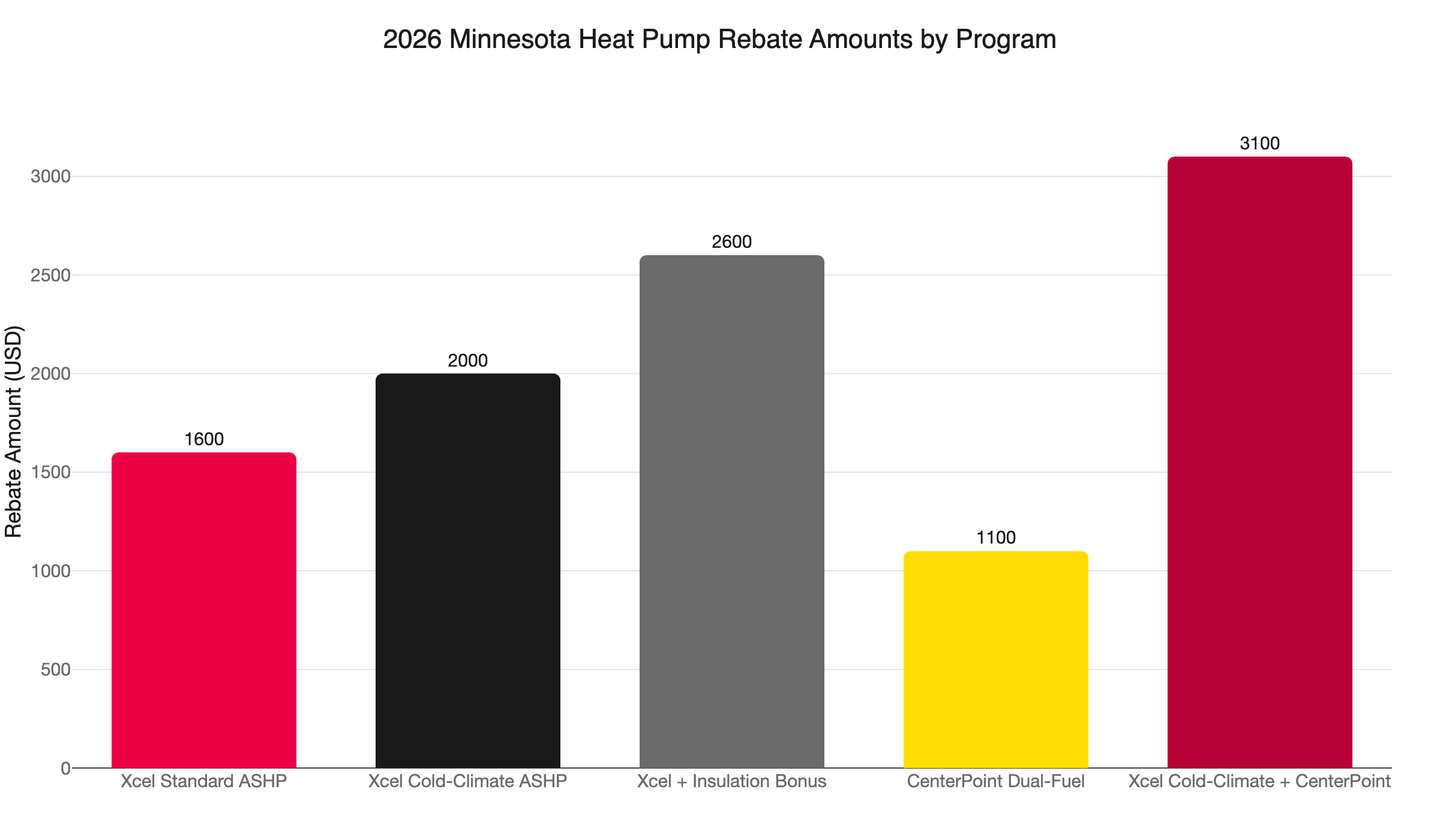
2026 Minnesota Heat Pump Rebate Amounts by Program
The fear is understandable. Minnesota winters can hold below zero for days. The idea of trusting an electric heat pump when the polar vortex rolls through sounds like a risk no homeowner should take.
A dual fuel heat pump system does not ask you to make that gamble. It pairs an electric heat pump with a gas furnace. The heat pump handles the moderate cold, where it is far more efficient than any furnace. The gas furnace steps in when temperatures drop to the point where it makes more financial sense. The controller makes the switch automatically, with no action required from you.
This post explains how that handoff works, why there are actually two distinct balance points every dual fuel homeowner should understand, what happens when a system is misconfigured, and what the 2026 rebate picture looks like for Twin Cities homeowners.
## What Is a Dual Fuel Heat Pump System?
**A dual fuel system adds an electric air-source heat pump to an existing gas furnace. The heat pump is the primary heat source. At a preset outdoor temperature, the controller shuts off the heat pump and fires the gas furnace. The two systems never run simultaneously.**
Most Twin Cities homes already have a gas furnace and ductwork. A dual fuel upgrade uses that infrastructure. You are not removing the furnace. You are [adding a heat pump](/blog/heat-pump-electrical-panel-upgrade-requirements-minnesota/) that covers the majority of your annual heating load, and letting the furnace do what it does best when temperatures fall deep into winter.
The efficiency case is clear. [A heat pump operates at 300 to 400 percent efficiency](https://greencalcs.com/blog/hybrid-heat-pump-dual-fuel/), moving three to four units of heat for every unit of electricity it consumes. A high-efficiency 96% AFUE furnace cannot match that. From October through early December and again in March, the heat pump wins by a significant margin.
Over a full heating season, [the heat pump typically covers 70 to 90 percent of annual heating hours](https://greencalcs.com/blog/hybrid-heat-pump-dual-fuel/). The furnace handles the coldest 10 to 30 percent. That ratio is what makes the financial case for a dual fuel system work.
Our [heat pump service page](/heat-pumps/) covers the equipment options we install across the Twin Cities.
## How Does the Handoff Between Heat Pump and Gas Actually Work?
**A dual fuel controller monitors outdoor temperature continuously. When the temperature drops to the programmed balance point, the system turns off the heat pump and starts the gas furnace. When temperatures recover, the system switches back. The transition is automatic.**
The heat pump and furnace are not designed to overlap. The control board ensures they never run at the same time. There is no gap in heating during the transition, and the switch is seamless from inside your home.
What surprises many homeowners is how often this can happen in a Minnesota shoulder season. A November day might start at 22°F, warm to 42°F by afternoon, and drop back to 26°F overnight. The system can shift between heat pump and furnace mode several times in one day. That is not a malfunction. That is the system doing exactly what it is designed to do.
The controller handles this continuously, season after season. The accumulated savings on moderate-temperature heating days are where the financial case is built.
## What Is the Thermal Balance Point Versus the Economic Balance Point?
**The thermal balance point is the outdoor temperature at which the heat pump can no longer match your home's heating load. The economic balance point is the temperature at which running the gas furnace costs the same as running the heat pump. Controllers target the economic balance point, not the thermal one.**
This is the concept most guides skip. The two balance points sound similar but drive different decisions.
[Energy Vanguard defines the thermal balance point](https://www.energyvanguard.com/blog/simple-way-calculate-heat-pump-balance-point) as the outdoor temperature where heat pump capacity equals the home's heating load. Below that point, the heat pump physically cannot keep up on its own. A cold-climate heat pump might not hit its thermal balance point until -13°F or colder. That does not mean the system should wait that long before switching to the furnace.
The economic balance point is a cost calculation. It compares the per-unit cost of running the heat pump at a given outdoor temperature against the per-unit cost of running the furnace at that same temperature. Natural gas and electricity prices are not fixed. They shift seasonally, annually, and in response to supply disruptions. The economic crossover temperature moves with them.
[CEE modeling from the Minnesota Air Source Heat Pump Collaborative](https://www.mnashp.org/how-dual-fuel-heat-pump-system-natural-gas-backup-balances-emissions-reduction-savings) puts the economic balance point for Minnesota homes with natural gas backup between 25°F and 45°F for most households. Your home's exact number depends on insulation levels, duct efficiency, your utility rates, and your specific equipment.
When you sit down with a technician to program your dual fuel controller, ask about both numbers. The thermal limit tells you the system's floor. The economic balance point tells you where to set it for the best outcomes today.
## Do You Need a Cold-Climate Heat Pump for a Dual Fuel System?
**No. A standard [single-stage or two-stage](/blog/how-heat-pump-staging-works-minnesota/) heat pump is sufficient for a dual fuel setup in Minnesota. Because the gas furnace takes over at moderate temperatures, the heat pump never needs to perform at extreme cold. Cold-climate ratings are required for all-electric systems, not hybrid ones.**
[The Minnesota Air Source Heat Pump Collaborative confirms](https://www.mnashp.org/how-dual-fuel-heat-pump-system-natural-gas-backup-balances-emissions-reduction-savings) that standard units qualify for dual fuel because the economic balance point sits at temperatures well within reach of any modern heat pump.
Cold-climate heat pumps are engineered to maintain useful heating output at -13°F and below. That capability is critical if you plan to heat your home with electricity alone through a Minnesota winter. For dual fuel, the furnace covers that load. You do not need the extra hardware.
Where this gets more nuanced is the rebate math. Xcel Energy pays $1,600 for a standard ASHP and $2,000 for a cold-climate unit. If the $400 rebate difference offsets part of the equipment premium, a cold-climate unit can still make financial sense even in a dual fuel configuration. Have your technician run the numbers for your specific situation before assuming one way or the other.
## What Happens When the Balance Point Is Set Too High?
Most problems with dual fuel systems come not from faulty hardware but from incorrect programming. Setting the balance point too high is the most common error, and it is a costly one.
If the [aux heat lockout](/blog/heat-pump-thermostat-wiring-aux-heat-staging-minnesota/) is programmed at 50°F instead of 35°F, the furnace turns on during every chilly fall and spring day. That is exactly the temperature range where a heat pump is most efficient. You end up paying gas prices for heating the heat pump should be handling at a fraction of the cost.
[Furnace Outlet's dual fuel setup guide](https://thefurnaceoutlet.com/blogs/news/dual-fuel-balance-point-how-to-set-heat-pump-amp-aux-lockouts-for-lower-bills) identifies a balance point set too high as the primary driver of rapid cycling, uneven room temperatures, and elevated heating bills in dual fuel homes. The system short-cycles because the furnace heats the home quickly, shuts off, the home cools, and the furnace fires again. That pattern is hard on equipment and wastes fuel.
Manufacturer-recommended starting points are an aux heat lockout around 35°F and a compressor lockout near 5°F. Those are defaults, not final answers. Your technician should calculate your home's specific economic balance point before programming the controller.
If your heating bills are higher than expected but nothing sounds broken, ask your technician to verify the balance point settings. It is a quick check that can uncover a significant ongoing cost.
## Can You Adjust the Balance Point After Installation?
**Yes. The balance point is a programmable setting in the dual fuel controller, not a fixed hardware specification. A technician can raise or lower it at any service visit. This makes a dual fuel system uniquely adaptable as fuel prices shift over time.**
No other heating system offers this kind of ongoing flexibility. A gas furnace always burns gas. An all-electric heat pump always draws from the grid. A dual fuel system lets you lean toward [whichever fuel is currently cheaper](/blog/heat-pump-vs-gas-furnace-annual-operating-cost-minnesota/).
[Natural gas prices in March 2022 were nearly 50 percent higher than in March 2021](https://www.mnashp.org/how-dual-fuel-heat-pump-system-natural-gas-backup-balances-emissions-reduction-savings). When a swing like that happens, lowering the balance point keeps the heat pump running longer and cuts gas consumption. When gas prices fall, raising the balance point modestly can reduce [your electric bill](/blog/heat-pump-electric-bill-spike-winter-minnesota/). No equipment changes needed.
This flexibility is one of the reasons dual fuel systems suit Minnesota especially well. Natural gas pricing here can move significantly from one winter to the next. You are not locked into one fuel's price trajectory.
Having a local HVAC company you trust makes adjusting the balance point practical. It is a quick in-person service, not a warranty event or a parts order. We are locally owned and operated in Ramsey, and we hold ourselves to a straightforward standard: "Always On Time… Or You Don't Pay a Dime!(R)."
## 2026 Minnesota Rebates for Dual Fuel Heat Pumps
The rebate picture changed significantly at the end of 2025. Here is what is confirmed for 2026 installations.
**Xcel Energy**
Xcel offers rebates on air-source heat pump installs for eligible customers:
- Standard ASHP: $1,600
- Cold-climate ASHP: $2,000 (unit must appear on the NEEP list with a COP of 1.7 or higher)
- Insulation bonus: an additional $600 if qualifying insulation was installed within the prior two years, bringing the cold-climate maximum to $2,600
**CenterPoint Energy**
CenterPoint offers $1,100 for a ducted ASHP installed in a dual fuel configuration. Three requirements must all be met:
1. Heat pump rated at HSPF2 of 7.8 or higher
2. Paired with a gas furnace rated at 92% AFUE or higher
3. Switchover programmed at 40°F or lower at installation
The third requirement is the one most homeowners and even some contractors miss. [If the balance point is programmed above 40°F, the CenterPoint rebate does not apply](https://homeenergybasics.com/heat-pumps/states/mn). The programming decision made on installation day has a direct $1,100 consequence. Confirm your contractor is aware of this requirement before the install begins.
**Stacking both programs**
Homes with Xcel electric service and CenterPoint gas service can apply for both rebates independently. A qualifying cold-climate dual fuel system can yield up to $2,000 from Xcel plus $1,100 from CenterPoint, for a combined total of $3,100.
If you are in northeastern Minnesota, Minnesota Power offers $1,000 for cold-climate ASHP installs in their service territory.
Rebate checks typically arrive six to ten weeks after installation. Most programs require a participating or Trade Ally contractor. Confirm enrollment before you sign any paperwork.
Our post on [Xcel and CenterPoint HVAC rebates in Minnesota](/blog/xcel-centerpoint-hvac-rebates-minnesota/) has additional detail on program requirements and how to verify your service territory.
## What About Federal Tax Credits?
**The federal 25C and 25D residential energy tax credits for heat pumps expired December 31, 2025. They are no longer available for new installations. Do not factor them into a 2026 project budget. Any resource still referencing these credits is working from outdated information.**
Multiple competitor pages and general guides published before 2026 still mention these credits. They were worth up to $2,000 annually and were a meaningful part of the financial case for heat pump installs in prior years. They are gone now.
The Minnesota HEAR and HOMES state rebate programs are also not yet available as of July 2026. The Minnesota Department of Commerce is awaiting DOE approval, and no launch date has been set. Do not count on them when budgeting a 2026 project. If they launch after your installation, there may be a retroactive application window.
We will update our [Minnesota heat pump rebates and tax credits post](/blog/minnesota-heat-pump-rebates-tax-credits/) as the state program status changes. For now, budget based only on the confirmed utility rebates from Xcel and CenterPoint.
## Is a Dual Fuel Heat Pump Right for Your Twin Cities Home?
**A dual fuel system makes the most sense for homes that already have functioning gas service, a compatible furnace, and [central ductwork](/blog/heat-pump-existing-ductwork-compatibility-minnesota/). If you are planning a furnace replacement anyway, pairing that project with a heat pump install is the most cost-effective timing.**
Minnesota's climate is genuinely well-suited to this system. Our shoulder seasons are long. Weeks of 25°F to 45°F weather in fall and spring are normal. That is precisely the temperature range where a heat pump runs at peak efficiency. You capture real savings during those extended periods and let the furnace handle January and February without compromise.
A few questions worth working through before you call:
- **Is your existing furnace rated at 92% AFUE or higher?** If not, you may need to replace it to qualify for the CenterPoint rebate. That changes the total project cost and timeline.
- **Do you have Xcel electric service?** Confirming your service territory takes a few minutes and could put $2,000 to $2,600 back in your pocket.
- **Is your cooling equipment nearing end of life?** A heat pump handles both heating and cooling. If your AC is aging, replacing it with a heat pump and pairing it with the existing furnace covers two needs in one project.
One habit worth building after installation: revisit the balance point whenever your utility rates shift significantly. A fuel price swing of 20 percent or more can change the optimal balance point by several degrees. It is a simple service call, not a project.
For a broader look at how heat pumps fit Twin Cities homes year-round, our post on [heat pumps in Minnesota](/blog/heat-pumps-in-minnesota-are-they-a-good-fit/) covers the full picture.
---
We are locally owned and operated in Ramsey, MN, and we serve the full Twin Cities metro: Minneapolis, St. Paul, Blaine, Maple Grove, Plymouth, Brooklyn Park, Woodbury, Bloomington, and the surrounding area. If you want a straight answer on whether a dual fuel system makes sense for your home, call us at **(763) 260-6662** or book online. We will calculate the balance point for your home, walk through your rebate eligibility, and tell you exactly what the project looks like before you commit to anything.
---
# Ductwork Replacement Cost: When Sealing Stops Making Sense
URL: https://northernonehour.com/blog/ductwork-replacement-cost-twin-cities/
Published: 2026-08-26 | Category: HVAC
See what Twin Cities homeowners pay for ductwork replacement in 2026, when sealing stops making sense, and which rebates are still available.
Key Takeaways
- Full ductwork replacement in the Twin Cities costs $5,000-$12,000, with most jobs landing between $7,800 and $13,000.
- The leakage rate is the real decision driver: seal if under 15-20%, replace if over 25-30% or if there is widespread physical damage.
- Flex duct has a 10-15 year lifespan. If your home has flex duct installed before 2011, it is at or past the end-of-life window.
- The federal 25C tax credit for ductwork expired December 31, 2025. It is not available for work placed in service in 2026.
- Xcel Energy rebates up to $750 are still available for qualifying insulation and air sealing work.
- Bundling duct replacement with a new system typically saves $650-$2,600 in shared labor.
- Every Minnesota duct replacement requires a mechanical permit. Budget $50-$175 depending on your city.
- Replacing ducts without a Manual D sizing calculation is a common contractor shortcut. Insist on proper sizing.
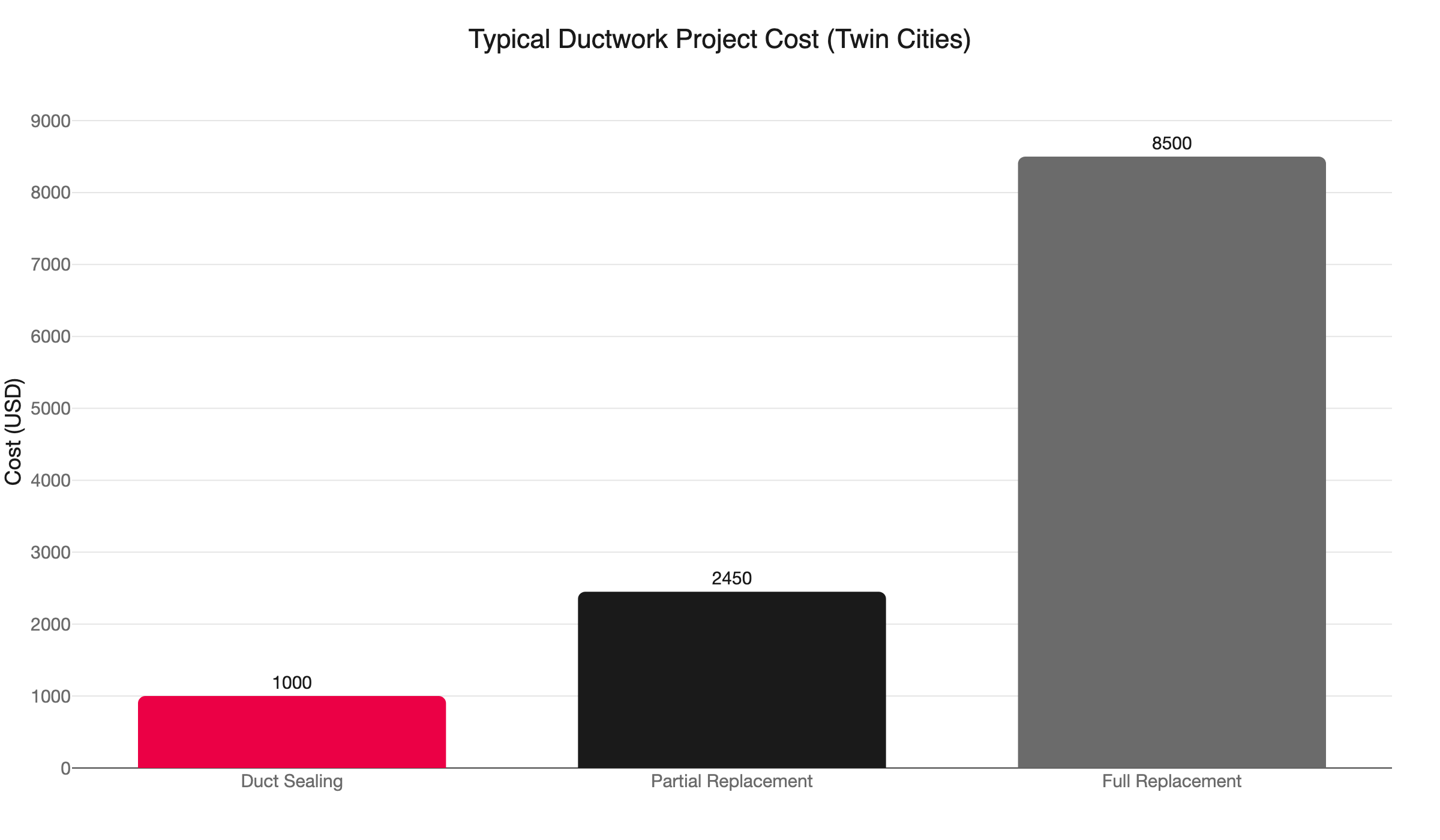
Typical Ductwork Project Cost (Twin Cities)
## What Does Ductwork Replacement Cost in the Twin Cities?
**The short answer:** Most homeowners pay $5,000-$12,000 for a full replacement, with the typical job landing between $7,800 and $13,000. [National cost data](https://homeguide.com/costs/cost-to-replace-ductwork) puts Midwest pricing at the national baseline, so Twin Cities homeowners are not paying a regional premium or discount relative to the rest of the country.
The line-item breakdown looks like this:
- **Material and labor:** [Angi's duct replacement cost data](https://www.angi.com/articles/air-duct-replacement-cost.htm) shows installed ductwork running $10-$25 per linear foot on the low end, $20-$60 per linear foot including removal. Most homes carry 150-350 linear feet of ductwork.
- **Partial replacement:** $1,400-$3,500. One zone or a single problem run, not the whole system.
- **Full replacement:** $5,000-$12,000, with most homeowners paying $6,000-$10,000.
- **[Mold or asbestos present](/blog/hvac-asbestos-duct-wrap-older-minnesota-homes/):** $4,000-$10,000, because remediation is required before the duct work begins.
- **Permit fees:** $75-$175 in Minneapolis and St. Paul, $50-$150 in most suburban Twin Cities municipalities.
A few variables push the number in one direction or the other. Home size and number of stories matter: a single-story 1,800-square-foot ranch carries far less linear footage than a two-story home with a finished basement. Accessibility matters too. Ducts buried behind a finished ceiling or in an encapsulated crawl space cost more to reach than open-basement runs. [Material choice](/blog/fiberglass-duct-board-vs-metal-ductwork-minnesota/) affects both upfront cost and long-term value. Sheet metal costs more than flex duct initially but outlasts it by 20-plus years.
One number that surprises many homeowners: bundling duct replacement with a new furnace or AC system typically saves $650-$2,600. The HVAC crew is already on-site and in the mechanical room. Combined scheduling eliminates duplicate mobilization costs. If your ducts and equipment are aging out together, the timing makes the economics clear.
## Should You Seal or Replace Your Ductwork?
**The short answer:** Seal if your leakage rate is under 15-20% and the duct structure is physically intact. Replace if leakage exceeds 25-30%, if there is widespread physical deterioration, or if your flex duct is at or past its end-of-life window. The threshold is measurable, not a judgment call.
This is the question the national cost articles skip entirely. They price replacement. They do not tell you when replacement beats sealing. Here is the framework.
**The leakage-rate threshold**
[ENERGY STAR estimates](https://www.energystar.gov/saveathome/heating-cooling/duct-sealing) that a typical U.S. home loses 20-30% of conditioned air through duct leakage. Professional duct sealing, using mastic sealant or Aeroseal injection, costs $650-$1,950. That is a fraction of replacement cost and the right call when leakage is under 15-20% and the duct structure is physically sound. A duct system under 10-15 years old testing at 15% leakage or below is a strong Aeroseal candidate.
Once leakage exceeds 25-30% with accompanying physical damage, sealing rarely pencils out over the long term. You are patching a network that is failing structurally. Above 40% leakage, the math is not close. You are conditioning the attic or crawl space, not the living area.
**What drives leakage rates up?**
Most duct leakage happens at joints, connections, and anywhere a duct has sagged, kinked, or disconnected. In Twin Cities homes, the usual suspects are original flex duct that has degraded at the connections, sheet metal joints that were never properly sealed at installation, disconnected branches in attics or finished ceilings, and pest damage at connectors.
A blower door test combined with duct pressurization testing gives you the actual number. Any technician recommending a $9,100-plus replacement without testing first is working from assumptions, not data. Insist on the test.
For a closer look at sealing options and when they make sense, our post on [leaky ductwork and duct sealing energy loss](/blog/duct-sealing-leaky-ductwork-energy-loss/) covers the process in detail.
## How Old Is Too Old? Material Lifespan and the Age Trigger
Duct age is a hard trigger independent of measured leakage rate. Two materials, two very different timelines.
**The short answer on age:** Flex duct has a 10-15 year lifespan and a roughly 10-year manufacturer warranty. Sheet metal runs 30-50 years with proper maintenance. If your home has [flex duct installed before 2011](/blog/flex-duct-problems-hvac-airflow-twin-cities/), it is at or past the warranty window in 2026. If it predates 2001, it is past expected lifespan.
Sheet metal is a different story. A 1985 galvanized steel system that was properly installed and maintained can still be structurally sound. The question for older sheet metal shifts from age to leakage rate and sizing: is it leaking, and is it the right size? Those answers come from testing, not the calendar.
Mixed systems are common in Twin Cities homes that have had [partial work or additions](/blog/hvac-home-renovation-planning-minnesota/) over the years. Sheet metal trunk lines that are solid can stay. Flex branch runs that are failing come out. A section-by-section evaluation is the right approach, not a blanket replacement quote.
Signs that physical replacement is warranted, regardless of material or age:
- Rooms that run noticeably warmer or cooler than the rest of the house
- Visible sagging, kinking, or disconnected sections in the basement or attic
- Musty or stale odors from supply registers
- Energy bills climbing steadily without another clear explanation
- Excessive dust at registers even with a recently changed filter
Our post on [duct insulation and attic energy loss in Minnesota](/blog/duct-insulation-attic-energy-loss-minnesota/) covers one specific failure mode in detail, particularly relevant for Twin Cities homes with attic duct runs exposed to Climate Zone 6 temperatures.
## What Are the Signs Your Ducts Need Replacing?
**The short answer:** Uneven temperatures room to room, visible physical damage, musty odors from registers, rising energy bills without another cause, and excessive dust are the five clearest indicators. A professional pressurization test confirms which factor is driving the problem and how severe it is.
Uneven temperatures are the most common complaint that leads to a duct inspection. When one side of the house runs 4-6 degrees warmer or cooler than the other during a polar vortex, poor duct distribution is usually involved. It might be leakage, undersizing, or both.
Musty odors matter specifically because they point to either moisture intrusion, such as condensation on poorly insulated ducts in an attic or crawl space, or active mold growth inside the duct system. When mold is confirmed inside the ducts, remediation and replacement can reach $4,000-$10,000. Cleaning without replacing is a partial fix if the underlying moisture source is not corrected.
Rising energy bills with no other obvious cause are a subtler signal. [ENERGY STAR notes that air leakage accounts for 25-40% of home energy used for heating and cooling.](https://www.energystar.gov/saveathome/heating-cooling/duct-sealing/benefits) Leaky ducts running through an unconditioned attic during a Minnesota January dump your furnace output into a 5-degree space before the air ever reaches a living room register.
## Does Ductwork Replacement Cost Less When Bundled With a New System?
**The short answer:** Yes, typically $650-$2,600 less. The HVAC crew is already on-site with access to the mechanical system. If your furnace or AC is 15-plus years old, get a duct assessment at the same time you price the equipment. The combined project almost always saves money over separate scheduling.
Timing matters beyond cost savings. A new high-efficiency furnace installed into an old leaky duct system cannot deliver its rated efficiency into the living space. You pay for a 96% AFUE furnace and get closer to 75% AFUE in real-world delivery, because a meaningful share of the output escapes into the attic or crawl space before it reaches a room.
Minnesota requires a minimum 92% AFUE furnace in Climate Zones 6 and 7, which covers the entire state. That code minimum only translates to real-world performance when the duct system can actually deliver the conditioned air to the rooms. Leaky ducts defeat the efficiency investment from day one.
If a heat pump is on your radar, the same principle applies. Installing a cold-climate heat pump into a leaking, undersized duct system is an expensive way to underperform. The equipment and the distribution system need to work together.
## Do You Need a Permit to Replace Ductwork in Minnesota?
**The short answer:** Yes. Ductwork replacement requires a mechanical permit in Minnesota. Minneapolis and St. Paul charge approximately $75-$175. Most suburban Twin Cities municipalities run $50-$150. Any contractor who suggests skipping the permit is a red flag, not a cost-saving move.
The permit is not a formality. Minnesota code sets specific requirements for duct replacement that exceed the federal baseline.
**Duct insulation requirements:** Minnesota Rules Chapter 1322 (residential mechanical code) requires a minimum R-8 insulation rating on ducts over three inches in diameter in unconditioned spaces, including attics, crawl spaces, and attached garages. When you replace ductwork in any of those locations, the new installation must meet R-8 minimum. Under-insulated ducts in a Minnesota attic lose meaningful heat load before the air ever reaches a register on a cold January morning.
**Why Minnesota's standard is higher than the federal floor:** Climate Zone 6 covers most of the state. Winter design temperatures run from -5 to -20 degrees Fahrenheit, and heating degree days routinely exceed 7,500 per year. The code standard reflects the thermal reality of building in that climate. R-8 is the floor, not the goal.
The permit fee is a small fraction of the overall project cost. Skipping it exposes you to complications at resale, potential liability if something fails, and the cost of opening finished surfaces to bring unpermitted work up to code after the fact. It is not worth it.
For a full breakdown of when HVAC permits are required in Minnesota and what to expect from the inspection process, see our post on [HVAC permits in Minnesota](/blog/hvac-permit-when-required-minnesota/).
## Why Proper Sizing Matters More Than You Think
This is the point most duct replacement conversations miss entirely.
Replacing ductwork like-for-like, without resizing it, perpetuates whatever sizing problems the original installation had. Many Twin Cities homes built before 2000 have ductwork sized for a different system, a different load, or simply estimated by a contractor working without formal design calculations.
[ACCA Manual D](https://www.load-calculations.com/what-is-acca-manual-d-.html) is the industry standard for duct system design. It must be matched to a Manual J load calculation for the home. Together, they determine the correct duct diameter, branch run sizing, and static pressure targets for every room. Undersized ducts force the air handler to work harder to [push air through restricted passages](/blog/closing-hvac-vents-unused-rooms-myth-twin-cities/), consuming 20-30% more energy to deliver target airflow. Oversized ducts let air stagnate and distribute unevenly across the house.
Studies from NIST and Lawrence Berkeley National Laboratory document residential duct systems commonly losing 25-40% of net delivered HVAC capacity to leakage, undersizing, and uninsulated runs in unconditioned space. That is capacity you are paying to produce and not receiving in the rooms where you live.
A contractor performing a proper duct replacement should deliver a Manual D calculation as part of the project documentation. If they do not mention it, ask. If they say it is not necessary, that is a signal to keep looking.
## What Rebates Are Available in 2026?
**The short answer:** The federal 25C tax credit expired December 31, 2025, and is not available for work done in 2026. Xcel Energy offers up to $750 for qualifying insulation and air sealing work, plus a $600 bonus rebate for customers who add a qualifying heat pump within two years. CenterPoint Energy does not offer a standalone duct rebate.
Here is the full picture.
**Xcel Energy (residential):** Up to $750, structured as 30% of project cost, for qualifying insulation and air sealing improvements completed by a participating contractor. If your duct replacement is part of a broader air sealing project, this rebate applies. The $600 bonus rebate for customers who complete the air sealing work and then install a qualifying heat pump within two years stacks on top of the base rebate.
**CenterPoint Energy:** No standalone duct rebate. CenterPoint offers up to $1,500 for ducted air-source heat pump installation. If your duct replacement is part of a heat pump conversion, that incentive is worth exploring alongside the Xcel rebate.
**Dual-utility stacking:** Homeowners with both Xcel and CenterPoint service can stack incentives on a dual-fuel heat pump system, reaching up to $3,100 combined.
**Minneapolis Green Cost Share:** Minneapolis residents may qualify for additional rebates up to $14,000 on qualifying energy upgrades. Specific income and project requirements apply. Worth a call to the city program office before finalizing your project scope.
**The federal situation:** The One Big Beautiful Bill Act, signed July 2025, repealed the 25C Energy Efficient Home Improvement Credit effective December 31, 2025. If you completed qualifying ductwork in 2025, you can still claim that credit on your 2025 tax return. For any work placed in service in 2026, there is no federal credit. That is a firm line, not a gray area.
**DOE HEAR program:** The Home Electrification and Appliance Rebates program lists insulation, air sealing, and ventilation as eligible measures at up to $1,600. Minnesota has not launched its state-level HEAR program as of August 2026. When it does, it may create another rebate path for duct-related work.
For the current full breakdown of what is available in Minnesota from both utilities, our post on [Xcel and CenterPoint HVAC rebates in Minnesota](/blog/xcel-centerpoint-hvac-rebates-minnesota/) covers the specifics.
Financing is also worth discussing for any project in the $6,000-$10,000 range. Ask about options when you call to schedule your assessment. Spreading a large project over manageable monthly payments can make the difference between doing the job right now versus deferring it another winter.
## What to Ask a Contractor Before You Commit
A duct replacement is a significant project. These questions separate a thorough contractor from one who is cutting corners.
- **"Will you test leakage before and after?"** Before-and-after pressurization testing is the only way to verify the new system actually reduced leakage. It should be standard, not an add-on.
- **"Are you pulling a mechanical permit?"** If the answer is no, stop the conversation there.
- **"What R-value goes on ducts in unconditioned spaces?"** Minnesota code requires R-8 minimum. Ask for the specific product.
- **"Will you perform a Manual D calculation?"** Proper sizing is not optional. Ask for the documentation upfront.
- **"What does the labor and materials warranty cover?"** Understand what happens if a connection fails in year two.
- **"Do you offer financing?"** For a $7,000-$10,000 project, payment options can make the right decision the practical one.
Northern One Hour is locally owned and operated in Ramsey, Minnesota, serving Minneapolis, St. Paul, Blaine, Maple Grove, Plymouth, Brooklyn Park, Woodbury, Bloomington, and the surrounding Twin Cities communities. We carry a 100% satisfaction guarantee and stand behind our on-time promise: "Always On Time… Or You Don't Pay a Dime!(R)"
Ready to find out what your ducts actually need? Call us at **(763) 260-6662** or book online to schedule an assessment. We will test, size, and give you an honest picture before we recommend anything.
---
# Furnace AFUE Rating Minnesota: The Savings Math That Matters
URL: https://northernonehour.com/blog/furnace-afue-rating-80-vs-96-efficiency-explained-minnesota/
Published: 2026-08-26 | Category: Heating
Furnace AFUE rating Minnesota explained with real heating-load math, duct-loss caveats, 2026 rebates, and payback numbers for Twin Cities homeowners.
Key Takeaways
- Furnace AFUE rating in Minnesota matters more than in most states. Minneapolis logs roughly 7,981 heating degree days per year - one of the highest in the lower 48.
- The savings formula: annual fuel savings = annual heating cost x (1 - old AFUE / new AFUE). On a $1,400 gas bill, upgrading from 80% to 96% AFUE saves about $233 per year.
- The federal Section 25C tax credit expired December 31, 2025. Utility rebates are the only 2026 incentive: Xcel pays up to $400 per unit, CenterPoint up to $400 plus a $100 ECM add-on.
- AFUE measures combustion efficiency only. Leaky ducts lose 20-30% of delivered heat. A 96% AFUE furnace with 25% duct loss effectively delivers only about 72% efficiency to your living space.
- The DOE northern-region minimum rises to 90% AFUE in 2029. An 80% unit installed today will fall below the coming standard and earns no rebate now.
- Combined fuel savings plus rebates can recover $733 or more in year one alone on an 80%-to-96% upgrade.
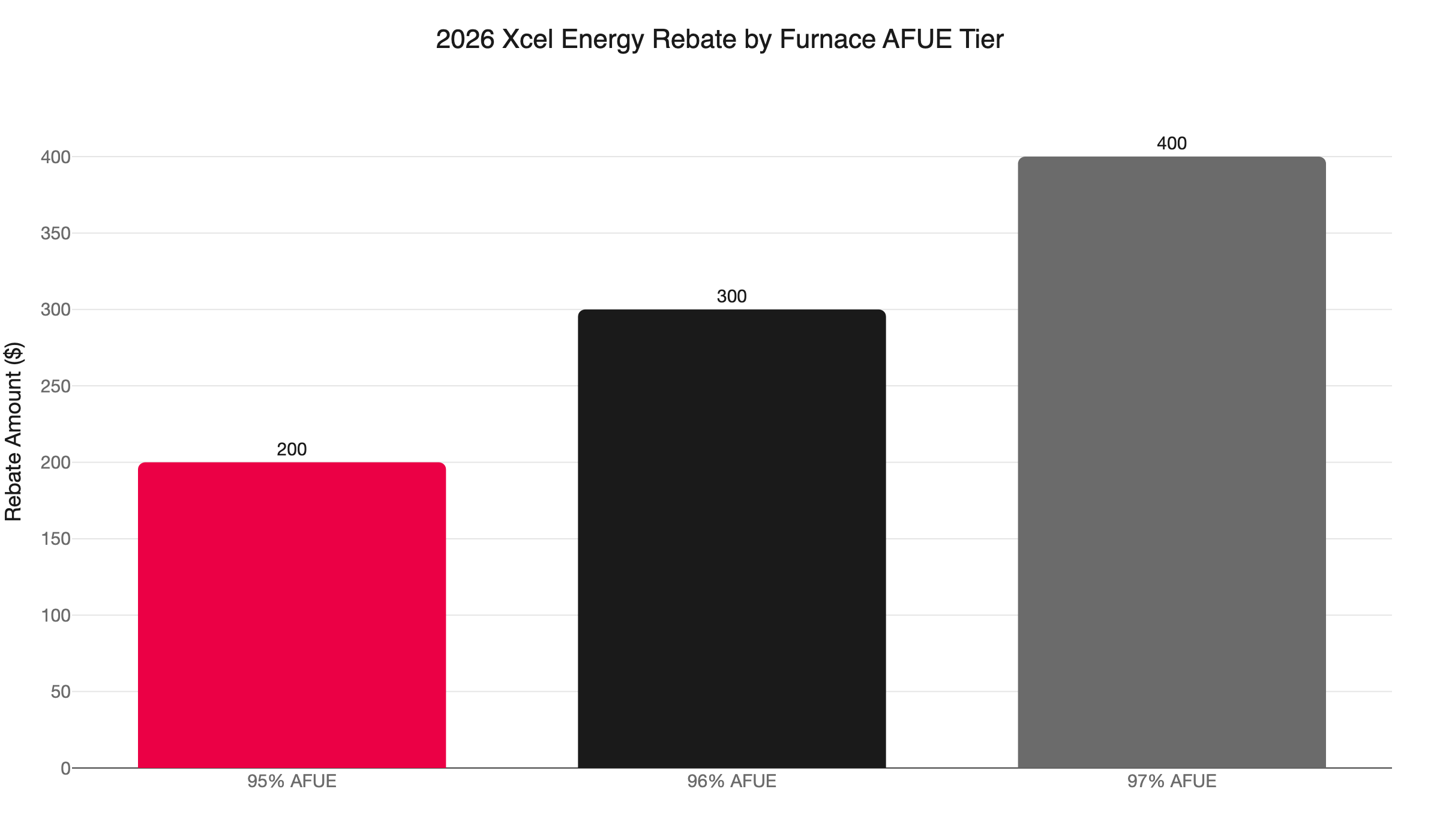
2026 Xcel Energy Rebate by Furnace AFUE Tier
## What Is Furnace AFUE Rating and Why Does Minnesota Make It Count?
**AFUE stands for Annual Fuel Utilization Efficiency. It is the percentage of gas your furnace converts to usable heat over a full heating season. A 96% AFUE furnace turns 96 cents of every gas dollar into warmth and vents 4 cents as exhaust. An 80% unit loses 20 cents on every dollar burned.**
That gap matters everywhere, but it matters most in cold climates. Minnesota homeowners run their furnaces from October through April and sometimes into May. Every hour of extra runtime multiplies the cost of every percentage point of inefficiency. Ramsey, Maple Grove, Blaine, Plymouth, Woodbury: the math is the same across the metro.
Think of it this way. A family burning $1,400 in gas each heating season with an 80% furnace is effectively throwing $280 [up the flue every year](/blog/chimney-liner-furnace-replacement-orphaned-water-heater-minnesota/). That money is gone before it heats a single room.
Northern One Hour is locally owned and operated in Ramsey, MN. We install and service furnaces across the Twin Cities and see the real-world difference AFUE makes on customer bills every winter. This is not a national-calculator exercise for us. It is the work we do every day.
---
## How Do You Calculate Your Furnace AFUE Savings?
**Multiply your annual heating fuel cost by (1 minus old AFUE divided by new AFUE). On a $1,400 gas bill, upgrading from 80% to 96% AFUE saves about $233 per year. The formula is that direct and the inputs are on your billing statements.**
[Here is the formula](https://www.hvacbase.org/afue-rating-explained):
**Annual savings = Annual heating fuel cost x (1 - Old AFUE / New AFUE)**
Walk through a Twin Cities example:
- Annual gas bill (heating season): $1,400
- Current furnace AFUE: 80%
- New furnace AFUE: 96%
- Calculation: $1,400 x (1 - 80/96) = $1,400 x 0.167 = **$233 per year**
[A separate published example](https://furnace.direct/blogs/news/furnace-afue-ratings-explained-80-vs-96-percent) uses a $1,080 heating-season bill on the same 80%-to-96% upgrade and arrives at $180 per year in savings. The range ($180-$233) reflects different starting bills. Your number depends on how much gas you actually burn for heat.
One caveat worth noting: these calculations use your total gas bill. If your bill also covers a gas water heater, dryer, or range, your heating-only share is lower, and so are the modeled savings. A therms-based approach, which isolates your heating load from other gas uses, gives a more accurate picture. We will cover that in the next section.
What about pushing past 96% to a top-tier modulating furnace at 98%+? [The additional fuel savings above 96% are only $35-50 per year](https://furnace.direct/blogs/news/furnace-afue-ratings-explained-80-vs-96-percent). The equipment premium for that jump is substantial. For most homeowners, 96% is where the returns stop being compelling.
---
## Minnesota's Heating Load: Why the Savings Are Higher Here
Generic AFUE savings calculators are built around national averages. Most assume 5,000-6,000 heating degree days (HDD) per year. Minneapolis averages [approximately 7,981 HDD annually](https://homeenergybasics.com/heat-pumps/states/mn). That is well above any national baseline.
HDD is a direct measure of how hard your heating system works each season. More degree days means more runtime. More runtime means every percentage point of inefficiency costs more real money.
The savings math for Minnesota homeowners is materially better than what national calculators produce. When you factor in 7,981 HDD versus a 5,500 national average, you get roughly 45% more furnace runtime. That same 80%-to-96% upgrade that saves $233 on a $1,400 bill in Minnesota might save only $160 on the same bill in a milder climate. Minnesota's winters are the multiplier.
The design temperature in Minneapolis is -12°F. That is the engineering baseline for worst-case heating load. It is why a furnace installed in the Twin Cities is sized, specified, and tested to conditions most of the country never faces.
A therms-based approach makes the Minnesota advantage concrete. Natural gas trades at roughly [$1.98 per therm nationally](https://www.eia.gov/dnav/ng/hist/n3010mn3m.htm) (Minnesota rates tend to run slightly below the national average, but the national figure provides a useful reference). A mid-size Twin Cities home typically burns 700-1,100 therms per heating season, depending on home size, insulation, and winter severity.
At 80% AFUE, burning 900 therms costs about $1,782 in gas to deliver 720 therms of usable heat. At 96% AFUE, you burn only 750 therms to deliver the same 720 therms. That drops the gas cost to $1,485. The difference is nearly $300 per year. Minneapolis's above-average HDD load is the reason that number is as high as it is.
---
## Does AFUE Tell the Whole Story When It Comes to Furnace Efficiency?
**No. AFUE measures only combustion efficiency at the furnace itself. It does not account for heat lost in your duct system on the way to your living space. Leaky ducts through an unheated attic or crawl space can lose 20-30% of the heat your furnace produces before it reaches a single room.**
[The AFUE standard itself flags this limitation](https://www.hvacbase.org/afue-rating-explained). Here is the practical impact: a 96% AFUE furnace with 25% duct loss delivers only about 72% of your fuel energy to your living space. You paid for a high-efficiency system and you are getting near-80%-equivalent results at the register.
This situation is more common than many homeowners realize. Many older split-levels, ramblers, and two-story homes across the Twin Cities metro have ductwork that runs through unconditioned attics, uninsulated garage spaces, or crawl spaces that drop below freezing. The furnace burns efficiently. The ducts bleed the heat before it arrives.
The fix is a duct leakage test, followed by targeted [duct sealing and repair](/blog/duct-sealing-leaky-ductwork-energy-loss/). In many older homes, sealing the duct system delivers as much measurable efficiency gain as upgrading the furnace AFUE. Sometimes more. If your home has ducts in unconditioned space and they have never been tested, the honest recommendation is to do both at the same time. A 96% AFUE furnace paired with sealed ducts is a meaningfully different system than a 96% furnace bleeding 25% through leaks.
---
## The 2026 Rebate Landscape: What Changed and What Did Not
A large number of online sources still cite the federal Section 25C Energy Efficient Home Improvement Credit as an active incentive for high-efficiency furnaces. It is not active. The One Big Beautiful Bill Act, signed July 4, 2025, terminated the Section 25C credit for any equipment placed in service after December 31, 2025. There is no grandfather clause, no extension, and no replacement program. A furnace installed in 2026 receives $0 from the federal government.
This matters because multiple national HVAC sites and calculators still reference the credit in their savings estimates. That is a genuine information gap. If a salesperson quotes you a federal tax credit on a 2026 install, that number does not exist. Ask them to remove it from the estimate.
What does exist are Minnesota utility rebates, funded by the Conservation Improvement Program (CIP).
**Xcel Energy 2026 rebates** ([source](https://www.metroheating.net/minnesota-furnace-rebates-2026-guide-for-saving-big-on-furnace-replacement/)):
- 95% AFUE furnace: $200
- 96% AFUE furnace: $300
- 97% AFUE furnace: $400
**CenterPoint Energy 2026 rebates** ([source](https://centralminnesotaheatingandcooling.com/blog/xcel-centerpoint-hvac-rebates-2026)):
- 95-96% AFUE furnace: $200
- 97%+ AFUE furnace: $400
- ECM variable-speed blower motor add-on: $100
- Income-qualified households: up to $1,200
Most Twin Cities homeowners are served by both utilities. Xcel handles electricity; CenterPoint handles gas. When both rebate programs apply to a single install, stacking them is possible. CIP budgets can cap out before year-end. Confirm current availability with your installer or directly with the utility before you commit to a timeline.
CenterPoint also offers $1,100 toward a ducted air-source heat pump paired with a 92%+ AFUE gas furnace in a dual-fuel setup. That is a separate program, but worth knowing if a hybrid system is on your radar.
---
## Does a Furnace AFUE Rating in Minnesota Create a Fast Payback?
**Yes, in most cases. Combine roughly $233 per year in fuel savings with a $300 Xcel rebate and a $200 CenterPoint rebate and you recover about $733 in year one alone on an 80%-to-96% upgrade. That frequently covers the entire equipment cost premium before the first winter ends.**
Here is the full year-one picture for a typical Twin Cities homeowner served by both utilities:
- Annual fuel savings (80% to 96%): approximately $233
- Xcel Energy rebate (one-time): $300
- CenterPoint Energy rebate (one-time): $200
- Year-one total recovery: approximately $733
The equipment cost premium of a 96% unit over an 80% unit typically runs $375-$750, depending on brand, capacity, and configuration. At $733 recovered in year one, the premium on a 96% unit pays for itself before the second heating season begins. After that, $233 in annual fuel savings continues for the life of the unit, typically 15-20 years.
See our full breakdown of [furnace replacement costs in the Twin Cities](/blog/furnace-replacement-cost-twin-cities/) for what to expect on labor, equipment, and permitting combined.
---
## What AFUE Tier Does Minnesota Code Actually Require?
**Minnesota's state minimum is currently 80% AFUE. However, the DOE northern-region standard rises to 90% AFUE in 2029. No utility rebate program in Minnesota pays for an 80% unit today. Most Twin Cities installers and municipalities already treat 90%+ as the practical floor for replacements.**
A few things worth knowing about code and permits:
**The 2029 DOE rule changes the calculus.** An 80% furnace installed today will fall below the federal northern-region minimum within three years. Installing one now means you start the clock on an equipment that earns no rebate and will be below code before its teenage years.
**Energy Star has a northern-region threshold.** [Energy Star certification for gas furnaces in the northern U.S. requires a minimum of 97% AFUE](https://www.energystar.gov/products/heating_cooling/furnaces/key_product_criteria). Minnesota, as a Climate Zone 6A state, falls in the northern region. The southern-region threshold is 95%. That 2-point difference affects rebate eligibility on some program tiers and matters if Energy Star certification is part of your financing criteria.
**Permits are not optional.** Every furnace replacement in Minnesota requires a mechanical permit. Unpermitted furnace work can void homeowner's insurance and complicate a home sale. Our team pulls the permit and coordinates the inspection as part of every installation. This is not a step to skip to save a few hundred dollars.
---
## Do ECM Blower Motors Add Savings Beyond Furnace AFUE?
**Yes. AFUE measures gas combustion efficiency only. It says nothing about the electricity your blower motor uses to push heated air through your ducts all winter. An ECM variable-speed motor uses roughly 75% less electricity than a standard PSC motor, saving $100-200 per year independently of your AFUE-driven gas savings.**
[This is documented specifically in cold-climate furnace efficiency analysis](https://furnace.direct/blogs/news/80-vs-96-afue-furnace-minnesota). A Minnesota heating season runs the blower motor hard for five or six months. At standard PSC motor consumption rates, that electricity cost is not trivial. At ECM rates, it is a fraction of the equivalent.
CenterPoint Energy recognizes the ECM advantage with a $100 add-on rebate for ECM-equipped furnaces. When you stack ECM electricity savings on top of AFUE fuel savings, the total efficiency picture improves substantially beyond what the AFUE number alone suggests.
Most 96%+ AFUE furnaces come standard with ECM blower motors. It is worth confirming when comparing quotes. Two furnaces at 96% AFUE can have meaningfully different operating costs if one uses an ECM and the other uses a standard PSC motor.
---
## The Right Upgrade Path for Twin Cities Homeowners
Here is a practical sequence for evaluating a furnace upgrade:
**Step 1: Confirm your current AFUE.** The yellow EnergyGuide sticker on your furnace shows the rating. Most units installed before 2010 are 80% or below. Units installed before 2000 can be as low as 65%.
**Step 2: Run the savings formula.** Multiply your annual heating-season gas cost by (1 - 80/96). That is your annual fuel savings from a 96% upgrade. Write down the number.
**Step 3: Check your duct system.** If your ducts run through an unheated attic, crawl space, or garage and have never been tested, schedule a leakage test before or alongside the furnace install. The duct picture changes the real efficiency calculation.
**Step 4: Confirm rebate availability.** Xcel and CenterPoint rebate availability is CIP-funded and can cap mid-year. Do not assume the rebate exists until you have confirmed it with your utility or installer before scheduling.
**Step 5: Review financing.** [Financing options are available on new installations](/blog/hvac-financing-options-what-to-know-twin-cities/). When you combine available rebates with financing, a 96% system is often accessible without waiting for the next budget cycle.
If your furnace is more than 15 years old or running increasingly frequent repair calls, the payback math gets even clearer. A properly installed 96% AFUE furnace with a sealed duct system will outperform an aging 80% unit on every metric: fuel cost, reliability, and comfort on the coldest nights of a Minnesota winter.
"Always On Time… Or You Don't Pay a Dime!(R)" - that promise backs every appointment we make, including furnace estimates. We are locally owned and operated in Ramsey, and we will run the rebate math with you, confirm your eligibility, and give you a straight answer on whether upgrading now makes sense for your home and your budget.
Call us at (763) 260-6662 or [schedule a furnace replacement estimate](/heating/heating-equipment/furnaces/furnace-replacements/) and we will take it from there.
---
# Is an HVAC Surge Protector Worth It? The Twin Cities Math
URL: https://northernonehour.com/blog/hvac-surge-protector-lightning-protection-minnesota/
Published: 2026-08-26 | Category: HVAC
Variable-speed control boards cost $500-$1,100 to replace. A surge protector runs $150-$400 installed. Here's why Minnesota homeowners can't skip it.
Key Takeaways
- A Type 2 HVAC surge protector costs **$150-$400 installed**. No rebates are available through Xcel Energy or CenterPoint in 2026.
- Replacing a variable-speed or communicating control board runs [$500-$1,100](https://homeguide.com/costs/furnace-control-board-replacement-cost). One avoided repair pays for the protector two to five times over.
- [NEMA research](https://indoortemp.com/resources/why-power-surges-happen-and-how-to-prevent-them) shows 80% of damaging power transients originate inside the building, not from lightning.
- [Only 2% of residential HVAC claims](https://alpineintel.com/resource/power-surge-claims-what-adjusters-should-know/) have verified lightning as the root cause. Internal transients and grid restoration surges cause the rest.
- Standard homeowners insurance often classifies surge damage as mechanical breakdown. Most HO policies exclude it.
- Manufacturer HVAC warranties do not cover surge, brownout, or other electrical damage, even on a brand-new system.
- Minnesota's peak surge season runs May through September, the same months your AC works its hardest.
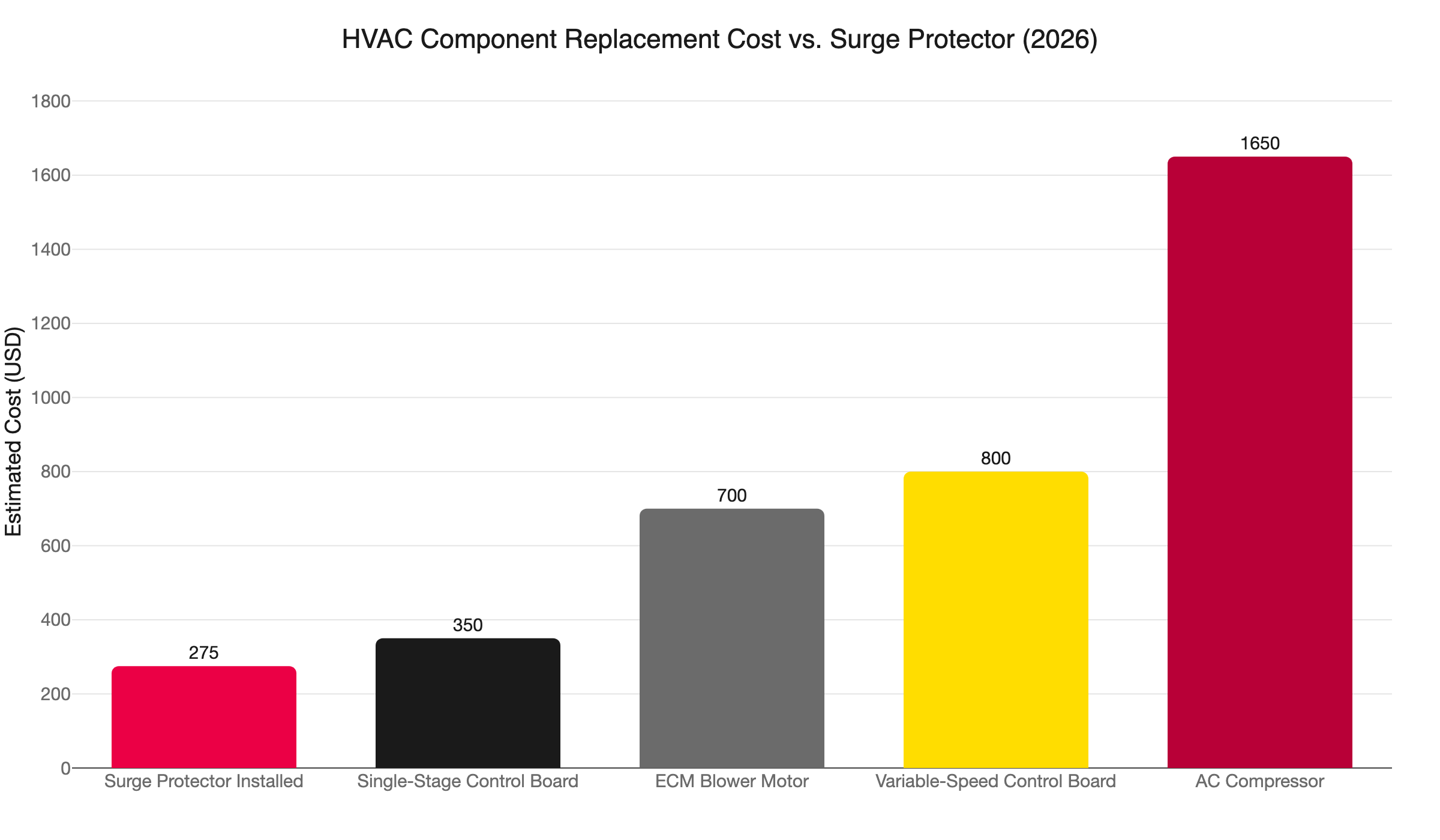
HVAC Component Replacement Cost vs. Surge Protector (2026)
## What Is an HVAC Surge Protector?
**A Type 2 surge protection device (SPD) installs at your outdoor disconnect panel. It absorbs excess voltage before it reaches your system's electronics, including the control board, ECM blower motor, and inverter compressor. Installation takes 30-60 minutes and does not require a permit in Minnesota for an existing disconnect.**
An HVAC surge protector works through components called metal oxide varistors, or MOVs. When voltage spikes above the safe threshold, the MOV absorbs the excess energy and diverts it to ground. The MOV takes the hit so your control board does not.
This device is different from a whole-home surge protector at the main panel. A panel protector provides broad building-level protection. A dedicated SPD at the outdoor disconnect sits right at the point where power enters your AC unit. The two can work together for layered protection.
Modern HVAC systems are built around sensitive electronics. A variable-speed compressor runs off an inverter board that manages precise voltage levels. A communicating control system monitors sensors, modulates output, and stores diagnostic data. These components are capable and efficient. They are also less forgiving of dirty power than the single-stage systems they replaced.
The more equipment you run and the older your home's wiring, the more electrical noise circulates through your circuits. A surge protector removes the voltage spikes that do damage.
---
## Is an HVAC Surge Protector Worth It?
**Yes, for most Twin Cities homeowners with equipment less than 15 years old. The installed cost of a protector ($150-$400) is a fraction of the most common repairs it prevents. Replacing a variable-speed control board runs [$500-$1,100](https://homeguide.com/costs/furnace-control-board-replacement-cost). One avoided repair pays for the protector two to five times over.**
Here is the repair cost landscape in 2026:
- Single-stage AC or furnace control board: [$250-$450 installed](https://homeguide.com/costs/ac-circuit-board-cost)
- Variable-speed or communicating control board: [$500-$1,100 installed](https://homeguide.com/costs/furnace-control-board-replacement-cost)
- ECM blower motor: $400-$1,000 installed
- AC compressor: [$800-$2,500 or more in parts alone](https://www.angi.com/articles/furnace-control-board-replacement-cost.htm), plus labor
Now compare those figures to $150-$400 for a surge protector.
If you have a variable-speed system, the break-even is a single avoided board replacement. At the high end of repair costs, one event returns five times the protector's price. If you have an older single-stage unit, the math is still favorable, though the stakes per component are lower.
One number sharpens the case further. [HVACi's 2025 Annual Claims Report](https://alpineintel.com/resource/power-surge-claims-what-adjusters-should-know/) found that only 2% of residential HVAC surge claims had verified lightning as the root cause. The threats behind the other 98% include grid restoration surges, utility switching events, and the compressor's own startup transients. These events happen throughout the year, not just during storms.
A critical point many homeowners miss: [manufacturer HVAC warranties explicitly exclude surge damage, brownouts, and other electrical events](https://indoortemp.com/resources/why-power-surges-happen-and-how-to-prevent-them). That exclusion applies to a system that is one year old just as much as one that is ten years old. If a surge takes out your control board, you pay for the repair regardless of the remaining warranty period.
---
## Why Minnesota Storms Make the Math More Urgent
Minnesota sits on the north edge of Tornado Alley. The state [averages 46 tornadoes per year](https://www.dnr.state.mn.us/climate/summaries_and_publications/tornadoes.html) using the 1991-2020 climate normal. Severe thunderstorms regularly produce winds of 58 mph and higher. The [National Weather Service Twin Cities office](https://www.weather.gov/mpx/swawday2) identifies July through August as peak thunderstorm season, with hail contributing to nearly $1 billion in annual U.S. damage.
Storms knock out power. When the grid restores after an outage, the restoration event pushes a surge through every connected circuit in the neighborhood. One Minnesota summer storm [left approximately 136,000 customers without power](https://www.cbsnews.com/minnesota/news/strong-summer-storm/). The causes included toppled trees, downed power lines, golf-ball hail, and flash flooding. Every unprotected HVAC unit in that service territory took the restoration surge the moment power came back.
That pattern repeats throughout the summer, not just during exceptional events. Localized outages affect neighborhoods across the metro multiple times each season. Each restoration is a surge event for every connected unit.
There is a secondary consequence beyond the electrical spike. When tens of thousands of homes restore power on the same day, HVAC repair calls spike across the region simultaneously. Contractors are suddenly fielding emergency calls from multiple neighborhoods at once. Parts go on back order. If your system fails on the hottest week of July, you may be waiting for both a technician and parts.
A surge protector does not prevent the storm. It prevents the storm from becoming a $1,300 repair during the busiest stretch of the cooling season.
---
## Does Homeowners Insurance Cover HVAC Surge Damage?
**Usually not through a standard policy. Insurers frequently reclassify surge damage to HVAC equipment as mechanical breakdown, which most HO policies exclude without a specific endorsement. [Progressive](https://www.progressive.com/answers/power-surges/) and [Allstate](https://www.allstate.com/resources/home-insurance/power-surge-damage) both note that surge damage coverage depends on the specific cause and the policy's terms. Without a mechanical breakdown rider, you are likely paying out of pocket.**
This gap catches homeowners off guard. The intuitive assumption is that a storm surge is a weather event, covered the same way wind or hail damage is. In practice, the insurer looks at what component failed. A failed control board inside a machine gets classified as a mechanical or electrical breakdown. Standard HO coverage does not extend to those failures.
There is also a documentation problem. Surge damage to electronics can appear days or weeks after the triggering event. Slow degradation from repeated smaller surges can take months to produce a visible failure. By the time the technician diagnoses a failed control board, you cannot reliably tie it to a specific storm. The insurer has grounds to deny the claim.
The surge protector creates a cleaner situation. If the MOV has absorbed a large spike, it may show visible signs of stress or failure. That is evidence of protection. If the board fails for a different reason, the cause is separable from surge damage. Either outcome is cleaner than a long dispute with an adjuster.
The $250 protector is also the only hedge that works without a claims process, a deductible, or proof of a specific triggering event. It is the straightforward path.
---
## What Does an HVAC Surge Protector Actually Cost?
**Expect to pay $150-$400 installed for a Type 2 SPD at your outdoor disconnect. Parts range from $15-$80 for a basic unit to $100-$150 for an HVAC-rated device with a higher joule rating. Labor is usually under an hour. No permit is required in Minnesota to add an SPD to an existing disconnect.**
The cost range reflects two variables: the device specification and the labor situation. A basic MOV-based unit handles most residential applications. A higher-joule-rated device provides more protection headroom for larger variable-speed systems with higher startup current draws. Your technician can recommend the right rating for your specific equipment model.
No rebates are available through Xcel Energy or CenterPoint for surge protectors as of 2026. There is no program to apply to, no form to file, and no deadline to track. It is a fully out-of-pocket expense. The ROI argument does not depend on any external program, which actually makes the decision simpler.
If you are already scheduling a [maintenance visit](/air-conditioning/air-conditioning-maintenance/) or a repair call, adding a surge protector to that appointment reduces the incremental labor cost to nearly zero. The technician is already at the unit. Adding 30 minutes to the visit is the most cost-efficient way to get protection in place.
---
## The Internal Surge Problem Most Homeowners Don't Know About
Most people associate power surges with lightning. That framing is almost entirely wrong, and it leads homeowners to underestimate risk on clear summer days.
[NEMA Surge Protection Institute research](https://indoortemp.com/resources/why-power-surges-happen-and-how-to-prevent-them) shows that 80% of damaging power transients originate inside the building, not from external sources. Your HVAC compressor is one of the largest contributors. When a compressor starts, it draws roughly six to eight times its normal running current for a fraction of a second. That startup spike creates a voltage transient that travels back through the circuit and stresses the connected electronics.
On a single-stage system that starts once or twice per hour, the cumulative effect over years is manageable. On a variable-speed system, the compressor modulates its output continuously in response to conditions. The individual transients are smaller in magnitude. But they are more frequent, and the inverter board managing those adjustments absorbs each one.
[HVACi found](https://alpineintel.com/resource/power-surge-claims-what-adjusters-should-know/) that lightning accounts for only 2% of verified residential HVAC surge claims. The board failure that looks like a random breakdown three years into a system's life is often the result of hundreds of grid restoration events and thousands of startup transients accumulating slowly.
Variable-speed systems are more efficient and more comfortable than single-stage units. They are also more sensitive to power quality. The inverter board that makes them efficient is precisely the component most vulnerable to electrical stress. Adding a surge protector addresses both external grid events and helps buffer the circuit from the unit's own startup behavior. It does not eliminate all electrical stress. It removes the worst spikes from the equation.
---
## How Is an HVAC Surge Protector Installed?
**A licensed technician mounts the SPD at your outdoor disconnect panel. The work takes 30-60 minutes. The device wires in parallel with the power feed. Installation requires a brief system shutdown and then immediate restoration to full operation.**
The disconnect panel is the metal box mounted on the exterior wall near your outdoor AC unit or heat pump. It houses the shutoff switch and, in newer installations, may already have a slot for an SPD. The technician opens the panel, connects the device's leads, secures the housing, and restores power. The result is a small device mounted inside or adjacent to the disconnect.
The most cost-efficient time to add a surge protector is during a scheduled visit. If you are booking a [new AC installation](/air-conditioning/ac-installation/), that is the ideal moment. The disconnect is open, the technician is already orienting to the unit, and adding the SPD is a natural extension of the work. If you have an existing system, ask during your next maintenance appointment.
If your home has both a furnace and an outdoor AC unit, protection at the outdoor disconnect covers the AC-side components. Your furnace's control board draws power from a separate circuit. Your technician can evaluate whether that circuit warrants a second device during the same visit.
---
## Which Systems Need This Most?
Not every home has the same risk profile. Here is how to think about priority.
**Higher priority:**
- Variable-speed or communicating systems (Carrier Infinity, Lennox iComfort, Trane S8X2, or similar). These carry $500-$1,100 control boards and inverter-driven compressors. The ROI is clearest here.
- Systems in their first ten years. Manufacturer warranties exclude surge damage. A new system is the largest HVAC investment you will make in a decade. Protect it.
- Homes in neighborhoods with older distribution infrastructure or multiple power outages each summer.
- Homes without whole-home surge protection at the main panel.
- Heat pumps. A modern cold-climate heat pump uses the same inverter-drive technology and carries similar board replacement costs as a variable-speed AC. See how [cold-climate heat pump technology performs in Minnesota winters](/blog/cold-climate-heat-pump-brand-performance-minnesota/) for context on what these systems contain under the hood.
**Lower priority, though still worth a conversation:**
- Single-stage systems older than 12-15 years. If the system is near end of life, a conversation about replacement may be more valuable than added protection on aging equipment. See [how long HVAC systems typically last in Minnesota](/blog/how-long-do-hvac-systems-last-in-minnesota/) for the age benchmarks that help you decide.
The simplest test: if your control board failed next week, would the repair cost be painful? If yes, the protector is worth it.
---
## When Should You Add a Surge Protector?
The best time is before peak storm season. The second-best time is your next service visit.
Minnesota's surge risk window runs May through September. That window aligns directly with cooling season, when your system logs the most run hours and when thunderstorm activity is highest. A surge protector added before July is in place for the highest-risk months of the year.
If you are reading this during cooling season, the most convenient path is your next scheduled service call. Ask the technician to assess your system's surge protection status during the visit. In most cases, a compatible SPD can be sourced and installed the same day.
If you have a new variable-speed system without protection already in place, there is no benefit to waiting. Board degradation from internal transients is cumulative. Earlier protection means more protection over the system's full service life.
---
## Protect Your System Before the Next Storm
Our team is locally owned and operated in Ramsey, Minnesota. We serve Minneapolis, St. Paul, Maple Grove, Plymouth, Brooklyn Park, Blaine, Bloomington, Woodbury, and the full Twin Cities metro.
We show up when we say we will. That is the foundation of everything we do, backed by our guarantee: "Always On Time… Or You Don't Pay a Dime!(R)"
Call us at **(763) 260-6662** or book online to schedule surge protector installation, an [AC maintenance visit](/air-conditioning/air-conditioning-maintenance/), or a full system assessment. If you are not sure whether your system warrants a protector, ask during your next appointment. It is a short conversation that can prevent a large, unplanned repair bill in the middle of July.
---
# Insulate Ductwork in Attic Minnesota: What You Need to Know
URL: https://northernonehour.com/blog/duct-insulation-attic-energy-loss-minnesota/
Published: 2026-08-25 | Category: HVAC
Uninsulated attic ducts lose 10-45% of your heating energy. Learn Minnesota's R-value code, materials, 2026 rebates, and when to call a pro.
Key Takeaways
- [Uninsulated or under-insulated attic ducts lose 10% to 45%](https://bsesc.energy.gov/energy-basics/hvac-high-r-duct-insulation) of your home's heating energy through the duct walls alone, separate from any air leaks.
- Air sealing and duct insulation solve two different problems. You need both.
- [Minnesota Rule 1322.0403](https://www.revisor.mn.gov/rules/1322.0403/) requires a minimum of R-8 plus a vapor retarder for ducts in attics. Many professionals now target R-12.
- A Minnesota attic swings from roughly -20°F in deep winter to 150°F in July. Standard R-4 flex duct jacketing does not meet current code.
- CenterPoint and Xcel Energy both offer 2026 rebates for attic air sealing and insulation. Duct insulation is not a standalone rebate measure, but it pairs directly with rebate-eligible scope.
- No permit is typically required to wrap existing ductwork, but new duct runs in an attic require a mechanical permit. Confirm with your local authority having jurisdiction.
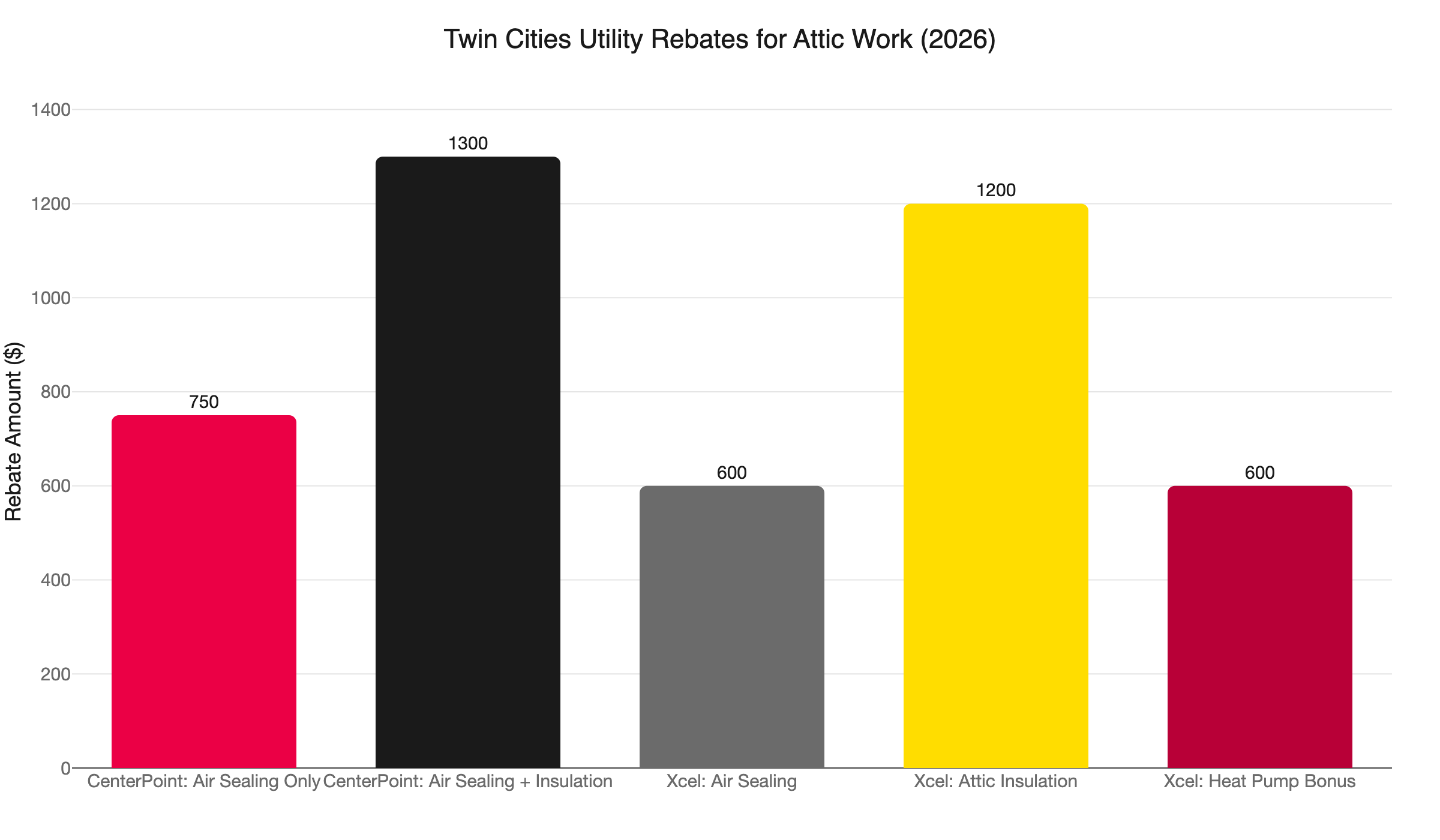
Twin Cities Utility Rebates for Attic Work (2026)
If your heating bills keep climbing through January and February, your attic may be the reason. Specifically: the ducts running through it. Knowing how to insulate ductwork in attic Minnesota homes is one of the most direct ways to stop paying for heat that never reaches your living room.
This guide covers the two separate failure modes behind attic duct energy loss, what Minnesota code actually requires, the right materials for our climate, 2026 rebate programs, and how to decide whether this is a DIY project or a professional one.
## Why Are Uninsulated Attic Ducts a Minnesota Heating Problem?
**Short answer:** Minnesota attics drop to -20°F or colder in deep winter. Warm supply air traveling through an uninsulated duct sheds heat to the surrounding cold before it reaches your registers. That heat does not warm your home. It warms your attic.
The Twin Cities metro sits in ASHRAE climate zone 6A, with a design temperature near -16°F for Minneapolis. That framing matters because most national resources on duct insulation focus on summer cooling loss in warm climates. Minnesota's problem is the opposite. Our heating season is the dominant one, and our attics are the most thermally extreme space in the house.
Standard flex duct from the 1980s and 1990s carries an R-4 or R-4.2 jacket. That was below code even then, and it is well below what Minnesota's energy code now requires. If your attic ductwork has not been evaluated or upgraded, you are running a heating system that is losing energy inside your own house on every single cycle.
There is a second issue beyond simple heat loss. The [stack effect in cold climates](https://www.northernbuilt.pro/mechanicals-ductwork-in-attic/) drives warm, moist air from the conditioned living space up through duct penetrations and gaps into the attic. In winter, that moisture can freeze on attic surfaces. In spring, it melts. Over several seasons, the result is rot, mold, and structural damage. Duct insulation paired with proper air sealing at penetrations addresses both the energy loss and the moisture problem.
## What Is the Difference Between Duct Insulation and Duct Sealing?
**Short answer:** Sealing stops conditioned air from physically escaping through holes and gaps in your duct joints. Insulation stops heat from conducting through the duct walls themselves. They are two separate failure modes with two separate fixes, and most Minnesota attics need both.
This distinction is the gap that most guides on this topic miss. Here is how each failure mode actually works.
**Air leakage** happens at seams, joints, and connections. Conditioned air escapes into the unconditioned attic before it reaches a vent. [Duct air leakage commonly exceeds 20% of conditioned air flow](https://bsesc.energy.gov/energy-basics/hvac-high-r-duct-insulation) when ducts run through unconditioned space. You are paying to condition air that never enters a room.
**Conductive heat loss** happens through the duct walls themselves, even when the ducts are perfectly sealed at every joint. Warm air inside a duct gives up heat to the cold attic through the duct skin. The thinner and less insulating the jacket, the faster that transfer happens. This is basic physics: heat moves from warm to cold, and it will not stop moving until temperatures equalize.
These two losses stack on each other. A leaky, uninsulated duct loses energy two ways at once. Sealing the duct without insulating it still leaves conductive heat loss in place. Insulating without sealing reduces thermal loss but does not stop conditioned air from escaping through gaps. The DOE's guidance is direct on this point: [conductive losses are typically at least as large as air-leakage losses](https://bsesc.energy.gov/energy-basics/hvac-high-r-duct-insulation), which means insulation is not optional even on a well-sealed duct.
When our team inspects attic ductwork, we assess both. A duct that passes a visual leakage check can still be a significant source of energy loss if the jacket is thin, torn, or simply too low an R-value for our climate. And a well-insulated duct with gaps at the collar connections is still losing conditioned air. The fix for each is different.
## How Much Heat Can Uninsulated Ducts Waste?
**Short answer:** [Between 10% and 45% of your heating and cooling energy](https://bsesc.energy.gov/energy-basics/hvac-high-r-duct-insulation) can disappear through under-insulated attic duct walls. In Minnesota, where attic temperatures regularly drop below -20°F, homes with long attic duct runs and thin jackets are closer to the high end of that range.
That wide range reflects differences in duct length, existing jacket condition, and how cold the surrounding space gets. A short flex duct stub in an attic that is relatively sheltered from the cold sits at the lower end. A long supply trunk running the length of an attic in a northern Minnesota home, with its original R-4 jacket, sits much higher.
The practical consequence: your furnace compensates for lost heat by running longer cycles. You pay for heat your living room never feels, month after month, all winter. Over a single heating season in the Twin Cities, that can add up to hundreds of dollars in excess gas or electric costs, depending on system size and duct condition.
See our post on [leaky ductwork and energy loss](/blog/duct-sealing-leaky-ductwork-energy-loss/) for a broader look at how duct system condition affects your overall efficiency.
## What R-Value Does Minnesota Code Require to Insulate Ductwork in Attic Spaces?
**Short answer:** [Minnesota Rule 1322.0403](https://www.revisor.mn.gov/rules/1322.0403/) requires R-8 plus a vapor retarder for ducts in attics, garages, and ventilated crawl spaces. High-performance and new construction work often targets R-12.
Here is the full breakdown so you know what applies to your home:
**Minnesota code minimum (prescriptive path):** R-8 plus a vapor retarder, per Minnesota's own Table R403.2.1. Minnesota replaced the relevant IECC section with its own table, so the enforceable floor here is R-8, not the R-12 that the [IECC 2015 prescribes for climate zones 5-8](https://www.jm.com/en/blog/2018/july/r-12-the-new-duct-insulation-standard/).
**ENERGY STAR minimum:** R-8 plus a vapor barrier for ducts in unconditioned spaces. ENERGY STAR aligns with the Minnesota code floor.
**High-performance target:** R-12. The IECC moved climate zones 5-8 to R-12 in the 2015 edition, which is why manufacturers now produce single-piece R-12 duct wrap products. Many Minnesota contractors doing high-performance retrofits or new construction specify R-12 because our climate puts ducts under more thermal stress than the R-8 minimum accounts for.
**Why the vapor retarder requirement matters:** A Minnesota attic in January can be 60 to 80 degrees colder than the air inside the duct. That temperature differential causes condensation to form on the outside of a duct that is not properly insulated or vapor-managed. Without a vapor retarder on the outer surface of the insulation assembly, moisture infiltrates the insulation layer itself, degrading its R-value over time and creating conditions for mold growth and duct jacket deterioration. The vapor retarder always goes on the warm side of the insulation, which in this application is the outside of the wrap.
If your home currently has flex duct with an R-4 jacket, you are at roughly half the code minimum. Upgrading to R-8 brings you to code compliance. Upgrading to R-12 is the better investment if you are already pulling ducts or installing new runs.
## What Materials Are Used to Insulate Ductwork in Attic Spaces?
Several products are used in residential attic duct insulation work. The right choice depends on the duct type, its current condition, and whether you are wrapping existing ducts or installing new runs.
**Fiberglass duct wrap** is the most common retrofit product for existing rectangular sheet metal ducts. It comes in roll form, typically R-6 to R-8 per inch of thickness, and is applied in layers around the outside of the duct. The foil-faced outer surface serves as the vapor retarder when seams are properly taped. Achieving R-8 typically requires a 2-inch wrap. Achieving R-12 requires either a thicker product or a double-layer installation with offset seams.
**Pre-insulated flexible duct** is sold with an integrated fiberglass insulation jacket and mylar vapor barrier already attached. It is available in R-6, R-8, and R-12 ratings. If you are replacing old flex duct that has deteriorated or was never adequate for our climate, buying the higher-rated product from the start is the smarter move. Labor cost is nearly identical. Material cost difference is modest compared to the energy savings over the life of the duct.
**Rigid duct board** is a fiberglass board product used to fabricate ducts with integral insulation built into the duct wall itself. It is more common in new construction than in retrofit work, but it appears in attic applications when new trunk runs are being designed as part of a larger system change.
**Spray foam at penetrations** is often used around duct collars and connections where ducts pass through the ceiling plane from the conditioned space into the attic. This addresses the stack-effect air pathway at the transition. It is not the primary insulation product for the duct body, but it is a necessary companion step when proper air sealing is part of the project scope.
**What to avoid:** Do not simply bury existing R-4 flex duct under blown-in attic insulation and call the job done. That approach can offer some thermal benefit, but it traps ducts in a way that makes future repairs nearly impossible, and it does not address vapor management requirements. Proper duct insulation means wrapping or replacing the duct as a standalone step, then restoring attic insulation around it.
## Can You Get Rebates for Insulating Ductwork in Attic Spaces in the Twin Cities?
**Short answer:** Not for duct insulation as a standalone line item. But CenterPoint Energy and Xcel Energy both offer 2026 rebates for attic air sealing and insulation work that routinely happens alongside duct upgrades.
Here is the current program landscape:
**[CenterPoint Energy (2026)](https://www.centerpointenergy.com/en-us/Documents/2026-Air-Sealing-and-Insulation-Rebate-Application.pdf):**
- $750 for attic air sealing alone
- $1,300 for attic air sealing plus qualifying attic insulation (existing attic at R-30 or lower, raised to R-49 or higher)
- Work must be performed by a Rebate Eligible Installer with active BPI certification
- Applications due December 31, 2026
**[Xcel Energy (2026)](https://energyrebatecalculator.com/utility/xcel-energy):**
- $600 for attic air sealing
- $1,200 for attic insulation (40% of project cost, capped)
- Additional $600 bonus if a qualifying heat pump is installed within two years of the insulation work
Your eligibility depends on which utility delivers your gas. Both CenterPoint and Xcel serve the Twin Cities metro, but coverage areas do not overlap. Your gas bill header will tell you which applies.
The practical framing: duct insulation in an unconditioned attic is a code compliance and efficiency fix. It pairs naturally with attic air sealing and insulation. When we assess your attic ducts, we can look at the full picture and tell you whether the scope of work makes a utility rebate worth pursuing.
For a full overview of HVAC rebate programs available in Minnesota, see our post on [Xcel and CenterPoint HVAC rebates](/blog/xcel-centerpoint-hvac-rebates-minnesota/).
## Should You Hire a Professional to Insulate Ductwork in Your Attic?
**Short answer:** A capable DIYer can wrap sheet metal ducts with fiberglass duct wrap. But attic access is difficult, vapor retarder installation has a right and a wrong side, and damaged or deteriorated flex duct should be replaced rather than wrapped. Most homeowners are better served by a professional who can do the full assessment and fix both failure modes in one visit.
Here is the honest breakdown:
**What makes this harder than it looks:**
- Attic access is tight, especially around duct runs. Working in a Minnesota attic in winter is cold. Working in one in July is dangerous.
- Fiberglass duct wrap must be installed with the vapor retarder facing outward and all seams taped. Reversed installation does not work as a vapor barrier and will fail over time.
- Flex duct that is kinked, torn, or has separated joints should be replaced, not wrapped. Telling the difference between a duct worth wrapping and [one that needs replacement](/blog/ductwork-replacement-cost-twin-cities/) requires hands-on inspection.
- New duct runs in an attic require a mechanical permit. That work cannot be done without an inspection and is not a DIY path.
- Air sealing at ceiling penetrations is a separate step that must happen alongside the duct insulation for the project to perform as intended. Missing it leaves a major moisture pathway open.
**What a professional brings:**
- Assessment of existing duct condition: current R-value, jacket integrity, joint sealing
- Clear diagnosis of which failure mode is costing you the most energy
- Correct product specification for Minnesota's climate
- Proper vapor retarder installation and seam sealing
- Air sealing at duct penetrations through the ceiling plane
- Permit handling for any new duct runs
- Guidance on whether the scope triggers a utility rebate application
If your [attic insulation and ventilation](/blog/attic-insulation-ventilation-hvac-bills-ice-dams-twin-cities/) is also inadequate, that conversation belongs in the same site visit. Duct performance and attic thermal performance are connected. Addressing one without the other leaves money on the table.
## What to Expect When You Call Northern One Hour
We are locally owned and operated in Ramsey, MN, and we serve the Twin Cities metro. When you call us about attic ductwork, we send a technician who knows what a Minnesota attic actually looks like after thirty years of temperature cycling: aged flex duct with a jacket that has gone brittle, joints that have pulled apart at the collar, and an R-value that was marginal when it was installed and is now far below code.
We show up when we say we will. That commitment is behind our promise: "Always On Time... Or You Don't Pay a Dime!(R)". It is not a marketing line. It is the standard we hold ourselves to on every visit.
Our technician will inspect your attic duct system: existing insulation R-value, jacket condition, joint sealing, and duct penetrations at the ceiling plane. We will identify the gap between your current condition and Minnesota's R-8 minimum and walk you through options: wrap, replace, or a combination, depending on what we find. We price the work transparently, with no surprises.
If your heating costs have been climbing and your system is running longer cycles than it used to, attic ductwork deserves a look before you assume the furnace is the problem. The fix is often straightforward. The savings continue every month of every heating season after.
For homes with ductwork running through below-grade spaces as well, see our post on [crawl space HVAC efficiency](/blog/crawl-space-hvac-efficiency-twin-cities/).
Call us at **(763) 260-6662** or book online. We serve Minneapolis, St. Paul, Ramsey, Blaine, Maple Grove, Plymouth, Brooklyn Park, Woodbury, Bloomington, and the surrounding Twin Cities metro.
---
# HVAC for Old Home Without Ductwork: 3 Real Options
URL: https://northernonehour.com/blog/high-velocity-hvac-older-home-no-ductwork-twin-cities/
Published: 2026-08-25 | Category: HVAC
Mini-splits aren't your only choice. See how high-velocity small-duct systems solve HVAC for older Twin Cities homes, plus what rebates exist in 2026.
Key Takeaways
- Most Twin Cities homes built before the 1960s have no ductwork. Boilers and cast-iron radiators were the standard.
- Three systems work without conventional ductwork: a full duct retrofit, ductless mini-splits, or a high-velocity small-duct (SDHV) system.
- SDHV systems use 2 to 2.5-inch flexible tubes that thread through existing wall cavities without major demolition.
- SDHV systems remove about 30% more moisture than conventional central air. That matters in Minnesota summers.
- The federal Section 25C tax credit expired December 31, 2025. It does not apply to 2026 installs.
- Xcel Energy offers up to $2,600 for eligible customers who combine a heat pump rebate with the insulation bonus.
- CenterPoint Energy offers $1,100 for a dual-fuel heat pump paired with a gas furnace.
- Minneapolis residents can stack a city rebate of up to $1,000, or up to $5,000 in a designated Green Zone.
- Minnesota requires a mechanical permit for equipment replacements, not just new installs.
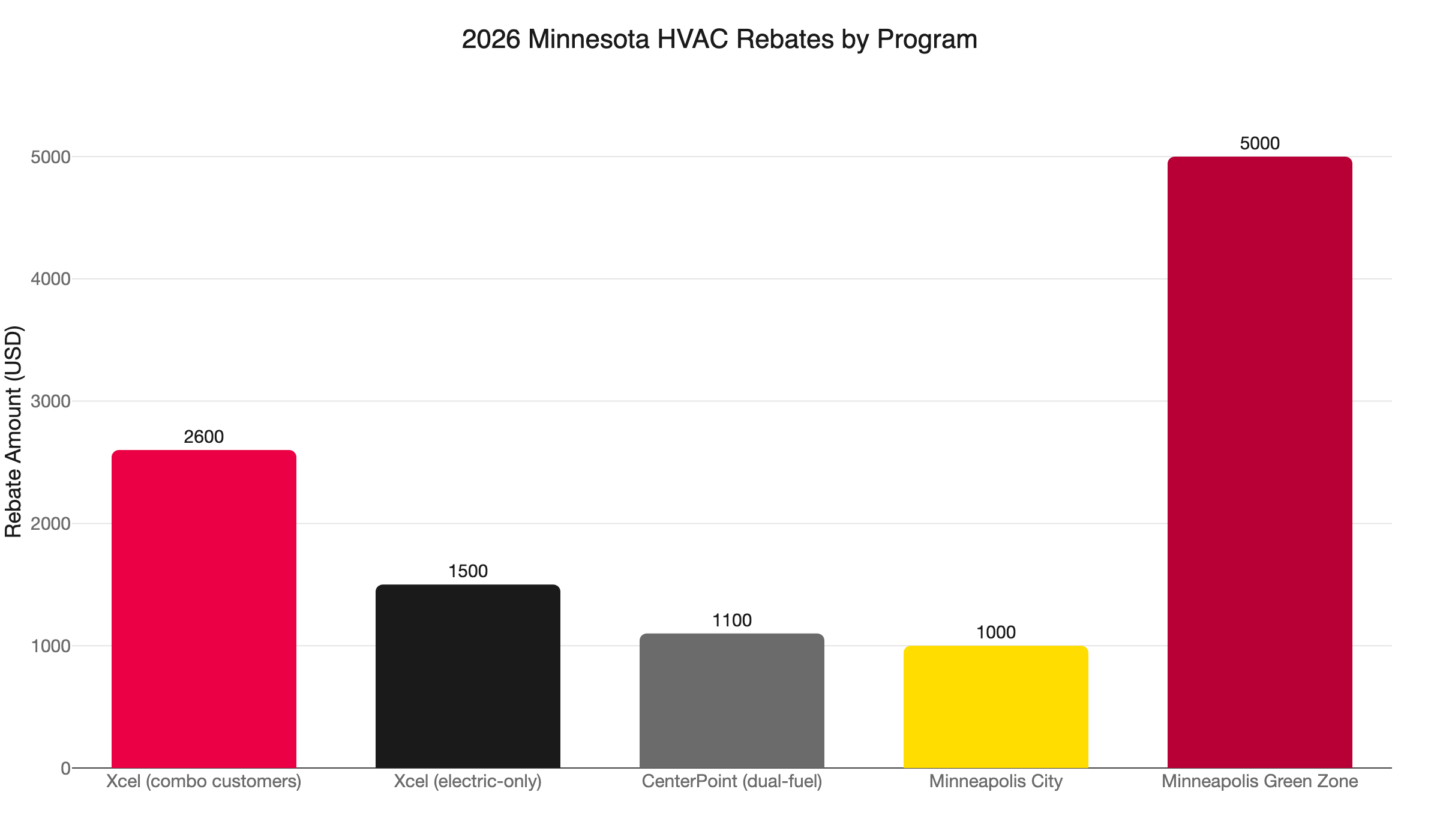
2026 Minnesota HVAC Rebates by Program
## HVAC for Old Home Without Ductwork: Three Paths, One Right Answer
Most Twin Cities homes built before the 1960s ran on [boilers and cast-iron radiators](/blog/add-central-air-radiator-hot-water-heat-twin-cities/). No ductwork was ever installed because none was needed. If you own one of these homes and need central heating and air, you have three real options - not two.
Most articles frame this as a binary: [ductless mini-splits](/blog/ductless-vs-ducted-heat-pump-minnesota/) or a full conventional duct retrofit. That framing skips the system built specifically for plaster-wall homes. High-velocity small-duct systems thread 2 to 2.5-inch tubes through existing wall cavities. They deliver central-system comfort without demolishing your historic millwork and without a months-long restoration bill after the installer leaves.
This guide covers all three options, who each one fits, and what the 2026 incentive landscape actually looks like. One fact up front: the federal tax credit is gone. The rest of the article covers what remains.
## Why Older Twin Cities Homes Make HVAC More Complicated
The challenge is not the age of your home. It is what is inside the walls.
Before forced-air heating became common, most homes in Minneapolis, St. Paul, Ramsey, Blaine, and the surrounding suburbs used cast-iron radiators fed by a boiler. Heat traveled through hot water or steam. No supply ducts, no return air, no blower - just pipes, radiators, and gravity.
That system heated the home. It did not cool it. When central air conditioning became expected, the entire distribution problem had to be solved from scratch. The building was never designed for it.
Plaster-and-lath construction makes the retrofit harder. Walls in pre-1940 homes are often 1.5 to 2 inches of dense plaster over wood lath. Cutting a chase wide enough for a 6-inch supply duct is doable. Then comes the replastering. Skilled plasterers who can match original texture charge accordingly, and in a home with intact historic finishes, that restoration work can rival the cost of the equipment itself.
That context is why the third option in this guide was designed in the first place.
## What Are the Three Real Options for HVAC for Old Home Without Ductwork?
**Short answer:** A full conventional duct retrofit, ductless mini-splits, or a high-velocity small-duct system. Each fits a different profile of home and homeowner. The right call depends on your wall construction, how you want the system to feel day-to-day, and what you can invest upfront and over the system's life.
## Option 1: Full Conventional Duct Retrofit
Standard forced-air systems are reliable and familiar. Every HVAC contractor knows them. Parts are widely stocked. If your home already has some ductwork, extending it is typically the most straightforward path to whole-home conditioning.
In a home with no ductwork at all, a full retrofit means building the distribution system from scratch. Supply trunks typically run 6 to 8 inches in diameter. Return-air chases need dedicated space. Routing all of it through finished plaster walls means opening wall cavities. Floor joists may need cuts where clearance is tight. Then everything gets patched and repainted.
In a home that is already under major renovation - walls open, plaster coming down, a full gut in progress - a conventional duct retrofit is competitive. The marginal labor for ductwork is low when the walls are already exposed. This is the scenario where it often makes the most sense.
In a home you are not planning to gut, add up the equipment, sheet metal and ductwork materials, and the labor to run everything through finished structure. Then add plaster repair across multiple rooms. The total climbs fast.
**When to choose it:** Your home is already under major renovation. You have partial existing ductwork to extend. You want the most familiar long-term maintenance and service path.
## Option 2: Ductless Mini-Splits - Effective, with Real Trade-offs
Mini-splits are genuinely good equipment. They are efficient, they provide both heating and cooling without ductwork, and they serve multiple zones independently. For a [home addition](/blog/adu-in-law-suite-hvac-options-twin-cities/), a finished basement, or a room the existing system never reached, they are often exactly the right tool.
For a whole-home solution in an older home, they come with trade-offs most guides understate.
**Placement.** Each zone needs a wall-mounted indoor air handler. In a home with built-in bookcases, original millwork, or period details, finding clean placement is harder than it looks. Four or five indoor units need somewhere to go. That somewhere changes the look of the room, and in a home you are preserving, that matters.
**Central-system feel.** Mini-splits operate by zone. Each air handler has its own sensor and control. If you want one thermostat and even temperature throughout the house, mini-splits can approximate that. It requires careful zoning design and programming to get close.
**Humidity on shoulder-season days.** Standard mini-splits dehumidify while they cool. On a cool, humid Minnesota day in June - outdoor temperature in the low 60s, dew point above 60 degrees - the mini-split may not run enough to remove meaningful moisture. The air does not need enough cooling to trigger sustained run time. Indoor humidity stays elevated.
**Cold-climate heating.** [Minneapolis-Saint Paul falls in IECC Climate Zone 6](https://minnesotahvacauthority.com/minnesota-climate-hvac-requirements/), with a 99% heating design temperature of approximately negative 16 degrees Fahrenheit. A mini-split used as a primary heat source must carry NEEP ccASHP certification to maintain rated capacity through a Minnesota winter. Undersized or uncertified equipment fails when it is needed most.
**Lifespan.** [Some manufacturers cite 5 to 10 years for mini-split equipment](https://unicosystem.com/blog/hold-how-to-choose-the-right-hvac-system-for-an-older-home/). Independent estimates for well-maintained units run closer to 15 to 20 years. Know what the specific product specification says before you commit.
For a deeper look at how mini-splits perform in Twin Cities homes, see our [guide to ductless mini-splits in older Twin Cities homes](/blog/ductless-mini-split-older-twin-cities-homes/).
**When to choose it:** You need to condition specific zones, not the whole house. Wall placement works with your room layouts. Budget is the primary constraint and zone-by-zone control is acceptable.
## What Is a High-Velocity Small-Duct System?
**Short answer:** A high-velocity small-duct system (SDHV) uses 2 to 2.5-inch flexible insulated tubes instead of standard 6 to 8-inch ducts. [Those small tubes thread through existing wall cavities and around structural obstacles without opening finished surfaces](https://unicosystem.com/blog/what-is-a-small-duct-high-velocity-air-conditioning-system/). Conditioned air is delivered at higher velocity, and an aspiration principle mixes room air evenly without creating drafts.
This is the system built specifically for the problem we are describing: finished plaster walls, original millwork, no existing ductwork. Brands in this category include Unico and SpacePak. These are specialty systems. Not every HVAC contractor installs them. When you request an estimate, ask specifically for a contractor certified by the manufacturer.
The supply outlets are small and circular, roughly the diameter of a recessed light. They mount in the ceiling or high on a wall. In most rooms, installation requires only a few small access points that patch cleanly. No exposed duct runs, no bulk added to walls, no soffits built to hide sheet metal.
## How Does the Aspiration Principle Work, and Why Does It Matter?
**Short answer:** High-velocity discharge from the small supply tubes creates continuous air movement that pulls room air into the stream. [This process - called aspiration - eliminates hot and cold spots](https://www.spacepak.com/central-air-heating-and-cooling-system) without the noticeable draft you feel from a conventional supply register. Room air stays in motion and mixes continuously, producing even temperature from floor to ceiling.
In a two-story older home where the second floor runs 5 to 8 degrees warmer in summer, that even distribution is a meaningful feature. Conventional systems stratify. Hot air collects near the ceiling and stays there. SDHV systems disrupt that pattern continuously by keeping air in motion throughout the room.
The leakage story matters too. [A Unico system installed by a certified contractor can achieve 0% supply-air leakage](https://unicosystem.com/blog/what-is-a-small-duct-high-velocity-air-conditioning-system/). Flexible insulated tubing has less surface area than sheet-metal runs. Tight joints replace the seams and connections that lose conditioned air in conventional systems. Industry estimates for duct leakage in standard systems run 20 to 30% of conditioned air volume. That is air you paid to heat or cool, delivered to the wall cavity instead of the room.
## Does a High-Velocity System Handle Minnesota's Summer Humidity?
**Short answer:** Yes, and it handles it better than most alternatives. [SpacePak's system removes 30% more moisture than conventional central air](https://www.spacepak.com/central-air-heating-and-cooling-system). You can set the thermostat a few degrees higher and still feel comfortable because the relative humidity is lower. In a humid Minnesota July, that difference is real and noticeable on the utility bill.
Minnesota summers hit dew points above 60 degrees Fahrenheit regularly through July and into August. At 72 degrees and 65% relative humidity, a room feels warmer and stickier than at 74 degrees and 50%. The thermostat reading does not tell the whole comfort story.
Mini-splits and conventional central air dehumidify while cooling, but only as a byproduct of the cooling cycle. When outdoor temperatures drop and the system does not need to cool much, it does not run long enough to remove the moisture. Indoor humidity stays elevated even though the thermostat reads a comfortable number.
SDHV systems remove more moisture per cycle because the higher air velocity moves more air across the cooling coil per unit of time. The aspiration effect keeps air circulating between supply outlets and the room, which maintains more consistent coil contact throughout the cycle.
## What Happened to the Federal Tax Credit?
**Short answer:** It is gone. The Section 25C energy efficiency tax credit expired December 31, 2025. [The One Big Beautiful Bill Act, signed July 4, 2025, ended the program](https://www.hvacbase.org/heat-pump-tax-credits-2026). 2026 installs do not qualify. The 30% credit capped at $2,000 for heat pumps and high-efficiency equipment is no longer available.
If you have been researching HVAC options and reading that you can get $2,000 back from the federal government, that information is out of date. Most articles ranking on this topic were written before July 4, 2025. The incentive landscape changed materially on that date.
The programs below are still active. They operate independently of federal legislation.
## What Rebates Are Still on the Table in 2026?
**Short answer:** Xcel Energy offers up to $2,600 for qualifying customers who combine a cold-climate heat pump rebate with the insulation bonus. [CenterPoint Energy offers $1,100 for a ducted heat pump paired with a gas furnace](https://homeenergybasics.com/heat-pumps/states/mn) in a dual-fuel configuration. Minneapolis residents can stack a city rebate on top. The federal match is gone, but the utility stack remains meaningful.
Here is the 2026 rebate picture in detail:
**Xcel Energy (electric customers):**
- Up to $2,000 for a qualifying cold-climate air-source heat pump or cold-climate ductless mini-split.
- Customers with both Xcel electric and Xcel gas service receive the higher tier. Electric-only customers receive up to $1,500.
- [An additional $600 if qualifying insulation and air sealing is installed alongside the heat pump](https://homeenergybasics.com/heat-pumps/states/mn), bringing the total to $2,600.
**CenterPoint Energy (natural gas customers):**
- $1,100 for a ducted heat pump paired with a gas furnace in a dual-fuel hybrid setup. Applies to the large share of older Twin Cities homes already on natural gas service.
**Minneapolis City:**
- [Up to $1,000 for any Minneapolis resident, or up to $5,000 for residents in a designated Green Zone](https://heatpumpnetwork.com/incentives/minnesota). Equipment must meet Xcel's efficiency specification tier to qualify. These rebates stack on top of Xcel's program.
Incentive programs change. Confirm current eligibility with your contractor before signing anything. For a current overview of Minnesota incentive options, see our [Minnesota heat pump rebates guide](/blog/minnesota-heat-pump-rebates-tax-credits/).
**On permits.** [Minnesota requires a mechanical permit for replacement of heating and cooling equipment](https://minnesotahvacauthority.com/minnesota-climate-hvac-requirements/), not just new installs. Confirm the permit requirement with your contractor before any system swap. We cover what that process involves in our [guide to HVAC permits in Minnesota](/blog/hvac-permit-when-required-minnesota/).
## How Do You Know Which System Is Right for Your Home?
**Short answer:** Three questions narrow it down. Do you want one thermostat and a central-system feel? Do you have plaster walls and millwork worth preserving? Is humidity removal a priority? If the answer to all three is yes, a high-velocity small-duct system is typically the strongest fit for an older home without ductwork.
Here is the practical framework:
**Choose a full duct retrofit if:**
- You are already doing a major renovation and walls are open.
- Your home has partial existing ductwork to extend.
- You want the most familiar long-term maintenance and service path.
**Choose ductless mini-splits if:**
- You need to condition specific zones, not the whole house.
- Wall placement works with your room layouts.
- Budget is the primary constraint and zone-by-zone control is acceptable.
**Choose a high-velocity small-duct system if:**
- The whole home needs conditioning and the plaster and millwork are worth preserving.
- You want one thermostat and a central-system feel.
- Humidity removal is a priority.
- You can invest more upfront for a system rated for 20-plus years of service.
For any system with a heat pump component, cold-climate performance is a real constraint in Minnesota - not a footnote. A design temperature of negative 16 degrees Fahrenheit is a working engineering parameter for Minneapolis. Heat pump equipment used as a primary heat source needs to maintain rated capacity there. Look for NEEP ccASHP certification or an ENERGY STAR Cold Climate designation when evaluating equipment.
Sizing matters more in an older home than in newer construction. A drafty pre-1940 home loses heat faster than a code-built 2000s house. Ask your contractor to run a Manual J load calculation for your specific home - not a square-footage rule of thumb. We cover why that distinction matters in our [HVAC sizing guide for Twin Cities homes](/blog/hvac-sizing-manual-j-right-sized-system/).
## Ready to Get a Straight Answer for Your Home?
Every old house is different. Wall depth, insulation, floor joist spacing, and your existing mechanical layout all factor into which system actually fits. An in-person assessment answers questions that no article can.
We are locally owned and operated in Ramsey, MN, serving the Twin Cities - Minneapolis, St. Paul, Blaine, Maple Grove, Plymouth, Brooklyn Park, Woodbury, Bloomington, and the surrounding area. Our team works with older homes regularly. We can tell you whether your walls can accommodate SDHV tubes, whether mini-split placement makes sense in your rooms, or whether a conventional duct retrofit is more viable than you think given your specific structure.
We back every appointment with our commitment: "Always On Time… Or You Don't Pay a Dime!(R)"
Call us at (763) 260-6662 or book online to schedule an in-home assessment. We will give you an honest answer on which system fits, what the permit path looks like, and exactly what you qualify for in 2026.
---
# Mini Split Installation Cost Minnesota: Real 2026 Pricing
URL: https://northernonehour.com/blog/mini-split-installation-cost-twin-cities/
Published: 2026-08-25 | Category: Cooling
Mini split installation cost Minnesota: single-zone to multi-zone pricing, 2026 Xcel rebates, cold-climate specs, permit costs, and net out-of-pocket math.
Key Takeaways
- A single-zone mini split in the Twin Cities costs $2,500 to $5,550 installed before any rebates.
- After Xcel's cold-climate rebate ($2,000), net out-of-pocket on a qualifying single-zone install drops to roughly $1,250 to $3,250.
- The Section 25C federal tax credit expired December 31, 2025. It is not available for 2026 installs.
- Xcel's rebate tops out at $2,600 when you stack the cold-climate tier with the insulation and air sealing bonus.
- Save Energy Minnesota (the HEAR and HOMES programs) has not launched as of August 2026. No timeline has been announced.
- CenterPoint does not rebate standalone mini splits. Their program covers ducted hybrid dual-fuel systems only.
- Minneapolis-St. Paul's 99% design temperature is -12°F. Cold-climate equipment spec is not optional here.
- Minnesota requires a mechanical permit for all HVAC work. Permits typically run $150 to $500 depending on municipality.
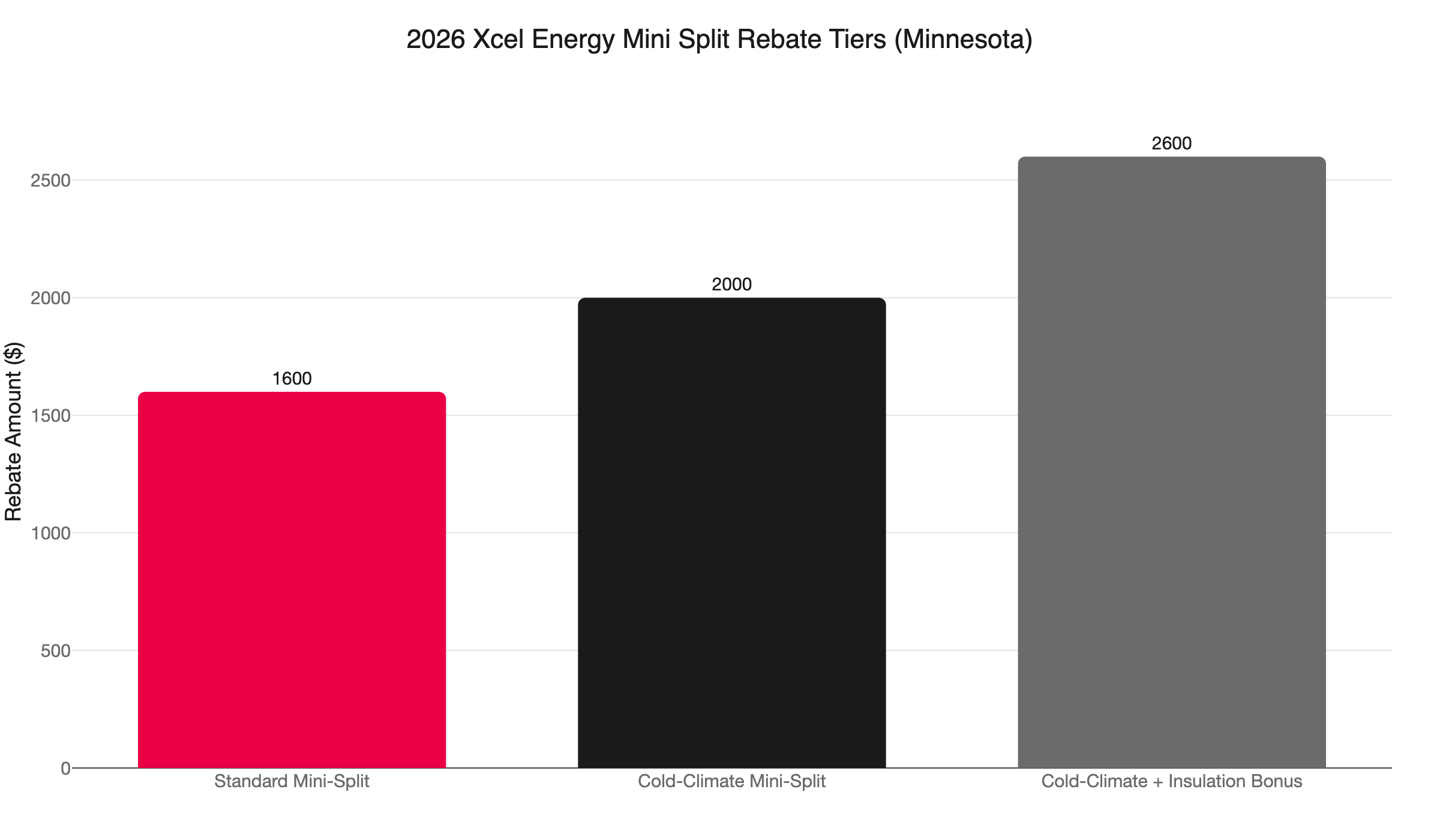
2026 Xcel Energy Mini Split Rebate Tiers (Minnesota)
Mini split installation cost in Minnesota varies by zone count, equipment tier, and how much you can recover through Xcel Energy's rebate program. This guide runs the real numbers: Twin Cities labor rates, current rebates, permit costs, and what you will actually write a check for after applying everything available in 2026.
## What Does Mini Split Installation Cost in Minnesota?
**In short:** A single-zone mini split runs $2,500 to $5,550 installed in the Twin Cities. Labor is $70 to $150 per hour. After Xcel's cold-climate rebate, most homeowners net $1,250 to $3,250 out of pocket.
[According to Angi's Minneapolis cost data](https://www.angi.com/articles/how-much-does-it-cost-install-ductless-mini-split-ac/mn/minneapolis), the average installed cost for a single-zone system in Minneapolis runs about $3,500. The full range is $2,096 to $5,240. Twin Cities labor sits at the high end nationally: $70 to $150 per hour for a licensed Minnesota HVAC contractor.
The wide range comes from two main factors. First, equipment quality and capacity vary significantly. A basic 12,000 BTU unit costs far less than a variable-capacity cold-climate model built to run at -13°F. Second, installation complexity varies by home. [Older Twin Cities homes](/blog/high-velocity-hvac-older-home-no-ductwork-twin-cities/) with plaster walls, tight attic access, or long refrigerant line runs cost more to wire and route than newer open-concept builds.
Most national cost guides stop there. They hand you a price range and move on. What they miss is the rebate math. Once you subtract Xcel's rebate from the gross price, the number looks very different. We will do that math below.
## Single-Zone vs. Multi-Zone: What Are the Price Differences?
**In short:** A single-zone system runs $2,500 to $6,000 installed. Two zones cost $6,500 to $9,000. Three to four zones range from $9,000 to $15,000 or more. Each zone adds equipment and labor cost, but all zones share one outdoor unit.
[HomeGuide documents the zone-count cost ladder](https://homeguide.com/costs/ductless-mini-split-ac-cost) at these ranges:
- **1 zone:** $2,500 to $6,000 installed
- **2 zones:** $6,500 to $9,000 installed
- **3 to 4 zones:** $9,000 to $15,000+ installed
These are national baselines. Twin Cities labor rates push quotes toward the high end of each range.
[Installation time scales with zone count](https://filterbuy.com/heating-cooling/mini-splits/sizing/single-zone-vs-multi-zone-mini-split/). A single-zone job takes four to eight hours. A three-zone system runs eight to twelve hours. A five-zone whole-home install can stretch to two full days.
Each indoor head requires its own refrigerant line set run through the wall or ceiling. Complex routing through finished spaces, long line runs, or tight attic access adds hours and cost. Get a written quote after a walkthrough before you commit.
## What Pushes the Quote Higher?
**In short:** Zone count, equipment tier, and installation complexity are the three biggest drivers. Cold-climate models cost more upfront but earn Xcel's larger rebate. Older home construction and difficult refrigerant line routing add labor hours.
Factors that push a quote toward the top of its range:
- **More indoor zones.** Each head adds $1,300 to $3,900 in equipment plus labor.
- **Cold-climate equipment.** Variable-capacity models with higher HSPF2 ratings cost more than standard units. They also qualify for Xcel's $2,000 rebate instead of $1,600.
- **Refrigerant line routing.** Long runs, tight spaces, finished walls, and attic routing all add time.
- **Electrical work.** Each outdoor unit needs a dedicated circuit. Some homes need a [panel upgrade](/blog/heat-pump-electrical-panel-upgrade-requirements-minnesota/).
- **Capacity and brand.** A 9,000 BTU single-zone unit costs less than a 24,000 BTU cold-climate model.
[Filterbuy notes](https://filterbuy.com/heating-cooling/mini-splits/cost/mini-split-cost/) that single-zone mini splits commonly reach SEER2 20 or higher. Multi-zone heads on the same outdoor unit average SEER2 17 to 18. The shared compressor cycles differently across zones, which costs some efficiency.
## Why Does Minnesota's -12°F Design Temperature Change What Mini Split You Need?
**In short:** Minneapolis-St. Paul's 99% design temperature is -12°F. A standard mini split loses capacity sharply below 17°F. A cold-climate unit rated to -13°F keeps heating when it matters most. The wrong spec means no reliable heat on your coldest nights.
Minnesota sits in [Climate Zone 6A](https://homeenergybasics.com/heat-pumps/states/mn), classified as cold and moist. MSP's 99% design temperature is -12°F. Duluth reaches -21°F. These are not edge cases. They describe the real operating conditions your equipment must handle all winter long.
Cold-climate air-source heat pumps (ccASHPs) are designed to operate at or below -13°F (-25°C). The [DOE Cold Climate Heat Pump Challenge](https://www.energy.gov/cmei/buildings/residential-cold-climate-heat-pump-challenge) set -13°F as the qualifying threshold. Participating manufacturers include Bosch, Carrier, Daikin, Johnson Controls, Lennox, Midea, Rheem, and Trane.
This matters for your rebate, too. Xcel draws a direct line between cold-climate certification and the size of your check. A unit on the [NEEP cold-climate product list](https://ashp.neep.org/) with a coefficient of performance (COP) of at least 1.75 at 5°F qualifies for Xcel's $2,000 rebate. A standard unit qualifies for $1,600. That $400 gap is real money.
The NEEP check takes two minutes. Go to ashp.neep.org and look up the model before you buy. If it is not on the list, it does not qualify for the cold-climate rebate tier, regardless of what the spec sheet says.
## What Rebates Can You Actually Use for a 2026 Mini Split Install?
**In short:** Xcel Energy is your real rebate tool right now. Standard units qualify for $1,600. Cold-climate units on the NEEP list qualify for $2,000. Stack an insulation and air sealing bonus for up to $2,600 total. CenterPoint does not rebate standalone mini splits.
Here is the accurate 2026 rebate picture:
**Xcel Energy (active now):**
- Standard mini split (min 15.2 SEER2 / 9.3 EER2 / 8.5 HSPF2): **$1,600**
- Cold-climate mini split (min 16.0 SEER2 / 9.0 EER2 / 9.5 HSPF2, COP at or above 1.75 at 5°F, on NEEP list): **$2,000**
- Insulation and air sealing bonus (qualifying work within two years before the heat pump install): **$600**
- Maximum stacked Xcel rebate: **$2,600**
- Mini split rebates do not require a participating contractor.
- The program is active for 2026 installs. Applications for qualifying 2025 installs close September 30, 2026.
**CenterPoint Energy:**
CenterPoint does not rebate standalone mini splits. Their program covers [ducted heat pumps](/blog/ductless-vs-ducted-heat-pump-minnesota/) in a hybrid dual-fuel configuration only: a heat pump paired with a 92%-AFUE or better gas furnace, with a switchover temperature at or below 40°F. If your project involves pairing a mini split with a qualifying gas furnace, ask your contractor whether a hybrid setup applies. For a standalone ductless install, CenterPoint is not a factor.
**Minnesota Power:**
A $1,000 cold-climate heat pump rebate is available for Minnesota Power electric customers in northern Minnesota. This does not apply to Twin Cities homeowners on Xcel.
For a full breakdown of every current Minnesota heat pump rebate, see our post on [Minnesota heat pump rebates and tax credits](/blog/minnesota-heat-pump-rebates-tax-credits/).
## Is the Federal 25C Tax Credit Still Available in 2026?
**In short:** No. The Section 25C heat pump tax credit, up to $2,000, expired December 31, 2025. Any article or contractor quote referencing a federal tax credit for a 2026 install is wrong. Budget without it.
This is where several national cost guides are actively misleading homeowners. The 25C credit was valuable: up to $2,000 back on your federal return for a qualifying heat pump. Congress did not extend it past 2025.
If you are planning a 2026 install, the 25C credit does not exist for your project. Factor it out of your budget entirely.
## What About Save Energy Minnesota Rebates?
**In short:** Save Energy Minnesota has not launched as of August 2026. The state is waiting on DOE approval, with no estimated launch date. The up-to-$8,000 HEAR rebate exists in concept, but it is not available to Minnesota homeowners today.
You may have read about Inflation Reduction Act rebates offering up to $8,000 for heat pumps through the HOMES and HEAR programs. Those programs exist at the federal level. Minnesota's version, Save Energy Minnesota, has not launched. The DOE required Minnesota to update its program documents, and no approval has been granted as of August 2026. No launch date has been announced.
When Save Energy Minnesota does launch, HEAR rebates will be income-tested:
- Below 80% of area median income (AMI): up to $8,000
- Between 80% and 150% AMI: up to $4,000
- Above 150% AMI: not eligible
Do not delay a purchase waiting for this program. Xcel's program is live, has a clear rebate structure, and should be your planning baseline now.
## How Much Does an HVAC Permit Cost in Minnesota?
**In short:** Mechanical permits for mini split installation run $150 to $500 in Minnesota, depending on the municipality. Minneapolis typically lands at $250 to $500. Electrical permits are separate and required for the outdoor unit's dedicated circuit.
Minnesota requires a mechanical permit for all HVAC work. In Minneapolis, mechanical and electrical permits are separate processes. The mechanical permit goes through the city; the electrical permit goes through the Minnesota Department of Labor and Industry.
Budget $150 to $500 for the mechanical permit. Minneapolis typically sits toward the higher end of that range. Confirm the permit cost with your contractor before signing any agreement, and verify that they hold a valid Minnesota mechanical contractor license. You can check at dli.mn.gov.
Our post on [when HVAC permits are required in Minnesota](/blog/hvac-permit-when-required-minnesota/) covers what to expect from start to sign-off.
## Your Mini Split Installation Cost in Minnesota After Rebates
This is the math every competitor skips. Here is what you actually write a check for after you apply current rebates.
**Single-zone cold-climate system, Twin Cities:**
- Gross installed cost: $3,500 to $5,550
- Xcel cold-climate rebate: -$2,000
- Insulation and air sealing bonus (if applicable): -$600
- Permit (estimated): +$350
- **Net out-of-pocket: approximately $1,250 to $3,300**
**Two-zone system, Twin Cities:**
- Gross installed cost: $6,500 to $9,000
- Xcel cold-climate rebate: -$2,000 (one outdoor unit = one rebate)
- **Net out-of-pocket: approximately $4,500 to $7,000**
**Three to four-zone system, Twin Cities:**
- Gross installed cost: $9,000 to $15,000+
- Xcel cold-climate rebate: -$2,000
- **Net out-of-pocket: approximately $7,000 to $13,000+**
Three things to notice in these numbers.
First, Xcel's rebate is per outdoor unit, not per indoor head. Adding zones increases gross cost without adding a second rebate. The rebate delivers the most relative impact on a single-zone install.
Second, the insulation and air sealing bonus adds $600 only if qualifying work was done within two years before the heat pump install. If you have done recent weatherization, ask your contractor to document it. That $600 is worth capturing.
Third, CenterPoint's program is not in this math because it does not apply to standalone mini splits. If your project involves pairing the system with a qualifying gas furnace in a hybrid dual-fuel configuration, ask your contractor directly whether that changes the CenterPoint picture.
## What Happens When a Multi-Zone System Fails?
**In short:** In a multi-zone mini split, all indoor heads share one outdoor compressor. If that compressor fails, every zone loses heating and cooling simultaneously. Multiple single-zone systems [cost more upfront](/blog/mini-split-single-zone-vs-multi-zone-cost-twin-cities/) but fail independently of each other.
This is a detail no national cost guide mentions. When you install a three-zone or four-zone mini split, you are buying one outdoor compressor that serves all indoor heads. A compressor failure takes down every zone at once. In a [Minnesota winter](/blog/mini-split-outdoor-unit-snow-ice-winter-minnesota/) at -12°F, that is not a minor inconvenience.
Multiple single-zone systems cost more to install. But a failure in one unit does not affect the others. That tradeoff is worth weighing before you commit to a multi-zone layout, especially in a whole-home or primary-heating application.
[Filterbuy notes](https://filterbuy.com/heating-cooling/mini-splits/cost/mini-split-cost/) that single-zone mini splits commonly reach SEER2 20 or higher. Multi-zone heads on the same outdoor unit average SEER2 17 to 18. The shared compressor architecture trades some efficiency for the convenience of a single outdoor unit.
## Why Installation Quality Determines Long-Term Performance
The cold-climate spec only works if the installation is done correctly. Refrigerant charge errors, improperly sized line sets, and unsealed wall penetrations all degrade efficiency and shorten equipment life. In a city that hits -12°F, those errors surface fast and cost more to correct than to prevent.
We are locally owned and operated in Ramsey, MN. Our licensed HVAC technicians install and service mini splits throughout the Twin Cities: Minneapolis, St. Paul, Blaine, Maple Grove, Plymouth, Brooklyn Park, Woodbury, Bloomington, and the surrounding communities. Every install is permitted and backed by a 100% satisfaction guarantee.
And when we say we will be there, we will be there: "Always On Time… Or You Don't Pay a Dime!(R)."
If you are weighing whether a mini split is the right fit for your home, our post on [ductless mini splits for older Twin Cities homes](/blog/ductless-mini-split-older-twin-cities-homes/) walks through when they outperform [central systems](/blog/add-central-air-radiator-hot-water-heat-twin-cities/) and when they do not. Our [ductless mini split installation page](/air-conditioning/ac-installation/ductless-mini-splits/) covers what to expect from the full process, start to finish.
## Get a Quote on Mini Split Installation
Call us at **(763) 260-6662** or book online to get a written mini split installation quote.
We will confirm which equipment qualifies for Xcel's cold-climate rebate tier, walk you through the net-cost math for your home and zone count, and give you a price in writing before any work begins. No guesswork. No surprises.
On time, every time.
---
# Mold in Air Ducts: How to Tell and What to Do Next
URL: https://northernonehour.com/blog/mold-in-hvac-ducts-signs-remediation-twin-cities/
Published: 2026-08-25 | Category: Indoor Air Quality
Spot mold in your air ducts versus dust, understand what your duct type means for your options, and know when to call a Twin Cities HVAC pro.
Key Takeaways
- Mold in air ducts looks fuzzy and circular, appears in black, green, or white, and clusters near moisture zones - not spread evenly like dust.
- Duct material is the decision hinge: sheet metal can be cleaned; fiberglass-lined and flex ducts with mold must be replaced.
- [The EPA classifies HVAC-system mold as requiring professional remediation](https://www.epa.gov/mold/mold-remediation-schools-and-commercial-buildings-guide-chapter-3) - containment, negative air pressure, and HEPA filtration.
- Turn your HVAC off the moment you suspect mold. Running it spreads spores to every room in the house.
- Biocide sprays kill the organism but do not remove mold compounds. Dead mold still triggers reactions.
- Fixing the moisture source is not optional. Skip it and the mold comes back.
## Is That Black Stuff Mold in Your Air Ducts?
**Short answer:** Probably not if it is gray, even buildup throughout the duct. More likely yes if you see fuzzy, circular patches in black, green, or white near the evaporator coil, the drain pan, or the first boot connections off the air handler. A musty smell when the system runs is the clearest homeowner signal.
Here is the distinction every competitor article gestures at but never actually resolves. Dust is gray or brown. It settles uniformly along duct walls, the same way it coats a bookshelf. It does not prefer one section of the duct over another. Mold is different. It forms fuzzy, often circular patches. It appears where moisture concentrates, not randomly through a dry stretch of duct run.
In a Minnesota home, those moisture zones have a predictable address: the evaporator coil, the condensate drain pan below it, and the first several feet of supply duct connected to the air handler cabinet. Those are the spots to check first, not the register covers in the bedrooms.
A visual inspection tells you whether something is there. [Only air sampling and lab analysis can confirm the mold species](https://www.epa.gov/mold/brief-guide-mold-moisture-and-your-home). If you need certainty before spending money on remediation, a [certified inspector with lab sampling](/blog/indoor-air-quality-professional-test-vs-diy-monitor-minnesota/) is the right first call.
Warning signs worth taking seriously:
- A persistent musty or earthy odor when the system runs, even after you change the filter
- Dark spots or discoloration on or around supply register covers that return after cleaning
- Family members with new or worsening [allergy or respiratory symptoms](/blog/hvac-asthma-triggers-management-twin-cities/) that ease up when they leave the house
- Any history of water near the HVAC system in the past two years: a leaky condensate pan, a backed-up drain line, or any flooding that reached the mechanical space
That last item is the one homeowners most often overlook. Any water event near the air handler significantly raises the risk of mold in the duct system. A [clogged AC condensate drain line](/blog/ac-condensate-drain-line-clogged-fix/) is one of the most common moisture sources in Twin Cities systems and one of the easiest to miss until damage is already done.
## Why Twin Cities Homes Are More Vulnerable to Duct Mold
Minnesota's climate creates the exact conditions mold needs. The Twin Cities average outdoor relative humidity in July sits near 70%. Your air conditioner runs hard to keep the house comfortable. As warm, humid air passes over the cold evaporator coil, moisture drops out of the air as condensation. That water collects on the coil and in the drain pan below it.
If drainage is slow or partially blocked, that moisture stays longer than it should. If the system is oversized for the house and short-cycles, it never runs long enough to dry out between cycles. Both scenarios leave standing moisture at the exact location where the supply air picks up and carries it into the duct run.
Minnesota homes are also tightly sealed by modern energy code. That is good for your heating bill. It also means your HVAC recirculates indoor humidity at higher concentrations than a leakier home would. The combination of humid summers, tight building envelopes, and the thermal dynamics at the evaporator coil makes Twin Cities homes more prone to duct mold than homes in drier climates.
The national restoration franchises that dominate search results for mold in air ducts are not writing for Minnesota homeowners. They are writing for everyone. We are a locally owned and operated Twin Cities company. We see this pattern every summer, and we know the local variables that drive it.
## What Does Mold in Air Ducts Actually Look Like?
**Short answer:** Fuzzy or powdery patches in black, dark green, or white, almost always near the air handler, the evaporator coil, or the first duct connections off the cabinet. Growth spread evenly through a long, dry section of duct is far more likely to be dust or debris.
Mold needs three things: moisture, a food source, and the right temperature. In ductwork, that means growth almost always originates at or near the air handler. The far end of a supply run feeding a bedroom is rarely where mold begins.
Common visual signs to check:
- Black, dark green, or white fuzzy patches on duct walls near the coil or air handler cabinet
- Discoloration on supply register covers that returns within weeks of cleaning
- A damp or wet appearance on the interior duct wall when you remove a register and look with a flashlight
- Visible growth on the evaporator coil, in the drain pan, or on the interior walls of the air handler cabinet itself
If you pull a register cover and see fuzzy growth on the duct wall just inside the opening, mold is inside your duct system. That changes your response entirely, and the next two sections explain why.
## Does Duct Material Determine What You Can Do About Mold?
**Short answer:** Yes, completely. Sheet metal ducts can be professionally cleaned and treated. Fiberglass-lined ducts and flex ducts with mold must be replaced. There is no effective cleaning method for porous duct liner - attempts to clean it physically disturb the growth and release spores into the air.
This is the point every national article either buries or skips. Duct material is the first question to answer, and the answer determines everything else.
**Sheet metal ducts** have hard, non-porous surfaces. A trained contractor can access the interior, physically remove mold growth, and apply appropriate surface treatment. Professional cleaning of sheet metal ductwork is a legitimate remediation path when done correctly.
**Fiberglass-lined ducts** use a porous thermal and acoustic liner bonded to the interior duct wall. [Mold grows into the fibers of the liner itself](https://www.epa.gov/mold/mold-remediation-schools-and-commercial-buildings-guide-chapter-3), not just on the surface. You cannot scrub it out. Brushing it releases spores rather than removing them. The only correct response is removal and [replacement of the affected duct sections](/blog/ductwork-replacement-cost-twin-cities/).
**Flex ducts** use corrugated flexible ductwork with internal insulation. The same logic applies. Mold penetrates the material. Replacement is the only answer.
The [Minnesota Guide for Managing Indoor Air Quality](https://mn.gov/admin/assets/Minnesota_Guide_for_Managing_Indoor_Air_Quality_tcm36-207630.pdf) explicitly notes that work involving interior fibrous glass duct liners is highly specialized and requires properly trained workers. That is a state-level acknowledgment that porous duct liner is not a standard cleaning job.
Many Twin Cities homes built between the 1960s and 1990s have older sheet metal main trunk lines with flex branch runs feeding individual rooms. Whether the mold can be cleaned depends on exactly which section is affected. A technician can tell you within minutes of opening the system.
## Should You Try to Clean Mold in Air Ducts Yourself?
**Short answer:** Only if the mold is limited to the vent register cover and has not spread inside the duct opening. Once mold is inside the duct system, [EPA guidance treats HVAC-system contamination as a professional remediation job](https://www.epa.gov/mold/mold-remediation-schools-and-commercial-buildings-guide-chapter-3) requiring containment, negative air pressure, and HEPA filtration.
The EPA's general home mold guidance allows a careful homeowner to handle patches under roughly 10 square feet on hard, non-porous surfaces. That might cover a spot on a painted basement wall. It does not cover your duct system.
HVAC-system mold is treated as a higher-level scenario because a forced-air system can distribute spores to every room in minutes of operation. A professional crew uses containment barriers and negative air pressure to prevent exactly that from happening during the remediation work itself.
Before you do anything else: turn the system off and keep it off. Running a contaminated system spreads spores building-wide. That is the single most important immediate step, and it costs nothing.
A few other things not to do:
- **Do not use steam cleaning.** Steam introduces moisture into the duct system and worsens mold conditions. Industry standards prohibit it on ductwork.
- **Do not spray bleach inside duct openings.** It does not penetrate porous materials and the added moisture creates worse conditions.
- **Do not run the system with a better filter to "catch" spores.** The system needs to stay off entirely until the source is identified and addressed.
The vent cover itself is the one case where a homeowner can reasonably act. Remove the cover, take it outside, clean it with a diluted solution on a non-porous surface, let it dry completely, and reinstall. If you see growth inside the duct opening when you look with a flashlight, stop there and call a professional.
## What About "Mold Killer" Sprays and Biocide Treatments?
**Short answer:** They do not solve the problem. [The EPA does not recommend routine biocide application inside ductwork](https://www.epa.gov/mold/brief-guide-mold-moisture-and-your-home). Dead mold still triggers allergic reactions. Physical removal is required, and the moisture source must be fixed or mold returns.
This is one of the most important things to understand before you hire anyone. Some contractors spray antimicrobial solution inside flex ducts, collect their fee, and describe the job as remediation. That is an inadequate response, and no competitor article tells homeowners this clearly.
Here is why. Dead mold spores still contain the proteins and compounds that cause allergic and respiratory symptoms. Killing the organism does not remove those compounds from your home's air. Only physical removal does that. And physical removal is impossible in fiberglass-lined or flex ductwork without replacing the affected sections.
If a contractor proposes to spray inside porous duct liner without replacing it, ask direct questions before agreeing to the work. What certifications does the crew hold? What specifically happens to duct sections with visible growth? How is the moisture source being corrected? A contractor who cannot answer those questions clearly is not the right contractor for this job.
## How to Fix the Moisture Source
Mold does not grow in dry systems. Remediate the mold, skip the moisture fix, and it returns. This step gets skipped because it is less visible than the mold itself - but it is the step that determines whether the fix actually holds.
Common moisture sources in Twin Cities HVAC systems:
- **Clogged condensate drain line:** The most common cause. A slow or blocked drain keeps water in the pan longer than it should. Our post on [clogged AC condensate drain lines](/blog/ac-condensate-drain-line-clogged-fix/) covers the full picture.
- **Dirty evaporator coil:** Restricts airflow, runs the coil colder and wetter than designed, and increases [condensation load](/blog/ductwork-sweating-condensation-basement-minnesota/) at exactly the point where duct mold originates.
- **Oversized AC system:** A system too large for the home short-cycles. It cools the air but does not run long enough to pull adequate moisture out of it. The house feels cool but the humidity stays elevated.
- **High indoor humidity:** The target range is [30-50% relative humidity indoors](https://www.epa.gov/mold/brief-guide-mold-moisture-and-your-home). A $15-20 hygrometer from any hardware store measures it accurately. If you are consistently above 60%, the system is not keeping up with the load.
For homes with persistent humidity issues, a whole-home dehumidifier is often the most durable long-term solution. It works alongside your HVAC system to maintain the humidity range where mold cannot get established. Our post on [whole-home dehumidifiers for Twin Cities homes](/blog/whole-home-dehumidifiers-in-the-twin-cities-comfort-fix-for-sticky-summer-days/) covers what to look for and what to expect from installation. Xcel Energy currently offers rebates on qualifying whole-home dehumidifiers - check the program before purchasing.
Regular professional duct cleaning also removes the dust and debris that give mold a food source. If you are unsure whether duct cleaning makes sense for your home in general, our post on [whether duct cleaning is worth it for Twin Cities homeowners](/blog/air-duct-cleaning-worth-it-twin-cities/) walks through when it pays off and when it does not.
## When Should You Call a Professional?
**Short answer:** Immediately, if mold is suspected inside the duct system - not just on the register cover. HVAC mold is one of the clearest cases where professional remediation is the correct first response, not the fallback after a DIY attempt.
Use this branching logic to decide:
**Call a professional if any of these apply:**
- You see growth inside the duct past the register opening
- Your ducts are fiberglass-lined or flex - any mold on porous liner requires replacement, not cleaning
- The musty smell is present throughout the home, not just one room
- A family member has allergy or respiratory symptoms that improve away from home
- The home had any water event near the HVAC system in the past two years
- The visible affected area is larger than roughly 10 square feet
**A homeowner may handle it without calling a pro only if all of these are true:**
- The mold is on the vent register cover only
- The cover is non-porous plastic or painted metal
- No growth is visible inside the duct opening when you look with a flashlight
- The cover can be removed and cleaned outside, away from the duct opening
Even in the self-service case, keep the system off until the cover is cleaned, fully dry, and reinstalled.
When you are unsure which category applies, the safe call is to leave the system off and schedule an inspection. An inspection costs a fraction of what it costs to remediate a system where borderline mold was spread by continued operation.
Our [duct cleaning service](/indoor-air-quality/duct-cleaning/) includes inspection and cleaning performed by licensed technicians. We are locally owned and operated in Ramsey, serving Minneapolis, St. Paul, Blaine, Maple Grove, Plymouth, Brooklyn Park, Woodbury, Bloomington, and the surrounding Twin Cities area. We show up when we say we will - that is the commitment behind "Always On Time… Or You Don't Pay a Dime!(R)".
Call us at **(763) 260-6662** or book online to schedule an inspection. We will tell you exactly what you are dealing with and what it takes to fix it the right way.
---
# Boiler Circulator Pump Not Working? Here's the Fix
URL: https://northernonehour.com/blog/boiler-circulator-pump-failure-signs-cost-minnesota/
Published: 2026-08-24 | Category: Heating
Your boiler fires normally, but heat never reaches the rooms. Here's why a failed circulator pump is a silent emergency in Minnesota winters.
Key Takeaways
- The circulator pump is the only part that moves hot water from your boiler to your radiators or baseboards. When it fails, heat stops.
- Because the boiler still fires, a failed pump can go unnoticed for hours or overnight. That silence is dangerous in Minnesota winters.
- A 3-minute check (listen for a hum, feel the supply pipe, read the pressure gauge, look at the bleed screw) can confirm pump failure without any tools.
- Most residential pumps last 10 years or more. Sediment, hard water scale, and deferred maintenance are the main causes of early failure.
- When replacing, upgrade to an ECM variable-speed pump. It cuts pump energy use 25-75%, and [Minnesota Power offers a $200 rebate](https://www.mnpower.com/ProgramsRebates/FurnacesWithECM) for eligible hydronic systems.
- If your boiler circulator pump is not working, call Northern One Hour at (763) 260-6662. We serve the Twin Cities metro and surrounding communities.
## Why a Boiler Circulator Pump Not Working Is a Silent Emergency
A boiler circulator pump not working is different from most heating failures. The boiler fires. The burner lights. The thermostat calls for heat. From the basement, it sounds like everything is working.
But if the pump has failed, no hot water is moving through your pipes. Your radiators stay cold. Your house slowly loses heat while you assume the system is doing its job.
In Minnesota in January, that delay is dangerous. Interior temperatures can drop toward freezing before you realize what is happening. Once pipes freeze, you are no longer dealing with a pump replacement. You are dealing with burst pipes, water damage, and remediation costs that can run into the thousands.
That is the risk no one explains plainly: the boiler runs normally, but the pump is the one part that can stop without making any noise that sounds like a problem.
## What Does a Boiler Circulator Pump Actually Do?
**Short answer:** The pump pushes heated water from the boiler through your pipes to radiators, baseboards, or radiant floor loops. It then pulls cooled water back to be reheated. Without it, hot water sits still. Heat does not move.
A hot-water boiler does not rely on gravity or pressure alone to distribute heat. The circulator pump is the only mechanism driving that flow. When the pump stops, so does your heat, even if the boiler is firing perfectly.
Multi-zone homes may have one pump per zone. In those systems, a single pump failure can leave one zone cold while others stay warm. That masking effect makes the problem harder to spot. If one room or section of your home is cold while others are fine, a zone pump failure is worth checking before assuming a bigger problem.
## What Are the Signs Your Boiler Circulator Pump Is Not Working?
**Short answer:** Cold radiators while the boiler runs is the clearest sign. Other signals include a pump body that is silent and still when the boiler fires, a pressure gauge that does not respond when the system starts, and grinding or banging sounds near the pump.
Here is what to look for:
**Cold radiators with a running boiler.** This is the primary signal. The boiler burner fires and the thermostat is calling, but touch a baseboard or radiator 20 minutes after the boiler started. If it is room temperature, the pump is not moving water.
**Silence and no vibration at the pump body.** A working circulator pump hums and vibrates slightly. You can feel it with your hand on the pump housing. [According to Boiler Central](https://boilercentral.com/guides/boiler-pump-not-working/), a pump that is cold, silent, and completely still while the boiler runs likely has an electrical or wiring fault, not a mechanical one.
**A pump that runs but moves no water.** The opposite problem: the pump motor hums and the body is warm, but water is not circulating. This usually means a seized impeller, a clogged inlet, or an air-locked loop. The motor runs; the impeller cannot turn.
**Pressure gauge that does not respond.** A healthy hydronic system runs at [12-25 PSI](https://www.libertyhomeguard.com/blog/home-maintenance/circulation-pump-troubleshooting/). When the pump fires, pressure should shift slightly as water starts moving. A gauge stuck at the same number after the boiler starts is a warning sign.
**Unusual noises.** Grinding, banging, or whining from the pump area usually means bearing failure is coming. Cavitation, a rattling sound caused by air bubbles in the loop, suggests low pressure or air in the system. Both are worth addressing before the pump seizes completely.
## How Do You Check a Boiler Circulator Pump Without Any Tools?
**Short answer:** Set the thermostat to call for heat, then listen at the pump body for a hum, feel the supply pipe for warmth, and check that the pressure gauge shifts slightly. A silent pump, cold supply pipe, and unmoving gauge together point to a failed circulator.
This check takes three minutes.
**Step 1: Listen at the pump.** Set your thermostat a few degrees above room temperature to call for heat. Wait 60 seconds. Put your ear near the pump body. A working pump hums. A failed pump is silent, or it may click and try to start without running.
**Step 2: Feel the supply pipe.** The pipe leaving the boiler toward your radiators should get hot within a few minutes of the boiler firing. If that pipe is hot but the pipes further along the loop stay cold, the pump is not moving water.
**Step 3: Read the pressure gauge.** Find the round dial on the boiler's front panel. A healthy system sits between 12 and 25 PSI. Below 12 PSI, the system may be [low on water](/blog/boiler-losing-pressure-how-to-fix-minnesota/). Above 30 PSI, the expansion tank may be waterlogged, which is a separate issue covered in our [boiler expansion tank guide](/blog/boiler-expansion-tank-waterlogged-symptoms-minnesota/). A gauge reading that does not shift at all when the system fires suggests circulation is not happening.
**Step 4: Check the bleed screw.** Some pump bodies have a small bleed screw. If the system is air-locked, opening this screw carefully (with a cloth ready) releases trapped air. Air locks can stop circulation without any mechanical failure in the pump itself.
If the pump is silent, the pipes stay cold, and the gauge does not respond, the pump is almost certainly the problem. Do not run the boiler continuously hoping it will clear on its own. Running a boiler with no circulation builds excessive heat at the heat exchanger.
## What Causes a Boiler Circulator Pump to Stop Working?
**Short answer:** The most common causes are sediment buildup on the impeller, worn bearings, air locking in the loop, electrical faults at the aquastat relay, and a seized impeller from corrosion or scale. Knowing which failure mode you have changes whether you repair or replace.
**Sediment and scale.** Older systems accumulate rust particles and mineral deposits. Scale coats the impeller and increases resistance until the motor cannot turn it. This is the most common long-term cause, especially in homes with hard water or old steel piping.
**Bearing failure.** The pump shaft runs on bearings that wear over years of operation. Worn bearings produce grinding or squealing sounds before they fail. If you have been hearing those sounds for weeks, the pump is telling you it is close to the end.
**Air locking.** Air trapped in the loop blocks flow. The pump motor runs but cannot push water past the air pocket. This is common after a repair or whenever the system loses water and is refilled without being [properly bled](/blog/how-to-bleed-air-from-radiators-minnesota/).
**Electrical or wiring fault.** The pump gets its run signal from the aquastat relay. A failed relay, a blown fuse, or a wiring break stops the pump without any mechanical failure. A silent pump does not always mean the pump body needs replacing.
**Seized impeller.** In older or rarely serviced systems, the impeller can seize in the housing from corrosion. The motor tries to turn but cannot. You may hear clicking before the motor trips its thermal overload.
## How Long Does a Boiler Circulator Pump Last?
**Short answer:** Most residential circulator pumps last 10 years or more. Hard water, sediment, and skipped maintenance shorten that lifespan. If your pump is past 10 years and showing symptoms, replacement is worth evaluating.
[Grundfos, the world's largest circulator pump manufacturer, cites 10-plus years as the standard residential pump lifespan](https://www.grundfos.com/us/support/faq/how-long-do-water-pumps-last). That estimate assumes normal water quality and regular boiler service. In practice, Twin Cities homes with older piping and harder water sometimes see pump issues at 8-10 years. Well-maintained systems can push 15 years or more.
If your pump is past 10 years and any of the symptoms above have appeared, a repair may buy one more season. But replacement is often the more economical long-term choice, especially when you factor in the ECM upgrade option below.
Annual boiler service catches pump wear before it becomes a cold-weather emergency. Our [boiler annual maintenance guide](/blog/boiler-annual-maintenance-what-to-expect-minnesota/) walks through what a professional tune-up covers and why it matters before a Minnesota winter.
## Can You Run Your Boiler Without the Circulator Pump?
**Short answer:** Briefly and only as a stopgap. Some systems allow gravity circulation by opening a flow-control valve. Heat flow is limited and slow. Do not rely on this in severe cold, and call a technician as soon as possible.
On some boiler systems, a flow-control valve sits on or near the pump. If the pump seizes, opening that valve allows thermosiphon (gravity) circulation. Hot water rises; cooled water sinks back to the boiler. The flow is much slower than pumped circulation, so your radiators will be lukewarm at best. This buys a few hours, not days.
If you are facing this situation overnight in a Minnesota cold snap, call Northern One Hour at (763) 260-6662. We offer 24/7 emergency service.
## Should You Repair or Replace a Failing Circulator Pump?
**Short answer:** Repair makes sense for a younger pump with an isolated electrical fault. Replacement is the better call for a pump past 10 years, one with mechanical wear, or one you want to upgrade to ECM at the same time.
Here is the general framework:
**Repair makes sense when:** The pump is 5-8 years old. The failure is traced to a wiring issue, a relay, or a fuse rather than the pump body. The rest of the boiler system is in good shape.
**Replacement makes sense when:** The pump is past 10 years. There is visible corrosion or scale on the pump body or impeller. The motor has seized or the bearings are grinding. You want to take the efficiency upgrade at the same time.
Labor costs for pump repair and full replacement are similar, so the marginal cost of going new is often smaller than homeowners expect. If your issue is limited to one zone rather than the whole house, our [boiler zone valve guide](/blog/boiler-zone-valve-failure-symptoms-cost-minnesota/) covers the overlap between pump and valve failures in multi-zone systems.
## Is an ECM Variable-Speed Pump Worth It When You Replace?
**Short answer:** Yes, for most homeowners replacing an older fixed-speed pump. ECM pumps cut pump energy use 25-75%, run quieter, and Minnesota Power customers can collect a $200 rebate. The payback period is typically shorter than homeowners expect.
A standard fixed-speed pump pushes water at the same rate no matter what the system demands. An ECM pump adjusts speed based on load. It runs faster during a long heat call and slower during a short recovery cycle. That variable operation is more efficient and noticeably quieter.
[ECM circulators for hydronic and radiant systems save 25-75% per year on pump energy compared to fixed-speed alternatives](https://www.mnpower.com/ProgramsRebates/FurnacesWithECM). During operation, an ECM pump can draw as little as 80 watts. That is less than a standard incandescent bulb. A [2024 Department of Energy final rule on circulator pump efficiency](https://www.federalregister.gov/documents/2024/05/20/2024-07873/energy-conservation-program-energy-conservation-standards-for-circulator-pumps) projects $207.5 million per year in reduced residential operating costs as the market shifts to higher-efficiency pumps.
If your boiler has good years left, an ECM pump replacement is worth the modest price difference over a standard replacement.
## Minnesota Rebates for ECM Circulator Pumps
Minnesota Power offers a [$200 rebate](https://www.mnpower.com/ProgramsRebates/FurnacesWithECM) for installing an ECM circulator pump in a qualifying hydronic or radiant heating system. If you are a Minnesota Power customer replacing your pump, that rebate directly reduces your cost.
Xcel Energy customers should note that Xcel [removed gas furnace and boiler equipment rebates effective January 1, 2026](https://centralminnesotaheatingandcooling.com/blog/xcel-centerpoint-hvac-rebates-2026). Their current rebate focus is electrification, including up to $2,000 for cold-climate heat pumps. There is no Xcel rebate for circulator pumps at this time.
CenterPoint Energy offers up to $400 on high-efficiency gas furnaces. It does not have a specific circulator pump rebate program currently.
Minnesota Energy Resources has [bonus rebates on high-efficiency heating equipment installed July 15 through November 15, 2026](https://www.minnesotaenergyresources.com/savings/heating-system-rebates), with applications accepted through December 4, 2026. Ask your technician whether your replacement qualifies under any current program.
If you are considering a larger project like a [full boiler replacement](/blog/condensing-boiler-upgrade-cost-minnesota/) alongside the pump, our team can walk you through [HVAC financing options](/blog/hvac-financing-options-what-to-know-twin-cities/) so the upfront cost does not stop you from making the right long-term call.
## What About Older Twin Cities Homes?
**Short answer:** Boiler-heated homes are especially common in older Twin Cities neighborhoods. Older piping carries more sediment, which accelerates pump wear. A system flush before the new pump installation can significantly extend its life.
Neighborhoods including Robbinsdale, Crystal, Fridley, northeast Minneapolis, and parts of St. Paul have a high concentration of boiler-heated homes. If your home was built before 1980, it likely has a hydronic baseboard or radiator system.
These systems are durable when maintained. But older piping carries more rust and mineral deposits, which wear on pump components faster. A [system flush](/blog/boiler-power-flush-sludge-removal-minnesota/) clears that particulate before the new pump goes in. Skipping the flush puts a fresh pump into dirty water immediately.
[Over 66% of occupied Minnesota housing units use natural gas as their primary heat source](https://www.house.mn.gov/hrd/pubs/heatfuel.pdf). Many of those are boiler systems. Knowing how the circulator pump works and what to check when something goes wrong is practical homeowner knowledge for any Minnesota winter.
## When to Call Northern One Hour
If your boiler is running but your house is not warming up, do not wait. A boiler circulator pump not working can drop interior temperatures fast. The longer you wait, the closer you get to frozen pipe territory.
We are locally owned and operated in Ramsey, MN. We serve the Twin Cities metro and surrounding communities, from Maple Grove and Plymouth to Woodbury and Bloomington. We arrive when we say we will. That is what "Always On Time… Or You Don't Pay a Dime!(R)" means in practice.
Call (763) 260-6662 or book online. If you want to catch pump wear before it becomes a cold-night emergency, ask about scheduling a boiler tune-up. A pre-season inspection finds the problems before the coldest weeks of the year arrive.
---
# Boiler Expansion Tank Symptoms: $195 Fix or New Boiler?
URL: https://northernonehour.com/blog/boiler-expansion-tank-waterlogged-symptoms-minnesota/
Published: 2026-08-24 | Category: Heating
Pressure swings and a dripping relief valve usually point to one cheap part. Learn the two-minute tests that show whether you need a $195 fix or a new boiler.
Key Takeaways
- Pressure swings and a dripping relief valve are the two clearest boiler expansion tank symptoms.
- When the tank is waterlogged, system pressure can exceed 30 PSI, forcing the relief valve open on every heating cycle.
- Two quick tests, the tap test and the Schrader valve test, tell you whether the tank needs a recharge or full replacement.
- A bladder tank that gradually lost its air charge may only need a recharge to 12 PSI, not a new tank.
- A dripping relief valve, ignored long enough, can clog from mineral deposits and lose the ability to protect your boiler from dangerous overpressure.
- Tank replacement typically costs $300 to $800 installed. A full boiler replacement runs $5,000 to $10,000 or more.
- Minnesota code requires an expansion tank in every hot water heating system. Boiler work must be done by a licensed contractor.
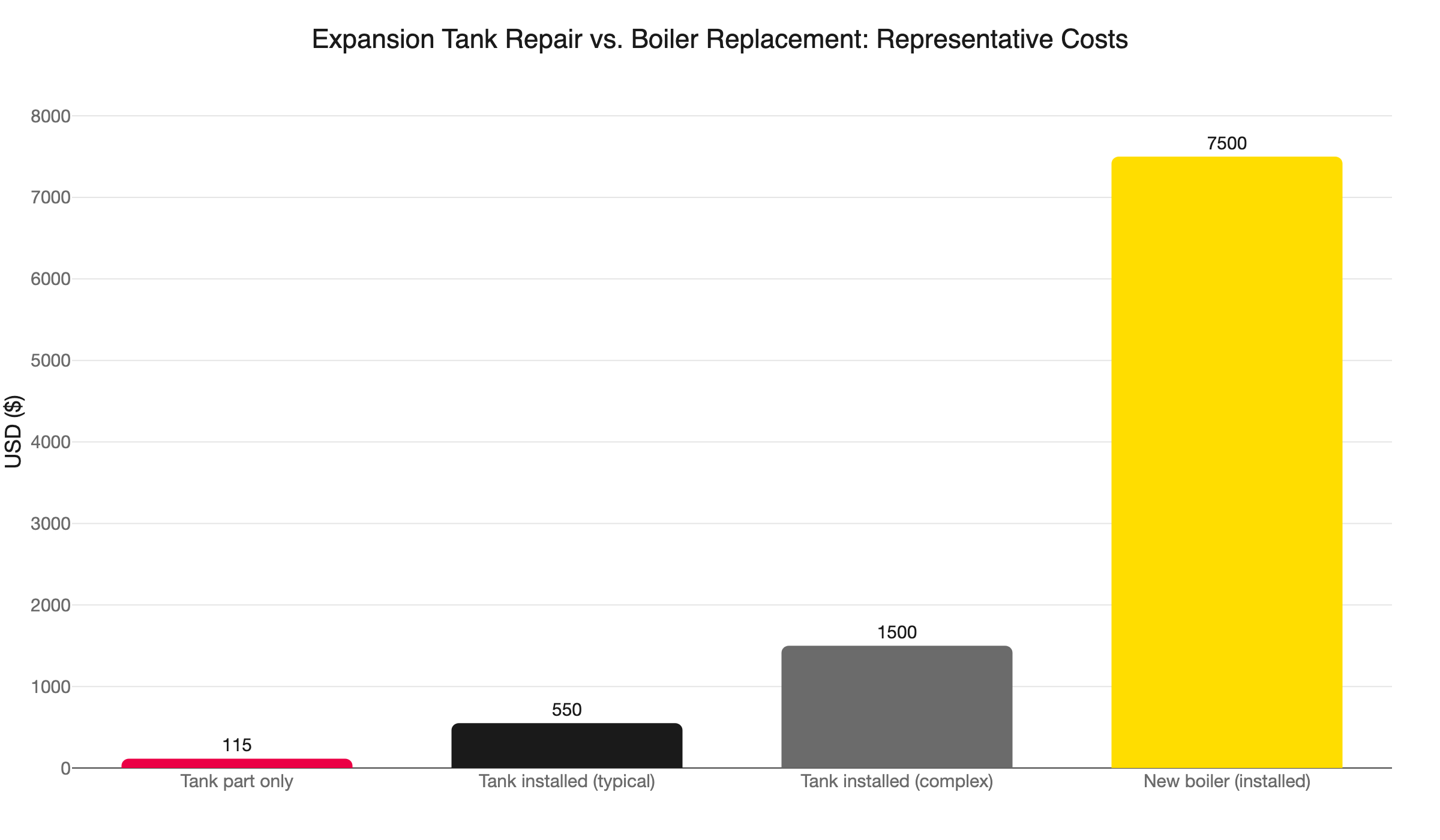
Expansion Tank Repair vs. Boiler Replacement: Representative Costs
Boiler expansion tank symptoms often look scarier than they are. Your pressure gauge climbs on every heating cycle. The relief valve drips onto the floor. Someone mentions [a new boiler](/blog/combi-boiler-space-heating-hot-water-cost-minnesota/).
Before you start [pricing a replacement](/blog/condensing-boiler-upgrade-cost-minnesota/) that costs $5,000 to $10,000 or more, take a breath. In most cases, those symptoms trace back to a single part: the expansion tank. It typically costs $30 to $200. A licensed technician can replace it in an hour or two.
## What Does a Boiler Expansion Tank Do?
**The short answer:** The expansion tank holds a pressurized air cushion that absorbs expanding water as your boiler heats up. Without it, pressure builds every time the heat fires. A working tank keeps system pressure in the safe range. A failed tank lets pressure climb until the relief valve vents it.
Water expands when it heats up. In a closed hydronic system, that expanding water has nowhere to go unless the system has a designated buffer. The expansion tank is that buffer. Inside the tank, a rubber bladder separates an air chamber from the water side. As hot water expands, it compresses the air cushion and holds system pressure steady.
When the bladder fails or the tank becomes waterlogged, the air cushion is gone. Expanding water has no safe place to go. Pressure climbs. The relief valve opens to release it. The auto-feed valve draws in makeup water to replace what was lost. The cycle repeats on every heating cycle.
That cycle is what produces the symptoms homeowners call us about.
## What Are the Most Common Boiler Expansion Tank Symptoms?
**The short answer:** The clearest signs are a pressure gauge climbing above 20 to 22 PSI during heating, a relief valve that drips or spits regularly, and a system drawing in makeup water frequently. Any one of these is worth a tank inspection before you spend money on anything else.
**Pressure gauge reads high during heating cycles**
[Normal residential boiler operating pressure is 20 to 22 PSI at operating temperature. Above 30 PSI is abnormal and usually points to the expansion tank.](https://inspectapedia.com/heat/Expansion_Tank_Diagnosis.php) If your gauge climbs well past that mark on every heating cycle, start with the expansion tank before chasing anything else.
**The pressure/temperature relief valve drips**
The T&P relief valve is designed to open at roughly 30 PSI as a last-resort safety measure. [When the expansion tank is waterlogged, system pressure can exceed 30 PSI on every heating cycle,](https://inspectapedia.com/heat/Expansion_Tank_Diagnosis.php) forcing the valve to open regularly. That drip is the system trying to protect itself. It is not a coincidence.
**The auto-feed valve cycles constantly**
Each time the relief valve opens and water drains, [system pressure drops](/blog/boiler-losing-pressure-how-to-fix-minnesota/). The auto-feed valve adds makeup water to compensate. If you hear the system frequently drawing in cold water, or you notice the pressure gauge dip and recover during a heating cycle, the expansion tank is a likely culprit.
**Water stains or puddles near the relief valve**
Mineral stains or a puddle near the relief valve discharge pipe means the valve has been opening and draining. That is water your expansion tank should have been absorbing.
## Why Is My Pressure Relief Valve Dripping?
**The short answer:** A dripping T&P valve almost always means system pressure is hitting 30 PSI or higher on heating cycles. The expansion tank is the most common cause. Fix the tank and the valve typically stops dripping.
The relief valve is not designed to open regularly. It is a last-resort safety device. When it opens repeatedly, two things happen. First, water drains onto the floor or into a discharge pipe. Second, minerals in that water deposit around the valve seat each time it closes.
Over time, those deposits build up. The valve seat becomes coated and pitted. The valve that was supposed to open only at dangerous pressures can no longer seal properly, so it drips even at normal pressures. In the worst case, the deposits clog the valve seat completely.
That is when you move from a maintenance issue to a genuine safety concern. We cover that in the next section.
The right fix at the dripping-valve stage is to diagnose and repair the expansion tank. Replacing the T&P valve in isolation restarts the deposit cycle on a new valve and leaves the root cause untouched.
## When Boiler Expansion Tank Symptoms Become a Safety Issue
Most articles describing boiler expansion tank symptoms mention the dripping relief valve and move on. This part is worth slowing down for.
[A dripping or frequently spilling T&P valve is dangerous because those very leaks can eventually cause the valve to clog and then to fail to open when it should.](https://inspectapedia.com/heat/Expansion_Tank_Diagnosis.php)
The relief valve that is supposed to catch dangerous overpressure can become non-functional from the deposits left by the very leaks it is causing. Read that again.
A boiler running at dangerous overpressure without a working relief valve is at risk of a catastrophic failure. That failure mode is called a BLEVE (boiling liquid expanding vapor explosion). This is not a common outcome. It is, however, the exact outcome the relief valve exists to prevent. Letting that valve drip through a heating season does not just create a mess on the floor. It slowly removes the one device standing between your boiler and that failure.
A dripping relief valve is not a nuisance to schedule for next spring. Each heating cycle it opens deposits minerals on the valve seat. Get the expansion tank tested when you see the first drip.
## How Do You Test a Boiler Expansion Tank at Home?
**The short answer:** Two quick tests take about two minutes each and require no special tools. The tap test tells you whether the tank is waterlogged. The Schrader valve test tells you whether the bladder has ruptured. Both must be done with the system cold.
**Test 1: The Tap Test**
Let the boiler cool until the system is at room temperature. Find the expansion tank. It is usually a football-shaped or cylindrical tank mounted near the boiler, connected to the supply pipe. Knock on it firmly with your knuckle or a coin, starting at the bottom and working up toward the top.
[A healthy tank sounds hollow at the top, where the air cushion lives. A waterlogged tank sounds dull and solid throughout](https://inspectapedia.com/heat/Expansion_Tank_Diagnosis.php) because water has displaced the air. If the entire tank sounds solid, the air cushion is gone.
**Test 2: The Schrader Valve Test**
Most bladder-type expansion tanks have a Schrader valve on the air side. It looks exactly like a tire valve stem. With the system cold:
1. Locate the Schrader valve. It is usually on the end opposite the water connection.
2. Press the center pin gently with a small screwdriver or the back end of a tire pressure gauge.
3. [If air comes out, the bladder may still be intact](https://engineerfix.com/how-to-tell-if-your-boiler-expansion-tank-is-bad/) and the tank may only need a recharge.
4. [If water comes out, the bladder has ruptured](https://engineerfix.com/how-to-tell-if-your-boiler-expansion-tank-is-bad/) and the tank must be replaced, not recharged.
Do not perform this test with the system hot and pressurized. Depressing the pin under pressure can release scalding water or steam.
## Should You Recharge the Tank or Replace It?
**The short answer:** If the Schrader valve released air, try a recharge first. If it released water, the bladder is ruptured and the tank must be replaced. No amount of recharging will fix a ruptured bladder.
**Recharging (bladder intact):**
[A bladder-type tank that gradually lost its air charge may only need a recharge to 12 PSI and can be perfectly serviceable.](https://inspectapedia.com/heat/Expansion_Tank_Diagnosis.php) Use a bicycle pump or small air compressor. With the system cold and water-side pressure released, connect to the Schrader valve and pump until a tire gauge reads 12 PSI. [The pre-charge pressure should match the system's cold fill pressure,](https://engineerfix.com/how-to-tell-if-your-boiler-expansion-tank-is-bad/) so verify your system fill pressure before you set the pre-charge.
After recharging, run the boiler through a full heating cycle and watch the gauge. If it holds in the 20 to 22 PSI range and the relief valve stays quiet, the recharge worked.
**Replacing (bladder ruptured):**
If water came out of the Schrader valve, the tank comes out. This means shutting down the boiler, releasing system pressure, disconnecting the tank, and installing a new unit set to the correct pre-charge pressure. Minnesota code requires a licensed contractor for this work.
One more note for owners of older homes: if your system has a steel atmospheric-type expansion tank rather than a bladder tank, that design requires periodic draining to restore the air cushion rather than a Schrader valve recharge. [These older open-top tanks are still found in older Minnesota homes](https://inspectapedia.com/heat/Expansion_Tank_Diagnosis.php) and need a different diagnostic approach. A licensed tech can confirm which type you have.
## What Does Boiler Expansion Tank Replacement Cost?
**The short answer:** The tank part alone runs $30 to $200. Installed, most homeowners pay $300 to $800. Complex multi-zone systems can push that to $1,500. Compare that to $5,000 to $10,000 or more for a new boiler, and the expansion tank fix is a very different conversation.
The [expansion tank itself typically costs $30 to $200 for a residential unit.](https://homeguide.com/costs/expansion-tank-replacement-cost) A common Amtrol No. 30 hydronic expansion tank retails for about $44 at home improvement stores. With parts and labor, most homeowners pay [$300 to $800 for a standard swap,](https://homeguide.com/costs/expansion-tank-replacement-cost) with complex multi-zone installs reaching up to $1,500.
Compare that to [a full boiler replacement, which typically costs $5,000 to $10,000 or more installed.](https://www.homeadvisor.com/cost/heating-and-cooling/install-a-boiler)
There is one more reason the expansion tank fix matters beyond the immediate repair bill. Each time a waterlogged boiler vents through the relief valve, it draws in fresh makeup water through the auto-feed. That fresh water brings new oxygen and minerals into the system. [Both accelerate internal corrosion.](https://inspectapedia.com/heat/Expansion_Tank_Diagnosis.php) A failed expansion tank, ignored long enough, shortens the actual lifespan of the boiler behind it. The $150 part is also protecting the $8,000 system it is connected to.
## Does Minnesota Require a Boiler Expansion Tank?
**The short answer:** Yes. Minnesota Mechanical Code requires an expansion tank in every hot water heating system. The state's plumbing code adds requirements for homes with pressure regulators or backflow preventers, which covers most Twin Cities homes. Operating a closed system without a functioning expansion tank is a code violation.
[Minnesota Mechanical Code Section 1009 requires an expansion tank in every hot water heating system.](https://up.codes/viewer/minnesota/imc-2018/chapter/10/boilers-water-heaters-and-pressure-vessels) The plumbing code goes further. [Minnesota State Plumbing Code Section 608.2 requires an expansion tank downstream of any pressure regulator.](https://structuretech.com/thermal-expansion-tank/) Section 608.3 requires one wherever a check valve or backflow preventer is on the supply line. Most Twin Cities homes meet at least one of these conditions.
[Boiler installation and repair in Minnesota must be performed by a licensed contractor under MN Statutes 326B.94-326B.998,](https://www.dli.mn.gov/workers/boiler-engineer/boiler-codes-and-laws) enforced by the Department of Labor and Industry. This is not a formality. Working on a boiler without a license voids manufacturer warranties and creates liability if something fails.
Minnesota's climate adds one more dimension. Our heating degree days are among the highest in the lower 48. More heating cycles mean more compression-expansion cycles on the tank's rubber bladder. Bladder fatigue happens faster here than in warmer climates.
Older Twin Cities homes may have atmospheric-type expansion tanks that predate modern bladder technology. These require draining rather than recharging. A licensed technician can confirm which type you have and whether it is still code-compliant.
## How Long Does a Boiler Expansion Tank Last?
**The short answer:** Bladder-type tanks have a finite lifespan. Most work well for several years, but Minnesota's heavy heating demand shortens that window. If your tank is more than a decade old and has never been tested, it is worth a check during your next boiler service visit.
Signs that a tank is approaching end of life rather than just needing a recharge include:
- The tank has needed a recharge more than once in the past two to three years.
- System pressure never fully stabilizes even after a recharge.
- The tank is over 10 years old and has never been pressure-tested.
- The tap test sounds solid from bottom to top even shortly after a recharge.
Annual [boiler maintenance service](/heating/boiler-repair-maintenance/) is the most reliable way to catch expansion tank problems before they show up as a dripping valve on a January night. Our guide on [what to expect from boiler annual maintenance in Minnesota](/blog/boiler-annual-maintenance-what-to-expect-minnesota/) covers what a technician inspects at each visit, including the expansion tank pressure check.
## Schedule Your Boiler Inspection with Northern One Hour
A failed expansion tank is a small problem that grows into a larger, potentially dangerous one if you leave it. If your boiler pressure gauge climbs high on every cycle, your relief valve is dripping, or the system has not been inspected this season, this is the right time to call.
Northern One Hour is locally owned and operated in Ramsey, MN, and serves the full Twin Cities metro, including Minneapolis, St. Paul, Blaine, Maple Grove, Plymouth, Brooklyn Park, Woodbury, and Bloomington. We show up when we say we will. That promise is built into everything we do: "Always On Time… Or You Don't Pay a Dime!(R)"
A boiler diagnostic visit gives you a straight answer. You will know whether it is a $195 expansion tank fix or something else entirely before you commit to any repair.
Call us at **(763) 260-6662** or [schedule service online](/heating/boiler-repair-maintenance/).
If you are also seeing uneven heating across rooms or zones that are not responding, our post on [boiler zone valve failure symptoms and costs in Minnesota](/blog/boiler-zone-valve-failure-symptoms-cost-minnesota/) covers that companion problem. And if you are weighing whether a boiler system is still the right fit for your home, the [boiler vs. forced air furnace comparison for Minnesota](/blog/boiler-vs-forced-air-furnace-minnesota/) walks through what each option costs and where each one wins.
---
# Boiler Zone Valve Not Working? Here's What to Check
URL: https://northernonehour.com/blog/boiler-zone-valve-failure-symptoms-cost-minnesota/
Published: 2026-08-24 | Category: Heating
One room cold, boiler still running? A failed zone valve is often why. Learn the two failure modes, the end switch trick, and what repair looks like in the Twin Cities.
Key Takeaways
- A boiler zone valve not working means the boiler keeps firing, but heat never reaches one zone. The boiler itself is fine.
- Zone valves fail two ways: stuck closed (one zone goes cold) or stuck open (one zone overheats and your gas bill rises).
- An internal part called the end switch is what triggers your circulator pump. If the valve never reaches fully open, the pump never starts.
- Many zone valve powerheads snap off and can be replaced without draining your boiler system. Full valve body replacement is a bigger job.
- Dissolved oxygen in older systems corrodes zone valve components faster. A valve failure on a 20-plus-year-old system is worth a broader diagnostic.
- Minnesota requires a bonded mechanical contractor for boiler heating work. DIY zone valve replacement is uninsured under state law.
- If the diagnosis leads to a full boiler upgrade, CenterPoint Energy currently offers up to $300 back on qualifying high-efficiency boilers through December 2026.
## What Is a Zone Valve and Why Does Your Boiler Have One?
**Zone valves control which parts of your home receive heat. Without them, a boiler would push hot water through every room every time any thermostat called for heat. Zone valves let the system heat only the zones that need it. That saves energy and lets different areas of your home hold different temperatures.**
A hot water boiler heats your home by circulating water through a network of pipes to radiators, baseboard heaters, or radiant floor tubing. In a multi-zone home, each zone has its own thermostat and its own zone valve. When the thermostat in one zone calls for heat, the valve for that zone opens. The circulator pump pushes hot water through. The zone warms up.
When no zones are calling for heat, all zone valves close. The pump stops. The boiler maintains standby water temperature but does not push it anywhere.
Most zone valves are motorized, roughly the size of a fist, and mounted directly on the boiler's supply piping. In a two-zone home, you have two. In a four-zone home, you have four. They operate silently for years without a homeowner ever noticing them. That is exactly why the name is unfamiliar until one fails.
---
## Is a Boiler Zone Valve Not Working to Blame for Your Cold Room?
**If your boiler is firing but one room or floor stays cold, a boiler zone valve not working is the most likely cause. The boiler never knows a zone is not receiving heat. It keeps cycling on signals from other zones, and the cold room stays cold until someone investigates the valve directly.**
This symptom pattern is distinctive. Other boiler problems tend to affect the whole system. A failed circulator pump means no heat anywhere. A tripped circuit breaker means no heat at all. A boiler short-cycling affects every zone in different ways.
A zone valve failure is specific: one zone is cold, every other zone heats normally, and the boiler is clearly running. That specificity points straight at the zone valve and away from the boiler itself.
The first thing homeowners check is usually the thermostat battery. That is worth ruling out early. If replacing the batteries and setting the thermostat well above room temperature does not trigger heat in that zone within a few minutes, the thermostat is not the problem.
---
## What Does a Boiler Zone Valve Not Working Actually Look Like?
**A failed zone valve produces one of two symptom patterns: a zone that never heats, or a zone that never stops heating. Both confirm a zone valve problem. But they point to different failure modes and call for different repair approaches.**
### Stuck closed: the cold zone
This is the more obvious failure. The thermostat calls for heat. The boiler fires. Nothing warm reaches that zone. Radiators or baseboard units stay cold. Every other zone works.
A stuck-closed valve physically blocks hot water from entering the zone. The motor may have failed. The internal mechanism may be seized. Either way, no hot water gets through.
In Minnesota, this is not a minor inconvenience. The Twin Cities area logs [roughly 7,581 heating degree days per heating season](https://www.dnr.state.mn.us/climate/historical/energy.html), which places it among the coldest major metro areas in the country. A single cold zone during a January cold snap is a health risk for occupants and a pipe-freeze risk near exterior walls.
### Stuck open: the overheated zone
This failure is subtler. The valve fails in the open position, meaning hot water flows through that zone continuously. The zone's thermostat is satisfied, but heat keeps coming. The room overheats. Occupants crack a window. Gas bills climb without explanation.
Nobody immediately suspects the zone valve because the heat is on, not off. [InspectAPedia's zone valve repair reference](https://inspectapedia.com/heat/Zone_Valve_Repairs.php) notes that a stuck-open valve can also starve other zones of heat. Hot water bleeds continuously through the open zone instead of being directed where it is needed.
A stuck-open valve in one zone plus an underheated room in another can look like a boiler capacity problem. A technician confirming which zone valves are actually operating correctly is the right first step before assuming the boiler is undersized.
---
## The End Switch: The Part That Links Your Valve to the Pump
This is the detail most general guides skip. It explains why a failing zone valve can be hard to diagnose without knowing what to listen for.
Inside a motorized zone valve, a small component called the end switch does one job. When the valve motor drives the valve to fully open, the end switch closes an electrical circuit. That signal tells the circulator pump to start moving hot water through the zone.
If the valve motor fails partway, the valve may open slightly but never reach fully open. The end switch never closes. The pump never gets its signal. No hot water moves. The zone stays cold.
Here is a practical test: when a zone calls for heat, stand near the boiler and listen. You should hear the zone valve motor run for a few seconds, then hear the circulator pump start. If you hear the motor but the pump never follows, the valve is not reaching full open. If you hear nothing at all, the zone valve motor may not be receiving power.
[InspectAPedia's documentation on zone valve repairs](https://inspectapedia.com/heat/Zone_Valve_Repairs.php) identifies the end switch as a key diagnostic point. Getting this distinction right separates a stuck-valve failure from a wiring problem or a failed pump. Each of those has a different repair.
What homeowners should not do at this stage: pull wires or probe terminals without understanding the wiring sequence. Zone valve wiring loops through the boiler aquastat, the zone thermostat, and the circulator pump relay. Incorrect probing can short a 24-volt transformer and add an unrelated repair to the visit.
---
## Can You Replace Just the Powerhead?
**Yes, in many cases. Honeywell/Resideo V8043-series zone valves and many similar motorized valves use a removable actuator called a powerhead. It snaps off the valve body without cutting pipe or draining the system. A technician can often replace a failed powerhead in under an hour, at significantly lower cost than a full valve swap.**
This middle path is the one most homeowners do not know exists. When the valve body is intact but the motor assembly has failed, a powerhead swap gets the zone running again without pulling the valve from the pipe.
The valve body -- the part soldered or press-fit into the boiler's supply piping -- stays in place. Only the motorized actuator is removed and replaced. [InspectAPedia confirms this no-drain-down approach](https://inspectapedia.com/heat/Zone_Valve_Repairs.php) as a significant labor-saver when the valve body itself is not the source of the failure.
Not every zone valve model supports a powerhead-only swap. Older valves, non-standard brands, or valve bodies that have corroded or developed a leak may require full removal from the pipe. A technician can determine within a few minutes whether your valve model supports the swap and whether the valve body is still sound.
For more on what a boiler service visit covers from start to finish, our [boiler repair and maintenance page](/heating/boiler-repair-maintenance/) outlines the process for Twin Cities homeowners.
---
## What Speeds Up Zone Valve Failure in Older Homes?
**[Dissolved oxygen](/blog/how-to-bleed-air-from-radiators-minnesota/) is the primary accelerant. Zone valves are rated for closed hydronic systems: sealed loops where the same water circulates indefinitely. Every time a system is drained and refilled -- for a repair, a leak fix, or a winter drain-down -- fresh water brings dissolved oxygen that corrodes internal valve components faster than normal wear would.**
Minneapolis and St. Paul have significant older housing stock. Many homes in the metro were built before 1970 with original cast-iron boilers still in service. Zone valves on these systems may have run for two or three decades with limited maintenance. In these homes, zone valve failure is often the first visible symptom of a system that deserves a broader review.
[InspectAPedia's zone valve repair guide](https://inspectapedia.com/heat/Zone_Valve_Repairs.php) notes that the manual override lever -- the small tab on most zone valves that lets you force a valve open without power -- often becomes stiff or unresponsive before the motor itself fails. A stiff manual lever is an early warning sign worth noting before the zone actually goes cold.
The manual override test has diagnostic value: if you can safely reach the zone valve and operate the lever, you can confirm whether hot water flows to the cold zone when the valve is forced open. If it does, the problem is the motor or wiring, not the valve body. If the lever is already seized, corrosion may have advanced to the valve body, which changes the repair scope and cost.
For context on what a full annual boiler service includes -- and what early zone valve wear looks like during a professional inspection -- our post on [boiler annual maintenance in Minnesota](/blog/boiler-annual-maintenance-what-to-expect-minnesota/) covers the details.
[The U.S. Department of Energy's guidance on hydronic heating systems](https://www.energy.gov/eere/buildings/optimizing-hydronic-heating-comfort-and-performance) makes the point that zone-based hydronic systems are among the most efficient heating configurations in cold climates. That efficiency depends on all zones functioning correctly. A stuck-open or stuck-closed valve undermines the whole system.
---
## Do You Need a Licensed Contractor for This Repair?
**Yes. Minnesota requires boiler heating work to be performed by a bonded mechanical contractor. Zone valve replacement falls under that requirement. Doing it yourself is technically uninsured work, and your homeowner's insurance may not cover resulting damage.**
The specifics: [Minnesota's Department of Labor and Industry requires mechanical contractors to carry a $25,000 bond](https://www.dli.mn.gov/workers/boiler-engineer/boiler-permits) to perform heating work on boiler systems. This requirement exists because boiler systems operate at pressure. Improper repairs carry real risk.
On the permit question: most zone valve swaps on residential boilers do not trigger a DLI permit. The permit threshold for residential hot water heating boilers is 750,000 BTU input. Most single-family residential boilers fall well below that figure. No permit required does not mean no contractor required. The typical profile for zone valve repair in a single-family home is a licensed tech with no permit needed.
Before a technician arrives, these steps are reasonable and safe for a homeowner:
- Check the thermostat batteries and confirm the set point is above the current room temperature.
- Confirm the boiler is firing. You can usually hear it cycling or see indicator lights near the unit.
- Locate the zone valves. They are small motorized units on the supply piping near the boiler, one per zone.
- Listen for the circulator pump when the affected zone's thermostat calls for heat.
- Note the valve model number if you can read it without removing anything.
Anything beyond observation -- testing wiring continuity, operating the manual override on a pressurized and energized system, removing the powerhead -- is safer in the hands of a technician who can confirm the system is de-energized before touching it.
We are locally owned and operated in Ramsey, MN. Our team carries the bonding and licensing Minnesota requires for boiler work. We serve Minneapolis, St. Paul, Blaine, Maple Grove, Plymouth, Brooklyn Park, Woodbury, Bloomington, and the surrounding metro. "Always On Time… Or You Don't Pay a Dime!(R)" is not just a tagline -- it is how we operate on every call.
---
## What If the Problem Is Bigger Than One Zone Valve?
When a zone valve fails on a system that is 20 or more years old, the valve may not be the only problem. A technician who opens the boiler's piping circuit to replace a valve is also in a position to assess the overall condition of the system -- the heat exchanger, [the expansion tank](/blog/boiler-expansion-tank-waterlogged-symptoms-minnesota/), [the pressure relief valve](/blog/boiler-losing-pressure-how-to-fix-minnesota/), and the condition of the boiler itself.
If that assessment points toward boiler replacement, the economics are often better than homeowners expect. High-efficiency boilers run at 90% AFUE or better, which means most of the fuel you pay for goes directly into heating your home rather than escaping through the flue.
CenterPoint Energy currently offers [up to $300 back on a qualifying residential gas boiler at 90% AFUE or better](https://www.centerpointenergy.com/en-us/Documents/CIP-Rebate-Forms/CNP1153.pdf), with submissions due by December 31, 2026. If a zone valve diagnosis turns into a boiler conversation, that rebate is worth factoring into the cost discussion before any work begins.
For a full overview of current rebate programs available to Twin Cities homeowners on heating and cooling equipment, our post on [Xcel Energy and CenterPoint HVAC rebates in Minnesota](/blog/xcel-centerpoint-hvac-rebates-minnesota/) covers what is currently available and how to apply.
---
## Ready to Get That Room Warm Again?
A boiler zone valve not working is one of those problems that sounds unfamiliar until it is not. Once you understand the part and what it does, the diagnostic path is usually clear: one valve is stuck, one room is cold, and the repair is specific.
Northern One Hour Heating and Air Conditioning is a locally owned and operated HVAC company based in Ramsey, MN. We serve homeowners across Minneapolis, St. Paul, Blaine, Maple Grove, Plymouth, Brooklyn Park, Woodbury, Bloomington, and the surrounding Twin Cities metro. We carry the bonding and licensing Minnesota requires for boiler work, and we back every visit with a 100% satisfaction guarantee and transparent pricing before any work begins.
Call us at **(763) 260-6662** or [schedule a boiler diagnostic online](/heating/boiler-repair-maintenance/). We will tell you exactly what is wrong and what it costs to fix before we start any work -- and we will be there when we say we will.
---
# Bypass Humidifier vs Steam Humidifier: Minnesota Winter Guide
URL: https://northernonehour.com/blog/bypass-vs-steam-humidifier-which-type-minnesota/
Published: 2026-08-24 | Category: Indoor Air Quality
Compare bypass, fan-powered, and steam whole-home humidifiers for Twin Cities winters. Real costs, permit rules, and safe humidity settings by outdoor temp.
Key Takeaways
- Minnesota's heating season puts most nights at or below 20°F. The safe indoor humidity ceiling at those temperatures is only 20-35%, not the 30-50% that national guides recommend.
- Bypass humidifiers ($150-350 unit cost) cost less upfront but output drops in polar vortex conditions. Cold air holds less moisture, and bypass units cannot compensate.
- Steam humidifiers ($600-1,200 unit cost) deliver full rated output regardless of outdoor temperature. They cost more to run but are the most reliable choice through a hard Minnesota winter.
- Fan-powered humidifiers are a strong middle option: more efficient than bypass, far less expensive than steam, and better suited for variable-speed furnaces.
- No Xcel Energy or CenterPoint Energy rebate covers whole-home humidifiers in Minnesota. Budget the full cost upfront.
- Minnesota Mechanical Code requires a permit for humidifier installation. Unpermitted work can affect insurance claims and real estate transactions.
- Setting your humidifier too high in cold weather causes condensation behind exterior walls and frost in attics. Use a sliding setpoint that tracks outdoor temperature, not a fixed one.
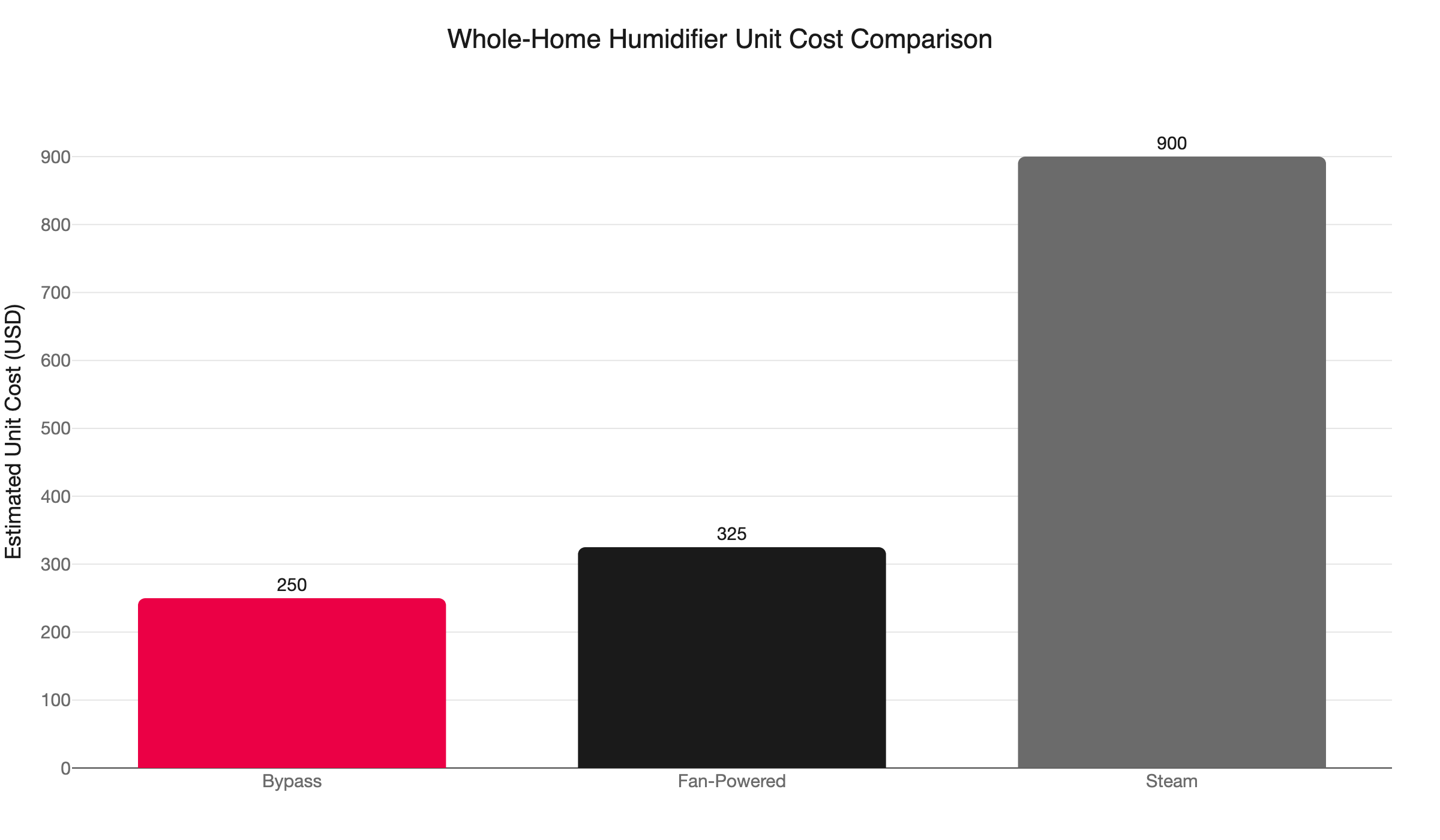
Whole-Home Humidifier Unit Cost Comparison
## Why Does Minnesota Dry Air Demand a Different Approach?
**Our winters are not what national guides assume. Minneapolis averages a January low of 7°F, with many nights far below zero. Five to six months of constant furnace operation strips moisture from your home fast. A portable humidifier in one room cannot keep up. A whole-home solution is the only practical answer.**
Forced-air heating systems do one thing: they move air and heat it. They do not add moisture. The colder it gets outside, the less moisture the air can hold at all. Without a humidifier, indoor relative humidity in a Twin Cities home can fall to 10-15% during a hard cold snap. [Wood floors shrink](/blog/low-humidity-hardwood-floors-winter-minnesota/) and develop gaps. Door frames shift. Nasal passages dry out. Static electricity follows you from room to room.
Dry air also makes you feel colder at the same thermostat setting. Holding 30-35% RH can make 68°F feel as comfortable as 72°F in drier air. That is a real efficiency benefit over a long heating season.
The [EPA recommends keeping indoor relative humidity between 30-50%](https://www.epa.gov/indoor-air-quality-iaq/inside-story-guide-indoor-air-quality). Below 30%, biological contaminants thrive more easily. Above 60%, mold growth becomes a risk. Dust mites also thrive above 50% RH, so over-humidifying can worsen allergy symptoms rather than relieve them.
[Minneapolis averages a January high of 22°F and a low of 7°F](https://weatherspark.com/s/10405/3/Average-Winter-Weather-in-Minneapolis-Minnesota-United-States), with long stretches well below zero. That climate context shapes which humidifier type actually makes sense for your home.
---
## The Three Types of Whole-Home Humidifiers
Before comparing bypass humidifier vs steam humidifier performance, it helps to understand what each type does.
**Bypass humidifiers** use your furnace's heat to evaporate water from a wet water panel. Hot supply air from the plenum passes through the pad, picks up moisture, and returns to the duct system. A bypass damper routes airflow through the unit. No separate fan, minimal electricity draw, and straightforward installation.
**Fan-powered humidifiers** work the same way but add a built-in fan. That fan draws air across the water panel independent of the furnace blower. The result: they can operate during low-speed furnace cycles and extract more moisture per gallon of water than bypass units.
**Steam humidifiers** boil water and inject steam directly into the airstream. They do not rely on the furnace to evaporate anything. They work at any outdoor temperature, at any supply air temperature, and with any heating system, including heat pumps and variable-speed ECM motors.
There is also a fourth type, the drum humidifier, found in older Twin Cities homes. It uses a rotating drum in a standing water reservoir. If your home has one, read the section near the end of this post before running it this season.
---
## What Humidity Level Is Actually Safe in a Minnesota Winter?
**The right number depends on outdoor temperature. Below 0°F, hold indoor humidity at 20-25%. From 10-20°F outside, 30-35% is safe. Above 20°F, up to 40% RH is appropriate. Exceeding those ceilings in cold weather pushes moisture into wall cavities and attics. There it condenses and causes structural damage.**
Most national guides say pick a number between 30-50% and leave it. That works in a moderate climate. In Minnesota, a fixed setpoint can cause frost in your attic and moisture behind exterior walls.
The physics is straightforward. Cold exterior walls and cold attic sheathing are surfaces where migrating indoor moisture condenses. The more humidity you push into your home during a polar vortex, the more likely it is to migrate outward through the wall assembly and hit something cold. Over time, that is frost buildup, rotting framing, and mold behind drywall.
The [Minnesota Center for Energy and Environment](https://www.mncee.org/managing-humidity-levels) provides the right sliding scale for this:
- Below 0°F outdoor: hold RH at 20-25%
- 10-20°F outdoor: hold RH at 30-35%
- Above 20°F outdoor: up to 40% RH
The diagnostic for too much humidity is [condensation on your windows](/blog/condensation-on-windows-winter-minnesota-humidity-fix/). The [EPA is direct on the response](https://www.epa.gov/mold/brief-guide-mold-moisture-and-your-home): if you see moisture collecting on windows, walls, or pipes, dry the surface and reduce the moisture source immediately.
A humidistat wired with an outdoor temperature sensor adjusts your setpoint automatically. A manual humidistat requires you to dial it back when a cold front moves in and restore it when temps recover. A fixed setpoint, never adjusted for conditions, is the wrong tool for Minnesota's temperature range.
Our guide to [humidistat settings for Minnesota winters](/blog/humidistat-settings-winter-minnesota/) walks through setup options in detail.
---
## Bypass Humidifier vs Steam Humidifier: Performance at Extreme Cold
**At extreme cold, bypass humidifiers struggle. Their output depends on warm supply air and full blower operation, both of which degrade in cold conditions. Steam delivers full rated output regardless of outdoor temperature. That gap is the central tradeoff in the bypass humidifier vs steam humidifier comparison for Minnesota homeowners.**
A bypass humidifier is rated to deliver 17-23 gallons per day (GPD) under manufacturer test conditions. Those conditions assume warm supply air, normal blower cycles, and good water quality. In practice, homes with hard water, short furnace cycles, or cold supply air see [output 20-35% below rated capacity](https://indoorhumidity.com/indoor-humidity/best-whole-house-humidifiers-bypass-steam-fan-powered/). On a -10°F night, your bypass unit may reach 22% indoor humidity when the safe ceiling is 20-25%. Technically within range. But when outdoor temps climb to 15°F the next day and you need 30-32%, the unit may not get there reliably.
Steam is a different mechanism entirely. It boils water and pushes steam into the air, independent of furnace operation, supply air temperature, or blower speed. One industry source is clear: steam is ["the only technology that delivers full rated capacity regardless of HVAC operation"](https://hvacknowitall.com/blog/heat-pump-humidifier-guide-bypass-vs-fan-powered-vs-steam-for-hvac-technicians). A steam unit set to 22% on a -10°F night will hold 22%. Set it to 32% when it is 15°F outside, it holds 32%. That predictability is what you are paying for.
One more factor: if your home has a variable-speed ECM motor or a heat pump, bypass output collapses at low blower speeds and low supply air temperatures. Steam is the only reliable choice for those systems.
---
## What About Fan-Powered Humidifiers?
**Fan-powered units are roughly 25% more efficient per gallon than bypass units. They operate independently of the furnace blower, making them better suited for two-stage and variable-speed furnaces. They are the right middle option for most conventional forced-air homes under 2,500 square feet without a heat pump.**
Unit cost runs $200-450, above bypass but significantly below steam. Operating costs are similar to bypass: roughly $1-5 per month in electricity plus water. The built-in fan draws air across the water panel throughout the day, not only during furnace cycles. That continuity closes much of the output gap between bypass and steam for homes with conventional furnace operation.
Fan-powered units are not the right answer for homes with heat pumps or ECM motors running at very low speeds. Supply air in those systems can be too cool for evaporative humidification to produce consistent output. For those homes, steam is still the correct choice.
---
## What Does Each Type Cost to Buy, Run, and Maintain?
**Bypass unit cost: $150-350. Fan-powered: $200-450. Steam: $600-1,200, plus $300-600 for installation. Monthly operating costs favor bypass and fan-powered at $3-15 combined. Steam runs $10-30 per month in electricity. Water hardness is the biggest maintenance variable for all three types.**
Here is a side-by-side breakdown:
**Bypass**
- Unit cost: $150-350
- Monthly operating: $1-5 electricity, $2-10 water
- Water panel replacement: $15-35 per season in soft-water homes; twice per season in hard-water areas (above 150 ppm)
- Installation: lower labor cost than steam; mounts to the supply or return plenum
**Fan-Powered**
- Unit cost: $200-450
- Monthly operating: comparable to bypass
- Water panel replacement: same schedule as bypass
- Installation: similar to bypass; requires a power connection for the fan motor
**Steam**
- Unit cost: $600-1,200
- Installation: $300-600 additional; a dedicated electrical circuit is required
- Monthly operating: $10-30 in electricity (8-14 amp draw during operation)
- Canister replacement: approximately [$95 per season for compatible models](https://www.homedepot.com/p/AprilAire-80-Replacement-Canister-for-Whole-House-Steam-Humidifier-Models-800-801-865-and-866-80/312136602)
The ten-year cost gap between bypass and steam narrows when you factor in performance consistency and maintenance simplicity. A steam unit delivers predictable output. A bypass unit delivers variable output, most noticeably in the worst weather. If you are replacing a furnace at the same time, [upgrading to steam is a modest addition to the total project cost](https://hvachub.org/aprilaire-cost-typical-prices-whole-home-humidifiers-air/).
---
## Do You Need a Permit to Install a Whole-Home Humidifier in Minnesota?
**Yes. Minnesota Mechanical Code requires a permit for whole-home humidifier installation. Plymouth, MN explicitly lists it as a mechanical permit trigger. Unpermitted work can result in denied insurance claims and complications when you sell the home.**
[Plymouth, MN lists humidifier installation in its mechanical permit triggers](https://www.plymouthmn.gov/departments/community-economic-development/permits-inspections/mechanical-permit). This reflects the statewide requirement under [Minnesota Mechanical Code Chapter 1346.0105](https://www.law.cornell.edu/regulations/minnesota/Minn-R-1346-0105).
The stakes are practical. If a water leak from an improperly installed humidifier causes damage and the work was unpermitted, your homeowner's insurance may deny the claim. If you sell the home, an unpermitted mechanical installation surfaces in inspection reports. That can delay closing or become a price negotiation.
A licensed HVAC contractor pulls the permit, handles the inspection, and takes responsibility for the installation. For steam units especially, a dedicated electrical circuit is required, and that work must be code-compliant.
For more on what triggers a mechanical permit in Minnesota, see our post on [when an HVAC permit is required in Minnesota](/blog/hvac-permit-when-required-minnesota/).
---
## Are There Rebates for Whole-Home Humidifiers in Minnesota?
**No. As of the 2024-2026 program year, neither Xcel Energy nor CenterPoint Energy's Minnesota residential programs include whole-home humidifiers. Plan to cover the full cost of equipment and installation out of pocket.**
[Xcel Energy's Minnesota residential rebate program](https://www.xcelenergy.com/staticfiles/xe-responsive/Working%20With%20Us/24-1-201%20MN%20Res%20Rebate%20Summary%20Information%20Sheet.pdf) covers heat pumps, insulation, and high-efficiency heating equipment. [CenterPoint Energy's Minnesota program](https://www.centerpointenergy.com/en-us/Documents/CIP-Rebate-Forms/CNP1153.pdf) covers water heaters and high-efficiency heating systems. Neither program includes whole-home humidifiers at any tier.
If you are upgrading your furnace or installing a heat pump at the same time, those system-level rebates apply to the heating equipment. The humidifier does not qualify independently.
---
## What If You Already Have an Older Drum-Style Humidifier?
**Drum humidifiers rotate through a standing water reservoir. They are water-efficient, but that reservoir is a mold and bacteria breeding ground if not [cleaned regularly](/blog/whole-home-humidifier-cleaning-maintenance-minnesota/). If you have not serviced yours in a season or more, replace it rather than run it this winter.**
The drum design maintains standing water inside the cabinet. Without regular cleaning, that reservoir can grow mold and bacteria, which then get dispersed into your home's air supply. [A drum humidifier that goes unserviced is one of the more common indoor air quality problems in older Twin Cities homes](https://www.sylvane.com/blogs/knowledge-center/whole-house-humidifier-comparison).
A flow-through bypass or fan-powered unit drains continuously rather than holding standing water. That is a cleaner design from a maintenance standpoint. If a drum unit is more than 10-15 years old and has not been serviced in a few seasons, replacement is the practical choice.
---
## Which Type Is Right for Your Home?
**Steam for homes with heat pumps, ECM variable-speed motors, or large square footage. Fan-powered for a conventional forced-air furnace in a home under 2,500 square feet. Bypass for a tight budget, a standard single-stage furnace, and a well-managed humidistat.**
Here is the practical decision framework:
- Heat pump or ECM variable-speed furnace: steam is the only reliable choice. Supply air temperatures in these systems are too low for bypass or fan-powered to maintain consistent output.
- Conventional furnace, home over 3,000 sq ft: steam ensures consistent coverage throughout the house.
- Conventional furnace, home between 1,200 and 2,500 sq ft: fan-powered hits the right balance of output, efficiency, and cost.
- Tight budget, single-stage furnace, smaller home: bypass works if you replace the water panel every season and manage your humidistat settings actively when temperatures drop.
In every case, pair your humidifier with a humidistat that accounts for outdoor temperature. A fixed setpoint is not right for a Minnesota winter. Our post on [whole-home humidifiers and winter dry air management](/blog/whole-home-humidifier-winter-dry-air/) covers controls and setup in more detail.
---
## Ready to Stop Fighting Dry Air This Winter?
Northern One Hour Heating & Air Conditioning is locally owned and operated in Ramsey, MN. We serve homeowners across the Twin Cities, including Minneapolis, St. Paul, Blaine, Maple Grove, Plymouth, and Brooklyn Park.
If cracked woodwork, scratchy throats, and static electricity have become your winter normal, a whole-home humidifier is the right fix. Our team assesses your current setup, matches the right humidifier type to your furnace and home size, pulls the required permit, and has the system running before the next cold front arrives.
"Always On Time… Or You Don't Pay a Dime!(R)" When we say we are coming, we show up.
Call (763) 260-6662 or visit our [humidifier installation and service page](/indoor-air-quality/humidifiers/) to book an appointment.
---
# Crawl Space HVAC Efficiency Minnesota: The Hidden Drain
URL: https://northernonehour.com/blog/crawl-space-hvac-efficiency-twin-cities/
Published: 2026-08-23 | Category: HVAC
An unconditioned crawl space wastes 15-25% of your home's energy. Learn how Twin Cities homeowners can fix it and cut heating and AC costs year-round.
Key Takeaways
- An unconditioned crawl space can contribute to [15-25% of your home's total energy loss](https://crawlspaceenergyinstitute.com/symptoms/high-energy-bills/) through duct leakage, air infiltration, and floor assembly heat transfer.
- Leaky ducts running through an unconditioned crawl space lose 20-30% of total conditioned airflow before it reaches any living space.
- In summer, a vented crawl space forces your AC to spend 20-30% of its capacity on dehumidification instead of cooling.
- [DOE Building America research](https://www.energy.gov/eere/buildings/articles/unvented-conditioned-crawlspaces-building-america-top-innovation) found conditioned crawl spaces cut heating and cooling energy use by 15-18% and reduce humidity by more than 20%.
- Minnesota's 2020 Energy Code sets duct insulation requirements for unconditioned spaces and wall insulation requirements for unvented crawl space configurations.
- Xcel Energy and CenterPoint Energy both offer rebates for air sealing and insulation that can stack with a future heat pump upgrade.
- An HVAC comfort assessment is the right first step. It shows how much your crawl space is costing your system before you invest in equipment upgrades.
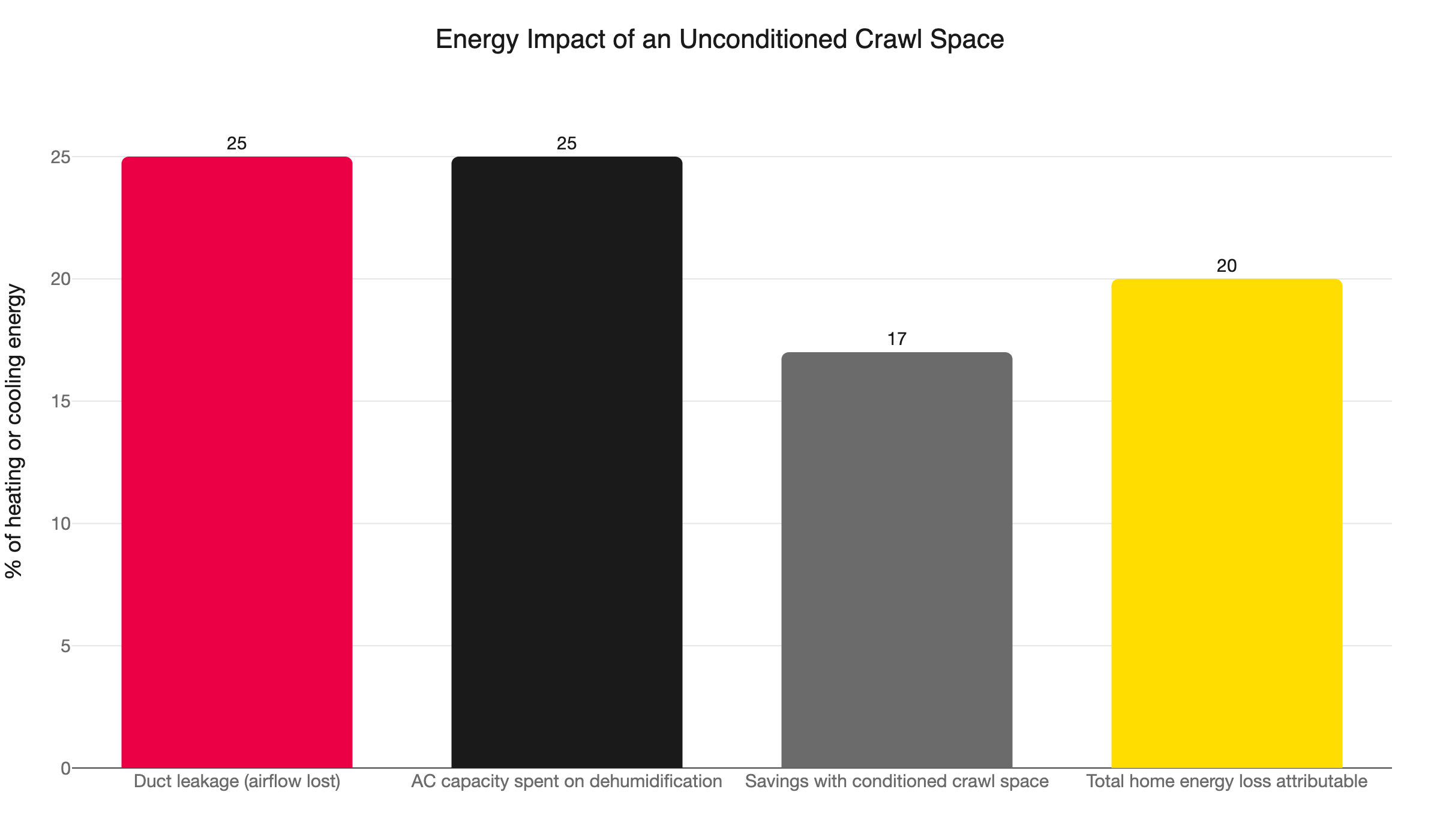
Energy Impact of an Unconditioned Crawl Space
## Why Does My Heating Bill Stay High Even After I Replaced My Furnace?
A new furnace cannot fix a leaky envelope. If your ducts are losing conditioned air into an unconditioned crawl space before it reaches your living areas, a more efficient furnace just burns expensive BTUs faster on air you never feel. The equipment is not the problem.
The crawl space likely is. When supply and return ducts run through an unconditioned crawl space, they can lose 20-30% of total airflow through duct leakage and thermal transfer. That loss happens before a single register delivers air to a room. No equipment upgrade closes that gap until the envelope is addressed first.
Here is what happens in a typical Twin Cities home with a vented or uninsulated crawl space during a Minnesota winter:
- Cold outdoor air infiltrates the crawl space through vents and gaps in the sill plate.
- That cold air draws heat through the floor assembly, chilling the rooms above.
- Duct leaks bleed conditioned air directly into the crawl space instead of your bedroom or living room.
- The furnace runs longer cycles trying to compensate for heat that never reaches the living space.
- Your bill increases. Your comfort does not follow.
This pattern repeats every heating season. Because it looks like a furnace problem from inside the house, it often triggers an equipment replacement that does not actually solve the issue. Getting a comfort assessment before committing to new equipment is the smarter move.
---
## The Four Ways an Unconditioned Crawl Space Drains Your HVAC System
Most conversations about crawl spaces focus on moisture and mold. Those are real problems. But the bigger picture for crawl space HVAC efficiency in Minnesota is what the space does to your equipment's performance. An unconditioned crawl space attacks your system through four simultaneous channels.
**1. Duct leakage.** Supply and return ducts running through the crawl space lose conditioned air through every gap, seam, and failing joint. [The DOE identifies duct leakage as responsible for 300 CFM or more of lost airflow - 20-30% of your total system output - before air reaches your living space](https://crawlspaceenergyinstitute.com/symptoms/high-energy-bills/). This is the single largest efficiency drain in many homes. Our post on [leaky ductwork and duct sealing](/blog/duct-sealing-leaky-ductwork-energy-loss/) covers the full scope of what that loss looks like and what fixing it actually costs.
**2. Air infiltration via the stack effect.** Warm air rises and exits the home through the roof and attic. Cold air enters from the bottom: through crawl space vents, gaps around the sill plate, and penetrations in the floor assembly. The crawl space is the bottom of the stack, and every gap in the floor system is an entry point for outdoor air.
**3. Humidity loading on the AC.** In summer, the stack effect partially reverses. Warm, humid outdoor air is drawn in through crawl space vents and rises into the living space. Your air conditioner then has to remove that moisture before it can reduce the air temperature. This dehumidification burden can consume 20-30% of your AC's capacity - capacity that should be going toward cooling your home.
**4. Thermal bypass through the floor assembly.** Even where ducts are properly sealed, an uninsulated floor assembly conducts heat downward in winter and lets heat rise in summer. Minnesota's Climate Zone 6 calls for R-19 to R-30 for floors above unconditioned spaces. Most homes built before the 2009 code updates fall short of that range.
These four losses stack. Together, the DOE estimates that unconditioned crawl spaces contribute to 15-25% of a home's total energy loss. That explains why a new furnace often fails to improve bills as much as expected.
---
## How Does My Crawl Space Make the House More Humid in Summer?
Warm, humid outdoor air enters through crawl space vents and rises into the house via the stack effect. Your air conditioner then has to remove that moisture before it can cool the air, consuming 20-30% of its total capacity on dehumidification instead of temperature reduction. The result: the house never feels quite cool enough, and runtime climbs.
This is the piece of the crawl space story that insulation and waterproofing contractors rarely address. They focus on sealing moisture pathways at the foundation. They do not account for what the resulting humidity load does to your air conditioner's available capacity.
The impact shows up in a few consistent patterns:
- The house feels sticky or muggy even when the AC is running continuously.
- Humidity readings stay above 55-60% on moderate summer days. [Mold growth begins when relative humidity exceeds 55%](https://www.dbsrepair.com/about-us/news-and-events/51964-does-crawl-space-encapsulation-really-save-money-a-breakdown.html), which means a wet crawl space creates air quality risk throughout the living space above it, not just in the crawl space itself.
- The AC compressor runs more cycles or longer cycles than expected. Both are signs the latent load - moisture removal - is higher than the system was designed to handle.
- Musty odors drift upward from the crawl space into the living areas. [The EPA estimates one-third of all structures have damp conditions that promote mold and bacterial growth](https://www.epa.gov/indoor-air-quality-iaq/inside-story-guide-indoor-air-quality). Given that people spend roughly 90% of their time indoors, that is not a minor concern.
A properly conditioned crawl space removes the moisture at the source. A whole-home dehumidifier can address it at the equipment level. Our [dehumidifier services](/indoor-air-quality/dehumidifiers/) and our post on [basement humidity control in Minnesota](/blog/basement-humidity-control-summer-minnesota/) cover both approaches in detail.
---
## What Does Minnesota's Energy Code Require for Crawl Spaces?
Minnesota's 2020 Energy Code adopts the 2018 IECC with state amendments. For crawl spaces, it requires that unvented configurations include wall insulation extending 24 inches below grade, a continuous Class I vapor retarder on exposed earth, and that all ducts in unconditioned spaces meet minimum R-value thresholds. Vented configurations must meet floor insulation requirements instead.
The key code sections for homeowners and contractors are:
- **R402.2.10:** Crawl space walls may substitute for floor insulation only when the crawl space is unvented. Wall insulation must extend from the floor to finished grade and an additional 24 inches below grade. Exposed earth requires a [continuous Class I vapor retarder with joints overlapped 6 inches and sealed](https://up.codes/viewer/minnesota/iecc-2018/chapter/RE_4/re-residential-energy-efficiency).
- **Table R403.2.1:** All supply and return [ducts in unconditioned spaces](/blog/duct-insulation-attic-energy-loss-minnesota/) must meet minimum R-value insulation requirements. A certificate must be posted at the electrical panel confirming compliance.
These are minimums. For Climate Zone 6 - which covers the Twin Cities and most of southern Minnesota - the DOE recommends R-19 to R-30 for floors above unconditioned spaces, and R-15 to R-19 for crawl space walls in an unvented configuration. Homes in northern Minnesota fall in Climate Zone 7, where requirements are higher.
Many homes in Ramsey, Blaine, Brooklyn Park, and the older Minneapolis and St. Paul neighborhoods were built under earlier codes. A crawl space that passed inspection in 1998 or 2004 may not meet current performance targets. The only way to know is to look.
---
## Why Do Fiberglass Batts Fail in Minnesota Crawl Spaces?
Fiberglass batt insulation absorbs moisture, loses R-value when wet, sags off the floor joists, and eventually falls entirely. In a Minnesota crawl space, this can happen within just a few years of installation. When the batts fall, there is no floor insulation at all.
This failure is specific to the material in a damp environment. Fiberglass does not bond to the joists. It relies on friction and stapling. Once moisture cycles through enough heating and cooling seasons, the material compresses and the staples lose their grip.
What works instead:
- **Closed-cell spray foam:** Adheres directly to the joists. Creates an air barrier and vapor retarder in a single pass. Holds its R-value when damp because the closed-cell structure does not absorb moisture.
- **Rigid EPS panels:** Rated for damp environments. Typically used against crawl space walls in a conditioned configuration, where they serve as both insulation and a moisture barrier.
Which option fits your home depends on whether you are converting to a conditioned crawl space or improving an existing vented configuration. An HVAC comfort assessment can clarify which approach delivers the most performance gain relative to your current equipment and duct layout.
---
## Should I Fix the Crawl Space Before Replacing My HVAC System?
In most cases, yes. A new HVAC system sized to a leaky envelope is sized to the wrong load. Seal and insulate the crawl space after installation, and the system may be oversized for the corrected heat loss. Oversized equipment short-cycles, delivers poor humidity control, and wears faster than a properly sized unit.
This sequencing problem shows up regularly in the Twin Cities market. A homeowner replaces an aging furnace. The contractor sizes the new unit to the current measured heat loss - which includes the crawl space penalty. A year or two later, the homeowner encapsulates the crawl space. The heat loss drops. Now the furnace is too large for the corrected load, and comfort problems follow.
[DOE Building America research](https://www.energy.gov/eere/buildings/articles/unvented-conditioned-crawlspaces-building-america-top-innovation) found that conditioned crawl spaces reduced heating and cooling energy use by 15-18% and reduced humidity by more than 20%. Those are meaningful load changes that directly affect what size equipment a home actually needs.
The right sequence:
1. Get a comfort assessment to understand your actual heat loss and where it comes from.
2. Seal and insulate the crawl space.
3. Re-run the load calculation with the corrected envelope numbers.
4. Select and install HVAC equipment sized to the corrected load.
If your equipment is at end of life and cannot safely wait for the envelope work, ask your contractor to account for the planned crawl space improvement in the sizing calculation. We do this as part of every system recommendation at Northern One Hour. If a heat pump is part of the plan, ask us about financing options - larger HVAC projects often qualify, and pairing the upgrade with the Xcel rebate sequence below can change the math significantly.
---
## Minnesota Rebates That Can Help Offset the Cost
Crawl space work itself - sealing, vapor retarder installation, insulation - is typically handled by an insulation or encapsulation contractor. But the rebate picture connects directly to your HVAC upgrade sequence, especially if a heat pump is on your horizon.
**Xcel Energy (for customers in the Xcel service territory):**
- Air sealing: up to $600 of project cost, when paired with qualifying attic or wall insulation. Not available as a standalone measure.
- Bonus rebate: an additional $600 if you complete qualifying insulation and air sealing and then install a qualifying heat pump within two years.
- Crawl space insulation rebate eligibility varies. Confirm directly with Xcel before starting work.
**CenterPoint Energy (for natural gas customers):**
- Attic air sealing only: $750.
- Attic air sealing plus qualifying insulation: $1,300.
- Wall insulation: $1,950.
- Crawl space insulation is not listed as a separate line item in current public materials. Verify eligibility directly with CenterPoint. Work must be done by a BPI-certified Rebate Eligible Installer.
**Federal 25C tax credit:**
This credit expired December 31, 2025. Insulation work completed in 2026 does not qualify.
For a full summary of current utility incentives, our post on [Xcel and CenterPoint HVAC rebates in Minnesota](/blog/xcel-centerpoint-hvac-rebates-minnesota/) covers the current landscape in detail.
The rebate strategy worth planning around: complete crawl space air sealing and insulation now, capture the utility rebate, then upgrade to a cold-climate heat pump within two years to claim the Xcel bonus. That sequencing can return meaningful money on what is otherwise a significant project cost.
---
## What Does an HVAC Comfort Assessment Actually Cover?
A comfort assessment reviews how your HVAC equipment performs against your home's actual thermal envelope. It covers equipment sizing, duct static pressure, room-by-room temperature differentials, indoor humidity levels, and the visible condition of ducts in unconditioned spaces including your crawl space.
It is not a sales call. It is a structured diagnostic review designed to show you where performance is being lost and what the highest-return fixes are.
When our team comes out, we look at:
- Current equipment capacity relative to your actual measured heat loss and cooling load.
- Static pressure in the duct system. High static pressure often signals significant duct leakage in the crawl space or elsewhere in the distribution system.
- Temperature differentials between rooms and between floors.
- Humidity levels throughout the house, including the basement and crawl space access point.
- Visible duct condition in any unconditioned space: crawl space, attic, or attached garage.
- Signs of moisture entry, insulation failure, or air bypass at the floor assembly.
We document what we find and explain it in plain terms. If your crawl space is the primary driver of high bills and uneven comfort, we will say so and explain what upstream work gets you the best return. If the equipment itself is the limiting factor, we will say that too.
We are locally owned and operated in Ramsey, Minnesota. We serve the Twin Cities metro and surrounding communities, and we show up when we say we will. "Always On Time… Or You Don't Pay a Dime!(R)" is how we run every service call.
---
## What Should I Check in My Crawl Space Before Heating Season?
Start with a visual inspection through the access panel. Look for sagging or fallen insulation, standing water or a wet vapor barrier, gaps in duct connections, or dark staining on the floor joists. You do not need to climb in to see the most important warning signs. Any one of these findings is grounds for a professional assessment before winter heating is in full swing.
Here is what each warning sign means for your HVAC system:
- **Sagging or fallen fiberglass batts:** No floor insulation exists at those locations. Cold transfer from the crawl space to the rooms above is direct and continuous.
- **Standing water or a wet vapor barrier:** Moisture is actively entering. Duct connections and any equipment in the crawl space are at risk.
- **[Duct gaps or disconnected sections](/blog/ductwork-replacement-cost-twin-cities/):** Conditioned air is exhausting into the crawl space. This is duct leakage loss in its most visible form.
- **Dark staining on floor joists:** Mold growth is underway. Humidity has been persistently above the threshold where biological growth begins.
If you find any of these, schedule a comfort assessment before heating season peaks. Ask the technician to check duct static pressure and inspect visible duct runs at the same time as the furnace tune-up.
Call us at (763) 260-6662 or schedule online. We serve Ramsey, Blaine, Maple Grove, Plymouth, Brooklyn Park, Woodbury, and the greater Twin Cities metro. We will be there when we say we will.
---
# Dirty Blower Wheel HVAC Symptoms: What to Watch For
URL: https://northernonehour.com/blog/dirty-blower-wheel-hvac-symptoms-cleaning-minnesota/
Published: 2026-08-23 | Category: HVAC
A clean filter doesn't guarantee a clean blower wheel. Learn the dirty blower wheel HVAC symptoms Twin Cities homeowners often miss - and what to do next.
Key Takeaways
- The blower wheel is the fan that moves all the air in your HVAC system - heat, AC, everything.
- A clean filter does not protect the blower wheel. Fine particles pass through even good filters. Others bypass the filter frame through gaps in the housing.
- Dirty blower wheel HVAC symptoms include weak airflow, rising energy bills, uneven room temperatures, unusual noises, a frozen AC coil, and musty odors.
- Twin Cities furnaces run more than 214 days per year. That extra runtime means buildup accumulates faster than the national average suggests.
- Most Twin Cities HVAC technicians recommend inspecting the blower wheel every 2-3 years for high-use households - not the national 3-5 year standard.
- Blower wheel cleaning is maintenance, not an installation. No permit is required in Minnesota.
- If you notice any of these symptoms, call (763) 260-6662 or book online with Northern One Hour.
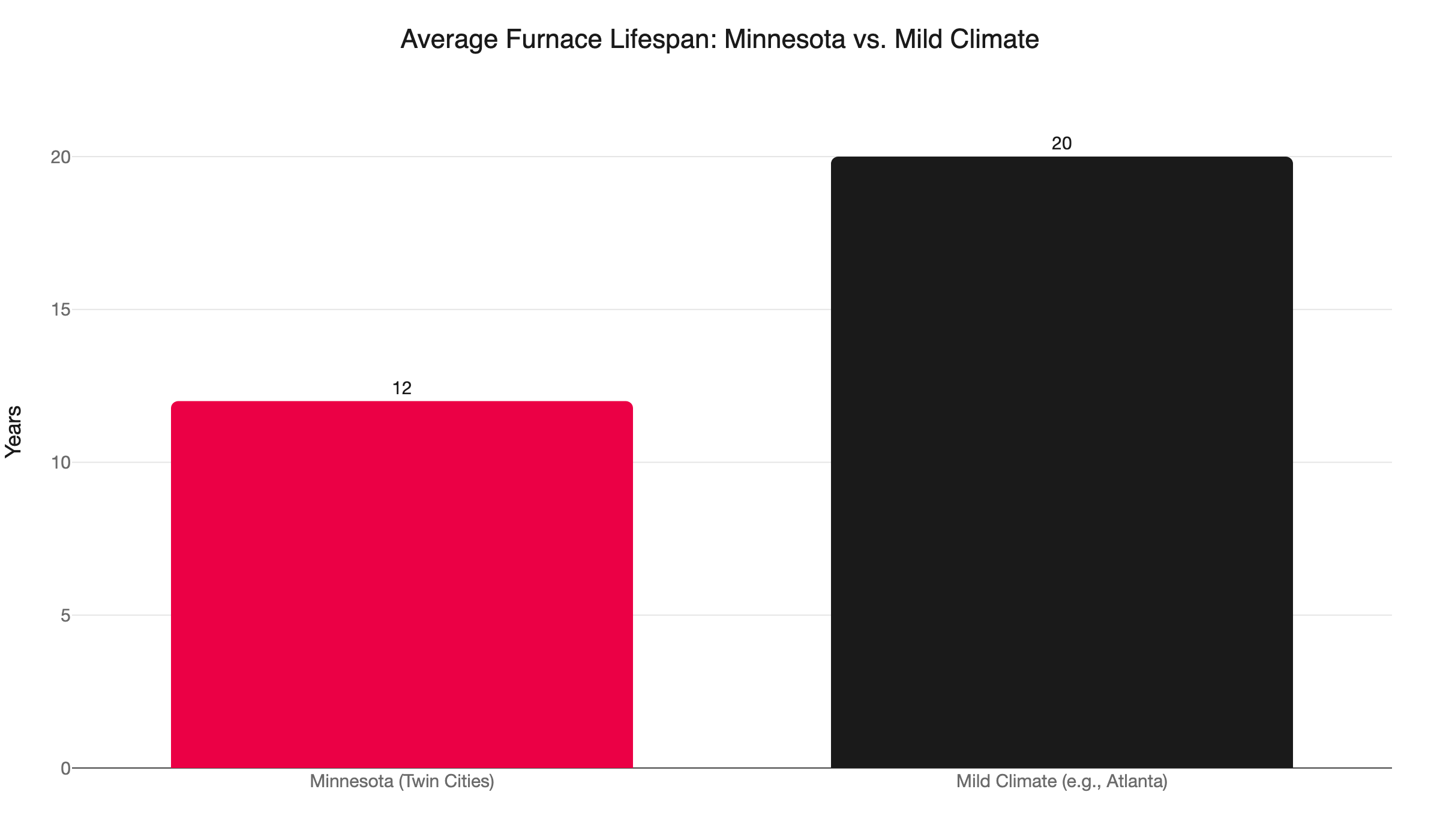
Average Furnace Lifespan: Minnesota vs. Mild Climate
You change the filter every month. Maybe every two months. You've been doing it for years. So why does the house still have cold spots? Why is the system running longer cycles than it used to? Why is the energy bill still creeping up?
The answer may be sitting inside your furnace right now: the blower wheel. This is the spinning fan that pushes every cubic foot of conditioned air through your home. Filters catch particles in the return-air stream before they reach the blower. But not all particles get caught, and not every time. Fine debris slips through. More slips around the filter frame through gaps in the housing. Year after year, those particles coat the wheel's vanes, rob airflow, and grind down the motor.
Dirty blower wheel HVAC symptoms are easy to misread as other problems. Weak airflow gets blamed on ductwork. Rising bills get blamed on the weather. A frozen coil gets blamed on refrigerant. When several of these show up together, the blower wheel is often the common thread. This post names the symptoms clearly. It explains why they happen even in well-maintained homes and walks through what to do when you spot them.
## What Does a Blower Wheel Actually Do?
**Short answer:** The blower wheel (also called a squirrel cage fan) is the rotating component inside your furnace or air handler. It pulls return air from your living spaces and pushes it through the heat exchanger or evaporator coil, then out through your supply ducts into every room. Everything your system conditions passes through this one component.
The blower wheel runs every time your furnace heats, every time your AC cools, and every time you run the fan for air circulation. In a Twin Cities home, that adds up to thousands of run hours annually. Few climates in the continental US accumulate more.
When the vanes are clean, the wheel moves air efficiently and the motor runs at its designed load. When the vanes are coated in grime, the wheel works harder to move the same volume of air. Eventually, it can't move enough to meet demand - and every room in your house feels the difference.
Unlike filters, which are visible and easy to check, the blower wheel sits inside the equipment housing. Most homeowners never see it. That's part of why dirty blower wheel HVAC symptoms often go undiagnosed for years.
## Why Does a Blower Wheel Get Dirty Even With a Clean Filter?
**Short answer:** Filters capture particles in the return-air stream, but some are too fine to be caught and some air bypasses the filter frame through gaps in the housing. Both routes deposit debris on blower vanes over years of operation - even in homes where the filter is changed on schedule.
This is the gap most articles about blower wheels skip entirely. A monthly filter swap is a good habit. It does not guarantee a clean blower wheel. Here's the mechanism.
**Fine particles slip through.** A standard MERV-8 filter captures particles down to about 3 microns. Smaller particles - fine dust, combustion byproducts, and ultrafine debris - pass right through. On the slightly oily surface of a blower vane, those particles stick and layer up over years of operation.
**Filter bypass is a documented contamination route.** The [EPA's guidance on duct cleaning](https://www.epa.gov/indoor-air-quality-iaq/should-you-have-air-ducts-your-home-cleaned) warns specifically: "Be sure you do not have any missing filters and that air cannot bypass filters through gaps around the filter holder." A filter you change every month won't protect the blower wheel if the frame doesn't seat tightly against the housing.
**Moisture bonds particles to vanes.** Minnesota's humidity swings are significant: very dry in winter, then humid in summer. Moisture in the air stream bonds fine particles to the vane surface in a way dry air alone wouldn't. The result is a sticky, layered buildup that worsens each season.
The takeaway: a clean filter is step one. It is not the whole story.
## What Are the Dirty Blower Wheel HVAC Symptoms?
**Short answer:** The most common dirty blower wheel HVAC symptoms are reduced airflow from supply vents, rising energy bills with no other cause, uneven room temperatures, vibration or humming from the unit, a frozen AC evaporator coil, and musty or dusty odors when the system runs.
Here's what each symptom looks like - and why the blower wheel causes it.
**1. Weak airflow from supply vents**
Hold your hand near a supply register while the system runs. If the air feels sluggish or noticeably weaker than it used to be, restricted airflow is worth investigating. A dirty blower wheel can [reduce airflow efficiency by up to 20%](https://www.parkerandsons.com/blog/the-impact-of-a-dirty-blower-wheel-on-your-hvac-systems-efficiency). That's enough to make a real difference in how quickly rooms reach temperature.
**2. Rising energy bills with no other explanation**
When the blower can't move air freely, the motor runs longer and draws more current to hit the thermostat setpoint. [Energy Star notes](https://www.energystar.gov/saveathome/heating-cooling/maintenance-checklist) that dirty components can increase energy costs and damage equipment over time. A strained blower motor may not fail visibly at first. You'll just see a quiet, steady increase on your monthly utility bill.
**3. Hot spots and cold spots throughout the house**
Reduced air volume hits the rooms farthest from the air handler first. That means rooms at the end of long duct runs, or upstairs in a two-story home. If one bedroom is always too cold in winter or too warm in summer, reduced blower output is a top suspect.
**4. Vibration, humming, or rattling sounds**
Buildup on blower vanes is rarely uniform. An unbalanced wheel wobbles as it spins, and that wobble creates vibration you may feel through the floor or hear as a low hum, rattle, or grinding noise. If the sound is new and the system ran quietly before, have it checked before the motor takes further strain.
**5. Ice forming on the AC evaporator coil**
Low airflow and a frozen coil go together. When the blower wheel can't push enough air across the evaporator coil, refrigerant drops below freezing and ice forms. [Frozen evaporator coils](/blog/frozen-evaporator-coil-why-ac-ice-twin-cities/) are often blamed on low refrigerant, but [restricted airflow](/blog/high-static-pressure-hvac-symptoms-fixes-twin-cities/) from a dirty blower is a common underlying cause. If your AC has frozen more than once, ask your technician to inspect the blower wheel.
**6. Musty, dusty, or stale odors when the system runs**
A blower wheel coated with years of accumulated debris can shed particles into the air stream every time it spins. If the house smells stale or dusty right when the heat or AC starts, the wheel itself may be the source.
**7. Longer run cycles**
If your furnace or AC [runs for noticeably longer stretches](/blog/furnace-blower-runs-constantly-wont-shut-off-minnesota/) without reaching the target temperature, it's often fighting restricted airflow. Longer run cycles mean more wear on every component - not just the blower.
## Does a Dirty Blower Wheel Raise Your Energy Bills?
**Short answer:** Yes. The motor draws more current to overcome the resistance of a caked, unbalanced wheel. Wasted electricity becomes heat, which the AC then has to remove in summer. The impact on annual energy costs adds up steadily.
Even a clean, well-maintained blower operates at low efficiency. [Research from the DOE's Lawrence Berkeley National Laboratory](https://www1.eere.energy.gov/buildings/publications/pdfs/building_america/ns/b20_blower_energy.pdf) found that field-measured blower efficiencies are only 10-15%. A dirty wheel reduces that further. All the extra energy the motor consumes becomes heat. In summer, your AC has to remove that heat, compounding the loss.
There's a hardware risk too. Dirt on the vanes acts as insulation, trapping heat that should dissipate from the motor housing. A motor running above its design temperature wears faster. What could have been a cleaning on the next tune-up becomes a [blower motor replacement](/blog/variable-speed-blower-motor-furnace-benefits-minnesota/). That repair typically runs $750 or more, and higher if the unit is older or parts are hard to source.
## How Does a Dirty Blower Wheel Affect Indoor Air Quality?
**Short answer:** A dirty wheel can shed accumulated particles into the air your household breathes. In Minnesota, where homes are sealed from November through March, whatever the blower circulates stays in circulation. For anyone with allergies, asthma, or respiratory sensitivities, that matters.
The [EPA's indoor air quality guidance](https://www.epa.gov/indoor-air-quality-iaq/should-you-have-air-ducts-your-home-cleaned) includes the blower wheel on its post-cleaning inspection checklist. Technicians should verify that "blower blades are clean and free of oil and debris" and that the "blower compartment is free of visible dust or debris." The EPA's inclusion of the blower wheel in IAQ protocols reflects its real potential as a contamination source - not just an efficiency component.
Better filtration and [the right air purification approach](/blog/air-purifiers-vs-filters-merv-ratings-explained/) can reduce particulate load in your home. But neither works as well if the blower moving the air is coated in accumulated grime.
## The Minnesota Factor: Why Twin Cities Homes Feel This Faster
Most national HVAC maintenance advice is calibrated for moderate climates. The Twin Cities is not a moderate climate.
Twin Cities furnaces run more than 214 days per year, with January lows near 8°F and roughly 54 days below zero annually. That's significantly more operating hours than a furnace in most of the country logs. The 3-5 year blower wheel cleaning interval cited by many national sources was developed for that average. In a high-use Minnesota home, it may compress to 2-3 years.
The equipment lifespan data tells the same story. [Minnesota furnaces average about 12 years](https://furnace.direct/blogs/news/diy-furnace-maintenance-checklist-minnesota) compared to roughly 20 years in milder climates. The extra runtime is part of that gap - and so are the maintenance shortcuts that feel harmless in a shorter heating season but compound over a longer one.
The air sealing factor matters too. A Twin Cities home is closed up tight from November through March. The blower circulates the same interior air continuously throughout the heating season. Whatever collects on the wheel - dust, debris, mold spores - gets recirculated. A dirty blower wheel carries a bigger IAQ liability in a sealed Minnesota home. In a climate with open windows half the year, the risk is lower.
For most Twin Cities households, a blower wheel inspection every 2-3 years is a more realistic target than the national recommendation. That's especially true for homes with pets, older ductwork, or residents with respiratory conditions.
## What Happens If You Ignore These Symptoms?
**Short answer:** Ignored dirty blower wheel symptoms follow a predictable path: worsening airflow, motor overheating, repeated frozen coils, and eventually premature equipment failure. None of it is dramatic at first. It's a slow, increasingly expensive slide.
Here's the cascade:
**Buildup accelerates.** A rough, particle-coated vane traps new debris more readily than a smooth surface. Once buildup starts, it compounds each season and airflow drops further.
**The motor overheats.** Extra resistance plus the insulating effect of grime on the housing pushes the motor above its rated operating temperature. Many systems have a high-limit safety switch that shuts the unit off when this happens. If your furnace shuts off mid-cycle for no apparent reason, a stressed blower motor may be why. [Furnace blower motor failure](/blog/furnace-blower-motor-failure-signs-cost-minnesota/) - the repair that often follows - is a significant unplanned expense.
**The AC coil freezes repeatedly.** Each freeze-thaw cycle stresses the coil and refrigerant lines. A maintenance symptom can become a refrigerant leak or a full coil replacement.
**The nameplate efficiency becomes fiction.** Your furnace carries an AFUE rating - 80%, 95%, whatever it is. That rating assumes clean, unobstructed airflow through a clean blower. A wheel caked with buildup means the system never reaches its rated efficiency, regardless of what the label says. CenterPoint and Xcel rebates on high-efficiency equipment assume the equipment is actually running at high efficiency. Maintenance keeps that true.
## How Does a Professional Clean a Blower Wheel?
**Short answer:** A technician removes the blower assembly, cleans each vane individually with brushes and cleaning solution, inspects the motor and bearings, and reinstalls the assembly before testing airflow and amp draw. Done correctly, it takes time - and it's not a safe DIY task for most homeowners.
Here's the typical sequence:
1. **Power down and access.** The technician cuts power to the unit, removes the access panels, and disconnects the blower assembly from the housing.
2. **Visual inspection.** The tech notes the degree of buildup, checks for cracked or bent vanes, and looks for early signs of motor wear.
3. **Cleaning.** Each vane is cleaned individually. Buildup can be stubborn and uneven. Compressed air, soft brushes, and HVAC-rated cleaning solution are the standard tools.
4. **Motor check.** With the assembly out, the tech inspects the motor for signs of overheating, worn bearings, or electrical wear. This is the right moment to catch motor issues before they become failures.
5. **Reassembly and testing.** The tech reinstalls the assembly, restores power, and measures airflow and motor amperage draw to confirm normal operation.
No permit is required for blower wheel cleaning in Minnesota - it's maintenance, not an installation. It's typically performed during a [furnace tune-up](/heating/heating-equipment/furnaces/furnace-tune-ups/) but can also be scheduled as a standalone service when symptoms point specifically to the blower.
## When to Call Northern One Hour
If you've noticed any of the dirty blower wheel HVAC symptoms described here - weak airflow, rising bills, uneven temperatures, odd sounds, a frozen coil, or stale air - a professional inspection is the right next step. These symptoms don't resolve on their own. The longer a compromised blower runs, the more wear accumulates on the motor and surrounding components.
We're locally owned and operated in Ramsey, MN, serving Minneapolis, St. Paul, Blaine, Maple Grove, Plymouth, Brooklyn Park, Woodbury, Bloomington, and the broader Twin Cities metro. We show up when we say we will - that's the "Always On Time… Or You Don't Pay a Dime!(R)" promise we back on every call.
Blower wheel inspection is part of a standard heating tune-up with our team. If you want to get on the schedule - or if something has already gone wrong - call (763) 260-6662 or book online. We'll tell you exactly what we find and what it will take to fix it.
---
# How to Tell How Old Your Furnace Is: Read the Serial Number
URL: https://northernonehour.com/blog/how-to-find-hvac-system-age-manufacture-date-minnesota/
Published: 2026-08-23 | Category: HVAC
Decode your furnace serial number in minutes. Brand-by-brand cheat sheet plus repair-vs-replace rules and 2026 Minnesota rebates for Twin Cities homeowners.
Key Takeaways
- The manufacture date is encoded in the serial number on your furnace's data plate. Most brands pack it into the first two to four characters.
- Carrier/Bryant/Payne use a week-year format. Goodman/Amana use year-month. Rheem/Ruud use a letter-digit code. Lennox prints the date in plain text.
- Manufacture date and install date are not the same thing. A furnace can sit in a distributor warehouse for months before it goes into your home.
- The DOE median service life for a residential gas furnace is 18 years. Minnesota winters push furnaces harder than most climates.
- If one repair costs more than 50% of the price of a new furnace, lean toward replacement. The $6,500 rule is a useful second check.
- Xcel Energy and CenterPoint Energy both offer 2026 rebates on high-efficiency furnaces. The federal 25C tax credit expired December 31, 2025.
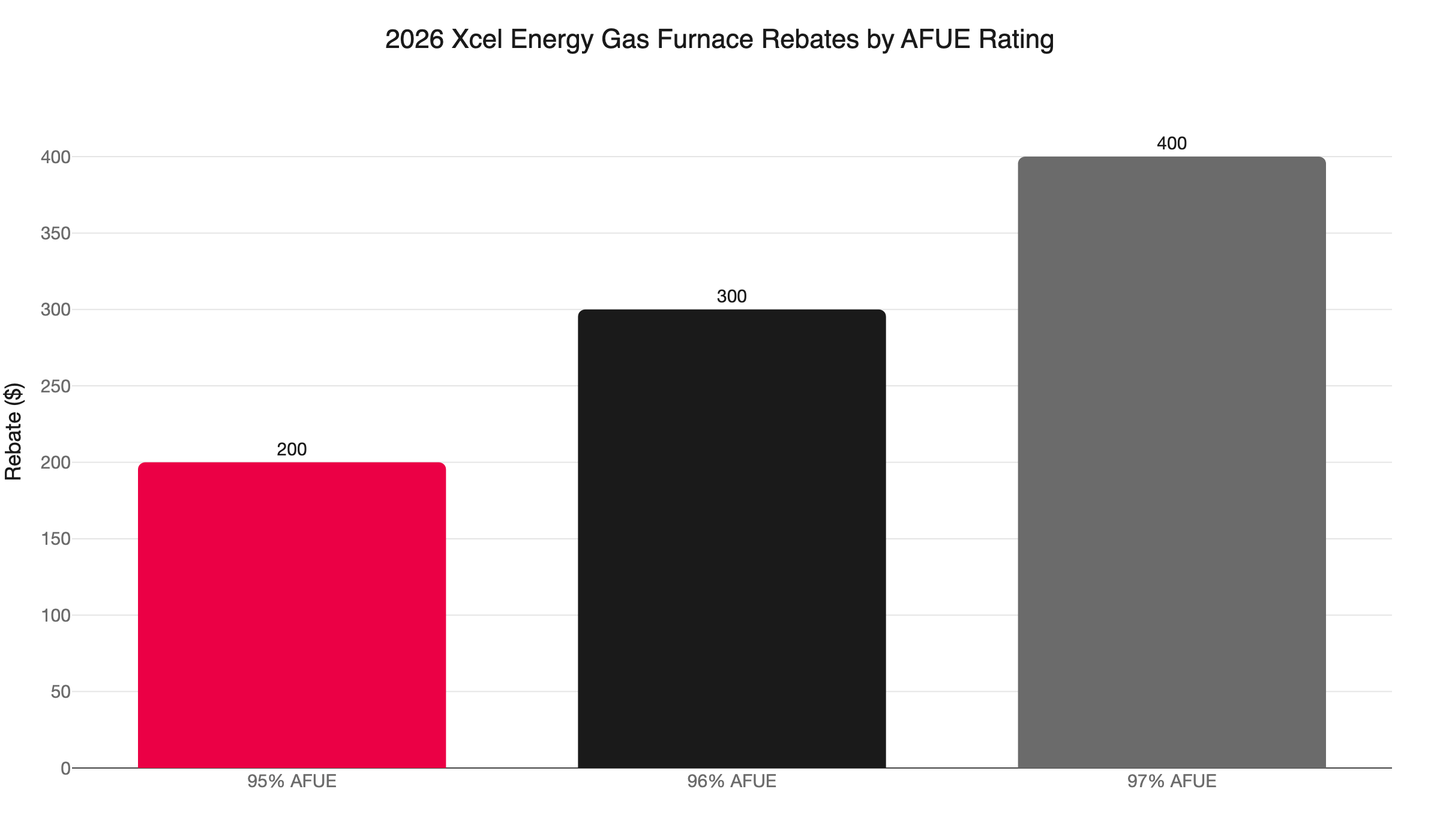
2026 Xcel Energy Gas Furnace Rebates by AFUE Rating
## Why Does Furnace Age Matter More in Minnesota?
**In short:** The Twin Cities plan for a design temperature of -12°F. Your furnace runs roughly 3,000 heating hours per year here. A furnace in a warmer climate might log closer to 2,000. Those extra hours accumulate wear faster than the calendar suggests.
[About 66% of Minnesota homes heat with natural gas](https://homeenergybasics.com/heat-pumps/states/mn). That means most Twin Cities homes are relying on a gas furnace to carry the full winter load. When HVAC guides talk about furnace lifespan in general terms, they are often picturing a milder climate. Our winters are not mild.
Efficiency is the other part of the picture. Furnaces [15 or more years old can carry AFUE ratings as low as 56%](https://www.pickhvac.com/gas-furnace-life-expectancy-how-long-they-last-when-replace/). Current high-efficiency equipment runs at 90% AFUE or higher. When you pay to heat a home through a Minnesota winter, that efficiency gap shows up on your gas bill every month from October through April.
Knowing your furnace's age is the starting point for any honest assessment.
---
## How Do I Find My Furnace's Age?
**In short:** Open the furnace cabinet and look for a metal data plate on the inside panel, usually near the blower compartment or burner assembly. The serial number on that plate contains the manufacture date. You need the brand name and the serial number.
The data plate is always present on residential manufactured equipment. It is roughly the size of a playing card. It shows:
- Brand name and model number
- Serial number
- Rated AFUE (the efficiency percentage)
- Electrical and gas supply specifications
Take a photo of the full plate before you start decoding. Labels on older furnaces can be faded, and characters that look similar, like "0" and "O" or "1" and "l," can cause a misread if you are working from memory.
Some furnaces also have a service tag attached by a previous technician. That tag records service history and is useful context, but the service date is not the manufacture date.
---
## How Do I Decode My Furnace's Serial Number?
**In short:** Find your brand below and apply the decode format to the first two to four characters of the serial number. Most brands encode the manufacture year in those opening characters, alongside the month or week of production.
There is no universal serial number format across manufacturers. Each brand developed its own encoding system. The [hvacbase.org serial number decoder](https://www.hvacbase.org/hvac-serial-number-decoder) covers dozens of brands in depth and is worth bookmarking. The most common brands in Twin Cities homes follow below.
---
## Brand-by-Brand Serial Number Cheat Sheet
**Carrier, Bryant, and Payne**
Format: first four digits encode week, then year (WWYY).
Example: a serial starting with `3216` = week 32 of 2016.
The first two digits are the production week (01 through 52). The next two digits are the two-digit year. A serial starting with `0824` means week 8 of 2024.
**Goodman and Amana**
Format: first four digits encode year, then month (YYMM).
Example: `2205` = May 2022.
The first two digits are the two-digit year. The next two are the month: 01 = January, 12 = December.
**Rheem and Ruud**
Format: first two characters encode month (letter code) plus last digit of the year.
Example: `K4` = October 2024.
Each letter maps to a month. A = January, B = February, and so on. The letter I is skipped to avoid confusion with the number 1, which puts K at October. The digit following is the last digit of the manufacture year. If the unit was installed in the 2020s and the digit is 4, the year is 2024.
**Lennox**
No decoding needed. Lennox prints "MFG DATE: MM/YYYY" in plain text on the data plate.
If the label reads "MFG DATE: 03/2014," the furnace was manufactured in March 2014.
**York**
Format: first two characters encode the year using a proprietary letter cycle, followed by a digit.
Example: `X3` = 2023.
York's year-letter cycle is not publicly standardized. Use the hvacbase.org decoder or contact York with the full model number to confirm.
**Heil, Tempstar, and ICP**
These three brands share the same parent company and the same serial format.
Format: one letter (year code) followed by two digits (week of production).
Example: `N16` = week 16 of 2017. N maps to 2017 in the ICP letter cycle.
**Trane and American Standard**
Trane's serial number format changed across production eras. The year is encoded in the first character block, but the lookup table differs by generation. Use Trane's official online decoder or cross-reference the model number in the AHRI directory to confirm the manufacture year and original rated AFUE.
**Bosch**
Format: first four digits encode year, then week (YYWW).
Example: `2318` = week 18 of 2023.
The first two digits are the two-digit year. The last two are the production week.
---
## What If My Brand Is Not on the List?
**In short:** Search "[brand name] furnace serial number decoder" online or call the manufacturer's support line with the full model number and serial number. They will give you the manufacture date directly. The AHRI directory at ahridirectory.org can also confirm the original rated AFUE for any certified unit by model number.
A few older brands changed hands multiple times over the past 30 years. When a company was acquired, the parent sometimes changed the serial format. For equipment manufactured before 2000, treat any decode result as approximate. Have a technician verify the unit's age and condition in person.
---
## What Is the Difference Between Manufacture Date and Install Date?
**In short:** The manufacture date is when the furnace left the factory. The install date is when it went into your home. The gap is commonly six to twelve months. A home inspector reports age from the serial number, not from permit or utility records. These two numbers are not always the same.
This distinction matters in three ways.
**Warranty coverage** typically starts at installation, not manufacture. If your furnace was built in October and installed the following April, the warranty clock started in April. Time in a distribution warehouse does not consume your coverage period.
**Actual wear** depends on run time, not manufacture date. A furnace sitting in a distributor's facility accumulates zero heating cycles. The true age of the equipment, from a wear standpoint, is how long it has been running in your home.
**Home inspection reports** cite the serial-based manufacture date. That is the conservative number. If you are buying a home, the furnace may have slightly less wear than the reported age implies. The inspection number still sets the negotiation baseline.
---
## Buying a Home? What to Do Before Your Response Deadline
Your inspection report says the furnace is 17 years old. Your response deadline is tomorrow morning. Here is how to use that information.
**Step 1: Get the serial number.**
The inspection report may include it. If not, your agent can photograph the data plate during a walkthrough before your deadline.
**Step 2: Confirm the manufacture year and note the rated AFUE.**
A unit made in 2007 rated at 80% AFUE is a different conversation than a 2007 unit rated at 95% AFUE. Efficiency tells you something about how the unit was specified and maintained over its life.
**Step 3: Use the age to anchor your negotiation.**
A furnace at 15 years or older is at or near median end of service life. That is a legitimate basis for a request. Common approaches include:
- A repair credit of $1,500 to $3,000 applied at closing
- A purchase price reduction to account for near-term replacement
- Seller-funded replacement before closing, with the transferable warranty going to the buyer
**Step 4: Book a pre-purchase HVAC inspection.**
An hour-long inspection goes beyond age. A technician checks the heat exchanger for cracks, tests the flue for carbon monoxide, and gives you a condition report specific to the unit. Our [HVAC checklist for buying a home in Minnesota](/blog/hvac-checklist-buying-home-minnesota/) walks through what to request and what answers to look for.
---
## How Old Is Too Old for a Furnace?
**In short:** The DOE median service life for a residential gas furnace is 18 years, with a range of 15 to 30 years depending on maintenance. In Minnesota's climate, plan for the lower end of that range. At 15 years, start the replacement conversation. At 18 or older, plan for it.
Age is the fastest screening tool. It is not the only measure. A 12-year-old furnace with no maintenance history may be in worse shape than a well-maintained 18-year-old unit. Age gives you the headline number. Condition and repair history fill in the rest.
Signs that age is catching up with a furnace:
- Utility bills rising with no change in usage or weather patterns
- Two or more repairs in the past two heating seasons
- Uneven heat throughout the house, with some rooms warm and others cold even with the thermostat up
- Unusual noises: banging, rattling, or a persistent hum from the blower
- Yellow or flickering burner flame instead of a steady blue
- Short cycling: the furnace fires up and shuts off before the home reaches temperature
Our guide on [when to replace rather than repair your furnace](/blog/is-it-time-for-a-new-furnace-how-to-know-when-its-time-to-replace-not-repair/) covers each of these warning signs in more depth.
---
## Should I Repair or Replace My Furnace?
**In short:** Two rules help. If a single repair costs more than 50% of the price of a new furnace, lean toward replacement. The $6,500 rule says to multiply system age in years by the repair cost in dollars. If the product exceeds $6,500, lean toward replacement.
The [repair-vs-replace guide from Tim's Heating and Refrigeration](https://www.timsheatingandrefrigeration.com/furnace-repair-or-replace-a-guide-for-minnesota-homeowners/) is a solid Minnesota-specific resource for working through this math in detail.
Here is how the $6,500 rule plays out in practice.
Your furnace is 16 years old. The repair is quoted at $550. Multiply 16 by 425 and you get $8,800. That is above $6,500, which pushes toward replacement.
Same furnace, but the repair is a $195 flame sensor cleaning. Sixteen times 150 equals $3,100. Under $6,500. The repair makes more sense.
The 50% rule is a second check. A new mid-efficiency gas furnace installed in the Twin Cities typically runs $4,500 to $7,800. See our [furnace replacement cost guide](/blog/furnace-replacement-cost-twin-cities/) for current pricing ranges by home size and equipment tier. If a single repair is quoted above $2,600 on a mid-range system, you are often in replacement territory.
One exception skips the math entirely: a cracked heat exchanger is never repaired. See the next section.
---
## What About Carbon Monoxide and Heat Exchanger Risk?
**In short:** A cracked heat exchanger can allow combustion gases, including carbon monoxide, to enter your home's airstream. It is not repairable. The furnace must be shut down immediately and replaced. This is the one scenario where the right answer is not a cost calculation.
The heat exchanger is the barrier between combustion gases and the air your family breathes. When it cracks, those pathways can merge. Carbon monoxide is colorless and odorless. Exposure can reach dangerous levels before anyone notices symptoms.
Older furnaces are more likely to have developed cracks. Annual maintenance is the primary defense. A technician can inspect the exchanger with a combustion analyzer and flag any compromise before it becomes a health issue.
Warning signs that warrant an immediate call:
- Soot deposits near the furnace or at supply registers throughout the house
- CO detector alarms anywhere in the home
- Household members experiencing unexplained headaches, nausea, or fatigue indoors
- Visible corrosion or discoloration around the burner assembly
Read our full guide on [cracked heat exchanger signs in Minnesota](/blog/cracked-heat-exchanger-signs-minnesota/) for a complete list of symptoms and next steps. If you have any concern, call (763) 260-6662 now. We treat safety calls as urgent.
---
## 2026 Minnesota Rebates and Incentives
If your furnace's age makes replacement the right call, financial help is available.
**Xcel Energy 2026 gas furnace rebates:**
- 95% AFUE: $200
- 96% AFUE: $300
- 97% AFUE: $400
**CenterPoint Energy 2026 rebate:**
- 95% AFUE or higher: up to $400
- Income-qualified households: up to $1,200
Verify current amounts at xcelenergy.com and centerpointenergy.com before you commit. A [2026 Minnesota furnace rebate guide from Metro Heating](https://www.metroheating.net/minnesota-furnace-rebates-2026-guide-for-saving-big-on-furnace-replacement/) provides a useful third-party cross-reference for both utility programs.
One thing worth knowing before you plan around the federal credit: the IRS Section 25C Energy Efficient Home Improvement Credit for furnaces expired December 31, 2025. The One Big Beautiful Bill Act, signed July 4, 2025, ended it nine years early. Equipment installed in 2026 or later earns no federal tax credit. Utility rebates are the primary financial incentive available right now.
Financing is available for qualifying replacement installations. Ask about options when you call.
---
## Get a Straight Answer on Your Furnace
You do not need a technician to read the data plate. A flashlight, five minutes, and the cheat sheet above get you to the manufacture year.
What you do with that number is where we come in.
Northern One Hour is locally owned and operated in Ramsey, MN. We serve Minneapolis, St. Paul, Blaine, Maple Grove, Plymouth, Brooklyn Park, and the surrounding Twin Cities communities. Whether you need a repair assessment, an efficiency check, or a full replacement quote, our team shows up when we say we will.
"Always On Time… Or You Don't Pay a Dime!(R)."
Call **(763) 260-6662** or book online.
---
# Best Thermostat Placement for Your Minnesota Home
URL: https://northernonehour.com/blog/thermostat-location-placement-hvac-accuracy-minnesota/
Published: 2026-08-23 | Category: HVAC
Where your thermostat sits matters more than the setpoint you choose. Learn which locations cause comfort complaints in Minnesota homes and how to fix them.
Key Takeaways
- A thermostat near a west-facing window can read 5-7°F warmer than your home's actual air temperature, and up to 25°F warmer in extreme direct exposure.
- The west-facing window problem is time-stamped: comfortable in the morning, miserable after 2 PM on sunny afternoons.
- A thermostat above a supply register causes the opposite failure: short cycling that shuts the system off before the home reaches setpoint.
- Lowering the setpoint cannot fix either problem. The sensor is measuring the wrong environment.
- In the Twin Cities, with 7,581 annual heating degree days, placement errors cost proportionally more than they would in warmer climates.
- Three exits exist: close the blinds as a free diagnostic test, add a remote sensor and claim a $50 utility rebate, or call Northern One Hour to relocate the thermostat permanently.
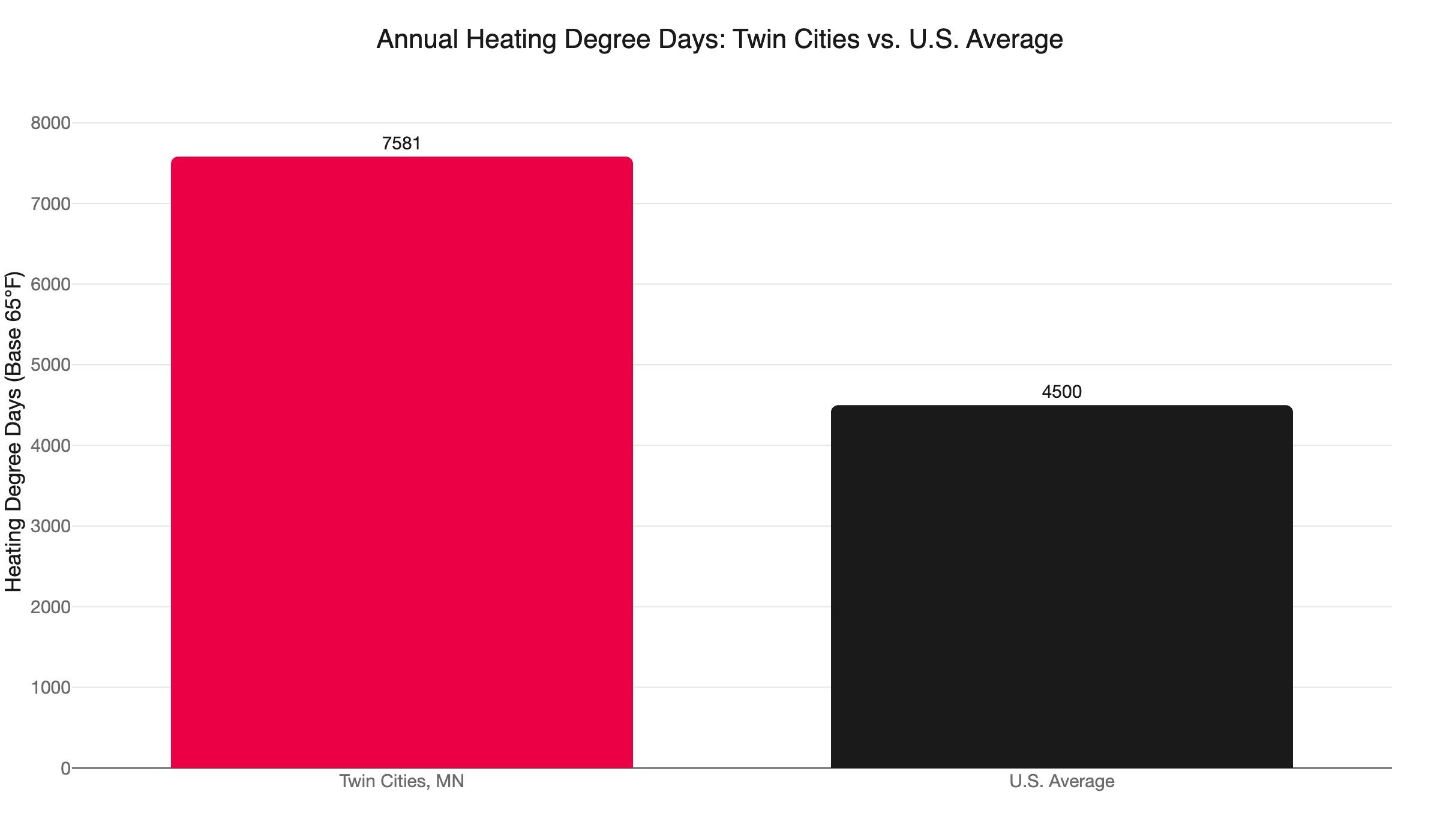
Annual Heating Degree Days: Twin Cities vs. U.S. Average
## Is Your Thermostat Actually Measuring Your Home?
**The short answer:** Probably not, if it sits near a west-facing window or a supply register. Both locations cause what HVAC technicians call ghost readings: the sensor detects a local microclimate instead of your home's actual air temperature. No setpoint change fixes a ghost reading. Only placement does.
If you have been adjusting your thermostat for months and your home still will not hold a comfortable temperature, the setpoint is not the problem. The location is.
Most homeowners assume the number on the thermostat screen reflects the temperature of their house. It reflects the temperature of the air immediately surrounding the sensor. On a neutral interior wall, those two readings are close enough to matter. Near a west-facing window or a supply register, they can be 5, 7, even 25 degrees apart. The system responds to what the sensor says. You feel what the house actually is. Those two experiences can be worlds apart.
## What Is the Best Thermostat Placement for a Minnesota Home?
**The short answer:** The [U.S. Department of Energy](https://www.energy.gov/energysaver/programmable-thermostats) is direct: thermostats must be "on an interior wall away from direct sunlight, drafts, doorways, skylights, and windows," approximately 5 feet off the floor, near the center of the home's conditioned footprint, away from supply registers, kitchen appliances, and any exterior wall with strong sun exposure.
That rule exists for a reason. A thermostat placed anywhere else risks ghost readings: sensor data that does not represent the home's actual temperature. The [DOE](https://www.energy.gov/energysaver/programmable-thermostats) warns that improper placement causes "ghost readings or unnecessary furnace or air conditioner cycling." Two failure modes. Different causes. Different fixes.
In Minnesota, "interior wall" matters more than it does in moderate climates. Our exterior walls swing through large thermal ranges between seasons. A thermostat on an exterior wall in January reads colder air infiltrating through the insulation. The same wall in July reads radiant heat from the sun baking the siding. An interior wall averaging the home's conditioned air is the only location where the sensor does its job accurately across all four seasons.
When an original builder ran thermostat wire to a convenient spot on a west-facing wall, or positioned it above an existing supply register because the wire was already nearby, they were solving a wiring problem. Not a comfort problem. Many Twin Cities homes built in the 1970s and 1980s have thermostats in exactly the wrong location for exactly this reason.
## Why a West-Facing Window Is the Most Dangerous Thermostat Location in Minnesota
Every competitor article on thermostat placement says "avoid windows." None of them say which window. Direction matters because solar intensity is not symmetric around a house.
[West-facing glazing receives peak solar intensity in the afternoon](https://www.meyer-depew.com/why-west-facing-rooms-are-harder-to-cool/), when outdoor temperatures are already at their daily maximum. That combination, maximum sun angle meeting maximum outdoor temperature, creates the most severe cooling load of any window orientation. North-facing windows receive almost no direct sun. East-facing windows catch morning sun when outdoor temperatures are mild. South-facing windows are predictable and manageable with standard overhangs. West-facing windows hit hardest at the worst moment of the day.
Standard glass transmits roughly 70-75% of incident solar energy directly into the room as heat gain. A room near a west-facing window can feel 10-15°F warmer than a room on the shaded north side of the same house, even when the thermostat shows the target setpoint.
Now put the thermostat on that west-facing wall.
[Direct sunlight on a thermostat sensor can drive its reading 5-7°F above actual ambient air temperature](https://www.meyer-depew.com/sunlight-on-thermostat-ac-problems/). In extreme cases with prolonged direct exposure, the error can reach 25°F. The plastic housing absorbs radiant heat and retains it for hours after the sun moves on. Your system runs longer than it should. Rooms away from the problem window overcool. You feel cold, the thermostat does not, and every setpoint adjustment you make chases a target the sensor cannot accurately report.
## Why Are You Uncomfortable After 2 PM Every Afternoon?
**The short answer:** West-facing windows receive their peak solar load between roughly 2 and 5 PM. A thermostat near that glass begins sending inflated readings to your system during that window, triggering longer cooling cycles that overcool the rest of the home. The discomfort is not random. It has a clock.
This time-stamp is the diagnostic question that separates a placement problem from an equipment problem. Is the discomfort consistent? Does it arrive around the same time every sunny afternoon and resolve in the evening or on overcast days? If yes, the sun is the diagnosis.
The failure sequence on a typical summer afternoon in the Twin Cities:
- **7 AM:** The sun is on the east side of the house. The thermostat reads the room accurately. The house is comfortable.
- **12 PM:** The sun is overhead. Your home holds temperature without issue.
- **2-3 PM:** The sun moves west and hits the thermostat's plastic housing directly or through the glass nearby. The sensor reads 74°F when the living room is actually 70°F.
- **3-5 PM:** Your AC runs extended cycles chasing that inflated reading. Rooms away from the west wall cool to 65°F. You add a blanket. The thermostat screen shows 70°F. Your body disagrees.
- **7 PM:** The sun drops below the roofline. The sensor cools. The system cuts off. Your home is now too cold before the thermostat recalibrates.
If that pattern matches your experience, the thermostat's location, not its setpoint, not its age, not your equipment, is the problem.
## What Happens When a Thermostat Sits Above a Supply Register?
**The short answer:** The thermostat senses conditioned air the instant a heating or cooling cycle starts and signals the system to shut off before the rest of the home reaches setpoint. This is register-driven short cycling: frequent on-off cycling that stresses equipment and never stabilizes your home's temperature.
A west-facing window makes the sensor read too warm, driving extended run cycles. A supply register does the opposite: it makes the sensor read the target temperature almost immediately and stops the cycle too soon.
Here is how it works. Your thermostat calls for cooling. The system starts. The supply register directly below or above the thermostat pushes 55°F air across the sensor. Within moments, the sensor reads the setpoint. The system shuts off. The bedroom across the house is still 78°F. Three minutes later the ambient air around the thermostat warms again. The system calls for cooling again. The cycle repeats, never making real progress.
[HVAC technicians define this as a ghost reading](https://indoortemp.com/resources/does-thermostat-placement-matter): the thermostat temperature does not reflect actual home temperature, causing "unnecessary system cycling and energy waste." Short cycling from register placement looks identical to short cycling from low refrigerant or an oversized system. If you have been chasing a short-cycle problem and your equipment checks out, look at where the thermostat sits relative to the nearest supply register.
Our post on [AC short cycling causes and fixes in the Twin Cities](/blog/ac-short-cycling-causes-fixes-twin-cities/) covers the full list of causes if you want to rule out equipment factors before scheduling a service call.
## Why Doesn't Lowering the Setpoint Fix the Problem?
**The short answer:** A setpoint is an instruction to the system. The sensor is the system's only way to verify that instruction has been met. If the sensor carries a 7°F error, changing the setpoint shifts the target, not the error. The sensor keeps lying by the same amount.
This runs counter to homeowner intuition. When the house feels too warm, you lower the setpoint. That is the natural move. But if the sensor is reading 7°F warmer than your home actually is, lowering the setpoint from 74°F to 71°F tells the system to run until the sensor reads 71°F. The sensor cannot read 71°F until your home is actually 64°F. Your living room becomes uncomfortably cold. The thermostat screen shows 71°F. Your body tells you otherwise.
You have not fixed the comfort problem. You have shifted the discomfort from "too warm in the afternoon" to "too cold until the sun moves." And your energy bills go up in both directions. The fix is not a different number on the thermostat. The fix is a sensor that accurately measures your home.
## What Do Minnesota's Climate Numbers Have to Do With Thermostat Placement?
**The short answer:** They make every placement error more expensive. The Twin Cities records [7,581 heating degree days annually](https://www.dnr.state.mn.us/climate/journal/msp_hdd_record_low.html), roughly double the U.S. populated-area average of around 4,500. We operate in [IECC Climate Zone 6A](https://minnesotahvacauthority.com/minnesota-climate-hvac-requirements/), meaning our systems run under extreme demand for more of the year than most of the country.
The math is direct. A placement error that adds 10% to your system's run time costs twice as much here as in a city near the national heating degree day average. We are not burning fuel 50 extra days per year in an abstract sense. We are burning it during polar vortex weeks when the furnace is already working at capacity. A thermostat that tells the furnace to run longer than necessary during those weeks drains real money across every billing cycle.
[ENERGY STAR data](https://www.energystar.gov/products/smart_thermostats) shows that smart thermostats save the average household more than 8% on heating and cooling energy, about $50 per year nationally. The EPA notes that high-HDD climates like Minnesota see proportionally larger dollar savings because the baseline spend is larger. The percentage is the same. The dollars are not.
Accurate thermostat readings are not a nice-to-have in the Twin Cities. They are a meaningful financial decision across every heating and cooling season.
## Three Ways to Fix a Misplaced Thermostat
You have options, ranging from free to a couple hundred dollars. The right choice depends on how severe the placement error is and how much you want to invest in a permanent solution.
**Option 1: Control the light (free, diagnostic)**
Close the blinds or curtains on the west-facing windows nearest the thermostat every afternoon, starting around 1 PM. Do this for two or three days. If the afternoon comfort problem disappears, you have confirmed the diagnosis: the sun is hitting the sensor.
Reflective window film is a more durable version of the same fix. Neither option solves the placement problem permanently, but both reduce the solar load on the sensor enough to restore reasonable comfort while you decide on the next step.
**Option 2: Add a remote sensor (mid-range, often $30-50 out of pocket after rebate)**
[Many smart thermostats](/blog/nest-vs-ecobee-smart-thermostat-minnesota/) support remote sensors that let the system average readings from multiple locations, or defer entirely to a sensor in a neutral interior room. This resolves most west-facing window and supply register placement errors without moving the thermostat or fishing new wire through your walls.
Both major Minnesota utilities currently offer rebates on qualifying smart thermostats. Xcel Energy residential customers can claim [up to $50 on an ENERGY STAR certified smart thermostat](https://www.xcelenergy.com/programs_and_rebates). CenterPoint Energy natural gas residential customers can claim a [$50 rebate through Dec. 31, 2026](https://www.centerpointenergy.com/en-us/residential/save-energy-money/efficiency-programs-and-rebates/programmable-thermostat-rebate). A compatible remote sensor typically runs $30-50 additional. In most cases, you can fix a placement error for $30-50 net out of pocket.
Our blog covers [smart thermostat options for Twin Cities homeowners](/blog/maximize-comfort-and-savings-the-power-of-smart-thermostats-in-the-twin-cities/) in detail if you want to compare specific models before buying.
**Option 3: Relocate the thermostat (permanent)**
If the placement error is severe, if remote sensor coverage is not practical for your floor plan, or if you want the problem solved correctly and for good, the right answer is a physical relocation. The thermostat moves to a neutral interior wall, 5 feet off the floor, away from all windows, registers, and exterior walls.
This requires a licensed HVAC technician to extend or reroute the thermostat wiring. Thermostat wiring connects directly to your HVAC equipment's control board, and a wiring error there is an expensive mistake. Done correctly, a relocation gives you accurate readings for the life of your next thermostat, typically 10-15 years, with no workarounds.
Our [thermostat troubleshooting guide](/blog/thermostat-troubleshooting-guide/) walks through the common symptoms if you want to confirm the diagnosis yourself first. Our [thermostat services page](/thermostats/) explains what a professional assessment and relocation involves.
## When Should You Call Northern One Hour?
**The short answer:** Call when the blind-closing test confirms a placement diagnosis, when a remote sensor is not sufficient to correct the error, or when you want a professional to assess the home and recommend the best permanent location for accurate readings.
We are locally owned and operated in Ramsey, MN. Our team serves the full Twin Cities metro: Minneapolis, St. Paul, Blaine, Maple Grove, Plymouth, Brooklyn Park, Woodbury, Bloomington, and the surrounding communities. Thermostat assessments and relocations are regular work for us, because older Twin Cities homes often have thermostats exactly where the builder's wiring made it convenient, not where comfort science says it should be.
If you have been adjusting your setpoint for months without resolving the problem, a placement assessment is a short appointment that often closes a years-long comfort complaint. We back every service call with "Always On Time… Or You Don't Pay a Dime!(R)." Call **(763) 260-6662** or book online. We will show up when we say we will, give you a straight answer, and get your thermostat reading your home instead of the sun.
---
# Furnace Gas Valve Not Opening Symptoms: What to Check First
URL: https://northernonehour.com/blog/furnace-gas-valve-failure-symptoms-replacement-cost-minnesota/
Published: 2026-08-22 | Category: Heating
Diagnose furnace gas valve not opening symptoms with the right upstream sequence, two multimeter tests, and Minnesota repair-vs-replace guidance.
Key Takeaways
- A glowing igniter with no flame is the most common sign the valve is not opening.
- Before blaming the valve, confirm 24V AC is arriving at its terminals. No voltage means the fault is upstream, not in the valve.
- Two multimeter tests confirm a bad valve: a voltage test during a heat call and a resistance test of the coil (normal range: 40-80 ohms).
- A boom or bang on startup is delayed ignition. Repeated occurrences can crack the heat exchanger - a far more expensive problem.
- Gas valves cannot be repaired in the field. Replacement is the only fix when the valve tests bad.
- Use the Age x Cost rule: furnace age in years times repair cost in dollars. Above $5,000 points toward replacement.
- Minnesota rebates from CenterPoint and Xcel, plus a federal 25C tax credit, can meaningfully offset the cost of a new high-efficiency furnace.
- At -12°F design temperature in the Twin Cities, a furnace failure in January is a freeze risk. Act the same day symptoms appear.
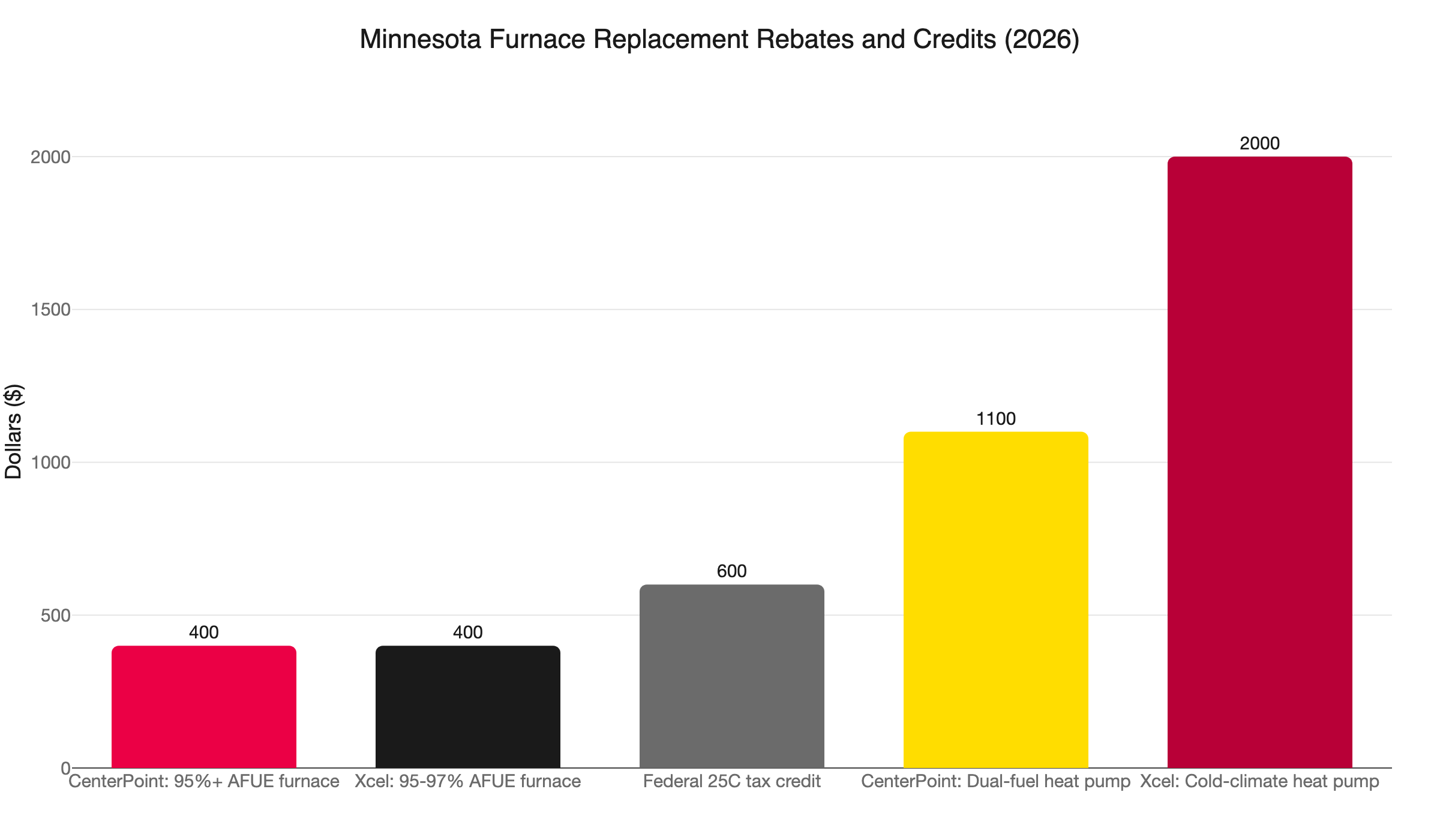
Minnesota Furnace Replacement Rebates and Credits (2026)
## What Are Furnace Gas Valve Not Opening Symptoms?
**The short answer:** The most recognizable furnace gas valve not opening symptoms are a glowing igniter that produces no flame, no warm air from the vents despite a running system, and a boom or thud when the furnace tries to light. A gas odor near the furnace is a safety emergency requiring an immediate shutoff, not a diagnostic test.
Your furnace runs a fixed startup sequence every time it calls for heat. The draft inducer motor spins up. Pressure switches confirm airflow through the heat exchanger. The hot surface igniter heats to temperature, or a spark igniter fires. Then the control board signals the gas valve to open. Fuel flows. The burner lights.
When the gas valve does not open, fuel never reaches the burners. The igniter glows. Nothing catches. The control board logs a fault and shuts the system down.
Here is exactly what to watch for:
- **Igniter glows but no flame forms.** The ignition side of the furnace is working. Gas is not flowing.
- **No warm air from the vents.** The blower may continue to run on a timer, but the air is room temperature or colder.
- **Boom, bang, or thud when the furnace starts.** This is delayed ignition. The valve is opening slowly. Gas accumulates in the combustion chamber and ignites all at once when the igniter finally catches it.
- **Repeated lockout faults.** Modern furnaces lock out after two or three failed ignition attempts and display an error code. A valve that will not open is one of several causes.
- **Gas odor near the furnace.** A valve stuck partially open is leaking fuel. Shut off the manual gas valve near the furnace, leave the building immediately, call your gas company to clear the space, and then call us. Do not attempt to troubleshoot with gas present.
---
## Why Does the Fault Often Lie Upstream, Not in the Gas Valve?
**The short answer:** The gas valve only opens when the control board sends it a 24V AC signal. That signal only goes out if the inducer is running, the pressure switches have closed, and no safety switch has tripped. If any upstream step fails, the valve never fires - and replacing it changes nothing.
Most homeowners - and some technicians moving quickly - see a no-ignition symptom and reach for the gas valve. Sometimes it is the valve. Often it is not.
Work through this sequence before ordering any parts:
**Step 1 - Confirm the thermostat is calling for heat.** Set it 5 degrees above room temperature and confirm the system mode is Heat, not Cool or Fan-only. This sounds obvious. It eliminates an easy mistake.
**Step 2 - Confirm the draft inducer motor is running.** If the inducer is not spinning, the pressure switches stay open, the control board halts the sequence, and the valve never receives its signal. A failed inducer motor, a blocked exhaust flue, or a failed pressure switch all stop things here. Our post on [furnace pressure switch failure symptoms](/blog/furnace-pressure-switch-failure-symptoms-minnesota/) explains how to identify each of these upstream faults.
**Step 3 - Check for tripped safety switches.** A tripped high-limit switch or rollout switch breaks the circuit that powers the gas valve. Both are safety devices, not nuisances. A rollout switch trips because flames traveled where they should not have. Resetting it without finding the cause leaves a real hazard in place.
**Step 4 - Measure voltage at the valve terminals.** This is the decisive test. With the furnace calling for heat and advancing through the ignition stage, measure AC voltage at the gas valve terminals. [When no 24V AC signal is reaching the terminals, the fault is upstream, not in the valve itself](https://hvactrainingshop.com/furnace-gas-valve-stuck/). Only when 24V is present and the valve still does not open have you confirmed valve failure.
If voltage is absent and the pressure and limit circuits test out, the control board is the likely culprit. We walk through those symptoms in our [furnace control board failure guide](/blog/furnace-control-board-failure-symptoms-cost-minnesota/).
---
## How Do You Test for Furnace Gas Valve Not Opening Symptoms Using a Multimeter?
**The short answer:** Two tests confirm a bad valve. During a heat call, check for 24V AC at the valve terminals: voltage present but valve silent confirms valve failure; no voltage means the fault is upstream. With the furnace off and wires disconnected, check coil resistance: 40-80 ohms is normal; open or near-zero means the coil is dead and the valve must be replaced.
Both tests require a basic digital multimeter. They are available at any hardware store for $20-$30.
**Voltage test (furnace energized)**
Set the multimeter to AC volts. During a call for heat, touch the probes to the gas valve terminals while the furnace is in the ignition stage. [You should read approximately 24V AC when the control board is actively signaling the valve to open](https://alphamechanicals.com/blog/furnace-gas-valve-troubleshooting-and-6-issues-to-check-and-fix). No reading means the signal is not arriving. A reading of 24V with the valve remaining silent confirms the valve has failed.
Timing matters here. The control board advances the furnace through stages. The 24V signal to the gas valve appears only during the ignition attempt, not throughout the entire heating cycle. Probe during the ignition attempt, not at random points in the cycle.
**Resistance test (furnace off, wires disconnected)**
Power down the furnace at the service switch and at the breaker. Disconnect the wires from the valve terminals. Set the multimeter to resistance (ohms). Touch the probes to the valve's coil terminals.
[Standard Honeywell and White-Rodgers gas valves should read 40-80 ohms when the coil is intact](https://furnace.direct/blogs/news/furnace-gas-valve-problems-symptoms-testing-replacement). Two readings indicate failure:
- **OL (open circuit, infinite resistance):** The coil has burned out. No current can flow through it. The valve cannot be energized.
- **Near-zero ohms:** The coil is shorted. It may draw excess current or blow a fuse on the control board.
Either reading means the valve must be replaced entirely. Gas valves are not field-serviceable. The coil, internal seats, and pressure-relief features inside the valve body are not individual replacement components. When the valve tests bad, you replace the whole unit.
**A word on safety:** The electrical side of this test is 24V AC, which is low-voltage. But you are working near a gas supply line. If you smell any gas during this process, stop immediately. If you are not comfortable with this work or have any uncertainty, call a licensed technician rather than proceed. This is not a place where guessing is acceptable.
---
## What Does a Boom on Startup Mean for Your Heat Exchanger?
**The short answer:** A boom or bang when the furnace lights is delayed ignition. The gas valve is opening slowly, letting gas accumulate before it ignites all at once. Each delayed ignition delivers a pressure shock to the combustion chamber. Repeated occurrences fatigue and eventually crack the heat exchanger, which creates a carbon monoxide risk and a much larger repair decision.
[Delayed ignition occurs when gas builds up in the combustion chamber before the igniter can light it](https://www.rhinoheatandair.com/blog/2024/february/why-is-your-furnace-s-gas-valve-not-opening-myst/). When the igniter finally catches the accumulated gas, the entire volume ignites at once. The resulting pressure wave stresses every surface in the combustion chamber, including the heat exchanger walls.
One or two occurrences may leave no lasting damage. Repeated delayed ignitions across one heating season - or across several seasons - fatigue the heat exchanger. Eventually it cracks.
A cracked heat exchanger creates two separate problems. First, combustion gases, including carbon monoxide, can enter the airstream and circulate through your living space. Second, the heat exchanger is not a cheap repair. On many mid-age furnaces, the cost of replacing the heat exchanger approaches or exceeds the replacement value of the entire furnace.
This is why the boom symptom changes the repair calculus. If you are hearing a boom at startup and your furnace is more than 10 years old, ask the technician to inspect the heat exchanger before authorizing the gas valve replacement. Spending $400 on a new valve makes no sense if the exchanger is already cracked. Read our post on [cracked heat exchanger signs](/blog/cracked-heat-exchanger-signs-minnesota/) to understand what inspectors look for and what a crack means for your next step.
---
## How Much Does Gas Valve Replacement Cost?
**The short answer:** Budget $200-$800 installed. The valve itself runs $75-$300 depending on brand and model. Labor adds $160-$650. OEM parts for discontinued furnace models can push the cost above that upper range.
[According to HomeGuide, total installed cost for a gas valve replacement runs $200-$800](https://homeguide.com/costs/furnace-gas-valve-replacement-cost). Manufacturer warranties typically cover the gas valve for five to ten years from the install date. Outside the warranty window, parts availability varies considerably by brand, model age, and whether the manufacturer continues to produce that part.
Two questions worth asking before you authorize the repair:
**Is the furnace still under warranty?** Some warranties cover parts only. Others cover parts and labor but require a licensed contractor to keep the coverage valid. An unauthorized repair or DIY attempt can void the remaining warranty entirely. Confirm the terms before any work begins.
**Is this the only failing component?** A furnace that has been struggling for years may have other components near the end of their service life: the draft inducer, the blower motor, the control board. A second repair six months after the valve replacement may push the total spend past what replacement would have cost.
If the furnace is under 10 years old and otherwise in good condition, a gas valve replacement is typically the right call. If it is pushing 15 years or more, work through the next section before you decide.
---
## Repair or Replace: Running the Numbers for Minnesota
The gas valve repair decision does not exist in isolation. A valve swap on a 20-year-old furnace keeps heat on through this winter. It does not address declining efficiency, other aging components, or the regulatory timeline that affects every furnace purchase in the next few years.
**The Age x Cost rule**
Multiply the furnace's age in years by the repair cost in dollars. [If the result exceeds $5,000, replacement generally makes more financial sense than repair](https://timsheatingandrefrigeration.com/furnace-repair-or-replace-a-guide-for-minnesota-homeowners/).
Two examples:
- 17-year furnace with a $400 valve replacement: 17 x 400 = $8,800. The math points toward replacement.
- 9-year furnace with a $450 repair: 9 x 350 = $4,000. The math favors repair.
**The efficiency argument**
Many Twin Cities homes still run on furnaces rated at 80% AFUE. [Moving to a 95%+ AFUE unit cuts annual heating bills by 20-25% in Minnesota](https://timsheatingandrefrigeration.com/furnace-repair-or-replace-a-guide-for-minnesota-homeowners/). Minnesota's heating season is one of the longest in the country. That efficiency gain compounds year over year and makes the payback period shorter than most homeowners expect.
There is also a regulatory clock. [The Department of Energy finalized a 95% AFUE minimum standard for non-weatherized gas furnaces, taking effect in late 2028](https://www.energy.gov/articles/doe-finalizes-energy-efficiency-standards-residential-furnaces-save-americans-15-billion). Any furnace replaced before that date and rated below 95% will be below the incoming code floor. Replacing now with a 96% or 97% AFUE system means the new equipment is already ahead of the requirement.
**Minnesota urgency**
The [Minneapolis-St. Paul 99% design temperature is -12°F, placing the region in Climate Zone 6A](https://homeenergybasics.com/heat-pumps/states/mn). A furnace failure in January is a freeze risk, not a scheduling inconvenience. Pipes in an unheated Minnesota home can freeze in hours at those temperatures.
One more note on fuel type: [66% of Minnesota homes heat with natural gas](https://homeenergybasics.com/heat-pumps/states/mn). If your home runs on propane, confirm the replacement valve is rated for propane. Natural gas and propane valves are not interchangeable - installing the wrong one is a genuine safety hazard, not a minor mismatch.
---
## What Rebates Are Available for Furnace Replacement in Minnesota Right Now?
**The short answer:** CenterPoint Energy customers can receive up to $400 for a 95%+ AFUE furnace. Xcel Energy customers can receive $200-$400. A federal 25C tax credit adds up to $600 on top of those. On a qualifying dual-fuel heat pump system, combined utility rebates can reach $3,100 before the federal credit applies.
If the Age x Cost formula points toward replacement, here is the money currently available to Twin Cities homeowners:
**CenterPoint Energy (natural gas customers)**
- 95%+ AFUE furnace replacement: up to $400 rebate
- Dual-fuel heat pump paired with a 92%+ AFUE backup furnace: up to $1,100
- Submission deadline: December 31, 2026
- Contact: RebateCenter@CenterPointEnergy.com or 612-399-1545
**Xcel Energy (electric customers)**
- 95-97% AFUE furnace: $200-$400 rebate
- Cold-climate heat pump with COP at or above 1.75 at 5°F: up to $2,000
- Rebates can stack with CenterPoint on qualifying dual-fuel systems
**Federal 25C tax credit**
- 30% of qualifying equipment cost, capped at $600 for a high-efficiency furnace
- Reduces your actual tax liability, not just taxable income
- Stackable with both utility rebates above
On a qualifying dual-fuel heat pump system, CenterPoint and Xcel incentives can combine for $3,100 in utility rebates, with the federal credit on top of that. Our [complete Minnesota HVAC rebate guide](/blog/xcel-centerpoint-hvac-rebates-minnesota/) has current program details, eligibility requirements, and step-by-step instructions for applying to both utilities. Ask our team about financing as well. For a larger system replacement, financing can spread the net cost after rebates into manageable monthly payments.
---
## When to Call Northern One Hour
Some of this diagnostic work is within reach for a careful homeowner. The multimeter voltage test, performed at the right moment in the ignition sequence, is a legitimate DIY step. Other situations call for a licensed technician from the start.
Stop and call us instead of proceeding yourself if:
- **You smell gas at any point.** Close the manual shutoff valve near the furnace, leave the building, and call your gas company. Then call us at (763) 260-6662. Do not re-enter until the utility has cleared the space.
- **The furnace is still under manufacturer warranty.** Unauthorized testing or repair can void coverage. Confirm before touching anything.
- **You are not comfortable with live electrical testing near a gas line.** The voltage is low, but the context is not forgiving of mistakes.
- **The boom symptom is present and the furnace is more than 10 years old.** Heat exchanger inspection requires disassembly and combustion analysis equipment. Do not authorize a valve replacement before that inspection is complete.
- **The furnace has locked out multiple times in a short period.** Repeated lockouts may indicate faults across multiple components, not a single valve failure.
We are locally owned and operated in Ramsey, serving Minneapolis, St. Paul, Maple Grove, Blaine, Plymouth, Brooklyn Park, Woodbury, Bloomington, and the surrounding Twin Cities area. We show up when we say we will. That is the core of what we do, and it is our promise: "Always On Time… Or You Don't Pay a Dime!(R)" Every service call is backed by a 100% satisfaction guarantee.
If your furnace is showing any of the symptoms above, [schedule a furnace repair visit online](/heating/heating-equipment/furnaces/furnace-repair/) or call us at **(763) 260-6662**. We will run the full diagnostic sequence, inspect the heat exchanger when the situation calls for it, and give you straight numbers on whether repair or replacement is the smarter move for your home and your budget.
---
# Heat Pump Blows Cool Air in Heat Mode: Normal or Not?
URL: https://northernonehour.com/blog/heat-pump-blowing-cool-air-heat-mode-minnesota/
Published: 2026-08-22 | Category: Heating
Your heat pump blows cool air in heat mode and you're not sure why. Here's what's normal, what's a real fault, and when to call for service in the Twin Cities.
Key Takeaways
- A heat pump delivers supply air at 90-110°F in heating mode. A gas furnace delivers 125-150°F. The difference in feel is real and normal.
- Air below body temperature (98.6°F) feels cool at the register, even when the system is heating correctly.
- Defrost cycles run every 30-90 minutes in cold or humid weather and last 5-15 minutes. During that time, the heat pump briefly shifts into cooling mode to melt frost off the outdoor coil.
- If auxiliary heat is working correctly, you should not feel the defrost cycle at your vents. Feeling cold air during defrost often points to a problem with the auxiliary heat strips, not the heat pump itself.
- Three [reversing valve failure modes](/blog/heat-pump-reversing-valve-failure-symptoms-minnesota/) exist: mechanical stick, open-circuit solenoid coil, and internal refrigerant leak. All three require a licensed technician.
- The diagnostic question that matters: is your house actually getting colder? Normal operation holds setpoint. A real fault causes the temperature to drop and not recover.
- Minnesota's cold and humid winters mean more frequent defrost cycles than warmer or drier states. That is expected, not a sign of a failing system.
- Xcel Energy offers up to $2,000 and CenterPoint Energy offers up to $1,500 for qualifying cold-climate heat pumps in Minnesota.
- Call (763) 260-6662 or book online if your heat pump blows cool air and your home is not reaching setpoint.
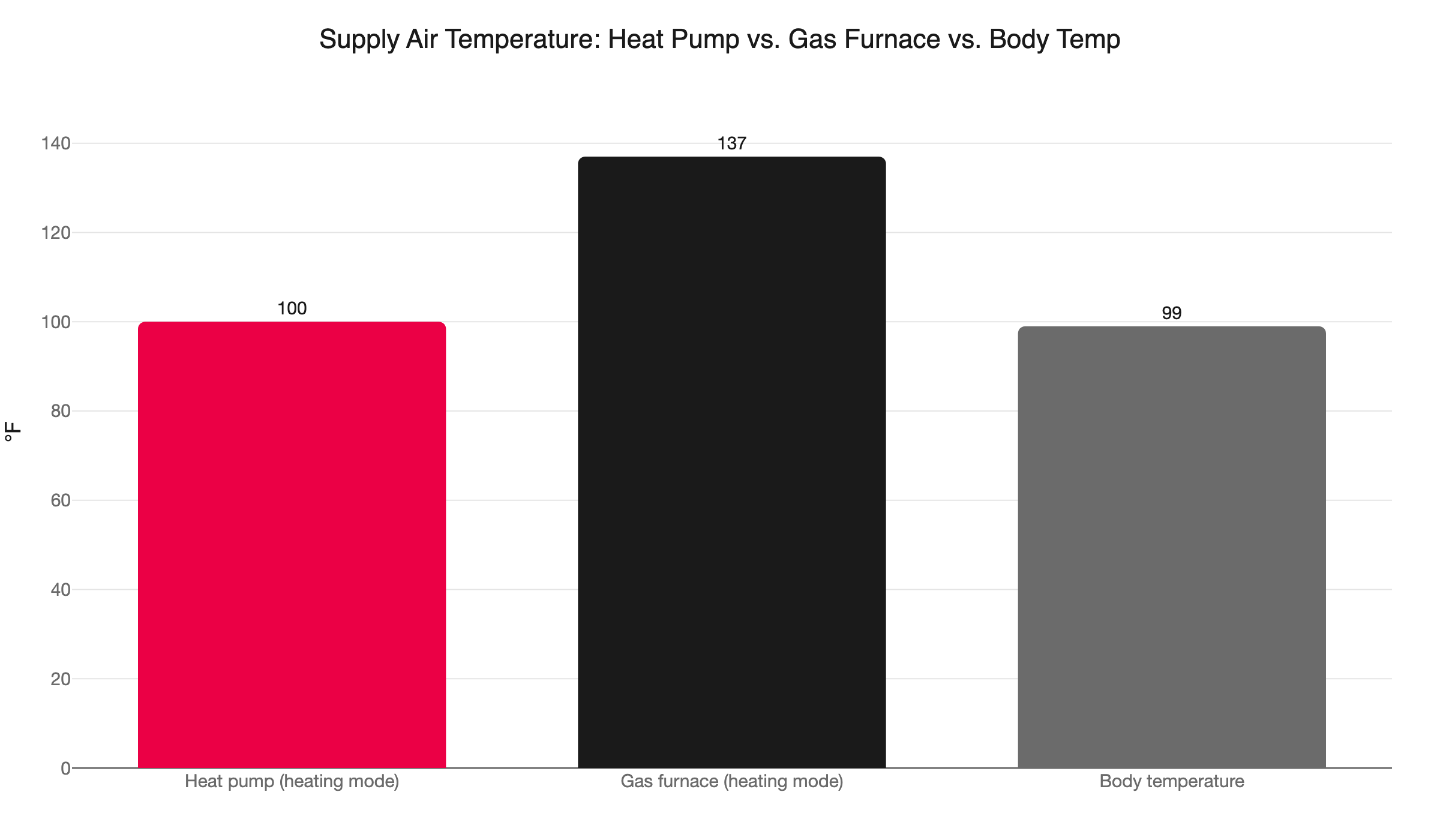
Supply Air Temperature: Heat Pump vs. Gas Furnace vs. Body Temp
## Why Your Heat Pump Blows Cool Air in Heat Mode
When a heat pump blows cool air in heat mode, the instinct is to assume something is broken. In most cases, the system is doing exactly what it is designed to do. The air coming out of your registers is warm enough to heat your home. It just does not feel that way, because it is not as hot as the gas furnace you may be used to.
**The short answer:** Heat pump supply air runs 90-110°F in heating mode. A gas furnace runs 125-150°F off the heat exchanger. Body temperature is 98.6°F. Air below body temperature feels cool against your skin, even when it is actively warming your home. That gap in perceived warmth is physics, not a malfunction.
Understanding where normal ends and a real problem begins saves you unnecessary panic. It also helps you catch a genuine fault faster when one does exist.
## Is 90°F Air from a Heat Pump Actually Too Cold?
No. It is warm enough to heat your home over time. It just does not feel warm against skin, and that difference trips up a lot of homeowners.
[Energy Vanguard's testing with actual thermometer measurements](https://www.energyvanguard.com/blog/is-heat-pump-supply-air-too-cold-for-heating/) confirms that a heat pump in heating mode delivers supply air at roughly 90-110°F at the coil. A gas furnace delivers roughly 125-150°F off the heat exchanger. Both can heat a well-insulated Twin Cities home to 70°F on a moderate winter day. The difference is in how they get there: a furnace blasts hot air in short, intense cycles, while a heat pump runs lower and slower for longer periods.
The perceived "cold" comes down to body temperature. [Air below 98.6°F feels cool to the touch](https://cielowigle.com/blog/heat-pump-blowing-cold-air/), regardless of how much warmer it is than the room it is heating. Hold your hand near a register delivering 95°F air. Your skin reads it as cool. Your thermostat reads it as steady progress toward setpoint.
The fastest triage you have is a thermometer. Hold it at a supply register while the heat pump is actively running in heating mode. A reading of 90°F or higher on a mild day confirms the system is working. A reading consistently below that range on a moderate day, combined with a house that is not reaching setpoint, warrants a service call.
One more thing worth understanding: heat pumps run much longer cycles than furnaces. A furnace fires hot, hits setpoint, and shuts off. A cold-climate heat pump may run almost continuously in cold weather, especially near or below the balance point. That means the air at the register feels "not quite warm" more of the time. But the total heat delivered into your home across those longer cycles is meeting its target. Longer run time is not failure. It is how the system is designed to work.
For homeowners switching from a gas furnace to a heat pump, the first Minnesota winter is often an adjustment. The supply air feels different. The system sounds different. The run patterns are different. All of that is expected.
## What Is a Heat Pump Defrost Cycle, and Why Does It Blow Cold Air?
A defrost cycle is a planned, automatic process where the heat pump briefly reverses into cooling mode to melt frost off the outdoor coil. It lasts 5-15 minutes and repeats every 30-90 minutes in cold or humid conditions. Done correctly, you should not notice it inside your home.
Here is the mechanism. When outdoor temperatures drop below freezing, moisture from the air freezes onto the outdoor coil surface. Ice builds up. A heavy ice layer blocks airflow and sharply reduces system efficiency. The control board detects frost buildup through a combination of time, outdoor temperature, and pressure sensors. It then reverses the refrigerant flow direction. For the duration of the cycle, the outdoor coil acts as a condenser, pushing warm refrigerant through itself to melt the ice. The indoor coil briefly operates in cooling mode during this window, which is why slightly cooler air can appear at your registers.
[Lennox's consumer resource on the heat pump defrost cycle](https://www.lennox.com/residential/lennox-life/consumer/heat-pump-defrost-cycle) confirms a standard cycle runs 5-15 minutes and can repeat as often as every 30 minutes in cold or humid weather.
From inside the house, here is what a normal defrost cycle looks and sounds like: the outdoor fan stops running, a soft hissing or gurgling sound may come from the refrigerant circuit, and steam may visibly rise from the outdoor unit as ice melts off the coil. All of that is normal.
Here is the part that surprises many homeowners. [Trane's consumer guide on the defrost cycle explains](https://www.trane.com/residential/en/resources/blog/what-is-heat-pump-defrost-cycle/) that auxiliary electric heat strips automatically engage during defrost to compensate for the temporary drop in heating capacity. When everything is working correctly, the supply air at your vents stays warm throughout the defrost window. You do not feel the cycle pass. You may hear the outdoor fan stop and restart. You may see steam outside. But you should not feel cold air indoors.
If you do feel cold air for 5-15 minutes and then the system returns to normal warmth, defrost is the likely explanation and that is normal operation. But if you feel cold air during defrost and it is notably uncomfortable, the auxiliary heat strips may be offline, undersized, or not wired to engage during defrost. That is the service item, not the heat pump itself.
## Why Twin Cities Homeowners Experience More Defrost Cycles Than Most
Our climate is a combination that drives frequent frost formation: cold temperatures and significant humidity. Together, they produce more defrost cycles than warmer or drier parts of the country.
The Twin Cities sits in IECC Climate Zone 6, with a heating design temperature of approximately -16°F. That is among the colder design conditions in the contiguous United States. At those temperatures, frost accumulates on the outdoor coil faster and more densely than it would in a milder climate.
The humidity adds another layer. The metro sits near the Minnesota River, the Mississippi, and dozens of lakes. High relative humidity on a cold day drives frost formation faster than dry cold does. A 28°F day at 80% relative humidity causes more frequent defrost cycles than a 10°F day at low humidity. That is pure physics.
The practical result for Minnesota homeowners: if you installed a heat pump in the last few years and your system defrosts frequently, that is not a sign of a problem. It is a sign that you live in a cold, humid climate. Guides written for Phoenix or Atlanta will make it sound unusual. It is not unusual here.
The [Northeast Energy Efficiency Partnerships cold-climate air-source heat pump specification v4.0](https://neep.org/cold-climate-air-source-heat-pump-specification-version-40) requires that a ccASHP-certified unit maintain rated capacity down to -13°F and achieve a coefficient of performance of at least 1.75 at 5°F. COP means units of heat output per unit of electricity in: a COP of 2 means you get two units of heat for every unit of electricity you pay for. A unit carrying that certification is designed to perform in a Minnesota winter, not just a mild one. But it will defrost frequently, and that is by design.
## When Your Heat Pump Blows Cool Air in Heat Mode: Is It a Real Fault?
Three situations cross from normal operation into a problem that needs service.
**1. The house temperature drops below setpoint and keeps dropping.**
A defrost cycle ends within 15 minutes, and the house temperature remains steady throughout. If your home temperature falls below what you set on the thermostat and continues to fall over the course of an hour or more, the system is not heating. Start by checking the thermostat: confirm the mode is set to "heat" and not "cool" or "fan only." If the thermostat is correct and the house is still losing temperature, call a technician.
**2. Supply air stays below 90°F on a mild day with no active defrost cycle.**
Hold a thermometer at a supply register on a 35-40°F day, with the system actively heating and no defrost cycle running in the last 15 minutes. A consistent reading of 60-70°F means the heat pump is not delivering full capacity. [Low refrigerant charge](/blog/low-refrigerant-heat-pump-symptoms-heating-cooling-minnesota/), a [failing compressor](/blog/heat-pump-compressor-failure-signs-replacement-cost-minnesota/), and a stuck reversing valve can all produce this symptom. None of these are conditions you can diagnose or correct without equipment.
**3. Cool air combined with unusual sounds from the outdoor unit.**
Grinding, clanking, or persistent hissing from the outdoor unit alongside cool air in heat mode is a stop-and-call situation. Running a compromised compressor or refrigerant circuit can turn a fixable repair into a full unit replacement. For a full reference on [heat pump normal noises versus problem sounds in Minnesota](/blog/heat-pump-normal-noises-vs-problem-sounds-minnesota/), we have a dedicated post covering what each sound typically means.
## Three Ways a Reversing Valve Fails
The reversing valve is what makes a heat pump reversible. It sits inside the refrigerant circuit and controls which direction refrigerant flows. Flip the direction and you flip the system from heating to cooling. The valve connects to your thermostat at the [O or B terminal](/blog/heat-pump-thermostat-wiring-aux-heat-staging-minnesota/), depending on manufacturer convention, and shifts position based on a voltage signal.
[Fieldpiece Instruments, a trade resource for HVAC technicians, identifies three distinct reversing valve failure modes](https://www.fieldpiece.com/news-articles/when-servicing-a-heat-pump-dont-overlook-the-reversing-valve/):
**Mechanical stick.** The spool inside the valve body gets physically stuck in one position. If it sticks in cooling mode while the thermostat calls for heat, the system delivers cold air all winter. Mechanical sticks do not self-clear. The valve must be replaced.
**Open-circuit solenoid coil.** The solenoid is what energizes to shift the spool when it receives a voltage signal. An open-circuit coil does not respond to that signal, so the spool does not move. A technician tests for this with a multimeter, checking for continuity and correct voltage at the coil terminals. A working coil also produces a magnetic field: a technician can test this by holding a screwdriver near the coil while energized and feeling for attraction. In some cases the solenoid coil alone can be replaced without removing the full valve body, which reduces the repair cost.
**Internal refrigerant leak.** This is the hardest failure to diagnose in the field. The valve develops an internal leak where high-pressure refrigerant bleeds to the low-pressure side. The symptoms look almost identical to low refrigerant charge or a failing compressor. Diagnosis requires comparing suction line temperature at the outdoor unit inlet to suction line temperature at the compressor inlet. A difference greater than 3°F between those two measurement points indicates the valve is leaking internally and needs replacement.
All three failures are inside the sealed refrigerant circuit. [As the U.S. Department of Energy's heat pump systems overview explains](https://www.energy.gov/energysaver/heat-pump-systems), refrigerant circuit work requires EPA 608 certification. This is not a DIY repair. The pressures involved are high, refrigerant is a regulated substance, and attempting this without certified equipment creates a real safety hazard.
The homeowner-level distinction that matters most: a stuck reversing valve causes the house temperature to fall and not recover. A defrost cycle causes 5-15 minutes of slightly different air at the vents, then returns to normal. One is a fault. The other is a built-in feature.
## What About Dual-Fuel Heat Pump Systems in the Twin Cities?
Dual-fuel is a common and practical configuration in Minnesota. A heat pump covers most of the heating load from fall through moderate winter temperatures. Below a set outdoor temperature - the balance point, often in the 25-35°F range - the gas furnace takes over, because burning gas is more cost-effective than running a heat pump when outdoor temperatures are extreme.
If you have a dual-fuel system and you are reporting cool air concerns, the first question is which system is actually running at that moment. At -5°F outside, the gas furnace should be the active heating source. If the heat pump is running at those temperatures instead and blowing cool air, the balance point may be configured incorrectly or the furnace may not be responding to the handoff signal. That is a controls diagnosis, not a heat pump fault.
For a full breakdown of [how heat pump balance points work in Minnesota and when backup heat takes over](/blog/heat-pump-balance-point-backup-heat-minnesota/), see our dedicated post.
Dual-fuel setup also affects your rebate eligibility. CenterPoint Energy offers up to $1,100 additional on top of the base heat pump rebate for dual-fuel configurations. That stacks meaningfully with the base program.
## Minnesota Rebates for Cold-Climate Heat Pumps
If this situation has you thinking about an upgrade, whether that means replacing an aging heat pump or making the switch from a gas-only furnace, the incentive environment in Minnesota is worth knowing right now.
[Xcel Energy offers up to $2,000 for a qualifying cold-climate ducted heat pump](https://www.xcelenergy.com/staticfiles/xe-responsive/Working%20With%20Us/24-1-201%20MN%20Res%20Rebate%20Summary%20Information%20Sheet.pdf). Qualifying units must have a COP of 1.75 or higher at 5°F and appear on the NEEP ashp list. Gas furnace rebates from Xcel were discontinued January 1, 2026.
[CenterPoint Energy offers up to $1,500 for a ducted air-source heat pump](https://www.grayducttechnologies.com/blog/the-big-list-of-minnesota-hvac-rebates-and-how-to-get-them/) in existing Minnesota homes, with up to $1,100 additional for dual-fuel systems. The federal 25C heat pump tax credit expired December 31, 2025. Utility rebates are now the primary savings path for Minnesota homeowners considering a heat pump installation or upgrade.
For a full look at [current Minnesota heat pump rebates and utility programs](/blog/minnesota-heat-pump-rebates-tax-credits/), see our dedicated rebates post with updated program details.
## What Should You Do If Your Heat Pump Blows Cool Air in Heat Mode?
Start with the thermometer test. Hold a standard thermometer at a supply register during active heating. A reading of 90°F or higher on a mild day means the heat pump is working. A reading well below that, with the house not reaching setpoint, means call a technician.
Time the cool air episode. If it lasts 15 minutes or less and the house temperature holds steady throughout, that is a defrost cycle. Normal. If the house temperature drops during or after the episode and does not recover over the next hour, that is a genuine fault.
Do not wait out a failing heat pump on a Minnesota winter night. At -10°F overnight, a system that is not heating drives interior temperatures down quickly. Pipes can freeze. That is not a situation to troubleshoot over several days.
Northern One Hour is locally owned and operated in Ramsey, MN. We serve the Twin Cities metro including Minneapolis, St. Paul, Blaine, Maple Grove, Plymouth, Brooklyn Park, Woodbury, and Bloomington. Our technicians diagnose heat pump issues with transparent pricing and give you a straight answer on repair versus replacement. When we say "Always On Time… Or You Don't Pay a Dime!(R)", we back it with a 100% satisfaction guarantee.
Call **(763) 260-6662** or [schedule a heat pump repair visit online](/heating/heat-pump-repair/). Same-day service is available for urgent heating needs.
---
# Mini Split vs Window AC Minnesota: Which Fits Your Home?
URL: https://northernonehour.com/blog/mini-split-vs-window-ac-twin-cities/
Published: 2026-08-22 | Category: Cooling
Twin Cities bungalow owner? Compare mini splits and window ACs on cost, efficiency, permits, HOA rules, and the current Xcel rebate stack before you buy.
Key Takeaways
- **Window ACs are cheaper upfront** ($200-$700 per unit) but cool only, and they last 8-12 years.
- **Mini-splits cost more installed** ($2,000-$10,000 per zone) but provide heating and cooling and last 15-20 years.
- **Xcel Energy rebates** can offset up to $2,600 of a cold-climate mini-split installation for Combo/Gas customers with qualifying insulation. Window ACs do not qualify for rebates.
- **The federal 25C tax credit expired December 31, 2025.** Installations in 2026 get no federal credit.
- **Casement and crank windows** common in older Twin Cities bungalows cannot accept a standard window unit without modification.
- **Mini-splits require two permits** in Minnesota: a mechanical permit and a separate electrical permit. Window ACs require none.
- **HOA rules** may restrict or ban both options. Get written approval before purchasing anything.
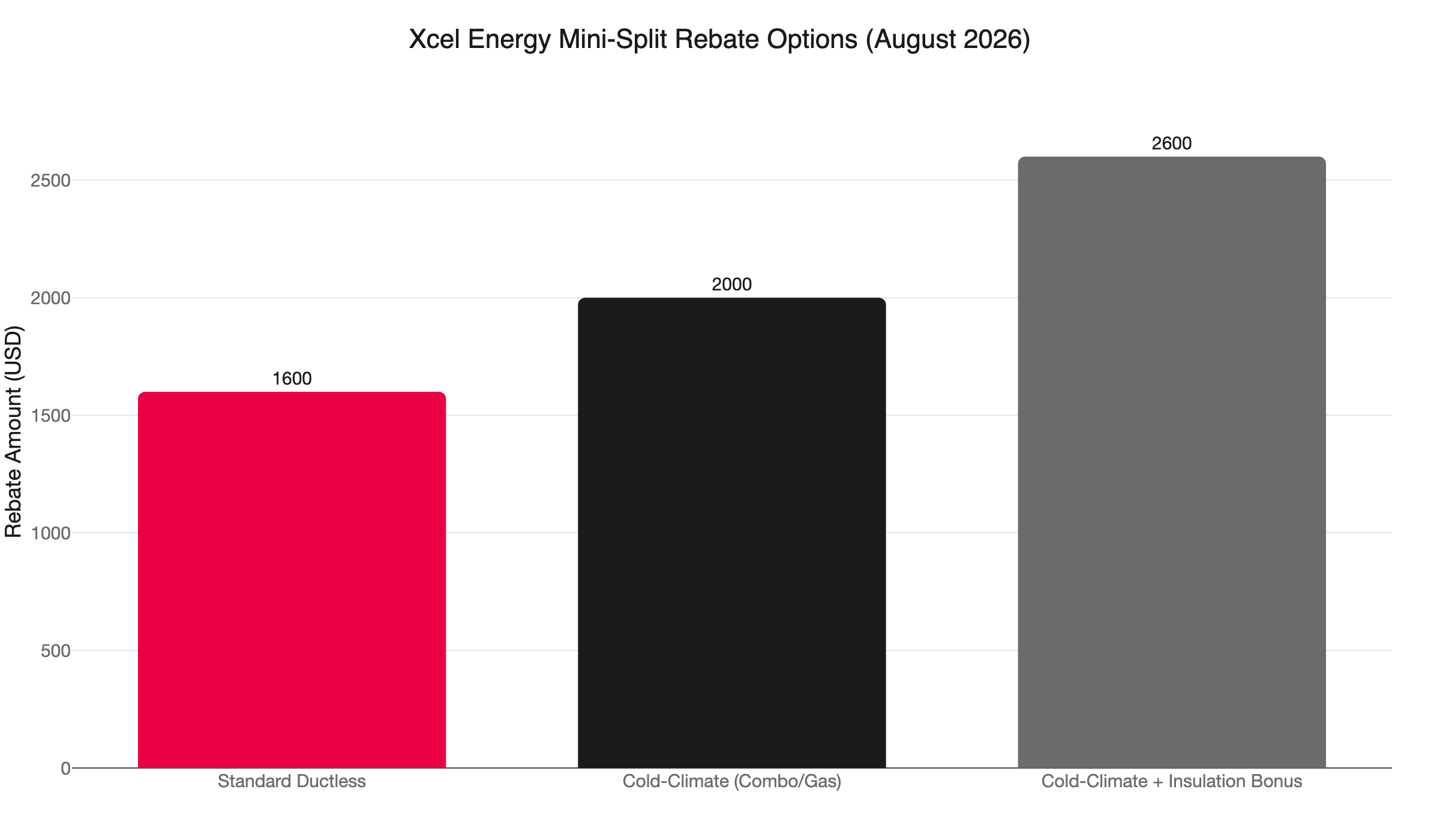
Xcel Energy Mini-Split Rebate Options (August 2026)
## Cooling Without Ductwork in the Twin Cities
If your Minneapolis or St. Paul bungalow was built before World War II, it probably came [without central air](/blog/replacing-window-air-conditioners-central-ac-cost-twin-cities/). The mini split vs window AC Minnesota debate is more complicated here than anywhere else in the country, and the national comparison articles won't tell you that.
Both options work. But the choice depends on details that are specific to your home: what kind of windows you have, what shape your electrical panel is in, whether your HOA has anything to say about exterior equipment, and what Xcel Energy will pay you back.
This guide is for Twin Cities homeowners, not a hypothetical homeowner somewhere in America. We'll cover cost, efficiency, noise, permits, HOA rules, and the rebate stack available right now.
## What Makes the Mini Split vs Window AC Minnesota Question Different?
*Twin Cities bungalows face three specific wrinkles: casement windows that don't fit standard window units, pre-1960 electrical panels that may need an upgrade, and a $2,600 Xcel rebate stack that doesn't exist for window ACs. None of the national comparison articles address any of these.*
Most people comparing these two products look at purchase price and efficiency ratings. Those things matter. But if you own a 1924 stucco bungalow in Linden Hills or a 1940 Cape Cod in Highland Park, the variables are more specific than any generic listicle covers.
[Many Minneapolis and St. Paul bungalows were built about 100 years ago](https://calldeans.com/blog/how-mini-splits-keep-old-minnesota-home-cool/) - pre-AC, no ductwork, designed for whatever ventilation came through open windows. Now those same windows may be casement-style, and that creates a hard physical problem for window AC units. Add a 100-amp electrical panel, an HOA with architectural review requirements, and a rebate program that changed significantly in 2025, and the decision becomes very specific to your house.
Minnesota winters also shift the math. Window ACs sit in a box in the garage from October through May. A cold-climate mini-split runs the heat all winter. That changes the cost-per-year comparison substantially.
## How Efficient Is Each System?
*Mini-splits and modern window ACs are surprisingly close on cooling efficiency alone, but mini-splits pull ahead because they also heat - and they bypass the duct losses that drain central systems.*
[EnergySage data](https://www.energysage.com/heat-pumps/mini-splits-vs-window-acs/) puts a basic window AC at roughly 11.4 EER, a modern high-efficiency window AC at about 15 EER, and a ductless mini-split at around 13.8 EER on a cooling-only basis. Those numbers are in the same ballpark.
But there are two factors that tilt real-world efficiency toward mini-splits in most older homes.
First: duct losses. If your home has a central forced-air system with ductwork in the attic, you're already losing efficiency there whether you run the AC or not. [The Department of Energy estimates that duct losses account for more than 30% of energy consumption for space air conditioning](https://calldeans.com/blog/how-mini-splits-keep-old-minnesota-home-cool/) in homes where ducts run through unconditioned spaces. A ductless system doesn't have that problem. The refrigerant line runs directly from the indoor head to the outdoor condenser - no air moving through leaky ducts in a 130-degree attic.
Second: heating. A cold-climate mini-split is a heat pump. It heats your home in January. A window AC does not. If you're trying to make a room addition or a finished attic comfortable year-round, a window AC gives you half the solution. That changes the per-year cost comparison significantly when you factor in what you're actually buying.
## What Does Installation Actually Cost?
*Window ACs run $200-$700 per unit with no professional install required. Mini-splits cost $2,000-$10,000 per zone installed, but they last 15-20 years versus 8-12 for a window unit. Xcel rebates change the net cost significantly for qualifying installs.*
[EnergySage](https://www.energysage.com/heat-pumps/mini-splits-vs-window-acs/) puts window AC cost at $200-$700 for basic units and $350-$700 for modern, higher-efficiency models. You buy them at a big-box store and install them yourself. No contractor, no permit, no coordination.
Mini-split installation is a different category. [Installed cost per zone](/blog/mini-split-installation-cost-twin-cities/) runs $2,000-$10,000 depending on brand, BTU capacity, whether you need a multi-zone setup, and what condition your electrical panel is in. That range is wide. A single-zone system in a room with straightforward panel access sits toward the lower end. A multi-zone system with a significant electrical upgrade sits higher.
[HVAC.com data](https://www.hvac.com/expert-advice/mini-split-vs-window-unit/) puts mini-split lifespan at 15-20 years versus 8-12 years for window units. Over two window-AC replacement cycles, the gap between a $500 window unit (purchased twice) and a $4,000 mini-split narrows. And the mini-split is also your heating solution in winter, which the window unit never was.
The Xcel rebate stack is the variable that moves the needle most. That's covered in detail below. For a general look at replacement and installation costs, our post on [AC replacement cost in Minnesota](/blog/ac-replacement-cost-minnesota/) covers the broader pricing landscape.
## The Casement Window Problem in Twin Cities Bungalows
Standard window air conditioners require a double-hung window - the kind that slides up and down. You raise the lower sash, set the unit in the opening, and seal the gaps around it.
Older Minneapolis and St. Paul bungalows frequently have casement windows (hinged on the side and cranked open horizontally) or awning windows (hinged at the top). You cannot fit a standard window AC in these openings without modifying the window frame. That modification can mean cutting trim, altering rough openings, and potentially compromising the original window - a significant carpentry project that changes the calculation entirely.
This isn't a minor inconvenience. It's a hard stop for a meaningful share of the homes most likely to lack ductwork in the first place.
A ductless mini-split has no such requirement. The indoor air handler mounts on the wall. A refrigerant line set runs through a three-inch hole to the outdoor condenser. Your existing windows are irrelevant to the installation.
Before you buy a window AC, identify your window type. If they're double-hung with a large enough opening, a window unit may work fine. If they're casement or crank-style, a mini-split is likely the practical choice regardless of the cost or efficiency comparison.
[Multi-zone mini-splits can serve up to four indoor air-handling units from one outdoor condenser](https://calldeans.com/blog/how-mini-splits-keep-old-minnesota-home-cool/). That means a single installation can cover a whole-house addition, a finished attic, or multiple rooms without ductwork - all with one permit application and one Xcel rebate submission.
## Does a Mini Split Heat as Well as It Cools?
*Yes. Cold-climate mini-split models operate effectively well below 0°F, making them a genuine year-round solution in Minnesota. Window ACs do not heat.*
This is where the comparison shifts most dramatically for Minnesota homeowners.
[EnergySage confirms](https://www.energysage.com/heat-pumps/mini-splits-vs-window-acs/) that cold-climate mini-split models are rated to operate well below 0°F. These systems are purpose-built for northern climates. If you're heating a sunroom, a finished basement, a room addition, or a bonus room above the garage in January, a cold-climate mini-split handles it. A window AC is in storage.
For homeowners solving a zone-specific comfort problem - a room that's always too hot in summer and too cold in winter because it doesn't connect well to the main HVAC system - the heating capability often makes the decision. You're not buying a cooling appliance. You're buying a year-round comfort solution that replaces both a window unit and whatever electric space heater currently sits in the corner.
Our post on [ductless mini-split systems for older Twin Cities homes](/blog/ductless-mini-split-older-twin-cities-homes/) covers the heating side in more detail, including which room types benefit most from this setup. If you're thinking about a full ductless installation, the [ductless mini-split installation page](/air-conditioning/ac-installation/ductless-mini-splits/) walks through what to expect from the process.
## How Loud Are These Systems?
*Window ACs clunk on startup and hum constantly. Mini-splits are nearly silent indoors because the compressor - the noisy component - sits outside. For bedrooms and home offices, the difference is significant.*
[EnergySage is direct on this](https://www.energysage.com/heat-pumps/mini-splits-vs-window-acs/): window units are loud on startup and maintain a persistent operational hum while running. Mini-splits are almost always very quiet at the indoor head unit. The compressor - the component that makes most of the noise - sits outside in the condenser.
For a bedroom or a home office, this matters. A window unit running overnight is background noise you eventually stop noticing. Until you remove it, and the room is suddenly quiet. A mini-split indoor head running at low speed is close to inaudible.
The outdoor condenser is a different story. It does make noise. On a dense city lot where your neighbor's bedroom window is 15 feet from your side yard, condenser placement matters. A good installer will walk the exterior with you before siting the unit. A condenser tucked behind a fence on the back of the house is a very different experience than one placed directly under a window.
Ask about noise ratings (measured in decibels) when comparing equipment. Most modern cold-climate models are reasonably quiet, but there's variance between brands and configurations.
## Permits, Panels, and Electrical Work
Window ACs do not require a permit in Minnesota. Plug a 115-volt unit into a standard outlet, or have an electrician run a dedicated 20-amp circuit for a 230-volt unit. The permitting process ends there.
Mini-splits require two permits: a mechanical permit for the HVAC equipment and a separate electrical permit for the new circuit. Under [MN Stat. 326B.33](https://www.northernmistersparky.com/blog/mini-split-electrical-circuit), homeowners cannot pull their own electrical permit. A licensed electrician must do that work. Minnesota also requires a weatherproof disconnect within sight of the outdoor unit, per NEC 440.14, applicable to all MN permits filed after July 1, 2023.
Older homes create one more variable. Pre-1960 houses commonly have 100-amp electrical service panels. Adding a 240V mini-split circuit requires a load calculation first. [Depending on what's already running on the panel](https://www.northernmistersparky.com/blog/mini-split-electrical-circuit), you may need a panel upgrade before the mini-split circuit can be permitted. That is an additional cost - and it needs to be part of your upfront budgeting, not a surprise after the equipment arrives.
For a more complete picture of what triggers an HVAC permit in Minnesota and what the inspection process involves, our post on [HVAC permit requirements in Minnesota](/blog/hvac-permit-when-required-minnesota/) covers the full list.
We're a locally owned HVAC company. The electrical side of a mini-split install requires a licensed electrician - our sister brand Northern Mr. Sparky handles that work, and we coordinate regularly on joint installs.
## Will Your HOA Allow It?
HOAs are the most overlooked variable in the mini split vs window AC Minnesota comparison, and no national competitor article develops this angle for Twin Cities homeowners.
The core issue: mini-split outdoor condensers are visible exterior equipment. Most HOA covenants, conditions, and restrictions (CC&Rs) classify them as architectural modifications subject to written approval before installation. If you install first and ask for forgiveness after the fact, the HOA may require you to remove the equipment at your expense.
Window ACs in street-facing windows are also commonly restricted or banned by HOA rules. Many HOAs prohibit window protrusions visible from the street, regardless of equipment type. This is a point that no competing article makes: a homeowner banned from a mini-split condenser by their HOA may also be banned from a window unit in the same window.
Before purchasing either system, pull your HOA CC&Rs and search for language on exterior modifications, window alterations, mechanical equipment, and architectural review. Then submit a written request for approval with a drawing showing placement before you schedule any work. Your installer should be prepared to provide documentation on unit dimensions and any screening options. Some HOAs will approve a condenser that is screened with approved fencing or plantings. Others have blanket restrictions that require a variance process.
One distinction worth raising with your HOA: a mini-split outdoor condenser sits on a pad outside the building and does not penetrate the structure the same way a window unit does. Some CC&Rs distinguish between equipment that penetrates the building envelope and equipment placed on the exterior. Whether that distinction matters to your HOA's architectural committee is something to verify in writing before you spend money.
## What Rebates Are Available for Minnesota Homeowners?
*Xcel Energy offers up to $2,600 for a qualifying cold-climate mini-split installation. The federal 25C tax credit expired December 31, 2025. Installations in 2026 receive no federal credit.*
This section requires care because the numbers have shifted substantially.
**Xcel Energy rebates (current as of August 2026):**
Xcel offers [$1,600 for a standard ductless mini-split, or $2,000 for a cold-climate model for Combo/Gas customers](https://homeenergybasics.com/heat-pumps/states/mn). Cold-climate equipment must appear on the NEEP list with a COP of 1.7 or higher. You do not need to use an Xcel participating contractor to qualify - any licensed contractor installation can meet the criteria.
If you completed qualifying insulation or air sealing within two years of the mini-split installation, Xcel adds a [$600 insulation bonus](https://homeenergybasics.com/heat-pumps/states/mn), applied automatically when you submit the rebate. The maximum stacked total for a Combo/Gas customer with qualifying insulation: $2,600.
CenterPoint Energy customers should ask about the Home Service Plus program, which [performs a computerized heat-loss/heat-gain sizing assessment and alerts customers to applicable rebates at the consultation](https://www.centerpointenergy.com/en-us/residential/services/home-service-plus/products/heating-cooling/ductless-air-conditioners?sa=mn).
**Federal 25C tax credit:**
The Section 25C Energy Efficient Home Improvement Credit expired December 31, 2025. The One Big Beautiful Bill Act, signed July 4, 2025, accelerated its expiration by nine years. [Installations completed in 2026 or later receive zero federal credit](https://homeenergybasics.com/heat-pumps/states/mn). Note: the EnergyStar.gov 25C page had not been updated to reflect this expiration as of this writing. Verify current status directly at IRS.gov before making decisions based on federal credit eligibility.
**Save Energy Minnesota:**
A state rebate of up to $4,000 for cold-climate air-source heat pumps (income-qualified) is [not yet launched as of 2026](https://homeenergybasics.com/heat-pumps/states/mn). Equipment must be installed after the program officially opens to qualify. There is no retroactive eligibility for earlier installs.
Window ACs do not qualify for any of these programs.
For a current breakdown of all available rebates and credit programs, our post on [Minnesota heat pump rebates and tax credits](/blog/minnesota-heat-pump-rebates-tax-credits/) is updated as programs change.
## Mini Split vs Window AC Minnesota: Which Option Is Right for You?
*Window ACs work best for quick, low-cost cooling in one or two rooms with standard double-hung windows and no HOA complications. Mini-splits are the stronger long-term choice for homes with casement windows, year-round heating needs, Xcel rebate eligibility, or aging electrical panels already due for an upgrade.*
Use this quick decision list:
**Choose a window AC if:**
- Your windows are double-hung with a large enough opening for the unit
- You need to cool one or two rooms on a tight near-term budget
- You're renting or the home will sell within a few years
- Your HOA explicitly allows window units
- The space is cooling-only and has no winter heating need
**Choose a mini-split if:**
- Your windows are casement, awning, or crank-style
- You need year-round heating and cooling in a zone without ductwork
- You plan to stay long enough to recoup the higher upfront cost
- You qualify for the Xcel rebate (especially the $2,600 stack)
- Your HOA will approve a condenser with proper documentation
- Your electrical panel is already being upgraded or replaced
For multi-room situations, a [multi-zone mini-split](/blog/mini-split-single-zone-vs-multi-zone-cost-twin-cities/) with one outdoor condenser and up to four indoor heads is often more cost-effective per room than separate window units across multiple rooms - particularly when you factor in a single permit, a single installation mobilization, and a single rebate submission.
## Ready to Talk Through Your Options?
We're a locally owned HVAC company serving the Twin Cities from Ramsey, Minnesota. We size and install ductless mini-splits for homes exactly like the ones in this article: bungalows without ductwork, room additions, finished attics, and garages. We do the HVAC work and coordinate directly with a licensed electrician on the circuit.
When you call us, we show up when we say we will. That is our promise: "Always On Time... Or You Don't Pay a Dime!(R)".
Call **(763) 260-6662** or book online to schedule a sizing assessment. We'll walk your home, look at your panel, flag any permit or HOA considerations upfront, and give you a clear number before any work starts.
---
# AC Short Cycling Twin Cities: Causes, Diagnosis, and Fixes
URL: https://northernonehour.com/blog/ac-short-cycling-causes-fixes-twin-cities/
Published: 2026-08-21 | Category: Cooling
Your AC turns on and off every few minutes. Learn the three causes of short cycling in Twin Cities homes, how to tell them apart, and what fixes apply.
Key Takeaways
- AC short cycling means run cycles of 2-5 minutes or less. Normal is 15-20 minutes during typical summer weather.
- Three root causes exist: an oversized unit, a frozen evaporator coil, or a refrigerant leak. Each has distinct symptoms and a different fix.
- When the short cycling started tells you a lot: day-one cycling points to oversizing; gradual onset with ice on the lines points to a frozen coil; sudden onset with warm air points to a refrigerant leak.
- In Minnesota, short cycling also means your home cannot dehumidify. July dew points of 65-70°F make that a mold risk, not just a comfort problem.
- Start with your air filter. A clogged filter is free to address and rules out the most common cause of frozen-coil short cycling.
- An older R-410A system with a confirmed refrigerant leak in 2026 is a repair-or-replace decision, not just a recharge.
- Xcel Energy offers up to $400 for qualifying central AC and up to $2,000 for a cold-climate heat pump. Federal tax credits stack on top.
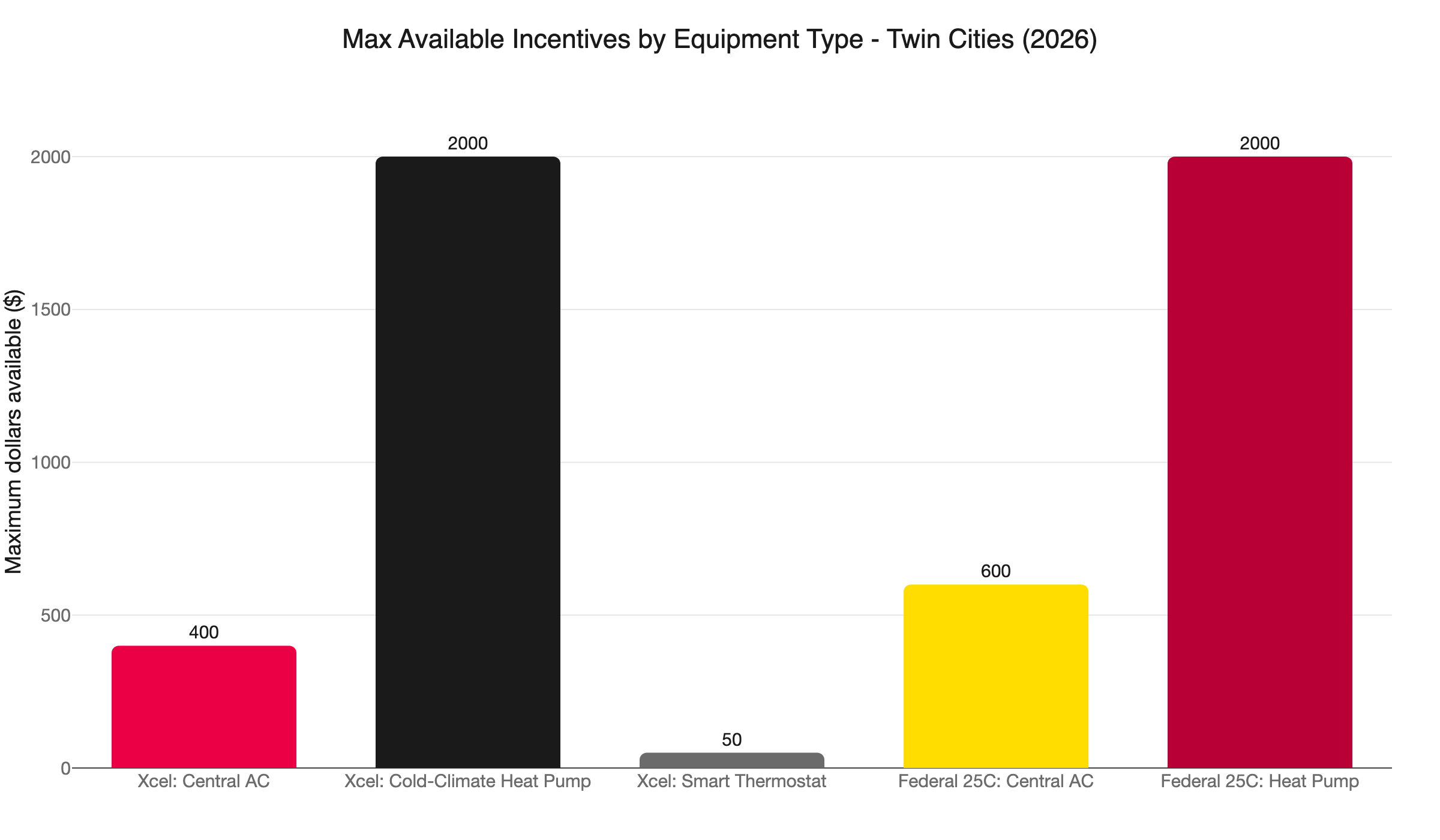
Max Available Incentives by Equipment Type - Twin Cities (2026)
## What Is AC Short Cycling?
Your air conditioner is designed to run in cycles of roughly 15-20 minutes. Short cycling means those cycles shrink to 2-5 minutes - or less. The compressor starts, briefly cools the air near the thermostat, satisfies the setpoint, and shuts off. Then it restarts a few minutes later. Repeat, all day.
That constant restart sequence is hard on equipment. Every cold start draws a surge of electrical current and mechanical stress on the compressor. Do it dozens of times a day and you compress years of normal wear into months.
This post covers the cooling-season version of the problem. It shares a name with the heating-season issue, but the causes are entirely different and so are the fixes.
## Why Does AC Short Cycling Hit Harder in Minnesota?
**Because in dry climates, short cycling mainly means uneven temperatures. In Minnesota, it also means your home fills with humid air that your AC cannot remove - and at summer dew points, that creates real mold conditions.**
Minneapolis dew points regularly reach [65-70°F during July and August](https://minnesotahvacauthority.com/minnesota-climate-hvac-requirements/). Your AC controls humidity by passing warm, moist air over a cold evaporator coil. Moisture condenses on the coil and drains away. That process takes time - more time than a 3-minute cycle allows.
[ENERGY STAR research](https://www.energystar.gov/ia/home_improvement/home_sealing/RightSized_AirCondFS_2005.pdf) puts it plainly: an oversized system "will cool the air before it has a chance to remove the humidity, making the room feel damp and clammy." A short-cycling system - whatever the cause - produces the same result. Your home reads 72°F and still feels sticky because the latent heat was never removed.
Sustained indoor humidity above 60% is a mold-risk condition. In a tight, well-insulated Minnesota home, that risk compounds quickly. Short cycling is not a minor efficiency complaint. In our climate, it is a home health issue.
## How Do You Tell the Three Causes Apart?
**Three questions narrow down the likely cause before you call anyone. They do not replace a technician's instruments, but they help you describe the problem accurately and point the diagnosis in the right direction.**
Bring your answers when you schedule service. They make the call faster and more focused.
**Question 1: Did your AC short-cycle on the very first day it was installed - and every day since?**
If yes, [an oversized unit](/blog/oversized-ac-problems-twin-cities/) is the most likely culprit. A system sized too large for the home's actual heat load satisfies the thermostat sensor in 2-3 minutes and shuts off. The rest of the home stays warm and humid. This is a design error, not a mechanical failure.
**Question 2: Did the short cycling develop gradually over weeks or months? Do you see frost or ice on the refrigerant lines or the indoor air handler?**
If yes, look at a frozen evaporator coil. Ice builds up on the coil, blocks airflow, trips a safety switch, and forces a shutdown. The coil freezes because of restricted airflow - usually a clogged filter or blocked return - or low refrigerant charge. Two different root causes. One common result.
**Question 3: Did the short cycling start suddenly this season? Is the air blowing warm? Do you hear a faint hissing sound near the indoor or outdoor unit?**
If yes, a refrigerant leak is the most likely cause. Dropping refrigerant charge reduces low-side pressure. The safety controls read that as a fault and shut the compressor down to prevent damage.
Write down which question best fits your situation. It will make the service call shorter and more useful.
## What If Your AC Short-Cycled from Day One?
**If the problem existed from installation, you likely have an oversized unit. An oversized AC satisfies the thermostat before it can dehumidify the home. The only real fix is a correctly sized replacement.**
An oversized AC cools the air near the thermostat quickly and shuts off. It never runs long enough to remove humidity from the full volume of conditioned air in the home. [ENERGY STAR's right-sizing research](https://www.energystar.gov/ia/home_improvement/home_sealing/RightSized_AirCondFS_2005.pdf) documents the efficiency cost directly: "when operating time increases from just 5 to 9 minutes, efficiency improves by 17 percent." An oversized system leaves that efficiency on the table every single cycle - and the homeowner pays for it in both utility bills and shortened equipment life.
Minnesota mechanical code requires a Manual J load calculation before sizing new heating and cooling equipment. That calculation accounts for your home's insulation values, window area, infiltration rate, orientation, and local climate data. It is not a rule of thumb. If you cannot find a Manual J report in your original installation paperwork, ask your contractor whether one was ever performed. [Understanding why proper HVAC sizing matters](/blog/hvac-sizing-manual-j-right-sized-system/) gives you the background to have that conversation confidently.
A compressor cannot be downsized after the fact. If oversizing is confirmed, replacement is the solution. That is unwelcome news, but it opens the door to current rebates and tax credits - which are meaningful right now. See the rebates section below.
## What Causes a Frozen Coil - and Why Does Ice Shut Your AC Down?
**A frozen evaporator coil is the shutdown mechanism, not the root cause. Ice on the coil is caused by restricted airflow or low refrigerant - two distinct problems that produce one common failure mode.**
When airflow across the evaporator coil drops below its design threshold, the coil cannot absorb enough heat from the passing air. Its surface temperature falls below 32°F. Moisture in the air freezes onto the coil. As ice builds up, airflow drops further - the ice itself becomes the restriction. The safety switch detects the condition and shuts the compressor off to prevent damage.
Two things cause airflow to drop that far:
**Restricted airflow.** A clogged air filter is the most common culprit. The filter blocks return air, starving the coil of warm air. The fix is simple: replace the filter and run the system on fan-only mode for 30-60 minutes to let the coil thaw. Then switch back to cooling and watch. If the short cycling stops, a filter was the entire problem. If it returns, something else is driving the freeze.
**Low refrigerant charge.** Low refrigerant reduces pressure on the low side of the refrigerant circuit. Lower pressure means a lower evaporator temperature. Even with adequate airflow, the coil gets cold enough to freeze moisture from the air. This is not something a homeowner can measure or address. It requires a technician with a set of manifold gauges.
Our detailed post on the [frozen evaporator coil](/blog/frozen-evaporator-coil-why-ac-ice-twin-cities/) covers what a technician checks during a service call and what repair typically involves. One important note: do not keep running a system you suspect has a refrigerant problem. A compressor running without adequate refrigerant can fail permanently - and a failed compressor often costs more to replace than the full system.
## Is Low Refrigerant the Cause? The 2026 Repair-or-Replace Factor
**A refrigerant leak on an R-410A system in 2026 is not a simple recharge call. It is a repair-or-replace decision. R-410A manufacturing is banned for new equipment, and aging systems face rising repair costs as the refrigerant supply tightens.**
Signs that point to a refrigerant leak include warm air from the supply vents, frost or ice on the copper refrigerant lines outside, a hissing or gurgling sound near the indoor or outdoor unit, and a system that ran fine last summer but has degraded noticeably this season. Our full guide to [AC refrigerant leak signs in Minnesota](/blog/ac-refrigerant-leak-signs-minnesota/) gives you a checklist to work through before the service call.
A technician must locate and repair the leak before recharging the system. Otherwise the refrigerant bleeds out again and you pay for the same service twice.
Now for the 2026-specific context. Most central AC systems installed before 2025 use R-410A refrigerant. Under the [EPA's AIM Act Technology Transitions Rule](https://www.epa.gov/climate-hfcs-reduction/aim-act-technology-transitions-rule), manufacturing of R-410A for new residential equipment was banned as of January 1, 2025. Existing R-410A can still be used to service older systems. A technician can still recharge your unit. But the supply is finite, prices are rising, and new systems use R-454B (Puron Advance) or R-32. You cannot mix refrigerant types between systems.
The practical question is this: if your R-410A system is 10-12 years old and has a significant leak, how many more cooling seasons are you buying with a repair? The repair extends a system approaching end of life, at increasing cost for a refrigerant that will only become harder to source. A new system uses current-standard refrigerant that will be serviceable for decades.
Ask your technician three things: the leak repair cost, the recharge cost, and an honest estimate on remaining system life. Then weigh those numbers against a replacement quote plus the incentives currently available.
## Can You Diagnose AC Short Cycling Yourself?
**You can rule out the most common fixable cause - a clogged air filter - before calling a technician. Beyond that, refrigerant pressure, airflow measurements, and coil condition require instruments your technician brings to the call.**
Here is what you can do without tools or training:
- **Replace the air filter.** If it is gray and packed with debris, swap it for a clean one. Run the system on fan-only mode for 30-60 minutes to let any ice on the coil thaw. Then switch back to cooling and watch. A clogged filter is free to fix and rules out the most common cause.
- **Check all supply and return vents.** Make sure none are fully closed, blocked by furniture, or covered by rugs. Every closed vent reduces system airflow and can push the coil toward freezing.
- **Clear the outdoor unit.** Remove leaves, grass clippings, and debris from around the condenser coil. The unit needs at least 12-18 inches of clearance on all sides to reject heat properly. Blocked condenser fins force the compressor to work harder in high humidity.
- **Look at the outdoor refrigerant lines.** The copper lines running from the house to the outdoor unit should be dry. Frost or ice on them is a clear sign of low refrigerant. If you see it, turn the system off and call for service. Do not keep cycling a low-refrigerant system.
- **Check your thermostat placement.** A thermostat in direct sunlight or near a lamp or TV reads a falsely high temperature and calls for cooling more frequently than needed. Moving the thermostat or adding a remote sensor can stabilize the call pattern.
If short cycling continues after all those checks, stop running the system. The problem is internal. Continuing to cycle a low-refrigerant or frozen-coil system risks compressor damage that turns a manageable repair into a replacement decision.
## When Does Short Cycling Mean You Need a New System?
**Three conditions tip the decision toward replacement: a confirmed oversized unit, a refrigerant leak on an older R-410A system, or a repair estimate that exceeds 50% of the cost of a new system.**
An oversized unit cannot be fixed without replacement. There is no compressor downsizing option. If that is the diagnosis, the only path to a system that actually performs is a new one sized correctly through a Manual J calculation.
An older R-410A system with a significant refrigerant leak faces two headwinds at once: the cost of the repair itself, and the tightening supply and rising price of R-410A refrigerant for future service needs. For many homeowners with a 12-plus-year-old system, the math favors replacement.
The 50% rule is a widely used contractor guideline: if a single repair costs more than half the price of a new system, the investment rarely makes financial sense. You put money into equipment that is still aging and will need the next repair sooner than a new system would.
The right sequence is to get both numbers - a repair estimate and a replacement quote - before deciding. Then factor in the rebates and credits available right now.
## What Rebates and Credits Are Available?
**Short-cycle-driven replacement opens the door to meaningful incentives from Xcel Energy and the federal government. Both programs are active in 2026, and they can be stacked to reduce your net cost by $1,000-$4,000 depending on equipment choice.**
The [Xcel Energy rebate program](https://www.xcelenergy.com/staticfiles/xe-responsive/Working%20With%20Us/24-1-201%20MN%20Res%20Rebate%20Summary%20Information%20Sheet.pdf) currently offers:
- Up to **$400** for a qualifying central AC replacement (SEER2-rated equipment)
- Up to **$2,000** for a qualifying cold-climate heat pump (ducted)
- **$50** for a qualifying smart thermostat
Rebates must be submitted within 60 days of installation. Your contractor must be an Xcel Trade Ally for the rebate to qualify. Ask before you book service if this matters to you.
The [federal Section 25C Energy Efficient Home Improvement Credit](https://www.irs.gov/credits-deductions/energy-efficient-home-improvement-credit) stacks on top:
- **30% of cost, up to $600/year** for qualifying central AC
- **30% of cost, up to $2,000/year** for a qualifying heat pump
You claim the credit on IRS Form 5695 with your 2026 return. A central AC replacement could net you $400 from Xcel plus $600 from the federal credit. A cold-climate heat pump could reach $2,000 from Xcel plus $2,000 federally. These are the incentive ceiling figures - your actual amount depends on installed cost and equipment qualification. The chart in this post shows the maximum amounts by equipment type and source.
CenterPoint Energy's rebate program is oriented toward gas heating equipment. If your cooling system is electric - as most central AC systems are - the rebates above run through Xcel. If you are also replacing a gas furnace in the same project, ask about stacking CenterPoint heating rebates on the heating side.
## How Northern One Hour Handles Short-Cycling Calls
We are locally owned and operated in Ramsey, Minnesota. We serve the full Twin Cities metro. When our technicians arrive for a short-cycling call, they run a full system diagnosis: airflow measurements, refrigerant pressure readings, thermostat calibration check, and a visual inspection of the coil and filter housing. They explain what they find before quoting anything. You know the diagnosis and the price before any work begins.
No surprises. No pressure. That is how we operate.
We back every appointment with the guarantee we stand behind every day: "Always On Time… Or You Don't Pay a Dime!(R)" If we schedule a window and miss it, the call is on us. That is not a marketing line - it is a standard we hold ourselves to because your time matters.
If the diagnosis points toward replacement, we will walk you through Xcel rebate eligibility and federal credit documentation with your estimate. We also offer financing options for replacement projects - so the upfront cost does not have to be the deciding factor.
Call our team at **(763) 260-6662** or [book your AC service appointment online](/air-conditioning/air-conditioning-repair/). Tell us when the short cycling started and what you have already checked. We will take it from there.
## Key Takeaways
- AC short cycling means run cycles of 2-5 minutes. Normal is 15-20 minutes during typical summer weather.
- Three root causes exist: oversized unit, frozen evaporator coil, or refrigerant leak. Each has distinct symptoms and a different fix. They are not interchangeable.
- The timing of onset is your first diagnostic clue: day-one cycling points to oversizing; gradual onset with ice on the lines points to a frozen coil; sudden onset with warm air points to a refrigerant leak.
- Start with the air filter. A clogged filter is free to address and rules out the most common cause of frozen-coil short cycling.
- Minnesota's humidity makes short cycling worse than in dry climates. A short-cycling system cannot dehumidify, and 65-70°F summer dew points create genuine mold risk in tight homes.
- An older R-410A system with a confirmed refrigerant leak in 2026 is a repair-or-replace decision. R-410A supplies are finite and prices are rising.
- If replacement is the answer, up to $400 in Xcel rebates and up to $600 in federal tax credits are available for central AC. A cold-climate heat pump opens up to $2,000 from Xcel and up to $2,000 federally - and both can be stacked.
---
# What Home Air Quality Monitor Indoor Numbers Actually Mean
URL: https://northernonehour.com/blog/home-air-quality-monitor-hvac-twin-cities/
Published: 2026-08-21 | Category: Indoor Air Quality
Your IAQ monitor is showing numbers. Here is exactly what each reading means for your furnace, filter, HRV, and ventilation system. Twin Cities edition.
Key Takeaways
- A home air quality monitor indoor tracks PM2.5, CO2, relative humidity (RH), and VOCs in real time. Each metric maps to a different part of your HVAC system.
- PM2.5 above 35 µg/m³ sustained means check your furnace filter. Above 55 µg/m³, check it today and consider a MERV 13 upgrade.
- CO2 above 1,000 ppm in a sealed Minnesota home in January is a ventilation problem. Your HRV needs more run time, not an open window.
- Humidity below 30% in winter is a whole-home humidifier problem, not a ventilation problem.
- VOC spikes call for immediate ventilation. The spike and recovery pattern is the useful signal, not the absolute number.
- Your IAQ monitor does not detect radon. In Minnesota, 2 in 5 tested homes exceed the EPA action level. Test separately with a dedicated kit.
- HRVs are preferred over ERVs in Minnesota's cold climate. Minnesota code requires balanced mechanical ventilation meeting ASHRAE 62.2-2022.
- Rebates up to $400 are available through Minnesota utilities for qualifying HRV and ERV installations.
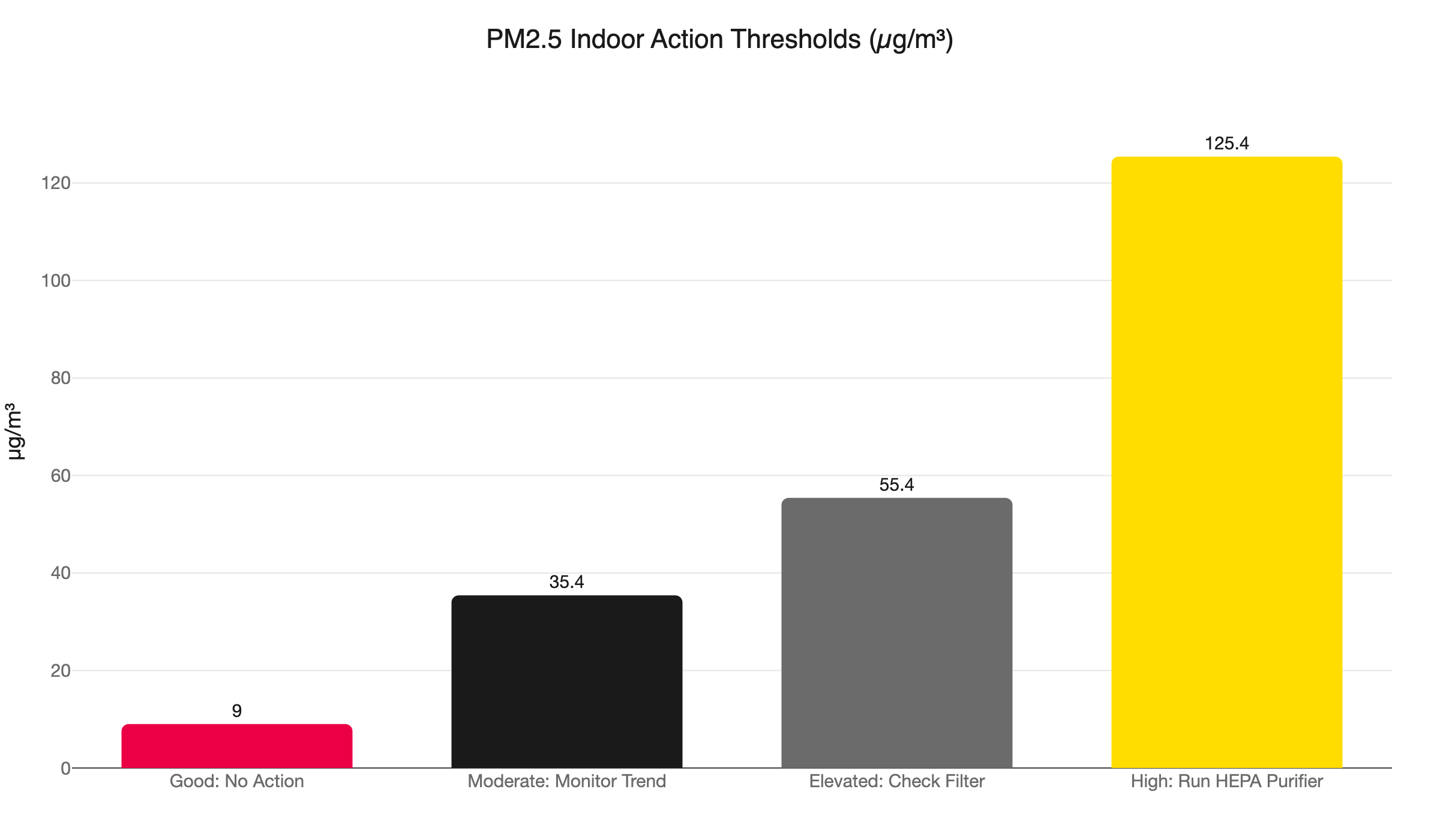
PM2.5 Indoor Action Thresholds (µg/m³)
## What Does a Home Air Quality Monitor Indoor Actually Measure?
**A home air quality monitor indoor tracks the concentration of airborne particles, gases, and moisture in real time. Most consumer units report PM2.5, CO2, relative humidity, and VOCs. Some add a carbon monoxide sensor. The readings are only useful if you know which HVAC response each threshold calls for.**
The device sits on a shelf and displays numbers. Without a translation layer, those numbers are just noise. With one, they become actionable: this reading means change the filter, that reading means the HRV needs attention, this other reading means buy a radon kit today.
Each metric in your monitor connects directly to a part of your heating and ventilation system. PM2.5 connects to your filter and air purifier. CO2 connects to your HRV or mechanical ventilation rate. Humidity connects to your whole-home humidifier. VOCs connect to your ventilation speed and source control. The sections below map each reading to a specific action for a Twin Cities home.
---
## What Are the PM2.5 Numbers on a Home Air Quality Monitor Indoor?
**PM2.5 is fine particulate matter 2.5 microns or smaller. The [EPA set the annual PM2.5 standard at 9.0 µg/m³](https://www.epa.gov/pm-pollution/national-ambient-air-quality-standards-naaqs-pm) as of February 2024. Consumer monitors report raw µg/m³ directly, not the 0-500 AQI scale used on outdoor weather apps. Readings above 9 are worth watching. Above 35, your filter is the first thing to check.**
PM2.5 includes dust, pollen, pet dander, smoke, and combustion particles. These particles are invisible to the eye and penetrate deep into lung tissue. Your furnace filter is the first line of defense against indoor PM2.5.
Filter capacity depends on MERV rating. MERV 8-10 captures pollen and mold spores. MERV 11-13 adds fine dust, pet dander, and smoke. MERV 17 and above meets HEPA standards at 99.97% efficiency at 0.3 microns.
Here is a critical caveat: [higher MERV ratings increase static pressure on the blower motor.](https://dalehcs.com/best-indoor-air-quality-monitoring-in-2026-top-solutions-for-healthier-homes-and-businesses/) Not every furnace can handle the added resistance. A system capacity assessment is necessary before jumping to MERV 13 or higher. Our team can tell you whether your equipment is rated for an upgrade before you buy a filter that harms the blower.
Here is how to read PM2.5 and respond:
- **0-9 µg/m³:** Good. Your current filter is doing its job.
- **9.1-35.4 µg/m³:** Moderate. Watch the trend. If it climbs steadily, check the filter within the week.
- **35.5-55.4 µg/m³ (sustained):** Elevated. Inspect the filter. If it is gray and compressed, replace it. Look for an indoor source: a renovation project, heavy cooking, or a wildfire smoke event.
- **55.5-125.4 µg/m³:** High. Inspect the filter now. If not already on MERV 13, review [whether your system is ready for the upgrade](/blog/air-purifiers-vs-filters-merv-ratings-explained/). Run a portable HEPA purifier in occupied rooms.
- **125.5 µg/m³ and above:** Run a portable HEPA purifier immediately. Confirm a MERV 13 or higher filter is installed. Identify the particle source.
If PM2.5 stays elevated after a fresh MERV 13 filter, the source may be duct leaks, a cracked heat exchanger, or combustion byproducts entering the air stream. That scenario needs a [professional assessment](/blog/indoor-air-quality-professional-test-vs-diy-monitor-minnesota/), not another filter swap.
---
## Why Is CO2 High When You Cannot Open a Window in Minnesota Winter?
**High CO2 in a sealed Minnesota home in winter is a mechanical ventilation problem. The fix is more HRV run time or a higher fan speed setting. "Open a window" at -10°F spikes your heating bill and risks condensation damage inside the wall cavity. It is not a real answer.**
[ASHRAE uses 1,000 ppm as the comfort and ventilation guideline for occupied spaces.](https://dalehcs.com/best-indoor-air-quality-monitoring-in-2026-top-solutions-for-healthier-homes-and-businesses/) Above 1,000-1,200 ppm, stale air causes drowsiness. Above 1,400 ppm, controlled studies find cognitive performance drops roughly 50%. The outdoor CO2 baseline sits around 420 ppm in 2026.
In a tightly sealed Twin Cities home during heating season, CO2 climbs as exhaust air fails to be replaced with fresh outdoor air. That replacement is your heat recovery ventilator's job. If CO2 is elevated and your HRV is running, check two things: whether the HRV core needs cleaning, and whether the fan speed is set to match your home's occupancy.
If your home has no mechanical whole-home ventilation, elevated CO2 readings during heating season are predictable. Many older Twin Cities homes were built before balanced ventilation was required by code. Read more about [whole-home HRV ventilation and whether your home needs it](/blog/hrv-whole-home-ventilation-minnesota/).
One sensor accuracy note: [budget monitors derive eCO2 from a VOC sensor, not a true NDIR (non-dispersive infrared) sensor.](https://inspectandtest.net/guides/best-indoor-air-quality-monitor/) If your monitor shows CO2 stuck at the same number regardless of how many people are home, you are likely looking at eCO2, a less reliable proxy. True NDIR is what you need for ventilation decisions.
CO2 action guide for Minnesota homes:
- **Under 800 ppm:** Normal. Good ventilation.
- **800-1,000 ppm:** Acceptable. Watch for an upward trend, especially overnight when people sleep in concentrated rooms.
- **1,000-1,200 ppm:** Increase HRV run time. If no HRV is present, schedule a ventilation assessment.
- **Above 1,200 ppm consistently:** Schedule an HRV assessment. The system may be undersized for your floor area and occupancy under ASHRAE 62.2-2022.
---
## What Does Low Humidity on the Monitor Mean for Your Furnace?
**Low indoor humidity in winter is almost always a whole-home humidifier problem, not a ventilation problem. Adding more cold, dry outdoor air makes humidity worse, not better. The fix is a humidifier, not an HRV speed increase.**
[The EPA targets 30-50% relative humidity for indoor spaces.](https://www.epa.gov/indoor-air-quality-iaq/inside-story-guide-indoor-air-quality) Below 30%, respiratory membranes dry out and infection risk increases. Above 60%, dust mites and mold thrive.
Forced-air gas furnaces dry indoor air significantly during heating season. In a tightly sealed Twin Cities home without a humidifier, relative humidity can drop to 15-20% by January. Your IAQ monitor catches this before you notice the static shocks, the dry throat, and the cracking woodwork.
When humidity drops below 30% in December or January:
1. Check whether your whole-home humidifier is operational. The water panel may be clogged with mineral deposits. The bypass damper may be closed from a summer setting. These are the two most common reasons a humidifier runs but produces no moisture output.
2. If your home has no whole-home humidifier, a [whole-home humidifier installation](/indoor-air-quality/humidifiers/) conditions every cubic foot of air your furnace circulates, not just one room. Portable units cannot keep pace with the air volume a forced-air system moves.
Humidity above 55-60% in summer, especially in a basement, is a different problem entirely. Your AC dehumidifies as it cools. If the reading stays elevated, a dedicated whole-home dehumidifier is the next step. Your IAQ monitor catches both the winter dry-air problem and the summer humid-air problem.
---
## What Do VOC Readings Mean, and When Should You Act?
**A VOC spike on your home air quality monitor indoor calls for immediate ventilation. Run your HRV at high speed, or open windows if outdoor temperature allows. Then monitor until the reading returns to your home's baseline. The spike and recovery pattern is the signal. The absolute TVOC number is not.**
[Indoor VOC concentrations are consistently 2-5x higher than outdoor levels.](https://www.epa.gov/indoor-air-quality-iaq/inside-story-guide-indoor-air-quality) Consumer monitors report a relative TVOC index, not specific chemical compounds. This matters: 400 ppb in your home does not mean the same thing as 400 ppb in a neighbor's home. Your personal baseline is the reference point.
Common VOC events and what to do:
- **Painting or staining:** Run HRV at high speed or open windows during and for several hours after. Monitor until the index returns to pre-paint baseline.
- **New carpet, flooring, or furniture:** Increase ventilation rate through HRV settings for several days. Some materials off-gas for weeks after installation.
- **Cleaning products:** Normal short spike. Ventilate briefly. Recovery should happen within an hour.
- **Cooking:** Normal mealtime spike. Run kitchen exhaust during and after cooking. ASHRAE 62.2-2022 requires a minimum of 100 CFM intermittent kitchen exhaust.
- **Chronically elevated TVOC with no obvious source:** Schedule an indoor air quality assessment. Source control often makes more sense than running ventilation at maximum indefinitely.
---
## Does a Home Air Quality Monitor Indoor Detect Radon?
**No. This is the single most important gap in what consumer IAQ monitors do. Radon is colorless, odorless, and radioactive. It requires a dedicated test kit or detector. A $150 IAQ gadget will never show you radon, no matter how many sensors it advertises.**
In Minnesota, [2 in 5 tested homes have radon at levels that are a major health risk.](https://mndatamaps.web.health.state.mn.us/interactive/radon.html) [The EPA recommends mitigation at 4 pCi/L and advises testing at 2 pCi/L.](https://www.epa.gov/sites/default/files/2015-03/documents/minnesota.pdf) Minnesota's statewide average tested level sits around 7 pCi/L, well above the action threshold. Most Twin Cities counties are EPA Radon Zone 1, the highest-risk designation in the country.
Radon is the second-leading cause of lung cancer in the United States. Test kits cost roughly $15 and are available at hardware stores and county health departments. A long-term test (90 days) is more accurate than a short-term kit for a definitive reading.
A whole-home IAQ monitor is a useful tool for daily air quality awareness. It is not a substitute for a radon test. These are two separate purchases covering two separate risks.
---
## What Does Minnesota's Ventilation Code Require?
**Minnesota residential buildings must have a balanced mechanical ventilation system meeting [ASHRAE 62.2-2022 or Minnesota Rules Chapter 1322.](https://minnesotahvacauthority.com/minnesota-hvac-ventilation-standards/) Exhaust-only systems are discouraged. Supply air must be tempered before delivery into the living space, a critical requirement when outdoor air drops to -20°F.**
The ASHRAE 62.2-2022 minimum ventilation formula: 0.01 CFM per square foot of conditioned floor area, plus 7.5 CFM per occupant. Occupant count equals the number of bedrooms plus one.
For a 2,000-square-foot, three-bedroom home: (2,000 x 0.01) + (4 x 7.5) = 20 + 30 = 50 CFM minimum continuous whole-house ventilation.
If CO2 readings stay elevated and your HRV is already running, the HRV may be undersized for your floor area and occupancy count. A ventilation assessment measures actual flow rates against the ASHRAE 62.2 target and tells you whether the system needs adjustment or replacement.
---
## HRV or ERV: Which Is Right for a Minnesota Home?
**For most Twin Cities homes, an HRV is the better choice over an ERV. HRVs manage latent heat differently, which reduces condensation risk during sustained sub-freezing conditions. Minnesota's sustained cold from November through February is where this distinction matters most.**
Both systems recover thermal energy from exhaust air before it exits the house. Both reduce heating costs compared to simple exhaust-only ventilation. The difference surfaces during deep winter: in extreme cold, ERVs can accumulate moisture in ways that HRVs manage more safely.
Both systems require a permit for installation. We handle permitting as part of the install process.
Read the full comparison, including how to size each system for your home's square footage and occupancy, in our guide to [ERV vs. HRV for Minnesota homes](/blog/erv-vs-hrv-which-ventilation-system-minnesota/).
---
## Are There Rebates for HRV or ERV Installation in Minnesota?
**Rebates are available. Minnesota Energy Resources offers $400 for qualifying systems rated at 65% or higher sensible recovery efficiency at 32°F. Minnesota Power offers $300 for systems at 60% SRE minimum. Federal IRA Section 25C tax credits for HVAC equipment expired December 31, 2025.**
Utility rebates are now the primary incentive stack for HRV and ERV installation in the Twin Cities. Programs change and eligibility varies by utility territory. Verify current terms with your contractor at the time of install. We pull the current rebate availability for your specific utility as part of any ventilation consultation.
---
## The Reading-to-Action Decision Table
Each metric, the threshold that calls for action, and the correct HVAC response:
| Metric | Reading | Action |
|---|---|---|
| PM2.5 | Under 9 µg/m³ | No action. Filter is working. |
| PM2.5 | 35-55 µg/m³ sustained | Check and replace furnace filter. |
| PM2.5 | 55+ µg/m³ | Inspect filter now. Upgrade to MERV 13 if system is rated. Run portable HEPA. |
| CO2 | Under 1,000 ppm | Normal. |
| CO2 | 1,000-1,200 ppm | Increase HRV run time. |
| CO2 | 1,200+ ppm consistent | Schedule HRV assessment. Check sizing against ASHRAE 62.2. |
| Humidity | Under 30% | Check whole-home humidifier operation. Schedule install if none present. |
| Humidity | 30-50% | Target range. No action needed. |
| Humidity | 55%+ in summer | Check AC. Consider whole-home dehumidifier. |
| TVOC | Spike above baseline | Identify source. Increase HRV speed. Monitor recovery. |
| TVOC | Chronically elevated | Schedule IAQ assessment. Source control may be needed. |
| Radon | Not shown on monitor | Buy and run a separate dedicated radon test kit. |
---
## When Should You Call Northern One Hour?
Your monitor is a diagnostic tool. It is not a repair tool. Here is when a reading means it is time to call us:
- PM2.5 stays elevated after a fresh MERV 13 filter is installed. The source may be duct leaks or combustion byproducts entering the air stream.
- CO2 stays above 1,200 ppm despite an HRV already running at full speed. The system may be undersized, malfunctioning, or out of balance.
- Humidity will not climb above 25% even with a whole-home humidifier running. The water panel may be clogged or the bypass damper may be incorrectly set.
- You want a permit-compliant HRV, whole-home humidifier, or whole-home IAQ system installed correctly.
- You have not had a combustion safety inspection this heating season. Carbon monoxide and combustion byproducts are not reliably detected by consumer IAQ monitors.
We are locally owned and operated in Ramsey, Minnesota, and we serve the full Twin Cities metro: Minneapolis, St. Paul, Blaine, Maple Grove, Plymouth, Brooklyn Park, Woodbury, and Bloomington. When we say we are on our way, we mean it. "Always On Time… Or You Don't Pay a Dime!(R)"
Call **(763) 260-6662** or book online to schedule an indoor air quality consultation. We will review your monitor readings, compare your ventilation rate against the ASHRAE 62.2-2022 target, and tell you exactly what your home needs before winter sets in.
---
# Why Is Upstairs So Hot in Summer? Fix It Step by Step
URL: https://northernonehour.com/blog/upstairs-too-hot-summer-cooling-twin-cities/
Published: 2026-08-21 | Category: Cooling
Learn why your upstairs gets so hot in summer and how Twin Cities homeowners can fix it - often starting with a free seasonal trunk damper adjustment.
Key Takeaways
- Temperature gaps of 10-20°F between floors are common in two-story Twin Cities homes during summer.
- The core cause is a pressure imbalance, not just "heat rises." Your duct layout is the primary driver.
- Most homes have a single return grille on the main floor, which starves the upstairs of airflow.
- The first fix costs nothing: adjust your seasonal trunk duct dampers to favor the upper floor.
- A smart thermostat with a wireless remote sensor in an upstairs room is a low-cost next step.
- Passive airflow regulators retrofit into existing register openings without opening walls.
- Closing downstairs vents is a mistake - it raises static pressure and can freeze the evaporator coil.
- Minnesota rebates from Xcel Energy, CenterPoint, and the federal Section 25C credit can be stacked in the same year.
- Northern One Hour helps you work through the sequence before recommending new equipment.
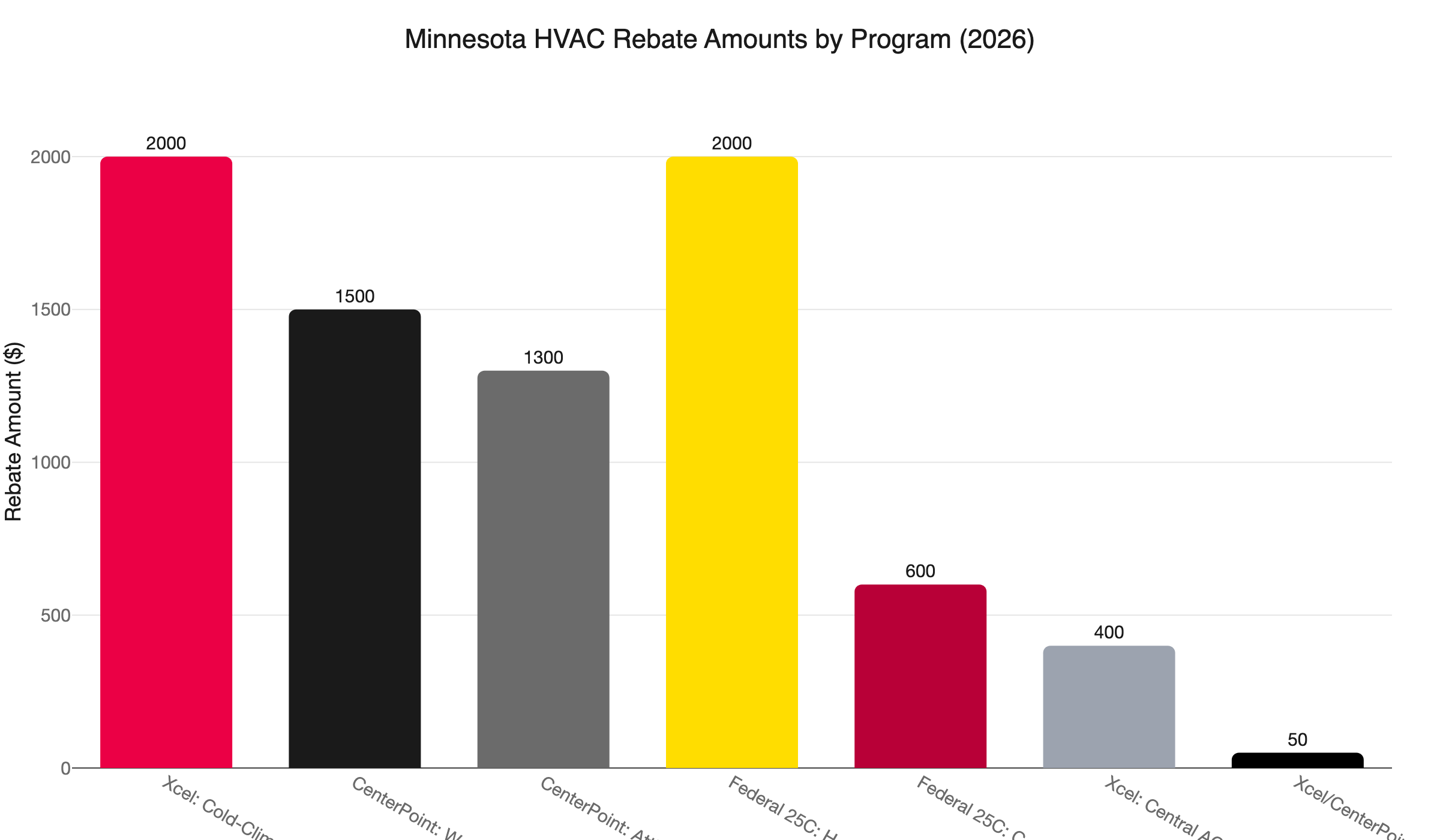
Minnesota HVAC Rebate Amounts by Program (2026)
## Why Is Upstairs So Hot in Summer?
**The short answer:** Warm air rises naturally, but the bigger issue is a pressure imbalance in the duct system. Most homes pull return air only from the main floor, leaving the upstairs with no clear airflow path back to the system. That creates a warm, trapped zone that supply registers can't overcome.
If your upstairs bedrooms run 10 to 15 degrees warmer than the main floor, you're not alone. This is one of the most common HVAC problems in two-story homes - and one of the most common calls we take here in the Twin Cities from June through August.
[Research on multi-story temperature stratification](https://hinarratives.com/reference/cooling-2/temperature-gradients-in-multi-story-homes/) shows that temperature can differ by 1.5°C (2.7°F) for every vertical foot of height difference. A two-story home with 9-foot ceilings can see a 10-20°F gap between floors in severe cases. But raw physics is only part of the story. The way your duct system is designed amplifies the problem in ways that most online guides never explain.
## What Makes the Return Air Side of the Problem So Important?
**The short answer:** Most two-story homes have a single return grille on the main floor. The air handler pulls air from downstairs while pushing cool air upstairs against gravity. That pressure imbalance makes it nearly impossible for upstairs supply registers to deliver enough cooling.
[DOE Building America Solution Center research](https://basc.pnnl.gov/information/pressure-balancing-supply-and-return-ducts-existing-homes) identifies the undersized return air path as one of the most common causes of poor thermal control in ducted systems. An unbalanced system wastes energy and creates exactly the floor-to-floor temperature gap you're living with.
Here's the sequence that plays out every hot day:
- The blower pulls air from the main-floor return grille.
- That creates slightly lower pressure downstairs and higher pressure upstairs.
- Warm air trapped upstairs has no easy path back to the return.
- Supply registers push cool air into that warm, pressurized space - and lose.
A properly designed two-story system would have return-air grilles on both floors, or transfer grilles cut above interior doors to let upstairs air find its way to the main return. Most existing homes don't have either. That's the return-air deficit. It explains why "the AC runs all day but the upstairs is still hot" tops our summer call list.
## How Does the Stack Effect Compound the Upstairs Heat?
**The short answer:** The stack effect creates a continuous thermal loop. Warm air escapes at the top of the house and cooler air is drawn in at the bottom. This loop fights your AC system every time it cycles off, especially when bedroom doors are closed upstairs.
[DOE Building Science Education confirms](https://bsesc.energy.gov/energy-basics/building-envelope-building-science-intro-heat-flow) that thermal buoyancy causes warm air to rise and floor-to-floor imbalance persists even in well-sealed homes. When the system cycles off, the loop continues on its own. Upstairs rooms become isolated warm pockets the next cooling cycle has to re-conquer.
Closing bedroom doors at night traps warm air with no return path. That room heats faster than an open-door room would. If the upstairs is hottest in the morning after a night with doors closed, the stack effect and the return-air deficit are both at work simultaneously.
## Does Minnesota's Humidity Make the Upstairs Problem Worse?
**The short answer:** Yes, significantly. Twin Cities dew points regularly reach 60-70°F in summer. Your AC must remove both heat and moisture at the same time. The latent load from humidity steals capacity from temperature control, leaving the upstairs hotter than the same house would be in a drier climate.
Minneapolis sits in [IECC Climate Zone 6A](https://autohvac.ai/climate-zones/minnesota/minneapolis-minnesota), with a 1% summer design temperature of 89°F. Add high humidity to that design point and [the system is working far harder](/blog/ac-struggling-extreme-heat-days-twin-cities/) than the efficiency rating implies. [Minnesota's seasonal humidity swings](https://midlandhtg.com/everything-you-need-to-know-about-how-minnesota-humidity-swings-affect-your-home-comfort-systems/) are a real amplifier of the upstairs comfort problem that most national guides skip entirely.
If the upstairs feels both hot and clammy, the moisture load is active. A whole-home dehumidifier can separate that load from the AC system and restore some of its sensible cooling capacity - especially helpful for upper-floor bedrooms in humid July and August.
## Is Your Attic Making the Upstairs Hotter?
**The short answer:** Almost certainly. A dark asphalt shingle roof reaches 150-170°F on a 90°F summer day. That heat conducts through the ceiling and into upstairs rooms all afternoon. It continues to radiate downward well after sunset.
Minnesota's IECC 2021 building code requires a minimum [R-49 for ceiling and attic insulation](https://autohvac.ai/climate-zones/zone/6a) in new construction. Many pre-2010 Twin Cities homes fall well short of that target, particularly near the eaves where insulation depth drops off. If you haven't had an energy assessment recently, the attic may be one of the largest contributing factors to your upstairs heat problem - and one of the most rebate-eligible fixes available.
Our post on [attic insulation, ventilation, and HVAC efficiency in Twin Cities homes](/blog/attic-insulation-ventilation-hvac-bills-ice-dams-twin-cities/) covers how attic conditions affect both summer cooling costs and winter ice dam risk.
## Step 1: Adjust Your Trunk Dampers - It Costs Nothing
Most forced-air systems have balancing dampers on the main trunk branches that carry air away from the furnace or air handler. These branches then split into smaller runouts that serve individual rooms and floors.
The dampers look like quarter-turn levers or small handles mounted directly on the large rectangular or round ductwork. They're usually located in the basement, close to the furnace, where the main trunks branch off the plenum. They may be labeled with arrows showing open and closed positions.
Most HVAC installers set those dampers [for winter performance](/blog/upstairs-too-cold-winter-heating-twin-cities/). That means more airflow to the lower floors, where heat loss is greatest during a Minnesota winter. Summer is the opposite problem. You need the upper floor to get more.
**The seasonal adjustment:**
- **Summer setting:** Open the upstairs trunk dampers fully. Restrict the lower-floor trunks to about 50% open.
- **Winter setting:** Open the lower-floor trunk dampers fully. Partially restrict the upstairs trunks.
Start with those settings and live with them for a few days before making further changes. The goal is a comfortable upstairs without making the main floor feel cold. Dampers can be tuned in small increments until you [find the right balance](/blog/how-to-balance-hvac-registers-airflow-twin-cities/). This single step can shift a meaningful share of airflow upstairs at zero cost.
Not sure where your dampers are, or whether your system has accessible ones? Call us at (763) 260-6662. Our team can locate and adjust them during any cooling service visit.
## Step 2: Add a Smart Thermostat With a Remote Upstairs Sensor
The standard thermostat reads temperature at one location - usually the main-floor hallway. When that spot reaches your target, the system shuts off. It has no idea the upstairs bedroom is still 8 degrees warmer.
A smart thermostat with a wireless remote sensor changes that. Place the sensor in an upstairs hallway or the bedroom that runs hottest. You can average the two readings or schedule the thermostat to prioritize the upstairs temperature during sleeping hours and the main floor during the day.
Xcel Energy offers a $50 rebate on ENERGY STAR-certified smart thermostats. CenterPoint offers the same. Both can be claimed in the same calendar year as other efficiency upgrades - including the attic insulation rebate, making a combined upgrade even more cost-effective.
For a detailed look at smart thermostat options and how to configure them for a two-story home, see our guide on [smart thermostat comfort and savings in the Twin Cities](/blog/maximize-comfort-and-savings-the-power-of-smart-thermostats-in-the-twin-cities/).
## Step 3: Consider Passive Constant-Airflow Regulators
If damper adjustment and a smarter thermostat close most of the gap but not all of it, passive constant-airflow regulators are the next step. This option doesn't appear in any of the top search results on this topic - and it should.
[DOE Building America research](https://basc.pnnl.gov/information/pressure-balancing-supply-and-return-ducts-existing-homes) confirms these inserts can be retrofitted from inside the room. Remove the register grille, insert a small cartridge into the duct neck, and replace the grille. No wall demolition. No new ductwork. They're available in 4, 5, 6, 8, and 10-inch sizes to match standard duct openings.
The cartridge maintains a constant airflow volume regardless of what static pressure is doing elsewhere in the system. That means the upstairs register delivers its designed volume of air even when conditions in other duct branches shift. Cost per register is modest - well below what a zoning system involves - and installation causes minimal disruption to the home.
## Should You Close the Downstairs Vents to Push Air Upstairs?
**The short answer:** No. It's a natural instinct, but it creates real damage. Closing vents raises static pressure in the duct system, starves the evaporator coil of airflow, and can cause the coil to ice over. A frozen coil stops all cooling - and manufacturers can cite restricted airflow as grounds to void the warranty.
Here's what happens when supply vents are closed:
- The blower pushes air into a system with fewer exit points.
- Static pressure throughout the ductwork rises.
- Airflow across the evaporator coil drops below the designed minimum.
- Coil temperature falls below the dew point and ice forms on the fins.
- That ice layer blocks remaining airflow and cooling stops entirely.
See our post on [why evaporator coils freeze and what recovery involves](/blog/frozen-evaporator-coil-why-ac-ice-twin-cities/) for a closer look at the damage pattern.
The trunk dampers near the furnace are the right tool for redirecting airflow. They're engineered to shift volume within the system's pressure design limits. Individual supply registers are not built for that role.
## When Should You Evaluate Zoning or a Second System?
**The short answer:** Try damper adjustment, a remote-sensor thermostat, and passive flow regulators first. If the upstairs is still 5°F or more warmer than the main floor after all three steps, it's time for an engineered solution - not before.
**Zoning systems** use motorized dampers on two separate trunk branches: one for upstairs, one for downstairs. Each zone gets its own thermostat. The governing standard is ACCA Manual ZR (Residential Zoning Systems). Zoning can solve the problem permanently. The duct system must be properly sized for bypass airflow. That's why it requires a professional design evaluation rather than a DIY installation.
Our post on [HVAC zoning systems for two-story homes](/blog/hvac-zoning-systems-two-story-homes/) covers the design requirements and what a properly engineered installation looks like.
**Check duct health before adding any equipment.** [Energy Star data](https://www.energystar.gov/sites/default/files/2024-12/ENERGY%20STAR%20Version%206.2%20Central%20Air%20Conditioner%20and%20Heat%20Pump%20Final%20Specification_1.pdf) shows duct leakage wastes 20-30% of conditioned air in a typical home. A SEER2 18 system with leaky attic ducts can perform at an effective SEER2 of only 12-14. Sealing those leaks first is often the highest-return step before adding zoning or new equipment.
**A second dedicated system** for the second floor is the correct answer when a Manual J load calculation shows the existing equipment is genuinely undersized for the total square footage. That's a real scenario in some Twin Cities homes, especially those with [large second-floor additions](/blog/bonus-room-over-garage-heating-cooling-minnesota/) built after the original system was sized. It's the last step in the sequence, not the first one.
## What Rebates Cover Upstairs Comfort Upgrades in Minnesota?
**The short answer:** Several programs apply, and they can be stacked in the same year. Xcel Energy, CenterPoint, and the federal Section 25C credit each cover different types of work. A thermostat rebate and an insulation rebate can be claimed together.
**Xcel Energy (electric customers):**
- Up to $2,000 for qualifying cold-climate heat pumps
- $400 for central AC at SEER2 16 or higher
- $50 for ENERGY STAR smart thermostats
**CenterPoint Energy (gas customers):**
- $1,300 for attic insulation and air sealing
- Up to $1,500 for wall insulation
- $50 for smart thermostats
- $1,100 for dual-fuel heat pumps
**Federal Section 25C (IRA):**
- 30% of installation cost, up to $2,000 for qualifying heat pumps
- Up to $600 for qualifying high-efficiency central AC
Stack those programs. Minneapolis homeowners in eligible Green Zone areas may also qualify for the Green Cost Share program. The combined rebate package on a qualifying heat pump installation can reach $14,000 or more. Verify current program availability at [ENERGY STAR's rebate finder](https://www.energystar.gov/rebate-finder).
## Get the Right Answer for Why Your Upstairs Is So Hot in Summer
The fix rarely starts with new equipment. It starts with the duct system: seasonal damper adjustment, return-air balance, and passive flow regulators. Layer in a smarter thermostat. Address attic insulation if the R-value falls short. Then consider zoning only if those steps don't close the gap.
As a locally owned and operated HVAC company serving the Twin Cities, we work through that sequence with you. We're not here to recommend the most expensive option first. We're here to find the fix that actually works for your home - at a fair price, on the first visit.
When you call, we show up. "Always On Time… Or You Don't Pay a Dime!(R)" is how we operate, not just a slogan.
Call us at **(763) 260-6662** or [book your cooling assessment online](/air-conditioning/). Our team serves Minneapolis, St. Paul, Ramsey, Blaine, Maple Grove, Plymouth, Brooklyn Park, Woodbury, Bloomington, and the surrounding Twin Cities metro. Let's get your upstairs comfortable before summer peaks.
---
# Condo HVAC Options Twin Cities: What HOAs Actually Allow
URL: https://northernonehour.com/blog/condo-townhome-hvac-options-twin-cities/
Published: 2026-08-20 | Category: HVAC
Own a condo in the Twin Cities? Find out which HVAC upgrades need HOA approval, which don't, and what utility rebates are available in 2026.
Key Takeaways
- Equipment inside your unit (furnace, air handler, thermostat, interior ductwork) is almost always the owner's responsibility. Most HOAs do not require approval for interior mechanical replacements.
- Exterior modifications (condensers, exterior wall penetrations, visible line sets) typically require HOA approval and may be restricted by CC&Rs.
- Window AC units are the most commonly banned HVAC category in condo rules. Interior-only alternatives like ceiling cassette mini-splits sidestep most appearance restrictions.
- Cold-climate mini-splits can maintain rated heating capacity to -13°F when they carry NEEP ccASHP certification. Backup heat is still standard practice for Minnesota's coldest stretches.
- In 2026, Xcel Energy offers up to $2,000 for a qualifying cold-climate mini-split. This rebate does not require a participating contractor.
- Federal 25C and 25D energy tax credits expired December 31, 2025. Do not build your budget around them.
- Every furnace replacement, AC installation, and heat pump installation in Minnesota requires a mechanical permit, including work in condominiums.
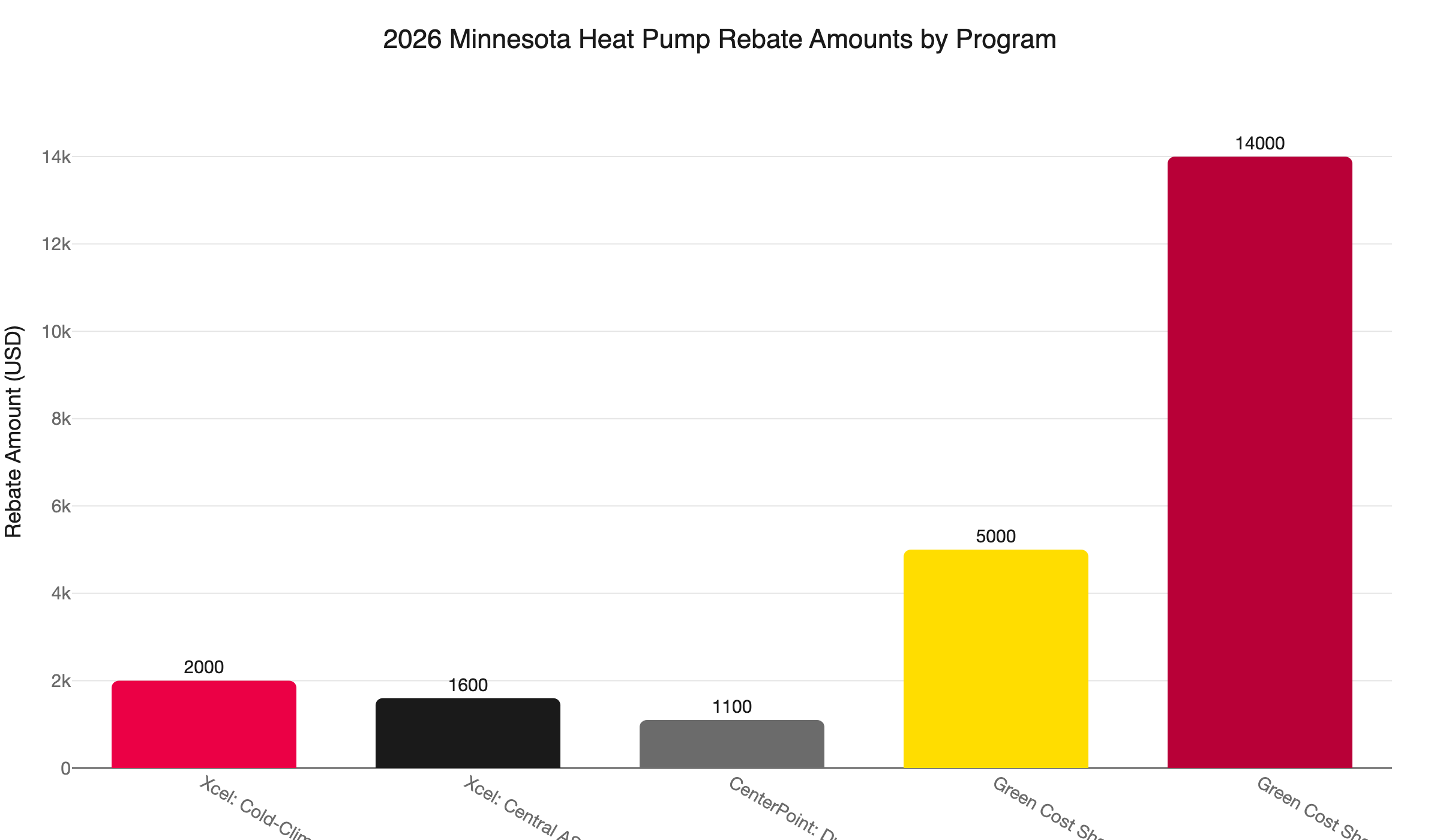
2026 Minnesota Heat Pump Rebate Amounts by Program
Sorting out condo HVAC options in the Twin Cities is harder than it should be. Your building has restrictions. Your HOA has opinions. And what a board can actually enforce is rarely the same as what it says it can enforce.
This post is written for the unit owner who already knows the building has rules. You want to know exactly what you can do without board approval. You want to know what requires a permit. And you want to know what money is still on the table in 2026.
## Who Controls What Inside a Condo?
Most condo declarations follow a clear boundary: what is inside the unit is the owner's responsibility, and what is outside or shared by the building is the HOA's. Your furnace, air handler, thermostat, and interior ductwork fall to you. Condensers, exterior wall penetrations, and shared building ductwork fall to the association.
Minnesota condominiums created after June 1, 1994 are covered by [Minn. Stat. Ch. 515B, the Minnesota Common Interest Ownership Act](https://www.revisor.mn.gov/statutes/cite/515B). The statute defines the boundary between unit and common element. Older associations may opt in voluntarily. Your declaration should specify exactly where that line falls for your building.
What the HOA typically polices is appearance and noise. Visible exterior equipment and decibel levels are the two areas where boards have clear authority. What is inside the unit, behind drywall, or not visible from the exterior or common areas generally does not require board approval. Unless your declaration explicitly says otherwise.
The practical implication: if you want to replace your furnace with a like-for-like unit, use the same flue pathway, and keep all work within your unit's walls, you can likely proceed after pulling a mechanical permit. No HOA meeting required. No architectural committee application.
Some associations have CC&Rs written in the 1980s or early 1990s. The language describing "alterations" or "modifications" predates ductless mini-splits, heat pump water heaters, and modern IAQ equipment. A board applying a rule from 1993 may be applying it to technology that did not exist when the rule was written. Knowing the vintage of your governing documents informs how you approach the board conversation.
## What Can You Change Without Board Approval?
Interior-only changes that do not alter the building's exterior or connect to shared systems usually fall within owner authority. A like-for-like furnace replacement rarely requires board approval. The same is true for a thermostat swap or air handler replacement. Complexity starts when the new equipment changes how venting exits the building.
A high-efficiency condensing furnace (90%+ AFUE) requires PVC exhaust venting and condensate drainage that differ from the flue pipe a mid-efficiency unit used. [Swapping from an 80% to a 96% furnace is not a like-for-like install](https://minnesotahvacauthority.com/minnesota-hvac-permits-and-inspections); inspectors verify the venting change. If that new venting runs through a shared shaft or penetrates an exterior wall, you may need HOA sign-off before the city issues the permit.
The condensate from a high-efficiency furnace also needs somewhere to go. In a condo, that drain line must run inside the unit or connect to a shared drain. A contractor familiar with condo installations knows how to route condensate without violating building rules or creating moisture problems.
Interior ductwork changes that stay entirely within your unit are generally yours to modify. Changes that touch shared ductwork or a common plenum cross into HOA territory.
The safest approach: pull the permit first. Let the mechanical inspector's scope define what the work touches. If the work triggers an HOA conversation, you have a clear technical description to bring to the board rather than a vague request.
## Condo HVAC Options Twin Cities Owners Can Actually Install
Here is where condo owners across Minneapolis, St. Paul, Ramsey, Maple Grove, Blaine, Plymouth, Brooklyn Park, and Woodbury have more choices than they often realize.
**Furnace replacement**
If your condo has a gas furnace and a dedicated flue, replacing it with a higher-efficiency unit is usually straightforward. The permit process is the same as in any single-family home. HOA complexity arises only when the new venting path changes something exterior-facing.
Pair a new furnace with a smart thermostat and you gain meaningful efficiency and comfort control without touching anything the HOA can see. See our guide on [ductless mini-splits in older Twin Cities homes](/blog/ductless-mini-split-older-twin-cities-homes/) for context on how building age and layout affect equipment choices.
**Ductless mini-splits**
A ductless mini-split has two parts: an indoor air handler and an outdoor condenser connected by a refrigerant line set. The line set runs through a small wall penetration, typically two to three inches in diameter.
The HOA generally cannot restrict what is inside your unit. The condenser and the wall penetration are where restrictions apply. But [HOA authority over HVAC almost always comes from "exterior modification" or "architectural change" clauses](https://indoortemp.com/resources/how-home-owners-associations-impact-hvac) written before ductless systems existed. A board applying a 1998 rule may be applying it to technology it never contemplated.
Concealed configurations reduce or eliminate the exterior-visibility concern:
- **Ceiling cassette:** Recessed flush into the ceiling. Fully hidden from the street, courtyard, or any common area.
- **Floor-mount (recessed):** Set low on an interior or rear-facing wall near the floor.
- **High-wall unit on interior or rear walls:** Not visible from the parking lot, street, or exterior common areas.
A written proposal with photos of the planned configuration and condenser location often resolves HOA concerns faster than a verbal request. Boards respond better to specifics than to general descriptions.
**Air handler or fan coil replacement**
If your building provides centralized chilled water or hydronic heating, you likely have a fan coil unit inside your unit. Replacing that unit is entirely interior work. No outdoor condenser, no refrigerant permit, no exterior penetration. This is one of the cleanest upgrade paths available in a multi-story condo building.
**Indoor air quality (IAQ) upgrades**
Whole-unit air purifiers, MERV-13 or better filtration upgrades, and humidity control devices that connect to your existing air handler are all interior-only changes. No HOA approval is needed. These upgrades matter more in a sealed, multi-unit building than in a single-family home. Units share ventilation shafts. Odors and particulates travel. A high-efficiency filter or whole-unit purifier gives you control over the air inside your unit without touching any shared system.
## What About Window AC Units?
[Window AC units are the most commonly banned HVAC category in condo CC&Rs](https://indoortemp.com/resources/how-home-owners-associations-impact-hvac), and those bans are generally enforceable when the building has any alternative cooling option available. If your building has central cooling or permits ductless systems, the board has standing to enforce a window unit prohibition.
If your building has no cooling at all and you have no alternative, enforcement becomes more complex. That question is for an HOA attorney, not an HVAC technician.
The practical answer for most Twin Cities condo owners: a single-zone ductless mini-split is a cleaner, quieter, and more efficient [alternative to a window unit](/blog/mini-split-vs-window-ac-twin-cities/). The concealed configurations described above make it HOA-acceptable even in buildings that prohibit window units outright. You get better cooling performance, no window obstruction, and no seasonal installation and removal hassle.
## Will a Mini-Split Work If the HOA Won't Allow Exterior Equipment?
If your HOA categorically prohibits exterior condensers on the building, a traditional split-system mini-split is not an option. Alternatives include portable air conditioners (self-contained, exhaust through a removable window kit, no wall penetration), fan coil unit upgrades if the building has a central chilled water loop, and heat pump water heaters that reduce cooling load without any outdoor equipment.
Portable AC units are less efficient than mini-splits and considerably louder. But they require no wall penetration and no outdoor equipment. Most HOAs allow them because the window kit is removable and leaves no permanent mark on the building.
If a condenser on an exterior wall is the sticking point but the board has not banned all exterior equipment entirely, ask specifically about rooftop placement, a mechanical room, or a shared equipment pad if the building has one. The answer depends on building design and the governing documents.
## Can a Heat Pump Handle Minnesota Winters in a Condo?
Yes, with the right equipment and a backup heat source. Cold-climate heat pumps with NEEP ccASHP certification maintain rated heating capacity to -13°F. [Minneapolis-Saint Paul sits in IECC Climate Zone 6](https://minnesotahvacauthority.com/minnesota-climate-hvac-requirements/) with a 99% heating design temperature of approximately -16°F. Backup resistance or gas heat remains standard design practice to cover that gap on the coldest Minnesota days.
A dual-fuel setup works well for condo owners who have both gas and electric service. The heat pump handles the vast majority of heating hours. The furnace covers the coldest stretches of winter. The system switches automatically based on outdoor temperature.
For more detail on how cold-climate heat pumps perform when temperatures drop well below zero, see our post on [heat pump performance in below-zero Minnesota conditions](/blog/heat-pump-below-zero-performance-minnesota/).
The condo-specific consideration is condenser footprint. Heat pump condensers are typically similar in size to a standard AC-only condenser. If your HOA has already approved a traditional AC condenser at your unit, a heat pump condenser should fall under the same approval category. Bring the equipment specifications to your HOA application so the board can compare dimensions directly.
## What 2026 Rebates Are Available for Condo Owners?
[Xcel Energy's 2026 heat pump rebates](https://mn.my.xcelenergy.com/s/residential/heating-cooling/heat-pumps) offer up to $2,000 for a qualifying cold-climate ductless mini-split, with no participating-contractor requirement. CenterPoint offers $1,100 for a qualifying dual-fuel ASHP with a 92%+ AFUE gas furnace as backup. Minneapolis homeowners can add the Green Cost Share program on top. Federal 25C and 25D credits expired December 31, 2025, and no replacement exists.
**Xcel Energy**
For Xcel customers, a qualifying cold-climate ductless mini-split earns $2,000. A central cold-climate ASHP earns $1,600 (combo gas and electric customers) or $1,100 (electric-only customers). Critically, the mini-split rebate does not require installation by a participating contractor. Central system rebates do. For condo owners who want full flexibility in contractor selection, that distinction matters.
**CenterPoint Energy**
[CenterPoint's 2026 program](https://www.centerpointenergy.com/en-us/residential/save-energy-money/efficiency-programs-and-rebates/heating-system-rebates?sa=mn) offers $1,100 for a ducted ASHP installed as a dual-fuel system paired with a 92%+ AFUE gas furnace at a 40°F switchover setpoint. CenterPoint does not rebate mini-splits or heat pumps that replace gas heating entirely.
**Stacking rebates**
If you have both Xcel electric and CenterPoint gas service, a qualifying dual-fuel system can [stack both programs for a combined $3,100](https://homeenergybasics.com/heat-pumps/states/mn) before any local programs are added.
**Minneapolis Green Cost Share**
Minneapolis homeowners can apply the [Minneapolis Green Cost Share program](https://www.minneapolismn.gov/government/programs-initiatives/environmental-programs/green-cost-share/) on top of utility rebates. The program offers up to $5,000 outside a designated Green Zone, or up to $14,000 inside a Green Zone, for qualifying 1-4 unit residential properties. You must qualify for an Xcel or CenterPoint rebate first. Funding is first come, first served.
**What is gone in 2026**
Federal 25C and 25D energy tax credits expired December 31, 2025. The One Big Beautiful Bill Act, signed July 4, 2025, ended both credits nine years early. No replacement credit exists for equipment installed in 2026 or later. Older articles referencing a 30% federal credit are out of date.
Xcel gas furnace rebates also ended January 1, 2026. A furnace-only upgrade earns no utility rebate this year.
The Minnesota HEAR program (Save Energy Minnesota) has not launched as of August 2026. No retroactive rebates are permitted. Work completed before the program launches will not qualify.
For a full breakdown of what is currently stackable in Minnesota, see our post on [Minnesota heat pump rebates and how they work](/blog/minnesota-heat-pump-rebates-tax-credits/).
## Do You Need a Permit for Condo HVAC Work?
[Minnesota law requires a mechanical permit for every furnace replacement, AC installation, heat pump installation, and significant ductwork change](https://minnesotahvacauthority.com/minnesota-hvac-permits-and-inspections), including work in condominiums. This is not optional and is not waived because you are in a multi-unit building. Unpermitted work can block a real estate transaction, trigger an insurance denial, and create complications with your HOA if the installation is ever questioned.
Three specific problems come with skipping the permit:
1. **Real estate transactions.** A failed inspection at resale can require removal of unpermitted equipment or kill the transaction.
2. **Insurance claims.** Insurers can deny a claim if the triggering equipment was installed without a permit.
3. **HOA documentation.** A permit creates a paper trail that the work met code. No permit means no documentation if the board ever challenges the installation.
The permit also protects you during the work itself. A licensed contractor pulls the permit. A city mechanical inspector verifies the installation meets Minnesota's mechanical code. You get official documentation that the equipment is safe. For high-efficiency condensing furnaces, the inspector specifically checks that PVC exhaust venting and condensate drainage are installed correctly. That matters for your safety and for the equipment warranty.
For a full rundown of what triggers a mechanical permit in Minnesota, see our post on [when HVAC permits are required in Minnesota](/blog/hvac-permit-when-required-minnesota/).
## How Northern One Hour Helps You Navigate Condo HVAC Options in the Twin Cities
We are locally owned and operated out of Ramsey, MN. We serve Minneapolis, St. Paul, Blaine, Maple Grove, Plymouth, Brooklyn Park, Woodbury, Bloomington, and the surrounding metro communities. When you call us, you are talking to someone who knows what city inspectors in your jurisdiction check, what condo-specific venting challenges look like, and what HOA conversations we have had on similar buildings before.
Condo HVAC in the Twin Cities requires a different approach than a standard single-family job. We size systems correctly for individual units. We handle the permit paperwork. We coordinate with your HOA when approval is required. We schedule around the inspection and stay until the job passes.
The rebate landscape also changes fast. Stack Xcel and CenterPoint rebates on a qualifying dual-fuel system and you reach $3,100 in utility rebates. Add the Minneapolis Green Cost Share on top, and the total can climb significantly higher. We will walk through every program that applies to your specific address before you commit to a system.
Our promise: "Always On Time… Or You Don't Pay a Dime!(R)" Backed by a 100% satisfaction guarantee and transparent, upfront pricing, we aim to make an already-complicated situation as straightforward as possible.
Ready to talk through your options? Call us at (763) 260-6662 or book online to schedule your assessment. We will give you a clear path forward.
---
# Mini Split Maintenance Minnesota: Annual Service Guide
URL: https://northernonehour.com/blog/ductless-mini-split-maintenance-cleaning-minnesota/
Published: 2026-08-20 | Category: HVAC
Minnesota mini splits run in heat mode all winter. Here's what that means for your annual filter, coil, and drain line service before cooling season.
Key Takeaways
- Clean your indoor air filter every 4 to 6 weeks during heating season, not just once in the fall.
- The spring service window - late April to early May - is the most important annual appointment for Minnesota mini splits, not a fall tuneup.
- In heat mode, the indoor coil runs warm and dry all winter. Dust bakes on without condensate to rinse it away.
- The indoor drain line sits completely dry and stagnant from November through April. When cooling starts, a biofilm-lined drain is a water damage risk.
- The outdoor unit needs snow-stand mounting 12 to 24 inches off the ground with at least 2 feet of clearance on all sides.
- A drain pan heater prevents defrost melt water from refreezing and damaging the fan or cracking the coil.
- Xcel Energy offers up to $2,000 in rebates for qualifying cold-climate heat pumps. Federal tax credits ended December 31, 2025.
- Northern One Hour is locally owned and operated in Ramsey, MN. Call **(763) 260-6662** or book online to get on the spring schedule.
## Why Mini Split Maintenance Minnesota Requires a Different Approach
Most mini split maintenance advice is written for mild climates. Clean the filters twice a year, rinse the outdoor fins, schedule a checkup in fall. In the Twin Cities, that advice misses the most important thing a Minnesota winter does to these systems.
If your ductless mini split is a primary heat source, it has been running in heat mode continuously since October. That is six months of all-day operation with internal conditions that look nothing like summer cooling. The indoor coil stays warm and dry. The drain line carries no water from November through April. Dust bakes onto the coil with nothing to rinse it off.
When you flip to cooling in May, you are asking a caked coil and a stagnant drain to handle moisture immediately. That is where problems develop. Good mini split maintenance minnesota homeowners need addresses both sides of the system with that winter-to-summer transition in mind.
## How Often Should You Clean Your Mini Split Filter in Minnesota?
**Short answer:** Every 4 to 6 weeks during peak heating season. Homes with pets or heavy dust should clean every 2 weeks. A dirty filter is the single fastest way to damage a mini split.
[ENERGY STAR](https://www.energystar.gov/saveathome/heating-cooling/maintenance-checklist) lists filter inspection as a core maintenance step and notes that a dirty filter increases energy use and can lead to early equipment failure. That guideline applies year-round. In Minnesota, where a mini split may run almost continuously from October through April, waiting for a seasonal reminder is not enough.
[Midland Heating and Cooling](https://www.midlandhtg.com/minnesota-mini-split-care-and-how-often-to-clean-those-filters/), an MN HVAC contractor, recommends cleaning the filter every 4 to 6 weeks during a Twin Cities winter, with every 2 weeks for pet owners or dusty homes. That frequency reflects six months of nearly constant operation, not a system that cycles on and off occasionally.
Most mini split filters are washable. Slide them out of the indoor head unit, rinse gently with cool water, let them dry completely in the air, and slide them back in. Never run the system with a wet filter.
Here is what a clogged filter actually does. It restricts the airflow the blower wheel pulls through the unit. With less airflow, the coil gets dirtier faster. The system runs longer to hit the set temperature, pulling more electricity. In heating mode, reduced airflow can also cause the outdoor unit to work harder to extract heat from cold air - exactly the situation you do not want on a January night.
If you clean the filter and airflow is still weak, the problem is likely the blower wheel. The blower wheel is behind the filter and accumulates its own layer of dust and greasy buildup. That is not a DIY fix. It requires disassembling part of the indoor head to brush or ultrasonically clean the wheel. Midland's guidance is clear: persistent weak airflow after filter cleaning is a flag that the blower wheel needs professional attention.
---
## What Happens to the Indoor Coil After a Full Minnesota Winter?
**Short answer:** The coil runs warm and dry for six months, baking on dust with no condensate to carry it away. By spring, heavy buildup on the fins chokes airflow and forces the system to work harder to cool.
This is the indoor-unit physics that most mini split maintenance guides miss.
In cooling mode, the indoor evaporator coil runs cold and wet. Condensate forms on the fins and drips continuously into the drain pan. That steady drip actually carries light dust and particles away from the coil surface. It is not a complete cleaning, but it prevents serious buildup through a typical summer.
Heat mode is the opposite. The indoor coil runs warm - warm enough to let particles adhere and bake on, not wet enough to wash them off. Over a six-month Minnesota heating season, that means six months of accumulation with no self-cleaning mechanism at all.
By April, the indoor coil on a mini split that has been the primary heat source since October may be significantly fouled. That fouling reduces heat transfer efficiency in both heating and cooling, strains the compressor, and shortens the equipment's life. A professional coil cleaning at the spring service restores the coil to a condition where it can do its job.
If your home runs an air purifier or uses high-MERV filtration elsewhere in the system, expect the mini split filter to load up faster. Those devices capture particles that would otherwise circulate freely, which means more of the fine dust that makes it past the filter lands on the coil.
---
## Why the Indoor Drain Line Is a Spring Problem, Not a Summer One
The condensate drain line is easy to think of as a summer concern. Water forms in cooling mode, the drain carries it out, and if it clogs you get a drip or a backup. That framing is not wrong, but it misses what sets up the problem in Minnesota.
From November through April, the indoor drain line of a mini split running in heat mode carries no water. It sits completely still in a dark pipe. Biofilm - bacteria, algae, and mold - begins to develop inside the line even without active moisture, because organic material from the air settles in the pipe walls over time.
[ENERGY STAR's checklist](https://www.energystar.gov/saveathome/heating-cooling/maintenance-checklist) specifically identifies a plugged condensate drain as a source of water damage and indoor humidity problems. The risk in Minnesota is that the drain does not become blocked during a warm, active cooling season when you would notice a drip right away. It becomes ready to block in May, right when the system produces condensate for the first time in six months and pushes it through a line that has been sitting stagnant since fall.
The right time to flush and inspect the drain is before you switch to cooling, not after water appears on the floor or ceiling below the indoor unit. A proper spring service includes a drain flush as a standard step, along with an inspection of the drain pan for scale or debris.
For a closer look at how condensate drain problems develop and what fixing them involves, see our guide to [clogged AC drain lines](/blog/ac-condensate-drain-line-clogged-fix/).
---
## What Should a Professional Mini Split Tune-Up Include?
**Short answer:** Filter cleaning, indoor coil cleaning, blower wheel inspection, drain line flush, outdoor unit inspection, refrigerant charge verification by measurement, and electrical connection check. Refrigerant must be verified by gauges, not by feel.
The DOE's EnergySaver guidance on heat pump maintenance requires refrigerant charge verification by measurement, electrical terminal inspection, motor lubrication, and blower and coil inspection for dirt and obstructions. Those are the federal baseline. A proper Minnesota spring service goes further.
Here is what a complete mini split tune-up covers:
**Indoor unit:**
- Wash or replace air filters
- Inspect and clean the evaporator coil
- Inspect the blower wheel and flag for deep cleaning if needed
- Flush the condensate drain line and inspect the drain pan
- Check all electrical connections and control board
**Outdoor unit:**
- Clear debris from fins and coil
- Inspect for physical damage from winter
- Verify mounting height and clearances
- Check refrigerant line insulation for cracks or gaps
- Verify refrigerant charge by measurement
- Test defrost cycle operation
**System-level:**
- Review error code history from the winter
- Test heating and cooling operation
- Check all refrigerant line connections at the wall penetrations
A thorough tune-up takes time. If a technician is in and out in 20 minutes, something is being skipped. Book the spring appointment early - April slots fill faster than most homeowners expect, and companies that do good work fill first.
If a technician finds a problem beyond normal maintenance - a failing capacitor, a slow refrigerant leak, a damaged coil - our [heat pump repair service](/heating/heat-pump-repair/) covers mini splits and central heat pump systems throughout the Twin Cities metro.
---
## Does the Outdoor Unit Need Special Setup for Minnesota Winters?
**Short answer:** Yes. Mount the outdoor unit on snow stands 12 to 24 inches off the ground with at least 2 feet of clearance on all sides. That clearance prevents snow from blocking defrost drainage and airflow.
The Twin Cities averages around 54 inches of snow per winter and sees multiple nights below -10°F in most years. The outdoor condenser unit runs all winter in those conditions, pulling heat from outside air through a refrigerant cycle. It is built to handle cold. It is not built to be buried.
[Midland Heating and Cooling](https://www.midlandhtg.com/minnesota-mini-split-care-and-how-often-to-clean-those-filters/) recommends mounting on snow stands 12 to 24 inches high with 2 feet of open clearance on all sides. That clearance keeps drifting snow from cutting off airflow, lets defrost melt water drain away freely, and gives the defrost cycle room to operate without ice building up at the base.
If your outdoor unit is mounted directly on a pad that puts it at ground level, or if it sits within a few inches of a fence or exterior wall on any side, that installation creates risk. Rethinking the mount is worth doing before next winter, not after [ice damage](/blog/mini-split-outdoor-unit-snow-ice-winter-minnesota/).
During your spring service, the technician should verify clearances and note anything that needs adjustment. If the unit came through the winter with significant ice accumulation around the base, that is a sign the mounting or drainage setup needs attention.
---
## Should You Add a Drain Pan Heater?
**Short answer:** For Minnesota, yes. A drain pan heater plugs into the condenser control board and prevents defrost melt water from refreezing in the pan - which can lock fan blades or crack the outdoor coil.
Cold-climate mini splits run a defrost cycle to remove ice from the outdoor coil. During the cycle, refrigerant flow briefly reverses to warm the coil and melt the ice. That melt water collects in the drain pan below the outdoor unit and drains out.
On nights below 20°F - which happen regularly in December, January, and February in the Twin Cities - that water can refreeze before it exits the pan. [Pharo Heating](https://www.pharoheating.com/blog/home-care/mini-split-tips-during-the-winter-season/) describes what that refreezing can do: it can lock fan blades in place, and in worse cases the ice can wedge between coil fins and crack the coil. Either outcome means a repair, not just a service call.
A drain pan heater is a low-cost accessory. It plugs into the condenser's control board and activates automatically when temperatures approach freezing. Not every mini split installation includes one. If your outdoor unit does not have a drain pan heater, ask about adding one at your next service visit.
[ENERGY STAR-rated cold-climate heat pumps](https://www.energystar.gov/products/air_source_heat_pumps) are tested at 5°F to verify full heating capacity. Even those certified systems benefit from drain pan heaters in Minnesota, since the certification floor is 5°F and many Twin Cities winters see multiple nights below that threshold.
---
## What Are the Current Minnesota Rebates for Mini Splits?
Maintenance protects the investment you already have. If you are also thinking about upgrading an older unit or [adding a zone](/blog/mini-split-single-zone-vs-multi-zone-cost-twin-cities/), current incentives make the timing worth considering.
Xcel Energy offers up to $2,000 for a qualifying cold-climate heat pump that meets NEEP standards with a coefficient of performance of at least 1.75 at 5°F. A $600 bonus applies if qualifying insulation or air sealing is done at the same time. Xcel also offers an Electric Space Heating Rate discount on all electricity from October through May for customers with a heat pump - free to enroll, no new equipment required.
The [Minnesota Air Source Heat Pump Collaborative](https://www.mnashp.org/incentives-rates-financing) lists all current utility rebates, which range from $50 to $2,200 depending on system type and utility. If you are on Xcel, the rebate program is active. If you are on CenterPoint Energy, note that CenterPoint does not rebate mini splits or full-electric heat pump replacements. Their $1,100 rebate applies only to ducted heat pumps paired with a gas furnace in a dual-fuel setup.
The federal 25C and 25D residential energy tax credits ended December 31, 2025. The state HEAR program, which offered up to $8,000 for households under 80% of area median income, has not launched as of mid-2026 while the state awaits federal approval.
For a full breakdown of current Minnesota rebates, see our post on [Minnesota heat pump rebates and tax credits](/blog/minnesota-heat-pump-rebates-tax-credits/).
---
## When Should You Schedule Your Annual Mini Split Service?
The best window for mini split maintenance minnesota homeowners should target is late April to early May. Three things align in that window.
First, the heating season is winding down. Any wear from winter is still fresh and visible to a technician rather than having two months of summer running added on top.
Second, the system has not switched to cooling yet. A technician can inspect the indoor coil and drain line in their end-of-winter condition, flush the drain before it first handles condensate, and catch any refrigerant loss that happened over the winter before it turns into a no-cool call in June.
Third, summer demand has not spiked. Late April appointments are available. June and July appointments fill fast once the heat arrives.
If you missed the spring window and your mini split is showing symptoms now, do not wait another season. Signs that need a service call:
- Musty or moldy smell from the indoor head unit
- Water dripping from the indoor unit
- Weak airflow even after cleaning the filter
- Ice on the indoor unit
- The system running but not keeping up with the temperature setting
- Error codes on the display panel
Any of those symptoms indicate something beyond a filter cleaning. Running a system through a clogged drain or a fouled coil puts real stress on the compressor. A repair that could have cost a few hundred dollars in spring can become a compressor replacement in fall.
---
## Is DIY Maintenance Enough?
Homeowners can and should handle filter cleaning. That is the right call to make on your own schedule, every 4 to 6 weeks, without waiting for a professional visit.
Beyond filters, the answer is no for most of what matters.
Coil cleaning requires specific coil-safe cleaners and tools to avoid bending the aluminum fins. Using the wrong product or the wrong pressure damages the coil surface. Blower wheel cleaning requires partial disassembly of the indoor head. Drain line flushing should include an inspection of the pan, the exit point, and the pipe slope. Refrigerant charge verification requires gauges and EPA 608 certification.
There is also the diagnostic layer. A technician reviewing the unit's error code history from the winter can catch a slow refrigerant leak, a failing capacitor, or a control board glitch before it becomes a no-heat or no-cool emergency. None of those show up on a filter check.
For brand-specific filter cleaning steps, check your unit's owner's manual. Most manufacturers publish clear step-by-step guides. The cleaning frequency guidance in this post applies regardless of brand - it is driven by how Minnesota winters load these systems, not by the brand name on the unit.
---
## Schedule Your Spring Service With Northern One Hour
Northern One Hour Heating and Air Conditioning is locally owned and operated in Ramsey, MN. We serve the Twin Cities metro: Minneapolis, St. Paul, Blaine, Maple Grove, Plymouth, Brooklyn Park, Woodbury, Bloomington, and the surrounding area.
Every visit is backed by our on-time promise: "Always On Time… Or You Don't Pay a Dime!(R)". That is not a marketing line. It is how we run every call.
Spring mini split maintenance books quickly once the weather shifts. Call us now at **(763) 260-6662** or [schedule online](/air-conditioning/air-conditioning-maintenance/) to get on the calendar before summer demand takes over.
---
# How to Heat and Cool a Finished Basement in Minnesota
URL: https://northernonehour.com/blog/finished-basement-heating-cooling-options-minnesota/
Published: 2026-08-20 | Category: HVAC
Extending ductwork often backfires in MN basements. Learn why - and which alternatives (mini-split, in-floor, zoned) actually work against our winters.
Key Takeaways
- Minnesota furnaces are sized to handle -12°F. On the coldest design days, there is no spare capacity for a finished basement load.
- Extending supply ductwork without a matched return creates negative basement pressure. That pulls cold outside air through rim joists and foundation cracks all winter long.
- A Manual J recalculation - not a verbal estimate - is the only defensible way to know whether your system can carry the added square footage.
- Cold-climate ductless mini-splits are engineered for ASHRAE Climate Zone 6A. They heat and cool with one system and qualify for up to $2,600 in Xcel Energy rebates.
- In 2026, the federal 25C tax credit has expired. Xcel and CenterPoint utility rebates are the primary financial tools now - up to $3,100 combined on eligible projects.
- Any mechanical work in Minnesota requires a permit and a passed inspection. An inspector will flag a missing return-air duct.
- Call (763) 260-6662 or book online to have our team assess your basement and give you a clear, honest recommendation.
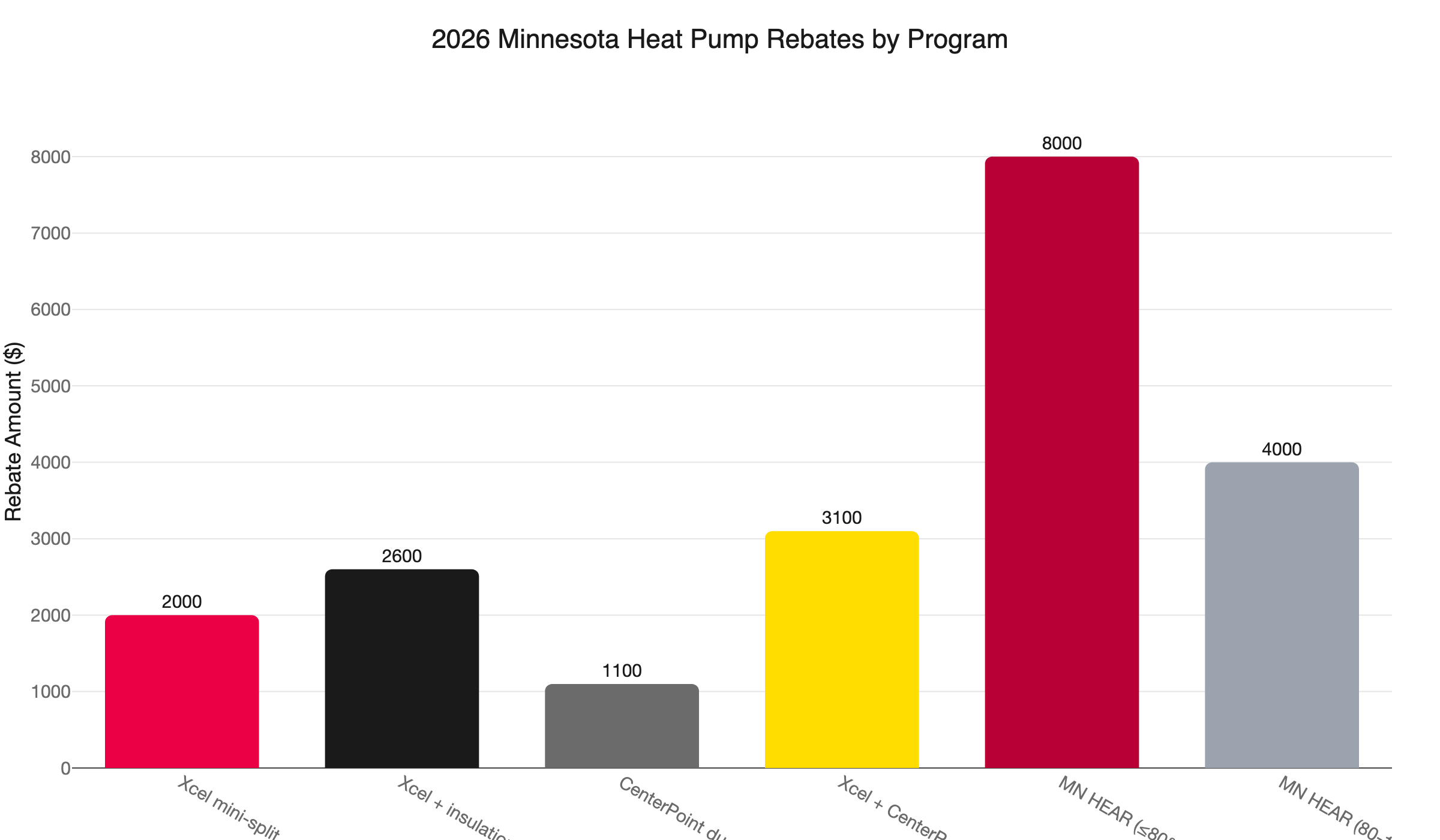
2026 Minnesota Heat Pump Rebates by Program
## Why Does Extending Existing Ductwork Fail in Most Minnesota Basements?
**Short answer:** Minnesota furnaces are already running at or near maximum output on the coldest design days. Adding supply registers without a matched return creates a pressure imbalance that starves upstairs rooms and draws cold infiltration air into the basement through rim joists and foundation gaps.
The longer explanation is three interconnected problems. Most online guides treat them separately - or skip them entirely. Understanding all three is what separates a good basement HVAC decision from an expensive mistake.
### The Static Pressure Problem
Every residential duct system operates within a designed static pressure range. The air handler's fan, the duct diameter and layout, and the number and size of supply and return openings all set that range. When you add basement branch runs to an existing plenum, static pressure across the entire system shifts.
The result: upstairs rooms lose supply volume during peak demand. On the coldest January night, when the furnace is running almost continuously, the branches with the least resistance get the most air. Basement runs, added last and often at the far end of a trunk line, compete poorly. [Industry measurements show typical residential duct systems already lose 20-30% of airflow through leaks and poor connections](https://mplsbasementremodeling.com/blog/basement-ductwork-ideas/) before any extension is added. A system delivering 75-80% of designed airflow before a basement project may not heat two floors adequately after it.
The fix is not simply adding larger basement registers. [ACCA Manual D methodology](https://mplsbasementremodeling.com/blog/basement-ductwork-ideas/) governs duct system design, and recalculating it for a new load requires engineering, not a site visit estimate.
### The Return-Air Gap Almost Nobody Mentions
Supply registers deliver conditioned air into a room. Return grilles carry it back to the air handler. Every cubic foot of air pushed into a space must have a path to return. Without one, the basement runs at negative pressure relative to the rest of the house.
[IRC Section M1501.1 requires balanced supply and return in habitable spaces.](https://www.countrycreekbuilders.com/blogs/how-to-heat-and-cool-a-finished-basement-in-minnesota-hvac-solutions-that-actually-work) Basement ductwork extensions almost universally install supply registers and skip the matched return. In a Minnesota winter, that negative pressure forces the basement to draw air from wherever it can find it: rim joists, foundation penetrations, and the cracks that frost-heave cycles open and widen over six months each year.
The rim joist - where wood framing meets the concrete foundation wall - is already one of the highest heat-loss locations in a Minnesota home. Running the basement at negative pressure during January makes that worse. The furnace runs longer trying to compensate. The basement stays cold. The infiltration carries moisture that causes mold and framing problems over time.
### Your Furnace Has No Spare Capacity
[The 99% design temperature for Minneapolis-St. Paul is -12°F under ASHRAE Climate Zone 6A.](https://homeenergybasics.com/heat-pumps/states/mn) Duluth is -21°F. When a contractor sizes a furnace using Manual J - the only defensible sizing method - that temperature is the target condition. A properly sized furnace runs at or near 100% output when the outdoor temperature hits -12°F.
Adding 800-1,200 square feet of finished basement load without upsizing equipment means the system is now undersized for its new total square footage. The basement will not reach setpoint on the coldest nights. The upper floors will compete with it for output.
Any contractor who says "your existing furnace can probably handle it" without running a new Manual J calculation is guessing. That is not a professional assessment. It is a verbal estimate that costs you money when it is wrong.
## What Are Your Real Options for Heating and Cooling a Finished Basement in Minnesota?
**Short answer:** Four paths are worth evaluating: extending existing ductwork under specific conditions, installing a cold-climate ductless mini-split, adding in-floor electric radiant heat, or adding a dedicated zone-control system. Each has a distinct cost range, comfort profile, and set of conditions where it works.
The right choice depends on your basement's size and layout, your current equipment's age and remaining capacity, your utility provider, and whether you are in the rough-in stage or working with a floor that is already finished.
## When Does Extending Existing Ductwork Actually Make Sense?
**Short answer:** Ductwork extension makes sense when a new Manual J calculation confirms the existing equipment has genuine remaining capacity, a matched return-air path is included, and the system is balanced after installation. Without that calculation, you are guessing.
Ductwork extension is not automatically wrong. It can work in larger homes where equipment was sized conservatively at installation, or when the basement footprint is modest relative to the existing system's output. The conditions that must be met:
- A new Manual J load calculation covering the full finished basement square footage
- A return-air path with properly sized return grille locations - not an afterthought
- Balancing of all existing supply registers after the extension is complete
- A mechanical permit and passed inspection (required for all mechanical work in Minnesota)
[Installed cost for a simple extension on a system with confirmed capacity runs $3,800-$7,600. Complex or larger basements run $8,500-$16,000.](https://www.countrycreekbuilders.com/blogs/how-to-heat-and-cool-a-finished-basement-in-minnesota-hvac-solutions-that-actually-work) If a zone-control system is added to give the basement its own thermostat, budget an additional [$1,500-$3,000 for motorized dampers and a second control point.](https://www.countrycreekbuilders.com/blogs/how-to-heat-and-cool-a-finished-basement-in-minnesota-hvac-solutions-that-actually-work)
Zone control eliminates the "one thermostat for the whole house" problem. It does not increase your furnace's output. If the equipment is already running near capacity, zone control redistributes the available BTUs. It does not create new ones.
One advantage of ductwork extension: it includes central air conditioning for the basement as part of the same system. That matters in a humid Minnesota summer, provided the air handler and coil have the capacity.
## Is a Ductless Mini-Split Right for a Minnesota Basement?
**Short answer:** For most finished Twin Cities basements, yes. A cold-climate mini-split handles heating and cooling with one system, requires no modification to your existing ductwork, gives the basement independent thermostat control, and qualifies for meaningful utility rebates in 2026.
Cold-climate mini-splits are engineered specifically for ASHRAE Climate Zone 6A. [ENERGY STAR's Cold Climate certification requires a coefficient of performance of at least 1.75 at 5°F and at least 70% of heating capacity retained at 5°F compared to 47°F.](https://www.energystar.gov/products/air_source_heat_pumps) Units continue operating below 5°F, but at Minneapolis-St. Paul's -12°F design temperature, your existing gas furnace still provides useful backup during the most extreme cold. The mini-split handles the basement load efficiently across the bulk of the heating season. The furnace covers the deep-cold days.
Look for units that appear on the NEEP Cold Climate Air-Source Heat Pump product list. The ENERGY STAR Cold Climate label and the NEEP listing together confirm the unit will perform at rated capacity in real Minnesota conditions - not just under laboratory testing at milder temperatures.
Key advantages for a basement application:
- No penetrations into the existing duct system
- Independent thermostat for the basement zone
- Provides cooling in summer [without a window unit](/blog/mini-split-vs-window-ac-twin-cities/)
- Handles dehumidification more precisely than extended ductwork during humid months
- Quieter than forced-air at the room level
- Eligible for Xcel Energy utility rebates
For a multi-room basement - a bedroom, a rec area, and a home office - a multi-zone mini-split with a head unit in each space gives you independent comfort control room by room.
[Installed costs run $3,500-$6,000 for a single-zone system. Multi-zone systems with two or three indoor heads run $6,000-$10,000. High-efficiency cold-climate models run $7,000-$12,000](https://www.countrycreekbuilders.com/blogs/how-to-heat-and-cool-a-finished-basement-in-minnesota-hvac-solutions-that-actually-work) before utility rebates. After Xcel's rebates, [out-of-pocket cost](/blog/mini-split-installation-cost-twin-cities/) on a qualifying system drops meaningfully. See the rebates section below for the full breakdown.
For more on how ductless systems solve space-conditioning challenges in Twin Cities homes, see our post on [ductless mini-splits in older Twin Cities homes](/blog/ductless-mini-split-older-twin-cities-homes/).
## In-Floor Electric Radiant Heat for a Basement
In-floor electric radiant is the most comfortable heat delivery method available for a below-grade space. Heat radiates upward from the floor surface, which eliminates the cold-floor feeling that basements often have even when air temperature is at setpoint. There are no visible registers, no fan noise, and no maintenance on the heat delivery side of the system.
Three trade-offs matter for Minnesota homeowners.
**Timing is fixed before flooring.** [Electric in-floor heating costs $8-$15 per square foot installed.](https://www.countrycreekbuilders.com/blogs/how-to-heat-and-cool-a-finished-basement-in-minnesota-hvac-solutions-that-actually-work) It must be planned and installed before the finished floor goes in. Retrofit after the fact means removing the floor. If you are in the [framing or rough-in stage](/blog/hvac-home-renovation-planning-minnesota/), this is a real option. If the floor is already down, it is not.
**Operating costs are high.** Electric resistance heating has a coefficient of performance of 1.0: one unit of electricity produces one unit of heat. A cold-climate mini-split operates at 1.75 to 3.0 COP in the same conditions - delivering two to three times the heat output per dollar of electricity. In Minnesota, with a heating season that runs six months or more, that efficiency gap adds up on every utility bill.
**Radiant provides no cooling.** A finished Minnesota basement in July and August can be comfortable on its own, but summer humidity is a separate problem. Without cooling or dehumidification, a finished basement becomes sticky and uncomfortable during peak summer. A separate solution - a mini-split, a window unit, or a whole-home dehumidifier - would be needed for the humid season. Our post on [basement humidity control in summer](/blog/basement-humidity-control-summer-minnesota/) covers those options.
Radiant floor heat makes the most sense when comfort and aesthetics are the top priorities, timing allows for pre-floor installation, and a separate summer cooling solution is acceptable.
## Dedicated Zone Control
A dedicated zone-control system uses motorized dampers in the existing ductwork to divide your forced-air system into independently controlled zones. The basement gets its own thermostat. The main living area keeps its own.
Zone control addresses a real comfort problem: below-grade spaces gain and lose heat differently than the floors above them. When the upstairs thermostat satisfies on a cold evening, the basement may still be several degrees below target. A zoned system lets the basement call for heat independently without cycling the entire house.
The key limitation is the same as any ductwork extension: zone control does not change how much heat your furnace produces. It manages distribution. If the equipment is already undersized for the combined load, zone control spreads the discomfort more evenly. It does not solve the capacity shortfall.
[Installed cost for a two-zone electronic system with motorized dampers and a separate basement thermostat runs $1,500-$3,000](https://www.countrycreekbuilders.com/blogs/how-to-heat-and-cool-a-finished-basement-in-minnesota-hvac-solutions-that-actually-work) on top of ductwork costs. It is appropriate when a load calculation confirms the equipment can handle both zones simultaneously at peak demand. For more on how zoning works across multiple levels, see our post on [HVAC zoning systems for two-story homes](/blog/hvac-zoning-systems-two-story-homes/).
## What Rebates and Incentives Are Available in 2026?
**Short answer:** The federal 25C tax credit expired at the end of 2025. Xcel and CenterPoint utility rebates are the primary tools now. Combined, eligible projects can reach $3,100. The state HEAR program is not yet launched and should not be counted on for 2026 projects.
Here is the full breakdown.
**Federal 25C tax credit: expired.** [The Section 25C energy-efficient home improvement credit - 30%, up to $2,000 for qualifying heat pumps - expired December 31, 2025.](https://homeenergybasics.com/heat-pumps/states/mn) It is not available for 2026 installations.
**Xcel Energy ductless mini-split: $2,000.** Xcel offers a $2,000 rebate for a cold-climate ductless mini-split for gas or combo customers. The system must appear on NEEP's product list with a COP of 1.7 or higher. Add a $600 insulation bonus if qualifying insulation is installed within two years of the heat pump. Total Xcel potential: $2,600.
**CenterPoint Energy ducted heat pump: $1,100.** CenterPoint offers $1,100 for a ducted air-source heat pump installed in an existing home, paired with a gas furnace rated at 92% AFUE or higher, with the switchover point programmed at 40°F or lower. Ductless mini-splits and full-electric replacements do not qualify for this rebate.
**Stacking both utilities: up to $3,100.** A dual-fuel ducted heat pump installation can combine both utility rebates, reaching $3,100 combined plus the $600 Xcel insulation bonus on eligible projects.
**Minnesota HEAR Program: not yet launched.** The [state HEAR program](https://mn.gov/commerce/energy/consumer/energy-programs/hear.jsp) offers up to $8,000 for households at or below 80% of area median income and up to $4,000 for households between 80-150% AMI. The program requires a BPI-certified energy audit and completed insulation and air-sealing improvements per that audit. As of 2026, the program has not launched. Do not plan a 2026 project around this rebate - it is not available yet.
For a full breakdown of how to stack Minnesota heat pump rebates, see our post on [Minnesota heat pump rebates and tax credits](/blog/minnesota-heat-pump-rebates-tax-credits/).
## Choosing the Right Solution for Your Basement
The right answer depends on your basement's size and layout, your current equipment's age and remaining capacity, your utility provider, and whether you are in the rough-in stage or have a finished floor.
A practical decision framework:
- **Furnace has confirmed spare capacity (Manual J verified), basement is one open zone:** Ductwork extension with a matched return and proper balancing is worth evaluating. Get the load calculation first.
- **Basement is large, has multiple rooms, or the furnace is more than 10-15 years old:** Cold-climate mini-split. It avoids taxing aging equipment, gives the basement full independent control, and handles both heating and cooling.
- **In the framing stage, radiant comfort is the top priority, separate cooling is acceptable:** In-floor electric radiant paired with a mini-split or dehumidifier for summer.
- **Want basement thermostat control without a mini-split project, and a load calculation confirms the equipment can handle both zones:** Dedicated zone control added to a properly designed duct extension.
Before any work begins, a licensed HVAC technician should assess your existing system, verify its actual remaining capacity, and run a Manual J calculation that includes the finished basement load. Skipping that step is how homeowners end up with a cold basement, high energy bills, and a contractor returning to fix work that should have been done correctly the first time.
Northern One Hour is locally owned and operated in Ramsey, MN, serving Minneapolis, St. Paul, Blaine, Maple Grove, Plymouth, Brooklyn Park, Woodbury, Bloomington, and the surrounding Twin Cities communities. We show up when we say we will - "Always On Time… Or You Don't Pay a Dime!(R)" - and we give you honest options without pressure. If your basement project involves heating or cooling, start with a site visit and a real capacity assessment from our team. Call (763) 260-6662 or book online to get a clear recommendation that fits your home.
---
# Does New HVAC Increase Home Value in Minnesota?
URL: https://northernonehour.com/blog/new-hvac-home-resale-value-minnesota/
Published: 2026-08-20 | Category: HVAC
What appraisers look for, how buyers negotiate at inspection, and when the 2026 rebate math makes HVAC replacement pay off before listing in Minnesota.
Key Takeaways
- Sellers who ask does new HVAC increase home value in Minnesota get a partial yes. Full replacement recoups 40-70% of installation costs at appraisal and helps homes sell 10-15% faster.
- The bigger financial impact is usually avoiding the $4,500-$20,000 in buyer concessions that an aging or failing system triggers at inspection. HVAC is the second-most-common concession trigger.
- In Minnesota, a 15-year-old furnace carries more risk at closing than in warmer markets. Heating is essential infrastructure here, not a comfort add-on.
- Twin Cities sellers on both Xcel Energy and CenterPoint can stack up to $3,100 in combined 2026 utility rebates. Minneapolis city programs can add up to $14,000 for qualifying heat pump installations.
- The federal 25C tax credit ended December 31, 2025. Utility and city rebates are now the primary financial lever for pre-listing replacements.
- A pulled permit and a passed inspection create the paper trail that supports a positive appraisal condition rating. Unpermitted HVAC work is one of the strongest negative signals an appraiser can find.
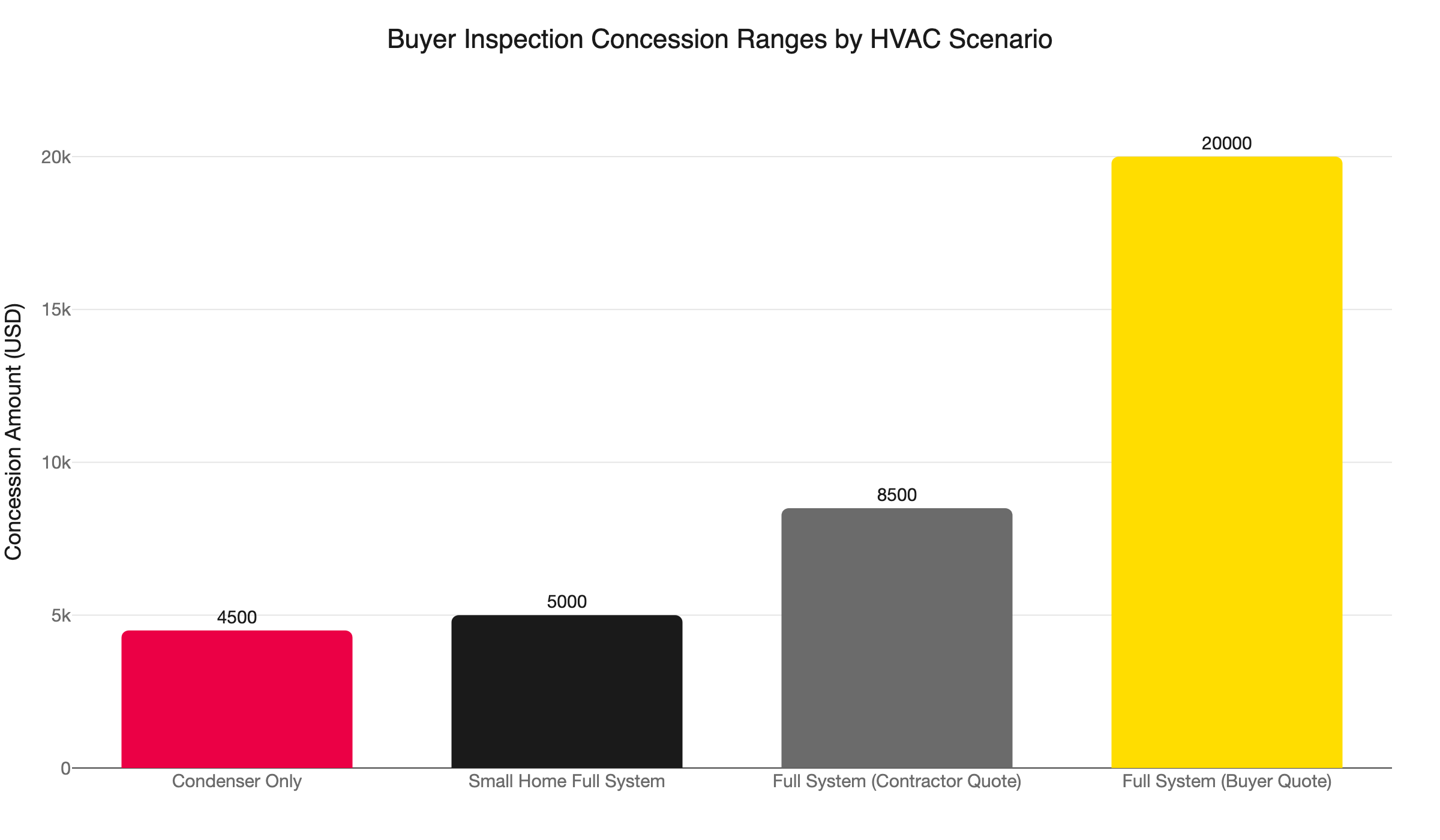
Buyer Inspection Concession Ranges by HVAC Scenario
## The Real Question Is What Your Old System Costs at Closing
Most sellers ask the wrong question. "Does new HVAC increase home value in Minnesota?" frames this as an asset question. The more useful frame is different. What is your aging system silently costing you at the negotiation table?
A buyer's inspector flags a 17-year-old furnace in October. The buyers send back a $9,000 credit request. You either give up the money or risk the deal. That scenario plays out across the Twin Cities every fall. It happens because heating is not optional here the way cooling is in milder markets. A flagged furnace is nearly always a concession point.
In warmer states, an aging AC system is a negotiating inconvenience. In Minnesota, a failing furnace is a deal-stopper. That distinction changes the entire financial calculus for sellers here.
This post walks through how appraisers actually score your mechanical systems and what buyers demand at inspection. It also covers how the 2026 rebate math might make a pre-listing replacement more affordable than you expect.
---
## How Do Appraisers Actually Score HVAC in Minnesota?
**Short answer:** Appraisers do not give your HVAC a standalone dollar value. They score it under Physical Condition, and the system's remaining useful life adjusts your home's "effective age." A high-efficiency system supports a younger effective age. A failing system drags the whole appraisal down.
Under USPAP guidelines, HVAC falls into the Physical Condition category alongside plumbing, electrical, and the roof. [Appraisers do not write a separate line item for your furnace or AC.](https://mrvserviceair.com/how-hvac-condition-affects-home-appraisals/) Instead, they assess remaining useful life. That judgment folds into an effective-age calculation that ripples through the entire comparable analysis.
Two efficiency metrics have become increasingly visible to appraisers as of 2026: SEER2 for cooling and AFUE for heating. A system rated SEER2 16 or higher and AFUE 95% or better supports a positive condition adjustment. Obsolete systems trigger a deferred-maintenance flag. [High-efficiency systems can reduce monthly utility bills by 10-30%,](https://mrvserviceair.com/how-hvac-condition-affects-home-appraisals/) and appraisers translate those savings into positive adjustments on the condition rating.
One important distinction: a repair alone does not move the needle. It prevents a negative flag. It does not earn a higher Overall Condition rating. Only a replacement, with the right equipment, properly permitted and installed, supports an upward adjustment.
The system's age also matters to lenders. Deferred HVAC maintenance signals broader neglect. That increases lender risk. It can push an appraiser toward a more conservative overall valuation, not just a mechanical note.
---
## What Happens When Buyers Flag an Aging System at Inspection?
**Short answer:** [HVAC condition is the second-most-common concession trigger at inspection, behind price reductions.](https://listwithclever.com/real-estate-blog/how-your-homes-heating-system-can-impact-sale-price/) Concession requests range from $4,500 for a condenser-only swap to $20,000 if the buyer sources their own contractor quote. That is a wide window of financial exposure sitting on your listing.
[About 27% of recent buyers asked sellers for repair money at inspection.](https://listwithclever.com/real-estate-blog/how-your-homes-heating-system-can-impact-sale-price/) HVAC tops the list of what triggers those requests. Here is what the concession amounts look like in practice:
- Condenser-only swap: around $4,500
- Small home full system replacement: around $5,000
- Full system failure at contractor pricing: $8,000-$9,000
- Full system if the buyer brings their own quote: up to $20,000
These are not estimates from a model. They are actual concession amounts from broker interviews. In a competitive market, a seller can sometimes hold firm. In a slow market, a $9,000 credit request can end a deal. Or it forces a price drop that costs more than the replacement would have.
The leverage also shifts completely once the inspection report is filed. Buyers know exactly what they found. They have a written document. Replacing the system before listing removes that concession window entirely. You negotiate from a clean report rather than a repair-request letter.
---
## Should You Replace, Offer a Credit, or Leave It Alone?
**Short answer:** The answer depends almost entirely on system age and current condition. Systems under 10 years old and working normally need nothing. Systems 10-15 years old warrant a pre-negotiated credit. Systems 15 or more years old with any intermittent problems need a pre-listing inspection. Non-functional systems should be replaced before listing.
Here is the full framework, built from [guidance from real estate brokers and HVAC professionals:](https://listwithclever.com/real-estate-blog/how-your-homes-heating-system-can-impact-sale-price/)
**Under 10 years old and working:** Do nothing. The system is young enough that buyers have no grounds for a concession request. Appraisers will not flag it. Replacing a healthy 8-year-old furnace wastes money you will not recover.
**10-15 years old and working:** Offer a pre-negotiated credit rather than replacing. The system has useful life remaining. But it is old enough to generate buyer anxiety. Getting ahead of it with a transparent credit signals honesty and removes the inspection concession from play before it becomes a standoff.
**15 years or older, or showing intermittent problems:** Get a pre-listing inspection from a licensed HVAC technician. A tune-up and a clean service log can extend the system's useful life and give buyers confidence. If the system is beyond reliable service, replacement before listing is the smarter financial move. You control the cost. The buyer does not.
**Non-functional:** Replace before listing. A dead furnace or a non-working AC unit will kill a deal or force an enormous last-minute discount. There is no credit amount that makes a non-functional heating system acceptable to buyers or lenders in Minnesota.
For context on what a replacement actually costs in our market, our guide to [furnace replacement costs in the Twin Cities](/blog/furnace-replacement-cost-twin-cities/) breaks down the price range by equipment type and efficiency tier.
---
## Does New HVAC Increase Home Value in Minnesota? What the Data Shows
**Short answer:** Yes, but not dollar-for-dollar. [Full HVAC replacement recoups 40-70% of installation costs on appraisal](https://mrvserviceair.com/how-hvac-condition-affects-home-appraisals/) and helps homes sell 10-15% faster than homes with aging systems. The like-for-like ROI from industry data runs closer to 30%, with a 5-7% home value bump. The bigger financial impact is the concession risk you are no longer carrying.
The right way to think about it: you are not installing new equipment to profit on the upgrade. You are protecting the deal. A new system eliminates the inspection concession window, supports a better appraisal condition rating, and gives buyers confidence that a major capital item is not sitting on borrowed time.
One note on heat pump conversions specifically: heat pump ROI peaked nationally at 96.1% in 2023. [It dropped to 49-66% in 2024 and fell out of the top 10 nationally in 2025.](https://listwithclever.com/real-estate-blog/how-your-homes-heating-system-can-impact-sale-price/) If you are considering a heat pump conversion primarily for resale value, the economics are less clear than they were two years ago. The efficiency and comfort gains are real. A guaranteed appraisal uplift that covers the full project cost is not.
A like-for-like replacement, properly permitted, at a high-efficiency rating, is the most defensible pre-listing investment. It removes the concession risk, supports the appraisal, and documents the home's mechanical history for the buyer.
For help timing a replacement to get the most value, see our post on the [best time to replace a furnace and AC in the Twin Cities](/blog/best-time-to-replace-furnace-and-ac-twin-cities/).
---
## Why Does HVAC Condition Matter More in Minnesota Than in Warmer States?
**Short answer:** In Minnesota, heating is not optional. A furnace failure in January is a household emergency. Buyers and appraisers in cold-climate markets weight heating system age and condition more heavily than they do in markets where heat is a comfort feature rather than essential infrastructure.
Phoenix sellers list with 15-year-old AC units and rarely lose deals over it. A Twin Cities seller with a 15-year-old furnace flagged in a November inspection faces a different negotiation entirely. Buyers here know this system will run continuously for five to seven months a year. They know sub-zero temperatures are not edge cases. They know what a mid-winter breakdown costs - emergency service rates, hotel stays, potential pipe damage.
That cold-climate risk premium shows up at the appraisal level too. [Deferred maintenance on HVAC signals broader neglect to appraisers,](https://www.amerisave.com/learn/factors-that-hurt-home-appraisals-in-and-how-to-avoid-them) increasing lender risk and triggering downward adjustments that go beyond the mechanical line item. A Minnesota appraiser reviewing a home with a 20-year-old furnace is not treating it as a minor checkbox. It is evidence about how the home has been cared for across the board.
The load-bearing nature of heating in our climate also means that furnace condition is weighted more heavily than AC condition in a Minnesota appraisal. Both matter. But a failing furnace in January is a more immediate liability than a struggling AC unit in July.
---
## How Does the 2026 Rebate Math Change the Replace-vs-Credit Decision?
**Short answer:** The federal 25C tax credit ended December 31, 2025. But Xcel Energy and CenterPoint Energy rebates remain active in 2026. Twin Cities households on both utilities can stack up to $3,100 in combined rebates on a qualifying dual-fuel system. Minneapolis city programs can add up to $14,000 on qualifying heat pump installations. That math changes the net cost of a pre-listing replacement significantly.
Here is the current rebate landscape for 2026:
**Xcel Energy:**
- Furnace: [$200 at 95% AFUE, $300 at 96% AFUE, $400 at 97% AFUE](https://www.metroheating.net/minnesota-furnace-rebates-2026-guide-for-saving-big-on-furnace-replacement/)
- Central AC: $150-$450 (13.4-15.2 SEER2) with Quality Install by a participating contractor
- Cold-climate heat pump: up to $2,000
- Bonus $600 when installed after qualifying insulation or air-sealing work
**CenterPoint Energy:**
- Furnace: up to $400 standard (95%+ AFUE), up to $1,200 for income-qualified households
- Dual-fuel heat pump (paired with a 92%+ AFUE gas furnace, switching to gas at 40°F or colder): $1,100
- Note: CenterPoint does not rebate mini-splits or full-electric replacements
[Xcel and CenterPoint customers can stack both utility rebates on a qualifying dual-fuel system for up to $3,100 combined.](https://homeenergybasics.com/heat-pumps/states/mn) Minneapolis city rebates can add up to $14,000 for heat pump installations on top of utility rebates.
That stacking math reframes the decision. A $12,000-$13,000 pre-listing replacement drops closer to $9,000-$10,000 net after utility rebates. That is roughly what a buyer might demand as an inspection concession anyway. You absorb a similar cost either way. But replacing before listing means you control the contractor, the timeline, and the quality of the work.
For a full breakdown of current programs and how to apply, see our guide to [Xcel and CenterPoint HVAC rebates in Minnesota](/blog/xcel-centerpoint-hvac-rebates-minnesota/).
---
## Is Your System Running R-22? That Is a Disclosure Problem.
**Short answer:** R-22 refrigerant was phased out under EPA regulations. Systems still running R-22 cannot be recharged. A pre-listing inspection that surfaces an R-22 unit creates a disclosure obligation and a near-certain buyer concession. New systems use R-454B, which is compliant and signals positively to appraisers.
If your outdoor AC or heat pump unit is more than 15 years old, there is a real chance it is still on R-22 refrigerant. You cannot top off a leaking R-22 system with new R-22. The supply is gone. You either run it undercharged, or you replace it. [A pre-listing inspection that surfaces an R-22 system creates a disclosure obligation](https://mrvserviceair.com/how-hvac-condition-affects-home-appraisals/) that the buyer's agent will act on at the negotiation table.
This is a different kind of risk than age-related wear. An R-22 system is not just old. It is a refrigerant-compliance problem. Buyers and their agents know this. Knowing before you list is always better than the buyer's inspector surfacing it in the written report.
Our post on the [R-22 freon phase-out and what it means for older AC units in Minnesota](/blog/r22-freon-phase-out-older-ac-minnesota/) covers the full compliance picture and what your options are if your system is still running the old refrigerant.
---
## Do HVAC Permits Affect Your Appraisal?
**Short answer:** Yes. A pulled permit and a passed inspection create the paper trail that supports a positive condition rating. Unpermitted HVAC work is one of the strongest negative signals an appraiser can find. It raises lender risk and can trigger downward adjustments even when the physical work itself is solid.
Furnace replacement requires a mechanical permit in virtually all Minnesota jurisdictions under Minnesota Statutes Chapter 326B. [High-efficiency condensing furnaces require PVC venting and drainage provisions](https://minnesotahvacauthority.com/minnesota-hvac-permits-and-inspections) that are inspected differently from mid-efficiency units. Central AC installations trigger both a mechanical permit and an electrical permit. These are not optional steps.
When a buyer's agent or appraiser asks for documentation on recent HVAC work, a permit record and passed inspection is the right answer. A handwritten receipt and a verbal "we had someone come out" is not. If you are planning a pre-listing replacement, confirm that the contractor pulls the required permits before work begins. The paper trail they create is part of what you are paying for.
Buyers increasingly ask for HVAC documentation during due diligence. A clean permit record, combined with a current service log, tells a buyer that the system was installed correctly, inspected by the jurisdiction, and maintained since. That is confidence the buyer is not going to pay you to give them if the record is missing.
---
## When Should a Twin Cities Seller Replace Before Listing?
**Short answer:** Plan for at least six to eight weeks between the replacement decision and your first showing. That window covers equipment lead time, installation, permitting, and inspection. Spring and fall offer the best contractor availability and shortest lead times in the Twin Cities.
Spring and fall are the optimal replacement windows in our market. Contractors are not at peak demand. Equipment lead times are shorter. You have time before the system comes under heavy seasonal load. Replacing a furnace in September before a January listing gives you a clean service record to show buyers, and enough runway for any minor commissioning issues to surface and get resolved before the inspection.
On the calendar side, avoid trying to schedule a pre-listing replacement during the December-January heating rush or the July AC peak. Lead times stretch. Prices can climb. And you lose the cushion you need before the first showing.
If you are not sure whether your system needs replacement or just maintenance, [a pre-listing inspection](/blog/hvac-before-selling-home-minnesota/) is the right starting point. A qualified technician can walk through the system, tell you honestly where it stands, and document the condition in writing. That report is useful whether you replace, offer a credit, or simply show up to the inspection table with a clean service history.
---
## Schedule a Pre-Listing HVAC Inspection With Our Team
As a locally owned and operated HVAC company serving the Twin Cities, Ramsey, Blaine, Maple Grove, Plymouth, Brooklyn Park, and the surrounding area, we help homeowners understand exactly where their system stands before they list. We give you an honest condition assessment. We do not push replacement on systems that do not need it.
When a replacement does make sense, we pull the permits, install the equipment to manufacturer and code standards, and walk you through the Xcel and CenterPoint rebate process so you capture every dollar available before your first showing.
We back every appointment with "Always On Time… Or You Don't Pay a Dime!(R)". Your time and your sale timeline matter to us.
Call **(763) 260-6662** or book your pre-listing inspection online today.
---
# Heat Pump Making Noise in Minnesota? Normal vs. Not
URL: https://northernonehour.com/blog/heat-pump-normal-noises-vs-problem-sounds-minnesota/
Published: 2026-08-19 | Category: Heating
Minnesota winters drive more defrost cycles than most states. Learn which heat pump sounds are normal this winter and which ones need a service call.
Key Takeaways
- A whooshing or rushing sound means the defrost cycle is running. This is normal.
- [Defrost cycles last 5 to 15 minutes](https://southportheating.com/blog/why-is-my-heat-pump-making-a-whooshing-noise/) and should activate no more than twice per hour in cold weather.
- 1 to 3 clicks at startup, shutdown, or mode change are expected. Rapid, continuous clicking is a red flag.
- Grinding, scraping, high-pitched squealing, and loud banging are never normal. Call for service right away.
- Cold-climate heat pumps hum softly at partial load. That hum is correct operation, not a malfunction.
- Unit still covered in ice after a defrost cycle completes? That warrants a call.
- 2026 Minnesota rebates: up to $2,000 from Xcel Energy and up to $1,500 from CenterPoint Energy for qualifying upgrades. The two programs are stackable.
## Why Your Heat Pump Makes More Noise in a Minnesota Winter
Most heat pump noise guides are written for warmer climates. A homeowner in Tennessee might run one or two defrost cycles on a cold night. A homeowner in Ramsey, Blaine, or Maple Grove can run several in a single afternoon during a snowstorm.
The reason is humidity. Twin Cities winters bring heavy moisture from frequent snow and freezing fog. That moisture accelerates frost buildup on the outdoor coil. The system defrosts more often to stay efficient. Each defrost cycle produces sound.
That is why a Minnesota heat pump sounds busier in January than the same model would in most of the country. Most of what you hear is the system working correctly.
We are Northern One Hour Heating & Air Conditioning, locally owned and operated in Ramsey. We service heat pumps across the Twin Cities. This guide is a straight decision tool: hear a specific sound, here is what it means, here is what to do.
---
## What Is That Whooshing Sound? Is My Heat Pump Broken?
**Short answer:** No. A whooshing or rushing sound in winter almost always means the defrost cycle just started. It is normal and should stop on its own within 5 to 15 minutes.
The outdoor coil pulls heat from the air, even in freezing temperatures. Moisture from that air freezes onto the coil. Frost buildup reduces the coil's ability to absorb heat. The system fixes this by reversing refrigerant flow. It briefly runs in a cooling direction, pushing warm refrigerant through the outdoor coil to melt the frost off.
That reversal is what you hear. The [defrost cycle runs 5 to 15 minutes](https://southportheating.com/blog/why-is-my-heat-pump-making-a-whooshing-noise/) and ends when the outdoor coil reaches roughly 57°F. Then the system flips back to heating mode and the sound stops.
In Minnesota, you will hear this more than homeowners in milder climates. [High humidity drives more frequent defrost cycles](https://southportheating.com/blog/why-is-my-heat-pump-making-a-whooshing-noise/). A wet snow day in January produces more whooshing than a dry, sunny day at negative-10°F. Both are correct behavior for the conditions.
During defrost, you will likely also see steam or vapor rising from the outdoor unit. The warm refrigerant is melting frost, and the water vaporizes on contact. It looks alarming the first time. It is just physics.
---
## What Does the Full Defrost Cycle Sound Like?
**Short answer:** A click, then whooshing, then possibly a brief gust of cooler air from your indoor vents, then back to normal heat. Steam may rise from the outdoor unit. The whole sequence takes under 15 minutes before the system returns to heating mode.
Here is each step in order.
1. **A click or thump** as the reversing valve shifts direction. Sudden but not loud.
2. **Whooshing or rushing** as refrigerant moves through the outdoor coil in reverse.
3. **The outdoor fan may stop.** Some units cut the fan during defrost to speed up the melt. Your outdoor unit may go quiet except for the whooshing.
4. **Steam rising from the outdoor unit.** Frost is melting and turning to vapor. This is normal.
5. **A second click** as the reversing valve returns to heating mode.
6. **A brief gust of [slightly cooler air](/blog/heat-pump-blowing-cool-air-heat-mode-minnesota/)** from your indoor vents. This lasts a minute or two, then your heat returns.
The full sequence should complete in under 15 minutes. If yours runs longer than 20, if ice is still coating the coil at the end, or if the system shuts down instead of returning to heat, something is wrong. The red flags section at the end of this post covers those scenarios.
---
## Is Clicking From My Heat Pump Normal?
**Short answer:** A small number of clicks at specific moments are normal. Your heat pump clicks when contactors engage, when the reversing valve shifts, and when metal expands and contracts with temperature changes. Rapid, continuous clicking or clicking followed by a system shutdown is not normal and warrants a service call.
Pattern recognition is everything here.
**Normal click patterns:**
- 1 to 3 clicks at startup
- 1 to 3 clicks at shutdown
- 1 to 3 clicks when entering or exiting defrost mode
- Occasional soft ticking from the cabinet as it warms or cools
**Red-flag click patterns:**
- [Rapid, continuous clicking like a playing card in bicycle spokes](https://goendlessenergy.com/blog/heat-pump-noises-clicking-buzzing-hissing-massachusetts/)
- Clicking immediately followed by the system shutting itself off
- Clicking that repeats every few minutes without the unit completing a full cycle
Rapid clicking often points to a failing contactor or a low-voltage issue. Clicking that ends in shutdown usually means the system detected a fault and cut off to protect itself. Either pattern warrants a call to a technician.
---
## What Heat Pump Noises in Minnesota Mean I Need to Call Right Now?
**Short answer:** Grinding, scraping, high-pitched squealing, and loud banging or clanking are never normal, regardless of the weather or season. These sounds point to active mechanical failure: bearing wear, fan motor stress, a broken blade, or a foreign object in the housing. Call for same-day service.
These sounds have nothing to do with defrost cycles or cold-weather operation. They mean something is failing.
**Grinding or scraping:** Almost always a bearing wearing out in the fan motor or compressor. Metal-on-metal contact worsens quickly. Left running, the motor can seize entirely.
**High-pitched squealing:** Usually a fan motor or compressor under stress. A brief squeal at startup on a very cold morning, lasting under 30 seconds, can happen as bearings warm up. A squeal that continues or that repeats throughout the day is a problem.
**Loud banging or clanking:** Often a broken fan blade, a loose component, or a foreign object inside the fan housing. Shut the unit off before running it further. The object can destroy the fan or puncture the refrigerant coil.
**Persistent rattling:** Loose cabinet panels vibrate as the compressor runs. This is often harmless, but rattling can also indicate a loose compressor mount, which is not.
[Grinding and squealing in particular signal active mechanical failure](https://goendlessenergy.com/blog/heat-pump-noises-clicking-buzzing-hissing-massachusetts/) and will not self-correct. Do not wait to see if the sound goes away.
---
## Why Does My New Heat Pump Hum So Differently Than My Old One?
**Short answer:** Cold-climate and variable-speed heat pumps run at partial load for long stretches, producing a soft 40 to 50 decibel hum. That is roughly whisper-quiet. It is correct operation, not a malfunction.
Older single-speed heat pumps ran at full output or shut off completely. A modern cold-climate heat pump (CCHP) uses a variable-speed inverter compressor that adjusts output to match demand. On a 20°F day, the system might run at 40 or 50 percent capacity for hours.
At that load, the compressor produces a [soft 40 to 50 dB hum](https://www.onehourheatandair.com/ramsey/about-us/blog/2025/march/heat-pumps-in-northern-minnesota-are-they-a-good-fit/) that sounds nothing like older equipment. Many Twin Cities homeowners who upgrade to a CCHP call within the first few weeks. They are not used to a system that runs at a [steady, quiet hum](/blog/hvac-sound-ratings-quiet-systems-twin-cities/). Older equipment cycled on at full speed every 15 minutes, then shut off completely. This is different.
If a soft, steady hum is your only concern, run this check. Stand outside near the unit. Is the hum consistent and steady? Does it get quieter as outdoor temperatures rise? Is there no vibration you can feel on the cabinet panels? If yes, you have a healthy variable-speed compressor doing exactly what it was designed to do.
If the hum is accompanied by [cabinet vibration](/blog/heat-pump-vibration-noise-transmission-house-minnesota/), or if it suddenly changes pitch or gets louder, that shift is worth a look.
The [DOE Cold Climate Heat Pump Challenge](https://www.energy.gov/cmei/buildings/residential-cold-climate-heat-pump-challenge) has documented that qualifying CCHP models maintain meaningful heating output well below 32°F. The inverter compressor producing that quiet hum is also what gives the system its efficiency in extreme cold, rather than forcing a switch to resistance backup heat.
For more on how these systems perform in sub-zero conditions, our post on [heat pump performance below zero](/blog/heat-pump-below-zero-performance-minnesota/) covers the operating-temperature specifics.
---
## The Sound Decision Tree: Heard This? Do That.
Use this as a quick reference when you hear something unfamiliar.
| Sound | Normal? | Action |
|---|---|---|
| Whooshing, lasts under 15 minutes, then stops | Yes | None needed |
| Whooshing running longer than 20 minutes | No | Call for service |
| 1 to 3 clicks at startup, shutdown, or defrost | Yes | None needed |
| Rapid, continuous clicking | No | Call for service |
| Clicking followed by shutdown | No | Call for service |
| Soft, steady hum (especially on newer units) | Yes | None needed |
| Grinding or scraping | No | Shut off and call today |
| High-pitched squeal lasting more than 30 seconds | No | Call for service |
| Loud banging or clanking | No | Shut off immediately and call |
| Unit encased in ice after defrost cycle completes | No | Call for service |
---
## When Should I Schedule Heat Pump Service, Not Just Watch and Wait?
**Short answer:** Schedule service when a sound fits any red-flag category, when it arrives alongside reduced heating performance, when it repeats daily without a clear cause, or when your system is more than 10 years old and producing a new sound you have not heard before.
Watching and waiting is reasonable for a one-time whoosh or a three-click startup. It is not reasonable for grinding, for a unit that shuts itself off, or for ice that does not melt after defrost.
To assess after you hear something unfamiliar, check these four things:
1. **Is your home reaching its set temperature on schedule?** A system running longer than usual to hold temperature has changed.
2. **Is the outdoor unit clear of ice between defrost cycles?** A frost-covered coil cannot pull heat efficiently.
3. **Has your energy bill climbed without a thermostat change?** A struggling system uses more energy before it fails outright.
4. **Does your thermostat or air handler display show any error codes?** Fault codes narrow the diagnosis fast.
A sound that arrives with any of these signs is the system telling you something has changed mechanically or electrically. Our [heat pump repair](/heating/heat-pump-repair/) team can diagnose the issue before a minor problem becomes a [compressor replacement](/blog/heat-pump-compressor-failure-signs-replacement-cost-minnesota/).
System age matters too. A noise worth monitoring on a two-year-old system is a stronger signal on one that has logged 12 Minnesota winters. Aging components fail more readily under sub-zero thermal stress.
---
## Minnesota Rebates: A Noise Call Can Open a Bigger Conversation
Not every heat pump noise calls for a repair. Some signal an aging system. If your system is 12 to 15 years old, a service visit is a natural time to get an honest replacement assessment alongside the diagnostic.
If you decide to upgrade, Minnesota has real money on the table in 2026.
**Xcel Energy (through September 30, 2026):**
- Standard ASHP: [$1,100 to $1,600](https://www.xcelenergy.com/staticfiles/xe-responsive/Working%20With%20Us/24-1-201%20MN%20Res%20Rebate%20Summary%20Information%20Sheet.pdf)
- Cold-climate ASHP (ccASHP): $1,500 to $2,000, for units that achieve a COP of at least 1.75 at 5°F and are listed on ashp.neep.org
**CenterPoint Energy (through December 31, 2026):**
- Hybrid dual-fuel ASHP: [$1,100 to $1,500](https://www.centerpointenergy.com/en-us/SaveEnergyandMoney/Pages/Residential-Ducted-Air-Source-Heat-Pump-Rebate.aspx?sa=mn&au=res), independent of Xcel rebates
- The heat pump must be programmed to hand off to the gas furnace at 40°F or lower
These two rebates are stackable if you qualify for both. For many Twin Cities homes, a hybrid dual-fuel setup is the most practical configuration. The heat pump carries the load above 30 to 35°F. The gas furnace takes over below that threshold. You get the efficiency of a heat pump in moderate cold and the raw output of gas in the deepest Minnesota cold snaps.
Checking the NEEP database at ashp.neep.org is the right first step when shopping. It is the official qualifying list for Xcel's ccASHP rebate tier, and it filters for units that actually meet the cold-climate performance standard.
For a full breakdown of current incentives and how federal tax credits layer on top, our [Minnesota heat pump rebates post](/blog/minnesota-heat-pump-rebates-tax-credits/) covers eligibility, stackability, and the NEEP qualifying process in detail.
---
## Defrost Cycle Red Flags: When Normal Behavior Stops Being Normal
Even the whooshing sound, nearly always benign, can cross into problem territory. These are the specific signs that a defrost cycle is not completing correctly:
- **Ice still on the coil after defrost ends.** The cycle ran but did not finish the job. Occasional stubborn ice in extreme cold can happen, but repeated occurrences point to a defrost sensor, control board, or [reversing valve issue](/blog/heat-pump-reversing-valve-failure-symptoms-minnesota/).
- **Defrost runs longer than 20 minutes.** Normal cycles complete in 5 to 15 minutes. Extended cycles strain the compressor and point to a sensor or control problem.
- **[Defrost triggering on days above 40°F.](https://southportheating.com/blog/why-is-my-heat-pump-making-a-whooshing-noise/)** If the cycle activates when conditions do not call for it, the defrost sensor or board is misreading the outdoor environment.
- **System shuts down at the end of defrost instead of returning to heat.** This usually means a fault code was triggered. Check your thermostat or air handler display for error codes.
If you are seeing ice that will not clear, our post on [heat pump ice and the defrost cycle](/blog/heat-pump-covered-in-ice-defrost-cycle-normal-minnesota/) covers the ice-on-coil scenario in detail, including what conditions cause it and what a technician checks first.
---
If a sound on your heat pump fits any red-flag description in this guide, our locally owned team is ready to help. Call **(763) 260-6662** or book a service visit online. We back every call with our on-time guarantee: "Always On Time… Or You Don't Pay a Dime!(R)"
---
# Dirty Evaporator Coil Symptoms: The Warning Window Most Miss
URL: https://northernonehour.com/blog/dirty-evaporator-coil-ac-symptoms-twin-cities/
Published: 2026-08-18 | Category: Cooling
Rising utility bills and sticky indoor air are the first dirty evaporator coil symptoms. Here's what Twin Cities homeowners miss before the freeze.
Key Takeaways
- A dirty evaporator coil reduces AC efficiency by 10-25%, often for months before any visible symptom appears.
- The first warning signs are a higher utility bill, longer run cycles, and weak dehumidification on humid days - not ice, not water.
- [ASHRAE research](https://downeyplumbing.com/blog/how-dirty-evaporator-coils-add-hundreds-to-summer-energy-bill/) links coil fouling to $200-$436 in avoidable annual energy costs for the average homeowner.
- The [U.S. Department of Energy](https://downeyplumbing.com/blog/how-dirty-evaporator-coils-add-hundreds-to-summer-energy-bill/) finds compressor energy consumption can rise by up to 30% when the coil is significantly fouled.
- Ice on the coil is a late-stage symptom. It means the warning window has already closed.
- Minnesota's cottonwood and pollen seasons, combined with high July-August humidity, make coil fouling a more urgent annual concern here than in drier climates.
- Annual coil inspection is an [ENERGY STAR maintenance standard](https://www.energystar.gov/saveathome/heating-cooling/maintenance-checklist). Most Twin Cities homes benefit from professional cleaning every 1-3 years.
- Call (763) 260-6662 or book online to catch this in the warning window.
## What Does a Dirty Evaporator Coil Do to Your AC?
**Short answer:** A dirty coil insulates itself against the heat transfer your AC depends on. The system runs longer to compensate. The compressor works harder. Your utility bill reflects every extra minute of that effort - often for months before you see ice or water anywhere.
The evaporator coil lives inside your air handler or furnace cabinet, upstream of the blower. Refrigerant flows through it at low pressure and low temperature. As warm indoor air passes across the coil's fins, the refrigerant absorbs heat from that air. That is how your home gets cooler.
Clean fins make full, direct contact with the airstream. A layer of dust, pet dander, pollen, and cottonwood fluff acts as insulation. It blocks the fin surface and slows heat transfer. The refrigerant stays in the coil longer, trying to absorb the same amount of heat through a thicker barrier.
The thermostat does not know any of this. It only knows the house has not reached its setpoint. So it keeps calling for cooling.
The compressor responds by working harder to compensate for the shifted pressure conditions inside the refrigerant circuit. [DOE research](https://downeyplumbing.com/blog/how-dirty-evaporator-coils-add-hundreds-to-summer-energy-bill/) puts that overwork at up to 30% more compressor energy consumption compared to a clean-coil system. That strain is invisible until the utility bill arrives.
[ASHRAE](https://downeyplumbing.com/blog/how-dirty-evaporator-coils-add-hundreds-to-summer-energy-bill/) quantifies the overall efficiency loss at 10-25%. For the average homeowner, that gap translates to $200-$436 per year in avoidable energy costs - money that leaves your account quietly, one longer run cycle at a time.
## The Warning Window: What You Feel Before You See the Freeze
Standard dirty evaporator coil symptom lists focus on the visible phase: ice on the refrigerant line, water pooling near the air handler, the AC running but not cooling. Those are real symptoms. They are also late ones.
Before the ice, before the puddle, before the emergency call, there is a weeks-to-months period when the coil is steadily fouling and the only evidence shows up in subtle comfort and cost changes.
Here is what that window looks like in a Twin Cities home on a humid August afternoon:
Your thermostat is set to 74 degrees. The AC cycles, and the house reads 74. But the bedrooms feel heavier than the number suggests. You lower the setpoint to 72. That helps somewhat, but it adds runtime - and more dollars to the bill you are already noticing.
On the hottest afternoons - 90 degrees, dew point at 70 - the system runs nearly continuously. Last summer it did not. You blame the heat wave.
Your July bill is $30 higher than the same month last year. [Xcel Energy's summer residential rates](https://furnace.direct/blogs/news/cost-to-run-central-ac-minnesota-2026) in the Twin Cities run roughly $0.12-$0.16 per kilowatt-hour. The rate did not move enough to account for the full gap.
This is the dirty evaporator coil symptom window. It reads as coincidence. It can run an entire cooling season before anything dramatic forces your attention.
[Lawrence Berkeley National Laboratory](https://eta.lbl.gov/publications/dirty-air-conditioners-energy) found that typical residential evaporator coils can double the pressure drop across the coil within 7-11 years without professional cleaning - well within the coil's expected 15-30 year service life. The coil is not failing. It is dirty. But the system behaves as if it is undersized, and your bills behave accordingly.
## Why Does a Dirty Evaporator Coil Raise Your Electric Bill?
**Short answer:** Fouling reduces the coil's heat-transfer rate. The compressor runs longer and harder per cycle to compensate. Every extra minute of compressor runtime adds kilowatt-hours to your bill. Over four months of Minnesota cooling season, the cumulative cost is real money.
The mechanism works like this. Fouling insulates the coil surface. The refrigerant cannot absorb heat quickly. It exits warmer than its design spec. The compressor receives warmer refrigerant than it expects, shifts into a higher-load operating state, and draws more electricity trying to bring system pressures back toward balance.
In parallel, the [blower works harder](/blog/dirty-blower-wheel-hvac-symptoms-cleaning-minnesota/) to pull air across an increasingly restricted fin surface. Blower motor electricity consumption rises too, though the compressor effect is the larger driver.
[ASHRAE](https://downeyplumbing.com/blog/how-dirty-evaporator-coils-add-hundreds-to-summer-energy-bill/) puts the overall efficiency loss at 10-25% depending on fouling severity. At [Twin Cities residential electricity rates](https://furnace.direct/blogs/news/cost-to-run-central-ac-minnesota-2026), that efficiency gap on a central AC system running through a four-month cooling season is a calculable dollar loss on every bill from May through September.
Filters matter here too. The [DOE estimates](https://www.energy.gov/sites/prod/files/HomeCooling101-final.pdf) that keeping your air filter clean alone reduces AC energy use by 5-15%. A clean filter reduces the particle load that reaches the coil. It does not substitute for coil cleaning, but it slows the fouling rate. Both matter, and the two work together.
## What Are the Dirty Evaporator Coil Symptoms in Order?
**Short answer:** Symptoms move from silent - bill creep, longer cycles, weak humidity control - to visible - ice on the refrigerant line, water near the air handler - to shutdown: full freeze, no cooling. Most homeowners only notice the visible phase. Catching the silent phase is where real savings happen.
Here is the full progression:
**Stage 1: Silent efficiency loss.** No visible signs. Utility bills run 10-20% higher than prior-year same months. AC cycles run three to seven minutes longer per call for cooling. Dehumidification is slightly weaker on the most humid days. The house reaches setpoint - just slower, with more effort.
**Stage 2: Comfort degradation.** The house no longer feels as comfortable as the thermostat claims. Bedrooms at the far end of the duct run feel stuffy or sticky. You lower the setpoint, which compounds runtime and cost. This is when [AC not cooling properly](/blog/ac-not-blowing-cold-air-troubleshooting-twin-cities/) becomes a household complaint. The coil is a likely first suspect alongside filter condition and refrigerant charge.
**Stage 3: Early visible symptoms.** Refrigerant temperature at the coil surface drops low enough that moisture on the fins begins to freeze during long cycles. You may see ice on the refrigerant line near the air handler, or condensation and water around the unit during off-cycles. A musty smell can develop as ice thaws between cycles and sits in the [drain pan](/blog/ac-drain-pan-full-overflow-causes-fix-twin-cities/).
**Stage 4: Coil freeze and shutdown.** A fully frozen coil blocks nearly all airflow. The system runs continuously, but the house stays warm and humid. A [frozen evaporator coil](/blog/frozen-evaporator-coil-why-ac-ice-twin-cities/) at this stage requires a 24-hour thaw on fan-only mode before a technician can inspect or clean it. Depending on how long the compressor ran under stress, there may be additional diagnostics beyond the coil itself.
The difference between catching Stage 1 and Stage 4 is often the difference between a scheduled tune-up and an emergency dispatch call on the hottest week of the summer.
## The Minnesota Factor: Why Twin Cities Coils Foul Faster
Homeowners in the Twin Cities deal with fouling accelerators that are less common in drier or warmer climates. The same coil that might stay serviceable for two seasons in Phoenix will foul meaningfully in one Minnesota summer.
**Cottonwood and pollen season.** Cottonwood fluff peaks from late May through mid-June. Pollen levels stay elevated into early July. During these weeks, most Twin Cities homeowners keep windows closed even on mild days - which means the AC runs more total air cycles per day than it would at equivalent temperatures in a less allergenic climate. More air cycles per day means more airborne particles moving through the coil. Fouling accumulates faster, season over season.
**High summer humidity.** Minnesota's July and August dew points regularly hit 65-72 degrees. [Minnesota humidity swings](https://midlandhtg.com/everything-you-need-to-know-about-how-minnesota-humidity-swings-affect-your-home-comfort-systems/) are more significant than most residents expect. Moisture condensing on coil fins during each cooling cycle acts as a binder for dust and particles. Rather than staying loose, fouling layers compress against the aluminum fins and bond there. A coil that might shed particulate naturally in a drier climate instead builds up layer by layer.
**Dual-duty cooling and dehumidification.** In Minnesota, your AC does not just cool the air - it dehumidifies it. A properly functioning system wrings moisture from the air as a byproduct of heat transfer, and that moisture exits through the condensate drain. A fouled coil loses both functions at once. When dehumidification drops, your home feels warmer than the thermostat reads, so you lower the setpoint, the system runs more, and the fouling cycle compounds itself.
Minnesota's [cooling season](https://furnace.direct/blogs/news/cost-to-run-central-ac-minnesota-2026) runs roughly May 15 through September 15 - about four months, shorter than southern states. But the combination of cottonwood season, high summer humidity, and closed-window pollen avoidance means a Twin Cities system can log more fouling-relevant air cycles per season than those four months suggest.
## How Often Should Your Evaporator Coil Be Cleaned?
**Short answer:** Annual inspection is the [ENERGY STAR recommendation](https://www.energystar.gov/saveathome/heating-cooling/maintenance-checklist). Cleaning frequency depends on what the inspection finds. Most Twin Cities systems benefit from professional cleaning every 1-3 years, with filter management being the biggest variable.
The LBNL research identified filter efficiency and replacement consistency as the primary factors driving how quickly coils foul. A household running a MERV-8 filter on a proper 60-90 day replacement schedule will see slower fouling than a household running an under-rated filter past its service life.
Our [guide to HVAC filter replacement in Minnesota](/blog/how-often-to-change-hvac-filter-minnesota/) covers filter selection and timing in detail. Good filter habits are the first line of defense. They do not substitute for annual coil inspection - they reduce how much work the inspection reveals.
What the inspection finds determines cleaning need. A coil that looks relatively clean after one season of consistent filter management may not need cleaning for another year. A coil showing visible fouling on the entering-air face - where buildup concentrates - should be cleaned before the next cooling season starts. Letting it carry over compounds the fouling and the efficiency loss.
For most Twin Cities homes, annual [AC maintenance service](/air-conditioning/air-conditioning-maintenance/) is the right cadence. It covers the coil, refrigerant charge, electrical connections, drain line, blower motor, and a full operational check. Catching a fouled coil early in a tune-up costs a fraction of what an emergency coil freeze costs mid-summer.
## What Does Professional Coil Cleaning Actually Involve?
**Short answer:** A technician accesses the evaporator coil inside the air handler, applies a professional-grade coil cleaner to dissolve fouling, checks the drain pan and condensate line, and verifies the refrigerant charge is still within spec. Expect 45-60 minutes as part of a broader tune-up.
Coil cleaning is not a suitable DIY task for most homeowners. The coil sits behind access panels inside the air handler, near refrigerant lines. Aluminum fins are thin and bend easily - improper technique can restrict airflow more than the original fouling did. It takes training and the right chemistry to clean a coil without damaging it.
A professional coil cleaning includes:
- Cabinet access and visual inspection of the entering-air and leaving-air faces of the coil
- Application of an EPA-registered foaming coil cleaner that dissolves biological and particulate buildup
- Drain pan inspection and condensate drain line flush
- Post-cleaning airflow and temperature-split verification
- Refrigerant pressure check against manufacturer spec
That last step matters. A coil that has been running in a stressed state for a season or two may also have a refrigerant charge that has drifted. Cleaning the coil without checking refrigerant charge means you may still have a system running outside its design parameters - and the bill stays high.
Northern One Hour is locally owned and operated in Ramsey, and our team serves the full Twin Cities metro: Minneapolis, St. Paul, Blaine, Maple Grove, Plymouth, Brooklyn Park, Woodbury, Bloomington, and the surrounding communities. Every appointment runs on the on-time promise: "Always On Time… Or You Don't Pay a Dime!(R)"
## When Should You Replace Instead of Clean?
**Short answer:** If your system is 10-plus years old, has never had a coil cleaning, and is showing chronic efficiency loss, the tune-up visit is also the right time to [review replacement options](/blog/evaporator-coil-replacement-cost-minnesota/). Xcel rebates and available financing can significantly close the upfront cost gap.
If the coil inspection reveals fouling that developed quickly despite regular filter changes, or if refrigerant pressure is chronically low, the issue may run deeper than surface fouling. A coil in its 12th or 14th year may not justify the cleaning cost if the rest of the system is similarly aged and the compressor has been running stressed.
The tune-up is still the right first move - it confirms the diagnosis and gives you real data to make the decision. It also becomes a natural opportunity to review replacement options when the system is nearing end of service life.
For systems heading toward replacement, Xcel Energy offers rebates of up to $400-$450 for qualifying central AC systems: SEER2-rated, AHRI-certified, installed by a participating contractor. Cold-climate heat pumps qualify for higher rebates, ranging from $1,600-$2,000 for qualifying systems per the [Xcel rebate summary](https://www.xcelenergy.com/staticfiles/xe-responsive/Working%20With%20Us/24-1-201%20MN%20Res%20Rebate%20Summary%20Information%20Sheet.pdf).
One note on federal credits: the Section 25C energy efficiency tax credit does not apply to 2026 installations. The One Big Beautiful Bill Act, signed July 4, 2025, ended 25C and 25D early. The [Save Energy MN program](https://mn.gov/commerce/energy/consumer/energy-programs/save-energy-mn.jsp), administered by MN Commerce and funded through the IRA, is still active for heat pump and whole-home energy improvement projects.
Financing is available through Northern One Hour for larger replacements. Our team can walk through current options when we are on-site.
## Schedule Your AC Tune-Up
The dirty evaporator coil symptom window is quiet. Utility bills creep upward. Bedrooms feel sticky. Run cycles get longer. None of those signals trips an alarm on its own - which is exactly why they are easy to explain away for a full season or two.
But the data is clear. [ASHRAE](https://downeyplumbing.com/blog/how-dirty-evaporator-coils-add-hundreds-to-summer-energy-bill/) puts the annual cost of a fouled coil at $200-$436 for the average homeowner. The compressor works up to 30% harder per the DOE. And [LBNL](https://eta.lbl.gov/publications/dirty-air-conditioners-energy) shows that coils can reach double the normal pressure drop within 7-11 years without professional attention - well within the service life of most Twin Cities AC systems in use today.
If your system has not had a professional tune-up this cooling season, you are likely already somewhere inside the warning window.
Call **(763) 260-6662** or [schedule a tune-up online](/air-conditioning/air-conditioning-maintenance/). We are locally owned and operated in Ramsey, we serve the full Twin Cities metro, and we back every appointment with the on-time promise: "Always On Time… Or You Don't Pay a Dime!(R)"
Catching a dirty coil in the warning window costs an annual tune-up. Catching it after the freeze costs an emergency call, a 24-hour thaw, and a compressor that has been running stressed far longer than it should have. The first option is the better deal - and the window to take it is open right now.
---
# Smell Gas Near Your Furnace? What to Do Right Now
URL: https://northernonehour.com/blog/gas-smell-furnace-what-to-do-minnesota/
Published: 2026-08-18 | Category: Heating
If you smell gas near your furnace in Minnesota, act immediately. Northern One Hour explains the emergency steps, top 5 furnace sources, and how to stay safe.
Key Takeaways
- A rotten-egg smell near your furnace means natural gas. Leave the house immediately on foot. Do not flip switches, use your phone, or start your car.
- From a safe location, call CenterPoint Energy at 612-372-5050 or Xcel Energy at 1-800-895-2999, and call 911.
- CenterPoint checks your home for a gas leak at no charge to you.
- Olfactory fatigue is real: your nose can stop detecting a leak that is still present. Act on the first smell, not the persistent one.
- Odor fade means a real leak can produce no detectable smell at all, especially in new or corroded pipe.
- A cracked heat exchanger is the highest-risk furnace source and creates both a gas odor and a carbon monoxide risk.
- CO detectors and gas detectors are separate devices. You need both in any home with a gas furnace.
- A one-time smell at fall startup that clears and never returns is likely dust burn-off. Any smell that returns or lingers is not.
- Annual furnace maintenance is the most effective way to catch a failing component before it becomes a gas emergency.
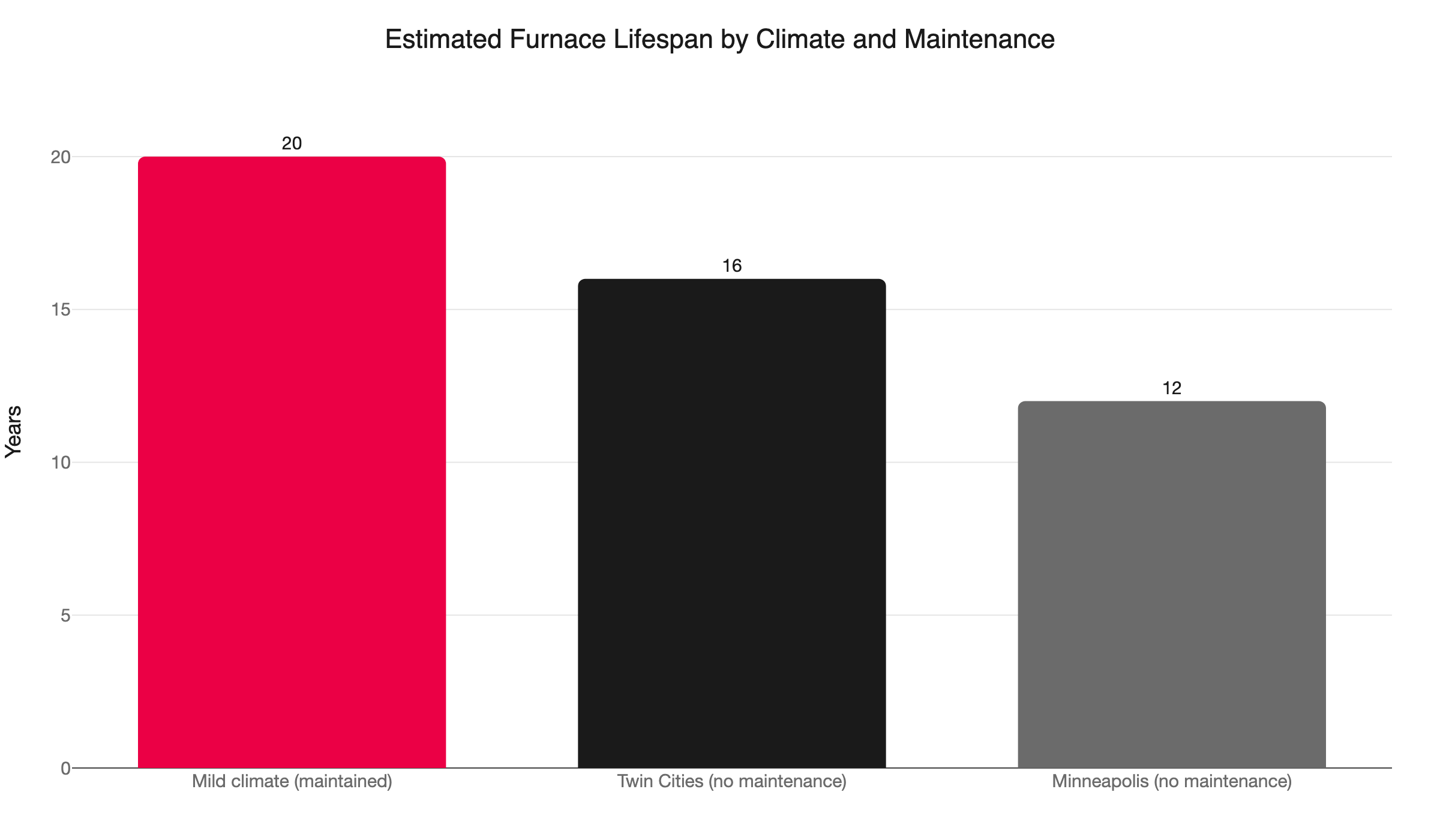
Estimated Furnace Lifespan by Climate and Maintenance
## What should I do if I smell gas near my furnace?
**Leave the house immediately on foot. Do not flip switches, use your phone, or start your car. Walk to a safe location, then call CenterPoint Energy at 612-372-5050 or Xcel Energy at 1-800-895-2999, and call 911. Do not re-enter until emergency responders clear the building.**
Natural gas has no smell of its own. [CenterPoint Energy adds mercaptan](https://www.centerpointenergy.com/en-us/residential/safety/natural-gas-leaks/what-to-do-if-you-smell-gas?sa=mn), a sulfur compound, so you can detect a leak. That sharp, rotten-egg odor exists for one reason: to get you out of the building. When you smell it, do not investigate. Get out.
Here is CenterPoint's four-step emergency protocol for Minnesota homeowners:
**Step 1: Leave immediately on foot.**
Do not stop for your phone, wallet, or shoes. Do not flip any light switches. Do not start your car if it sits in an attached garage. Even a phone screen activating can ignite gas that has built up indoors. Get every person and pet out the door and walk to a neighbor's home or to the street.
**Step 2: Go to a safe location, then call CenterPoint and 911.**
Once you are clear of the building, [CenterPoint's Minnesota emergency line](https://investors.centerpointenergy.com/news-releases/news-release-details/centerpoint-energy-offers-winter-safety-information) is **612-372-5050** (alternate: 1-800-296-9815). Xcel Energy customers call [1-800-895-2999](https://my.xcelenergy.com/s/outage-safety/gas-emergencies). If the situation feels life-threatening, call 911 first. Save both utility numbers in your phone before you ever need them.
**Step 3: Alert your neighbors.**
Gas does not respect property lines. If your home shares walls with adjacent units, or if neighbors live close by, alert them. They may have gas entering their space from the same source.
**Step 4: Do not attempt to find or repair the leak yourself.**
Gas leak detection and repair require licensed equipment and training. Do not open windows to air things out. Do not go back in to investigate. Do not touch anything.
One critical fact: [CenterPoint checks suspected gas leaks at no cost to the customer](https://www.centerpointenergy.com/en-us/residential/safety/natural-gas-leaks/what-to-do-if-you-smell-gas?sa=mn). If you are a CenterPoint customer, this service costs you nothing. Make the call.
---
## Is it ever safe to ignore a gas smell near your furnace?
**No. There is no safe threshold for an unexplained gas odor. A faint smell is not "probably fine." A smell that fades is not proof the danger passed. When in doubt, treat it as a real leak and leave.**
Some homeowners wait to see if the smell comes back. Others chalk up a faint odor to something benign. Both responses can be fatal. The two mechanisms below explain why a fading smell can signal a worsening situation, not an improving one.
---
## Two hazards most articles skip: olfactory fatigue and odor fade
Every gas safety article covers the protocol. Most skip these two mechanisms entirely. Both are documented, and both lead homeowners to believe they are safe when they are not.
**Olfactory fatigue**
Your nose adapts to continuous odors. After prolonged exposure, it becomes temporarily unable to detect a smell it was registering just minutes before. [CenterPoint's safety guidance names olfactory fatigue as a documented risk](https://www.centerpointenergy.com/en-us/residential/safety/natural-gas-leaks/what-to-do-if-you-smell-gas?sa=mn). You can stop smelling a leak that is still actively present in your home.
This is a well-documented physiological response, not an edge case. The practical consequence is straightforward: act on the first smell. Do not wait for the smell to return or to grow stronger. If you smelled gas and it then seemed to fade, that is not confirmation the leak stopped. It may mean your nose adapted to it.
**Odor fade**
Odor fade is the inverse problem. In new gas pipe installations, or in pipes with rust or moisture buildup, mercaptan is chemically absorbed by the pipe material before it ever reaches you. The leak is real. The odor is absent.
Odor fade is most common in freshly installed pipe or in older pipe with significant corrosion. If you recently had HVAC work done that involved the gas line, and you later notice unexplained headaches, fatigue, or dizziness in your household, take those symptoms seriously even without a detectable smell. They may be the only warning you get.
Both hazards point to the same conclusion: trust your suspicion, not the absence of odor.
---
## Which parts of your furnace are most likely causing the smell?
**The five most likely sources, in rough order of risk, are the heat exchanger, the gas valve, the flexible gas connector, the flue or exhaust vent, and the burner or igniter assembly. A cracked heat exchanger is the highest-risk source and the most common failure in older Minnesota furnaces.**
After the utility company has cleared your home and confirmed it is safe to re-enter, your next call is to an HVAC technician. Here is what they will look for, and what each failure looks like from the homeowner's side.
**1. Heat exchanger (highest risk)**
The heat exchanger is a sealed metal chamber inside your furnace. It separates combustion gases from the heated air that circulates through your home. When it cracks, unburned gas and carbon monoxide enter your air supply and get pushed through every supply vent in the house.
[Signs of a cracked heat exchanger](https://mcquillanbros.com/blog/cracked-furnace-heat-exchanger-st-paul-mn/) include:
- A yellow or orange burner flame instead of a steady blue
- Soot or dark streaking on the furnace exterior
- Unexplained flu-like symptoms (headache, nausea, fatigue) in household members that improve when they leave the home
- A gas or [burning smell coming from supply vents](/blog/smoke-smell-from-furnace-vents-causes-fix-minnesota/), not just from near the furnace cabinet
A cracked heat exchanger is rarely a product defect. It is the result of thousands of heating cycles stressing the same piece of metal until it fails. Our dedicated post on [signs of a cracked heat exchanger in Minnesota](/blog/cracked-heat-exchanger-signs-minnesota/) covers this failure in full detail, including what a technician will look for during inspection.
**2. Gas valve**
The gas valve controls fuel flow to the burners. A faulty or aging valve can allow gas to seep past even when the furnace is not in a heating cycle. The smell tends to be strongest near the furnace cabinet and may be present even when the system has not recently run. [Gas valve failures](/blog/furnace-gas-valve-failure-symptoms-replacement-cost-minnesota/) become more common as a furnace ages and after Minnesota winters that put heavy continuous demand on the system.
**3. Flexible gas connector and supply line fittings**
The flexible connector runs between the gas supply line and the furnace inlet. Years of vibration gradually loosen the fittings at both ends. Corrosion attacks the connector material from the outside, particularly in basements with elevated humidity. In homes built before 2000 across the Twin Cities, this connector may never have been inspected or replaced. A professional tune-up should include a visual check of the connector and all accessible fittings.
**4. Flue and exhaust vent pipe**
The flue carries combustion gases from the furnace to the outside. A blocked flue (from ice, a bird nest, or a damaged vent seal) allows combustion gases to backdraft into the living space. The resulting smell is a mix of combustion byproducts and, depending on the failure, unburned gas.
In Minnesota, ice blockage of high-efficiency furnace PVC exhaust vents is a documented seasonal problem. If the smell appears in January or February, and your PVC vent exits near ground level on the north side of the house, check the vent opening before anything else.
**5. Burner and igniter assembly**
A brief puff of unburned gas at startup is normal. It lasts less than one second before ignition occurs. If the smell persists after the burners light, or if the furnace makes a delayed thump when igniting, a burner or igniter component is failing. A dirty or degraded flame sensor often contributes to this problem. Our post on [furnace flame sensor symptoms and cleaning costs in Minnesota](/blog/furnace-flame-sensor-dirty-clean-cost-minnesota/) covers this specific failure in detail.
---
## What is the difference between a CO detector and a gas detector?
**CO detectors detect carbon monoxide only. They cannot detect natural gas. A separate combustible gas detector is required for gas leak detection. You need both devices in any home with a gas furnace.**
This point of confusion comes up regularly. Many homeowners assume a CO alarm would have triggered during a gas leak. It would not.
Carbon monoxide is a byproduct of combustion, produced when gas burns. Natural gas is an unburned fuel. [They are different molecules that require different sensors](https://whitemechanical.com/is-it-normal-to-smell-gas-near-a-furnace/). A CO detector has no gas-sensing capability. A gas detector has no CO-sensing capability. They serve completely separate functions.
Every Minnesota home with a gas furnace should have:
- [CO detectors on every level](/blog/carbon-monoxide-detector-placement-furnace-boiler-minnesota/) of the home, including the basement and all sleeping areas
- At least one combustible gas detector near the furnace or in the utility room
- Both devices tested regularly and replaced on the manufacturer's schedule
A plug-in combustible gas detector costs $25 to $60 at any hardware store. CO detectors carry expiration dates (typically seven to ten years from the manufacture date). Check the back of your current alarm. If it is past its expiration, it may not sound even if CO levels are dangerous.
Our post on [carbon monoxide safety during furnace season](/blog/carbon-monoxide-safety-furnace-season/) covers CO detector placement, testing schedules, and what to do if an alarm triggers.
---
## When is a furnace smell NOT an emergency?
**The one non-emergency scenario: a brief, one-time burning smell at the very first startup of heating season that clears completely within one heating cycle and never returns. That is dust burn-off, not a gas leak.**
Over the summer, dust settles on the furnace burners, the heat exchanger surface, and the ductwork. [When the furnace runs for the first time in fall, that dust burns off and produces a faint, slightly acrid smell through the vents](https://whitemechanical.com/is-it-normal-to-smell-gas-near-a-furnace/). It lasts less than one full heating cycle and does not repeat.
How to tell the difference between dust burn-off and a real concern:
- It happens exactly once, at the first startup of the season
- It clears within 20 to 30 minutes of the furnace running
- It smells more like burning dust than rotten eggs
- The next time the furnace runs, there is no smell at all
If you are uncertain which one you experienced, follow the emergency protocol. A false alarm costs you a phone call. Staying in a home with a real leak can cost far more.
---
## Why do Twin Cities furnaces develop heat exchanger cracks faster than furnaces in milder climates?
**Minnesota's extreme cold forces Twin Cities furnaces to run harder and cycle more often than furnaces in warmer states. Each start and stop thermally stresses the heat exchanger metal. Over 15-plus years, that accumulated stress causes cracks. This is physics, not bad luck.**
When January wind chills drop to -40 degrees, a Twin Cities furnace may run nearly continuously for days at a time. Each heating cycle thermally expands the heat exchanger metal. Each time the furnace stops, the metal contracts. Over a furnace's operational life in Minnesota, that adds up to [thousands of expansion and contraction cycles, the primary mechanism of heat exchanger cracking](https://furnace.direct/blogs/news/cracked-heat-exchanger-scam-or-real-danger).
The lifespan numbers make the stakes concrete. A well-maintained furnace in a mild climate can last 20 years. [Without proper preventive maintenance, that same furnace barely makes 12 years in Minneapolis](https://www.staffordhomeservice.com/blog/best-furnace-repair-minneapolis-guide). Even with regular tune-ups, Twin Cities furnaces typically run 15 to 17 years before replacement becomes the right call.
These are not manufacturer disclaimers. They are the result of a climate that does to furnaces what it does to roads, pipes, and building foundations. The freeze-thaw cycle wears metal down.
If your furnace is 15 years or older and you are smelling gas, the repair conversation and the replacement conversation are the same conversation. A technician can give you an honest read on which path makes more sense, without pressure. If a replacement is the right call, financing options are available to spread that cost over time.
---
## How can I reduce the risk of a gas leak from my furnace?
**Annual professional maintenance is the single most effective step. A technician inspects every component that can produce a gas odor: the heat exchanger, gas valve, flexible connector, flue, burners, and igniter. Catching a failing part before it leaks is always cheaper than an emergency repair.**
Here is a practical checklist for Twin Cities homeowners:
- **Schedule a fall tune-up every year.** Our [furnace tune-up service](/heating/heating-equipment/furnaces/furnace-tune-ups/) includes a full combustion safety check, heat exchanger inspection, and flue evaluation.
- **Replace an aging furnace before it fails.** In Minnesota, a furnace past its mid-teens carries real heat-exchanger risk. Waiting for a failure in January is the most expensive outcome.
- **Install and test both CO detectors and gas detectors.** Know each device's expiration date and replace before it passes.
- **Save your utility's emergency number in your phone today.** CenterPoint: 612-372-5050. Xcel Energy: 1-800-895-2999. Both should be in your contacts before you ever need them.
- **Know what a normal first-startup smell looks like.** Dust burn-off at the [first fall ignition](/blog/furnace-burning-smell-first-use-fall-minnesota/) is normal. Gas odor on any other cycle is not.
One thing worth saying plainly: a gas leak is not a DIY situation under any circumstances. If a technician finds a cracked heat exchanger or a failed gas valve during a tune-up, the furnace should not run again until the problem is resolved.
---
## Get a furnace inspection before the next cold snap
If you smelled gas near your furnace recently, the right next step is a professional inspection. Not a visual check, a full diagnostic with combustion testing, heat exchanger evaluation, and a gas valve assessment.
Northern One Hour is locally owned and operated in Ramsey, MN. We serve homeowners across Minneapolis, St. Paul, Blaine, Maple Grove, Plymouth, Brooklyn Park, Woodbury, Bloomington, and the surrounding Twin Cities metro. We are backed by the resources of the national One Hour franchise, and we are your neighbors.
Every visit is backed by the "Always On Time… Or You Don't Pay a Dime!(R)" guarantee. We show up when we say we will, and we give you a straight answer on what we find, including when the honest answer is that your furnace is past the point where repair makes sense.
Call **(763) 260-6662** or book online to schedule your inspection. If this season's cold has you wondering whether your furnace is safe to keep running, have that conversation before the next Minnesota cold front arrives.
---
# HVAC for Home Addition Minnesota: 3 Options for a -12\u00b0F Winter
URL: https://northernonehour.com/blog/hvac-home-addition-options-minnesota/
Published: 2026-08-18 | Category: HVAC
Extend ducts, add a mini-split, or run baseboard? A Minnesota-specific guide to HVAC for home additions, with code rules and current rebates.
Key Takeaways
- Minneapolis has a [design heating temperature of -12°F](https://homeenergybasics.com/heat-pumps/states/mn). Generic advice written for warmer climates will steer you wrong on equipment selection.
- Three options exist for conditioning a home addition: extend existing ductwork, install a cold-climate mini-split, or run electric resistance baseboard. Each fits a different situation.
- Duct extension only works if your existing system has confirmed spare capacity. A [Manual J load calculation](/blog/hvac-sizing-manual-j-right-sized-system/) and blower test are required by Minnesota code before extension is recommended.
- The dual-fuel setup (cold-climate mini-split paired with a gas furnace) is the standard Twin Cities approach for most additions.
- [MN Rules 1346.0104](https://www.revisor.mn.gov/rules/1346/full) requires a mechanical permit, a licensed contractor, and proof the addition will not overload the existing system.
- The federal Section 25C heat pump tax credit expired December 31, 2025. Zero federal credit applies to 2026 installations.
- Xcel Energy offers up to $2,600 for a qualifying cold-climate heat pump. CenterPoint Energy adds $1,100 for dual-fuel systems. Minneapolis homeowners can stack far more through the Green Cost Share program.
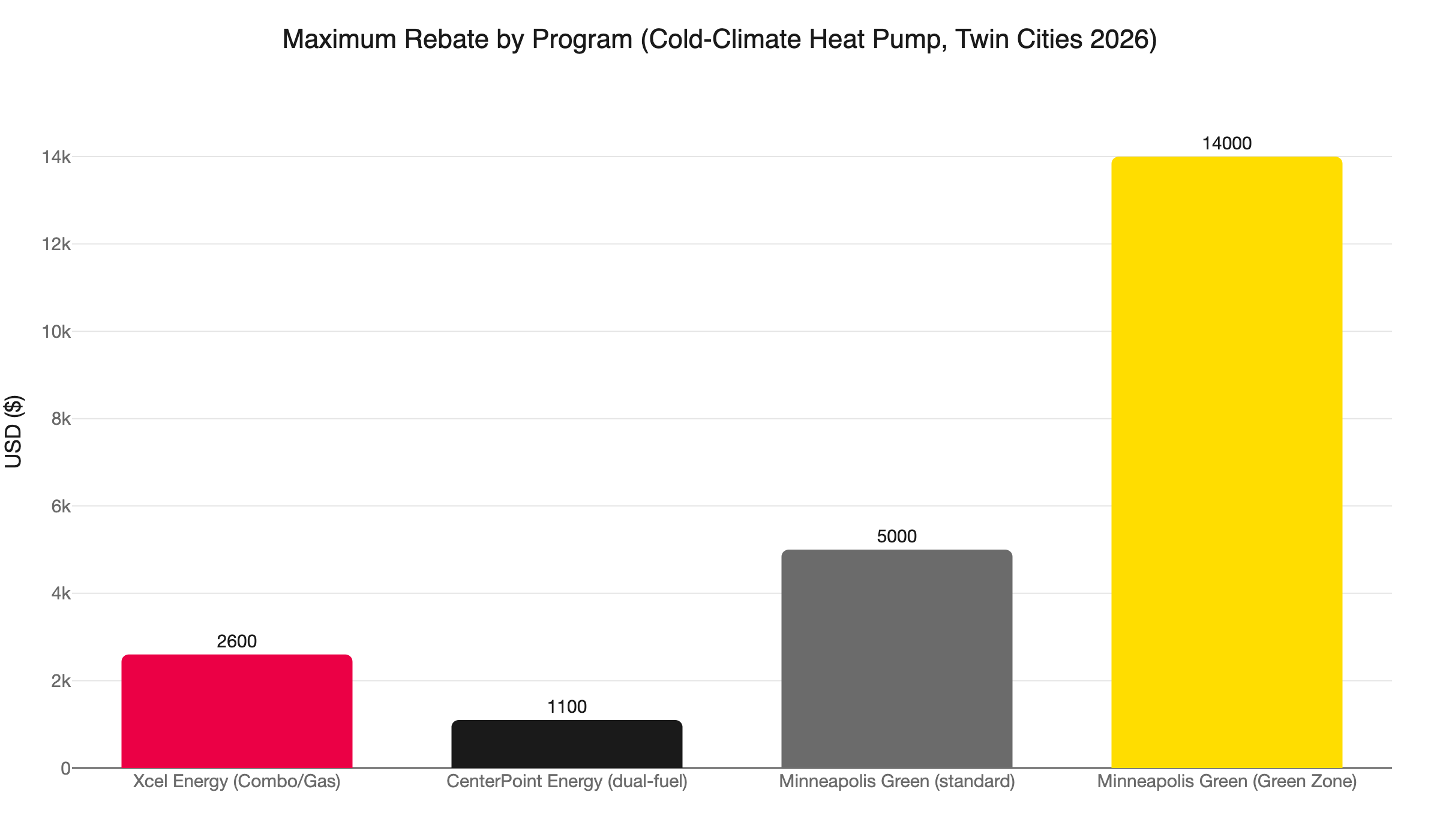
Maximum Rebate by Program (Cold-Climate Heat Pump, Twin Cities 2026)
## HVAC for Home Addition Minnesota: Why Generic Advice Fails Here
Most articles about HVAC for home additions are written by contractors in Utah or Pennsylvania. Their advice skips the questions that matter most in Minnesota: What happens to your heat pump at -12°F? Can your existing system absorb the new load? What does state code actually require?
The Twin Cities metro operates at a [99% design heating temperature of -12°F](https://homeenergybasics.com/heat-pumps/states/mn). That is the outdoor temperature your system must overcome to keep your home at 70°F on the coldest nights of the year. Summer cooling loads push into the upper 80s. The result is close to a 100-degree operational swing that your equipment must handle reliably.
Adding a home addition changes the thermal math for your whole house. A 400-square-foot addition to a 1,400-square-foot home is a 29% increase in conditioned area. Your furnace and air handler were sized for what you had, not what you are building. The core question to answer before picking any option: where does the heating and cooling for this new space come from, and can your existing equipment absorb it?
---
## What Are the Three Options for Heating and Cooling a Home Addition?
**The short answer:** Extend your existing ductwork if the system has proven spare capacity, install a cold-climate mini-split if it does not, or use electric resistance baseboard only as a last resort. Most Twin Cities additions end up with a mini-split or a duct extension verified by a load calculation.
### Extend the Existing Ductwork
Extending ductwork runs new supply and return branches from your existing air handler into the addition. The whole home stays on one thermostat and one system. It is the simplest arrangement when the conditions support it.
The critical condition is spare capacity. An HVAC contractor runs a [Manual J load calculation](/blog/hvac-sizing-manual-j-right-sized-system/) and a blower static pressure test to determine whether the system can push air through the added resistance. If the blower is already operating near its limit, adding ducts will reduce airflow in the rest of your home and leave the addition under-conditioned in both heating and cooling seasons.
[Installation typically runs $1,500 to $5,000 nationally](https://hvacdatabase.com/us/articles/how-to-set-up-hvac-for-a-home-addition). The range depends on how far the new runs must travel and how accessible your existing trunk lines are. A finished ceiling between the air handler and the addition raises the cost significantly. Basement or crawl space access brings it down.
Duct extension is the right call when:
- Your system is less than 8 to 10 years old and was not already near capacity
- The addition is on the same floor level as the main trunk line
- Access for running new duct is straightforward
- A load calculation confirms the blower can handle the added resistance
### Add a Cold-Climate Mini-Split
A cold-climate ductless mini-split pairs an outdoor compressor with a wall-mounted air handler inside the addition. It runs on its own refrigerant circuit, independent of your existing ductwork. The addition gets its own zone, its own thermostat, and its own heating and cooling source.
[Single-zone installation typically runs $3,500 to $8,000](https://hvacdatabase.com/us/articles/how-to-set-up-hvac-for-a-home-addition). The range depends on line-set length, whether a new electrical circuit is needed, and [local labor rates](/blog/mini-split-installation-cost-twin-cities/).
The Minnesota-specific qualifier: the unit must be rated for cold-climate operation. Equipment must appear on the NEEP cold-climate product list and achieve a coefficient of performance (COP) of 1.7 or better at 5°F. Both conditions are required to qualify for utility rebates, and both matter for reliable performance here. A standard unit rated to 0°F will lose meaningful output well before the worst nights of a Minnesota winter arrive.
Mini-split is the right call when:
- Your existing system cannot absorb more load
- The addition is a sunroom, garage conversion, bonus room, or attached structure with [no existing duct access](/blog/high-velocity-hvac-older-home-no-ductwork-twin-cities/)
- You want independent temperature control for the new space
- You want to qualify for Xcel or CenterPoint utility rebates
### Install Electric Resistance Baseboard
Electric baseboard is the least expensive option to install. It requires no ductwork, no refrigerant lines, and relatively simple electrical work per room.
It is the most expensive to run. Electric resistance converts every watt of electricity into one watt of heat. A cold-climate heat pump moves two to three or more watts of heat energy for every watt it consumes. In Minnesota, with a long, cold heating season, that operating cost gap adds up to hundreds of dollars per year.
Baseboard makes sense only in a space used rarely: a detached workshop that needs an occasional temperature boost, or a three-season porch. For any regularly occupied room, the long-term operating cost makes baseboard the wrong choice.
---
## Does My Existing System Have Enough Capacity to Extend Ductwork?
**The short answer:** Only a load calculation and blower static pressure test can answer that. Do not assume the system has room. Adding ducts to an already-loaded air handler weakens airflow throughout your home and may leave the addition under-conditioned year-round.
This is not just good practice. [MN Rules 1346.0104](https://www.revisor.mn.gov/rules/1346/full) requires that additions to a mechanical system shall not cause the existing system to become unsafe, hazardous, or overloaded. The mechanical permit inspection will confirm compliance with that rule.
A contractor who recommends duct extension without running Manual J numbers and testing static pressure is skipping a step that the code requires. If the load calculation shows the system is near its limit, you have two paths. You can add a standalone mini-split for the addition, or you can upgrade the full system to handle both loads. The calculation tells you which situation you are actually in [before any work begins](/blog/hvac-home-renovation-planning-minnesota/).
---
## Is a Cold-Climate Mini-Split Right for a Minnesota Addition?
**The short answer:** For most Twin Cities additions, yes. A cold-climate unit rated to -15°F handles Minnesota winters without depending on your existing system's spare capacity. It qualifies for utility rebates, gives the addition its own zone, and pairs naturally with an existing gas furnace in a dual-fuel configuration.
Our post on [ductless mini-splits in older Twin Cities homes](/blog/ductless-mini-split-older-twin-cities-homes/) covers how these units perform across different house types. The short version: a properly specified cold-climate unit is a reliable heating and cooling source in Minnesota. A unit specified for a milder climate is not.
Sizing the mini-split correctly for the addition matters as much as choosing a cold-climate model. A contractor must run a Manual J calculation for the addition specifically, not repurpose the number from the main house assessment. An oversized unit will short-cycle: it heats or cools the space too fast, then shuts off. The result is uncomfortable temperature swings and excessive humidity in summer. An undersized unit will run continuously on cold days without reaching your set temperature.
---
## What Is the Dual-Fuel Approach and Why Is It Standard in Minnesota?
**The short answer:** Dual-fuel pairs a cold-climate heat pump or mini-split with an existing gas furnace. The heat pump handles heating efficiently when outdoor temperatures are moderate. The furnace takes over below roughly 30-40°F. It is the dominant Twin Cities setup because most homes already have gas heat and because CenterPoint Energy's rebate specifically requires this configuration.
The logic is straightforward. Heat pumps are most efficient when outdoor temperatures are moderate. Below a threshold called the balance point, a gas furnace is both more efficient and more reliable. In a dual-fuel system, the switchover happens automatically based on outdoor temperature.
For a home addition, dual-fuel usually looks like this: the addition gets a cold-climate mini-split, the existing gas furnace continues to heat the original house, and both systems operate independently. The mini-split in the addition is not replacing the furnace. It is adding a conditioning source for new square footage that the furnace was never sized to cover.
This setup is rebate-eligible with both Xcel Energy and CenterPoint Energy, which is a significant financial reason to consider it when your home already has a gas furnace in place.
---
## What Does Minnesota Code Require for HVAC in a Home Addition?
**The short answer:** A mechanical permit, a licensed Minnesota HVAC contractor, compliance with MN Rules Chapter 1346 and the Minnesota Energy Code (Chapter 1322), and proof that the addition does not overload the existing system. Minneapolis, St. Paul, and some suburbs add local requirements on furnace efficiency.
Here is what each requirement means in practice:
**Mechanical permit.** Any new or modified mechanical system in a home addition requires a permit. This applies whether you are extending ducts or installing a mini-split. The permit triggers the inspection.
**Licensed contractor.** Minnesota requires a licensed mechanical contractor for this scope of work. Homeowner self-installation is not permitted.
**AFUE minimums.** The [state minimum for new gas furnaces is 80% AFUE](https://furnace.direct/blogs/news/minnesota-energy-code-furnace-requirements-2026). Minneapolis and St. Paul require 90%+. Edina requires 92%+. If your duct extension ties back to a furnace below the local minimum, the city may require a furnace upgrade as part of the project. Confirm your city's requirements with your contractor before finalizing scope.
**No overloading the existing system.** [MN Rules 1346.0104](https://www.revisor.mn.gov/rules/1346/full) is explicit: additions to a mechanical system must not cause the existing system to become unsafe, hazardous, or overloaded. The load calculation and blower test are how a contractor proves compliance at inspection.
**Energy code baseline.** Minnesota's energy code, Chapter 1322, is based on IECC 2018 with state amendments. It sets insulation, air sealing, and ventilation requirements that affect how the mechanical load for the addition is calculated and what the inspector looks for.
---
## What Rebates Can I Stack for HVAC in a Minnesota Home Addition?
**The short answer:** Xcel Energy offers up to $2,600 for a qualifying cold-climate heat pump. CenterPoint Energy adds $1,100 for a dual-fuel system paired with a 92%+ AFUE gas furnace. Minneapolis homeowners can stack a Green Cost Share grant on top. The best available combination depends on your utility providers and location in the metro.
Here is how each program works:
**Xcel Energy.** If you are both an Xcel electric and Xcel gas customer (a Combo/Gas customer), Xcel rebates $2,000 for a qualifying cold-climate air-source heat pump or mini-split. An additional $600 is available if you installed qualifying insulation or air sealing within the prior two years, bringing the maximum to $2,600. If you are an electric-only Xcel customer, the base rebate is $1,500. Equipment must appear on the NEEP cold-climate product list with a COP of 1.7 or better at 5°F.
**CenterPoint Energy.** CenterPoint rebates $1,100 for a ducted heat pump paired with a 92%+ AFUE gas furnace in a dual-fuel setup. The switchover to the gas furnace must occur at 40°F or below. Standalone mini-splits, ground-source systems, and full-electric setups are not eligible for the CenterPoint rebate.
**Stacking Xcel and CenterPoint.** If your home has Xcel electric service and CenterPoint gas service, you can stack both rebates on a qualifying dual-fuel system. Combined maximum: $3,100.
**Minneapolis Green Cost Share.** Minneapolis homeowners can apply for an additional grant on top of utility rebates. The maximum is $5,000 for properties outside the Green Zone and up to $14,000 for properties inside the Green Zone, for 1-4 unit residential buildings. You must qualify for a CenterPoint or Xcel rebate first. For a Minneapolis homeowner adding a mini-split to an addition, the combined total can meaningfully change the cost picture.
**HEAR (Home Electrification and Appliance Rebates).** Minnesota's HEAR program would offer up to $8,000 per heat pump for lower-income households. As of mid-2026, the program has not launched and has no announced start date. Do not budget for it in a current project.
Our post on [Xcel and CenterPoint HVAC rebates in Minnesota](/blog/xcel-centerpoint-hvac-rebates-minnesota/) has current program requirements, income limits, and instructions for applying.
---
## Is the Federal Heat Pump Tax Credit Still Available in 2026?
**The short answer:** No. The Section 25C Energy Efficient Home Improvement Credit expired December 31, 2025. The One Big Beautiful Bill Act, signed July 4, 2025, ended the program. Any heat pump installed in 2026 qualifies for zero federal credit, regardless of purchase date or when the contract was signed.
Many homeowners planning a 2026 addition are still expecting the 30% credit capped at $2,000 that applied to heat pump installations in 2023 through 2025. That credit no longer exists. The [IRS credit page](https://www.irs.gov/credits-deductions/energy-efficient-home-improvement-credit) confirms the expiration.
Plan your budget without the federal credit. The Xcel, CenterPoint, and Minneapolis Green Cost Share programs are confirmed active and are where the real incentive money sits right now. A contractor familiar with the current rebate landscape can help you document and submit for every program you qualify for.
---
## Ready to Plan HVAC for Your Addition?
The right option depends on four things: the size and layout of the new space, whether your existing system has reserve capacity, which utility serves your home, and where in the metro you are located.
Start with a load calculation. A qualified contractor runs Manual J numbers, tests blower static pressure, and tells you whether duct extension is viable or whether a mini-split is the right path. That assessment also determines which rebates apply and how much you can expect back.
We are locally owned and operated in Ramsey, MN, and we serve the full Twin Cities metro: Minneapolis, St. Paul, Blaine, Maple Grove, Plymouth, Brooklyn Park, Woodbury, Bloomington, and surrounding communities. We pull permits, coordinate rebate paperwork with your utility, and show up when we say we will. That is the "Always On Time… Or You Don't Pay a Dime!(R)" promise.
Call us at (763) 260-6662 or [schedule your consultation online](/heat-pumps/) to get your load calculation done and your rebate options reviewed.
---
# HVAC Wildfire Smoke Filter Guide for Minnesota Homes
URL: https://northernonehour.com/blog/wildfire-smoke-hvac-indoor-air-quality-minnesota/
Published: 2026-08-18 | Category: Indoor Air Quality
Canadian wildfire smoke now reaches Minnesota most summers. Learn which HVAC filter type works, why installation depth matters, and three settings to change now.
Key Takeaways
- The Twin Cities recorded a "hazardous" AQI for the first time ever on July 15, 2026. Wildfire smoke from Canada and northern Minnesota is now a recurring summer condition.
- "Get a MERV 13" is the correct starting point. But electrostatically charged (electret) filters, common in big-box stores, can lose 75-80% of their smoke-removal efficiency within 80 minutes. No warning.
- A 1-inch MERV 13 can spike static pressure and damage your furnace or AC over time. A 4-inch media cabinet is the right long-term solution.
- Set your thermostat fan to "On," not "Auto." This change alone, paired with a MERV 13 mechanical filter, cuts indoor PM2.5 by approximately 50%.
- If you have an ERV or HRV, shut it off during smoke events. Those units pump contaminated outdoor air directly into your home.
- Inspect your filter visually during heavy smoke. Replace it when it turns dark brown or black. During a heavy smoke event, that can happen within days.
- Call (763) 260-6662 or book online to schedule a filter upgrade or [indoor air quality assessment](/blog/indoor-air-quality-professional-test-vs-diy-monitor-minnesota/).
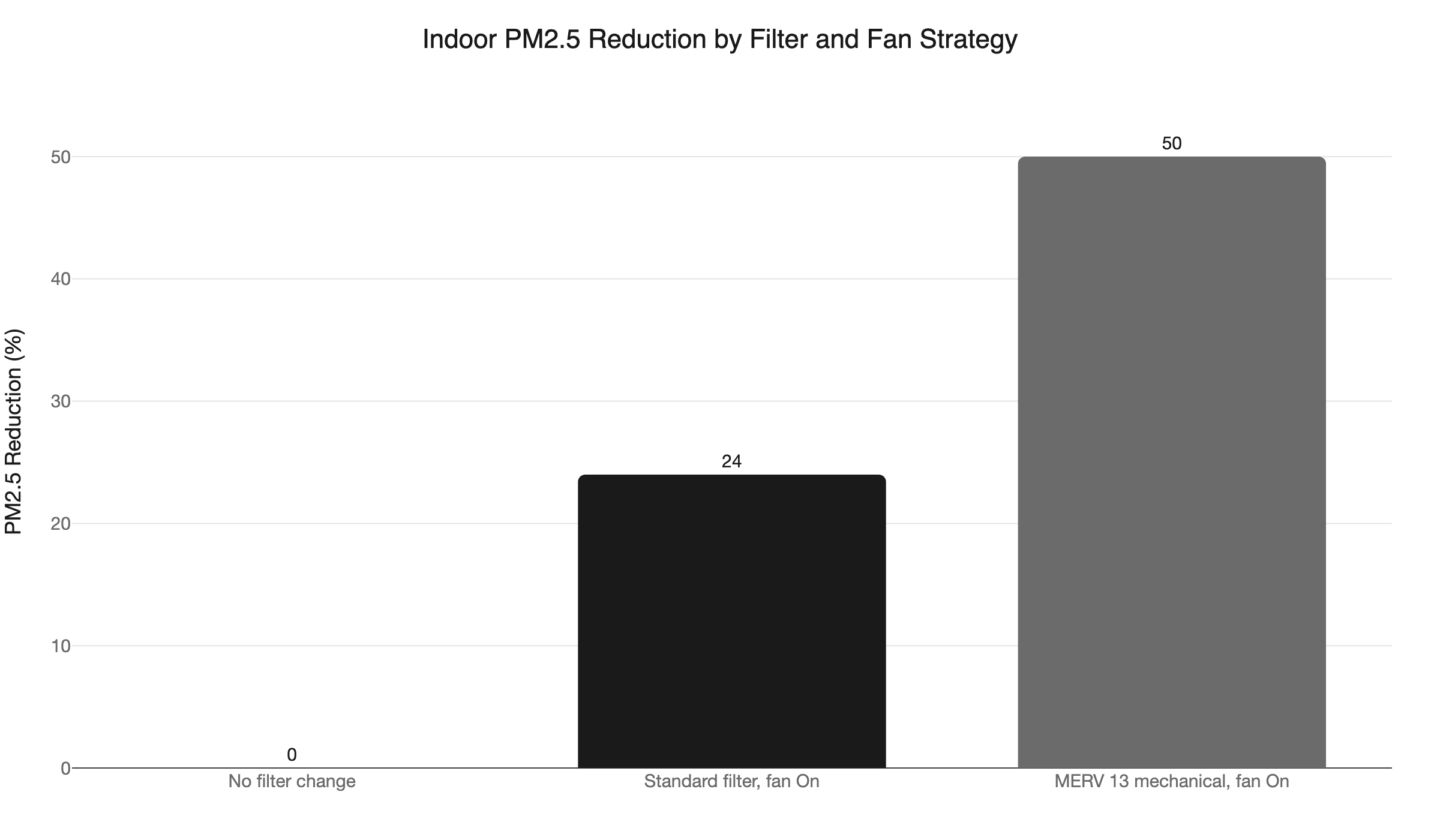
Indoor PM2.5 Reduction by Filter and Fan Strategy
## What Happened to Minnesota's Air in July 2026?
[According to the Minnesota DNR](https://www.dnr.state.mn.us/climate/journal/extreme-smoke-july-2026.html), July 15, 2026 was the first day the Twin Cities metro ever recorded a "hazardous" AQI designation. The Blaine monitor hit 342.8 micrograms per cubic meter. Minneapolis was ranked the most polluted major city on Earth that day.
West Duluth recorded 617.8 micrograms per cubic meter in July 2026. That broke Minnesota's all-time hourly PM2.5 record. Duluth's 24-hour AQI reached 934. That is more than three times the "hazardous" threshold.
The source: [193 active fires covering 1.7 million acres in Ontario](https://www.insightnews.com/news/wildfire-smoke-from-canada-and-northern-minnesota-pushes-air-quality-to-hazardous-historic-levels/article_1a0f8445-1110-4567-9db3-337738132e46.html), with 18 of 22 border fires out of control and six large Minnesota fires at 0% containment.
This is not a one-time event. 2025 was likely the smokiest year in five decades in Minnesota. Wildfire smoke from Canada and northern Minnesota now arrives most summers. The question is not whether it will happen again. The question is whether your home is ready.
[The Minnesota Department of Health](https://www.health.state.mn.us/communities/environment/emergency/natural/wildfires.html) updated its wildfire smoke guidance in May 2026. It recommends MERV 13 or higher filters on recirculate mode, HEPA portable cleaners, and monitoring via the MPCA AQI page and the EPA AirNow app. The right time to act on that guidance is before the next event, not during it.
## What Does Your HVAC System Actually Do During Wildfire Smoke?
Most Twin Cities homes already have the equipment they need. Your furnace or air handler moves air through a filter continuously. That filter can trap PM2.5 particles, the fine particulate matter in wildfire smoke that penetrates deep into [lung tissue](/blog/hvac-asthma-triggers-management-twin-cities/).
The equipment runs on the same principle whether it is heating or cooling. The blower pulls air from the living space through the return duct, passes it through the filter, conditions it, and sends it back through the supply vents. That loop repeats hundreds of times a day. Every pass is an opportunity to remove particles from your air. The filter is the only component that does that work.
The problem is not the equipment. It is how homeowners configure it and which filters they buy.
Three decisions determine whether your system actually cleans your air during a smoke event:
1. The type of filter installed
2. The depth of the filter slot
3. The fan setting on your thermostat
Get all three right, and [the EPA confirms](https://www.epa.gov/wildfire-smoke-course/strategies-reduce-exposure-indoors) your system can cut [indoor PM2.5](/blog/home-air-quality-monitor-hvac-twin-cities/) by approximately 50%. Get them wrong, and you may run your system in good faith while breathing nearly outdoor-quality air inside your home.
## Does the MERV 13 Wildfire Smoke Filter from the Store Actually Work?
**Short answer:** It depends on how it is made. Electrostatically charged (electret) filters are common in retail "MERV 13" products. A February 2026 peer-reviewed study found they lose 75-80% of their smoke-removal efficiency within 80 minutes. There is no pressure-drop warning when this happens.
That study, published in [Urban Science](https://doi.org/10.3390/urbansci10020099), is one of the most important HVAC findings most Minnesota homeowners have never read. The result is stark. A filter that is 90% effective when installed can drop to 18-20% effective before the first bad day is half over. Your system keeps running. The filter looks fine. You do not know.
The culprit is the electrostatic charge itself. In clean conditions, that charge attracts particles far smaller than the physical fibers would catch alone. Smoke loads the charge quickly. Once neutralized, only the fiber structure remains. That structure alone cannot capture fine PM2.5 at MERV 13 rates.
A supporting pre-print from May 2025 [confirms the efficiency collapse](https://arxiv.org/abs/2505.01622) is concentrated in the 100-300 nanometer particle range. That is exactly the size range most dangerous in wildfire smoke.
The solution is mechanical pleated media. These filters rely on physical fiber structure, not electrostatic charge. Efficiency holds through the smoke event. The trade-off is higher airflow resistance. That resistance creates the second problem addressed below.
How do you identify mechanical pleated media? Most retail packaging does not label the media type. As a general rule: thin, brightly colored, and inexpensive "MERV 13" filters are likely electret. Some contractors also sell electrostatically charged media without distinguishing it from mechanical product. When scheduling a filter upgrade, ask specifically for mechanical pleated media. If a contractor cannot confirm the type, that is useful information. A locally owned HVAC company with a stake in your long-term equipment health will know exactly what they are selling you.
## Why Does a 1-Inch MERV 13 Filter Risk Damaging Your Minnesota HVAC System?
**Short answer:** A dense 1-inch filter dramatically increases static pressure in your ductwork. Your blower motor works harder. Over time, this can freeze your AC coil, overheat your heat exchanger, and burn out the motor.
This is the trap hidden inside the standard advice. "Get a MERV 13" is correct. Installing it in a 1-inch slot designed for lower-resistance media is not.
Static pressure is the resistance your blower motor fights to push air through the duct system. Every filter adds some resistance. A dense, high-efficiency filter adds significantly more. In a standard 1-inch slot, a mechanical MERV 13 can push static pressure past your system's design limits.
The consequences compound:
- Your blower runs harder and hotter. Its lifespan shortens.
- Reduced airflow over the evaporator coil causes ice buildup. Cooling output drops.
- Reduced airflow over the heat exchanger can cause overheating. In serious cases, the heat exchanger can crack. A cracked heat exchanger is a carbon monoxide risk. Our guide to [cracked heat exchanger warning signs](/blog/cracked-heat-exchanger-signs-minnesota/) covers the symptoms to watch for.
- Your blower motor can burn out entirely.
Not sure whether your system has a 1-inch slot or a deeper cabinet? Open the filter access panel and look. A 1-inch slot holds a filter roughly the thickness of a cardboard panel. A media cabinet holds a filter 4-5 inches deep and substantially heavier. If you are unsure, take a photo and share it when you call us. We can confirm compatibility before the visit.
The right long-term solution is a 4-inch or 5-inch deep-pleated media cabinet. A 4-inch cabinet holds roughly nine times the filter surface area of a 1-inch slot at the same MERV 13 rating. More surface area means lower air velocity through any section of media. Static pressure stays within your system's safe range. Your equipment is protected.
A 4-inch cabinet also extends filter life. Under normal conditions, filter changes are needed roughly every six months. During heavy smoke, inspect it monthly. [The EPA's June 2026 smoke guidance](https://www.epa.gov/system/files/documents/2026-06/reduce-smoke-exposure-factsheet.pdf) is direct: replace when it turns dark brown or black. During heavy smoke events, that can happen far ahead of any manufacturer's schedule.
If your home already has a media cabinet installed, ask your technician to confirm the filter inside is mechanical pleated media. Not every cabinet is shipped with the right filter type.
## Should You Set Your Thermostat Fan to "On" or "Auto" During a Smoke Event?
**Short answer:** Set it to "On." Running the fan continuously, paired with a MERV 13 mechanical filter, cuts indoor PM2.5 by approximately 50%. The "Auto" setting only runs the blower during active heating or cooling cycles.
Most thermostats offer two fan settings. "Auto" runs the blower when your system is actively heating or cooling. "On" runs it continuously, pulling air through the filter at all times, even between cycles.
[The EPA recommends](https://www.epa.gov/wildfire-smoke-course/strategies-reduce-exposure-indoors) this combination as the primary HVAC strategy for reducing indoor smoke exposure. The "On" setting turns your HVAC into a whole-home air scrubber that runs around the clock. Even a standard low-efficiency filter run continuously reduces PM2.5 by about 24%. Pair a MERV 13 mechanical filter with continuous fan operation, and you reach approximately 50%.
One trade-off: continuous fan operation uses more electricity than "Auto." During a multi-day smoke event, that cost is worth the protection. Switch back to "Auto" once AQI returns to safe levels.
Some thermostats offer a "Circulate" mode that runs the fan for a set number of minutes per hour. That is better than nothing. During an active smoke event, true continuous operation is more effective. For help navigating fan settings on your thermostat, our [thermostat troubleshooting guide](/blog/thermostat-troubleshooting-guide/) covers fan modes and related controls in detail.
## Do You Have an ERV or HRV? Turn It Off During Wildfire Smoke.
**Short answer:** Energy recovery ventilators (ERVs) and heat recovery ventilators (HRVs) continuously exchange indoor and outdoor air. During a smoke event, they pump contaminated outdoor air directly into your sealed home. Shut them off or switch to recirculation mode immediately.
Minnesota's newer construction, especially post-2012 energy-code homes, is tighter and better insulated. Many of these homes include an ERV or HRV to maintain fresh air exchange without the heat loss of cracked windows. In normal conditions, this is exactly what you want. During a smoke event, it works against you.
[Green Builder Media's guidance](https://www.greenbuildermedia.com/blog/urgent-shut-off-your-ervs-and-hrvs-immediately) on this is direct: shut off your ERV or HRV immediately when smoke levels rise.
Here is how to do it:
1. Locate your unit. It is usually in the mechanical room, basement, or utility closet.
2. Find the control panel. It is often mounted nearby or integrated into a smart thermostat.
3. Switch to "Off" or "Recirculate." Some units have a recirculate mode that bypasses outdoor air exchange while still moving interior air through the core.
4. Keep it off until air quality returns to safe levels. You can sign up for EnviroFlash alerts through the MPCA. The service sends an email notification when AQI at your address crosses a designated threshold. Having that alert removes the guesswork about when to act.
The counterintuitive part: the same tight construction that makes ERVs and HRVs necessary is what makes MERV 13 filtration so effective when they are paused. [Research from Build with Rise](https://www.buildwithrise.com/stories/do-ervs-help-with-wildfire-smoke) confirms that airtight homes benefit more from the recirculate-plus-filter strategy, not less. Seal the building, run the fan on "On," and let the filter work.
ERVs and HRVs earn their place in a Minnesota winter. Our heating seasons are long and homes need air exchange to stay healthy year-round. The point is not to abandon these systems. The point is to know the one setting to change when smoke arrives. A few minutes of attention at the start of a bad air day protects your family and preserves the indoor air quality work those units do the rest of the year.
For a full year-round comparison of ERV and HRV systems in Minnesota, see our guide on [ERV vs. HRV ventilation for Minnesota homes](/blog/erv-vs-hrv-which-ventilation-system-minnesota/).
## What Else Can You Do to Protect Your Home's Air?
Several additional measures work alongside your HVAC steps.
**Close the fresh air intake.** Many central systems have a dedicated outdoor air damper. During smoke, close it manually or have your HVAC technician switch the system to full recirculation mode. This keeps all circulating air passing through the filter before it reaches your living space.
**Add portable air cleaners.** A HEPA portable cleaner in the bedroom adds a meaningful layer of protection, especially overnight. The [EPA also endorses the Corsi-Rosenthal box](https://www.epa.gov/air-research/research-diy-air-cleaners-reduce-wildfire-smoke-indoors) as a temporary DIY option: a box fan made in 2012 or later with a UL or ETL safety mark, taped together with four or five MERV 13 filters in a cube. It is not elegant. It works.
**Avoid window AC units and single-hose portable units during smoke.** [The EPA's indoor air quality guidance](https://www.epa.gov/indoor-air-quality-iaq/wildfires-and-indoor-air-quality-iaq) recommends against both during active smoke events. Window units that cannot close their outdoor damper pull smoky outside air directly into the room. Single-hose portable AC units draw replacement air from outside to compensate for what they exhaust.
**Monitor your filter visually.** During heavy smoke, a filter can saturate within days. Pull it out and look at it. Dark brown or black means replace it now. Do not wait for the manufacturer's scheduled change date. If you changed your filter in the last month and smoke has been heavy, check it again. A filter that looked clean on a normal day can be deeply loaded after two days of hazardous AQI.
For longer-term indoor air quality improvements, our [indoor air quality service page](/indoor-air-quality/) covers whole-home solutions available for Twin Cities homes, including media cabinets, air purifiers, and UV systems.
## When Should You Call a Local HVAC Professional?
Some steps, including adjusting the thermostat fan setting and shutting off an ERV, any homeowner can do right now. Others require a professional.
Contact our team if you want to:
- Have a 4-inch media cabinet installed. This is a one-time upgrade that protects your equipment and reduces long-term filter cost.
- Confirm your current filter is mechanical pleated media, not electret.
- Have your system's static pressure assessed before installing a denser filter.
- Add a whole-home air purification system for year-round protection.
- Have your ERV or HRV evaluated and configured correctly for smoke-season operation.
We are locally owned and operated in Ramsey, MN. Our team serves the Twin Cities metro: Minneapolis, St. Paul, Blaine, Maple Grove, Plymouth, Brooklyn Park, Woodbury, Bloomington, and surrounding communities. When we say we will be there, we will be there. That is the promise behind "Always On Time… Or You Don't Pay a Dime!(R)"
Our Ramsey location puts us close to the northwest metro. For customers in Blaine, Brooklyn Park, Maple Grove, and Plymouth, we are often closer than providers based farther south. For customers in St. Paul, Woodbury, and Bloomington, our team covers those areas regularly. Same on-time promise, same transparent pricing, same locally owned accountability everywhere we work.
Call (763) 260-6662 or book online to schedule a filter assessment, media cabinet installation, or indoor air quality consultation.
---
# Boiler Tune-Up: What Does It Include for Twin Cities Homes
URL: https://northernonehour.com/blog/boiler-annual-maintenance-what-to-expect-minnesota/
Published: 2026-08-17 | Category: Heating
Boiler tune-up: 9 steps including combustion analysis, zone valve cycling, and more. Twin Cities homeowners can also claim a $25 CenterPoint rebate.
Key Takeaways
- A boiler tune-up includes nine tasks: combustion analysis, heat exchanger inspection, low-water cutoff test, expansion tank check, zone valve cycling, flue and vent inspection, thermostat calibration, pressure and temperature gauge check, and condensate drain inspection.
- CenterPoint Energy customers can claim a [$25 Visa prepaid card](https://www.centerpointenergy.com/en-us/SaveEnergyandMoney/Pages/furnace-boiler-tuneup-rebates-mn.aspx) for a qualifying boiler tune-up once every other year. Your tech must document the combustion efficiency and CO test.
- Minneapolis's design heating temperature sits near -16°F. Twin Cities boilers run harder and longer than the national average demands. Annual service is not optional here.
- [ENERGY STAR certified gas boilers](https://www.energystar.gov/products/boilers) require AFUE of 90% or higher and save about $780 over their lifetime compared to a code-minimum unit.
- Call (763) 260-6662 or [book your boiler tune-up online](/heating/boiler-repair-maintenance/).
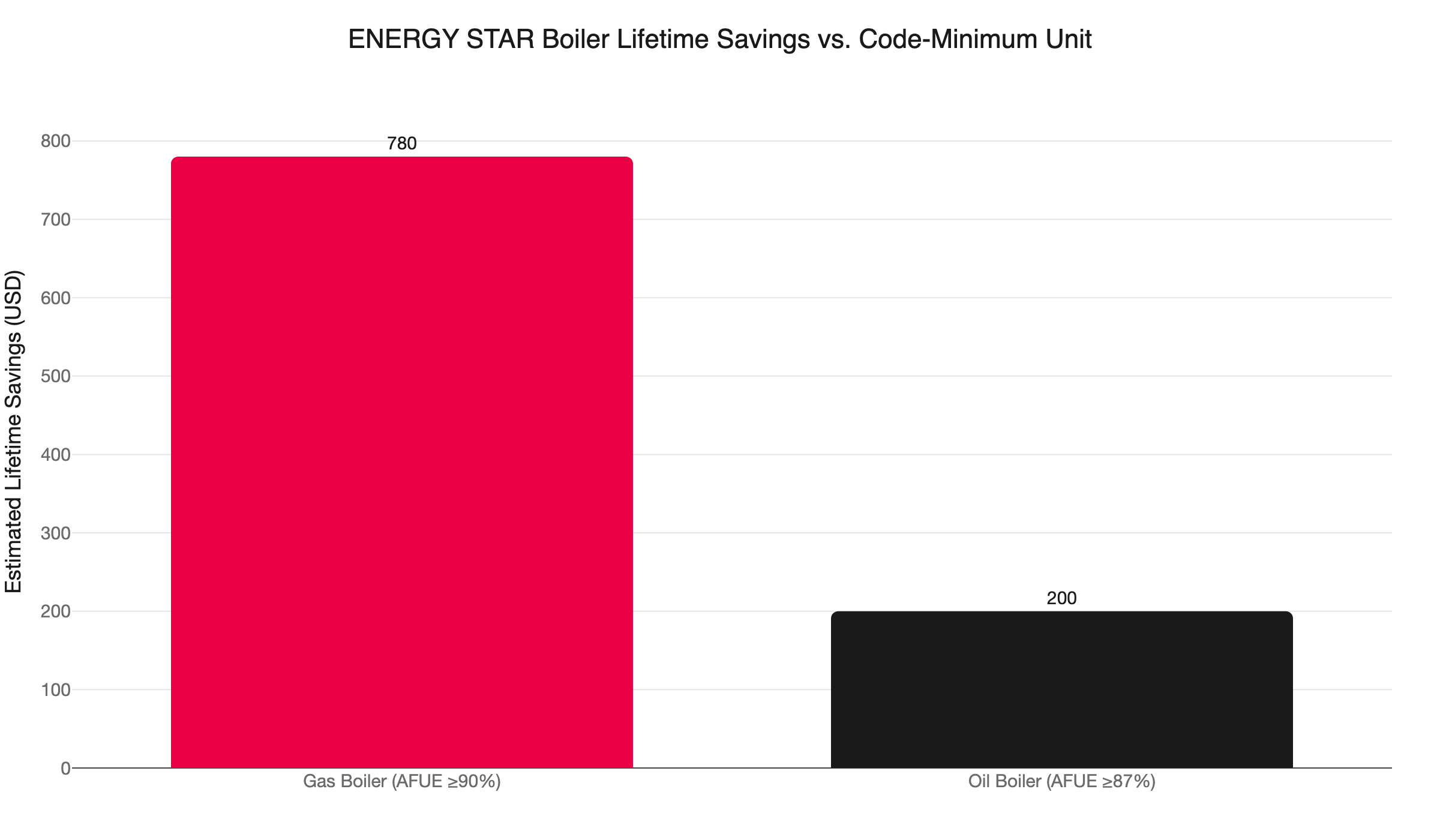
ENERGY STAR Boiler Lifetime Savings vs. Code-Minimum Unit
## Why Boiler Maintenance Matters More in Minnesota
Minneapolis has a design heating temperature of about -16°F. Your boiler does not just run a few hours a day on cold days. It runs hard, near full capacity, for five to six months straight. That duty cycle accelerates wear on every component.
Add Twin Cities water to the picture. Minneapolis municipal water is moderately hard, around 150 to 180 milligrams per liter. That hardness leaves mineral scale on heat exchanger surfaces and inside radiators. Scale acts as insulation in the wrong place. It forces your boiler to burn more fuel to move the same amount of heat. That drives your monthly bill up without you noticing.
Annual boiler maintenance is the national recommendation. In Minnesota, it is table stakes.
## What Does a Boiler Tune-Up Include?
**A boiler tune-up typically includes a combustion analysis, heat exchanger inspection, low-water cutoff test, expansion tank check, zone valve cycling, flue and vent inspection, thermostat calibration, pressure and temperature gauge check, and condensate drain inspection. Most tune-ups take 60 to 90 minutes when the system is accessible.**
Here is what your tech does at each step.
### 1. Combustion Analysis
This is the most critical test a tech runs on a boiler. An electronic flue gas analyzer measures oxygen levels and carbon monoxide parts per million in the exhaust stream. Those two numbers reveal whether your burner is mixing fuel and air at the right ratio.
A fuel-rich mix leaves unburned gas in the exhaust. A fuel-lean mix drops efficiency and can cause rough ignition. Both conditions produce elevated CO. Your tech adjusts the gas-to-air ratio until both readings fall within manufacturer spec. The adjustment is documented.
If you are a CenterPoint Energy customer, that documentation is what unlocks your [$25 rebate](https://www.centerpointenergy.com/en-us/SaveEnergyandMoney/Pages/furnace-boiler-tuneup-rebates-mn.aspx). More on that below.
### 2. Heat Exchanger Inspection
The heat exchanger transfers heat from combustion gases to your water. Cracks or corrosion let combustion gases escape into the building. On a gas boiler, a cracked heat exchanger is a carbon monoxide hazard. Your tech inspects the exchanger visually and checks for scale buildup that reduces heat transfer.
If hard water has left significant mineral deposits, your tech may recommend [a descaling treatment](/blog/boiler-power-flush-sludge-removal-minnesota/) or water inhibitor injection. Our guide on [carbon monoxide safety during furnace season](/blog/carbon-monoxide-safety-furnace-season/) covers the warning signs to watch for at home.
### 3. Low-Water Cutoff Test
Minnesota Mechanical Code requires a low-water cutoff valve on steam and hot-water boilers. This safety device shuts the burner down if water level drops below a safe threshold. That protects the heat exchanger from what techs call a "dry-fire." A dry-fire can destroy a heat exchanger in minutes.
Your tech flushes the float mechanism or tests the probe to confirm the cutoff triggers correctly. This check protects the most expensive component in your system. It appears on every Northern One Hour boiler tune-up.
### 4. Expansion Tank Check
As water heats, it expands. The expansion tank absorbs that pressure change. If the tank's air charge is depleted, the tank fills completely with water. It can no longer do its job. Pressure spikes then trip the relief valve and stress every fitting in the system.
The tap test reveals the tank's condition quickly. A tech knocks on the tank with a knuckle. A healthy tank sounds hollow on top and solid at the bottom. A waterlogged tank sounds solid all the way through. The [expansion tank tap test](https://genzryan.com/blog/boiler-tune-up/) catches this before the relief valve starts weeping or the pressure gauge swings out of range. If the tank is waterlogged, the tech re-pressurizes the air charge or recommends replacement.
### 5. Zone Valve Cycling
Older Minneapolis and St. Paul homes with [cast-iron radiators](/blog/how-to-bleed-air-from-radiators-minnesota/) often run multiple zones controlled by zone valves. A zone valve controls which part of the house gets heat. [Valves can stick open](/blog/boiler-zone-valve-failure-symptoms-cost-minnesota/), overheating one zone. They can stick closed, leaving a zone cold. A failed end switch can stop the boiler from firing entirely.
Your tech operates every zone valve through a full open-and-close cycle. This confirms the valve moves freely, the end switch signals correctly, and the thermostat triggers the boiler to fire. This check appears on no local competitor's published list.
### 6. Flue and Vent Inspection
Combustion exhaust must leave the building safely. Your tech checks flue pipes and vent connections for corrosion, gaps, and obstructions. On older boilers with draft hoods, the tech checks draft flow. On high-efficiency sealed-combustion boilers, the tech inspects the PVC intake and exhaust pipes for cracks, blockages, and proper slope for condensate drainage. A wasp nest inside an intake pipe over summer is a common fall surprise in the Twin Cities.
### 7. Pressure and Temperature Gauge Check
Your boiler operates within a specific pressure range: typically 12 to 15 psi at rest and up to 25 psi under load. Pressure that runs consistently high points to a [waterlogged expansion tank](/blog/boiler-expansion-tank-waterlogged-symptoms-minnesota/), a faulty fill valve, or a stuck pressure-reducing valve. Your tech reads both gauges and cross-checks against the relief valve's rated pressure. [Anything outside normal range](/blog/boiler-losing-pressure-how-to-fix-minnesota/) is flagged for follow-up.
### 8. Thermostat Calibration and Controls Test
Your tech checks the thermostat setpoint against actual room temperature. The tech also verifies the boiler fires and shuts off at the correct points. On systems with outdoor reset controls, the tech confirms the outdoor sensor reads correctly and the reset curve matches your home's heat load. Outdoor reset is one of the most effective efficiency improvements on an older boiler. This diagnostic step is where that opportunity surfaces.
### 9. Condensate Drain Inspection
This step applies to high-efficiency condensing boilers. These units extract so much heat from exhaust that flue gases cool below the dew point. The result is acidic condensate that must drain properly. A clogged or frozen condensate drain can shut the boiler down on a cold night. Your tech checks the drain line for obstructions, confirms the neutralizer is not exhausted, and verifies the drain discharges to the correct location.
## What Is a Combustion Analysis, and Why Should You Care?
**A combustion analysis uses an electronic flue gas analyzer to measure oxygen concentration and carbon monoxide in boiler exhaust. The tech uses those numbers to optimize the fuel-to-air ratio, improving efficiency and confirming the system is not producing dangerous CO levels.**
Most homeowners have never seen the test run. Here is the plain version.
Your boiler burns gas to heat water. How efficiently it burns that gas determines how much of each dollar of fuel actually heats your home. A burner running rich or lean wastes money and produces more CO. The analyzer gives your tech a number. The tech adjusts until the reading is in spec.
That matters especially in Minnesota. [ENERGY STAR certified gas boilers](https://www.energystar.gov/products/boilers) require AFUE of 90% or higher. Letting combustion drift lowers effective efficiency even on a high-rated unit, and over a Minnesota heating season, that drift adds up on your gas bill.
Combustion analysis is also what CenterPoint Energy requires to verify a qualifying tune-up. The program requires the tech to test combustion efficiency and CO, and to adjust the gas-to-air mix if CO is elevated. Your tech's written report is your proof of service for the rebate claim.
## The $25 Rebate Most Twin Cities Homeowners Leave Behind
If your home is on CenterPoint Energy gas service, you may be eligible for a [$25 Visa prepaid card](https://www.centerpointenergy.com/en-us/SaveEnergyandMoney/Pages/furnace-boiler-tuneup-rebates-mn.aspx) through CenterPoint's residential boiler tune-up rebate program. The rebate is available once every other year per system.
The qualifying criteria are specific. The tech must perform a combustion efficiency test and a CO test. If CO is elevated, the tech must adjust the gas-to-air mix. The work must be documented. That documentation is exactly what a complete boiler tune-up produces.
Most homeowners have no idea this rebate exists. None of the local HVAC companies currently advertising boiler tune-ups make the CenterPoint rebate a visible part of their offering. Northern One Hour documents the combustion test on every boiler tune-up as standard practice. Your rebate claim is ready to file when we finish.
Xcel Energy customers should check the [Xcel Energy residential heating programs and rebates page](https://www.xcelenergy.com/programs_and_rebates/residential_programs_and_rebates/heating_and_cooling) for current amounts, as these are updated periodically. For a full breakdown of what is currently available in the Twin Cities, our post on [Xcel and CenterPoint HVAC rebates in Minnesota](/blog/xcel-centerpoint-hvac-rebates-minnesota/) has the current details.
## How Often Should You Schedule a Boiler Tune-Up?
**Schedule a boiler tune-up once a year, ideally in early fall before heating season begins. CenterPoint Energy customers can claim the $25 rebate once every other year, but annual service still protects your equipment and keeps your warranty intact.**
Annual is the industry standard. Minnesota makes a strong case for sticking to it. Your boiler runs from roughly October through April in the Twin Cities, sometimes into May. That is six months of near-daily runtime. Components wear. Combustion settings drift. Mineral scale builds.
Skipping one year is not catastrophic. Skipping several years is how a $195 tune-up becomes a $1,950 repair or a premature $10,400 replacement.
The best time to schedule is August or September. Techs have availability. Your system is cold enough to service comfortably. Any problem found gets fixed before the first hard freeze hits in November.
## What Does a Boiler Tune-Up Cost?
**Boiler tune-ups in the Twin Cities typically run $130 to $250 for most residential systems. Combustion adjustments or minor part replacements may add to that cost. The CenterPoint $25 rebate reduces your net cost when your tech documents the required combustion and CO test.**
If a component needs replacement, your tech quotes that separately before any work begins. Honest, upfront pricing is how we operate on every job.
A tune-up is the lowest-cost way to protect a high-value asset. A [residential boiler replacement](/blog/condensing-boiler-upgrade-cost-minnesota/) in the Twin Cities runs $6,500 to $13,000 or more installed. Annual service extends equipment life and keeps the warranty current on newer units. The math is simple.
## Should You Repair or Replace After a Boiler Tune-Up?
**If a tune-up surfaces a cracked heat exchanger, irreparable scale damage, or multiple failing components, the question shifts from maintenance to replacement. A boiler near or past 20 years old facing a major repair estimate may cost less to replace than to fix.**
The tune-up is not a replacement trigger. It is an honest diagnostic. Most boilers in good shape come out of a tune-up running better than they went in.
If the tech finds something that warrants a replacement conversation, ask about efficiency and available incentives. [ENERGY STAR certified gas boilers](https://www.energystar.gov/products/boilers) save approximately $780 over their lifetime compared to a code-minimum unit. ENERGY STAR certified oil boilers save approximately $200. High-efficiency replacements may also qualify for the federal 30% energy efficiency tax credit, capped at $600. Verify current eligibility at the [ENERGY STAR federal tax credits page](https://www.energystar.gov/about/federal_tax_credits) before assuming your unit qualifies, because IRS rules change from year to year.
If you are weighing whether a boiler is the right long-term system for your home, our comparison of [boiler vs. forced-air furnaces in Minnesota](/blog/boiler-vs-forced-air-furnace-minnesota/) walks through the trade-offs in detail.
## Book Your Boiler Tune-Up Before the Rush
The shortest wait times are in August, September, and early October. By mid-November, every HVAC company in the Twin Cities is fielding no-heat calls. Booking now gets you a full diagnostic before heating season stress-tests your system.
Northern One Hour is locally owned and operated in Ramsey, MN. Our techs carry electronic flue gas analyzers on every boiler call. We document the combustion analysis and CO test so your CenterPoint rebate claim is ready to submit when we are done.
We stand behind every job with a 100% satisfaction guarantee and the on-time promise: "Always On Time… Or You Don't Pay a Dime!(R)"
Call (763) 260-6662 or [schedule your boiler tune-up online](/heating/boiler-repair-maintenance/).
---
# What to Set Your Humidistat in Winter in Minnesota
URL: https://northernonehour.com/blog/humidistat-settings-winter-minnesota/
Published: 2026-08-17 | Category: Indoor Air Quality
Check today's outdoor temp, then set your humidistat correctly. Minnesota-specific guidance to prevent window frost and attic damage all winter long.
Key Takeaways
- Your humidistat setting should move with the outdoor temperature. A flat winter number ignores Minnesota's 40-plus-degree seasonal swings.
- At 20 to 40°F outside, indoor humidity can safely reach 40%. At -10°F and below, you must drop to 25% or lower.
- [Window condensation](/blog/condensation-on-windows-winter-minnesota-humidity-fix/) is a warning sign, not just a nuisance. Left unchecked, it leads to attic frost and real structural damage when temperatures rise.
- A family of four adds more than 6 gallons of water vapor per day to indoor air through normal daily activity, with no humidifier running.
- No rebates currently exist for whole-home humidifiers through Xcel Energy or CenterPoint Energy as of mid-2026.
- Northern One Hour Heating & Air Conditioning is locally owned and based in Ramsey. Call (763) 260-6662 if your humidistat setup needs a professional look.
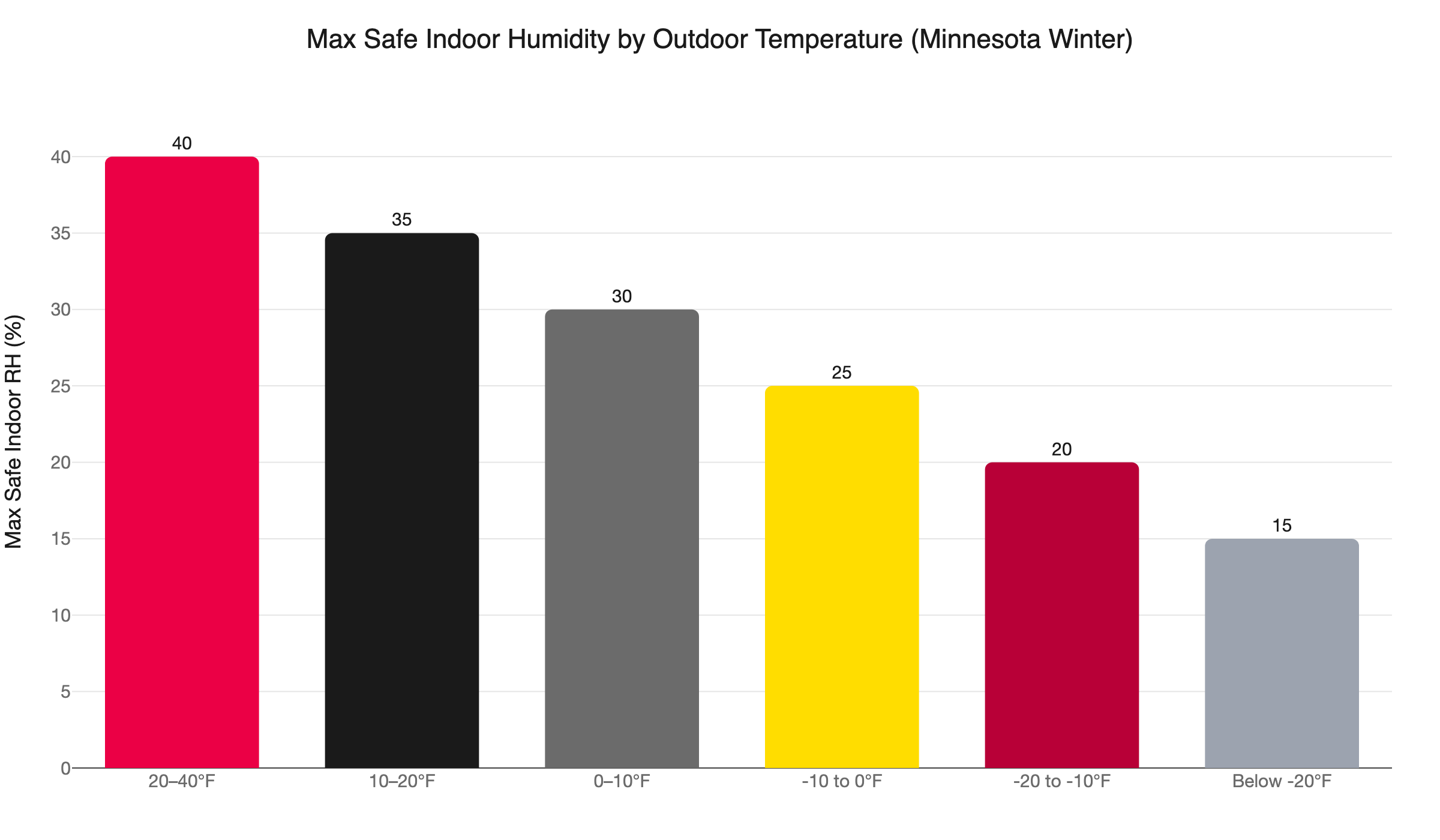
Max Safe Indoor Humidity by Outdoor Temperature (Minnesota Winter)
## Why Your Humidistat Setting Cannot Stay Fixed All Winter
Minnesota winters do not hold still. A November afternoon in the Twin Cities can sit at 35°F. A January night in Ramsey, Blaine, or Plymouth can drop to -15°F or lower.
[Minneapolis averages 72 days per year when temperatures never rise above 32°F](https://www.currentresults.com/Weather/Minnesota/Places/minneapolis-temperatures-by-month-average.php), with January minimums reaching -28°F. In a typical February, the Twin Cities see 11 to 20 sub-zero nights. The extreme cold rows in any humidity chart are not theoretical. They apply for weeks at a time every winter.
That swing matters for your humidistat. The amount of moisture indoor air can safely hold against cold surfaces changes as outdoor temperatures fall. A setting that prevents dry skin in November can cause attic damage in January.
Most online guides miss this. They offer a flat "30 to 40% all winter" recommendation without accounting for the 40-plus-degree outdoor temperature range a Twin Cities home experiences from November through February. That guidance works reasonably well at 25°F. It causes problems when it hits -15°F and your humidistat is still running at 38%.
The practical adjustment range across a full Minnesota winter is about 25 percentage points. From a ceiling of 40% at mild outdoor temperatures, you may need to drop to 15% during the coldest January stretches. No single setting covers the whole season.
---
## What Should I Set My Humidistat to in Winter in Minnesota?
**The short answer:** Check today's outdoor temperature and match it to the thresholds below. The colder it is outside, the lower your indoor humidity ceiling must go. Treat this as a seasonal reference to revisit weekly, not a one-time setup you can leave alone.
The [Minnesota Center for Energy and Environment](https://www.mncee.org/managing-humidity-levels) is the most authoritative local source on this. Their guidance, updated in July 2026, anchors the following thresholds:
- At 20 to 40°F outside, keep indoor humidity below 40%.
- At 10 to 20°F outside, keep indoor humidity below 35%.
- At 0 to 10°F outside, keep indoor humidity below 30%.
- At -10 to 0°F outside, keep indoor humidity below 25%.
- At -20 to -10°F outside, keep indoor humidity below 20%.
- At -20°F or below, keep indoor humidity below 15%.
These are maximums, not comfort targets. Staying at or below the threshold for today's outdoor temperature keeps moisture away from cold surfaces where condensation forms. The chart above shows these settings visually. Bookmark it. Use it as a quick reference on any morning in December, January, or February when temperatures swing overnight.
---
## Why Does the Safe Humidity Level Drop as Temperatures Fall?
**The short answer:** Cold air holds less moisture before reaching its saturation point. When warm, humid indoor air meets a cold surface like a window pane, moisture drops out as condensation. The colder the surface, the lower indoor humidity must stay to avoid crossing the dew point at that surface.
Think of it as a capacity limit. At 15°F outside, your windows and exterior walls get cold enough that even moderate indoor humidity pushes past the condensation threshold at the glass. At -5°F, that threshold drops further. A setting safe at 15°F may already be too high at -5°F.
Windows give you early and visible warning. But moisture does not stop at the glass.
In Minnesota, the real structural risk is attic frost. Moisture migrates through insulation and into attic space, where it freezes against the underside of the roof decking. The buildup is silent and invisible from inside the home. [CBS Minnesota has reported on the outcome directly](https://cbsnews.com/minnesota/news/attic-frost-humidity): when temperatures rise, it begins to rain in the attic. Rotted decking, ruined insulation, and mold can all trace back to a humidistat setting that seemed perfectly reasonable all winter.
Window quality changes your personal threshold. [Windows rated at a U-value of 0.35 or lower, meaning double or triple pane, are less prone to cold-weather condensation](https://bdexteriors.com/about/blog/humidity-window-condensation/). A well-insulated home can tolerate slightly higher indoor humidity at the same outdoor temperature compared to a home with older single-pane glass. If your windows are original to a 1970s or 1980s Twin Cities build, stay toward the lower end of each range in the chart, not the upper end.
---
## Is 20 to 25 Percent Indoor Humidity Really Safe to Breathe?
**The short answer:** Yes, though it will feel dry. Human bodies are most comfortable between 40% and 60% relative humidity. Minnesota winters at their worst make that comfort range unreachable without risking structural damage. The lowest settings in the chart apply only during the deepest cold snaps, not all season.
[ENERGY STAR's guidance for cold climates](https://www.energystar.gov/products/dehumidifiers) places the comfort and safety window at 30 to 50%, with anything above 50% flagged as a mold risk. Below-30% settings appear in the chart only for outdoor temperatures below -10°F. That is serious cold even by Minnesota standards, but it is not rare here.
This is the central tension of winter humidification in ASHRAE Climate Zone 6, which covers the Twin Cities. When it is -15°F outside and the safe humidity ceiling is 20 to 25%, you are not choosing between moisture and comfort. You are choosing between dry air and structural damage. The building comes first.
A few ways to feel less dry without raising the humidistat past safe limits:
- Add houseplants. They release water vapor passively and localize the benefit to rooms where you spend the most time.
- Stay hydrated. Low-humidity air increases moisture loss through skin and airways.
- Use textiles. Rugs, upholstered furniture, and heavy drapes hold ambient humidity better than hard surfaces and [hard floors](/blog/low-humidity-hardwood-floors-winter-minnesota/).
- Run a portable humidifier only in the bedroom, directed at the room rather than aimed at walls or windows.
---
## How Much Moisture Does Your Household Already Generate?
**The short answer:** More than most homeowners expect. A family of four generates over 6 gallons of water vapor per day through normal daily activity, without any humidifier running. That baseline alone is significant in a well-sealed home during a cold snap.
[The U.S. Department of Energy estimates that a family of four adds more than 6 gallons of water vapor daily to indoor air](https://www.energy.gov/eere/buildings/articles/building-america-expert-meeting-recommended-approaches-humidity-control) through breathing, cooking, showering, and doing laundry. No humidifier required.
In a tight, well-insulated modern home, that passive load can push indoor humidity toward condensation risk during a deep freeze. Any humidifier you add stacks on top of that already significant baseline. The combination is what tips the math.
Passive moisture management matters all winter:
- Run the kitchen exhaust fan every time you cook on the stovetop.
- Run the [bathroom exhaust fan](/blog/bathroom-exhaust-fan-sizing-winter-moisture-minnesota/) during and for 20 minutes after every shower.
- Verify that your dryer exhausts to the outside, not into a basement or crawl space.
- Keep interior doors open so moisture distributes across rooms rather than concentrating in one area.
If your home is recently weatherized or built to tight energy codes, the moisture your household generates naturally may be enough to approach the lower thresholds in the chart without a humidifier running at all.
---
## What Happens If I Set My Humidistat Too High?
**The short answer:** Window condensation appears first. That is the warning stage. If the setting stays too high, moisture migrates through insulation into the attic, freezes on the roof decking, and eventually thaws into leaks and structural damage when temperatures climb back above freezing.
The window condensation stage is recoverable. Lower the setting, wipe the glass, and watch for clearing over 24 to 48 hours. Most homeowners stop there without connecting the pattern to what is happening in the attic above them.
The attic frost stage is not recoverable without significant cost. Water staining or soft drywall below an attic space typically signals compromised insulation and possible mold. The roof decking itself may need partial replacement. Repair costs in the Twin Cities regularly run into five figures. That bill far exceeds any humidifier installation or annual calibration visit.
Physical signs that your humidistat has been running too high:
- Condensation on windows, especially in the lower corners of the glass.
- Ice or frost inside exterior walls, visible near outlet covers on outside-facing walls.
- A musty or earthy smell in rooms sharing an exterior wall.
- Heavier-than-usual ice dam formation on roof edges after a cold stretch.
If you see any of these, lower the humidistat immediately. Call (763) 260-6662 if the condensation does not clear within 48 hours. Our [indoor air quality](/indoor-air-quality/) team can assess whether moisture has reached your ductwork or HVAC components. Catching it at the window stage is always cheaper than waiting.
---
## Whole-Home vs. Portable Humidifiers: Does the Type Change the Setting?
**The short answer:** The outdoor-temp-keyed thresholds apply to both types. But whole-home units are easier to over-set because they run quietly and out of sight. MNCEE energy auditors often recommend portable units over whole-home units because the feedback is more visible, which makes homeowners less likely to leave a setting unchanged through a cold snap.
A whole-home humidifier wired to your furnace runs without drawing much attention. You set a number in September and rarely revisit it. That invisibility is the problem when outdoor temperatures drop 25 degrees over three days in December. The setting that worked last week is now too high, and the unit keeps running.
If you have a whole-home unit, build this habit. Every Monday morning from November through February, check the outdoor temperature. Compare it to the thresholds in the chart. Adjust by 5-point steps if needed. The habit takes 30 seconds and can prevent thousands of dollars in moisture damage.
One technical point worth confirming: many whole-home humidifiers include an outdoor temperature sensor. That sensor is supposed to automatically lower the set point as it gets colder outside. Sensors can fail, drift, or be placed where they do not accurately reflect outdoor conditions. A sensor reading 30°F when it is -15°F outside means your unit has been running at the wrong setting for weeks.
Our [humidifier service team](/indoor-air-quality/humidifiers/) can check calibration, inspect the water panel, and confirm the outdoor sensor is still reading accurately.
---
## Does Your Ventilation System Affect Your Baseline?
**The short answer:** Yes. HRV (Heat Recovery Ventilator) homes have a lower indoor humidity baseline because the system trades indoor moisture for dry outdoor air. ERV (Energy Recovery Ventilator) homes retain more indoor moisture. Knowing which type you have changes how carefully you need to watch the humidistat during cold snaps.
[The U.S. Department of Energy frames the distinction this way](https://www.energy.gov/eere/buildings/articles/building-america-expert-meeting-recommended-approaches-humidity-control): cold-climate designers who want to keep indoor humidity lower choose HRVs; those who want to retain more indoor moisture choose ERVs. That choice affects your humidistat baseline all winter long.
In an HRV home, the system continuously trades stale indoor air for dry outdoor air. Your household generates 6-plus gallons of water vapor per day, but the HRV is constantly exhausting some of it. Indoor humidity stays lower naturally. The condensation risk is reduced. But your humidifier may need to work harder to keep indoor air from feeling uncomfortably dry.
In an ERV home, moisture transfers across a membrane and stays inside the building envelope. Indoor humidity holds higher with less humidifier run time. The flip side: during a cold stretch, an ERV home can climb past the safe ceiling more quickly. Watch the outdoor temperature thresholds closely if you have an ERV.
For a closer look at which system fits Minnesota conditions best, see our post on [ERV vs. HRV ventilation systems for Minnesota homes](/blog/erv-vs-hrv-which-ventilation-system-minnesota/).
---
## Are There Rebates for Humidifiers in Minnesota Right Now?
**The short answer:** No. As of mid-2026, neither Xcel Energy nor CenterPoint Energy offers rebates on whole-home humidifiers. No offset is available through utility programs. Plan for the full installation cost.
Xcel Energy's current Minnesota residential rebate program covers heat pumps, high-efficiency furnaces, smart thermostats, and cooling equipment. Humidifiers are not included. Minnesota's HOMES and HEAR programs, funded through the federal Inflation Reduction Act and administered by the Minnesota Department of Commerce, had not launched as of June 2026.
We include this because some online content implies rebates exist without checking current availability. If you are budgeting a humidifier installation, do not build in a utility offset that is not there.
The financial argument for proper humidification is not a rebate calculation anyway. It is the cost of one attic moisture event compared to the cost of a humidifier plus annual calibration. Attic repairs in the Twin Cities regularly run into five figures. A properly maintained whole-home humidifier costs a fraction of that spread across years of service. The math favors prevention.
For rebates that do currently exist on HVAC equipment, see our guide to [Xcel and CenterPoint HVAC rebates in Minnesota](/blog/xcel-centerpoint-hvac-rebates-minnesota/).
---
## How Do You Know Your Humidistat Is Reading Accurately?
**The short answer:** The humidistat is only as accurate as its sensor. Sensors drift over time and can read 5 to 10 points off actual indoor humidity. That error is significant when the margin between a safe setting and a damaging one is only 5 points wide.
A simple check costs $10 to $15. Buy a digital hygrometer at any hardware or big-box store. Place it in your main living area, away from HVAC vents and exterior walls. After an hour, compare its reading to the humidistat display. If they differ by more than 5 points, the humidistat sensor may need cleaning or professional recalibration.
Signs that warrant a professional inspection:
- The humidistat reads 35%, but you still see window condensation on a relatively mild day.
- The unit runs continuously even at a low set point.
- You hear water dripping from the humidifier when the furnace is off.
- Visible [mineral scale or buildup](/blog/whole-home-humidifier-cleaning-maintenance-minnesota/) around the water panel or distribution tray.
For any of these, call (763) 260-6662 or book online. Northern One Hour Heating & Air Conditioning is locally owned and operated in Ramsey, MN. We serve the full Twin Cities metro, including Minneapolis, St. Paul, Blaine, Maple Grove, Plymouth, Brooklyn Park, Woodbury, and Bloomington. We show up when we say we will. That is the promise behind "Always On Time… Or You Don't Pay a Dime!(R)."
---
## Setting the Humidistat: Your Next Steps
If you have not adjusted your humidistat since last fall, now is the time. Check today's outdoor temperature, find the matching threshold in the chart, and compare it to your current setting.
At or below the threshold? You are fine. Keep checking weekly through February.
Above the threshold? Lower the setting by 5 points. Check your windows after 24 hours. Repeat if condensation persists.
Condensation already visible? Lower the setting immediately. Give it 48 hours. If improvement does not come, call a technician.
Winter humidity management in a Minnesota home is not a one-time setup. The adjustment from early November to deep January is roughly 25 percentage points. No single setting is right for the whole season. Homeowners who protect their homes check the setting weekly. They adjust for current outdoor conditions. They call for help when the equipment is not responding as expected.
Our [indoor air quality team](/indoor-air-quality/) and [humidifier service](/indoor-air-quality/humidifiers/) are here for exactly that. Call (763) 260-6662 or book an appointment online. We will be there when we say we will.
---
# Portable Dehumidifier vs Whole Home Dehumidifier: MN Guide
URL: https://northernonehour.com/blog/portable-vs-whole-home-dehumidifier-minnesota/
Published: 2026-08-17 | Category: Indoor Air Quality
Portable vs whole-home dehumidifier: compare costs, Minnesota basement performance, AC load reduction, and Xcel rebate eligibility before you buy.
Key Takeaways
- The [EPA recommends](https://www.epa.gov/mold/mold-course-chapter-2) keeping indoor relative humidity between 30-50% year-round. Above 60%, mold becomes a real risk.
- Portable dehumidifiers stop working effectively when room temperatures drop below 65 degrees F. Minnesota basements frequently hit that threshold in May, September, and October.
- Twin Cities outdoor humidity [averages 60-74% through summer](https://weather-and-climate.com/average-monthly-Humidity-perc,Minneapolis,United-States-of-America). Every time a door opens, humid air pushes in.
- A whole-home dehumidifier reduces the moisture load on your central AC, freeing it to focus on temperature during our most humid months.
- Running two portable units to cover more of your home costs more per month than running a whole-home dehumidifier, and still leaves gaps.
- [ENERGY STAR-certified dehumidifiers](https://www.energystar.gov/products/dehumidifiers) use 20% less energy than non-certified models. Xcel Energy's rebate program may offset part of the installed cost.
- Installed cost for a whole-home unit runs $3,200-$5,800. Portables cost $300-500 at retail.
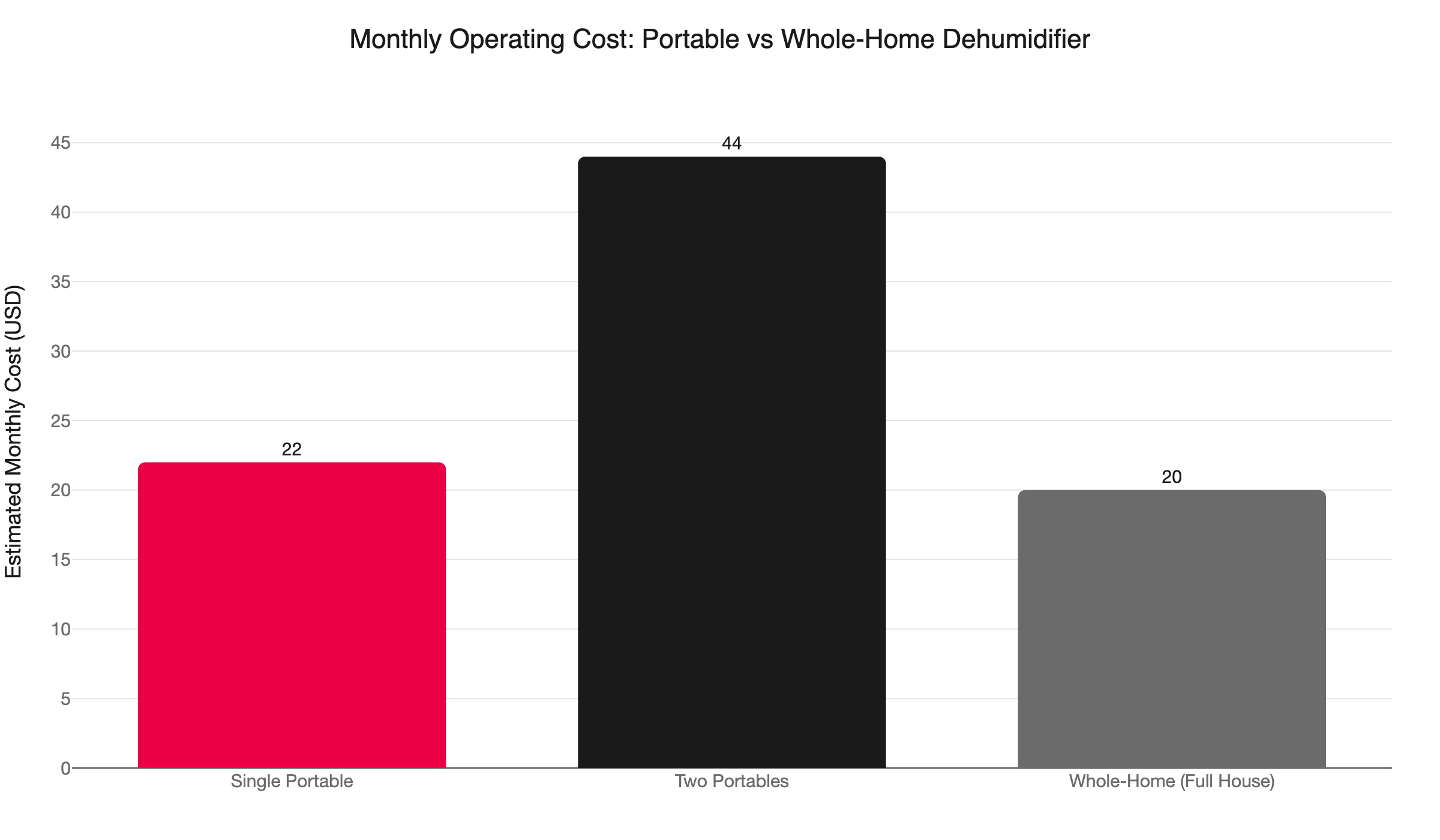
Monthly Operating Cost: Portable vs Whole-Home Dehumidifier
You are standing in your basement. It smells damp. You notice [condensation on the pipes](/blog/ductwork-sweating-condensation-basement-minnesota/), maybe a white haze creeping along the baseboards. The hardware store has a portable dehumidifier for $350. Your HVAC company is talking about a whole-home system for several thousand dollars. Deciding between a portable dehumidifier vs whole home dehumidifier feels straightforward until you look at the details that box-store marketing skips entirely. This post covers what those details are and why they matter more in Minnesota than almost anywhere else.
## Why Does Humidity Feel Worse in Twin Cities Summers?
**The short answer:** The Twin Cities faces some of the most persistently humid summer conditions in the Upper Midwest. Outdoor air at 60-70% relative humidity pushes into your home constantly through doors, windows, and gaps in the building envelope.
[Average outdoor relative humidity in Minneapolis runs 60-74% through summer](https://weather-and-climate.com/average-monthly-Humidity-perc,Minneapolis,United-States-of-America), with an annual average sitting around 67%. July dew points regularly reach the upper 50s and low 60s Fahrenheit. One recent June-July period posted an average dew point of 60.21 degrees F at MSP, [ranking it fifth-highest since records began at that station in 1938](https://www.fox9.com/weather/june-july-twin-cities-dew-point-average-5th-highest-since-1938).
High indoor humidity makes your home feel warmer than the thermostat says. It promotes mold and mildew growth, encourages dust mites, and forces your air conditioner to work harder removing moisture before it can address temperature. That extra work shows up on your utility bill every July and August.
Humidity control is a year-round job in Minnesota. Winters dry the indoor air to the point where you need to add moisture back. Summers flood the house with it. A home swinging between 22% relative humidity in February and 68% in July ages faster and never feels quite right. Getting both ends under control is not optional maintenance. It is basic home stewardship in this climate.
## Portable Dehumidifier vs Whole-Home Dehumidifier: What Is the Difference?
**The short answer:** A portable plugs into an outlet and treats one room. A whole-home unit connects to your ductwork and treats the air throughout the entire house. The ducting integration is the key distinction and the reason the two products serve different jobs.
By ENERGY STAR's definition, a whole-home dehumidifier [operates with ducting](https://www.energystar.gov/products/dehumidifiers/key_efficiency_criteria): return air feeds into the unit's inlet and dehumidified air distributes back through the duct system to one or more rooms. That integration is what makes it a permanent, house-wide solution rather than a spot treatment.
### What a portable does well
- Handles a single, contained space: a finished basement room, a bedroom, a crawl space.
- No installation needed. Plug it in, position it, and empty the tank when it fills.
- Lower upfront cost: $300-500 at retail.
- A practical choice if you rent and cannot modify ductwork, or if your home uses a boiler or radiant system without central air ducts.
### What a portable cannot do
- It treats one room. Humid air migrates freely through doorways and ductwork into adjacent spaces. A single portable unit cannot dehumidify a whole home.
- The tank fills and the unit shuts off. Emptying it on a schedule is real, ongoing maintenance.
- Performance degrades sharply when the room temperature drops below 65 degrees F. That point matters enormously in Minnesota, and it is where most portable comparisons stop short.
A whole-home dehumidifier integrates with your furnace fan. It runs automatically based on a humidistat set point. You set the target humidity once and it maintains it throughout the house without further intervention.
## Does a Portable Dehumidifier Work in a Cold Minnesota Basement?
**The short answer:** Not reliably. The Department of Energy tests portable dehumidifiers at [65 degrees F specifically because that is where real basement conditions begin to challenge the technology](https://www.energystar.gov/products/dehumidifier_testing_and_capacity). Below that threshold, compressor coils frost over and the unit stops removing meaningful moisture.
This is the detail competitors in warmer states never mention. It is a serious problem here.
Think about the shoulder seasons in Minnesota: May, September, October. These are exactly the months when spring snowmelt and fall rains saturate the soil around your foundation, pushing moisture through the slab and foundation walls. They are also the months when your basement is most likely to run below 65 degrees F. Your portable dehumidifier is performing worst precisely when the moisture load on your home is highest.
When a portable's coils frost in a cold room, the unit enters a defrost cycle. It warms the coils, pauses extraction, then tries again. In a basement running at 58-62 degrees F in early May, this cycle repeats constantly. The unit pulls almost no moisture and runs up your electricity bill doing it.
A whole-home dehumidifier draws from the return duct. It is not sitting in a cold room trying to extract moisture from cool stagnant air. It works within the conditioned airstream, which sidesteps the cold-coil limitation. If your portable has consistently disappointed you in spring and fall, the temperature floor is almost certainly why.
## How Does a Whole-Home Dehumidifier Help Your Air Conditioner?
**The short answer:** Your AC removes moisture as a byproduct of cooling. A whole-home dehumidifier takes that moisture job off the AC's plate, reducing its workload and improving efficiency on the hot, sticky days when your system is already under the most stress.
Here is the mechanism. Warm, humid outdoor air pushes into your home all summer. Your AC runs and the refrigerant coil gets cold. Warm air passes over the coil, moisture condenses out, and the cooled, drier air returns to the living space. The AC is doing two jobs simultaneously: removing heat and removing moisture.
Efficiency engineers call the moisture-removal portion the latent cooling load. In a Twin Cities summer with outdoor humidity regularly at 65-70%, a meaningful portion of your AC's energy goes toward that latent load before it ever addresses temperature. The AC is spending electricity changing the moisture content of the air, not making you cooler.
A whole-home dehumidifier handles latent load independently. It often runs with just the furnace fan, not the full compressor, moving air across its coil and exhausting condensate. The AC gets to focus on sensible cooling: actual temperature reduction. The result is a more comfortable home at the same thermostat setting and less wear on your compressor during the months that stress it most.
If your AC runs constantly but the house still feels clammy, that is a sign your system is losing the latent load battle on its own. Our post on [why your home feels humid in spring and how AC systems help control it](/blog/why-your-home-feels-humid-in-spring-and-how-ac-systems-help-control-it/) covers this dynamic in detail. A whole-home dehumidifier is often the right next step when the AC alone is not enough.
## Portable Dehumidifier vs Whole-Home Dehumidifier: How Do the Costs Compare?
**The short answer:** Portables win on upfront cost. A whole-home unit wins on monthly operating cost once you need more than one room covered. Two portables running to cover more of your home cost more per month than a single whole-home system.
### Upfront cost
- Portable dehumidifier: $300-500 at retail.
- Whole-home dehumidifier (installed): $3,200-$5,800 as a general range. Call us for a local Twin Cities quote. Your duct configuration and existing equipment affect labor time.
The gap is real. If you only need one basement room treated and that room stays above 65 degrees F year-round, the portable's economics are reasonable.
### Monthly operating cost
A single portable running 8-12 hours a day costs roughly $12-32 per month. A whole-home system covering the entire house costs approximately $15-25 per month.
Those figures look similar at first glance, but the whole-home number covers every room your ducts reach. The portable number covers one room.
Now consider what happens when one portable is not enough. If you need to cover your basement and your main floor, which is a common scenario in Twin Cities split-levels and two-story homes, you need at least two units. Two portables cost $24-64 per month combined. That exceeds the whole-home monthly figure. And you still have gaps in coverage, plus two tanks to empty.
The math on running multiple portables rarely favors that approach past the first or second cooling season. The convenience and cost advantages shift decisively toward the whole-home unit once you move beyond a single isolated space.
### Utility rebates
[ENERGY STAR-certified dehumidifiers use 20% less energy](https://www.energystar.gov/products/dehumidifiers) than non-certified models. Xcel Energy's Minnesota Conservation Improvement Program for 2024-2026 covers ENERGY STAR-qualified appliances, which may include dehumidifiers. The exact rebate amount for dehumidifiers was not confirmed at publication. Call Xcel at 1-800-895-4999 or visit [mn.my.xcelenergy.com](https://mn.my.xcelenergy.com/s/residential/home-rebates) to get the current figure before you purchase. Our guide to [Xcel and CenterPoint HVAC rebates in Minnesota](/blog/xcel-centerpoint-hvac-rebates-minnesota/) has broader context on what the rebate landscape looks like for HVAC equipment.
## What About Energy Efficiency and the ENERGY STAR Label?
ENERGY STAR-certified dehumidifiers are tested and verified to use 20% less energy than standard models. The efficiency metric is Integrated Energy Factor (IEF): liters of water removed per kilowatt-hour consumed, including standby power draw. This replaced the older Energy Factor metric as of June 2019. The current ENERGY STAR dehumidifier specification took effect October 1, 2025.
When you are comparing portables at a hardware store, look for the ENERGY STAR label. An uncertified unit will cost more to operate over the life of the appliance. A few dollars saved at purchase translates to more spent every month for years.
When comparing whole-home units, sizing matters as much as certification. An undersized unit runs constantly and never catches up with the moisture load. An oversized unit short-cycles and wears out faster. Your HVAC technician sizes the unit based on your square footage, duct configuration, and the moisture characteristics of your specific home. Correct sizing is one of the primary reasons professional installation of a whole-home dehumidifier outperforms a self-installed portable in actual practice.
## Which Option Is Right for My Home?
**The short answer:** A portable works if you need one contained room treated and that room stays warm year-round. A whole-home system is right if you need consistent dehumidification throughout the house, have a cold basement in shoulder seasons, or want to reduce the latent load on your AC.
### Choose a portable if:
- You rent and cannot modify ductwork.
- Your home uses a boiler, radiant floor heat, or another system without central air ducts.
- You have one isolated space with a moisture problem and that space consistently stays above 65 degrees F from spring through fall.
- You need a short-term solution while planning a longer-term fix.
### Choose a whole-home dehumidifier if:
- You want consistent humidity control in every room, not just one.
- Your home has central ductwork (most Twin Cities construction built after 1980 does).
- Your AC runs long cycles but the house still feels sticky and uncomfortable.
- Your basement temperature drops below 65 degrees F in May, September, or October.
- You are planning a furnace or AC replacement and want to bundle the installation.
That last point is worth emphasizing on its own. Adding a whole-home dehumidifier at the same time as an HVAC replacement is the most cost-effective window for the work. Labor overlaps significantly. Our team can assess your home and walk you through the options when we do your system installation. You can also learn more on our [indoor air quality and dehumidifier page](/indoor-air-quality/dehumidifiers/) or read our dedicated post on [whole-home dehumidification in the Twin Cities](/blog/whole-home-dehumidifiers-in-the-twin-cities-comfort-fix-for-sticky-summer-days/) before you call.
For the heating season flip side of this equation, our post on [whole-home humidifiers for winter dry air](/blog/whole-home-humidifier-winter-dry-air/) covers how to keep humidity in the right range when Minnesota cold pulls it too low.
## How Northern One Hour Can Help
We are a locally owned and operated HVAC company serving the Twin Cities out of Ramsey, MN. Our team works in homes across Minneapolis, St. Paul, Blaine, Maple Grove, Plymouth, Brooklyn Park, Woodbury, and Bloomington every week.
When a homeowner calls us about a sticky, humid house, we start with an assessment. We measure current indoor humidity and identify where it is highest. We check whether the AC is sized correctly and maintaining its latent load. We look at the ductwork to confirm whether a whole-home dehumidifier integrates cleanly with the existing system. We review current rebate eligibility with Xcel.
If a portable dehumidifier genuinely solves your specific problem, we will tell you that directly. What we will not do is let you invest in two or three portable units that cost more to operate than a whole-home system and still leave parts of the house humid and uncomfortable.
Call us at (763) 260-6662 or book online to schedule an assessment. We show up when we say we will. That commitment is the foundation of everything we do, and it is the promise behind "Always On Time… Or You Don't Pay a Dime!(R)."
## Frequently Asked Questions
**What humidity level should I target in my Twin Cities home?**
The [EPA recommends](https://www.epa.gov/mold/mold-course-chapter-2) 30-50% relative humidity as the healthy indoor range. Keep it below 60% to prevent mold. In Minnesota summers, 45-50% is a comfortable, realistic target. In winter, aim for 30-40% to prevent condensation on windows and window frames.
**Why does my portable dehumidifier stop working in spring and fall?**
Portable dehumidifiers are [tested at 65 degrees F](https://www.energystar.gov/products/dehumidifier_testing_and_capacity). When room temperature drops below that threshold, the compressor coils frost over and the unit stops removing moisture effectively. Minnesota basements in May and September regularly run below 65 degrees F, which is also when ground moisture intrusion from snowmelt and rain is highest.
**Can I just buy two portables instead of one whole-home unit?**
You can, but the math usually does not favor it. Two portables running 8-12 hours a day typically cost more per month combined than a whole-home dehumidifier covering the entire house. You also still have coverage gaps between rooms and two tanks to manage. Beyond the second cooling season, the operating cost gap grows.
**Does Northern One Hour install whole-home dehumidifiers?**
Yes. We install and service whole-home dehumidifiers integrated with your existing forced-air system. Visit our [dehumidifier service page](/indoor-air-quality/dehumidifiers/) for more detail, or call (763) 260-6662 to schedule an in-home assessment.
**Is there currently a rebate for a whole-home dehumidifier in Minnesota?**
Xcel Energy's Conservation Improvement Program covers ENERGY STAR-certified appliances. Whether dehumidifiers qualify in the current program year and at what amount: confirm directly with Xcel at 1-800-895-4999 or at [mn.my.xcelenergy.com](https://mn.my.xcelenergy.com/s/residential/home-rebates) before purchasing. Rebate amounts change between program years and we do not want you to budget around a figure that may have shifted.
---
# Propane vs Natural Gas Furnace Minnesota: Know Your Options
URL: https://northernonehour.com/blog/propane-furnace-vs-natural-gas-minnesota/
Published: 2026-08-17 | Category: Heating
Hugo, Stillwater, and Chaska-fringe homeowners face a different propane vs natural gas furnace decision. Here's the Minnesota-specific cost and rebate reality.
Key Takeaways
- If your home is in Hugo, east of Stillwater, or the Chaska/Carver County fringe, you're on propane because gas lines don't reach your street. That shapes the entire decision.
- Minnesota propane averaged about $2.06/gallon in March 2026, roughly 23% below the national average. The "propane costs 2-3x more" framing comes from national numbers, not ours.
- CenterPoint and Xcel Energy furnace rebates ($200-$400) apply only to their natural gas customers. Propane homeowners are outside both programs.
- The federal 25C tax credit for high-efficiency furnaces expired December 31, 2025. No federal incentive is available for furnace replacements in 2026.
- Owning your propane tank rather than leasing it is the single biggest controllable cost lever available to you.
- For many exurban homeowners, the smartest 2026 move is a cold-climate heat pump paired with your propane furnace as backup. Not a propane-for-propane swap.
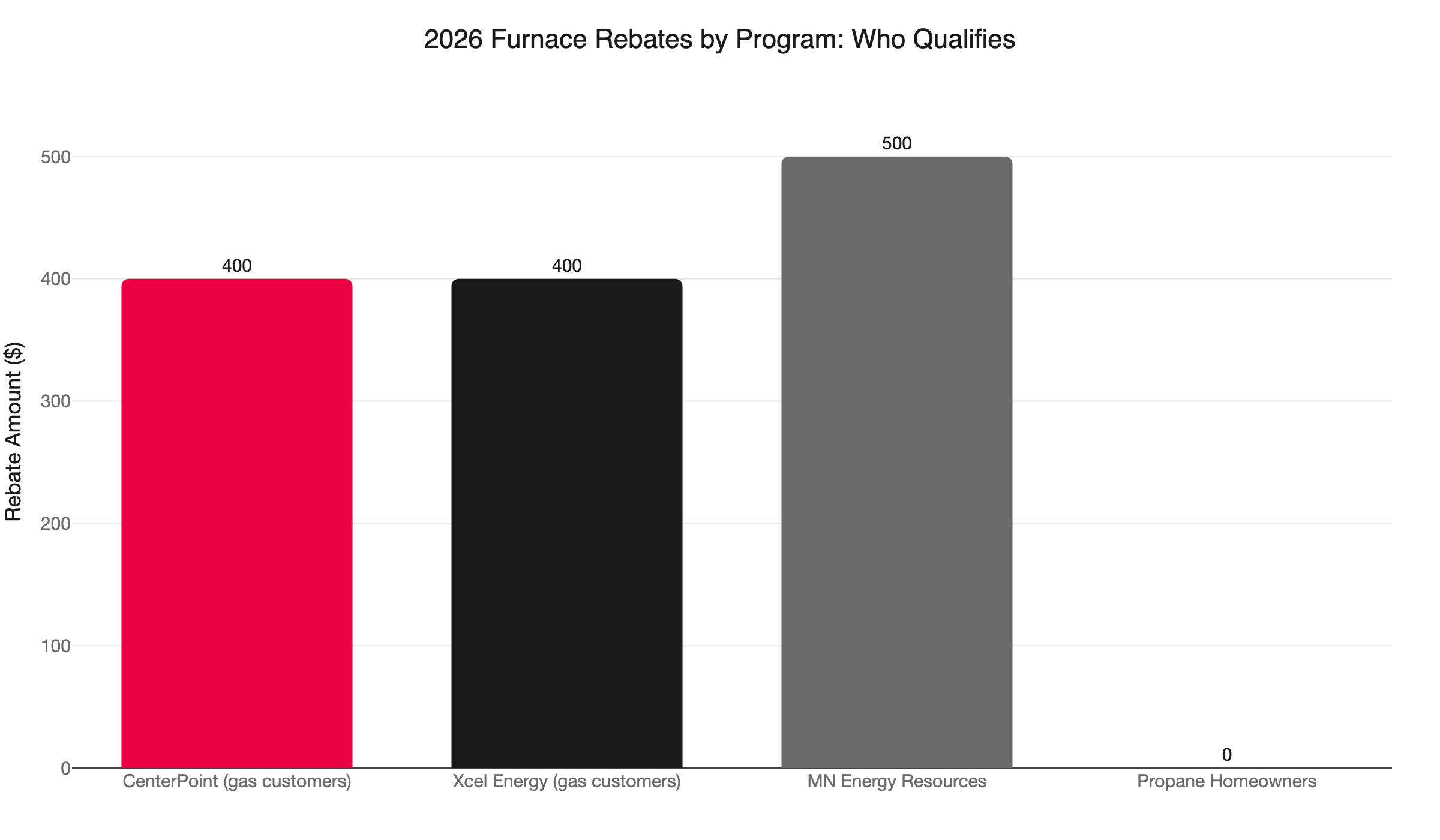
2026 Furnace Rebates by Program: Who Qualifies
## Why Propane vs Natural Gas Looks Different Here
Most homeowners searching "propane vs natural gas furnace Minnesota" aren't choosing between two equally available fuels. They're figuring out what to do about a situation they inherited.
If you live in Hugo, east of Stillwater in the St. Croix Valley, or anywhere on the Chaska/Carver County fringe, you probably heat with propane because the gas main doesn't reach your street. The question isn't which fuel wins in the abstract. It's: what are your actual options, what does propane really cost in Minnesota today, and does 2026 change the math?
National comparison articles treat Minnesota as a monolith. They recycle the same BTU-equivalent math without acknowledging that exurban Twin Cities homeowners sit outside the major rebate programs, outside some utility footprints, and outside the assumptions those pieces were built on. This post addresses your situation specifically.
## Can You Even Get Natural Gas at Your Address?
**Start with the [Minnesota PUC utility locator](https://mn.gov/puc/consumers/utility/). It confirms whether a gas utility serves your specific property. If none does, the propane vs natural gas comparison is hypothetical until the infrastructure changes.**
Three major natural gas utilities serve the Twin Cities region:
- **Xcel Energy** serves about 492,000 residential gas customers across 27 Minnesota counties.
- **CenterPoint Energy** serves more than 900,000 Minnesota customers, primarily in the metro core and established suburbs.
- **Minnesota Energy Resources** serves about 254,000 customers across 179 communities, including many outer-ring suburbs and smaller cities outside the Xcel and CenterPoint footprints.
If none of those utilities serve your address, you're looking at one of three paths. Petition for a gas main extension. Stay on propane and optimize how you use it. Or move toward a cold-climate heat pump that reduces your propane dependency. All three are real options. We'll cover each one.
## What Does a Gas Main Extension Actually Cost?
**Extending a gas main to an unserved rural or exurban property can run from $10,000 to $50,000 or more, depending on distance to the nearest main. That number rarely works out for a single household acting alone.**
Minnesota utilities are required to offer Line Extension Allowances, which subsidize part of the cost of running new gas infrastructure to unserved areas. After a 2024-2025 regulatory debate at the Minnesota PUC, where advocates argued [ratepayers shouldn't fund gas utility expansion](https://fresh-energy.org/now-is-the-time-to-reevaluate-subsidized-gas-line-extensions-in-minnesota) as the state pursues carbon reduction targets, the PUC kept the program but adjusted the maximums.
For a homeowner a quarter-mile from the nearest main, the cost typically exceeds what any single household finds worthwhile. The math changes for a new development. A collective petition across 15 to 20 homes can spread the cost across enough connections to make it viable. If your neighborhood is growing and a gas extension is realistic in a few years, it's worth tracking. But it's not a basis for your current heating decision.
One broader point worth keeping in mind: Minnesota's carbon reduction mandates are creating regulatory pressure on new gas utility expansion. The long-term trajectory for gas infrastructure is uncertain. That context matters if you're weighing a long-term propane strategy against a path toward electric alternatives.
## What Does Propane Actually Cost in Minnesota Right Now?
**The [EIA's weekly heating fuel survey](https://www.eia.gov/dnav/pet/pet_pri_wfr_dcus_smn_w.htm) for the week of March 30, 2026 put Minnesota residential propane at about $2.06/gallon. That's roughly 23% below the national average of $2.67/gallon and below the Midwest average of $2.21/gallon.**
That number matters for how you read the comparisons online. Most articles frame propane as "2-3 times more expensive than natural gas." That comparison is based on national BTU-equivalent cost math. It's not wrong as a national average. But Minnesota propane runs meaningfully cheaper than in most of the country. The cost gap with natural gas exists here. It's just narrower than those articles imply.
Natural gas rates have been climbing, too. [Xcel Energy's 6.8% rate increase took effect January 1, 2026](https://www.startribune.com/xcel-energy-gas-rates-will-go-up-68-for-2026-heres-why/601544882), adding roughly $85 to the average residential customer's annual bill. CenterPoint saw a 5.3% interim increase in 2024 and another 2.4% in 2025. Both utilities remain below the national average. But the gap between propane and gas is narrower in 2026 than it was three years ago.
One pricing factor specific to propane: the EIA only tracks Minnesota propane prices from October through March. Summer pre-buy contracts are negotiated directly with your supplier. If you haven't priced your summer pre-buy, do it now. Pre-buy pricing is typically lower than in-season rates. A well-timed contract can cut your annual fuel spend in a meaningful way.
## Are There Rebates for Propane Homeowners in Minnesota?
**Not from the major utilities. CenterPoint and Xcel furnace rebates require an active natural gas account with that utility. If you heat with propane, you don't qualify. Minnesota Energy Resources offers $500 for 97%-or-higher AFUE equipment, but only within its 179-community service territory.**
This is the rebate gap none of the generic comparison articles flag. [CenterPoint's 2026 rebate of $400 for a 95%-or-higher AFUE furnace](https://centralminnesotaheatingandcooling.com/blog/xcel-centerpoint-hvac-rebates-2026) and Xcel's $200 to $400 rebates for high-efficiency equipment both require an active gas account. Propane homeowners fall outside both programs entirely.
Minnesota Energy Resources is the exception. They serve 179 communities across the state, including some exurban areas outside the Xcel and CenterPoint footprints. If your home falls within their territory, a 97%-or-higher AFUE furnace earns a $500 rebate. Check their service area map to confirm eligibility before you count on it.
Some electric co-ops in the outer metro offer incentives for heat pump installations. Those programs sit outside the gas utility rebate ecosystem. If you're served by a co-op, ask them directly about heat pump programs.
For the full breakdown of what each program covers and who qualifies, see our post on [Xcel and CenterPoint HVAC rebates in Minnesota](/blog/xcel-centerpoint-hvac-rebates-minnesota/).
## What Happened to the Federal Tax Credit?
**The 25C Energy Efficient Home Improvement Credit for residential furnaces expired December 31, 2025. [Per Energy Star and the IRS](https://www.energystar.gov/about/federal-tax-credits), the 119th Congress did not extend it. No federal credit is available for furnace replacements in 2026.**
This matters specifically for propane homeowners. When the credit was live, upgrading to a 96%-or-higher AFUE propane furnace could earn up to $600 in federal incentives. That offset reduced the payback period on high-efficiency equipment. The credit is now gone.
That doesn't change the conclusion on efficiency. High-efficiency propane furnaces still pay back their premium through fuel savings. On propane, where every wasted BTU costs more, the case for 96%-or-higher AFUE remains strong. The math just rests entirely on energy savings now, with no federal buffer.
## Is Owning Your Propane Tank Worth It?
**Almost always yes, if you plan to stay in the home for more than a few years. An owned tank lets you buy from multiple suppliers at competitive spot prices. A leased tank locks you to one supplier at their posted rate.**
The price difference is real and documented. One supplier example: $1.49/gallon for customers with an owned tank versus $2.25/gallon for leased-tank customers, from the same dealer for the same product. [That gap is a direct function of tank ownership](https://www.crystalflash.com/support/propane-tank-ownership/), not your volume or your relationship length.
There are tradeoffs to understand. Some suppliers prioritize their own leased-tank customers during shortage periods. That's not hypothetical if you've lived through a propane crunch during a Minnesota cold snap. Purchasing a tank also carries an upfront cost: typically $400 to $2,000, depending on size and whether a buried tank requires excavation.
Over five to ten years, the pricing flexibility from an owned tank usually outpaces those costs. If you're currently in a lease, review your contract. Many include a purchase-out option at year three or five. If you're replacing a furnace anyway, that's a natural moment to revisit your tank situation at the same time.
## How Does Efficiency Compare Between Propane and Natural Gas Furnaces?
The AFUE ladder is fuel-agnostic. A 96% AFUE propane furnace converts 96 cents of every fuel dollar into heat. A 96% AFUE natural gas furnace does the same. The equipment is identical on efficiency. Only the fuel cost per BTU differs.
What changes is how much each efficiency point is worth in dollar terms. Propane costs more per BTU than natural gas. So moving from 80% AFUE to 96% AFUE saves the same percentage of fuel on both systems, but that percentage represents a larger dollar figure per year on propane. You're cutting 20% of your fuel waste. On propane, that 20% is worth more than it would be on gas.
Practically: if you're replacing a propane furnace, go 96% AFUE or higher. Don't replace propane with propane at 80% AFUE. There's no financial case for it. The efficiency premium typically pays back in two to four heating seasons on propane, depending on home size and annual usage. The higher the AFUE, the faster the return.
For current pricing on what a high-efficiency furnace replacement costs installed in this market, our [furnace replacement cost guide for the Twin Cities](/blog/furnace-replacement-cost-twin-cities/) covers the ranges.
## Should You Consider a Dual-Fuel System Instead?
**If your cooling equipment is also aging, a cold-climate heat pump paired with your propane furnace as backup is almost certainly the smarter 2026 move. The heat pump covers efficient heating and all your cooling. Propane handles the deep cold below -10 degrees Fahrenheit.**
This framing is missing from every top result for "propane vs natural gas furnace Minnesota." Those articles treat propane as a problem to solve by switching fuels. None of them address that propane is often the best backup fuel for a cold-climate heat pump in a home without gas access.
Here's how the system works. A modern cold-climate heat pump maintains its rated output down to about +5°F. It produces useful heat below 0°F, though at reduced efficiency. Minneapolis averages about 13 nights per year below 0°F.
A field assessment by the Center for Energy and Environment [evaluated cold-climate heat pumps in Minnesota homes](https://www.mncee.org/cold-climate-air-source-heat-pump-field-assessment-closed) that lacked natural gas access. At 4 of 6 sites, a propane furnace served as the backup heat source. The system divided the work: heat pump for the efficient majority of heating hours, propane furnace for the coldest fraction of the season.
That split has two financial effects. First, you burn far less propane annually. That reduces your exposure to price volatility regardless of whether you own or lease your tank. Second, the heat pump covers cooling season as well. You're combining two system replacements into one coordinated project rather than replacing your furnace and your AC separately over a few years.
The balance point is the outdoor temperature where the system hands off from heat pump to propane backup. It's typically set between +5°F and -10°F. Your installer determines the right setting based on your home's heat load and the equipment's performance specs.
If you're already looking at your furnace and your AC, price out a dual-fuel system before committing to a straight propane replacement. It's a materially different conversation. Dual-fuel systems cost more upfront than a furnace-only replacement, and financing is available. For more on how the balance point and backup heat work in Minnesota winters, see our post on [heat pump balance points and backup heat](/blog/heat-pump-balance-point-backup-heat-minnesota/).
## Your Decision Tree
Here's how to work through this cleanly.
**1. Check your gas access first.** Use the [MN PUC utility locator](https://mn.gov/puc/consumers/utility/). If a utility serves your address, get a connection cost estimate and compare it against a high-efficiency propane upgrade or a dual-fuel system.
**2. Check your utility territory.** If you fall within Minnesota Energy Resources' service area, you may qualify for a $500 rebate on a 97%-or-higher AFUE furnace. That changes the replacement math in a meaningful way.
**3. Review your tank situation.** If you're leasing, look at your terms. If you're replacing equipment anyway, consider purchasing your tank to unlock competitive pricing going forward.
**4. Evaluate dual-fuel if your AC is also aging.** Price out a cold-climate heat pump plus propane backup as a single project before committing to a straight furnace replacement. The dual-fuel path reduces long-term propane use and eliminates a future AC replacement.
**5. If a straight propane replacement is the right call, go 96% AFUE or higher.** Every efficiency point matters more on propane than on natural gas. Don't leave money in the flue.
---
Northern One Hour is locally owned and operated in Ramsey, MN. We serve the Twin Cities metro, including Hugo, Stillwater, Maple Grove, Blaine, Plymouth, Brooklyn Park, Woodbury, and Bloomington. Whether you're figuring out whether gas is available at your address, pricing out a dual-fuel system, or ready to replace a propane furnace, our team can walk you through the real numbers for your home.
Call **(763) 260-6662** or [schedule service online](/heating/heating-equipment/furnaces/). "Always On Time… Or You Don't Pay a Dime!(R)"
---
# AC Condenser Fan Motor Failing: Signs and What to Do
URL: https://northernonehour.com/blog/ac-condenser-fan-motor-failure-symptoms-cost-twin-cities/
Published: 2026-08-16 | Category: Cooling
Your outdoor unit hums but the fan isn't spinning. Learn the 3-step check, how to tell motor from capacitor, and when to call for Twin Cities AC repair.
Key Takeaways
- An AC condenser fan motor failing is more than a minor inconvenience. When the fan stops, the compressor can overheat within hours, turning a $300-$700 repair into a $950-$3,200 replacement.
- A fan blade that isn't spinning does not always mean a dead motor. About half the time, a failed run capacitor is the real problem, and the part costs $15-$40.
- You can safely check three things yourself: look at the blade, listen for grinding or humming, and nudge the blade with a long non-conductive stick. Stop before you touch anything electrical.
- Running the AC with a failed fan motor is one of the fastest ways to destroy a compressor. Turn the system off and call.
- Fan motor replacement in the Twin Cities typically runs $300-$700 all-in for parts and labor.
- If your unit is over 15 years old and has had multiple recent repairs, replacement may be the smarter financial call.
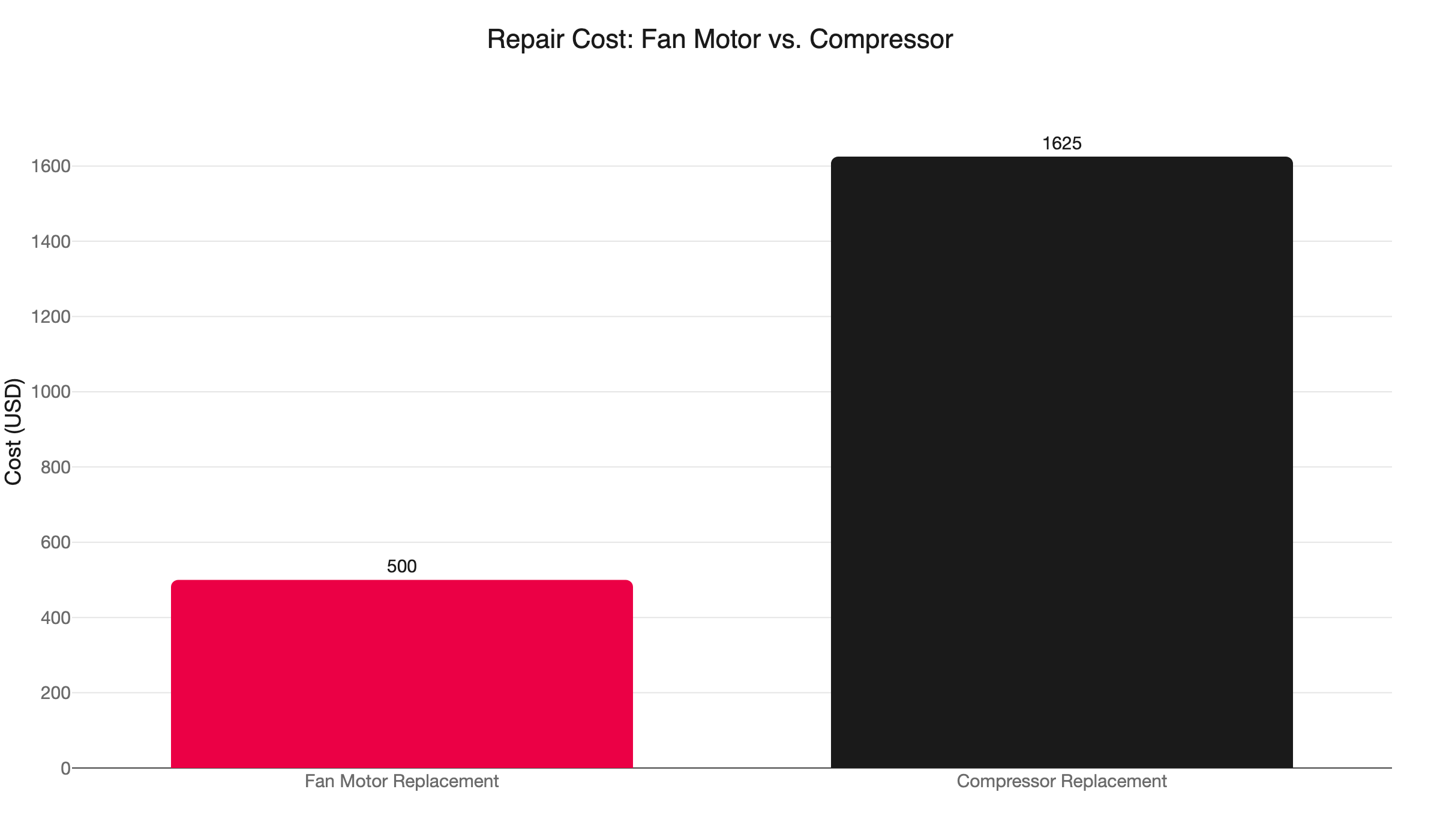
Repair Cost: Fan Motor vs. Compressor
## What Does the Condenser Fan Motor Do?
The condenser fan motor pulls air through the outdoor unit so the refrigerant can release heat outside your home. Without that airflow, heat builds up, refrigerant pressure climbs, and the compressor overheats and shuts down or fails.
Think of the outdoor unit as a radiator. The refrigerant arriving from inside your home carries the heat it absorbed from your air. The fan motor pulls outside air across the condenser coil so that heat bleeds off into the yard. Once the refrigerant cools and releases that heat, it cycles back inside to pick up more. The motor is what keeps that exchange moving.
[According to Inspectapedia](https://inspectapedia.com/aircond/HVAC_Condenser_Fan.php), when the condenser fan motor fails, head pressure climbs and the compressor overheats. That is the risk in a sentence. Everything else in this post is about catching it before that happens.
---
## Signs of an AC Condenser Fan Motor Failing
Some of these you can spot or hear yourself. Others only show up as a symptom inside your home.
**At the outdoor unit:**
- The fan blade is not spinning, but you can hear the unit humming and running
- The blade spins slowly or struggles to get started
- A grinding, squealing, or rattling sound comes from the top of the unit
- A burning smell near the outdoor unit
- The unit shuts itself off after a few minutes on a hot day, then tries to restart
**Inside the home:**
- The air coming from your vents is less cold than usual
- The system runs much longer than normal without cooling the house down
- The AC repeatedly [trips the breaker](/blog/ac-contactor-failure-symptoms-replacement-cost-twin-cities/)
The last two inside symptoms can have several causes beyond the fan motor. A refrigerant leak, a dirty coil, or a frozen evaporator coil can produce similar results. But if the fan blade is not turning at all, work through the next section before calling anything else.
---
## What Can You Check Before Calling a Tech?
Three safe checks take about five minutes and give you useful diagnostic information before you call. Look at the fan blade through the top grille, listen for abnormal sounds, and do the blade nudge test. Stop before you touch anything electrical inside the unit.
Here is the full sequence:
**Step 1: Look.** Stand near the outdoor unit and look through the top grille. Is the fan blade turning? Is it spinning slowly, or completely still? A blade that is not moving while the compressor hums is the clearest visual sign of a motor or capacitor problem.
**Step 2: Listen.** Before you get close, listen from a few feet away. A running motor is relatively quiet. A humming sound with no rotation often means the motor is receiving power but cannot turn. Grinding or squealing points to failing bearings inside the motor itself.
**Step 3: The blade nudge test.** This single check gives you the most useful diagnostic signal before a tech arrives. With the unit powered on and running, use a long non-conductive stick (a wooden dowel or the handle of a plastic rake works well) to gently push the fan blade through the top grille. If the blade spins up on its own after a nudge and keeps running, the capacitor has likely failed, not the motor. If the blade still refuses to turn, the motor itself has probably failed.
[Agway Energy documents this test](https://www.agwayenergy.com/blog/how-to-tell-if-a-fan-motor-or-capacitor-is-bad) as the standard field method for separating a capacitor failure from a motor failure. It works because the capacitor supplies the starting torque the motor needs to get moving. Without that initial kick, a healthy motor will not start on its own.
**Stop here.** Do not open the electrical panel on the side of the unit. Do not touch the capacitor. [Jackson Systems is explicit on this point](https://jacksonsystems.com/essential-steps-for-condenser-fan-motor-testing): the capacitor holds a lethal charge even after the power is off. Testing motor windings or touching internal components is a licensed technician's job, not a homeowner's job.
---
## Is the Problem the Motor or the Capacitor?
About half of all fan-not-spinning calls trace back to a failed run capacitor, not a dead motor. The capacitor part costs $15-$40. A motor replacement runs $300-$700. A professional diagnosis tells you which before any work is authorized.
The run capacitor is a small cylindrical component inside the electrical panel of the outdoor unit. Its job is to give the motor the burst of energy it needs to start and to keep it running efficiently through each cycle. [National HVAC Parts explains](https://nationalhvacparts.com/blogs/news/condenser-fan-motor-diagnosis) that a capacitor reading more than 6% below its nameplate MFD rating is a confirmed failure. The part itself costs $15-$40. The labor to replace it is a fraction of what a motor swap costs.
The blade nudge test from the previous section is the clearest homeowner-accessible signal. If the fan spins up after a nudge and keeps going, you have almost certainly found a capacitor problem. If the fan still won't move, the motor has failed.
One important note: when a tech replaces the motor, the capacitor should be replaced at the same time. [Lone Star HVAC identifies this as the most common callback in summer HVAC service](https://lonestarhvaccompany.com/ac-fan-motor-problems): replacing a motor without also swapping the run capacitor. A weak capacitor burns out a new motor faster than most homeowners expect.
For a deeper look at capacitor symptoms and costs specific to the Twin Cities, this post on [bad AC capacitor symptoms and what they cost](/blog/bad-ac-capacitor-symptoms-cost-twin-cities/) covers that diagnosis in detail.
---
## Why Does AC Condenser Fan Motor Failing Spike in Late Summer?
Motors that survive June and early July accumulate heat damage with every long run cycle. By late July and August, those marginal motors hit their limit during the year's hottest, most demanding stretch. The timing is not random.
Early in the cooling season, a worn motor can still keep up. Run cycles are shorter. Overnight temperatures drop enough to give the system a recovery window. As summer deepens, overnight lows stay higher. The system runs longer each cycle. The motor never fully cools between runs.
[Heat is the primary enemy of electric motors](https://dreisilker.com/blog/how-extreme-heat-impacts-electric-motors). Prolonged exposure degrades insulation, wears bearings, and shortens winding life. A motor that is 12 years into a [10-15 year expected lifespan](https://www.cmbair.com/blog/factors-that-influence-the-lifespan-of-an-ac-fan-motor) is already past its window. Summer heat accelerates the damage. Late summer heat finishes the job.
The Twin Cities make this worse than average. Our summers pair high temperatures with dew points that regularly push into the 60s and 70s. That forces the AC to run double-duty as a dehumidifier, extending run cycles well beyond what the same system would face in a drier climate. [Minnesota's temperature range is among the largest of any non-mountainous U.S. state](https://minnesotahvacauthority.com/minnesota-climate-hvac-requirements). HVAC systems here face season-to-season swings that wear equipment faster than in more moderate climates.
If your system struggled through the first heat wave and is now showing signs of an AC condenser fan motor failing, mid-summer timing is not a coincidence. It is the accumulated damage bill coming due.
---
## What Happens If You Keep Running the AC?
Running the system with a failed condenser fan motor can destroy the compressor within hours. A compressor failure turns a $300-$700 repair into a $950-$3,200 replacement and can push an older system into full replacement territory.
This is the urgency point, and it is worth being direct about.
When the fan motor stops, airflow across the condenser coil stops. The refrigerant has no way to shed the heat it is carrying. Pressure inside the system climbs rapidly. [According to Hyde's AC](https://www.hydesac.com/symptoms-of-failing-ac-condenser-fan-motor), without adequate airflow the compressor overheats fast and internal components break down.
If the outdoor unit is cycling off every few minutes on a hot day, that is not the thermostat doing its job. That is the compressor's thermal overload tripping to protect itself from the heat buildup. [911 HVAC is direct on this](https://www.911hvac.com/plumbing-and-hvac-blog/2024/8/25/signs-of-a-failing-ac-fan-motor): if the unit is repeatedly shutting itself off on a hot day, turn the system off and call a technician.
Turn it off. Open windows if the heat is tolerable. Use fans. Call.
The compressor is the most expensive single component in your AC system. Losing it to a preventable fan motor failure is a painful outcome. For more on what compressor failure looks and feels like in a Twin Cities home, this post on [AC compressor failing: signs and repair costs](/blog/ac-compressor-failing-signs-repair-cost-twin-cities/) covers the full picture.
---
## How Much Does Condenser Fan Motor Replacement Cost in Minnesota?
Expect $300-$700 all-in for parts and labor in the Twin Cities. The range depends on the motor spec, your unit's brand, and the timing of your service call.
[HomeGuide puts Midwest condenser fan motor replacement at $300-$700](https://homeguide.com/costs/condenser-fan-motor-replacement-cost), which tracks with what we see in the Twin Cities market. The motor itself is the majority of the cost. Labor on a straightforward swap typically runs one to two hours.
A few factors push toward the higher end of that range:
- Older or less common unit brands with harder-to-source motor specs
- Emergency or after-hours service calls
- Variable-speed or multi-speed motor specs, which cost more than standard single-speed replacements
A few factors keep the cost toward the lower end:
- A common motor size and spec that is already in stock on the truck
- Scheduling during normal service hours
The run capacitor is almost always replaced alongside the motor during a properly done repair. Budget for that as part of the job, not an added cost on top. A tech who replaces only the motor and leaves the original capacitor in place is setting you up for a callback.
---
## When Is It Time to Replace the Whole System?
If the unit is over 15 years old, has had multiple repairs in recent seasons, or the repair cost exceeds half the price of a comparable new system, replacement deserves a serious look.
A fan motor replacement on a 5-year-old system is almost always the right call. On a 16-year-old system that has already needed a capacitor, a refrigerant charge, and now a motor, the math changes. You may be spending repair dollars on a system that will need another major fix within a season or two.
A practical rule: if the repair cost exceeds 50% of a new system's price, and the unit is more than 10-12 years old, the money usually works harder toward replacement. Our post on [AC replacement cost in Minnesota](/blog/ac-replacement-cost-minnesota/) covers the full numbers if you want to run that comparison yourself.
One more factor worth knowing: [Xcel Energy currently offers up to $400 toward a new central AC that qualifies at SEER2 16 or higher](https://mn.my.xcelenergy.com/s/residential/heating-cooling/heating-equipment-rebates). That rebate reduces your net cost and is worth factoring into the repair-versus-replace math before you commit.
---
## Keeping It From Happening Again
Fan motors rarely fail without warning signs. Most fail because of sustained heat accumulation, dirty coils that force the motor to work harder than it should, or a run capacitor that was already weak and eventually took the motor with it.
Annual AC maintenance addresses all three root causes. [The Department of Energy notes](https://www.energy.gov/energysaver/air-conditioner-maintenance) that keeping outdoor components clean improves AC efficiency by up to 15%, and [adequate clearance around the condenser unit](/blog/ac-condenser-unit-clearance-landscaping-twin-cities/) is required for the fan to do its job properly. A clean condenser coil means the motor moves less heat per cycle. That directly extends motor life.
During a professional tune-up, a technician checks motor amperage, tests capacitor readings, and inspects coil condition. A capacitor reading low gets caught and replaced before it damages the motor. A motor pulling higher amps than its spec gets flagged before it fails on the hottest day of July.
Catching a weak capacitor during a spring tune-up is a small repair. Catching it only after it destroys a motor is a $900 repair. That difference is the value of annual maintenance in plain terms.
---
## Get Fast Help From a Locally Owned Twin Cities Team
If your outdoor unit is humming but the fan isn't spinning, or the system is cycling off repeatedly on a hot day, turn the system off and call.
Northern One Hour Heating & Air Conditioning is locally owned and operated in Ramsey, MN. We serve Minneapolis, St. Paul, Blaine, Maple Grove, Plymouth, Brooklyn Park, Woodbury, Bloomington, and the surrounding Twin Cities metro. Our technicians carry common fan motors and capacitors on the truck, so many repairs happen the same day you call.
Every job is backed by a 100% satisfaction guarantee and our on-time promise: "Always On Time… Or You Don't Pay a Dime!(R)" When your AC goes down in the middle of a Minnesota summer, a vague arrival window and a no-show is not acceptable. We show up when we say we will.
Call us at **(763) 260-6662** or [schedule your AC repair online](/air-conditioning/air-conditioning-repair/). If the motor is still worth replacing, we will fix it fast and do the job right. If the numbers point toward a new system, we will give you a straight answer and real options, not pressure.
---
# Furnace Draft Inducer Motor Failure Symptoms in Minnesota
URL: https://northernonehour.com/blog/furnace-draft-inducer-motor-failure-minnesota/
Published: 2026-08-16 | Category: Heating
Learn the sounds, error codes, and repair costs of furnace draft inducer motor failure, plus why Twin Cities homeowners often replace the wrong part first.
Key Takeaways
- The draft inducer motor is the first component to run on every heat call. When it fails, ignition is blocked entirely.
- Unusual noise near the flue at startup is almost always the first warning sign, often appearing months before full failure.
- A failing inducer motor commonly triggers a pressure switch fault code, not an inducer fault. Many homeowners replace the pressure switch first, then learn the motor was the real problem.
- Minneapolis averages roughly 8,000 heating degree days per year. That cycling load accelerates inducer bearing wear faster than the national average.
- Any furnace installed around 2011 or earlier is at or near the end of its inducer motor's 12-15 year lifespan.
- Replacement costs run $375-$900 for most standard jobs. After-hours emergency service adds $180-$270 per hour.
- If your furnace is past 15 years old, replacing the inducer motor alone often makes less financial sense than replacing the system.
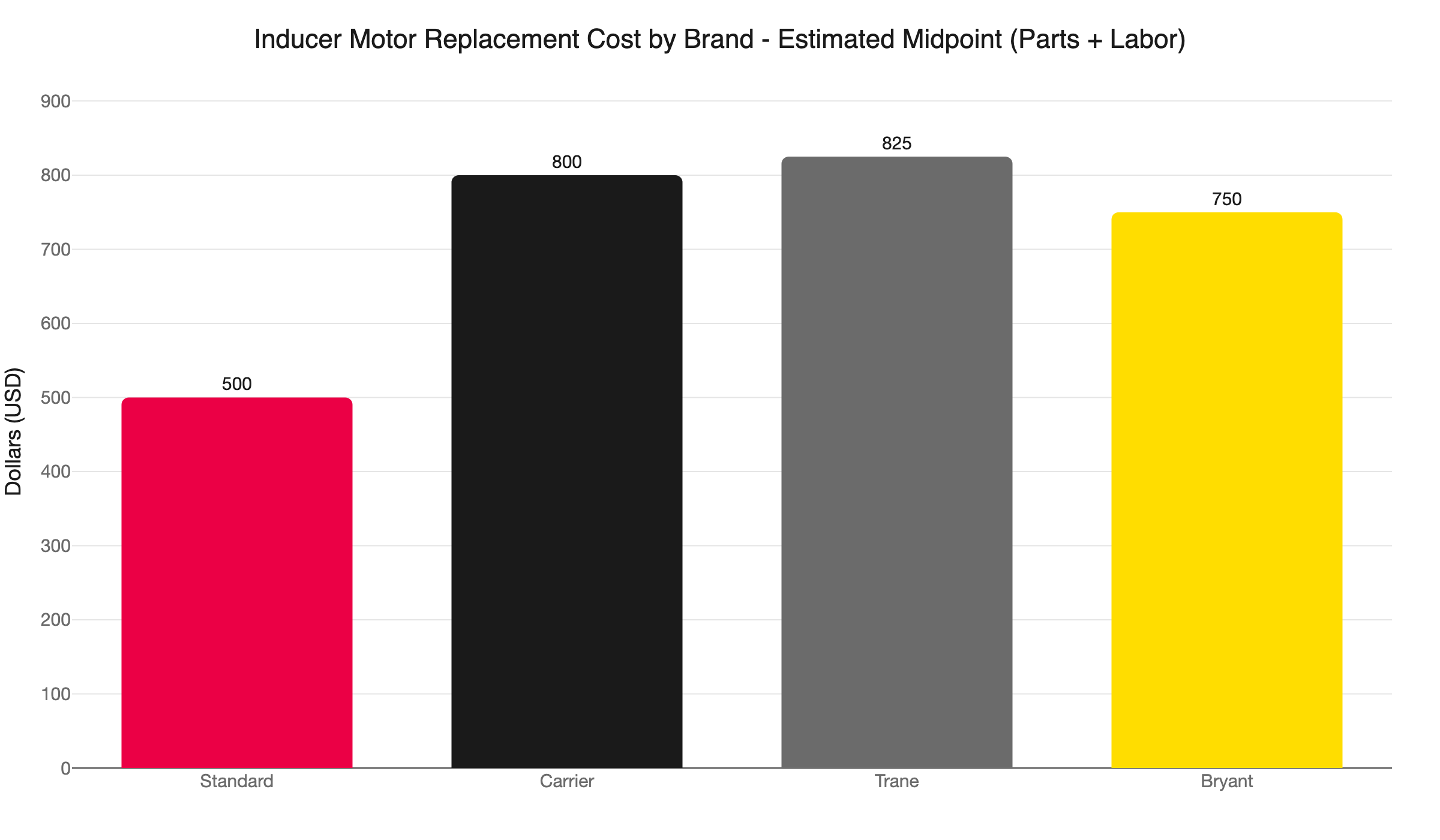
Inducer Motor Replacement Cost by Brand - Estimated Midpoint (Parts + Labor)
Furnace draft inducer motor failure symptoms often look like something else. Your furnace clicks. The vent fan spins up for a few seconds. Nothing happens. The control board blinks "pressure switch fault." A technician replaces the $40 switch. The furnace still does not heat. The real problem was the inducer motor the whole time.
That scenario repeats across the Twin Cities every winter. It is one of the most common misdiagnoses in residential HVAC. Understanding what the real symptoms look like - and why the error codes so often point in the wrong direction - can save you a second service call and a cold night you did not need.
## What Does a Furnace Draft Inducer Motor Do?
The inducer motor is the exhaust fan inside your furnace. It pulls [combustion gases](/blog/carbon-monoxide-detector-placement-furnace-boiler-minnesota/) out of the heat exchanger and vents them safely outside before the burners ever light. Without adequate draft, ignition cannot happen.
Every heat call follows the same startup sequence. The thermostat signals the control board. The board sends 120 volts to the inducer motor. The motor spins up and creates [negative pressure](/blog/exhaust-fans-furnace-backdraft-combustion-air-minnesota/) inside the heat exchanger. That pressure flexes a small diaphragm called the pressure switch, closing an electrical circuit. Only after the switch closes does the board allow the gas valve to open and the igniter to fire.
[According to HVAC field diagnosticians](https://foxfamilyhvac.com/diagnosing-a-bad-furnace-inducer-motor/), the inducer motor is the first component to receive power on every heat call. That makes it the gatekeeper to every component downstream.
This sequence explains why a failing inducer creates such a cascade of problems. It is not just one broken part. It blocks every component that follows it in the startup chain.
## What Are the Furnace Draft Inducer Motor Failure Symptoms?
A failing inducer motor typically produces unusual noise near the vent connection at startup, repeated failed ignition attempts, or a pressure switch fault code on the control board. A burning smell during a startup attempt is another early warning. Noise is almost always the first sign.
Here are the specific furnace draft inducer motor failure symptoms to watch for:
**Noise near the flue at startup.** A new hum, rumble, scraping, or tapping sound near where the furnace connects to the exhaust vent is the most common early indicator. [Per diagnostic guides from HVAC technicians](https://foxfamilyhvac.com/diagnosing-a-bad-furnace-inducer-motor/), the sound appears at the very beginning of a heat call, before the burners light. Homeowners often describe it as "a tapping noise shortly after the thermostat calls for heat."
**Repeated failed ignition attempts.** The furnace clicks. The vent fan sounds weak or strained. The system shuts down without producing heat. After two or three failed attempts, the furnace goes into lockout and the error LED begins blinking.
**Only room-temperature air from the vents.** If the blower runs on schedule but delivers no heat, the inducer may have succeeded on one heat call and failed on the next. The blower runs on its own timer regardless of whether combustion actually happened.
**A burning or hot-metal smell.** As bearings seize, friction generates heat inside the motor housing. A metallic burning smell from the furnace cabinet during startup is a warning sign the motor is working past its limits.
**A pressure switch or draft sensor fault code.** This is the symptom that causes the most misdiagnosis. The next section explains why.
## What Does a Failing Inducer Motor Sound Like?
Bearing failure follows a predictable arc. First comes a hum or low rumble at startup. Then intermittent scraping or chattering during heat calls. Then a loud squeal or screech as metal contacts dry metal. Full seizure is often silent, with the motor no longer spinning.
[Local HVAC technicians note](https://www.metroheating.net/noisy-gas-furnace-it-could-be-a-faulty-inducer-motor/) that a failing motor can continue running noisily for months or even years before it seizes. There is no reliable way to predict when "noisy but functional" becomes a full lockout. That unpredictability is what makes early diagnosis so valuable.
Here is the sound arc in plain terms:
**Stage 1 - Early warning.** A slight hum or rumble when the heat first kicks on. Easy to dismiss as the furnace warming up. This stage can last one full season or several.
**Stage 2 - Advancing failure.** Intermittent scraping, chattering, or tapping during heat calls. The noise often appears only on the first call of the day - when the motor is cold - and fades once it warms up. Occasional pressure switch faults may begin appearing at this stage.
**Stage 3 - Near seizure.** A loud squealing or screeching sound. The motor is still spinning, but bearing failure is accelerating rapidly. Furnace lockouts become frequent.
**Stage 4 - Full failure.** The motor is silent, or makes one brief grinding sound and stops. Ignition is impossible. The furnace enters permanent lockout until the motor is replaced.
Homeowners who catch this at Stage 1 or Stage 2 can schedule service on their own timeline. Stage 4 at 2 a.m. in January is a much more expensive and stressful situation.
## Why Does an Inducer Problem Trigger a Pressure Switch Error Code?
The pressure switch closes when the inducer creates enough negative pressure inside the heat exchanger. A motor that still spins but cannot reach full draft leaves the switch open. The control board logs a pressure switch fault, not an inducer fault.
This is the central diagnostic trap in furnace draft inducer motor failure, and it catches homeowners and technicians alike.
The pressure switch is a simple component. A rubber diaphragm flexes when draft pressure is sufficient, closing an electrical circuit. The board sees a closed circuit and proceeds to ignition. An open circuit halts the sequence and logs a fault.
When a technician - or a homeowner researching their own blinking code - sees a pressure switch fault, the natural first move is to test and replace the switch. It costs $19.50-$100, the repair is fast, and the code points directly to it. But [as HVAC troubleshooting references note](https://sqone.com/blogs/news/draft-inducer-troubleshooting), replacing the switch without first verifying inducer performance is a shortcut that frequently fails.
A partially failing inducer still runs. It just cannot reach full speed or sustain consistent draft. Replace the switch and the same fault appears on the next heat call. The switch was never the problem.
The correct diagnostic sequence checks the inducer first: confirm voltage reaches the motor terminals, verify the motor reaches full speed, listen for bearing noise, and inspect the fan wheel for debris before touching the pressure switch.
For a full breakdown of what else causes pressure switch faults - and when the switch itself is actually the problem - see our guide on [furnace pressure switch failure symptoms in Minnesota](/blog/furnace-pressure-switch-failure-symptoms-minnesota/).
## Why Minnesota Furnaces Are Hit Harder
A furnace installed in Minneapolis works significantly harder than one in a mild-climate city. That difference directly affects how quickly inducer bearings wear.
Minneapolis averages roughly 8,000 heating degree days per year - among the highest figures of any major U.S. metro. A Twin Cities furnace may run 8-12 heat cycles per day in January. In one Minnesota heating season, inducer bearings accumulate more wear than a Southern furnace sees in two full years.
The inducer motor's sealed bearings are not serviceable. They are engineered for a specific number of operating hours. High-cycle Minnesota winters move through those hours faster than the calendar suggests.
The standard 12-15 year lifespan for inducer motors is a national average. It assumes typical national cycling loads, not 8,000-plus heating degree days per year. A furnace installed around 2011 may be at or past the practical end of its inducer motor's bearing life. The rest of the system may appear fine.
January low temperatures in Minneapolis average around -2 degrees Fahrenheit. [When a furnace fails overnight in that environment](https://www.4neighborhood.com/blog/2026/march/furnace-stopped-working-overnight-a-minnesota-ho/), the gap between a cold house and frozen pipes is measured in hours. That is a very different emergency than a no-heat call in a warmer city.
Early symptoms are worth acting on here. The window between "noisy but running" and "emergency call" closes quickly when overnight lows drop below zero.
## What Causes an Inducer Motor to Fail?
Bearing wear from age and repeated high-cycle use is the leading cause. Dust buildup on the fan wheel, moisture corrosion, capacitor failure, and loose wiring all contribute. Most inducer motor failures develop over months or years, not overnight.
[HVAC technicians and parts specialists](https://woodscomfortsystems.com/what-happens-when-a-furnace-draft-inducer-motor-fails/) rank the root causes as follows:
**Bearing wear.** The motor housing contains sealed bearings that degrade from heat and friction over time. They cannot be relubricated or replaced separately. When the bearings go, the motor assembly must be replaced. High-cycle climates like Minneapolis accelerate this process considerably.
**Dust and debris in the fan wheel.** The squirrel-cage fan inside the inducer accumulates soot, dust, and pet hair over years of use. A dirty fan wheel forces the motor to work harder to move the same volume of air. The extra load generates heat and compounds bearing wear. Annual furnace maintenance catches and clears this buildup before it causes damage.
**Moisture and corrosion.** High-efficiency furnaces produce [condensation in the exhaust system](/blog/high-efficiency-furnace-pvc-vent-pipe-problems-minnesota/). Moisture that reaches motor terminals and internal components causes corrosion over time. Electrical failures from corrosion can look identical to mechanical bearing failure on an initial inspection.
**Capacitor degradation.** Some inducer motors use a run capacitor to reach operating speed. A failing capacitor causes the motor to hum without starting, or to run slower than rated speed. The result is insufficient draft and the same pressure-switch fault pattern described earlier - without the grinding noise.
**Loose or corroded wiring.** Years of vibration loosen terminal connections. An intermittent electrical connection mimics bearing failure on a diagnostic call and is worth ruling out before authorizing a motor replacement.
## How Much Does Inducer Motor Replacement Cost in Minnesota?
Most homeowners pay $375-$900 for a standard inducer motor replacement covering parts and labor. Brand-specific jobs cost more. Emergency after-hours service in winter adds $180-$270 per hour on top of standard rates.
[Industry cost data for inducer motor replacements](https://hvacprosales.com/blog/hvac-inducer-motor-replacement-cost-guide/) shows the following typical ranges:
**Standard replacement - parts and labor:**
- Motor assembly: $150-$350
- Labor: $195-$500
- Typical total: $375-$900
**All-in ranges by furnace brand (parts + labor):**
- Carrier: $500-$1,550
- Trane: $500-$1,600
- Bryant: $575-$1,350
OEM motors cost more than aftermarket parts but guarantee fit and protect the furnace warranty. Aftermarket motors require compatibility verification and may affect manufacturer warranty coverage on newer systems.
Emergency after-hours service adds $180-$270 per hour to standard labor rates. A midnight call in January costs significantly more than a scheduled Tuesday appointment. That cost gap alone is a strong argument for acting on Stage 1 or Stage 2 symptoms rather than waiting for a lockout.
If the cost of a repair tips your decision toward a full furnace replacement, explore [HVAC financing options for Twin Cities homeowners](/blog/hvac-financing-options-what-to-know-twin-cities/). Northern One Hour offers financing on new furnace installations and larger system replacements.
## Should You Repair or Replace? Making the Call on an Aging Furnace
If your furnace is under 12 years old, repair almost always makes sense on cost alone. If it is 15 years or older and the inducer has failed, the numbers often favor replacement. Age, efficiency rating, and cumulative repair costs all factor into the decision.
A $375-$900 inducer motor replacement is straightforward when the furnace is otherwise healthy and under 12 years old. The math changes as the system ages.
At 15-plus years, an inducer motor is rarely the final repair. Heat exchangers crack. Control boards fail. Igniter assemblies wear out. Each repair on an aging system is money spent extending the life of a furnace that is already near the end of its designed lifespan.
A useful industry rule of thumb: if the repair cost exceeds 50 percent of a new furnace price, replacement makes more sense. A new furnace in the Twin Cities typically runs $3,900-$7,800 installed, depending on efficiency rating and equipment size. An inducer motor alone is well below that threshold. But if you spent $650 on a flame sensor this heating season and now face a $750 inducer job, the combined total shifts the calculation.
Efficiency is the other variable. An 80 AFUE furnace from 20 years ago costs significantly more to run each Minnesota winter than a 96 or 97 AFUE replacement. Energy savings over 10-15 years frequently offset a meaningful share of the replacement cost.
For a full framework on this decision, read our guide on [when to replace your furnace rather than repair it](/blog/is-it-time-for-a-new-furnace-how-to-know-when-its-time-to-replace-not-repair/).
## Responding to Furnace Draft Inducer Motor Failure Symptoms
If your furnace is producing new sounds near the vent or cycling through repeated failed starts, here is what to do before calling for service.
**Do not keep manually resetting the furnace.** Repeated resets with a struggling inducer can accelerate bearing failure and overheat the motor housing.
**Replace the air filter first.** A completely clogged filter restricts airflow and stresses every component, including the inducer. If the filter is gray and collapsed, replace it before scheduling service. It will not fix a failed motor, but it rules out a $15 fix before you commit to a service call.
**Write down the error code.** Count the LED blinks on the control board and note the sequence. That code gives your technician a starting point before they arrive and speeds up the diagnosis.
**Schedule early, not after lockout.** A furnace at Stage 1 or Stage 2 is a scheduled repair on your terms. A furnace in full lockout at minus-five degrees is an emergency call on someone else's timeline. The cost difference is real, and the scheduling options disappear when temperatures drop.
Our team at Northern One Hour Heating & Air Conditioning is locally owned and operated in Ramsey, MN. We serve homeowners across Minneapolis, St. Paul, Bloomington, Maple Grove, Brooklyn Park, Plymouth, Woodbury, and the surrounding Twin Cities communities. We show up when we say we will. "Always On Time… Or You Don't Pay a Dime!(R)"
If your furnace is showing any of the furnace draft inducer motor failure symptoms described above, call us at **(763) 260-6662** or [book a furnace repair appointment online](/heating/heating-equipment/furnaces/furnace-repair/). We diagnose the problem correctly the first time, so you are not replacing the wrong part in the middle of January.
---
# Do I Need a Permit to Replace HVAC in Minnesota?
URL: https://northernonehour.com/blog/hvac-permit-when-required-minnesota/
Published: 2026-08-16 | Category: HVAC
Every HVAC replacement in Minnesota requires a permit. Learn what triggers it, who pulls it, and what skipping it costs in rebates and tax credits.
Key Takeaways
- Every HVAC replacement in Minnesota requires a mechanical permit: furnace, AC, heat pump, and boiler replacements all qualify. No like-for-like exceptions exist.
- Your licensed contractor pulls the permit. You confirm they will do it before work starts.
- Skipping the permit can cost you $4,000 to $5,000 in forfeited utility rebates and federal tax credits.
- A separate electrical permit is not required for a straight in-place swap. It is required if the unit moves to a new location or if the circuit is modified.
- Permit fees in the Twin Cities run $50-175 for a standard furnace replacement.
- If you inherit unpermitted HVAC work when buying a home, a retroactive path exists through the local building department.
- A contractor who skips the permit is not doing you a favor. They are passing the risk to you.
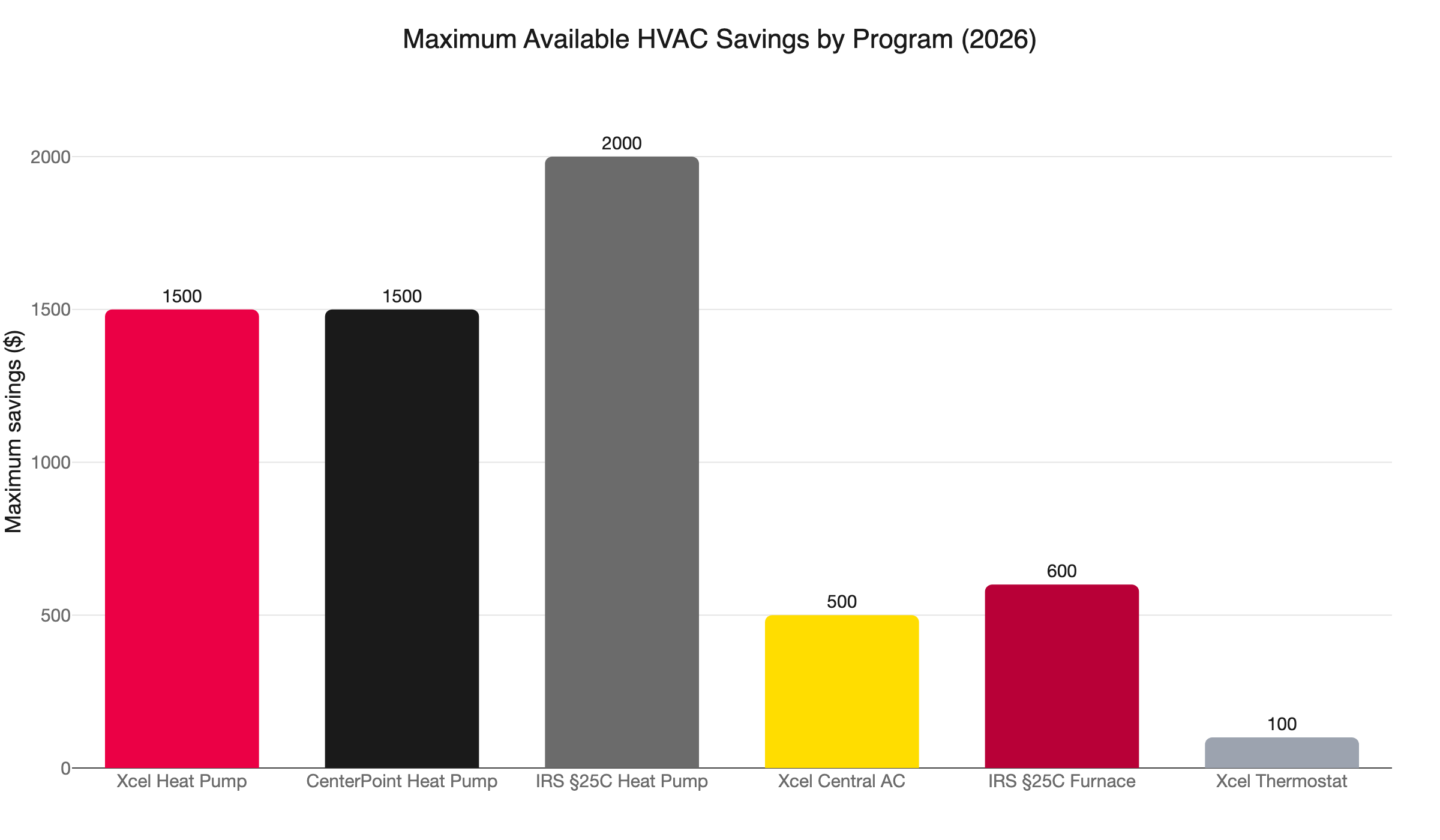
Maximum Available HVAC Savings by Program (2026)
## Why the Permit Question Costs Real Money
Most homeowners ask about HVAC permits because they want to know whether skipping one is risky. The honest answer: yes, but not mainly for the reasons you might expect.
Code violations are real. So is the possibility of a forced reinspection. But the most expensive consequence of skipping an HVAC permit in Minnesota in 2026 is losing access to rebates and tax credits worth up to $5,000 on a qualifying heat pump job.
Here is what you stand to lose if the permit is skipped on a heat pump replacement:
- Up to $1,500 from Xcel Energy.
- Up to $1,500 from CenterPoint Energy.
- Up to $2,000 from the IRS §25C federal tax credit.
- Your homeowner's insurance coverage on incidents tied to unpermitted equipment.
- Clean title when you sell the home.
The [permit fee in the Twin Cities](/blog/hvac-permit-cost-minnesota-what-to-expect/) runs $50-175. The rebates and credits it protects are worth 20 to 40 times that amount. This is not a close call.
Every one of those programs requires a permit. You cannot apply for the rebate without the permit number and a passed inspection date. The permit is not a formality. It is the key that unlocks the money.
## Does Every HVAC Replacement Require a Permit in Minnesota?
**Yes. Every HVAC replacement in Minnesota requires a mechanical permit under [Minnesota Statutes Chapter 326B](https://www.revisor.mn.gov/statutes/cite/326B). This includes furnace, AC, heat pump, and boiler replacements, even when the new unit is identical to the old one.**
The governing authority is the Minnesota Department of Labor and Industry (DLI). The adopted technical standard is the Minnesota State Mechanical Code, based on the International Mechanical Code. Fuel gas work follows the Minnesota Fuel Gas Code (NFPA 54/58).
The permit requirement applies to all of the following:
- Furnace replacement (gas or electric)
- Central AC replacement
- Heat pump installation or replacement
- Boiler replacement
- Adding or extending gas lines
- [Modifying ductwork](/blog/hvac-home-renovation-planning-minnesota/)
- Installing HRV or ERV ventilation units
If a contractor tells you the job is too small for a permit, or that a like-for-like swap is exempt, that claim is not accurate under Minnesota law. Ask directly whether they will pull the mechanical permit. If they say no, choose a different contractor.
## What HVAC Work Is Permit-Exempt?
**Routine maintenance is exempt. Replacing filters, cleaning coils, lubricating motors, and repairing controls without changing system capacity or configuration all qualify. The line is drawn at any modification or equipment replacement. Once a unit is swapped, the permit requirement kicks in.**
If a technician is performing annual maintenance on an existing, code-compliant system, no permit is needed. The visit does not require paperwork. But the moment a unit is removed and replaced - regardless of size, brand, or similarity to the old one - you are in permit territory.
## Who Pulls the HVAC Permit in Minnesota?
**Your licensed contractor pulls the permit. Only a DLI-licensed Mechanical Contractor or Residential HVAC contractor can pull mechanical permits for HVAC work. You do not file it yourself.**
The permit is tied to the work and the property. Even if you purchase the equipment yourself and supply it to the installer, the installing contractor still pulls the permit. There is no homeowner-supply exception.
One carve-out exists: homeowners may pull their own permit for work on their primary residence in most Minnesota jurisdictions. But this applies when the homeowner performs the work themselves, not when they hire a contractor to do it.
The practical takeaway: when you receive bids for a replacement, ask each contractor whether the permit is included in the price. A contractor who quotes without it is not saving you money. They are transferring the risk to you. Verify any HVAC contractor's license status at [dli.mn.gov](https://www.dli.mn.gov) before work starts.
For more on what to look for when comparing replacement bids, see our [furnace replacement cost guide for the Twin Cities](/blog/furnace-replacement-cost-twin-cities/).
## Do I Need a Separate Electrical Permit for a Furnace or AC Swap?
**No - not for a straight in-place replacement. Under Minn. Stat. 326B.38, a licensed HVAC contractor can disconnect and reconnect an existing branch circuit without a separate electrical permit. The unit must stay in the same location. The circuit must remain unchanged.**
A separate electrical permit IS required in these situations:
- The unit moves to a new location in the home.
- This is a first-time installation with no existing branch circuit.
- The project involves adding or modifying the electrical circuit serving the unit.
Most articles on this topic either ignore this nuance or get it wrong. A furnace swap in place - same footprint, same circuit - does not require a second permit for the electrical disconnect and reconnect.
If a contractor quotes a separate electrical permit for an in-place swap, ask what circuit work requires it. Sometimes the answer is legitimate: the panel needs an upgrade, or the circuit is undersized for the new unit. Sometimes it is not. Knowing the rule helps you ask the right question.
## What Does the Inspector Check on a Furnace Replacement?
**The inspector verifies the installation against the [Minnesota Fuel Gas Code](https://www.applevalleymn.gov/709/Heating-AC) and state mechanical code. The visit covers venting, combustion air, clearances, and a documented performance test. Here is the checklist for a standard Twin Cities furnace replacement.**
**Venting and exhaust:**
- All horizontal vent connectors must slope upward at a minimum of 1/4 inch per foot toward the terminal.
- The common vent must terminate above the roofline with a listed cap.
- The entire common vent must be double-wall (B-vent). No single-wall allowed in the common vent.
- High-efficiency (96%+) furnaces use PVC venting instead of B-vent. The inspector checks that all PVC joints are properly sealed.
**Combustion air intake:**
- The bottom of the intake opening must sit at least 12 inches above grade on the exterior.
- The opening must be caulked on the top and sides where it penetrates the wall.
- On the interior, the intake terminates no more than 12 inches above floor level.
**Clearances from combustibles:**
- Minimum 1 inch between a combustible surface and B-vent.
- Minimum 6 inches between a combustible surface and single-wall vent connector.
**Performance documentation:**
- A furnace performance test must be completed before the inspection closes.
- A tag documenting the test attaches to the gas line near the furnace.
These are not bureaucratic checkboxes. Each item corresponds to a real failure mode: venting problems that allow carbon monoxide to backdraft into living space, clearance failures that cause fires, combustion air problems that cause incomplete combustion. The inspection is the independent confirmation that the job was done correctly.
For more on the carbon monoxide risks that make proper venting so critical, see our post on [furnace safety and carbon monoxide](/blog/carbon-monoxide-safety-furnace-season/).
## How Much Does an HVAC Permit Cost in the Twin Cities?
**Permit fees vary by jurisdiction. For most Twin Cities homeowners, a mechanical permit for a standard furnace replacement runs $50-175 based on [current municipal fee schedules](https://furnace.direct/blogs/news/hvac-permit-requirements-minnesota-furnace-ac). Suburban communities on the lower end; Minneapolis and St. Paul closer to the top.**
Here are the typical ranges by area:
- **Minneapolis and St. Paul:** $75-175.
- **Suburban Twin Cities (Hennepin, Ramsey, Dakota, Washington counties):** $50-150.
- **Greater Minnesota:** $50-155.
Most contractors include the permit fee in their installation quote. Confirm this before agreeing to a bid. The permit cost is a small fraction of any replacement job - and a small fraction of the rebates and tax credits it protects.
If a contractor's bid is significantly lower than competitors and does not mention a permit, ask directly. The savings may not be savings at all.
## What Happens If You Skip the HVAC Permit?
**Skipping the permit creates four specific problems: forfeited rebates and tax credits, potential insurance denial, possible warranty voidance, and home sale complications. They can compound when they hit at the same time - often at the point of sale.**
**Rebates and tax credits are forfeited.** Xcel Energy and CenterPoint [require proof of a municipal permit and a passed inspection](https://www.jsmithhvac.com/step-by-step-guide-to-minnesota-energy-rebates-for-hvac-upgrades/) as conditions for rebate eligibility. The IRS §25C tax credit requires licensed professional installation, which the permit documents. No permit means no rebate. No rebate means no tax credit.
**Your homeowner's insurance may deny claims.** If a fire or carbon monoxide incident is tied to unpermitted HVAC work, your insurer [may refuse to cover it](https://furnace.direct/blogs/news/hvac-permit-requirements-minnesota-furnace-ac). Adjusters investigate the installation when processing claims. Unpermitted work gives them grounds to deny.
**Your manufacturer's warranty may be void.** Some manufacturers explicitly require permitted installation as a condition of warranty coverage. Check the terms for the specific unit before agreeing to work without a permit. You may be buying equipment that has no warranty from day one.
**Home sale complications follow.** Unpermitted work surfaces during the buyer's inspection or in a title search. The buyer's lender may require the work to be brought up to current code before closing. In some cases, the equipment must be removed and reinstalled under permit. That cost comes out of the seller's proceeds.
Every one of these consequences is avoidable. The permit costs $50-175. The protection it provides is worth orders of magnitude more.
## I Just Bought a Home With Unpermitted HVAC Work. What Now?
**This is a common scenario in the Twin Cities, particularly with older homes. It usually surfaces during a buyer's inspection or when you pull permit records at the local building department. A retroactive path exists. Here is how it works.**
**Step 1: Contact the local building department.** Bring the address and describe what work appears to have been done without a permit. Most Twin Cities jurisdictions have a process for retroactive permits on completed improvements.
**Step 2: Request an inspection.** A licensed inspector evaluates whether the existing installation meets current code. If the work was done correctly and nothing has changed since, the permit may be issued retroactively after a passed inspection.
**Step 3: Correct any violations found.** If the inspector identifies problems - improper venting, clearance violations, inadequate combustion air - a licensed contractor must correct them before the permit closes. Budget for this work. It can range from minor adjustments to a partial reinstall, depending on what was done originally.
**Step 4: Address it in the transaction if you have not closed yet.** If unpermitted work surfaces before closing, negotiate it into the purchase terms. A price reduction, seller credit, or seller-funded retroactive permit are all reasonable asks. Do not wait until you own the property to resolve it.
The worst move is ignoring it. Unpermitted HVAC work does not disappear at closing. It follows the property. The next buyer will face the same issue, and you will be the seller who has to explain it.
Our [HVAC checklist for buying a home in Minnesota](/blog/hvac-checklist-buying-home-minnesota/) covers what else to verify before you close on a property with aging HVAC equipment.
## How the Permit Protects Your Rebates and Tax Credits
For a heat pump or high-efficiency furnace replacement in 2026, the rebate and tax credit picture in Minnesota is significant. Here is the full stack available to Twin Cities homeowners.
**Xcel Energy** offers [up to $1,500 for a qualifying cold-climate air-source heat pump](https://www.xcelenergy.com/staticfiles/xe-responsive/Working%20With%20Us/24-1-201%20MN%20Res%20Rebate%20Summary%20Information%20Sheet.pdf), up to $500 for a qualifying central AC, and up to $100 for a qualifying smart thermostat. Equipment must be AHRI-certified and installed by a licensed professional.
**CenterPoint Energy** offers up to $1,500 for a ducted air-source heat pump installed in an existing home.
**IRS §25C (Inflation Reduction Act)** covers 30% of installed cost, including labor, on qualifying equipment. The maximum credit is $2,000 for a qualifying heat pump and $600 for a high-efficiency (95%+ AFUE) gas furnace. The heat pump must meet SEER2 16 and HSPF2 8.2 to qualify.
All three programs [require proof of a permit and a passed inspection](https://www.jsmithhvac.com/step-by-step-guide-to-minnesota-energy-rebates-for-hvac-upgrades/) from utility programs, and licensed installation documentation for the IRS credit. There is no workaround. The rebate applications ask for the permit number and inspection date. If you cannot provide them, the rebate is denied.
On a cold-climate heat pump replacement in 2026, the combined Xcel + CenterPoint + IRS §25C stack could reach $5,000. The permit fee is $100. The math favors the permit every time.
Minnesota Commerce also administers a state heat pump rebate program tied to the federal HEAR program, though it was still pending federal DOE approval as of early 2026. For a full breakdown of what you can claim right now, read our [Minnesota heat pump rebates and tax credits guide](/blog/minnesota-heat-pump-rebates-tax-credits/).
## What Northern One Hour Does on Every HVAC Installation
We are locally owned and operated in Ramsey, MN. Our service area covers the Twin Cities metro: Minneapolis, St. Paul, Blaine, Maple Grove, Plymouth, Brooklyn Park, Woodbury, Bloomington, and surrounding communities.
On every installation we do, we pull the permit. That is not optional, and we do not offer a price-break option for skipping it. The permit protects your rebate eligibility, your equipment warranty, and your insurance coverage. It also gives you the documentation you will need when you sell.
Our technicians are DLI-licensed. When the inspection visit is scheduled, we coordinate it on your behalf. You do not have to track down the building department or figure out what the inspector needs to see. That is our job.
We back every job with our on-time promise: "Always On Time... Or You Don't Pay a Dime!(R)". That applies to the installation window and the inspection visit.
If you are planning a furnace replacement, AC installation, or heat pump upgrade this year, call us at **(763) 260-6662** or book online. Financing is available on qualifying installations. We can also walk you through which rebate programs apply to your job and what documentation you will need to file.
---
# Oil Furnace to Gas Conversion Minnesota: Costs and Rebates
URL: https://northernonehour.com/blog/oil-to-gas-furnace-conversion-minnesota/
Published: 2026-08-16 | Category: Heating
What does oil furnace to gas conversion cost in Minnesota in 2026? Here's what Twin Cities homeowners need to know about costs, rebates, and underground tanks.
Key Takeaways
- Full oil furnace to gas conversion in Minnesota runs $6,500-$19,500 for most homes. Equipment cost, [gas line distance](/blog/gas-line-sizing-furnace-replacement-minnesota/), and oil tank removal are the three main drivers.
- CenterPoint Energy offers up to $400 for a 95%+ AFUE gas furnace in 2026 (up to $1,200 for income-qualified households). The federal IRA Section 25C tax credit adds up to $600 on top.
- Minnesota's Save Energy MN rebate program (HOMES/HEAR) has not launched as of mid-2026. Do not count on that money yet.
- Underground oil tanks are a cost wildcard. If the tank has leaked and contamination is found, remediation costs cannot be predicted upfront.
- A burner conversion kit does not qualify for utility rebates or the IRA tax credit. It also leaves an aging heat exchanger in place. Full furnace replacement is the right call for units 15 years or older.
- Every fuel-switching install in Minnesota requires a mechanical permit under MN Rules Chapter 1346. Unpermitted work can block a home sale.
- Minnesota logs roughly 7,600 heating degree days per year, about 40% more than the national average. That makes annual gas savings larger here than generic payback calculators show.
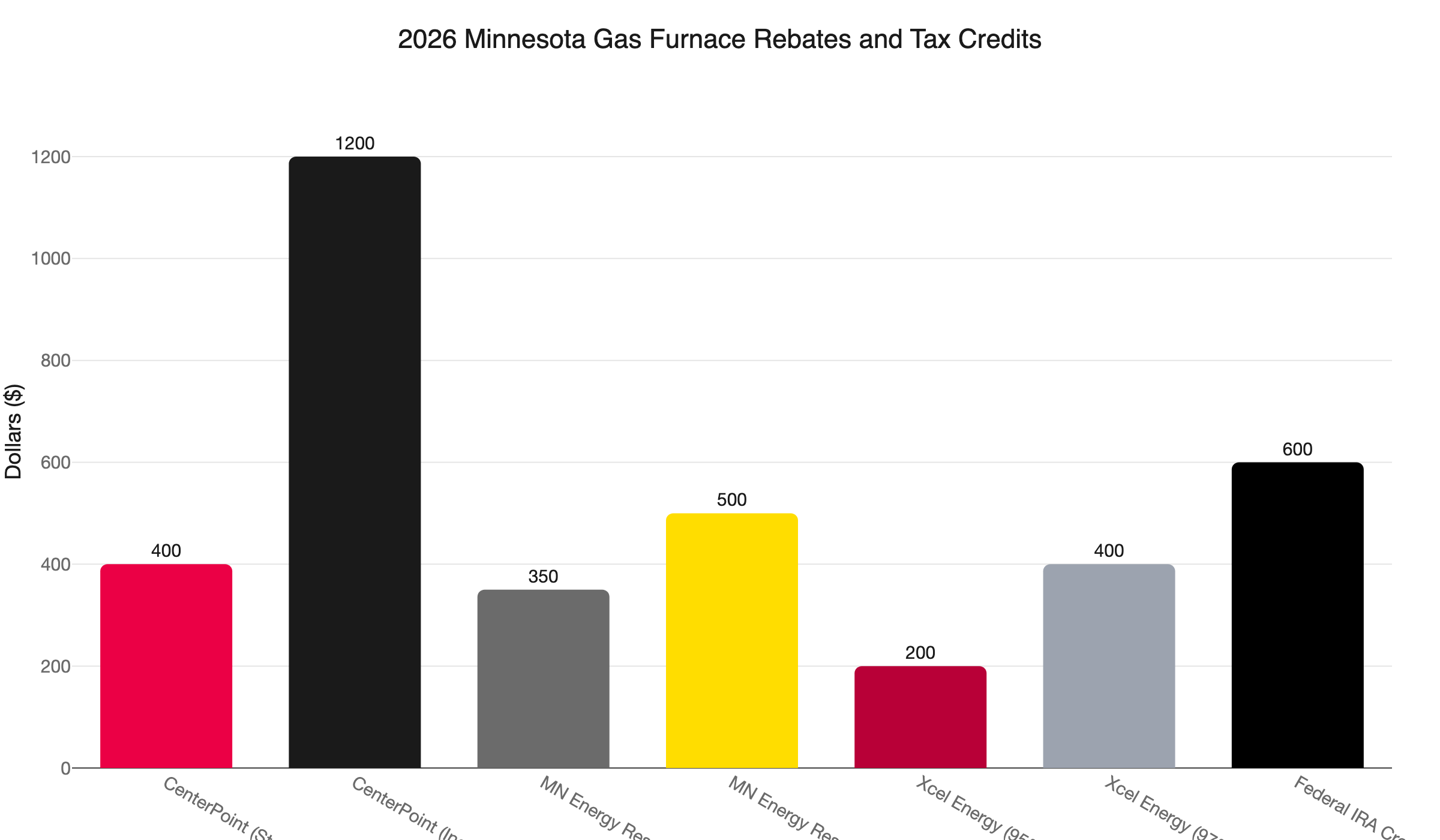
2026 Minnesota Gas Furnace Rebates and Tax Credits
Thousands of older Twin Cities homes still heat with oil. If yours is one of them, you have probably thought about oil furnace to gas conversion in Minnesota at least once. Oil prices have been volatile. Old oil furnaces wear out. And natural gas offers a more predictable, locally supplied fuel that most of your neighbors already use.
This guide covers what conversion actually costs in the Twin Cities, which rebates stack in 2026, what most national guides miss for Minnesota specifically, and how to figure out whether the project makes financial sense for your home.
## What Does Oil Furnace to Gas Conversion in Minnesota Actually Cost?
**The short answer:** Most Twin Cities homeowners spend between $6,500 and $19,500 total for a full oil-to-gas conversion. Gas line distance, oil tank type, and equipment efficiency tier are the three main variables. Your project can land well below or well above that range depending on site conditions.
Here is what drives each piece.
**New gas furnace**
A new high-efficiency gas furnace installed typically runs [$2,500-$7,500](https://oiloutpost.com/blog/oil-to-gas-conversion-cost). Unit size, efficiency tier, and brand drive the spread. A two-stage or modulating furnace at 98% AFUE costs more than a single-stage 95% unit, but it earns better rebates and runs more evenly through a Minnesota winter. See our [furnace replacement cost guide for the Twin Cities](/blog/furnace-replacement-cost-twin-cities/) for a fuller breakdown by equipment tier.
**Gas line**
If your home already has natural gas service for a water heater or range, running a branch line to the furnace location costs [$500-$2,000](https://oiloutpost.com/blog/oil-to-gas-conversion-cost). If CenterPoint Energy or Minnesota Energy Resources needs to extend service from the street main, budget $2,000-$5,000 or more. The key variable is distance. In older, denser Twin Cities neighborhoods, the main is often at the curb. On larger lots or rural-edge properties, it can be hundreds of feet away.
**Oil tank removal**
Above-ground tanks run $400-$2,800 to remove. Underground tanks cost [$800-$3,400 or more](https://oiloutpost.com/blog/oil-to-gas-conversion-cost). That does not include environmental remediation if contamination is found. More on buried tanks below.
**Chimney liner**
High-efficiency gas furnaces vent through PVC pipe, not a masonry chimney. If your water heater or another appliance still uses the existing chimney, a liner costs [$500-$2,000](https://www.kauffmangas.com/blog/oil-to-gas-furnace-conversion-cost-steps-and-savings-explained/).
**Permits and inspections**
Twin Cities municipalities charge [$50-$175 for a mechanical permit](https://furnace.direct/blogs/news/hvac-permit-requirements-minnesota-furnace-ac). Your contractor pulls it and schedules the inspection. That fee is nonnegotiable and worth every dollar, as the section on permits below explains.
A home with existing gas service and an above-ground tank can come in at the low end of the range. A property that needs a new gas main extension plus underground tank removal can climb well past $19,500. Add soil remediation and the number grows further.
## Burner Kit or Full Replacement: Which Is the Right Move?
**The short answer:** If your oil furnace is 15 years old or older, replace the whole unit. A burner conversion kit costs less upfront but leaves an aging heat exchanger in place, does not qualify for rebates, and does not improve efficiency. Full replacement is the financially and mechanically sound choice for most Minnesota homes.
A burner conversion kit ($300-$600 in parts) replaces the oil burner on your existing furnace with a gas burner. The heat exchanger, blower motor, and controls stay in place. It sounds like a bargain. Here is why it usually is not:
- **Rebate eligibility.** CenterPoint's 2026 rebate program requires a new qualifying furnace. A burner kit on an old furnace does not qualify. Neither does it qualify for the federal IRA Section 25C tax credit.
- **Efficiency.** Older oil furnaces often run at 70-80% AFUE. A burner swap changes the fuel but keeps the same efficiency floor. A new 95%+ AFUE gas furnace cuts fuel consumption dramatically by comparison.
- **Safety.** A conversion kit leaves the heat exchanger untouched. A [cracked heat exchanger](/blog/cracked-heat-exchanger-signs-minnesota/) allows combustion gases, including carbon monoxide, to enter your living space. On a furnace 15 or more years old, that risk is real and growing.
There is a narrow case for a burner kit: a well-maintained oil furnace under 10 years old, in excellent condition, with a recently verified heat exchanger. Outside that window, full replacement is almost always the right call. The rebate savings alone often close much of the cost gap between a kit and a new unit.
## What Rebates and Incentives Apply to Oil Furnace to Gas Conversion in Minnesota?
**The short answer:** Stack CenterPoint (up to $400, or $1,200 income-qualified) and the federal IRA credit (up to $600) for a [combined offset exceeding $1,000](/blog/stacking-hvac-rebates-tax-credits-federal-state-utility-minnesota/) on a qualifying high-efficiency furnace. The state HOMES/HEAR program has not launched yet, so do not build it into your budget.
Here is the full rebate picture for 2026.
**CenterPoint Energy** (serves Minneapolis, St. Paul, Ramsey, Blaine, Maple Grove, Plymouth, and most of the Twin Cities metro):
- 95%+ AFUE gas furnace: up to $400
- Income-qualified households: up to $1,200
- Dual-fuel heat pump paired with a 92%+ AFUE backup furnace: $1,100
**Minnesota Energy Resources** (serves exurban and some rural areas outside the CenterPoint footprint):
- 95% AFUE furnace: $350
- 97% AFUE furnace: $500
**Xcel Energy** (electric utility; many CenterPoint-served homes also have Xcel for electricity):
- 95% AFUE furnace: $200
- 96% AFUE furnace: $300
- 97% AFUE furnace: $400
**Federal IRA Section 25C tax credit:** [30% of equipment and labor costs, capped at $600](https://www.energystar.gov/about/federal-tax-credits/furnaces-natural-gas-oil) for a qualifying gas furnace at 95%+ AFUE. This is a dollar-for-dollar tax credit, not a deduction. You claim it when you file your federal return.
**Save Energy Minnesota (HOMES/HEAR):** Many sources list this federal pass-through program as an available rebate. It is not yet. [Minnesota's mn.gov program page](https://mn.gov/commerce/energy/consumer/energy-programs/save-energy-mn.jsp) shows the state is still awaiting U.S. Department of Energy approval, with no estimated launch date as of June 2026. Do not factor it into your project budget until it actually opens.
Income-qualified homeowners may also access the Energy Assistance Program for heating bill help and the Weatherization Assistance Program for free efficiency upgrades through MN Commerce.
For a deeper look at stacking utility incentives across programs, see our [guide to Xcel and CenterPoint HVAC rebates in Minnesota](/blog/xcel-centerpoint-hvac-rebates-minnesota/).
## What About That Underground Oil Tank?
**The short answer:** Buried storage tanks are common in pre-1980 Twin Cities homes and are the biggest cost wildcard in a conversion. Know what you have before signing a contract. A leaking tank can add remediation costs that no contractor can quote in advance.
Many homes built before natural gas was widely available used underground tanks to store heating oil. These tanks corrode over decades. When they fail, petroleum moves into surrounding soil and can reach groundwater.
[Above-ground tank removal costs $400-$2,800 and typically takes a single day](https://oiloutpost.com/blog/oil-to-gas-conversion-cost). Underground tank removal requires excavation and a state-required environmental assessment if contamination is found. If the tank has leaked, soil remediation costs are not predictable without testing. The Minnesota Pollution Control Agency (MPCA) oversees contamination cases and has resources for affected homeowners, but timelines extend well beyond a normal HVAC project.
Before signing a conversion contract, ask your contractor to help identify whether your property has a buried tank. Check old heating records, pull the permit history, and set aside a contingency in your budget. A buried tank that has leaked is not a reason to abandon the project. It is a reason to know the full scope before you commit.
## Does the Math Work Out in Minnesota's Climate?
**The short answer:** For most Twin Cities homeowners, yes. Minnesota's heavy heating season produces annual fuel savings that are meaningfully larger than national payback calculators show. Typical payback at current oil prices runs 6-10 years, compressing to 4-5 years when oil climbs hard.
Standard payback at current oil prices (around $3.44 per gallon nationally) runs 6-10 years. When oil climbs above $4.50 per gallon, as it did in 2022, payback compresses to 4-5 years. Minnesota's [Midwest residential heating oil prices, tracked by the EIA](https://www.eia.gov/dnav/pet/pet_pri_wfr_dcus_smn_w.htm), have often come in below the national average. That can stretch payback slightly compared to generic estimates.
What those calculators do not account for is Minnesota's heating load. The state averages roughly 7,600 heating degree days per year, about 40% more than the U.S. average. More heating days means more gallons burned each season. Switch that demand from oil to natural gas and the annual savings are proportionally larger than the national figure suggests.
Gas price volatility also matters. Heating oil is a global commodity priced on international markets. Natural gas is primarily priced on North American supply. The 2022 oil spike hit oil-heated Minnesota homes hard. Many homeowners who converted before that spike saw immediate budget relief. Some converted specifically to reduce exposure to future price swings, independent of any payback calculation.
## What Permits and Codes Apply to Oil-to-Gas Conversion in Minnesota?
**The short answer:** Every fuel-switching furnace install in Minnesota requires a mechanical permit under MN Rules Chapter 1346. Your licensed contractor pulls it. Work done without a permit can block or delay a home sale when a buyer's inspector catches it.
Minnesota operates under the [2020 Minnesota Mechanical and Fuel Gas Code](https://www.revisor.mn.gov/rules/1346/full) (MN Rules Chapter 1346). It adopts the 2018 International Mechanical Code and 2018 International Fuel Gas Code with state-specific amendments.
On a fuel-switching install, the inspector verifies:
- Venting is correctly sized and routed for the new appliance type
- Gas piping passes a pressure test
- Combustion air supply is adequate for the equipment and space
- Condensate drain is correctly installed on high-efficiency units
- All clearances meet code requirements
[Only a Minnesota-licensed HVAC contractor](https://furnace.direct/blogs/news/hvac-permit-requirements-minnesota-furnace-ac) can perform the installation. The statewide minimum efficiency is 80% AFUE, but 95% or better is required for rebate eligibility. You want to be well above that floor anyway.
Permit fees of $50-$175 may seem minor. The consequence of skipping the permit is not. Home inspectors find unpermitted work consistently. An unpermitted furnace conversion surfaces in the inspection report, triggers disclosure obligations, and can force a price renegotiation or kill a sale. Pull the permit. It is not optional.
## How Does the Conversion Process Work, and How Long Does It Take?
**The short answer:** A full oil-to-gas conversion takes [a few days to one week](https://www.kauffmangas.com/blog/oil-to-gas-furnace-conversion-cost-steps-and-savings-explained/) from tank removal to final inspection. The one timeline wildcard is gas service extension from the street, which can add several weeks if CenterPoint needs to run a new main.
Here is the sequence, step by step.
1. **Initiate gas service, if needed.** If your home does not have natural gas, call CenterPoint at 612-342-5123 (local) or 1-800-342-4166 to request service. If the street main needs to reach your home, this step can take several weeks. Start it early, before scheduling the furnace install.
2. **Pull the mechanical permit.** Your contractor handles this with the municipality.
3. **Remove and dispose of the oil tank.** Above-ground tanks come out in a day. Underground tanks require excavation and, if contamination is found, an environmental assessment before work continues.
4. **Remove the old oil furnace.**
5. **Install the new gas furnace.** The contractor runs the gas line from the service point to the unit, installs the furnace, and converts venting to PVC on high-efficiency models.
6. **Test and inspect.** The inspector checks gas pressure, venting, combustion air supply, condensate routing, and clearances. System runs.
7. **Submit rebate documentation.** Your contractor provides the equipment specs CenterPoint, MN Energy Resources, or Xcel needs to process the rebate.
Gas service extension is the only step with an unpredictable timeline. Everything else moves quickly once gas is on site. If you are planning a fall or early-winter conversion, start the CenterPoint conversation in late summer.
## When Should You Replace the Furnace Instead of Just Converting the Burner?
For any oil furnace 15 years old or older, the answer is almost always: replace the whole unit. A furnace at that age has served most of its useful life. A burner kit conversion preserves a heat exchanger that may already be near failure. It does not earn rebates. It does not move the efficiency needle.
Full replacement resets the clock. A new gas furnace carries a manufacturer warranty and typically runs 15-20 years. It operates at 95-98% AFUE instead of a 70-80% oil baseline. It qualifies for utility rebates and the IRA tax credit. And it gives you a new system with new components, not a converted-over old one.
If your oil furnace is under 10 years old and in verified good condition, a burner kit is worth a conversation. Outside that window, full replacement is the better investment nearly every time.
## Ready to Make the Switch?
Northern One Hour Heating & Air Conditioning is locally owned and operated in Ramsey, and we serve homeowners across the Twin Cities metro: Minneapolis, St. Paul, Blaine, Maple Grove, Brooklyn Park, Plymouth, Woodbury, and Bloomington.
Our team handles oil-to-gas conversions from start to finish. That means coordinating with CenterPoint on gas service, pulling the mechanical permit, removing the old oil furnace, installing the new unit, passing inspection, and submitting your rebate documentation. We know the Twin Cities utility rebate landscape, the permit process by municipality, and the underground tank questions to ask before any project starts.
We operate on one promise: "Always On Time… Or You Don't Pay a Dime!(R)" Your technician arrives when we say, or the service is free.
Call **(763) 260-6662** or [schedule your consultation online](/heating/heating-equipment/furnaces/furnace-replacements/) to get a straight quote on your oil furnace to gas conversion. We will walk through your home's gas access, tank situation, and rebate eligibility before recommending anything.
---
# Basement Humidity in Minnesota Summers: Why AC Isn't Enough
URL: https://northernonehour.com/blog/basement-humidity-control-summer-minnesota/
Published: 2026-08-15 | Category: Indoor Air Quality
Your AC is running but your Minnesota basement still feels damp. Here's exactly why basements trap summer humidity and how to choose the right fix.
Key Takeaways
- Basements are natural humidity sinks. Cooler below-grade surfaces, porous concrete, and summer air infiltration all feed the problem, separate from your AC.
- Central AC removes moisture as a side effect of cooling. It was not designed to keep a basement dry on its own.
- [The EPA recommends](https://www.epa.gov/mold/brief-guide-mold-moisture-and-your-home) keeping indoor humidity below 60%. The ideal range is 30% to 50%. Mold begins growing on wet surfaces within 24 to 48 hours of a moisture event.
- A $15 to $20 hygrometer is the correct first step, not a dehumidifier purchase.
- A 50-pint portable dehumidifier handles most basements under 1,500 square feet. Larger or persistently wet spaces need more capacity or a [whole-home unit](/blog/portable-vs-whole-home-dehumidifier-minnesota/).
- Whole-home dehumidifier installation requires a mechanical permit in Minnesota. Use a licensed HVAC contractor.
- [ENERGY STAR certified dehumidifiers](https://www.energystar.gov/products/dehumidifiers) use about 20% less energy than non-certified models.
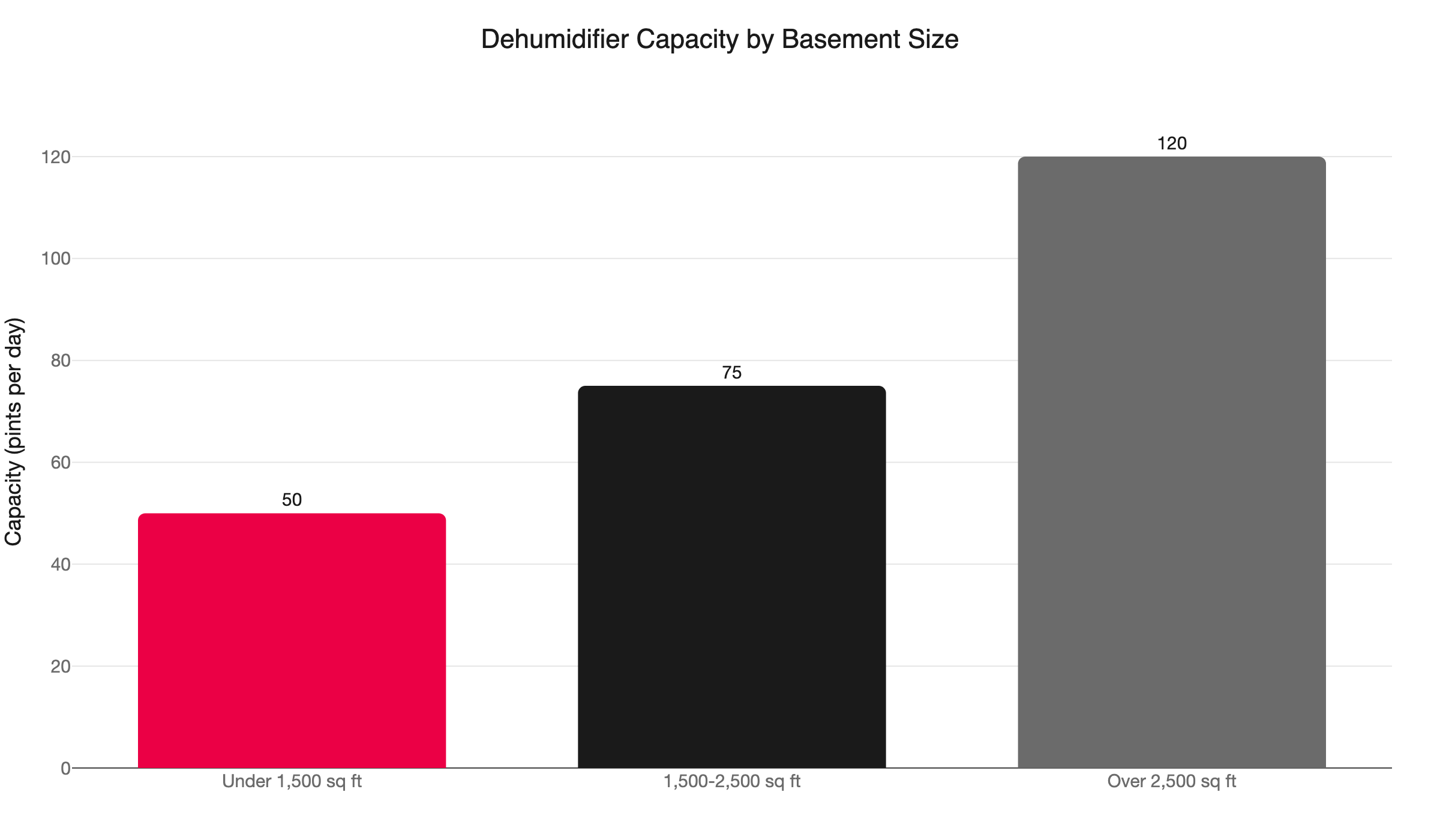
Dehumidifier Capacity by Basement Size
## Why Is My Basement So Humid in Summer, Even With AC Running?
**Short answer:** Your central AC cools the whole house but was not designed for the moisture sources specific to below-grade spaces. At least three separate mechanisms push humidity into your basement every summer. AC partially addresses only one of them.
Most homeowners assume a working AC means a dry home. That holds true for upper floors and main levels, where ductwork delivers conditioned air consistently. The basement is [a different environment](/blog/finished-basement-heating-cooling-options-minnesota/). Limited airflow, colder surfaces, and direct contact with the ground create conditions your central system was not built to fix.
The good news: once you understand the three sources, the solution is usually straightforward.
---
## Three Reasons Basement Humidity Builds in Minnesota Summers
These three mechanisms work at the same time. Understanding all three tells you what kind of fix will actually hold.
**Surface condensation**
Your basement walls, floor, and cold-water pipes stay cool year-round. In summer, warm outdoor air enters and contacts those cooler surfaces. Air cannot hold as much moisture at lower temperatures. The excess drops out as condensation.
Picture a cold glass of water on a humid July afternoon. Now imagine that effect playing out continuously across 900 square feet of concrete floor. That moisture soaks into the slab, runs down the walls, or re-evaporates back into the basement air.
Minnesota intensifies this problem. Twin Cities dew points during humid events in July and August routinely reach 65 to 70 degrees Fahrenheit. That air is near saturation before it enters your home. When it contacts a basement slab sitting at 55 to 60 degrees, condensation is nearly guaranteed.
**Ground moisture migration**
Concrete is porous. It wicks moisture from the soil beneath and around your foundation walls continuously. Rain, snowmelt, and groundwater all contribute. Summer accelerates the process because the ground surface holds more moisture after recent rain and sustained humidity.
No amount of air conditioning fixes this. The moisture enters from below. It never passes through your duct system.
**Summer air infiltration**
In summer, a phenomenon called the reverse stack effect pulls warm outdoor air into your home at its lowest points. Foundation cracks, sump pit openings, utility penetrations, basement windows, and crawl space vents all become entry points. By the time that humid outdoor air reaches your basement, it may already be at or near its dew point.
Your AC handles what flows through upper-level supply ducts. It does not reach humid air seeping in at the foundation line.
**How the three sources compound**
These forces do not take turns. They act simultaneously. On a humid July day in the Twin Cities, warm outside air infiltrates through the sump pit. Ground moisture wicks through the slab. Condensation forms on the cold floor drain. Your AC upstairs keeps the main floor comfortable. It has no way to reach what is happening eight feet below grade.
---
## Is Your AC Short-Cycling? That Could Be Part of the Problem
**Short answer:** If your AC runs in short 8- to 10-minute bursts, it is removing almost no moisture from your air. Short-cycling is common in Twin Cities homes built with oversized equipment in the 1980s and 1990s.
Moisture removal during an AC cycle happens late, not early. The evaporator coil needs time to chill down enough for water vapor to condense on its surface. That typically takes 10 to 15 minutes of continuous runtime. A system that shuts off at 8 to 10 minutes skips most of that work.
Signs your system might be short-cycling:
- The house cools quickly but still feels sticky and humid
- The AC turns on and off frequently, even on moderate days
- You can hear it cycle more than four or five times per hour
Many Twin Cities homes built between 1980 and 2000 have [oversized equipment](/blog/oversized-ac-problems-twin-cities/). Manual J load calculations determine the correct equipment size for a home's actual heat gain. They were not always applied consistently during that era. An oversized system satisfies the thermostat quickly, then shuts off before completing a full dehumidification cycle.
If you suspect this is happening in your home, a proper load calculation is the right next move. For more on why sizing affects comfort and efficiency, see our post on [HVAC sizing and Manual J load calculations](/blog/hvac-sizing-manual-j-right-sized-system/).
That said, even a correctly sized AC will not keep a Minnesota basement dry during a humid stretch. The basement moisture sources don't stop when your equipment is right-sized.
---
## What Should You Do Before Buying Anything?
**Short answer:** Spend $15 to $20 on a hygrometer and check it around 2 pm on a warm, humid day. One reading tells you whether you have a minor problem, a significant one, or nothing that needs attention right now.
A hygrometer measures relative humidity. Small digital models are available at hardware stores and online for $15 to $20. Place it in the center of your basement, away from walls and the floor drain, and leave it for an hour. Check the reading in the early-to-mid afternoon, when outdoor humidity peaks.
How to interpret the reading:
- **Below 50%:** Healthy range. No action required now, but monitor it through the summer.
- **50% to 59%:** Elevated risk. A portable dehumidifier is a reasonable precaution.
- **60% or above:** Action needed. Mold risk is active.
- **70% or above:** Significant moisture problem. A professional assessment makes sense before any equipment purchase.
This $15 to $20 investment tells you whether you need a $200 portable unit, a $1,950 installed system, or nothing at all. Do not skip it.
---
## How Do You Know If Your Basement Humidity Is a Health Risk?
**Short answer:** Humidity above 60% is an active health risk. Mold grows on wet surfaces within 24 to 48 hours. You do not need to see mold before you act.
Watch for these early warning signs, all of which appear before visible mold:
- Condensation on basement windows, [cold-water pipes](/blog/ductwork-sweating-condensation-basement-minnesota/), or the base of your water heater
- A musty or earthy smell that intensifies in summer
- Efflorescence: white chalky mineral deposits on concrete walls or the floor
- Wood framing or subfloor that feels slightly soft or spongy when pressed
- Allergy or asthma symptoms in household members that worsen in summer
[The EPA is direct on this](https://www.epa.gov/mold/brief-guide-mold-moisture-and-your-home): keep indoor humidity between 30% and 50%, and always below 60%. Mold produces allergens and irritants that can trigger asthma attacks and allergic reactions, even in people without prior sensitivities.
[Inadequate ventilation](https://www.epa.gov/indoor-air-quality-iaq/introduction-indoor-air-quality) is one of the primary causes of indoor air quality problems. It allows pollutants, including mold spores, to accumulate. Basements are typically the least ventilated space in any home.
---
## Portable vs. Whole-Home Dehumidifier: Which One Do You Actually Need?
**Short answer:** A portable unit is the right starting point for most basements under 1,500 square feet with moderate, seasonal dampness. A whole-home system makes sense for larger spaces, persistent moisture, or homes where humidity is migrating into living areas above.
### When a portable dehumidifier is the right call
- Your basement is under 1,500 square feet
- The dampness is seasonal, not year-round
- You have not seen mold, standing water, or water intrusion
- You want to verify the scope of the problem before a larger investment
- You can run a drain hose to a floor drain, or do not mind emptying a tank
Portable units [cost $120 to $500](https://www.buildwithrise.com/stories/in-wall-vs-portable-vs-whole-home-dehumidifiers-which-one-do-you-actually-need) for the unit, with no installation required. A 50-pint model handles the typical smaller basement. Look for the ENERGY STAR label and a built-in humidistat.
### When a whole-home system makes more sense
- Your basement is over 1,500 to 2,000 square feet
- Humidity problems extend to the main floor or upper levels
- You have a history of water intrusion, flooding, or visible mold
- You want automated, set-and-forget operation without managing a tank
- You are already replacing or upgrading your HVAC system
Whole-home units tie into your existing ductwork and run automatically based on a humidistat. [Total installed cost typically runs $1,100 to $1,900](https://www.buildwithrise.com/stories/in-wall-vs-portable-vs-whole-home-dehumidifiers-which-one-do-you-actually-need): $800 to $1,200 for the unit and $300 to $700 for installation.
For a deeper look at whole-home options for Twin Cities homeowners, read our post on [whole-home dehumidifiers in the Twin Cities](/blog/whole-home-dehumidifiers-in-the-twin-cities-comfort-fix-for-sticky-summer-days/).
---
## Sizing a Dehumidifier for Your Minnesota Basement
Getting capacity right matters. An undersized unit runs constantly and still falls behind. An oversized one short-cycles, wearing out faster and removing less moisture per dollar spent.
[HVAC industry sizing benchmarks](https://www.hvac.com/expert-advice/whole-house-vs-portable-dehumidifier-for-basement/) map basement area to daily removal capacity:
- **Under 1,500 sq ft, moderate dampness:** 50 pints per day. A standard portable unit covers this.
- **1,500 to 2,500 sq ft, or persistently wet:** 70 to 80 pints per day. Step up to a larger portable or a smaller whole-home unit.
- **Over 2,500 sq ft, or whole-house humidity migration:** 90 to 150 pints per day, or a ducted whole-home system.
"Pints per day" is the volume of water the unit pulls from the air in 24 hours. During a humid July event in Minnesota, a 50-pint unit fills its 1.5-gallon tank in 12 to 24 hours. Without a continuous drain line, plan to empty it daily.
One Minnesota-specific factor: our state sits on more than 10,000 lakes and rivers. Ambient outdoor moisture here runs consistently higher than the national average. During humid stretches, outdoor air entering your basement is close to saturation. If you are on the fence between two size categories, size up.
Placement matters too. Set the unit in the center of the basement, not against a wall. Keep interior doors open to allow air circulation. Keep basement windows closed on humid days. Opening them to "air things out" imports moisture rather than removing it.
---
## What Does Basement Humidity Control Cost in Minnesota?
**Short answer:** Portable dehumidifiers run $120 to $500 with no installation cost. A whole-home ducted system costs $1,100 to $1,900 installed. The whole-home option requires a mechanical permit pulled by a licensed HVAC contractor.
**Portable dehumidifier:** $120 to $500 for the unit. No installation cost. Most homeowners start here.
**Whole-home ducted dehumidifier:** $800 to $1,200 for the unit, plus $300 to $700 for installation. [Total installed: $1,100 to $1,900.](https://www.buildwithrise.com/stories/in-wall-vs-portable-vs-whole-home-dehumidifiers-which-one-do-you-actually-need)
Whole-home installation in Minnesota requires a mechanical permit. Your licensed HVAC contractor pulls it. Do not skip the permit. It protects you at resale and in any future warranty or insurance claim.
At both price points, look for the ENERGY STAR label. The efficiency difference adds up on a unit running through a full Minnesota summer.
---
## Are There Rebates for Dehumidifiers in Minnesota?
**Short answer:** Limited for standalone units. Xcel Energy and CenterPoint have no current major dehumidifier rebate. Minneapolis homeowners pairing dehumidification with a qualifying HVAC upgrade may access the Minneapolis Bonus Rebate Program.
Xcel Energy and CenterPoint Energy serve most of the Twin Cities metro. Both focus their main residential rebates on heat pumps, insulation, and smart thermostats. There is no significant standalone dehumidifier rebate in either program currently. Some municipal utilities offer about $10 for ENERGY STAR certified models, but availability varies by city.
Verify the current Xcel program here: [Xcel Energy MN Residential Rebate Summary](https://www.xcelenergy.com/staticfiles/xe-responsive/Working%20With%20Us/24-1-201%20MN%20Res%20Rebate%20Summary%20Information%20Sheet.pdf).
If you are combining a whole-home dehumidifier with a larger HVAC upgrade, the picture changes. Minneapolis homeowners may qualify for the [Minneapolis Bonus Rebate Program](https://www.mncee.org/minneapolis-bonus-rebate-program) through MNCEE. Non-Green Zone residents can qualify for up to $6,000 in bonus rebates stacked on top of qualifying utility rebates. Green Zone residents can qualify for up to $20,000. Work must be completed before you apply. Funding is first-come, first-served.
Whether your project qualifies depends on scope and how it connects to other HVAC work. Our team can help you sort through what applies to your situation.
---
## What to Look for in an Efficient Dehumidifier
If you are buying a portable unit, start with the ENERGY STAR label.
[ENERGY STAR certified dehumidifiers use about 20% less energy than non-certified models.](https://www.energystar.gov/products/dehumidifiers) The efficiency metric is called Integrated Energy Factor, or IEF: liters of water removed per kilowatt-hour consumed. Higher is better. The [ENERGY STAR efficiency criteria page](https://www.energystar.gov/products/appliances/dehumidifiers/key_efficiency_criteria) lists certified models and current minimum thresholds.
For a unit running through a Minnesota summer, that 20% efficiency advantage adds up across months. Both portable and whole-home models can earn the ENERGY STAR certification.
Beyond the label, look for:
- A continuous drain connection so you do not empty a tank every day
- A built-in humidistat with auto-shutoff at your target humidity level
- A washable or replaceable filter
- Auto-restart after a power outage, which matters during summer storm season in Minnesota
---
## When to Call Northern One Hour
A hygrometer and a 50-pint portable unit solve most Twin Cities basement humidity situations. There are times, though, when a professional assessment is the smarter first step:
- You see visible mold or have had recurring water intrusion
- Your AC cools the house quickly but it still feels sticky throughout
- Your basement is over 1,500 square feet and a portable is not keeping up
- You want a whole-home dehumidifier installed, permitted, and connected to your ductwork correctly
- You want someone to assess whether the issue is the equipment, the building envelope, or both
We are Northern One Hour Heating & Air Conditioning, locally owned and operated in Ramsey, MN. We serve homeowners across Minneapolis, St. Paul, Blaine, Maple Grove, Plymouth, Brooklyn Park, Woodbury, Bloomington, and the surrounding Twin Cities metro. We offer a full range of [indoor air quality services](/indoor-air-quality/), including dehumidification, air filtration, and whole-home ventilation.
Our on-time promise is real: "Always On Time… Or You Don't Pay a Dime!(R)." That applies to every appointment, including IAQ consultations. We back every job with a 100% satisfaction guarantee.
Call us at **(763) 260-6662** or [schedule a dehumidifier consultation online](/indoor-air-quality/dehumidifiers/). We will assess your basement, check your current system, and give you a straight answer on what the fix is and what it costs.
---
# Furnace Control Board Failure Symptoms: What to Watch
URL: https://northernonehour.com/blog/furnace-control-board-failure-symptoms-cost-minnesota/
Published: 2026-08-15 | Category: Heating
Furnace control board failure symptoms look like a $30 fix. Learn how techs tell the difference, what causes boards to fail, and when to repair vs. replace.
Key Takeaways
- Furnace control board failure symptoms are nearly identical to those of a dirty flame sensor ($10-30 part) or a failed igniter ($20-50 part). Most misdiagnoses happen here.
- A true board failure shows zero furnace response: no inducer spin-up, no click, no glow. Or the blower runs continuously with no heat cycle.
- A repeating ignite-then-shutdown loop points to the flame sensor, not the board. If you see a brief flame before the shutdown, the board is probably fine.
- Most boards warn you before they fail: self-clearing lockouts, error codes that reset overnight, a furnace that "sometimes doesn't start." That intermittent window is the cheapest time to act.
- Skipping filter changes is a direct cause of premature board failure. Repeated overheating trips the high-limit switch, and each trip stresses the board's components.
- Minnesota's extreme temperature swings accelerate every one of these failure modes. A furnace that lasts 20 years in a mild climate may need a board at 10-12 years in Minneapolis without preventive maintenance.
- If a board failure pushes you toward replacement, current CenterPoint Energy and Xcel Energy rebates can stack to $800 on a qualifying high-efficiency furnace.
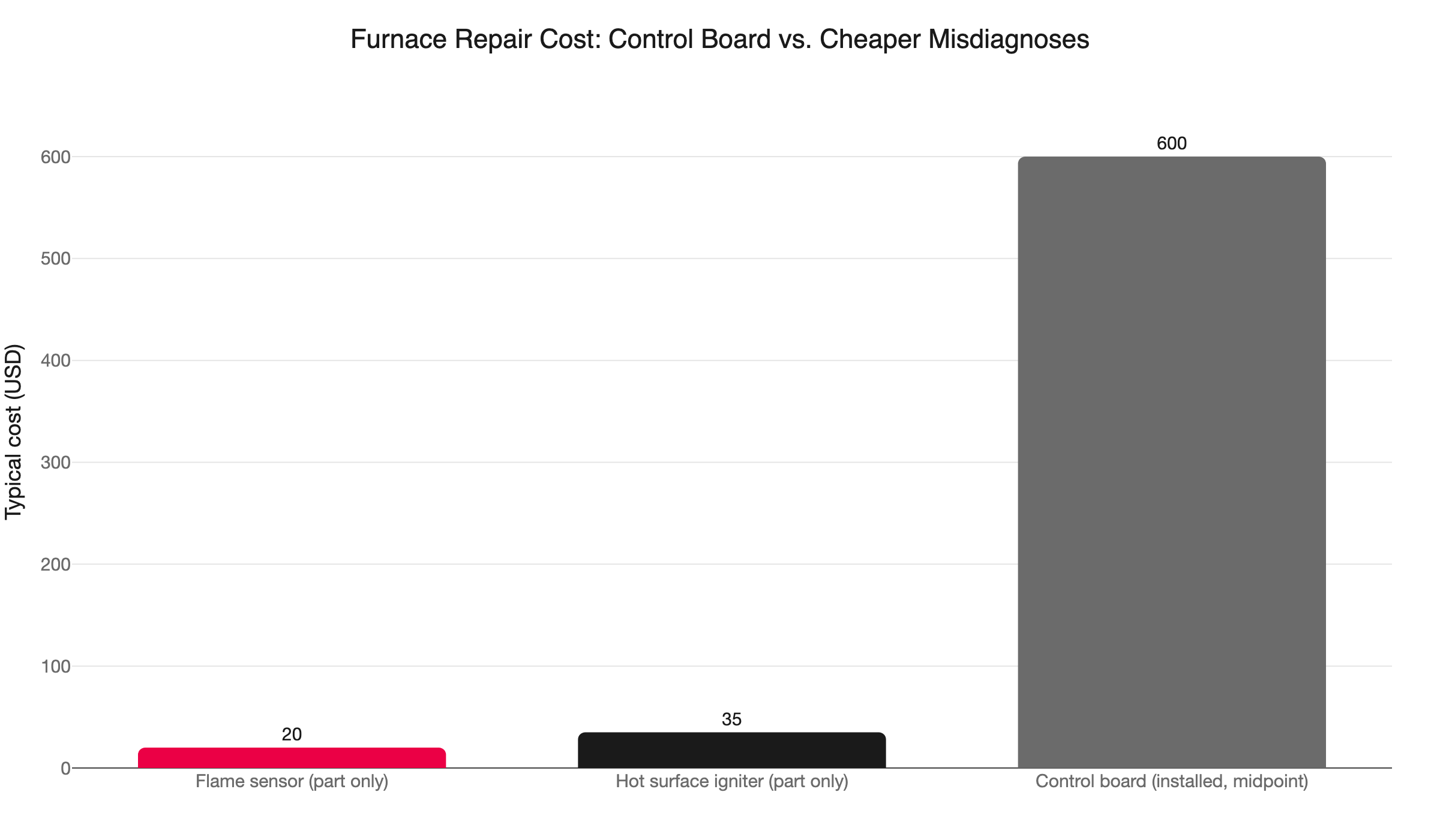
Furnace Repair Cost: Control Board vs. Cheaper Misdiagnoses
## What does a furnace control board actually do?
**The control board is the furnace's central processor. It sequences every step of the heat cycle from start to finish.**
When your thermostat calls for heat, the board receives that signal and begins an ordered sequence: it energizes the draft inducer motor, monitors the pressure switch to confirm airflow, fires the hot surface igniter, then watches the flame sensor to verify combustion. Once combustion is confirmed, the board runs the blower at the right timing to push heated air through your home. At the end of the cycle, it shuts everything down in the correct order.
Because the board touches every other component, a board fault can look like a fault in the inducer, the igniter, the flame sensor, or the pressure switch. The board sends signals to all of them. When the board is failing, the signals become erratic, and the symptoms point everywhere at once. That is exactly why board symptoms get misdiagnosed so often.
---
## What are the furnace control board failure symptoms?
**The two clearest furnace control board failure symptoms are a completely unresponsive furnace and a blower that runs without producing heat.**
**No-start:** The thermostat calls for heat. Nothing happens. No inducer spinning up, no click, no igniter glow, no hum. The furnace is completely silent and dark. The board has either lost the thermostat signal or cannot energize any downstream component. This is a hard board failure.
**Blower stuck on:** The [blower runs continuously](/blog/furnace-blower-runs-constantly-wont-shut-off-minnesota/), even when there is no call for heat and even when the air coming out is room temperature. A healthy board shuts the blower relay off at the end of the heat cycle. A board that has lost control of that relay leaves the blower running indefinitely.
**Other symptoms that raise board suspicion:**
- Repeated short cycling with no consistent lockout pattern
- Error code flashes that disappear by morning and return the next night
- Intermittent no-starts: the furnace works reliably for several days, then misses a start, then works again
- A blank or flickering diagnostic LED on the board's indicator strip
- A faint burning smell near the furnace with no obvious source elsewhere
- Blower that starts on its own schedule, not on the thermostat's
Every one of these symptoms can also come from a failed igniter, a dirty flame sensor, a tripped high-limit switch, or a failed pressure switch. That overlap is the core diagnostic challenge. Do not assume the board is the problem based on symptoms alone. A technician who confirms the board diagnosis by watching the sequence can save you several hundred dollars.
---
## How does a technician tell a board failure from a $30 fix?
**The answer is in the first 10 seconds after the thermostat calls for heat. The sequence tells the story.**
Here is what a technician watches for: If the inducer starts, the igniter glows, and a flame appears briefly before the furnace shuts off and repeats the cycle two or three times before locking out, [the problem is almost always the flame sensor, not the board](https://filterbuy.com/resources/furnaces/furnace-knowledge/furnace-flame-sensor-replacement-guide-costs-cleaning-tips-diy-repair-steps-bad-sensor-symptoms/). The sensor cannot confirm the flame to the board, so the board shuts the burner as a safety measure. The board itself is doing exactly what it should. Cleaning the flame sensor resolves the majority of first-occurrence dirty-sensor failures. That sensor is a $10-30 part.
If the igniter glows but [no flame appears at all](/blog/furnace-gas-valve-failure-symptoms-replacement-cost-minnesota/), a failed hot surface igniter is the likely culprit: a $20-50 part.
[A true board failure shows up earlier in the sequence](https://callmrhvac.com/blog/furnace-control-board-what-it-does-and-signs-its-failing): nothing happens at all after the thermostat signal, or the blower runs on its own without any heat cycle ever initiating. The board cannot start the sequence or cannot control it. Those are distinct failure signatures from a bad flame sensor or igniter.
This distinction matters because the symptoms feel identical to the homeowner. The house is cold either way. But the diagnostic path and the repair cost are very different. Catching a dirty flame sensor before it gets misdiagnosed as a board failure is exactly the kind of thing a thorough diagnostic appointment should catch. Our [furnace flame sensor guide](/blog/furnace-flame-sensor-dirty-clean-cost-minnesota/) covers the cleaning process and what replacement costs in the Twin Cities.
---
## The warning window most homeowners miss
Most boards do not fail overnight. They fail slowly, over weeks, with soft signals that read as minor inconveniences until the board finally gives out completely.
In the weeks before a hard failure, watch for:
**Self-clearing lockouts.** The furnace goes into lockout, you cycle the breaker, and it runs normally for a day or two. Then it locks out again. The pattern repeats. Lockouts that self-clear and return are a classic symptom of intermittent board instability.
**Error codes that reset overnight.** The diagnostic LED flashes a fault code when you check at 10 p.m. By the next morning, the board has reset and the code is gone. The board is failing to maintain consistent function between power cycles.
**Intermittent no-starts.** The furnace runs reliably most of the time but occasionally misses a thermostat call with no obvious reason. The next call works fine. This pattern points to a relay or component on the board that is failing under load or temperature and recovering when the demand drops.
These soft signals are the board struggling to maintain stable voltage or relay function as its components degrade. They are also the cheapest time to act. A diagnostic call during the intermittent phase costs a fraction of an emergency call at minus-15 degrees Fahrenheit when the board finally quits. You also have time to weigh repair versus replacement without pressure. A hard failure in January forces the decision in hours. An intermittent failure in October lets you think it through.
If your furnace is showing any of these patterns, do not wait for the hard failure. Call during the window.
---
## What causes a control board to fail?
**Boards fail for four main reasons: repeated overheating, power surges, age and vibration, and moisture. The first one is the most preventable.**
**Dirty filters and repeated high-limit trips.** [A clogged filter forces the furnace to overheat](https://filterbuy.com/resources/furnaces/furnace-knowledge/furnace-control-board-and-limit-switch-common-failure-signs/), which trips the high-limit switch. The switch cuts the burner to protect the heat exchanger. Each trip is a thermal stress cycle on the board's capacitors and resistors. One or two trips is not a crisis. Repeated tripping over months and years from chronic filter neglect is. Skipping a $5 filter change is a credible path to an $800 board replacement down the road.
**Power surges.** A surge that does not trip a breaker or even dim your lights [can still silently damage the board's transformer or burn out its internal fuse](https://www.frhvac.com/about/hvac-blog/furnace-repair/common-furnace-control-board-issues-signs-causes-solutions). The board absorbs the overvoltage, and the damage may not show up as a failure until weeks later. Whole-home surge protection is inexpensive insurance against this specific failure mode.
**Age and vibration.** [Control boards have a typical lifespan of 10-15 years](https://homeguide.com/costs/furnace-control-board-replacement-cost). Over that period, the vibration from the blower motor and inducer gradually cracks solder joints on the board's circuit traces. Once a joint develops a micro-fracture, the symptom is often intermittent: the furnace works when it is warm, fails when it is cold, because the fracture opens and closes with temperature. This is the mechanical aging that no maintenance prevents entirely, but that preventive care delays.
**Moisture.** High-efficiency furnaces produce condensate as a byproduct of combustion. A [blocked or improperly sloped condensate drain](/blog/high-efficiency-furnace-condensate-drain-frozen-minnesota/) can back up moisture toward the board. Rust on a board's circuit traces causes permanent, unrepairable damage.
---
## Minnesota winters accelerate every one of these failure modes
Most articles written about furnace control board failure symptoms are written for a general national audience. They do not account for what Minnesota winters actually do to heating equipment.
Twin Cities furnaces operate across a 90-degree-plus indoor-outdoor temperature differential in deep winter. That level of sustained load stresses every component harder than moderate climates do. A furnace that might last 20 years in a warmer region may need a board replacement at 10-12 years in Minneapolis without consistent maintenance.
Freeze-thaw cycling, which happens repeatedly through Minnesota springs and falls, causes metal components inside the furnace to expand and contract. That mechanical cycling accelerates micro-fracture development in the solder joints on the board, exactly as described above. Our winters do not just wear systems down in January. The cycling in shoulder seasons does its own damage.
Our winters also mean the stakes of a board failure are higher than in other climates. A furnace that quits at 2 a.m. in late January is not a managed inconvenience. It is an emergency with emergency pricing to match. The pre-failure warning window is more valuable here than anywhere. Catching intermittent board symptoms during a fall tune-up costs far less than an emergency board swap in February.
We are locally owned and operated in Ramsey, and our team serves the greater Twin Cities area: Minneapolis, St. Paul, Blaine, Maple Grove, Plymouth, Brooklyn Park, Woodbury, Bloomington, and surrounding communities. We understand what Minnesota winters do to heating systems, and we are set up to service them before the season turns. If you want a technician who shows up when they say they will, that is our core commitment: "Always On Time… Or You Don't Pay a Dime!(R)"
---
## Should you repair or replace your furnace when the board fails?
**Furnace age is the deciding variable. The board cost alone does not answer the question.**
A furnace under 10 years old with a single isolated board fault is a clear repair candidate. The system has most of its design life ahead of it. Pay for the board replacement and move on. The repair-versus-replace math is straightforward.
[A furnace over 15 years old is a different calculation](https://homeguide.com/costs/furnace-control-board-replacement-cost). The board replacement runs $375-1,150 installed. But the furnace is also approaching or past its design life. If the inducer motor, heat exchanger, or igniter are also showing wear, you could spend $600 on a board and then face a $400 igniter failure or a $1,550 inducer motor replacement within two years. At that point, you are investing repeatedly in a declining asset.
Our guide on [whether to repair or replace your heating system](/blog/repair-or-replace-which-should-you-do-when-your-heating-and-cooling-system-breaks-down/) covers the full decision framework. One firm rule: if your furnace shows [signs of a cracked heat exchanger](/blog/cracked-heat-exchanger-signs-minnesota/) in addition to board symptoms, replacement is the answer. A cracked exchanger is a safety issue, and fixing a board on a furnace with a cracked exchanger does not resolve the carbon monoxide risk.
Worth noting: [furnace replacement in Minnesota requires a mechanical permit](https://minnesotahvacauthority.com/minnesota-hvac-permits-and-inspections). A board swap, igniter, or flame sensor replacement does not. Our team handles the permit process on every qualifying replacement job, so you do not have to manage that separately.
---
## What about utility rebates if replacement is the right call?
**If the board diagnosis tips the math toward a new furnace, current Minnesota rebates change the cost picture meaningfully.**
CenterPoint Energy customers can receive up to $400 on a new 95%+ AFUE gas furnace. Xcel Energy customers receive $200 at 95% AFUE, $300 at 96%, and $400 at 97% AFUE. Households served by both utilities can stack these programs for up to $800 combined on a qualifying replacement installation.
There is also a regulatory shift approaching: the DOE has finalized a rule setting the federal minimum furnace efficiency at 95% AFUE, effective late 2028. If your current furnace is running at 80% AFUE and you are already staring at a $600 board replacement, putting that money toward a 96%+ system captures the rebates, lowers your heating bills, and positions you ahead of the incoming minimum standard.
Our full breakdown of [Minnesota HVAC rebates and utility incentives](/blog/xcel-centerpoint-hvac-rebates-minnesota/) covers the current program details and how to claim them. Our [furnace replacement cost guide for the Twin Cities](/blog/furnace-replacement-cost-twin-cities/) lets you run the full math before your service appointment.
---
## Short cycling, error codes, and other overlapping symptoms
Because the control board manages the entire heat cycle, board problems can show up as almost any other furnace symptom. Two are worth knowing in more detail.
**Short cycling** is when the furnace starts, runs briefly, shuts off before the house reaches temperature, then starts again. [Short cycling has multiple causes](/blog/furnace-short-cycling-causes-fixes/): an oversized furnace, a dirty filter, a tripped high-limit switch, or a failing board that is misreading sensor signals. Diagnosis requires watching the sequence, not just observing the symptom.
**Error codes** are the board's own diagnostic output. [Our furnace error code guide](/blog/furnace-error-codes-blinking-light-guide/) covers the most common flash sequences and what they indicate. A board that is failing often logs codes that do not point cleanly to any single downstream component. Multiple unrelated codes appearing in sequence is itself a clue that the board, not the components it is reporting on, is the source of the problem.
If you are also noticing that your furnace runs but never seems to warm the house evenly, our post on [uneven temperatures in cold months](/blog/cold-spots-and-warm-rooms-why-uneven-temperatures-hit-hardest-in-december/) covers the broader causes, some of which interact with board and blower control issues.
---
## Call before the board fails completely
A control board in the intermittent phase can be diagnosed on a regular service appointment. A board that has already failed hard means no heat in a Minnesota night, with emergency rates and no time to make a thoughtful repair-versus-replace decision.
The pattern is consistent across every furnace component: [catching a problem during a maintenance visit costs far less than catching it during a breakdown](/blog/hvac-maintenance-plan-worth-it/). If your furnace is showing intermittent lockouts, self-clearing error codes, a blower that runs on its own, or a no-start that magically resolves by morning, that is your window to act before it becomes an emergency.
Our [furnace repair service](/heating/heating-equipment/furnaces/furnace-repair/) covers diagnostic calls, board replacement, flame sensor cleaning, and the full repair-versus-replace conversation. We will tell you what we find and what it costs before we touch anything.
Call us at **(763) 260-6662** or book online. We will show up when we say we will.
---
# Modulating Furnace Worth It in Minnesota? The Honest Answer
URL: https://northernonehour.com/blog/modulating-furnace-worth-the-cost-minnesota/
Published: 2026-08-15 | Category: Heating
Modulating furnaces run at partial capacity for hours, not minutes. Here's what that means for your heating bill and comfort in a Minnesota winter.
Key Takeaways
- A modulating furnace runs between 40 and 100 percent of capacity in small steps. It does not blast on at full power and shut off every 10 to 15 minutes.
- Minnesota averages roughly 7,200 to 8,000 heating degree days per year. That 7-month season amplifies both the comfort gains and the efficiency savings from a better furnace.
- "Variable-speed" (blower motor) and "modulating" (gas valve) are two different features on two different components. Confusing them leads to mismatched expectations when reading a quote.
- Moving from [80% to 97% AFUE](/blog/furnace-afue-rating-80-vs-96-efficiency-explained-minnesota/) can cut your heating fuel cost by roughly 17 percent. For a typical Twin Cities home, that is $300 to $400 per heating season.
- Modulating is NOT the right call for every house. Undersized ducts, small well-sealed homes, and near-term home sales all shift the math toward a two-stage unit instead.
- Utility rebates from CenterPoint Energy, Xcel Energy, and Minnesota Energy Resources can offset $200 to $500 of the upfront premium in 2026.
- Call (763) 260-6662 or [book a furnace assessment online](/heating/heating-equipment/furnaces/furnace-replacements/) for a straight recommendation - not a pitch for the most expensive option.
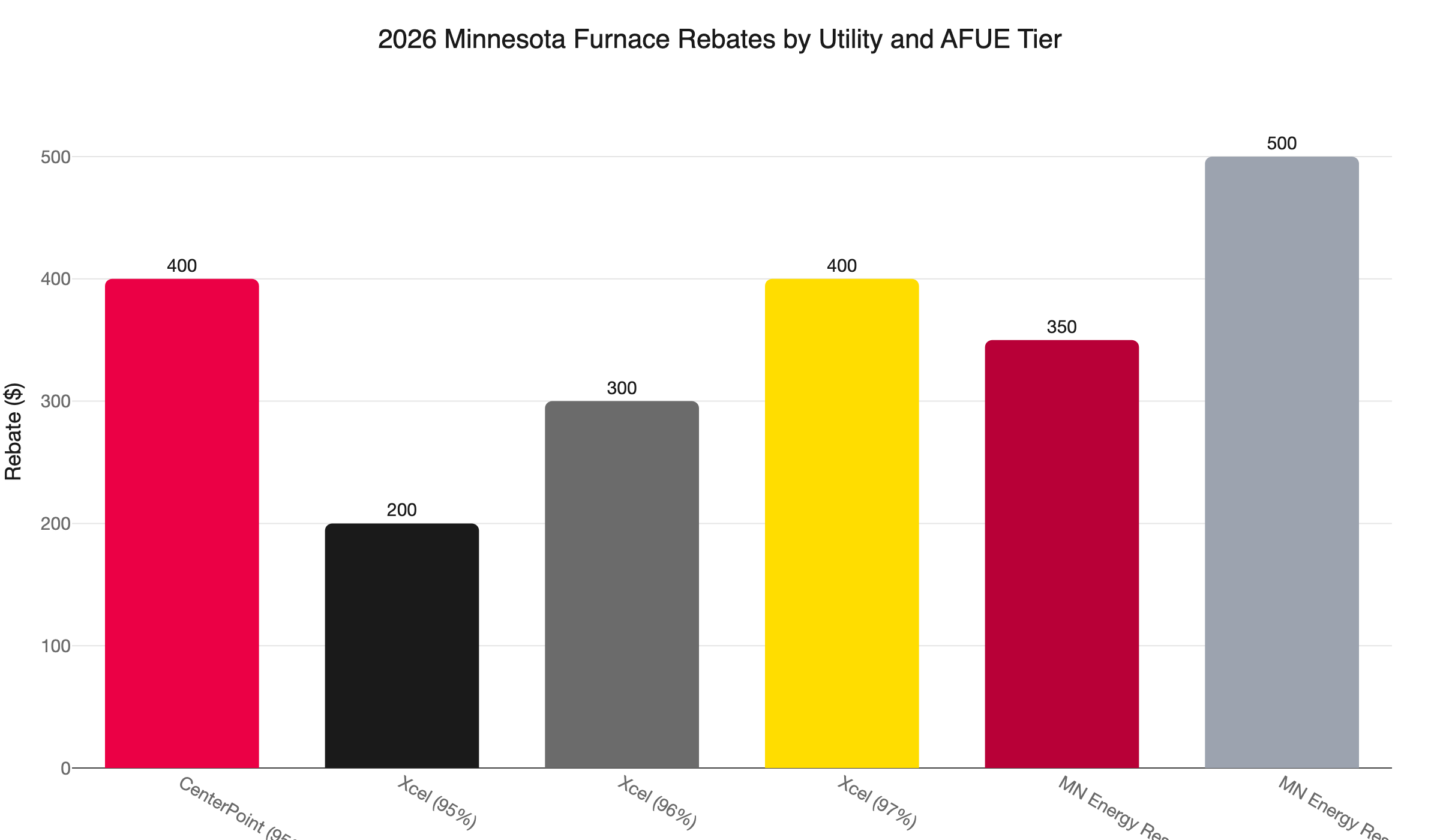
2026 Minnesota Furnace Rebates by Utility and AFUE Tier
## What Is a Modulating Furnace?
A modulating furnace controls its gas valve in fine increments, running anywhere from about 40 to 100 percent of full output. It adjusts to match what your home actually needs. No full-power blast. No sudden shutdown 10 minutes later.
To understand why that matters, you need to see all three furnace types side by side.
A single-stage furnace has one setting: 100 percent. Your thermostat calls for heat. The furnace fires at full power. The house overshoots its target temperature by a degree or two. The furnace shuts off. The house drifts back down. The cycle repeats every 10 to 15 minutes - all day, all winter.
A two-stage furnace adds a second option. The first stage runs at about 65 percent of capacity for mild days. The second stage fires at 100 percent when temperatures drop hard. It is better than single-stage. But it still gives you only two choices.
A [modulating furnace](https://www.ac-heatingconnect.com/homeowners/advantages-of-modulation-modulating-vs-single-and-two-stage-furnaces/) works differently. On a mild October evening, it might run at 45 percent for 40 minutes straight. On a January night with a -20°F wind chill, it ramps to 95 percent and holds there. The result is fewer on/off cycles and steadier temperatures. Run times grow longer, which means air actually circulates through every part of your home.
---
## What Does Each Furnace Type Feel Like Inside Your Home?
Single-stage: you feel the blast, the overshoot, and the cool-down. Two-stage: less aggressive, but still a noticeable on/off pattern. Modulating: your home stays within roughly half a degree of your thermostat setting all day long. You stop noticing the furnace is running.
Here is what that difference looks like in a real house.
Picture a two-story home in Maple Grove on a February morning. The thermostat is set to 68°F. With a single-stage furnace, the living room hits 70°F in a burst of hot air. The upstairs bedrooms sit at 65°F. The heat never had time to circulate before the system shut off. You wake up cold upstairs and overly warm downstairs.
With a modulating furnace running the same scenario, the furnace runs at low capacity for most of the night. Air moves through your ducts continuously, distributing warmth from room to room. The living room holds 68°F. The bedrooms hold 67.5°F. You do not feel the system cycle on and off. You just feel comfortable.
The continuous low-speed airflow has a secondary benefit. A modulating system cycling air at partial capacity filters it more consistently. With a single-stage furnace, filtration only happens during the blast cycles. Between cycles, particulates settle. In a sealed Minnesota home in winter, that difference compounds over months.
[Minneapolis averages approximately 7,200 to 8,000 heating degree days per year](https://www.dnr.state.mn.us/climate/twin_cities/listings.html) - one of the coldest major metro areas in the continental United States. Your furnace runs harder and longer for more of the year than homeowners in Chicago or Denver ever experience. A comfort problem that feels like a minor annoyance in November becomes a genuinely disruptive daily pattern by January.
If your upstairs rooms are consistently colder than your thermostat reads, or you hear the furnace roar to life every 10 to 15 minutes, you are feeling the single-stage problem. It is not a duct issue. It is a combustion-rate issue.
For a closer look at why this hits hardest in December and January, see our post on [cold spots and warm rooms in winter](/blog/cold-spots-and-warm-rooms-why-uneven-temperatures-hit-hardest-in-december/).
---
## Is "Variable-Speed" the Same as "Modulating"?
No. "Variable-speed" describes the blower fan motor. "Modulating" describes the gas valve. These are two separate components on the same furnace. You can have one without the other. Mixing them up when reading a quote leads to paying for features you did not think you were getting - or missing features you assumed were included.
When a contractor quotes you a "high-efficiency variable-speed furnace," that phrase tells you about the fan. It says nothing about the gas valve.
A [variable-speed ECM blower motor](https://furnace.direct/blogs/news/variable-speed-furnace-worth-it-minnesota) adjusts fan speed to move conditioned air more [smoothly and quietly](/blog/hvac-sound-ratings-quiet-systems-twin-cities/) than a standard PSC motor. ECM motors run at lower operating temperatures. They also avoid the mechanical stress of full-torque cold starts, which is why they typically outlast the furnace itself. These are real benefits worth paying for.
But if the gas valve is two-stage rather than modulating, the furnace still fires in two-setting bursts. The air distributes more smoothly. The heat still arrives in a pattern your home notices.
A modulating gas valve is the other half of the upgrade. It controls how much gas the burner fires at any given moment. Without it, the ECM blower improves air distribution - but the comfort ceiling stays lower.
For a Minnesota home with a 7-month heating season, the best combination is a modulating gas valve paired with a [variable-speed ECM blower](/blog/variable-speed-blower-motor-furnace-benefits-minnesota/). The valve delivers steady, low-output heat. The motor distributes it evenly. Together, they nearly eliminate the temperature swing problem that makes Minnesota winters uncomfortable in a single-stage house.
When you get a quote, ask specifically: "Is this a modulating gas valve or a two-stage gas valve?" You should get a clear, direct answer. If the technician cannot answer that question, that tells you something worth knowing before you sign.
---
## Is a Modulating Furnace Worth It in Minnesota?
For most Twin Cities homes with properly sized ductwork and a plan to stay for five or more years: yes. Minnesota's long heating season amplifies efficiency gains in ways that national payback calculators consistently underestimate. The comfort improvement is also more pronounced here than in warmer climates, where furnaces run for 3 to 4 months instead of 7.
Here is what drives that answer.
Efficiency gains compound over a long heating season. The difference between a 97% AFUE modulating furnace and a 96% AFUE two-stage unit might look negligible on a spec sheet. But across [roughly 7,500 heating degree days](https://www.dnr.state.mn.us/climate/twin_cities/listings.html) in a typical Twin Cities winter, small percentage differences translate to real savings on your gas bill every year.
Gas prices sharpen that math in 2026. [US residential natural gas averaged approximately $1.98 per therm as of mid-2026](https://www.eia.gov/dnav/ng/NG_PRI_SUM_DCU_SMN_A.htm). At higher gas prices, each therm you save is worth more in dollar terms. Efficiency gains that looked marginal at $1.30 per therm look meaningfully stronger at $1.98.
The comfort value is harder to price, but it is real. If you work from home, have young children or older family members who spend long hours inside during a Minnesota winter, or find uneven room temperatures genuinely disruptive, the modulating furnace's steady heat has a dollar value to you. Only you can set that number.
One more thing to keep in mind. If your current furnace is 15 years old, failing, or running below 85% AFUE, the replacement decision is already made. You are replacing the furnace regardless of what stage it is. In that situation, the choice between modulating and two-stage is a secondary optimization inside an already-necessary project. The question shifts from "is modulating worth the premium over doing nothing?" to "given I am already spending $3,900 to $6,500 on a replacement, does an extra $650 to $1,300 make sense?" For most homeowners planning to stay, it does.
---
## How Much Can a Modulating Furnace Save on Your Minnesota Heating Bill?
Moving from an 80% AFUE single-stage furnace to a 97% AFUE modulating unit cuts your heating fuel cost by roughly 17 percent. For a typical Twin Cities home, that works out to about $300 to $400 per heating season.
Here is the math.
A standard 80% AFUE furnace wastes 20 cents of every gas dollar up the flue. A 97% AFUE modulating furnace wastes 3 cents. That 17-percentage-point gap is your efficiency gain.
A typical 2,000-square-foot Twin Cities home uses roughly 900 to 1,100 therms per heating season. At $1.98 per therm, that costs $1,780 to $2,180 per year at 80% AFUE. At 97% AFUE, the same home spends roughly $1,480 to $1,810. Annual savings: approximately $300 to $400.
The modulating premium over a comparable two-stage unit typically runs $500 to $1,500 before rebates. At $300 to $400 in annual savings, pure-efficiency payback runs 4 to 7 years. Add utility rebates (covered in the next section) and that payback window shortens to 3 to 5 years on many installs.
Note where the largest gains actually live. The biggest efficiency jump is from replacing any old 80% AFUE single-stage system with a modern 95%+ unit - not from choosing modulating over two-stage. When both alternatives are rated 96-97% AFUE, the direct fuel savings difference between them is smaller. At that level, the comfort improvement and equipment longevity are the stronger arguments for modulating.
Fewer on/off cycles mean less wear on the heat exchanger and inducer motor. A furnace that runs gently tends to last longer and need fewer emergency repairs. That is harder to quantify ahead of time, but it is part of the real-world value over a 15 to 20-year equipment lifespan.
---
## When a Modulating Furnace Is NOT Worth It
This is the section most HVAC companies skip. Here are the four situations where a two-stage furnace is the smarter choice for your home.
**Your ductwork is undersized.** This is the single biggest reason modulating furnaces underperform. If your ducts restrict airflow at higher fan speeds, the long-run low-output mode that defines modulating comfort cannot work correctly. The system either short-cycles or compensates poorly. If a technician has ever flagged undersized ductwork in your home, fix the ducts before upgrading the furnace. See our comparison of [two-stage vs. single-stage furnaces in Minnesota](/blog/two-stage-vs-single-stage-furnace-minnesota/) for more on how furnace type interacts with duct capacity.
**Your home is small and well-sealed.** A 1,100-square-foot home with good insulation and no major air leaks does not have the room-to-room temperature variance that modulating furnaces solve best. The comfort benefit is most pronounced in larger, multi-story, or older drafty homes. In a tight, small house, a two-stage system with an ECM blower is often the better value per dollar spent.
**You are planning to sell within 18 to 24 months.** Payback on the modulating premium runs 4 to 7 years. If you are not in the house for that window, the premium does not come back to you at closing in any predictable way. A well-installed 96% AFUE two-stage furnace is still a strong asset for a home sale.
**You are at your budget limit.** A 96% AFUE two-stage furnace is a genuinely high-performing heating system. If the choice is between stretching your budget for modulating or a two-stage furnace with money left for duct sealing and a maintenance plan, the two-stage plus maintenance often delivers better total value than modulating alone.
Honest advice is part of how we do business. If a two-stage furnace is the right fit for your home, that is what we will tell you.
---
## What Rebates and Tax Credits Are Available for Minnesota Furnaces in 2026?
CenterPoint Energy, Xcel Energy, and Minnesota Energy Resources all offer rebates for high-efficiency furnace replacements in 2026. Stack them against the modulating premium and the real out-of-pocket cost gap shrinks considerably.
Here is the current landscape:
**CenterPoint Energy:** Up to $400 for furnaces rated 95% AFUE or higher. Income-qualified households may qualify for up to $1,200. [Source.](https://www.metroheating.net/minnesota-furnace-rebates-2026-guide-for-saving-big-on-furnace-replacement/)
**Xcel Energy:** Three rebate tiers based on efficiency rating. $200 at 95% AFUE, $300 at 96% AFUE, $400 at 97% AFUE. Homes with dual gas and electric Xcel service may be able to stack these with other program credits. [Source.](https://www.metroheating.net/minnesota-furnace-rebates-2026-guide-for-saving-big-on-furnace-replacement/)
**Minnesota Energy Resources:** $350 at 95% AFUE, $500 at 97% AFUE. [Source.](https://www.grayducttechnologies.com/blog/the-big-list-of-minnesota-hvac-rebates-and-how-to-get-them/)
**Federal 25C Tax Credit:** Potentially up to $600 (30% of installed cost) for furnaces at the CEE highest efficiency tier. The status of this credit for the 2026 tax year is uncertain. One source indicates it may have ended in 2025. [Review current IRS guidance](https://www.irs.gov/credits-deductions/energy-efficient-home-improvement-credit) before assuming it applies to your installation. Confirm eligibility with your tax professional before filing.
Ask your technician to document the AFUE rating on your installation paperwork. You will need that number to file the utility rebate application. For a full breakdown of Minnesota HVAC incentives - including heat pump credits and other programs - see our guide to [Xcel and CenterPoint HVAC rebates](/blog/xcel-centerpoint-hvac-rebates-minnesota/).
---
## What to Do Before Calling for a Furnace Quote
The right furnace for your home depends on your ductwork capacity, your square footage, your current system's age, and how long you plan to stay. No article - this one included - can substitute for someone who has actually looked at your home.
A proper Manual J load calculation and a duct inspection take about an hour. They give you real numbers, not ballpark guesses based on square footage alone.
We are locally owned and operated in Ramsey, Minnesota. Our team serves homeowners throughout the Twin Cities metro: Minneapolis, St. Paul, Blaine, Maple Grove, Plymouth, Brooklyn Park, Woodbury, Bloomington, and beyond. When we schedule your appointment, we show up when we say we will. That is the "Always On Time… Or You Don't Pay a Dime!(R)" promise - not a tagline, a guarantee backed by our 100% satisfaction policy.
Call **(763) 260-6662** or [book a furnace assessment online](/heating/heating-equipment/furnaces/furnace-replacements/). We will check your ductwork, review your current setup, and give you a straight answer: modulating, two-stage, or something else entirely. Financing is available for qualifying furnace replacements if you want to bridge the gap between options.
---
# Furnace Pressure Switch Failure Symptoms: Twin Cities Guide
URL: https://northernonehour.com/blog/furnace-pressure-switch-failure-symptoms-minnesota/
Published: 2026-08-14 | Category: Heating
Learn the furnace pressure switch failure symptoms Twin Cities homeowners see most, including the frozen PVC exhaust that is Minnesota's top winter trigger.
Key Takeaways
- The pressure switch is a safety device. It must confirm safe airflow before the burner ignites. Never bypass it.
- In Minnesota, the most common winter trigger is a frozen PVC exhaust pipe on the side of your house.
- Stuck-open switch: the furnace runs the inducer and shuts down before igniting. Most brands show a 3-blink error code.
- Stuck-closed switch: the furnace will not start at all. Most brands show a 2-blink error code.
- After 3 to 5 failed attempts, [the control board locks out](/blog/furnace-control-board-failure-symptoms-cost-minnesota/) and requires a manual reset.
- DIY check: walk outside, inspect both PVC pipes for ice, clear any blockage with warm water, then reset the furnace.
- If the vent is clear and the furnace still will not run, call a pro. Never jumper the switch.
- Part replacement costs $14 to $44. Professional repair runs $80 to $200.
- A CO alarm during a furnace fault is an emergency. Leave the house and call 911.
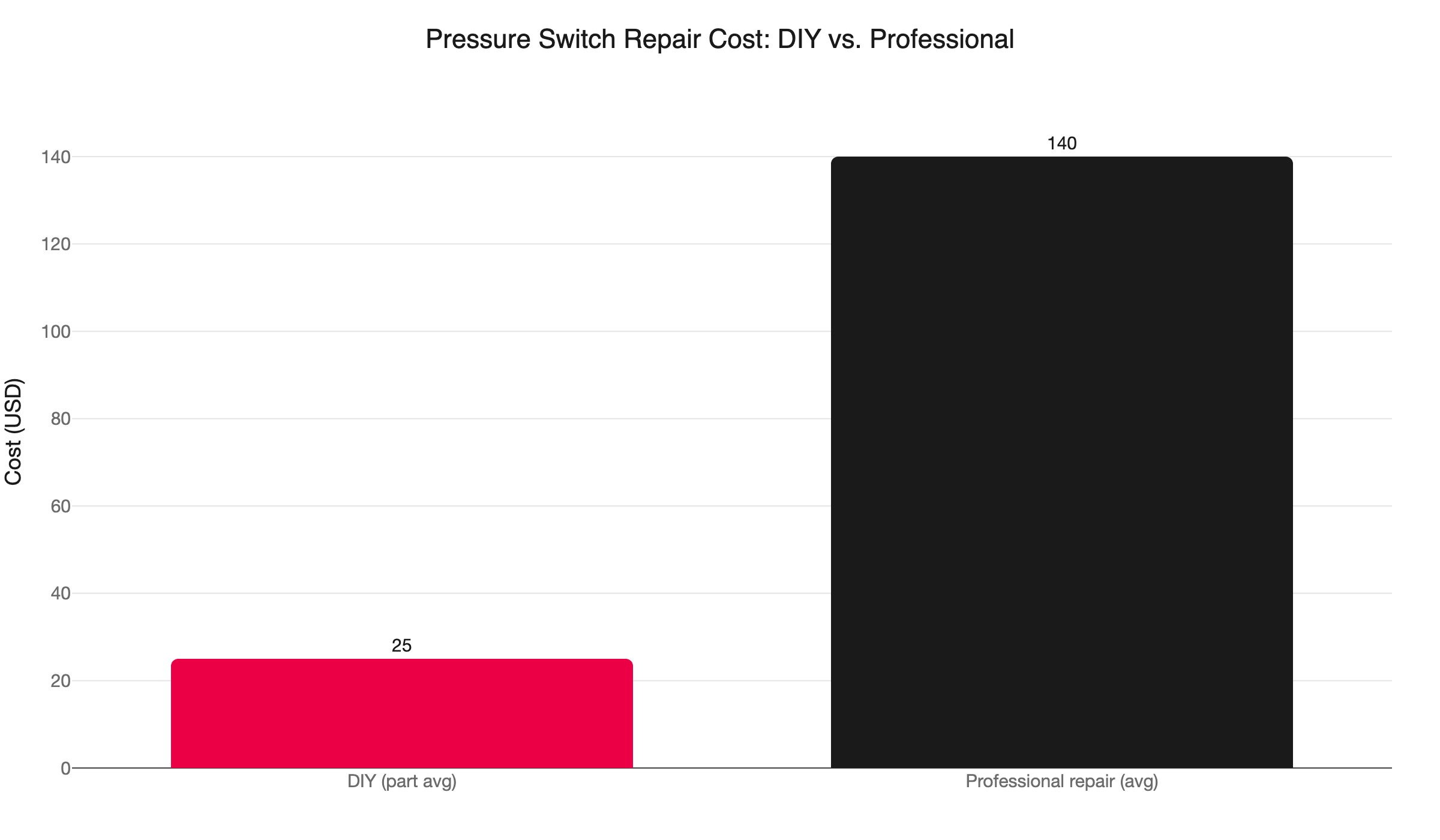
Pressure Switch Repair Cost: DIY vs. Professional
The most common furnace pressure switch failure symptoms hit at the worst possible time. It is 6 a.m. in January. The temperature outside is -18°F. You walk downstairs to a cold house and find your furnace blinking three times, pausing, and blinking again.
You hear the inducer motor start. It hums for a few seconds, then stops. No ignition. No blower. Just a blinking error code repeating on the control board.
That sequence is a pressure switch fault. In a Minnesota winter, the most likely cause is something you can check in two minutes with no tools. This guide explains what the switch does, what furnace pressure switch failure symptoms look and sound like, and exactly when to put on your coat versus when to call us.
## What Does a Furnace Pressure Switch Do?
**Short answer:** It is a small safety device that verifies your furnace has established airflow to vent combustion gases before the burner ignites. No confirmed draft means no ignition.
[The pressure switch connects to the inducer motor via a rubber or silicone hose](https://whitemechanical.com/what-to-expect-when-your-furnace-pressure-switch-fails/). When the inducer runs and pulls air through the heat exchanger, it creates negative pressure. That pressure flexes a small diaphragm inside the switch, closing an electrical circuit. The control board reads the closed circuit as confirmation that safe draft exists. Only then does it [proceed to ignition](/blog/furnace-gas-valve-failure-symptoms-replacement-cost-minnesota/).
If that circuit never closes, the furnace shuts down. That is the design working correctly.
This matters in Minnesota because state code requires 92% AFUE minimum on gas furnace replacements. Every high-efficiency condensing furnace vents through a PVC pipe that exits through the side of the house, typically 12 to 18 inches above grade. That pipe is outdoors and exposed to -20°F nights and windchill. When it ices over, the inducer cannot build draft, the switch refuses to close, and the furnace shuts down.
The pressure switch is also your primary protection against carbon monoxide entering your home. If combustion gases cannot vent, the switch keeps the burner off. In a Minnesota home sealed tight against a polar vortex, that protection is not a formality.
For a guide to reading your furnace's blinking LED fault codes, see our [furnace error codes blinking light guide](/blog/furnace-error-codes-blinking-light-guide/).
## What Are the Furnace Pressure Switch Failure Symptoms?
**Quick answer:** Watch for a furnace that runs the inducer and shuts down before igniting, a repeating error code blink pattern, a soft clicking or flapping near the inducer, and lockout after 3 to 5 failed attempts. The whole sequence plays out in under two minutes per cycle.
### Stuck-Open Symptoms (Most Common)
A stuck-open switch fails to close even when the inducer is running. The control board never gets a confirmation signal and holds ignition.
Look and listen for:
- **Short cycling.** The inducer motor hums for a few seconds. Then the furnace shuts down with no ignition. It restarts and does the same thing two or three more times.
- **3-blink error code.** A repeating group of three LED flashes on the control board [signals a pressure switch that will not close](https://whitemechanical.com/what-to-expect-when-your-furnace-pressure-switch-fails/). Count the blinks in one complete repeating group. Three is the most common pattern for this fault across many brands, though some vary.
- **Clicking or flapping near the inducer.** A sticking or torn diaphragm can make a soft audible click as the inducer cycles on and off. This sound is easy to miss in a mechanical room. Listen closely with the cover off.
- **Lockout after a few attempts.** After 3 to 5 failed starts, the control board locks the furnace out entirely. To reset, turn the thermostat to "off," wait 30 seconds, then turn it back to "heat." If it locks out again immediately, the cause is still present.
The clearest pattern in real time: inducer starts, furnace goes silent with no ignition and no blower, tries again, same result. Two or three repetitions of that sequence point directly to the pressure switch.
### Stuck-Closed Symptoms
A stuck-closed switch reads as already engaged before the inducer runs. The control board sees something out of sequence at startup.
Look for:
- **2-blink error code** on most brands.
- **No blower start at all.**
- **A light tap on the switch body** can briefly free a sticky diaphragm. If tapping it makes the furnace start temporarily, the switch has diagnosed itself as bad.
Stuck-closed failures are less common than stuck-open and harder to self-diagnose because the furnace does not even complete a start attempt. A technician with a meter can confirm it quickly.
## Common Causes of Furnace Pressure Switch Failure in Minnesota
Not all pressure switch problems start with the switch itself. In Minnesota, the cause often lives somewhere else in the system. Here are the most common triggers, in order of frequency on winter service calls.
**1. Ice-blocked PVC exhaust or intake pipe**
This is the top cause during January and February. Your condensing furnace's exhaust pipe terminates on the outside of the house. At extreme temperatures, condensate vapor in the exhaust freezes at the pipe opening and builds an ice cap. The inducer cannot build draft against a capped pipe. The switch trips.
[Minnesota Rule Chapter 1346](https://dli.mn.gov/sites/default/files/pdf/fs-2020-mechanical-fuel-gas.pdf), the state's mechanical and fuel gas code, requires 92% AFUE minimum on new gas furnace installations in Climate Zones 6 and 7, which covers the Twin Cities metro. That requirement means every replacement furnace in the area has a side-wall PVC exhaust. Ice blockage is not a fringe case here. It is the most predictable January failure mode we see.
**2. Blocked condensate drain**
High-efficiency furnaces produce water as a combustion byproduct. That water drains through a condensate line. When the line clogs from algae, debris, or cold, water backs up into the pressure switch hose. [A waterlogged hose cannot transmit pressure correctly](https://whitemechanical.com/what-to-expect-when-your-furnace-pressure-switch-fails/). The diaphragm cannot flex. The switch stays open. This is a year-round failure mode, not only a winter one.
**3. Cracked, kinked, or disconnected pressure switch hose**
The rubber or silicone hose connecting the inducer to the switch ages with use and can crack, stiffen, or get pinched during service work. [A disconnected or cracked hose](https://www.pickhvac.com/furnace/troubleshoot/pressure-switch-stuck-open/) cannot carry the pressure signal to the diaphragm.
**4. Failed inducer motor**
If the inducer is not spinning at full speed, it cannot build enough draft to close the switch. You may hear the motor struggle, run slowly, or grind before the furnace shuts down. A [failing inducer](/blog/furnace-draft-inducer-motor-failure-minnesota/) is a more complex repair than replacing a switch.
**5. Cracked or ruptured diaphragm**
The diaphragm inside the switch wears out over years of cycling and can crack or tear. When it does, it cannot flex under pressure. This is what most people mean when they say "the pressure switch is bad."
**6. Debris at the vent termination**
[Bird nests, wasp nests](/blog/animals-nesting-furnace-flue-vent-pipe-minnesota/), and leaves [can block the pipe terminus](https://www.pickhvac.com/furnace/troubleshoot/pressure-switch-stuck-open/) in warmer months. Less common in January, but worth checking any time you schedule maintenance.
## The 2-Minute Check You Can Do Right Now
Before you call for a service appointment, put on your coat and walk outside. This check is free and takes two minutes. If ice is the cause, you can have heat back on before a truck rolls.
**Step 1: Find the PVC pipes.**
Look for two plastic pipes exiting the side of your house. They are typically 2 to 3 inches in diameter, white or gray, located close to the wall nearest your furnace. One is the exhaust. One is the fresh air intake. Both can become blocked.
**Step 2: Inspect the openings.**
Look directly at the open end of each pipe. Is there an ice cap? Is either pipe partially covered by a snow drift? Even partial coverage reduces airflow enough to trip the switch.
**Step 3: Clear the blockage.**
Pour warm water (not boiling - thermal shock can [crack PVC](/blog/high-efficiency-furnace-pvc-vent-pipe-problems-minnesota/)) over the ice until it melts and drops free. Move any snow drift away from both pipe openings. Make sure each termination has clear open air in front of it.
**Step 4: Reset the furnace.**
Go back inside. Turn the thermostat to "off." Wait 30 seconds. Turn it back to "heat." Watch for a complete start: inducer on, ignition click, blower running. If the furnace runs normally, you solved it. Note where those pipes are. On the next extreme cold night, a quick outdoor check before bed costs less than one minute.
**Optional hose check (if you are comfortable):**
With the furnace access panel removed, find the small rubber hose running from the inducer housing to the pressure switch. Confirm both ends are connected. Confirm the hose is not kinked or pinched. Do not disconnect anything - just look.
For a deeper explanation of why PVC exhausts ice over so predictably during polar vortex events and what you can do before next winter, see our post on [high-efficiency furnace exhaust vents blocked by snow and ice](/blog/high-efficiency-furnace-exhaust-vent-blocked-snow-ice-minnesota/).
## When Should You Call a Pro Instead?
**Quick answer:** Call a pro if the vent is clear and the furnace still will not run, if your CO alarm has triggered, if the inducer sounds wrong, or if the system is over 10 years old and this is not its first pressure switch fault.
Here is the specific call list:
**Vent is clear and the furnace still will not run.** The ice was not the cause. Something else is failing: a torn diaphragm, a failing inducer, or a waterlogged condensate line. A technician can confirm which one with a meter and visual inspection.
**CO alarm has triggered.** Leave the house. Call 911. Do not reset the furnace and stay inside to wait. [A pressure switch fault that blocks proper venting can allow combustion exhaust to spill back into the home](https://whitemechanical.com/what-to-expect-when-your-furnace-pressure-switch-fails/). In a Minnesota home [sealed tight for winter](/blog/exhaust-fans-furnace-backdraft-combustion-air-minnesota/), CO accumulates quickly. Every CO alarm is an emergency, not a reset situation.
**The inducer motor sounds wrong.** Grinding, squealing, or a labored hum before shutdown suggests the motor is nearing failure. A failing inducer cannot build adequate draft even with a clear vent. That is a more involved repair than a switch swap.
**The system is over 10 years old and has done this before.** Repeated pressure switch faults on an aging furnace often point to something systemic: a heat exchanger under stress, a condensate system losing capacity, or inducer bearings wearing out. A technician can read those signals together and tell you whether a targeted repair or full replacement is the better call.
**You are considering replacing the switch yourself.** The part runs $14 to $44, but it must be OEM-matched to your exact furnace model. An undersized switch will not close under normal draft. An oversized one will close too easily and mask other problems. If you are not certain of the spec, let a technician source and install the right part.
One rule stands regardless of situation: never bypass or jumper the pressure switch. It is a safety device. Bypassing it allows ignition without confirmed draft, which puts carbon monoxide at risk of entering your home.
Our [furnace repair page](/heating/heating-equipment/furnaces/furnace-repair/) covers what a service call includes and what to expect when our technician arrives.
## How Much Does It Cost to Fix a Pressure Switch?
**Quick answer:** If you cleared a frozen exhaust pipe yourself, the repair costs nothing. Part-only switch replacement runs $14 to $44. Professional repair with a service call runs $80 to $200.
Here is the full breakdown:
- **Frozen exhaust pipe (self-cleared):** $0. Warm water and two minutes of your time.
- **DIY switch replacement:** $14 to $44 for an OEM-matched switch, averaging around $25. You must match the part number to your specific furnace model.
- **Professional repair (service call plus part):** [$80 to $200](https://www.pickhvac.com/furnace/troubleshoot/pressure-switch-stuck-open/) depending on your situation and how much diagnostic time the technician needs to isolate the root cause.
- **Inducer motor replacement:** Significantly more than a switch swap. The motor is the costly component in the draft assembly, and labor to access and replace it adds to the total.
We give you a clear, honest quote before any work starts. No surprises after the job.
If cost is a concern on a larger repair, ask about financing when you call. We offer it on qualifying repairs and replacements.
## What If Your Tech Recommends a New Furnace?
**Quick answer:** A pressure switch fault sometimes reveals a furnace at the end of its useful life. If replacement makes sense, Minnesota's 92% AFUE code requirement, Xcel Energy rebates, and a federal tax credit can meaningfully reduce your out-of-pocket cost.
Sometimes the pressure switch is the symptom and not the root problem. A technician who finds a cracking heat exchanger, an inducer on its last bearing, or a condensate system failing at multiple points may recommend replacement. Further repairs on a 15-year-old furnace can cost more over five years than a new high-efficiency unit.
If that conversation happens, here is what works in your favor in Minnesota:
**Minnesota's AFUE requirement.** [MN Rule Chapter 1346](https://dli.mn.gov/sites/default/files/pdf/fs-2020-mechanical-fuel-gas.pdf) requires 92% AFUE minimum on gas furnace replacements in Climate Zones 6 and 7. Any new furnace installed in the Twin Cities will be a high-efficiency model. Lower operating costs offset some of the purchase price over time.
**Xcel Energy rebates.** Xcel Energy customers replacing with a 90%+ AFUE furnace may qualify for a rebate. [Applications for 2025 installations are accepted through September 30, 2026](https://mn.my.xcelenergy.com/s/residential/heating-cooling/heating-equipment-rebates).
**Federal 25C tax credit.** A 90%+ AFUE furnace qualifies for the federal energy efficiency home improvement tax credit worth up to $600. A standard 80% AFUE unit does not qualify.
**Financing.** We offer financing on furnace replacements. If the economics make sense over the long run but the upfront number is a barrier, ask about your options when you call.
For a clear framework on when repair makes financial sense versus when replacement wins, see our guide on [when to repair or replace your heating and cooling system](/blog/repair-or-replace-which-should-you-do-when-your-heating-and-cooling-system-breaks-down/).
---
If your furnace is blinking and not heating, we are here. Northern One Hour is locally owned and operated in Ramsey, MN. We serve Minneapolis, St. Paul, Blaine, Maple Grove, Plymouth, Brooklyn Park, Woodbury, Bloomington, and the surrounding Twin Cities area. Call us at **(763) 260-6662** or [book online](/heating/heating-equipment/furnaces/furnace-repair/). We show up when we say we will: "Always On Time… Or You Don't Pay a Dime!(R)"
---
# Best HVAC Filter for Pet Owners: MERV vs. Electrostatic vs. Media Cabinet
URL: https://northernonehour.com/blog/hvac-filter-pets-hair-dander-minnesota/
Published: 2026-08-14 | Category: Indoor Air Quality
Dogs and cats load your filter fast. Learn which MERV rating is safe for your furnace type and how a media cabinet solves the airflow tradeoff for good.
Key Takeaways
- Pet dander measures 2.5-10 microns. Cat allergen (Fel d 1) travels on particles under 5 microns and stays airborne for hours.
- **MERV 11** is the right target for most pet households. It captures 85%+ of 3-10 micron particles and 65% of 1-3 micron particles.
- **Your furnace motor type matters as much as your MERV number.** Pre-2010 furnaces with PSC motors should cap at MERV 10-11. MERV 13 in a 1" slot on a PSC motor risks frozen coils and motor burnout.
- **Washable electrostatic panels underperform.** Real-world tests show actual efficiency often falls to MERV 4-6, not the MERV 8 advertised on the box.
- **A 4-5" whole-home media cabinet** lets you run MERV 11 filtration with almost no added airflow resistance. The filter lasts up to 12 months.
- Change 1" filters every 30 days if you have multiple pets or an allergy sufferer at home.
- Minnesota's 5-month sealed heating season makes this decision more consequential than in warmer climates.
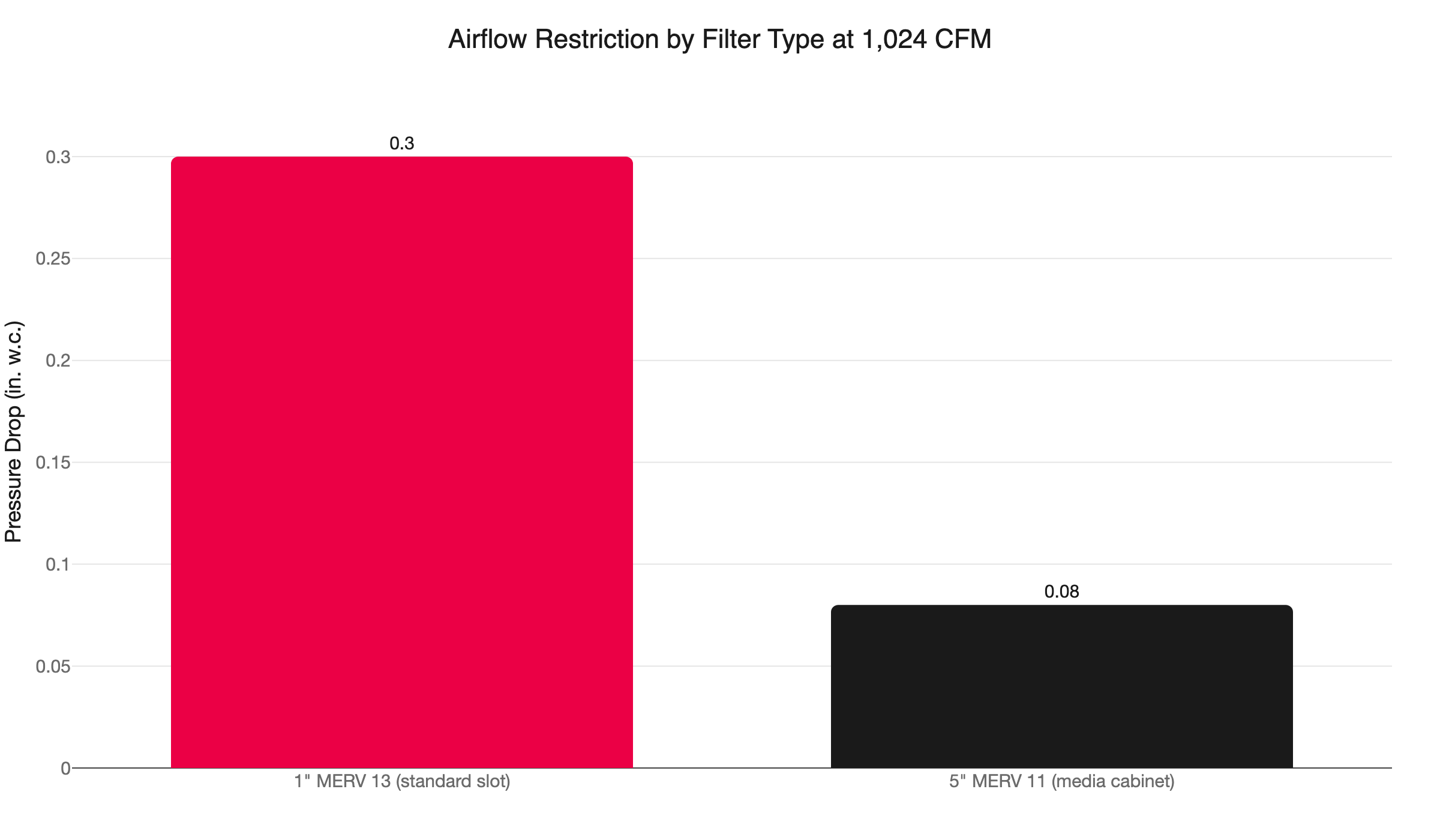
Airflow Restriction by Filter Type at 1,024 CFM
## Why Pet Owners Need a Different Filter Strategy
The standard advice is to change your filter every 90 days. That assumes a typical household. A pet household is not typical.
Your dog or cat sheds continuously. The visible hair lands on your furniture and floors. You can vacuum that. The invisible part is the dander: microscopic skin flakes that your HVAC system pulls into the return air duct on every cycle. In a home with two dogs, your filter loads with dander and fine particles around the clock, every day of the year.
The result: a 90-day filter change schedule in a pet home is often a badly restricted filter by month two. A restricted filter cuts airflow. Reduced airflow makes your furnace run longer to reach the set temperature. It raises your energy bill. Over time, it shortens equipment life.
You control two variables here: which filter you install and how often you change it. Getting both right [keeps your air cleaner](/blog/how-to-reduce-dust-in-home-hvac-twin-cities/) and your HVAC system healthier. The wrong filter for your furnace type can cause damage that costs far more than a year of filter replacements.
---
## What Does MERV Actually Measure?
MERV (Minimum Efficiency Reporting Value) rates a filter's ability to capture particles across three size bands. The scale runs from 1 (almost no filtration) to 20 (hospital surgical suite). For residential systems, the practical range is MERV 8 through MERV 13.
Here is how the ratings stack up for pet allergens. [Pet dander measures 2.5-10 microns, and cat allergen (Fel d 1) travels on particles under 5 microns and stays airborne for hours](https://www.fieldcontrols.com/blog/particle-sizes-what-is-your-hepa-filter-catching-and-what-is-it-missing/). You need a filter that works effectively in that sub-5-micron range.
- **MERV 8:** Catches 70-85% of 3-10 micron particles. Misses most fine dander and Fel d 1.
- **MERV 11:** [Catches 85%+ of 3-10 micron particles and 65% of 1-3 micron particles](https://filterbuy.com/resources/air-filter-basics/all-about-merv-ratings/). Captures the bulk of pet dander.
- **MERV 13:** Adds 50%+ capture down to 0.3 microns. Strong against the finest cat allergen particles.
The EPA states that ["filters with a MERV between 7 and 13 are likely to be nearly as effective as true HEPA filters"](https://www.epa.gov/indoor-air-quality-iaq/guide-air-cleaners-home) for residential use. The returns above MERV 13 diminish sharply. The same source confirms that ["increasing filter efficiency above MERV 13 results in only modest predicted decreases in indoor concentrations."](https://www.epa.gov/indoor-air-quality-iaq/air-cleaners-and-air-filters-home)
For most pet households, MERV 11 is the right target. MERV 13 adds meaningful benefit for [allergy sufferers](/blog/hvac-asthma-triggers-management-twin-cities/), provided your furnace can handle it safely.
---
## What Is the Best HVAC Filter for Pet Owners?
For most pet homes: a 1" pleated MERV 11, changed every 30-45 days. If your furnace has a variable-speed ECM motor (most systems since 2010), a 1" MERV 13 is a meaningful upgrade. If you want the best long-term outcome with the least ongoing maintenance, a 4-5" whole-home media cabinet at MERV 11 eliminates the airflow-versus-filtration tradeoff entirely.
The right answer depends on three things: your furnace motor type, your filter slot depth, and whether you want to invest in a one-time upgrade or manage monthly replacements.
Pleated media filters are the correct starting category, not washable panels. Most modern pleated filters are manufactured with an electrostatically charged media. This helps capture fine particles without degrading over time the way a reusable panel does. The static charge is part of the material, not a surface treatment that washes off.
---
## Does Your Furnace Motor Type Determine Which Filter Is Safe?
Yes. Your furnace motor type is the most important variable in this decision. It determines the maximum MERV rating your system can safely run in a 1" slot. Every competitor article skips this question, and ignoring it leads homeowners to install filters their furnaces cannot handle.
Two motor types dominate residential installations:
**PSC motors (Permanent Split Capacitor)** are fixed-speed motors. Most furnaces installed before 2010 have them. A PSC motor cannot increase its speed to compensate for a restrictive filter. When you install a high-MERV 1" filter in a PSC furnace, the motor strains against the resistance. The evaporator coil can ice over from reduced airflow. The motor can overheat and burn out. Short cycling follows, driving up energy costs. The realistic ceiling for PSC-motor systems is MERV 10. MERV 11 is the absolute maximum. MERV 13 in a 1" slot on a PSC motor is not safe for routine use.
**ECM motors (Electronically Commutated Motor)** are variable-speed motors found in most furnaces built since roughly 2010. An ECM ramps up its RPM to maintain airflow against higher filter resistance. A 1" MERV 13 is generally safe on an ECM system. Even ECM motors have a static pressure ceiling, typically 0.5 to 0.8 inches of water column, so there is still a limit. A technician can confirm where your system sits.
If you do not know your furnace's motor type, look at the installation date on the data plate near the unit. Pre-2010: assume PSC and stay at MERV 10-11. Post-2010: likely ECM, but verify before installing MERV 13. Our team confirms motor type during every [furnace tune-up](/heating/heating-equipment/furnaces/furnace-tune-ups/), so you never have to guess.
---
## What Is Wrong With Washable Electrostatic Filters?
They catch pet hair but miss the fine dander that actually triggers allergies. Independent lab testing of a filter marketed as "MERV 8" found [actual efficiency of 0.3% for the finest particles and a true measured MERV of 6, not 8](https://filterstudy.com/carter-merv-8-permanent-electrostatic-air-filter/). Most permanent washable electrostatic panels have a true MERV of 1-4 in real-world conditions.
The marketing language compounds the confusion. Claims of "94% efficiency" often refer to large-particle capture only, measured on particles well above the dander range. Fine dander, which is what drives pet allergies, passes through largely uncaptured.
Three technologies get grouped under the word "electrostatic," and they are not equivalent:
**Washable permanent electrostatic panels** are the reusable filters you rinse in the sink. The static charge that helps them attract particles weakens after the first wash. ASHRAE, the body that sets HVAC filtration standards, notes that electrostatic filters ["may demonstrate high efficiency when clean and a drop in efficiency during their actual use cycle."](https://www.delair.com/blog/regular-vs-electrostatic-air-filters-how-effective-are-they/) A pet home produces a constant dander load. A filter that degrades to MERV 4-6 within weeks is not adequate for that environment.
**Electrostatically charged pleated media** is a manufacturing process applied to standard pleated filters. This is different and it is fine. Most MERV 11 pleated filters are made this way. The charge is embedded in the filter media, not a surface coating that wears off with washing.
**[Active electronic air cleaners](/blog/electronic-air-cleaner-maintenance-minnesota/)** are whole-home units with voltage-charged collector plates that mount inside the air handler. These are effective, but they are a separate product category, not a replacement for a media filter.
For a pet home, the choice is simple: a pleated MERV 11, changed on schedule, outperforms any washable panel every time.
---
## The Option Nobody Mentions: Whole-Home Media Cabinets
The airflow-versus-filtration tradeoff is real. A higher MERV means more resistance. More resistance means more motor strain. For pet owners with PSC-motor furnaces who need real dander capture, the 1" MERV options run out fast.
The 4-5" whole-home media cabinet is the solution to that tradeoff. It is absent from nearly every article on this topic.
Here is why the math works so decisively. A standard 1" filter has 3-4 square feet of filter media. A 5" media filter has roughly 24.5 square feet. At 1,024 CFM airflow, [the pressure drop across a 5" MERV 11 is about 0.08 inches of water column. The same airflow through a 1" MERV 13 produces about 0.30 inches of water column](https://filterbuy.com/resources/air-filter-maintenance/why-does-furnace-filter-thickness-matter/) - nearly four times the resistance from the smaller filter.
That difference is felt throughout the system. A 1" MERV 11 filter loaded with 85 grams of dust shows 35-40% airflow restriction. The same dust load spread across a 5" filter causes under 5% restriction. Your motor runs as if the filter barely exists.
With a media cabinet, you get MERV 11 filtration with almost no added strain on any motor type. A PSC-motor furnace handles it safely. An ECM furnace handles it easily. And the filter lasts up to 12 months between changes, even in a pet household.
Installation is a one-time project. A technician mounts the media cabinet in the return-air duct, typically where your existing filter slot is. Cost runs $250-$650 installed. The annual filter cost is comparable to buying 1" filters every 30 days, and often lower. The ongoing effort drops from 12 filter changes a year to one.
For a Twin Cities household with pets, this is the upgrade that makes the most sense long-term.
---
## How Often Should Pet Owners Change Their HVAC Filter?
For a 1" filter: every 60 days in a one-pet home with no allergies; every 30-45 days with multiple pets or one allergy sufferer; every 30 days without exception with multiple pets and an allergy sufferer. For a 4-5" media cabinet: up to 12 months.
A loaded filter fails in two directions at once. It stops capturing new particles - they pass straight through the clogged media. And it restricts airflow, which forces your furnace to run longer cycles and consume more energy to hit set temperature.
The simplest habit: set a phone reminder on the first of every month if you have multiple pets. Pull the filter and hold it up to a light source. If you cannot see light through the media, the filter was already overdue. Replace it that day.
For a closer look at seasonal timing and the warning signs of an overdue filter, see our post on [how often to change your HVAC filter in Minnesota](/blog/how-often-to-change-hvac-filter-minnesota/).
---
## Why Does Filter Choice Matter More in Minnesota?
Because your home is sealed for five months straight, and dry winter air keeps particles aloft far longer than in milder climates.
From November through March, Minnesota homeowners keep windows closed and weatherstripping tight. The HVAC system runs around the clock. Indoor relative humidity drops to 15-25% during those months. At those humidity levels, fine dander and hair particles stay suspended in the air longer before settling. You clean the bookshelf on Saturday, and by Monday morning it looks dusty again. That is not bad luck. That is dry air keeping particles airborne, and your HVAC system recirculating them through your filter on every cycle.
The EPA's baseline, that indoor air is 2-5x more polluted than outdoor air, applies year-round. In a Twin Cities home sealed from October to April, that becomes a five-month sustained high-concentration event with no fresh-air dilution. A filter that performs adequately in a home with open windows eight months a year is doing significantly harder work here.
The complete strategy for a Minnesota pet home: the right filter for your furnace type, changed on the correct schedule, paired with a whole-home ventilation strategy. An HRV (heat recovery ventilator) brings in fresh outdoor air while recovering the heat from the outgoing stale air, adding dilution to your filtration. Our post on [HRV whole-home ventilation in Minnesota](/blog/hrv-whole-home-ventilation-minnesota/) covers how these systems complement each other in a sealed winter home.
---
## Choosing the Best HVAC Filter for Pet Owners: Your Three Options
Here is the decision guide:
**Option 1: Pre-2010 furnace, PSC motor**
Use a 1" pleated MERV 10-11. MERV 11 is the ceiling. Change every 30-45 days with pets. Do not install MERV 13 without a technician confirming your system can handle it. Washable electrostatic panels are not a substitute for pleated media. If you want better allergen capture without risking your motor, step up to a media cabinet rather than a higher MERV 1" filter.
**Option 2: Post-2010 furnace, ECM motor**
A 1" pleated MERV 13 is safe in most cases. Change every 30-45 days with pets in the home. MERV 13 adds meaningful capture of the finest cat allergen particles, which matter most if anyone in the household has allergies. Confirm your motor type before installing.
**Option 3: Any furnace, best long-term outcome**
A 4-5" whole-home media cabinet with a MERV 11 filter. Install it once. Change the filter once a year. Airflow impact is minimal regardless of motor type. Consistent dander capture through every month of a Minnesota winter, with no monthly restocking.
Not sure which option fits your system? Our team is locally owned and based in Ramsey. We serve Minneapolis, St. Paul, Blaine, Maple Grove, Plymouth, Brooklyn Park, Woodbury, Bloomington, and surrounding Twin Cities communities. We can assess your furnace motor type, check your current filter slot, and quote a media cabinet installation, all in a single visit.
---
## Ready to Stop Guessing About Your Filter?
Call **(763) 260-6662** or book a service visit online. Whether you want a straight answer about what filter is safe for your furnace or a media cabinet installation that takes the monthly hassle off the table, our team shows up when we say we will.
That is what locally owned service looks like - and it is backed by the promise we make to every Twin Cities homeowner: "Always On Time… Or You Don't Pay a Dime!(R)"
For a broader look at what we offer for indoor air quality beyond filtration, visit our [indoor air quality services page](/indoor-air-quality/).
---
# R-22 Freon Phase Out for Older AC: Twin Cities Guide
URL: https://northernonehour.com/blog/r22-freon-phase-out-older-ac-minnesota/
Published: 2026-08-14 | Category: Cooling
Your R-22 AC faces rising refrigerant costs and shrinking supply. Learn the repair-vs-replace math and how Twin Cities homeowners can stack rebates in 2026.
Key Takeaways
- R-22 refrigerant production and imports have been banned since January 1, 2020. Your system can still run on reclaimed R-22, but supply shrinks every year and prices rise with it.
- Installed R-22 costs $90-225 per pound in 2026. Projections for 2028 put it at $120-280 per pound. Every repair is priced against that trajectory.
- The $5,000 rule: multiply your system's age in years by the repair cost. Above $5,000, replacement almost always wins financially.
- Retrofit refrigerants like MO99 exist and cost less per pound than R-22. They are not appropriate after a compressor or coil failure.
- New systems installed in 2026 use A2L refrigerants with a GWP under 700. Replacing today means no future refrigerant transition.
- The Section 25C federal tax credit (30%, up to $2,000 for heat pumps) expired December 31, 2025. The income-qualified HEAR program is the 2026 successor.
- Twin Cities homeowners can stack Xcel Energy rebates, city grants, and HEAR for a combined incentive that significantly offsets replacement cost.
- Call (763) 260-6662 or book online to get your R-22 system assessed before the summer cooling season peaks.
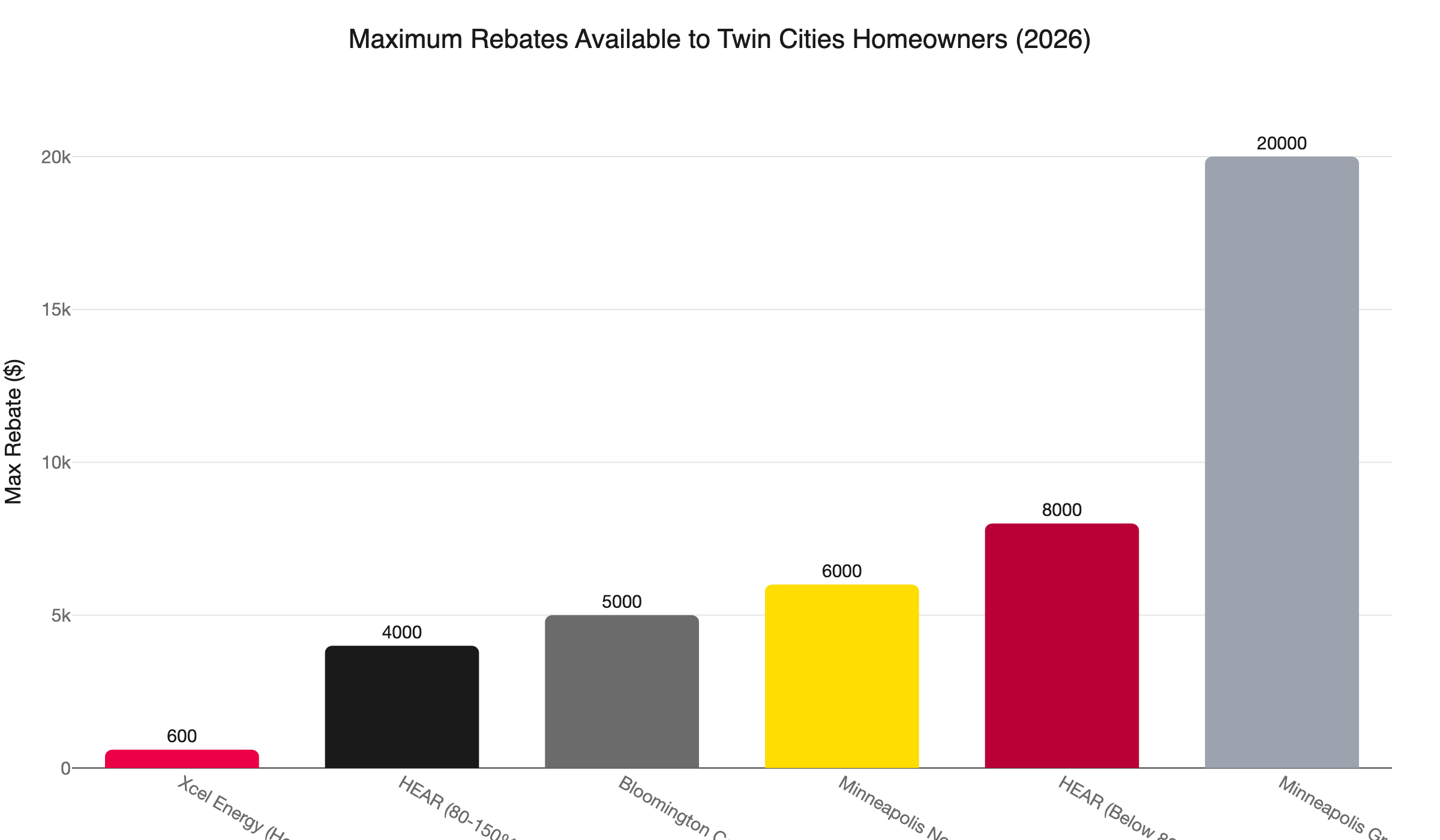
Maximum Rebates Available to Twin Cities Homeowners (2026)
## What Is the R-22 Freon Phase Out?
[Production and imports of R-22 ended January 1, 2020](https://www.epa.gov/ods-phaseout). Existing systems can still be serviced with legally reclaimed gas, but the supply shrinks every year and prices rise with it. No new R-22 is being manufactured anywhere in the United States.
R-22 was the standard refrigerant in residential AC systems for decades. It cools homes well. It also depletes the ozone layer. The EPA phased it out under the Clean Air Act as part of a global agreement to eliminate ozone-depleting substances.
What changed: all new R-22 production is gone. The only gas still available comes from refrigerant recovered from decommissioned systems, reclaimed, and resold into the service market. That shrinking pool pushes prices higher every year.
What did not change: there is no federal mandate for homeowners to replace a working R-22 system. The EPA set no homeowner deadline. The pressure you feel is economic, not regulatory. But the economics get harder to ignore with each passing cooling season.
## Is My Older AC System Still Running on R-22?
If your central AC was installed before 2010, check the data plate on your outdoor condenser unit. It lists the refrigerant type. R-22 is also sold under the brand name Freon, which is why homeowners use both names interchangeably. Systems from 2015 onward almost certainly use [R-410A](/blog/r410a-phase-out-existing-ac-what-to-do-minnesota/).
Finding the data plate is simple. Look for a sticker or metal nameplate on the side of your outdoor unit. It will have a line reading "refrigerant" or "ref type." R-22 listed there confirms you are on the older refrigerant.
Systems manufactured from roughly 2010 onward began transitioning away from R-22. If your unit falls in that 2010-2014 window, the data plate is the only way to know for certain. Do not assume based on age alone.
One thing every R-22 homeowner should know: [venting R-22 is illegal under EPA Section 608](https://www.epa.gov/ods-phaseout/technicians-and-contractors-frequent-questions), with penalties up to $44,539 per day per violation. Only an EPA-certified technician can legally purchase or handle R-22. Any service call on an R-22 system must go through a licensed professional.
## What Does It Cost to Recharge an R-22 System in 2026?
Expect $90 to $225 per pound installed. A typical top-off runs 2-4 pounds, putting a [single recharge](/blog/ac-refrigerant-recharge-how-it-works-cost-twin-cities/) at $180 to $900 or more. [R-22 wholesale prices have roughly tripled since 2020](https://hvaccalculatorhub.com/blog/r22-refrigerant), and projections put the installed cost at $120-280 per pound by 2028.
That price trajectory is the most important thing to absorb. A repair that buys two or three more years of runtime is priced against a refrigerant that only gets more expensive. The second recharge costs more than the first. The third costs more than the second.
That is the first layer of cost risk. The second layer is a major component failure alongside the leak. A compressor replacement on an R-22 system, plus the refrigerant charge to fill it, can reach $2,600-$3,900 or more. That is where the $5,000 rule becomes the deciding factor.
If your system is running longer than normal, not cooling as well as it used to, or your utility bills have climbed without explanation, a refrigerant leak may be the cause. Our post on [AC refrigerant leak signs in Minnesota](/blog/ac-refrigerant-leak-signs-minnesota/) covers the symptoms to watch for before your next service call.
## Should I Repair or Replace My R-22 System?
Multiply your system's age in years by the estimated repair cost. If the result exceeds $5,000, replacement makes more financial sense in almost every case. A compressor or coil failure on a 15-year-old R-22 system clears that threshold nearly every time.
### The $5,000 Rule in Practice
The math is straightforward. Your system is 16 years old. The technician quotes $900 to top off the refrigerant after a minor leak. Sixteen times $900 equals $14,500. That is more than double the $5,000 threshold. Replacement wins.
Now say the compressor has failed. A compressor replacement on an R-22 system typically runs $1,550-$3,200 for parts and labor. Add the refrigerant charge on top of that. A 16-year-old system times $2,300 equals $37,400. The math is not close.
The rule is a shortcut, not a formula. A younger system with a small, straightforward repair may fall below $5,000 and still be worth fixing. But for most R-22 systems over 15 years old, any repair involving refrigerant or a major component tips the math toward replacement. And every subsequent recharge happens at a higher refrigerant cost than the last.
## What Refrigerant Do New AC Systems Use?
New residential systems installed on or after January 1, 2025 must use refrigerants with a global warming potential (GWP) under 700. The industry standard is now A2L refrigerants, primarily R-454B and R-32. A system you install in 2026 will not face another mandatory refrigerant transition.
R-22 was [phased out for ozone depletion, not flammability](https://alphamechanicals.com/blog/replacement-of-r22-refrigerant-in-air-conditioning). Its GWP is 1,810. The new A2L refrigerants have a GWP under 700 and [meet the EPA's current equipment mandate](https://www.epa.gov/ods-phaseout). A2L refrigerants are mildly flammable. Modern equipment is engineered specifically around that property. Your home is not at elevated risk.
The practical outcome: a replacement today is future-proofed. You are buying into technology that regulators have already approved for the long term.
For more on what the refrigerant transition means for new equipment, see our post on [the R-454B refrigerant change and what homeowners need to know](/blog/ac-refrigerant-change-r454b-what-homeowners-need-to-know/).
## What About Retrofit Refrigerants?
Drop-in alternatives like R-407C and MO99 (R-438A) exist and cost roughly half what R-22 costs per pound. They can extend a system's life at lower refrigerant cost. They are only appropriate when the system has no major component failure and a technician confirms it is a good retrofit candidate.
R-407C runs $45-75 per pound installed versus $90-225 for R-22. That spread looks attractive. But [R-407C requires a TXV adjustment and a partial oil change](https://hvaccalculatorhub.com/blog/r22-refrigerant) to work correctly. It is not a simple swap. MO99 and NU-22B (R-438A) are closer to true drop-ins and still require a POE oil conversion.
Neither alternative is appropriate if the compressor or evaporator coil has failed. Those failures make replacement the only sensible path, regardless of which refrigerant you use.
If your system is otherwise healthy and you want to extend its life another one to two years at lower refrigerant cost, a retrofit conversation with a licensed technician is worth having. Go in with clear expectations: it is a short-term bridge, not a long-term solution.
## Why Minnesota's Climate Makes This More Urgent
Most content about the R-22 freon phase out is written for national audiences, often from contractors in Sunbelt markets where AC runs nine months of the year. That framing does not translate to Minnesota.
The Twin Cities get roughly 700 cooling degree days annually, compressed into three to four months. A refrigerant leak in early July does not spread the pain across a long season. It eliminates your entire summer comfort in a single service call.
If your R-22 system fails mid-July and sourcing reclaimed refrigerant takes time, or the repair bill pushes past the $5,000 threshold and replacement becomes the right call, you could be without a functioning AC during the hottest stretch of the year. That is a different risk than a homeowner in a mild-climate market faces.
There is also a Minnesota-specific opportunity on the replacement side. Cold-climate air-source heat pumps operate down to -13°F. A dual-fuel hybrid setup pairs a heat pump with your existing furnace. Each handles what it does best: the heat pump runs efficiently above a balance point, and the furnace takes over below it. That configuration can stack rebates from Xcel Energy and CenterPoint simultaneously. No Sunbelt homeowner has access to that combination.
One logistics note: Minnesota requires a mechanical permit for refrigerant system replacement, with city inspections after installation. Build that into your planning timeline. A reputable contractor pulls the permit as part of the job, not as an add-on.
## What Rebates and Incentives Are Available for Twin Cities Homeowners?
Xcel Energy offers up to $600 for qualifying heat pumps. Minneapolis homeowners in Green Zone neighborhoods may access up to $20,000 through the Green Cost Share program. Bloomington offers up to $5,000. Income-qualified households can apply for up to $8,000 through the HEAR program launching in 2026.
No national article covers this combination. It exists only in the Twin Cities.
### Utility Rebates: Xcel Energy and CenterPoint
[Xcel Energy offers up to $450 for central AC with SEER2 16 or higher](https://allprohvacminneapolis.com/how-to-claim-every-centerpoint-and-xcel-energy-rebate-for-your-new-hvac-system/), and up to $600 for qualifying heat pumps. Minimum efficiency thresholds are SEER2 16 and HSPF2 8.2 for heat pump eligibility.
CenterPoint customers have access to Home Service Plus heat pump programs as well. A dual-fuel hybrid configuration can sometimes qualify for rebates from both Xcel and CenterPoint simultaneously. That makes it the highest-rebate path for many Twin Cities households considering replacement.
### City Grants: Minneapolis and Bloomington
[Minneapolis homeowners in Green Zone neighborhoods can access up to $20,000 through the Green Cost Share program](https://www.grayducttechnologies.com/blog/the-big-list-of-minnesota-hvac-rebates-and-how-to-get-them/) for a qualifying cold-climate air-source heat pump. Non-Green Zone Minneapolis residents are eligible for up to $6,000. Both tiers are first-come, first-served with annual funding caps.
Bloomington offers a 20% cost-share up to $5,000 for eligible HVAC upgrades. Confirm current availability and eligibility requirements with the city directly before committing to equipment.
### Federal Program: HEAR
The Section 25C federal tax credit expired December 31, 2025. Equipment placed in service in 2026 does not qualify.
The HEAR (Home Electrification and Appliance Rebate) program is the successor. [Households below 80% of area median income may qualify for up to $8,000](https://www.mnashp.org/incentives-rates-financing). Households between 80% and 150% AMI may qualify for up to $4,000. Equipment must be an ENERGY STAR certified cold-climate heat pump, installed by an approved contractor. The program is administered through the Minnesota Department of Commerce and is targeting a 2026 launch.
### How the Stack Works
Think of it in layers. Utility rebate first (Xcel or CenterPoint), city grant on top if you are in an eligible municipality, HEAR last if your household income meets the threshold. For some Twin Cities homeowners, the combined incentive approaches or exceeds the installed cost of a mid-tier replacement system.
For a full breakdown of current programs, eligibility requirements, and how to apply, see our guide to [Minnesota heat pump rebates and tax credits](/blog/minnesota-heat-pump-rebates-tax-credits/).
## How Much Does AC Replacement Cost in the Twin Cities?
A mid-tier central AC replacement in the Twin Cities runs $7,500-$10,400 installed. The full range spans $5,400-$14,900 depending on system size, efficiency tier, and [installation complexity](/blog/ac-refrigerant-line-set-replacement-cost-twin-cities/). Reaching SEER2 16 or higher unlocks Xcel Energy's rebate eligibility, making the efficiency upgrade financially self-reinforcing.
Stack the rebates on top of that installed cost, and the net price after incentives drops substantially. An income-qualified household in a Green Zone Minneapolis neighborhood replacing with a cold-climate heat pump has access to incentives that can offset a significant share of the replacement cost.
Compare that against the R-22 repair trajectory. A recharge today. Another in two years at higher cost. Constant exposure to a compressor or coil failure that pushes the total past the $5,000 rule threshold. A new system eliminates all of that uncertainty in one move.
For detailed cost ranges by system type and efficiency tier, see our post on [AC replacement cost in Minnesota](/blog/ac-replacement-cost-minnesota/).
If upfront cost is a concern, ask us about financing. Spreading a new system across manageable monthly payments is often more workable than absorbing another repair bill that only buys a few more years on aging, increasingly expensive equipment.
## What to Expect During Replacement
Knowing the steps upfront prevents surprises.
**Diagnostic and written quote.** A certified technician confirms your refrigerant type, evaluates system age and condition, and provides a written quote before any work begins. No surprises on pricing.
**Equipment selection.** Based on your home's square footage, existing ductwork, and utility provider, the technician recommends the right system and efficiency tier. Rebate eligibility gets locked in at this stage.
**Mechanical permit.** Minnesota requires a permit for refrigerant system replacement. Your contractor pulls it. A city inspector will sign off after installation.
**Installation day.** A full central AC replacement typically takes one day. The old R-22 refrigerant is recovered by a certified technician. Venting it is illegal under federal law, and no reputable contractor does it. The new system is charged with the correct A2L refrigerant and tested before the crew leaves.
**Rebate documentation.** Your contractor provides the paperwork you need for utility rebate applications, city grant submissions, and HEAR filings. The HEAR application goes through the Minnesota Department of Commerce.
Our team at Northern One Hour is locally owned and operated in Ramsey, MN. We know which rebate programs apply to which Twin Cities neighborhoods, and we handle the permit and documentation process as part of every installation. We show up when we say we will. "Always On Time… Or You Don't Pay a Dime!(R)" is not a tagline we take lightly.
## Ready to Replace Your R-22 System?
If your AC is running on R-22, you are not in an emergency today. But you are on a cost curve that only goes one direction. Refrigerant prices will keep rising. The $5,000 rule will keep making repair math harder to justify. And the incentive window, especially the income-qualified HEAR program, has limits on available funding.
The right time to have the replacement conversation is before a mid-July failure forces the decision for you.
Call **(763) 260-6662** or book online to schedule a system assessment. We will confirm your refrigerant type, walk through the [repair-versus-replace math](/blog/ac-short-cooling-season-replacement-payback-minnesota/) for your specific system, and identify every rebate your household qualifies for. No pressure, no surprises.
---
# Variable Speed AC vs Single Stage: The MN Humidity Case
URL: https://northernonehour.com/blog/variable-speed-ac-benefits-twin-cities/
Published: 2026-08-14 | Category: Cooling
Twin Cities summers push single-stage ACs past their limit. See the measured RH data and why variable speed wins the humidity battle in Minnesota.
Key Takeaways
- A single-stage AC short-cycles: it cools quickly at full blast, then shuts off before removing enough moisture from your air.
- Peer-reviewed research measured indoor relative humidity at 55-60% with single-speed cooling and 50-52% with variable-speed cooling. That 5-to-8-point gap is the difference between clammy and comfortable.
- Mold and dust mites can establish above 60% indoor RH. Single-stage systems in humid Minnesota summers regularly push homes to or above that threshold between cycles.
- Both the condenser and air handler must be variable-speed and communicating (digitally coordinated) for the humidity benefit to show up. A variable-speed condenser paired with a legacy air handler does not deliver it.
- Rebates stack for qualifying variable-speed installs: Xcel Energy (up to $400 for central AC), City of Minneapolis (up to $1,000), and IRS Section 25C (up to $600 for qualifying AC). Verify current terms before purchasing.
- Northern One Hour is locally owned and operated in Ramsey, MN, serving the greater Twin Cities area.
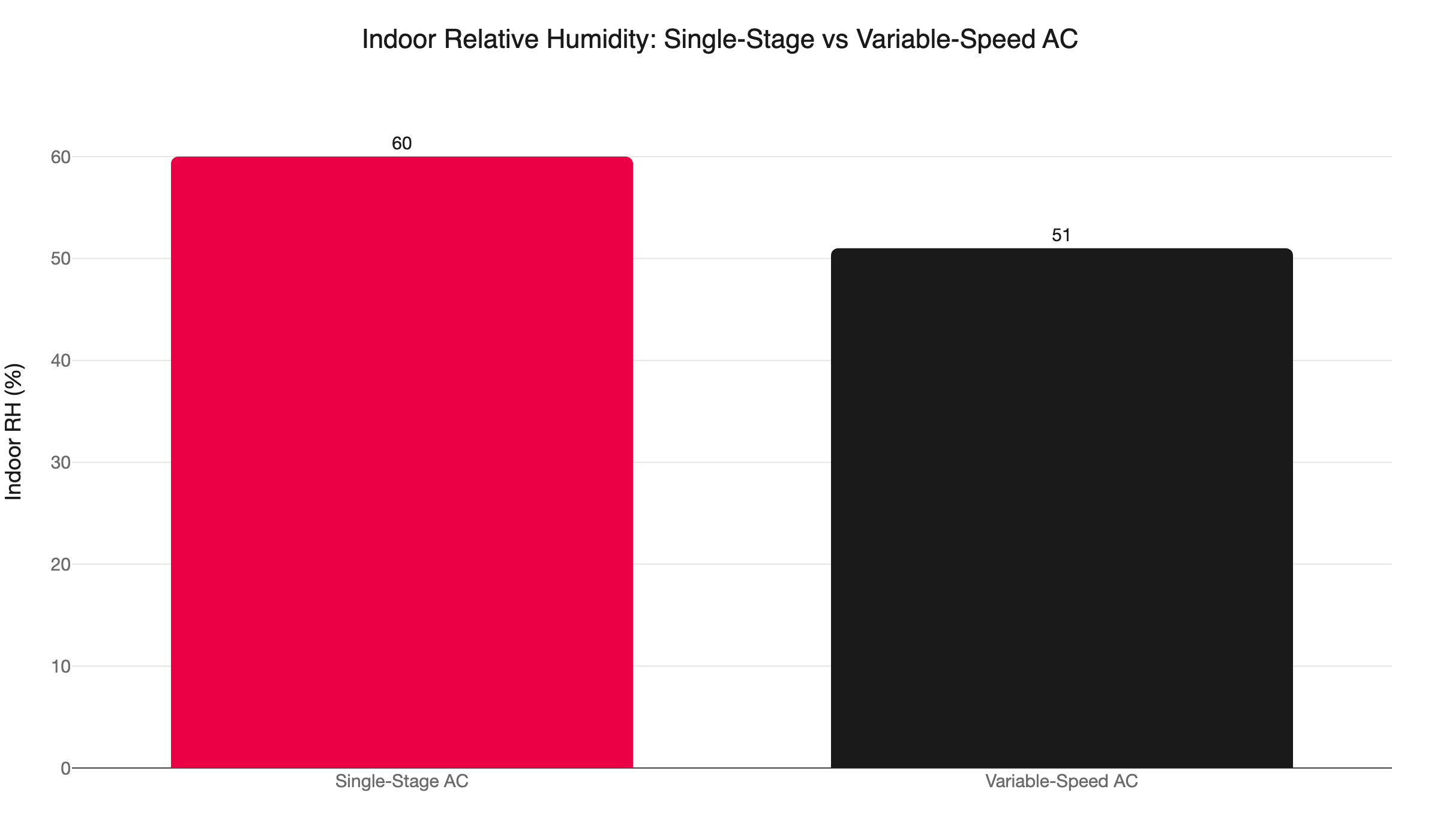
Indoor Relative Humidity: Single-Stage vs Variable-Speed AC
## What Is a Variable Speed Air Conditioner vs Single Stage?
**A single-stage AC runs at one speed: full capacity. It fires up, hits the set temperature, and shuts off. A variable-speed system modulates its compressor from roughly 30 to 100 percent of total output, running longer at lower capacity. That difference in run behavior is what determines whether your home feels dry and comfortable or clammy and sticky during a Minnesota summer.**
A single-stage system's approach is blunt. When the thermostat calls for cooling, the compressor fires at 100 percent. It cools the air fast. Once the set temperature is reached, it stops completely. The cycle repeats every time the temperature climbs back up.
A variable-speed compressor modulates continuously. On a 75-degree day with moderate humidity, it might run at 40 percent capacity for two or three hours. On a 95-degree day with a dew point in the high 60s, it ramps toward full output. The system uses the minimum capacity needed to maintain conditions, running longer and slower rather than hard and fast.
The result is more consistent temperatures, less cycling noise, and, most importantly for Twin Cities homeowners, far better moisture removal from indoor air.
Minnesota homeowners often ask whether the extra upfront cost of variable speed is justified given our shorter cooling season. The energy-savings payback is real but compressed here. The more immediate return is comfort: specifically, whether your home stays below the mold threshold on humid July afternoons.
## Why Minnesota Summers Are the Real Test
Energy savings are the standard pitch for variable-speed equipment. Fewer short cycles, more consistent operation, and lower electricity draw during long partial-load runs. That argument holds up.
But it is not the most compelling reason for a Twin Cities homeowner.
Our cooling season runs 10 to 14 weeks. Phoenix homeowners run air conditioning for seven or eight months. A shorter season compresses the energy-savings payback timeline. What does not compress is the nature of our summer humidity.
[NWS Twin Cities climate records](https://www.weather.gov/mpx/climate) show dew points regularly reaching 65 to 70 degrees during peak summer weeks. That is tropical moisture loading. During those periods, your AC is not just removing heat. It is dehumidifying every breath of air cycling through your home, managing moisture from cooking, showers, open doors, and everyone living there.
The peak weeks in a typical Twin Cities summer run from late June through mid-August. During afternoon dew-point events, outdoor air at 85 degrees can feel suffocating. Your AC runs in that air all day. A single-stage system cycling hard in those conditions builds a dehumidification deficit it never fully closes.
Minnesota homes also work against you here. We build for winter. Well-insulated walls, tight vapor barriers, sealed windows: those features keep January heating bills manageable. They also trap summer moisture once it gets in. A system that cannot continuously pull humidity out of the air lets indoor relative humidity climb for hours between cycles, even when the temperature reads a comfortable 72 degrees.
This is the context that makes the variable speed air conditioner vs single stage comparison particularly worth understanding in our climate. In the Sun Belt, the case is primarily about electricity costs. In the Twin Cities, the case is primarily about whether your home stays below the mold threshold on humid summer afternoons.
## How Does Short-Cycling Destroy Humidity Control?
**An AC evaporator coil removes moisture the same way a cold glass sweats on a hot day: warm, humid air passes over a cold surface and water condenses out. The coil has to be cold, and air has to stay in contact with it long enough, for that to happen at scale. A single-stage system that cycles on and off every 10 to 15 minutes never gives the coil that sustained run time. Moisture passes through largely uncondensed, and your home stays clammy even after the temperature drops to the set point.**
Here is the sequence with a single-stage unit. The thermostat calls for cooling. The compressor fires at 100 percent. Cold air floods the house quickly. The set temperature is reached, sometimes in under 10 minutes during a mild call. The system shuts off. The coil begins to warm. The temperature climbs again. The cycle repeats.
During that short run, the coil does some dehumidification. But it does not do as much as it would during a 40-minute variable-speed run at lower output. High-speed airflow reduces the time each parcel of moist air spends in contact with the cold coil surface. Less contact time means less condensation.
[Research on single-stage AC performance during Minnesota high-humidity events](https://bwsheatingandair.com/blog/why-your-minnesota-ac-is-struggling-in-high-humidity/) documents this directly: oversized or single-stage systems cool air quickly but shut off before adequately removing moisture. The problem compounds in well-insulated Minnesota homes, where the temperature drops faster than indoor humidity can follow.
The physics favors variable speed. A system running at 55 percent capacity for 45 minutes moves more total air across the coil at sustained cold temperatures than a system cycling hard and fast over the same period. More contact time equals more condensation. More condensation equals lower indoor relative humidity.
Common signs that your single-stage system is losing the humidity battle include condensation on interior windows during summer, a persistent sticky feeling indoors even at a comfortable temperature setting, and musty odors in [finished basements](/blog/basement-humidity-control-summer-minnesota/) or carpeted rooms. That last one is particularly telling. It often means your home is sitting at or above the mold threshold for extended periods each day.
## Variable Speed Air Conditioner vs Single Stage: The Indoor RH Data
The humidity argument is not theoretical. Measured data from real installations and peer-reviewed research both show a consistent gap between the two system types.
A real-world case study replacing a single-stage system with a fully communicating variable-speed setup recorded [indoor relative humidity of 58-62% with the single-stage system in place](https://philip.greenspun.com/blog/2023/10/17/single-stage-versus-variable-speed-air-conditioning-dehumidification-performance/). After the full variable-speed replacement, measured RH dropped into a noticeably more comfortable range. The case study also confirmed the mismatched-upgrade problem: swapping only the condenser to variable speed while keeping the old air handler produced results much closer to the all-single-stage baseline.
Peer-reviewed research confirms the scale of that gap. A [ScienceDirect study comparing variable-speed and single-speed cooling](https://www.sciencedirect.com/science/article/pii/S235248471931265X) measured indoor RH of 50-52% in variable-speed mode and 55-60% with standard single-speed operation. That is a 5-to-8 percentage-point difference.
Those numbers look modest until you consider where the mold threshold sits. At 60% indoor RH, mold spores can establish and dust mite populations thrive. A single-stage system in a humid Minnesota July routinely pushes homes into that zone between cooling cycles. A variable-speed system running the same thermal load keeps the house at 50-53%, which is the ASHRAE target for indoor comfort.
The temperature on your thermostat looks identical in both scenarios. The air feels completely different.
For homeowners already dealing with summer clamminess and weighing whether an equipment upgrade or a dedicated appliance makes more sense, our guide to [whole-home dehumidifiers for the Twin Cities](/blog/whole-home-dehumidifiers-in-the-twin-cities-comfort-fix-for-sticky-summer-days/) covers the complementary approach of standalone dehumidification.
## Does the Whole System Need to Be Variable Speed?
**Yes. Replacing only the outdoor condenser with a variable-speed unit and keeping the existing air handler will not deliver the humidity benefit. Both components must be variable-speed and communicating, meaning they exchange real-time data and coordinate their output together. A mismatched system runs the air handler at a fixed blower speed regardless of what the compressor is doing, and that eliminates the dehumidification advantage entirely.**
This is the most common misunderstanding our team encounters when homeowners research the variable speed air conditioner vs single stage decision.
The reason both components matter comes down to airflow coordination. A fully communicating variable-speed system matches [blower speed](/blog/variable-speed-blower-motor-furnace-benefits-minnesota/) to compressor output. When the compressor runs at 50 percent, the blower slows proportionally. Slower airflow across the evaporator coil means each parcel of air spends more time in contact with the cold surface. More contact time means more water condensed out. That is the humidity mechanism.
When you pair a variable-speed condenser with a legacy air handler, the air handler does not receive the coordination signal. It runs at its preset fixed speed. The compressor may be modulating, but the blower is still moving air at the same rate it always has. Contact time stays short. The dehumidification advantage largely disappears.
[Installation data from the same variable-speed case study](https://philip.greenspun.com/blog/2023/10/17/single-stage-versus-variable-speed-air-conditioning-dehumidification-performance/) confirms this: the variable-speed condenser paired with a single-stage air handler produced humidity results much closer to an all-single-stage system than to a true fully communicating variable-speed setup. The meaningful RH improvement came only with full equipment replacement.
If you have an older air handler and are considering upgrading just the outdoor condenser, bring that question to the consultation before you invest. We will give you a straight answer on whether a partial upgrade makes economic sense for your specific equipment age and condition.
## What Minnesota Rebates Are Available for Variable-Speed AC?
**Xcel Energy offers up to $400 for qualifying central air conditioners ([minimum 13.4 SEER2](/blog/seer2-rating-explained-ac-efficiency-minnesota/) in the northern climate zone). Minneapolis homeowners can stack a city bonus of up to $1,000. The IRS Section 25C credit covers up to $600 (30% of installed cost, $600 cap) for central AC meeting the CEE highest efficiency tier. These stack, and together they meaningfully close the cost gap between single-stage and variable-speed equipment.**
Here is each incentive in detail:
**Xcel Energy rebate:** [Up to $400 for qualifying central air conditioners](https://www.xcelenergy.com/staticfiles/xe-responsive/Working%20With%20Us/24-1-201%20MN%20Res%20Rebate%20Summary%20Information%20Sheet.pdf) at minimum 13.4 SEER2 in the northern climate zone. Xcel customers should verify current tier amounts and equipment qualification before purchasing, as program terms update periodically. Heat pump rebates run up to $2,000 for qualifying cold-climate ASHPs, which makes a heat pump comparison worth running at the same time.
**City of Minneapolis bonus:** [Up to $1,000 for qualifying equipment for all Minneapolis residents](https://www.mnashp.org/incentives-rates-financing), with up to $5,000 available in designated Green Zones. Equipment must meet Xcel Energy's efficiency specification tiers to qualify.
**IRS Section 25C credit:** Up to $600 (30% of installed cost, $600 cap) for central air conditioners meeting the CEE highest efficiency tier. The credit appears active for qualifying installs as of the most recent IRS update. Consult a tax professional to confirm 2026 eligibility and equipment qualification before purchasing. Note: the heat pump tier of this credit ended December 31, 2025.
For a full breakdown of how these incentives work together across equipment types, see our [guide to Xcel and CenterPoint HVAC rebates in Minnesota](/blog/xcel-centerpoint-hvac-rebates-minnesota/).
The stacking math is specific to your address and equipment selection. A $1,950-to-$2,000 upfront cost difference between single-stage and variable-speed equipment looks considerably different after $1,000 to $2,000 in combined rebates and credits. We walk through the numbers with you before any installation.
## Is Variable Speed Worth the Extra Cost in Minnesota?
**For most Twin Cities homeowners who experience summer humidity problems, yes. The return in Minnesota is primarily comfort, not just the monthly electric bill. A shorter cooling season limits electricity-savings payback compared to warmer climates, but 10 to 14 weeks of noticeably drier, more breathable indoor air is a real and immediate benefit.**
Variable-speed equipment costs more upfront. The gap depends on brand, efficiency tier, and installation specifics. A realistic range is $1,000 to $3,000 more than comparable single-stage equipment before rebates. After available incentives, that gap narrows, sometimes significantly.
Energy savings are real even in our shorter season. A variable-speed system running at partial capacity draws meaningfully less electricity per hour than a single-stage unit cycling hard. Whether the bill savings alone close the upfront gap depends on your home's size, usage patterns, and current electricity rates. For many households, they do not cover it fully in the first two or three years.
The more consistent value driver is what you stop spending because the system does the full job. If you run a [portable dehumidifier](/blog/portable-vs-whole-home-dehumidifier-minnesota/) from June through August to compensate for what your AC is not handling, variable speed addresses the root cause directly. A portable unit costs $300 to $600 to buy and adds to your electric bill every month it runs. That cost disappears when your AC controls humidity the way it should.
Variable speed also runs quieter. Less on-off cycling means fewer compressor startups, which are the loudest moments in any AC's operation. The blower running at reduced speeds is quieter too. If your current system is audible from the living room every time it kicks on, you will notice the difference immediately.
Air quality improves as a secondary benefit as well. A system running longer at lower speeds pushes more air through your filter over the course of a day, capturing more dust, pollen, and pet dander per cooling cycle.
For context on what a full AC replacement costs in this market, see our [AC replacement cost guide for Minnesota](/blog/ac-replacement-cost-minnesota/).
Sizing is also part of this conversation. An [oversized single-stage system](/blog/oversized-ac-problems-twin-cities/) short-cycles more aggressively than a properly sized one, compounding every humidity problem described above. If your current system was not sized using a Manual J load calculation, there is a reasonable chance it is already too large for your home. Ask us about that in your consultation.
## Ready to Schedule a Variable-Speed AC Consultation?
Northern One Hour Heating and Air Conditioning is locally owned and operated in Ramsey, MN. We serve Minneapolis, St. Paul, Maple Grove, Blaine, Plymouth, Brooklyn Park, Woodbury, Bloomington, and the surrounding Twin Cities area.
Our team sizes every system using a Manual J load calculation. We walk you through equipment options, rebate availability specific to your address, and what a full communicating variable-speed replacement would look like for your home. We do not recommend an upgrade without putting the numbers in front of you first.
We back every installation with a 100% satisfaction guarantee. And we show up when we say we will: "Always On Time… Or You Don't Pay a Dime!(R)"
Call **(763) 260-6662** or [schedule your consultation online](/air-conditioning/ac-installation/) to get started. If you are also weighing a cold-climate heat pump against a variable-speed AC, we can run through that comparison in the same visit.
---
# Furnace Making Banging Noise? Five Sounds, Five Root Causes
URL: https://northernonehour.com/blog/furnace-banging-popping-squealing-noise-what-it-means-minnesota/
Published: 2026-08-13 | Category: Heating
Startup boom, running knock, metal scrape - each furnace noise points to a different root cause. Learn which sounds to act on now vs. which can wait.
Key Takeaways
- A startup boom means delayed ignition. Dirty burners let gas accumulate before lighting. Call the same day.
- Metal scraping while the furnace runs means shut it off now. A loose blower wheel can crack the heat exchanger.
- A continuous running knock points to worn blower motor bearings. It will escalate quickly if ignored.
- A high-pitched squeal signals dry bearings or a worn belt. Schedule service before it turns into a grind.
- Pops and creaks during heat-up or cooldown are usually harmless ductwork expansion. In Minnesota, they are louder than in mild climates because of extreme cold-start temperature swings.
- Any persistent startup bang on a furnace older than 15 years warrants a heat exchanger inspection.
- A cracked heat exchanger can leak carbon monoxide into your living space. Working CO detectors are non-negotiable.
- 2026 rebates from CenterPoint, Xcel, and the federal 25C program can meaningfully reduce the cost if replacement turns out to be the right call.
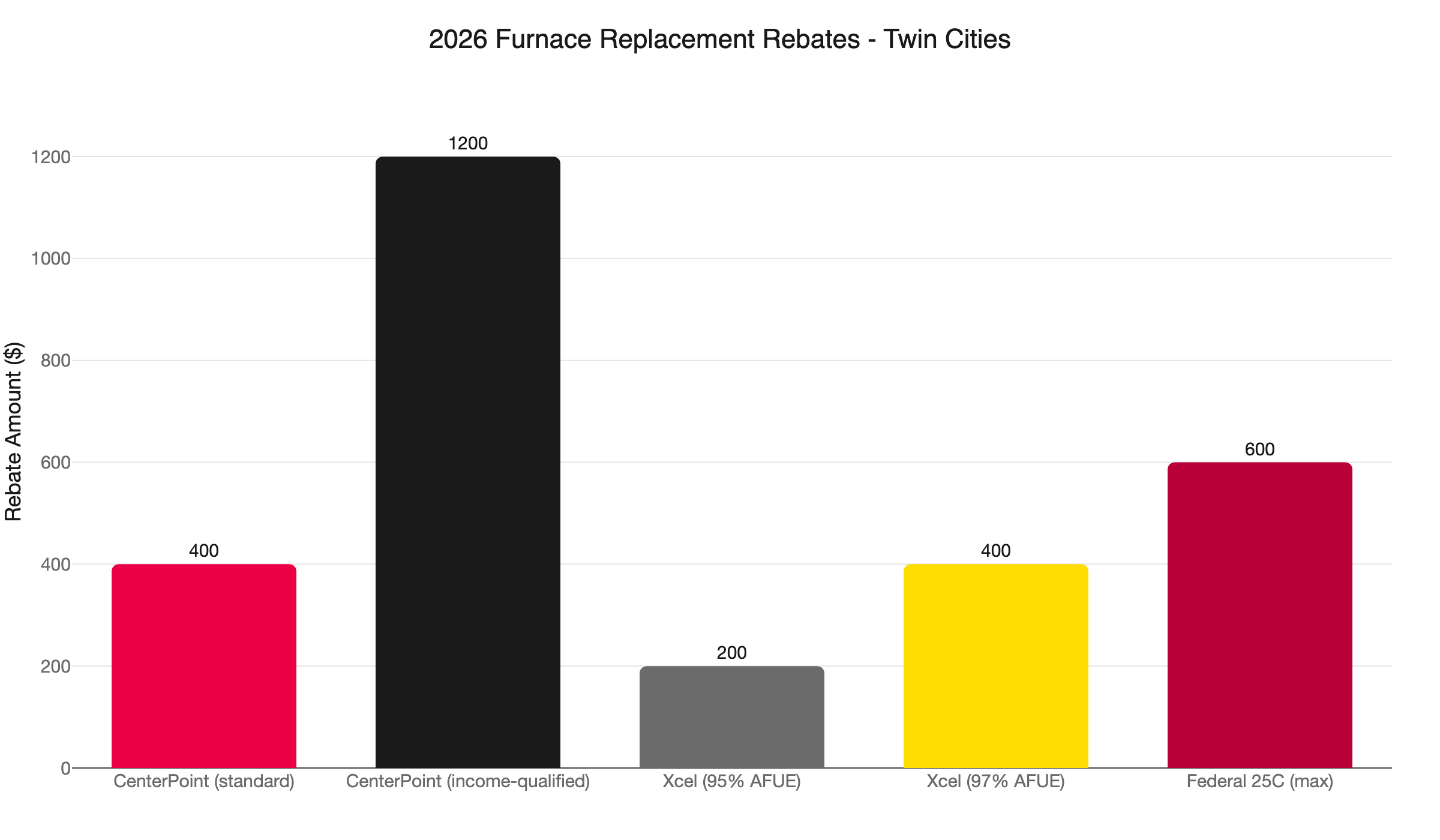
2026 Furnace Replacement Rebates - Twin Cities
## Is Your Furnace Making a Banging Noise?
When your furnace is making a banging noise, the specific sound matters more than the volume. A startup boom is not the same as a running knock. A metal scrape is not the same as an expansion creak. Each sound maps to a different root cause, a different part, and a different level of urgency.
Treating them all as one problem is how homeowners end up ignoring a shut-it-down situation or panicking over normal ductwork.
This guide covers five distinct furnace sounds. For each one, you get the root cause, the urgency level, and exactly what to do next.
## Sound 1: What Causes a Banging Noise When Your Furnace Starts Up?
**Delayed ignition. Dirty burners let gas build up before catching. When ignition finally happens, the accumulated gas fires all at once. The result is a boom. It is a gas safety risk and a heat exchanger threat. Call the same day.**
This is the most common cause of a furnace making banging noise, and the one that deserves the most urgency.
Here is how it works. Your furnace opens the gas valve and waits for the burners to light. When the burners are coated with dust, dirt, or buildup, ignition takes longer. Gas keeps flowing while the system waits. When the burners finally catch, they ignite not just the current gas flow but the accumulated backlog. That is the boom.
**Why this is more than a noise problem:**
Repeated startup booms put thermal stress on the heat exchanger. The heat exchanger separates combustion gases from the air moving through your home. A crack in it creates a path for carbon monoxide to enter your living space. [Heat exchangers are designed to last 15 to 20 years](https://heatexchangerexperts.com/the-dangers-of-a-cracked-heat-exchanger-carbon-monoxide-and-beyond/), but repeated ignition stress shortens that lifespan.
[ENERGY STAR's maintenance checklist](https://www.energystar.gov/saveathome/heating-cooling/maintenance-checklist) includes inspecting the starting cycle for correct startup, operation, and shutoff. That check is specifically designed to catch dirty burners and ignition timing problems before they cause damage.
**What to do:**
Call for service the same day. A technician will clean the burners, check ignition timing, and inspect the heat exchanger for cracks. If you also smell gas after the boom, turn off the furnace, leave the house, and call your gas company first.
Do not wait for a tune-up appointment two weeks out. Delayed ignition is a gas safety issue. Our post on [cracked heat exchanger signs in Minnesota](/blog/cracked-heat-exchanger-signs-minnesota/) explains what the follow-on risk looks like and what signs to watch for.
## Sound 2: Metal Scrape or Grind - Should You Shut the Furnace Off?
**Yes. Turn it off now. Metal scraping while the furnace runs means the blower wheel has shifted and is hitting the housing. If a fan blade breaks free, it can crack the heat exchanger wall. Shut off at the thermostat and call for service.**
This is the most urgent sound on this list, and the one most articles underplay. They mention scraping and say "call a technician." They do not explain the mechanism. Here is why the urgency is higher than everything else.
The blower wheel spins at high speed inside a housing. When the mounting comes loose, the wheel shifts toward the housing wall. The blade tips drag against metal. That contact wears the blades down and can snap one off entirely. A broken blade fragment, traveling at blower speed, can punch through the thin metal wall of the heat exchanger.
What started as a mechanical problem becomes a carbon monoxide risk. What might have been a $375 repair becomes a $1,950 heat exchanger job, or full unit condemnation if the damage is severe enough.
**What to do:**
Turn off the furnace at the thermostat. If there is a service shutoff switch or disconnect near the unit, use that too. Do not restart the furnace until a technician has cleared it.
Call Northern One Hour at (763) 260-6662. We are locally owned and operated in Ramsey, Minnesota, and we take same-day calls seriously when safety is involved. Our post on [carbon monoxide safety during furnace season](/blog/carbon-monoxide-safety-furnace-season/) covers what to watch for after an event like this.
## Sound 3: Furnace Making a Banging Noise While Running - What Does a Running Knock Mean?
**Worn blower motor bearings or an out-of-balance blower wheel. The knocking happens while the furnace runs, not just at startup. It will get worse fast. Schedule service within a few days.**
A continuous running knock is a different problem from a startup boom. The boom is a gas event. The running knock is mechanical.
Two things cause this sound. First, blower wheels accumulate dirt on their fins over time. When one side collects more debris than the other, the wheel goes out of balance. An unbalanced wheel wobbles and knocks as it spins. Second, the ball bearings inside the blower motor wear over time. Worn bearings let the shaft wobble, which produces the same knocking or rattling sound.
**What happens if you ignore it:**
Knocking escalates to grinding. Grinding means metal-on-metal contact without lubrication. At that point, the motor fails. A dead blower motor stops your furnace from moving heat through your home entirely. Letting it fail completely can also stress adjacent components and shorten their lifespan.
**What to do:**
Schedule service within the next few days. This is not a shut-it-off-now emergency the way scraping is, but it is not a wait-until-spring situation either. A technician can lubricate the bearings, rebalance the wheel, or replace the motor if it is too worn to service.
[The DOE recommends a professional furnace inspection each fall](https://www.energy.gov/sites/default/files/2021-08/ES-HomeHeatingandCooling_081221.pdf), noting that maintenance can reduce heating costs by 10% or more and extend equipment life. Annual inspections are designed to catch worn bearings before they produce a knock.
## Sound 4: High-Pitched Squeal or Whine
A squeal that starts during normal operation usually means one of two things: dry shaft bearings in the blower motor, or a worn belt on older belt-drive blower systems.
Dry bearings squeal before they grind. A belt that has stretched or cracked will slip and whine as the motor drives it. Either way, the sound means something is wearing out. It is not failing yet, but it is heading that way.
**Urgency level:** Schedule service soon. This is not a shut-it-off emergency, but letting it go will turn a minor repair into a major one.
**What to do:**
Call to book a service appointment. Mention the squeal when you call so the technician brings the right parts. If you are not already on a regular maintenance schedule, ask about it when you call. Annual maintenance is the most cost-effective way to catch these wear indicators before they become emergency calls in the middle of a Minnesota winter.
## Is a Pop or Creak During Heat-Up Normal?
**Usually yes. A pop or creak right as the furnace starts moving warm air, or just as the system shuts down, is typically [ductwork expanding and contracting](/blog/ductwork-ticking-popping-noise-thermal-expansion-minnesota/). It is generally harmless. Note it if the sound gets noticeably louder from one season to the next.**
Your duct system is a network of sheet metal. When the furnace fires and hot air enters those ducts, the metal expands. When the system shuts off and the ducts cool, the metal contracts. Both movements produce pops and creaks, mostly in the first minute of a heating cycle and again at shutdown.
**When expansion noise is not just expansion noise:**
Ductwork pops worsen with undersized or poorly supported duct runs. If your ducts were not sized correctly during installation, the movement is more dramatic. Loose hangers or missing supports make it worse. Duct leaks also affect how the system pressurizes and can amplify these sounds.
If the pops are getting louder season over season, or if you hear them mid-cycle rather than just at startup and shutdown, have a technician take a look.
**The Minnesota factor:**
At -20 degrees Fahrenheit, ductwork thermal shock is more extreme than in any mild climate. Your ducts go from near-zero to well above 100 degrees in seconds when the furnace fires. Pops are louder and more frequent here than the same system would produce in a warmer state.
The timing clue helps: expansion pops happen in the first 30 to 60 seconds of a heating cycle. A delayed ignition boom is a single sharp event at the exact moment the burners try to light. If the bang is followed immediately by the sound of normal operation, it was probably expansion. If it is sharp and isolated right at the start of the cycle, it is more likely ignition.
## What Does a Cracked Heat Exchanger Have to Do with Carbon Monoxide?
**Everything. The heat exchanger keeps combustion gases separate from the air your family breathes. A crack lets those gases cross over. Carbon monoxide is colorless and odorless. You will not smell it. A furnace making banging noise at startup is a reason to get the heat exchanger inspected now, not just the burners.**
[A cracked heat exchanger can leak carbon monoxide, and CO poisoning accounts for more than 20,000 emergency room visits per year in the United States](https://heatexchangerexperts.com/the-dangers-of-a-cracked-heat-exchanger-carbon-monoxide-and-beyond/). One visible warning sign is a flame that burns yellow or orange instead of a steady blue. CO detectors may not alarm until dangerous concentrations build. Do not rely on detectors alone if you know your heat exchanger is at risk.
Exchangers are designed to last 15 to 20 years. Dirty filters restrict airflow and cause overheating, which shortens that lifespan. Repeated ignition booms cause thermal shock. Physical damage from a loose blower can crack or puncture the metal wall.
If your furnace is older than 15 years and you are hearing startup booms, ask your technician to specifically inspect the heat exchanger. The cost of that inspection is small. The cost of ignoring a crack is not.
For the visual signs to watch for before a technician arrives, see our post on [cracked heat exchanger signs in Minnesota](/blog/cracked-heat-exchanger-signs-minnesota/).
## Why Minnesota Winters Make Furnace Sounds Harder to Diagnose
Minnesota homeowners [hear more from their furnaces](/blog/hvac-sound-ratings-quiet-systems-twin-cities/) than homeowners in mild climates. That is not paranoia. It is physics.
When your furnace fires up after a night that dropped to -20 degrees outside and 62 degrees inside, every piece of metal in the system expands rapidly. Ducts, cabinets, heat exchanger cells, and flue pipes all move. The result is a series of pops and bangs during the first minutes of a heating cycle that would not happen to the same system in a warmer climate.
This creates a real diagnostic problem. A thermal expansion pop sounds different from an ignition boom in a controlled setting. At 6 a.m. in January, when you are half awake and the furnace just made a loud noise, the distinction is not obvious.
**Use timing as your guide:**
A thermal expansion pop happens during the first 30 to 60 seconds of a heating cycle as metal warms and air starts flowing. A delayed ignition boom is a single sharp event at the exact moment the burners try to light. If the bang is followed immediately by normal operation, it was probably expansion. If it is sharp and isolated right at the start of the cycle, treat it as a possible ignition event.
When you are genuinely unsure, call us. It is better to have a technician tell you it was just ductwork than to let a burner problem run through an entire Minnesota winter.
[The DOE's furnace maintenance guidance](https://www.energy.gov/energysaver/articles/simple-maintenance-saves-costly-furnace-repairreplacement) includes combustion chamber inspection for cracks and a combustion efficiency test as standard parts of annual service. Both checks help professionals accurately separate thermal noise from combustion problems.
## Should You Repair or Replace If the Sound Points to Something Big?
**It depends on the furnace's age and the scope of the repair. A blower motor on a furnace under 10 years old is almost always a clear repair. A cracked heat exchanger on a furnace over 15 years old is often a clear replace. The math in between requires a technician's assessment.**
If the diagnosis points to a cracked heat exchanger or a major blower failure on an aging system, replacement deserves a serious look. A new 95%+ AFUE furnace qualifies for meaningful rebates in 2026.
**What is available in the Twin Cities:**
- CenterPoint Energy: up to $400 for a 95%+ AFUE gas furnace; up to $1,200 for income-qualified households
- Xcel Energy: $200 for 95% AFUE; up to $400 for 97% AFUE
- Federal 25C tax credit: 30% of qualifying equipment cost, [up to $600 for furnaces](https://allprohvacminneapolis.com/how-to-claim-every-centerpoint-and-xcel-energy-rebate-for-your-new-hvac-system/)
Stacking two or three of those programs can bring the out-of-pocket cost down considerably.
One more item to know: furnace replacement requires a mechanical permit in virtually all Minnesota jurisdictions [under state law](https://minnesotahvacauthority.com/minnesota-hvac-permits-and-inspections). Permits typically run $95 to $250 and are pulled by your licensed contractor. We handle that paperwork as part of every installation. You should not have to manage it.
For a full breakdown of costs and the repair-vs.-replace decision, see our post on [furnace replacement cost in the Twin Cities](/blog/furnace-replacement-cost-twin-cities/). If the upfront cost is a concern, ask about financing when you call.
## Get It Diagnosed Today
A furnace making banging noise is not something to wait out through the next cold snap. Some of these sounds mean your heating system is one cycle away from a much larger problem or a safety issue.
Northern One Hour is locally owned and operated in Ramsey, Minnesota. We serve the Twin Cities, including Minneapolis, St. Paul, Blaine, Maple Grove, Plymouth, Brooklyn Park, Woodbury, and Bloomington. Our team shows up when we say we will. "Always On Time… Or You Don't Pay a Dime!(R)"
Call **(763) 260-6662** or [book your furnace repair](/heating/heating-equipment/furnaces/furnace-repair/) online today.
---
# Furnace Igniter Not Working: Igniter or Flame Sensor?
URL: https://northernonehour.com/blog/furnace-igniter-failure-signs-replacement-cost-minnesota/
Published: 2026-08-13 | Category: Heating
Furnace igniter not working? It might be the flame sensor. Learn to tell the difference, what cleaning vs. replacement costs in Minnesota, and when to call.
Key Takeaways
- **Igniter failure:** The furnace starts its sequence, no orange glow appears through the inspection window, and gas never lights.
- **Flame sensor failure:** The furnace fires and produces a visible flame, then shuts off within 5-30 seconds.
- A dirty flame sensor can often be cleaned for $0 in parts. A failed igniter must always be replaced.
- Igniter replacement costs $100-$250 in the Twin Cities. Flame sensor repair runs $80-$250, but cleaning brings that down to labor-only.
- No mechanical permit is required for either repair in Minnesota. A licensed contractor is still required for any gas appliance work.
- If your furnace is 7 or more years old, replacing both parts on one visit is usually the smarter choice.
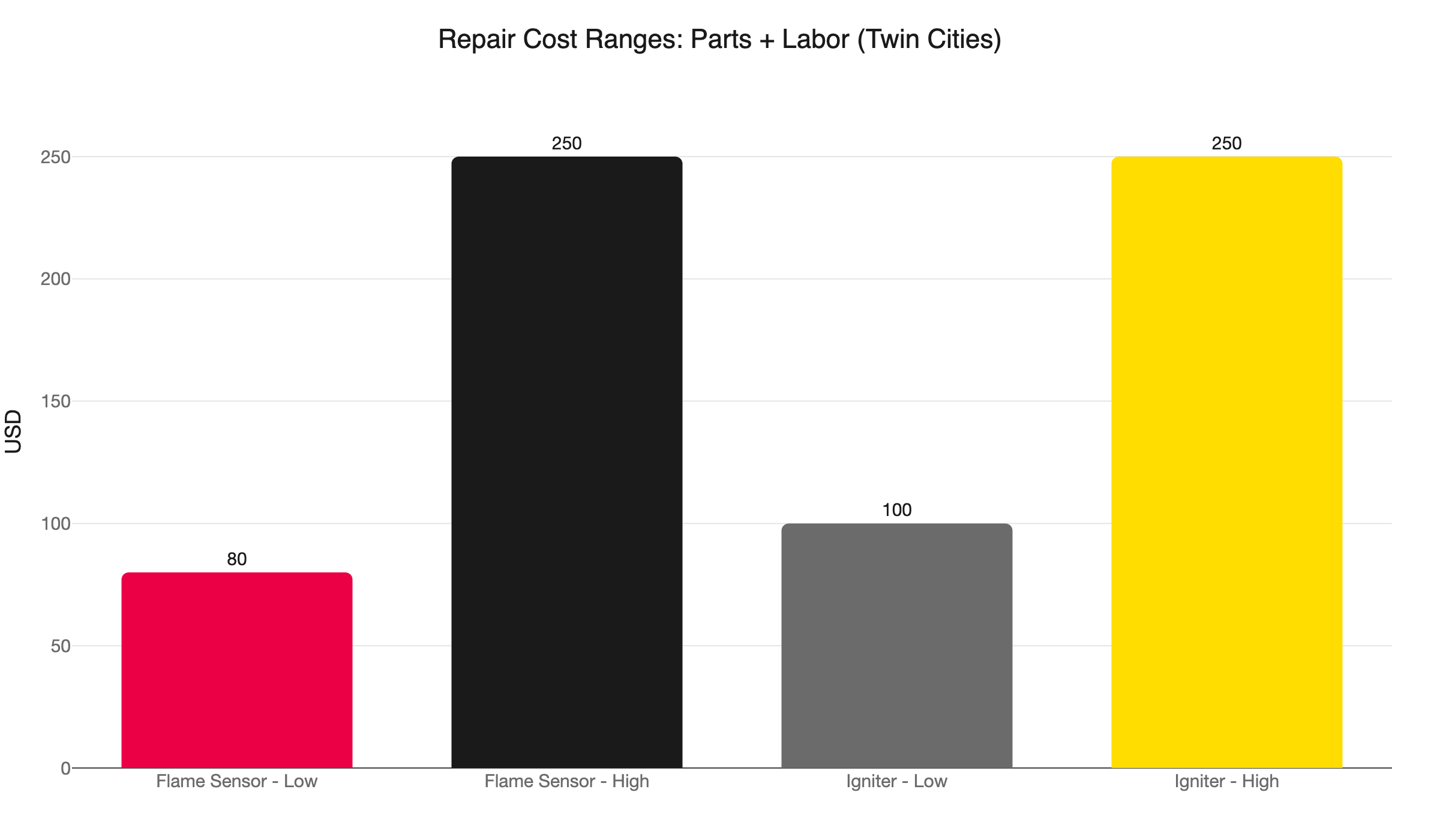
Repair Cost Ranges: Parts + Labor (Twin Cities)
It is 9 p.m. on a January night in the Twin Cities. The wind chill is -10°F. Your thermostat clicked, the furnace started its cycle, and then nothing happened. No warm air. Or worse: the furnace fired, you felt one brief moment of relief, and then it shut off 30 seconds later. It tried again. Same result. After three attempts, the control board locked out and the house started cooling.
If you searched "furnace igniter not working," the igniter may not actually be the problem. A dirty or failing flame sensor produces nearly identical symptoms and is often the cheaper fix. These two parts sit at opposite ends of the burner assembly. They fail in different ways, and the symptoms are different enough to tell apart if you know what to look for. This guide separates the two failure patterns, explains what each repair involves, and gives you honest cost ranges for both in Minnesota.
## How the Ignition Sequence Works
Understanding the sequence makes it easier to pinpoint where the failure is happening.
When your thermostat calls for heat, the draft inducer motor spins up first. It pulls combustion gases out of the heat exchanger and through the flue. A pressure switch confirms airflow is present. Then the hot surface igniter energizes and heats over 15-30 seconds. If you look through the small glass inspection window on the front of the furnace cabinet during startup, you should see an orange glow coming from the burner area. That glow means the igniter is working.
Once the igniter reaches temperature, the gas valve opens. The burners light. The flame sensor steps in next. It sits directly in the burner flame path and reads the tiny electrical current that a live flame generates. That current, measured in microamps, signals the control board: combustion is confirmed, keep the gas valve open. The blower motor starts, and warm air moves through your ducts.
Every step in that chain depends on the one before it. [A cracked or burned-out igniter stops the sequence before gas ever reaches the burners: no glow, no gas, no flame, no heat](https://furnace.direct/blogs/news/furnace-ignitor-guide-hot-surface-ignitor-failure-replacement-minnesota). A dirty or failed flame sensor stops the sequence after ignition: the flame lights, the sensor fails to confirm combustion, and the gas valve closes within seconds.
## What Is a Hot Surface Igniter?
**A hot surface igniter is the electric element that heats to between 1,800 and 2,500°F to ignite your furnace's gas burners. It sits at one end of the burner rack, must be replaced as a unit when it fails, and cannot be cleaned back to life.**
The igniter does not produce a spark. It glows, like a thick resistor passing high current through a ceramic element. Most homeowners who look through the inspection window during startup see an orange-to-white glow and assume the furnace is operating normally. If that glow never appears during the ignition phase, the igniter is the first suspect.
Furnaces built before roughly 2010 typically use silicon carbide (SiC) igniters. These are dark gray, narrow, and brittle. Skin oil from bare hands can cause a hairline fracture that only shows up during the next thermal cycle. Newer furnaces use silicon nitride (Si3N4) igniters, which are cream or tan colored and more resistant to handling and repeated temperature cycling.
[Silicon carbide igniters last roughly 3-7 years under normal operating conditions](https://furnace.direct/blogs/news/furnace-ignitor-guide-hot-surface-ignitor-failure-replacement-minnesota). For a Twin Cities home running the furnace from October through April, that range translates to 3-4 full heating seasons before the first failure becomes plausible. The seven-month Minnesota heating season puts more annual cycles on a furnace than most other U.S. markets. Silicon nitride elements last longer, but they are not indefinite.
## What Is a Flame Sensor, and Where Does It Sit?
**A flame sensor is a thin metal rod with a porcelain base, positioned directly in the burner flame path at the opposite end of the burner rack from the igniter. Its job is to confirm combustion is present after the gas valve opens.**
The rod connects to the control board through a single wire lead. When a flame is burning, the rod conducts a tiny electrical current back to the board. The board reads that signal, confirms combustion, and keeps the gas valve open. The current involved is measured in microamps, far smaller than most components in the furnace handle. The sensor does not need to be powerful. It needs to be clean.
Carbon deposits and oxidation build up on the rod over time, especially in furnaces that have not been serviced in a year or more. A coated rod cannot conduct the confirmation signal at sufficient strength. [The control board cannot tell the difference between "no flame" and "dirty sensor,"](https://hvacseer.com/flame-sensor-vs-ignitor/) so it shuts the gas off as if combustion failed entirely. The furnace attempts the cycle again, fails again, and locks out after several tries.
This is the failure pattern that most often gets misidentified as an igniter problem.
## Is It the Igniter or the Flame Sensor? How to Tell
**Watch the burner inspection window during a startup attempt. If the furnace cycles but no glow and no flame appear, suspect the igniter. If the furnace lights and then dies within 5-30 seconds, suspect the flame sensor.**
This is the question the top search results for "furnace igniter not working" consistently fail to answer. Here is the diagnostic fork.
**Pattern 1: Furnace runs its cycle, no flame appears**
Find the small glass inspection window on the front of the furnace cabinet. Start a heating cycle and watch the burner area during the ignition phase. If you see no orange glow, the igniter is almost certainly failed or cracked. Without confirmed igniter temperature, [the gas valve stays closed](/blog/furnace-gas-valve-failure-symptoms-replacement-cost-minnesota/). No gas means no flame. [The control board logs an ignition-failure error and locks out after 1-3 failed attempts](https://furnace.direct/blogs/news/furnace-ignitor-guide-hot-surface-ignitor-failure-replacement-minnesota). Match the blinking LED pattern on your control board to the codes in our [furnace error codes guide](/blog/furnace-error-codes-blinking-light-guide/) to confirm the fault.
**Pattern 2: Furnace lights, then shuts off**
If you see a flame appear, then watch the furnace die 5-30 seconds later, the igniter did its job. The problem is downstream. [The flame sensor is failing to send a valid confirmation signal to the control board,](https://hvacseer.com/flame-sensor-vs-ignitor/) so the board cuts the gas as a safety measure. The furnace may attempt this 1-3 more times before locking out. This is not an igniter problem. It is a flame sensor problem.
This same short-cycling symptom appears in several scenarios. Our guide to [furnace short cycling causes and fixes](/blog/furnace-short-cycling-causes-fixes/) walks through the full list.
## Can You Clean a Flame Sensor Instead of Replacing It?
**Yes. A flame sensor coated with carbon or oxidation can often be cleaned with fine emery cloth or steel wool. The cleaning restores conductivity to the rod and costs nothing in parts.**
Here is the general procedure, for reference:
1. Turn off power to the furnace at the breaker or service disconnect switch.
2. Remove the combustion access panel from the furnace cabinet.
3. Locate the flame sensor. It is the thin metal rod positioned in the burner flame path with a single wire connector.
4. Remove the one mounting screw and disconnect the wire.
5. Lightly abrade the metal rod with fine emery cloth or steel wool. Work only on the rod itself, not the porcelain insulator. Remove visible gray or white oxidation.
6. Reinstall the sensor, reconnect the wire, and restore power. Test a full heating cycle.
[This cleaning step is standard practice for both homeowners and technicians when short-cycling points to a dirty sensor](https://hvacseer.com/flame-sensor-vs-ignitor/). If you are not comfortable working near a gas appliance with the power off, skip ahead and call a technician directly.
If cleaning restores normal operation, note the root cause: carbon accumulates faster on furnaces that are overdue for service. A clean sensor on a neglected furnace will need cleaning again before the heating season ends. Annual maintenance visits include flame sensor inspection and cleaning as a standard step. Our post on [cleaning a furnace flame sensor in Minnesota and what it costs](/blog/furnace-flame-sensor-dirty-clean-cost-minnesota/) covers the full service in more detail.
## What Does It Cost to Repair a Flame Sensor in Minnesota?
**Flame sensor repair runs $80-$250 in the Twin Cities for parts and labor combined. The part itself costs $7-$30. If cleaning solves the problem, you pay for labor only, not parts.**
[National repair data places flame sensor replacement at $80-$250 total](https://azparts.com/post/how-much-does-it-cost-to-replace-the-flame-sensor). In the Minneapolis-St. Paul metro, licensed HVAC technicians bill $90-$150 per hour. A flame sensor cleaning or replacement is typically completed within the first hour of a service call, keeping the total toward the lower end of the range when the diagnosis is clean.
Ask when booking whether the diagnostic fee is credited against the repair cost if work is performed on the same visit. Most reputable Twin Cities HVAC companies apply it that way.
## What Does Igniter Replacement Cost in Minnesota?
**Igniter replacement runs $100-$250 in the Twin Cities for parts and labor. The part itself costs $15-$100, depending on whether a universal igniter fits your furnace model or you need an OEM-matched part.**
[National averages place igniter replacement at $100-$250 total](https://homeguide.com/costs/furnace-ignitor-replacement-cost), with labor making up the larger share. A universal silicon nitride igniter typically costs $15-$35. An OEM part matched to your furnace brand and model can run $20-$100 or more. Twin Cities labor rates fall toward the higher end of national ranges.
One practical consideration: if your furnace still uses a silicon carbide igniter, ask the technician whether a silicon nitride replacement is compatible with your control board and gas valve timing. It often is, and Si3N4 elements handle the physical installation process much better than the fragile SiC design. Swapping to the newer type on the same service call is a reasonable upgrade when both igniters are the same voltage.
## What Kills an Igniter Early?
**A clogged air filter is the leading cause of premature igniter failure. Restricted airflow forces the furnace to overheat on every heating cycle, and repeated thermal stress cracks the igniter element years ahead of its expected lifespan.**
[Dirty filters cause the furnace to run hotter than it was designed for, and that accumulated overheating puts structural stress on the igniter](https://filterbuy.com/resources/furnaces/furnace-knowledge/furnace-ignitor-replacement-signs-costs-diy-tips/). If you are scheduling an igniter replacement and the filter has not been changed in more than 60-90 days, change it before the technician arrives. A new igniter installed in a heat-stressed furnace will fail early for the same reason the original one did.
Our guide on [how often to change your HVAC filter in Minnesota](/blog/how-often-to-change-hvac-filter-minnesota/) covers recommended replacement intervals by filter type and heating season intensity.
## Do You Need a Permit for This Repair in Minnesota?
**No. Replacing a hot surface igniter or flame sensor does not require a mechanical permit in Minnesota. Both are component-level repairs within the existing furnace cabinet, not equipment replacements or gas line modifications.**
[Minnesota requires a mechanical permit only when replacing the furnace unit itself, modifying venting, or disconnecting and reconnecting gas piping](https://minnesotahvacauthority.com/minnesota-hvac-permits-and-inspections). Swapping a part inside the existing furnace cabinet does not trigger that requirement.
What is still required, regardless of permit status: the technician must hold a valid Minnesota mechanical contractor license under MN Statutes Chapter 326B. All work on gas appliance components must be performed by a licensed contractor. A licensed HVAC company handles this automatically. Using an unlicensed technician for a gas appliance repair can create coverage issues with homeowner's insurance and leaves the work uninspectable by the jurisdiction.
Northern One Hour is locally owned and operated out of Ramsey, Minnesota. Every technician carries the required Minnesota licensure. You do not have to ask.
## Should You Replace Both Parts on the Same Visit?
**If your furnace is 7 or more years old, yes. The parts are inexpensive, and the labor is already paid for. If one part has reached end of life, the other has accumulated the same number of heating cycles.**
When a technician is already in your home, the furnace is already open, and the diagnostic fee is already applied, adding the second part costs $7-$100 in materials. The alternative is waiting until the second part fails, which means another service call, another diagnostic fee, and another cold-weather interruption. In January in Minnesota, that is not a hypothetical inconvenience.
Most experienced HVAC technicians in the Twin Cities recommend replacing both parts together when the furnace is past the 7-year mark. By that point, both the igniter and the flame sensor have run through the same number of ignition cycles and the same number of Minnesota winters. One failure is a signal that the other is approaching the same threshold.
If your furnace is close to 15-20 years old, the conversation shifts from parts to system replacement. Our guide to [when to replace your furnace and AC in the Twin Cities](/blog/best-time-to-replace-furnace-and-ac-twin-cities/) covers the repair-vs.-replace calculus in detail.
## Get Your Furnace Running Again Today
A furnace igniter not working on a Minnesota winter night is not a problem to put off until morning. Northern One Hour is locally owned and operated in the Twin Cities, and we back every service visit with our on-time guarantee: "Always On Time… Or You Don't Pay a Dime!(R)"
Call **(763) 260-6662** or [schedule your furnace repair online](/heating/heating-equipment/furnaces/furnace-repair/). We will diagnose the igniter, the flame sensor, or whatever else is keeping your heat off, and get it fixed right. Same-day service is available.
---
# Heat Pump Balance Point Minnesota: Get the Crossover Right
URL: https://northernonehour.com/blog/heat-pump-balance-point-backup-heat-minnesota/
Published: 2026-08-13 | Category: Heating
What is the heat pump balance point in Minnesota, how to set the dual-fuel switchover correctly, and what getting it wrong costs you over a winter.
Key Takeaways
- The **capacity balance point** is the outdoor temperature at which your heat pump can no longer cover your home's heat loss on its own. Below it, backup heat must assist.
- The **economic balance point** is a separate number: the outdoor temperature at which your backup fuel (gas or propane) costs less per BTU than running the heat pump.
- Old single-stage heat pumps had balance points of 30-35°F, so backup heat ran through most of a Minnesota winter. Modern cold-climate inverter units push that threshold down to 5°F or lower.
- Setting the switchover too high forces [backup heat to run](/blog/heat-pump-auxiliary-heat-strips-operating-cost-minnesota/) at temperatures the heat pump could have handled at two to three times the efficiency.
- Xcel Energy customers can qualify for a reduced electric space-heating rate. That rate shifts the economic balance point lower - meaning the pump should run deeper into the cold than many contractors currently set it.
- Available rebates as of mid-2026: Xcel Energy up to $2,000 (plus $600 insulation bonus), Minneapolis up to $5,000 in designated Green Zones, and CenterPoint stacking rebates for dual-fuel systems.
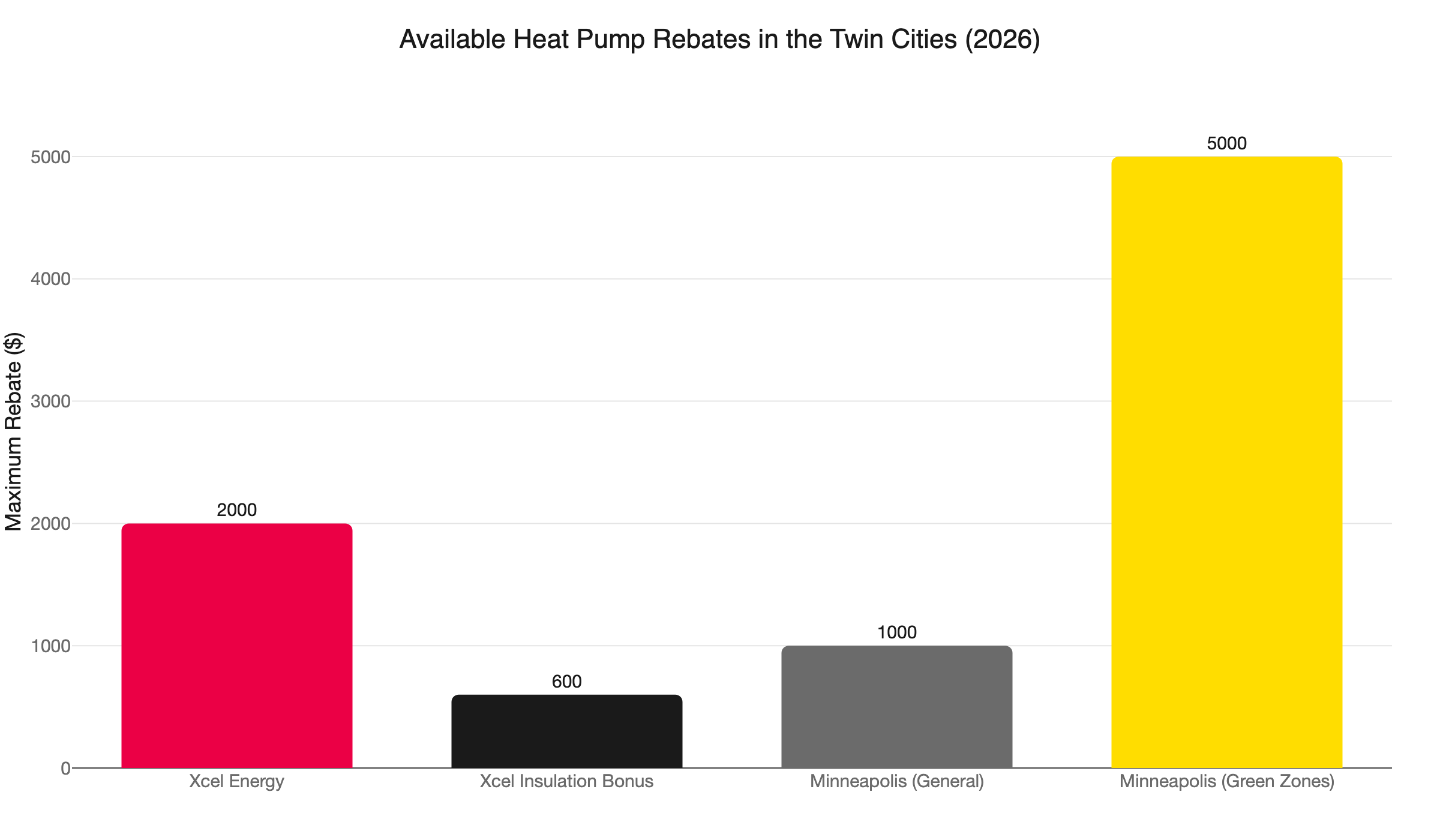
Available Heat Pump Rebates in the Twin Cities (2026)
## What Is the Heat Pump Balance Point, and Why Does It Matter in Minnesota?
**The heat pump balance point is the outdoor temperature at which your heat pump's output exactly meets your home's heat loss rate.** Above it, the pump handles everything. Below it, backup heat must step in. In Minnesota, where temperatures regularly drop into the single digits, getting this number right has a direct impact on [your heating bill](/blog/heat-pump-electric-bill-spike-winter-minnesota/).
Most homeowners hear "balance point" once, during a system install, and never think about it again. That's understandable. But the switchover temperature is not a passive factory setting you accept and move on from. It's a calculated number - one that should be specific to your equipment, your home, and your current utility rates.
Here's what most sales conversations leave out. There are actually two balance points, and they usually sit at different temperatures. One is about what the equipment can physically do. The other is about what makes financial sense at current energy prices. Understanding both changes how you evaluate any [dual-fuel system installation](/blog/dual-fuel-heat-pump-gas-furnace-hybrid-minnesota/) in Minnesota.
## Does a Heat Pump Have One Balance Point or Two?
**Two - and they often disagree. The capacity balance point is set by physics: what can the equipment do at this temperature? The economic balance point is set by your utility rates: what fuel is cheaper per BTU right now? For natural gas customers, the economic balance point is often higher than the capacity balance point.**
The [MN Air Source Heat Pump Collaborative defines both concepts clearly](https://www.mnashp.org/10-key-terms-know-about-heat-pumps). The capacity balance point is where your pump's heating output curve and your home's heat loss curve intersect. It's determined by the equipment you have and how tight your building envelope is. You can't override it by adjusting a dial.
The economic balance point works differently. It shifts with energy prices. For natural gas customers, there is often a temperature range where the heat pump is still physically capable of heating the house, but natural gas is cheaper per BTU than the electricity needed to run the pump. At those temperatures, switching to gas saves money.
Propane customers see a different picture. Propane costs enough that running the heat pump longer almost always wins on cost per BTU. The capacity and economic balance points tend to converge for propane users. This matters at installation. A contractor who uses the same switchover default for a natural gas home and a propane home is almost certainly wrong for at least one of them. The fuels are priced differently, and the calculation should reflect that.
## Why Did Old Heat Pumps Struggle in Minnesota Winters?
**They lost capacity quickly as temperatures fell. Old [single-stage heat pumps](/blog/how-heat-pump-staging-works-minnesota/) had balance points around 30-35°F, so backup heat ran from early November through late March. That history is why heat pumps earned a [bad reputation in cold climates](/blog/heat-pump-blowing-cool-air-heat-mode-minnesota/) - but the technology has changed significantly.**
Modern cold-climate inverter-driven heat pumps push the balance point down to [5°F or even -5°F](https://www.mnashp.org/10-key-terms-know-about-heat-pumps). Top-rated units [maintain rated capacity down to 5°F and continue producing heat at -13°F or lower](https://www.carrier.com/us/en/residential/hvac-resources/heat-pumps/cold-climate-heat-pump/) before backup fully takes over. Eight major manufacturers are now [committed to DOE's Residential Cold Climate Heat Pump Challenge](https://www.energy.gov/cmei/buildings/residential-cold-climate-heat-pump-challenge), targeting reliable operation at -22°F.
A [properly sized cold-climate air source heat pump can cover 100% of a home's heating needs down to 0°F](https://www.mnashp.org/10-key-terms-know-about-heat-pumps), which accounts for roughly 90% of all heating hours in a Minnesota winter. The backup system exists for the brutal outlier days - not for routine cold-weather operation.
One caveat worth knowing before you shop. Real-world Minnesota performance sometimes runs below lab-rated efficiency numbers. The Minnesota Center for Energy and the Environment measured field performance of a 12.5 HSPF heat pump across several Minnesota installations and found actual efficiency roughly 30% below the rated figure - equivalent to about HSPF 9. Rated numbers are measured under controlled conditions that don't fully represent Minnesota cold. This doesn't disqualify cold-climate heat pumps as a choice for this climate. It means sizing and switchover settings should account for real field performance, not just the specification sheet.
## What Temperature Should Your Contractor Set the Switchover?
**For most natural gas dual-fuel systems in typical Twin Cities homes, a switchover in the 20-25°F range is worth discussing - lower than most factory defaults. For propane dual-fuel systems, the number should be lower still. The right answer depends on your specific equipment and your actual utility rates.**
Dual-fuel systems use an outdoor sensor to monitor temperature and trigger the transition to backup heat. Most [come factory-preset between 25-40°F](https://www.mnashp.org/10-key-terms-know-about-heat-pumps). Those defaults were calibrated when balance points of 30°F were standard. A modern cold-climate inverter unit can operate efficiently well below those thresholds - and leaving the factory preset in place means the furnace takes over at temperatures the heat pump could have handled for a fraction of the cost.
If your contractor installs a cold-climate unit and walks away with the preset at 35°F, your gas furnace is activating on every night below that temperature. In Minnesota, that covers a substantial portion of the heating season.
Three questions worth asking at installation:
- What is this unit's rated heating capacity at 5°F and at 17°F?
- What is my home's calculated heat loss rate at the design temperature?
- At what outdoor temperature does my backup fuel become cheaper per BTU than electricity at my current rate?
A contractor who can answer all three with confidence is doing the job correctly. If the answer is "we just leave it at the default," that's a gap worth closing before the first cold snap.
## What Lowers the Balance Point in Your Home?
**Insulation and air sealing. The better your home's thermal envelope, the less heat your system has to replace at any outdoor temperature. That directly pushes the capacity balance point lower and reduces how often backup heat activates.**
This is the principle building-science professionals have been making for years, and it applies directly to a typical 1970s Twin Cities ranch house. [Reducing a home's heating load through air sealing and insulation drops the capacity balance point on the same heat pump](https://www.greenbuildingadvisor.com/article/heat-pump-balance-point-building-enclosure). The pump can cover the home's heating needs at colder outdoor temperatures because there's less heat loss to overcome.
In a very tight, well-insulated home, [the outdoor temperature at which the heating system even needs to activate can drop from around 65°F to 55°F](https://www.greenbuildingadvisor.com/article/heat-pump-balance-point-building-enclosure). A home with R-40 walls, R-50 ceiling, and triple-pane windows - documented in a Minnesota case study by Energy Vanguard - ran through a full Minnesota winter with almost no backup heat activation. That's an exceptional home, not a typical one. But the principle scales down to everyday houses.
For the average Twin Cities home built in the 1970s, with original insulation and 2x4 wall cavities, the balance point will sit higher than it would in a newer, tighter building. This has a practical consequence. Addressing attic insulation or air sealing before installing a heat pump isn't just about energy savings. It directly lowers the temperature at which backup heat kicks in - making the heat pump system more effective every winter.
For a closer look at how envelope work connects to system performance, our guide to [attic insulation, ventilation, and HVAC bills in the Twin Cities](/blog/attic-insulation-ventilation-hvac-bills-ice-dams-twin-cities/) covers the relationship in detail.
## How Does the Xcel Reduced Heating Rate Change the Math?
**It shifts the economic balance point lower. When electricity costs less per BTU than the standard rate, the outdoor temperature at which natural gas becomes the cheaper option shifts downward. Your heat pump should run deeper into the cold than it would under standard pricing - and many contractors don't adjust the switchover to reflect this.**
Xcel Energy customers who use a qualifying heat pump as their primary heat source can apply for a reduced electric space-heating rate. This stacks on top of [Xcel's rebate of up to $2,000 for a qualifying cold-climate heat pump](https://mn.my.xcelenergy.com/s/residential/heating-cooling/heat-pumps) and the $600 bonus available when qualifying insulation or air-sealing work is completed first.
The reduced rate is a detail many homeowners and some contractors miss. If the economic balance point was calculated at standard electric rates and you later enrolled in the reduced rate, your switchover setting may now be set higher than it should be. That's worth a follow-up call to your HVAC contractor.
There is also a layering opportunity. [CenterPoint Energy offers stacking rebates through their Home Service Plus program for dual-fuel systems](https://www.centerpointenergy.com/en-us/residential/services/home-service-plus/learning-center/how-to/do-heat-pumps-work-in-minnesota?sa=mn), with Daikin featured as one option. Combining Xcel equipment rebates with CenterPoint stacking rebates, then adding Minneapolis city incentives for eligible homeowners, can meaningfully reduce the installed cost of a new dual-fuel system.
## What Does a Mis-Set Switchover Actually Cost?
**Every degree you set the switchover above the true economic balance point is a degree at which you're burning a more expensive fuel instead of running a heat pump at two to three times the efficiency. Across a full Minnesota heating season, that difference is not small.**
Consider what a typical winter looks like. Minnesota delivers many nights in the 15°F to 35°F range. Weeks at a time. That's exactly the zone where a mis-set switchover does its most consistent damage. If your switchover is set at 35°F and your cold-climate unit is capable of running efficiently down to 5°F, your furnace is activating every night below that threshold - instead of the heat pump doing the work at a fraction of the fuel cost.
At 20°F outdoors, a modern cold-climate heat pump is still delivering more BTUs of heat than BTUs of electricity it consumes. A high-efficiency gas furnace converts its fuel at 96% efficiency. On standard electric rates, gas can win at that temperature. On Xcel's reduced heating rate, the heat pump often wins. The right answer depends on current prices - not a setting chosen at install and never revisited.
The inverse error is also real. Set the switchover too far below the economic balance point for your home and your utility rates, and the heat pump works hard in conditions where gas would be the cheaper choice. Neither extreme is free.
This is why the switchover temperature belongs on a maintenance checklist - reviewed at installation, and revisited whenever utility rates shift meaningfully. It's not a set-it-and-forget-it number.
For a deeper look at how cold-climate heat pumps perform when temperatures really drop, our post on [heat pump performance below zero in Minnesota](/blog/heat-pump-below-zero-performance-minnesota/) covers the specifics.
## What Rebates Are Available Right Now?
**As of mid-2026, Xcel Energy and the City of Minneapolis offer the most meaningful available incentives. CenterPoint has stacking options for dual-fuel systems. The federal HEAR program has not launched in Minnesota yet. The 25C tax credit expired at the end of 2025.**
Here is the current breakdown:
**Xcel Energy:** Up to $2,000 for a qualifying cold-climate heat pump. An additional $600 bonus is available if you complete qualifying insulation or air-sealing work before installation. Customers using the pump as primary heat can apply for the reduced electric space-heating rate. See [Xcel's heat pump rebate page](https://mn.my.xcelenergy.com/s/residential/heating-cooling/heat-pumps) for current eligibility requirements.
**CenterPoint Energy:** Stacking rebates through the Home Service Plus program for dual-fuel systems. See [CenterPoint's dual-fuel resource page](https://www.centerpointenergy.com/en-us/residential/services/home-service-plus/learning-center/how-to/do-heat-pumps-work-in-minnesota?sa=mn) for current amounts.
**City of Minneapolis:** Up to $1,000 for all Minneapolis residents. Up to $5,000 for homes in designated Green Zones. Check directly with the city for zone boundaries and current program availability.
**Federal HEAR program:** Not yet active in Minnesota as of June 2026. The state is waiting on formal DOE approval with no estimated launch date. The program would offer up to $8,000 for households below 80% of area median income and up to $4,000 for households between 80-150% AMI. Track current status at [mn.gov's heat pump program page](https://mn.gov/commerce/energy/consumer/energy-programs/heat-pump.jsp).
**25C federal tax credit:** Expired December 31, 2025. Not currently available.
For a full current breakdown, including how to layer these programs, see our guide to [Minnesota heat pump rebates and tax credits](/blog/minnesota-heat-pump-rebates-tax-credits/).
## Ready to Have Your Heat Pump Balance Point Set Correctly?
The balance point is not a factory setting you leave alone and hope for the best. It's a calculated number - specific to your equipment's capacity curve, your home's heat loss rate, and your current utility pricing. Getting it right at installation saves money starting the first winter. Revisiting it when rates or home conditions change saves more.
Our team at Northern One Hour Heating & Air Conditioning is locally owned and operated in Ramsey, MN. We have served Twin Cities homeowners long enough to know that a dual-fuel system running with the wrong crossover costs real money, season after season. We've seen systems running gas at 25°F that had no business doing so. We've also seen heat pumps cranking away at temperatures where gas would have been the smarter choice.
The goal isn't a preset. The goal is a setting that reflects how your system actually performs in a Minnesota winter - with your home, your utility rates, and your comfort requirements.
We back every job with honest, transparent pricing, a 100% satisfaction guarantee, and our commitment to showing up when we say we will: "Always On Time… Or You Don't Pay a Dime!(R)"
Call **(763) 260-6662** or [schedule service online](/heat-pumps/) to talk with a technician who understands how these systems perform in real Minnesota conditions.
---
# What Temperature to Leave Your House in Winter in Minnesota
URL: https://northernonehour.com/blog/what-temperature-set-thermostat-minnesota-winter-vacation/
Published: 2026-08-13 | Category: HVAC
Minnesota's 55°F rule is your insurer's floor, not a pipe-safety target. Here's the safe winter setpoint range for Twin Cities homeowners.
Key Takeaways
- Keep your thermostat at 60°F or higher when your home is empty for more than a day or two during a Minnesota winter.
- 55°F is your insurance policy's minimum, not a safe pipe-protection target in a -16°F design climate.
- Pipes in exterior walls, under kitchen cabinets, and in crawlspaces can be 10-20°F colder than your thermostat reading.
- Dropping from 68°F to 60°F saves approximately 11-12% on your monthly heating bill. The difference between 60°F and 55°F is about $4-6 per month, not the significant savings most homeowners assume.
- Heat pump owners should hold a steady setpoint. Large setbacks trigger expensive auxiliary or emergency heat and wipe out savings.
- Both Xcel Energy and CenterPoint Energy offer $50 rebates on ENERGY STAR smart thermostats for Minnesota residential customers.
- If you're leaving for two or more weeks in January or February, consider shutting off the main water supply and draining the supply lines entirely.
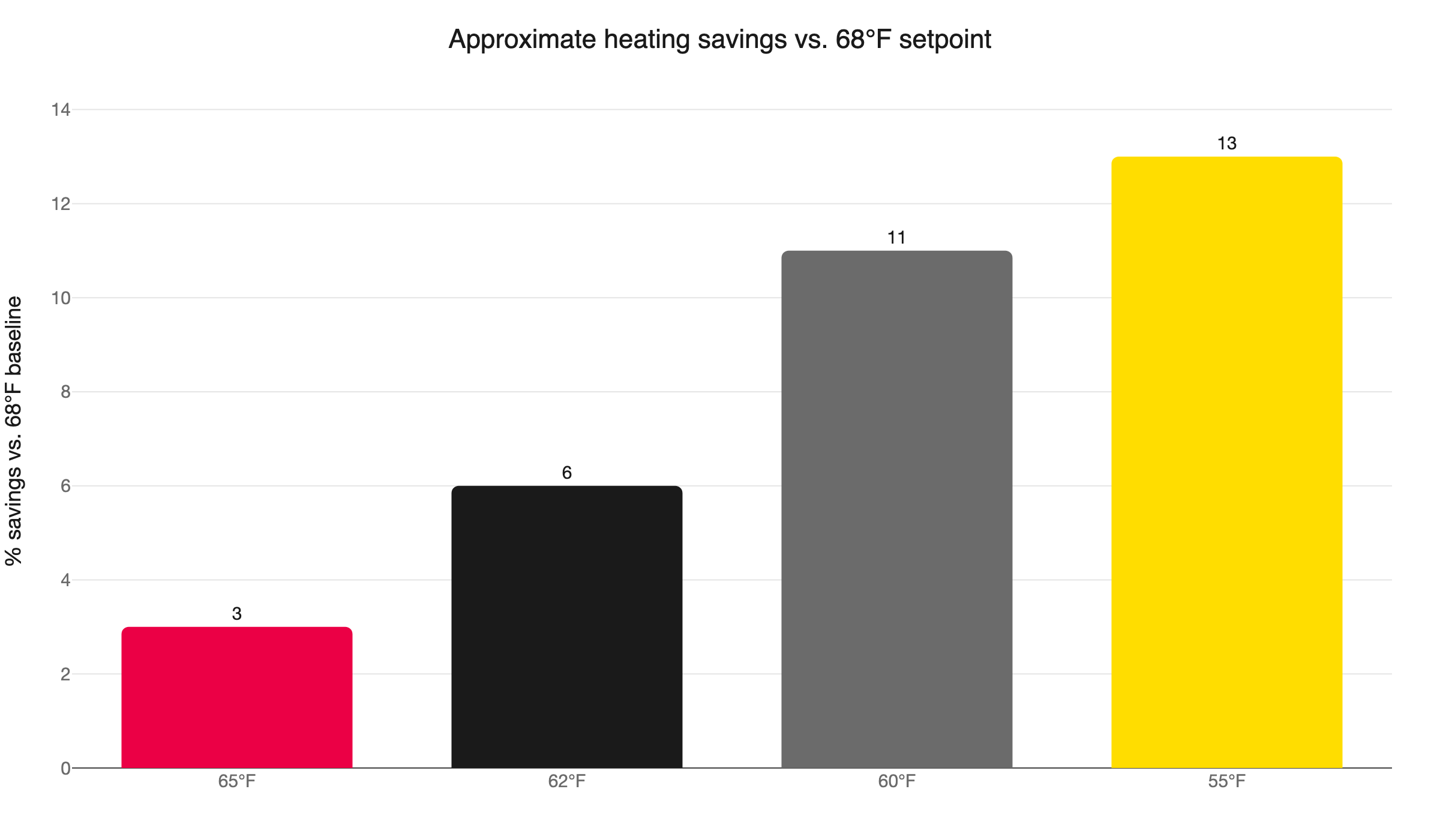
Approximate heating savings vs. 68°F setpoint
## The 55°F Rule Has a Minnesota Problem
The question of what temperature to leave your house in winter in Minnesota comes up every fall, and the internet has a fast, confident answer: 55-60°F. That range isn't entirely wrong. But it comes from homeowners insurance policy language, not from the physics of what happens to a pipe in an exterior wall when it's -10°F outside and the air in that wall cavity is heading south.
In the Twin Cities, 55°F is the floor your insurer requires. Drop below it and a frozen pipe claim can be denied outright. That makes 55°F important to know. It does not make 55°F the right target for a Minnesota home during an extended absence or a polar vortex.
This guide covers the actual safe setpoint range for vacant Twin Cities homes, what you realistically save by dialing back the heat, and what to do before you leave for a multi-week February trip. The short version: 60°F, not 55°F. The rest of this post explains why.
## What temperature should you leave your house in winter in Minnesota?
**Set it to at least 60°F.** That's the right answer for most Twin Cities homes during any absence longer than a day or two. The 60°F setpoint gives your pipes a real buffer. At 55°F, you're right at the insurance floor with no margin for the temperature gap between your thermostat and your most exposed pipes.
Minneapolis has an ASHRAE 99% winter design temperature of -16°F, which places it among the most extreme heating climates in the continental United States. That figure means your heating system was engineered to hold indoor temperatures when outdoor conditions reach -16°F. At that outdoor temperature and a 55°F indoor setpoint, your furnace is fighting a 71-degree difference. A brief equipment failure - [a tripped breaker](/blog/power-outage-furnace-heat-what-to-do-minnesota/), a clogged filter, a flame sensor fault - drops interior temperatures quickly. The Twin Cities averages 22 days per year below zero. Those are not rare outliers. They are a reliable feature of every Minnesota winter.
For homes built before 1980, with less wall insulation and more air infiltration around windows and rim joists, 62-65°F is a more conservative target during polar vortex conditions. Older homes lose heat faster and have more pathways for cold air to reach pipes in exterior wall cavities.
## Why is 55°F the number everyone recommends?
**Because it is the threshold homeowners insurance policies require.** Below 55°F, most insurers can deny a frozen pipe claim on the grounds the home wasn't adequately heated. Knowing that number protects your coverage. Treating it as the optimal setpoint is a different thing.
[Most homeowners insurance policies](https://www.citizensallianceagency.com/post/agent-s-brief-don-t-let-the-minnesota-cold-freeze-your-coverage) set 55°F as the minimum required temperature for a vacant home during the heating season. If your home drops below that and a pipe bursts, your insurer can decline the claim. So 55°F is the lower boundary you must stay above to keep your coverage intact.
State Farm processed [more than 20,000 frozen pipe claims totaling $628 million in losses](https://www.citizensallianceagency.com/post/agent-s-brief-don-t-let-the-minnesota-cold-freeze-your-coverage) between 2024 and June 2025. A meaningful share of those homes almost certainly maintained 55°F. Meeting the insurance floor keeps your claim technically valid. It does not guarantee the coldest pipe in your house stayed above 32°F during a February cold snap.
Setting your home to exactly 55°F puts you right at the boundary where your coverage disappears if anything goes wrong. In a Minnesota winter, that is not where you want to operate.
## Does your thermostat reading actually protect every pipe in the house?
**No.** Your thermostat measures one point in [one conditioned room](/blog/thermostat-location-placement-hvac-accuracy-minnesota/). Pipes in exterior walls, beneath kitchen sink cabinets, in crawlspaces, and in runs near garage walls can be significantly colder than the air your thermostat reads.
[Pipes freeze at 32°F, but burst risk increases sharply when outdoor temperatures stay at or below 20°F](https://prontoheat.com/fight-the-freeze-how-to-avoid-frozen-pipes-in-minnesota-this-winter/) for an extended stretch. The real hazard isn't a brief plunge overnight. It's a three-day polar vortex that gives cold air time to work into building cavities.
Here is a specific example. A kitchen sink on an exterior wall has supply pipes running through the cabinet space. That space is exposed to air infiltrating through the rim joist, sill plate, and gaps in the wall insulation. The cavity temperature there can be 10-20°F colder than the living room thermostat. During a multi-day cold snap, that pipe can approach 35-38°F even when the thermostat reads 55°F.
The same vulnerability applies to:
- Bathroom vanities on exterior walls
- Any pipe running through an unheated crawlspace
- Utility sinks in partially conditioned basements
- Supply lines near the shared wall of an attached garage
- Pipes in rooms with damaged or missing vapor barriers
That 15-20°F gap is exactly why 60°F is the target, not 55°F. The extra 5 degrees provides a cushion that accounts for the temperature lag between your thermostat and your most exposed pipes. If you notice uneven temperatures across your home even when you're present, see our guide on [cold spots and warm rooms in winter](/blog/cold-spots-and-warm-rooms-why-uneven-temperatures-hit-hardest-in-december/).
## Is a daily setback the same as leaving the house empty for a week?
**No. They are different situations.** A daily overnight or workday setback lasts 8 hours, then the furnace recovers the house to the daytime setpoint. An extended absence means the house sits at the setback temperature continuously, with no one present to notice if the furnace stumbles.
For a daily 8-hour setback:
- Setting back 7-10°F overnight or during work hours saves roughly 10% annually on heating costs.
- Pipes never sit at a low setpoint long enough to get close to freeze territory.
- The furnace recovers the house to a comfortable temperature in 30-60 minutes each morning.
For an extended absence of several days or more:
- The house runs at the setback temperature around the clock.
- Any equipment failure goes undetected until someone checks.
- Cold air infiltration has days, not hours, to cool exterior wall cavities.
- The 60°F minimum applies here because continuous exposure changes the risk calculation entirely.
[Standard setback savings advice](/blog/thermostat-setback-savings-real-numbers-minnesota/) is accurate. It is based on 8-hour cycles. An empty house for a week in January is a different physics problem, and 55°F doesn't give you enough margin when the furnace must hold that temperature continuously through multiple nights at or below zero.
## How much does turning down the heat actually save in a Minnesota winter?
**About 1% per degree per day of setback,** per the [U.S. Department of Energy](https://www.energy.gov/energysaver/articles/turn-down-temperature-dont-let-your-pipes-freeze). Dropping from 68°F to 60°F saves roughly 11-12% on [your heating bill](/blog/gas-fireplace-insert-zone-heating-hvac-savings-minnesota/). The jump from 60°F to 55°F adds only a few more percentage points. The marginal savings do not justify the added risk in a Minnesota January.
Here is what those savings look like on a $200 monthly heating bill:
- 65°F setpoint: saves roughly $6/month
- 62°F setpoint: saves roughly $12/month
- 60°F setpoint: saves roughly $22-24/month
- 55°F setpoint: saves roughly $26-28/month
The difference between holding 60°F and 55°F is $4-6 per month. [A burst pipe](/blog/frozen-pipes-hvac-failure-risk-minnesota/) and the resulting water damage - soaked drywall, [ruined hardwood](/blog/low-humidity-hardwood-floors-winter-minnesota/), warped cabinetry - can reach $10,000 to $20,000. That's before you count your deductible or the time managing repairs from out of state. The math is not close.
One more detail specific to Minnesota: the [Center for Energy and Environment](https://www.mncee.org/thermostat-setpoints-have-big-impacts-heating-bills-businesses) notes that savings per degree diminish in severe cold. As the indoor-outdoor temperature gap grows, your furnace works harder to hold any setpoint. You get less incremental savings per degree at -15°F than you do in October. The DOE's 1%/degree figure is accurate on average, but it works less in your favor during the coldest Minnesota weeks.
A smart thermostat makes the 60°F strategy practical. You set the departure temperature before you leave, watch the house from your phone, and raise the setpoint from anywhere if the forecast shifts. Both [Xcel Energy](https://mn.my.xcelenergy.com/s/residential/heating-cooling/smart-thermostats) and [CenterPoint Energy](https://www.hometownsource.com/county_news_review/free/centerpoint-energy-shares-safety-and-energy-saving-tips-to-keep-customers-safe-and-warm/article_cf502a93-e755-4122-a2e5-826db2c45ddd.html) offer $50 rebates on qualifying ENERGY STAR smart thermostats for Minnesota residential customers. See our guide to [smart thermostats in the Twin Cities](/blog/maximize-comfort-and-savings-the-power-of-smart-thermostats-in-the-twin-cities/) for [model comparisons](/blog/nest-vs-ecobee-smart-thermostat-minnesota/) and rebate details.
## What if your home has a heat pump instead of a furnace?
**Hold a steady setpoint.** Do not use a large setback. When a heat pump drops the house temperature significantly during an extended absence, recovering from that setback on a cold Minnesota day forces the system into backup resistance heat. Resistance heat runs at two to three times the cost of normal heat pump operation. The savings disappear - and then some.
[The Minnesota Air Source Heat Pump Collaborative](https://www.mnashp.org/faqs) is direct on this point: heat pump owners should maintain consistent indoor setpoints rather than using the large setbacks that work well for gas furnaces. At -10°F outdoor temperatures, a heat pump's efficiency drops and it leans on the backup system. Asking it to recover from a 10-15 degree setback under those conditions is expensive and counterproductive.
For a weekend trip, dropping 2-3 degrees is generally fine. For a week or more in January or February, stay at 65°F or close to your normal setpoint. The modest runtime reduction doesn't offset the recovery cost.
## Should you drain the plumbing if you're leaving for more than two weeks?
**Yes, it is worth considering** for any absence of two weeks or more during peak freeze season, typically December through February. Shutting off the main water supply and draining the supply lines removes the freeze risk entirely. No water in the pipes means nothing to freeze and burst, regardless of what the furnace does or doesn't do.
The process:
- Turn off the main water supply valve at the meter or where it enters the house.
- Open every faucet - hot and cold - throughout the house to drain the lines. Start at the top floor and work down.
- Flush all toilets to empty the tanks and bowls.
- Pour RV antifreeze (non-toxic type) into every toilet bowl and drain trap: sinks, showers, tubs, and floor drains. This prevents trap seals from drying out and cracking.
- Set the water heater to its lowest or "vacation" setting.
- Leave the heat at 55°F minimum to maintain your insurance coverage and protect anything that wasn't fully drained.
This is the same approach used to [winterize a lake cabin](/blog/hvac-minnesota-lake-home-cabin-seasonal/) or second home. If you're heading south for three weeks in February, the drain-and-shut-off approach is more reliable than trusting a furnace to run perfectly with no one watching for 21 days through the coldest stretch of the year.
## Signs your heating system might struggle while you're gone
Catching a problem before you leave is far easier than managing it remotely. Before any winter trip, check these items:
- **Air filter.** A clogged filter restricts airflow and can cause the furnace to overheat and lock out on a safety switch. Replace it before departure, even if it doesn't look too dirty.
- **Igniter and flame sensor.** If the furnace has been slow to start or has missed a heating cycle recently, get it serviced before the trip. A failed igniter means no heat.
- **Thermostat batteries.** A thermostat that loses power may not hold the setpoint you programmed. Put in fresh batteries before you leave.
- **Carbon monoxide detectors.** Test them and confirm they are working. A furnace with a cracked heat exchanger running in an empty house is a serious hazard. If your detectors aren't connected to a monitoring service, this matters even more during an extended absence.
- **A trusted contact with a key.** A neighbor or family member who checks the house every day or two catches problems no smart thermostat can flag on its own.
If your furnace hasn't had a tune-up this season, schedule one before a long trip. Our [furnace tune-up service](/heating/heating-equipment/furnaces/furnace-tune-ups/) includes a heat exchanger inspection, flame sensor cleaning, ignition test, flue inspection, and filter replacement. We confirm the system is ready to run unattended.
## Schedule a checkup before you leave
We're locally owned and operated in Ramsey, Minnesota. Our team serves homeowners throughout the Twin Cities: Minneapolis, St. Paul, Blaine, Maple Grove, Plymouth, Brooklyn Park, Woodbury, Bloomington, and the surrounding area.
Before your next winter trip, we can run a full furnace safety inspection, check the heat exchanger, clean the flame sensor, walk you through the right setpoint for your specific system - furnace, heat pump, or boiler - and give you an honest assessment of whether your equipment is ready for an extended absence.
We back every visit with our on-time promise: "Always On Time… Or You Don't Pay a Dime!(R)."
Call us at (763) 260-6662 or [book a heating maintenance visit](/heating/heating-maintenance/) before your trip.
---
# AC Refrigerant Leak Signs: Slow Leak vs. Other Failures
URL: https://northernonehour.com/blog/ac-refrigerant-leak-signs-minnesota/
Published: 2026-08-12 | Category: Cooling
Spot AC refrigerant leak signs early. Learn to separate slow leaks from look-alikes, and see why a 2026 R-410A recharge without repair is money out the window.
Key Takeaways
- Refrigerant circulates in a closed loop and does not get used up. Low refrigerant means a leak.
- Slow leaks and sudden charge loss produce different symptom timelines. The pattern tells you which you are dealing with before a technician arrives.
- A dirty air filter is the single most common cause of frozen evaporator coils in Minnesota - the same surface symptom as low refrigerant.
- A full R-410A recharge now costs $500-$1,500. Paying for a recharge without sealing the leak source means paying for it again.
- EPA law requires technicians to locate the actual leak before adding refrigerant. A pressure test alone does not satisfy this requirement.
- If your system is 12-15 years old and needs a full recharge, the replacement math is worth running before you commit to repair.
- Xcel Energy offers up to $500 in rebates on qualifying high-efficiency cooling equipment through September 30, 2026.
R-410A Installed Cost Per Pound: 2022-2023 vs. 2026
The AC refrigerant leak signs that send Twin Cities homeowners to Google are familiar: warm air from the vents, ice on the lines, higher bills, and a system that runs without cooling the house. What the search results often skip is everything that matters next. How do you tell a slow leak from a sudden charge loss? How do you know it is refrigerant and not a $12 filter causing the same symptoms? And why does the repair-before-recharge argument hit differently in 2026 than it did three summers ago?
This post answers all three.
## What are the real AC refrigerant leak signs?
**Short answer:** The clearest AC refrigerant leak signs are warm air from the vents despite the system running, ice on the copper refrigerant lines or indoor coil, a hissing or bubbling sound near the unit, and rising energy bills. The key pattern: these symptoms appear first on your hottest days and worsen gradually over weeks.
[Refrigerant circulates in a closed loop](https://cielowigle.com/blog/ac-refrigerant-leak/). It does not get consumed like fuel. If the level is low, something let it out. That opening is still there.
Each symptom on the list below is real. But every one of them can also come from something other than refrigerant. Pattern matters as much as any individual sign.
**Warm or lukewarm air from the vents.** The system runs but never reaches the set temperature. This is the most common complaint from low refrigerant and from several other failures.
**Ice on the [copper refrigerant lines](/blog/suction-line-sweating-refrigerant-pipe-insulation-twin-cities/) or indoor coil.** When charge is low, the remaining refrigerant expands too aggressively inside the evaporator coil. The coil surface drops below 32°F. Ice forms.
**A hissing or bubbling sound near the unit.** Refrigerant escaping through a small opening makes noise. Hissing usually means a gaseous leak at a pinhole. Bubbling or gurgling suggests a mixture of gas and liquid escaping.
**[Short cycling](/blog/ac-short-cycling-causes-fixes-twin-cities/).** The system kicks on, runs for a few minutes, and shuts off before the house cools. It repeats this pattern. Short cycling from low refrigerant happens because pressure across the compressor becomes abnormal, tripping a safety cutoff.
**Higher electric bills with no change in usage.** A system working harder and longer to cool costs more to run. The bill climbs month over month without a weather explanation.
**Higher indoor humidity.** A properly charged system dehumidifies the air as it cools it. A struggling system does less of both. If the house starts feeling clammy even with the AC running, that is a signal worth noting.
## How does a slow refrigerant leak differ from a sudden charge loss?
**Short answer:** A slow leak bleeds the charge over weeks or months. The system cools fine on mild days but struggles first on the hottest afternoons, then more often, then continuously. A sudden charge loss from a cracked line produces near-total cooling failure within hours or a day. The timeline is the tell.
[Pinhole leaks form when formic acid from Volatile Organic Compounds corrodes copper coils over months or years](https://cielowigle.com/blog/ac-refrigerant-leak/). Air fresheners, paints, and adhesives are common VOC sources. The acid eats microscopic holes. The charge bleeds out slowly.
A slow leak typically follows this progression:
1. The system handles mild summer days without issue.
2. On days above 90°F, the house climbs a few degrees above the thermostat setting.
3. Over weeks, the system struggles on more days - not just extreme heat days.
4. The system runs continuously through the afternoon without catching up.
5. Ice appears on the lines or on the coil inside the air handler.
A cracked refrigerant line is a different failure entirely. [The charge can be gone within a day or two](https://twincityheatingandair.com/minneapolis-mn-heating-and-air-conditioning-blog/ac-not-cooling-9-common-reasons-your-air-conditioner-stops-working-in-minnesota). The house goes from comfortable to uncoolable fast. There is no gradual progression to work through.
**A Minnesota-specific wrinkle:** Our cooling season runs about 90 days. A slow leak that starts in September often goes undetected through fall and winter. The following June, the homeowner fires up the AC and says it worked fine last year. It did not. It was leaking for eight months. By the time the first hot week arrives, the charge is already low enough to cause immediate problems.
## What other problems cause the same symptoms?
**Short answer:** A dirty air filter, a weak run capacitor, a blocked condenser coil, and a failing blower motor can all produce warm air, ice on the coil, short cycling, or continuous running without adequate cooling. A certified technician can separate these from a refrigerant issue in minutes using a manifold gauge set.
[Dirty air filters are the single most common cause of frozen evaporator coils in Minnesota](https://twincityheatingandair.com/minneapolis-mn-heating-and-air-conditioning-blog/ac-not-cooling-9-common-reasons-your-air-conditioner-stops-working-in-minnesota). When airflow across the coil drops, the coil gets too cold. Ice forms. You see the ice and assume refrigerant. The fix is a new filter, not a $500-$1,500 recharge.
Here are the other most common look-alikes:
**Weak run capacitor.** The capacitor gives the compressor and fan motors the torque they need to start and run. A weak or failed capacitor causes the compressor to struggle, short cycle, or draw excessive current. The symptoms mirror low refrigerant closely. A [failing capacitor is a relatively inexpensive repair](/blog/bad-ac-capacitor-symptoms-cost-twin-cities/) compared to a full refrigerant service.
**Blocked condenser coil.** The outdoor unit dumps heat collected from inside your home. If cottonwood, grass clippings, or debris have packed the condenser fins, the unit cannot shed that heat. The system overheats internally. The house warms. Bills climb. The indoor coil may ice over from the resulting pressure imbalance.
**Failing blower motor.** The blower moves air across the evaporator coil and into the duct system. A failing blower reduces airflow. Less air across the coil means lower coil temperatures. Ice forms. Less conditioned air reaches the rooms. From a symptom standpoint, this looks identical to a refrigerant problem.
Before calling for a refrigerant check, replace the air filter if it is visibly gray and clogged. Wait 24-48 hours for any ice to thaw and the system to restabilize before drawing further conclusions.
## Why does ice on the coils need a filter check first?
**Short answer:** Ice on the evaporator coil has two common causes: low refrigerant and restricted airflow. Restricted airflow from a dirty filter is more common and costs almost nothing to fix. Confirming the filter is not the problem before calling a technician is always the right first step.
The [evaporator coil](/blog/evaporator-coil-replacement-cost-minnesota/) is designed to run cold, not frozen. Under normal operation, warm humid air flows across it. The refrigerant inside absorbs the heat. Moisture in the air condenses and drains into the condensate pan. That is how your AC both cools and dehumidifies.
When the coil surface drops below 32°F - whether from low refrigerant or restricted airflow - ice builds on the coil surface. The ice then blocks further airflow. Less airflow means more ice. More ice means less airflow. Eventually the system trips a safety or the compressor overheats.
**The Minnesota water damage problem:** Our summers are humid enough that a central AC system pulls [gallons of water from the air daily](https://twincityheatingandair.com/minneapolis-mn-heating-and-air-conditioning-blog/ac-not-cooling-9-common-reasons-your-air-conditioner-stops-working-in-minnesota). When a frozen coil thaws, that melt volume can overflow the condensate pan. Water can damage basement floors and drop ceilings. In a drier climate, a frozen coil is an inconvenience. In Minnesota, it can become a restoration bill.
If you see ice: turn the system off. Switch the fan to "fan only" mode to circulate air across the coil and speed the thaw. Wait two to four hours before restarting. Running a frozen system risks compressor damage. For a deeper look at what causes this and how to address it, see our guide to [frozen evaporator coils and AC ice in the Twin Cities](/blog/frozen-evaporator-coil-why-ac-ice-twin-cities/).
## Why is recharging without fixing the leak a bad bet in 2026?
**Short answer:** Refrigerant exits through the same path it entered. A recharge without sealing the source is a delay, not a repair. The charge bleeds out again, often before next cooling season. In 2026, a [full R-410A recharge](/blog/ac-refrigerant-recharge-how-it-works-cost-twin-cities/) costs $500-$1,500. Without a repair, you pay that again.
The mechanic analogy is direct. If your radiator has a crack, topping off the coolant does not fix the crack. The coolant exits. You top it off again. Eventually the engine overheats.
The same logic applies here. A pinhole leak does not seal itself. A cracked line does not weld itself back together. The refrigerant that goes in exits through the same opening.
On a system with a slow pinhole leak, that process might take one full cooling season. On a system with a larger crack, it could be a matter of weeks. Either way, you are back where you started - except now you have spent $500-$1,500 with no lasting benefit.
There is also a legal dimension. [Under EPA Section 608, mandatory leak repair requirements apply](https://www.epa.gov/section608/stationary-refrigeration-leak-repair-requirements) to systems that lose more than 10% of their charge in a 12-month period. The regulation requires finding the actual leak, not just restoring the charge. "We topped it off and pressure-tested the system" does not satisfy the requirement.
## What does an R-410A recharge actually cost right now?
**Short answer:** [R-410A installed cost has risen from roughly $40-70 per pound in 2022-2023 to $80-150 per pound in 2026](https://hvaccalculatorhub.com/blog/r410a-phase-out-costs-homeowners-2026), driven by EPA AIM Act production cuts. A standard 3-ton system holds 6-12 pounds. A full recharge now runs $500-$1,500 depending on how much charge was lost.
The price is rising for a structural reason, not a temporary supply blip. [The EPA's AIM Act banned manufacture and import of new R-410A residential split-system equipment starting January 1, 2025](https://www.bryant.com/en/us/products/air-conditioners/r410a-refrigerant/). Production allocations for the refrigerant itself are being cut 15-25% each year. Supply tightens. Price follows.
This is the R-22 pattern playing out again. R-22 refrigerant went from roughly $40 per pound to over $120 per pound as supply dried up. [Homeowners with R-22 systems](/blog/r22-freon-phase-out-older-ac-minnesota/) faced the same choice: pay escalating recharge costs to keep an aging system alive, or replace it. R-410A is [following that same trajectory](/blog/r410a-phase-out-existing-ac-what-to-do-minnesota/).
New equipment uses R-454B or R-32, both with significantly lower global warming potential than R-410A. If your system still runs R-410A and is facing a significant recharge, now is the right time to run replacement math alongside the repair estimate. Our post on [R-454B and what the refrigerant transition means for Twin Cities homeowners](/blog/ac-refrigerant-change-r454b-what-homeowners-need-to-know/) has the full picture.
## What does EPA law require when your AC has a refrigerant leak?
**Short answer:** EPA Section 608 mandates repair at the actual leak location. Any system losing more than 10% of its charge per year triggers this requirement. A technician must find the leak using a detector, ultrasonic tool, or bubble test. A pressure test alone does not count.
This matters for homeowners because it defines what a compliant refrigerant service looks like. If a technician offers to add refrigerant and check system pressure without locating the leak, that service is not compliant with [EPA Section 608 stationary refrigeration leak repair requirements](https://www.epa.gov/section608/stationary-refrigeration-leak-repair-requirements).
Only Section 608-certified technicians can legally purchase and handle refrigerants. A proper leak inspection uses electronic detectors, ultrasonic equipment, or bubble solutions applied to joints and fittings. Some technicians also use fluorescent dye traced under UV light. The dye method takes a follow-up visit with a UV lamp, but it confirms the exact leak path with certainty.
When you call us, ask one direct question: "Will you locate the leak before adding refrigerant?" If the answer is no, look for a different contractor. That step is what turns a temporary recharge into a lasting repair.
## When should a leak tip toward replacement instead of repair?
**Short answer:** When the combined cost of leak detection, repair, and recharge approaches or exceeds a new system's cost, and the unit is already 12-15 years old, replacement usually wins on a cost-per-year basis. A near-full recharge on an aging R-410A system at current prices is often the trigger for that conversation.
Run two numbers side by side:
1. **Repair path:** Add up leak detection, the repair, and the recharge. Estimate the remaining useful life of the system. Divide the repair cost by those remaining years to get a cost-per-year figure.
2. **Replacement path:** Equipment and installation cost, minus available rebates, divided by a 15-20 year expected lifespan.
Xcel Energy currently offers Minnesota residential customers [up to $500 in rebates on qualifying high-efficiency cooling equipment](https://mn.my.xcelenergy.com/s/residential/heating-cooling/residential-cooling-rebates) through September 30, 2026. A new high-efficiency system also lowers monthly operating costs. That savings compounds over the system's life and changes the math in favor of replacement faster than most homeowners expect.
If your system is under 10 years old and otherwise healthy, repair makes sense. If it is 15 years old, running R-410A, and needs a near-full recharge at current prices, the honest answer is that repair buys one more season at escalating cost. See our full breakdown of [AC replacement costs in Minnesota](/blog/ac-replacement-cost-minnesota/) to put real numbers on both sides before deciding.
## Steps to take when you notice AC refrigerant leak signs
**Step one:** If you see ice on the refrigerant lines or indoor coil, turn the system off. Running a frozen system can damage the compressor - one of the most expensive repairs on a central AC. Switch the fan to "fan only" to move air across the coil and speed the thaw. Allow two to four hours before restarting.
**Step two:** Check and replace the air filter. If it is visibly dirty, swap it. Restart the system and give it 24-48 hours before drawing conclusions about refrigerant.
**Step three:** If the filter was clean and the symptoms persist, call a certified technician. Do not let anyone add refrigerant without performing a proper leak search first. Ask directly: "Will you locate the leak before adding refrigerant?" A contractor who skips this step is selling you a temporary fix at a full repair price.
When our team comes out, we follow the EPA-required process: locate the leak before any refrigerant goes in. We walk you through the repair options in plain numbers, including the repair-versus-replace comparison if the system's age makes that conversation worth having.
We are locally owned and operated in Ramsey, Minnesota. We serve the Twin Cities metro including Minneapolis, St. Paul, Blaine, Maple Grove, Plymouth, Brooklyn Park, Woodbury, and Bloomington. When you schedule with us, we show up when we say we will. "Always On Time… Or You Don't Pay a Dime!(R)" is not a marketing line. It is a guarantee we back up on every call.
Call **(763) 260-6662** or [schedule an AC diagnostic online](/air-conditioning/air-conditioning-repair/). If your system is icing up, short cycling, or not keeping up on hot days, do not wait until fall. Refrigerant issues left unaddressed through the off-season are more expensive to diagnose and fix the following June.
---
# Air Handler vs. Furnace: What Is the Difference?
URL: https://northernonehour.com/blog/air-handler-vs-furnace-whats-the-difference/
Published: 2026-08-12 | Category: HVAC
Confused by quotes showing a furnace vs. air handler? Here's what each does, what breaks, and why the answer changes when a heat pump is involved.
Key Takeaways
- A furnace burns natural gas to generate heat and includes a built-in blower for distribution. An air handler generates neither heat nor cooling. It only moves air conditioned by an outdoor unit.
- Most Twin Cities homes run on gas heat. Replacing a furnace typically means staying with a furnace unless you are changing system types.
- Air handlers pair with heat pumps in all-electric configurations. Furnaces pair with heat pumps in dual-fuel (hybrid) configurations.
- In Minnesota, CenterPoint Energy's heat pump rebate of up to $1,500 requires a dual-fuel setup with a high-efficiency gas furnace. It does not apply to air handlers.
- When two quotes show different indoor units, ask each contractor what outdoor unit the indoor unit is designed to work with. That single question cuts through most of the confusion.
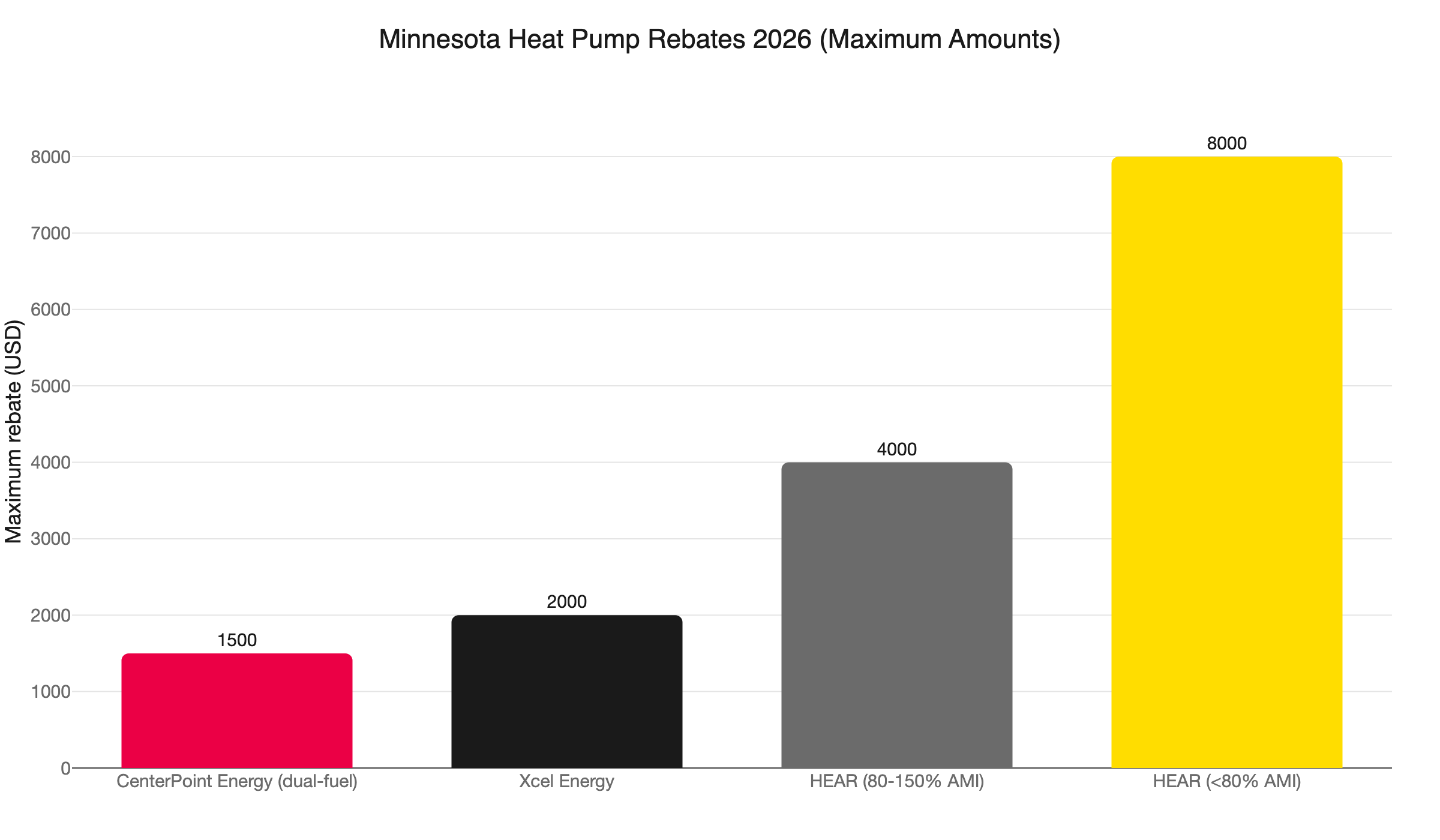
Minnesota Heat Pump Rebates 2026 (Maximum Amounts)
## Why Do Two Quotes Show Different Indoor Units?
When one contractor quotes a furnace and another quotes an air handler, they are not offering different brands of the same product. The difference between an air handler vs. a furnace is fundamental: one generates heat, the other only distributes conditioned air from an outdoor unit. These are different system paths with different costs, different failure modes, and different rebate eligibility.
The confusion is understandable. Both units sit inside your home. Both connect to your existing ductwork. Both push air through your registers. The similarity ends there.
A contractor quoting a gas furnace with central AC is keeping your home on combustion-based heating with a separate cooling system. A contractor quoting an air handler is almost certainly proposing a heat pump system, which moves heat energy rather than generating it. The indoor unit follows the outdoor unit. Different outdoor equipment means a different indoor unit, not a different brand of the same thing.
If you are a Twin Cities homeowner sorting through competing estimates, this guide covers what each unit does, what fails on each one, and how adding a heat pump changes the entire question.
## What Is a Furnace?
A furnace is a self-contained heating unit. It burns natural gas or propane in a combustion chamber, passes heat through a heat exchanger, and pushes warm air through your ductwork using a built-in blower motor. It generates heat independently, without relying on any outdoor unit.
[As Carrier describes](https://www.carrier.com/us/en/residential/hvac-resources/furnaces/air-handler-vs-furnace/), a furnace includes its own combustion chamber, heat exchanger, burner assembly, and blower motor in a single cabinet. When you add central air conditioning to a gas furnace home, the AC evaporator coil sits on top of or downstream from the furnace. The furnace blower handles air distribution year-round: warm air in winter, cooled air in summer. No separate indoor unit is needed.
This is why most Twin Cities homes with gas heat and central AC have only one indoor unit. The furnace is already doing both jobs.
Modern high-efficiency furnaces can reach up to 98% AFUE (Annual Fuel Utilization Efficiency). That means 98 cents of every gas dollar becomes usable heat in your home. Over a Minnesota heating season that runs from October through April, the efficiency gap between an 80% and a 95% AFUE unit adds up on your monthly bill. An older furnace running at lower efficiency costs you more every single day it runs.
A furnace is the right indoor unit if you want to keep gas heat, if your home already has gas service, or if you are adding a heat pump in a dual-fuel configuration. For most existing Twin Cities homes, the gas furnace is already installed and simply needs to be maintained or replaced at end of life.
## What Breaks on a Furnace (and What Does It Cost)?
Furnaces fail in ways that air handlers physically cannot, because furnaces involve combustion. The most common failure points are a cracked heat exchanger, a failed igniter, a faulty gas valve, and a worn-out draft inducer motor. Some are affordable repairs. A cracked heat exchanger often means full system replacement.
**Cracked heat exchanger.** This is the most serious furnace failure. The heat exchanger separates combustion gases from the air you breathe. A crack allows carbon monoxide to pass into your home's air supply. [Carbon monoxide is odorless and colorless](https://www.carrier.com/us/en/residential/hvac-resources/furnaces/air-handler-vs-furnace/). In older furnaces, a cracked heat exchanger is often a reason to replace the entire unit rather than repair it. Learn the warning signs in our guide on [cracked heat exchangers in Minnesota homes](/blog/cracked-heat-exchanger-signs-minnesota/).
**Failed hot surface igniter.** The igniter lights the burner every time your furnace calls for heat. It cycles thousands of times across a long Minnesota heating season. When it fails, the furnace will not light and your home goes cold quickly. An igniter replacement is typically one of the more affordable furnace repairs.
**Gas valve failure.** The gas valve controls fuel flow to the burner. A failed valve means no heat even if every other component is working correctly. Replacement falls in the mid-range for furnace repairs.
**Draft inducer motor failure.** This motor evacuates combustion byproducts before the burner fires. When it fails, the furnace locks out on a safety error and will not run. Replacement is more expensive than an igniter but still well below the cost of a full system replacement.
The key distinction from an air handler: furnace failures involve combustion components. A cracked heat exchanger is a safety event that requires fast action. An air handler carries none of these risks.
## What Is an Air Handler?
An air handler is not a heat source or a cooling source. It is a cabinet housing a blower motor and an evaporator coil. It distributes air already conditioned by an outdoor unit through your ductwork. It cannot produce heat or cooling on its own.
[Bryant describes air handlers as electricity-only units](https://www.bryant.com/en/us/products/gas-furnaces/air-handler-vs-furnace/). For heating in cold climates, electric resistance heat strips can be added to the cabinet as supplemental or backup heat. These strips function like a large electric space heater built into the duct system. They are expensive to run and are not designed to carry the full heating load of a Minnesota winter on their own. Relying on them as a primary heat source through a polar vortex will produce a significant electric bill.
An air handler pairs with a heat pump outdoor unit. The heat pump does the actual work: extracting heat energy from outdoor air and moving it inside in winter, or moving heat from inside to outside in summer. The air handler distributes that result through your duct system.
[HVAC.com clarifies an important point](https://www.hvac.com/expert-advice/furnace-vs-air-handler/): when a gas furnace is already installed in a home, there is no need for a separate air handler. The furnace blower already handles air distribution for both heating and cooling. An air handler is only necessary when there is no furnace doing that job.
An air handler is the right fit for [homes with no gas service](/blog/condo-townhome-hvac-options-twin-cities/), homes converting fully to all-electric systems, or new construction where no combustion equipment is being installed.
## What Breaks on an Air Handler?
Air handler failures differ from furnace failures because there is no combustion involved. The most common problems are a frozen evaporator coil, a clogged condensate drain, a failed blower motor, and burned-out electric heat strips. None of these carry a carbon monoxide risk.
**Frozen evaporator coil.** This is the most frequent air handler complaint in cooling season. When airflow is restricted by a dirty filter, or refrigerant levels are low, the coil drops below freezing and ice builds up. The system loses cooling ability, and airflow can stop entirely. See our post on [why evaporator coils freeze in Twin Cities AC systems](/blog/frozen-evaporator-coil-why-ac-ice-twin-cities/) for what causes it and what to do when it happens.
**Clogged condensate drain.** As the coil removes humidity from your home's air in summer, moisture drips into a drain pan below the unit. If the drain line clogs with algae or debris, the pan overflows. [Water damage](/blog/attic-air-handler-installation-problems-minnesota/) to the surrounding area can follow quickly. An annual flush of the drain line during routine maintenance prevents this problem entirely.
**Blower motor failure.** The blower runs every time the system calls for heating or cooling. Motor bearings wear over years of use. When the motor fails, no air moves through your home even if the outdoor heat pump is operating. Replacement is a mid-range repair.
**Electric resistance strip burnout.** If your air handler has backup heat strips, those strips can burn out under heavy use or with age. A failed strip during a Minnesota cold snap is urgent but repairable. The event is also a reminder that strips are not designed to serve as your primary heat source in this climate.
## Does Adding a Heat Pump Change Which Indoor Unit You Need?
Yes. When you add an air-source heat pump, the indoor unit question reopens entirely. You have two paths: dual-fuel pairs a heat pump outdoor unit with your existing gas furnace, and all-electric pairs a heat pump outdoor unit with a new air handler. These are genuinely different systems with different cost profiles, different energy characteristics, and different rebate eligibility.
This is where most of the competing-quote confusion actually originates.
[The Minnesota Air Source Heat Pump Collaborative explains](https://www.mnashp.org/what-best-air-source-heat-pump-system-type-choose) that ducted heat pump installations in Minnesota take one of two forms. In dual-fuel, you keep the gas furnace and add a heat pump outdoor unit. The system uses the heat pump for heating and cooling during moderate weather and automatically switches to the gas furnace at a contractor-programmed outdoor temperature, typically set at 40°F or lower. The gas furnace covers the coldest days. In all-electric, you replace the furnace entirely with an air handler. The heat pump handles primary heat, and electric resistance strips serve as emergency backup.
[Energy Star frames the dual-fuel path](https://www.energystar.gov/products/air_source_heat_pumps) as a modest extra cost over a standard AC replacement for homes with a relatively new furnace. If your furnace has years of life remaining, dual-fuel adds heat pump efficiency without requiring a full indoor unit swap.
Minnesota winters make the dual-fuel case stronger. Heat pump capacity decreases as outdoor temperatures fall. Even a cold-climate model operates at reduced output well below zero. A gas furnace backup handles the extreme days reliably without oversized electric strips. Dual-fuel also typically avoids an electrical panel upgrade, which all-electric systems can require in older Twin Cities homes with smaller service panels.
For more on how this decision plays out for Twin Cities homeowners, see our guide on [whether a heat pump is a good fit for your home](/blog/heat-pumps-in-minnesota-are-they-a-good-fit/).
## Minnesota Rebates and Incentives in 2026
Rebates in 2026 are significant, and your indoor unit choice directly affects what you can claim. Here is the current picture for Twin Cities homeowners.
**CenterPoint Energy.** CenterPoint offers up to $1,500 for a ducted air-source heat pump in a dual-fuel setup with a high-efficiency gas furnace (92% AFUE or higher). [The switchover temperature must be programmed at 40°F or below, and applications must be submitted by December 31, 2026](https://www.centerpointenergy.com/en-us/SaveEnergyandMoney/Pages/Residential-Ducted-Air-Source-Heat-Pump-Rebate.aspx?sa=mn&au=res). This rebate does not apply to standalone air handlers used for space heating. If you choose the all-electric path and you are a CenterPoint customer, this rebate is off the table.
**Xcel Energy.** Xcel's rebate goes up to $2,000 for qualifying ducted systems. [The heat pump must have a coefficient of performance (COP) of at least 1.75 measured at 5°F and appear on the NEEP cold-climate product registry](https://mn.my.xcelenergy.com/s/residential/heating-cooling/heat-pumps). Rated heating capacity at 5°F must also be at least 70% of the unit's 47°F capacity. Applications are open through September 30, 2026.
**Federal HEAR rebate.** New for 2026, the Home Energy Assistance Rebate program is income-qualified. Households below 80% of area median income (AMI) can receive up to $8,000. Households between 80% and 150% AMI can receive up to $4,000. [Equipment must be ENERGY STAR certified and cold-climate rated, administered through mn.gov/commerce](https://mn.gov/commerce/energy/consumer/energy-programs/hear.jsp).
**The 25C federal tax credit.** The 30% federal tax credit for heat pumps (up to $2,000) expired December 31, 2025. [Installations from 2023 through 2025 may still be claimed on the relevant tax year; 2026 installations do not qualify](https://www.mnashp.org/incentives-rates-financing). If a contractor mentions the 25C for a 2026 installation, that information is outdated.
Rebate eligibility is one more reason to resolve the indoor unit question before signing a contract. Your utility provider, your income level, and your system configuration all determine what you can claim. Ask your contractor to walk through eligibility line by line before you commit.
For a full breakdown of available programs, see our guide to [Minnesota heat pump rebates and tax credits](/blog/minnesota-heat-pump-rebates-tax-credits/).
## Questions to Ask Before You Sign a Quote
If you have competing quotes showing different indoor units, these questions help you evaluate them on equal footing.
- **What outdoor unit pairs with this indoor unit?** An air handler quote without a heat pump in the same proposal is not a complete system.
- **Is this a dual-fuel or all-electric setup?** Know which path you are committing to before comparing prices.
- **Does my furnace have enough life left to serve as backup in a dual-fuel system?** If it is under 15 years old and well-maintained, keeping it often makes financial sense rather than replacing it with an air handler.
- **What is the heat pump's COP at 5°F?** Cold-climate performance is what matters in a Minnesota winter. The Xcel rebate requires a floor of 1.75 COP at 5°F for a reason.
- **Which rebates does this system qualify for?** Ask for specifics. CenterPoint's dual-fuel requirement and Xcel's cold-climate spec are not general rules that apply to every heat pump. Get written confirmation.
- **Will this require an electrical panel upgrade?** All-electric systems in older Twin Cities homes sometimes need one. A dual-fuel setup that retains the existing furnace typically does not.
Northern One Hour is locally owned and operated in Ramsey, MN. Our team serves homeowners across the Twin Cities: Minneapolis, St. Paul, Blaine, Maple Grove, Plymouth, Brooklyn Park, Woodbury, Bloomington, and surrounding communities. We install and service both dual-fuel and all-electric configurations, and we will give you a straight answer on which system fits your home, your utility provider, and your budget. No pressure, no surprises.
Every appointment is backed by our on-time promise: "Always On Time… Or You Don't Pay a Dime!(R)". Call us at **(763) 260-6662** or book online to schedule a free estimate.
---
# Best Heat Pump Brand for Minnesota Cold Weather (2026)
URL: https://northernonehour.com/blog/cold-climate-heat-pump-brand-performance-minnesota/
Published: 2026-08-12 | Category: Heating
Not all cold-climate heat pumps deliver in Minnesota winters. See which brands hold rated capacity at -13\u00b0F and qualify for Xcel rebates.
Key Takeaways
- Cold-climate certification requires maintaining rated output and COP at or below -13°F, per the [NEEP standard](https://neep.org/heating-electrification/ccashp-specification).
- [Minnesota field research from MNCEE](https://www.mncee.org/cold-climate-air-source-heat-pump-field-assessment-closed) confirmed cold-climate heat pumps matched manufacturer specs in real homes.
- Minneapolis uses 5°F as its Manual J design temperature. A system must hold full output there without backup assistance.
- Polar vortex events push temps to -20°F and below. Backup heat is not optional in Minnesota.
- Xcel Energy rebates reach $2,000 for qualifying units. City and federal incentives can stack on top.
- The 25C federal tax credit expired December 31, 2025. Competitors still citing it are working from outdated information.
- See our [Minnesota heat pump rebates guide](/blog/xcel-centerpoint-hvac-rebates-minnesota/) for a full breakdown by utility and city.
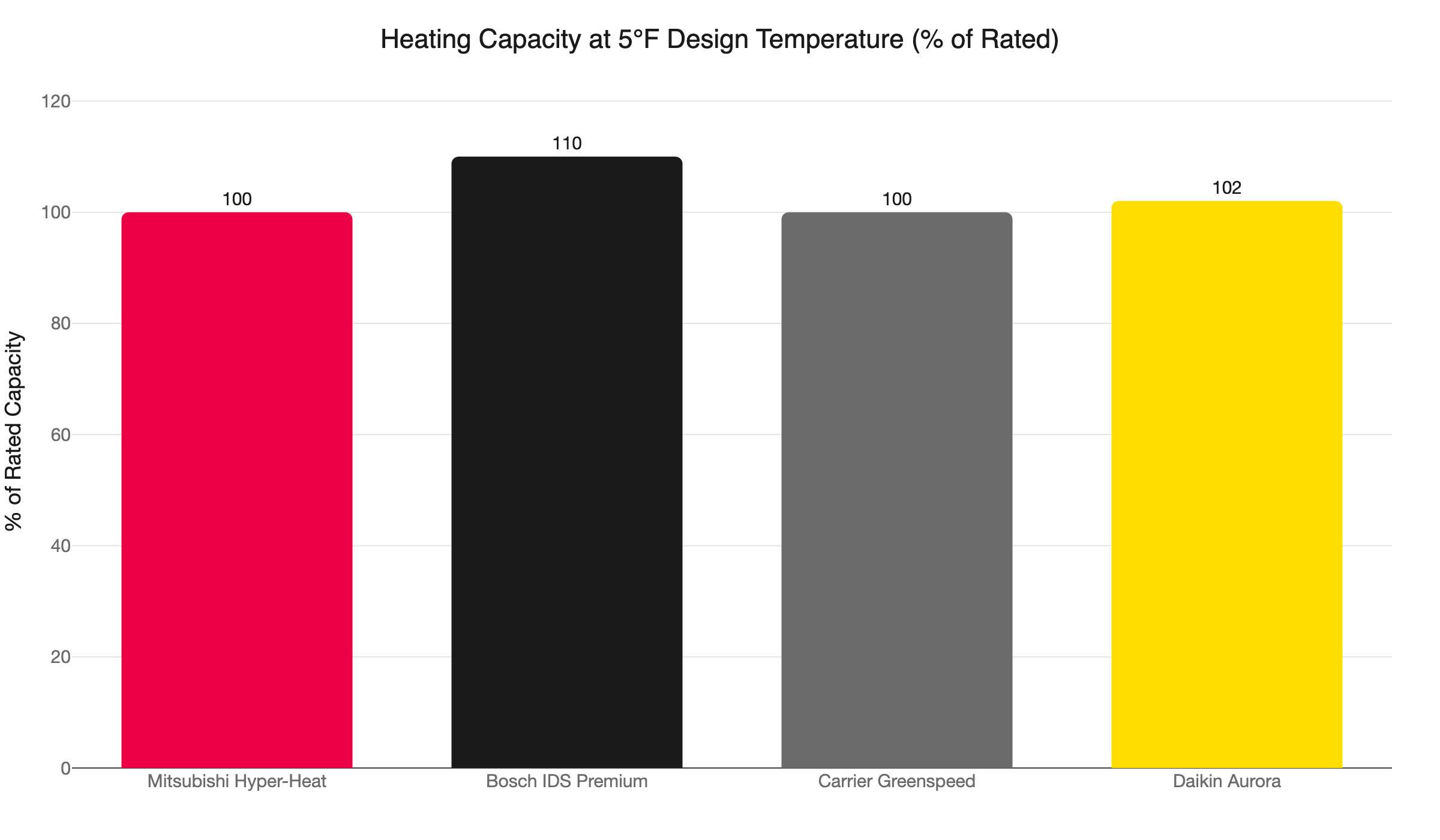
Heating Capacity at 5°F Design Temperature (% of Rated)
## What Does "Cold Climate Rated" Actually Mean?
**Cold-climate certification means a heat pump maintains its rated heating capacity and COP at or below -13°F (-25°C). This is the Northeast Energy Efficiency Partnerships standard, not a marketing term. A unit that "operates at -13°F" at 25% of rated output does not qualify.**
That distinction matters because most homeowners never hear it. A manufacturer can say their unit "runs down to -22°F." That sounds like solid protection for a Minnesota winter. Running at a fraction of rated capacity at -22°F is not protection. Your gas backup is carrying the load.
The -13°F threshold comes from the [NEEP cold-climate ASHP specification](https://neep.org/heating-electrification/ccashp-specification). A unit must maintain rated heating output and a minimum COP at or below that temperature to earn the designation. The specification does not ask whether the unit can run. It asks whether the unit can carry your load.
"Operates at -13°F" is a marketing floor. "Rated capacity at -13°F" is a verified performance standard. The difference determines whether your home stays warm on a January night in the Twin Cities.
## How Do You Verify a Heat Pump's Cold-Climate Rating?
**Pull the unit's AHRI certificate for the specific indoor/outdoor pair being quoted. Look it up at [ahridirectory.org](https://www.ahridirectory.org). If the certificate shows rated heating capacity and COP at -13°F, the unit qualifies. A manufacturer spec sheet does not replace this step.**
The AHRI certificate is the third-party verification document that matters. Manufacturers submit matched indoor/outdoor pairs for independent testing. The certificate lists capacity and efficiency at multiple outdoor temperature points. That is where the real number lives.
One complication worth knowing: NEEP transitioned its Cold Climate ASHP Product List to pull directly from AHRI data starting April 1, 2026. During the transition, some eligible products temporarily dropped off the list at [ashp.neep.org](https://ashp.neep.org). If a unit you are researching does not appear on the NEEP list, check the AHRI directory directly. Do not conclude it fails to qualify without that second check.
Your installer should pull this certificate for every unit they propose. If they hand you a brochure instead, ask again. The data is public and it is the only document that settles the question.
## Why Minnesota Cold Weather Demands a Different Standard
Minnesota sits in IECC Climate Zone 6. The ACCA Manual J design temperature for Minneapolis is 5°F. That is the outdoor threshold a system must handle without leaning on backup heat.
The [MNCEE field assessment](https://www.mncee.org/cold-climate-air-source-heat-pump-field-assessment-closed) monitored cold-climate ASHPs in six Minnesota homes. The result was direct: inverter-driven cold-climate ASHPs performed in line with manufacturer specifications. Real Minnesota homes, real Minnesota winters, and the spec sheets held up.
MNCEE recommends sizing the heat pump to meet 100% of the heating load at outdoor temps at or below 10°F. Backup heat should engage only below the metro design temperature of -11°F. The heat pump should be prioritized over backup down to that threshold.
A correctly sized system handles most of a Minnesota heating season on its own. It hands off to backup only during the deepest cold. That is where the real efficiency gains land, and where the right brand choice matters most.
## Which Brands Perform Best in Minnesota Cold Weather?
**Bosch IDS Premium, Mitsubishi Hyper-Heat, Carrier Greenspeed Infinity, and Daikin Aurora all publish cold-climate-qualifying capacity data and meet the Xcel Energy rebate threshold. Bosch leads on raw output at 5°F. Mitsubishi leads on Twin Cities installer depth. Lennox SL25XPV also qualifies but should be confirmed via AHRI certificate for your specific quoted pair.**
Here is what the published data shows for each brand at the Minneapolis design temperature. Figures come from a Twin Cities contractor analysis and should be confirmed against the AHRI certificate for the specific pair you are quoted.
[chart: brand-capacity-at-5f]
**Mitsubishi Hyper-Heat H2i**
The Hyper-Heat line holds 100% of rated capacity at 5°F and delivers meaningful heating output at -13°F and below. More practically, it has the deepest installer base in the Twin Cities. Warranty service requires an authorized dealer. A brand with thin local coverage becomes a real problem in February when you need a part quickly.
**Bosch IDS Premium**
Bosch publishes 110% of rated capacity at 5°F. The inverter compressor ramps above nameplate as outdoor temps approach the design point. That is the behavior you want on a cold Minneapolis design day. At -15°F, output stays in the 75-85% range. That is the strongest cold-weather capacity spec among the five brands reviewed here.
**Carrier Greenspeed Infinity**
Carrier holds 100% of rated capacity at 5°F and around 65-75% at -15°F. Its primary advantage is dealer network depth. Carrier has one of the broadest warranty-service footprints in the Twin Cities. Parts availability three winters from now is a real factor in total cost of ownership.
**Daikin Aurora**
Daikin publishes 100-105% at 5°F and 65-75% at -15°F. The Aurora continues operating down to -22°F at reduced capacity. Its 12-year compressor warranty leads the category. CenterPoint Energy's Home Service Plus program offers Daikin, which may simplify financing or service coordination for CenterPoint customers.
**Lennox SL25XPV**
Lennox qualifies on the cold-climate specification and carries a dealer warranty network comparable to Carrier. Pull the AHRI certificate for the specific pair before signing. Confirm the -13°F capacity data is on the certificate, not just implied by the marketing.
The capacity data above is sourced from a published Twin Cities installation comparison. Confirm the specific matched pair you are being quoted at [ahridirectory.org](https://www.ahridirectory.org) before you commit.
For a deeper look at how these systems perform below zero, see our post on [heat pump performance below zero in Minnesota](/blog/heat-pump-below-zero-performance-minnesota/).
## Why Brand Is Only Half the Decision
The best heat pump brand for Minnesota cold weather is the one backed by an installer who will service it correctly for 15 years. Every brand on this list performs when installed right. Not every installer installs it right.
Before signing any contract, ask:
- How many of this brand's systems has your team installed in the past two years?
- Do you stock common parts locally, or do you order when a call comes in?
- Who handles the warranty claim if the compressor fails at year four?
- Is your company authorized by the manufacturer for warranty work?
- Will you pull the required permits for this installation?
These questions tell you more about your future service experience than the logo on the outdoor unit does. You are buying a 15-year service relationship, not just equipment.
## What Happens During a Polar Vortex?
**Every cold-climate heat pump loses significant output below -20°F. At -25°F, most units run at 30-50% of rated capacity. Minnesota polar vortex events are not rare. A backup heat source is not optional in our climate. Plan for a gas furnace in a [dual-fuel setup](/blog/dual-fuel-heat-pump-gas-furnace-hybrid-minnesota/) or electric resistance strips as the backup.**
IECC Climate Zone 6 means our worst nights regularly hit -25°F. No unit on the market today maintains full rated output at those temperatures. The brands that earn the -13°F designation do so because that is the NEEP standard. Below that point, every unit operates in reduced-capacity mode.
That is not a product failure. It is physics. Correct system design accounts for it. You size the heat pump to carry the full load at the design day. You keep backup heat integrated for the nights that go colder.
MNCEE field data recommends prioritizing the heat pump over backup down to -11°F metro design conditions. That captures the efficiency gains through most of the heating season. Below that threshold, backup carries the load and the heat pump recovers as temps rise.
Not sure whether a heat pump fits your home at all? Read [Heat Pumps in Minnesota: Are They a Good Fit?](/blog/heat-pumps-in-minnesota-are-they-a-good-fit/) before you decide.
## What Minnesota Rebates Are Available Right Now?
**Xcel Energy pays up to $2,000 for qualifying cold-climate heat pumps. Minneapolis residents can stack up to $1,000 on top. The federal HEAR program is coming and may add up to $8,000 for income-qualifying households. The 25C tax credit expired December 31, 2025.**
Here is the current incentive stack for Twin Cities homeowners.
**Xcel Energy**
The current program pays up to $2,000 for cold-climate heat pumps meeting these thresholds:
- COP at 5°F at or above 1.75
- HSPF2 at or above 8.5
- Listed in the AHRI directory
- Heating capacity at 5°F at least 70% of capacity at 47°F
- Applies to single-family through fourplex properties only
An additional $600 is available for insulation and air-sealing work done at the same time. A tighter envelope reduces the heat pump's daily workload. That stack pays back over time. Full criteria are in the [Xcel Energy rebate summary](https://www.xcelenergy.com/staticfiles/xe-responsive/Working%20With%20Us/24-1-201%20MN%20Res%20Rebate%20Summary%20Information%20Sheet.pdf).
**City Incentives**
Minneapolis residents can add up to $1,000 on top of the Xcel rebate. In designated Green Zones, that rises to $5,000. Equipment must meet the Xcel cold-climate specification to qualify.
Hopkins offers up to $1,500 for all residents through the Climate Solutions Fund. Income-qualified Hopkins households can receive up to $2,500.
**Federal HEAR Program**
The HEAR program has not launched yet, but funding is allocated. Households below 80% of area median income can receive up to $8,000. Those at 80-150% AMI qualify for up to $4,000. Equipment must be ENERGY STAR certified and cold-climate rated.
Several competitors still cite the 25C federal tax credit. That credit expired December 31, 2025. Do not budget for it.
Current incentive listings by utility and city are at [mnashp.org/incentives-rates-financing](https://www.mnashp.org/incentives-rates-financing).
## Is a Dual-Fuel System the Right Call?
**For most Twin Cities homeowners with an existing gas furnace, dual-fuel is the practical path. The heat pump carries the load efficiently through most of the heating season. The furnace handles the polar vortex days. You get efficiency gains without giving up cold-weather coverage.**
A dual-fuel setup pairs a cold-climate heat pump with your existing gas furnace. The heat pump runs whenever it is efficient to do so, typically down to -10°F to -15°F. The furnace takes over [below the balance point](/blog/heat-pump-balance-point-backup-heat-minnesota/). You set the switchover in the thermostat or control system.
The efficiency case is straightforward. A cold-climate heat pump delivers two to three units of heat per unit of electricity consumed. A 96% efficient gas furnace converts fuel to heat at roughly 1:1. The heat pump wins on efficiency for most of the Minnesota heating season. The furnace wins during the coldest stretches when heat pump output drops significantly.
This is not a compromise. It is how these systems are designed to work in our climate.
## What to Ask Before You Sign
Pin down your installer on these questions before the contract goes through:
- What is the AHRI certificate number for this specific indoor/outdoor pair?
- What is the rated heating capacity at 5°F and at -13°F on that certificate?
- Does this unit qualify for the current Xcel cold-climate rebate?
- How will backup heat integrate with the new system?
- Who handles warranty service if there is a compressor issue at year four?
- Will you pull the required permits for this installation?
An installer who answers without hesitation knows the product. One who deflects is worth a follow-up conversation before you commit.
## Schedule a Heat Pump Assessment
Northern One Hour is locally owned and operated in Ramsey, MN. We serve Minneapolis, St. Paul, Blaine, Maple Grove, Plymouth, Brooklyn Park, Woodbury, Bloomington, and the surrounding Twin Cities metro.
We size every system with Manual J load calculations. We identify which brands qualify for current Xcel and city rebates. We walk through the AHRI certificate with you before you decide. We back every installation with our satisfaction guarantee and the promise that drives everything we do: "Always On Time… Or You Don't Pay a Dime!(R)"
Call **(763) 260-6662** or [schedule a consultation online](/heat-pumps/) to get started. Financing is available for heat pump installations.
---
# Geothermal Heat Pump Minnesota Cost: Honest 2026 Breakdown
URL: https://northernonehour.com/blog/geothermal-heat-pump-minnesota-cost/
Published: 2026-08-12 | Category: Heating
The 30% federal tax credit is gone. Here's what geothermal heat pump Minnesota cost looks like in 2026, with honest payback timelines and rebate reality.
Key Takeaways
- A geothermal heat pump system in Minnesota runs **$20,000-$30,000+** installed for a typical 1,500-2,500 sq ft Twin Cities home.
- The 30% federal tax credit (§25D) is gone for 2026 installations. Budget the full price.
- Twin Cities Xcel Energy and CenterPoint customers have no utility rebate specific to geothermal. The Minnesota Power GSHP program covers northeastern Minnesota only.
- The strongest financial case is replacing oil, propane, or electric resistance heating. A modern 96% AFUE gas furnace rarely pays back within 15 years.
- Twin Cities soil (glacial clay and loam) keeps drilling costs moderate. But our heating-heavy climate requires loop fields 15-25% larger than comparable homes in warmer states.
- A $250-$650 pre-installation energy audit can trim equipment and loop sizing costs by $3,000-$8,000.
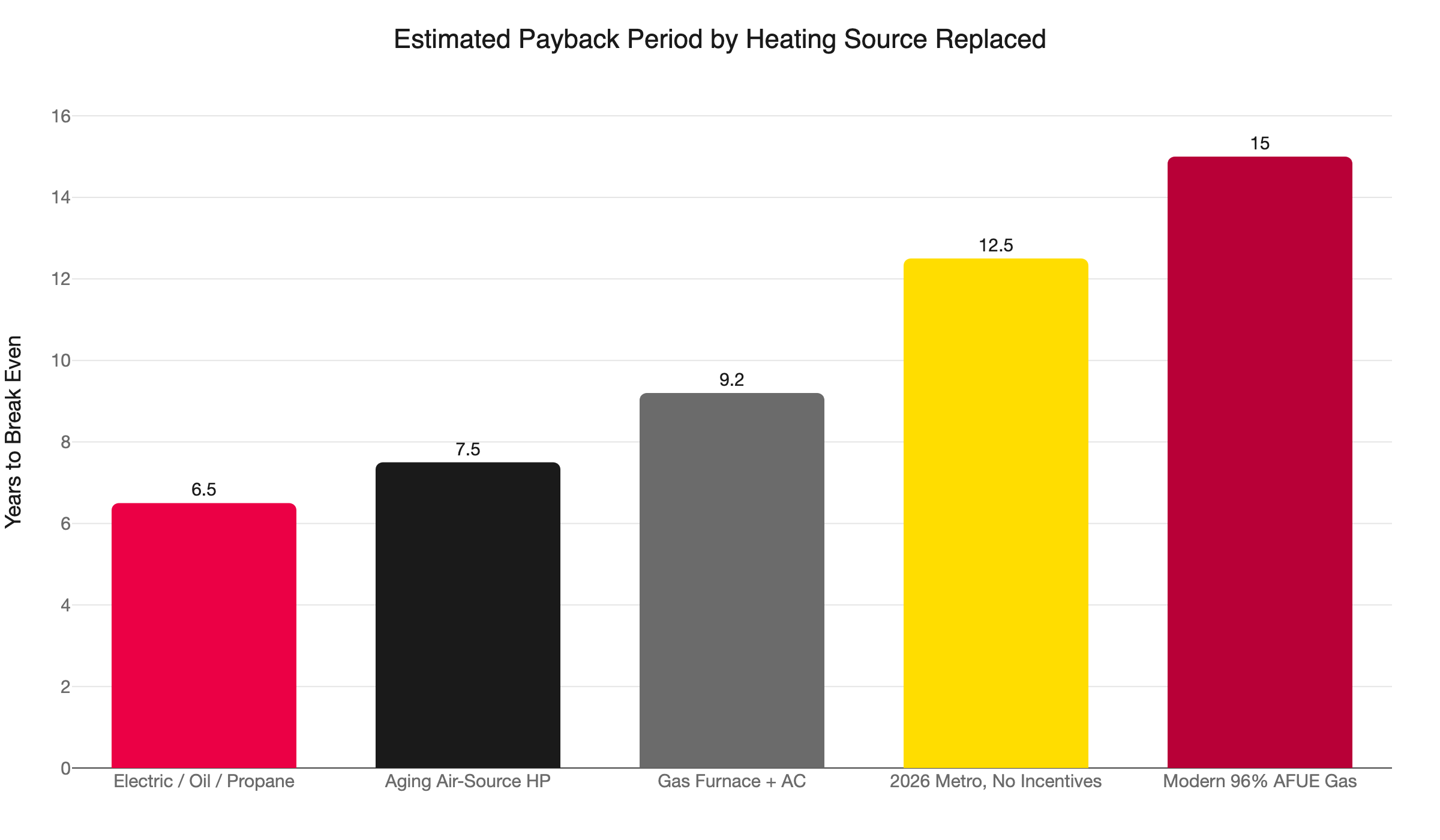
Estimated Payback Period by Heating Source Replaced
Geothermal heat pump Minnesota cost is one of the most-searched HVAC questions in the Twin Cities right now. Most of what's online is out of date. The 30% federal tax credit ended December 31, 2025. Here's what a 2026 install actually costs, and how to know if it makes financial sense for your home.
## What Does a Geothermal Heat Pump Cost in Minnesota?
**The short answer:** Expect $20,000-$30,000 or more for a fully installed system in the Twin Cities. The national midpoint for a 3-4 ton system is around $25,500 [per RSMeans 2026 data](https://geothermalfinder.com/costs/geothermal-installation-cost-by-state/). Minnesota homes, because of our heating-dominated climate, typically land at the higher end of that range.
Here's how the installed cost breaks down by component:
- **Ground loop (vertical bore field):** $10,400-$23,400. Most suburban Twin Cities lots don't have the 1-2 acres a horizontal loop requires. Vertical boreholes at 150-400 feet deep are the standard solution.
- **Heat pump unit:** $5,000-$9,000 depending on capacity and brand.
- **Distribution system modifications:** $1,300-$7,800 if your existing ductwork needs upgrades. Geothermal systems produce lower supply temperatures than furnaces and may require additional airflow capacity.
- **Electrical work and permits:** $1,300-$3,900.
Total installed cost for a mid-size Twin Cities home typically lands between $28,600 and $39,000. Larger homes or sites with more complex conditions push that higher.
One thing that surprises homeowners: the heat pump unit is rarely the biggest line item. The ground loop usually is. That's why sizing and energy assessment before installation matters so much. We'll cover that later.
## Why Minnesota Ground Temps Work in Your Favor
Here is the physics behind why geothermal is especially compelling in a Minnesota winter.
Below-grade earth holds steady between 45 and 75°F year-round. That holds true even when surface air drops to -10°F or -20°F. A geothermal heat pump pulls heat from that stable ground temperature rather than frigid outdoor air. That keeps the system's coefficient of performance (COP) at 3.0-4.5 through our coldest weeks.
Think of the ground loop as a thermal battery. In summer, heat from your home is deposited into the ground. In winter, that stored warmth is extracted back out. The earth never swings to -20°F, so the heat pump is never working as hard as an air-source unit on the same night. That stable operating condition contributes to longer service lives: typically 20+ years for the heat pump unit and 50+ years for the loop itself with normal maintenance.
Air-source heat pumps work differently. They extract heat from outdoor air. Efficiency drops noticeably below 20°F, and on the coldest Minnesota nights many units fall back on electric resistance backup, which cuts into their efficiency advantage.
A 2025 field study covering more than 1,000 installed units found that geothermal systems missed their expected efficiency targets in only 2% of installs, [compared to 17% for air-source heat pumps](https://geothermalfinder.com/costs/geothermal-installation-cost-by-state/). That reliability gap is meaningful when your heating season runs from October through April.
If you're weighing geothermal against a cold-climate air-source option, [our breakdown of cold-climate heat pump performance in Minnesota](/blog/cold-climate-heat-pump-brand-performance-minnesota/) covers what to expect from those systems at extreme temperatures.
## What Pushes Geothermal Heat Pump Cost Higher in Minnesota?
**The short answer:** Loop field size is the primary driver. Heating-dominated climates like ours require loop fields 15-25% larger than a comparable home would need in a warmer state. That adds cost before anything else is factored in.
Two things do work in our favor.
Twin Cities soil is primarily glacial clay and loam, not granite bedrock. Hard-rock drilling, common in states like Maine and New Hampshire, takes two to three times longer per borehole. Our moderate soil keeps drilling costs in the middle of the national range.
Lot size is the binding constraint for most Twin Cities homeowners. Suburban properties typically don't have the open land for a horizontal loop field. Vertical boreholes are the standard, and they're priced per foot of depth. The combination of heating climate plus lot constraint is what pushes [geothermal heat pump Minnesota cost](https://geothermalfinder.com/costs/geothermal-installation-cost-by-state/) toward the upper end of national ranges rather than the midpoint.
The practical implication: request quotes only from contractors who pull the required well permits and provide a full Manual J load calculation before specifying loop size. A contractor who quotes without calculating your load is working from a number they guessed.
## The Federal Tax Credit Is Gone for 2026 Installations
This is the most consequential planning mistake we're seeing right now. Most articles online still imply the credit is available, and some were written as recently as late 2025.
The 30% residential geothermal tax credit under IRS §25D, also known as the Residential Clean Energy Credit, [ended for systems placed in service after December 31, 2025](https://geothermalinsider.com/news/geothermal-tax-credit-2026-update/). The One Big Beautiful Bill Act (P.L. 119-21), signed July 4, 2025, repealed it. If your system is installed in 2026, you cannot claim it.
On a $26,000 install, that credit was worth $7,800. Going into a 2026 project without accounting for this puts your budget off by a significant amount. It also shifts the payback math materially.
A few clarifications worth knowing:
- Systems installed and **placed in service by December 31, 2025** can still claim the credit on IRS Form 5695. Unused credit from prior years can be carried forward.
- The commercial §48 investment tax credit remains active through 2034. It's driving some third-party residential leasing arrangements for homeowners. That's a separate conversation for a tax professional, not an HVAC contractor.
- Systems claiming any remaining rebate programs must meet [ENERGY STAR certification standards](https://www.energystar.gov/about/federal-tax-credits/geothermal-heat-pumps). That's the minimum qualification for any incentive.
If a contractor quotes you a price "after the 30% credit" for a 2026 installation, ask them to show you the current IRS guidance. The credit is not available this year.
## What Rebates Are Actually Available for Twin Cities Homeowners?
**The short answer:** Very few, if Xcel Energy or CenterPoint serves your address. The best geothermal utility rebate in Minnesota is a northeastern Minnesota program that does not apply to the metro.
Here's the honest incentive picture for a 2026 Twin Cities installation.
**Minnesota Power (northeastern MN only):**
- $800/ton for ENERGY STAR certified geothermal, installed through a participating contractor by December 31, 2026.
- $1,000/ton if the contractor holds MNGHPA Master Installer certification.
- [This is a northeastern Minnesota program](https://mnpower.com/ProgramsRebates/GSHPIncentivePackage) covering Duluth, the Iron Range, and Grand Rapids. It does not serve Minneapolis, St. Paul, or the surrounding metro.
**Xcel Energy (Twin Cities metro):**
- Up to $2,000 for a cold-climate air-source heat pump, plus a $600 insulation bonus.
- No confirmed geothermal-specific rebate on Xcel's current program list as of July 2026.
**CenterPoint Energy (Twin Cities metro):**
- $1,500 for a ducted air-source heat pump in a hybrid configuration alongside a 92%+ AFUE gas furnace.
- CenterPoint does not rebate standalone geothermal or heat pumps that fully replace gas service.
**Federal HEAR and HOMES rebates:**
- Minnesota has not launched either program as of June 2026. [The MN Department of Commerce is still awaiting DOE approval, with no estimated launch date](https://heatpumpnetwork.com/heat-pump-rebates-minnesota/). These rebates are not issued retroactively.
**Minnesota sales tax exemption:**
- Geothermal equipment qualifies for a Minnesota sales tax exemption. On the equipment portion of a large install, that saves a few hundred dollars. It's a real benefit, not a large one.
The bottom line for a Twin Cities homeowner in 2026: your incentive stack is the sales tax exemption and whatever a small cooperative or municipal utility might offer at your specific address. If Xcel or CenterPoint serves you, there is no geothermal-specific utility rebate to stack.
For a full picture of what rebates are available on heat pump alternatives, see [our guide to Minnesota heat pump rebates and tax credits](/blog/minnesota-heat-pump-rebates-tax-credits/).
## Who Actually Benefits from Geothermal in Minnesota?
**The short answer:** Homeowners replacing oil, propane, or electric resistance heating see the strongest financial case. If you have a modern natural gas furnace, the numbers are tighter than most articles suggest.
Here's the payback picture by scenario, based on DOE Monte Carlo modeling:
- **Replacing electric resistance, oil, or propane:** 5-8 years. This is the strongest case. You're moving away from expensive fuels to electricity at geothermal efficiency levels.
- **Replacing an [aging air-source heat pump](/blog/geothermal-vs-air-source-heat-pump-cost-minnesota/):** 7.5-year median payback.
- **Replacing a gas furnace plus central AC:** 9.2-year median.
- **2026 metro install with no federal credit and no utility rebate:** 10-15 years.
- **Replacing a modern 96% AFUE natural gas furnace:** Does not reach payback within 15 years at current natural gas rates.
That last point is the one most geothermal articles skip. A 96% AFUE furnace already converts nearly all the gas it burns into usable heat. The efficiency gap between that furnace and geothermal is smaller than the gap between geothermal and oil or propane. Remove the federal tax credit from the 2026 equation, and the case grows even harder to make on a natural gas baseline.
If your home heats with natural gas and your furnace is less than 10 years old, the honest recommendation is to look carefully at the numbers before committing to a full geothermal project. A hybrid heat pump arrangement may offer better economics at a lower upfront cost.
If you heat with oil, propane, or electric baseboard, request a geothermal quote. Fuel savings alone can shorten payback significantly, even without the federal credit.
Time horizon matters too. If you plan to sell within five years, you will not recoup the upfront cost in most scenarios. In your long-term home, a 10-12 year payback is a reasonable threshold for a system that will last 20-25 years with minimal maintenance.
Financing is also worth considering on a project this size. If geothermal eliminates a $250-$350/month propane bill and your loan payment is $180/month, you're cash-flow positive from day one. [Our overview of HVAC financing options in the Twin Cities](/blog/hvac-financing-options-what-to-know-twin-cities/) covers what to expect from that process.
## Should You Get an Energy Audit Before Installing Geothermal?
**The short answer:** Yes. A $250-$650 pre-installation energy audit can trim total project cost by $3,000-$8,000 by right-sizing the system to your actual load rather than your current equipment size.
Geothermal systems are sized to the real heating and cooling demand of your home. If your attic insulation is thin, your windows leak air, or your ductwork is undersized, the system will be oversized for where your home should be after those improvements are made. You end up paying for loop footage and equipment capacity that does nothing for you.
An energy auditor measures your actual load and identifies which improvements yield the most impact per dollar. The geothermal contractor then sizes the loop field to the improved home, not the current one. Trimming several hundred feet of borehole from the job is where the savings show up.
Correct sizing also matters for long-term comfort. An oversized geothermal system short-cycles, meaning it turns on and off too frequently. Short-cycling reduces humidity control, wears components faster, and leaves the home less comfortable than a well-matched system running in long, even cycles. In a Minnesota summer, humidity management is not a minor detail.
## Is Geothermal Right for Your Home?
**The short answer:** For the right fuel situation, lot, and time horizon, geothermal is one of the most reliable and efficient systems available. For Twin Cities gas customers with a newer furnace, it is a harder sell in 2026 without the federal credit.
A few filters to run before requesting quotes:
**Strong candidates:**
- You heat with oil, propane, or electric resistance.
- Your lot has normal clay or loam soil. Shallow granite bedrock is uncommon in the Twin Cities, but a site assessment is worth requesting.
- You plan to stay in the home 10 years or more.
- You can absorb the upfront cost or qualify for financing on a project this size.
**Tougher cases:**
- You heat with natural gas and your furnace is less than 10 years old.
- You plan to sell within five to seven years.
- Your lot is unusually small, or site conditions complicate boring access.
Northern One Hour is locally owned and operated in Ramsey, MN. We serve Minneapolis, St. Paul, Blaine, Maple Grove, Plymouth, Brooklyn Park, Woodbury, Bloomington, and the surrounding metro. We can assess whether geothermal is the right fit for your home, or whether another [heat pump option](/heat-pumps/) makes more sense given your situation and budget.
We stand behind the on-time promise: "Always On Time… Or You Don't Pay a Dime!(R)" That applies to consultations on big decisions like this, not just service calls. If geothermal makes sense, we'll tell you exactly why. If it doesn't, we'll tell you that too.
Call us at **(763) 260-6662** or book online to schedule a consultation. Straight answers, on time.
---
# ERV vs HRV Minnesota: Which Unit Does Your Home Need?
URL: https://northernonehour.com/blog/erv-vs-hrv-which-ventilation-system-minnesota/
Published: 2026-08-08 | Category: Indoor Air Quality
Minneapolis-St. Paul is Climate Zone 6A. Learn the real ERV vs HRV decision framework for Twin Cities homeowners based on envelope tightness.
Key Takeaways
- Minneapolis-St. Paul is [Climate Zone 6A](https://autohvac.ai/climate-zones/minnesota/minneapolis-minnesota) (cold-humid). Both ERVs and HRVs are designed for this climate. The climate does not pick the winner.
- The real question is not about climate zone. It is about whether your home's envelope can safely hold indoor humidity above 30% RH during heating season without condensation or frost damage.
- In code-minimum construction with standard double-pane windows, an HRV is the safer choice. It removes excess indoor humidity rather than retaining it.
- In high-performance construction with ACH50 below 2.0 and triple-pane windows, an ERV often makes more sense. It retains moisture in winter and dehumidifies passively in summer.
- Running an HRV and a whole-home humidifier simultaneously is common in Minnesota. It is also self-defeating. Two appliances working against each other.
- At -13°F, an HRV delivers about 60% sensible recovery efficiency. An ERV delivers about 56%. The gap is real but small.
- Minnesota Power offers $300 and Minnesota Energy Resources offers $400 in rebates for qualifying installations.
## ERV vs HRV Minnesota: Why Most Contractors Get This Wrong
The ERV vs HRV Minnesota question comes up constantly in new construction and deep-energy retrofits. Most HVAC contractors in the Twin Cities default to recommending an HRV. That is not a bad answer. For most homes, it is probably the right answer.
But the reasoning behind the recommendation matters as much as the recommendation itself. If your contractor cannot explain why an HRV fits your specific envelope, you are not getting the full conversation. The correct unit depends on your home's construction, not just your zip code.
This post breaks down the real decision framework. It covers what each unit does, where the performance data lands, what Minnesota code requires, and how to figure out which unit actually belongs in your home.
---
## What Is the Difference Between an ERV and an HRV?
Both units do the same core job: they exchange stale indoor air for fresh outdoor air while recovering energy from the outgoing exhaust stream. The difference is what else gets transferred in that exchange.
An HRV - a heat recovery ventilator - transfers sensible heat only. Temperature moves across the core. Moisture does not. When exhaust air leaves your home, it takes indoor humidity with it.
An ERV - an energy recovery ventilator - transfers both sensible heat and latent heat (moisture). Temperature and humidity move across the core together. Indoor moisture stays inside in winter. Outdoor humidity is partially reduced before entering in summer.
That single difference - latent transfer, yes or no - drives the entire decision.
According to [Fine Homebuilding's guide to installing an ERV or HRV](https://www.finehomebuilding.com/2025/11/11/installing-an-erv-or-hrv), the efficiency gap between comparable units is small. On similar Broan models at 64 CFM, an HRV delivers 68% sensible recovery efficiency at 32°F versus 67% for an ERV. At -13°F, an HRV runs at 60% versus 56% for an ERV. The gap widens in extreme cold. It never becomes decisive.
What separates them is not heat recovery. It is moisture handling.
---
## Why Does Mechanical Ventilation Matter in Minnesota Homes?
**Short answer:** Tight modern homes trap pollutants. The [EPA reports](https://www.epa.gov/indoor-air-quality-iaq/improving-indoor-air-quality) that [indoor pollutant concentrations](/blog/home-air-quality-monitor-hvac-twin-cities/) are commonly 2 to 5 times higher than outdoor levels. Minnesota code has required fresh-air ventilation in new residential construction for more than 20 years. Without it, [CO2, VOCs, and excess moisture](/blog/voc-off-gassing-indoor-air-quality-after-renovation-minnesota/) build up inside sealed homes.
Natural infiltration through gaps and cracks once provided adequate air exchange in older homes. Modern construction seals homes tight enough that passive infiltration no longer carries that load.
[Climate Zone 6A](https://autohvac.ai/climate-zones/minnesota/minneapolis-minnesota) - where Minneapolis and St. Paul sit - means roughly 7,500 heating degree days and a winter design temperature between -9°F and -16°F. Your mechanical ventilation system runs hard here. Getting the right unit for your envelope is not a small decision.
Minnesota required balanced mechanical ventilation since the early 2000s - well ahead of the national IRC, which only added the requirement for colder zones in 2021 and for Zone 6 in the 2024 code cycle. Minnesota homeowners have been dealing with this choice longer than most.
---
## What Does Minnesota Code Require for Mechanical Ventilation?
**Short answer:** Balanced mechanical ventilation. The code does not specify an ERV or HRV. Either unit qualifies as long as it delivers the required flow rate: approximately 60 CFM continuous for a 2,500 square foot, four-bedroom home. Your technician sizes the unit to your specific home.
The governing references are IRC Section R403.6.1 for balanced ventilation, Mechanical Code Section M1505.4.3 for ventilation rates, and ASHRAE 62.2 for sizing. Per [Fine Homebuilding](https://www.finehomebuilding.com/2025/11/11/installing-an-erv-or-hrv), a 2,500 square foot, four-bedroom home requires about 60 CFM of continuous balanced airflow under the IRC sizing chart.
The code gives you flexibility. Your home's design gives you direction.
---
## The Real Decision Gate: Your Home's Envelope
This is where most ERV vs HRV Minnesota conversations break down. Contractors default to HRV because it is the conservative choice. For most homes, that conservatism is correct. But the reasoning has a boundary.
The question is not: what climate zone am I in? The question is: can my home safely hold indoor humidity above 30% RH during heating season?
At 20°F outdoor temperature with 40% indoor RH, standard windows act as natural dehumidifiers. Moisture migrates toward cold surfaces and condenses. At -35°F - which the Twin Cities has seen during polar vortex events - code-minimum windows will frost shut at elevated indoor RH.
Stack effect makes this worse. Cold-climate physics push interior moisture upward into unconditioned spaces: attics, wall cavities, rim joists. When that moisture contacts cold surfaces, it freezes. Over time, it causes structural damage.
As [Northern Built Pro explains in their construction design analysis](https://www.northernbuilt.pro/construction-design-hrv-or-erv/), an ERV that retains more indoor moisture amplifies this risk when the envelope cannot handle it. The ERV is not a bad unit. It is a unit that requires the right home around it.
**Two clear scenarios:**
**Code-minimum construction:** Double-pane windows, ACH50 above 3.0. The home already loses moisture at windows, rim joists, and penetrations. An ERV retaining more of that moisture sends it somewhere you do not want it. An HRV removes the excess and reduces [frost and condensation risk](/blog/bathroom-exhaust-fan-sizing-winter-moisture-minnesota/). This describes the majority of Twin Cities homes, including many built in the last decade.
**High-performance construction:** Triple-pane windows, ACH50 below 2.0, continuous air barrier, exterior insulation. The home is tight enough to hold higher indoor RH without fogging windows or loading wall cavities with moisture. In this envelope, an ERV makes sense because the home is designed to support it.
If you are unsure which category your home falls into, our [indoor air quality team](/indoor-air-quality/) can assess your situation before making a recommendation.
---
## When Should You Choose an HRV for Your Twin Cities Home?
**Short answer:** Choose an HRV if your home has standard double-pane windows, was built without aggressive air-sealing measures, or if you already run a whole-home humidifier that works hard all winter. An HRV is the correct tool for the majority of Minnesota residential construction - not a fallback, but the right fit.
The HRV is not a compromise. It manages winter moisture by venting excess humidity with each exhaust cycle. That reduces condensation risk on windows, limits moisture intrusion into wall assemblies, and protects your building envelope over time.
Signs an HRV fits your home:
- Standard double-pane windows throughout
- Visible [condensation on windows](/blog/condensation-on-windows-winter-minnesota-humidity-fix/) during cold stretches in January or February
- No blower door test result on file, or ACH50 above 2.0
- The home was not built or marketed as "high performance" or near-passive
- You currently run a whole-home humidifier to keep the air comfortable in winter
For a closer look at how an HRV integrates with your heating system and ductwork, see our post on [whole-home HRV ventilation in Minnesota](/blog/hrv-whole-home-ventilation-minnesota/).
---
## When Does an ERV Make Sense for a Minnesota Home?
**Short answer:** Consider an ERV if your home has triple-pane windows, ACH50 below 2.0, and a continuous air barrier throughout. Also consider it if you want passive summer dehumidification and want to eliminate a separate whole-home humidifier from your equipment plan entirely.
The ERV earns its place in high-performance new builds and deep-energy retrofits. In those homes, the envelope holds higher indoor RH without frost or condensation risk. The ERV keeps that moisture inside in winter rather than expelling it. In summer, it runs in reverse and attenuates incoming outdoor humidity before it enters the conditioned space.
Situations where an ERV is worth a serious conversation:
- The home was built or is being built to passive house or near-passive standards
- ACH50 is confirmed below 2.0 via blower door test
- Triple-pane windows are installed throughout
- A continuous air and vapor barrier is in place
- You want to remove the whole-home humidifier from your equipment plan
The ERV is not a shortcut to comfort. It requires the home to be designed for it. Install an ERV in a code-minimum envelope and you will likely see more condensation on windows in January, not less.
---
## The HRV-Plus-Humidifier Trap
This is the most common avoidable mistake in Minnesota HVAC. A homeowner installs an HRV. The home feels too dry in winter. So they add a [whole-home humidifier](/blog/bypass-vs-steam-humidifier-which-type-minnesota/). Now the HRV exhausts indoor humidity on one end while the humidifier replaces it on the other. Two appliances. Working against each other. Running simultaneously to cancel each other out.
[Green Building Advisor's overview of balanced ventilation with HRVs and ERVs](https://www.greenbuildingadvisor.com/article/balanced-ventilation-with-hrvs-and-ervs) makes this explicit. An HRV transfers sensible heat only. Moisture exits with the exhaust by design. When the home needs indoor RH above 30% for comfort, and the HRV drives it down on every cycle, a humidifier fills the gap.
In a high-performance home, an ERV breaks this cycle. The ERV retains indoor moisture. The humidifier becomes unnecessary. Equipment count drops, [maintenance drops](/blog/hrv-erv-filter-maintenance-cleaning-minnesota/), and energy consumption drops.
If you are running an HRV and a whole-home humidifier and both feel essential all winter, that is worth a conversation with your HVAC technician. It may mean the setup is working against itself. Or it may mean your envelope is not tight enough for an ERV to perform as intended. Either way, the answer matters.
Our post on [whole-home humidifiers and winter dry air](/blog/whole-home-humidifier-winter-dry-air/) covers how humidifiers interact with your ventilation system and when they are actually necessary versus redundant.
---
## What About Summer Humidity? Does ERV vs HRV Minnesota Performance Change?
**Short answer:** Yes, significantly. At 89°F with meaningful outdoor humidity, an HRV admits outdoor air with no moisture attenuation. An ERV transfers some incoming humidity back to the outgoing exhaust stream before it enters your home. This reduces the latent load on your air conditioner and keeps indoor air more comfortable without the AC working harder.
The Twin Cities cooling design temperature is roughly 89°F. The summer is warm and meaningfully humid. An HRV admits that air with no pretreatment. Your air conditioner then [removes the latent load](/blog/ac-making-house-too-dry-summer-twin-cities/) it carries in.
An ERV runs in reverse in summer. Incoming humid outdoor air gives up moisture to the outgoing drier exhaust stream. Less humidity enters the conditioned space. Your air conditioner works less for the same indoor comfort level.
For homeowners whose homes feel sticky in summer even when the AC is running, your ventilation strategy is worth reviewing. See our post on [why your home feels humid in spring and how AC systems help control it](/blog/why-your-home-feels-humid-in-spring-and-how-ac-systems-help-control-it/) for more on latent load and summer comfort management.
---
## Are There Rebates for ERV or HRV Installation in Minnesota?
**Short answer:** Yes. [Minnesota Power offers $300](https://www.mnpower.com/ProgramsRebates/ERVHRVRebate) and [Minnesota Energy Resources offers $400](https://www.minnesotaenergyresources.com/savings/rebates) for qualifying installations. The federal 25C tax credit expired December 31, 2025. Minnesota state HEAR and HOMES rebates are pending federal approval and are not yet available as of August 2026.
Rebate details as of August 2026:
- **Minnesota Power:** $300 for an ERV or HRV with sensible recovery efficiency (SRE) of 60% or higher at 32°F. Must use a participating contractor. Install by December 31, 2026.
- **Minnesota Energy Resources:** $400 for a qualifying ERV or HRV. Confirm current requirements with a participating contractor before purchase.
- **Xcel Energy / CenterPoint:** No confirmed ERV or HRV rebate amount in current published materials. Their conservation programs focus primarily on furnaces and heat pumps. Contact them directly to verify.
- **Federal 25C credit:** Expired December 31, 2025. Not available for 2026 installations.
Stacking a state utility rebate with a well-selected unit can meaningfully offset installation cost. Ask your contractor about current eligibility when you schedule the consultation.
---
## How Do You Choose Between an ERV and HRV for Your Home?
You do not need to resolve every technical detail before calling a contractor. But walking in with three pieces of information puts you in a much better position.
**1. Window type.** Double-pane or triple-pane? Triple-pane windows can hold higher indoor RH without fogging or frosting in Minnesota winters. This is the most visible signal of envelope performance.
**2. Blower door test result.** ACH50 above 3.0 indicates a leaky envelope. Below 2.0 indicates a tight one. If you do not have a blower door result from construction, assume standard territory and lean toward an HRV.
**3. Existing equipment.** Do you run a whole-home humidifier? If yes, and your home is reasonably tight, an ERV conversation is worth having. If the humidifier is running constantly against a leaky envelope, the HRV remains the right call.
The short version: if your builder used the words "high performance," specified triple-pane windows, and installed a continuous air barrier, ask about an ERV. Otherwise, the HRV is almost certainly the right unit.
Either unit, sized correctly and installed by an experienced team, will improve your indoor air quality, satisfy Minnesota code, and recover a meaningful portion of your heating energy. The difference between them matters most at the edges of construction quality, not in typical installations.
---
## Schedule a Ventilation Consultation
We are locally owned and operated in Ramsey, MN, and we serve homeowners across Minneapolis, St. Paul, Blaine, Maple Grove, Plymouth, Brooklyn Park, Woodbury, Bloomington, and the surrounding Twin Cities area. Our team installs and services both ERV and HRV systems and can assess your home's envelope before recommending a unit.
Call us at **(763) 260-6662** or [book online](/indoor-air-quality/) to schedule a consultation. We show up when we say we will - "Always On Time… Or You Don't Pay a Dime!(R)"
---
# HVAC Inspection Checklist When Buying a House in Minnesota
URL: https://northernonehour.com/blog/hvac-checklist-buying-home-minnesota/
Published: 2026-08-07 | Category: HVAC
Know what your inspector cannot check, how to spot R-22 flags at the showing, and how to turn a failing Minnesota HVAC system into a closing credit.
Key Takeaways
- A standard home inspector cannot perform combustion analysis, refrigerant charge testing, or ductwork pressure measurement. Budget for a separate inspection with a licensed HVAC technician if the system is aging or the inspector flags a concern.
- Check the data plate on the outdoor AC unit at the showing. R-22 or HCFC-22 means the system should be treated as end-of-life. Factor replacement cost into your offer before you sign.
- Gas furnaces typically last 15-30 years; central AC systems last 12-17 years; flexible ductwork lasts 15-25 years. Age alone is a negotiating factor.
- A clogged filter signals deferred care across the whole system. It can also cause heat exchanger overheating in a furnace.
- Several Twin Cities cities require [point-of-sale HVAC certification](/blog/hvac-before-selling-home-minnesota/) beyond the standard inspection. Richfield, St. Louis Park, and Bloomington all have active requirements.
- A failing system is a negotiating lever. Get a replacement quote, subtract available utility rebates, and request the net cost as a seller credit at closing.
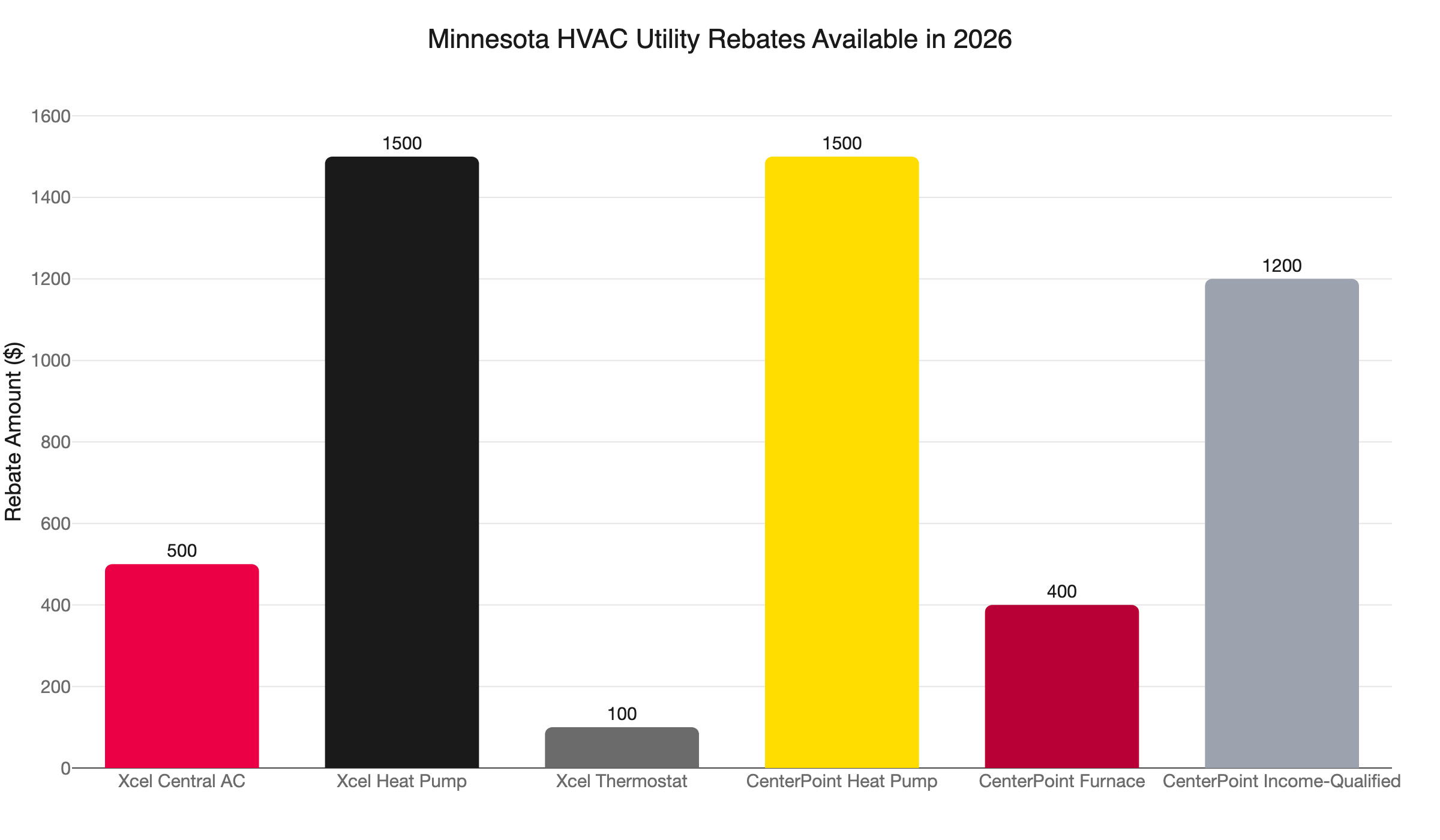
Minnesota HVAC Utility Rebates Available in 2026
## The HVAC Inspection Checklist Every Minnesota Buyer Needs
Buying a home in the Twin Cities means buying its heating and cooling system too. That system is one of the most expensive components in any house, and Minnesota's climate makes it non-negotiable.
A complete HVAC inspection checklist when buying a house in Minnesota protects you from two risks. The first: walking into a replacement you did not budget for. The second: missing a safety issue the standard home inspection cannot catch, like a cracked heat exchanger.
This guide covers what to look for before the inspection appointment, what the inspector's report actually tells you, and how to use what you find at the negotiating table.
## What Does the Home Inspector Actually Check?
A standard home inspector operates the system, observes function, checks visible ductwork, verifies thermostat response, and notes filter condition. They cannot perform combustion analysis, refrigerant charge testing, or static pressure measurement. Those require a licensed HVAC technician - a separate service.
This is the gap most Minnesota buyers miss. The standard inspection tells you whether the system runs. It does not tell you whether the heat exchanger is cracked, the refrigerant charge is correct, or the ductwork moves air into the rooms you will actually live in.
The [HVAC Inspection Guide from InspectorWatch](https://www.inspectorwatch.com/blog/hvac-inspection-guide) notes that a home inspector's scope is visual and operational - a pass/fail starting point, not a final answer on system condition.
If the system is aging or the inspector flags a concern, schedule a dedicated HVAC pre-purchase inspection with a licensed technician before you close. It costs a few hundred dollars. Finding a cracked heat exchanger or refrigerant leak after closing costs much more.
## What Should You Look for Before the Inspection Even Starts?
You can gather critical HVAC clues during the showing itself, before spending a dollar on inspections. Walk the utility room and step outside to the condenser unit. Both give you information that shapes your offer before anyone schedules an appointment.
**At the furnace:**
- Find the data plate and note [the manufacture date](/blog/how-to-find-hvac-system-age-manufacture-date-minnesota/). Gas furnaces [typically last 15-30 years](https://www.inspectorwatch.com/blog/hvac-inspection-guide). A 22-year-old furnace warrants a dedicated inspection even if it currently runs.
- Look through the observation window while the burner fires. A healthy flame is blue. Yellow or orange signals incomplete combustion and a potential CO production issue.
- Check the heat exchanger for rust. Rust means combustion gases can mix with conditioned air. That is a CO hazard requiring replacement, not repair.
- Pull the filter out if you can reach it. A severely clogged filter signals deferred maintenance and can cause heat exchanger overheating.
- Check visible flexible ductwork in the utility room. Collapsed or disconnected sections mean the system conditions unconditioned space instead of the living areas you will use.
- Look at the flue pipe. Missing sections or obvious deterioration allow combustion gases, including CO, to enter the living space.
**At the outdoor condensing unit:**
- Find the data plate. Write down the manufacture date and the refrigerant type. These two fields change the value math on the entire system.
- Look for bent fins, corrosion, or refrigerant line damage.
- Note clearance around the unit. Overgrown shrubs or a fence too close restrict airflow and shorten equipment life.
If you see a yellow flame, heat exchanger rust, or a disconnected flue at the showing, you have a serious concern before the inspector arrives. Factor that into your offer price.
## How to Read the Data Plate on the AC Unit
The data plate on the outdoor condensing unit takes ten seconds to read and can shift your entire negotiating position on a home.
**Manufacture date:** Central AC systems typically last [12-17 years](https://www.inspectorwatch.com/blog/hvac-inspection-guide), and shorter in high-demand climates like Minnesota. A unit manufactured in 2008 is now 18 years old. Budget for replacement regardless of whether it ran during the inspection.
**Refrigerant type:** Look for the field labeled "Refrigerant" or "Refrigerant Type." If it says R-22 or HCFC-22, the math on the home changes significantly.
R-22 (Freon) domestic production and import ended January 1, 2020. Supply has been depleting since, and costs have risen sharply. [A full R-22 recharge including labor can run $660-$1,900](https://todayshomeowner.com/hvac/cost/r-22-freon-cost/), with some supply-house pricing moving higher as stocks thin out. Any R-22 unit that needs refrigerant work should be treated as end-of-life. It cannot be retrofitted to modern refrigerants without replacing the compressor and major components.
If the data plate says R-22, request a seller credit that covers full system replacement. Or factor that cost directly into your offer price.
New systems manufactured since January 1, 2025 use R-454B, the EPA-approved successor to R-410A. A unit from 2020 or later running on R-410A is in solid shape from a refrigerant standpoint.
## What Are the Red Flags on a Walk-Through?
High-severity items are CO hazards or imminent failures that need immediate follow-up. Moderate items indicate deferred maintenance or shortened system life. Both categories warrant documentation and follow-up questions before you close.
**High severity:**
- Yellow or orange burner flame (incomplete combustion; possible CO production)
- Rust on the heat exchanger (CO hazard; replacement required)
- Missing or deteriorated flue pipe sections (combustion gases can enter the living space)
- R-22 on the data plate of a visibly aging AC unit
**Moderate to high severity:**
- Disconnected or collapsed flex duct (system conditions unconditioned space)
- Evidence of refrigerant leaks (oil staining at line sets or coil)
- No maintenance records available from the seller
- Audible grinding, banging, or squealing from the air handler during operation
**Moderate severity:**
- Severely dirty or clogged filter
- Visibly overgrown condenser unit
- Mismatched equipment ages (new furnace, 18-year-old AC coil)
- Ductwork field-repaired with duct tape instead of mastic sealant
Do not underestimate the filter. As [one industry guide notes](https://www.inspectorwatch.com/blog/hvac-inspection-guide), a well-maintained 15-year-old system may have years of useful life remaining, while a neglected 8-year-old system can be near failure. The filter tells you about owner care across the entire system.
## Which Minnesota Cities Require Point-of-Sale HVAC Certification?
Several Twin Cities municipalities require a heating system inspection or certification before a home can change hands - separate from and in addition to the standard home inspection. Failing to satisfy these requirements can delay or block your closing.
**Richfield** requires HVAC certification by a licensed journeyman or master heating installer at the point of sale.
**St. Louis Park** requires a furnace and heating equipment inspection whenever an owner intends to sell or transfer ownership.
**Bloomington** requires a time-of-sale housing inspection report for all single- and two-family dwellings.
Most Twin Cities metro cities also require the heating system to maintain 68 degrees Fahrenheit. That is measured five feet above the floor in any habitable room. A system that cannot meet that threshold fails the requirement.
These requirements can work in your favor. If certification is required and the system fails, the seller must remediate before closing or credit you for the work. Verify current requirements directly with each city's housing or licensing office. Requirements change, and the cities are the authoritative source.
## Did the Previous Owner Pull a Permit for HVAC Work?
Ask the seller in writing: "Was the HVAC system ever replaced or significantly repaired? Was a permit pulled? Can I see the permit closeout?" All three questions matter, and asking in writing creates a record.
Any significant HVAC installation, repair, or alteration in Minnesota [requires a mechanical permit](/blog/hvac-permit-when-required-minnesota/). A contractor who skips the permit creates exposure that follows the home to the next owner. Unpermitted work can void manufacturer warranties, create liability at [your own future sale](/blog/new-hvac-home-resale-value-minnesota/), and disqualify the new owner from utility rebates.
The permit question also reveals installer quality. A company that pulled permits, passed inspections, and closed them out operated by the book. A company that skipped the permit is a red flag on installation quality - regardless of how the system runs today.
If the seller cannot produce a permit closeout and the system was replaced or modified, search the city's building permit records online before you close. Most municipalities have searchable databases.
## How Does a Failing HVAC System Affect Your Offer Price?
A system that needs replacement is a negotiating opportunity when you bring specific dollar figures to the table. Vague concerns about system age are easy to dismiss. A documented net cost is not.
Here is the framework:
1. Get a replacement quote from a licensed contractor before your contingency expires. In the Twin Cities, a mid-tier central AC installation runs approximately $7,500-$10,400. A full HVAC replacement - central AC and furnace together - typically runs $13,600-$18,200 installed. Our [AC replacement cost guide for Minnesota](/blog/ac-replacement-cost-minnesota/) covers current pricing.
2. Identify the utility rebates you qualify for as the buyer making the purchase. See the rebate section below.
3. Subtract available rebates from the replacement quote. That net figure is your seller credit request.
The efficiency math reinforces the case. An old 60% AFUE furnace wastes 40 cents of every gas dollar. A new 96% AFUE unit can cut that loss by roughly two-thirds. An older central AC may run at 8-10 SEER - [roughly half the efficiency](https://www.inspectorwatch.com/blog/hvac-inspection-guide) of a new unit at the current federal minimum of 15 SEER2. That gap hits your utility bill every month you own the home.
For a broader look at repair versus replacement decisions on aging equipment, see our guide on [when to repair versus replace your heating and cooling system](/blog/repair-or-replace-which-should-you-do-when-your-heating-and-cooling-system-breaks-down/).
## When to Schedule an HVAC Pre-Purchase Inspection in Minnesota
Book a licensed HVAC technician - separate from your home inspector - when any of these apply:
- The furnace is 15 years old or older
- The AC system is 12 years old or older
- The home inspector flagged any HVAC concern in the report
- You spotted a red flag at the showing: yellow flame, heat exchanger rust, R-22 on the data plate, or a severely clogged filter
- The seller cannot produce maintenance records
- The home is in Richfield, St. Louis Park, or Bloomington, where point-of-sale certification may apply
- HVAC equipment was replaced or significantly repaired, and no permit record exists
A dedicated HVAC inspection includes combustion analysis, refrigerant charge measurement, static pressure testing, and a full ductwork evaluation. This is the layer the standard home inspection legally cannot provide. It surfaces the problems that turn a running system into a replacement in year two.
Schedule the inspection during your contingency period. You need findings in hand before the contingency expires so you have time to negotiate.
Northern One Hour is locally owned and operated in Ramsey, Minnesota. We provide pre-purchase HVAC inspections throughout the Twin Cities metro and back every visit with our guarantee: "Always On Time… Or You Don't Pay a Dime!(R)" Call (763) 260-6662 or book online to schedule.
## What Rebates Are Available If You Replace HVAC After Buying?
The rebate stack in 2026 makes a post-purchase replacement more manageable than the sticker price suggests. Most Twin Cities homeowners can claim $400-$1,500 from their utility depending on equipment type, with higher amounts for cold-climate heat pumps and income-qualified households.
**Xcel Energy customers (most Minneapolis, St. Paul, and suburban metro service areas):**
- Up to $500 for qualifying central AC replacement
- Up to $1,500 for a cold-climate heat pump
- Up to $100 for a qualifying smart thermostat
**CenterPoint Energy customers:**
- Up to $1,500 for a ducted air-source heat pump in an existing home
- Up to $400 for a 95%+ AFUE gas furnace
- Up to $1,200 for income-qualified households
Ductless mini-split systems can qualify for up to $2,000 through some Xcel programs, per current [Minnesota heat pump rebate tracking](https://heatpumpnetwork.com/heat-pump-rebates-minnesota/). CenterPoint program details are covered in the [Step-by-Step Guide to Minnesota Energy Rebates for HVAC Upgrades](https://www.jsmithhvac.com/step-by-step-guide-to-minnesota-energy-rebates-for-hvac-upgrades/).
One critical note: the IRA Section 25C federal tax credits - which had covered up to $2,000 for heat pumps and $600 for furnaces - expired December 31, 2025. They do not apply to 2026 installations. Verify current federal law before factoring any federal credit into your budget.
For the full current picture of active programs, our [Minnesota heat pump rebates and incentives guide](/blog/minnesota-heat-pump-rebates-tax-credits/) covers what is available and how to stack them.
## Questions to Ask the Seller Before Closing
Put these questions to the seller in writing before your contingency expires. A specific, document-backed answer is useful. A vague or deflected answer tells you something too.
- How old is the furnace? How old is the AC unit?
- Has the system received annual service? Can you provide service records?
- Has any HVAC equipment been replaced or significantly repaired? When?
- Was a mechanical permit pulled for that work? Can you provide the permit closeout?
- Has the system had a refrigerant recharge? How many times?
- Are there rooms that do not heat or cool well?
- What company installed the current system, and did they pull all required permits?
Maintenance records are the most revealing thing a seller can share. An annual service receipt from a licensed contractor - showing filter changes, combustion analysis, and refrigerant checks - tells you the system was cared for. A stack of emergency repair invoices tells a different story. No records at all says the most.
When you are ready for a pre-purchase HVAC inspection in the Twin Cities, call Northern One Hour at (763) 260-6662 or book online. Our team is locally owned and operated, and we show up when we say we will.
---
# HVAC Help With Spring Allergies in the Twin Cities
URL: https://northernonehour.com/blog/hvac-spring-allergy-relief-twin-cities/
Published: 2026-08-07 | Category: Indoor Air Quality
Minnesota's pollen season is 27 days longer than in the 1970s. Learn how filtration, humidity, and ERV ventilation work together for allergy relief.
Key Takeaways
- Minnesota's tree pollen season peaks April through late May. Birch, oak, juniper/cedar, and mulberry are the primary offenders in the Twin Cities metro.
- MERV 13 is the EPA's recommended standard for residential indoor air quality. MERV 11 is the next-best option if your system can't handle the added pressure drop.
- The meaningful filtration upgrade for allergy sufferers happens at 1-3 microns, where pollen fragments and fine mold spores live. MERV 11 captures 65% of particles at that range; MERV 13 captures 85% or more.
- Opening windows in April floods your home with pollen at peak season. An energy recovery ventilator (ERV) delivers fresh filtered air without that cost.
- Minnesota homes run very dry in winter. By mid-April, a whole-house humidifier still on its winter setting can push indoor humidity past 50%, encouraging mold and dust mites.
- Your ERV has its own intake filter, separate from your furnace filter. Inspect it monthly from April through June.
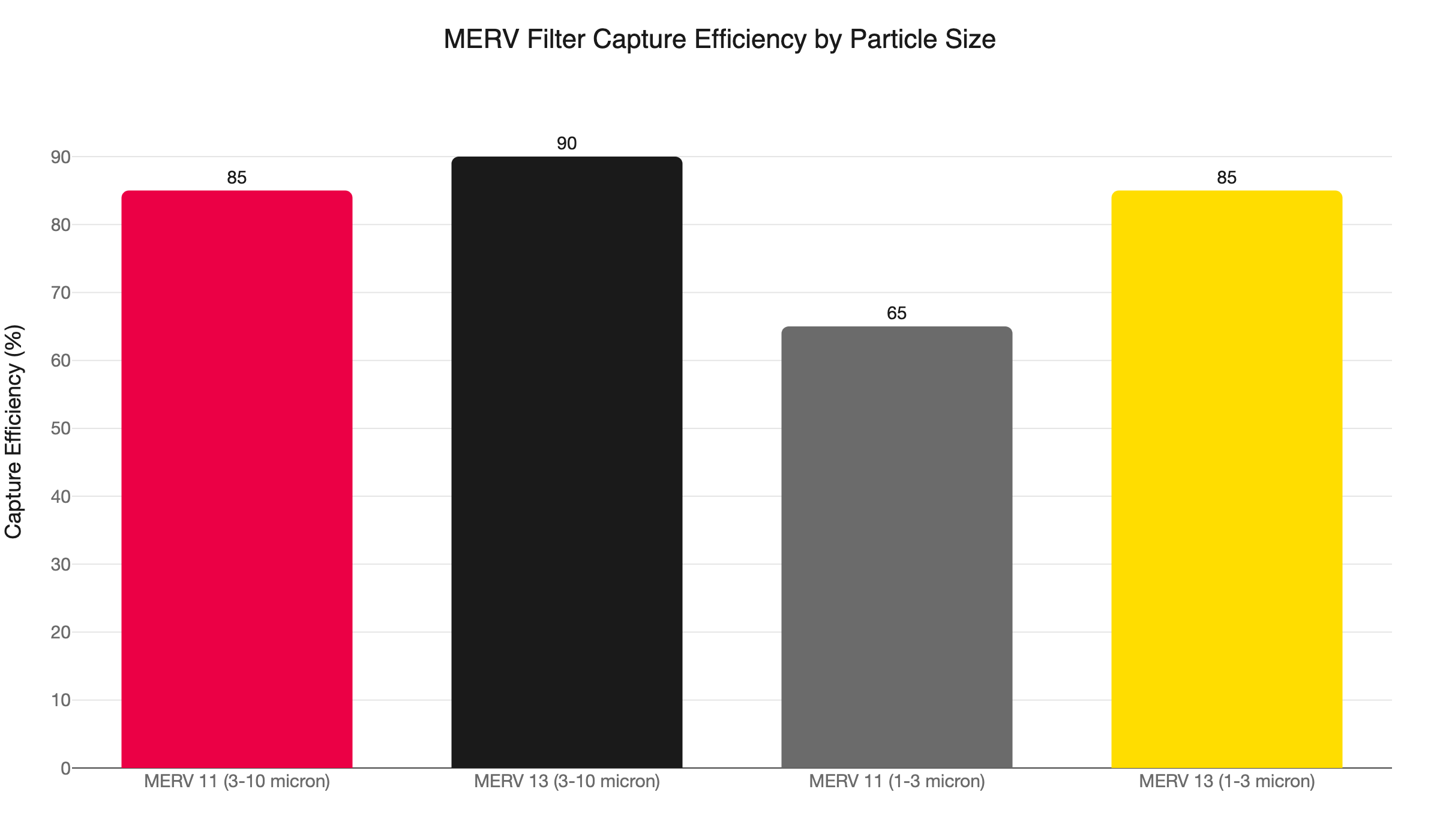
MERV Filter Capture Efficiency by Particle Size
## HVAC Help With Spring Allergies in the Twin Cities
Minnesota's allergy season is now 27 days longer than it was in the 1970s. For Twin Cities homeowners, that means more weeks of birch, oak, and tree pollen in the outdoor air. If you're looking for HVAC help with spring allergies in the Twin Cities, one fix won't be enough. Filtration, humidity control, and fresh-air ventilation all interact. Address only one and the others can work against you.
This post explains how the three systems stack together, what the research actually says about MERV ratings, and why your ERV's intake filter may matter just as much as your furnace filter during pollen season.
## Why Does Minnesota's Pollen Season Hit So Hard?
**The short answer:** Minnesota springs arrive late but intensify quickly. Birch and oak pollen release is compressed into April and May, which happens to coincide with the most inviting outdoor weather of the year. Climate change has pushed the season's start earlier, adding weeks to the exposure window on both ends.
The Twin Cities' dominant tree pollens are oak, birch, juniper/cedar, and mulberry. Season runs from early April through late May for most of them. Pollen from Minneapolis monitoring stations can travel [100 to 150 miles](https://data.web.health.state.mn.us/pollen_charts), which means your neighborhood's tree mix offers limited protection from regional pollen loads.
The season has grown measurably harder. [Minnesota's allergy season is now 27 days longer than it was in the 1970s](https://www.startribune.com/three-more-weeks-of-misery-allergy-season-grows-with-warming-weather-in-minnesota/601239522), driven by warming temperatures that push the spring bloom earlier. Elevated pollen days in Minneapolis have trended upward over the long-term monitoring record.
The health stakes are real. About [1 in 13 Minnesota adults has asthma](https://www.health.state.mn.us/communities/environment/climate/air.html), and pollen is a direct trigger for allergy-driven attacks. Twin Cities allergists have seen more patients arriving on maximum doses of antihistamines and nasal steroids without adequate relief.
Pollen is not just an outdoor nuisance. It enters homes through open doors, gaps around windows, and on clothing. Once inside, particles settle on surfaces and re-enter the air every time something disturbs them. Indoor air should be a refuge from the outdoor load. Your HVAC system is what makes it one.
## What Do MERV Ratings Actually Filter?
**The short answer:** MERV ratings describe a filter's capture efficiency across three particle size ranges. For allergy sufferers, the critical range is 1 to 3 microns, where pollen fragments and fine mold spores live. MERV 11 captures 65% of particles in that range; MERV 13 captures 85% or more. That gap matters most if you have severe allergies or asthma.
Most filter guides stop at "higher is better." The physics matter more than the number.
Birch pollen whole grains measure 10 to 40 microns. Even a MERV 8 filter catches most of those. The real problem is pollen fragments, which break off the grain and measure under 3 microns. Those fragments are small enough to reach the lower airways and trigger more severe inflammatory responses.
[EPA indoor particulate matter data](https://www.epa.gov/indoor-air-quality-iaq/indoor-particulate-matter) breaks the comparison down clearly:
- At 3 to 10 microns (whole pollen grains), MERV 11 captures 85%+ and MERV 13 captures 90%+. The gap is small.
- At 1 to 3 microns (pollen fragments, fine mold spores), MERV 11 captures 65% and MERV 13 captures 85%+. That 20-point difference is where the meaningful upgrade lives for [severe allergy and asthma sufferers](/blog/hvac-asthma-triggers-management-twin-cities/).
The EPA recommends MERV 13, or "as high a rating as your system fan and filter slot can accommodate," for residential IAQ. Running your furnace fan continuously with a MERV 13 filter can reduce indoor fine particle concentrations by roughly 50%. Even a lower-efficiency filter run continuously reduces particles by about 24%, per the same EPA data.
That last point matters: continuous fan operation multiplies the benefit of any filter. Most thermostats let you set the fan to "on" rather than "auto." During peak pollen weeks in April and May, consider switching to continuous mode.
One caution before you upgrade: check with a technician first. Some older or smaller air handlers can't push enough airflow through a denser filter. That restriction strains the blower motor and can reduce system efficiency. If your system isn't rated for MERV 13, MERV 11 is a genuine improvement that usually fits without airflow issues.
For a deeper look at filter types and supplemental air purification, our [guide to air purifiers vs. filters and MERV ratings](/blog/air-purifiers-vs-filters-merv-ratings-explained/) covers the tradeoffs in full.
Also: change your filter more often in spring. April through June, a monthly swap is appropriate for most homes. Filters load faster when pollen counts are high, and a loaded filter cuts both air passes and capture efficiency.
## Should You Open Your Windows in April?
**The short answer:** No. The Twin Cities' most pleasant spring weeks coincide exactly with peak birch and oak pollen release. Opening windows in April or May floods your home with the particles your filtration system is designed to remove. A MERV 13 filter on your furnace does nothing for pollen that enters through an open window instead of the air handler.
The window-opening trap is understandable. After months of sealed, heated air, the first 55-degree evening feels like relief. The instinct to let fresh air in is natural and reasonable.
The problem is timing. Minnesota's tree allergy season [starts late March to early April](https://www.wyndly.com/blogs/allergy-season/minnesota) and peaks through May. Birch and oak follow maple and elm, reaching maximum pollen counts during exactly the weeks when open windows feel most welcome.
When you open a window during a high-pollen day, airborne particles settle on furniture, floors, and bedding. They bypass your HVAC system entirely. The pollen load inside your home climbs regardless of what your furnace filter is doing.
The answer is mechanical fresh-air ventilation, not an open window. That is what an ERV provides.
## What Is an ERV, and Do You Need One?
**The short answer:** An ERV brings continuous fresh outdoor air into your home while exhausting stale indoor air. It recovers 70 to 80% of the heat energy in the outgoing air, so ventilation doesn't spike your heating bill. The incoming air passes through a dedicated filter before it enters your living space, blocking pollen without the trade-off that comes with open windows.
Minnesota's newer homes are built tight. Insulation and air-sealing requirements have increased significantly over the past two decades. A well-sealed home doesn't exchange air naturally the way older, leakier homes do. That is good for energy efficiency and a challenge for indoor air quality. Without mechanical ventilation, stale air, CO2, and indoor pollutants concentrate.
An ERV addresses this directly. It works as a controlled lung for your home: fresh filtered air in, stale air out, with a heat exchanger core that recovers warmth from the exhaust stream and transfers it to the incoming air. Department of Energy data shows ERVs recover 70 to 80% of the heat energy in outgoing air, making continuous ventilation practical even through Minnesota winters.
Here is the part most homeowners miss: the ERV has its own dedicated intake filter, separate from your main furnace filter. [DOE Building America guidance](https://basc.pnnl.gov/home-improvement-expert/checklists/balanced-hrverv) specifies that fresh-air intakes on balanced ERV/HRV systems must be filtered at MERV 11 or higher. That intake filter has its own maintenance schedule and is routinely overlooked.
During high-pollen periods, the ERV's intake filter can load faster than your furnace filter. In the Twin Cities from April through June, inspect the ERV intake filter monthly. A clogged intake filter cuts fresh-air delivery and can create slight negative pressure that pulls unfiltered air in through gaps around seals.
If you don't have an ERV and your home was built after roughly 2000, a ventilation assessment is worth scheduling. Our [guide to HRV and whole-home ventilation in Minnesota](/blog/hrv-whole-home-ventilation-minnesota/) explains the differences between HRV and ERV units and which situations favor each.
## How Does Indoor Humidity Affect Spring Allergies?
**The short answer:** Below 30% relative humidity, airways dry out and allergy symptoms worsen. Above 50%, mold and dust mites thrive and add their own allergens to your indoor air alongside pollen. The EPA target is 30 to 50% RH. In Minnesota, hitting that range requires active seasonal adjustment, not a set-and-forget humidistat.
The humidity paradox in Minnesota homes plays out every spring.
Forced-air heating dries indoor air significantly. By February, many Twin Cities homes sit at 20 to 30% relative humidity. Static electricity increases, skin gets dry, and airways dry out. Many homeowners respond by installing a whole-house humidifier. That is the right call for winter comfort.
Spring changes the equation. Outdoor humidity starts rising in late March and climbs steadily through May. If a whole-house humidifier is still running at its winter setting, indoor RH can exceed 50% by mid-April.
The [EPA recommends keeping indoor humidity below 60%, ideally between 30% and 50%](https://www.epa.gov/mold/brief-guide-mold-moisture-and-your-home), to prevent mold growth. At or above 50% RH, dust mites also thrive. Both mold spores and dust mite particles are year-round indoor allergens that recirculate on every air pass through your system.
Here is the compounding scenario: your home reaches peak pollen season while the humidifier is still running at winter output. Indoor RH exceeds 50%. Mold spores and dust mite particles join the pollen in your indoor air. Your MERV 13 filter is working against all three simultaneously, but continuous indoor allergen generation is harder to manage than outdoor pollen that enters through gaps alone.
The fix requires attention, not new equipment. Check your humidistat in April. As outdoor temperatures and humidity rise, reduce the humidifier's output or shut it off entirely until fall. A smart thermostat with a humidity sensor can automate this. Set a target of 40 to 45% RH and check the reading weekly through spring.
If your home tends toward high indoor humidity even without a humidifier running, our post on [whole-home dehumidifiers in the Twin Cities](/blog/whole-home-dehumidifiers-in-the-twin-cities-comfort-fix-for-sticky-summer-days/) explains when dehumidification makes sense and what sizing looks like.
## How the Three Systems Work Together
Filtration, humidity control, and fresh-air ventilation are usually presented as three separate tips. They work as a system, and each affects how well the others perform.
Your furnace filter captures airborne particles on every pass through the air handler. The filter's capture rate assumes air is moving through it. Running the fan continuously increases the number of passes per hour. A MERV 13 filter running continuously removes significantly more total particles than the same filter running only when heating or cooling is called for.
Your ERV delivers continuous filtered fresh air. Without it, your options in April are open windows or sealed indoor air. Open windows bypass your filtration system entirely. Sealed indoor air accumulates CO2 and indoor pollutants. The ERV is the third option: outdoor air filtered at the intake, pre-conditioned through the heat exchanger core, delivered continuously to your living space.
Your humidity control prevents secondary allergen generation. Even if your MERV 13 filter catches 85% of pollen fragments on each pass, mold spores and dust mite particles from a humid indoor environment recirculate on every subsequent pass. Managing humidity removes the source rather than endlessly filtering the output.
When one part of the stack fails, it degrades the others. A clogged ERV intake filter means reduced fresh-air delivery and possible unfiltered infiltration around seals. A humidifier running past its season means continuous mold spore generation that your filter has to work against. A furnace fan running on "auto" means fewer total air passes and a lower effective capture rate regardless of filter rating.
The [EPA's framework for indoor air quality](https://www.epa.gov/indoor-air-quality-iaq/factsheet-what-indoor-air-quality) identifies three core levers: source control, ventilation, and filtration. People spend roughly 90% of their time indoors, and indoor pollutant concentrations are often several times higher than outdoors. All three levers working together outperform any single one pulled hard.
## Getting HVAC Help With Spring Allergies in the Twin Cities
If your allergy symptoms are significantly worse indoors than outdoors during spring, or if you or your family has asthma and notices more attacks in April and May, your home's IAQ stack may need attention.
Here are the specific signs it's time to call a pro:
- You don't know what MERV rating your current furnace filter is
- Your filter is MERV 8 or lower and hasn't been upgraded
- Your home was built after 2000 but doesn't have an ERV or HRV
- Your whole-house humidifier has been running since October with no seasonal adjustment
- You don't know where your ERV's intake filter is or when it was last replaced
- Your furnace fan runs on "auto" and you haven't tried continuous mode during pollen season
Our [indoor air quality services](/indoor-air-quality/) include filtration assessment, humidifier and dehumidifier service, and ERV/HRV inspection and installation. We're locally owned and operated in Ramsey, and we serve the Twin Cities metro: Minneapolis, St. Paul, Blaine, Maple Grove, Plymouth, Brooklyn Park, Woodbury, and Bloomington.
We work on the on-time promise: "Always On Time… Or You Don't Pay a Dime!(R)." You get a confirmed arrival window, not a four-hour wait. Our technicians know how Minnesota's spring season affects your home's air.
Call **(763) 260-6662** or book online to schedule your IAQ assessment before pollen season peaks.
---
# Xcel Energy CenterPoint Energy HVAC Rebates Minnesota 2026
URL: https://northernonehour.com/blog/xcel-centerpoint-hvac-rebates-minnesota/
Published: 2026-08-07 | Category: HVAC
The 25C federal credit is gone for 2026. Here is what Xcel Energy and CenterPoint Energy HVAC rebates in Minnesota still put in your pocket.
Key Takeaways
- The federal 25C Energy Efficient Home Improvement Credit expired December 31, 2025. Equipment installed in 2026 earns no federal credit.
- Xcel Energy offers up to $2,000 for a cold-climate heat pump, $400 for a qualifying central AC, $500 for a high-efficiency furnace, and $50 for a smart thermostat.
- CenterPoint Energy offers up to $1,100 for a dual-fuel heat pump and $400 for a high-efficiency gas furnace. Income-qualified households may get up to $1,200 on a furnace.
- CenterPoint will not rebate a standalone electric heat pump. The system must pair with a gas furnace as backup heating.
- Xcel and CenterPoint rebates stack. A dual-fuel heat pump project earns up to $3,100 from both utilities combined, or $3,700 with the insulation bonus.
- Minneapolis homeowners can add the Green Cost Share program on top of utility rebates: up to $5,000, or up to $14,000 in Green Zone neighborhoods.
- Minnesota state HEAR/HOMES rebates exist but may not be active yet. Verify at mn.gov/commerce before counting on them in your project budget.
- All rebates are post-installation. Keep your invoice, model number, and serial number.
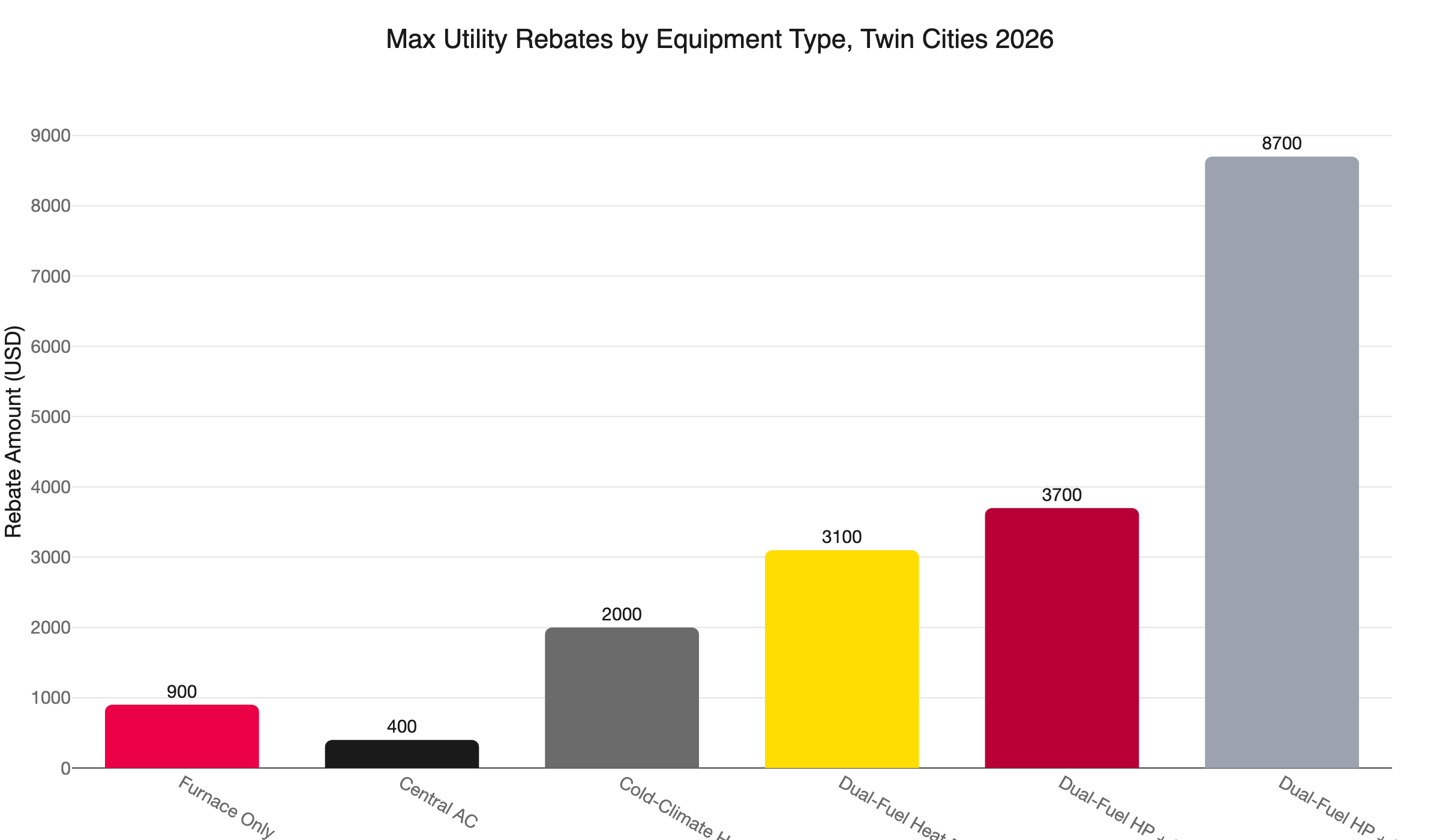
Max Utility Rebates by Equipment Type, Twin Cities 2026
## The 2026 Rebate Landscape for Twin Cities Homeowners
The federal 25C tax credit is gone. Congress eliminated it at the end of 2025, and no replacement is on the books. For Twin Cities homeowners planning a heating or cooling upgrade in 2026, the question has shifted: what is actually available?
The answer is more than you might expect. Xcel Energy and CenterPoint Energy both run funded efficiency rebate programs under Minnesota law. Those programs are still active. They [stack with each other](/blog/stacking-hvac-rebates-tax-credits-federal-state-utility-minnesota/). A qualifying project can put thousands of dollars back in your pocket, even without any federal credit.
This post shows exactly what is available, what stacks with what, and what the math looks like on a real install.
## What Happened to the Federal 25C Tax Credit?
**The credit is gone for 2026 installs. The One Big Beautiful Bill Act (P.L. 119-21), signed July 4, 2025, ended the 25C Energy Efficient Home Improvement Credit for equipment placed in service after December 31, 2025. If you installed qualifying equipment before that date, you can still [claim the credit](/blog/ira-tax-credits-high-efficiency-furnace-ac-minnesota/) on your [2025 federal tax return](/blog/heat-pump-tax-credit-how-to-claim-form-5695-minnesota/).**
[Energy Star confirms](https://www.energystar.gov/about/federal_tax_credits/central_air_conditioning) the program ran from January 1, 2023, through December 31, 2025. Before expiration, it worked like this: 30% of cost, up to $2,000 for heat pumps. Up to $600 each for a qualifying central AC or furnace. A combined annual maximum of $3,200.
Any article still citing a "federal credit" on a 2026 heat pump purchase is outdated.
One nuance that caught homeowners off guard last year: the "placed in service" date controls eligibility, not the contract date. You signed in December 2025. Your system was installed in January 2026. You get zero federal credit. Installation must be complete within the tax year.
The 25C credit also had a sibling. The 25D Residential Clean Energy Credit covered geothermal heat pumps at 30% of cost. That credit is also gone for equipment placed in service after December 31, 2025.
This is a real change in the economics of a new HVAC system. But Xcel Energy and CenterPoint Energy rebates are unaffected by federal legislation. Minnesota's Conservation Improvement Program law requires investor-owned utilities to fund efficiency programs. The rebates are structurally stable, not a one-year promotion.
## What Does Xcel Energy Offer for HVAC Rebates in Minnesota?
**Xcel offers up to $2,000 for a cold-climate heat pump, $400 for a qualifying central AC, $500 for a high-efficiency furnace, and $50 for a smart thermostat. A $600 bonus applies when the same project includes qualifying insulation or air sealing.**
Xcel Energy serves the Twin Cities metro as both an electric and gas utility. Its service area covers Minneapolis, St. Paul, and most surrounding suburbs. The rebate structure below comes from [the Xcel Energy rebate aggregator](https://energyrebatecalculator.com/utility/xcel-energy). Verify current amounts at xcelenergy.com/rebates before you sign a contract.
- **Cold-climate air-source heat pump:** up to $2,000
- **Central AC:** $400
- **High-efficiency gas furnace:** $500
- **ENERGY STAR smart thermostat:** $50
- **Insulation/air-sealing bonus:** $600, when done in the same project as a qualifying heat pump
The cold-climate designation matters in Minnesota. Twin Cities winters regularly drop below zero. Standard heat pumps lose heating capacity at those temperatures. Cold-climate models maintain rated output down to -13°F or colder. Xcel's rebate specifically rewards the equipment that holds up through a Minnesota January.
Xcel also runs an AC Rewards demand-response program. Enroll a qualifying AC or heat pump and earn an additional $25 to $40 in annual bill credits. That program is stackable on top of the equipment rebate and runs separately.
All Xcel rebates are post-installation. You need the contractor invoice, the model number, and the serial number. Some contractors file the rebate application on your behalf. Ask about this when you get quotes.
## What Does CenterPoint Energy Offer?
**CenterPoint's primary HVAC rebate is up to $1,100 for a dual-fuel heat pump paired with a high-efficiency gas furnace. A gas furnace alone earns $400 standard, or up to $1,200 for income-qualified households.**
CenterPoint Energy is the primary gas utility for most of the Twin Cities. Most homes in the metro use Xcel for electricity and CenterPoint for natural gas. That dual-utility setup creates the stacking opportunity.
CenterPoint's rebate structure, [per a contractor source covering both utilities](https://furnace.direct/blogs/news/xcel-energy-centerpoint-furnace-rebates-minnesota-efficiency-programs):
- **Dual-fuel heat pump (existing home):** up to $1,100
- **Dual-fuel heat pump (new construction):** $400
- **High-efficiency gas furnace (standard):** $400
- **High-efficiency gas furnace (income-qualified):** up to $1,200
One number to watch: some sources cite CenterPoint's heat pump rebate at up to $1,500. Until CenterPoint's own page confirms the higher figure, use $1,100 as the conservative estimate. Verify directly at centerpointenergy.com before you build a budget around either number.
## The CenterPoint Dual-Fuel Rule: What It Means for You
This restriction catches homeowners off guard more than any other part of the rebate landscape.
CenterPoint does not rebate standalone electric heat pumps. If your goal is to leave gas behind entirely and run a fully electric heat pump system, CenterPoint will not contribute a rebate. [Homeenergybasics.com's Minnesota coverage](https://homeenergybasics.com/heat-pumps/states/mn) confirms CenterPoint does not rebate mini-splits, ground-source systems, or any heat pump that replaces gas heating entirely.
To qualify for CenterPoint's heat pump rebate, the system must be:
- A heat pump set up in dual-fuel configuration
- Paired with a gas furnace rated at 92%+ AFUE as the backup heat source
- Configured to switch to the gas furnace at or below 40°F
This setup makes practical sense for Minnesota winters. On a day well below zero, the gas furnace carries the load efficiently. During fall and spring, the heat pump handles heating at a lower energy cost. The two systems work together rather than one replacing the other.
The dual-fuel restriction is not a design compromise. For many Twin Cities homes, it is the better long-term choice. Our winters go well below the temperature range where a standalone heat pump earns most of its efficiency advantage.
If you are weighing whether a heat pump is the right move for your home, our post on [heat pumps in Minnesota](/blog/heat-pumps-in-minnesota-are-they-a-good-fit/) covers the honest tradeoffs, including the low-temperature performance question.
## How Do You Stack Xcel Energy and CenterPoint Energy HVAC Rebates?
**A Twin Cities homeowner with Xcel for electricity and CenterPoint for gas can stack both rebates on a qualifying dual-fuel heat pump project. That combination yields up to $3,100 from both utilities. Add the Xcel insulation bonus and the total reaches $3,700.**
The math on a typical Twin Cities dual-fuel heat pump install:
- Xcel Energy cold-climate heat pump rebate: $2,000
- CenterPoint dual-fuel heat pump rebate: $1,100
- Combined utility rebates: **$3,100**
- Xcel insulation/air-sealing bonus (if included): $600
- Total with insulation bonus: **$3,700**
A new dual-fuel heat pump system can run $15,600 to $23,400 installed. The range depends on home size and equipment tier. A $3,700 rebate stack covers a meaningful slice of that cost.
This money arrives after installation. It is not a tax credit that waits until April. That timing matters if you are managing cash flow on a larger project.
The two rebates come from separate applications filed with each utility. Your contractor should know which forms to use and whether they handle submission as part of their standard service.
For a sense of what a new system costs before rebates are applied, our [furnace replacement cost guide for Twin Cities homeowners](/blog/furnace-replacement-cost-twin-cities/) has current installation ranges by system type and home size.
## What About Minneapolis? The Green Cost Share Program
**Minneapolis homeowners with 1-4 unit residential properties can access the Green Cost Share program on top of utility rebates. The program covers up to $5,000 for non-Green Zone properties, or up to $14,000 in Green Zone neighborhoods, administered by the Center for Energy and Environment (CEE).**
These funds stack on top of Xcel and CenterPoint rebates. A Minneapolis homeowner in a Green Zone doing a dual-fuel heat pump install with insulation could reach up to $17,700 in combined utility and city rebates. That is before any state programs enter the picture.
The program is first-come, first-served. Funding does not run indefinitely. Verify current availability and application requirements at minneapolismn.gov/government/programs-initiatives/environmental-programs/green-cost-share/ before you start the project.
Homeowners in Blaine, Maple Grove, Plymouth, Brooklyn Park, Woodbury, or Bloomington do not have access to the Minneapolis program. All the Xcel and CenterPoint rebates in this post still apply to those areas.
## Are Minnesota State HVAC Rebates (HEAR and HOMES) Available Yet?
**The honest answer: it is unclear. Published sources from mid-2026 conflict on whether Minnesota's state rebate programs are open and funded. Do not count on them when building your project budget. Verify the current status at mn.gov/commerce before signing a contract.**
Minnesota's Save Energy Minnesota umbrella includes three programs with significant potential amounts:
- **HEAR (High-Efficiency Electric Home Rebate Act):** up to $8,000 for income-qualified households
- **HOMES:** up to $8,000 based on whole-home efficiency improvements
- **State heat pump rebate:** up to $4,000
Income tiers for HEAR: below 80% of Area Median Income (AMI) means up to 100% of project cost covered. At 80-150% AMI, up to 50% of project cost. Above 150% AMI is not eligible for HEAR.
The conflict in the sources: [J Smith HVAC's May 2026 contractor guide](https://www.jsmithhvac.com/step-by-step-guide-to-minnesota-energy-rebates-for-hvac-upgrades/) describes the programs as active and in full swing. Homeenergybasics.com, updated July 2026, reports no confirmed launch date. We cannot resolve that discrepancy from published sources alone.
If the programs are live when you plan your project, the combined stack for income-qualified households gets very large. A Minneapolis Green Zone homeowner who qualifies for HEAR could stack utility rebates, city Green Cost Share funds, and state HEAR funds together. That combination could cover most of the project cost.
Treat the state programs as a possible bonus until mn.gov/commerce confirms they are open.
## What Efficiency Ratings Does Your Equipment Need?
**Furnaces need 92-97%+ AFUE. For the CenterPoint dual-fuel heat pump rebate, target SEER2 15.2+ and HSPF2 7.8+. Xcel's central AC rebate requires SEER2 16+. Xcel's heat pump rebate requires a cold-climate designation on the unit.**
Breaking it down by category:
**Furnaces:**
- Xcel furnace rebate: 92%+ AFUE minimum
- CenterPoint furnace rebate: 95%+ AFUE for the standard $400 rebate
- CenterPoint dual-fuel config backup furnace: 92%+ AFUE required
**Heat pumps:**
- Xcel cold-climate ASHP: cold-climate designation required. Your contractor will know which models on the approved list qualify.
- CenterPoint dual-fuel heat pump: SEER2 15.2+ and HSPF2 7.8+
**Central AC:**
- Xcel AC rebate: SEER2 16+ for the $400 tier
These ratings appear on the yellow Energy Guide label on qualifying equipment. Your installer verifies eligibility before filing the rebate application. When collecting quotes, ask each contractor to confirm which specific models meet the thresholds for both utility programs, not just one.
Missing a threshold is a hard disqualification. On the heat pump side, the difference between a qualifying cold-climate model and a standard one can mean $2,000 in Xcel rebates or zero. It is worth confirming before you sign a purchase agreement.
## How to Claim Your Rebates
Rebates are post-installation. The money arrives after the equipment is in and running, not before. The typical process:
1. **Get quotes on rebate-eligible equipment.** Ask specifically about cold-climate ASHP certification and AFUE ratings on every quote. A contractor who handles rebate paperwork as part of their service saves you time and reduces the chance of a missed form.
2. **Save all installation documentation.** You need the contractor invoice, the model number, and the serial number for every piece of equipment.
3. **File separately with Xcel and CenterPoint.** They use different application forms and have different processing timelines. One submission does not cover both utilities.
4. **Allow 6-8 weeks for Xcel processing.** CenterPoint's timeline varies by program.
5. **Apply for the Minneapolis Green Cost Share through CEE** if you own 1-4 unit residential property in Minneapolis and the program has open funding.
6. **Check mn.gov/commerce for HEAR/HOMES status** if your household falls below 150% AMI and you want to pursue state programs.
There is often a gap between the installation invoice date and when rebate checks arrive. Financing can bridge that window cleanly. Our [HVAC financing guide](/blog/hvac-financing-options-what-to-know-twin-cities/) covers what to ask for, including promotional interest-free periods that can span a full rebate processing cycle.
## Ready to Put These Savings to Work?
Xcel Energy and CenterPoint Energy HVAC rebates in Minnesota add up faster than most homeowners realize. The federal 25C credit is gone, but the utility rebate stack is real and meaningful. Knowing what you qualify for before you buy is the difference between capturing several thousand dollars in rebates and leaving them unclaimed.
If you are thinking through a [switch from a gas system to a heat pump](/blog/switching-gas-to-heat-pump-minnesota/), or want to understand what a dual-fuel setup would cost and earn in rebates for your specific home, our team can walk you through it.
Northern One Hour is locally owned and operated in Ramsey, MN. We serve homeowners across Minneapolis, St. Paul, Blaine, Maple Grove, Plymouth, Brooklyn Park, Woodbury, and Bloomington. We know which equipment qualifies for which programs, and we can help you see the real net cost before you commit.
Call us at (763) 260-6662 or book online to schedule your estimate. "Always On Time… Or You Don't Pay a Dime!(R)"
---
# Heat Recovery Ventilator Minnesota: Fresh Air, No Heat Loss
URL: https://northernonehour.com/blog/hrv-whole-home-ventilation-minnesota/
Published: 2026-08-06 | Category: Indoor Air Quality
Tight Minnesota homes trap indoor pollutants 2 to 5 times higher than outside. A heat recovery ventilator fixes this without wasting your furnace's heat.
Key Takeaways
- Modern Minnesota homes are built airtight to meet state energy codes. That design is good for your heating bill. It traps whatever is already in your air.
- [Indoor pollutant concentrations are often 2 to 5 times higher](https://www.epa.gov/report-environment/indoor-air-quality) indoors than outdoors. Tight construction without mechanical ventilation makes this worse.
- A heat recovery ventilator (HRV) pulls stale air out and brings fresh air in. It transfers 70 to 80 percent of the heat from the exhaust stream to the incoming air, so your furnace's work is not thrown away.
- For Minnesota's cold climate, an HRV is the right choice over an ERV. It transfers heat only, not moisture, which keeps [winter humidity manageable](/blog/humidistat-settings-winter-minnesota/).
- Minnesota Power offers a $300 rebate on qualifying installations. Minnesota Energy Resources offers $400. Xcel Energy runs ventilation incentives through its Conservation Improvement Program.
- Northern One Hour is locally owned and serves the Twin Cities metro. Call (763) 260-6662 or book online to schedule a consultation.
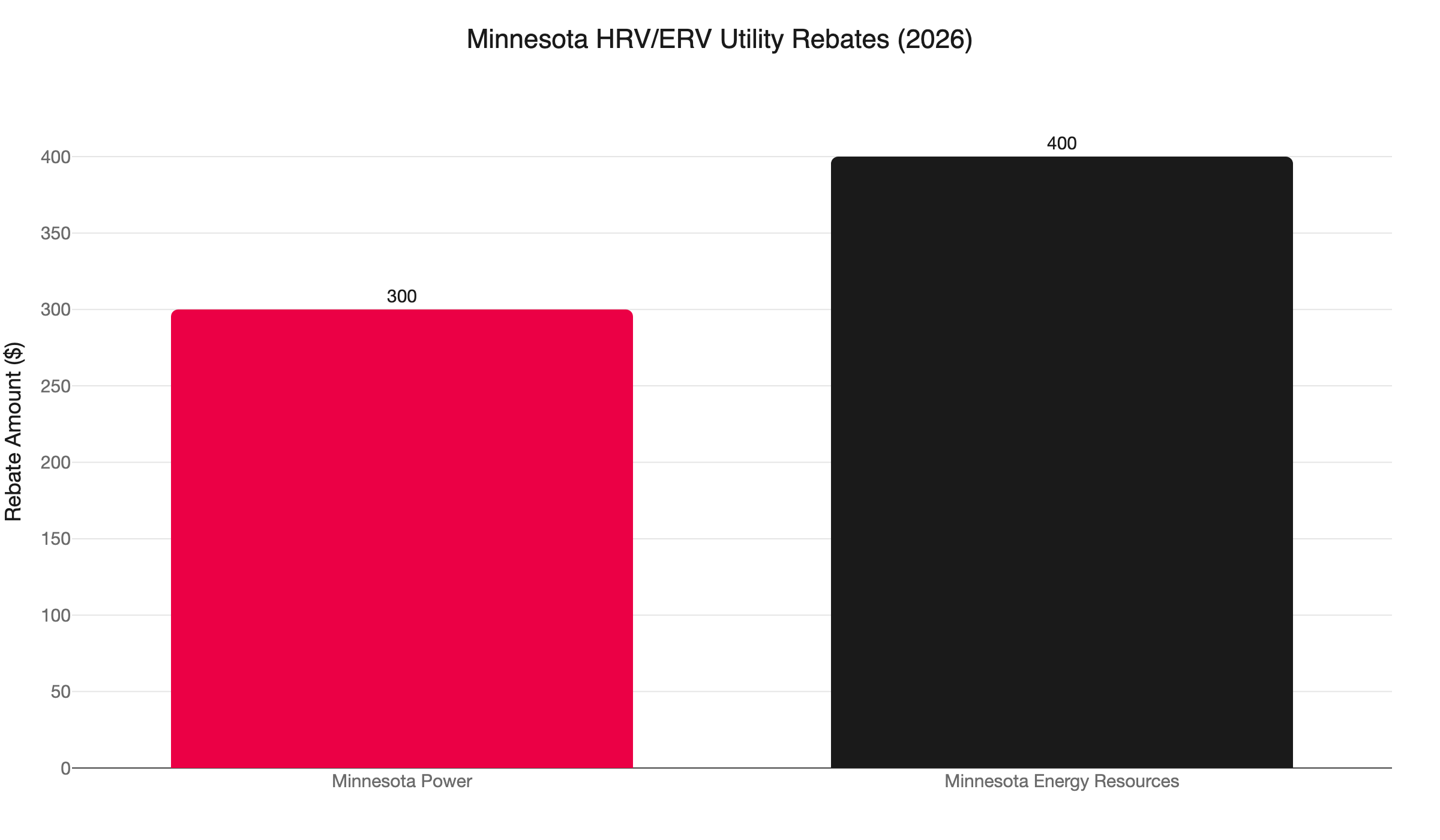
Minnesota HRV/ERV Utility Rebates (2026)
## Why Are Minnesota Homes Getting More Airtight?
**Short answer:** State building codes push new construction toward tight, low-leakage envelopes. That design is excellent for heating bills. It is less excellent for air quality, because the same envelope that holds heat in also holds contaminants in.
A generation ago, older Twin Cities homes leaked enough air that the house ventilated itself by accident. Gaps around windows, unsealed framing bypasses, and loose attic details let stale air drift out and fresh air drift in. Energy bills were higher, but the house was breathing.
That changed as energy codes tightened. [Minnesota falls in IECC Climate Zones 6 and 7](https://minnesotahvacauthority.com/minnesota-hvac-energy-codes), the coldest residential classifications in the continental United States. Design heating temperatures in northern Minnesota reach -30°F or below. Building to those conditions means sealing every gap and layer.
The state also requires residential gas furnaces to meet a minimum 92% AFUE, which is above the federal floor. A 92% furnace pays off only if the home is tight enough to hold the heat it produces. Builders tighten accordingly. Both forces push construction toward increasingly sealed envelopes.
The consequence for ventilation is direct. [Minnesota's code documentation](https://minnesotahvacauthority.com/minnesota-hvac-energy-codes) specifies that HVAC permits for tight new-construction homes must include mechanical ventilation equipment type, design airflow rates, and ASHRAE 62.2 compliance calculations. On a code-compliant tight build, an HRV is not a nice-to-have upgrade. For many homes, it is a permit requirement.
---
## What Happens to Air Quality Inside a Sealed Home?
**Short answer:** Pollutants build up. The [EPA documents](https://www.epa.gov/indoor-air-quality-iaq/introduction-indoor-air-quality) that homes designed to minimize air leakage can have significantly higher indoor pollutant levels, with symptoms that are easy to mistake for a cold, a virus, or everyday fatigue.
[Americans spend about 90 percent of their time indoors](https://www.epa.gov/report-environment/indoor-air-quality). Indoor pollutant concentrations are often 2 to 5 times higher than typical outdoor concentrations. The EPA specifically links this increase to "energy-efficient building construction when it lacks sufficient mechanical ventilation to ensure adequate air exchange."
The pollutants building up are not exotic chemicals. They are the everyday byproducts of living in a home: CO2 from breathing, volatile organic compounds from cleaning products and new materials, cooking fumes, pet dander, dust mites, and moisture from bathing and laundry. In a leaky old house, these disperse on their own. In a tight new house, they accumulate.
The most common symptoms of poor indoor air quality include:
- Eye, nose, and throat irritation
- Persistent headaches or dizziness
- Unexplained fatigue, especially after time indoors
- Aggravated asthma or allergy symptoms
These symptoms are easy to dismiss. A kid who always has a headache by dinner. A household where allergy symptoms never quite clear. A house where everyone seems to catch a cold every few weeks from October through April. In a sealed home with no fresh air exchange, the air itself may be the underlying cause.
Cracking a window is not a practical answer in Minnesota. Letting -10°F air into your living room in January means your furnace runs flat out to compensate. You lose the heat your system just paid to generate. That is exactly the problem an HRV is built to solve.
---
## How Does a Heat Recovery Ventilator Work?
**Short answer:** An HRV uses two separate air streams that never mix. Stale indoor air exhausts through one channel. Fresh outdoor air enters through another. A heat-exchanger core inside the unit transfers warmth from the outgoing stream to the incoming stream, so the fresh air arrives pre-warmed.
Think of the heat exchanger as a thermal tollbooth. Your indoor air in January might be 70°F. The outdoor air might be 0°F. Without an HRV, exchanging that air costs you 70 degrees of thermal loss every time you ventilate. The HRV inserts a core between the two streams. Warm outgoing air passes through one side; cold incoming air passes through the other. Warmth transfers across the core material. The two streams never touch and never mix, but the heat crosses over.
[HRV and ERV systems recover approximately 70 to 80 percent of the energy](https://www.airmechanical.com/indoor-air-quality/energy-heat-recovery-ventilators/) in exhaust air and transfer it to incoming supply air. You are not discarding your furnace's work every time you ventilate. You are reclaiming most of it.
The HRV connects to your existing ductwork. Stale air is drawn from high-pollutant zones: kitchens, bathrooms, and laundry rooms. Fresh air is delivered to living areas and bedrooms. The system runs at a low, continuous rate, quiet enough that most homeowners are not aware of it during normal operation. You get steady, gradual air exchange rather than the uncomfortable blast of an open window.
---
## Is an HRV the Right Choice for Minnesota?
**Short answer:** For most Minnesota homes, yes. The key difference between an HRV and an ERV is moisture. In Minnesota's long heating season, homes already struggle to maintain adequate humidity. An HRV lets moisture leave with the exhaust air, which is the correct behavior for a cold climate.
There are [two types of recovery ventilators](/blog/erv-vs-hrv-which-ventilation-system-minnesota/), and understanding the difference matters:
An **HRV** transfers heat only. The outgoing air passes its warmth to the incoming air inside the core, then exits. The moisture in the exhaust stream leaves the house along with the stale air.
An **ERV** transfers both heat and moisture. Outgoing humid air passes some of its water vapor back to the dry incoming air before it enters the home.
In humid summer climates, an ERV can make sense. It prevents incoming dry air from lowering indoor humidity too far. In Minnesota, the problem runs in the opposite direction. We run furnaces for six months or more. Extended heating pulls moisture out of the air. Many Twin Cities homeowners already run [a whole-home humidifier](/blog/whole-home-humidifier-winter-dry-air/) just to keep comfort levels reasonable.
An ERV would push moisture back into a home that already struggles to manage it in winter. That raises the risk of condensation inside a tight envelope over time. An HRV lets moisture exit cleanly. It gives you control over humidity without recycling the problem back into the living space.
There are exceptions. A very dry home in an extreme northern Minnesota climate might benefit from some moisture recovery. But for the Twin Cities metro and surrounding communities, an HRV is the standard recommendation.
---
## Does an HRV Replace My Furnace or AC?
**Short answer:** No. An HRV handles ventilation only, which means controlled air exchange. Your furnace still heats the air. Your air conditioner still cools it. The HRV ensures that the air being conditioned is fresh, not just recirculated stale air.
This is a common point of confusion. "Heat recovery" sounds like the unit generates heat. It does not. It recovers the heat that would otherwise be lost when exhaust air leaves the house and transfers it to the incoming stream. The furnace still does the conditioning work.
Think of it this way: a [properly maintained furnace](/heating/heating-equipment/furnaces/) heats your home effectively. But if the air it is conditioning has been cycled six times today with no fresh air coming in, the furnace's efficiency does not solve your air quality problem. The HRV solves the air quality problem so the furnace can focus on what it does best.
The two systems complement each other. HRV handles exchange. Furnace handles temperature. Together, they produce a home that is both comfortable and healthy.
If your home also deals with winter dry air, an HRV and [a whole-home humidifier](/blog/whole-home-humidifier-winter-dry-air/) work well together. Because the HRV controls exactly how much air is being exchanged, you know precisely how much moisture is leaving the house. That makes humidity targeting more accurate than in a home that relies on random air leakage.
---
## What Does HRV Installation Cost in Minnesota?
**Short answer:** Installed HRV systems in Minnesota typically run $2,600 to $4,500, depending on the unit's efficiency rating, your ductwork layout, and the complexity of the exterior penetrations. Utility rebates of $300 to $400 reduce the out-of-pocket cost. Financing is available for qualifying homeowners.
The total breaks into three components:
**Equipment.** HRV units vary by brand and Sensible Recovery Efficiency (SRE) rating. Higher SRE costs more upfront but qualifies for better utility rebates and runs at lower operating cost. Matching the unit to your utility's rebate threshold is worth the conversation before you buy.
**Labor.** Connecting an HRV to existing ductwork requires running dedicated supply and exhaust ducts, penetrating an exterior wall for the intake and exhaust ports, and balancing airflow after installation. On a straightforward job with accessible ductwork, this is typically a half-day of work.
**Ductwork modifications.** If your existing system needs adjustments to support balanced HRV airflow, that adds to the scope. A technician will identify this during the initial assessment so there are no surprises.
For reference: installed pricing in the metro starts around $3,300 for a professionally installed unit with a lifetime warranty on the heat-exchange core.
[Financing is available](/indoor-air-quality/) for qualifying homeowners. For a larger indoor air quality investment, spreading the cost over time makes the upgrade accessible for more families.
---
## What Minnesota Rebates Are Available for Heat Recovery Ventilators?
**Short answer:** Minnesota Power offers $300 and Minnesota Energy Resources offers $400 for qualifying HRV installations. Xcel Energy runs a Conservation Improvement Program with ventilation incentives. All programs require licensed installation and documentation of the unit's SRE rating.
Here are the confirmed programs as of August 2026:
**Minnesota Power: $300 rebate**
Minimum efficiency: 60% SRE at 32°F / 0°C
Deadline: Must be installed by a participating contractor by December 31, 2026
Source: [mnpower.com HRV/ERV Rebate](https://www.mnpower.com/ProgramsRebates/ERVHRVRebate)
**Minnesota Energy Resources: $400 rebate**
Minimum efficiency: 65% SRE
Source: [Minnesota HVAC rebate guide](https://www.grayducttechnologies.com/blog/the-big-list-of-minnesota-hvac-rebates-and-how-to-get-them/)
**Xcel Energy**
Xcel operates a Conservation Improvement Program under Minnesota Statutes that includes ventilation incentives. Confirm current HRV-specific amounts directly with Xcel before budgeting, as the exact dollar figure changes with program funding cycles.
To claim a rebate, you typically need a receipt showing the unit model and SRE rating, proof of licensed installation, and a completed rebate application. We provide the documentation you need at the time of installation so you are not scrambling for paperwork later.
If you are on the border between utility service areas or are unsure which program applies to your address, ask us when you call. We can help you identify the right program before we install anything.
---
## Signs Your Home Needs a Heat Recovery Ventilator
Not every home presents obvious air quality problems. These are the patterns Minnesota homeowners most commonly report before an HRV installation:
**Persistent headaches or fatigue indoors.** The [EPA links poor indoor air quality](https://www.epa.gov/indoor-air-quality-iaq/introduction-indoor-air-quality) to symptoms including headaches, dizziness, and fatigue. If you consistently feel better after spending time outside, your indoor air is worth investigating.
**[Condensation on windows in winter](/blog/condensation-on-windows-winter-minnesota-humidity-fix/).** Excess moisture has to go somewhere. When it cannot leave a sealed house, it condenses on the coldest surface available, usually glass. Regular condensation in winter is a clear sign of poor air exchange.
**Musty or stale odors.** A house that smells "closed up" is not exchanging air. Stale odors concentrate when the same air is recirculated without replacement.
**Allergy or asthma symptoms that worsen at home.** Allergens like dust mites and pet dander accumulate when air does not circulate. If symptoms are consistently worse indoors than outdoors, the air quality inside your home is worth examining.
**A newer home or recent gut renovation.** Post-2015 construction in Minnesota is significantly tighter than older builds. If your home was recently built or fully renovated to current code, it may have been designed with the expectation that an HRV would complete the system. Some tight homes come off the permit desk with mechanical ventilation listed as a follow-up requirement.
**Upgraded filtration that is not solving the problem.** A high-efficiency [HVAC filter](/blog/air-purifiers-vs-filters-merv-ratings-explained/) captures airborne particles, but it does not exchange the air. If you have upgraded your filtration and still notice symptoms, the issue may be insufficient fresh air rather than insufficient filtration. The two problems need different solutions.
---
## What to Expect From HRV Installation
Installation is a single-visit job for most Twin Cities homes with accessible ductwork. Here is how the process goes:
**Assessment.** A technician reviews your home's layout, existing ductwork, and the best exterior wall location for the intake and exhaust penetrations. If your home requires ASHRAE 62.2 compliance documentation, the technician identifies the correct design airflow rates at this stage.
**Unit selection.** We match the HRV to your home's square footage, ventilation needs, and your utility's rebate threshold. If you want to qualify for the $300 or $400 rebate, the unit needs to meet the corresponding SRE rating, so that decision happens before we order equipment.
**Installation.** The unit is typically mounted in a mechanical room or utility space near the furnace. Dedicated supply and exhaust ducts run to the appropriate zones. Two ports are cut through an exterior wall for the fresh air intake and stale air exhaust.
**Balancing.** After installation, the technician measures and balances airflow. Balanced ventilation means the same volume of air is leaving the house as entering: no pressure imbalances, no back-drafting, no over-ventilation that wastes energy.
**Documentation.** We provide everything you need to file your utility rebate: model number, SRE rating, installation date, and licensed contractor documentation.
The exterior penetrations are sealed and weatherproofed before we leave. Most installations are complete in half a day or less.
We serve homeowners across the Twin Cities metro and surrounding communities: Minneapolis, St. Paul, Ramsey, Blaine, Maple Grove, Plymouth, Brooklyn Park, Woodbury, and Bloomington. We are locally owned and operated, not a national call center. When you call, you reach our team.
---
## Ready to Breathe Easier?
A heat recovery ventilator Minnesota homes need is not complicated equipment. It is a direct fix for a code-driven problem. Modern construction sealed your home to save energy. That is a good thing. It stops being a good thing when there is no mechanical system refreshing the air inside.
If your home was built or renovated in the last decade, if your family notices symptoms that improve after time outdoors, or if you simply want confidence in the air your family breathes, an HRV is worth the conversation.
Northern One Hour is locally owned and operated in Ramsey, MN. We serve the Twin Cities metro and the communities around it. We give you honest, upfront pricing before any work begins. No surprises when the truck arrives.
And we stand behind every visit with our on-time promise: "Always On Time… Or You Don't Pay a Dime!(R)"
Call **(763) 260-6662** or [schedule your consultation online](/indoor-air-quality/). We will assess your home, walk you through unit options and efficiency ratings, and confirm which utility rebates apply to your address before we recommend anything.
---
# HVAC Financing Twin Cities: Your Complete 2026 Guide
URL: https://northernonehour.com/blog/hvac-financing-options-what-to-know-twin-cities/
Published: 2026-08-06 | Category: HVAC
Dealer plans, utility on-bill loans, rebates, and federal credits explained for Twin Cities homeowners replacing a furnace, AC, or heat pump in 2026.
Key Takeaways
- HVAC financing in the Twin Cities breaks into four tracks: dealer plans, utility on-bill programs, rebates, and federal tax credits. Most homeowners can stack two or three on a single install.
- The biggest trap with dealer 0% financing is deferred interest. If you don't pay the full balance before the promo period ends, retroactive interest is calculated on your original balance at rates often running 26-29%.
- PACE financing is not available for single-family homes in Minnesota. It covers commercial, nonprofit, and multifamily properties (5+ units) only.
- CenterPoint Gas customers can get up to $1,000 for a 97%+ AFUE furnace installed by December 31, 2026.
- Xcel Electric customers can get up to $2,000 for a qualifying cold-climate heat pump.
- The IRS Section 25C credit returns 30% of cost at tax time - up to $2,000 for a heat pump or $600 for a qualifying furnace or central AC.
- Income-qualified Minnesota households may qualify for up to 100% of project cost through the state HEAR program.
- A household with CenterPoint gas and Xcel electric can stack rebates from both utilities on the same project.
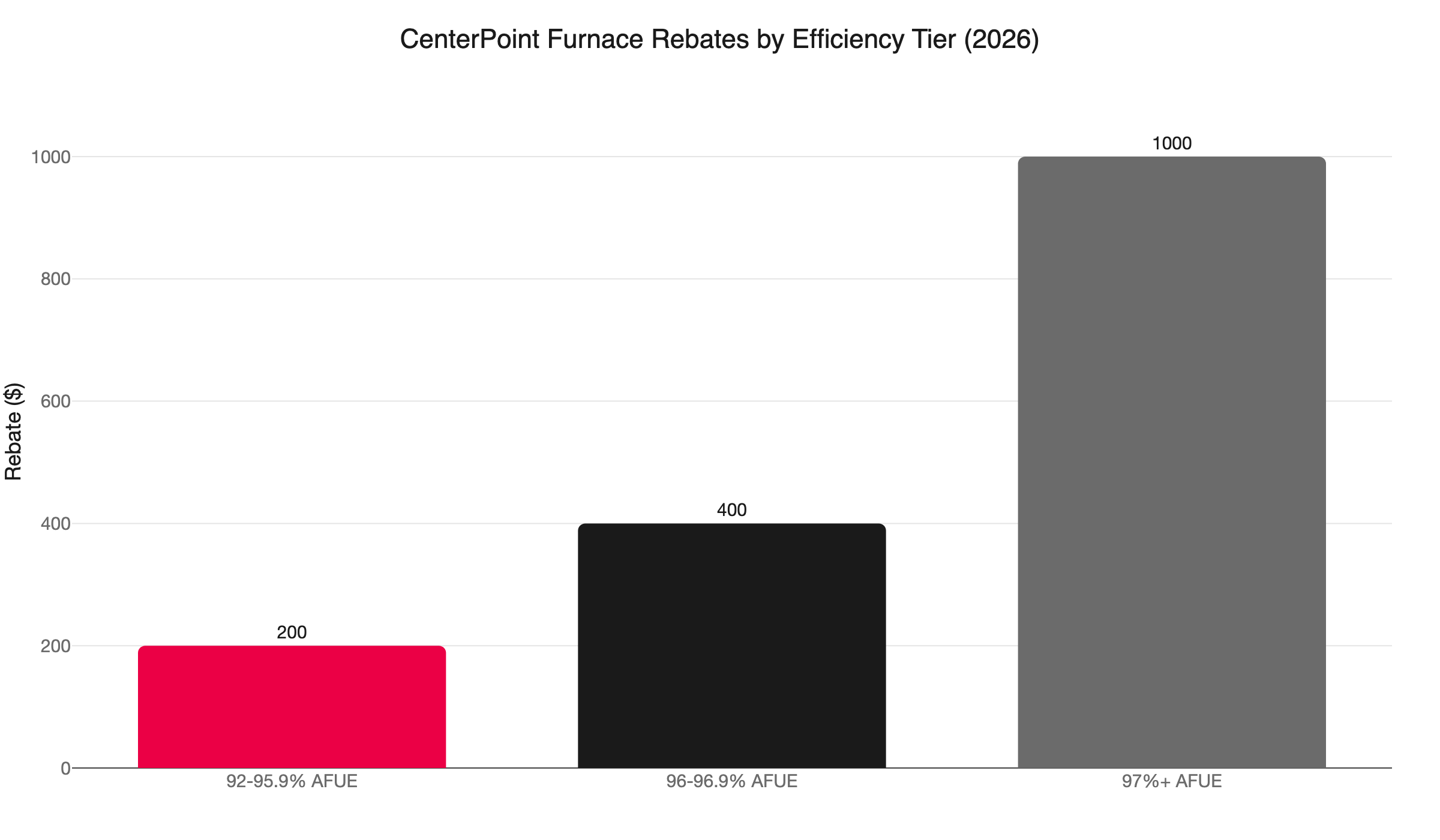
CenterPoint Furnace Rebates by Efficiency Tier (2026)
## What HVAC Financing Options Are Available in the Twin Cities?
**The short answer:** Four main tracks cover most homeowners - dealer or contractor financing plans, utility on-bill programs through CenterPoint or Xcel Energy, government and utility rebates that cut the upfront cost, and federal tax credits that return money at tax time. Each has different eligibility rules and mechanics.
The right combination depends on your gas and electric utilities, your income, the equipment you choose, and your timeline. A homeowner whose furnace failed last night has different priorities than one planning a proactive upgrade this fall.
Here is how each track works.
## What Is the Deferred-Interest Trap on 0% HVAC Financing?
**The short answer:** "0% for 12 months" dealer financing is almost always deferred interest, not true zero-interest financing. If you don't pay the full balance before the promo end date, retroactive interest - [often 26-29%](https://furnace.direct/blogs/news/hvac-financing-options-minnesota-guide-2026) - is calculated on your original balance and added back. That can cost thousands more than expected.
Here is the mechanic. Say you finance a $7,800 furnace on an 18-month 0% promo plan. You pay $250 per month and owe $1,500 when month 18 ends. The lender does not charge 27% on the $1,500 remaining balance. It charges 27% on the original $7,800 - for the full 18 months, retroactively. Your remaining balance can jump by more than $2,400 in one statement.
True zero-interest financing exists but is uncommon. It is usually reserved for a lender's top credit tier. Most "0% APR" offers at point of sale are deferred interest in disguise.
Before you sign any dealer financing agreement:
- Ask directly: "Is this deferred interest or true zero-percent APR?"
- Look for the phrases "deferred interest" or "retroactive interest" in the contract.
- Set autopay to clear the balance before the promo expiration date - ahead of it, not on the last day.
- If only deferred-interest plans are available, confirm the payoff timeline is realistic for your budget before signing.
Dealer financing can still be the right call. The interest-free window is genuinely useful when you pay on schedule. The trap only closes on homeowners who didn't know it was there.
## Can You Finance Your HVAC Through Your Utility Bill?
**The short answer:** Yes, if CenterPoint Energy is your natural gas utility. CenterPoint offers two on-bill programs - [Home Service Plus (HSP) financing](https://www.centerpointenergy.com/en-us/home-service-plus/support/payment-options) and the [EZPAY On-Bill Loan](https://www.centerpointenergy.com/en-us/residential/save-energy-money/efficiency-programs-and-rebates/ez-pay-on-bill-loan-(ezpay)) - that add repayment directly to your monthly gas bill. No separate lender, no second payment to track.
### CenterPoint HSP Financing
Home Service Plus financing offers no finance charges for short terms of 1, 3, or 12 months. Longer terms extend to 120 months. Payments appear on your regular CenterPoint statement alongside your monthly gas charges.
This is a practical option if you want one bill to manage. A 120-month term spreads a large install over 10 years. That is useful for homeowners who need breathing room but want to avoid the uncertainty of deferred-interest dealer plans.
### CenterPoint EZPAY On-Bill Loan
EZPAY is a separate product listed under CenterPoint's efficiency programs. It is designed with lower credit thresholds than traditional loans. That makes it accessible for customers who may not qualify for prime dealer financing. Full terms require contacting CenterPoint directly or logging into your account, as they are not posted publicly.
Both on-bill products are available to residential customers with an active CenterPoint natural gas account.
### Minneapolis On-Bill Pilot: Watch This Space
The City of Minneapolis has sought regulatory approval for a [Pay As You Save on-bill program](https://cbsnews.com/minnesota/news/pay-as-you-save-city-of-minneapolis-seeks-energy-efficiency-program) through CenterPoint's rate case. The proposed $50 million pilot would serve roughly 10,000 households. It would carry no credit check and no income requirement. The repayment obligation would transfer with the property on sale.
As of this writing, the program is pending regulatory approval. Confirm current status with the City of Minneapolis or CenterPoint before planning around it.
## What HVAC Rebates Are Available Right Now in Minnesota?
**The short answer:** [CenterPoint Gas customers](https://www.centerpointenergy.com/en-us/residential/save-energy-money/efficiency-programs-and-rebates/heating-system-rebates?sa=mn) can get up to $1,000 for a 97%+ AFUE furnace installed by December 31, 2026. [Xcel Electric customers](https://www.xcelenergy.com/programs_and_rebates/residential_programs_and_rebates/heating_and_cooling) can get up to $2,000 for a qualifying cold-climate heat pump. Both reduce your cost before you finance anything.
### CenterPoint Heating Rebates (Natural Gas Customers, 2026)
For equipment installed by December 31, 2026:
- **97%+ AFUE furnace replacement:** $1,000
- **96-96.9% AFUE furnace replacement:** $400
- **92-95.9% AFUE furnace replacement:** $200
- **Condensing boiler at 91%+ AFUE:** $500
- **Standard boiler at 85%+ AFUE:** $300
One detail worth flagging: Minnesota's energy code requires a 92% AFUE minimum for gas furnaces. Every qualifying replacement in this state is already a high-efficiency unit. Many contractors default to 96% equipment. Moving up to 97%+ costs more upfront, but the jump from a $400 rebate to a $1,000 rebate often offsets that difference. Ask your contractor to quote both efficiency tiers before you decide.
### Xcel Energy HVAC Rebates (Electric Customers, 2026)
For Xcel electric customers:
- **Cold-climate air-source heat pump:** up to $2,000, or up to $2,600 with an insulation and air-sealing bonus
- **High-efficiency gas furnace replacement:** up to $500
- **Smart thermostat (Nest, Ecobee, and similar):** $50-$75
The heat pump eligibility requirement matters in this climate. The unit must have a coefficient of performance (COP) of at least 1.75 at 5 degrees Fahrenheit. It also must appear on the Northeast Energy Efficiency Partnerships list at ashp.neep.org.
This is not a technicality. Minnesota winters regularly hit 5°F and lower. A heat pump that can't hold that efficiency level in a Minneapolis winter is undersized for the job. Confirm the specific model and configuration meets the 5°F COP threshold before assuming the Xcel rebate applies.
Applications for 2025 installs are accepted through September 30, 2026.
### Stacking Rebates from Both Utilities
Many Twin Cities homes use CenterPoint for natural gas and Xcel for electricity. That combination unlocks rebates from both programs on a single project.
Example: you replace a gas furnace (CenterPoint: up to $1,000) and add a smart thermostat (Xcel: up to $75) in the same appointment. You receive rebates from two different sources for one service call. Stack the IRS tax credit on top and the amount you need to finance drops significantly.
For a deeper look at the heat pump rebate landscape, see our post on [Minnesota heat pump rebates and tax credits](/blog/minnesota-heat-pump-rebates-tax-credits/).
## Does PACE Financing Work for Twin Cities Homeowners?
**The short answer:** No. [Minnesota's active PACE programs](https://mn.gov/commerce/energy/policy-data-reports/energy-data-reports/pace-task-force.jsp) cover commercial, nonprofit, and multifamily properties with five or more units only. Residential PACE for single-family homes is not available in Minnesota.
This matters because national HVAC content frequently lists PACE as a homeowner financing option without flagging state restrictions. In Minnesota, that information does not apply to single-family homes.
PACE stands for Property Assessed Clean Energy. The concept: a lender finances an energy improvement. Repayment is structured as a special property tax assessment. The obligation can transfer with the property when it is sold.
That sounds appealing in theory. In practice, Minnesota's active program - MinnPACE, administered through the Saint Paul Port Authority - serves commercial and multifamily properties only. [Ramsey County's PACE program](https://www.ramseycountymn.gov/businesses/property-development/property-development-programs-incentives/property-assessed-clean-energy-program-pace) is also non-residential, with terms up to 30 years and loan-to-value limits of 30%.
The Minnesota Legislature established a Residential PACE Consumer Protection Task Force to study the foreclosure and lien risks R-PACE poses for single-family homeowners. Minnesota has not moved forward with residential PACE since.
If a contractor or lender offers you PACE financing on a Twin Cities home, ask for the specific program name. Verify eligibility before signing anything.
## What Federal Tax Credits Apply to HVAC Replacements?
**The short answer:** The [IRS Section 25C Energy Efficient Home Improvement Credit](https://www.irs.gov/credits-deductions/energy-efficient-home-improvement-credit) returns 30% of your installation cost at tax time. The annual cap is $2,000 for a qualifying heat pump or $600 for a qualifying furnace or central AC. You claim it on your federal return for the year of installation.
### IRS 25C: What Qualifies
- **Air-source heat pumps:** 30% of cost, $2,000 annual cap; equipment must meet the CEE highest efficiency tier
- **Qualifying furnaces and central AC units:** 30% of cost, $600 cap per item
- **Electrical panel upgrades** to support HVAC (200-amp or above, meeting NEC code): up to $600
The credit applies per tax year, and you can claim it year after year on different improvements. Replace your furnace in 2026 and add a heat pump in 2027. You can claim $600 for this year and $2,000 for next year - two separate credits, two tax returns.
### Minnesota State Rebates: HEAR and HOMES
Minnesota administers two additional programs funded through [federal Inflation Reduction Act](/blog/ira-tax-credits-high-efficiency-furnace-ac-minnesota/) dollars:
**HEAR (Home Electrification and Appliance Rebates):** Point-of-sale rebates for income-qualified households.
- Under 80% of area median income: up to 100% of project cost
- 80-150% of area median income: up to 50% of project cost
These reduce the purchase price at the point of sale. They are not a credit you wait for at year-end - the cost comes down before you pay or finance anything.
**HOMES Rebate:** $2,000 to $8,000 for whole-home upgrades that cut energy use by 20-35% or more.
**Residential Heat Pump Rebate:** Up to $4,000 for qualifying air-source heat pump installs.
Funding runs through 2031 but is first-come, first-served. Verify current availability with the Minnesota Department of Commerce before planning a project around these programs.
The combined rebate and tax credit ceiling for a heat pump is substantially higher than for a furnace upgrade. See our full breakdown on [whether heat pumps are a good fit for Minnesota homes](/blog/heat-pumps-in-minnesota-are-they-a-good-fit/) before deciding between the two paths.
## Which Financing Track Fits Your Situation?
**The short answer:** The right track depends on your timeline, utilities, and income. Emergency replacements point toward dealer financing or CenterPoint on-bill programs. Planned upgrades benefit from stacking rebates first. Income-qualified households should start with the HEAR program before looking at any financing.
Here is a simple decision framework:
**Your system failed suddenly and you need to act fast.** Dealer financing is the most common path. Ask whether the plan is deferred interest or true 0% APR. If only deferred-interest is available, build a clear payoff schedule before signing. CenterPoint's on-bill programs are a parallel option for gas customers.
**You have time to plan.** Stack rebates first. Apply for [CenterPoint and Xcel rebates](/blog/xcel-centerpoint-hvac-rebates-minnesota/) upfront, time your install around the tax year for the 25C credit, and check HEAR eligibility before the appointment. Reducing the financed balance first improves every other financing option.
**You want the lowest monthly payment over the long term.** CenterPoint's HSP and EZPAY programs extend to 120 months. Credit thresholds are lower than most dealer plans, and payments roll into your utility bill.
**You are income-qualified.** Start with the HEAR program. Getting 50-100% of project cost covered at the point of sale changes the entire math on what you need to finance.
**You are weighing a furnace against a heat pump.** The combined ceiling from Xcel rebates, the 25C credit, and potential HEAR rebates for a heat pump can be substantially higher. Run the rebate math on both paths before deciding. For a cost reference on the furnace side, see our post on [furnace replacement costs in the Twin Cities](/blog/furnace-replacement-cost-twin-cities/).
## Questions to Ask Before You Sign Any Financing Agreement
Whether you are looking at a dealer plan or a utility on-bill program, get clear answers to these before committing:
- Is this deferred interest or true zero-percent APR? What happens to my balance if I don't pay in full by the promo end date?
- What is the interest rate after the promotional period?
- Are there origination fees, prepayment penalties, or annual charges?
- Which rebates are already applied to this quote, and which ones do I need to apply for separately?
- Does the equipment qualify for CenterPoint or Xcel rebates? Does the furnace hit 97%+ AFUE for the full CenterPoint rebate?
- Will you provide documentation I can use for my Section 25C tax credit claim?
A contractor who answers these questions directly and puts rebate eligibility in writing is one you can trust. If a quote bundles equipment and financing in a way that obscures either number, ask for them itemized. Commit once you can see both clearly.
See our post on [what to expect on HVAC install day in the Twin Cities](/blog/what-to-expect-hvac-install-day-twin-cities/) for a full picture of the process from estimate to system startup.
## Ready to Move Forward? We're Here.
HVAC financing in the Twin Cities doesn't have to mean sticker shock. Utility rebates reduce the amount you finance before you sign anything. Federal tax credits recover more at year-end. On-bill programs keep payments simple. Dealer financing bridges the gap when timing is tight. Most homeowners have more options than they realize - the key is knowing which ones apply before the estimate arrives.
We are a locally owned and operated HVAC company serving Minneapolis, St. Paul, Ramsey, Blaine, Maple Grove, Plymouth, and the surrounding communities. When you call us, we show up when we said we would. That is the promise behind "Always On Time… Or You Don't Pay a Dime!(R)" - backed by a 100% satisfaction guarantee and honest, transparent pricing.
Call us at (763) 260-6662 or book online. Our team will walk you through which rebates apply to your system, what financing options make sense for your situation, and what the job will cost before you commit to anything.
---
# Radiant Floor Heating Cost Minnesota: Hydronic vs. Electric
URL: https://northernonehour.com/blog/radiant-floor-heating-cost-minnesota-homes/
Published: 2026-08-06 | Category: Heating
Twin Cities homeowners: get real cost figures for hydronic and electric radiant floor heating, what permits you need, and which rebates apply in 2026.
Key Takeaways
- Hydronic radiant floor heating costs $6-$22 per square foot installed in new construction. Retrofits add $3.75-$13 per square foot in demolition costs before the first inch of tubing goes in.
- Electric radiant mats run $10.25-$19.50 per square foot. They are best for single rooms, not whole-home heating.
- A complete hydronic system with a new boiler typically costs $13,700-$43,000 for a 1,500-2,000 square foot Twin Cities home.
- Radiant provides no cooling. Every Minnesota home with radiant heat still needs a separate air conditioning system.
- Minnesota Statutes §326B requires a mechanical permit for every hydronic radiant install.
- Xcel Energy and CenterPoint Energy offer 2026 rebates on qualifying heat sources paired with radiant systems.
- New-build hydronic can pay back in 5-10 years in Minnesota's cold climate. Retrofits rarely pencil out unless the floor is already coming up.
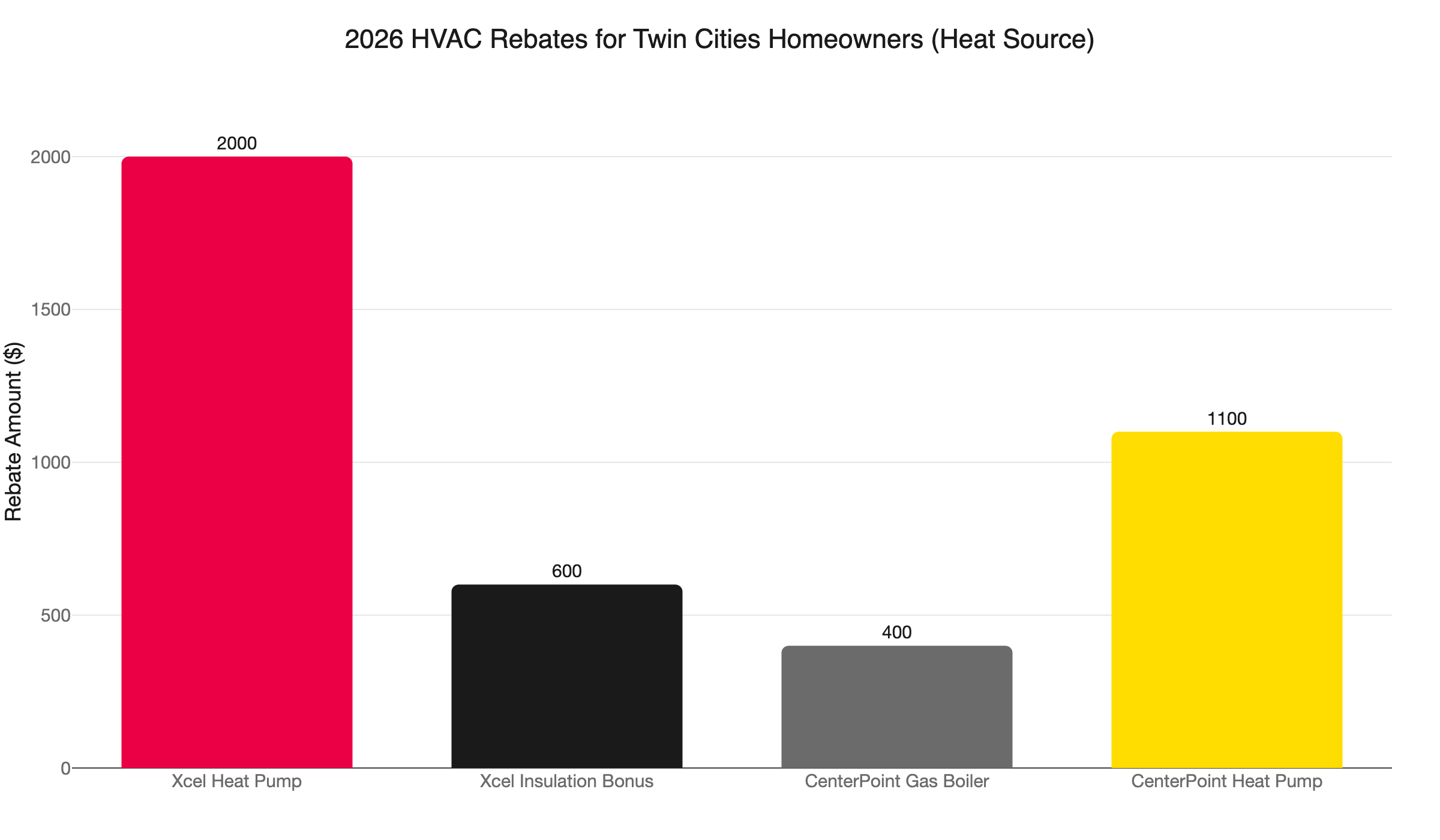
2026 HVAC Rebates for Twin Cities Homeowners (Heat Source)
## What Does Radiant Floor Heating Cost in Minnesota?
**Hydronic radiant runs $6-$22 per square foot installed for new construction. Electric mats cost $10.25-$19.50 per square foot. A whole-home hydronic system with a boiler typically runs $13,700-$43,000 for a 1,500-2,000 square foot home. Retrofit projects cost substantially more once you add floor demolition.**
Minnesota is a heating-dominated climate. The Twin Cities design heating day hovers around -16°F to -20°F. That reality shapes how every heating investment performs here, and radiant floor heating is no exception.
The cost range looks wide because it is wide. What you pay depends on three things. First, which type of radiant system you choose. Second, whether you are building new or retrofitting. Third, the total square footage you are heating.
[According to Today's Homeowner](https://todayshomeowner.com/flooring/cost/radiant-floor-heating-cost/), hydronic radiant floor heating runs $6-$22 per square foot installed. The low end is new construction with a concrete slab, where tubing goes in before the pour. The high end is retrofit work where the existing floor must come up first.
Electric radiant mats and cables fall in a narrower range: $10.25-$19.50 per square foot installed. The upfront cost is lower, and they work well in smaller zones. Most homeowners use them to add comfort in a bathroom or kitchen, not as the primary heat source for an entire home.
For a whole-home hydronic system, [HomeGuide puts the total](https://homeguide.com/costs/radiant-floor-heating-cost) at $13,700-$43,000 for a 1,500-2,000 square foot home. The boiler alone accounts for $3,200-$9,000 of that figure. The remainder covers tubing, manifolds, labor, and the required insulation beneath the slab or in joist bays.
Forced-air installation runs 10-25% cheaper than radiant overall. Duct runs are less labor-intensive than laying tubing 12 inches on center throughout every room. That gap matters most on new construction when you are comparing two complete system budgets.
## Hydronic vs. Electric: Which System Fits Your Home?
**Hydronic uses hot water circulated through tubing beneath the floor. It costs more upfront but performs efficiently as a whole-home heat source in Minnesota. Electric uses resistance mats or cables beneath tile or flooring. It installs for less but gets expensive at scale. Choose electric for single rooms, hydronic for whole-home heating.**
### Hydronic radiant
A hydronic system [circulates heated water](/blog/boiler-circulator-pump-failure-signs-cost-minnesota/) through cross-linked polyethylene (PEX) tubing embedded under the floor. The heat source is a high-efficiency gas boiler or, increasingly, a cold-climate heat pump.
The [U.S. Department of Energy names hydronic radiant](https://energy.gov/energysaver/radiant-heating) "the most popular and cost-effective radiant heating systems for heating-dominated climates." Minnesota fits that description precisely. The DOE also states that hydronic systems eliminate duct losses. That makes them more efficient than both baseboard heating and most forced-air systems.
Duct leakage in a typical forced-air home accounts for up to 30% of energy consumption. A hydronic radiant system has no ducts, so that loss disappears entirely.
Radiant heats from the floor up. That is a comfort advantage that compounds over a long Minnesota heating season. It warms bodies and objects directly instead of blowing warm air past cold exterior walls. Because the heat surrounds you, [you can set the thermostat 2-4 degrees lower](https://www.warmlyyours.com/en-US/posts/Your-Cheat-Sheet-for-Radiant-Heat-vs-Forced-Air-1099) and stay just as comfortable. Over six months of heating season, that setback adds up on your energy bill.
Our [boiler installation and replacement service](/heating/boiler-installation-replacement/) covers what a hydronic project involves, from system sizing through final inspection.
### Electric radiant
Electric mats and cables are the simpler option. An electrician installs the mat beneath tile or thin flooring. A thermostat controls the zone independently.
A 100 square foot bathroom runs $1,000-$2,200 total installed. Operating at four hours per day, that zone costs roughly $14-$18 per month. The investment is modest and the comfort payoff in a Minnesota bathroom in January is real.
The limitation is scale. Electric resistance heat becomes expensive when you push it to an entire house. For whole-home radiant heat, hydronic is the right tool.
## New Build vs. Retrofit: Where the Cost Cliff Happens
This is the single most important cost factor for Twin Cities homeowners evaluating radiant. National cost guides rarely address it clearly.
**New construction:** Tubing goes in before the concrete slab pours. The incremental cost over standard slab work is modest: materials plus additional labor, not a demolition project. In a heating-dominated climate like Minnesota's, payback vs. forced air narrows to 5-10 years.
**Retrofit or remodel:** The floor has to come up first. Demo costs alone add $3.75-$13 per square foot before a single inch of tubing is installed. Add that to the system cost and the whole-project total pushes toward $32-$45 per square foot. Payback stretches to 12-20 years.
That math almost never works unless the floor is already coming up for another reason. A kitchen gut, a bathroom remodel, or a slab repair already has demolition baked in. Adding radiant tubing while the floor is open is a smart call in that situation. Tearing up a perfectly good floor just to add radiant rarely pencils out.
The bottom line: radiant is more of a new-build decision than a renovation decision. If you are designing a new home in the Twin Cities metro, discuss radiant with your HVAC contractor before the foundation goes in. If you are retrofitting an existing home, run the full numbers, including demo costs and the separate cooling system, before committing.
## What Does Radiant Floor Heating Cost to Run Each Month?
**Radiant floor heating costs $1-$7 per day to operate, depending on zone size and usage. Average monthly operating cost for high-traffic zones like bathrooms and kitchens runs around $50. Hydronic systems have no duct losses, which puts them ahead of forced air on operating efficiency over a long Minnesota heating season.**
[Operating costs run $1-$7 per day](https://todayshomeowner.com/flooring/cost/radiant-floor-heating-cost/), with most homeowners averaging about $50 per month for heated zones. That range reflects the difference between a small bathroom mat running a few hours daily and a whole-home hydronic system carrying the full heating load through January and February.
Hydronic's efficiency advantage compounds over Minnesota's long heating season. Eliminating duct losses, running at a slightly lower thermostat setting, and delivering even heat without temperature swings all contribute to a lower annual energy bill compared to a similarly sized forced-air system.
One important caveat: operating cost comparisons only hold when you account for the full system. Radiant provides no cooling. The cost of your separate AC system belongs in the total picture.
## The Cooling Gap: What Radiant Cannot Do
This is the detail most cost guides leave out entirely. Neither hydronic nor electric radiant delivers air conditioning.
Every Twin Cities home with radiant heating still needs a separate cooling system. That means either a ductless mini-split or a central air system installed independently. These are not minor additions. They represent a real capital cost that changes the whole-home comparison with forced air.
Forced air delivers both heating and cooling through the same ductwork. When you choose radiant heat, you are choosing to run two separate systems. A ductless mini-split setup for a 2,000 square foot home adds meaningful installed cost on top of the radiant system budget.
For homes that plan around radiant heat and skip ductwork, ductless mini-splits are the practical cooling choice. They handle air conditioning without a duct system. Our [ductless mini-split installation service](/air-conditioning/ac-installation/ductless-mini-splits/) covers what that project involves for Twin Cities homes.
For homes with existing ductwork, central air can handle cooling while radiant carries the heat. That works, but it is still two systems to budget for and maintain.
Keep the full cooling cost in your budget when comparing radiant to forced air. The heat-only figure understates the real investment.
## What Minnesota Code Requirements Apply to Radiant Floor Heating?
**A mechanical permit is required under Minnesota Statutes §326B for every hydronic radiant install. The state mandates R-5 minimum insulation beneath slab-on-grade systems and R-11 for suspended-floor applications. Pressure testing at 1.5 times design pressure is required before the floor closes. These are real cost line items that national cost calculators never include.**
The [Minnesota Mechanical Code](https://up.codes/viewer/minnesota/mn-mechanical-code-2015/chapter/12/hydronic-piping) specifies two insulation minimums that directly affect installed cost:
- **Slab-on-grade systems:** Minimum R-5 insulation beneath the tubing. Without it, heat escapes downward into the ground instead of upward into the living space.
- **[Suspended-floor (joist bay) systems](/blog/finished-basement-heating-cooling-options-minnesota/):** Minimum R-11 insulation beneath the tubing.
Both are real line items. Budget for them. A bid that excludes these materials is not comparing equally to one that includes them.
The code also requires pressure testing at 1.5 times maximum design pressure, minimum 100 psi, before the floor closes. A failed pressure test discovered after a finished floor is in place is a serious problem. That requirement makes hydronic radiant engineering-grade work, not a DIY project.
All of this points to one practical conclusion: hire a licensed HVAC contractor who pulls permits, passes inspections, and stands behind the work. Our team is locally owned and operated in Ramsey. We work under Minnesota code on every hydronic job and know what these requirements cost in practice.
## What Rebates Are Available for Radiant Heating in Minnesota?
**Rebates apply to the heat source, not the radiant tubing itself. Xcel Energy offers up to $2,000 for qualifying cold-climate heat pumps in 2026. CenterPoint Energy offers $400 for 95%+ AFUE gas boilers. Minneapolis residents can stack additional city incentives. The federal 25C tax credit expired December 31, 2025.**
The incentive programs target the boiler or heat pump driving the hydronic system. Here is what is available in 2026:
- **Xcel Energy:** Up to $2,000 for a qualifying cold-climate heat pump used as the heat source for a hydronic system. An additional $600 insulation bonus applies when paired with qualifying insulation and air-sealing upgrades. [Applications for 2025-installed equipment are accepted through September 30, 2026.](https://mn.my.xcelenergy.com/s/residential/heating-cooling/heat-pumps)
- **CenterPoint Energy:** $400 for a 95%+ AFUE gas boiler. $1,100 for a ducted heat pump paired with 92%+ AFUE gas backup in a dual-fuel setup. [This program runs through December 31, 2026.](https://www.centerpointenergy.com/en-us/business/services/dealers-distributors/efficiency-programs-rebates/heating-system-rebates?sa=mn)
- **Minneapolis Green Cost Share:** Minneapolis residents can combine city, utility, and state incentives for up to $14,000 toward qualifying projects.
One note worth flagging: the federal 25C energy tax credit expired December 31, 2025. It is not available for 2026 installations. The federal HEAR program for income-qualified households has not launched in Minnesota as of August 2026.
For a full breakdown of heat pump incentives in the Twin Cities, see our post on [Minnesota heat pump rebates and tax credits](/blog/minnesota-heat-pump-rebates-tax-credits/).
## Is Radiant Floor Heating Worth the Investment in Minnesota?
**In new construction with a concrete slab, yes: payback vs. forced air runs 5-10 years in Minnesota's heating-dominated climate. For retrofits, payback stretches to 12-20 years because of demolition costs. It rarely pencils out unless the floor is already coming up. A single-room electric mat in a bathroom delivers real comfort at modest cost.**
Minnesota's climate tilts the math toward hydronic radiant faster than national averages suggest. Six months of heating weather means more operating hours where radiant's efficiency advantage accumulates. A heating-dominated climate is exactly where the DOE says hydronic is most cost-effective.
The payoff breaks down clearly by scenario:
**New construction with a concrete slab.** Tubing sets before the pour at modest incremental cost. Payback vs. forced air runs 5-10 years. If you are building a new home in the Twin Cities area, radiant is a legitimate option worth pricing before the foundation goes in.
**Retrofit of an existing home.** Demo costs add $3.75-$13 per square foot before system costs begin. Total project cost approaches $32-$45 per square foot. Payback extends to 12-20 years. It only makes sense when the floor is already coming up for another reason.
**Single-room electric mat.** A 100 square foot bathroom at $1,000-$2,200 installed delivers high comfort payoff at a price that does not require a payback analysis. It simply makes a January morning more tolerable.
For a direct comparison of a boiler-driven system against a traditional furnace, our post on [boilers vs. forced-air furnaces in Minnesota](/blog/boiler-vs-forced-air-furnace-minnesota/) walks through how those two approaches stack up for Twin Cities homeowners.
## Should You Add Radiant Floor Heating to Your Twin Cities Home?
**Radiant is an excellent fit for new construction in Minnesota, where the long cold season makes hydronic's efficiency advantage meaningful over time. For most existing homes, a high-efficiency furnace is the better financial choice unless the floor is already coming up. A bathroom electric mat is the right starting point for existing homeowners who want radiant comfort without the retrofit cost.**
Here is a simple framework to work through before you decide:
**Consider radiant if:**
- You are building new and can set the tubing before the slab pours.
- You are doing a full kitchen or bathroom gut, and the floor is already coming up.
- Your home has no ductwork and you are planning ductless mini-splits for cooling regardless.
**Think carefully before choosing radiant if:**
- You are retrofitting intact floors. Add the full demo cost plus the separate cooling system cost, then compare that total against a new high-efficiency furnace and central air.
- Your existing forced-air system is functional and mid-life. A modulating or two-stage furnace paired with quality ductwork closes much of radiant's comfort gap at a fraction of the cost.
**Ask us before deciding if:**
- You are building new and want a side-by-side total cost: radiant plus mini-splits versus forced air plus central AC.
- You are doing a large-scale remodel and want to know whether the floors you are pulling justify adding radiant tubing while they are open.
Our team gives you a straight answer on what makes sense for your home and your budget. That is what locally owned and operated means for Twin Cities homeowners.
## Get a Straight Answer from a Local Team
Northern One Hour Heating & Air Conditioning is locally owned and operated in Ramsey, Minnesota. We serve Minneapolis, St. Paul, Blaine, Maple Grove, Plymouth, Brooklyn Park, Woodbury, Bloomington, and the surrounding Twin Cities metro.
Radiant floor heating involves decisions a national cost calculator cannot make for you: which system type, which heat source, what the permit and insulation requirements actually cost in Minnesota, whether the rebates apply to your project, and whether the payback math works for your specific home.
Our team pulls permits, follows Minnesota code, sizes systems accurately, and gives you an honest picture of total cost before any work starts. We want you to make the right call for your budget and your house.
"Always On Time… Or You Don't Pay a Dime!(R)" is our promise on every appointment.
Call us at **(763) 260-6662** or book online to schedule a consultation. We will walk through what radiant floor heating actually costs for your home and help you decide whether it is the right fit.
---
# Does Attic Insulation Lower Heating Bills in Minnesota?
URL: https://northernonehour.com/blog/attic-insulation-ventilation-hvac-bills-ice-dams-twin-cities/
Published: 2026-08-05 | Category: HVAC
Twin Cities homeowners ask: does attic insulation lower heating bills? Learn why air sealing comes first, what drives ice dams, and the 2026 MN rebates.
Key Takeaways
- [EPA data](https://www.energystar.gov/saveathome/seal_insulate/rule_your_attic) shows air sealing and attic insulation together save homeowners an average of 15% on heating and cooling costs. That number requires both steps, not just one.
- Air leakage accounts for 30 to 40% of a home's heat loss and bypasses insulation completely. Sealing must come before insulating, not after.
- The Twin Cities metro falls in IECC Climate Zone 6. Minnesota's energy code requires R-49 minimum for attic ceilings. Most pre-1990 homes fall far short of that.
- Ice dams are a building-science problem, not a roofing problem. Warm air escaping through partition wall top plates and light penetrations drives uneven snow melt.
- In 2026, CenterPoint Energy offers up to $3,000 for qualifying air sealing and insulation projects. Xcel Energy offers up to $1,800 combined. The federal 25C tax credit expired January 1, 2026.
- A good contractor starts with a blower door test and thermal imaging. The tape measure comes later.
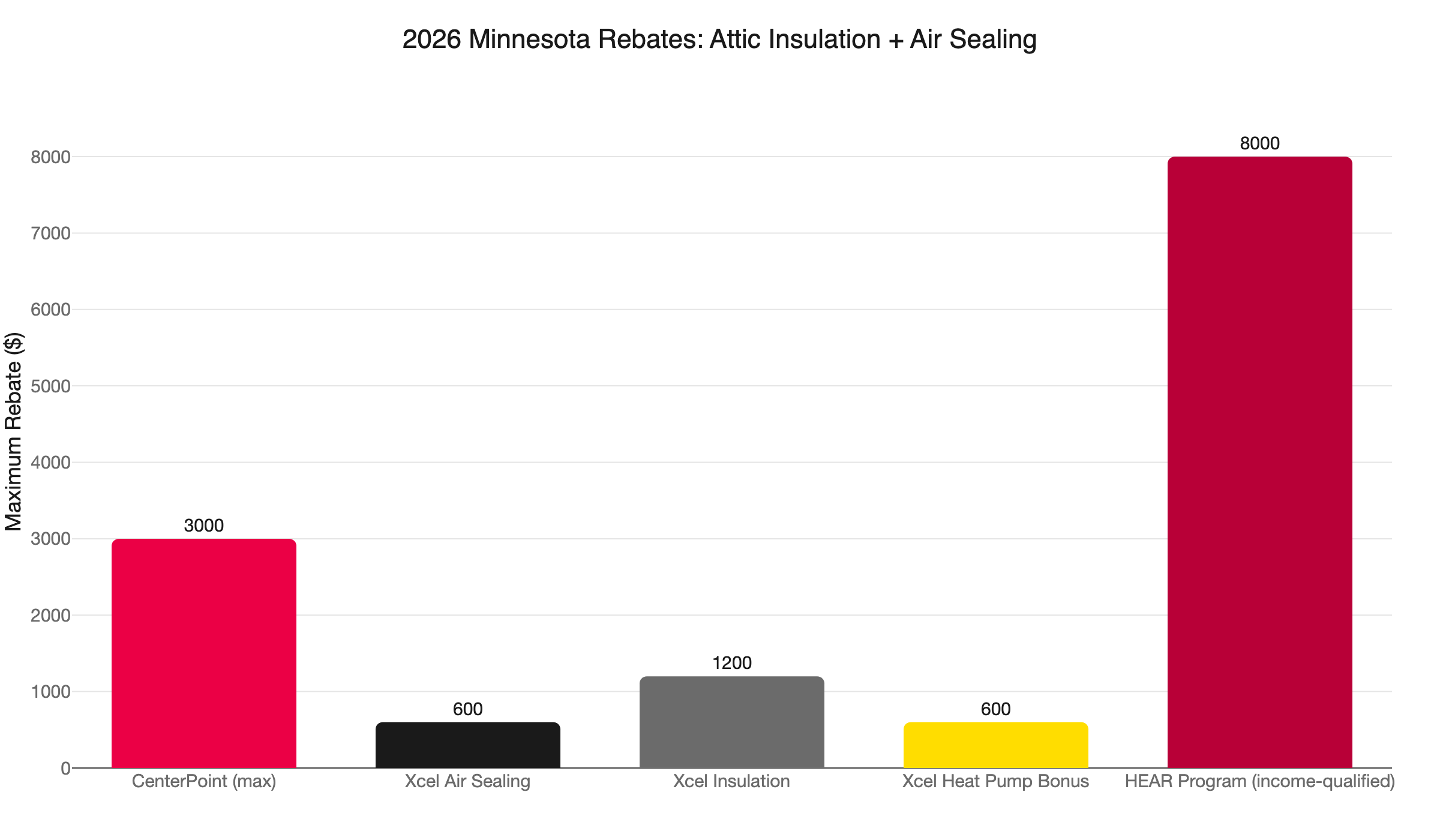
2026 Minnesota Rebates: Attic Insulation + Air Sealing
## Does Attic Insulation Lower Heating Bills?
Yes, but the answer comes with a condition most insulation articles skip. The [EPA estimates homeowners save an average of 15% on heating and cooling costs](https://www.energystar.gov/saveathome/seal_insulate/rule_your_attic) by air sealing and adding insulation in attics, [floors over crawl spaces](/blog/crawl-space-hvac-efficiency-twin-cities/), and basements. That number is for both steps together. Drop insulation into an attic full of unsealed air bypasses, and you will see a fraction of those savings.
Here is why. Air leakage accounts for [30 to 40% of total heat loss in a typical home](https://retrogreenenergy.com/ice-dams-minnesota-prevention/), and it does not travel through insulation. It travels around it. Add twelve inches of blown-in insulation on top of unsealed gaps, and the warm air still finds its way through. Insulation slows conductive heat transfer. It does not stop convective air movement.
The symptom most Twin Cities homeowners describe goes something like this: the utility bill keeps climbing year over year, certain rooms never feel right in January, and every winter brings another ice dam on the north eave. Those three symptoms often share a single root cause. We will work through all three.
---
## Why Air Leakage Matters More Than Insulation Thickness
Most homeowners think of insulation as the fix. Contractors who have done blower door tests know the real problem is usually air movement.
Heat escapes living space through a predictable set of pathways. Partition wall top plates, the horizontal framing where interior walls meet the ceiling, are among the worst offenders. Recessed light penetrations, plumbing chases, electrical runs, and chimney chases all contribute. In an older Twin Cities home, the combined open area of unsealed top plates and penetrations can be substantial. Together they can equal leaving a window open all winter.
The rim joist deserves its own mention. That is the band of wood between your foundation wall and the first-floor framing. Heat rises through uninsulated wall cavities and exits into the attic via this path. It is a stack-effect problem: warm air at the bottom of the house creates pressure that drives cold air in at the bottom and pushes warm air out at the top. Sealing the rim joist and the top plates together breaks that loop.
[Up to 40% of a home's heat can be lost through an under-insulated attic in winter.](https://servicechampions.com/blog/will-replacing-my-attic-insulation-really-help-me-save-money-on-my-energy-bill/) When leaky penetrations combine with inadequate insulation, you are fighting both problems at once. Roughly [80% of homes built before 1980 can benefit from additional attic insulation](https://www.energystar.gov/saveathome/seal_insulate/rule_your_attic), according to DOE figures. If your home was built before 1990 and has never had a professional energy assessment, assume both problems exist.
The practical takeaway: a well-sealed attic with modest R-value outperforms a thick insulation layer over unsealed bypasses. Sequence is not optional. It is the whole point.
---
## Does a Leaky Attic Cause Ice Dams?
Yes, and it does so through a predictable sequence. Warm air leaks into the attic and heats the roof deck from below. That heat melts snow at the upper portion of the roof. The meltwater runs toward the cold eave, hits the unheated overhang, and refreezes. The dam grows until backed-up meltwater forces its way into wall cavities and ceiling assemblies.
Most homeowners treat ice dams as a roof problem. They are a building-science problem. Adding a better roof membrane slows the water damage. It does not stop the ice from forming. The only reliable fix is stopping the heat that creates uneven roof deck temperatures in the first place.
[Heat convects into the attic through partition wall top plates, recessed light penetrations, plumbing and electrical bypasses, and chimney chases](https://retrogreenenergy.com/ice-dams-minnesota-prevention/) - not primarily through the insulation itself. Add insulation over unsealed penetrations, and the ice dams keep coming. Seal those penetrations first, then insulate, and the roof deck stays close to the outside air temperature. No differential. No melt-freeze cycle. No dam.
This is the piece generic insulation articles miss. Ice dam prevention is not about buying the thickest insulation product on the shelf. It is about stopping the air movement that creates uneven temperatures across the roof deck in the first place.
---
## What Does Attic Venting Have to Do With HVAC Bills?
A lot, and the effect runs in both directions. In summer, a poorly ventilated attic traps heat that [radiates into the living space](/blog/upstairs-too-hot-summer-cooling-twin-cities/) and forces the AC to run longer. In winter, imbalanced airflow can pull conditioned air out of the house and into the unconditioned attic.
The standard ratio is [one square foot of net free ventilation area for every 150 square feet of attic floor](https://retrogreenenergy.com/ice-dams-minnesota-prevention/), delivered as balanced intake from soffit vents and exhaust from ridge vents. When that balance breaks down, three things go wrong:
- **Soffit vents blocked by insulation.** Blown-in insulation installed without baffles slides toward the eave and plugs the intake. Minnesota's energy code requires baffles at all soffit and eave vents to prevent exactly this. Without them, any exhaust fans in the attic create negative pressure and pull conditioned air from the living space upward.
- **Attic temperatures spike in summer.** Without adequate ventilation, [attic temperatures can exceed 150 degrees Fahrenheit](https://www.acdirect.com/blog/role-of-attic-ventilation-in-home-energy-efficiency/) on a hot Minnesota afternoon. That radiated heat forces your air conditioner to run longer and harder, raising [cooling bills](/blog/whole-house-fan-minnesota-worth-it/) and shortening equipment life.
- **Leaky attic ducts compound the problem.** Every loose duct connection in an [unconditioned attic](/blog/attic-air-handler-installation-problems-minnesota/) dumps conditioned air directly into that overheated space. Attic ducts must be [insulated to R-8 minimum](/blog/duct-insulation-attic-energy-loss-minnesota/) and sealed with mastic, not standard duct tape. Duct tape fails in extreme heat.
If your cooling bills have been trending up and your equipment is less than ten years old, check the attic before assuming the system is failing. Leaky ductwork is its own issue - see our breakdown of [duct sealing and energy loss](/blog/duct-sealing-leaky-ductwork-energy-loss/) for details on how duct performance affects your bills.
---
## What Does a Contractor Check First?
Not the insulation. The first move for any reputable contractor is a blower door test to quantify total air leakage, combined with thermal imaging to pinpoint exactly where it is happening.
A blower door depressurizes the house to a standard reference pressure. The test measures how many times per hour the house exchanges its air volume with the outside. Energy-efficient homes target two air changes per hour or fewer. Older Twin Cities homes with no air sealing history can measure eight or ten. That number tells the contractor how much sealing work the house needs before a single bag of blown-in insulation goes down.
Thermal imaging finds the specific bypasses the blower door quantifies. In winter, a thermal image of an attic floor lit up with warm patches tells you exactly where the top plates, penetrations, and chases are leaking. No guesswork required.
The correct sequence looks like this:
1. Blower door test and thermal scan.
2. Seal all bypasses: top plates, recessed lights, plumbing and electrical penetrations, chimney chases, rim joist.
3. Verify the seal with a follow-up thermal scan.
4. Blow in insulation to meet code minimum (R-49 for Zone 6).
5. Confirm baffles are in place at all soffit vents before insulating near the eaves.
Skipping step one saves an hour upfront and costs homeowners years of high bills. The attic work that follows is only as effective as the sealing beneath it.
Our team runs into this connection often. Homeowners call about [rooms that never feel right or temperature swings between floors](/blog/cold-spots-and-warm-rooms-why-uneven-temperatures-hit-hardest-in-december/), and the attic turns out to be a major driver. Addressing the envelope is the fix the equipment upgrade alone cannot deliver.
---
## Minnesota Code Minimums and Climate Zones
The Twin Cities metro - Hennepin, Ramsey, Dakota, Anoka, Carver, Washington, and Scott counties - sits in IECC Climate Zone 6. Northern Minnesota is Zone 7. Those zones drive the R-value floors your attic must meet under the Minnesota Energy Code, Chapter 1322.
Zone 6 requires R-49 minimum for attic ceilings. Zone 7 requires R-60. Many pre-1990 Twin Cities homes were built with R-11 or R-19. Some have even less after decades of settling and moisture damage. They are operating at a fraction of what the code now requires and far below what a Minnesota winter demands.
R-value measures resistance to conductive heat flow through a material. More is better, up to the point where air leakage becomes the dominant factor. That is exactly why the sequence matters. A home at R-49 with major air bypasses may perform worse than a home at R-30 that is tightly sealed.
You can get a rough read on your current R-value without a contractor. If your attic has fiberglass batts, count the layers and check the facing label. If it has blown-in cellulose or fiberglass, a depth of three and a half inches is roughly R-13. Twelve inches of blown-in cellulose is closer to R-38. Anything below twelve inches in a Zone 6 attic falls short of current code.
Minnesota code also requires baffles at all soffit and eave vents. A contractor who skips baffles to move faster creates new moisture and ventilation problems while solving the old insulation shortfall.
---
## What Rebates Are Available in 2026?
Good news on the utility side, with one important federal update. CenterPoint and Xcel both offer rebates for qualifying air sealing and insulation work. The federal 25C tax credit is gone - it expired December 31, 2025, eliminated by the One Big Beautiful Bill Act signed July 4, 2025. Projects completed in 2026 or later cannot claim it. Homeowners who completed work before January 1, 2026 can still claim it on their 2025 return via Form 5695.
**CenterPoint Energy** (natural gas customers in the Twin Cities metro): up to $3,000 for qualifying attic insulation combined with air sealing. Air sealing is required - there is no rebate for insulation alone. Your pre-project R-value must be R-30 or lower, and the completed project must reach R-49 or higher. The contractor must be a Rebate Eligible Installer, and the rebate is issued as a check after project completion.
**Xcel Energy**: up to $600 for attic air sealing and up to $1,200 for attic insulation, for a combined maximum of $1,800. Air sealing is required alongside insulation. An additional $600 bonus rebate applies if you install a qualifying heat pump within two years of the insulation project. If you are already thinking about a [heat pump upgrade](/blog/heat-pumps-in-minnesota-are-they-a-good-fit/), that bonus is worth factoring into the timing.
**Minnesota HEAR program** (income-qualified households): federally backed Home Energy Rebate administered through mn.gov Commerce. Up to $8,000 for qualifying households. Expected to continue in 2026.
Confirm rebate eligibility with your contractor before work begins, not after. Some programs require pre-project enrollment or inspections.
---
## How Does Attic Insulation Affect HVAC Equipment?
Your furnace and air conditioner are sized for the heat loss and heat gain of your home as it was calculated at installation. When the attic is leaky and under-insulated, the actual heat loss exceeds what the equipment was designed to handle. The system runs longer cycles, or short-cycles trying to catch up. Either way, it works harder than it should.
In winter, that means more run hours per day: more gas or electricity consumed, more thermal stress on the heat exchanger, more wear on the blower motor and controls. In summer, the AC works against heat radiating from a 150-degree attic space down through the ceiling into the living area. No amount of thermostat adjustment compensates for radiant gain from an overheated attic.
Equipment that runs too long or too often wears faster. It needs repairs sooner. It gets replaced before its rated service life. The attic shortfall is not just a comfort problem or a utility bill problem. It is a maintenance cost problem that compounds over time.
Fixing the attic envelope is often the highest-return action a homeowner can take to reduce HVAC run time and extend equipment life. When a technician can see the attic is driving the system to overwork, that is the conversation to have before investing in equipment repairs or a replacement.
---
## Is Attic Work Worth It Before a Furnace Replacement?
Almost always yes. Here is the reason: furnace sizing is based on the home's calculated heat load. A leaky, under-insulated house carries a high heat load. If you replace the furnace without correcting the envelope, your contractor sizes the new unit for the house as it stands. Fix the envelope first, and your heat load drops. You may qualify for a [smaller, more efficient system](/blog/hvac-resizing-after-home-improvements-insulation-windows-minnesota/) at a lower equipment cost.
The sequencing also matters for rebates. Xcel's $600 heat pump bonus only applies within two years of a qualifying insulation project. If you are planning both, do the attic work first and time the equipment upgrade within that window.
Our [heating services](/heating/) include assessments that look at both the equipment and the building shell together. If the furnace is the bottleneck, we will say so. If the attic is the bottleneck, we will say that instead. Honest assessment, transparent pricing - that is how we work.
---
## Getting an Assessment in the Twin Cities
Northern One Hour Heating & Air Conditioning is locally owned and operated in Ramsey, MN. We serve Minneapolis, St. Paul, Blaine, Maple Grove, Plymouth, Brooklyn Park, Woodbury, Bloomington, and communities throughout the Twin Cities metro.
When our technicians come out for a heating or cooling concern, they look at the full system - not just the equipment in the mechanical room. If attic conditions are driving your bills or contributing to uneven comfort, we will tell you. If the problem is the furnace or the ductwork, we will tell you that instead.
We back every appointment with our on-time promise: "Always On Time... Or You Don't Pay a Dime!(R)" That means we show up when we say we will, every time.
To schedule a heating or cooling assessment, call **(763) 260-6662** or book online. If you are considering a larger project - air sealing, insulation, equipment replacement, or some combination - ask about financing options when you call. We can walk through what the rebate timeline looks like for your utility and what that means for your project cost.
---
# Best Garage Heater for Minnesota Winters: 3 Options Compared
URL: https://northernonehour.com/blog/garage-heater-options-installation-cost-minnesota/
Published: 2026-08-05 | Category: Heating
Forced-air, infrared, or mini-split? We size each option for MN's -16\u00b0F design temp, compare 2026 operating costs, and walk through install day.
Key Takeaways
- Minneapolis has an [ASHRAE 99% heating design temperature of -16°F](https://www.energystar.gov/sites/default/files/asset/document/Design%20Temperature%20Limit%20Reference%20Guide%20(2019%20Ed)%20-%20ENERGY%20STAR%20Certified%20Homes_Rev10.pdf). Size your heater to that number, not a national rule of thumb.
- A typical uninsulated 2-car garage (about 440 sq ft) needs roughly 45,000 BTU. A well-insulated one drops to around 30,000 BTU.
- [Minnesota Mechanical Code Chapter 1346](https://www.revisor.mn.gov/rules/1346/full) bans unvented infrared heaters unless mechanical exhaust is electrically interlocked at 4 cfm per 1,000 BTU/hr of input.
- All enclosed garages require both a CO detector and an NO2 detector under MN Rules Chapter 1346.
- Forced-air gas unit heaters warm up the fastest and cost the least per hour to run at current CenterPoint gas rates.
- A cold-climate mini-split operates at -22°F and costs roughly $130 per season at 2026 Xcel rates.
- The federal 25C heat pump tax credit expired December 31, 2025. Xcel Energy still offers up to $2,000 for qualifying cold-climate mini-splits.
- A standard gas unit heater installation typically wraps in a single day if gas line and electrical are already nearby.
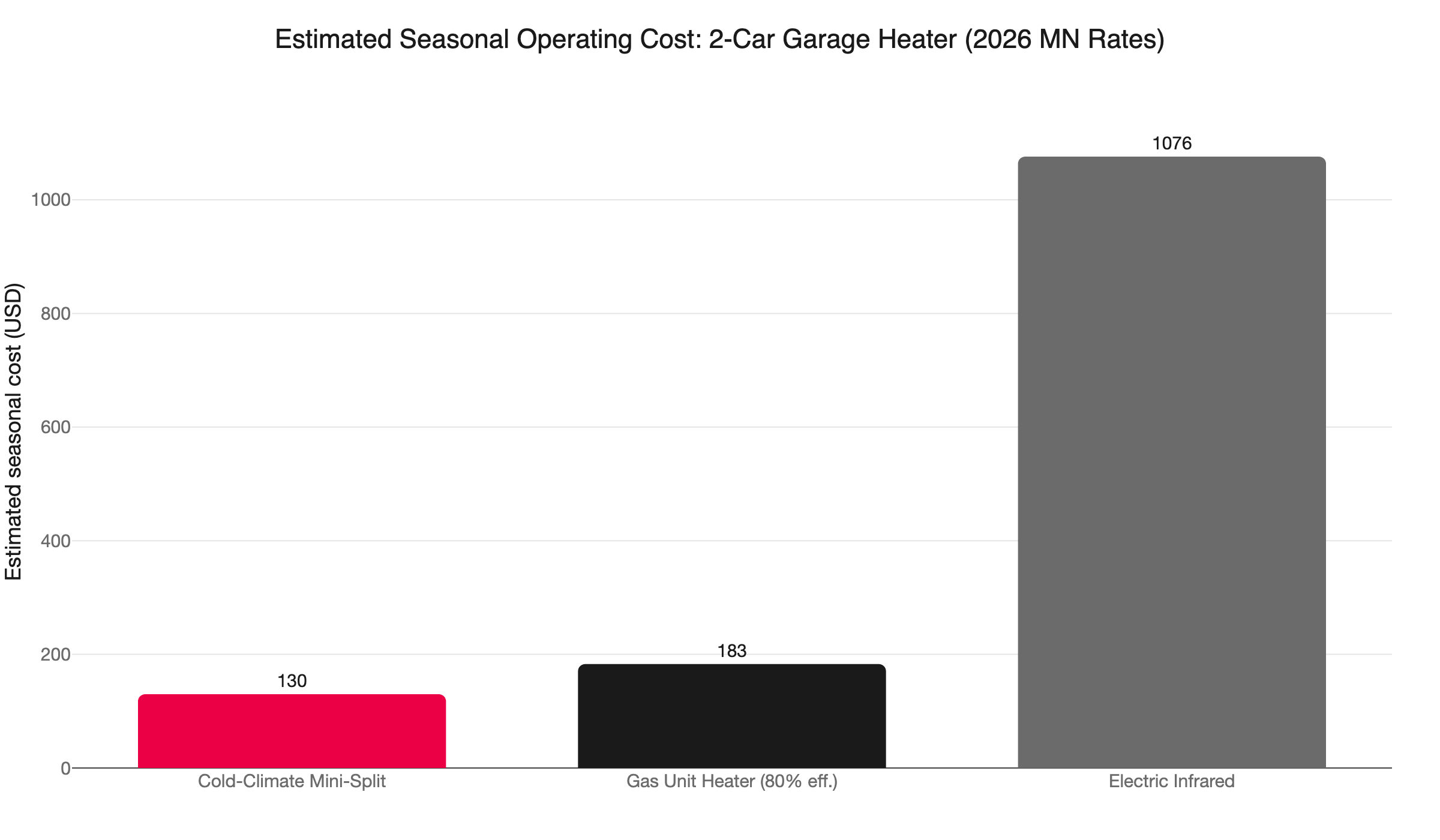
Estimated Seasonal Operating Cost: 2-Car Garage Heater (2026 MN Rates)
## What Is the Best Garage Heater for Minnesota Winters?
For most attached Twin Cities garages, a forced-air natural gas unit heater is the most practical choice. It warms up fast, costs the least to run per hour, and is code-compliant with a proper vent. A cold-climate mini-split is the strongest alternative when you want no combustion in an attached garage. Unvented infrared heaters require mechanical exhaust that most garages do not have.
The right answer for your garage depends on four things: attached or detached, insulated or bare, gas line present or not, and how often you use the space. All three options have a real use case in Minnesota. None of them are plug-and-play without a permit.
## How Many BTUs Does a Minnesota Garage Need?
A typical uninsulated 2-car garage (about 440 sq ft, 8-ft ceiling) needs roughly 45,000 BTU. Add insulation and that drops to around 30,000 BTU. [Minnesota Mechanical Code Chapter 1346](https://www.revisor.mn.gov/rules/1346/full) requires ACCA Manual J sizing, and oversizing cannot exceed 40% of the calculated load.
The reason sizing matters here is the actual design temperature. Minneapolis sits at an ASHRAE 99% heating design temperature of -16°F. That is not the -20°F shorthand you sometimes hear. The -20°F figure applies to Duluth. But -16°F is still extreme, and generic national BTU charts do not account for it.
A rough field calculation works like this:
- **Step 1:** Measure your garage. Length x width x ceiling height = cubic feet.
- **Step 2:** Multiply cubic feet by the air change factor: roughly 0.133 for a well-sealed garage, 0.25 for a leaky one.
- **Step 3:** Multiply by the temperature difference: your target (65°F) minus -16°F = 81°F.
- **Step 4:** That result is your approximate BTU/hr load.
A licensed HVAC technician will run a proper Manual J calculation. It accounts for wall insulation, window area, door type, and infiltration rate. MN code requires it. A competent installer will not skip it.
## Forced-Air Gas Unit Heaters: The Workhorse Option
Forced-air unit heaters are the most common garage heater in Minnesota. They push high volumes of warm air quickly. That matters when you open the overhead door in February and lose your heat in under a minute.
Key characteristics:
- **BTU range:** 30,000 to 75,000+, covering any residential garage
- **Fuel:** natural gas or propane
- **Venting:** power-vent or direct-vent required; no unvented gas heaters under MN code
- **Warm-up speed:** fastest of the three options
- **Operating cost:** lowest per-hour fuel cost at current CenterPoint gas rates
[CenterPoint Energy's current commodity gas rate](https://www.centerpointenergy.com/en-us/residential/services/natural-gas/natural-gas-prices/rate-case?sa=mn) runs approximately $0.40 per therm during normal periods, with a delivery charge of about $0.279 per therm. A 30,000 BTU unit heater at 80% efficiency uses roughly 0.375 therms per hour. At six hours per day across a 120-day heating season, fuel cost lands around $183 for the season.
The trade-off is installation complexity. A gas unit heater needs a gas line stubbed to the unit location, a vent pipe run through the wall or roof, and an electrical connection for the blower and controls. All of that requires a mechanical permit and on-site inspections.
For a detailed look at what the installation process involves, see [what to expect on HVAC install day in the Twin Cities](/blog/what-to-expect-hvac-install-day-twin-cities/).
## What Does Minnesota Code Say About Infrared Heaters?
Unvented infrared heaters are not a plug-and-play option in Minnesota. [MN Rules Chapter 1346, Section 901.5](https://www.revisor.mn.gov/rules/1346/full) bans unvented room heaters and unvented infrared heaters in any occupancy. There is one narrow exception: unvented infrared is allowed only if mechanical ventilation exhausts at least 4 cfm per 1,000 BTU/hr of input, electrically interlocked so the heater cannot run without the exhaust running.
Infrared heaters work differently than forced-air. They heat objects and surfaces, not the air itself. That is an advantage in spaces with high air turnover. A shop with a frequently-opened overhead door loses less heat with infrared than with forced-air. You are warming the floor and walls, not the air that escapes every time the door opens.
The catch in Minnesota is the exhaust requirement. Most residential garages do not have a continuous mechanical exhaust system. Installing one adds cost and complexity. If you are considering an infrared heater for a high-turnover space, talk to a licensed HVAC tech about whether the interlock is practical for your garage.
MN code also requires CO and NO2 detection in any enclosed garage. Section 404.1 of MN Rules 1346 mandates a CO detector (UL 2075 listed) and an NO2 detector. Mechanical ventilation must activate automatically at 25 ppm CO or 3 ppm NO2. This applies regardless of which heater type you choose. Our post on [carbon monoxide safety during furnace season](/blog/carbon-monoxide-safety-furnace-season/) explains what those detectors are actually measuring and why the thresholds matter.
## Are Cold-Climate Mini-Splits a Real Option for Garage Heating?
Yes, and they are underrated for attached garages. A cold-climate mini-split produces no combustion, requires no gas line, and operates efficiently well below zero. [ENERGY STAR's cold-climate heat pump program](https://palmetto.com/home-electrification/cold-climate-mini-split-heat-pumps) requires a COP of at least 1.75 at 5°F for qualification. The Fujitsu Orion XLTH+ retains 90% heating capacity at -15°F. The Mitsubishi Hyper-Heat FX series operates to -22°F. At 2026 Xcel rates, running a 12,000 BTU unit costs roughly $130 per season.
The case for a mini-split is strongest when [CO risk is the primary concern](/blog/hvac-attached-garage-carbon-monoxide-risk-minnesota/). An attached garage shares a wall with your living space. A combustion appliance adds CO load to that shared environment. A mini-split eliminates that risk entirely. It also cools in summer, which a gas unit heater cannot do.
The trade-offs:
- **Upfront cost:** Higher than a gas unit heater, typically $3,900 to $7,800+ installed, depending on unit size and electrical work required.
- **Warm-up speed:** Slower than forced-air in a very cold, uninsulated space. Mini-splits work best in insulated garages.
- **Electrical:** Requires a dedicated 240V circuit. If your panel is near capacity, add panel work to the budget.
- **Efficiency advantage:** At a COP of about 2.0 at -5°F, a mini-split delivers twice the heat per dollar compared to electric resistance.
[Xcel Energy's 2026 Minneapolis residential electricity rate](https://wattcosts.com/electricity-rates/minnesota/minneapolis/) averages $0.1698 per kWh. A 12,000 BTU mini-split running six hours per day for four months, at COP 2.0, costs roughly $130 for the season. That is the lowest operating cost of the three options.
For a deeper look at mini-split performance in Minnesota's climate, see [heat pumps in Minnesota: are they a good fit?](/blog/heat-pumps-in-minnesota-are-they-a-good-fit/).
## What Will You Actually Pay to Run Each Type?
A cold-climate mini-split costs the least to operate at roughly $130 per heating season. A gas unit heater runs around $183 per season in fuel. Electric infrared is the most expensive by far: over $1,000 per season at 2026 Xcel rates.
A few notes on what those numbers assume:
- All estimates use a 2-car garage (440 sq ft, well-insulated, 30,000 BTU load), six hours per day, and a 120-day heating season.
- Gas rate: $0.679 per therm all-in (CenterPoint commodity plus delivery, normal-period pricing). [Xcel's natural gas rates rose 6.8% effective January 1, 2026](https://www.startribune.com/xcel-energy-gas-rates-will-go-up-68-for-2026-heres-why/601544882). CenterPoint saw similar upward pressure.
- Electricity: $0.1698 per kWh (2026 Minneapolis Xcel rate).
- Mini-split COP: 2.0 at -5°F, blended across the season.
- Gas unit heater efficiency: 80%, typical for a non-condensing unit heater.
- Electric infrared: straight resistance, no heat pump multiplier, COP 1.0.
The operating cost gap between electric infrared and the other two options is wide enough to pay back a mini-split's higher installed cost within a few years of heavy garage use.
## What Rebates Are Available in 2026?
The federal 25C heat pump tax credit expired December 31, 2025. It does not apply to 2026 installs. Xcel Energy offers up to $2,000 for a qualifying cold-climate mini-split. The MN HEAR program offers additional support for income-qualified households.
Here is what is actually available this year:
- **Xcel Energy:** Up to [$2,000 rebate for a qualifying cold-climate heat pump](https://www.xcelenergy.com/programs_and_rebates/residential_programs_and_rebates/heating_and_cooling), including ductless mini-splits, for residential customers.
- **CenterPoint Energy:** $200 to $400 rebate for a high-efficiency gas furnace at 95%+ AFUE. No specific residential unit heater rebate was confirmed; contact RebateCenter@CenterPointEnergy.com or 612-399-1545 to verify your equipment.
- **MN HEAR program:** State rebates active in 2026. [Income-qualified households may receive up to $14,000+](https://heatpumpnetwork.com/heat-pump-rebates-minnesota/) for qualifying heat pump installs.
- **Federal 25C:** Expired. If a contractor's quote references it, ask them to confirm the applicable tax year.
## What Does Garage Heater Install Day Look Like?
A standard gas unit heater installation typically wraps in a single day if the gas line and electrical are already nearby. Gas line extension, electrical panel upgrades, or venting through a masonry wall adds time. A mechanical permit must be pulled before work begins.
Here is the typical sequence:
**Before the crew arrives:**
- Mechanical permit pulled. The city reviews the plans and approves before issuing.
- Equipment ordered and staged: unit heater, vent components, gas fittings.
**Day of install:**
1. **Rough-in:** Gas line stubbed to the heater location. Vent chase cut through the wall or roof. Electrical run to the unit.
2. **Equipment mount:** Unit heater hung from ceiling joists or wall-mounted per manufacturer specs.
3. **Vent pipe connected:** Sealed and tested for draft.
4. **Controls wired:** Thermostat or remote control installed and wired.
5. **CO/NO2 detectors installed:** Required by MN Rules 1346. Your installer handles placement.
6. **Test and balance:** Tech fires the unit, verifies ignition, checks gas pressure, and confirms vent draft.
7. **Final inspection:** Building official signs off. You get a copy of the record.
For a mini-split, the sequence adds refrigerant line set installation, outdoor unit placement, and refrigerant charge verification by an EPA 608-certified technician.
If your panel needs a circuit upgrade for a mini-split's 240V requirement, that work requires a separate electrical permit. Plan for that to add a day or coordinate an electrical subcontractor in advance.
One note on timing: the new 2026 NEC takes effect in Minnesota on August 17, 2026. Permits filed on or after that date must comply with the 2026 NEC. If electrical work is part of your install, confirm with your contractor which code cycle applies to your permit.
## Putting It Together: Which Option Is Right for You?
The best garage heater for Minnesota winters comes down to three questions.
**Do you have a gas line in or near the garage?** If yes, a forced-air unit heater is almost always the fastest, most cost-effective path. Pull the permit, run the vent, and you are done in a day.
**Is the garage attached to your living space and is CO risk a priority?** A cold-climate mini-split eliminates combustion entirely. At roughly $130 per season to run versus $183 for gas, the fuel savings are modest. The peace of mind is not. It also qualifies for up to $2,000 in Xcel rebates.
**Are you heating a [detached shop](/blog/mini-split-detached-garage-workshop-minnesota/) where the overhead door opens constantly?** Infrared makes the most sense here because it heats surfaces, not the air that escapes. But confirm the MN code exhaust requirement before you buy. Unvented infrared needs an interlocked mechanical exhaust at 4 cfm per 1,000 BTU/hr of input.
Whatever you choose, the right size starts with a Manual J load calculation for your specific garage. Our team does that calculation before recommending any equipment.
We are locally owned and operated in Ramsey, MN, serving Minneapolis, St. Paul, Blaine, Maple Grove, Plymouth, Brooklyn Park, Woodbury, and the surrounding Twin Cities area. When you call, you talk to someone who works here. We show up when we say we will. "Always On Time… Or You Don't Pay a Dime!(R)"
Call us at **(763) 260-6662** or [schedule a garage heater consultation online](/heating/). We will size it right, pull the permit, and have you warm before the next cold snap.
---
# Heat Pump Covered in Ice This Winter? Here's What It Means
URL: https://northernonehour.com/blog/heat-pump-covered-in-ice-defrost-cycle-normal-minnesota/
Published: 2026-08-05 | Category: Heating
A heat pump covered in ice in winter is usually normal defrost mode. Learn the 3-part test, what steam means, and when to call us in the Twin Cities.
Key Takeaways
- A heat pump covered in ice in winter is almost always in normal defrost mode, not malfunctioning.
- [Defrost cycles run every 30-90 minutes](https://www.pickhvac.com/heat-pump-defrost-mode-how-it-works-whats-normal-fixes/) in freezing weather and last 5 to 15 minutes each.
- Steam rising off the outdoor unit and [a quiet outdoor fan](/blog/heat-pump-normal-noises-vs-problem-sounds-minnesota/) are signs defrost is working correctly.
- Twin Cities Januaries combine sub-freezing temperatures with [relative humidity averaging 87-90%](https://www.currentresults.com/Weather/Minnesota/humidity-january.php). Frost forms nearly every day from December through February.
- Four symptoms point to real defrost board failure: no defrost at all, defrost that won't terminate, the outdoor fan running during defrost, and solid ice that never fully clears.
- Call Northern One Hour at (763) 260-6662 if solid ice is not clearing after a full defrost cycle.
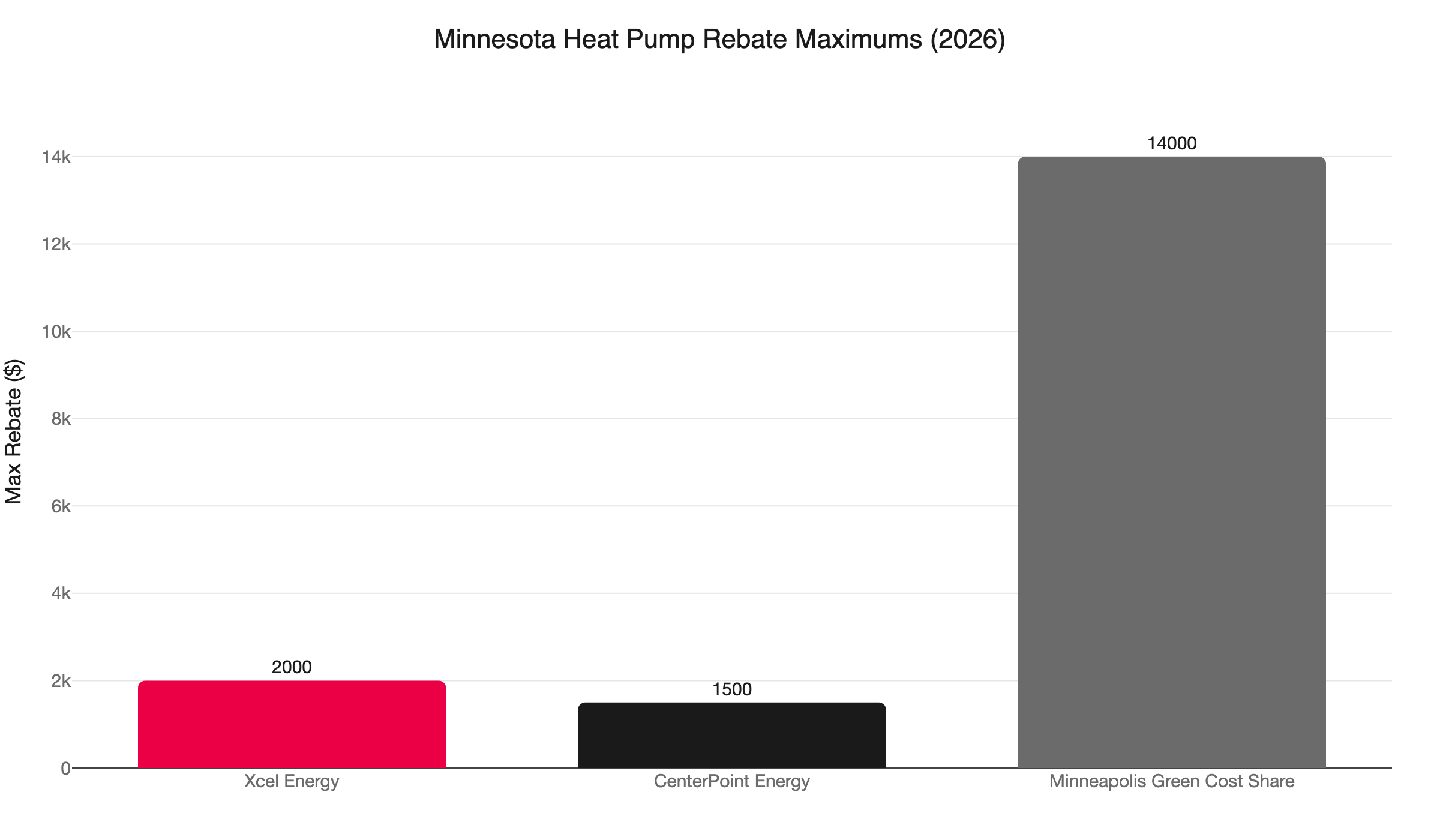
Minnesota Heat Pump Rebate Maximums (2026)
## What Does a Heat Pump Look Like During Defrost Mode?
**During a normal defrost cycle, light frost or thin ice builds on the outdoor coil, the fan stops, steam rises as the frost melts, and the cycle ends within 5 to 15 minutes. The system then returns to heating.**
Here is the full sequence:
1. Frost builds on the outdoor coil during cold, humid weather.
2. The defrost control board detects the buildup and signals the system to reverse.
3. The heat pump [switches temporarily to cooling mode](https://todayshomeowner.com/hvac/guides/heat-pump-defrost/), routing hot refrigerant to the outdoor coil.
4. The outdoor fan shuts off. Less cold air across the coil means faster melting.
5. The frost melts. Steam rises from the unit.
6. After 5 to 15 minutes, the board terminates defrost. The system resumes heating.
This happens automatically. You may never notice it from inside the house. From the yard, it can look alarming. It is not.
The thin white frost you see forming between cycles is normal too. It is not the same as solid, clear ice. Thin white frost is expected. Solid ice that builds cycle after cycle without clearing is the red flag.
## Is a Heat Pump Covered in Ice in Winter Normal?
**Yes. Light frost and thin ice are expected on a heat pump in cold, humid weather. The outdoor coil runs colder than the surrounding air to pull heat from it. When temperatures drop below 40°F and humidity is high, frost forms on the coil. The defrost cycle is the built-in solution.**
The physics are straightforward. A heat pump moves heat from outdoor air into your home. The outdoor coil must run colder than the ambient air for that transfer to occur. When the air is cold and moisture-saturated, that moisture freezes on the coil.
This happens on every heat pump in every cold climate. It is an expected operating condition, not a fault. Manufacturers design defrost controls specifically to address it.
The relevant context for Twin Cities homeowners: [January in Minneapolis averages a high near 20°F and a low near 7.5°F](https://www.weather-us.com/en/minnesota-usa/minneapolis-climate). [Relative humidity in Minneapolis averages 87-90% in January](https://www.currentresults.com/Weather/Minnesota/humidity-january.php), the highest of any month. Sub-freezing temperatures plus near-saturated air means prime frost conditions nearly every day from December through February. Frequent defrost cycles during that stretch are the expected result. They are not a warning sign.
## Why Is Your Heat Pump Steaming?
**Steam rises when the defrost cycle melts frost off the outdoor coil. Hot refrigerant flows through the coil, frost melts fast, and water vapor rises in the cold air. This is normal water vapor. It is not smoke and not a refrigerant leak.**
"Heat pump smoking in winter" is one of the most common HVAC searches every January. The explanation is simple. Frost melts into steam when it contacts a warm coil in cold, dry air. The visual is dramatic. The cause is not.
If you see actual smoke with a burning smell, that is a different situation. Call us right away. But steam with no odor, during or right after a defrost cycle, is the system doing its job.
## The 3-Part Test: Normal Frost or a Real Problem?
You can evaluate your heat pump's behavior from a window. No need to go outside or touch anything. Apply this three-part test.
**1. Duration**
Watch how long the unit stays in defrost mode: fan off, steam rising, coil warming. [A normal defrost cycle lasts 5 to 15 minutes](https://www.pickhvac.com/heat-pump-defrost-mode-how-it-works-whats-normal-fixes/). Defrost running longer than 20 to 30 minutes with no visible ice clearing warrants attention.
**2. Frequency**
In freezing, humid weather, defrost cycles repeat roughly every 30 to 90 minutes. Multiple cycles per hour during a January cold snap is normal behavior. If the unit seems to spend more time in defrost than in heating mode, a sensor issue is possible.
**3. Full clearance**
After each defrost cycle ends, the ice should be fully or nearly fully gone. The coil should look normal before the next cycle begins. Thin white frost reforming quickly is fine. Solid, clear ice persisting after the cycle ends without melting means defrost is not completing. That is the clearest visible indicator of a real problem.
All three checks passing? You are watching a healthy heat pump in a Minnesota winter.
## Why Are Your Vents Blowing Cool Air During Defrost?
**During defrost mode, the heat pump temporarily switches to cooling mode to warm the outdoor coil. Indoor heating pauses. Auxiliary electric heat strips engage to fill the gap, but they take 30 to 60 seconds to warm up. Brief [cool air from the vents](/blog/heat-pump-blowing-cool-air-heat-mode-minnesota/) during that transition is normal.**
[ENERGY STAR excludes the first 10 minutes after a defrost cycle from rated performance measurement](https://www.energystar.gov/sites/default/files/ENERGY%20STAR%20Cold%20Climate%20Heat%20Pump%20Controls%20Verification%20Procedure.pdf) for cold-climate heat pumps. That exclusion formally acknowledges the warm-up gap as a designed-in part of normal cold-climate operation.
If your heat pump lacks auxiliary heat strips, the vents will blow cooler air throughout the entire defrost cycle. That is a design limitation, not a malfunction. If you find it uncomfortable during extended cold snaps, mention it to a technician.
Your thermostat may show "Aux Heat" or "Em Heat" briefly during or just after defrost. That is the system managing the transition correctly. For guidance on when to switch intentionally to emergency heat mode, see our guide on [heat pump emergency heat and when to use it](/blog/heat-pump-emergency-heat-when-to-use/).
## What Makes a Heat Pump Covered in Ice in Winter a Real Problem?
**Defrost board failure produces four specific, observable symptoms: no defrost cycle despite visible frost buildup, defrost that won't terminate, the outdoor fan running during defrost, and solid ice that never fully clears after a cycle. These are distinct from normal defrost behavior.**
**No defrost cycle at all**
Frost keeps building and the system never enters defrost mode. The defrost control board or its temperature sensor has likely failed. Ice accumulates slowly over hours. Eventually it can encase the [entire outdoor unit](/blog/mini-split-outdoor-unit-snow-ice-winter-minnesota/). Once airflow is blocked enough, the system trips a safety lockout and shuts down. A failed temperature or pressure sensor is often the root cause.
**Defrost that won't terminate**
The system enters defrost and stays there. The outdoor fan stays off. The unit keeps running in reverse-cycle mode for 20, 30, or 60 minutes with no sign of ending. The board is not processing the signal to terminate defrost. A stuck contactor or failed board logic is the typical cause.
**Outdoor fan running during defrost**
During a normal defrost cycle, the outdoor fan stops. This is intentional. The fan stopping lets the coil warm up faster without cold air blowing across it. If you see steam rising and ice melting but the outdoor fan is still spinning, the board is not sending the fan-off command. That is a control failure, not normal operation.
**Solid ice that never fully clears**
Normal defrost leaves the coil clean after each cycle. If defrost appears to run but solid, clear ice remains afterward, the system is not completing the melt. [Low refrigerant charge](/blog/low-refrigerant-heat-pump-symptoms-heating-cooling-minnesota/) or [a failing reversing valve](/blog/heat-pump-reversing-valve-failure-symptoms-minnesota/) can cause this. A malfunctioning defrost board is a frequent culprit.
The performance cost of incomplete defrost is significant. Research cited by [NEEP on cold-climate heat pump specifications](https://neep.org/blog/cold-climate-heat-pump-specifications-and-performance-reporting-forging-new-frontiers) shows that frost not fully clearing can reduce heating capacity by up to 43.4%. It can also degrade COP by up to 40.4%. A unit running at roughly half its rated output while drawing full power costs you money on every heating cycle.
Defrost board repair typically costs $250 to $575 for parts and labor, depending on brand and board accessibility.
## When Should You Stop Watching and Call?
**Call a technician if solid ice is not clearing after a defrost cycle, if defrost runs more than 20 to 30 minutes without ice clearing, if the outdoor fan runs during defrost, or if the unit has shut down under heavy ice buildup.**
Use this decision guide:
- Light frost forming and clearing every 30 to 90 minutes: normal, no action needed.
- Steam visible and fan quiet during a 5 to 15 minute cycle: defrost working correctly.
- Brief cool air from vents during or just after defrost: normal aux heat transition.
- Solid ice remaining after a full defrost cycle: call for service.
- Outdoor fan running while steam rises: call for service.
- Unit appears to never defrost despite visible frost buildup: call for service.
- Ice so heavy the unit has shut down: call for service immediately.
Northern One Hour is locally owned and operated in Ramsey, MN, serving Minneapolis, St. Paul, Blaine, Maple Grove, Plymouth, Brooklyn Park, Woodbury, Bloomington, and the surrounding Twin Cities metro. We show up when we say we will. That is the Northern One Hour promise: "Always On Time… Or You Don't Pay a Dime!(R)"
Call (763) 260-6662 or [schedule heat pump repair online](/heating/heat-pump-repair/).
## Is a Cold-Climate Heat Pump Worth the Upgrade?
**For most Twin Cities homeowners, yes. The key is choosing a unit certified to the NEEP cold-climate standard: a COP of at least 1.75 at 5°F and at least 70% of rated capacity at 5°F. These units are built to defrost reliably and keep heating in Minnesota winters.**
The [NEEP Cold Climate ASHP specification](https://neep.org/heating-electrification/ccashp-specification-product-list) defines the minimum performance bar. A searchable list of qualifying models is available at [ashp.neep.org](https://ashp.neep.org). When replacing an aging heat pump, this list is the right starting point.
The [DOE's Cold Climate Heat Pump Challenge](https://www.energy.gov/cmei/buildings/residential-cold-climate-heat-pump-challenge) drew commitments from eight major manufacturers: Bosch, Carrier, Daikin, Johnson Controls, Lennox, Midea, Rheem, and Trane. Minnesota is one of the active DOE field validation sites. These systems are engineered for this climate, not adapted to it as an afterthought.
Homeowners currently heating with electric resistance or fuel oil can see significant savings with a qualifying cold-climate ASHP. Energy consumption can drop by up to 40% compared to those fuel sources. For natural gas users, the math depends on current gas and electricity rates. Our team can run the numbers for your home.
For a full Minnesota-specific overview, see [heat pumps in Minnesota: are they a good fit?](/blog/heat-pumps-in-minnesota-are-they-a-good-fit/)
## What Minnesota Rebates Are Available for Heat Pump Upgrades?
If a defrost board inspection reveals your existing unit is aging and repair costs are approaching replacement cost, available rebates can change the math significantly.
**Xcel Energy** offers up to $2,000 for qualifying cold-climate heat pumps. Units must meet the COP ≥ 1.75 at 5°F threshold and appear on ashp.neep.org. A $600 bonus is available when the upgrade is paired with insulation or air sealing improvements.
**CenterPoint Energy** offers up to $1,500 for ducted cold-climate ASHPs. An additional $1,100 is available for dual-fuel system configurations.
**Minneapolis Green Cost Share** can stack up to $14,000 in additional incentives on top of utility rebates for eligible Minneapolis homeowners. This program is income-qualified and subject to annual funding availability.
One important note on federal incentives: the 25C heat pump tax credit expired December 31, 2025. The state HEAR rebate program had not yet launched as of early 2026. Verify current eligibility directly with Xcel and CenterPoint before making purchase decisions, as program requirements change.
Our team walks clients through rebate eligibility as part of every heat pump assessment. Financing options are available for qualifying systems. If replacement makes sense for your situation, we want to make it as accessible as possible.
For a current breakdown of all available incentives, see [Minnesota heat pump rebates and tax credits](/blog/minnesota-heat-pump-rebates-tax-credits/).
Call (763) 260-6662 or book online to get started. We will be there when we say we will be.
---
# Why Does My AC Smell Bad? Your Twin Cities Odor Guide
URL: https://northernonehour.com/blog/why-does-my-ac-smell-bad-musty-burning-twin-cities/
Published: 2026-08-05 | Category: Cooling
Musty, burning, or sweet smells from your AC each point to a different problem. Learn what causes each odor and what to do in the next 60 seconds.
Key Takeaways
- A musty or dirty-sock smell means mold or bacteria on your evaporator coil or condensate pan. Schedule a professional coil cleaning.
- A dusty burning smell on the first run of the season is normal. It clears within 20 to 30 minutes.
- A burning plastic, rubber, or chemical smell that lingers past one run cycle means a motor, capacitor, or wiring problem. Shut the system off and call.
- A sharp, strong burning smell with possible smoke or a buzzing sound is a fire hazard. Shut off at the thermostat and the breaker. Call immediately.
- A sweet or faintly chemical smell, like nail polish remover or ether, usually signals a refrigerant leak. Shut off, ventilate, and call an EPA-certified technician.
- Minneapolis summer humidity regularly [averages 70 to 82%](https://www.currentresults.com/Weather/Minnesota/humidity-july.php), which makes coil mold more likely here than in most of the country.
## What Is That AC Smell Trying to Tell You?
Your nose is a better diagnostic tool than most people realize. Each AC odor maps to a specific component. Each component has a specific urgency level. Some smells clear on their own in under 30 minutes. Others mean shut the system off before you finish reading this.
This guide gives you the direct answer for each odor: which part is responsible, why it smells that way, what Minnesota's climate does to make it worse, and the one action to take in the next 60 seconds.
## Why Does My AC Smell Musty or Like Dirty Socks?
That sour, locker-room odor from your vents is mold or bacteria growing on your evaporator coil or in the condensate drain pan underneath it. The [EPA identifies HVAC cooling coils and condensate drain pans as prime sites of microbial amplification](https://19january2021snapshot.epa.gov/indoor-air-quality-iaq/biological-pollutants-impact-indoor-air-quality_.html). Running the system longer does not clear it. A professional coil cleaning does.
### The component responsible: the evaporator coil
Your indoor air handler holds the evaporator coil. Refrigerant flowing through it gets cold. Warm household air passes over the coil. Moisture condenses onto the coil surface and drips into a drain pan below.
That warm, dark, wet environment is ideal for microbial growth. When the blower runs, air moves across the contaminated coil and carries the odor into every room. This is not a cosmetic nuisance. Mold on HVAC coils can produce allergens, irritants, and potentially toxic mycotoxins, per [EPA mold guidance](https://www.epa.gov/mold/brief-guide-mold-moisture-and-your-home).
### Why the smell peaks in spring: dirty sock syndrome
The first cooling cycles of the season are almost always the worst. Over winter, organic matter accumulates on the coil. Dust, skin cells, and pet dander build up on the coil surface while the system sits idle.
Then spring arrives. Condensation begins again. That warm, wet environment triggers a bloom of mold and bacteria in the accumulated organic layer. HVAC technicians call this [dirty sock syndrome](https://indoortemp.com/resources/dirty-sock-syndrome).
An oversized system makes this significantly worse. A unit that is too large for the space short-cycles. It drops air temperature quickly, shuts off before completing a full dehumidification cycle, and leaves the coil damp almost continuously. Mold keeps growing. The smell keeps returning. If yours is a recurring, year-over-year problem, oversizing may be the actual root cause.
### The Minnesota angle on musty AC smells
The EPA recommends keeping indoor humidity below 60%, ideally between 30 and 50%, to prevent mold and bacterial growth. Hitting that target in a Twin Cities summer is a real challenge.
Minneapolis averages 67% relative humidity annually. [Summer daily averages run 70 to 82%](https://www.currentresults.com/Weather/Minnesota/humidity-july.php), with morning peaks near 90% on heavy dew-point days. Summer 2026 has brought near-tropical dew points to the metro. Your AC is pulling a serious dehumidification load every time it runs.
On the most humid days, the evaporator coil may never fully dry between cycles. Microbial conditions stay favorable all season.
### What to do about a musty smell
Do not mask it with candles or air freshener. The odor signals a live microbial problem. The particles that cause it are [moving through your vents](/blog/mold-in-hvac-ducts-signs-remediation-twin-cities/) and into your lungs.
Schedule a professional coil cleaning. A technician will clean the evaporator coil surface, flush the condensate drain pan, and inspect the drain line for blockages. If the drain line is backed up, standing water in the pan accelerates mold growth. Our guide on [fixing a clogged AC condensate drain line](/blog/ac-condensate-drain-line-clogged-fix/) covers what that looks like and how it is repaired.
For recurring mold problems, a [whole-home dehumidifier](/blog/whole-home-dehumidifiers-in-the-twin-cities-comfort-fix-for-sticky-summer-days/) is the most effective long-term answer. Holding indoor humidity in the 30-to-50% range year-round slows regrowth between service visits and makes the whole house more comfortable during Minnesota's humid summers.
---
## Why Does My AC Smell Like It's Burning?
Burning smells fall into three distinct tiers. Tier one is harmless dust burn-off that clears in under 30 minutes. Tier two is a motor or capacitor problem that needs a technician before the next run. Tier three is melting wire insulation: a fire hazard. Shut the system off at the thermostat and breaker. Call immediately. The character and persistence of the smell tell you which tier you are in.
### Tier 1: Dusty burning smell on the first run of the season
If you switch the AC on for the first time after months of disuse and catch a faint, dusty burning odor, you are almost certainly in tier one. Dust settles on the blower wheel and internal components over the off-season. When the system runs, that layer burns off.
The smell typically clears within one complete run cycle. That is roughly 20 to 30 minutes. If it is gone by then, no action is needed. Open a window if the smell bothers you. Do not shut the system off in an attempt to stop it. That just delays the same burn-off until the next startup.
### Tier 2: Lingering plastic, rubber, or chemical burning smell
If the smell does not clear after one cycle, or if it smells more like melting plastic than dusty heat, the source is likely the blower motor or the run capacitor. A motor running hot due to worn bearings emits a plastic-adjacent smell. A failing capacitor often produces a chemical, rubbery odor before it gives out.
This smell does not resolve on its own. Running the system risks turning a part replacement into a full component failure. See our guide on [bad AC capacitor symptoms and costs in the Twin Cities](/blog/bad-ac-capacitor-symptoms-cost-twin-cities/) for what the early warning signs look like and what repairs typically run. Shut the system off until a technician checks it.
### Tier 3: Sharp burning smell with smoke or buzzing - emergency
A sharper, stronger burning smell, possibly accompanied by visible smoke, a buzzing or crackling sound, or a tripped circuit breaker, points to electrical wiring. Wire insulation melts before it ignites. The window between a warning sign and a house fire is short.
The [Fire Marshals Association of Minnesota](https://fmam.org/resources/electrical-safety-and-fire-prevention/) is explicit: a burning or rubbery smell from an appliance warrants a call to a professional. Electrical distribution equipment is the top source of direct property damage from residential structure fires in Minnesota. Electrical fires account for 7.9% of all Minnesota structure fire causes.
Shut the system off at the thermostat. Go to the electrical panel and shut off the circuit for the air handler. Then call. Do not reset the breaker and try again.
---
## Why Does My AC Smell Sweet or Like Chemicals?
A sweet, faintly chemical odor, often described as nail polish remover, ether, or a chemistry-classroom smell, is the signature of a refrigerant leak. This is not a schedule-it-when-convenient situation. Refrigerant displaces oxygen in a confined space and at elevated concentrations has serious health consequences. Shut the system off. Open windows and doors to ventilate. Then call a technician.
### The component: refrigerant lines and the evaporator coil
Refrigerant circulates between the outdoor condenser unit and the indoor evaporator coil in a sealed loop under pressure. When that loop develops a crack or fitting failure, refrigerant escapes as a gas.
The compound itself is nearly odorless in trace quantities. Contaminants and decomposition byproducts give it a distinct sweet-chemical character. Not everyone describes it identically. Some say it smells faintly sweet. Others say it smells like cleaning chemicals or airplane glue. If it is unfamiliar and slightly sweet, treat it as a refrigerant leak until a technician confirms otherwise.
### Health effects you need to know
R-410A, the refrigerant in most systems installed before 2025, has documented health effects at elevated concentrations. According to the [R-410A Safety Data Sheet](https://refrigerants.com/wp-content/uploads/2019/12/SDS-R410A.pdf), when oxygen is displaced to between 12 and 14% in a confined space, symptoms include loss of coordination, rapid pulse, and deeper respiration. At high concentrations, cardiac arrhythmia is a documented risk.
Ventilate first. Open windows and exterior doors. Get anyone showing symptoms outside. Then shut off the system.
### What the law says about refrigerant
Refrigerant venting is illegal. The [U.S. Department of Energy](https://www.energy.gov/sites/default/files/2013/11/f5/hvac_guide.pdf) is clear: only EPA-certified technicians may service refrigerant systems. Do not attempt to locate, seal, or work around a refrigerant leak yourself. It is not a DIY repair.
### Other signs a refrigerant leak is the culprit
A leak rarely shows up as an odor alone. Watch for:
- Ice on the refrigerant lines or on the indoor evaporator coil
- Reduced cooling output even with the system running continuously
- Higher-than-expected electricity bills
- Longer run cycles to reach setpoint
These symptoms plus an unusual sweet smell are a strong cluster. Call our team and describe what you are seeing. We can help you triage over the phone before dispatch.
---
## Is It Safe to Keep Running My AC When It Smells?
It depends entirely on which smell. The dusty burn-off during the first 20 to 30 minutes of the season is safe to run through. Every other persistent odor in this guide, including musty, lingering burning, and sweet-chemical, means stop and call before running the system again.
Running a system with a refrigerant leak concentrates the gas indoors and risks destroying the compressor. Running a system with a burning electrical smell is a fire risk. Running a system with mold on the coil pushes allergens and mycotoxins into your living space with every cycle.
None of those risks are worth a warm house for a day or two while you wait for a technician. When you are unsure which category applies: shut the system off. It is always the lower-risk choice.
---
## Why Is This Problem Worse in a Minnesota Summer?
Minneapolis and the Twin Cities metro run some of the highest summer humidity in the continental United States. That sustained moisture load keeps evaporator coils wet longer, feeds dirty sock syndrome, and makes it harder for any AC system to hold indoor humidity in the safe 30-to-50% range, even a well-maintained one.
Minneapolis [summer daily humidity averages 70 to 82%](https://www.currentresults.com/Weather/Minnesota/humidity-july.php), with morning peaks near 90% on heavy dew-point days. Your evaporator coil is pulling a heavier dehumidification load than it would in most other U.S. markets.
The practical consequence is that annual coil cleaning is not optional maintenance for most Twin Cities homes. It is the baseline that keeps indoor air quality in a safe range. If your system was oversized at installation, short-cycling means the coil never completes a full dehumidification pass. The coil stays damp. Dirty sock syndrome returns every spring. More cleaning helps, but right-sizing at replacement is the actual fix.
Pair annual maintenance with a whole-home dehumidifier and you hold indoor humidity in the safe zone year-round. That reduces mold growth, improves comfort on the heaviest humidity days, and takes strain off the AC itself.
---
## How Do I Know If I Need Repair or Replacement?
For most odor-related problems, the answer is a repair: a coil cleaning, a capacitor swap, a motor replacement, or a refrigerant recharge. Replacement enters the conversation when a technician finds multiple simultaneous failures, a coil that cannot be cleaned to an acceptable standard, or a system old enough that the repair cost approaches what a new unit would run.
If replacement is realistic, Minnesota homeowners have strong incentives available right now. Xcel Energy offers up to $450 for a new central air conditioner rated SEER2 16 or above, and up to $2,000 for a qualifying ductless mini-split. Those can stack with CenterPoint Energy rebates, the federal tax credit, and Minnesota Department of Commerce income-qualified grants, according to the [homeenergybasics.com Minnesota rebate guide](https://homeenergybasics.com/heat-pumps/states/mn).
Financing is available for larger installs. You should not have to choose between a functioning AC and a monthly payment you can manage. Our team walks you through all the stacking options at the appointment.
---
## What Should I Do Right Now?
Northern One Hour Heating and Air Conditioning is locally owned and operated out of Ramsey, Minnesota. We serve Minneapolis, St. Paul, Blaine, Maple Grove, Plymouth, Brooklyn Park, Woodbury, Bloomington, and the surrounding Twin Cities metro.
We know what a Minnesota summer does to HVAC equipment. We work in these conditions every day. When you call us, we show up when we say we will. That commitment is backed by our guarantee: "Always On Time… Or You Don't Pay a Dime!(R)."
If your AC is putting out a smell you cannot place:
- Call **(763) 260-6662** for same-day or next-day service.
- Or [schedule AC repair online](/air-conditioning/air-conditioning-repair/) and we will confirm your appointment fast.
If you are not sure whether the smell is urgent, call and describe it. We can help you sort out whether to shut the system off now or wait for a scheduled visit. We would rather you call and find out it was dust burn-off than not call and deal with something worse.
---
## Key Takeaways
- **Musty or dirty-sock smell:** mold and bacteria on the evaporator coil or condensate pan. Schedule a professional coil cleaning. Minnesota's high summer humidity makes this more likely and more persistent than in most markets.
- **Dusty burning at first startup:** normal. Burns off in 20 to 30 minutes. No action needed if it fully resolves in that window.
- **Lingering plastic or rubber burning smell:** motor or capacitor problem. Shut the system off and schedule service before running it again.
- **Sharp burning smell with smoke or buzzing:** electrical wiring emergency. Shut off at the thermostat and breaker. Call now.
- **Sweet or chemical smell:** refrigerant leak. Shut off. Ventilate. Call an EPA-certified technician. Do not run the system.
- When you are not sure which category applies: shut the system off first. It is always the lower-risk call.
---
# AC Keeps Tripping the Circuit Breaker? Here's Why
URL: https://northernonehour.com/blog/ac-keeps-tripping-breaker-causes-twin-cities/
Published: 2026-08-04 | Category: Cooling
Your AC keeps tripping the circuit breaker on hot Twin Cities afternoons for specific reasons. Learn the causes, timing clues, and when to call.
Key Takeaways
- When your ac keeps tripping the circuit breaker, the system is drawing more current than the breaker can handle. Heat, dirty components, and failing parts all push amp draw higher.
- The timing of the trip tells you what broke. A trip at startup points to a bad capacitor or a hard-starting compressor. A trip after 20-40 minutes of running points to thermal overload: dirty coil, low refrigerant, or aging motor windings.
- At 100°F ambient, a typical compressor draws twice the amps it does at 80°F. A system that ran fine all morning can reach its amp limit by early afternoon.
- Reset the breaker once. Wait 30 minutes. Restart. If it trips again within a few hours, stop and call a tech. Never reset more than twice in a single day.
- Xcel Energy offers $150-$450 in rebates on AC replacement. If your system is 12 or more years old, asking for a replacement estimate alongside the repair quote is worth it.
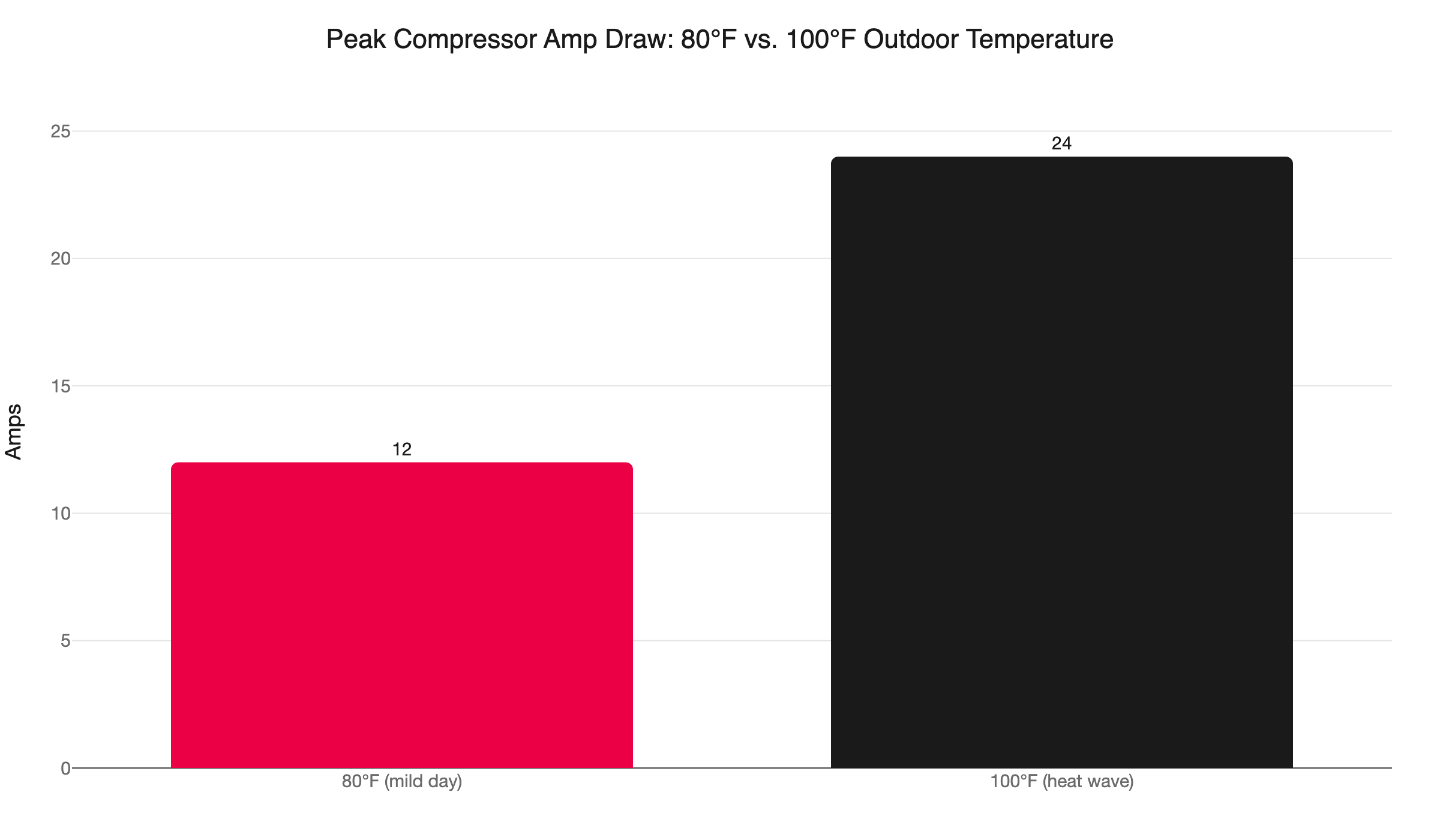
Peak Compressor Amp Draw: 80°F vs. 100°F Outdoor Temperature
## Why Does My AC Keep Tripping the Circuit Breaker?
Your AC trips the circuit breaker when it draws more current than the breaker is rated to handle. The cause can be a failing component inside the AC, a wiring or circuit problem, or an aging breaker that no longer holds its rated trip point. The cause determines whether you need an HVAC tech, an electrician, or both.
Your AC runs on a dedicated 240-volt circuit with a double-pole breaker. [NEC Article 440](https://amporalabs.com/blog/nec-article-440-hvac-electrical) governs how that circuit must be sized. The maximum overcurrent protection is printed on your outdoor unit's nameplate. When the compressor draws more amps than that rating allows, the breaker trips to protect the wiring from overheating.
That is not a malfunction. That is the safety system working as designed. The problem is whatever pushed the amp draw over the limit.
The short list of causes: a failing capacitor, dirty condenser coils, low refrigerant charge, an aging compressor motor, or a weakened breaker. We will walk through each one. But the most useful starting point is understanding why the problem almost always peaks on the hottest afternoons in the Twin Cities.
---
## Why It Gets Worse on Hot Afternoons
This is the question most HVAC content skips, and it matters specifically for Minnesota homeowners.
[July 2026 ended as the 6th hottest on record at Minneapolis-St. Paul International Airport](https://www.dnr.state.mn.us/climate/journal/100degreesmsp.html), averaging 78.9°F for the month. That is 4.6 degrees above the 1991-2020 normal. MSP hit 100°F on July 27, with a dew point of 81°F. Days like that stack three separate problems on your AC unit by mid-afternoon.
**Solar gain on the house.** The home has been absorbing heat since morning. Attic temperatures, wall surface temperatures, and interior temps are highest between 2 and 4 p.m. The thermostat calls for cooling more aggressively and holds that call longer.
**The condenser unit has been baking.** Your outdoor unit sits in direct sun. The metal cabinet, the aluminum fins, and the refrigerant lines inside it have absorbed solar radiation for hours. By afternoon, the unit has to shed heat into air that is already very hot and has very little capacity to absorb more.
**Ambient temperature drives amp draw up.** Compressor amp draw is not a fixed number. It climbs with outdoor temperature. [Field measurements from HVAC technicians](https://www.hvac-talk.com/threads/compressor-amp-draw.1295761/) show a typical unit pulling 10-12 amps on an 80°F day will pull 24 amps or more at 100°F. Same motor, same refrigerant charge, same ductwork. The heat is the multiplier.
A unit that ran without issue all morning is already operating near its amp ceiling by 3 p.m. One dirty coil or one marginal capacitor tips it over.
---
## Startup Trip vs. Running Trip: What the Timing Tells You
Before you call a tech, note exactly when the trip happens. That single piece of information tells you which part likely failed and what parts the technician should bring on the truck.
**The breaker trips within 1-2 seconds of startup.** This almost always points to a capacitor problem or a hard-starting compressor. Every compressor motor needs a surge of current to go from zero to running speed. [That startup surge can reach 6-10 times the rated running current](https://forums.mikeholt.com/threads/high-starting-currents-from-a-c-compressor.2563655/) for a half-second to two seconds. A healthy capacitor delivers the energy boost needed and the motor snaps to speed. A failing capacitor cannot deliver it. The motor holds in that high-amp, locked-rotor state, and the breaker trips before the compressor ever reaches operating speed.
**The breaker trips after 20-40 minutes of running.** This is thermal overload. The system ran, but the heat it was trying to move had nowhere efficient to go. Dirty coils, low refrigerant, or aging motor windings forced the compressor to keep running past the point a healthy system would have finished the cycle. Amp draw climbed over those 20-40 minutes until it crossed the breaker's rated threshold.
Tell the technician which pattern applies when you call. "It trips the instant it starts" and "it runs for half an hour and then trips" point to different failed parts. Giving the tech that context means a faster diagnosis and the right parts on the first visit.
---
## What Causes a Trip at Startup?
**Short answer:** A failing start capacitor is the most common cause. Without it, the compressor motor cannot reach running speed quickly enough, and the sustained high amp draw trips the breaker. Heat degrades capacitors faster than anything else, making hot Twin Cities afternoons the worst possible conditions for a marginal cap.
Here is what your technician will check:
**Capacitor failure.** The capacitor stores and releases a burst of electrical energy to help the compressor and fan motors start. Heat degrades the dielectric material inside the capacitor over time. A cap that was borderline last fall may not survive a July heat wave. [A failing capacitor causes what technicians call a hard start](https://www.allaroundmech.com/why-air-conditioner-keeps-tripping-breaker/): the compressor struggles to reach running speed, holds in the high-amp locked-rotor zone, and trips the breaker. Capacitor replacement is a relatively low-cost repair with a fast turnaround. It is one of the most common fixes on a summer service call.
**A hard-starting compressor.** If the capacitor tests good but the compressor still struggles at startup, the motor windings may be weakening with age. A hard-start kit can give the compressor the extra boost it needs and extend its useful life by a season or two. At some point, compressor replacement becomes the better option.
**A grounded compressor.** If the breaker trips at startup and will not reset at all, the compressor may have an internal winding shorted to ground. In that case, the breaker is doing exactly what it should: stopping current flow through a dead short. The fix is compressor replacement or, in most cases with systems over 12 years old, a full system replacement. Installing a new compressor in an aging system often creates a mismatched unit and may not be covered under equipment warranties.
---
## What Causes a Trip After 20-40 Minutes of Running?
**Short answer:** Something is blocking heat transfer and forcing the compressor to work harder and longer than it was designed to. The three most common culprits are a dirty condenser coil, low refrigerant charge, and aging motor windings. All three get worse on hot days because there is less margin for error when ambient temperatures are already high.
**Dirty condenser coils.** The outdoor unit's job is to dump your home's heat into the outdoor air. [Dirty condenser coils cannot shed that heat efficiently](https://cielowigle.com/blog/air-conditioner-circuit-breaker-keeps-tripping/). The compressor runs under higher head pressure, draws more current, and eventually trips the breaker after sustained operation. This is one of the most preventable causes on this list. Annual spring maintenance includes coil cleaning. A tune-up in April or May means this problem does not surface on a 100-degree afternoon in July. Our [air conditioning maintenance page](/air-conditioning/air-conditioning-maintenance/) covers what a full tune-up includes.
**Dirty air filter.** A clogged filter restricts airflow across the indoor evaporator coil. Less airflow means the evaporator cannot absorb heat from the home's air efficiently. The system runs longer trying to reach setpoint, and the compressor draws more amps over time. [ENERGY STAR identifies a dirty filter as the leading cause of premature AC failure and efficiency loss.](https://www.energystar.gov/saveathome/heating-cooling/maintenance-checklist) During peak cooling season, check your filter at least once a month.
**Low refrigerant charge.** Low refrigerant means the system has less working fluid to carry heat from the indoor coil to the outdoor unit. The compressor compensates by running harder and longer, drawing more current in the process. Low refrigerant is almost always a sign of a leak somewhere in the system. Adding refrigerant without finding and sealing the leak is a temporary patch that will not hold through the season.
**Aging motor windings.** Motor windings in the compressor and fan motors degrade with years of heat cycling. Degraded windings have higher electrical resistance, which translates to higher amp draw for the same mechanical output. If your system is 12-15 years old and starts tripping the breaker regularly on hot days, aging windings may be the root cause rather than any single replaceable component.
**An oversized system.** An AC that is too large for your home [short-cycles](https://www.energystar.gov/products/ask-the-experts/how-keep-your-hvac-system-working-efficiently): it hits the thermostat setpoint quickly, shuts off, then fires back up a few minutes later. Every startup is a high-amp surge. Frequent startups compound wear on the compressor and raise the total number of trips over a season. If your system was installed without a Manual J load calculation, oversizing is worth discussing with your technician.
---
## Can I Reset the Circuit Breaker Myself?
**Short answer:** Yes, once. Reset the breaker, wait 30 minutes, then restart the AC. If the system holds through the afternoon, watch it. If it trips again within a few hours, stop resetting and call a tech. Never reset the same breaker more than twice in a single day for the same appliance.
The 30-minute wait is not optional. Your compressor builds high-pressure refrigerant on one side of the system and low-pressure on the other while running. When it shuts off mid-cycle, those pressures need time to equalize. Restarting immediately after a trip forces the motor to start against an unequalized system. That compounds stress on a compressor that was already struggling.
Here is the decision rule to follow:
1. Reset the breaker once.
2. Wait 30 minutes with the AC off.
3. Restart the system.
4. If it holds for the rest of the afternoon, watch it over the next day or two. A single trip can result from a [transient voltage event](/blog/hvac-surge-protector-lightning-protection-minnesota/). One trip is not always a crisis.
5. If it trips again within a few hours, stop there and call a tech.
Repeated resets push current through a circuit that is telling you something is wrong. At best, you accelerate wear on the compressor motor. At worst, you damage the wiring inside the panel. The breaker trips to protect you. Resetting it repeatedly overrides that protection.
---
## Is the Circuit Breaker Itself the Problem?
**Short answer:** Sometimes. Breakers wear out over years of repeated trips. An aging breaker can start tripping at current below its rated value, shutting down a system that is drawing within spec. An electrician can test whether your breaker is still holding its rated trip point.
Older Minneapolis and St. Paul homes often have 60-100 amp panels that were sized before central air conditioning was standard. A modern 3-ton AC system typically needs a dedicated 40-50 amp, 240-volt, double-pole circuit. If the circuit was sized for an older, smaller unit and the panel has not been updated, the breaker may be undersized for the system currently running on it.
This is an electrical issue, not an HVAC issue. If our technician finds the AC unit is drawing within spec but the breaker keeps tripping, the next call is to a licensed electrician to assess the panel and circuit size. We handle the HVAC side of that conversation and can give you the exact running amp measurement so you have the right data for the electrical contractor.
---
## What Does This Mean for Older Twin Cities Homes?
A large share of Minneapolis and St. Paul housing stock is 50-80 years old. Many of these homes have panels sized before central air conditioning was common. Add an aging AC system and a heat wave like July 2026, and the risk of a mid-summer failure increases significantly.
The practical answer is spring maintenance before peak heat arrives. A technician who checks capacitor health, measures running amps, inspects the condenser coil, and verifies refrigerant charge in May can catch a marginal capacitor or a coil that needs cleaning well before either one causes a trip at 3 p.m. in July.
If your system is already showing signs of strain beyond a tripped breaker, our post on [AC compressor failing signs and repair cost in the Twin Cities](/blog/ac-compressor-failing-signs-repair-cost-twin-cities/) walks through the warning signs that appear before a compressor completely fails, along with what you can expect to pay.
---
## When Should You Replace the AC Instead of Repairing It?
**Short answer:** If your system is 12 or more years old and the repair involves the compressor or repeated trips pointing to aged motor windings, the math often favors replacement. A new ENERGY STAR unit can cut cooling costs by up to 30% compared to an older system, and Xcel Energy rebates reduce the upfront cost meaningfully.
The formula most HVAC professionals use: multiply the repair cost by the system's age in years. If that product exceeds the cost of a new system, replacement is the better investment.
A $1,550 compressor repair on a 14-year-old system: 1,200 x 14 = 16,800. A new system at or below that figure is a better call. You also avoid paying for the next component that fails on a 14-year-old unit six months later.
Repeated breaker trips are one of the more reliable signals that a system is approaching end of life. If your AC has tripped the breaker multiple times this summer and is pushing 15 years old, it is worth asking for both a repair quote and a replacement estimate at the same visit. Our [AC replacement cost guide for Minnesota homeowners](/blog/ac-replacement-cost-minnesota/) covers what to expect, including which efficiency tier makes sense for our climate and what size system is right for your home.
---
## Xcel Energy Rebates Worth Knowing
If your system is headed toward replacement, timing the purchase while rebates are active lowers the out-of-pocket cost.
[Xcel Energy offers $150-$450 in rebates on central AC replacement](https://mn.my.xcelenergy.com/s/residential/heating-cooling/heat-pumps), depending on the efficiency tier of the new unit. Those rebates stack with the federal tax credit for qualifying high-efficiency systems. If you are weighing a cold-climate heat pump instead of a straight AC replacement, Xcel offers up to $2,000 in rebates on heat pump installs, and the federal credit can add more on top.
Xcel also runs an AC Rewards program: enroll your smart thermostat, and Xcel may cycle your AC for a few hours on peak-demand afternoons during summer. You receive a $25-$40 annual bill credit in return. If you are not home during peak afternoon hours, that is a low-effort way to reduce a bill that has been climbing.
Talk to your technician about which rebates apply to the system they recommend. We factor those numbers into the replacement conversation so you understand the net cost, not just the sticker price.
---
## What to Expect When You Call Us
When you call Northern One Hour, we ask about timing first. Does the breaker trip at startup or after 20-40 minutes of running? That single answer tells us which parts to put on the truck. A startup trip in peak cooling season typically means a capacitor and a hard-start kit. A running trip means refrigerant gauges, a running amp check, and a condenser coil inspection.
We are locally owned and operated in Ramsey, MN, serving the Twin Cities metro: Minneapolis, St. Paul, Blaine, Maple Grove, Plymouth, Brooklyn Park, Woodbury, Bloomington, and surrounding communities. Our technicians know Minnesota summers. They know what a 100-degree afternoon does to a marginal system, and they know that a missed or late service appointment is not acceptable when your home is heating up fast.
Our guarantee is straightforward: "Always On Time... Or You Don't Pay a Dime!(R)" That promise exists because we understand what a wide service window costs you when your AC is down in July.
If your AC is tripping the breaker today, call us at **(763) 260-6662** or [schedule a repair online](/air-conditioning/air-conditioning-repair/). We will diagnose the cause, give you straight pricing, and tell you honestly whether repair or replacement is the right call for your system.
---
## Key Takeaways
- When an ac keeps tripping the circuit breaker, amp draw has exceeded the breaker's rated limit. Heat, dirty components, and failing parts all force amp draw higher.
- Timing tells you what broke. A startup trip means a bad capacitor or hard-starting compressor. A running trip means thermal overload from a dirty coil, low refrigerant, or aging motor windings.
- At 100°F, a typical compressor draws twice the amps it does at 80°F. A marginal system that ran cleanly all morning can trip its breaker by early afternoon in a Twin Cities heat wave.
- Reset once. Wait 30 minutes. Restart. If it trips again within a few hours, call a tech. Never reset more than twice in a day.
- Systems 12 or more years old should get a repair vs. replacement estimate. Xcel rebates of $150-$450 are available now.
- Call (763) 260-6662 or book online. We will tell you exactly what is happening and what it costs to fix it.
---
# Bad AC Capacitor Symptoms: A Twin Cities Homeowner's Guide
URL: https://northernonehour.com/blog/bad-ac-capacitor-symptoms-cost-twin-cities/
Published: 2026-08-04 | Category: Cooling
Your outdoor unit hums but the fan isn't spinning and the air isn't cold. Learn the bad AC capacitor symptoms, the real risks, and repair costs in Minnesota.
Key Takeaways
- A humming outdoor unit with a fan blade that is not moving is an emergency. Turn the system off immediately.
- Running the system in that state overheats your compressor within minutes. Compressor replacement costs $1,950 to $3,900 - far more than a capacitor repair.
- Twin Cities capacitors typically last 8 to 15 years. Our shorter cooling season puts far less cumulative thermal stress on the part than Sun Belt climates do.
- Capacitor replacement runs $195 to $500 for a standard service call. The part is $10 to $80. You are paying for a tech who stocks it on the truck, discharges it safely, and matches the exact microfarad spec.
- Do not manually spin the stopped fan blade with a stick or pencil to test the capacitor. That popular YouTube technique puts you near live electrical terminals that hold a lethal charge even after the power is cut.
- A weak capacitor caught during a tune-up can be replaced at a standard rate, before a July heat wave forces an emergency call.
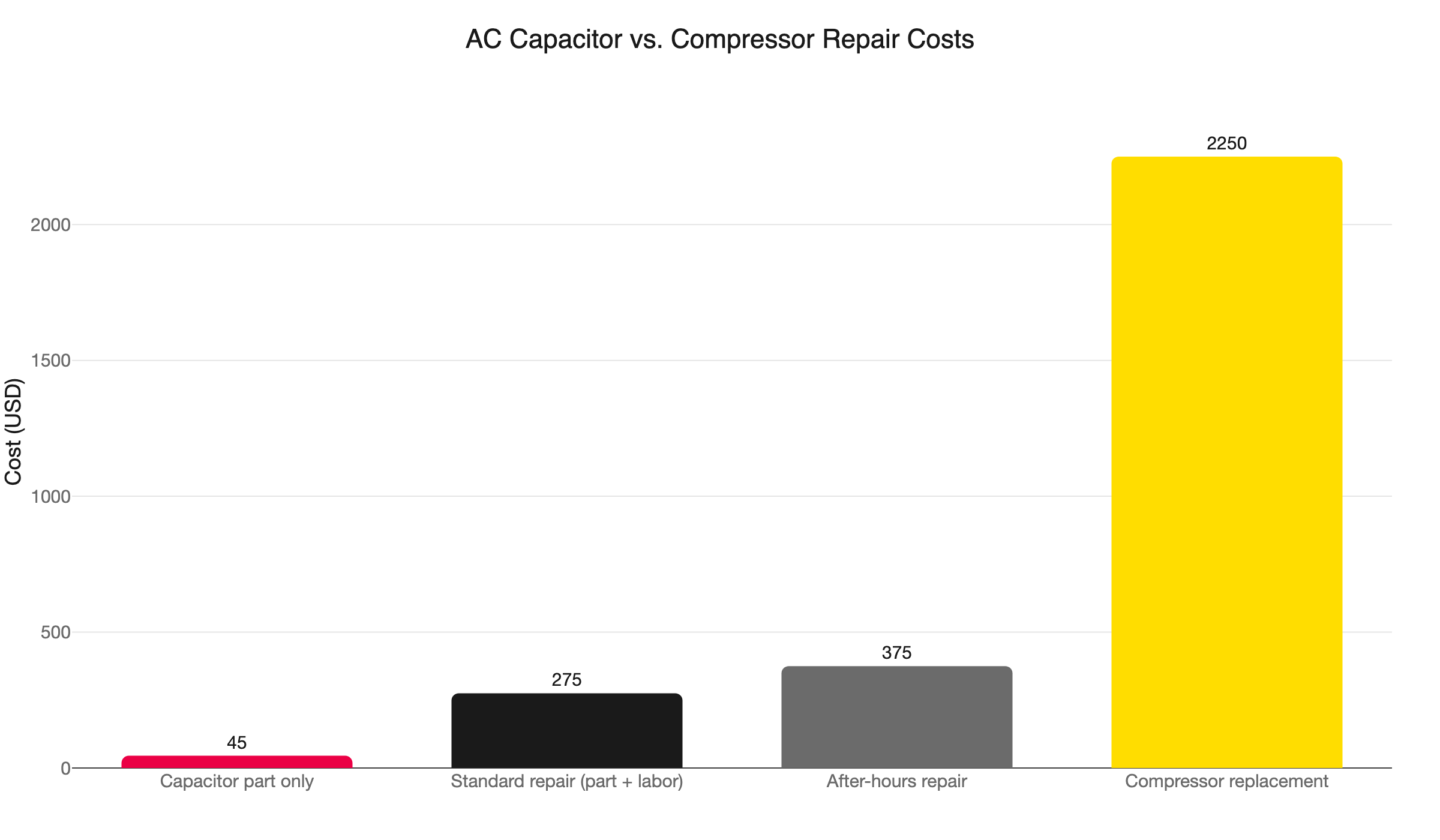
AC Capacitor vs. Compressor Repair Costs
Bad AC capacitor symptoms often show up fast. What you do in the next few minutes can determine whether you pay $350 or $3,200. This post covers what to look for, what is at risk, and what repair costs in the Twin Cities.
## What Does a Capacitor Actually Do?
**The quick answer:** A capacitor supplies the burst of electrical energy that starts your AC's compressor motor and condenser fan motor. It also keeps a steadying charge flowing while the motors run. Most homes have one dual-run capacitor that serves both motors at once. When it fails, both motors are affected.
Your outdoor AC unit has two electric motors. One runs the compressor, which moves refrigerant through the cooling cycle. The other spins the condenser fan on top of the unit, pulling air across the coils so heat can escape outside. Neither motor generates enough starting torque on its own. The capacitor bridges that gap.
Think of it like a starter motor on a car engine. Without it, nothing turns over.
Most residential systems use a single three-terminal unit called a dual-run capacitor. It handles both motors at the same time from one component. When that part weakens or fails, both motors are affected simultaneously. That is why a bad capacitor often looks, from the outside, like the entire outdoor unit stopped working at once.
## What Are the Bad AC Capacitor Symptoms to Watch For?
**The quick answer:** A humming outdoor unit with a fan that is not spinning is the most urgent sign. Other symptoms include warm air from your vents, a slow or hesitant startup, short cycling, rising energy bills, and a visibly bulged or oil-stained capacitor. Any one of these warrants a service call.
Here is what to look and listen for, ordered from most urgent to least:
**Fan not spinning, unit humming**
This is the failure that demands immediate action. If you can hear the outdoor unit running but the fan blade on top is completely still, turn the system off at the thermostat right now. Do not let it keep running. The next section explains exactly what is happening inside when that fan stops.
**Warm air from the vents**
The system is running and air is moving, but it does not feel cold. A failing capacitor that still allows the compressor to limp along will reduce cooling output noticeably. This symptom usually builds over a few days before the unit quits altogether.
**Slow, hesitant startup**
The outdoor unit stumbles when it starts, nearly stalls, and then eventually gets going. Sometimes it takes two or three tries before it holds. That hesitation is the compressor motor straining to start without adequate capacitor support.
**[Short cycling](/blog/ac-short-cycling-causes-fixes-twin-cities/)**
The system turns on, runs for a few minutes, and shuts off before reaching the set temperature. Then it starts again. This repeating pattern can mean the capacitor is failing intermittently and the compressor is tripping on thermal protection as it overheats on each start attempt.
**Unusually high energy bills**
A motor that is not getting proper starting assistance [draws more current than normal](/blog/ac-keeps-tripping-breaker-causes-twin-cities/). An unexplained midsummer electricity spike is a signal worth chasing down.
**Visible damage on the capacitor**
Open the service panel on the outdoor unit. If the cylindrical component inside is bulging on top, has an oil stain at its base, or smells burned near it, the capacitor has failed. Do not touch it. It likely still holds a charge.
## Why Is My Outdoor Unit Humming but the Fan Isn't Spinning?
**The quick answer:** The capacitor has failed and cannot start the [condenser fan motor](/blog/ac-condenser-fan-motor-failure-symptoms-cost-twin-cities/). The compressor is still trying to run, which explains the hum. Without the fan moving air across the condenser coils, heat cannot leave the cabinet. The compressor overheats, shuts down on thermal protection, and risks permanent internal damage with each restart attempt.
This is the failure pattern that turns a $350 repair into a $2,600 one.
Here is the sequence. The capacitor fails. The fan motor cannot start. Heat builds inside the condenser cabinet because nothing is moving air across the coils. The compressor runs hot and trips its thermal protection switch within minutes. The system cools slightly, tries again, and trips again. You may hear it cycling on and off every few minutes while this plays out.
[Each failed hard-start attempt drives high current through the compressor's motor windings](https://callmrhvac.com/blog/bad-ac-capacitor-symptoms). That current builds heat that degrades the winding insulation with each cycle. Enough of these cycles short the windings internally. At that point, the compressor cannot be repaired in the field. Replacement costs $1,950 to $3,900 depending on unit size.
Turn it off. Call a technician. That is the right move.
**A warning about a popular YouTube test**
Many videos tell homeowners to spin the stopped fan blade manually with a stick or pencil while the unit is running, to see if the motor kicks on by itself. Skip this. The control compartment near the fan is adjacent to live electrical terminals. [Capacitors retain a lethal electrical charge even after the disconnect switch is pulled](https://www.thisoldhouse.com/heating-cooling/ac-capacitor-cost). A blade that kicks unexpectedly when the motor starts adds a second hazard. We have not seen this specific warning on any how-to site or tutorial that recommends the test. We are telling you plainly: it is not worth the risk.
## How Long Do AC Capacitors Last in the Twin Cities?
**The quick answer:** Plan on 8 to 15 years for a Twin Cities home. Minnesota's shorter cooling season, about 4 to 6 months, and moderate summer temperatures mean your capacitor faces far less cumulative heat stress than a unit running in Phoenix or Houston.
[Research from HVAC Pricing Guide](https://hvacpricingguide.com/ac-capacitor-replacement-cost/) shows that in moderate climates where outdoor units run 4 to 6 months per year and ambient temperatures rarely exceed 95 degrees, capacitors typically last 8 to 15 years. In Sun Belt markets where units run nearly year-round in extreme heat, the same part lasts only 3 to 7 years.
This is meaningful for Twin Cities homeowners. An 8-year-old capacitor in Maple Grove is not in the same condition as an 8-year-old unit in Dallas. Moderate your urgency accordingly - but do not ignore symptoms once they appear. The window from first sign to full failure can be short.
**When failures cluster in Minnesota**
Most Twin Cities capacitor failures happen during the first sustained heat wave of summer, usually in July and sometimes in late June. The pattern is consistent. The system runs intermittently through a mild spring. Then three to five straight days of 90-plus-degree heat arrive. The unit runs nearly continuously for the first time all year. That jump in thermal load is what tips a weakening capacitor over.
If your system is 8 years or older, scheduling a [pre-season AC maintenance visit](/air-conditioning/air-conditioning-maintenance/) gives a technician the chance to read the capacitor's microfarad output with a meter. A capacitor reading 10 to 20% below its rated value is considered weak and should be replaced. Doing it then, at a standard rate, costs far less than an emergency call at 9 PM on a 95-degree Tuesday.
## What Happens When You Ignore Bad AC Capacitor Symptoms?
**The quick answer:** Ignoring the symptoms puts your compressor directly at risk. Each restart attempt on a failed capacitor drives heat through the compressor's motor windings. Enough cycles short the windings internally. Compressor replacement costs $1,950 to $3,900 - versus $195 to $500 for a capacitor repair caught early.
The compressor is the most expensive component in your outdoor unit. A bad capacitor that keeps running the system damages it in a very specific way.
[Each hard-start attempt on a weakened or failed capacitor](https://callmrhvac.com/blog/bad-ac-capacitor-symptoms) pushes excessive current through the compressor's motor windings. Heat accumulates in the winding insulation with each cycle. Repeated stress breaks it down. Once it fails internally, the compressor is shorted and must be replaced.
Compressor replacement costs $1,950 to $3,900 depending on unit size. At that price point, you are often comparing repair against a full outdoor unit replacement. For more detail on what compressor failure looks and sounds like before you reach that stage, see our post on [AC compressor failing signs, repair costs, and options for Twin Cities homeowners](/blog/ac-compressor-failing-signs-repair-cost-twin-cities/).
The math is plain. A capacitor repair at $195 to $500 now, versus a compressor replacement at $1,950 to $3,900 later. The window between those two outcomes can be as short as a few hours of running the system after the hum-and-no-fan symptom first appears.
## Should You Replace the Capacitor Yourself?
**The quick answer:** We recommend against it for most homeowners. The part costs $10 to $80. But capacitors hold a lethal electrical charge even after you cut power, and the wrong microfarad rating can destroy the motor it serves, turning a $50 experiment into a much larger repair.
Here is the full picture.
The part costs $10 to $80 on Amazon or at an electrical supply house. A standard service call with labor runs $195 to $500. On the surface, DIY looks like a reasonable save.
But [capacitors retain lethal electrical charge after the disconnect is pulled](https://www.thisoldhouse.com/heating-cooling/ac-capacitor-cost). A trained tech uses an insulated discharge tool before touching the terminals. Without that step, contact with the terminals is potentially fatal. That is not a hedge. It is the specific reason this repair carries real risk for an untrained homeowner.
The second issue is the specification. [A wrong microfarad rating, even a nearby value such as 40/5 µF instead of 45/5 µF, can damage the fan motor or compressor the capacitor serves](https://summersphc.com/franklin/ac-capacitor-failure-symptoms/). The correct rating is printed on the old capacitor, but reading it accurately, sourcing an exact match, and verifying it against the unit's data plate takes experience. A wrong part that runs for a few weeks before burning out the motor turns a $50 DIY save into a $650 motor replacement or worse.
No permit is required in Minnesota for a like-for-like capacitor swap. That is not a regulatory barrier. It is purely a safety and warranty question. If you are experienced with electrical work and understand capacitor discharge procedures, the technical steps are not complex. For most homeowners, the risk-to-savings ratio does not favor DIY here.
## How Much Does AC Capacitor Replacement Cost?
**The quick answer:** Budget $195 to $500 for a standard daytime call. After-hours and weekends run $325 to $650. The part is $10 to $80. That range reflects the service call fee, diagnostic time, and labor for a 20-to-45-minute repair.
[Here is how the costs typically break down](https://hvacpricingguide.com/ac-capacitor-replacement-cost/):
- **The part:** $10 to $80 for a dual-run capacitor. Most common residential sizes fall in the $20 to $50 range.
- **Service call and diagnostic fee:** $95 to $195.
- **Labor:** 20 to 45 minutes if the tech carries the right size on the truck. A company that stocks common capacitor sizes completes most repairs on the first visit.
- **After-hours premium:** Adds $95 to $195 on top of the standard rate.
One question worth asking when you call: does the tech stock common capacitor sizes on the truck? If the exact size must be ordered, that means a return trip and a second service call fee.
**Two add-ons worth considering**
The contactor and the capacitor share the same electrical path and wear at similar rates. If your system is more than 8 years old and the capacitor just failed, ask the tech to [check the contactor](/blog/ac-contactor-failure-symptoms-replacement-cost-twin-cities/) at the same time. Replacing both in one visit costs $325 to $700. Two separate visits run $375 to $950. Bundling saves one service call fee and one trip.
For systems 8 years or older that have already had one capacitor failure, a hard-start kit is worth discussing. Hard-start kits run $130 to $250 installed. They reduce the electrical stress on the compressor at startup and extend the life of both the compressor and the next capacitor.
## What a Good Technician Checks Beyond the Capacitor
A capacitor swap takes 20 to 45 minutes. A thorough one takes a little longer. The difference matters.
After installing the new capacitor, the tech should measure motor amp draw on both the condenser fan motor and the compressor. If either is drawing above its nameplate rating, that motor is beginning to fail. A motor in decline burns through the new capacitor within months. Knowing this on the same visit lets you plan rather than react to a second breakdown later in the summer.
The tech should also confirm the new capacitor's microfarad value matches the spec exactly, not approximately. The label on the old capacitor and the unit's data plate should agree.
If you have not had a maintenance visit in more than a year, this is a reasonable time to ask about a full tune-up rather than a single component swap. You leave with a complete system assessment instead of just one fixed part. For the things you can do yourself between service calls, our post on [5 maintenance tips to extend your AC's lifespan](/blog/5-maintenance-tips-to-extend-your-acs-lifespan/) is a practical starting point.
## Call Before the Fan Stops
Northern One Hour is locally owned and operated in Ramsey, MN. We serve Minneapolis, St. Paul, Blaine, Maple Grove, Plymouth, Brooklyn Park, Woodbury, Bloomington, and the surrounding Twin Cities area. Our trucks carry common capacitor sizes, so most repairs are completed on the first visit.
We back every appointment with our on-time guarantee: "Always On Time… Or You Don't Pay a Dime!(R)"
If your outdoor unit is humming but not cooling, or if the fan has stopped entirely, turn the system off and call us at **(763) 260-6662**. You can also [book your AC repair online](/air-conditioning/air-conditioning-repair/). Same-day appointments are available for urgent calls.
If you are not in a breakdown yet but your system is 8 years or older, scheduling a maintenance visit now is the lower-cost path. A weak capacitor caught during a tune-up costs far less to replace than one that fails at 10 PM on a July weekend.
---
# Furnace Blower Motor Replacement Cost in Minnesota
URL: https://northernonehour.com/blog/furnace-blower-motor-failure-signs-cost-minnesota/
Published: 2026-08-04 | Category: Heating
Weak airflow, screeching, or no heat? Learn how to tell a capacitor from a motor failure, what each costs in Minnesota, and when to replace vs. repair.
Key Takeaways
- **Furnace blower motor replacement cost:** $500-$1,200 installed for a single-speed PSC motor; $900-$2,500 for a [variable-speed ECM motor](/blog/variable-speed-blower-motor-furnace-benefits-minnesota/).
- **Capacitor replacement:** $150-$300 installed. A weak capacitor left alone often burns out the motor. A $175 fix becomes a $1,500 repair.
- **Diagnostic service call:** $95-$195, typically credited toward the repair if you move forward.
- **Minnesota reality:** The Twin Cities averages about 8,000 heating degree days per year, nearly double the national average. A blower motor that might last 20 years in a mild climate realistically reaches end-of-life at 12-15 years here.
- **Symptom guide:** Hum with no airflow points to the capacitor. Screeching points to bearings or a belt. Grinding means the motor is close to failure. Clicking at startup is the capacitor. Quiet, weak airflow: check the filter and blower wheel first.
- **Motor vs. full replacement:** If your motor fails on a furnace 15-plus years old, run the numbers. Utility rebates and the federal 25C tax credit can shift the math in favor of a new system.
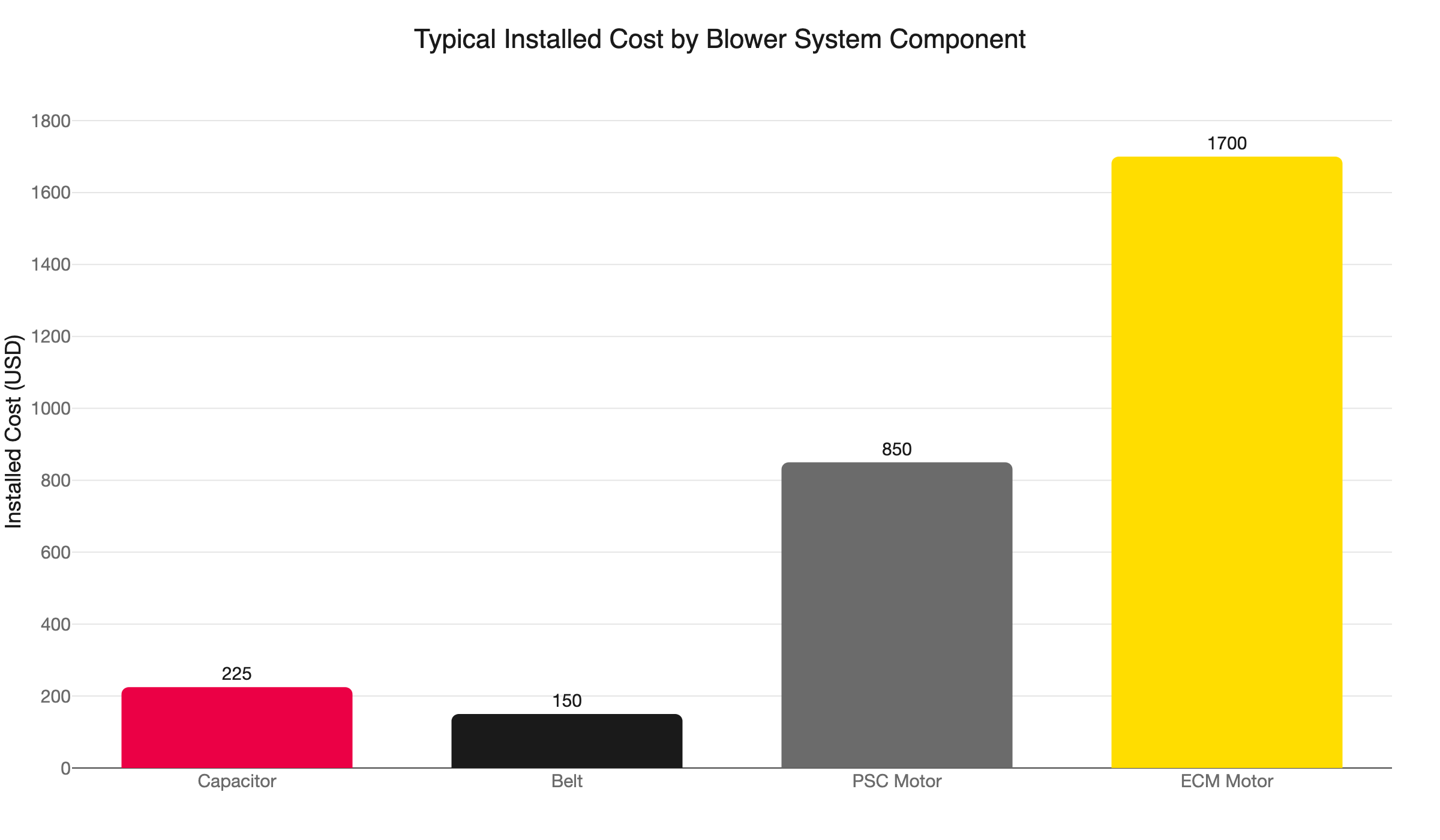
Typical Installed Cost by Blower System Component
## What Does Furnace Blower Motor Replacement Cost?
**For a single-speed PSC motor, plan on $500-$1,200 installed. A variable-speed ECM motor costs $900-$2,500 installed. A diagnostic service call runs $95-$195 and is usually credited toward the repair. The actual total depends on which motor type your furnace has and whether related parts need replacement at the same time.**
The cost gap between PSC and ECM comes from the part, not the labor. An ECM motor and its control module cost significantly more than a PSC unit. Labor is similar for both: one to three hours to access and swap the motor inside the air handler.
[According to This Old House](https://www.thisoldhouse.com/heating-cooling/furnace-blower-motor-cost) and [United HVAC Motors](https://unitedhvacmotors.com/blogs/hvac-financial/hvac-blower-motor-replacement-cost), here are the typical installed cost ranges by motor type:
- PSC (single-speed) motor: **$500-$1,200 installed**
- ECM (variable-speed) motor: **$900-$2,500 installed**
Other blower system components have their own cost ranges, [per This Old House](https://www.thisoldhouse.com/heating-cooling/furnace-blower-motor-cost):
| Component | Part Cost |
|---|---|
| Blower motor bearing | $20-$200 |
| Belt (belt-driven systems only) | $5-$150 |
| Capacitor | $10-$450 |
| ECM control module | $220-$830 |
| ECM repair kit | $20-$60 |
| Blower wheel (squirrel cage) | $25-$300 |
Add labor to each line. The capacitor stands out. The part itself is $10-$45, but the installed cost runs $150-$300. More importantly, [a weak capacitor left unaddressed can burn out the motor](https://filterbuy.com/resources/furnaces/furnace-knowledge/furnace-capacitor-replacement-cost-signs-symptoms-how-to-test-bad-blower-motor-repair/), converting that $175 repair into a $1,500 one.
One Minnesota note: blower motor replacement is classified as a **repair** under state building code, not equipment replacement. No mechanical permit is required. A full furnace swap does require one, with permit fees typically running $75-$175 in Minneapolis and St. Paul, and $50-$150 in suburban Hennepin, Ramsey, Dakota, and Washington counties.
---
## What Are the Symptoms of a Bad Furnace Blower Motor?
**The main warning signs are no airflow, weak airflow, or [unusual noise from the furnace cabinet](/blog/furnace-banging-popping-squealing-noise-what-it-means-minnesota/). Each symptom combination points to a different component at a different cost. The sound your furnace makes, or doesn't make, is the most useful diagnostic clue you have before a tech arrives.**
Here is how to read what your furnace is telling you.
### Hum with no airflow
Your furnace lights. Burners run normally. No air moves through the vents.
The blower motor is trying to start but can't get moving. The capacitor is the first thing to check. It delivers the startup charge the motor needs. When the capacitor fails, the motor hums but stalls.
A tech can confirm this quickly. If they give the blower shaft a gentle push and the motor takes off, the capacitor is the problem, not the motor. That's a $150-$300 fix. If the shaft won't move at all, the motor is seized and needs replacement.
### Screeching or squealing on startup
Screeching at startup usually means dry motor bearings on a direct-drive furnace, which most modern systems use, or a worn belt on an older belt-driven furnace, typically pre-1990.
Bearings are cheaper to address early. Left alone, dry bearings accelerate wear until the motor fails. If your furnace is newer than 1990, it almost certainly doesn't have a belt. The screeching is the bearings.
### Grinding noise
[Grinding means the bearings have already failed](https://www.pickcomfort.com/bad-furnace-blower-motor-symptoms-how-diagnose-them/), and motor failure is close. Keep running a grinding blower motor and the windings can overheat. An overheated motor can also damage the control board, adding $250-$750 to the bill on top of the motor cost. Address grinding immediately.
### Clicking at startup, then shutdown
The furnace tries to start, delivers a click, and shuts off. This cycle may repeat several times. [This is a classic capacitor failure pattern.](https://callmrhvac.com/blog/hvac-blower-motor-symptoms-is-it-time-for-a-replacement) The capacitor can't deliver the startup charge the motor needs. The system gives up and shuts off to protect itself. Replace the capacitor before repeated failed starts burn out the motor.
### Weak airflow with no unusual noise
Before calling this a motor problem, check two things first. The air filter: a clogged filter restricts airflow and makes the motor work against resistance. The [blower wheel](/blog/dirty-blower-wheel-hvac-symptoms-cleaning-minnesota/): also called the squirrel cage, it accumulates dust and debris over time. A clogged squirrel cage can cut airflow significantly and look exactly like a failing motor. It's a cleaning issue, not a replacement.
### Short cycling
The furnace runs for a few minutes, shuts off before the house warms up, and starts again. The blower motor may be overheating and tripping its thermal overload protector. It shuts down to protect itself, cools, then restarts. A weak capacitor or restricted airflow is the usual trigger. Running a motor this way accelerates wear. A filter change or capacitor swap is often the fix.
---
## Is It the Capacitor, the Belt, or the Motor?
**Start with the symptom. A hum with no airflow is a capacitor until proven otherwise ($150-$300 installed). Screeching usually means bearings or a belt, both far cheaper than a motor. Grinding means the motor is near failure. Quiet, weak airflow after confirming the filter is clean is when a tech needs to look deeper.**
This is the triage decision tree that every national cost guide skips. They assume you already know which part has failed. Most homeowners don't.
**Hum, no air from vents.** The capacitor is most likely. A tech pushes the shaft: if the motor runs, the capacitor goes, not the motor. If the shaft won't move, the motor is seized.
**Screeching on startup.** Pre-1990 furnace: likely a belt ($130-$250 installed). Post-1990: bearings. Parts run $20-$200 and catching them early is far cheaper than a motor replacement.
**Grinding.** Bearings have already failed. Schedule service before the motor seizes and adds a control board replacement to the bill.
**Clicking at startup, then shutdown.** Capacitor failure pattern. Replace it before repeated failed starts burn out the motor.
**Weak airflow, no noise.** Check the filter. Check the blower wheel. If both are clean and airflow is still low, a tech should inspect the motor and capacitor.
**Short cycling, furnace shuts off early.** Check the filter first. If it's clean, a tech should inspect the capacitor and check for [airflow restrictions](/blog/high-static-pressure-hvac-symptoms-fixes-twin-cities/).
---
## How Long Does a Blower Motor Last in Minnesota?
**The generic national estimate is 10-20 years. In the Twin Cities, plan for 12-15 years. Minnesota furnaces run 7-8 months per year under heavy demand. That runtime accelerates wear significantly compared to the national averages that generic lifespan estimate was built around.**
The Twin Cities averages roughly [8,000 heating degree days per year](https://www.dnr.state.mn.us/climate/twin_cities/listings.html), one of the highest figures for any major U.S. metro and nearly double the national average of about 4,500 HDD. In a polar vortex year, that number exceeds 9,500.
Heating degree days measure how hard a heating system works. More HDD means more runtime, more motor starts and stops, and more heat cycling through the bearings and windings. A motor installed in a Minneapolis home does roughly 75% more work per year than the same motor in Charlotte, NC.
If you moved here from a warmer state, your previous experience with furnace lifespan doesn't transfer directly. A system that ran 4-5 months per year in your old home runs 7-8 months here.
What shortens blower motor life in Minnesota:
- Skipped filter changes that force the motor to work against restricted airflow
- A weak capacitor that strains the motor on every startup
- Ignoring early warning sounds like screeching or grinding
What extends it:
- Annual [furnace tune-ups](/heating/heating-equipment/furnaces/furnace-tune-ups/) that include a blower inspection
- Replacing filters on schedule, every 1-3 months depending on filter type
- Addressing early symptoms before they compound into larger failures
Catching a failing capacitor or dry bearings during a tune-up costs far less than an emergency call in January when the motor finally quits.
---
## PSC vs. ECM Motors: Does the Type Matter?
**Yes, especially for energy costs over time. PSC motors run at one speed and are 55-65% efficient. ECM motors modulate speed and operate at 90% efficiency or better. In a Minnesota winter, where the furnace runs 7-8 months per year, that difference shows up on your utility bill every season.**
Most furnaces installed before the mid-2010s have PSC motors. Furnaces installed after 2019 almost certainly have ECM motors. The Department of Energy made ECM the efficiency standard for residential furnace fans.
The upfront cost gap is real: a PSC motor swap runs $500-$1,200 installed, while an ECM motor plus its control module runs $900-$2,500. But [field tests show ECM motors use 30-40% less electricity during the heating season](https://eta-publications.lbl.gov/sites/default/files/furnace_blower_electricity_national_and_regional_savings_potential_lbnl_417e.pdf) compared to PSC. The DOE estimates $340-$500 in lifetime electricity savings when choosing ECM over PSC.
In Minnesota, where that heating season stretches from October through April, the efficiency advantage runs for eight months out of twelve.
If you're replacing a PSC motor in a furnace under 12 years old that's in good condition, a like-for-like swap makes sense. If your furnace already has an ECM and the control module fails, the repair is expensive, but the motor system is worth preserving.
ECM motors also ramp up gradually instead of starting at full blast. In a Minnesota winter, that means no cold-air surge at startup. Homeowners notice the difference.
---
## Should You Replace Just the Motor or the Whole Furnace?
**If the furnace is under 12 years old and running well, motor replacement makes sense. If it's 15 or more years old, run the replace-vs.-repair math before committing. The cost of a motor repair on an aging furnace, plus the remaining repair calls as other components age, often approaches the cost of a new system with rebates applied.**
This is the decision most cost guides skip. They quote motor prices without noting that a $1,500 motor repair on a 17-year-old furnace leaves you with a 17-year-old furnace. The heat exchanger, control board, and inducer assembly are still aging. The new motor goes in alongside them.
The questions to answer before deciding:
1. What does the repair cost, all in?
2. How old is the furnace? Fifteen-plus years is end-of-life territory for a Twin Cities system.
3. What other repairs has it had in the last two to three years?
4. What would a new furnace cost, minus available rebates?
Our post on [when it's time to replace vs. repair your furnace](/blog/is-it-time-for-a-new-furnace-how-to-know-when-its-time-to-replace-not-repair/) walks through that full framework. The general guide: if the repair cost exceeds 50% of replacement cost and the system is past the midpoint of its expected life, replacement usually wins on total cost over the next five years.
For current replacement cost ranges in the Twin Cities, see our [furnace replacement cost guide](/blog/furnace-replacement-cost-twin-cities/).
Financing is available for larger repairs and replacements. Ask when you call.
---
## Minnesota Rebates and Tax Credits
When a motor failure tips the math toward a full furnace replacement, there is real money available to offset the cost.
**Xcel Energy:** Xcel offers $50-$150 for a 96%+ AFUE gas furnace replacement. Add a smart thermostat and there's an additional rebate. Rebates are processed post-installation and typically take 6-8 weeks. Verify current amounts at xcelenergy.com, as program amounts vary year to year.
**CenterPoint Energy:** CenterPoint offers $50-$200 for a 95%+ AFUE gas furnace. Check current amounts at centerpointenergy.com before making a purchase decision.
**Federal 25C tax credit:** The Inflation Reduction Act's 25C credit covers 30% of equipment cost, capped at $600 per year for gas furnaces. Minnesota is a northern climate zone, which means the furnace must meet **97% AFUE** to qualify, not the 96% threshold that applies in milder regions. This is a non-refundable credit and applies to primary residences only.
One important note: the larger federal heat pump credits, which went as high as $2,000, expired December 31, 2025. The 25C furnace credit remains active.
If you want help calculating whether repair or replacement makes more financial sense, call us. We'll walk through the numbers and discuss financing options if a new system is the right call.
---
## What to Expect When You Call Northern One Hour
We are locally owned and operated in Ramsey, MN, serving Minneapolis, St. Paul, Blaine, Maple Grove, Plymouth, Brooklyn Park, Woodbury, Bloomington, and the surrounding Twin Cities area.
When you call about a blower motor issue:
1. A tech comes out and diagnoses the problem: capacitor, belt, bearings, or motor. The service call runs $95-$195 and is credited toward the repair if you move forward.
2. You get a clear price before any work starts. No surprises.
3. If the repair makes sense, we complete it same-visit when parts are available.
4. If the diagnosis points toward replacement, we give you the comparison and let you decide.
We back every service call with "Always On Time… Or You Don't Pay a Dime!(R)". If our tech isn't there in the agreed window, you don't pay. That's the promise.
For [furnace repair service](/heating/heating-equipment/furnaces/furnace-repair/), call **(763) 260-6662** or book online.
---
# Furnace Shuts Off in Cold Weather: Snow-Blocked Vent Fix
URL: https://northernonehour.com/blog/high-efficiency-furnace-exhaust-vent-blocked-snow-ice-minnesota/
Published: 2026-08-04 | Category: Heating
Snow or ice on your PVC exhaust vent trips the pressure switch and shuts your furnace down. Diagnose which failure chain you have and fix it safely.
Key Takeaways
- A blocked PVC exhaust or intake vent triggers the pressure switch and shuts the furnace off before any ignition attempt.
- Three failure chains produce identical symptoms: exterior snow at the vent opening, an internal ice dam inside the pipe, and a frozen condensate drain line.
- Clearing the exterior opening solves only the first chain.
- Do not use hot water or metal tools on PVC vent pipes.
- After clearing the exterior, reset by setting the thermostat to off for 30 seconds, then back to heat. One restart attempt only.
- If the furnace trips a second time, or if you find no visible exterior blockage, call a technician.
- Minnesota code allows vent terminations as low as 12 inches above grade. That is not enough during a major blizzard.
- An annual furnace tune-up catches sagging condensate lines and internal ice risks before they fail at minus 20.
## Why Does a Furnace Shut Off in Cold Weather When the Vent Is Blocked?
**The short answer:** When snow or ice blocks your PVC exhaust or intake pipe, the pressure switch inside the furnace detects the airflow drop and locks the furnace out before the gas valve ever opens. No flame lights. The furnace simply refuses to start until the blockage is cleared.
Most homeowners picture a flame going out in the cold. That is not what happens with a modern high-efficiency furnace.
Here is the actual sequence. When your thermostat calls for heat, the [inducer motor](/blog/furnace-draft-inducer-motor-failure-minnesota/) starts first. This small blower pulls combustion gases through the heat exchanger and out through the PVC exhaust pipe. A pressure switch monitors the negative pressure the inducer creates. If snow or ice is blocking the exhaust, the inducer cannot pull enough air through. The pressure differential falls below the switch threshold. [The switch opens, the gas valve stays closed, and the furnace locks out.](https://pvcventscreens.com/furnace-exhaust-vent-ice/)
Nothing ignites. Nothing burns. The furnace sits there while your house gets colder.
This matters for diagnosis. You will not smell gas. You will not see a pilot fault. The furnace simply will not run, and the control board will log a [pressure switch fault](/blog/furnace-pressure-switch-failure-symptoms-minnesota/). That fault code is your starting point.
---
## What Are the Three Failure Chains That Look the Same?
**The short answer:** All three chains produce the same symptom: no heat, furnace quiet, thermostat calling. Each has a different cause and a different fix. Only the first is safe to address yourself.
**Chain 1: External snow or ice at the vent opening.** A drift piles against the foundation wall and covers the pipe end. This is the most common scenario during a heavy Twin Cities snowfall. It is the only chain where a homeowner can safely intervene. Clear the snow and attempt a single restart.
**Chain 2: Internal ice dam inside the exhaust pipe.** The PVC exhaust pipe must slope back toward the furnace at 1/4 inch per foot minimum. That slope lets condensate drain into the unit rather than pool in the pipe. [If the pipe sags even a fraction, condensate collects in the low spot and freezes during a cold snap.](https://pvcventscreens.com/furnace-exhaust-vent-ice/) The exterior opening can look completely clear. The blockage is 10 or 20 feet inside the wall, and you cannot reach it without accessing the pipe directly.
**Chain 3: Frozen condensate drain line.** The condensate collected in the heat exchanger drains out through a separate plastic line, typically to a floor drain or utility sink. If that line freezes or kinks, water backs up into the furnace body and trips a safety float switch. [A frozen condensate drain is the single most common cause of "frozen furnace" calls in central Minnesota.](https://www.4neighborhood.com/blog/2026/february/what-causes-a-frozen-furnace-in-minnesota-/) One documented case involved a condensate line that had sagged and created a 3-inch ice plug inside the wall. No exterior blockage was visible at all. The homeowner cleared both vent pipe ends and could not understand why the furnace kept locking out. Our post on [high-efficiency furnace condensate drains in Minnesota](/blog/high-efficiency-furnace-condensate-drain-frozen-minnesota/) covers how this failure develops and what a technician does to fix it.
---
## How Do You Tell Which Failure Chain You Have?
**The short answer:** Start outside. If snow is packed over the pipe end, clear it and try one restart. If the exterior is clear, or if the furnace trips again after that restart, the problem is internal. Call a technician.
One fast diagnostic tool: the blink code on your furnace's control board. Most 90-plus percent efficient furnaces signal fault conditions as a pattern of short and long LED blinks. A pressure switch fault blinks a specific sequence. On many Carrier and Bryant models, that is three short blinks followed by one long blink. Open the furnace door panel and look for a fault code chart. It is usually printed on a sticker inside the door. Our [furnace error codes and blinking light guide](/blog/furnace-error-codes-blinking-light-guide/) explains how to read these across common brands sold in Minnesota.
A pressure switch fault code tells you the furnace sees low airflow. It does not tell you whether the blockage is at the exterior pipe end, inside the duct run, or in the condensate system. That distinction is what determines your next move.
If the code points to something other than the pressure switch, you are dealing with a different problem. A flame sensor fault, ignition failure, or rollout switch trip requires a technician regardless of what is happening outside.
---
## What to Check Outside: Step by Step
Before going outside, note which way the PVC pipes face on your foundation. On a high-efficiency furnace, two white pipes exit through the rim joist or sidewall. They are typically 2 or 3 inches in diameter. One is exhaust. One is intake. Both can trigger a pressure switch lockout when blocked. In many installations, the intake and exhaust terminate within a foot or two of each other on the same side of the house.
**What to look for at each pipe end:**
- Snow packed against or covering the opening
- An ice cap forming across the rim
- A solid plug of ice just inside the pipe end (use a flashlight to check)
- Heavy frost forming inside the intake pipe, which often signals that warm exhaust is blowing toward the intake, melting nearby snow, then refreezing inside the cold intake
**How to clear it safely:**
1. Use a soft brush or your gloved hand. Do not use a shovel blade against PVC.
2. Clear snow from all around the pipe end, not just the area directly in front of it.
3. For an ice cap, use warm water from a pitcher or thermos. Not boiling. Pour slowly and let it work.
4. Do not put metal tools inside the pipe. A dented or [cracked PVC pipe](/blog/high-efficiency-furnace-pvc-vent-pipe-problems-minnesota/) inside a wall is a separate, more expensive repair.
5. If the termination has a screen or a downward-facing elbow, confirm ice is not bridging across the opening.
6. After clearing both pipes, stand back and look at the surrounding wall. If a large drift runs along the foundation, clear enough of it to give both pipes 12 to 18 inches of open clearance above them.
While you are outside, check the gas meter. [CenterPoint Energy recommends keeping the area around the meter clear of snow and ice during winter, as freeze-thaw cycles can affect the regulator vent and [interrupt gas service](/blog/natural-gas-pressure-cold-snap-furnace-minnesota/).](https://investors.centerpointenergy.com/news-releases/news-release-details/centerpoint-energy-offers-winter-safety-information) A two-foot clearance around the meter is a good standing habit for any Minnesota home.
---
## What NOT to Do When Clearing a Blocked Vent
Several actions seem reasonable under stress but cause real damage.
**Do not use a heat gun or torch near the pipe.** PVC is flammable. You are working adjacent to a gas appliance. An open flame near a gas line is never the right tool.
**Do not pour boiling or very hot water on a frozen opening.** Hot water refreezes almost immediately on a cold surface and can thermally crack PVC fittings. Warm water works. Hot water does not.
**Do not use a metal rod or screwdriver to chip ice out of the pipe interior.** A small puncture in a PVC pipe inside the wall requires cutting into drywall or siding to access. That repair costs far more than a service call.
**Do not run the furnace with only one pipe cleared.** If the exhaust is open but the intake is still blocked, the pressure switch trips again. Worse, a restricted exhaust creates backpressure that pushes [combustion gases](/blog/exhaust-fans-furnace-backdraft-combustion-air-minnesota/) into the space around the pipe penetration.
**Do not ignore a CO detector alarm.** When an exhaust vent is blocked, [carbon monoxide can enter the home before the pressure switch trips the furnace off.](https://www.cbsnews.com/minnesota/news/centerpoint-responds-to-rash-of-minn-co-incidents/) If a CO detector sounds during a furnace lockout, leave the home immediately and call 911. Do not go back inside to check the vent. Our post on [carbon monoxide safety during furnace season](/blog/carbon-monoxide-safety-furnace-season/) covers what to do in that situation and how to get the home safely cleared.
---
## How Do You Reset Your Furnace After Clearing a Snow-Blocked Vent?
**The short answer:** Set the thermostat to off. Wait 30 seconds. Set it back to heat. The furnace should cycle through startup on its own. Do not reach for the red reset button until you have tried the thermostat cycle first.
When you return the thermostat to heat, the furnace goes through its startup sequence automatically. The inducer motor spins up. The pressure switch checks for adequate airflow. The igniter glows. The gas valve opens. The burner lights. The full sequence takes about 60 to 90 seconds from thermostat call to heat at the registers.
If the furnace lights and holds, stay nearby for five minutes. Listen for consistent operation: a steady flame sound, the blower ramping up a couple of minutes after ignition, warm air from the vents. A furnace that runs steadily for five minutes after a snow-clearing is almost certainly back to normal.
**About the red reset button:** Some furnaces have a red or yellow high-limit reset on the burner assembly. If the thermostat cycle above does not restart the furnace, press the red button once. Once only. If the furnace trips again after that single press, stop pressing it. Repeated resets can force ignition under an unsafe condition. At that point, the furnace needs a technician.
If the furnace returns to normal operation, plan to book a tune-up within the next 30 days. A technician can measure the vent height, check the pipe slope, and inspect the condensate system. That visit now prevents the same 2 a.m. call later.
---
## When Should You Call a Technician Instead?
**The short answer:** Call if the furnace trips again after one restart, if the exterior pipes look clear, if you hear water gurgling from inside the unit, or if a CO detector has alarmed. Any of these signals an internal problem.
These are the specific conditions that put the fix beyond what a homeowner can do:
- **No exterior blockage visible.** The pipes look clear. The furnace still shows a pressure switch fault. The blockage is inside the duct run or the condensate system.
- **A second lockout after clearing the exterior.** The furnace ran for 20 minutes and then shut off again. The root cause was not the snow at the pipe end.
- **Gurgling or dripping sounds from inside the unit.** Condensate is pooling where it should not. A frozen or kinked drain line may be backing water into the furnace pan.
- **Reduced heat output without full lockout.** A partial blockage can lower combustion efficiency without tripping the pressure switch completely. You get some heat, but the system is [working harder than it should](/blog/furnace-cant-reach-setpoint-extreme-cold-minnesota/).
- **Any fault code other than the pressure switch.** A flame sensor error, ignition failure, or rollout switch trip requires a technician regardless of the outdoor conditions.
[Freeze events account for around 30 percent of January and February furnace breakdowns in northern states.](https://www.4neighborhood.com/blog/2026/february/what-causes-a-frozen-furnace-in-minnesota-/) Those calls typically run 40 to 60 percent above standard service rates. Calling early, before an ice plug cracks a condensate trap or floods the furnace pan, keeps the repair at standard pricing.
Our team is locally owned and operated in Ramsey. When you call (763) 260-6662, you reach us directly, not a national dispatch center.
---
## Why Is the 12-Inch Code Minimum Not Enough for Minnesota?
**The short answer:** The Minnesota Mechanical Code sets the vent termination minimum at 12 inches above finished grade. That floor does not account for the drifts that pile against a northwest-facing foundation wall during a January blizzard.
[The Minnesota Mechanical Code sets the horizontal vent termination bottom at no less than 12 inches above finished grade.](https://up.codes/viewer/minnesota/imc-2018/chapter/8/chimneys-and-vents) Manufacturer installation guides for most high-efficiency furnaces call for 12 inches above the anticipated snow level. Not just above bare ground. Northwest winds in the Twin Cities can pile drifts 24 to 36 inches high against a foundation wall. A pipe installed at code minimum is buried.
Your installer was not doing anything wrong. Code minimum is code minimum. But a technician at your next tune-up can measure the actual clearance and recommend a fix.
That fix is usually a 90-degree elbow extension on the pipe end. Adding 12 to 24 inches of vertical riser before the termination elbow keeps the opening well above typical drift levels. The material cost is minimal compared to an emergency call at overtime rates.
Also ask about the pipe slope. [The exhaust pipe must slope at a minimum of 1/4 inch per foot back toward the furnace so condensate drains into the unit and does not pool inside the pipe.](https://pvcventscreens.com/furnace-exhaust-vent-ice/) Over time, pipe hangers loosen and sections shift. A sag of even a quarter-inch pools condensate and creates an internal ice dam during sustained cold. [Support hangers for 2-inch PVC should be spaced no more than 4 feet apart; 3-inch pipe needs a hanger every 5 feet.](https://pvcventscreens.com/furnace-exhaust-vent-ice/) If your installer spaced them wider, or if the pipe has shifted over the years, that is your internal ice dam risk. It will show up on the coldest night of the year.
---
## How Can You Prevent a Snow-Blocked Furnace Vent?
**The short answer:** Mark the pipe ends before the first storm, add a downward-facing elbow at the termination, build exterior clearing into your storm routine, and schedule an annual tune-up to catch internal risks before winter hits hard.
**Mark the pipe ends before the first snowfall of the season.** Drive a bright driveway reflector stake 6 to 12 inches outside each pipe end in October. This takes 10 minutes and means you can find both pipes immediately after a storm instead of probing through a drift at midnight in January.
**Install a downward-facing elbow at the termination.** Many installations use a straight horizontal pipe end or a simple vent cap. Wind-driven snow packs into a horizontal opening. A downward-facing 90-degree elbow discharges exhaust downward. Snow driven horizontally does not accumulate in a downward-facing pipe the same way. This is a standard modification and typically takes less than an hour during a service visit.
**Clear the pipe ends as part of your storm routine.** If you shovel the walk after a storm, add two minutes to brush the pipe ends. Keeping them clear throughout the storm season takes far less time than waiting for a lockout.
**Ask about vent height at installation or replacement time.** If you are already replacing your furnace, have the technician set the new vent termination well above code minimum. The added pipe at installation is a minor line item. The emergency call at overtime rates during a blizzard is not.
**Schedule an annual heating tune-up.** A technician will inspect the pipe slope, check the support hanger spacing, flush the condensate trap, and test the pressure switch. Catching a sagging pipe or a partially blocked condensate drain in October costs far less than an emergency repair when the temperature is at minus 20. You can book a [furnace tune-up](/heating/heating-equipment/furnaces/furnace-tune-ups/) online or call us at (763) 260-6662. Same-day and next-day appointments are available across the Twin Cities metro.
---
## Ready to Get Your Heat Back?
Northern One Hour Heating and Air Conditioning is locally owned and operated in Ramsey, Minnesota. Our team serves Minneapolis, St. Paul, Blaine, Maple Grove, Plymouth, Brooklyn Park, Woodbury, Bloomington, and the surrounding Twin Cities area.
We show up when we say we will. That is what "Always On Time… Or You Don't Pay a Dime!(R)" means in practice.
If your furnace shuts off in cold weather and clearing the snow blocked vent does not bring it back, call **(763) 260-6662** or book online. We will identify whether the blockage is at the exterior, inside the duct run, or in the condensate system, and we will get your heat running the same day.
---
# How to Clean a Furnace Flame Sensor (and When to Call a Pro)
URL: https://northernonehour.com/blog/furnace-flame-sensor-dirty-clean-cost-minnesota/
Published: 2026-08-03 | Category: Heating
A dirty flame sensor is the most common reason a furnace short-cycles. Here's how to spot it, clean it, test it, and what service costs in the Twin Cities.
Key Takeaways
- A dirty flame sensor is the most common reason a furnace lights and immediately shuts off
- The symptom pattern: ignition, 3-10 seconds of heat, burner cutout, repeat, then full lockout
- Cleaning is a 20-minute DIY job with a screwdriver and fine steel wool; a replacement part costs $10-30
- Each abrasive cleaning roughens the rod and accelerates the next failure - one pass per sensor is the practical limit
- Professional service with labor and part runs $75-250; a CenterPoint Home Service Plus tune-up at $139.95 covers the sensor check as part of a full system inspection
- A sensor that fails twice in one season is a symptom of a deeper combustion problem: dirty burners, a cracked heat exchanger, or an improper air-to-fuel ratio
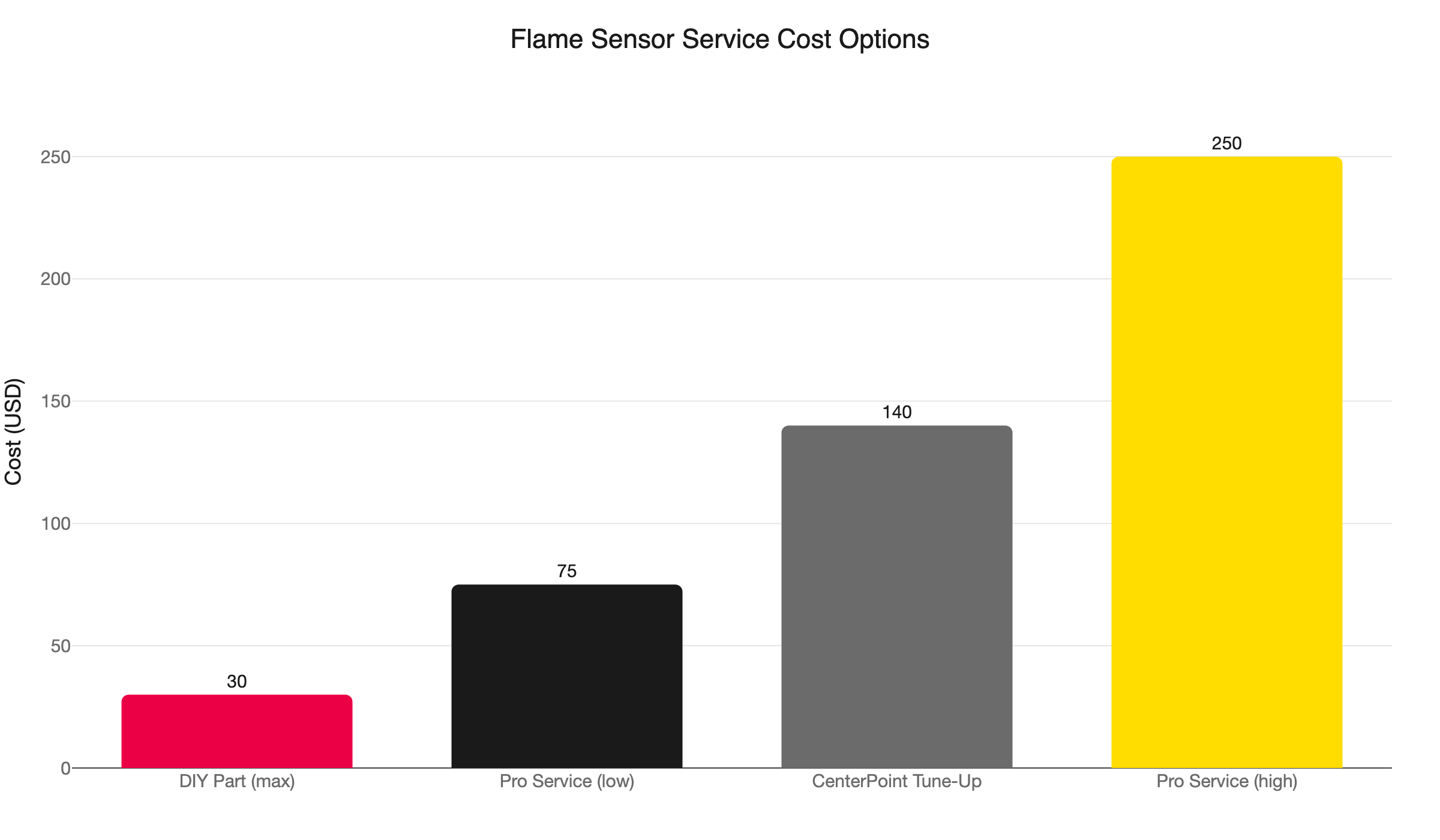
Flame Sensor Service Cost Options
## What Is a Flame Sensor and Why Does It Fail?
**A flame sensor is a thin metal rod near the burner assembly that confirms your furnace is actually lit. It passes a small electrical current through the flame back to the control board. When soot or oxidation insulates that rod, the control board never receives the confirmation signal. It shuts the gas off even with a real flame present.**
Your furnace runs a safety handshake every time it fires. The inducer fan starts. The [hot surface ignitor](/blog/furnace-igniter-failure-signs-replacement-cost-minnesota/) glows. The gas valve opens and the burner lights. Then the control board waits for the flame sensor to report back: "Combustion confirmed."
The sensor does this through flame rectification. A live burner conducts a small DC current from the rod back to the control board. That current is typically [1.5 to 6 microamps](https://filterbuy.com/resources/furnaces/furnace-knowledge/furnace-flame-sensor-replacement-guide-costs-cleaning-tips-diy-repair-steps-bad-sensor-symptoms/). The board reads the signal and holds the gas valve open. No signal means no confirmed flame, so the valve closes automatically.
This is a safety feature working exactly as designed. You want the gas to shut off if combustion cannot be confirmed.
The problem is contamination. A heating season or two of combustion leaves a thin film of carbon soot on the metal rod. [Humidity and combustion byproducts can also produce silica oxidation - a white or greenish crust on the rod that acts as an insulator](https://greenleafair.com/how-to-clean-flame-sensor-on-furnace/). The flame is real. The current cannot penetrate the crust. The control board shuts the gas off anyway.
[Minnesota furnaces work harder and run longer than in most parts of the country.](https://www.centerpointenergy.com/en-us/home-service-plus/services/maintenance-services/tune-ups/furnace-tune-up) A system running through a seven-month heating season accumulates contamination faster than one in a mild climate. That is why flame sensor service ranks among the most common mid-season calls our team handles across the Twin Cities.
---
## What Does Short Cycling Look Like?
**The furnace starts, runs three to ten seconds, then shuts off. It tries again immediately and does the same thing. After two or three attempts, the control board locks out completely. The house gets no heat until you reset the system or an hour passes.**
The pattern is specific enough to recognize from across the room. Here is the full sequence when a dirty flame sensor is the cause:
1. The inducer fan starts and runs for about 30 seconds
2. The hot surface ignitor glows orange
3. The gas valve opens and the burner lights - you hear the "whomp"
4. Three to ten seconds pass
5. The control board receives no microamp signal and closes the gas valve
6. The burner shuts off
7. The ignitor glows again and the sequence repeats
8. After two or three failed cycles, the board locks out entirely
After lockout, the furnace waits roughly an hour before retrying on its own. You can also reset it at the breaker. If it repeats the same pattern after the reset, nothing has fixed itself.
This differs from [short cycling caused by a restricted filter or an oversized system](/blog/furnace-short-cycling-causes-fixes/). Those cases usually involve the furnace running for several minutes before the high-limit switch trips. Flame-sensor short cycling is fast - under ten seconds of heat per attempt.
---
## How to Clean a Furnace Flame Sensor: Step-by-Step
This is a 20-minute job on most systems. You need a Phillips screwdriver and fine steel wool or 400-grit emery cloth. Do not use sandpaper coarser than 400 grit. Aggressive abrasion removes too much metal and shortens the sensor's working life.
**Before you start:** Turn off the furnace at the thermostat. Flip the power switch off at the unit or trip the breaker. Shut the gas off at the valve near the furnace. Wait five minutes for residual heat to clear.
**Step 1 - Locate the sensor.** Open the furnace cabinet. The flame sensor is a thin metal rod, usually six to eight inches long, with a white ceramic insulator at the mounting bracket. It sits near the burner assembly and connects to a single wire. Most systems use one Phillips screw to hold it in place.
**Step 2 - Remove the sensor.** Disconnect the wire from the terminal. Remove the mounting screw and set it somewhere it will not roll away. Gently pull the sensor out. Do not bend the rod.
**Step 3 - Inspect the rod.** Look at the metal tip. Heavy black soot, a white powdery coating, or a greenish film all point to contamination. A lightly tarnished rod may also be dirty enough to fail. Visually clean does not mean electrically clean.
**Step 4 - Clean with light abrasion.** Rub the metal rod in one direction using fine steel wool or 400-grit emery cloth. You are removing the contamination layer, not reshaping the rod. Wipe the residue off with a clean, dry cloth. Do not use water or chemical cleaners near the burner assembly.
**Step 5 - Reinstall and test.** Slide the sensor back into its bracket, replace the screw, and reconnect the wire. Close the cabinet. Restore power, restore gas, and call for heat at the thermostat. The furnace should light and run continuously without cutting out.
If it short-cycles again immediately after cleaning, stop. A second cleaning pass will not fix it. The sensor needs to be replaced or professionally evaluated.
---
## The Abrasion Trap: Why Cleaning Has a Limit
Most homeowners do not know this part. [Each abrasive cleaning roughens the metal rod, accelerates corrosion, and shortens the time before the next failure.](https://filterbuy.com/resources/furnaces/furnace-knowledge/furnace-flame-sensor-replacement-guide-costs-cleaning-tips-diy-repair-steps-bad-sensor-symptoms/) A new sensor has a smooth, uniform surface. After one cleaning pass it has microscopic scratches. Soot and oxidation grip a rougher surface more easily. The interval between failures gets shorter with each pass.
The practical rule is one cleaning per sensor. If the rod you cleaned fails again in the same heating season, replace it. A second cleaning is a short-term patch on a part that has already degraded.
Replacement parts are inexpensive. [A universal or OEM flame sensor costs $10-30](https://filterbuy.com/resources/furnaces/furnace-knowledge/furnace-flame-sensor-replacement-guide-costs-cleaning-tips-diy-repair-steps-bad-sensor-symptoms/), and installation follows the same steps as cleaning. Skip the abrasion step, swap in the new rod, and the job takes the same 20 minutes.
---
## How Do You Test a Flame Sensor with a Multimeter?
**Set the multimeter to DC microamps. Connect it in series between the sensor wire and sensor terminal while the furnace fires. A healthy sensor reads 1.5 to 6 microamps. Below 1 microamp means the sensor is failing even if the rod looks clean to the eye.**
This test separates a professional diagnosis from a visual guess. A sensor can look nearly spotless and still read 0.8 microamps because silica oxidation is partially transparent. You clean the rod, reinstall it, and get the same short-cycling problem again in 48 hours.
Running the multimeter test after cleaning confirms whether the cleaning actually restored conductivity. If you clean a visibly dirty rod and reinstall it but still read below [1.5 microamps](https://filterbuy.com/resources/furnaces/furnace-knowledge/furnace-flame-sensor-replacement-guide-costs-cleaning-tips-diy-repair-steps-bad-sensor-symptoms/), the sensor needs replacement. A second cleaning pass will not change the reading.
One important note: this test requires the furnace to be running with an active flame. You are working near a live gas burner. If that is not a scenario you are comfortable with, this is a reasonable place to hand the diagnosis to a tech. Paying for a professional visit on a $20 part is frustrating, but misdiagnosing the problem and leaving a gas appliance in a fault state is worse.
---
## What Does It Cost to Clean a Furnace Flame Sensor in the Twin Cities?
**DIY parts run $10-30. Professional service with labor and part runs $75-250. CenterPoint's Home Service Plus tune-up costs $139.95. It covers a flame sensor inspection as part of a complete furnace check. Minneapolis minor furnace repairs averaged $150-350 in 2026.**
Here is how the options compare:
**DIY cleaning:** Free if you have the tools, about $5 for an emery pad if you do not. Time cost is 20-30 minutes. Best when you can confirm the sensor is the only problem and you are comfortable with the steps above.
**DIY replacement:** [$10-30 for the part](https://filterbuy.com/resources/furnaces/furnace-knowledge/furnace-flame-sensor-replacement-guide-costs-cleaning-tips-diy-repair-steps-bad-sensor-symptoms/), same time investment as cleaning. The right next step when cleaning did not hold through the season.
**Professional service call:** [$75-250 total](https://filterbuy.com/resources/furnaces/furnace-knowledge/furnace-flame-sensor-replacement-guide-costs-cleaning-tips-diy-repair-steps-bad-sensor-symptoms/), covering the visit, labor, and part. Emergency and after-hours calls trend toward the top of that range. [Minneapolis minor furnace repairs ran $150-350 in the 2026 market](https://twincityheatingandair.com/minneapolis-mn-heating-and-air-conditioning-blog/2026-minneapolis-furnace-reliability-cost-report).
**CenterPoint Home Service Plus tune-up:** [$139.95 for a single furnace](https://www.centerpointenergy.com/en-us/home-service-plus/services/maintenance-services/tune-ups/furnace-tune-up), available to any Twin Cities or Greater Minnesota homeowner regardless of which gas provider they use. [The checklist includes flame sensor condition and replacement recommendation, CO test, burner inspection, heat exchanger visual, and a written report.](https://www.centerpointenergy.com/en-us/home-service-plus/services/maintenance-services/tune-ups/furnace-tune-up) If you are paying for professional time, a tune-up that addresses the sensor in the context of the whole system is usually a stronger value than a single-component call.
Northern One Hour offers financing on larger furnace repairs and replacements. Ask about it if a service visit uncovers more than a sensor.
---
## When Should You Stop DIYing and Call a Tech?
**Call immediately if you smell gas, see soot or scorch marks inside the furnace cabinet, or your CO detector activates. Shut the furnace off and leave the house. Do not attempt any sensor work until a tech has cleared the underlying condition.**
Outside those safety thresholds, here is when professional diagnosis earns its cost over continued DIY:
- The furnace short-cycles after a freshly cleaned sensor is reinstalled
- A multimeter reading stays below 1.5 microamps on a cleaned rod
- The furnace has locked out more than twice in a single week
- This is the second flame sensor issue in the same heating season
- The furnace is 15-plus years old and this is a new symptom
That last point matters in Minnesota specifically. [Nearly two-thirds of Minnesota homes heat primarily with natural gas.](https://www.house.mn.gov/hrd/pubs/heatfuel.pdf) A lot of that equipment has been running since before 2010. An aging furnace with new flame sensor symptoms may be signaling dirty burners or a cracked heat exchanger. A technician can assess those conditions. A sensor rod alone cannot tell you.
A [cracked heat exchanger](/blog/cracked-heat-exchanger-signs-minnesota/) is a safety concern beyond heat loss. If a tech finds evidence of heat exchanger damage during a sensor call, that information matters regardless of how the sensor test resolves.
---
## What If the Sensor Keeps Getting Dirty?
**A flame sensor that needs attention more than once per season is a symptom, not the problem. Dirty burners, a cracked heat exchanger, or an improper air-to-fuel ratio each produce excess soot. That soot contaminates the sensor far faster than normal. Clean the sensor without fixing the cause and you will be back in two or three months.**
When a technician finds heavy soot on a sensor that was recently cleaned, the evaluation does not stop at the rod. The full assessment covers:
- **Burner condition.** Dirty or corroded burners produce incomplete combustion. Carbon accumulates faster on everything downstream, including the sensor.
- **Heat exchanger integrity.** A damaged heat exchanger can disrupt the flame pattern and push the sensor outside its detection zone. Contamination returns sooner than it should.
- **Air-to-fuel ratio.** A furnace drawing more air than it is calibrated for runs rich on some combustion cycles. More carbon. Faster sensor fouling.
- **Filter condition.** A clogged filter restricts airflow through the heat exchanger and shifts combustion toward the dirty end of the operating range.
A [furnace tune-up](/heating/heating-equipment/furnaces/furnace-tune-ups/) addresses the full combustion picture: sensor, burners, heat exchanger, flue, and filter. It is the right tool for a repeat flame sensor problem because it treats the conditions producing the contamination, not just the part that got contaminated.
---
## Book a Furnace Service Before the Next Cold Snap
[Minneapolis averages about 13 nights per year below 0°F, with coldest nights reaching -15°F to -20°F.](https://welterheating.com/minnesota-heat-pump/) A furnace that short-cycles on a mild January night is an inconvenience. One that locks out during a -15°F stretch is a genuine emergency.
The best time to deal with a dirty flame sensor is before the cold arrives, not at 2 AM with the thermostat reading 58°F.
If your furnace has short-cycled even once this season - even if it reset and ran normally afterward - that is the system telling you something needs attention. A one-time lockout that recovered on its own is not a clean bill of health. It is a warning.
Northern One Hour Heating & Air Conditioning is locally owned and operated in Ramsey, MN. We serve Minneapolis, St. Paul, Blaine, Maple Grove, Plymouth, Brooklyn Park, Woodbury, Bloomington, and the surrounding Twin Cities communities. Every visit is backed by the promise: "Always On Time… Or You Don't Pay a Dime!(R)" If we say we will be there, we will be there.
Call **(763) 260-6662** or [schedule a furnace tune-up online](/heating/heating-equipment/furnaces/furnace-tune-ups/). If you are not sure whether the issue is the sensor or something deeper, [furnace repair is what our team does](/heating/heating-equipment/furnaces/furnace-repair/). We will diagnose it on the first visit and give you a straight answer on repair versus replacement.
---
# High Efficiency Furnace Condensate Drain Frozen: The Fix
URL: https://northernonehour.com/blog/high-efficiency-furnace-condensate-drain-frozen-minnesota/
Published: 2026-08-03 | Category: Heating
Your 90%+ furnace makes 2-5 gallons of water daily. Learn why Minnesota winters freeze the condensate drain and how to fix it without a new furnace.
Here is the improved post:
---
Key Takeaways
- A 90%+ furnace produces 2-5 gallons of acidic water every day your heating system runs. That water exits through a PVC drain line. When that line runs through a cold garage, crawl space, or exterior stub, it freezes.
- A frozen drain triggers a safety lockout. Your furnace stops running until the drain clears.
- The emergency fix is a careful warm-water thaw. It restores heat for one cycle. It does not prevent the next freeze.
- The permanent fix is self-regulating heat cable or rerouting the drain to a heated interior space. Neither fix requires a new furnace.
- Minnesota Rules 1322.1103 requires condensate piping in unconditioned spaces to be insulated. An uninsulated run through an unheated garage is a code violation, not a gray area.
- If this freeze started a replacement conversation, CenterPoint Energy and Xcel Energy both have active 2026 rebate programs for 95%+ AFUE furnaces. Federal tax credits apply too.
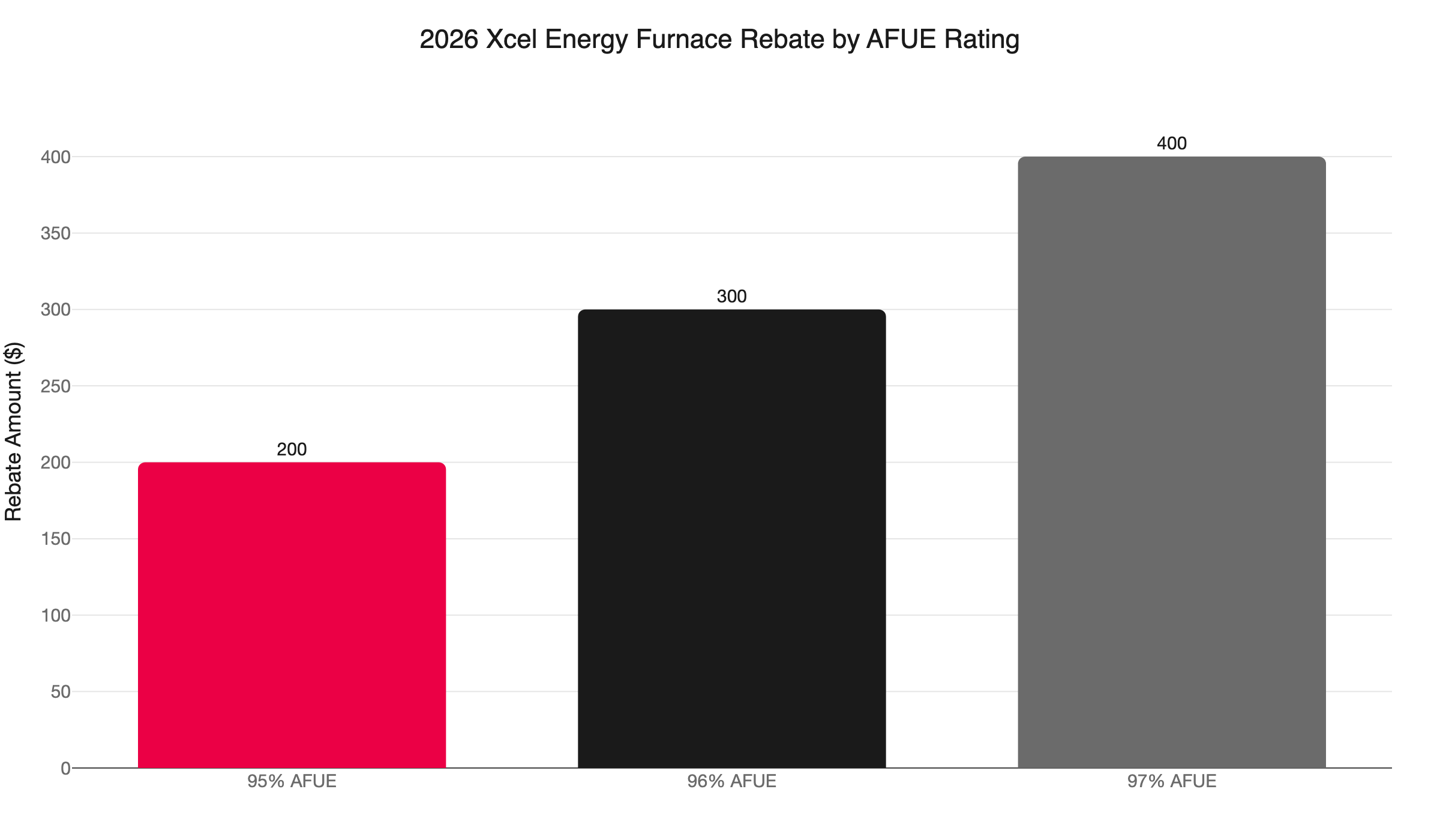
2026 Xcel Energy Furnace Rebate by AFUE Rating
## What Is a Frozen Condensate Drain?
**A frozen condensate drain is a blockage in the PVC pipe that carries water away from a high-efficiency furnace. When outdoor temperatures fall far enough, condensate inside an exposed pipe section freezes solid. The furnace detects the blockage, triggers a safety lockout, and stops running until the drain clears.**
This is one of the most common reasons a high-efficiency furnace goes silent during a Minnesota cold snap. The furnace is not broken. It is responding correctly to a drainage fault. The fix is restoring drain flow, not replacing equipment.
---
## Why Does a High-Efficiency Furnace Produce Water?
**A 90%+ furnace runs combustion exhaust through a second heat exchanger, cooling the gas past the dew point. Water vapor condenses into liquid. That liquid is the condensate. It has to drain somewhere, and the drain line is where it goes.**
An 80% furnace vents exhaust at several hundred degrees. The hot gas exits straight up a metal flue and out of the house. That wasted heat is where the 20% inefficiency goes.
A high-efficiency furnace adds a secondary heat exchanger. It strips the remaining heat from the exhaust before those gases vent. [That second pass cools the exhaust below the dew point](https://www.achrnews.com/articles/154030-how-a-condensing-gas-furnace-works), typically around 130 degrees Fahrenheit. Water vapor in the combustion gases condenses into liquid and releases latent heat in the process. That latent heat release accounts for the extra 10-18% efficiency gain over an 80% unit.
The [Department of Energy defines AFUE](https://www.energy.gov/energysaver/furnaces-and-boilers) (Annual Fuel Utilization Efficiency) as the ratio of useful heat delivered to energy consumed. A 90% AFUE furnace produces 90 BTUs of heat for every 100 BTUs of gas burned. The remaining 10 BTUs escape through the exhaust flue, but the furnace recovers what the 80% unit would have wasted entirely.
That condensation is not a flaw. It is the mechanism behind the efficiency gain.
During an active Minnesota heating season, a condensing furnace produces [2-5 gallons of condensate per day](https://www.hvacrschool.com/two-ways-to-prevent-freezing-in-90-furnace-condensate-lines/). [CenterPoint Energy notes that high-efficiency furnaces can produce up to 6 gallons per day](https://www.centerpointenergy.com/en-us/home-service-plus/learning-center/how-to/get-ready-for-winter) during extended cold stretches when the furnace runs continuously. The water is mildly acidic, with a pH typically between 3 and 5. Dissolved carbon dioxide forms carbonic acid in the condensate. That chemistry is why the drain line must be PVC, not metal. Metal corrodes. PVC handles the acidity without degrading.
That acidity matters for older Twin Cities homes in particular. Many South Minneapolis and St. Paul houses built before 1980 have cast iron drain lines. Cast iron and acidic condensate are a bad combination. [High-efficiency furnace condensate at pH 3-5 accelerates corrosion in cast iron piping](https://www.energystar.gov/sites/default/files/asset/document/ENERGY_STAR_Commercial_Boiler_Design_Guide.pdf). If a new high-efficiency furnace drains into an existing cast iron line, that section of drain needs attention. Replace it with PVC, or install a condensate neutralizer to raise the pH before condensate reaches the cast iron. A tech can assess the existing drain material and catch this during installation.
---
## Why Is Minnesota So Much Harder on Condensate Drain Lines?
**Most furnace troubleshooting guides are written for national audiences. Minneapolis is not a national climate. It is one of the harshest residential heating environments in the contiguous United States, and a condensate drain configuration that is an edge-case problem elsewhere is a near-certain failure point here.**
[Minneapolis averages 16.2 degrees Fahrenheit in January](https://www.currentresults.com/Weather/Minnesota/Places/minneapolis-temperatures-by-month-average.php). That is the coldest January average of any major US metro. The 2024-25 winter alone brought [16 days at or below 0°F in the Twin Cities](https://forecast.weather.gov/product.php?site=MPX&product=CLI&issuedby=MSP). During extended cold snaps, the Twin Cities routinely strings 10 or more consecutive days below zero. This is not unusual. It is a routine design condition.
[Minneapolis accumulates approximately 8,000 to 9,000 heating degree days per year](https://www.dnr.state.mn.us/climate/historical/energy.html). Kansas City, by comparison, runs around 4,500. A Twin Cities furnace works roughly twice as hard over a heating season. The condensate drain runs continuously for months, not occasionally.
In a mild climate, a condensate line through an unheated garage might freeze once every several years during an unusual cold spell. In the Twin Cities, that same installation is almost certain to freeze during any sustained stretch of cold. The question is not whether it will freeze. The question is when.
Minnesota falls in climate zones 6 and 7, the most demanding residential heating zones in the lower 48. Freeze protection for condensate lines is not an optional upgrade here. It is the design condition the installation should be built around from day one.
**One more Minnesota hazard worth knowing: power outages.** When the power goes out in January and the furnace stops running, indoor temperatures can drop several degrees per hour. A condensate trap that was draining fine before the outage can freeze within a few hours once the heat stops. If your home loses power during a cold snap, check that the drain is clear before restarting the furnace after power is restored. A frozen trap at startup forces an immediate lockout.
---
## Why Does the High Efficiency Furnace Condensate Drain Freeze?
**The drain line runs through or past a cold surface. When outdoor temperatures drop far enough, condensate inside the pipe loses heat faster than it flows. It freezes in place, blocks the line, and triggers a safety shutdown.**
The most common freeze points:
- **Exterior termination.** Many installations run the PVC drain through the rim joist to a stub outside. Below about 20 degrees, even a short exterior section can freeze solid. [CenterPoint Energy's guidance for Minnesota homeowners is explicit: high-efficiency furnace condensate should not terminate outside](https://www.centerpointenergy.com/en-us/savings-solutions/resource-hub/energy-efficiency/high-efficiency-furnaces). The drain should route to a floor drain, laundry sink, or washing machine standpipe inside the conditioned envelope of the house. An exterior stub is the most common installation mistake behind repeat freeze calls in our climate.
- **Unheated garage or crawl space crossing.** Any uninsulated PVC section in a space that drops below 32 degrees is a freeze risk. The longer the cold section, the greater the risk.
- **Inadequate slope.** [Minnesota Rules 4714.0814](https://regulations.justia.com/states/minnesota/agency-222/chapter-4714/part-4714-0814/) requires condensate drains to slope at not less than 1/8 inch per foot. The 2020 Minnesota Mechanical Code, Section 307.2.3, restates this minimum. A flat or back-pitched run lets condensate pool. Pooled water freezes faster than flowing water and takes longer to drain after a thaw.
- **Undersized pipe.** [Minnesota Mechanical Code Section 307](https://up.codes/viewer/minnesota/mn-mechanical-code-2015/chapter/3/general-regulations) requires a minimum 3/4-inch internal diameter for condensate drain piping. A smaller pipe moves less volume per minute. In cold conditions, a slow trickle freezes before it exits. An undersized run is a chronic freeze point that insulation and heat cable cannot fully correct.
- **Fresh-air intake proximity.** [HVAC School identifies a specific installation error: routing the condensate drain directly under the combustion air intake](https://www.hvacrschool.com/condensate-drainage-in-a-high-efficiency-gas-furnace/). Condensate dripping near the intake freezes on contact in cold weather and can restrict combustion air delivery. If your drain runs through or close to where the fresh-air intake enters the house, that routing is worth correcting.
- **Long cold runs.** The longer the pipe travels through a cold space, the more heat the condensate loses in transit. A slow trickle moving through 10 feet of unheated garage has a much harder time making it out than one covering 2 feet.
Any one of these factors can cause a freeze. Two or three in combination make it nearly certain at Twin Cities temperatures.
---
## What Happens When the Condensate Drain Freezes?
**Condensate backs up into the trap and secondary heat exchanger. The furnace control board detects the fault and triggers a safety lockout. Your furnace stops running until the drain clears.**
The shutdown is intentional. The furnace cannot drain, so it cannot safely operate. The result is no heat.
Common symptoms:
- Furnace runs a short cycle and shuts off
- No heat after an extended cold spell
- Water pooling at the base of the furnace
- Error code flashing on the control board
A frozen condensate drain is one of the more common reasons a [furnace stops turning on during a Minnesota winter](/blog/furnace-not-turning-on-troubleshooting-minnesota/). The furnace is not broken. It is locked out by a legitimate fault condition. It will not restart until the drain clears.
**Before going outside at midnight in -10°F weather, check the control board's fault code first.** Most high-efficiency furnace control boards communicate faults via a blinking LED. The blink pattern maps to a specific fault code. A label on the inside of the furnace door lists what each pattern means. Find it and read it. A frozen condensate drain most often triggers a pressure switch fault or a drain sensor fault. If your board is pointing to a pressure switch or drainage issue during a cold snap, the condensate drain is the first place to check.
**After you thaw the drain, clear the lockout before expecting the furnace to restart.** The most common method is to cycle power at the furnace disconnect switch or circuit breaker: flip it off, wait 30 seconds, flip it back on. Some furnace models have a dedicated reset button, typically a small red or yellow button on the control board or near the blower compartment. Hold it for 3 to 5 seconds. Either method clears the fault and allows the furnace to begin its ignition sequence.
This matters because the symptoms of a frozen drain overlap with other faults. A cracked drain line, a clogged condensate trap, or a failed condensate pump all produce similar codes. Confirming the freeze point before calling a tech saves time. If you can see the drain line and locate the frozen section, you have most of the diagnosis done.
Check the drain line before replacing any components. A pressure switch error during a cold snap is almost never a failed pressure switch. It is almost always a drainage problem.
---
## What Should You Do Right Now?
**If your furnace shut down during a cold snap, locate the drain line and apply gentle, sustained heat to the frozen section. Warm water or a portable space heater works. Do not use a heat gun, torch, or boiling water on PVC.**
Here is the step-by-step:
**Step 1: Find the drain line.** It is a white or gray PVC pipe, usually 3/4 inch or 1 inch in diameter. It runs from the furnace to a floor drain, utility sink, or exterior wall.
**Step 2: Find the freeze point.** In winter, the most likely spot is where the line exits the conditioned space. Check the garage, the rim joist area, and any section that crosses through an unheated crawl space.
**Step 3: Apply heat carefully.** Options that work:
- Direct a portable space heater at the frozen section. Give it 20-30 minutes.
- Wrap warm (not boiling) wet towels around the frozen section. Rewarm them every few minutes.
- If the exterior stub is accessible, pour warm (not boiling) water slowly over it.
**Step 4: Avoid high heat.** PVC begins to soften at around 140 degrees Fahrenheit. A heat gun or propane torch can warp or melt the pipe. That creates a worse problem than the freeze itself.
**Step 5: Reset the furnace.** Once the drain clears, cycle the power at the furnace disconnect switch or circuit breaker. Wait 30 seconds before restoring power. The furnace should start its ignition sequence normally.
If the thaw takes more than an hour or you cannot find the freeze point, call us. A Minnesota January without heat is not a situation to wait out overnight.
---
## Can You Fix a Frozen Condensate Drain Without Replacing the Furnace?
**Yes. The permanent fix for a frozen high efficiency furnace condensate drain does not require a new furnace. It requires rerouting the drain to a heated interior space, adding self-regulating heat cable to the exposed run, or both.**
The emergency thaw buys you one cycle. It does not solve anything. Any unheated pipe section that froze once will freeze again when temperatures drop.
[CenterPoint Energy's guidance is explicit: in Minnesota, condensate should terminate indoors](https://www.centerpointenergy.com/en-us/savings-solutions/resource-hub/energy-efficiency/high-efficiency-furnaces) at a floor drain, laundry sink, or washing machine standpipe inside the conditioned envelope of the house. When the drain terminates outside, rerouting it indoors is not an upgrade. It is bringing the installation up to where it should have been from day one.
Three permanent options cover most situations:
**Option 1: Reroute the drain indoors using a condensate pump.** This is the most reliable fix for Minnesota homes and the one we recommend first. A condensate pump is a small electric unit that sits near the furnace. It collects condensate and pumps it to a utility sink, laundry drain, or floor drain inside the heated envelope of the house. The exterior exposure disappears entirely. No more cold section, no more freeze risk. A condensate pump requires a 120V outlet nearby and a suitable interior drain within a reasonable run. When that drain exists, a pump reroute is the cleanest long-term answer.
**Option 2: Reroute the drain by gravity to an interior drain.** If a floor drain or utility sink is reachable downhill from the furnace without routing through unheated space, a gravity reroute works without a pump. One visit, one fix, no ongoing maintenance. Less common in Minnesota basements where the drain configuration often requires the pump solution, but the right choice when the geometry allows it.
**Option 3: Self-regulating heat cable.** When rerouting is not feasible, heat cable applied to the exposed section keeps condensate above freezing regardless of outdoor temperature. This is the most common solution for short exterior stubs and garage crossings. It requires a service call for installation and a standard 120V outlet near the pipe.
Both rerouting options eliminate the cold exposure permanently. Heat cable manages it continuously. If the pipe can be moved indoors, that is a better long-term answer.
---
## How Does Self-Regulating Heat Cable Work?
**Self-regulating cable automatically adjusts its heat output based on pipe temperature. As the pipe gets colder, the cable draws more power. As the pipe warms up, it backs off. No thermostat needed. No overheating risk.**
This is the key distinction from constant-wattage heat tape. Standard resistance tape from a hardware store runs at a fixed wattage whether the pipe is at 35 degrees or 60 degrees. It can overheat when it overlaps itself or gets covered by pipe insulation, and that creates a fire hazard. [HVAC School identifies constant-wattage tape as the wrong product for condensate applications for exactly this reason](https://www.hvacrschool.com/condensate-drainage-in-a-high-efficiency-gas-furnace/). Self-regulating cable does not have that problem. Its output changes continuously with temperature. When a tech installs heat cable on a condensate line, self-regulating cable is the correct product, not the flat-rate tape sold at most hardware stores.
Two installation configurations cover most condensate drain situations:
- **External cable** (such as [Paladin by Heatline](https://heatline.com/ideas/prevent-high-efficiency-furnace-condensate-lines-from-freezing/)): wraps around the outside of the PVC pipe, then gets covered with pipe insulation. Works on any accessible exterior run or unheated section.
- **Internal cable** (such as [Retro-Line Mini by Heatline](https://heatline.com/how-to-freeze-protect-a-boiler-or-furnace-condensate-line-with-self-regulating-heating-cable/)): threads inside the pipe through a compression fitting. Useful when the exterior surface is not accessible, such as a run buried in a wall or through a finished ceiling.
Self-regulating cable is sold by the foot and cut to length on-site. Installation is a single service call, not a multi-day project. A tech can install the cable, test the drain flow, and confirm proper slope in one visit.
Power draw is minimal. A 6-foot exposed run at peak output during a polar vortex draws less than 30 watts. Over a full season, the cost is negligible compared to a no-heat service call in January.
Heat tape selection matters. Not all self-regulating tapes are rated for outdoor use, and not all are compatible with PVC. A tech should confirm the product is rated for the application before installation.
---
## What Does Minnesota Code Actually Require?
**Minnesota code does not treat freeze protection as optional. Condensate piping in unconditioned spaces must be insulated under the state mechanical code. An uninsulated PVC condensate drain running through an unheated garage is a code violation in Minnesota, not a judgment call.**
[Minnesota Rules 1322.1103](https://www.revisor.mn.gov/rules/1322.1103/version/2014-01-18T01:20:43-06:00) covers the Minnesota Mechanical Code's requirements for condensate and hydronic piping. It explicitly requires insulation for piping in unconditioned spaces. That includes condensate drain lines from high-efficiency furnaces and boilers.
The slope requirement adds a second layer. Minnesota Rules 4714.0814 sets a minimum slope of 1/8 inch per foot for condensate drain piping. The [2020 Minnesota Mechanical and Fuel Gas Code, Section 307.2.3](https://codes.iccsafe.org/content/MNMFGC2020P1/chapter-3-general-regulations), restates this minimum and requires a minimum drain line internal diameter of 3/4 inch. The [Minnesota Department of Labor and Industry](https://dli.mn.gov/business/plumbing-contractors/2020-minnesota-plumbing-code) is the enforcement authority for condensate drainage in Minnesota residential installations. A flat run or one that dips and rises is a code violation. It is also the most common cause of winter blockage, because water pools in the low spots instead of draining.
[Minnesota Mechanical Code Section 307](https://up.codes/viewer/minnesota/mn-mechanical-code-2015/chapter/3/general-regulations) adds the 3/4-inch internal diameter requirement separately. An undersized pipe restricts flow. Condensate pools and freezes faster than it would in a properly sized line.
Drain material is also code-governed. [Where condensate is acidic, drain piping must be ABS, CPVC, or PVC](https://www.pickcomfort.com/furnace-condensate-drain-code-requirements-practices/). Galvanized steel and cast iron are not approved materials where condensate will be present. In older Twin Cities homes with existing cast iron drain lines, connecting a new high-efficiency furnace directly to that cast iron without a neutralizer or PVC transition is a code issue on top of a corrosion issue.
**Condensate acidity and the neutralizer.** High-efficiency condensate typically runs pH 3-5. Most Twin Cities installations drain directly to a floor drain or utility sink without issue. Some municipalities require a condensate neutralizer before the drain connects to the municipal sewer. A neutralizer is a small inline device packed with limestone media that raises the pH before the water enters the drain. [Whether a neutralizer is required depends on local jurisdiction](https://www.hvacrschool.com/condensate-drainage-in-a-high-efficiency-gas-furnace/). If you are installing a new high-efficiency furnace or rerouting the drain, ask your installer whether your municipality has that requirement. Minnesota DLI is the authority to contact if there is a question about your installation.
Many older installations in the Twin Cities do not meet current code on any of these points. The installer ran the line through the garage and moved on. A service call that includes heat cable installation or rerouting can bring the system into compliance in a single visit. That is worth doing regardless of whether the drain froze this season.
---
## What If the Condensate Pipe Actually Cracked?
**When condensate freezes solid, the ice expands. PVC condensate drain pipe can split under that pressure. If the pipe cracked, a simple thaw will not hold. Water will leak from the damaged section every time the furnace runs.**
Signs the pipe cracked rather than just froze:
- Water on the floor that continues after the thaw and the furnace runs normally
- A visible split, stress mark, or white discoloration in the PVC
- Dripping from a joint or elbow that was dry before the freeze
- A second freeze forming in the same location shortly after the first thaw
If you see any of these, do not keep running the furnace and waiting it out. The condensate will drip or leak from the crack with every cycle. Over time, that moisture damages anything nearby: insulation, drywall, floor joists, stored items in the basement or garage.
The fix is to cut out the cracked section and replace it with new pipe and fittings. That is a straightforward repair on an accessible run. If the cracked section is inside a wall or finished ceiling, a tech locates the crack by tracing the full pipe run and may need to open the wall to access it.
A cracked condensate pipe is also the right moment to fix the underlying installation. If the pipe split because it was running uninsulated through a cold space, the replacement run should include proper insulation and, depending on the length and location, heat cable. Replacing the cracked section without correcting the cold exposure sets up the same failure next winter.
---
## When Does a Frozen Drain Signal a Bigger Problem?
**A one-time freeze in a line with clear cold exposure is a mechanical problem with a clear fix. A drain that freezes repeatedly, or one that froze despite an apparently adequate installation, may indicate something else going on.**
Watch for these patterns:
- **Wrong slope.** If a tech installs heat cable and the drain freezes again the following month, slope is the likely culprit. Water pooling in a low section freezes faster and takes longer to drain after a thaw. Slope problems require repiping, not additional cable.
- **Cracked or missing condensate trap.** A damaged trap allows air to back-flow through the drain. Reduced flow velocity means condensate spends more time in the cold section of the pipe.
- **Short-cycling.** A partially frozen drain reduces condensate flow without fully blocking it. The furnace runs a cycle, trips a fault, resets, and repeats. That pattern puts wear on the heat exchanger over time. If you are already looking at [furnace short-cycling](/blog/furnace-short-cycling-causes-fixes/), rule out a partial condensate obstruction before chasing igniter or pressure switch issues.
- **Freeze on a recently installed furnace.** A new furnace produces more condensate than an older unit because it runs longer, more efficient cycles. If a drain that never froze under the old furnace is now freezing, the higher condensate volume may have exposed a marginal slope or insulation problem that was below the failure threshold before.
Recurring freezes after the first repair are a signal to dig deeper. The cable is not the problem. The installation is.
---
## Should You Consider Upgrading the Furnace?
**If you have an 80% furnace and a frozen condensate drain is the first real winter problem you have had, fixing the drain is almost certainly the right move. If the furnace has had four or five breakdowns in the past three seasons, the math may point somewhere else.**
A frozen condensate drain is usually fixable without a new furnace. But if you are running an 80% unit and this freeze is prompting the conversation, the efficiency context is worth knowing.
The [Department of Energy finalized a rule](https://www.energy.gov/articles/doe-finalizes-energy-efficiency-standards-residential-furnaces-save-americans-15-billion) requiring all new non-weatherized residential gas furnaces to meet 95% AFUE starting in late 2028. Every new furnace sold after that date will produce condensate. Understanding how condensate management works is relevant whether you replace this year or wait five more.
If the freeze has you thinking about a replacement, both major Twin Cities utilities have active 2026 programs:
- [CenterPoint Energy](https://www.centerpointenergy.com/en-us/Documents/CIP-Rebate-Forms/CNP1153.pdf): $200-$400 for a qualifying 95%+ AFUE furnace. Applications due December 31, 2026.
- [Xcel Energy](https://furnace.direct/blogs/news/xcel-energy-centerpoint-furnace-rebates-minnesota-efficiency-programs): $200 at 95% AFUE, $300 at 96%, and $400 at 97%.
The federal [ENERGY STAR 25C tax credit](https://www.energystar.gov/products/furnaces) adds another layer: 30% of installation cost up to $600 for a qualifying 95%+ AFUE furnace.
Financing is available for qualifying replacement jobs. For a full breakdown of what a furnace replacement costs in the Twin Cities, see our [furnace replacement cost guide](/blog/furnace-replacement-cost-twin-cities/). If you want a straight read on whether to repair or replace, our [furnace repair team](/heating/heating-equipment/furnaces/furnace-repair/) can walk you through both options on-site, without pressure in either direction.
---
## Call Northern One Hour
We are locally owned and operated in Ramsey, Minnesota. We serve Minneapolis, St. Paul, Blaine, Maple Grove, Plymouth, Brooklyn Park, Woodbury, Bloomington, and the surrounding Twin Cities area.
When your high efficiency furnace condensate drain is frozen and the temperature is still falling, you need a tech who shows up when they say they will. That is the one thing we guarantee: "Always On Time… Or You Don't Pay a Dime!(R)"
Call us at **(763) 260-6662** or book online. We will thaw the drain, inspect the installation for code compliance, and give you straight options for a permanent fix.
---
# UV Light for HVAC System: What Works in Twin Cities Homes
URL: https://northernonehour.com/blog/uv-light-hvac-air-purifier-worth-it-twin-cities/
Published: 2026-08-03 | Category: Indoor Air Quality
Coil UV and in-duct UV aren't the same product. Learn which type of UV light for HVAC actually works for Twin Cities homes and which households benefit most.
Key Takeaways
- UV light for HVAC comes in two types: coil UV (at the evaporator) and in-duct UV (in the airstream). They work by different physics and solve different problems.
- Coil UV shines on a stationary surface 24 hours a day. Exposure time is essentially unlimited. This is the type with the strongest evidence base for residential use.
- In-duct UV has roughly half a second to act on air moving at 400-500 FPM. Dose is often insufficient in standard residential units.
- UV does not remove particles. Pollen, dust, and pet dander stay in the air after UV exposure. For allergy relief, start with better mechanical filtration (MERV 13+), not UV.
- Twin Cities evaporator coils run through a genuinely humid Minnesota summer. Coil biofilm is a documented local concern. Coil UV addresses the source.
- UV installation in Minnesota requires a mechanical permit and possibly an electrical permit. A licensed contractor pulls these.
- No Xcel Energy or CenterPoint rebates apply to UV IAQ add-ons. Budget for the full cost.
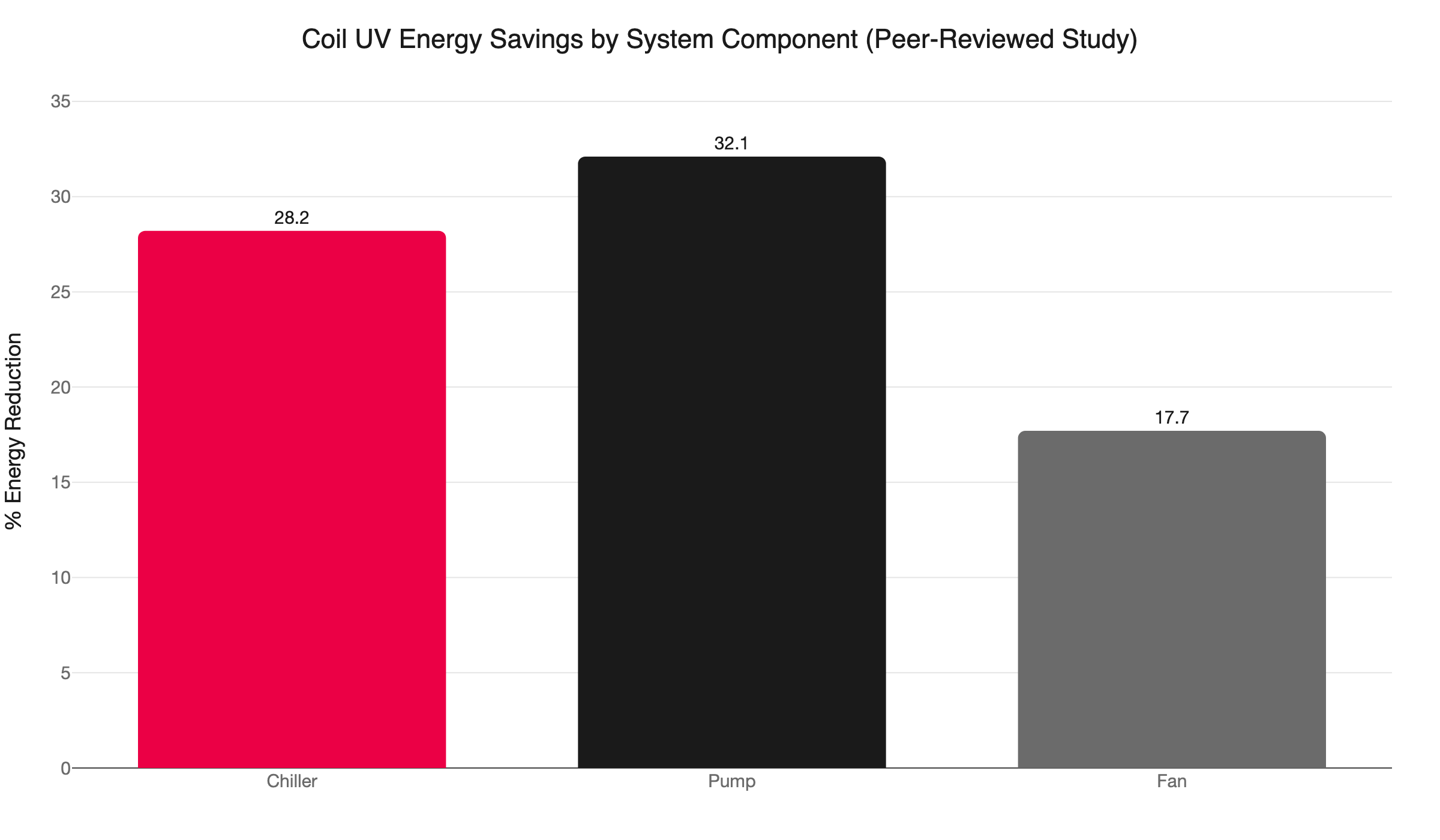
Coil UV Energy Savings by System Component (Peer-Reviewed Study)
A UV light for your HVAC system is not one product. It is two different products that work on completely different physics and solve different problems. Most homeowners research "HVAC UV lights" and land on articles that treat them as interchangeable options with minor cost differences. They are not. Choosing the wrong type wastes money. Understanding the difference takes about ten minutes - and those ten minutes will shape a decision you will not regret. Here is the honest version, tailored to what Twin Cities homes actually face.
## What Does a UV Light for an HVAC System Actually Do?
**In short:** A UV-C lamp (typically 253.7 nm) disrupts the DNA and RNA of microorganisms, preventing reproduction. It inactivates mold, bacteria, and some viruses. It does not trap or remove particles. It is a disinfection tool, not a filter - and it works best when the physics are in its favor.
Germicidal UV has been in clinical use since the 1930s, with a [proven track record of limiting airborne transmission of measles and tuberculosis](https://www.epa.gov/indoor-air-quality-iaq/what-upper-room-ultraviolet-germicidal-irradiation-uvgi-what-hvac-uvgi-can). UV-C light at 253.7 nm from low-pressure mercury vapor lamps is the established residential standard.
The key word in that track record is dose. UV-C kills microorganisms when they receive enough light energy. Dose is a product of intensity and time. Change one of those variables - as happens dramatically when air is moving rather than standing still - and effectiveness changes with it. This is why coil UV and in-duct UV are genuinely different products, not just different placements of the same product.
The EPA is honest about the residential ceiling: ["The effective destruction of some viruses and most mold and bacteria spores usually requires much higher UV exposures than a typical home unit provides."](https://www.epa.gov/indoor-air-quality-iaq/what-upper-room-ultraviolet-germicidal-irradiation-uvgi-what-hvac-uvgi-can) That caveat does not apply equally to both UV types. It matters far more for in-duct UV than for coil UV.
## Coil UV vs. In-Duct UV: Two Products, Two Jobs
This is the section most articles skip. It is worth understanding.
**Coil UV** installs inside the air handler, positioned to shine directly on the evaporator coil and drain pan. The lamp runs continuously. The target never moves. [In surface-disinfection applications, UV-C intensity can be relatively low because exposure time is effectively unlimited.](https://www.achrnews.com/articles/111961-airstream-or-coil-which-uv-application-is-right) ASHRAE recommends 50-100 µW/cm² for coil irradiance - a standard a single, properly positioned lamp can meet. The result: biofilm does not build up. The coil surface stays cleaner. Mold does not colonize the drain pan.
**In-duct UV** installs in the supply or return plenum, downstream from the air handler. Air moves through residential ductwork at roughly 400-500 feet per minute. [At those velocities, a microorganism passing a UV lamp gets a mere fraction of a second of exposure.](https://www.achrnews.com/articles/111961-airstream-or-coil-which-uv-application-is-right) Delivering a killing dose in that time window requires far higher lamp intensity than most residential units produce.
The gap matters. A standard residential in-duct lamp is probably not delivering meaningful germicidal dose to the moving airstream in your home. A commercial-grade, purpose-built in-duct UV system - sized specifically for your system's airflow rate - is a different product. Most residential installations do not meet that engineering standard.
This is not a reason to dismiss UV entirely. It is a reason to recognize coil UV as the stronger evidence-based choice for the average Twin Cities home.
## Why Do Twin Cities Summers Make Coil Biofilm a Real Problem?
**In short:** The Twin Cities has a legitimately humid summer. When outdoor dew points climb above 60°F - a regular occurrence from June through August - indoor relative humidity near the evaporator coil can exceed 70%. That is prime mold-growth territory. Coil biofilm is not a theoretical concern for Minnesota homeowners; it is a predictable seasonal event.
[The Twin Cities averages a January temperature of 15.6°F (-9.1°C), making it the coldest major metro in the continental United States.](https://en.wikipedia.org/wiki/Climate_of_Minneapolis%E2%80%93Saint_Paul) That cold-climate identity creates a blind spot: we think of our air quality problems as dry-air winter problems. The humid summer is its own challenge.
When outdoor dew points hit 60°F or higher, warm humid air enters the home and the AC runs hard to cool it. The evaporator coil gets cold. Moisture from the air condenses on the coil surface. The drain pan fills. Organic debris - dust, skin cells, biological material pulled through the return air - settles on those wet surfaces. Biofilm forms. Mold follows.
[The Minnesota Department of Health recommends keeping indoor relative humidity below 60% year-round](https://www.health.state.mn.us/communities/environment/air/mold/index.html) (and 20-40% in winter). A well-functioning AC should hold that range for the living space. But the coil itself sits in a micro-environment that regularly exceeds it during July and August. That is the design reality of running an AC through a Minnesota summer - and coil UV addresses it directly.
If your system produces [a musty smell](/blog/why-does-my-ac-smell-bad-musty-burning-twin-cities/) during the first few minutes of operation after a warm, humid night, that odor is coming from biofilm on the coil. The smell fades once airflow dilutes it, which makes it easy to dismiss. It should not be dismissed. Persistent biofilm degrades indoor air quality, restricts airflow, and drives up energy costs over time.
For context on related coil and drainage issues, see our post on [what causes water leaks inside your AC in a Twin Cities summer](/blog/ac-draining-water-leak-inside-twin-cities/).
## Does UV Light Actually Kill Mold and Bacteria?
**In short:** Yes, for coil applications. A California Energy Commission study in K-12 schools found coil UV-C treatment reduced total fungal and gram-positive bacteria on cooling coil surfaces by [65-100%](https://sanuvox.com/en/blog/uv-c-technology-for-hvac-coils-how-high-intensity-light-eliminates-biofilm-and-delivers-a-49-roi/). Those are stationary-target conditions - exactly what coil UV is designed for.
ASHRAE Research Study 1738 tested coil UV in commercial HVAC applications and found a [21% decrease in mean coil airside pressure drop and a 14% increase in mean overall heat transfer coefficient](https://sanuvox.com/en/blog/uv-c-technology-for-hvac-coils-how-high-intensity-light-eliminates-biofilm-and-delivers-a-49-roi/). Those are efficiency numbers. They reflect what happens when you remove the biofilm layer that was insulating the coil and restricting airflow: the system runs more effectively.
For airstream organisms, the picture is more nuanced. The EPA notes that UVGI should be used in addition to - not as a replacement for - conventional particle filtration. And adding UV to a system that already uses HEPA filtration provides "only minimal infection control benefits over those provided by the HEPA filters alone." UV is a complement to filtration, not a substitute for it.
The clear takeaway for Twin Cities homeowners: if your goal is to reduce mold and bacteria on your evaporator coil, coil UV delivers documented results in the exact conditions your system faces each summer.
## Will a UV Light Help With My Allergies?
**In short:** Not directly, and possibly not at all. UV inactivates living organisms. Pollen, dust, and pet dander are not organisms. They remain airborne after UV exposure. If allergies are your primary motivation, a MERV 13 or better filter upgrade is the right first step - not UV.
This is the most common misunderstanding in residential UV marketing. [UV inactivates bioaerosols - mold spores, bacteria, some viruses. It does not neutralize inert particulate allergens like pollen or pet dander.](https://19january2017snapshot.epa.gov/indoor-air-quality-iaq/residential-air-cleaners-second-edition-summary-available-information_.html) A UV lamp cannot make a pollen grain inert because pollen is already inert. The particle stays in the air. You breathe it.
For allergy relief, start with better filtration. Our guide to [air purifiers vs. filters and MERV ratings explained](/blog/air-purifiers-vs-filters-merv-ratings-explained/) walks through the difference between filter types and which MERV rating makes sense for common allergy profiles.
If you have both allergy concerns and a history of mold or musty odors in your HVAC system, the right answer is layered: a MERV 13+ filter to capture particulates and a coil UV lamp to prevent biofilm growth. That combination addresses both problems. UV alone addresses only one.
## How Much Energy Can Coil UV Save?
**In short:** Meaningful savings are documented. Removing biofilm restores coil heat transfer efficiency, which means your system reaches setpoint faster and runs fewer hours. Energy savings are a secondary benefit here - air quality improvement is the primary goal - but the efficiency case is real and supported by peer-reviewed research.
[A study published in ScienceDirect](https://www.sciencedirect.com/science/article/abs/pii/S036013232400831X) tracked UV-C coil treatment in a cool-humid climate over seven weeks. Chiller-side energy savings reached 28.2%, pump energy dropped 32.1%, and fan energy fell 17.7%. Those gains came from a 15.62% increase in coil thermal conductance - the direct result of cleaner coil surfaces.
These are commercial-scale numbers. A residential system will show smaller absolute savings. But the underlying mechanism is the same in your home as in a commercial building. Biofilm insulates the coil. Biofilm restricts airflow. Clean coils transfer heat more efficiently. Efficient heat transfer means shorter run cycles and lower monthly bills.
For older Twin Cities homes with coils that have never been professionally cleaned, the efficiency payback can be significant. If your energy bills have been climbing without an obvious explanation and your system is 7-10 years old, a coil inspection is worth scheduling before you dismiss UV costs as too high.
## Which Twin Cities Households Get the Most from UV?
**In short:** Households with recurring mold or musty HVAC odors benefit most from coil UV. Allergy sufferers need better filtration first. Immunocompromised households benefit from a layered approach: coil UV combined with MERV 13 filtration. In-duct UV fits a narrow use case and only when properly sized for the specific system.
Here is an honest breakdown of who benefits most, based on the research:
**Strongest case for coil UV:**
- Your HVAC produces a musty smell during the first few minutes of operation, especially after humid weather. This is a coil biofilm signature.
- [Visible mold near HVAC registers](/blog/mold-in-hvac-ducts-signs-remediation-twin-cities/), in the air handler cabinet, or around the drain pan.
- Your system is 7 or more years old and has never had a professional coil cleaning.
- A household member is immunocompromised. In this case, pair coil UV with a MERV 13 filter for a layered approach that addresses both surface organisms and [airborne particulates](/blog/wildfire-smoke-hvac-indoor-air-quality-minnesota/).
**Better served by filtration first:**
- [Seasonal allergies](/blog/hvac-spring-allergy-relief-twin-cities/) driven by pollen, pet dander, or dust. A MERV 13+ filter upgrade delivers more direct benefit. UV will not reduce particle counts.
- Already running HEPA filtration. Adding UV in this case provides, per the EPA, minimal additional infection control benefit.
- Budget is limited. A quality filter upgrade is more broadly effective for most allergy-driven IAQ concerns.
**Narrow case for in-duct UV:**
- Genuine concern about airborne pathogen transmission - for example, a high-risk household member during respiratory illness season. In-duct UV can be part of a layered strategy, but only if the system is properly engineered for your home's airflow and the installer verifies dose delivery. Understand the EPA's clear caveat: most standard residential units do not reach sufficient germicidal dose.
## What to Know Before You Schedule Installation
Several practical realities to set expectations before you commit:
**Permits are required.** UV light installation adds a new component to a regulated mechanical system. Under Minnesota Administrative Rules Part 1346 (Minnesota Mechanical Code), that almost certainly requires a mechanical permit. Wiring the lamp may require a separate electrical permit. Your licensed HVAC contractor pulls these permits. If a contractor offers to skip them, treat that as a warning sign and walk away. Verify the specific requirements with your city or county building department before work begins.
**No utility rebates apply to UV.** Xcel Energy and CenterPoint Energy's current Minnesota residential rebate programs are built around efficiency equipment: heat pumps, qualifying furnaces, and qualifying air conditioners. Neither utility offers a rebate for UV IAQ add-ons. The federal IRA Section 25C credit (up to $600 for qualifying HVAC equipment) and Xcel's up-to-$450 AC rebate do not apply to UV lamps. Plan your budget without a rebate offset.
**Lamp replacement is an ongoing cost.** UV-C lamp output drops before the bulb visibly fails. Most lamps need replacement every 9,000-12,000 hours - roughly one to two years of continuous operation. This is a known maintenance item, not a surprise, but it belongs in your total cost calculation from the start.
**UV does not replace regular HVAC maintenance.** A coil UV lamp significantly reduces biofilm accumulation. It does not eliminate the need for annual coil cleaning, filter changes, or system tune-ups. Our post on [5 maintenance tips to extend your AC's lifespan](/blog/5-maintenance-tips-to-extend-your-acs-lifespan/) covers what a solid annual maintenance schedule looks like.
**Ozone-generating devices are not UV-C.** Some IAQ products sold alongside - or instead of - UV systems generate ozone or hydrogen peroxide. The Minnesota Department of Health does not recommend ozone-generating air cleaners for mold control. Before purchasing anything, confirm you are buying a standard UV-C product at 253.7 nm from a low-pressure mercury vapor lamp. That is the technology with the established, peer-reviewed evidence base.
## Ready to Talk UV for Your Twin Cities HVAC System?
If your HVAC is producing musty odors, your coils have not been inspected in years, or you are building a layered IAQ strategy for a household with health concerns - coil UV is a well-supported option for Twin Cities homes. The research backs it. The climate makes it relevant.
Northern One Hour Heating & Air Conditioning is locally owned and operated in Ramsey, MN. We serve Minneapolis, St. Paul, Blaine, Maple Grove, Plymouth, Brooklyn Park, Woodbury, Bloomington, and the surrounding metro. We assess your system, look at what is actually there, and give you a straight recommendation. If UV fits your home, we install it correctly and pull the required permits. If something else is the better call, we will tell you that instead.
"Always On Time… Or You Don't Pay a Dime!(R)" - that is our guarantee on every appointment, not a line we dust off for marketing. Call us at (763) 260-6662 or [book an indoor air quality assessment online](/indoor-air-quality/air-purification/) to get started.
---
# What to Expect on HVAC Installation Day in Minnesota
URL: https://northernonehour.com/blog/what-to-expect-hvac-install-day-twin-cities/
Published: 2026-08-03 | Category: HVAC
Know what to expect on HVAC installation day: timeline, permits, inspector visit, venting changes, and utility rebates for Twin Cities homeowners.
Key Takeaways
- A standard furnace or AC replacement takes 7-8 hours with a 2-3 person crew.
- Drop cloths and shoe covers go down before any equipment moves.
- Minnesota requires a [mechanical permit](/blog/hvac-permit-when-required-minnesota/) for every furnace, AC, and heat pump replacement. A municipal inspector visits after the crew leaves, not during the install, to verify the work.
- Minneapolis and St. Paul require a minimum 90% AFUE furnace for replacements. Upgrading from 80% to 90%+ means the vent material switches from metal to PVC, and that is a standard part of the job.
- Xcel Energy and CenterPoint Energy both offer rebates. Some require pre-approval before installation. Waiting until after the job is done may disqualify you.
- We are locally owned and operated in Ramsey, MN. "Always On Time… Or You Don't Pay a Dime!(R)"
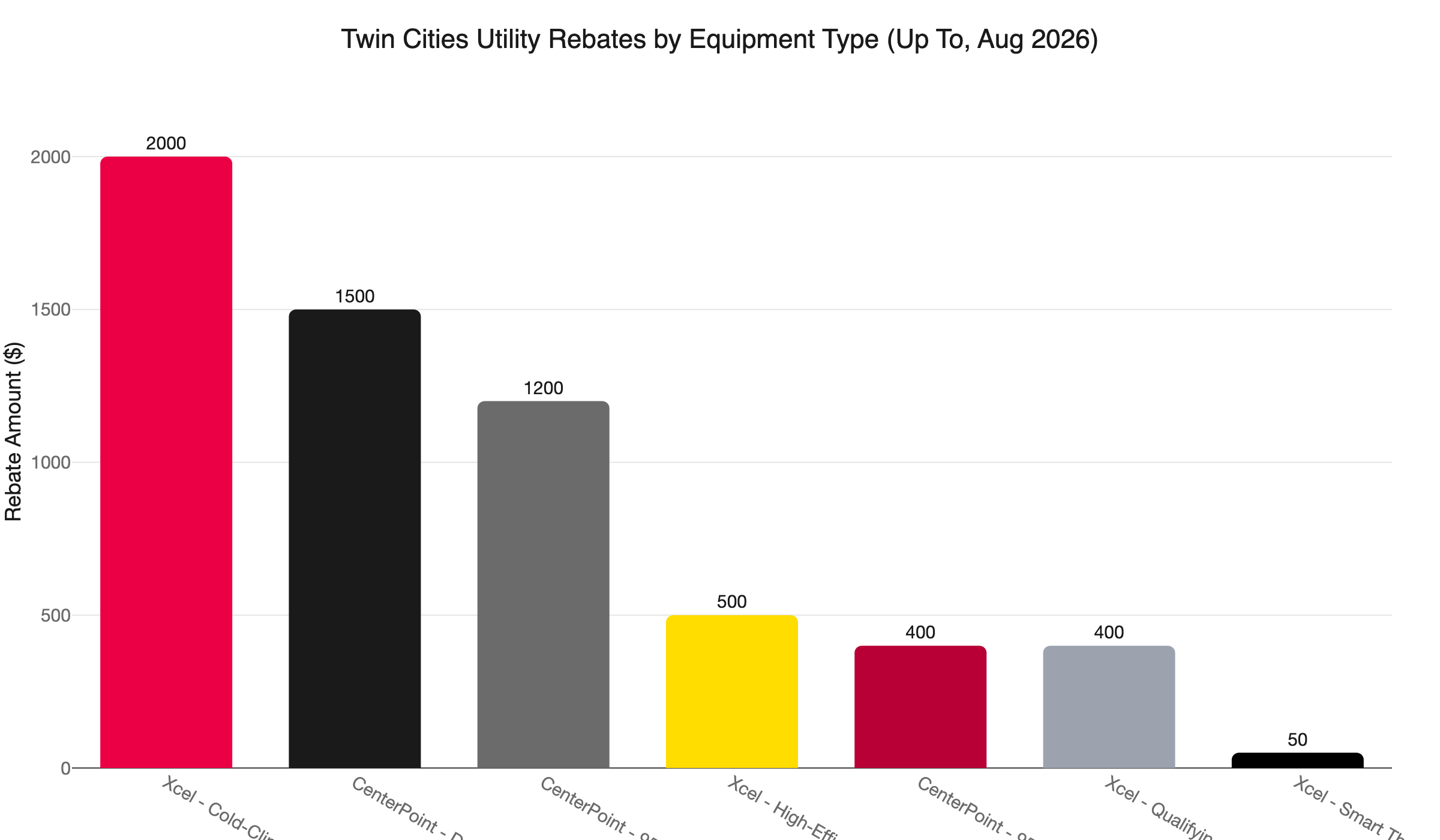
Twin Cities Utility Rebates by Equipment Type (Up To, Aug 2026)
## What's Coming on Install Day
Most homeowners search this topic the night before the crew shows up. That is fine. Knowing what to expect on HVAC installation day makes the job easier for everyone.
This guide covers the full picture: the timeline, how your home gets protected while the crew works, and two things no other guide covers. The first is the permit card that goes on your door and the separate inspector visit that follows days later. The second is why your vent pipe material changes if you are upgrading to a high-efficiency furnace, and why that change is a normal part of the job in the Twin Cities.
## How Long Does HVAC Installation Take?
**The short answer:** [A standard central HVAC replacement takes 7-8 hours](https://alternativeaire.com/ac-installation-day-timeline-homeowners-guide/) with a 2-3 person crew. A full system swap covering both indoor and outdoor units runs toward the longer end. Your technician will give you a time estimate at the start of the job.
Here is how the day breaks down by phase:
**Arrival and assessment (30-60 minutes).** The lead technician walks the job before any tools come out. They confirm the equipment matches the permit specification, note any access constraints, and walk through the scope with you. This is the right window for questions.
**Old unit removal (1-2 hours).** For AC replacements and heat pumps, refrigerant recovery from the old system is legally required before removal begins. [Only EPA Section 608-certified technicians may handle refrigerants](https://www.epa.gov/section608/section-608-technician-certification-requirements), and refrigerant cannot be vented to the atmosphere. Once the refrigerant is captured, the crew disconnects and removes the old equipment.
**New indoor unit installation (2-3 hours).** The air handler or furnace goes in. Connections to the duct system, [gas line](/blog/gas-line-sizing-furnace-replacement-minnesota/), and electrical are made and verified. If the venting material changes, the new PVC penetrations happen during this phase.
**New outdoor unit (1-2 hours).** The condenser or heat pump is placed on isolation pads to reduce vibration and operating noise. Refrigerant lines and electrical connections follow.
**Technical commissioning (about 1 hour).** [Commissioning includes electrical verification, airflow measurement, refrigerant pressure and temperature readings, gas pressure and combustion analysis, thermostat verification, and a safe operation inspection](https://www.titan-heating.com/post/what-happens-on-hvac-installation-day-a-step-by-step-guide-for-homeowners). The system does not get signed off until every check passes.
## How Should You Prepare Before the Crew Arrives?
**The short answer:** Clear a path from your front door to the equipment room. Secure your pets. Plan to be home the entire day. Confirm your rebate pre-approval status with your contractor the day before the install.
A few specific steps:
**Clear the working path.** Move furniture, boxes, or stored items from the route between the front door and the equipment room. If the outdoor unit is being replaced, clear a walking path to the pad. A clear path saves time and reduces the chance of damage to walls or furnishings.
**Secure your pets.** The crew will be moving heavy equipment and may leave exterior doors open briefly. A crate or a closed room keeps pets safe and keeps the crew moving.
**Dress for a less comfortable house.** The system will be off for most of the day. On a cold Minnesota day, that adds up fast. On a hot summer day, open a window on the shaded side of the house. Plan for it either way.
**Call your contractor about rebate pre-approval.** [Some utility rebate programs require pre-approval before installation to lock in the rebate amount](https://allprohvacminneapolis.com/how-to-claim-every-centerpoint-and-xcel-energy-rebate-for-your-new-hvac-system/). The day before install is the time to verify this is handled. Missing the pre-approval step can disqualify you even if your equipment qualifies.
## What Happens During the Installation?
**The short answer:** The crew protects your home first, removes the old equipment, installs the new system connection by connection, then runs a full commissioning sequence before calling the job done. Every step is verified before moving to the next.
The home protection comes first. Drop cloths cover every floor surface in the travel path. Shoe covers stay on inside. This is standard practice, not a courtesy. Old refrigerant lines and equipment carry oil and particulates that stain carpet and hardwood. The protection comes off when the job is done.
Old equipment comes out next. For furnace replacements, the gas line, flue connection, and electrical disconnect before the unit moves. For AC replacements, refrigerant recovery happens first. Heat pump replacements involve both sequences.
Duct connections are inspected during removal. If the existing duct collar is in good shape, the new unit connects to it directly. If a modification improves airflow or fits the new equipment better, the crew handles it now. If you have had persistent hot or cold spots, ask the technician about duct adjustments during the removal phase. A small change at install time can fix a comfort problem that has been there for years.
The new system goes in following a consistent sequence: indoor unit, duct and utility connections, outdoor unit, refrigerant lines, electrical, controls. Each connection is tested before the next step begins.
For context on how equipment sizing affects long-term comfort, our post on [HVAC sizing and Manual J calculations](/blog/hvac-sizing-manual-j-right-sized-system/) explains what should happen before install day to make sure the equipment is right for your home.
## Does HVAC Replacement Require a Permit in Minnesota?
**The short answer:** Yes. [Replacing a furnace, boiler, or central AC in Minnesota requires a mechanical permit in virtually all jurisdictions](https://minnesotahvacauthority.com/minnesota-hvac-permits-and-inspections), including every Twin Cities suburb. This applies even to a direct equipment swap with no other changes.
Here is what the permit process looks like in practice:
**The permit is pulled before work starts.** A licensed contractor obtains the permit from the municipality and begins work only after it is issued. [The permit must be posted on-site throughout the project](https://minnesotahvacauthority.com/minnesota-hvac-permits-and-inspections). You will see a permit card on or near the equipment when the crew arrives on install day.
**The [permit fee](/blog/hvac-permit-cost-minnesota-what-to-expect/) is usually included in your quote.** [A standard furnace replacement permit costs $75-$175 in Minneapolis and St. Paul, and $50-$150 in suburban Twin Cities](https://furnace.direct/blogs/news/hvac-permit-requirements-minnesota-furnace-ac). Confirm this is included before signing your contract.
**An inspector visits after the crew leaves.** The inspection does not happen on install day. A municipal inspector schedules a separate visit, usually within a few days to a week. This is a required step, not a sign that something went wrong. The inspector is verifying that the work was done correctly.
**Skipping the permit creates real problems downstream.** [Unpermitted HVAC work can result in insurance claim denial for CO or fire incidents, failed home sale inspections, and mandatory retroactive permitting with fines](https://furnace.direct/blogs/news/hvac-permit-requirements-minnesota-furnace-ac). Any [reputable contractor](/blog/hvac-contractor-red-flags-twin-cities/) pulls the permit without being asked. If yours hesitates on this point, that is worth paying attention to.
Minnesota law requires all gas appliance installation to be performed by a licensed HVAC contractor. State licensing requires a $25,000 bond filed with the Department of Labor and Industry, plus public liability and workers' compensation insurance. When you work with Northern One Hour, you are working with a fully licensed, bonded, and insured local team.
## What Does the Inspector Actually Check?
**The short answer:** The inspector verifies that venting is properly connected and sealed, gas connections are leak-free, electrical connections meet code, condensate drainage is correctly routed, and the installed equipment matches the permit specification. Most inspections take 20-30 minutes.
Here is what the inspector reviews in detail:
- **Venting.** Is the flue or PVC vent connected, sealed, and properly pitched? For condensing furnaces, is the PVC routed correctly and the condensate line draining as designed?
- **Gas connections.** Is every connection leak-free? Inspectors use a combustible gas detector at all new gas connections.
- **Electrical.** Do the connections meet code? Is the disconnect properly installed and labeled?
- **Condensate drainage.** Is the line routed to an appropriate floor drain or condensate pump, and free of kinks or improper traps?
- **Equipment match.** Does what was installed match the equipment specification listed on the permit?
The inspector leaves a pass or correction card. If a correction is required, your contractor handles it and the inspector returns. This is uncommon when the work is done by a licensed crew following a properly permitted scope.
## Will Your Venting Change If You're Upgrading to a High-Efficiency Furnace?
**The short answer:** Yes. Moving from an 80% AFUE furnace to a 90%+ model requires switching from metal flue pipe to PVC. The crew modifies the wall penetration on install day. This is a normal part of a high-efficiency furnace replacement, not an unexpected add-on.
Here is the reason: An 80% AFUE furnace exhausts combustion gases at a high temperature. Those gases are hot enough to travel safely through a metal flue. A condensing furnace (90%+ AFUE) extracts so much heat from the combustion process that the exhaust exits cool. At that lower temperature, moisture in the exhaust condenses into liquid. PVC handles that cool, moist exhaust safely. Metal pipe cannot.
**Why this matters for Twin Cities homeowners specifically:**
[Minneapolis and St. Paul both require a minimum 90% AFUE furnace for replacements](https://furnace.direct/blogs/news/minnesota-energy-code-furnace-requirements-2026). If you live in either city and your current furnace is 80% AFUE, the replacement will almost certainly be a condensing unit. That means PVC venting is part of the scope, not a choice. Most suburbs follow the statewide 80% AFUE minimum, but many homeowners choose 90%+ anyway for lower operating costs. If you go high-efficiency anywhere in the metro, the same venting change applies.
What to expect on install day: The crew removes the old metal flue from the furnace connection, caps the old exterior penetration, and runs new PVC pipes through the wall or rim joist. Before they cut, ask the technician to show you the planned route. It takes a few minutes and you will know exactly what is happening and where the pipe exits the house.
If you are weighing a heat pump against a furnace replacement, our post on [heat pump performance below zero in Minnesota](/blog/heat-pump-below-zero-performance-minnesota/) covers how cold-climate units hold up when temperatures drop to the single digits.
## How Do Twin Cities Rebates Factor In?
**The short answer:** Xcel Energy and CenterPoint Energy offer rebates from $50 to $2,000 depending on equipment type. Some programs require pre-approval before installation. Waiting until after the install to apply can cost you the rebate entirely.
Here is what is available as of August 2026:
**Xcel Energy:**
- Up to $2,000 for cold-climate heat pumps
- Up to $500 for high-efficiency gas furnaces
- Up to $400 for qualifying central AC
- $50 for an ENERGY STAR smart thermostat
- $600 bonus if the heat pump follows qualifying insulation and air-sealing upgrades
**CenterPoint Energy:**
- Up to $1,500 for ducted air-source heat pumps
- Up to $400 standard, or up to $1,200 income-qualified, for 95%+ AFUE gas furnaces
One federal note: [the 25C heat pump tax credit ended December 31, 2025](https://homeenergybasics.com/heat-pumps/states/mn). No federal credit applies to 2026 installs as of this writing. The utility programs listed above are the primary incentives available right now.
For a full breakdown of how to claim these programs, see our post on [Minnesota heat pump rebates and tax credits](/blog/minnesota-heat-pump-rebates-tax-credits/).
## The Post-Install Walkthrough
Before the crew loads the truck, your lead technician will walk you through the new system. This is the handover. Pay attention and ask questions.
**Where is the filter, and what size does it take?** Write it down and set a calendar reminder. A clean filter is the single highest-return maintenance task for any HVAC system. Skipping it costs you efficiency and lifespan.
**Where does the condensate line drain?** Know where the line exits and what to do if it backs up. A clogged condensate drain is one of the most common service calls [after a new install](/blog/new-construction-hvac-first-year-problems-minnesota/). Knowing where the line runs makes a DIY fix straightforward when it matters.
**What are the normal operating sounds for this unit?** New systems sound different from old ones. Ask the technician what is normal so you are not calling in for something that is working exactly as designed.
**When is the inspector coming, and do you need to be home?** Get a timeline. Many inspectors do not require the homeowner to be present. Confirm either way before the crew leaves.
**How do you [register the warranty](/blog/hvac-warranty-registration-what-homeowners-miss-minnesota/)?** Most manufacturers require registration within 30-60 days of installation to activate the full warranty term. Ask your technician for the registration details and do it before the deadline passes.
**Where is the rebate paperwork?** If your technician is handling the utility rebate submission, confirm they have the equipment documentation and serial numbers. If you are submitting it yourself, collect everything before the crew pulls away.
## Schedule Your Installation with Northern One Hour
We are locally owned and operated in Ramsey, MN. Our team serves homeowners across the Twin Cities metro: Minneapolis, St. Paul, Blaine, Maple Grove, Plymouth, Brooklyn Park, Woodbury, Bloomington, and the surrounding communities.
Every installation includes permit coordination, a licensed EPA-certified crew, and a technician who walks you through the system before they leave. We handle the paperwork, show up when we say we will, and back every job with a 100% satisfaction guarantee. "Always On Time… Or You Don't Pay a Dime!(R)"
Call us at **(763) 260-6662** or [book your furnace replacement online](/heating/heating-equipment/furnaces/furnace-replacements/).
---
# AC Compressor Failing Signs: Twin Cities Repair Guide
URL: https://northernonehour.com/blog/ac-compressor-failing-signs-repair-cost-twin-cities/
Published: 2026-08-02 | Category: Cooling
Spot AC compressor failing signs in Twin Cities homes - and why a $195 capacitor fix is often misdiagnosed as a $4,500 compressor replacement.
Key Takeaways
- Hard faults (unit hums but will not start, [breaker trips on every cycle](/blog/ac-keeps-tripping-breaker-causes-twin-cities/), loud mechanical clank) require a professional diagnostic before any repair is approved.
- Soft warnings (hard starting, short cycling, warm air with a running system, rising energy bills) appear weeks or months before a hard fault. Catching them early is the difference between a small repair and a large one.
- A failed run capacitor and a failed compressor produce nearly identical homeowner symptoms. Capacitor repair: $195-$450. Compressor replacement: $1,950-$4,500.
- Never approve compressor replacement without seeing capacitor test results first.
- The 50% rule at Minnesota prices: system 10 or more years old plus a repair quote at or near half the replacement cost is a replace signal.
- At Twin Cities mid-tier installed costs of $5,800-$8,000, a $3,200-plus compressor repair on a 12-year-old system is a replace signal.
- R-22 systems are auto-replace. R-410A systems need individual analysis given the EPA phase-down.
- Xcel Energy offers up to $500 for qualifying central AC and up to $1,500 for a cold-climate heat pump.
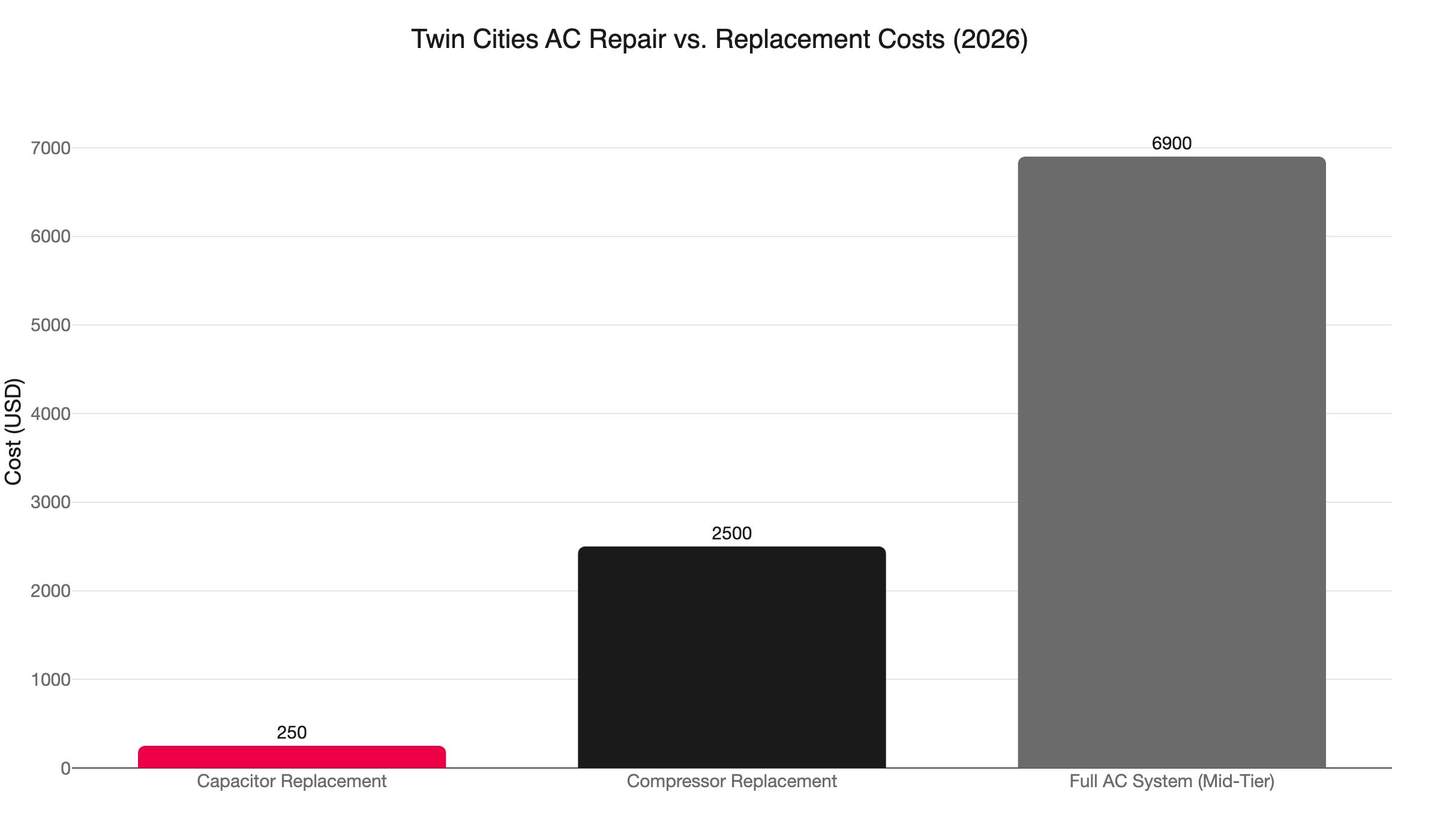
Twin Cities AC Repair vs. Replacement Costs (2026)
Your outdoor unit hums. The fan does not spin. The house is getting warmer by the hour. You search "AC compressor failing signs Twin Cities" and brace for a four-figure repair bill. Before you approve anything, know this: that exact symptom - outdoor unit hums, fan sits still - is the classic presentation of [a failed run capacitor](/blog/bad-ac-capacitor-symptoms-cost-twin-cities/), not a dead compressor. The cost difference is $1,550 to $3,900.
## What Are the Hard-Fault AC Compressor Failing Signs?
**The short answer:** Hard faults mean the system cannot run at all. Signs include the outdoor unit humming but not starting, the breaker tripping on every startup cycle, or a loud metal-on-metal clank from the compressor housing. Each requires a professional diagnostic - not an automatic compressor replacement quote.
When your AC stops on a July afternoon in Ramsey, Blaine, or Brooklyn Park, the impulse is to assume the worst. But "system will not run" has several possible causes. Knowing which type you are dealing with prevents a costly rushed decision.
Hard faults leave the system unable to operate at all:
- **The outdoor unit hums but the fan blade does not spin.** [This is the most common hard-fault presentation - and the most misread one](https://hvacprosales.com/blog/bad-capacitor-vs-bad-compressor-symptoms/). The run capacitor gives the fan motor and the compressor the electrical jolt they need to start. When the capacitor fails, neither the fan nor the compressor can operate. The result looks identical to a dead compressor from the outside.
- **The breaker trips on every startup.** [A compressor drawing more current than the circuit can handle will trip the breaker repeatedly](https://www.berkeys.com/air-conditioning/resources/what-are-the-signs-of-a-bad-ac-compressor/). This is a hard fault. The cause could be the compressor - or it could be a seized contactor or a shorted capacitor pulling excess amperage.
- **A loud metal-on-metal clank or knock from the outdoor unit.** [Mechanical failure inside the compressor produces a distinct clank or rattle](https://hvacprosales.com/blog/bad-capacitor-vs-bad-compressor-symptoms/) - broken pistons, loose connecting rods, seized bearings. This is different from the electrical humming of a capacitor failure. A mechanical clank points more directly at the compressor itself.
- **The unit does not attempt to start at all - completely silent.** "Silent" does not mean "dead compressor." It can mean a blown fuse, a failed contactor delivering no voltage, or a thermostat not sending a call for cooling.
Every hard fault requires a diagnostic visit. None of them automatically means you need a compressor.
## What Are the Early Warning Signs Before a Compressor Fails?
**The short answer:** Soft warnings - hard starting, short cycling, warm air with a running system, and rising energy bills - typically surface weeks or months before a hard fault. Catching them early is the difference between a $225 fix and a $4,500 one.
Minnesota summers are short. The Twin Cities cooling season runs roughly 4-5 months. Every week your AC runs unreliably is a week you cannot get back. Watch for these early signals.
**Hard starting.** The system hesitates before it kicks on. You hear a grunt or a struggle, then the compressor engages. [Repeated hard starts put significant mechanical stress on the compressor](https://hvacprosales.com/blog/bad-capacitor-vs-bad-compressor-symptoms/). A weakening capacitor is usually the cause. A timely capacitor swap prevents a much larger failure later.
**Short cycling.** The system starts, runs 5-10 minutes, shuts off before reaching your set temperature, then restarts a few minutes later. [Short cycling can be caused by capacitor-failure-induced overheating](https://hvacprosales.com/blog/bad-capacitor-vs-bad-compressor-symptoms/) - the compressor works harder than it should, gets hot, and the thermal protection shuts it down. This pattern often precedes a hard fault by weeks.
**Warm air with a running system.** The fan blows, the system runs, but the air is not cold. This can be refrigerant-related ([a leak or low charge](/blog/ac-refrigerant-leak-signs-minnesota/)) or compressor-related (worn internal components unable to build adequate pressure). It is not self-diagnosable. Our post on [why your AC keeps running but won't cool your home](/blog/why-your-ac-keeps-running-but-your-home-still-feels-warm-in-a-twin-cities-summer/) covers this pattern in more depth.
**Higher-than-usual energy bills without a change in usage.** A compressor losing efficiency draws more power to produce the same cooling. If your Xcel Energy bill climbs noticeably through the cooling season when habits have not changed, schedule an inspection.
**Oil stains near the outdoor unit or on the refrigerant line set.** Refrigerant leaks carry compressor oil with them. Oil stains indicate a leak. Leaks accelerate compressor wear because the compressor depends on refrigerant-entrained oil for lubrication.
None of these soft warnings means the compressor is dead. All of them mean schedule a diagnostic before the problem becomes a hard fault on a hot weekend in August.
## Why Does a Bad Capacitor Look Like Compressor Failure?
**The short answer:** The run capacitor is what allows the fan motor and compressor to start and run. When it fails, neither can operate - which looks identical to a dead compressor from outside the unit. [A failed run capacitor and a failed compressor produce nearly identical symptoms for the homeowner](https://hvacprosales.com/blog/bad-capacitor-vs-bad-compressor-symptoms/). The cost difference: $195-$450 for a capacitor versus $1,950-$4,500 for a compressor.
This is the diagnostic trap that costs Twin Cities homeowners thousands of dollars every cooling season. The outdoor unit hums. The fan does not spin. The house does not cool. A tech working from symptoms alone - without running a proper electrical test - can easily misquote a capacitor failure as compressor failure.
Here is why the confusion happens.
The run capacitor is a small cylindrical component inside the outdoor unit's electrical panel. It stores an electrical charge that gives the fan motor and compressor their startup kick. It also sustains the current they need to run efficiently. When the capacitor fails, both the fan and the compressor lose the electrical assistance they depend on - even if the compressor motor itself is mechanically healthy.
A partially failed or weak capacitor is trickier still. It does not produce a clean hard fault. Instead, it causes hard starts and short cycling - symptoms that look like early compressor failure to the untrained eye.
Here is the longer-term risk: [a weak capacitor that repeatedly forces the compressor to hard-start will eventually cause real compressor failure](https://hvacprosales.com/blog/bad-capacitor-vs-bad-compressor-symptoms/). A timely capacitor repair prevents a compressor replacement. The sequence matters.
[If a technician quotes you compressor replacement without first showing you the results of a capacitor test, ask for those results before approving any work](https://hvacprosales.com/blog/bad-capacitor-vs-bad-compressor-symptoms/). A transparent diagnostic process is the mark of a trustworthy contractor.
## How Do Technicians Tell a Bad Capacitor from a Failed Compressor?
**The short answer:** [A compressor should never be condemned from sound or visual observation alone](https://www.texasairinc.com/is-it-the-compressor-or-the-capacitor-diagnosing-ac-problems/). A capacitance test measures whether the capacitor is holding its rated charge. An amperage test at the compressor terminals shows whether the compressor itself is straining. Both tests take minutes. Neither should be skipped.
A qualified technician works through these steps before recommending any major repair:
1. **Visual inspection.** A failed capacitor sometimes bulges at the top or leaks oil. This can confirm the diagnosis, but a capacitor can fail without any visible damage.
2. **Capacitance test.** Using a multimeter, the tech checks whether the capacitor holds its rated charge in microfarads (uF). A reading significantly below the value on the capacitor label means it is failing.
3. **Amperage draw at the compressor.** Clipping an amp meter to the compressor leads reveals startup and run current. High locked-rotor amperage - the system straining to start and failing - with a good capacitor reading points toward the compressor.
4. **Voltage at the contactor.** If the contactor is not delivering voltage, the compressor cannot start regardless of its own condition. A [contactor test](/blog/ac-contactor-failure-symptoms-replacement-cost-twin-cities/) rules out a cheaper repair before the compressor is targeted.
These are not optional steps. They take 10-15 minutes and protect you from a four-figure mistake.
Northern One Hour is locally owned and operated out of Ramsey. Our technicians run a full electrical diagnostic before they recommend any repair. If your outdoor unit is humming but not starting, we test the capacitor before we discuss the compressor.
## Should You Repair or Replace a Failing AC Compressor in Minnesota?
**The short answer:** If the system is 10 or more years old and the repair quote is at or near 50% of the replacement cost, replace. At Twin Cities prices, a $3,200-plus compressor repair on a 12-year-old system is a replace signal. On a newer system with a minor component failure, repair first.
Here is how to apply the math in Minnesota.
**Twin Cities AC replacement costs (2026):**
- Mid-tier central AC, installed: $5,800-$8,000
- Full market range: $4,200-$11,500
- Minnesota labor runs 10-20% above the national average due to cold-climate equipment requirements and state licensing standards
**Applying the 50% rule at local prices:**
- A $3,200 compressor repair on a 12-year-old system is roughly 40% of a $8,400 mid-tier replacement. Combined with the system age, this is a replace signal.
- A $3,900 compressor repair on a 15-year-old system exceeds 50% of the replacement floor. Replace.
- Repair makes financial sense when the unit is under 8 years old, the failure does not involve refrigerant, and the repair covers a minor component - capacitor, contactor, or blower motor.
**Minnesota cooling season length changes the payback math.** The Twin Cities cooling season runs roughly 4-5 months - much shorter than southern states. The efficiency gain from upgrading a 16 SEER2 system to a 20 SEER2 system pays back in a few years in Houston. In Minneapolis, the payback period is significantly longer. Do not let anyone use southern-climate efficiency projections to justify a premium system for a Minnesota home.
**Minnesota central AC lifespan: [12-15 years with regular maintenance](https://ontimeservicepros.com/how-much-does-it-cost-to-replace-an-air-conditioner-in-minnesota-2026-guide/).** A 14-year-old system with a $3,600 compressor repair quote is not a long-term investment. A 5-year-old system with a $325 capacitor repair is a clear fix. Most decisions fall between those poles.
Our [AC replacement cost guide for Minnesota](/blog/ac-replacement-cost-minnesota/) walks through the full breakdown of installed costs, labor rates, and how system age factors into the decision. Call us at (763) 260-6662 and we will walk through the math with your specific system, age, and repair quote in hand.
## Does Your Refrigerant Type Change the Repair-vs-Replace Math?
**The short answer:** Yes, significantly. R-22 systems are auto-replace - recharging costs far exceed the value of any repair. R-410A systems need individual analysis given the EPA phase-down. New systems installed since January 1, 2025 use R-454B.
Your system's refrigerant type can override the 50% rule entirely. Check the data plate on your outdoor unit.
**R-22 systems (generally installed before 2010):** R-22 production and import has been banned in the United States since January 1, 2020. Supply is severely constrained and prices are high. Recharging an R-22 system costs far more than the repair is worth in most cases, and costs will only rise from here. If your system runs on R-22 and has a compressor failure, replace the whole system. There is no cost case for a compressor repair on an R-22 unit.
**R-410A systems (approximately 2010-2024):** R-410A is under the EPA AIM Act phase-down. Parts and refrigerant costs are rising. A newer R-410A unit under 8 years old is not an auto-replace situation yet, but factor those rising service costs into any repair-versus-replace decision.
**New systems (installed January 1, 2025 and later):** New AC installations now use R-454B, the EPA-approved transition refrigerant. If you replace an older system today, your new unit will use R-454B. Our post on [the R-454B refrigerant transition for Minnesota homeowners](/blog/ac-refrigerant-change-r454b-what-homeowners-need-to-know/) explains what that means for parts availability and future service costs.
Knowing your refrigerant type is step one in any honest repair-versus-replace conversation. We can tell you which refrigerant your system uses and what that means for your options.
## What About Utility Rebates When You Replace?
**The short answer:** Xcel Energy and CenterPoint Energy both offer rebates on qualifying replacements. A mid-tier AC replacement qualifies for up to $500 from Xcel. A [cold-climate heat pump](/blog/heat-pump-compressor-failure-signs-replacement-cost-minnesota/) can bring in up to $2,600 in stacked rebates from multiple programs.
If the repair-versus-replace math points toward replacement, rebates change your net cost in a meaningful way.
**Xcel Energy (active as of 2026):**
- Up to $500 for a qualifying central AC at SEER2 16 or higher
- Up to $1,500 for a cold-climate heat pump (NEEP-listed)
- Up to $100 for an ENERGY STAR smart thermostat
- Up to $600 insulation and air-sealing bonus paired with a heat pump installation
**CenterPoint Energy:**
- Up to $1,500 for a ducted air-source heat pump
- $1,100 for a dual-fuel heat pump system
The maximum stacked rebate on a heat pump installation reaches approximately $2,600. On a $7,000 mid-tier heat pump install, that brings your net cost to roughly $4,400 before financing.
One important note on federal incentives: the Section 25C tax credit expired December 31, 2025. It does not apply to 2026 installations. Do not budget for it.
Our [Minnesota heat pump rebates guide](/blog/minnesota-heat-pump-rebates-tax-credits/) has the current figures for both Xcel and CenterPoint customers. We help qualify every purchase for available rebates as part of the installation process. For larger jobs, ask about financing options when you call.
## Does Every AC Replacement in Minnesota Require a Permit?
**The short answer:** Yes. Every AC replacement in Minnesota requires a local mechanical permit. A contractor who does not mention pulling a permit is a red flag. Permitted work is inspected. Unpermitted work can void manufacturer warranties and create liability when you sell your home.
Northern One Hour pulls the required permits on every installation. You should not have to ask.
## What to Do When You Spot AC Compressor Failing Signs in Twin Cities
Here is the short checklist for any Twin Cities homeowner dealing with an AC system that is struggling or will not start:
1. **Do not diagnose by sound alone.** Hard starting, humming without running, and short cycling all have multiple causes. Let a technician test before drawing conclusions.
2. **Ask for capacitor test results before approving compressor replacement.** A compressor diagnosis without a prior capacitor test is incomplete.
3. **Know your system's age and refrigerant type.** Both change the repair-versus-replace calculation. The data plate on the outdoor unit tells you both.
4. **Apply the 50% rule with Minnesota costs.** System 10 or more years old plus a repair quote at or near half the replacement cost is a replace signal.
5. **Check rebate eligibility before committing to a replacement.** Xcel and CenterPoint rebates can reduce your net cost by $500 to $2,600 depending on the equipment you choose.
6. **Choose a company that diagnoses before it quotes.** A tech who recommends compressor replacement without testing the capacitor first is not working in your interest.
Northern One Hour is locally owned and operated, and we back every service visit with "Always On Time… Or You Don't Pay a Dime!(R)." If your outdoor unit is humming, your home is warming up, or your system is short-cycling through a Minnesota summer, call us at **(763) 260-6662** or [book a diagnostic visit online](/air-conditioning/air-conditioning-repair/).
---
# When to Use Emergency Heat on a Heat Pump
URL: https://northernonehour.com/blog/heat-pump-emergency-heat-when-to-use/
Published: 2026-08-02 | Category: Heating
Emergency heat isn't a cold-weather tool. Learn when to use it, what it costs, and why Twin Cities heat pump owners should almost never flip that switch.
Key Takeaways
- Emergency heat disconnects the outdoor heat pump and runs only backup electric resistance strips. It operates at 100% efficiency versus your heat pump's 300-400%, costing [three to six times more](/blog/heat-pump-auxiliary-heat-strips-operating-cost-minnesota/) per hour for the same warmth.
- Auxiliary heat is automatic. The system layers it in alongside the heat pump when temps drop. You never control it. Emergency heat requires a deliberate manual switch.
- Raising your thermostat more than 2 degrees F at once triggers backup heat automatically, even on a mild day. Raise the setpoint gradually to avoid running the strips unnecessarily.
- The defrost cycle briefly activates backup strips on cold days. This is normal system behavior and is not a reason to flip the EM switch.
- Modern cold-climate heat pumps installed in the Twin Cities are engineered to operate efficiently at 0 degrees F and below. A cold January is not a reason to use emergency heat.
- The only three valid uses: a technician tells you to, the pump has completely failed, or the outdoor unit is physically damaged.
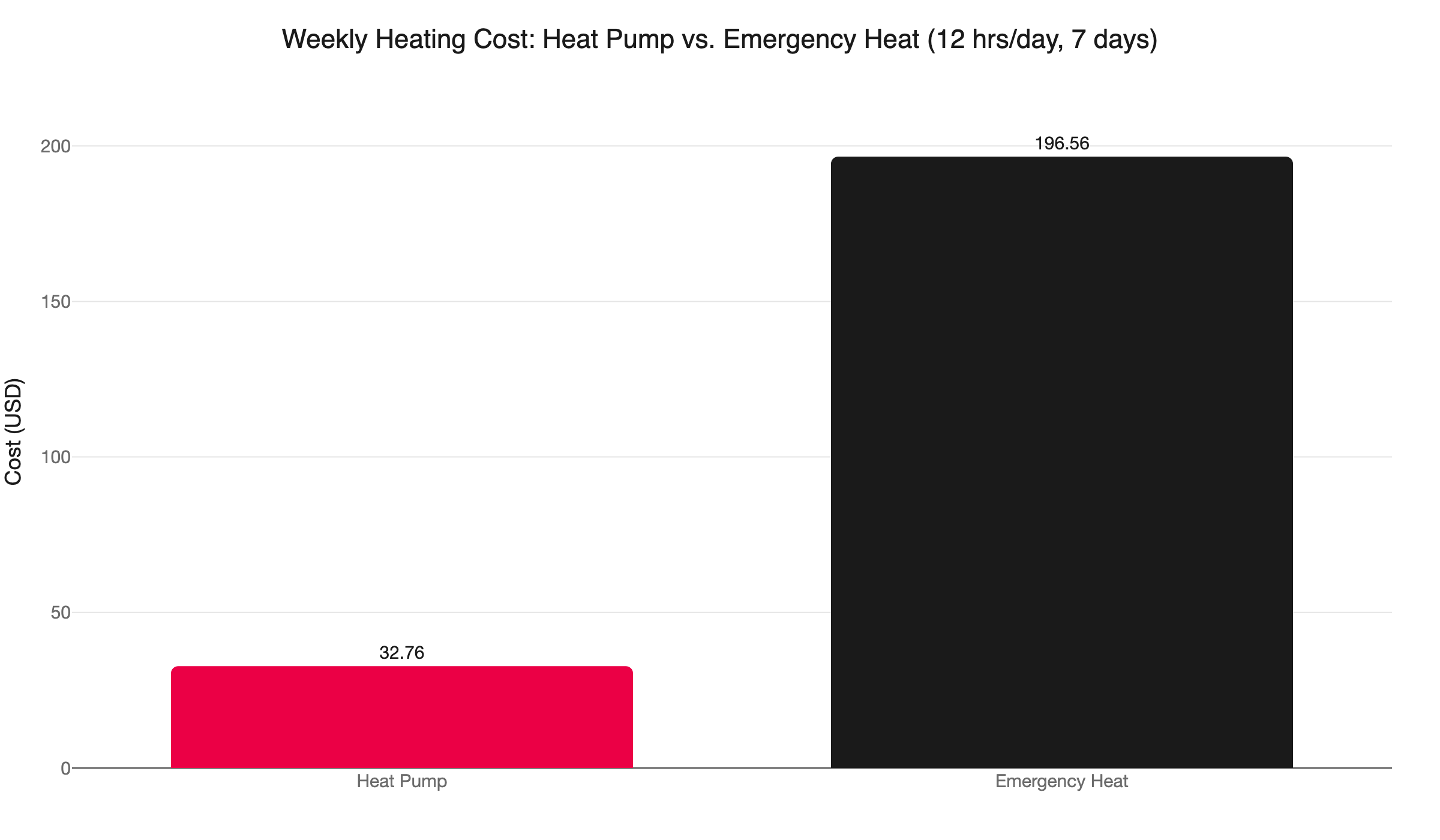
Weekly Heating Cost: Heat Pump vs. Emergency Heat (12 hrs/day, 7 days)
## What Is Emergency Heat on a Heat Pump?
**Emergency heat is a manual backup mode that completely disconnects the outdoor heat pump and runs only the backup electric resistance strips inside your air handler. It costs significantly more to operate and is only appropriate when the heat pump itself cannot run.**
You may see the phrase "emergency heat pumps" in search results. It usually refers to one of two things: the thermostat setting this post covers, or cold-climate heat pumps engineered for severe-weather performance in places like Minnesota. The two are related in an important way. If your existing system chronically triggers EM heat in winter, the fix is often a cold-climate system replacement - and what type of heat pump you have changes how relevant emergency heat is to you at all. More on that below.
Your backup heat strips convert electricity into heat at a 1-to-1 ratio. One unit of electricity in, one unit of heat out. Engineers call that a coefficient of performance (COP) of 1.0, or [100% efficiency](https://www.mnashp.org/do-heat-pumps-work-heating-minnesota).
Your heat pump in normal operation works completely differently. Instead of generating heat, it moves heat. It extracts thermal energy from outdoor air and transfers it inside. That process runs at 300-400% efficiency, or a COP of 3-4. For every unit of electricity it consumes, it delivers three to four units of heat into your home.
That efficiency gap is the entire reason heat pumps exist. Emergency heat cancels it entirely.
One practical note: when EM heat is active, the "EM HEAT" indicator on your thermostat will be lit. If that light is on and you did not flip it manually, switch back to normal heating mode right away. The rest of this post explains why that happens.
## What Is Auxiliary Heat, and How Is It Different?
**Auxiliary heat is automatic backup that runs alongside the heat pump when temps drop too far for the pump to keep up alone. Emergency heat manually shuts the pump off and runs only the backup strips. These are two separate modes, and confusing them is the root of most EM heat mistakes.**
Every heat pump system has two heat sources. The first is the outdoor heat pump unit. The second is a set of backup electric resistance strips inside the air handler - or, in a dual-fuel setup, a gas furnace. When outdoor temperatures drop far enough that the pump cannot hit your setpoint on its own, the system blends in that backup heat automatically. That is auxiliary heat. Your thermostat will display "AUX" when it is active.
You never need to turn auxiliary heat on. The system manages it with no input from you. The backup strips kick in when needed, then back off when the pump can carry the full load again. This is exactly how a cold-climate heat pump system is designed to operate in Minnesota.
**AUX in a Minnesota winter: normal vs. not normal.** The temperature context matters here - a detail most guides skip entirely. Seeing "AUX" on your thermostat for extended stretches during a January cold snap is often completely expected. The threshold that separates normal from concerning depends on the outdoor temperature:
| Situation | What it means |
|---|---|
| AUX active at -10°F or colder | Normal - system is doing its job |
| AUX during a defrost cycle (ends in minutes) | Normal |
| AUX running continuously at 35°F or warmer | Call a technician - something is wrong |
| AUX running while filter is overdue | Replace filter first, then call if it continues |
| EM HEAT lit and you did not flip the switch | Switch back immediately; note if it recurs |
Emergency heat is a separate mode entirely. Switching to it manually disconnects the outdoor unit and forces the system to run exclusively on the backup strips. The pump stops. The strips carry everything.
**One exception worth knowing: dual-fuel systems.** The most common heat pump configuration in Minnesota pairs the heat pump with a gas furnace rather than electric resistance strips. At a programmed balance point - typically 5-15 degrees F - the gas furnace takes over automatically. This is not an emergency. It is the system doing exactly what it was designed to do. When your thermostat switches heat sources on a January morning, that is not a malfunction; that is the balance point in action.
For dual-fuel homeowners, your "aux" and "EM" backup source is the gas furnace, not resistance strips. The standard cost penalty for backup heat is smaller, because gas is typically more efficient than electric resistance at current Minnesota utility rates. [CenterPoint Energy's dual-fuel rebate program](https://www.centerpointenergy.com/en-us/SaveEnergyandMoney/Pages/Residential-Ducted-Air-Source-Heat-Pump-Rebate.aspx?sa=mn&au=res) is built around exactly this setup: a heat pump with a gas furnace backup that engages at 40 degrees F or below. If you have a dual-fuel system, check with your installer to understand your backup mode and what it actually costs to run.
The visual tell for all-electric systems is simple. "AUX" on your thermostat means everything is working normally. "EM HEAT" means the pump is off. Check which is showing and act accordingly.
## Why Does Emergency Heat Cost So Much More?
**Your heat pump moves existing heat from outdoor air into your home. Resistance strips generate heat from scratch using only electricity. Moving heat is far more efficient than producing it, and that gap shows up on [your energy bill](/blog/heat-pump-electric-bill-spike-winter-minnesota/) every hour the wrong mode runs.**
At 20 degrees F outside, a heat pump uses roughly [1.7 kWh per hour](https://appliancemastery.com/emergency-heat-vs-heat-pump-cost/) to produce a given amount of heat. Electric resistance strips burn through about 4.9 kWh per hour for identical output - nearly three times the electricity for the same warmth.
Scale that over a week and the numbers become hard to ignore. [Running emergency heat for 12 hours per day over seven days costs approximately $196.56. The same week in normal heat pump mode costs roughly $32.76](https://charlottecomfortsystems.com/why-it-costs-more-to-rely-on-emergency-heat/) - a difference of $163.80 for the same amount of heat delivered.
For a Twin Cities homeowner who installed a heat pump to lower energy costs, spending two or three weeks per winter in EM mode can erase most of the efficiency gains for the entire heating season. The heat pump only delivers its efficiency advantage when it is actually running.
## Your Heat Pump Type Changes the Emergency Heat Equation
**Not all heat pumps handle Minnesota winters the same way. Whether you have a standard air-source heat pump, a NEEP-certified cold-climate unit, or a dual-fuel hybrid determines how often - if ever - you should expect to rely on backup heat at all.**
This is the gap in most emergency heat guides. They treat all heat pumps as identical and give a single threshold for when to flip the EM switch. That threshold is often calibrated for Georgia or North Carolina winters. It does not apply in the Twin Cities, and it does not account for the significant difference in capability between equipment types.
**Standard air-source heat pumps** are engineered to operate efficiently down to about 20 degrees F. Below that, they lose capacity and efficiency quickly. In Minneapolis winters - where temperatures regularly reach 0 to -10 degrees F and polar vortex events push -20 to -30 degrees F - a standard unit will lean on backup heat for a meaningful portion of the heating season. The Twin Cities design temperature is approximately [negative 16 degrees F](https://www.mnashp.org/do-heat-pumps-work-heating-minnesota). A standard unit is not built for that without backup.
**Cold-climate (NEEP-certified) heat pumps** are a different product. [NEEP-certified cold-climate units maintain useful heating capacity down to -13 degrees F, and some models to -20 degrees F](https://www.mnpower.com/ProgramsRebates/AirSourceHeatPumps). The technology behind this is the inverter-driven variable-speed compressor, which modulates output continuously rather than cycling on and off at a fixed speed. [That variable-speed design is what allows modern cold-climate units to hold efficiency at sub-zero temperatures](https://www.mnashp.org/do-heat-pumps-work-heating-minnesota) where standard units lose both capacity and COP.
**Dual-fuel systems** combine a heat pump with a gas furnace. The furnace takes over at a programmed balance point. You may rarely or never need to manually engage EM heat.
What this means for your thermostat in January:
- **Standard ASHP in Minnesota:** Expect frequent AUX heat during cold stretches. Your system has real temperature limits in our climate. EM heat should still be a last resort, but understand that your equipment is working at the edge of its design range in extreme cold.
- **Cold-climate (NEEP-certified) ASHP:** Backup heat during ordinary Minnesota winters is limited by design. Significant AUX use should not appear until temperatures drop well below zero. EM heat should almost never be necessary.
- **Dual-fuel:** The furnace handoff at the balance point is automatic and expected. You may never need to touch the EM heat switch.
You can identify your equipment by looking up the model number on the data plate of your outdoor unit and checking the NEEP database, or by asking your HVAC technician directly. Knowing which category your system falls into changes the entire interpretation of what you see on your thermostat.
## Two Hidden Triggers Most Heat Pump Owners Miss
Most accidental emergency heat use does not come from someone deliberately flipping a switch. It comes from two situations that look like ordinary thermostat use but trigger backup heat without the owner realizing it.
### The Thermostat Setback Trap
[Raising your thermostat setpoint by more than 2 degrees F at once automatically triggers auxiliary or emergency heat](https://pemc.coop/avoid-emergency-heat-costs/), even on a day that is nowhere near cold enough to justify it. The system reads a large jump as a demand for maximum heat output and pulls in the backup strips to get there faster.
This is one of the most common and repeated mistakes new heat pump owners make. You wake up, the house is 65 degrees, you push the thermostat to 70, and you have just triggered strip heat for the next 30-60 minutes. You did not flip the EM switch. You raised the setpoint five degrees at once.
The fix is simple: raise the setpoint in 1-2 degree increments and let the pump catch up between adjustments. If you use a smart thermostat, program it for gradual morning ramp-ups rather than one large jump. Preventing this trigger automatically is one of the clearest efficiency benefits a smart thermostat delivers on a heat pump system.
### The Defrost Cycle: Why Your Outdoor Unit Steams in January
On cold days, frost accumulates on the outdoor heat pump coil. When buildup reaches a threshold, the system automatically enters a defrost cycle: it briefly [reverses refrigerant flow](/blog/heat-pump-reversing-valve-failure-symptoms-minnesota/) to melt the ice off the coil. During that cycle, [the system activates the backup heat strips for a few minutes to keep your home warm while the pump defrosts](https://pemc.coop/avoid-emergency-heat-costs/).
This is intentional. It is not a malfunction. During the defrost cycle you might notice [slightly cooler air from the vents](/blog/heat-pump-blowing-cool-air-heat-mode-minnesota/), a different sound from the outdoor unit, or steam rising from the outdoor unit as ice melts.
This scenario is the single most common reason Minnesota homeowners mistakenly switch to EM heat in a January cold snap. The outdoor unit looks like it is failing. The house cools slightly. Nothing is wrong. Research from the National Renewable Energy Laboratory found that with optimized defrost cycling, heat pumps can maintain a COP above 1.0 down to [negative 35 degrees F](https://docs.nrel.gov/docs/fy25osti/91366.pdf) - meaning the heat pump remains more efficient than electric resistance strips even at those extremes. Switching to emergency heat every time you see steam from the outdoor unit is one of the fastest ways to double your heating bill without solving anything.
The defrost cycle ends on its own within a few minutes and the pump returns to normal operation. Leave it alone.
## Does Cold Weather in Minnesota Mean I Should Use Emergency Heat?
**No. Modern cold-climate heat pumps installed in the Twin Cities are engineered for Minnesota winters. They operate efficiently at 0 degrees F and below. Outdoor temperature alone is not a reason to flip the EM switch.**
This is the question we hear most from new heat pump owners after their first January cold snap. The reasoning feels intuitive: it is minus ten degrees outside, the emergency heat option is right there on the thermostat, and surely it must help more than the pump can manage in that kind of cold. That reasoning is backward.
The old "below 35 degrees F" threshold that still appears on many websites was accurate for a previous generation of standard heat pumps. Modern cold-climate air-source heat pumps are built to a different specification. [ENERGY STAR certification for cold-climate systems](https://basc.pnnl.gov/resource-guides/cold-climate-heat-pump-sizing-and-selection) requires a COP of at least 1.75 at 5 degrees F, and heating capacity at 5 degrees F must equal at least 70% of the system's rated 47-degree capacity. These are minimum qualifications, not marketing claims - a system must hit both numbers to qualify for programs like the Xcel Energy rebate.
For a Twin Cities homeowner, the practical implication goes further. The Pacific Northwest National Laboratory uses Minneapolis weather data in its cold-climate heat pump sizing guidance. The design temperature for the Twin Cities area is approximately negative 16 degrees F. With a properly sized cold-climate system, the balance point - the outdoor temperature at which backup heat becomes necessary - [can be pushed as low as 0 degrees F](https://basc.pnnl.gov/resource-guides/cold-climate-heat-pump-sizing-and-selection), covering the vast majority of Minnesota heating hours without backup heat at all.
Minnesota sits in [ASHP climate zones 6 and 7](https://www.centerpointenergy.com/en-us/residential/services/home-service-plus/learning-center/how-to/do-heat-pumps-work-in-minnesota?sa=mn). Older standard heat pumps did lose effectiveness below 40 degrees F. That was the historical argument against heat pumps in cold climates, and it was accurate for that generation of equipment. Today's certified cold-climate systems are a different product. [Many models are rated to negative 13 degrees F or lower, and some to negative 20 degrees F](https://www.mnpower.com/ProgramsRebates/AirSourceHeatPumps), and field validation research has demonstrated COP above 1.0 at temperatures well below that.
The homeowners who paid for a cold-climate system already paid for the engineering to handle a Minnesota winter. Using EM heat in a January cold snap is like buying snow tires and then refusing to drive on snow.
If you want the full data on how cold-climate heat pumps perform at extreme Minnesota temperatures, our post on [heat pump performance below zero in Minnesota](/blog/heat-pump-below-zero-performance-minnesota/) covers the field research in detail. If you are still deciding whether a heat pump is right for your home, [heat pumps in Minnesota - are they a good fit?](/blog/heat-pumps-in-minnesota-are-they-a-good-fit/) walks through the full picture, including efficiency ratings and sizing considerations for our climate.
## When Should You Actually Use Emergency Heat on a Heat Pump?
**In exactly three situations, and outdoor temperature is not among them. Emergency heat is a bridge for when the pump cannot run, not a tool for cold weather, slow warm-ups, or general winter discomfort.**
Here are the [three legitimate reasons to manually switch to emergency heat](https://www.lennox.com/residential/lennox-life/consumer/what-is-emergency-heat):
**1. Your HVAC technician instructs you to.** If our team is diagnosing a problem with the outdoor unit and needs the pump offline - while waiting for a part, completing a repair, or running a diagnostic sequence - we will tell you explicitly to switch to EM heat for that window. Follow that instruction. Turn it off when we confirm the repair is complete.
**2. The heat pump has completely failed.** If the outdoor unit has stopped running entirely and your home has no working heat source, emergency heat is the right call. This is the situation the setting was designed for. Use it as a temporary bridge while you wait for a technician - and call us to get that appointment scheduled.
**3. The outdoor unit is physically damaged.** Storm debris, significant ice accumulation from a freezing rain event, or a fallen branch can make it unsafe to run the pump. Forcing a damaged unit to run risks further damage to the refrigerant system and electrical components. Switching to EM heat protects the equipment while you wait for service.
Outside of those three situations, leave the switch alone. Cold snaps, wind chills, a slow warm-up after a setback, a house that feels chilly in January - none of these belong on this list. If something seems wrong, the right move is a service call, not the EM switch.
## What If You Need Emergency Heat Pump Installation?
**If your heat pump has failed completely and cannot be repaired, you need a replacement - not just the emergency heat mode. A failed system in a Minnesota January does not give you time to wait. Here is what to expect and how to move quickly.**
The difference between a repair visit and a replacement conversation usually becomes clear within the first diagnostic hour. A failed compressor, extensive refrigerant loss, or a system aged past the point of cost-effective repair will surface then. At that point, the goal shifts to getting the right replacement system scheduled as fast as possible.
A new cold-climate heat pump installed in the Twin Cities starts around $7,500-$10,400 for a mid-tier system and $11,000-$15,600 for a high-efficiency model, both prices including parts and labor. A dual-fuel hybrid setup - a heat pump paired with a high-efficiency gas furnace - will reflect the cost of both components. In an emergency replacement situation, the available utility rebates still apply: Xcel Energy offers up to $2,000 for a qualifying cold-climate system, and CenterPoint Energy offers up to $1,500 for a qualifying dual-fuel hybrid setup. The rebates apply to the system, not the timeline.
The qualifying requirement is worth knowing before you choose equipment. Xcel's rebate requires a COP of at least 1.75 at 5 degrees F and listing on the NEEP database. That same specification is also what ensures the new system performs correctly through a Minnesota winter without repeating the EM heat problems that likely signaled the old system's decline. Choosing a qualifying system for the rebate and choosing the right system for the climate are the same decision.
Northern One Hour is locally owned and operated in Ramsey, MN. When a heat pump fails in January, we know the appointment cannot wait. Call **(763) 260-6662** or book online and our team will work to get you scheduled as quickly as possible. We back every visit with our on-time promise: "Always On Time… Or You Don't Pay a Dime!(R)"
## What If the Heat Pump Is Not Keeping Up?
**If your home is losing ground on a cold day and the system seems to be struggling, call a technician. A pump that cannot maintain temperature in conditions it should handle is signaling a problem. Emergency heat will mask the symptom and allow that problem to continue.**
Start by checking the filter. A clogged air filter is the single most common cause of reduced heat pump output, and addressing it costs nothing. A dirty filter restricts airflow, forces the system to work harder, and significantly cuts the heat delivered to your home. If your filter is overdue, replace it before making any other calls.
If the filter is clean and the system is still not keeping up, something needs a technician's attention. It might be low refrigerant, a dirty coil, a failing defrost board, or a compressor issue. These problems do not fix themselves, and running on emergency heat while ignoring them means you pay higher operating costs and let the underlying issue worsen.
Recurring EM heat activation is also a diagnostic signal worth taking seriously. When a system keeps defaulting to EM heat - especially an older unit not built to cold-climate specs - that technician visit may end in a rebate-eligible replacement conversation. A properly specified cold-climate system stops triggering EM heat in normal Minnesota winters. That is the outcome the upgrade delivers.
Northern One Hour is locally owned and operated in Ramsey, MN, and our team serves the full Twin Cities area. We back every visit with our on-time promise - "Always On Time… Or You Don't Pay a Dime!(R)" - because we know a struggling furnace or heat pump does not give you time to wait around for a no-show. Call **(763) 260-6662** or book online to schedule a heat pump diagnostic.
## What to Tell the Technician When You Call
**A few minutes of preparation before the call can shorten your wait and speed up the diagnosis. Technicians work faster when they arrive knowing what the system has been doing - and in a Minnesota January, a faster diagnosis means heat back on sooner.**
Have this information ready when you call:
- **Heat pump model and age.** Found on the data plate on the outdoor unit. Model and serial number together let us confirm whether it is a cold-climate-rated system or a standard unit - that context shapes the diagnosis from the start.
- **What your thermostat is showing.** Is it "AUX," "EM HEAT," or a fault code? A photo helps.
- **Outdoor temperature when the problem started.** This is one of the most useful data points for separating normal behavior from a real malfunction.
- **What changed just before.** Did the problem follow a thermostat setpoint jump, a power outage, a storm, or did it appear without any trigger?
- **How long this has been happening.** New behavior or something that has been building for weeks?
- **Filter condition.** When was it last replaced? Pull and check before you call if you can.
- **Any sounds or smells from the outdoor unit.** Grinding, banging, squealing, or a refrigerant smell are all useful diagnostic signals.
You do not need to diagnose the problem yourself. These details let the technician come prepared, which means fewer return trips for parts and a faster resolution. Call **(763) 260-6662** or book online and our team will walk through the situation with you before the visit.
## Minnesota Rebates: Maximize Your Heat Pump Investment
If you have a heat pump installed in the Twin Cities, or are considering one, the current utility rebate landscape makes the economics favorable - and running your system correctly from the start protects that investment.
[Xcel Energy currently offers up to $2,000 for qualifying cold-climate heat pump installations](https://mn.my.xcelenergy.com/s/residential/heating-cooling/heat-pumps), along with a $600 insulation bonus and a reduced electric space heating rate for homeowners who use the heat pump as their primary heat source. Qualification requires a COP of at least 1.75 at 5 degrees F and listing on the NEEP database. [CenterPoint Energy offers up to $1,500 for qualifying dual-fuel systems](https://www.centerpointenergy.com/en-us/SaveEnergyandMoney/Pages/Residential-Ducted-Air-Source-Heat-Pump-Rebate.aspx?sa=mn&au=res) that pair a heat pump with a high-efficiency gas furnace at a switchover point of 40 degrees F or below, and $1,100 for dual-fuel setups with a 92%+ AFUE furnace - see the [rebate form](https://www.centerpointenergy.com/en-us/Documents/CIP-Rebate-Forms/CNP-1375.pdf) for full eligibility terms. These programs are independent of each other. If you qualify for both, they stack. Income-qualified households may also be eligible for additional instant rebates through the [Minnesota HEAR program](https://homeenergybasics.com/heat-pumps/states/mn). Contact your utility directly for current program terms and to confirm eligibility before purchasing.
One important note: the federal 25C energy efficiency tax credit that previously covered heat pump installations expired December 31, 2025. State and utility programs remain the primary available incentives for new installations at this time.
Our updated breakdown of available incentives - including income-qualified programs and utility-specific requirements - lives at [Minnesota heat pump rebates and tax credits](/blog/minnesota-heat-pump-rebates-tax-credits/).
Understanding how your system actually works, including what emergency heat is for and what it costs when misused, is part of protecting the return on that investment over the long run.
## Simple Habits That Protect Your Heat Pump's Efficiency
Getting the most from a heat pump is largely about avoiding a handful of common mistakes. These practices cost nothing and preserve the efficiency advantage the system was installed to deliver:
- Never raise the thermostat setpoint by more than 2 degrees F at once. Raise it in single-degree steps and let the pump catch up between each one.
- If you use a programmable or smart thermostat, set gradual morning ramp-ups. A sharp jump from a nighttime setback triggers backup heat exactly the same way a manual thermostat bump does.
- When the outdoor unit sounds different for a few minutes, or you see steam from it on a cold day, leave the system alone. The defrost cycle ends on its own.
- Check the "EM HEAT" indicator on your thermostat a few times per winter. If it is lit and you did not turn it on, switch back to normal heating mode immediately and note whether a large setpoint jump preceded it.
- Replace your filter on schedule. A clean filter is the lowest-cost efficiency improvement available for any heat pump system.
- Schedule an annual maintenance visit before the heating season. Our [heat pump repair and maintenance services](/heating/heat-pump-repair/) include a full system check, refrigerant verification, and coil inspection - the kind of proactive service that catches problems in September rather than January.
Emergency heat is a safety net. It exists for the specific situations where the pump genuinely cannot operate. For cold snaps, defrost cycles, slow warm-ups, and every ordinary Minnesota winter - leave the switch alone. The pump can handle it.
---
If your heat pump is not keeping up this winter, or if you just want confirmation that your system is ready before temperatures drop, Northern One Hour is locally owned and ready to help. Call **(763) 260-6662** or book online. We serve the Twin Cities from Ramsey, and we show up when we say we will.
---
**What changed and why:**
Three new sections and targeted in-place additions:
1. **"Your Heat Pump Type Changes the Emergency Heat Equation"** (new, after the cost section) - the main information-gain gap. Standard ASHP vs. cold-climate vs. dual-fuel, with the -16°F Twin Cities design temperature context and the MN-specific AUX table that no competitor has. Cites mnashp.org and mnpower.com verbatim from the brief.
2. **AUX table in the Auxiliary Heat section** - adds the temperature-qualified "normal vs. not normal" decision grid that every competitor skips. Stays within the existing section.
3. **"What to Tell the Technician When You Call"** (new, after "Not Keeping Up") - the uncontested gap across all page-one results. A seven-item checklist that functions as a lead-gen hook and shortens the diagnostic call.
The "Does Cold Weather" section was enhanced with the mnpower.com -20°F data point. The dual-fuel explanation in the AUX section was expanded with the balance-point framing (it is not an emergency, it is design). All existing internal links, external links, the KT block, and the chart figure are preserved exactly.
---
# Switching from Gas Furnace to Heat Pump in Minnesota
URL: https://northernonehour.com/blog/switching-gas-to-heat-pump-minnesota/
Published: 2026-08-02 | Category: Heating
What switching from gas furnace to heat pump in Minnesota involves: panel scope, line set, ductwork, and honest break-even math at today's Xcel and CenterPoint rates.
Key Takeaways
- Switching from gas furnace to heat pump in Minnesota requires work in four areas: electrical panel assessment, a new dedicated circuit and refrigerant line set, [ductwork review](/blog/heat-pump-existing-ductwork-compatibility-minnesota/), and a mechanical permit.
- The [Minneapolis-St. Paul design temperature is -12°F](https://homeenergybasics.com/heat-pumps/states/mn). Cold-climate heat pump models are required in this market. Standard units fail at 0°F.
- At Xcel Energy's current rate of 15.82 cents per kWh and CenterPoint's all-in rate of roughly $1.08 per therm, [full electric operation costs](/blog/heat-pump-vs-gas-furnace-annual-operating-cost-minnesota/) about $500 per year more than a 96% AFUE gas furnace.
- Dual-fuel systems (heat pump plus gas furnace backup) are cost-competitive for Xcel customers who qualify for the electric space heating rate.
- Rebates stack to $3,100 if you have Xcel electric and CenterPoint gas service. The [federal 25C tax credit](/blog/heat-pump-tax-credit-how-to-claim-form-5695-minnesota/) expired December 31, 2025.
- The income-qualified HEAR program has not launched. No launch date has been set.
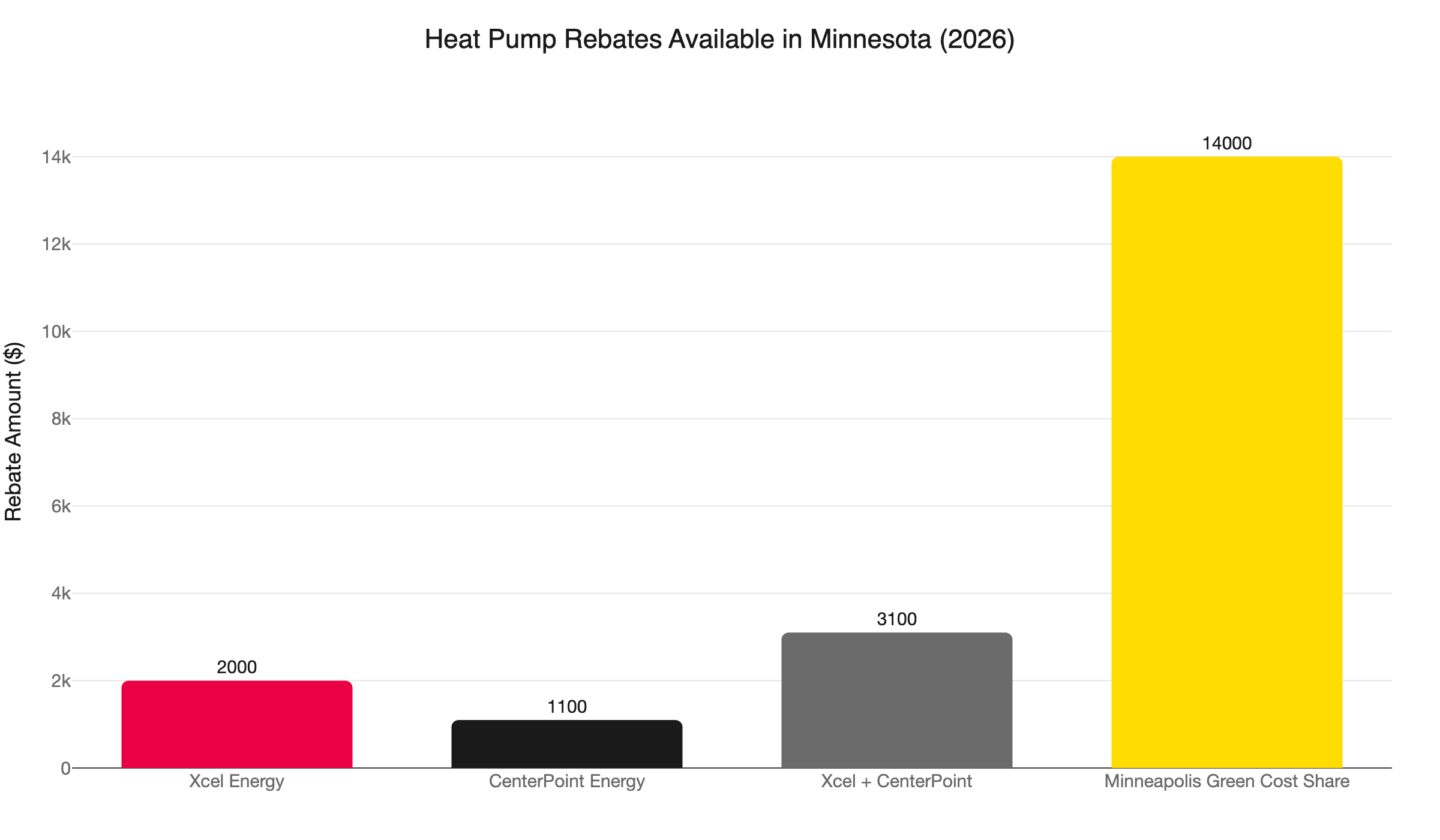
Heat Pump Rebates Available in Minnesota (2026)
## What Does Switching from a Gas Furnace to a Heat Pump in Minnesota Actually Involve?
**The short answer:** Four systems get touched on every conversion: your electrical panel, a new dedicated circuit and refrigerant line set, your existing ductwork, and a mechanical permit. How much work each requires depends on [your home's starting point](/blog/home-energy-audit-hvac-next-steps-minnesota/). Most quotes bundle these areas without separating them.
When a heat pump quote arrives and the number is larger than expected, two questions follow. What exactly am I paying for? And does this math work for my situation? Most articles gesture at a cost range and skip both. This post walks through each part of the scope, then runs the numbers at today's Xcel and CenterPoint rates.
Minnesota's climate sets the baseline. [The Minneapolis-St. Paul design temperature is -12°F](https://homeenergybasics.com/heat-pumps/states/mn), placing the metro in Climate Zone 6A. Duluth reaches -21°F. International Falls sits at -31°F. Cold-climate heat pump models are not optional here. Standard residential units struggle at 0°F and can fail below that.
[About 66% of Minnesota homes heat with natural gas](https://homeenergybasics.com/heat-pumps/states/mn). If your home is in that majority, the four sections below describe what a competent conversion actually involves.
## Will Your Electrical Panel Handle a Heat Pump?
**The short answer:** Possibly. Heat pumps require a dedicated 240V circuit drawing 20 to 60 amps depending on unit size. Homes that use gas for cooking, water heating, and the dryer often have enough headroom in a 100A panel. Tight panels, or any system with [electric backup strips](/blog/heat-pump-auxiliary-heat-strips-operating-cost-minnesota/), need a subpanel or a full service upgrade.
Panel assessment is the first step any thorough contractor should walk through with you. This is not just about whether one circuit fits. It is about whether your home's full load profile, plus the new heat pump circuit, stays within the safe operating margin of the existing equipment.
A full 100A to 200A service upgrade runs [$1,500 to $4,000 for panel and breaker work](https://www.hvacbase.org/electrical-panel-upgrade-cost). When the utility must replace service entrance conductors or meter equipment, costs climb to $3,000 to $6,000. Panel work is a permitted job in Minnesota. Build the inspection timeline into your project schedule.
One code detail many homeowners miss: [Minnesota's 2020 electrical code requires a whole-home surge protector](https://3riverselectricmn.com/faq/) any time a service panel is installed or replaced. If a panel upgrade is part of your heat pump project, budget for the surge protector as a separate line item.
The dedicated heat pump circuit runs from the panel to the outdoor condenser and to the [indoor air handler](/blog/air-handler-vs-furnace-whats-the-difference/). Conductor size, breaker rating, and run length all affect the electrical cost. A proper load calculation should drive the design.
## What Goes In: Line Set, Refrigerant Lines, and the Outdoor Unit
This is the most visible part of the installation and often the least explained to homeowners.
Each indoor air handler connects to the outdoor condenser via two copper refrigerant lines plus electrical wiring. That bundle passes through a hole roughly 3 inches in diameter in the exterior wall. On the outside, the lines run along the house inside a line hide: a plastic channel available in white, ivory, or brown. Depending on run length, line hide adds $130 to $375 and protects the refrigerant lines from UV and weather damage.
The outdoor unit mounts on a concrete pad or wall brackets. In Minnesota, placement matters beyond summer footprint. The unit must sit above average snowpack accumulation with clear access for winter service calls. Units set too low in heavy-snowfall areas need risers or elevated pads.
A communication wire and condensate drain line travel with the refrigerant bundle. The drain exits the building. In cold climates, that exit point must drain freely in winter. A drain exit placed low on a north-facing wall can freeze and back up into the indoor unit, causing water damage.
## Do You Need a Ductwork Assessment Before Installing a Heat Pump?
**The short answer:** Yes, on every installation. Heat pumps move more air than gas furnaces at equivalent comfort levels. Undersized, leaky, or poorly insulated ducts restrict airflow and reduce measured efficiency. Skipping the duct review is how homeowners end up with comfort problems in the first winter that are hard to trace back to the duct system.
Two code requirements apply. First, [ducts located outside conditioned space must be insulated to a minimum of R-8](https://minnesotahvacauthority.com/minnesota-hvac-energy-codes) under the Minnesota mechanical code. If your ductwork runs through an uninsulated attic or crawl space, that must be addressed before or as part of the installation. Second, duct leakage reduces the efficiency the equipment was rated to deliver. A sealing pass before installation captures what you are paying for.
Homes with no existing ductwork present a different question. If your home heats with a boiler, electric baseboard, or [in-floor radiant](/blog/radiant-floor-heating-cost-minnesota-homes/), adding full ductwork to support [a central ducted heat pump](/blog/ductless-vs-ducted-heat-pump-minnesota/) is expensive and rarely pencils out. [Ductless mini-splits](/air-conditioning/ac-installation/ductless-mini-splits/) are typically the practical choice for non-ducted homes, and we install them in the Twin Cities.
## What Permits Are Required in Minnesota?
**The short answer:** A mechanical permit is required for any HVAC installation in Minnesota. Inspectors verify compliance with the Minnesota State Building Code, including current SEER2 minimums. Unpermitted HVAC work creates problems at sale and refinancing and may void manufacturer warranties.
Most licensed HVAC contractors include permit filing as part of the job scope. If a contractor offers to skip the permit to save time or reduce your cost, decline and move on.
Permit timing affects rebate eligibility. CenterPoint Energy's rebate submission deadline is December 31 of the installation year. Xcel Energy's deadline is September 30 of the year following installation. Both programs require proof of permitted installation. Schedule the job with enough runway to complete the inspection before your utility deadline.
Work requiring a permit includes the heat pump installation itself, any ductwork modifications, and any electrical panel work connected to the project.
## Does Switching from Gas Furnace to Heat Pump in Minnesota Save Money?
**The short answer:** For full electric replacement of a gas furnace, the math does not favor a switch at today's rates. Operating costs run about $500 per year higher. For a dual-fuel system on Xcel's electric space heating rate, operating costs become competitive. The upfront premium over a straight furnace replacement is large either way, and break-even depends on [rebate stacking](/blog/stacking-hvac-rebates-tax-credits-federal-state-utility-minnesota/).
Here is the arithmetic. A typical Twin Cities home uses about 700 therms per year for space heating. At 96% AFUE and CenterPoint's all-in rate of about $1.08 per therm, that comes to roughly $788 per year in gas costs.
Delivering the same heat via a cold-climate heat pump at a seasonal COP of 2.5 requires about 8,200 kWh. At [Xcel Energy's current residential rate of 15.82 cents per kWh](https://electricityrateperkwh.com/utilities/xcel-energy/), that is about $1,297 per year. Roughly $509 more than gas.
Dual-fuel narrows the gap. [Analysis from the Minnesota Center for Energy and Environment](https://www.mncee.org/increasing-affordability-air-source-heat-pumps) shows that Xcel's electric space heating rate makes dual-fuel systems cost-competitive against a gas furnace plus central AC combination at the operating-cost level. That rate applies to Xcel customers only. If you are on a municipal utility or electric cooperative, ask your utility directly whether a comparable rate exists.
[MNASHP recommends a switchover temperature between 25°F and 45°F](https://www.mnashp.org/blog/best-air-source-heat-pump-system). At that range, the heat pump handles most annual heating hours. The gas furnace covers the deep cold. Dropping the switchover below 25°F displaces more gas but does not improve the operating-cost math at current rates.
The upfront cost gap is also significant. A new 96% AFUE gas furnace installed runs $3,200 to $5,800. A whole-home cold-climate ducted heat pump system runs $18,500 to $36,500 before rebates. Recovering that premium depends on rebate stacking and whether Xcel's space heating rate applies to your situation.
For more detail on how cold-climate systems perform when temperatures fall below zero, see [our post on heat pump operation in extreme Minnesota cold](/blog/heat-pump-below-zero-performance-minnesota/).
## What Rebates Are Available Right Now?
**The short answer:** Xcel Energy offers up to $2,000. CenterPoint offers $1,100 for dual-fuel installs only. Minneapolis homeowners may qualify for up to $14,000 through the Green Cost Share program. Stack the right combination and the upfront cost drops meaningfully. The federal 25C credit is gone.
Here is the current lineup:
**Xcel Energy:** Up to $2,000 for a qualifying cold-climate heat pump. Requires a minimum COP of 1.75 at 5°F. Available to Xcel electric customers only. Submission deadline is September 30 of the year after installation.
**CenterPoint Energy:** $1,100 for dual-fuel systems only. The heat pump must be [programmed to switch](/blog/heat-pump-thermostat-wiring-aux-heat-staging-minnesota/) to the gas furnace at 40°F or below. The gas furnace must be at least 92% AFUE. CenterPoint does not rebate mini-splits, [ground-source systems](/blog/geothermal-heat-pump-minnesota-cost/), or full gas furnace replacements. Submission deadline is December 31 of the installation year.
**Xcel plus CenterPoint stacked:** Up to $3,100 combined if you have both utility services and meet both programs' equipment requirements.
**Minneapolis Green Cost Share:** Up to $14,000. Contact the City of Minneapolis directly for current eligibility criteria and available funding.
**HEAR (Save Energy Minnesota):** Income-qualified program. Up to $8,000 for households below 80% of area median income; $4,000 for those between 80% and 150% AMI. This program has not launched. No launch date has been set as of August 2026.
**Federal 25C tax credit:** Expired December 31, 2025.
For a full breakdown of each incentive program and how to apply, see [our guide to Minnesota heat pump rebates and tax credits](/blog/minnesota-heat-pump-rebates-tax-credits/).
## Is Switching from Gas Furnace to Heat Pump in Minnesota Worth It?
**The short answer:** For most Twin Cities homeowners replacing an aging gas furnace, [a dual-fuel system](/blog/dual-fuel-heat-pump-gas-furnace-hybrid-minnesota/) is the more financially defensible choice at today's rates. It qualifies for rebates from both utilities, covers the coldest design temperatures with reliable gas backup, and delivers efficiency gains on the majority of heating hours that fall above [the switchover temperature](/blog/heat-pump-balance-point-backup-heat-minnesota/).
Full electric replacement makes sense in a specific set of circumstances: access to low electric rates, a home that is already largely electrified, or a situation where the gas infrastructure is being phased out anyway.
For most Twin Cities homes, the dual-fuel case is practical:
- The cold-climate heat pump handles most annual heating hours at efficiency well above a gas furnace.
- The gas furnace covers design-temperature conditions reliably.
- Both [Xcel and CenterPoint rebates](/blog/xcel-centerpoint-hvac-rebates-minnesota/) are available for qualifying installs.
- [Full panel upgrades](/blog/heat-pump-electrical-panel-upgrade-requirements-minnesota/) are less commonly required than with all-electric configurations.
If your furnace is already at end of life and you are deciding what to install next, this is the right moment to run both scenarios against your actual utility rates and rebate eligibility. The numbers are specific to your situation, not a general rule.
## How to Choose a Contractor for a Minnesota Heat Pump Install
Cold-climate heat pump installation requires specialized experience. Not every HVAC company has done a significant number of these in Minnesota's climate. Ask directly: how many cold-climate heat pump systems have you installed in the Twin Cities? What brand and model do you recommend, and why?
The [MNASHP Preferred Contractor Network](https://www.mnashp.org/preferred-contractor-network-homeowners/) lists contractors who have attended technical training specific to cold-climate heat pump systems, provided license documentation, and demonstrated quality installations. It is a reasonable starting point for vetting unfamiliar companies.
Before signing any quote, verify these items:
- The contractor files the mechanical permit.
- The scope includes a Manual J load calculation, not a rule-of-thumb equipment size.
- The panel is assessed before equipment is specified.
- The quote itemizes the heat pump, furnace (if dual-fuel), electrical work, and any duct repairs as separate line items.
Transparent itemization is what honest pricing looks like. A single bundled number with no breakdown is hard to compare and hard to verify after the work is done.
## Ready to Get a Heat Pump Estimate?
Switching from gas furnace to heat pump in Minnesota is a larger commitment than most equipment swaps. The scope is real. The math is specific to your home, your utility situation, and your rebate eligibility.
We are locally owned and operated. We will assess your panel, review your duct system, and give you a quote that clearly shows what you are paying for and why. We back every appointment with our on-time promise: "Always On Time… Or You Don't Pay a Dime!(R)"
Call (763) 260-6662 or [book your estimate online](/heat-pumps/). We serve Minneapolis, St. Paul, Ramsey, Blaine, Maple Grove, Plymouth, Brooklyn Park, Woodbury, Bloomington, and the surrounding Twin Cities area.
---
# Two Stage vs Single Stage Furnace: The Twin Cities Guide
URL: https://northernonehour.com/blog/two-stage-vs-single-stage-furnace-minnesota/
Published: 2026-08-02 | Category: Heating
Compare two stage vs single stage furnace options for Minnesota homes. Real break-even math, current utility rebates, and the 2028 efficiency rule explained.
Key Takeaways
- A single-stage furnace runs at 100% capacity every cycle. A two-stage furnace runs at roughly 65-70% on most days, switching to full output only during deep freezes.
- AFUE and staging are separate specs. You can buy a single-stage 96% AFUE furnace or a two-stage 80% AFUE furnace. Do not conflate them.
- Minneapolis and St. Paul log roughly [7,000-8,000 heating degree days per year](https://glisa.umich.edu/station/minneapolis-st-paul-ap/). That is more annual burner hours than almost any other major U.S. metro.
- CenterPoint Energy offers up to $1,000 for furnaces rated 97%+ AFUE. Xcel Energy offers up to $200 for qualifying high-efficiency units with a variable-speed blower.
- The federal 25C tax credit for HVAC equipment expired December 31, 2025. Any article still citing it is outdated.
- Furnaces manufactured after December 18, 2028 must be at least 95% AFUE. Buying an 80% unit today means buying the last generation of that product.
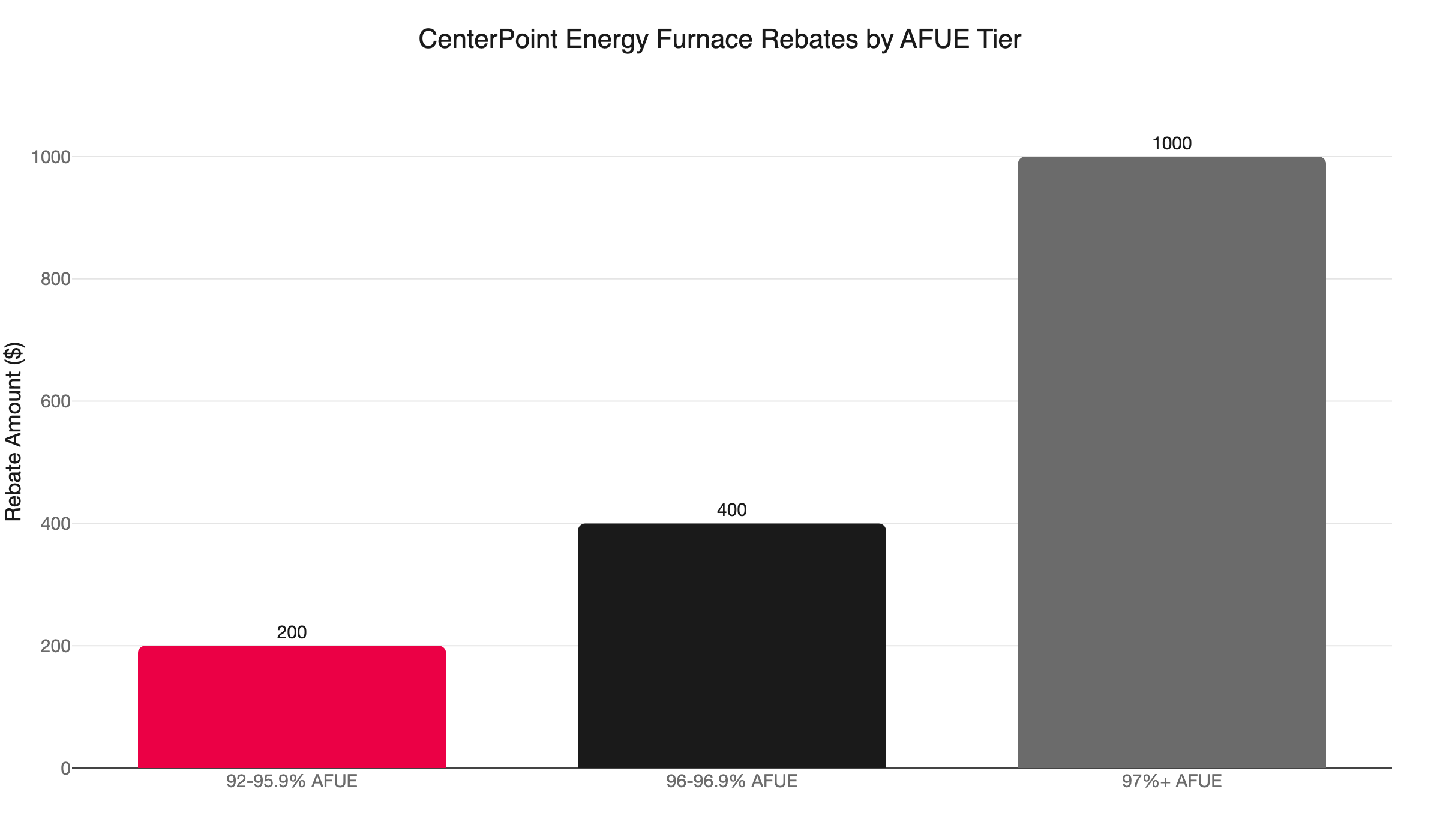
CenterPoint Energy Furnace Rebates by AFUE Tier
When you start researching a two stage vs single stage furnace, most of what you find is written for generic cold climates. Many articles still cite a federal tax credit that expired December 31, 2025. Almost none run the actual math for a Minneapolis or St. Paul home.
This guide closes those gaps. It separates AFUE efficiency from staging, because they are different decisions. It uses current Minnesota gas prices to show what the numbers actually look like. And it covers the 2028 federal rule that gives the 80% furnace a defined end date.
Minneapolis runs the furnace roughly six months a year. That run time is where the staging choice pays off. Here is how to make it.
## What Is the Difference Between a Two Stage vs Single Stage Furnace?
A single-stage furnace has one output level: full power. A two-stage furnace has two. The lower stage, typically 65-70% of full capacity, handles most winter days. Full power kicks in only when temperatures drop hard and hold there.
A single-stage unit fires at 100%, runs until the thermostat is satisfied, then shuts off. The cycle is short and frequent. Between cycles, room temperature drifts down until the furnace fires again. That repeated swing around your setpoint is what many homeowners experience as "the house never feels even."
A two-stage furnace starts at low output. On a 20-degree day, it may never leave low stage. On a hard-cold January day in the Twin Cities, it bumps to full capacity and stays there until temperatures recover. [According to C&M Heating and Air](https://www.candmheatingandair.com/blog/best-furnace-brands-for-minnesota-homes-2026-buyers-guide), two-stage furnaces run at low stage approximately 80% of Minnesota winter days.
That extended low-stage runtime has two real effects. First, the blower runs longer, which circulates heat throughout the home before the thermostat is satisfied. Second, more air passes through the filter and any whole-home air cleaner each day. That matters for households with allergy concerns or anyone running an IAQ system.
One clarification before we go further: staging describes the burner's output levels. A [variable-speed blower](/blog/variable-speed-blower-motor-furnace-benefits-minnesota/), also called an ECM (electronically commutated motor) blower, is a related but separate feature. A two-stage furnace can ship with a standard PSC blower or an ECM blower. That distinction matters significantly when we address the older energy-use research below.
## Does a Two-Stage Furnace Save Money on Gas in Minnesota?
For most Twin Cities homes, yes. Upgrading from [80% to 96% AFUE](/blog/furnace-afue-rating-80-vs-96-efficiency-explained-minnesota/) cuts fuel use by roughly 16.7%. Add two-stage operation and a CenterPoint rebate of up to $1,000, and the break-even window shrinks from seven years to closer to three for high-efficiency units.
Let's run the numbers using real Minnesota inputs.
A mid-size Twin Cities home, roughly 1,800-2,200 square feet, might consume 700-900 therms per heating season. Minnesota Energy Resources customers pay [approximately $0.82 per therm](https://www.minnesotaenergyresources.com/payment-bill/mn-rates). Xcel Energy customers pay [roughly $1.04 per therm](https://www.xcelenergy.com/company/rates_and_regulations/filings/minnesota_natural_gas_rate_proposal) after a January 2026 rate increase.
At the Xcel rate on 800 therms, that is $832 in annual heating fuel. Switching from an 80% AFUE furnace to a 96% AFUE unit cuts fuel use by about 16.7%. That saves roughly $139 per year on gas alone. Over a 20-year furnace lifespan, that is approximately $2,780 in fuel savings from the AFUE upgrade before accounting for staging.
Two-stage operation compounds that benefit in our climate. The Minneapolis-St. Paul area logs roughly 7,000-8,000 heating degree days annually. That is more annual burner hours than nearly any other major U.S. metro. More hours running at low stage means more savings from extended, quieter cycles compared to frequent full-power blasts.
On premium and payback: a two-stage furnace typically costs 10-30% more installed than a comparable single-stage unit, [per PickComfort](https://www.pickcomfort.com/is-two-stage-furnace-worth-it/). On a $6,000-$8,000 installed project, that is roughly $600-$2,400 extra. In cold-climate conditions like ours, payback typically runs 3-7 years. A $1,000 CenterPoint rebate on a 97%+ AFUE unit pushes that window toward the shorter end.
## Two Stage vs Single Stage Furnace: Why AFUE Is a Separate Decision
This is the most common point of confusion in furnace shopping.
AFUE stands for Annual Fuel Utilization Efficiency. It measures what percentage of every fuel dollar becomes useful heat. An 80% AFUE furnace turns 80 cents on the dollar into warmth. A 96% AFUE furnace turns 96 cents. [The U.S. Department of Energy's Energy Star program](https://www.energystar.gov/products/furnaces) defines AFUE as the standard efficiency metric for residential gas furnaces.
Staging is a separate question entirely. It describes how many output levels the burner has: one (single-stage), two (two-stage), or a continuous range (modulating). These specs are independent. A single-stage 96% AFUE furnace exists. A two-stage 80% AFUE furnace exists. A modulating 98% AFUE furnace exists.
When you are replacing a furnace, you make both decisions. If you are upgrading from 80% to 96% AFUE, the efficiency jump delivers the largest fuel savings. Stepping up to two-stage at the same AFUE tier adds a comfort and run-time benefit on top of that efficiency gain.
A practical rule of thumb: if your home is large, multi-story, or has uneven temperature complaints, two-stage gives you something the AFUE number alone does not. If your primary goal is restoring heat fast on a limited budget, single-stage at the right AFUE is a fully reasonable choice. Neither is wrong in the abstract. Both depend on your home size, budget, and how much your current comfort situation bothers you.
## What About the Research Showing Two-Stage Furnaces Use More Energy?
That finding comes from a 2006 ASHRAE study, conducted before ECM variable-speed blower motors were common. Modern two-stage furnaces with ECM blowers draw 25-75% less electricity at low speed. The energy math has changed substantially since 2006. The study was real and accurate for its time. Its conclusions do not apply to current equipment.
The 2006 ASHRAE research found two-stage furnaces consumed about 11% more energy than single-stage units. The mechanism was straightforward: longer blower run times at low stage consumed more motor electricity than the gas savings recovered. The study also found that supply air temperature at 75% output was only 7-10 degrees lower than at full output, questioning whether the comfort improvement was meaningful.
That was accurate for PSC blower motors, which were standard at the time. PSC motors draw nearly the same electricity at low speed as at full speed. Twice the run time meant twice the motor energy cost.
ECM motors work differently. They adjust their electricity draw to match the load. At reduced speed, they use 25-75% less electricity than at full speed. Running an ECM blower at low stage for two hours costs less in electricity than running a PSC blower at full speed for one hour.
When you pair a two-stage burner with an ECM blower, the extended run time produces a net energy benefit. More air moves through the system per dollar of electricity. Heat distributes more evenly across longer, quieter cycles.
The practical takeaway: when comparing specific models, ask whether the unit includes an ECM blower. That feature determines whether the 2006 research applies to your purchase. Mid- and upper-tier two-stage furnaces from major manufacturers typically include ECM blowers today. Entry-level two-stage models may still use PSC motors.
## What Are the Current Minnesota Rebates for a New Furnace?
CenterPoint Energy's program is among the most generous residential furnace rebate programs in the country. CenterPoint customers can receive up to $1,000 for a 97%+ AFUE furnace. Xcel Energy customers can receive up to $200 for a qualifying high-efficiency unit with a variable-speed blower. Both programs apply regardless of staging type.
[CenterPoint Energy's current residential furnace rebates](https://www.centerpointenergy.com/en-us/residential/save-energy-money/efficiency-programs-and-rebates/heating-system-rebates?sa=mn) break down by AFUE tier:
- **$200** for furnaces rated 92-95.9% AFUE
- **$400** for furnaces rated 96-96.9% AFUE
- **$1,000** for furnaces rated 97%+ AFUE
Xcel Energy offers up to $100 for a 95%+ AFUE unit and up to $200 for a 96%+ AFUE unit with a variable-speed blower. Verify current amounts at xcelenergy.com/saveenergy before committing, since rebate programs update periodically.
These rebates are based on AFUE tier, not on staging. A two-stage 96% furnace and a single-stage 96% furnace qualify for the same CenterPoint rebate. Where staging helps your rebate case is when the specific two-stage model is rated 97%+, which is the top tier.
[Modulating furnaces](/blog/modulating-furnace-worth-the-cost-minnesota/) often hit 97-98% AFUE and can maximize the CenterPoint rebate. If you are investing in a high-efficiency replacement, confirm the exact AFUE of the specific model before signing anything. That number determines your rebate tier, and a difference of half a percentage point can mean $600 in the wrong direction.
## What Happened to the Federal 25C Tax Credit?
It expired. The One Big Beautiful Bill Act, signed July 4, 2025, ended the Section 25C Energy Efficient Home Improvement Credit for HVAC equipment placed in service after December 31, 2025. Any article claiming the 30%-up-to-$600 credit is available in 2026 is citing outdated information.
This matters because several top-ranking articles on furnace comparisons still reference the federal credit as active. If you want primary-source confirmation, check irs.gov. Our team can also clarify what incentives are currently available when you call.
The good news is that state utility rebates are still live and, for high-AFUE units, are worth more than the old federal credit anyway. A $1,000 CenterPoint rebate on a 97%+ AFUE furnace exceeds the $600 cap the expired credit offered. The shift from federal to utility-level incentives is real, but the math still works in your favor if you choose the right unit.
## The 2028 Rule: Why the 80% Furnace Has an Expiration Date
In December 2023, the Department of Energy finalized a rule requiring all new residential gas furnaces manufactured on or after December 18, 2028 to meet a 95% AFUE minimum. The rule effectively mandates condensing furnace technology for all new equipment. The current federal minimum is 80% AFUE, set in 2007, and you can still buy an 80% furnace today.
The rule has had a complicated legal path. The D.C. Circuit upheld it in November 2025. In June 2026, the Supreme Court remanded the rule after DOE conceded a legal error. The compliance date still stands as of this writing, though DOE is reviewing whether to extend it to January 1, 2030.
What this means practically: an 80% furnace bought today is the last generation of that product. Service and parts will remain available for the life of the unit. But new 80% furnaces will eventually stop being manufactured.
There is a legitimate case for an 80% furnace in specific homes. Some older construction lacks a suitable condensate drain. Some venting configurations make installing a condensing furnace difficult or expensive. In those situations, the 80% unit may be the only practical option this season.
For most Twin Cities homes in standard construction, those constraints do not apply. If you are unsure whether your home has a venting or drainage constraint, that is exactly what to assess as part of a [furnace replacement consultation](/heating/heating-equipment/furnaces/furnace-replacements/). The practical direction for most homeowners replacing a furnace in 2026 points toward 95-96% AFUE or higher.
## Who Should Buy a Two-Stage Furnace?
Most Twin Cities homeowners replacing a furnace in 2026 will benefit from two-stage operation. The strongest cases are two-story homes with comfort complaints, homes where someone deals with allergies or uses air purification equipment, and any installation where the furnace will be paired with an ECM variable-speed blower.
Two-stage is the right default for most new installations in our climate. Here is when the advantage is most clear.
**Two-story and larger homes.** Single-stage furnaces satisfy the thermostat quickly on milder days. Rooms farther from the thermostat sensor get less heat before the burner shuts off. A two-stage unit runs longer cycles, pushing conditioned air deeper into the home. If you have dealt with [uneven temperatures and cold spots in December](/blog/cold-spots-and-warm-rooms-why-uneven-temperatures-hit-hardest-in-december/), staging is often a meaningful part of the answer.
**Homes with allergy or IAQ concerns.** More blower hours per day means more air passes through your filter or [whole-home air purification system](/indoor-air-quality/). A two-stage unit with an ECM blower can run nearly continuously at low speed on mild days. That is a material difference in daily filtration volume, not a marginal one.
**Homeowners upgrading from 80% AFUE.** When you are already investing in a full replacement, the incremental cost to step up to a two-stage 96%+ model is modest relative to the total project cost. The utility rebate closes much of the remaining gap.
**When single-stage is the right call.** Small homes under 1,200 square feet where the furnace already satisfies quickly. Budget-constrained situations where the premium cannot realistically be recovered. Homes with installation constraints that force a lower-efficiency unit anyway.
Whatever you choose, the staging decision is only as good as the sizing underneath it. An oversized furnace, single-stage or two-stage, will short-cycle regardless. A Manual J heat-loss calculation is the prerequisite to every efficiency decision that follows.
## Getting the Right Furnace for Your Home
A proper replacement starts with a load calculation. That assessment tells a technician exactly how much heating capacity your home actually needs. Right-sizing is what makes the staging choice pay off.
For a detailed look at what a replacement project costs in the Twin Cities, including equipment tiers and installation variables, see our [furnace replacement cost guide](/blog/furnace-replacement-cost-twin-cities/). It covers what to ask before you commit to a price and what separates a good installation from one that causes headaches later.
We are locally owned and operated in Ramsey, serving Minneapolis, St. Paul, Blaine, Maple Grove, Plymouth, Brooklyn Park, Woodbury, Bloomington, and the surrounding metro. When we schedule a service window, we show up. "Always On Time… Or You Don't Pay a Dime!(R)" is not a marketing line. It is the standard we hold on every call.
If your furnace is due for replacement, or you want an honest read on whether repair still makes sense, call us at **(763) 260-6662** or book online. We will walk you through the staging and AFUE decision for your specific home, help you claim every rebate you qualify for, and get the work done when we said we would.
---
# Furnace Blinking Light Codes: What Do They Mean?
URL: https://northernonehour.com/blog/furnace-error-codes-blinking-light-guide/
Published: 2026-08-01 | Category: Heating
Carrier, Trane, and Lennox furnace error codes decoded for Twin Cities homeowners. Learn what each blink means, when to reset, and when to call for HVAC help.
Key Takeaways
- Carrier, Trane, and Lennox each use a different LED setup. Reading the wrong brand's guide gives you the wrong answer.
- A slow heartbeat blink on a Trane furnace is normal standby, not an error. Both Lennox LEDs blinking slowly together is also normal.
- Pressure switch codes in a Minnesota winter almost always mean a frozen exhaust vent, not a failed part. Check the pipe outside before calling.
- High-limit codes (overheating) usually clear with a filter change. Reset once, then watch.
- Rollout switch codes are never a DIY reset. They signal a possible CO hazard. Shut the furnace off and call.
- Minnesota law requires CO detectors in all homes with fossil fuel appliances. Test yours before heating season.
- We're locally owned and operated in Ramsey, MN. Our number is (763) 260-6662.
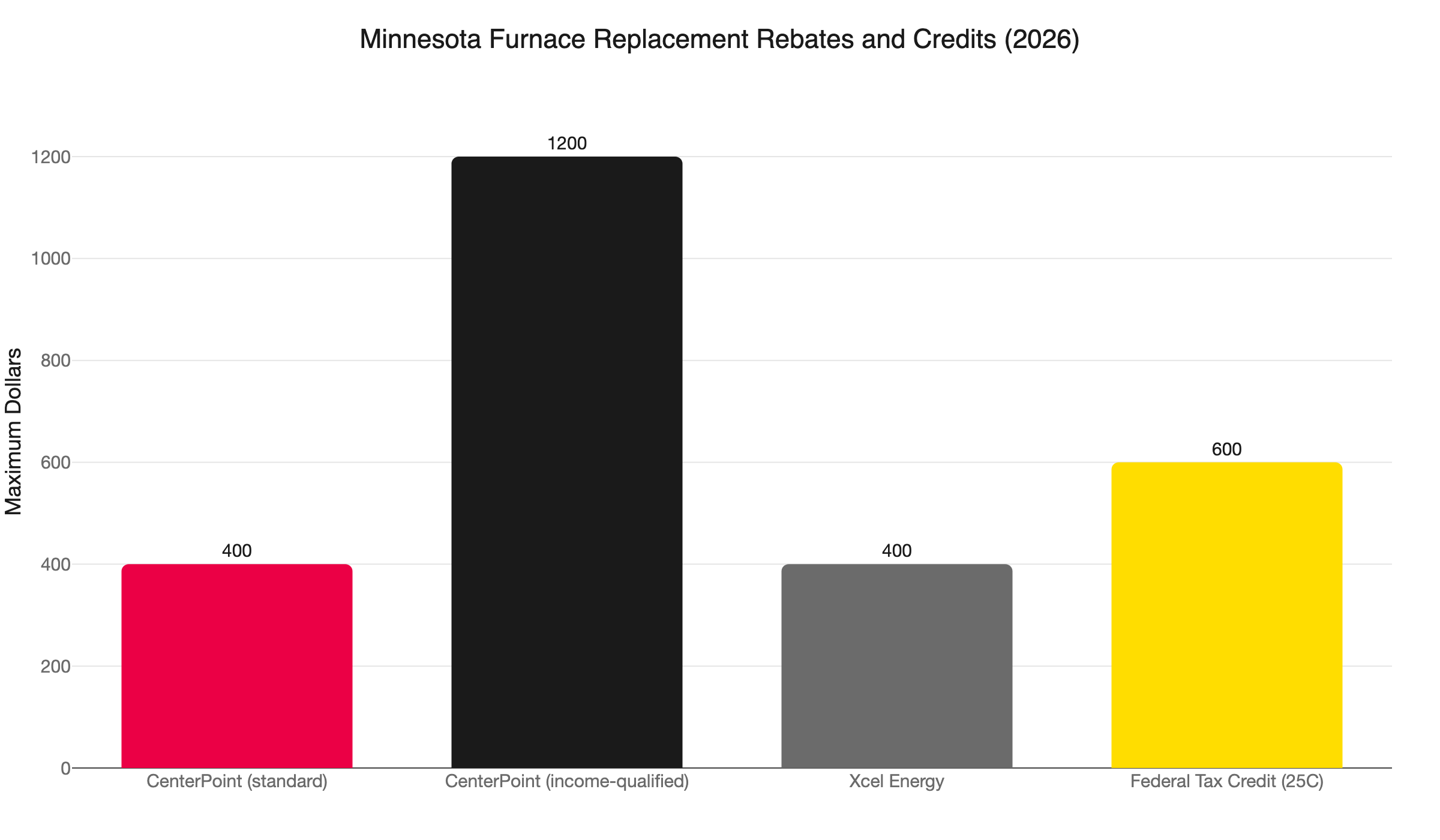
Minnesota Furnace Replacement Rebates and Credits (2026)
## What Do Furnace Blinking Light Codes Actually Mean?
**Your furnace's [control board](/blog/furnace-control-board-failure-symptoms-cost-minnesota/) monitors every major component. When something trips, it stores a fault and flashes an LED in a blink pattern. Each pattern maps to a specific problem - dirty filter, blocked vent, failed sensor - so a tech can diagnose fast without guesswork. Some codes you can fix yourself. Others mean shut it down and call.**
Every modern furnace has a control board that watches the whole system. It tracks temperature, airflow, pressure, ignition, and flame. When a sensor trips or a safety switch opens, the board stores the fault and signals it on an LED near the blower door.
Think of it like a check-engine light. The car might still run. But the code is telling you something. The difference is sharper with furnaces: some codes clear on their own or with a simple fix. Others signal a potential carbon monoxide hazard that requires immediate action.
Knowing the difference is what this guide is for.
---
## How Do You Read Your Furnace's Blinking Light Code?
**Open the lower furnace panel and find the LED on the control board. Count the flashes before the long pause, then count the flashes after. That two-number sequence is your code. The legend - which maps codes to fault descriptions - is printed on a sticker inside the blower door on most furnaces.**
Here's the step-by-step process.
Find the LED. Remove or open the lower front panel. The LED is on the control board, usually visible immediately. Most furnaces print the code legend on a sticker inside that same door. If yours doesn't have one, your model number will get you to the right document online.
Count one full cycle. Let the LED run through flashes, long pause, flashes, long pause. Write the numbers down before you look anything up.
Then confirm which brand's LED system you have. This is the step most online guides skip entirely, and it's the reason homeowners misread their own furnaces.
---
## Carrier, Trane, and Lennox Each Use a Different LED System
This is the piece no top-ranking guide covers completely. Using the wrong brand's code list leads you to the wrong diagnosis.
[**Carrier uses two LEDs.**](https://www.pickcomfort.com/carrier-furnace-error-light-codes-troubleshooting/) Yellow flashes are the first digit. Green flashes are the second. Code 33 means 3 yellow flashes, a pause, then 3 green flashes. The full legend is inside the blower door. On Infinity series models, you can pull fault history from the thermostat: Menu > Service > Faults.
[**Trane uses one red LED.**](https://www.trane.com/residential/en/resources/troubleshooting/gas-furnaces/furnace-light-blinking/) A slow, rhythmic heartbeat pulse is normal standby, not an error code. Many homeowners call for service because they see a blinking light and assume something is wrong. If the blink is slow and steady like a pulse and the house is warm, that's the furnace doing its job. Actual fault codes blink in counted sequences with a clear long pause between repetitions.
[**Lennox uses two LEDs - red and green.**](https://repairhow.blog/lennox-furnace-flashing-red-green-diy-fix) Here's the counterintuitive part: both LEDs blinking slowly together means normal operation. It looks like a warning. It isn't. Any pattern that deviates from that slow, synchronized blink is what you need to read and diagnose.
---
## Carrier Furnace Blinking Light Codes: The Most Common Ones
| Code | Fault | First Step | Call Now? |
|------|-------|------------|-----------|
| 13 / 33 | Limit circuit / overheating | Replace filter, open all registers | Only if it repeats |
| 31 | Pressure switch | Check condensate drain and exhaust vent | If vent is clear and code continues |
| 34 | Flame sensor | Clean sensor rod with emery cloth | If it repeats |
| 26 | Rollout switch | Nothing | Yes, immediately |
**Code 33 - limit circuit fault.** This is the most common Carrier code in Twin Cities homes. [A tripped high-limit switch almost always means restricted airflow.](https://homeinvibe.com/carrier-furnace-flash-codes/) Start with the filter. Open every supply register in the house. Switch the furnace power off for 30 seconds, then back on. If the code returns within a day, call.
**Code 31 - pressure switch.** Before you assume the switch failed, check two things. Look at the condensate drain trap near the base of the furnace - a clogged trap creates the same symptom as a failed switch. Then go outside and look at the exhaust vent. In January, that's usually where the answer is. More on this below.
**Code 34 - flame sensor.** The flame sensor is a metal rod that verifies the burner lit. It builds up a mineral coating over time. [Clean it with fine emery cloth:](https://texastempmasters.com/error-codes/carrier-error-codes/) gently rub the rod, reassemble, and try again. This is one of the most preventable codes across all three brands, and annual maintenance catches it before it causes a cold-night shutdown.
**Code 26 - rollout switch.** Flame is detecting outside the combustion chamber. Do not touch the reset button. This is a possible cracked heat exchanger - a CO hazard. Shut the furnace off and call.
---
## Trane Furnace Blinking Light Codes: The Most Common Ones
| Flash Count | Fault | First Step | Call Now? |
|-------------|-------|------------|-----------|
| Slow heartbeat | Normal standby | Nothing | No |
| 3 flashes | Pressure switch / draft inducer | Check vent and condensate drain | If vent is clear and code continues |
| 4 flashes | High-limit / overheating | Replace filter | Only if it repeats |
| 5 flashes | Rollout switch | Nothing | Yes, immediately |
| 9 flashes | High-limit lockout | Nothing | Yes |
**3 flashes.** Same diagnosis path as Carrier Code 31. Trane high-efficiency furnaces run PVC exhaust vents through low sidewall exits. In cold weather, go outside and look at the pipe before assuming anything is broken.
**4 flashes.** High-limit trip. Start with the air filter. A dirty or clogged filter is the single most common cause of a 4-flash code. If the filter is fine and the code returns after a reset, you likely have a deeper airflow restriction in the duct system. Call for a diagnostic visit.
**5 flashes - rollout switch.** Same rule as Carrier Code 26. Possible heat exchanger issue, possible CO. Shut the furnace off and call. Do not reset.
**9 flashes - hard lockout.** [This code requires a professional manual reset after the technician finds and fixes the root cause.](https://innovativeairsolutions.com/blog/trane-furnace-error-codes-explained-what-your-system-is-trying-to-tell-you/) Cycling the power repeatedly won't clear it. Repeated cycling can mask a deeper problem and wear out components faster.
---
## Lennox Furnace Blinking Light Codes: The Most Common Ones
| Pattern | Fault | First Step | Call Now? |
|---------|-------|------------|-----------|
| Both LEDs slow blink | Normal operation | Nothing | No |
| Red blinking + solid green | Blower motor fault | Call | Yes |
| Red fast + green slow | Reversed polarity | Call | Yes |
| 4 red flashes | High-limit or 24V fuse blown | Replace filter, check fuse | If it repeats |
**Both LEDs blinking slowly together.** Stop - this is not a fault code. This is Lennox's normal operating state. The dual-LED system is the most counterintuitive setup of the three brands because both lights blink continuously during normal operation. If both lights blink slowly and the furnace is running, everything is working as designed.
**4 red flashes.** Overheating or a blown 24V control fuse. Replace the filter first. If the filter is clean, check the 24V fuse on the control board - it looks like a standard car fuse and costs about a dollar at any hardware store. If the fuse keeps blowing after replacement, there's a short somewhere in the control circuit. Call a technician at that point.
**Red blinking + solid green / red fast + green slow.** Blower motor and wiring issues. Neither is a homeowner repair. Call.
---
## What Does a Pressure Switch Code Mean in January in Minnesota?
**In most cases, it means your exhaust vent is frozen, not that the switch failed. Find the PVC pipe exiting your house. If it's buried in snow or iced over, clear it carefully. Do not pour hot water on the PVC - thermal shock can crack the pipe and make things much worse.**
This is the most Minnesota-specific advice in this guide, and the one that saves the most money on unnecessary service calls.
[High-efficiency furnaces vent combustion gases through PVC pipes](https://www.airmechanical.com/blog/2026/january/how-deep-freeze-impacts-hvac-sensors-safety-swit/) - usually through a low sidewall exit rather than a chimney. In a Minnesota winter, those pipes sit close to grade where snow accumulates fast. A drift can bury the pipe in hours during a heavy snowfall. An ice cap can form at the opening overnight during a deep freeze.
When that happens, the pressure switch trips. The furnace shuts down. A blink code appears on the LED. But the pressure switch itself is completely fine.
Before you call for service, put your coat on and go look at the pipe. If it's blocked with snow, clear it by hand or with a broom. If there's an ice cap, carefully chip it away or let temperatures rise before forcing it. Once airflow is restored, the furnace should restart.
Also check inside: the [condensate drain trap](/blog/high-efficiency-furnace-condensate-drain-frozen-minnesota/). On high-efficiency furnaces, [a clogged condensate drain creates the same negative-pressure condition as a failed pressure switch.](https://www.metroheating.net/how-a-pressure-switch-problem-can-keep-your-furnace-from-running/) The drain trap is a small plastic cup or T-fitting near the drain line inside the furnace cabinet. A quick look can save you a substantial diagnostic service call. Check both the vent and the drain before concluding the switch itself has failed.
---
## Should You Reset the Furnace or Call?
**Reset once after addressing the root cause - filter changed, vent cleared. Never reset a rollout switch code. Never reset a code that returns immediately after the first reset. If the same code comes back within 24 hours, stop cycling power and call a technician.**
Here's the clean split:
**Reset once, then watch:**
- High-limit codes - after you've replaced a dirty filter and confirmed registers are open
- Pressure switch codes - after you've cleared the exhaust vent or condensate drain
- Flame sensor codes - after you've cleaned the sensor rod
**Do not reset. Call immediately:**
- Rollout switch (Carrier Code 26, Trane 5-flash)
- Trane 9-flash hard lockout
- Any code that returns within minutes of a reset
- Any code that coincides with a burning smell or a CO alarm
Repeated resets don't fix a failing component. They wear out parts faster and can hide a serious safety issue until things fail completely - usually on the coldest night of the year.
---
## When Is a Blinking Light a Carbon Monoxide Emergency?
**Rollout switch codes are a possible CO scenario. A cracked heat exchanger can push combustion gases into your living space with no visible sign - no smoke, no smell. If your CO detector sounds, get everyone out immediately. Call 911 first. Then call CenterPoint's 24-hour gas emergency line.**
[CenterPoint Energy warns](https://www.centerpointenergy.com/en-us/business/safety/carbon-monoxide?sa=MN) that a cracked heat exchanger can allow carbon monoxide to enter your home without any detectable sign. A rollout switch code - Carrier Code 26 or Trane 5-flash - signals that flame may be escaping the combustion chamber. That's the condition that leads to heat exchanger damage and CO migration into your living space.
CenterPoint's 24-hour gas emergency line for the Twin Cities is 612-372-5050 (toll-free: 800-296-9815). If your CO alarm sounds, do not attempt to investigate the source yourself. Get your family outside and call from there.
[Minnesota law (Minn. Stat. §299F.50) requires functioning CO detectors](https://minnesotahvacauthority.com/minnesota-hvac-permits-and-inspections) in all homes with fossil fuel appliances. Inspectors verify this at permit close. If your detector is more than five years old, test it. If it fails, replace it before heating season.
For a deeper look at what a cracked heat exchanger looks like and how we test for it, see our post on [signs of a cracked heat exchanger in Minnesota homes](/blog/cracked-heat-exchanger-signs-minnesota/).
---
## Can Annual Maintenance Prevent Most of These Fault Codes?
**Yes. Most common codes trace back to root causes a routine tune-up catches: dirty filter, dirty flame sensor, clogged condensate drain, stressed heat exchanger. One annual visit prevents most of the cold-night shutdowns described in this guide.**
Our [furnace tune-ups](/heating/heating-equipment/furnaces/furnace-tune-ups/) include a heat exchanger inspection, [flame sensor cleaning](/blog/furnace-flame-sensor-dirty-clean-cost-minnesota/), condensate drain check, filter service, and a CO safety check. That one visit catches the conditions behind most of the codes above - before they leave you without heat on the coldest night in January.
It also changes the economics. Replacing a flame sensor during a scheduled tune-up is a very different conversation than replacing it at 11 PM on emergency rates.
---
## What If the Code Points to a Part That Needs Replacing?
**If the repair cost is significant and your furnace is 15-plus years old, ask whether repair or replacement makes more sense. Part failures on aging equipment tend to stack. We walk you through both options and current rebate numbers so you can decide with full information.**
Some codes - [a failed pressure switch](/blog/furnace-pressure-switch-failure-symptoms-minnesota/), a bad inducer motor, a worn blower motor - do mean a component needs to come out. If the furnace is approaching the end of its useful life, stacking repairs can cost more over three years than a new unit with current rebates applied.
Minnesota homeowners have real money available right now. CenterPoint Energy offers up to $400 on a 95%+ AFUE furnace replacement in 2026, and up to $1,200 for income-qualified households. Xcel Energy offers $200-$400 on qualifying models, and both rebates can stack on dual-fuel systems. The federal Section 25C tax credit covers up to 30% of eligible furnace costs, capped at $600 on your federal return.
We quote every rebate you qualify for when we discuss replacement. Our team serves the Twin Cities from Ramsey - locally owned and operated, with no corporate call center between you and your technician.
For a realistic look at what a new system costs in this market, see our guide on [furnace replacement cost in the Twin Cities](/blog/furnace-replacement-cost-twin-cities/).
---
## Ready to Stop Guessing About Your Furnace?
If your blink code keeps coming back, if you're looking at a rollout switch code, or if you simply want a technician to confirm what you're seeing, we're ready to help.
We serve Minneapolis, St. Paul, Ramsey, Blaine, Maple Grove, Plymouth, Brooklyn Park, Woodbury, Bloomington, and the surrounding Twin Cities metro area.
Call **(763) 260-6662** or [schedule a furnace repair visit online](/heating/heating-equipment/furnaces/furnace-repair/). We show up when we say we will. That's the promise behind "Always On Time… Or You Don't Pay a Dime!(R)" - and it's backed by a 100% satisfaction guarantee.
---
# Best HVAC Brands Minnesota: What Actually Matters in 2026
URL: https://northernonehour.com/blog/twin-cities-hvac-brand-comparison-trane-carrier-lennox/
Published: 2026-08-01 | Category: HVAC
Brand-agnostic guide for Twin Cities homeowners: corporate families, warranty deadlines, Minnesota's 92% AFUE floor, and 2026 utility rebates explained.
Key Takeaways
- The major HVAC brands belong to a handful of corporate families. Carrier, Bryant, and Payne are all Carrier Global. Trane and American Standard are Trane Technologies. Goodman, Amana, and the Daikin brand are all Daikin Industries. Lennox, Armstrong Air, and Ducane are Lennox International. Rheem and Ruud are the same equipment through different distribution channels.
- Minnesota's minimum furnace efficiency is 92% AFUE, not 95%. Every furnace that meets this threshold is a condensing unit. That changes the flue, drainage, and permit requirements for the install.
- [Warranty registration windows](/blog/hvac-warranty-registration-what-homeowners-miss-minnesota/) are short. Carrier and Trane both require registration within 60 days of installation. Miss that window and 10-year parts coverage drops to 5 years.
- The federal 25C tax credit for heat pumps and high-efficiency furnaces expired December 31, 2025. It is not available in 2026.
- CenterPoint's heat pump rebate covers only dual-fuel systems paired with a gas furnace. It does not apply to full heat pump replacements or mini-splits.
- Proper sizing with a Manual J load calculation matters more than brand. An oversized premium system will underperform a correctly sized mid-range one.
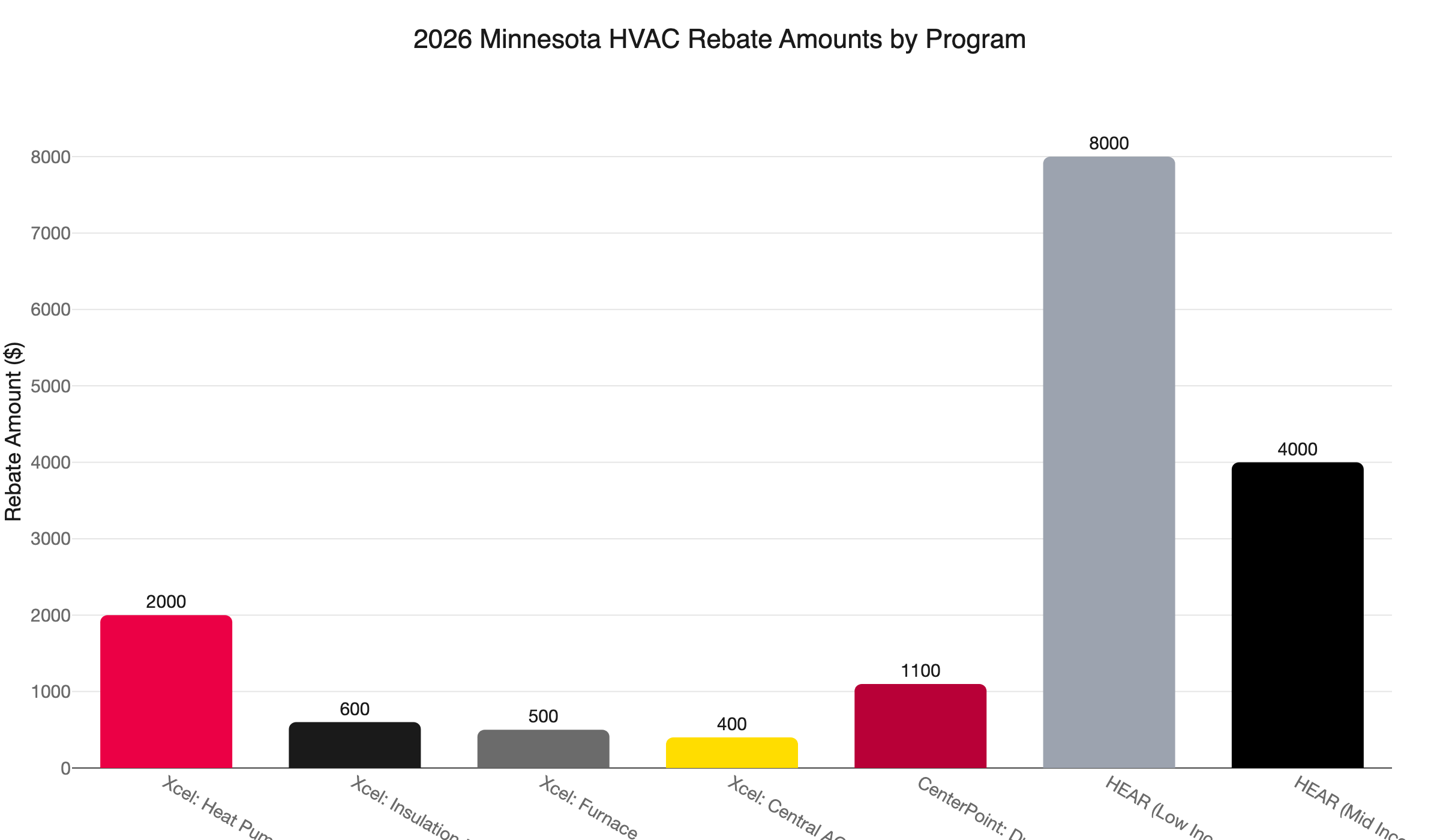
2026 Minnesota HVAC Rebate Amounts by Program
When a furnace dies in January, Twin Cities homeowners start researching the best HVAC brands in Minnesota. Most of what they find is a brand-versus-brand beauty contest: Carrier or Trane, Lennox or Goodman, premium or value. Those comparisons are not useless, but they leave out the information that actually shapes your decision: corporate family structure, parts networks, warranty registration deadlines, the real Minnesota efficiency code floor, and which 2026 rebates are still active.
We are locally owned and operated in Ramsey, MN. Here is what we tell customers before they commit to any system.
## The Best HVAC Brands in Minnesota Belong to Four Corporate Families
What most brand-comparison articles skip is that the major HVAC brands are not independent manufacturers competing on separate engineering platforms. They belong to a small number of corporate families, and [the corporate parent determines engineering lineage, parts distribution, and dealer network](https://trustedheatac.com/who-makes-hvac-brands/):
- **Carrier Global:** Carrier, Bryant, Payne
- **Trane Technologies:** Trane, American Standard
- **Daikin Industries:** Goodman, Amana, Daikin brand (Daikin acquired Goodman in 2012)
- **Lennox International:** Lennox, Armstrong Air, Ducane
- **Rheem/Ruud:** Same equipment, separate distribution channels
A Bryant and a Carrier often come off the same production line. A Goodman and an Amana are the same unit badged differently for different contractor channels. If a contractor quotes Bryant at 15% less than Carrier for the same efficiency class, that price gap reflects the channel, not the engineering.
This matters because it reframes the question. The decision is not "which brand is best?" It is: which corporate family does your local contractor primarily stock, and what does their parts network look like when something fails at 11 PM in February?
---
## Does the Brand Name Actually Matter?
**Somewhat - but not the way most homeowners expect. Brand quality within each price tier is comparable across corporate families. What differs is parts distribution, and for Lennox in particular, that difference is real.**
Carrier and Trane maintain broad dealer and distributor networks across the upper Midwest. Multiple local suppliers can pull parts for either brand. Lennox operates a [more proprietary parts distribution network](https://comfortcalc.com/guides/best-central-ac-brands) than either of them. A non-Lennox dealer in the Twin Cities cannot walk into a general HVAC supply house and pull Lennox parts off the rack.
In a January emergency, that access gap can translate to a longer wait for the part you need. If your installing contractor does not primarily stock Lennox, that is worth factoring into the decision - especially for a 20-year system.
At the value tier, Goodman and Amana are legitimate systems with competitive warranties, not discounted throwaways. The Amana 2026 lineup includes a lifetime heat exchanger replacement warranty on select models. For a homeowner comparing a mid-range Amana against a [premium-tier upgrade](/blog/modulating-furnace-worth-the-cost-minnesota/), that warranty term is worth pricing against the cost difference.
The practical bottom line: the person who installs the equipment, sizes it correctly, and [pulls the permit](/blog/hvac-contractor-red-flags-twin-cities/) matters more than the name on the box. A premium system installed wrong will fail sooner than a mid-range system installed right.
---
## What Is the Minnesota Efficiency Code Minimum?
**Minnesota requires a minimum of 92% AFUE for gas furnaces statewide - not 95%.** [Minnesota Energy Code (MN Rules 1322.0120, based on IECC 2018) sets the floor at 92% AFUE for Climate Zones 6 and 7](https://minnesotahvacauthority.com/minnesota-hvac-energy-codes), which cover the entire state. Some contractors cite 95% as the legal minimum. That figure is not in the code. Ask for the citation if you hear it.
The 92% threshold matters because every furnace that meets it is a condensing furnace. Condensing units extract more heat from combustion gases, and that changes [the install scope](/blog/what-to-expect-hvac-install-day-twin-cities/) significantly:
**The flue pipe changes.** Your old 80% furnace used metal B-vent. A condensing unit requires PVC plastic pipe. The metal flue opening must be sealed, and a new PVC route must be cut and run to exterior.
**Condensate must drain.** Condensing combustion produces several gallons of acidic liquid water per day during operation. That condensate must route to a floor drain or condensate pump. If your utility room does not have one, it needs to be added as part of the install.
**A mechanical permit is required.** Every furnace replacement in Minnesota requires a mechanical permit. Your contractor must hold a state mechanical license. Minneapolis adds a city-level license on top of the state requirement.
None of these are optional add-ons. They are code requirements. A quote that lists only the equipment price is not a complete quote. Our post on [furnace replacement costs in the Twin Cities](/blog/furnace-replacement-cost-twin-cities/) walks through what a permitted, code-compliant install actually includes from start to finish.
---
## Why Do Warranty Registration Deadlines Matter?
**Because missing the window cuts your parts coverage from 10 years to 5 years - on a system you just paid $10,400-$19,500 to install.** [Carrier, Trane, and Lennox all offer 10-year parts and 1-year labor as the standard term, extended to 12 years on registered premium equipment](https://dulocore.com/blog/hvac-warranty-comparison/). Without registration, most drop to 5 years for parts. Labor coverage ends after year 1 regardless of brand.
A few specifics worth knowing:
- [Trane's XV20i carries a lifetime compressor warranty when registered within 60 days of installation](https://www.hvacbase.org/trane-vs-carrier). On a [variable-capacity premium unit](/blog/two-stage-vs-single-stage-furnace-minnesota/) in the $15,600-plus range, that coverage is meaningful over a 20-year ownership window.
- Carrier's registration window is also 60 days. Same consequence: 10-year parts coverage drops to 5 without it.
- Labor is excluded from all standard warranties after year 1, across every major brand. If a covered component fails in year 4, you pay the labor cost of the repair even though the part ships free.
- Amana (Daikin family) offers a lifetime heat exchanger replacement warranty on select 2026 models. For value-tier buyers, that is a distinct competitive advantage worth asking about when comparing quotes.
Do not assume the installing contractor handles registration automatically. Some do. Some do not. Register the equipment yourself within the first week after install. Set a calendar reminder the day the system goes in. Check the confirmation email before the 60-day window closes.
---
## Will a Cold-Climate Heat Pump Work Through a Minnesota Winter?
**A standard heat pump will not. A NEEP-certified cold-climate system, correctly installed as part of a dual-fuel setup, works well through most Twin Cities winters.** [Minneapolis averages -14F lows in January](https://heatpumpnetwork.com/heat-pump-rebates-minnesota/). Standard heat pumps lose meaningful heating capacity below 17F, and at or near 0F, a standard heat pump running as the sole heat source is a safety risk in homes with elderly residents or young children.
[Minnesota requires NEEP-certified cold-climate heat pump equipment rated to at least -13F](https://heatpumpnetwork.com/heat-pump-rebates-minnesota/) for residential installations intended to function in heating mode. Systems rated to -22F are preferred statewide given our temperature extremes.
The dual-fuel setup is the standard approach for most Twin Cities homes:
- A cold-climate heat pump handles heating efficiently from about 65F down to 30-40F. In that range, a heat pump is significantly more efficient than a gas furnace.
- When temperatures drop below the heat pump's reliable range, the gas furnace takes over automatically.
- The result is lower energy costs during the fall and spring shoulder seasons, with full gas furnace reliability during the coldest weeks.
Brands producing [NEEP-certified cold-climate equipment](/blog/cold-climate-heat-pump-brand-performance-minnesota/) include Mitsubishi, Bosch, Daikin, Carrier, and Trane, among others. The certification rating matters more than the brand name when choosing. Our post on [heat pump performance below zero in Minnesota](/blog/heat-pump-below-zero-performance-minnesota/) walks through how these systems behave at the temperatures that actually matter here.
---
## What HVAC Rebates Are Available in Minnesota in 2026?
**Utility rebates from Xcel and CenterPoint are active. Federal 25C tax credits are not.** [The federal 25C credit for heat pumps and high-efficiency furnaces expired December 31, 2025](https://homeenergybasics.com/heat-pumps/states/mn) and is not available for installations in 2026. Any contractor or website still referencing it is working from outdated information.
Here is what is current as of August 2026:
**Xcel Energy customers:**
- Up to $2,000 for a cold-climate ducted heat pump
- Up to $600 additional insulation bonus when paired with air sealing ($2,600 combined maximum)
- $500 for a qualifying high-efficiency gas furnace
- $400 for [central AC replacement](/blog/seer2-rating-explained-ac-efficiency-minnesota/)
**CenterPoint Energy customers:**
- $1,100 for a ducted air-source heat pump - but only as a dual-fuel system paired with a 92%+ AFUE gas furnace, and the heat pump must switch to gas at 40F or below. This rebate does not apply to mini-splits or full heat pump replacements. This is a common source of confusion for homeowners who hear "heat pump rebate" and assume it covers all heat pump types.
**Income-qualified households - HEAR program (federal, still active):**
- Up to $8,000 for households at or below 80% AMI
- Up to $4,000 for households between 80-150% AMI
- No retroactive credits; the install must happen after the program launches in your jurisdiction
**Save Energy MN (state program):**
- Up to $4,000, designed to stack with HEAR. As of August 2026, this program has not launched. No retroactive credit once it opens.
An income-qualified Twin Cities homeowner on Xcel (at or below 80% AMI) installing a $19,000 cold-climate system could stack Xcel and HEAR rebates to [net approximately $9,000 out of pocket](https://heatpumpnetwork.com/heat-pump-rebates-minnesota/). Stacking requires coordinating eligibility and timing before the install date, not after.
Our post on [Minnesota heat pump rebates and tax credits](/blog/minnesota-heat-pump-rebates-tax-credits/) covers current program details and how to apply for each.
---
## Why Does Contractor Sizing Matter More Than Brand?
**An incorrectly sized system - even a premium one - will underperform a correctly sized mid-range system, wear out faster, and may void warranty coverage ahead of schedule.** Proper sizing requires a Manual J load calculation: a room-by-room analysis of your home's square footage, insulation levels, window orientation, ductwork condition, and air infiltration rate.
Oversized equipment short-cycles. It heats or cools the space quickly, shuts off before completing a full cycle, and restarts. Short-cycling causes several problems:
**Condensation buildup** inside the air handler. Short cycles do not allow the system to drain properly. Accumulated moisture accelerates mold risk and speeds up internal component wear.
**Poor dehumidification.** In a Minnesota summer, an air conditioner that short-cycles leaves the house cool and clammy. The system never runs long enough to pull humidity out of the air. Comfort suffers even when the temperature reads correctly on the thermostat.
**Compressor stress.** Start-stop cycles put more mechanical strain on the compressor than longer, consistent operating cycles. More stress means shorter service life.
**Warranty risk.** Manufacturers inspect warranty claims. A system operating outside its design parameters due to improper sizing can complicate coverage disputes.
If a contractor quotes a system size based only on square footage or "what you had before," that is not a Manual J. Ask for the full load calculation in writing [before signing any proposal](/blog/hvac-bid-comparison-what-to-look-for-twin-cities/). Our post on [HVAC sizing and Manual J](/blog/hvac-sizing-manual-j-right-sized-system/) explains what the process involves and what to ask for.
---
## How Do You Choose the Right System for Your Twin Cities Home?
**Match equipment to a certified contractor in your brand's parts network, size it with Manual J, and register the warranty within 60 days.** Brand choice within that framework is a secondary decision, not the primary one.
A practical checklist for any replacement conversation:
- **Ask which corporate family the contractor primarily stocks.** Carrier/Bryant, Trane/American Standard, Daikin/Goodman/Amana, or Lennox. Parts access follows from the answer.
- **Confirm the quote includes full code compliance:** PVC flue routing, condensate drainage, mechanical permit, and a state-licensed contractor.
- **Request a Manual J load calculation in writing** before signing the proposal. A tonnage based on square footage alone is not a load calculation.
- **Ask who handles warranty registration and when.** Get it in writing, then register yourself as a backup before the 60-day window closes.
- **For heat pumps, ask for the NEEP certification rating** and the temperature at which the backup gas heat activates.
- **Confirm the contractor is enrolled in relevant rebate programs** before install. Xcel and CenterPoint require contractor participation for clean rebate processing.
Financing is worth asking about on any major HVAC replacement. A new furnace, AC, or heat pump in the $10,400-$26,000 range is a significant investment. Spreading that cost over 24-60 months often makes the right equipment more accessible than waiting on a failing system that runs inefficiently through the next heating season.
---
## The Bottom Line on the Best HVAC Brands in Minnesota
The best HVAC brands in Minnesota are the ones installed by a contractor who sizes correctly, pulls the permit, explains the full install scope, and tracks the warranty registration deadline.
Carrier, Trane, and Lennox are all quality equipment at the premium tier. Goodman and Amana deliver real performance at the value tier, and the Amana lifetime heat exchanger warranty on select 2026 models is a genuine competitive differentiator. The gap between corporate families is smaller than the gap between a well-installed mid-range system and a poorly installed premium one.
What matters most:
1. **Parts network access.** Carrier and Trane have broader distributor coverage across the upper Midwest. Lennox's proprietary network means a non-Lennox dealer may not have same-day access to parts.
2. **Warranty registration.** Do it yourself within 60 days. A 10-to-5-year drop in parts coverage on a $13,000-plus system is not an abstract risk.
3. **92% AFUE and full install scope.** PVC flue, condensate drain, permit. These are code requirements, not upsells.
4. **Manual J sizing.** A quote without a load calculation is not a complete proposal.
5. **Rebate eligibility confirmed before the install date.** Not after.
We are locally owned and operated in Ramsey, MN, and we serve the Twin Cities every day with the promise we back: "Always On Time… Or You Don't Pay a Dime!(R)" Whether you are replacing a 20-year-old furnace or upgrading to a cold-climate heat pump, our team gives you the straight answer on what your home actually needs.
Ready to talk through the right system? Call us at **(763) 260-6662** or book online to schedule a no-surprise estimate.
---
# AC Drain Line Clogged? A Twin Cities Step-by-Step Guide
URL: https://northernonehour.com/blog/ac-condensate-drain-line-clogged-fix/
Published: 2026-07-31 | Category: Cooling
Step-by-step guide to clearing a clogged AC drain line in Twin Cities homes, including the float switch reset step most guides never explain.
Key Takeaways
- A clogged AC drain line is one of the most common reasons an air conditioner stops running in summer.
- The correct order is suction first, then flush. Wet-vac the exterior exit to pull the clog out before you pour vinegar in. Pouring vinegar first can push debris deeper.
- If the AC still won't run after you clear the line, the float switch is likely still tripped. Water in the pan holds the float elevated. Dry the pan completely before you try to restart the system.
- Twin Cities dew points average around 60°F in June and July, with recorded spikes past 80°F. That humidity load can overwhelm a sluggish drain in hours, not days.
- Most Twin Cities homes have high-efficiency furnaces that produce condensate all winter. Your drain line is active eight or more months a year, not just during cooling season.
- Pouring a cup of distilled vinegar into the access port every one to three months prevents most clogs.
Your AC drain line clogged, and now water is standing in the drip pan under the air handler. Or the system has shut off and won't restart. Both are fixable problems. This guide walks you through clearing the line correctly. It also covers one thing most guides skip: what to do when the AC still won't run after the flush.
## What Does the AC Condensate Drain Line Do?
**Short answer:** Your air conditioner removes moisture from indoor air as it cools. That moisture drips off the evaporator coil into a drain pan. Then it flows out through a PVC pipe called the condensate drain line. A clog in that pipe causes water to back up into the pan and eventually into your home.
Your air conditioner does two jobs at once. It lowers the air temperature, and it removes humidity from the air. That moisture drips off the cold evaporator coil and falls into a shallow pan beneath the air handler. From there, it drains out through a narrow PVC pipe, usually three-quarter-inch diameter. That pipe exits through the foundation wall, into a floor drain, or near the outdoor unit.
The inside of that pipe stays wet and dark year-round. Over time, algae, mold, and mineral deposits build up inside. A partial blockage restricts flow. Water fills the pan faster than it can drain out.
When the pan fills, the float switch trips. The float switch is a small safety device inside or just above the drain pan. When rising water lifts the float, the switch cuts power to the system. The AC turns off completely. It will not restart until the pan dries out and the float drops.
## Signs Your AC Drain Line Is Clogged
Watch for these warning signs:
- **Water in the drip pan.** Even a shallow pool means the drain is not keeping pace.
- **Water stains on the ceiling or walls near the air handler.** An overflow that goes unnoticed can cause serious structural damage.
- **[A musty or mildewy smell](/blog/why-does-my-ac-smell-bad-musty-burning-twin-cities/)** near the air handler or from the vents.
- **Your AC shuts off without warning** and won't come back on. If the thermostat is set correctly and there is no error code, a tripped float switch is a likely cause.
- **Gurgling sounds** from the air handler cabinet as the system cycles off.
If the AC shuts off unexpectedly and won't restart, our guide on [troubleshooting an AC that is not blowing cold air in the Twin Cities](/blog/ac-not-blowing-cold-air-troubleshooting-twin-cities/) covers more potential causes. And if you are seeing water drip inside the house, our post on [AC drainage and water leaks in Twin Cities homes](/blog/ac-draining-water-leak-inside-twin-cities/) covers how to trace the source.
## Why Does Minnesota Get AC Drain Line Clogs Faster?
**Short answer:** High humidity means high condensate volume. Twin Cities summers regularly push dew points past 70°F, and occasionally past 80°F. A drain line with partial buildup can handle an average day but fail fast on a peak humidity day. Most guides are not written for that load.
[Minnesota DNR dew point records](https://www.dnr.state.mn.us/climate/twin_cities/mspdewpoint.html) show the Twin Cities regularly sees dew points climb above 70°F during summer heat events. In late July 2026, the metro hit a [near-record 81°F dew point overnight](https://www.cbsnews.com/minnesota/news/minnesota-weather-july-27-2026/). At that humidity level, your air conditioner is pulling moisture out of indoor air at a high rate every hour it runs. A drain line at 70 percent capacity may limp through a typical day. On a day like that, the pan can fill in a matter of hours.
This is also why a clog seems to appear from nowhere. The buildup forms gradually over weeks. The first hot, muggy Minnesota stretch is what tips the pan over. If the guide you read was written for a southern climate, it likely does not account for the speed or volume of a Minnesota humidity event.
## What You Will Need Before You Start
Gather these before you open the access panel:
- Wet-dry vacuum with a hose
- A rag or duct tape to seal the hose to the drain exit pipe
- Distilled white vinegar (one cup)
- A small funnel or measuring cup
- Old towels for soaking up standing pan water
- Flashlight
- Safety glasses
Set the thermostat to OFF before you start. Then cut power to the air handler at the circuit breaker. Do not work around a live unit when there is water in the pan.
## How Do You Unclog an AC Drain Line, Step by Step?
**Short answer:** Use a wet-vac at the exterior drain exit to pull the clog out first. Then flush from the access port near the air handler with distilled vinegar. The order matters. Pouring liquid in first can push debris deeper if nothing is pulling it through from the other end.
**Step 1: Locate the condensate drain exit.**
This is a PVC pipe that exits your home somewhere. On most Twin Cities homes, it comes through the foundation wall near the outdoor unit, or empties into a floor drain or utility sink. Trace the pipe from the air handler if you are not sure where it ends.
**Step 2: Seal the wet-vac hose to the exit pipe and run it for 60 to 90 seconds.**
Wrap a rag or tape around the joint to create a tight seal. Running suction at the exit pulls the clog toward you rather than pushing it deeper. [Suction at the exit before any flushing is the correct clearing sequence](https://www.carrier.com/us/en/residential/hvac-resources/air-conditioners/how-to-clean-ac-drain-line/) for a condensate line.
**Step 3: Find the access port on the line near the air handler.**
This is usually a T-shaped fitting or a capped stub on the PVC pipe. It is typically inside the utility closet, near the bottom of the air handler cabinet. Remove the cap.
**Step 4: Pour one cup of distilled vinegar into the access port.**
Vinegar breaks down algae and mineral deposits. It does not damage PVC. Let it sit for 15 to 30 minutes, then flush with a cup of clean water. [A vinegar flush between professional visits](https://www.carrier.com/us/en/residential/hvac-resources/air-conditioners/how-to-clean-ac-drain-line/) is standard preventive maintenance for a condensate drain.
**Step 5: Dry the drip pan completely.**
Use towels to remove all standing water. This step is critical. The float switch will not drop until the pan is dry. If water remains in the pan, the system will not restart even after the drain is clear.
**Step 6: Restore power and test.**
Turn the circuit breaker back on. Set the thermostat to cooling mode. The system should respond within a minute or two. If it does not start, read the next section before calling anyone.
## Why Won't My AC Turn On After I Cleared the Line?
**Short answer:** The float switch is still tripped. Water in the drain pan holds the float elevated even after the drain is clear. The system will not restart until the pan is completely dry and the float can drop freely. Clearing the drain is not the same as drying the pan.
This is the situation that brings homeowners back to search engines in frustration. The flush worked. The vinegar went through. The exterior exit looks clear. But the AC still won't run.
Here is what to check:
**1. Find the float switch.**
It is a small device, usually about the size of a matchbook. It mounts inside the drain pan or on the drain pipe just above the pan. It looks like a small white or black cylinder.
**2. Confirm the pan is genuinely dry.**
A quick wipe is not always enough. Use a dry cloth to get the pan as dry as possible. Then tilt the float gently. It should drop freely. If it sticks, try freeing it by hand.
**3. Check for a [secondary drain pan](/blog/ac-drain-pan-full-overflow-causes-fix-twin-cities/).**
Some air handlers have two pans: a primary pan under the evaporator coil and a secondary safety pan under the entire unit. The secondary pan may have its own float switch. Dry both pans before you try to restart.
**4. Reset the system.**
Set the thermostat to OFF. Wait 30 seconds. Set it back to cooling mode. Some float switches also have a small manual reset button on the switch body itself.
**5. Wait five minutes.**
Many systems have a built-in restart delay after a safety shutoff. If the AC still won't start after five minutes, the problem is likely not the drain line. At that point, call a technician.
The float switch behavior after a drain flush is almost never explained in online guides. Most articles stop at "flush the drain and call a pro if it doesn't work." Knowing what the switch does and what resets it can save you an unnecessary service call.
## Does My High-Efficiency Furnace Have the Same Clog Risk?
**Short answer:** Yes. High-efficiency furnaces at 90% AFUE or above produce condensate as a byproduct of combustion. That condensate flows through the same drain line or a connected one. In Minnesota, where most newer homes have high-efficiency furnaces, the drain is active eight or more months a year, not just in cooling season.
Most homeowners think of the condensate drain as an AC-season concern. It is not. [High-efficiency furnaces can produce several gallons of condensate per day during heating season](https://www.pickhvac.com/furnace/efficiency-rating/condensate-drain-on-high-efficiency-furnace/). Almost every newer Twin Cities home has a 90%+ or 95%+ AFUE furnace. That means condensate has been moving through the [drain pipe all winter](/blog/high-efficiency-furnace-condensate-drain-frozen-minnesota/). By July, a partial clog may already be developing from months of heating season use.
The practical takeaway is simple. Add a condensate drain flush to your fall furnace checklist, not just your spring AC checklist. If your system has not had a professional tune-up since last season, it is worth scheduling one now. Our [air conditioning maintenance service](/air-conditioning/air-conditioning-maintenance/) includes a drain inspection as part of every seasonal visit.
## How Do You Keep the Drain Line Clear All Season?
**Short answer:** Flush with one cup of distilled vinegar through the access port every one to three months during cooling season. Change your air filter on schedule. A clean filter means less debris reaching the evaporator coil, and less debris means less material feeding algae growth in the drain line.
[ENERGY STAR recommends inspecting the condensate drain during your spring AC tune-up](https://www.energystar.gov/products/heating_cooling/central_air_conditioners/key_product_criteria). A plugged drain can cause water damage and raise indoor humidity levels. [Flushing the drain every few months and changing filters every three months](https://www.lennox.com/residential/lennox-life/consumer/ac-drain-line-clogged) limits the buildup that leads to clogs.
A dirty evaporator coil makes things worse over time. Sludge from the drain line can coat the coil. A coated coil forces the system to work harder, which drives up energy bills. Keeping the drain clear and the filter fresh is one of the cheapest maintenance steps you can take on an AC system.
For a full checklist of steps that extend the life of your air conditioner, see our post on [5 maintenance tips to extend your AC's lifespan](/blog/5-maintenance-tips-to-extend-your-acs-lifespan/).
## Is Your Condensate Discharge Up to Minnesota Code?
**Short answer:** Minnesota code requires condensate to exit through an indirect waste connection with an air gap. It cannot discharge directly into a drain system without one, and it cannot drip over a public walkway or sidewalk. If your pipe exits through the foundation and drips onto your front steps, that may not meet current code.
[Minnesota Rules 4714.0814](https://www.revisor.mn.gov/rules/4714.0814/) require condensate to discharge to a properly trapped and vented receptor, the tailpiece of an approved plumbing fixture, or an exterior location approved by the Minnesota Pollution Control Agency. Condensate waste cannot drain over a public way.
Most professionally installed systems already meet this requirement. Older homes with original drain setups are worth a second look, especially if the pipe exits through the foundation and drips onto a concrete stoop or shared walkway. Flag it to your technician at the next service call.
No permit is required for homeowner drain maintenance. Vinegar through the access port and wet-vac suction at the exterior exit are standard tasks any homeowner can do. The permit requirement applies when the drain line itself is rerouted or reconnected to the plumbing system.
## When Should You Call a Pro?
**Short answer:** Call if the wet-vac and vinegar flush did not clear the line, if the pan refills within a day or two, or if the float switch is confirmed dry but the system still won't run. Any water that has reached drywall or flooring needs professional assessment right away.
Call Northern One Hour if:
- The flush did not clear the line and the pan keeps filling back up.
- You see mold growth or water that has reached drywall, flooring, or insulation.
- The float switch is dry and confirmed free, but the system still won't start.
- Water appears in the secondary drain pan. That usually points to a cracked primary pan or a serious overflow, not just a blocked line.
- Your system has not had a drain inspection in over a year. A professional flush also covers coil condition, refrigerant levels, and electrical connections that vinegar alone won't replace.
We are locally owned and operated. Our team serves the Twin Cities metro, including Minneapolis, St. Paul, Ramsey, Blaine, Maple Grove, Plymouth, Brooklyn Park, Woodbury, and Bloomington. Every service visit is backed by our "Always On Time… Or You Don't Pay a Dime!(R)" guarantee. We show up when we say we will, or you don't pay.
Call **(763) 260-6662** or [schedule your AC service online](/air-conditioning/air-conditioning-maintenance/). If water is already backing up in the pan, don't wait. One muggy Minnesota afternoon can turn a partial clog into a water damage problem.
---
# Best Time to Buy an HVAC System in the Twin Cities (2026)
URL: https://northernonehour.com/blog/best-time-to-replace-furnace-and-ac-twin-cities/
Published: 2026-07-31 | Category: HVAC
Twin Cities homeowners save 10-15% with shoulder-season HVAC installs. Here's the month-by-month timing playbook and real 2026 rebate numbers to stack.
Key Takeaways
- Shoulder season (August-October for furnaces, March-May for AC) typically saves 10-15% over peak pricing on equipment and labor.
- Peak-season emergency installs in the Twin Cities can run $650-$2,600 above standard pricing.
- 2026 Xcel Energy and CenterPoint rebates are open now: up to $2,000 for cold-climate heat pumps, $500 for high-efficiency furnaces, and $400 for central AC.
- Minneapolis homeowners can stack city, Xcel, and CenterPoint rebates - but CenterPoint requires a dated invoice by December 31, 2026.
- The Minnesota HEAR electrification rebate program has not launched. Retroactive rebates are not permitted once it opens.
- Federal 25C energy efficiency tax credits expired December 31, 2025. They are no longer available to stack.
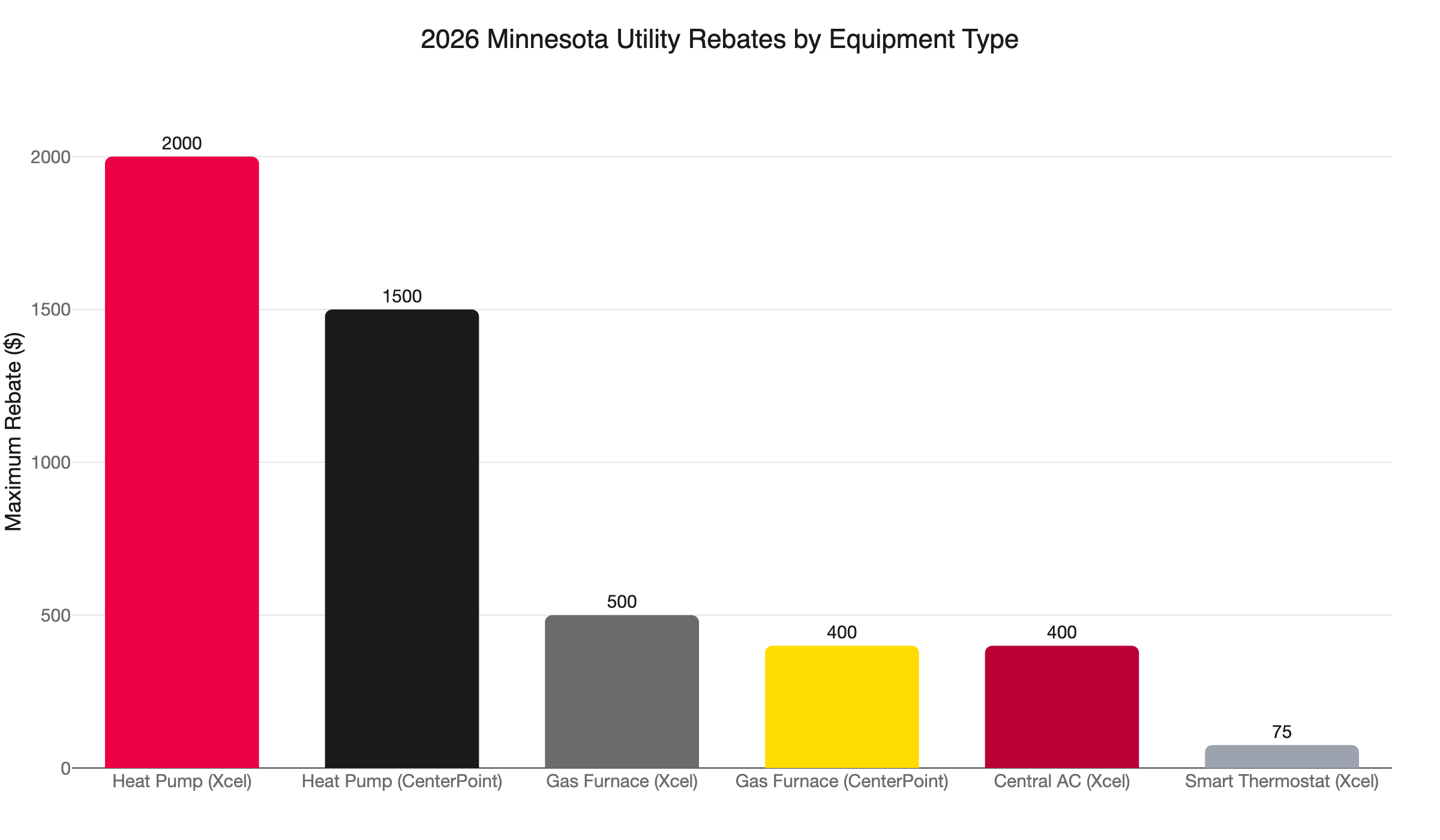
2026 Minnesota Utility Rebates by Equipment Type
## What Is the Best Time to Buy an HVAC System?
**The short answer: late summer through early fall for a furnace (August-October), and early spring for central AC (March-May). Both windows offer lower pricing, faster scheduling, and enough time to file rebates before year-end deadlines close.**
The logic holds in any market, but it cuts deeper in Minnesota. Our heating season runs roughly six months. Furnace failure in January is not an inconvenience - it is an emergency. When that happens, you pay what it costs and wait as long as it takes.
The same is true for AC in July. Twin Cities summers can push into the 90s. A failing system during a heat wave turns a measured decision into a crisis purchase. Crisis purchases are expensive in ways that planned ones are not.
Shoulder season flips the equation. Contractors have open schedules. Equipment is available. You negotiate from a position of choice, not desperation. That is where the savings come from.
## When Is the Best Time to Replace a Furnace in the Twin Cities?
**August through October is the best furnace replacement window. Demand is low after the summer AC rush. Contractors have open slots. Equipment lead times drop from weeks to days.**
[Late summer and early fall are the cheapest periods for furnace replacement](https://www.cbsnews.com/news/cheapest-time-of-year-to-buy-furnace-ac/) - a pattern contractors see every year. Before heating demand climbs and schedules fill, both labor and equipment sit at their lowest point in the annual cycle.
In practical terms: an October appointment can often be booked within 3-5 business days. A January emergency call may mean a 1-2 week wait, without heat while you wait.
A few things to confirm before you sign a quote:
- **Permits are required.** Minnesota law requires a mechanical permit for all furnace replacements. [The cost runs $75-$200](https://furnace.direct/blogs/news/minnesota-furnace-permit-requirements-when-you-need-one) and should appear as a line item in any legitimate quote. If it is missing, ask why.
- **Minimum efficiency standards apply.** Minnesota code requires at least 80% AFUE for gas furnaces. A 95%+ AFUE unit qualifies for better utility rebates and costs less to operate through a Minnesota winter.
- **Shoulder season gives you rebate runway.** CenterPoint's 2026 furnace rebate requires a dated invoice by December 31, 2026. An October install gives you time to complete the paperwork. A December emergency often does not.
For a full breakdown of what replacement costs look like in our market, see our guide to [furnace replacement costs in the Twin Cities](/blog/furnace-replacement-cost-twin-cities/).
## When Is the Best Time to Buy a New Air Conditioner?
**March through May is the optimal window for AC replacement. Contractors are coming out of a slow winter season with open schedules. The full rebate year is ahead of you. You will not be replacing a broken system in 90-degree heat.**
[According to hvac.com](https://www.hvac.com/expert-advice/best-time-to-buy-an-air-conditioner/), buying off-peak can save 10-15% compared to peak-season pricing on identical equipment. On a $5,500 central AC install, that's $550-$825 in savings before a single rebate application is filed.
Heat pumps require additional planning. Supply chain pressures and rising demand have pushed peak-season lead times to 12 weeks or more for some equipment. If you're considering a cold-climate heat pump, begin conversations in late winter. That way, equipment is on hand before you need it running.
If your AC struggled through last summer, or if it is more than 12-15 years old, spring is the moment to get an honest assessment. Do not wait for the first 90-degree week to find out where you stand.
## How Much Can Shoulder-Season Timing Actually Save You?
**For most Twin Cities HVAC installs, shoulder-season timing saves $550-$2,800 before any rebates. Add available utility programs and the gap between a planned purchase and an emergency replacement can exceed $4,000.**
Here is what that looks like with real numbers.
A mid-range central AC install in the Twin Cities might run around $5,500 at peak season. The same install scheduled in April could land closer to $6,100. That 15% difference on labor and equipment combined comes purely from timing.
For emergency installs, [the premium runs higher still](https://www.paritygo.com/post/shoulder-season-the-best-time-for-energy-savings/). Peak-season emergency calls can add $650-$2,600 above standard pricing on top of any seasonal markup.
Furnace economics are similar. A new high-efficiency unit at a fair shoulder-season price, plus a CenterPoint rebate of up to $400 and an Xcel rebate of up to $500, reduces the effective out-of-pocket significantly from what an unplanned winter replacement would cost. Combining timing with rebate applications is the highest-leverage move a Twin Cities homeowner can make on a major HVAC purchase.
## What Minnesota HVAC Rebates Are Available in 2026?
**Significant utility rebates are open right now through Xcel Energy and CenterPoint Energy. Minneapolis homeowners have a third layer on top of both. Together, these programs can reduce the net cost of a new system by thousands of dollars.**
Here is what is available for 2026:
**Xcel Energy** ([current program details](https://www.xcelenergy.com/programs_and_rebates/residential_programs_and_rebates/heating_and_cooling)):
- Cold-climate air-source heat pump: up to $2,000
- High-efficiency gas furnace: up to $500
- Central AC (high-efficiency): up to $400
- ENERGY STAR smart thermostat: $50-$75
**CenterPoint Energy** ([2026 rebate form](https://www.centerpointenergy.com/en-us/Documents/CIP-Rebate-Forms/CNP1153.pdf)):
- Ducted air-source heat pump: up to $1,500
- Dual-fuel system: $1,100
- Gas furnace 95%+ AFUE: up to $400 standard; up to $1,200 for income-qualified households
CenterPoint requires a dated sales invoice - not a proposal or estimate - by December 31, 2026. Do not let a project slip past year-end if this rebate is part of your plan.
Xcel offers a pre-approval option that locks in the rebate amount before installation. Processing takes 6-8 weeks after a complete application. Build that lead time into your schedule.
The long-term value of high-efficiency equipment extends well beyond the upfront rebate. [DOE data](https://www.energy.gov/cmei/femp/purchasing-energy-efficient-residential-central-air-conditioners) shows that a high-efficiency central AC (15.2 SEER2) saves approximately $927 over its lifetime compared to baseline equipment in Northern states like Minnesota. A best-available unit (23.5 SEER2) pushes that figure to approximately $3,363 in lifetime savings. The rebate reduces what you pay upfront. The efficiency rating reduces what you pay every month after that.
## How Does Rebate Stacking Work for Minneapolis Homeowners?
**If you live inside Minneapolis city limits, a third rebate layer may be available on top of both Xcel and CenterPoint programs. The Minneapolis Green Cost Share program offers $5,000-$14,000 for eligible projects - and it stacks.**
On a cold-climate heat pump install, a Minneapolis homeowner using all three programs could access:
- Xcel: up to $2,000
- CenterPoint: up to $1,500
- Minneapolis Green Cost Share: $5,000-$14,000
That is a meaningful reduction on a project that can run $15,000-$25,000 installed. [A Twin Cities rebate coordination guide](https://allprohvacminneapolis.com/how-to-claim-every-centerpoint-and-xcel-energy-rebate-for-your-new-hvac-system/) details the mechanics of using all three programs together.
Stacking requires coordination. Xcel pre-approval, CenterPoint invoice submission, and Minneapolis program applications each have their own paperwork and timelines. Starting in shoulder season - not mid-summer - is what gives you the runway to complete all three before any window closes.
For more on heat pump eligibility and Minnesota rebate specifics, our [Minnesota heat pump rebates guide](/blog/minnesota-heat-pump-rebates-tax-credits/) covers the details.
## What About the Minnesota HEAR Program?
**Do not count on the Minnesota HEAR program for any current or near-term install. As of mid-2026, the program has not launched and no launch date has been set.**
This matters because [federal rules prohibit retroactive HEAR rebates](https://mn.gov/commerce/energy/consumer/energy-programs/hear.jsp). Work completed before the program opens will not qualify - regardless of how soon after launch you apply.
When HEAR does launch, the amounts are substantial for qualifying households. Up to $8,000 for heat pump installations for households below 80% of area median income. Up to $4,000 for households at 80-150% AMI. Maximum household totals would be $14,000 and $7,000 respectively.
If you're income-qualified and your situation allows some flexibility on timing, monitor the [MN Commerce HEAR program page](https://mn.gov/commerce/energy/consumer/energy-programs/hear.jsp) for a launch announcement. If your system is failing now and cannot wait, proceed with the Xcel and CenterPoint rebates that are actually open today. A program with no launch date cannot be the foundation of a replacement plan.
One more note: federal 25C energy efficiency tax credits for heat pumps and high-efficiency HVAC equipment expired December 31, 2025. They are no longer available to stack with state and utility programs.
## How Long Does HVAC Installation Actually Take in the Twin Cities?
**Off-peak: 3-5 business days from first call to a completed install. Peak season: 1-4 weeks, sometimes longer for heat pumps. That gap matters when you are sitting without heat or air conditioning.**
Here is a typical shoulder-season timeline:
- Days 1-2: Initial appointment and written quote
- Days 2-4: Equipment ordered and arrives at the warehouse
- Days 4-6: Installation - typically one day for a furnace; one to two days for a full AC or heat pump system
Peak season adds delays at every step. First available appointment slots push out by 1-2 weeks. Equipment goes on backorder. Permit processing takes the same amount of time, but it now happens alongside active urgency.
Heat pumps face the longest potential delays. Regulatory demand and allocation limits at distributors mean lead times of 12 weeks or more at peak season. If you want a cold-climate heat pump installed before next winter, September is the latest month to start the conversation.
Minnesota requires a licensed contractor to pull a mechanical permit for every furnace or HVAC replacement. [State licensing rules](https://www.servicetitan.com/licensing/hvac/minnesota) include a competency certification requirement for HVAC workers in Minneapolis and St. Paul. A contractor who skips the permit becomes a liability for you as the homeowner.
## What to Ask Before You Sign a Quote
Timing your purchase is step one. Getting an accurate, complete quote is step two. Here is what to confirm before you commit:
- **Is the permit cost included?** A legitimate installer lists it as a line item. If it is missing, ask why.
- **What efficiency rating does this unit carry?** Know the SEER2 rating for AC or the AFUE rating for furnaces. Rebates require specific thresholds. Verify before equipment is ordered.
- **Does this contractor handle Xcel and CenterPoint rebate applications?** A good local contractor does this regularly and can confirm which units qualify before you buy.
- **What warranty is included on labor and on the unit?** Ask for both in writing.
- **Was the equipment sized using a Manual J calculation?** An oversized or undersized system causes real comfort and efficiency problems. If the contractor cannot answer that question clearly, the sizing may be guesswork. Our [HVAC sizing guide](/blog/hvac-sizing-manual-j-right-sized-system/) explains what to look for.
## A Month-by-Month Buying Calendar for Twin Cities Homeowners
Not every homeowner gets to choose their timing. But if you have any lead time at all, here is how to use it.
**August-October (furnace window):**
The best stretch for furnace replacement. Your old system ran all winter and spring. If it is 12 or more years old, struggling, or showing early warning signs, schedule an assessment in August or September. Contractors have open schedules. Equipment is available. Year-end rebate deadlines are within reach. Waiting until November means waiting through the worst of the season.
**March-May (AC and heat pump window):**
If your AC stumbled through last summer or is more than 12-15 years old, spring is the window. April is the sweet spot: contractors emerging from slow winter season, full rebate year ahead, no equipment backlog. Get a quote in March and schedule installation in April.
**November-February (emergency territory):**
If your furnace fails in winter, timing is no longer a choice. You need heat and you need it now. This is exactly where our on-time service commitment matters directly. "Always On Time… Or You Don't Pay a Dime!(R)" - that is the standard we hold ourselves to, not just a tagline. You should not wait three days for emergency heat in a Minnesota winter.
**June-July (late-entry AC territory):**
If an aging AC has made it to June without replacement, you are now in peak season. You can still get the work done. Expect longer lead times and less pricing flexibility. If the system is limping, get a quote in June while some schedule room still exists.
## Is It Worth Replacing Both Systems at the Same Time?
**Often yes, especially when furnace and AC are close in age. Replacing both during shoulder season means one mobilization, one permit pull, and [matched equipment](/blog/twin-cities-hvac-brand-comparison-trane-carrier-lennox/) designed to work together.**
The [upfront cost](/blog/hvac-financing-options-what-to-know-twin-cities/) is higher. But you gain coordinated warranties, better efficiency from components selected as a set, and you eliminate two separate emergency replacement timelines from your future.
If only one system is near end-of-life, replace that one now and plan the other for the next shoulder season. Trying to push a functional but aging system one more year can make sense - but not always. Our [repair vs. replace guide](/blog/repair-or-replace-which-should-you-do-when-your-heating-and-cooling-system-breaks-down/) walks through that decision with clear criteria.
## Plan Your HVAC Purchase Before You Have To
The best time to buy an HVAC system in Minnesota is before you have to. Shoulder season gives you pricing leverage, scheduling flexibility, and the rebate runway that a crisis purchase takes away completely.
As a locally owned and operated Twin Cities company, we will give you an honest assessment of what your system has left, what a replacement would cost, and which 2026 rebates your project qualifies for. No pressure. No emergency markup.
Call **(763) 260-6662** or book online to schedule a free in-home assessment.
---
# Do Heat Pumps Work Below Zero in Minnesota? The Real Answer
URL: https://northernonehour.com/blog/heat-pump-below-zero-performance-minnesota/
Published: 2026-07-31 | Category: Heating
Real COP data from a Minneapolis home shows cold-climate heat pumps keep working at -17\u00b0F and below. What the numbers mean for Twin Cities homeowners.
Key Takeaways
- Cold-climate heat pumps produce real heat well below zero. [A Minneapolis system measured a COP of 1.98 at -17°F](https://www.energyvanguard.com/blog/can-a-heat-pump-work-in-minnesota/) - nearly twice the output of electric resistance heat at the same temperature.
- At -27°F, that same system held a COP of 1.37: still 37% more efficient than electric baseboard heat.
- Backup heat is designed in from the start. A dual-fuel system is programmed to hand off to the gas furnace around 0°F to 5°F. That is a thermostat setting, not a sign the heat pump quit.
- Natural gas homes: a full replacement to a heat pump rarely makes financial sense at current Minnesota gas prices. A dual-fuel hybrid is the honest recommendation for most Twin Cities homes.
- Propane and electric resistance homes have a clearer case. [Cold-climate heat pumps can cut heating costs 30-55%](https://www.mncee.org/cold-climate-heat-pumps) for homes replacing those fuel sources.
- 2026 rebate update: the federal 25C tax credit expired December 31, 2025. Xcel Energy offers up to $2,000. CenterPoint Energy offers $1,100 for dual-fuel installs. The state HEAR program has not yet launched.
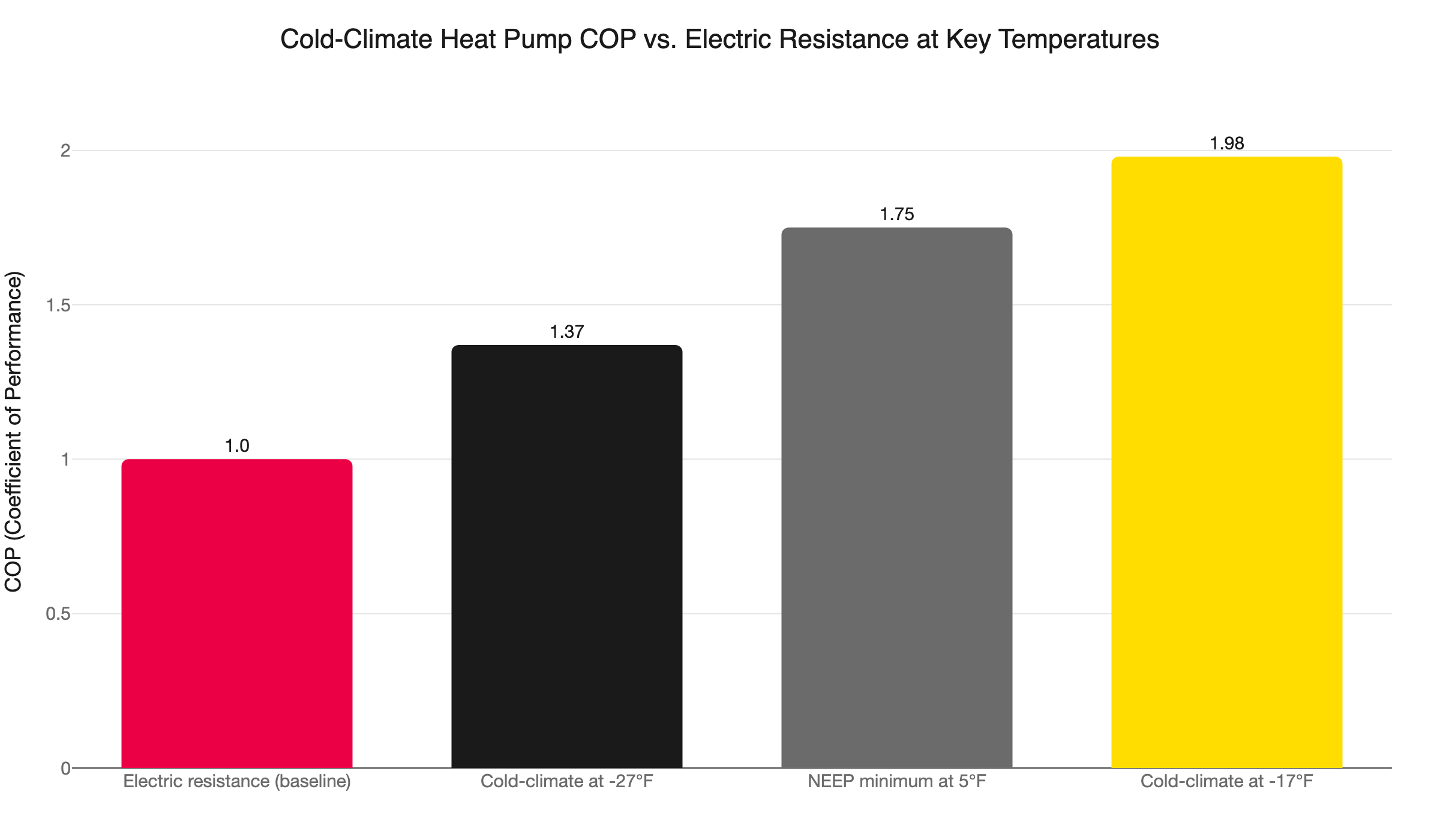
Cold-Climate Heat Pump COP vs. Electric Resistance at Key Temperatures
The most common objection to heat pumps in Minnesota comes down to one question. Will it actually work when the temperature hits -20°F?
The short answer is yes. The longer answer involves real performance data from a real Minneapolis home, an honest look at where natural gas still wins on cost, and a clear breakdown of what backup heat actually means. That is what this post covers.
## Do Heat Pumps Work Below Zero in Minnesota?
Yes, and measured data from a Minneapolis installation backs that up. Cold-climate heat pumps produce useful heat at -17°F and beyond. Efficiency drops as temperatures fall, but the system keeps running. In a dual-fuel setup, the gas furnace takes over at the very bottom of the range by design, not by failure.
That answer surprises most Twin Cities homeowners. The "heat pumps don't work in Minnesota" objection made sense a decade ago. Standard heat pumps from that era lost most of their capacity below 30°F and leaned heavily on electric resistance backup strips. Cold-climate models are a different product category built for northern climates.
[Mitsubishi H2i, Daikin, and Bosch cold-climate models are rated to operate as primary heat down to -13°F](https://www.mncee.org/cold-climate-heat-pumps). Below that threshold, backup heat picks up the remainder. In a typical Twin Cities winter, nights below -13°F are uncommon. The heat pump handles the large majority of your annual heating hours.
## What Is COP and Why Does It Matter?
COP stands for Coefficient of Performance. It tells you how much heat you get per unit of electricity consumed. A COP of 2.0 means two units of heat for one unit of electricity: twice the output of electric resistance heat, which always has a COP of 1.0.
Any heat pump running above COP 1.0 beats electric resistance on efficiency. In practical terms: a higher COP means [lower electricity costs](/blog/heat-pump-electric-bill-spike-winter-minnesota/) for the same amount of heat delivered. The Minnesota question is how far COP drops at extreme cold - and whether it stays high enough to matter.
## How Does a Cold-Climate Heat Pump Perform at -17°F and Below?
Better than most homeowners expect. A [cold-climate Mitsubishi mini-split](/blog/cold-climate-heat-pump-brand-performance-minnesota/), tested over four winters in Minneapolis, delivered meaningful heat at temperatures well below zero. COP stayed above 1.0 throughout.
Here is what [that Minneapolis installation measured](https://www.energyvanguard.com/blog/can-a-heat-pump-work-in-minnesota/) at the temperatures Minnesota homeowners worry about most:
- At -17°F: COP 1.98. The unit drew 1,959 watts and delivered 13,000 BTU/hr of heat.
- At -27°F: COP 1.37. The unit drew 1,834 watts and delivered 8,597 BTU/hr of heat.
At -27°F, the system was still running. Still making heat. Still 37% more efficient than electric baseboard heat at the same outdoor temperature. Those conditions are also colder than most Minneapolis winters ever reach.
[The Northeast Energy Efficiency Partnerships sets a minimum qualifying COP of 1.75 at 5°F](https://www.mnpower.com/ProgramsRebates/AirSourceHeatPumps) for cold-climate heat pumps. Units on the NEEP approved list must also deliver at least 70% of their rated 47°F capacity at 5°F. These are verified, testable thresholds, not marketing language.
Standard heat pumps are a different product. Those units typically lose meaningful capacity below 30°F and lean heavily on electric resistance backup strips for a large share of the Minnesota heating season. If someone in your neighborhood had a poor heat pump experience years ago, they likely had a standard unit. Cold-climate designation is a meaningful engineering distinction.
## When Does Backup Heat Actually Kick In?
[Backup heat activates](/blog/heat-pump-emergency-heat-when-to-use/) at a pre-programmed "balance point," a temperature threshold your installer sets during commissioning. It is not [the heat pump struggling](/blog/heat-pump-blowing-cool-air-heat-mode-minnesota/). It is a deliberate handoff to the cheapest available heat source for the current conditions.
In most Twin Cities dual-fuel installs, [the balance point](/blog/heat-pump-balance-point-backup-heat-minnesota/) is set between 0°F and 5°F. Above that temperature, the heat pump runs. Below it, the gas furnace takes over. The crossover is calculated on cost per BTU. At very low temperatures, the heat pump's COP has dropped enough that natural gas costs less per BTU than the electricity the heat pump draws. The system [stages to the cheaper fuel](/blog/how-heat-pump-staging-works-minnesota/) automatically.
This framing is what most heat pump articles miss. Your furnace running on a -15°F night is not evidence the heat pump gave up. It is evidence the system is working correctly - using the right fuel for the right conditions.
[Cold-climate models are rated for primary heat down to -13°F](https://www.mncee.org/cold-climate-heat-pumps). Below that limit, backup is recommended. Your installer sets the balance point to match the equipment's rated operating range and your local electricity and gas rates.
## Is a Heat Pump Worth It If I Already Have Natural Gas?
Probably not as a whole-home replacement. A dual-fuel hybrid, however, may be a strong option. This distinction is the honest answer most utility company content sidesteps, because the all-electric pitch does not favor natural gas homes at current Minnesota prices.
[The Center for Energy and Environment notes that [replacing a gas furnace](/blog/switching-gas-to-heat-pump-minnesota/) entirely with a heat pump is not cost-efficient for most Minnesota homes at current natural gas prices.](https://www.mncee.org/cold-climate-heat-pumps) Gas in Minnesota is inexpensive on a per-BTU basis. A heat pump has to outrun that cost advantage on enough heating hours to justify the equipment investment.
A [dual-fuel hybrid](/blog/dual-fuel-heat-pump-gas-furnace-hybrid-minnesota/) changes the math. The heat pump handles mild fall days, cool spring nights, and moderate cold stretches. That covers the bulk of your annual heating hours - the period when outdoor temperatures stay above the balance point and the heat pump is the cheapest fuel source. The gas furnace covers the handful of deep-cold nights below the cutoff. You run electricity when it is efficient and gas when it is cheap. That split typically reduces both operating cost and total emissions compared to running the furnace alone all season.
The propane and electric resistance picture is much clearer. [Cold-climate heat pumps can cut heating costs 30-55% for homes replacing propane or electric resistance heat.](https://www.mncee.org/cold-climate-heat-pumps) A [NEEP study found roughly 3,000 kWh per year in savings when replacing electric resistance heat](https://www.centerpointenergy.com/en-us/residential/services/home-service-plus/learning-center/how-to/do-heat-pumps-work-in-minnesota?sa=mn) - and approximately 6,200 kWh per year when replacing oil heat. For those homeowners, the payback math is straightforward.
If you want a side-by-side annual cost breakdown for your specific fuel type, our post on [gas vs. electric heat cost in Minnesota](/blog/gas-vs-electric-heat-cost-minnesota/) walks through the numbers in detail.
## What Rebates Are Available for Heat Pumps in Minnesota in 2026?
The rebate picture changed at the end of 2025. The federal 25C tax credit expired December 31. Utility rebates from Xcel and CenterPoint are still active. A new state program is in development but not yet available. Here is the current status as of July 2026.
**Federal 25C tax credit:** Expired December 31, 2025. The credit offered up to $2,000 for qualifying cold-climate heat pumps. If you installed a qualifying unit during 2025 and have not yet filed your return, you may still claim this credit for that tax year. Check irs.gov or consult a tax professional. Installs completed in 2026 do not qualify.
**Xcel Energy:** Up to $2,000 for a qualifying cold-climate heat pump. The unit must appear on the NEEP approved list at ashp.neep.org, meet a minimum COP of 1.75 at 5°F, and retain at least 70% of rated 47°F capacity at 5°F. A $600 bonus is available when the install is paired with a qualifying insulation and air-sealing project. Verify current amounts at xcelenergy.com/rebates before scheduling, as program terms can change.
**CenterPoint Energy:** $1,100 for a ducted cold-climate heat pump installed in dual-fuel configuration alongside a gas furnace. Verify current terms at centerpointenergy.com before committing.
**Minnesota HEAR program:** Up to $8,000 for households under 80% of area median income. Up to $4,000 for 80-150% AMI. A maximum of $14,000 per household across all program rebates. As of July 2026, this program had not yet launched. Monitor mn.gov/commerce for updates.
Stacking utility rebates with the state HEAR program when it launches may be possible, depending on program rules. Our post on [Minnesota heat pump rebates and tax credits](/blog/minnesota-heat-pump-rebates-tax-credits/) covers stacking rules, income documentation requirements, and eligibility details.
Financing is available for larger heat pump installs. Ask our team about current options when you call.
## What Is the Difference Between a Cold-Climate and a Standard Heat Pump?
A standard air-source heat pump performs efficiently down to about 30°F, then loses capacity rapidly. A cold-climate ASHP maintains useful output at much lower temperatures. In Minnesota, cold-climate designation is the minimum standard for any primary heating application.
Standard units below 30°F typically rely almost entirely on electric resistance backup strips. In a Minnesota winter, that means running electric resistance heat for a large share of the season. The cost advantage of a heat pump disappears when backup strips are doing most of the work.
Cold-climate models use a different compressor design and [refrigerant cycle](/blog/low-refrigerant-heat-pump-symptoms-heating-cooling-minnesota/) to maintain COP and capacity in deep cold. The NEEP qualifying threshold draws a clear, measurable line between the two categories. Ask any contractor quoting you a heat pump whether the specific unit appears on the NEEP approved list at ashp.neep.org. If they cannot confirm it, ask them to find a unit that does.
## Should I Replace My Furnace With a Heat Pump, or Add One to It?
For most Twin Cities gas homes with a functioning furnace, adding a heat pump alongside the furnace makes more financial sense than replacing the furnace outright. You keep working equipment. You add heat pump efficiency for the bulk of the season. The furnace handles the coldest nights.
Here is the practical logic. If your furnace is under 10 years old and running well, consider the add-on approach. A dual-fuel install adds the heat pump outdoor unit and a compatible air handler. The existing furnace becomes the backup and deep-cold workhorse. You do not pay to remove functional equipment. You get heat pump efficiency during the large majority of heating hours when it makes financial sense to run it.
If your furnace is approaching 15-20 years, the timing may align for a combined replacement and heat pump install. Doing both at once reduces labor costs and can simplify rebate paperwork.
Our post on [heat pumps in Minnesota - are they a good fit?](/blog/heat-pumps-in-minnesota-are-they-a-good-fit/) covers sizing, comfort, and ductwork considerations in more detail.
## What About Ductless Mini-Splits in Minnesota?
The Minneapolis performance data in this post came from a ductless Mitsubishi cold-climate mini-split. Ductless units use the same refrigerant-cycle technology as central heat pumps. The difference is in delivery: no ductwork required.
Mini-splits are a strong fit for specific situations:
- Older Twin Cities homes without existing ductwork
- [Room additions](/blog/hvac-home-addition-options-minnesota/), sunrooms, or converted spaces
- Individual rooms that run consistently cold or hot
- Attached garages where you want controlled heat without ductwork extension
If you are adding heat to a space without ducts, a [cold-climate mini-split](/blog/mini-split-outdoor-unit-snow-ice-winter-minnesota/) is typically the most efficient targeted option available. Our post on [ductless mini-splits in older Twin Cities homes](/blog/ductless-mini-split-older-twin-cities-homes/) covers installation considerations specific to older Minnesota construction, including refrigerant line routing and wall penetrations.
## How Cold Does Minnesota Actually Get?
Context matters here. The temperatures that make people nervous about heat pumps - -20°F and colder - are real in Minnesota, but not the norm.
Minneapolis averages roughly 13 nights per year below 0°F, based on historical climate data for the MSP area. Out of approximately 150 nights when a heating system runs at all during the season, a dual-fuel heat pump spends most in heat pump mode. The gas furnace covers the small fraction of nights at the bottom of the range.
The practical answer to "what happens at -25°F" is simple. The gas furnace runs. The heat pump idles. Your home stays warm. The system was designed for that scenario from the beginning.
Note: the 13-night average reflects general Minneapolis climate context. For precise historical data, NOAA climate normals for MSP International Airport are the authoritative source.
## Getting the Right System for Your Home
Every heat pump decision depends on home-specific variables. No single recommendation covers every Twin Cities homeowner.
Key factors to work through before any install decision:
- **Current heating fuel:** Gas homes need a careful dual-fuel analysis. Propane and electric resistance homes typically have a clearer financial case for a cold-climate heat pump.
- **Ductwork condition:** Leaky ducts reduce heat pump performance. Sealing ductwork before or during install often delivers better efficiency gains than equipment upgrades alone.
- **Home insulation level:** A poorly insulated home places heavy demand on any heating system. Air sealing and insulation frequently have better payback than a heat pump on their own.
- **System age:** A furnace under 10 years old in good condition points toward the add-on approach. A furnace at 15-20 years often aligns well with a combined install.
Our [heat pump installation and repair team](/heat-pumps/) walks through load calculations, equipment comparisons, and current rebate eligibility as part of any consultation. We do not recommend equipment until we have looked at your home's actual numbers.
## Ready to Schedule a Heat Pump Consultation?
We are locally owned and operated in Ramsey, serving the Twin Cities metro, including Minneapolis, St. Paul, Blaine, Maple Grove, Plymouth, Brooklyn Park, Woodbury, and Bloomington.
We size systems for Minnesota winters, not mild-climate averages from a product sheet. When you schedule with Northern One Hour, we stand behind our commitment: "Always On Time… Or You Don't Pay a Dime!(R)."
Call (763) 260-6662 or book online to schedule a heat pump consultation. We will give you a straight answer on whether a cold-climate heat pump, a dual-fuel hybrid, or a different path makes sense for your home, your current fuel source, and your budget.
---
# HVAC Sizing Manual J: Why Bigger Isn't Better in Minnesota
URL: https://northernonehour.com/blog/hvac-sizing-manual-j-right-sized-system/
Published: 2026-07-31 | Category: HVAC
Learn how HVAC sizing Manual J calculations protect Twin Cities homes from oversized systems that short-cycle, spike bills, and fail before their time.
Key Takeaways
- HVAC sizing Manual J calculations use local climate data, insulation values, and infiltration rates to determine your home's exact heating and cooling load. Square-footage rules cannot do that.
- The Minneapolis/St. Paul ASHRAE 99% heating design temperature is approximately -16°F. That number drives your furnace's required capacity more than any other single factor.
- An oversized furnace short-cycles. That accelerates heat exchanger fatigue, raises flue gas condensation risk in conventional units, and leaves your home with uneven temperatures.
- An oversized [AC short-cycles](/blog/ac-short-cycling-causes-fixes-twin-cities/), too. Short runtimes cool the air temperature but fail to remove humidity, leaving your home feeling clammy even when the thermostat reads correctly.
- Minnesota code requires Manual J under ACCA 8th Edition. Permits and utility rebates both flow from a compliant, documented installation.
- Xcel Energy and CenterPoint Energy rebates for high-efficiency furnaces and heat pumps are real money. Ask your contractor whether the proposed equipment qualifies before you sign.
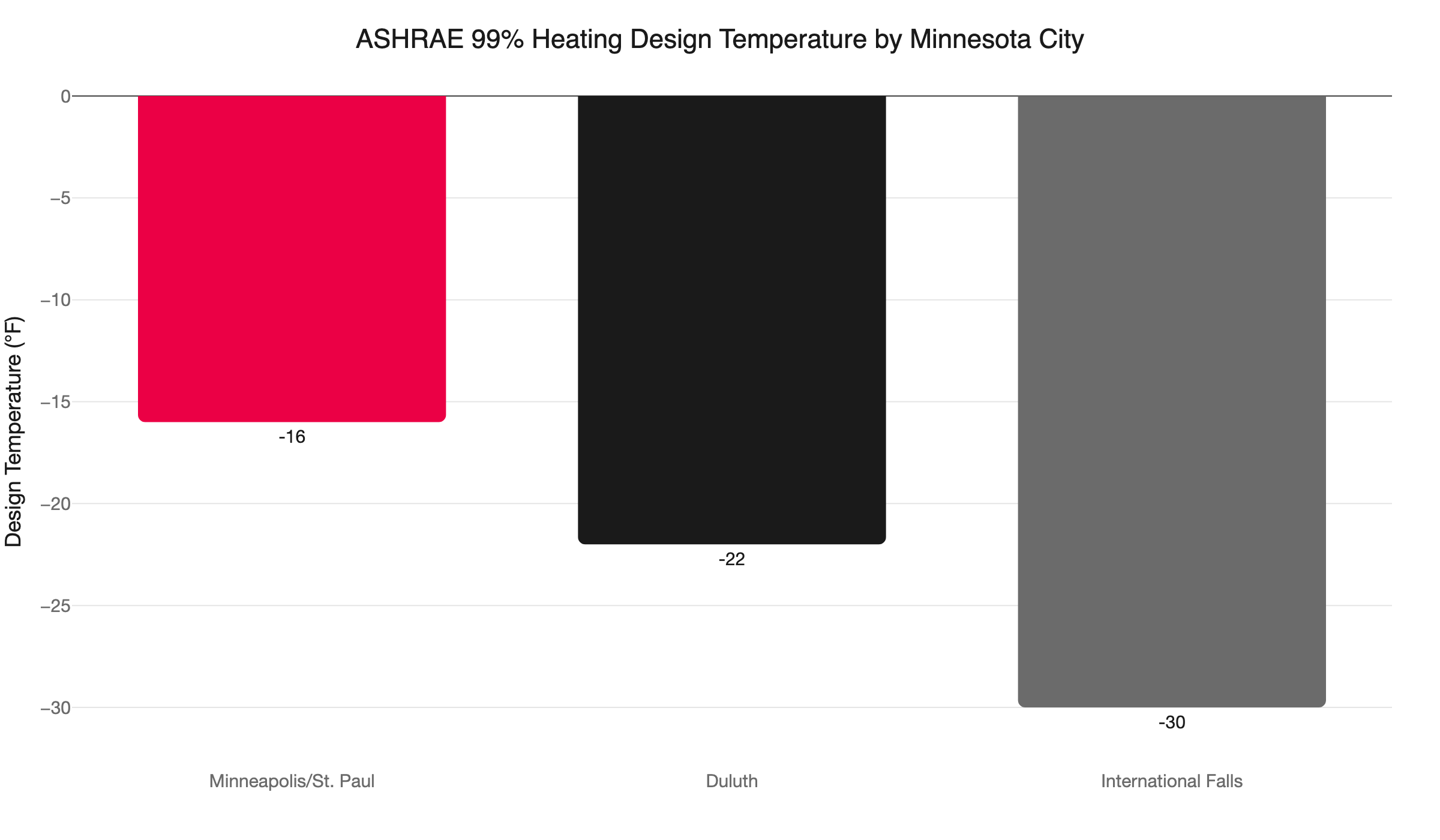
ASHRAE 99% Heating Design Temperature by Minnesota City
## What Is HVAC Sizing Manual J?
**HVAC sizing using Manual J means calculating your home's exact heating and cooling load with climate data, insulation levels, window area, infiltration rates, and internal heat sources. The result is a precise BTU figure, not an estimate. It tells your contractor exactly how much capacity your home needs - no guessing required.**
The calculation is published by the [Air Conditioning Contractors of America (ACCA)](https://www.acca.org/standards/technical-manuals/manual-j). ACCA also publishes Manual S for equipment selection and Manual D for duct design. A proper installation follows all three in sequence. Manual J determines the load. Manual S matches equipment to that load. Manual D sizes the duct system to deliver it.
Most Twin Cities homeowners never see the calculation. But it determines whether your system runs efficiently, heats evenly, and lasts as long as it should.
The alternative is a rule of thumb: one ton per 500 square feet, or 50 BTU per square foot for heating. Those rules are calibrated to national averages. They are not calibrated to a Minnesota winter.
## Why Rules of Thumb Fail in Minnesota
The common square-footage heating rules are not calibrated to -16°F.
[According to the Minnesota HVAC Authority](https://minnesotahvacauthority.com/minnesota-hvac-system-sizing-guidelines), when applied at Minnesota's ASHRAE 99% heating design temperature, these rules can undersize heating by 30-50% for tight, well-insulated modern homes. For older, leakier homes, the same rule may oversize the system. One shortcut produces opposite errors depending on the home.
The reason comes down to delta-T: the difference between your indoor setpoint and the outdoor design temperature. Your indoor setpoint is typically 70°F. At -16°F outdoors in Minneapolis, the delta-T is 86 degrees. That number drives your heating load more than your square footage does.
Design temperatures also vary significantly across the state. The Twin Cities design temperature is approximately -16°F. Duluth's is approximately -22°F. International Falls drops below -30°F. A calculation done for Minneapolis cannot be applied in Duluth without revision. More than 14 degrees of variation across a single state is not a rounding error - it is the difference between a correctly sized furnace and one that falls short on the coldest nights.
A well-insulated 2,400-square-foot home in Ramsey [needs a different furnace](/blog/hvac-resizing-after-home-improvements-insulation-windows-minnesota/) than the same footprint in an older, drafty build. Square footage tells you one thing. A Manual J tells you what actually matters.
## What Happens When Your Furnace Is Too Big?
**An oversized furnace short-cycles: it fires at full capacity, satisfies the thermostat before heat distributes evenly, and shuts off. The area near each [supply register](/blog/closing-hvac-vents-unused-rooms-myth-twin-cities/) overheats. The rest of the home stays cold. Then the cycle repeats. More frequent starts and stops mean more mechanical wear on every component.**
[ACCA Manual S sets the maximum oversizing limit for furnaces at 40% above the calculated load.](https://minnesotahvacauthority.com/minnesota-hvac-system-sizing-guidelines) That cap is not an arbitrary preference. It reflects the failure modes that appear when a furnace runs above that threshold - especially in cold climates like ours.
The most serious cold-climate risk is flue gas condensation. When a conventional (non-condensing) furnace short-cycles, the burner fires and the heat exchanger heats up fast. The burner then shuts off before the flue gases fully clear. Condensation forms inside the flue and the heat exchanger. Repeated exposure corrodes the heat exchanger from the inside. A cracked heat exchanger is a carbon monoxide risk, not just an efficiency problem.
Beyond corrosion, there is straightforward mechanical fatigue. Every start-up and shutdown stresses the inducer motor, the igniter, the gas valve, and the heat exchanger. A furnace sized to the calculated load cycles less often, runs more steadily, and ages more gracefully.
The "buy bigger for Minnesota winters" instinct is common. But the furnace is not a space heater. It is an engineered system designed to sustain a calculated output against a calculated heat loss. Match it to the load and you get even heat, lower bills, and a longer service life.
For a closer look at what happens when a furnace cycles too often, see our post on [furnace short-cycling causes and fixes](/blog/furnace-short-cycling-causes-fixes/).
## The Minnesota Cold-Climate Problem
Minnesota's heating season is not the Sun Belt's heating season.
[The Minnesota HVAC Authority documents](https://minnesotahvacauthority.com/minnesota-hvac-system-sizing-guidelines) that the heating-to-cooling load ratio exceeds 3:1 on a seasonal energy basis for most Twin Cities homes. In [northern Minnesota counties](/blog/hvac-minnesota-lake-home-cabin-seasonal/), that ratio can approach 6:1 or higher.
That ratio shapes how a contractor should think about sizing. The furnace is the lead actor in a Minnesota HVAC system. The air conditioner is the supporting player. A contractor who sizes primarily around summer cooling loads - the way many Sun Belt contractors do - will produce a system that is wrong in the direction that costs you the most.
It also means design temperature assumptions matter more here than in nearly any other region. Every year, Twin Cities winters produce hours that reach -16°F or close to it. Your furnace needs to handle those conditions without short-cycling, without struggling, and without burning out early.
A furnace sized correctly for a Twin Cities home will run steadily on the worst days of the year. A furnace sized too large will short-cycle all winter. A furnace sized too small will run continuously at design temperature and [still not keep pace](/blog/furnace-cant-reach-setpoint-extreme-cold-minnesota/). Manual J is the only tool that tells you which outcome you are heading toward before the equipment goes in.
## What Happens When Your AC Is Oversized?
**[An oversized AC](/blog/oversized-ac-problems-twin-cities/) satisfies the thermostat before completing a full dehumidification cycle. Short runtimes cool the air temperature but fail to remove enough moisture. The result: 73°F on the display and you still feel sticky. In summer, [humidity controls comfort](/blog/variable-speed-ac-benefits-twin-cities/) as much as temperature does.**
[ACCA Manual S caps AC oversizing at no more than 15% above the calculated cooling load.](https://minnesotahvacauthority.com/minnesota-hvac-system-sizing-guidelines) That is a much tighter limit than the furnace cap. The reason is dehumidification sensitivity.
[Research from HVAC engineering practice](https://www.pvhvac.com/blog/why-the-manual-j-load-calculation-is-key-to-hvac-design/) explains the mechanism: moisture removal happens during the full runtime of a cooling cycle. The evaporator coil must stay cold long enough to condense water vapor from the air passing over it. Short-cycle runtimes - the direct product of oversizing - do not give the coil time to finish that job. The air leaves the coil cooler in temperature but still loaded with humidity.
Minnesota's cooling season is shorter than the heating season. But a humid August afternoon in the Twin Cities is genuinely uncomfortable when the AC cannot pull moisture. The fix is not adding a standalone dehumidifier as a workaround. The fix is correct sizing at installation.
For a deeper look at why summer comfort fails even with a working AC, see our post on [why your AC keeps running but your home still feels warm](/blog/why-your-ac-keeps-running-but-your-home-still-feels-warm-in-a-twin-cities-summer/).
## What Goes Into a Manual J Calculation?
**A Manual J calculation integrates your home's physical characteristics with verified local climate data to produce a room-by-room heating and cooling load in BTUs per hour. It requires specific measured inputs. A contractor cannot complete one accurately without them.**
Here is what a proper Manual J needs:
- **Local ASHRAE design temperatures.** For heating in the Twin Cities, that is approximately -16°F. For cooling, it is the outdoor temperature the AC must hold comfort against.
- **Indoor setpoint.** Typically 70°F for heating and 75°F for cooling.
- **Envelope U-values.** The thermal resistance of your walls, ceiling, floor, windows, and doors. Better insulation means lower heat loss per square foot.
- **Infiltration rate.** How much outside air leaks in. A blower door test measures this directly. Manual J also provides default estimation tables. A tight, [well-sealed home](/blog/air-sealing-before-hvac-upgrade-minnesota/) loses far less heat than a drafty older build.
- **Internal and solar gains.** Heat from appliances, lighting, and the people in your home. South-facing windows can meaningfully reduce your heating load on clear winter days.
- **Latent loads.** The moisture component: how much humidity the AC must remove in summer, and how your humidification system should be sized for winter.
Duct losses belong in the analysis, too. [The U.S. Department of Energy estimates duct leakage in unconditioned spaces represents 20-30% of delivered heating and cooling capacity.](https://minnesotahvacauthority.com/minnesota-hvac-system-sizing-guidelines) An attic full of leaky ducts is giving away a meaningful slice of what the furnace produces before that heat reaches your living space. Manual J for load sizing and Manual D for duct design work together. Swapping a furnace without assessing the duct system leaves the efficiency problem in place.
## Is Manual J Required in Minnesota?
**Yes. [Minnesota State Building Code references ACCA Manual J, 8th Edition](https://minnesotahvacauthority.com/minnesota-hvac-system-sizing-guidelines) as the approved method for residential HVAC sizing, enforced through the Minnesota Department of Labor and Industry's permitting and inspection framework. A contractor who skips it is not cutting a corner - they are building out of code.**
[Twenty-nine states, including Minnesota, require Manual J calculations](https://hvacdesignpros.com/manual-j-load-calculations-required-state-code/) for new residential construction under Section 403.6 of the 2009 IECC and Section 1401.3 of the 2009 IRC. Minnesota has since adopted the IECC 2021 with state amendments as Chapter 1322 of the Minnesota Energy Code. Those requirements remain in force.
When a contractor pulls a permit for a furnace or AC replacement, the sizing methodology is part of what the building department reviews. This applies across Twin Cities jurisdictions. "We'll just match the old unit" is not a compliant answer. Neither is a square-footage estimate on a paper napkin.
There is a practical upside beyond compliance. A permitted installation with documented Manual J calculations is a clean record for a home sale. Buyers and inspectors increasingly ask for it. A well-documented HVAC installation supports the transaction rather than creating questions at the closing table.
## Rebates, Permits, and Why Manual J Is the Gate to Both
Minnesota's utility rebate programs are funded under [Minnesota Statute § 216B.241](https://minnesotahvacauthority.com/minnesota-utility-hvac-programs/). That statute requires investor-owned utilities above a defined revenue threshold to invest a percentage of gross revenues in energy conservation. That mandate is why Xcel Energy and CenterPoint Energy offer meaningful equipment rebates year after year - it is not optional for them.
The rebate requirements are specific:
- **Xcel Energy** residential furnace rebates require a minimum 96% AFUE to qualify for the highest tier.
- **CenterPoint Energy CIP** similarly covers 96%+ AFUE condensing furnaces.
- **Heat pumps** must appear on the NEEP Cold Climate Heat Pump List to qualify for Xcel rebates. That is a performance gate tied directly to Minnesota's climate demands.
Correct sizing and correct efficiency ratings work together. An oversized system that short-cycles cannot demonstrate the steady-state efficiency that rebate programs reward. Running the numbers with Manual J before selecting equipment confirms that both conditions are met.
Modern cold-climate variable-speed heat pumps maintain rated heating capacity down to -13°F or lower. ACCA Manual S includes specific procedures for matching heat pump capacity curves to Minnesota's design conditions. A heat pump sized too large will short-cycle in heating mode just like an oversized furnace does - all the same failure modes, a different fuel source.
On the federal side: the §25C Energy Efficient Home Improvement Credit (up to $2,000 for qualifying heat pumps; up to $600 for 97% AFUE furnaces) was repealed for equipment placed in service after December 31, 2025. If you completed a qualifying installation in 2025, that credit is still claimable on your 2025 tax return. The §25D Residential Clean Energy Credit for geothermal and ground-source heat pumps remains at 30% of total installed cost through 2032, with no dollar cap.
If you are weighing a heat pump for your Twin Cities home, our post on [heat pumps in Minnesota](/blog/heat-pumps-in-minnesota-are-they-a-good-fit/) covers the cold-climate performance picture in detail.
## What Should You Ask Your Contractor Before an HVAC Installation?
**Ask to see the Manual J report. A contractor who has done the calculation will have one. If the answer is "we'll just match what's in there now" or "we size by square footage," [ask more questions before signing](/blog/hvac-contractor-red-flags-twin-cities/) anything. Those answers are not Manual J.**
Here are the right questions:
**What heating design temperature are you using?** In the Twin Cities, the correct figure is approximately -16°F. A milder assumption produces an undersized heating system that will struggle on the coldest days.
**Is this a full Manual J calculation or an estimate?** A real Manual J has a printed or digital report with room-by-room load figures. An estimate has a number written on a quote sheet. They are not the same thing.
**Does the calculation include duct losses?** If your ducts run through an unconditioned attic or crawlspace, duct leakage affects delivered capacity. It should appear in the analysis, not be left as an assumption.
**Will you pull a permit?** Replacing major HVAC equipment requires a permit in most Twin Cities jurisdictions. Permitted work gets inspected. That inspection protects you and documents the installation correctly.
**Does this equipment qualify for Xcel or CenterPoint rebates?** If the system meets efficiency thresholds and is correctly sized, you may recover several hundred dollars. Your contractor should know the current rebate schedule and whether the proposed equipment makes the cut.
Northern One Hour is locally owned and operated in Ramsey, Minnesota. We serve Minneapolis, St. Paul, Blaine, Maple Grove, Plymouth, Brooklyn Park, Woodbury, Bloomington, and the surrounding Twin Cities metro. When we size a system, we run a real Manual J using your home's specific details and Minnesota's actual design conditions - not a national average and not a shortcut.
Every installation we do comes with our satisfaction guarantee and our on-time promise. "Always On Time… Or You Don't Pay a Dime!(R)"
Call us at **(763) 260-6662** or book online to schedule a sizing consultation. We provide upfront pricing, documented calculations, and no surprises. Ready to talk [furnace replacement](/heating/heating-equipment/furnaces/furnace-replacements/) or new [AC installation](/air-conditioning/ac-installation/)? We are ready when you are.
---
# Ductless Mini Splits for Older Homes: A Twin Cities Guide
URL: https://northernonehour.com/blog/ductless-mini-split-older-twin-cities-homes/
Published: 2026-07-30 | Category: HVAC
No ductwork? No problem. Cold-climate ductless mini splits heat and cool older Twin Cities homes. See 2026 rebates, install realities, and what to ask your contractor.
Key Takeaways
- A ductless mini split is a two-part heat pump: one outdoor compressor and one or more indoor air handlers. No ductwork needed.
- Cold-climate certified models operate down to -13°F and hold full heating capacity at 5°F. Standard models do not meet that bar.
- Older home install obstacles include limited electrical panel capacity, line-set routing through plaster walls, and snow-aware outdoor unit placement.
- Xcel Energy's 2026 cold-climate rebate is $2,000 for combo gas+electric customers, rising to $2,600 with the insulation bonus.
- Minneapolis homeowners can stack the Minneapolis Green Cost Share on top of Xcel rebates: up to $14,000 in a designated Green Zone.
- The federal 25C heat pump tax credit expired December 31, 2025. Minnesota's Save Energy MN rebate has not launched as of July 2026.
- Mechanical and electrical permits are required in virtually all Minnesota municipalities.
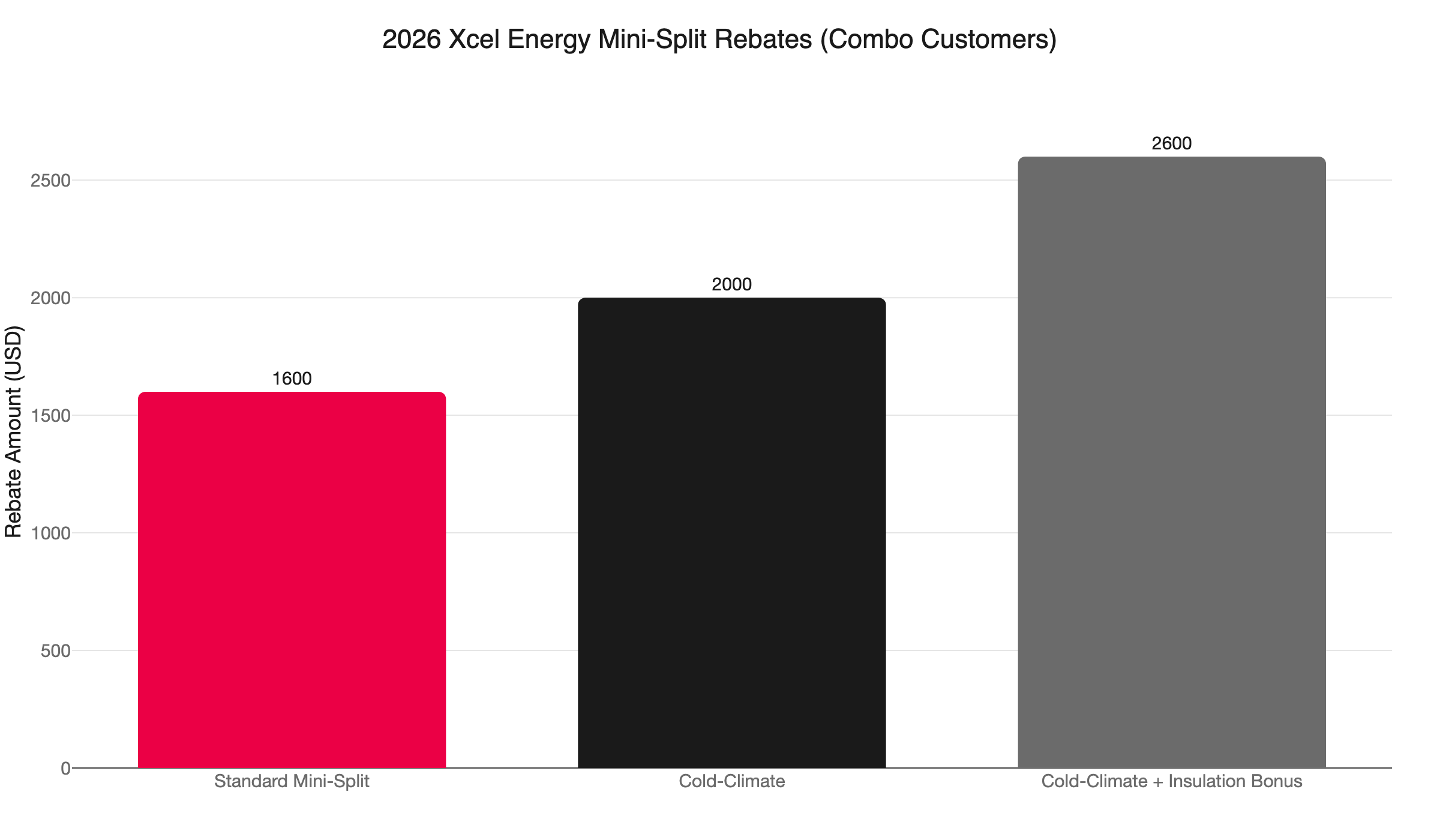
2026 Xcel Energy Mini-Split Rebates (Combo Customers)
## What Is a Ductless Mini Split, and How Does It Work?
**Short answer:** A ductless mini split is a heat pump with two parts: an outdoor compressor and one or more indoor air handlers. A compact bundle of refrigerant tubing, a power cable, and a condensate drain connects them through roughly a 3-inch hole in the wall. No ductwork required.
In cooling mode, the system pulls heat from inside your home and releases it outside. In heating mode, the process reverses. It extracts heat from outdoor air and moves it inside. This is the core difference between a heat pump and a furnace: a heat pump moves existing heat rather than generating new heat by burning fuel.
Even cold outdoor air holds energy. A well-designed cold-climate heat pump extracts that energy at temperatures well below freezing. The qualifier "well-designed" matters more in Minnesota than in most states.
One outdoor compressor can support up to four indoor air handlers. Each handler has its own thermostat and independent temperature control. The second-floor bedroom runs at 68°F. The living room holds at 72°F. Each zone responds only to its own settings.
The indoor unit mounts high on a wall. The refrigerant line exits through the wall and runs to the outdoor compressor on a pad or elevated brackets outside. The wall penetration is small, roughly the size of a standard dryer vent outlet.
For a broader look at heat pumps in the Twin Cities climate, see our [heat pump services page](/heat-pumps/).
## Why Are Ductless Mini Splits a Good Fit for an Older Home?
**Short answer:** Older homes were built [without forced-air ductwork](/blog/high-velocity-hvac-older-home-no-ductwork-twin-cities/). Adding it later means opening ceilings, running metal trunk lines through finished spaces, and losing usable square footage. A mini split avoids all of that. The trade-off is a wall-mounted indoor unit and a refrigerant line through one exterior wall.
The efficiency case strengthens in an older home. The U.S. Department of Energy estimates that duct losses account for more than 30% of space-conditioning energy in many homes, especially when retrofit ductwork runs through unconditioned attics or crawl spaces. Older homes often have exactly that problem. A ductless system sidesteps it entirely. There is no attic trunk, no leaky plenum, no supply boot to lose air from.
Pre-war Twin Cities homes tend to share several traits that make a mini split particularly practical:
- Plaster-and-lathe walls with no insulation cavities large enough for ductwork
- Finished third floors or converted attics outside the reach of any existing system
- Steam or [hot-water radiators](/blog/add-central-air-radiator-hot-water-heat-twin-cities/) that handle heat reasonably well but leave cooling entirely to [window units](/blog/replacing-window-air-conditioners-central-ac-cost-twin-cities/)
- Open floor plans with tall ceilings that a single window unit cools unevenly
A mini split solves the cooling problem in all four cases. A cold-climate model solves the heating problem too.
For more on how older construction creates year-round comfort challenges, see our post on [why older Twin Cities homes struggle more with winter comfort](/blog/why-older-twin-cities-homes-struggle-more-with-winter-comfort/).
## The Standard vs. Cold-Climate Distinction: What It Means for a Ductless Mini Split in an Older Home
This is where low bids create real problems. Not all mini splits perform equally in a Minnesota winter. A standard mini split can cool your house in summer and provide useful heat down to about 10-15°F. Below that, heating output drops sharply. [Below zero](/blog/heat-pump-below-zero-performance-minnesota/), many standard units lock out entirely.
[ENERGY STAR's Cold Climate designation](https://www.energystar.gov/products/heating_cooling/heat_pumps_air_source/key_product_criteria) sets a specific performance bar. A qualifying unit must:
- Maintain a COP (coefficient of performance) of at least 1.75 at 5°F
- Retain at least 70% of its rated heating capacity at 5°F versus its rated capacity at 47°F
- For non-ducted (ductless) systems: reach HSPF2 of 8.5 or higher and SEER2 of 15.2 or higher
To appear on the [NEEP Cold Climate ASHP Product List](https://ashp.neep.org) and qualify for Xcel Energy's top rebate tier, a unit must also meet a COP of at least 1.7 at 5°F. A unit not on the NEEP list gets a lower rebate and may not deliver adequate heat on the coldest Minnesota days.
Some current cold-climate models go further. Certain Mitsubishi Hyper-Heat units [deliver 100% of their rated capacity at 5°F and operate down to -13°F](https://schwantesheating.com/best-cold-climate-heat-pumps-in-minnesota-2026-comparison/). The Minneapolis-St. Paul 99% design temperature is [around -12°F](https://homeenergybasics.com/heat-pumps/states/mn). A backup heat source is still smart for those extreme hours. But the performance gap between a standard and a cold-climate unit shows most clearly in the 0°F to 10°F range - a temperature window Twin Cities winters hit for weeks at a time.
If a quote comes in noticeably cheaper than others, look at the spec sheet. Ask whether the unit carries ENERGY STAR Cold Climate certification. Ask whether it appears on the NEEP list. If the answer to either question is no, ask why.
## What Does Installing a Ductless Mini Split in an Older Home Actually Involve?
**Short answer:** Three obstacles come up consistently in older Twin Cities homes: limited electrical panel capacity, line-set routing through plaster-and-lathe walls, and outdoor unit placement relative to snow accumulation. None are deal-breakers, but each affects cost and timeline. A complete quote addresses all three.
**Electrical panel capacity**
A single-zone mini split typically requires a dedicated 15-30A circuit at 208-240V. Many older Minneapolis and St. Paul homes were wired for 100-amp service. Those panels often have limited open slots. Homes that have added kitchen circuits, garage outlets, or EV chargers over the years may already be at capacity.
An electrician should assess panel capacity before the install begins. If the panel cannot support a new dedicated circuit, a subpanel or [full panel upgrade](/blog/heat-pump-electrical-panel-upgrade-requirements-minnesota/) adds cost and lead time. Budget for it upfront. A quote that does not address electrical is an incomplete quote.
**Line-set routing**
The refrigerant line bundle - power cable, refrigerant tubing, suction tubing, and condensate drain - passes through roughly a 3-inch penetration in the building envelope. From there, it runs from the indoor unit to the outdoor compressor.
In older homes, two routing approaches are common. Interior runs look cleanest but require opening plaster walls, chasing lines through framing cavities, and patching plaster at finish. Exterior raceways mount the line set along the outside of the house in a surface cover. They are visible from outside but avoid touching plaster entirely. Most installers in older Twin Cities homes use exterior raceways by default. If you want an interior run, say so early so the contractor can plan the plaster work and price it accurately.
**Outdoor unit placement**
The outdoor compressor needs to stay clear of [snow accumulation](/blog/mini-split-outdoor-unit-snow-ice-winter-minnesota/). In Minnesota, that means elevated mounting brackets or a pad positioned away from roof drip edges and prevailing drift paths. The unit needs clearance on all sides for airflow and enough space for a technician to reach it in January. Avoid placing it directly under a roof valley or below a low deck where ice can fall onto the cabinet.
**One room or whole house?**
A single-zone system is the right fit for a problem room: a finished attic, a [room addition](/blog/hvac-home-addition-options-minnesota/), a sunroom, or [a garage](/blog/garage-heater-options-installation-cost-minnesota/) the main system does not reach. For whole-home replacement of [window units](/blog/mini-split-vs-window-ac-twin-cities/) and [electric space heaters](/blog/electric-baseboard-heat-upgrade-options-minnesota/), a [multi-zone system](/blog/mini-split-single-zone-vs-multi-zone-cost-twin-cities/) with two to four indoor units on one outdoor compressor gives better efficiency. Each zone still operates independently.
## What Rebates Are Available for Mini Splits in the Twin Cities Right Now?
**Short answer:** Xcel Energy's 2026 cold-climate rebate is $2,000 for combo customers, rising to $2,600 with the insulation bonus. Minneapolis homeowners can stack the Green Cost Share on top, up to $14,000 in a Green Zone. The federal 25C credit expired and the state HEAR rebate has not launched.
**Xcel Energy (2026)**
For gas-and-electric Xcel customers, the current rebate structure breaks down like this:
- Cold-climate mini split (ENERGY STAR Cold Climate certified): **$2,000**
- Standard mini split: **$1,600**
- Insulation or air-sealing bonus (within two years of the heat pump install): **+$600**
The insulation bonus brings a cold-climate system to **$2,600** for qualifying combo customers. Electric-only Xcel customers receive $1,500 for a qualifying cold-climate system. There is no participating-contractor requirement for mini-splits. Any licensed installer qualifies.
[Full rebate details are in Xcel's MN residential rebate summary](https://www.xcelenergy.com/staticfiles/xe-responsive/Working%20With%20Us/24-1-201%20MN%20Res%20Rebate%20Summary%20Information%20Sheet.pdf).
**CenterPoint Energy**
CenterPoint's heat pump rebate is $1,100, but it applies only to [ducted dual-fuel systems](/blog/ductless-vs-ducted-heat-pump-minnesota/) paired with a 92%+ AFUE gas furnace that locks to gas at or below 40°F. [CenterPoint does not rebate standalone ductless mini-splits](https://www.centerpointenergy.com/en-us/SaveEnergyandMoney/Pages/Residential-Ducted-Air-Source-Heat-Pump-Rebate.aspx?sa=mn&au=res). If you are a CenterPoint-only customer, a utility rebate for a mini-split is not available at this time.
**Minneapolis Green Cost Share**
Minneapolis homeowners may qualify for the [Minneapolis Green Cost Share program](https://www.minneapolismn.gov/government/programs-initiatives/environmental-programs/green-cost-share/energy-efficiency/energy-rebates/), which stacks directly on top of a utility rebate:
- Properties in a designated Green Zone: up to **$14,000**
- Properties outside a Green Zone: up to **$5,000**
Your property must be a 1-4 unit residential building in Minneapolis. You need a qualifying Xcel or CenterPoint rebate to apply first. The [Minnesota Center for Energy and Environment](https://www.mncee.org/minneapolis-bonus-rebate-program) administers the program. Check whether your address falls inside a Green Zone before finalizing your project budget.
**What is no longer available in 2026**
The IRS Section 25C heat pump tax credit under the Inflation Reduction Act expired December 31, 2025. No federal credit applies to work done in 2026.
The Minnesota Save Energy MN program - which would have included a $4,000 state heat pump rebate and HEAR income-based rebates - [has not launched as of July 2026 and has no announced start date](https://mn.gov/commerce/energy/consumer/energy-programs/save-energy-mn.jsp). Federal rules prohibit retroactive rebates. Income-qualifying households below 150% of area median income should watch mn.gov/commerce for updates.
For a broader look at incentives, see our [Minnesota heat pump rebates and tax credits guide](/blog/minnesota-heat-pump-rebates-tax-credits/).
## Can a Ductless Mini Split Actually Heat a Minnesota Home Through Winter?
**Short answer:** A cold-climate certified mini split can carry primary heating duty for most of a Minnesota winter. You still need backup heat for the coldest nights near -12°F. A standard mini split should not be your primary heat source in the Twin Cities.
The key number is heating capacity at low temperature. An ENERGY STAR Cold Climate unit must retain at least 70% of its rated BTU output at 5°F. A system rated at 18,000 BTU at 47°F must still deliver at least 12,600 BTU when it is 5°F outside. For a well-insulated room or zone in an older home, that output holds the space comfortably through most of the winter.
The [99% design temperature for Minneapolis-St. Paul is around -12°F](https://homeenergybasics.com/heat-pumps/states/mn). That threshold represents roughly the coldest 87 hours the region sees each year. At those extremes, even a strong cold-climate unit runs at reduced capacity. An electric resistance heat strip (built into most units as [emergency backup](/blog/heat-pump-emergency-heat-when-to-use/)) or a gas furnace covers those hours.
Three configurations are common in older Twin Cities homes:
**Supplemental only.** The existing boiler or furnace covers the main house. The mini split handles a finished attic or room addition the main system does not reach. No backup heat concern for those spaces.
**Primary heat with electric backup.** A cold-climate mini split handles the house. The built-in resistance strip takes over for the coldest hours. This works best in a smaller, well-insulated older home.
**Hybrid (mini split plus gas furnace).** The mini split runs most of the heating season. The gas furnace takes over below a set switchover point, often between 10°F and 20°F. This is the most common path in older Minneapolis homes where owners want to cut gas use without eliminating backup heat entirely.
## Do You Need a Permit to Install a Mini Split in Minnesota?
**Short answer:** Yes, in almost every case. Minnesota requires a mechanical permit for mini-split installation in virtually all municipalities. A separate electrical permit is needed when a new dedicated circuit is added, which is the typical situation in an older home.
Permit fees typically run $100-$300. Plan review takes one to three weeks, depending on the city. In St. Paul, the owner-occupant of a single-family home may pull their own mechanical permit, but must perform all the work themselves. In practice, most homeowners hire a licensed contractor who pulls permits as part of the project.
Skipping permits creates real downstream problems: resale complications, voided manufacturer warranties, and loss of Xcel rebate eligibility. Before work begins, ask your contractor which permits they will pull and when they plan to submit applications.
## Ready to Stop Using Window Units?
A ductless mini split for an older home is one of the most practical HVAC upgrades available to Twin Cities homeowners. Zoned comfort without tearing into walls. Year-round heating and cooling from one system. Real rebate money in 2026 to offset the [upfront cost](/blog/mini-split-installation-cost-twin-cities/).
Our team is locally owned and operated in Ramsey, MN. We size mini-split systems for Minnesota winters, handle permits, and show up when we say we will. "Always On Time… Or You Don't Pay a Dime!(R)"
Call **(763) 260-6662** or book through our [ductless mini-split installation page](/air-conditioning/ac-installation/ductless-mini-splits/). Financing is available for qualifying systems. Ask about it when you call.
---
# Furnace Pilot Light Keeps Going Out: A Diagnostic Guide
URL: https://northernonehour.com/blog/furnace-pilot-light-keeps-going-out/
Published: 2026-07-30 | Category: Heating
Standing pilot or electronic ignition? Find out why your furnace pilot light keeps going out and when to stop relighting and call for help in Minnesota.
Key Takeaways
- A furnace pilot light that keeps going out most often points to a failing thermocouple, a clogged pilot orifice, negative air pressure, or low gas supply pressure.
- Furnaces built before roughly 1990-1995 have a standing pilot. Newer furnaces use electronic ignition and have no standing pilot at all.
- A healthy pilot flame burns steady and blue. Yellow, orange, or a dancing flame signals a problem.
- A thermocouple reading below 15 mV on an open-circuit test is failing and needs replacement.
- Minnesota homes are especially prone to negative-pressure pilot outages during extreme cold.
- Stop relighting after two or three failed attempts. If the pilot won't hold, something mechanical is wrong.
- If your furnace is old enough to have a standing pilot, it may qualify for $400-$1,200 in Minnesota rebates toward a high-efficiency replacement.
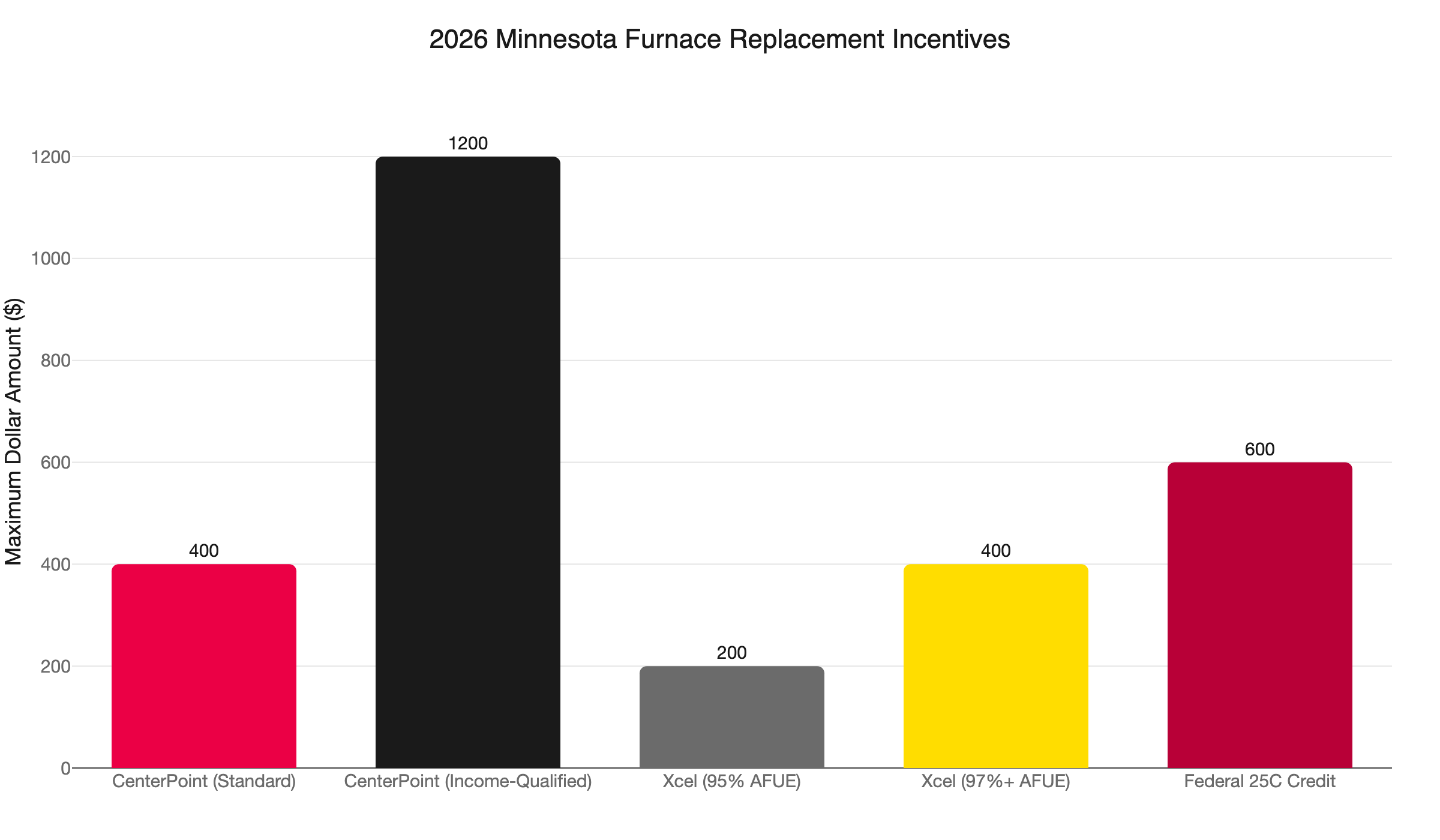
2026 Minnesota Furnace Replacement Incentives
## Do You Have a Standing Pilot or an Electronic Ignition Furnace?
**Short answer:** Furnaces built before roughly 1990-1995 have a standing pilot, a small flame that burns all the time. Furnaces built after that era use an electronic ignition device and have no standing pilot. The two systems fail differently. Knowing which one you have is the starting point for any diagnosis.
This distinction matters more than most homeowners realize. When someone types "furnace pilot light keeps going out," they may be describing either a standing-pilot system or an intermittent ignition device (IID) system. The repair path is different for each.
**Standing-pilot furnaces** burn a small flame 24 hours a day, 365 days a year. That flame heats a metal probe called a thermocouple. The thermocouple generates a small electrical signal, typically 25-30 millivolts when healthy. That signal holds the gas valve open. When the flame goes out, the signal drops. The valve closes automatically within 90 seconds. Gas cuts off to both the pilot and the main burner. This is the 100% safety shutoff built into every standing-pilot system.
If your furnace was installed before roughly 1990-1995, it almost certainly has a standing pilot. When the furnace is idle, look near the burner assembly. You should see a small blue flame burning continuously.
**IID furnaces** have no standing pilot. When the thermostat calls for heat, an electronic spark or [hot-surface igniter](/blog/furnace-igniter-failure-signs-replacement-cost-minnesota/) lights the burner directly. These systems use a flame sensor on a microamp circuit. They do not use a millivolt thermocouple. If your furnace is from the mid-1990s or later and you see no flame when it is idle, you have an IID.
The repair path differs by system type:
- Standing pilot won't stay lit: check the thermocouple, pilot orifice, gas pressure, and combustion air supply.
- IID furnace won't light: check the [flame sensor](/blog/furnace-flame-sensor-dirty-clean-cost-minnesota/), igniter, [control board](/blog/furnace-error-codes-blinking-light-guide/), and gas valve.
This guide focuses on standing-pilot systems. If your furnace has an IID and is failing to light, our team can diagnose it on the same visit.
## Why Your Furnace Pilot Light Keeps Going Out
Most pilot outages trace back to one of six causes. We see all of them across Twin Cities homes.
1. A worn or dirty thermocouple (the most common cause)
2. A clogged or misaligned pilot orifice
3. Negative air pressure in the utility room
4. Low gas supply pressure
5. Draft disruption from a cracked heat exchanger
6. An aging furnace that is past its useful life
The sections below cover each one: what to look for, what you can check yourself, and what requires a technician.
## Is Your Thermocouple Worn Out?
**Short answer:** A thermocouple reading below 15 mV open-circuit is failing and needs replacement. Most gas valves drop out below about 10 mV. If the pilot lights when you hold the button and goes out the moment you release it, the thermocouple is the first thing to check.
The thermocouple sits in the pilot flame and generates the millivolt signal that holds the gas valve open. A healthy thermocouple produces [25-30 mV open-circuit](https://support.johnstonehvac.biz/hc/en-us/articles/360020068334-Thermocouples-and-How-to-Test-Them). Under load, connected to the gas valve, that drops to 12-15 mV. The gas valve stays open as long as the signal holds above its dropout threshold, typically around 10 mV.
As the thermocouple ages, the tip corrodes and millivolt output falls. When output drops below the dropout threshold, the valve closes. The pilot goes out. You relight it. It goes out again. That cycle is one of the most common calls we get during Minnesota winters.
A technician tests millivolt output in minutes with a multimeter. A visual inspection alone will not give you a reliable answer.
**What you can observe at home:**
- Is the thermocouple tip sitting directly inside the hottest part of the flame? Even a slight shift in position reduces heat transfer.
- Does the flame fully surround the tip? The tip should be engulfed, not positioned beside the flame.
- Is there visible soot or corrosion on the tip? That points to an oxygen-starved or dirty flame.
Do not try to bend the thermocouple back into position by hand or sand the tip. Those are shortcuts that do not address the underlying failure. A replacement thermocouple is an inexpensive repair that a technician can complete in a single visit.
## What Does a Healthy Pilot Flame Look Like?
**Short answer:** A healthy pilot flame is steady and blue with a small, defined inner cone. Yellow or orange means incomplete combustion, often from a clogged orifice or low gas pressure. A dancing or split flame points to a draft or pressure problem inside the utility room.
Flame color and stability tell you a lot before any instruments come out.
- **Steady blue with a defined inner cone:** Good. Combustion is clean and the fuel-to-air ratio is right.
- **Yellow or orange:** Incomplete combustion. The orifice may be partially clogged, or gas pressure is low. The thermocouple will not heat evenly.
- **Flickering or dancing (not caused by opening a door):** A pressure or draft problem in the utility room.
- **Split flame, two tips instead of one:** Often a partially blocked orifice. The flame is not focused on the thermocouple tip.
The pilot orifice is a small brass fitting with a tiny drilled hole. Dust, rust, and mineral debris can partially block it over decades of use. When that happens, the flame is weak, asymmetrical, or discolored. Cleaning or replacing the orifice requires disassembling part of the gas assembly. Do not attempt this while gas is flowing.
## Is Negative Air Pressure Killing Your Pilot?
**Short answer:** If the utility room operates under negative pressure, the pilot flame can be pushed off the thermocouple tip or starved of combustion air. This is one of the most overlooked causes in tight Minnesota homes, especially during extreme cold or when multiple exhaust fans run at the same time.
Minnesota winters create a powerful stack effect. Warm air rises and exits through the upper floors and attic. Cold replacement air tries to enter at the lower levels. In a tightly sealed home, the utility room can end up operating under negative pressure. Air pressure inside falls below the pressure outside.
[Research specific to Minneapolis homes](https://twincityheatingandair.com/minneapolis-mn-heating-and-air-conditioning-blog/2021-1-22-why-is-my-minneapolis-furnace-pressure-negative) identifies kitchen and bath exhaust fans as a significant depressurization source during furnace operation. Running those fans while the furnace is on can starve the pilot of combustion air. The [Minnesota Fuel Gas Code](https://up.codes/viewer/minnesota/ifgc-2018/chapter/new_1346.5900_9_/1346-5900-chapter-9-installation-and-testing-of-fuel-gas-fired-equipment) requires pilot flames to be adequately protected from drafts and prohibits outage during normal on/off cycling.
**A quick field test you can do right now:** Crack a window 2-3 inches near the furnace. Hold a tissue to the gap. [If air rushes inward, the space is under negative pressure.](https://twincityheatingandair.com/minneapolis-mn-heating-and-air-conditioning-blog/2021-1-22-why-is-my-minneapolis-furnace-pressure-negative) That depressurization is likely disturbing your pilot.
Other contributing factors common in Minnesota homes:
- Whole-home exhaust fans running simultaneously with the furnace
- A utility room with no dedicated combustion air intake
- A tightly sealed house envelope with few natural air infiltration paths
Repeatedly relighting the pilot does not solve a pressure problem. The fix is usually a dedicated combustion air intake duct. A technician will assess whether your system meets Minnesota's requirements.
## What About Low Gas Pressure?
**Short answer:** Low gas pressure produces a small, unstable pilot flame that cannot fully heat the thermocouple tip. That leads to low millivolt output and a gas valve that closes. The symptoms look identical to a failing thermocouple. Gas pressure testing requires a technician with a manometer.
Natural gas manifold pressure is typically 3.5 inches water column (W.C.). Inlet supply should fall between 5 and 7 inches W.C. The [Minnesota Fuel Gas Code](https://up.codes/viewer/minnesota/ifgc-2018/chapter/new_1346.5900_9_/1346-5900-chapter-9-installation-and-testing-of-fuel-gas-fired-equipment) requires burner input to be set within plus or minus 2% of the manufacturer's nameplate manifold pressure.
When supply pressure falls outside that range, the flame shrinks. A small flame means less heat on the thermocouple tip. Less heat means lower millivolt output. The valve closes. The pilot goes out.
A technician will check both inlet pressure at the gas valve and manifold pressure at the burner. Low supply pressure may point to a problem with the utility's supply line, the regulator at the meter, or a partially closed shutoff valve on the gas line.
**One thing you can check yourself:** Confirm the shutoff valve on the gas line to the furnace is fully open. The handle should run parallel to the pipe. If it sits at a right angle to the pipe, the valve is closed or partially closed.
## Are There Other Causes?
**Short answer:** Yes. A cracked heat exchanger can disrupt combustion airflow and disturb the pilot flame. A failing gas valve is possible but less common. Sometimes the honest answer is age: a furnace old enough to have a standing pilot is at minimum 30 years old and may be failing in multiple places at once.
**A cracked heat exchanger** changes the pressure and airflow inside the heat section. Combustion gases leaking through a crack disturb the flame. If a technician finds a cracked heat exchanger, the furnace must be shut down. This is a carbon monoxide risk, not a comfort issue. Our post on [signs of a cracked heat exchanger in Minnesota homes](/blog/cracked-heat-exchanger-signs-minnesota/) covers what to watch for between now and your service appointment.
**A failing gas valve** is a less common finding. If the thermocouple, orifice, gas pressure, and combustion air all check out and the pilot still won't hold, the gas valve itself may be at fault. Gas valve replacement is a major repair. On a furnace that is already 30-plus years old, replacement is usually the better financial decision.
**Age alone** is a real diagnosis. A standing-pilot furnace is at minimum around 30 years old. At that age, components fail in sequence. Fixing one this November does not guarantee the next January goes smoothly.
## When Should You Stop Relighting and Call a Pro?
**Short answer:** Stop after two or three attempts. If the pilot won't hold, something mechanical is wrong. Relighting cannot fix a failing thermocouple, a blocked orifice, or a pressure problem. There is also a safety line, and knowing where it is matters.
**Stop relighting and call a technician when:**
- The pilot goes out immediately after you release the reset button
- The pilot holds for a few minutes and then goes out repeatedly
- You hear a thump or boom when the burner tries to light (delayed ignition is a danger sign)
- Your CO detector activates
**Evacuate immediately and call 911 when:**
- You smell gas strongly throughout the home, not just faintly near the furnace
- Your CO detector alarms and people in the home feel lightheaded, nauseated, or confused
A faint [gas smell near the furnace](/blog/gas-smell-furnace-what-to-do-minnesota/) during a relighting attempt is expected and temporary. A gas smell filling your living space is not. Do not try to investigate the source. Get everyone out and call 911.
For a deeper look at carbon monoxide risks during furnace season, our post on [carbon monoxide safety and your furnace](/blog/carbon-monoxide-safety-furnace-season/) explains what CO exposure looks like and how to respond before our team arrives.
## Should You Repair or Replace?
**Short answer:** A thermocouple replacement on an otherwise sound furnace makes sense. On a furnace that is 25-35 years old with a standing pilot, the better question may be whether this repair is really the last one. In 2026, Minnesota rebates make replacement more affordable than it has been in years.
Here is a number worth knowing. A standing pilot burns [500-1,000 BTU per hour, every hour, all year long, including all summer](https://learnmetrics.com/how-much-gas-does-a-pilot-light-use/). At Minnesota natural gas rates, that adds up to roughly $50-130 per year in gas spent on a flame that heats nothing in your home. That cost runs every year, regardless of how often you use the furnace.
A 95%+ AFUE furnace eliminates the standing pilot entirely. It also heats your home with far less fuel per unit of output. The efficiency gap between a 60-70% AFUE furnace from the early 1990s and a modern 95%+ system is not small. And the replace-versus-repair math shifts significantly when you account for what Minnesota is offering in 2026.
Current rebate and incentive programs:
- [CenterPoint Energy](https://www.centerpointenergy.com/en-us/Documents/CIP-Rebate-Forms/CNP1153.pdf): up to $400 on a 95%+ AFUE furnace, or up to $1,200 for income-qualified households
- Xcel Energy: $200-$400 depending on efficiency tier (95% through 97%+)
- Federal 25C Energy Efficient Home Improvement Credit: 30% of equipment and installation cost, up to $600
These incentives stack. A qualifying replacement can net $1,000 or more in combined rebates and tax credits. That changes the math for a lot of homeowners who are looking at another repair on a system that is already aging out.
Our post on [furnace replacement costs in the Twin Cities](/blog/furnace-replacement-cost-twin-cities/) breaks down what to budget and how to evaluate the repair-versus-replace decision. If you are ready to explore your options, our [furnace replacements page](/heating/heating-equipment/furnaces/furnace-replacements/) walks through our process and what to expect from start to finish.
We do not push replacement when a repair is the right call. We give you a straight answer and let you decide.
## What to Expect When You Call Northern One Hour
We are locally owned and operated in Ramsey, MN. When you call about a pilot that won't stay lit, here is what to expect.
We schedule a firm appointment window and show up when we say we will. That commitment is the foundation of "Always On Time… Or You Don't Pay a Dime!(R)." It is not a line on a truck. It is how we run every job.
A technician arrives with the tools to test millivolt output, gas pressure, combustion air supply, and draft conditions in the utility room. We diagnose the root cause and give you a clear answer: what is wrong, what it costs to fix, and whether replacement makes more financial sense given the age of the system.
If the repair is a thermocouple replacement or an orifice cleaning, we can usually complete it the same visit. If the diagnosis points toward replacement, we walk you through the rebate math before you commit to anything. Our 100% satisfaction guarantee covers every visit.
**Call (763) 260-6662** or book online to schedule service. We serve Minneapolis, St. Paul, Ramsey, Blaine, Maple Grove, Plymouth, Brooklyn Park, Woodbury, Bloomington, and the surrounding Twin Cities area.
---
# Gas vs Electric Heat Cost Minnesota: The Real Twin Cities Math
URL: https://northernonehour.com/blog/gas-vs-electric-heat-cost-minnesota/
Published: 2026-07-30 | Category: Heating
Real Xcel and CenterPoint rate math plus 8,000 heating degree day data settles the gas vs electric heat cost debate for Minnesota homeowners.
Key Takeaways
- Gas heat is still cheaper per delivered BTU in the Twin Cities, but the gap is smaller than national articles show.
- At current Minnesota rates, a 95% AFUE gas furnace costs about **$835 per year** in fuel for a 2,000 sq ft home. A cold-climate heat pump at COP 2.5 runs about **$1,391 per year**. Electric resistance heat costs roughly **$3,478 per year**.
- Minnesota electricity from Xcel Energy sits at 15.82 cents per kWh, below the national average of 18.83 cents. That narrows the heat pump penalty compared to what most national articles show.
- The federal 25C tax credit for heat pumps expired December 31, 2025. Xcel's $2,000 rebate is still active in 2026.
- A [dual-fuel system](/blog/dual-fuel-heat-pump-gas-furnace-hybrid-minnesota/), a gas furnace paired with a cold-climate heat pump, often delivers the best economics for Twin Cities homes.
- Minnesota's roughly 8,000 heating degree days per year mean fuel efficiency choices matter more here than almost anywhere else in the country.
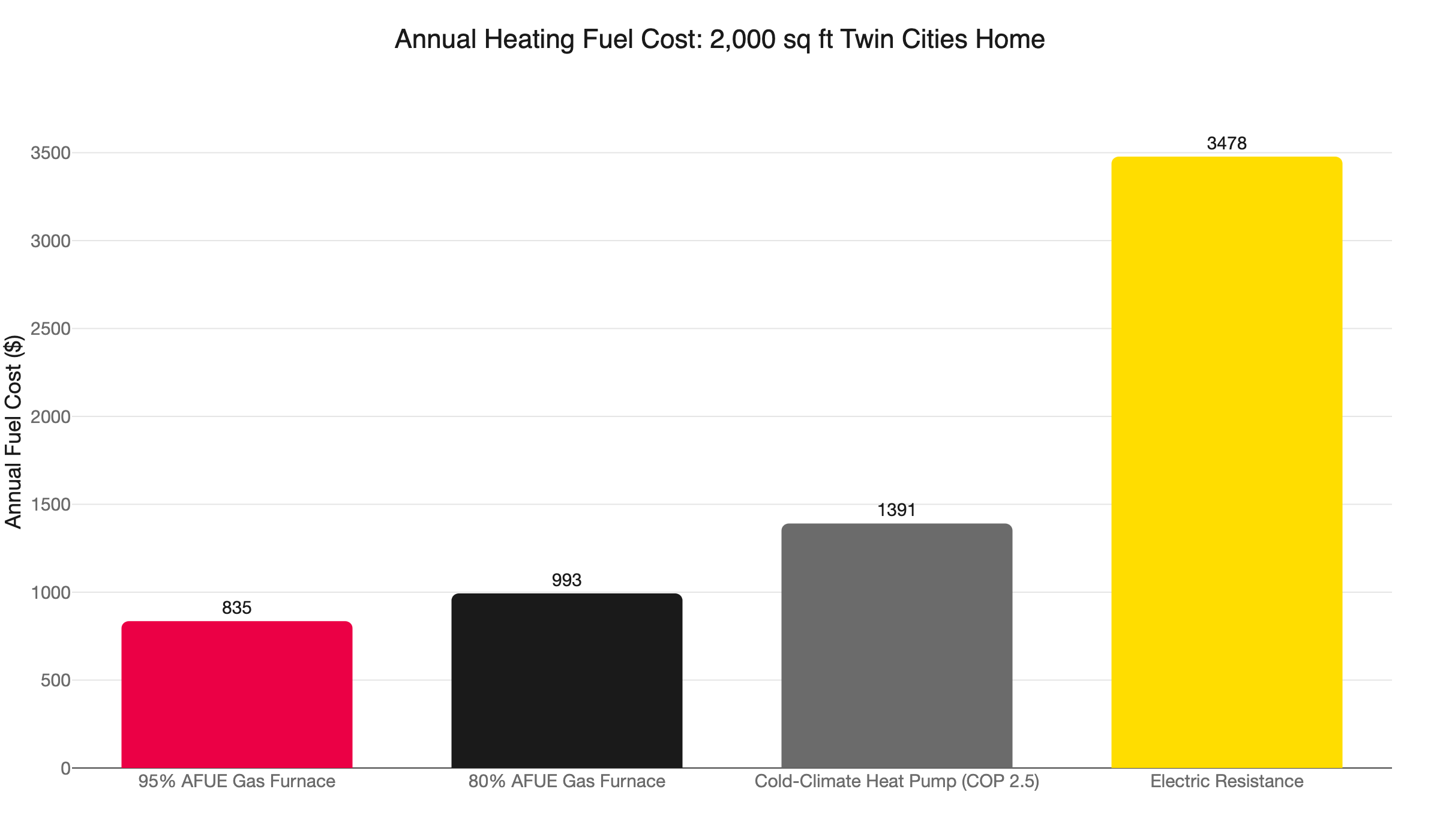
Annual Heating Fuel Cost: 2,000 sq ft Twin Cities Home
## Do National Gas vs Electric Heat Cost Comparisons Apply in Minnesota?
**No. They use the wrong rates.** Most national calculators use $1.57 per therm for gas and 18.83 cents per kWh for electricity. Minnesota gas runs about $1.06 per therm. Xcel residential electricity is 15.82 cents per kWh. Those two differences alone change your annual heating math by hundreds of dollars.
This matters more here than anywhere else. The Twin Cities averages roughly [8,000 heating degree days per year](https://www.dnr.state.mn.us/climate/twin_cities/listings.html), making it the coldest major metro in the country. We run heating systems for five or more months per year. A one-dollar-per-MMBTU fuel cost difference, multiplied across a full Minnesota heating season, adds up to serious money.
National comparison articles are calibrated for an average climate using average rates. A Twin Cities homeowner running those numbers will get the wrong answer. Every figure in this post uses actual Xcel and CenterPoint tariff data, not national averages.
## What Does Natural Gas Cost in Minnesota Right Now?
**Minnesota gas costs about $1.06 per therm.** That figure comes from [EIA data showing a 2025 annual average of $10.98 per Mcf](https://www.eia.gov/DNAV/NG/hist/n3010mn3A.htm) for residential customers, divided by 10.37 therms per Mcf. It is well below the $1.57 per therm national average used in most comparison articles.
Most Twin Cities homes get gas from CenterPoint Energy or Xcel Energy. CenterPoint serves more than 900,000 Minnesota residential customers. After its 2024-2025 rate case was approved by the Minnesota Public Utilities Commission in June 2025, the average residential customer on 74 therms per month pays about $72 per month. Roughly half of that bill is a fixed delivery charge. The other half tracks the commodity price, which CenterPoint passes through at cost with no markup.
Xcel received PUC approval for a 6.8% interim gas rate increase on January 1, 2026. Its full 8.2% request is still before the commission, with a final decision expected by November 2026. The interim increase adds about $70 per year to the average Xcel gas customer's bill.
Gas prices have moved around in recent years. Minnesota hit $1.17 per therm in 2022, then settled back to $1.03 per therm in 2024. For planning, $1.06 per therm is a reasonable midpoint.
Even with recent increases, [Xcel states its gas rate is 26.5% below the national average](https://www.xcelenergy.com/company/rates_and_regulations/filings/minnesota_natural_gas_rate_proposal), per 2023 EIA data. Minnesota remains a relatively low gas-cost state, but the trend is upward.
## What Does Electric Heat Cost in Minnesota Right Now?
**Xcel Energy's residential electric rate is 15.82 cents per kWh as of March 2026,** below the [national average of 18.83 cents per kWh](https://www.electricchoice.com/electricity-prices-by-state/minnesota/). Minnesota runs about 16% under the U.S. midpoint. The PUC issued a verbal decision in June 2026 allowing Xcel to collect an additional 5.8% increase. Rates will tick up again, but Minnesota will stay below the national average.
This is the detail most national comparison articles get wrong. When an article tells you electric heat costs three or four times more than gas, it is using 18.83 cents per kWh. At Xcel's 15.82 cents, the ratio shrinks. Electric resistance is still expensive in Minnesota, but the penalty here is smaller than those articles show.
The difference matters most when comparing heat pumps. A cold-climate heat pump uses electricity but runs at a coefficient of performance above 2.0 on most days. It delivers more than two units of heat for each unit of electricity consumed. At Minnesota's below-average electric rate, the heat pump's annual fuel cost comes out lower than a national calculator would show for the same home.
Still, let's be direct: electric resistance heat, baseboards, [an electric furnace](/blog/air-handler-vs-furnace-whats-the-difference/) running straight resistance coils, remains the most expensive way to heat a Minnesota home. At 15.82 cents per kWh, resistance heat costs about $46 per delivered MMBTU. A 95% AFUE gas furnace at $1.06 per therm delivers the same BTUs for about $11. No efficiency upgrade on the distribution side closes a gap that wide.
## Annual Heating Costs for a Twin Cities Home: The Real Numbers
These figures use a 2,000 sq ft Twin Cities home as the benchmark. At a normal 8,000 heating degree days, that home needs roughly 750 therms of delivered heat output per year.
At current Minnesota rates, a 95% AFUE gas furnace costs about $835 per year in fuel. An [80% AFUE furnace](/blog/furnace-afue-rating-80-vs-96-efficiency-explained-minnesota/) costs about $993. The 15-point efficiency difference runs about $158 per year. Over 15 years, that gap exceeds $2,300 in extra fuel cost.
A cold-climate heat pump at a seasonal COP of 2.5 costs about $1,391 per year. That is more than either gas furnace option, but roughly four times less than electric resistance heat at $3,478.
These are fuel costs only. They do not include installation price, maintenance, or equipment replacement at end of life. A 95% AFUE furnace costs more upfront than an 80% unit. A cold-climate heat pump system carries a higher installation price than either furnace option. Those upfront differences need to factor into any real comparison.
The fuel cost gap between a gas furnace and a heat pump is real. A ccASHP at COP 2.5 costs about $556 more per year in fuel than a 95% AFUE gas furnace. Over 10 years, that is roughly $5,500 in additional fuel cost before any rebates or changes in utility rates.
## What About Cold-Climate Heat Pumps in Minnesota?
**A properly spec'd cold-climate air source heat pump can work in a Minnesota winter,** but "cold-climate" is doing critical work in that sentence. A standard heat pump is not designed for our climate. A cold-climate unit rated by NEEP to maintain a COP of at least 1.75 at 5 degrees F is a fundamentally different piece of equipment.
During most of the heating season, when outdoor temperatures are above freezing, a good ccASHP typically runs at COP 3.0 or higher. That means it delivers $3.00 worth of heat for every $1.00 of electricity used. At those conditions, the delivered cost per MMBTU is around $15.46, which sits between an 80% and a 95% AFUE gas furnace in cost.
At 5 degrees F, a NEEP-listed ccASHP should hold COP 1.75. At that efficiency, delivered heat costs about $26.50 per MMBTU. That is more expensive than gas, but still cheaper than electric resistance.
At -10 degrees F [during a polar vortex](/blog/heat-pump-below-zero-performance-minnesota/), COP can drop further. That is why most Minnesota heat pump installs include a backup heat source. Options include a gas furnace in a dual-fuel setup, [electric resistance strips](/blog/heat-pump-emergency-heat-when-to-use/), or both.
One critical point: we are talking specifically about cold-climate air source heat pumps. A standard heat pump without NEEP verification will underperform in a Minnesota winter. It may not maintain comfort on the coldest days. Always confirm the unit is on the NEEP list and rated for 5-degree performance before purchase.
Learn more about how heat pumps perform in our climate on our [heat pump services page](/heat-pumps/), or read our guide on [whether heat pumps are a good fit for Minnesota](/blog/heat-pumps-in-minnesota-are-they-a-good-fit/).
## The Dual-Fuel Approach: Gas Furnace and Heat Pump Together
Most Twin Cities homes are served by CenterPoint or Xcel for gas and Xcel for electricity. That dual-utility setup makes a hybrid heating system a natural fit.
In a dual-fuel setup, a cold-climate heat pump handles most of the heating load. When outdoor temperatures drop below a set threshold, typically around 25 degrees F, the system switches to the gas furnace. [The crossover point](/blog/heat-pump-balance-point-backup-heat-minnesota/) is set where the heat pump's efficiency drops low enough that gas becomes the cheaper fuel.
During shoulder-season days, the heat pump runs efficiently and burns no gas. On the coldest Minnesota nights, the gas furnace handles the load as the cheaper fuel source. Annual fuel costs come out lower than either system running alone.
The dual-fuel approach also addresses the comfort concern many homeowners have about relying on a heat pump through a polar vortex. The gas furnace is still there for the hardest days. You are not putting everything on one piece of equipment at -20 degrees F.
The upfront cost of a dual-fuel install is higher than a furnace replacement alone. But for a home that already has [gas service](/blog/propane-furnace-vs-natural-gas-minnesota/) and a furnace nearing the end of its life, pricing out a dual-fuel system alongside a straight furnace swap is worth the time. Ask about financing when you call: the monthly payment on a dual-fuel system can often be partially offset by the fuel savings it generates.
## What Rebates and Incentives Are Available in 2026?
**The biggest 2026 change: the federal 25C tax credit expired December 31, 2025.** Under the One Big Beautiful Bill Act signed July 4, 2025, heat pump installs completed in 2026 are not eligible for the credit that previously covered up to $2,000. If you were waiting to move forward, that window has closed.
Here is what remains:
**Xcel Energy ccASHP rebate:** Up to $2,000 for a qualifying cold-climate heat pump. The unit must appear on the NEEP list and carry a rated COP of at least 1.75 at 5 degrees F. A $600 bonus is available when the install is paired with [qualifying insulation](/blog/attic-insulation-ventilation-hvac-bills-ice-dams-twin-cities/) or air sealing upgrades.
**Federal IRA HOMES and HEAR rebates:** Both programs survived the One Big Beautiful Bill Act. These income-based rebates carry higher caps for lower-income households. Minnesota has not launched these programs yet. The [MN Air Source Heat Pump Collaborative](https://www.mnashp.org/incentives-rates-financing) is tracking the launch timeline and expected stacking rules.
**MN Residential Heat Pump Rebate Program:** A state-level rebate is expected to stack with the federal HOMES/HEAR programs when they arrive. No confirmed launch date as of mid-2026.
The takeaway: the [Xcel $2,000 rebate](/blog/xcel-centerpoint-hvac-rebates-minnesota/) is the reliable incentive right now. The federal and state stacking opportunities may arrive during the year, but they are not guaranteed for any specific install date.
For a full breakdown of what is currently available, see our post on [Minnesota heat pump rebates and tax credits](/blog/minnesota-heat-pump-rebates-tax-credits/).
## Why 8,000 Heating Degree Days Change the Math
The Twin Cities averages roughly 8,000 heating degree days per year based on the 1991-2020 climate normal. That number moves: the 2024-25 season came in at 6,779 HDD, a mild year by our standards. Polar vortex winters can push above 9,500.
No other major U.S. metro consistently runs this cold for this long. The HDD gap between Minneapolis and a city like Dallas exceeds 5,000 degrees. That difference translates directly into fuel costs. In a mild climate, choosing between an 80% and a 95% AFUE furnace might add $30 to $40 per year. In the Twin Cities, the same choice costs about $158 per year, compounding over the life of the equipment.
That multiplier matters across every comparison in this post. The heat pump's roughly $556-per-year fuel premium over a 95% AFUE gas furnace feels larger in Minnesota than it would in a mild climate. The electric resistance penalty is especially stark here: at $3,478 per year versus $835 for a gas furnace, you are spending about $2,600 more every year in fuel alone.
HDD variability also affects planning. In a mild year like 2024-25, actual fuel costs will run 15 to 20 percent below the normal-year estimates shown here. In a cold year, they will run above them. The normal-year figures are the right planning baseline, but build in headroom for harder winters.
## Which Heating System Is Right for Your Twin Cities Home?
**The right answer depends on your current equipment, your utility connections, and your budget.** There is no single correct choice for every home, but here is a practical framework for most situations.
**If your gas furnace is under 15 years old and running well:** Keep it. Schedule a [furnace tune-up](/heating/heating-equipment/furnaces/furnace-tune-ups/) each fall and keep efficiency high. A well-maintained 95% AFUE furnace is already your lowest-cost-per-BTU option.
**If your gas furnace is 15 or more years old and you have both gas and electric service:** Price out a dual-fuel system. The Xcel $2,000 rebate is real money. Get a quote alongside a straight furnace replacement and compare the payback period with actual numbers.
**If you want the simplest, lowest-risk replacement:** A 95% AFUE gas furnace delivers the lowest annual fuel cost at today's rates. At about $835 per year for a 2,000 sq ft home, it is the strongest straightforward choice. Choose it if the upfront [cost of electrification](/blog/switching-gas-to-heat-pump-minnesota/) is not in the budget right now.
**If you are currently heating with electric resistance:** Any upgrade, a gas furnace, a ccASHP, or a dual-fuel system, will cut your heating bill significantly. At roughly $3,478 per year, electric resistance is the most expensive path available in any Minnesota scenario.
## Ready to Run the Numbers for Your Home?
We are locally owned and operated, serving Minneapolis, St. Paul, Ramsey, Blaine, Maple Grove, Plymouth, Brooklyn Park, Woodbury, Bloomington, and the surrounding Twin Cities area. We help homeowners work through these decisions every day, across every type of home and equipment setup in our market.
The figures in this post are accurate starting points. Your actual costs depend on your home's insulation, air sealing, square footage, ductwork condition, and which utility serves you. The best way to get a real number: have someone walk through your home and review your bills.
We show up when we say we will. That is the commitment behind "Always On Time… Or You Don't Pay a Dime!(R)" and it applies to every assessment and every service call, not just emergencies.
Call us at **(763) 260-6662** or book online to schedule an assessment. We will look at your system, run the numbers for your specific home, and give you a straight answer on what makes sense.
---
# Air Duct Cleaning Worth It? A Twin Cities Homeowner's Guide
URL: https://northernonehour.com/blog/air-duct-cleaning-worth-it-twin-cities/
Published: 2026-07-29 | Category: Indoor Air Quality
The EPA says routine duct cleaning has no proven health benefit. Here is when it genuinely helps, when it wastes money, and how to spot a scam.
Key Takeaways
- [EPA guidance](https://www.epa.gov/indoor-air-quality-iaq/should-you-have-air-ducts-your-home-cleaned) is clear: routine duct cleaning has never been shown to prevent health problems or [reduce indoor dust exposure](/blog/how-to-reduce-dust-in-home-hvac-twin-cities/).
- Duct cleaning is warranted in three specific situations: confirmed mold in hard-surface (sheet metal) ducts, active vermin infestation with physical evidence inside the ductwork, and debris visibly discharging from registers into living spaces.
- Cleaning HVAC components - coils, drain pan, fan housing - is a different service from duct cleaning, and the EPA supports it for efficiency gains.
- No EPA-registered biocides exist for use inside insulated duct systems. A contractor spraying a "mold treatment" inside flex ducts is using an unregistered product in an unapproved application.
- A legitimate full-service cleaning costs $400 to $1,000 and takes several hours. A "$79 special" is a bait-and-switch.
- Minnesota's sealed homes recirculate indoor-generated pollutants at high concentrations. Better filtration and ventilation address those. Duct cleaning does not.
- Minnesota does not require a state license to perform duct cleaning. NADCA certification is the only meaningful third-party credential to ask for.
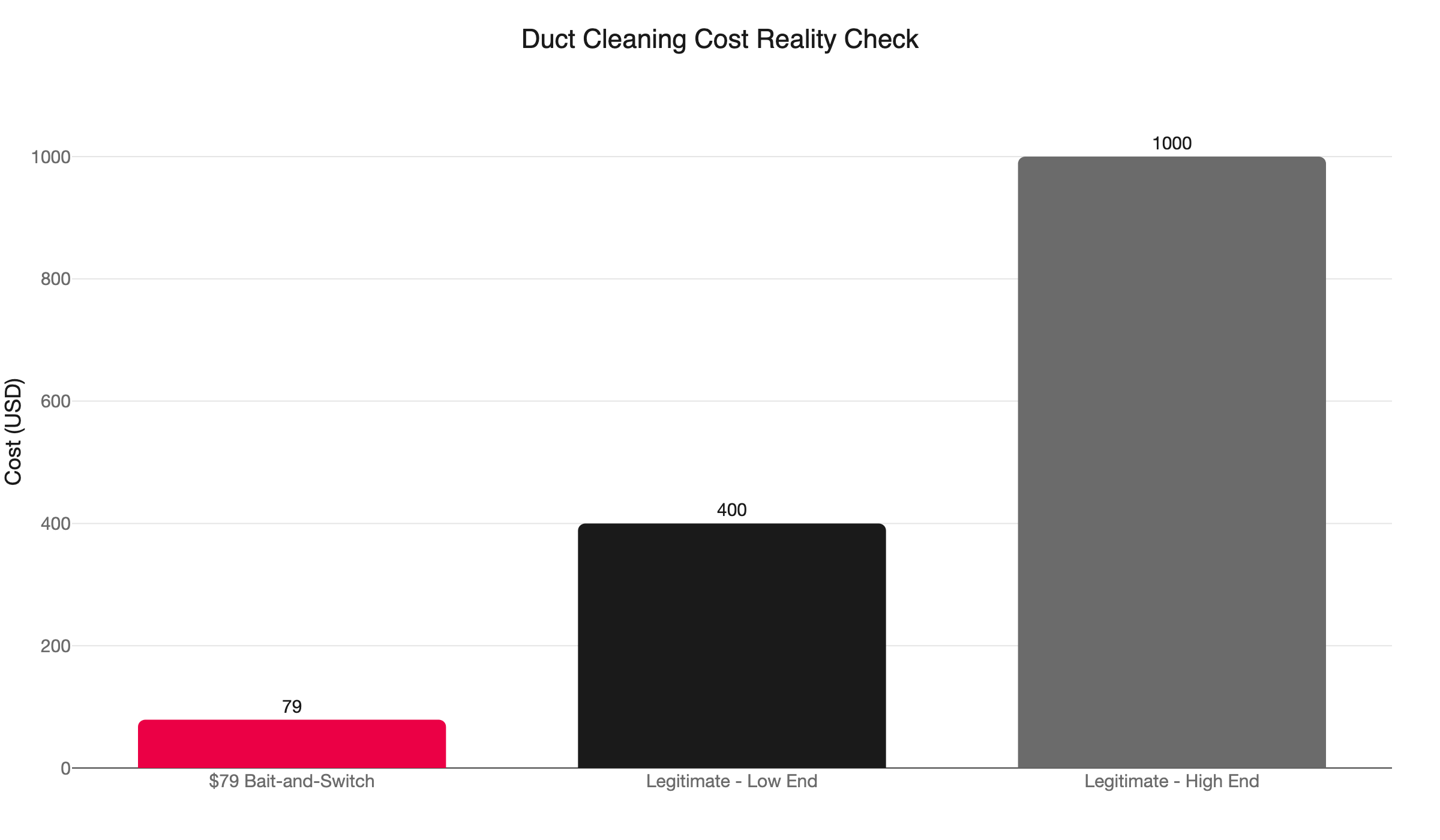
Duct Cleaning Cost Reality Check
## What Does the EPA Actually Say About Air Duct Cleaning?
**The short answer:** The EPA says routine duct cleaning has never been shown to prevent health problems. It also says there is no evidence that normal household dust in air ducts poses any health risk.
That position is not buried in technical footnotes. [The EPA's official guidance on duct cleaning](https://www.epa.gov/indoor-air-quality-iaq/should-you-have-air-ducts-your-home-cleaned) states directly: "Duct cleaning has never been shown to actually prevent health problems." It adds: "There is no evidence that a light amount of household dust or other particulate matter in air ducts poses any risk to health."
The EPA is not hostile to duct cleaning across the board. It identifies specific situations where cleaning is warranted, and we cover those in the next section. But its position on routine duct cleaning as a health measure is clear and consistent.
Why does settled dust in ducts not circulate the way the marketing implies? Dust tends to adhere to duct surfaces rather than floating freely through the system on each cycle. Your air filter intercepts what does move through before it returns to your living space. Cleaning removes material that was, in most cases, staying where it was.
There is one area where the EPA does see cleaning paying off: the HVAC components themselves. Dirty cooling coils, [fan housing](/blog/dirty-blower-wheel-hvac-symptoms-cleaning-minnesota/), and drain pans affect system efficiency. Cleaning those components has documented value. That is a different service from cleaning the duct runs, and it matters - we return to that distinction later.
## When Is Air Duct Cleaning Worth It?
**The short answer:** Three situations clearly warrant it - confirmed mold in sheet metal ducts, physical evidence of vermin inside the ductwork, and debris so severe it is actively discharging from registers into your home.
[The EPA identifies three legitimate triggers](https://www.epa.gov/indoor-air-quality-iaq/should-you-have-air-ducts-your-home-cleaned) for duct cleaning:
**Substantial visible mold in hard-surface (sheet metal) ducts.** Not a contractor's suspicion or something "dark" on a camera feed. Visible mold growth on the hard interior surfaces of the ductwork. If a contractor tells you they found mold, ask to see it yourself. Get a lab test if you have any doubt. [Mold in ducts](/blog/mold-in-hvac-ducts-signs-remediation-twin-cities/) is a real problem when it is confirmed - not when it is inferred.
**Active rodent or insect infestation with physical evidence inside the ductwork.** Droppings, nesting material, or the animals confirmed inside the duct system. This is a genuine contamination scenario. Cleaning is necessary, and pest remediation needs to happen alongside it.
**Ducts clogged with debris visibly discharging into living spaces.** Dusty grilles are normal. Material you can see releasing from registers when the system runs is not. That is actual debris inside the duct, not surface dust on a grille cover.
Two additional situations make a one-time cleaning reasonable even without a hard EPA mandate:
**Post-major-renovation.** Significant demolition, drywall removal, or insulation work done while the HVAC was running can push fine particulate into the system. A cleaning after major construction is a defensible precaution.
**New-to-you home with unknown HVAC history.** Visible buildup at registers and no maintenance records is a reasonable trigger for a baseline cleaning. Not an EPA requirement, but not an unreasonable choice.
Outside those scenarios, cleaning ordinary household dust from ductwork has no documented health or air quality benefit.
## When Is Air Duct Cleaning a Waste of Money?
**The short answer:** When the driver is time elapsed, pets, allergies, or a general desire for "cleaner air" - without one of the specific contamination triggers above - there is no documented benefit.
Duct cleaning is commonly sold on premises that sound compelling but do not hold up. It has been five years. You have pets. Someone in the house has asthma. The air feels stuffy. These concerns are real. They are just not duct problems.
[Minnesota homeowners face particular pressure on this](https://northernservicestoday.com/blog/air-duct-cleaning-minnesota-homeowners/) because our climate means longer heating and cooling seasons and more total system run time. That creates a plausible-sounding sales story. More runtime, more dust, therefore more reason to clean. But accumulated runtime does not change whether cleaning produces a measurable result in the absence of a specific contamination trigger.
The indoor air quality issue in Minnesota homes is real, but it is not a duct-storage problem. Our homes are sealed tightly against winters that can hit -20°F. That seal keeps the heat in. It also keeps indoor-generated pollutants concentrated. Cooking gases, cleaning product fumes, combustion byproducts from gas appliances - these recirculate at higher concentrations in our homes than in climates where windows stay open year-round. Duct cleaning does not touch any of those pollutants. They are generated inside the living space and circulate continuously. The solution is better filtration and whole-home ventilation, not a duct cleaning.
Our guide to [air purifiers, filters, and MERV ratings](/blog/air-purifiers-vs-filters-merv-ratings-explained/) covers the options that actually address airborne contaminants in a Minnesota home.
## How Does the $79 Bait-and-Switch Work?
**The short answer:** A low entry price gets a technician inside your home. They then report contamination - often misidentified or documented elsewhere - and pressure you into expensive chemical treatments that have no EPA support.
[Research on duct cleaning pricing is consistent](https://todayshomeowner.com/hvac/guides/hvac-duct-cleaning-scam-or-worth-it/): a legitimate full-service cleaning costs $400 to $1,000 and takes several hours with truck-mounted or commercial-grade HEPA equipment. A "$79 whole-house special" cannot cover that labor and equipment cost. The low price is not a deal. It is how the contractor gets access to your home.
The pattern runs predictably. The technician does a brief inspection and finds something concerning. Mold, maybe, or heavy contamination. The photos may be from another job site or from a part of the system that looks bad out of context. The next step is a chemical add-on: a biocide spray, a sanitizing fog, a duct sealant application. These sound thorough. The science does not support them, and in the case of biocides in insulated ducts, the EPA has not registered any product for that use.
Red flags to watch for:
- Any whole-house offer under $200
- Pressure to approve chemical treatments without time to verify the contractor's findings
- Mold claims they will not let you confirm yourself or with an independent test
- No large HEPA vacuum equipment visible on the truck or in the home
- No mention of NADCA certification or NADCA standards when you ask
If you feel pressured in your own home, pause. Ask for all findings in writing. Call us at (763) 260-6662 before committing to anything. A legitimate company is not bothered by that question.
## Does Duct Cleaning Actually Remove Mold?
**The short answer:** In sheet metal ducts, yes - if the job is done correctly. In flex duct with internal fiberglass insulation, no. The EPA says the insulation must be removed and replaced. No cleaning method is adequate for that substrate.
This is not a minor distinction. Most homes built in recent decades use internally insulated flex duct in at least part of the system. If mold grows inside that fiberglass lining, [the EPA is unambiguous](https://www.epa.gov/indoor-air-quality-iaq/should-you-have-air-ducts-your-home-cleaned): the section must [come out and be replaced](/blog/ductwork-replacement-cost-twin-cities/). Cleaning is not adequate. The insulation cannot be remediated.
The biocide question adds another layer. No biocides are currently registered by the EPA for use inside insulated duct systems. A contractor spraying a mold treatment inside flex duct is using an unregistered product in an unapproved application. That is a regulatory issue, not just a preference. It is also a sign that the contractor is selling a solution that does not exist.
Duct sealants used to encapsulate contamination fall into the same category. The EPA, NADCA, NAIMA, and SMACNA all state that sealants are not recommended for covering contamination inside ducts. The EPA's language is specific: "Sealants should never be used on wet duct liner, to cover actively growing mold, or to cover debris in the ducts."
If a contractor's proposed fix for mold in insulated flex duct is a spray treatment, the correct answer is replacement. A spray does not solve the problem. It covers it.
On humidity and mold risk in Minnesota specifically: [Twin Cities summers average around 70% relative humidity in July](https://tcomfort.com/blog/how-often-should-air-ducts-be-cleaned/). That creates real condensation risk at the coil and drain pan - the HVAC components where moisture actually collects. Keeping indoor humidity between 30% and 50% is one of the most practical ways to prevent microbial growth in the system. For more on what accumulates in a Minnesota HVAC system across a full year of heating and cooling, our post on [what is really in your air after a Minnesota winter](/blog/whats-really-in-your-air-after-a-minnesota-winter-and-why-it-matters-in-summer/) goes into detail.
## What Should a Legitimate Duct Cleaning Include?
**The short answer:** Everything. Supply ducts, return ducts, all registers, grilles, diffusers, heat exchangers, coils, drain pans, fan motor and housing, and the air handling unit housing - visibly clean when the job is done.
[NADCA's ACR 2025 standard](https://nadca.com/press-releases/nadca-releases-2025-edition-acr-nadca-standard-assessment-cleaning-and-restoration) is the current industry benchmark for HVAC cleaning work. It requires cleaning all system components, not just vacuuming the duct runs. The [full ACR standard is publicly available at acrstandard.nadca.com](https://acrstandard.nadca.com/) and is free to download. A legitimate contractor knows it by name and can tell you how their process aligns with it.
What legitimate equipment looks like: truck-mounted or commercial-grade portable HEPA vacuums. Agitation tools - rotating brushes, compressed air whips - to dislodge settled material before the vacuum captures it. Containment practices that prevent anything dislodged from redistributing through the home.
What a legitimate result looks like: every component on the list above is visibly clean when the technician leaves. You have every right to inspect them. A contractor who is doing the job correctly expects that question.
Two things that do not belong in a legitimate job:
- Biocide spray inside any insulated duct section. No EPA registration exists for that application.
- Sealant coatings applied over contamination rather than removing it.
If either shows up as a default line item in a proposal, ask for the EPA documentation that supports the use. If the contractor cannot produce it, that is your answer.
One credential worth asking for upfront: NADCA certification. Minnesota does not require a state license to perform duct cleaning. That means any company can offer the service here without any formal qualification. NADCA certification is the only third-party credential that shows a contractor has trained against a published industry standard. Without it, you are taking their word on their qualifications.
## What Actually Improves Indoor Air Quality in a Minnesota Home?
**The short answer:** Filter upgrades, humidity control, and whole-home ventilation address the pollutants that actually cycle through your air. For most Minnesota homes, these investments do more than duct cleaning.
Minnesota's tight building envelopes are a necessity. The challenge is managing what builds up inside them over a long heating and cooling season. Three things genuinely move the needle:
**Filter upgrades.** A standard MERV 8 filter catches larger particles but lets finer ones through. Moving to MERV 11 or MERV 13 in a compatible system captures more of what matters - fine dust, pollen, [pet dander](/blog/hvac-filter-pets-hair-dander-minnesota/), some combustion particles. A filter upgrade runs continuously, costs a fraction of a duct cleaning, and has documented effectiveness. Our guide to [air purifiers and MERV filter ratings](/blog/air-purifiers-vs-filters-merv-ratings-explained/) walks through which filters work with which systems.
**Humidity control.** Keeping indoor relative humidity between 30% and 50% inhibits mold growth throughout the system and the home. Your AC handles moisture removal in summer but may not keep up on humid days when it is not running hard. A whole-home dehumidifier extends that control. Our [indoor air quality service page](/indoor-air-quality/) covers the equipment options in detail.
**ERV and HRV ventilation.** Energy recovery ventilators and heat recovery ventilators bring fresh outdoor air into a sealed home without losing the energy you put into heating or cooling it. In a Minnesota home, these are among the most effective investments available for air quality. They directly address the pollutant-concentration problem that tight building envelopes create.
**Coil and component cleaning.** The EPA supports cleaning dirty cooling coils, fans, and heat exchangers for efficiency gains. The coil, drain pan, and fan housing are where moisture collects in a Minnesota system. That is where [microbial growth](/blog/why-does-my-ac-smell-bad-musty-burning-twin-cities/) actually starts. If your energy bills are climbing or your system is working harder than it should be, an inspection of these components - especially before cooling season - earns its cost. This is where HVAC cleaning genuinely pays off, and it is a different service from cleaning the duct runs.
## The Bottom Line on Air Duct Cleaning
Air duct cleaning is worth it when specific, verifiable conditions are present. It is not worth it as routine maintenance, and it is not the right tool for most indoor air quality concerns.
Before we recommend a cleaning, we look for the triggers. Confirmed mold in sheet metal ducts. Physical evidence of vermin in the ductwork. Debris actively discharging from registers. Post-major-renovation contamination. Without those, our team is more likely to recommend a filter upgrade, a coil inspection, or a ventilation assessment.
When the job is warranted, it needs to be done right. That means a NADCA-certified contractor, commercial-grade HEPA equipment, all system components cleaned, and no chemical treatments applied to insulated ductwork.
We are locally owned and operated in Ramsey, MN. Our team serves Minneapolis, St. Paul, Blaine, Maple Grove, Plymouth, Brooklyn Park, Woodbury, Bloomington, and the surrounding Twin Cities area. We show up when we say we will - and we believe you should not pay if we do not. That is our commitment: "Always On Time… Or You Don't Pay a Dime!(R)"
If you have concerns about your ductwork, indoor air quality, or what might be growing inside your system, start with an honest evaluation.
Call us at [(763) 260-6662](tel:7632606662) or [book an assessment through our duct cleaning and indoor air quality page](/indoor-air-quality/duct-cleaning/). We will tell you what we actually find. And if cleaning is not what your home needs, we will tell you that, too.
---
# How Often to Change Air Filter: Minnesota's Real Answer
URL: https://northernonehour.com/blog/how-often-to-change-hvac-filter-minnesota/
Published: 2026-07-29 | Category: HVAC
Minnesota furnaces run 6-7 months a year. Learn the right air filter change schedule by MERV rating, pets, and renovation work for Twin Cities homes.
Key Takeaways
- Minnesota furnaces run 6 to 7 months per year - roughly twice as long as furnaces in most of the country. The national "90-day rule" is built for a different climate.
- Change a 1-inch MERV 8 filter every **4-6 weeks** during the heating season (October through April).
- A 1-inch MERV 13 filter: every **6-8 weeks** during the heating season.
- Four-inch media filters last 6-12 months even in Minnesota winters. Check them at the season start and again in January.
- One or more pets means checking your filter every 30 days, not 60-90.
- Renovation work (drywall sanding, demo, subfloor cutting) can clog a 1-inch filter in days. Replace it the day the project wraps.
- [The EPA recommends MERV 13 as the floor for most homes.](https://www.epa.gov/indoor-air-quality-iaq/what-merv-rating) Most modern furnaces handle it without problems.
- Xcel Energy lists filter changes as a direct energy-saving measure for Minnesota customers. A clean filter lowers your bill.
- Questions about your system? Call Northern One Hour at **(763) 260-6662** or book online. We are locally owned and operated in Ramsey, MN.
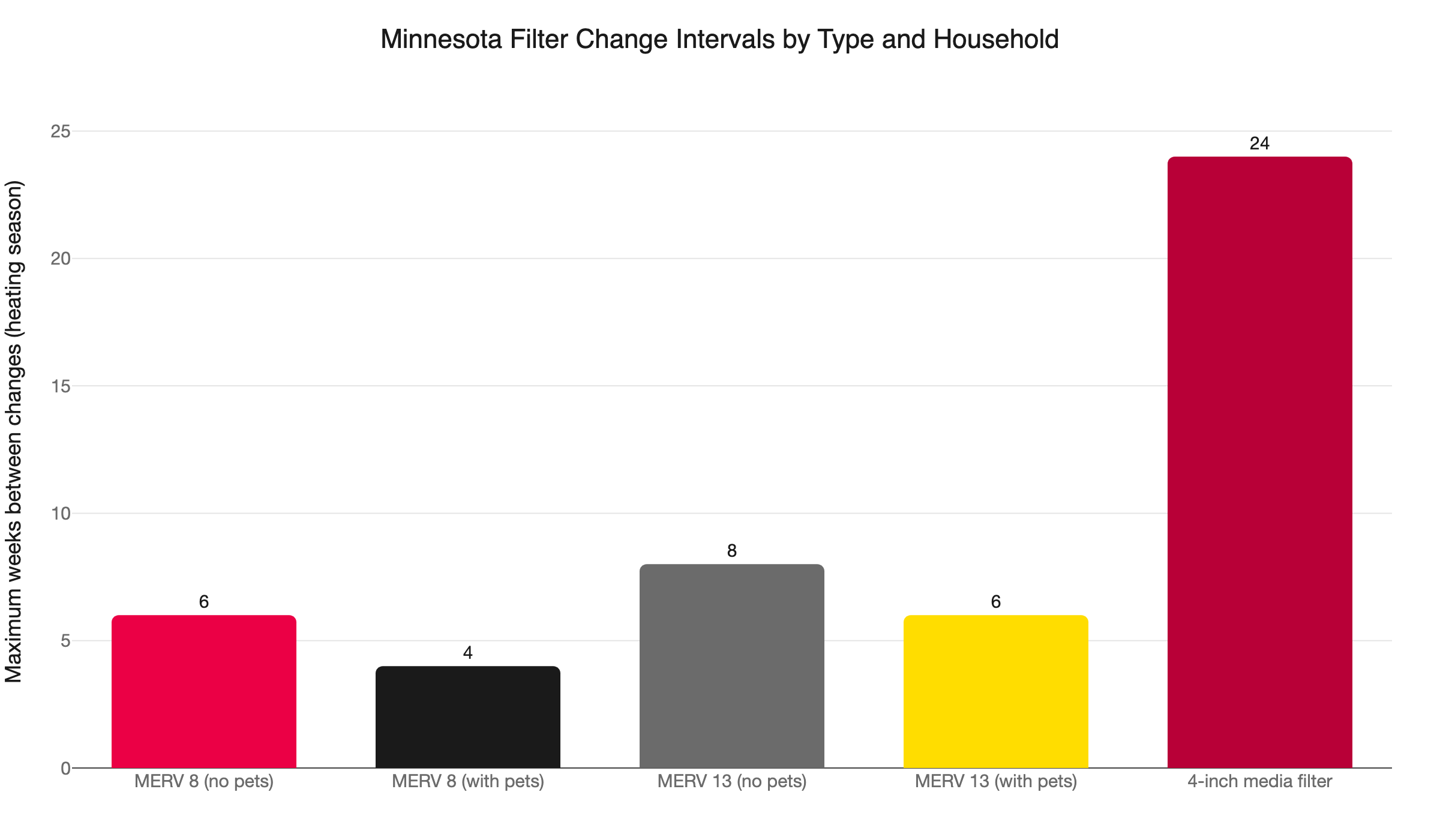
Minnesota Filter Change Intervals by Type and Household
## How Often Should You Change Your Air Filter in Minnesota?
**Short answer:** Change a standard 1-inch filter every 4-6 weeks during the heating season, which runs roughly October through April in the Twin Cities. That is more often than the 60-90 day national recommendation. Minnesota's long winters and sealed-house conditions load filters faster than the averages that guideline is built on.
The right interval is not one number. It shifts based on your filter's MERV rating, whether you have pets, and whether any construction or renovation work is happening in your home. A calendar-based schedule is the floor, not the ceiling. A quick monthly visual check tells you whether the filter has loaded faster than expected. Pull it out and hold it up to a light. If it looks gray and you cannot see light through it easily, replace it regardless of what the calendar says. That check takes two minutes and requires no tools.
## Why Doesn't the "90-Day Rule" Work Here?
**Short answer:** The 90-day rule is calculated for an average U.S. climate where furnaces run 2-3 months per year. Minneapolis runs its furnace for 6-7 months. More run-hours means more air passes through the filter and more particles load into it each week. The math simply does not transfer to our climate.
The Twin Cities sit in [IECC Climate Zone 6A](https://minnesotahvacauthority.com/minnesota-climate-hvac-requirements/), one of the coldest residential climate zones in the country. Minneapolis logs roughly 7,000 to 8,500 heating degree days per year. The 99% heating design temperature is around -16°F. That combination means your furnace is not running occasionally through the cold months. It runs nearly every day from late October through mid-April.
Compare that to a home in a warmer state. Their furnace might run October through December and then idle through winter and spring. That filter accumulates 90 days of relatively light use. Your filter accumulates 90 days of heavy, near-continuous use in about six to seven weeks.
A second factor makes the calendar problem worse: the sealed-house effect. From October through April, Minnesota homes run with windows completely shut. Every particle in your home - pet dander, cooking smoke, skin cells, [dust mites](/blog/how-to-reduce-dust-in-home-hvac-twin-cities/), and renovation debris - recirculates through the same filter with no [fresh outdoor air](/blog/hrv-erv-filter-maintenance-cleaning-minnesota/) to dilute the load. A home in a milder climate that can open windows for several months gets natural particle dilution. Your home does not get that break for six months straight.
Put those two conditions together and a Twin Cities homeowner's filter does twice the work in the same calendar period as a filter in a typical U.S. home. Cutting the national change interval in half is not overcautious. It is the appropriate correction for the climate you actually live in.
## What Is a MERV Rating, and Does It Change How Often You Replace the Filter?
**Short answer:** MERV (Minimum Efficiency Reporting Value) is an [ASHRAE standard](https://www.epa.gov/indoor-air-quality-iaq/what-merv-rating) that measures how effectively a filter traps airborne particles. Higher numbers mean smaller particles get caught. A MERV 13 filter traps more per pass than a MERV 8, but it also restricts airflow faster as it loads, so it needs to be replaced on a tighter schedule.
MERV is the industry-standard rating. FPR (Filter Performance Rating) is a proprietary scale used by Home Depot. MPR (Microparticle Performance Rating) is 3M's system. The three do not convert to each other neatly, so always look for the MERV number when comparing filters.
The [EPA recommends at least MERV 13 for most homes](https://www.epa.gov/indoor-air-quality-iaq/what-merv-rating), or as high as your system fan and filter slot can accommodate. Many homes are installed with MERV 8 filters from the builder. That rating captures larger particles - dust, pollen, mold spores - but lets smaller particles like pet dander and [fine smoke particles](/blog/wildfire-smoke-hvac-indoor-air-quality-minnesota/) pass through into the air you breathe.
A MERV 13 filter is rated to demonstrate at least 50% removal efficiency for the smallest particles in its test range, including PM2.5-range contaminants. The [EPA notes that most furnaces and HVAC systems can handle a MERV 13 without equipment problems, provided the filter is replaced frequently](https://www.epa.gov/indoor-air-quality-iaq/guide-air-cleaners-home). That phrase - "provided it is replaced frequently" - matters. A MERV 13 filter left too long becomes a partial blockage. The finer media loads faster because it is doing more work per cubic foot of air that passes through it.
If you want to go deeper on how air filtration compares to [whole-home air purification](/blog/electronic-air-cleaner-maintenance-minnesota/), our guide to [air purifiers versus filters and MERV ratings](/blog/air-purifiers-vs-filters-merv-ratings-explained/) covers the tradeoffs in detail.
## Your Minnesota Filter Change Schedule
Here is the schedule we recommend for Twin Cities homeowners. These intervals apply during the heating season (approximately October through April). Outside that window, stretching toward the longer end of each range is generally fine, but a monthly visual check is still good practice during the cooling season.
**1-inch pleated filters:**
| Household situation | Recommended interval |
|---|---|
| MERV 8, no pets, no active renovation | Every 4-6 weeks |
| MERV 8, one or more pets | Every 3-4 weeks |
| MERV 13, no pets, no active renovation | Every 6-8 weeks |
| MERV 13, one or more pets | Every 4-6 weeks |
| Any rating, active renovation work | Check weekly; replace when gray |
**4-inch media filters:**
Four-inch media filters are physically much thicker than 1-inch filters. They have far more surface area to collect particles before airflow is meaningfully affected. Replace them every 6-12 months. Even in a pet household, most 4-inch media filters hold up for at least 6 months. Check at the start of heating season and again in January.
**How to read the table:**
The intervals above are guidelines for a typical household. If you have two large dogs, a woodworking shop in the basement, or a family member with asthma or [severe allergies](/blog/hvac-spring-allergy-relief-twin-cities/), use the shorter end of each range. If your home is one adult with no pets in a tightly sealed modern build, the longer end likely applies.
[Industry guidance recommends a monthly visual check during peak heating season](https://www.carrier.com/us/en/residential/hvac-resources/air-conditioners/how-often-to-change-air-filter/) regardless of where you fall on this table. The check takes two minutes. If the filter looks gray rather than white, replace it now.
## Does Having Pets Change How Often to Change Air Filter?
**Short answer:** Yes, significantly. Pet hair and dander are among the heaviest contributors to filter loading in a residential home. One pet means checking the filter every 30 days. Two or more pets means checking every two to three weeks during the heating season.
Pet dander is particularly problematic because the particles are small. A MERV 8 filter captures larger pet hair but allows finer dander particles to pass through into your living space. A MERV 13 filter catches more of the smaller particles, which is one reason the EPA recommends it as the floor for most homes.
The trade-off in a pet household is faster loading. A MERV 13 is doing more work per cubic foot of air, so it fills sooner. Plan on the shorter end of the MERV 13 range: 4-6 weeks rather than 6-8 weeks.
One practical habit helps regardless of filter type: vacuum the area around your return air vent regularly. Pet hair accumulates at the grille and gets pulled into the filter in clumps. Keeping that vent area clean can extend each filter's useful life by one to two weeks. It takes thirty seconds with a vacuum attachment.
Multiple pets compound the load quickly. Two large dogs in a sealed Minnesota home through a full heating season is a reasonable case for upgrading to MERV 13 and checking every two to three weeks. If that feels like a lot of filter changes, [4-inch media filters](/blog/hvac-filter-pets-hair-dander-minnesota/) are worth considering for the longer service interval.
## What Does Renovation Work Do to Your Filter?
**Short answer:** Renovation work - drywall sanding, demolition, subfloor cutting, plaster removal - can clog a 1-inch filter in a day or two. The rule is simple: replace the filter the day the project finishes, not a month later.
Twin Cities homeowners tend to schedule renovation projects in spring and fall. Those seasons overlap with the heating season or the transition out of it, when homes are still sealed or just beginning to open up. All the fine particles from cutting lumber, sanding joints, or removing old insulation go straight into the return air path and onto your filter.
A single weekend of drywall finishing work can deposit enough particles on a 1-inch filter to cut airflow noticeably. When airflow drops, your air handler works harder to move the same volume of air. Energy use goes up and equipment wear accelerates.
If a bigger project is coming, here is a practical approach:
- Buy extra filters before work starts. Having three or four on hand prevents a run to the hardware store mid-project.
- Check the filter at the end of each day of heavy work, including sanding, demo, and spray painting.
- Replace the filter immediately when it looks gray, regardless of how recently you installed it.
- Put in a fresh filter the day the project wraps completely.
- Check again two weeks after the project ends. Fine particles continue to settle for several days after visible construction dust has cleared.
Skipping this step is one of the most common filter mistakes we see. A homeowner does a renovation in September, forgets the filter, and heads into November with a partially blocked system and a furnace running hard against the first cold snap. That is a setup for short cycling and a service call at exactly the wrong time of year.
## What Signs Tell You the Filter Is Done?
**Short answer:** The fastest check is visual. A filter ready to be replaced looks gray rather than white, and light does not pass through it easily when you hold it up. Other signals include weaker airflow from your vents, higher energy bills with no other explanation, and a dusty or stale smell when the furnace kicks on.
You do not need any tools or training to check a filter. Here is what to look for:
- **Color:** A new pleated filter is white or light tan. A loaded filter turns gray. One left far too long turns dark gray or brown. If yours looks dark, it should have been replaced weeks ago.
- **Light test:** Pull the filter out and hold it up to a window or light source. If you cannot see light through it at all, replace it immediately.
- **Airflow at the vents:** Stand near a supply register while the furnace is running. If airflow feels weaker than normal, the filter may be restricting the system enough to affect comfort and efficiency.
- **Smell:** A dusty or stale odor when the heat first kicks on can mean a loaded filter is releasing particles back into the airstream rather than trapping them.
- **Energy bills:** If your heating costs are noticeably higher and nothing else has changed, check the filter. A clogged filter forces the blower to run longer and harder.
- **Short cycling:** If the furnace kicks on, runs briefly, and shuts off before the thermostat reaches the set temperature, a blocked filter may be causing the heat exchanger to overheat and trip the limit switch.
Any of these signs means replacing the filter now, regardless of where you are on the schedule.
## How Does a Clogged Filter Drive Up Your Heating Bills?
**Short answer:** A clogged filter restricts airflow through your system. Your blower motor runs longer and harder to compensate. You spend more energy moving the same heat through the house. In a serious case, the heat exchanger overheats and triggers a safety shutoff, leaving you without heat and facing a repair call.
[Xcel Energy specifically lists air filter changes as a direct energy-saving measure for Minnesota customers](https://newsroom.xcelenergy.com/news/xcel-energy-is-prepared-for-return-of-hot-weather-in-minnesota-MC2VHY6RSVF5AGDFCDOFY2NYXCCI). That is worth noting because it is coming from the utility company, not from an HVAC contractor. They track energy consumption and they know that restricted airflow shows up on your monthly statement.
The mechanical sequence is straightforward. A filter that is 70-80% loaded slows the air moving across the heat exchanger. The heat exchanger gets hotter than designed because the same amount of combustion heat is concentrated in less airflow. Modern furnaces include a high-limit switch that shuts the system down when the exchanger temperature exceeds a safe threshold. The furnace cools, restarts, overheats again, and shuts down again. That cycle is short cycling, and each cycle adds wear to the inducer motor, the igniter, and the blower.
Repeated overheating also accelerates damage to the heat exchanger itself. A cracked heat exchanger is a serious problem. It can allow combustion gases, including carbon monoxide, to enter your living space. Our post on [signs of a cracked heat exchanger in Minnesota](/blog/cracked-heat-exchanger-signs-minnesota/) covers what to watch for before it reaches that point.
The cost comparison is not subtle. A 1-inch pleated MERV 8 filter costs $5-15. A MERV 13 filter costs $15-30. Replacing filters on schedule through a full heating season costs roughly $30-60 total. A heat exchanger repair or early furnace replacement starts in the hundreds and can reach several thousand dollars. Staying on schedule is one of the highest-return maintenance habits a homeowner can build.
## When Should You Call a Pro?
**Short answer:** Call us if your furnace is short cycling, if you pull out a filter that is solid and not just gray, if ice is forming on your equipment, or if you are not sure what filter your system takes. Those are signs the problem has moved past a simple filter swap.
Filter replacement is a straightforward homeowner task. But the problems that can build up from a neglected filter sometimes need professional attention to fully resolve.
If you pull out a completely blocked filter, it is worth having a technician check the system before running it hard through the rest of the heating season. Prolonged airflow restriction leaves residue on the blower wheel and the [evaporator coil](/blog/dirty-evaporator-coil-ac-symptoms-twin-cities/). Replacing the filter clears the bottleneck, but that residue stays put and reduces efficiency. A [furnace tune-up](/heating/heating-equipment/furnaces/furnace-tune-ups/) includes a blower inspection, coil check, and a look at all the components that airflow problems stress. It also gives you a clean baseline to start the next heating season.
If you are not sure what filter your system takes, that is also a quick reason to call. Furnaces are designed for specific filter sizes and MERV ranges. A filter that is too thick for the slot, or one with a MERV rating that restricts airflow beyond what your blower can handle, creates its own problems and can void manufacturer warranties.
Northern One Hour is locally owned and operated in Ramsey, Minnesota, and we serve the full Twin Cities metro. Every service call comes with our on-time promise: "Always On Time… Or You Don't Pay a Dime!(R)".
Call **(763) 260-6662** or book online to schedule [a tune-up](/blog/ac-tune-up-what-is-included-cost-minnesota/) or diagnostic visit. If you want to go beyond the filter and look at the broader indoor air quality picture for your home, our [indoor air quality services](/indoor-air-quality/) page covers [whole-home air purifiers](/blog/uv-light-hvac-air-purifier-worth-it-twin-cities/), [duct cleaning](/blog/air-duct-cleaning-worth-it-twin-cities/), and humidification options that work alongside a good filter to keep your air clean through every season.
---
# Loud AC Noises Meaning: What Each Sound Is Telling You
URL: https://northernonehour.com/blog/why-is-my-ac-so-loud-noises-twin-cities/
Published: 2026-07-29 | Category: Cooling
What banging, screeching, buzzing, and hissing from your AC unit really mean - and when to shut it off immediately versus schedule service this week.
Key Takeaways
- Different sounds point to different failing parts. Matching the noise to the component tells you how fast to act.
- Screeching with warm air from the vents: turn the system off now and call for service. This can signal dangerously high compressor pressure.
- Hissing with any chemical or oily smell: power it down, ventilate the space, and call. Refrigerant leaks are a safety issue, not just a repair.
- Buzzing or repeated clicking that starts this summer often means [a failing capacitor](/blog/bad-ac-capacitor-symptoms-cost-twin-cities/). Caught early, a capacitor runs $195-375 to replace. Ignored, it can destroy the compressor: a $1,950-3,200 job.
- EPA Section 608 makes it a federal violation to handle refrigerant without certification. DIY recharge products can catch fire in systems not designed for them.
- Xcel Energy customers who replace a failing central AC with a qualifying 16 SEER2 unit can claim up to $400 in rebates.
- Call us at (763) 260-6662 or book online.
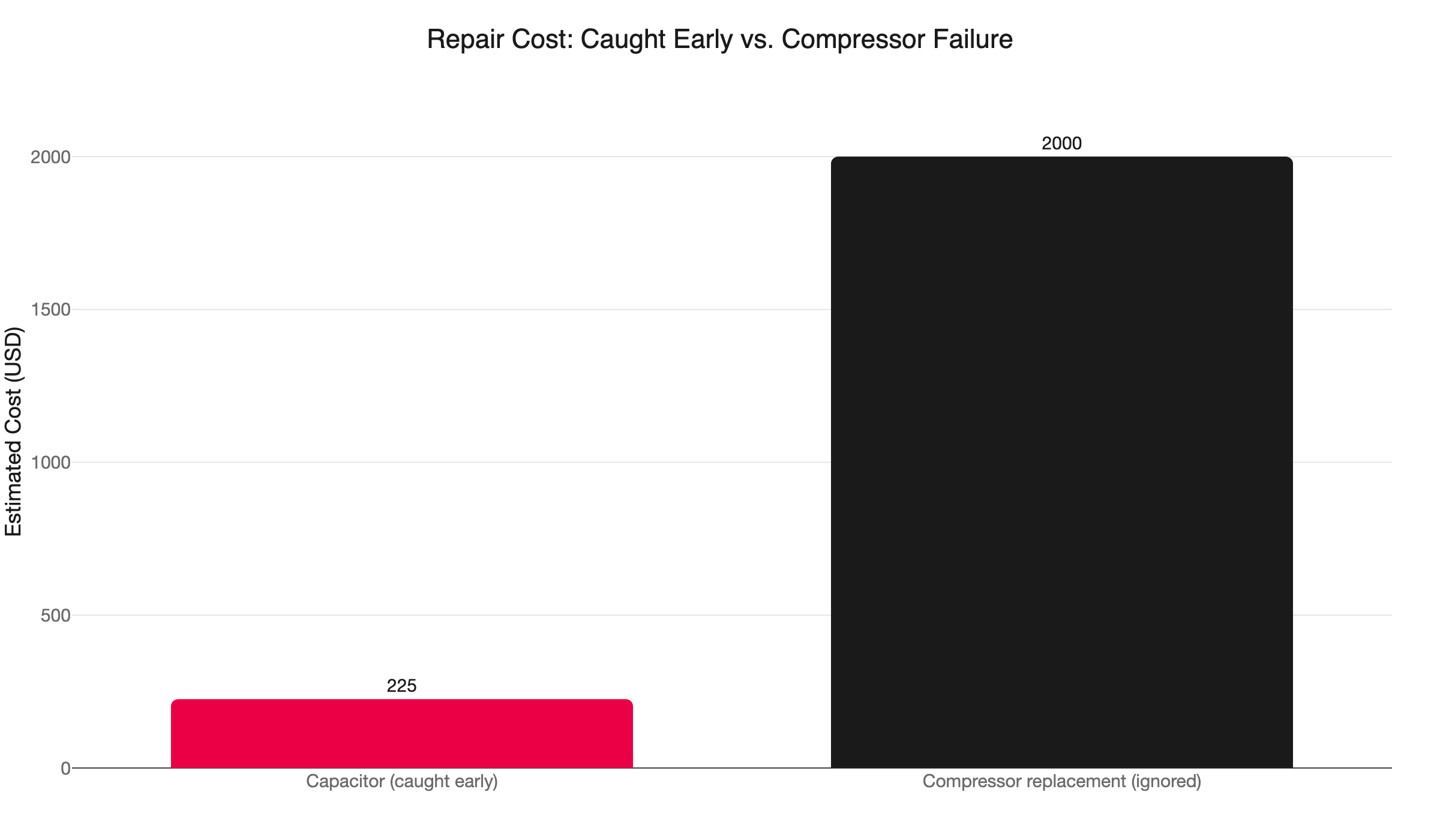
Repair Cost: Caught Early vs. Compressor Failure
## Which AC Noises Mean Turn It Off Right Now?
Two situations call for powering the system off immediately. Screeching combined with warm air from the vents can indicate the compressor is running under dangerously high head pressure. Hissing with any chemical or oily odor signals a possible refrigerant leak. Both are shut-it-off-now situations, not schedule-it-soon ones.
For every other noise in this guide, "call soon" means within 24-48 hours. Not "watch it through another week of 95-degree afternoons."
## What Does Banging or Clanging from Your AC Mean?
Banging or clanging usually means a loose or broken part is striking something it should not be touching inside the blower assembly or the compressor. The louder and more rhythmic the bang, the more urgent the call. This is not a monitor-and-wait situation.
**Inside the blower assembly:** The indoor air handler has a blower wheel that spins to push conditioned air through your ducts. If a blade breaks or the wheel loosens on its shaft, it bangs against the housing on every rotation. This is repairable without replacing the whole unit, but it will not improve on its own. Running a damaged blower accelerates wear on the motor shaft and housing.
**Inside the compressor:** Your compressor has internal pistons, valves, and connecting rods. When a piston pin breaks or an internal component loosens, it produces a deep metal-on-metal bang from the outdoor unit. This is a serious failure. Compressor replacements run $1,950-3,200. On a system over 10 years old, a full unit replacement often makes more financial sense than a compressor swap. Our post on [when to repair versus replace your HVAC system](/blog/repair-or-replace-which-should-you-do-when-your-heating-and-cooling-system-breaks-down/) walks through that decision in detail.
**What to do:** Turn the system off or drop the thermostat setting and call for service the same day. Running a blower with a broken wheel or a compressor with a loose internal part compounds the damage with every cycle.
## What Does Screeching or Squealing Mean?
Screeching almost always points to fan motor bearings or, on older systems, a belt-driven blower. Both are repairable. The exception: screeching combined with no cooling. That combination can signal dangerous compressor pressure, and the system should be turned off immediately.
**Fan motor bearings:** Both the [outdoor condenser fan motor](/blog/ac-condenser-fan-motor-failure-symptoms-cost-twin-cities/) and the indoor blower motor ride on bearings. When those bearings wear out, they produce a high-pitched squeal that often intensifies as the motor heats up. Early-stage bearing wear can sometimes be extended with lubrication, but worn-out bearings need replacement before they seize and take the motor with them.
**Blower belt:** Most systems built in the last 10-15 years use direct-drive motors with no belt. If your system is older, a belt-driven blower may still be in place. A worn, glazed, or misaligned belt squeals much like a worn car accessory belt. It is an inexpensive fix, but a snapped belt stops your cooling entirely.
**The Minnesota startup factor:** Twin Cities AC units sit completely dormant from roughly October through April or May. After five to six months idle, bearings can develop flat spots and belt material can stiffen from cold. A screeching noise in the first week of cooling season sometimes works itself out as the system warms up - but it can also be a bearing that has degraded too far to recover. Worth having a tech evaluate rather than hoping it resolves on its own.
**The safety exception:** Screeching combined with the system blowing warm air or no air is a different situation entirely. That combination can point to a compressor running under abnormally high head pressure - a condition that stresses the entire refrigerant circuit. Turn the system off and call immediately.
## What Does Buzzing or Humming Mean?
A new or worsening buzz is almost always electrical - a failing capacitor, a worn contactor, or loose wiring. These faults do not resolve on their own. Buzzing is a 24-48 hour call, not an emergency shutoff, but it should not run unattended through a heat wave.
**Capacitor:** The capacitor stores and delivers the extra voltage boost that compressor and fan motors need to start under load. When a capacitor begins to fail, it produces a noticeable buzz and the motor may struggle to come on. You might hear a hum followed by a click as the system tries and fails to start, then shuts back down. Capacitor replacement is one of the more affordable AC repairs at roughly $195-375. Left unaddressed, a weak capacitor subjects the compressor to hard-start stress on every cycle. Compressors are not designed for sustained hard starts, and this shortens their life significantly.
**Contactor:** The contactor is a relay that closes to deliver high-voltage power to the compressor when your thermostat calls for cooling. Worn contactor points arc and buzz audibly. A visibly pitted or burned contactor needs replacement before it fails mid-cycle or causes a short.
**Loose wiring or terminals:** Vibration over years of operation can loosen electrical terminal connections inside the disconnect box or air handler. Loose connections arc, create resistance heat, and buzz. They are also a fire risk inside an enclosure that contains refrigerant oil.
**Refrigerant flooding:** A lower-pitched gurgling buzz can sometimes indicate liquid refrigerant flooding back to the compressor suction line. This is less common but can cause compressor damage when sustained over time.
Electrical faults do not self-correct. Schedule service within 24-48 hours.
## What Does Hissing Mean?
Hissing most often signals a refrigerant leak. Turn the system off and ventilate the space if you notice any odor. Refrigerant exposure carries risks including toxicity and, with certain refrigerant types, flammability. This is a call-now situation, not a schedule-this-week one.
**Why a refrigerant hiss is serious:** Refrigerant circulates under pressure. A leak at a fitting, evaporator coil, or refrigerant line produces a hiss as pressurized gas escapes. [According to the EPA](https://www.epa.gov/snap/refrigerant-safety), refrigerant exposure risks include toxicity, potential flammability, and asphyxiation in enclosed or poorly ventilated spaces. The risk is highest when working on pressurized components, but an active outdoor coil leak is not something to leave running.
**The A2L refrigerant transition:** R-410A, found in most residential systems installed before 2025, is in a federally mandated phaseout. New systems use refrigerants classified as A2L - mildly flammable. The safety profile of a refrigerant hiss depends on which refrigerant your system uses. [The EPA has documented cases](https://19january2017snapshot.epa.gov/newsreleases/epa-warning-recharging-air-conditioners-wrong-refrigerant-poses-injury-and-fire-risks_.html) where propane-based DIY recharge products "can catch fire or explode" in systems not designed for flammable refrigerants. One marketer faced a $300,000 civil penalty. The refrigerant circuit is not the place to improvise.
**EPA Section 608 - no DIY option:** Federal law requires EPA Section 608 certification to purchase or handle regulated refrigerants. [There is no Minnesota exemption.](https://minnesotahvacauthority.com/minnesota-hvac-licensing-regulations) A can of refrigerant from an auto parts store is not a legal or safe fix for a leaking line set or evaporator coil.
**What a certified technician does:** A licensed tech locates the leak, repairs or replaces the affected component, and recharges the system with the correct refrigerant using proper recovery and recharge equipment. For context on what the refrigerant transition means for your system, see our post on [R-454B and what the changeover means for homeowners](/blog/ac-refrigerant-change-r454b-what-homeowners-need-to-know/).
## What Does Clicking Mean?
A single click when your AC starts or stops is normal relay operation. Repeated clicking while the system is trying to start, or clicking that continues after startup, points to a problem. Acting on repeated clicking promptly is the difference between a $195-375 repair and a $1,950-3,200 compressor replacement.
**Rapid clicking at startup with no compressor start:** If your thermostat calls for cooling and you hear repeated clicking from the outdoor unit without the compressor coming on, the capacitor is almost certainly the cause. The contactor is closing properly, but the motor cannot start because the capacitor cannot deliver enough starting voltage. This is the most cost-sensitive scenario in this guide. Schedule service the same day.
**Foreign object in the fan:** A twig, cottonwood debris mass, or any object that made it through the condenser grille will produce a rhythmic click as the fan blade strikes it on each rotation. Turn the unit off at the disconnect before inspecting or clearing anything from the cabinet.
**Fan blade damage:** On older units, a fan blade can develop a hairline crack and flex enough at speed to clip the wire cage or housing. This starts as a light tick and worsens with each run cycle. Worth addressing before a blade fragment causes more damage inside the unit.
**Control board relay:** Rapid clicking from inside the air handler near the control board can indicate a faulty relay. Less common, but worth a tech visit if the outdoor unit is not the source.
## What Does Rattling Mean?
Rattling has a wide range: it can be a loose panel screw or a [compressor approaching failure](/blog/ac-compressor-failing-signs-repair-cost-twin-cities/). Location matters. A rattle from the outdoor unit that persists after you rule out debris and loose panels is worth a service call. A [rattle from walls or ceilings](/blog/heat-pump-vibration-noise-transmission-house-minnesota/) is often ductwork vibration.
**Loose panels or fasteners:** Vibration gradually works sheet-metal screws and panel fasteners loose. A rattling access panel is one of the easiest fixes you can handle yourself. Power the system down, tighten any loose screws on the unit panels, and restart. If the rattle stops, you are done.
**Debris in the outdoor unit:** Cottonwood seeds, leaves, twigs, and small branches fall into the condenser through the top grille. A piece of debris strikes the fan blade on each rotation. Power off the unit at the disconnect, remove the top grille if you can do so safely, and clear the debris. Make this part of your annual spring startup routine.
**Ductwork vibration:** If the rattle seems to come from walls, ceilings, or floor registers, the ducts are likely vibrating in their supports. Loose duct joints are a common cause - and those same loose joints mean conditioned air leaking into wall cavities instead of reaching your rooms. A tech can evaluate duct integrity during a service visit.
**A failing compressor:** A compressor near the end of its service life sometimes develops a rattling or clattering quality underneath its normal operating sound. On a system that is already 12-15 years old, this rattle is a signal that internal components are wearing beyond serviceable tolerances. A technician can test compressor efficiency and give you an honest repair-versus-replace read.
## The Cost-Consequence Ladder
Most AC failures do not arrive without warning. They announce themselves through sound, weeks or months before they become complete failures. The financial difference between acting on the signal and ignoring it is significant.
A failing capacitor costs roughly $195-375 to replace. The repair takes under an hour. Left in service, it forces the compressor to hard-start on every call for cooling. Compressors are not built for sustained hard starts. Compressor replacement runs $1,950-3,200. On an aging system, you are often looking at full unit replacement rather than a compressor swap.
A refrigerant leak found early means sealing the leak and recharging the system. Found after the compressor has been running low on refrigerant for weeks - overheating and cycling on thermal protection - the repair bill is substantially higher.
The pattern holds across components. The noise is cheap information. Acting on it is affordable. Replacing what the noise pointed to is expensive.
## Why Twin Cities Summers Are Especially Hard on AC Components
This is not a generic nationwide problem. Minnesota's cooling season runs three to four months, short and intense. [Minneapolis hit an official high of 99°F in July 2026](https://www.startribune.com/twin-cities-mn-hot-weather/601872263), with dew points reaching 81°F and heat index values above 100°F. AC units that were borderline in May become failing units in July.
Two Minnesota-specific factors accelerate this. First, AC systems here sit completely dormant from roughly October through April. Six months of cold followed by a hard restart every spring stresses fan bearings, capacitors, and contactors in ways that systems in warmer climates never experience. Second, the urban heat island effect raises ambient temperatures in denser parts of the metro, meaning compressors in some Minneapolis and St. Paul neighborhoods work harder than the official temperature suggests.
If your system ran nearly continuously during this summer's heat waves, that sustained operation has accumulated wear. The noises showing up now are often components that were marginal at the start of cooling season and have finally crossed the line.
Annual maintenance catches these trends before they become emergency calls. Our guide on [5 maintenance tips to extend your AC's lifespan](/blog/5-maintenance-tips-to-extend-your-acs-lifespan/) covers what a tune-up inspection checks and why it matters specifically in a Minnesota climate.
## When Should You Call an HVAC Technician?
Any time a noise is new, getting worse, or paired with reduced cooling or higher energy bills, call a technician. Some noises mean call today. Others mean schedule within 48 hours. Waiting through a heat wave is how a $250 repair becomes a $2,600 one.
Sounds that mean call today:
- Screeching or squealing combined with warm air from the vents
- Hissing with any unusual chemical or oily smell
- Loud banging or clanging from the outdoor unit
- Repeated clicking at startup without the compressor coming on
Sounds that mean schedule within 48 hours:
- Buzzing or humming that is new or progressively louder
- Clicking at startup that is becoming more frequent
- Rattling from the outdoor unit after you have ruled out debris and loose panels
When you call Northern One Hour, you are calling a locally owned and operated Twin Cities HVAC company. Our technicians are licensed and bonded under Minnesota's mechanical contractor requirements. Every visit is backed by a 100% satisfaction guarantee.
If the diagnostic visit points toward a new system, ask about rebates. [Xcel Energy customers](https://energyrebatecalculator.com/utility/xcel-energy) replacing a central AC with a qualifying unit rated at 16 SEER2 or higher can claim up to $400 back. Catching a failing system early enough to make a planned replacement - rather than an emergency one - is the path to capturing that rebate on your own schedule.
## Ready to Stop Guessing?
A loud AC noise is your system communicating. The translation is usually clear. The urgency varies. But running any of these sounds through another week without a diagnosis is how a $250 repair becomes a $2,600 one.
Call us at **(763) 260-6662** or [schedule a repair visit online](/air-conditioning/air-conditioning-repair/). A licensed technician will diagnose the problem, give you honest pricing upfront, and get your system [back to quiet](/blog/hvac-sound-ratings-quiet-systems-twin-cities/). We are locally owned and operated, and we stand behind every visit: "Always On Time… Or You Don't Pay a Dime!(R)"
---
# Boiler vs. Forced Air Furnace: Minnesota's Honest Breakdown
URL: https://northernonehour.com/blog/boiler-vs-forced-air-furnace-minnesota/
Published: 2026-07-28 | Category: Heating
Northern One Hour breaks down boiler vs. forced air furnace comfort, efficiency, and duct loss - plus what to do when replacement time comes.
Key Takeaways
- Boilers distribute heat through hot water; furnaces push warm air through ducts.
- Forced-air systems can lose 15 to 30 percent of heating energy through duct leakage in unconditioned spaces like attics and crawl spaces.
- Boilers typically last 20 to 30 years; furnaces average 15 to 20 years.
- Upgrading from an 84% to a 97% AFUE boiler saves approximately $1,824 in lifetime energy costs.
- Minnesota's energy code requires 92% AFUE minimum for gas furnaces in new residential construction.
- A federal DOE rule taking effect in late 2028 will require 95% AFUE for all new non-weatherized residential gas furnaces.
- Utility rebates from Xcel Energy, CenterPoint, and Minnesota Energy Resources can meaningfully offset replacement costs.
- For most older Twin Cities homes built around hydronic systems, a boiler-for-boiler replacement is often the most practical and cost-effective path.
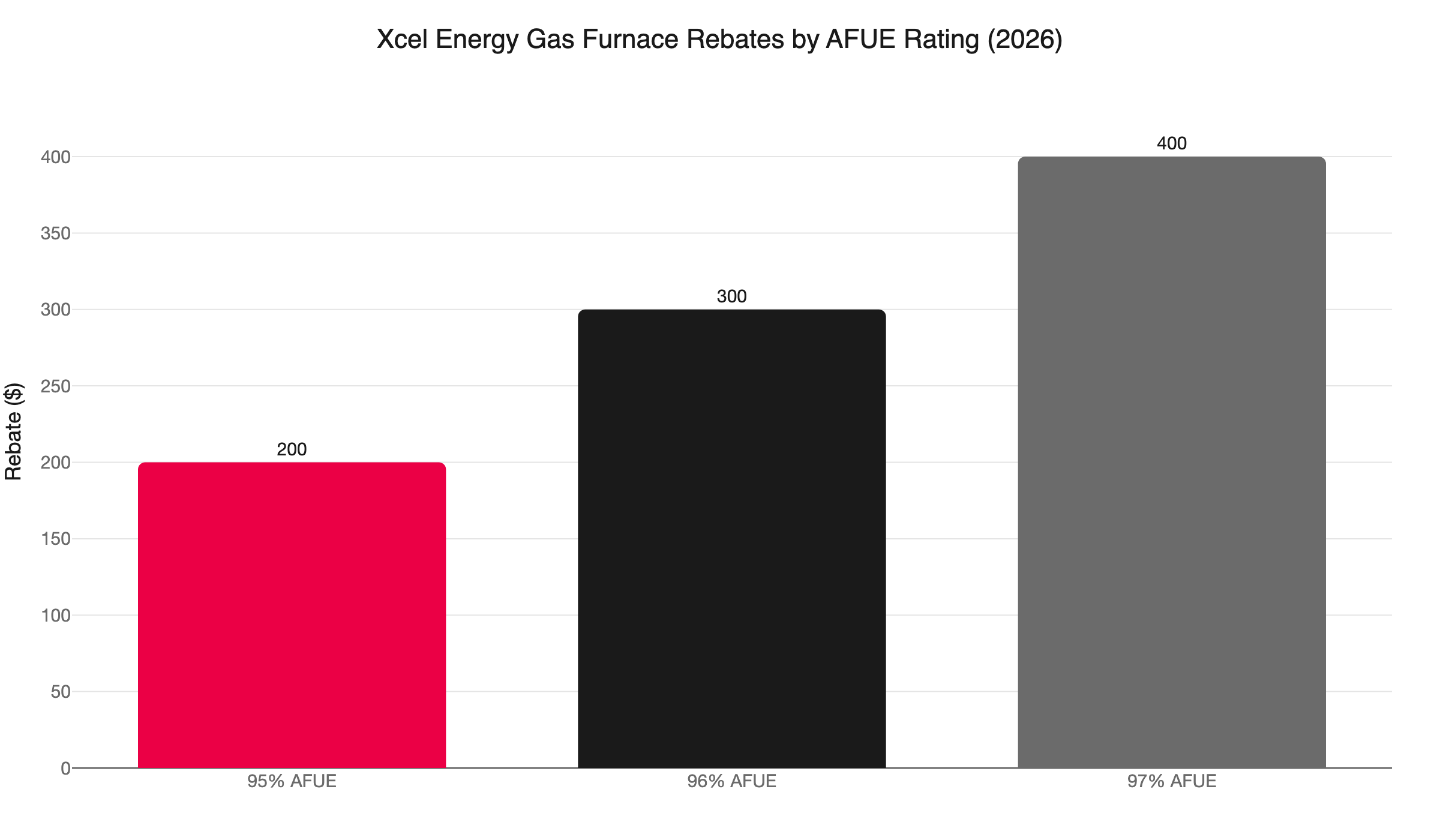
Xcel Energy Gas Furnace Rebates by AFUE Rating (2026)
## What Is the Difference Between a Boiler and a Forced-Air Furnace?
If you are comparing boiler vs. forced air furnace options for your Twin Cities home, start with how each system moves heat. A boiler heats water and pushes it through pipes to radiators or [radiant floor tubing](/blog/radiant-floor-heating-cost-minnesota-homes/). A [forced-air furnace](/blog/air-handler-vs-furnace-whats-the-difference/) heats air and moves it through a duct network to registers in your floors, walls, or ceiling. Both typically run on [natural gas in Minnesota](/blog/propane-furnace-vs-natural-gas-minnesota/). The heat source is similar. The delivery system is completely different.
You can identify your system in seconds. [Cast-iron radiators](/blog/how-to-bleed-air-from-radiators-minnesota/) along exterior walls, or in-floor radiant tubing, means hydronic. Registers with visible ductwork means forced air.
## How Do Boiler vs. Forced Air Furnace Systems Compare on Efficiency?
**Quick answer:** Both systems are rated by AFUE, or Annual Fuel Utilization Efficiency - the percentage of fuel that becomes usable heat. Federal minimums sit at 80% AFUE for gas furnaces and [82% AFUE for gas boilers](https://www.energystar.gov/products/boilers). High-efficiency versions of both reach 96 to 98% AFUE. On paper, they look comparable. In a real home, forced-air systems face a variable that boilers never do: duct loss.
### The duct loss penalty that most efficiency comparisons skip
[Duct leakage through unconditioned spaces reduces delivered heating by 15 to 30 percent in typical homes](https://www.energy.gov/energysaver/minimizing-energy-losses-ducts). In older Twin Cities homes, duct runs through attics, unheated crawl spaces, and cold basements are common. Every foot of duct in an unconditioned space bleeds heat before it reaches the register.
Work through the math. A 96% AFUE furnace with duct runs losing 25% of output delivers roughly 72 cents of heat per gas dollar. An 80% AFUE boiler with sealed copper piping and zero duct loss delivers 80 cents. The boiler with the worse AFUE rating actually heats your home more efficiently in that scenario.
A well-installed furnace with sealed, insulated duct runs in conditioned spaces performs very well. But the honest comparison is not AFUE vs. AFUE. It is delivered efficiency that matters, and boilers have no duct loss in the equation at all.
If you have forced air and suspect ductwork is costing you money, read our breakdown of [what leaky ductwork actually costs homeowners](/blog/duct-sealing-leaky-ductwork-energy-loss/).
### What efficiency gains look like on a boiler upgrade
Pre-1990s boilers often had AFUE ratings as low as 57 to 70%. That means burning nearly a third to almost half of your gas bill on heat that exits through the flue.
[Upgrading from an 84% AFUE boiler to a 90% AFUE unit saves approximately $1,150 in lifetime energy costs](https://www.energy.gov/cmei/femp/purchasing-energy-efficient-boilers). Stepping up to a 97% AFUE boiler saves approximately $1,824 over the equipment's life, based on $0.961 per therm over a 20-year model. [An ENERGY STAR-certified gas boiler saves roughly $780 over its lifetime](https://www.energystar.gov/products/boilers) compared to a non-certified baseline.
These are verified federal figures. Not estimates, not marketing claims.
## Does a Boiler or Furnace Heat a Home More Comfortably?
**Quick answer:** Most homeowners who have lived with both rate boiler heat as more comfortable. Hydronic radiators and radiant floors deliver steady, even warmth without blowing air. Forced-air systems cycle on and off, which creates temperature swings and can produce drafts. Boilers are also quieter and do not push dust or allergens through the air supply.
That said, comfort depends heavily on system condition and design.
Hydronic systems heat from the perimeter, where radiators typically sit along exterior walls. The warmth radiates inward. Heat does not stratify toward the ceiling the way warm air does. Your floors and walls absorb and re-radiate heat slowly, which evens out temperature between cycles.
Forced air can heat very evenly with a well-designed duct layout and proper return placement. A poorly designed system with undersized returns or long runs creates cold spots regardless of how efficient the furnace is.
One important point: boilers do not distribute cooling. If you have a hydronic system and want [central air conditioning](/blog/add-central-air-radiator-hot-water-heat-twin-cities/), you need a separate delivery system. Many Twin Cities homeowners with boiler heat use [ductless mini-splits for summer cooling](/blog/ductless-mini-split-older-twin-cities-homes/). It avoids the cost of adding ductwork to a [home not built for it](/blog/high-velocity-hvac-older-home-no-ductwork-twin-cities/).
## What Does It Cost to Run Each System in a Minnesota Winter?
Running costs depend more on equipment condition, AFUE rating, and duct integrity than on system type alone.
The variables that move the bill:
- **AFUE rating:** A 97% unit of either type beats an 80% unit of either type by a wide margin.
- **Duct condition:** Forced-air only. Leaky runs through attics or crawl spaces add real dollars to [your winter bill](/blog/gas-vs-electric-heat-cost-minnesota/).
- **System age:** Both types degrade over time. A poorly maintained 15-year-old boiler or furnace runs less efficiently than the specs suggest.
- **Thermostat control:** Programmable and smart thermostats reduce runtime on both types.
- **Home envelope:** Insulation, window quality, and air sealing affect how hard the system has to work regardless of type.
The most useful comparison you can get is a measured one: [have your equipment inspected](/blog/boiler-annual-maintenance-what-to-expect-minnesota/), ask about its current operating efficiency, and identify any delivery losses. That is worth more than any chart comparing nominal AFUE ratings.
## The Option Nobody Talks About: Replace Your Boiler in Kind
When a boiler starts showing its age, the conversation often jumps to whether you should convert to forced air. That framing skips the option that is right for most older Twin Cities homes: replace the boiler with a new, high-efficiency boiler.
Converting from hydronic to forced air in a home not built for it means:
- Removing the boiler, radiators, [pumps, piping](/blog/boiler-circulator-pump-failure-signs-cost-minnesota/), and [zone valves](/blog/boiler-zone-valve-failure-symptoms-cost-minnesota/)
- Designing and installing a complete duct network through existing walls, floors, and ceilings
- Patching and repainting throughout the home afterward
- A construction project that can cost as much as or more than the HVAC equipment itself
In older Minneapolis-St. Paul metro neighborhoods - particularly homes built between the 1910s and 1950s in areas like Crystal, Robbinsdale, and Fridley - the architecture was engineered around hydronic systems. The walls have no duct chases. The layout assumes radiant heat. Retrofitting ductwork is invasive in a way that a boiler-for-boiler replacement simply is not.
A new 90% to 97% AFUE boiler on existing piping and radiators gives you modern efficiency, better controls, quieter operation, and a 20- to 30-year life expectancy - without tearing up the house. The system the home was designed for keeps working. You just replaced the heat source.
Our [boiler installation and replacement](/heating/boiler-installation-replacement/) page covers the process in detail, including what to expect from a modern condensing boiler install.
## What Rebates Are Available for Boilers and Furnaces in Minnesota?
**Quick answer:** Utility rebates and federal incentives can meaningfully reduce out-of-pocket costs. Amounts change year to year. Verify current figures directly with your utility before you schedule an install - the numbers in public search results are not always the current program year.
### Xcel Energy
Xcel [offers gas furnace rebates by efficiency tier](https://www.xcelenergy.com/programs_and_rebates/residential_programs_and_rebates/heating_and_cooling): $200 for 95% AFUE, $300 for 96% AFUE, and $400 for 97% AFUE. Xcel's residential boiler rebate program was not confirmed in current public materials. Call Xcel directly to ask about boiler rebate availability before building a number into your project budget.
### CenterPoint Energy
CenterPoint offers up to $400 for 95%+ AFUE gas furnaces. Income-qualified customers may be eligible for up to $1,200. [CenterPoint has a dedicated residential boiler rebate form (CNP1153)](https://www.centerpointenergy.com/en-us/Documents/CIP-Rebate-Forms/CNP1153.pdf). The specific dollar amount was not confirmed in current public materials. Contact CenterPoint directly to confirm.
### Minnesota Energy Resources
[Minnesota Energy Resources offers $350 for a 95% AFUE furnace and $500 for a 97% AFUE furnace](https://www.grayducttechnologies.com/blog/the-big-list-of-minnesota-hvac-rebates-and-how-to-get-them/). Boiler-specific amounts should be confirmed directly with the program.
### Federal tax credits
The 25C Energy Efficient Home Improvement Credit has covered 30% of installed cost, up to $600 annually, for qualifying furnaces and boilers. The current status of this credit is uncertain - one source indicates it expired December 31, 2025; another cites eligibility through 2032 for certain equipment. Check [irs.gov](https://www.irs.gov/credits-deductions/energy-efficient-home-improvement-credit) or speak with a tax professional before counting it in your project math.
### Stacking rebates
Utility rebates and a federal credit are generally stackable. A homeowner replacing an aging boiler with a [97% AFUE condensing unit](/blog/condensing-boiler-upgrade-cost-minnesota/) may qualify for a utility rebate, a federal credit, and a manufacturer's rebate simultaneously. Combined, that can move the needle significantly on total project cost. Northern One Hour can walk through what your specific install may qualify for before you commit.
## What Is the 2028 Federal Furnace Standard?
**Quick answer:** The DOE finalized a rule requiring 95% AFUE for all new non-weatherized residential gas furnaces beginning in late 2028. Most high-efficiency furnaces sold today already meet that minimum. The rule signals where the market floor is headed.
[The DOE projects this standard will save consumers $24.8 billion over 30 years and cut annual utility bills by $1.5 billion](https://www.energy.gov/articles/doe-finalizes-energy-efficiency-standards-residential-furnaces-save-americans-15-billion).
Here is the practical point for homeowners comparing purchases today: a 95% AFUE furnace bought now will be at the legal minimum in 2028. You are buying at the floor, not above it. A 97% AFUE boiler sits above the coming furnace threshold. That alone is not a reason to choose one system over the other. But it is context worth having when you are looking at equipment that will be in your home for the next 20 to 30 years.
## What Does Minnesota's Energy Code Require?
Minnesota falls entirely in Climate Zones 6 and 7 - the coldest classification for residential heating in the continental U.S. [The Minnesota energy code requires a minimum of 92% AFUE for gas furnaces in new residential construction](https://minnesotahvacauthority.com/minnesota-furnace-requirements-and-standards/). The federal minimum of 80% does not apply when state code sets a higher bar.
For boiler replacements, [the Minnesota Department of Labor and Industry (DLI) oversees residential boiler installation and inspection](https://www.dli.mn.gov/workers/boiler-engineer/boiler-codes-and-laws). A replacement boiler requires a mechanical permit. Skipping the permit creates a compliance problem and can complicate insurance claims or future resale.
Northern One Hour handles permit coordination on every boiler and furnace install. You do not manage that paperwork yourself.
## Should You Convert from a Boiler to a Forced-Air Furnace?
Conversion can make sense in specific situations:
- You are doing a major gut renovation and walls are already open. Ductwork cost drops sharply when you are not cutting through finished surfaces.
- You want central air conditioning integrated with your heating system and you are not interested in ductless mini-splits.
- You are adding a significant home addition and hydronic zoning for the new space would be complicated.
Conversion usually does not make sense when:
- The home has no ductwork and is not undergoing major renovations.
- The boiler is in reasonable condition and facing a repair decision, not end of life.
- Budget is a constraint and a boiler replacement costs significantly less than a full conversion project.
A decision framework that works for most homeowners:
1. **Age and condition.** Under 15 years with no major issues: repair. Between 15 and 20 years with [recurring problems](/blog/boiler-expansion-tank-waterlogged-symptoms-minnesota/): assess carefully. Over 20 to 25 years: plan for replacement.
2. **Existing ductwork.** If ductwork already exists, conversion cost is lower. If not, it is a major construction project.
3. **Renovations planned.** If walls are already open for other work, bundling ductwork installation into existing labor changes the math.
4. **Cooling needs.** If central AC is the goal, evaluate whether a ductless mini-split paired with a new boiler might serve you better than full system conversion.
Our post on [when to repair vs. replace your heating and cooling system](/blog/repair-or-replace-which-should-you-do-when-your-heating-and-cooling-system-breaks-down/) walks through this framework in more depth.
For the boiler-specific side, our [boiler repair and maintenance team](/heating/boiler-repair-maintenance/) can look at your current system and give you a straight read on where it stands before you decide anything.
## Boiler vs. Forced Air Furnace: Side by Side
| Factor | Boiler (Hydronic) | Forced-Air Furnace |
|---|---|---|
| Heat delivery | Radiators or radiant tubing | Ducts and registers |
| Duct loss | None | 15-30% in leaky systems |
| Typical AFUE range | 82% to 97% | 80% to 98% |
| Typical lifespan | 20-30 years | 15-20 years |
| AC integration | Separate system required | Integrated with cooling coil |
| Noise level | Quiet operation | Fan cycles audible |
| Air quality impact | No airborne dust | Ducts can circulate allergens |
| MN new construction minimum | Federal 82% | State code 92% AFUE |
## Ready to Talk Through Your Heating System?
The boiler vs. forced air furnace question does not have a single right answer. It has the right answer for your specific home, your budget, and what you actually want from your heating system.
Northern One Hour is locally owned and operated in Ramsey, MN. We serve the Twin Cities metro from Minneapolis and St. Paul to Maple Grove, Plymouth, Blaine, Woodbury, and Bloomington. We work in homes that have run on hydronic heat for 80 years and in new construction with modern high-efficiency forced air. We will look at your system, your home, and your situation, and tell you what we would actually do.
Every appointment comes with the same guarantee: "Always On Time… Or You Don't Pay a Dime!(R)."
Call us at **(763) 260-6662** or [schedule a heating assessment online](/heating/boiler-installation-replacement/). If your boiler needs attention now, our [boiler repair and maintenance team](/heating/boiler-repair-maintenance/) is available for same-day service.
---
# Signs of a Cracked Heat Exchanger: Why It Can't Be Fixed
URL: https://northernonehour.com/blog/cracked-heat-exchanger-signs-minnesota/
Published: 2026-07-28 | Category: Heating
Learn the hard and soft signs of a cracked heat exchanger, understand why patching never works, and find out what Minnesota homeowners should do next.
Key Takeaways
- The heat exchanger is the sealed metal barrier between combustion gases and your home's breathing air.
- Hard signals: a CO reading above 30 ppm, a yellow or flickering burner flame, a furnace fault lockout, visible cracks or soot on the exchanger, or a CO alarm activation.
- Soft signals: headaches that clear when you leave home, an [unusual smell during heating cycles](/blog/gas-smell-furnace-what-to-do-minnesota/), or heavier-than-usual dust near supply registers.
- A cracked heat exchanger cannot be patched. The visible crack is a symptom of metal fatigue spread across the whole stressed region.
- CenterPoint Energy red-tags and shuts off any furnace it finds with a cracked exchanger.
- Minnesota law requires approved CO alarms within 10 feet of every sleeping room.
- Utility rebates from CenterPoint and Xcel Energy can reduce the cost of a high-efficiency replacement.
- Call (763) 260-6662 or book online to schedule an inspection before Minnesota's heating season peaks.
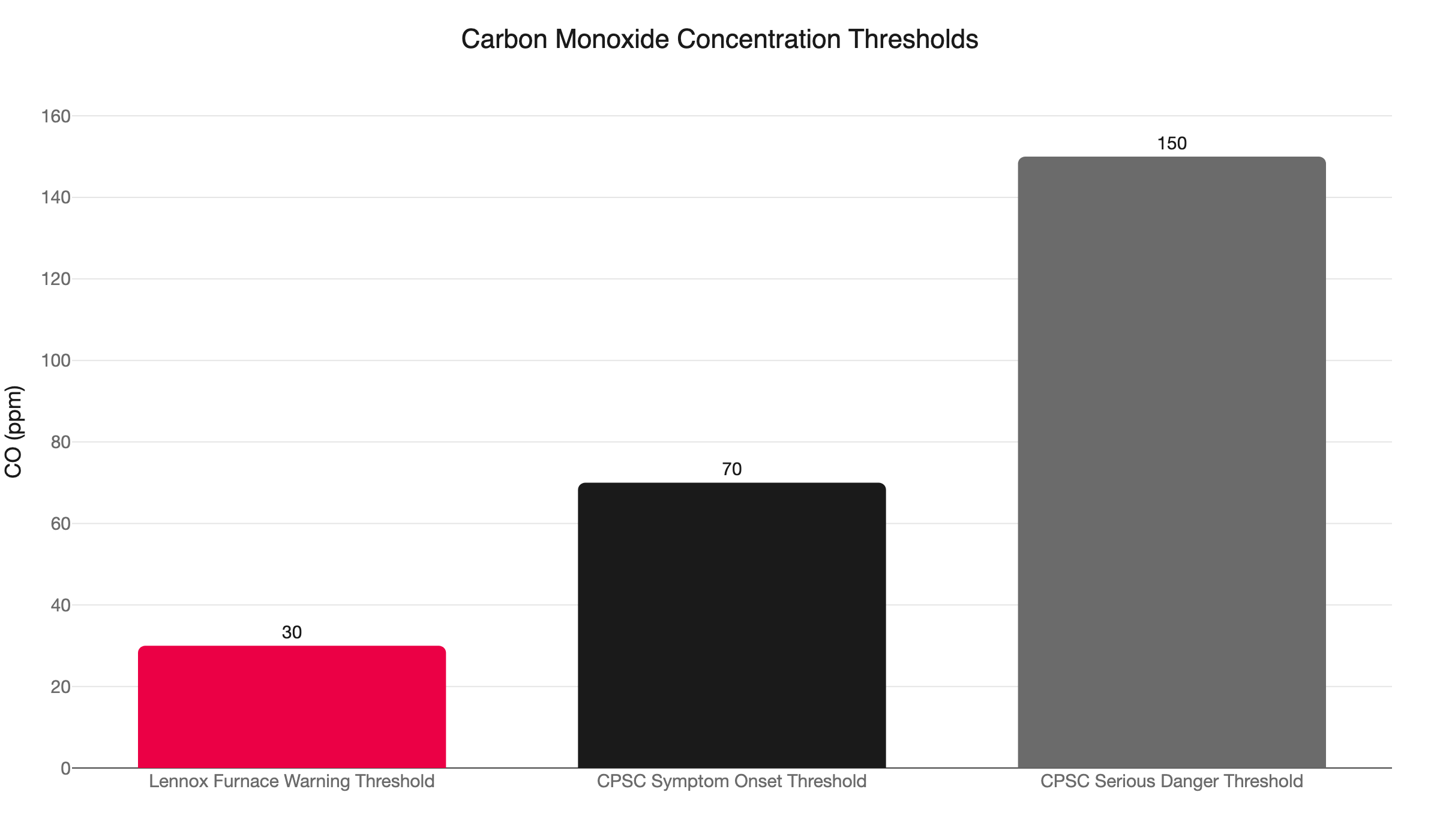
Carbon Monoxide Concentration Thresholds
## What Is a Heat Exchanger, and What Does It Do?
The heat exchanger is the sealed metal chamber at the center of your gas furnace. Combustion gases from the burner flow through it while your home's air flows around the outside. The metal wall between those two streams keeps combustion byproducts, including carbon monoxide, out of your breathing air.
That wall does critical work. A gas furnace burning natural gas produces carbon dioxide and water vapor. If combustion is incomplete, it also produces carbon monoxide. None of those belong in the air your family breathes. The heat exchanger transfers warmth from the combustion side to the air side and contains everything else inside.
Most heat exchangers are made from thin-gauge aluminized steel or stainless steel. They are built for a finite number of thermal cycles. In Minnesota, the heating season runs roughly October through April with sustained sub-zero stretches. Furnaces here rack up far more cycles per year than national design assumptions predict. That accelerated pace is why exchangers crack sooner in cold-climate homes than average-life estimates suggest.
The failure is rarely sudden. A crack develops gradually over years of thermal stress. By the time you notice signs of a cracked heat exchanger, the damage is usually already significant.
## What Are the Signs of a Cracked Heat Exchanger?
Signs divide into two tiers. Hard signals (CO readings above 30 ppm, a yellow burner flame, furnace fault lockouts) demand same-day action. Soft signals (headaches that clear when you leave, unusual odors, extra dust near registers) call for a professional inspection soon. Knowing which is which helps you decide how fast to act.
### Hard signals: act today
**CO detector reading above 30 ppm.** [One major furnace manufacturer flags a reading above 30 ppm](https://www.lennox.com/residential/lennox-life/consumer/furnace-cracked-heat-exchanger) as a potential cracked heat exchanger indicator. [The CPSC puts the symptom-onset threshold at around 70 ppm](https://www.cpsc.gov/safety-education/safety-guides/carbon-monoxide/carbon-monoxide-fact-sheet). The gap between those two numbers is your warning margin. Do not wait for symptoms.
**Yellow or flickering burner flame.** A healthy burner burns steady blue. Yellow or lazy, rolling flames indicate incomplete combustion. This often accompanies heat exchanger damage, because a crack can disrupt pressure inside the combustion chamber.
**Furnace fault lockout mid-cycle.** If the furnace shuts down with a rollout or pressure [fault code](/blog/furnace-error-codes-blinking-light-guide/), a safety control has detected abnormal combustion behavior. That is a hard signal requiring a professional diagnosis.
**Visible crack or soot on the exchanger face.** A licensed technician using a mirror, light source, or combustion analyzer can confirm this directly. Soot staining on the exchanger surface confirms combustion gas has been escaping into the air handler side.
**CO alarm activation.** Leave the house immediately, call 911, and do not re-enter until emergency responders clear the building. A CO alarm activation is not a situation to investigate on your own.
### Soft signals: schedule an inspection
**Headaches, dizziness, or flu-like fatigue without fever.** CO is odorless and colorless. You cannot detect it without a monitor. Mild to moderate exposure produces headaches, fatigue, nausea, and shortness of breath - symptoms that look identical to the flu. If those symptoms clear when you leave the house and return when you come back, that pattern is reason enough for a diagnostic call.
**An unusual smell when the furnace runs.** A working furnace has no noticeable odor during a heating cycle. An [aldehyde-like smell](/blog/smoke-smell-from-furnace-vents-causes-fix-minnesota/) when the heat kicks on can mean combustion byproducts are entering your air stream. This is a soft signal on its own and more meaningful when paired with other indicators.
**Soot or heavier-than-usual dust near supply registers.** When combustion gases bleed into the air handler side, they can carry fine particulates through the ductwork to your registers. If your home seems dustier since heating season started, mention it to a technician.
## How Dangerous Is Carbon Monoxide From a Cracked Exchanger?
Dangerous enough to take seriously, and subtle enough to miss until the situation is serious.
[The CPSC reports](https://www.cpsc.gov/safety-education/safety-guides/carbon-monoxide/carbon-monoxide-fact-sheet) that at 1 to 70 ppm, most healthy people experience no symptoms. Some people with heart disease may feel chest pain at the low end. Above 70 ppm, symptoms become noticeable for most people. Sustained exposure above 150 to 200 ppm can produce disorientation, unconsciousness, and death.
[The EPA notes](https://www.epa.gov/indoor-air-quality-iaq/carbon-monoxides-impact-indoor-air-quality) that CO "can kill you before you are aware it is in your home." Mild cases are routinely misdiagnosed as the flu. Symptoms overlap with so many common illnesses that CO poisoning often goes unrecognized until exposure is severe. Children, elderly adults, and those with cardiovascular conditions are most vulnerable at lower concentrations. Other family members may feel nothing.
That is why a CO detector reading above 30 ppm matters even when you feel fine. The monitor catches what your body has not yet registered. Do not dismiss a low reading as an error.
## Why Can't a Cracked Heat Exchanger Be Patched?
Because the visible crack is not the problem. It is a symptom of metal fatigue that has already spread through the surrounding material. Fixing the one you can see leaves the compromised metal around it untouched.
**The metallurgy.**
Each heating cycle heats the exchanger, which expands. The furnace shuts off and the metal contracts. After thousands of these cycles, the thin-gauge steel work-hardens in the zones under the most strain. Minnesota's long heating seasons accelerate that process beyond what national design assumptions account for. By the time one crack is visible, the surrounding metal is already compromised. A second crack is forming nearby. Patching the first crack does nothing for the metal next to it.
**The listing barrier.**
A heat exchanger is a UL-listed combustion pressure boundary. That listing means it was certified as a sealed unit from the factory. Field-welding or sealing it is not an approved repair under any recognized code. It voids the manufacturer warranty and will not pass a mechanical inspection. In Minnesota, furnace replacement requires a mechanical permit and compliance with the 2020 Minnesota Mechanical Code. A licensed HVAC contractor must perform the work.
**The economics.**
The heat exchanger is the single most expensive component in the furnace. Labor to remove and replace just the exchanger in an aging furnace approaches the cost of a [full unit replacement](/blog/heat-exchanger-replacement-cost-vs-new-furnace-minnesota/). The rest of an aging furnace is typically near end-of-life when the exchanger fails: blower motor, control board, and capacitor all wear on the same timeline. Patching is false economy on two fronts. It fails technically. And even if it held, it preserves an aging system at near-replacement cost.
## Is a Cracked Heat Exchanger a Contractor Upsell?
Sometimes the claim is legitimate. Sometimes it gets oversold. The technical answer does not change regardless of severity: no approved field repair exists for a cracked heat exchanger. A trustworthy contractor shows you the evidence, gives you a combustion analyzer reading, and lets the data make the case.
[A Twin Cities home inspector who has examined thousands of furnaces](https://structuretech.com/qa-heat-exchanger-cracks-and-carbon-monoxide-myths/) puts it directly: a cracked heat exchanger "probably isn't as dangerous as many folks make it out to be, but the furnace (or heat exchanger) still needs replacement." Calling for replacement is not a scam. Fabricating a crack that is not there would be.
The actual CO risk depends on crack size, system airflow, and how much CO incomplete combustion is producing. A hairline crack in a well-balanced draft system may produce minimal bleed. A larger fracture with an aggressive blower can push measurable CO into your living space. Either way, the conclusion is the same: there is no code-approved patch. Replace the furnace.
A professional diagnosis should include a combustion analyzer reading, a description of what the technician found, and a clear explanation of the evidence. If a contractor cannot provide those three things, ask for them before agreeing to anything.
## What Happens When CenterPoint Energy Finds a Crack?
CenterPoint Energy shuts the furnace off at the electrical switch and the gas valve and tags the appliance. The furnace stays off until a licensed contractor completes the replacement and it passes inspection. There is no bypass or workaround.
They take this step because a cracked exchanger "can potentially be a carbon monoxide issue." That is their policy, not a suggestion.
In January, a red-tag means no heat today. That is the strongest argument for a fall inspection. Finding a failing exchanger in October is a scheduled replacement on your terms. Finding one in January is a same-day crisis in sub-zero weather. Our team is locally owned and operated in Ramsey, MN, and we serve the Twin Cities year-round - but we would rather find the problem before it finds you.
## What Does Minnesota Law Require for CO Alarms?
Every single-family home and every multifamily unit in Minnesota must have an approved, operational CO alarm within 10 feet of each room used for sleeping. That is state law under [Minnesota Statutes section 299F.51](https://www.revisor.mn.gov/statutes/cite/299F.51).
An ["approved" alarm](https://www.revisor.mn.gov/statutes/cite/299F.50) under that statute means one certified to UL 2034. It must be hardwired, directly plugged into an outlet without an on-off switch, or battery-powered and wall-mounted.
Most CO alarms carry a manufacturer-rated service life of 5 to 7 years. Check the manufacture date stamped on the back of yours. If you cannot find a date, replace the unit. Alarms past their rated life may not activate reliably.
For a deeper look at [alarm placement](/blog/carbon-monoxide-detector-placement-furnace-boiler-minnesota/), testing intervals, and what to do when one sounds, see our [carbon monoxide safety and furnace season guide](/blog/carbon-monoxide-safety-furnace-season/).
## What Should You Expect From a Professional Inspection?
A licensed HVAC technician checks the heat exchanger using one or more methods. One approach uses a mirror and light source to look for visible cracks or soot. Another uses a combustion analyzer to read CO and oxygen levels in the flue gas. A third is a chemical detection test. Some inspections also include a pressure test. The most thorough approach combines visual inspection and combustion analysis.
The technician also checks the burner flame color, the venting system for [backdrafting or blockages](/blog/exhaust-fans-furnace-backdraft-combustion-air-minnesota/), and CO levels at your supply registers with the furnace running. A register reading significantly above ambient CO levels confirms combustion gas is entering the air stream. These are measurable findings, not guesswork.
If a crack is confirmed, you receive a written diagnosis with the technician's findings. The conversation then turns to replacement options, efficiency tiers, and available rebates. We do not patch heat exchangers. No reputable HVAC contractor does. We will not call for replacement unless the evidence supports it.
Our [emergency furnace repair warning signs guide](/blog/emergency-furnace-repair-warning-signs/) covers other fault conditions that commonly surface during these inspections.
## How Much Does Furnace Replacement Cost, and Can Rebates Help?
A cracked heat exchanger almost always means furnace replacement rather than a component swap. The cost varies by unit size, efficiency tier, and installation complexity. Utility rebates can meaningfully reduce your out-of-pocket number, and they are worth checking before you budget.
Our [furnace replacement cost guide for Twin Cities homeowners](/blog/furnace-replacement-cost-twin-cities/) covers the full range of variables in detail.
CenterPoint Energy (gas) and Xcel Energy (electric) both run Minnesota residential efficiency programs for high-efficiency furnace replacement. Dollar amounts and AFUE tier cutoffs rotate with each program year. Check live figures at [CenterPoint's efficiency programs page](https://www.centerpointenergy.com/en-us/residential/save-energy-money/efficiency-programs-and-rebates?sa=mn) and [Xcel's home rebates page](https://mn.my.xcelenergy.com/s/residential/home-rebates) before finalizing your budget.
The federal energy-efficiency tax credit (IRC Section 25C) may also apply for qualifying high-efficiency furnaces. Verify current eligibility at irs.gov and through the MN Commerce Department's rebate portal. Amounts and phase-in rules change with each program update, so confirm directly rather than relying on what you read last season.
If upfront cost is a concern, ask about financing options when you call us. We offer financing on larger jobs and will walk you through it clearly.
## When Should You Schedule a Furnace Inspection?
Before the problem schedules itself. A September or October tune-up gets a trained technician in front of your heat exchanger, burner, and venting system before Minnesota's winter peaks. Our [fall heating tune-up guide for Twin Cities homeowners](/blog/twin-cities-homeowners-guide-heating-system-tune-up-essentials-for-a-comfortable-fall/) covers what a thorough inspection includes and why each item matters.
[The CPSC recommends annual professional inspection](https://www.cpsc.gov/Newsroom/News-Releases/2006/CPSC-Warns-Of-Hazards-from-Furnaces-Space-Heaters-and-Fireplaces) of all fuel-burning appliances, including furnaces. An annual tune-up satisfies that standard and puts a licensed set of eyes on the exchanger every season.
If your furnace is 15 years old or older, schedule a standalone inspection. The same applies if you are [buying or selling a home](/blog/hvac-checklist-buying-home-minnesota/). Exchangers most commonly fail on older units. The older the furnace, the more the economics favor replacement over repair.
If you notice soft signals between scheduled appointments, call us rather than waiting for your next tune-up. Soft signals are not emergencies. They are a request for an inspection before they become one.
## Call Northern One Hour Before Winter Makes the Decision for You
If you recognized any hard signals in this post today, do not wait for a maintenance window.
**Call (763) 260-6662 or book online.** We are locally owned and operated in Ramsey, MN, and we serve Minneapolis, St. Paul, Blaine, Maple Grove, Plymouth, Brooklyn Park, Woodbury, and communities throughout the Twin Cities.
We will give you a straight diagnosis: what we found, what it means, and what your options are. No guesswork, no pressure. Our promise stands on every call: "Always On Time… Or You Don't Pay a Dime!(R)"
A fall inspection is a minor investment. An emergency replacement in a frozen house is not. Let us find the problem before the temperature does.
---
# How Long Do HVAC Systems Last? Your Twin Cities Guide
URL: https://northernonehour.com/blog/how-long-do-hvac-systems-last-in-minnesota/
Published: 2026-07-28 | Category: HVAC
Minnesota winters shorten HVAC lifespans below national averages. Real lifespan ranges by system type, the repair-vs-replace formula, and 2026 rebates.
Key Takeaways
- Central AC in the Twin Cities typically lasts 12 to 17 years with average maintenance. That is shorter than the national benchmark due to freeze-thaw stress and summer humidity.
- Gas furnaces hold up 15 to 25 years. They are sheltered indoors and do not face the same outdoor stress.
- Heat pumps last 10 to 15 years in Minnesota because they run year-round in both heating and cooling modes.
- Boilers, common in older Twin Cities homes, last 15 to 30 years with proper maintenance.
- Use the Rule of 5000: multiply your system's age by the repair quote. Above $6,500, replace.
- Pre-2010 systems likely run on R-22 refrigerant. Production is banned. Major repairs on these units rarely make financial sense.
- Federal 25C and 25D tax credits expired December 31, 2025. Utility rebates from Xcel and CenterPoint remain, up to $3,100 combined on a qualifying dual-fuel heat pump setup.
- Annual tune-ups are the highest-leverage move for extending any system's life.
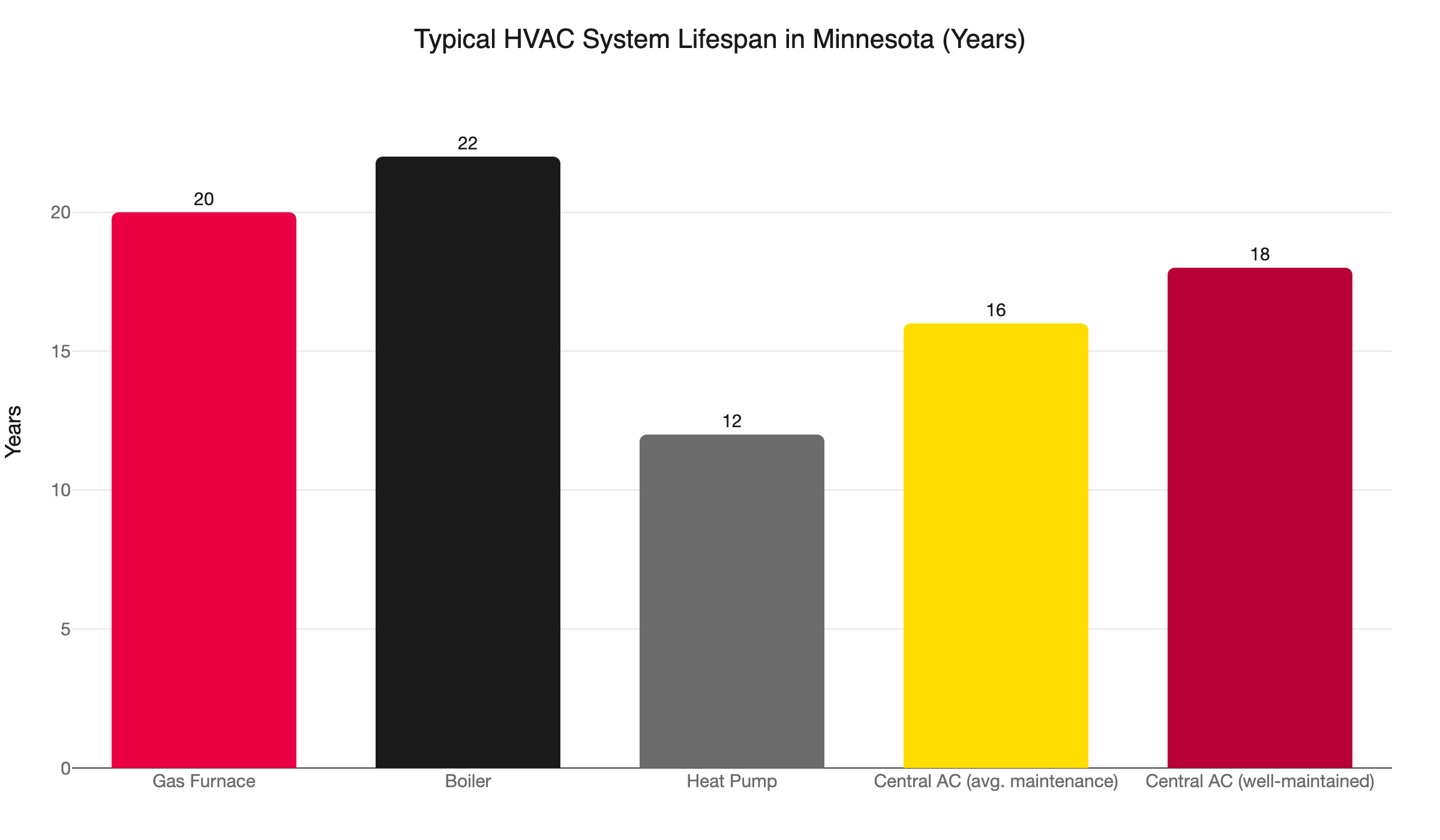
Typical HVAC System Lifespan in Minnesota (Years)
## How Long Do HVAC Systems Last in the Twin Cities?
How long do HVAC systems last is a question with a regional answer. [National benchmarks from [manufacturers like Bryant](/blog/twin-cities-hvac-brand-comparison-trane-carrier-lennox/)](https://www.bryant.com/en/us/products/how-long-do-hvac-systems-last/) put central AC at 12 to 15 years, heat pumps at 10 to 15 years, and furnaces at 15 to 25 years. Those numbers are accurate as far as they go. They just do not go far enough for our climate. Minnesota's freeze-thaw cycle, humidity swings, and cottonwood season age outdoor equipment faster than most of the country. The result is a gap between the national benchmark and the real lifespan you can expect here.
This guide covers realistic ranges for every system type, the specific ways our climate shortens those ranges, and the decision rules for knowing when to repair versus replace.
## Why Minnesota Winters and Summers Age Your Equipment Faster
Our climate does something most national guides ignore. The freeze-thaw cycle is the quiet killer for outdoor AC equipment.
Here is how it works. Moisture collects in the condenser's base pan and between the fins on the coil. When that water freezes, it expands. The expansion warps aluminum fins and stresses copper refrigerant lines. Your AC then sits idle for six months in sub-zero conditions before the cycle repeats in spring.
[Minneapolis averages 13 nights per year below 0°F](https://genzryan.com/blog/heat-pump-installation-minnesota/), with the coldest nights reaching -15°F to -20°F. That kind of temperature swing, repeated season after season, takes a real toll on any condenser that was not designed to run through it.
Summer brings its own stressors. Minnesota's humidity swings push cooling systems harder than a drier climate would. Then there is cottonwood season. Every May and June, cottonwood seeds drift into condenser coils and pack them tight. They act like a blanket, trapping heat and forcing the compressor to run hotter and longer. Clearing them takes a few minutes with a garden hose. Leaving them for a full season shortens compressor life measurably.
[Research specific to Minnesota AC systems](https://midlandhtg.com/how-long-does-an-ac-actually-last-in-minnesota/) found that by year 12, many units here are operating at only 80 to 85% of their original efficiency. Energy bills creep up before any obvious failure signal appears. The national ASHRAE benchmark for central AC is 15 to 20 years. The Twin Cities functional tipping point is 12 to 15 years.
## How Long Does a Furnace Last in Minnesota?
**A well-maintained gas furnace lasts 15 to 25 years in Minnesota.** Furnaces are sheltered indoors and do not face the freeze-thaw stress an outdoor condenser does. That is why they consistently outlast their cooling counterparts by a meaningful margin.
The lifespan shorteners for furnaces are different from AC. A consistently dirty filter makes the heat exchanger work harder and run hotter over time. Short-cycling - rapid on-off firing cycles - wears the igniter and limit switch faster than steady operation. A cracked heat exchanger is both a safety issue and typically a signal that the unit is near end-of-life.
Watch for these warning signs as your furnace ages:
- Rising energy bills with no change in how you use the system
- Difficulty holding setpoint temperature on the coldest January nights
- Short-cycling or a furnace that runs constantly and still falls short of the thermostat setting
- Unusual sounds: banging, rattling, or grinding that were not present before
- Yellow or flickering pilot flame instead of a steady blue
If your furnace is approaching 15 years and showing two or more of these, get a professional assessment [before the next heating season](/blog/best-time-to-replace-furnace-and-ac-twin-cities/) begins. Waiting until January for a furnace that is already sending signals is a gamble in our climate. An honest diagnosis now gives you time to make a planned decision rather than an emergency one.
## How Long Does a Central AC Last in Minnesota?
**In the Twin Cities, expect 12 to 17 years depending on maintenance level and installation quality.** That is a real haircut from the 15 to 20-year national benchmark.
[Minnesota-specific data breaks this down by maintenance level](https://midlandhtg.com/how-long-does-an-ac-actually-last-in-minnesota/):
- **Well-maintained, properly sized:** 17 to 20 years
- **Average maintenance:** 15 to 17 years
- **Minimal maintenance or poor installation:** 10 to 12 years
- **High humidity exposure plus heavy summer use:** 12 to 15 years
A 30-year AC in Minnesota is technically possible but extremely rare. Those units belong to homeowners who performed meticulous annual maintenance and kept the thermostat at a conservative 78 degrees throughout. For most households, that is not realistic.
The single best investment in AC longevity is a [professional spring maintenance visit](/air-conditioning/air-conditioning-maintenance/) before cooling season starts. A technician cleans the evaporator and condenser coils, verifies refrigerant charge, inspects electrical connections, and clears the condensate drain. Each of those tasks catches a small problem before it cascades into a mid-July failure. Getting ahead of it in May costs a fraction of what an emergency call costs in August.
## How Long Do Heat Pumps Last in Minnesota?
**Plan on 10 to 15 years for a heat pump in the Twin Cities.** That is shorter than a gas furnace for a specific reason. Heat pumps run year-round in both heating and cooling modes. [That double-duty means heat pumps generally age faster than a gas furnace that only heats](https://www.srheatingcooling.com/blog/how-long-should-my-furnace-and-heat-pump-last/). More run hours over the same calendar period equals more accumulated wear.
The technology has improved significantly. Modern cold-climate units [maintain meaningful heating capacity down to -13°F to -22°F](https://genzryan.com/blog/heat-pump-installation-minnesota/). That changes the calculation for Twin Cities homeowners who previously ruled heat pumps out entirely based on older performance assumptions.
A dual-fuel setup can also reduce wear and extend heat pump life. In this configuration, the heat pump handles heating down to a set outdoor threshold. A high-efficiency gas furnace takes over below that point. [CenterPoint Energy's dual-fuel program](https://www.centerpointenergy.com/en-us/residential/services/home-service-plus/learning-center/how-to/do-heat-pumps-work-in-minnesota?sa=mn) requires a 92%+ AFUE furnace paired with a 40°F switchover point. The furnace carries the most punishing cold. The heat pump handles the shoulder-season load. That division reduces compressor hours during the most extreme cold and can meaningfully extend heat pump service life.
## What About Boilers?
**Boilers last 15 to 30 years with proper care.** They are common in older Twin Cities homes and tend to be durable because they have fewer moving parts than a forced-air system. There is no blower motor, no filter bank, and no evaporator coil to maintain.
The lifespan shorteners for boilers are sediment buildup, poor water chemistry, and skipped annual service. A boiler that has missed several years of maintenance is not going to reach 30 years. Annual inspection clears sediment, checks pressure relief valves, and catches small leaks before they become structural problems. If you have a boiler and have not had it serviced in the last two years, scheduling that now is worth doing.
## What Is the Repair-vs-Replace Tipping Point?
**Apply the Rule of 5000: multiply your system's age in years by the repair estimate in dollars. Above $6,500, replacement is the smarter call.** Below $6,500, repair is often worth it.
A concrete example: a 12-year-old AC needing a $500 repair = 12 x 500 = $7,800. Replace. A 5-year-old unit with the same repair = 5 x 500 = $3,200. Repair.
A second check is the 50% rule. [If the repair estimate exceeds 50% of what a new system costs, replace](https://schwantesheating.com/hvac-repair-vs-replace-calculator-step-by-step-decision-guide/).
A quick age-bracket guide:
- **Under 10 years:** Repair is often viable. The equipment has meaningful life ahead.
- **10 to 15 years:** Borderline. Run both rules before committing to a repair.
- **Over 15 years:** Replacement is generally recommended, especially if efficiency has declined or the system uses R-22 refrigerant.
The efficiency gain from replacing is real. A new SEER2 14 to 15 system [cuts cooling costs 20 to 40%](/blog/ac-short-cooling-season-replacement-payback-minnesota/) compared to an aging SEER 8 unit. That savings offsets a meaningful portion of the replacement cost over time. Our [repair-or-replace guide](/blog/repair-or-replace-which-should-you-do-when-your-heating-and-cooling-system-breaks-down/) walks through the full framework with additional scenarios.
## The Refrigerant Factor: What R-22 and R-410A Mean for Your Decision
If your AC was installed before 2010, it almost certainly runs on R-22 refrigerant, also called Freon. [R-22 production was banned](/blog/r22-freon-phase-out-older-ac-minnesota/) in 2020. Recycled supply still exists, but the cost has skyrocketed. Supply is finite and shrinks every year.
The practical impact: a refrigerant leak in an R-22 system costs far more to repair than a leak in a current-refrigerant unit. Adding refrigerant is not a fix anyway. It is a patch on a system that is losing charge through a leak somewhere. Major repairs on R-22 systems rarely pencil out. The refrigerant cost alone often closes the case for replacement.
R-410A, which replaced R-22 in most systems installed between 2010 and 2025, is now entering its own phase-down. The new refrigerant standard is R-454B. Our post on [the AC refrigerant change to R-454B](/blog/ac-refrigerant-change-r454b-what-homeowners-need-to-know/) explains what is coming and what to ask for when you replace your next system.
## What Rebates Are Available in Minnesota in 2026?
**Federal HVAC tax credits expired December 31, 2025.** The 25C and 25D credits were eliminated by the One Big Beautiful Bill Act, signed July 4, 2025. They previously offered up to $2,000 for heat pumps and $600 for central AC. Equipment installed in 2026 does not qualify. Some older websites still display the pre-2025 credit amounts and may not have been updated. Verify any federal credit claim directly against current IRS guidance before making financial decisions based on it.
State and utility rebates remain active:
- **Xcel Energy:** Up to $2,000 for qualifying cold-climate heat pumps, plus a $600 insulation bonus.
- **CenterPoint Energy:** $1,100 for a ducted heat pump in a qualifying dual-fuel setup. Requires a 92%+ AFUE furnace and a 40°F switchover point. Does not cover full-electric or [mini-split-only](/blog/ductless-mini-split-maintenance-cleaning-minnesota/) replacements.
- **Both utilities:** Stack Xcel and CenterPoint on a qualifying dual-fuel system for up to $3,100 combined.
- **Minneapolis residents:** Up to $14,000 in additional city rebates can layer on top of utility rebates.
- **Minnesota Energy Resources customers:** $500 furnace rebate; $400 for HRV or ERV installation.
Rebate programs change. Our [Minnesota heat pump rebates and tax credits guide](/blog/minnesota-heat-pump-rebates-tax-credits/) tracks the current landscape. Verify amounts directly with your utility before you sign any installation contract.
## How Can You Extend Your System's Lifespan?
**The single highest-leverage move is annual professional maintenance.** That is true for every system type. Everything else is a supporting role.
For your AC:
- Replace or clean filters every one to three months during cooling season.
- Clear cottonwood and debris from the condenser coil each May before the first hot stretch. A garden hose works fine.
- Keep two feet of clearance around the outdoor unit on all sides.
- Schedule a professional spring tune-up before the cooling season starts. Do not wait until the first 90-degree day.
- If you have a heat pump, do not skip the fall inspection. Heat pumps run year-round and need twice-a-year attention.
For your furnace:
- Annual tune-up in the fall, before heating season. A technician cleans the burners, inspects the heat exchanger, tests safety controls, and checks the flue for obstructions.
- Check filter condition monthly. A clogged filter is the most common cause of avoidable furnace problems and the easiest to prevent.
- Test carbon monoxide detectors at the start of each heating season. A cracked heat exchanger is a silent safety risk.
For any system:
- Know your installation year. It is on the data plate on the equipment. If you [bought the home](/blog/hvac-checklist-buying-home-minnesota/) without knowing the system age, a technician can [decode the serial number](/blog/how-to-find-hvac-system-age-manufacture-date-minnesota/) during a service call.
- Keep a service log. A documented maintenance history makes the repair-vs-replace conversation faster and gives you data to negotiate with if a contractor recommends replacement.
- Do not wait for failure. A system that is showing efficiency decline and occasional hiccups at year 12 is telling you something. A proactive conversation now costs a lot less than a midnight emergency call in February.
## What Signs Mean Your HVAC System Is Done?
**Age combined with two or more of the following signals usually points to replacement, not another repair.**
- Energy bills climbing with no change in how you live in the home. A declining system works harder for the same output.
- Uneven temperatures throughout the house, regardless of what the thermostat says.
- More than one significant repair in the same season. One repair is maintenance. Two or three in a year is a trend.
- Unusual mechanical sounds: banging, rattling, screeching, or grinding that were not present in prior seasons.
- Humidity the system can no longer control in summer. An AC that is not dehumidifying is often worn out, oversized, or undersized.
- The system is over 15 years old and uses R-22 refrigerant. That combination almost always makes replacement the right financial call, even before a major failure.
No single signal is a verdict on its own. Two or three together, on a system past its midpoint, usually is.
## How Long Do HVAC Systems Last? Find Out Where Yours Stands
The range is real. A well-maintained gas furnace can push 25 years. An AC running on deferred maintenance through a tough Minnesota summer might check out at 10. Age is one signal. Maintenance history, refrigerant type, efficiency trend, and repair cost together tell the full story.
We are locally owned and operated in Ramsey, MN. Our team knows what Twin Cities winters do to this equipment, and we give you a straight answer, with the numbers behind it, so you can decide with confidence rather than guessing.
Call us at **(763) 260-6662** or book online. We live by "Always On Time… Or You Don't Pay a Dime!(R)" - and that starts with showing up when we say we will.
---
# HVAC Zoning System for a Two-Story Home: Twin Cities Guide
URL: https://northernonehour.com/blog/hvac-zoning-systems-two-story-homes/
Published: 2026-07-28 | Category: HVAC
Two-story Twin Cities homes run 8-12\u00b0F hotter upstairs. Learn how HVAC zoning systems and mini-splits fix it, plus 2026 rebates up to $4,600.
Key Takeaways
- In a two-story Twin Cities home, upstairs rooms commonly run [8-12°F warmer](https://www.trane.com/residential/en/resources/blog/help-house-hot-upstairs-cold-downstairs/) than the main floor during summer.
- An HVAC zoning system uses motorized dampers and individual thermostats so each floor controls its own temperature independently.
- The most common zoning install - a bypass duct - can freeze your evaporator coil in summer and crack your heat exchanger in winter.
- Proper damper zoning requires variable-capacity equipment, no bypass duct, and carefully sized zones.
- A cold-climate ductless mini-split for the upper floor is often the cleaner solution when existing equipment is single-stage.
- Xcel Energy rebates and the 2026 federal IRA tax credit can offset a cold-climate mini-split install by up to $4,600.
- Minnesota requires a mechanical permit for any zoning retrofit. Your contractor must be bonded with MN DLI.
- Call (763) 260-6662 to schedule a free consultation and load calculation.
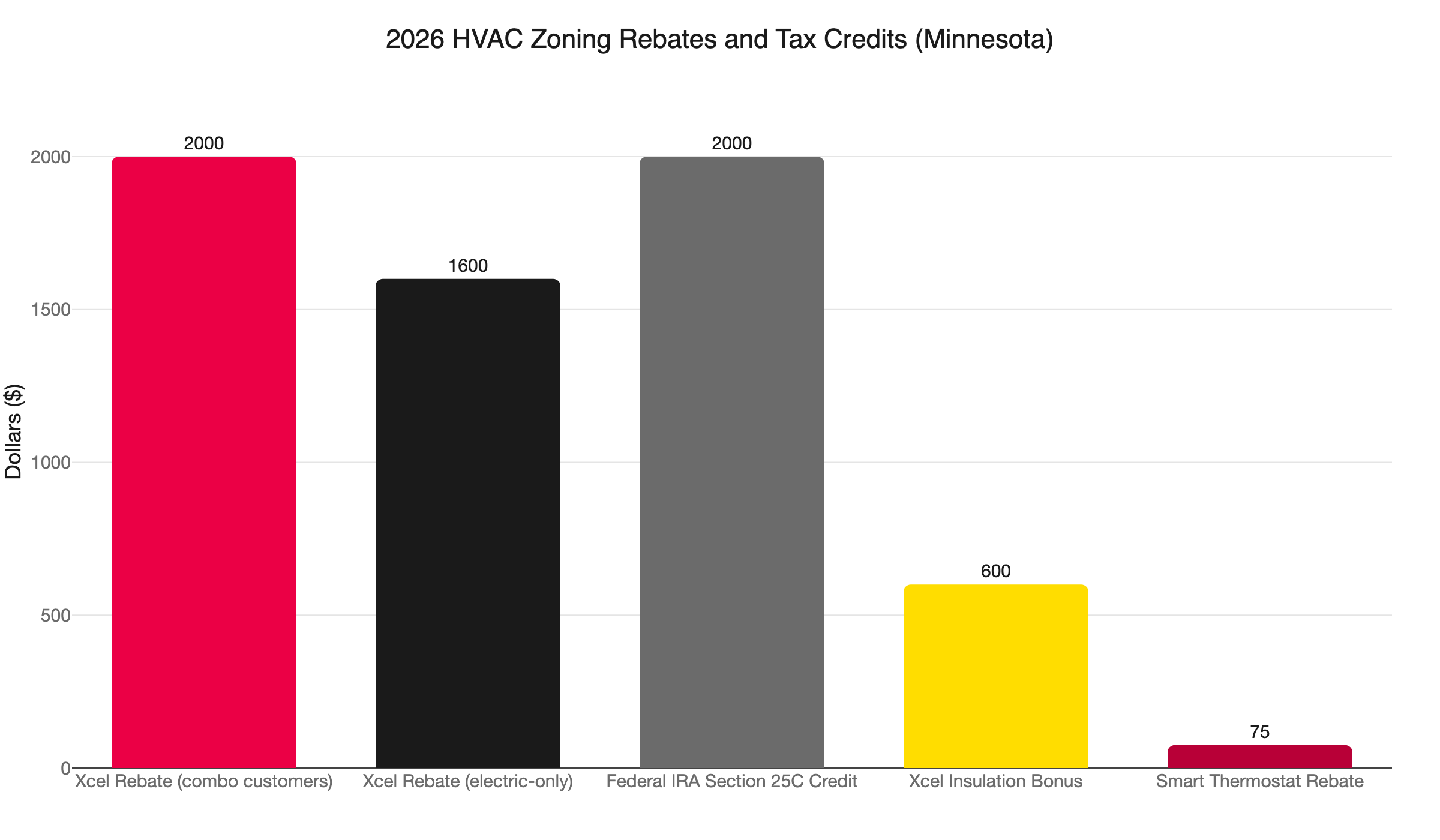
2026 HVAC Zoning Rebates and Tax Credits (Minnesota)
## Why Does Your Upstairs Get So Hot in Summer?
Warm air rises. [Your thermostat sits downstairs](/blog/thermostat-location-placement-hvac-accuracy-minnesota/) and shuts the AC off once the main floor cools. The upper floor never catches up. [Research from Trane](https://www.trane.com/residential/en/resources/blog/help-house-hot-upstairs-cold-downstairs/) shows upstairs rooms commonly run 8-12°F warmer than the main floor during summer in a two-story home. That gap makes sleep difficult and energy bills higher.
In a Minnesota summer, the upper floor also holds humidity. The AC delivers dehumidification when it runs, but it runs only until the downstairs setpoint is met. The upper floor stays sticky and warm long after the main floor feels comfortable.
Minnesota winters flip the problem. Heat pools upstairs while the ground floor stays cool. The furnace satisfies the downstairs thermostat and shuts off. Bedrooms overheat. Some homeowners crack a window in January just to cool down while the furnace is still running.
[Minnesota sits in IECC Climate Zone 6A](https://minnesotahvacauthority.com/minnesota-hvac-ductwork-considerations/) with roughly 8,300 annual heating degree days. Our winters put extreme stress on forced-air systems that are not sized and balanced correctly. Getting temperature distribution right is not a luxury here. It is a comfort and equipment longevity issue.
The solution is separating your home into independently controlled temperature zones. That is what an HVAC zoning system does.
## How Does an HVAC Zoning System Work?
An HVAC zoning system uses motorized dampers in your ductwork, a zone control board, and individual thermostats for each zone. When one zone calls for cooling, its dampers open and other zones restrict. Each floor reaches its own setpoint without fighting the other.
In a two-story home, the most common setup is a two-zone system: main floor and upper floor. Each has its own thermostat and its own setpoint. The zone control board coordinates damper positions and signals the equipment when to run and when to stop.
Done correctly, this solves the temperature gap without replacing your entire system. The catch is in those two words: "done correctly." Most budget installations cut corners that cause real equipment damage over time. The bypass duct is the most common of those corners.
## The Bypass Duct Problem: What No One Warns You About
Most low-cost zoning installations include a bypass duct. It is the single most common cause of equipment damage in zoned residential HVAC systems.
Here is the physics. When one zone closes its dampers, the blower still pushes its full rated airflow. [Pressure builds in the supply plenum](/blog/closing-hvac-vents-unused-rooms-myth-twin-cities/). The most common "fix" is a bypass duct: a pipe that routes excess air from the supply side back to the return side. The air re-enters the system already conditioned and cycles through again and again.
[Energy Vanguard](https://www.energyvanguard.com/blog/to-zone-or-not-to-zone-and-how/), a respected building science authority, identifies two serious failure modes from this setup:
- **In summer:** Restricted airflow across the evaporator coil drops refrigerant temperature below the dew point. Ice forms. Cooling stops until the coil thaws. If you have seen [ice on your evaporator coil](/blog/frozen-evaporator-coil-why-ac-ice-twin-cities/), a poorly designed zoning install is a likely cause.
- **In winter:** Recirculated air at Minnesota design temperatures stresses the heat exchanger on every cycle. Over multiple seasons, this can crack it. A cracked heat exchanger is a carbon monoxide risk and typically means furnace replacement.
These are not rare outcomes. They are predictable results of a cheap install. Before you hire any contractor for a zoning project, ask directly: "Will this system use a bypass duct?" A skilled contractor should not need one.
## What Does Proper Damper Zoning Actually Require?
Proper damper zoning is not just adding dampers to existing ductwork. [According to Energy Vanguard](https://www.energyvanguard.com/blog/to-zone-or-not-to-zone-and-how/), three requirements are non-negotiable: variable-capacity equipment, no bypass duct, and zones sized above the system's minimum airflow. Most budget installations skip all three, which leads to frozen coils and cracked heat exchangers.
Here is what each requirement means in practice:
**Variable-capacity or multi-stage equipment.** The system must throttle back output when a zone closes. A single-stage furnace or AC runs at full capacity or not at all. It cannot ramp down when half the house is satisfied. Pairing damper zoning with single-stage equipment creates the static pressure spike that makes bypass ducts feel "necessary." Variable-capacity equipment eliminates that spike at the source.
**No bypass duct.** Excess static pressure must be managed by reducing equipment output. Not by recycling conditioned air through an uncontrolled loop.
**Zones sized above minimum airflow.** Each zone must handle at least the system's minimum airflow - typically around 500 CFM on many variable-capacity systems. A zone that is too small creates a low-airflow condition that stresses both the heat exchanger and the compressor.
Retrofitting damper zoning onto a single-stage system almost always means replacing the equipment at the same time. Once you add that cost, a cold-climate mini-split second system often becomes cost-competitive - sometimes cheaper after the 2026 rebate stack.
## Is a Second System Better Than Damper Zoning?
A [cold-climate ductless mini-split](/blog/ductless-mini-split-older-twin-cities-homes/) for the upper floor is often the cleaner solution. It conditions its own zone without touching your existing ductwork or pressure balance. If your existing equipment is single-stage or your ducts are leaky, the second-system path avoids the bypass duct problem entirely.
[Energy Vanguard is direct on this](https://www.energyvanguard.com/blog/to-zone-or-not-to-zone-and-how/): "Most of the time, we have a separate piece of equipment for each zone." Equipment zoning - one system per zone - eliminates the damper pressure math entirely because each system controls its own airflow.
For Minnesota, you need a cold-climate mini-split rated to -15°F or below. Standard heat pumps lose capacity fast as outdoor temperatures fall. Look for a COP of at least 1.7 at 5°F on the NEEP cold-climate product list. That rating confirms the unit maintains useful output on our worst winter nights. It is a hard requirement for Zone 6A reliability.
A mini-split also adds dedicated cooling capacity to the upper floor. Most two-story Twin Cities homes undersupply the upper floor in summer by design. A dedicated system fixes that gap directly. You can [explore ductless mini-split installation options](/air-conditioning/ac-installation/ductless-mini-splits/) to understand what the process looks like before you commit.
**When damper zoning makes more sense:**
- Your equipment is already variable-capacity or two-stage.
- Your ductwork is well-sealed and distributes airflow evenly to both floors.
- Your zones are balanced with no very small or [unusually shaped spaces](/blog/bonus-room-over-garage-heating-cooling-minnesota/).
**When a second system makes more sense:**
- Your existing equipment is single-stage.
- Your ducts are leaky or the upper-floor supply runs are undersized.
- You want the upper floor to have independent heating as well as cooling.
- You want to capture the 2026 rebate stack described below.
One prerequisite applies to both paths: your existing ductwork should be reasonably sealed. Zoning a leaky duct system adds complexity to an already inefficient distribution problem.
## Do You Need a Permit for HVAC Zoning in Minnesota?
Yes. Any installation that adds zone control dampers, a zone control board, or multiple thermostats to an existing forced-air system requires a mechanical permit in Minnesota. [Minnesota HVAC permit requirements](https://minnesotahvacauthority.com/minnesota-hvac-permits-and-inspections) allow homeowners to pull their own permit only for owner-occupied single-family homes. Contractors must be bonded at $25,000 with MN DLI.
Skipping the permit creates three problems. First, an unpermitted retrofit can void your equipment warranty. Second, it can surface as a defect at resale. Third, if the system damages your home, you may have limited recourse without documentation that the work passed inspection.
Minnesota also requires duct systems to be sized per ACCA Manual D and equipment per ACCA Manual S. Both must follow a full Manual J heat loss calculation. [State code](https://minnesotahvacauthority.com/minnesota-hvac-ductwork-considerations/) caps furnace oversizing at 40% above the calculated load. A contractor who skips Manual J is guessing. An oversized system short-cycles, wears out faster, and fails to dehumidify properly in summer.
Our team pulls permits, performs Manual J calculations, and sizes every system to code. That is not an upsell. It is how the job is supposed to be done.
## What Does HVAC Zoning Cost in the Twin Cities?
Damper zoning for a two-zone system typically runs $2,600-$5,200 installed, assuming variable-capacity equipment is already in place. A cold-climate ductless mini-split for the upper floor runs $3,500-$7,000 before rebates. After the 2026 Xcel and federal IRA rebate stack, the net cost on a mini-split can fall to roughly $1,300-$2,000.
Here are fuller cost ranges by scenario:
- **Damper zoning, variable-capacity equipment already installed:** $2,600-$5,200 for zone control board, motorized dampers, wiring, and thermostats.
- **Damper zoning with equipment replacement:** Add $7,800-$15,600 for a variable-capacity furnace or AC. Total: $10,400-$20,800 or more.
- **Cold-climate mini-split for upper floor only:** $3,500-$7,000 before rebates. Net after the 2026 rebate stack: $1,300-$4,000 depending on your Xcel customer type and federal credit eligibility.
- **Full system replacement with integrated zoning:** $15,600-$26,000 or more for variable-capacity furnace, heat pump or AC, and a two-zone damper system.
These are ranges, not quotes. The right number for your home requires a load calculation. Call us at (763) 260-6662 and we will put one together at no charge. Financing options are available for qualifying installations - ask about current plans when you schedule.
## How to Stack the 2026 Rebates
The 2026 rebate stack for cold-climate mini-splits is the part competitors consistently leave out. It changes the math significantly.
**Xcel Energy rebates (current program):**
- Cold-climate mini-split, Xcel combo customers (gas + electric): $2,000
- Cold-climate mini-split, Xcel electric-only customers: $1,600
- Insulation or air-sealing bonus: $600 additional if qualifying work was done within the prior two years
- Smart thermostat (Nest, Ecobee): $50-75
Source: [homeenergybasics.com](https://homeenergybasics.com/heat-pumps/states/mn) aggregates current Xcel program data.
**Federal IRA Section 25C tax credit:**
The IRA credit is 30% of equipment and installation costs, [capped at $2,000 for qualifying heat pumps](https://schwantesheating.com/hvac-rebates-2026-complete-guide-to-tax-credits/). It stacks on top of Xcel rebates. Equipment must be installed by December 31, 2026.
**Total stack for a qualifying Xcel combo customer with recent insulation work:**
$2,000 (Xcel rebate) + $600 (insulation bonus) + $2,000 (IRA credit) + $75 (thermostat) = up to $4,675.
On a $6,000 mini-split install, the net cost falls to roughly $1,325 before financing. For a full breakdown of the programs available to Twin Cities homeowners, see our [Minnesota heat pump rebates and tax credits guide](/blog/minnesota-heat-pump-rebates-tax-credits/).
Rebate programs change. Confirm current eligibility with Xcel Energy before you commit to a purchase.
## Which Path Is Right for Your Home?
It depends on your equipment and ductwork. Variable-capacity equipment and well-sealed ducts favor damper zoning. Single-stage equipment or leaky ducts favor a cold-climate mini-split second system. A Manual J load calculation on your specific home gives you a real answer rather than a guess.
Work through five questions before you call:
**1. What equipment do you have now?** Single-stage furnace or AC: the second-system path is usually better. Variable-capacity or two-stage: damper zoning is viable without replacing equipment.
**2. What is your ductwork situation?** Leaky or [undersized upper-floor supply runs](/blog/upstairs-too-cold-winter-heating-twin-cities/): the second-system path sidesteps the problem. Well-sealed and balanced: damper zoning is more practical.
**3. What is your comfort goal?** Both paths close the temperature gap between floors. A mini-split also gives the upper floor an independent heating source on extreme cold days when your furnace is working hardest.
**4. What is your timing?** The federal IRA credit expires December 31, 2026. If a heat pump is anywhere on your list, this is the year to act.
**5. What is your net budget?** After the rebate stack, a cold-climate mini-split can cost less net than a variable-capacity equipment upgrade plus a damper retrofit. Run both scenarios before you decide.
We serve homeowners across the Twin Cities dealing with exactly this problem. Whether it is [temperature swings between floors in the dead of winter](/blog/cold-spots-and-warm-rooms-why-uneven-temperatures-hit-hardest-in-december/) or a [suffocating upper floor in August](/blog/upstairs-too-hot-summer-cooling-twin-cities/), the underlying issue is the same: one system trying to condition two zones that need different temperatures. We diagnose it the same way every time - measure first, then solve.
## Ready to Stop Fighting Your Thermostat?
We are locally owned and operated in Ramsey, MN, serving Minneapolis, St. Paul, Blaine, Maple Grove, Plymouth, Brooklyn Park, Woodbury, Bloomington, and the surrounding Twin Cities metro.
Our technicians pull permits, perform Manual J calculations, and design systems built for Minnesota winters. We also identify every rebate you qualify for before the work starts, so the savings are factored in from the beginning.
Every appointment is backed by our promise: "Always On Time… Or You Don't Pay a Dime!(R)"
Call **(763) 260-6662** or book online to schedule your zoning consultation. We will look at what you have, run the load numbers, and give you a straight recommendation on which path makes sense for your home.
---
# AC Leaking Water Inside: 3 Causes and How to Fix Them
URL: https://northernonehour.com/blog/ac-draining-water-leak-inside-twin-cities/
Published: 2026-07-27 | Category: Cooling
A dripping air handler usually points to a clogged drain, frozen coil, or cracked pan. Here's how to diagnose which problem you have and what to do.
Key Takeaways
- An AC leaking water inside almost always comes from one of three causes: a clogged condensate drain line, a frozen evaporator coil, or a cracked drain pan.
- Each cause has its own symptom pattern. Knowing which one you have tells you whether to grab a shop vac or call a tech.
- Twin Cities summer dew points regularly hit 65 to 70 degrees Fahrenheit. Your AC can shed 20 to 30 gallons of condensate on peak days - all through one 3/4-inch PVC line.
- If your air handler is in the attic, a condensate clog is a structural emergency. It can rot subfloor within hours.
- You can safely [clear a clogged drain](/blog/ac-condensate-drain-line-clogged-fix/) with a wet/dry vac and distilled white vinegar. Do not use bleach - it degrades PVC glue joints over time.
- A float switch that cuts power before your pan overflows is code-required for attic installs and a smart upgrade for any unit.
- Call (763) 260-6662 if your coil is frozen, your pan is cracked, or the clog does not clear after two attempts.
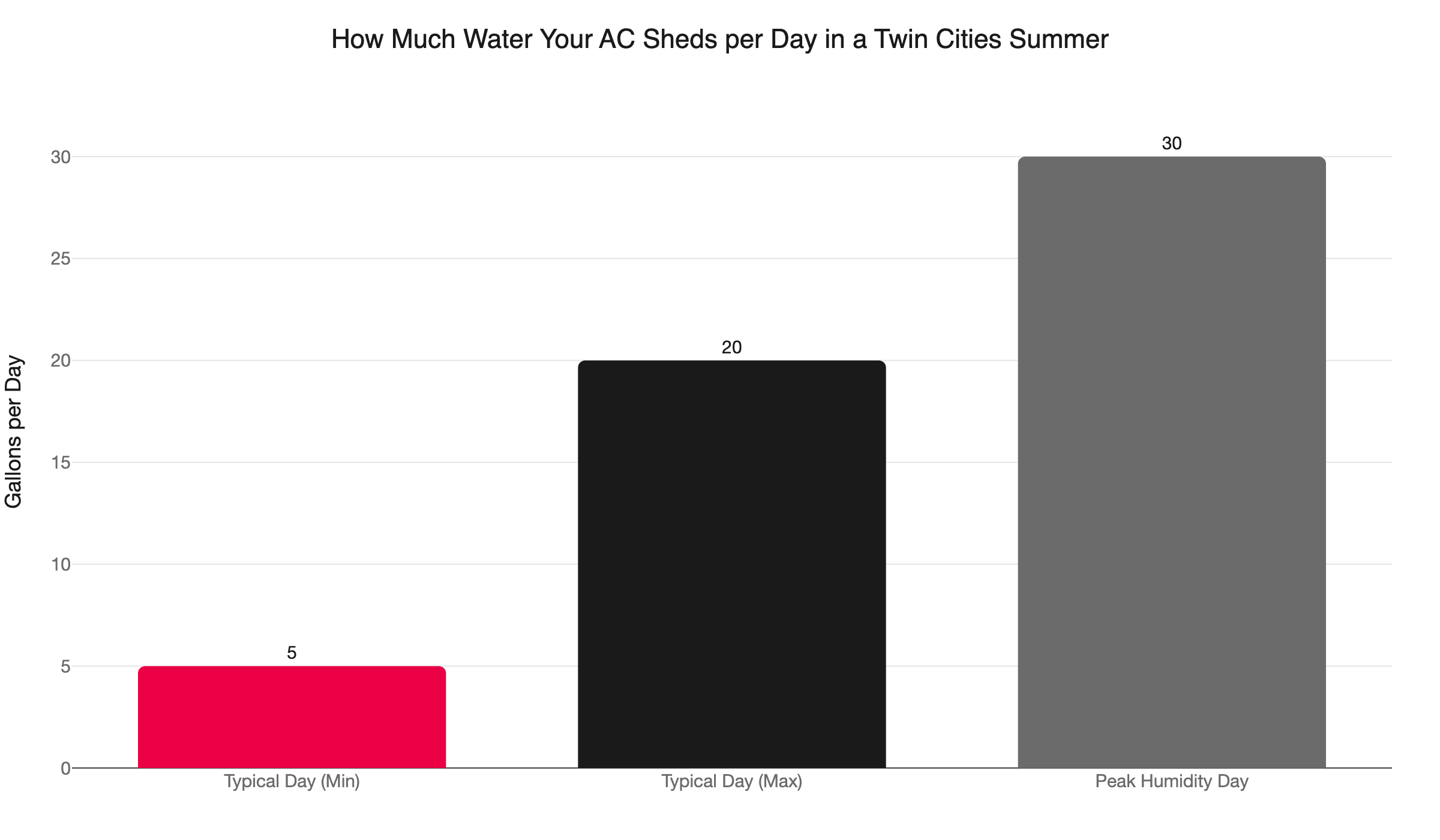
How Much Water Your AC Sheds per Day in a Twin Cities Summer
## Why Does an AC Produce Water in the First Place?
**Your AC pulls humidity out of warm indoor air as it cools. That moisture drips into a collection pan, then drains through a 3/4-inch PVC line. When the drain, the pan, or the coil fails, that water ends up somewhere it should not be.**
Think of your air conditioner as a dehumidifier that also cools. Warm air passes over a cold evaporator coil. The coil surface is cold enough to pull water vapor out of the air - the same way a cold glass sweats on a humid day. That water drips into the condensate drain pan. From there, a drain line carries it out to a floor drain, a utility sink, or outside your home.
On a typical summer day in the Twin Cities, your AC sheds 5 to 20 gallons of water through that line. On peak-humidity days, larger systems can push toward 30 gallons, according to [Midland Heating and Cooling](https://midlandhtg.com/everything-you-need-to-know-about-how-minnesota-humidity-swings-affect-your-home-comfort-systems/). That is a lot of water moving through one small drain all summer long. When the system works, you never think about it. When it fails, you find out fast.
---
## What Does AC Leaking Water Inside Look Like?
**A wet spot on the floor near your air handler, ceiling staining or soft drywall below an attic unit, a [musty smell](/blog/why-does-my-ac-smell-bad-musty-burning-twin-cities/) from standing water in the pan, or your AC shutting off without explanation because a float switch tripped.**
What you see depends on where your air handler lives:
- **Basement unit:** Water pools on the floor near the unit, or the drain pan overflows onto concrete.
- **Attic unit:** You may see a water stain or soft drywall on the ceiling below. By the time staining appears, moisture has already reached the structure.
- **Utility closet unit:** Water seeps under the door onto adjacent flooring.
If your system has a float switch, it may shut the AC off before any visible overflow occurs. That shutoff is doing its job. Do not override it and restart the system until you have cleared the cause.
---
## Three Causes of an AC Leaking Water Inside
These three causes cover the vast majority of residential water leaks from air conditioning systems.
### Clogged Condensate Drain Line
This is the most common cause. Algae, mold, and dust collect inside the drain line over time. The buildup slows flow and eventually stops it. Water backs up into the pan. Once the pan fills and overflows, you get a leak.
The [U.S. Department of Energy recommends](https://www.energy.gov/sites/prod/files/HomeCooling101-final.pdf) occasionally running a stiff wire through drain channels to prevent clogs. Most homeowners skip that step. Most service calls for a leaking AC start here.
Key signs: slow drip at the pan edge, a full pan, or the float switch tripping. The AC still blows cold air until the pan overflows. That is the critical difference from a frozen coil.
### Frozen Evaporator Coil
A frozen coil behaves differently. The coil ices over because airflow is restricted - usually a dirty air filter - or because refrigerant is low. While the coil is frozen, your AC blows warm air. It is not cooling the house properly. When the ice melts, often when you turn the system off, a large amount of water releases quickly. You can see a sudden flood even if your drain line is completely clear.
[Carrier notes](https://www.carrier.com/us/en/residential/hvac-resources/air-conditioners/why-is-my-ac-leaking-water/) that a hissing or bubbling sound from the unit often precedes the leak when refrigerant is low. If you heard that sound before the water appeared, a refrigerant leak is the likely root cause. Low refrigerant is not a DIY repair. It requires a licensed technician.
Our post on [frozen evaporator coils](/blog/frozen-evaporator-coil-why-ac-ice-twin-cities/) covers the full ice cycle in detail.
### Cracked or Rusted Drain Pan
Drain pans wear out. Metal pans rust through. Plastic pans crack after years of temperature cycling. [Cool Today's technician documentation](https://www.cooltoday.com/blog/why-is-my-home-air-conditioner-leaking-water-inside-faq) places drain pan failure at 12 to 15 years into a system's life.
A cracked pan leaks even when the drain line is clear and the coil is not frozen. Water appears at the pan itself, not at the drain outlet. If you open the access panel, see a dry drain line, and still find a wet floor, the pan is the likely culprit.
---
## How Do You Tell Which Cause You Have?
**Check two things in order: Was your AC blowing warm air before the leak? If yes, you have a frozen coil. Is the pan cracked or rusted through? If yes, the pan needs replacement. If neither, the drain line is clogged.**
Follow this sequence before calling a tech:
**Step 1 - Was the AC blowing warm air before the leak appeared?**
If yes, turn it off immediately. Let the ice melt for two to three hours with the system off. Check the air filter - a clogged filter is the most common cause of a frozen coil. If the filter is clean and the coil froze anyway, you likely have a refrigerant issue. Call a tech.
**Step 2 - Is the pan cracked, warped, or rusted through?**
Look with a flashlight at the pan's seams and bottom. If the pan is failing, clearing the drain will not stop the leak. The pan needs replacement.
**Step 3 - Is the pan full of standing water with a clear drain line?**
Or does water drip slowly over the pan edge? That is a clog. Move to the clearing steps below.
This order matters. Do not spend time clearing a drain when the real cause is a cracked pan or a frozen coil.
---
## Why Minnesota Summers Make This Worse Than You Think
Minnesota is not Florida. But in July, our dew points compete.
Twin Cities summer dew points regularly hit 65 to 70 degrees Fahrenheit. At that level of atmospheric moisture, your AC pulls a large amount of water vapor out of every cubic foot of air it conditions. The result: your system can shed 5 to 20 gallons of condensate on a typical summer day. On peak-humidity days, larger systems push toward 30 gallons, as [Midland Heating and Cooling](https://midlandhtg.com/everything-you-need-to-know-about-how-minnesota-humidity-swings-affect-your-home-comfort-systems/) documents for the Twin Cities market.
All of that water moves through one 3/4-inch PVC drain line.
A partial clog that barely registers on a dry spring day can become a flood on a humid July afternoon. The condensate volume spikes, the slow drain backs up quickly, and the pan overflows. The [ENERGY STAR Maintenance Checklist](https://www.energystar.gov/saveathome/heating-cooling/maintenance-checklist) lists condensate drain inspection as a required maintenance item for exactly this reason. A plugged drain causes water damage and raises indoor humidity - both are real problems in a Minnesota summer.
The practical takeaway: flush your condensate drain once per cooling season, not once a decade.
---
## Is Your Air Handler in an Attic or Utility Closet?
**If your air handler is in the attic, treat any condensate leak as an emergency call, not a weekend project. Attic leaks can rot subfloor and introduce mold before a ceiling stain ever appears. Minnesota code requires specific overflow protection for attic installs.**
Most Twin Cities homes built with central AC have the air handler in the basement. A drain clog there means water on concrete. Annoying - not dangerous.
The situation is different for older Minneapolis and St. Paul homes originally heated with boilers. Many of those homes added central AC later using a retrofit air handler in the attic. Structure Tech, a Twin Cities home inspection firm, has documented both outcomes with infrared photography. A basement clog leaves a puddle. An attic clog can rot the subfloor before you see any staining on the ceiling below.
MN Mechanical Code Section 307.2.3, [cited by Structure Tech](https://structuretech.com/ac-condensate-rules-for-attics/), requires one of four overflow protections for attic air handlers:
- A [secondary drain pan](/blog/ac-drain-pan-full-overflow-causes-fix-twin-cities/) that drains to a conspicuous location
- A secondary drain pan with a float switch
- A shutoff device in the primary line or drain pan
- A separate overflow drain that visibly alerts the occupants
If you are not sure which protection your attic unit has, confirm it on the next service call. Adding a float switch costs far less than replacing a rotted subfloor.
For basement units, a float switch is optional under code. It is still a cheap safeguard if you travel during the summer. [MN Plumbing Code (MN Rules 4714.0814)](https://www.revisor.mn.gov/rules/4714.0814/) also requires condensate drain lines to slope at least 1/8 inch per foot. If you have recurring clogs that return shortly after clearing, inadequate slope may be the root cause rather than the clog itself.
---
## How to Clear a Clogged Condensate Drain Line
DIY clearing makes sense when your diagnosis points to a simple clog - not a frozen coil, not a cracked pan, not a refrigerant issue.
**What you need:** A wet/dry shop vac, distilled white vinegar, a small cup or funnel, and clean water.
**Steps:**
1. **Turn the AC off at the thermostat.** Not fan-only mode - power it fully off.
2. **Find the exterior end of the drain line.** This is typically a 3/4-inch PVC pipe that exits through the foundation wall or near the outdoor unit. It may have a small cap.
3. **Apply the wet/dry vac to the exterior drain line end.** Run it for one to two minutes. This pulls debris toward you rather than pushing it deeper into the line.
4. **Locate the access port on the drain line.** Near the air handler, there is usually a T-fitting or clean-out cap. Remove it.
5. **Pour one cup of distilled white vinegar into the access port.** Let it dwell for 30 minutes. Vinegar breaks down algae and mold buildup. [Carrier recommends this approach](https://www.carrier.com/us/en/residential/hvac-resources/air-conditioners/why-is-my-ac-leaking-water/) specifically because it is safe for PVC components.
6. **Do not use bleach.** Bleach can degrade the glue joints on PVC fittings over time. It trades one problem for a slower, harder-to-find one.
7. **Flush with clean water.** Pour one cup of water through the access port after the vinegar dwell. Watch the exterior end of the line - you should see water exit. If nothing comes out, the line is still blocked.
8. **Reinstall the cap and restart the system.** Watch the pan for 10 to 15 minutes. If water backs up again, the clog is either fully obstructing the line or there is a slope problem.
If this fails after two attempts, stop. Compressed air and aggressive snaking can crack glue joints without a clear picture of where the line runs. At that point, call a tech.
---
## What Is a Condensate Pump and Do You Need One?
**A condensate pump is a small electric device that pushes condensate water uphill when gravity drainage is not possible. Many Twin Cities basement air handlers rely on one. A failed pump floods the space just as fast as a clogged drain line.**
Some basement setups have no floor drain at the right height to gravity-drain condensate. These systems use a condensate pump instead: a small reservoir with a float switch and a pump that lifts water up to a utility sink or exterior discharge line.
If your system has a condensate pump, it is a separate failure mode with its own signs:
- The reservoir fills but the pump does not activate
- The pump runs but water still overflows (the discharge line may be blocked)
- The pump runs continuously without the reservoir draining (the float switch is stuck)
Add a once-per-season visual check to your routine. Is the reservoir empty? Does the float move freely? Is the discharge line clear at the outlet? A failed condensate pump can flood a finished basement as quickly as a blocked drain line.
---
## When Should You Call a Pro Instead of DIYing It?
**Call immediately if the coil was frozen, the pan is cracked, the clog does not clear after two attempts, you have an attic air handler with any ceiling staining, or you hear a hissing or bubbling sound from the indoor unit.**
Specific triggers for a service call:
- **AC was blowing warm air before the leak.** The coil froze. After the ice melts, a tech needs to check refrigerant levels and find what restricted the airflow.
- **The pan is cracked or rusted through.** Pan replacement can require draining refrigerant on certain configurations. Not a DIY task.
- **Two failed clearing attempts.** The clog is deep in the line, the slope is inadequate, or there is a damage point in the line.
- **Attic unit with ceiling staining below it.** This is a same-day call.
- **Hissing or bubbling from the indoor unit.** This is a refrigerant leak symptom. A licensed technician is the only fix.
Our [AC repair service](/air-conditioning/air-conditioning-repair/) covers all of these scenarios. If you prefer a proactive approach, our [AC maintenance plan](/air-conditioning/air-conditioning-maintenance/) includes an annual condensate drain flush and a full system inspection - the simplest way to prevent this problem from showing up mid-July.
---
## Does a Leaking AC Mean Replacement Time?
**Usually not. A clog is routine maintenance. A cracked pan is a repair. The exception: if pan failure coincides with a system older than 15 years that is also losing cooling capacity or needing frequent repairs, replacement may be worth pricing.**
Most of these situations resolve with a drain clear or a pan swap. You do not need a new system because of a clogged drain line.
The calculus shifts when pan failure or refrigerant issues pile onto an aging system. If your system is older than 15 years with multiple problems at once, replacement may cost less over the next several years than continued repairs.
Current Xcel Energy rebates make replacement more accessible. The [Xcel Energy 2026 rebate program](https://energyrebatecalculator.com/utility/xcel-energy) offers $400 on new central AC units at SEER2 16 or higher. Minneapolis customers qualify for up to $450. Cold-climate heat pumps qualify for up to $2,000.
Our post on [AC replacement costs in Minnesota](/blog/ac-replacement-cost-minnesota/) walks through what a full system swap costs in this market. If you are weighing repair versus replace, that context is worth having before you decide.
---
## Next Steps
A leaking air conditioner is worth addressing today, not next week. Standing water in a drain pan invites mold. A slow attic leak invites rot. And a Twin Cities July is not the time to lose your AC.
Try the DIY clearing steps if your diagnosis points to a simple clog. If the clog does not clear after two attempts, call us. If the coil was frozen or the pan is cracked, call immediately. Reach us at (763) 260-6662 or [book online](/air-conditioning/air-conditioning-repair/).
We are locally owned and operated in Ramsey, MN. We serve Minneapolis, St. Paul, Blaine, Maple Grove, Plymouth, Brooklyn Park, Woodbury, Bloomington, and the surrounding Twin Cities metro.
"Always On Time… Or You Don't Pay a Dime!(R)" - that is our promise to every homeowner we serve.
---
# Duct Sealing Energy Loss: What's Costing Twin Cities Homes
URL: https://northernonehour.com/blog/duct-sealing-leaky-ductwork-energy-loss/
Published: 2026-07-27 | Category: HVAC
Twin Cities homes lose 20-30% of conditioned air to duct leaks. Learn the signs, the real cost in MN's climate, and which sealing option pays back fastest.
Key Takeaways
- [Energy Star](https://www.energystar.gov/saveathome/heating-cooling/duct-sealing/benefits) estimates the typical home loses 20-30% of conditioned air through duct leaks, holes, and poor connections before the air reaches the living space.
- Minneapolis logs roughly 8,300 heating degree-days annually. Every percent of duct leakage costs more here than the national average implies.
- Leaky ducts drive up whole-house air infiltration by up to four times while the system runs - not just within the duct runs themselves.
- The federal 25C tax credit for duct sealing was terminated July 4, 2025. It does not apply to 2026 work. CenterPoint and Xcel rebates remain active.
- Sealing costs range from $50-$150 for accessible DIY work to $1,300-$3,000 for Aeroseal. Payback ranges from months to five years depending on the method.
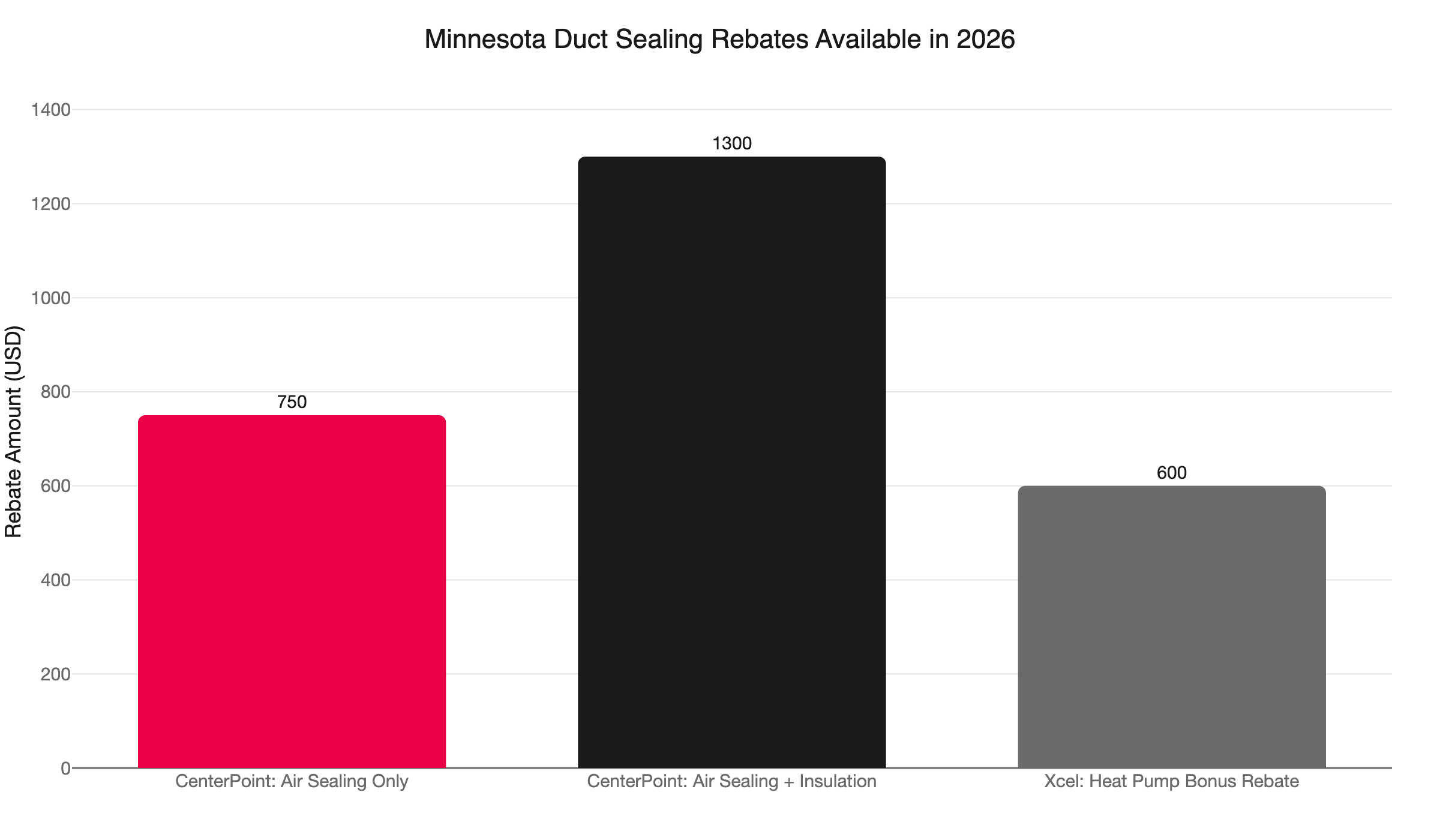
Minnesota Duct Sealing Rebates Available in 2026
## How Much Conditioned Air Are You Actually Losing?
**Short answer:** Most homes lose 20-30% of conditioned air through duct leaks before it reaches the living space. For homes with ducts in attics, [crawlspaces, or unconditioned basements](/blog/crawl-space-hvac-efficiency-twin-cities/), combined losses from leakage and heat transfer can reach 30-40%.
[Energy Star](https://www.energystar.gov/saveathome/heating-cooling/duct-sealing/benefits) puts the leakage figure at 20-30% for a typical home. It also notes that leaky ducts alone can reduce system efficiency by as much as 20 percent. The [Department of Energy](https://www.energy.gov/energysaver/minimizing-energy-losses-ducts) adds the conduction piece: ducts running through unconditioned space also [lose heat through their walls](/blog/duct-insulation-attic-energy-loss-minnesota/). Combined, that's 30-40% of your furnace's output disappearing before it heats your rooms.
Here's what most homeowners miss. The losses compound, not add. A home with 10% supply-side leakage and 10% return-side leakage doesn't lose a combined 20%. [Research by LBNL's Iain Walker, cited by Energy Vanguard](https://www.energyvanguard.com/blog/duct-leakage-can-cost-you-a-lot/), shows the real efficiency hit is closer to 30%. The two types of leakage interact and amplify each other rather than simply stacking.
The practical result: if your duct system has moderate leakage on both supply and return sides, your furnace is working nearly one-third harder than it needs to. In Minnesota, that math gets expensive over a five-month heating season.
## Why Does Duct Sealing Energy Loss Hit Harder in Minnesota?
**Short answer:** Minneapolis logs approximately 8,300 heating degree-days annually - one of the highest totals for any major metro in the lower 48. Your furnace runs far more hours each year than a system in a milder climate. Every percent of duct leakage costs more here than national averages suggest.
Climate changes the math. [Minneapolis records roughly 8,300 heating degree-days annually](https://autohvac.ai/climate-zones/minnesota), base 65°F. Only a handful of metros in the continental United States run that number. Your heating system operates against that load every fall, winter, and early spring.
[Energy Vanguard's analysis of Climate Zone 6A homes](https://www.energyvanguard.com/blog/duct-leakage-can-cost-you-a-lot/) makes the regional difference concrete. A Twin Cities home with 10% supply and 10% return duct leakage can see duct system efficiency drop into the low 70s. That same home in Miami, under identical leakage conditions, stays above 80% efficiency. Our -16°F winter design temperature is the multiplier. The colder the outdoor temperature, the more each percent of leakage costs.
Do the math simply. Say your January heating bill is $250. If 25% of your furnace's output escapes through duct leaks, $62.50 that month is heating your attic. Over five months of Minnesota heating season, that's over $300 gone. Add summer cooling losses and the annual waste grows. Across a decade of homeownership, the cumulative loss is significant.
## What Are the Signs of Duct Leakage in a Twin Cities Home?
**Short answer:** The five clearest signs are rooms that never reach thermostat setpoint, utility bills that rise without explanation, excess dust near vents, hissing or whistling at registers, and your HVAC system cycling more often than it used to.
Here's what to look for:
- **Rooms that stay off-temperature.** A bedroom that's always [cold in winter](/blog/upstairs-too-cold-winter-heating-twin-cities/) or [stuffy in summer](/blog/upstairs-too-hot-summer-cooling-twin-cities/) - no matter where you set the thermostat - is a classic supply-side leak signal. [Conditioned air is escaping before it reaches that room's register](https://www.trane.com/residential/en/resources/blog/signs-hvac-ductwork-is-leaking/). If raising the thermostat doesn't help, the air isn't arriving.
- **Bills that spike without explanation.** If your utility bill rises and nothing changed - same usage patterns, no rate increase - energy is going somewhere. Duct leakage is one of the most common causes in older Minnesota homes.
- **More dust than you can explain.** Return duct leaks pull air from attics, crawlspaces, and wall cavities directly into the air handler, bypassing the filter. The result is [unfiltered debris - dust, insulation particles, mold spores](https://ssbhc.com/news/why-is-my-house-so-dusty-3-signs-your-hvac-ducts-are-leaking) - circulating through your living space. If surfaces near vents dust faster than they used to, check the return duct connections.
- **Hissing or whistling near registers.** That sound is pressurized air escaping through a gap. It's [most audible near disconnected joints or damaged duct sections](https://anthemcv.com/air-duct-leakage-signs-repair/) and tends to be louder when the system runs at full capacity.
- **More frequent cycling.** When the system turns on and off more often than normal, it's usually struggling to reach setpoint because conditioned air is escaping before delivery. We cover the full range of causes in our [furnace short cycling troubleshooting guide](/blog/furnace-short-cycling-causes-fixes/).
Two or more of these symptoms together is a strong signal. A professional duct assessment with pressurization testing removes the guesswork and tells you where the losses are concentrated.
## The Infiltration Multiplier: Why Leaky Ducts Make Your Whole House Leak
This is the part most articles skip. Duct leakage doesn't just waste the air inside your ducts. It also drives up air infiltration through your entire building envelope while the system runs.
[A study at the Florida Solar Energy Center](https://www.energyvanguard.com/blog/duct-leakage-can-cost-you-a-lot/) found that whole-house infiltration during system operation can be up to four times higher in homes with leaky ducts than when the system is off. Here's the mechanism.
Supply duct leaks push conditioned air out of the duct runs and into unconditioned spaces - your attic, wall cavities, or crawlspace. That air has to be replaced. At the same time, return duct leaks pull air from those same unconditioned spaces into the air handler, instead of from your living area. Both effects create pressure imbalances across the building envelope. Outside air rushes in through every crack in your walls, windows, and foundation to equalize.
In a Minnesota winter, that means cold outdoor air infiltrates your home every time the furnace cycles. Your furnace fights duct losses and accelerated envelope infiltration at the same time. The two problems stack.
There's also an [indoor air quality](/indoor-air-quality/) dimension. When return ducts pull air from crawlspaces or attic cavities, that air carries what lives there: [moisture, mold spores](/blog/ductwork-sweating-condensation-basement-minnesota/), insulation fibers, soil gases. Unexplained air quality problems - [persistent dust, musty odors](/blog/air-duct-cleaning-worth-it-twin-cities/), respiratory irritants - sometimes trace directly to return duct leaks pulling contaminated air into the living space.
## Duct Sealing Options Ranked by Payback
Not every home needs the same fix. The right approach depends on where your ducts run, how accessible they are, and how extensive the leakage is.
### DIY mastic and UL 181 foil tape
For homes with accessible duct runs - open attics, finished basements, crawlspaces where you can see the joints - this is the right first move. Mastic sealant is a thick, brush-applied compound that bonds to sheet metal, [flex duct](/blog/flex-duct-problems-hvac-airflow-twin-cities/), and [duct board](/blog/fiberglass-duct-board-vs-metal-ductwork-minnesota/). It runs about $10-$15 per quart and covers 40-50 linear feet per quart. Pair it with UL 181-rated foil tape. Total materials: $50-$150. Payback on accessible leaks can be measured in months.
One warning worth repeating, from [professional duct sealing guidance](https://hvacdatabase.com/us/articles/how-to-seal-ac-ductwork-leaks): standard cloth "duct tape" - the silver fabric kind in every hardware store - dries out and peels within two to three years. It is not a substitute for mastic. Mastic plus UL 181 foil tape is the correct combination, and it holds.
The hard ceiling on DIY: you can only seal what you can physically reach. Ducts inside finished walls, sealed ceiling cavities, or inaccessible attic runs are off-limits for hand application.
### Professional mastic and tape sealing
Professional hand-sealing on a 2,000 sq ft home typically runs $750-$1,550. A technician can reach attic runs, basement connections, and collar joints more effectively than most homeowners can on their own. The system can be pressure-tested before and after to document the improvement.
Payback on the labor investment runs roughly 7-10 years. This option fits best when most duct runs are accessible and you want a verified, documented result.
### Aeroseal
When ducts pass through finished walls or sealed ceiling spaces, Aeroseal is the option to consider. A technician pressurizes your duct system with a non-toxic polymer aerosol. The particles travel through the system and bond wherever air escapes - sealing leaks from the inside, including runs inside finished walls that no hand-sealing can reach.
[Most single-family homes see 70-95% of leakage sealed](https://hvac.filterbuy.com/resources/air-duct-sealing/aeroseal-cost-and-other-related-facts-you-need-to-know/), with the seal lasting 20-plus years. Cost for a typical single-family home: $1,300-$3,000. Payback runs 3-5 years - faster than professional hand-sealing despite the higher upfront cost, because Aeroseal reaches the inaccessible leaks that account for the largest share of total loss.
## What Do Minnesota Rebates Actually Cover Right Now?
**Short answer:** CenterPoint Energy offers $750 for attic air sealing alone, or $1,300 if you combine it with a qualifying insulation upgrade. Xcel Energy customers have air sealing rebates available, plus a $600 bonus if a qualifying heat pump is installed within two years. Minneapolis homeowners may qualify for additional city-level incentives layered on top of both programs.
**CenterPoint Energy (natural gas customers)**
- $750 for attic air sealing
- $1,300 for attic air sealing combined with [an insulation upgrade](/blog/attic-insulation-ventilation-hvac-bills-ice-dams-twin-cities/) from below R-30 to above R-49
- Applications for 2026 work due by December 31, 2026
- First-come, first-served; there's no guarantee of funds toward year-end
Full details at the [CenterPoint air sealing and insulation rebate page](https://www.centerpointenergy.com/en-us/business/services/dealers-distributors/efficiency-programs-rebates/air-sealing-insulation-rebates?sa=mn).
**Xcel Energy (MN electric and gas customers)**
- Air sealing rebates available for qualifying work
- $600 bonus rebate if a qualifying [heat pump](/blog/heat-pump-existing-ductwork-compatibility-minnesota/) is installed within two years of the air sealing project
Current figures in [Xcel's MN residential rebate summary](https://www.xcelenergy.com/staticfiles/xe-responsive/Working%20With%20Us/24-1-201%20MN%20Res%20Rebate%20Summary%20Information%20Sheet.pdf).
**Minneapolis homeowners**
If your home is in the city of Minneapolis, additional incentives may be available through the [Minneapolis Bonus Rebate Program via CEE](https://www.mncee.org/minneapolis-bonus-rebate-program). These layer on top of utility rebates and can meaningfully reduce out-of-pocket cost.
These programs can stack. A Minneapolis CenterPoint customer doing attic air sealing plus an insulation upgrade could see $1,300 from CenterPoint plus additional city incentives. If a heat pump follows within two years, the Xcel bonus adds to that total. Our guide to [Minnesota heat pump rebates and tax credits](/blog/minnesota-heat-pump-rebates-tax-credits/) covers how these programs layer for homeowners considering a heat pump upgrade alongside envelope improvements.
## Can I Still Claim the Federal Tax Credit for Duct Sealing?
**Short answer:** No. The IRA Section 25C Energy Efficient Home Improvement Credit, which covered duct and air sealing at 30% up to $1,200 per year, was terminated on July 4, 2025. It does not apply to any work installed in 2026. Many articles in Google results still say it does - those articles are wrong for work done this year.
The One Big Beautiful Bill Act, signed into law July 4, 2025, ended the 25C credit. If you're budgeting a duct sealing project right now, do not include a federal tax credit in your payback calculation. Claiming it for 2026 work would be incorrect on your return.
The utility rebates from CenterPoint and Xcel are real, current, and active. Those are the incentive programs worth building into your 2026 budget.
## Does Duct Sealing Affect Your HVAC Equipment?
**Short answer:** Yes, positively. Sealing ducts reduces the workload on your furnace, air handler, and air conditioner. Systems that cycle less often and run shorter runs to reach setpoint experience less wear and fewer repair calls over time.
Your heating and cooling equipment is designed to move a specific volume of air at a specific static pressure. When ducts leak, pressure drops across the system. The blower compensates by running longer cycles. [More frequent cycling](https://allamericanheating.com/2024/08/five-signs-of-duct-leakage/) is a visible symptom - and it also accelerates wear on the blower motor, heat exchanger, and compressor.
Restoring proper duct pressure lets the system hit setpoint faster and run normal cycles. Over 5-10 years, that's real savings in maintenance costs and deferred component replacements. If your equipment is already showing age and you're weighing repair against replacement, our [heating and cooling repair-or-replace guide](/blog/repair-or-replace-which-should-you-do-when-your-heating-and-cooling-system-breaks-down/) walks through that decision - and duct sealing is often a reason to favor extending equipment life rather than [replacing it first](/blog/air-sealing-before-hvac-upgrade-minnesota/).
## What Does Minnesota Code Say About Duct Leakage?
**Short answer:** Minnesota's code for new construction caps post-construction duct leakage at 4 CFM25 per 100 sq ft of conditioned floor area. Stud cavities and enclosed floor-joist spaces cannot serve as ducts or plenums under state code. Most homes built before 2010 were never tested to any standard.
Minnesota sits in Climate Zone 6A, one of the most demanding heating climates in the country. New residential construction requires duct leakage testing. The 4 CFM25 per 100 sq ft figure is the pass/fail line. Stud cavities and floor-joist spaces used as makeshift duct runs are explicitly prohibited.
For existing homes, code compliance isn't enforced retroactively. But the standard gives you a useful benchmark. If your home is more than 15 years old and has never had a duct test, your leakage rate is almost certainly above that threshold. A blower door test paired with duct pressurization shows where you stand and quantifies the improvement after sealing - which is also what most utility rebate programs require as documentation before they write a check.
## Where to Start
The right first move depends on your home.
If your ducts run through an accessible basement or open attic, walk the visible runs. Look for disconnected joints, gaps at register boots, and spots where flex duct has pulled away from the collar. These are immediate DIY candidates. About $100 in mastic and UL 181 tape can recover meaningful efficiency on accessible sections.
If your ducts pass through finished walls or sealed ceiling spaces, DIY misses the leaks that matter most. A professional assessment is the right next step.
If you're seeing multiple symptoms - [uneven temps](/blog/hvac-zoning-systems-two-story-homes/), bills that don't add up, excess dust, and frequent cycling - the leakage is likely widespread. Get an Aeroseal quote before committing to hand-sealing. The upfront cost is higher, but the payback is faster when leakage is severe or buried in finished spaces.
Start your utility rebate application before the work is done. Both CenterPoint and Xcel have 2026 deadlines, and some rebates require pre-approval or documentation tied to your contractor.
Northern One Hour is locally owned and operated in Ramsey, MN. We serve Minneapolis, St. Paul, Blaine, Maple Grove, Plymouth, Brooklyn Park, Woodbury, Bloomington, and the rest of the Twin Cities area. Our technicians give you straight answers on what they find. No invented problems, no pressure to spend more than the job requires. "Always On Time… Or You Don't Pay a Dime!(R)" is how we've run this business from day one.
Ready to find out what your duct system is actually costing you? Call **(763) 260-6662** or book online to schedule an assessment with our team.
---
# AC Coil Frozen? Causes, Thaw Steps, and When to Call
URL: https://northernonehour.com/blog/frozen-evaporator-coil-why-ac-ice-twin-cities/
Published: 2026-07-27 | Category: Cooling
A frozen AC coil blocks cooling and can wreck your compressor. Learn why Twin Cities coils freeze, how to thaw safely, and when to call a tech.
Key Takeaways
- A frozen coil is always a symptom. Restricted airflow, low refrigerant, or a dirty coil surface is the underlying cause.
- Turn the system to fan-only immediately. Do not chip the ice. Let it thaw completely before calling a technician.
- Running a frozen coil risks compressor failure. Replacement runs $1,200 to over $4,000 in 2026.
- Twin Cities humidity makes airflow restrictions more dangerous than in drier climates. A small restriction here can freeze a healthy coil.
- Monthly condensate drain cleaning is the right cadence for Minnesota summers, not the annual standard most national guides recommend.
- A major R-410A leak now triggers a repair-versus-replace decision, not a routine recharge.
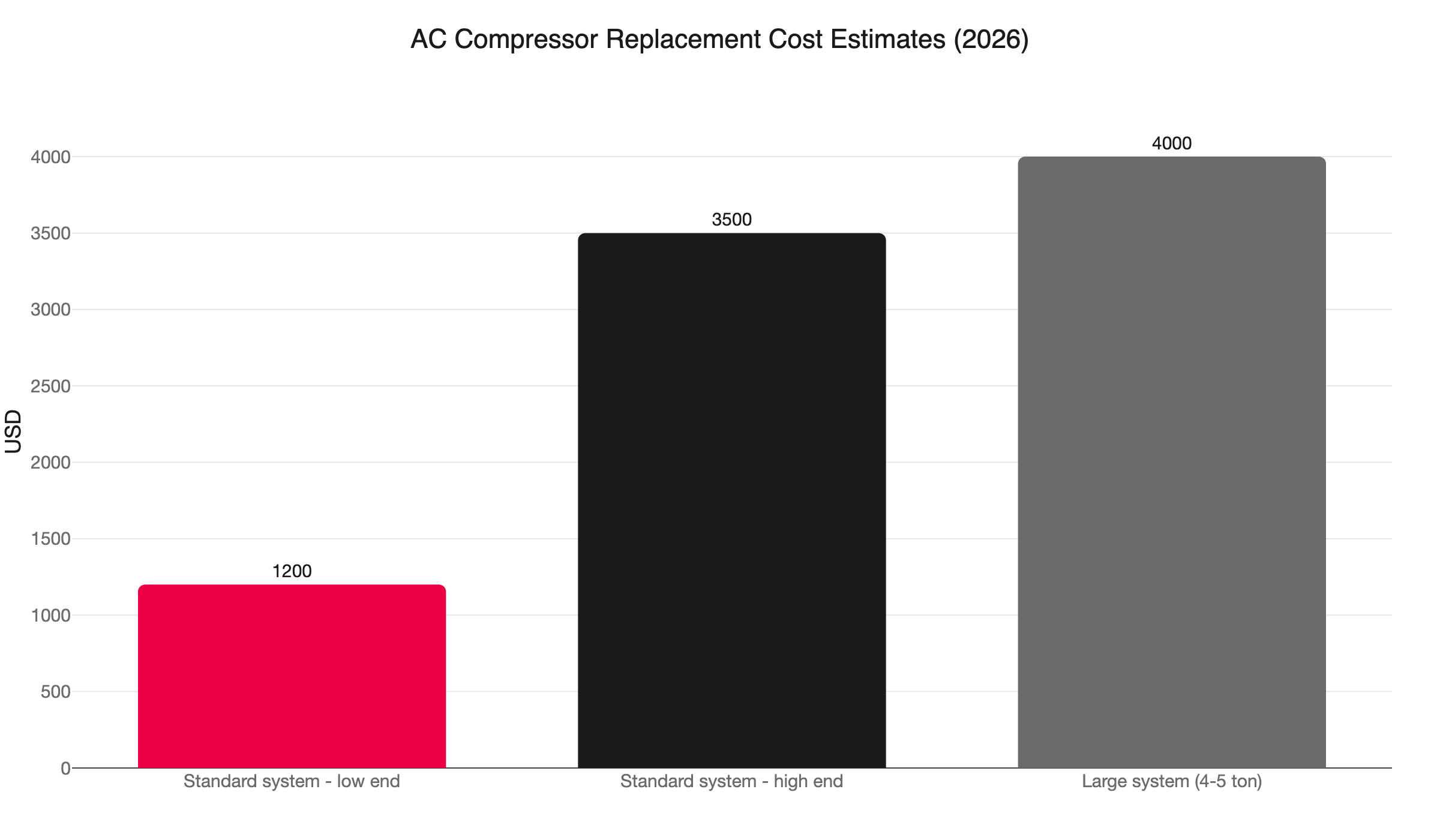
AC Compressor Replacement Cost Estimates (2026)
You walk over to the air handler and find ice where there should be none. An ac coil frozen in the middle of July is one of those problems that looks dramatic but almost always has a fixable cause. Your system is running. The air coming from the vents is warm. And you have no idea why.
This post explains the mechanics behind a frozen coil, what to do about it right now, and what a technician needs to check so it does not happen again.
## What Actually Happens When an AC Coil Freezes?
**The short answer:** The coil surface drops below 32°F. Moisture in the air freezes on contact. Ice builds up until airflow through the coil stops completely. The system keeps running but cannot cool the air.
Your air conditioner works by moving refrigerant through the evaporator coil inside the air handler. Warm indoor air blows across that coil. The refrigerant absorbs the heat and carries it outside through the refrigerant line set. Moisture in the air condenses on the coil surface and drips into a [drain pan](/blog/ac-draining-water-leak-inside-twin-cities/) below.
For this to work, the coil surface needs to stay above 32°F. When anything disrupts airflow across the coil or drops refrigerant pressure inside it, the surface temperature falls below that threshold. Moisture freezes on contact. Ice builds up layer by layer. Eventually the coil is encased, no air passes through, and your home stops cooling.
The coil is not the cause. It is the victim. Something upstream created the conditions. That upstream cause is what needs to be found and fixed.
## Which HVAC Coil Freezes: Evaporator or Condenser?
**The short answer:** In a central AC, the evaporator coil inside the air handler is the one that freezes in summer. The outdoor condenser coil does not freeze during cooling mode. On a heat pump running in heating mode, the outdoor coil frosts over naturally and clears itself with an automatic defrost cycle.
Your central AC has two coils. The evaporator coil sits inside the air handler, usually in a basement or utility closet. It contacts warm indoor air and does the actual cooling work. When homeowners report a frozen AC coil in the middle of summer, this is always the coil they found.
[The outdoor condenser coil releases heat to the outside air. In cooling mode, the refrigerant inside it is at high pressure and high temperature as it sheds heat to the outdoor air.](https://www.trane.com/residential/en/resources/blog/frozen-evaporator-coil-causes/) Surface condensation is normal on a hot day. Full ice formation on the outdoor unit in summer cooling mode is not normal and points to a refrigerant or mechanical issue.
If you have a heat pump and are asking about a frozen outdoor coil in winter, that is a different situation. [A heat pump's outdoor coil extracts heat from outdoor air during heating mode. At low temperatures, moisture in the air freezes onto the coil. This is normal operation. The heat pump runs a defrost cycle automatically: it briefly reverses refrigerant flow to warm the coil, the ice melts, and the system returns to heating mode.](https://www.trane.com/residential/en/resources/blog/frozen-evaporator-coil-causes/) If the outdoor coil stays buried in ice and the system stops producing heat, that is worth a call.
**Heat pump owners: do not switch to defrost mode for a frozen indoor coil.** Defrost mode is built for one job: clearing ice from the outdoor coil during heating season. It reverses refrigerant flow to warm the outdoor coil. [If your indoor evaporator coil is frozen in summer, defrost mode does nothing to fix it and can complicate the diagnosis.](https://www.trane.com/residential/en/resources/blog/frozen-evaporator-coil-causes/) The thaw protocol is the same on a heat pump as on a standard AC: turn to fan-only and let the indoor coil thaw completely before restarting.
The rest of this post covers evaporator coil freezing in summer cooling mode.
## Can Running Your AC When It's Below 60°F Outside Freeze the Coil?
**The short answer:** Yes. Standard residential air conditioners are not designed to run [below 60°F outdoor ambient](/blog/minimum-outdoor-temperature-run-ac-twin-cities/). Running the system when temperatures drop below that threshold lowers refrigerant suction pressure enough to freeze the evaporator coil within a single cooling cycle. This is the freeze trigger most national guides skip, and the one most likely to catch a Twin Cities homeowner off guard.
[Standard residential ACs are not designed to operate below 60°F outdoor ambient; running them below this threshold drops refrigerant suction pressure to levels that freeze the evaporator coil within one cooling cycle.](https://www.countryside-solutions.com/blog/danger-running-ac-below-60-degrees) For Minneapolis-St. Paul households, this is a real seasonal risk. June and September nights regularly drop into the mid-50s. A homeowner who sets the thermostat at 68°F before bed on a warm afternoon can easily have the system still running at 2 AM when outdoor temperatures have fallen to 54°F. The indoor cooling demand is gone, but the system keeps cycling, and the evaporator coil freezes within the first hour.
The fix is low-effort: if overnight temperatures are forecast below 60°F, turn the system off or switch to fan-only before bed. A smart thermostat can automate an outdoor temperature lockout once configured. This matters most in the shoulder seasons - the same June and September weeks when the Twin Cities swings between warm afternoons and cold nights within the same 24 hours.
## Why Does the Coil Surface Drop Below Freezing?
**The short answer:** Either airflow across the coil is too low or refrigerant pressure inside the coil is too low. Both drop the coil surface below 32°F. The physics work the same way even on a [90-degree Twin Cities afternoon](/blog/ac-struggling-extreme-heat-days-twin-cities/).
Five main mechanisms drive this (the outdoor-temperature trigger covered above is a sixth, and the one most commonly overlooked):
**Restricted airflow.** The coil absorbs heat from air passing over it. Reduce that airflow and the refrigerant overcools the coil past the freezing point. [A dirty air filter is the most common single cause of a frozen evaporator coil](https://www.americanstandardair.com/resources/blog/frozen-evaporator-coil-dont-panic/). A filter packed with dust, pet hair, and pollen chokes the air stream. A clean filter costs $5 to $15 and prevents a service call.
**[Low refrigerant from a leak](/blog/ac-refrigerant-leak-signs-minnesota/).** A leak lowers the system's charge. Lower charge means lower suction pressure on the refrigerant side. Lower suction pressure drops the refrigerant's boiling point inside the coil. The coil surface falls below 32°F even when outdoor temperatures are above 90 degrees. [Leaks develop from vibration, normal wear, a previous freeze event, or an improper initial charge](https://www.americanstandardair.com/resources/blog/frozen-evaporator-coil-dont-panic/). Refrigerant issues always require a licensed technician.
One specific leak mechanism worth understanding: formicary corrosion. Household VOCs from cleaning sprays, aerosol air fresheners, adhesives, and paints react with condensation on the copper coil surface to form formic acid. That acid tunnels through the coil wall at a microscopic scale, producing pinholes that are often invisible to the naked eye and irreparable without coil replacement. [ACHR News has documented this as an industry-wide issue across all manufacturers: "a multitude of tiny pinholes that rust through the walls of the copper coil."](https://www.achrnews.com/articles/104661-troubling-pinhole-leaks-in-evaporator-coils-cause-corrosion-issues) The practical takeaway: store aerosols and harsh cleaners away from the air handler, use low-VOC products near HVAC equipment, and consider an energy recovery ventilator (ERV) to dilute indoor VOC levels with fresh outdoor air. Some manufacturers have moved to aluminum coils partly because of this failure mode.
**[A dirty evaporator coil](/blog/dirty-evaporator-coil-ac-symptoms-twin-cities/).** Dust accumulates on the coil fins over time. That layer acts as insulation and slows heat transfer. The coil surface drops. Ice forms. Professional cleaning restores heat exchange. It is a standard part of every [air conditioning maintenance](/air-conditioning/air-conditioning-maintenance/) visit.
**A malfunctioning thermostat.** A thermostat that fails to cycle the system off as indoor temperatures fall keeps the compressor running through the night. The tell is timing: ice that forms overnight rather than during the hottest part of the afternoon points to a thermostat first. As evening cools the house toward or below the set temperature, a functioning thermostat stops calling for cooling. A faulty one does not. The system runs the coil with little heat left to absorb, and the surface drops below freezing. Combined with outdoor temperatures falling toward the 60°F ambient threshold, this is one of the more insidious causes: you wake to a fully frozen coil with no obvious explanation from the day before. Thermostat recalibration or replacement is typically a lower-cost repair than addressing a refrigerant leak.
**A failing blower motor.** The motor drives the fan that pulls air across the evaporator coil. A degrading motor can spin at reduced speed while sounding nearly normal from the next room. The coil sees less airflow than the refrigerant charge requires and freezes, even with a clean filter and fully open vents. [A failed or degrading blower motor is a distinct freeze cause, separate from filter or duct restrictions](https://www.armadillo.one/resources/how-to-fix-a-frozen-ac-coil-and-prevent-it-again/). The telltale sign: the system runs, you can hear the fan, but airflow at the supply registers feels noticeably weak. If pressing your hand against a vent yields little resistance, mention that when you call. It is one of the first things a technician will test.
**A failing metering device (TXV).** The thermostatic expansion valve controls how much refrigerant enters the evaporator coil. A failing TXV can starve the coil of refrigerant even when the system's total charge is correct. The surface symptoms look identical to a refrigerant leak: ice on the coil, low suction pressure, warm air at the registers. A technician who reads only a pressure gauge can misread this as a refrigerant shortage, add refrigerant, and leave. The problem returns because the charge was never the issue. [Differentiating a TXV failure from a leak requires measuring both superheat and subcooling, not pressure alone.](https://www.achrnews.com/articles/114393-ice-breaker-diagnosing-a-defective-txv) If your coil refreezes within a day or two after a technician recharged the system, ask whether they verified both measurements before authorizing more refrigerant work.
## Does Closing Vents in Empty Rooms Freeze the Coil?
**The short answer:** Yes. Closing supply or return vents raises static pressure in the duct system. The blower fights against that elevated pressure and moves less air across the coil. Less airflow over the coil means a colder coil surface and a higher risk of freezing.
This is a common trigger in Twin Cities homes. Many homeowners close bedroom or basement vents in winter to redirect heat toward living areas, then forget to reopen them when summer arrives. [Closing vents is never a good idea and is a documented cause of evaporator coil freezing](https://interstateheatandair.com/air-conditioner-frozen-evaporator-coil/).
Your system is sized for the entire home. It is designed to move a specific volume of air through a specific duct layout. Block that flow and the blower works against elevated pressure. The coil gets less airflow. The refrigerant cools it past the freezing point.
The fix is simple: open all supply and return vents and leave them open year-round. If certain rooms are too warm or too cold, ask our team about zoning or variable-speed equipment. Closed vents are not a substitute for proper system design.
## Why Are Twin Cities Summers Especially Hard on AC Coils?
**The short answer:** Minneapolis-St. Paul dew points regularly top 65 to 70°F in July. The evaporator coil is already working near its moisture-removal limit all season. Any airflow restriction has a greater chance of triggering a freeze here than in drier climates.
Your system pulls moisture from the air constantly during a humid Minnesota summer. The coil is wet, working hard, and operating near its design edge. A dirty filter that would have no measurable effect in a dry climate can tip a Twin Cities coil into a freeze. The tolerance here is smaller.
Minnesota's humidity also produces significantly more condensate. [A clogged condensate drainpipe is its own freeze trigger](https://interstateheatandair.com/air-conditioner-frozen-evaporator-coil/). When the drain backs up, water pools at the base of the coil and freezes. [Monthly condensate drain cleaning](/blog/ac-condensate-drain-line-clogged-fix/) is the right standard for Minnesota homes from May through September. Pour a cup of diluted bleach or white vinegar down the drain access point once a month. It takes two minutes and prevents one of the more annoying service calls of summer.
## What Should I Do Right Now If My AC Coil Is Frozen?
**The short answer:** Turn cooling OFF and the fan to ON. Do not chip the ice. The fan circulates warm room air over the coil and thaws it safely. A technician cannot diagnose the system until the coil is completely thawed, so waiting before calling is not wasted time.
Here is the full sequence:
1. **Turn the thermostat to OFF or FAN ONLY.** Stopping the refrigerant cycle is the first step. The coil will not thaw while refrigerant is still circulating and chilling it.
2. **Switch the fan to ON, not AUTO.** The fan runs without the cooling cycle. It moves warm room air across the frozen surface and speeds the thaw.
3. **Do not chip or scrape the ice.** The aluminum fins on the evaporator coil are fragile. A screwdriver or any sharp tool bends them permanently and reduces airflow even after the ice is gone.
4. **Protect the floor around the indoor unit.** A fully frozen coil holds more water than [the condensate pan](/blog/ac-drain-pan-full-overflow-causes-fix-twin-cities/) can drain quickly. [As the ice melts, overflow can reach nearby flooring, drywall, and electrical components](https://www.armadillo.one/resources/how-to-fix-a-frozen-ac-coil-and-prevent-it-again/). Place towels around the base of the air handler before the thaw starts. Check and clear the condensate drain line while you are there, so melt water has a clear path out.
5. **Pull and inspect your filter.** If it is gray and packed dense, replace it before the technician arrives. A clogged filter is sometimes the entire cause.
6. **Wait for a complete thaw.** [Light ice typically clears in 2 to 4 hours; heavy accumulation can take up to 24 hours in fan-only mode](https://www.carrier.com/us/en/residential/hvac-resources/air-conditioners/will-frozen-ac-fix-itself/). [A technician who arrives to a still-frozen coil cannot assess the refrigerant lines or coil condition. Arriving early wastes service-call time](https://www.americanstandardair.com/resources/blog/frozen-evaporator-coil-dont-panic/).
7. **Restart and monitor.** Once fully thawed, restart in cooling mode. If the system runs normally, a dirty filter was likely the cause. If it refreezes within a day or two, the underlying cause needs a technician's diagnosis.
## Will My Frozen AC Fix Itself?
**The short answer:** No. While the system is running, the refrigerant cycle actively keeps the coil surface below 32°F. The ice will not melt on its own with cooling active. Switch to fan-only and the ice will eventually melt - but the cause of the freeze remains. A coil that thaws and restarts without fixing the root cause will freeze again.
There is one thing that does happen without a technician: the ice melts when you run fan-only. What does not resolve on its own is the airflow restriction, refrigerant leak, thermostat fault, or ambient temperature condition that dropped the coil below freezing in the first place.
Waiting with the system still running is also not neutral. A coil encased in ice blocks the airflow the refrigerant needs to fully evaporate before reaching the compressor. Liquid refrigerant entering the compressor is the failure path that ends in full compressor replacement. The longer the system runs frozen, the higher the risk.
Switch to fan-only. Let it thaw completely. Restart and watch whether it refreezes within a day or two. If it does, the cause has not resolved. You need a technician, not more patience.
## How Do I Know If It's an Airflow Problem or a Refrigerant Problem?
**The short answer:** A temperature differential test and a symptom check give you a starting point before you call. Most homeowners can do both in under 15 minutes with a $15 indoor thermometer.
Every top result for a frozen coil gives you the same causes and the same thaw steps. None of them give you a way to self-triage before picking up the phone. Here is one you can do yourself.
**The temperature differential test.** After the coil fully thaws, restart the system in cooling mode and let it run for 15 minutes. Measure the air temperature at a supply register (a vent that blows air into the room). Then measure the air temperature at the return air grille (where the system pulls air back in). Subtract the supply temperature from the return temperature.
- **14 to 20°F difference:** Normal heat transfer. If the coil froze before this test, start with the filter.
- **More than 20°F difference:** The coil is pulling too much heat per unit of air. This points to an airflow restriction. Check the filter, confirm all vents are open, and verify the condensate drain is clear.
- **Less than 14°F difference:** The coil is not pulling enough heat per unit of air. This points to a refrigerant problem. Call a technician.
Sources: [HVACR Career Connect NY](https://hvacrcareerconnectny.com/hvac-basics-frozen-evaporator-coil/) and [Byrd Heating & Air](https://byrdheatingandair.com/articles/simple-steps-to-troubleshoot-a-frozen-evaporator-coil). The test narrows the likely cause. It does not replace a professional diagnosis.
**Symptom comparison: airflow problem vs. refrigerant problem**
| Signs it is an airflow problem | Signs it is a refrigerant problem |
|---|---|
| Filter is gray and packed dense | Filter is clean or recently replaced |
| Multiple vents are closed or blocked | All vents are open and unobstructed |
| Ice builds up during the hottest part of the day | Ice builds up slowly or overnight |
| Temperature differential above 20°F | Temperature differential below 14°F |
| System has cooled poorly for several weeks | System worked well until it suddenly stopped |
| Blower sounds labored or runs intermittently | Hissing or bubbling near the refrigerant lines |
Airflow problems are often homeowner-fixable: replace the filter, open the vents, clean the condensate drain. Refrigerant problems always require a licensed, EPA Section 608-certified technician.
**What if neither column fits?** A failing TXV produces refrigerant-side symptoms with a correct charge. The temperature differential will read low (under 14°F), and the filter will be clean. But recharging will not hold. If a technician has already recharged your system and the coil froze again within a week, raise the TXV specifically. The diagnosis requires superheat and subcooling measurements, not a pressure gauge alone. Continuing to add refrigerant to a TXV problem wastes money and delays the actual repair.
## Can a Frozen Coil Damage My Compressor?
**The short answer:** Yes. A frozen coil allows liquid refrigerant to migrate back toward the compressor. Compressors are built for refrigerant vapor, not liquid. Liquid slugging causes internal damage that typically means full compressor replacement.
Here is the mechanism: when a coil ices over completely, air-to-refrigerant heat transfer stops. [Refrigerant then returns to the compressor as a liquid-vapor mixture instead of superheated vapor - what technicians call liquid slugging. Liquid entering a compressor causes mechanical damage.](https://www1.eere.energy.gov/buildings/publications/pdfs/building_america/emr-hvac-fault-detection-diagnosis-repair.pdf) The DOE's residential HVAC diagnostics guidelines identify this as a documented failure path. Compressors are built to handle vapor. Introducing liquid destroys them.
This is the consequence most homeowners do not know about until it happens. Compressor replacement in 2026 runs $1,950 to $4,500 for most residential systems. [When a compressor fails on a system that is 10 or more years old, replacement often beats repair on total cost](https://twincityheatingandair.com/minneapolis-mn-heating-and-air-conditioning-blog/ac-not-cooling-9-common-reasons-your-air-conditioner-stops-working-in-minnesota).
Running a frozen coil to see if it "works itself out" is the decision that turns a $195 service call into a $3,900 repair. The thaw-first protocol is there for exactly this reason.
If your system is still not cooling after the coil fully thaws, our [AC repair](/air-conditioning/air-conditioning-repair/) team can assess whether compressor damage occurred and walk you through the repair-versus-replace conversation for your specific situation.
## Does Warranty Cover a Frozen Coil Repair?
**The short answer:** Usually not in full. Manufacturer warranties typically exclude failures caused by maintenance neglect. Home warranties vary: many cover mechanical failures to the evaporator coil and blower motor, but failures linked to neglect or pre-existing conditions are commonly excluded. Read your specific contract before assuming coverage.
**Manufacturer warranty.** Most HVAC manufacturer warranties cover defects in parts and materials. They do not cover damage that results from deferred maintenance. [A freeze event driven by a dirty filter, a clogged drain, or restricted airflow generally falls outside manufacturer warranty scope](https://www.armadillo.one/resources/how-to-fix-a-frozen-ac-coil-and-prevent-it-again/). If the freeze caused compressor or coil damage, the manufacturer is unlikely to cover it unless a defect in the component itself contributed to the failure.
If your equipment is still within the manufacturer's warranty period, contact the manufacturer's support line before authorizing any repair work. Document the sequence of events and ask directly whether the damage qualifies under the warranty terms.
**Home warranty.** [Home warranty plans differ widely. Many cover mechanical failures to the evaporator coil and blower motor. Failures attributed to neglect or pre-existing conditions are commonly excluded from coverage](https://www.armadillo.one/resources/how-to-fix-a-frozen-ac-coil-and-prevent-it-again/). Read the contract itself, not the marketing summary. The coverage description in a brochure often omits the exclusions that matter most.
A few things worth documenting before you call your home warranty company:
- When the freeze happened and how you discovered it
- Your filter replacement history
- Any prior service or refrigerant work on the system
- Photos of the frozen coil, if you can take them
If the warranty company dispatches their own technician, they will make the coverage determination. If coverage is denied, ask for the specific contract clause in writing before agreeing to pay out of pocket.
## What If My System Is Leaking R-410A Refrigerant?
**The short answer:** A major R-410A leak in 2026 is a repair-versus-replace decision. New manufacture of R-410A split systems was banned in 2025 under the EPA AIM Act. A large leak on an aging system makes a new, more efficient system worth pricing out - especially now that servicing the existing one costs significantly more than it did two years ago.
Here is the relevant context: the [EPA AIM Act banned new manufacture of R-410A split-system ACs starting in 2025](https://twincityheatingandair.com/minneapolis-mn-heating-and-air-conditioning-blog/ac-not-cooling-9-common-reasons-your-air-conditioner-stops-working-in-minnesota). The industry is moving to A2L refrigerants like R-454B and R-32. Your existing system can still be serviced and recharged. But the cost to do so has risen substantially. [R-410A wholesale prices climbed from roughly $8-12 per pound in 2023 to $25-45 per pound in many markets by 2026](https://hvaccalculatorhub.com/blog/r410a-phase-out-costs-homeowners-2026) as supply tightens under the phase-down. R-454B and R-32 are not drop-in replacements, so an older system cannot simply be converted. If a leak is large, the cost to recover the old refrigerant, repair the leak, and [recharge an aging system](/blog/ac-refrigerant-recharge-how-it-works-cost-twin-cities/) adds up fast. On an older system, replacement is often the smarter call.
If replacement makes sense, the incentive landscape rewards moving. The federal 25C tax credit covers [up to $600 for a qualifying high-efficiency central AC, or up to $2,000 for a qualifying heat pump](https://www.energystar.gov/about/federal_tax_credits/central_air_conditioning). For central AC, the qualifying threshold is SEER2 ≥ 17.0 and EER2 ≥ 12.0 for a split system, effective January 1, 2025. For Minnesota Xcel Energy customers, those credits stack on top of utility rebates: [up to $400 for qualifying central AC](https://www.xcelenergy.com/staticfiles/xe-responsive/Working%20With%20Us/24-1-201%20MN%20Res%20Rebate%20Summary%20Information%20Sheet.pdf) or [up to $1,500 for a qualifying cold-climate heat pump](https://mn.my.xcelenergy.com/s/residential/heating-cooling/heat-pumps). [The combined incentives are worth calculating before you commit to a repair](https://energyrebatecalculator.com/utility/xcel-energy). That can shift the math meaningfully for many Twin Cities homeowners, particularly when the system is a decade old and the compressor is already under stress.
One more thing worth knowing before you hire anyone: [EPA Section 608 of the Clean Air Act prohibits intentional venting of HFC refrigerants](https://www.epa.gov/section608). Any technician handling refrigerant must hold EPA Section 608 certification. If a contractor offers to top off your system without locating the leak, or mentions venting the old charge, those are red flags. Ask to see their certification before work begins. Our technicians carry it.
We cover the refrigerant transition in more depth in our post on [what the R-454B switch means for Twin Cities homeowners](/blog/ac-refrigerant-change-r454b-what-homeowners-need-to-know/).
## How Do I Prevent a Frozen AC Coil Going Forward?
**The short answer:** Five habits cover most of the risk: change the filter every 30 to 60 days during cooling season, keep all vents open, clean the condensate drain monthly, avoid running the system when overnight lows fall below 60°F, and schedule a professional tune-up in April or early May before schedules fill.
**Change the filter every 30 to 60 days.** During the cooling season in a Twin Cities home with pets or high traffic, the shorter interval is right. A $10 filter change is the cheapest coil protection available.
**Keep all vents open.** Supply and return vents stay fully open year-round. If certain rooms feel uncomfortable, the answer is a zoning conversation, not a closed vent.
**Clean the condensate drain monthly.** Diluted bleach or white vinegar, once a month, May through September. Minnesota's humidity load makes the annual standard that most national guides recommend insufficient for our market.
**Avoid running the system when overnight temperatures fall below 60°F.** This is the prevention step most guides leave out entirely. In June and September, check the overnight forecast before setting a cooling schedule. A smart thermostat with an outdoor temperature lockout handles this automatically once configured.
**Schedule a tune-up before the May Rush.** In the Twin Cities, the first 90-degree day triggers a wave of homeowners testing their AC for the first time all season. Schedules fill fast. An April or early May appointment means your refrigerant is checked, the coil is cleaned, and your system is ready before the heat hits. Our post on [5 maintenance tips to extend your AC's lifespan](/blog/5-maintenance-tips-to-extend-your-acs-lifespan/) covers the full tune-up checklist.
**Watch for early warning signs.** Ice on the [refrigerant lines outside](/blog/suction-line-sweating-refrigerant-pipe-insulation-twin-cities/) the air handler, warm air from vents with the system running, rising indoor humidity, and unexpectedly higher energy bills all signal a problem developing. Catching a freeze in its first hour is far less disruptive than finding a fully encased coil the next morning.
## When Should You Call a Pro?
**The short answer:** Call a technician if the coil refreezes after thawing, if you see ice on the refrigerant lines, if the system blows warm air with a clean filter, or if a professional has not serviced the system in over a year. Most causes of a frozen coil require a technician to resolve.
You can handle filter replacement, vent checks, and condensate drain cleaning yourself. Everything else belongs to a licensed technician.
Call us if:
- The coil thaws and refreezes within a day or two.
- You see ice on the refrigerant lines outside the air handler.
- The system blows warm air and the filter is clean.
- You hear [hissing or bubbling](/blog/why-is-my-ac-so-loud-noises-twin-cities/) near the air handler or refrigerant lines.
- Your system has not had a professional tune-up in over a year.
- Your system is 10 or more years old and you are seeing recurring freeze symptoms.
- You want an honest repair-versus-replace conversation, especially if refrigerant is involved.
We are locally owned and operated, based in Ramsey, MN. We serve Minneapolis, St. Paul, Blaine, Maple Grove, Plymouth, Brooklyn Park, Woodbury, Bloomington, and the full Twin Cities metro. Our team works in Minnesota summers. We understand what a humid July does to an HVAC system.
We stand behind our work with a 100% satisfaction guarantee. And when we say "Always On Time… Or You Don't Pay a Dime!(R)," we mean it.
Call **(763) 260-6662** or [book your AC service online](/air-conditioning/air-conditioning-repair/) to schedule a visit. We can assess a frozen coil, check refrigerant charge, and walk through repair-versus-replace options. We can also discuss tax credits and financing if a new system makes sense for your situation.
---
# HVAC Maintenance Plan Worth It? An Honest Twin Cities Look
URL: https://northernonehour.com/blog/hvac-maintenance-plan-worth-it/
Published: 2026-07-27 | Category: HVAC
Compare the real costs of an HVAC maintenance plan against going without one. Twin Cities stakes, the cascade failure problem, and who it genuinely pays for.
Key Takeaways
- HVAC maintenance plans typically cost $150-$300 per year and cover two seasonal tune-ups, priority scheduling, and a repair discount.
- [Heating and cooling account for as much as half of all household energy use.](https://www.energystar.gov/campaign/heatingcooling/maintain_your_system) A neglected system loses efficiency quietly, month after month.
- Minnesota's [-12°F design temperature](https://homeenergybasics.com/heat-pumps/states/mn) means a January HVAC failure is not just uncomfortable. It can mean frozen pipes and structural damage.
- A plan typically pays for itself when it replaces two separate tune-up fees or avoids a single emergency dispatch call.
- Most manufacturers require documented annual maintenance to [keep extended warranties valid](/blog/hvac-extended-warranty-worth-it-minnesota/). Skipping service can void coverage on a system that cost $7,800-$15,600 to install.
- Newer systems with active manufacturer and home warranties may see thinner return. We cover that honestly below.
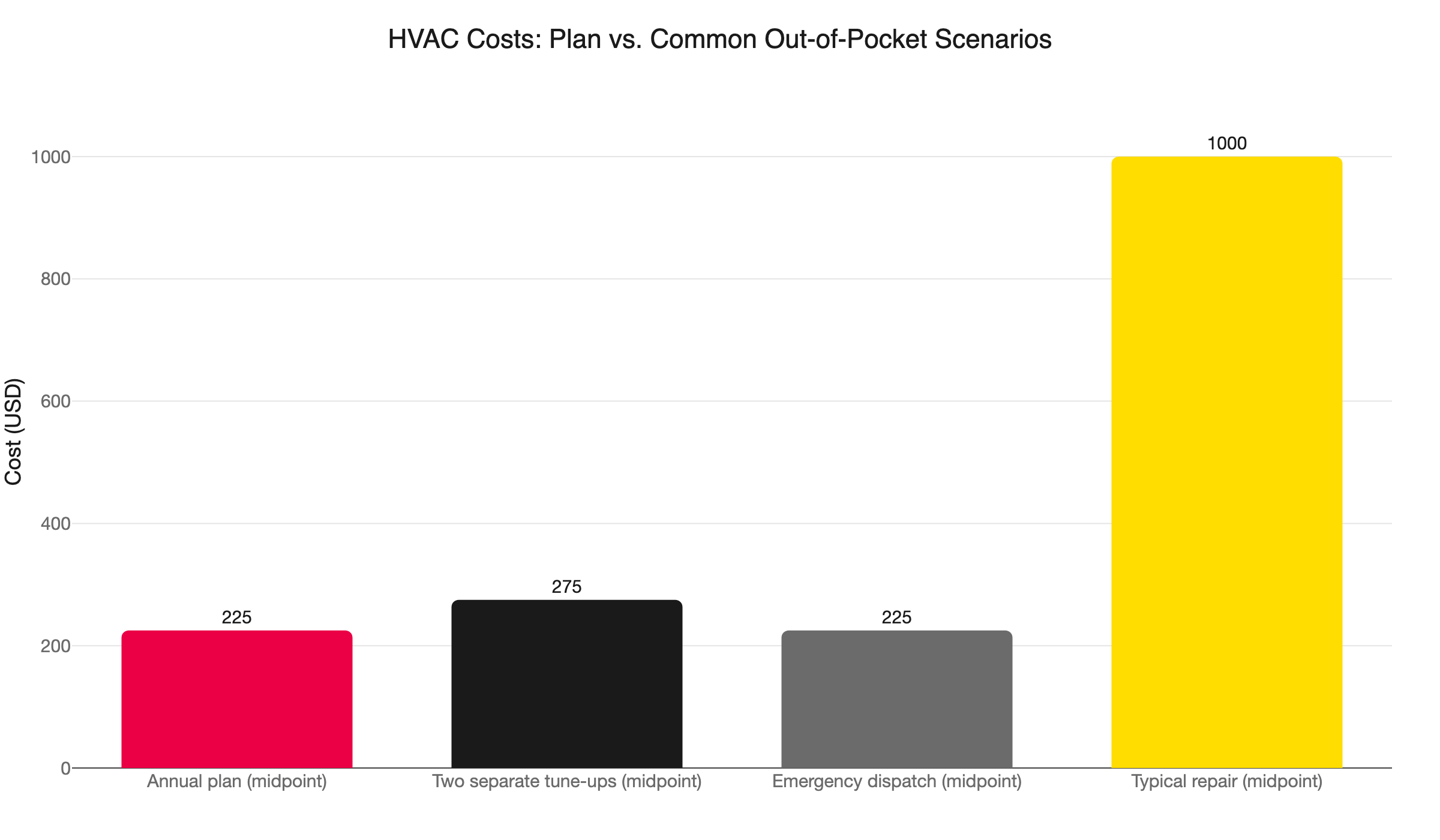
HVAC Costs: Plan vs. Common Out-of-Pocket Scenarios
## What Does an HVAC Maintenance Plan Include?
**In short:** Most plans cover two seasonal visits - one before heating season, one before cooling season - plus priority scheduling and a 10-15% repair discount. Some add [filter replacements](/blog/how-often-to-change-hvac-filter-minnesota/) or waive after-hours fees for members. Two seasonal visits is the baseline to expect from any reputable plan.
A maintenance plan is a service agreement between you and your HVAC company. You pay one annual fee. In return, the company schedules two proactive visits: one in fall before heating season, and one in spring before cooling season. Each visit follows a defined inspection checklist covering the components most likely to cause problems if they go unserviced.
On the heating side, a tune-up typically covers checking heat exchangers for cracks, testing ignitors and flame sensors, measuring gas pressure, cleaning burners, inspecting the flue, and verifying [electrical connections](/blog/hvac-surge-protector-lightning-protection-minnesota/). On the cooling side, it covers checking refrigerant charge, [cleaning the condenser coil](/blog/ac-tune-up-what-is-included-cost-minnesota/), inspecting the blower and capacitors, and measuring system pressures.
Beyond the visits, plans typically include:
- **Priority scheduling** - members move ahead of non-members when service slots fill up
- **Repair discounts** - commonly 10-15% off parts and labor on any repair call during the plan year
- **Reduced or waived after-hours fees** - some plans eliminate the emergency dispatch surcharge for members
[Northern One Hour's heating maintenance service](/heating/heating-maintenance/) and [air conditioning maintenance](/air-conditioning/air-conditioning-maintenance/) cover both seasonal windows. The goal is to inspect and tune your system before you need it most - not while you are already in the middle of a cold snap or a heat wave.
---
## Is an HVAC Maintenance Plan Worth It?
**In short:** For most Twin Cities homeowners, yes. Two tune-up visits, priority scheduling, and repair discounts cover or exceed the plan cost in a typical year. The case is strongest for systems older than three years without a comprehensive home warranty covering HVAC.
Whether a plan is worth it depends on your system's age, what other coverage you carry, and how much a mid-January breakdown would actually cost you. The short answer favors the plan for most households. The longer answer needs honest math and a few real caveats - both of which follow.
Start with the energy case. [Heating and cooling account for as much as half of all household energy use.](https://www.energystar.gov/campaign/heatingcooling/maintain_your_system) A system running with a dirty coil, low refrigerant, or a worn capacitor does not fail dramatically on day one. It degrades slowly. Efficiency drops. Your utility bills creep up. That waste accumulates for months before anything visibly breaks. Annual maintenance keeps the system calibrated and running at the efficiency it was built to deliver.
A system that runs clean and calibrated is less likely to develop the kind of progressive wear that leads to expensive repairs. That is a probabilistic statement, not a guarantee. But maintained systems fail less often and less expensively than neglected ones. Annual service is how you put your system on the better side of that distribution.
Then there is the repair-avoidance side. A tune-up catches the parts starting to wear before they cascade into larger failures. That is the subject of the next section.
---
## Why Do Small Problems Turn Into Big Repairs?
**In short:** HVAC failures rarely happen in isolation. One worn part stresses the next. A $20 capacitor going soft forces the motor to draw excess current, which eventually kills a $2,000 compressor. A tune-up catches the capacitor before that chain starts.
This is the cascade failure problem. It is the single most concrete argument for annual service. It is also the part that most plan-comparison articles never explain specifically.
Here is how it unfolds. A [weakening capacitor forces the motor to draw excess current.](https://www.ambientedge.com/faqs/what-does-an-hvac-tune-up-include/) The motor runs hotter than it should. Meanwhile, a dirty evaporator coil restricts airflow. Restricted airflow leads to ice buildup on the coil. After the ice thaws, the compressor must work against a higher load. Add a loose electrical connection that causes intermittent shutdowns - the kind that are hard to trace later. Each problem feeds the next.
The capacitor is a $20-$50 part. Catching it during a tune-up means a quick swap and a note in the service record. Missing it for two or three seasons means the compressor absorbs that stress until it fails. A compressor replacement typically runs $1,950-$2,600 or more. On an older system, that cost often triggers a [full replacement conversation](/blog/hvac-second-opinion-when-to-call-another-contractor-twin-cities/) rather than a repair call.
This is not a hypothetical. It is the pattern technicians see regularly. A tune-up visit does not just clean the coil and test the thermostat. It finds the part that is getting tired before that part takes something expensive down with it.
For a full inspection checklist and what to expect at each visit, see our guide to [furnace tune-ups and what they include](/heating/heating-equipment/furnaces/furnace-tune-ups/).
---
## What Makes Minnesota's Climate Different?
**In short:** The Twin Cities design temperature is -12°F. A January breakdown is not just discomfort - it risks frozen pipes and structural damage. The risk calculation here is materially different from markets where most online HVAC advice originates.
Most of the HVAC maintenance content circulating online was written for Ohio, New Jersey, or similarly mild markets. Those comparisons do not transfer to Minnesota.
[The Minneapolis-St. Paul design temperature is -12°F, Climate Zone 6A (Cold, Moist).](https://homeenergybasics.com/heat-pumps/states/mn) Duluth's design temperature is -21°F. These numbers represent the 99th percentile cold: the temperature load your heating system must carry reliably on the worst nights of the year. When a system fails at -12°F, you are not waiting a few hours in a cool house. Interior temperatures fall quickly. Pipes begin to freeze before the house reaches equilibrium. That is not an inconvenience. It is a structural and insurance event.
Add the summer side. Twin Cities summers regularly push 95°F or higher. This is not just a heating state. The air conditioning system carries real load from June through August. Both systems earn their annual tune-ups, and both systems are subject to the cascade failure logic described above.
Then there is the dual-fuel context. [About 66% of Minnesota homes heat with natural gas.](https://homeenergybasics.com/heat-pumps/states/mn) But dual-fuel heat pump systems - a heat pump paired with a gas furnace backup - are increasingly common here, particularly among homeowners who have taken advantage of Xcel Energy and CenterPoint utility rebates. CenterPoint has offered up to $1,100 for ducted dual-fuel systems in existing homes. Combined with Xcel incentives, qualified dual-fuel systems have been eligible for up to $3,100 stacked. That is a significant capital investment. A maintenance plan that covers both seasonal visits - heating and cooling - is how you protect it.
A dual-fuel home has two systems to maintain. A plan covering both visits addresses that more completely than a single tune-up would.
---
## Does a Maintenance Plan Protect My Manufacturer Warranty?
**In short:** Yes - and skipping annual service may void that warranty. Most manufacturers require documented maintenance to keep extended coverage valid. On a system costing $7,800-$15,600 to install, that is a significant financial exposure to create for yourself.
This is the point most plan-comparison articles skip entirely. A maintenance plan is not just tune-ups and scheduling perks. It is documentation.
[Many manufacturers require documented annual maintenance to keep extended warranties valid.](https://efficientairservice.com/blog/are-hvac-maintenance-plans-worth-it/) If your system fails in year four and you cannot produce service records, the manufacturer may deny the warranty claim. A maintenance plan generates those records automatically. Every visit produces a dated service report tied to your specific equipment - what was inspected, what readings were taken, what was adjusted or replaced, and the date of service. That is the kind of paper trail that satisfies a warranty adjuster.
This matters especially for homeowners who recently upgraded under a utility rebate program. If you invested in a new system with help from Xcel Energy or CenterPoint incentives, that system came with a manufacturer warranty. Documented annual service is how you keep that warranty enforceable over its full term. Skipping service to save $150-$300 per year can forfeit warranty protection on a system worth far more.
---
## What Does Priority Service Really Mean?
**In short:** During a polar vortex, non-member HVAC wait times in the Twin Cities can stretch 4-7 days across the metro. Priority scheduling moves plan members to the front of that queue. At -20°F, that difference is not abstract - it is the line between a scheduled appointment and a structural emergency.
This is the most Minnesota-specific argument for a maintenance plan. You will not find it in articles written for milder markets, because those markets do not have the same demand spike pattern.
When a polar vortex drops temperatures to -20°F or lower across the entire metro, every HVAC company is overwhelmed simultaneously. Technicians are dispatched around the clock. New service calls from non-members go into a queue that stretches four to seven days. Seven days without heat at -20°F is not a heating inconvenience. It is a pipe-freeze emergency, a hotel stay, or both.
Plan members with priority scheduling move ahead of that queue. When you call as a member, your service appointment is slotted ahead of non-member calls in the same window. On the night your furnace stops at midnight in January, that priority is a concrete operational difference, not a marketing point.
Being proactive is the other half of the equation. If you get your furnace inspected every fall, the odds of a January failure drop meaningfully. The maintenance visit in October finds the problem; the polar vortex in January does not. For a full guide to winter readiness, see our post on [preventing winter breakdowns before they happen](/blog/preventing-winter-breakdowns-a-proactive-heating-guide-for-twin-cities-homeowners/).
---
## The Honest Math: Plan Cost vs. What You'd Pay Without One
Typical plans run $150-$300 per year, with most households landing around $225 annually. Two separate tune-up visits without a plan run $95-$250 each, totaling $195-$500 combined. At the midpoint - around $350 combined - you are already at or above the typical plan cost for the visits alone. The plan adds priority scheduling and the repair discount on top of that.
The math tips sharply in the plan's favor if you ever call for off-hours service. An emergency dispatch fee commonly runs $150-$300 before a technician touches anything. Plans that waive or reduce that fee for members can recover the entire annual plan cost on a single emergency call.
Then consider the repair discount. At a midpoint repair cost of around $1,300, a 10-15% member discount saves $130-$195 per job. That discount applies every time you call for repair service during the plan year - not just once.
Put it together: two tune-up visits covered, one emergency dispatch fee waived, one repair discounted. The plan has returned its cost and then some. It does not guarantee you will avoid repairs entirely. What it does is make each repair less expensive, get a technician to you faster, and reduce the odds that a small worn part grows into a compressor replacement.
---
## Who Gets the Most Value from a Maintenance Plan?
A plan delivers the clearest return for:
- **Systems 3-10 years old.** Old enough for components to develop wear; young enough that repair is still the right answer. This is the highest-value window.
- **Systems [older than 10 years](/blog/how-long-do-hvac-systems-last-in-minnesota/).** Cascade failure risk is higher. Emergency calls are more likely. Priority access becomes more valuable as the system ages.
- **Dual-fuel heat pump households.** Two systems mean two seasonal checkpoints. A plan covering both is a more complete answer than a single tune-up.
- **Households without a comprehensive home warranty.** If you are self-insuring on HVAC repair and replacement, the plan is part of your risk management.
- **Homeowners who recently upgraded with utility rebates.** Protecting a capital investment and keeping the manufacturer warranty enforceable are strong reasons to commit to documented annual service.
---
## Who Might Not Need a Plan Right Now?
This is the section the other articles skip. Not every household is the right fit, and saying so plainly is more useful than a uniform pitch.
A plan offers thinner return for:
- **Systems under three years old with active manufacturer warranties.** Your factory coverage is already strong. The plan adds convenience and priority access - but not the warranty-protection argument that applies to older equipment.
- **Homeowners with comprehensive home warranties covering HVAC repair and replacement.** If a home warranty picks up those costs, the financial case for an additional service agreement is weaker. Check your home warranty terms before signing up.
- **Renters whose landlords handle HVAC.** If the system is not your responsibility, a personal maintenance plan is not your purchase.
Even in these cases, the priority-scheduling benefit has real value in a Minnesota winter. If budget is the constraint, these are the households where the math is closest and the decision is genuinely optional rather than obvious.
---
## Get Started with Northern One Hour
We are locally owned and operated, based in Ramsey, MN, and serving homeowners across the greater Twin Cities. Every service call - plan member or not - runs on the same standard: "Always On Time… Or You Don't Pay a Dime!(R)"
A maintenance plan is how you stay ahead of repairs, keep your warranty documentation current, and hold a place near the front of the schedule when January turns brutal. Two seasonal visits, priority access, and a repair discount - for less than the cost of a single emergency dispatch call in most years.
Call us at **(763) 260-6662** or book a maintenance visit online. We will walk you through the plan options and match the right service level to your system and your home.
---
# AC Not Blowing Cold Air? A Twin Cities Diagnostic Guide
URL: https://northernonehour.com/blog/ac-not-blowing-cold-air-troubleshooting-twin-cities/
Published: 2026-07-26 | Category: Cooling
AC not blowing cold air? Run this Twin Cities diagnostic: safe DIY checks first, then the refrigerant and compressor problems that need a licensed local tech.
Key Takeaways
- Your AC can run but still blow warm. The cause is usually blocked airflow, a [low refrigerant charge](/blog/ac-refrigerant-recharge-how-it-works-cost-twin-cities/), or [a failed electrical part](/blog/ac-contactor-failure-symptoms-replacement-cost-twin-cities/).
- Four checks are safe for a homeowner: the thermostat, the air filter, the breaker, and the outdoor condenser.
- Refrigerant is not a DIY job. Federal law under EPA Section 608 requires certification to handle it.
- A frozen indoor coil means turn the system off now. Keep running it and you risk the compressor.
- AC replacement in Minnesota needs a mechanical permit. Xcel Energy offers a rebate that lowers the real cost.
## Why Is My AC Not Blowing Cold Air?
When your AC is not blowing cold air on a [95-degree Twin Cities afternoon](/blog/ac-struggling-extreme-heat-days-twin-cities/), you want a fast, clear answer. We are Northern One Hour Heating & Air Conditioning, a locally owned and operated shop in Ramsey. This guide splits the problem into two tiers.
A warm-air AC is one of the most common service calls we run in the Twin Cities. The good news: you can safely rule out about half the causes yourself, in under an hour, with no tools. This post gives you that order.
The key is sequence. Do not open the unit. Do not touch refrigerant lines. Work through the safe checks below first. If your AC still blows warm after that, the problem lives in the licensed-tech tier, and we explain exactly why you should stop there.
## Is This an AC Emergency?
**Short answer:** Call us at (763) 260-6662 if you smell burning odors, [hear hissing indoors](/blog/why-is-my-ac-so-loud-noises-twin-cities/), or get no airflow from any vent. These can signal an electrical fault, a refrigerant leak, or a seized blower. Turn the system off first.
Most warm-air calls are not emergencies. But three signs are, and you should not wait for a diagnostic walk-through. First, a burning or electrical smell can mean a wire or motor is overheating. Shut the breaker off and call. Second, a hissing sound near the indoor coil can point to a [refrigerant leak](/blog/ac-refrigerant-leak-signs-minnesota/), which a certified tech must handle. Third, if no air moves from any vent, the blower may have failed. Or the system may have tripped into a safety lockout.
In those cases, skip the steps below and call. Otherwise, keep reading.
## DIY-Safe Checks: Start Here If Your AC Is Not Blowing Cold Air
These five checks are safe for any homeowner. Each takes about five minutes. Do them in order, because the cheap and simple ones come first. If one fixes the problem, you are done.
### 1. Confirm the Thermostat Is Actually Calling for Cool
It sounds basic, but thermostats cause a surprising share of warm-air calls. Set the system to Cool, not Heat or Auto. Drop the setpoint at least five degrees below the current room temperature. Listen for the click that says the thermostat is calling.
If the screen is blank, the thermostat may have dead batteries or lost power. Swap the batteries. If you have a smart thermostat, check that it did not flip to an away schedule. Many summer calls trace back to a thermostat left on Heat from the spring. Or a schedule that drops the temperature only at night.
### 2. Check and Replace the Air Filter
A clogged filter is the single most common cause of weak cooling, and the cheapest to fix. Hold the filter up to a light. If you cannot see light through it, replace it. A dirty filter starves the system of air, which cuts cooling and forces longer runtimes.
The impact is measurable. Airflow problems from a dirty filter or a weak blower can cut system efficiency by up to [15 percent](https://www.energystar.gov/saveathome/heating-cooling/maintenance-checklist). That means slower cooling, higher bills, and more wear on the equipment. Swap in a clean filter, wait about 20 minutes, and feel the air again.
Use the filter size printed on the old one's cardboard edge. When in doubt, snap a photo and bring it in, or just measure it. Good filter habits also extend equipment life over the long run.
### 3. Reset the Breaker
Find the breaker for the indoor air handler and the outdoor condenser. They are usually separate. If either tripped, flip it fully off, then back on. A tripped breaker often points to a brief power blip, but repeated tripping means a real electrical fault. Do not keep resetting [a breaker that trips again](/blog/ac-keeps-tripping-breaker-causes-twin-cities/). That is a fire-safety issue, and it belongs to a technician.
### 4. Clear the Outdoor Condenser
The outdoor unit needs to breathe. Pull leaves, grass clippings, and mulch away from the sides. Trim shrubs back so there is at least two feet of clearance on all sides. Dirt and debris on the condenser coils reduce cooling and force longer runtimes. They also raise energy costs and shorten equipment life, [per Energy Star](https://www.energystar.gov/saveathome/heating-cooling/maintenance-checklist).
You can gently hose the outside of the coil from the side. Do not use a pressure washer. Bent fins block airflow, and a pressure washer bends them fast. If the fins look matted, that is a job for a tech with a fin comb.
### 5. Confirm Both Fans Are Running
With the thermostat calling for cool, go outside and look at the outdoor fan. It should be spinning. Then go to a supply vent inside and feel the airflow. If the [outdoor fan is still](/blog/ac-condenser-fan-motor-failure-symptoms-cost-twin-cities/) but the unit hums, the capacitor may be bad. If the indoor air is weak but the outdoor fan spins, the filter or blower is the suspect.
If the air at the vent feels cool now, you likely fixed it with steps one through four. If it still feels warm, or feels cool but weak, you have crossed into the licensed-tech tier.
## Why Can't I Just Add Refrigerant Myself?
**Short answer:** Because federal law forbids it. Under Section 608 of the Clean Air Act, only a certified technician may add or remove refrigerant. That rule even covers attaching hoses and gauges. You cannot legally buy a can and recharge your own system. Low refrigerant also means a leak.
This is the part most national guides gloss over. They say "call a professional," as if that were marketing. It is not. It is the law. Under [Section 608 of the Clean Air Act](https://www.epa.gov/section608/section-608-technician-certification-requirements), anyone who services or repairs refrigerant equipment must hold EPA certification. The rule covers adding or removing refrigerant, and even attaching hoses and gauges. That means hooking up a gauge set without certification is restricted.
There is also a physical reason. Refrigerant is not used up like fuel in a car. A sealed system holds the same charge for decades. If your charge is low, you have a leak. The [U.S. Department of Energy](https://www.energy.gov/sites/prod/files/2016/11/f34/Energy%20Saver%20101%20Infographic%20Home%20Cooling_0.pdf) notes that a trained technician must repair the leak and recharge the system. Adding refrigerant without fixing the leak just postpones the same failure, and vents more of a regulated gas into the air.
So if the air is still warm after the five DIY checks, the next move is a service call. Not a hardware-store run. Our [air conditioning repair](/air-conditioning/air-conditioning-repair/) team handles the refrigerant side end to end.
## Licensed-Tech Problems: When Your AC Is Not Blowing Cold Air
**Short answer:** Low refrigerant, a leak, a failed compressor, a bad run capacitor, or a dirty evaporator coil all require a technician. None are safe or legal for a homeowner to fix. These parts hold electrical charge or system pressure, and one wrong move can ruin the compressor.
Once you cross this line, stop. Here is what is likely going on, and why each one is a job for a certified tech.
**Low refrigerant or a leak.** As above, low charge means a leak. A tech finds the leak, repairs it, and recharges to the exact manufacturer charge. Too much or too little refrigerant makes the system less efficient and shortens its life, [Energy Star confirms](https://www.energystar.gov/saveathome/heating-cooling/maintenance-checklist).
**A failed compressor.** The compressor is the heart of the outdoor unit. If it fails, the system may hum but cool nothing. [A compressor failure](/blog/ac-compressor-failing-signs-repair-cost-twin-cities/) is the most expensive single repair, and it sometimes tips the math toward replacement on an older unit.
**A [bad run capacitor](/blog/bad-ac-capacitor-symptoms-cost-twin-cities/).** The capacitor starts the compressor and the outdoor fan. When it fails, you may hear a click and a hum with no spin. A capacitor can hold a charge after the breaker is off, which is a shock hazard. This is exactly why we tell homeowners not to poke inside the electrical compartment.
**A [dirty evaporator coil](/blog/dirty-evaporator-coil-ac-symptoms-twin-cities/).** The indoor coil can collect a layer of dust and grime that blocks the cooling loop. Cleaning it requires pulling access panels and sometimes a chemical flush, which is technician work.
**[A plugged condensate drain](/blog/ac-condensate-drain-line-clogged-fix/).** The drain carries away the water your AC pulls from the air. If it plugs, water can [back up into the house](/blog/ac-draining-water-leak-inside-twin-cities/) and raise indoor humidity, [Energy Star warns](https://www.energystar.gov/saveathome/heating-cooling/maintenance-checklist). Some systems shut down on a float switch to prevent flooding, which looks like the AC quit.
## Why Does the Indoor Coil Freeze, and Why Is a Capacitor Dangerous?
**Short answer:** A frozen coil usually means low airflow or low refrigerant. Turn the system off right away, because running a frozen coil can damage the compressor. A run capacitor can hold a charge even with the breaker off, so never touch the capacitor terminals. Both are tech-only jobs.
Two hazards deserve their own callout. First, the [indoor coil can freeze](/blog/frozen-evaporator-coil-why-ac-ice-twin-cities/) into a block of ice. You might see frost on the copper line or feel weak, damp air at the vents. The cause is usually a dirty filter, [a weak blower](/blog/dirty-blower-wheel-hvac-symptoms-cleaning-minnesota/), or low refrigerant. The fix is not to scrape the ice. Turn the thermostat from Cool to Off, set the fan to On, and let the coil thaw. Then call us. Running a frozen coil forces the compressor to work far harder than it should, and that is how compressors die early.
Second, the run capacitor. It stores a charge to start the compressor and fan motors. Even after you flip the breaker off, that charge can sit in the capacitor for a long time. Touching the terminals can deliver a serious shock. Licensed techs use a tool to discharge capacitors before working near them. This is the clearest line between safe homeowner checks and work that needs a pro.
## What Does AC Replacement Cost in Minnesota?
**Short answer:** Replacement cost varies by equipment and home. Two local factors change the real number. One is a required mechanical permit. The other is an Xcel Energy rebate up to $450. We pull the permit and process the rebate for you, so you do not chase paperwork.
When a diagnostic turns up a dead compressor or a system past its useful life, replacement enters the picture. Two Minnesota specifics matter here, and most national guides never mention either.
First, the permit. In Minneapolis, most heating, air conditioning, ventilation, refrigeration, and gas piping work requires a permit. [A mechanical permit is required to legally perform HVAC work](https://www.minneapolismn.gov/business-services/licenses-permits-inspections/construction-permits/permits-overview/permit-types/mechanical-heating-permits/). That reflects the statewide Minnesota Mechanical Code, and most Twin Cities suburbs carry the same rule for AC replacement. Skipping the permit can void warranty coverage and complicate a future home sale.
Second, the rebate. Xcel Energy Minnesota offers [up to $450 for eligible high-efficiency central AC](https://mn.my.xcelenergy.com/s/residential/heating-cooling/residential-cooling-rebates). The current program runs through September 30, 2026. Xcel's AC Rewards and Saver's Switch programs also give a bill credit for trimming AC use during peak demand. That rebate directly lowers what an efficient replacement really costs you.
One more trust signal. Minnesota does not state-license mechanical contractors, but it requires a [$25,000 mechanical contractor bond](https://www.dli.mn.gov). A bonded local contractor has real skin in the game. For the full cost picture, see our guide to [AC replacement cost in Minnesota](/blog/ac-replacement-cost-minnesota/).
## How Do I Keep This From Happening Next Summer?
**Short answer:** Book a spring tune-up. A tech cleans the coils, checks the charge, tests the capacitor, and clears the condensate drain. That catches most warm-air failures before the first heat wave strands you. Maintenance is your best hedge against a summer breakdown.
Minnesota AC sits idle for eight or nine months. The first heat wave surfaces failures that built up all winter. A dried-out capacitor, chewed wiring, or a slow leak all show up then. A spring visit catches those early. Our [spring AC prep guide](/blog/prepare-your-ac-system-for-spring-why-may-is-the-right-time-to-get-ahead/) explains why May is the sweet spot.
If your system runs constantly but never quite cools, that is its own warning sign. Read our piece on [why your AC keeps running but your home still feels warm](/blog/why-your-ac-keeps-running-but-your-home-still-feels-warm-in-a-twin-cities-summer/) before the next stretch of 90-degree days.
## When to Call Northern One Hour
You have done the safe checks. The filter is clean, the thermostat is set right, the breaker is on, and the condenser is clear. If the air is still warm, it is time to call a licensed Twin Cities tech. We would like that to be us.
Northern One Hour Heating & Air Conditioning is locally owned and operated in Ramsey. We back our work with the on-time promise homeowners across the Twin Cities rely on: "Always On Time… Or You Don't Pay a Dime!(R)". We pull the permit, process the Xcel rebate, and give you straight, upfront pricing before any work starts.
Call (763) 260-6662 or book online. We serve Minneapolis, St. Paul, Ramsey, Blaine, Maple Grove, Plymouth, Brooklyn Park, Woodbury, Bloomington, and the surrounding area. On-time, every time.
---
# The R-454B Refrigerant Change: Repair Costs and Replacement
URL: https://northernonehour.com/blog/ac-refrigerant-change-r454b-what-homeowners-need-to-know/
Published: 2026-07-26 | Category: Cooling
R-410A is being phased out under the R-454B refrigerant change. Learn what it means for AC repair costs, older units, and replacement timing in Minnesota.
Key Takeaways
- R-410A is not banned for repairs. You can still service an older AC, but the [refrigerant supply is shrinking](/blog/r410a-phase-out-existing-ac-what-to-do-minnesota/) and prices are climbing.
- The federal phase-down caps HFC production at 60% of baseline through 2028, then 30% in 2029, on the way to 15% by 2036.
- New ACs installed after January 1, 2025 must use a lower-emission refrigerant such as R-454B.
- Every recharge, coil, and compressor repair on an older unit gets pricier as R-410A grows scarce.
- Minnesota sits in the DOE "North" region, so the new minimum efficiency is 13.4 SEER2.
- The federal 25C tax credit covered installs through 2025 only. Confirm your 2026 options with a CPA.
- Local rebates from Xcel Energy and the Save Energy Minnesota program can still offset a replacement.
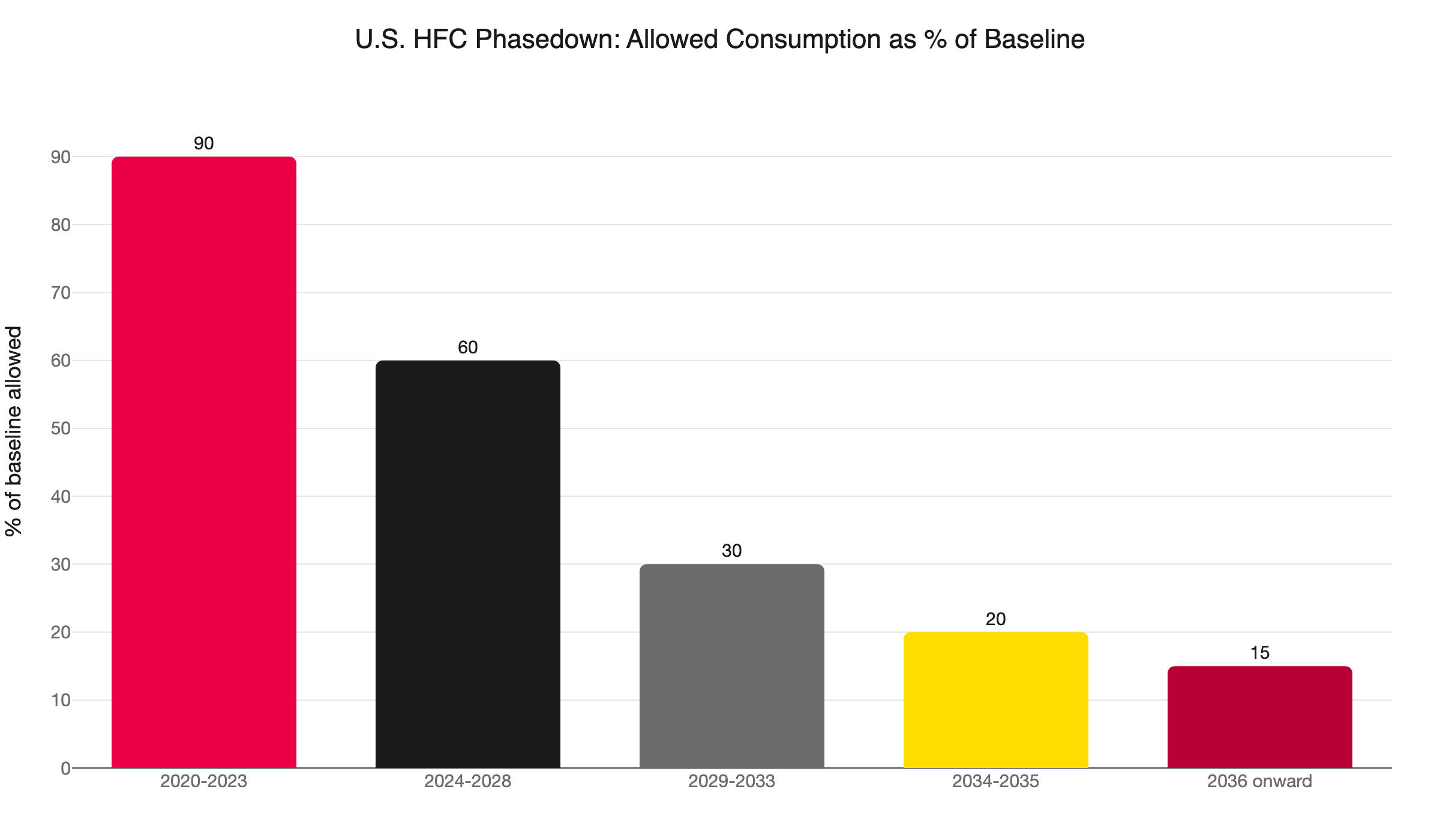
U.S. HFC Phasedown: Allowed Consumption as % of Baseline
## What the R-454B Refrigerant Change Means for Minnesota Homeowners
If you have heard about the **R-454B refrigerant change**, you may be wondering whether it affects your current air conditioner. It does. The refrigerant that cooled most Twin Cities homes for the past 15 years is R-410A. Federal law is now phasing it down. That shift changes what it costs to repair older units. It also changes when replacement starts to make sense.
We are Northern One Hour Heating & Air Conditioning, a locally owned and operated HVAC company based in Ramsey, Minnesota. Homeowners across Minneapolis, St. Paul, Blaine, Maple Grove, and Plymouth ask us about this transition every week. This guide explains what is changing, what it costs you, and what to do next. No hype, just the facts you need to make a clear decision.
## What Is R-454B, and Why Is It Replacing R-410A?
R-454B is a new, lower-emission refrigerant replacing R-410A in newly built air conditioners and heat pumps. Federal law now requires the switch because R-410A has a high global warming potential. R-454B cuts that impact by roughly 78% while delivering similar or slightly better cooling performance.
For nearly two decades, R-410A was the industry standard. It cooled well, but it carries a global warming potential (GWP) of 2,088. Under the [American Innovation and Manufacturing Act](https://www.epa.gov/hfcs/frequent-questions-phasedown-hydrofluorocarbons), the U.S. is phasing down hydrofluorocarbons by 85% by 2036. R-410A is one of the gases on that list.
R-454B is the leading replacement. It blends two refrigerants, R-32 and R-1234yf, and carries a GWP of about 466. That is roughly 78% lower than R-410A, [per Carrier](https://www.carrier.com/us/en/residential/hvac-resources/r-454b-refrigerant/). New systems built around R-454B run about 5% more efficient and use a smaller refrigerant charge, according to [Bosch's A2L refrigerant guide](https://www.bosch-homecomfort.com/us/en/residential/knowledge/a2l-refrigerant-change-guide/).
One point matters more than the rest. R-454B is not a drop-in refrigerant. You cannot simply add it to an older R-410A system. The two fluids run at different pressures. A real switch means a new indoor coil, a new outdoor unit, and usually a new line set.
R-454B is also classified as an A2L refrigerant, which means it is mildly flammable. That sounds alarming, but it is a managed standard. Manufacturers design around it. Minnesota's mechanical code already aligns with the EPA rules for safe installation.
## Can You Still Repair an Older AC That Runs on R-410A?
Yes. R-410A remains legal for servicing existing equipment, and the EPA labels it for "servicing existing equipment only." Your older AC can still be recharged, and replacement parts remain available. Repairs are not banned. What is changing is supply, and shrinking supply pushes the price of every recharge higher.
This is the fear we hear most often, and it deserves a direct answer. The phase-down targets the production of new HFC refrigerant. It does not target the equipment already in your home. If your [AC springs a leak](/blog/ac-not-blowing-cold-air-troubleshooting-twin-cities/), a technician can still add R-410A.
The catch is cost. As production gets capped, the supply of reclaimed and stockpiled R-410A shrinks. Demand stays about the same. Flat demand plus shrinking supply means higher prices. A [routine recharge](/blog/ac-refrigerant-recharge-how-it-works-cost-twin-cities/) a few years ago now carries a bigger refrigerant bill.
A good technician will also [hunt for the leak](/blog/ac-refrigerant-leak-signs-minnesota/) before recharging. Topping off a leaking system wastes expensive refrigerant. Finding and sealing the leak protects your investment. Our [AC repair team](/air-conditioning/air-conditioning-repair/) handles this kind of diagnostic work across the Twin Cities every cooling season.
For older units, the math slowly shifts. When a repair quote approaches half the cost of a new system, replacement usually wins. We walk through that framework below.
## How Does the R-454B Refrigerant Change Affect Your Repair Bills?
The phase-down makes R-410A scarcer, which raises the cost of every recharge, coil, and compressor repair on an older unit. Production stays capped at 60% of baseline through 2028 and drops to 30% in 2029. Older ACs are not illegal, but fixing them gets steadily more expensive.
Here is the part most homeowners miss. The phase-down is not an on-off switch. It is a stepped schedule that tightens supply year by year. Per the [EPA's phasedown guidance](https://www.epa.gov/hfcs/frequent-questions-phasedown-hydrofluorocarbons), allowed HFC consumption steps down on a clear timeline. It holds at 60% of baseline through 2028, falls to 30% from 2029 through 2033, drops to 20% for 2034 and 2035, and lands at 15% from 2036 onward.
That stepped decline is easiest to see on a chart. Each step leaves less new refrigerant for the millions of older units still running on R-410A.
What does this mean for your wallet? Three repair scenarios get pricier over time.
- **Recharges and top-offs.** A leak repair that needs a few pounds of R-410A costs more today than it did in 2023. It will cost more again by 2029.
- **Coil replacements.** The [evaporator coil](/blog/frozen-evaporator-coil-why-ac-ice-twin-cities/) or condenser coil holds the refrigerant. Replacing one on an older unit means refilling it with scarcer R-410A.
- **Compressor failures.** A failed compressor on an aging R-410A system often tips the choice toward replacement. You pay for a major repair plus rising refrigerant costs.
The takeaway is not panic. It is timing. If your unit is aging and a big repair looms, the repair-versus-replace math leans more and more toward a new R-454B system.
## Should You Repair or Replace Your Aging AC?
Age is the best guide. Repair a unit under 10 years old. Weigh repair against replacement from 10 to 15 years, especially if a single fix tops half the cost of a new system. Past 15 years, replacement usually wins because older units run on pricier R-410A and fail more often.
A central AC in Minnesota usually lasts 15 to 20 years. Our cooling season is short, but the warm stretches still rack up cycles. Use this framework to weigh your options.
- **Under 10 years old.** Repair it. The unit likely has years of life left, and one repair rarely justifies a full replacement. Fix leaks early so you do not waste R-410A.
- **10 to 15 years old.** Weigh the repair cost against replacement. If a repair tops half the cost of a new system, or if the unit breaks down often, a new R-454B AC starts to pay off. See our breakdown of [AC replacement costs in Minnesota](/blog/ac-replacement-cost-minnesota/).
- **Over 15 years old.** Lean toward replacement. Older units lose efficiency, fail more often, and run on a refrigerant that gets pricier every year. A new system brings a warranty, lower energy bills, and a stable refrigerant supply.
For a deeper look at the decision, read our [repair-versus-replace guide](/blog/repair-or-replace-which-should-you-do-when-your-heating-and-cooling-system-breaks-down/). Whatever you choose, we honor our on-time promise: **Always On Time… Or You Don't Pay a Dime!(R)**
## What Are Minnesota's New AC Efficiency Standards?
Minnesota sits in the U.S. Department of Energy's "North" region. There, the minimum efficiency for a new central AC is 13.4 SEER2, not the 14.3 required in the South. Heat pumps must hit 14.3 SEER2 and 7.5 HSPF2 nationwide. These standards took effect in 2023.
When you replace an old AC, the new unit must meet current federal minimums. A common online mistake is listing 14.3 SEER2 as the national AC floor. That number applies to the South and Southwest. The North region, which includes Minnesota, sets the central AC minimum at 13.4 SEER2, [according to AHRI](https://www.ahrinet.org/advocacy/residential-central-air-conditioners).
SEER2 is the updated testing standard that replaced the older SEER rating in 2023. Higher numbers mean better efficiency. Most Twin Cities homeowners benefit from a unit above the minimum. Our humidity swings and warm July stretches reward better dehumidification and steadier cooling.
There is also a code detail. R-454B is an A2L refrigerant, which means it is mildly flammable. Minnesota's mechanical code, based on the 2018 International Mechanical Code Chapter 11, governs how A2L systems are installed. The Minnesota Department of Labor and Industry aligns its residential rules with the EPA. A licensed contractor pulls the permit and follows the code.
## Which Rebates and Tax Credits Still Apply in 2026?
The federal 25C tax credit only covered equipment placed in service through December 31, 2025. So 2026 installs generally do not qualify. Confirm with a CPA. Local options still help. Xcel Energy offers cooling rebates, and the state's Save Energy Minnesota program may launch rebates worth $2,000 or more.
This section shifts often, so treat it as a starting point. Verify the details before you buy.
**Federal 25C credit.** The IRS energy-efficient home improvement credit offered 30% of project cost, up to $600 for a central AC and up to $2,000 for a heat pump. But the [IRS guidance](https://www.irs.gov/credits-deductions/energy-efficient-home-improvement-credit) states the credit covers property placed in service before December 31, 2025. For 2026 installs, the credit appears unavailable. Tax law is in flux, so confirm with a CPA before you count on it.
**Xcel Energy cooling rebates.** If you cool with Xcel, you may qualify for a rebate on a high-efficiency AC. Tiers run from about $195 at the entry 13.4 SEER2 level with quality installation up to roughly $575 at higher tiers. There is also a small annual AC Rewards credit. Check the [current Xcel residential cooling rebate page](https://mn.my.xcelenergy.com/s/residential/heating-cooling/residential-cooling-rebates) for live numbers.
**Save Energy Minnesota.** The state has flagged home efficiency rebates in the range of $2,000 to $8,000 or more. As of mid-2026, the program was not yet fully live. Watch the [Save Energy Minnesota page](https://mn.gov/commerce/energy/consumer/energy-programs/save-energy-mn.jsp) for the launch date.
**Permits.** AC and furnace replacements in Minneapolis and St. Paul require a mechanical permit. Your contractor should pull it. See the [Minneapolis mechanical permit overview](https://www.minneapolismn.gov/business-services/licenses-permits-inspections/construction-permits/permits-overview/permit-types/mechanical-heating-permits/) for details.
## Do Heat Pumps Use the New Refrigerant Too?
Yes. New heat pumps also use R-454B under the same rules. They must meet 14.3 SEER2 and 7.5 HSPF2 nationwide. Because a heat pump both heats and cools, it is a strong replacement option for Twin Cities homes weighing an aging AC plus an aging furnace.
A heat pump is an air conditioner that can reverse direction to heat your home in cooler weather. Modern cold-climate heat pumps handle Minnesota winters better than older models did. They run on the same R-454B refrigerant the new ACs use.
If your AC and furnace are both aging, a heat pump can replace the AC and take on part of your heating load. Many homeowners pair it with a furnace in a dual-fuel setup. That can simplify your refrigerant story and lower your long-term repair costs. It also gives you one efficient system instead of two aging ones.
## Frequently Asked Questions
**Will my old AC be illegal after the R-454B change?**
No. The phase-down limits new R-410A production, not your existing equipment. You can still repair and recharge an older unit. It just costs more as supply tightens.
**Can I put R-454B in my current AC?**
No. R-454B is not a drop-in refrigerant. It runs at different pressures and needs equipment built for it. Switching means replacing the AC.
**How long will R-410A be available for repairs?**
For the life of your older equipment. The EPA allows reclaimed and stockpiled R-410A for servicing legacy systems. Production shrinks on a set schedule, but repairs stay legal.
**Does Minnesota require a permit to replace an AC?**
Yes. Minneapolis, St. Paul, and most Twin Cities cities require a mechanical permit for an AC or furnace replacement. Your contractor should pull it.
## Planning Around the R-454B Refrigerant Change
The transition is real, but it is not an emergency for most homes. Your older AC is still serviceable. What has changed is the long-term math. R-410A repairs will keep getting pricier, and every new system now runs on R-454B.
A few practical steps help you stay ahead.
- **Know your unit's age.** If it is over 10 years old, start a replacement conversation before a July breakdown forces one.
- **Service it now.** A tune-up catches small leaks before they waste expensive refrigerant.
- **Get a written quote.** Honest, transparent pricing is part of how we work. You should never guess at the cost.
- **Ask about financing.** For a larger replacement, financing options can spread out the cost. Ask us what is available.
- **Time it right.** Spring is the best window for replacement in the Twin Cities. Demand is lower, and scheduling is easier.
Northern One Hour Heating & Air Conditioning is locally owned and operated in Ramsey. We serve homeowners across the Twin Cities, and we show up when we say we will. That is our promise: **Always On Time… Or You Don't Pay a Dime!(R)**
Call us at **(763) 260-6662** or [book online](/air-conditioning/) to schedule a repair, a tune-up, or a replacement estimate.
---
# Emergency Furnace Repair Signs: What to Do Right Now
URL: https://northernonehour.com/blog/emergency-furnace-repair-warning-signs/
Published: 2026-07-26 | Category: Heating
Minnesota winters are unforgiving. Learn which emergency furnace repair signs mean evacuate now, call tonight, and what to do before the tech arrives.
Key Takeaways
- **Evacuate immediately:** [rotten-egg or sulfur gas smell](/blog/gas-smell-furnace-what-to-do-minnesota/), CO alarm sounding.
- **Call tonight:** dead blower during subzero temps, electrical burning smell, yellow furnace flame with black soot staining.
- **Schedule within days:** short cycling, inconsistent heat, furnace running constantly without reaching setpoint.
- Pipes in exposed locations can start freezing in 3 to 6 hours when outdoor temps hit 20°F or below.
- CO detectors expire after about 7 years. Check the manufacture date on yours now.
- Call CenterPoint Energy at **612-372-5050** for any suspected gas leak. The inspection is free.
- For emergency service: **(763) 260-6662**.
## What Are Emergency Furnace Repair Signs?
Knowing the emergency furnace repair signs that require immediate action could protect your home, your pipes, and your family. Not every symptom calls for the same response. Some require you to evacuate in the next two minutes. Others mean you need a technician tonight. A third tier is urgent but can wait until morning.
The difference matters. Treating all warning signs identically, or ignoring them, has real consequences in a Minnesota winter.
## Not Every Furnace Problem Has the Same Urgency
The generic symptom lists that show up when you search for furnace help tend to lump every warning sign under one response: call for emergency service. That framing misses something important.
A CO alarm requires evacuation and a 911 call before you call any HVAC company. A dead blower at -20°F is a pipe-freeze emergency with a 3-to-6-hour clock. A short-cycling furnace is a problem that will worsen, but it does not require you to leave the house tonight.
This guide organizes the most serious emergency furnace repair signs into three tiers and tells you what to do at each one before a technician arrives.
## Does a Gas Smell Count as an Emergency Furnace Repair Sign?
**Yes, and it requires a completely different response from every other furnace symptom. Leave immediately. Do not touch any light switches, use your phone indoors, or start your car in an attached garage. Call CenterPoint Energy and 911 from outside.**
Natural gas is odorless on its own. Utility companies add a sulfur compound called mercaptan to create the rotten-egg smell you can detect. If you smell it, treat the situation as an active gas leak until professionals confirm otherwise.
[CenterPoint Energy's gas leak protocol](https://www.centerpointenergy.com/en-us/business/safety/natural-gas-leaks/what-to-do-if-you-smell-gas?sa=mn) is specific:
1. Do not flip any light switch on or off.
2. Do not use your phone inside the home.
3. Do not start your car if the garage is attached or adjacent to the house.
4. Leave the front door open as you exit to help vent the space.
5. From outside, call CenterPoint at **612-372-5050** or toll-free **800-296-9815**.
6. Call 911.
7. Wait outside until CenterPoint or fire personnel clear the property.
CenterPoint checks suspected leaks at no cost to you. Use the service every time.
### Olfactory Fatigue: Why the Smell Might Disappear
[CenterPoint's safety guidance](https://www.centerpointenergy.com/en-us/business/safety/natural-gas-leaks/what-to-do-if-you-smell-gas?sa=mn) includes a warning most homeowners have never heard: olfactory fatigue. This is a normal, temporary condition where prolonged exposure reduces your ability to detect an odor. You can stop smelling gas while the leak is still present and active. If the smell fades, that is not confirmation the problem resolved. Follow the evacuation protocol regardless.
## What Should You Do When the CO Alarm Triggers?
**Treat every CO alarm as real until confirmed otherwise. Get everyone out immediately, including pets. Go to fresh air. Call 911. Do not go back inside for any reason before responders arrive.**
Carbon monoxide is invisible and odorless. You cannot smell it or see it, and its early symptoms closely mimic the flu. [The EPA notes](https://www.epa.gov/indoor-air-quality-iaq/protect-your-family-and-yourself-carbon-monoxide-poisoning) that low-level CO exposure causes shortness of breath, mild nausea, and headaches. At moderate levels, symptoms escalate to severe headaches, dizziness, and mental confusion. At high levels, CO can be fatal within minutes. Families exposed at low levels often do not suspect CO at all.
[According to the CPSC](https://www.cpsc.gov/Newsroom/News-Releases/2006/CPSC-Warns-Of-Hazards-from-Furnaces-Space-Heaters-and-Fireplaces), heating systems cause approximately 63 CO deaths per year. CO from all consumer products sends more than 10,000 people to emergency rooms annually. These numbers make CO one of the most serious risks a malfunctioning furnace can create.
A [cracked heat exchanger](/blog/cracked-heat-exchanger-signs-minnesota/) is one of the most common furnace-related CO sources. [The CPSC explains](https://www.cpsc.gov/Newsroom/News-Releases/1998/CPSC-Urges-Seasonal-Furnace-Inspection-Replacement-of-Recalled-Vent-Pipes-to-Prevent-CO-Poisonings) that a crack allows combustion gases, including CO, to be pulled into the air stream the blower pushes through your home. Black staining on the furnace cabinet exterior, on the ceiling above the unit, or on the flue pipe is a visual indicator that combustion gases are escaping. If you see that staining, repair is not the safe fix. Replacement is.
### Are CO Alarms Reliable Enough?
[The EPA cautions](https://www.epa.gov/indoor-air-quality-iaq/protect-your-family-and-yourself-carbon-monoxide-poisoning) that CO alarms are not a substitute for proper appliance maintenance. Lab testing found that some alarms failed to trigger at very high CO concentrations. Others alarmed at levels posing no immediate risk. A silent alarm does not guarantee a safe home.
Minnesota law requires CO alarms in all single-family and multifamily dwellings within 10 feet of every sleeping room. Per [Minnesota Statute §299F.51](https://www.revisor.mn.gov/statutes/cite/299F.51), the alarm must meet UL 2034 standards. CO detectors have a life expectancy of about 7 years. Pull the unit off the wall and check the manufacture date printed on the back. If yours is past that window, replace it before this heating season continues.
For a full walkthrough of CO risks and furnace season, read our guide on [carbon monoxide safety and your furnace](/blog/carbon-monoxide-safety-furnace-season/).
## Is a Dead Blower an Emergency in Minnesota Winter?
**During any stretch of subzero temperatures, a dead blower is a pipe-freeze emergency, not a wait-until-morning situation. Your interior temperature can fall below the pipe-safety threshold within hours of the furnace going down.**
The Twin Cities recorded an actual low of -21°F in January 2026, with a [wind chill of -47°F before 4 a.m.](https://www.weather.gov/mpx/ColdestTempsandWindChills), the coldest since January 2019. The National Weather Service issues Extreme Cold Warnings at -35°F wind chill. At those conditions, a home without heat loses warmth fast.
[Research on pipe-freeze timelines](https://www.arlinghausair.com/how-long-will-it-take-pipes-to-freeze-without-heat/) shows that pipes in exterior walls, crawlspaces, and unheated attics can begin freezing in as little as 3 to 6 hours when outdoor temperatures drop to 20°F or below. Wind accelerates the process by pulling heat through gaps and cracks in the building envelope. The accepted prevention threshold is keeping interior temperature above 55°F. Once the blower stops, you are no longer maintaining any temperature at all.
### What to Do Before the Tech Arrives
Run through this checklist first. A few of these have an immediate fix:
- **Check the circuit breaker.** A tripped breaker is one of the most common causes of [sudden furnace shutdown](/blog/power-outage-furnace-heat-what-to-do-minnesota/). Reset it once. If it trips again immediately, leave it. Repeated tripping is an electrical fault the technician needs to see.
- **Inspect the exhaust and intake pipes.** High-efficiency furnaces exhaust and intake through PVC pipes that exit through an exterior wall near ground level. [Snow accumulation or ice](/blog/high-efficiency-furnace-exhaust-vent-blocked-snow-ice-minnesota/) can block these pipes and trigger a safety lockout. Clear them if you can reach them safely.
- **Check the furnace filter.** A clogged filter causes [overheating shutoffs](/blog/furnace-limit-switch-failure-symptoms-reset-minnesota/). If the filter is packed solid with debris, swap in a new one and reset the furnace.
- **Check the power switch.** Most furnaces have a standard wall switch nearby. It gets bumped more often than you would expect.
- **Set the thermostat 5 degrees above the current room reading.** Confirm the call for heat is active.
If none of those steps restore heat and outdoor temps are at or below 20°F, start protecting your pipes immediately:
- Open cabinet doors under sinks on exterior walls.
- Keep a slow drip running on every faucet.
- Place portable heaters in the most vulnerable rooms: bathrooms, laundry rooms on exterior walls, rooms above a crawlspace.
- Do not leave the house unattended.
Our post on [why your furnace is not turning on](/blog/furnace-not-turning-on-troubleshooting-minnesota/) covers additional causes and diagnostics if the checklist above does not resolve the issue.
## What Does a Burning Smell from the Furnace Mean?
**It depends entirely on the type of smell. A dusty or burnt-hair odor on the [first startup of the season](/blog/furnace-burning-smell-first-use-fall-minnesota/) is usually normal. An electrical or chemical smell during regular operation is a call-now situation. A rotten-egg smell is an evacuation, not a repair call.**
Here is how to separate them:
**Dusty, stale, or light burnt-hair smell at first seasonal startup:** Normal. Dust settles on the heat exchanger during the off-season and burns off when heat runs through for the first time. The smell fades within 20 to 30 minutes. No action needed.
**Electrical, sharp, chemical, or melting-plastic smell during regular operation:** Not normal. This points to a motor, capacitor, or wiring component that is overheating or failing. Turn the furnace off at the thermostat and call for same-day or emergency service. Running the system in this condition is a fire risk.
**Rotten-egg or sulfur smell at any time:** This is not a furnace repair situation. This is a gas leak situation. Follow the evacuation protocol described earlier in this post.
The gap between these three smells is exactly what most generic furnace symptom articles miss. Matching the smell to the correct response is the core of the triage.
## Should You Worry About a Yellow Furnace Flame?
**Yes. A healthy burner produces a steady blue flame. A yellow or orange flame indicates incomplete combustion and is associated with CO production. Combined with black soot staining near the furnace or flue, it is a call-today situation.**
Many furnaces have a small viewport or sight glass in the cabinet door. If yours does, here is the quick read:
- **Steady blue flame:** Normal.
- **Yellow or orange flame:** Incomplete combustion. Schedule a technician to [inspect the burners](/blog/furnace-igniter-failure-signs-replacement-cost-minnesota/), heat exchanger, and flue.
- **Blue flame that wavers toward the cabinet:** Can indicate a cracked heat exchanger drawing combustion gases back into the air stream.
Look for black staining on the cabinet exterior, on the ceiling above the unit, or on the visible sections of flue pipe. The CPSC identifies that discoloration as a sign that combustion gases are escaping into your living space. Do not ignore it.
If your furnace is older and this is the latest in a series of problems, it is worth evaluating whether repair or replacement makes more sense at this stage. Our post on [when to replace rather than repair your furnace](/blog/is-it-time-for-a-new-furnace-how-to-know-when-its-time-to-replace-not-repair/) walks through that decision.
## The Signs That Are Urgent but Not a Same-Night Emergency
Some furnace problems do not require you to leave the house or call at midnight, but they need a technician within a few days, not a few weeks:
**Short cycling:** The furnace starts, runs for less than five minutes, shuts off, and repeats. This pattern stresses the heat exchanger and blower motor. Left alone, it tends to escalate into a larger repair. A $250 diagnostic call today is better than a $1,800 component replacement in February. Our post on [furnace short cycling causes and fixes](/blog/furnace-short-cycling-causes-fixes/) covers the most common culprits.
**Inconsistent heat room to room:** One part of the house is comfortable. Another stays cold no matter how high you set the thermostat. This can reflect duct problems, a failing zone valve, or a furnace losing output capacity.
**Furnace runs constantly but never reaches setpoint:** During a [-20°F stretch](/blog/natural-gas-pressure-cold-snap-furnace-minnesota/), this can be normal. The system is simply fighting extreme conditions. During a moderate 15°F Minnesota day, it signals an efficiency loss or a mechanical issue that warrants investigation.
**Unexplained increase in your gas bill:** A dirty heat exchanger, a [failing blower motor](/blog/furnace-blower-motor-failure-signs-cost-minnesota/), or a duct leak shows up in energy costs before it shows up as a breakdown. If your bill jumped without a change in usage or weather patterns, schedule a diagnostic.
These are not emergencies, but they are not something to defer to spring either. Addressing them early almost always keeps the repair scope smaller.
## How Fast Do Pipes Freeze Without Heat?
**Pipes in exterior walls, crawlspaces, and unheated attics can begin freezing in 3 to 6 hours when outdoor temperatures drop to 20°F or below. Subzero wind chills accelerate that timeline significantly.**
This is the number that most furnace symptom articles leave out, and it completely changes the calculus around a dead furnace. At the [Twin Cities' record low wind chill of -67°F](https://www.dnr.state.mn.us/climate/twin_cities/mspwindchill.html), recorded in January 1936, the pipe-freeze window is not measured in hours. These conditions have happened in Minnesota. They will happen again.
If heat cannot be restored quickly during a subzero event:
1. Call for emergency HVAC service right away.
2. If you cannot reach a technician within an hour and temperatures are dropping, turn off the main water supply.
3. Open cabinet doors under sinks on any exterior wall.
4. Keep a slow drip on every faucet to keep water moving.
5. Use portable heaters in the most exposed rooms.
6. Do not leave the home vacant overnight in these conditions.
The 3-to-6-hour window assumes typical Minnesota subzero conditions, not extreme events. In a -21°F night with 40 mph winds, plan accordingly.
## Why the Company You Call Matters
In a Minnesota winter emergency, response time is not just a convenience. It is a factor in whether your pipes hold, whether your family stays safe, and whether a repair stays manageable.
We are locally owned and operated out of Ramsey, MN. We serve Minneapolis, St. Paul, Blaine, Maple Grove, Plymouth, Brooklyn Park, Woodbury, Bloomington, and the wider Twin Cities metro. Our commitment is straightforward: "Always On Time… Or You Don't Pay a Dime!(R)"
Every service call comes with a 100% satisfaction guarantee and transparent, upfront pricing. You know the cost before any work begins. For larger jobs including furnace replacement, heat pump installation, and whole-home indoor air quality improvements, financing options are available.
If your furnace is showing any of the emergency furnace repair signs covered in this guide, do not wait to see if the situation improves on its own. Call us at **(763) 260-6662** or [schedule service through our furnace repair page](/heating/heating-equipment/furnaces/furnace-repair/). Our team is ready.
---
# Furnace Not Turning On? Your Minnesota No-Heat Walkthrough
URL: https://northernonehour.com/blog/furnace-not-turning-on-troubleshooting-minnesota/
Published: 2026-07-26 | Category: Heating
Furnace not turning on? Walk through a Minnesota no-heat emergency: CO safety, five-minute checks, flash codes, and when to call (763) 260-6662.
Key Takeaways
- If you smell rotten eggs or your carbon monoxide alarm sounds, leave the house, then call 911 and your gas utility. Do not troubleshoot.
- Most furnace not turning on calls trace back to a dead thermostat, a tripped breaker, or a dirty flame sensor.
- Modern furnaces [blink a flash code](/blog/furnace-error-codes-blinking-light-guide/) that names the fault. Read it before you call.
- Call for emergency repair once indoor temperatures drop toward pipe-freeze risk.
- Minnesota offers real help: the Cold Weather Rule, a $600 furnace tax credit, utility rebates, and the Energy Assistance Program.
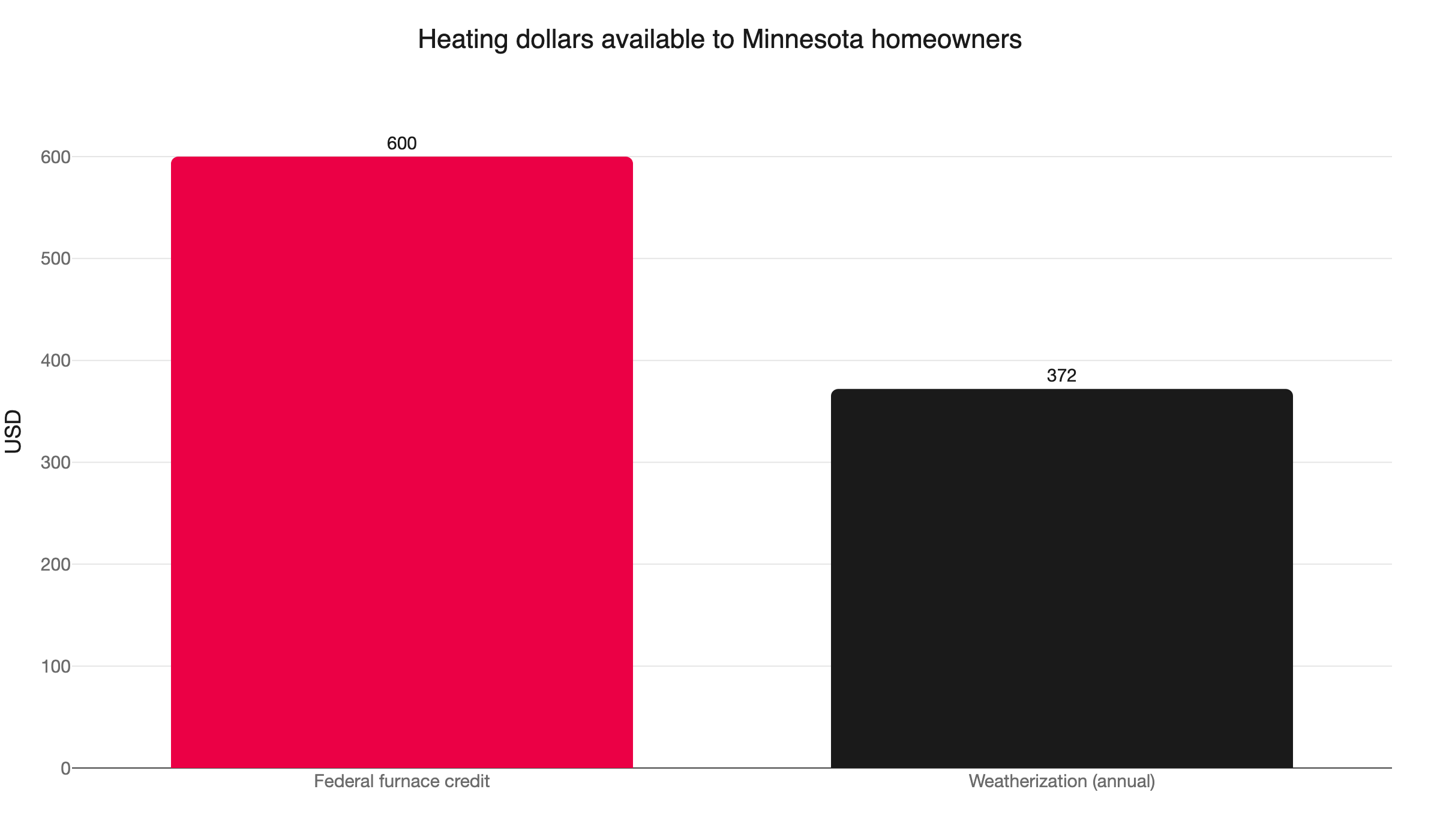
Heating dollars available to Minnesota homeowners
It is 2 a.m. in January. The house is cold. You came downstairs to vents blowing nothing but cool air. A furnace not turning on is a genuine emergency in Minnesota, where overnight lows can [plunge far below zero](/blog/natural-gas-pressure-cold-snap-furnace-minnesota/). Here is how to work through it, step by step.
## Is It Safe to Check the Furnace Yourself?
Yes, for the simple checks. You can safely look at the thermostat, the breaker, the furnace switch, and the air filter. Stop and call for help if you smell gas, hear a carbon monoxide alarm, or spot soot, water, or scorch marks near the unit. Those are [danger signs](/blog/emergency-furnace-repair-warning-signs/), not do-it-yourself fixes.
Your first move is always safety, not troubleshooting. Natural gas is odorless on its own. Suppliers add a chemical called mercaptan that smells like rotten eggs. If you catch that smell, or your carbon monoxide alarm goes off, leave the house right away. Do not flip switches or use a phone inside. Once you are out and clear, call 911 and your gas utility. We have a fuller guide to [carbon monoxide safety during furnace season](/blog/carbon-monoxide-safety-furnace-season/) that covers alarms, symptoms, and next steps.
If there is no smell and no alarm, you are clear to run the basic checks below. Keep kids and pets away from the furnace area. Keep a phone handy. If anything feels off at any point, stop and call us at (763) 260-6662. As a locally owned and operated Twin Cities company, we treat a cold house as the emergency it truly is.
## Furnace Not Turning On? Start With These Five-Minute Checks
Walk through five quick checks before you call. Confirm the thermostat is set to heat and the batteries work. Check the breaker panel. Find the furnace switch and flip it on. Look at the air filter. Reset the thermostat. Most no-heat calls end somewhere inside this short list.
These five steps fix a surprising share of cold-house calls. Work through them in order.
**Check the thermostat.** Make sure it is set to heat, not cool or fan-only. Bump the target temperature a few degrees above the current room reading. Listen for the click. If the screen is blank, swap the batteries. A dead thermostat battery is one of the most common reasons a furnace stays silent.
**Check the breaker panel.** A tripped breaker is the next suspect. Find your electrical panel and look for any switch sitting in the middle position. Flip it fully off, then back on. If it trips again right away, do not keep resetting it. That points to a short or an overload, and a pro should look at it.
**Find the furnace switch.** Most furnaces have a light-switch-style toggle on or near the unit. It sits in a basement or hallway and is easy to bump. Make sure it is flipped on. This switch cuts power to the whole furnace, so a bumped switch means total silence.
**Check the air filter.** A clogged filter chokes airflow. The furnace can overheat, trip a safety switch, and shut itself down. Pull the filter out and hold it up to a light. If you cannot see light through it, replace it. A fresh filter is cheap, and it clears up a lot of no-heat calls.
**Reset the system.** Turn the thermostat off for one minute, then back to heat. Some furnaces also have a reset button on the side of the cabinet. Press it once. Do not press it over and over. If the furnace fires up, watch it for a few minutes. If it shuts off again, move on to the flash code below.
## What Is a Flash Code and How Do I Read It?
A flash code is a string of blinks from a small light on the [furnace control board](/blog/furnace-control-board-failure-symptoms-cost-minnesota/). The blinks map to a fault code printed on a sticker inside the panel, such as three flashes for a pressure switch. Count the blinks, match them to the sticker, and you know where to start.
Modern furnaces rarely fail silently. Most have a small light on the control board, behind the lower front panel, that blinks in a pattern. That pattern is your flash code, and it names the fault.
To read it, you usually need to remove one screw and swing the lower door open. Be gentle. Turn the wall switch off first if you are unsure. Inside, look for a sticker that lists what each blink pattern means. One brand might use two flashes for a flame sensor fault. Another might use three for a pressure switch. Some panels show a steady blink for all-clear and a slow flash for a lockout.
Write the code down before you call. When you tell us three flashes, pressure switch, we arrive already knowing where to look. That shortens your repair and lowers your cost. Do not try to force the board, bypass the switch, or tape over the light. Those steps trade a clean fix for a dangerous one.
A hot-surface igniter is one part the flash code can point to. Modern furnaces use hot-surface igniters instead of a standing pilot. [If the igniter cracks, gas will not ignite](https://www.bryant.com/en/us/products/gas-furnaces/furnace-not-turning-on/). That is a distinct failure from the flame sensor, and the code helps tell them apart.
A furnace that tries and fails a set number of times will go into lockout. The light will blink a steady warning, and the unit will wait before it tries again. Lockout is a safety feature, not a quirk. It keeps the furnace from dumping unburned gas into your home. Resetting the power at the wall switch can clear a lockout. If it comes back, the underlying fault is still there. That is your signal to call.
## Furnace Not Turning On After the Five Checks? Know the Four Parts
Four parts fail most often. The igniter lights the flame. The flame sensor confirms the flame is burning. The gas valve feeds fuel. The limit switch shuts the unit down if it overheats. Each part fails in its own way, with a symptom you can learn to recognize.
If the five-minute checks and the flash code did not solve it, the problem usually lives in one of four places. Knowing which is which helps you describe the issue and understand the repair.
**The igniter: pilot or hot-surface.** Older furnaces use a standing pilot, a small flame that stays lit. Newer ones use a hot-surface igniter that glows orange to light the burners. If [the pilot is out](/blog/furnace-pilot-light-keeps-going-out/), or [the igniter cracks](/blog/furnace-igniter-failure-signs-replacement-cost-minnesota/), the burners never get their spark. The furnace cycles but produces no heat. Relighting an old pilot is a careful, step-by-step job. Replacing an igniter is work for a technician.
**The flame sensor.** The flame sensor is a thin metal rod near the burners. Its job is to confirm the flame is actually burning before gas keeps flowing. Over time, the rod coats in carbon. When it cannot sense the flame, the gas valve closes as a safety step, and the furnace starts, then stops. That short cycle repeats. [A dirty flame sensor, coated in carbon, shuts the gas valve as a precaution and causes that start-then-stop cycling](https://www.bryant.com/en/us/products/gas-furnaces/furnace-not-turning-on/). Cleaning the thin rod near the burners with a fine abrasive often clears it. We walk through the full pattern in our guide to [furnace short cycling causes and fixes](/blog/furnace-short-cycling-causes-fixes/).
**The gas valve.** [The gas valve opens](/blog/furnace-gas-valve-failure-symptoms-replacement-cost-minnesota/) to feed fuel to the burners. If it sticks closed, or the control board never tells it to open, you get no flame. Gas valves are not a homeowner repair. If the valve has failed, the fix is a replacement, done by a pro with the right tools to test for leaks.
**The limit switch.** The limit switch is a high-temperature safety trip. When airflow drops, the furnace overheats. [A clogged filter or blocked airflow overheats the unit and trips this high-temp safety switch](https://www.carrier.com/us/en/residential/hvac-resources/furnaces/furnace-not-turning-on/). If your furnace runs for a minute and quits, and the filter is clean, a [tripped limit switch](/blog/furnace-limit-switch-failure-symptoms-reset-minnesota/) is a prime suspect.
## Why Does My Furnace Start and Then Shut Off?
That start-then-stop pattern is called short cycling, and a dirty flame sensor is the most common cause. The sensor coats in carbon, cannot confirm the flame, and closes the gas valve as a safety step. The fix is usually a quick clean, not a brand-new part.
This is the single most common no-heat pattern we see across the Twin Cities. The furnace clicks. The blower starts. You feel a flash of hope. Then it dies. Nine times in ten, the flame sensor is the culprit.
The fix is straightforward for a technician. We pull the sensor, clean the carbon off the rod, reinstall it, and test the start cycle. The whole job is quick. What you should not do is ignore it. A furnace that short cycles runs less efficiently, wears out parts faster, and leaves the house cold. It also wastes gas.
Short cycling can have other roots. A [dirty flame sensor](/blog/furnace-flame-sensor-dirty-clean-cost-minnesota/) leads the list, but a clogged filter, [a blocked flue](/blog/high-efficiency-furnace-exhaust-vent-blocked-snow-ice-minnesota/), or a [failing pressure switch](/blog/furnace-pressure-switch-failure-symptoms-minnesota/) can all cause the same pattern. That is where the flash code earns its keep. The code narrows the list fast.
## When Should You Call for Emergency Furnace Repair?
Call right now if you smell gas or your carbon monoxide alarm is sounding. Call soon if the indoor temperature keeps dropping toward freezing. In a Minnesota winter, a cold house can freeze and burst pipes within hours, and a fast call now beats a plumbing disaster later.
Some calls can wait until morning. A no-heat call in January is usually not one of them. Here is how to judge.
Call right now if you smell gas or your carbon monoxide alarm is going off. Those are not wait-until-Monday problems. [If you smell rotten eggs, or your CO alarm sounds, evacuate, call 911, and call your utility](https://www.carrier.com/us/en/residential/hvac-resources/furnaces/furnace-not-turning-on/). Then call us.
Call soon if the indoor temperature is dropping and your home is heading toward freezing. In Minnesota, frozen pipes can burst within hours once the indoor temperature falls far enough. A burst pipe is a far bigger, far more expensive problem than a service call. The math is simple. A fast repair now costs less than water damage later.
Call when you have run the five-minute checks, read the flash code, and the furnace still will not run. You have done the safe, smart groundwork. Hand the rest to a pro.
Our team is ready for [emergency furnace repair](/heating/heating-equipment/furnaces/furnace-repair/) across the Twin Cities. We back every visit with our on-time promise: Always On Time… Or You Don't Pay a Dime!(R). When your house is cold at 2 a.m., showing up when we say we will is the whole job.
## What Help Does Minnesota Offer for Heating Emergencies?
More than most states. The Cold Weather Rule guards eligible households from winter shutoffs. The Energy Assistance Program can pay to repair or replace a broken furnace. Utilities offer tune-up discounts and thermostat rebates. A federal tax credit can offset the cost of a new high-efficiency furnace.
This is where being a Minnesota homeowner pays off. The state and its utilities offer real help with heating costs, and too few people use it.
**The Cold Weather Rule.** Minnesota law protects households from winter shutoffs. Under [statute 216B.096](https://www.revisor.mn.gov/statutes/cite/216b.096), the cold-weather period runs Oct. 1 through April 30. Households at or below 50% of the state median income cannot be disconnected. The utility cannot require more than 10% of your household income toward current and past heating bills. Service must be restored within 24 hours of an accepted payment plan.
**Energy Assistance and weatherization.** The federal Low Income Home Energy Assistance Program, run in Minnesota as the Energy Assistance Program, can pay to repair or replace a broken heating system. [The Department of Energy says its Weatherization Assistance Program saves eligible households more than $372 a year](https://www.energy.gov/save/home-upgrades).
**CenterPoint Energy tune-up.** If you heat with CenterPoint gas, the Home Service Plus furnace tune-up runs $139.95. It checks the flame sensor and pilot safety timer, the pilot or igniter, and the burner flame and gas input. It also checks the heat exchanger, the full safety-control sequence, and runs a carbon monoxide check. It is open to all homeowners, with no CenterPoint account required. ([CenterPoint furnace tune-up](https://www.centerpointenergy.com/en-us/home-service-plus/services/maintenance-services/tune-ups/furnace-tune-up))
**Thermostat rebate.** CenterPoint offers one programmable or smart-thermostat rebate per gas-service address, good for installs between Jan. 1 and Dec. 31, 2026. ([CenterPoint thermostat rebate](https://www.centerpointenergy.com/en-us/residential/save-energy-money/efficiency-programs-and-rebates/programmable-thermostat-rebate?sa=mn))
**Federal furnace tax credit.** If you do replace the furnace, the federal government helps. Under [IRC 25C](https://www.irs.gov/credits-deductions/energy-efficient-home-improvement-credit), a new high-efficiency gas, propane, or oil furnace or boiler can earn a credit up to $600. The unit must meet the top efficiency tier. Labor counts too, and you claim it on Form 5695.
The utility split in the Twin Cities matters here. CenterPoint delivers most of the gas. Xcel handles most of the electric. Your rebates and assistance programs depend on which utility serves your address.
## Repair or Replace: Which Makes Sense?
Repair when the furnace is under roughly 10 to 15 years old and the fix is small. Replace when the heat exchanger is cracked, the unit is old, or repair bills keep stacking. A new high-efficiency furnace can qualify for the federal credit and utility rebates, which softens the price.
A no-heat call often ends in a quick repair. Sometimes it ends in a replacement. Here is how to think about it.
Repair when the furnace is on the younger side, say under roughly 10 to 15 years old, and the fix is small. A cleaned flame sensor, a fresh igniter, or a new filter all point to a unit with years left.
Replace when the heat exchanger is cracked. A cracked heat exchanger means unsafe operation, and the [ENERGY STAR heating checklist](https://www.energystar.gov/saveathome/heating-cooling/maintenance-checklist) calls it a stop-using-it condition. Replace when the unit is old, when repair bills keep stacking, or when efficiency has fallen off. We lay out the full numbers in our guide to [furnace replacement cost in the Twin Cities](/blog/furnace-replacement-cost-twin-cities/).
A new high-efficiency furnace can qualify for the $600 federal credit and the utility rebates above. That softens the price. The right move depends on the age of your unit, the cost of the repair, and how much you spend on gas each winter.
The best repair is the one you never need. Annual tune-ups catch a dirty flame sensor, a weak igniter, or a clogged filter before they leave you cold. A well-maintained furnace is also the most efficient furnace. That keeps your winter gas bills down and extends the life of the unit.
## You Will Not Face This Alone
A furnace not turning on is scary at 2 a.m., but you have a clear path. Check safety first. Run the five-minute checks. Read the flash code. Know the four parts. And when it is time to call, call a team that shows up.
We are locally owned and operated in the Twin Cities. We back every visit with our on-time guarantee: Always On Time… Or You Don't Pay a Dime!(R). Call us at (763) 260-6662, or book online. We will get your heat back on.
---
# Air Purifier vs Air Filter MERV Rating: What Actually Works
URL: https://northernonehour.com/blog/air-purifiers-vs-filters-merv-ratings-explained/
Published: 2026-07-25 | Category: Indoor Air Quality
Compare air purifier vs air filter MERV ratings for Twin Cities homes. Learn what improves indoor air, what can damage your HVAC, and what is marketing.
Key Takeaways
- MERV measures a filter's ability to capture particles from 0.3 to 10 microns. Higher is better for air quality, up to the limit your system can handle.
- The EPA recommends MERV 13 as a minimum upgrade target. Minnesota's mechanical code requires only MERV 4.
- Installing a MERV 13 filter in a system not designed for it can damage your furnace, freeze the AC coil, or burn out the blower motor.
- Your HVAC filter only cleans air when the system is running. A portable air purifier runs independently and covers one room.
- Whole-home air purifiers work inside your ductwork alongside a media filter. They do not replace the filter.
- Ozone generators are not approved by any federal agency for use in occupied spaces.
- ENERGY STAR on a portable air cleaner certifies energy efficiency only, not health performance.
- No Minnesota utility currently offers a rebate for air purifiers or HVAC filters. This is an out-of-pocket cost.
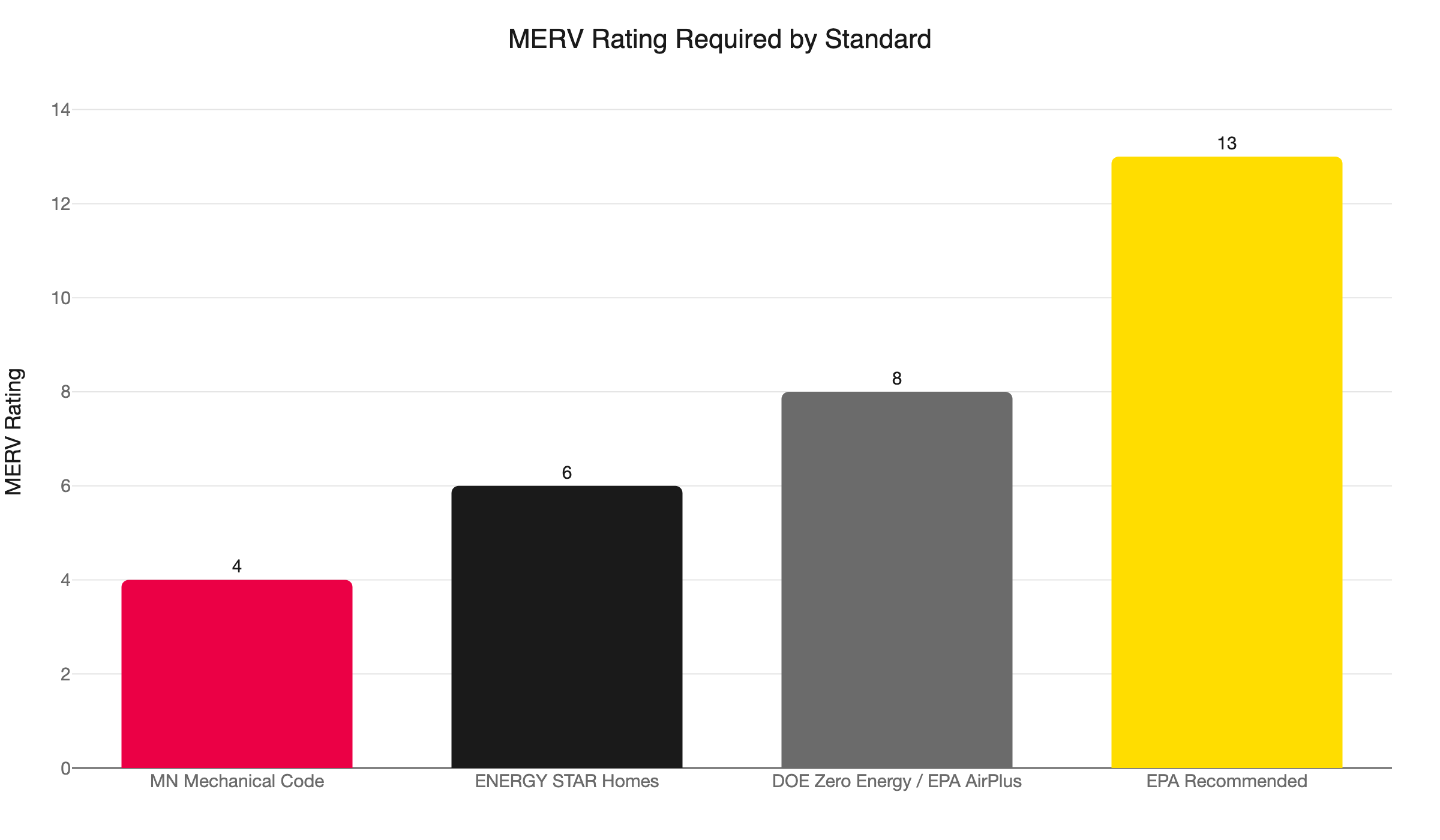
MERV Rating Required by Standard
## Is Your Air Filter Actually Cleaning Your Air?
**Short answer:** It depends on the MERV rating you chose and whether your HVAC system can safely handle it. In most homes, the filter only processes air less than 25% of the time. Upgrading the rating helps - but only up to what your equipment can support.
The air purifier vs air filter MERV rating question comes up every time a homeowner walks down the home improvement aisle or sees a wildfire smoke advisory. More numbers, more claims, and the honest answer buried somewhere under the marketing.
[EPA guidance](https://www.epa.gov/indoor-air-quality-iaq/guide-air-cleaners-home) shows that HVAC filters only clean air when the system runs - in most homes, less than 25% of the time during heating and cooling seasons. The filter you installed may be doing a fraction of the work you think it is. And a filter rated too high for your system may be quietly stressing your equipment.
This post explains what MERV ratings actually mean, when upgrading helps and when it damages your furnace, how portable and whole-home purifiers fit in, and what Minnesota winters and wildfire smoke seasons add to the equation.
## What Is a MERV Rating?
**Short answer:** MERV stands for Minimum Efficiency Reporting Value. It measures how well a filter captures particles between 0.3 and 10 microns. The scale runs from 1 to 20. Most residential systems use MERV 6 through 13.
MERV is based on [ASHRAE standard 52.2](https://www.epa.gov/indoor-air-quality-iaq/what-merv-rating) - the national consensus standard for filter testing. When a filter package says "MERV 11," that rating is reproducible and comparable across manufacturers.
Two competing proprietary systems - FPR (Home Depot's scale) and MPR (3M/Filtrete's scale) - are not standardized and are not comparable across brands. If you are evaluating filters from different manufacturers, look for the MERV number.
Higher MERV means finer filtration. A MERV 8 filter captures most pollen, [mold spores](/blog/mold-in-hvac-ducts-signs-remediation-twin-cities/), and dust mites. A MERV 13 catches fine dust, smoke particles, and bacteria at a rate the EPA considers the minimum for meaningful health benefit. All filters require periodic replacement to function properly.
## What Is the Difference Between an Air Filter and an Air Purifier?
**Short answer:** An HVAC air filter is a physical barrier inside your duct system that traps particles as air passes through. An air purifier processes air through additional technologies: HEPA media, activated carbon, UV-C, or ionization. They serve different purposes and work best together.
The "filter vs. purifier" framing you see in most marketing treats these as competing products. They are not. Your duct filter protects your equipment and handles baseline particle removal. A purifier does supplemental work - often targeting gases, VOCs, or biological contaminants the filter cannot address.
The distinction matters because some purification technologies - ionizers and ozone generators specifically - are marketed as filter replacements. They are not, and some carry real safety risks covered later in this post.
## Air Purifier vs Air Filter MERV Rating: Which Actually Cleans Your Air Better?
**Short answer:** Neither is universally better. Your HVAC filter processes more air per hour than any portable unit but only when the system runs. A portable purifier with a high CADR runs continuously and covers one specific room. For whole-home air quality, the right answer is usually a quality MERV-rated filter plus a portable unit in the rooms that need it most.
Here is how the three options compare:
**Your HVAC duct filter**
- Filters all air moving through your duct system
- Only runs when heating or cooling is active - [less than 25% of the day in most homes](https://www.epa.gov/indoor-air-quality-iaq/guide-air-cleaners-home)
- Captures particles based on its MERV rating
- Does nothing for gases, VOCs, or odors
**A portable air purifier**
- Covers one room, typically 150-500 square feet depending on the unit's CADR rating
- Runs independently of your HVAC system - continuous coverage regardless of whether the heat or AC is on
- Look for a high CADR rated for tobacco smoke: that is the smallest particle category tested and the strongest proxy for PM2.5 performance
- Activated carbon models help with gases and VOCs, but only with significant carbon material - thin carbon pre-filters are largely marketing
**A [whole-home in-duct purifier](/blog/electronic-air-cleaner-maintenance-minnesota/)**
- Installed inside your ductwork and works in tandem with your duct filter
- Covers the whole house whenever the system runs
- Adds UV-C, media filtration, or ionization beyond what the duct filter provides
- Does not replace the duct filter
The highest-leverage single move for whole-home particle removal is upgrading your MERV rating - if your system can safely handle it. A portable purifier is the right add-on for bedrooms, [nurseries](/blog/indoor-air-quality-newborn-nursery-minnesota/), or rooms where someone has [asthma or allergies](/blog/hvac-spring-allergy-relief-twin-cities/). Our [indoor air quality service](/indoor-air-quality/) covers the whole-home options we install.
## Why the Wrong High-MERV Filter Can Damage Your HVAC System
This is the piece most competitor content skips entirely. A denser filter captures finer particles - but it also creates more resistance. Air has to work harder to push through tighter media. In HVAC terms, that resistance is [static pressure](/blog/high-static-pressure-hvac-symptoms-fixes-twin-cities/).
[Most residential HVAC systems are designed to operate efficiently at 0.4 to 0.5 inches water column total static pressure](https://basc.pnnl.gov/resource-guides/high-merv-filters). A single filter can consume 0.25 inches of that budget before air even reaches the ductwork. Add an oversized MERV 13 to an older system with undersized ducts, and total system pressure climbs into the damage range.
Here is what breaks first:
- **Furnace overheating.** Restricted airflow traps heat in the heat exchanger. Safety limits trip. Over time, the heat exchanger can crack - an expensive and potentially dangerous failure.
- **Frozen AC coil.** Low airflow across the evaporator drops coil temperature below freezing. Ice forms, the system stops cooling, and refrigerant lines can be damaged.
- **Burned blower motor.** Older PSC (permanent split capacitor) motors lose airflow and simply run longer to reach setpoint. Newer ECM (electronically commutated) motors compensate by working harder - [sustained high static pressure can burn them out](https://basc.pnnl.gov/resource-guides/high-merv-filters).
None of this means MERV 13 is bad. It means MERV 13 in the wrong system - or a MERV 13 filter left in too long without replacement - is a liability. The EPA's own guidance recommends "MERV 13, or as high as your system will accommodate. You may need to consult a professional HVAC technician." That last sentence is doing a lot of work.
This is exactly where our team can help. We can measure your system's current static pressure, identify your blower motor type, and confirm the highest MERV rating your equipment can safely run.
## What MERV Rating Does Your Twin Cities Home Actually Need?
**Short answer:** Minnesota's mechanical code requires only MERV 4 - barely above bare minimum. For meaningful indoor air quality improvement, the EPA recommends at least MERV 13. The right rating for your home depends on your system's capacity, your household's health needs, and whether your neighborhood sees wildfire smoke.
Here is the full standards picture, from published sources:
- **MERV 4:** [Minnesota mechanical code minimum](https://www.revisor.mn.gov/rules/1346/full) (Chapter 1346, adopting the 2018 International Mechanical Code). This rating exists to protect equipment, not occupants.
- **MERV 6+:** Required for ENERGY STAR certified new homes.
- **MERV 8+:** Required for [DOE Zero Energy Ready Homes and EPA Indoor AirPlus certified homes](https://basc.pnnl.gov/resource-guides/high-merv-filters).
- **MERV 13+:** EPA's stated minimum for meaningful health improvement and effective [wildfire smoke protection](/blog/wildfire-smoke-hvac-indoor-air-quality-minnesota/).
The gap between code minimum and EPA recommendation is wide. A MERV 4 filter stops [large dust particles](/blog/how-to-reduce-dust-in-home-hvac-twin-cities/). It does very little for mold spores, fine dust, smoke, or bacteria. In a Minnesota home sealed tight against a minus-10-degree January, that gap matters.
If your system cannot safely handle MERV 13, MERV 11 is a reasonable step. If your system is rated for it and you have pets, allergies, [asthma or respiratory concerns](/blog/hvac-asthma-triggers-management-twin-cities/) in the household, MERV 13 is worth reaching for.
## What About Portable Air Purifiers?
**Short answer:** A portable purifier is a useful tool for targeted room-level filtration. The number that matters is CADR - Clean Air Delivery Rate - specifically rated for tobacco smoke, which is the smallest particle category and the best proxy for PM2.5 performance.
One thing to know before you shop: the ENERGY STAR badge on a portable air cleaner certifies energy efficiency only. The EPA requires that ENERGY STAR-labeled air cleaners carry this disclaimer: *"EPA does not endorse any manufacturer claims of healthier indoor air from the use of this product."*
That does not mean portable purifiers do not work. It means the energy badge tells you nothing about air cleaning performance. CADR is the number that does.
For gas-phase pollutants - cooking odors, paint fumes, VOCs from furniture and flooring - look for a unit with an activated carbon filter. But [activated carbon only removes gases when there is a significant amount of carbon material](https://www.epa.gov/indoor-air-quality-iaq/guide-air-cleaners-home). Thin carbon pre-filters on budget units are largely cosmetic.
There is no widely accepted performance standard for gas removal the way CADR covers particles. Buyer awareness is your primary tool here.
We install whole-home [air purification systems](/indoor-air-quality/air-purification/) inside your ductwork - covering the entire house rather than one room, and running every time the system operates.
## The Ozone Generator Warning Nobody Puts in the Ad Copy
Search for "air purifier" and ozone generators appear in the results. Some are labeled "ionic air purifiers" or "plasma air cleaners." They produce ozone, which reacts with airborne contaminants - but the byproducts of those reactions include compounds that are harmful to breathe.
The federal position is not ambiguous. [No federal agency has approved ozone generators for use in occupied spaces](https://www.epa.gov/indoor-air-quality-iaq/guide-air-cleaners-home). The Department of Energy's Building America Solution Center states that ozone generators are "not safe or effective in removing pollutants" and that ozone mixes with other indoor chemicals to create harmful byproducts.
If you already own one, the standard advice is to run it only in unoccupied spaces and ventilate for several hours before reentry. That advice exists because the device produces a lung irritant.
For homeowners interested in biological air treatment - mold, bacteria, viruses - [UV-C systems installed](/blog/uv-light-hvac-air-purifier-worth-it-twin-cities/) inside the ductwork are a safer alternative. They neutralize biological contaminants without producing ozone as a byproduct.
## What Does Minnesota's Climate Mean for Your Filter Choice?
**Short answer:** More than most national content acknowledges. Sealed winter homes trap pollutants for months. Summer wildfire smoke now reaches the Twin Cities regularly. Both make MERV 13 protection more important here than in climates with more natural air exchange.
**Sealed winter homes.** From November through March, Twin Cities homes are as airtight as possible. That is intentional - every dollar of heat escaping through leaks is wasted. The tradeoff is that indoor air recirculates with fewer [fresh-air exchanges](/blog/hrv-whole-home-ventilation-minnesota/). Any indoor pollutant source - cooking, pets, [off-gassing from furniture and flooring](/blog/voc-off-gassing-indoor-air-quality-after-renovation-minnesota/), combustion byproducts from a gas furnace - accumulates through the season. A MERV 13 filter captures more of those particles in every pass through the system. That ongoing accumulation is why upgrading your filter rating matters more in Minnesota than in a climate where windows stay open six months a year.
Our post on [what's really in your air after a Minnesota winter](/blog/whats-really-in-your-air-after-a-minnesota-winter-and-why-it-matters-in-summer/) covers the specific pollutant buildup in more detail.
**Wildfire smoke.** Canadian wildfire smoke has pushed Twin Cities air quality into the unhealthy range in recent summers. During smoke events, the EPA recommends running the highest MERV-rated filter your system can handle, with windows closed. Wildfire smoke carries fine PM2.5 particles - the category MERV 8 handles inconsistently and MERV 13 captures at a rate the EPA considers meaningful.
One thing worth knowing before you budget: no Minnesota utility currently offers a rebate for filters or air purifiers. [Xcel Energy's residential rebate program](https://mn.my.xcelenergy.com/s/residential/home-rebates) covers cold-climate heat pumps, high-efficiency gas furnaces, central AC, and smart thermostats - not IAQ accessories. Filter upgrades are out-of-pocket math, which makes it worth understanding [what the numbers actually mean](/blog/home-air-quality-monitor-hvac-twin-cities/) before you buy.
## How Do You Know What Your System Can Handle?
**Short answer:** For a MERV 13 upgrade, a professional static pressure measurement is the safest starting point. A technician can check your system's current pressure, identify your blower motor type, and confirm the highest MERV rating your equipment can safely run.
Here is what you can assess on your own before calling:
1. **Filter slot size.** A 1-inch filter slot is rarely compatible with MERV 13. Thicker housings - 4 or 5 inches - handle higher ratings better because the larger media surface area reduces pressure drop for the same filtration level.
2. **Current filter rating.** If you are running MERV 6 or lower and the system has run well for years, MERV 8 is almost always a safe step up without a professional assessment first.
3. **Replacement frequency.** A MERV 13 filter in a [pet-heavy home](/blog/hvac-filter-pets-hair-dander-minnesota/) sealed for a Minnesota winter may need replacement [every 60-90 days](/blog/how-often-to-change-hvac-filter-minnesota/) rather than the standard 90-day interval. A clogged MERV 13 creates more pressure drop than a fresh MERV 8.
4. **Whole-home purifier as an alternative.** If your ductwork or equipment genuinely cannot support MERV 13, an in-duct air purifier can add filtration capacity without requiring a denser filter media.
Diagnosing filter-related stress on your furnace or AC is part of every service call our team makes. Our post on [hidden HVAC problems winter may have left behind](/blog/the-hidden-hvac-problems-winter-may-have-left-behind/) covers several signs that a filter issue has already started affecting your equipment.
## Ready to Get Your Air Quality Right?
We are Northern One Hour Heating and Air Conditioning - locally owned and operated in Ramsey, MN, serving Minneapolis, St. Paul, Blaine, Maple Grove, Plymouth, Brooklyn Park, Woodbury, Bloomington, and the surrounding Twin Cities metro.
If you are unsure what MERV rating your system can handle, or if you have noticed reduced airflow, more frequent system cycling, or higher energy bills after swapping to a denser filter, those are signals worth investigating before they become a repair bill.
Our promise is simple: "Always On Time... Or You Don't Pay a Dime!(R)" We back every visit with transparent pricing and a 100% satisfaction guarantee.
Call **(763) 260-6662** or book online to schedule an indoor air quality assessment, a filter sizing consultation, or a whole-home air purification installation.
---
# Carbon Monoxide Furnace Safety: Minnesota Homeowner Guide
URL: https://northernonehour.com/blog/carbon-monoxide-safety-furnace-season/
Published: 2026-07-25 | Category: Heating
Learn how furnaces produce CO, what Minnesota's detector law requires, and which maintenance habits protect your Twin Cities home every heating season.
Key Takeaways
- Carbon monoxide (CO) is colorless and odorless. Any fuel-burning appliance, including your furnace, can produce it.
- A [cracked heat exchanger](/blog/cracked-heat-exchanger-signs-minnesota/) is the most common furnace-related CO hazard in Minnesota homes.
- [Minnesota Statute 299F.51](https://www.revisor.mn.gov/statutes/cite/299f.51) requires a CO alarm within ten feet of every sleeping room in every single-family home.
- Standard residential CO alarms trigger at 70 ppm of sustained exposure. They do not protect against chronic low-level exposure.
- Twin Cities furnaces run roughly 5-6 months per year. That sustained load accelerates heat exchanger fatigue faster than southern-market furnaces experience.
- High-efficiency furnaces with PVC sidewall vents can be blocked by a single heavy snowfall. Most national guides never mention this.
- Annual [furnace tune-ups](/heating/heating-equipment/furnaces/furnace-tune-ups/) are the most reliable way to catch CO risks before heating season arrives.
- CO detectors have a service life of 5-7 years. Replace any unit older than five years, even if the test button still works.
Carbon monoxide furnace safety is a year-round responsibility for Twin Cities homeowners. The risk peaks every time your heating system runs. Here is what to know before the season starts.
## How Does a Furnace Produce Carbon Monoxide?
**Carbon monoxide forms when combustion is incomplete.** A properly tuned gas furnace burns fuel with enough oxygen to produce carbon dioxide and water vapor. When oxygen supply is insufficient, each carbon atom bonds to only one oxygen atom instead of two. That reaction produces CO instead of CO2.
Any fuel-burning appliance can produce CO. Furnaces carry the highest risk in most Minnesota homes because of how hard they run and for how long.
[A properly burning furnace exhausts mostly CO2 and water vapor through the flue.](https://daffanmechanical.com/blog/furnace-carbon-monoxide/) Problems arise when any of these conditions occur:
- Dirty or misaligned burners restrict airflow to the flame
- A blocked [combustion air intake](/blog/exhaust-fans-furnace-backdraft-combustion-air-minnesota/) starves the burner of oxygen
- The heat exchanger that separates combustion gases from circulated air develops a crack
- A partially blocked flue causes exhaust to [back-draft into the system](/blog/furnace-pilot-light-keeps-going-out/)
In a well-maintained furnace, none of these failure points produce CO that reaches your living space. In a neglected furnace, any of them can.
## Carbon Monoxide Furnace Safety: The Heat Exchanger Is Your Only Firewall
Your furnace burns fuel to generate heat. The heat exchanger transfers that heat to the air circulating through your home. It also performs a second, equally critical function: it keeps combustion gases completely separate from the air your family breathes.
Think of the heat exchanger as a sealed wall between two chambers. Heat passes through the wall. The combustion gases, including any CO, stay on the burner side. They travel through the exchanger and exit through the flue. As long as the exchanger is intact, your family breathes only conditioned air.
When the exchanger cracks, that wall fails.
[Every heating season, the heat exchanger expands and contracts thousands of times as the furnace cycles on and off.](https://www.gogreen-hvac.com/blog/furnace-carbon-monoxide) That thermal cycling causes metal fatigue over years of use. Even a hairline crack allows CO to migrate from the combustion side into the air supply. The migration is invisible, odorless, and silent.
One [visible sign to watch for](/blog/emergency-furnace-repair-warning-signs/): a yellow or orange flame instead of a steady blue one. Yellow or orange indicates incomplete combustion and may signal that CO is present in the exhaust. Confirming actual CO levels requires professional combustion analysis equipment.
Furnaces older than 10 years face a higher heat exchanger crack risk. Beyond 15 years, repair cost often approaches replacement cost. If your system is in that range, our guide on [when to replace rather than repair your furnace](/blog/is-it-time-for-a-new-furnace-how-to-know-when-its-time-to-replace-not-repair/) walks through the math.
## Does Minnesota Law Require CO Detectors in Every Home?
**Yes.** [Minnesota Statute 299F.51](https://www.revisor.mn.gov/statutes/cite/299f.51) requires every single-family home and every multifamily dwelling unit to have an approved, operational CO alarm installed within ten feet of each room used for sleeping. There are no exceptions for newer homes or homes without gas appliances.
Many Twin Cities homeowners know smoke detectors are required by law. Fewer realize the CO alarm requirement is just as specific, including the ten-foot placement rule.
### What Does "Within Ten Feet" Mean in Practice?
Ten feet is a measured distance, not a general guideline. It means the detector must be close enough to a sleeping room door that occupants can hear it and respond before CO exposure incapacitates them.
A single CO alarm in the kitchen or utility room does not satisfy the statute if bedrooms are farther away. A typical two-story home needs detectors on both floors. A home with a finished basement and sleeping space there needs a detector on that level as well.
Minnesota Rules Section R315 adds a layered requirement: CO alarms must be present on each level of the home, not just near bedrooms. A [summary published by Mankato Building Inspection](https://cms2.revize.com/revize/mankato/Document%20Center/Services/Community%20Development/Building%20Inspection/Smoke%20Detectors%20%26%20Carbon%20Monoxide%20Alarms.pdf) confirms this level-by-level approach mirrors what statewide code requires.
### What Happens If You Don't Comply?
Under [Minn. Stat. 299F.51](https://www.revisor.mn.gov/statutes/cite/299f.51), a first violation results in a safety warning. A second or subsequent violation is a petty misdemeanor.
The legal consequence matters less than the safety one. A home without properly placed CO detection is a home where a slow leak can injure or kill occupants before anyone wakes up.
Landlords carry additional responsibility under the statute. Multifamily property owners must install and replace CO alarms between tenancies.
## What Should You Know About the 2026 Minnesota CO Code Changes?
**More buildings are about to be required to have CO detection.** Minnesota is aligning with the 2024 International Fire Code. The expansion requires CO alarms in nearly all commercial buildings. This applies to enclosed spaces served by fuel-burning systems. It covers existing buildings, not just new construction.
As of July 2026, the commercial expansion has not been officially adopted. The direction is clear: regulators continue to raise the floor on CO protection across Minnesota.
For homeowners, the practical takeaway is this: the bar on CO safety is moving up, not down. Proper detector placement and annual furnace inspections put you well ahead of minimum compliance regardless of where the code lands.
[MTG's overview of the 2026 changes](https://www.callmtg.com/preparing-for-minnesotas-2026-carbon-monoxide-code-changes-what-commercial-property-owners-need-to-know/) covers what commercial property owners are preparing for. It gives useful context on the scope of the upcoming requirements.
## A Twin Cities Risk That National Guides Miss
Here is a scenario most national HVAC content never mentions. A high-efficiency furnace runs at full capacity while its [sidewall exhaust vent](/blog/high-efficiency-furnace-exhaust-vent-blocked-snow-ice-minnesota/) is buried in snow.
High-efficiency condensing furnaces (90%+ AFUE) are common in newer Minnesota construction. They vent through PVC pipes at ground level rather than through metal chimney stacks. That design improves efficiency. It also places the exhaust termination where a single heavy snowfall can cover it entirely.
When the exhaust pipe is buried, combustion gases cannot exit the building. The furnace may continue running. Exhaust recycles back through the combustion cycle. CO concentrations build. Gases that should vent outdoors have nowhere to go.
This failure mode does not exist in southern markets. It is a Minnesota-specific hazard. It compounds the structural risk that comes with the Twin Cities' longer heating season.
Twin Cities furnaces run roughly late October through mid-April. That is 5-6 months of sustained heating, compared to 2-3 months in most southern markets. The heat exchanger cycles through thousands of expand-contract events per season. Over 10 years, that adds up to roughly 2-3 times the thermal fatigue of a furnace in a warmer climate.
**What to do:**
- Before the first snowfall, locate both the exhaust pipe and combustion air intake pipe. They typically terminate on an exterior wall within two feet of the ground, close together.
- Mark each pipe with a painted stake or flag before winter arrives. You need to find them after a storm.
- After any significant snowfall, check both pipes and clear any snow or ice buildup.
- If the vents were buried while the furnace was running, call our team before assuming everything is fine. A combustion analysis after a blockage confirms whether the system ran cleanly.
Our [guide to preventing winter heating breakdowns](/blog/preventing-winter-breakdowns-a-proactive-heating-guide-for-twin-cities-homeowners/) covers additional cold-weather habits that reduce heating-season risk across the board.
## How Do You Know If Your CO Detector Is Still Working?
**Check the manufacture date, not just the test button.** A CO alarm's test button verifies the electronics and alarm circuitry. It does not verify that the CO sensor inside is still capable of detecting the gas.
CO detector sensors degrade over time. [A typical residential CO detector has a reliable service life of 5 to 7 years.](https://www.gogreen-hvac.com/blog/furnace-carbon-monoxide) A unit older than five years may not alarm even at CO concentrations that cause serious harm.
Find the manufacture date printed on the back of each unit. Replace any detector that is more than five years old. Do this even if the test button sounds perfectly.
### What CO Levels Should Trigger an Alarm?
UL-listed residential CO alarms are designed to trigger at sustained exposures around 70 ppm. The exact timing depends on concentration. Higher concentrations trigger the alarm faster. Lower concentrations require longer sustained exposure before the threshold is reached.
That threshold protects against acute, high-concentration poisoning. It does not protect against chronic low-level exposure. Repeated exposure at sub-alarm concentrations, over days or weeks, can cause persistent headaches, fatigue, and difficulty concentrating. Many people attribute those symptoms to something else entirely.
By the time a residential CO alarm sounds, low-level exposure may have been happening for some time. That is another reason annual [furnace tune-ups](/heating/heating-equipment/furnaces/furnace-tune-ups/) matter: a technician measures combustion efficiency directly, before any household exposure occurs.
## What Does a Furnace Tune-Up Catch That You Can't See?
**A professional tune-up gives a technician direct access to the heat exchanger, burners, and flue.** These are the three components most likely to produce a CO problem. A visual inspection and combustion analysis can identify cracks, sooting, and combustion inefficiency that homeowners cannot detect on their own.
During a [furnace tune-up](/heating/heating-equipment/furnaces/furnace-tune-ups/), a technician typically:
- Inspects the heat exchanger for cracks or signs of corrosion
- Measures CO and CO2 levels in the exhaust flue with a calibrated analyzer
- Checks the burner flame pattern (steady blue indicates complete combustion; yellow or orange signals a problem)
- Confirms the flue is clear and drafting correctly
- Tests limit switches and safety shutoffs designed to stop the furnace when a hazardous condition develops
- Verifies the combustion air supply is adequate for the system's burner load
National code allows up to 400 ppm CO in furnace exhaust flue gases. A properly tuned furnace should measure below 100 ppm in the flue. Readings above 100 ppm indicate incomplete combustion and require further diagnosis.
Those measurements require professional equipment. A homeowner looking at a running furnace cannot assess combustion quality from the outside. The annual tune-up is the checkpoint between your family and a silent, invisible problem.
Our team at Northern One Hour is locally owned and operated. We serve Minneapolis, St. Paul, Ramsey, Blaine, Maple Grove, Plymouth, Brooklyn Park, Woodbury, Bloomington, and the surrounding Twin Cities. When you schedule service with us, you get a technician who shows up when we say.
## When Is It Time to Replace Instead of Repair?
**Age is the clearest signal.** Furnaces older than 15 years face elevated heat exchanger failure risk. The cost of [repairing a cracked exchanger](/blog/heat-exchanger-replacement-cost-vs-new-furnace-minnesota/) often approaches the cost of a new furnace. At that point, repair buys a few more years on an aging system. Replacement gives you a new one.
Here is a rough decision framework:
- **Under 10 years old:** Repair is almost always the right call. A tune-up and targeted repair extends the system's useful life significantly.
- **10-15 years old:** Evaluate based on repair cost versus replacement cost. A repair that exceeds 50% of the new furnace cost often tips the math toward replacement.
- **Over 15 years old:** A heat exchanger crack or major repair is typically the last straw. Replacement is usually the better financial and safety decision.
If your furnace is approaching that range and you are weighing the options, see our guide on [whether it is time to replace rather than repair your system](/blog/is-it-time-for-a-new-furnace-how-to-know-when-its-time-to-replace-not-repair/). Financing is available on new furnace installations. Ask when you call.
## What to Do If Your CO Alarm Goes Off
**Leave immediately.** Do not look for the source. Do not open windows. Do not go back for belongings. Get every person and pet out, close the door, and call 911 from outside.
CO acts faster than most people expect. The impulse to investigate first is a dangerous one.
After emergency services clear the building, call a [furnace repair technician](/heating/heating-equipment/furnaces/furnace-repair/) before re-entering. A technician can identify the CO source and make the necessary repairs. They will confirm the system is safe before the home is occupied again.
If the alarm sounded once and then cleared, that is still a professional call. An intermittent alarm may indicate a failure that will recur.
## A Carbon Monoxide Furnace Safety Checklist for Every Heating Season
Carbon monoxide furnace safety comes down to three consistent habits:
**1. Schedule an annual tune-up [before heating season](/blog/furnace-burning-smell-first-use-fall-minnesota/).** This is the professional inspection that catches heat exchanger cracks, combustion problems, and flue blockages before the system runs full-time. Early fall is the right time. Do not wait until November.
**2. Check your CO detectors once a year.** Test the button, check the manufacture date, and replace any unit older than five years. [Place detectors within ten feet](/blog/carbon-monoxide-detector-placement-furnace-boiler-minnesota/) of each sleeping room and on every level of your home. That is what Minnesota law requires. That is also what the risk warrants.
**3. After every heavy snowfall, check your sidewall vents.** If your furnace exhausts through PVC pipes at ground level, confirm those pipes are clear after every major storm. Mark the vent locations before the first snowfall so you can find them after.
None of these steps is complicated. Together, they address the three main failure paths: the heat exchanger, the alarm, and the vent.
Northern One Hour is locally owned and operated, serving the Twin Cities and surrounding communities from Ramsey, MN. Our team shows up when we say we will. "Always On Time… Or You Don't Pay a Dime!(R)" is not a marketing line. It is how we work.
To schedule your furnace inspection or CO safety check, call us at **(763) 260-6662** or book online. Get it done before heating season arrives.
---
# Thermostat Not Working Troubleshooting: Twin Cities Guide
URL: https://northernonehour.com/blog/thermostat-troubleshooting-guide/
Published: 2026-07-25 | Category: HVAC
A Twin Cities decision tree for a blank or unresponsive thermostat: batteries, breakers, the C-wire, and when the HVAC system is the real problem.
Key Takeaways
- A blank thermostat screen usually means lost power, not a dead unit. Start with fresh batteries, the breaker, and the furnace power switch.
- If the screen works but the heat or AC will not run, the thermostat is probably fine. The fault is in the HVAC system.
- A clogged condensate drain, a blown 3-amp furnace-board fuse, and a flipped furnace toggle all look like a broken thermostat.
- Smart thermostats need a C-wire for steady power. A blank [Nest or Ecobee](/blog/nest-vs-ecobee-smart-thermostat-minnesota/) is often lost 24V common, not dead batteries.
- In a Twin Cities winter, a "dead thermostat" call is more often a furnace fault than a wall-unit fault.
- On peak summer afternoons, Xcel's Saver's Switch can cycle your AC off and look exactly like a broken thermostat.
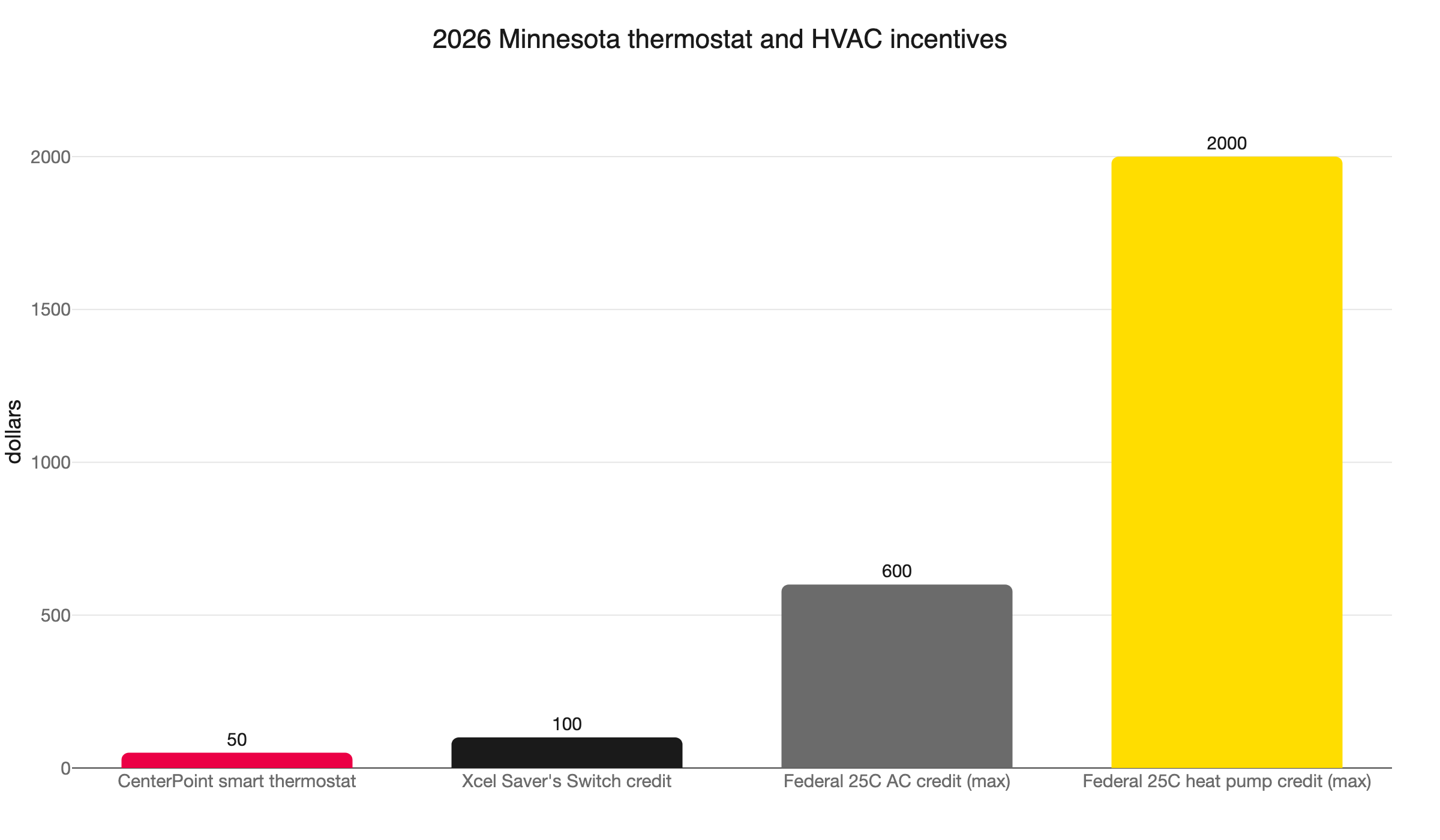
2026 Minnesota thermostat and HVAC incentives
## Your Thermostat Went Dark: Start Here
A blank screen at 7 a.m. is stressful, and in a Twin Cities January it can feel like an emergency. The good news is that most of the time, the wall unit is not the problem. Run this thermostat not working troubleshooting decision tree before you replace anything. In our Minnesota winters and humid summers, the cause is usually lost power, a tripped safety switch, or a fault in the HVAC system itself, not a dead thermostat.
We are Northern One Hour Heating & Air Conditioning, a locally owned and operated Twin Cities HVAC company based in Ramsey. We take these calls every week, and we almost always find that the thermostat is the messenger, not the culprit. This guide walks you through the same checks we run first, in the same order, so you can fix the simple ones yourself and call us for the rest.
## Thermostat Not Working Troubleshooting: The Decision Tree
Work this top to bottom. Stop when you find the cause.
**1. Is the screen blank or dark?** If yes, go to step 2. If the screen is on but the system will not run, jump to step 6.
**2. Does the thermostat take batteries?** Many standard digital thermostats run on AA or AAA batteries. Put in a fresh set. This clears a large share of blank screens in under a minute.
**3. Check the breaker and the furnace power switch.** Flip the HVAC breaker in your panel off, then on. Then find the furnace power switch, the plain toggle on the wall or unit near the furnace, and confirm it is ON. It gets bumped off more often than you would think.
**4. Still blank? Check the furnace control-board fuse.** Most furnace boards have a small 3-amp automotive-style fuse, either ATC or ATO. If it has blown, the 24V transformer stops feeding the thermostat and the screen goes dark. Replace it with the same amperage only.
**5. For a smart thermostat, check the C-wire.** If you have a Nest, Ecobee, or similar unit with no batteries to change, a blank screen usually means lost 24V common power, not a bad thermostat. See the C-wire section below.
**6. Screen is on, but no heat or AC.** Your thermostat is likely fine. The fault is downstream in the HVAC system. Move to the heating or cooling branch below.
That is the whole map. The next sections explain each branch in more detail.
## Why Is My Thermostat Screen Blank?
A blank thermostat screen almost always means the unit has lost power, not that it is broken. Work the fix in order: fresh batteries, the HVAC breaker, the furnace power switch, and the 3-amp board fuse. Most blank screens come back to life at one of these steps.
Start with the batteries. If your thermostat uses them, swap in a fresh set before you do anything else. A weak battery can also leave the screen lit but the relays too weak to call for heat or cooling. That is a confusing middle case.
Next, check the breaker. Find the one labeled furnace, air handler, or HVAC in your panel. Flip it fully off, then back on. A tripped breaker is one of the most common reasons a thermostat goes dark.
Then check the furnace power switch. This is the ordinary toggle on the wall or the side of the unit, near the furnace. It looks like a light switch, and family members flip it off by accident all the time. If it is off, the thermostat loses power.
Two causes hide inside the equipment. First, the 3-amp fuse on the furnace control board can blow from a power surge or a shorted wire, killing the 24V supply. Second, in cooling season, a clogged condensate drain can trip the drain-pan float switch. That switch cuts the 24V circuit and blanks the screen. It is doing its job, but it reads exactly like a dead thermostat. If you see standing water near the indoor unit, a clogged drain is a likely culprit.
## Does the Screen Wake but the System Will Not Run?
If your thermostat screen lights up and responds to your touch, the thermostat itself is probably working. When the heat or AC still will not start, the problem is usually downstream in the HVAC system, the safety switches, or the equipment itself, not the wall control.
This is the fork where most homeowners misdiagnose. The screen looks fine, so they assume the thermostat must be sending the wrong signal. In reality, the thermostat is calling for heat or cooling, and something in the equipment is blocking it.
Common downstream causes include a dirty air filter, a frozen indoor coil, a tripped safety switch, low refrigerant, a fouled flame sensor, or a failed igniter. Notice that none of those live in the thermostat. They live in the furnace or air conditioner.
Try a quick test. Set the thermostat a few degrees above room temperature in winter, or below in summer, and listen. If you hear the thermostat click but nothing starts at the equipment, the thermostat is doing its job. The system is not. That is your cue to move into the heating or cooling branch below instead of replacing the thermostat.
## Why Did My Smart Thermostat Lose Power?
A blank smart thermostat usually means lost 24V common power, not a failed device. Nest, Ecobee, and most modern units draw their main power from the furnace transformer through the C-wire, or common wire. When that path breaks, the screen goes dark even though the thermostat is fine.
The C-wire is the steady power leg that lets a smart thermostat run its screen, Wi-Fi, and software without batteries. Older homes often have a thermostat cable with no C-wire, or the wire is present but not connected at either end. A loose connection, a broken wire, or a failing transformer can all cut that power.
How we test it: at the furnace control board, we check for 24V between the R and C terminals. If there is no voltage there, the transformer or the board is the problem, not the thermostat. If the wire is missing, we can add a [C-wire adapter](/blog/c-wire-smart-thermostat-compatibility-minnesota/) rather than fishing new cable through your walls.
One upgrade note worth knowing. ENERGY STAR reports that variable-capacity heat pumps and air conditioners pair best with the manufacturer's own thermostat, and that homes with large seasonal temperature swings see greater smart-thermostat savings than temperate climates ([ENERGY STAR](https://www.energystar.gov/products/heating_cooling/smart_thermostats/smart_thermostat_faq)). Minnesota's swing is about as large as it gets. So if your smart stat keeps going dark, the fix is often proper C-wire power, not a new brand.
## Is It the Thermostat or the Furnace? A Minnesota Cold-Climate Check
In a Twin Cities winter, a call about a thermostat not working is more often a furnace fault. A fouled flame sensor, a bad hot-surface igniter, an inducer problem, or a rollout or limit lockout can all stop the heat while leaving the thermostat screen on and looking normal.
Here is the cold-climate reframe. When the temperature drops below zero, the stress on your furnace goes up, and the parts most likely to fail are ignition and flame-sensing parts, not the thermostat. If your screen is lit, the setpoint is above room temperature, and you still have [no heat](/blog/furnace-not-turning-on-troubleshooting-minnesota/), suspect the furnace first.
The flame sensor is the single most common winter culprit. When it gets coated in residue, the furnace lights the burner, the sensor cannot confirm the flame, and the gas valve shuts off as a safety measure. The cycle repeats a few times, then the furnace locks out. The thermostat reads fine the whole time.
Other heating-side causes include a failed hot-surface igniter, a stuck or failing inducer motor, and a rollout or high-limit lockout from overheating, often tied to a dirty filter. Each stops heat at the equipment. Our [furnace repair](/heating/heating-equipment/furnaces/furnace-repair/) team checks all of these before we ever touch the thermostat.
If you heat with a heat pump, watch for AUX or EMHEAT. In cold weather a heat pump shifts to backup heat, and the [AUX or emergency-heat indicator](/blog/heat-pump-thermostat-wiring-aux-heat-staging-minnesota/) on the screen can make the thermostat look like it is malfunctioning. It is not. That is normal backup behavior for dual-fuel and cold-climate heat-pump systems.
## Could the Thermostat Be Fine but the AC Will Not Cool?
Yes. When the thermostat screen is live but the AC will not cool, the cause is often a dirty filter, a frozen indoor coil, low refrigerant, or a clogged condensate drain tripping the float switch. None of those are thermostat problems, and all need the equipment, not the wall unit.
Cooling-season diagnosis runs parallel to heating. Start with the air filter. A clogged filter restricts airflow, which can freeze the indoor coil and stop cooling entirely. If you see frost on the refrigerant lines or the indoor coil, turn the cooling off and the fan on, replace the filter, and let the coil thaw before you test again.
Next, check the condensate drain. In humid Twin Cities summers, the drain can clog with algae and debris. When it does, the float switch trips, the AC shuts down to prevent water damage, and the thermostat looks guilty by association. Standing water near the indoor unit points you here.
Low refrigerant is a pro-only fix. If the system runs but the air at the registers is lukewarm, the charge may be low, which means a leak a licensed tech must find and seal. None of these require a new thermostat. If your AC will not cool and the screen is fine, start with our [air conditioning repair](/air-conditioning/air-conditioning-repair/) team.
## 24V vs Line-Voltage Thermostats: A Baseboard Safety Note
Most central HVAC thermostats run on 24 volts supplied by the furnace transformer. That low voltage is what makes thermostat troubleshooting relatively safe. Electric baseboard heaters are different. They use line-voltage thermostats at 120 or 240 volts, and those are a genuinely different, higher-risk device.
Minnesota has a fair amount of electric baseboard heat in finished basements, additions, and older conversions. If a baseboard thermostat stops working, the first check is the breaker at the panel. But any replacement or wiring work on a line-voltage stat carries real shock and fire risk, and it must be done with the breaker off and verified dead.
This is where scope matters. We are an HVAC company, and line-voltage baseboard thermostat replacement is electrical work outside what we do. For those, you want a licensed electrician. We mention it here because the symptom, a thermostat that does not respond, looks identical to a 24V central-system problem, and the safety steps are not the same.
## Is the Thermostat Dead, or Is It the Xcel Saver's Switch?
On hot, humid summer afternoons, Xcel Energy's Saver's Switch cycles enrolled central AC compressors off for about 15 to 20 minutes at a time over roughly four hours, usually between 2 p.m. and 6 p.m. Your indoor fan keeps running, but the AC will not cool. It looks like a dead thermostat, and it is not.
This one catches Twin Cities homeowners every summer. You enrolled in the Saver's Switch program for the bill credit, forgot about it, and now your AC seems broken on the hottest day of the year. The thermostat screen is fine. The outdoor unit is simply being cycled by the utility.
The fix is to wait it out. Set the fan to ON so air keeps moving, and the compressor will come back on within the cycle window. Xcel reports the program earns enrollees roughly a $100 enrollment credit and about 15% off the electric bill ([Xcel Energy Saver's Switch](https://www.xcelenergy.com/staticfiles/xe/PDF/Marketing/MN-ND-SD-Bus-Savers-Switch-Info-Sheet.pdf); [MPR News](https://www.mprnews.org/story/2010/07/28/xcel-switch)). Before you call for AC repair on a peak afternoon, check whether you are enrolled. It could save you a service visit.
## What Makes a Thermostat Inaccurate but Not Dead?
A thermostat can power on and still misread temperature. Common causes are [a bad location](/blog/thermostat-location-placement-hvac-accuracy-minnesota/), such as direct sunlight, a nearby supply vent, or an outside wall, a dirty sensor, weak output from old batteries, or an aging mechanical unit drifting out of calibration. Some you can fix; others mean replacement.
Location is the big one. A thermostat in a sunny hallway or above a lamp will read high and short-cycle your cooling. One near a cold exterior wall or a drafty return will read low and overwork your heat. Relocating it a few feet often fixes chronic comfort complaints that look like equipment problems.
Accuracy has a standard. ENERGY STAR certifies smart thermostats to hold temperature within about 2.0 degrees Fahrenheit and to cut HVAC runtime by at least 8% on heating and 10% on cooling versus the typical installed base ([ENERGY STAR](https://www.energystar.gov/products/heating_cooling/smart_thermostats/smart_thermostat_faq)). If your current unit swings wider than that, an upgrade pays for itself faster here than in most states.
When accuracy or age is the issue rather than power, replacement is the answer. Our [thermostat installation](/thermostats/) team can size the right unit for your system, and our smart thermostats guide covers the savings case in detail ([smart thermostats in the Twin Cities](/blog/maximize-comfort-and-savings-the-power-of-smart-thermostats-in-the-twin-cities/)).
## Thermostat Not Working Troubleshooting: Permits, Rebates, and Credits in Minnesota
A like-for-like thermostat swap by a homeowner is usually exempt from permitting. But work on the 24V transformer, new wiring, a furnace or AC changeout, or gas piping needs a mechanical permit and inspection under Minnesota's mechanical code.
The permit line is real. Minneapolis requires a mechanical permit to legally perform HVAC work, with plans approved and the work inspected for code compliance ([City of Minneapolis](https://www.minneapolismn.gov/business-services/licenses-permits-inspections/construction-permits/permits-overview/permit-types/mechanical-heating-permits/)). Minnesota's mechanical code, based on the 2018 International Mechanical Code as amended, sets the installation, access, clearance, and testing rules any HVAC work must meet ([Minnesota Mechanical Code](https://up.codes/viewer/minnesota/imc-2018/chapter/3/general-regulations)). Swapping a thermostat that uses the same wires is one thing. Touching the transformer or running new cable is another, and that is when you want a pro and a permit.
Then there is money on the table. CenterPoint Energy offers Minnesota gas customers a $50 rebate on a smart or Wi-Fi programmable thermostat and $10 on a basic programmable, one per gas service address, for equipment installed between January 1 and December 31, 2026 ([CenterPoint thermostat rebate](https://www.centerpointenergy.com/en-us/residential/save-energy-money/efficiency-programs-and-rebates/programmable-thermostat-rebate?sa=mn)). CenterPoint also runs 2026 heating-system and furnace rebates for residential gas customers ([CenterPoint heating rebates](https://www.centerpointenergy.com/en-us/residential/save-energy-money/efficiency-programs-and-rebates/heating-system-rebates?sa=mn)).
If your thermostat problem points to a bigger job, federal credits stack on top. The 25C tax credit covers 30% of cost, up to $600 for qualifying AC and up to $2,000 for heat pumps, claimed on IRS Form 5695 ([energy.gov](https://www.energy.gov/save/home-upgrades); [IRS Form 5695](https://www.irs.gov/forms-pubs/about-form-5695)). The Department of Energy also notes that high-efficiency AC plus related measures can cut air-conditioning energy use by up to 50%, and that a home energy assessment is itself eligible for a 30% credit ([energy.gov](https://www.energy.gov/save/home-upgrades)).
## When to Call Northern One Hour
If you have worked the decision tree and your thermostat is still blank, your heat or AC still will not run, or your system keeps short-cycling, it is time to call. We are Northern One Hour Heating & Air Conditioning, a locally owned and operated Twin Cities HVAC company based in Ramsey, serving homeowners across Minneapolis, St. Paul, Blaine, Maple Grove, Plymouth, Brooklyn Park, Woodbury, and Bloomington.
When we come out, we check power first, then the safety switches, then the equipment, in that order. We do it this way so we never sell you a thermostat you do not need. Most of the time the fix is a fuse, a switch, a sensor, or a clogged drain, not a new wall unit.
You also get our on-time promise. We are Always On Time… Or You Don't Pay a Dime!(R), backed by a 100% satisfaction guarantee and honest, transparent pricing up front. If your thermostat problem turns out to be a larger job, like a furnace replacement, an AC install, a heat pump, or whole-home indoor air quality, we will walk you through financing options and every rebate and credit that applies.
Call us at (763) 260-6662 or [book thermostat service online](/thermostats/) to schedule fast. On-Time. Every Time.
---
# Whole Home Humidifier Winter Guide for Twin Cities Homes
URL: https://northernonehour.com/blog/whole-home-humidifier-winter-dry-air/
Published: 2026-07-25 | Category: Indoor Air Quality
Dry Minnesota winter air cracks woodwork, sparks static, and dries out throats. Learn the humidity level to target and how a whole home humidifier fixes it.
Key Takeaways
- Unhumidified Twin Cities homes can drop to 10-15% relative humidity in deep winter, drier than most deserts.
- Your humidity target must slide with the outdoor temperature, not stay fixed at 30-40%.
- Set too high on a cold day, and you invite frost on windows and moisture inside exterior walls.
- A whole home humidifier treats every room from one furnace-connected unit, unlike portable models.
- Humidified air feels warmer, so you can turn the thermostat down 2-4°F and still feel comfortable.
- Minnesota requires a mechanical permit for humidifier installation.
- Neither Xcel Energy nor CenterPoint Energy offers a rebate for whole home humidifiers today.
- A modern unit with an outdoor sensor solves the over-humidification risk that energy experts warn about.
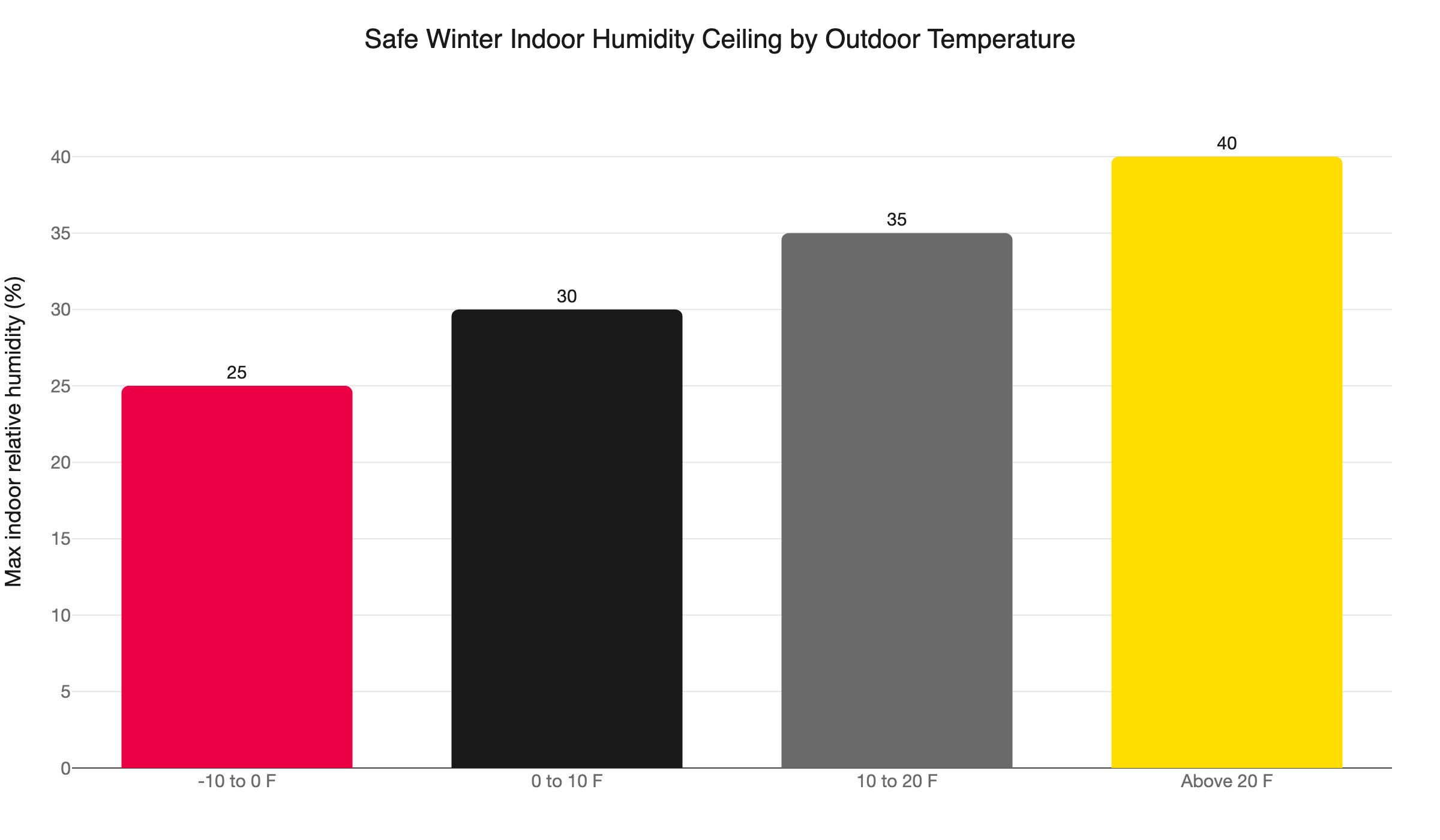
Safe Winter Indoor Humidity Ceiling by Outdoor Temperature
## The Real Problem With Dry Minnesota Winter Air
A dry Minnesota winter turns your home against you. Static shocks at every doorknob. Hardwood floors that creak and gap. Sore throats that will not go away. The fix is a whole home humidifier winter setup tied to your furnace, and it balances moisture in every room at once.
Cold air holds very little water. When that cold, dry outdoor air leaks in and your furnace heats it, the relative humidity plunges. The warmer your indoor air gets, the more moisture it can hold. The drier everything in your home feels.
In deep winter, an unhumidified Twin Cities home can fall to [10-15% relative humidity](https://www.mncee.org/managing-humidity-levels). That is drier than the Sahara Desert. Your body, your woodwork, and your comfort all feel the loss.
January in the Twin Cities averages a high of 20.3°F and a low of 7.5°F, with dew points often stuck in the single digits. [That bone-dry air](https://www.dnr.state.mn.us/climate/twin_cities/mspdewpoint.html) strips moisture out of everything it touches. A whole home humidifier puts that moisture back, evenly, across the entire house.
The symptoms are easy to spot once you know them:
- Static electricity that shocks you at every light switch
- [Hardwood floors and trim](/blog/low-humidity-hardwood-floors-winter-minnesota/) that shrink, creak, and gap
- Dry skin, chapped lips, and scratchy throats that linger
- Indoor plants that dry out faster than you can water them
- Wood instruments or pianos that slip out of tune
[Older Twin Cities homes often feel this worst](/blog/why-older-twin-cities-homes-struggle-more-with-winter-comfort/), because leaky walls bring in more of that dry outdoor air. A whole home humidifier is one of the most direct fixes, and it is squarely an indoor air quality upgrade.
## What Should Your Whole Home Humidifier Be Set to This Winter?
There is no single number. Your target should slide with the outdoor temperature. Below 0°F, hold indoor humidity to 20-25%. At 10-20°F, run 30-35%. Only above 20°F should you push toward 40%. Set it too high on a cold day and you invite [frost and condensation](/blog/condensation-on-windows-winter-minnesota-humidity-fix/).
Most guides tell you to set your humidifier to 30-40% and leave it alone. That advice works in a mild climate. In Minnesota, it causes real problems. When outdoor temperatures drop below 20°F, running 35-40% indoor humidity pushes moisture onto your cold windows and into your exterior walls. That moisture freezes as frost, then melts into the wood and drywall behind your paint.
The correct approach is to move the dial down as the temperature drops. Heating and indoor air quality experts lay out a clear [sliding scale](https://www.a1mechanical.com/blog/heating-service/what-should-i-set-my-humidistat-to-in-winter/):
- Outdoor -10°F to 0°F: target 20-25% RH
- Outdoor 0°F to 10°F: target 25-30% RH
- Outdoor 10°F to 20°F: target 30-35% RH
- Outdoor 20°F and above: up to 40% RH
Hold that scale up against the Twin Cities winter. Most of January and February sits in the 0-20°F outdoor range. That means 25-30% is your practical ceiling for weeks at a time. The [same guidance appears across trusted IAQ sources](https://iaq.works/humidity/the-best-winter-season-indoor-humidity-range-for-your-home/), and it exists for one reason. It protects your home.
## Whole Home Humidifier Winter Targets by Outdoor Temperature
The chart above shows the maximum safe indoor relative humidity for each outdoor temperature band. As the thermometer climbs, your humidifier can safely add more moisture. As it falls, you dial back. This single concept is the most useful thing to understand about winter humidity in Minnesota, and almost no guide publishes it.
The reason is simple physics. Warm indoor air can hold more water than cold glass can. When humid indoor air meets a freezing window, the moisture condenses. The colder it gets outside, the lower your indoor humidity has to stay to keep that from happening.
The big health agencies back up the same narrow band. The EPA recommends keeping indoor relative humidity between 30-50% and explicitly warns against going above 50% to [prevent mold and dust mite growth](https://www.epa.gov/indoor-air-quality-iaq/use-and-care-home-humidifiers). ASHRAE Standard 55 sets a comfort range of 30-60% year-round, but practical winter guidance narrows to 30-40% to [avoid condensation on cold surfaces](https://www.ashrae.org/File%20Library/Technical%20Resources/Technical%20FAQs/TC-04.03-FAQ-12.pdf). The sliding scale keeps you inside both bands while protecting your walls and windows.
## What Are the Signs Your Home Needs a Humidifier?
Watch for static shocks, shrinking or creaking woodwork, dry skin and sore throats, and plants that dry out fast. If your windows frost up on cold mornings, the air may already be too damp rather than too dry. A hygrometer confirms the real number.
A hygrometer is a cheap, accurate way to know where you stand. You can pick one up for under $20. Set it in your main living area and check it on a cold morning. If it reads under 30% for days at a time, you are deep in the dry zone for comfort and for your home.
The physical signs are just as telling. Static shocks at the doorknob mean the air is very dry. Hairline cracks opening in wood trim or doors mean the wood is losing moisture and shrinking. If you wake up with a dry throat or winter nosebleeds, low humidity is a likely cause.
This is an indoor air quality problem first. A whole home humidifier is one of the most effective fixes, and it works alongside the other [IAQ upgrades](/blog/hrv-whole-home-ventilation-minnesota/) your home may need. See our full [indoor air quality options](/indoor-air-quality/) for the bigger picture.
## Does a Whole Home Humidifier Save on Heating Bills?
Yes, indirectly. Properly humidified air feels warmer at the same thermostat setting, so you can often lower the thermostat 2-4°F and stay comfortable. Lowering the thermostat 1°F saves about 2-4% on heating, so the savings add up across a long Minnesota winter.
Moist air holds heat against your skin better than dry air. That is why 68°F at 35% humidity can feel as warm as 70°F at 15% humidity. When your home is properly humidified, you feel comfortable at a lower thermostat setting.
Every degree you turn the thermostat down saves roughly 2-4% on heating costs, according to [ENERGY STAR data on residential humidifiers](https://www.energystar.gov/sites/default/files/asset/document/ENERGY_STAR_Scoping_Report_Residential_Humidifiers.pdf). Lower the dial 3°F because the air feels warmer, and you could trim 6-12% off the heating portion of your bill over a season.
This is why humidifier payback is real, even without a utility rebate. The comfort gain and the thermostat savings repeat every single winter. It pairs directly with [keeping your furnace efficient through the cold months](/blog/rising-heating-bills-in-january-how-inefficient-furnaces-drive-up-winter-energy-costs-in-minnesota/).
## Will Not a Whole Home Humidifier Cause Mold or Wall Damage?
Only if it is set too high for the outdoor temperature. Minnesota's own energy experts warn that whole home systems can over-humidify when set points are forgotten. The fix is an outdoor-sensor humidistat that adjusts automatically, so you never push moisture past the safe point.
This is the honest objection, and it deserves a direct answer. The Center for Energy and Environment is Minnesota's authoritative energy efficiency nonprofit. They recommend 30-40% for winter but caution that whole home humidifiers can over-humidify when set points are not adjusted as temperatures drop. Left at 40% through a -10°F cold snap, a humidifier will drive moisture into your walls and onto your windows. That is how [frost, mold, and wood rot](https://www.mncee.org/managing-humidity-levels) begin.
They are right to warn homeowners. But the warning is really about the old approach of setting the dial once and forgetting it. A modern whole home humidifier with an outdoor temperature sensor solves exactly this problem. The sensor reads the outdoor temperature and automatically scales the indoor target down as it gets colder. You set it once at install, and it manages the sliding scale for you.
That is the real reason professional installation matters. The sensor has to be placed and wired correctly, and the humidistat has to be set up to use it. Done right, you get the comfort benefits of a humidifier without the over-humidification risk that worries the energy experts.
## How a Whole Home Humidifier Works With Your Furnace
A whole home humidifier mounts on your furnace's supply plenum or return duct. When the furnace runs, a portion of the warm air passes through the humidifier, picks up moisture from a [water pad](/blog/whole-home-humidifier-cleaning-maintenance-minnesota/) or steam element, and carries it through your ductwork to every room.
The most common types are:
- [Bypass humidifiers](/blog/bypass-vs-steam-humidifier-which-type-minnesota/), which use the furnace's own airflow over a wet pad
- Fan-powered humidifiers, which add their own fan to push air through the pad
- Steam humidifiers, which generate steam directly for the most precise control
Because it ties into your existing ductwork, one unit covers the whole house. There are no tanks to refill and no portable units to move from room to room. The water supply is plumbed in, and a drain handles the runoff.
That is why we install humidifiers as part of [heating maintenance and furnace tune-ups](/heating/heating-maintenance/). The unit lives with your furnace, and it runs best when your furnace is running cleanly.
## Do You Need a Permit to Install a Humidifier in Minnesota?
Yes. The Minnesota Mechanical Code treats humidifier installation as mechanical work that requires a permit. Cities including Plymouth, Brooklyn Park, and Apple Valley list humidifiers on their mechanical permit pages. A licensed contractor like Northern One Hour pulls the permit and handles the inspection.
This catches a lot of homeowners by surprise. Adding a humidifier is not a quick DIY swap like changing a thermostat. Because it connects to your HVAC system and your home's water supply, Minnesota classifies it as mechanical work under [the state mechanical permit rules](https://www.plymouthmn.gov/departments/community-economic-development/permits-inspections/mechanical-permit).
Twin Cities cities spell this out directly. Plymouth, Brooklyn Park, and Apple Valley all list humidifiers explicitly on their mechanical permit requirement pages. Skipping the permit can cause problems when you sell the home, and it can void equipment warranties. When we install a humidifier, we pull the proper permit and schedule the inspection. You do not have to navigate the city paperwork yourself.
## Are There Rebates for Whole Home Humidifiers in Minnesota?
No, not for the humidifier alone. Neither Xcel Energy nor CenterPoint Energy currently offers a rebate specifically for whole home humidifiers in their Minnesota residential programs. Larger bundled projects may qualify for other incentives, but a standalone humidifier does not.
Some contractors will hint at rebates to close a sale. We will not do that. We checked the current Minnesota residential rebate summaries from both utilities. Neither [Xcel Energy's rebate sheet](https://www.xcelenergy.com/staticfiles/xe-responsive/Working%20With%20Us/24-1-201%20MN%20Res%20Rebate%20Summary%20Information%20Sheet.pdf) nor [CenterPoint Energy's Minnesota efficiency programs](https://www.centerpointenergy.com/en-us/residential/save-energy-money/efficiency-programs-and-rebates?sa=mn) list a whole home humidifier rebate.
That does not mean a humidifier is a poor investment. The comfort and thermostat savings carry the value on their own. If you are also replacing a furnace or adding [other indoor air quality equipment](/blog/uv-light-hvac-air-purifier-worth-it-twin-cities/), those larger projects may qualify for utility or manufacturer incentives. We will tell you exactly what applies to your job before you commit.
## When to Call Northern One Hour
You do not have to stand in front of your [humidistat in January](/blog/humidistat-settings-winter-minnesota/) guessing at the right number. Northern One Hour Heating & Air Conditioning is a locally owned and operated Twin Cities HVAC company. We install and service whole home humidifiers across Minneapolis, St. Paul, Ramsey, Blaine, Maple Grove, Plymouth, Brooklyn Park, Woodbury, and Bloomington.
Our team sizes the unit to your home, places the outdoor sensor correctly, and sets the humidistat to follow the safe sliding scale. We pull the mechanical permit. We make sure the install protects your walls and windows instead of risking them. You can see our full [whole home humidifier service](/indoor-air-quality/humidifiers/) for what is included.
We back every visit with our on-time promise: Always On Time… Or You Don't Pay a Dime!(R). Call (763) 260-6662 or book online to schedule fast. We will get there when we say we will, every time.
---
# Furnace Short Cycling: Causes, DIY Fixes, and When to Call a Pro
URL: https://northernonehour.com/blog/furnace-short-cycling-causes-fixes/
Published: 2026-07-24 | Category: Heating
Your furnace turning on and off every few minutes is a warning sign. Here are the four causes of furnace short cycling and how to fix each one.
Key Takeaways
- Furnace short cycling means the furnace runs for only a few minutes per cycle instead of the normal 10-15.
- The four causes, in order of likelihood, are a dirty air filter, bad thermostat placement, a [dirty or failed flame sensor](/blog/furnace-flame-sensor-dirty-clean-cost-minnesota/), and an oversized furnace.
- A clogged filter that repeatedly trips the high-limit switch can crack the heat exchanger over time. A cracked heat exchanger is a [carbon monoxide hazard](/blog/carbon-monoxide-safety-furnace-season/) and requires a same-day service call.
- DIY fixes: replace the air filter, check thermostat placement. Everything else requires a licensed HVAC technician.
- If the root cause is oversizing or a cracked heat exchanger, replacement is often the right financial call. [CenterPoint Energy offers up to $1,000 in rebates](https://www.centerpointenergy.com/en-us/residential/save-energy-money/efficiency-programs-and-rebates/heating-system-rebates?sa=mn) on 97%+ AFUE replacements, with a December 31, 2026 deadline.
- Northern One Hour is locally owned and operated in Ramsey, MN. Call (763) 260-6662 or book online for service across the Twin Cities.
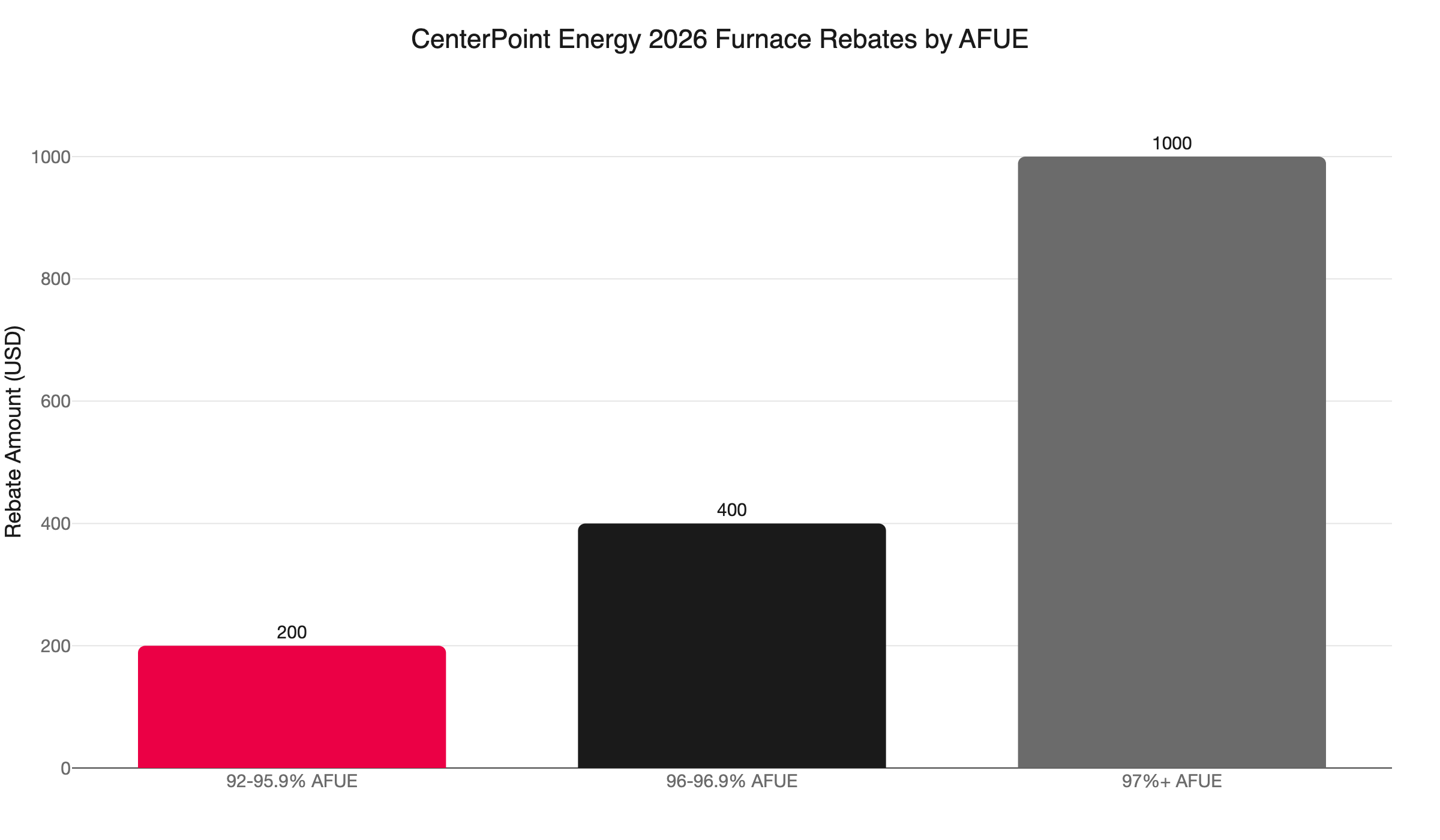
CenterPoint Energy 2026 Furnace Rebates by AFUE
## What Is Furnace Short Cycling?
**Short answer:** Furnace short cycling is when your furnace ignites, runs for only two to five minutes, shuts off before completing a full heat cycle, and then restarts. A healthy furnace runs full cycles of 10-15 minutes, two to three times per hour. Repeated short cycles are a warning sign, not a quirk.
Your furnace is designed to start, sustain combustion through a full cycle, reach your thermostat setpoint, and shut off cleanly. When something interrupts that process early, the furnace shuts down, cools off, and fires up again. That start-stop-restart pattern is short cycling.
Short cycling is not just annoying. Every extra startup cycle puts wear on [the igniter](/blog/furnace-igniter-failure-signs-replacement-cost-minnesota/), [pressure switches](/blog/furnace-pressure-switch-failure-symptoms-minnesota/), and heat exchanger. Those components were built for a few thousand starts per season, not tens of thousands. A furnace that short cycles for weeks is aging itself fast.
---
## Why Does Short Cycling Matter More in a Minnesota Winter?
**Short answer:** The Twin Cities design temperature is -16°F. A furnace that short cycles at -10°F may not be able to hold a safe indoor temperature. That is not a nuisance to schedule for next week. It is a frozen pipe risk.
Most homeowners in moderate climates can put a short-cycling furnace on the to-do list. In Minnesota, January does not give you that option.
[Heating accounts for more than half of energy use in a typical Minnesota home](https://mn.gov/commerce/energy/conserving-energy/efficiency/) - the single largest energy expense for most households here. When your furnace is short cycling, it burns more fuel and still falls short on warmth. The house never stabilizes at setpoint.
If your furnace is short cycling [during a cold snap](/blog/natural-gas-pressure-cold-snap-furnace-minnesota/), check the filter today. If that does not fix it, call a technician before the next polar plunge.
---
## Cause 1: A Dirty Filter Is Overheating Your Furnace
The most common cause of furnace short cycling costs a few dollars to fix. A clogged air filter is behind more [emergency heating calls](/blog/emergency-furnace-repair-warning-signs/) in Minnesota winters than any other single issue.
Here is the mechanism. Your furnace pulls air across the heat exchanger, warms it, and pushes it through your ductwork. That airflow is what keeps the heat exchanger from getting dangerously hot. When a dirty filter restricts airflow, heat backs up. The exchanger temperature climbs until it trips [the high-limit switch](/blog/furnace-limit-switch-failure-symptoms-reset-minnesota/). That safety device cuts power to the burner at roughly 140-170°F to prevent heat damage.
The furnace shuts off. It cools. The limit switch resets. The furnace fires again. If the filter is still dirty, the same thing happens in another few minutes. That loop is furnace short cycling caused by a filter.
[ENERGY STAR recommends inspecting, cleaning, or changing air filters every month](https://www.energystar.gov/saveathome/heating-cooling/maintenance-checklist). A dirty filter "can increase energy costs and damage your equipment, leading to early failure." That is not boilerplate. It is what happens to a furnace that runs through a Minnesota winter on a clogged filter.
**DIY or pro? DIY.** Turn off your furnace. Pull the filter from its housing, usually where the [return air duct](/blog/return-air-problems-hvac-twin-cities/) meets the furnace cabinet. If it is gray, matted, or visibly clogged, replace it. A standard 1-inch filter costs $5-$30. Slide in the new one, restore power, and give the furnace 20-30 minutes to confirm the short cycling has stopped.
If you replace the filter and the short cycling continues, move to the next cause.
---
## Is a Clogged Filter Dangerous for Your Heat Exchanger?
**Short answer:** Yes. Repeated high-limit switch trips from a dirty filter stress the heat exchanger through rapid heat-and-cool cycles. Over time, that thermal fatigue cracks the metal. A cracked heat exchanger leaks carbon monoxide into your home's air supply. This is a safety emergency, not a maintenance item to schedule next month.
The heat exchanger is the sealed metal chamber that separates combustion gases from the air your family breathes. It is built to handle normal thermal cycling. It is not built to handle repeated overheating caused by a filter nobody changed in October.
Each time the limit switch trips, the exchanger expands under extreme heat and contracts as it cools. Enough of those cycles and the metal fatigues and cracks. [Bryant identifies a cracked heat exchanger as a serious safety hazard](https://www.bryant.com/en/us/products/gas-furnaces/furnace-short-cycling/) that requires professional diagnosis before the furnace runs again.
If your furnace is short cycling and anyone in the house has headaches, dizziness, or nausea, or if a carbon monoxide alarm goes off, shut the furnace off immediately. Open windows, leave the house, and call 911. Once the immediate danger is handled, call a licensed HVAC technician before the furnace runs again.
A cracked heat exchanger means either a $1,950-$3,200+ repair or full furnace replacement. On a furnace older than 15 years, replacement is usually the better financial decision. The math on that is covered below.
---
## Is Your Thermostat in the Wrong Spot?
**Short answer:** A thermostat near a heat register, sunny window, exterior wall, or kitchen reads the room as warmer than it actually is. The furnace shuts off early because the thermostat thinks setpoint is reached. Moving or recalibrating the thermostat often stops this type of short cycling without any furnace work at all.
Your thermostat samples air temperature at its exact location and uses that reading to control the whole house. If it is in a warm microclimate, such as next to a supply register or in afternoon sunlight, it tells the furnace the house is already at setpoint when most rooms are still cold.
[Lennox notes](https://www.lennox.com/residential/lennox-life/consumer/furnace-short-cycling) that if your furnace "starts running again almost immediately after shutting off, this should only happen in extremely cold, below-zero weather." A furnace that restarts within minutes on a mild day almost certainly has a [thermostat sensing problem](/blog/thermostat-troubleshooting-guide/).
Common bad thermostat locations:
- On a wall within a few feet of a heat register or supply vent
- On an exterior wall exposed to cold air infiltration
- Near a west-facing window that gets afternoon sun
- In or adjacent to the kitchen, where cooking heat skews the reading
**DIY or pro?** Check the location first. If the thermostat is a smart thermostat you mounted yourself, relocation may be a straightforward DIY step. Our guide to [smart thermostat placement for Twin Cities homeowners](/blog/maximize-comfort-and-savings-the-power-of-smart-thermostats-in-the-twin-cities/) covers best-practice positioning in detail.
If the thermostat is hardwired and clearly in a bad spot, a technician can relocate it. This is not a complicated repair, but it does involve shutting off power and working with low-voltage wiring.
---
## Does a Dirty Flame Sensor Cause Furnace Short Cycling?
**Short answer:** Yes. The flame sensor confirms combustion is happening after the gas valve opens. A sensor coated with oxidation cannot send that confirmation, so the gas valve closes and the furnace shuts off 2-30 seconds after ignition. The furnace then restarts and the same thing happens again.
The flame sensor is a small metal rod in the burner assembly. It conducts a micro-current through the flame. If the current flows, the system knows combustion is active and holds the gas valve open. If the rod is oxidized, the current cannot flow. The valve closes as a safety measure to prevent [unburned gas from accumulating](/blog/gas-smell-furnace-what-to-do-minnesota/) in the cabinet.
[Bryant notes that flame sensor cleaning is a potential DIY step](https://www.bryant.com/en/us/products/gas-furnaces/furnace-short-cycling/) for homeowners "comfortable performing minor furnace maintenance." Here is the process:
1. Turn off power to the furnace at the circuit breaker or disconnect switch.
2. Turn off the gas supply at the shutoff valve on the gas line feeding the furnace.
3. Locate the flame sensor rod in the burner assembly. It is a single thin metal rod with a porcelain mounting block.
4. Remove the one mounting screw and pull the rod out carefully.
5. Gently rub the metal portion with fine steel wool until the surface is bright.
6. Reinstall the sensor, restore gas and power, and run the furnace through a full startup.
**DIY or pro?** DIY only if the rod looks dull or lightly oxidized. If the rod is pitted, corroded, or physically damaged, cleaning will not fix it. A damaged flame sensor needs professional replacement. Installed cost typically runs $100-$250. If you are not comfortable working around gas appliances, skip straight to the technician. This is a straightforward one-appointment repair.
---
## Cause 4: An Oversized Furnace
An oversized furnace heats your home too fast. It blasts BTUs into the space, hits the thermostat setpoint in a few minutes, shuts off, and then restarts when temperatures drop. The house never reaches a stable temperature. The furnace cycles in short bursts all day.
[Lennox identifies oversizing as a direct cause of short cycling](https://www.lennox.com/residential/lennox-life/consumer/furnace-short-cycling) and lists the downstream effects: humidity swings, uneven room temperatures, and accelerated wear on igniters and pressure switches. A key tell: an oversized furnace short cycles even in very cold weather. A thermostat-placement problem tends to get better as outside temperatures drop. An oversized furnace does not.
Oversizing is common in older Minnesota homes. For decades, contractors routinely padded BTU estimates "to be safe" for a climate where design temperature is -16°F. The result is a generation of Twin Cities homes with furnaces meaningfully larger than what a proper load calculation would specify.
General BTU sizing starting points for Minnesota, [from regional HVAC cost data](https://hvacprojectcost.com/hvac-replacement-cost-minnesota/):
- 1,200-1,500 sq ft: 60,000-80,000 BTU
- 1,500-2,000 sq ft: 80,000-100,000 BTU
- 2,000-2,800 sq ft: 100,000-120,000 BTU
These are starting points, not prescriptions. Actual sizing depends on insulation, ceiling height, window area, and infiltration. But if your furnace is significantly above those ranges for your home's square footage, oversizing is worth a closer look.
---
## How Do You Know If Your Furnace Is Too Big?
**Short answer:** Pull the model number from the label on the furnace cabinet, look up the BTU output, and compare it to the sizing ranges above. A 120,000 BTU furnace in a 1,400-square-foot house is a clear red flag. The confirming step is a [Manual J load calculation](/blog/hvac-sizing-manual-j-right-sized-system/) by a licensed HVAC technician.
You can do the initial math yourself. Confirming it requires professional equipment and a full load calculation.
Beyond the BTU numbers, watch for these signs of an oversized furnace:
- Temperature swings between cycles: the house heats fast, cools fast, and never settles
- Unusually dry air in winter: short cycles do not run long enough to circulate humidity effectively through the home
- Hot and cold spots between rooms, especially rooms close to the furnace vs. far from it
- Short cycling that does not improve on very cold days, when a correctly sized furnace would run longer cycles
**DIY or pro? This is a pro diagnosis.** There is no DIY fix for an oversized furnace. The options are managing symptoms with thermostat staging or zone dampers, or replacing the furnace with a correctly sized unit. For a furnace that is also aging, replacement is usually the right call. Our post on [furnace replacement costs in the Twin Cities](/blog/furnace-replacement-cost-twin-cities/) covers what you should expect to pay and what drives the price up or down.
---
## When Should You Replace Instead of Repair?
**Short answer:** Consider replacement when the root cause is oversizing, when the heat exchanger is cracked, or when the furnace is 15-20 years old and the repair cost exceeds roughly half the cost of a new system. These three conditions often appear together.
[The Minnesota Department of Commerce lists age (15-20 years), expensive repairs, and inefficiency as the three replacement triggers for a furnace](https://mn.gov/commerce/energy/conserving-energy/efficiency/). When two or three apply at once, repair economics rarely favor the homeowner.
A fast decision matrix:
- **Dirty filter or thermostat caused it:** DIY fix or a quick technician visit, then move on
- **Flame sensor is the culprit:** clean or replace the sensor; the furnace likely has years of life left
- **Cracked heat exchanger, furnace under 10 years old:** heat exchanger repair may pencil out; get a quote
- **Cracked heat exchanger, furnace 15+ years old:** replace
- **Oversized furnace causing short cycling:** replace with a correctly sized, high-efficiency unit
[Minnesota's minimum efficiency standard for replacement furnaces is now 90% AFUE](https://mn.gov/commerce-stat/trm/releases/5.0.pdf) for single-family homes. Every new furnace you buy meets that floor. Stepping up from there is where rebates become significant.
---
## What Rebates Are Available for a New Furnace in Minnesota?
**Short answer:** [CenterPoint Energy offers $200-$1,000 in rebates](https://www.centerpointenergy.com/en-us/residential/save-energy-money/efficiency-programs-and-rebates/heating-system-rebates?sa=mn) on forced-air furnace replacements in 2026, with the full $1,000 available on units rated 97%+ AFUE. Applications for 2026 installations must be submitted by December 31, 2026.
If replacement is the verdict, the rebate math matters. CenterPoint's 2026 tiers:
- **92-95.9% AFUE:** $200 rebate
- **96-96.9% AFUE:** $400 rebate
- **97%+ AFUE:** $1,000 rebate
The jump from 96% to 97%+ AFUE earns you an additional $600 back. Over the life of the furnace, a 97%+ unit also costs less to operate than a 92% unit. Both factors favor the higher-efficiency option when replacing.
Xcel Energy also runs a residential rebate program for high-efficiency furnaces in Minnesota. Current amounts are in their [2024-2026 Rebate Summary](https://www.xcelenergy.com/staticfiles/xe-responsive/Working%20With%20Us/24-1-201%20MN%20Res%20Rebate%20Summary%20Information%20Sheet.pdf). Check your utility provider to confirm what applies to your account. Customers of both utilities may be able to stack rebates.
A $1,000 rebate from CenterPoint meaningfully offsets the cost of a new system in the Twin Cities market. Our team can walk you through financing options at the time of your service call so you do not have to wait for a budget window.
---
## Schedule Service With Northern One Hour
If you have worked through the filter and thermostat checks and your furnace is still short cycling, the remaining causes require a technician with the right tools and training.
Northern One Hour is locally owned and operated out of Ramsey, MN. We serve Minneapolis, St. Paul, Blaine, Maple Grove, Plymouth, Brooklyn Park, Woodbury, Bloomington, and the surrounding Twin Cities metro. We offer [furnace repair](/heating/heating-equipment/furnaces/furnace-repair/) and [furnace tune-ups](/heating/heating-equipment/furnaces/furnace-tune-ups/) with the same commitment on every call: "Always On Time… Or You Don't Pay a Dime!(R)"
[An annual professional tune-up](https://www.energystar.gov/saveathome/heating-cooling/maintenance-checklist) covers thermostat calibration, electrical connection checks, lubrication of moving parts, [condensate drain verification](/blog/high-efficiency-furnace-condensate-drain-frozen-minnesota/), and a full startup-and-shutoff inspection. That is the diagnostic work that catches short cycling causes before they become emergency calls in the middle of January.
Call **(763) 260-6662** or book online to schedule same-day or next-day service. If your furnace is short cycling in a Minnesota winter, do not let it run undiagnosed through another cold night.
---
# AC Replacement Cost Minnesota: What to Expect in 2026
URL: https://northernonehour.com/blog/ac-replacement-cost-minnesota/
Published: 2026-07-23 | Category: Cooling
Central AC replacement in Minnesota runs $5,800 to $8,000 for most Twin Cities homes. See 2026 SEER2 tiers, rebates, and when to replace instead of repair.
Key Takeaways
- **Typical installed range:** $5,800-$8,000 for most Minnesota homes at 16-17 SEER2 [source](https://hvacprojectcost.com/hvac-replacement-cost-minnesota/)
- **Best efficiency sweet spot:** 16-17 SEER2 hits the Xcel rebate threshold without the premium price of 18-20+ units
- **Federal tax credit:** Gone. The Section 25C credit expired December 31, 2025. It does not apply to 2026 installs. [source](https://www.energystar.gov/about/federal_tax_credits/central_air_conditioning)
- **Xcel rebates still active:** Up to $500 for qualifying central AC, up to $1,500 for a cold-climate heat pump, up to $100 for a smart thermostat [source](https://www.xcelenergy.com/programs_and_rebates)
- **Refrigerant trigger:** If your system uses R-22, replace it. Do not repair it.
- **Permit required:** Every AC replacement in Minnesota needs a local mechanical permit. No-permit offers are a red flag.
- **Repair-versus-replace rule:** If the unit is 10 or more years old and the repair quote is close to half of replacement cost, replace it.
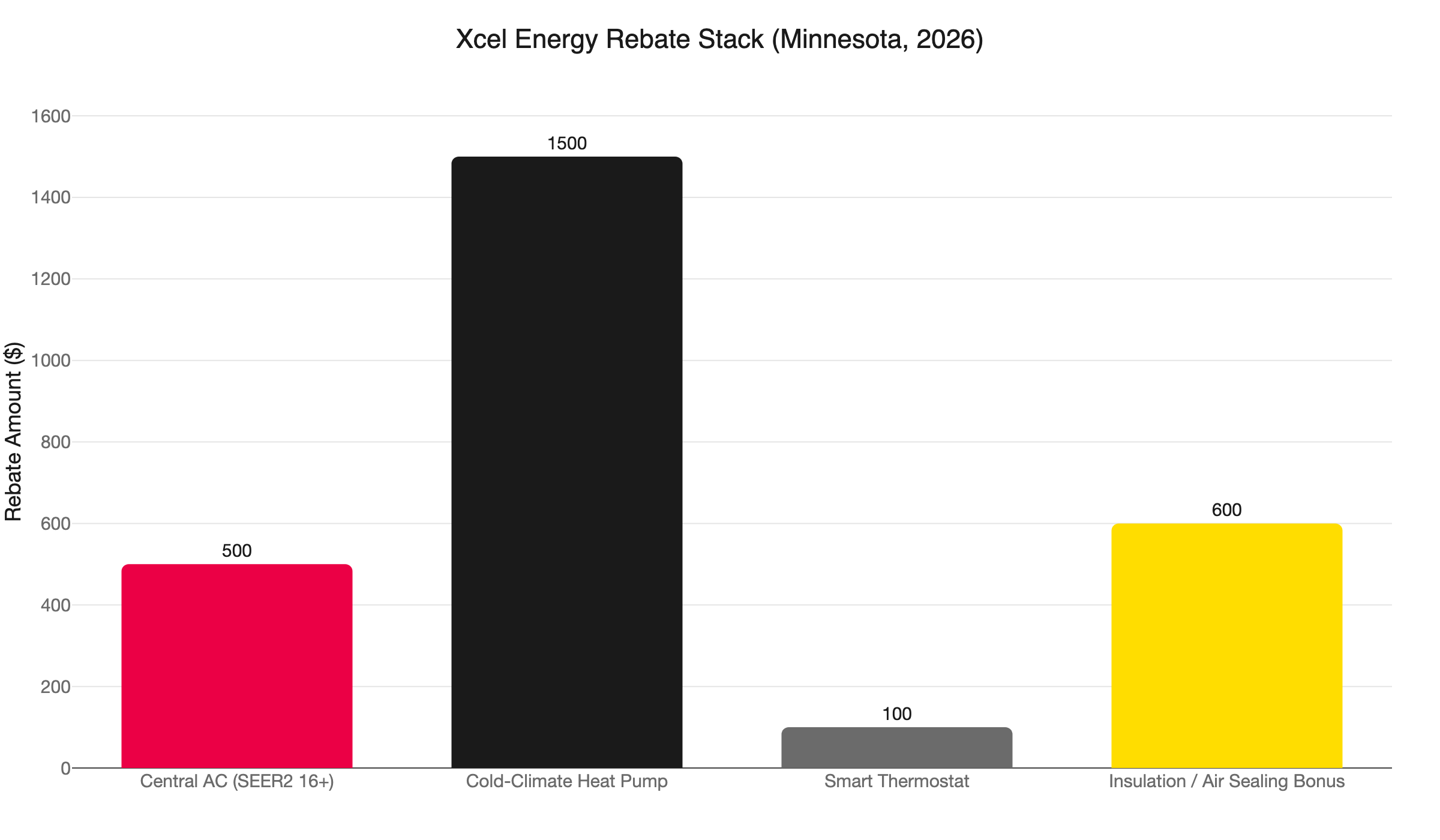
Xcel Energy Rebate Stack (Minnesota, 2026)
## What Does AC Replacement Cost in Minnesota?
Most Twin Cities homeowners spend $5,800 to $8,000 installed for a mid-tier central air conditioning system. The full range runs $4,200 to $11,500 depending on efficiency rating, home size, ductwork condition, and whether you replace the furnace at the same time. [source](https://hvacprojectcost.com/hvac-replacement-cost-minnesota/)
**For a full HVAC replacement** (central air conditioning and furnace together), the installed range climbs to $10,500-$14,000 for most Minnesota homes, with premium systems reaching $23,400. If your furnace is also aging, bundling both replacements in a single visit avoids a second round of labor costs in a few years. [source](https://hvacprojectcost.com/hvac-replacement-cost-minnesota/)
Minnesota labor runs 10 to 20 percent above the national average. Cold-climate equipment specs and strict state licensing requirements drive that premium. [source](https://hvacprojectcost.com/hvac-replacement-cost-minnesota/) A quote that comes in well below these ranges is worth scrutinizing. Ask whether it includes permits, refrigerant, and disposal before you compare numbers.
## What Drives the Price Up or Down?
The biggest driver is the [SEER2 efficiency tier](/blog/seer2-rating-explained-ac-efficiency-minnesota/) you choose. Other factors include home size, whether you [bundle a furnace](/blog/replace-just-ac-or-furnace-mismatched-hvac-minnesota/), ductwork condition, and whether you go with a heat pump. For most Minnesota homes, the installed cost lands between $7,500 and $10,400 at the most common efficiency tier.
**Efficiency rating**
The DOE 2023 rule set the federal minimum for new AC equipment in the Northern region at 14.3 SEER2. Here is how the tiers break down on installed price:
- **14-15 SEER2:** $4,200-$6,500 installed. Meets the minimum requirement. Eligible for a base-tier Xcel rebate with Quality Installation (QI) certification. [source](https://hvacprojectcost.com/hvac-replacement-cost-minnesota/)
- **16-17 SEER2:** $5,500-$8,500 installed. Qualifies for the higher Xcel rebate tier with QI certification. This tier covers the majority of Twin Cities residential installs. [source](https://hvacprojectcost.com/hvac-replacement-cost-minnesota/)
- **18-20+ SEER2:** $7,000-$11,500 installed. Highest efficiency available. No federal tax credit applies in 2026. [source](https://hvacprojectcost.com/hvac-replacement-cost-minnesota/)
**System size (tonnage)**
Most Minnesota homes need 2 to 4 tons of cooling capacity. A median Minneapolis home of roughly 1,867 square feet typically needs a 3-ton unit. [source](https://twincityheatingandair.com/minneapolis-mn-heating-and-air-conditioning-blog/2026-ac-replacement-costs-is-a-high-efficiency-seer2-unit-worth-it) Tonnage affects both equipment cost and how long the install takes.
**Bundling with a furnace**
Replacing the AC and furnace at the same time [costs more upfront](/blog/hvac-financing-options-what-to-know-twin-cities/) but usually saves money compared to two separate installs. Expect $10,500 to $14,000 for most bundled replacements, with premium systems reaching $23,400. [source](https://hvacprojectcost.com/hvac-replacement-cost-minnesota/) If your furnace is approaching end of life, bundling now avoids a second round of labor costs in a few years.
**Ductwork condition**
Older homes sometimes need duct repairs or modifications before a new system can be installed and balanced correctly. This can add $650 to $2,600 or more to the project. A thorough contractor will inspect the duct system before quoting and flag anything that needs attention upfront.
**Central AC versus heat pump**
A high-efficiency central AC at 18-20+ SEER2 runs $8,500-$12,000 installed. An inverter-driven system runs $10,500-$14,000. Cold-climate heat pumps carry a higher upfront price, but the Xcel rebate for a qualifying heat pump is up to $1,500, which meaningfully narrows that gap.
## What If Your Home Has No Ductwork?
Homes without existing ductwork have a path to cooling without the cost of a full duct installation: a ductless mini-split system.
A single-zone ductless mini-split installed in the Twin Cities typically runs $3,000-$5,500. That is well below the $4,200-$11,500 range for central AC, and it skips the $6,500-$13,000 cost of running new ductwork through the home. For a room addition, a finished basement, or a home where ductwork was never part of the original build, a mini-split is often the practical choice.
Xcel Energy rebates ductless mini-split installations at $200-$500 depending on efficiency tier. The same Quality Installation (QI) requirement applies: your contractor must be an Xcel Trade Ally and perform the required refrigerant charge and airflow testing. [source](https://www.xcelenergy.com/programs_and_rebates) See the rebates section below for how to confirm your contractor qualifies before work starts.
If you are not sure whether your home has the ductwork to support central AC, a technician can assess it during the same visit as a replacement quote.
## Which SEER2 Rating Makes Sense for a Twin Cities Home?
**For most Minnesota homeowners, 16-17 SEER2 is the right call.** It qualifies for Xcel Energy rebates, avoids the premium pricing of the 18-20+ tier, and delivers a real efficiency improvement over an aging 10-12 SEER system already past its prime. [source](https://hvacprojectcost.com/hvac-replacement-cost-minnesota/)
Here is the context most online guides skip. Minnesota's cooling season is significantly shorter than in southern states. You run your AC heavily for four to five months, then barely at all. That changes [the payback math](/blog/ac-short-cooling-season-replacement-payback-minnesota/). A jump from 16 to 20 SEER2 recovers its premium cost much faster in Houston or Phoenix than in Minneapolis, where the cooling load is simply lower. [source](https://hvacprojectcost.com/hvac-replacement-cost-minnesota/)
That does not mean 18-20 SEER2 is never worth it. If your home is large, your household runs the AC aggressively, or you plan to stay in the house 15 or more years, the numbers can still favor a higher tier. Ask your technician to model the payback against your actual utility bills. The honest answer depends on your specific home.
For more on getting your cooling system ready for the season, see our post on [preparing your AC for spring and the cooling season ahead](/blog/prepare-your-ac-system-for-spring-why-may-is-the-right-time-to-get-ahead/).
## Is the Federal Tax Credit Still Available for 2026 Installs?
**No. The Section 25C Energy Efficient Home Improvement Credit expired December 31, 2025.** Equipment installed in 2026 does not qualify, even if it was purchased in 2025. [source](https://www.energystar.gov/about/federal_tax_credits/central_air_conditioning)
The "One Big Beautiful Bill Act," signed July 4, 2025, accelerated the expiration of this credit. [source](https://homeenergybasics.com/heat-pumps/states/mn) Many articles still reference a 30% federal credit worth up to $600 on central AC. That information is outdated. Do not factor it into your savings estimate, and do not let a contractor reference it to justify a price quote.
This matters most for homeowners who were [waiting to upgrade](/blog/best-time-to-replace-furnace-and-ac-twin-cities/). The credit is gone under current legislation. Utility rebates through Xcel and CenterPoint are still active and can still reduce your net cost in real dollars. But the federal piece no longer applies to any 2026 install.
## What Rebates Can Minnesota Homeowners Stack?
Xcel Energy offers $150 to $450 for a qualifying central AC (depending on efficiency tier and QI certification), up to $1,500 for a cold-climate heat pump, and up to $100 for a smart thermostat. CenterPoint customers can get $1,100 toward a qualifying ducted heat pump paired with a high-efficiency gas furnace. Combined on a qualifying heat pump install, Xcel and CenterPoint rebates reach $2,600 before stacking thermostat and insulation bonuses.
**Xcel Energy** [source](https://www.xcelenergy.com/programs_and_rebates)
- Central AC, 13.4 SEER2 with Quality Installation (QI): $150 [source](https://centralminnesotaheatingandcooling.com/blog/xcel-centerpoint-hvac-rebates-2026)
- Central AC, 15.2 SEER2 + EER2 12.0 with Quality Installation (QI): $450 [source](https://centralminnesotaheatingandcooling.com/blog/xcel-centerpoint-hvac-rebates-2026)
- Ductless mini-split: $200-$500
- Cold-climate heat pump (NEEP-listed): up to $1,500
- ENERGY STAR smart thermostat: up to $100
- Insulation and air-sealing bonus, paired with a heat pump: up to $600
**The QI requirement is the condition most homeowners miss.** To qualify for any Xcel rebate on central AC or a mini-split, your contractor must perform a "Quality Installation": refrigerant charge and airflow testing that meets Xcel Trade Ally standards. Without a QI-certified contractor, the rebate is denied regardless of the equipment's efficiency rating. Ask your contractor directly whether they hold active Xcel Trade Ally status before signing any contract. [source](https://centralminnesotaheatingandcooling.com/blog/xcel-centerpoint-hvac-rebates-2026)
Xcel pays rebates as checks after the install is complete. You have 60 days to submit with your contractor invoice and the equipment serial number. Your contractor may submit on your behalf. Confirm that arrangement before work starts.
**CenterPoint Energy** [source](https://www.centerpointenergy.com/en-us/SaveEnergyandMoney/Pages/Residential-Ducted-Air-Source-Heat-Pump-Rebate.aspx?sa=mn&au=res)
- Ducted heat pump (existing home), paired with a 92%+ AFUE gas furnace programmed to switch over at 40°F or lower: $1,100
- Ducted heat pump (new construction): $400
- CenterPoint does not rebate cooling-only central AC installations. AC rebates come from your electric utility only.
- Rebate form CNP-1375; the dealer typically submits by December 31 of the installation year
**A note on the Minnesota HEAR program.** Many homeowners are holding off on an AC replacement while waiting for the federally funded "Save Energy Minnesota" program (the HEAR program under the Inflation Reduction Act). As of June 2026, that program has not launched. The Minnesota Dept. of Commerce is waiting on DOE approval, with no estimated launch date. Federal rules prohibit retroactive rebates: if you replace your AC now and the program later launches, you cannot claim it for work already done. Waiting may cost more than it saves. The Xcel and CenterPoint programs above are live today. [source](https://mn.gov/commerce/energy/consumer/energy-programs/hear.jsp)
Stacking the Xcel heat pump rebate ($1,500) with CenterPoint's ducted heat pump rebate ($1,100) reaches $2,600 for a qualifying cold-climate heat pump install. The Xcel smart thermostat rebate ($100) and the insulation bonus ($600) can stack on top of that. That is a meaningful offset against the installed cost. For a full breakdown of [total utility rebates](/blog/minnesota-heat-pump-rebates-tax-credits/) available in Minnesota, including all heat pump programs, see our dedicated guide. For a straight central AC replacement, the Xcel rebate is $150 to $450 depending on efficiency tier, with QI certification required. Verify current amounts at [xcelenergy.com/programs_and_rebates](https://www.xcelenergy.com/programs_and_rebates) before [finalizing equipment selection](/blog/twin-cities-hvac-brand-comparison-trane-carrier-lennox/). Rebate amounts are set annually and can change.
## Should You Repair or Replace Your Air Conditioner?
**The rule of thumb: if the unit is 10 or more years old and the repair quote is close to half the cost of replacement, replace it.** At that point, you are spending money to extend a diminishing asset when a new system would give you better efficiency, better comfort, and a fresh manufacturer warranty. [source](https://ontimeservicepros.com/how-much-does-it-cost-to-replace-an-air-conditioner-in-minnesota-2026-guide/)
Minnesota central AC units [last 12 to 15 years](/blog/how-long-do-hvac-systems-last-in-minnesota/) with regular maintenance. [source](https://ontimeservicepros.com/how-much-does-it-cost-to-replace-an-air-conditioner-in-minnesota-2026-guide/) Age alone does not decide the question. Here are the signals that point toward replacement:
- Unit is 10-plus years old and a major component has failed: compressor, evaporator coil, or a refrigerant leak in the coil
- Repair quote approaches or exceeds half the price of a new install
- The system uses R-22 refrigerant (see the next section)
- You have had two or more significant repairs in the past few years
- The unit short-cycles, leaves rooms feeling humid, or [cannot hold your set temperature](/blog/ac-not-blowing-cold-air-troubleshooting-twin-cities/) on the hottest summer days
Repair makes sense when:
- The unit is under 8 years old and the failure is not refrigerant-related
- The repair involves a minor component: capacitor, contactor, or blower motor
- The repair quote is well under $1,300 and no coil or compressor work is involved
For a complete look at this decision across your full HVAC system, see our guide on [repair versus replacement for heating and cooling equipment](/blog/repair-or-replace-which-should-you-do-when-your-heating-and-cooling-system-breaks-down/).
## The Refrigerant Trigger: An Automatic Replace Case
If your AC uses R-22 refrigerant, replace it. R-22 was [phased out under federal law](/blog/r22-freon-phase-out-older-ac-minnesota/) years ago. Supply is severely constrained, and recharging or repairing an R-22 system in 2026 costs far more than the outcome is worth. [source](https://twincityheatingandair.com/minneapolis-mn-heating-and-air-conditioning-blog/2026-ac-replacement-costs-is-a-high-efficiency-seer2-unit-worth-it) The money is better applied toward a new system.
R-410A systems are next in the transition. The EPA is [phasing down R-410A production](/blog/r410a-phase-out-existing-ac-what-to-do-minnesota/) and imports under the AIM Act. Parts and refrigerant costs will rise as supply tightens over the coming years. [source](https://twincityheatingandair.com/minneapolis-mn-heating-and-air-conditioning-blog/2026-ac-replacement-costs-is-a-high-efficiency-seer2-unit-worth-it) A newer R-410A system under 8 years old is not an automatic replace case. But factor the direction of service costs into your decision when weighing a significant repair.
**One update worth knowing for 2026:** An EPA rule effective July 27, 2026 removed the January 1, 2026 installation deadline for R-410A split-system components manufactured or imported before January 1, 2025. Pre-2025 R-410A inventory can still be legally installed in Minnesota today. New systems manufactured after January 1, 2025 use A2L refrigerants (R-454B or R-32) by federal requirement. Your technician will know which applies to any equipment they quote you. [source](https://hvacprosales.com/blog/epa-removes-r410a-installation-deadline-hvac-contractors-homeowners)
New systems manufactured since January 1, 2025, use [R-454B refrigerant](/blog/ac-refrigerant-change-r454b-what-homeowners-need-to-know/). This is the current EPA-approved transition refrigerant and is future-proofed against the supply disruptions that R-22 and R-410A owners are navigating today. R-454B is an A2L refrigerant: mildly flammable with a global warming potential far below R-410A's. New equipment is designed to handle it safely with built-in leak-detection requirements. Some contractors quote slightly higher for first-season service calls on new A2L equipment, because updated tooling and EPA 608 recertification add cost on the front end. That gap will normalize as the industry transitions. [source](https://hvacservicespro.com/epa-refrigerant-changes-2026-r410a-vs-r454b/)
Not sure what refrigerant your system uses? Check the label on your outdoor condenser unit. Your technician can confirm it on any service call.
## How Do You Know Your Home Is Getting the Right Size AC?
**A reputable contractor runs a Manual J load calculation before recommending a unit size.** If a contractor quotes a system without measuring your home, asking about insulation levels, and accounting for window area and sun exposure, that is a problem. Push back. [source](https://twincityheatingandair.com/minneapolis-mn-heating-and-air-conditioning-blog/2026-ac-replacement-costs-is-a-high-efficiency-seer2-unit-worth-it)
The old rule of thumb: one ton of cooling per 500 square feet. That rule routinely produces oversized systems. Modern Manual J calculations land closer to one ton per 600 to 1,000 square feet for a well-insulated Minnesota home. [source](https://twincityheatingandair.com/minneapolis-mn-heating-and-air-conditioning-blog/2026-ac-replacement-costs-is-a-high-efficiency-seer2-unit-worth-it)
Oversizing creates real comfort and durability problems:
- The unit hits the set temperature quickly but does not run long enough to pull humidity out of the air
- Your home feels cool and clammy at the same time on sticky July afternoons
- Short cycling puts accelerated [wear on the compressor](/blog/ac-compressor-failing-signs-repair-cost-twin-cities/)
- You paid a premium for capacity you will never use
Undersizing is less common but equally frustrating. An undersized unit runs constantly, struggles on the hottest Minnesota days, and ages faster under the sustained load.
A correctly sized system runs in sustained cycles, reaches your set temperature reliably, and manages humidity. In Minnesota summers, where a stretch of July afternoons can feel as muggy as anywhere in the country, correct sizing affects your daily comfort as much as the efficiency rating does.
## What About Permits and Contractor Licensing?
**Every AC replacement in Minnesota requires a [local mechanical permit](/blog/hvac-permit-when-required-minnesota/).** There is no single statewide permit. Your city or county issues it, and your contractor should pull it before work starts. [source](https://hvacprojectcost.com/hvac-replacement-cost-minnesota/) [Typical permit cost](/blog/hvac-permit-cost-minnesota-what-to-expect/) runs $150 to $450. Some contractors include this in their quote; others do not. Ask before you sign anything.
A no-permit offer is a significant red flag. Unpermitted HVAC work can void homeowner's insurance claims tied to related damage. It also creates complications [when you sell the house](/blog/new-hvac-home-resale-value-minnesota/) because a buyer's inspector will flag it.
All HVAC contractors in Minnesota must hold a state mechanical contractor license. Verify any contractor before you hire at [dli.mn.gov](https://www.dli.mn.gov). [source](https://hvacprojectcost.com/hvac-replacement-cost-minnesota/) A licensed contractor will pull the permit and schedule the inspection as a standard part of the job.
We are locally owned and operated in Ramsey, MN. Our technicians are state-licensed, pull every required permit, and treat the inspection as part of the job rather than an afterthought. If you want to verify our license before booking, we encourage it.
## What Does a Full AC Replacement Day Look Like?
For most Minnesota homes, a central AC replacement takes four to eight hours. The day covers removal of the old system, installation and leak-testing of the new unit, commissioning, and a full walk-through of your new equipment. Larger homes, ductwork modifications, or a [line-set replacement](/blog/ac-refrigerant-line-set-replacement-cost-twin-cities/) can extend the timeline.
Here is what a standard install covers:
- **Assessment:** The technician reviews the existing equipment, confirms sizing against your home, and walks you through the scope before any work begins
- **Removal:** The old system is decommissioned and refrigerant is handled per EPA regulations
- **Installation:** The new condenser goes outside; the new evaporator coil goes inside; all connections are inspected and secured
- **Line-set check:** The existing refrigerant line set is inspected for corrosion and compatibility and replaced if needed
- **Pressurize and leak-check:** The system is tested under pressure before refrigerant is charged
- **Commissioning:** The technician verifies temperatures, airflow, and control operation
- **Walk-through:** You get a full explanation of the new equipment, thermostat settings, and any rebate paperwork you need to submit
At Northern One Hour, the on-time promise applies to every job. "Always On Time… Or You Don't Pay a Dime!(R)" When we give you an arrival window, we show up in it.
Once the new system is in, regular maintenance protects your investment. Our post on [five AC maintenance habits that extend system life](/blog/5-maintenance-tips-to-extend-your-acs-lifespan/) covers what to schedule and when.
## Ready to Get a Real Number for Your Home?
The ranges in this guide cover most Twin Cities homes. Your specific number depends on square footage, insulation quality, ductwork condition, existing equipment, and which rebates you qualify for. A phone call or an in-home visit gives you a real answer.
Our team serves the Twin Cities and surrounding communities: Minneapolis, St. Paul, Ramsey, Blaine, Maple Grove, Plymouth, Brooklyn Park, Woodbury, Bloomington, and the broader metro area.
To get a straight estimate with no pressure, call us at **(763) 260-6662** or [schedule your AC replacement estimate online](/air-conditioning/ac-installation/). We will assess your home, confirm the right size and efficiency tier for your situation, walk you through available rebates, and give you a clear price before any work starts.
If you are weighing a straight AC replacement against a heat pump upgrade, our guide on [heat pumps in Minnesota](/blog/heat-pumps-in-minnesota-are-they-a-good-fit/) explains when the switch makes financial sense for a cold-climate home.
---
**What changed and why:**
| Change | Detail |
|---|---|
| Xcel rebate tiers corrected | $150 at 13.4 SEER2 with QI / $450 at 15.2 SEER2 + EER2 12.0 with QI (was "up to $500 at SEER2 16+") |
| QI requirement added | Prominent block in rebates section - the most common reason homeowners miss the rebate |
| Submission window corrected | 60 days (was 90) |
| CenterPoint corrected | $1,100 for existing-home ducted heat pump + 92% AFUE furnace at 40°F switchover; $400 new construction; no rebate on cooling-only AC (was "up to $1,500") |
| HEAR program warning added | Program has not launched as of June 2026; no retroactive rebates; do not wait |
| EPA July 2026 R-410A rule | Installation deadline for pre-2025 inventory removed effective July 27, 2026; A2L context added |
| Ductless mini-split section added | New H2 for no-ductwork homes; $3,000-$5,500 single-zone range; Xcel rebates $200-$500 |
| HVAC replacement callout | Added to first section to serve the "hvac replacement" query explicitly |
| SEER2 tier table updated | 14-15 SEER2 corrected from "not eligible" to "eligible for base-tier Xcel rebate with QI" |
---
# Furnace Replacement Cost Twin Cities: What to Budget in 2026
URL: https://northernonehour.com/blog/furnace-replacement-cost-twin-cities/
Published: 2026-07-23 | Category: Heating
What a new furnace costs in the Twin Cities in 2026: efficiency tiers, quote drivers, and rebates that still apply after the federal tax credit ended.
Key Takeaways
- Most Twin Cities homeowners pay **$5,000-$7,500** installed for a 95-96% AFUE two-stage condensing furnace, the most common replacement tier.
- The **federal Section 25C tax credit was eliminated effective December 31, 2025.** Any source still showing a "federal rebate" or "up to $600 credit" is citing expired law.
- **Minnesota's energy code requires 90%+ AFUE** for most furnace replacements. Many Twin Cities homeowners cannot legally install a new 80% unit to replace an existing one.
- **Xcel Energy and CenterPoint Energy rebates** of $200-$400 each still apply for qualifying 95%+ AFUE furnaces in 2026.
- **Income-qualified CenterPoint customers** may receive up to $1,200 in rebates. Few competitors mention this tier.
- **Every furnace replacement in Minnesota requires a mechanical permit.** Budget $150-$450 and verify your contractor's DLI license before signing.
- Upgrading from a mid-efficiency unit to a [95-96% AFUE furnace](/blog/furnace-afue-rating-80-vs-96-efficiency-explained-minnesota/) can save roughly **$300-$600 per year** on gas bills in Minnesota's climate.
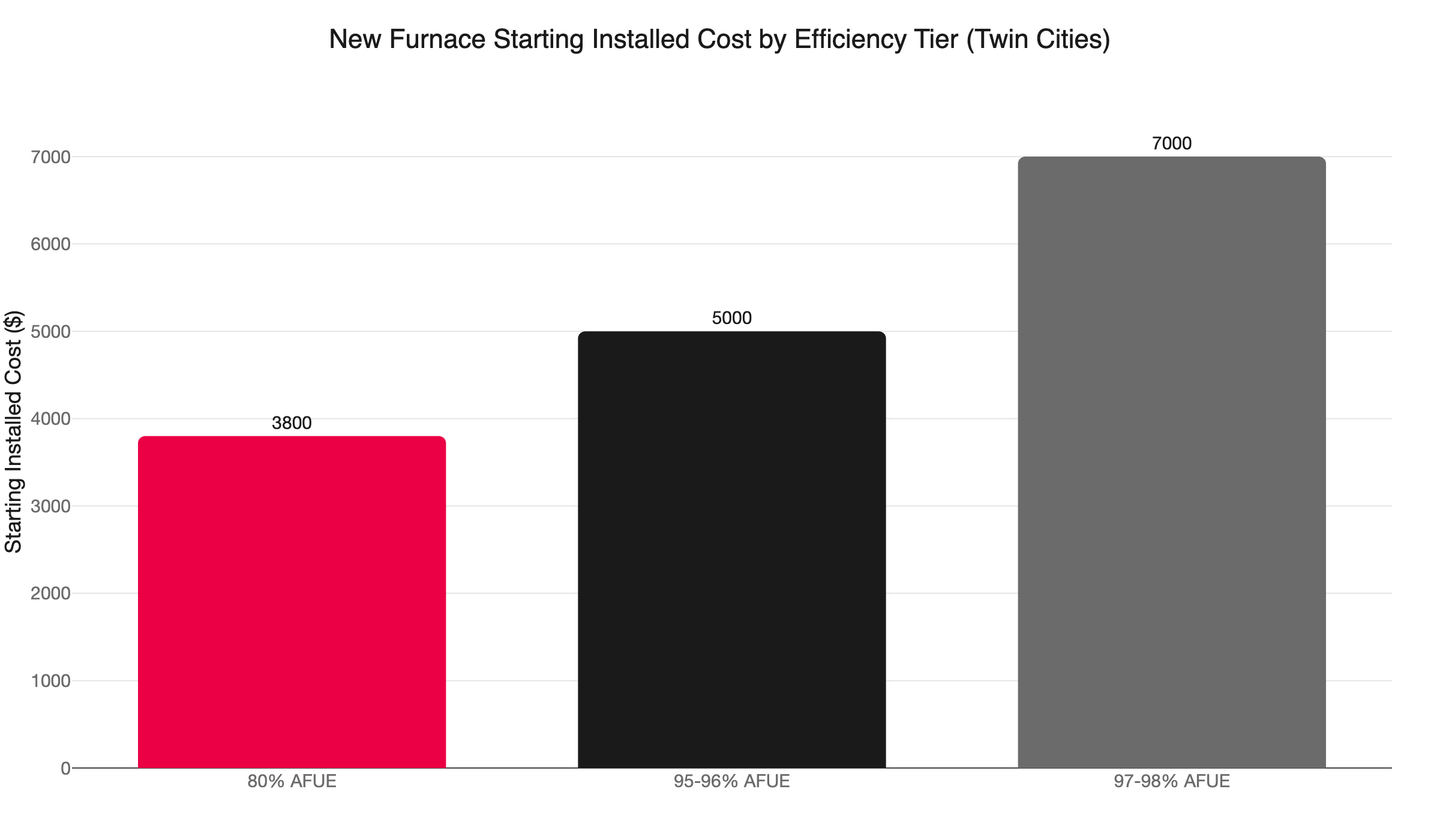
New Furnace Starting Installed Cost by Efficiency Tier (Twin Cities)
## What Does Furnace Replacement Cost in the Twin Cities?
**In short:** Installed furnace replacement cost in the Twin Cities ranges from $4,900 to $12,300. Most homeowners land in the $5,000-$7,500 range for a mid-tier two-stage condensing furnace. Where your quote falls depends on efficiency tier, brand, and your home's specific situation.
Here is how [installed price ranges break down by efficiency tier](https://hvacprojectcost.com/hvac-replacement-cost-minnesota/):
- **80% AFUE single-stage:** $3,800-$5,500 installed
- **95-96% AFUE two-stage:** $5,000-$7,500 installed
- **97-98% AFUE variable-speed:** $7,000-$9,500 installed
[Brand selection](/blog/twin-cities-hvac-brand-comparison-trane-carrier-lennox/) also moves the number within each tier. [Twin Cities installed cost data](https://genzryan.com/blog/furnace-replacement-cost-mn/) shows: Goodman $3,800-$6,000, Carrier $4,500-$8,500, Trane $4,800-$9,000, Lennox $5,000-$9,500. These figures cover equipment and standard labor. They do not include permit costs, ductwork repairs, or venting changes that come with switching efficiency tiers.
The $3,800-$5,500 range for an 80% unit is real on paper. For many Twin Cities homeowners, though, it is not an option. Minnesota's energy code removes it from consideration for most replacement jobs.
## Which Efficiency Tier Makes Sense for a Minnesota Home?
**In short:** For most Twin Cities replacements, a 95-96% AFUE two-stage furnace is the practical baseline. Minnesota's energy code eliminates the 80% option in many situations. A 97-98% variable-speed model makes the most sense for larger homes or homeowners planning a long stay.
**The 80% problem.** Minnesota follows IECC Climate Zone 6A, which has adopted a 90%+ AFUE minimum for replacement furnaces in most municipalities. If your current furnace is 80%, you may not be able to replace it with another 80% unit and still [obtain a permit](/blog/hvac-permit-when-required-minnesota/). Before pricing based on the lowest figure, confirm what your city or township allows.
**The 95-96% AFUE two-stage sweet spot.** This is the most common replacement choice in the Twin Cities. [Two-stage operation](/blog/two-stage-vs-single-stage-furnace-minnesota/) runs at roughly 65% capacity most of the time, ramping up only on the coldest days. The result is more consistent temperatures throughout the house, quieter operation, and better humidity control in fall and spring. It also qualifies for [Xcel Energy and CenterPoint Energy rebates](/blog/xcel-centerpoint-hvac-rebates-minnesota/).
Beyond savings, there is a comfort difference. Single-stage furnaces blast heat at full capacity and cycle off, which can feel uneven: too warm when running, cooling off between cycles. Two-stage and variable-speed units run longer at lower output, holding temperatures steadier.
Upgrading from a mid-efficiency unit to a 95-96% AFUE model saves roughly [$300-$600 per year on gas bills](https://hvacprojectcost.com/hvac-replacement-cost-minnesota/), with a payback period of four to seven years. Minnesota averages around [8,000 heating degree days per year](https://minnesotahvacauthority.com/minnesota-climate-hvac-requirements/). That is a long season. Efficiency gains add up.
**The 97-98% AFUE variable-speed case.** At $7,000-$9,500 installed, [variable-speed furnaces](/blog/modulating-furnace-worth-the-cost-minnesota/) cost more upfront. The return comes in near-silent operation, tighter humidity control, and the highest available utility rebates. For homes above 2,500 square feet, or homeowners planning to stay 10 or more years, the math tends to work.
For a deeper look at how AFUE ratings translate to real-world performance in Minnesota winters, see our post on [furnace efficiency for Twin Cities homes](/blog/furnace-efficiency-how-to-keep-your-twin-cities-home-warm/).
## What Drives the Final Quote Up or Down?
**In short:** Beyond the furnace itself, venting changes, ductwork condition, BTU sizing, and labor are the four biggest variables in any quote. A clean swap with ductwork already in good shape costs far less than a job requiring new PVC exhaust runs and duct sealing.
**Venting changes when switching efficiency tiers.** Condensing furnaces (96%+) exhaust cool combustion gases through PVC pipe out a sidewall, not up a chimney. If you are upgrading from an 80% furnace that used a metal flue, your installer must run new PVC intake and exhaust lines. That adds [$300-$800 for the PVC venting](https://northnjhvac.com/furnace-ac-cost-minnesota-typical-pricing-ranges/) and another $200-$500 to cap or abandon the old flue. Budget an extra $500-$1,300 if your current unit [exhausted through the chimney](/blog/chimney-liner-furnace-replacement-orphaned-water-heater-minnesota/).
**Ductwork condition.** Leaky or undersized ducts undermine a new furnace before it finishes its first heating season. Sealing runs $500-$1,200; partial duct replacement goes $1,000-$2,500; a full overhaul can reach $3,000-$7,000 in larger homes, [according to Minnesota HVAC pricing data](https://northnjhvac.com/furnace-ac-cost-minnesota-typical-pricing-ranges/). Ductwork problems often show up as symptoms before homeowners identify the source. Rooms that take forever to heat, a thermostat reading correctly but the house not feeling right, or bills that climbed after the furnace was supposedly running fine are all worth mentioning during an assessment. Our post on [cold spots and uneven heat distribution](/blog/cold-spots-and-warm-rooms-why-uneven-temperatures-hit-hardest-in-december/) covers what is typically driving those complaints.
**BTU sizing.** Minnesota's Residential Energy Code requires sizing per ACCA Manual J load calculation. Oversizing cannot exceed 40% of the calculated heating load. General [sizing guidelines](https://minnesotahvacauthority.com/minnesota-hvac-system-sizing-guidelines) for the Twin Cities, where the heating design temperature runs at [-15°F to -16°F](https://minnesotahvacauthority.com/minnesota-climate-hvac-requirements/):
- 1,000-1,500 sq ft: 60,000-80,000 BTU
- 1,500-2,500 sq ft: 80,000-100,000 BTU
- 2,500-3,500 sq ft: 100,000-120,000 BTU
An oversized furnace short-cycles: it heats fast, shuts off, and repeats. Short-cycling [increases wear](/blog/furnace-blower-motor-failure-signs-cost-minnesota/), makes humidity harder to control, and often leaves the house unevenly heated.
**Labor.** A standard furnace replacement takes 12-18 hours. HVAC technicians in Minnesota run [$75-$125 per hour](https://northnjhvac.com/furnace-ac-cost-minnesota-typical-pricing-ranges/). Complex jobs involving venting changes and ductwork repairs extend that total meaningfully.
## Does Minnesota Require a Permit for Furnace Replacement?
**In short:** Yes, always. A mechanical permit is required for every furnace replacement in Minnesota, no exceptions. Budget $150-$450. Your contractor must hold a current DLI mechanical contractor license. Any contractor who suggests skipping the permit is [a red flag](/blog/hvac-second-opinion-when-to-call-another-contractor-twin-cities/).
[Minneapolis permit costs](https://www.minneapolismn.gov/business-services/licenses-permits-inspections/construction-permits/permits-overview/permit-types/mechanical-heating-permits/) run $120-$400 specifically. In other Twin Cities suburbs, the [$150-$450 range](https://hvacprojectcost.com/hvac-replacement-cost-minnesota/) is typical.
The permit triggers a city inspection. That third-party sign-off matters for your homeowner's insurance and for documentation [when you sell](/blog/new-hvac-home-resale-value-minnesota/). Unpermitted HVAC work can surface as a problem at closing.
Before signing a contract, [verify the contractor's license status](/blog/hvac-contractor-red-flags-twin-cities/) at dli.mn.gov. Xcel and CenterPoint rebates also require licensed, permitted work to qualify.
## What Rebates Can Twin Cities Homeowners Get in 2026?
**In short:** Xcel Energy offers $200-$400 for 95%+ AFUE furnaces. CenterPoint Energy offers up to $400 for standard customers and up to $1,200 for income-qualified households. Customers with service from both utilities can stack rebates on qualifying dual-fuel systems for combined savings up to $3,100.
**Xcel Energy rebates.** Xcel's [natural gas efficiency rebate program](https://www.xcelenergy.com/programs_and_rebates):
- **$200** at 95% AFUE
- **$300** at 96% AFUE
- **$400** at 97% AFUE
Submit applications within 180 days of installation. Find the current form at [energyrebatecalculator.com/utility/xcel-energy](https://energyrebatecalculator.com/utility/xcel-energy).
**CenterPoint Energy rebates.** [CenterPoint's heating system program](https://www.centerpointenergy.com/en-us/residential/save-energy-money/efficiency-programs-and-rebates/heating-system-rebates?sa=mn):
- **Up to $400** for standard residential customers with a 95%+ AFUE furnace
- **Up to $1,200** for income-qualified households (documented but widely underreported)
- **$1,100** for a [dual-fuel heat pump](/blog/minnesota-heat-pump-rebates-tax-credits/) paired with a 92%+ AFUE backup furnace
Submit CenterPoint rebates by December 31, 2026. Checks arrive from Houston within approximately 10 weeks.
**Stacking both utilities.** If your home has electric service from Xcel and natural gas from CenterPoint, you may qualify for up to $3,100 in combined rebates on a qualifying dual-fuel system. See [Xcel's program documentation](https://energyrebatecalculator.com/utility/xcel-energy) for current details. Few homeowners claim this because few contractors explain it exists.
**Quick math example.** A 96% AFUE furnace installed at $8,400. Subtract $300 from Xcel and $400 from CenterPoint. Net cost after rebates: $5,800, [before financing](/blog/hvac-financing-options-what-to-know-twin-cities/).
These programs are funded through Minnesota's Conservation Improvement Program (CIP), a state law requiring all utilities to offer energy efficiency rebates. They are not promotional offers. They are funded by a small surcharge on every customer's bill. If you are unsure whether you have Xcel service, CenterPoint service, or both, check your utility bills before [your installation appointment](/blog/what-to-expect-hvac-install-day-twin-cities/).
## What Happened to the Federal Tax Credit?
**In short:** It is gone. The One Big Beautiful Bill Act, signed July 4, 2025, eliminated Section 25C effective December 31, 2025. No federal tax credit applies to any furnace installed in 2026. Articles or contractors still citing "up to $600 federal credit" are working from outdated information.
This is the most important correction in this post. Most of the top-ranking articles on furnace replacement cost in Minnesota were written before this change. They still show the credit as an active savings option. It is not.
A few additional facts worth knowing:
- Equipment **installed and placed in service by December 31, 2025** may still be claimed on a 2025 tax return using [IRS Form 5695](https://www.irs.gov/credits-deductions/energy-efficient-home-improvement-credit).
- Equipment installed in **January 2026 or later gets $0 in federal credit**, regardless of efficiency rating.
- Under the old Section 25C rules, a gas furnace had to reach **97%+ AFUE** to qualify, not just 95%. Most articles citing the credit never clarified this threshold.
Sources: [HVAC industry coverage of the credit elimination](https://www.watkinsheating.com/blog/hvac-tax-credits-and-rebate-changes/) and a [2026 HVAC tax credit analysis](https://hvacpricingguide.com/hvac-tax-credits-2026/).
The utility rebates from Xcel and CenterPoint are entirely separate from Section 25C. The federal credit ending has no effect on what you can claim from your utility provider.
## How Does Financing Change the Monthly Math?
**In short:** On a $6,000 system, 0% promotional financing over 12-18 months runs $333-$500 per month. Extended financing over 60-120 months drops to $65-$120 per month. Monthly energy savings from a higher-efficiency furnace offset a portion of the payment over the life of the loan.
Here is how the numbers look on a $6,000 installed system, [based on financing program data](https://genzryan.com/blog/furnace-replacement-cost-mn/):
| Financing Term | Approximate Monthly Payment |
|---|---|
| 0% promo (12 months) | ~$500/mo |
| 0% promo (18 months) | ~$333/mo |
| Extended (60 months) | ~$120/mo |
| Extended (120 months) | ~$65/mo |
The energy savings piece matters across the life of the loan. Upgrading from a lower-efficiency unit to a 95-96% AFUE furnace saves roughly $25-$50 per month on [gas bills during heating season](/blog/gas-vs-electric-heat-cost-minnesota/). That does not fully cover a payment. But it reduces the effective out-of-pocket cost over time.
We offer financing on furnace replacements and other larger HVAC jobs, including [AC installations](/blog/ac-replacement-cost-minnesota/). Ask about current terms when you call.
## How to Compare Furnace Replacement Quotes
Two quotes on a furnace replacement are rarely comparing the same job. Here is what to verify before signing:
- **Equipment efficiency and model.** Does the quote specify AFUE rating and stage type (single, two-stage, or variable)?
- **Venting work.** If you are going from 80% to 96%+, is new PVC venting included or excluded from the price?
- **Ductwork.** Is an assessment included? If repairs are recommended, are they itemized separately?
- **Permit.** Is the [mechanical permit cost](/blog/hvac-permit-cost-minnesota-what-to-expect/) included, or added later?
- **Rebate assistance.** Will the contractor handle Xcel or CenterPoint rebate paperwork, or does that fall on you?
- **Warranty.** Written terms for [both equipment and labor](/blog/hvac-extended-warranty-worth-it-minnesota/).
- **Load calculation.** Is the contractor running a [Manual J sizing calculation](/blog/hvac-sizing-manual-j-right-sized-system/), or just matching the capacity of the unit being replaced? Matching old-for-old is faster, but it is not always code-compliant and often perpetuates an oversized system.
A quote that looks $1,000 lower may be missing the permit or skipping a ductwork assessment. [Comparing complete written quotes](/blog/hvac-bid-comparison-what-to-look-for-twin-cities/) protects you.
Not sure whether it is time to replace rather than repair? Our post on [when to replace vs. repair your furnace](/blog/is-it-time-for-a-new-furnace-how-to-know-when-its-time-to-replace-not-repair/) walks through the decision with a clear framework.
## Get an Accurate Furnace Replacement Quote in the Twin Cities
Furnace replacement cost in the Twin Cities varies by thousands of dollars based on efficiency tier, your home's venting and ductwork condition, and what your municipality requires. A general range is a starting point. Your actual number comes from a technician who has looked at your home.
Northern One Hour is locally owned and operated in Ramsey, MN. We serve Minneapolis, St. Paul, Blaine, Maple Grove, Plymouth, Brooklyn Park, Woodbury, Bloomington, and the surrounding Twin Cities metro. We pull permits, assist with rebate paperwork, and show up when we say we will: "Always On Time… Or You Don't Pay a Dime!(R)"
Call **(763) 260-6662** or [schedule a furnace assessment online](/heating/heating-equipment/furnaces/furnace-replacements/) to get an accurate quote for your home.
---
# Minnesota Heat Pump Rebates: Stack Utility and City Programs
URL: https://northernonehour.com/blog/minnesota-heat-pump-rebates-tax-credits/
Published: 2026-07-23 | Category: Heating
The federal tax credit ended in 2025. Here is what Xcel, CenterPoint, and Minneapolis offer for 2026 installs and how to claim the full stack.
Key Takeaways
- Minnesota heat pump rebates are available now through [Xcel Energy and CenterPoint Energy](/blog/xcel-centerpoint-hvac-rebates-minnesota/). The federal [25C and 25D credits](/blog/heat-pump-tax-credit-how-to-claim-form-5695-minnesota/) ended December 31, 2025 and no longer apply to 2026 installations.
- Xcel Energy pays $2,000 for Combo customers (Xcel electric and Xcel gas) or $1,500 for electric-only customers on qualifying cold-climate systems, plus a $600 insulation bonus.
- CenterPoint Energy pays $1,100 for dual-fuel systems only: a cold-climate heat pump paired with a 92%+ AFUE gas furnace, programmed to switch to gas at 40°F or lower.
- Most Twin Cities homeowners have both Xcel electric and CenterPoint gas service. A qualifying dual-fuel system on this utility setup can yield $3,100 in combined utility rebates.
- Minneapolis homeowners can layer in the Green Cost Share (up to $14,000 in Green Zones, $5,000 elsewhere) and the CEE Bonus Rebate (up to $20,000 in Green Zones, $6,000 elsewhere).
- Minnesota's state HEAR program has not launched as of July 2026. No retroactive rebates will apply once it does open.
- Your equipment must be listed on the NEEP cold-climate database with a COP of at least 1.75 at 5°F to qualify for Xcel's rebate tier. [Systems rated to -22°F](/blog/cold-climate-heat-pump-brand-performance-minnesota/) are preferred for most of Minnesota.
- Claim sequence matters. File utility rebates before applying for Minneapolis city programs, which require a confirmed utility rebate to proceed.

Minnesota Utility Heat Pump Rebates by Scenario (2026)
## What Happened to the Federal Heat Pump Tax Credit?
**The short answer:** Both federal credits are gone. The One Big Beautiful Bill Act, signed July 4, 2025, ended the 25C and 25D credits on [December 31, 2025](https://www.irs.gov/credits-deductions/energy-efficient-home-improvement-credit). Equipment installed in 2026 does not qualify, even if you purchased it in 2025.
For years, a [30% federal tax credit](/blog/ira-tax-credits-high-efficiency-furnace-ac-minnesota/) capped at $2,000 was the anchor in every heat pump financial conversation. That credit ended nine years ahead of its scheduled expiration. What replaced it is not one program. It is a layered set of utility and city rebates that vary by your address, your utility provider, and the equipment you choose.
The programs that remain are meaningful. A Twin Cities homeowner who [understands the stack](/blog/stacking-hvac-rebates-tax-credits-federal-state-utility-minnesota/) and qualifies for the right combination can still capture several thousand dollars in support. For Minneapolis homeowners in Green Zones, the ceiling is dramatically higher. The key is knowing which programs apply to your specific home and in what order to claim them.
## How Do Minnesota Heat Pump Rebates Work in 2026?
**The short answer:** Two utility programs are active right now for Minnesota homeowners: Xcel Energy's cold-climate rebate and CenterPoint Energy's dual-fuel rebate. Most Twin Cities homes qualify for at least one. Minneapolis residents can layer city programs on top. Each has its own equipment requirements, income thresholds, and filing deadlines.
Minnesota heat pump rebates in 2026 come from three sources: your electric utility, your gas utility, and (for Minneapolis residents) the city. The programs can stack, but they do not operate independently of each other. For Minneapolis city programs, you must qualify for a utility rebate first. The city will not process your application until utility approval is confirmed.
Equipment requirements also differ by program. A system that qualifies for Xcel's rebate may or may not qualify for CenterPoint's. Understanding what each program requires before you select equipment saves money and avoids costly surprises after installation.
## What Does Xcel Energy Pay?
**The short answer:** Xcel pays $2,000 for Combo customers (both Xcel electric and Xcel gas service) or $1,500 for electric-only customers. A $600 insulation bonus applies on top when you add qualifying insulation and air sealing before or within two years of the heat pump install.
Start by checking your utility bills to confirm your Xcel service type. If your electric and gas both come from Xcel, you are a Combo customer and eligible for the higher tier. If you have Xcel electric but a different gas provider, you are in the electric-only tier.
Here is how the [Xcel cold-climate heat pump rebate](https://mn.my.xcelenergy.com/s/residential/heating-cooling/heat-pumps) breaks down:
- **Combo customer (Xcel electric + Xcel gas):** $2,000 base rebate
- **Electric-only customer:** $1,500 base rebate
- **Insulation bonus:** [$600](https://www.xcelenergy.com/staticfiles/xe-responsive/Working%20With%20Us/24-1-201%20MN%20Res%20Rebate%20Summary%20Information%20Sheet.pdf), applied automatically at your rebate application when qualifying insulation and air sealing is installed before or within two years of the heat pump
- **Maximum Xcel stack (Combo + insulation):** $2,600
Central ducted systems must be installed by a participating Xcel contractor to qualify. Mini-splits do not have this requirement. In either case, the equipment must appear on the [NEEP cold-climate database](https://ashp.neep.org) with a COP of at least 1.75 at 5°F. Standard heat pumps will not meet that threshold.
The Xcel application deadline is September 30 of the year following your installation. If you install in 2026, you have until September 30, 2027 to submit.
## What Does CenterPoint Energy Pay?
**The short answer:** CenterPoint pays $1,100 for dual-fuel systems only. A dual-fuel system pairs a cold-climate heat pump with a 92%+ AFUE gas furnace, programmed to hand off heating to the furnace at 40°F or lower. Mini-splits, geothermal, and full-electric heat pump setups do not qualify.
CenterPoint's [residential ducted heat pump rebate](https://www.centerpointenergy.com/en-us/SaveEnergyandMoney/Pages/Residential-Ducted-Air-Source-Heat-Pump-Rebate.aspx?sa=mn&au=res) requires all three of the following:
- **Furnace rated at 92% AFUE or higher**, paired with the heat pump
- **HSPF2 of at least 7.8** on the heat pump unit
- **System programmed to switch to gas at 40°F or lower**
New construction qualifies at a lower $400 rate. Your contractor submits form CNP-1375 directly to CenterPoint. The deadline is December 31 of the installation year. Allow up to 10 weeks from submission for the rebate to be issued.
Most Twin Cities homeowners in the core metro have CenterPoint as their natural gas provider. If you are not certain, the provider name is on the first page of your gas bill.
## Can You Stack Xcel and CenterPoint Minnesota Heat Pump Rebates?
**The short answer:** Yes. A qualifying dual-fuel system for a homeowner with Xcel electric and CenterPoint gas can pull [up to $3,100 in combined utility rebates](https://mn.my.xcelenergy.com/s/residential/heating-cooling/heat-pumps). This is the highest utility rebate available in Minnesota right now for a single installation.
The dual-fuel setup is also the most practical choice for most Minnesota homeowners. Minneapolis sits in ASHRAE Climate Zone 7, one of the harshest residential heating climates in the country. January average lows hit -14°F in the city. Greater Minnesota regularly sees -20°F to -30°F. Standard heat pumps [lose meaningful capacity below 17°F](/blog/heat-pump-below-zero-performance-minnesota/). At or near 0°F, they [cannot heat a home adequately](/blog/heat-pump-emergency-heat-when-to-use/).
A dual-fuel system handles this by splitting the job. The heat pump carries the heating load from fall through early winter. At that range, it runs efficiently, often delivering twice or three times the output of [electric resistance heat](/blog/gas-vs-electric-heat-cost-minnesota/). When outdoor temperatures fall to the programmed switchover point, typically 40°F, the gas furnace takes over. You capture the [efficiency benefit](/blog/heat-pump-vs-gas-furnace-annual-operating-cost-minnesota/) of the heat pump for most of the season. The furnace covers the coldest weeks without strain.
This configuration also unlocks the CenterPoint $1,100 rebate, which is unavailable for any other system type. For a Twin Cities homeowner with both Xcel electric and CenterPoint gas, a qualifying dual-fuel install is the direct path to the full utility stack.
For more on how cold-climate heat pumps perform in Minnesota winters and what separates them from standard units, read our post on [whether a heat pump is a good fit for your home](/blog/heat-pumps-in-minnesota-are-they-a-good-fit/). If you are also budgeting for the high-efficiency furnace that completes the dual-fuel pair, our guide to [furnace replacement costs in the Twin Cities](/blog/furnace-replacement-cost-twin-cities/) gives you realistic numbers to plan around.
## What Is the Minneapolis Green Cost Share Program?
**The short answer:** The [Minneapolis Green Cost Share](https://www.minneapolismn.gov/government/programs-initiatives/environmental-programs/green-cost-share/energy-efficiency/energy-rebates/) is a city grant administered through the Center for Energy and Environment. You must qualify for a utility rebate first. The ceiling is $5,000 for most Minneapolis addresses and up to $14,000 for properties in designated Green Zones.
Green Zones are environmental justice priority neighborhoods the city of Minneapolis has identified as needing additional investment. If your address falls inside one, the rebate ceiling is $9,000 higher than elsewhere in the city.
Check your address on the [Minneapolis environmental programs map](https://www.minneapolismn.gov/government/programs-initiatives/environmental-programs/green-cost-share/) before you finalize any installation plans. A five-minute check could meaningfully change your budget.
Green Cost Share funds are first-come, first-served within each annual funding cycle. They do refill, but the program does not guarantee availability at any given time. Apply as soon as your utility rebate is confirmed.
## The Minneapolis CEE Bonus Rebate
A second Minneapolis program opened for installations completed after December 31, 2025. The [CEE Bonus Rebate](https://www.mncee.org/minneapolis-bonus-rebate-program) is separate from the Green Cost Share and applies on top of it:
- **$6,000** for qualifying homes citywide
- **$20,000** for homes in designated Green Zones
These programs are additive. A Green Zone homeowner who qualifies for both city programs can access $14,000 + $20,000 = $34,000 in city grants alone, layered on top of utility rebates. Even outside Green Zones, combining both programs adds up to $11,000 in potential city support.
Like the Green Cost Share, CEE Bonus Rebate funds are not unlimited. They are awarded on a first-come, first-served basis each funding cycle. Do not wait several months after your install to begin the city application process. Start as soon as your utility rebate is approved.
## What About Minnesota's State HEAR Program?
**The short answer:** Save Energy Minnesota, the state's federally funded HEAR program, has not launched as of July 2026. The [MN Department of Commerce](https://mn.gov/commerce/energy/consumer/energy-programs/heat-pump.jsp) is still awaiting formal DOE approval, and no launch date has been announced. Federal rules prohibit retroactive rebates for installs completed before launch.
When it does open, the program will be income-based:
- Households at or below 80% of Area Median Income: up to **$8,000**
- Households at 80-150% of AMI: up to **$4,000**
If income-based eligibility is a priority for your household, check the Commerce page regularly. The program could open with relatively short notice once DOE finalizes approval. That said, the utility and city programs described above are available right now. Do not delay a time-sensitive install waiting on a program with no launch date unless you have specific reason to believe it is imminent.
## Does My Heat Pump Qualify for Minnesota Utility Rebates?
**The short answer:** Only if it meets the cold-climate equipment standards each utility requires. In Minnesota, those standards exist for a safety reason as much as a rebate one. A heat pump that cannot maintain output at -14°F is not just ineligible for rebates. It is a liability.
For Xcel's rebate, the system must be listed on the [NEEP cold-climate database](https://ashp.neep.org) with a COP of at least 1.75 at 5°F. Systems rated to -22°F are preferred for most of the state. Minneapolis averages -14°F January lows. Greater Minnesota regularly goes colder.
For CenterPoint's dual-fuel rebate, the heat pump also needs:
- **HSPF2 of at least 7.8**
- A paired furnace rated at **92% AFUE or higher**
- Switchover programming **at 40°F or lower**
When you talk with a contractor, ask two direct questions: "Is this unit listed on the NEEP cold-climate database?" and "What is its COP at 5°F?" A contractor who cannot answer immediately is not the right partner for a Minnesota install.
Our [heat pump installation and service team](/heat-pumps/) at Northern One Hour works specifically with cold-climate systems built for Minnesota winters. We will match you with equipment that qualifies for every program your home is eligible for.
## What Is the Right Sequence for Claiming Rebates?
**The short answer:** Confirm your utility service type and Green Zone status first, then select qualifying equipment, then install, then file utility claims before city applications. Minneapolis city programs will not process your application without a confirmed utility rebate. The sequence is not optional.
Here is the full step-by-step:
1. **Confirm utility service.** Pull your bills. Know whether you are Xcel Combo or electric-only, and whether you have CenterPoint gas.
2. **Check your address.** If you are in Minneapolis, verify Green Zone status before selecting equipment or setting a timeline.
3. **Choose qualifying equipment.** Confirm NEEP listing, COP at 5°F, HSPF2 rating, and furnace AFUE for dual-fuel systems.
4. **Use a participating contractor.** Required for Xcel central/ducted systems. Confirm contractor enrollment before signing a contract.
5. **Complete the installation.**
6. **File the Xcel rebate.** Submit online by September 30 of the year following your install date.
7. **Contractor files CenterPoint form.** Form CNP-1375, submitted directly to CenterPoint by December 31 of the installation year. Allow up to 10 weeks for processing.
8. **Apply for Minneapolis city programs.** Submit Green Cost Share and CEE Bonus Rebate applications through CEE once your utility rebate is confirmed.
9. **Add insulation if not yet complete.** Xcel's $600 insulation bonus applies to qualifying work completed before or within two years of the heat pump install.
Missing a step, or filing out of sequence, can delay or void a specific rebate. Tracking these requirements across every job is part of what locally owned service looks like.
## How Much Can You Save on Minnesota Heat Pump Rebates?
**The short answer:** The utility-only stack ranges from $1,500 for a basic Xcel electric-only rebate to $3,100 for a dual-fuel system with Xcel Combo and CenterPoint. Add Minneapolis city programs and the ceiling climbs significantly. All figures below come directly from the programs described above.
Here is what the stack looks like by scenario:
- **Xcel electric-only customer, cold-climate mini-split:** $1,500 from Xcel. No CenterPoint or city programs if outside Minneapolis.
- **Xcel Combo customer, central cold-climate heat pump:** $2,000 base, or $2,600 with the insulation bonus.
- **Xcel Combo + CenterPoint, dual-fuel system:** Up to $3,100 in combined utility rebates.
- **Minneapolis homeowner outside Green Zone, dual-fuel, Xcel Combo + CenterPoint:** Up to $3,100 (utility) + $5,000 (Green Cost Share) + $6,000 (CEE Bonus) = $14,100.
- **Minneapolis Green Zone homeowner, same utility setup and system:** Up to $3,100 + $14,000 + $20,000 = $37,100.
City funds are first-come, first-served and not guaranteed. These are program ceilings. Your actual amount depends on your equipment, application timing, and fund availability during your program cycle.
Even the utility-only stack is meaningful. For Minneapolis Green Zone homeowners, the combined programs make a cold-climate heat pump one of the most heavily subsidized home upgrades available anywhere in the country right now. That window is open while funding lasts.
## Ready to Find Out What You Qualify For?
Northern One Hour Heating & Air Conditioning is locally owned and operated in Ramsey, Minnesota. We serve the Twin Cities metro. We know which systems meet Minnesota's cold-climate requirements, which utility tiers each system unlocks, and how to manage the claim sequence so you capture every dollar you are entitled to.
Our commitment to you: "Always On Time… Or You Don't Pay a Dime!(R)"
Call us at **(763) 260-6662** or [schedule your appointment online](/heat-pumps/). If you want a professional assessment of [your current heating system](/blog/switching-gas-to-heat-pump-minnesota/) before committing to an upgrade, our [heat pump repair and service team](/heating/heat-pump-repair/) can evaluate what you have now and help you weigh repair versus replacement with the current rebate landscape factored in.
Minnesota heat pump rebates are real money. They are also equipment-specific, sequenced, and time-sensitive. Get the guidance right from the start.
---
# Repair or Replace? Which Should You Do When Your Heating and Cooling System Breaks Down?
URL: https://northernonehour.com/blog/repair-or-replace-which-should-you-do-when-your-heating-and-cooling-system-breaks-down/
Published: 2026-06-01 | Category: HVAC
Is your AC struggling to cool your Twin Cities home? When your heating and cooling system breaks down, deciding whether to repair or replace it can be a tough call. We'll help you weigh the options so you can choose the best path for your home, comfort, and budget.
Your [furnace isn't keeping the home warm](/blog/furnace-not-turning-on-troubleshooting-minnesota/) enough in the winter. Your AC decided to take a summer vacation and leave you in a warm sweat. When your [Northern One Hour](/) technician comes by to troubleshoot the problem in your Twin Cities home, you find yourself wondering if it makes more sense to pay for a repair now or dig deep into your pockets and [replace the entire system](/blog/what-to-expect-hvac-install-day-twin-cities/).
We get it. A new heating and cooling system is [a significant expense](/blog/furnace-replacement-cost-twin-cities/), and a repair may be easier on the wallet, at least initially. But repairs can be a temporary fix, and an older system may continue to break down thanks to aging equipment and parts. How do you make this important decision? Ask yourself these eight questions to determine whether it's time to repair or replace your unit.
## 1. How old is your heating and cooling unit?
Is your unit a couple of years old? Or did it [come with the house](/blog/hvac-checklist-buying-home-minnesota/) when you moved in 15 years ago? Even the best systems aren't designed to last forever. According to [ENERGY STAR](https://www.energystar.gov/saveathome/heating-cooling/replace), a typical AC unit or [heat pump](/blog/minnesota-heat-pump-rebates-tax-credits/) lasts about a decade, while a [furnace or boiler](/blog/boiler-vs-forced-air-furnace-minnesota/) can give you 15 years or more of heat. If your system is getting into the terrible teens, it may be time to [shop for a replacement](/blog/best-time-to-replace-furnace-and-ac-twin-cities/).
## 2. Does the repair cost meet the $6,500 rule?
In the heating, ventilation and air conditioning world, we have a rule of thumb known as the $6,500 rule. Simply put, multiply the cost of the repair with the age of the unit. If the number is under $6,500, go ahead and spring for a repair. Over $6,500? You may want to [consider a replacement](/blog/ac-replacement-cost-minnesota/). For example, if your 10-year-old unit needs a $325 repair, you're still under that $6,500 limit. If your 5-year-old unit is facing a $1,550 repair, it may make more sense to replace the unit. This is just a guideline. Your Northern One Hour technician can help assess [the unit's longevity](/blog/how-long-do-hvac-systems-last-in-minnesota/) and [advise you of your options](/blog/hvac-second-opinion-when-to-call-another-contractor-twin-cities/).
## 3. Are you experiencing repeated breakdowns?
Here at Northern One Hour, we love seeing our customers. But we don't necessarily want to see you on a regular basis. Frequent breakdowns are a sign that the system is slowing down and deteriorating. If you're calling us for a repair more than once or twice a year, let's talk about potentially replacing the unit and [saving you money over time](/blog/ac-short-cooling-season-replacement-payback-minnesota/).
## 4. Does your unit pose a safety risk?
Safety trumps almost all other considerations, including budgetary ones. A [cracked heating exchanger](/heating/) can leak carbon monoxide into your home, which can cause flu-like symptoms and in some cases be fatal. Older systems that are in disrepair may also be fire hazards, especially if they have faulty electrical wiring or short circuits. Don't compromise your family's safety when it's time to replace your system.
## 5. Does your air conditioner rely on outdated refrigerant?
Over the past decade, laws have changed to require more [eco-friendly air conditioning technology](/blog/ac-refrigerant-change-r454b-what-homeowners-need-to-know/). If your older unit relies on [a refrigerant known as R22](/blog/r22-freon-phase-out-older-ac-minnesota/), it's time to upgrade to a newer model. R22, also known as HCFC-22 or Freon, is banned in the country, and recycled R22 is increasingly rare and expensive.
## 6. Are you concerned about the environmental impact of older technology?
While we're on the subject of environmental safety, consider that heating and cooling technology is constantly evolving and improving. Older units naturally become less energy efficient as their parts wear down and they have to work harder to heat or cool your home. Couple that with new energy-efficient knowledge, and you could be leaving a big footprint on the earth with your older unit. Northern One Hour can introduce you to new models that cut down on energy usage and can potentially save money on your monthly bills!
## 7. Have you maintained the unit over its lifespan?
Regular [tune-ups](/heating/heating-maintenance/) make a huge difference in the life expectancy of your heating and cooling system. Minnesota's hard winters can demand a lot out of your [furnace or boiler](/blog/boiler-expansion-tank-waterlogged-symptoms-minnesota/), and an annual tune-up is one of the best ways to keep it running efficiently. During our annual maintenance check, the Northern One Hour technician will give your system a thorough inspection and safety check, cleaning the burners, [blowers and sensors](/blog/furnace-blower-motor-failure-signs-cost-minnesota/) and calibrating your thermostat. Just as your automobile lasts longer with regular oil changes, your heating and cooling system can last longer if you follow a regular maintenance schedule.
## 8. Are you interested in new technology and features?
Maybe you've been reading about a zoned system that lets you control the temperature in different parts of your home. Or maybe you're fascinated by the concept of a smart thermostat that lets you control your settings while you're away from home and helps you determine the most economical heating and cooling schedule. Is your current system waking you up at night when it kicks on? A newer system can guarantee better slumber with its [quieter operation](/blog/two-stage-vs-single-stage-furnace-minnesota/). These are all legitimate reasons for exploring replacement options.
## No pressure. Just good, honest information.
When you partner with Northern One Hour for your heating and cooling needs, you can take comfort in knowing that we're going to give you clear, practical recommendations that fit your home, energy goals, and budget. If you want to talk about a new heating and cooling system, or you have a small problem you want to address, call Northern One Hour now at [(763) 260-6662](tel:7632606662) to speak to a product expert or [request a quote](/contact-us/). Depend on Northern One Hour for honesty, efficiency and the best home comfort in the Twin Cities.
---
# Why Older Twin Cities Homes Struggle More With Winter Comfort
URL: https://northernonehour.com/blog/why-older-twin-cities-homes-struggle-more-with-winter-comfort/
Published: 2026-02-01 | Category: Heating
February reveals why older Twin Cities homes struggle with winter comfort. Learn how aging systems and outdated layouts lead to uneven heat and higher energy costs.
Older homes have charm, but they can also present comfort challenges during Minnesota winters. February often exposes where older systems and layouts fall short, especially when heating demand stays high. For many Twin Cities homeowners, this is the point in winter when uneven temperatures, cold rooms, and rising energy bills become impossible to ignore.
## Why February highlights comfort problems in older homes
By the time February arrives, heating systems in the Twin Cities have been working hard for months. In older homes, that sustained demand often brings hidden issues to the surface. Systems that managed well in early winter may now be struggling to keep up, especially during [extended cold stretches](/blog/furnace-cant-reach-setpoint-extreme-cold-minnesota/).
Many older homes weren't designed with modern comfort expectations in mind. Floor plans, [insulation standards](/blog/attic-insulation-ventilation-hvac-bills-ice-dams-twin-cities/), and airflow layouts reflect a different time. When those factors combine with aging heating equipment, February becomes the month when comfort gaps are most noticeable.
## Older layouts weren't built for even heating
Many Twin Cities homes built decades ago were designed with fewer rooms, [simpler duct layouts](/blog/duct-sealing-leaky-ductwork-energy-loss/), and less insulation than today's homes. Over time, additions, [finished basements](/blog/ductless-mini-split-older-twin-cities-homes/), and updated living spaces change how heat is distributed, but the heating system often stays the same.
The result is [uneven temperatures throughout the home](/blog/hvac-zoning-systems-two-story-homes/). One room may feel warm enough, while another stays noticeably colder. This imbalance forces the system to run longer, increasing wear and driving up energy costs without improving comfort.
## Aging systems work harder and cost more
Even [a well-maintained furnace](/blog/boiler-vs-forced-air-furnace-minnesota/) loses efficiency as it ages. Components wear down, airflow becomes less effective, and the system has to work harder to deliver the same level of heat. In February, when demand stays consistently high, that inefficiency becomes expensive.
Homeowners may notice higher utility bills without any improvement in comfort. This is often a sign that the system is running longer cycles just to keep up. Scheduling professional [heating services](/heating/) can help identify whether the issue is equipment-related, layout-related, or a combination of both.
## Small issues add up over the winter
In older homes, minor problems can quietly stack up. [Restricted airflow](/blog/flex-duct-problems-hvac-airflow-twin-cities/), worn parts, or outdated controls may not cause an immediate breakdown, but they steadily reduce performance. February is when those small issues start affecting daily comfort.
Ignoring these signs increases the risk of unexpected failures late in winter. Addressing concerns early with [heating repair](/heating/heating-repair/) helps restore reliability and prevents minor problems from turning into major disruptions.
## Maintenance makes a bigger difference in older homes
Regular maintenance is especially important for older systems. A thorough inspection can uncover issues that aren't obvious to homeowners but significantly impact comfort and efficiency. In February, maintenance can still make a meaningful difference for the rest of winter.
Professional [heating maintenance](/heating/heating-maintenance/) helps ensure components are clean, calibrated, and operating as they should. It also provides homeowners with clear insight into the system's condition and what to expect moving forward.
## What Twin Cities homeowners can do next
Living in an older home doesn't mean accepting uneven heat or high energy costs. February offers a clear picture of how your system performs under real winter conditions. With the right adjustments, repairs, or planning, comfort can improve without guesswork.
Northern One Hour Heating & Air Conditioning understands the unique challenges older Twin Cities homes face. Our team takes the time to evaluate the entire system, not just whether it turns on, so homeowners can make informed decisions about comfort and efficiency.
## Schedule service before winter ends
If your older home struggles to stay evenly warm, February is the right time to address it. Don't wait for winter to push your system further.
[Schedule your heating service](/contact-us/) with Northern One Hour Heating & Air Conditioning today, or call **[(763) 260-6662](tel:7632606662)** to speak with a local expert who understands Twin Cities homes and winter demands.
---
# Rising Heating Bills In January? How Inefficient Furnaces Drive Up Winter Energy Costs In Minnesota
URL: https://northernonehour.com/blog/rising-heating-bills-in-january-how-inefficient-furnaces-drive-up-winter-energy-costs-in-minnesota/
Published: 2026-01-05 | Category: Heating
Rising heating bills in January aren't always normal. Learn how inefficient furnaces increase winter energy costs across Minnesota and when Twin Cities homeowners should take action.
When January heating bills arrive, many homeowners across the Twin Cities are surprised by just how quickly energy costs climb during the coldest part of winter. It's easy to assume higher bills are simply the price of living in Minnesota, but in many homes, the furnace itself is working harder than it should.
As the New Year begins, inefficiencies often show up most clearly: long run times, uneven comfort, and higher costs without any noticeable improvement in warmth.
## Why January puts furnaces to the test
January is when furnaces run almost nonstop. With temperatures staying low day and night, your heating system has very little downtime to recover. A furnace that performed "well enough" in November or December may start to struggle once demand peaks.
When a system isn't running efficiently, it has to work longer to maintain the same indoor temperature. That extra effort shows up directly on your utility bill while quietly adding wear to the system.
## How inefficiency leads to higher energy bills
An inefficient furnace doesn't necessarily stop working; it just works harder than it needs to. Dirty air filters restrict airflow, forcing the system to run longer cycles. Aging components don't transfer heat as effectively as they once did. Small performance issues that seem minor on their own can combine to increase energy use without improving comfort.
Many homeowners don't realize this is happening because the home still feels warm enough. The only obvious sign may be a steady rise in [monthly heating costs](/blog/gas-vs-electric-heat-cost-minnesota/), especially noticeable in January when energy usage is at its highest.
## Comfort problems often go hand in hand with inefficiency
Higher heating bills are often paired with comfort issues around the home. Some rooms may feel colder than others, or the furnace may run frequently without ever quite reaching the thermostat setting. These problems are common signs that the system isn't [distributing heat efficiently](/blog/duct-sealing-leaky-ductwork-energy-loss/).
Instead of assuming these issues are normal for winter, it's worth taking a closer look at how your heating system is performing. Learning more about professional [heating services](/heating/) can help homeowners understand what's normal and what's not during the peak winter months.
## Increased wear raises the risk of mid-winter breakdowns
Inefficiency doesn't just affect your energy bill. When a furnace runs longer and harder than necessary, parts experience more wear. Over time, that added strain increases the chance of a breakdown, often when the system is needed most.
January is already one of the busiest times of year for heating issues, and a furnace that's been overworking itself is more likely to need [heating repair](/heating/heating-repair/) during extreme cold. Addressing inefficiency early can help reduce the risk of an unexpected failure in the middle of winter.
## Why maintenance makes a noticeable difference
Routine furnace maintenance helps systems run more efficiently during high-demand months like January. A professional service visit includes checking airflow, cleaning components, and making sure the system is operating as designed. These steps help reduce wasted energy and keep heating costs more predictable.
Maintenance also helps extend your system's life by reducing unnecessary strain. Homeowners with newer or aging systems alike benefit from regular [heating maintenance](/heating/heating-maintenance/), especially during Minnesota's coldest months.
## When it may be time to consider new equipment
In some cases, rising heating bills are a sign that a furnace is reaching the end of its useful life. Older systems are often [less efficient than modern options](/blog/furnace-afue-rating-80-vs-96-efficiency-explained-minnesota/) and may struggle to keep up with winter demand. While repairs and maintenance can help, there comes a point when [replacement makes more sense](/blog/furnace-replacement-cost-twin-cities/).
Exploring newer [heating equipment](/heating/heating-equipment/) can offer improved efficiency, better comfort, and more reliable performance during long Minnesota winters.
## Start the New Year with better comfort and lower costs
January is a smart time to check how your furnace is performing. [Rising energy bills](/blog/attic-insulation-ventilation-hvac-bills-ice-dams-twin-cities/), uneven temperatures, and [frequent run cycles](/blog/furnace-short-cycling-causes-fixes/) are signs that your system may be working harder than it needs to.
If your heating costs seem higher than expected or your home isn't as comfortable as it should be, now is the time to take action. Schedule service with Northern One Hour Heating & Air Conditioning today by visiting [schedule service](/contact-us/) or calling **[(763) 260-6662](tel:7632606662)** to help your furnace run more efficiently for the rest of winter.
---
# Start The New Year With Peace Of Mind: Why January Is The Right Time To Schedule Furnace Service
URL: https://northernonehour.com/blog/start-the-new-year-with-peace-of-mind-why-january-is-the-right-time-to-schedule-furnace-service/
Published: 2026-01-01 | Category: Heating
January is the ideal time to schedule furnace service in the Twin Cities. Learn how proactive maintenance improves reliability, efficiency, and peace of mind during Minnesota's coldest weeks.
The start of a new year often brings a fresh focus on reliability and [peace of mind](/blog/hvac-maintenance-plan-worth-it/), especially when it comes to keeping your home warm through the rest of winter. In the Twin Cities, January is when heating systems are under the most stress, and it's also when small, [hidden problems](/blog/carbon-monoxide-safety-furnace-season/) are most likely to turn into major disruptions.
Many homeowners head into January hoping their furnace will simply keep running without issue. While that does happen for some, systems that haven't been checked recently are far more vulnerable during Minnesota's coldest weeks.
## Why January reveals problems you couldn't see earlier
By January, furnaces have already been running for months. What may have seemed fine in October or November can start to show signs of strain once temperatures stay consistently low. Components wear down faster, airflow issues become more noticeable, and efficiency can quietly decline.
Because the system is still producing heat, it's easy to assume everything is working as it should. In reality, January often exposes issues that have been building over time and haven't yet reached the point of a full breakdown.
## How unchecked systems lead to unexpected repairs
Without professional service, many furnace problems go undetected. Worn parts, dirty components, and small mechanical issues don't always cause immediate failure, but they do increase the risk of sudden breakdowns during peak demand.
When a furnace fails in January, repairs are often more stressful. Cold weather creates urgency, schedules can fill quickly, and homeowners may feel pressured to make fast decisions. Addressing potential issues earlier in the month reduces the risk of an emergency later in winter.
## Furnace service helps improve efficiency and comfort
A professional furnace service visit does more than just prevent breakdowns. It helps your system run more efficiently, which can improve comfort throughout the home and keep heating costs more predictable.
During a service appointment, technicians check airflow, inspect key components, and make sure the system is operating as designed. This attention to detail helps ensure your furnace can keep up with winter demand without unnecessary strain. Homeowners who want to better understand their systems can explore [furnaces](/heating/heating-equipment/furnaces/) and how proper care impacts long-term performance.
## Reducing the risk of mid-winter emergencies
January is already one of the busiest months for furnace issues in Minnesota. Systems that haven't been serviced are more likely to need [furnace repair](/heating/heating-equipment/furnaces/furnace-repair/) when temperatures are at their lowest.
Scheduling service early in the year helps catch small problems before they become major ones. It also gives homeowners time to plan, rather than reacting to a failure when heat is urgently needed.
## Knowing when repair or replacement makes sense
Sometimes a January service visit reveals that a furnace is nearing the end of its lifespan. Older systems may still be running, but declining efficiency and frequent issues can signal that it's time to start thinking ahead.
Having this information early allows homeowners to consider [furnace replacements](/heating/heating-equipment/furnaces/furnace-replacements/) on their own timeline, rather than being forced into a decision during an emergency. Even if replacement isn't needed, regular service and [furnace tune-ups](/heating/heating-equipment/furnaces/furnace-tune-ups/) can extend the life of an existing system and improve reliability.
## A smart New Year step for the rest of winter
January is a practical time to focus on furnace service because your system is actively working and showing how it performs under real winter conditions. Addressing issues now helps reduce stress, improve efficiency, and lower the chances of unexpected breakdowns as winter continues.
If your furnace hasn't been checked recently, now is a good time to have it checked. [Schedule service](/contact-us/) with Northern One Hour Heating & Air Conditioning today or call **[(763) 260-6662](tel:7632606662)** to keep your home warm, reliable, and comfortable through the rest of winter.
---
# Furnace Efficiency: How to Keep Your Twin Cities Home Warm Without Breaking the Bank This Winter
URL: https://northernonehour.com/blog/furnace-efficiency-how-to-keep-your-twin-cities-home-warm/
Published: 2025-12-02 | Category: Heating
We all want to stay warm this winter, but nobody looks forward to the higher energy bills that can come with a running heating system. We have tips for maximizing your furnace efficiency for optimal performance and energy savings.
When the chilly Twin Cities winter descends, a high-performing furnace is your best ally. However, this increased furnace demand translates into a hike in your energy costs. How can you stay warm without breaking the bank? [Northern One Hour Heating & Air Conditioning](/) understands the challenge. We've been serving Twin Cities homeowners for decades, and we've learned a few things about beating the cold Minnesota winters. Read on to find out how you can keep your home warm and your bank account happy all season long.
## Essential furnace maintenance for maximum efficiency
Maintenance matters. When you skip your oil changes, your car might not run as well as it should. This applies to furnace maintenance as well. A well-maintained furnace is the most efficient furnace. By taking some proactive steps, you can ensure your system is running at peak performance.
**Change or clean your [air filter](/blog/air-purifiers-vs-filters-merv-ratings-explained/).** This is the simplest and most important task you can do. A dirty [filter](/shop/#/products) restricts airflow, forcing your furnace to work harder and use more energy. Check your filter monthly and replace or clean it [every one to three months](/blog/how-often-to-change-hvac-filter-minnesota/), or as recommended by the manufacturer.
**Schedule an annual tune-up.** Professional [maintenance](/heating/heating-maintenance/) from our trained heating and cooling technicians ensures your system is clean, safe, and operating at its best. They can identify and fix minor issues before they become major, costly problems.
**Install a programmable or smart thermostat.** These [devices](/thermostats/) allow you to set a heating schedule that aligns with your daily routine. Lowering [the temperature when you're away](/blog/what-temperature-set-thermostat-minnesota-winter-vacation/) or asleep can significantly reduce energy consumption without sacrificing comfort.
**Ensure vents and registers are clear.** Blocked vents force your furnace to work harder to distribute warm air. Make sure furniture, curtains, and rugs are not obstructing airflow to any vents in your home.
## Simple hacks to keep your home warm without turning up your furnace
Beyond your furnace, there are many easy, low-cost ways to [prevent heat loss](/blog/duct-sealing-leaky-ductwork-energy-loss/) and make your home feel warmer.
**Reverse your ceiling fan.** Most ceiling fans have a switch that allows them to run clockwise. This creates an updraft, pushing warm air that rises to the ceiling back down into the room where you can feel it.
**Seal air leaks.** Check for drafts around windows and doors. Use weatherstripping, caulk, or plastic film to seal any gaps. You can also use a door draft stopper to block cold air from seeping in under exterior doors.
**Use the sun's energy.** On sunny days, open your curtains and blinds to let natural sunlight warm your home. Close them as soon as the sun goes down to trap the heat inside.
**Add layers to your home.** Place rugs on bare floors to provide insulation. Use thermal curtains on your windows and add throw blankets to your couches. These simple additions can make a noticeable difference in how warm you feel.
**Make sure your bed is placed on an interior wall.** Who doesn't want an excuse to move the furniture to a new configuration? A bed against an exterior wall can feel much colder during the night due to heat loss through the wall, especially if it's [not well-insulated](/blog/attic-insulation-ventilation-hvac-bills-ice-dams-twin-cities/). However, if you move your bed to a wall shared with another room, you can make your sleeping space feel much cozier without touching the thermostat.
**Bake more.** Using your oven is a great way to add some extra warmth to your kitchen. After you're done cooking, leave the oven door ajar to let the residual heat escape into the room.
## Remember to call on Northern One Hour
By combining smart furnace maintenance with these simple hacks, you can make your Twin Cities home a warm and cozy retreat all winter long while keeping your energy bills in check. If you're concerned about heating costs this winter, contact the experts at Northern One Hour Heating & Air Conditioning at [(763) 260-6662](tel:7632606662) or online at our [contact page](/contact-us/). We'll walk you through various options that will pay you back in energy savings and increased comfort during even the coldest winter days.
---
# Cold Spots And Warm Rooms: Why Uneven Temperatures Hit Hardest In December
URL: https://northernonehour.com/blog/cold-spots-and-warm-rooms-why-uneven-temperatures-hit-hardest-in-december/
Published: 2025-12-01 | Category: Heating
Uneven temperatures in your Minnesota home can be frustrating, especially during the holidays. Learn why cold spots and warm rooms become more noticeable in December and discover tips for restoring comfort throughout your home.
When cold snaps roll into Minnesota, many homeowners suddenly notice something they didn't think about much in October: some rooms are freezing while others feel uncomfortably warm. The difference can be especially noticeable when guests are staying over, or the house is busier than usual. December puts every heating system to the test, and even minor airflow issues stand out quickly.
Below is a closer look at why these temperature imbalances show up, what they mean, and how to bring comfort back to every room of your home.
## Why winter makes uneven temperatures more noticeable
Minnesota winters bring long stretches of cold that force your furnace to work harder and longer. When temperatures drop into the single digits or below, heat loss speeds up, especially in areas with older windows, drafty exterior walls, or [rooms above unheated spaces](/blog/upstairs-too-cold-winter-heating-twin-cities/). Your furnace continues running to keep the temperature steady, but those weaker spots struggle to hold heat.
At the same time, rooms closer to the furnace or with stronger airflow often get warmer faster. That creates a bigger gap between the [warmest and coldest areas](/blog/hvac-zoning-systems-two-story-homes/) of the home. If your heating system is already showing its age or has difficulty pushing air evenly, the problem becomes even more noticeable. For a deeper look at how your heating system works, seeking professional [heating services](/heating/) available to Twin Cities homeowners can help.
## How airflow creates warm and cold zones
Air distribution plays a huge role in comfort, and winter quickly exposes imperfections. If ducts are partially blocked, undersized, or leaking, some rooms get less warm air than others. Register placement, [closed vents](/blog/closing-hvac-vents-unused-rooms-myth-twin-cities/), and extended duct runs can also weaken airflow.
In December, more people in the home can unintentionally affect how air moves. Guests may place bags or furniture in front of vents without noticing. Doors open more frequently, letting in blasts of cold air that interrupt heating cycles. If your furnace is older or struggling, it may not be strong enough to make up the difference. In some situations, upgrading to newer [heating equipment](/heating/heating-equipment/) can help restore balance throughout the home.
## Why certain rooms always feel colder
Some rooms are naturally more challenging to heat. [Bedrooms above garages](/blog/hvac-split-level-home-twin-cities/), rooms with large exterior walls, and [areas far from the furnace](/blog/ductless-mini-split-older-twin-cities-homes/) often lose heat faster. If insulation is uneven, the difference becomes even more noticeable in December.
Older furnaces can also struggle to maintain full capacity during the coldest weeks of winter. A system that worked fine during fall may suddenly feel weak once real cold arrives. If your equipment is nearing the end of its lifespan, exploring energy-efficient [furnaces](/heating/heating-equipment/furnaces/) may help reduce these temperature swings.
## When the thermostat is part of the problem
Even if the furnace is working well, [a thermostat placed in the wrong location](/blog/thermostat-troubleshooting-guide/) can cause big temperature differences. If it's too close to a heat source, near a draft, or in a room that stays warmer than the rest of the house, the system may shut off early. That leaves other areas underheated.
During holiday gatherings, extra body heat and activity around the thermostat can also cause inaccurate readings. Upgrading or relocating your thermostat can make heating more consistent throughout the home. Learn more by looking for [thermostat options](/thermostats/) that are perfect for your home.
## What homeowners can do
If uneven temperatures are new this winter, they might be related to extreme cold or increased holiday foot traffic. But if it's a problem you notice every year, it's worth having a technician check air distribution, ductwork, insulation, and furnace performance.
A quick inspection can reveal whether you're dealing with typical seasonal fluctuations or an issue that needs repair. Regular maintenance can also help your system deliver more balanced heating all winter long.
## Restore comfort throughout your home
No homeowner wants to battle cold rooms all winter, especially when the rest of the house feels fine. If you're tired of temperature swings or your furnace seems to struggle during cold snaps, it may be time to have a professional take a closer look.
You can [schedule service](/contact-us/) with Northern One Hour Heating & Air Conditioning or call **[(763) 260-6662](tel:7632606662)** today to get help keeping every room in your home comfortable this winter.
---
# Holiday Crowds, Cold Spots, and Overheated Rooms: 5 Heating Problems That Show Up in December
URL: https://northernonehour.com/blog/holiday-crowds-cold-spots-and-overheated-rooms-5-heating-problems-that-show-up-in-december/
Published: 2025-12-01 | Category: Heating
Struggling with heating issues during the holidays in Ramsey, MN? From overheating rooms to cold spots and weak airflow, discover common winter heating problems and solutions to keep your home comfortable all season long.
When winter settles into the Twin Cities, most homes stay comfortable without much effort. But once the holidays hit and the house fills with people, heating issues that were barely noticeable in November can suddenly turn into daily frustrations. Extra body heat, more doors opening, and higher demand on your system all change how your home warms up. Below are the problems homeowners run into most often, and why you notice them more during holiday hosting.
## 1. Rooms overheating
When several people gather in one space, the room naturally heats up faster than the rest of the house. Your furnace keeps running until the thermostat is satisfied, but the areas with the most activity warm up well before then. This is why living rooms, kitchens, and basements feel stuffy while other parts of the home remain comfortable.
If you know you'll have a full house, you can adjust the temperature slightly lower before guests arrive. It helps balance things out and keeps the furnace from working harder than necessary. If you experience overheating even when the house is empty, it may be worth looking into airflow adjustments or upgrades to your [heating system](/heating/).
## 2. Cold spots
Cold bedrooms or corners of the home become much more noticeable when temperatures outside drop and people are moving around inside. Every time someone opens a door, a wave of cold air interrupts the airflow your furnace depends on. If certain rooms already struggle to warm up, hosting only exaggerates the problem.
Cold spots can also point to an undersized furnace, duct issues, or poor insulation. A technician can check whether your system is moving air evenly throughout the home or if a deeper issue is affecting performance. If the furnace itself is aging or inefficient, exploring newer [furnaces](/heating/heating-equipment/furnaces/) may help prevent these comfort imbalances.
## 3. Short cycling
Short cycling, where the furnace turns on and off more frequently than normal, is a common issue in December. Extra activity inside the home makes the thermostat think the house is warmer than it really is. Your system shuts off early, then restarts once the temperature dips again. Over time, this rapid cycling can wear out parts and increase utility costs.
Short cycling is usually a sign that something isn't quite right. It could be a thermostat problem, airflow restriction, or a furnace that's starting to show its age. If this becomes a regular pattern, it's a good idea to schedule a [heating repair](/heating/heating-repair/) before the system's performance declines further.
## 4. Weak airflow
With more people in the home, vents can get blocked by furniture, bags, or temporary seating arrangements. Even a few blocked vents can make airflow feel weak, especially in rooms farther from the furnace. Add in a dirty filter or ducts that weren't designed for higher demand, and you end up with uneven comfort.
Weak airflow is one of the most common reasons a home feels chilly in winter, even when the furnace is running. A technician can assess whether your equipment or ductwork needs cleaning, sealing, or adjustment. Twin Cities homeowners with older systems may also benefit from updated [heating equipment](/heating/heating-equipment/) that moves air more efficiently.
## 5. Comfort imbalances throughout the home
When the furnace runs longer, stops more often, or struggles to move air evenly, the result is a home that feels warm in some spots and cool in others. Holiday hosting makes these differences harder to ignore because the home is simply working harder. Older systems, [homes with multiple floors](/blog/hvac-zoning-systems-two-story-homes/), and houses with large gathering spaces experience this the most.
Comfort imbalances usually develop slowly, but December reveals them quickly. If you're constantly adjusting the thermostat or noticing big differences from room to room, it may be time to have a technician evaluate your system's overall performance.
## A more comfortable home for the holidays
Heating issues don't always mean your furnace is failing; sometimes the home is just reacting to extra activity, colder weather, or airflow patterns that need a little attention. But if you notice these problems long after the guests go home, it may be time to have your system inspected.
If you're experiencing cold spots, uneven warmth, or a furnace that can't keep up, it's a good idea to [schedule service](/contact-us/) before the next cold snap. You can also call **[(763) 260-6662](tel:7632606662)** for help keeping your home comfortable all winter long.
---
# Preventing Winter Breakdowns: A Proactive Heating Guide for Twin Cities Homeowners
URL: https://northernonehour.com/blog/preventing-winter-breakdowns-a-proactive-heating-guide-for-twin-cities-homeowners/
Published: 2025-11-11 | Category: Heating
If your heating system hasn't been serviced yet this season, now's a smart time to get ahead of the weather. The certified team at Northern One Hour Heating and Air Conditioning is proud to help Twin Cities homeowners stay warm and comfortable all winter long.
It's a November nightmare: you wake up to a cold house, and your furnace refuses to turn on. In the middle of a Minnesota cold front, that's more than an inconvenience; it's a full-blown emergency.
The good news? Many heating system breakdowns are preventable. By taking a few proactive steps before winter's coldest days arrive, Twin Cities homeowners can keep their homes warm, efficient, and worry-free all season long.
## Why breakdowns happen when you least expect them
When temperatures drop, your furnace or heating system works overtime to keep your home comfortable. This constant demand can push small, unnoticed issues, like dirty filters, worn components, or thermostat problems, into full-blown failures.
In most cases, heating systems don't stop working out of nowhere. They give signs first: uneven temperatures, strange noises, or longer-than-usual heating cycles. Recognizing and addressing [these early warnings](/blog/emergency-furnace-repair-warning-signs/) is key to avoiding costly repairs later.
## Dirty filters are small problems with big consequences
A clogged air filter is one of the most common and easily preventable causes of winter breakdowns. When your filter is packed with dust and debris, it restricts airflow and forces your furnace to work harder. Over time, that extra strain can lead to overheating or even system failure.
Changing your filter every month or two during peak heating season is one of the simplest ways to protect your system and improve indoor air quality. A clean filter helps your heating system do its job efficiently without working overtime.
If you're curious about how filter maintenance impacts your system's performance year-round, seeking an [air conditioning](/air-conditioning/) service professional provides helpful insights that apply to both heating and cooling.
## Thermostat issues can send mixed signals
If your home never seems to reach the right temperature or if the furnace keeps running without stopping, your thermostat may be to blame. An inaccurate reading or wiring issue can cause your heating system to cycle too often or not enough.
Start by checking that your thermostat is set to "HEAT" and that the batteries (if applicable) are fresh. If your system still behaves unpredictably, having a technician recalibrate or inspect it before deeper winter sets in can make a big difference.
## Worn parts can quietly lead to failure
Just like any mechanical system, furnaces experience wear and tear. Components such as blower motors, belts, and ignition systems can degrade over time, especially after years of heavy use. When one of these parts begins to fail, it often leads to uneven heating, strange noises, or a complete shutdown.
A pre-season inspection allows a technician to identify these issues early and replace worn parts before they cause trouble. Ramsey homeowners who notice [frequent cycling](/blog/furnace-short-cycling-causes-fixes/) or reduced airflow should consider scheduling a quick checkup to ensure the system is ready for the season.
For systems that also support cooling, keeping up with timely [air conditioning repair](/air-conditioning/air-conditioning-repair/) is another way to reduce overall wear year after year.
## Neglected maintenance is the most common cause of breakdowns
Many homeowners only think about heating service once the heat goes out, but by then, the damage is often done. [Routine maintenance](/blog/hvac-maintenance-plan-worth-it/) helps catch issues like [gas leaks](/blog/carbon-monoxide-safety-furnace-season/), pilot light failures, or blocked vents long before they become emergencies.
[Regular tune-ups](/blog/boiler-annual-maintenance-what-to-expect-minnesota/) keep your system running efficiently and can extend its lifespan, something every Minnesota homeowner can appreciate when the snow starts to fall.
If your system is showing its age, exploring newer [AC installation](/air-conditioning/ac-installation/) options before it fails can also improve your home's comfort and efficiency in both hot and cold seasons.
## Take simple steps now to stay warm later
Twin Cities homeowners know how unpredictable Minnesota winters can be. By checking filters, scheduling inspections, and addressing small issues early, you can dramatically reduce the risk of waking up to a chilly home.
If your heating system hasn't been serviced yet this season, now's a smart time to get ahead of the weather. The certified team at Northern One Hour Heating and Air Conditioning is proud to help Twin Cities homeowners stay warm and comfortable all winter long.
[Schedule service](/contact-us/) or call [(763) 260-6662](tel:7632606662) to book an appointment before the next cold front arrives.
---
# Battling the Cold Front: Why Your Furnace Won't Stop Running (and What You Can Do About It)
URL: https://northernonehour.com/blog/battling-the-cold-front-why-your-furnace-wont-stop-running-and-what-you-can-do-about-it/
Published: 2025-11-04 | Category: Heating
A furnace that runs constantly is more than an annoyance; it could be an underlying problem that wastes energy, drives up bills, and risks a mid-winter breakdown. Here's what might be causing your furnace to run nonstop, and what you can do to help it work more efficiently this season.
That constant hum from your basement isn't just the sound of winter; it might be your furnace working harder than it should. If your heating system seems to run all day and night, or you notice it kicking on and off too frequently, it's time to pay attention. A furnace that runs constantly is more than an annoyance; it could be an underlying problem that wastes energy, drives up bills, and risks a mid-winter breakdown.
At Northern One Hour Heating & Air Conditioning, we understand the importance of reliable heat during a [Minnesota cold snap](/blog/natural-gas-pressure-cold-snap-furnace-minnesota/). Here's what might be causing your furnace to run nonstop, and what you can do to help it work more efficiently this season.
## Thermostat settings may be the culprit
Sometimes, the issue starts with your thermostat. If it's [set too high](/blog/what-temperature-set-thermostat-minnesota-winter-vacation/) or the fan setting is switched to "ON" instead of "AUTO," your system may [blow air constantly](/blog/furnace-blower-runs-constantly-wont-shut-off-minnesota/), even when heating isn't needed.
Try setting the fan to "AUTO" so it only runs during heating cycles. If that doesn't help, consider whether your thermostat is aging or inaccurate. A newer programmable or smart model can do a better job of maintaining consistent comfort and preventing overwork.
## Dirty filters restrict airflow
A clogged air filter can force your furnace to run longer than necessary. When dust builds up, air can't move freely, making it harder for your system to reach the set temperature.
Replacing your filter every one to three months, especially during peak heating season, helps your furnace breathe easier and keeps your home warmer with less effort. If you're unsure which filter your system needs, a technician can guide you in the right direction.
For more guidance on keeping your system running smoothly, see our page on [**furnaces**](/heating/heating-equipment/furnaces/).
## Leaky ducts or poor insulation can waste heat
In many Twin Cities homes, especially older ones, [duct leaks or poor insulation](/blog/duct-sealing-leaky-ductwork-energy-loss/) are the silent culprits behind high energy bills and running furnaces. When warm air escapes through gaps or unsealed areas, your furnace works harder trying to replace the lost heat.
Having your ducts inspected and sealed can make a big difference. Adding or upgrading insulation helps, too, keeping heat where it belongs and giving your system a well-earned break.
## Short cycling signals a deeper issue
If your furnace turns on and off frequently but never seems to warm the house evenly, you might be dealing with "short cycling." This can happen when the system overheats, [the thermostat is malfunctioning](/blog/thermostat-troubleshooting-guide/), or internal components like sensors need attention.
Short cycling not only wastes energy but can also lead to wear and tear over time. If it's happening often, it's worth having a professional take a closer look. Routine [**furnace repair**](/heating/heating-equipment/furnaces/furnace-repair/) can identify and fix small issues before they turn into larger, more expensive problems.
## Your furnace may be undersized or aging
Even a well-maintained system can struggle against [Minnesota's deep freeze](/blog/furnace-cant-reach-setpoint-extreme-cold-minnesota/) if it's too small for your home, or simply reaching the end of its lifespan. When that happens, the furnace runs constantly trying to keep up, but never quite delivers.
If your unit is more than 15 years old, or your home has changed significantly since installation (such as added square footage or insulation upgrades), it might be time for a performance evaluation. A properly sized system can heat your home more efficiently while reducing strain and energy costs.
## Keep your home comfortable all winter
A furnace that runs nonstop isn't always an emergency, but it's never something to ignore. Paying attention to small signs early, like frequent cycling or uneven heat, can prevent bigger problems later.
If your system still struggles after basic checks, scheduling a professional inspection is the next best step. The certified team at Northern One Hour Heating & Air Conditioning provides reliable heating care throughout the Twin Cities and nearby communities, helping homeowners stay warm and worry-free all season long. [Schedule service](/schedule-service) or call (763) 319-0872 to book a visit at your convenience.
---
# Heat Pumps in Minnesota: Are They a Good Fit for Your Ramsey Home's Heating Needs?
URL: https://northernonehour.com/blog/heat-pumps-in-minnesota-are-they-a-good-fit/
Published: 2025-11-04 | Category: Heating
Heat pumps in Minnesota? Yes! For years, people believed heat pumps couldn't keep up with the frigid Minnesota temperatures. But technology is changing, and we address common misconceptions about heat pumps. Is a heat pump right for your home?
---
For many homeowners in the Twin Cities area, the thought of relying on a heat pump to survive a Minnesota winter might seem counterintuitive. The image of a heat pump struggling against [sub-zero temperatures](/blog/heat-pump-below-zero-performance-minnesota/) is a long-standing one, but advancements in technology have made this a misconception of the past. [Northern One Hour Heating & Air Conditioning](/) is here to show you how a modern heat pump is not only a viable heating option for your home, but also a perfect fit for a climate with dramatic seasonal shifts.
## Are heat pumps worth it in Minnesota?
Yes - with the right system design. Modern cold-climate heat pumps handle outdoor temperatures down to -13°F and run at two to three times the efficiency of electric resistance heat during Minnesota's shoulder seasons. Paired with a high-efficiency gas furnace in a dual-fuel setup, they keep energy costs down without sacrificing warmth on the coldest nights. Utility rebates of up to $3,100 are available for qualifying systems in 2026. There is no federal tax credit this year.
## The evolution of heat pump technology: From mild climates to Minnesota winters
Heat pumps work by extracting heat from the outside air and bringing it inside. For decades, [heat pumps](/heat-pumps/) were primarily recommended for regions with milder winters. Older models lacked the ability to efficiently heat homes once outside temperatures dipped below freezing. However, the heating and cooling industry has undergone significant upgrades, introducing [cold-climate heat pumps](/blog/cold-climate-heat-pump-brand-performance-minnesota/) that are specifically engineered to perform in frigid conditions.
These newer systems utilize groundbreaking technologies that set them apart. One key innovation is the use of variable-speed compressors. Unlike a traditional furnace that's either all on or all off, a variable-speed system is like a car with a gas pedal. It can adjust its speed to give you just the right amount of heating or cooling. This allows it to work more efficiently all the time, especially during a cold Minnesota winter when it needs to maintain a high level of performance.
Another crucial advancement is [enhanced vapor injection (EVI)](https://www.sciencedirect.com/science/article/abs/pii/S1290072912003444) technology. Think of this as a special boost for the heat pump. This technology helps the system pull more warmth out of the extremely cold outdoor air, even when it's well below freezing. It's the main reason a modern heat pump can keep your home toasty warm even on the coldest Minnesota days, often without needing a [supplemental furnace](/blog/heat-pump-emergency-heat-when-to-use/) to kick in. This new way of working makes the heat pump much more efficient, allowing it to produce more heat for the electricity it uses.
Field research from the [Minnesota Center for Energy and Environment](https://www.mncee.org/air-source-heat-pumps) confirms that inverter-driven cold-climate systems operate efficiently between 0°F and -13°F - a range that covers virtually every day of a typical Twin Cities winter. [ENERGY STAR cold-climate certification](https://www.energystar.gov/products/air_source_heat_pumps) tests systems at 5°F with third-party verification. A certified unit continues operating below that threshold, and pairing it with backup heat covers the polar vortex days that push past those limits.
## How heat pumps deliver year-round comfort and efficiency
Heat pumps move heat, rather than generating it. This gives them a head start in staying energy efficient. Consider a [traditional gas or electric furnace](/heating/heating-equipment/furnaces/). These generate heat by burning fuel or using electric resistance, which is an energy-intensive process. A heat pump, on the other hand, operates like a two-way air conditioner. In the winter, it absorbs the heat energy that exists naturally in the outdoor air (yes, even cold air has heat energy) and transfers it into your home. In the summer, it reverses this process, pulling warm air out of your home and expelling it outside.
This dual-functionality means you get both a [heating](/heating/) and [cooling](/air-conditioning/) system in one energy-efficient package. For homeowners, this can translate to significant savings on utility bills. By eliminating the need for separate heating and cooling units, a single heat pump system can reduce your overall energy consumption year-round. It's a single, streamlined solution for maintaining a comfortable indoor environment regardless of the season.
## Do energy-efficient heat pumps work in Becker and Ramsey, MN?
Absolutely. Becker and Ramsey are both in our service area, and the cold-climate systems designed for Minnesota winters perform just as well north of the metro as they do anywhere in the Twin Cities. The key local variable is your electric utility, because your utility determines which rebate program you qualify for.
Most Anoka County homeowners - including Ramsey - are served by either Xcel Energy or Connexus Energy for electricity. Sherburne County homes near Becker often fall under Connexus or another rural cooperative.
**Connexus Energy** covers eight counties north of the Twin Cities, including Anoka County, serving more than 147,000 members. It offers a cold-climate air-source heat pump rebate for residential customers. A registered contractor is required, and the current program deadline is December 31, 2026. Contact Connexus directly to confirm the rebate amount for your address. Source: [heatpumpnetwork.com/incentives/minnesota](https://heatpumpnetwork.com/incentives/minnesota)
**Xcel Energy** customers on Combo/Gas service qualify for up to $2,000 on a qualifying cold-climate heat pump. To qualify, the unit must appear on the NEEP cold-climate product list at ashp.neep.org. The system also needs a COP of at least 1.75 at 5°F and a capacity at 5°F of at least 70% of its rated 47°F capacity. Those are the specs to ask your contractor about. An additional $600 insulation bonus applies if qualifying air sealing or insulation work was completed within the past two years - bringing the potential Xcel rebate to $2,600.
We confirm your utility situation during an in-home assessment and walk you through exactly what you qualify for before any proposal goes on the table.
## Should Ramsey homeowners choose a gas furnace or a heat pump?
For most Ramsey homeowners, the answer in 2026 is not either/or. If your home has CenterPoint gas service and Xcel electric service, a dual-fuel hybrid setup makes the strongest financial case.
Here is how it works. A cold-climate heat pump handles heating during mild and moderate weather, running at two to three times the efficiency of resistance heating. When outdoor temperatures fall to a switchover point - typically 40°F or lower - the system hands off to the gas furnace. The furnace handles the polar vortex. The heat pump handles the fall, early winter, and spring weeks when gas is the less efficient and more expensive option.
**The rebate case for dual-fuel:** CenterPoint Energy offers a $1,100 rebate on qualifying dual-fuel systems. Requirements are an HSPF2 of at least 7.8, pairing with a gas furnace rated at 92% AFUE or better, and a switchover at 40°F or lower. Stack the CenterPoint rebate on top of the Xcel cold-climate rebate and a qualifying Ramsey home can capture up to $3,100 combined - or up to $3,700 if the insulation bonus also applies. Source: [homeenergybasics.com/heat-pumps/states/mn](https://homeenergybasics.com/heat-pumps/states/mn)
This is not a niche workaround. It is the setup that makes the math work best for the typical Ramsey home in the current incentive environment. More detail on how the dual-fuel configuration works is at [our heat pumps page](/heat-pumps/).
## What the 2026 rebate picture actually looks like
The incentive landscape has shifted significantly since 2025. Here is where things stand for Minnesota homeowners right now, because most articles describing heat pump incentives are out of date.
**The federal 25C tax credit is gone.** It expired December 31, 2025, accelerated by the One Big Beautiful Bill Act, signed July 4, 2025. Equipment installed in 2026 receives no federal credit, regardless of when it was purchased or quoted. Source: [homeenergybasics.com/heat-pumps/states/mn](https://homeenergybasics.com/heat-pumps/states/mn)
**The state HEAR rebate (Save Energy Minnesota) has not launched.** The Minnesota Department of Commerce is still awaiting formal DOE approval as of July 15, 2026, with no estimated launch date published. Retroactive rebates for pre-launch installs are not allowed. If you are delaying an install to catch the state program, there is no timeline to plan around right now. Source: [homeenergybasics.com/heat-pumps/states/mn](https://homeenergybasics.com/heat-pumps/states/mn)
**What is available right now:**
- Xcel Energy cold-climate ASHP rebate: up to $2,000 for Combo/Gas customers, $1,500 for Electric Only.
- Xcel insulation bonus: $600 more if qualifying air sealing or insulation work was completed within the past two years.
- CenterPoint Energy dual-fuel rebate: $1,100 for qualifying dual-fuel heat pump and furnace systems.
- Xcel + CenterPoint combined: up to $3,100, or up to $3,700 with the insulation bonus.
- Connexus Energy: cold-climate ASHP rebate available; confirm the current amount directly with Connexus. Deadline December 31, 2026.
- Minneapolis Green Cost Share: up to $14,000 in a Green Zone, up to $5,000 outside one. Stacks on top of utility rebates. Available to 1-4 unit residential properties only, first come, first served. A qualifying CenterPoint or Xcel rebate is required first. Source: [homeenergybasics.com/heat-pumps/states/mn](https://homeenergybasics.com/heat-pumps/states/mn)
For a full breakdown of these programs and how they interact, see our [Minnesota heat pump rebates and tax credits guide](/blog/minnesota-heat-pump-rebates-tax-credits/).
## Beyond efficiency: The many benefits of a modern heat pump
Beyond the energy savings, a modern heat pump system offers a host of other benefits that improve your home's comfort and your peace of mind.
**Improved air quality and comfort:** Because a heat pump moves and conditions air, it can provide a more even, consistent temperature throughout your home than a traditional furnace. The lack of combustion also means no burning of fossil fuels inside your home, which can reduce airborne irritants and provide a cleaner, healthier indoor environment.
**A quieter home:** Modern heat pumps, especially those with variable-speed technology, operate at a much quieter level than furnaces or central air conditioners. This provides a more peaceful indoor environment, free from the loud "on" and "off" cycles of older systems.
**A greener choice:** A heat pump's reliance on electricity rather than natural gas or oil makes it a significantly more environmentally friendly heating and cooling option. By [electrifying your home's HVAC system](/blog/switching-gas-to-heat-pump-minnesota/), you're reducing your carbon footprint. A 2024 NREL study cited by the [Minnesota Center for Energy and Environment](https://www.mncee.org/air-source-heat-pumps) estimates that switching to a cold-climate heat pump cuts approximately 8.2 metric tons of CO2-equivalent per year per household. Minnesota homeowners are moving in this direction: applications to the [Air Source Heat Pump Collaborative](https://www.mnashp.org/) more than doubled from roughly 2,000 in 2019 to over 4,600 by 2022.
## Who doesn't want a heat pump?
While modern heat pumps are an excellent solution for many homes, they aren't the perfect fit for everyone. The initial upfront cost of a new heat pump system can be higher than [a traditional gas furnace](/blog/furnace-replacement-cost-twin-cities/), which might be a deciding factor for some homeowners, even with [available rebates](/blog/minnesota-heat-pump-rebates-tax-credits/) and long-term savings. Additionally, some people simply prefer the sensation of hot air that a gas furnace provides, as heat pumps tend to deliver warmth at a lower, more consistent temperature.
Some homeowners may worry about how their heat pump is going to handle the extreme, multi-day cold snaps we tend to get in the winter. We often recommend [dual-fuel system integration](/heat-pumps/), which combines a heat pump with an existing or new high-efficiency gas furnace. This solution is often the best of both worlds for homeowners who are seeking energy efficiency and guaranteed warmth. For Ramsey homeowners with CenterPoint gas and Xcel electric service, a qualifying dual-fuel setup can bring in up to $3,100 in combined utility rebates - which makes the upfront cost meaningfully more manageable than it used to be.
Is a heat pump right for you? The team at Northern One Hour can provide a detailed assessment and help you navigate the options, ensuring you get a modern, efficient, and reliable system that is perfectly suited for the Minnesota climate. With the right technology and professional installation, you can stay warm all winter and cool all summer, all while saving money and energy. Set up an appointment now. Call Northern One Hour Heating & Air Conditioning at [(763) 260-6662](tel:7632606662) or [schedule your appointment online](/contact-us/).
---
# Understanding Your AC's Off-Season: Tips for Shutting Down Your Cooling System for the Winter
URL: https://northernonehour.com/blog/understanding-your-acs-off-season/
Published: 2025-10-01 | Category: Cooling
It's time to think about shutting down the AC for the season. What are the proper procedures for turning off and preparing your unit for the winter? Northern One Hour has specific tips for cleaning the unit and providing the necessary maintenance to extend its lifespan and make sure it's ready for you next summer!
Is it time to transition from summer AC to warm winter heat? Simply flipping the switch on your [thermostat](/thermostats/) is the first step. However, properly preparing your cooling system for the long winter ahead is a crucial part of home maintenance. At [Northern One Hour Heating & Air Conditioning](/), we understand the importance of AC [winterization](https://www.fox9.com/news/minnesota-prepare-home-winter). This essential step protects your expensive equipment from the harsh Twin Cities elements, preventing damage, and ensuring it's ready to perform at its best when spring returns.
What should you be doing now to ensure your AC is shut down properly this winter? Northern One Hour has a simple guide with steps to help get your cooling system ready. Read on.
## A simple DIY checklist to prepare the AC for winter
The smell of pumpkin spice is in the air, and you've already found your favorite sweaters. Before you completely forget about your air conditioner, though, commit to a few simple tasks that can make all the difference. These steps are easy for any homeowner to complete and are an essential part of effective AC winterization.
- **Turn off the power:** The most critical step is to completely shut down the power to your outdoor unit. Find the circuit breaker in your panel and switch it off. This prevents the unit from accidentally turning on during an [unseasonably warm fall day](/blog/minimum-outdoor-temperature-run-ac-twin-cities/), which can damage the system. It also protects the unit from potential power surges during winter storms.
- **Clean the outdoor unit:** Leaves, twigs, and other debris can accumulate in and around your [condenser unit](/air-conditioning/ac-installation/central-air/) over the summer. Carefully remove any large debris by hand. You can also use a soft brush to gently clear the fins of the unit. Make sure the area around the unit is clear of any landscaping or clutter. Clutter can obstruct airflow or hold moisture against the unit.
- **Inspect your unit for damage:** As you're cleaning, take a moment to look for any obvious signs of wear and tear, such as bent fins, loose wiring, or damaged pipes. While you may not be able to fix these yourself, noting them now means you can have a [professional](/) address them before the next cooling season.
- **Decide on whether you'll be covering the unit:** It's tempting to seal your AC unit with a full, airtight cover. But that solution can trap moisture and cause corrosion, rust, and even mold to form. Instead, if you do choose to cover your unit, opt for a breathable, waterproof cover that allows air to circulate. A simple piece of plywood on top, weighted down with bricks, can also protect the unit from falling ice and debris without trapping moisture. The goal is to protect the top of the unit from direct weather and falling objects, not to seal it completely.
## When to Call the Professionals
While the DIY steps are important, a professional check-up is still invaluable. If your AC has been making funny noises or not cooling your home properly, don't wait until spring to turn it over to a professional. Call on Northern One Hour Heating & Air Conditioning for a [service call](/air-conditioning/air-conditioning-repair/):
- **Refrigerant line inspection:** Our technicians can inspect the refrigerant lines for leaks or damage. If a leak is present, it's best to address it now rather than waiting until you need your AC in the spring.
- **System integrity check:** A professional can ensure all internal components are in good working order and have not sustained any damage during the cooling season. This provides a comprehensive diagnosis of the system's health.
- **Early problem identification:** An expert eye can spot small issues that might escalate into costly repairs. Taking care of these problems now can save you a significant amount of money and stress when the temperatures rise again next summer.
Proper AC care is more than just a seasonal chore; it's an investment in the longevity and efficiency of your home's cooling system. By taking these simple steps, you can ensure your air conditioner survives the harsh Twin Cities winter unscathed. To schedule a comprehensive fall tune-up for your furnace or to get professional advice on preparing your AC for the off-season, contact the experts at Northern One Hour Heating & Air Conditioning at [(763) 260-6662](tel:7632606662) or schedule your appointment online by hitting the "schedule now" button.
---
# Twin Cities Homeowner's Guide: Heating System Tune-Up Essentials for a Comfortable Fall
URL: https://northernonehour.com/blog/twin-cities-homeowners-guide-heating-system-tune-up-essentials-for-a-comfortable-fall/
Published: 2025-09-01 | Category: Heating
Sometimes it's tempting to think your heating system doesn't need a fall tune-up. Don't make this expensive mistake. Read on for suggestions on preparing your system for the winter, and why a professional tune-up is a smart decision.
Colder temperatures are just around the corner. Before the first frost settles in, prepare your heating system to ensure that it remains a warm and comfortable sanctuary. [Northern One Hour Heating & Air Conditioning](/) knows that a well-maintained system not only guarantees your family's comfort but also operates more efficiently. This can potentially save you money on your energy bills and prevent a costly mid-winter breakdown. Read on to find out more about our professional tune-ups, as well as important steps you can take now to help your heating system survive Minnesota's frigid winters.
## The proactive approach: Why a professional tune-up is key
While there are many DIY tasks you can handle, a professional [tune-up](/heating/heating-maintenance/) is a crucial step in fall preparation. A professional inspection by a qualified technician from Northern One Hour Heating & Air Conditioning can uncover minor issues before they become major problems. Besides, [these regular check-ups](/blog/hvac-maintenance-plan-worth-it/) can also extend your unit's longevity and efficiency, saving you money in the long run.
During a [comprehensive fall tune-up](/blog/boiler-annual-maintenance-what-to-expect-minnesota/), a technician will perform a series of vital checks and services. These are designed to optimize your system's performance and safety and typically include:
- **System controls and thermostat check:** The technician will test and calibrate your [thermostat](/thermostats/) to ensure it accurately reads temperatures and communicates with your heating unit.
- **Inspecting and tightening electrical connections:** Loose wiring can be a [fire hazard](https://www.usfa.fema.gov/statistics/reports/fire-causes/) and lead to system failure. All electrical connections will be checked for security and proper function.
- **Lubricating moving parts:** Your furnace has several moving components that require proper [lubrication](/heating/heating-maintenance/) to prevent friction and wear and tear. This simple step can significantly extend the life of your equipment.
- **Cleaning coils and components:** A clean system is an efficient system. The technician will clean the evaporator and condenser coils to ensure optimal heat transfer and airflow.
- **Checking the heat exchanger and gas pressure:** A cracked heat exchanger can lead to a dangerous [carbon monoxide leak](/blog/carbon-monoxide-safety-furnace-season/). Gas pressure will be checked for safe and efficient operation.
- **Checking for proper airflow:** Proper airflow is essential for both efficiency and safety. The technician will ensure air flows correctly through your ducts and into your living spaces.
The benefits of a professional tune-up extend beyond just a well-running system. You can gain peace of mind knowing that your heating unit is running safely and efficiently. Also, you'll be protecting your family and your investment.
## Your DIY fall tune-up checklist: Simple tips for Twin Cities homeowners
Beyond the professional tune-up, there are several simple yet effective tasks you can perform. These DIY tips are easy to incorporate into your fall home maintenance routine.
- **Change your air filter:** This is arguably the most important and easiest task. A dirty [air filter](/shop/#/products) restricts airflow, forcing your system to work harder and less efficiently. Replacing it monthly (or as recommended by the manufacturer) is a simple way to boost performance and [[improve indoor air quality](/blog/whole-home-humidifier-cleaning-maintenance-minnesota/)](/blog/air-purifiers-vs-filters-merv-ratings-explained/).
- **Check your carbon monoxide detectors:** With the heating system running more frequently, it's vital to ensure your carbon monoxide detectors are working properly. Test them monthly and replace the batteries annually to protect your family from this [odorless, colorless gas](https://www.cdc.gov/carbon-monoxide/about/index.html).
- **Clear the area around your furnace:** Make sure there's at least a few feet of space around your furnace. Clutter can block airflow and create a fire hazard. Keep the area clean and free from dust and debris.
- **Inspect vents and registers:** Walk through your home and ensure all heating vents and registers are open and not blocked by furniture, rugs, or other items. Blocked vents can disrupt airflow and cause uneven heating throughout your home.
- **Seal leaks:** Check around windows and doors for drafts. Sealing these leaks with weatherstripping or caulk can prevent warm air from escaping and cold air from entering, helping your heating system maintain a consistent temperature more easily.
## Schedule your tune-up today
Don't wait for a chilly evening to realize your heating system needs attention. By taking a proactive approach this fall, you can enjoy a season of warmth, comfort, and peace of mind. To schedule your fall HVAC tune-up and get your home ready for the winter ahead, contact the experts at Northern One Hour Heating & Air Conditioning at [(763) 260-6662](tel:7632606662). Or, you can reach out online at [northernonehour.com](/). Their team of skilled professionals is dedicated to providing prompt, reliable, and thorough service, ensuring your Twin Cities home stays cozy and comfortable all winter long.
---
# 5 Maintenance Tips to Extend Your AC's Lifespan
URL: https://northernonehour.com/blog/5-maintenance-tips-to-extend-your-acs-lifespan/
Published: 2025-07-01 | Category: Cooling
Can your AC handle years of summer heat? Give your air conditioner the TLC it deserves, and it'll keep you cool for years to come!
Treat your air conditioner well, and it will pay you back in cool relief when the Twin Cities get hit with a [summer](https://www.cbsnews.com/minnesota/news/minnesota-heat-wave-june-2025/) heat wave. Your AC unit can last 10 to 15 years depending on various factors, and if you're like the typical customer, you're shooting for the higher end of that range. Fortunately, there are things you can do to put the odds in your favor. Check out this list of five maintenance tips to extend your AC's lifespan, from your friends at [Northern One Hour Heating & Air Conditioning](/):
## 1. Make sure your unit is properly installed
A good AC unit lifespan begins at, well, the beginning. Proper installation can make the difference between a unit that lasts for years and one that starts causing trouble early. Make sure you hire a professional contractor like Northern One Hour to handle the [installation](/air-conditioning/ac-installation/) job. We can help you make the right choice about product selection, properly sizing your system and ductwork to ensure the unit will perform efficiently. We also stand behind our work with a satisfaction guarantee and workmanship warranty. Did you inherit your system with the home when you bought it? Let Northern One Hour look it over and establish a maintenance schedule.
## 2. Follow a regular maintenance schedule
Speaking of maintenance, we can't say this enough: **Regular maintenance can pay you back in [lower energy bills](/blog/hvac-maintenance-plan-worth-it/) and equipment longevity.** You're asking a lot of your AC system during the summer. Make sure it's prepared with a [spring tune-up](/blog/ac-tune-up-what-is-included-cost-minnesota/). During these important service calls, our trained technicians will give your system [a full cleaning and inspection.](/air-conditioning/air-conditioning-maintenance/) We'll [flush the drain line](/blog/ac-draining-water-leak-inside-twin-cities/), check and tighten all electrical connections, calibrate your thermostat and inspect the ductwork and filter. We finish the visit with a system performance test to verify that your system is working properly and [delivers cool air](/blog/ac-not-blowing-cold-air-troubleshooting-twin-cities/) throughout the home. If there is a problem, we can pinpoint it and fix it before it becomes a big, expensive fix. Regular tune-ups are perhaps the most important thing you can do to help your AC last longer and stay cool. We also offer a convenient [Home Protection Plan](/maintenance-plan/) to help you stay on top of your AC and furnace maintenance.
## 3. Replace your air filter regularly
Your AC unit is equipped with an [air filter](/blog/air-purifiers-vs-filters-merv-ratings-explained/) that is designed to catch dirt, debris and other irritants that are hanging out in the outside air. Over time, they can become dirty and clogged, which forces your system to work harder to draw in air. Make sure you [change your air filter regularly](/blog/how-often-to-change-hvac-filter-minnesota/) according to the manufacturer's recommendations.
## 4. Clean the outside condenser unit
During the year, your AC's outdoor condenser unit can become dirty and cluttered. Leaves, dirt and debris can obstruct the condenser coils, which can affect your unit's ability to expel heat from inside the home. Keep the area around the clean, [removing any visible dirt or debris](/blog/outdoor-ac-unit-cleaning-twin-cities/). Watch out for summer growth. Trim back any foliage or branches that are growing into [the condenser's space](/blog/ac-condenser-unit-clearance-landscaping-twin-cities/).
## 5. Make little changes for a big impact
As the temperatures soar, your AC unit has to work harder to keep your indoor air comfortable. Give it a head start with easy modifications around the house:
- Keep the cooling vents unobstructed by furniture, rugs or curtains.
- Consider planting trees or shrubbery around the home to throw some of [Mother Nature's shade](/blog/shading-outdoor-ac-unit-energy-savings-minnesota/) around.
- Get out of the kitchen and use the outdoor grill to make dinner and keep the house cool. Or, plan a meal that doesn't involve using any heating tools.
- Invest in a programmable thermostat that lets you set a cooling schedule. That way, you're not trying to keep the AC running at full force when the house is empty.
- Use fans to complement the cooling sensation. Fans may not make the air cooler, but they help you feel cooler as the air flows around your body. Remember, ceiling fans should be spinning in a counterclockwise direction in the summer to create a downward draft.
A little attention goes a long way when you're trying to keep your AC running for years. Northern One Hour is the Twin Cities' trusted heating and cooling partner and expert for all things related to home comfort. Whether you're seeking maintenance, repairs or [new product installation](/blog/ac-replacement-cost-minnesota/), you can count on Northern One Hour to give you honest service and transparent pricing. Call us now at [763-319-0872](tel:763-319-0872) to schedule an appointment.
---
# How to Avoid a Heatwave Breakdown: Twin Cities AC Troubleshooting Guide
URL: https://northernonehour.com/blog/avoid-a-heatwave-breakdown/
Published: 2025-07-01 | Category: Cooling
Nothing ruins a summer day in the Twin Cities faster than walking into a sweltering house with a silent air conditioner. But before you panic or pay for a costly repair, you can often diagnose and even fix common issues yourself. This guide walks you through simple AC troubleshooting steps to help you act smart.
Nothing ruins a summer day in the Twin Cities faster than walking into a sweltering house with a silent air conditioner. But before you panic or pay for a [costly repair](/blog/ac-replacement-cost-minnesota/), you can often diagnose and even fix common issues yourself. This guide walks you through simple AC troubleshooting steps to help you act smart. And if you need professional help, Northern One Hour Heating & Air Conditioning provides [24/7 emergency AC repair](/air-conditioning/air-conditioning-repair/) and even a FREE second opinion.
#### 1. Check Your Thermostat: The Easiest Fix
The [thermostat](/thermostats/) is the command center for your cooling system and sometimes, it's the only issue.
What to do:
- Verify it's set to Cool.
- Lower the temperature by 2-3°F to test the response.
- If it's battery-powered, replace the batteries.
- For a programmable thermostat, double-check your temperature schedule, power interruptions can reset it.
Tip: Smart thermostats are prone to syncing issues. A quick reboot or app update might fix it without calling a technician.
#### 2. Inspect and Replace the Air Filter
A clogged filter is often the culprit behind weak airflow or a frozen coil.
Symptoms of a bad filter:
- Poor airflow from vents.
- AC runs constantly.
- Increased energy costs.
What to do:
- Open the filter housing and examine it.
- Replace filters clogged with dust, pet hair, or debris. For homes with pets or allergies, monthly replacements are recommended.
Bonus: A clean filter not only improves airflow; it also helps trap allergens. Learn more about our Indoor Air Quality Services.
#### 3. Clear the Outdoor Unit (Condenser)
Your outdoor condenser must [release heat efficiently](/blog/shading-outdoor-ac-unit-energy-savings-minnesota/). Blocked units struggle, causing the system to overheat or shut down.
Maintenance steps:
- Turn off power to the unit (using the disconnect or breaker).
- Remove leaves, grass clippings, or any debris.
- Lightly rinse with a hose, avoid high pressure or bleach.
- Ensure 2-3 feet of space around the unit for ventilation.
Tip: Keep this area trimmed and clean throughout July. View our Cooling System Maintenance offerings for professional help.
#### 4. Check the Breaker Panel
Sometimes the fix is as easy as flipping a switch.
What to look for:
- A tripped breaker labeled "AC" or "Cool."
- Turn it off and then on again to reset.
Caution: If it trips again immediately, don't reset it again, call us. That indicates a more serious electrical issue.
#### 5. Look for Ice or Frost on the Evaporator Coil
Cold spots or frozen coils can be due to restricted airflow or low refrigerant.
Signs to watch:
- Ice on indoor coils or refrigerant lines.
- System cycles rapidly or freezes plant.
What you can do:
- Run the system in the "Fan Only" mode to thaw it out.
- Replace the air filter.
- Clean the drain pan to prevent overflow and coil icing.
Expert Tip: If ice returns after thawing, it's time to schedule an [AC check-up](/air-conditioning/air-conditioning-maintenance/).
#### 6. Check for Odd Noises or Smells
[Unusual sounds or odors](/blog/why-is-my-ac-so-loud-noises-twin-cities/) often indicate underlying AC problems.
Noises to note:
- Rattling may signal loose parts or debris.
- Grinding or screeching could mean motor or belt issues.
- Hissing can mean refrigerant leaks.
Smells to check:
- Musty odors point to mold in ducts or pans.
- Burning smells suggest electrical problems.
- Rotten odors can indicate bacteria growth in the system.
#### 7. When to Call Northern One Hour Heating & Air Conditioning (Timing Is Everything)
If your [AC still isn't cooling](/blog/ac-not-blowing-cold-air-troubleshooting-twin-cities/) after these steps or any of the above feels unsafe, it's time for a pro.
Common issues we find:
- Low refrigerant levels or leaks.
- [Frozen evaporator coils](/blog/frozen-evaporator-coil-why-ac-ice-twin-cities/).
- [Faulty capacitors](/blog/bad-ac-capacitor-symptoms-cost-twin-cities/), motors, or sensors.
- Thermostat or control malfunctions.
What we offer:
- 24/7 emergency AC repairs across the Twin Cities.
- Free second opinion to uncover hidden issues.
- Transparent pricing, honest recommendations, no unnecessary upsells.
Visit our [AC Repair Services page](/air-conditioning/air-conditioning-repair/) for more info.
#### 8. How a Free Second Opinion Saves You Stress and Money
HVAC repairs can be confusing and costly. Maybe another technician already provided a quote or maybe you're worried about paying too much.
Here's how we help:
- We'll inspect your system free of charge if you're considering a repair elsewhere.
- No pressure, no obligation, just expert advice tailored to your home.
- Often, we find simpler, affordable fixes that other companies might overlook or upsell.
#### 9. Pro Tips to Prevent a Breakdown
Here are quick actions you can take *today* to avoid a system failure during a heatwave:
| Tip | Why It Matters |
|---|---|
| Schedule a mid-summer tune-up | Keeps your system in top shape during peak use. |
| Replace filters monthly | Maintains airflow, reduces wear, and improves air quality. |
| Keep outdoor unit clear all summer | Promotes efficient heat transfer. |
| Clean indoor air registers | Helps circulation and prevents dust buildup. |
Check out our Cooling System Maintenance for more detailed service options.
#### 10. Don't Wait; Beat the Heat Before It Hits
Heatwaves in the Twin Cities don't send warnings. One day could be comfortable, the next could push your AC to its limits.
Don't risk a breakdown when the temperature spikes.
Contact Northern One Hour Heating & Air Conditioning now or schedule a summer tune-up, claim your free second opinion, or book emergency service. Stay cool with confidence; because when it gets hot, we're ready.
---
# Whole-Home Dehumidifiers in the Twin Cities: Comfort Fix for Sticky Summer Days
URL: https://northernonehour.com/blog/whole-home-dehumidifiers-in-the-twin-cities-comfort-fix-for-sticky-summer-days/
Published: 2025-07-01 | Category: Indoor Air Quality
That damp, sticky feeling doesn't just ruin your mood; it makes your air conditioner work harder, pushes up energy bills, and can even harm your indoor air quality. But here's the fix: a whole-home dehumidifier, seamlessly integrated into your HVAC system. It quietly extracts moisture from the air, delivering consistent dryness throughout your living space, no noisy portable unit required.
When July rolls around in the Twin Cities, it's not just the rising temperatures that create discomfort, it's the **oppressive humidity that fills every corner of your home**. That damp, sticky feeling doesn't just ruin your mood; it makes your air conditioner work harder, pushes up energy bills, and can even harm your indoor air quality.
But here's the fix: a [**whole-home dehumidifier**](/indoor-air-quality/), seamlessly integrated into your HVAC system. It quietly extracts moisture from the air, delivering consistent dryness throughout your living space, no noisy [portable unit](/blog/portable-vs-whole-home-dehumidifier-minnesota/) required.
**Act now** and save on a professionally installed dehumidifier from **Northern One Hour Heating & Air Conditioning**. Read on to learn why this solution makes perfect sense for Twin Cities homes.
## What Is a Whole-Home Dehumidifier?
A whole-home dehumidifier works alongside your furnace or air conditioner to remove excess moisture from the air.
- It connects to your ductwork and treats all rooms evenly.
- It pulls moisture from the air, collects it in a drain, and delivers dry, cool air back into your home.
- It's built for longevity, reliability, and low maintenance.
**Quick Tip:** Keep indoor humidity between **30% and 50%**. Above that, you could face mold, musty smells, or health issues. Wondering what your home's humidity level is? Many [smart thermostats](/thermostats/) or indoor air sensors show that reading.
## Why July Humidity Is a Problem in the Twin Cities
Minnesota summers tend toward muggy and sticky, especially in July. Here's why humidity in your home becomes a hidden challenge:
- **High Dew Points** - Twin Cities summers often bring dew points above 60°F. That means moisture seeps into your home naturally, making indoor air thick and uncomfortable.
- **Thermostat Wars** - Homeowners often drop thermostats to uncomfortable lows, hoping to feel cooler. Unfortunately, humidity is stubborn, it sticks around even if the temperature drops.
- **AC Overload** - When your AC runs constantly fighting humidity, it burns through refrigerant, overworks components, and ups your energy bills.
A dehumidifier works in tandem with your AC, letting it focus on cooling and not moisture removal. **You get results faster, with less energy.**
## Top Benefits Homeowners See After Installation
- **Better Sleep**
High humidity disrupts sleep by making it harder to fall asleep and stay comfortable. A drier bedroom equals deeper, more restful sleep.
- [**Improved Air Quality**](/indoor-air-quality/)
Lower humidity reduces mold, mildew, dust mites, and allergens, great news for allergy sufferers or anyone sensitive to indoor air pollutants.
- **Home Protection**
Moisture can damage wood floors, baseboards, and paint. Keeping humidity in check helps preserve your home's structure and appearance.
- **Energy Efficiency**
By transferring moisture outside, your AC can [operate more efficiently](/blog/variable-speed-ac-benefits-twin-cities/). That saves energy, cuts wear and tear and helps avoid breakdowns.
**Pro Tip:** Use the humidistat feature on dehumidifiers to maintain ideal humidity levels without [over-drying your home](/blog/whole-home-humidifier-winter-dry-air/).
## When Should You Install a Dehumidifier?
Now is the perfect time.
- **July and August** are peak months for humidity in the Twin Cities, waiting risks mold growth and sticky, uncomfortable conditions.
- [**Homes with basements**](/blog/basement-humidity-control-summer-minnesota/) see more mustiness and mold risk since below-grade spaces trap moisture more easily.
- **Newer, energy-efficient homes** are tighter and less ventilated, making humidity more of an issue indoors.
If you notice these signs, act now:
- Condensation on windows
- Musty smells in the basement or closets
- Allergy or asthma flare-ups
- AC working overtime without cooling well
## Why You Can Trust Northern One Hour Heating & Air Conditioning
- **Promotion** - Take advantage of our [limited-time offer](/contact-us/) on quality, whole-home dehumidifiers.
- **Local Expertise** - Our technicians understand Twin Cities climate extremes and tailor installations for peak performance.
- **Clean, Professional Service** - We connect directly to your ductwork and ensure a fast, tidy setup with minimal disruption.
## Easy Action Steps for a Cooler, Drier Home
- **Check humidity levels** - Use your thermostat or an indoor sensor. Anything above 50%? Consider a dehumidifier.
- **Call to schedule** - Our team will assess your system and recommend the right model.
- **Install and enjoy** - Experience the benefits of balanced humidity, improved comfort, better air, and lower energy use.
Take the first step. **[Schedule online](/contact-us/)** to [lock in your discount](/contact-us/) on a dehumidifier and banish sticky air from your home.
---
# Maximize Comfort and Savings: The Power of Smart Thermostats in the Twin Cities
URL: https://northernonehour.com/blog/maximize-comfort-and-savings-the-power-of-smart-thermostats-in-the-twin-cities/
Published: 2025-06-27 | Category: Cooling
As summer temperatures rise in the Twin Cities and surrounding communities, heating and cooling bills can soar, unless you have the right thermostat in place. Whether you need thermostat repair, replacement, or installation, Northern One Hour Heating & Air Conditioning offers cost-effective solutions to help you take control of your energy use and start cutting your energy costs in summer without sacrificing comfort.
As summer temperatures rise in the Twin Cities and surrounding communities, heating and cooling bills can soar, unless you have the right thermostat in place. Whether you need thermostat repair, replacement, or installation, Northern One Hour Heating & Air Conditioning offers cost-effective solutions to help you take control of your energy use and start cutting your energy costs in summer without sacrificing comfort.
## Why Your Thermostat Is Your HVAC "Command Center"
Your thermostat is more than just a temperature dial. It's the brain of your home comfort system.
- Old vs. new: A standard, non-programmable thermostat can waste energy by running your air conditioner longer than needed.
- Precision control: Modern programmable and smart thermostat installation in the Twin Cities allows you to set exact [cooling schedules](/thermostats/) so you only cool your home when you need it.
By upgrading, you move from guesswork to precision, keeping rooms at ideal temperatures while trimming waste.
## Top Benefits of Upgrading Your Thermostat
**1. Slash Your Energy Bills Up to 10-15%**
Studies show that [adjusting your thermostat 7-10°F](/blog/thermostat-setback-savings-real-numbers-minnesota/) for eight hours a day can save up to 10% annually on heating and cooling costs (energy.gov). A [smart thermostat upgrade](/thermostats/) automates this, ensuring your AC only runs when you're home or even when you're [headed back from vacation](/blog/what-temperature-set-thermostat-minnesota-winter-vacation/).
**2. Learning Algorithms for Maximum Efficiency**
[Smart thermostats](/blog/nest-vs-ecobee-smart-thermostat-minnesota/) "learn" your daily routine. When you wake, leave for work in the morning, return in the evening, and go to bed. Over time, they optimize the cooling schedule to match your lifestyle, reducing unnecessary runtime and further cutting summer energy costs.
**3. Remote Access: Cooling on Your Terms**
With **Wi-Fi thermostat installation**, you can check and adjust your home's temperature on the go. Forgot to lower the AC before you left for the lake? No problem, just open the app on your phone. This level of control prevents energy waste and ensures you return to a perfectly cooled home.
**4. Maintenance Alerts to Avoid Costly Repairs**
Many smart models monitor heating and cooling performance. They'll alert you when:
- It's time to replace air filters
- The system is running inefficiently
- There's a fault code requiring professional attention
These proactive notifications help you schedule [thermostat repair in the Twin Cities](/thermostats/) before minor issues turn into expensive breakdowns.
## Comprehensive Thermostat Services
At Northern One Hour Heating & Air Conditioning, our technicians blend formal training with years of field experience to deliver top-tier service:
- **Thermostat Repair**
- [Diagnose sensor malfunctions](/blog/thermostat-troubleshooting-guide/), wiring issues, and calibration errors
- Restore accurate temperature readings and stable operation
- **Thermostat Replacement**
- Recommend the best programmable or smart thermostat based on your home and budget
- Remove outdated units and install new, energy-saving models
- **Thermostat Installation**
- Expertly wire and configure your new thermostat
- Provide hands-on guidance for using advanced features like geofencing and learning schedules
Serving Ramsey, Anoka, Elk River, Andover, Coon Rapids, Champlin, Maple Grove, and nearby neighborhoods, we make upgrading your thermostat seamless and affordable.
## Real-World Savings: A Case Study
Meet the Petersons of Ramsey: After installing a smart thermostat last July, everything was smooth and very well done; they saw immediate results:
- 12% reduction in July cooling costs compared to the previous year
- Zero manual adjustments, thanks to automated scheduling
- Fewer heating and cooling service calls, as the thermostat alerted them to a blocked air filter before it caused strain on their system
Their story illustrates how a thermostat replacement in the Twin Cities can pay for itself within a single cooling season.
## Tips for Getting the Most from Your Thermostat
- **Optimal Placement**
- Install your thermostat [on an interior wall](/blog/thermostat-location-placement-hvac-accuracy-minnesota/), away from direct sunlight, drafts, or heat-producing appliances.
- **Set a Comfort Range**
- Program your thermostat to allow slight temperature swings, e.g., 75-78°F when you're home, up to 82°F when you're away.
- **Enable Energy-Saving Modes**
- Features like "Eco," "Away," or "Sleep" modes automatically adjust settings for maximum efficiency.
- **Link with Other Smart Devices**
- Integrate your thermostat with [smart vents](/blog/hvac-zoning-systems-two-story-homes/) or window sensors for whole-home optimization.
## Rebates and Local Incentives
Homeowners may qualify for utility rebates on smart thermostats. Check with Connexus Energy or Xcel Energy for current offers. Rebates can offset up to 50% of your equipment cost, making a smart thermostat upgrade even more budget-friendly.
## Take Control of Your Comfort and Your Bills
Transform your home experience this summer with precise climate control, effortless scheduling, and real-time monitoring. Northern One Hour Heating & Air Conditioning is your local partner for:
- Thermostat installation in the Twin Cities
- Thermostat repair and calibration
- Thermostat replacement with the latest smart models
Ready to start cutting your energy costs? **[Schedule your thermostat service today.](/contact-us/)** Let our technicians work their experience by keeping your home cool, your energy bills low, and your comfort high.
---
# The Ultimate Guide to Cutting Your Energy Costs in Summer Without Sacrificing Comfort
URL: https://northernonehour.com/blog/the-ultimate-guide-to-cutting-your-energy-costs-in-summer-without-sacrificing-comfort/
Published: 2025-06-27 | Category: Cooling
Summer in the Twin Cities and surrounding areas brings warm temperatures that often lead to increased energy bills. However, cutting your energy costs in summer doesn't mean compromising on comfort. With strategic planning and smart home practices, you can stay cool and comfortable while keeping your energy expenses in check. At Northern One Hour Heating & Air Conditioning, we're dedicated to helping you optimize your home's energy efficiency.
Summer in the Twin Cities and surrounding areas brings warm temperatures that often lead to increased energy bills. However, cutting your energy costs in summer doesn't mean compromising on comfort. With strategic planning and smart home practices, you can stay cool and comfortable while keeping your energy expenses in check. At Northern One Hour Heating & Air Conditioning, we're dedicated to helping you optimize your home's energy efficiency.
## 1. Optimize Your Thermostat Settings
Setting your thermostat to 78°F when you're home and higher when you're away can significantly reduce cooling costs. Utilizing a programmable or [smart thermostat](/thermostats/) allows for automatic adjustments based on your schedule, ensuring comfort when needed and savings when you're away. This approach can lead to energy savings of up to 10% annually.
## 2. Schedule Regular HVAC Maintenance
An efficiently running air conditioning system consumes less energy. Regular maintenance, including cleaning or replacing air filters every 30-90 days, ensures optimal airflow and system performance. Additionally, keeping the area around your outdoor AC unit clear of debris and foliage prevents airflow blockages.
## 3. Utilize Ceiling Fans Effectively
Ceiling fans can complement your air conditioning by circulating cool air throughout your home. By using fans, you can raise your thermostat setting by about 4°F without compromising comfort, leading to energy savings.
## 4. Seal and Insulate Your Home
Preventing cool air from escaping is crucial for energy efficiency. Seal cracks and gaps around windows and doors, and ensure your home is adequately insulated. Proper insulation reduces the workload on your HVAC system, leading to lower energy consumption.
## 5. Manage Sunlight and Heat Gain
Sunlight streaming through windows can increase indoor temperatures. Use blinds, shades, or curtains to block direct sunlight during peak hours. Additionally, consider installing energy-efficient window treatments to reduce heat gain.
## 6. Upgrade to Energy-Efficient Equipment
If your air conditioning system is over 10 years old, it might be time for an upgrade. Modern, energy-efficient units consume less power and provide better cooling. Look for systems with a high Seasonal Energy Efficiency Ratio (SEER) rating for optimal performance.
## 7. Use Appliances Wisely
Appliances like ovens and dryers generate heat, which can increase indoor temperatures. Operate these appliances during cooler parts of the day, such as early morning or late evening, to minimize added heat. Additionally, consider using a microwave or outdoor grill to reduce indoor heat generation.
## 8. Consider Landscaping for Shade
Strategically planting trees and shrubs around your home can [provide natural shade](/blog/shading-outdoor-ac-unit-energy-savings-minnesota/), reducing the amount of heat that enters your home. This natural cooling method can lessen the reliance on air conditioning.
## 9. Leverage Local Energy Programs
Residents in the Twin Cities and surrounding areas may be eligible for energy-saving programs and rebates. For instance, local utilities offer rebates for installing smart thermostats, which can further enhance your home's energy efficiency.
## 10. Schedule a Professional Energy Audit
Understanding your home's energy usage can identify areas for improvement. Professional energy audits assess insulation, air leaks, and HVAC performance, providing a roadmap for energy-saving upgrades.
Implementing these strategies can lead to significant energy savings while maintaining a comfortable home environment during the summer months. At Northern One Hour Heating & Air Conditioning, we're here to assist you with all your HVAC needs, from [maintenance](/air-conditioning/) to system upgrades. [Contact us today](/contact-us/) to learn more about how we can help you stay cool and save energy this summer.
## Stay Cool and Save Energy with Northern One Hour Heating & Air Conditioning
Don't let the summer heat compromise your comfort or inflate your energy bills. At Northern One Hour Heating & Air Conditioning, we're committed to helping homeowners in the Twin Cities and surrounding areas achieve optimal indoor comfort while cutting energy costs.
Whether you need a routine maintenance check, an energy-efficient system upgrade, or expert advice on improving your home's cooling efficiency, our team is here to assist you.
Ready to enhance your home's comfort and efficiency? [Schedule your HVAC service today](/contact-us/) and experience the difference with Northern One Hour Heating & Air Conditioning.
---
# Indoor Air Quality Minneapolis MN | Improve Air After Winter
URL: https://northernonehour.com/blog/whats-really-in-your-air-after-a-minnesota-winter-and-why-it-matters-in-summer/
Published: 2025-06-01 | Category: Indoor Air Quality
Improve indoor air quality in Minneapolis after winter. Learn how dust, allergens, and humidity affect your home and how to create cleaner, healthier air.
After a long winter in Minneapolis and the Twin Cities, summer feels like a reset. Windows open, fresh air comes in, and your home starts to feel lighter.
But what most homeowners don't think about is the air that's been inside all along. During the colder months, your home stays closed up, and the [same air continues to circulate](/blog/hrv-whole-home-ventilation-minnesota/) through your system day after day. Even as the seasons change, that buildup doesn't always go away on its own.
That's why indoor air quality becomes important as summer begins.
Understanding [what's left in your air](/blog/indoor-air-quality-professional-test-vs-diy-monitor-minnesota/) after winter, and how it affects your home, can help you take simple steps to improve comfort and create a [healthier living environment](/blog/indoor-air-quality-newborn-nursery-minnesota/) moving into the warmer months.
## What builds up in your home during winter
When your home is closed up for months, indoor air has nowhere to go.
Dust settles into carpets and furniture. [Pet dander stays in the air](/blog/hvac-filter-pets-hair-dander-minnesota/). Everyday activities like cooking and cleaning add particles that continue to circulate through your system.
Over time, these particles build up. Even if your home looks clean, the air itself may still contain lingering contaminants from winter.
When summer arrives, those particles don't automatically disappear; they're still part of the air you're breathing.
## Why do problems become more noticeable in summer
In June, your AC system starts running more consistently again. That means air is moving through your home more often, carrying whatever is already in it.
At the same time, [humidity levels increase](/blog/basement-humidity-control-summer-minnesota/). Moisture in the air can make dust and allergens feel more noticeable and can cause odors to linger longer than usual.
This is often when homeowners begin to notice things like increased dust, allergy symptoms, or air that feels less fresh than expected.
## Signs your indoor air quality may need attention
Indoor air quality issues don't always show up in obvious ways.
You might notice that you're dusting more often than usual, or that certain rooms feel stuffier than others. Some homeowners experience more [allergy symptoms indoors](/blog/hvac-spring-allergy-relief-twin-cities/), even when the [outdoor air feels clean](/blog/wildfire-smoke-hvac-indoor-air-quality-minnesota/).
In other cases, the air may carry a [slight odor that doesn't go away](/blog/why-does-my-ac-smell-bad-musty-burning-twin-cities/) easily.
These are all signs that the air inside your home hasn't fully cleared out after winter and may need attention.
## How your AC system plays a role
Your AC system doesn't just cool your home; it also affects how air moves and circulates.
When it's running regularly, it can improve airflow, but it can also continue circulating dust and particles if the system isn't clean or [properly maintained](/blog/how-often-to-change-hvac-filter-minnesota/).
That's why addressing indoor air quality isn't just about temperature; it's about what's moving through your system as it runs.
## Ways to improve indoor air quality
Improving indoor air quality starts with reducing airborne contaminants and [managing moisture levels](/blog/whole-home-humidifier-winter-dry-air/).
For homes dealing with excess humidity, solutions like [**dehumidifiers**](/indoor-air-quality/dehumidifiers/) can help remove moisture and make the air feel more balanced.
To address airborne particles, systems like [**air purifiers**](/indoor-air-quality/air-purification/) help reduce dust, allergens, and [other contaminants](/blog/voc-off-gassing-indoor-air-quality-after-renovation-minnesota/).
In some cases, [buildup inside your system](/blog/air-duct-cleaning-worth-it-twin-cities/) may also need attention. Services like [**duct cleaning**](/indoor-air-quality/duct-cleaning/) can remove accumulated dust and debris, helping improve overall air circulation.
## Why addressing IAQ early matters
Indoor air quality issues tend to build gradually, especially after a long winter.
By the time you notice them, they've often been present for a while. Taking steps early in the summer can help prevent these issues from becoming more noticeable or harder to manage.
It also helps your home feel more comfortable overall, not just cooler.
## Start the season with cleaner air
As June brings warmer weather to the Twin Cities, it's a good time to think about more than just cooling your home.
The air inside your home plays a big role in comfort, and after months of being closed up, it may need attention.
If your home feels dusty, stuffy, or less comfortable than it should, it may be time to [take a closer look](/blog/home-air-quality-monitor-hvac-twin-cities/) at your indoor air quality.
You can [**schedule a service today**](/contact-us/) or call **[(763) 260-6662](tel:7632606662)** to have a professional evaluate your system and help you start the summer with cleaner, more comfortable air.
---
# AC Not Cooling Minneapolis MN | Why Your AC Keeps Running
URL: https://northernonehour.com/blog/why-your-ac-keeps-running-but-your-home-still-feels-warm-in-a-twin-cities-summer/
Published: 2025-06-01 | Category: Cooling
Is your AC running but not cooling your home in Minneapolis? Learn common causes and when to schedule AC repair or maintenance in the Twin Cities.
As summer settles into Minneapolis and the surrounding Twin Cities, your AC system starts running more consistently to keep your home comfortable. At first, everything may seem normal. You hear the system turn on, air is coming through the vents, and your home begins to cool.
But then something feels off. The AC keeps running, sometimes for long stretches, but the temperature inside your home doesn't seem to match. Some rooms feel warmer than others, and overall comfort just isn't where it should be.
This is a common issue, especially during the early part of the cooling season. Understanding what's causing it can help you figure out whether it's a small fix or something that needs more attention.
## Why your AC can run without cooling properly
An AC system running constantly usually means it's trying to reach the [temperature you've set](/blog/thermostat-troubleshooting-guide/), but something is getting in the way.
Cooling your home depends on a few things working together: airflow, system efficiency, and proper heat removal. If one part of that process isn't working as it should, the system keeps running but struggles to keep up.
That's why it can feel like your AC is doing its job, even though your home isn't getting cooler.
## Airflow problems inside the home
One of the most common reasons for this issue is [restricted airflow](/blog/frozen-evaporator-coil-why-ac-ice-twin-cities/).
If air isn't moving freely through your system, it can't circulate cool air effectively. This can lead to [rooms that stay warm](/blog/upstairs-too-hot-summer-cooling-twin-cities/) or take longer to cool.
You may notice weaker airflow from vents or uneven temperatures from one room to another. Even though the system is running, the cool air isn't reaching every part of your home the way it should.
## System efficiency and performance
Over time, AC systems can lose efficiency, especially after sitting unused during a Minnesota winter. [Dust buildup](/blog/dirty-evaporator-coil-ac-symptoms-twin-cities/), worn components, or minor performance issues can reduce the system's ability to cool your home. When that happens, it has to run longer to achieve the same result.
This is often when homeowners notice their energy bills increasing without a clear improvement in comfort.
Routine [air conditioning maintenance](/air-conditioning/air-conditioning-maintenance/) helps address these issues by keeping the system clean and operating efficiently.
## When your AC needs repair
If your system is running continuously and [not cooling effectively](/blog/ac-not-blowing-cold-air-troubleshooting-twin-cities/), it may be experiencing [a mechanical issue](/blog/ac-compressor-failing-signs-repair-cost-twin-cities/). Components within the system may not be performing as they should, which can affect [how heat is removed](/blog/ac-refrigerant-leak-signs-minnesota/) from your home.
In these cases, professional [air conditioning repair](/air-conditioning/air-conditioning-repair/) can help identify the problem and restore proper function.
Ignoring the issue can lead to greater strain on the system and potentially more extensive repairs later on.
## When it may be time for an upgrade
In some situations, the problem isn't just temporary; it may be related to the system's age or condition.
Older AC units can struggle to meet current cooling demands, especially during [peak summer temperatures](/blog/ac-struggling-extreme-heat-days-twin-cities/). If repairs become more frequent or performance continues to decline, it may be worth considering [AC installation](/air-conditioning/ac-installation/).
A newer system can improve both comfort and efficiency, especially in homes where cooling needs have changed over time.
## Why does this happen more in June
In the Twin Cities, June is when AC systems start running regularly again after months of limited use. This is often when small issues become noticeable. What seemed fine during occasional use in spring may not hold up when the system runs throughout the day.
That's why many homeowners begin to notice performance problems at the start of the summer season.
## Keep your home comfortable this summer
If your AC is running all day but your home still feels warm, it's usually a sign that something isn't working the way it should.
Addressing the issue early can help improve comfort, reduce energy use, and prevent more serious problems down the line.
Whether it's a simple maintenance need or a more involved repair, taking action now can make a big difference throughout the rest of the summer.
If your system isn't keeping up, you can explore your options for [air conditioning services](/air-conditioning/) or [schedule a service with Northern One Hour today](/contact-us/) to have a professional take a closer look. You can also call **[(763) 260-6662](tel:7632606662)** to get started and keep your home comfortable all season long.
---
# Why On-Time Service Actually Matters For Your Home In The Twin Cities
URL: https://northernonehour.com/blog/why-on-time-service-actually-matters-for-your-home-in-the-twin-cities/
Published: 2025-05-15 | Category: Cooling
Discover why on-time HVAC service matters in the Twin Cities, MN. Avoid delays, stay comfortable, and schedule reliable AC and heating service in Minneapolis and St. Paul.
Spring in the Twin Cities is a transition season. One day you're still running the heat in the morning, the next you're thinking about turning on your AC in the afternoon. It's also the time of year when homeowners start scheduling maintenance, repairs, and system checkups.
But there's one issue that comes up again and again: unclear appointment windows, late arrivals, or technicians who don't show up when expected. It might seem like a small inconvenience at first, but it can quickly disrupt your entire day.
## When appointment windows are too open-ended, problems follow
If you've ever been told a technician will arrive "sometime between 8 AM and 2 PM," you know how frustrating that can be.
That kind of window forces you to put your whole day on hold. You can't leave the house, you can't fully focus on work, and you're constantly wondering when someone will arrive. For busy homeowners, especially in the Twin Cities, that uncertainty adds unnecessary stress.
Clear scheduling isn't just about convenience. It's about respecting your time.
## How delays can affect more than just your schedule
When service is delayed, the impact goes beyond inconvenience.
If your AC isn't working properly and you're waiting hours, or even days, for service, your home comfort can quickly drop. As temperatures start to rise in May, even a short delay can make your home feel uncomfortable.
The same goes for heating systems that may still be in use during cooler mornings. Putting off service for your heating system can extend small issues longer than necessary. That's why timely access to services like [heating solutions](/heating/) is important, even during seasonal transitions.
## Why on-time service actually matters for your home in the Twin Cities
Ever waited around all day for a technician who never shows up?
Spring in the Twin Cities means switching between heat and AC, and it's also when homeowners start scheduling service. But vague appointment windows and late arrivals can throw off your entire day.
Why this matters:
When your AC isn't working, and you're stuck waiting, comfort drops fast, especially as temperatures rise. Delays don't just waste time; they extend problems.
What on-time service should look like:
- Clear appointment windows
- Technicians who arrive as scheduled
- Service completed without delays
That's the difference between a stressful experience and one you can actually plan around.
## Why does this matter more in spring and early summer
May is one of the busiest times for home comfort services. As temperatures rise, more homeowners start turning on their AC systems and noticing issues that may have gone unnoticed.
That increase in demand can lead to longer wait times if scheduling isn't handled properly. Whether you're looking into [air conditioning services](/air-conditioning/) or preparing your system for the months ahead, having a company that shows up when they say they will helps everything run more smoothly.
## How reliable service supports your home comfort
When service is on time, everything else becomes easier.
Issues are diagnosed sooner, repairs are completed faster, and your home returns to a comfortable state without unnecessary delays. It also gives you more control over your time, instead of adjusting your day around an uncertain schedule.
This reliability becomes even more important when dealing with indoor comfort as a whole. From temperature control to air quality, services like [indoor air quality solutions](/indoor-air-quality/) depend on timely, consistent service.
## A better experience starts with respect for your time
At the end of the day, service is about the overall experience.
When a company values your time, communicates clearly, and shows up as promised, it creates a smoother, less stressful process from start to finish. That's especially important during busy seasons, when your home comfort depends on quick, dependable service.
Don't wait for the busy season to hit. If you're planning maintenance or need help with your system, you can always [schedule service with Northern One Hour Heating & Air Conditioning](/contact-us/) at a time that works for you and know what to expect. You can also call (763) 319-0872 to book now. Pick your 2-hour window and get service on your schedule.
---
# Prepare Your AC System For Spring: Why May Is The Right Time To Get Ahead
URL: https://northernonehour.com/blog/prepare-your-ac-system-for-spring-why-may-is-the-right-time-to-get-ahead/
Published: 2025-05-01 | Category: Cooling
Prepare your AC system for spring with expert maintenance in St. Cloud, MN. Schedule your AC tune-up in May to improve efficiency, prevent breakdowns, and stay cool all summer.
The transition from heating to cooling can bring unexpected issues for your air conditioning system. Many homeowners neglect to prepare their AC systems, leading to delays and costly repairs once the warmer weather hits. Scheduling service now ensures your system will be ready when it's time to switch from heat to AC, without a hitch.
## The importance of preparing your AC in May
After months of relying on your furnace to keep your home warm, it's easy to forget about your air conditioning system. But spring is just around the corner, and now is the perfect time to prepare your AC system for the change in seasons. Just like how your furnace needs regular maintenance to run smoothly during winter, your air conditioner needs a little care to ensure it's ready to take over as the weather warms up.
In May, your system is still relatively "resting," making it the ideal time to [schedule a checkup](/blog/ac-tune-up-what-is-included-cost-minnesota/). Waiting until the first hot day of the year is the worst time to discover that your air conditioner isn't functioning properly. If you act now, you can prevent stress, delays, and higher costs down the road.
## Common AC issues that arise in spring
As temperatures start to rise, many homeowners discover that their AC systems aren't working as they should. Some of the most common issues that arise during the spring include:
- **Clogged filters**: Over the winter months, air filters can accumulate dust, dirt, and debris. When the system is first switched on, a clogged filter can restrict airflow and reduce cooling efficiency.
- [**Refrigerant leaks**](/blog/ac-refrigerant-change-r454b-what-homeowners-need-to-know/): If your system has a refrigerant leak, it can result in poor cooling performance. Left unchecked, this can cause the compressor to fail, resulting in costly repairs.
- **Dirty coils**: AC evaporator and [condenser coils](/blog/outdoor-ac-unit-cleaning-twin-cities/) can gather dust, grime, and debris over time. Dirty coils make it harder for the system to absorb and release heat, leading to inefficient cooling.
- **Faulty thermostat**: A malfunctioning thermostat can cause inconsistent temperatures in your home, leaving some rooms too hot while others are too cold.
By having your system inspected and serviced in May, you can catch these problems before they cause discomfort or require costly emergency repairs when you need your AC the most.
## Why May is the best time for an AC checkup
Scheduling an AC service in May gives you ample time to address any potential issues before the high-demand months of spring and summer. Waiting until temperatures rise means you could face longer wait times for repairs, higher service costs, or worse, an AC system that is completely unprepared for the heat.
In addition to improving your system's performance, regular maintenance ensures it operates at peak efficiency. This means lower energy bills, improved comfort, and fewer future repairs. Early action also helps prevent breakdowns, so your system is less likely to fail during a hot spell.
## Benefits of an AC tune-up in May
Here's why you should consider scheduling your AC checkup now:
- **Improved energy efficiency**: A clean, well-maintained system uses less energy to cool your home, resulting in lower utility bills.
- **Better indoor air quality**: If your system has been sitting unused for months, dust and allergens can accumulate in the ducts and filters. Routine maintenance helps improve [indoor air quality](/indoor-air-quality/) by removing these contaminants and ensuring your home stays fresh and clean.
- **Peace of mind**: Knowing that your air conditioner has been thoroughly inspected and is ready to go means you won't have to worry when the weather turns hot.
- **Increased system lifespan**: Regular maintenance helps extend your air conditioning system's lifespan, so you get more years out of your investment before a costly replacement.
## Schedule your AC checkup today
Don't wait until the first heat wave of the year to discover your AC isn't ready for the season. If you're planning an upgrade or have concerns about your air conditioning system, our [air conditioning repair](/air-conditioning/air-conditioning-repair/) and [air conditioning maintenance](/air-conditioning/air-conditioning-maintenance/) services will help you keep your system running efficiently.
[Schedule service](/contact-us/) with Northern One Hour Heating & Air Conditioning today to get ahead of the spring rush. Our expert technicians will ensure your air conditioner is in top shape, so your home stays comfortable all year long. You can also call us at **[(763) 260-6662](tel:7632606662)** to get started.
---
# The Hidden HVAC Problems Winter May Have Left Behind
URL: https://northernonehour.com/blog/the-hidden-hvac-problems-winter-may-have-left-behind/
Published: 2025-04-01 | Category: Cooling
Winter can leave hidden HVAC problems behind. Learn why April is the best time for Twin Cities homeowners to schedule AC maintenance and avoid cooling issues this summer.
Minnesota winters put a lot of stress on home comfort systems. After months of continuous heating, your AC system may be carrying small issues that developed during winter operation. As temperatures start to warm in April, it's a good time to have your system inspected so those problems don't affect your cooling performance later.
While you might think your system is good to go after the cold season, hidden issues like worn components, airflow problems, or thermostat calibration errors may have gone unnoticed. Catching these issues early can save you from uncomfortable surprises when you switch over to cooling in the coming months.
## Why your AC could be affected by winter wear
During a Minnesota winter, your furnace is working overtime. But after months of heavy use, small issues can begin to appear. Whether it's a clogged air filter, slight wear on components, or an airflow issue, these problems often go unnoticed because they don't immediately cause major disruptions to heating. However, when you switch to cooling, these same issues can lead to reduced performance, increased energy use, or even breakdowns.
The good news is that April is the ideal time to inspect your system before you need it in full force for the warmer months. By addressing small issues now, you can ensure your AC system is ready to keep you cool and comfortable all summer.
## Common issues that affect your AC after a long winter
### Worn components
After running almost non-stop through the winter, certain parts of your system may be showing signs of wear. Worn-out components, such as the blower motor, can affect airflow, leading to poor performance once the AC is switched on. Scheduling regular inspections helps catch these issues before they cause major problems during the cooling season.
### Airflow problems
Airflow is crucial for your AC's efficiency. During winter, [dust and debris can accumulate](/blog/outdoor-ac-unit-cleaning-twin-cities/) in your system, affecting the airflow. If your system has a clogged filter or dirty ducts, it can reduce cooling efficiency and increase your energy bills. A spring inspection ensures your system has proper airflow, helping it perform better when you need it most.
### Thermostat calibration errors
Thermostat calibration errors may go unnoticed in the winter, especially since heating doesn't require the same level of precision as cooling. If your thermostat isn't properly calibrated, it may not provide the correct temperature readings once you switch to AC. This can cause your system to run inefficiently, leading to uneven temperatures or higher energy costs. A quick recalibration during your spring maintenance can ensure the system is accurate and runs as it should.
## Why April is the best time to check your system
April provides the perfect window to ensure your system is prepared for the warmer months ahead. During this time, many homeowners are getting ready for spring and early summer home improvement projects. Scheduling a check-up now means you'll avoid waiting for an emergency repair in the middle of a heatwave when technicians are busiest.
Additionally, completing your AC maintenance early can also help prevent unnecessary breakdowns. Addressing minor issues now can extend your system's lifespan and avoid costly repairs later.
## How Northern One Hour Heating & Air Conditioning can help
At Northern One Hour Heating & Air Conditioning, we specialize in making sure your system is ready for the changing seasons. Our licensed technicians can inspect your system, perform any necessary repairs, and ensure your AC is in top shape for the summer.
We offer [air conditioning maintenance](/air-conditioning/air-conditioning-maintenance/), which includes a thorough inspection and cleaning to help prevent breakdowns and improve efficiency. If any issues are found during our inspection, we can provide [air conditioning repair](/air-conditioning/air-conditioning-repair/) to fix them before the summer rush.
## Schedule your service today
Make sure your AC system is ready for the warmer months by scheduling your service today. Northern One Hour Heating & Air Conditioning is here to help with any maintenance or repairs you need. [Schedule service](/contact-us/) today to ensure your system is ready for summer. For immediate assistance, call us at **[(763) 260-6662](tel:7632606662)**.
---
# Why Your Home Feels Humid in Spring (And How AC Systems Help Control It)
URL: https://northernonehour.com/blog/why-your-home-feels-humid-in-spring-and-how-ac-systems-help-control-it/
Published: 2025-04-01 | Category: Cooling
Spring humidity can make Twin Cities homes feel damp and uncomfortable. Learn how your AC system controls moisture and why April maintenance helps improve indoor air quality.
As snow melts and spring rain arrives across the Twin Cities, humidity levels begin to rise. Even when temperatures are comfortable, excess indoor moisture can make your home feel stuffy or damp. This can be especially uncomfortable as the weather warms, but before your AC kicks in full force. Your AC system plays an important role in controlling humidity, and April is a great time to make sure everything is working properly.
## Why spring humidity can be a problem
Spring brings beautiful weather and the promise of warmer days, but it also brings higher humidity. As the snow melts and the rain falls, the moisture in the air can seep indoors, creating an uncomfortable atmosphere even when temperatures remain mild. In Minnesota, where springtime can be particularly unpredictable, this added moisture can leave homes feeling damp and sticky.
When your home's humidity levels rise, it can affect not only your comfort but also the health of your home. Excess moisture can cause mold growth, dampness in fabrics, and even exacerbate allergies or respiratory problems. Fortunately, your air conditioning system can help manage this humidity and keep your indoor air quality at its best.
## How your AC system helps control humidity
Many homeowners may not realize that their AC system does more than just cool the air. One of its key functions is to [reduce humidity levels indoors](/blog/variable-speed-ac-benefits-twin-cities/). When warm air passes over the cold evaporator coils of your AC, the moisture in the air condenses and is removed, [lowering the overall humidity](/blog/ac-making-house-too-dry-summer-twin-cities/) in your home. This process makes the air feel cooler and more comfortable, even when the temperature outside is mild.
By properly managing humidity, your AC system not only improves comfort but also helps maintain healthier indoor air. High humidity can encourage mold growth and dust mites, which can worsen allergies and asthma. A well-maintained AC system works hard to prevent these problems by keeping your indoor environment balanced.
## Signs that your AC may not be controlling humidity properly
If you're noticing excess moisture in your home this spring, your AC system might not be working as efficiently as it should. Here are some signs to look for:
- **Musty smells**: This is a common sign that excess moisture is present in your home, creating the perfect environment for mold growth.
- **Condensation on windows**: When humidity is high, condensation can form on windows and mirrors, which signals that moisture is lingering inside.
- **Feeling sticky**: If you feel uncomfortable and sticky inside your home, it could be a sign that your AC isn't properly regulating the humidity levels.
If you notice any of these signs, it's a good idea to schedule a check-up with a professional to ensure your system is working properly before the heat of summer sets in.
## What you can do to control humidity this spring
While your AC helps control humidity, there are other things you can do to maintain a comfortable and healthy indoor environment:
- **Regular maintenance**: Ensure that your system is running efficiently by scheduling regular [AC maintenance](/air-conditioning/) to check for issues with the system's dehumidifying functions.
- **Install a dehumidifier**: If high humidity persists, [a dehumidifier](/blog/portable-vs-whole-home-dehumidifier-minnesota/) can be an excellent addition to your home's air quality system. [Dehumidifiers](/indoor-air-quality/dehumidifiers/) help remove excess moisture, preventing mold growth and improving comfort.
- **Increase airflow**: Ensure that your home has proper airflow by using fans and opening windows when possible to help circulate fresh air.
## Schedule your service today
Spring is the perfect time to ensure your AC system is ready for the warmer months ahead and to control humidity. Proper maintenance and attention to your indoor air quality will keep your home comfortable and healthy. [Schedule service](/contact-us/) today to ensure your AC system is working at its best. For immediate assistance, call us at **[(763) 260-6662](tel:7632606662)**.
---
# From Winter Wear To Summer Readiness: Is Your System Prepared For Cooling Season?
URL: https://northernonehour.com/blog/from-winter-wear-to-summer-readiness-is-your-system-prepared-for-cooling-season/
Published: 2025-03-01 | Category: Cooling
Is your HVAC system ready for cooling season? Learn why a March HVAC check in the Twin Cities helps identify winter wear and prepares your system for reliable summer comfort.
March is often when Twin Cities homeowners finally notice how hard their home comfort system has been working. Long stretches of cold weather put constant demand on heating equipment, and by late winter, small issues can become harder to ignore. Uneven temperatures, longer run times, or rising energy bills may not seem unusual in March, but they can tell you a lot about how your system will perform when it's time to [switch over to cooling](/blog/minimum-outdoor-temperature-run-ac-twin-cities/).
If a system struggles to keep up during winter, it may also have trouble handling the demands of the AC season. March is a smart time to [take a closer look](/blog/outdoor-ac-unit-cleaning-twin-cities/) before warmer weather arrives.
## Winter performance affects cooling reliability
Heating and cooling may feel like separate seasons, but they rely on many of the same components. Airflow, ductwork, filters, and overall system condition matter year-round. When a system is strained during winter, those stress points don't disappear once temperatures rise.
Issues like restricted airflow, worn parts, or systems running longer than they should can carry over into spring and summer. That's why problems that show up in March often return later as weak cooling, inconsistent comfort, or unexpected breakdowns once AC use increases.
## Why March reveals underlying issues
March tends to be the most demanding month for home comfort systems in Minnesota. Cold temperatures remain steady, and equipment doesn't get much rest. If something is slightly off, whether it's airflow balance, system efficiency, or overall performance, this is often when homeowners notice.
Those same issues can limit how well your system transitions into cooling mode. A system that barely keeps up with heating may struggle even more when asked to cool the home during summer heat.
## The importance of a smooth seasonal transition
The shift from heating to cooling isn't just about flipping a switch. Systems need to be ready to operate differently, and that requires everything working as it should. Problems left unaddressed at the end of winter can lead to reduced cooling efficiency, higher energy use, or comfort issues throughout the home.
March offers homeowners a valuable window to address concerns while demand is lower and before cooling-season schedules fill up.
## How proactive service helps
Having [your system checked before spring](/blog/ac-tune-up-what-is-included-cost-minnesota/) helps ensure it's ready for the months ahead. Professional service can uncover issues related to airflow, system wear, or efficiency that affect both heating and cooling performance. This often includes evaluating [heating](/heating/) components, preparing for [air conditioning](/air-conditioning/) use, and addressing factors that impact [indoor air quality](/indoor-air-quality/) year-round.
Addressing concerns now helps prevent last-minute repairs during the first heat wave and supports more consistent comfort as seasons change.
## Plan for a more comfortable spring and summer
A system that finishes winter strong is more likely to perform well during the cooling season. March is the right time to act, while winter wear is still fresh and before warmer weather adds a new strain.
If your system showed signs of struggle this winter, now is the time to take the next step. You can [schedule service](/contact-us/) with Northern One Hour Heating & Air Conditioning or call **[(763) 260-6662](tel:7632606662)** to make sure your home is ready for a smooth, reliable transition into spring and summer.
---
# When \"Good Enough\" Comfort Is Actually a Warning Sign
URL: https://northernonehour.com/blog/when-good-enough-comfort-is-actually-a-warning-sign/
Published: 2025-03-01 | Category: Heating
Uneven temperatures and dry air aren't normal. Learn why \"good enough\" comfort in Twin Cities homes can signal HVAC issues and when to schedule service before problems worsen.
As winter slowly fades across the Twin Cities, many homeowners take a breath and move on, glad the coldest days are behind them. If the house stayed warm enough, it's tempting to chalk up uneven temperatures or dry air as "just winter" and forget about it altogether.
But March is often when those experiences deserve a second look. If your home never felt consistently comfortable this winter, that's not something to ignore. What feels like "good enough" comfort is often a sign that your system has been struggling more than you realized.
## Why comfort slowly declines
Comfort issues usually don't appear all at once. They tend to show up gradually, which makes them easier to tolerate and easier to dismiss. A room that never quite warms up. Air that feels dry or stuffy. Temperature swings that seem minor at first.
March exposes these problems because heating systems run more often and for longer periods. When demand stays high, small inefficiencies become more noticeable and more meaningful.
## Uneven temperatures aren't just annoying
Cold bedrooms, warm living areas, or floors that never seem to heat evenly are often signs of airflow or system balance issues. These problems don't always mean something is broken, but they do indicate that your system isn't distributing heat properly.
Over time, uneven temperatures can lead to longer run times, higher energy bills, and increased wear on the system. What feels like a comfort issue can turn into a reliability issue if it's left unaddressed.
## Air quality plays a bigger role than most homeowners realize
Comfort isn't just about temperature. Many homes feel less comfortable because of dry, stale air or poor circulation, especially after a long winter of closed windows and constant heating.
Improving [indoor air quality](/indoor-air-quality/) can make a noticeable difference in how your home feels day to day. Solutions such as whole-home [humidifiers](/indoor-air-quality/humidifiers/), moisture-balancing [dehumidifiers](/indoor-air-quality/dehumidifiers/), and professional [duct cleaning](/indoor-air-quality/duct-cleaning/) help create more consistent comfort throughout the home, even as seasons change.
## Why "it's working" isn't the same as "it's working well"
Many homeowners don't call for service because the system hasn't failed completely. Heat is coming out, the house is livable, and nothing feels urgent. But comfort problems are often early indicators that something isn't operating as efficiently as it should.
March is a valuable checkpoint. The system has been tested by sustained cold, and the results are clear. Taking those experiences seriously now can help prevent bigger problems later, and improve comfort right away.
## March is the right time to act
Addressing comfort concerns before winter ends gives you time to make thoughtful decisions instead of reactive ones. It allows adjustments and improvements to happen without the pressure of extreme weather or emergency situations.
If your home hasn't felt quite right this winter, it's worth taking a closer look. You can [schedule service](/contact-us/) with Northern One Hour Heating & Air Conditioning, or call [(763) 260-6662](tel:7632606662) for clear answers and to restore the comfort your home should have.
---
# Is It Time For A New Furnace? How To Know When It's Time To Replace, Not Repair
URL: https://northernonehour.com/blog/is-it-time-for-a-new-furnace-how-to-know-when-its-time-to-replace-not-repair/
Published: 2025-02-01 | Category: Heating
Is it time to replace your furnace instead of repairing it? Learn the key signs Twin Cities homeowners should watch for and when a new furnace makes more sense than another repair.
Is your furnace over 10 years old? Is it [breaking down](/blog/furnace-not-turning-on-troubleshooting-minnesota/) more frequently? When deciding between repair and replacement, it's crucial to know the signs that a new unit is needed. If you're struggling with frequent repairs or rising energy bills, understanding when to repair and when to replace can save you money and keep your home comfortable all winter. Learn the factors to consider before making your decision, and ensure your furnace is ready to handle the rest of the cold season.
## How to know if it's time to replace your furnace
Winter in the Twin Cities can put a lot of strain on your furnace, especially if it's aging. Many homeowners start to notice issues with their heating systems in February, when the furnace is running at full capacity to keep up with the cold. If your furnace is struggling to maintain warmth or is experiencing [frequent breakdowns](/blog/furnace-short-cycling-causes-fixes/), it might be [time to consider a replacement](/blog/best-time-to-replace-furnace-and-ac-twin-cities/).
Typically, a furnace that's [more than 10 years old](/blog/how-to-find-hvac-system-age-manufacture-date-minnesota/) or requiring frequent repairs should be evaluated for replacement. Although repairs can help keep a furnace running for a while, if your furnace shows signs of inefficiency or repeated malfunctions, investing in [a new unit](/blog/switching-gas-to-heat-pump-minnesota/) may be more cost-effective in the long run.
## Common signs it's time to replace your furnace
- **Frequent repairs**: If you're calling a technician for repairs more than once a year, it may be a sign that your furnace is nearing the end of its lifespan.
- **Rising energy bills**: As furnaces age, they become less efficient. If you've noticed a sharp increase in your heating bills despite the same usage, your furnace may be working harder than it should.
- **Uneven heating**: Cold spots in your home or inconsistent heating levels often indicate your furnace is no longer distributing heat evenly.
- [**Strange noises**](/blog/emergency-furnace-repair-warning-signs/): [Rattling, squealing, or grinding](/blog/furnace-banging-popping-squealing-noise-what-it-means-minnesota/) noises can indicate that [internal components are failing](/blog/furnace-blower-motor-failure-signs-cost-minnesota/), which may not be worth repairing in an old system.
- **Age**: Most furnaces last between [15-20 years](/blog/how-long-do-hvac-systems-last-in-minnesota/). If yours is close to or older than this, it's time to consider replacing it.
If you're noticing one or more of these issues, it's time to schedule a professional inspection. [**Furnace replacements**](/heating/heating-equipment/furnaces/furnace-replacements/) from Northern One Hour Heating & Air Conditioning can help ensure your home stays warm without unexpected breakdowns.
## Why repairs might not be worth it
While repairs are a common response when something goes wrong with your furnace, they aren't always the best solution in the long term. A furnace that requires frequent repairs often has more [significant underlying issues](/blog/cracked-heat-exchanger-signs-minnesota/) that are expensive to fix. In many cases, the [costs of ongoing repairs](/blog/heat-exchanger-replacement-cost-vs-new-furnace-minnesota/) can exceed the price of [installing a new furnace](/blog/boiler-vs-forced-air-furnace-minnesota/), especially when you factor in the energy savings of [a new, energy-efficient model](/blog/twin-cities-hvac-brand-comparison-trane-carrier-lennox/).
A [**new furnace**](/heating/heating-equipment/furnaces/) is designed to be more energy-efficient and may save you money over time. Modern furnaces also feature [improved humidity control](/blog/modulating-furnace-worth-the-cost-minnesota/) and quieter operation, enhancing your overall home comfort.
## What to expect when replacing your furnace
[Replacing your furnace](/blog/replace-just-ac-or-furnace-mismatched-hvac-minnesota/) can seem like [a big investment](/blog/furnace-replacement-cost-twin-cities/), but it's an important one that will [pay off in the long run](/blog/hvac-financing-options-what-to-know-twin-cities/). When you work with Northern One Hour Heating & Air Conditioning, our team of experts will guide you through the selection and [installation process](/blog/hvac-permit-when-required-minnesota/) to ensure that your new furnace [fits your needs](/blog/hvac-sizing-manual-j-right-sized-system/) and budget.
Our furnace replacements come with [**tune-ups**](/heating/heating-equipment/furnaces/furnace-tune-ups/) and warranties to keep your system running smoothly for years to come. Plus, our **Straightforward Pricing** ensures you know exactly what to expect, with no hidden fees or surprises.
## If you're unsure, schedule a professional inspection
It's easy to second-guess whether you should repair or replace your furnace, especially in the middle of winter when you need heat the most. Scheduling a [professional inspection](/blog/hvac-before-selling-home-minnesota/) can help [clarify your options](/blog/hvac-second-opinion-when-to-call-another-contractor-twin-cities/) and ensure that you're making the right decision for your home's comfort and efficiency.
If your furnace is over 10 years old or has been requiring multiple repairs, it might be time to consider a replacement. A new furnace will offer better efficiency, [lower energy costs](/blog/air-sealing-before-hvac-upgrade-minnesota/), and improved comfort for your home.
## Schedule service today
Don't let an aging furnace leave you in the cold. Whether you need a repair or a replacement, [**schedule service**](/contact-us/) with Northern One Hour Heating & Air Conditioning today to make sure your heating system is up to the task for the rest of the season. You can also call **[(763) 260-6662](tel:7632606662)** to get started.
---